Catalogue
Astrolabes, Dials and Instruments
Astrolabes, quadrants, astronomical compendia, portable dials and watchmakers' workshop tools used to find or keep time.
Catalogue entries (445)
Filter by era, country, maker or material433–445 of 445 entries
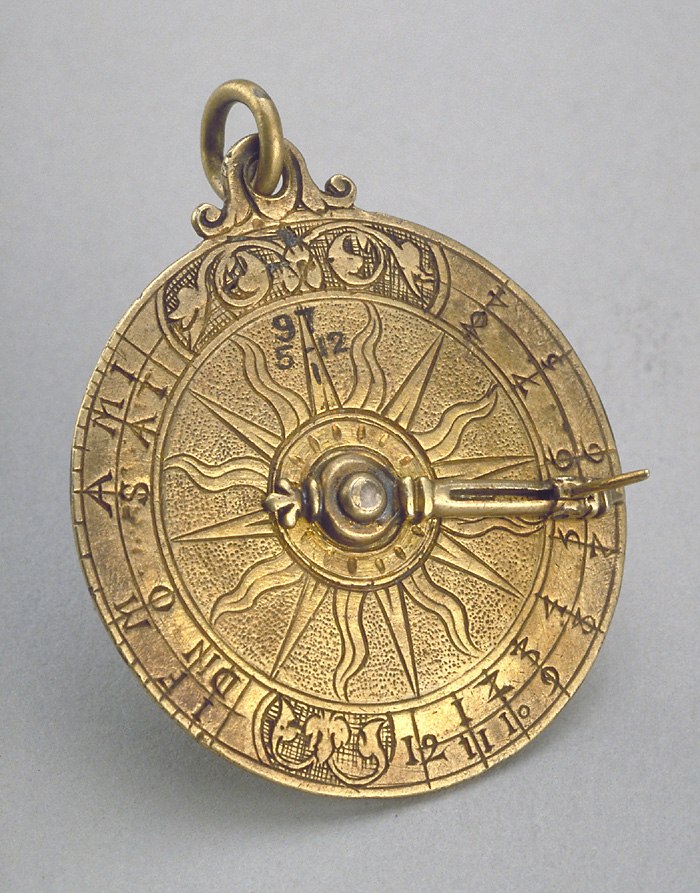
© British Museum, London
horological instruments
Vertical Disc Dial, Late 16th century
Late 16th century
This late 16th-century Spanish vertical disc dial is a bronze portable horological instrument measuring 42 mm in diameter. The dial, held in the collection of the British Museum, is unsigned and designed for vertical suspension. It functions by being oriented towards the sun while the user adjusts a folding pin gnom…
Partial type record
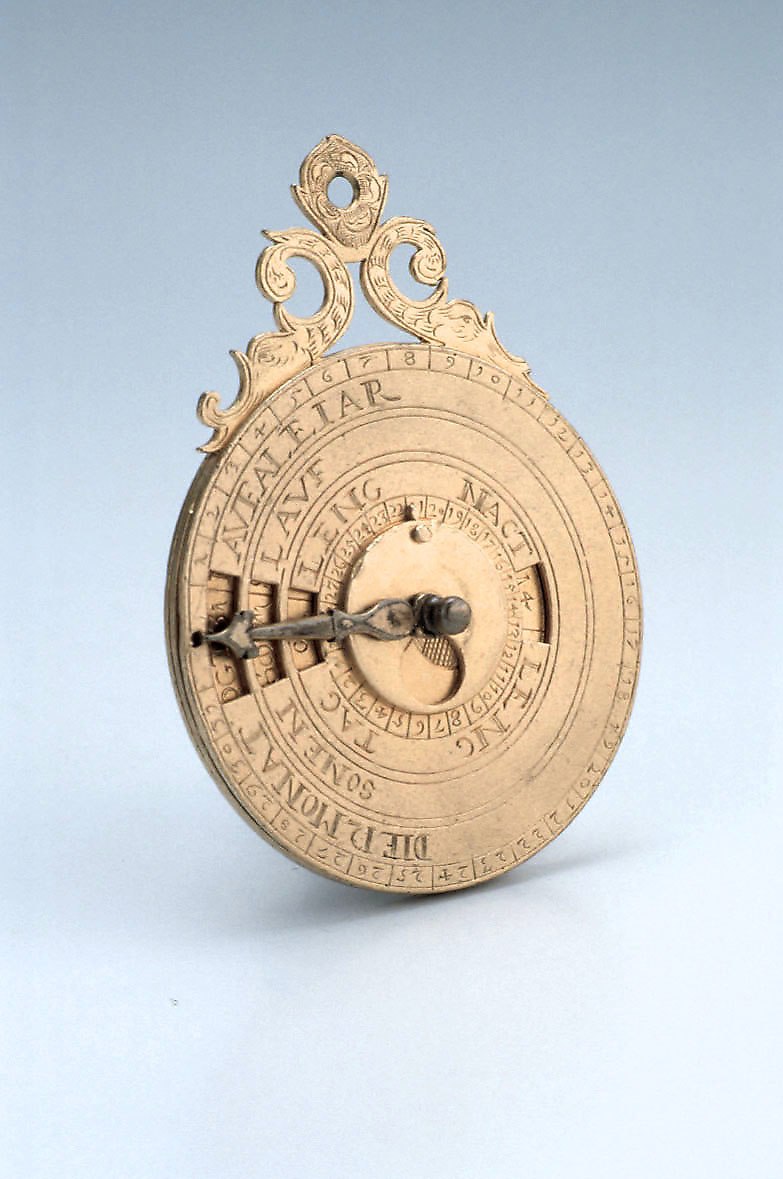
Museum of the History of Science, Oxford
horological instruments
Vertical Disc Dial, Undated
Undated
This vertical disc dial is a German-made instrument constructed from gilt copper, measuring 50 mm in diameter. It comprises three plates, with the central plate featuring a decorated handle for manipulation. One side of the instrument includes a folding gnomon and hour lines numbered 4 to 12 to 8, divided into quart…
Partial type record
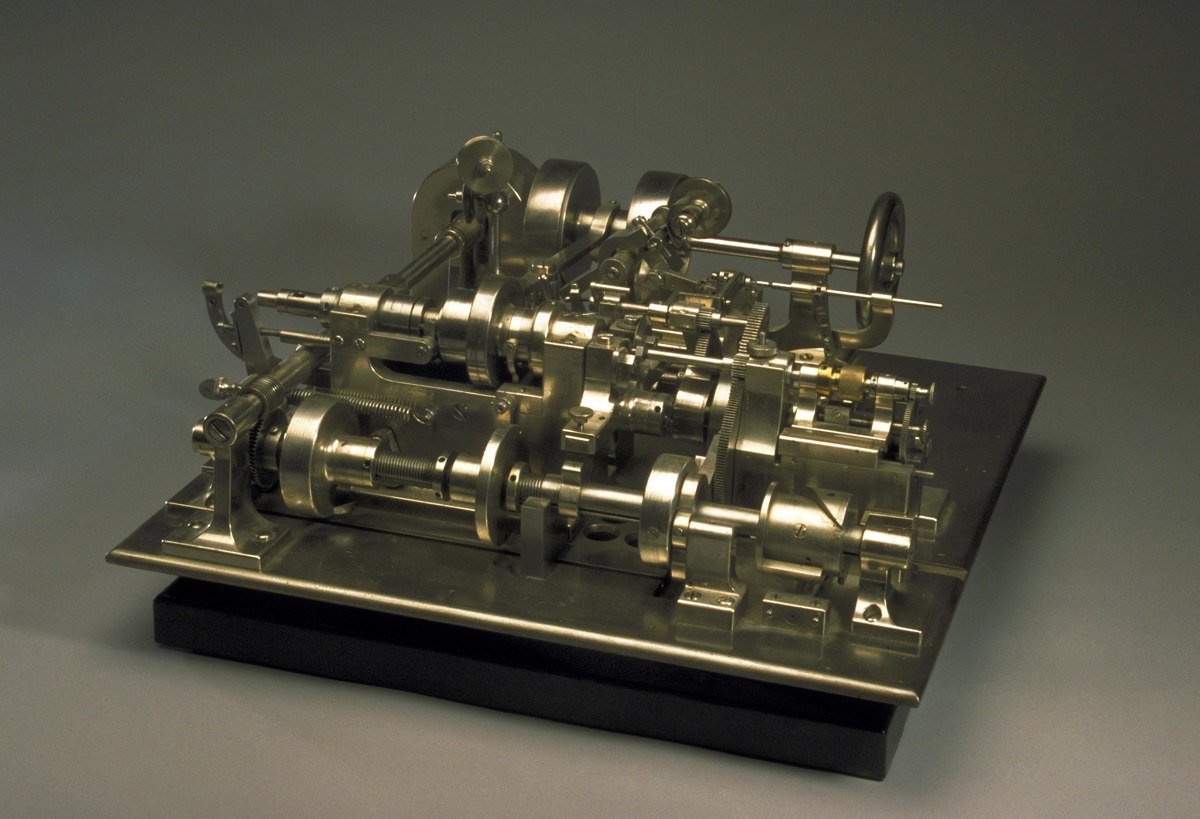
National Museum of American History
horological instruments
Waltham Automatic Screw Making Machine
ca 1875
This automatic screw making machine was manufactured around 1875 by the Waltham Watch Company based on designs invented in 1871 by Charles Vander Woerd. Conceived as the first automatic lathe designed for fabricating watch screws, it fed rod stock through a succession of cutting tools to shape individual screws sequ…
Partial type record
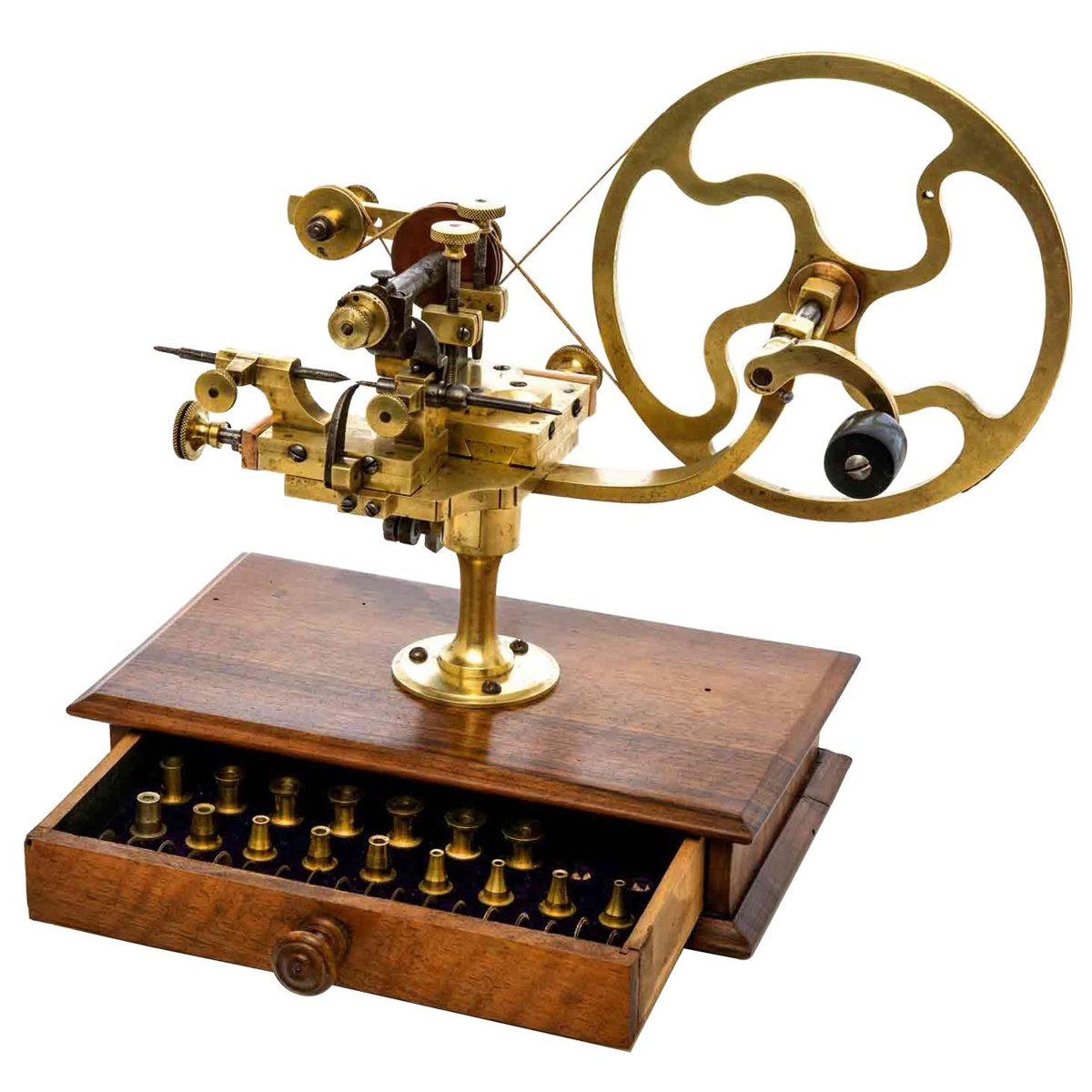
1stDibs
horological instruments
Watchmaker's Gear Wheel Rounding Up Tool
circa 1890
This late 19th-century watchmaker's rounding-up machine (machine à arrondir) is designed for truing watch wheels, adjusting tooth form, and altering tooth depth. Fabricated from brass and steel, the apparatus is equipped with a large curved-spoke driving wheel rotated by a hand crank with a dark handle, linked by a…
Partial type record
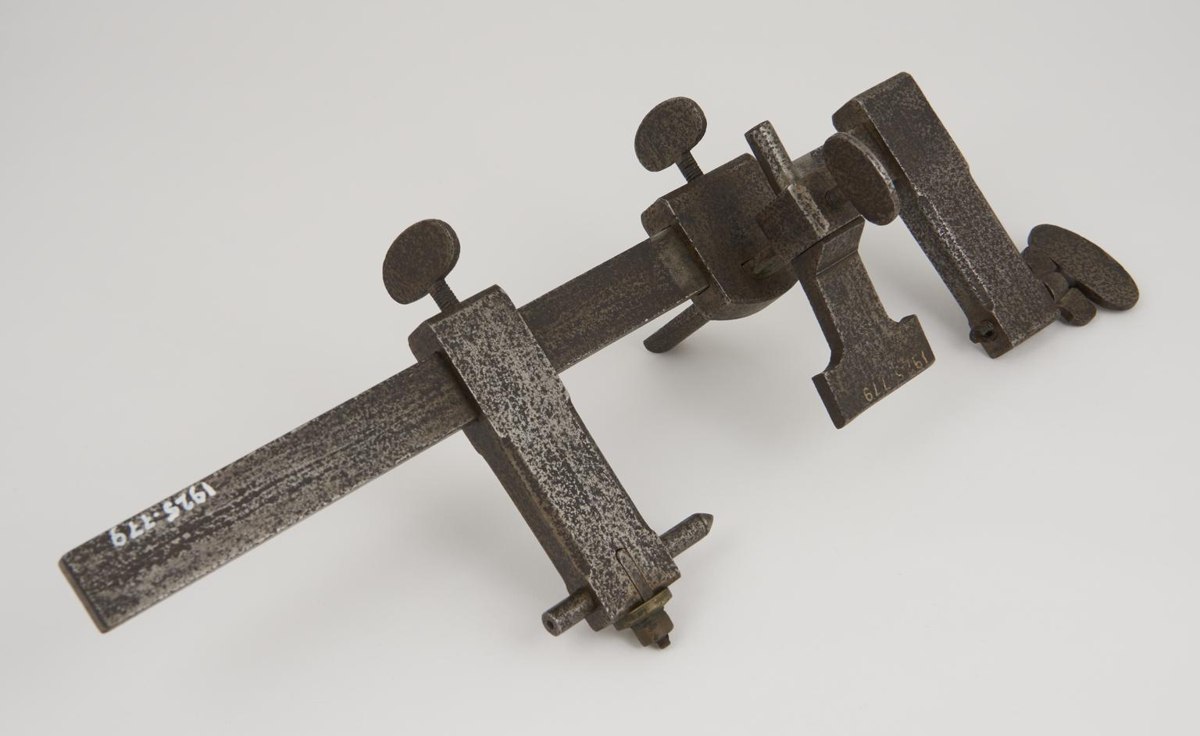
Science Museum Group
horological instruments
Watchmaker's lathe
late 18th century
This museum-catalogued horological tool is an iron watchmaker's lathe dated by the Science Museum Group to the late 18th century. Constructed as a relatively simple hand lathe or turns, the device features two plain centres and a simple adjustable hand rest mounted along a central rectangular bar. The source institu…
Partial type record
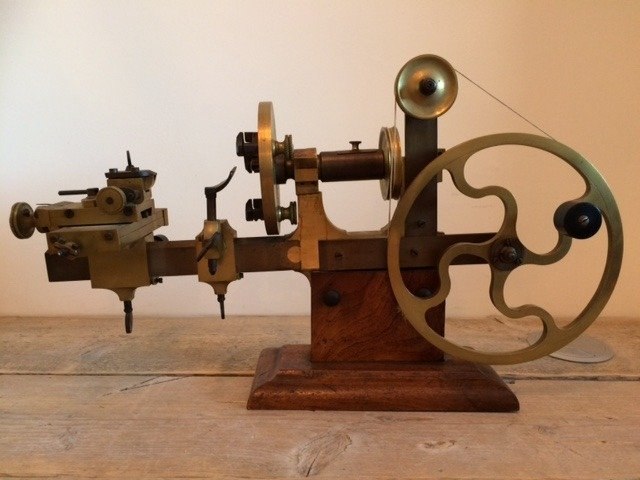
Catawiki
horological instruments
Watchmaker's Lathe / Topping Tool
circa 1900
This object is an antique hand-driven precision lathe and topping tool for watchmakers, constructed in brass and steel on a solid wooden base. The assembly features a large curved-spoke flywheel with cord drive connecting to an overhead pulley and horizontal spindle arrangement with a faceplate. An adjustable compou…
Partial type record
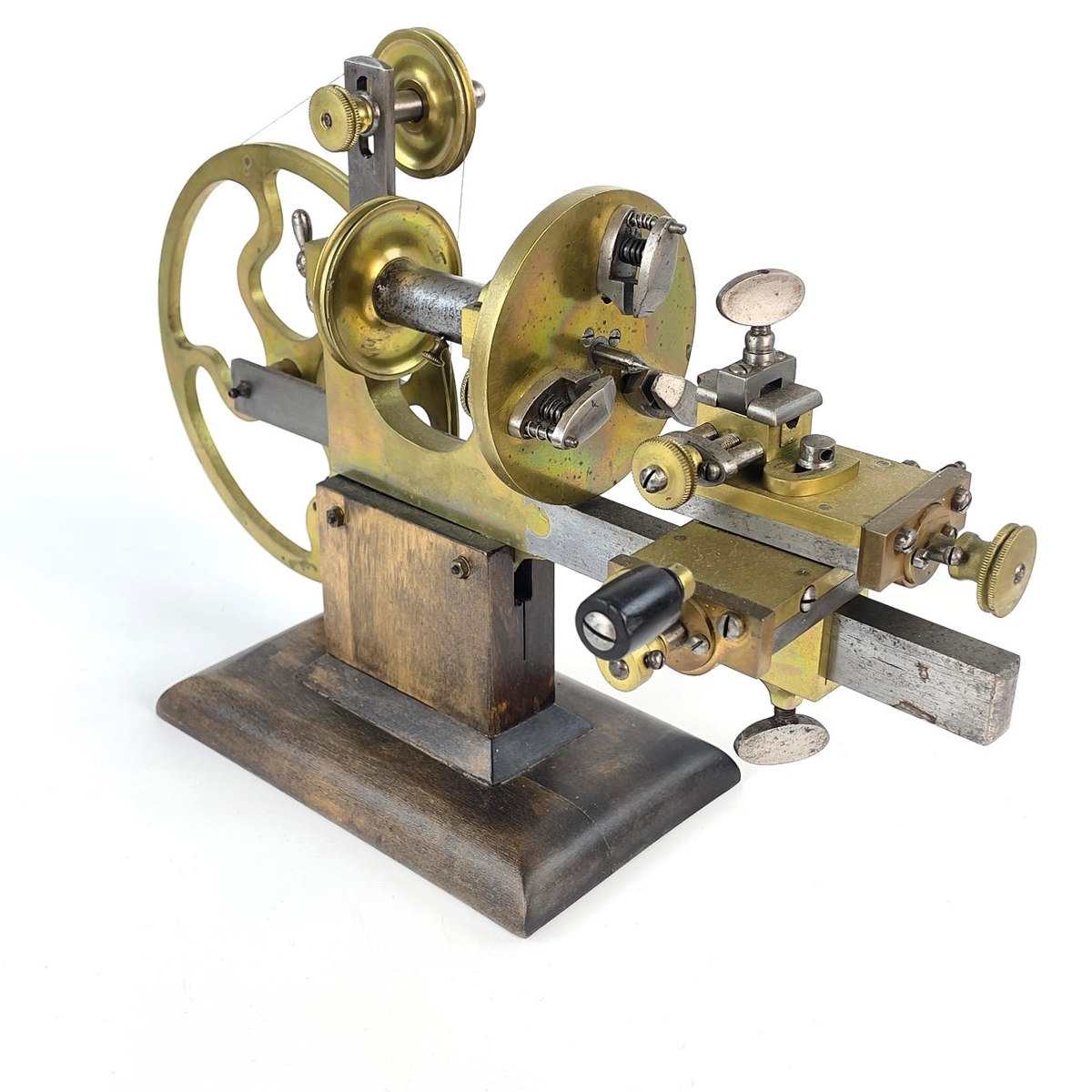
Roslagens Auktionsverk
horological instruments
Watchmaker's Lathe Stamped Victor Svensson
19th/20th century
This watchmaker's lathe dates to the 19th or 20th century according to the cataloguing house and is stamped Victor Svensson. Constructed from brass and metal elements, it is mounted atop a dark wooden base. The assembly features an integrated hand-cranked brass drive wheel linked by drive cord to an overhead pulley,…
Partial type record
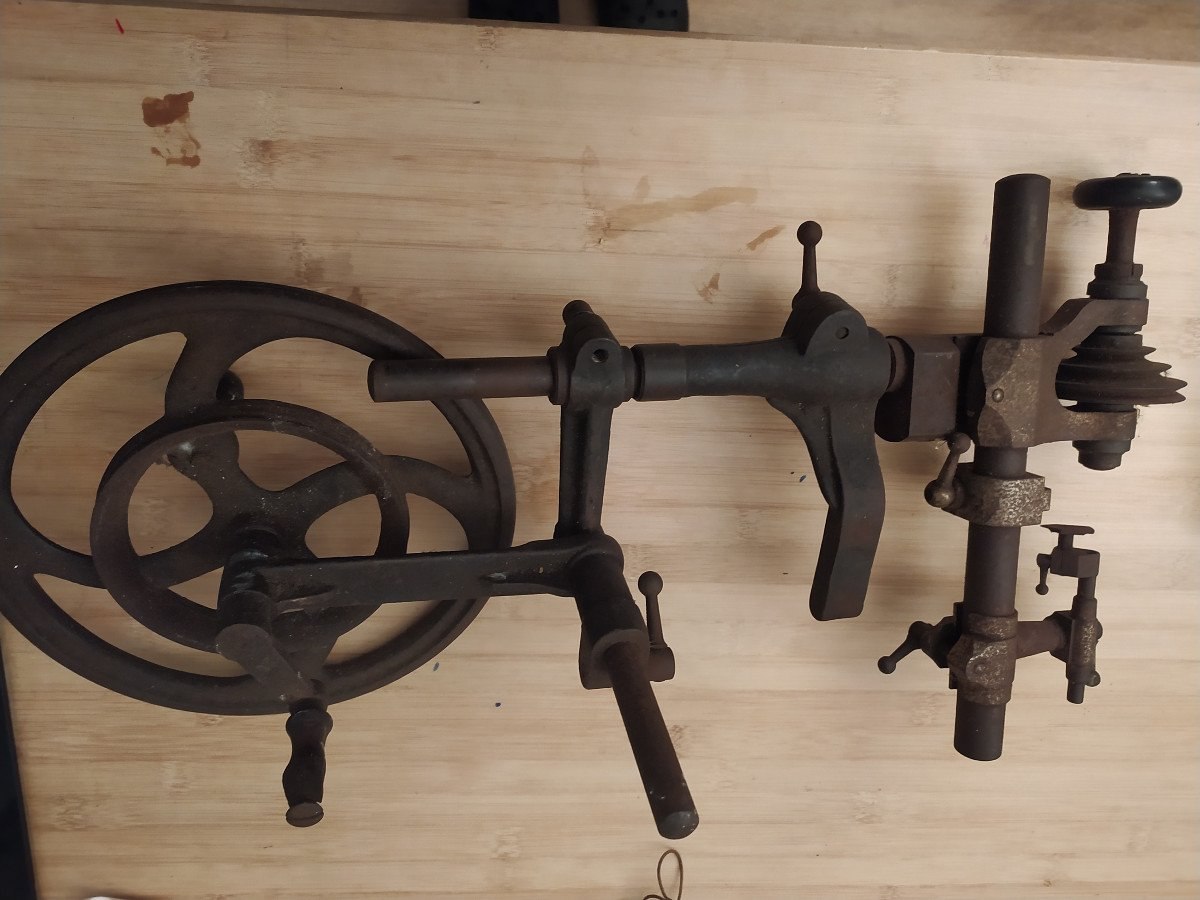
Fontan Alain Antiquités
horological instruments
Watchmaker's lathe, 20th century
20th century
This item is a metal watchmaker's lathe attributed to the 20th century by the source and catalogued under reference 1498387. The apparatus comprises a hand-cranked drive wheel, an articulated mounting frame with clamping hardware, and a headstock assembly fitted with a multi-step cone pulley and handwheel. Although…
Partial type record
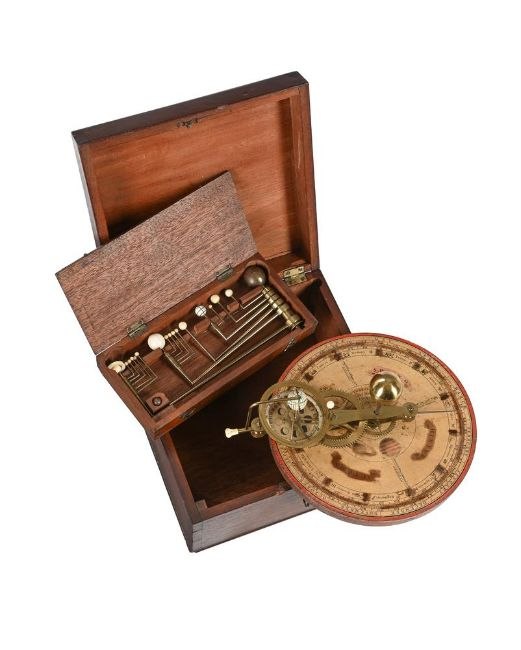
Dreweatts
horological instruments
William Jones Regency Lacquered Brass and Mahogany Portable Orrery and Tellurian
circa 1815
A Regency lacquered brass and mahogany portable orrery and tellurian attributed by the source to William Jones of London, circa 1815. The tellurian mechanism features an engraved brass frame, a removable central brass sun sphere, and an ivory or bone terrestrial sphere with a rising and falling moon mechanism that t…
Partial type record
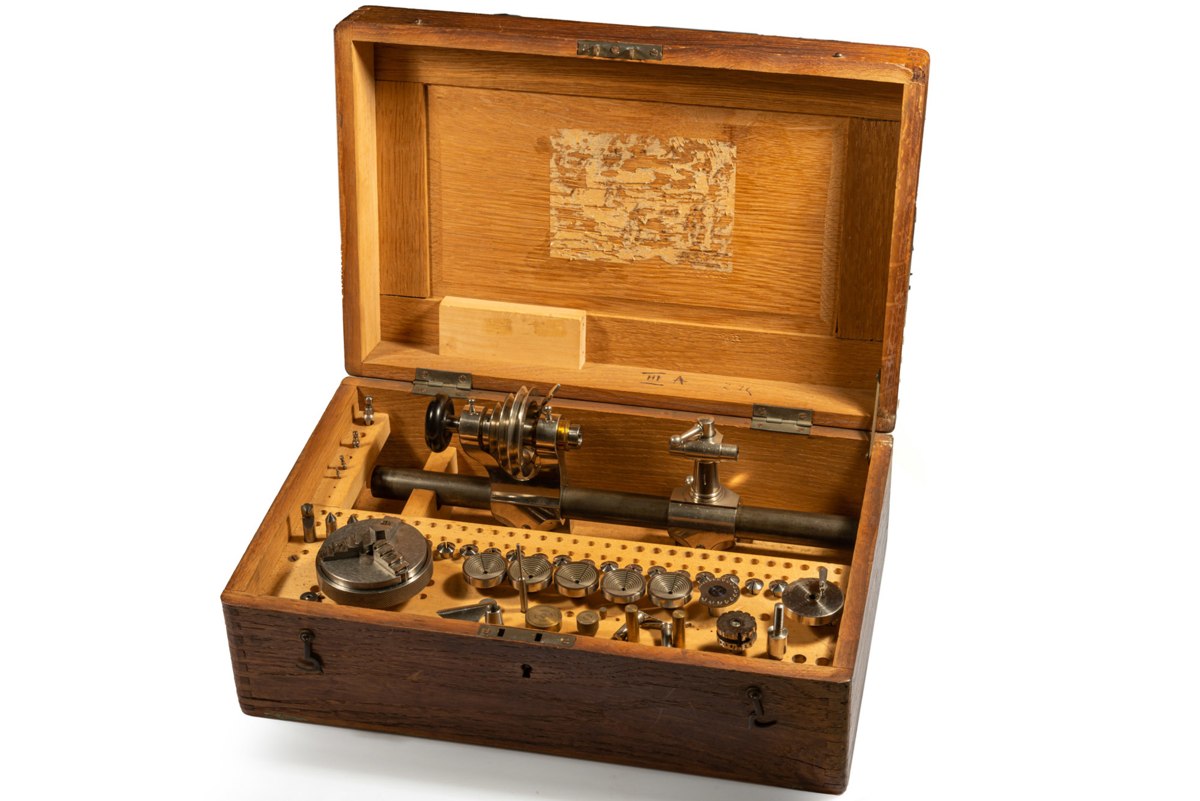
Antiquorum
horological instruments
Wolf, Jahn & Co. 6 mm Watchmaker’s Lathe and Accessories
early-20th century
This early 20th-century 6 mm watchmaker's lathe is attributed by the auction source to Wolf, Jahn & Co. of Frankfurt am Main, Germany. Constructed from steel and brass fittings, the tool rests horizontally inside a hinged wooden storage box fitted with perforated accessory blocks. The set includes a stepped-pulley h…
Partial type record
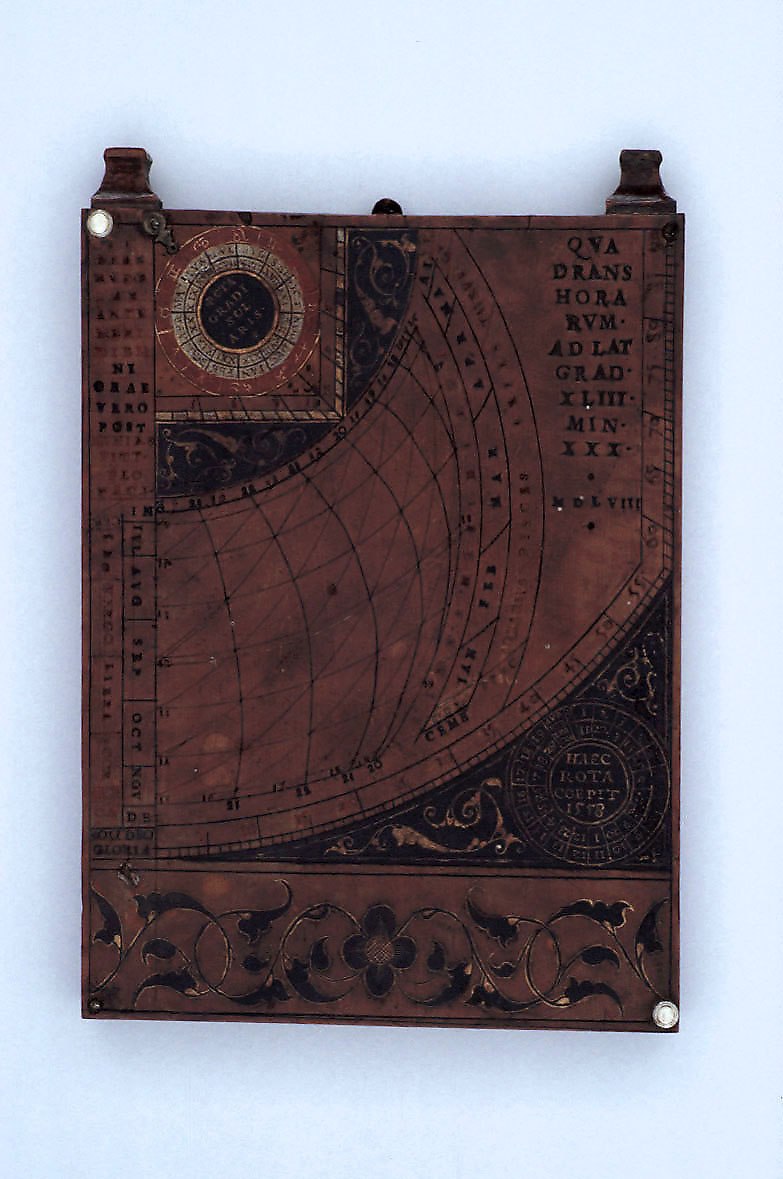
Museum of the History of Science, Oxford
horological instruments
Wood Horary Quadrant and Sundial by Miniato Pitti
1558
This rectangular wooden quadrant, dated 1558 and signed by Miniato Pitti in Florence, measures 130 x 188 x 16 mm. It functions on one side as an horary quadrant designed for 43 degrees latitude, and on the other as a Regiomontanus-type altitude sundial capable of functioning at latitudes up to 65 degrees. The constr…
Partial type record
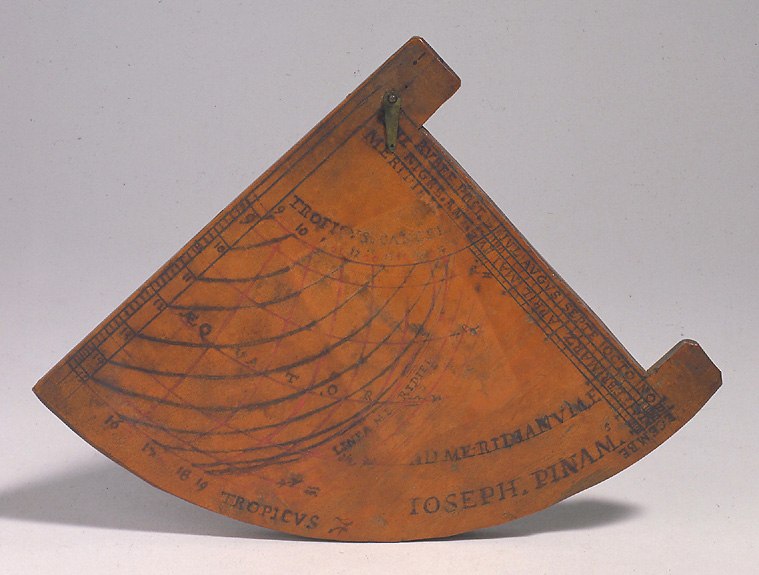
Istituto e Museo di Storia della Scienza, Firenze
horological instruments
Wood Solar Quadrant
16th century
This 16th-century Italian solar quadrant, inventory number 1306, is constructed of wood with a radius of 102 mm. Signed by Joseph Pinam, the instrument serves to measure the sun's height to determine the time. One face features hour lines and a calendar scale, while the reverse side displays a 16-point wind rose. Th…
Partial type record
History of Science Museum, University of Oxford
horological instruments
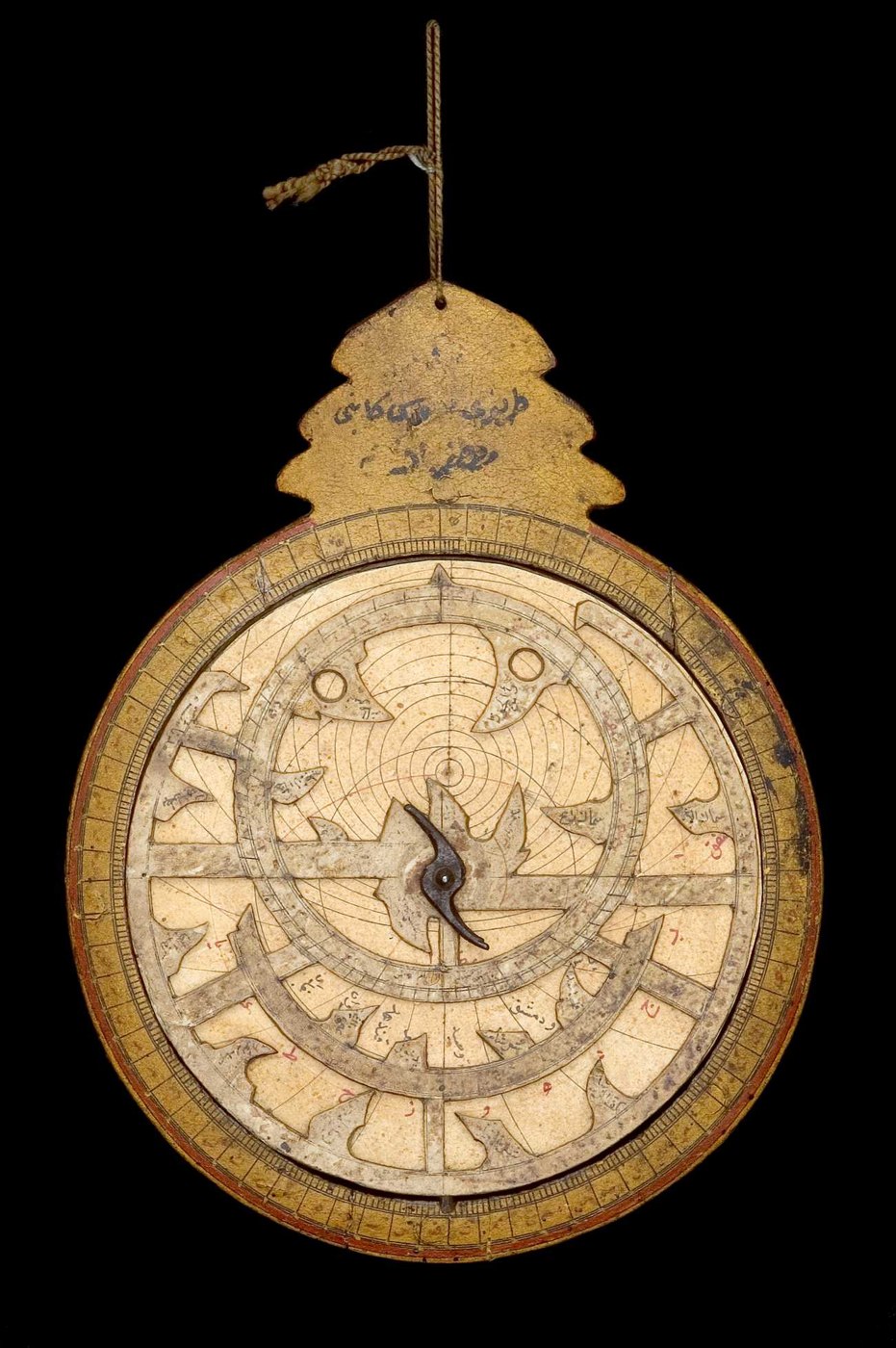
Wooden Astrolabe by Shaykh Sakkūt
ca. 1800
This wooden astrolabe, attributed to the maker Shaykh Sakkūt and dated circa 1800, originates from Turkey. The instrument features a tree-shaped, engraved throne and a mater and limb assembly of two-piece, nailed construction. The limb exhibits damage in the upper left quadrant. The back of the instrument displays 1…
Partial type record