Catalogue
Astrolabes, Dials and Instruments
Astrolabes, quadrants, astronomical compendia, portable dials and watchmakers' workshop tools used to find or keep time.
Catalogue entries (445)
Filter by era, country, maker or material49–96 of 445 entries
History of Science Museum, University of Oxford
horological instruments
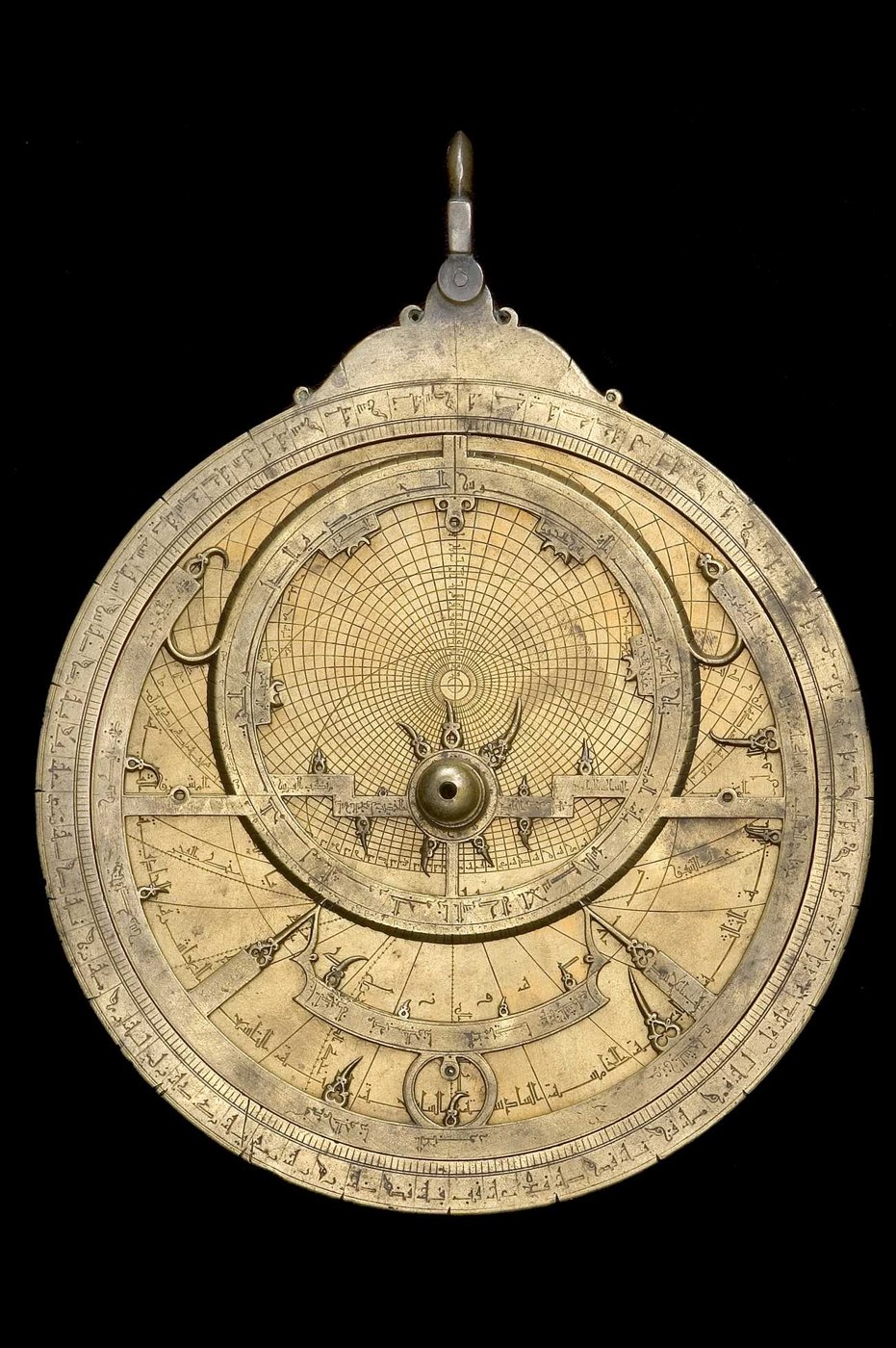
Astrolabe by Muḥammad ibn Fattūḥ al-Khamā’irī, 1221/2
1221/2
This 1221/2 astrolabe, crafted from brass in Seville by Muḥammad ibn Fattūḥ al-Khamā’irī, is held in the History of Science Museum collection at the University of Oxford. The mater and limb are constructed of two soldered pieces, with the limb featuring a degree scale. It is secured by a nut and bolt. The back of th…
Partial type record
Victoria and Albert Museum, London
horological instruments
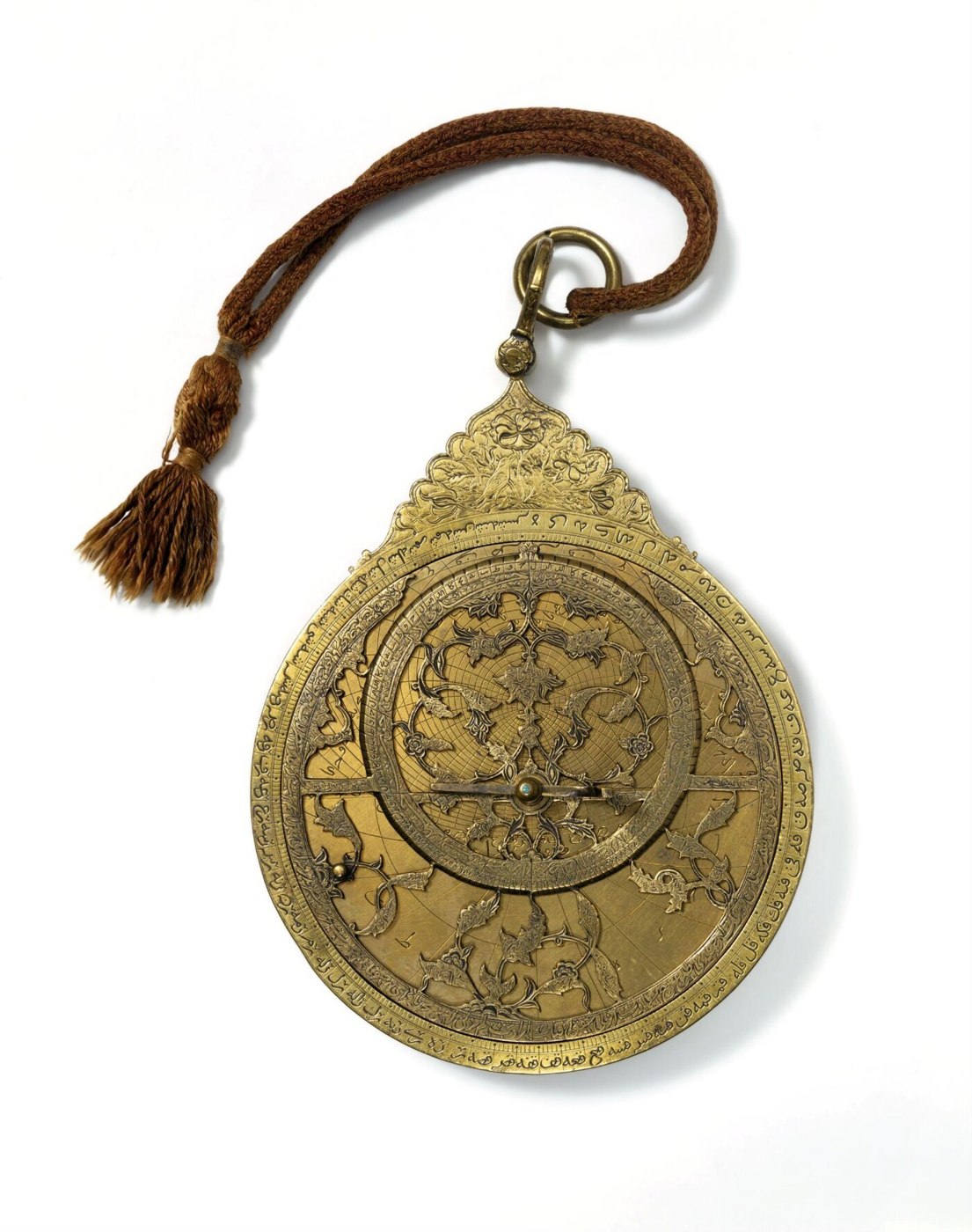
Astrolabe by Muhammad Khalil and Muhammad Mahdi
1667
This astrolabe, designated M.38-1916 in the Victoria and Albert Museum collection, was produced in Isfahan, Iran, in 1667. Constructed from brass, the instrument is both engraved and chased. It bears signatures identifying the maker as Muhammad Khalil, son of Husayn 'Ali, and the decorator as Muhammad Mahdi, son of…
Partial type record
History of Science Museum, University of Oxford
horological instruments
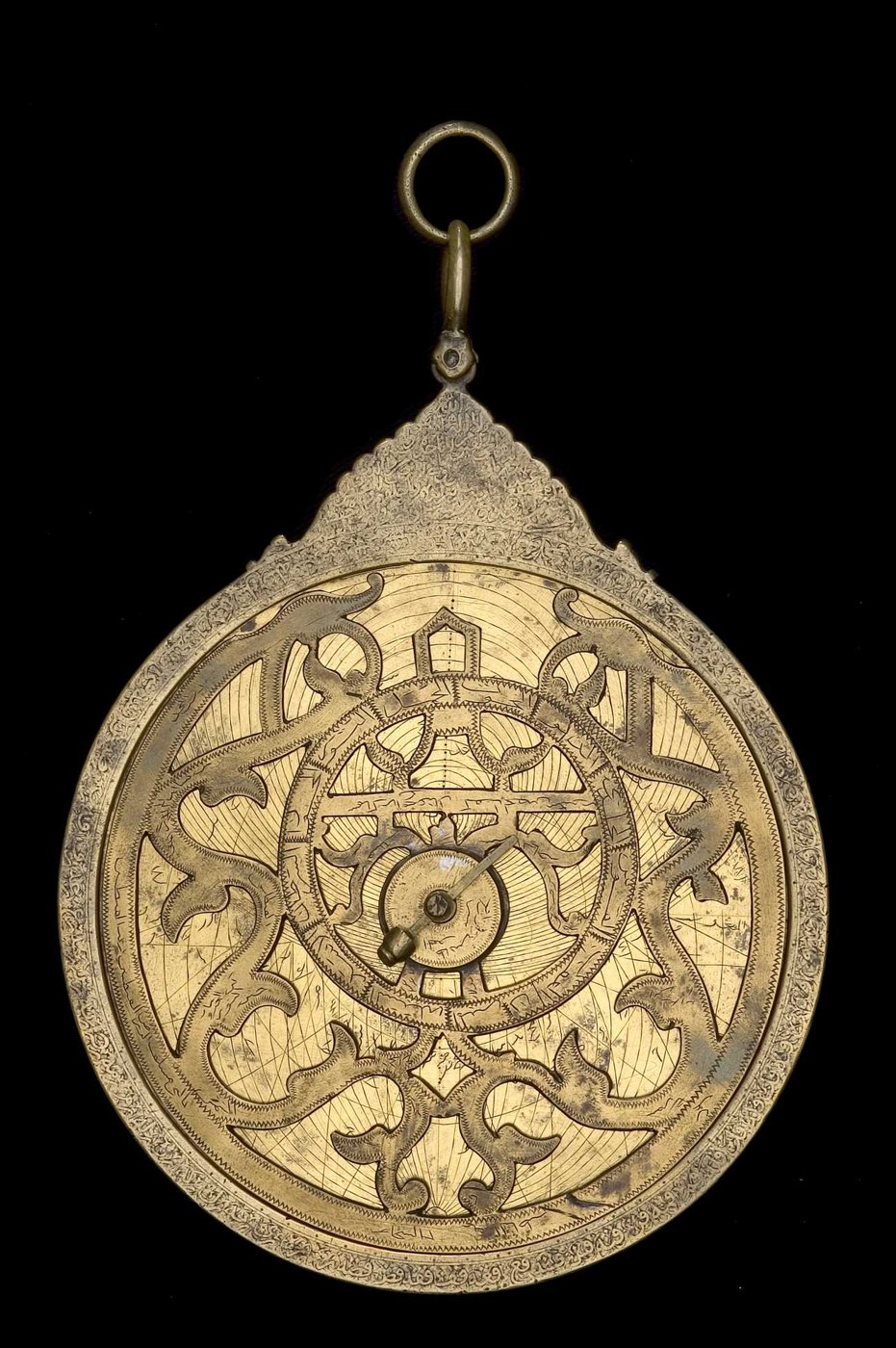
Astrolabe by Muḥammad Mahdī
ca. 1650
This brass astrolabe (inventory number 50122) is attributed to the maker Muḥammad Mahdī and dated to approximately 1650. It features an engraved, Indo-Persian style throne attached to an integrated base, accompanied by an omega-shaped shackle and a simple, round cross-section ring. The mater and limb are constructed…
Partial type record
History of Science Museum, University of Oxford
horological instruments
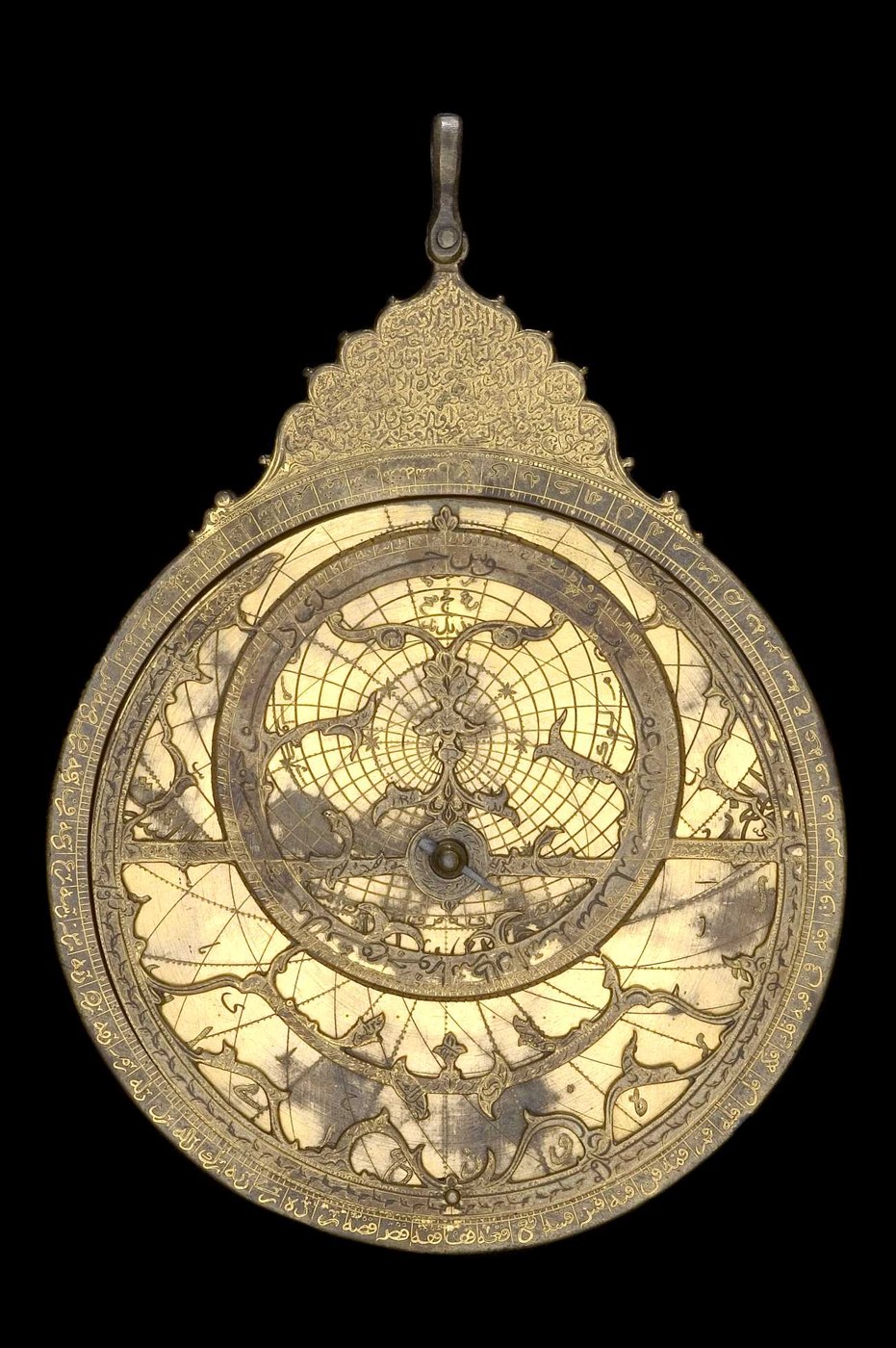
Astrolabe by Muḥammad Mahdī, ca. 1650
ca. 1650
This gilt brass astrolabe, designated by inventory number 50143, is attributed to the maker Muḥammad Mahdī and dates to approximately 1650. Originating from Persia, the instrument features a complex design including an indo-persian engraved throne and an omega-type shackle. The mater and limb are constructed as a si…
Partial type record
History of Science Museum, University of Oxford
horological instruments
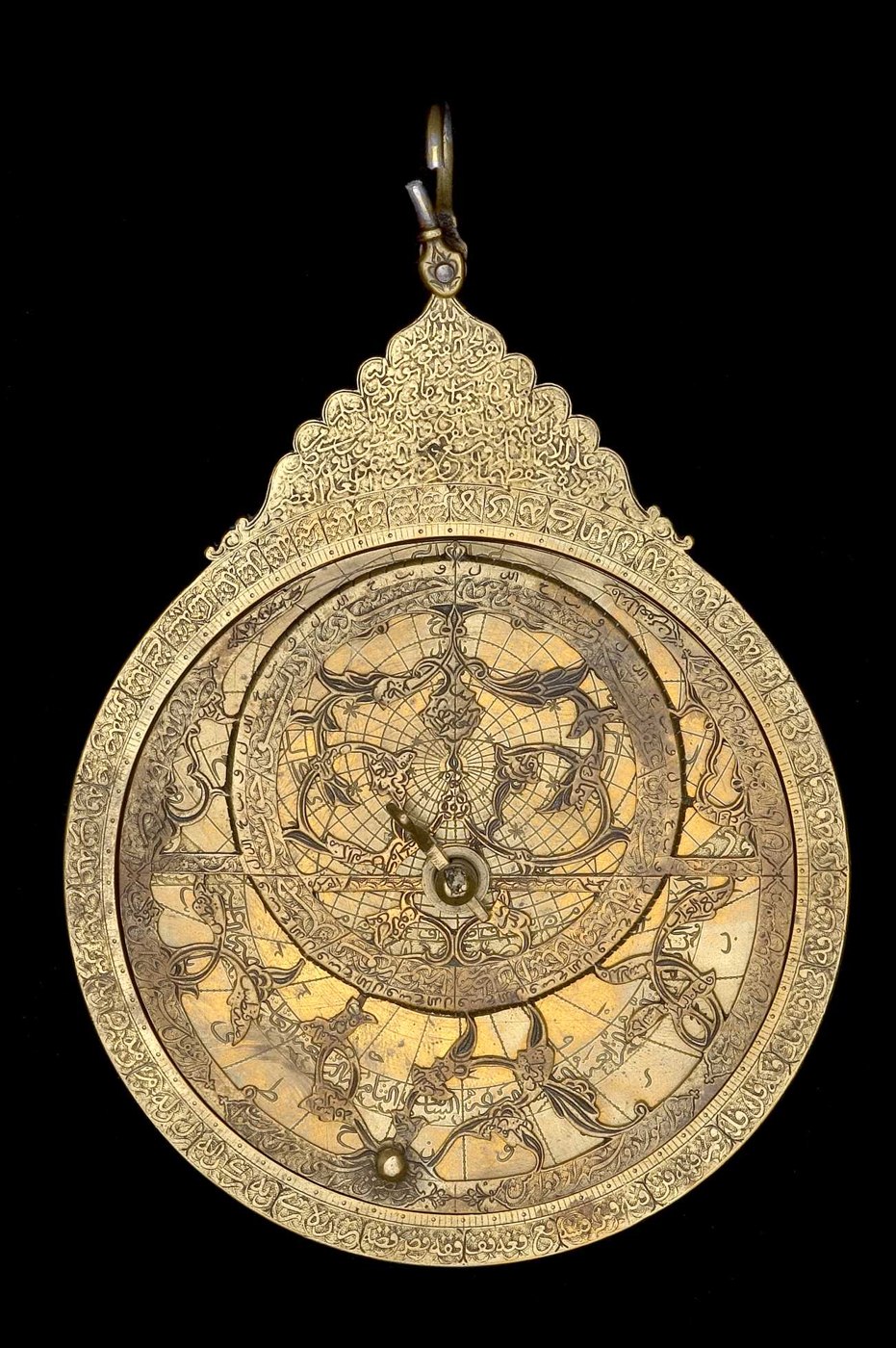
Astrolabe by Muḥammad Mahdī, ca. 1650 (f39774)
ca. 1650
This Persian astrolabe, dating to approximately 1650 and signed by the maker Muḥammad Mahdī, is constructed primarily of brass. The instrument features an Indo-Persian style engraved throne, attached to the mater via an integrated base, with an associated copper ring and an omega-type shackle. The rete is of a folia…
Partial type record
History of Science Museum, University of Oxford
horological instruments
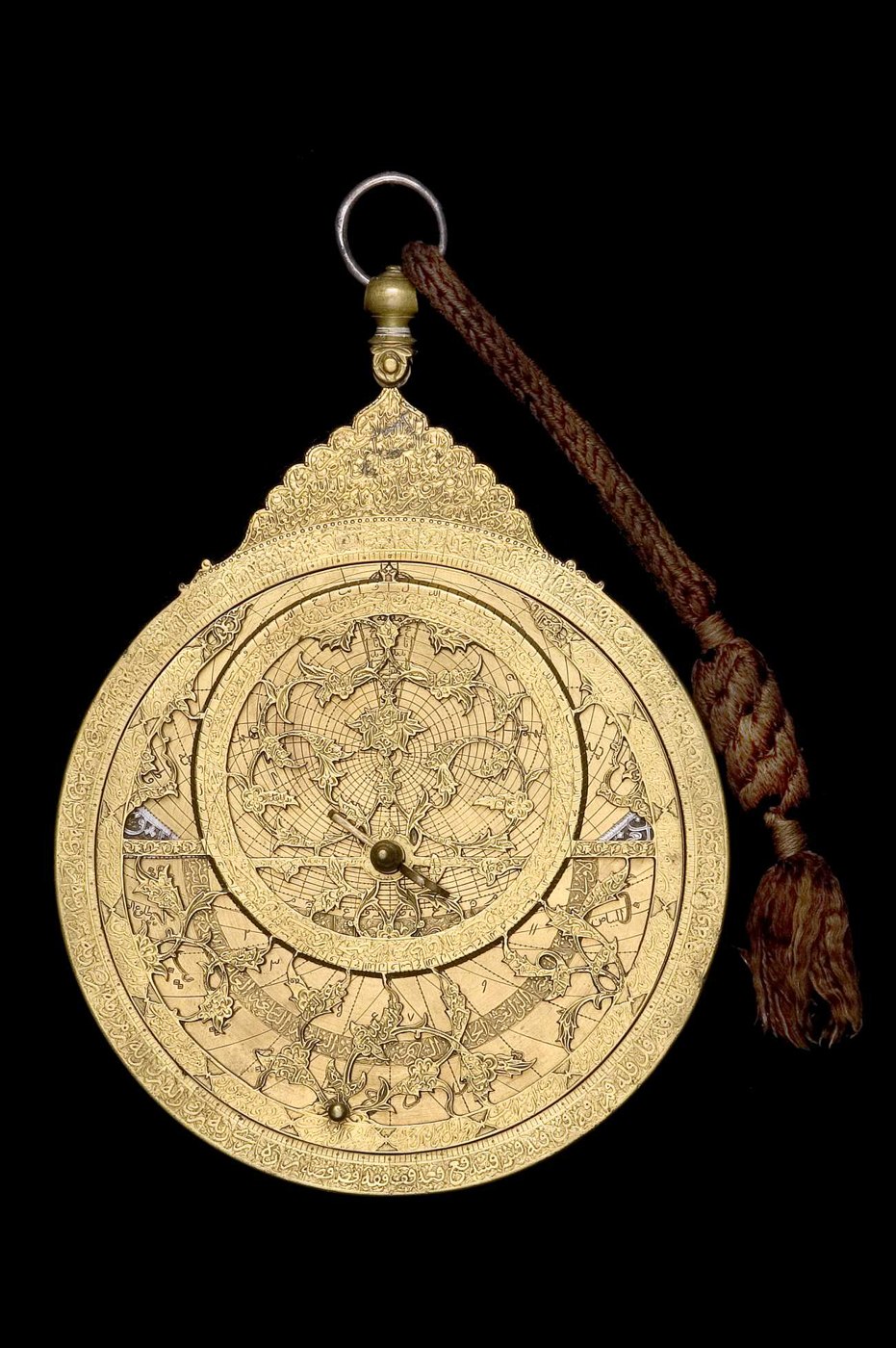
Astrolabe by Muḥammad Mahdī, ca. 1660
ca. 1660
This brass astrolabe, inventory number 46886, is attributed to the maker Muḥammad Mahdī and dated to approximately 1660. The instrument features an Indo-Persian type engraved throne with an integrated base, attached to a simple, round cross-section silver ring via an eye-bolt type brass shackle. The mater and limb a…
Partial type record
History of Science Museum, University of Oxford
horological instruments
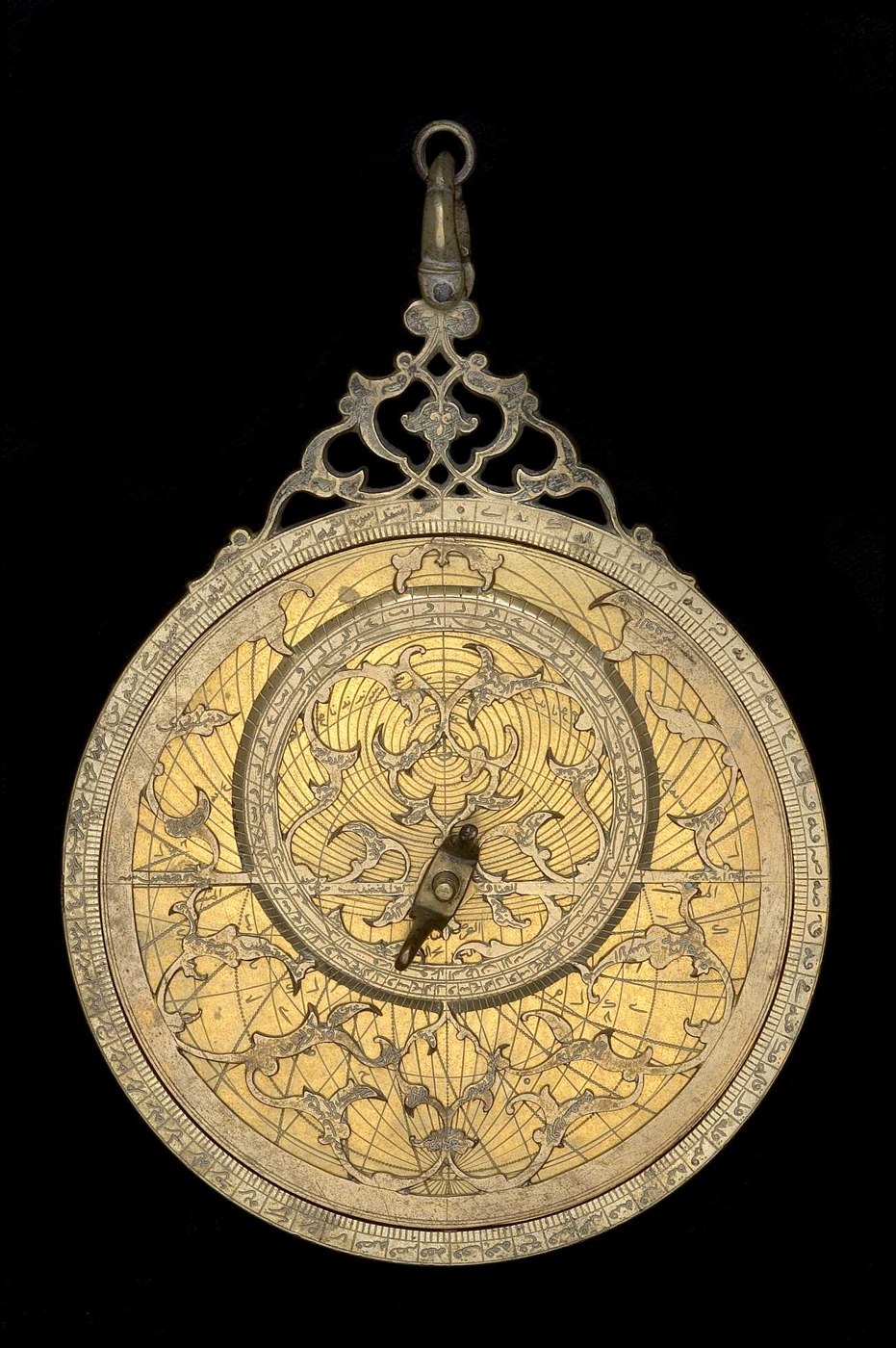
Astrolabe by Muḥammad Muqīm
ca. 1650
This brass astrolabe is attributed to the maker Muḥammad Muqīm and dated to approximately 1650. Constructed in Lahore, the instrument features an Indo-Persian, pierced-style throne, which culminates in a trefoil and is attached via an integrated base. The mater and limb are formed of one-piece construction. The back…
Partial type record
History of Science Museum, University of Oxford
horological instruments
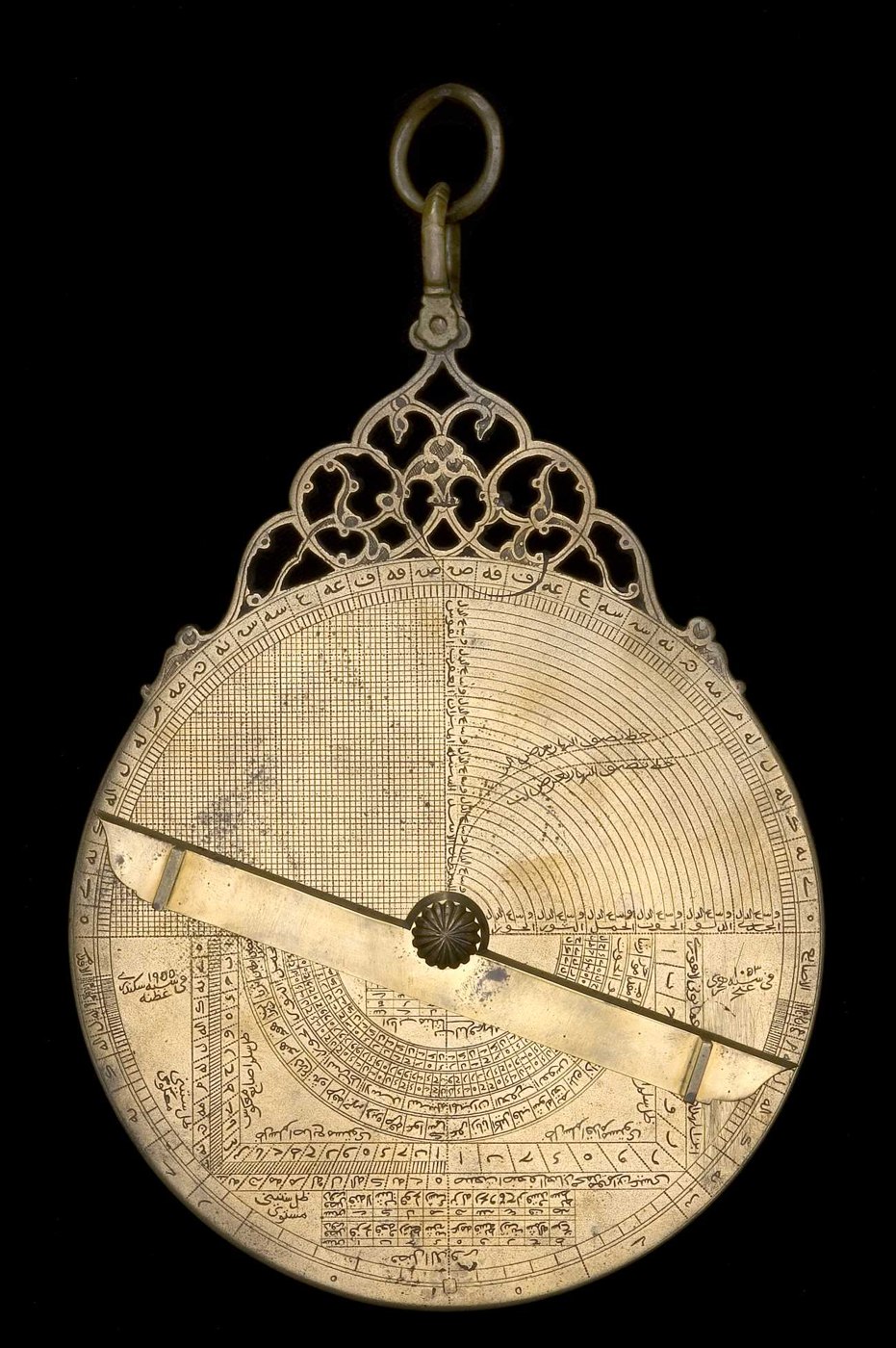
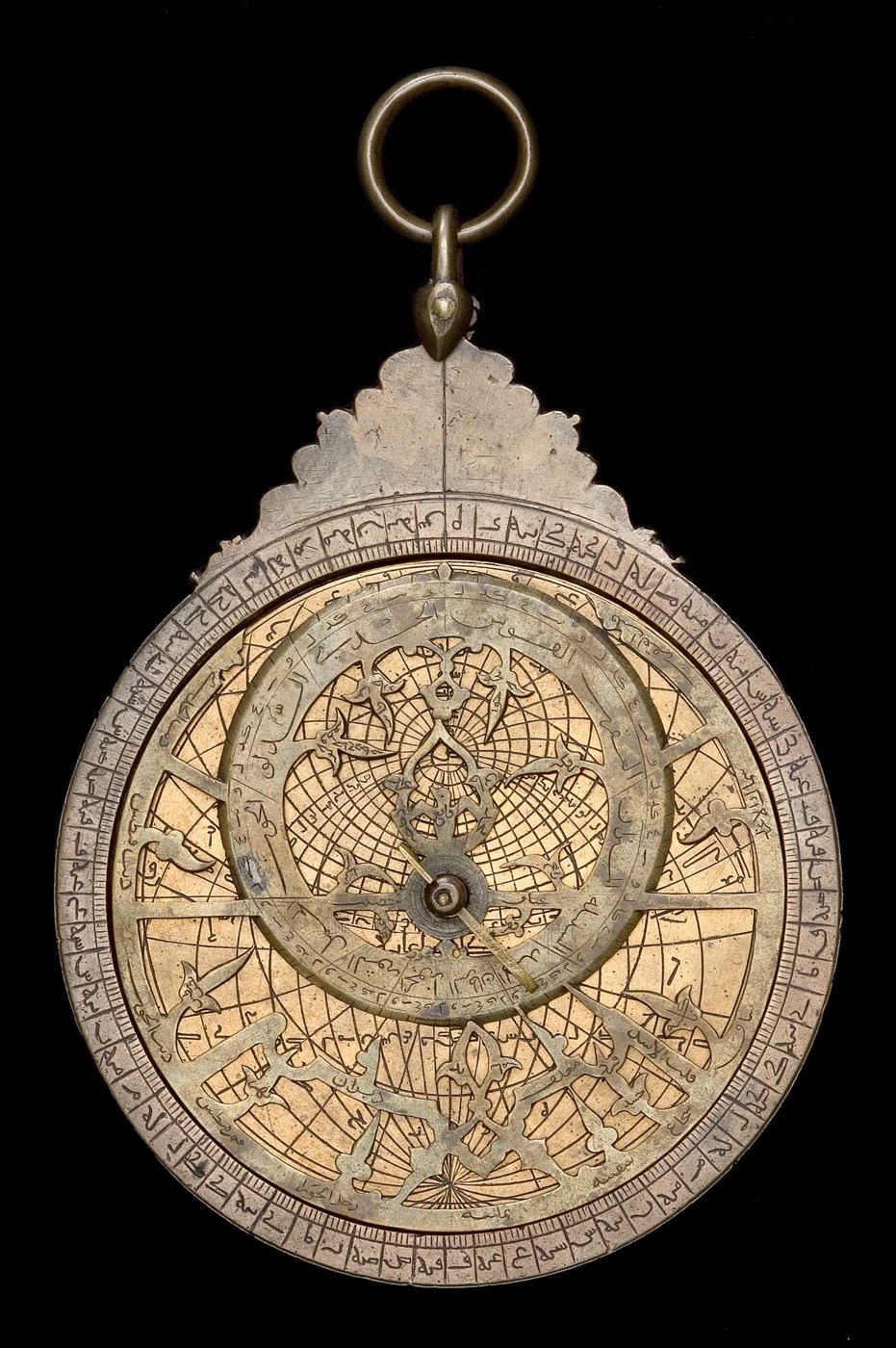
Astrolabe by Muḥammad Muqīm, 1643/4
1643/4
This brass astrolabe is signed by the maker Muḥammad Muqīm of Lahore and dated to 1643/4 (A.H. 1053). The mater and limb are constructed in one piece, with the limb featuring a degree scale graduated every 5 degrees. The back displays 15 different scales, including altitude, declination, prayer lines, sine/cosine, c…
Partial type record
History of Science Museum, University of Oxford
horological instruments
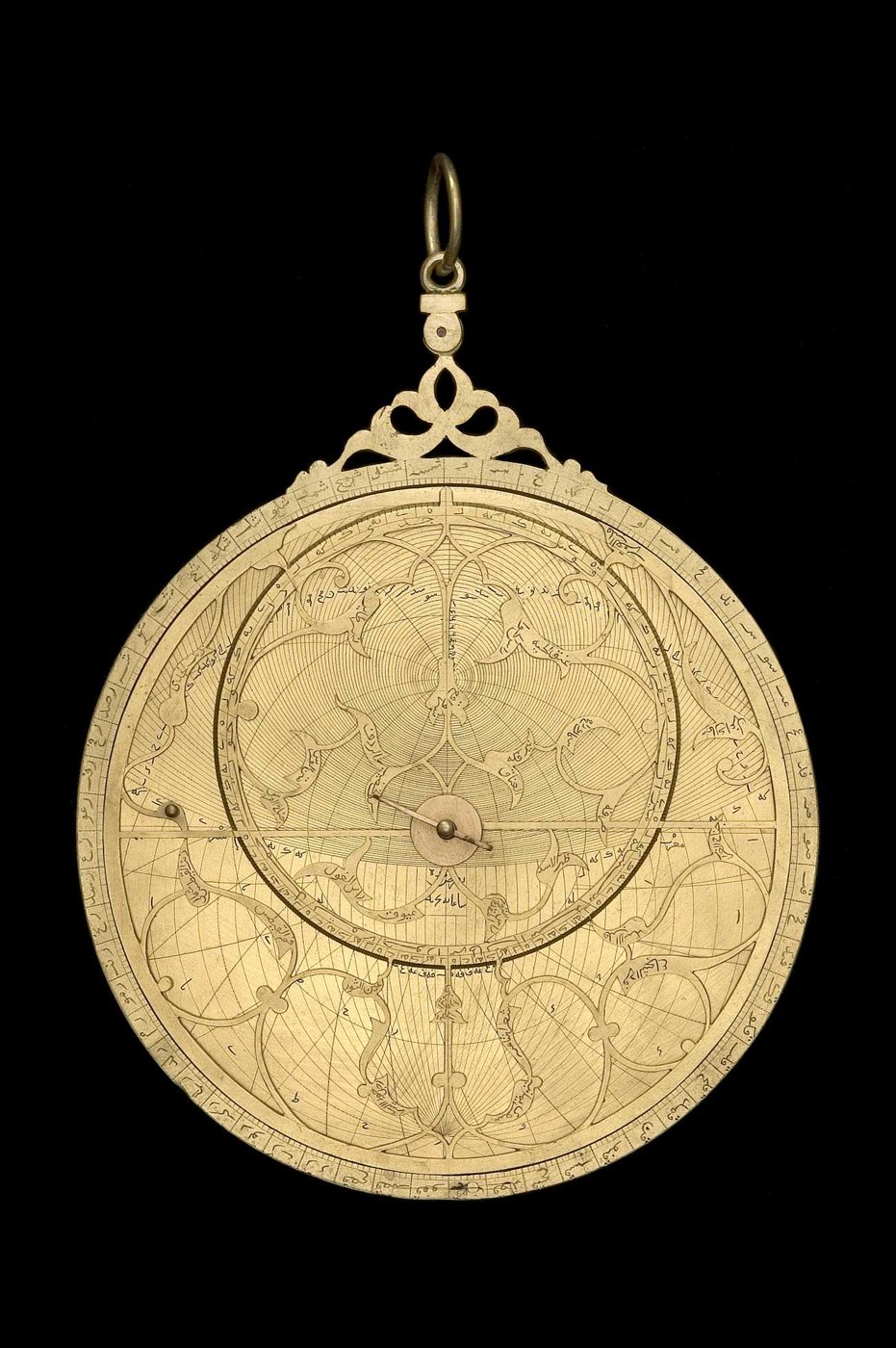
Astrolabe by Muḥammad Ṣaffār
1481/2
This brass astrolabe, inventory number 39063, is an astronomical instrument manufactured in Persia in 1481/2 by the maker Muḥammad Ṣaffār. It features a mater and limb of one-piece construction, with an Indo-Persian style throne attached to an integrated base. The instrument incorporates an omega-shaped shackle and…
Partial type record
History of Science Museum, University of Oxford
horological instruments
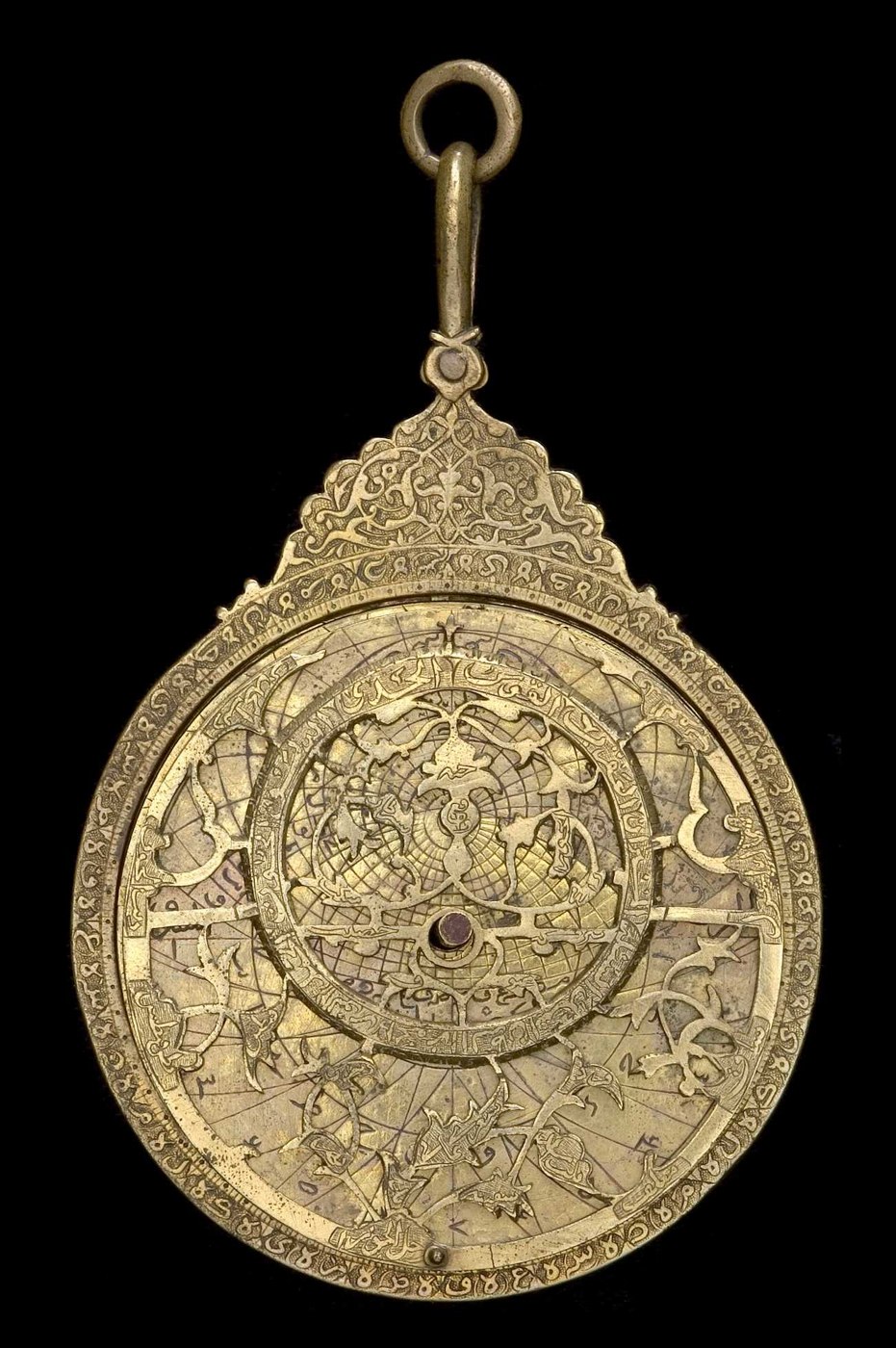
Astrolabe by Muḥammad Ṣāliḥ Tatawī
1666/7
This brass astrolabe, designated inventory number 33474, was crafted by Muḥammad Ṣāliḥ Tatawī in the year 1077 AH (1666/7 AD). The instrument features a pierced, Indo-Persian style throne with an integrated base and a round-section ring. Its construction includes a one-piece mater and limb, with the latter inscribed…
Partial type record
History of Science Museum, University of Oxford
horological instruments
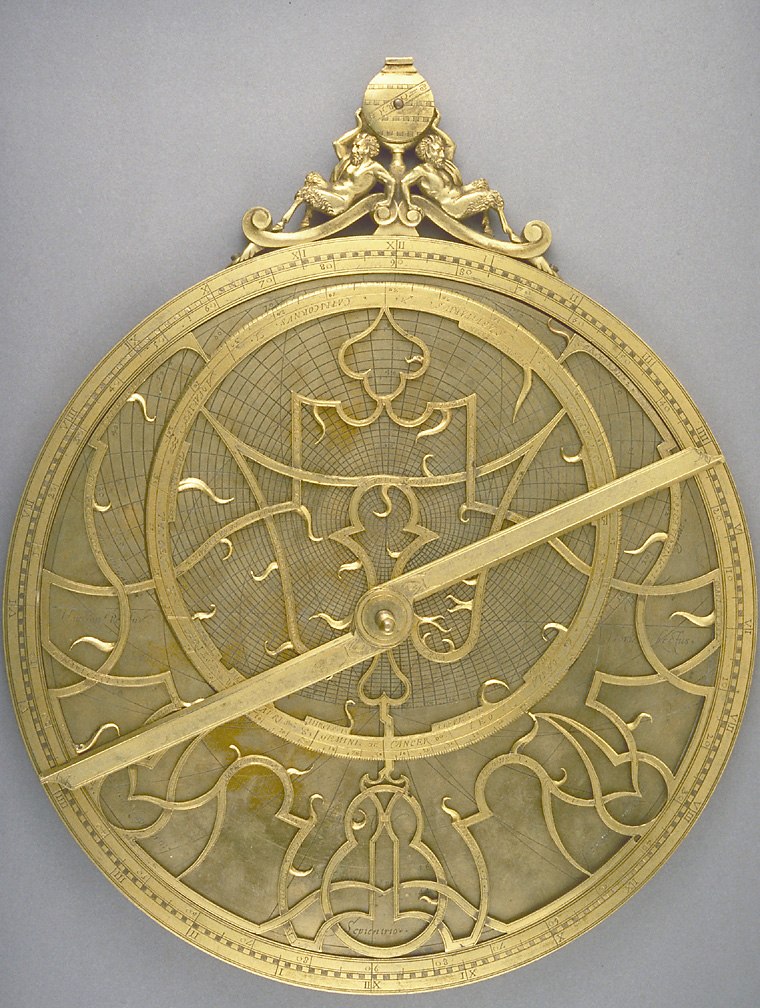
Astrolabe by Muḥammad Ṭāhir
ca. 1710
This planispheric astrolabe, designated inventory number 46836, is attributed to the maker Muḥammad Ṭāhir and dated to circa 1710. Originating from Iṣfahān, the instrument is constructed from brass. It features an engraved, Indo-Persian type throne attached to an integrated base, complemented by a simple round-secti…
Partial type record
British Museum, London
horological instruments
Astrolabe by Philippe Danfrie
circa 1600
This astrolabe, crafted from gilt brass with a diameter of 270 mm, is signed by Philippe Danfrie. The instrument includes a rete featuring a tulip-shaped design and a throne composed of two satyrs supporting a swiveling suspension element in the shape of an armillary sphere. The back of the instrument contains an ec…
Partial type record
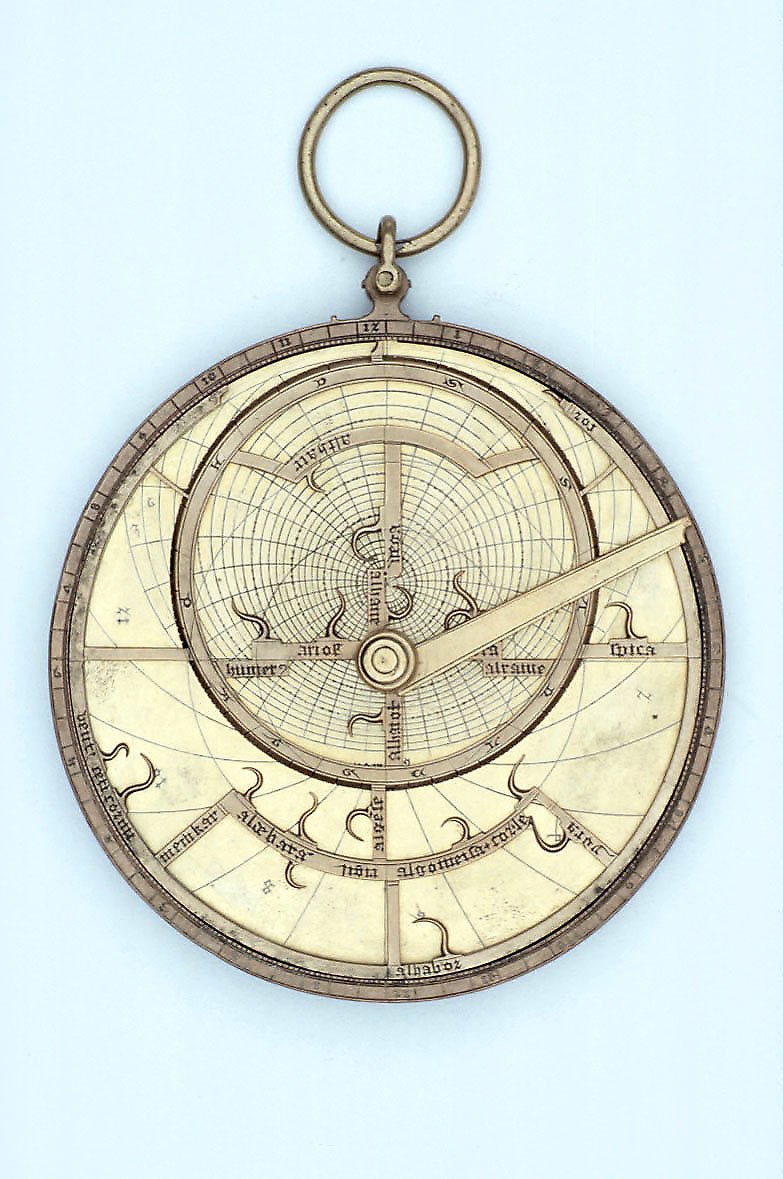
© Museum of the History of Science, Oxford.
horological instruments
Astrolabe by the Workshop of Jean Fusoris
circa 1400
This astrolabe, attributed to the workshop of Jean Fusoris, is a brass instrument measuring 100 mm in diameter. It comprises a mater, a rete, an alidade, a rule, and five plates. The mater is constructed from two soldered brass plates, forming the limb and shackle, with the limb face graduated 0 to 360 degrees. The…
Partial type record
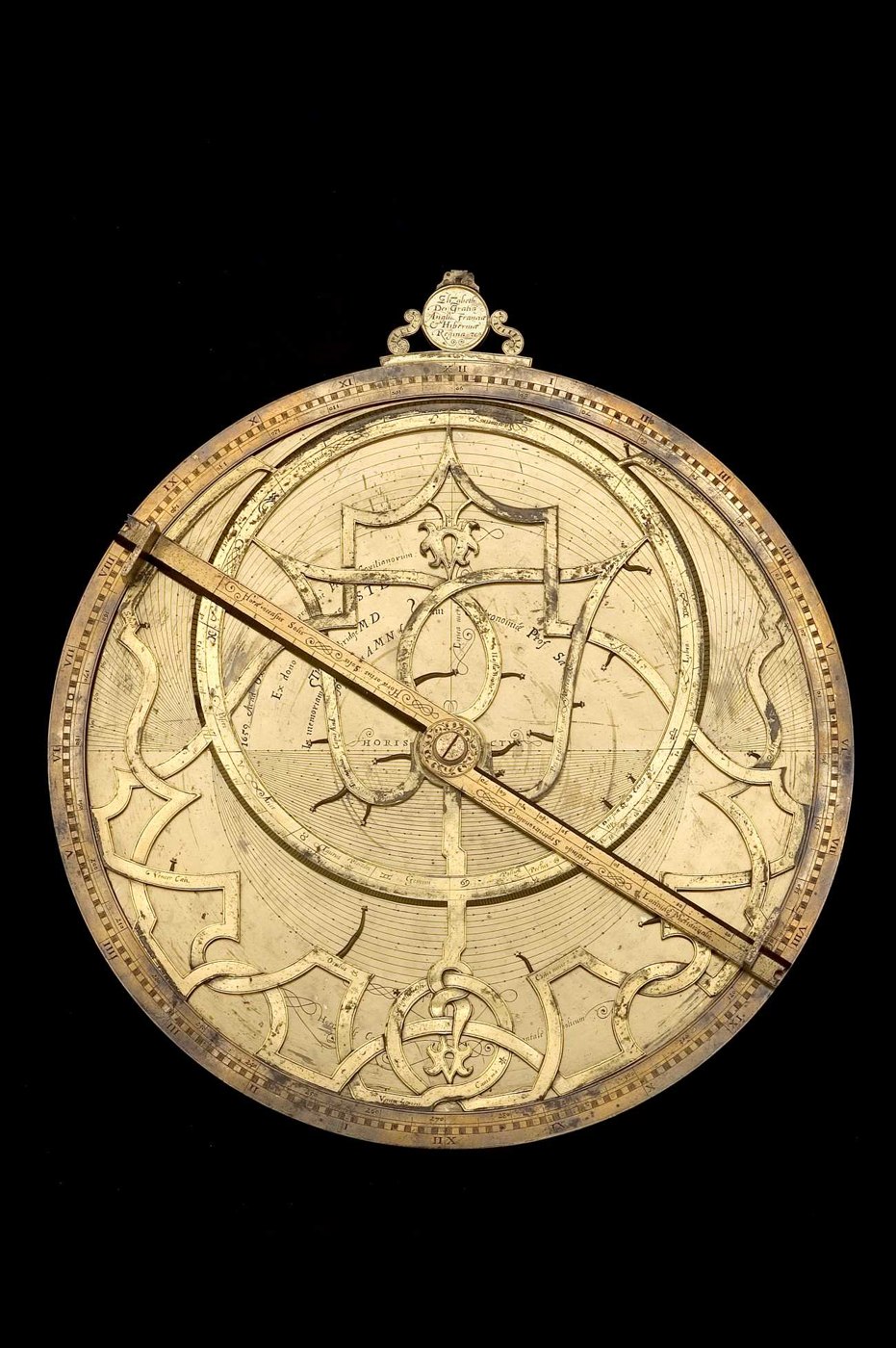
History of Science Museum, University of Oxford
horological instruments
Astrolabe by Thomas Gemini
1559
This 1559 brass astrolabe was produced by the craftsman Thomas Gemini in London. The object features a simple throne with s-shaped scrollwork, engraved with dedications to Queen Elizabeth I and bearing her coat-of-arms along with the Latin inscription 'Elizabeth Dei Gratia Angliæ Franciæ & Hiberniæ Regina etc.' The…
Partial type record
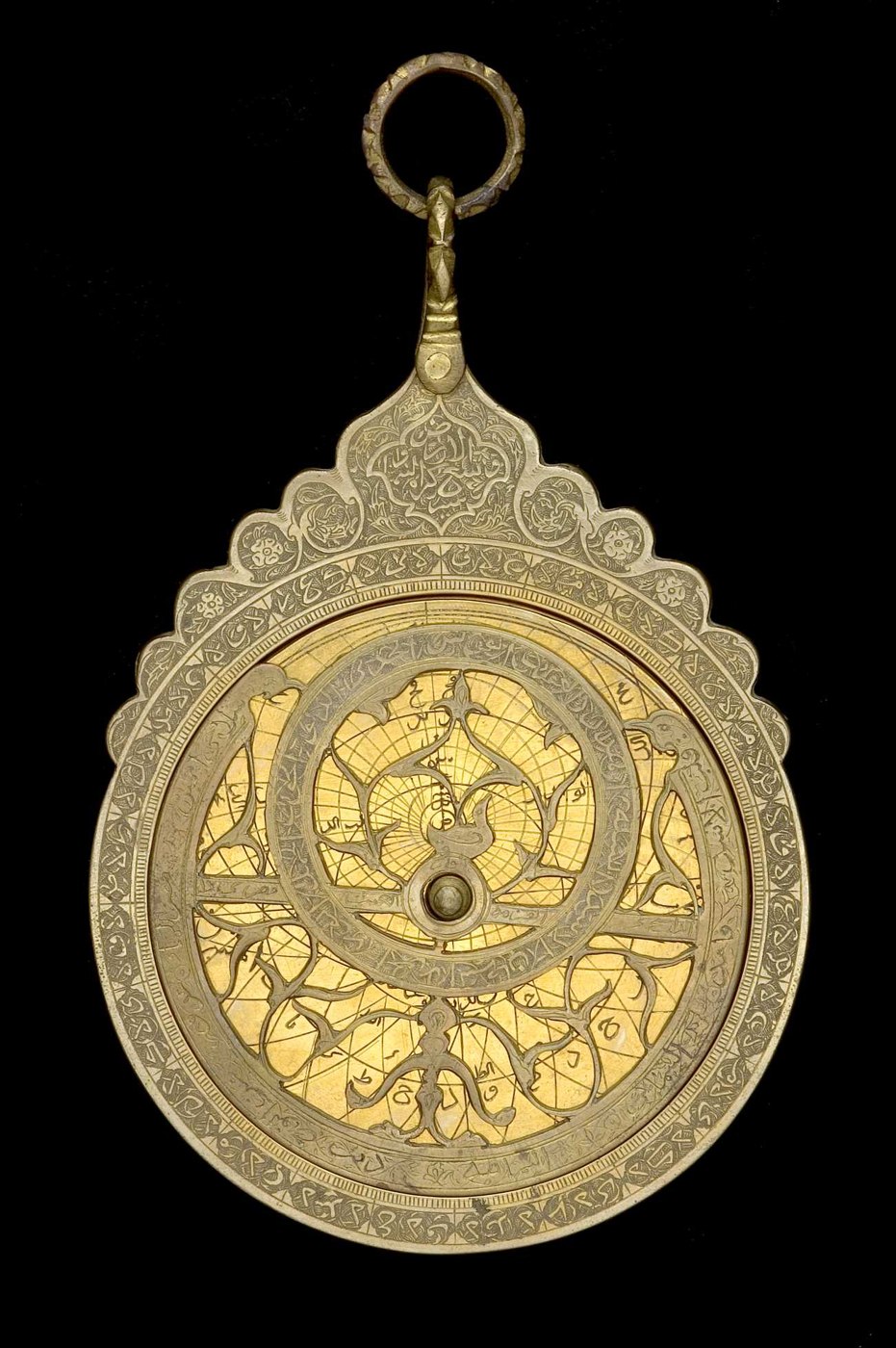
History of Science Museum, University of Oxford
horological instruments
Astrolabe signed by 'Abd al-'Ali
early 18th century
This brass astrolabe is identified by the inventory number 37940 and attributed to the maker 'Abd al-'Ali, an individual associated with the Isfahan group of instrument makers during the first decades of the 18th century. The instrument features a throne of the engraved Indo-Persian type and an omega-shaped shackle.…
Partial type record
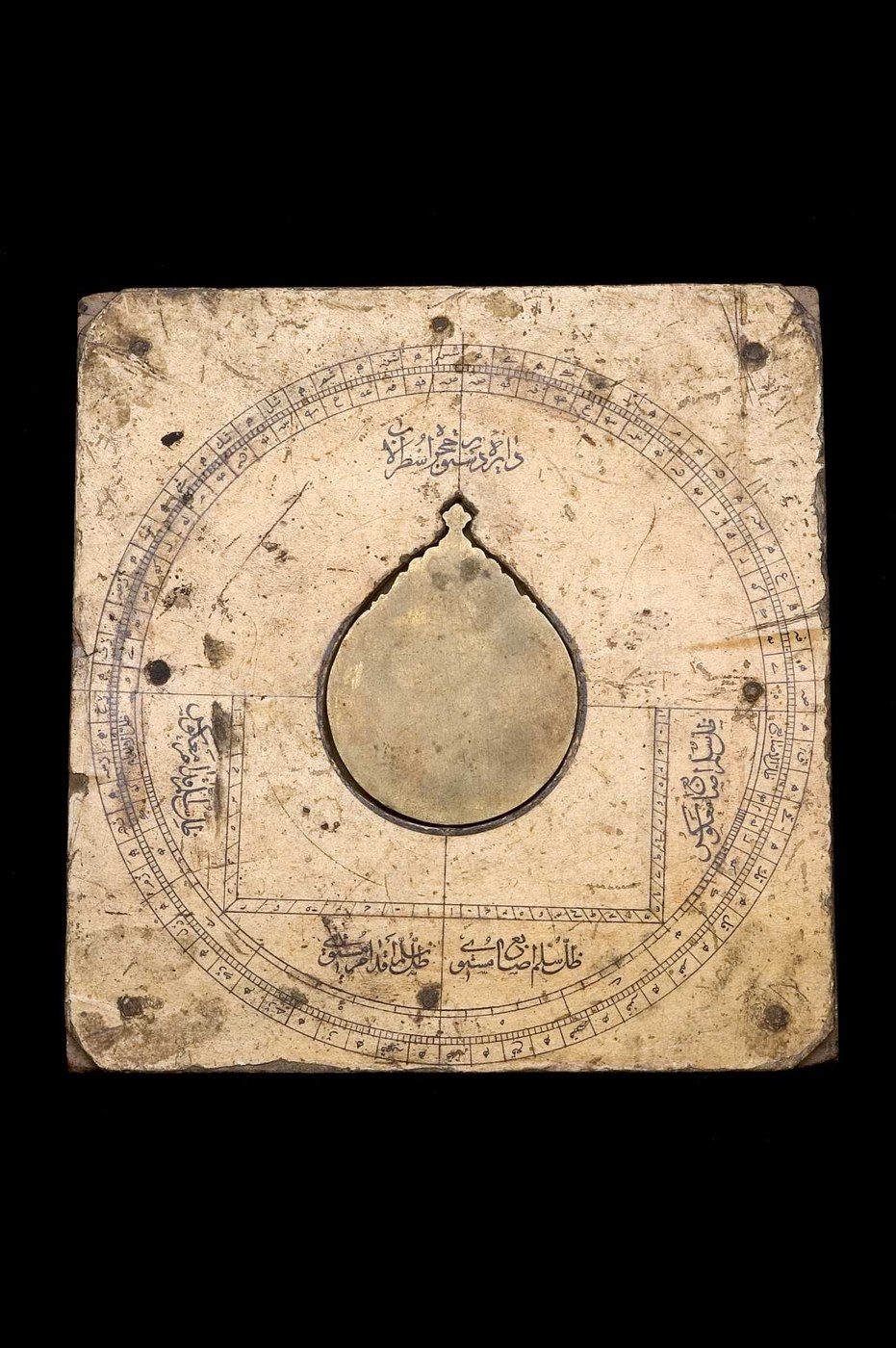
History of Science Museum, University of Oxford
horological instruments
Astrolabe template and brass blank
18th century (?)
This object is a wooden astrolabe template, known as a dastūr, which serves as a specialized tool for an instrument maker. It features a central recess containing an unfinished brass blank intended for an astrolabe. The object is part of a larger ensemble of 18th and 19th-century Persian instruments and workshop equ…
Partial type record
British Museum, London
horological instruments
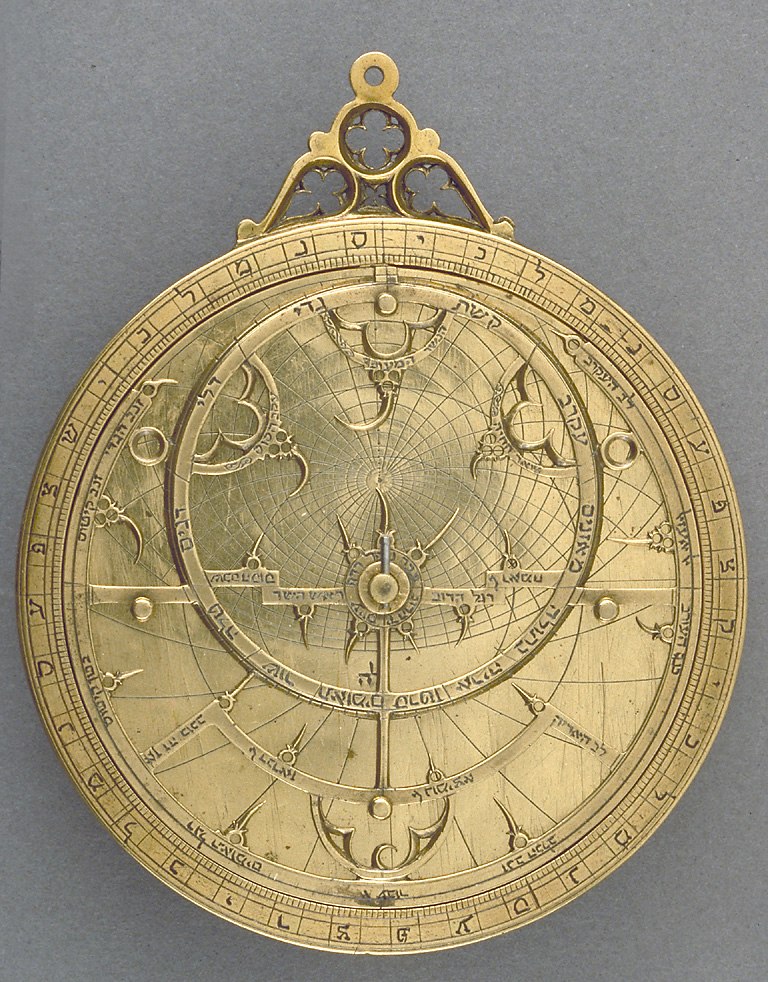
Astrolabe with Hebrew Markings
mid 14th century
This is a gilt brass astrolabe measuring 92 mm in diameter, featuring significant engravings in Hebrew script. It is an unsigned instrument that includes a throne with a pierced quatrefoil design composed of three metal layers. The rete displays a semi-quatrefoil pattern, with star-pointers shaped like bent daggers,…
Partial type record
History of Science Museum, University of Oxford
horological instruments
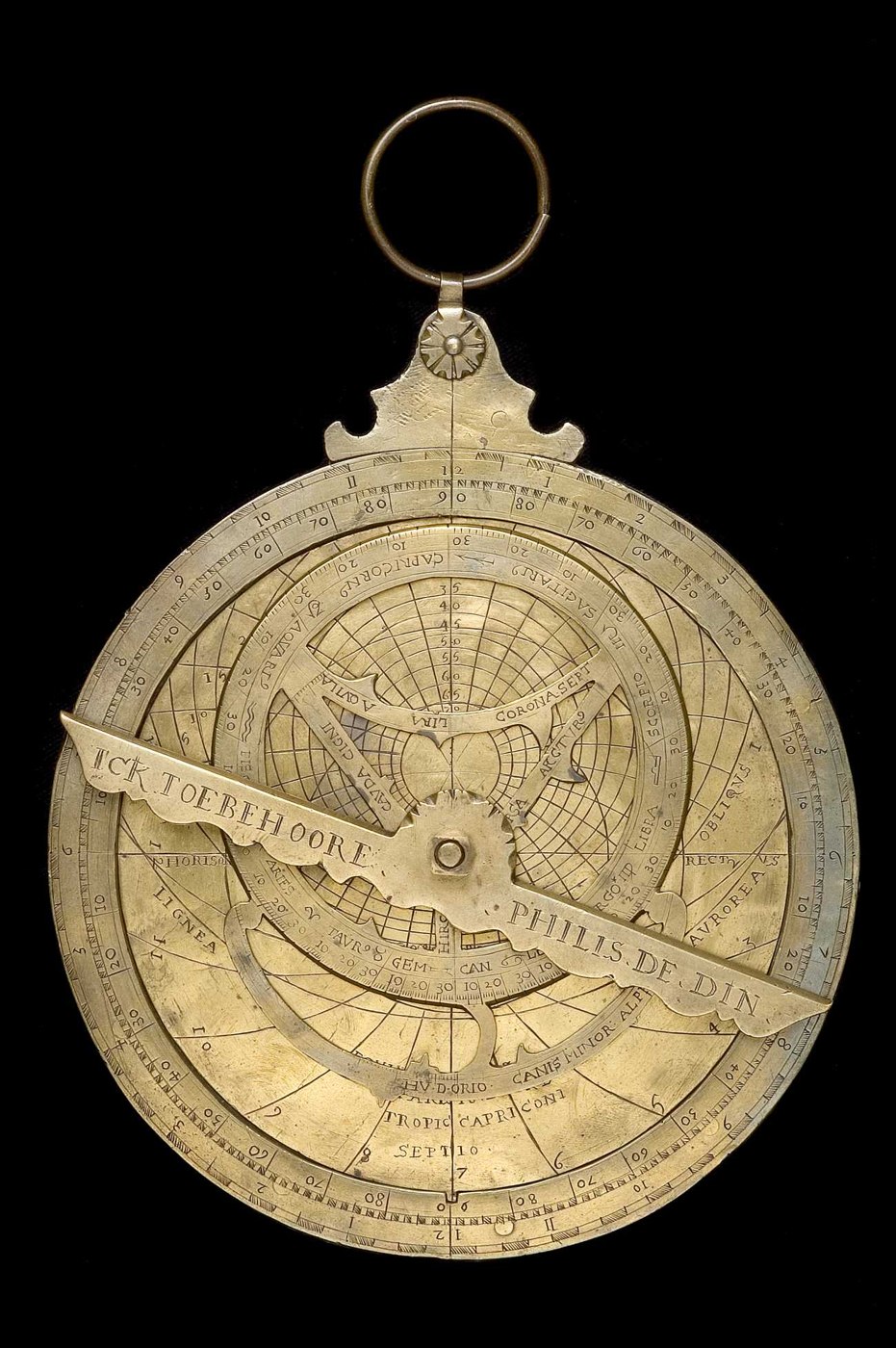
Astrolabe with Jesuit religious symbols
1595
This 1595 brass astrolabe is attributed to Paris. The back displays altitude, zodiacal, unequal hours, and shadow square scales, and is inscribed with a prayer and the Jesuit emblem 'IHS' with a cross and pierced heart, which suggests the original owner may have been a Jesuit priest. An early ownership inscription o…
Partial type record
History of Science Museum, University of Oxford
horological instruments
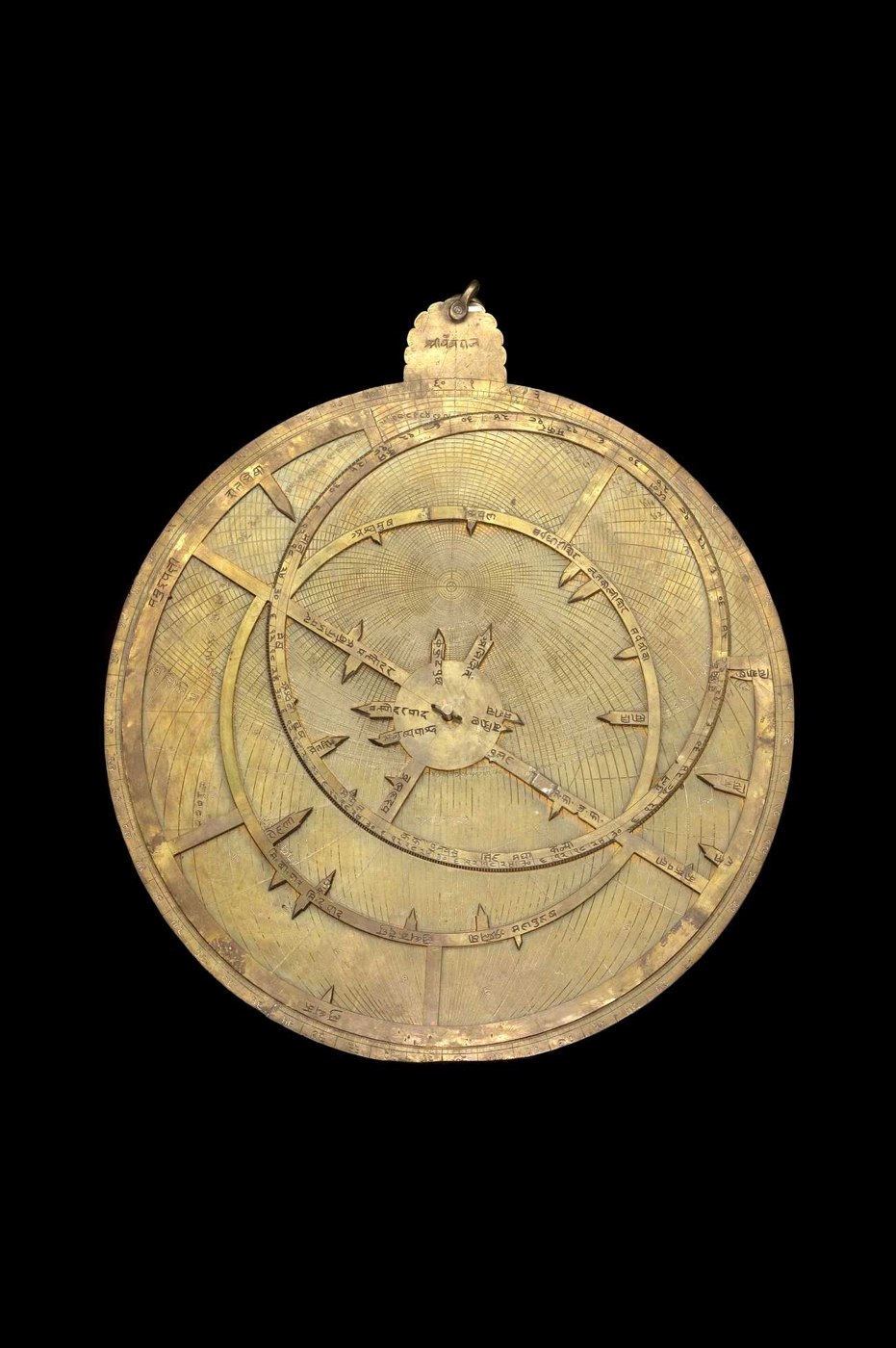
Astrolabe with sighting tube, inventory 30402
late 18th or early 19th century
This brass astrolabe, designated inventory number 30402, is attributed to Indian manufacture, specifically Jaipur, during the late 18th or early 19th century. It features a large diameter and a single plate engraved for a latitude of 27°. The throne bears an inscription in Sanskrit, 'श्रीयंत्रराज' ('The glorious ast…
Partial type record
British Museum, London
horological instruments
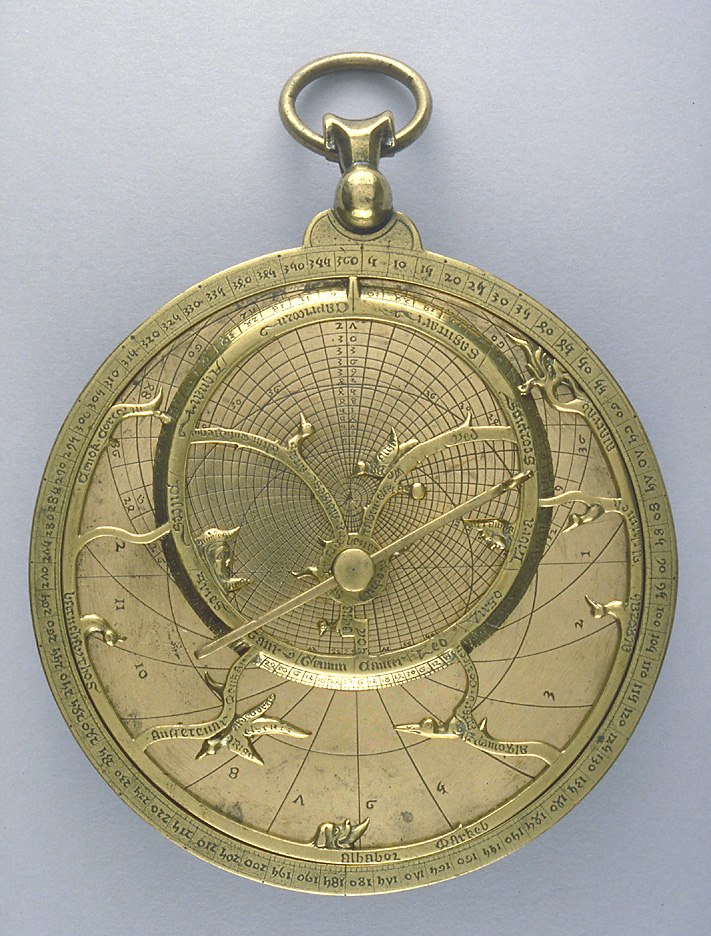
Astrolabe, 1326
1326
This brass astrolabe, measuring 132 mm in diameter, is dated 1326 and is widely associated with English origins. The mater is cut from a solid block with a crescent-shaped throne and a saddle-shaped shackle. The rete features a Y-shape inside the ecliptic and incorporates 33 star pointers, ten of which are zoomorphi…
Partial type record
Museum of the History of Science, Oxford
horological instruments
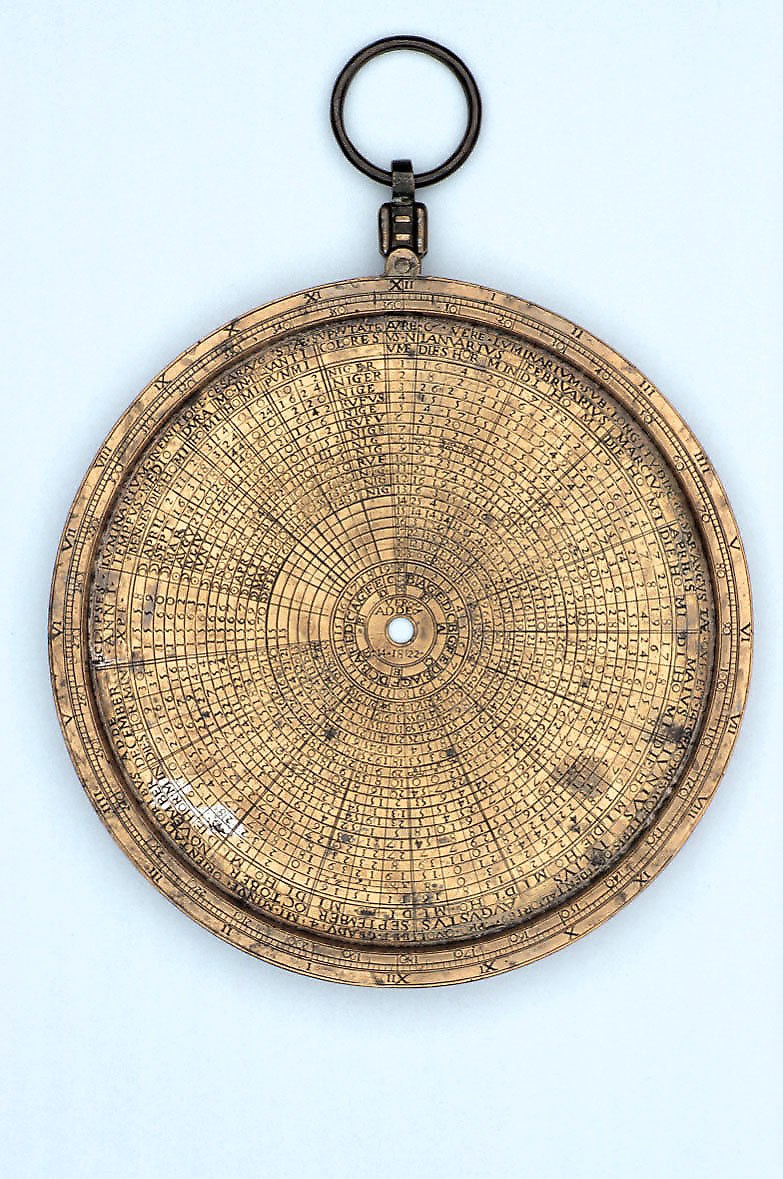
Astrolabe, 1558
1558
This 1558 brass astrolabe, attributed to the maker Jacobus Valerius, measures 133 mm in diameter. The instrument survives only as the mater, with the limb, shackle, and suspension ring intact; latitude plates and the rete are missing. The interior of the mater features a complex radiating table of numbers designed t…
Partial type record
Istituto e Museo di Storia della Scienza, Firenze
horological instruments
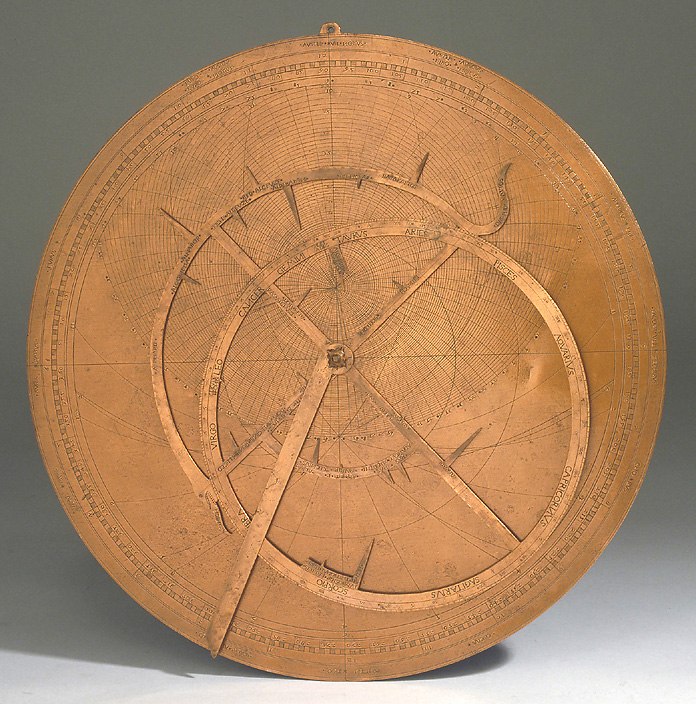
Astrolabe, 16th century
16th century
This 16th-century astrolabe, crafted from copper and measuring 385 mm in diameter, is part of the collection at the Istituto e Museo di Storia della Scienza in Florence. The instrument, which is unsigned, is attributed to German manufacture based on its construction. It possesses an unusual design, lacking a traditi…
Partial type record
Victoria and Albert Museum, London
horological instruments
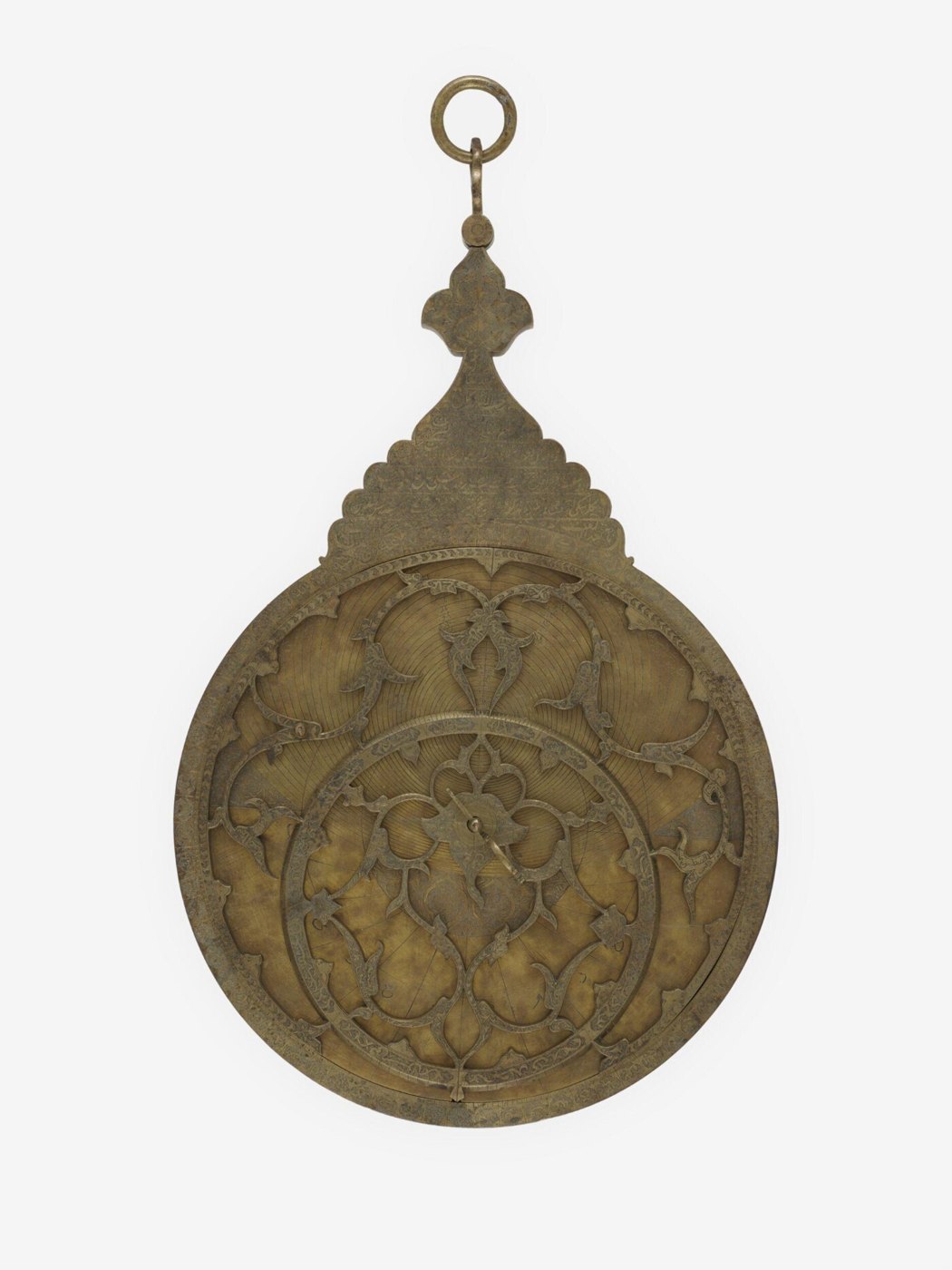
Astrolabe, 1781
1781
This astrolabe, dated to 1781, comprises a brass mater, a rete, seven engraved plates, an alidade, and a central pin with a horse. The complex structure includes a kursi, which is an extension at the top ending in a suspension loop. This variety suggests that the instrument is a composite piece. The total weight is…
Partial type record
History of Science Museum, University of Oxford
horological instruments
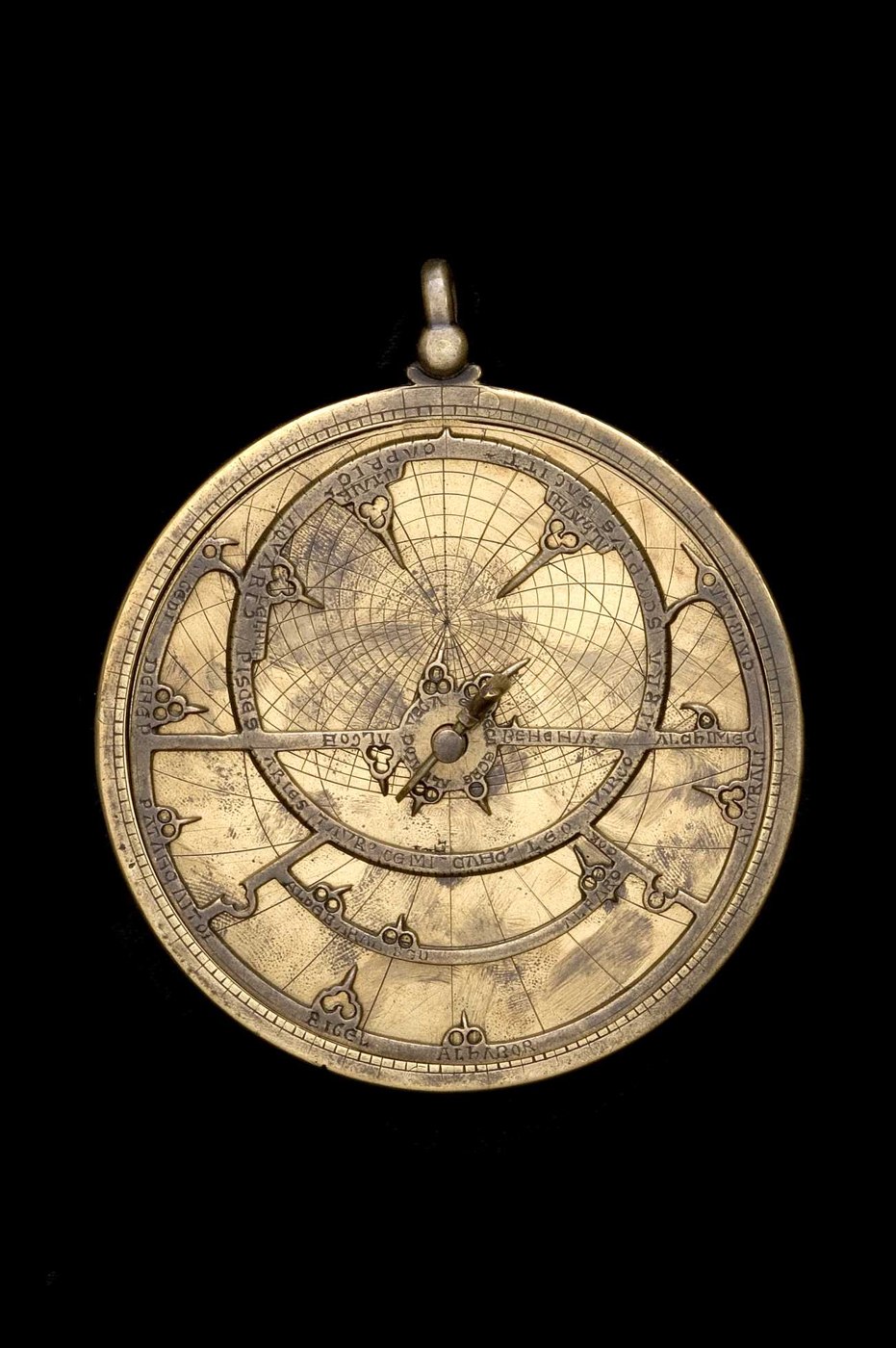
Astrolabe, ca. 1250
ca. 1250
This brass astrolabe, identified as inventory number 49033, is attributed to Spain circa 1250 and is maintained in the History of Science Museum, Oxford. It features a simple throne with an integrated base and an omega-type shackle. The instrument includes a riveted mater and limb, and a rete of the indicator-line t…
Partial type record
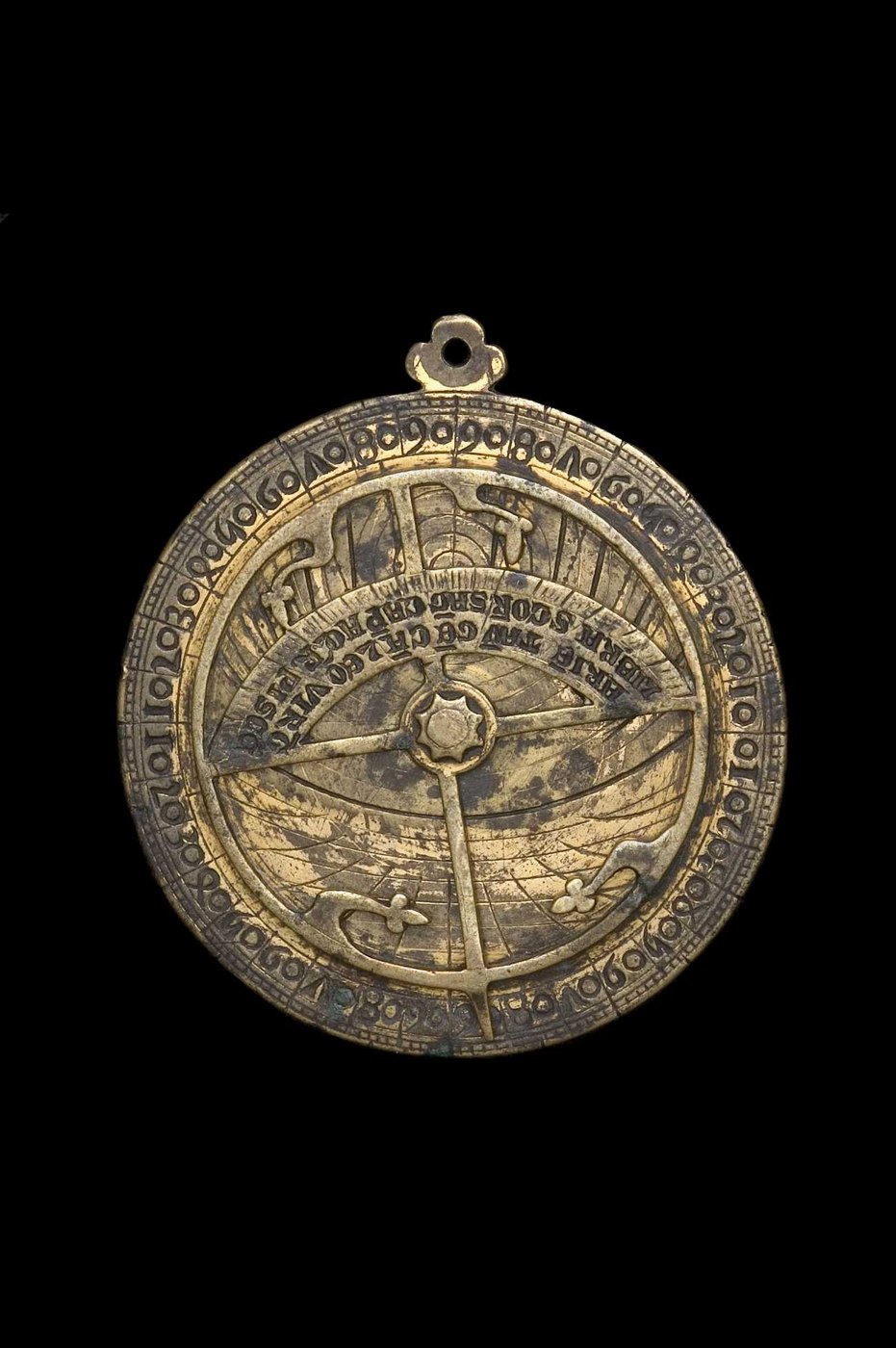
History of Science Museum, University of Oxford
horological instruments
Astrolabe, ca. 1300 (?)
ca. 1300 (?)
This gilt brass astrolabe, inventory number 40829, is attributed to Sicily and dated to approximately 1300. , it features a unique rete design that integrates northern and southern projections of the ecliptic, causing the twelve zodiacal signs to align on a single arc below the center. Its construction, where the re…
Partial type record
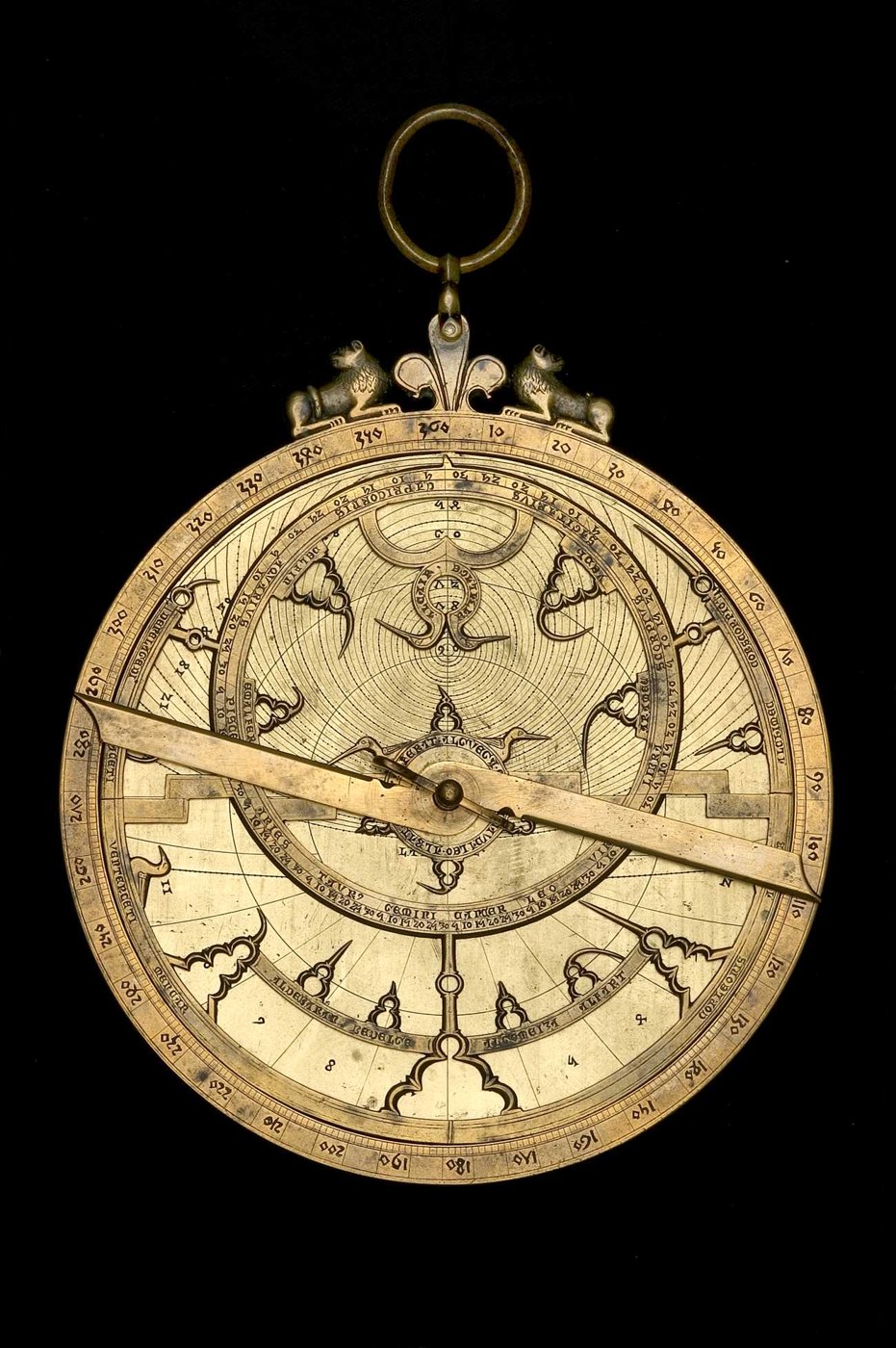
History of Science Museum, University of Oxford
horological instruments
Astrolabe, ca. 1300 (e20760)
ca. 1300
This brass astrolabe (inventory number 45307), dated to approximately 1300, is attributed to Spain. The instrument features a one-piece mater and limb construction. The throne follows a moorish-arch style, designed as a fleur-de-lis flanked by crouching lions. The back of the instrument incorporates four distinct sc…
Partial type record
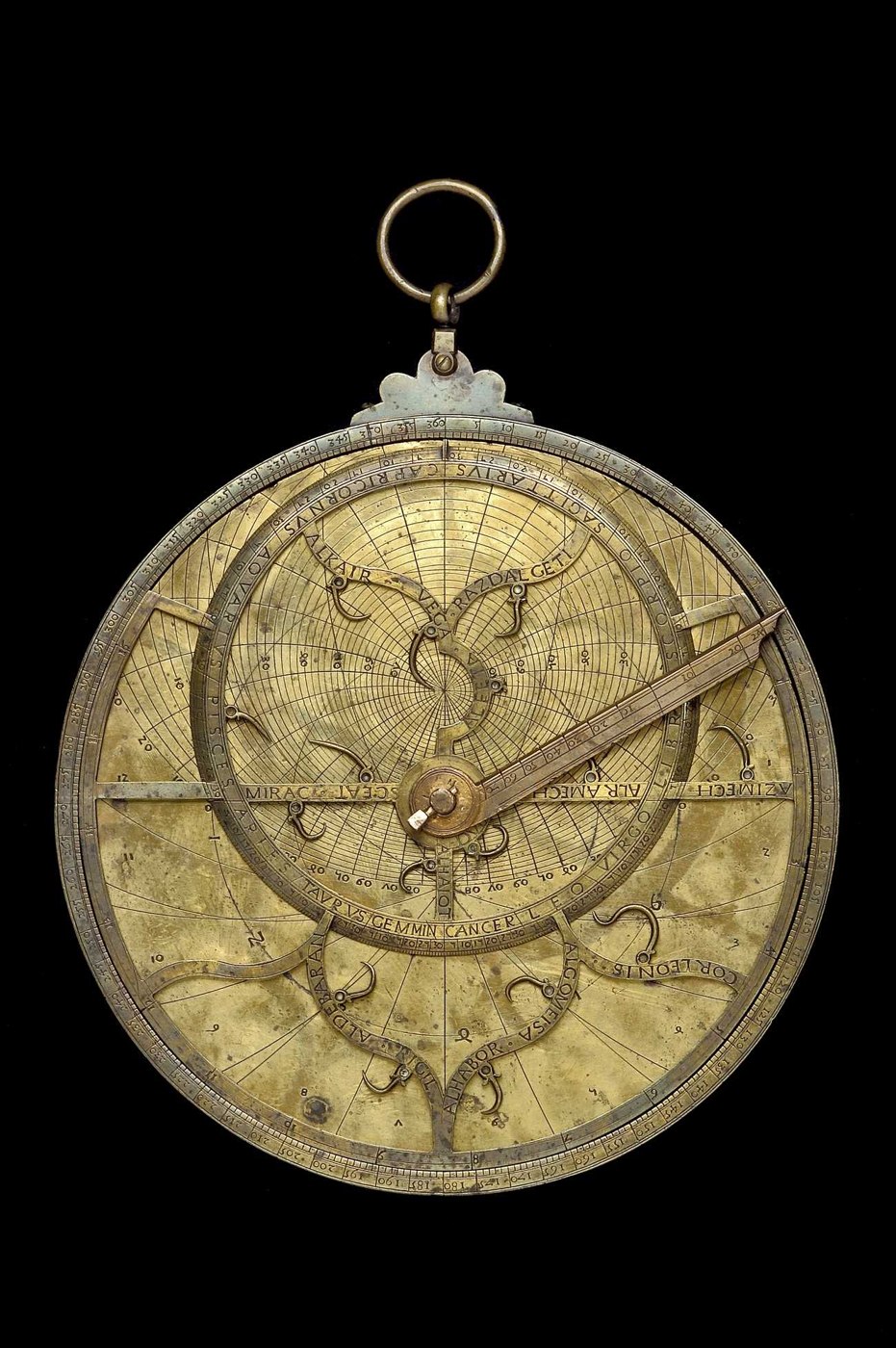
History of Science Museum, University of Oxford
horological instruments
Astrolabe, ca. 1500
ca. 1500
This brass astrolabe, inventory number 35146, is dated to approximately 1500 and attributed to Italy. The instrument features a three-lobed throne with a screwed base and a simple, round cross-section ring. It is constructed from two pieces (mater and limb) with soldered joints. The rete, which carries 16 stars with…
Partial type record
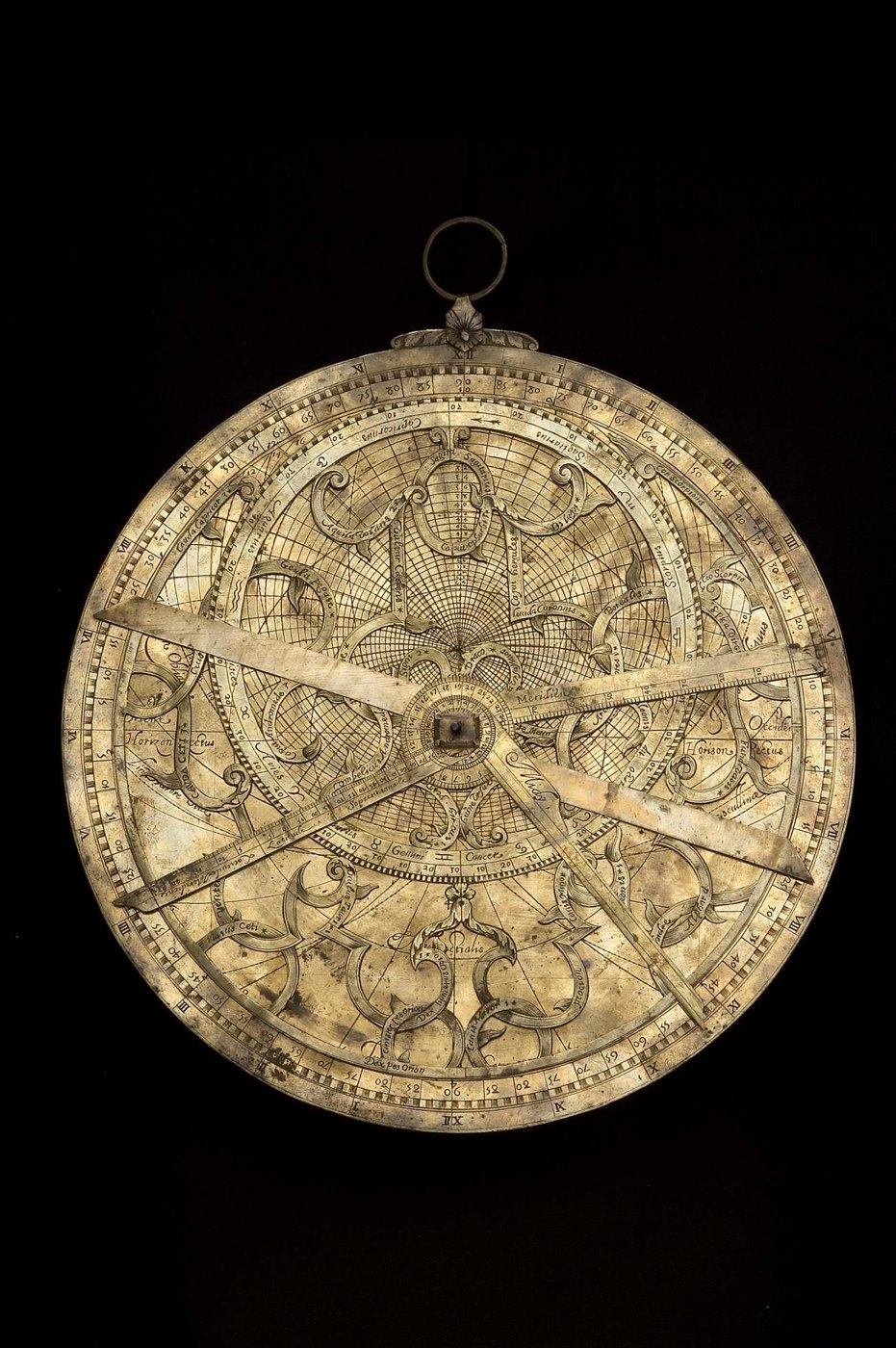
History of Science Museum, University of Oxford
horological instruments
Astrolabe, ca. 1600
ca. 1600
This astrolabe, inventory number 35082, is a brass instrument of French origin, tentatively attributed to the maker Philippe Danfrie and dated circa 1600. It features an ornate rete containing 41 star pointers, The instrument includes a mater and limb constructed as a single piece, with scales for degree measurement…
Partial type record
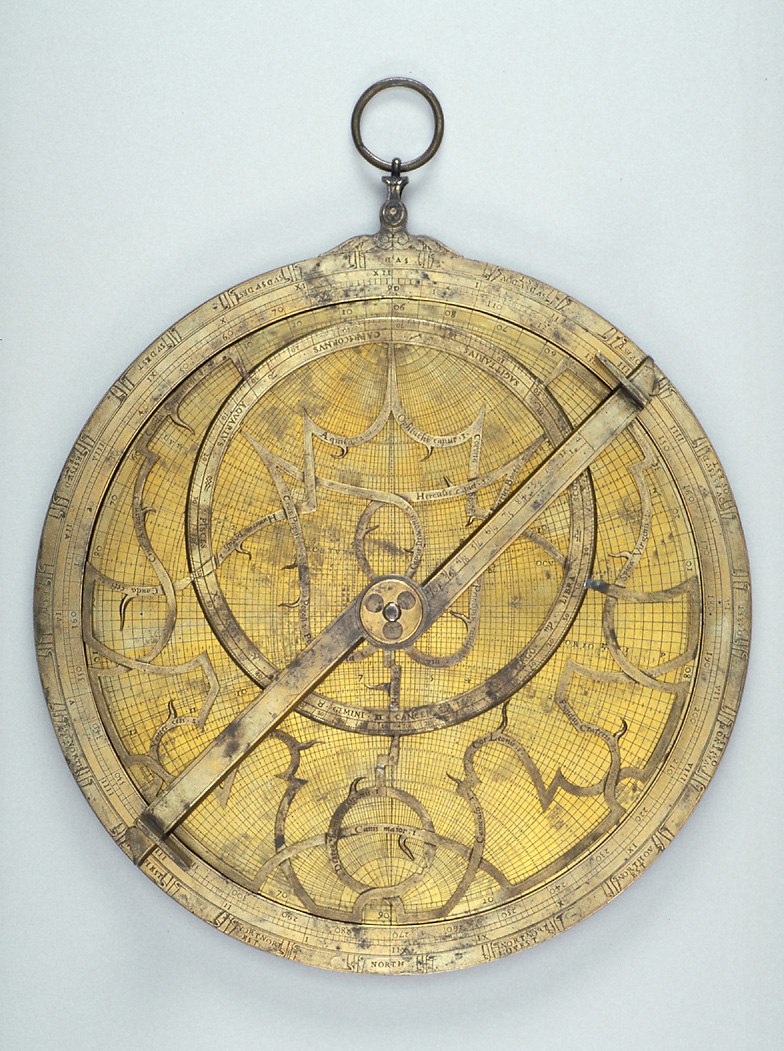
Museum of the History of Science, Oxford
horological instruments
Astrolabe, circa 1570
circa 1570
This unsigned brass astrolabe has a diameter of 232 mm and comprises a mater, rete, latitude plates, rule, and alidade. The mater features a squat throne with a shackle and suspension ring. Its limb contains hour divisions and a degree scale alongside French names for sixteen compass points. The rete follows the Ars…
Partial type record
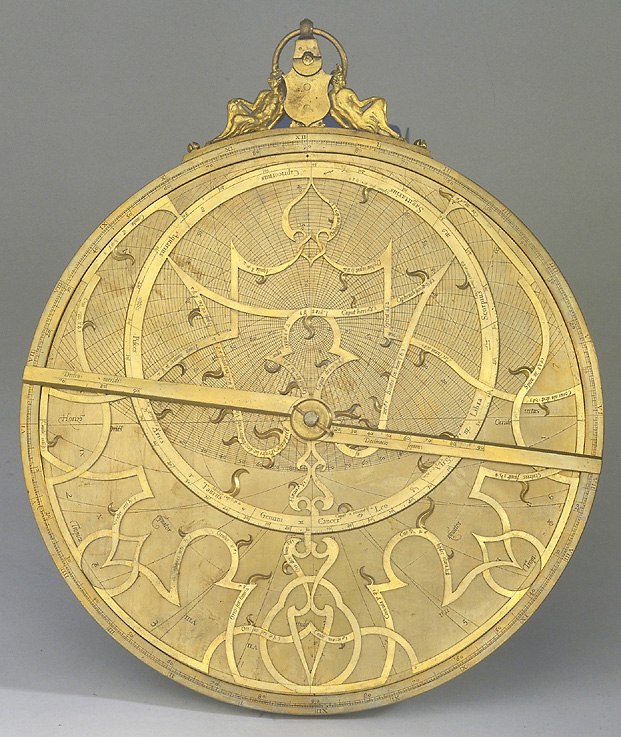
Istituto e Museo di Storia della Scienza, Firenze
horological instruments
Astrolabe, circa 1570 (75cea1)
circa 1570
This astrolabe, crafted from brass with a diameter of 297 mm, is attributed to the Louvain-based instrument maker Gualterus Arsenius, nephew of Gemma Frisius, dating to circa 1570. The instrument consists of a mater containing eight latitude plates calibrated for various latitudes ranging from 24 to 60 degrees. The…
Partial type record
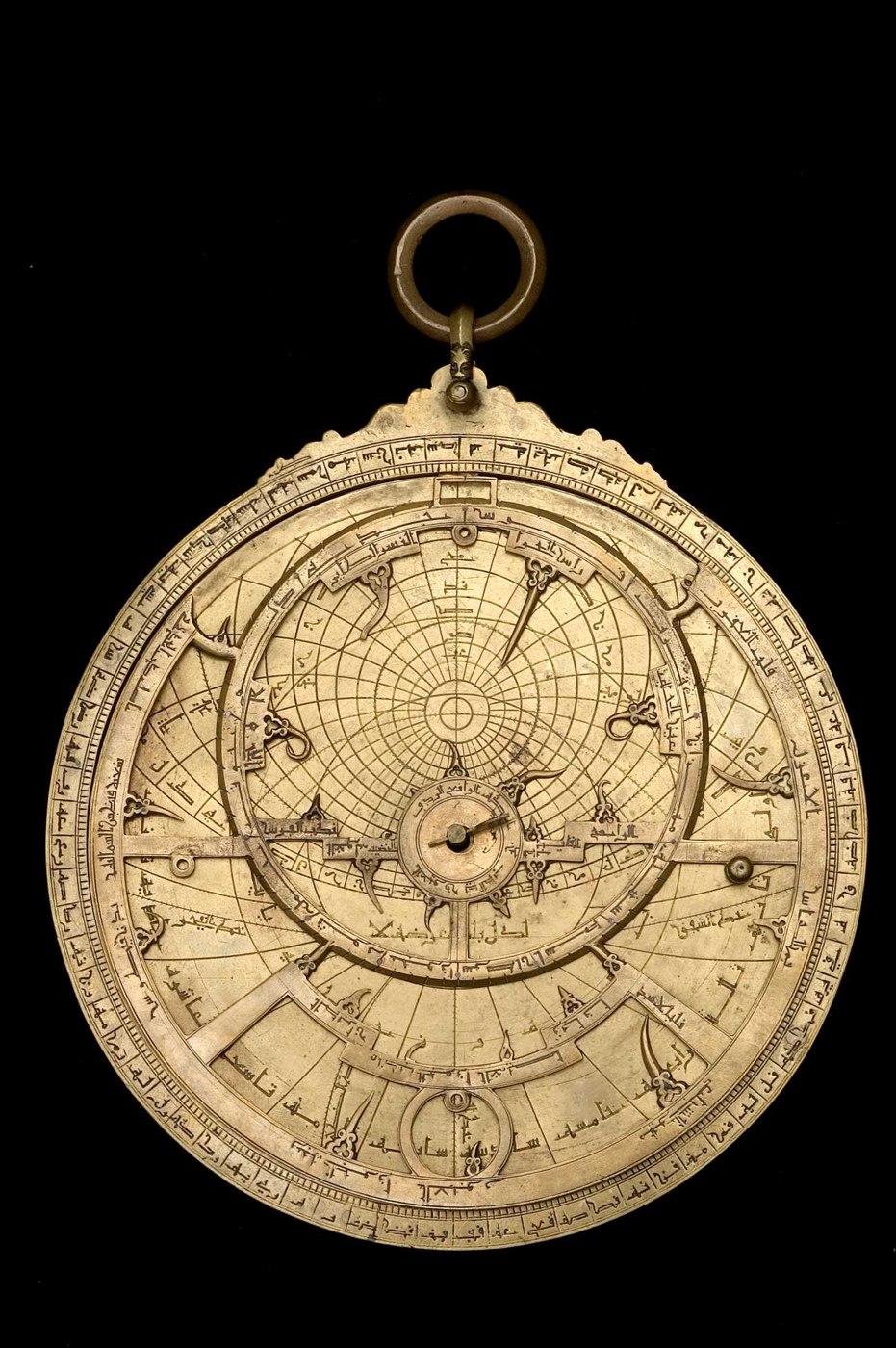
History of Science Museum, University of Oxford
horological instruments
Astrolabe, inventory 41122
13th century
This 13th-century brass astrolabe (inventory 41122) is catalogued as originating from North Africa. The instrument features a five-lobed throne, an omega-type shackle with animal-head carving, and a simple ring with a square cross-section. The mater and limb are constructed from two riveted pieces, with a notch on t…
Partial type record
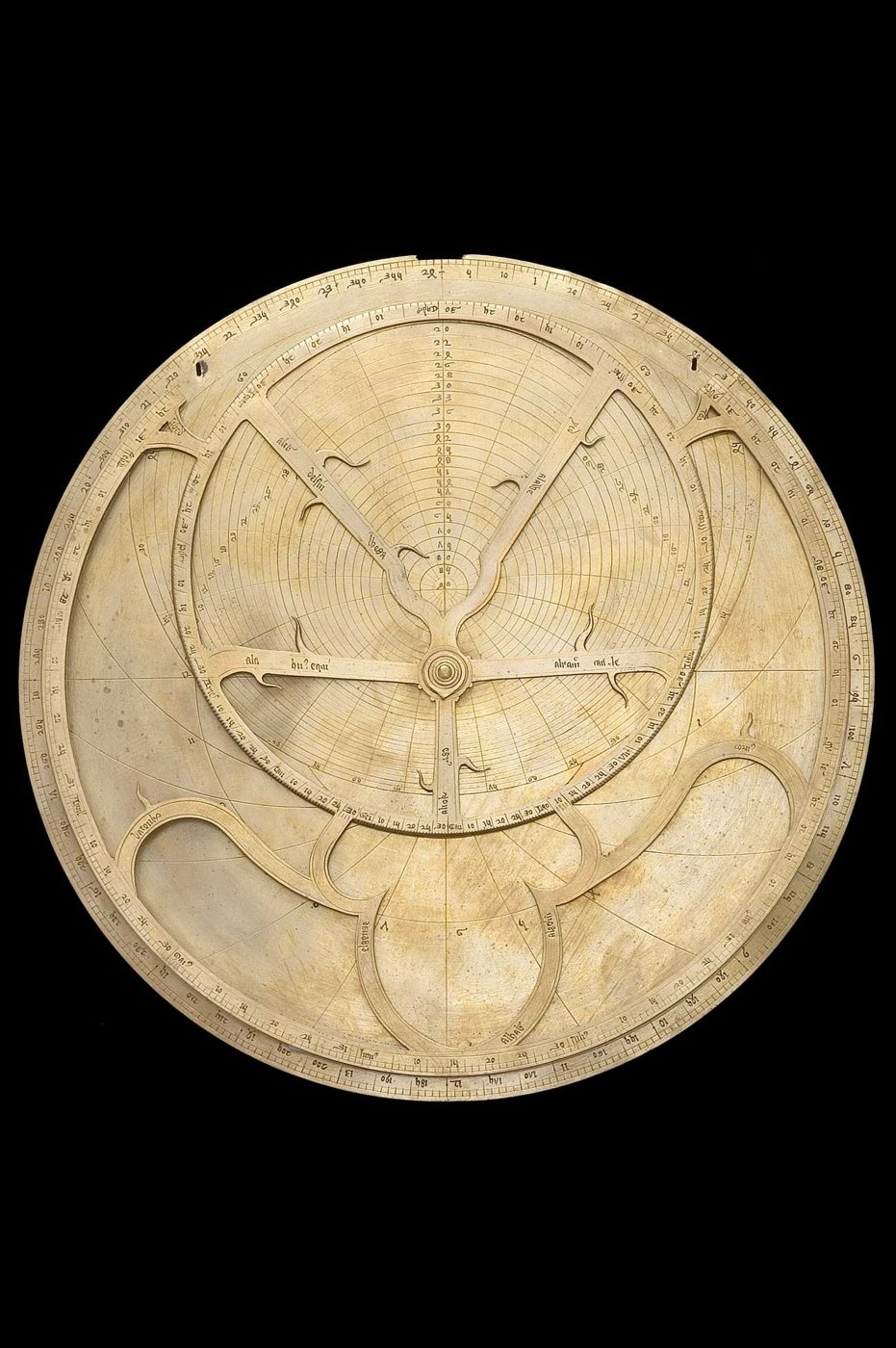
History of Science Museum, University of Oxford
horological instruments
Astrolabe, Inventory 47901
ca. 1350
This brass astrolabe, designated inventory number 47901, dates to approximately 1350 and is associated with Oxford. Unlike many European counterparts, this instrument is constructed from a single, thin plate, which serves as both the mater and the limb. The womb is engraved for a latitude of 51°, matching that of Ox…
Partial type record
History of Science Museum, University of Oxford
horological instruments
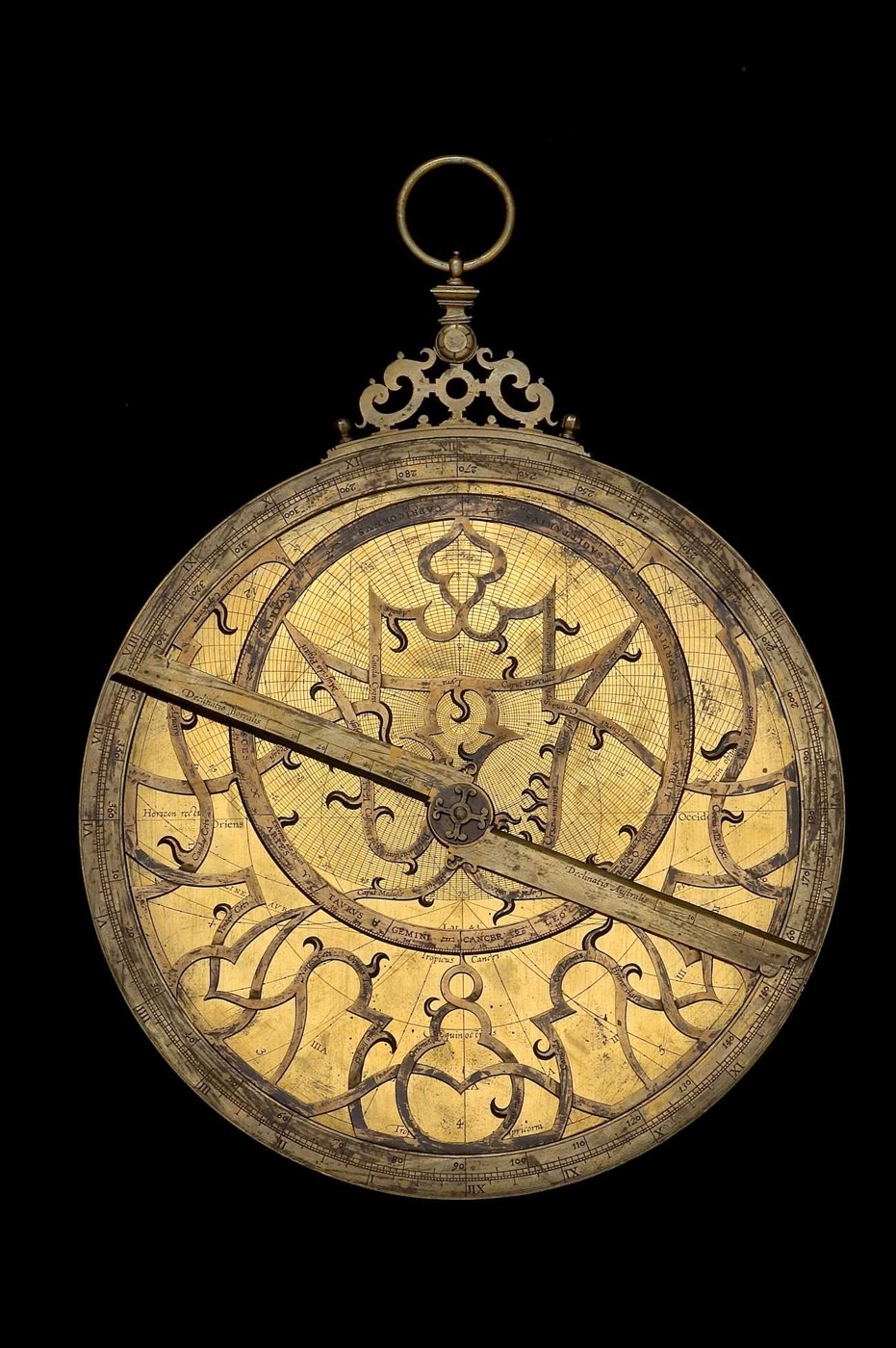
Astrolabe, late 16th century
late 16th century
This late 16th-century brass astrolabe (inventory number 45365) from Flanders features a pierced throne with c-shaped scroll work and is secured with a simple, round cross-section ring and square, ornate shackle. The instrument consists of a two-piece, riveted mater and limb construction, containing three plates wit…
Partial type record
Museum of the History of Science, Oxford
horological instruments
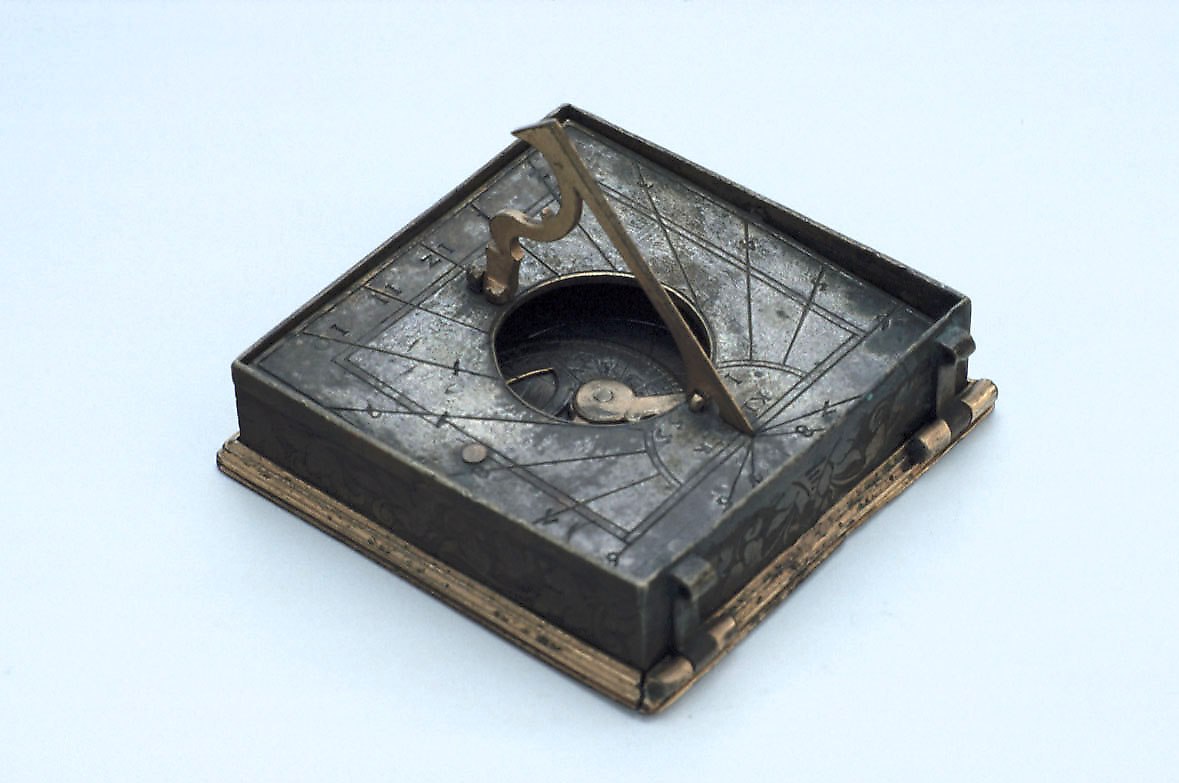
Astronomical Compendium
1555
This astronomical compendium is an instrument signed by Ulrich Klieber and dated 1555. Constructed of gilt and silvered brass, it measures 59 x 59 x 15 mm and was produced in Augsburg. The object is square in section and was originally designed with two folding cover leaves to enclose the central box, though one cov…
Partial type record
British Museum, London
horological instruments
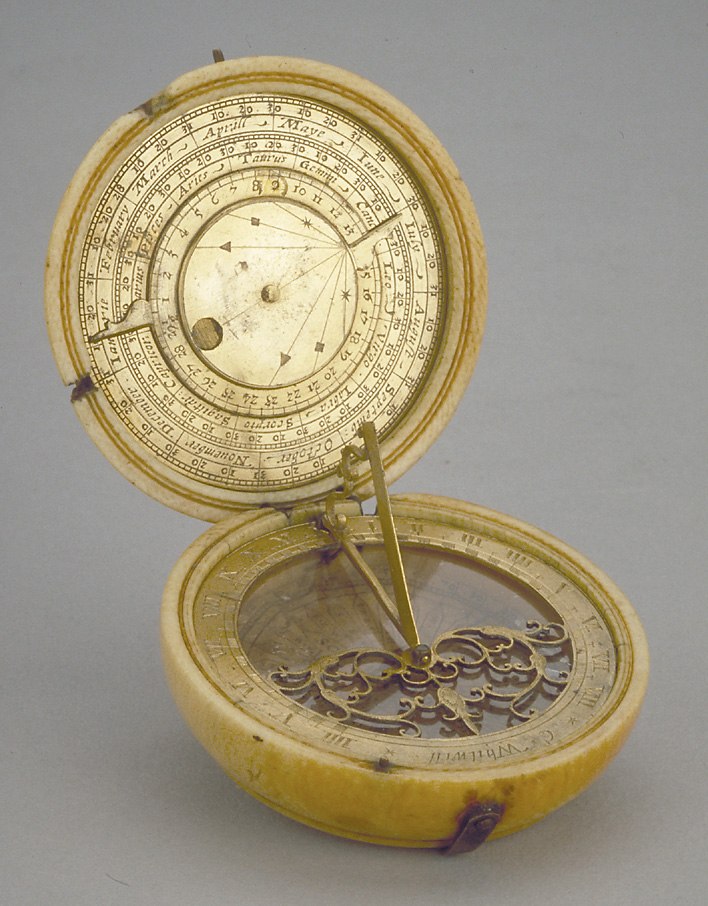
Astronomical Compendium by Charles Whitwell
circa 1600
This astronomical compendium, attributed to the maker Charles Whitwell circa 1600, is constructed from an ivory box measuring 66 mm in diameter. It incorporates multiple functional components including a high-tide calculator, a lunar volvelle, a horizontal sundial, and a magnetic compass. The exterior lid features a…
Partial type record
Museum of the History of Science, Oxford
horological instruments
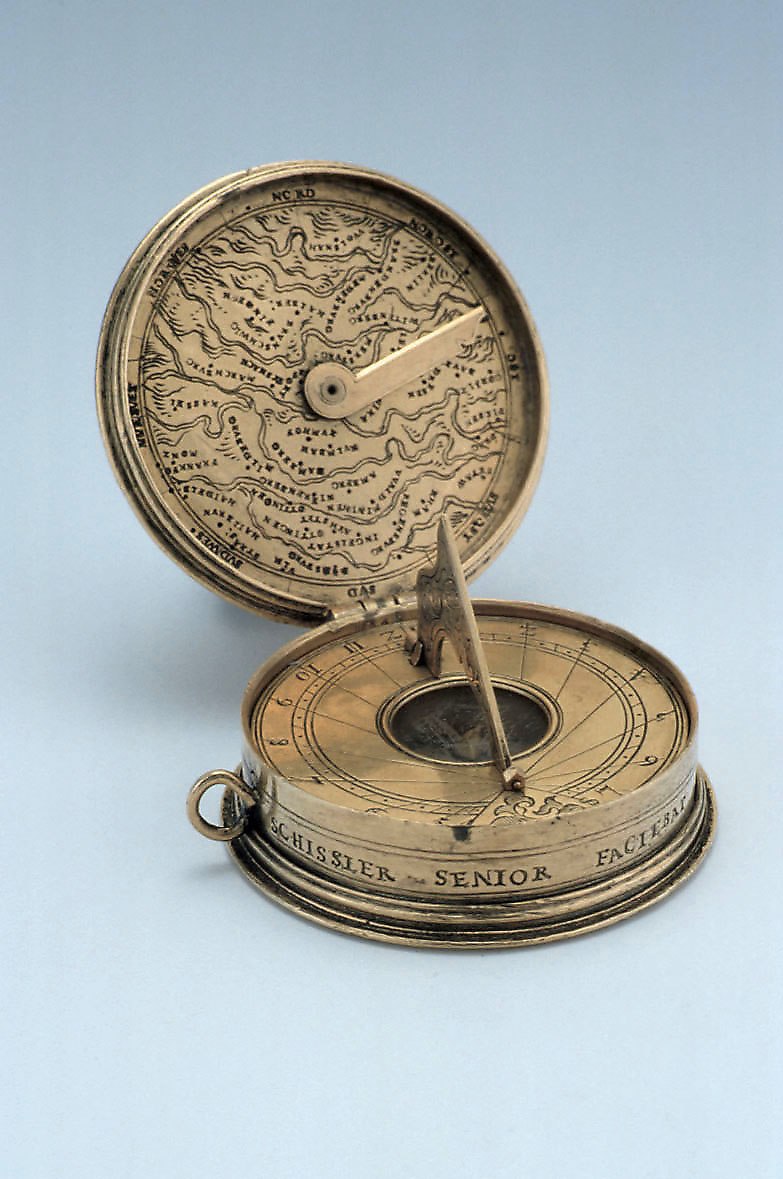
Astronomical Compendium by Christoph Schissler
1608
This circular astronomical compendium, dated 1608 and made of gilt brass, measures 62 mm in diameter. Signed by Christoph Schissler, The instrument features a suspension ring and a single cover. The interior of the main box contains an inclining sundial equipped with a folding gnomon and an integral compass bowl fea…
Partial type record
Museum of the History of Science, Oxford
horological instruments
Astronomical Compendium by Christoph Schissler, 1557
1557
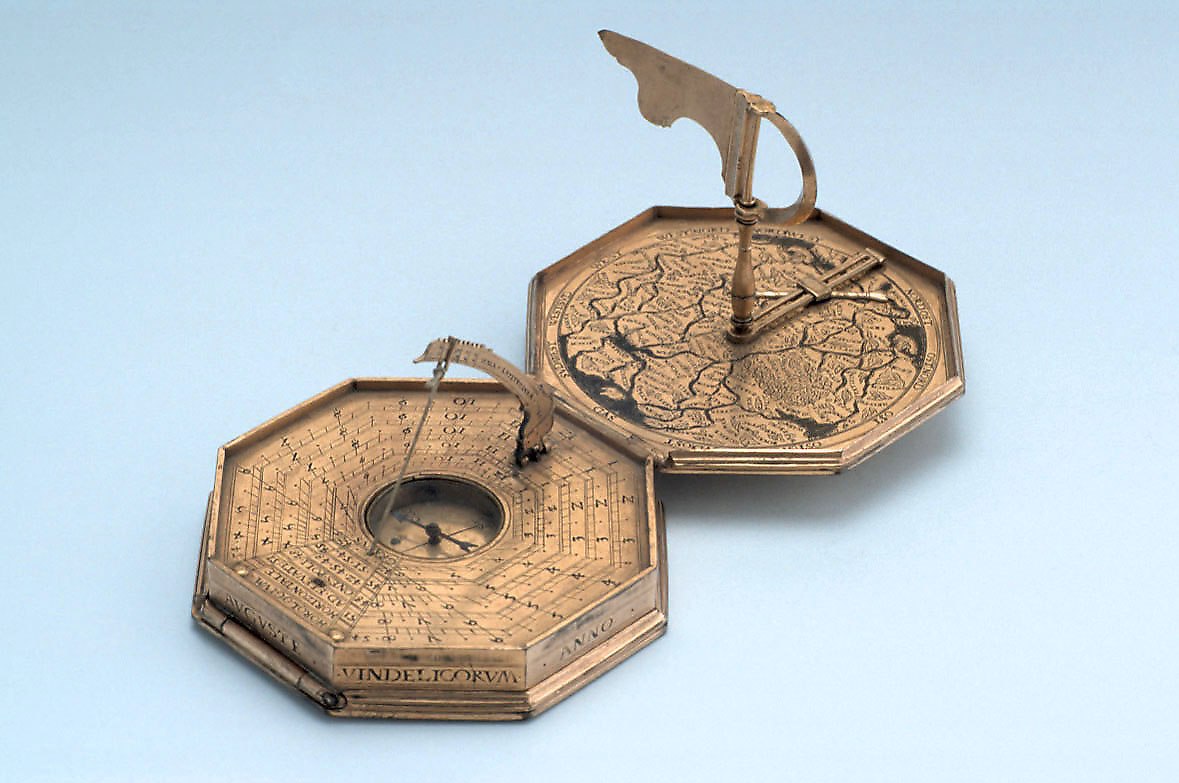
This octagonal gilt brass astronomical compendium, measuring 84 mm in maximum diameter, was signed and dated by Christoph Schissler in Augsburg in 1557. The device consists of a central box with two hinged covers, featuring an extensive array of astronomical and cartographic functions. These include a horizontal str…
Partial type record
© British Museum, London
horological instruments
Astronomical Compendium by Christoph Schissler, 1563
1563
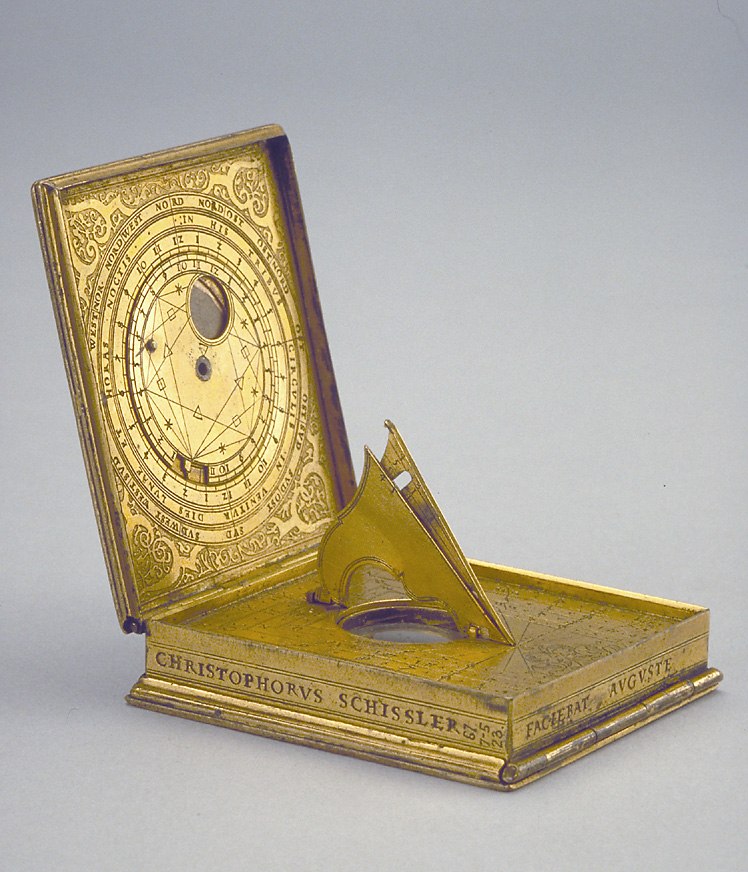
This gilt brass astronomical compendium, measuring 60 x 66 x 14 mm, was produced in 1563 by the instrument maker Christoph Schissler in Augsburg. The object is a multi-functional timekeeping and navigational instrument featuring a folding construction. It incorporates a nocturnal, a perpetual calendar, solar and lun…
Partial type record
British Museum, London
horological instruments
Astronomical Compendium by Christoph Schissler, circa 1550
circa 1550
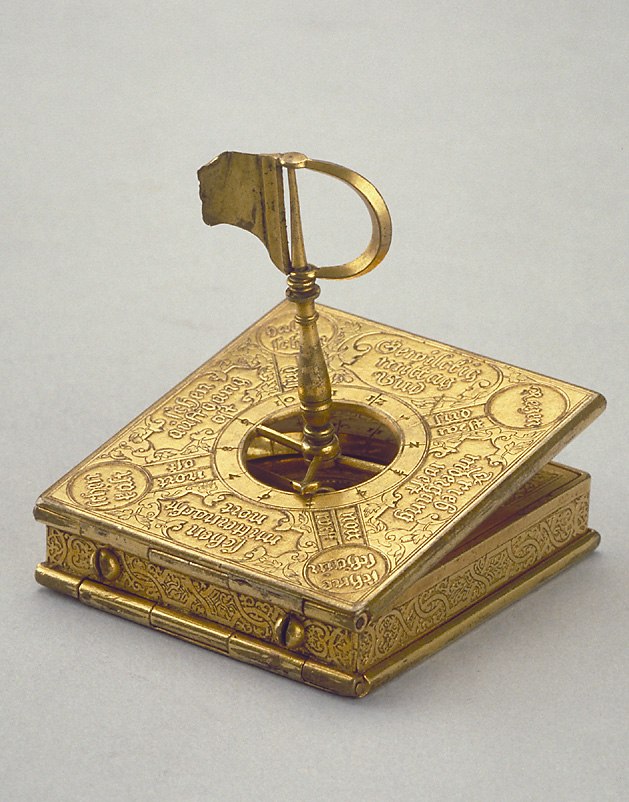
This astronomical compendium, fashioned from gilt brass, measures 60 x 65 x 12 mm when closed. It is signed by the Augsburg maker Christoph Schissler and is attributed to circa 1550 based on comparisons with dated pieces, which suggests it is among the maker's earliest instruments. The device features a 'wegweiser'…
Partial type record
Victoria and Albert Museum
horological instruments
Astronomical compendium by Christopher Schissler
1557
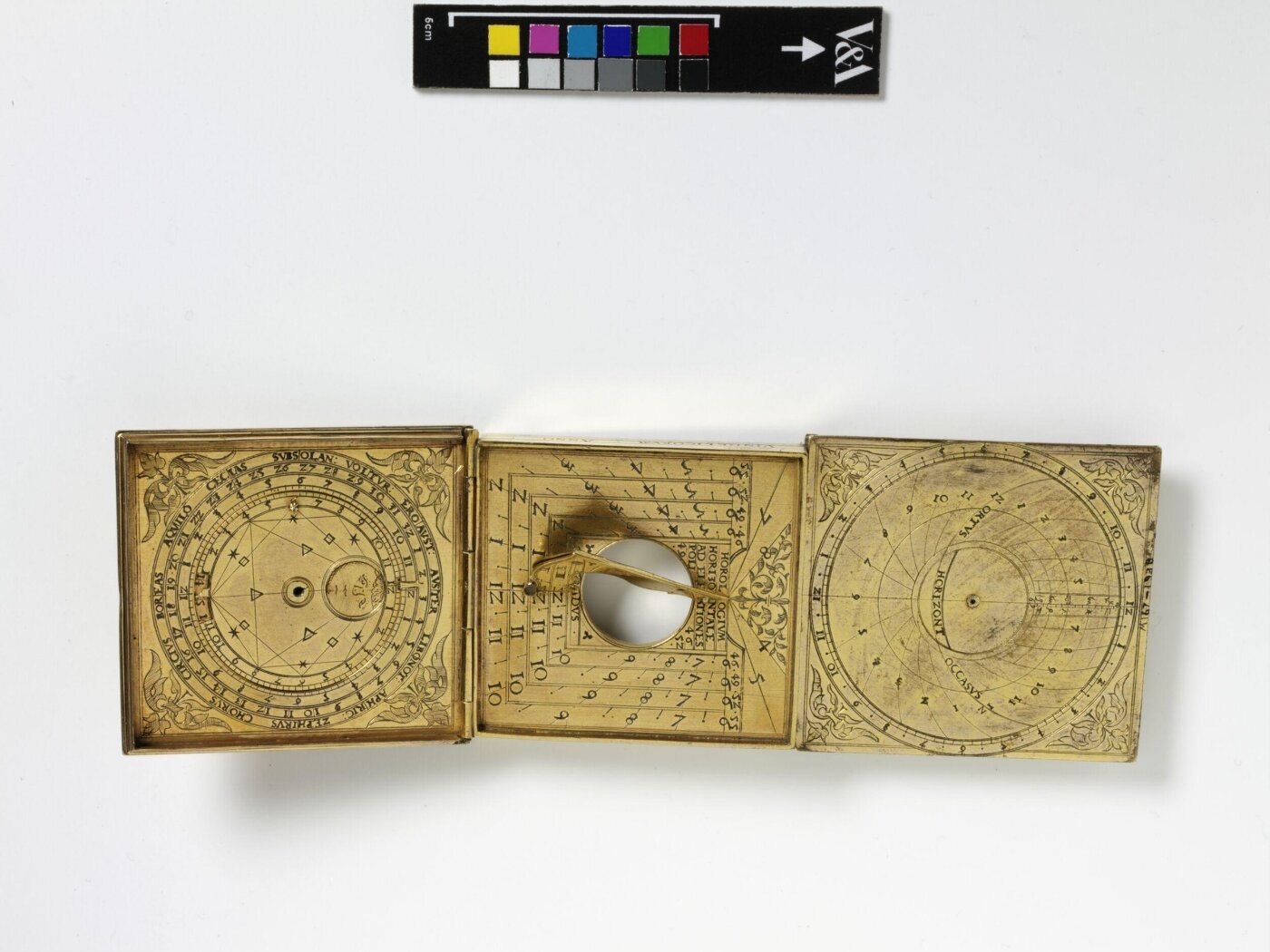
This astronomical compendium, created in 1557 by the German maker Christopher Schissler, is an instrument constructed from engraved, gilt copper. It consists of three rectangular leaves hinged together. The device serves multiple temporal and astronomical functions, featuring a sundial designed for four different la…
Partial type record
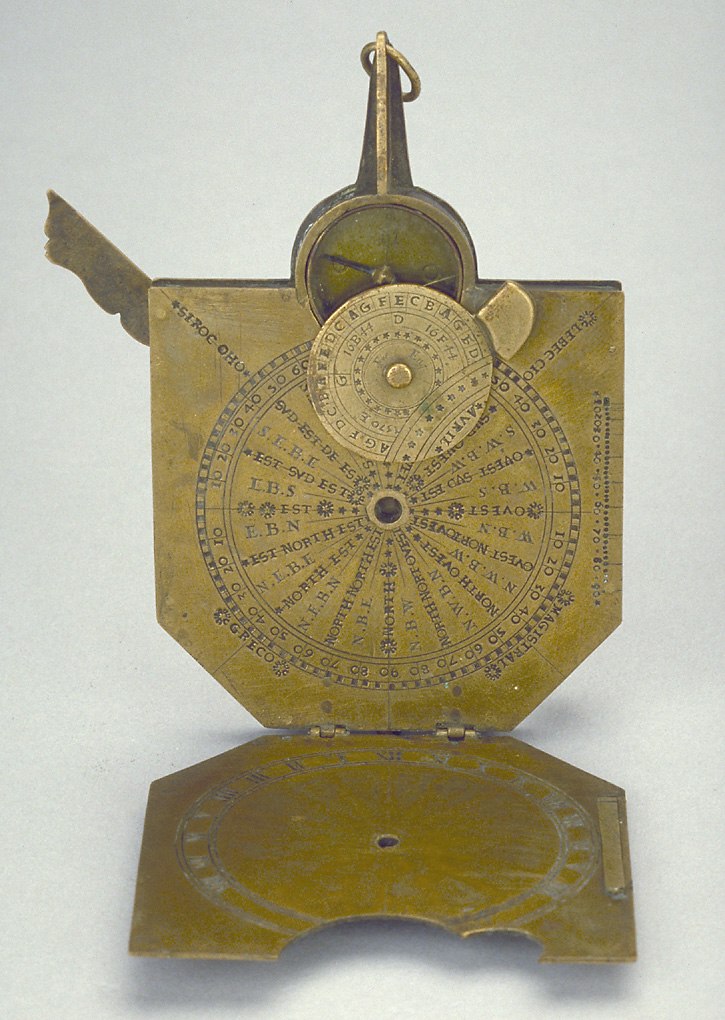
British Museum, London
horological instruments
Astronomical Compendium by Hierosme Vize Menusier
1567
This brass astronomical compendium, measuring 75 x 113 x 8 mm, was produced in 1567 in Pau, France, and signed by Hierosme Vize Menusier. The device functions as a multi-purpose scientific instrument, featuring an upper leaf equipped with a rotating, pierced lunar volvelle and an aspectarium to track lunar phases ag…
Partial type record
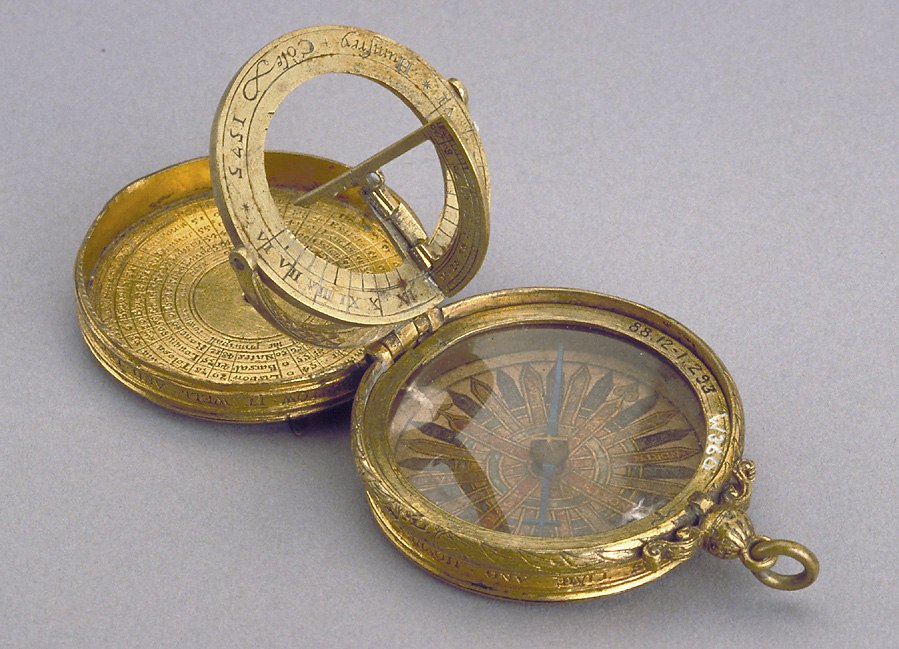
British Museum, London
horological instruments
Astronomical Compendium by Humfrey Cole
1575
This gilt brass astronomical compendium, signed by Humfrey Cole and dated 1575, is a portable instrument measuring 55 x 23 mm when closed. It features a hinged universal equatorial sundial, a magnetic compass, a nocturnal, a latitude list, and a perpetual calendar. The exterior of the upper leaf functions as a noctu…
Partial type record
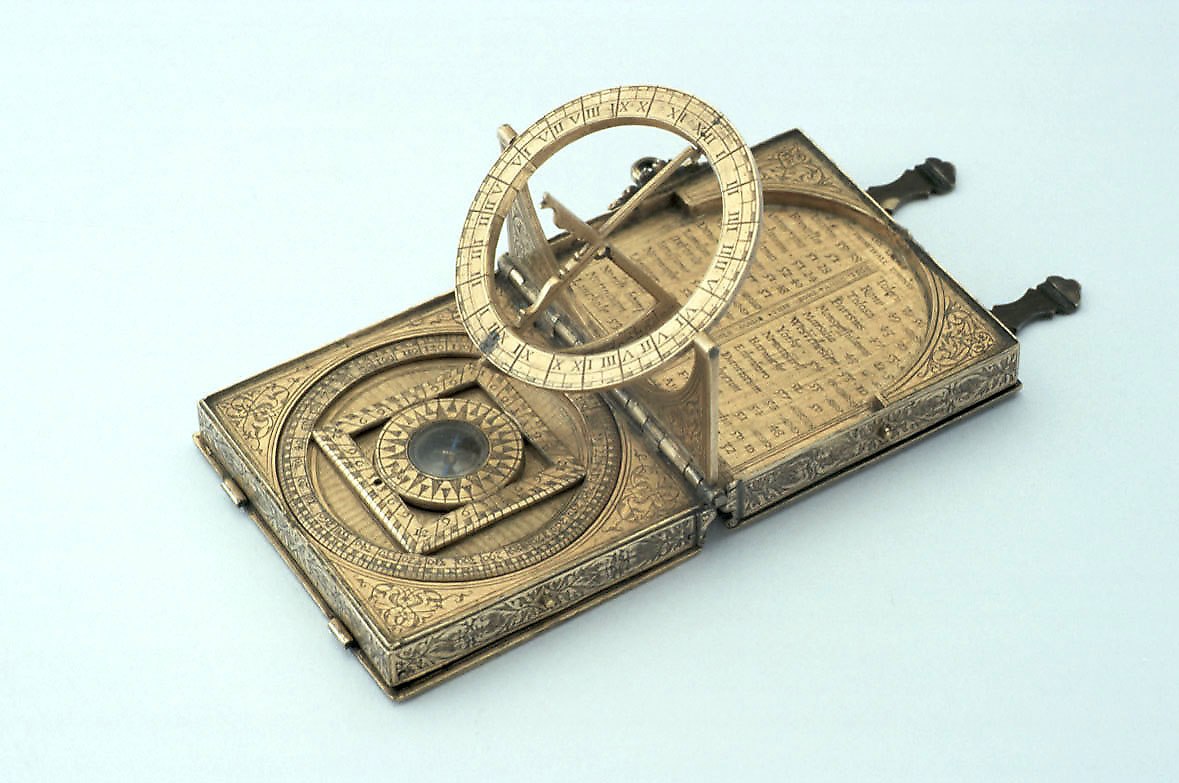
Museum of the History of Science, Oxford
horological instruments
Astronomical Compendium by Humfrey Cole, 1568
1568
This gilt brass astronomical compendium, measuring 66 x 60 x 20 mm, was made in London by Humfrey Cole and dated 1568. Constructed in the form of a book with an external suspension ring, it functioned as a multi-purpose scientific instrument for its first owner, the printer and publisher Richard Jugge. The device co…
Partial type record
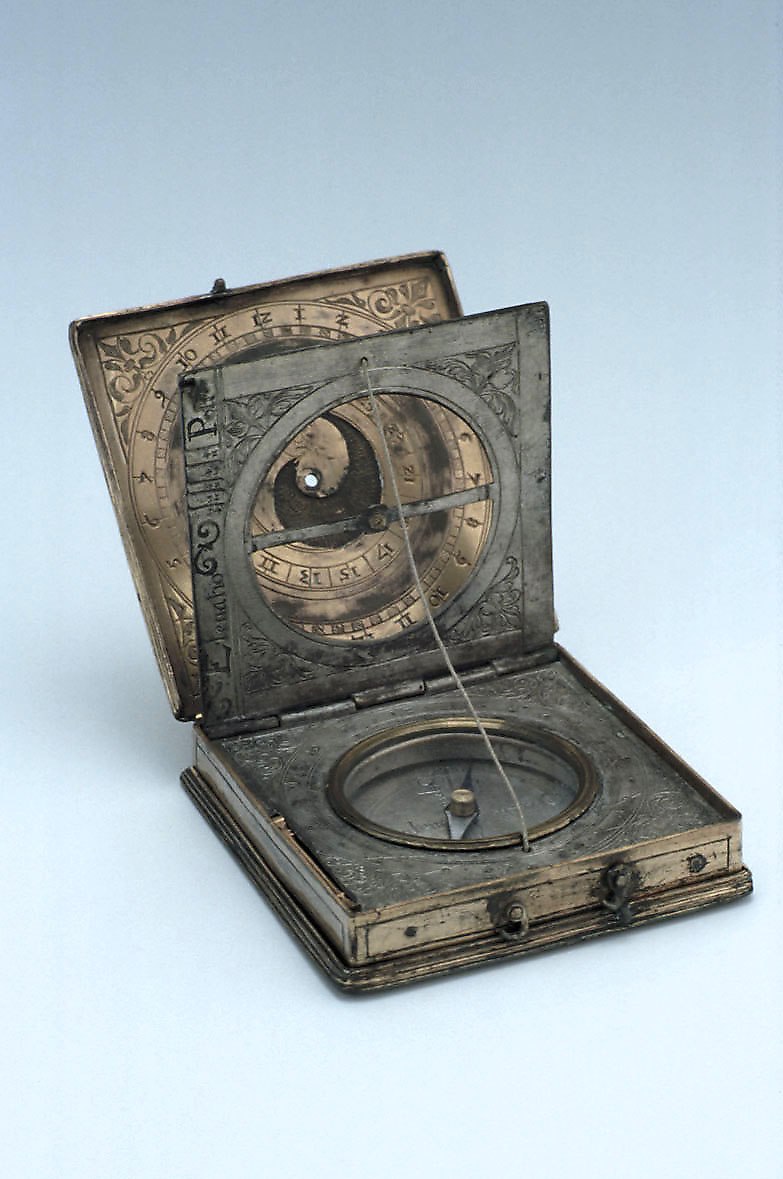
Museum of the History of Science, Oxford
horological instruments
Astronomical Compendium by Josua Habermel
Late 16th century
This astronomical compendium, signed by Josua Habermel, dates to the late 16th century and is constructed from gilt and silvered brass, measuring 62 x 60 x 9 mm. The instrument consists of two hinged, approximately square leaves enclosing a central box. It incorporates an equinoctial sundial, a horizontal string gno…
Partial type record
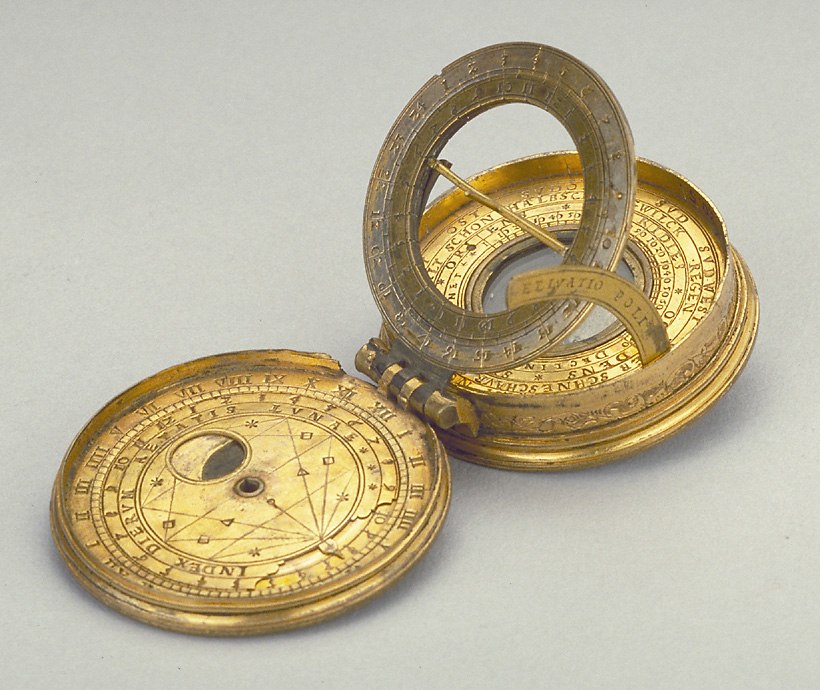
British Museum, London
horological instruments
Astronomical Compendium by Melchior Reichle
1568
This astronomical compendium, measuring 55 x 15 mm, is crafted from gilt and silvered brass and dates to 1568. Signed by maker Melchior Reichle, it is a multi-functional instrument containing a nocturnal, a solar and lunar time converter, an equatorial pin gnomon dial, a magnetic compass, and a latitude list. The li…
Partial type record
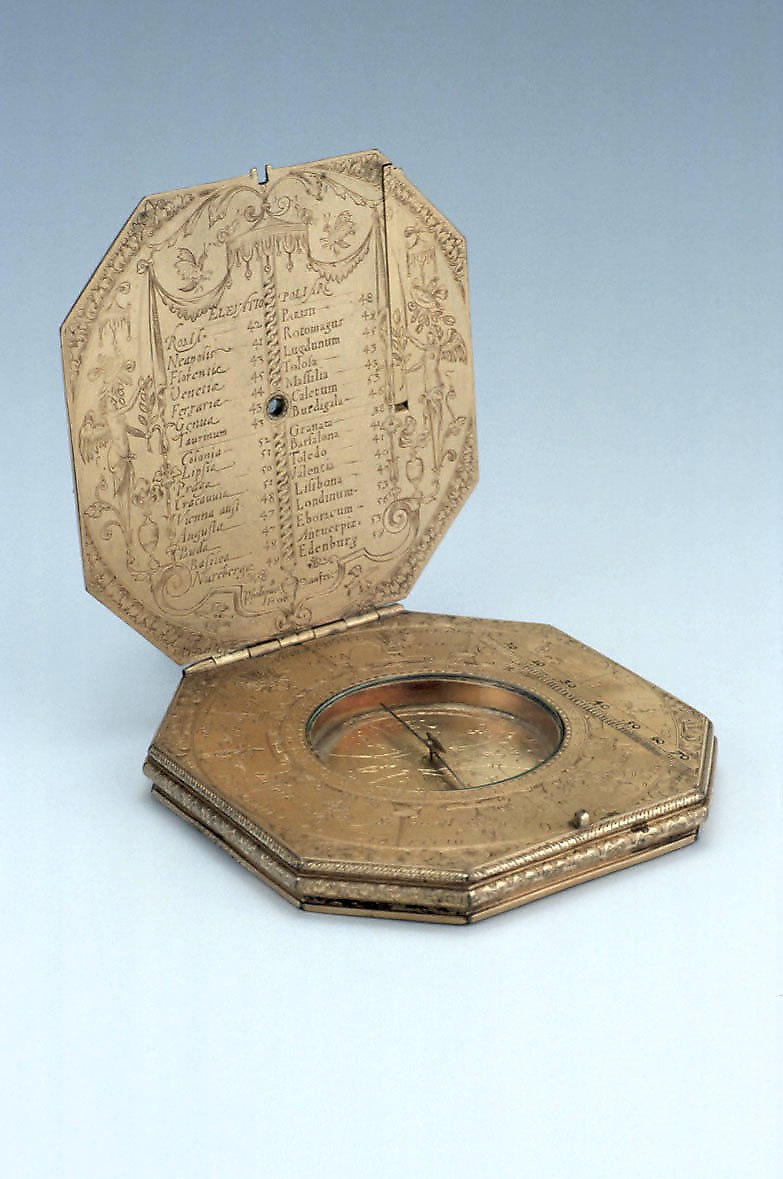
Museum of the History of Science, Oxford
horological instruments
Astronomical Compendium by Philippe Danfrie
circa 1590
This astronomical compendium, measuring 97 x 97 mm, is crafted from gilt brass and silver. Signed by Philippe Danfrie, the instrument features an octagonal body with a hinged top plate, a suspension ring, and extensive engraving. It functions as a multipurpose tool incorporating a nocturnal, a universal equinoctial…
Partial type record
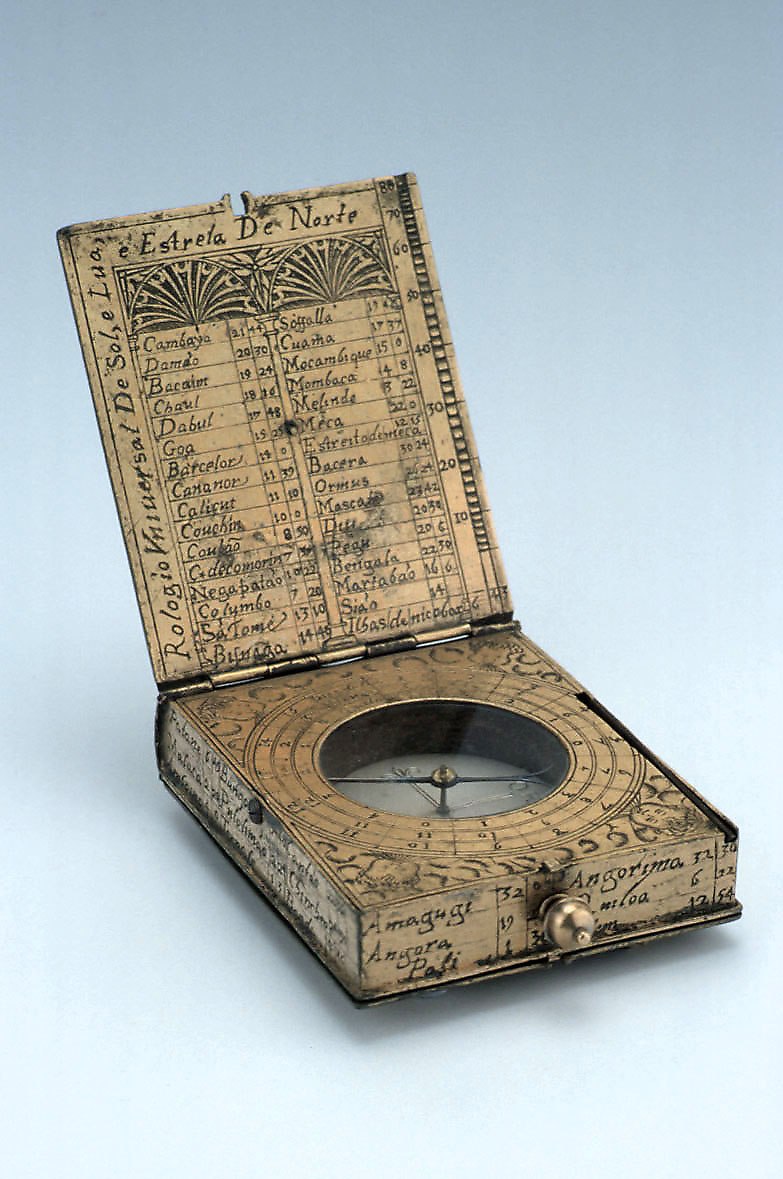
Museum of the History of Science, Oxford
horological instruments
Astronomical Compendium by Sebastian Thibault Dreux
1588
This brass astronomical compendium, dated 1588, is constructed in a book-form measuring 73 x 59 x 11 mm when closed. Signed by the French maker Sebastian Thibault Dreux, it incorporates a universal equinoctial sundial, a compass, a quadrant, and a nocturnal. The exterior features a swivelling suspension ring attache…
Partial type record
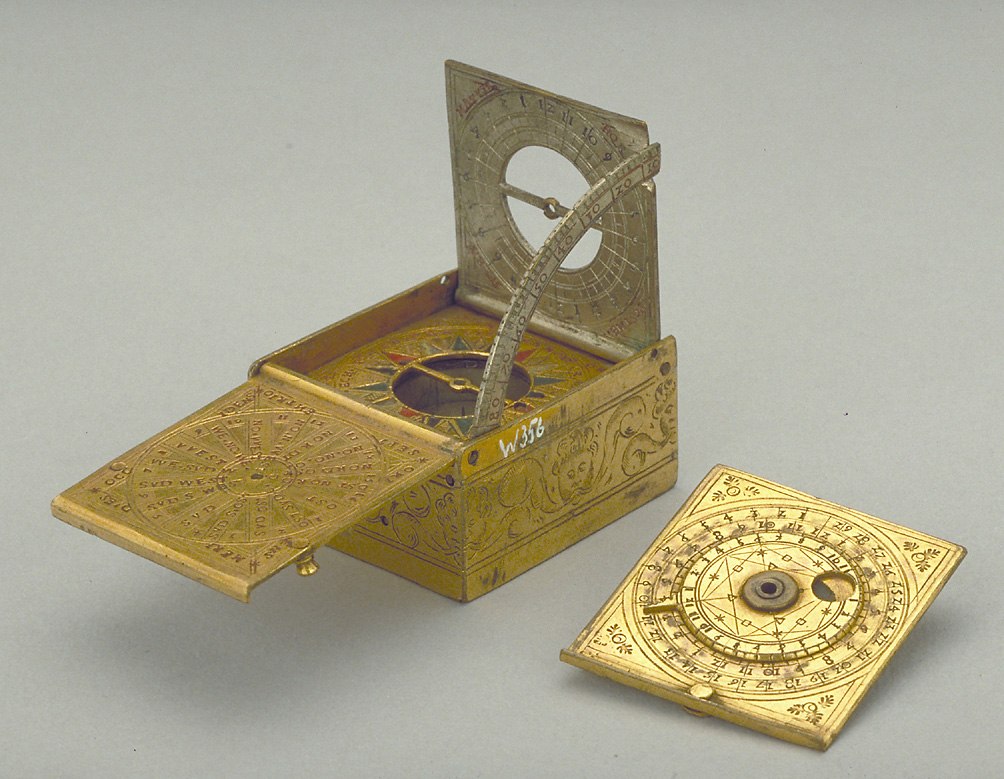
British Museum, London
horological instruments
Astronomical Compendium by Tobias Klieber
1595
This 1595 astronomical compendium is signed by Tobias Klieber and manufactured in Augsburg. The instrument is constructed from gilt brass, measuring 41 x 46 x 24 mm. It features a main box with an engraved lid depicting a coat-of-arms. Inside, the device includes a universal equinoctial dial mounted on a silver plat…
Partial type record