Catalogue
Astrolabes, Dials and Instruments
Astrolabes, quadrants, astronomical compendia, portable dials and watchmakers' workshop tools used to find or keep time.
Catalogue entries (445)
Filter by era, country, maker or material145–192 of 445 entries
History of Science Museum, University of Oxford
horological instruments
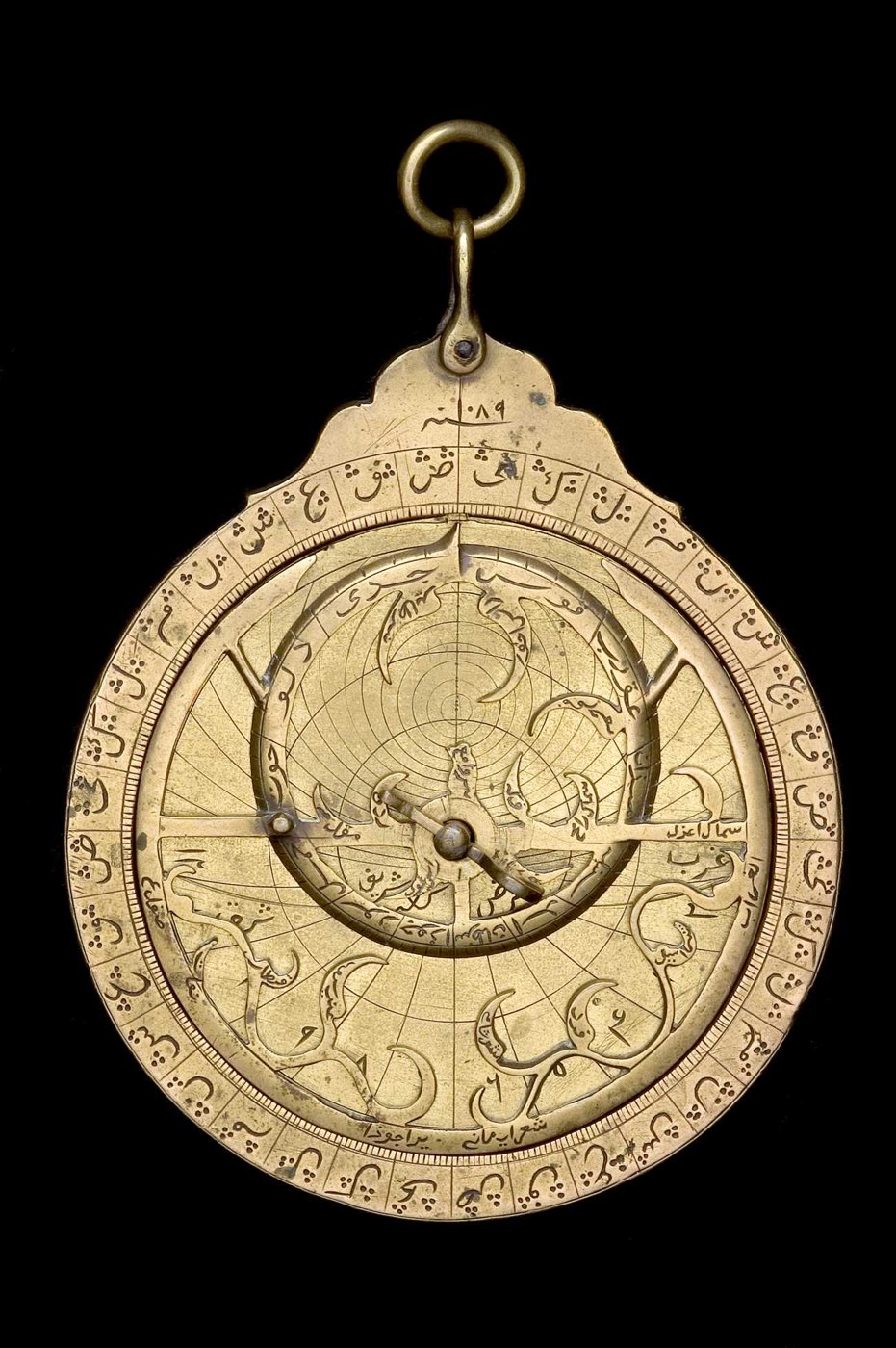
Brass Astrolabe, 1678 (A.H. 1089)
1678 (A.H. 1089)
This brass astrolabe, designated inventory number 43559, is attributed to Turkey with a date of 1678 (A.H. 1089). The construction features a two-piece mater and limb assembly, with a simple throne attached by an integrated base. The instrument includes a foliate-type rete with zodiac labels, though it contains no s…
Partial type record
History of Science Museum, University of Oxford
horological instruments
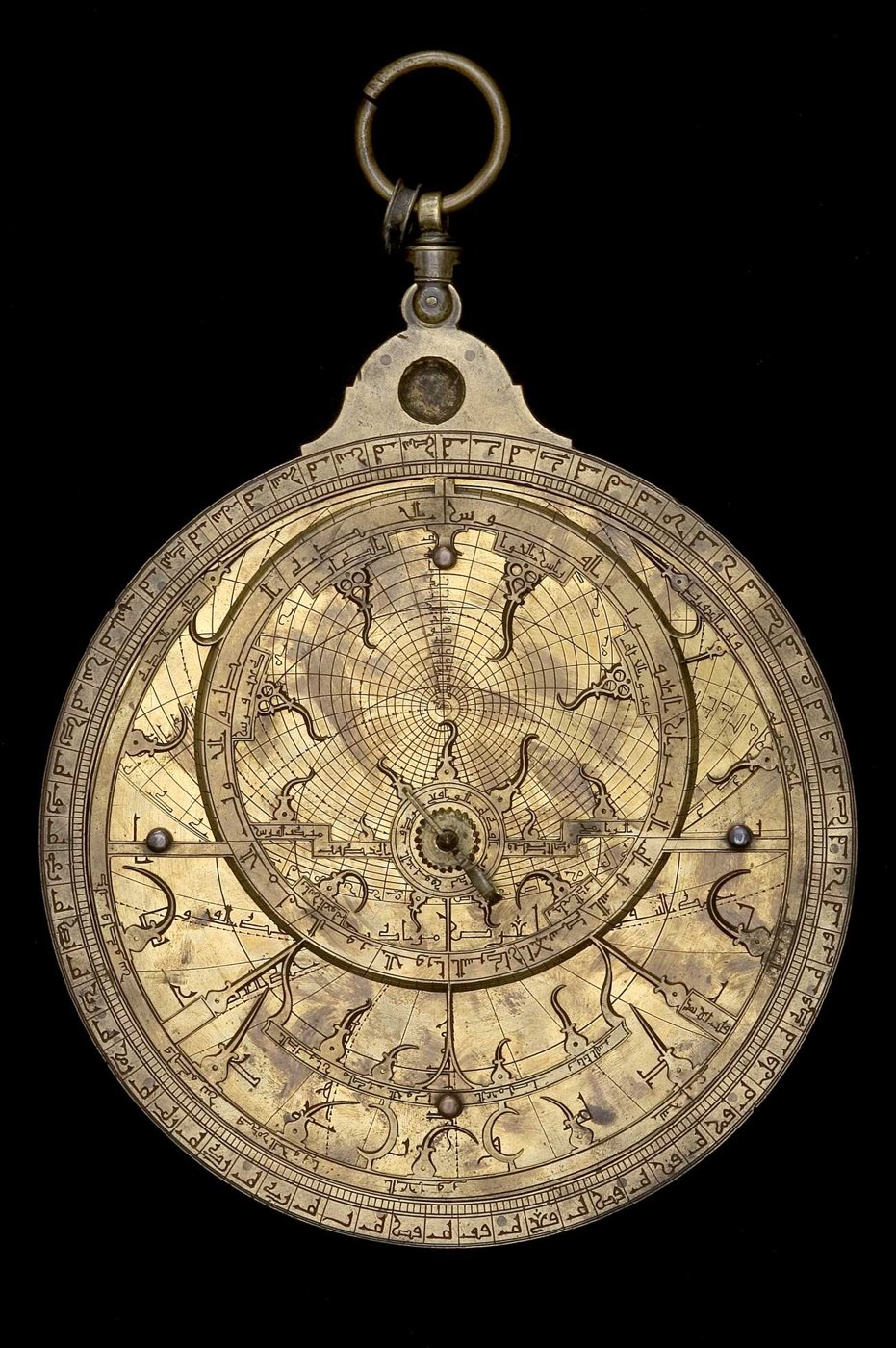
Brass Astrolabe, 16th century (?)
16th century (?)
This 16th-century (?) brass planispheric astrolabe (inventory 37527) is of North African origin. It features a compass-bearing throne with an integrated base, a simple round-section ring, and an eye-bolt shackle. The mater and limb are constructed of two pieces, soldered and riveted together, with a degree scale on…
Partial type record
History of Science Museum, University of Oxford
horological instruments
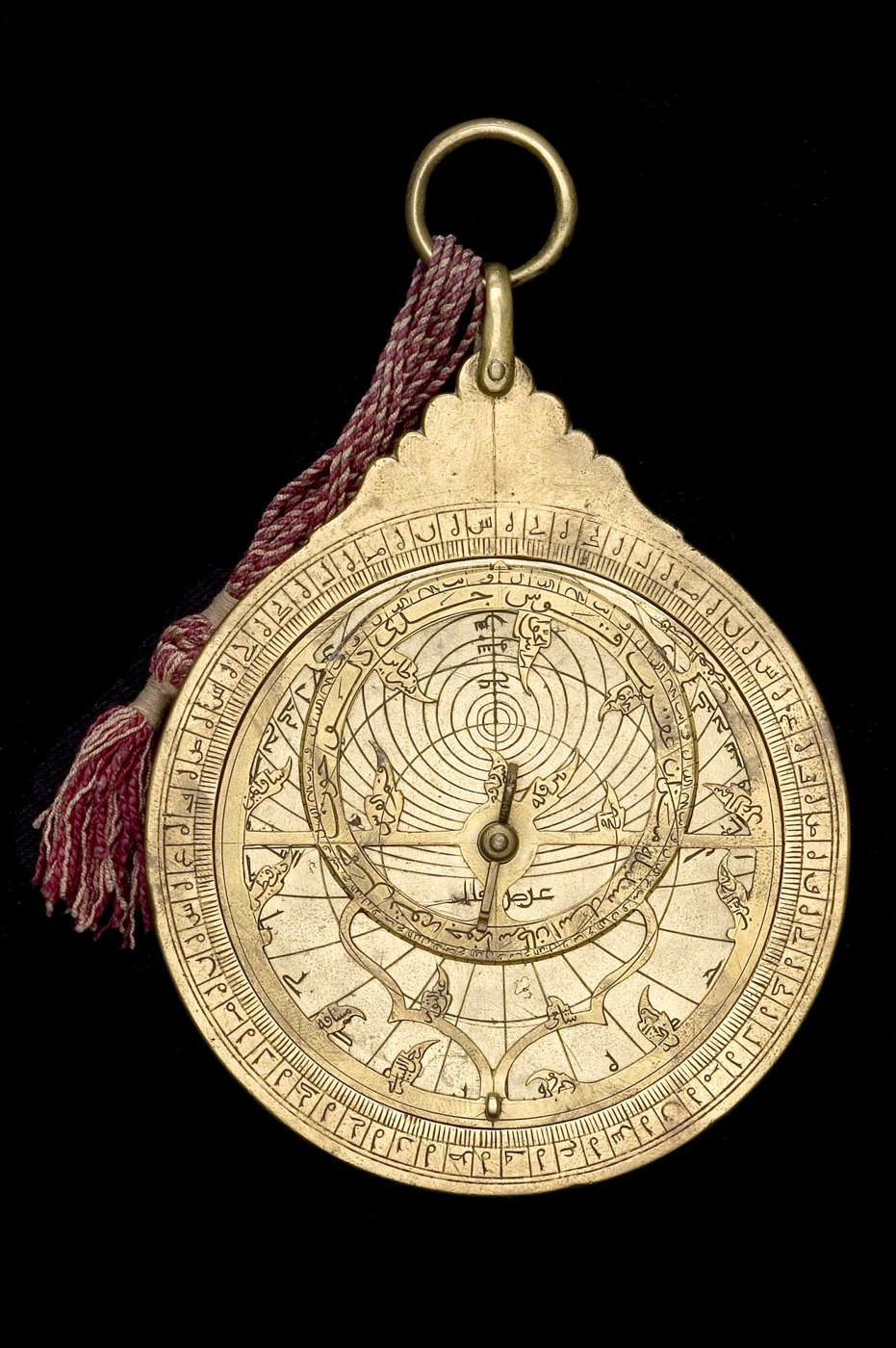
Brass Astrolabe, 17th century (?)
17th century (?)
This 17th-century brass astrolabe (inventory 53307) was presented to the History of Science Museum by J. A. Billmeir in 1957. The instrument features a simple brass throne attached to an integrated base, a round-section suspension ring, and an omega-type shackle. The mater and limb are constructed from two soldered…
Partial type record
History of Science Museum, University of Oxford
horological instruments
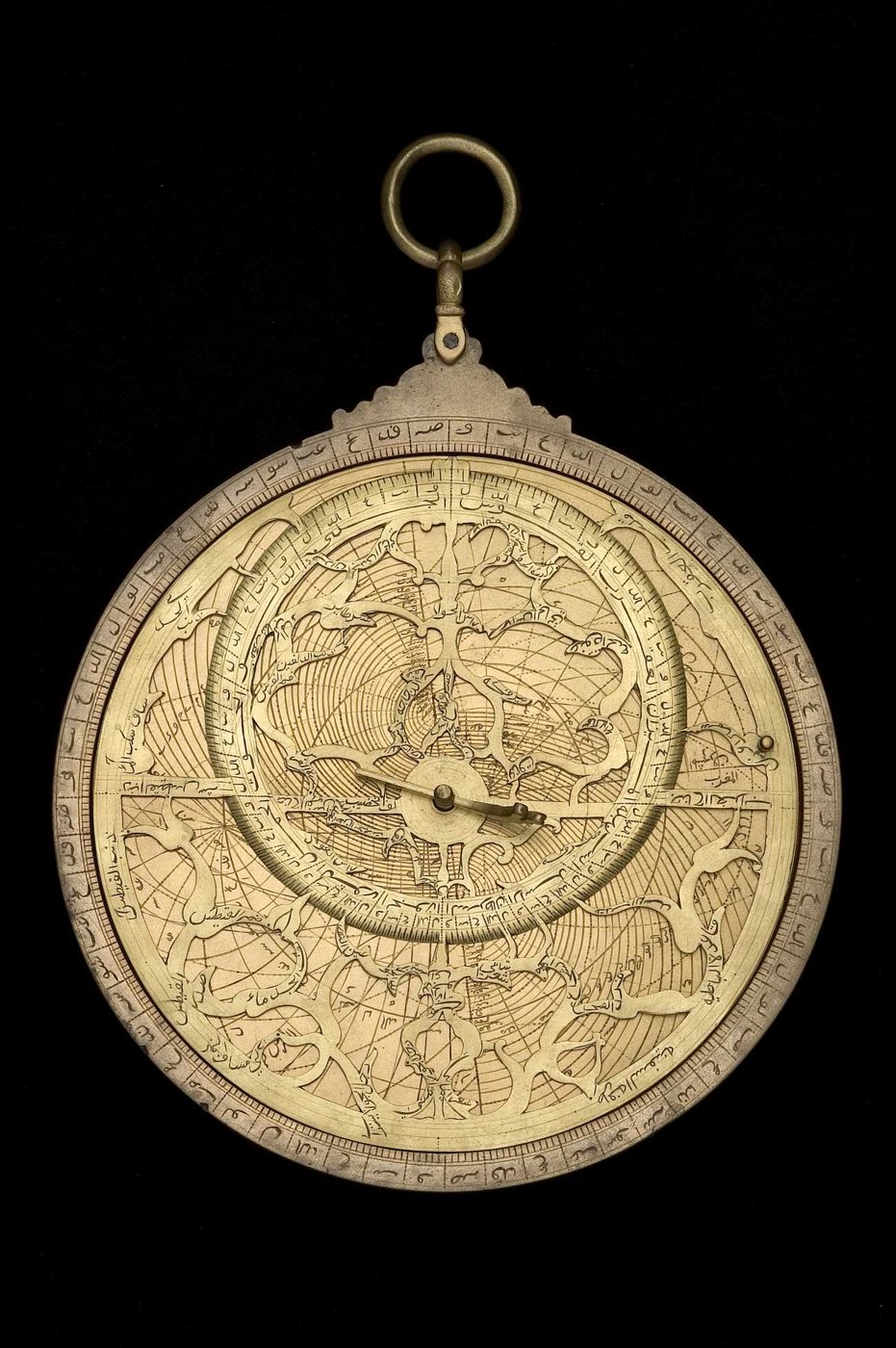
Brass Astrolabe, 17th Century India
17th century
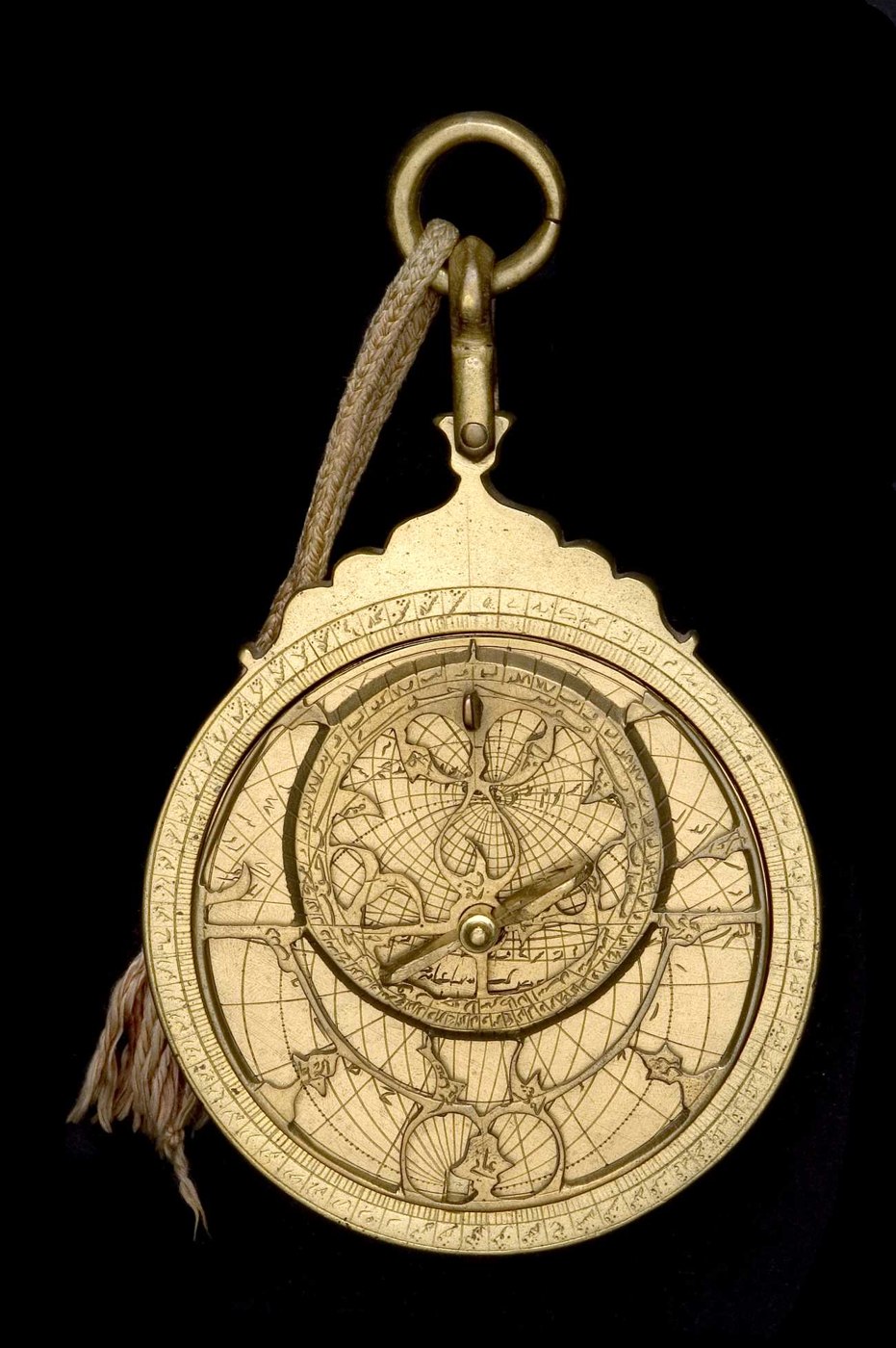
This 17th-century brass astrolabe (inventory 33411) from India, now in the History of Science Museum, Oxford, features an indo-persian broad-type throne, a round-section ring, and a trefoil shackle. The mater and limb are constructed in one piece with a tab located at the bottom to secure the plates. The rete is of…
Partial type record
History of Science Museum, University of Oxford
horological instruments
Brass Astrolabe, 18th century
18th century
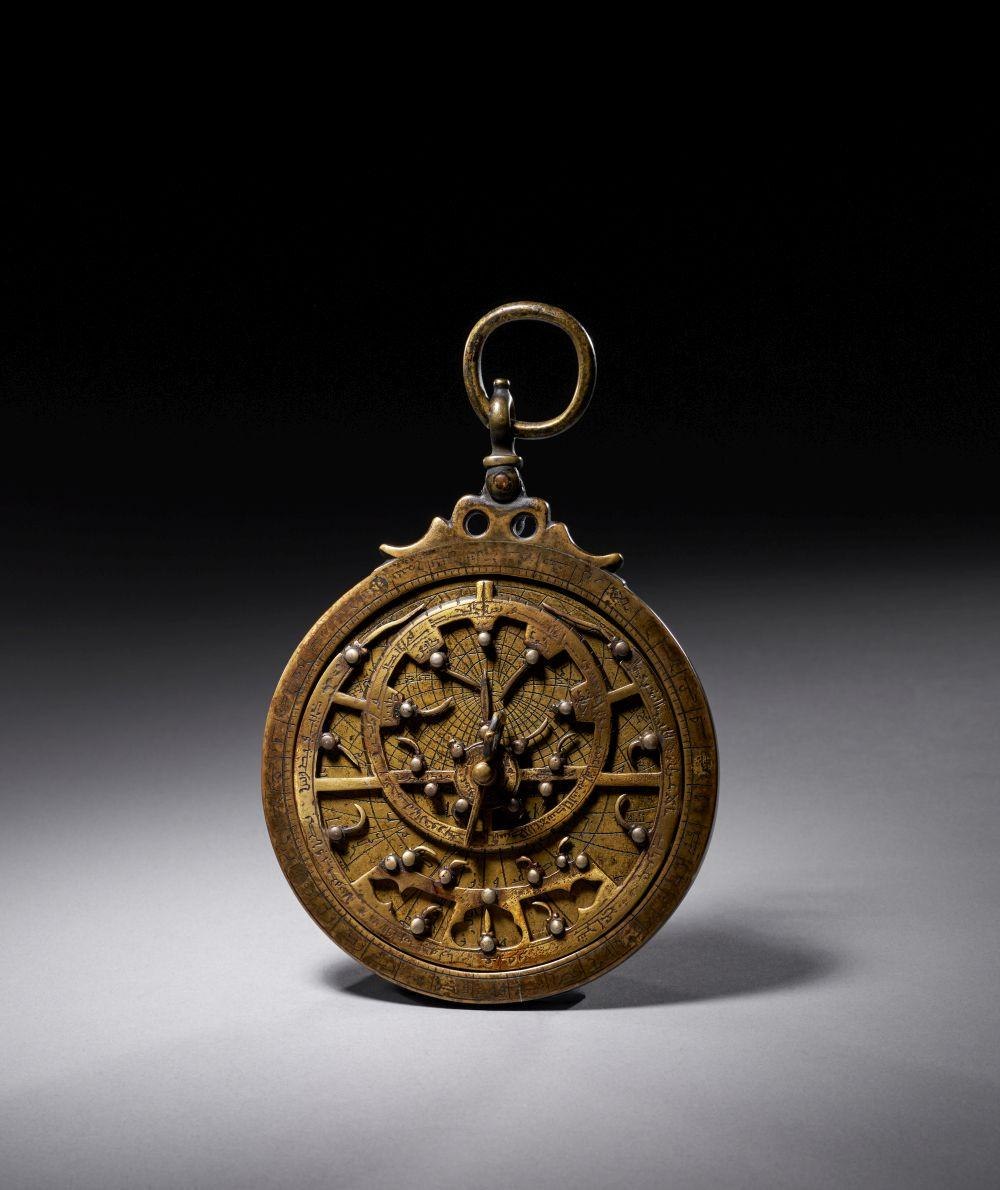
This 18th-century brass astrolabe is catalogued as inventory number 50180 in the History of Science Museum, University of Oxford. The instrument features a one-piece mater and limb construction, with a small internal tab at the bottom to prevent tympan rotation. It is fitted with an Indo-Persian style broad throne,…
Partial type record
PLAKAS (via Invaluable)
horological instruments
Brass Astrolabe, 19th century
19th century
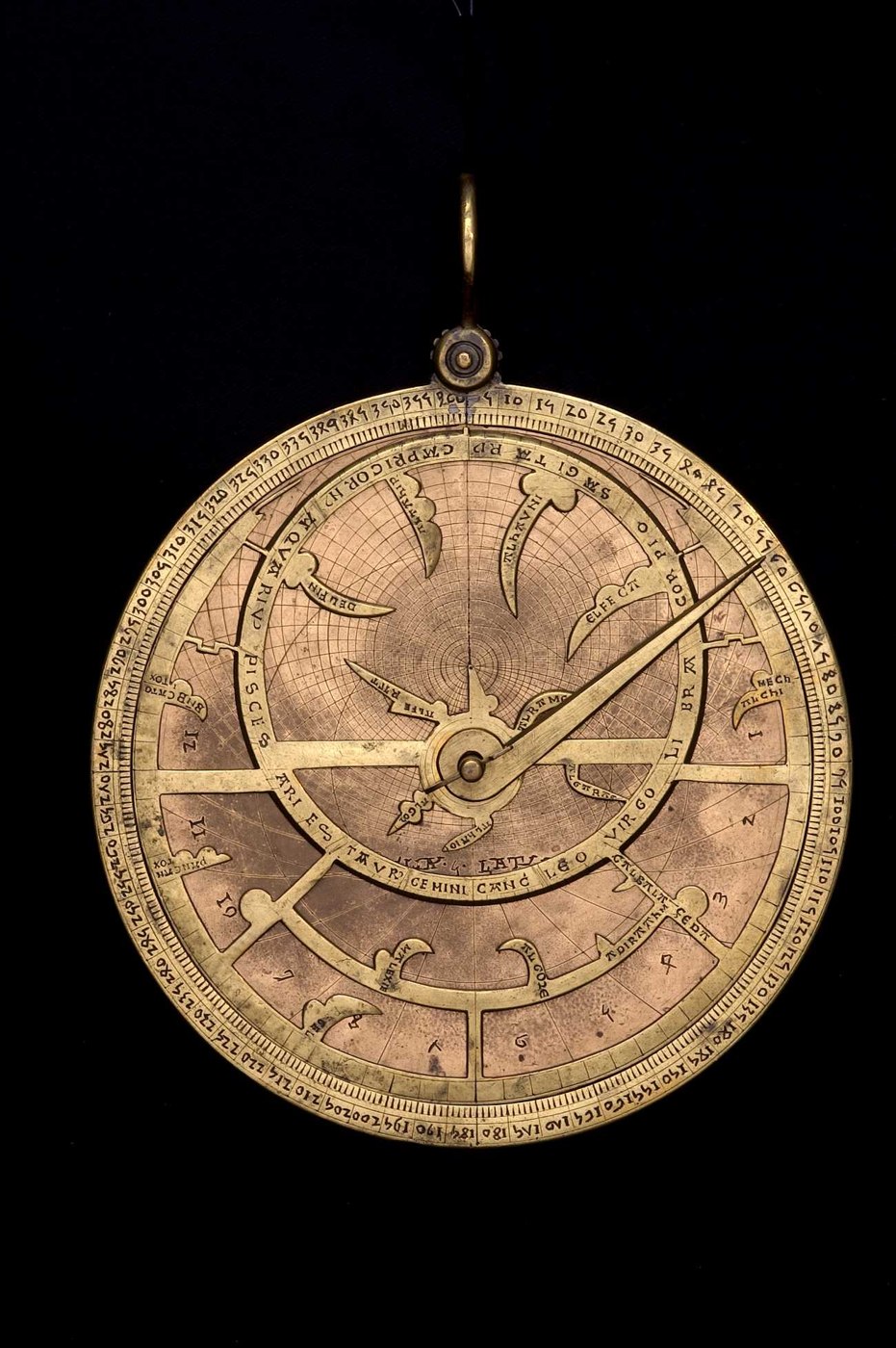
This 19th-century brass astrolabe originates from Qajar Iran. It is a scientific instrument featuring a circular body (mater) and an elaborately engraved rete with openwork tracery. The rete contains star maps, celestial coordinates, and Arabic inscriptions that identify zodiac divisions and principal stars. The ins…
Partial type record
History of Science Museum, University of Oxford
horological instruments
Brass Astrolabe, ca. 1260
ca. 1260
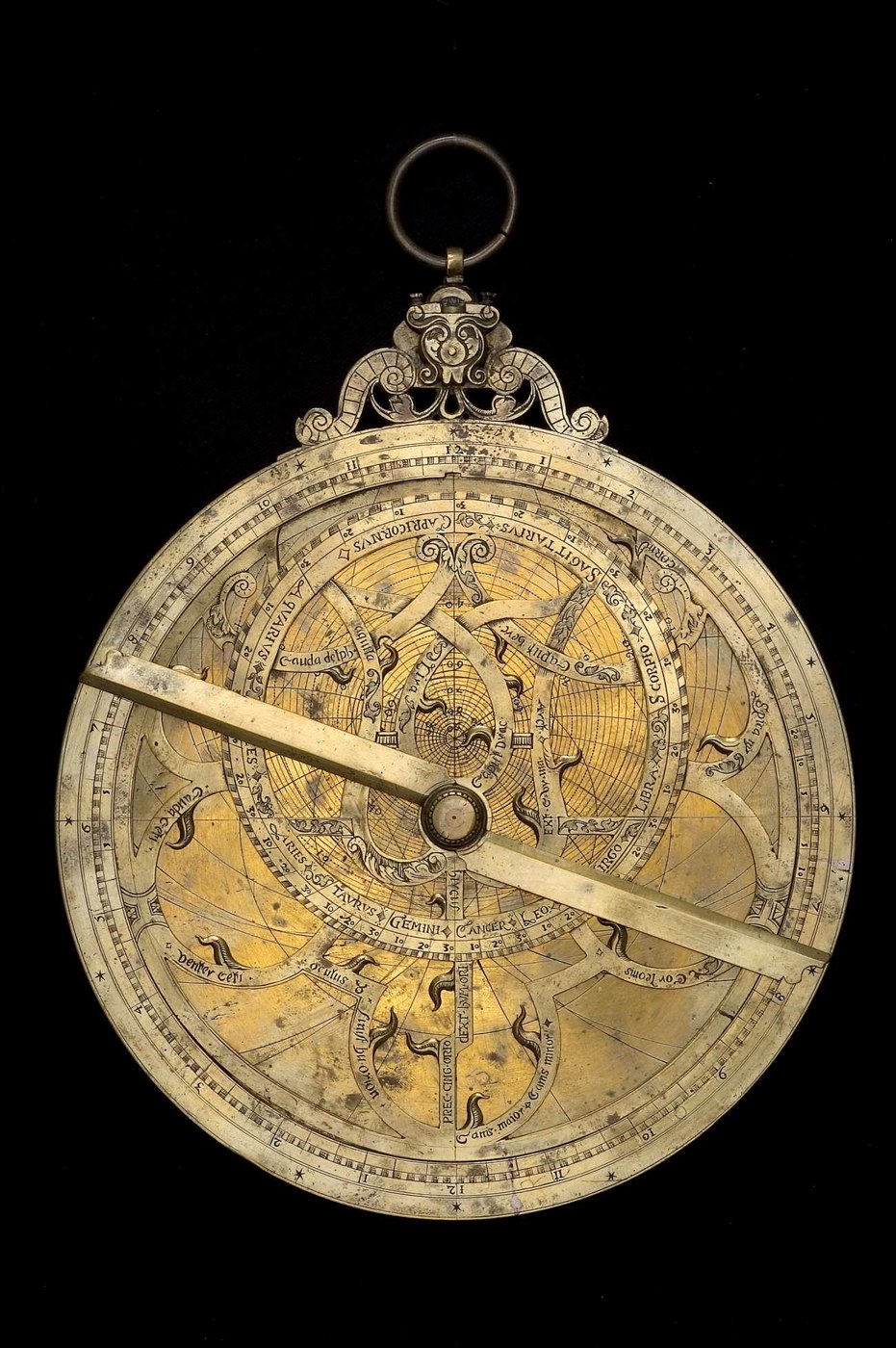
This brass astrolabe (inventory number 43504) is dated to circa 1260 and is attributed to a possible Spanish origin. The instrument features a simple throne with a filleted edge, an omega-shaped shackle, and a mater with an integrated limb of two-piece soldered construction. It is equipped with five plates covering…
Partial type record
History of Science Museum, University of Oxford
horological instruments
Brass Astrolabe, ca. 1560
ca. 1560
This brass astrolabe (inventory 41409) is an instrument dating to approximately 1560, attributed to French manufacture. The object features a mater and limb of riveted, two-piece construction. The engraved throne incorporates s-shaped scrollwork supports and an integrated base, connecting to a simple ring of round c…
Partial type record
History of Science Museum, University of Oxford
horological instruments
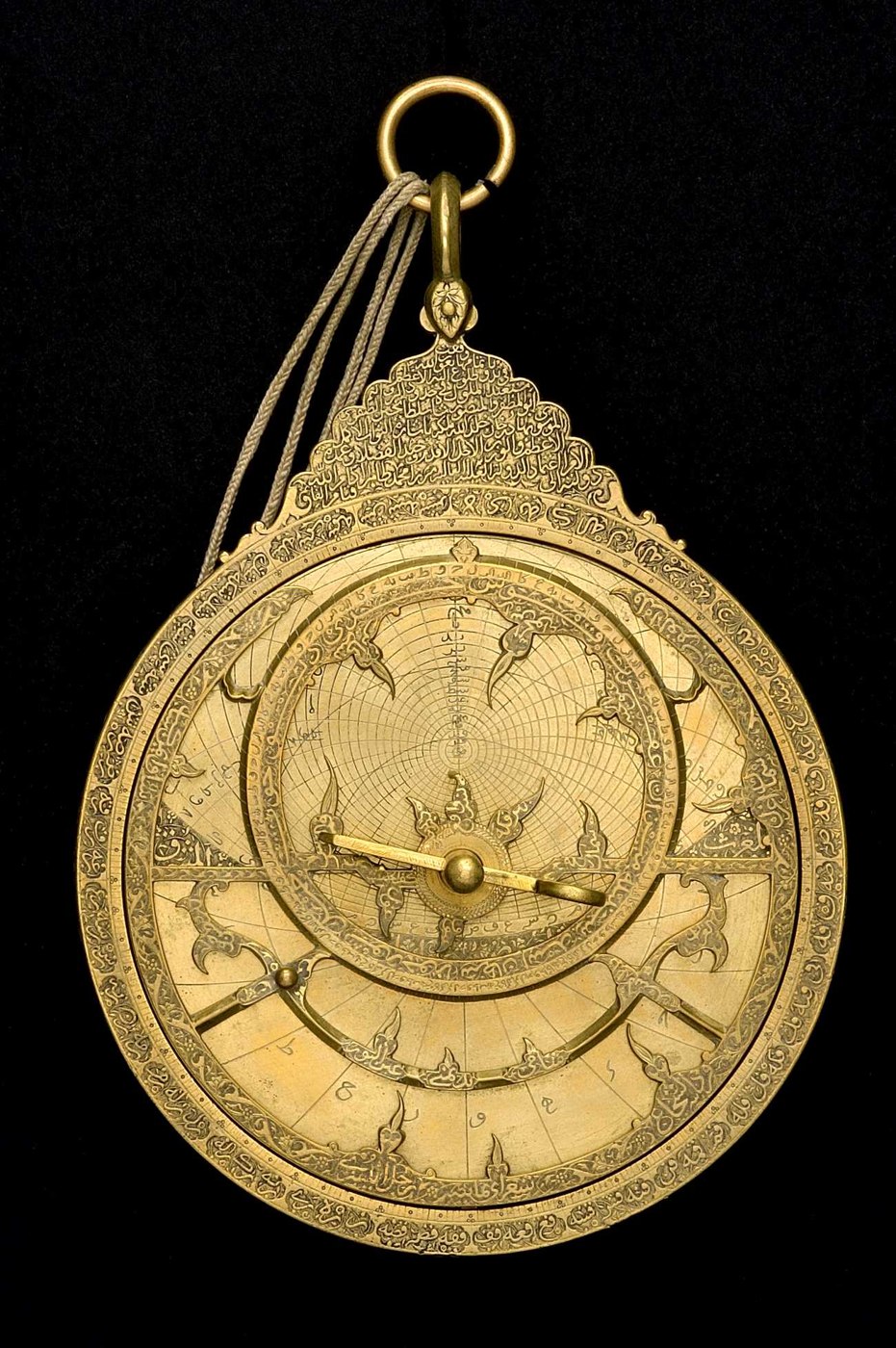
Brass Astrolabe, ca. 1710
ca. 1710
This brass astrolabe, attributed to the maker Khalīl Muḥammad ibn Ḥasan ‘Alī and dated circa 1710, originated in Iṣfahān. The object features a foliate-type rete with 26 stars and two plates covering latitudes from 29°0' to 36°0'. The back displays 17 scales, including those for altitude, declination, and zodiacal s…
Partial type record
History of Science Museum, University of Oxford
horological instruments
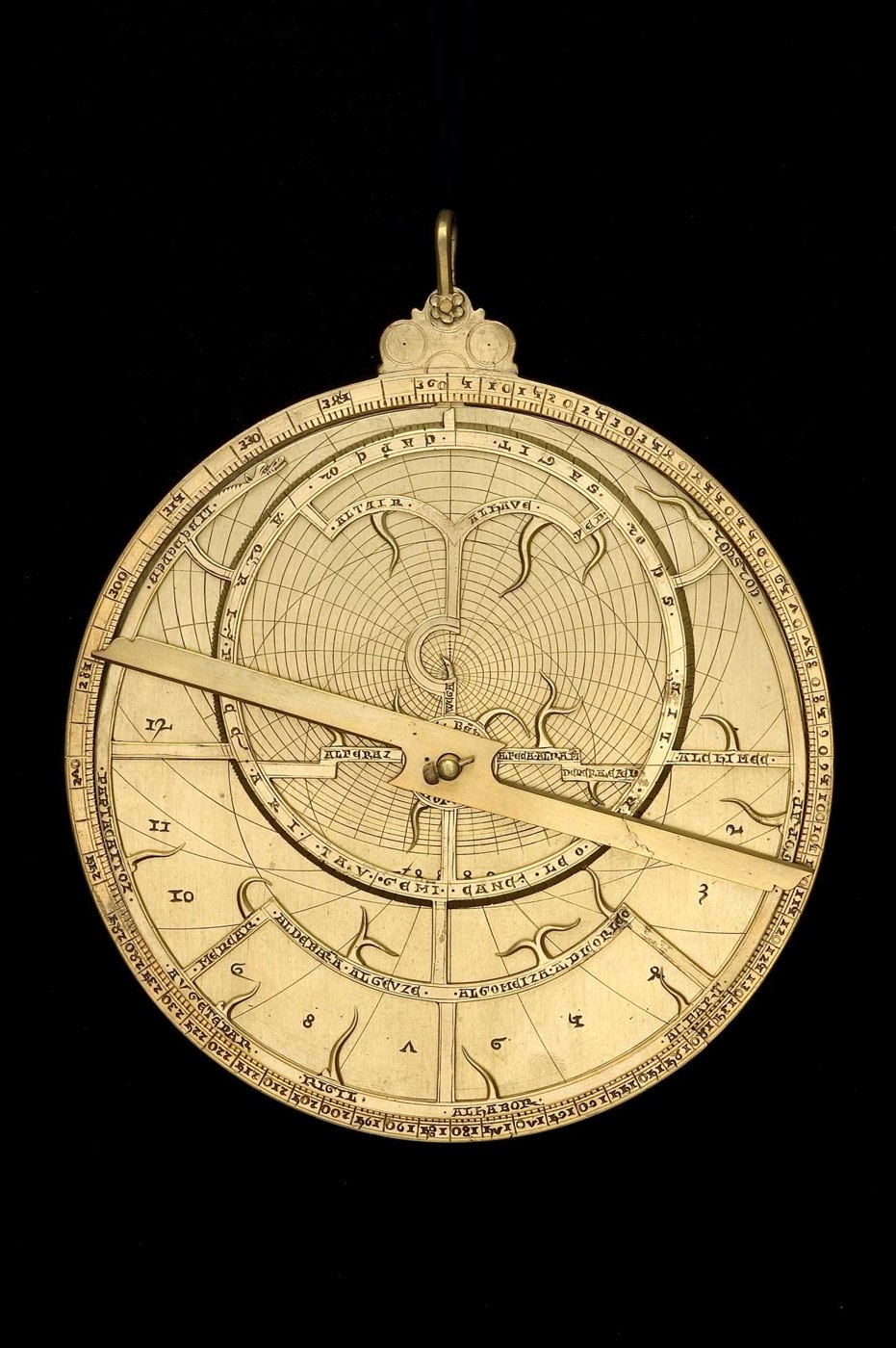
Brass Astrolabe, Inventory 41468
ca. 1400
This brass astrolabe, designated inventory number 41468, is attributed to Paris with an approximate date of 1400. It was presented to the History of Science Museum by Lewis Evans in 1924. The instrument features a simple, engraved throne with integrated supports and an omega-shaped shackle, the latter decorated with…
Partial type record
History of Science Museum, University of Oxford
horological instruments
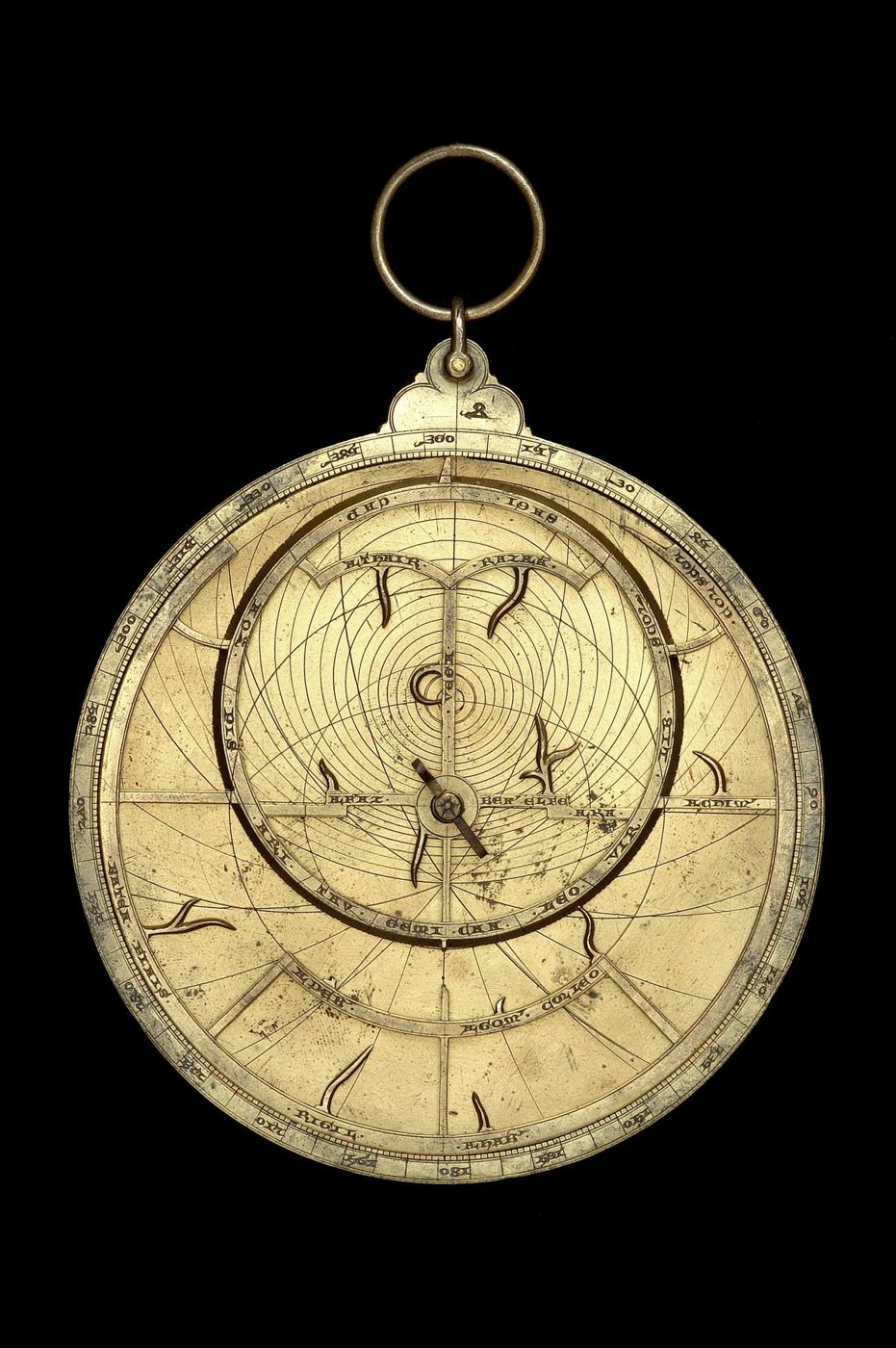
Brass Astrolabe, late 14th or early 15th century
late 14th or early 15th century
This brass astrolabe, inventory number 54330, is dated to the late 14th or early 15th century and is attributed to Paris. The instrument features a three-lobed throne with an integrated base and an omega-type shackle. Its construction includes a two-piece soldered mater and limb. The back displays five distinct scal…
Partial type record
History of Science Museum, University of Oxford
horological instruments
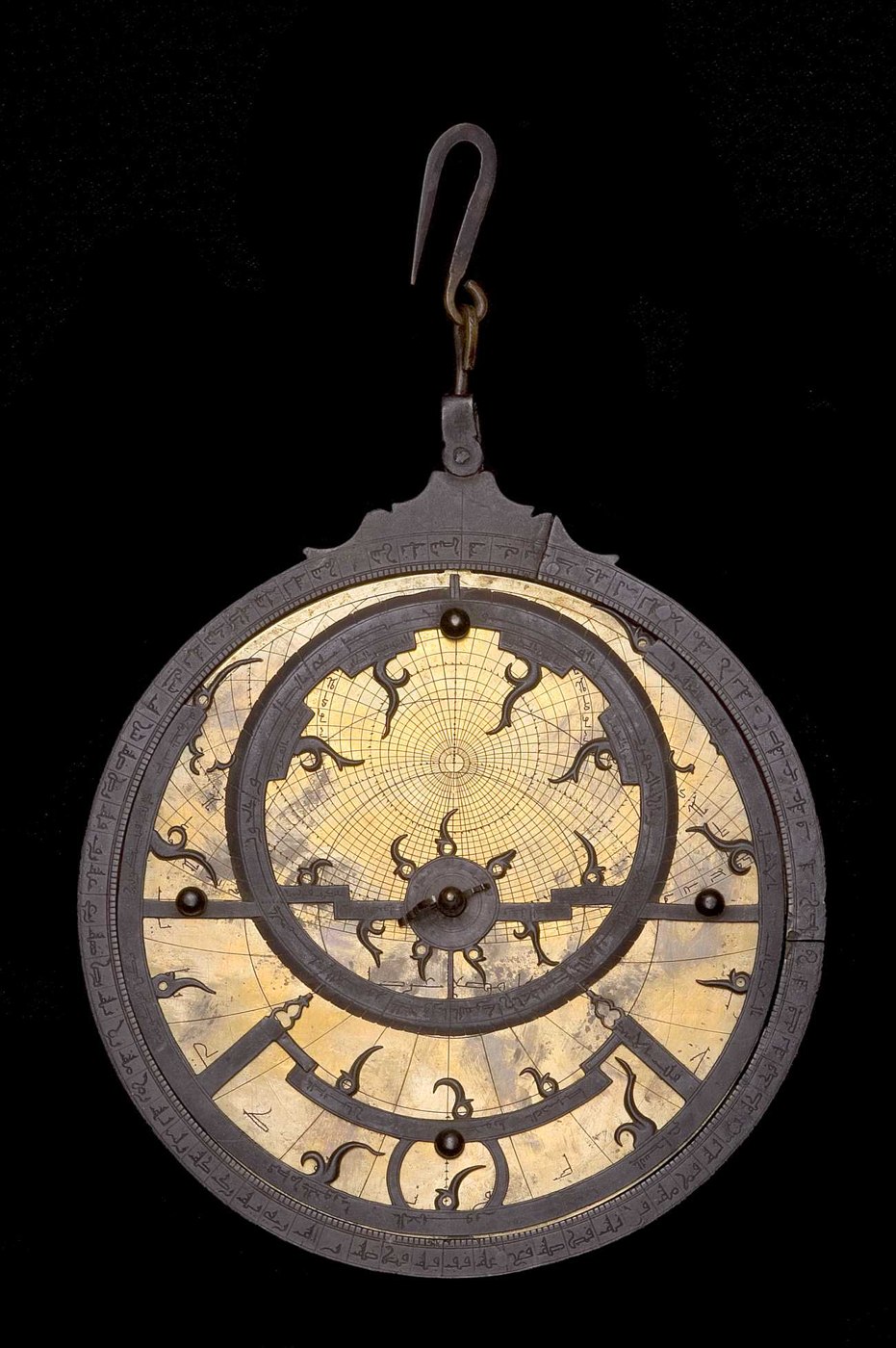
Brass astrolabe, North Africa
early 18th century
This planispheric astrolabe, inventory number 34314, is a brass instrument of North African origin dating to the early 18th century. The instrument features a simple brass throne with an integrated base and an eye-bolt type shackle. Its mater and limb are constructed from two pieces through soldering and riveting; t…
Partial type record
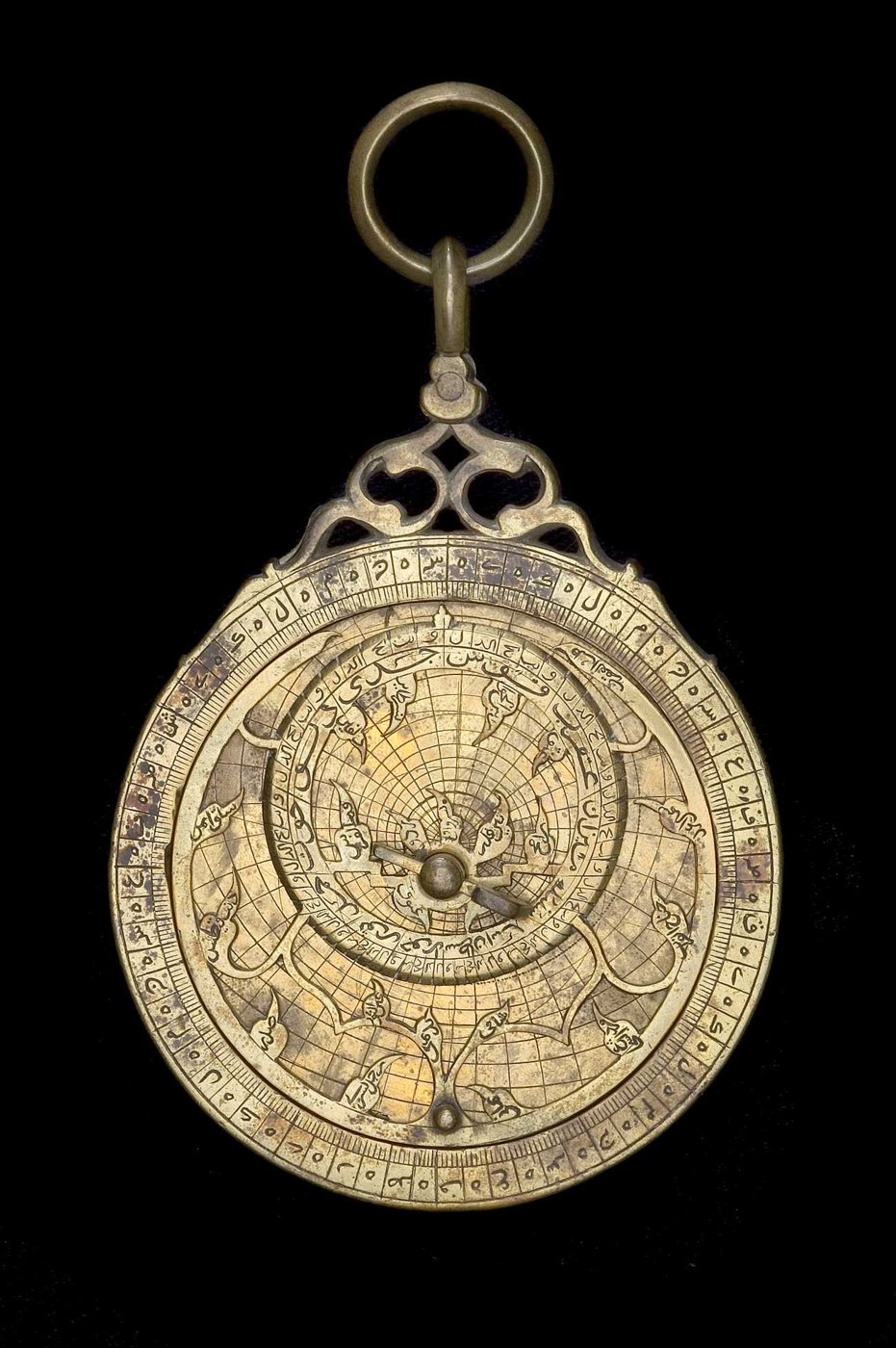
History of Science Museum, University of Oxford
horological instruments
Brass Indo-Persian Astrolabe
18th century (?)
This brass astrolabe, designated inventory number 49300, is attributed to 18th-century (?) Persia. The instrument features a pierced Indo-Persian style throne topped with a trefoil tab, connected via a flat, cello-shaped tab to an omega-shaped shackle and a simple, squared cross-section ring. The mater and limb are…
Partial type record
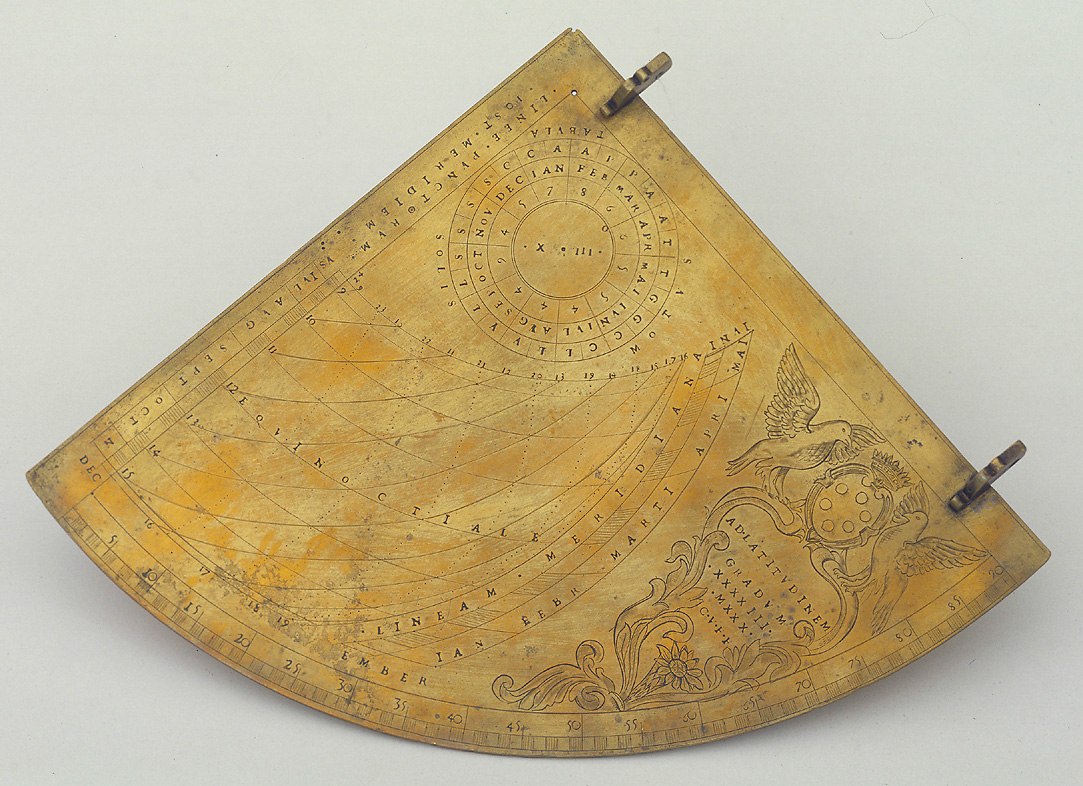
Istituto e Museo di Storia della Scienza, Firenze
horological instruments
Brass Quadrant by Camillo della Volpaia
16th century
This 16th-century brass quadrant, measuring 190 mm in radius, is attributed to the Florentine instrument maker Camillo della Volpaia. The instrument is designed to determine time by observing the sun's height, calibrated specifically for the latitude of Florence (43° 30'). The face features a 90-degree limb, a diagr…
Partial type record
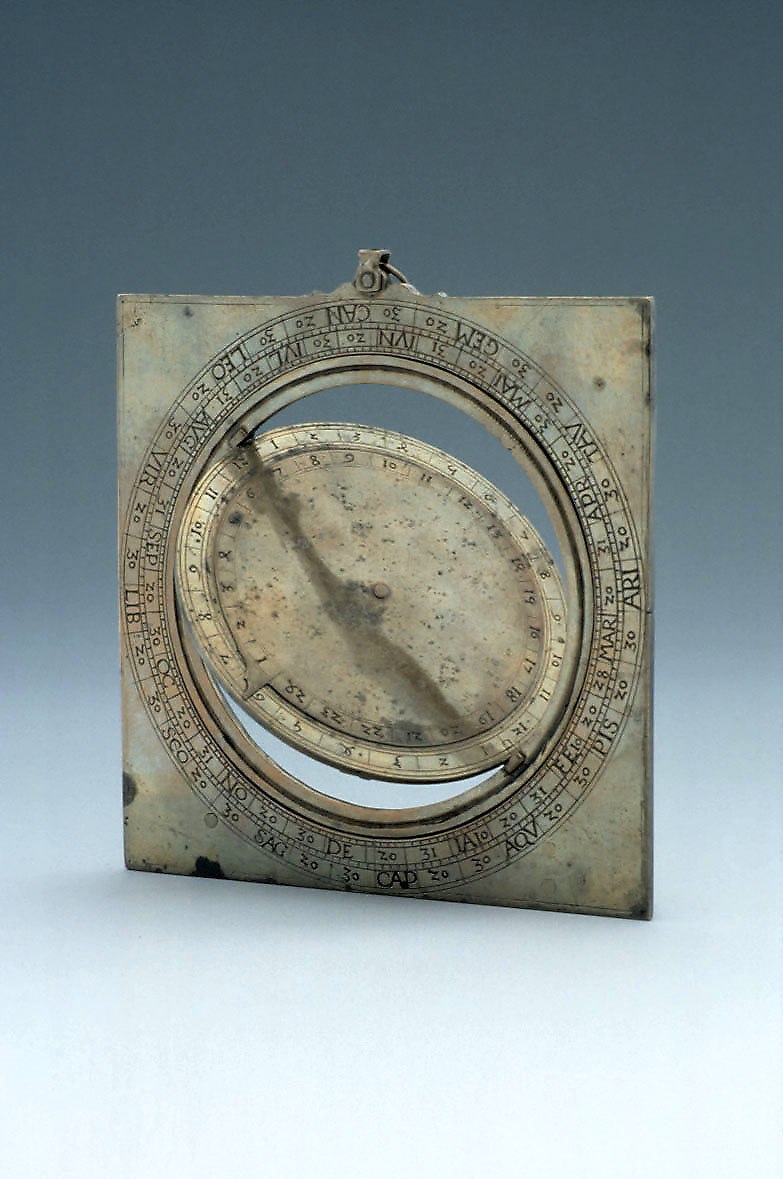
Museum of the History of Science, Oxford
horological instruments
Brass Ring Dial
circa 1480 ?
This unsigned brass ring dial, inventory number 34394 in the collection of the Museum of the History of Science, Oxford, measures 96 by 96 by 2 mm. It is a precursor to the equinoctial ring dial, functioning as an astronomical ring dial without an equatorial ring. The construction features a square brass plate with…
Partial type record
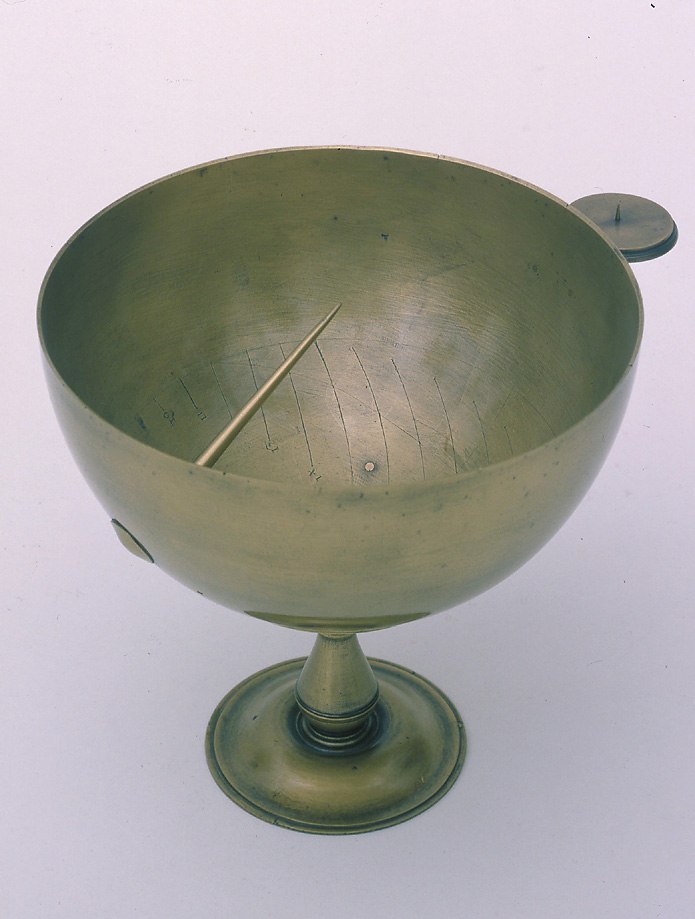
Istituto e Museo di Storia della Scienza, Firenze
horological instruments
Brass Scaphe Dial
16th century
This 16th-century Italian scaphe dial is constructed from brass and measures 175 mm in diameter. The object features a hemispherical bowl mounted on a turned foot with a short, conical central column. The interior surface of the bowl is engraved with a sequence of undivided hour lines, designed to register Italian h…
Partial type record
Atlam Watches
horological instruments
Breguet pocket watch bench key, circa 1810
c. 1810
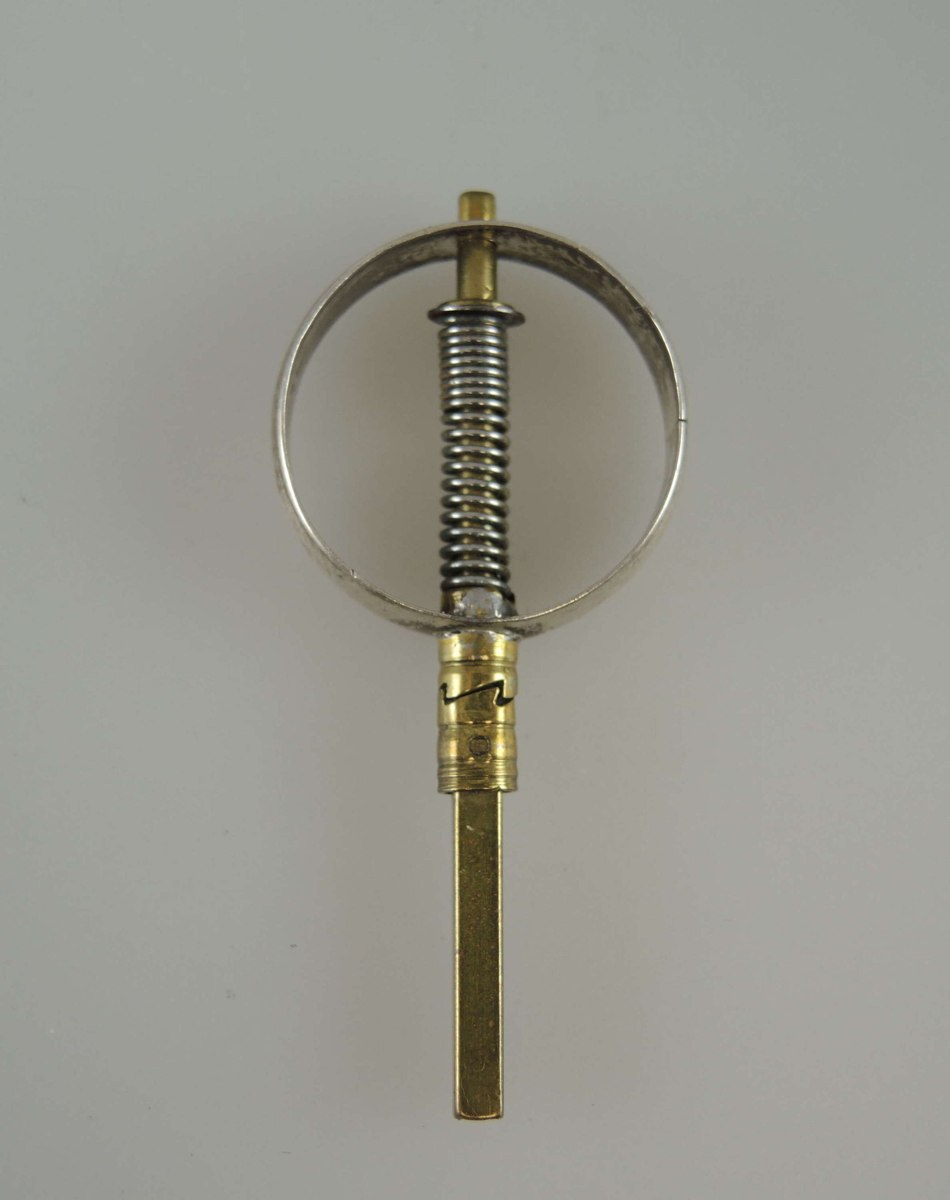
This antique pocket watch bench key, dated circa 1810 from the Georgian period, was made for watchmaker workshop use rather than decorative fob wear. The tool features a Breguet-style sprung ratchet design permitting winding in only one direction, which the dealer notes prevented damage to watches containing delicat…
Partial type record
Science Museum Group
horological instruments
Byzantine sundial-calendar
400-600
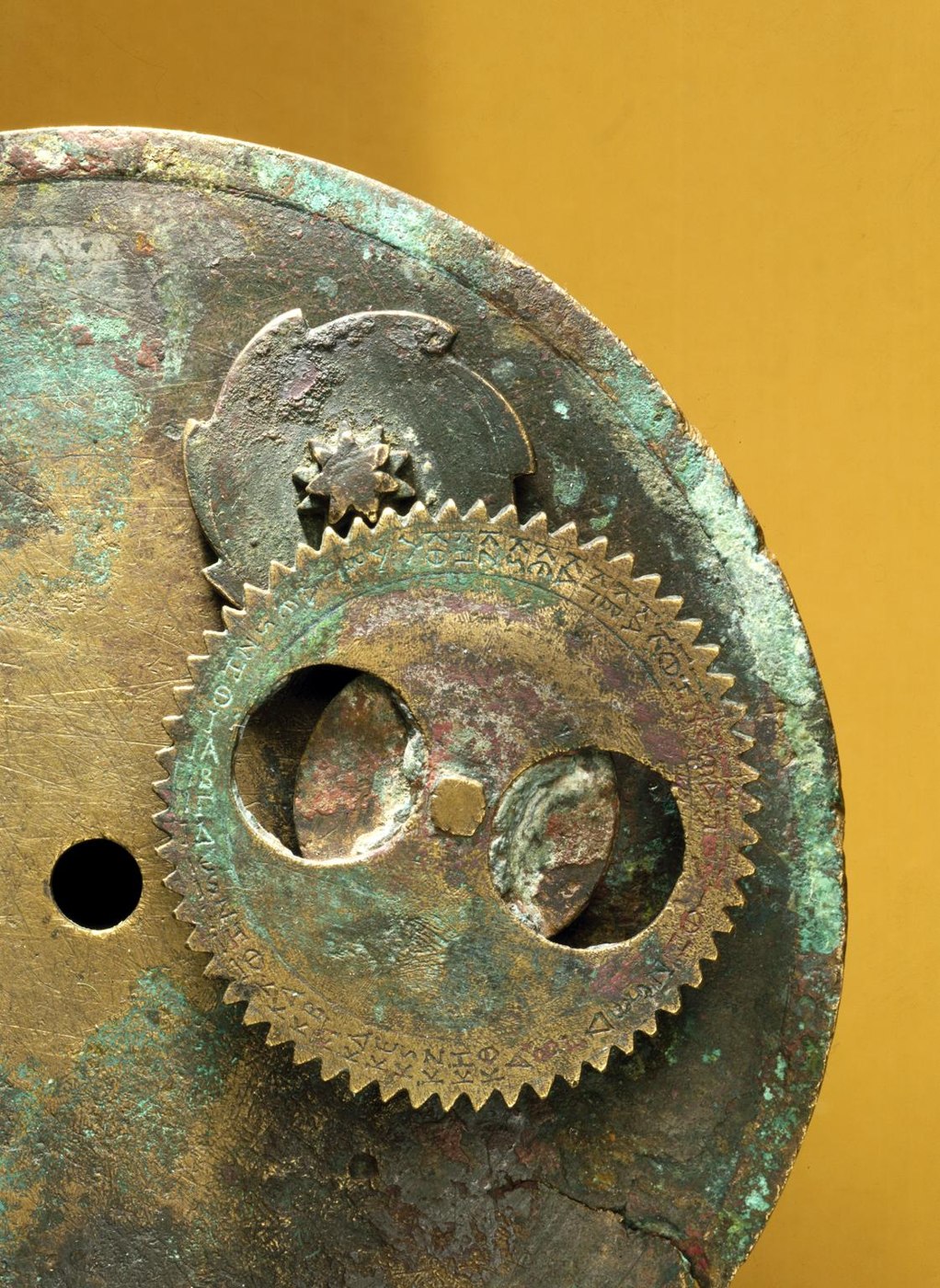
This device is a combined sundial and mechanical perpetual calendar, attributed to the Byzantine Empire and dated to 400-600. The object is composed of four surviving elements, including a front sundial plate, a suspension arm, a Moon disc with integral gearing, and an arbor fitted with a ratchet and two gear wheels…
Partial type record
Antiquorum
horological instruments
Cartier pocket magnifying glass with integrated watch
circa 1935
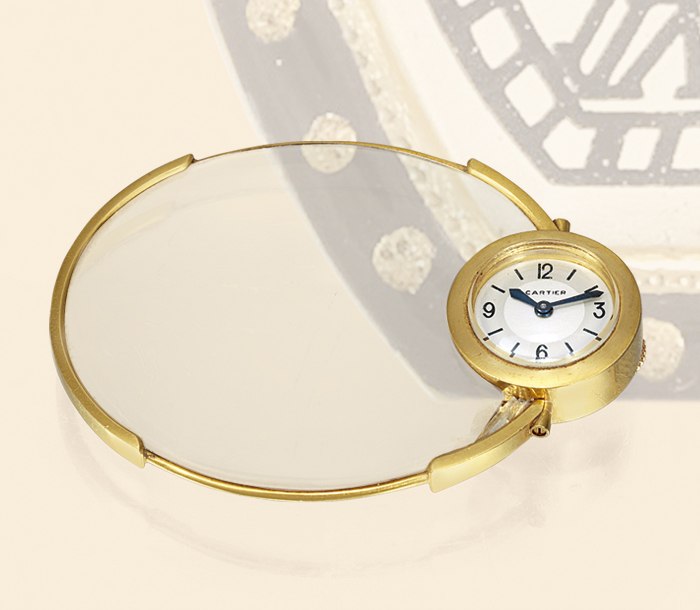
This object is an 18K yellow gold, circular, pocket-sized magnifying glass featuring an integrated watch. Attributed to circa 1935, the piece bears the name Cartier, while the movement was produced by the European Watch & Clock Co., Inc. The watch component is fitted into a polished, circular housing with an incline…
Partial type record
Victoria and Albert Museum, London
horological instruments
Carved stone sundial supported by angels
late 15th century
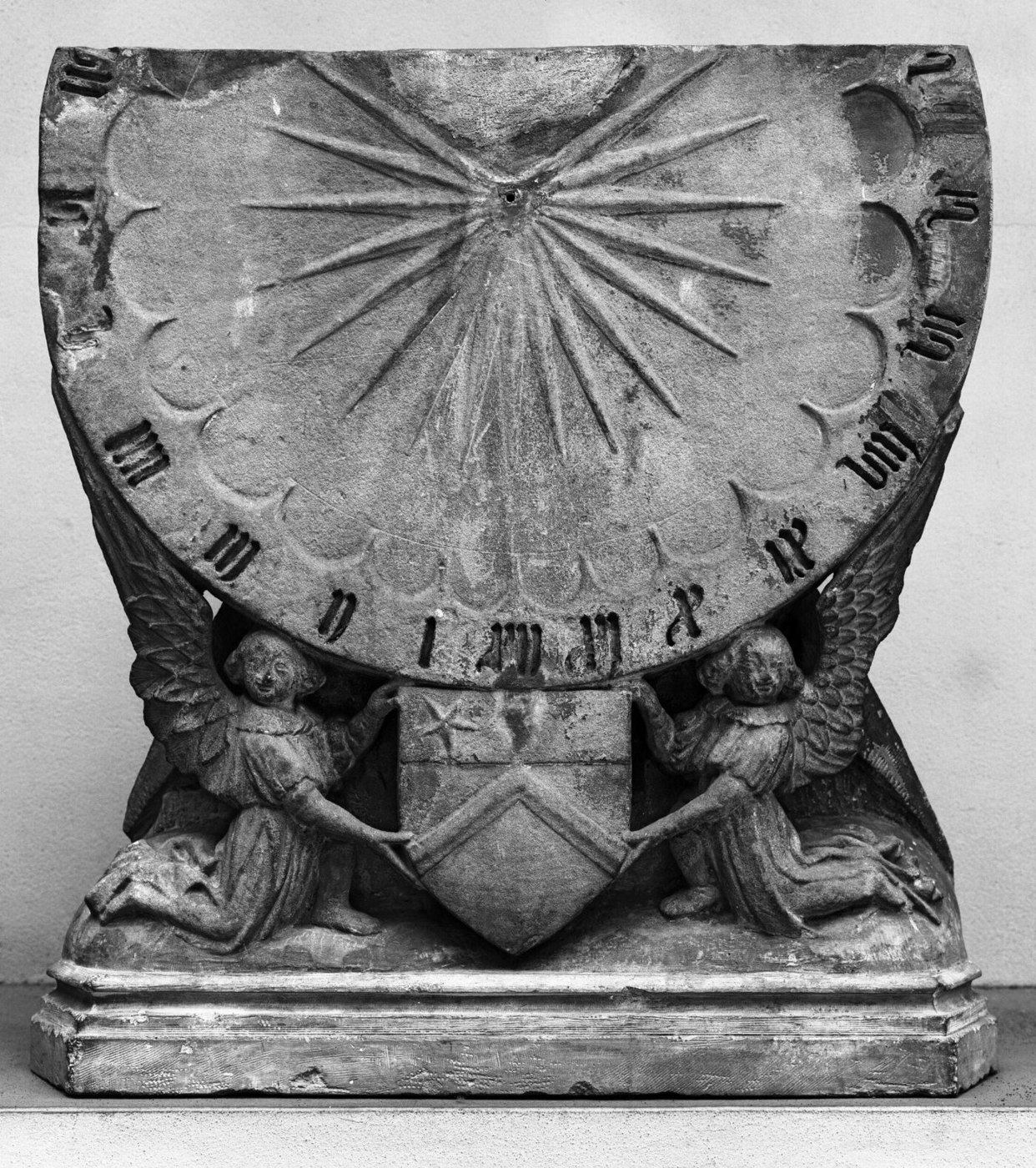
This late 15th-century sundial is a carved stone object of French origin. The dial itself consists of a stone disc with the upper section removed, featuring a scalloped border and a central star-shaped device. The original gnomon is missing. The dial is supported at the base by two kneeling angels, whose wings hold…
Partial type record
1stDibs
horological instruments
Cary Portable Equinoctial Sundial
circa 1820
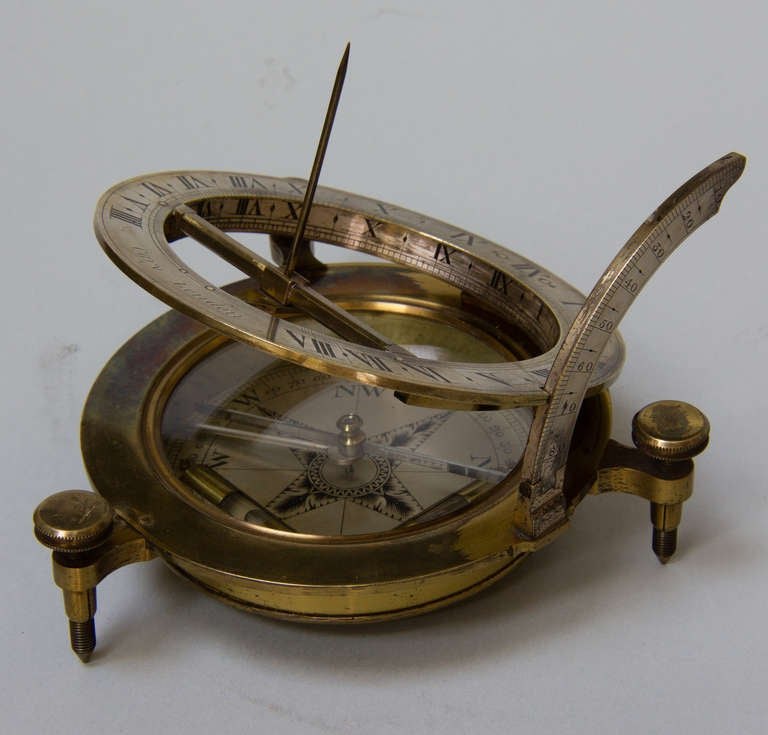
This brass portable equinoctial sundial is signed Cary, London and dates to circa 1820 according to the seller. Supported on a glazed compass base with three threaded knurled leveling screws and internal spirit levels, the instrument incorporates a silvered chapter ring engraved with Roman hour numerals and five-min…
Partial type record
British Museum, London
horological instruments
Chalice Dial by Bartholomaeus Madauer
1554
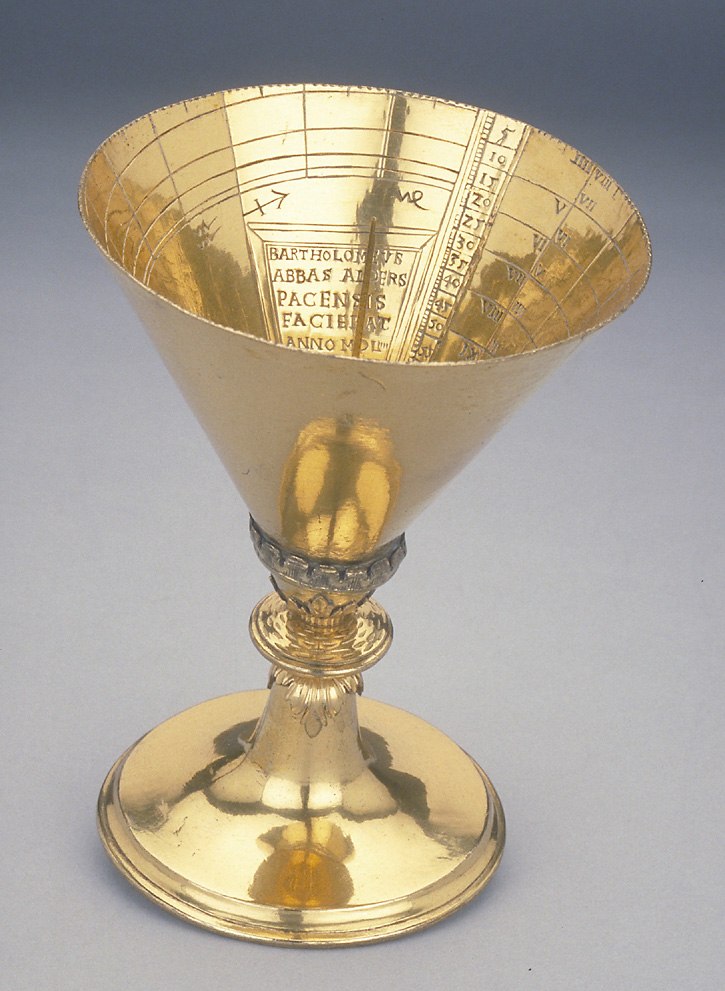
This chalice dial, held by the British Museum (inventory MLA 1896,12-14.1), is a gilt brass altitude dial dated 1554. Measuring 105 mm in diameter, the instrument was crafted by Bartholomaeus Madauer, abbot of Aldersbach. It functions by rotating the chalice until the shadow of a central pin gnomon falls across an i…
Partial type record
Museum of the History of Science, Oxford
horological instruments
Chalice Dial by Markus Purmann
1599
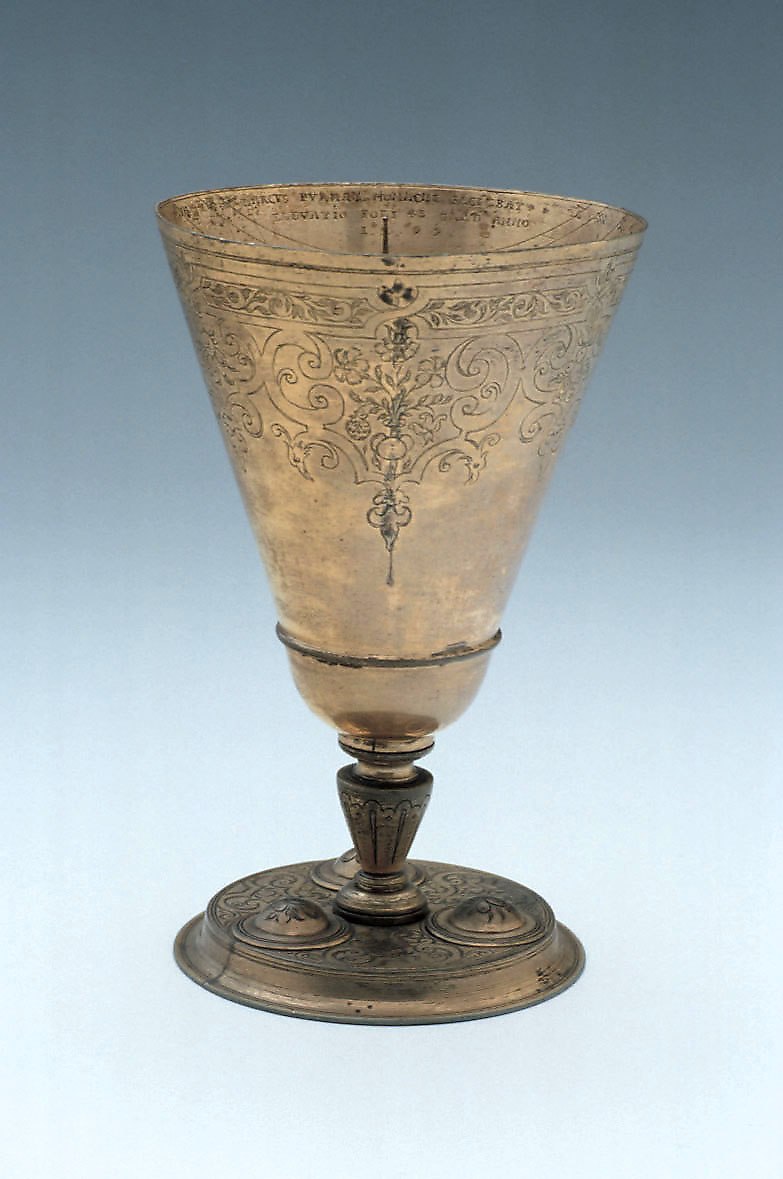
This chalice dial, created in Munich in 1599 by maker Markus Purmann, is constructed of gilt brass and measures 134 mm in height. The instrument functions as a sundial, with a central gnomon positioned within the cup. The external surface is engraved with floral motifs enclosed in cartouches and foliage. The base fe…
Partial type record
British Museum
horological instruments
Chalice-form gilt-brass scaphe-dial
17thC(early)
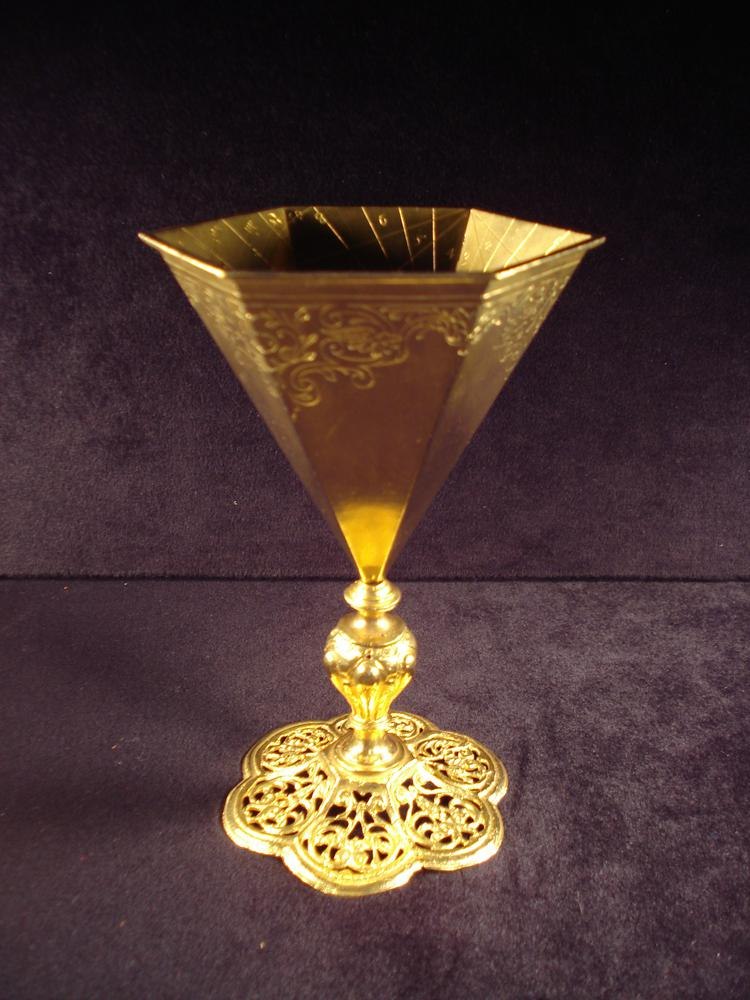
This early seventeenth-century gilt-brass scaphe sundial is configured in the form of a chalice, mounted on a baluster stem and a six-lobed pierced base. The hexagonal chalice bowl features internal hour-scales for latitude 49 degrees, covering equal hours 4–12–8, along with radiating House of Heaven lines and zodia…
Partial type record
Auktionen Dr. Crott
horological instruments
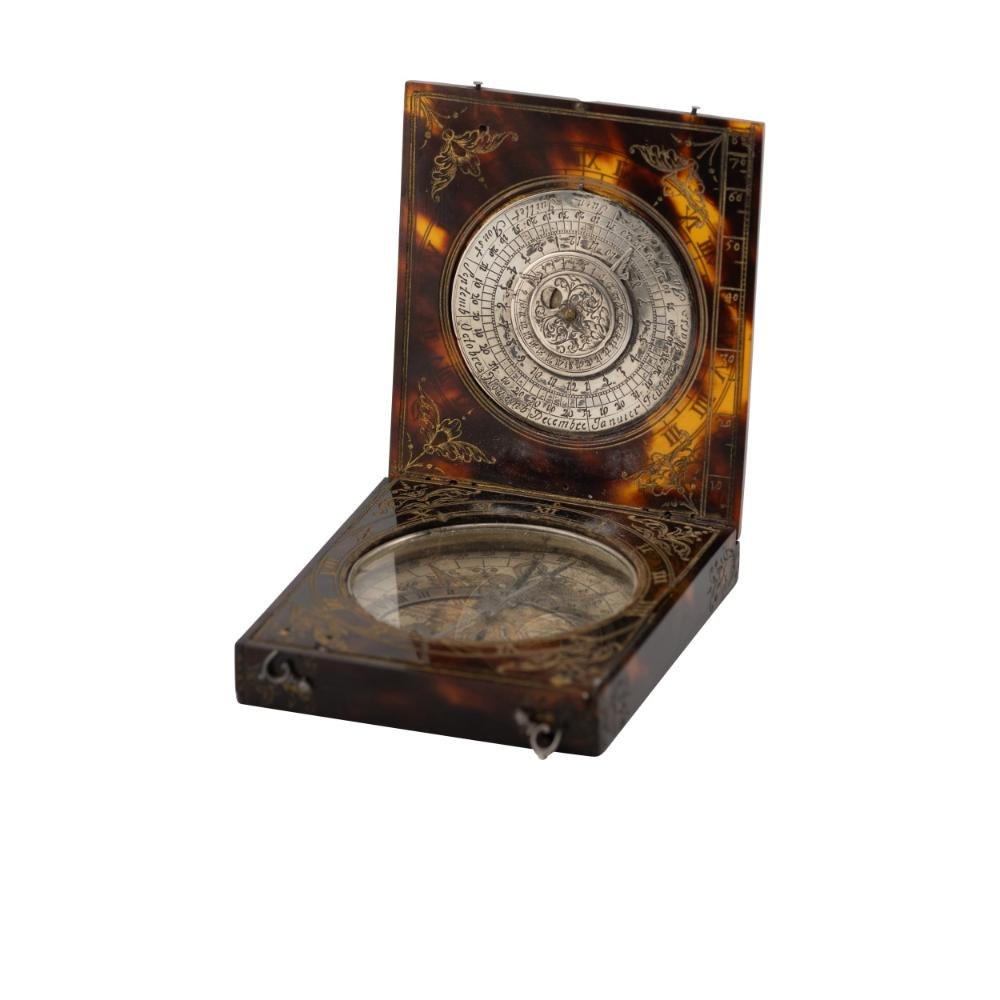
Charles Bloud Folding Universal Travelling Sundial
circa 1670
This diptych universal travelling sundial is attributed by the source to French maker Charles Bloud of Dieppe, dating to circa 1670. Fashioned from mottled tortoiseshell and silver, the rectangular folding instrument incorporates multiple scales, an inset compass, and astronomical calculating discs. The inside lid f…
Partial type record
Jason Clarke Antiques
horological instruments
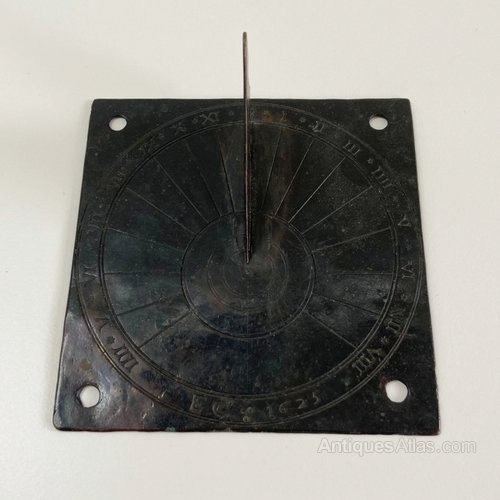
Charles I Period Horizontal Sun Dial
1625
This early seventeenth-century English horizontal sundial is constructed from a square brass scale plate measuring four and a half inches across. It features mounting holes in each corner and a central engraved plate with an outer Roman numeral chapter ring. Hour division lines radiate outward from concentric circul…
Partial type record
Istituto e Museo di Storia della Scienza, Firenze
horological instruments
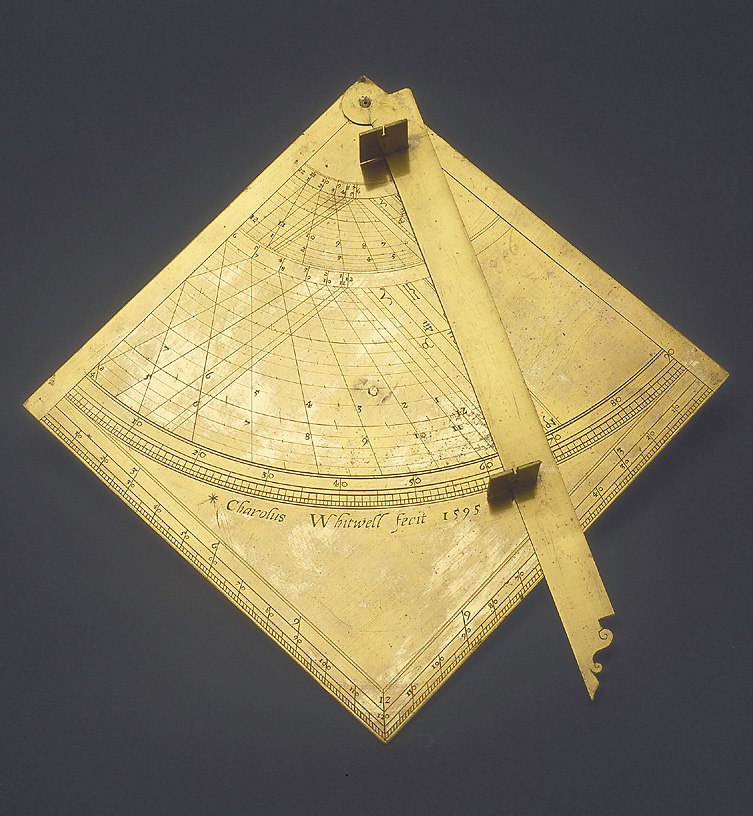
Charles Whitwell Quadrant
1595
This brass square-shaped instrument, measuring 176 mm by 176 mm, is a signed horary quadrant created by Charles Whitwell in 1595. It was designed for surveying and stellar measurements. The obverse face features a shadow square and two straight-line horary quadrants. A pivoted alidade with sighting vanes is present,…
Partial type record
Museums Victoria
horological instruments
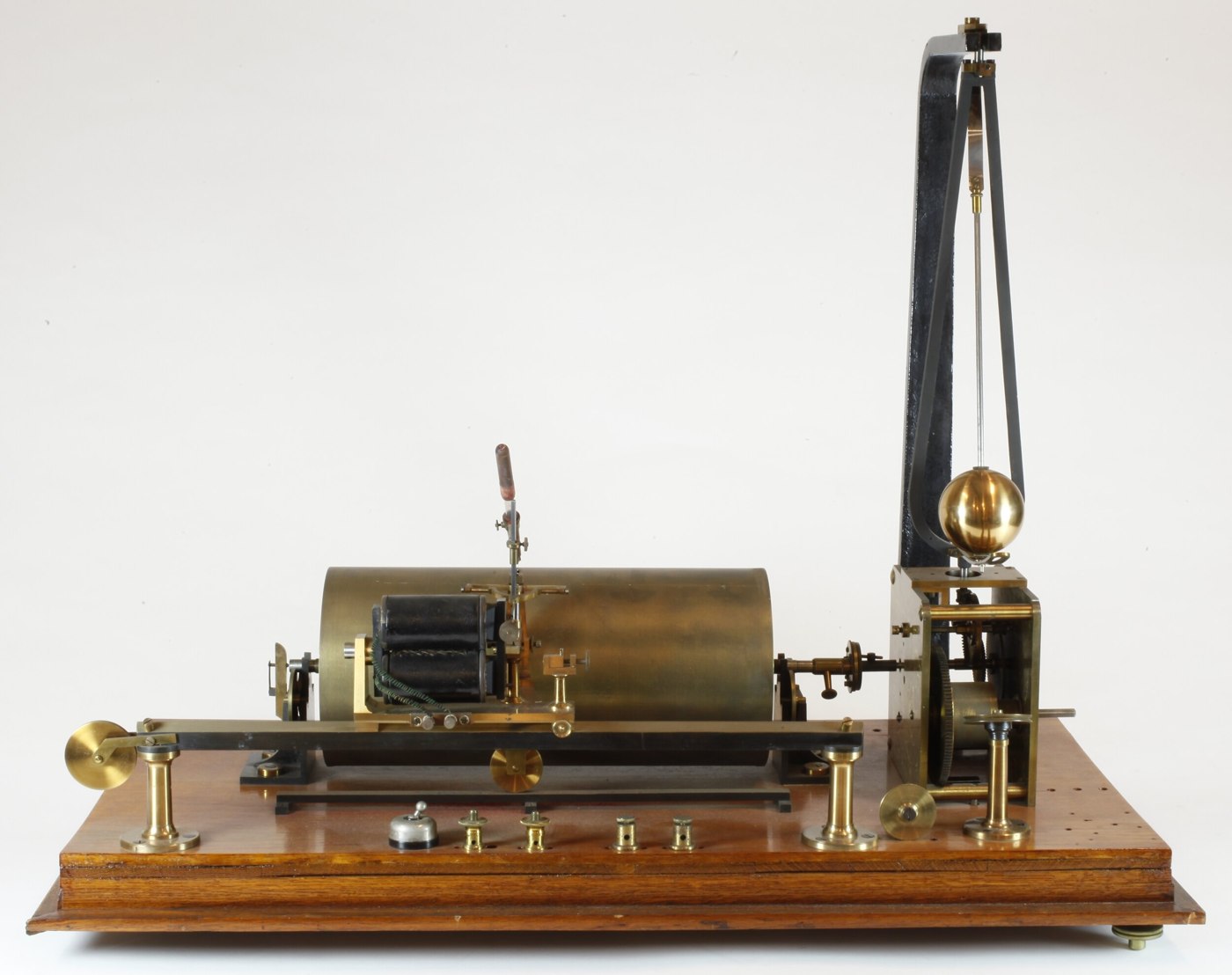
Chronograph - R. Ellery Design, Melbourne Observatory Workshop
1860s-1870s
This drum chronograph is a scientific instrument designed by Robert Lewis John Ellery, the Government Astronomer in Victoria, and built at the Melbourne Observatory workshop. It dates to the 1860s or 1870s. The device is constructed on a wooden base with a large cylindrical brass drum for recording data. It features…
Partial type record
Bonhams Skinner
horological instruments
Conrad Karner Ivory Diptych Sundial
17th century
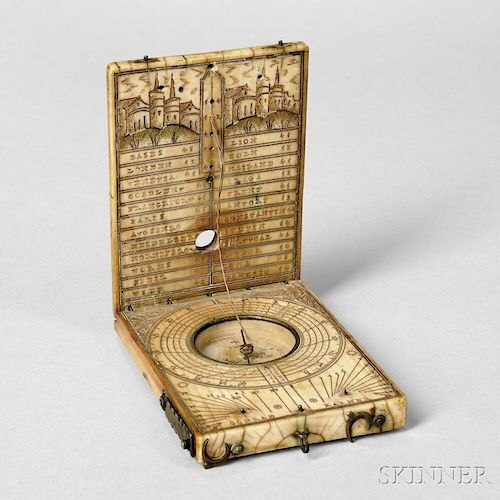
This ivory diptych sundial is catalogued by Bonhams Skinner as originating from seventeenth-century Nuremberg and is inscribed with the signature of maker Conrad Karner. The upper leaf interior displays an engraved and inked architectural town skyline positioned above a latitude table listing twenty-four European to…
Partial type record
Museum of the History of Science, Oxford
horological instruments
Crucifix Dial
1592
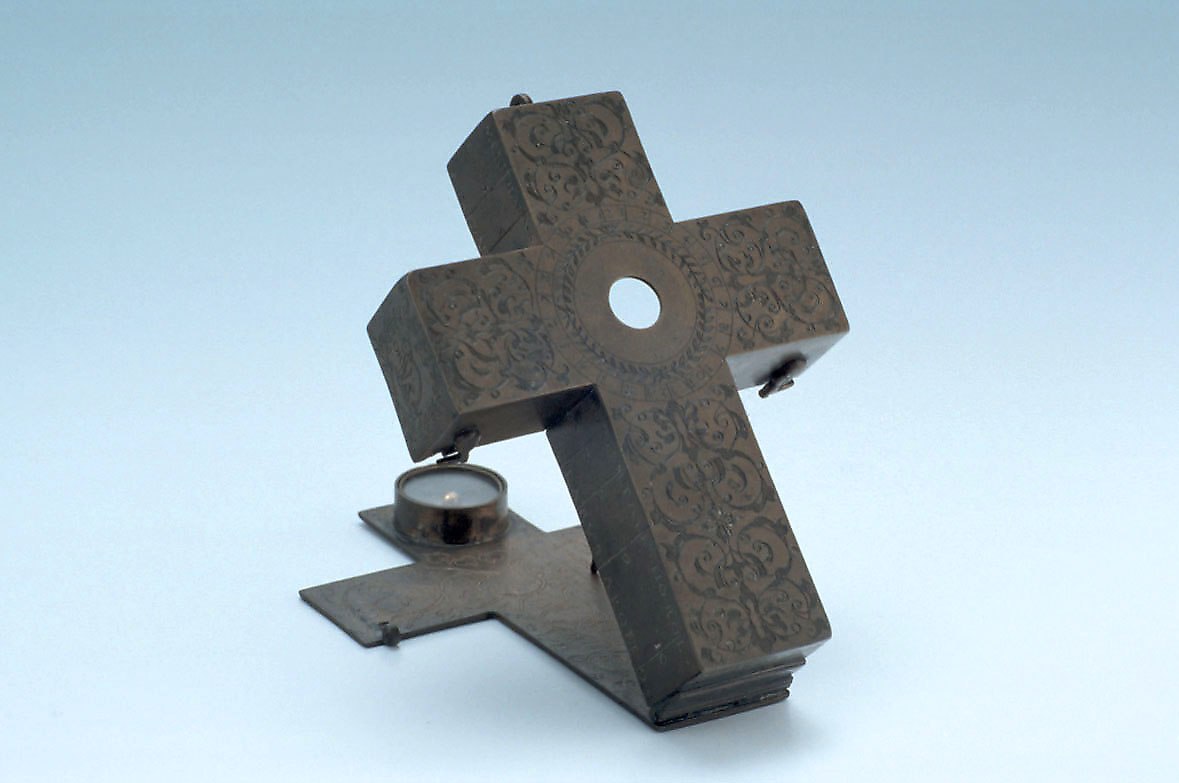
This brass crucifix dial, dated 1592 and of French origin, is a polyhedral instrument measuring 112 x 24 x 82 mm. Held by the Museum of the History of Science, Oxford, the instrument is unsigned. Its construction features a central cross form with elaborate engraved decorations, including arabesques and foliate patt…
Partial type record
Museum of the History of Science, Oxford
horological instruments
Crucifix Dial by Adriaan Zeelst
1588
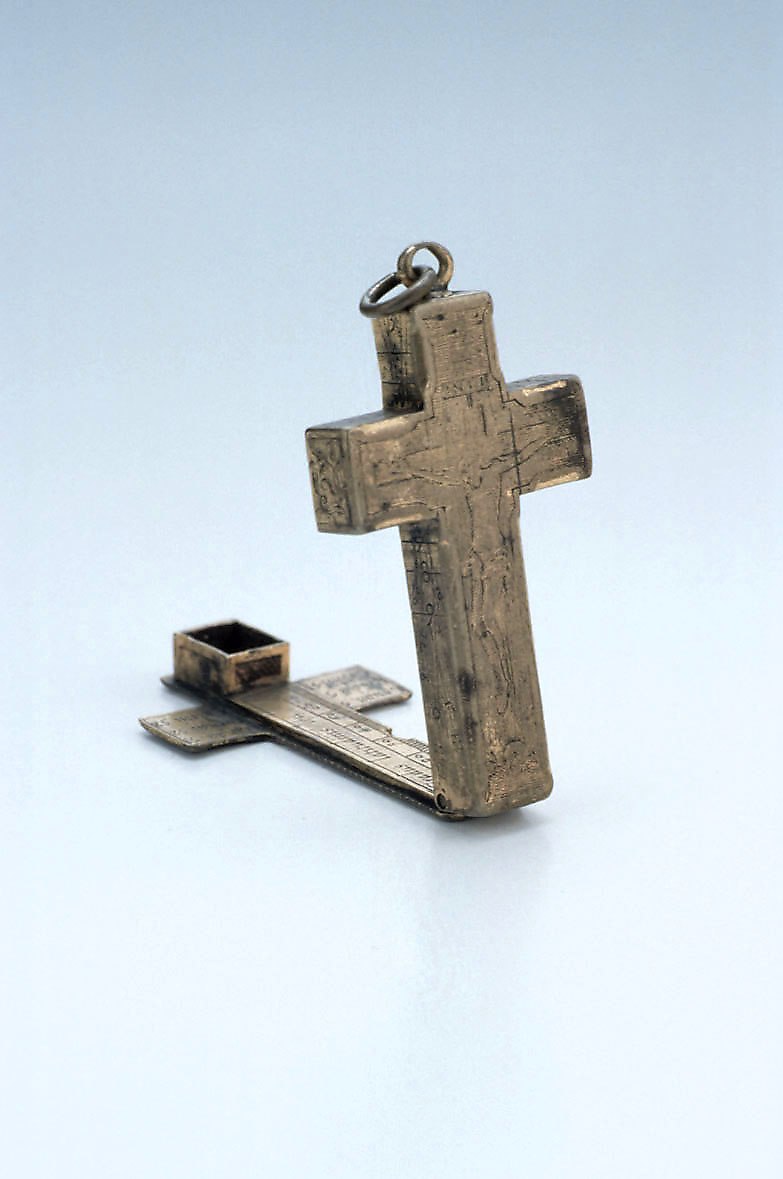
This gilt brass crucifix dial, measuring 7 x 32 x 54 mm, is an instrument designed to tell time through solar measurement. Signed by Adriaan Zeelst and dated 1588, the device features a depiction of the Crucifixion on one side. The cross arms are engraved with hour lines, symbols of the zodiacal signs used to indica…
Partial type record
British Museum, London
horological instruments
Crucifix Dial by Melchior Reichle
1569
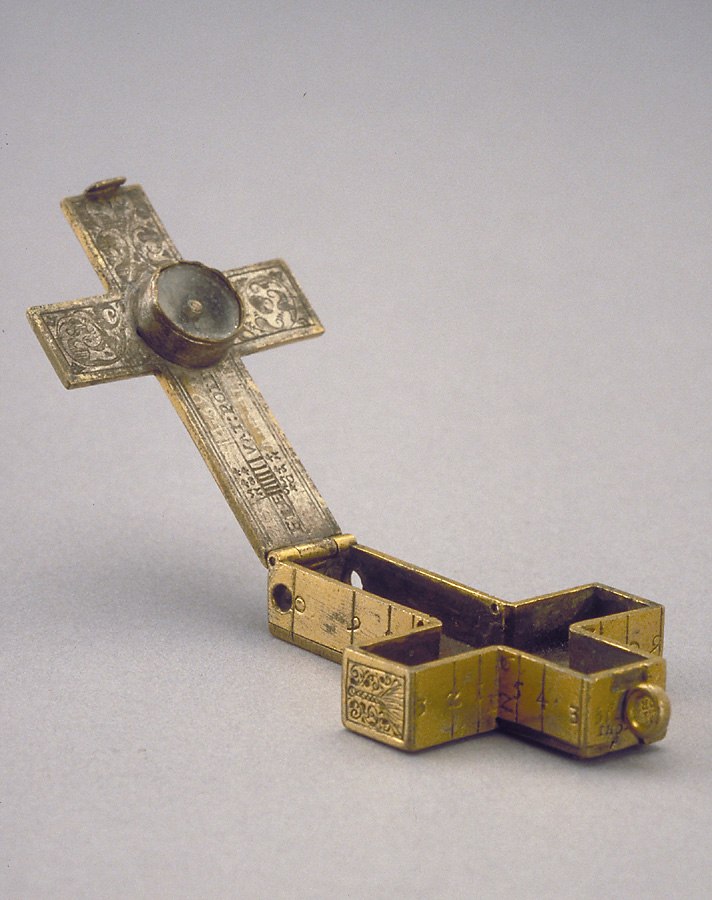
This crucifix dial, manufactured in 1569 and signed by Melchior Reichle, is an instrument constructed from gilt brass measuring 56 x 37 x 10 mm. It is a cross-shaped portable device featuring a hinged lid engraved with a Crucifixion scene and the 'INRI' monogram. Internally, the lid houses a compass with magnetic de…
Partial type record
Museum of the History of Science, Oxford
horological instruments
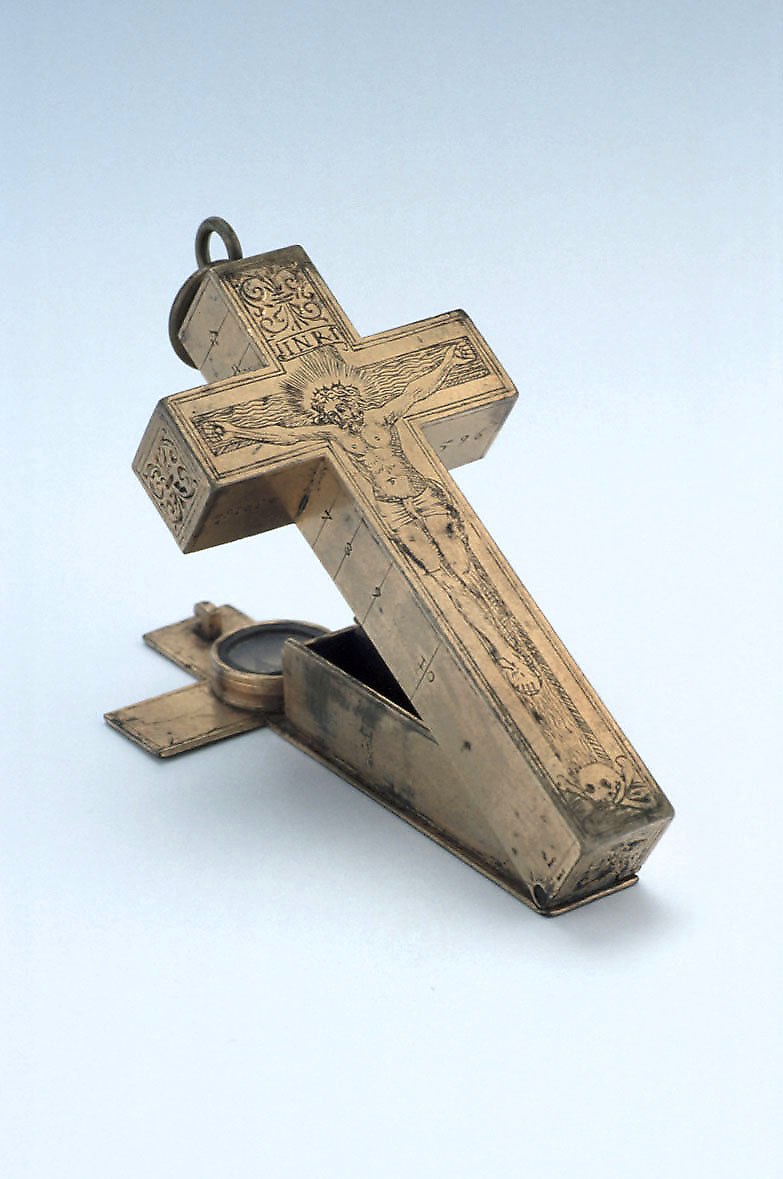
Crucifix Dial, 1596
1596
This crucifix sundial, inventory number 37133 at the Museum of the History of Science, Oxford, is constructed from gilt brass and measures 90 mm in length. Attributed to the maker Markus Purmann and dated 1596, the device functions as both a devotional object and a polar sundial. The dial comprises a base plate feat…
Partial type record
British Museum, London
horological instruments
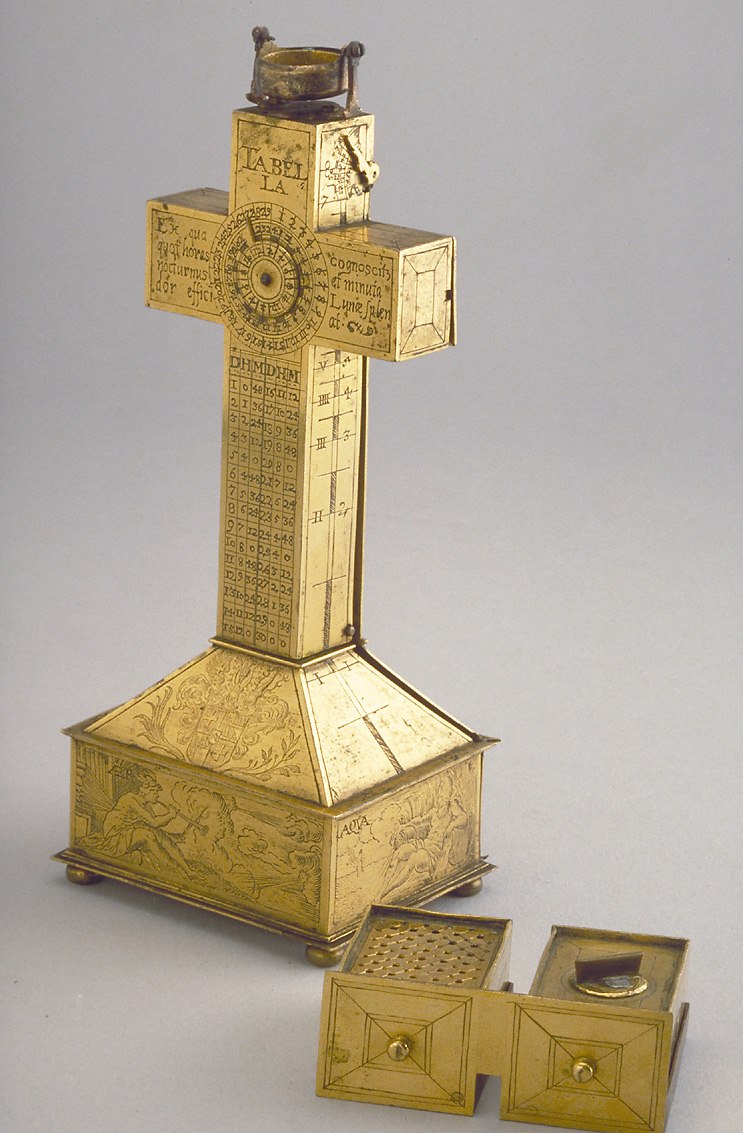
Crucifix Dial, Late 16th century ?
Late 16th century ?
This crucifix dial is an unsigned instrument constructed of gilt brass, measuring 250 x 80 x 63 mm. Attributed to the late 16th century and of German origin, the cross stands on a rectangular plinth with four bun feet. The base features engraved personifications of the four elements (IGNIS, TERRA, AER, AQVA). The fr…
Partial type record
Le Zograscope
horological instruments
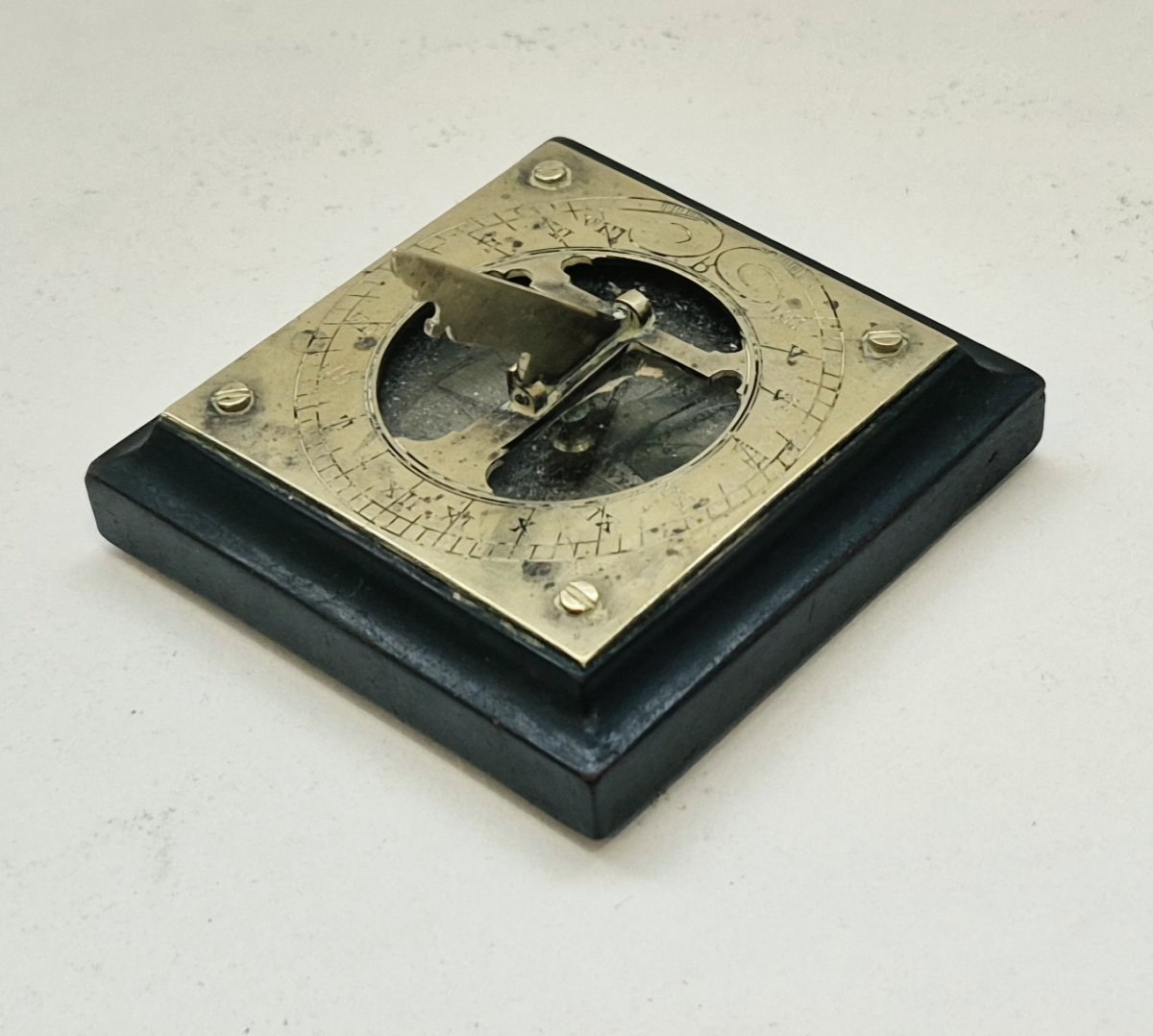
David Beringer single-latitude sundial, circa 1780
circa 1780
The source reports that this engraved brass single-latitude sundial dates to circa 1780 and is attributed to David Beringer based on an engraved 'B' mark. The dial is mounted onto an ebony base and features an engraved circular scale divided into hour intervals from 4 to 12 and 1 to 8. A folding brass gnomon is set…
Partial type record
Istituto e Museo di Storia della Scienza, Firenze
horological instruments
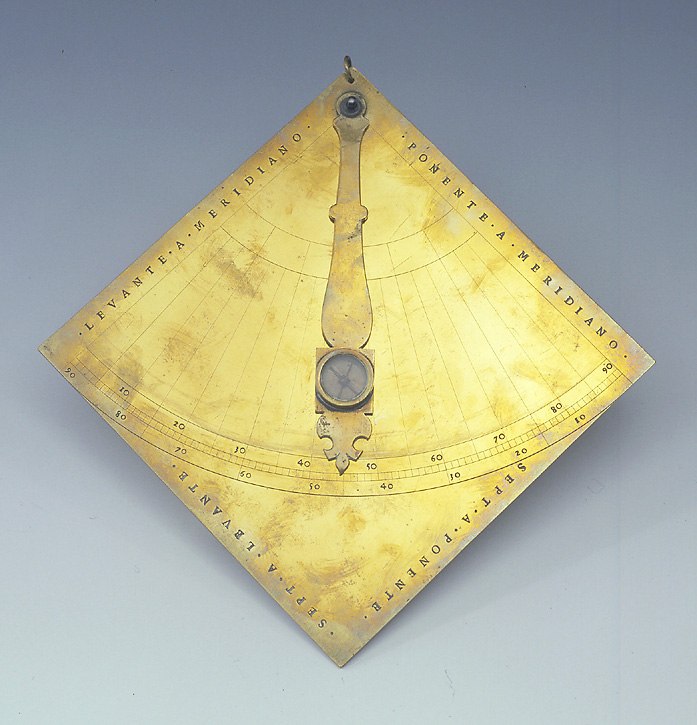
Declinatory Quadrant
16th century
This brass declinatory quadrant, measuring 170 x 170 mm, is attributed to the Florentine maker Giovanni Battista Giusti. The device consists of a square brass plate engraved with cardinal directions and a quadrant scale divided into 90 degrees. A modelled alidade is pivoted at the vertex, allowing for rotational mov…
Partial type record
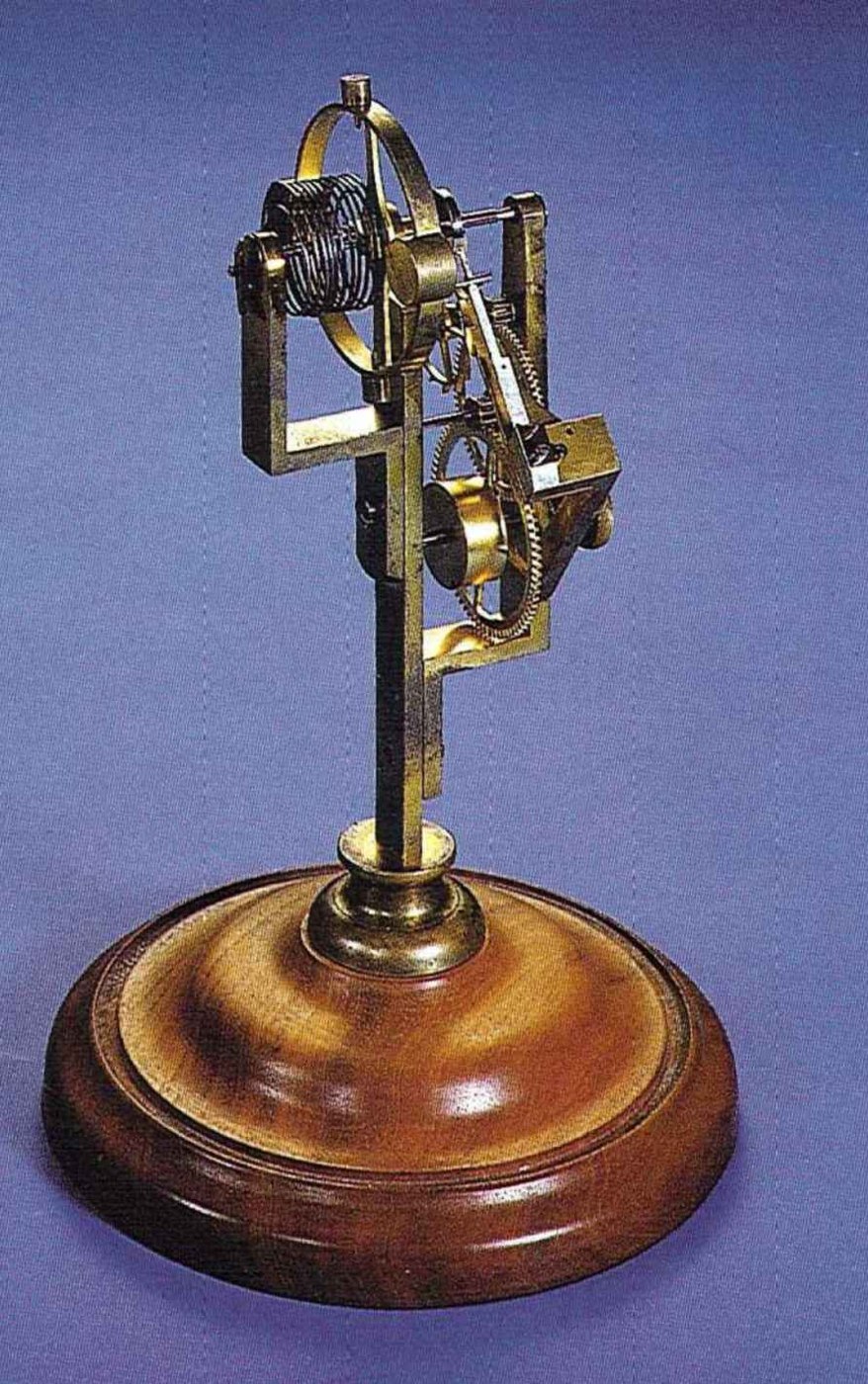
Antiquorum
horological instruments
Dent Demonstration Model of the Earnshaw Chronometer Escapement
circa 1880
This circa 1880 demonstration model of an Earnshaw chronometer escapement was produced in London by Dent. Intended for display purposes, it was formerly held in the premises of E. Dent & Co. The object features a vertical arrangement with the gear train secured between bridges on a brass bar. The going train is powe…
Partial type record
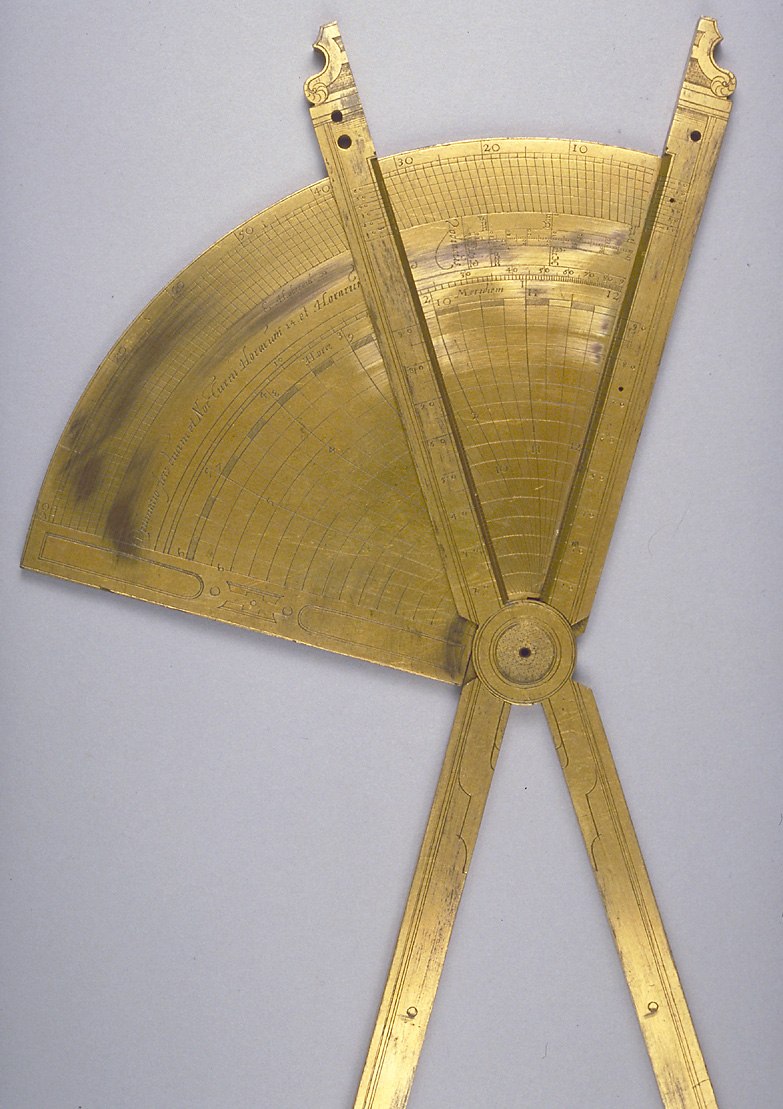
British Museum, London
horological instruments
Dialling Quadrant by Erasmus Habermel
1592
This 1592 dialling quadrant was manufactured in Prague by Erasmus Habermel and is composed of gilt brass with a diameter of 138 mm. It functions as a complex mathematical tool for calculating sundial construction and daylight duration. The instrument features two pivoted arms—one fixed and one movable—mounted to a q…
Partial type record
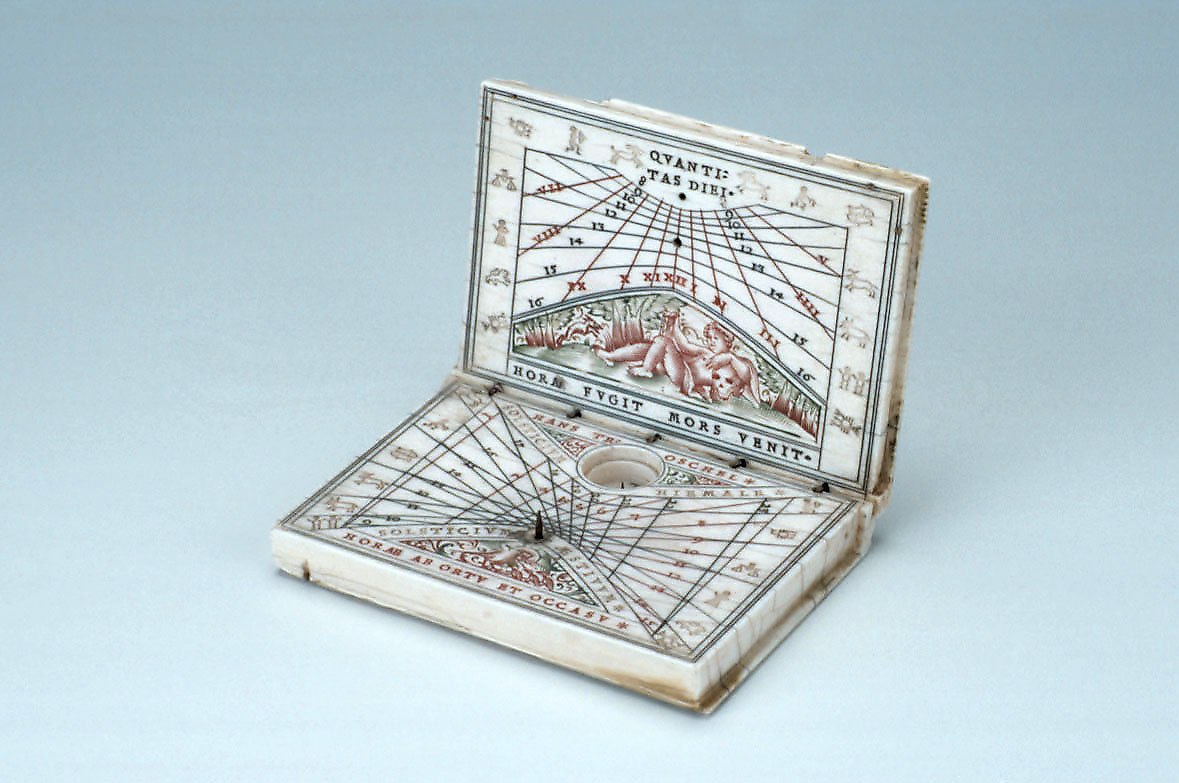
Museum of the History of Science, Oxford
horological instruments
Diptych Dial
circa 1600
This diptych dial is a portable timekeeping instrument crafted from ivory and brass, measuring 82 x 52 x 14 mm. It originates from Nuremberg and is attributed to Hans Troschel. Constructed in the form of a book secured with clasps, the dial consists of two leaves that feature complex engraving and polychrome detaili…
Partial type record
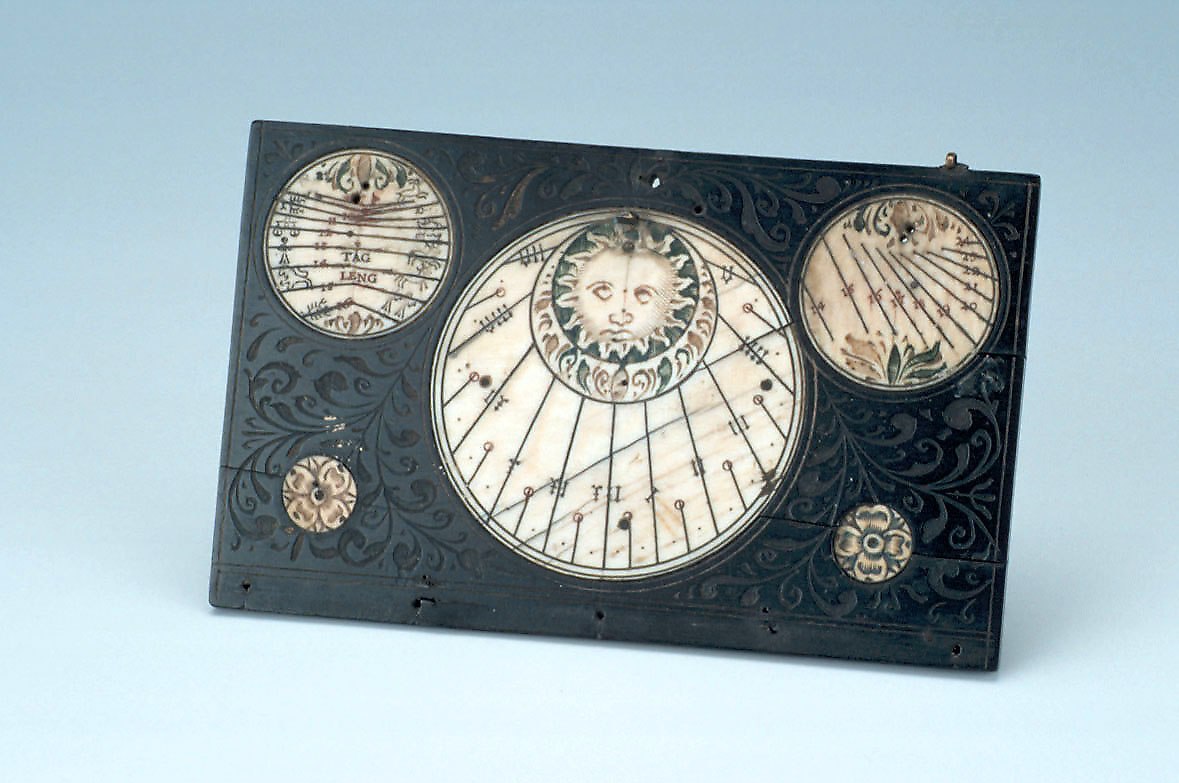
Museum of the History of Science, Oxford
horological instruments
Diptych dial (upper leaf)
circa 1600
This object is the upper leaf of an unusual diptych sundial, originating from Nuremberg circa 1600. Unlike most diptych dials which were constructed entirely from ivory, this example features an ebony wooden base inlaid with ivory discs. It is unsigned. The interior face of this leaf includes a central string gnomon…
Partial type record
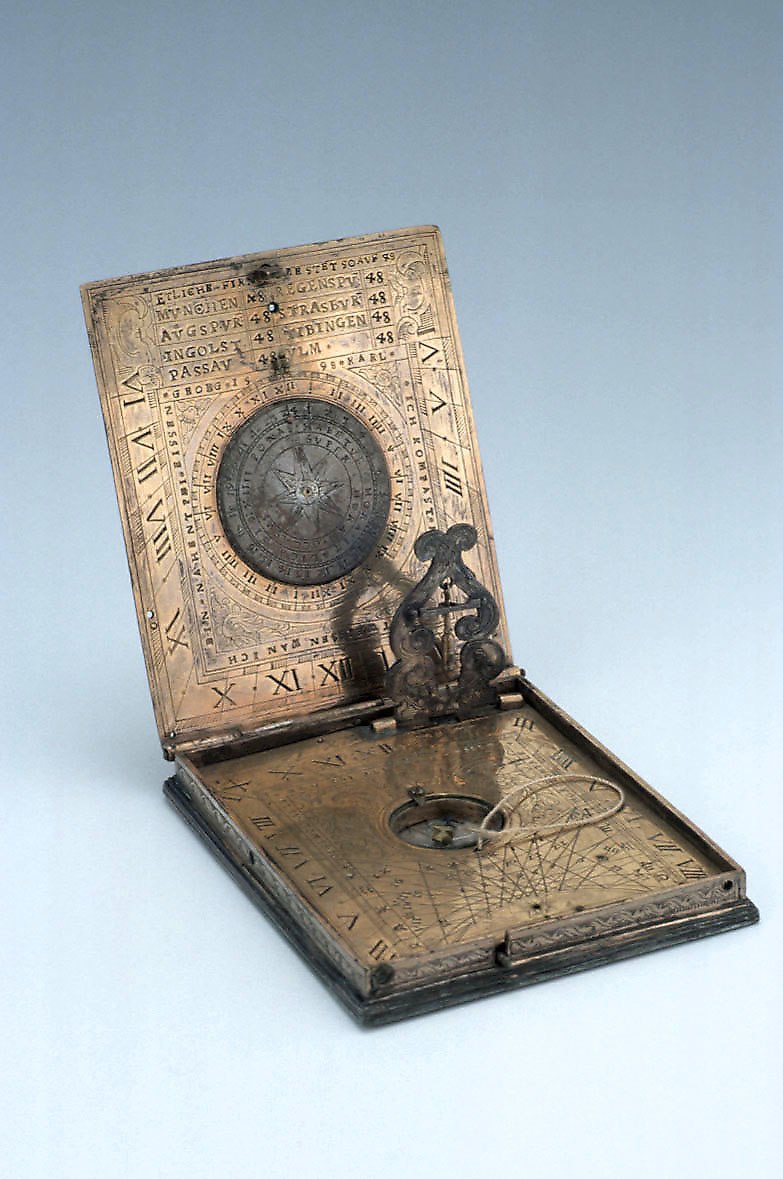
Museum of the History of Science, Oxford
horological instruments
Diptych Dial by Georg Karl
1598
This diptych dial, created in 1598 by Georg Karl, is a gilt brass scientific instrument measuring 104 x 88 x 12 mm. It comprises a rectangular box featuring a cover secured by a spring catch, with sides decorated with engraved foliage. The instrument serves as a complex multifunctional device, housing two horizontal…
Partial type record
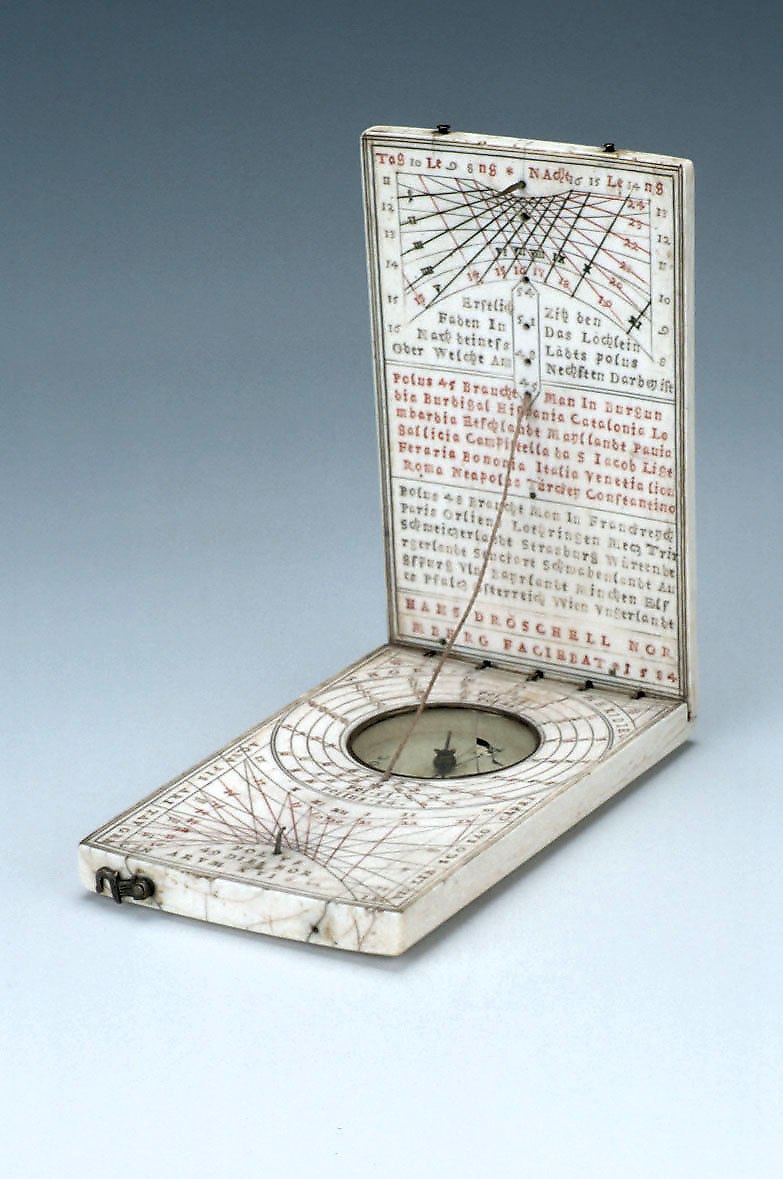
Museum of the History of Science, Oxford
horological instruments
Diptych Dial by Hans Troschel
1584
This diptych dial is constructed from ivory and brass, measuring 62 x 16 x 11 mm. Created in 1584 by Hans Troschel in Nuremberg, it serves as a portable timekeeping instrument. The object features a string gnomon dial that is adjustable for four specific latitudes (45, 48, 51, and 54 degrees) and incorporates extens…
Partial type record
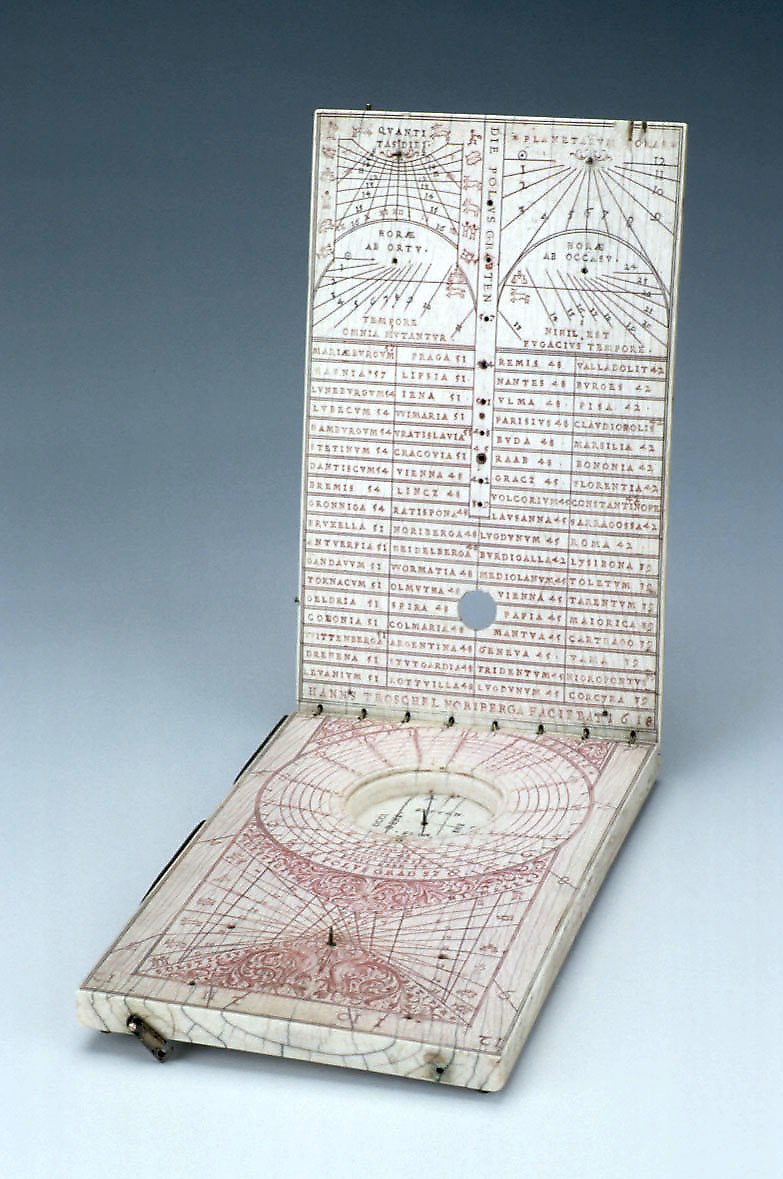
Museum of the History of Science, Oxford
horological instruments
Diptych Dial by Hans Troschel, 1618
1618
This diptych dial, measuring 102 x 166 x 16 mm, is constructed from ivory and brass and dated 1618. Signed by Hans Troschel in Nuremberg, the object serves as a multifaceted instrument containing numerous specialized components. The outer surfaces include a wind rose with 32 directions, a lunar volvelle, an aspectar…
Partial type record
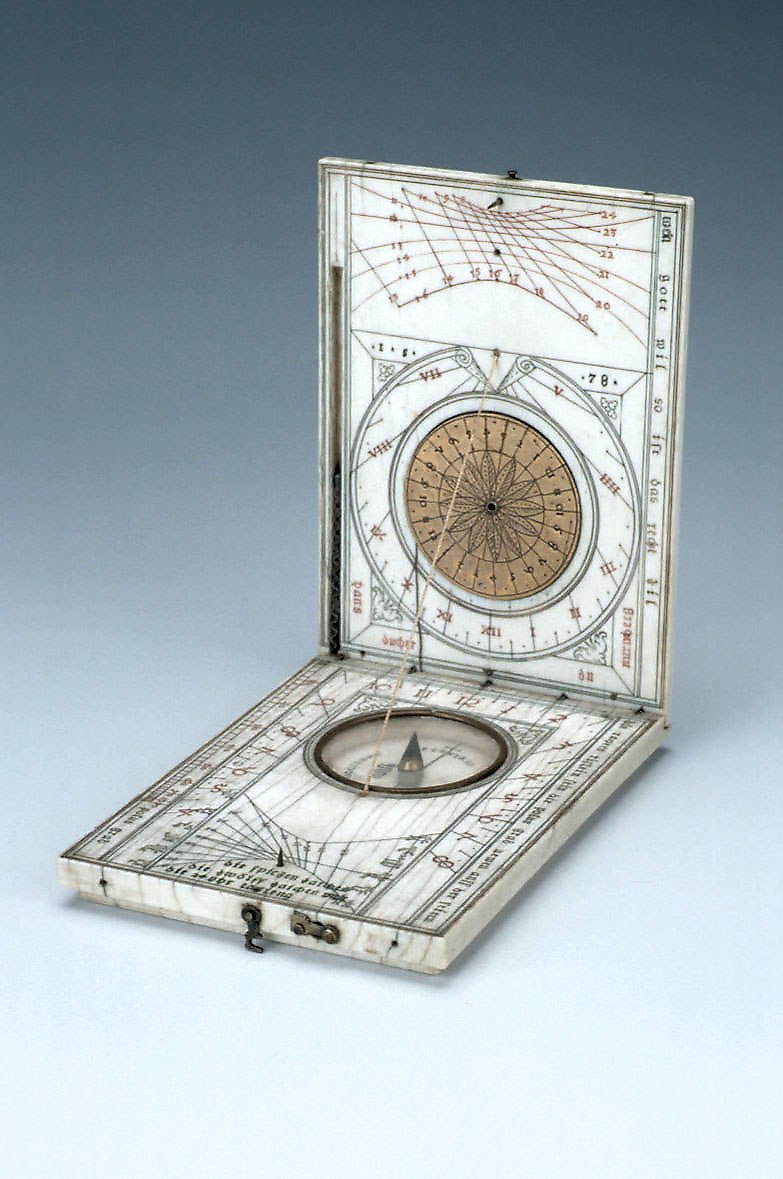
Museum of the History of Science, Oxford
horological instruments
Diptych Dial by Hans Tucher
1578
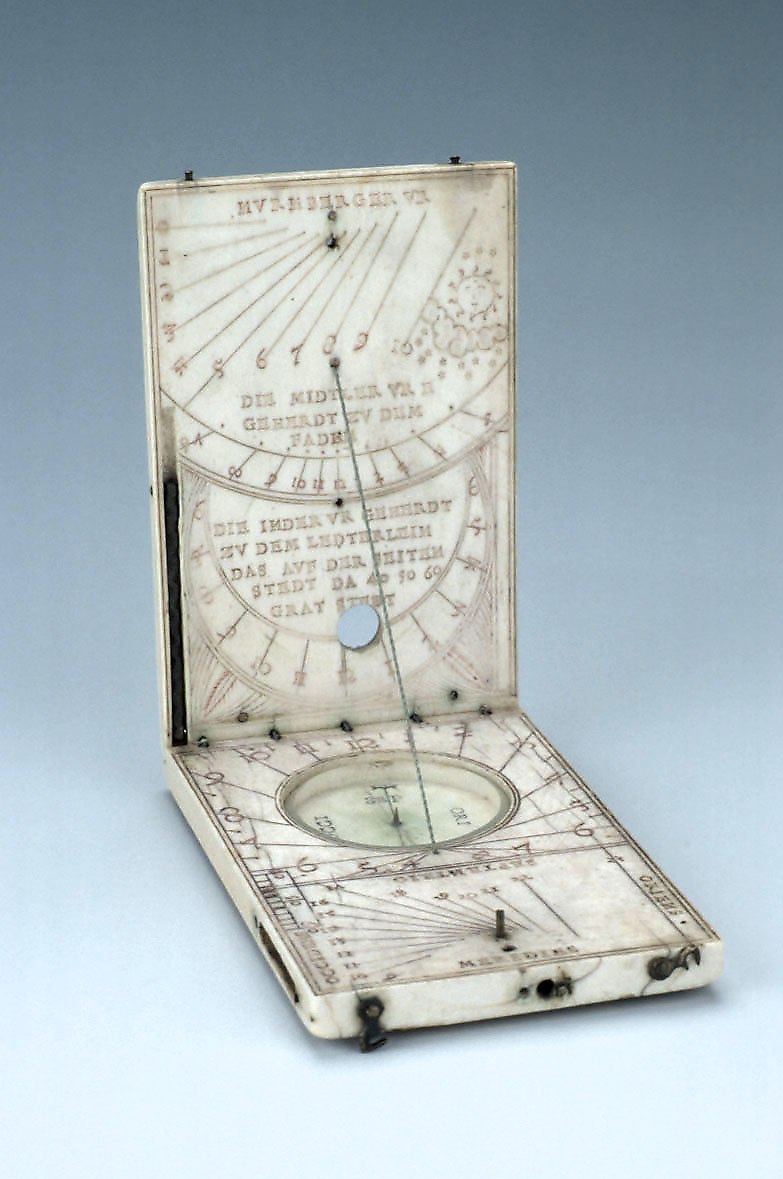
This 1578 diptych sundial, constructed from ivory and brass, measures 81 x 114 x 15 mm and is signed by the Nuremberg maker Hans Tucher. The instrument features a hinged construction with an integrated compass, pin gnomon dials, and string gnomon dials. The dial is extensively inscribed with mottoes in German and in…
Partial type record
Museum of the History of Science, Oxford
horological instruments
Diptych Dial by Hans Tucher, 1567
1567
This diptych dial is constructed from ivory and brass, measuring 61 by 94 by 11 millimeters. Signed by Hans Tucher and dated 1567, the Nuremberg-made instrument features a folding design containing various timekeeping components. The upper leaf includes a wind rose with 16 directions, a table of latitudes for ten to…
Partial type record
British Museum, London
horological instruments
Diptych Dial by Hans Tucher, 1581
1581
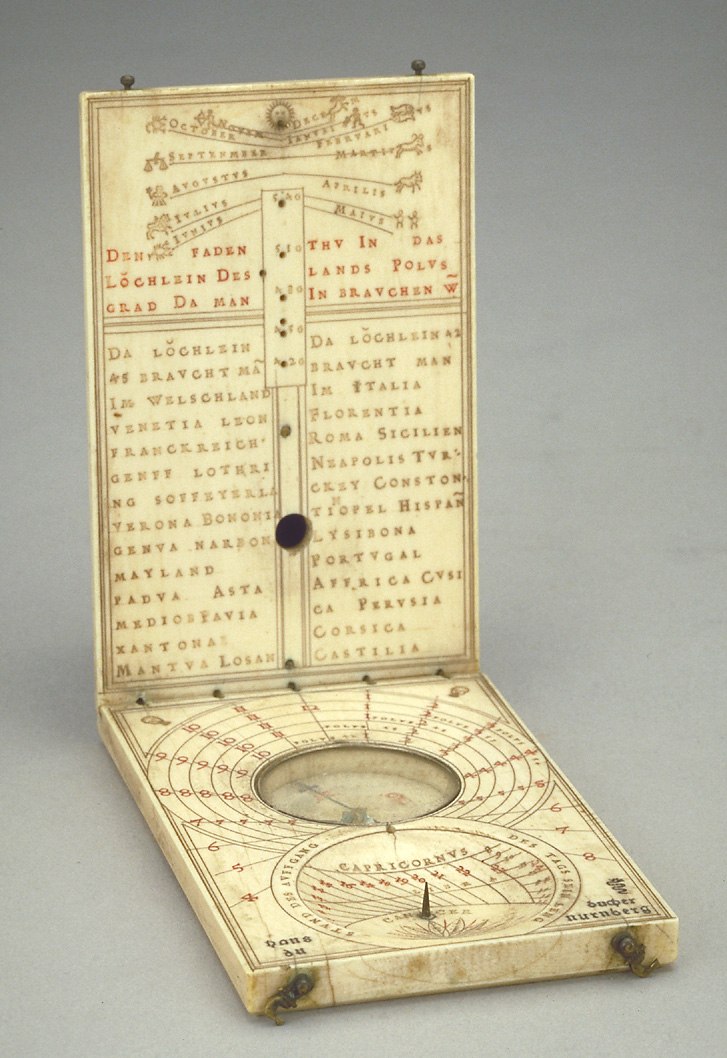
This Nuremberg diptych dial is constructed from ivory and brass, measuring 109 x 70 x 14 mm. Signed by the maker as 'hans ducher zu nurnberg', the instrument features extensive stamped inscriptions in red, black, and brown, alongside decorative geometrical patterns. The device serves as a multifunctional timekeeping…
Partial type record
Museum of the History of Science, Oxford
horological instruments
Diptych Dial by Hans Tucher, 1595
1595
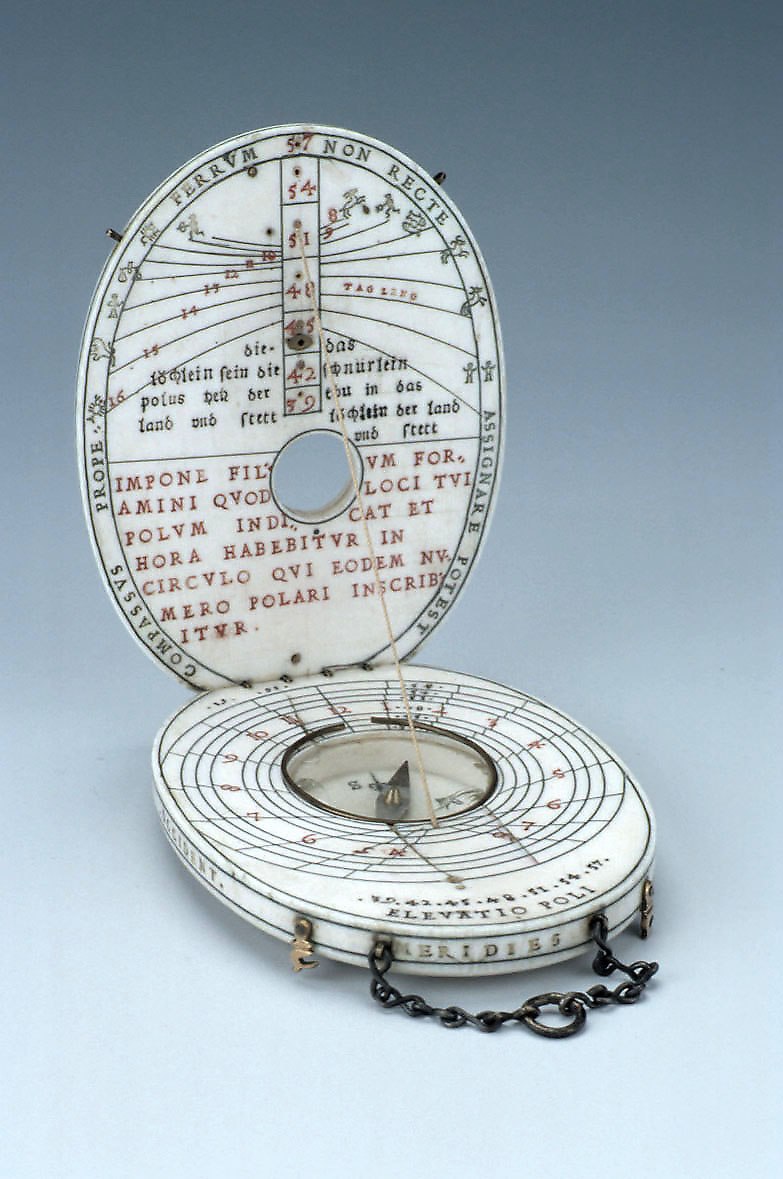
This diptych dial is an ivory, brass, and silver instrument measuring 80 x 111 x 15 mm. Signed by Hans Tucher and dated 1595, it originates from Nuremberg. The oval-shaped instrument features an upper leaf containing a wind rose with 32 directions, a pin gnomon dial for measuring day length, and a string gnomon dial…
Partial type record
Museum of the History of Science, Oxford
horological instruments
Diptych Dial by Hans Tucher, 1600
1600
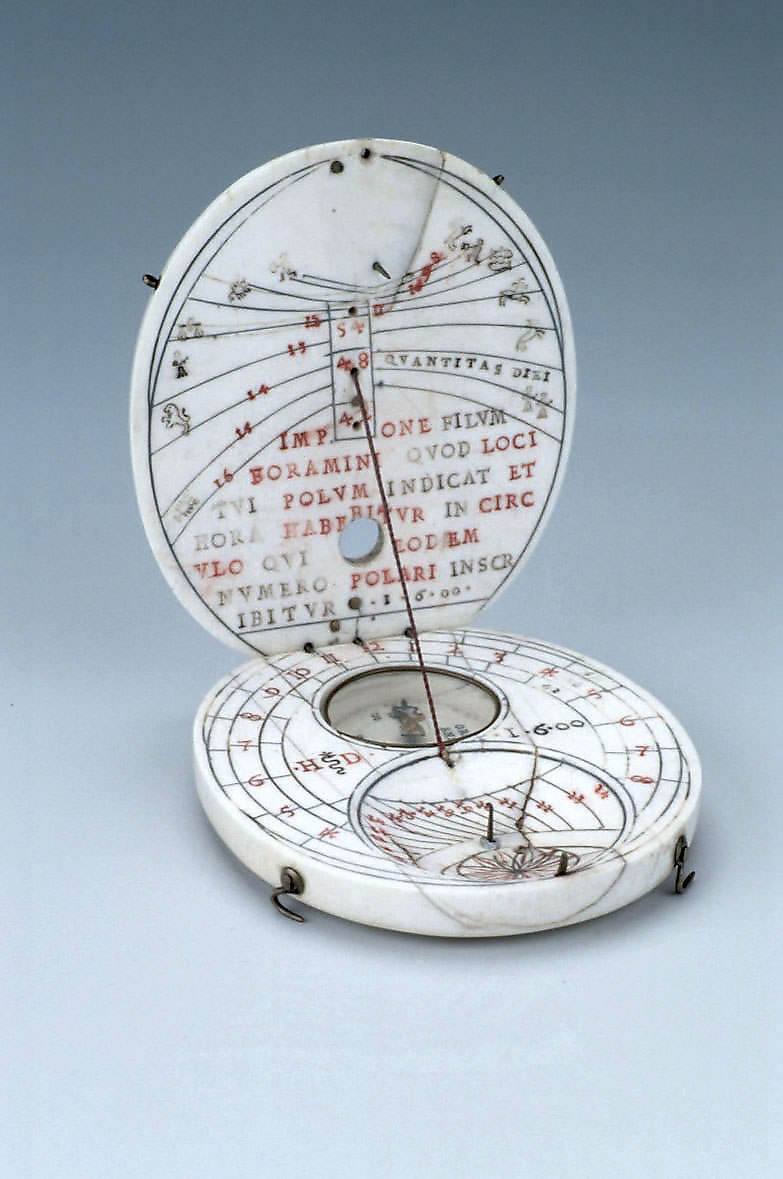
This oval-shaped diptych sundial, crafted from ivory and brass, measures 72 x 90 x 12 mm. The instrument is comprised of two leaves hinged together. The upper leaf contains a pin gnomon dial for calculating day length and solar declination, alongside instructions for latitude adjustments. The lower leaf incorporates…
Partial type record