Catalogue
Astrolabes, Dials and Instruments
Astrolabes, quadrants, astronomical compendia, portable dials and watchmakers' workshop tools used to find or keep time.
Catalogue entries (445)
Filter by era, country, maker or material193–240 of 445 entries
Museum of the History of Science, Oxford
horological instruments
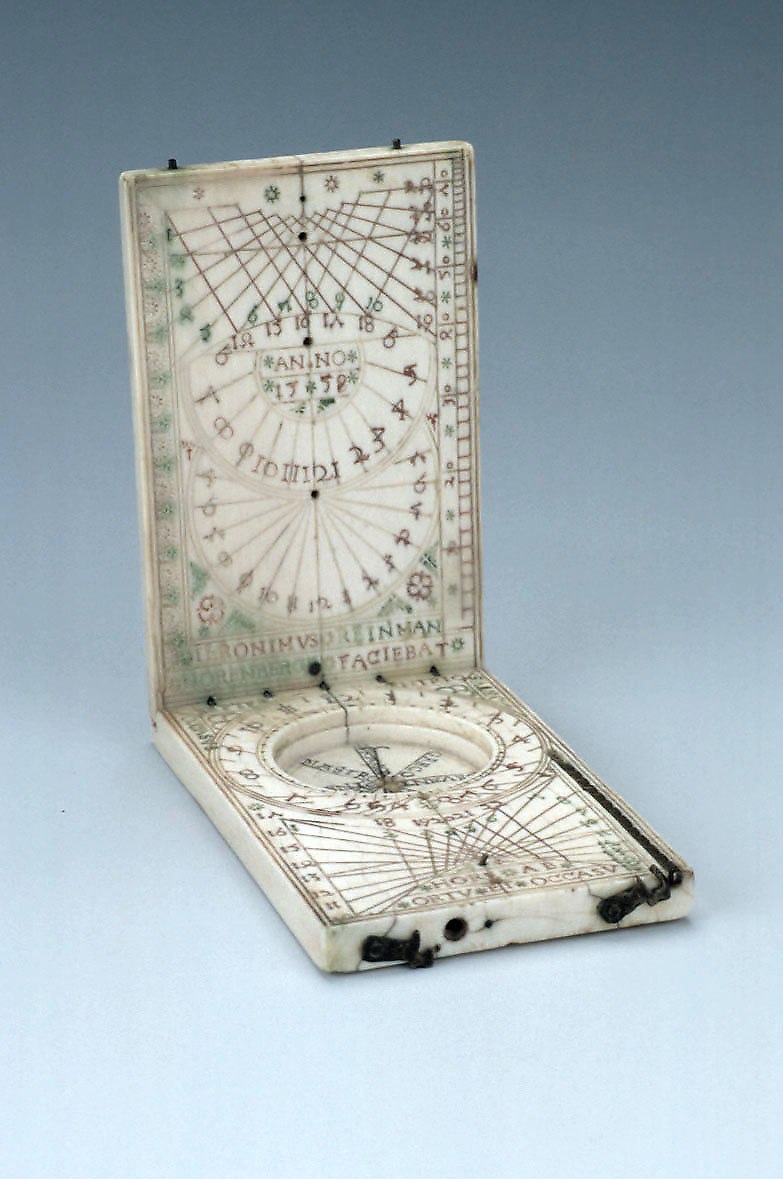
Diptych dial by Hieronymus Reinmann
1559
This diptych dial, manufactured in 1559 in Nuremberg, is crafted from ivory and brass and measures 56 x 90 x 13 mm. Signed by Hieronymus Reinmann, the instrument features extensive decorative use of red and green colouring. The upper leaf includes a pin gnomon dial and a table of eighteen towns with latitudes. The i…
Partial type record
Museum of the History of Science, Oxford
horological instruments
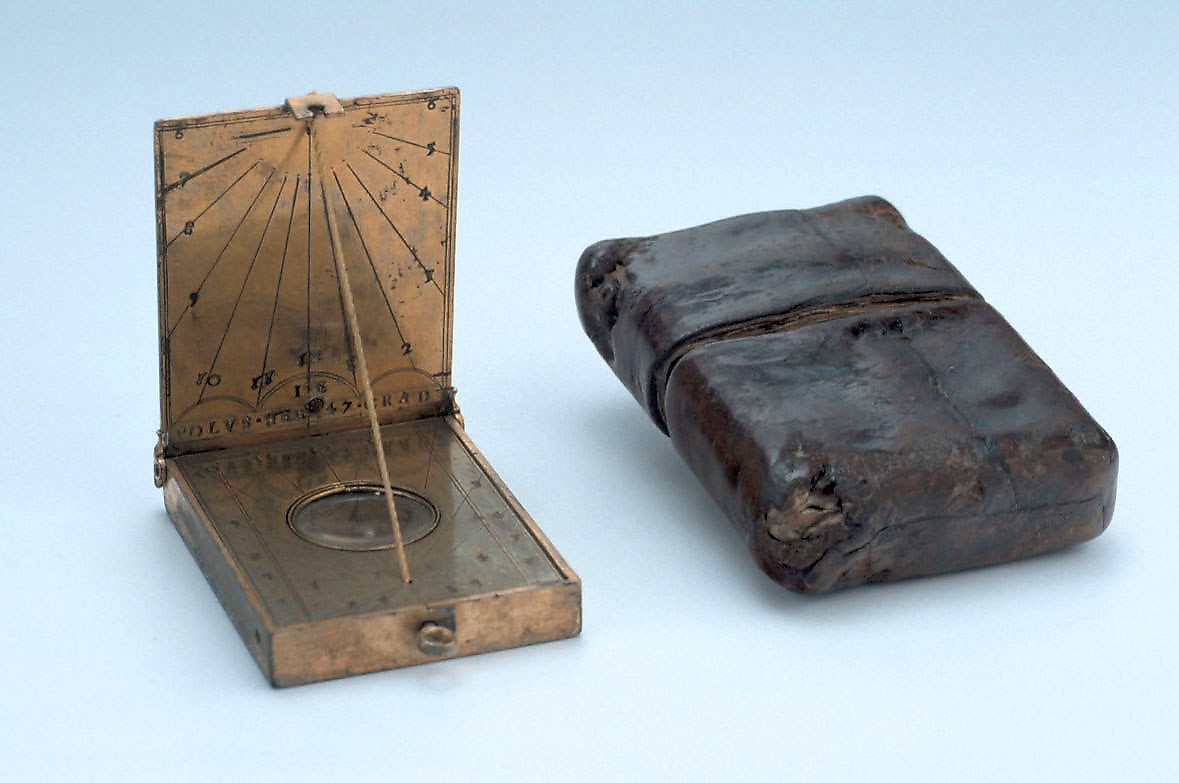
Diptych Dial by Johann Eicktet
1584
This diptych dial is a portable string gnomon sundial dated 1584, constructed from gilt brass with measurements of 51 x 38 x 8 mm. Attributed to Johann Eicktet, the instrument is designed for a latitude of 47 degrees. It consists of a hinged main box and lid, secured by a hook clasp, with a suspension ring for carry…
Partial type record
Museum of the History of Science, Oxford
horological instruments
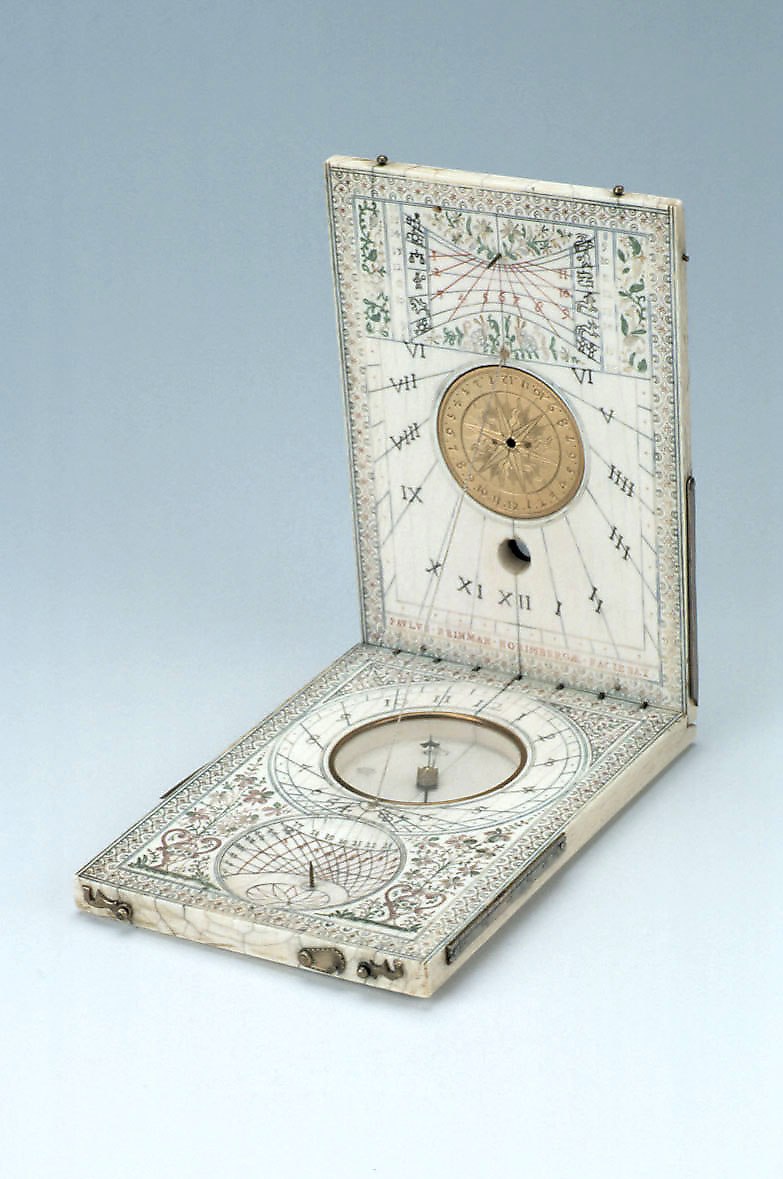
Diptych Dial by Paul Reinmann
circa 1600
This diptych dial, created in Nuremberg circa 1600, is an ivory and brass instrument measuring 94 x 141 x 18 mm. Attributed to the maker Paul Reinmann, who signed the piece and included his crown mark, the dial is designed for multiple functions. It integrates a lunar volvelle, a wind rose, a universal equatorial di…
Partial type record
© British Museum, London
horological instruments
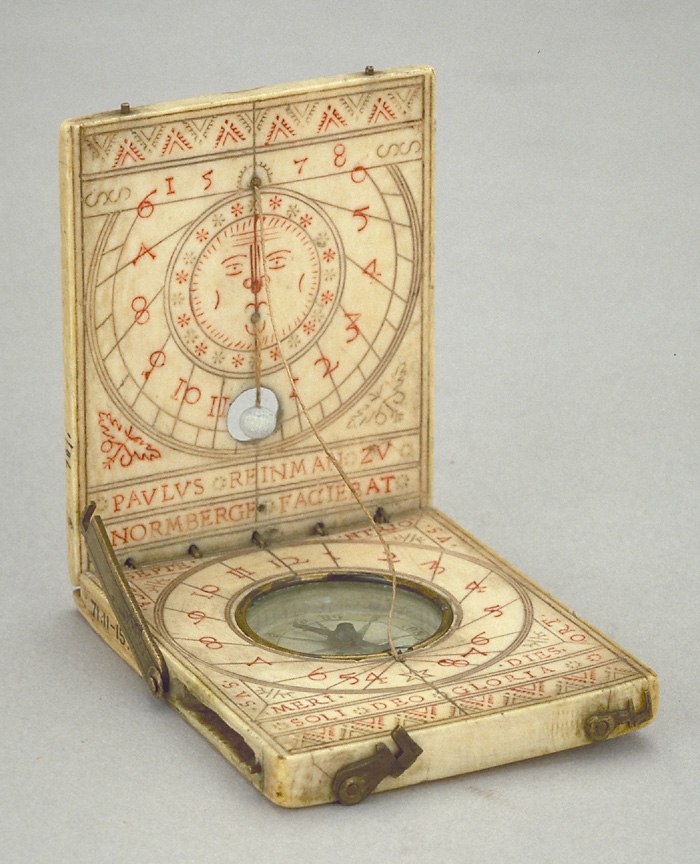
Diptych Dial by Paul Reinmann, 1578
1578
This diptych dial is constructed from ivory and brass with dimensions of 67 x 52 x 11 mm. Signed by Paul Reinmann and dated 1578, the instrument consists of two hinged leaves featuring red and black filled stamped inscriptions. The upper leaf includes an exterior wind rose with sixteen directions and an interior ver…
Partial type record
Museum of the History of Science, Oxford
horological instruments
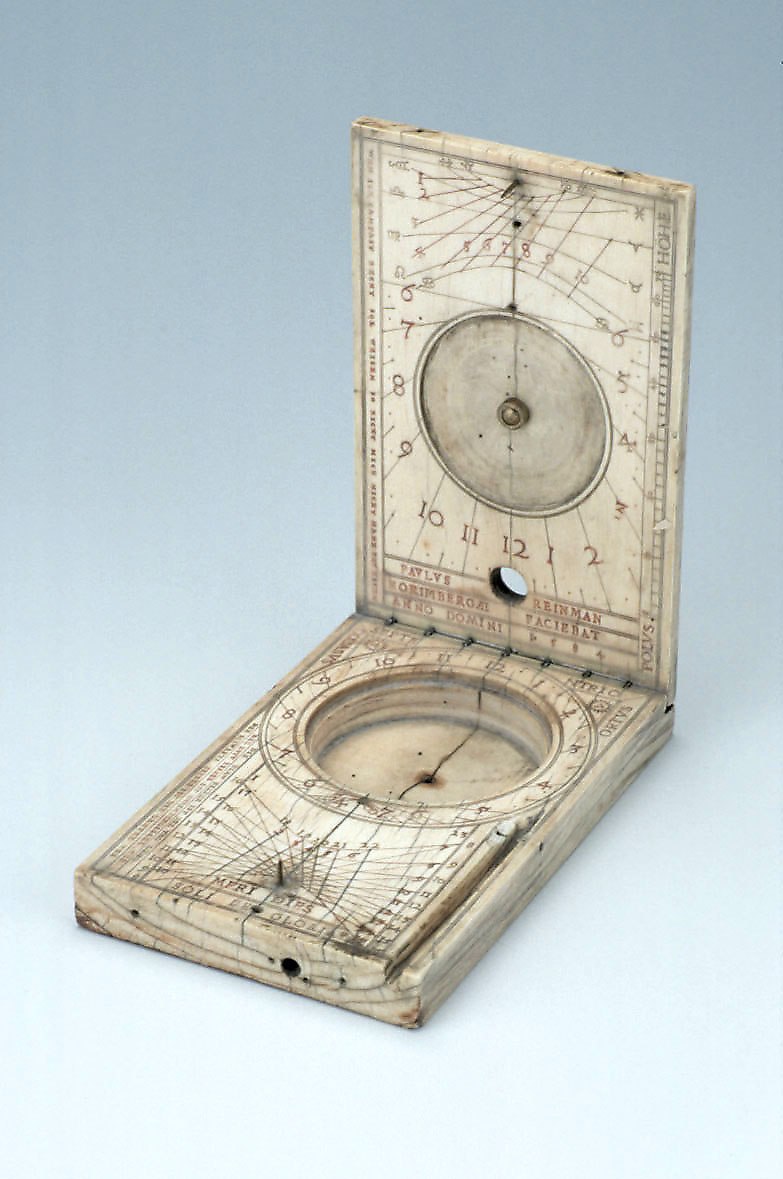
Diptych Dial by Paul Reinmann, 1584
1584
This diptych dial is constructed from ivory and brass and measures 71 x 115 x 18 mm. Attributed to the maker Paul Reinmann and dated 1584, the instrument originates from Nuremberg. The dial comprises two ivory leaves hinged together, featuring multiple time-telling mechanisms including string gnomon dials, pin gnomo…
Partial type record
British Museum, London
horological instruments
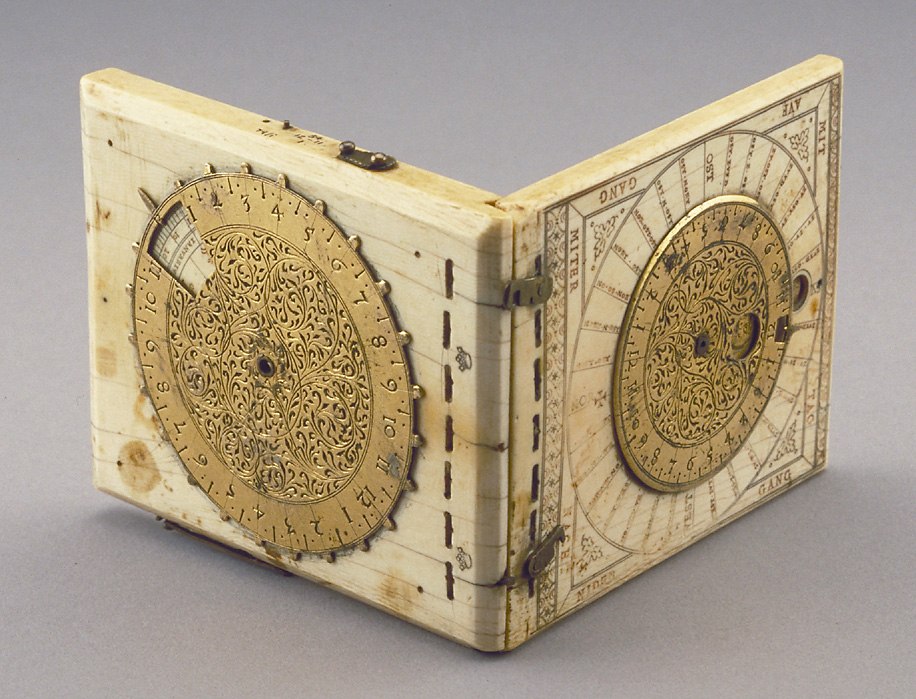
Diptych Dial by Paul Reinmann, 1587
1587
This diptych dial is an elaborate timekeeping instrument constructed from ivory and brass, measuring 105 x 85 x 15 mm. Signed by the Nuremberg-based maker Paul Reinmann and dated 1587, the object features numerous integrated astronomical and horological functions. These include a lunar volvelle, a wind rose, an equa…
Partial type record
Museum of the History of Science, Oxford
horological instruments
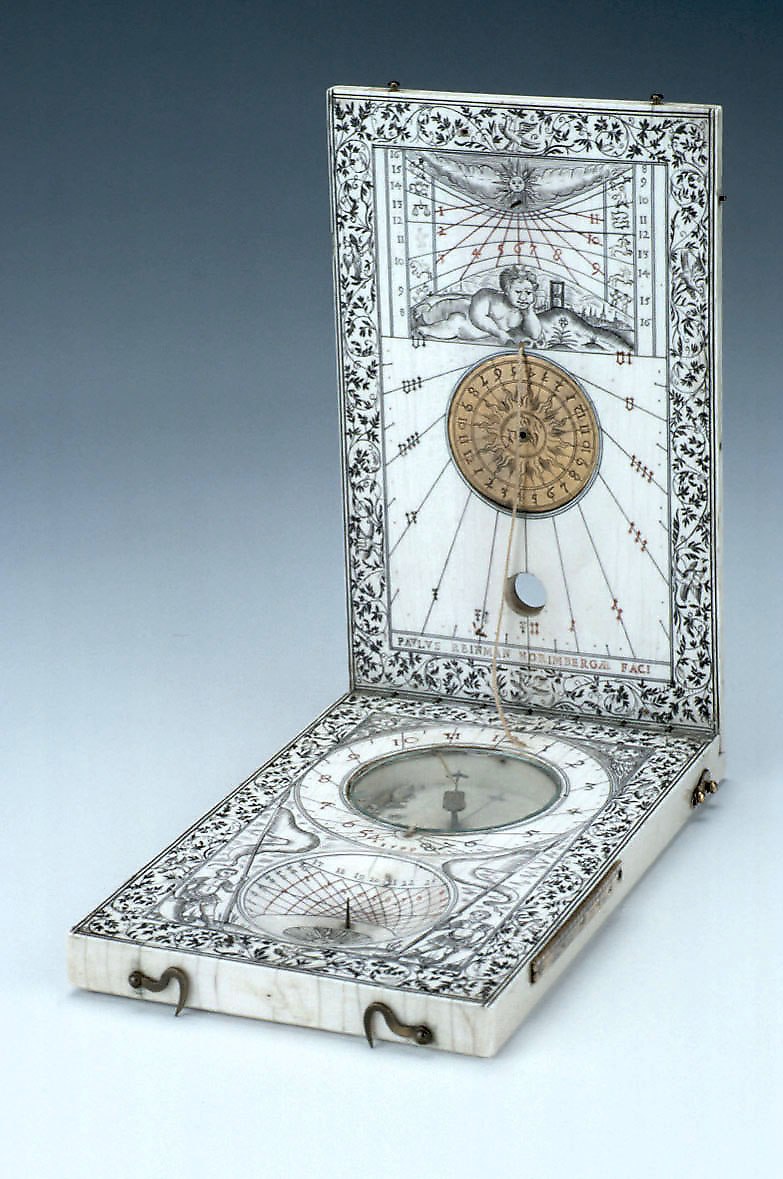
Diptych Dial by Paul Reinmann, 1599
1599
This diptych dial, created in 1599 by Paul Reinmann in Nuremberg, is constructed of ivory and gilt brass. Measuring 95 x 155 x 20 mm, the folding instrument functions as a multi-device timekeeper. The dial features extensive ornamentation, including foliage, birds, cherub heads, Roman soldiers, and a vignette of a p…
Partial type record
British Museum, London
horological instruments
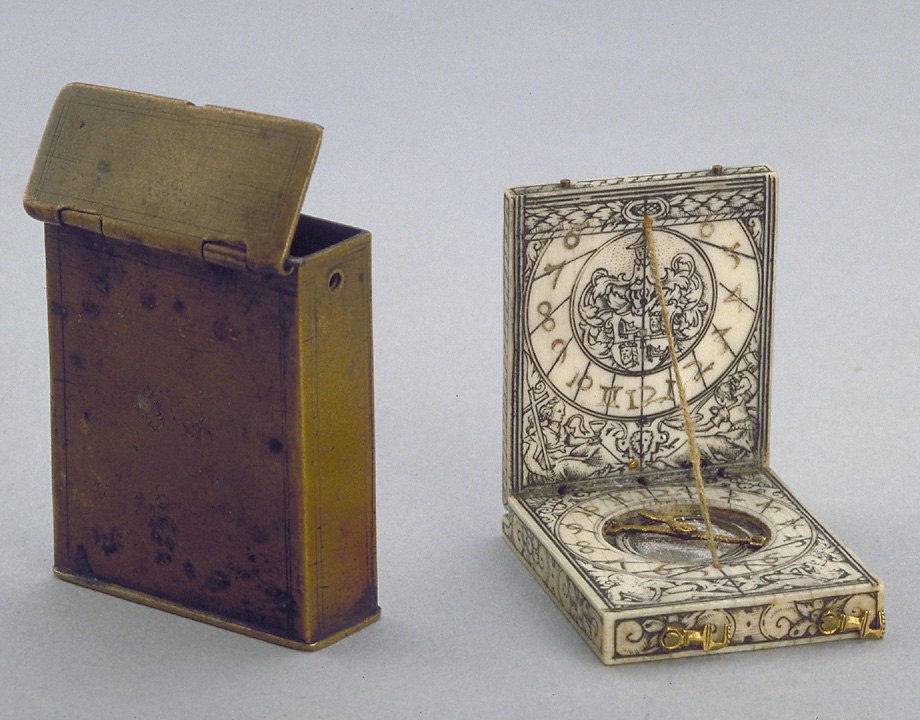
Diptych Dial by Paul Reinmann, later 16th century
later 16th century
This diptych dial is attributed to the Nuremberg instrument maker Paul Reinmann based on initials 'P R' and a crown maker's mark. Dating to the later 16th century, the instrument is constructed from ivory and gilt brass, measuring 40 x 30 x 8 mm. The dial is held within a close-fitting brass container. Its surfaces…
Partial type record
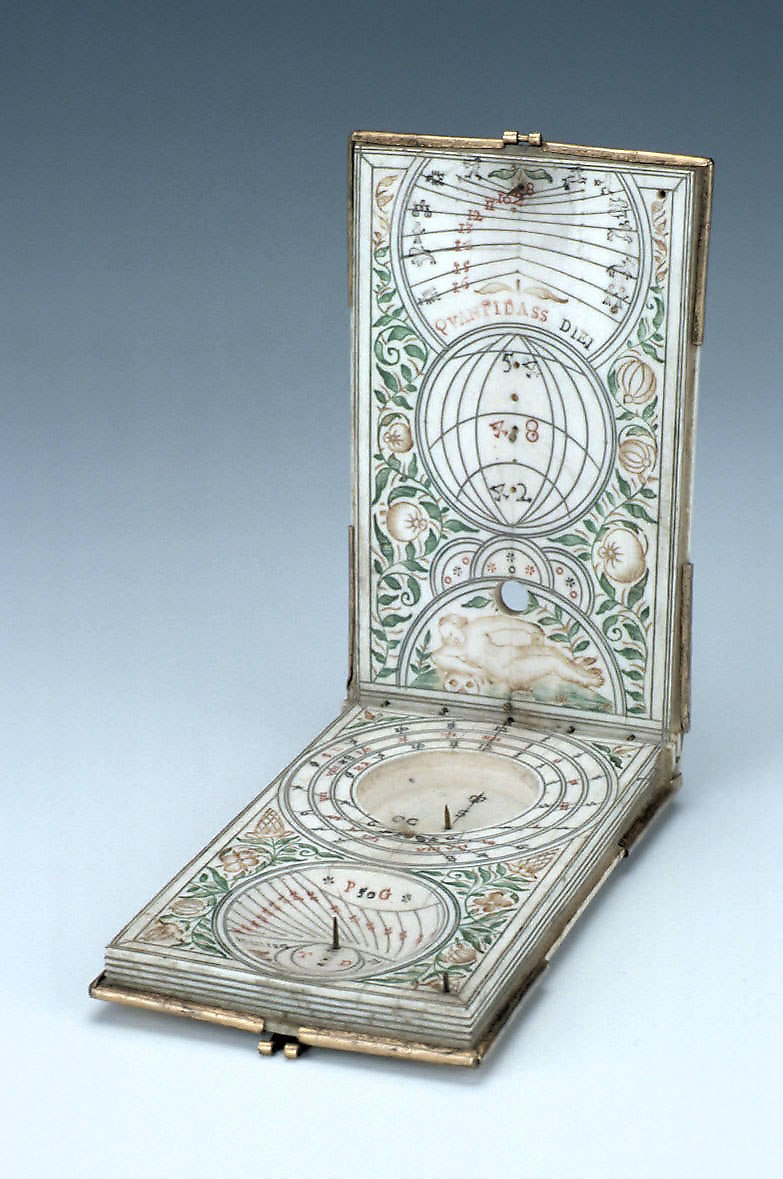
Museum of the History of Science, Oxford
horological instruments
Diptych Dial by Thomas Tucher
circa 1620
This diptych dial is constructed from ivory and gilt brass, measuring 76 x 125 x 15 mm. Signed by Thomas Tucher and originating from Nuremberg, it is attributed to circa 1620. The object features a folding design with outer brass plates and decoration consisting of fruits, flowers, and foliage in green and brown ton…
Partial type record
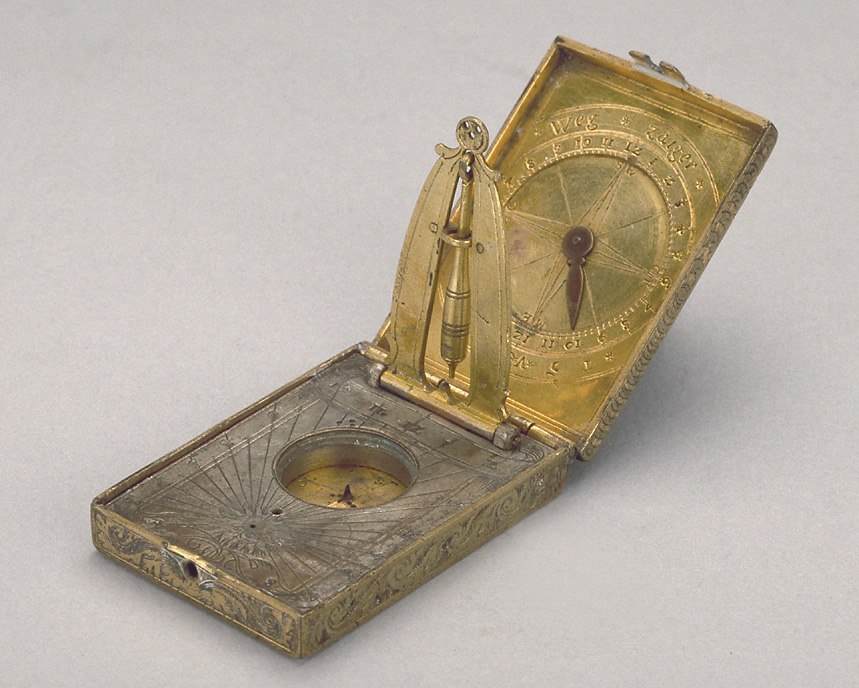
British Museum, London
horological instruments
Diptych dial by Ulrich Schniep
1579
This 1579 diptych dial, also known as a viatorium, was crafted by Ulrich Schniep in Munich. Constructed from brass and silvered copper, the instrument measures 58 x 40 x 13 mm. It features two leaves containing complex horological data. The exterior of the upper leaf contains seven concentric rings providing astrono…
Partial type record
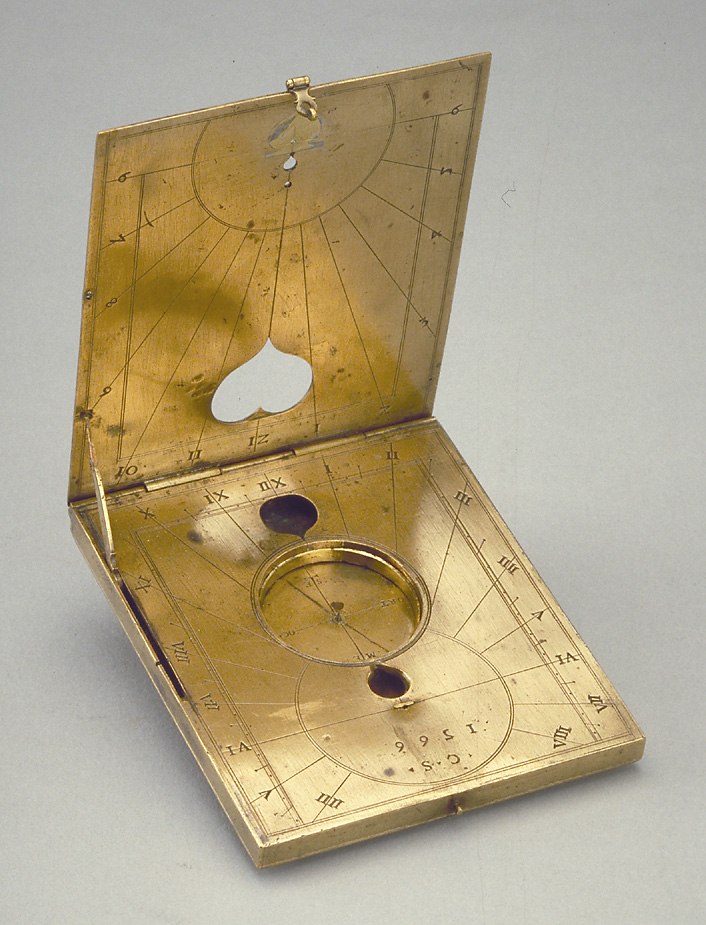
© British Museum, London
horological instruments
Diptych Dial, 1566
1566
This gilt brass diptych dial, measuring 88 x 104 x 8 mm, is attributed to Christoph Schissler and dated 1566. The object comprises two leaves joined by a hinge, with a brass hook and ring latch on the side to secure the instrument in an open position. The outer upper leaf features strapwork, two coats-of-arms, and t…
Partial type record
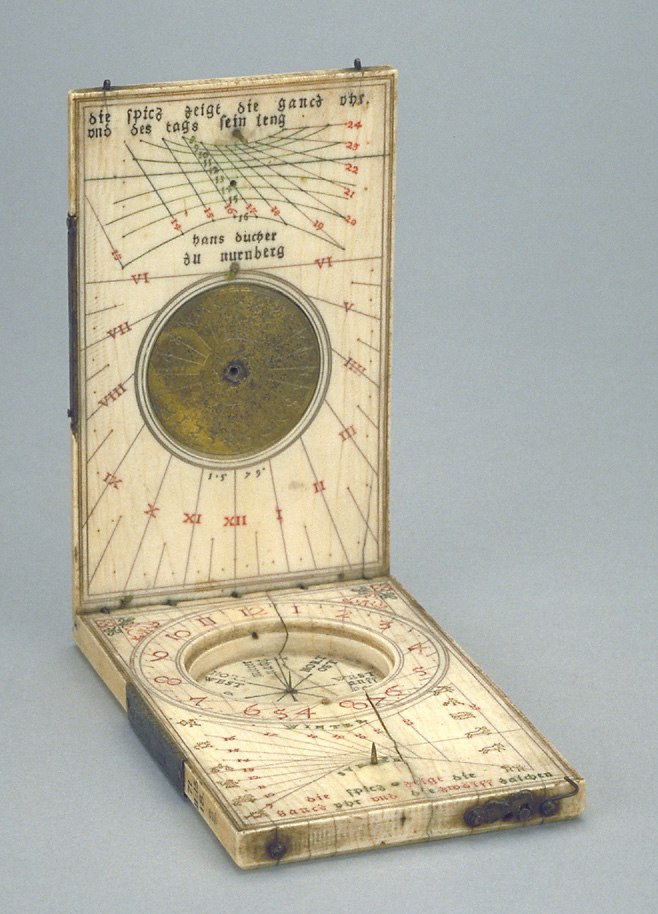
British Museum, London
horological instruments
Diptych Dial, 1579
1579
This 1579 diptych dial is constructed from ivory and brass, measuring 110 x 65 x 13 mm. Signed by Hans Tucher in Nuremberg, it features various integrated timekeeping systems, including an equatorial sun- and moondial on the outer leaf, and a combination of vertical and horizontal string and pin gnomon dials on the…
Partial type record
Museum of the History of Science, Oxford
horological instruments
Diptych Dial, 1612
1612
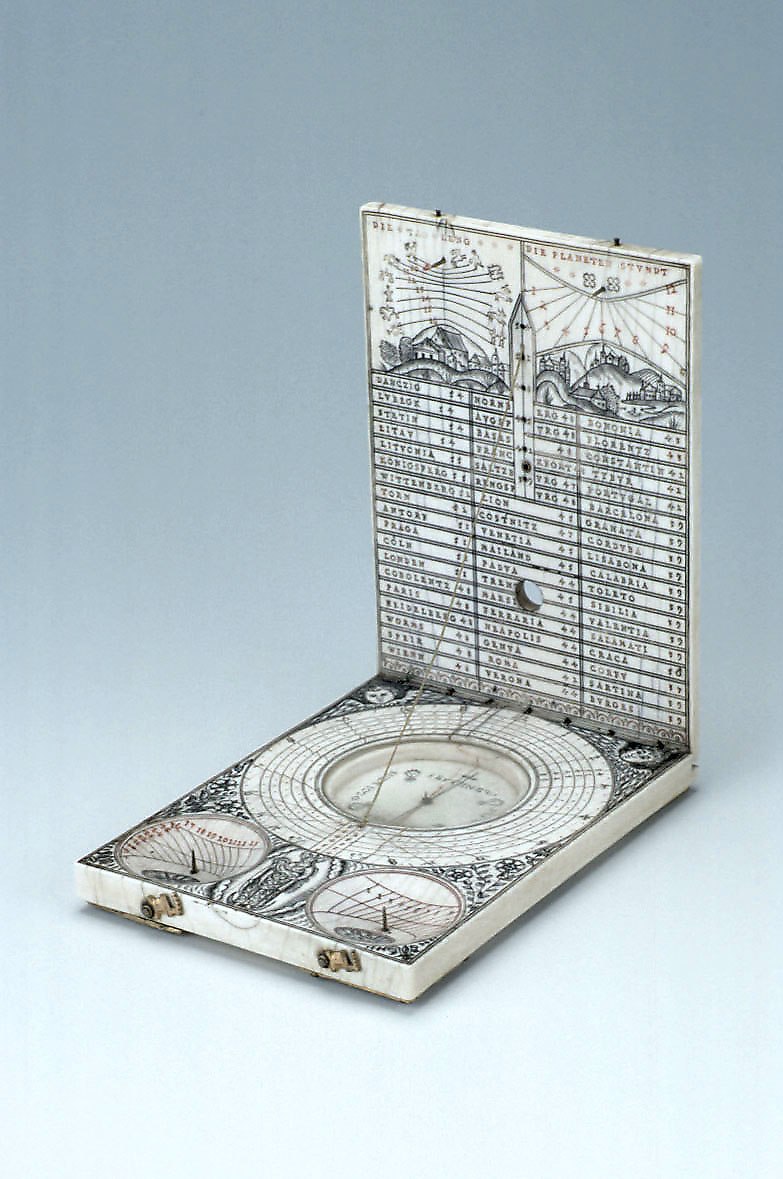
This diptych dial is a 17th-century instrument constructed from ivory and brass, measuring 100 x 140 x 15 mm. Attributed to the workshop of Paul Reinmann and dated 1612, the Nuremberg-made object serves as a complex timekeeping and astronomical tool. The upper leaf features two pin gnomon dials displaying day length…
Partial type record
Museum of the History of Science, Oxford
horological instruments
Diptych Dial, circa 1600
circa 1600
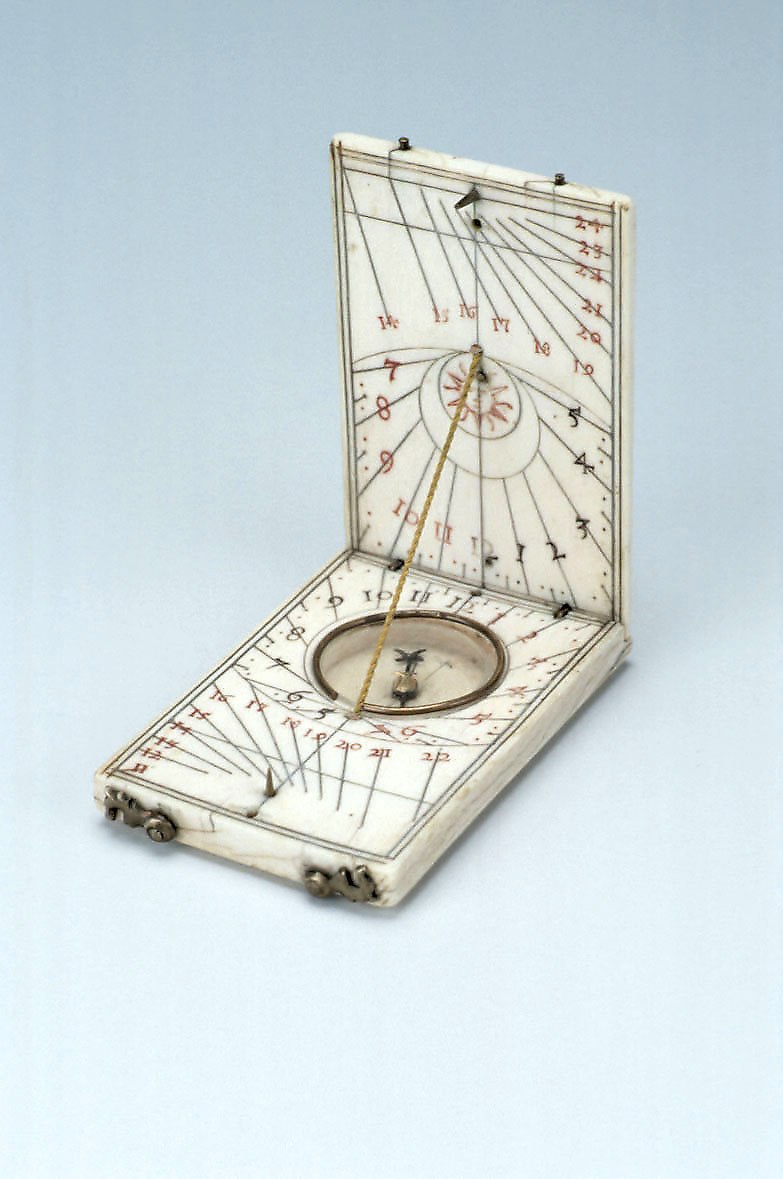
This diptych dial is a portable scientific instrument constructed from ivory and brass, measuring 40 x 63 x 9 mm. Held in the collection of the Museum of the History of Science, Oxford, the instrument is unsigned, though it bears a coronet-shaped maker's mark on the outer lower leaf. The device functions as a multi-…
Partial type record
Museum of the History of Science, Oxford
horological instruments
Diptych Dial, circa 1600 (2bee3d)
circa 1600
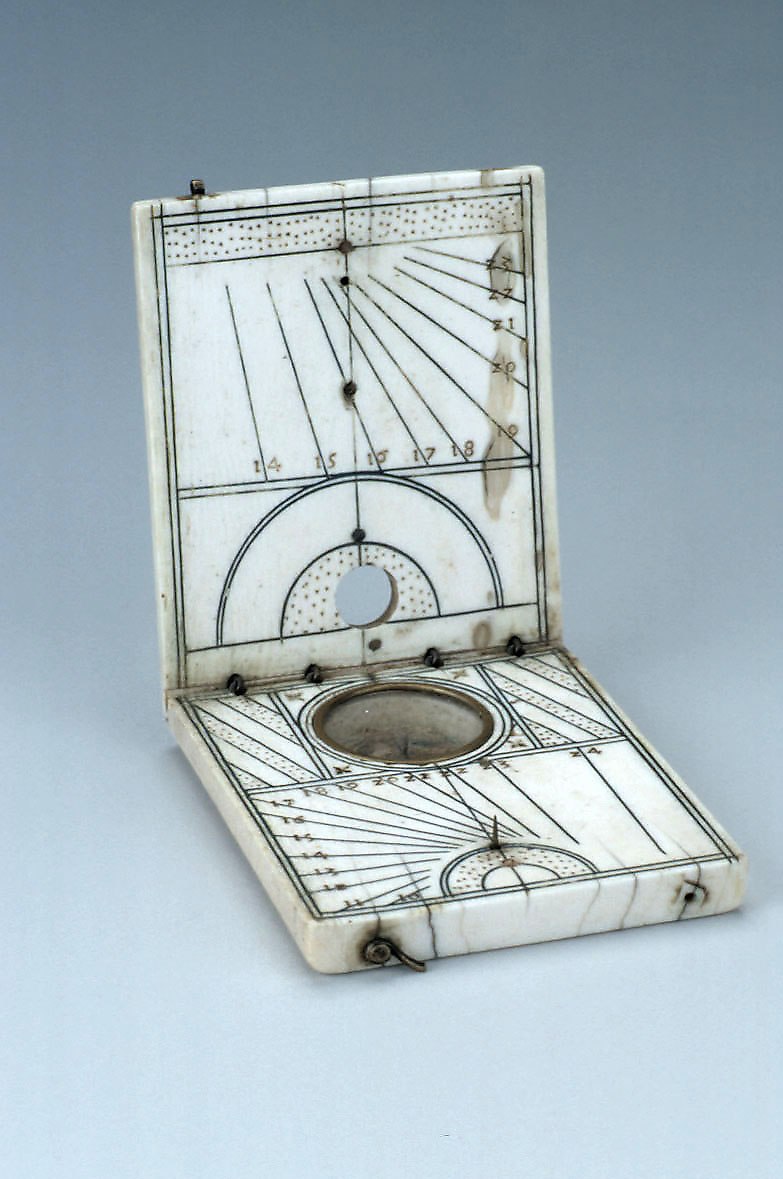
This diptych dial is a portable scientific instrument constructed from ivory and brass, measuring 56 x 69 x 12 mm. It is unsigned and undated, though attributed to Italian origins based on the latitude for which its folding brass gnomon is calibrated. The instrument consists of two hinged leaves featuring multiple h…
Partial type record
Museum of the History of Science, Oxford
horological instruments
Diptych Dial, circa 1600 (636345)
circa 1600
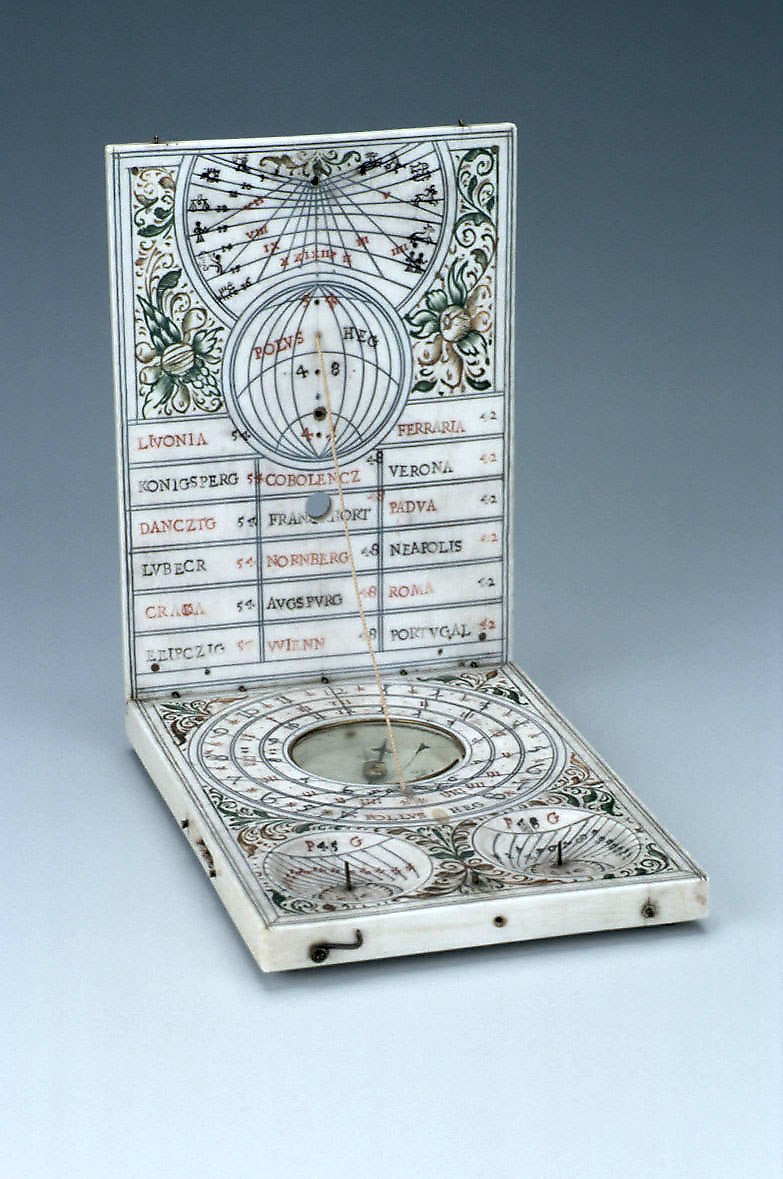
This diptych dial is constructed from ivory and brass, measuring 87 x 122 x 14 mm. Attributed to Thomas Tucher, the object is not signed, but features the maker's mark of a crowned snake punched twice within the compass bowl. The dial is decorated with green and brown foliate motifs and fruit and flower imagery. It…
Partial type record
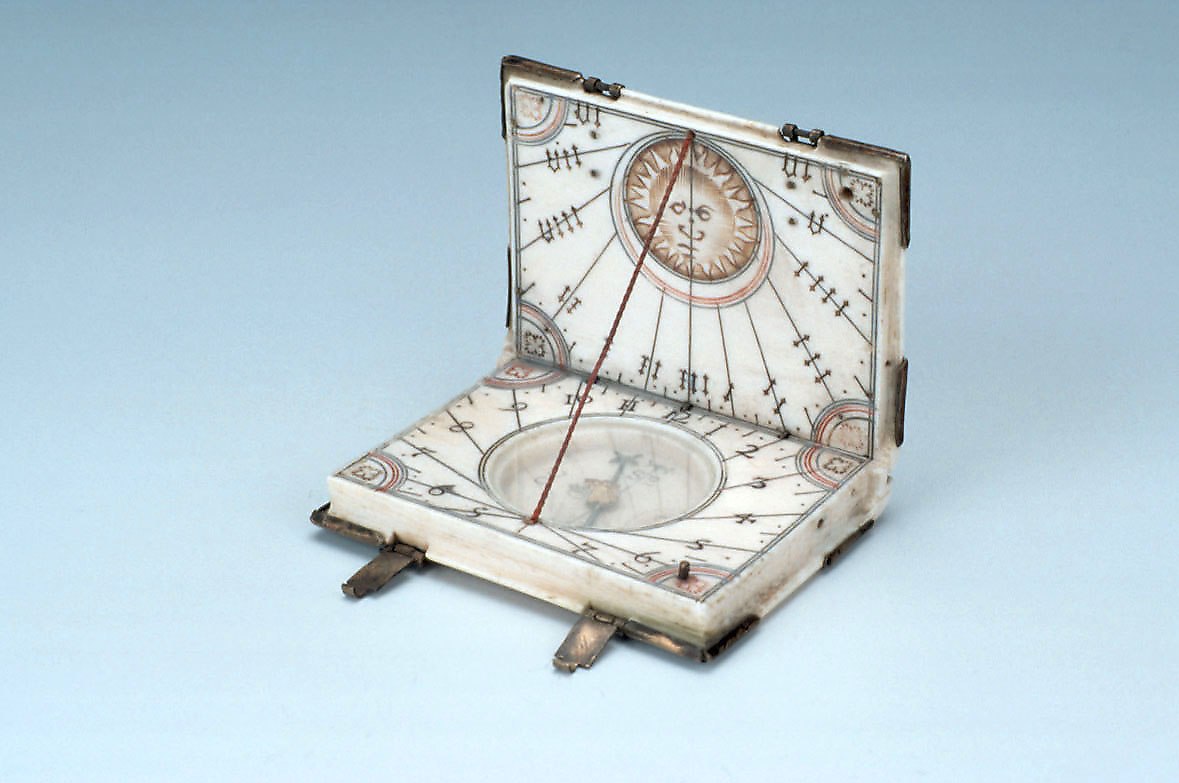
Museum of the History of Science, Oxford
horological instruments
Diptych Dial, circa 1600 (a4adcd)
circa 1600
This diptych dial, measuring 69 x 48 x 11 mm, is constructed from ivory and brass in the form of a book. It is attributed to the Nuremberg maker Paul Reinmann and dated to approximately 1600. The exterior features brass spandrels, clasps, and four bun feet, with depictions of saints on the outer leaves. The upper in…
Partial type record
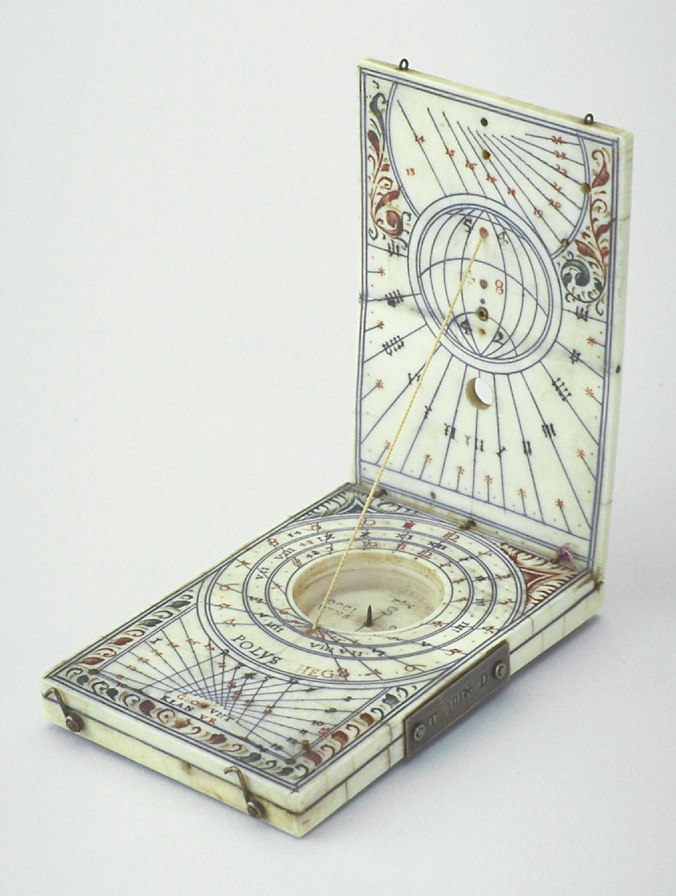
Museum of the History of Science, Oxford
horological instruments
Diptych Dial, circa 1600 (c0f117)
circa 1600
This diptych dial is attributed to Thomas Tucher of Nuremberg, dating to circa 1600. Constructed primarily of ivory with brass accents, it measures 60 x 88 x 13 mm. The instrument features a hinged construction with multiple timekeeping functions, including string gnomon dials, pin gnomon dials for Italian and Babyl…
Partial type record
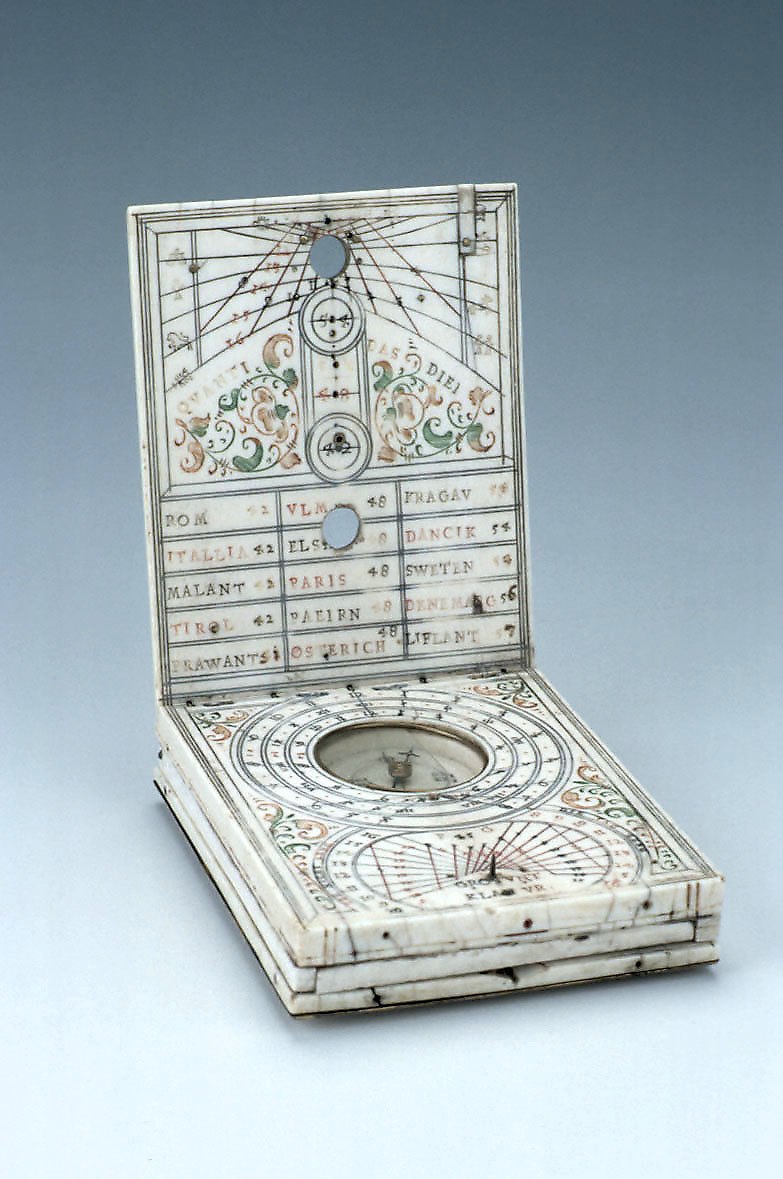
Museum of the History of Science, Oxford
horological instruments
Diptych Dial, circa 1620
circa 1620
This diptych dial is attributed to Thomas Tucher, dating to circa 1620, Nuremberg. The instrument is constructed from three layers of ivory, with two folding leaves, creating a double diptych configuration with brass components. It incorporates a wide array of timekeeping and astronomical features, including a unive…
Partial type record
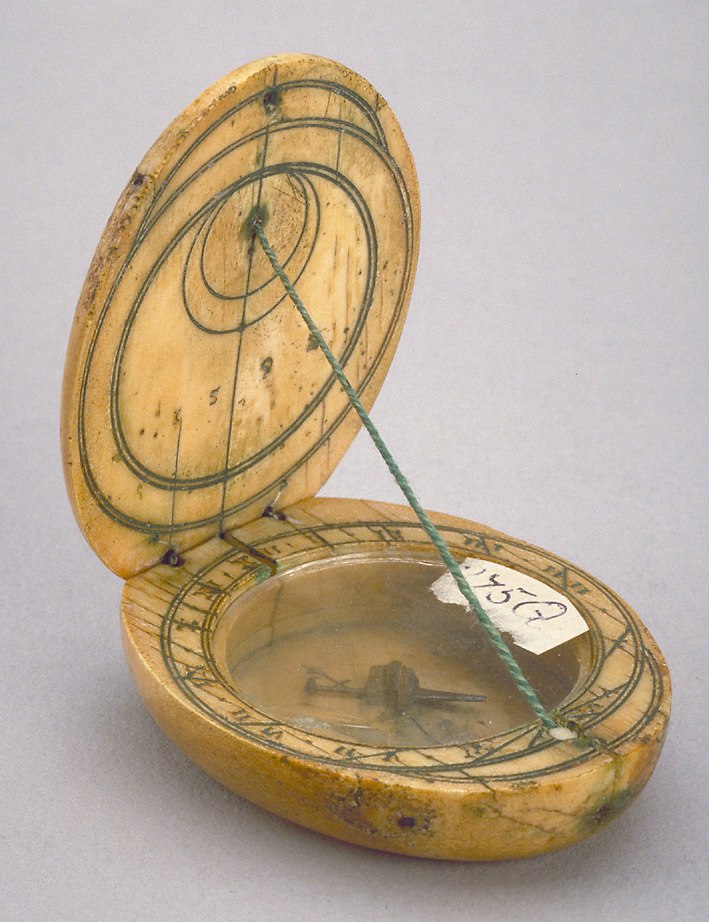
© British Museum, London
horological instruments
Diptych Dial, Late 16th century ?
Late 16th century ?
This oval-shaped diptych dial is constructed from bone and measures 50 x 62 x 18 mm. The instrument is unsigned, although the construction resembles the style of late 16th-century makers from Nuremberg. It consists of two leaves joined by a hinge with a small catch to hold the device open. The outer surfaces are pla…
Partial type record
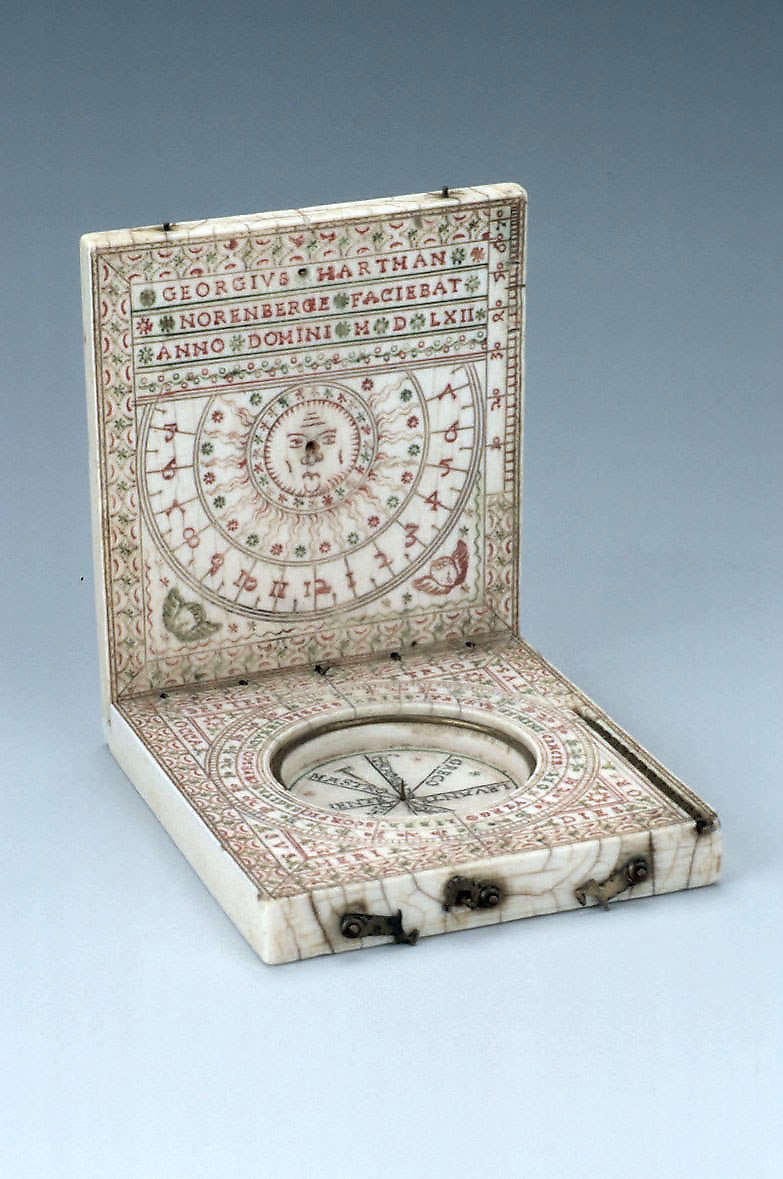
Museum of the History of Science, Oxford
horological instruments
Diptych Sundial by Georg Hartmann
1562
This diptych dial is crafted from ivory and brass, measuring 88 by 91 by 17 millimeters. Signed by Georg Hartmann and dated 1562, it originated in Nuremberg. The inner upper leaf contains a pin gnomon dial, though the pin itself is missing. The inner lower leaf houses a compass, currently missing its glass and needl…
Partial type record
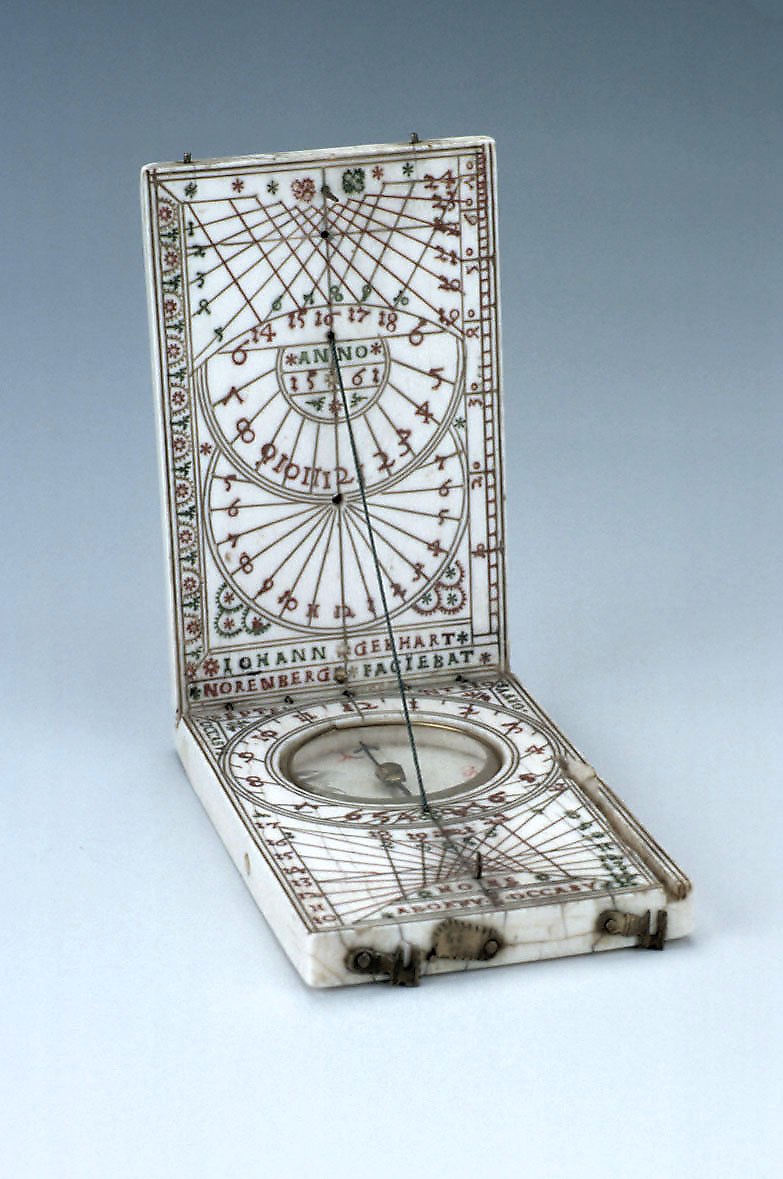
Museum of the History of Science, Oxford
horological instruments
Diptych Sundial by Johann Gebhart
1561
This diptych sundial, constructed from ivory and brass, measures 55 x 89 x 13 mm and was produced in Nuremberg in 1561 by the maker Johann Gebhart. The instrument is designed to indicate common, Italian, and Babylonian hours. Its construction includes an upper leaf with both pin and string gnomon dials, featuring el…
Partial type record
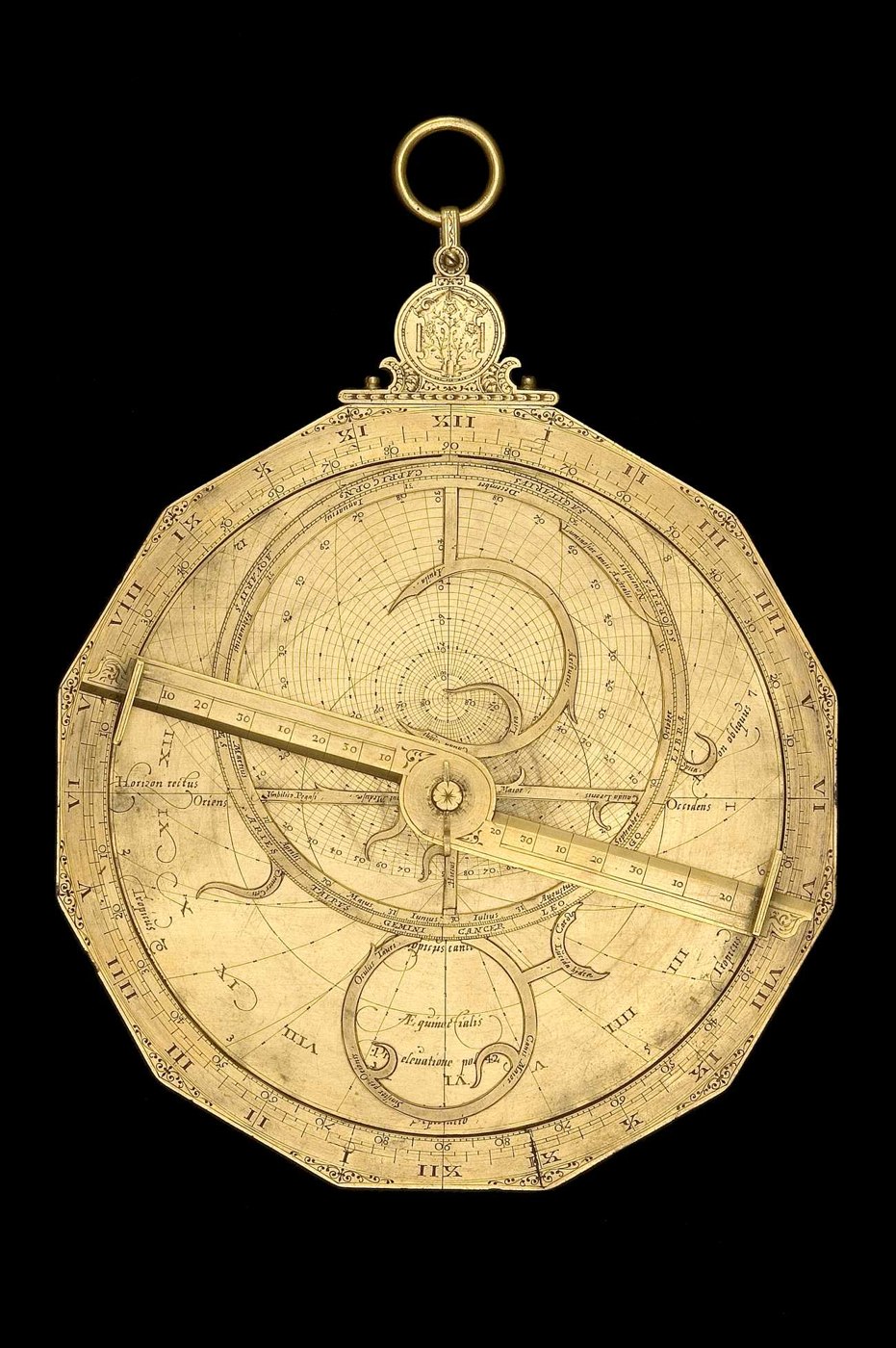
History of Science Museum, University of Oxford
horological instruments
Dodecagonal Astrolabe by Erasmus Habermel
ca. 1585
This dodecagonal brass astrolabe is attributed to the maker Erasmus Habermel, dating to approximately 1585. The instrument is distinguished by its twelve-sided form, a configuration described as unusual for the maker. The throne features an engraved coat of arms belonging to Franciscus Paduanius of Forli, a physicia…
Partial type record
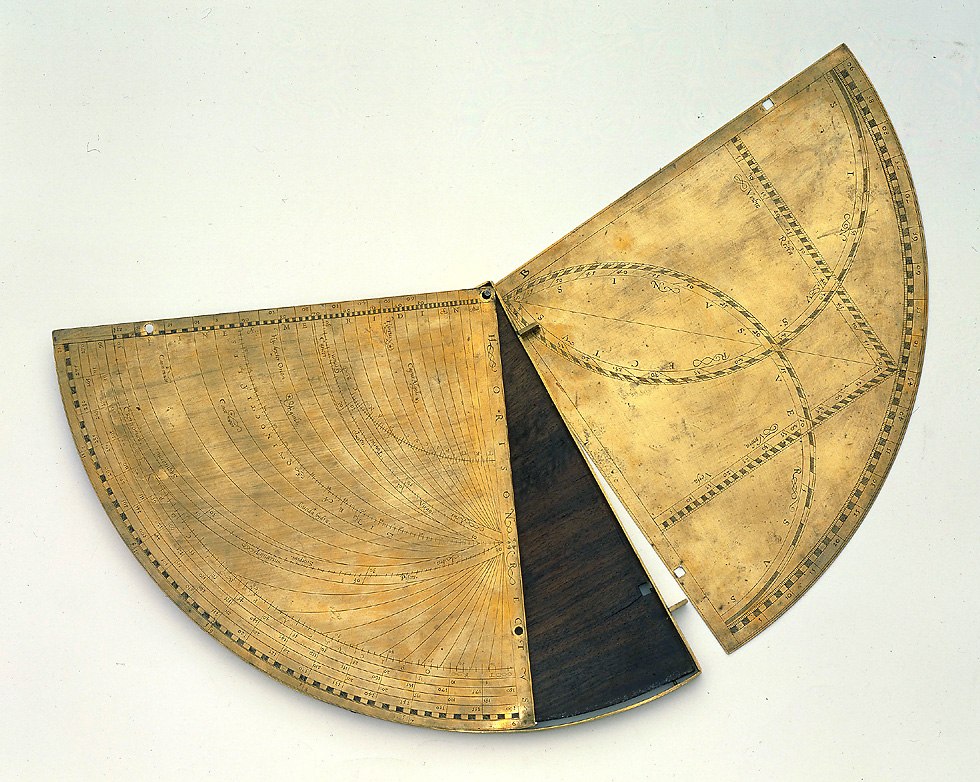
© Istituto e Museo di Storia della Scienza, Firenze
horological instruments
Double Quadrant by Thomas Gemini
mid 16th century
This double quadrant, signed by Thomas Gemini, dates to the mid-16th century. It is constructed from two brass plates and a central wooden core, with an overall radius of 270 mm. The assembly is held together by three iron bolts with square shanks and flattened pyramidal ends. Designed for astronomical and trigonome…
Partial type record
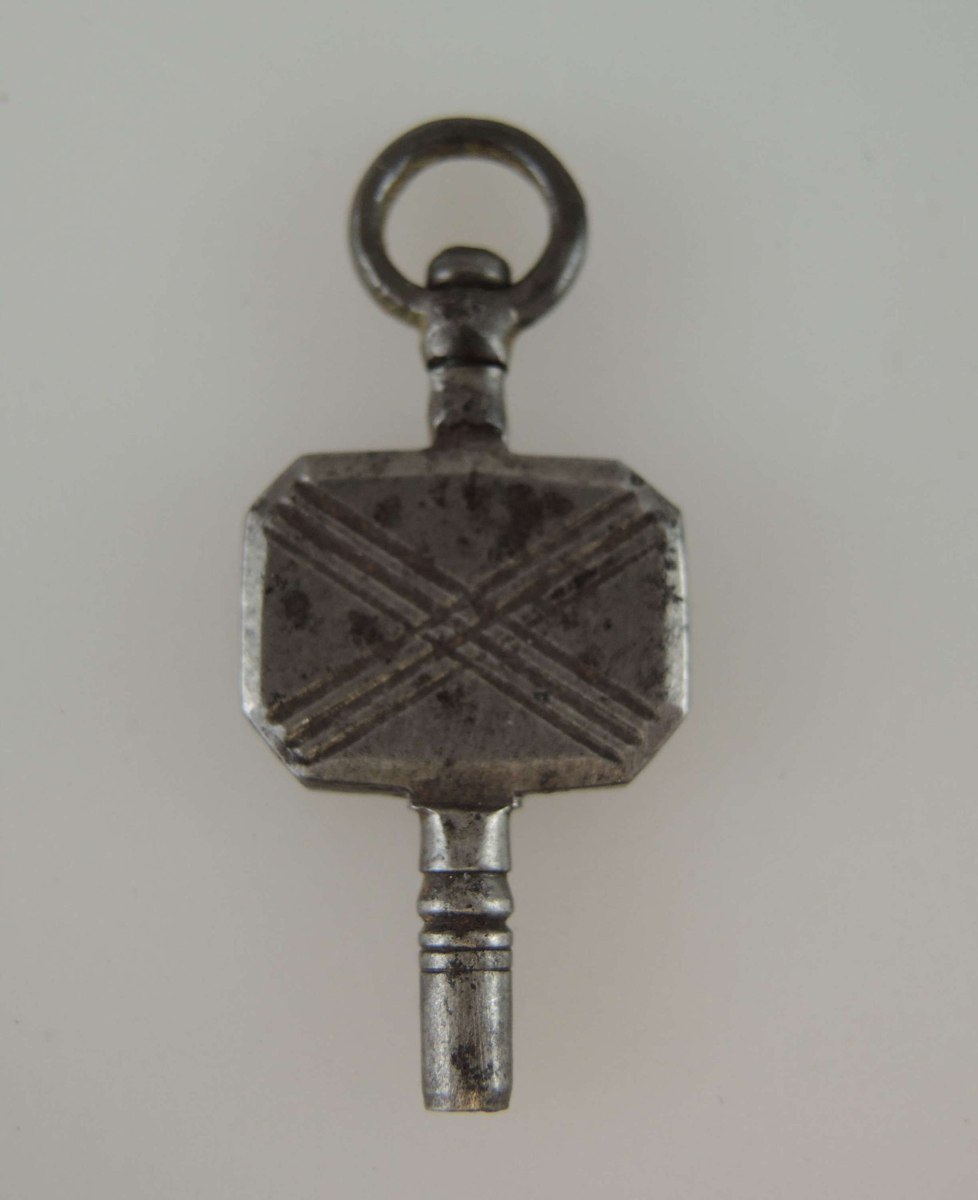
Atlam Watches via Antiques Boutique
horological instruments
Early Steel Pocket Watch Key
c. 1770
This early steel pocket watch key is dated by the dealer to circa 1770 within the Georgian era. The tool features an octagonal-cornered rectangular steel body with bevelled edges, engraved on each face with an X motif composed of crossing parallel grooves. At the top, a circular suspension ring attaches via a turned…
Partial type record
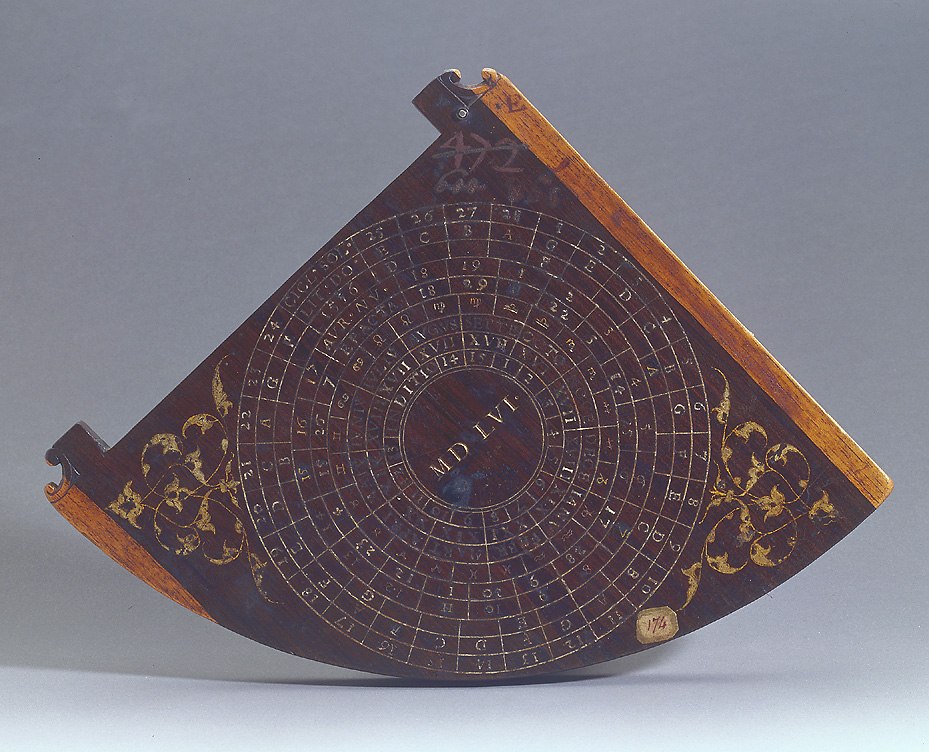
Istituto e Museo di Storia della Scienza, Firenze
horological instruments
Ebony Quadrant of Cosimo I de' Medici
1556
This 167 mm radius ebony quadrant is dated 1556 and dedicated to Cosimo de' Medici. The instrument features two distinct faces. One side functions as an horary quadrant calibrated for the latitude of 43 degrees 45 minutes, corresponding to Florence. It includes an Italian hours dial (9 to 24) marked with silver line…
Partial type record
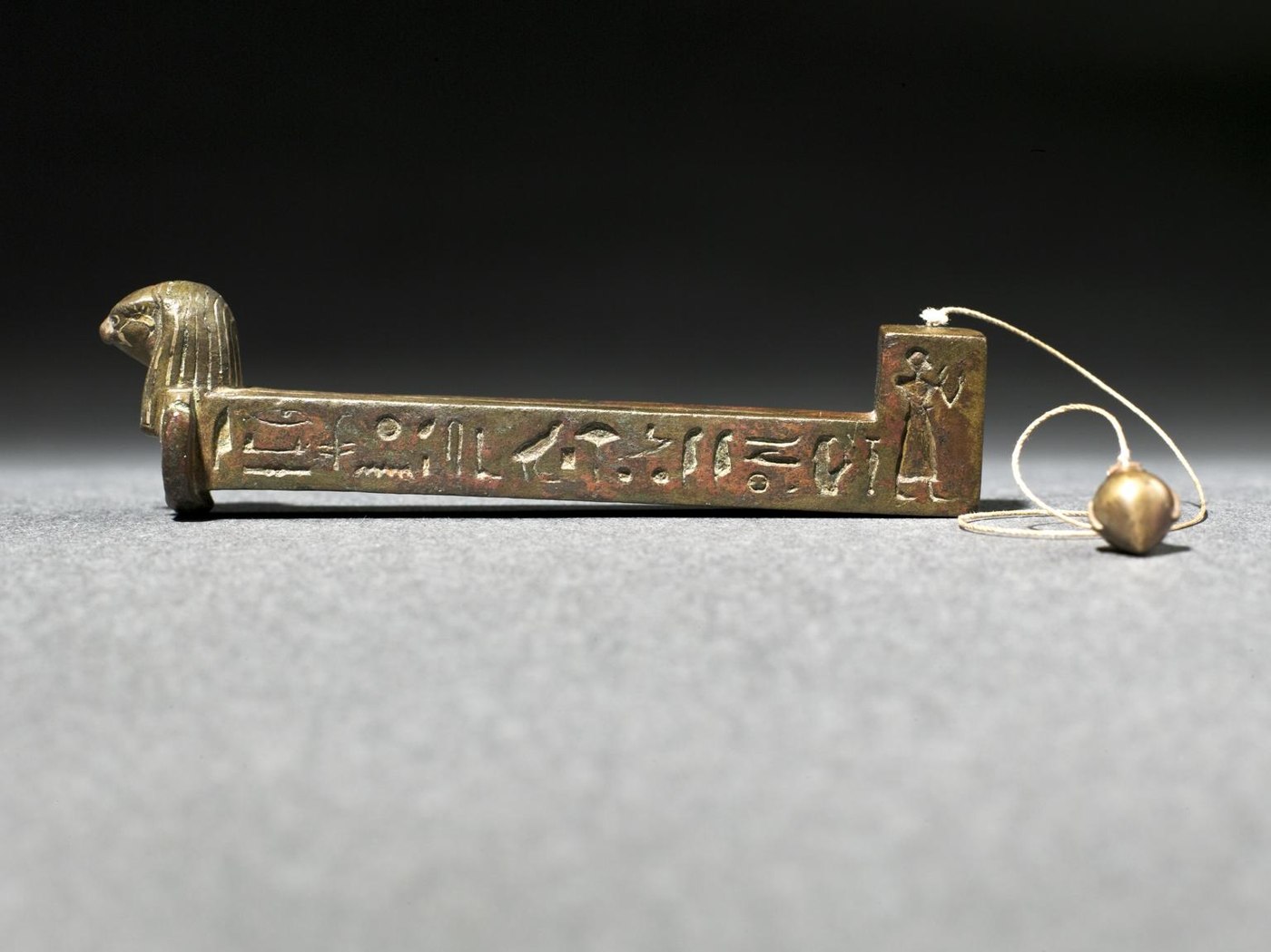
Science Museum Group
horological instruments
Egyptian Merkhet
600 BCE
This Merkhet is an ancient Egyptian timekeeping and surveying instrument dating to 600 BCE. The object is constructed from bronze and features hieroglyphic text inlaid with electrum metal. It is designed for use in conjunction with a plumb bob to establish a vertical reference for timekeeping or architectural layout…
Partial type record
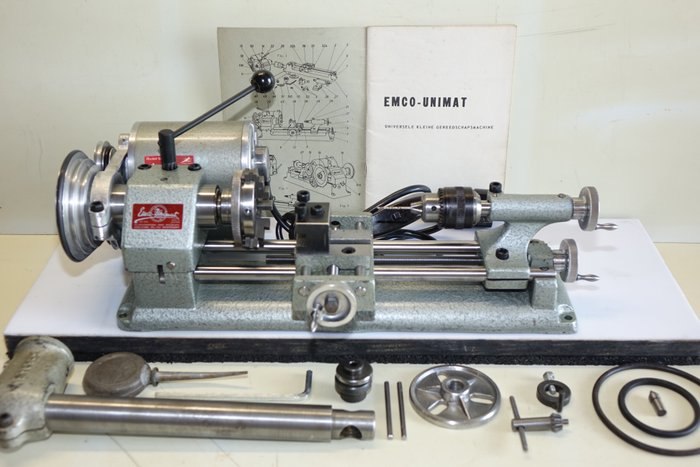
Catawiki
horological instruments
Emco Unimat DB precision metal lathe
1960s–1970s
The Emco Unimat DB is a compact tabletop metal lathe manufactured in Austria by Maier & Co during the 1960s to 1970s. Designed for micromechanics and horological work, the machine features a cast-iron construction weighing 15 kg with reported overall dimensions of 45 by 25 by 15 cm. It incorporates an original air-c…
Partial type record
Catawiki
horological instruments
Emco Unimat SL precision lathe
1970s–1980s
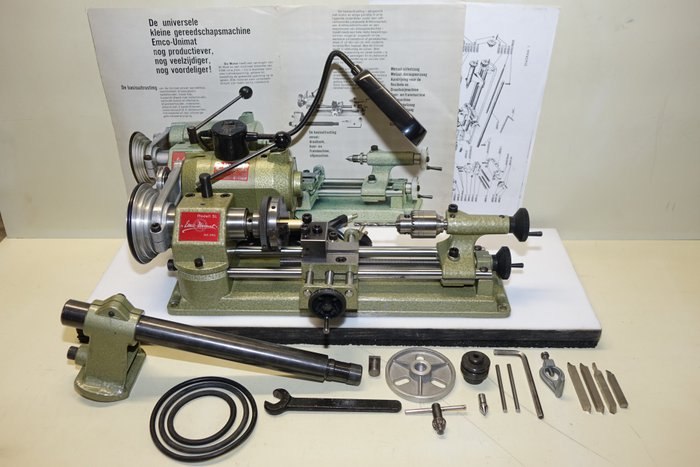
The Emco Unimat SL is a benchtop precision lathe manufactured in Austria by Maier & Co, attributed by the source to the 1970s–1980s. Intended for micromechanics and watchmaking, the lathe is configured with dual cylindrical bedways, a headstock with red 'Modell SL' badging, a carriage with cross-slide, and a tailsto…
Partial type record
British Museum, London
horological instruments
English Astrolabe, late 14th century
late 14th century ?
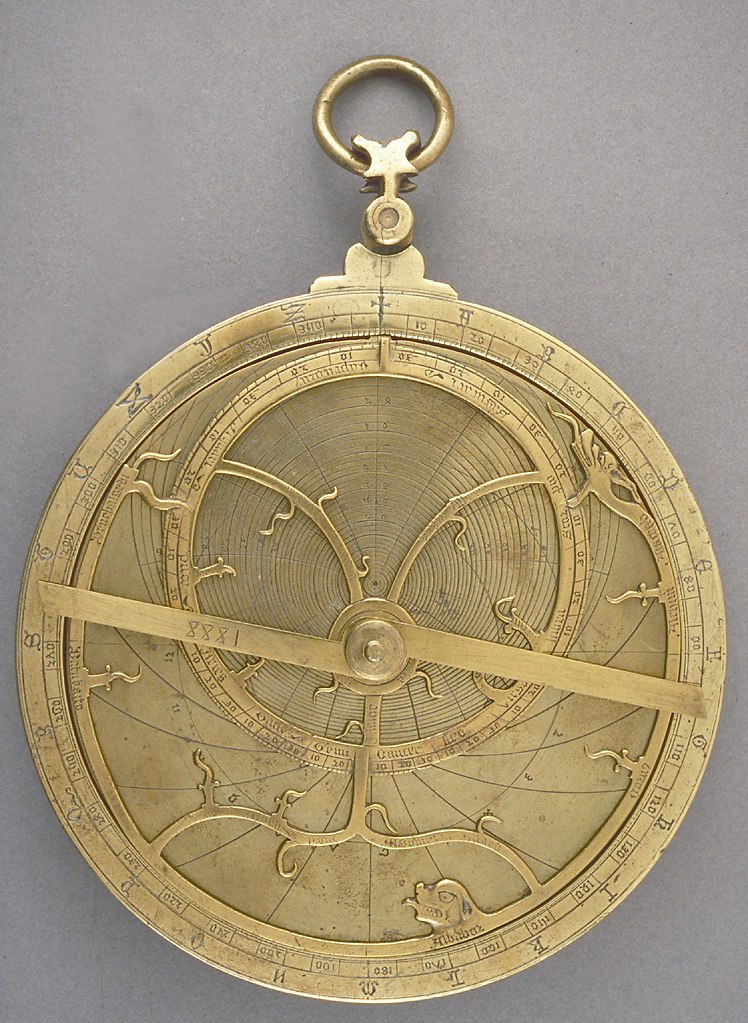
This brass astrolabe, measuring 123 mm in diameter, is of English manufacture, attributed to the late 14th or early 15th century based on stylistic lettering and the inclusion of English saint names and town latitudes on its plates. The instrument features a trilobal throne and a rete with a distinctive Y-shape with…
Partial type record
Istituto e Museo di Storia della Scienza, Firenze
horological instruments
English Brass Nocturnal
16th century
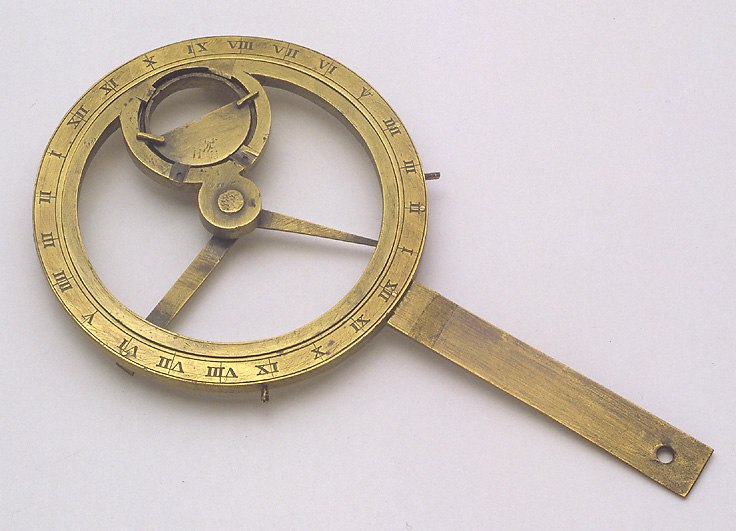
This nocturnal is a 16th-century brass instrument, measuring 77 mm in diameter, and originates from the bequest of Sir Robert Dudley to the Grand Duke of Tuscany in 1649. Unlike solid-disc nocturnals, this example is constructed from two concentric rings supported by a straight arm with a terminal attachment hole. T…
Partial type record
Antique Swan / Chairish
horological instruments
English Composition Stone Garden Sundial with Bronze Dial
Mid 20th Century
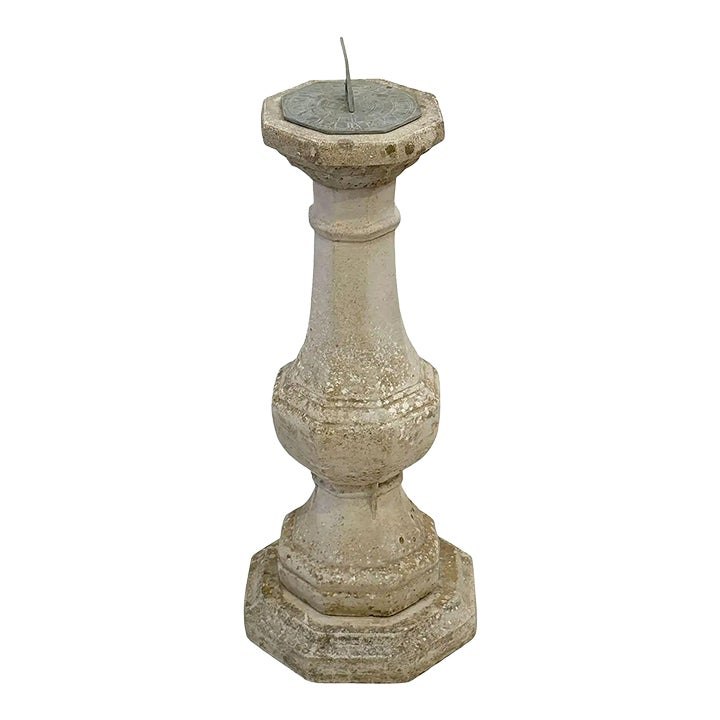
This garden sundial features a bronze dial plate set upon a faceted composition stone pedestal. The dealer describes the dial as bronze, inscribed with a sun motif, numerals, cardinal directions, an integrated fixed gnomon, and the inscription 'time flies'. The pedestal consists of a baluster-form faceted column sea…
Partial type record
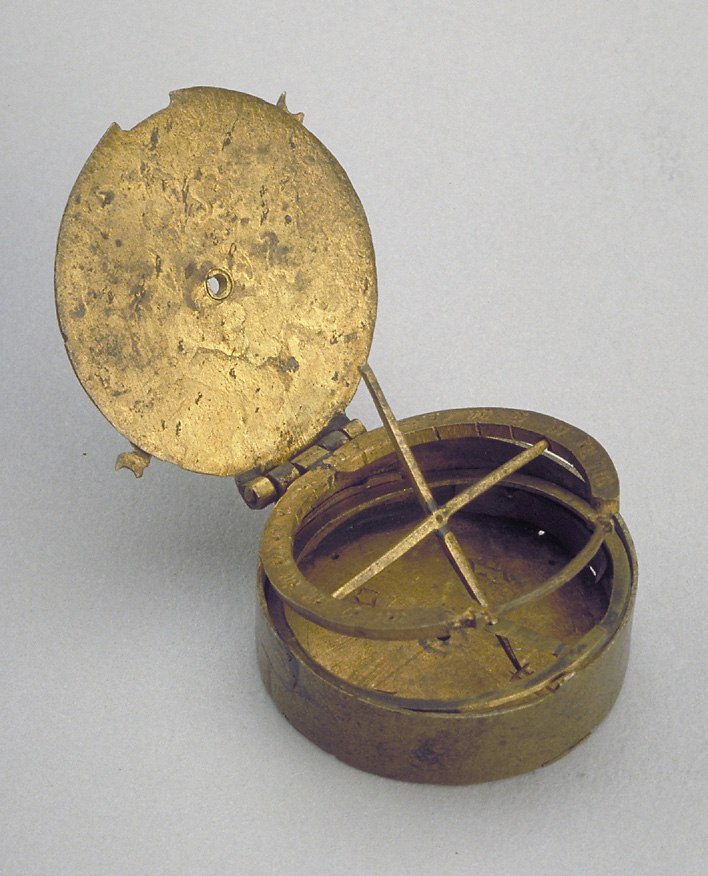
British Museum, London
horological instruments
English Equinoctial Dial
Late 15th century ?
This late 15th-century English equinoctial dial is an unsigned brass instrument measuring 40 mm in diameter. Housed within a compass box—now lacking the magnetic needle—it features a hinged lid and an adjustable hour ring. The dial's design includes a pivoted cross-piece supporting the gnomon, which plugs into a sma…
Partial type record
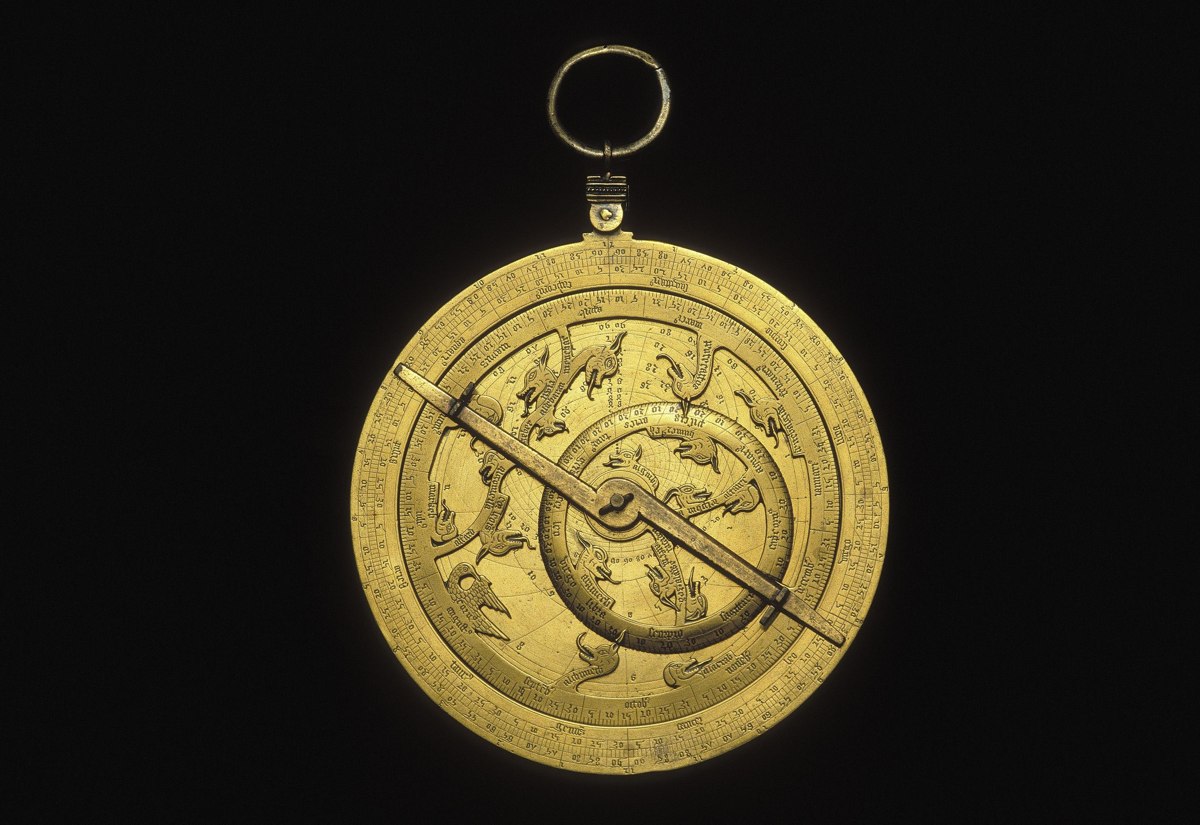
National Museum of American History
horological instruments
English Planispheric Astrolabe
1350-1450, 1400-1600 (second half of 14th century proposed by Davis)
The National Museum of American History preserves this brass planispheric astrolabe, documented under catalog number MA.318198 and referred to in literature as CCA No. 2006. Source notes indicate it was manufactured in England, with dating estimated across 1350–1450 and 1400–1600, while John Davis proposes the secon…
Partial type record
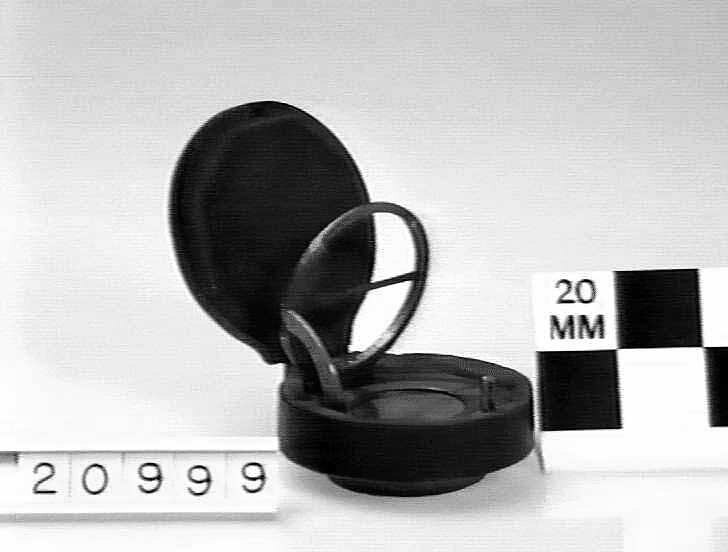
Museums Victoria
horological instruments
Equatorial Sundial by Lorenz Grassl
circa 1750-1800
This equatorial sundial, or equinoctial sundial, was produced in Augsburg, Germany, by maker Lorenz Grassl between circa 1750 and 1800. The device features a brass dial assembly housed within a round wooden case, which includes a hinged lid and a brass clasp mechanism. The dial itself consists of an octagonal brass…
Partial type record
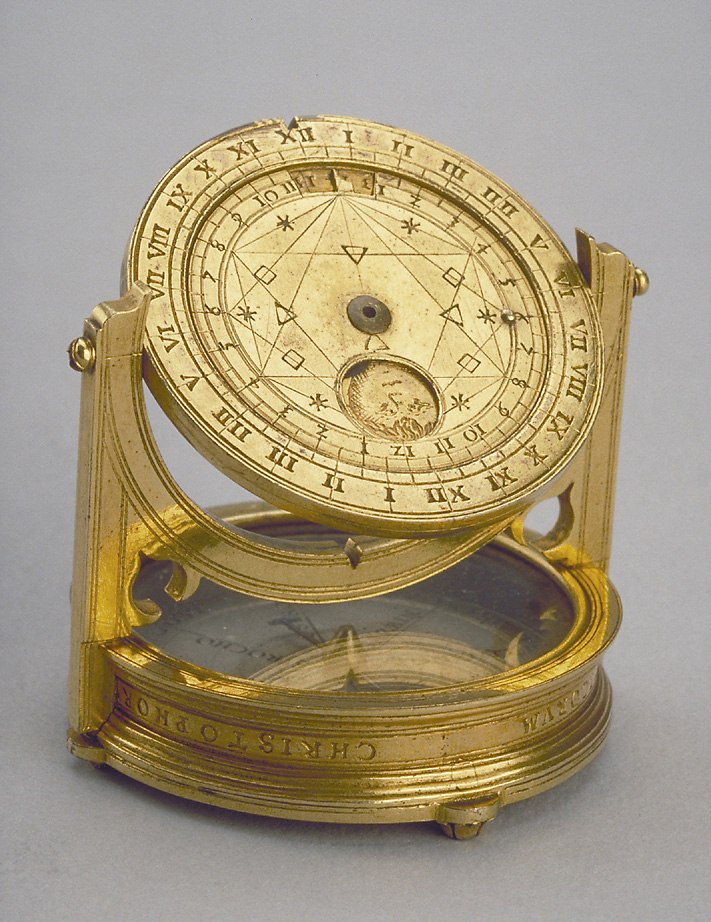
© British Museum, London
horological instruments
Equinoctial Dial
circa 1570
This universal equinoctial dial, signed by Christoph Schissler, dates to approximately 1570 and originates from Augsburg. The instrument is constructed from gilt brass and measures 44 mm in diameter. It comprises two detachable sections: a base containing a compass and a circular disc pivoted on a supporting semicir…
Partial type record
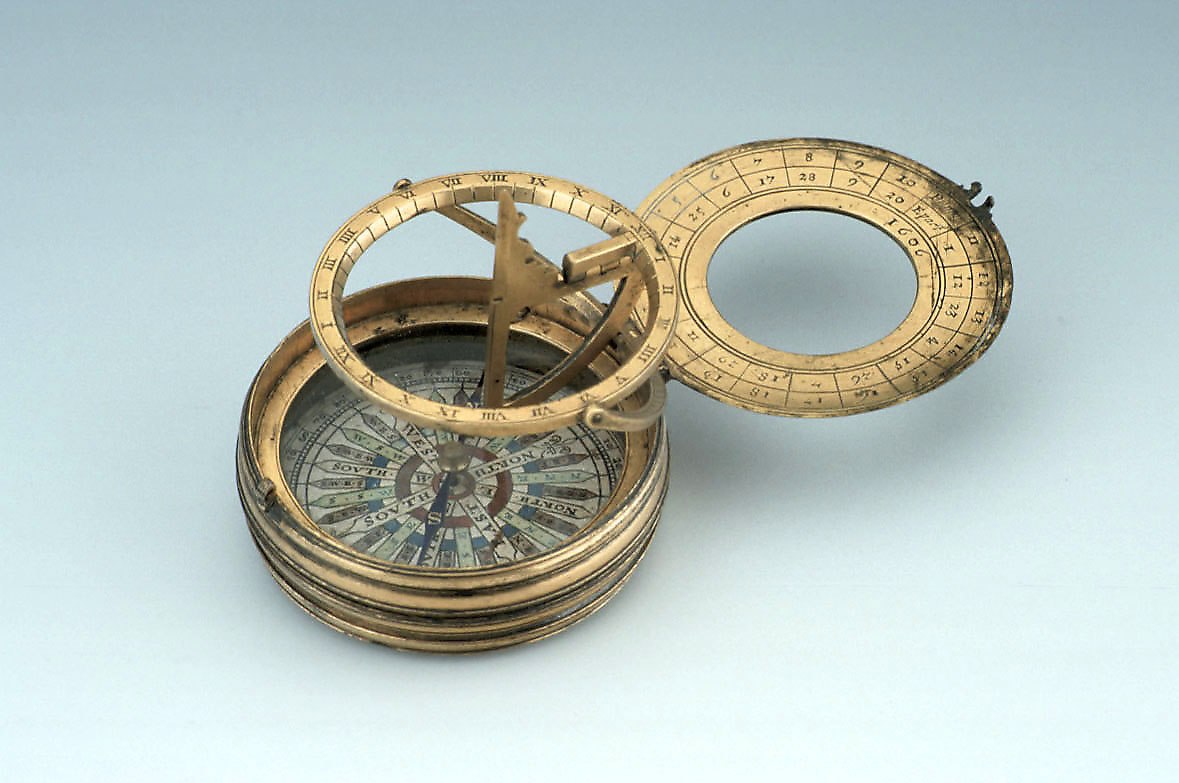
Museum of the History of Science, Oxford
horological instruments
Equinoctial Dial by Charles Whitwell
1606
This equinoctial dial is constructed from gilt brass with a diameter of 62 mm. It was made by Charles Whitwell in London in 1606. The instrument functions as a universal equinoctial dial, incorporating a circular compass bowl with a hinged cover that features a central aperture for visibility when closed. The dial a…
Partial type record
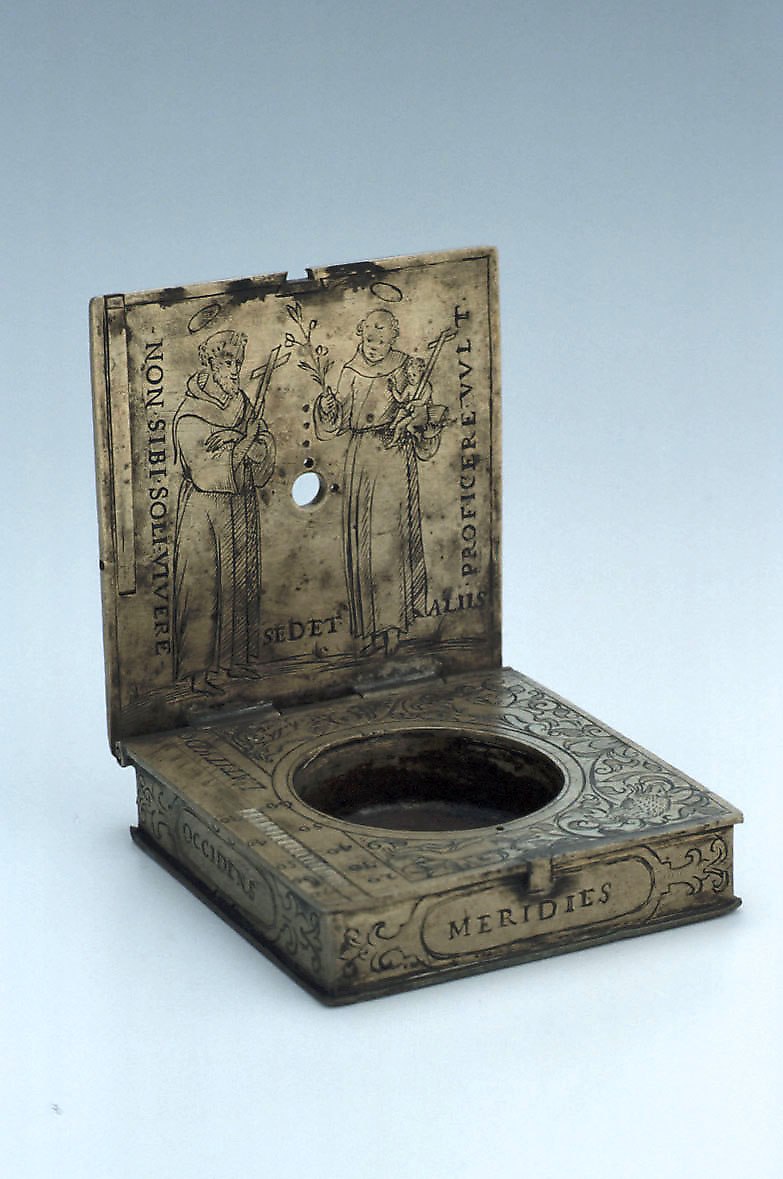
Museum of the History of Science, Oxford
horological instruments
Equinoctial Dial by Hieronymus de Arresse
1598
This equinoctial sundial, signed by Hieronymus de Arresse and dated 1598, is constructed from brass and measures 62 by 60 by 15 mm. The instrument features a box with a hinged cover leaf that serves as the hour plate, inscribed with a Latin maxim and engraved with figures of St Francis of Assisi and St Anthony of Pa…
Partial type record
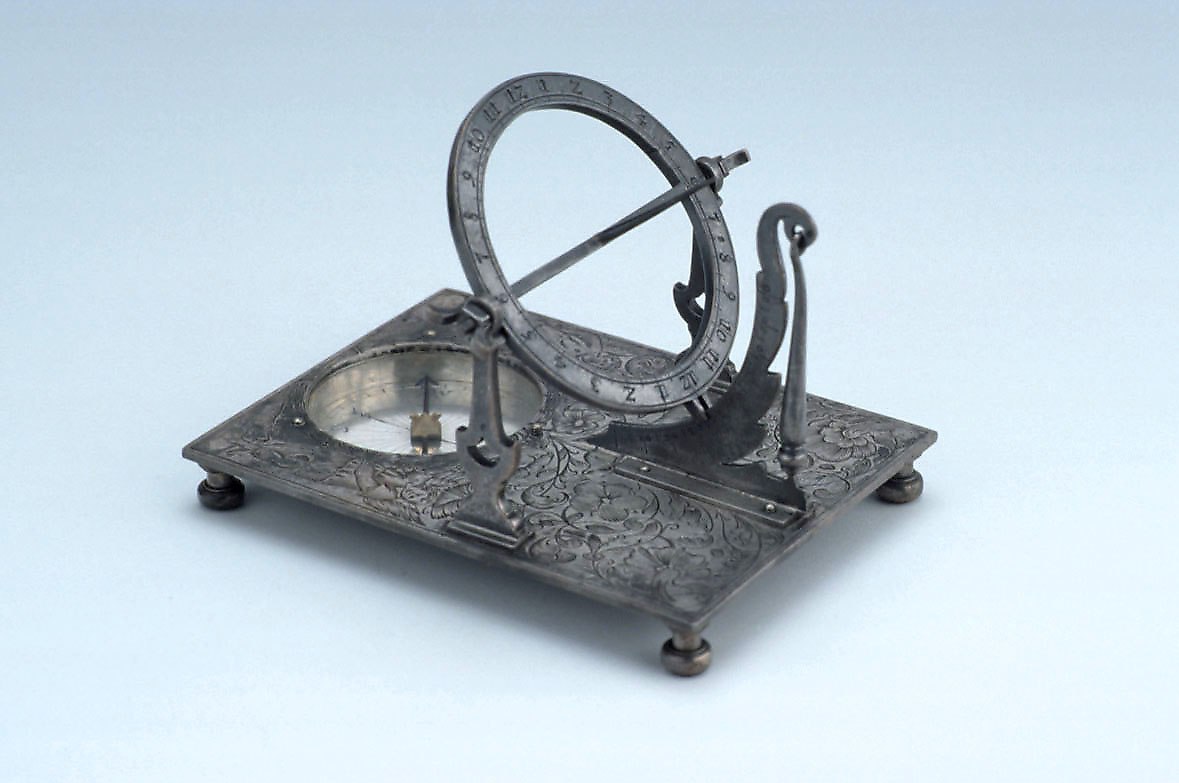
Museum of the History of Science, Oxford
horological instruments
Equinoctial Dial by Johann Christoph Keller
circa 1580
This equinoctial dial, held by the Museum of the History of Science in Oxford, is a silver portable instrument attributed to Johann Christoph Keller of Linz, dated circa 1580. Measuring 85 x 62 x 53 mm, the device features a rectangular base plate raised on four bun feet. The base is intricately engraved with floral…
Partial type record
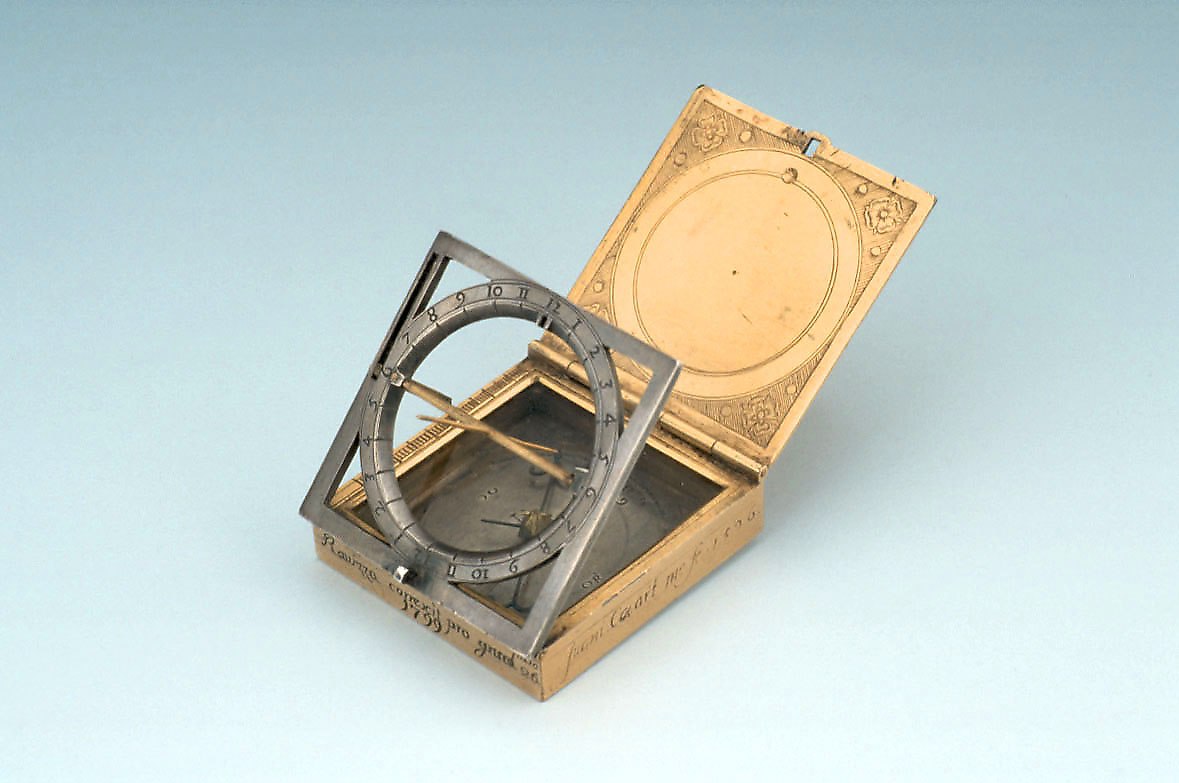
Museum of the History of Science, Oxford
horological instruments
Equinoctial Dial by Juan Cocart
1596
This square equinoctial dial, held by the Museum of the History of Science in Oxford, is constructed from gilt brass and silver, measuring 11 by 43 by 44 mm. It features a folding hour circle marked 1 to 12 twice, mounted on a square base that incorporates a latitude adjustment arm. The internal compass displays car…
Partial type record
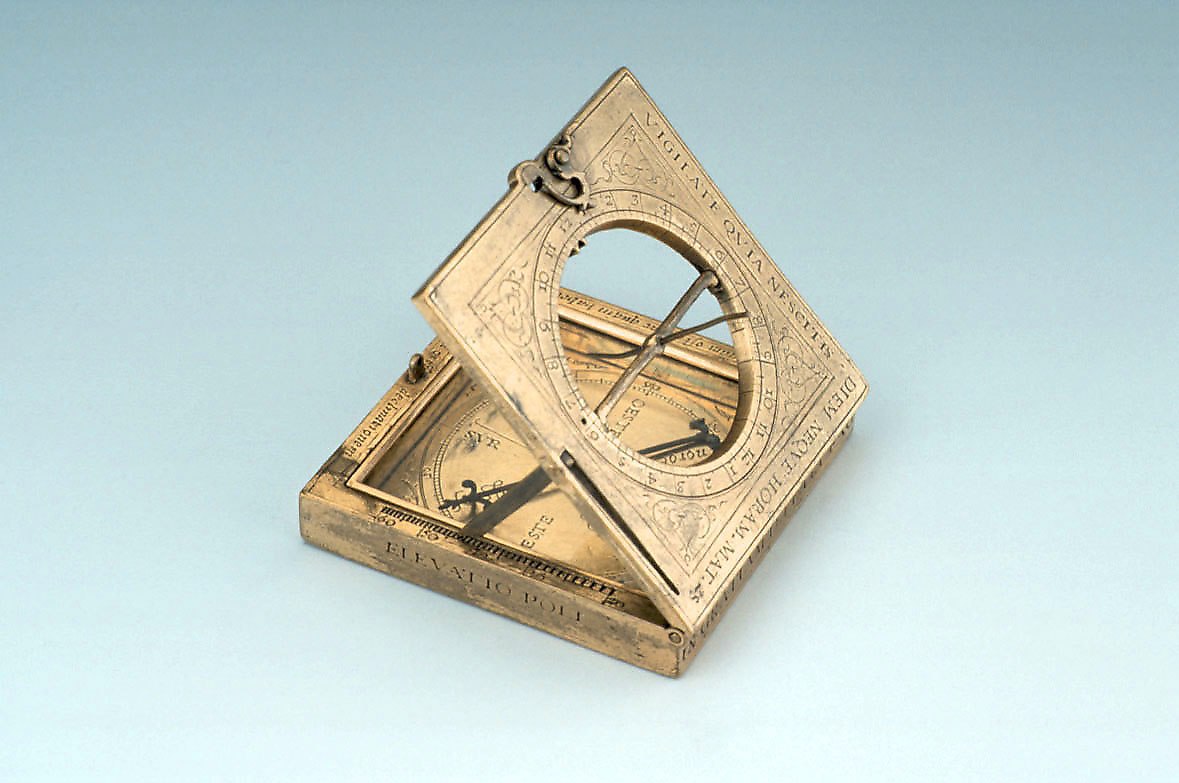
© Museum of the History of Science, Oxford
horological instruments
Equinoctial Dial by Petrus ab Aggere
1562
This equinoctial dial, crafted from gilt brass, measures 11 x 57 x 57 mm and was produced in Madrid in 1562. Signed by Petrus ab Aggere, the instrument features a square form and includes an internal compass with eight directional points. The lid's exterior is engraved with an hour circle marked 1 to 12 twice, along…
Partial type record
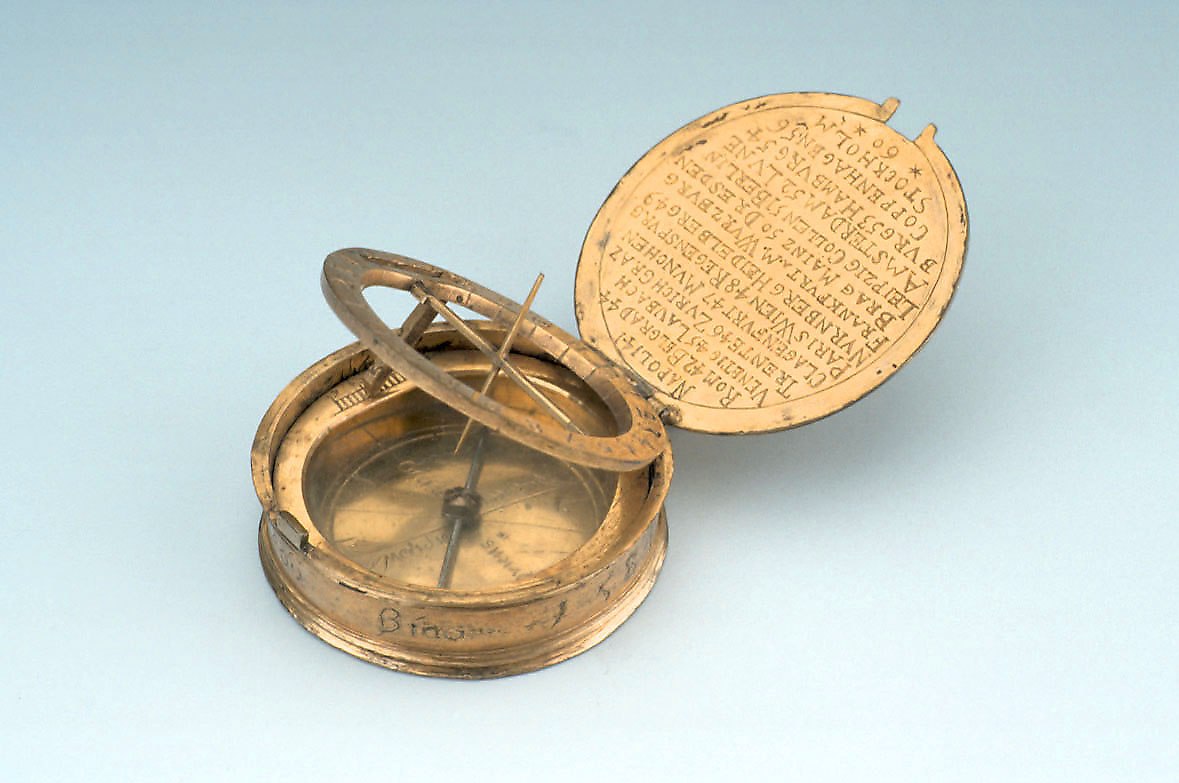
Museum of the History of Science, Oxford
horological instruments
Equinoctial Dial, 1584
1584
This round equinoctial dial, crafted from gilt brass, measures 50 mm in diameter and dates to 1584. It is unsigned and represents an instrument of German manufacture. The dial features a folding gnomon and a brass arm for adjusting latitude, with an hour circle numbered twice from 1 to 12. The internal compartment h…
Partial type record
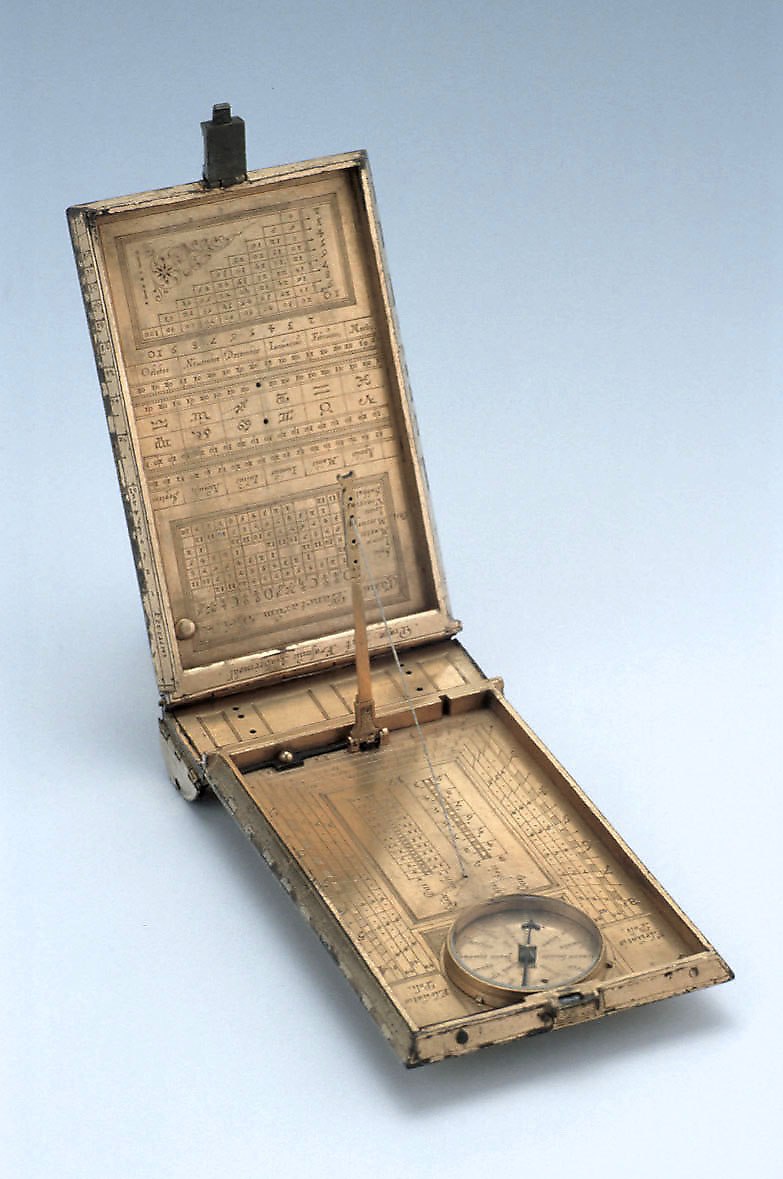
Museum of the History of Science, Oxford
horological instruments
Erasmus Habermel Astronomical Compendium
Late 16th century
This late 16th-century astronomical compendium is constructed from gilt copper and measures 105 x 60 x 22 mm. It is designed in the form of a book, featuring two leaves mounted on a hollow arched spine, intended to hold paper or tablets for writing. The device includes a horizontal string gnomon sundial adjustable f…
Partial type record
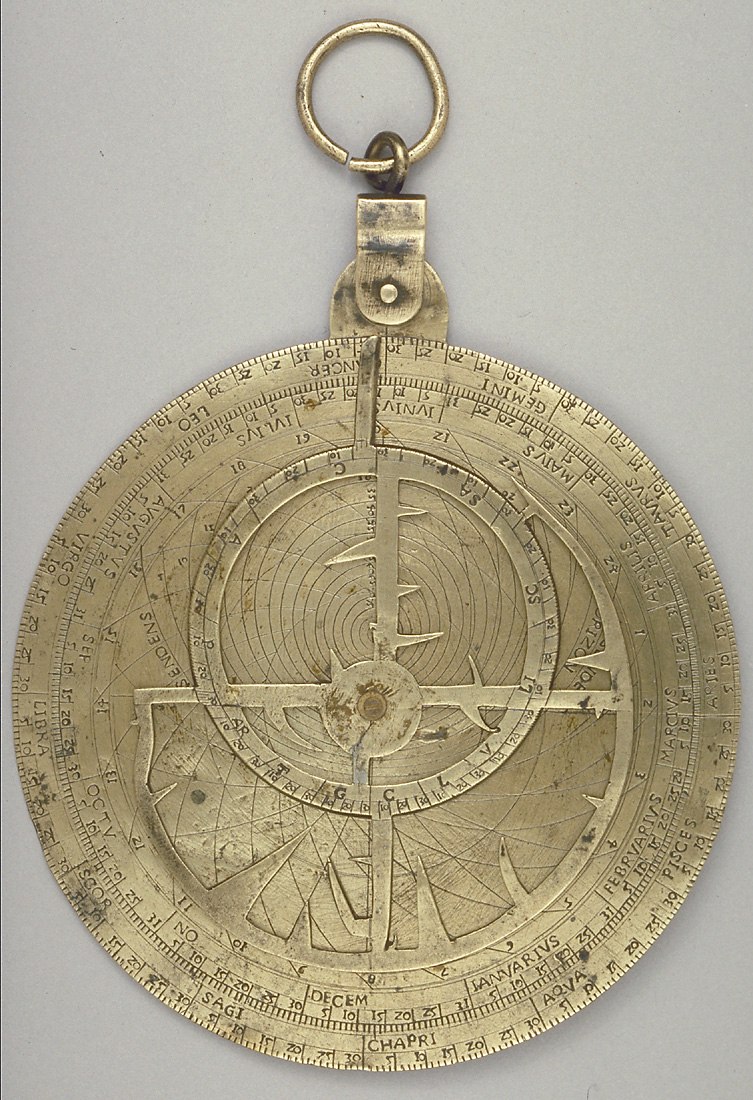
British Museum, London
horological instruments
Falcono Astrolabe
1507
This brass astrolabe, measuring 115 mm in diameter, is dated 1507 and signed by Falcono. The instrument is distinct in its construction as it lacks a traditional mater. Instead, it consists of a single plate featuring a zodiacal calendar scale and markings for the sixth climate on one side, while the reverse display…
Partial type record
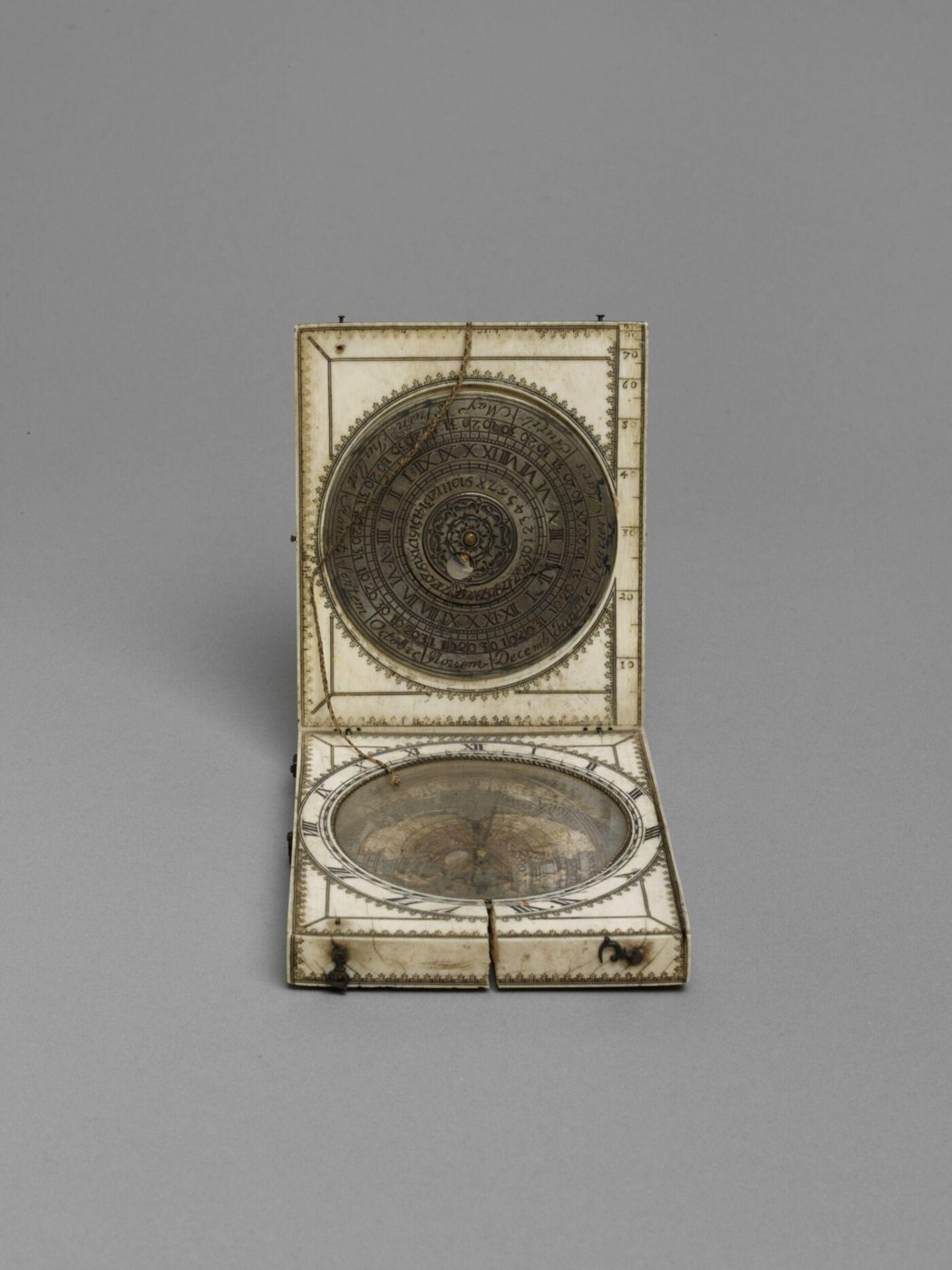
Victoria and Albert Museum, London
horological instruments
Folding Compass and Sundial
ca. 1641 - ca. 1674
This portable folding compass and sundial was constructed from ivory with steel fittings. The object was produced in Marseilles, France, by the maker Henri Robert, active circa 1650. The exterior of the ivory case is decorated with engraved black ink, featuring a dial, calendar, and the coat of arms of the Marquis d…
Partial type record
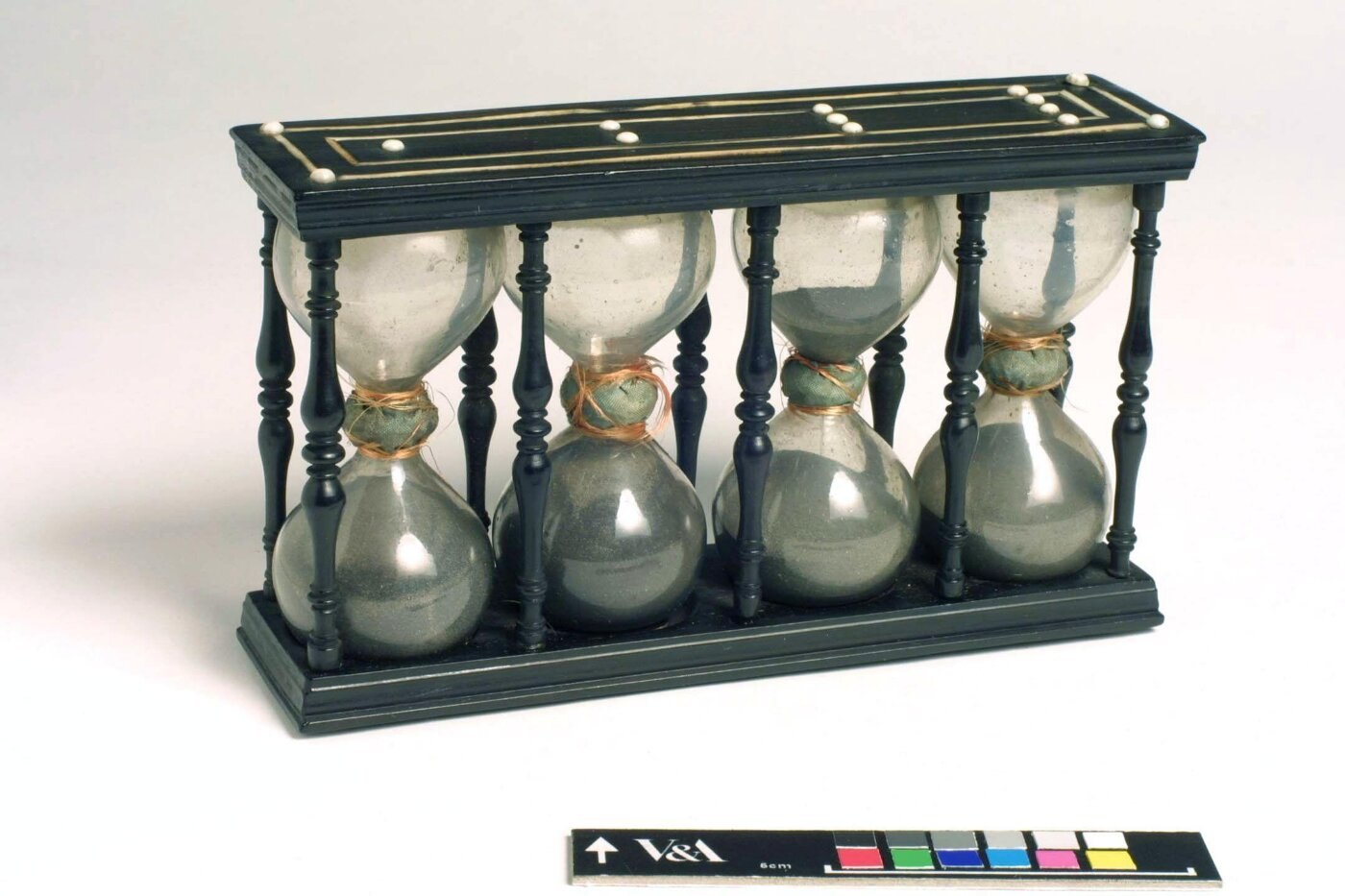
Victoria and Albert Museum
horological instruments
Four-chambered sand-glass
1575-1625
This sand-glass, also referred to as a 'battery', comprises four individual sand-glasses mounted within a single rectangular frame. Produced in Italy between 1575 and 1625, the instrument features blown glass ampoules housed in a dark, turned ebony frame, which is decorated with inlaid ivory or bone accents. Each of…
Partial type record
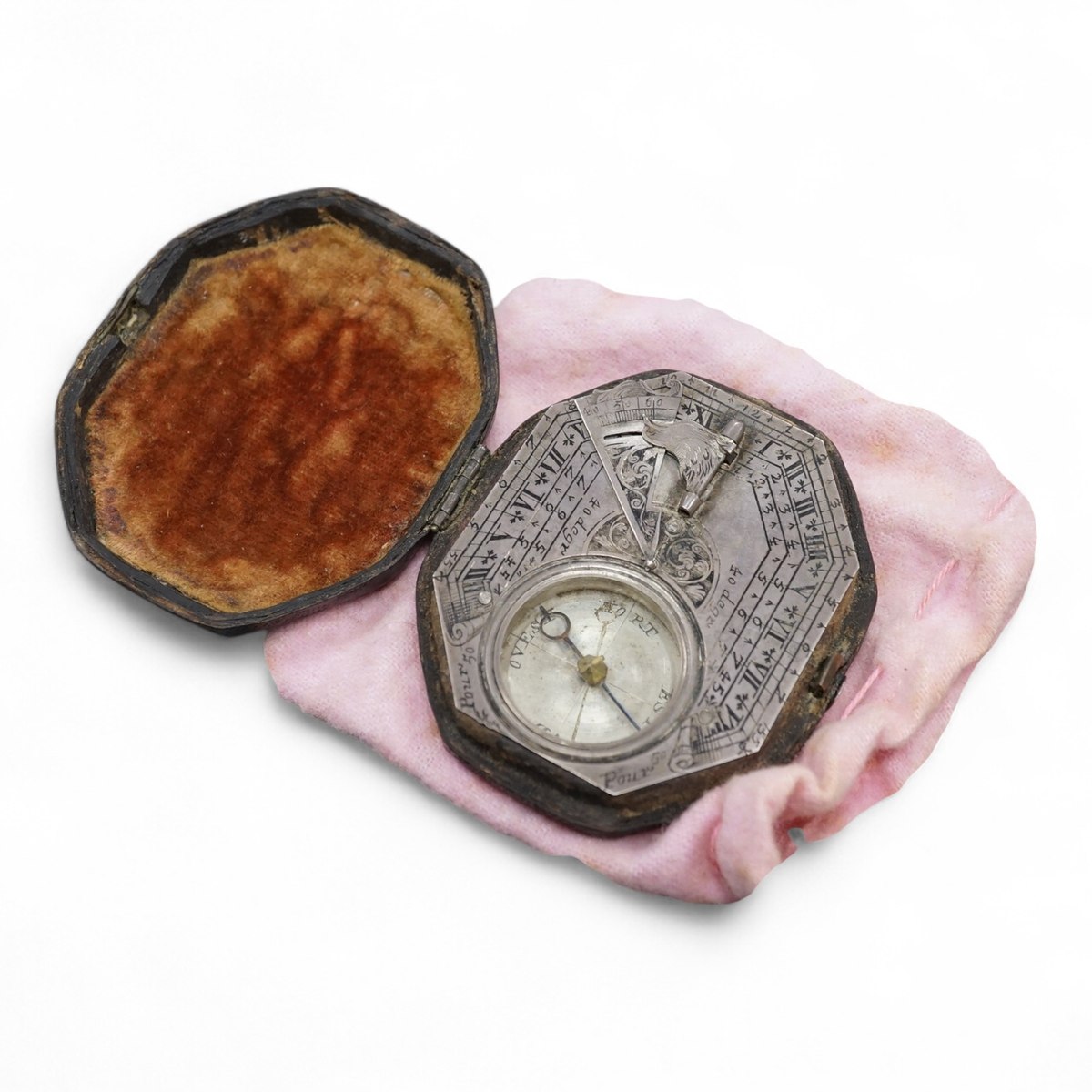
Gorringe's
horological instruments
French Butterfield pattern pocket sundial by Bion
early 18th century
This early eighteenth-century French Butterfield pattern pocket sundial is catalogued by Gorringe's as made by Bion, Paris. The instrument features an engraved octagonal silver-plated plate incorporating multiple hour tracks, foliate scroll engraving, and an integrated magnetic compass. Its adjustable folding gnomon…
Partial type record
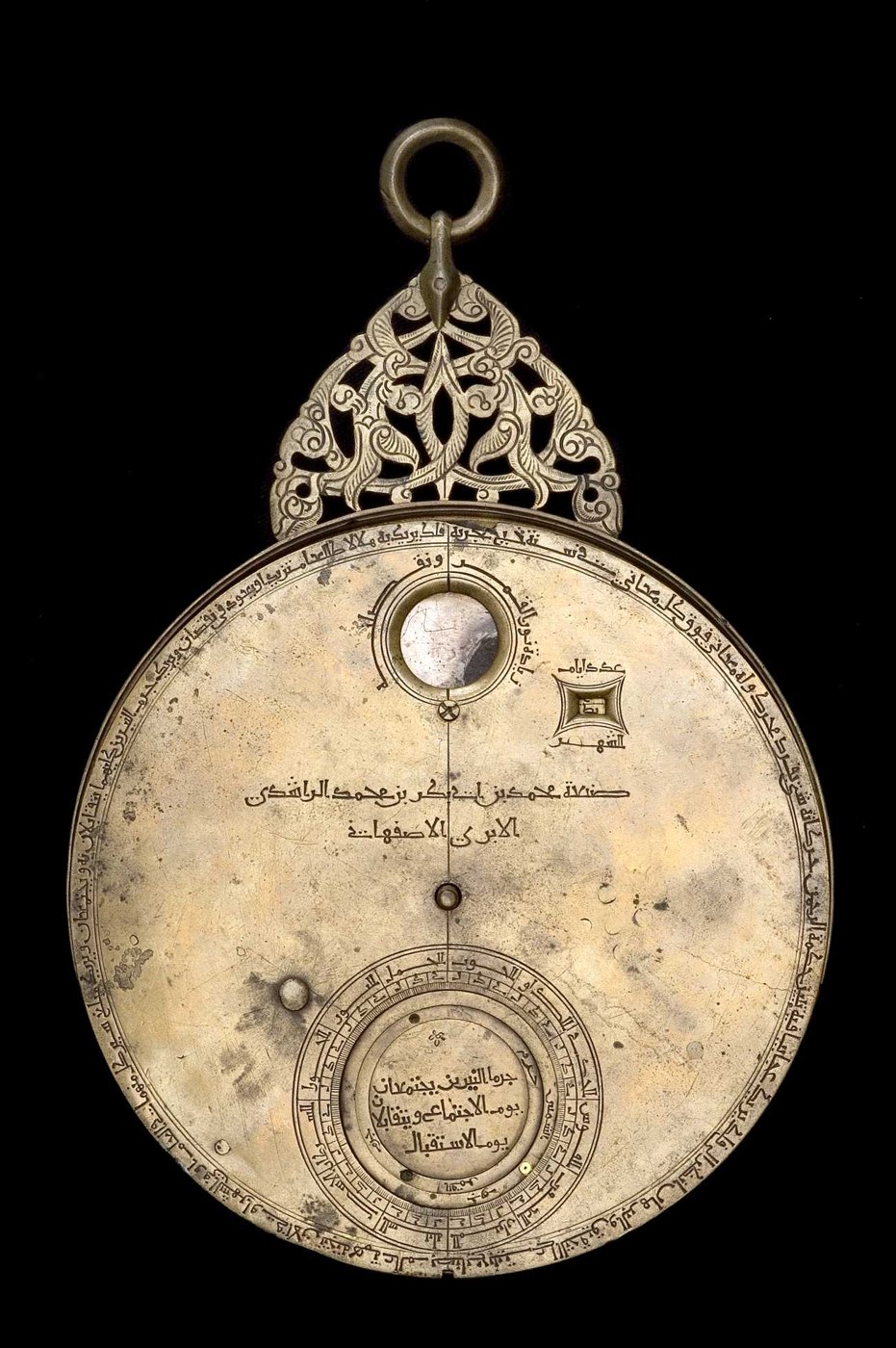
History of Science Museum, University of Oxford
horological instruments
Geared Astrolabe by Muḥammad ibn Abī Bakr
1221/2 (A.H. 618)
This brass geared astrolabe, produced in Iṣfahān in 1221/2 (A.H. 618), is attributed to the maker Muḥammad ibn Abī Bakr. It features an integrated gear train of five cogs housed between the back plate and the mater, intended to automate the display of celestial and calendrical data. As the rete on the front rotates,…
Partial type record