Catalogue
Astrolabes, Dials and Instruments
Astrolabes, quadrants, astronomical compendia, portable dials and watchmakers' workshop tools used to find or keep time.
Catalogue entries (445)
Filter by era, country, maker or material241–288 of 445 entries
History of Science Museum, University of Oxford
horological instruments
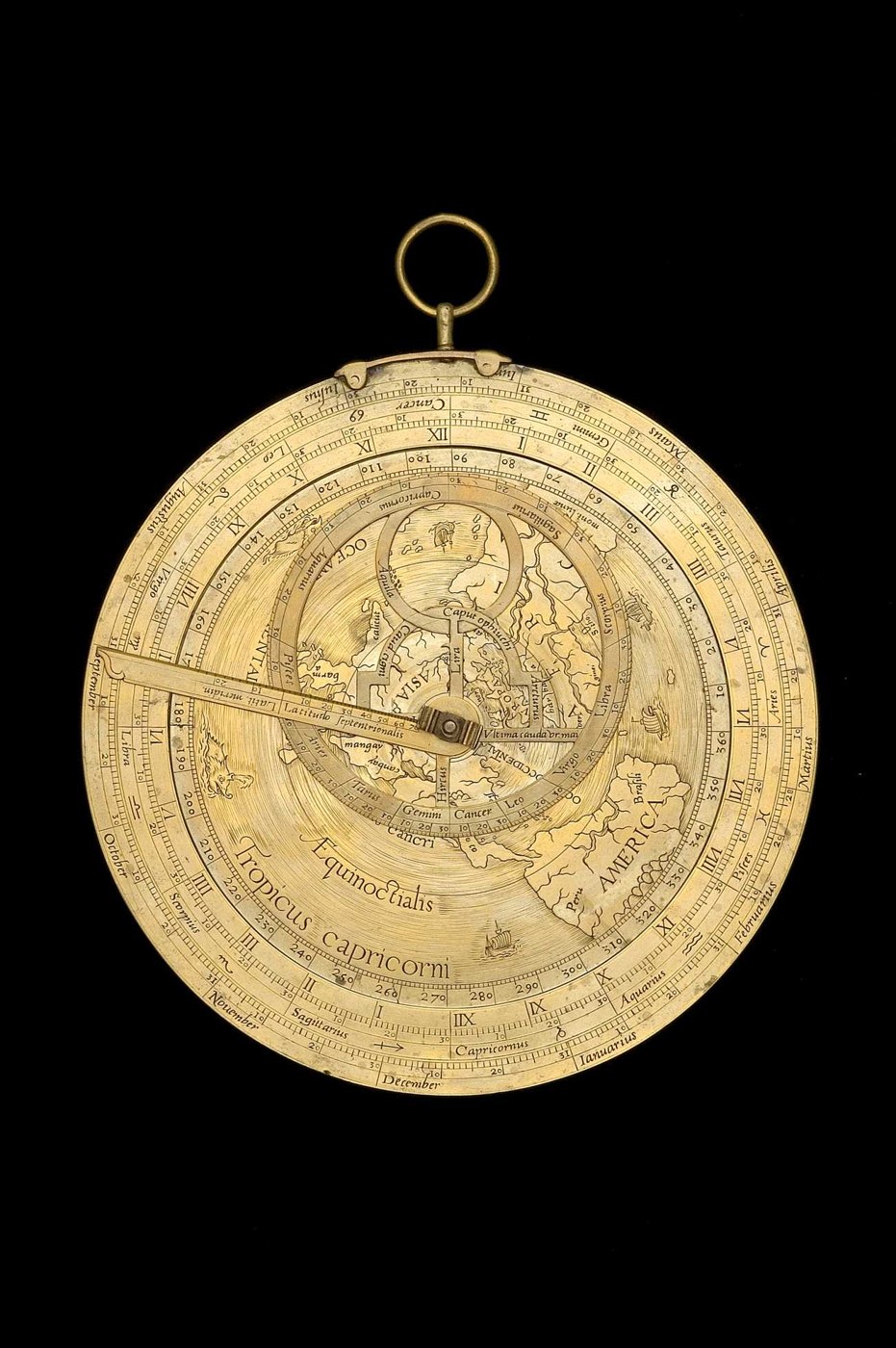
Geographic astrolabe, inventory 53211
1560
This brass geographic astrolabe, made by Gillis Coignet in 1560, differs from traditional astrolabes by featuring a single plate with an ornate terrestrial projection rather than the heavens. The projection maps the earth from the North Pole to the Tropic of Capricorn, detailing Europe, North Africa, the Near East,…
Partial type record
Museum of the History of Science, Oxford
horological instruments
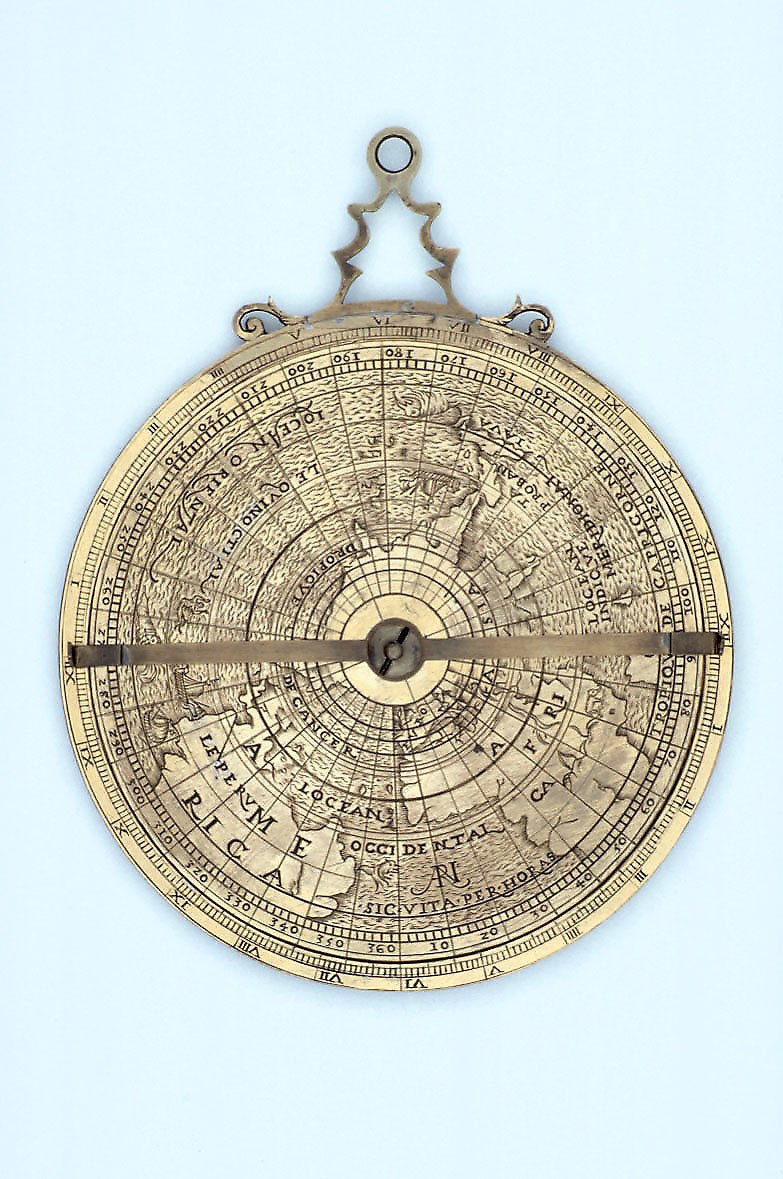
Geographical Astrolabe
Late 16th century ?
This gilt brass geographical astrolabe, measuring 108 mm in diameter, features a projection of the geographical sphere from the North Pole to the Tropic of Capricorn rather than the standard celestial sphere. Attributed to the late 16th century and signed 'ARN', the instrument consists of a mater with a pierced thro…
Partial type record
British Museum, London
horological instruments
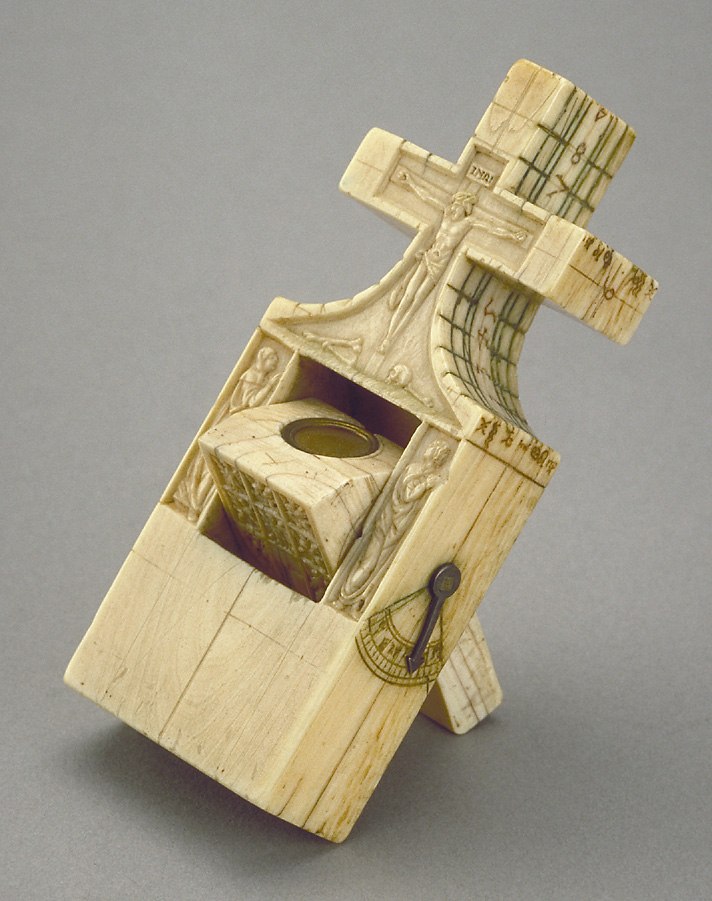
Georg Hartmann Crucifix Dial
1541
This crucifix dial, dated 1541 and signed by Georg Hartmann of Nuremberg, is a portable ivory sundial combining devotional imagery with timekeeping functionality. The object measures 39 x 96 x 17 mm. Hour lines are engraved onto the upper faces of the cross and the curved sides of the base, complemented by zodiacal…
Partial type record
History of Science Museum, University of Oxford
horological instruments
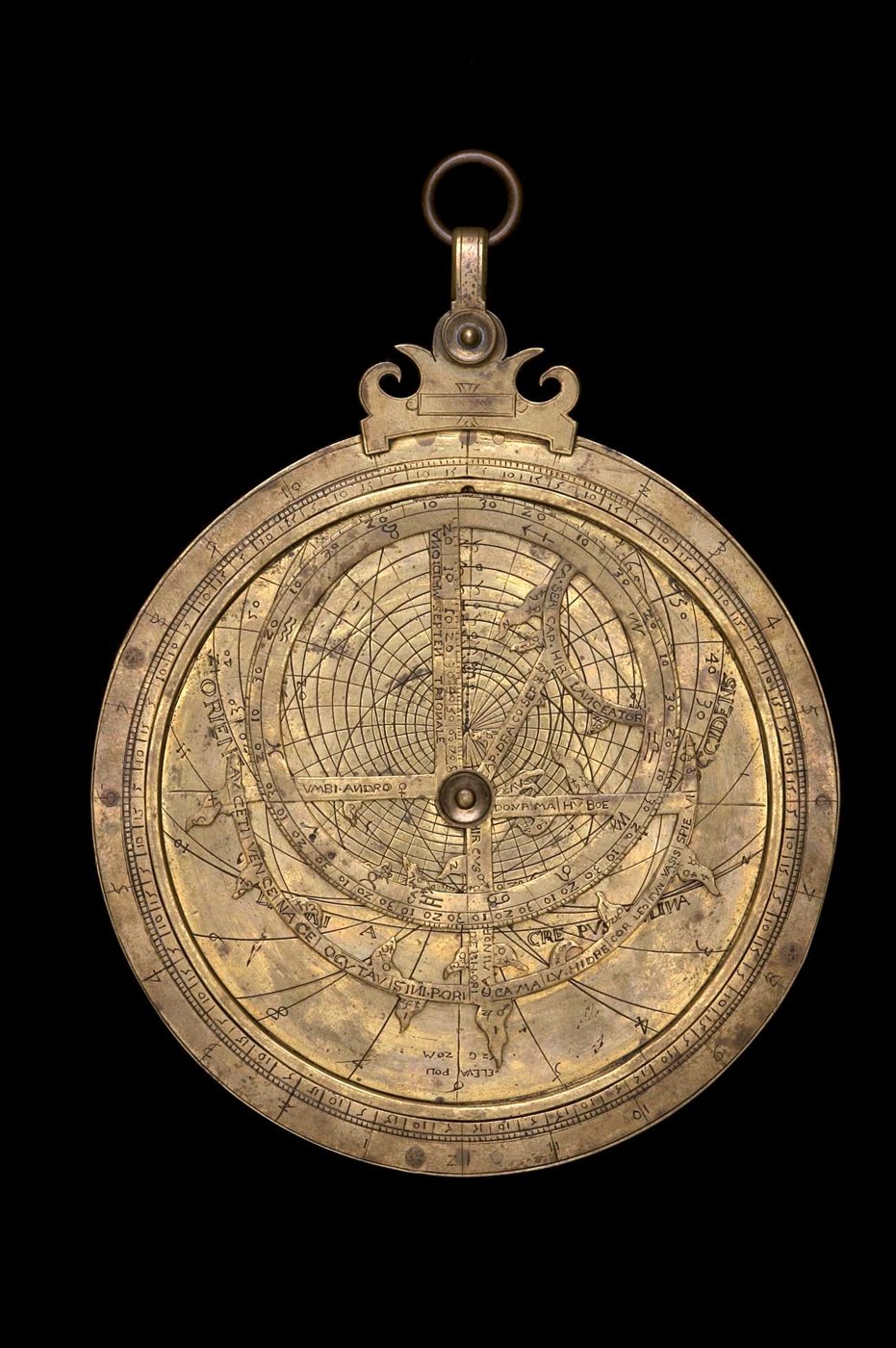
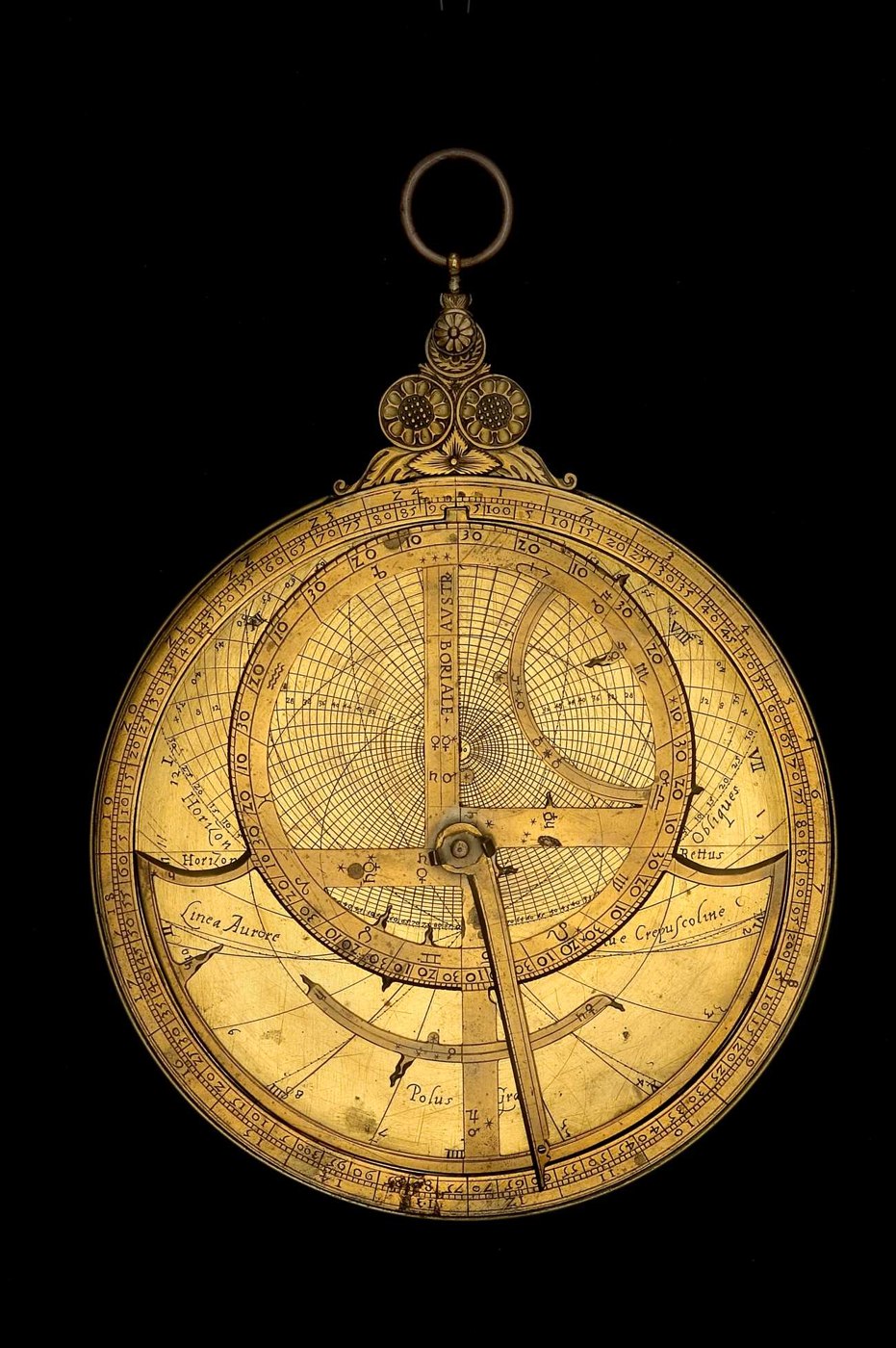
German astrolabe
16th century
This 16th-century brass astrolabe, inventory number 39887, is attributed to Germany. The instrument includes a mater, rete with 25 stars, two plates for latitude 52 degrees, and an alidade. The mater and limb feature a three-piece construction with the limb and inner ring pinned to the back plate. The back of the in…
Partial type record
History of Science Museum, University of Oxford
horological instruments
German Brass Astrolabe
1521
This 1521 German astrolabe, inventory 47657, is constructed primarily of brass and features a three-lobed throne decorated with five-petalled flowers and floral engravings. The instrument includes a mater and limb of one-piece construction, with a thick brass wire set into the scored edge of the limb. The back displ…
Partial type record
British Museum
horological instruments
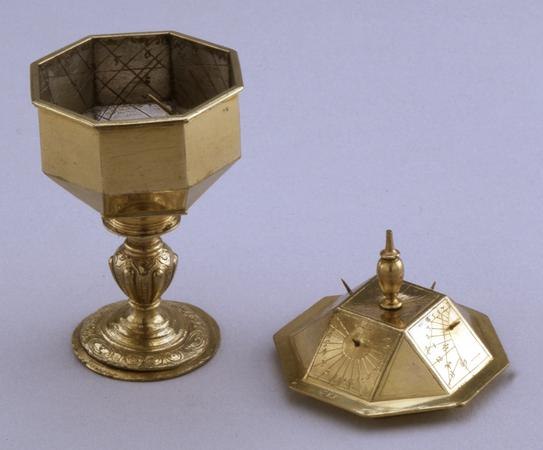
Gilt and silvered brass polyhedral scaphe dial
late 16thC
This late 16th-century scientific instrument comprises a plain octagonal gilt and silvered brass cup mounted on an urn-shaped pedestal stand, alongside a removable polyhedral lid with a baluster finial. The interior of the cup is configured as a scaphe dial engraved with astrological house divisions in the Regiomont…
Partial type record
British Museum, London
horological instruments
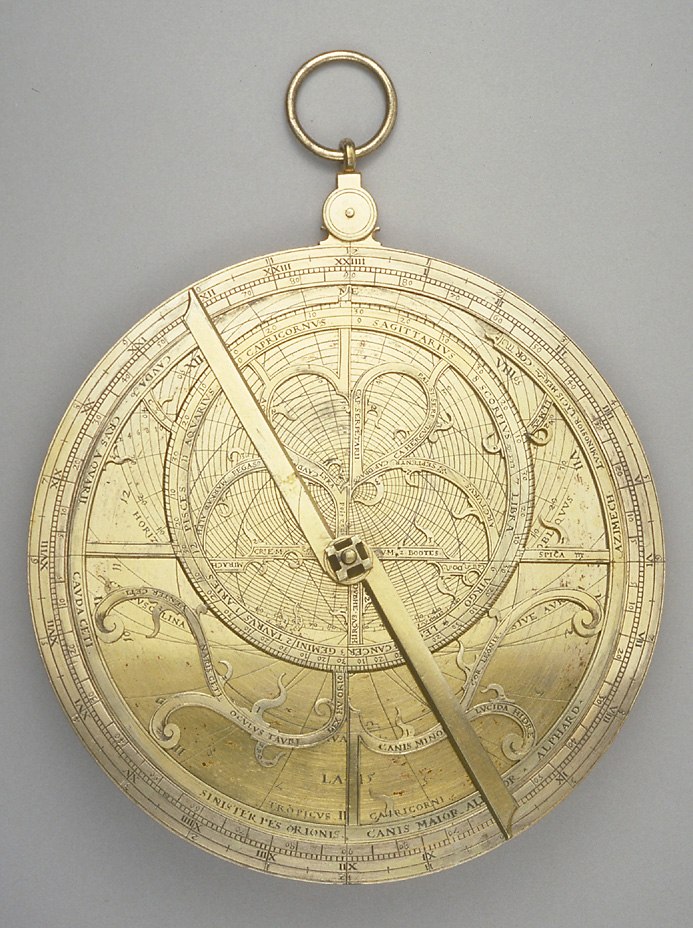
Gilt brass astrolabe
circa 1583
This 170 mm diameter gilt brass astrolabe is attributed to the maker Johann Anton Linden of Heilbronn, Germany, based on stylistic similarities to other known instruments by the same maker. The astrolabe features an unusually shallow mater designed to accommodate a single plate, which is marked for latitudes 45 and…
Partial type record
British Museum, London
horological instruments
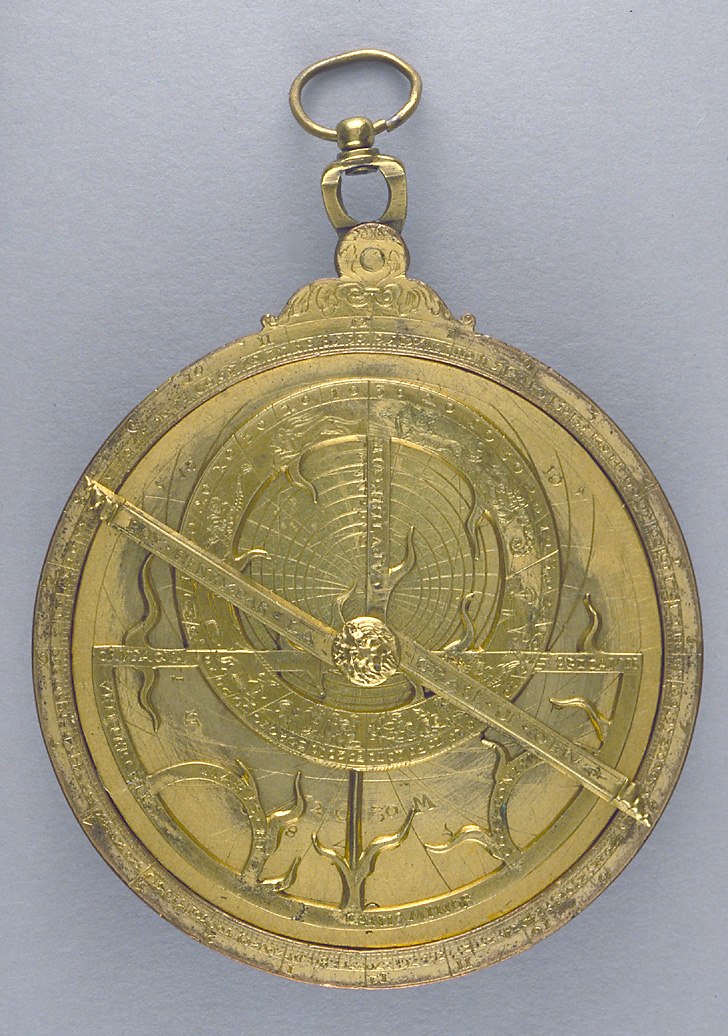
Gilt Brass Astrolabe by Bastien Le Seney
circa 1545
This 85 mm diameter gilt brass astrolabe is signed by Bastien Le Seney, a clockmaker to Henry VIII. Produced circa 1545 in London, the instrument features a three-lobed throne decorated with foliate scrolls and a suspension ring that appears to be a replacement. The mater contains a degree scale and a small pin to s…
Partial type record
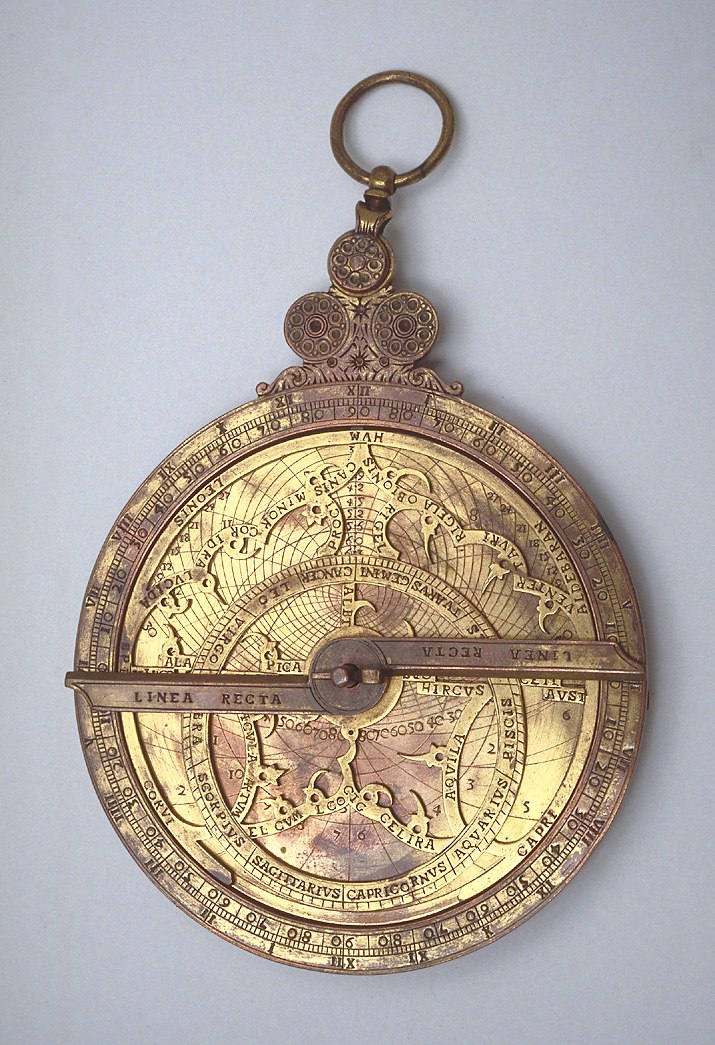
Museum Boerhaave, Leiden
horological instruments
Gilt Brass Planispheric Astrolabe
1541
This 108 mm diameter planispheric astrolabe, crafted from gilt brass, is attributed to an unidentified 16th-century imitator of the Nuremberg instrument maker Georg Hartmann. While the instrument bears a signature and date of 1541, specific technical features—such as the use of Arabic numerals for latitudes, the lac…
Partial type record
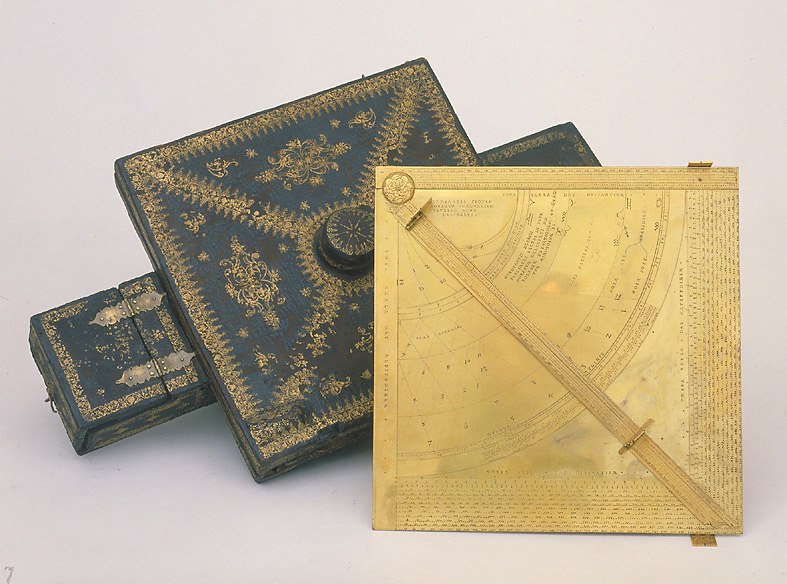
Istituto e Museo di Storia della Scienza, Firenze
horological instruments
Gilt Brass Quadrant by Christoph Schissler
1599
This 1599 gilt brass quadrant, measuring 380 x 380 mm, is signed by the artisan Christoph Schissler of Augsburg. The instrument is designed for the measurement of time, terrestrial distances, and heights. Its face features two horary quadrants—one for unequal hours with curved lines and one for equal hours with stra…
Partial type record
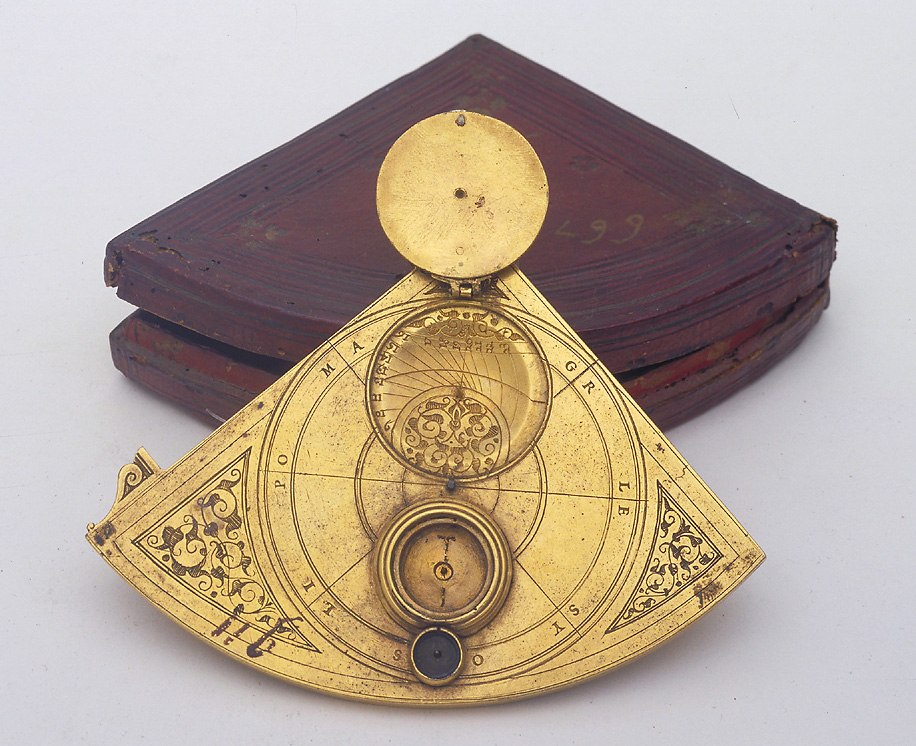
Istituto e Museo di Storia della Scienza, Firenze
horological instruments
Gilt brass quadrant with compass and scaphe sundial
Later 16th century
This gilt brass quadrant, measuring 90 mm in radius, was made by Giovanni Battista Giusti in Florence during the later 16th century. It is a multifunctional instrument featuring a compass and a scaphe sundial on the front face, which is adorned with a relief mask at the center. The opposite side includes a horary qu…
Partial type record
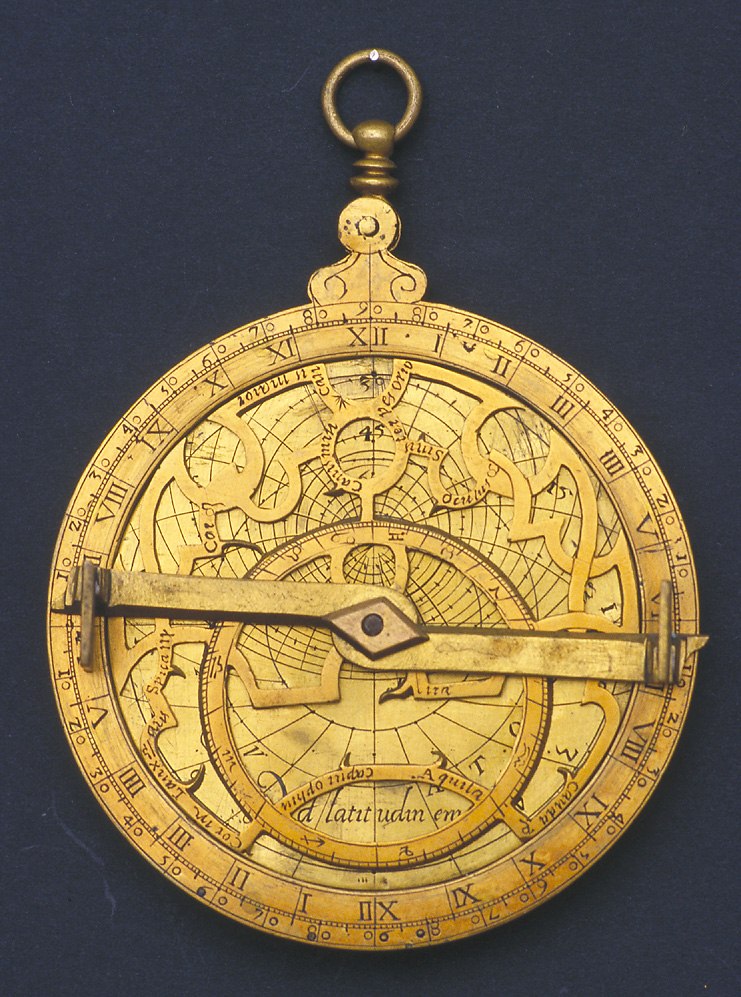
Istituto e Museo di Storia della Scienza, Firenze
horological instruments
Gilt Copper Astrolabe
Later 16th century
This unsigned astrolabe, dating to the later 16th century, is constructed from gilt copper and measures 85 mm in diameter. The instrument features a throne composed of a double block, with an integrated attachment for a ring. It includes two internal plates calibrated for latitudes of 37° and 40°, corresponding to S…
Partial type record
Istituto e Museo di Storia della Scienza, Firenze
horological instruments
Gilt Copper Quadrant
After 1582
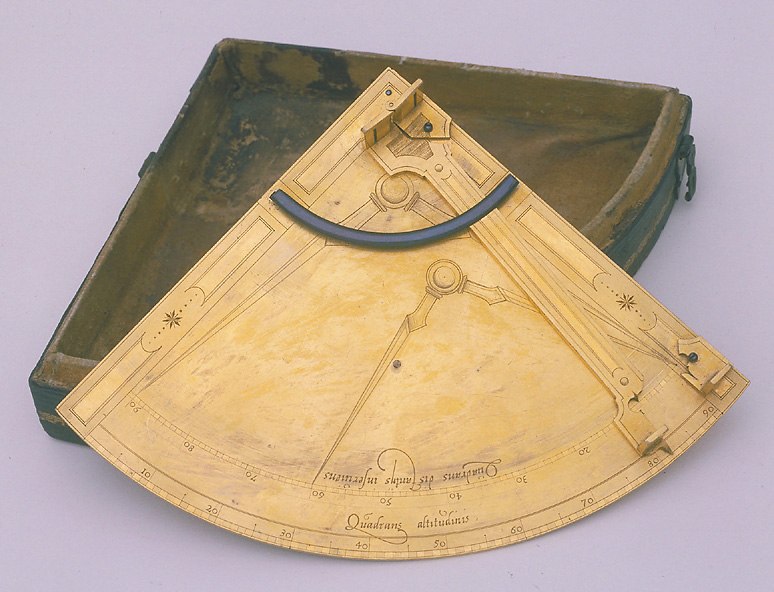
This gilt copper quadrant, measuring 150 mm in radius, is attributed to the maker Josua Habermel. The instrument is designed for the measurement of heights and distances, featuring a limb with dual scales. The outer scale, titled 'Quadrans altitudinis', and the inner scale, 'Quadrans distantijs inseruiens', are both…
Partial type record
Museum of the History of Science, Oxford
horological instruments
Giovanni Antonio Magini Planispheric Quadrant
Late 16th century
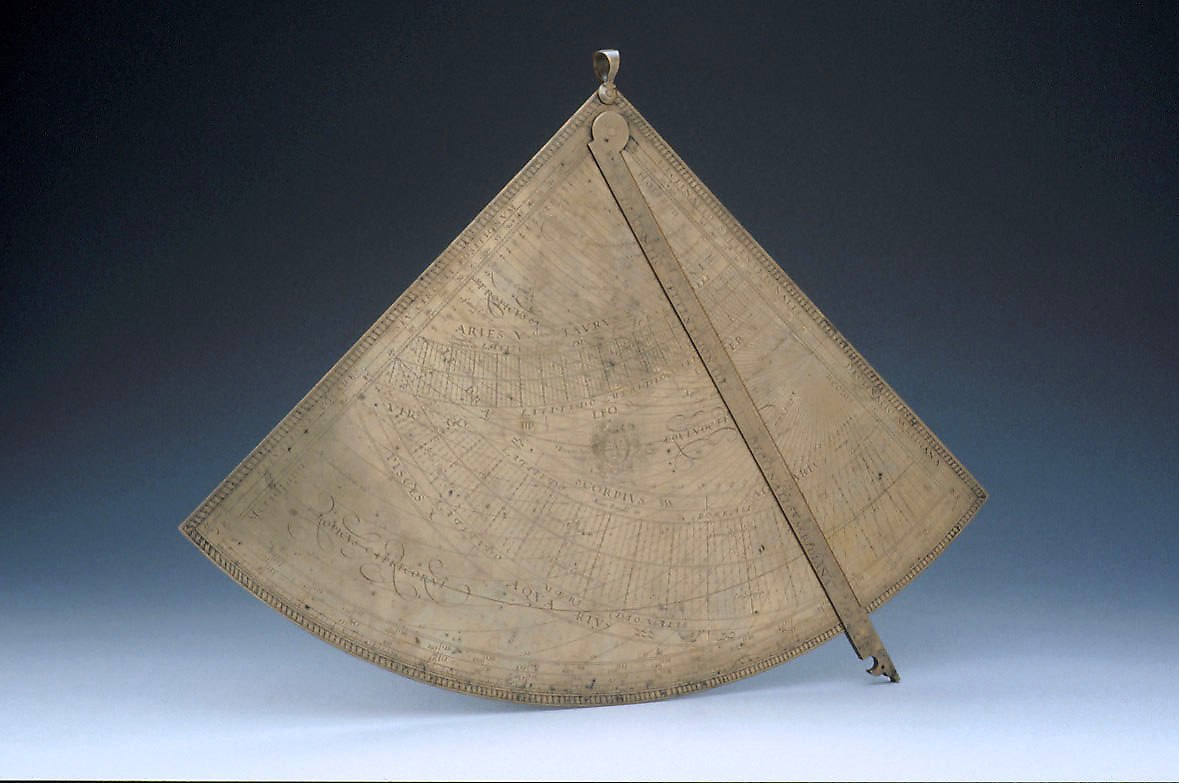
This 297 mm radius brass quadrant, signed by Giovanni Antonio Magini, functions as a model of the heavens and a calculating device. It serves as a planisphere, incorporating a stereographic projection of the northern hemisphere on one side and a projection of the heavens on the other, functioning essentially as a fo…
Partial type record
Istituto e Museo di Storia della Scienza, Firenze
horological instruments
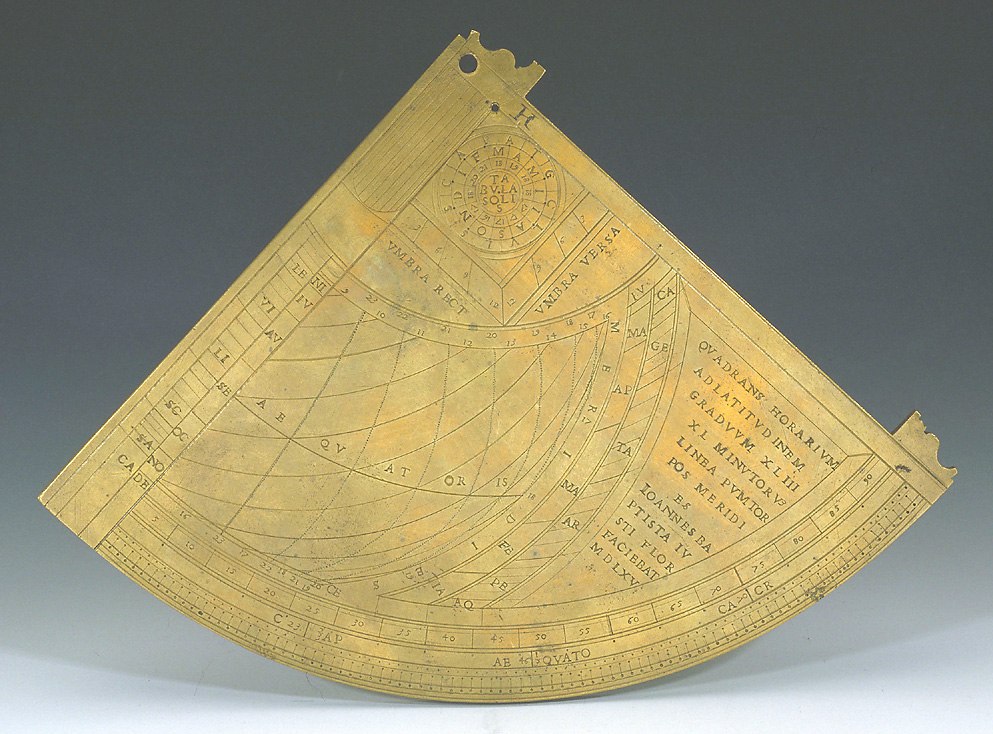
Giovanni Battista Giusti Quadrant
1568
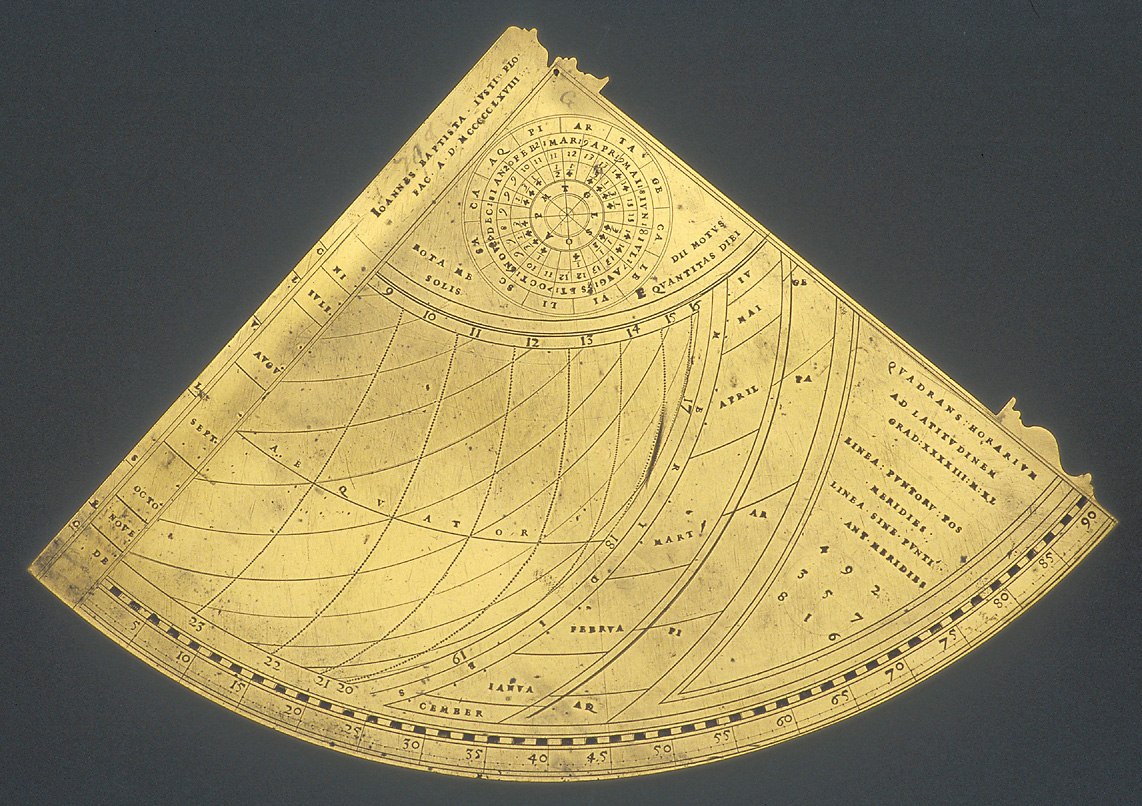
This brass quadrant, measuring 226 mm in radius, was made by Giovanni Battista Giusti in Florence in 1568. The instrument is designed for the latitude of 43° 40'. One face contains an Italian hours dial, a zodiacal calendar, a magic square, and a 'Rota medii motus et quantitas diei' for calculating solar motion and…
Partial type record
Proantic / S.D ANTIQUITES
horological instruments
Gold and Polychrome Enamel Pocket Watch Key
early 19th century
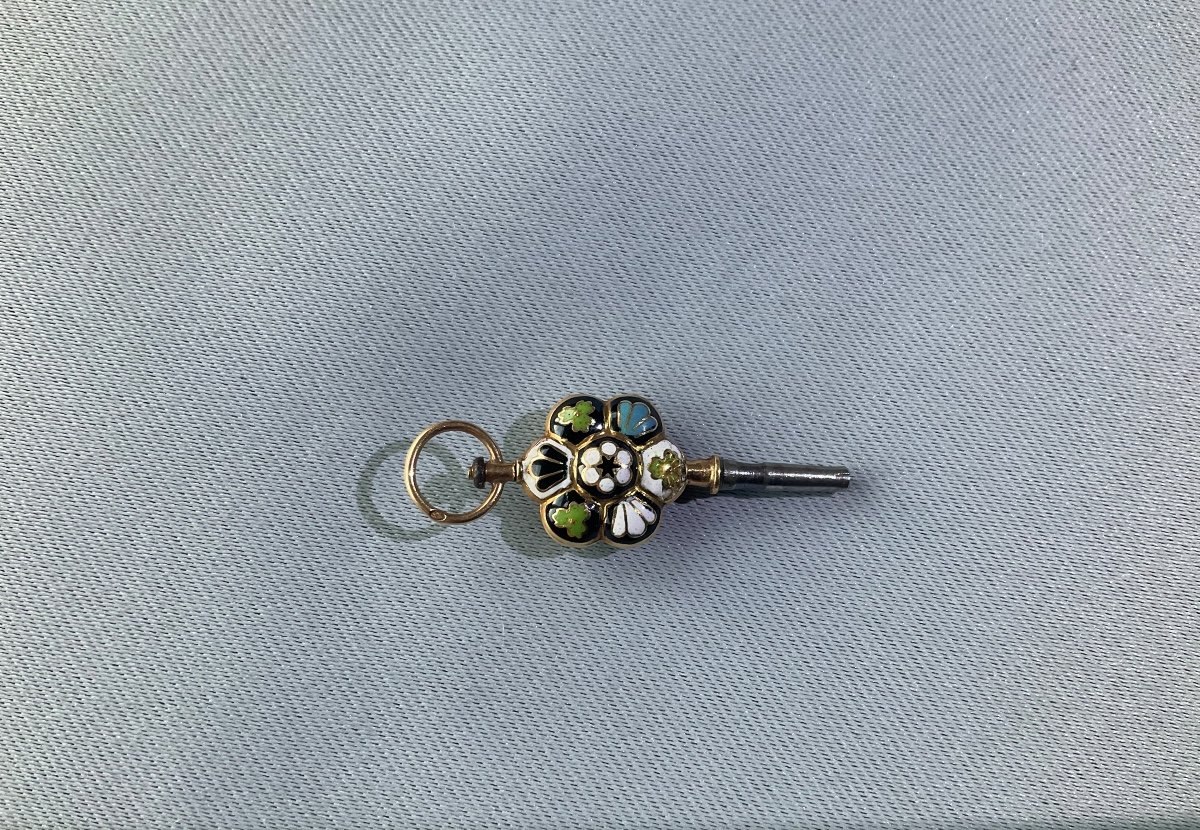
This antique pocket watch key is dated by the seller to the early 19th century and crafted in gold with polychrome enamel floral decoration. The body features a lobed, flower-shaped rosette patterned with green, blue, white, and black enamel designs outlined in gold. A suspension bail is fitted to one end and bears…
Partial type record
British Museum, London
horological instruments
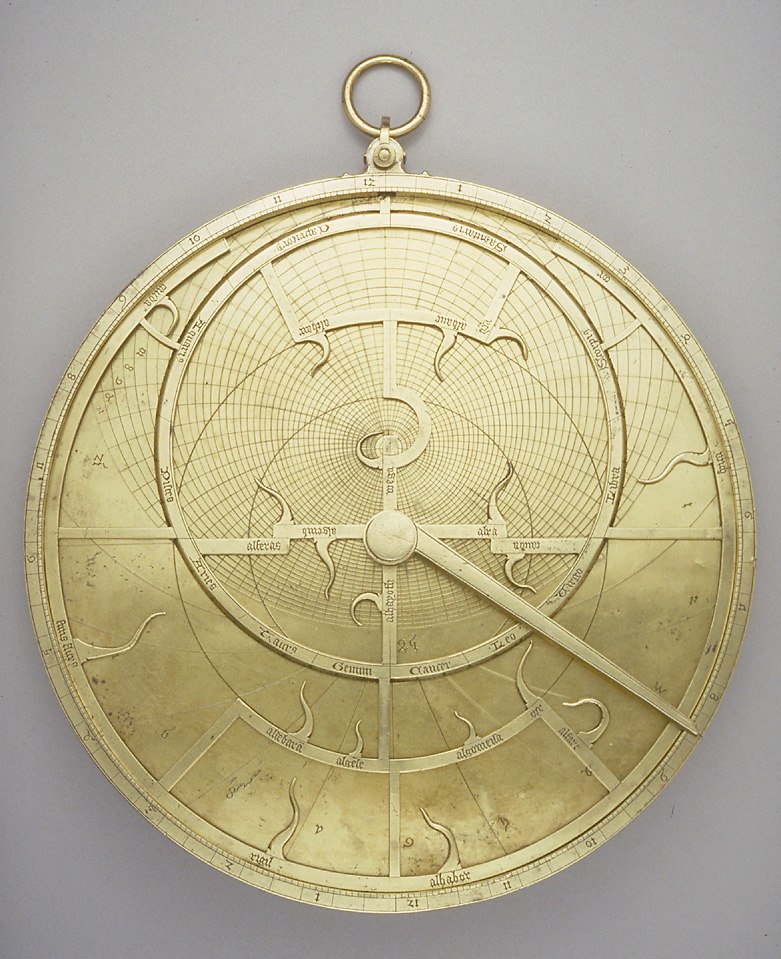
Gothic Astrolabe
late 15th century
This unsigned brass astrolabe has a diameter of 280 mm and is attributed to the late 15th century and possibly France. The instrument features a barrel-shaped throne with an inset swivel pin and a mater with a rim soldered to the backplate. The rim is engraved with a 24-hour scale. The rete includes worm-shaped star…
Partial type record
Istituto e Museo di Storia della Scienza, Firenze
horological instruments
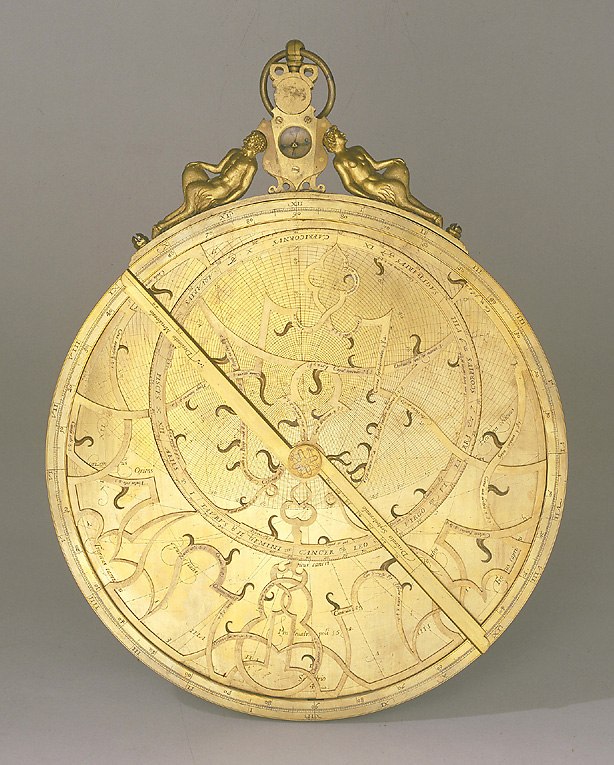
Gualterus Arsenius Astrolabe
1572
This brass astrolabe, measuring 341 mm in diameter, was created by Gualterus Arsenius in Louvain in 1572. The instrument consists of a mater housing ten plates calibrated for various latitudes, which are installed in an inverted orientation. The suspension mechanism features a compass equipped with a magnetic needle…
Partial type record
Museum of the History of Science, Oxford
horological instruments
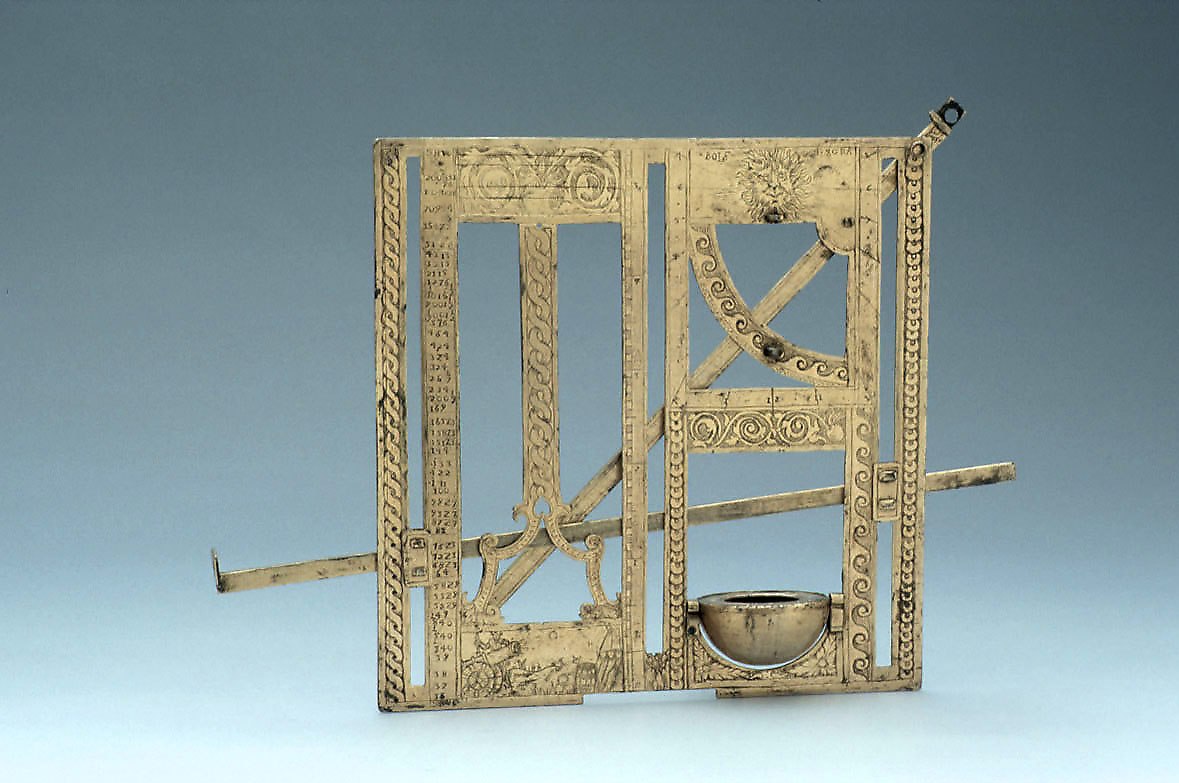
Gunner's Compendium
Later 16th century
This later 16th-century German gunner's compendium is constructed of gilt brass and measures 143 x 143 mm. Designed as a multifunction instrument for artillery use, it includes a gunner's sight, plummet, quadrant, shadow square, horizontal sundial, and a hemispherical compass. The square plate features extensive eng…
Partial type record
V&A Museum
horological instruments
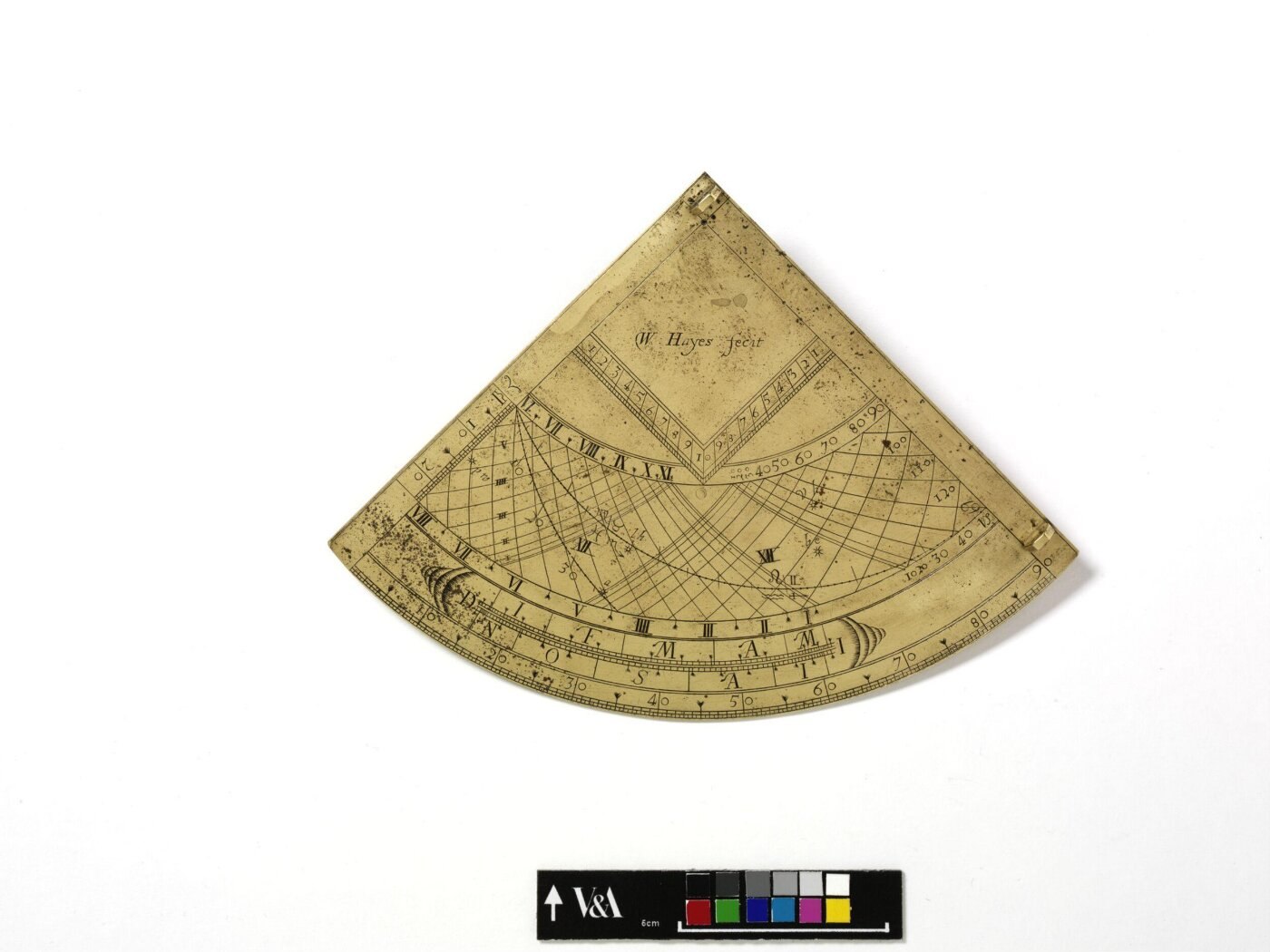
Gunter quadrant by Walter Hayes
1648-90
This Gunter quadrant, accession number M.341-1926, was produced in London between 1648 and 1690. The instrument is a quarter-circle made from sheet brass, which features intricate, engraved projections of star coordinates. Quadrants of this design were utilized in fields such as astronomy, astrology, and architectur…
Partial type record
Museum of the History of Science, Oxford
horological instruments
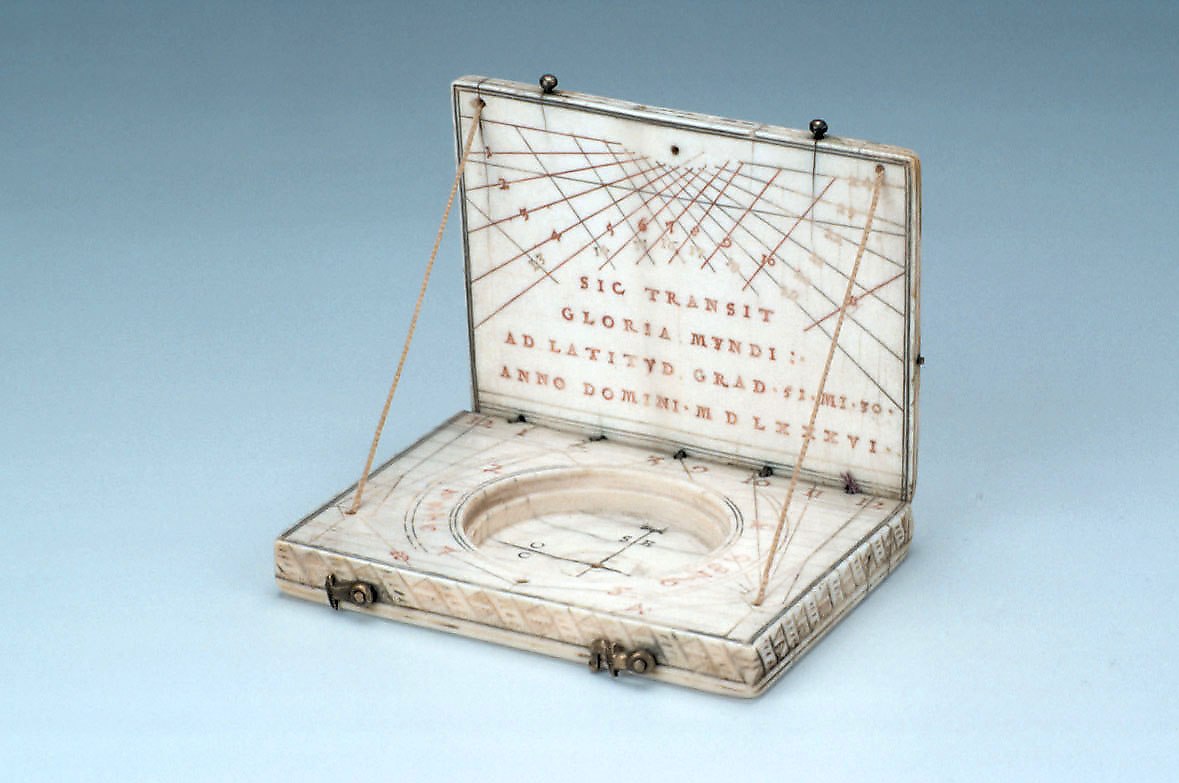
Hans Troschel Diptych Dial
1586
This diptych sundial, constructed in the form of a book measuring 70 x 55 x 12 mm, is crafted from ivory and brass. Signed by Hans Troschel and dated 1586, the instrument originates from Nuremberg. The exterior features engraved, coloured figures, including St. Helena holding a cross on the upper leaf and a bearded…
Partial type record
British Museum, London
horological instruments
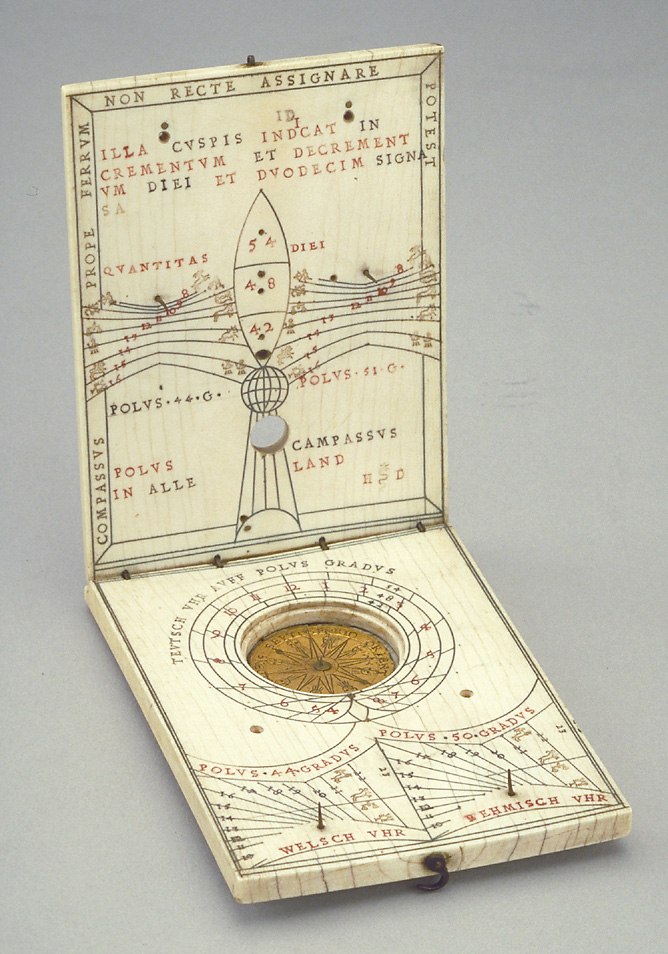
Hans Tucher Diptych Dial
circa 1600
This diptych sundial, attributed to either Hans Tucher II or Hans Tucher III, is constructed from ivory and brass with dimensions of 130 x 94 x 12 mm. It comprises multiple integrated time-measuring features, including a string gnomon dial, various pin gnomon dials calibrated for different latitudes, and a lunar vol…
Partial type record
Museum of the History of Science, Oxford
horological instruments
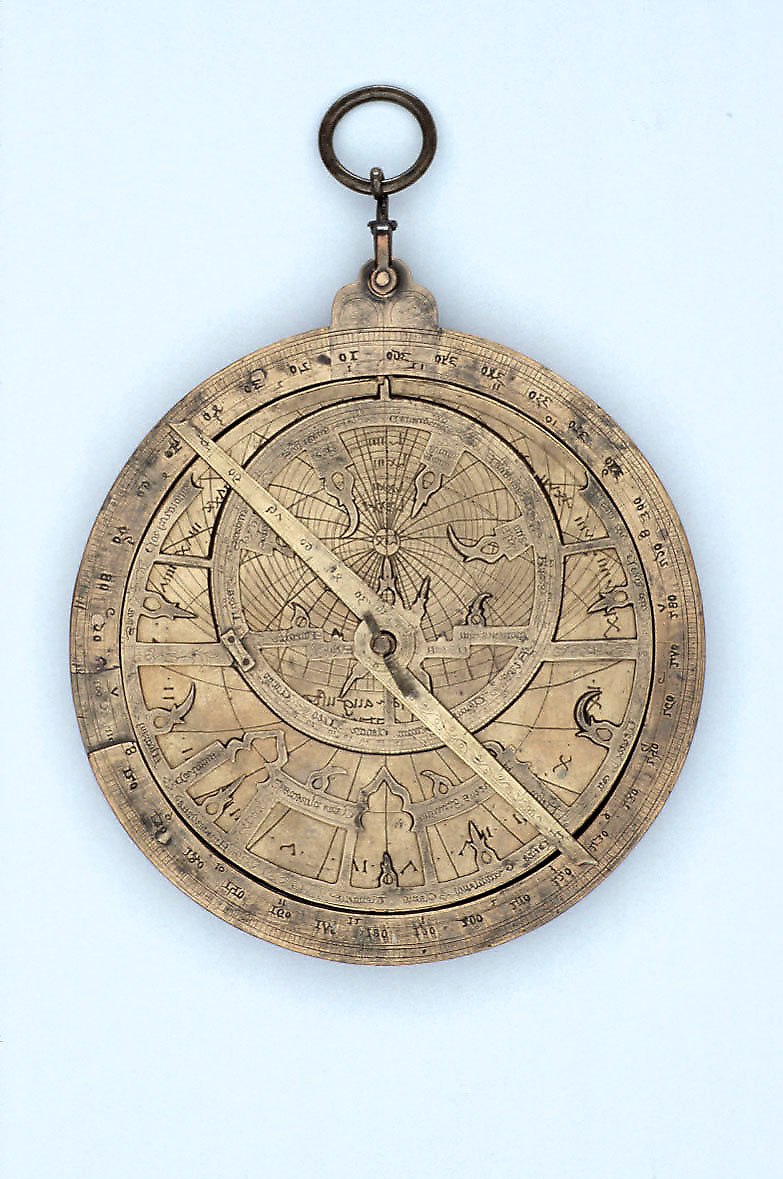
Hispano-Moorish Astrolabe
circa 1260
This unsigned brass planispheric astrolabe measures 145 mm in diameter. The mater is constructed from three riveted layers, with the central layer cast integrally with a three-lobed throne featuring simple decoration. Suspension is facilitated by a ring, shackle, and swivel. The limb displays scales for hours and de…
Partial type record
The Metropolitan Museum of Art, New York
horological instruments
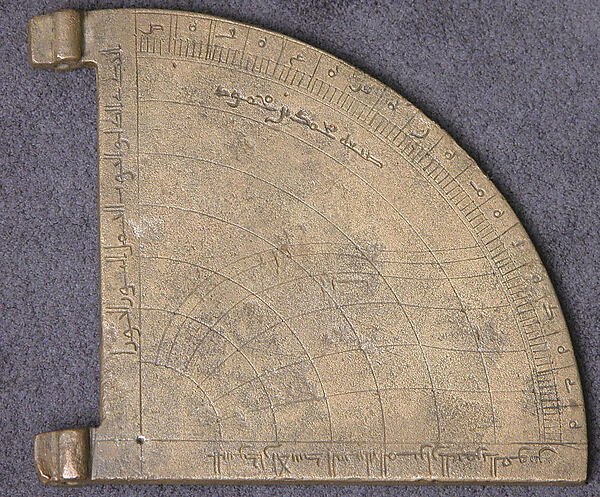
Horary Quadrant
10th century
The horary quadrant is a brass instrument, crafted via casting and incising, attributed to the maker Muhammad ibn Mahmud. Dating to the 10th century, the object measures 7.3 cm in height and 7.0 cm in width. The quadrant is a timekeeping device used to determine the hour of the day based on the sun's position. The o…
Partial type record
Istituto e Museo di Storia della Scienza, Firenze
horological instruments
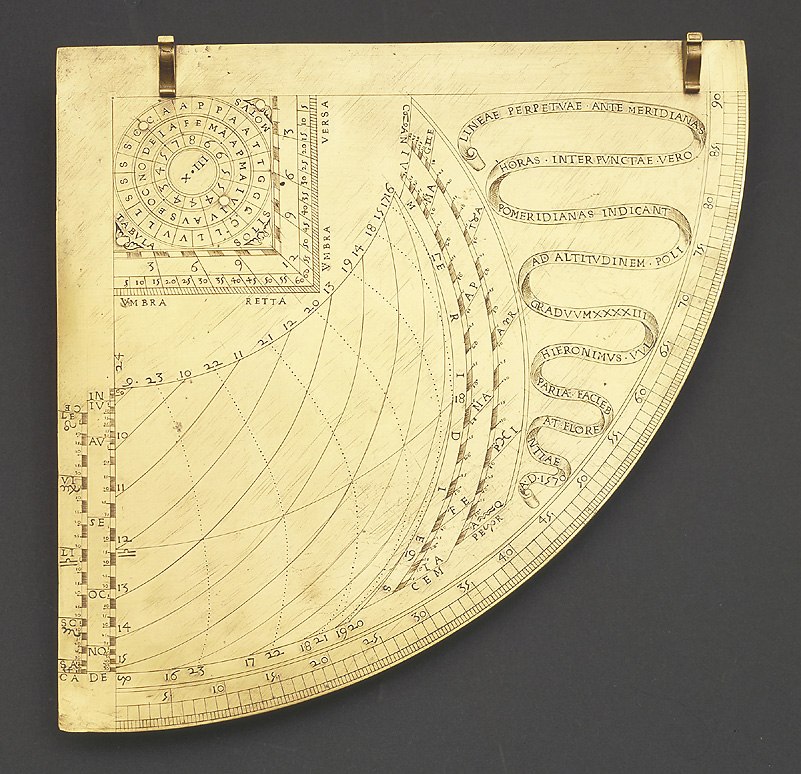
Horary Quadrant by Giovanni Battista Giusti
1565
This brass horary quadrant, measuring 203 mm in radius, was produced by Giovanni Battista Giusti in 1565. The instrument is a specialized tool used for measuring height and time, specifically calibrated for the latitude of Florence at 43° 40'. The face features a complex layout including a 90-degree scale on the lim…
Partial type record
Istituto e Museo di Storia della Scienza, Firenze
horological instruments
Horary Quadrant by Girolamo della Volpaia
1570
This brass horary quadrant, measuring 310 mm in radius, was produced by Girolamo della Volpaia in Florence in 1570. The instrument features a limb calibrated to 90 degrees, an Italian hours dial showing hours 9 to 24, a zodiacal calendar, and a shadow square incorporating a circular 'Tabula Solis motus'. On the back…
Partial type record
Museum of the History of Science, Oxford
horological instruments
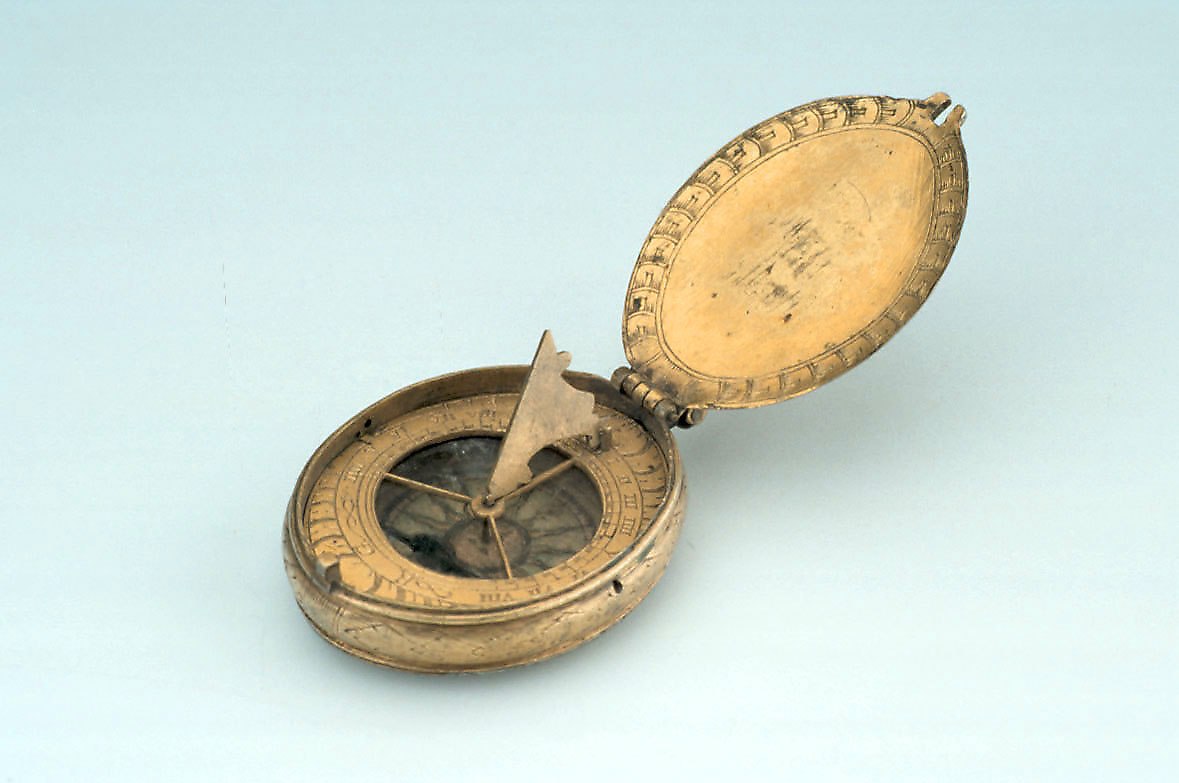
Horizontal Dial
circa 1600
This circa 1600 horizontal dial is a portable German instrument constructed from gilt brass. Measuring 37 mm in diameter when closed, the object takes the form of an oval box equipped with a hinged lid. The exterior surfaces of the cover feature engravings of mythological figures, while the case edges display geomet…
Partial type record
Istituto e Museo di Storia della Scienza, Firenze
horological instruments
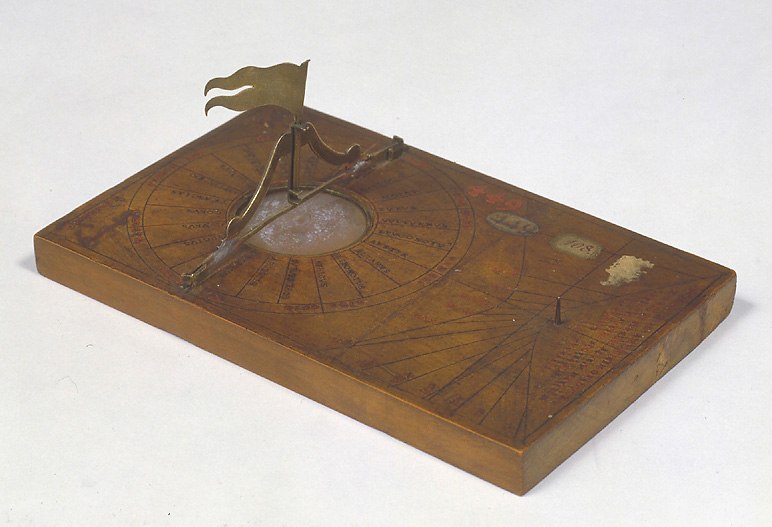
Horizontal Dial by Camillo della Volpaia
1542
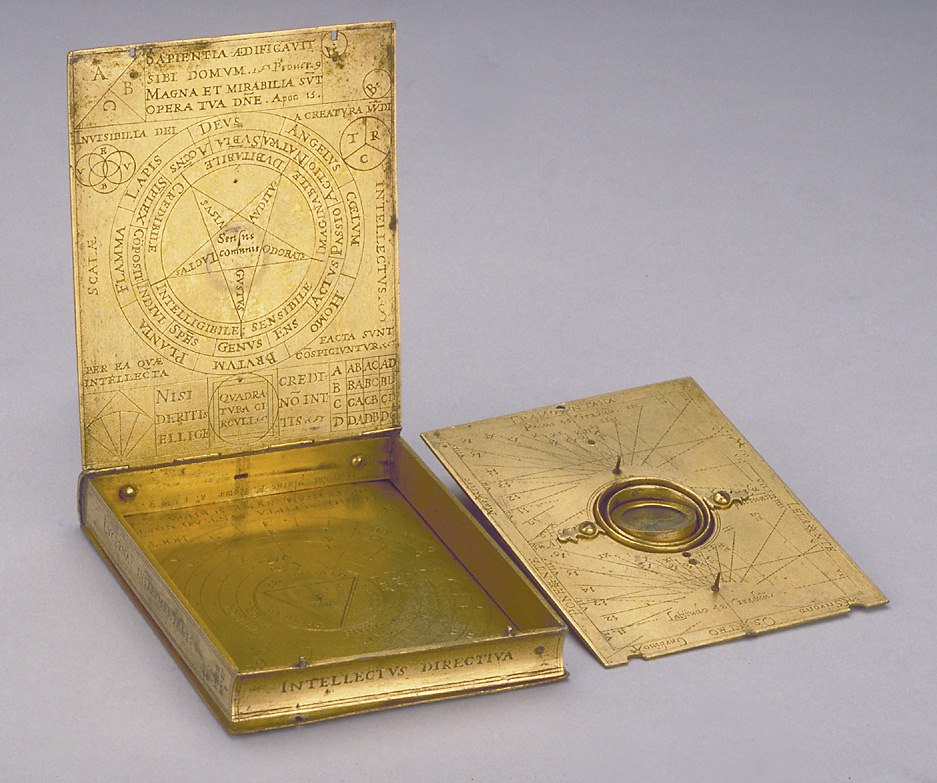
This horizontal dial, crafted from boxwood and measuring 152 x 94 mm, is a scientific instrument produced in 1542. It is signed by Camillo della Volpaia, who continued the instrument-making activities of his father, Lorenzo della Volpaia. The instrument is designed for the latitude of Florence, approximately 43° 44'…
Partial type record
© British Museum, London
horological instruments
Horizontal Dial by Carlo Plato
1593
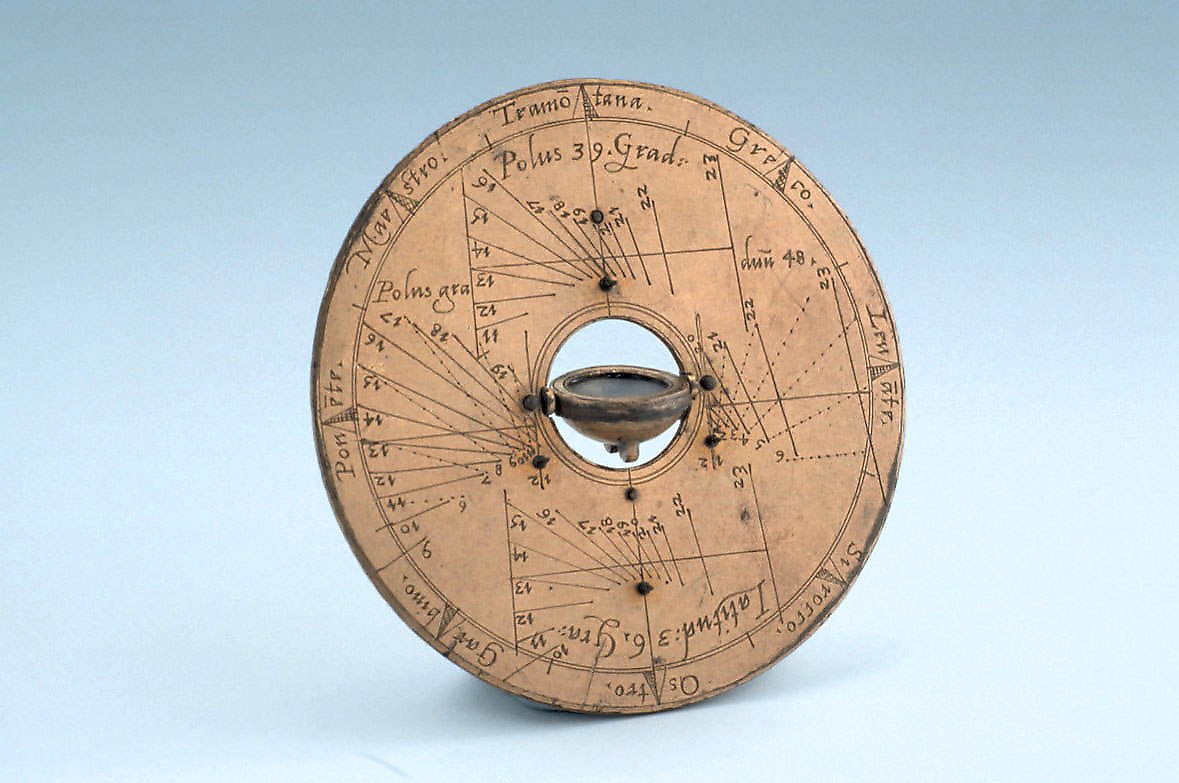
This horizontal dial is constructed in the form of a hinged, book-shaped box manufactured from gilt brass. Signed by Carlo Plato and dated 1593, it measures 87 by 113 by 16 mm. A central, gimbal-mounted compass is incorporated within the interior plate to ensure horizontal alignment. The exterior and interior surfac…
Partial type record
Museum of the History of Science, Oxford
horological instruments
Horizontal Dial by Carlo Plato, 1588
1588
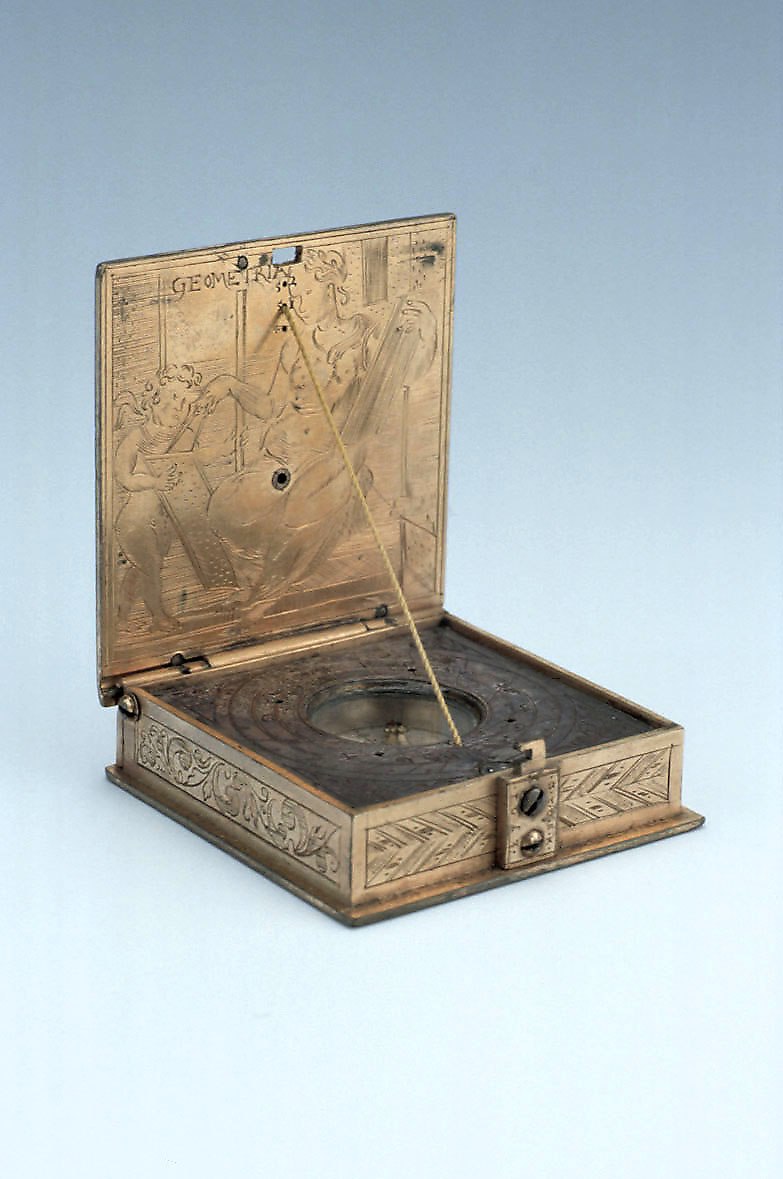
This horizontal dial is a circular brass instrument, 75 mm in diameter, attributed to the maker Carlo Plato of Rome and dated 1588. The device features a central aperture for a pivoted compass, though the magnetic needle is currently missing. The instrument is designed for use on either side of the brass plate. One…
Partial type record
Museum of the History of Science, Oxford
horological instruments
Horizontal Dial by Christoph Trechsler
1613
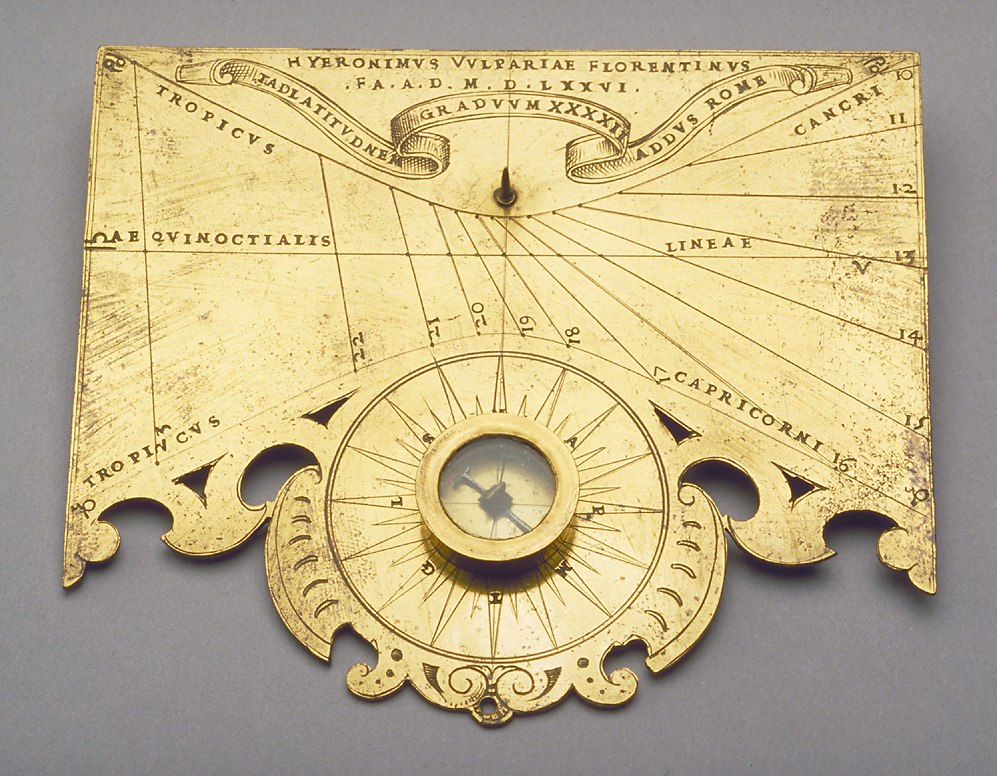
This 1613 gilt brass horizontal dial was made in Dresden by Christoph Trechsler. Measuring 15 x 58 x 61 mm, the object functions as a portable timekeeping device adjustable for three specific latitudes. The exterior lid features a pierced lunar volvelle with an aspectarium, surrounded by names of the twelve principa…
Partial type record
British Museum, London
horological instruments
Horizontal Dial by Girolamo della Volpaia
1576
This horizontal sundial, crafted from gilt brass, measures 125 x 110 mm and is signed by the Florentine instrument maker Girolamo della Volpaia. The instrument is dated 1576 and features a pin gnomon mounted on a flat, engraved brass plate. The plate consists of three straight edges and one decoratively shaped edge…
Partial type record
British Museum, London
horological instruments
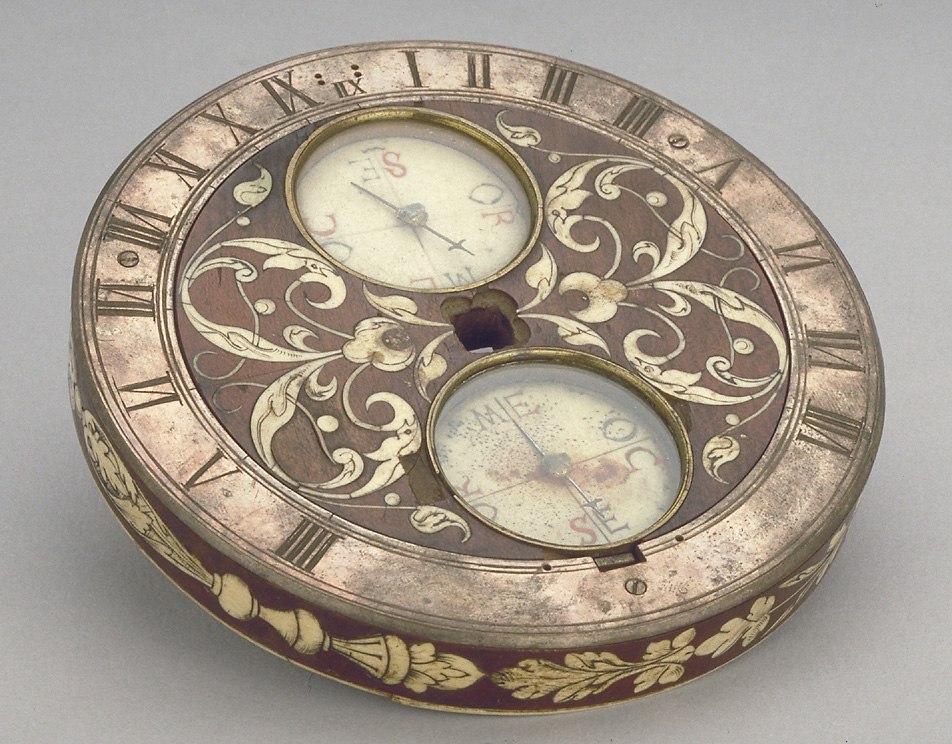
Horizontal Dial by Hans Graf
1563
This 1563 horizontal dial, attributed to maker Hans Graf of Gundhalbing, is a circular block of wood measuring 140 mm in diameter. It is constructed from wood with decorative ivory insets and features an applied silver ring engraved with hours ranging from IIII to XII to VIII. The XII numeral is smaller in scale tha…
Partial type record
Museum of the History of Science, Oxford
horological instruments
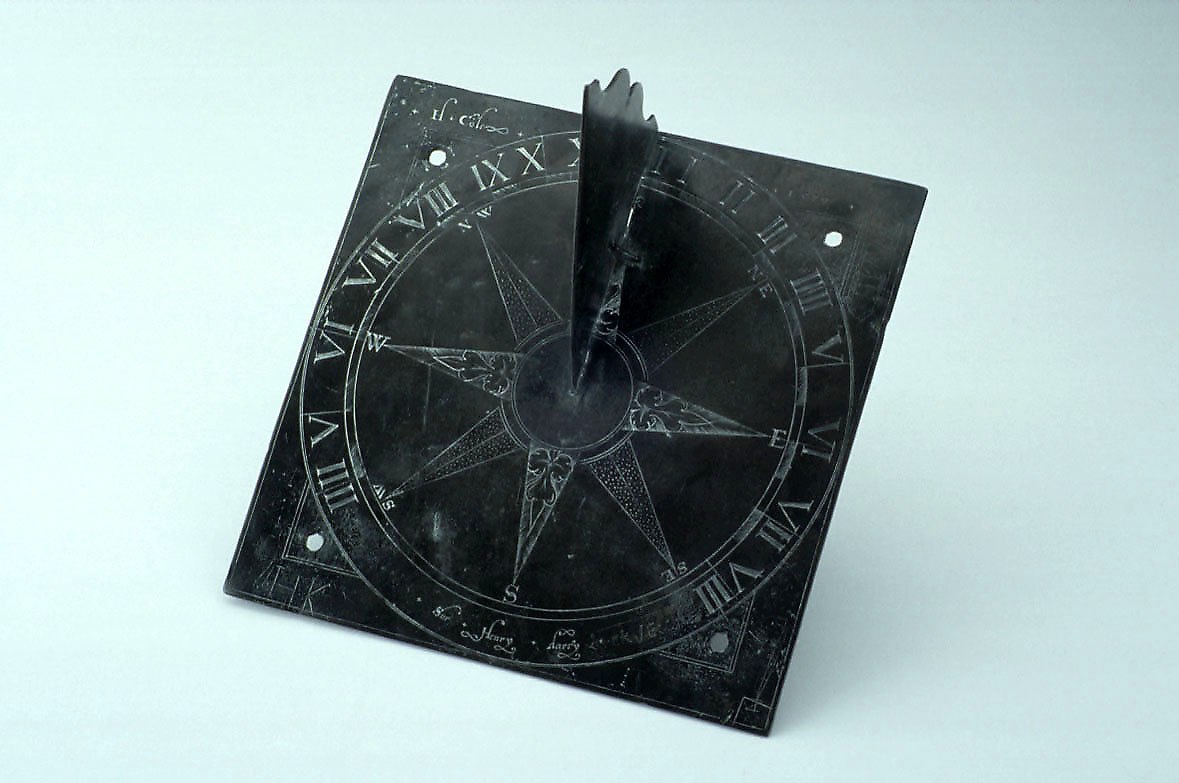
Horizontal Dial by Humfrey Cole
1579
This brass horizontal dial, measuring 180 mm by 180 mm, was crafted by Humfrey Cole in 1579. Designed for outdoor use, the square brass plate features four mounting holes for attachment to a pedestal, suggesting an original setting within a garden environment. The instrument face includes an hour ring calibrated fro…
Partial type record
British Museum, London
horological instruments
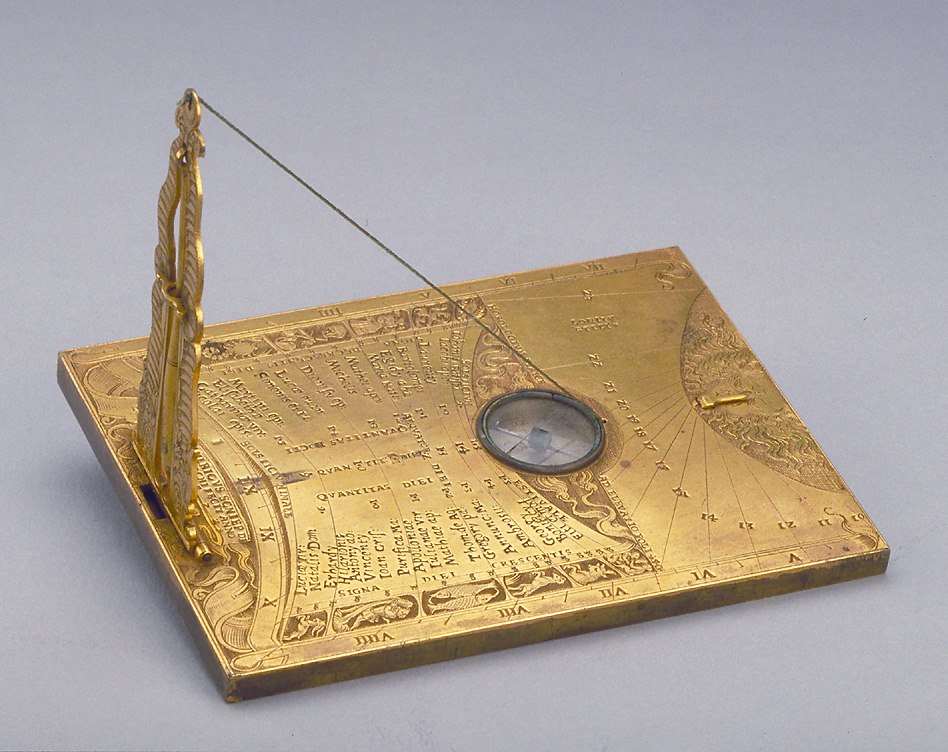
Horizontal Dial by Ulrich Schniep
1572
This horizontal dial, crafted from gilt brass, was made by Ulrich Schniep in Munich in 1572. Measuring 108 x 145 x 8 mm, the instrument features a central compass with cardinal points and magnetic deviation markings. It incorporates a pin gnomon dial designed for a 45-degree latitude, featuring Italian hours and a s…
Partial type record
Museum of the History of Science, Oxford
horological instruments
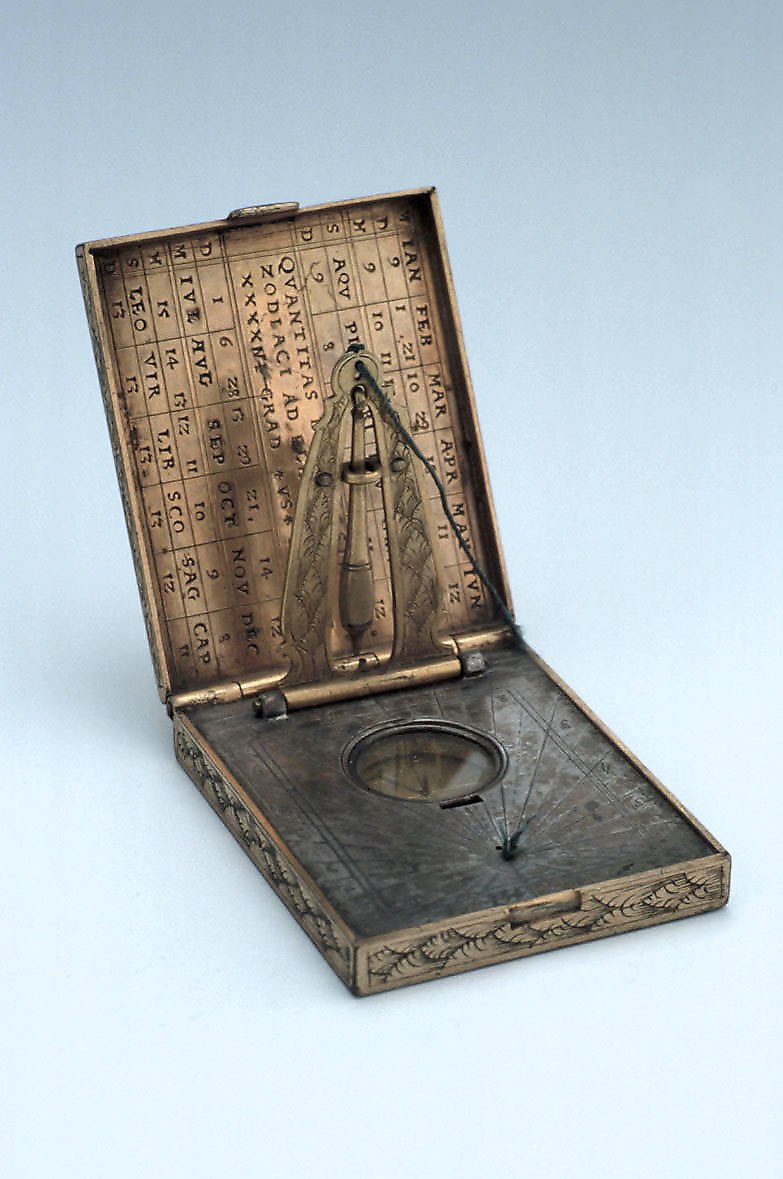
Horizontal Dial by Ulrich Schniep, 1572
1572
This horizontal dial, crafted in 1572 by Ulrich Schniep in Munich, is constructed from gilt brass and silver, measuring 59 x 46 x 10 mm. The instrument consists of a recessed cover leaf hinged to a main box with a suspension ring. The exterior features oak-leaf engraving on the sides and strapwork with foliate patte…
Partial type record
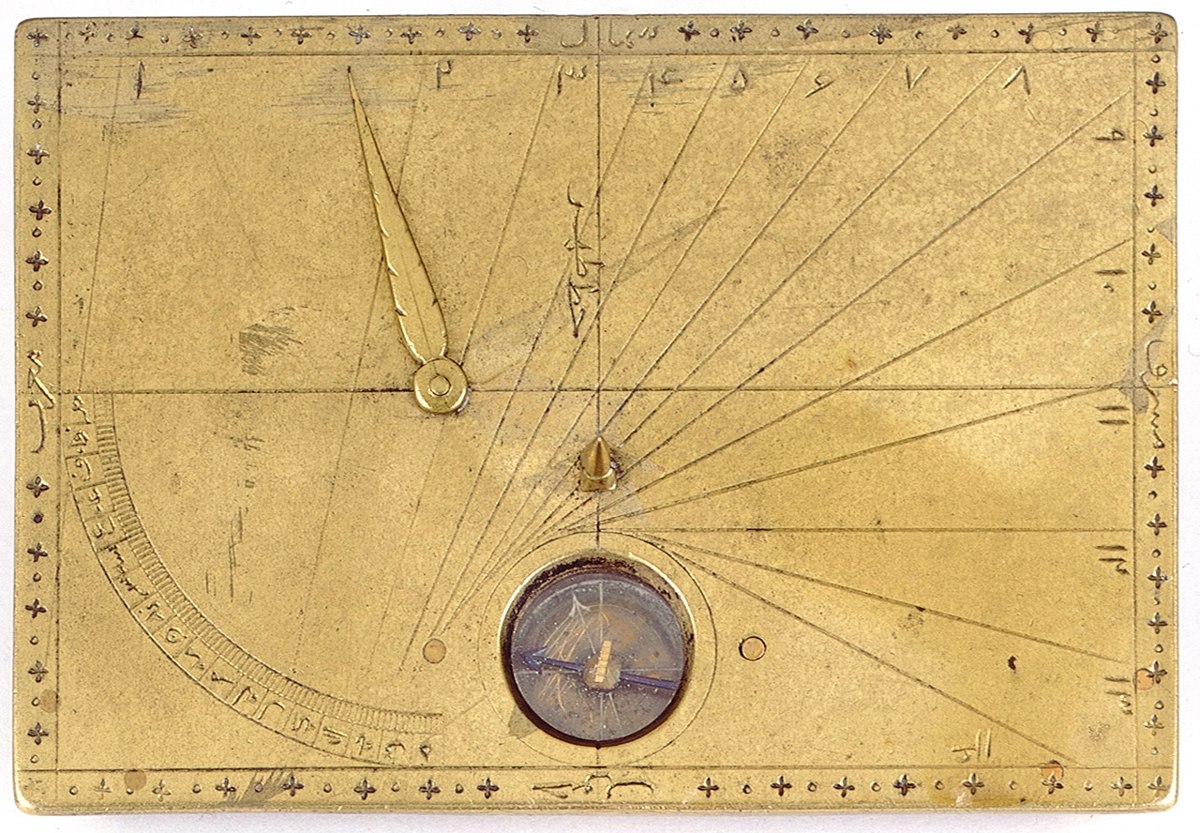
National Maritime Museum, Greenwich, London, Caird Collection
horological instruments
Horizontal dial for latitude 32° North
17th century
Catalogued under ID AST0499 in the National Maritime Museum, Greenwich, this 17th-century horizontal dial is constructed from a rectangular brass plate measuring 9 by 57 by 82 mm. Designed for latitude 32° North, the obverse surface is engraved with hour lines for Babylonian hours numbered in Indo-Arabic numerals, a…
Partial type record
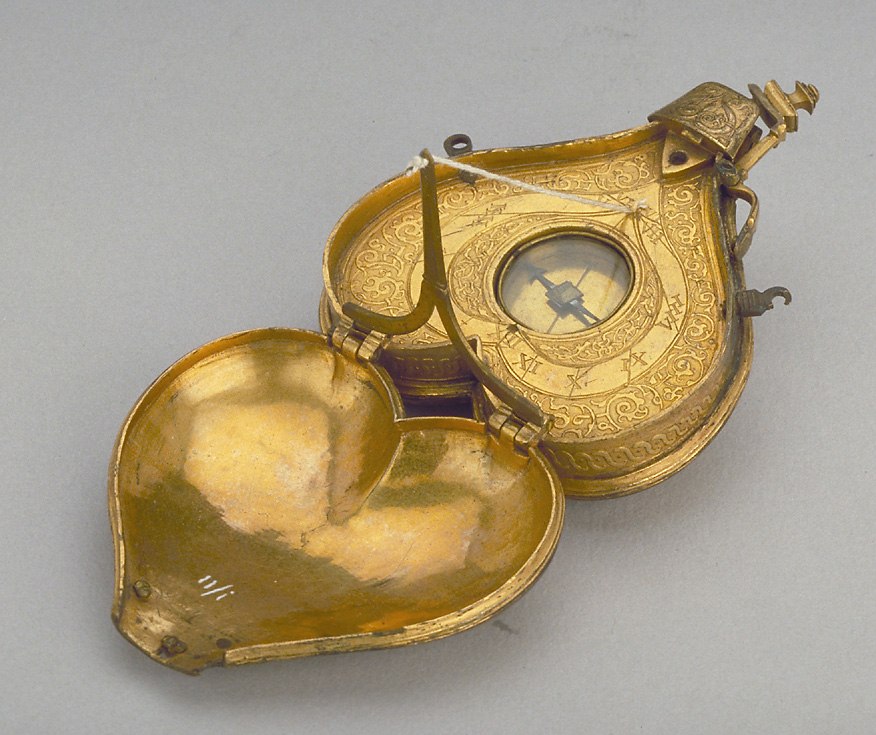
British Museum, London
horological instruments
Horizontal Dial in a Powder Flask
circa 1560
This horizontal dial, attributed to the maker Christoph Schissler, dates to approximately 1560 and originated in Augsburg. Constructed from brass, the device measures 71 x 35 x 90 mm and is fashioned in the form of a three-dimensional heart, simultaneously functioning as a powder flask. The exterior surfaces are ado…
Partial type record
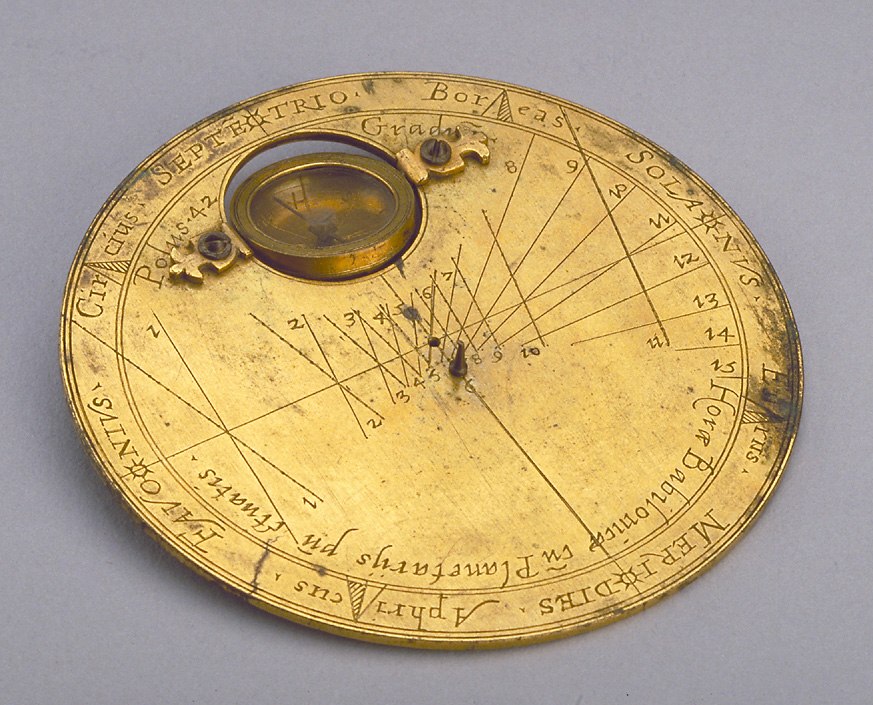
British Museum, London
horological instruments
Horizontal Dial, 1585
1585
This horizontal dial, made of gilt brass and measuring 90 mm in diameter, is attributed to the Roman maker Carlo Plato and dated 1585. The instrument is constructed as a circular disc featuring a pivoted compass designed for use on both sides. One side of the disc is engraved with the names of cardinal points and wi…
Partial type record
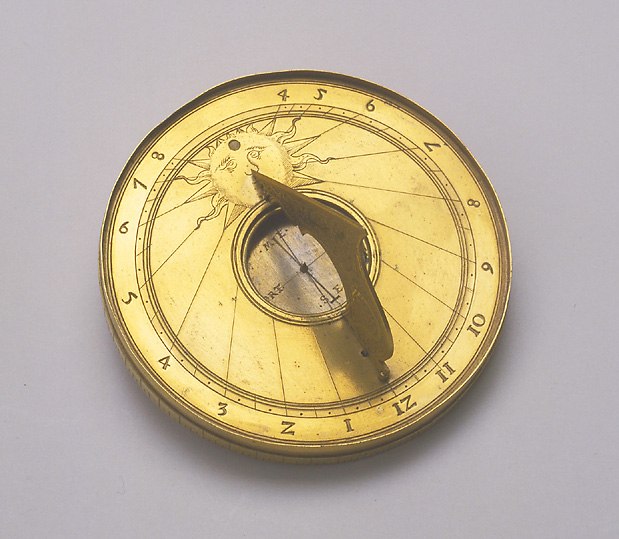
Istituto e Museo di Storia della Scienza, Firenze
horological instruments
Horizontal Dial, 16th century
16th century
This horizontal sundial is crafted from gilt brass and measures 85 mm in diameter. It is an unsigned instrument from the 16th century, characterized by a circular box containing a central magnetic compass used for orientation towards the North. The dial surface is engraved with hour lines ranging from 4 to 12 to 8,…
Partial type record
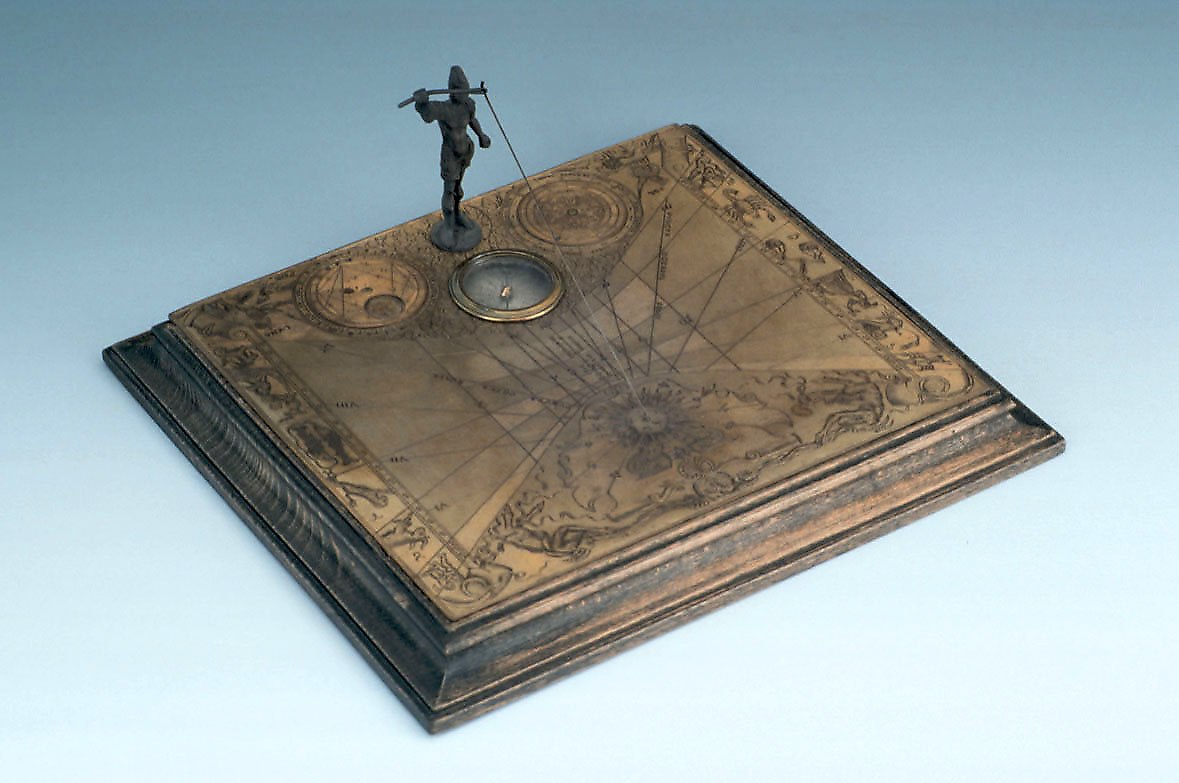
Museum of the History of Science, Oxford
horological instruments
Horizontal Dial, 16th century (3cec3e)
16th century
This 16th-century German horizontal sundial is crafted from gilt copper and silver and measures 213 by 185 mm. The instrument functions as a string-gnomon dial featuring dual sets of hour lines and solar declination markers accompanied by a zodiacal scale. It is distinguished by a silver figure, interpreted as a Rom…
Partial type record
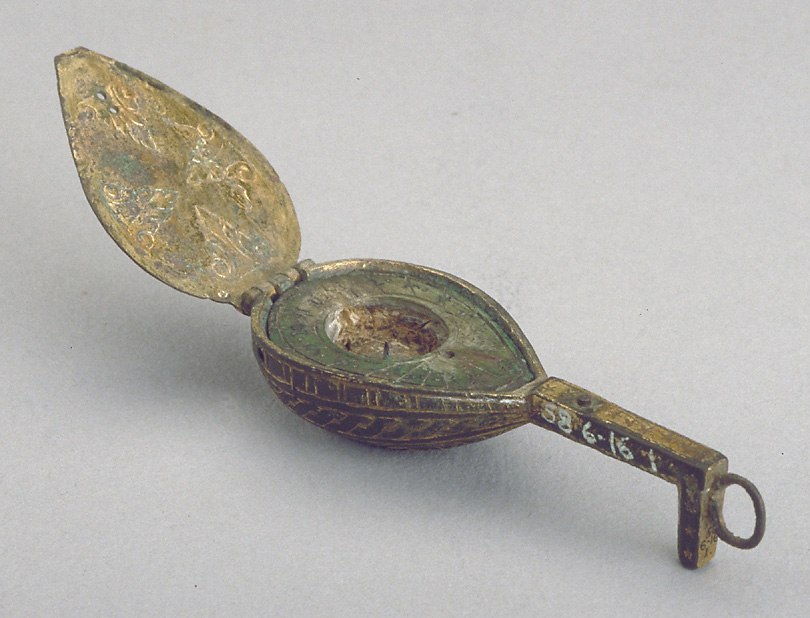
British Museum, London
horological instruments
Horizontal Dial, circa 1600 ?
circa 1600 ?
This horizontal sundial is shaped like a small lute, measuring 64 x 26 x 15 mm. Constructed from ivory and brass, the instrument features a hinged lid and a suspension ring at the top of the neck, suggesting its function as a piece of jewellery rather than a practical timekeeper. The interior of the lute body contai…
Partial type record
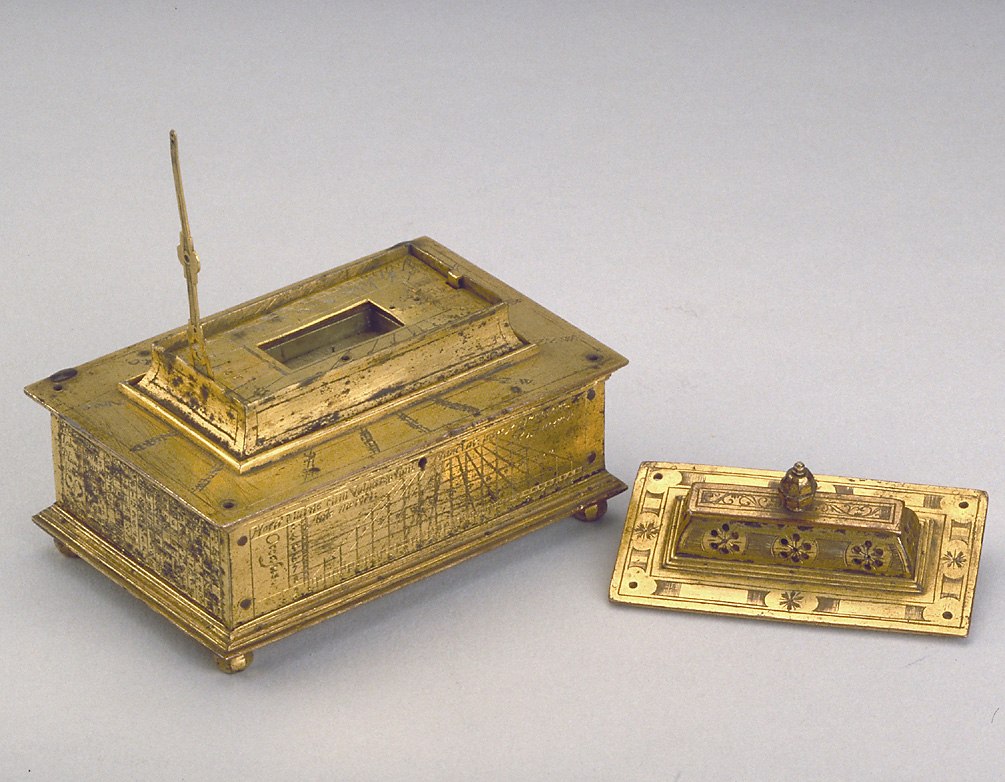
British Museum, London
horological instruments
Horizontal Dial, Late 16th century ?
Late 16th century ?
This unsigned horizontal dial, attributed to the late 16th century, is constructed of gilt copper and measures 110 x 72 x 85 mm. The object is designed in the shape of a casket with a hinged lid, supported by four bun feet. The main body of the instrument features various engraved tables and dials on its sides, incl…
Partial type record
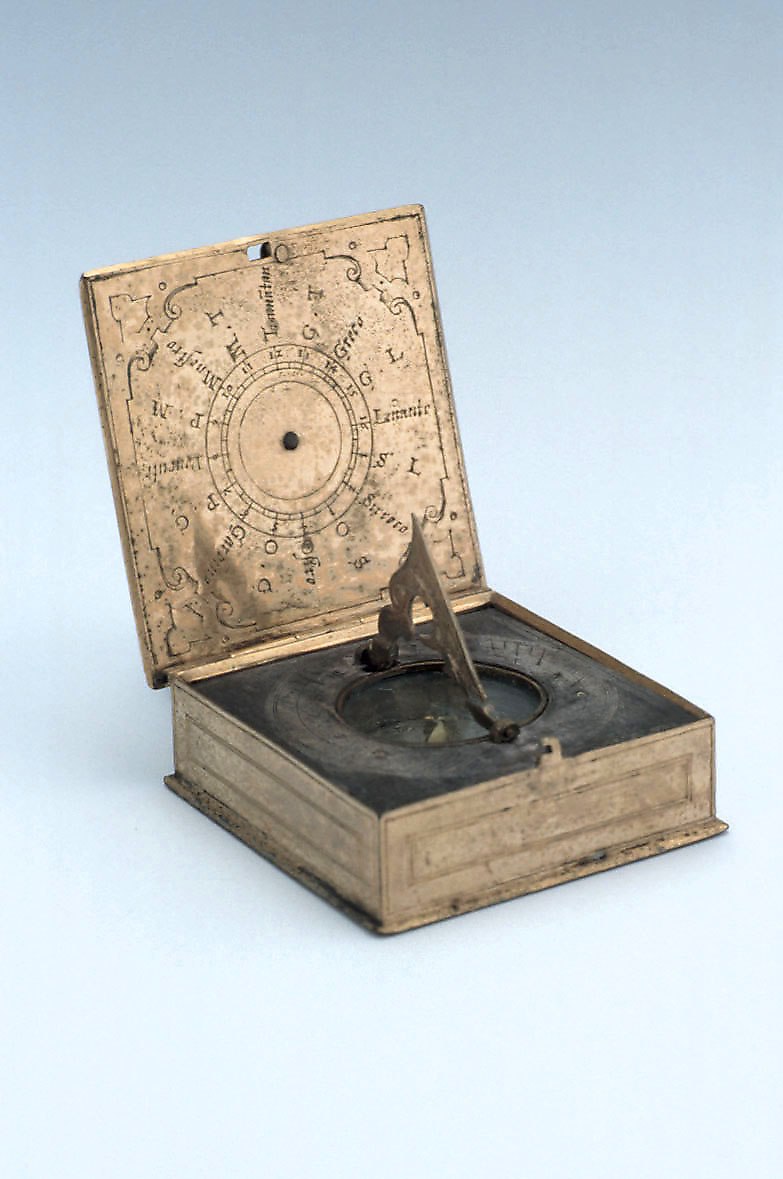
Museum of the History of Science, Oxford
horological instruments
Horizontal Dial, Later 16th century
Later 16th century
This horizontal dial is a compact instrument constructed of gilt and silvered brass, measuring 47 x 46 x 15 mm. The device features a square-section box with a hinged cover leaf secured by a clasp. The instrument is unsigned and undated. Its primary functions include timekeeping via a silvered horizontal dial plate…
Partial type record
Museum of the History of Science, Oxford
horological instruments
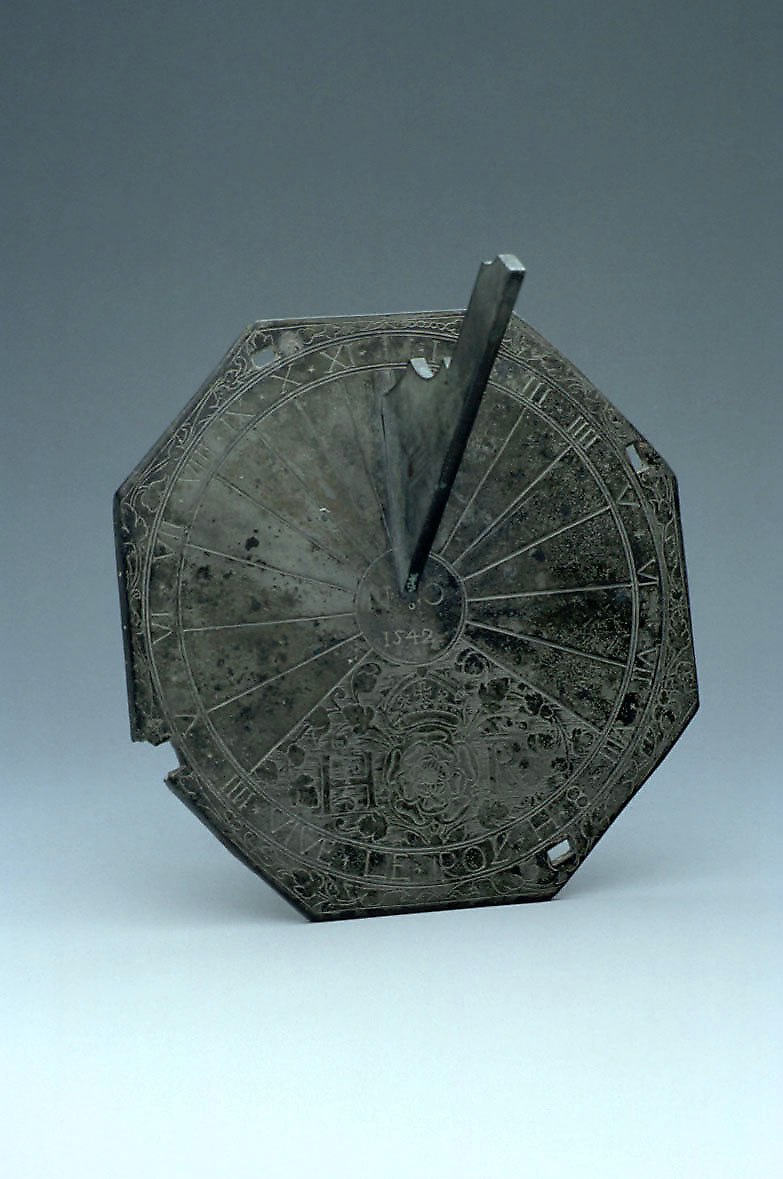
Horizontal Garden Sundial
1542
This horizontal garden sundial is constructed of brass and measures approximately 224 mm in diameter. It is recognized as the earliest known signed and dated English dial. The object features an octagonal plate with four rectangular holes intended for mounting on a garden pedestal. The central roundel contains the s…
Partial type record
Museum of the History of Science, Oxford
horological instruments
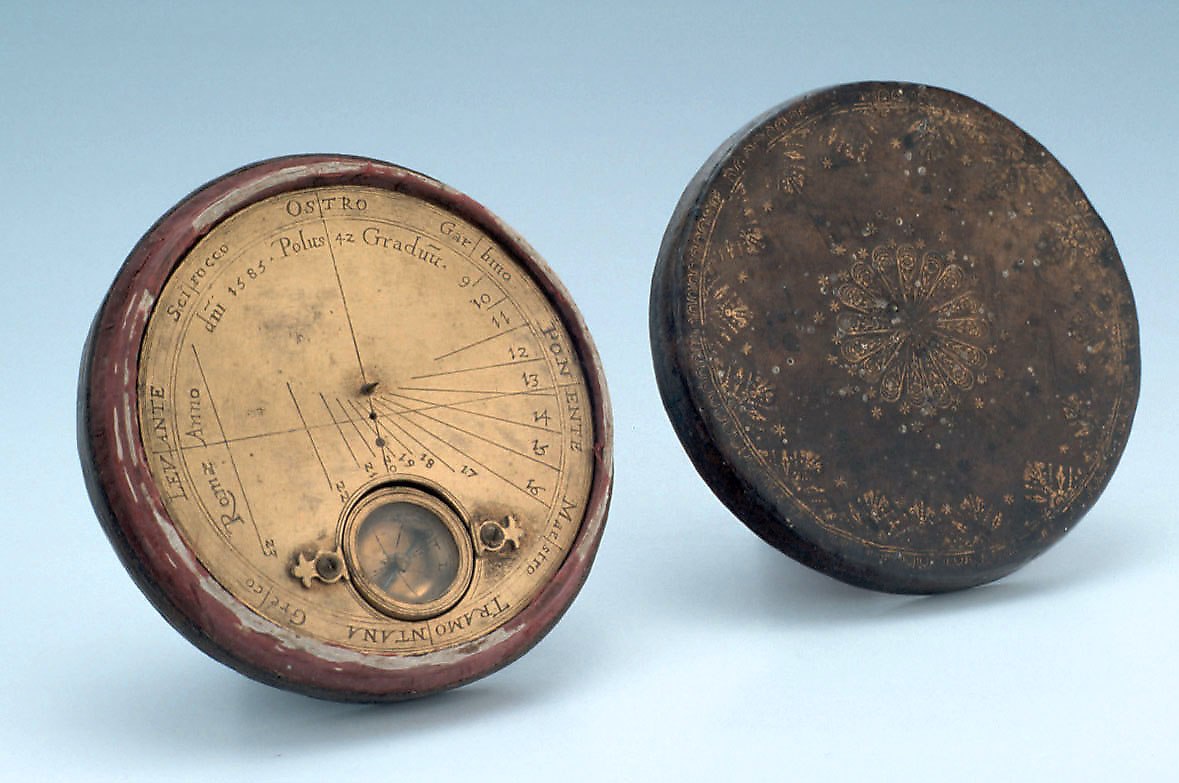
Horizontal Pin Gnomon Dial by Carlo Plato
1585
This circular horizontal pin gnomon dial is crafted from brass and measures 89 mm in diameter. It is housed within a pasteboard case, finished with gold-tooled leather and lined with silk. The dial features a central, pivoted compass designed for use on both sides of the disc. One side is engraved with wind names in…
Partial type record
Museum of the History of Science, Oxford
horological instruments
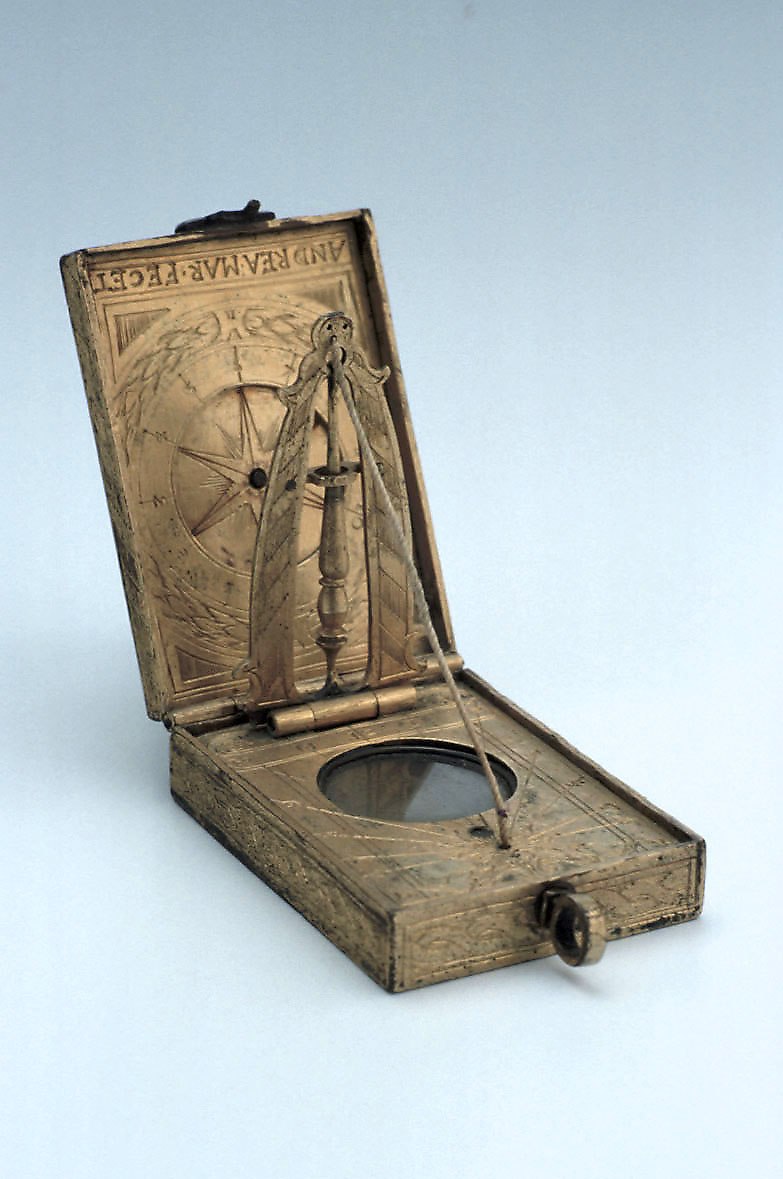
Horizontal string gnomon sundial by Andreas Mar
1589
This portable horizontal sundial, crafted from gilt copper, measures 51 x 34 x 13 mm. Signed 'ANDREA . MAR . FECET' by the maker, it dates to 1589. The instrument comprises a rectangular box featuring a hinged lid, a suspension ring, and a broken clasp. The primary timekeeping component is a horizontal string-gnomon…
Partial type record
Museum of the History of Science, Oxford
horological instruments
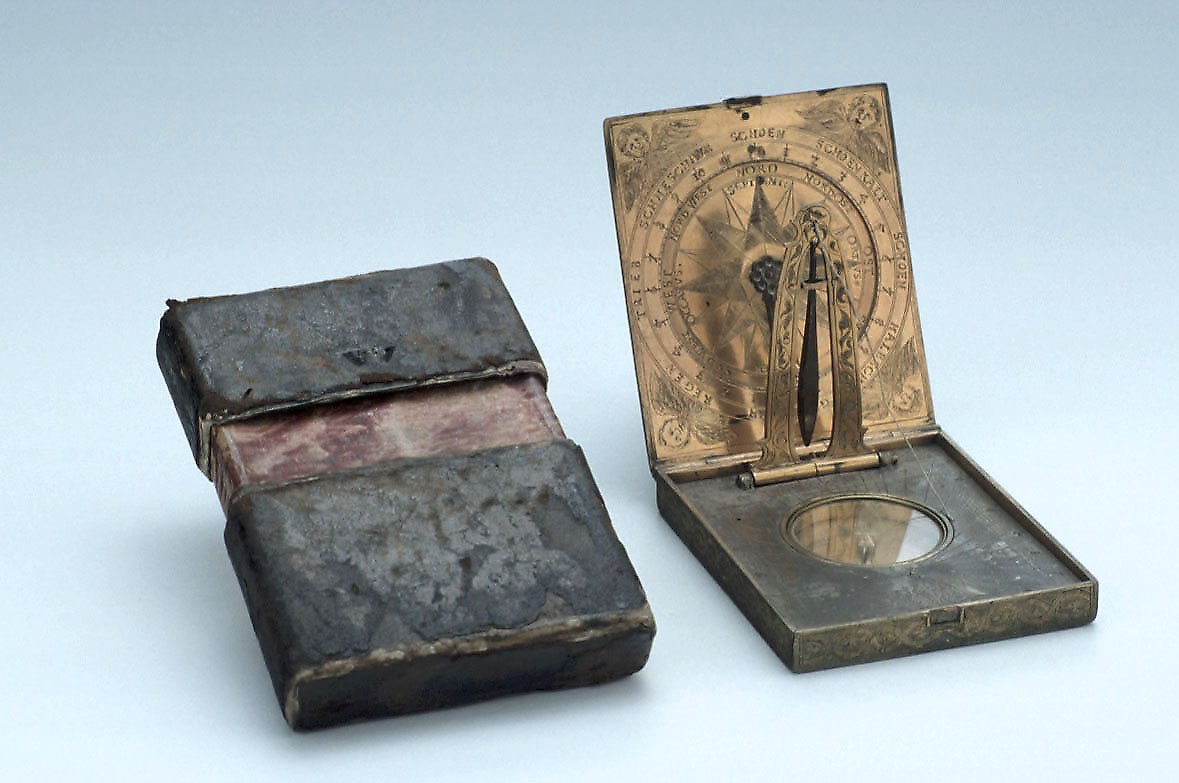
Horizontal string-gnomon dial by Ulrich Schniep
1568
This horizontal sundial, crafted in Munich in 1568, is signed with the initials 'VS' by the maker Ulrich Schniep. Constructed from gilt and silvered brass, the instrument measures 75 x 63 x 11 mm and comprises a hinged, lidded box containing a horizontal string-gnomon dial. The dial plate features a scale of hours f…
Partial type record