Catalogue
Astrolabes, Dials and Instruments
Astrolabes, quadrants, astronomical compendia, portable dials and watchmakers' workshop tools used to find or keep time.
Catalogue entries (445)
Filter by era, country, maker or material289–336 of 445 entries
Museum of the History of Science, Oxford
horological instruments
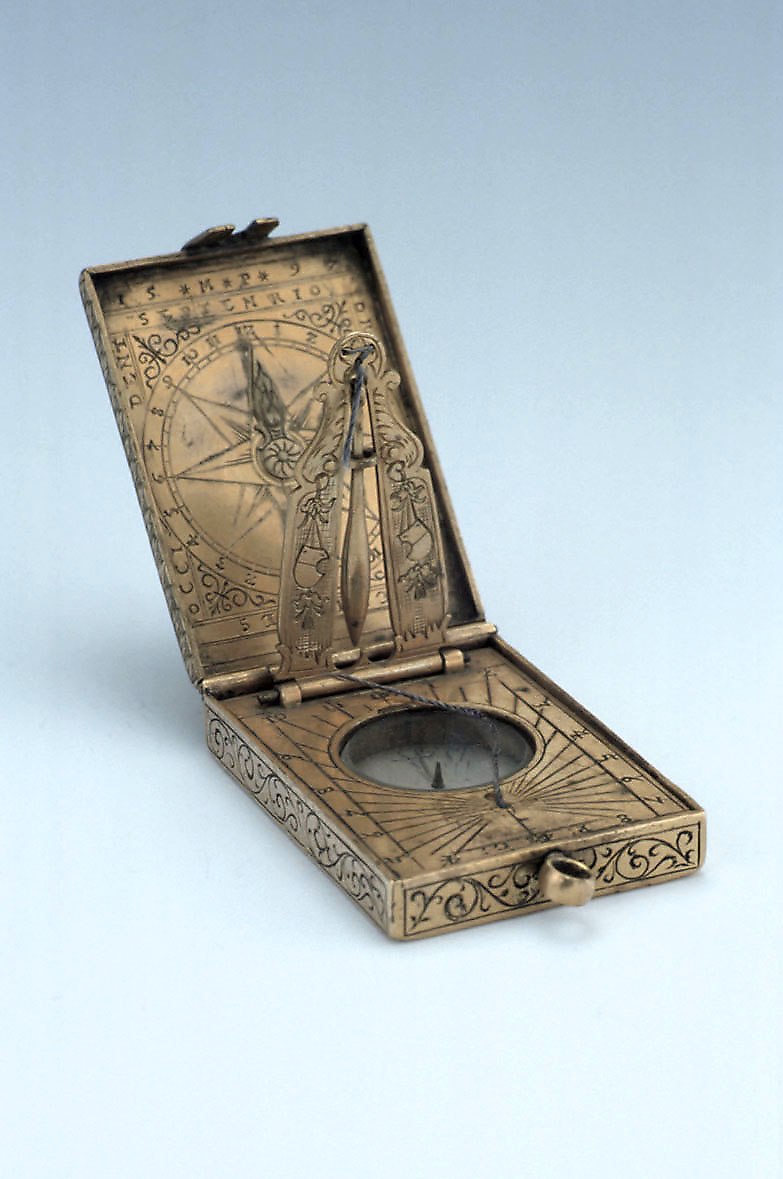
Horizontal string-gnomon sundial by Markus Purmann
1597
This German horizontal sundial, crafted from gilt and silvered brass, measures 54 x 32 x 11 mm. Created by Markus Purmann in 1597, the instrument features a rectangular box with a hinged lid. The lid incorporates a suspension ring that also acts as a locking mechanism. The interior of the lid contains a volvelle wit…
Partial type record
British Museum, London
horological instruments
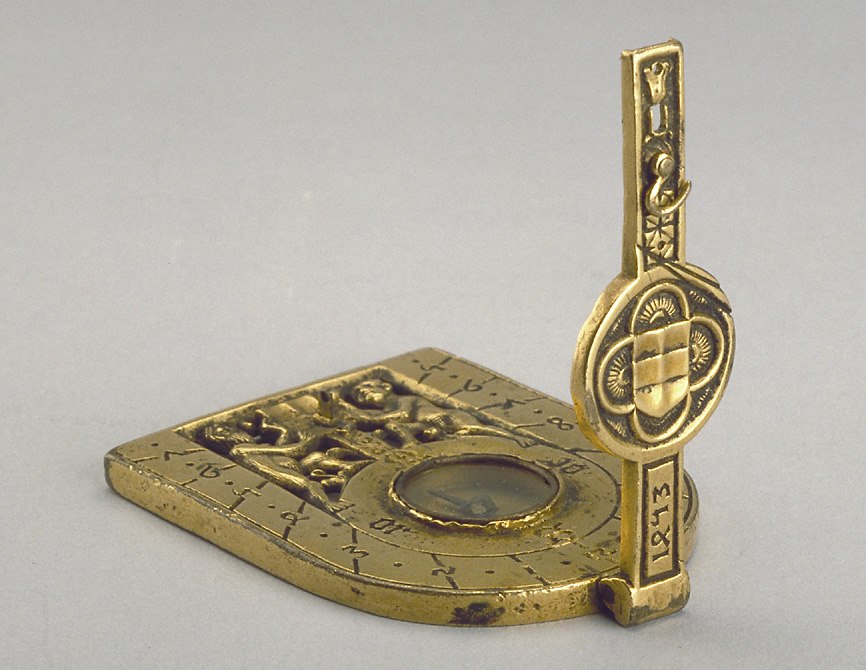
Horizontal Sundial
1453
This is a horizontal string gnomon dial crafted from gilt brass, measuring 59 by 80 by 5 millimeters. The dial plate features a shield-like geometry with engraved hour lines ranging from 4:30 to 12 and back to 7:30, with subdivisions marked by dots. It incorporates a central compass with magnetic deviation indicated…
Partial type record
Museum of the History of Science, Oxford
horological instruments
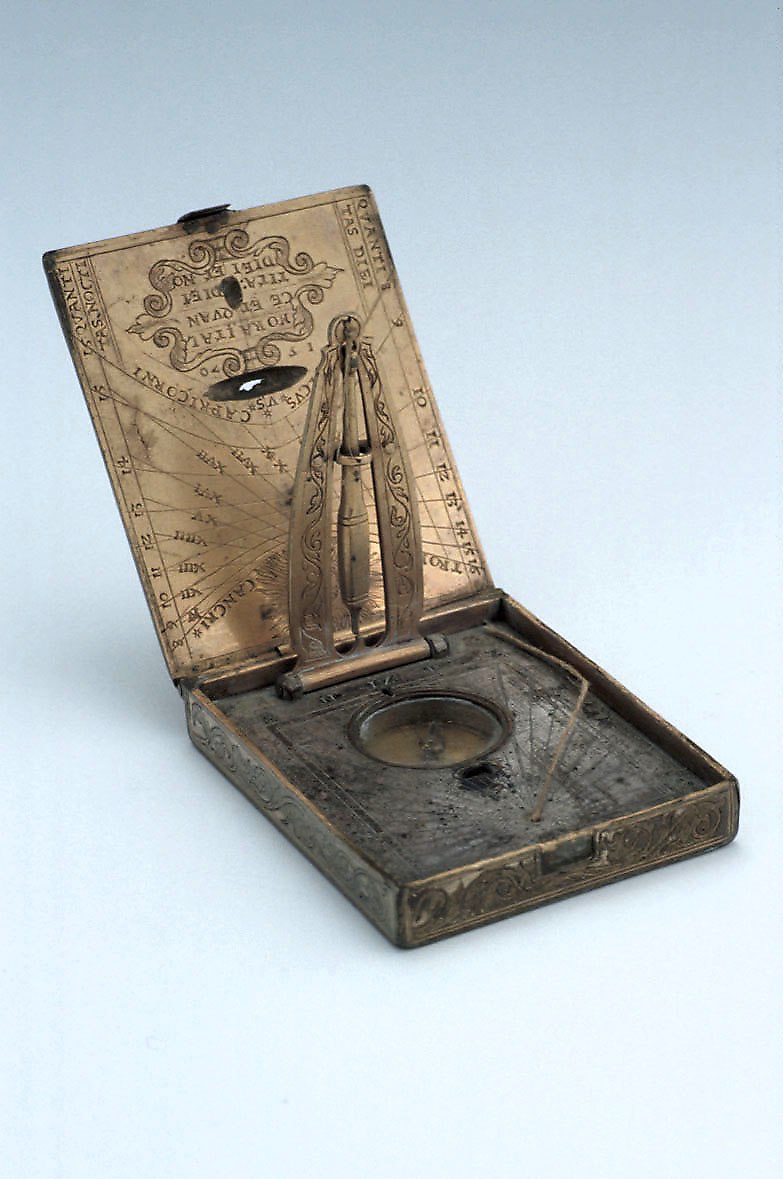
Horizontal Sundial by Ulrich Schniep
1570
This 1570 horizontal sundial is signed by Ulrich Schniep and produced in Munich. Constructed from gilt and silvered brass, it measures 63 x 50 x 11 mm. The instrument takes the form of a box with a friction-clasped lid. The exterior surfaces are finished with engraved decoration, including the god Mercury between co…
Partial type record
Museum of the History of Science, Oxford
horological instruments
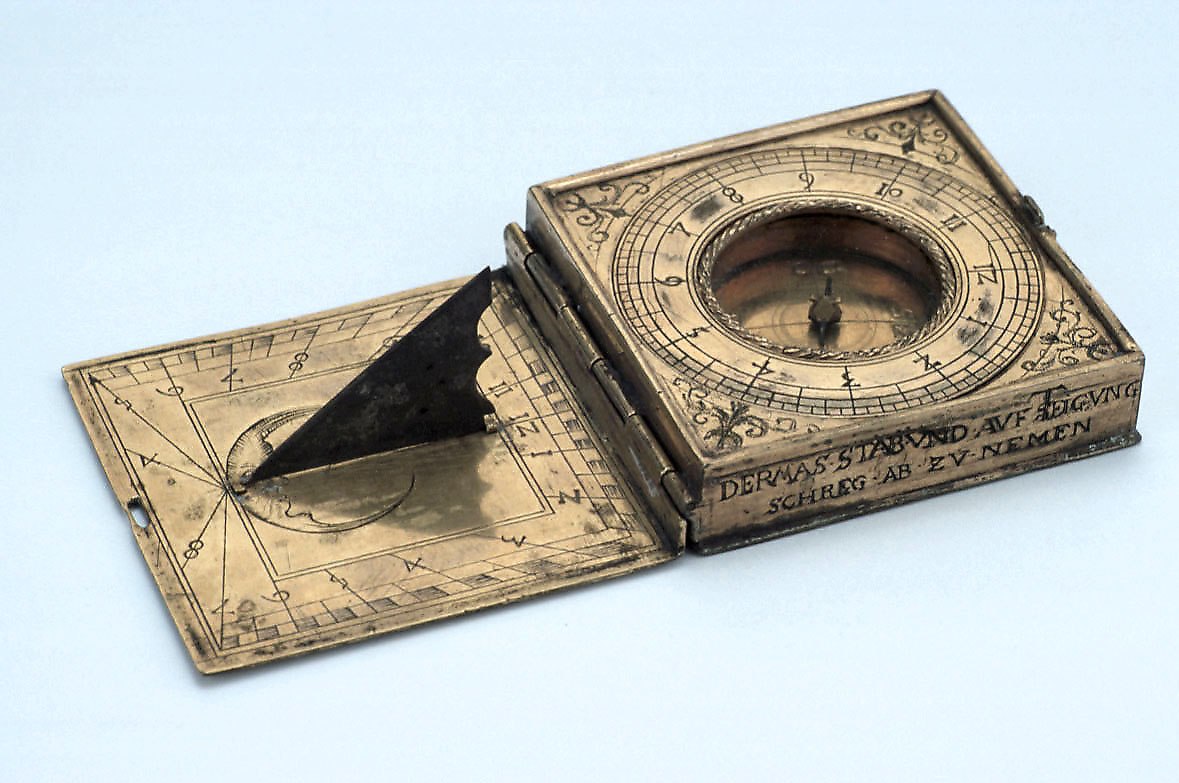
Horizontal Sundial with Compass
Later 16th century
This horizontal dial is a German-made instrument from the later 16th century, constructed of gilt brass and silver and measuring 54 x 54 x 14 mm. Although the maker is unknown, the object features an inscription naming 'IOAN BAPTISTA NAVMAN' within a scroll around a crested coat of arms on the cover. The instrument…
Partial type record
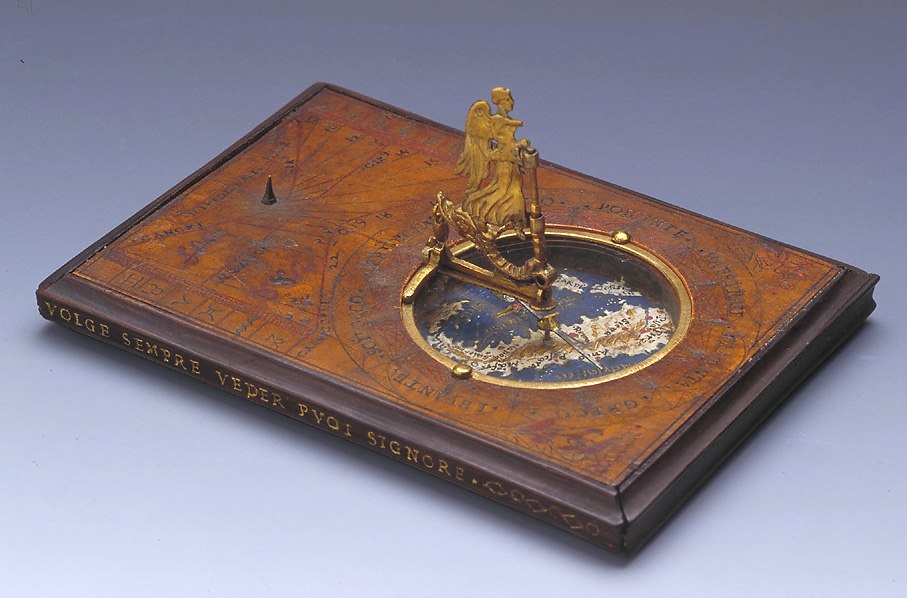
Istituto e Museo di Storia della Scienza, Firenze
horological instruments
Horizontal Sundial, 1542
1542
This 177 x 84 mm rectangular horizontal sundial is crafted from boxwood and housed in an ebony frame. Attributed to the workshop of Camillo della Volpaia, the instrument is dated 1542 and originates from Florence. The dial features a pin-gnomon for Italian hours, marked with tropic lines and zodiac scales. A compass…
Partial type record
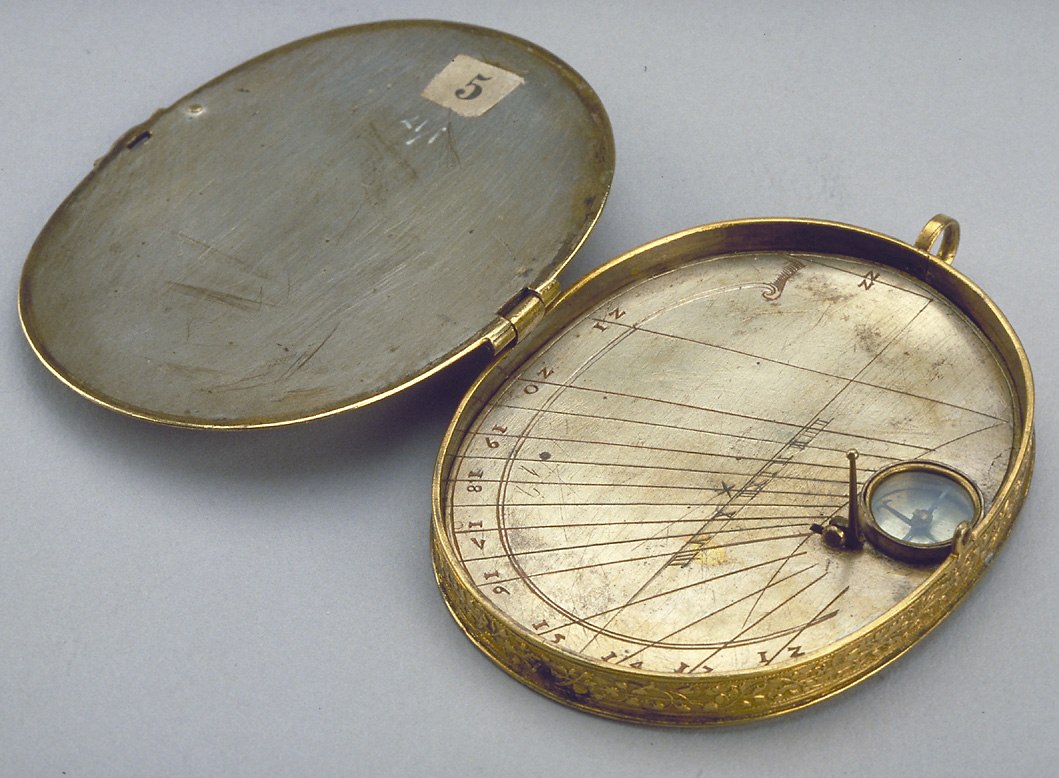
© British Museum, London
horological instruments
Horizontal Sundial, Late 16th century ?
Late 16th century ?
This horizontal dial is an elliptical gilt brass box measuring 72 x 90 x 12 mm. Designed as a portable scientific instrument, it features a suspension ring and a hook closure mechanism. The exterior of the box is decorated with engraving featuring vases, flowers, and foliage, while the interior of the lid remains bl…
Partial type record
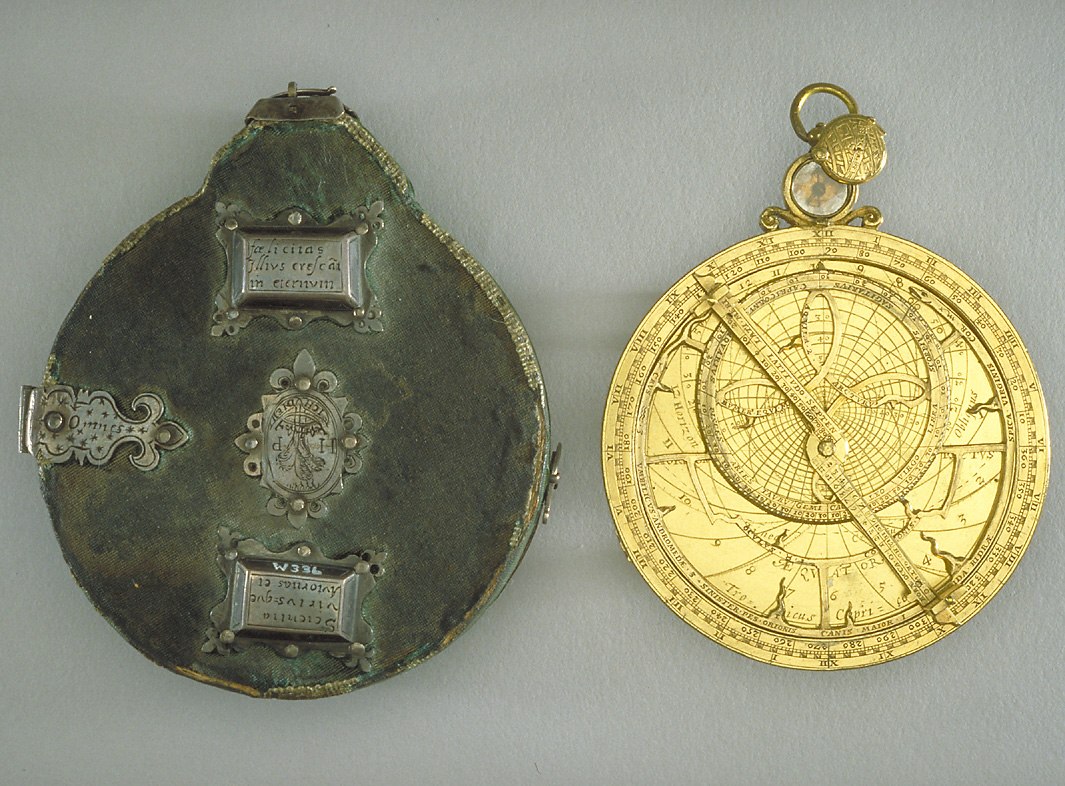
British Museum, London
horological instruments
Humfrey Cole Astrolabe
1574
This gilt brass astrolabe, measuring 88 mm in diameter, is signed by the maker Humfrey Cole and dated 1574. Constructed in London, the instrument features a rete with flame-shaped star pointers and a circle for the tropic of Capricorn terminating in the head and tail of a dragon. The mater is engraved with a Quadrat…
Partial type record
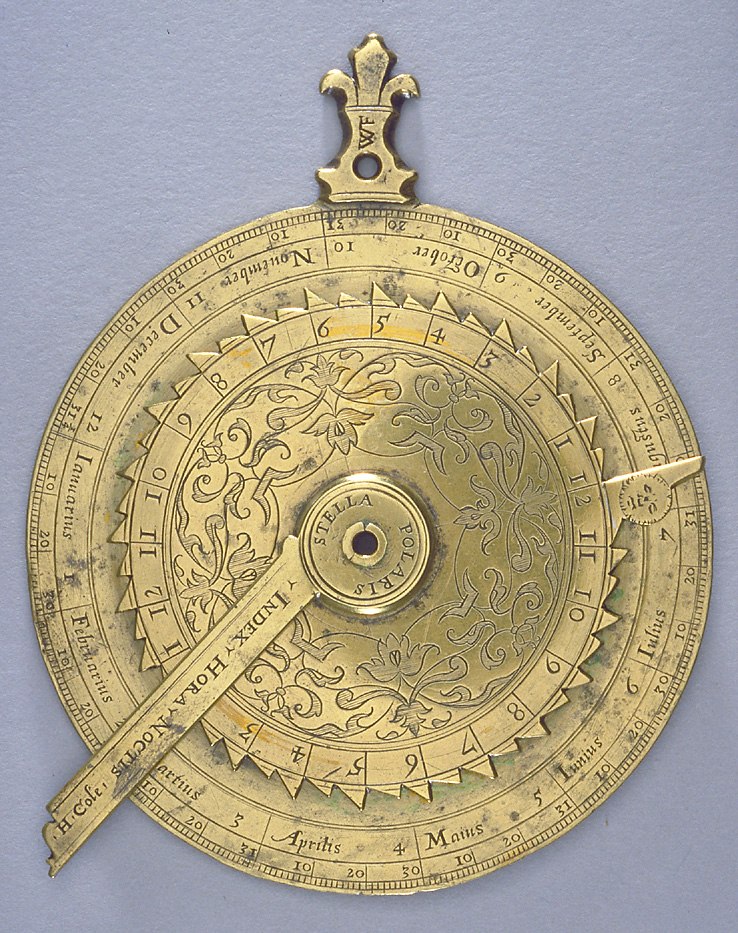
British Museum, London
horological instruments
Humfrey Cole Nocturnal
circa 1575
This gilt brass nocturnal, measuring 95 mm in diameter, is the work of Humfrey Cole and dates to circa 1575. The instrument serves as both a nocturnal and a tide-prediction tool, featuring a circular disc with complex volvelles and indices on both sides. The front incorporates a calendrical scale and an hour-scaled…
Partial type record
National Maritime Museum, Greenwich, London, Caird Collection
horological instruments
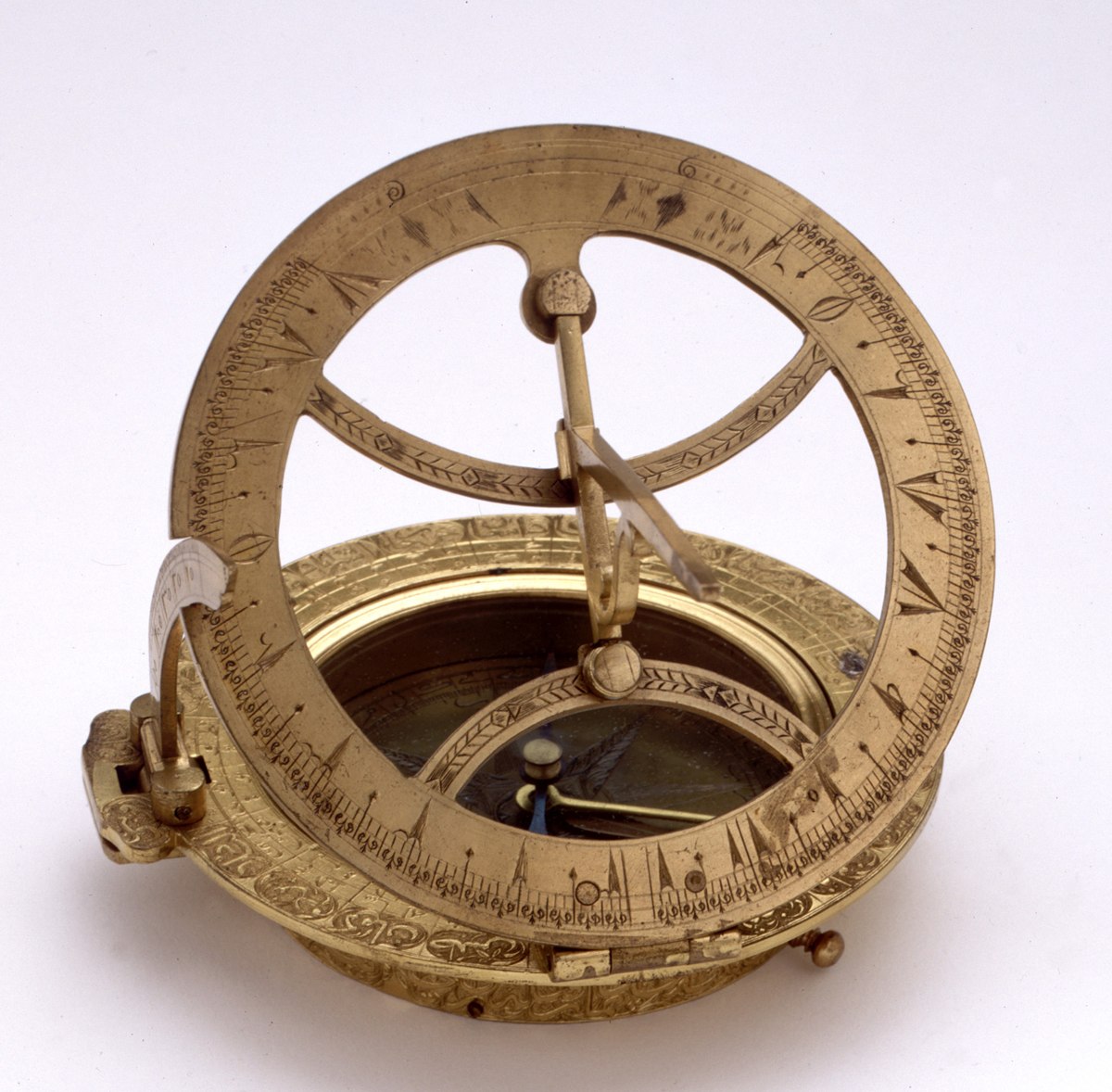
Inclining dial
1750-1800
This brass and gilt-brass inclining dial is configured for latitudes between 0° and 60° North, combining European structural forms with Arabic inscriptions. The circular base houses a compass fitted with an eight-point rose, degree divisions using abjad numerals, and a leaf-shaped qibla pointer. Hinged to the northe…
Partial type record
Museum of the History of Science, Oxford
horological instruments
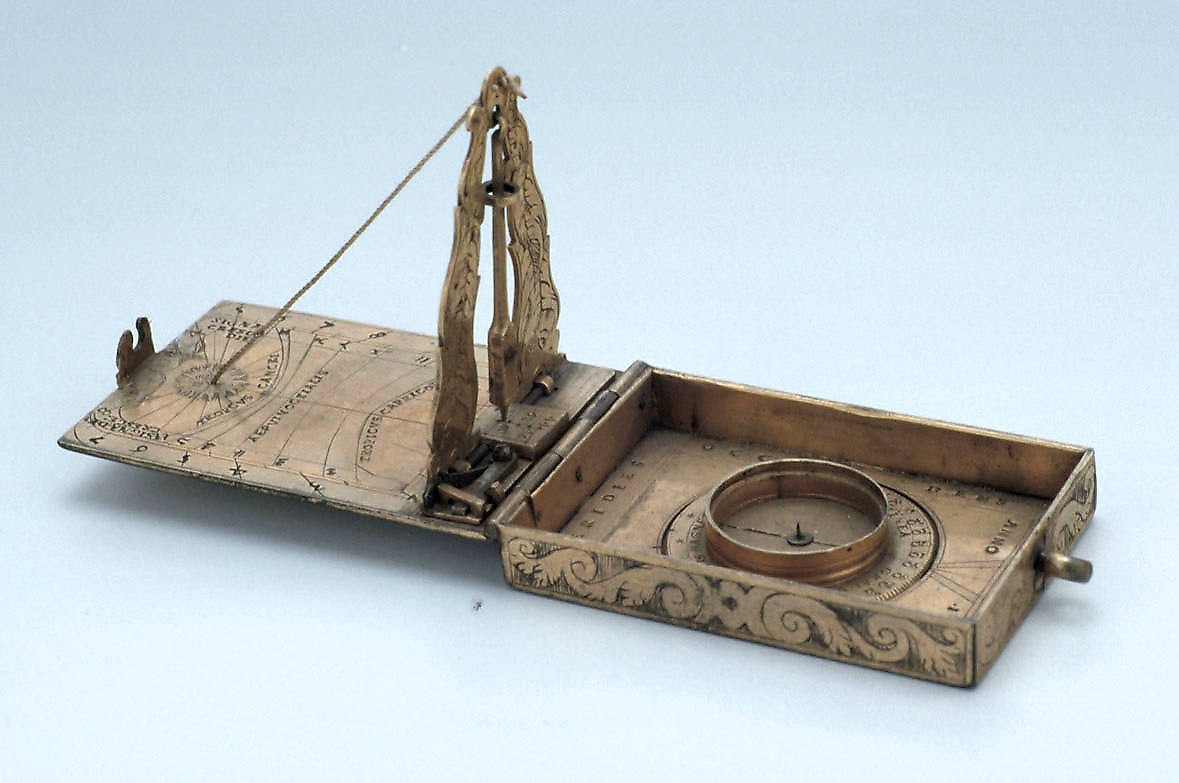
Inclining dial by Alexius Schniep
1578
This inclining string gnomon sundial was created in 1578 by Alexius Schniep in Munich. The instrument measures 67 x 44 x 11 mm and is constructed from gilt brass. It consists of a hollow base containing a magnetic compass and a hinged lid that serves as the sundial. The dial features an hour scale, zodiac signs, and…
Partial type record
Museum of the History of Science, Oxford
horological instruments
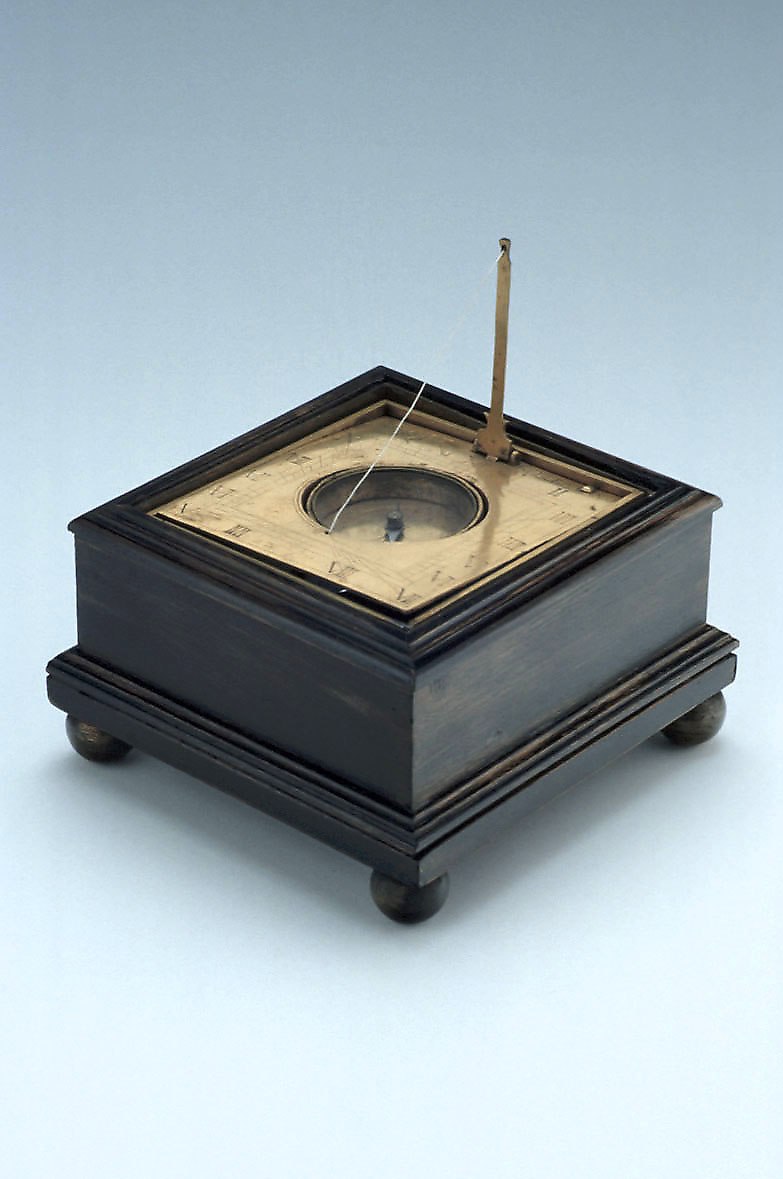
Inclining Dial by Johann Christoph Keller
circa 1600
This inclining dial, held by the Museum of the History of Science, Oxford, is signed by Johann Christoph Keller and dates to approximately 1600. Manufactured in Linz, the instrument consists of a brass plate integrated into a wooden case. The brass dial is mounted on gimbals, allowing for adjustment to latitudes ran…
Partial type record
© British Museum, London
horological instruments
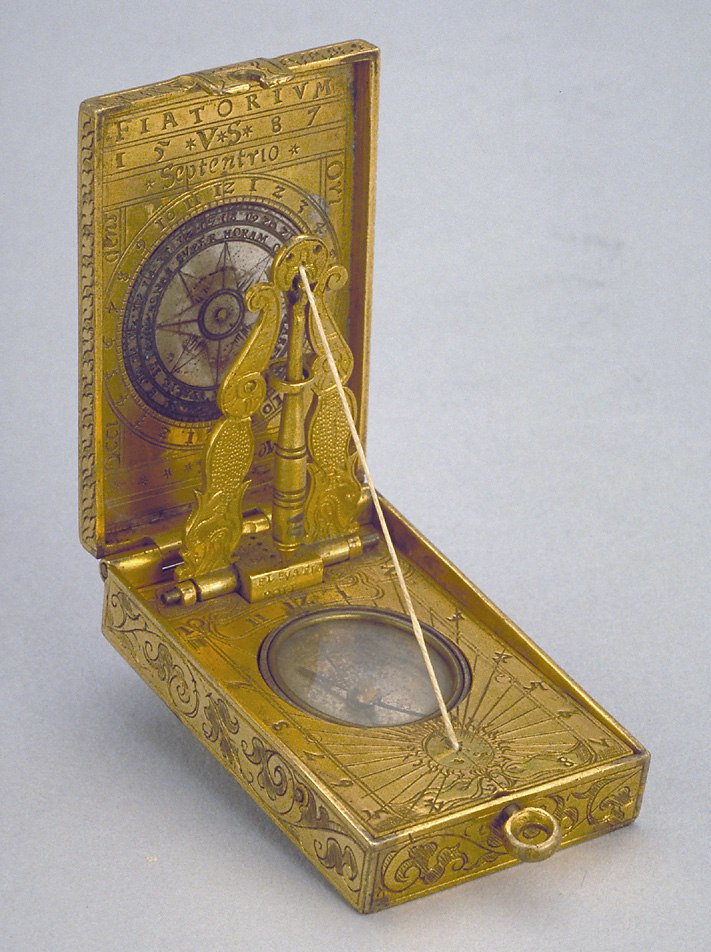
Inclining Dial by Ulrich Schniep
1587
This brass inclining dial, measuring 55 x 37 x 14 mm when closed, is a portable timekeeping instrument signed by Ulrich Schniep and dated 1587, Munich. The instrument functions as a box with a hinged lid. The exterior lid surface displays a table of latitudes for 31 European cities. The interior of the lid contains…
Partial type record
Museum of the History of Science, Oxford
horological instruments
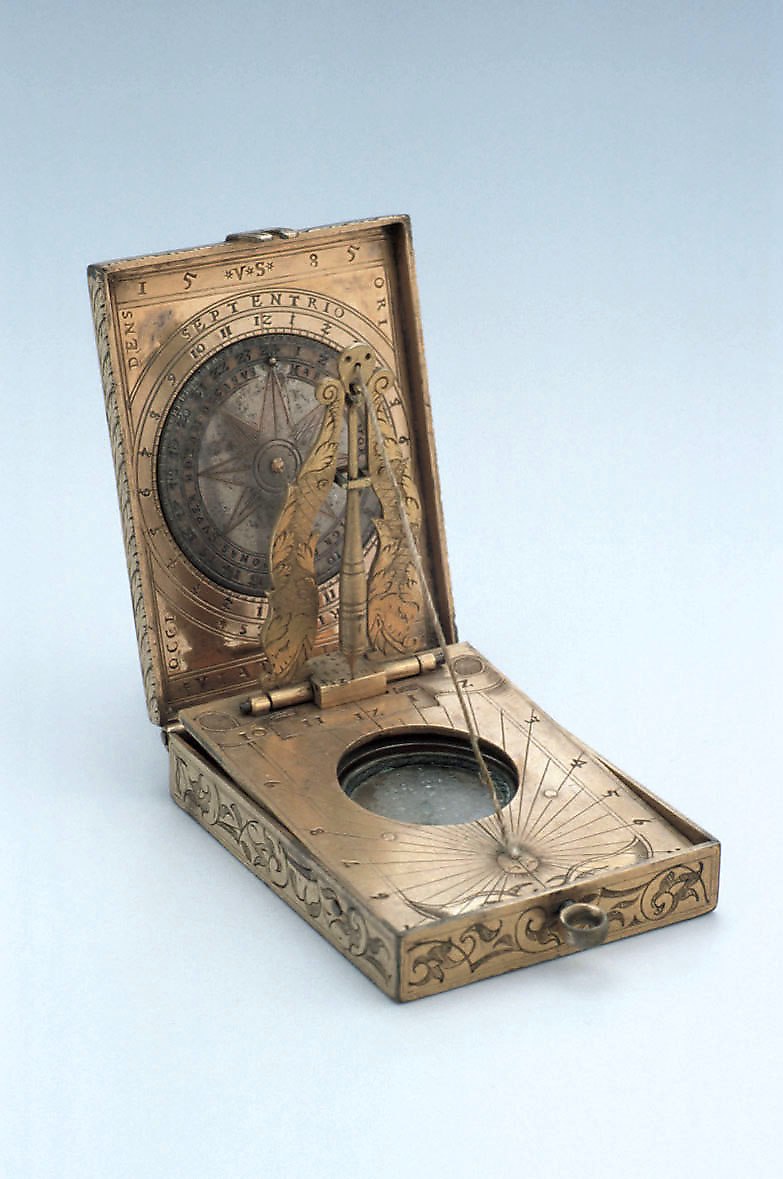
Inclining Dial by Ulrich Schniep, 1585
1585
This 1585 inclining dial is made of gilt and silvered brass, measuring 66 x 48 x 15 mm. Signed by the Munich-based maker Ulrich Schniep, it is categorized as a viatorium. The instrument features a hinged lid and a base with a suspension ring that also functions as a lid lock. The interior of the cover contains a vol…
Partial type record
Museum of the History of Science, Oxford
horological instruments
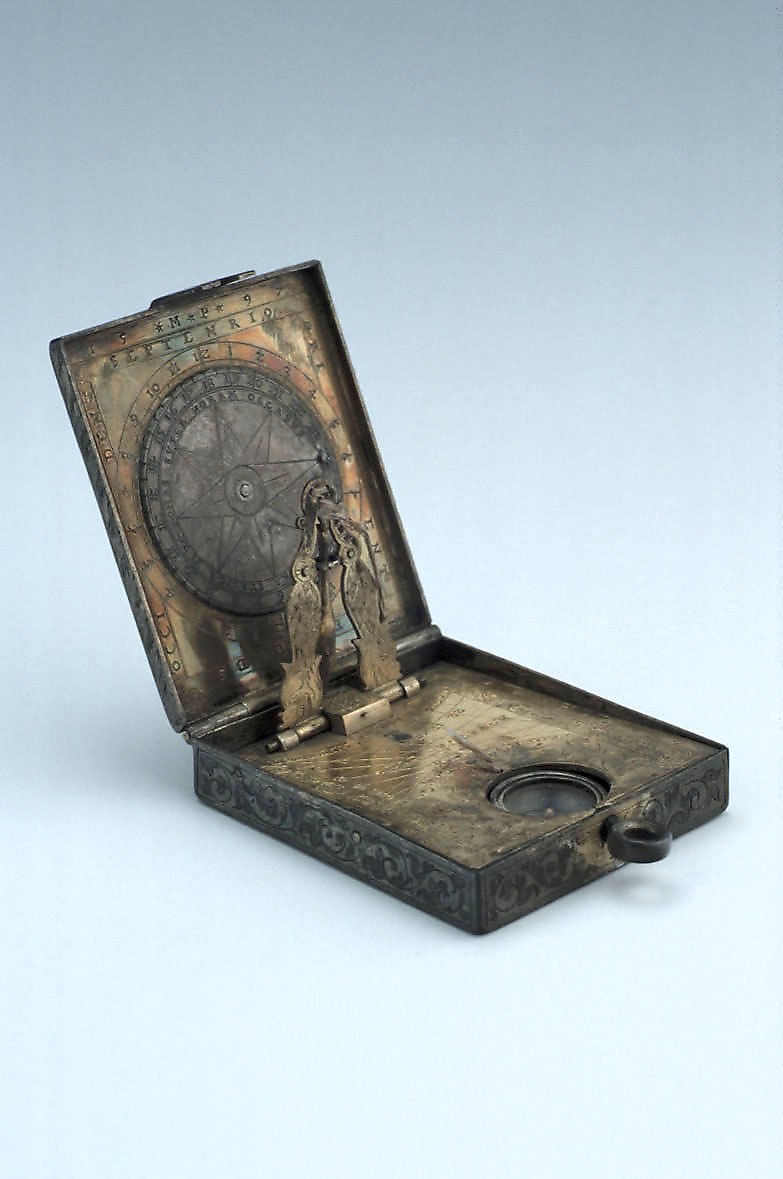
Inclining string gnomon sundial by Markus Purmann
1597
This inclining string gnomon sundial was crafted in 1597 by Markus Purmann. Constructed from gilt brass and silver, the instrument measures 57 x 47 x 12 mm. It functions as a portable timekeeping device, providing time in both ordinary and Italian hours. The dial features a suspension ring that acts as a locking mec…
Partial type record
History of Science Museum, University of Oxford
horological instruments
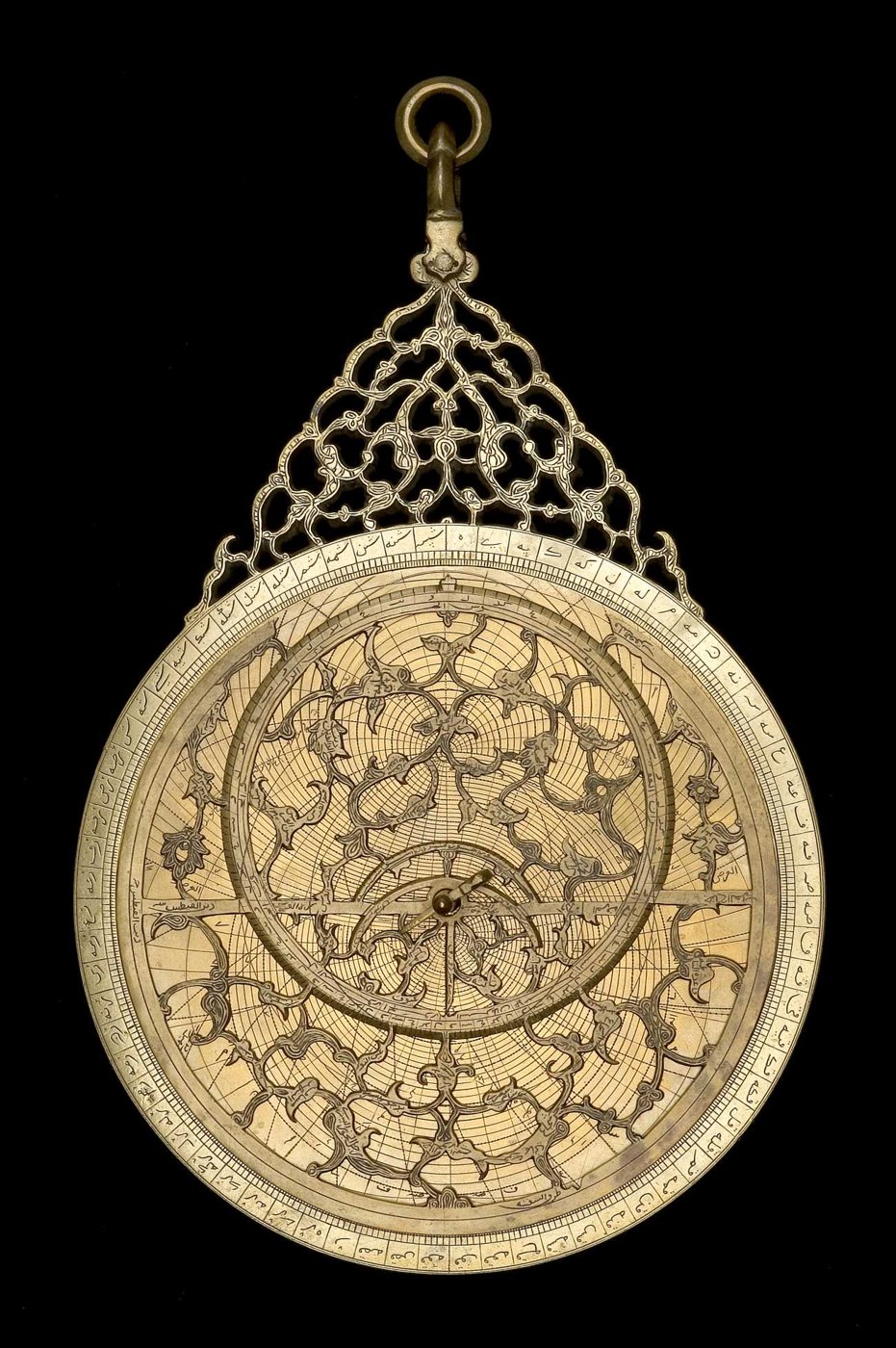
Indo-Persian Astrolabe by Qā’im Muḥammad ibn ‘Īsa
1634/5 (A.H. 1044)
This brass astrolabe, inventory number 42730, was produced in Lahore in 1634/5 (A.H. 1044) by the maker Qā’im Muḥammad ibn ‘Īsa. It features an Indo-Persian, pierced-type throne with foliate engraving and an integrated base, attached to a simple, squared-section ring and trefoil shackle. The instrument is constructe…
Partial type record
Sotheby's
horological instruments
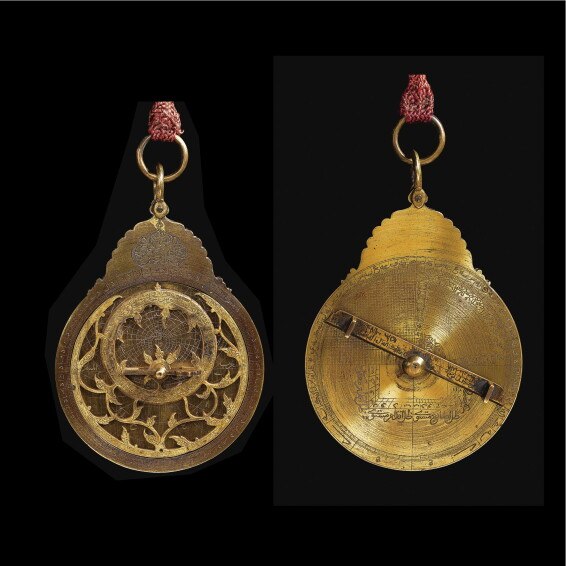
Iranian astrolabe in the style of 'Abd al-A'imma
late 17th century style
According to Sotheby's, this unsigned Iranian astrolabe is executed in the style of late 17th-century Isfahan instrument-maker 'Abd al-A'imma. The front of the throne is engraved with a cartouche containing the Qur'anic Throne Verse. The instrument includes five plates serving latitudes 27°, 30°, 31°, 32°, 33°, 34°,…
Partial type record
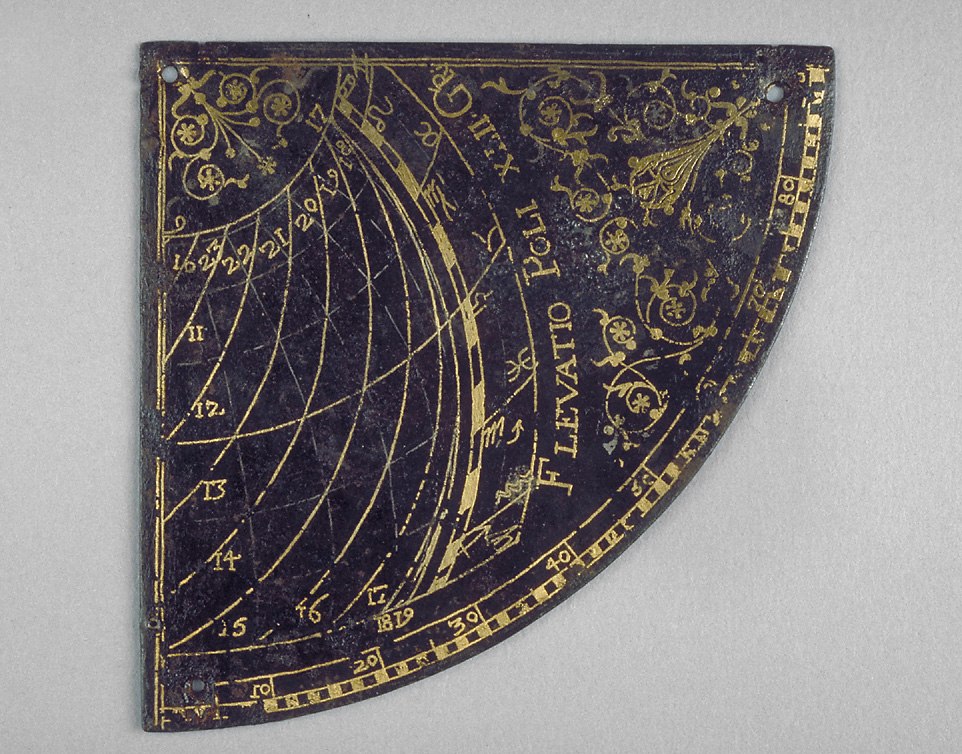
British Museum, London
horological instruments
Iron and Gold Quadrant
circa 1600 ?
This unsigned iron quadrant, measuring 95 mm in radius, is attributed to Italy and dated to circa 1600. The instrument features intricate inlay work using gold and silver throughout its surfaces. Despite significant damage that has obscured some of the inscriptions and legibility of certain markings, the quadrant re…
Partial type record
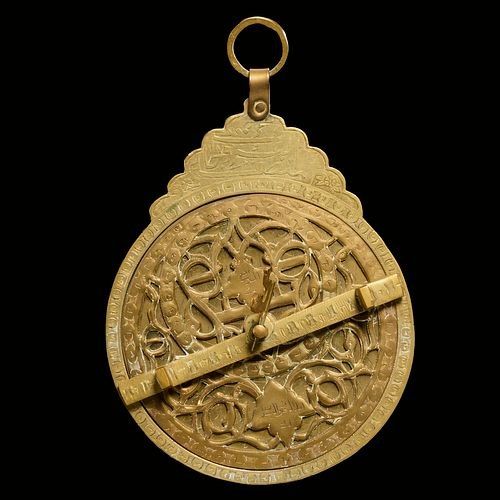
Millea Bros. Ltd.
horological instruments
Islamic Engraved Brass Astrolabe
19th c.
This Islamic astrolabe is catalogued as a 19th-century scientific instrument of natural patinated bronze or engraved brass, tentatively attributed to Iran. The mater rim is engraved with minute symbols and holds stacked engraved plates beneath an openwork rete and a central alidade bar with sighting vanes. The rever…
Partial type record
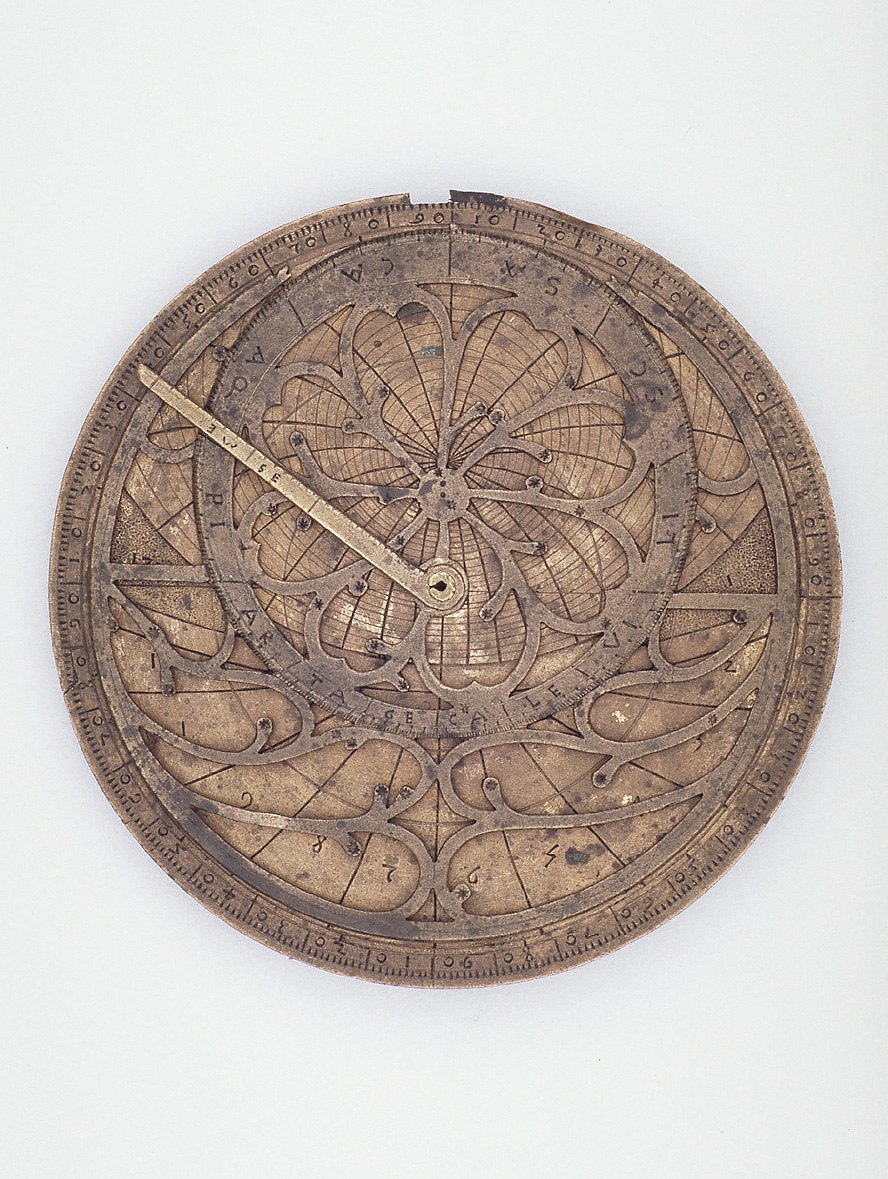
Museum of the History of Science, Oxford
horological instruments
Italian Astrological Instrument
circa 1500
This unsigned Italian instrument, dating to circa 1500, is a brass astrological device measuring 95 mm in diameter. While classified as an astrolabe, it is intended for determining the positions of planets and celestial bodies relative to astrological houses. The front features a rete and rule riveted to a thin bras…
Partial type record
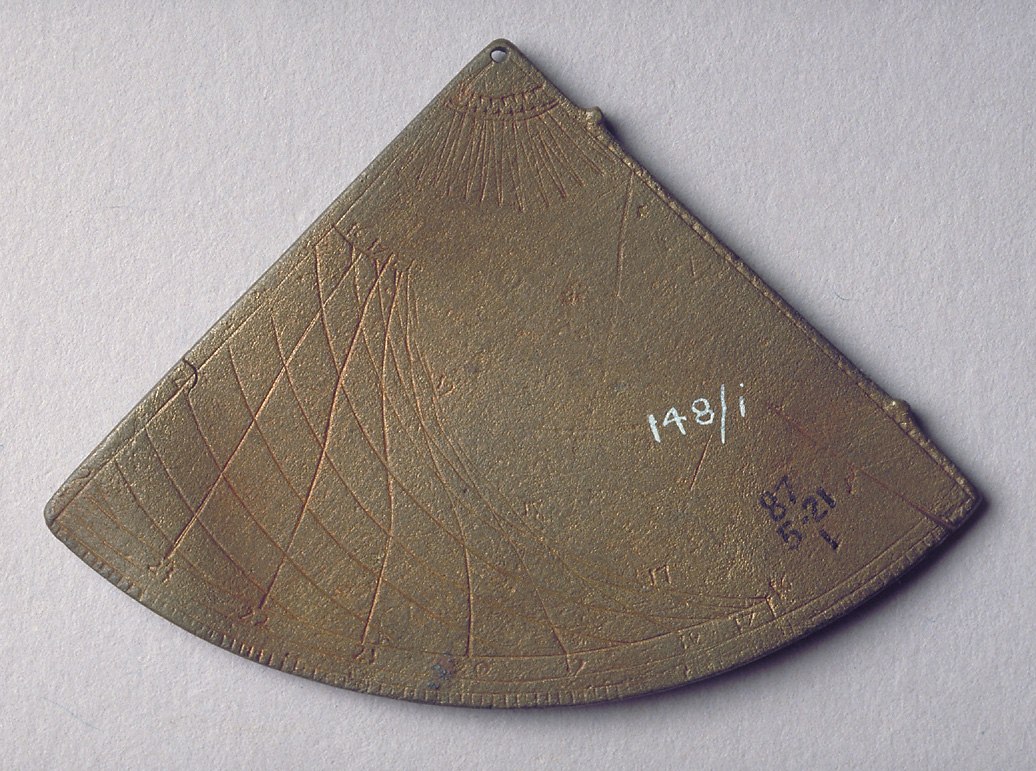
© British Museum, London
horological instruments
Italian Bronze Quadrant
15th century ?
This unsigned quadrant, dating to the 15th century, is crafted from bronze or brass and measures 48 mm in radius. The instrument serves as a portable timekeeping device, featuring engravings on both faces. One side displays a table of the sun’s noon altitude throughout the year at three-day intervals, calculated for…
Partial type record
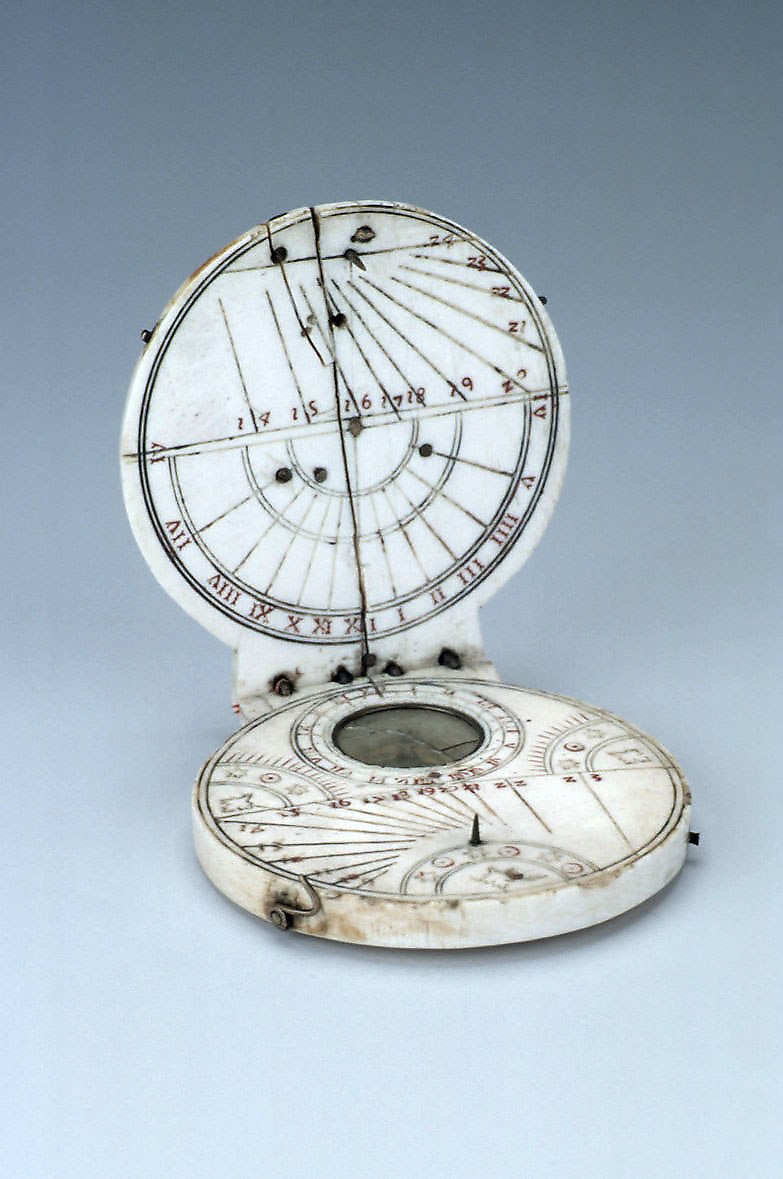
Museum of the History of Science, Oxford
horological instruments
Italian Scallop-Shaped Diptych Dial
circa 1600
This unsigned diptych sundial, attributed to Italian origin circa 1600, is held in the Museum of the History of Science, Oxford. Measuring 64 x 71 x 10 mm, the instrument is constructed from ivory and brass. Its form is essentially circular but modified by a straight hinge, resulting in a scallop-like appearance. Th…
Partial type record
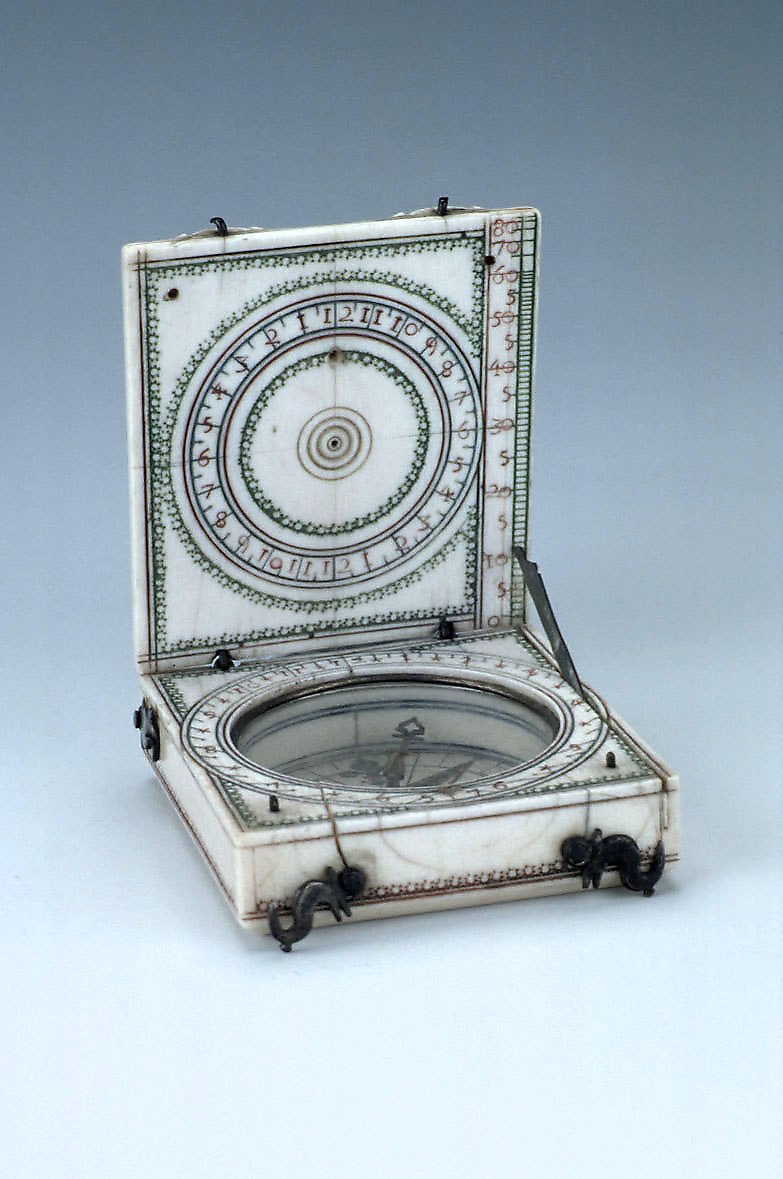
Museum of the History of Science, Oxford
horological instruments
Ivory and silver diptych sundial
circa 1600 ?
This unsigned ivory and silver diptych dial, catalogued by the Museum of the History of Science, Oxford (inventory number 83993), dates to circa 1600. The object measures 64 x 68 x 22 mm and is constructed from ivory leaves with silver components. It features complex, multi-functional timekeeping surfaces. The outer…
Partial type record
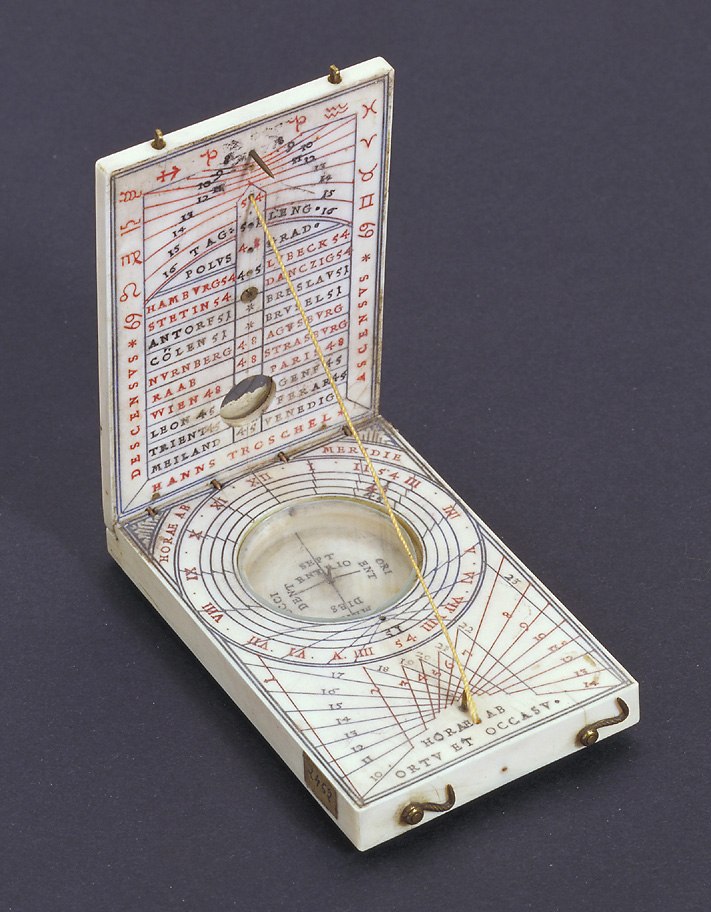
Istituto e Museo di Storia della Scienza, Firenze
horological instruments
Ivory Diptych Dial by Hans Troschel
Early 17th century
This diptych dial is an ivory instrument measuring 90 x 55 mm, constructed in Nuremberg during the early 17th century. Signed by the instrument maker Hans Troschel, it functions as a horizontal string gnomon sundial adjustable for four different latitudes. The interior lid features a table of geographical latitudes…
Partial type record
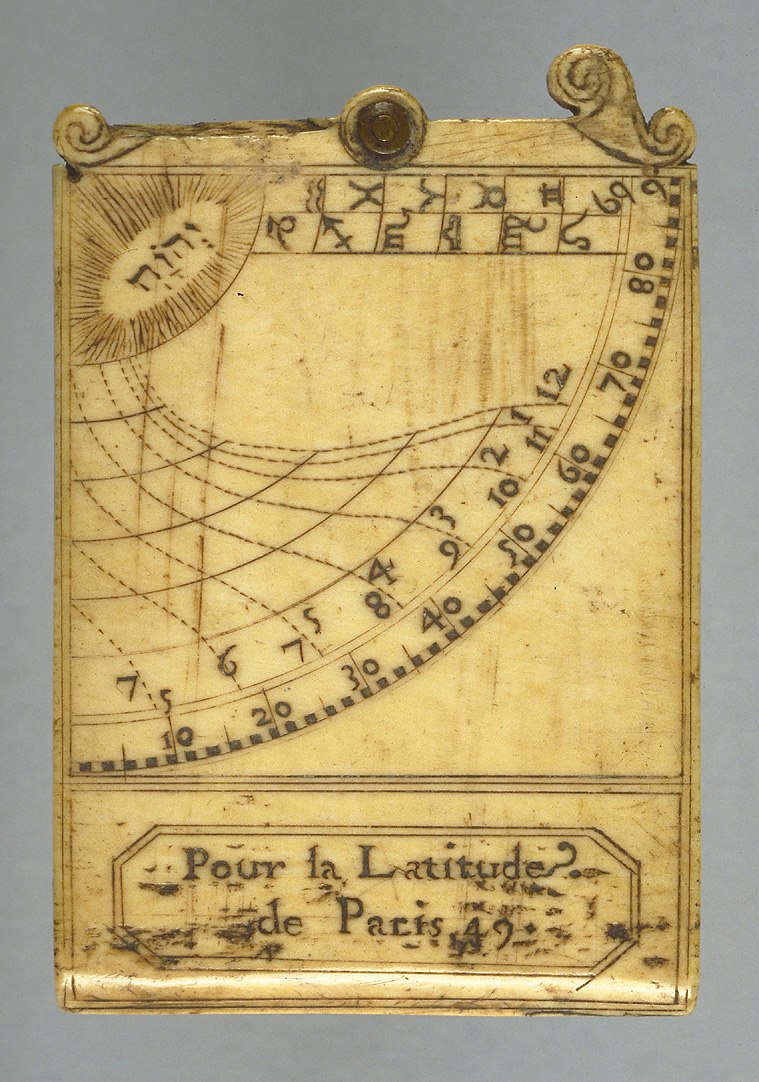
British Museum, London
horological instruments
Ivory Equinoctial Dial
Late 16th century ?
This unsigned ivory equinoctial dial is attributed to late 16th-century France. Constructed from a single leaf measuring 53 x 73 x 6 mm, the instrument integrates multiple timekeeping functions. The obverse face features an horary quadrant with a limb graduated in degrees, a scale for zodiacal signs, and common hour…
Partial type record
The British Museum
horological instruments
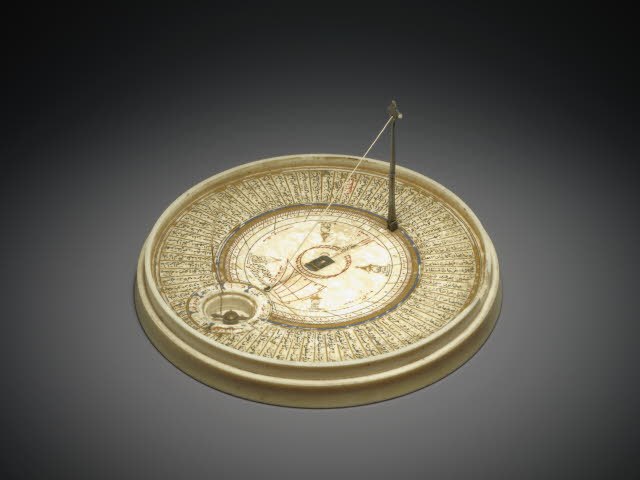
Ivory qibla indicator and horizontal sundial by Bayrām Ibn Ilyās
1582-1583 (990 AH)
This circular ivory instrument serves as a horizontal sundial and qibla indicator, constructed for a latitude of 41 degrees North corresponding to Istanbul. Designed as a flat circular box, the interior features concentric circles enclosing a central depiction of the Ka'ba surrounded by a red fence. Between the cent…
Partial type record
Two Fat Cats Vintiques / Chairish
horological instruments
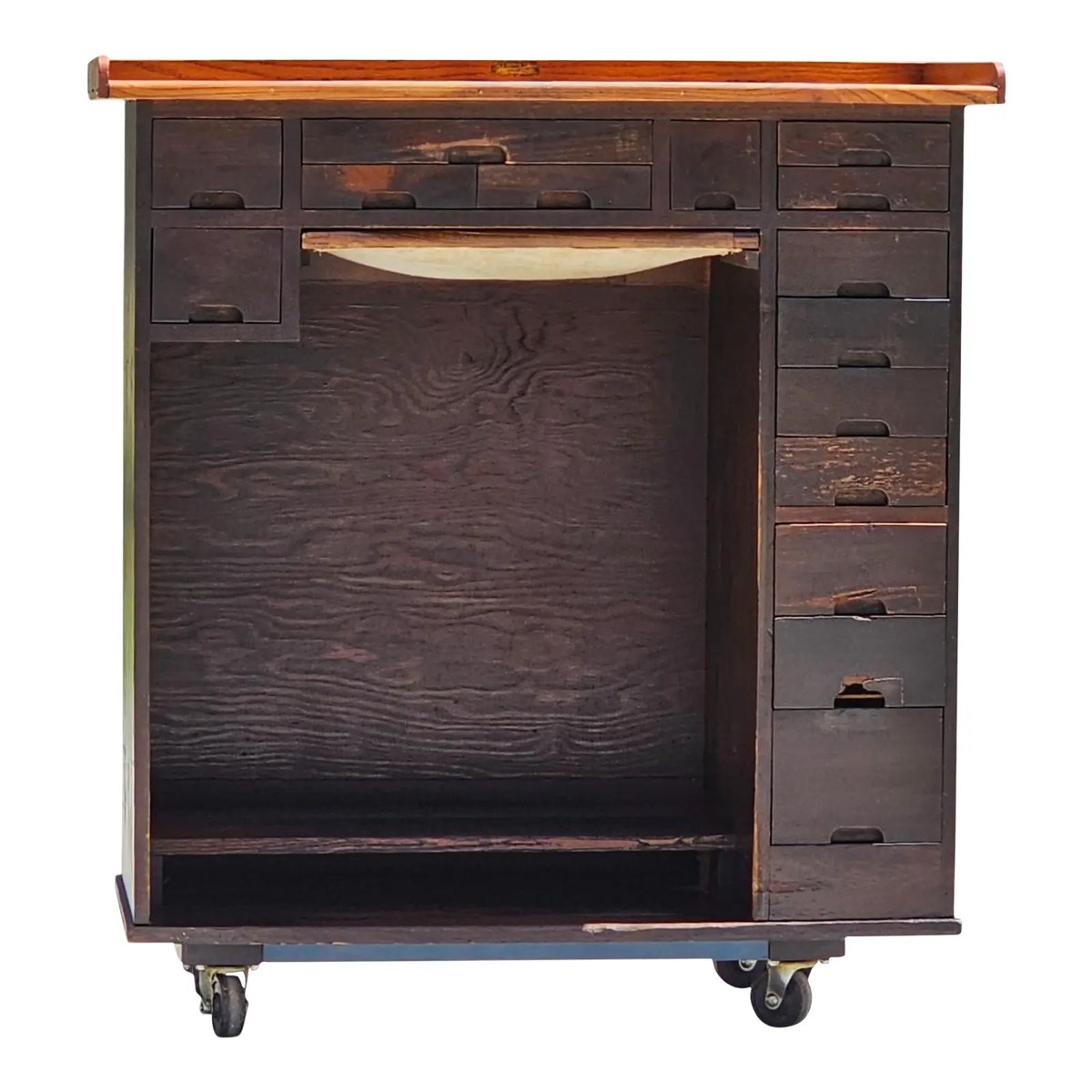
J. H. Rosberg Mfg. Co. Watchmaker's Bench
Early 20th Century
This wooden watchmaker's bench is attributed by the seller to J. H. Rosberg Mfg. Co. of Chicago and dated to the early 20th century. The workspace configuration provides fifteen drawers arranged along the upper frieze and a right-hand vertical stack, accompanied by a central apron slide. The seller records overall d…
Partial type record
Chairish / LeMont Vintage Home
horological instruments
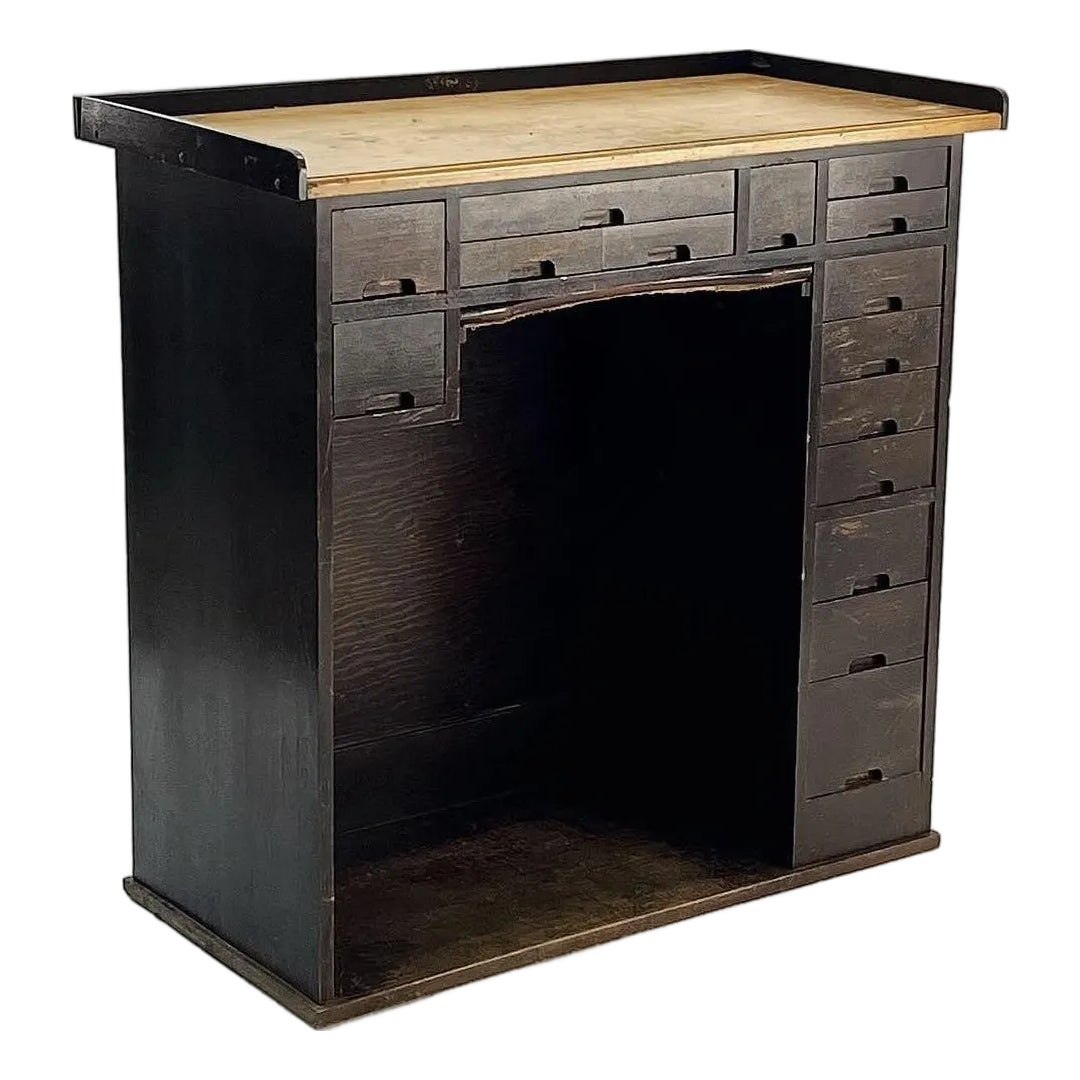
J.H. Rosberg Manufacturing Co. Watchmaker's Work Bench
c. 1920
This wooden watchmaker's workbench is attributed by the seller to the J.H. Rosberg Manufacturing Co. of Chicago, Illinois, and dated to circa 1920. The casework features a dark-stained finish enclosing a central kneehole recess, flanked by two drawers on the upper left, an upper horizontal drawer section, and a vert…
Partial type record
Lempertz
horological instruments
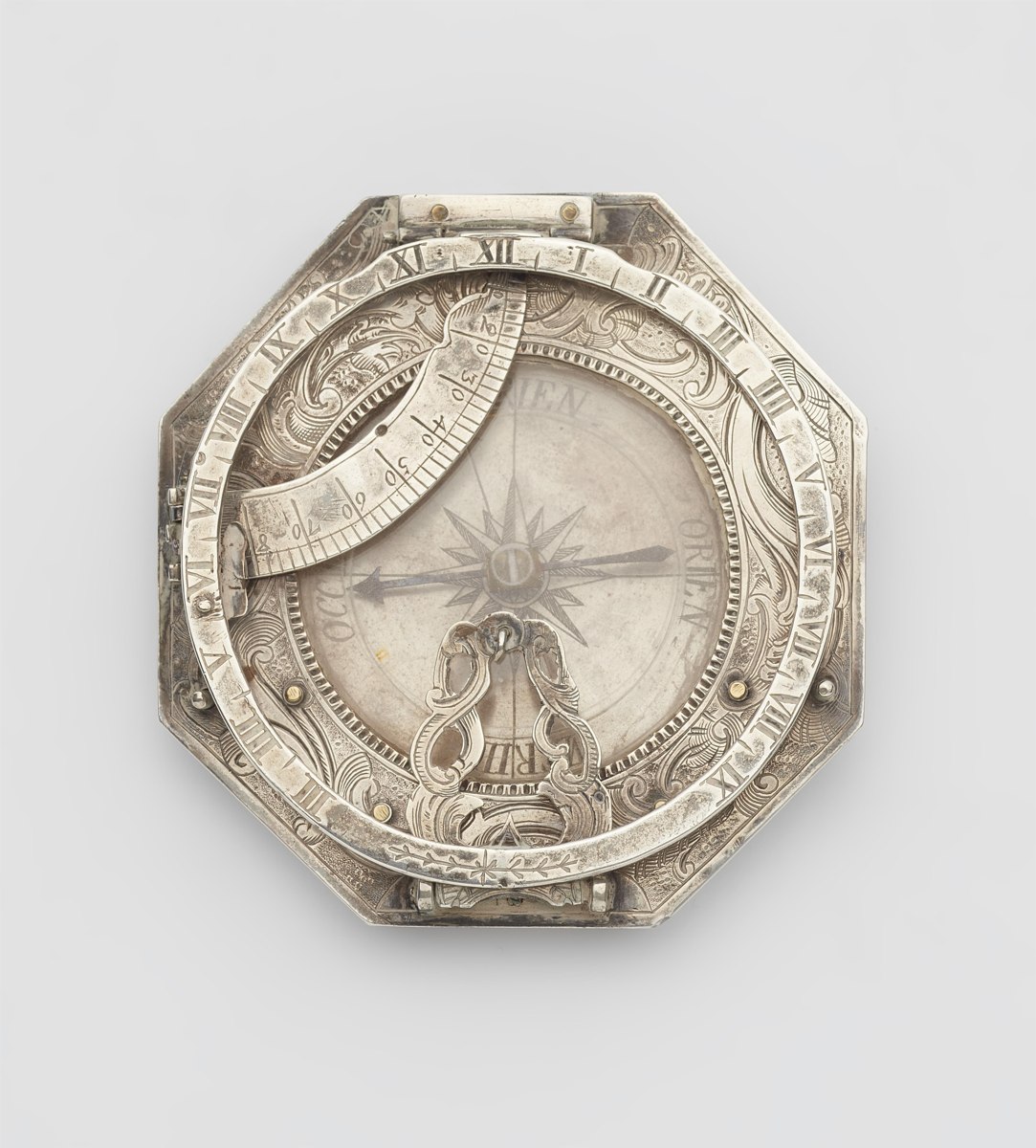
Johann Georg Vogler Equatorial Sundial
around 1720 - 1765
This silver equatorial sundial attributed to Johann Georg Vogler features an octagonal base framing an integral circular compass. The instrument is fitted with a folding chapter ring displaying Roman numerals, a graduated folding latitude arc, and an ornamental support, mounted over foliate scrollwork engraving. The…
Partial type record
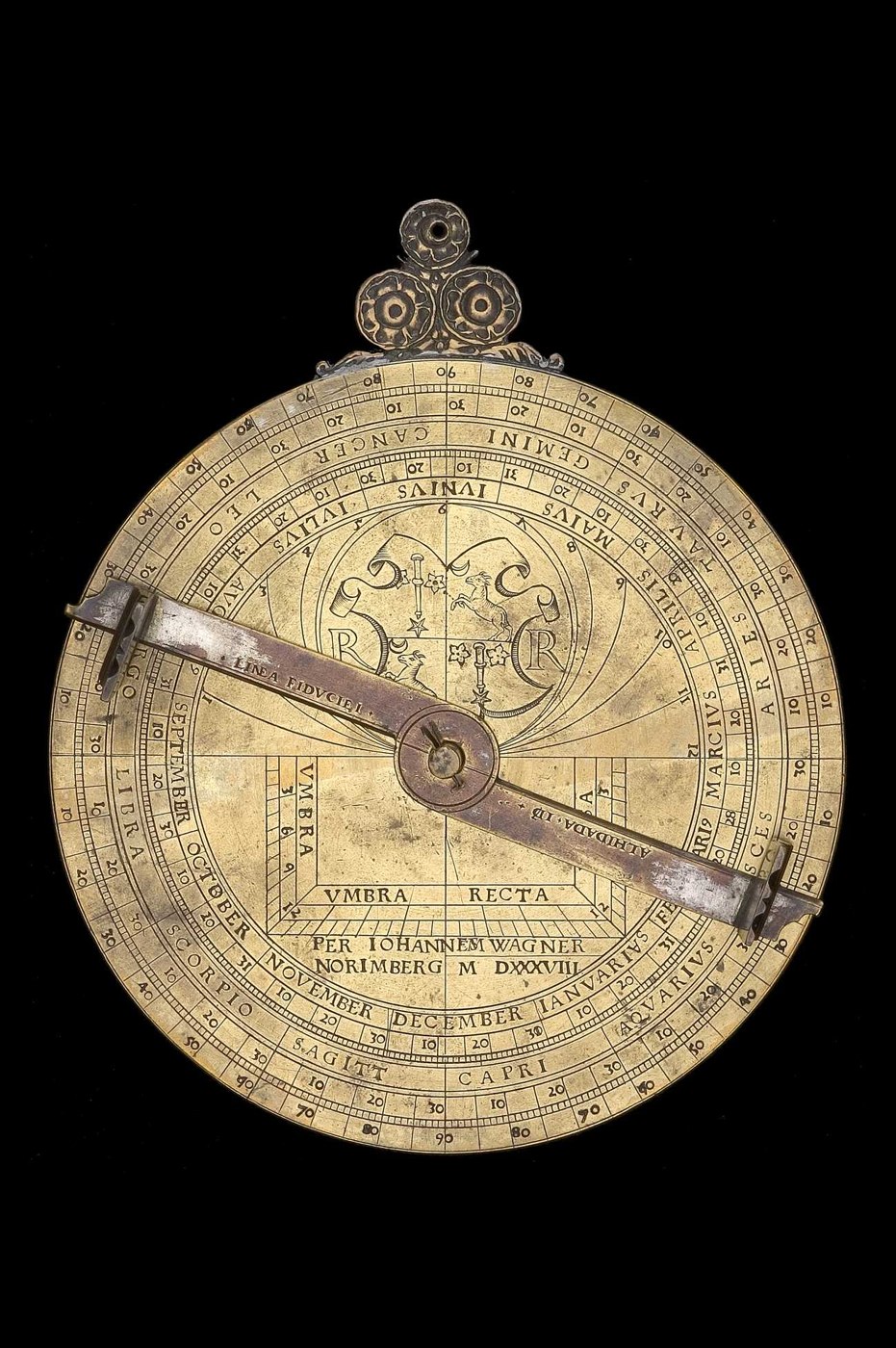
History of Science Museum, University of Oxford
horological instruments
Johann Wagner Astrolabe
1538
This brass astrolabe (inventory number 40443) was made in Nuremberg in 1538 by Johann Wagner. The construction features a three-lobed throne attached to the mater by a soldered base, with each lobe decorated with a five-petalled flower. The mater and limb are of two-piece, soldered construction. The instrument inclu…
Partial type record
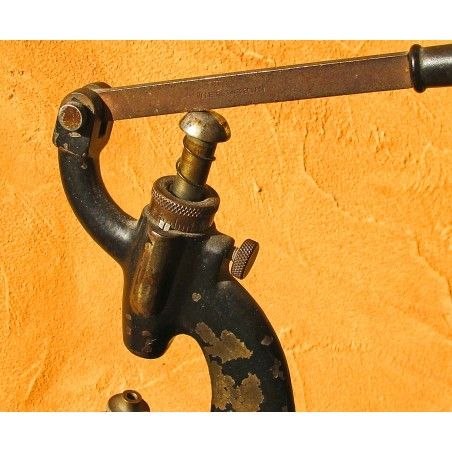
Chrono-Shop
horological instruments
La Favorite watchmaker's potence tool
1960s
This listing documents a vintage watchmaker's press tool identified by the source as a potence by 'La Favorite' dating from the 1960s. The photographed object comprises the upper section of a cast metal frame finished in black enamel with significant surface loss. A horizontal hand lever connects to a spring-loaded…
Partial type record
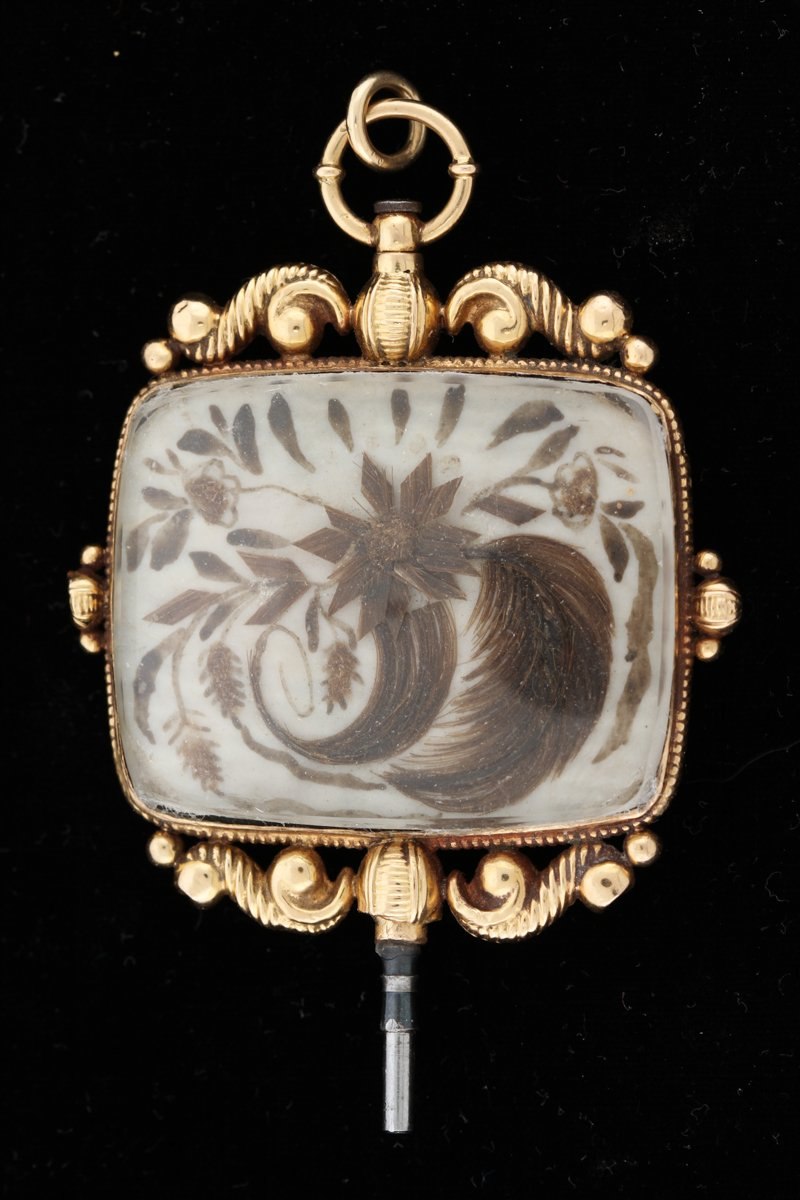
Kerkhof Antiques / Proantic
horological instruments
Large 18K Gold Memento Mori Watch Key with Hairwork
19th century
This object is an individual nineteenth-century memento mori pocket watch winding key crafted in 18K gold. Catalogued under Louis Philippe and Charles X styling, the rectangular key pendant measures 72 mm in length by 48 mm in width. The central glazed compartment protects intricate decorative hairwork composed in b…
Partial type record
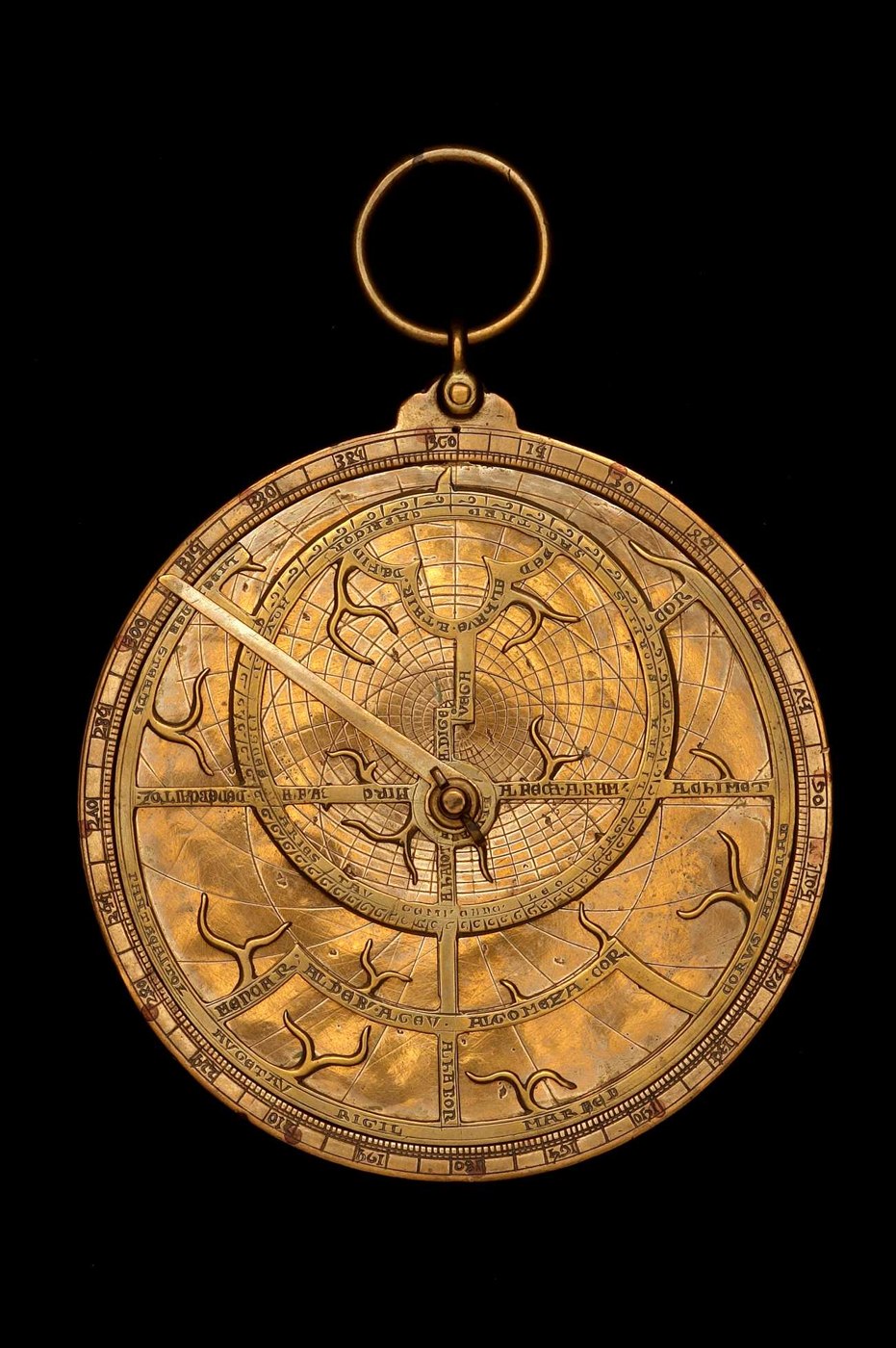
History of Science Museum, University of Oxford
horological instruments
Late 14th Century European Astrolabe
late 14th century
This brass planispheric astrolabe, inventory number 36338, is attributed to Europe and dates to the late 14th century. The instrument features a three-lobed throne with an integrated base, a simple round-section ring, and an omega-type shackle. The mater and limb are constructed from two pieces, soldered and riveted…
Partial type record
Antiquorum
horological instruments
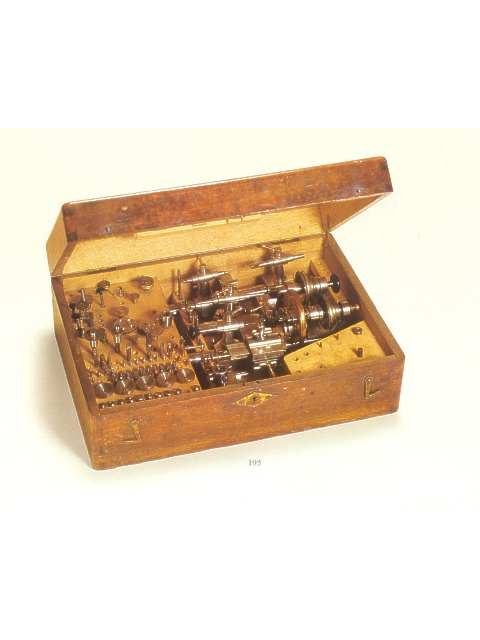
Lorch Schmidt & Co. Watchmaker's Lathe Set
circa 1940
This horological tool set comprises a watchmaker's lathe and accessories attributed by the source to Lorch Schmidt & Co., Germany, circa 1940. Housed in a fitted wooden box measuring 15 by 42 by 29 cm, the lathe is accompanied by various attachments. According to the auction description, the tooling includes a face-…
Partial type record
Dreweatts
horological instruments
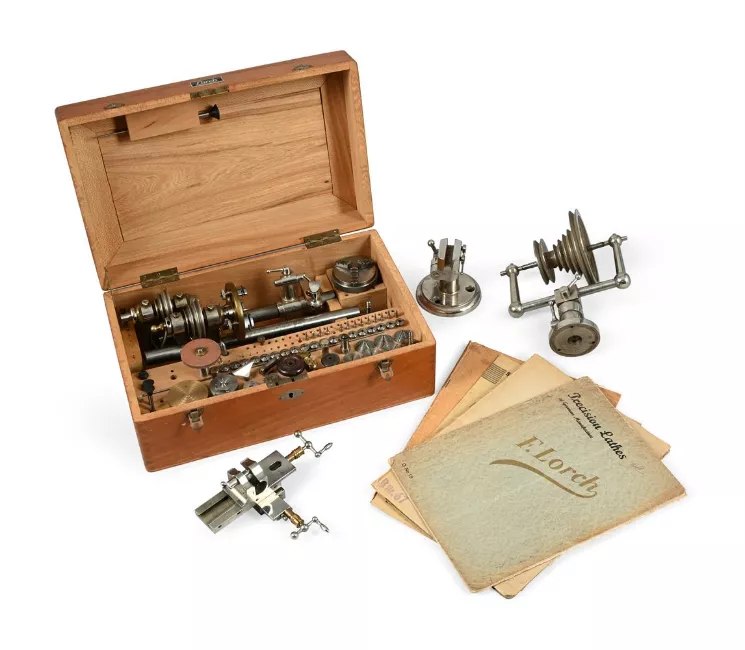
Lorch, Schmidt and Company 6mm Watchmaker's Lathe Outfit
early to mid 20th century
This German steel and brass 6mm watchmaker's lathe outfit was produced by Lorch, Schmidt and Company of Frankfurt during the early to mid-20th century. The set features two lathe bed sections, including a headstock fitted with graduated pulleys driving a spindle with a 3-inch brass mandrel faceplate on an 11.5-inch…
Partial type record
Istituto e Museo di Storia della Scienza, Firenze
horological instruments
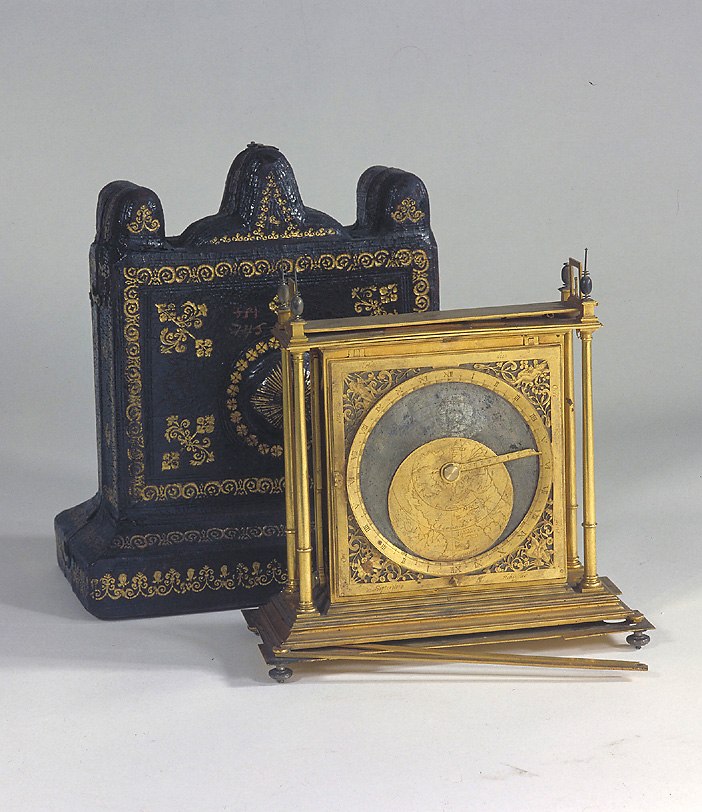
Mathematical Compendium
late 16th century
This mathematical compendium is a gilt brass and silver instrument constructed in the form of a clock, measuring 198 x 200 x 90 mm. It is signed by Hans Christoph Schissler the younger. The structure consists of a rectangular brass plinth resting on four feet, featuring four turned pillars that support a top plate a…
Partial type record
Istituto e Museo di Storia della Scienza, Firenze
horological instruments
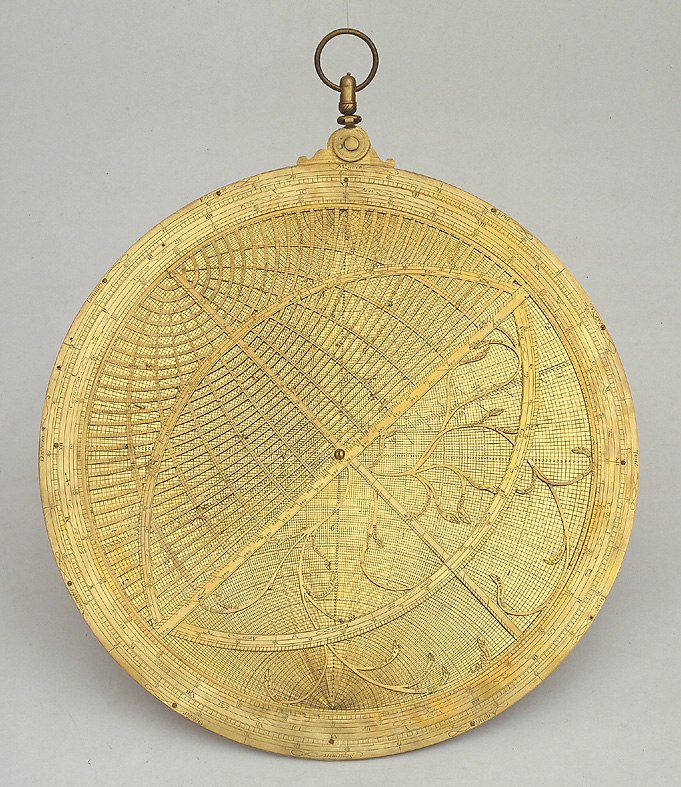
Mathematical Jewel Astrolabe by Charles Whitwell
1595
This 388 mm diameter brass astrolabe is a construction based on the 'Mathematical Jewel' design published by John Blagrave in 1585. Signed by Charles Whitwell and dated 1595, the instrument utilizes a universal projection of the saphea type. The mater contains lines for right ascension and declination, an ecliptic l…
Partial type record
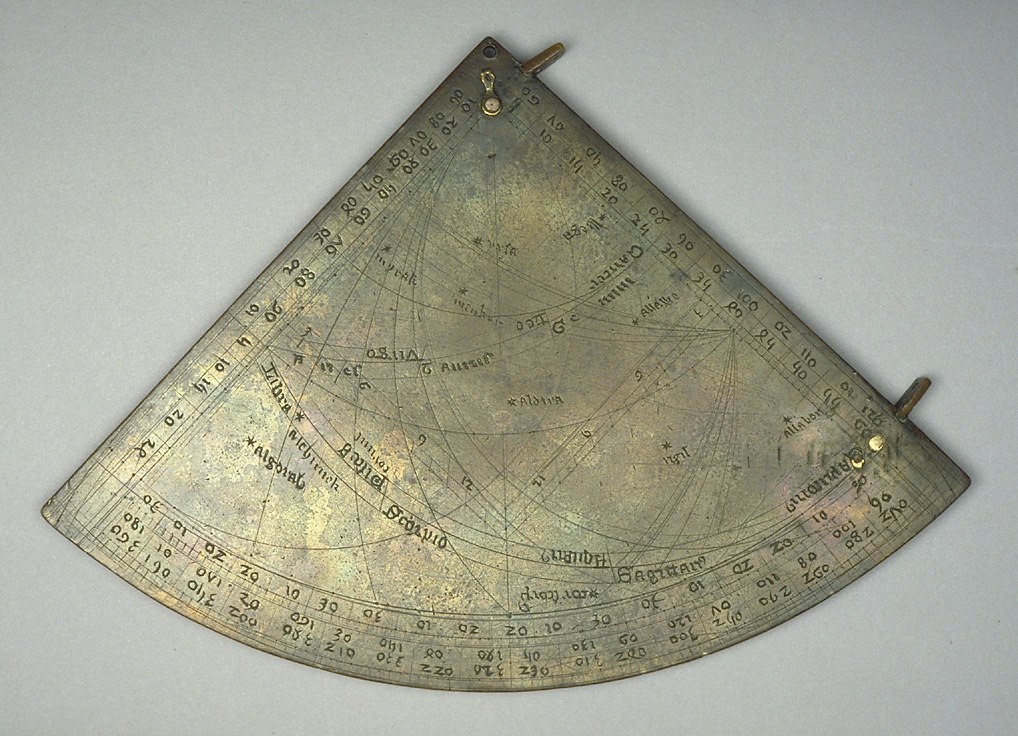
British Museum, London
horological instruments
Medieval Astrolabe Quadrant
Undated
This brass astrolabe quadrant, measuring 136 mm in radius, is one of seven such instruments recorded from the medieval period. It features a design that combines the functionalities of an astrolabe with those of a quadrant. The instrument is unsigned, with an unknown origin, and remains undated. The brass plate has…
Partial type record
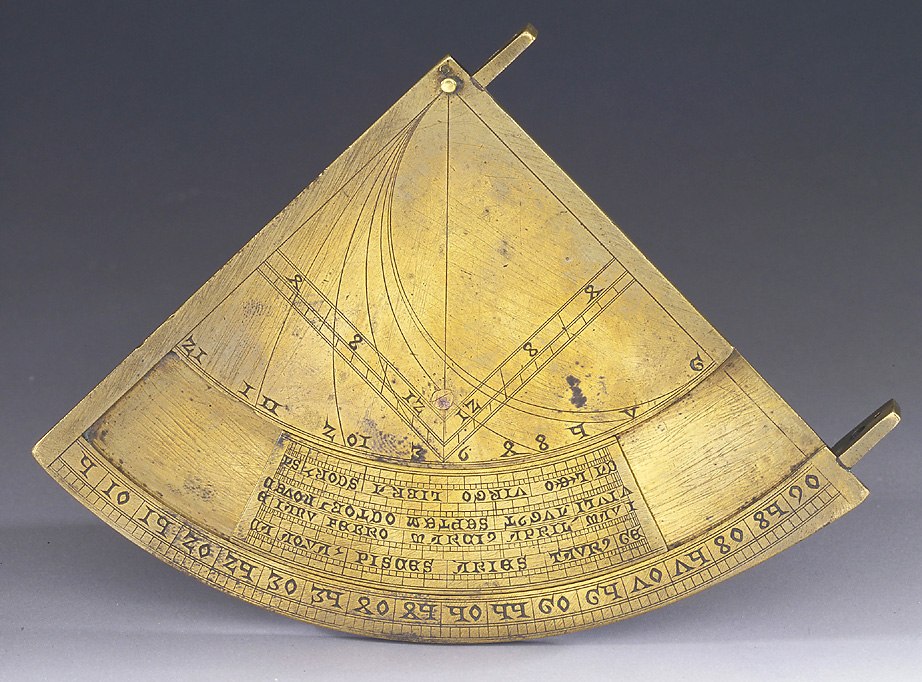
Istituto e Museo di Storia della Scienza, Firenze
horological instruments
Medieval Quadrans Vetus
14th century
The instrument is designed for measuring heights, distances, and depths, and functions as a universal sundial. The face features a 90-degree scale on the limb, a recessed slot with a mobile zodiac cursor, and a twelve-part shadow square overlaid with unequal hour lines. On the reverse, the instrument displays a circ…
Partial type record
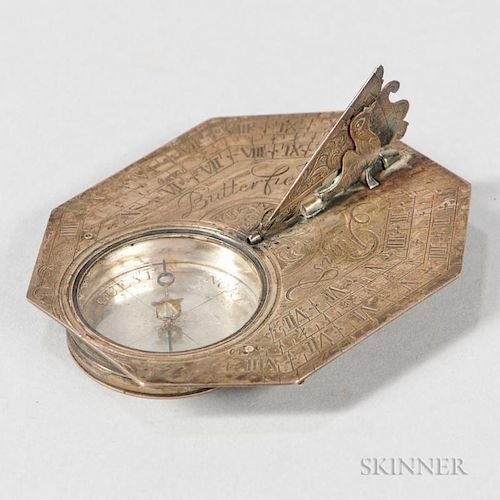
Bonhams Skinner
horological instruments
Michael Butterfield Silver Pocket Sundial
late 17th century
This octagonal silver pocket sundial is attributed by the source to Michael Butterfield, produced in Paris in the late seventeenth century. The instrument features an adjustable hinged gnomon designed with an engraved bird figure. The top plate is engraved with concentric Roman and Arabic numeral hour scales corresp…
Partial type record
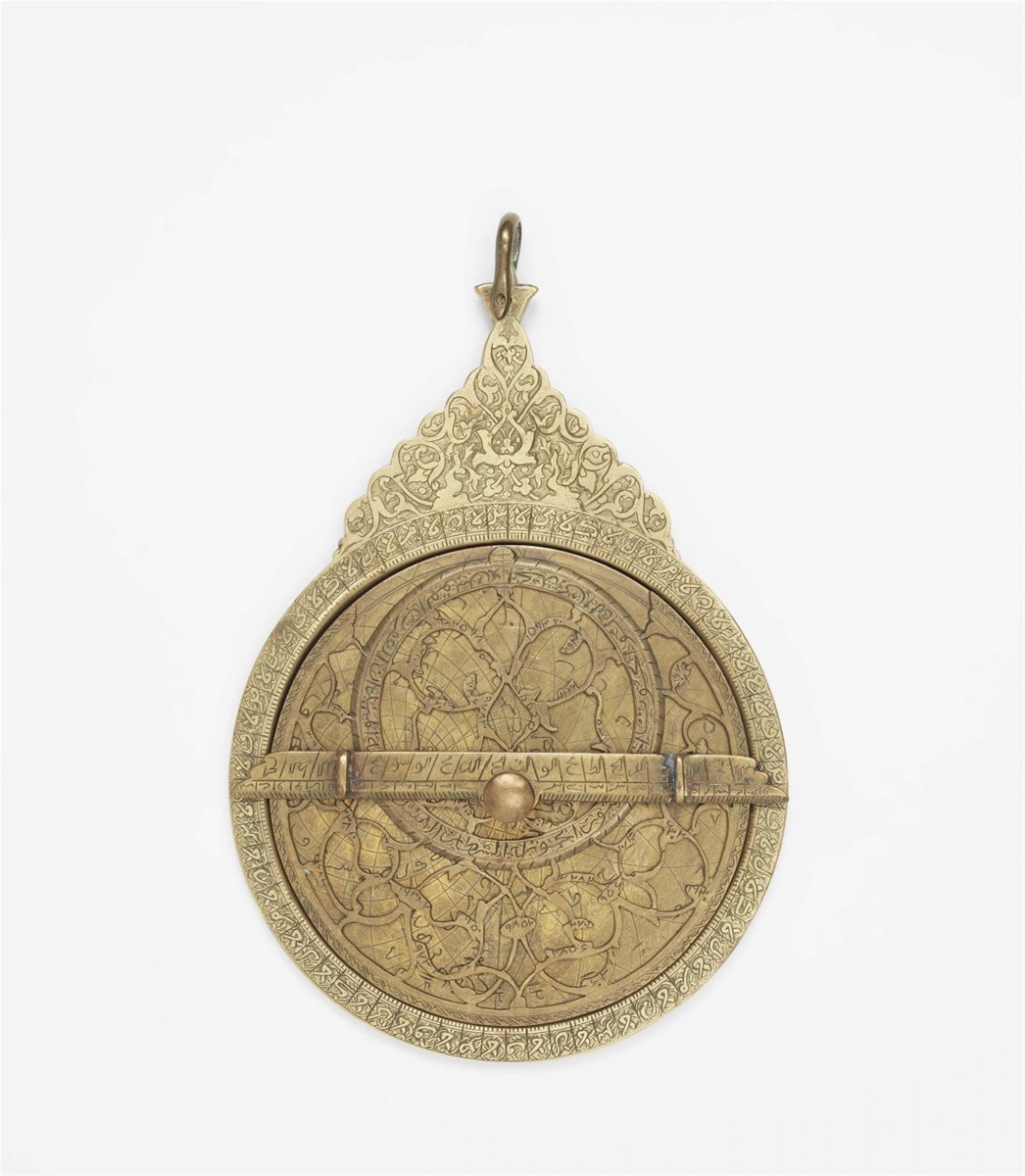
Lempertz
horological instruments
Middle Eastern planispheric astrolabe
16th - 19th C.
This unsigned engraved brass planispheric astrolabe is attributed to the Middle East between the 16th and 19th centuries. The instrument features a raised throne engraved with scrolling foliate motifs and an attached suspension shackle. Its inscriptions are rendered in naskh script, with the mater recording the name…
Partial type record
Science Museum Group
horological instruments
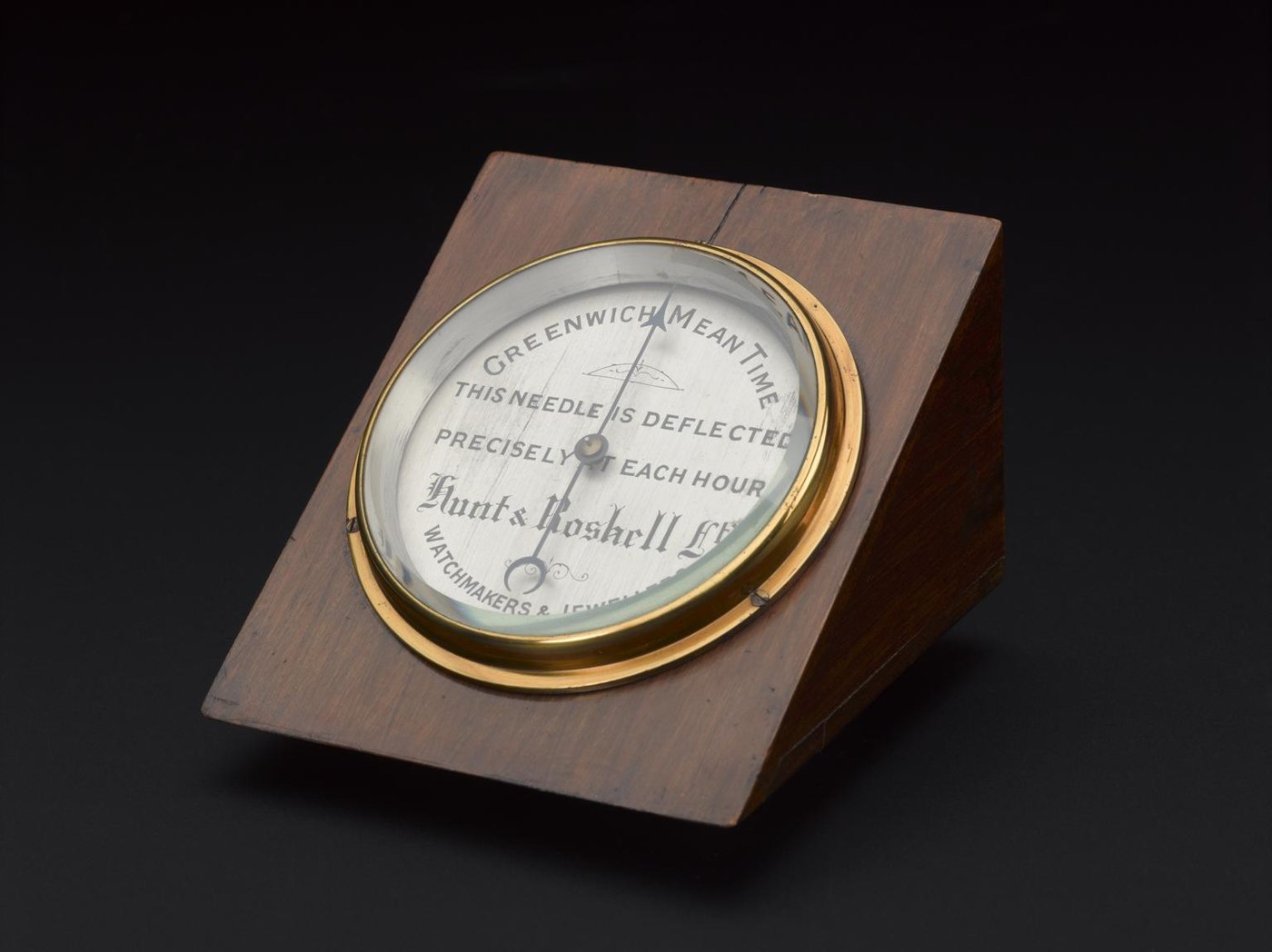
Moving magnet galvanometer by Hunt and Roskell
1843-1897
This moving magnet galvanometer was manufactured by the firm Hunt and Roskell in Clerkenwell, London. Dated between 1843 and 1897, the instrument is housed in a sloped wooden casing, designed to display a time-related indicator to the public. The face of the instrument features an inscription stating: 'This needle i…
Partial type record
National Maritime Museum, Greenwich, London, Caird Collection
horological instruments
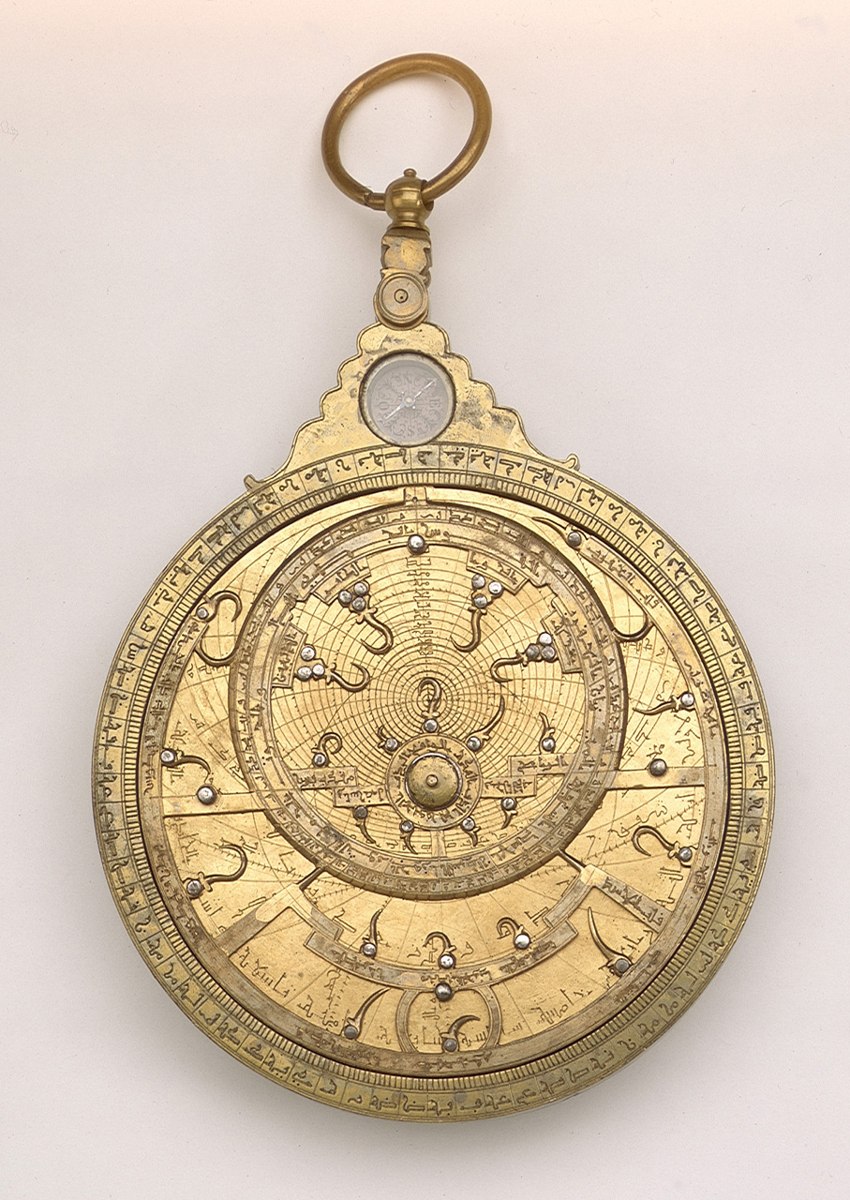
Muhammad ibn Ahmad al-Battuti Brass Astrolabe
1738-1739
This brass astrolabe is recorded as made by Muhammad ibn Ahmad al-Battuti, dated to 1151 AH (1738–1739 CE). The source notes al-Battuti and Hasan ibn Ahmad as key representatives of the astrolabe-making tradition in the Islamic West. The instrument incorporates a throne design with compass influenced by Safavid Iran…
Partial type record
Lempertz
horological instruments
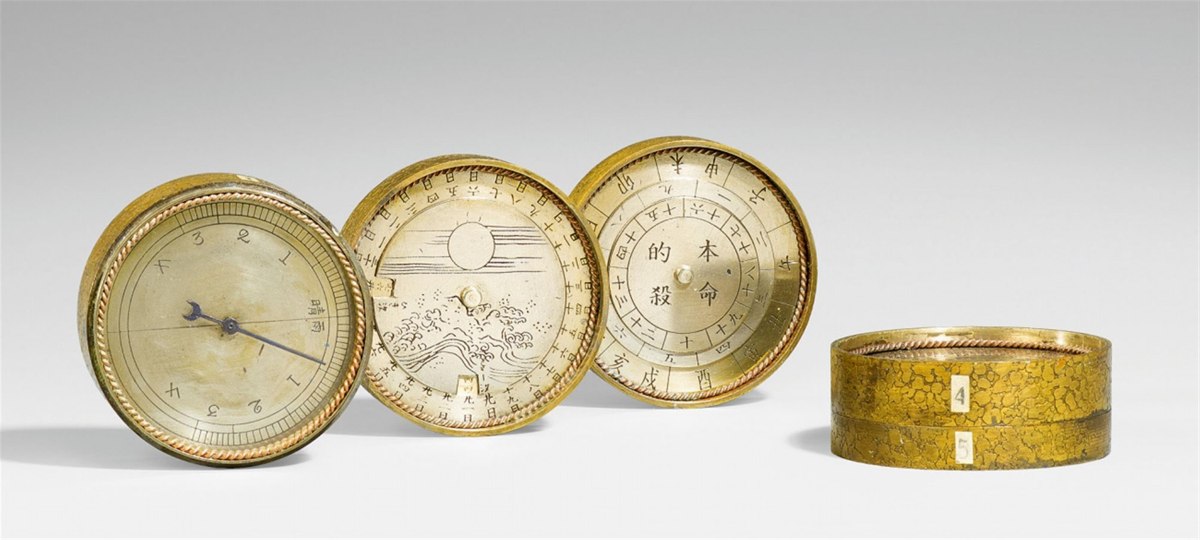
Multi-dial brass and silvered astronomical compendium
18th/19th century
This multi-dial astronomical compendium is constructed from brass and silvered metal, dated by the auction house to the 18th or 19th century. Built as a cylindrical tiered case decorated with an acid-etched pattern, it comprises five compartments holding eight dials in total. The source reports that its dials displa…
Partial type record
Museum of the History of Science, Oxford
horological instruments
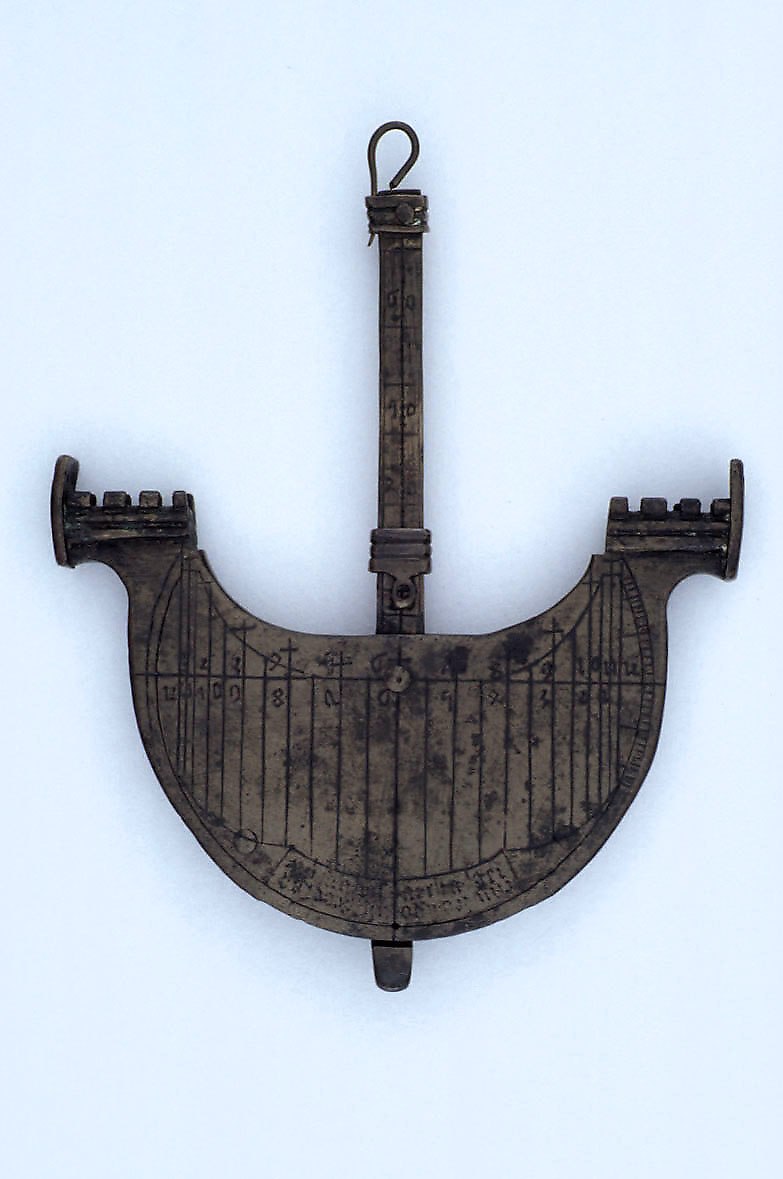
Navicula Dial
15th century ?
This brass navicula dial, inventory number 54358, represents an altitude sundial design known as the 'little ship of Venice'. The instrument measures 82 mm in width. The primary body is shaped like a vessel with a castellated poop and forecastle that integrate double pinhole sights. A central vertical mast functions…
Partial type record
Antiquorum
horological instruments
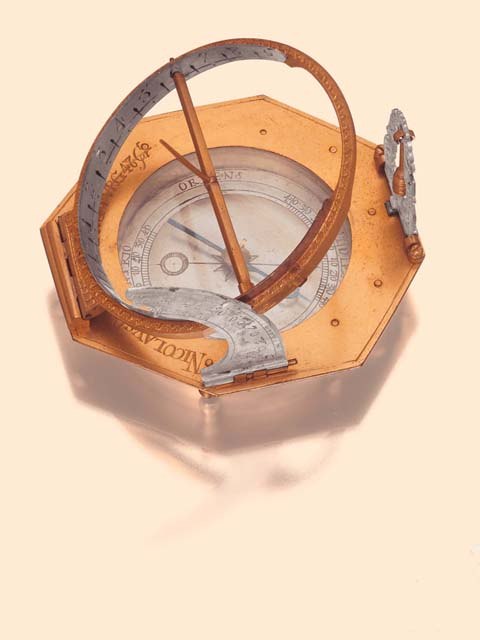
Nicolaus Rugendas Portable Equinoctial Augsburg Dial with Compass
circa 1730
This portable equinoctial Augsburg sundial is signed by Nicolaus Rugendas of Augsburg and dated by the source to circa 1730. Constructed with an octagonal gilt brass plate, it incorporates an inset central compass marked with Latin cardinal points and a revolving magnetic declination disc. The instrument features a…
Partial type record
© Museum of the History of Science, Oxford
horological instruments
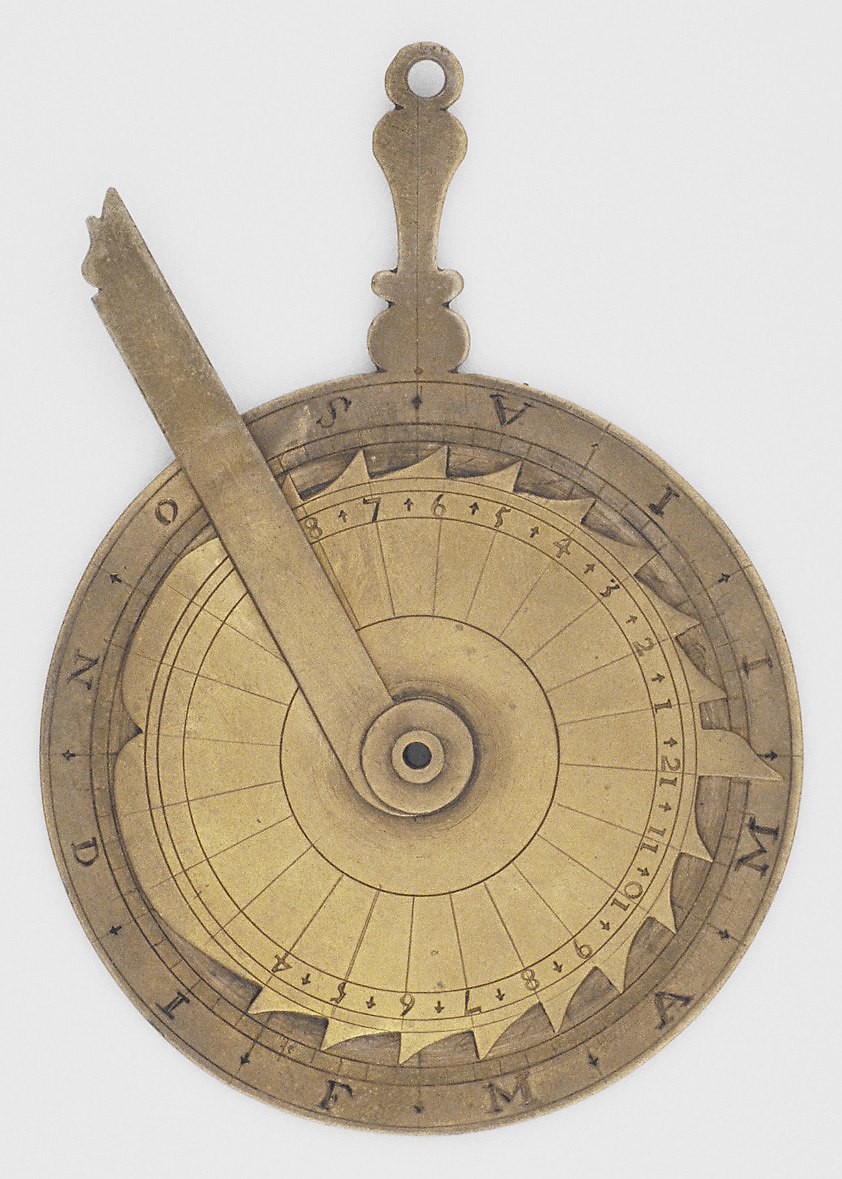
Nocturnal
16th century? (possibly 17th century)
This brass nocturnal, inventory number 37450 in the Museum of the History of Science, Oxford, is a circular time-measuring instrument measuring 87mm in length. It features an unsigned, unadorned design with a shaped and pierced handle for suspension. The primary side consists of a base plate inscribed with a date sc…
Partial type record
Museum of the History of Science, Oxford
horological instruments
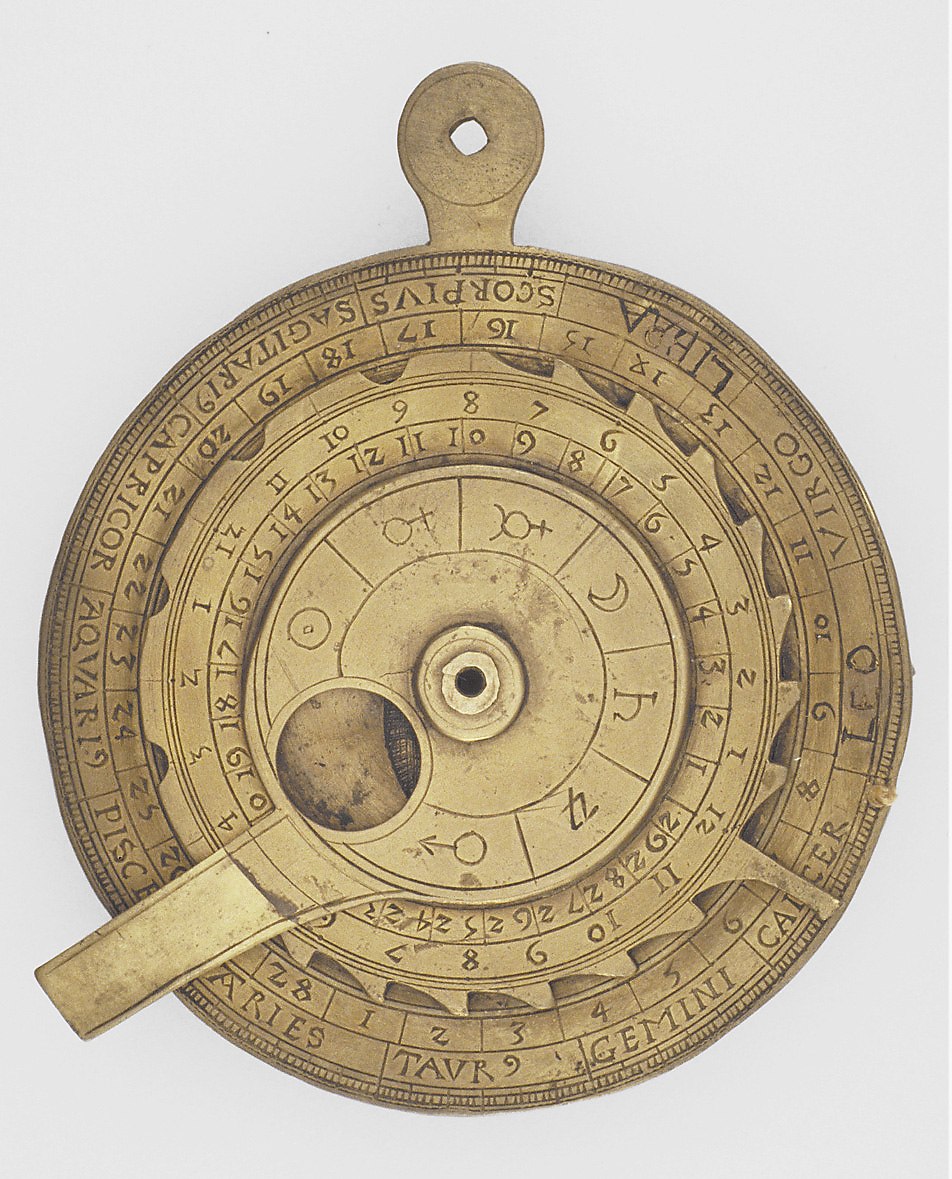
Nocturnal and Quadrant
1543
This 71 mm brass instrument, dated 1543 and identified as French, serves dual functions as both a nocturnal and a horary quadrant. The nocturnal side features a zodiac scale with constellations and a moveable volvelle disc. This disc includes an index arm, an hour scale marked 1 to 12 twice, and a moon-age scale. A…
Partial type record
Istituto e Museo di Storia della Scienza, Firenze
horological instruments
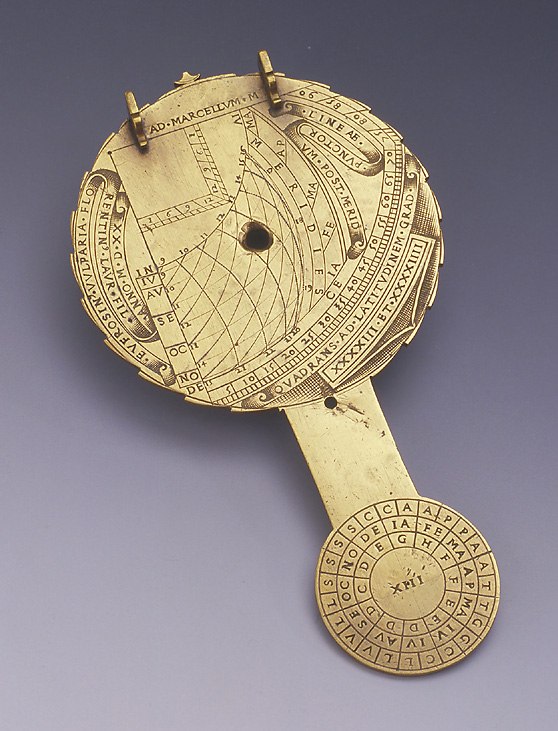
Nocturnal and Quadrant by Eufrosino della Volpaia
1520
This 1520 brass nocturnal and quadrant was created by the instrument-maker Eufrosino della Volpaia in Florence. The instrument consists of a circular disc joined to a handle that terminates in a smaller disc. The nocturnal face features five concentric rings and a central sighting hole. The second face includes an h…
Partial type record