Catalogue
Astrolabes, Dials and Instruments
Astrolabes, quadrants, astronomical compendia, portable dials and watchmakers' workshop tools used to find or keep time.
Catalogue entries (445)
Filter by era, country, maker or material337–384 of 445 entries
Istituto e Museo di Storia della Scienza, Firenze
horological instruments
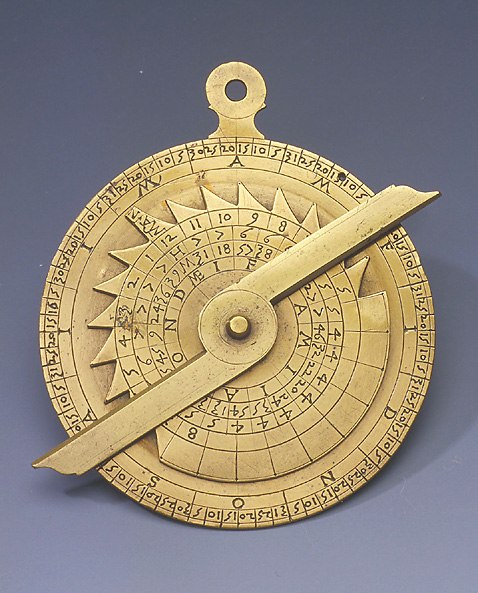
Nocturnal and Quadrant by Lorenzo della Volpaia
1511
This brass nocturnal and quadrant, measuring 77 mm in diameter, was created by Lorenzo della Volpaia in 1511 in Florence. The instrument consists of three superimposed discs engraved with various markings designed to calculate time at night by orienting the discs based on the current day and month. One side features…
Partial type record
Museum of the History of Science, Oxford
horological instruments
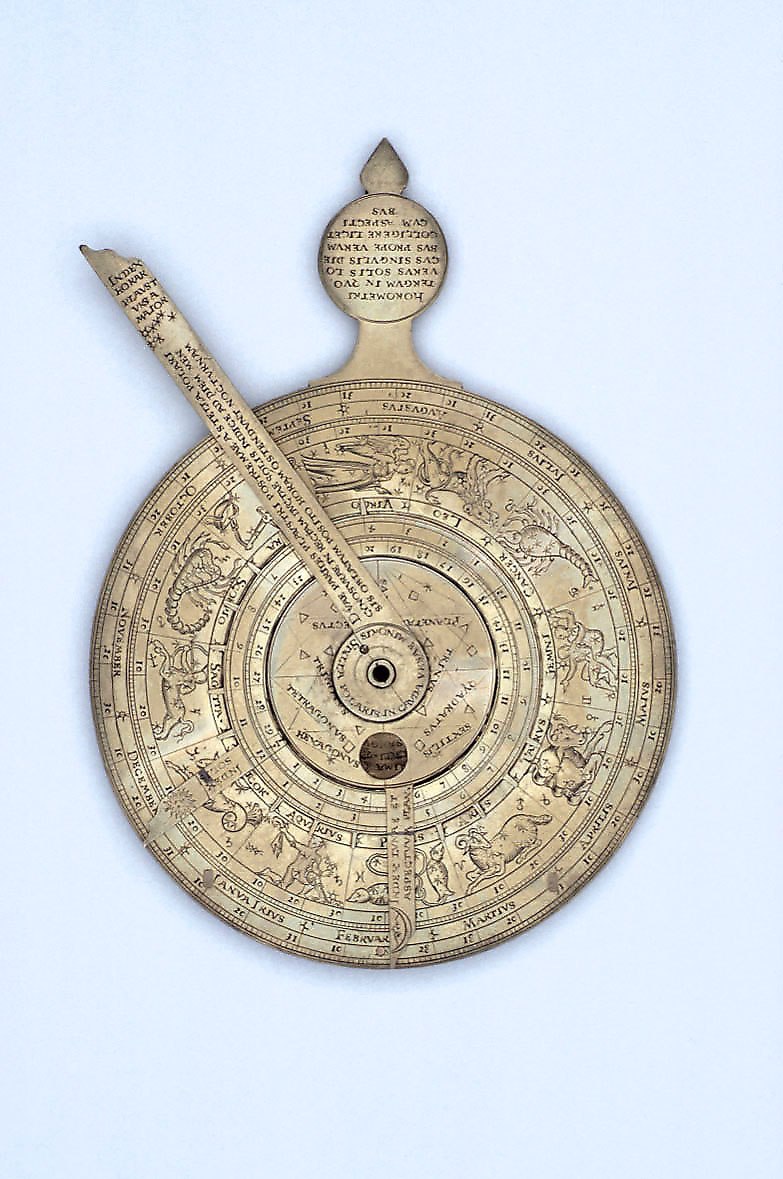
Nocturnal and Regiomontanus-type sundial
1557
This brass nocturnal and sundial, measuring 130 mm in diameter, was made by Caspar Vopel in 1557. The instrument is dual-sided, featuring a nocturnal on one face and a Regiomontanus-type altitude sundial on the other. It includes a central index arm for sighting the pole star, engraved with Latin inscriptions regard…
Partial type record
© British Museum, London
horological instruments
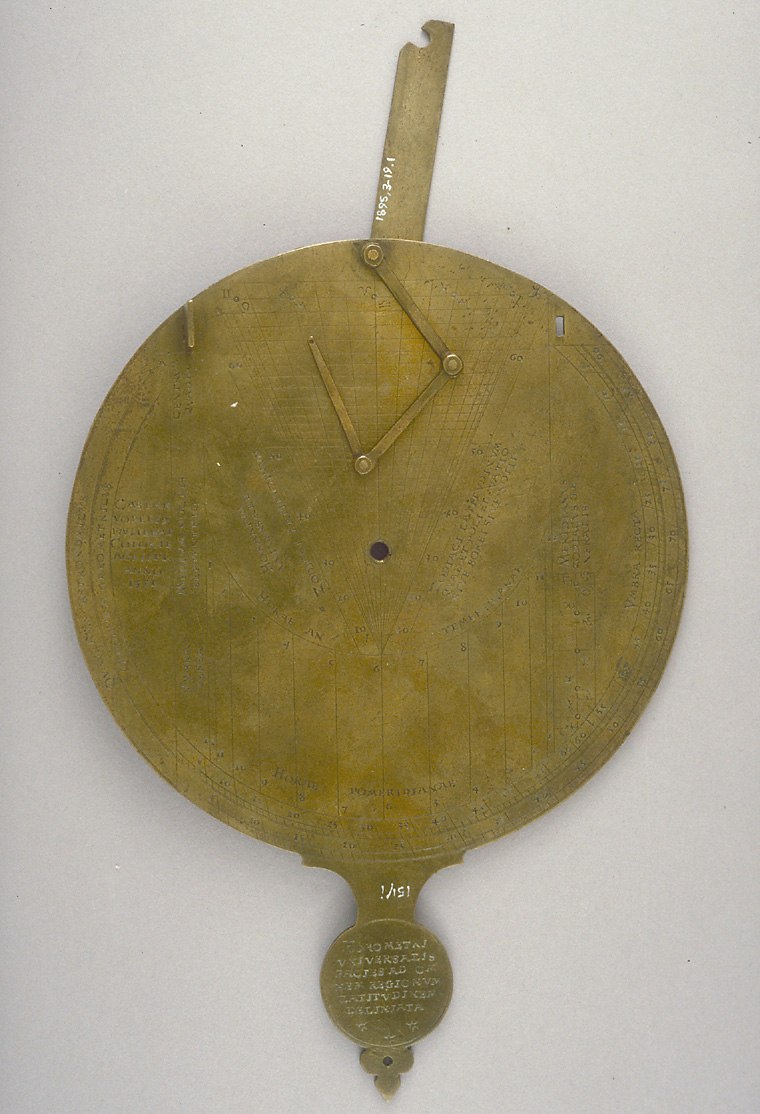
Nocturnal and Regiomontanus-type Sundial by Caspar Vopel
1551
This gilt brass nocturnal and sundial, measuring 180 mm in length, was created by Caspar Vopel in Cologne in 1551. It functions as a multipurpose timekeeping and astronomical tool, featuring an elaborate nocturnal on one side and a Regiomontanus-type dial on the reverse. The nocturnal incorporates a calendar scale,…
Partial type record
Museum of the History of Science, Oxford
horological instruments
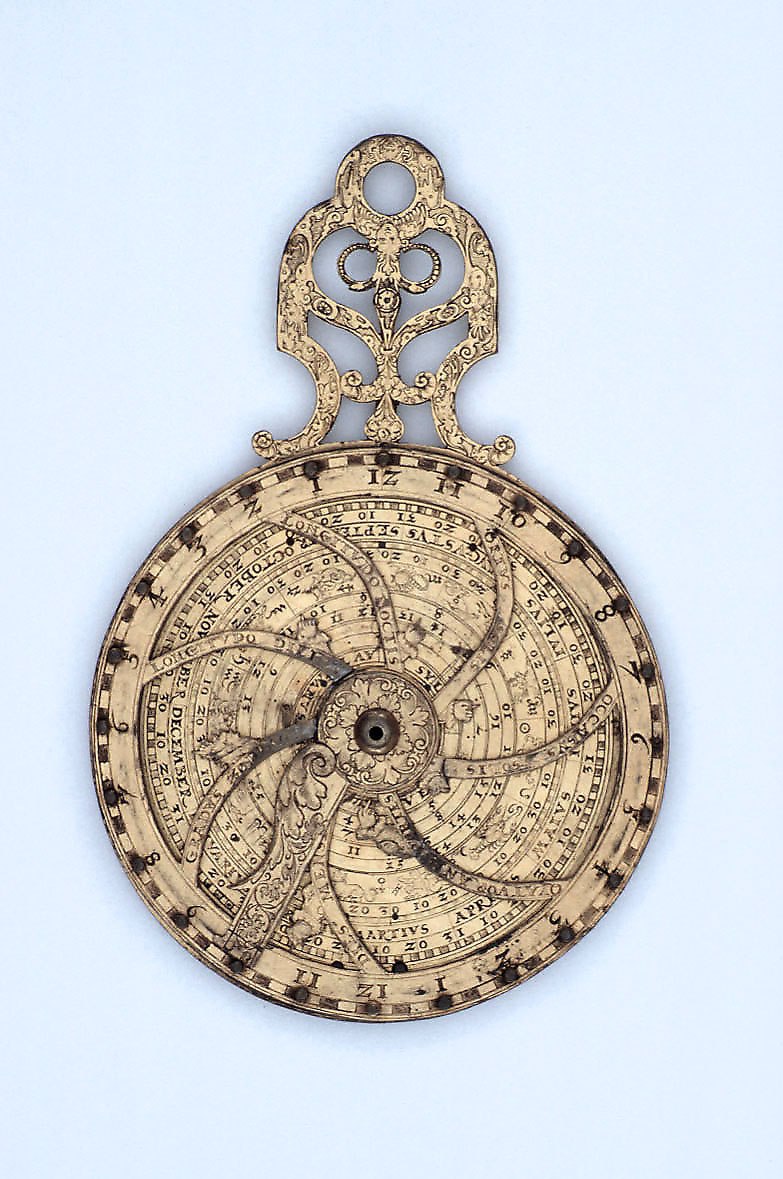
Nocturnal and Sundial
1587
This object is a gilt brass nocturnal and sundial, measuring 160 mm in length. It is signed 'G K?B' and dated 1587. While described as a single plate, the instrument serves multiple functions, including indicating the time at night, the time by day for four latitudes, and, for a single location, the sunrise, sunset,…
Partial type record
Museum of the History of Science, Oxford
horological instruments
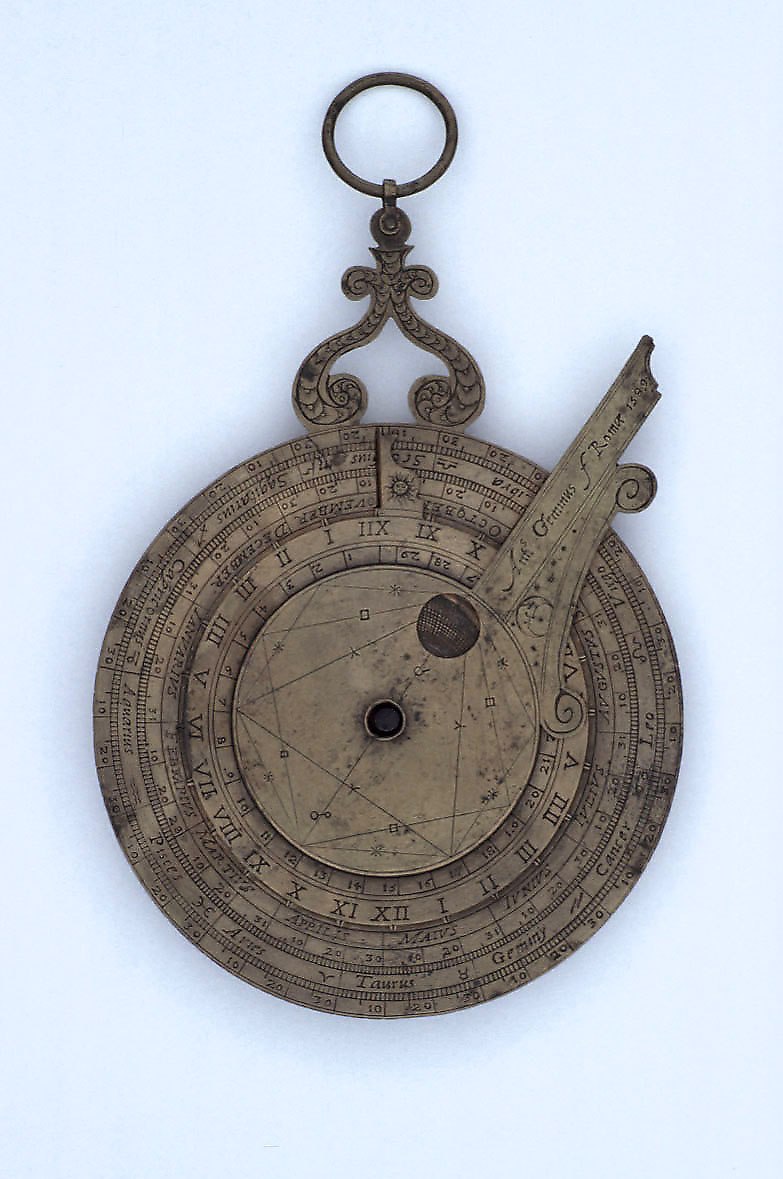
Nocturnal and Sundial by Antonius Geminus
1589
This brass nocturnal and altitude sundial, measuring 110 mm in diameter, is signed by Antonius Geminus and dated 1589. The instrument is designed to indicate time by day or night. The nocturnal side features a base plate with a zodiacal calendar, including constellations, month names in Latin, and day scales. It inc…
Partial type record
Istituto e Museo di Storia della Scienza, Firenze
horological instruments
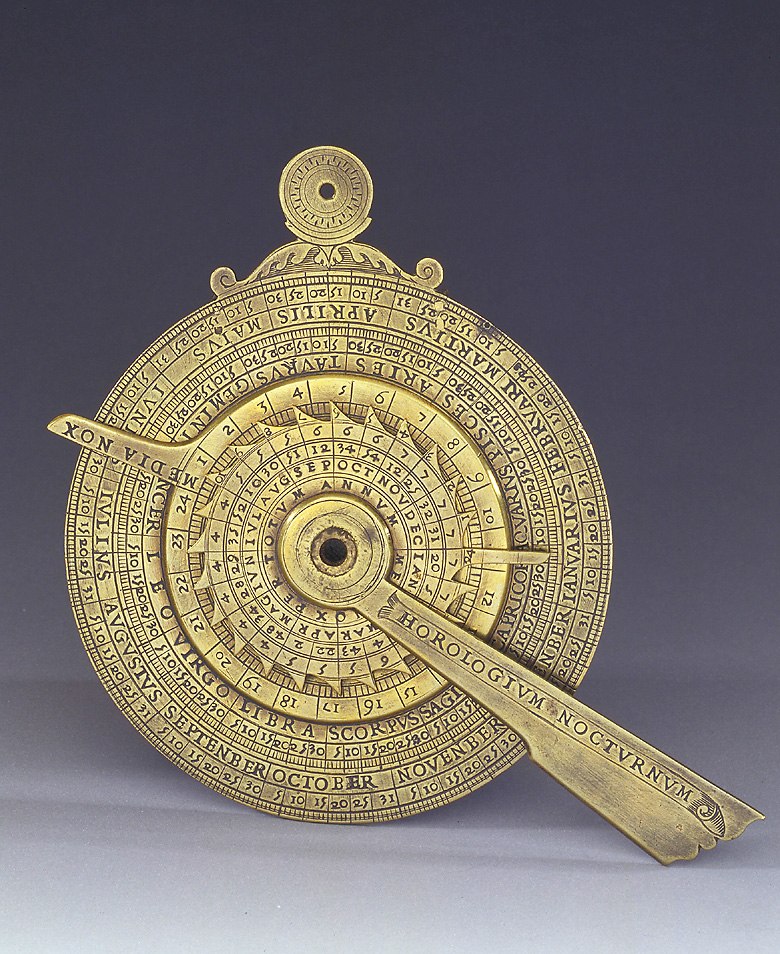
Nocturnal and sundial by Girolamo della Volpaia
1567
This brass nocturnal and sundial, measuring 97 mm in diameter, is signed by Girolamo della Volpaia and dated 1567. The instrument is constructed from three superimposed circular disks, with a central sighting hole and a rotating pointer. The nocturnal side features a zodiacal calendar scale and a volvelle consisting…
Partial type record
Museum of the History of Science, Oxford
horological instruments
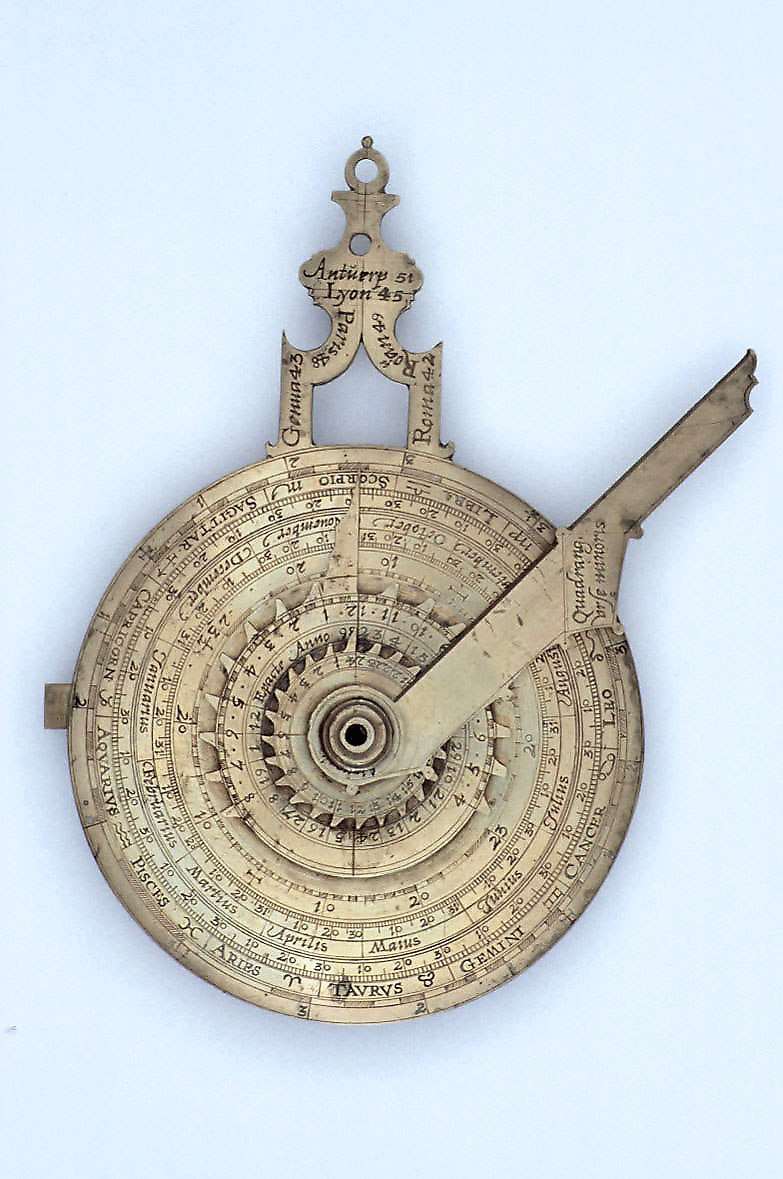
Nocturnal and Sundial by Michiel Coignet
1598
This brass instrument, 108 mm in diameter, is signed by the mathematician and instrument maker Michiel Coignet and dated 1598. It is a dual-purpose tool featuring a nocturnal on one side and an 'organum Ptolemai' altitude sundial on the reverse. The nocturnal base-plate contains latitude correction scales, a zodiaca…
Partial type record
Museum of the History of Science, Oxford
horological instruments
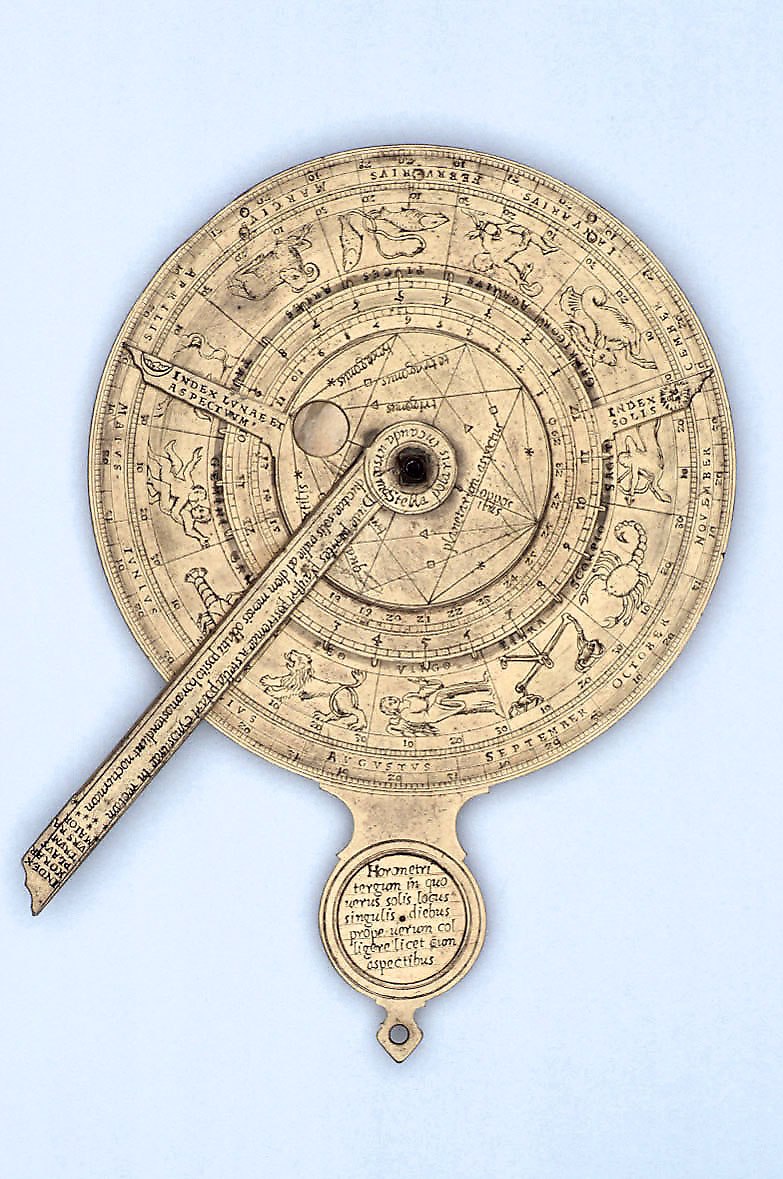
Nocturnal And Sundial by Ulrich Schniep
1581
This 132 mm diameter gilt brass instrument, signed by Ulrich Schniep and dated 1581, functions as both a nocturnal and a sundial. The nocturnal side includes a base plate featuring a zodiacal calendar, representations of constellations, and two moving volvelle plates with pointers for the sun and moon, including sca…
Partial type record
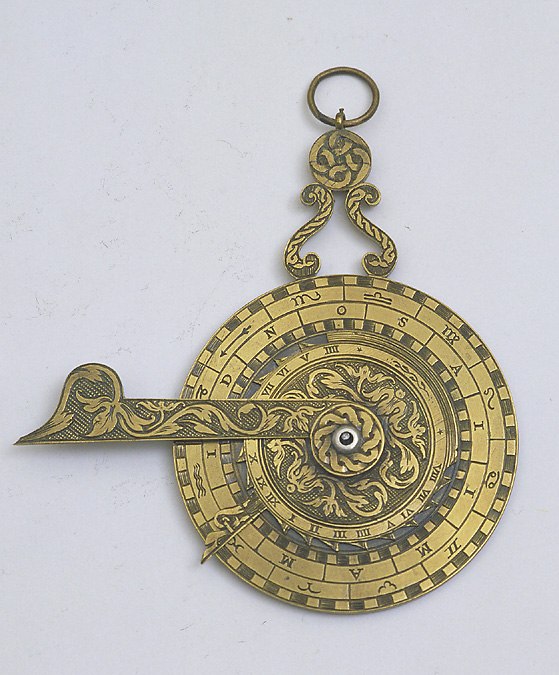
Istituto e Museo di Storia della Scienza, Firenze
horological instruments
Nocturnal and Sundial, 1554
1554
This combination instrument, dated 1554 and of French origin, measures 54 mm in diameter and is constructed from gilt brass. It integrates both a nocturnal and a sundial, consisting of two superimposed discs of varying diameters. The obverse features a central disc with an openwork scrolled mount and a suspension ri…
Partial type record
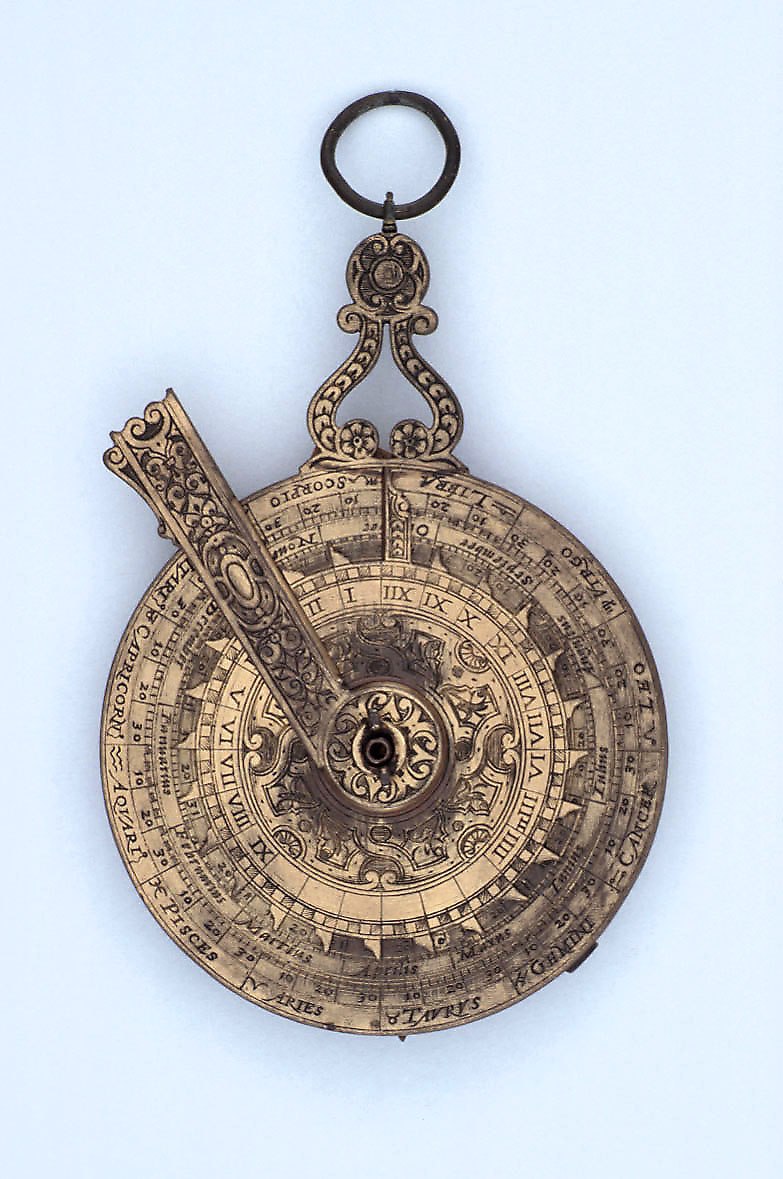
Museum of the History of Science, Oxford
horological instruments
Nocturnal and Sundial, 1578
1578
This unsigned gilt copper nocturnal and sundial, dating to 1578 and manufactured in Rome, measures 83 mm in diameter. The instrument features a base plate with a shaped, pierced handle and a suspension ring. The sundial face contains a base plate with a raised edge for latitude adjustment and a reversible circular p…
Partial type record
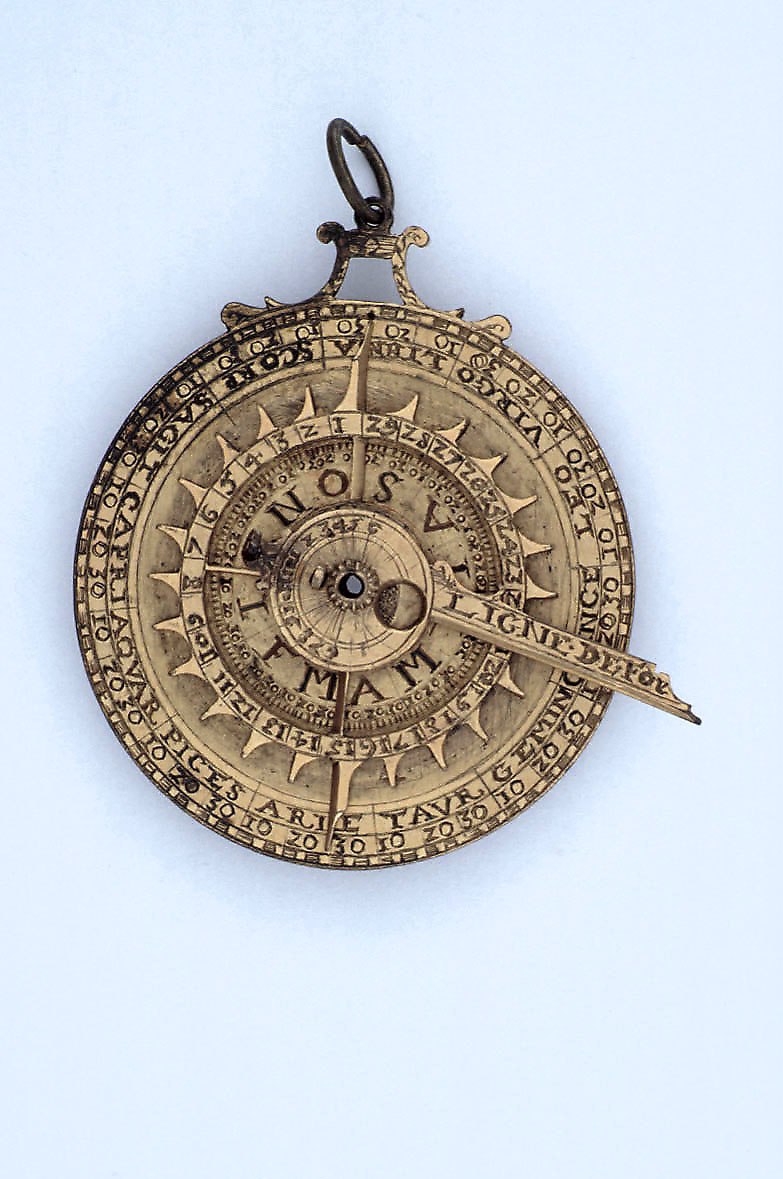
Museum of the History of Science, Oxford
horological instruments
Nocturnal and Sundial, circa 1600
circa 1600
This compact horological instrument, crafted from gilt brass and measuring 57 mm in diameter, is a multifunctional device combining two sundials, a nocturnal, and a lunar volvelle. The object is unsigned and attributed to French origin around 1600. The nocturnal face features an outer zodiac scale and a moveable rin…
Partial type record
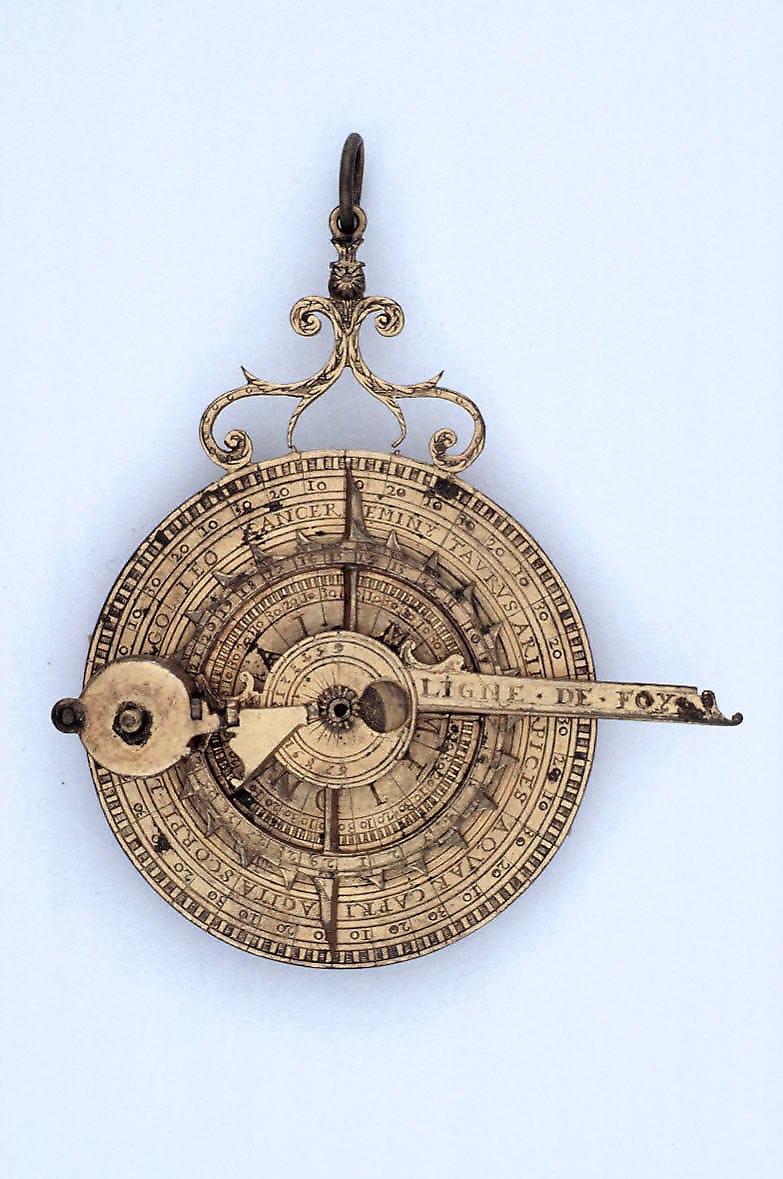
Museum of the History of Science, Oxford
horological instruments
Nocturnal And Sundial, circa 1600 (7f8528)
circa 1600
This gilt brass, 52 mm diameter instrument combines a nocturnal and a vertical disc sundial. It is unsigned and attributed to French manufacture circa 1600. The nocturnal face features an outer zodiac scale, a moveable ring divided into hours, a date scale, and a lunar volvelle with a scale for the age of the moon.…
Partial type record
© British Museum, London
horological instruments
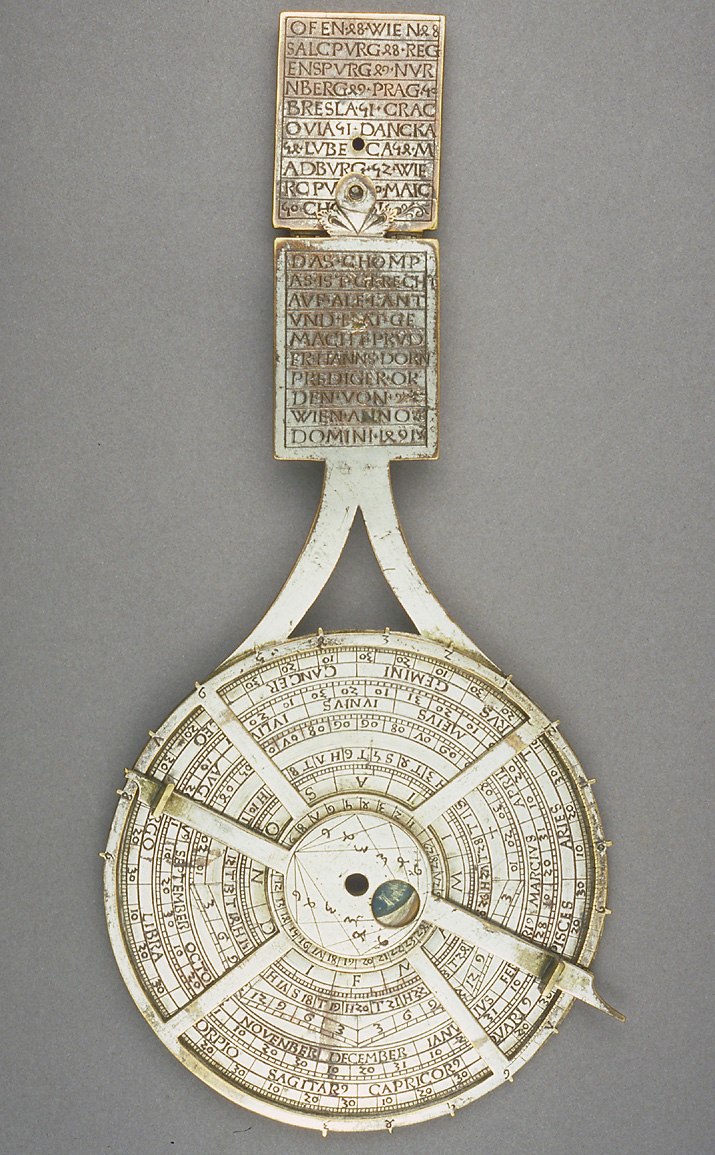
Nocturnal by Hans Dorn
1491
This 1491 nocturnal, crafted from silvered brass by the Dominican monk Hans Dorn in Vienna, is an early multi-functional scientific instrument. Measuring 121 mm in diameter, the object integrates a circular disc with an extension tapering into a V-shaped handle, which supports an attached box. The front of the prima…
Partial type record
British Museum, London
horological instruments
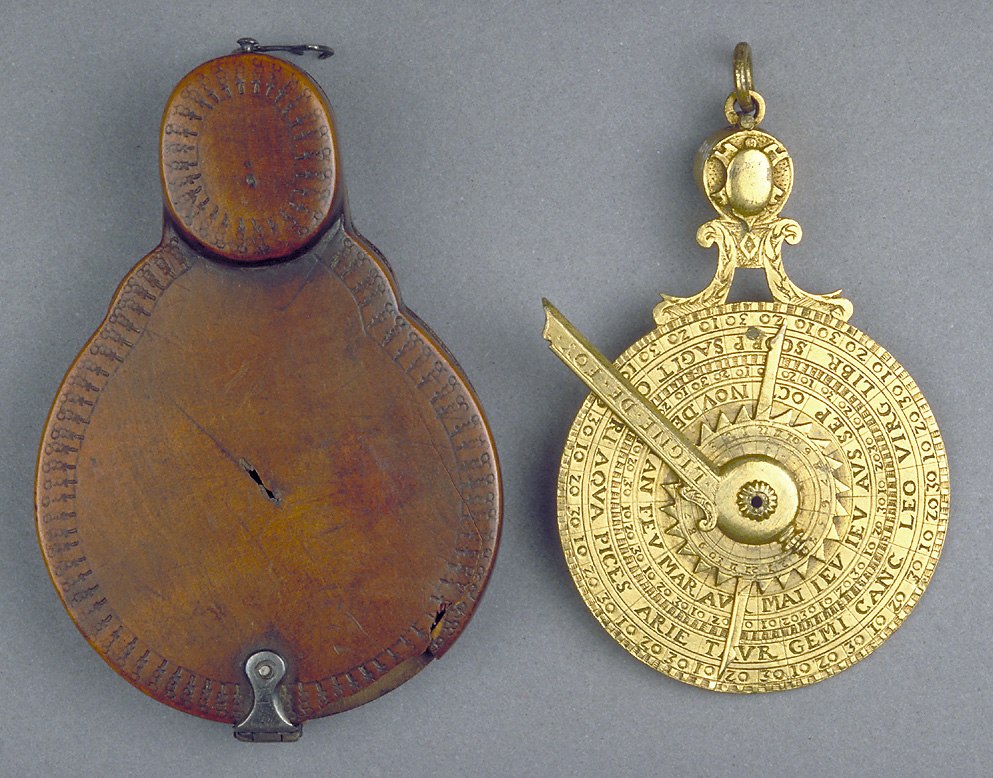
Nocturnal with horizontal dial and moondial
1588
This 52 mm diameter gilt brass nocturnal, dated 1588 and of French origin, serves as a multifunctional scientific instrument. It combines a nocturnal, a horizontal dial, and a moondial with lunar time conversion capability. The obverse features a horizontal dial with a folding gnomon calculated for a latitude of app…
Partial type record
© British Museum, London
horological instruments
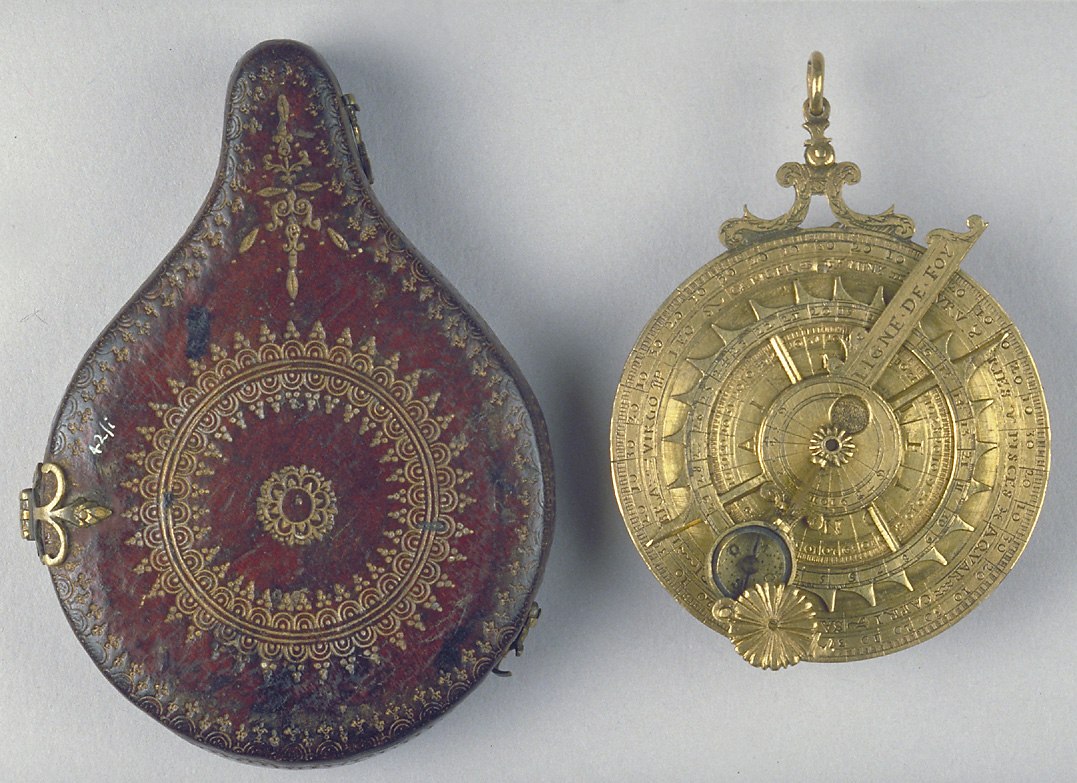
Nocturnal with sun and moon dial
Late 16th century ?
This gilt brass nocturnal, measuring 59 mm in diameter, is an unsigned and undated instrument held by the British Museum. It is attributed to France and potentially the late 16th century based on stylistic and linguistic comparisons. The instrument serves multiple functions, incorporating a nocturnal, a horizontal s…
Partial type record
History of Science Museum, University of Oxford
horological instruments
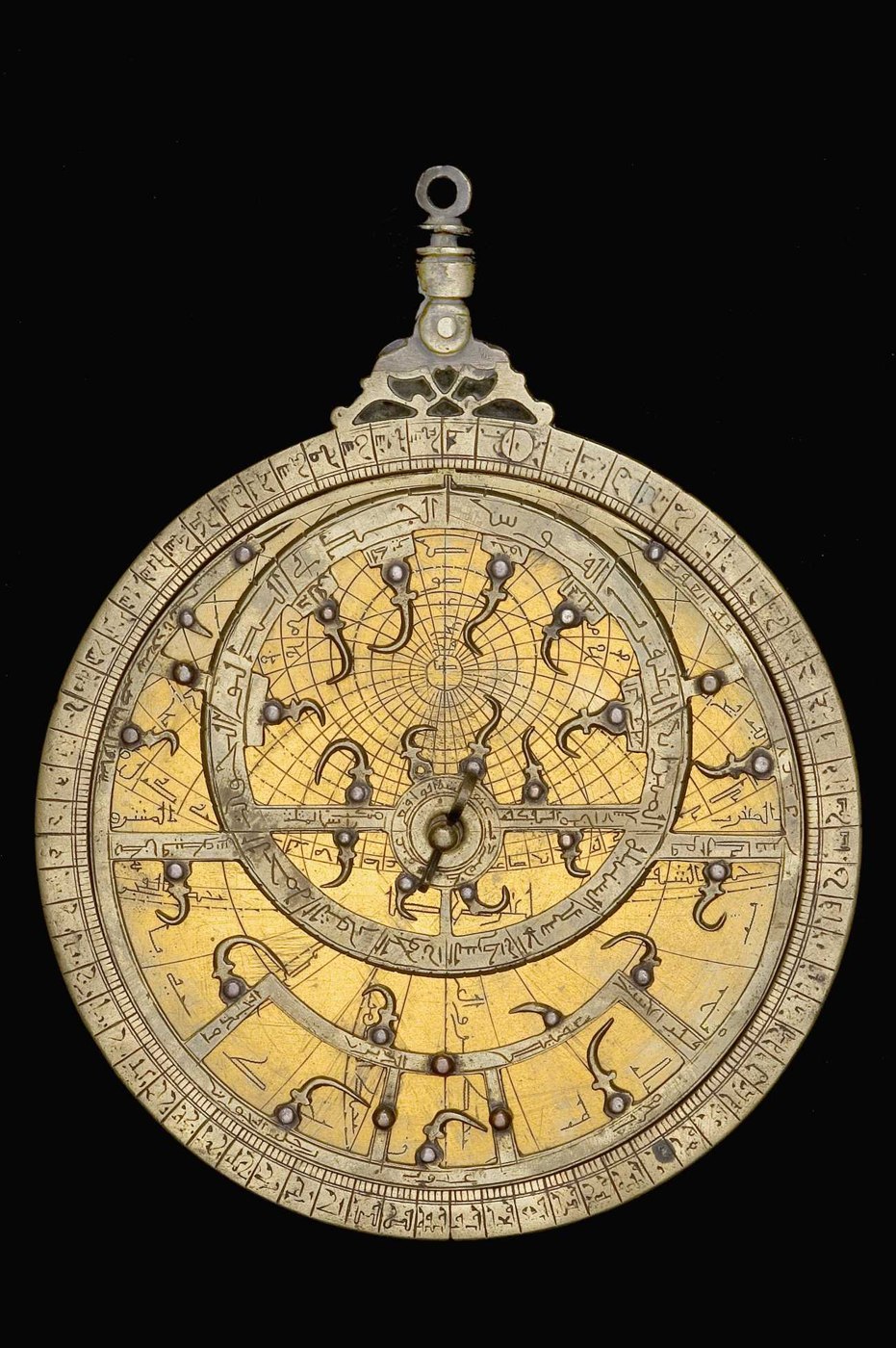
North African Astrolabe
14th century
This brass astrolabe, catalogued under inventory number 53556, dates to the 14th century and is attributed to North Africa. The instrument features a pierced throne with an integrated base and a rotating pin-type shackle. The mater and limb are constructed from two soldered pieces of brass. The back of the instrumen…
Partial type record
History of Science Museum, University of Oxford
horological instruments
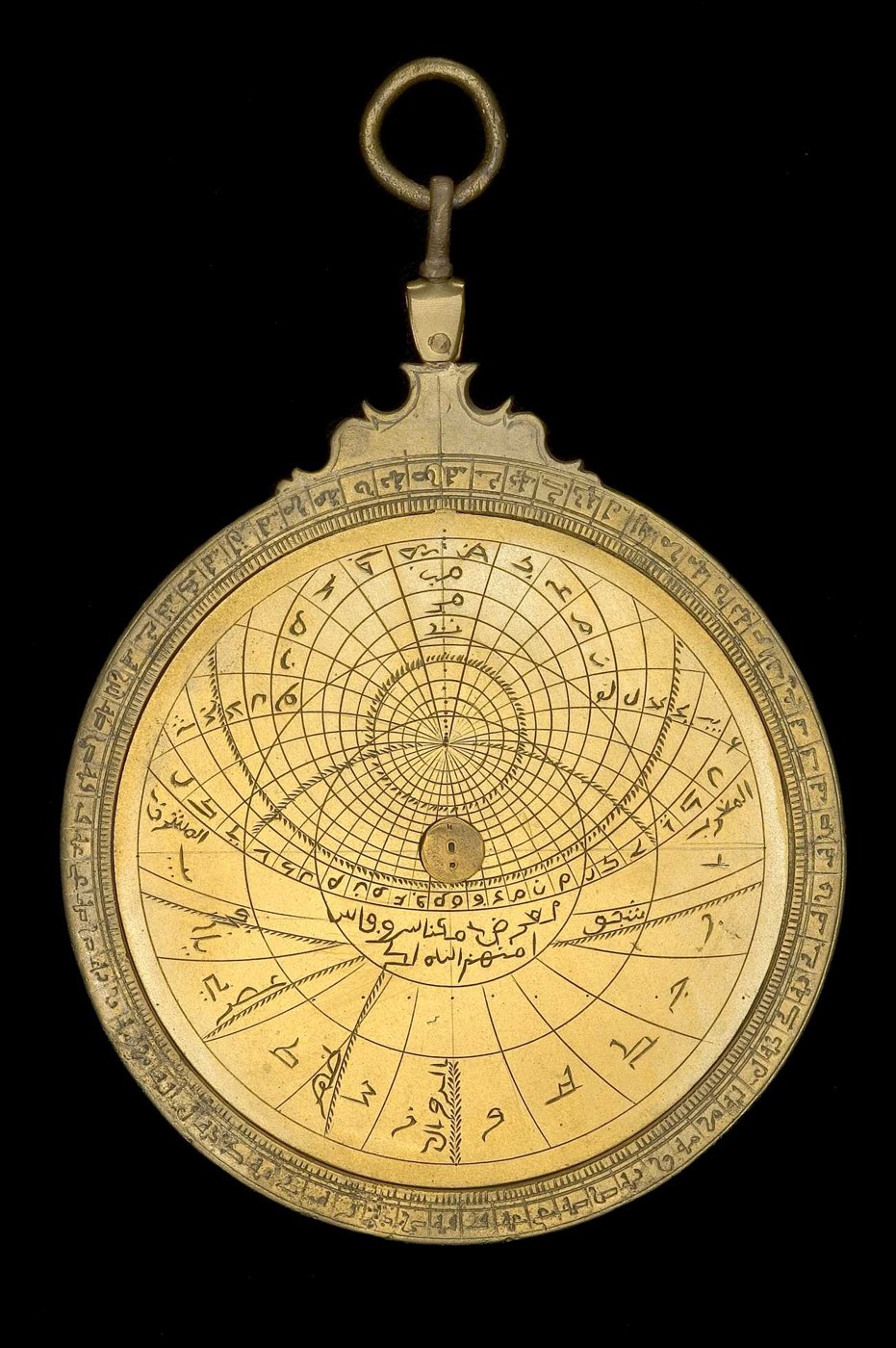
North African Astrolabe, late 18th century
late 18th century
This planispheric astrolabe, catalogued under inventory number 40407, is a brass scientific instrument attributed to North Africa and dating to the late 18th century. The instrument features a simple-type brass throne with an integrated base, a simple round-section ring, and an eye-bolt shackle. The mater and limb c…
Partial type record
History of Science Museum, University of Oxford
horological instruments
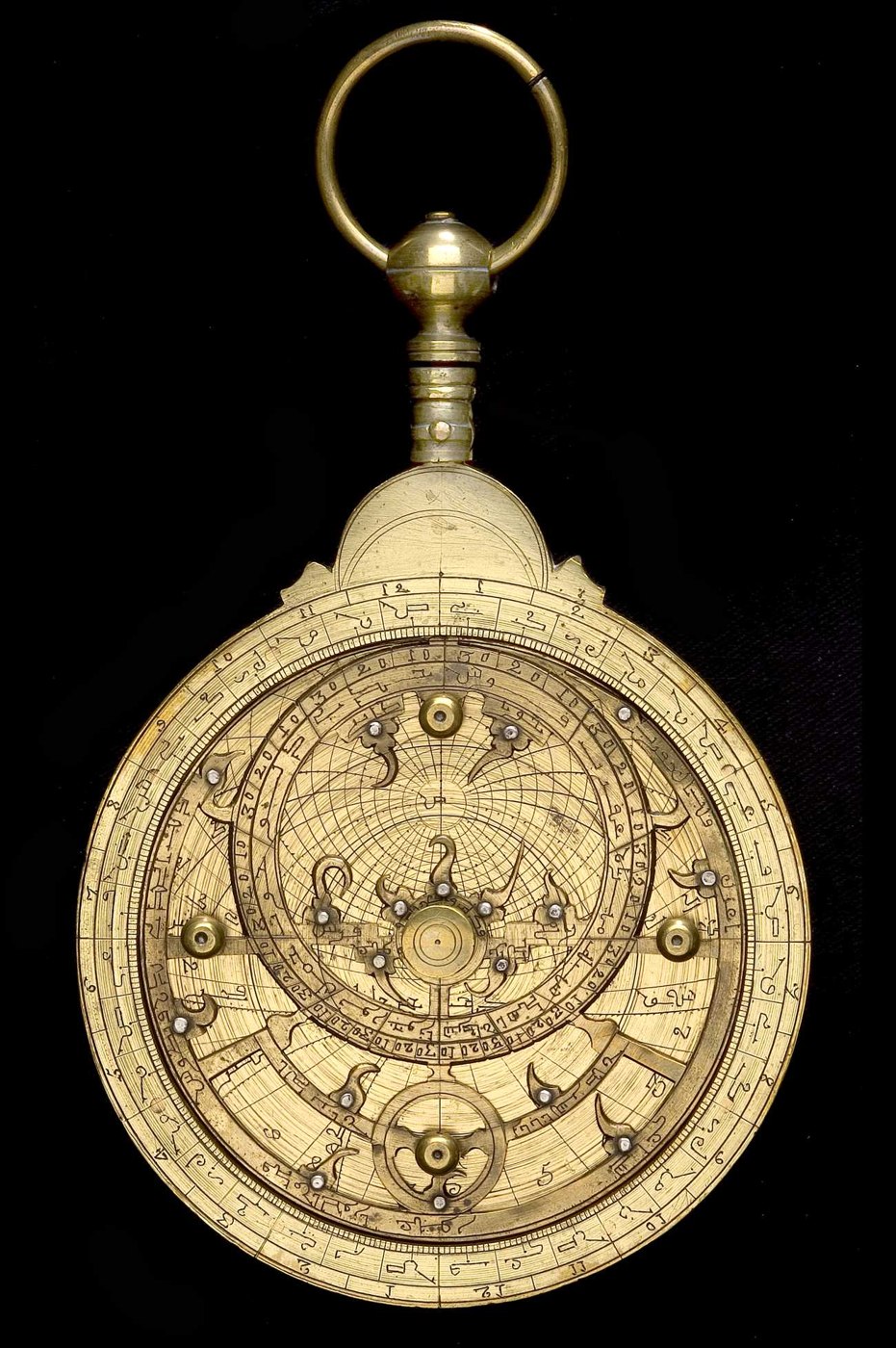
North African Astrolabe, late 19th century
late 19th century
This brass astrolabe is dated to the late 19th century and attributed to North African origin. It features a simple throne with an integrated base, a round-section ring, and a rotating pin-type shackle. Notably, the base of each star pointer is embellished with a silver stud, and the underside of the rete bears the…
Partial type record
Museum of the History of Science, Oxford
horological instruments
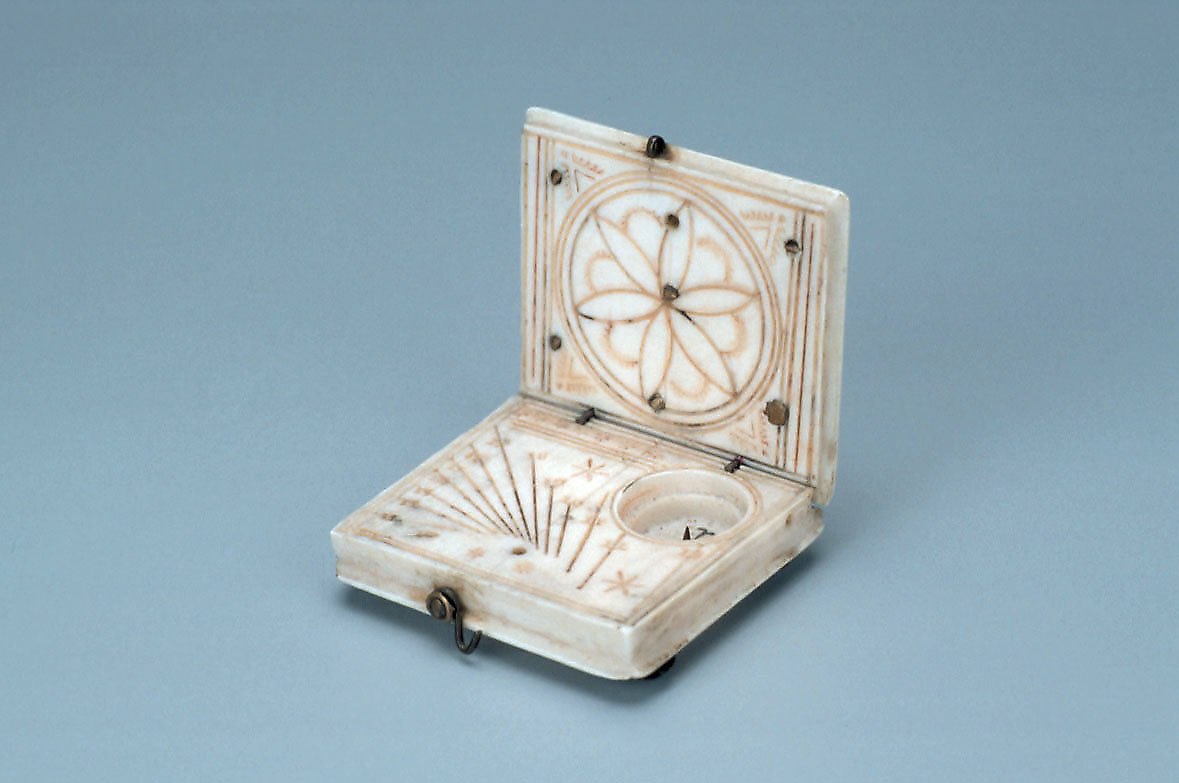
Nuremberg Diptych Dial
circa 1600
This diptych dial is a portable sundial originating from Nuremberg, dated to approximately 1600. It measures 28 x 28 x 7 mm, dimensions that establish it as one of the smallest surviving examples of its type and the smallest in the collection of the Museum of the History of Science, Oxford. The object is constructed…
Partial type record
Museum of the History of Science, Oxford
horological instruments
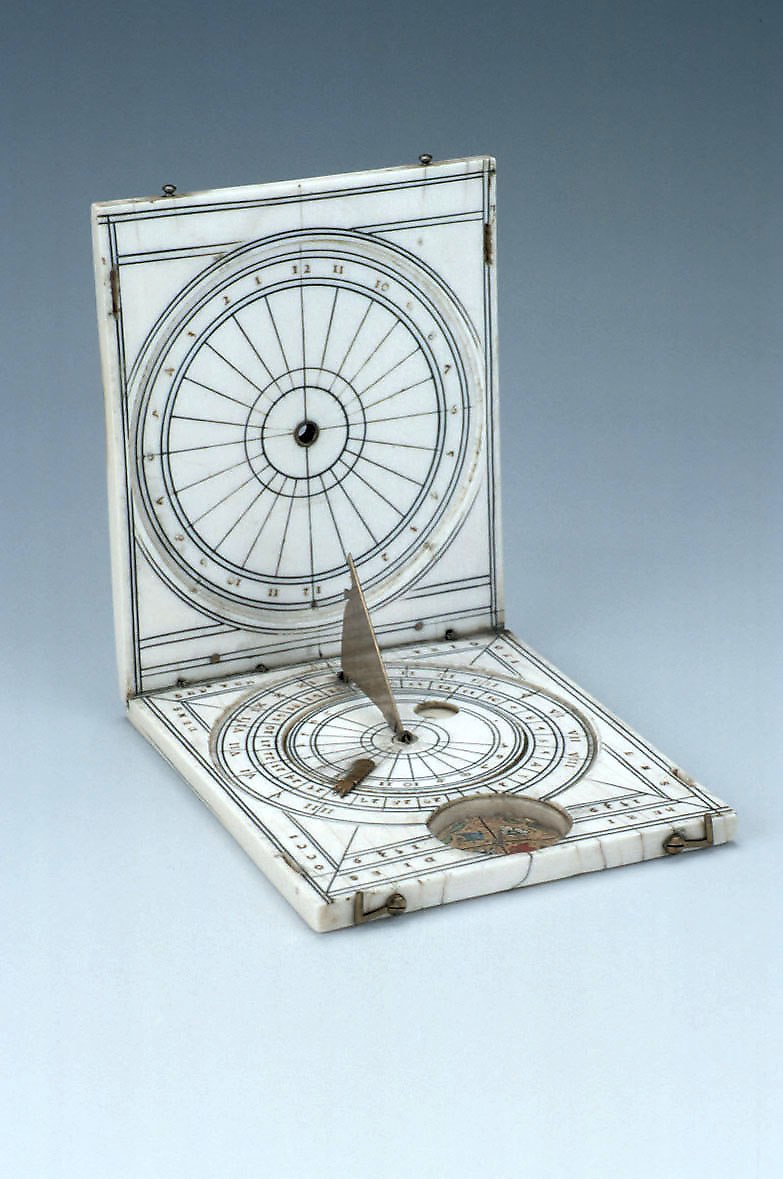
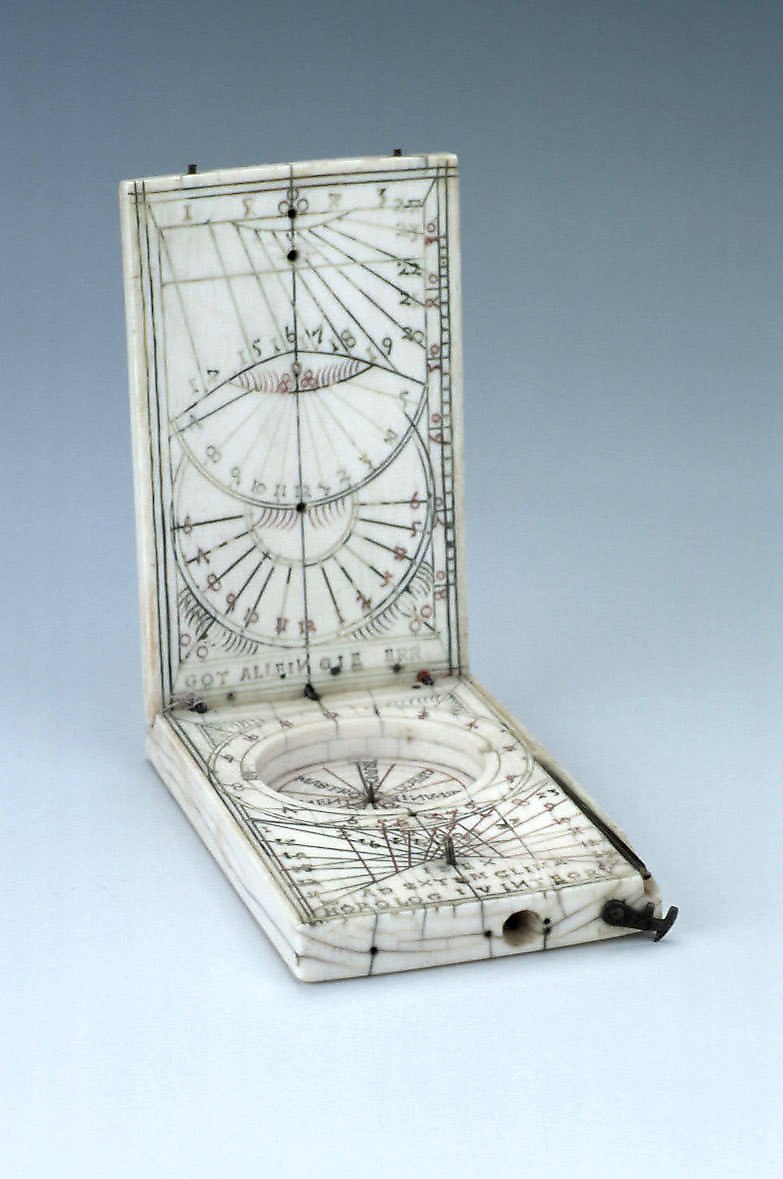
Nuremberg Diptych Dial, 1539
1539
This Nuremberg diptych dial, held by the Museum of the History of Science, Oxford, is constructed from ivory and gilt brass. Measuring 93 x 111 x 12 mm, the object features an upper and lower leaf configuration. The upper leaf includes a nocturnal on the outer face and a pin gnomon dial on the inner side. The lower…
Partial type record
Museum of the History of Science, Oxford
horological instruments
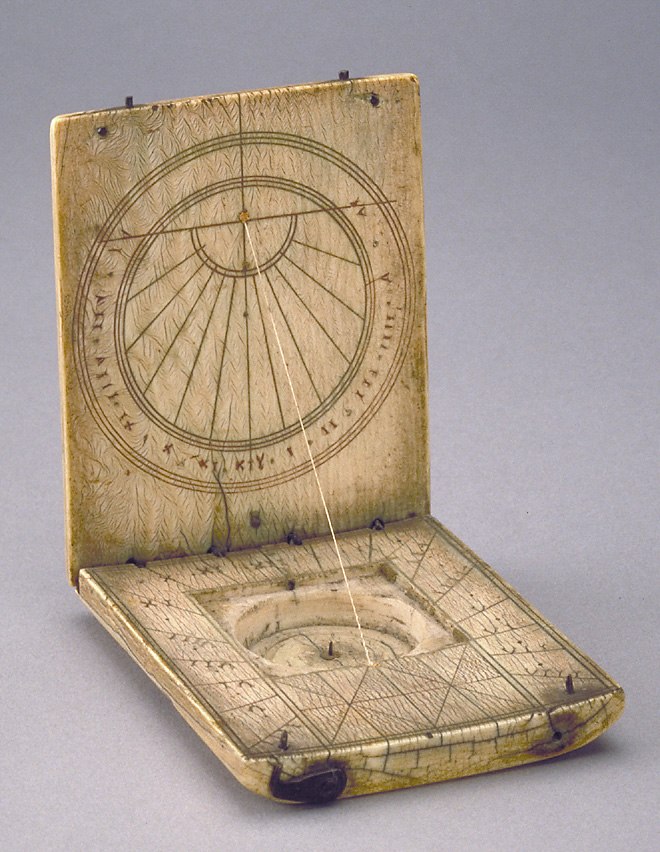
Nuremberg Diptych Dial, 1543
1543
This diptych dial is constructed from ivory and brass, measuring 55 x 87 x 14 mm. Produced in Nuremberg in 1543, it features multiple sundial configurations across its leaves. The outer face of the upper leaf contains a table of latitudes for 14 towns and a pin gnomon dial. The inner side of the upper leaf presents…
Partial type record
British Museum, London
horological instruments
Nuremberg Diptych Dial, Late 15th century
Late 15th century
This unsigned diptych sundial is attributed to Nuremberg and dates to the late 15th century. It is constructed from ivory featuring a distinct herring-bone grain, measuring 95 by 75 by 15 mm. The instrument consists of two leaves hinged together. The upper leaf displays a relief carving of St. John the Baptist on it…
Partial type record
Lempertz
horological instruments
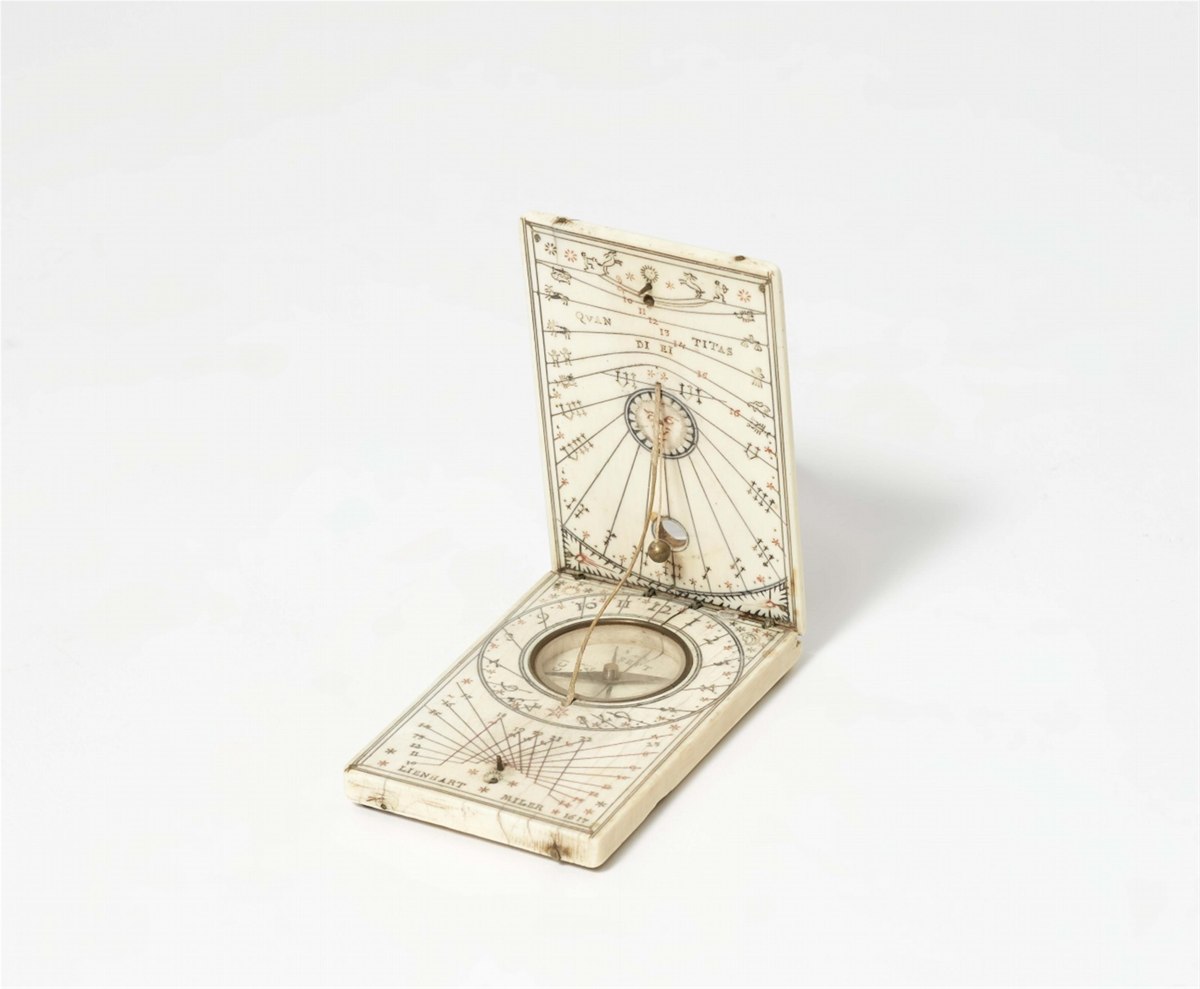
Nuremberg ivory folding sundial and compass by Lienhart Miler
1617
This diptych sundial and compass was produced in Nuremberg and is dated 1617. Crafted from carved and painted ivory with metal mountings, gilding, and a hemp cord, the instrument consists of two rectangular hinged leaves. The interior vertical face displays sundial calibrations, while the horizontal base leaf integr…
Partial type record
Antiquorum
horological instruments
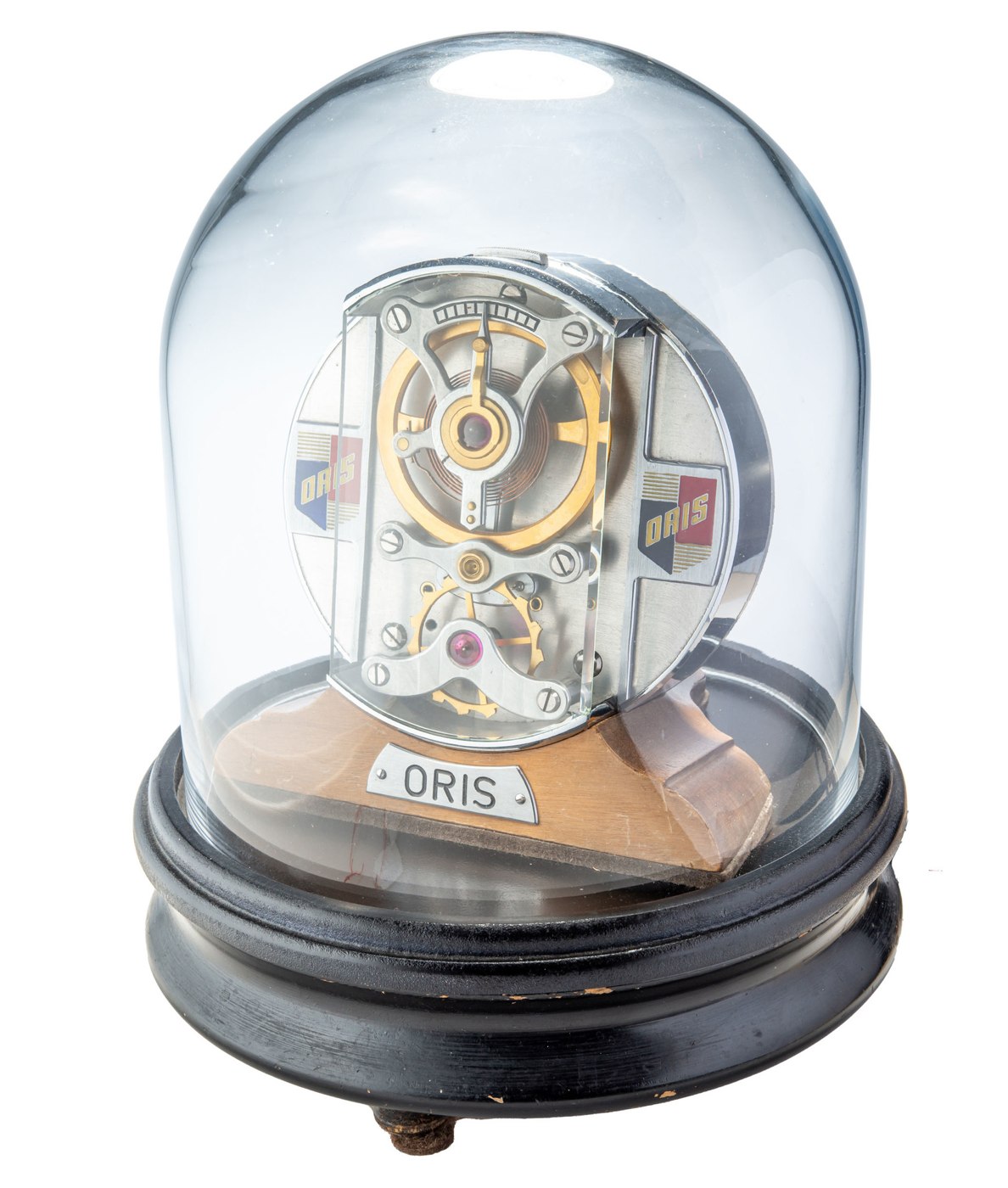
Oris Pin-Lever Escapement Demonstration Model
circa 1940-1950
Constructed from chromium-plated metal, the piece features an enlarged movement architecture complete with a monometallic balance wheel and a flat hairspring. A manual stop-balance mechanism is positioned at the 12 o'clock location to arrest the motion of the balance. The unit is powered by an electric drive system…
Partial type record
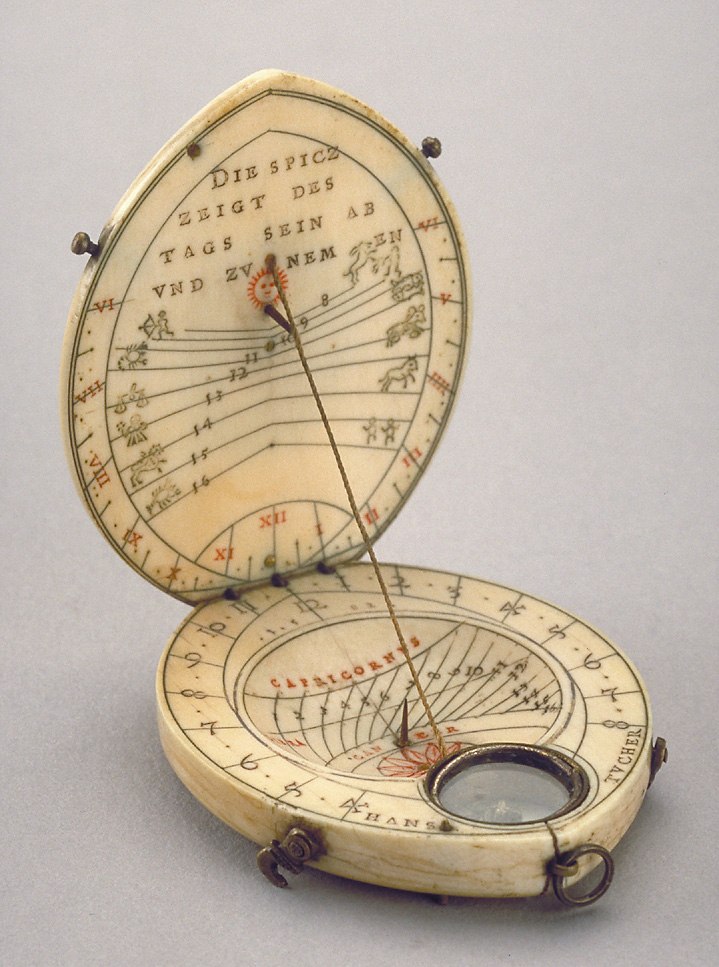
© British Museum, London
horological instruments
Oval Diptych Dial by Hans Tucher
1582
This oval diptych dial, constructed from ivory and brass, measures 65 x 53 x 13 mm and dates to 1582. It was signed by Hans Tucher in Nuremberg. The instrument features a suspension ring for potential use as personal jewellery. The dial incorporates a lunar volvelle, a vertical string gnomon dial, a horizontal strin…
Partial type record
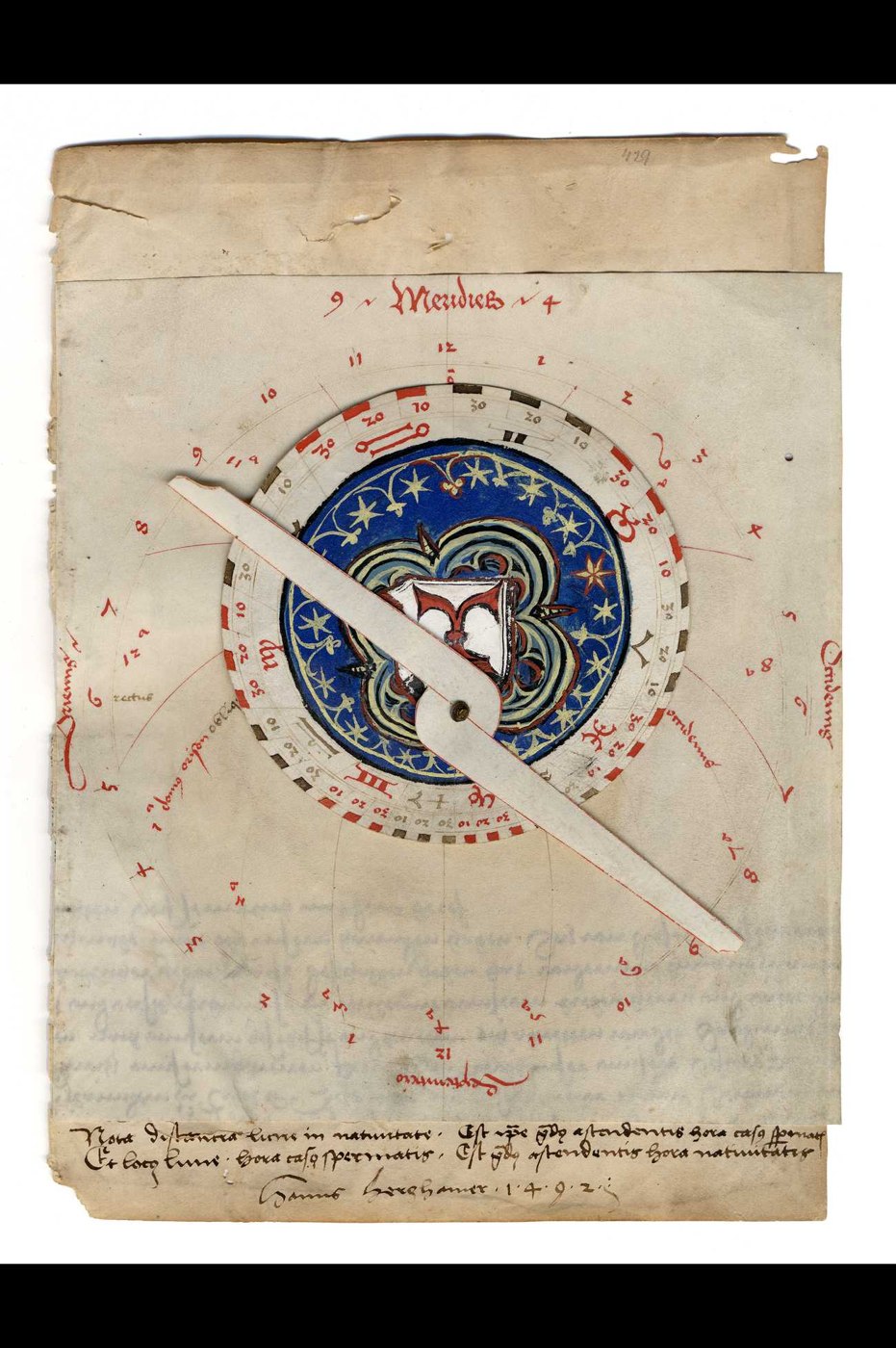
History of Science Museum, University of Oxford
horological instruments
Paper Astrolabe by Hans Herghamer
1492
This astrolabe, dated 1492 and signed by Hans Herghamer, is constructed from ephemeral materials, consisting of vellum pasted onto a paper base with a matching paper rule. Unlike traditional metal astrolabes, it features a paper volvelle representing the ecliptic circle rather than a conventional rete, centered by a…
Partial type record
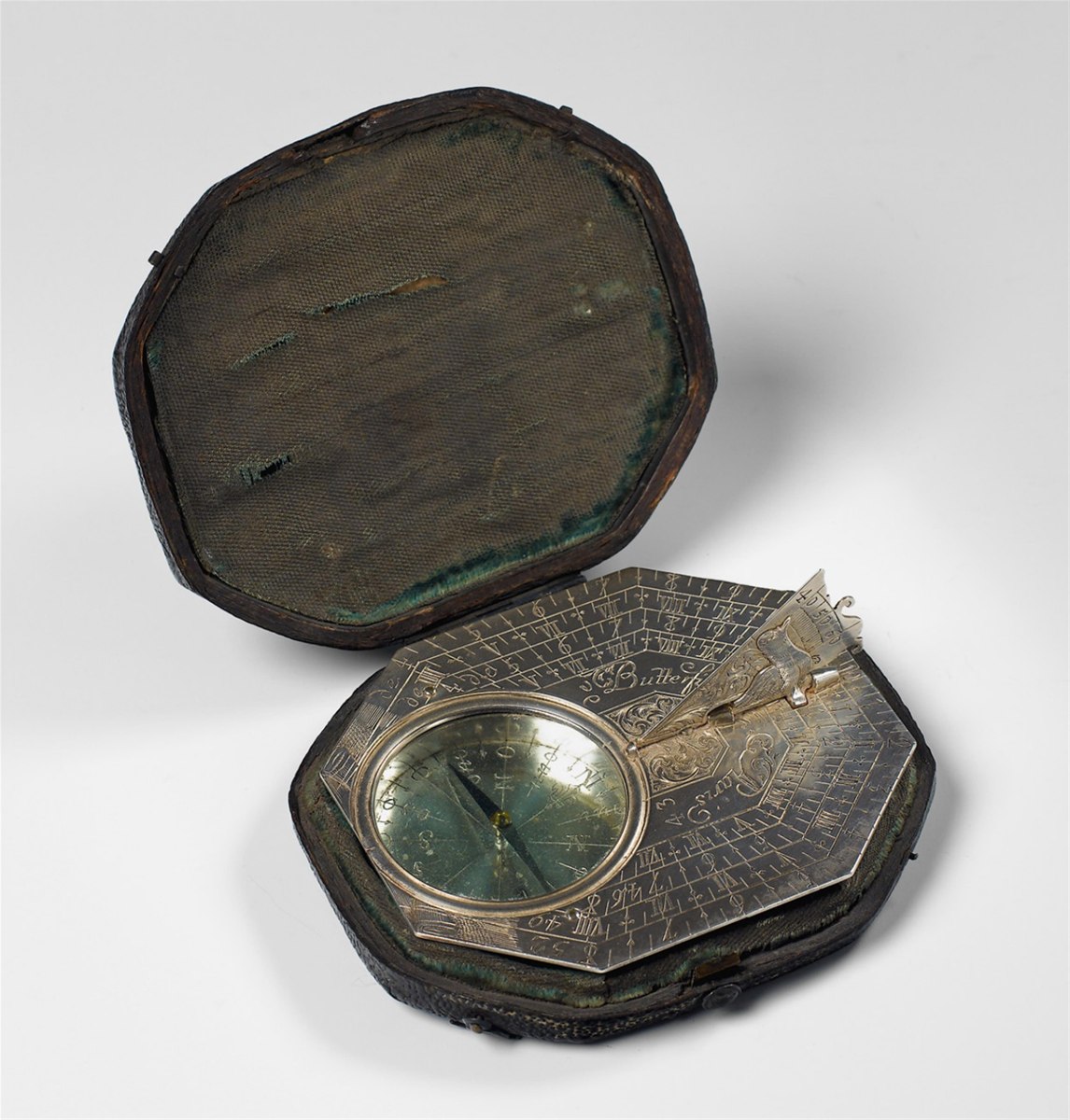
Lempertz
horological instruments
Parisian silver Butterfield travel sundial
Last quarter 18th C.
This lot features an octagonal Parisian silver travel sundial signed 'Butterfield AParis' on the plaque, dated by the auction house to the last quarter of the 18th century. Named after Michael Butterfield, instruments of this type display polhodes between 40° and 60° and are engraved with the latitudes of 31 French…
Partial type record
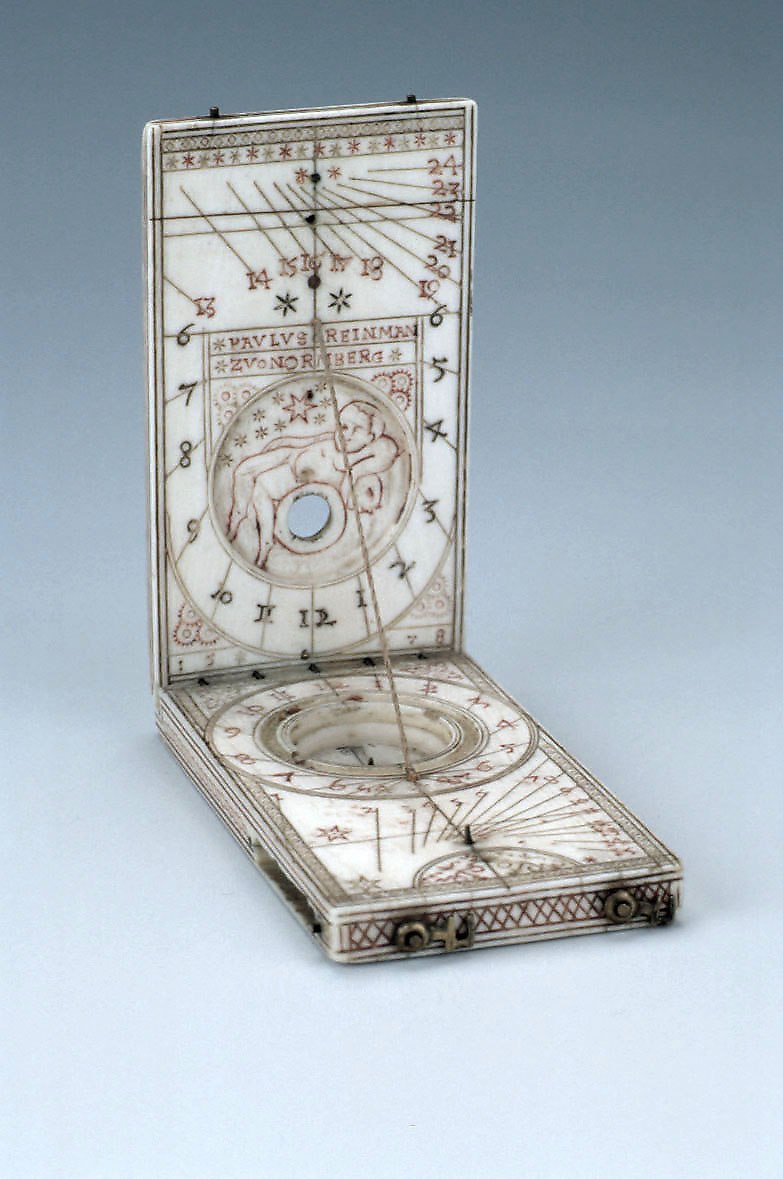
Museum of the History of Science, Oxford
horological instruments
Paul Reinmann Diptych Dial
1578
This diptych dial is constructed from ivory and brass, measuring 43 by 80 by 11 mm. It is signed by Paul Reinmann and dated 1578, originating from Nuremberg. The instrument features a multi-dial configuration. The upper leaf includes an outer wind rose and an inner pin gnomon dial for Italian hours, alongside a stri…
Partial type record
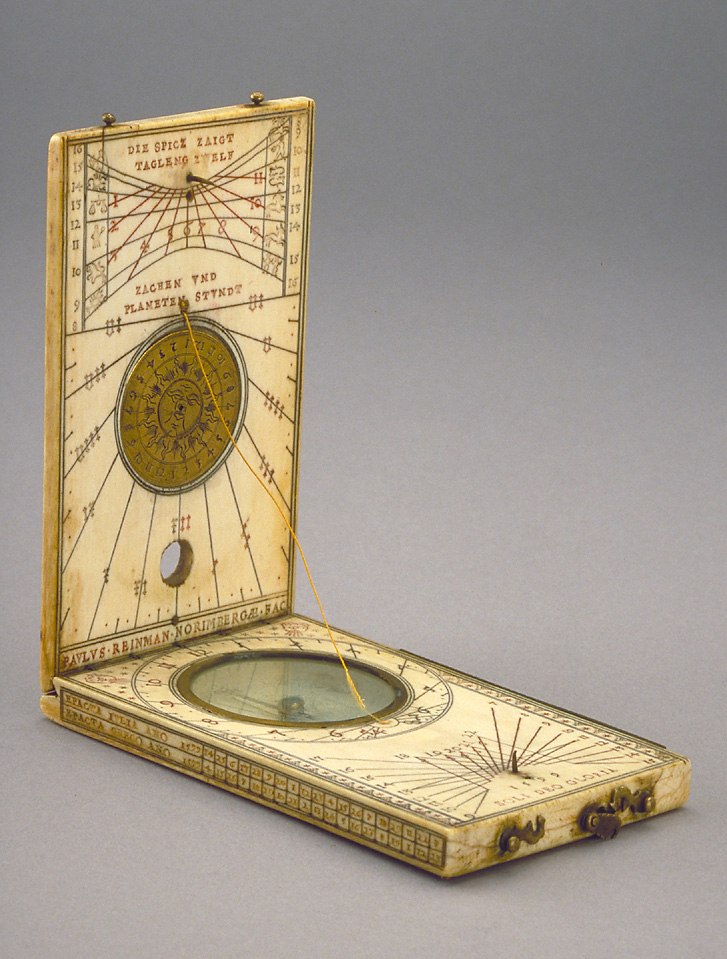
British Museum, London
horological instruments
Paul Reinmann Diptych Dial, 1599
1599
This diptych dial, created in 1599 in Nuremberg by Paul Reinmann, is constructed from ivory and brass with dimensions measuring 113 x 65 x 14 mm. The instrument features red and black filled stamped inscriptions and brass clasps for securing the closed or open positions. The object incorporates a range of timekeepin…
Partial type record
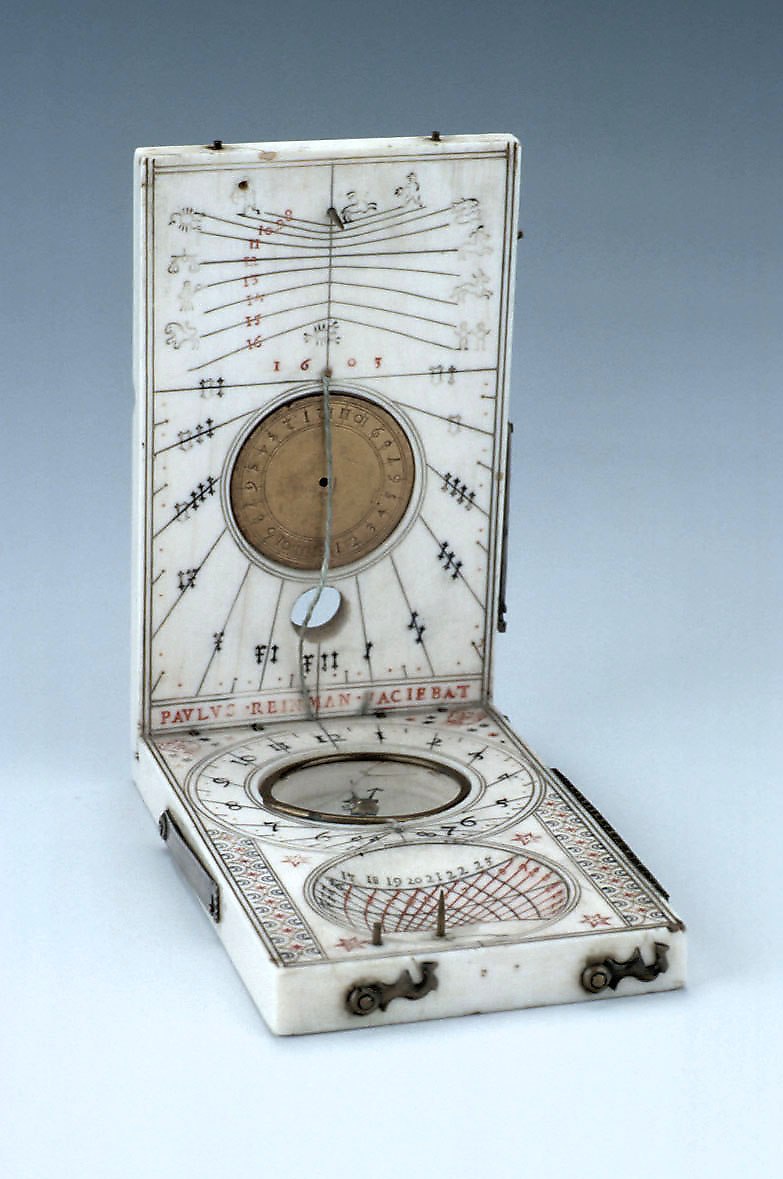
Museum of the History of Science, Oxford
horological instruments
Paul Reinmann Diptych Dial, 1603
1603
This diptych dial, dated 1603 and signed by Paul Reinmann, is constructed from ivory and brass and measures 55 x 96 x 15 mm. The instrument consists of two leaves hinged together, featuring multiple integrated timekeeping systems, including string gnomon dials, a pin gnomon dial, an equatorial dial, and a scaphe gno…
Partial type record
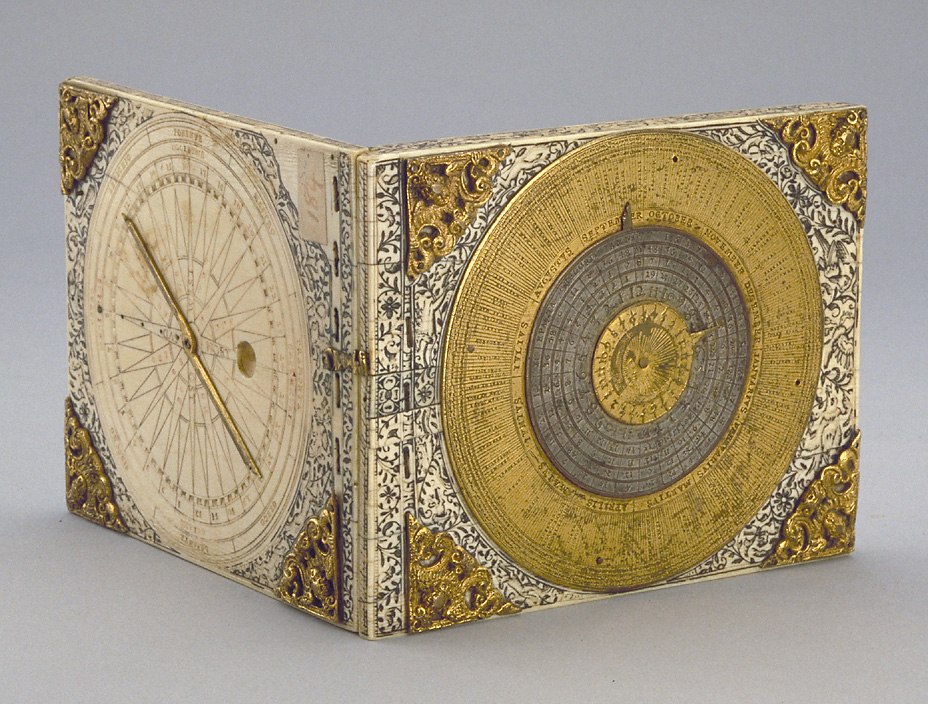
British Museum, London
horological instruments
Paul Reinmann Diptych Dial, 1607
1607
This 1607 diptych dial is constructed from ivory and brass, measuring 142 x 112 x 17 mm. The object is signed by the Nuremberg maker Paul Reinmann and features elaborate decorative engraving with red, green, black, and gold-filled inscriptions. The surface is adorned with floral, foliate, and scrollwork designs feat…
Partial type record
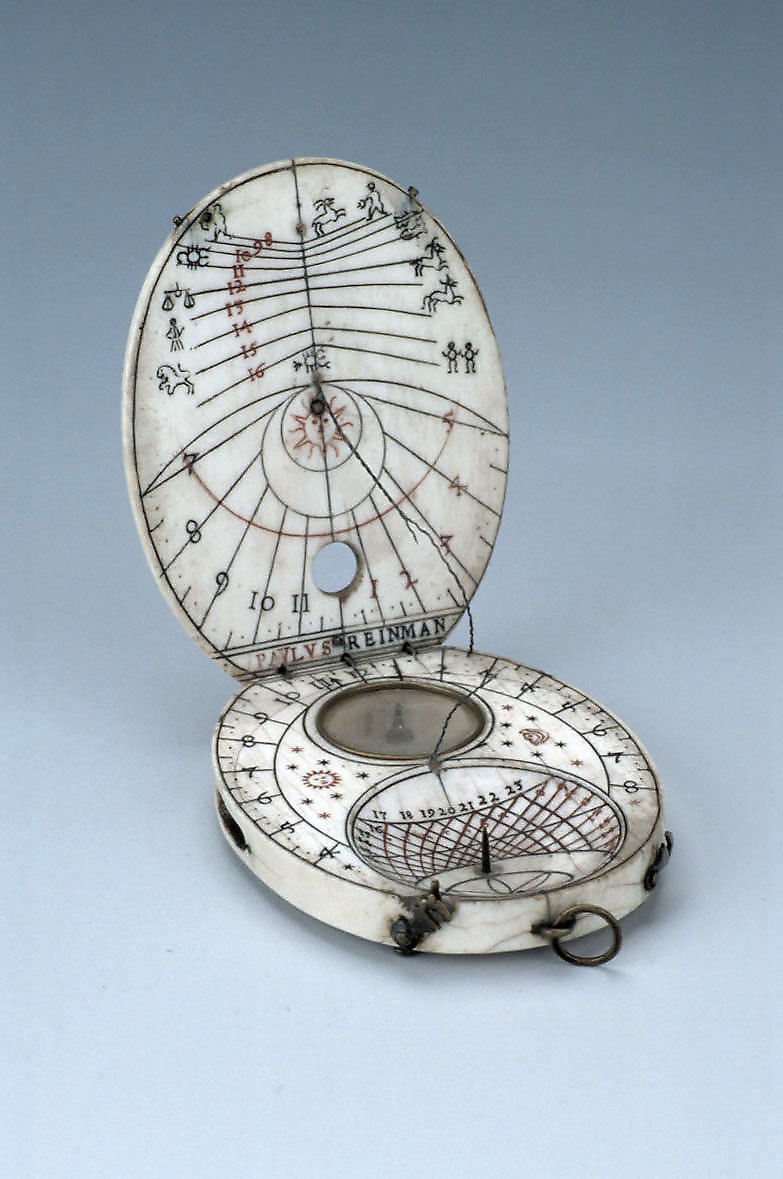
Museum of the History of Science, Oxford
horological instruments
Paul Reinmann Oval Diptych Dial
circa 1600
This oval diptych dial is an ivory and brass instrument measuring 55 x 74 x 11 mm, attributed to the maker Paul Reinmann and dated circa 1600. It is constructed in two leaves, with the interior surfaces featuring multiple timekeeping methods. The upper leaf includes a vertical pin gnomon dial showing length of day a…
Partial type record
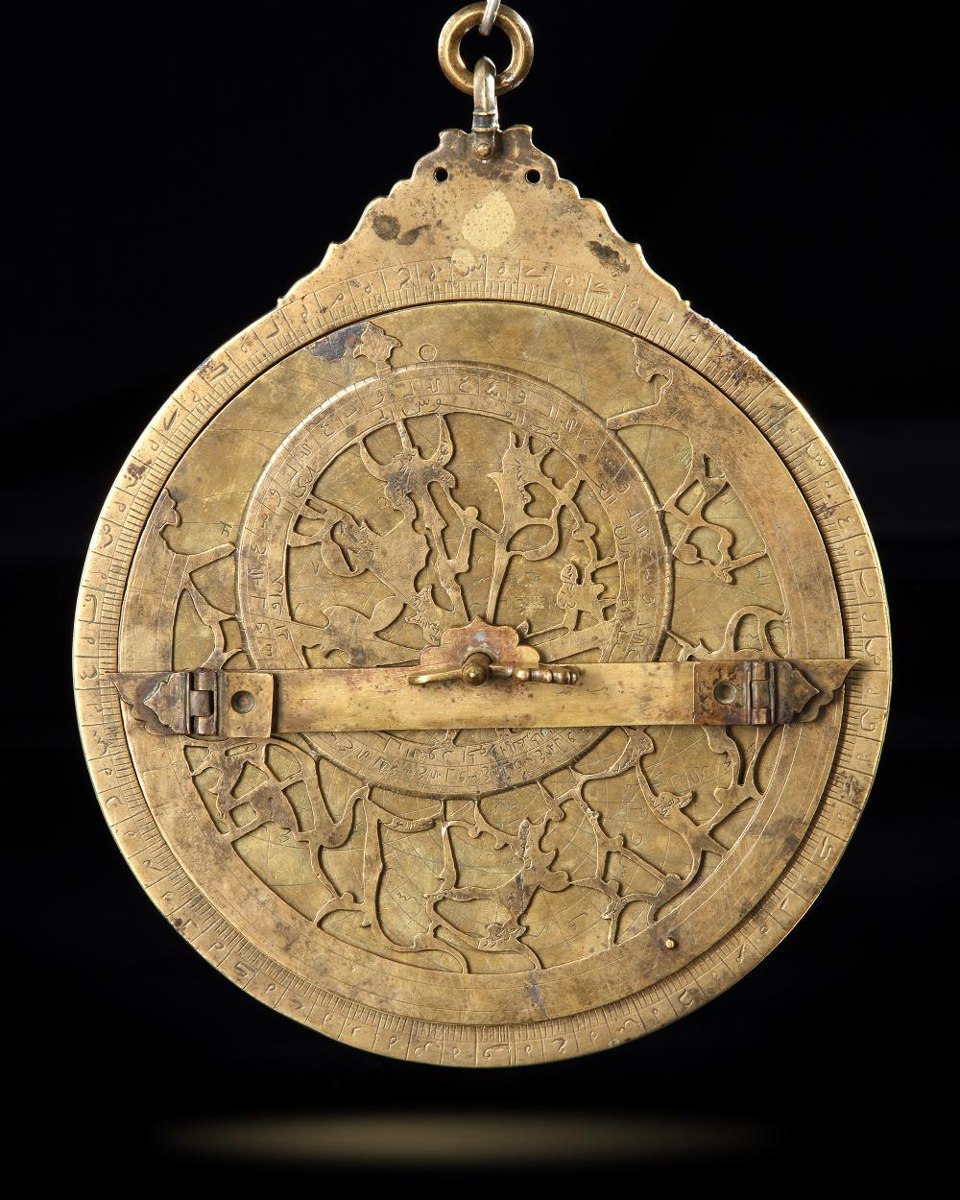
Oriental Art Auctions
horological instruments
Persian Brass Astrolabe by Najm al-Din Muhammad
16th century
This brass astrolabe is catalogued as a 16th-century Persian instrument attributed to maker Najm al-Dīn Muḥammad Munajjim Ibn Imām ‘Alī ibn Bayazid ibn Sayyid Hasan ‘Ajam Seyyid Muhammad al-‘Abbāsī. The auction house reports a total length of 24.5 cm and a diameter of 18.8 cm. According to the description, the mater…
Partial type record
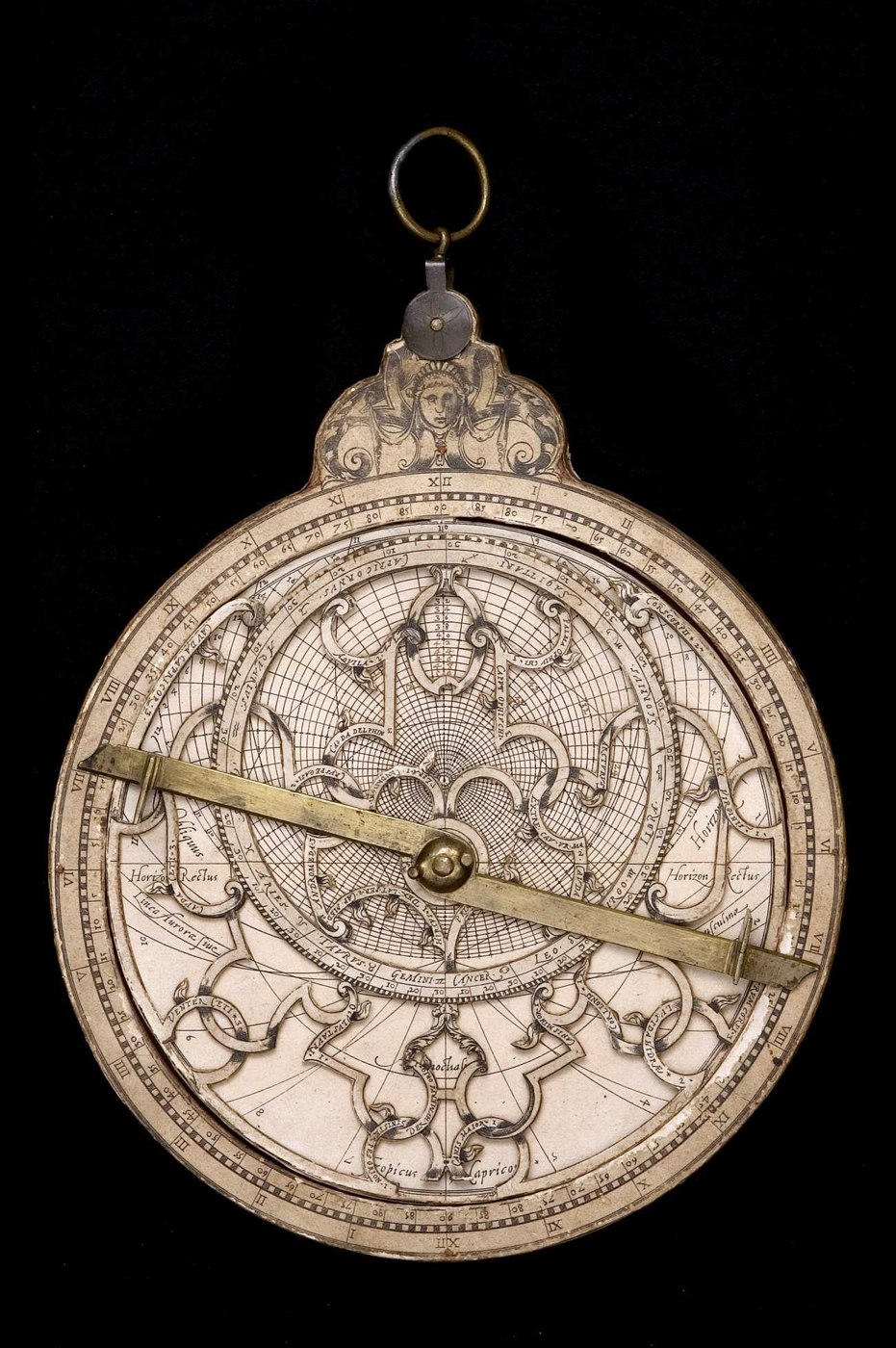
History of Science Museum, University of Oxford
horological instruments
Philippe Danfrie paper-covered wood astrolabe
1584
This astrolabe, dated 1584 and signed by the Parisian maker Philippe Danfrie, is constructed primarily of wood finished with applied printed paper. The instrument features a three-lobed throne and an integrated base, both decorated with printed imagery. The limb and mater are of single-piece wood construction, featu…
Partial type record
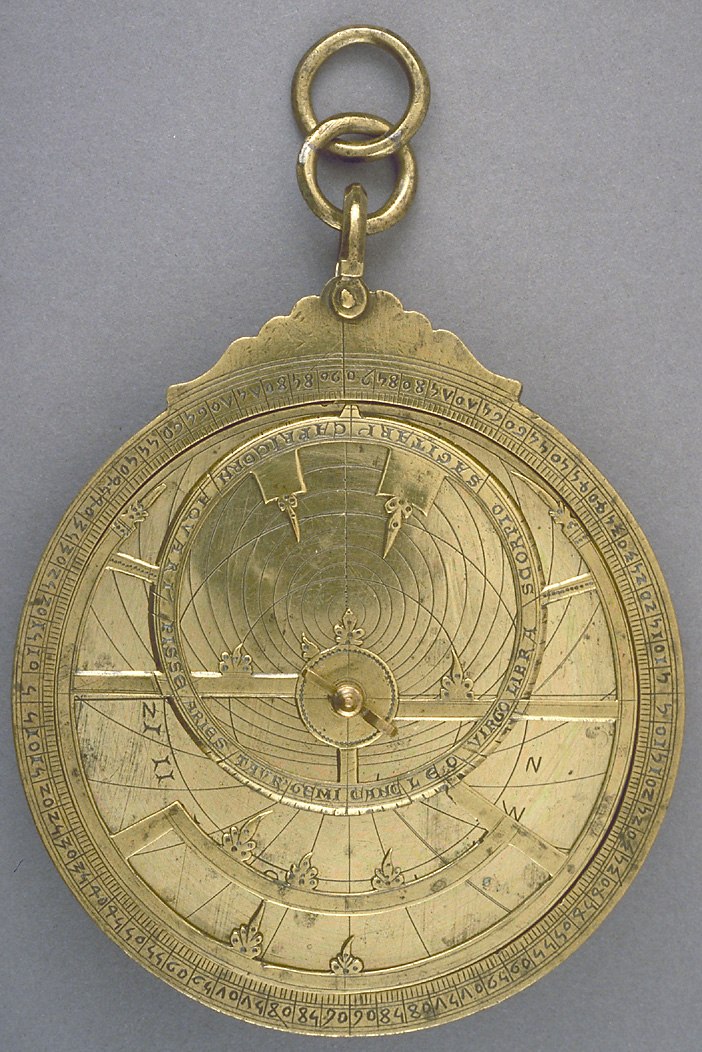
© British Museum, London
horological instruments
Planispheric Astrolabe
14th century ?
This planispheric astrolabe, crafted from brass and measuring 114 mm in diameter, is unsigned and undated. However, the instrument is engraved with Gothic letters and numerals, leading to an attribution of 14th-century Spanish origin. The instrument comprises a mater with a 360-degree altitude scale, multiple plates…
Partial type record
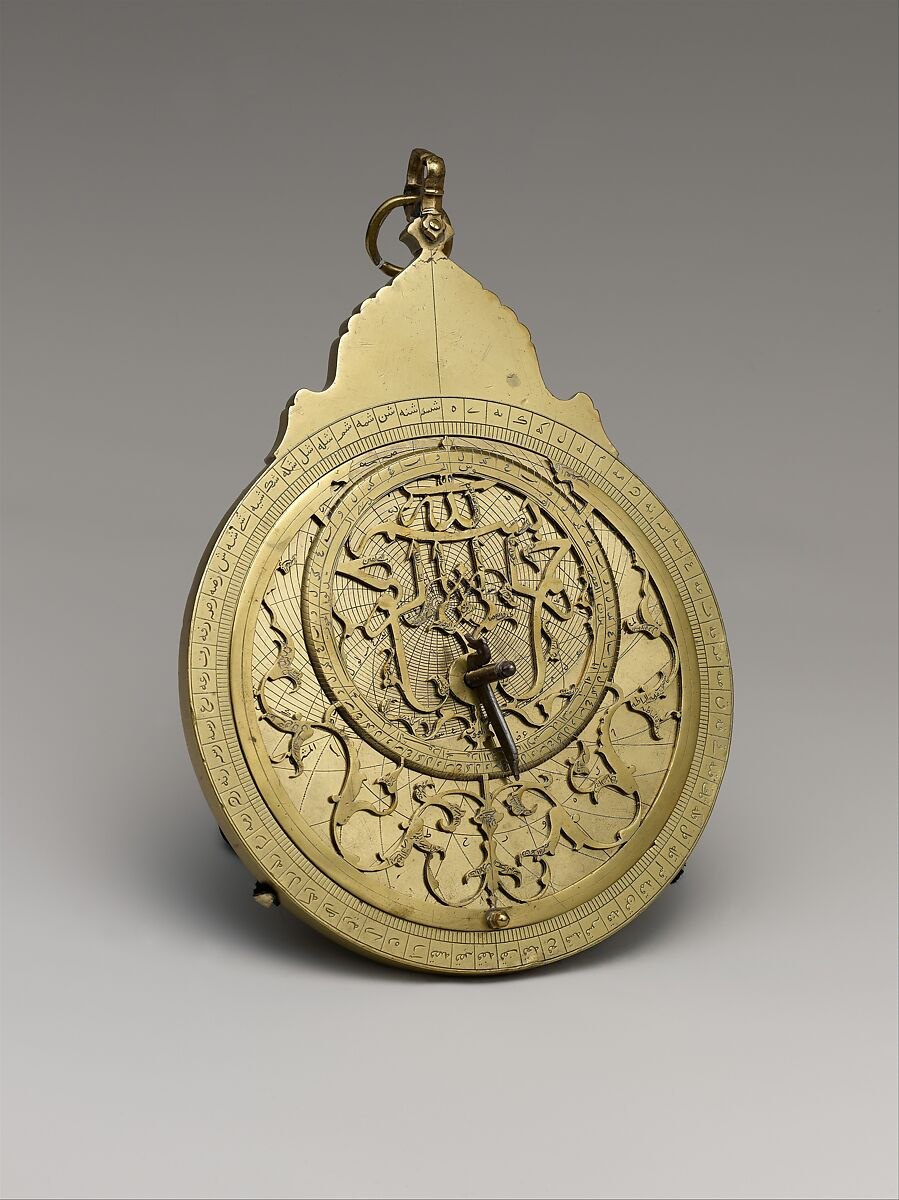
The Metropolitan Museum of Art
horological instruments
Planispheric Astrolabe, dated 1065 AH/1654–55 CE
dated 1065 AH/1654–55 CE
This planispheric astrolabe is attributed by the source to Mashhad, Iran, and was produced by Muhammad Zaman al-Munajjim al-Asturlabi, bearing a date of 1065 AH (1654–55 CE). Fabricated from cast, hammered, pierced, and engraved brass and steel, the instrument measures 8 1/2 inches in height. According to the source…
Partial type record
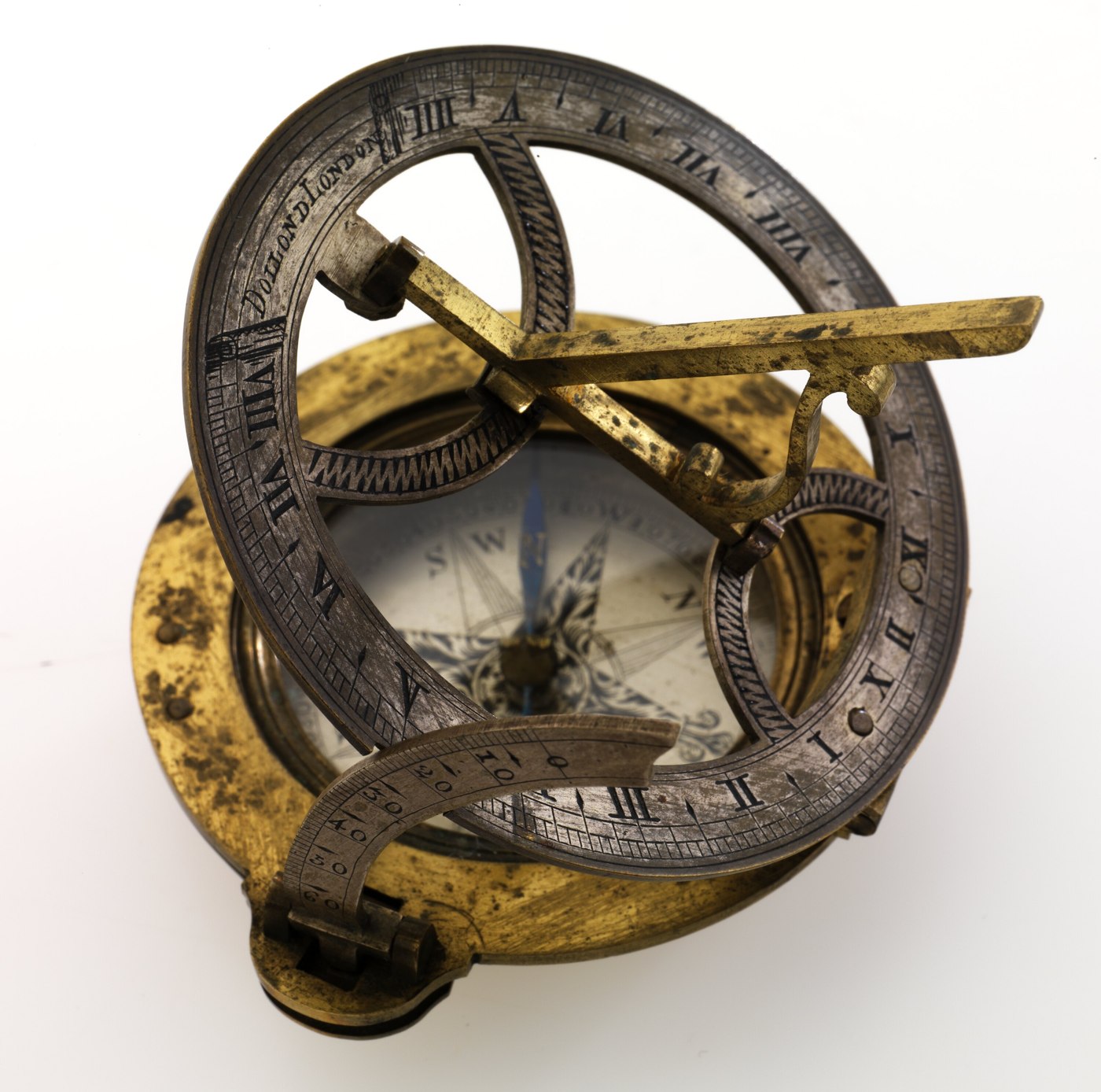
Museums Victoria
horological instruments
Pocket Compass Sundial by Peter & John Dollond
circa 1790
This pocket compass sundial is constructed from brass and steel, featuring a glass lid and a blue-toned compass dial. Manufactured in London by Peter and John Dollond, the instrument includes a hinged, moveable arm to function as a sundial. The object measures approximately 65 mm in width and 21 mm in height. It is…
Partial type record
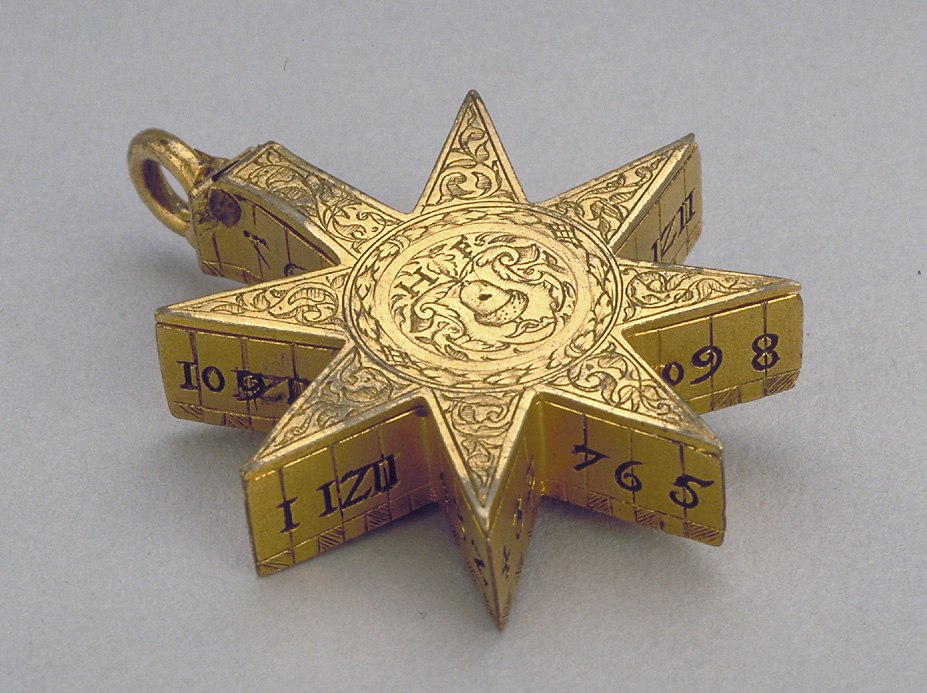
British Museum, London
horological instruments
Polyhedral Dial
circa 1550
This polyhedral dial is constructed from gilt brass and takes the form of an eight-pointed star. Measuring 59 x 10 mm, the object functions as a sundial by indicating common hours from 1 to 12 across its multiple facets. It features a fixed suspension ring, a hinged strut for setting latitude, and an internal latitu…
Partial type record
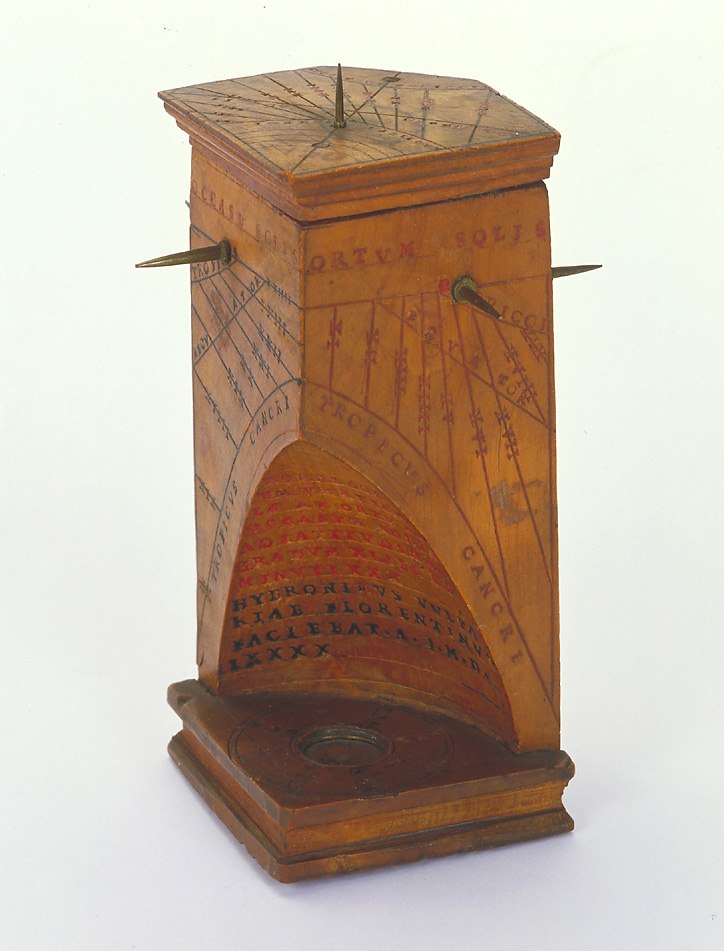
© Istituto e Museo di Storia della Scienza, Firenze
horological instruments
Polyhedral Dial by Girolamo della Volpaia
1590
This wooden polyhedral sundial, measuring 110 mm in height, is signed by Girolamo della Volpaia and dated 1590. The instrument consists of a cube cut into six dial surfaces, mounted on a base containing an inset compass. Each face features specific hour lines and individual gnomons, designed for a latitude of 43 deg…
Partial type record
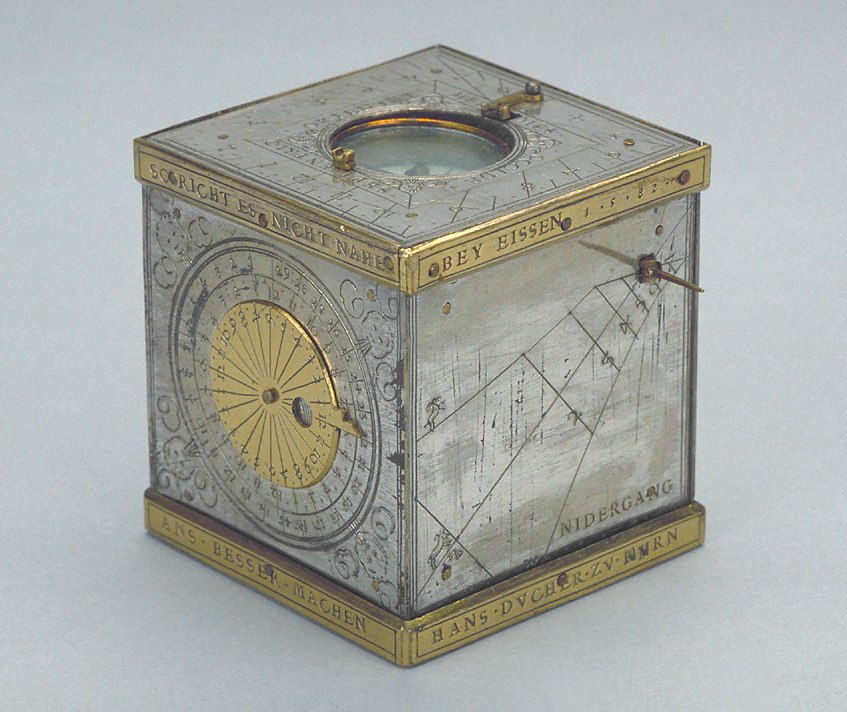
British Museum, London
horological instruments
Polyhedral Dial by Hans Tucher
1582
This 1582 polyhedral dial, attributed to maker Hans Tucher of Nuremberg, measures 58 x 58 x 62 mm. The instrument consists of a central wooden block covered in silver and brass plates. The top plate’s original triangular gnomon is missing. The four side faces are equipped with folding pin gnomons and include a lunar…
Partial type record
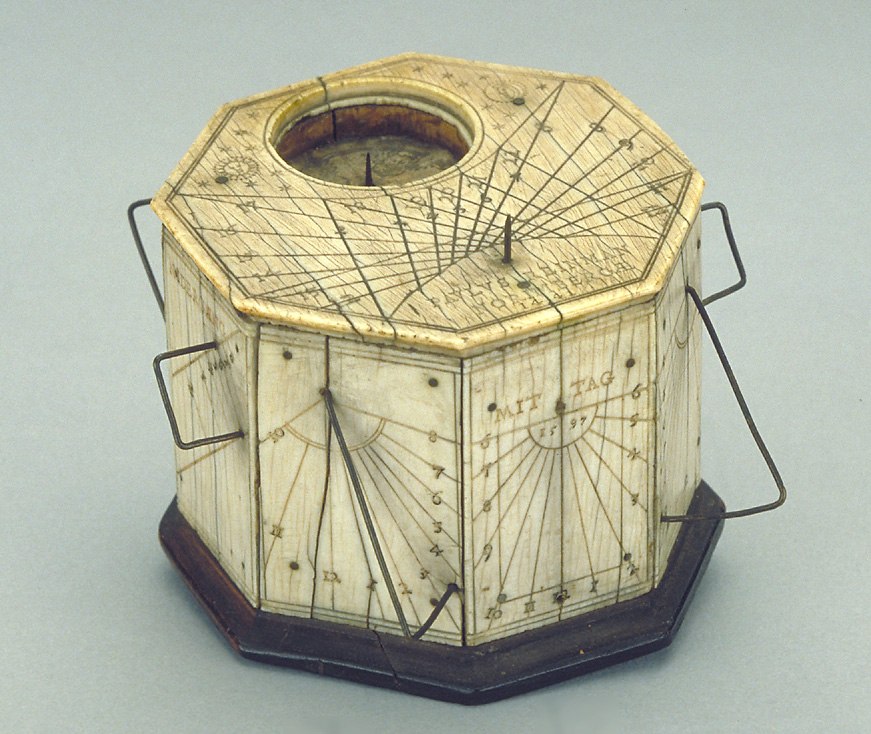
British Museum, London
horological instruments
Polyhedral Dial by Paul Reinmann
1597
This polyhedral dial, originating from Nuremberg and dated 1597, is constructed from an octagonal wood block covered with ivory layers. Measuring 70 x 72 x 64 mm, it incorporates multiple timekeeping systems including pin gnomon and wire gnomon dials. The top face features a compass, though the glass, needle, and ri…
Partial type record
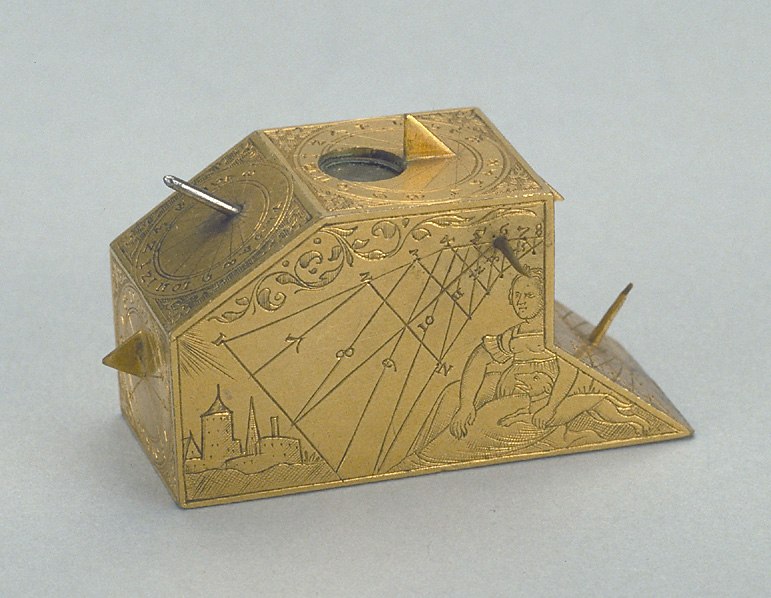
British Museum, London
horological instruments
Polyhedral Dial, 1553
1553
This German polyhedral dial, crafted from brass, measures 55 x 30 x 23 mm and is dated 1553. Signed with the initials 'WS', the instrument features seven differently inclined faces, each functioning as a sundial with various systems of timekeeping, including common, Italian, and Babylonian hours. The surfaces are de…
Partial type record
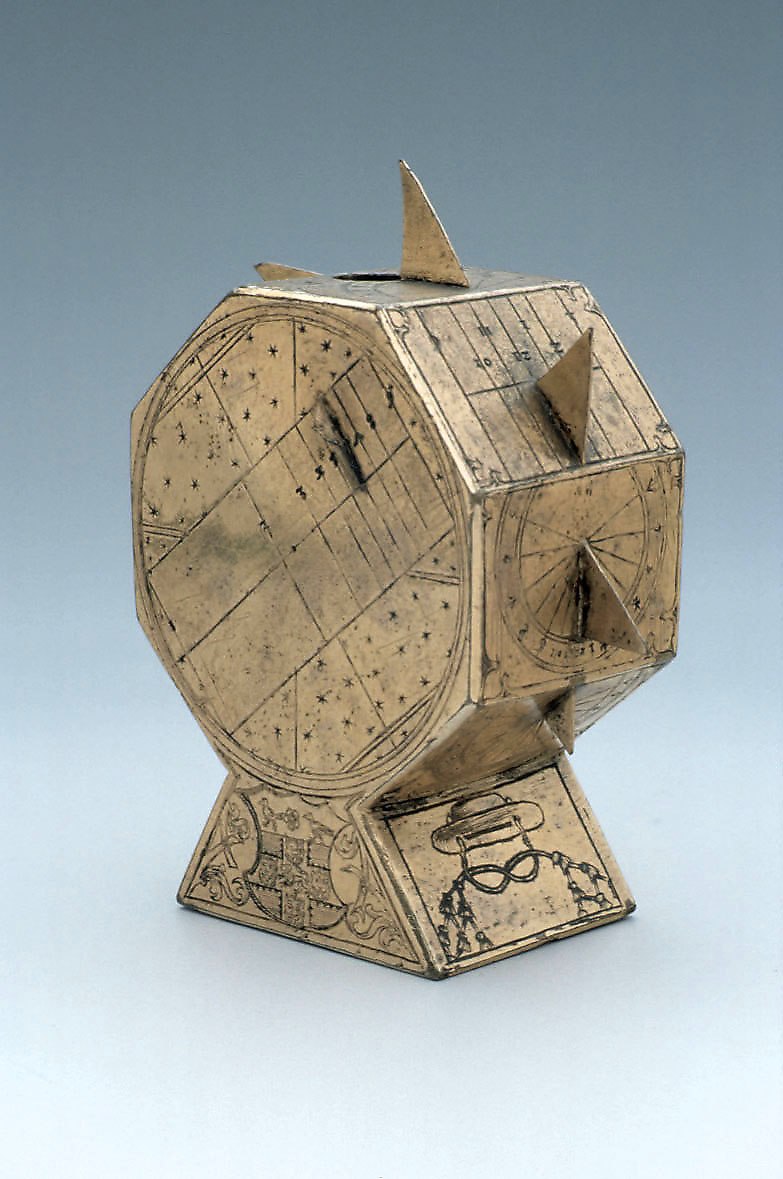
Museum of the History of Science, Oxford
horological instruments
Polyhedral Dial, circa 1525
circa 1525
This polyhedral sundial, standing 100 mm tall and constructed from gilt brass, is a complex timekeeping instrument designed with nine distinct dial faces. Based on an octagonal geometry, it incorporates an array of horizontal, polar, equinoctial, and vertical dials, all configured for a latitude of 52 degrees. The t…
Partial type record
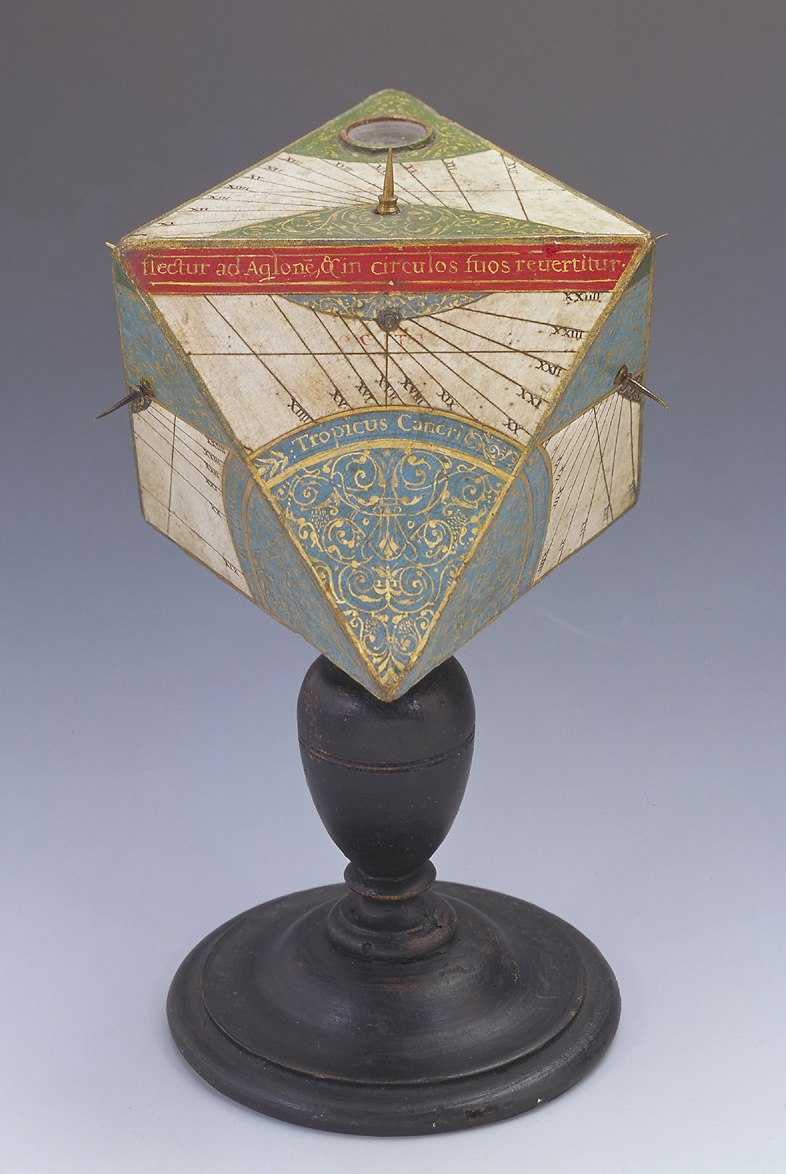
Istituto e Museo di Storia della Scienza, Firenze
horological instruments
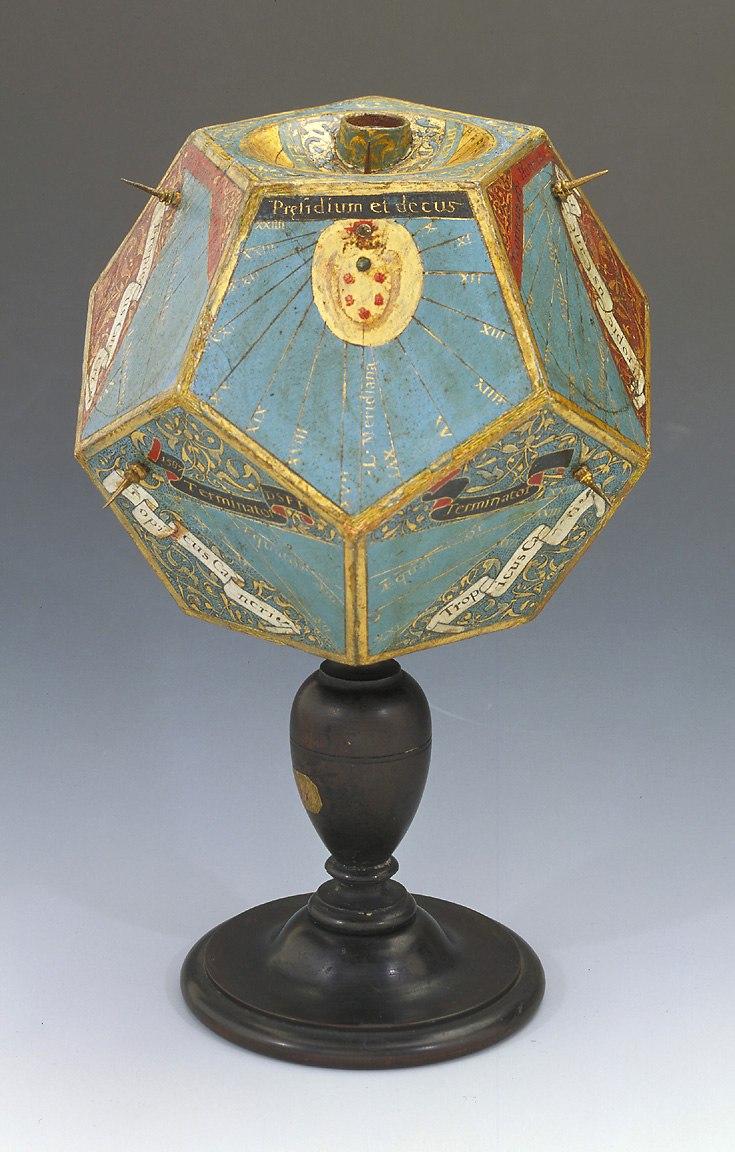
Polyhedral Sundial
16th century
This table-top polyhedral sundial is an octahedron measuring 160 mm in height, mounted on a turned baluster pillar stand. The instrument is crafted from wood and features painted decorations in blue, red, and gold. The surfaces are calibrated for a latitude of 43° 30', intended for use in Florence and Pisa. The dial…
Partial type record
© Istituto e Museo di Storia della Scienza, Firenze
horological instruments
Polyhedral sundial, 1587
1587
This polyhedral sundial, dated 1587 and signed by Stefano Buonsignori, is held at the Istituto e Museo di Storia della Scienza in Florence. Constructed from wood and standing 195 mm in height, the instrument is shaped as a regular dodecahedron mounted on a turned single-stem baluster pillar stand. The object feature…
Partial type record
Museum of the History of Science, Oxford
horological instruments
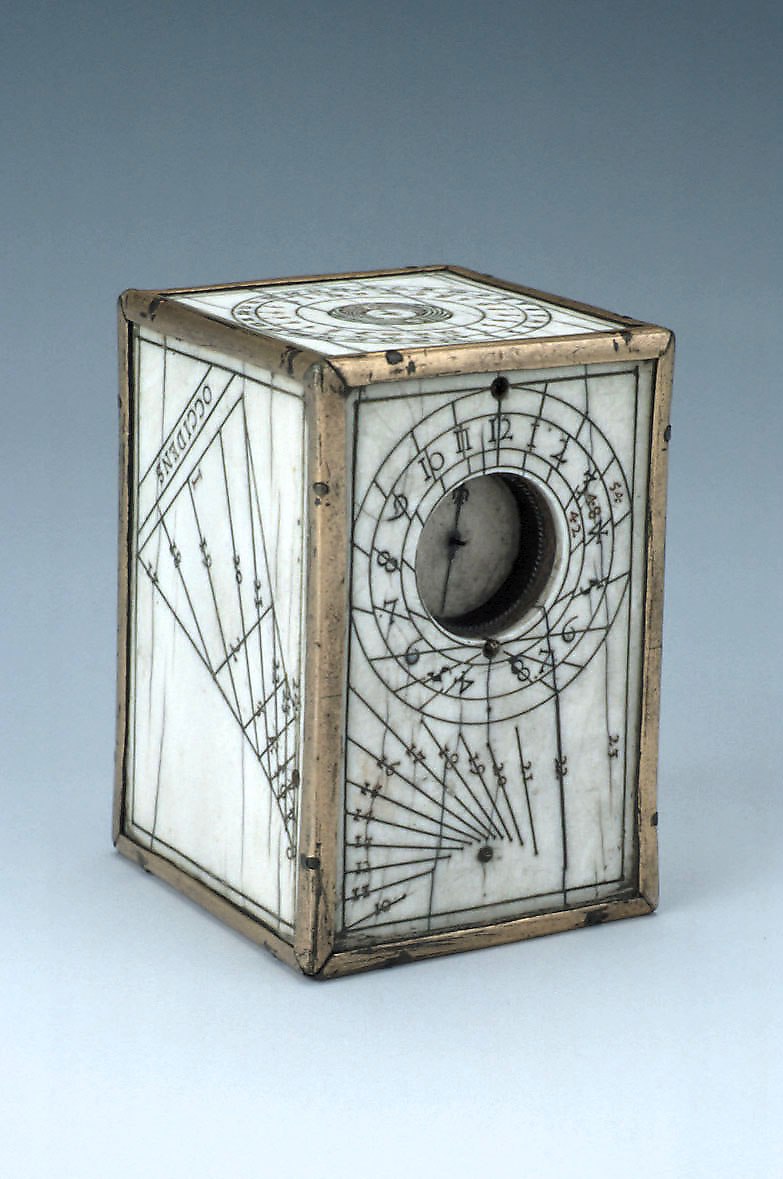
Polyhedral Sundial, 1596
1596
This polyhedral sundial, inventory number 55574 in the Museum of the History of Science, Oxford, is constructed from ivory and gilt brass. Measuring 82 x 58 x 54 mm, it is a rectangular parallelepiped form signed by the maker Hans Tucher and dated 1596. While Tucher is noted for producing ivory diptych dials, this p…
Partial type record
Istituto e Museo di Storia della Scienza, Firenze
horological instruments
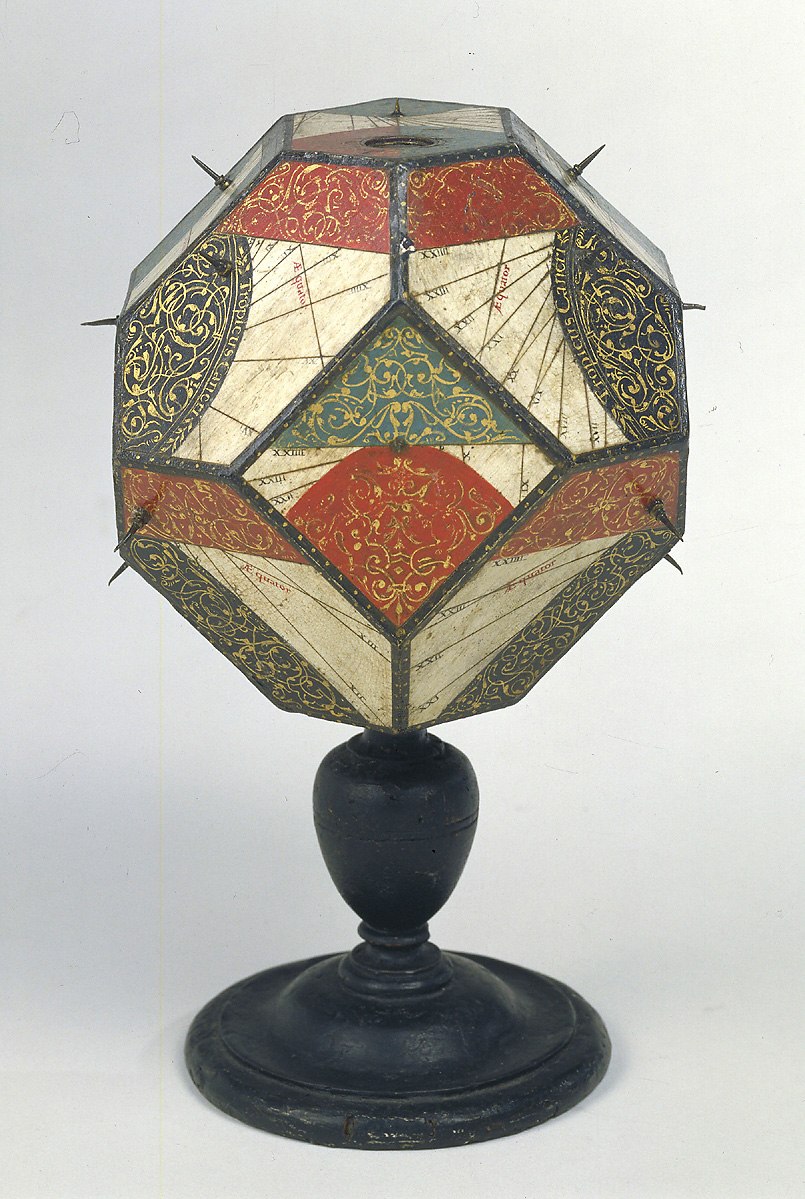
Polyhedral Sundial, 16th century
16th century
This polyhedral sundial, inventory number 2458, is held by the Istituto e Museo di Storia della Scienza in Florence. Constructed of wood and standing 205 mm in height, it features an eighteen-faced polyhedron mounted upon a turned single stem baluster pillar. The instrument serves as a table sundial with various dia…
Partial type record
Istituto e Museo di Storia della Scienza, Firenze
horological instruments
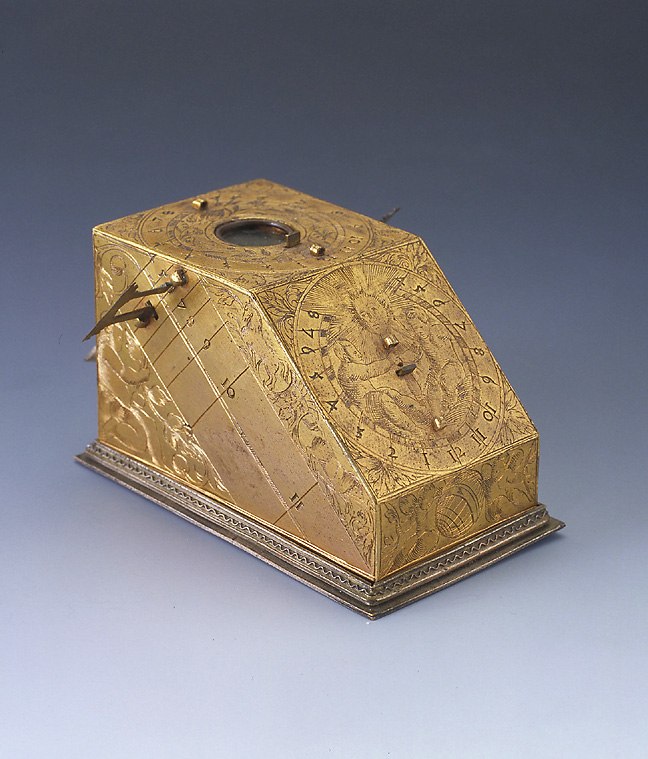
Polyhedral Sundial, 16th century (481f8f)
16th century
This portable polyhedral sundial is constructed as a hollow seven-sided trapezoidal solid measuring 50 x 50 x 87 mm, executed in gilt copper. The instrument is unsigned and is dated to the 16th century. It features dial diagrams engraved across five of its faces, including horizontal, vertical, and polar dials for m…
Partial type record