Catalogue
Astrolabes, Dials and Instruments
Astrolabes, quadrants, astronomical compendia, portable dials and watchmakers' workshop tools used to find or keep time.
Catalogue entries (445)
Filter by era, country, maker or material385–432 of 445 entries
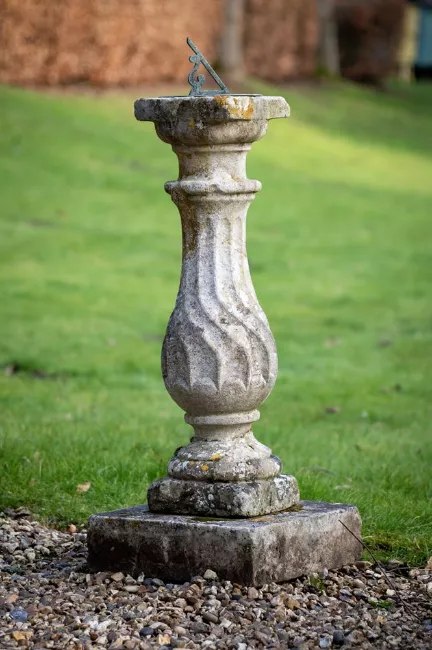
Dreweatts
horological instruments
Portland Stone Sundial
early 19th century
This early 19th-century garden sundial consists of an inscribed dial plate mounted upon a baluster-form Portland stone pedestal. According to the auction catalogue, the dial plate bears the inscription 'STAND AMONG YE SUMMER FLOWERS, AND TELL YE PASSING OF YE HOURS'. The stone structure measures 90 cm in height excl…
Partial type record
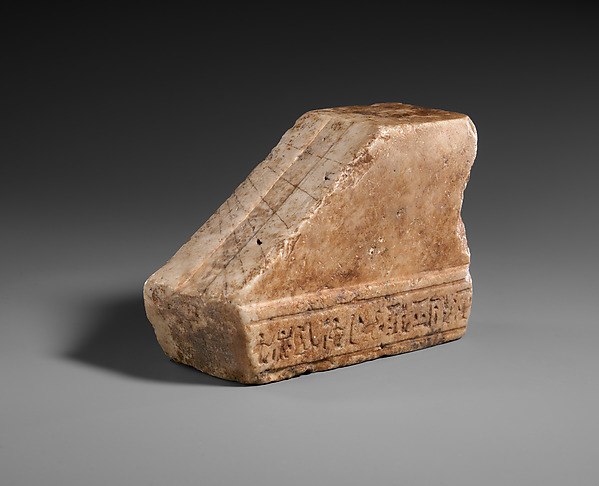
The Metropolitan Museum of Art, New York
horological instruments
Ptolemaic Shadow Clock
305–30 BCE
This marble shadow clock is a fragmentary instrument for tracking the time by measuring the length of a sun-cast shadow. Attributed to the Ptolemaic period in Egypt, the object was recovered from the Theban necropolis. The surviving piece consists of a narrow block featuring a sloped surface incised with a grid of p…
Partial type record
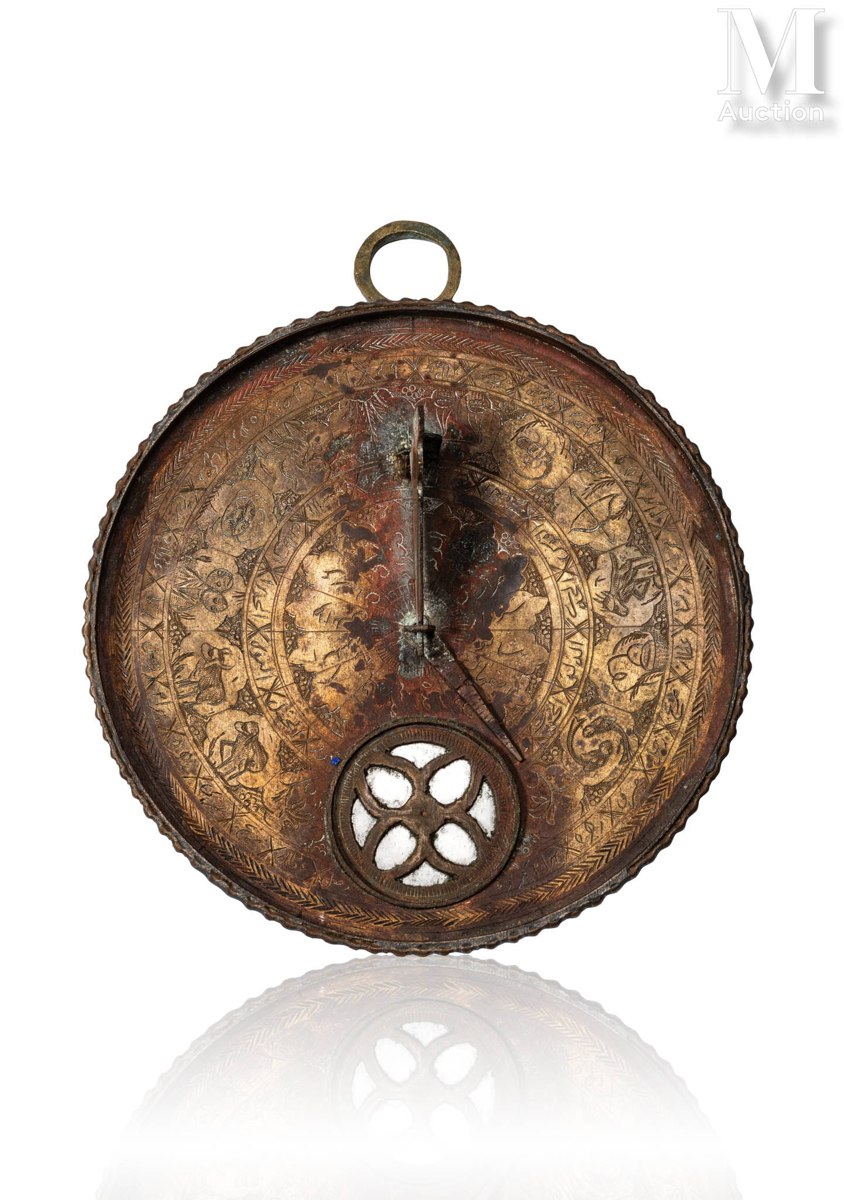
Millon
horological instruments
Qajar Engraved Brass Compass-Sundial Instrument
19th century
Described as a nineteenth-century Qajar engraved brass compass-sundial instrument (muwaqqit) from Iran, this circular piece measures 14 cm in diameter. The brass disc is fitted with an upper ring-shaped bail for suspension and features a scalloped or fluted outer rim. The front surface is decorated with concentric e…
Partial type record
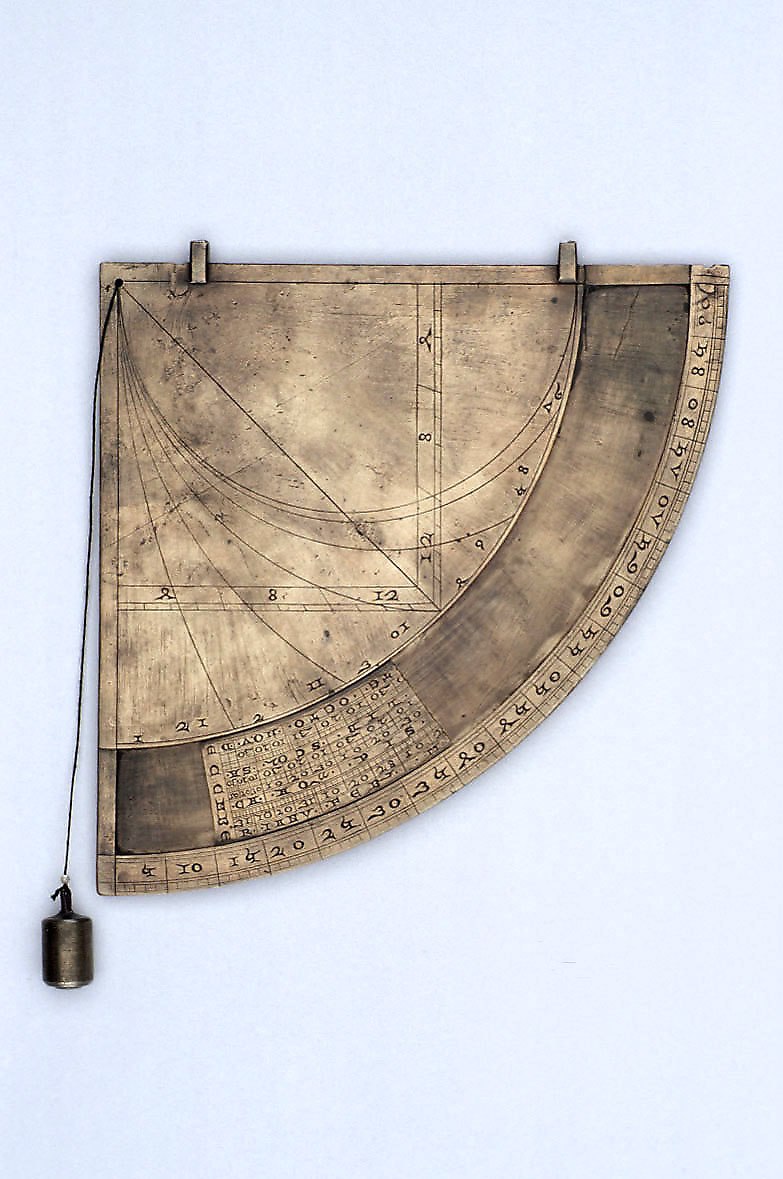
Museum of the History of Science, Oxford
horological instruments
Quadrans Vetus (Old Quadrant)
circa 1300
This brass instrument is an example of a rare quadrans vetus, or old quadrant, originating from France and dating to circa 1300. It measures 158 mm in radius and features a design that allows for adjustment to any latitude through a sliding, curved plate that moves within a slot above the degree arc. The instrument…
Partial type record
British Museum, London
horological instruments
Quadrant
Mid 16th century ?
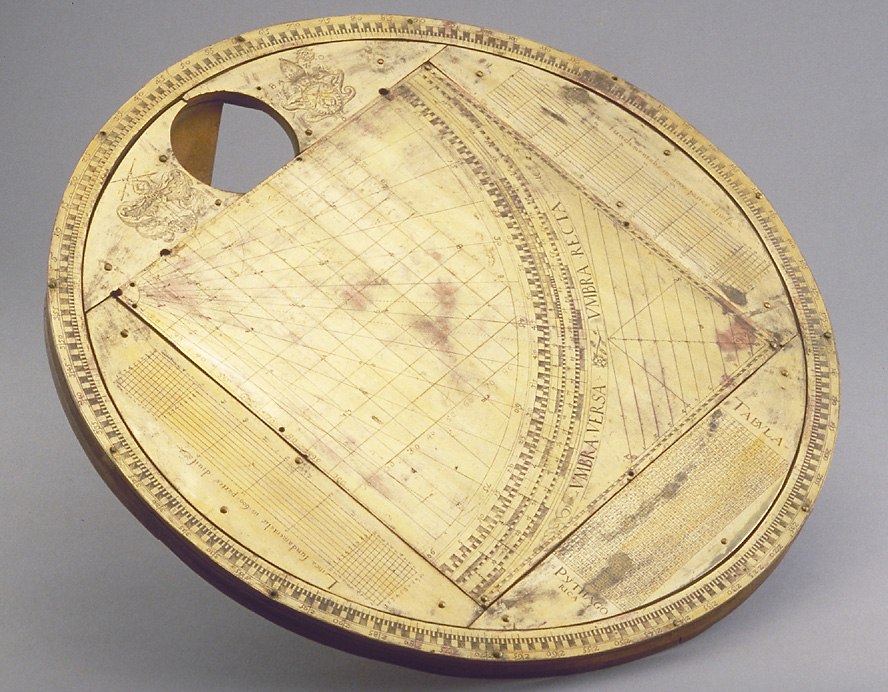
This quadrant, held by the British Museum, consists of a wooden base to which several copper plates are nailed. It measures 390 mm in diameter. The rim features a scale of degrees numbered from 5 to 360, with 45 degrees positioned at the top where a compass compartment is located; however, the compass itself is miss…
Partial type record
Museum of the History of Science, Oxford
horological instruments
Quadrant by Christian Heiden
1553
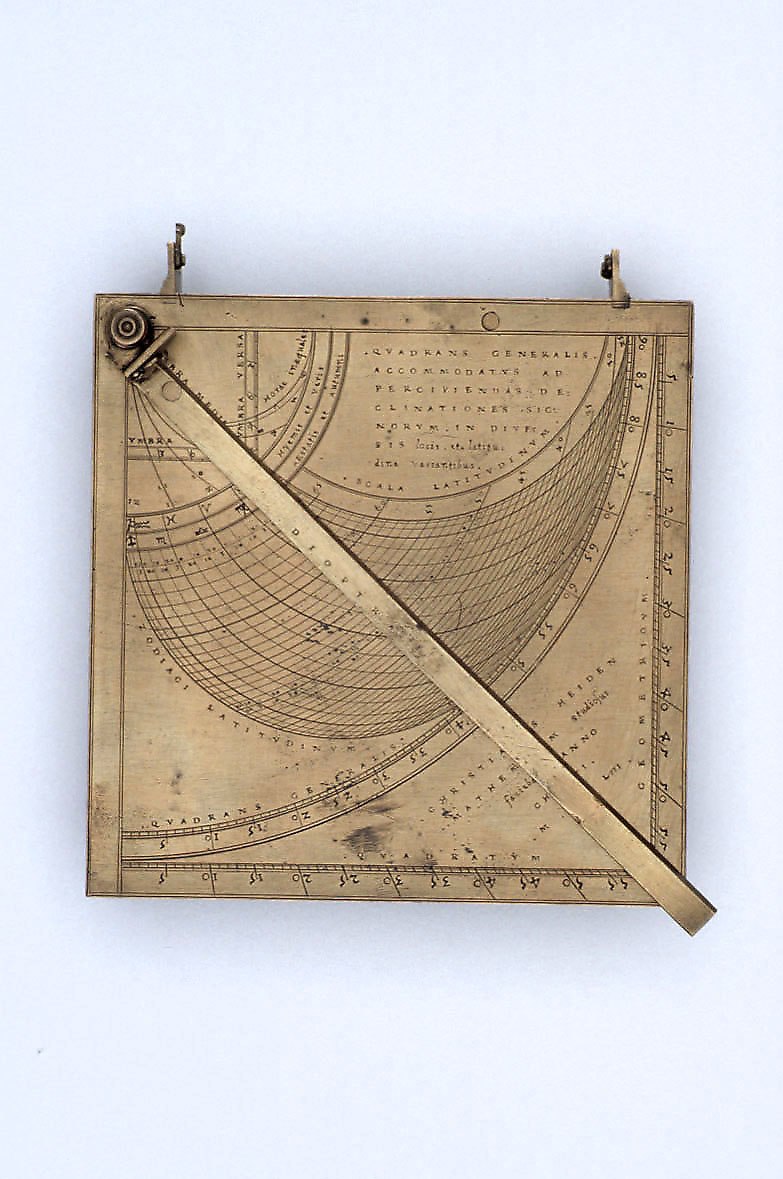
This brass quadrant, measuring 102 mm in radius, is constructed in a square form. It is signed by Christian Heiden and dated 1553. The instrument features a movable rule pivoted at the apex and sights positioned on one straight edge. The front face includes a shadow square, unequal hour lines, a graduation for a gen…
Partial type record
Istituto e Museo di Storia della Scienza, Firenze
horological instruments
Quadrant by Robert Dudley
1597
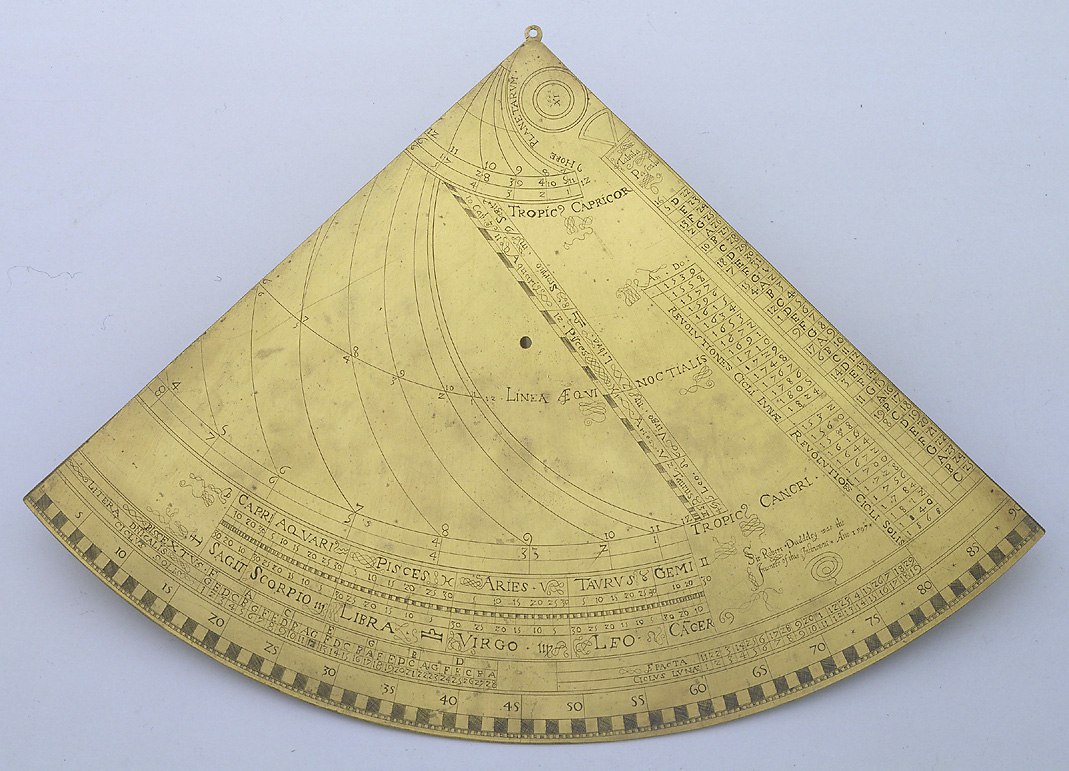
This brass quadrant, measuring 370 mm in radius, was signed and dated by Robert Dudley in 1597. It is a navigational and astronomical instrument densely engraved with various scales for timekeeping, solar and lunar calculations, and celestial tracking. The front face features a limb with a scale of degrees, tables f…
Partial type record
Istituto e Museo di Storia della Scienza, Firenze
horological instruments
Quadrant signed A. D.
1553
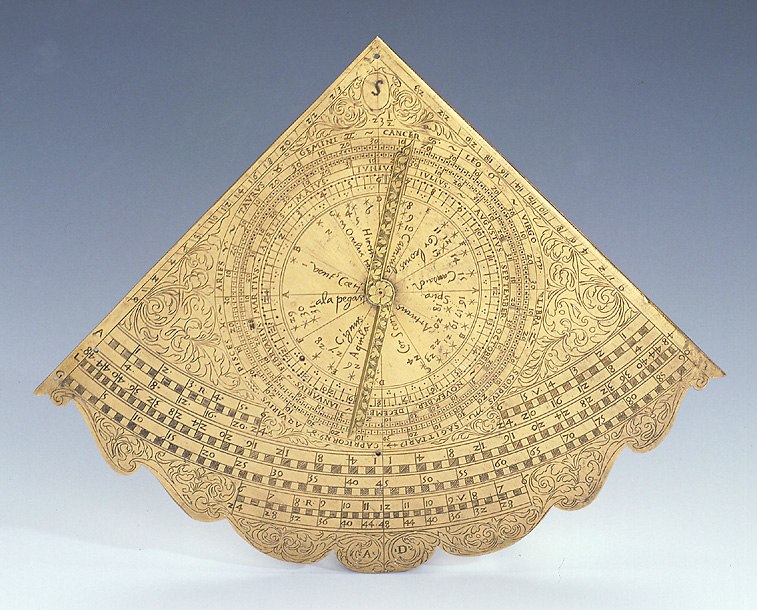
This brass quadrant, measuring 172 mm along the side, is dated 1553 and originates from Naples. It bears the signature monogram 'A. D.', identifying an instrument maker who remains unidentified. The instrument features highly ornamental, foliate-patterned engraving across its arc. The front includes a zodiacal calen…
Partial type record
Museum of the History of Science, Oxford
horological instruments
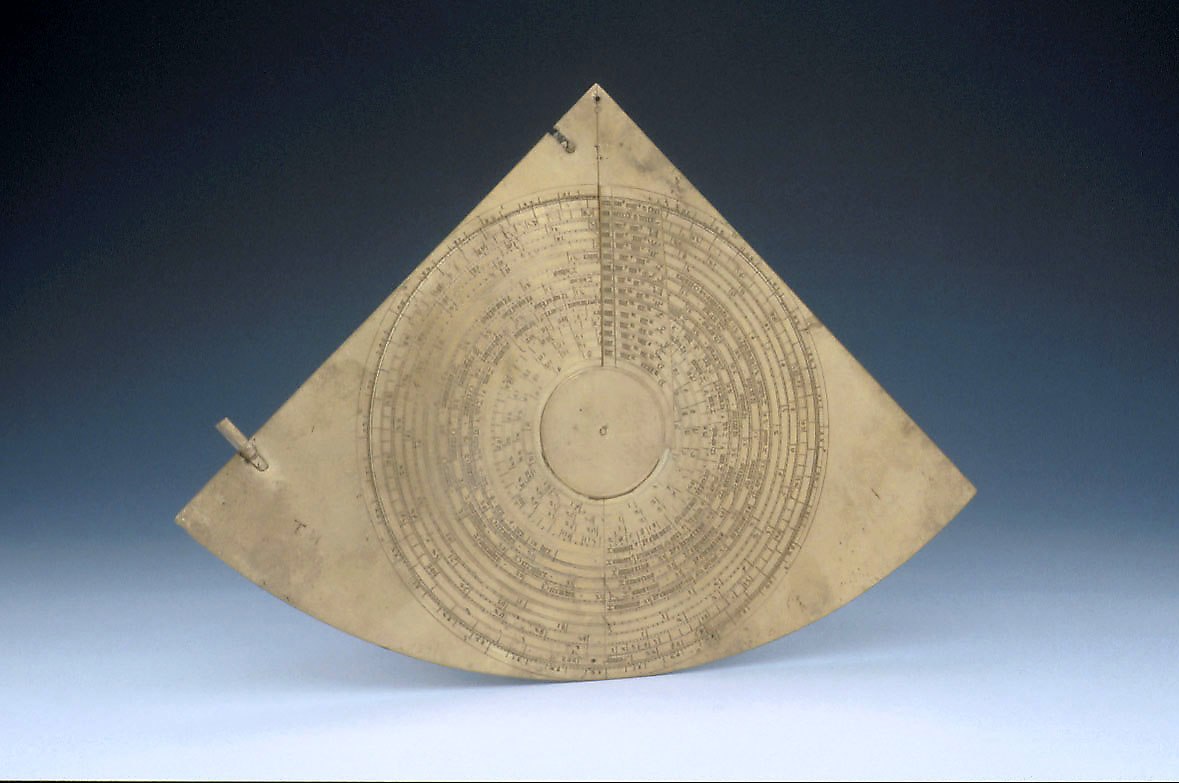
Quadrant, late 15th century
late 15th century
This late 15th-century brass quadrant, measuring 228 mm in radius, functions as both an observational and astrological instrument. The object is composed of two brass plates held by small rivets. The front side features a sinecal quadrant with edges graduated 0 to 60 and a limb marked 0 to 360, alongside indicators…
Partial type record
Rooney, G. (Gary)
horological instruments
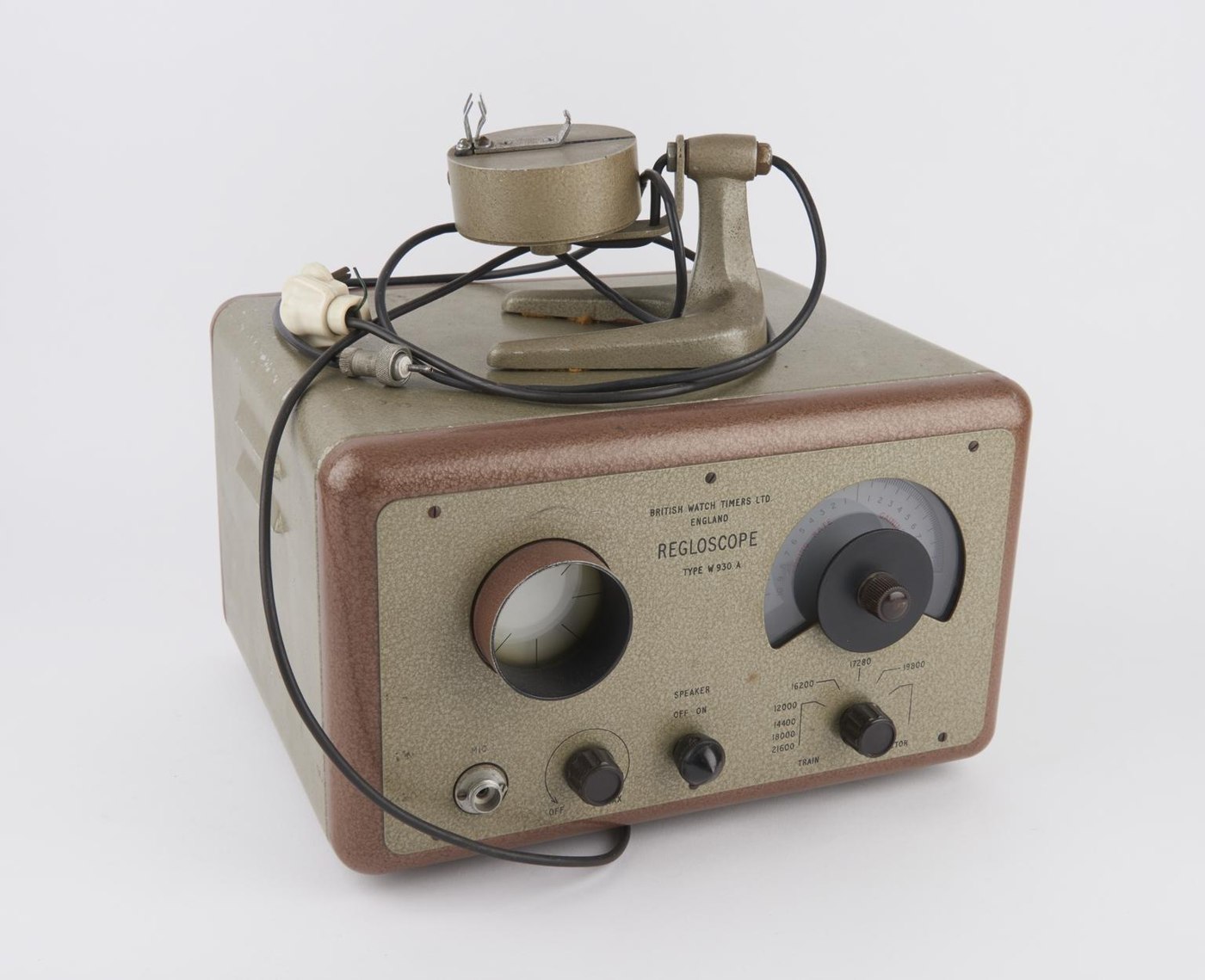
Regloscope type W930A watch timer
1970-1989
The Regloscope type W930A, identified by serial number 358, is a watch timer manufactured by British Watch Timers Ltd. in England. Estimated to date from between 1970 and 1989, this instrument is designed for monitoring the accuracy of timepieces to determine if they are running fast or slow. The device is construct…
Partial type record
British Museum, London
horological instruments
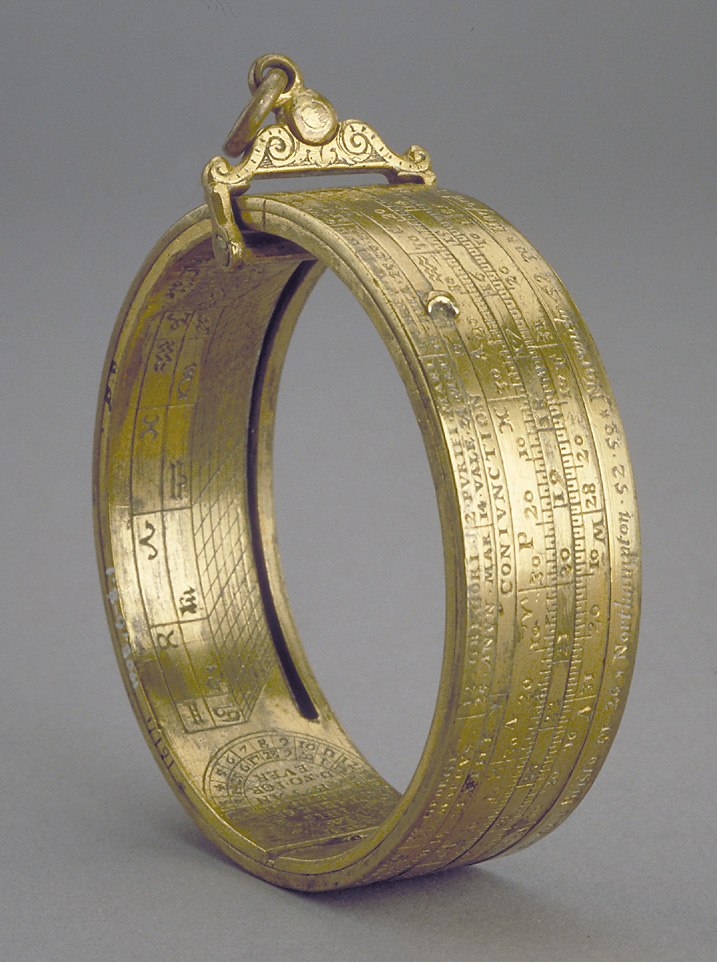
Ring Dial by Humfrey Cole
circa 1575
This gilt brass ring dial, measuring 74 mm in diameter, is attributed to the English maker Humfrey Cole and dates to circa 1575. The instrument comprises a ring with multiple movable bands, each featuring pinholes for setting the device according to the time of year and specific latitude. The interior surface contai…
Partial type record
British Museum
horological instruments
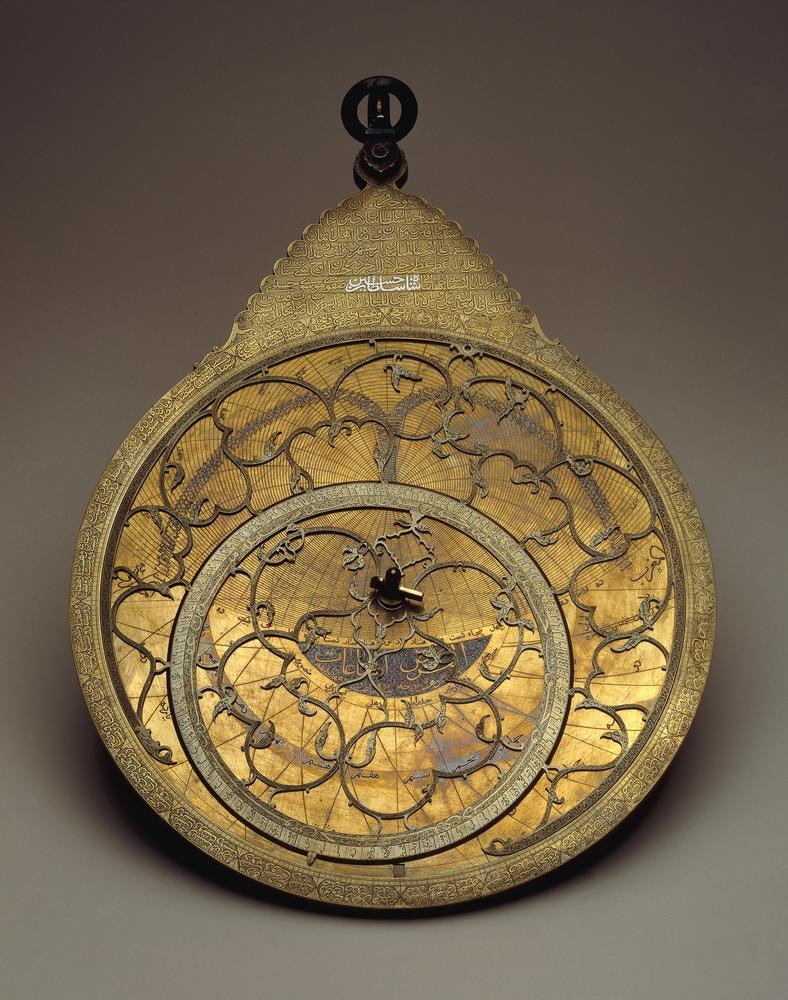
Safavid brass and silver astrolabe
1712
This large astrolabe from the Safavid dynasty is held in the British Museum collection. The source records that it was made of engraved copper alloy inlaid with silver by 'Abd 'Ali ibn Muhammad Rafi' al-Juzi and decorated by Muhammad Baqir in 1712 (Sha'ban 1124). The instrument incorporates a prominent triangular th…
Partial type record
The Trustees of the British Museum
horological instruments
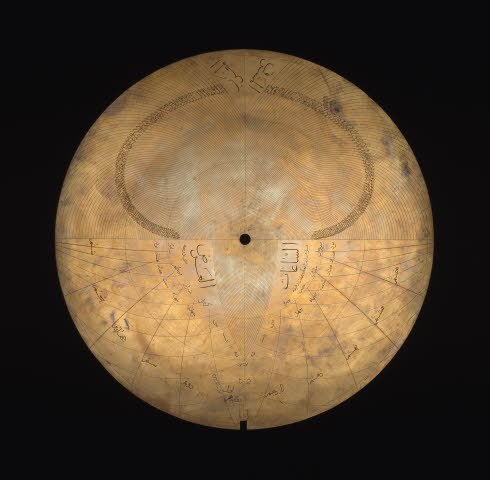
Safavid Brass Astrolabe Plate
1712 (Sha'ban 1124 (Sep-Oct 1712))
This circular engraved copper-alloy plate belongs to an astrolabe catalogued as museum number OA+.369 at the British Museum. The complete instrument was produced in Iran in 1712 (Sha'ban 1124) during the Safavid dynasty and was named in an inscription for Shah Sultan Husayn. According to the museum, the full astrola…
Partial type record
Sotheby's
horological instruments
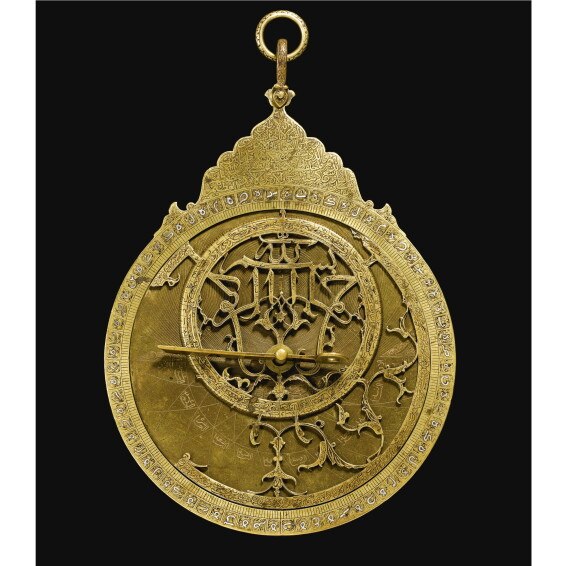
Safavid silver-inlaid brass astrolabe
late 17th century
This late 17th-century Safavid astrolabe from Isfahan is made of silver-inlaid brass. The source records that it is signed by Muhammad Khalîl ibn Hasan 'Alî on the rete rim and decorated by Muhammad Bâqir. The openwork rete incorporates the basmala invocation rendered in mirror script (muthannâ) within the ecliptic…
Partial type record
Science Museum
horological instruments
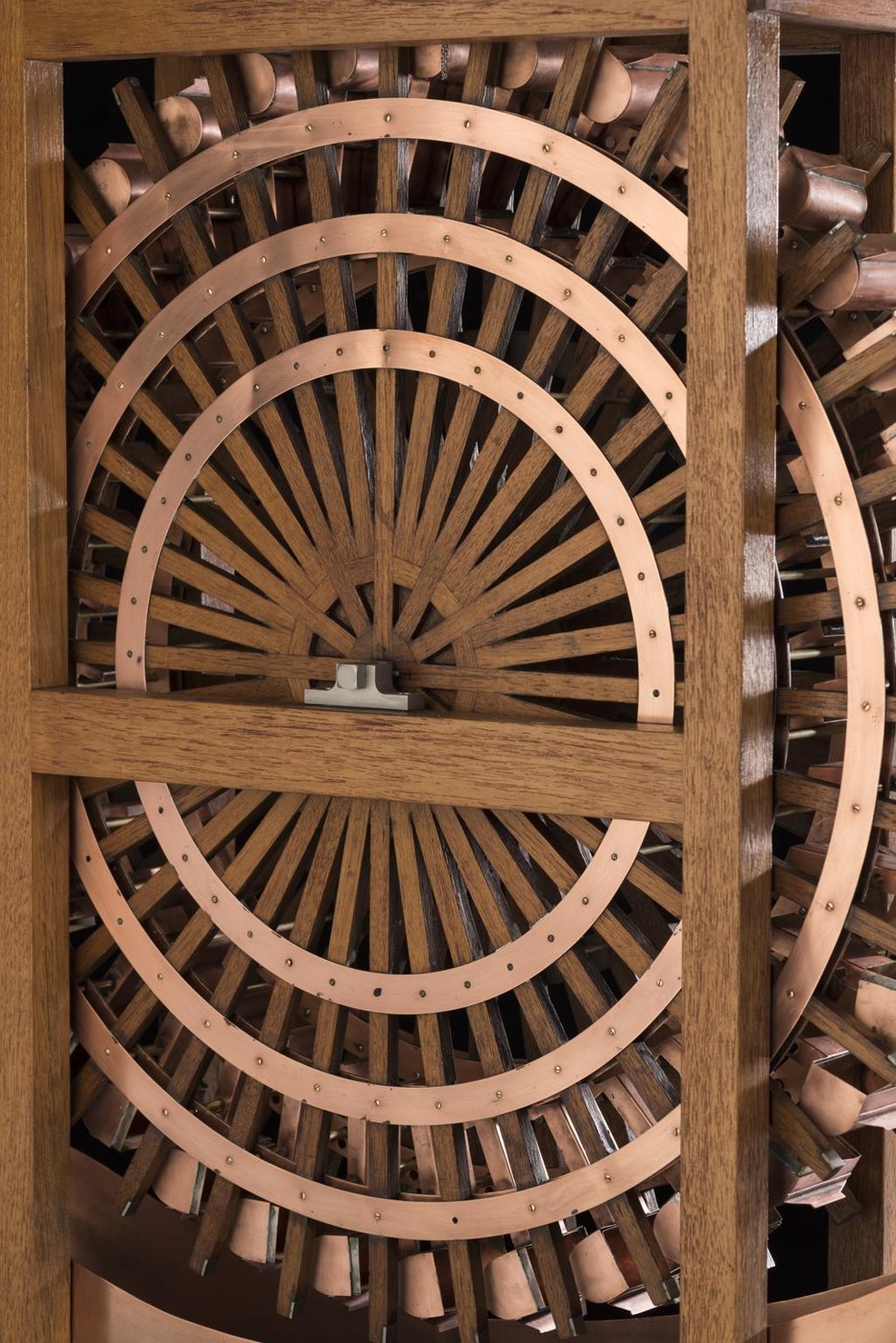
Scale model of Su Song's water-balance escapement
1965
This 1:6 scale model represents the water-balance escapement mechanism from the astronomical clock tower created by Su Song in 1088. Fabricated by the Science Museum Workshops in 1965, the object demonstrates the function of the water-powered escapement, a component designed to regulate energy release at regular int…
Partial type record
Museum of the History of Science, Oxford
horological instruments
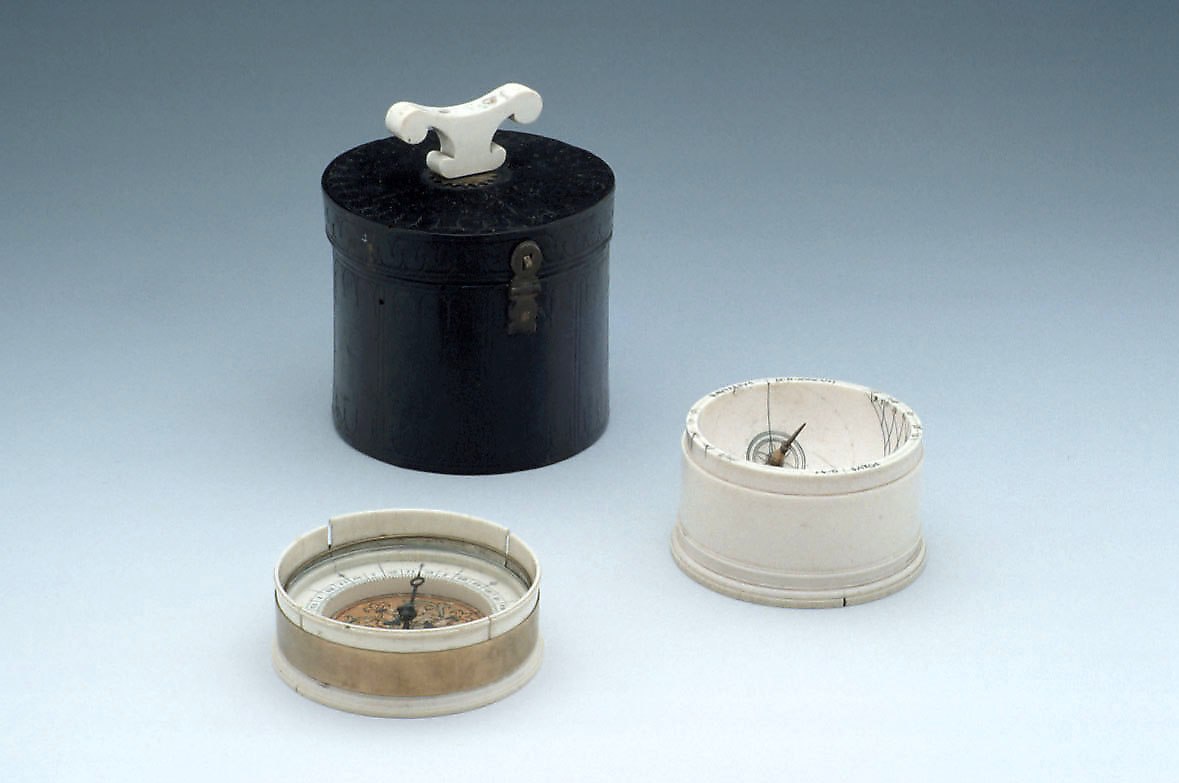
Scaphe Dial by Alexander Ravillius
1538
This scaphe dial is a 16th-century horological instrument crafted from ivory, measuring 90 mm in diameter. Attributed to the maker Alexander Ravillius, the instrument dates to 1537. It consists of a turned ivory box designed to house two distinct components for timekeeping and surveying. The lid contains a magnetic…
Partial type record
Museum of the History of Science, Oxford
horological instruments
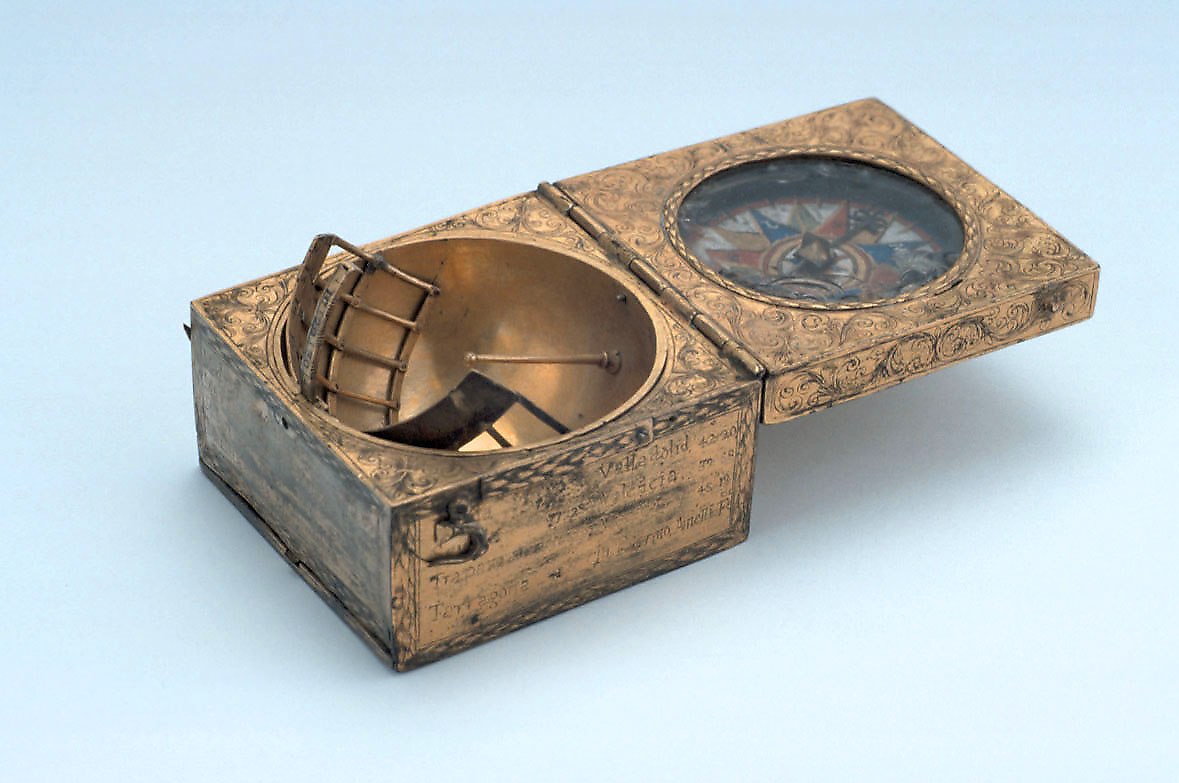
Scaphe Dial by Amelli
Late 16th century
This scaphe dial, inventory number 34154, is a scientific instrument held by the Museum of the History of Science, Oxford. Attributed to the late 16th century, the piece is signed by the maker, Amelli, with the inscription 'In Palermo, Amelli Fecit'. The instrument is constructed from brass and measures 60 x 60 x 40…
Partial type record
Museum of the History of Science, Oxford
horological instruments
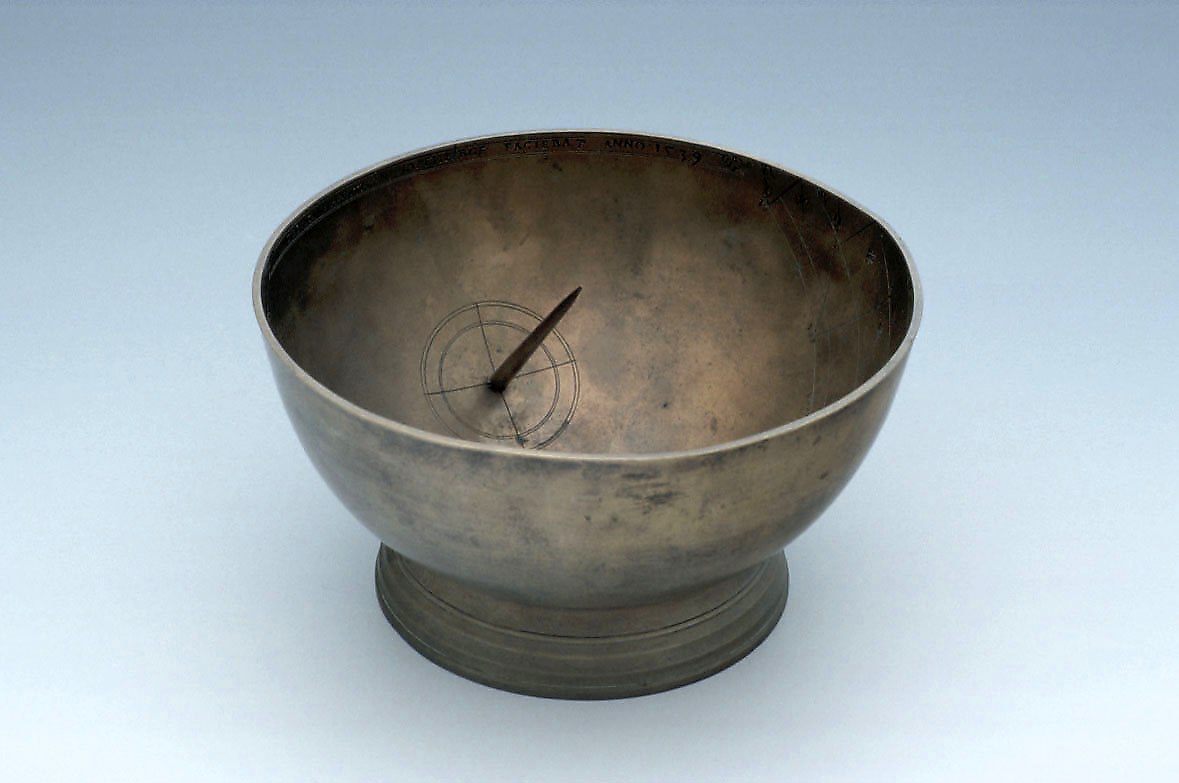
Scaphe Dial by Georg Hartmann
1539
This scaphe dial, fashioned as a bowl, was created in 1539 by the instrument maker Georg Hartmann in Nuremberg. Measuring 151 mm in diameter, the instrument is constructed from brass, showing residual signs of original gilding upon its interior surface. The dial features a bowl-shaped body designed to track time thr…
Partial type record
Museum of the History of Science, Oxford
horological instruments
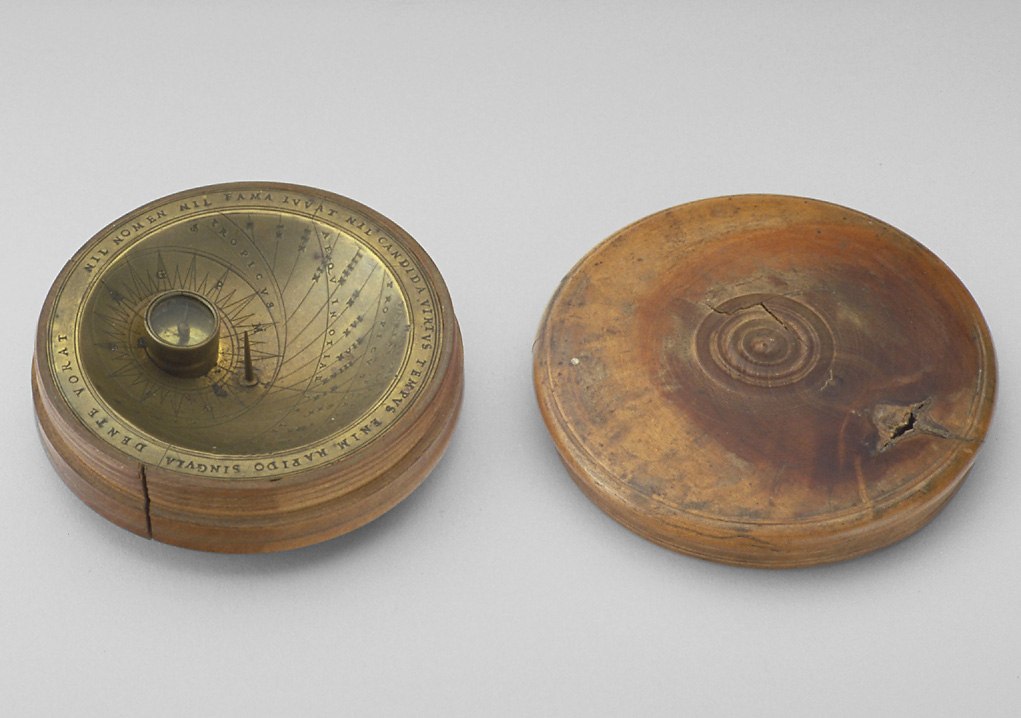
Scaphe Dial by Girolamo della Volpaia
1588
This scaphe dial, measuring 80 mm in diameter, is a portable timekeeping instrument constructed from brass and housed within a turned wooden case. Created by Girolamo della Volpaia in Florence in 1588, the device features a hemispherical interior dial surface engraved with astronomical and temporal markings. These i…
Partial type record
Istituto e Museo di Storia della Scienza, Firenze
horological instruments
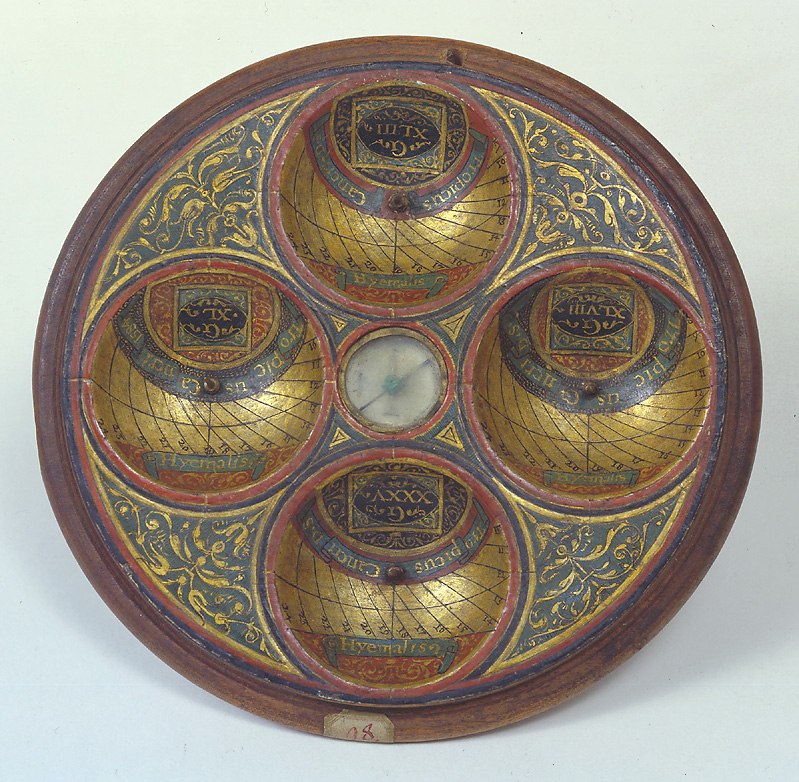
Scaphe Dial by Stefano Buonsignori
1584
This scaphe dial is a wooden instrument measuring 130 mm in diameter, crafted in Florence by Stefano Buonsignori, cosmographer to Francesco I de' Medici. The object consists of a circular turned wooden box featuring a removable lid. Inside, the lower portion holds four hollowed-out scaphe dials, each equipped with a…
Partial type record
History of Science Museum, University of Oxford
horological instruments
Silver astrolabe, inventory 41106
1350/1 (A.H. 751)
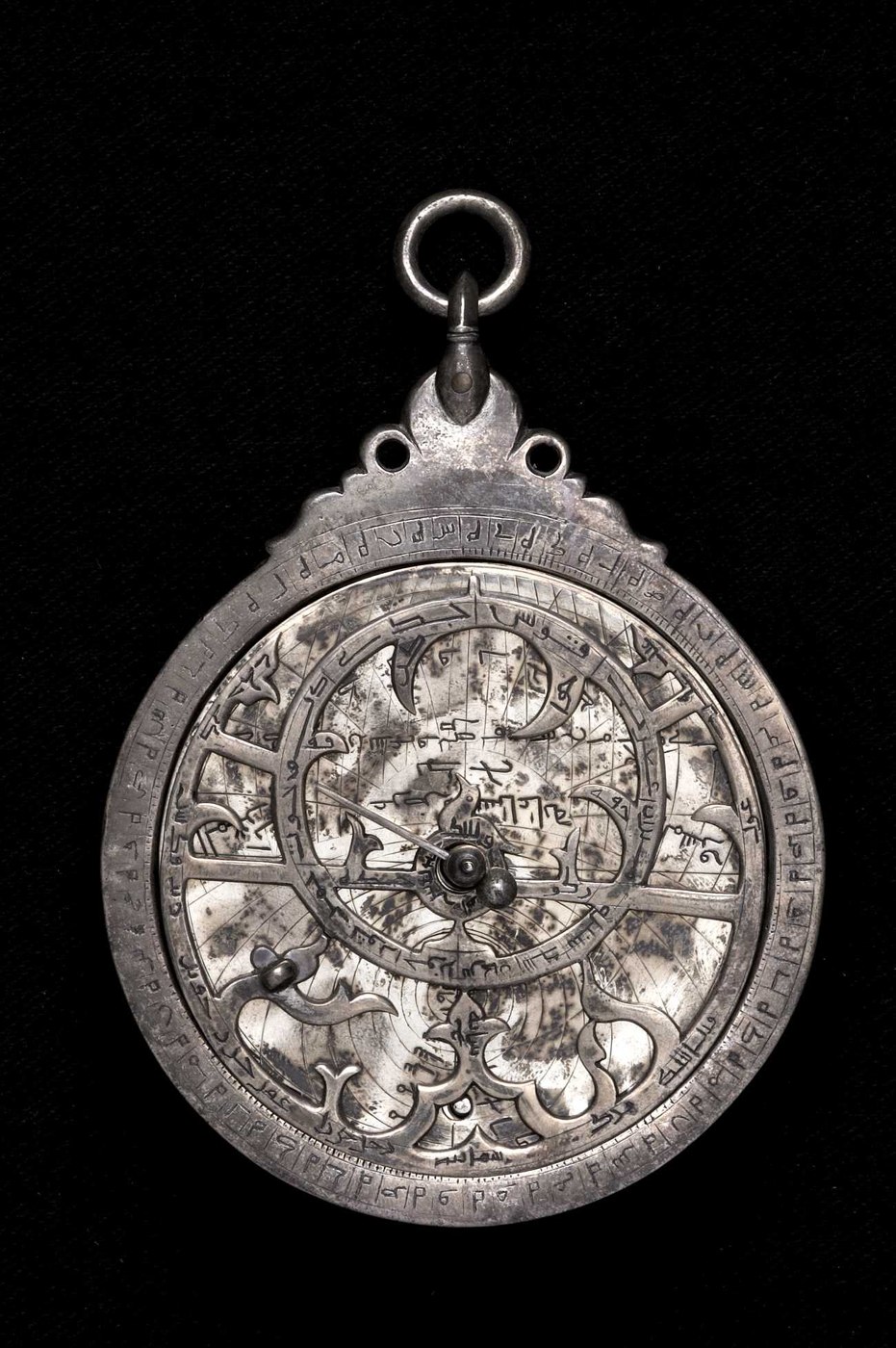
This silver astrolabe (inventory number 41106) is a celestial instrument acquired by the History of Science Museum, Oxford, from London bookseller Malcolm Gardner in 1955. It features a pierced, Indo-Persian style silver throne with an integrated base, a simple round-section ring, and an omega-type shackle. The mate…
Partial type record
Science Museum Group
horological instruments
Small galvanometer
1888
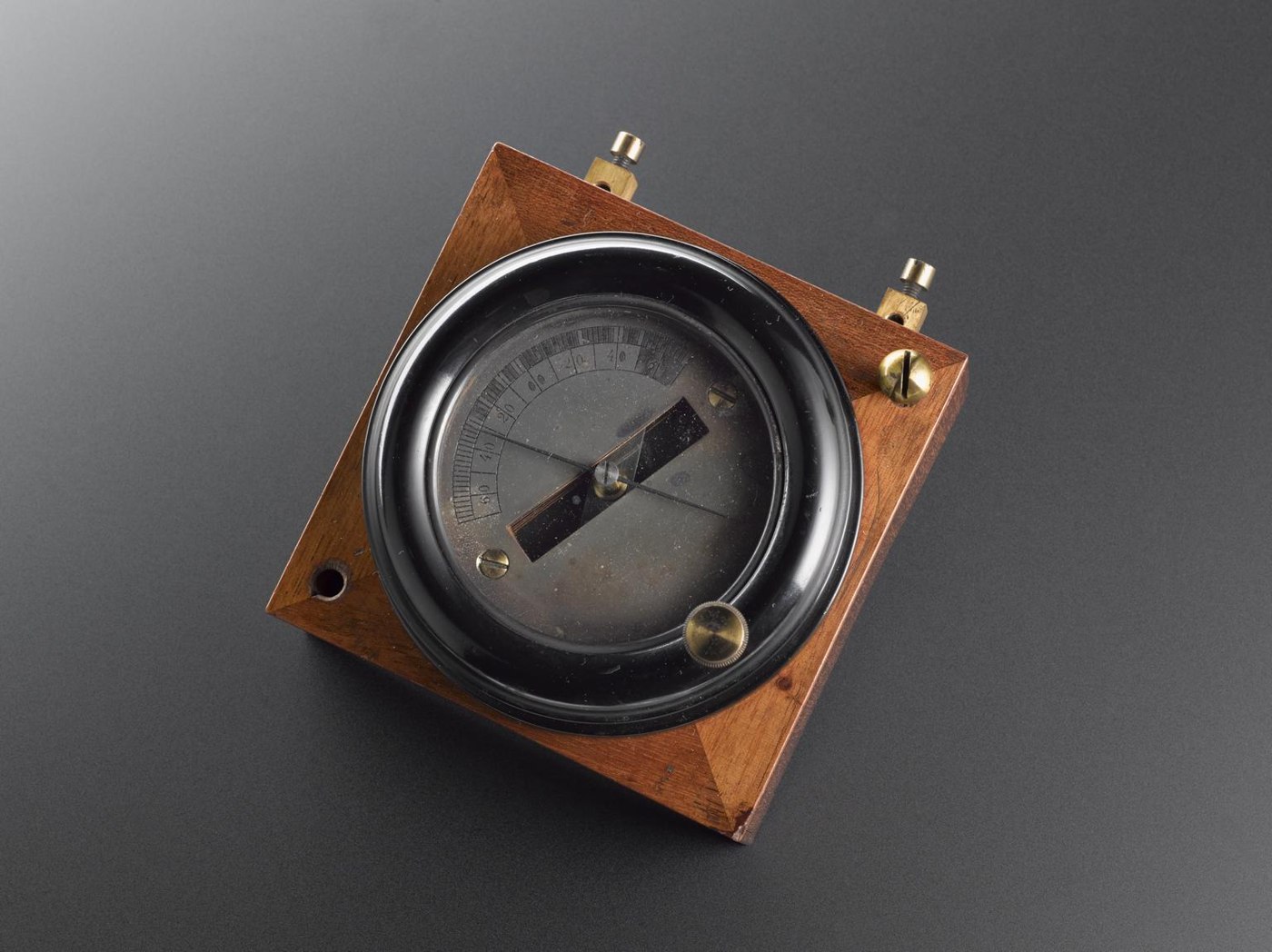
This small galvanometer, manufactured in 1888 by Matthias Hipp of Neuchâtel, Switzerland, is a scientific instrument designed for use in conjunction with a chronoscope. , topped with a circular dial and pointer protected by a glass cover within a dark bezel. It is equipped with two brass terminal posts for electrica…
Partial type record
The Board of Trustees of the Science Museum
horological instruments
Small planispheric astrolabe
c. 1650 (made 1645-1655)
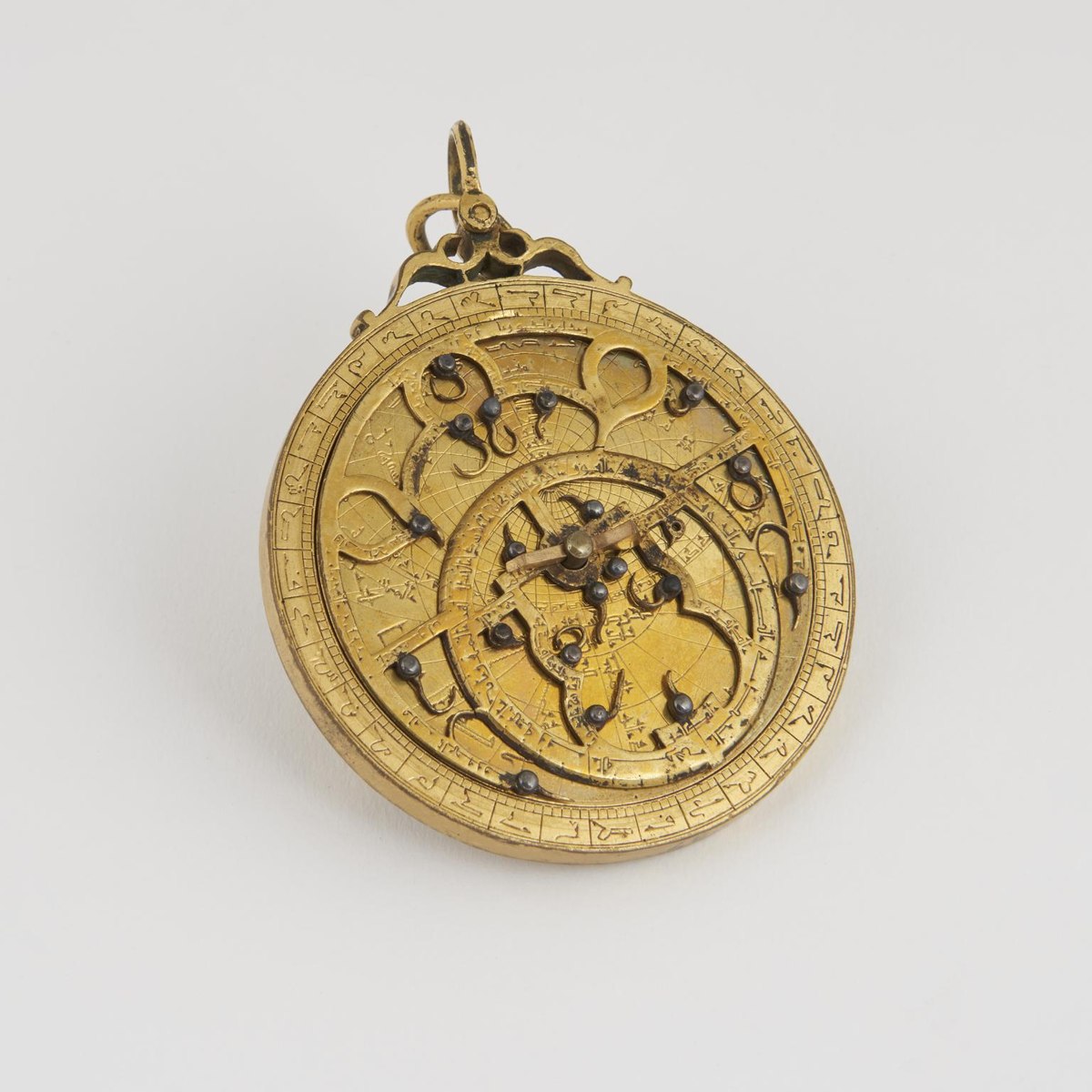
This small brass and silver planispheric astrolabe, dated to circa 1650 and made between 1645 and 1655 in Iran, features Arabic script inscriptions. The instrument is equipped with five plates and an openwork rete decorated with silver studs. The Science Museum Group catalogue records that the reverse side is engrav…
Partial type record
Museums Victoria
horological instruments
Solar Chronometer - Pilkington-Gibbs, Gibb's Heliochronometer
circa 1910
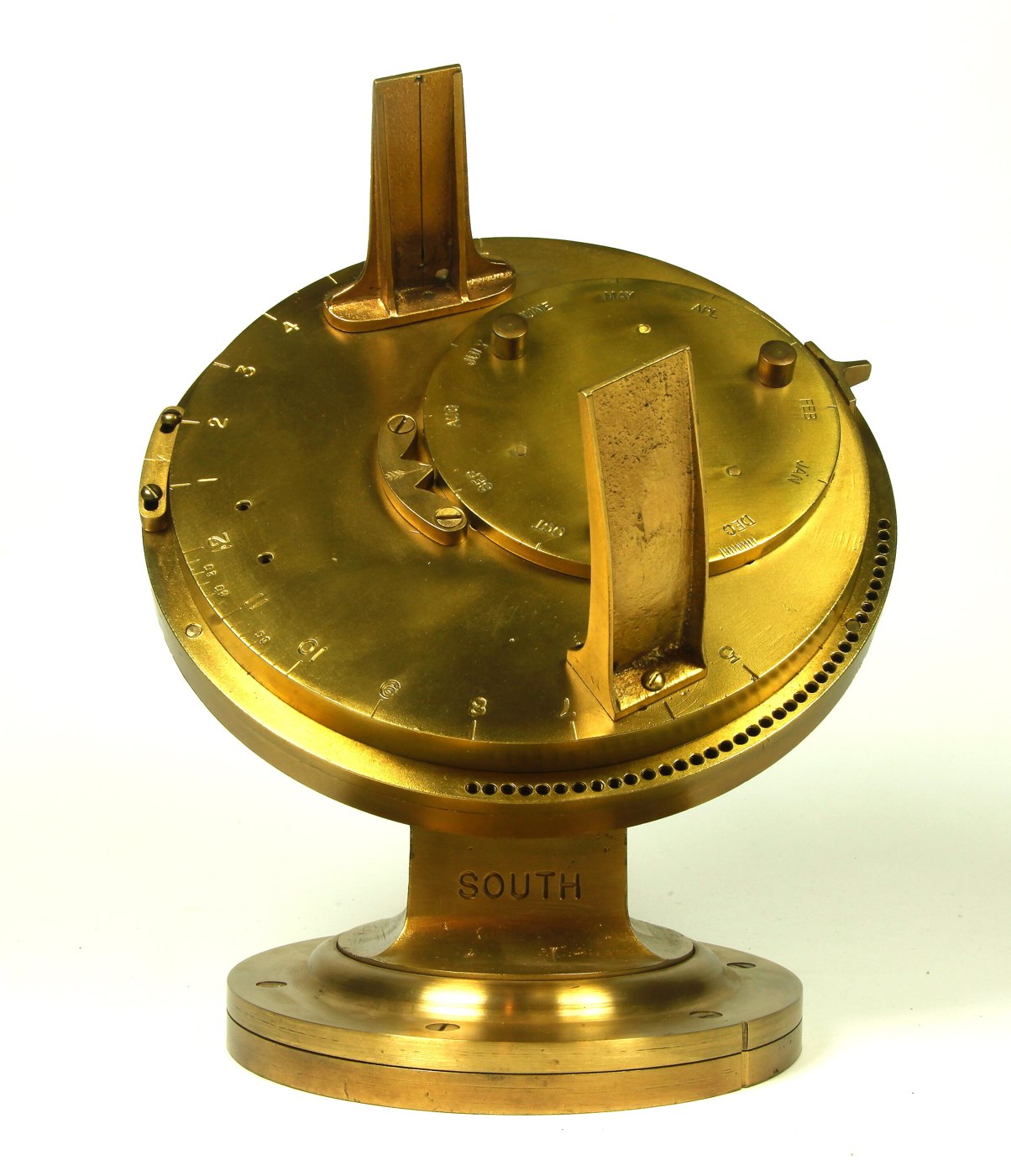
This solar chronometer, known as a Heliochronometer or universal sundial, was manufactured by Pilkington-Gibbs of Preston, Lancashire, circa 1910. The instrument was invented by George James Gibbs and patented in 1907. It consists of a brass assembly featuring two sighting arms and adjustable discs designed to calcu…
Partial type record
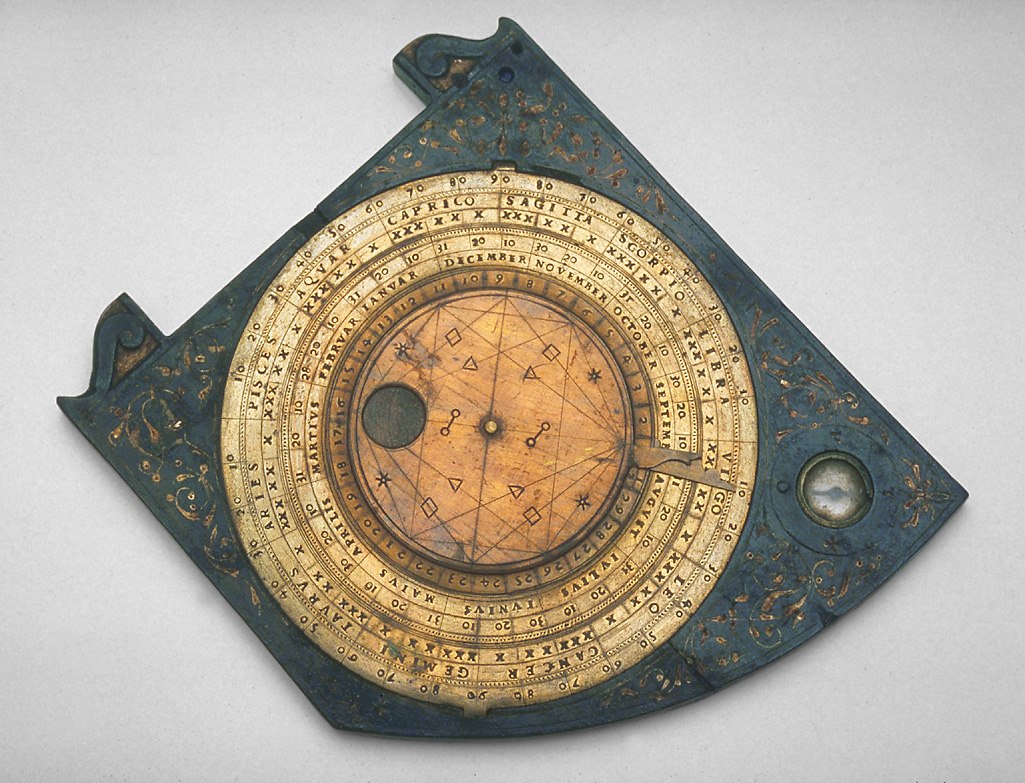
Istituto e Museo di Storia della Scienza, Firenze
horological instruments
Stefano Buonsignori horary quadrant
16th century
This 16th-century horary quadrant is constructed from lignum vitae and features a radius of 145 mm. It was crafted by the Olivetan friar and cosmographer Stefano Buonsignori. The instrument serves multiple functions, including timekeeping, surveying, and astronomical calculation. Its face is calibrated for a latitud…
Partial type record
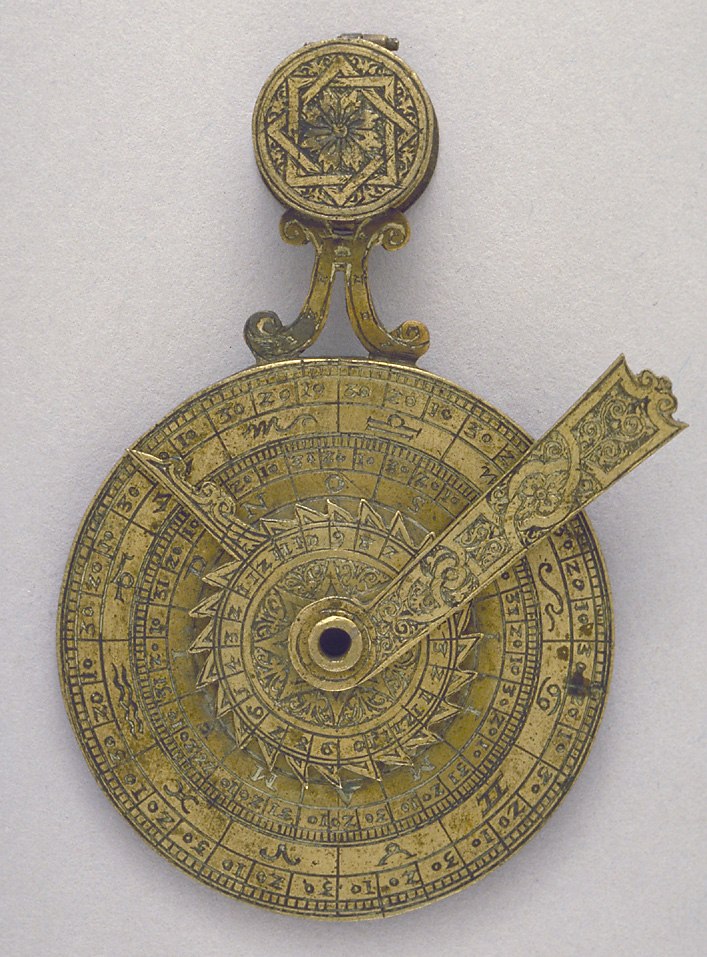
British Museum, London
horological instruments
Sun And Moon Dial
circa 1580
This brass sun and moon dial measures 44 mm in diameter and is attributed to German manufacture circa 1580. The instrument features a circular horizontal dial on one side and a nocturnal on the other, connected to a handle with an integrated compass box. The compass is covered by mica and a brass lid decorated with…
Partial type record
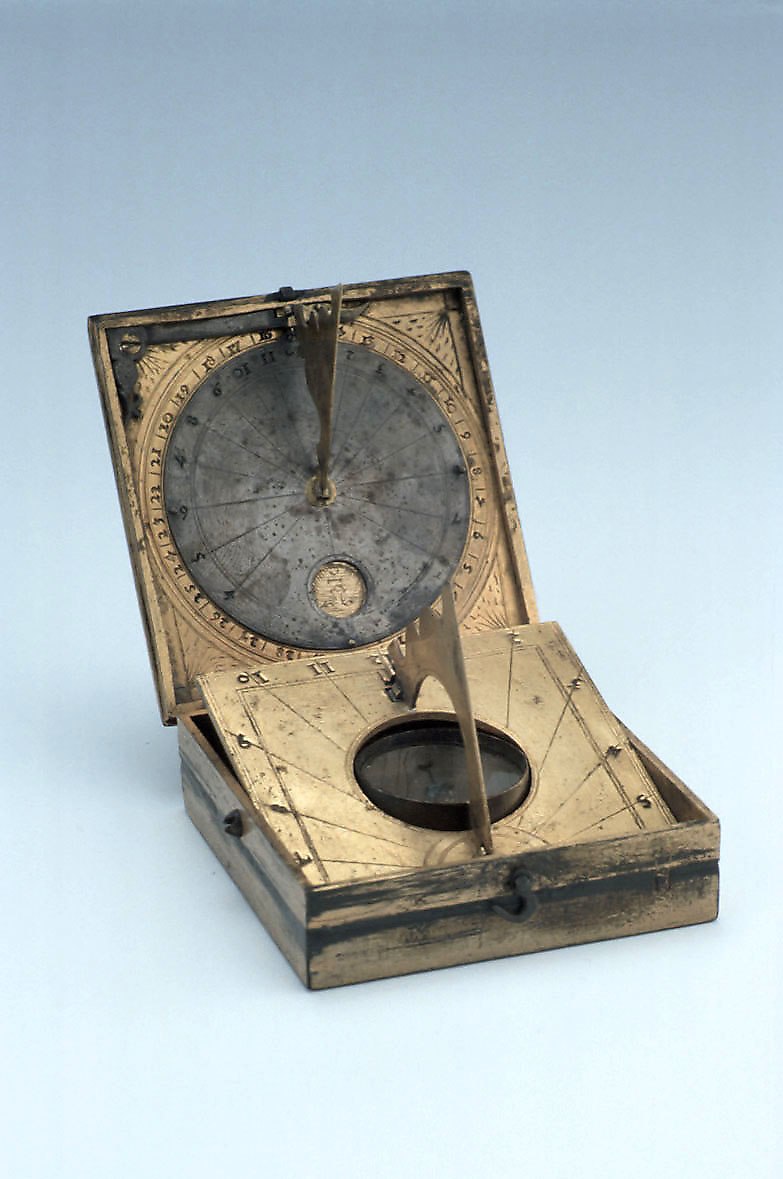
Museum of the History of Science, Oxford
horological instruments
Sun and Moon Dial by Hans Gruber
circa 1570
This portable sun and moon dial, manufactured in Nuremberg circa 1570, is signed by maker Hans Gruber. Constructed from gilt and silvered brass, the instrument measures 64 by 62 by 19 mm. The device features a hinged, square box design secured by a hook clasp. Its exterior cover is engraved with a depiction of the g…
Partial type record
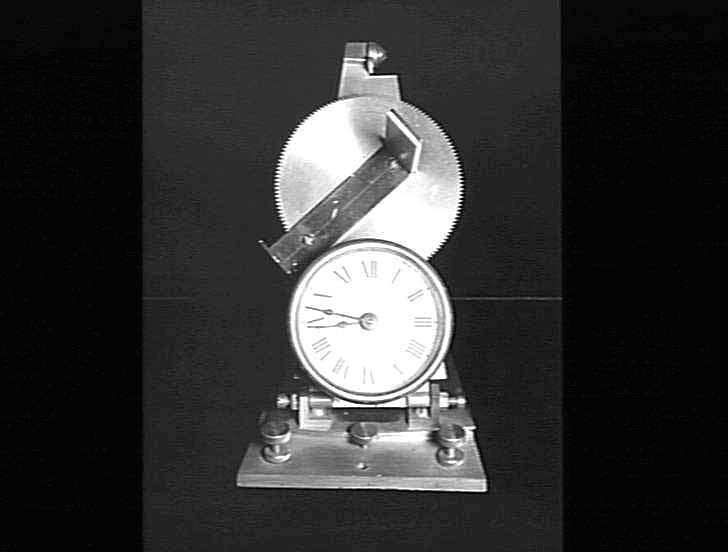
Museums Victoria
horological instruments
Sunclock by William Ernest Cooke
circa 1922
This heliochronometer, or sunclock, was designed and produced by the Government Astronomer of New South Wales, William Ernest Cooke, circa 1922. The instrument is constructed of brass and features a dial marked with the designer's name. It functions by allowing the user to adjust its arms to account for latitude, th…
Partial type record
© British Museum, London
horological instruments
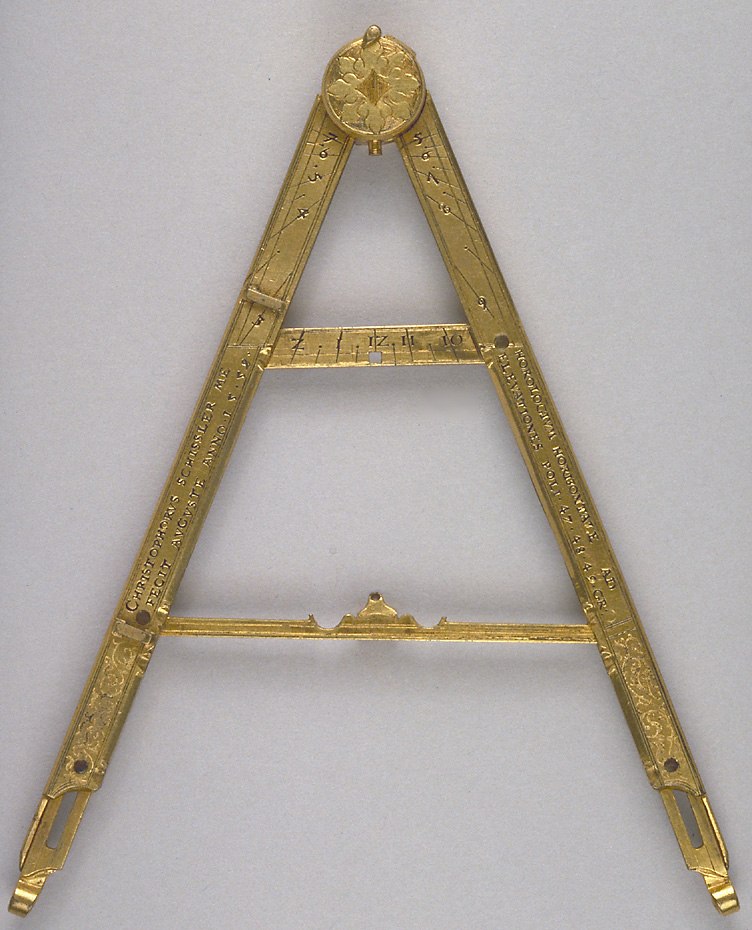
Sundial and dividers by Christoph Schissler
1558
This instrument, fashioned from gilt brass and measuring 165 mm in length, serves as both a pair of dividers and a sundial. Signed by Christoph Schissler and dated 1558, it reflects 16th-century technical instrumentation from Augsburg. The device incorporates a central hinge originally containing a compass, now miss…
Partial type record
Museum of the History of Science, Oxford
horological instruments
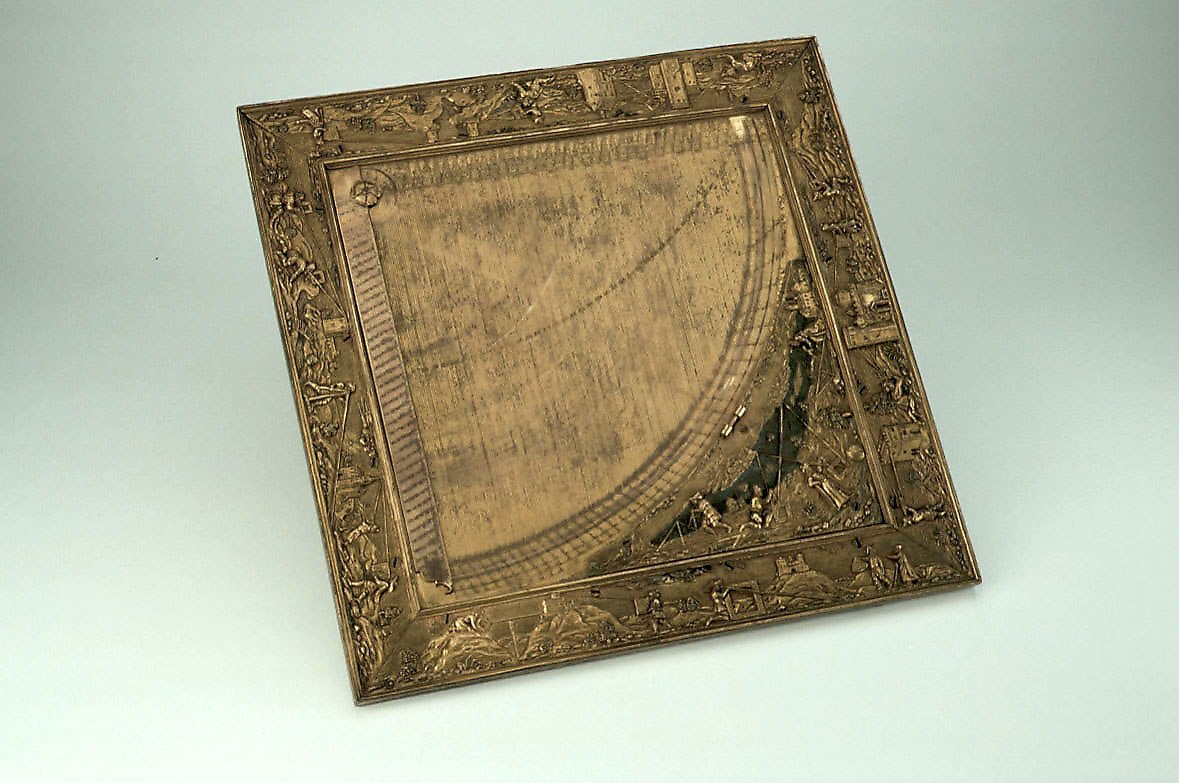
Surveying Quadrant by Christoph Schissler
1579
This gilt copper surveying quadrant, measuring 345 mm square, was created in 1579 by the instrument maker Christoph Schissler in Augsburg. The instrument is constructed from several riveted and screwed layers and is decorated with reliefs depicting various European and Ottoman surveyors utilizing instruments such as…
Partial type record
London Fine Antiques / Sellingantiques
horological instruments
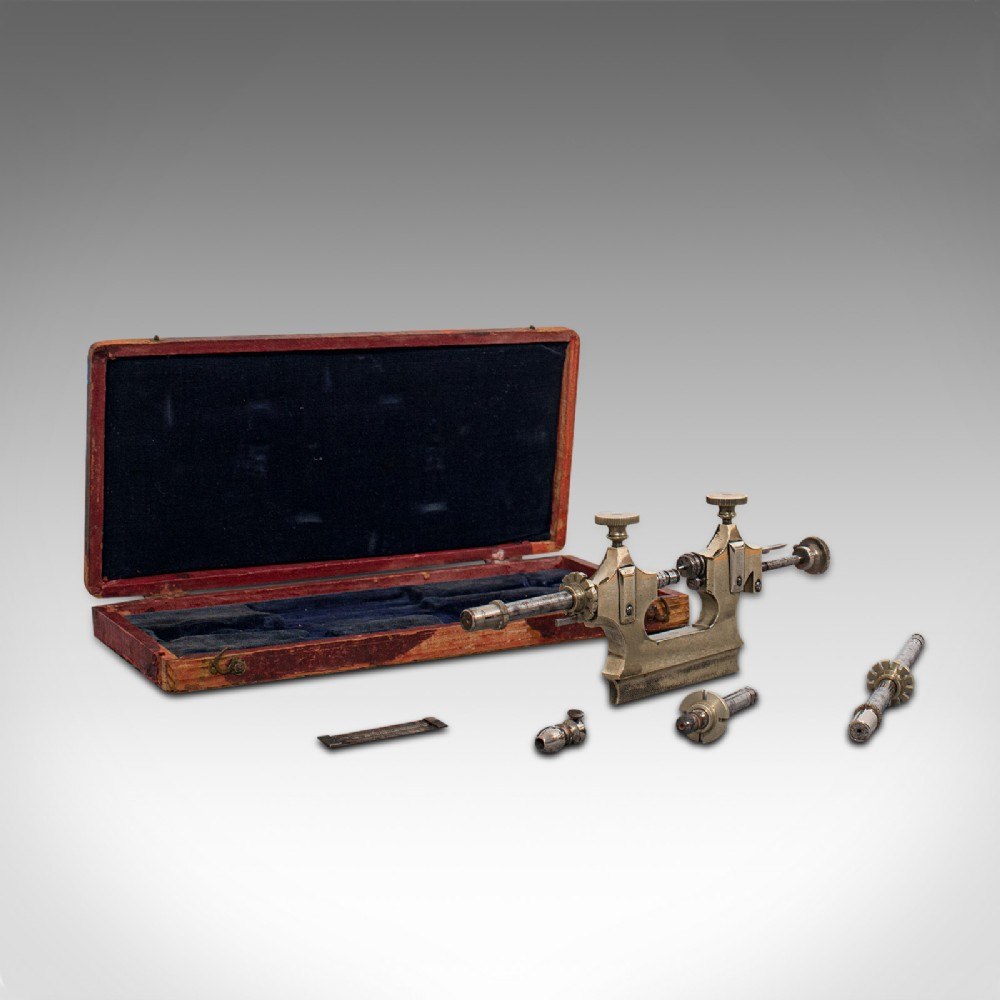
Swiss Brass and Steel Jacot Watchmaker's Lathe
circa 1920
This desktop watchmaker's Jacot tool is constructed from brass and steel, dating to circa 1920 with reported Swiss origin. Designed for pivot finishing, the lathe is presented in a fitted box lined with deep midnight blue velvet and equipped with brass swivel clasps. The brass frame exhibits an aged patina and bears…
Partial type record
Dreweatts 1759
horological instruments
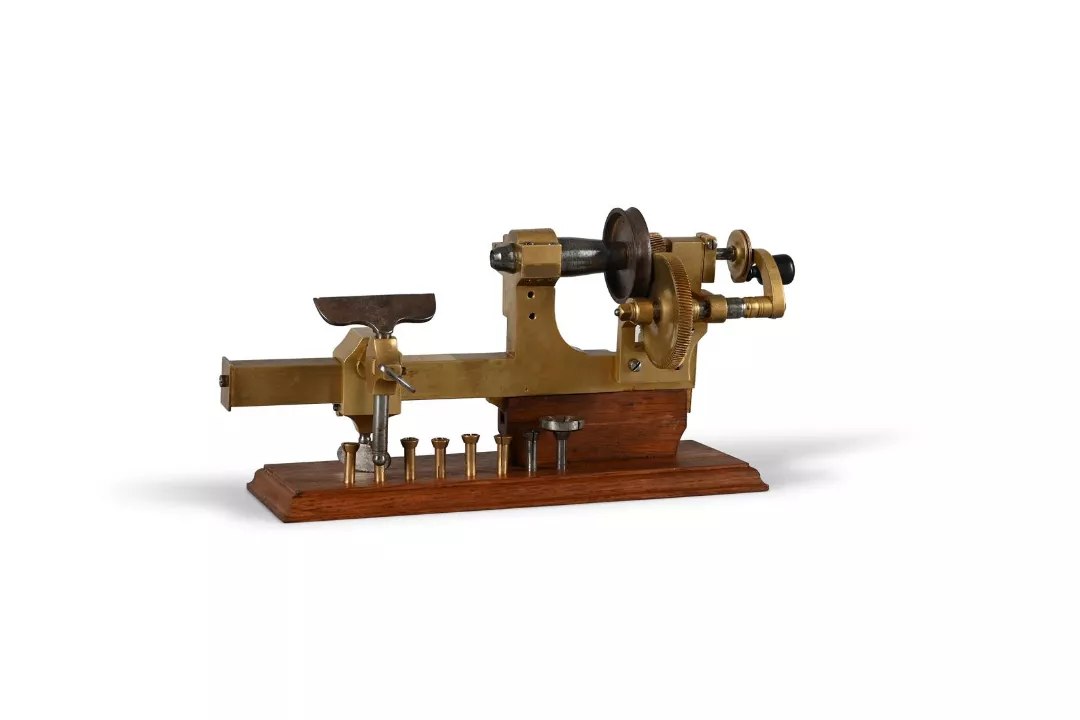
Swiss brass and steel watchmaker's 6mm mandrel-frame lathe
circa 1900
According to the auctioneer, this unsigned Swiss brass and steel watchmaker's mandrel-frame lathe dates to circa 1900 and is probably from Geneva. It features a U-shaped brass frame fitted with a brass handwheel and bevel gears driving an arbor designed to take 6mm split collets at the headstock. An integral rectang…
Partial type record
History of Science Museum, University of Oxford
horological instruments
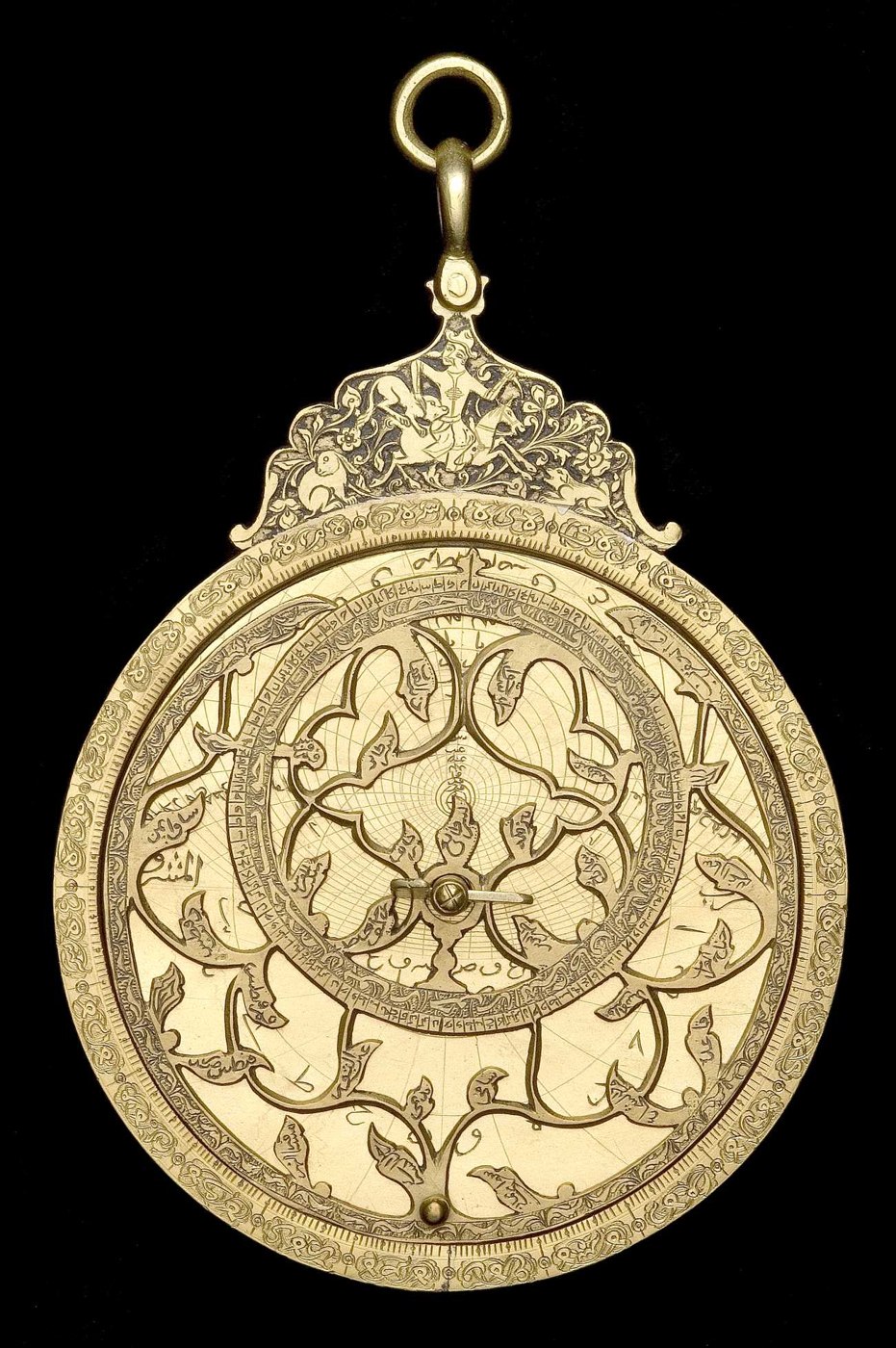
The Hunter's Astrolabe
17th century
This 17th-century brass astrolabe, identified as inventory number 54607, is held by the History of Science Museum at the University of Oxford. Known as 'The Hunter's Astrolabe' due to the distinctive hunting scene engraved on its Indo-Persian style throne, the instrument was presented by Lewis Evans in 1924. The dev…
Partial type record
History of Science Museum, University of Oxford
horological instruments
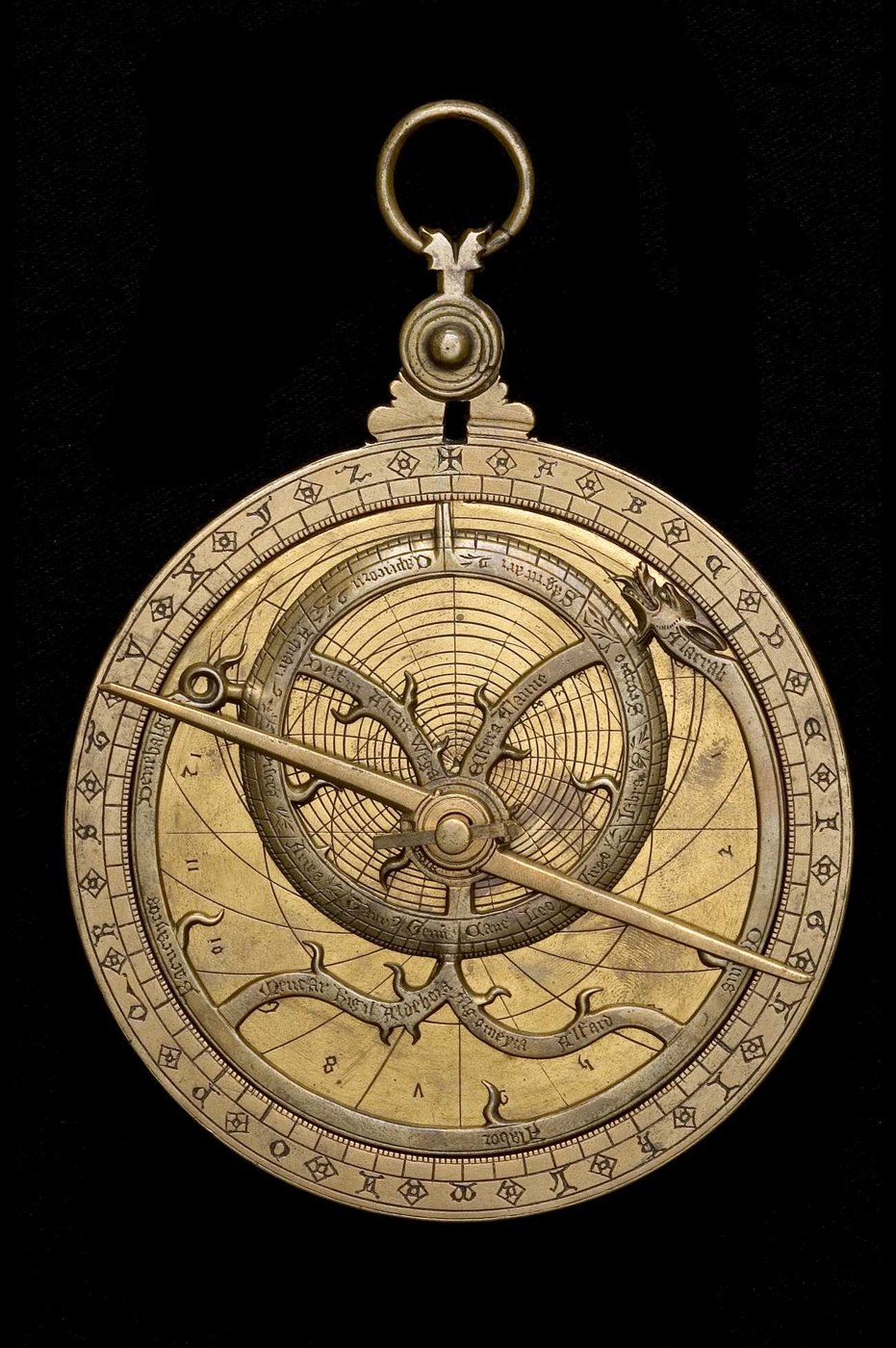
The Painswick Astrolabe
ca. 1370
This brass astrolabe, identified as inventory number 47869 and historically known as the 'Painswick Astrolabe', dates to approximately 1370. The instrument features a Y-shaped rete with zoomorphic elements where the Tropic of Capricorn terminates in the head and tail of a dragon, with the head pointing at the star A…
Partial type record
Museum of the History of Science, Oxford
horological instruments
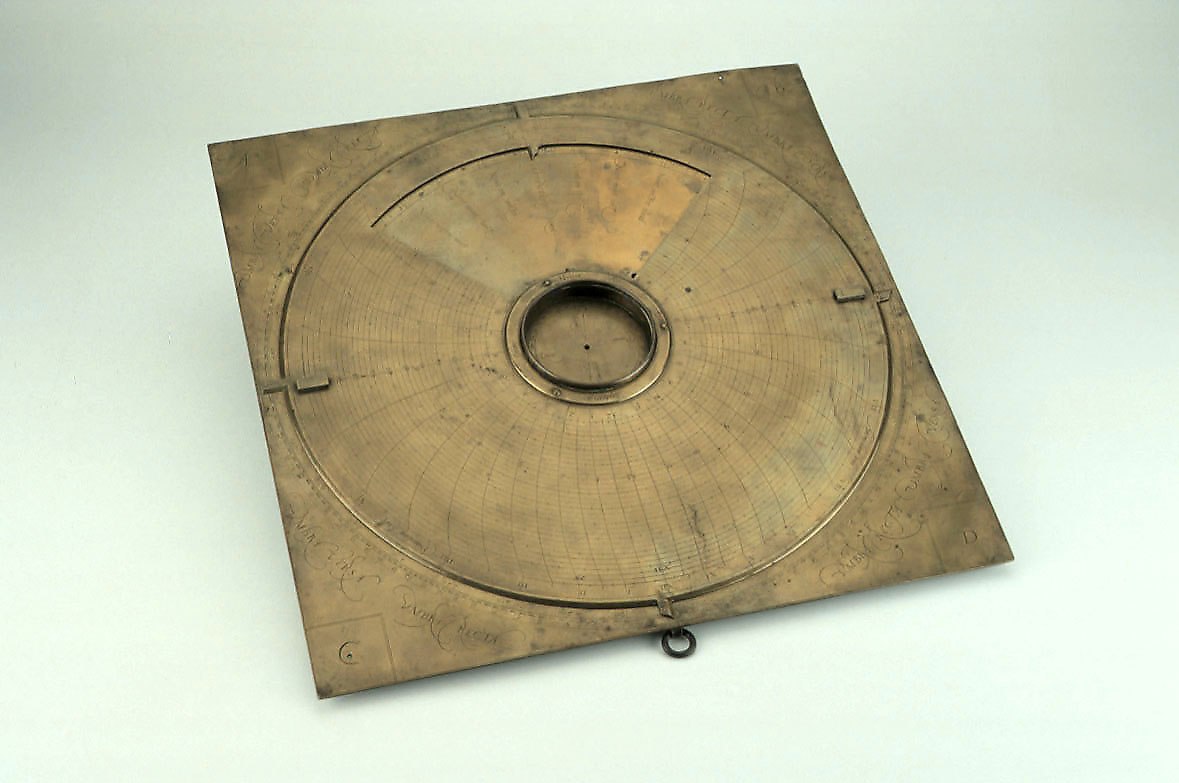
Theodolite and sundial
circa 1570
This 364 mm square brass instrument consists of a square base plate with a revolving disc containing an integrated sundial and theodolite. It is attributed to the maker Gualterus Arsenius, working in Louvain around 1570. The plate features a shadow square marked 'VMBRA RECTA' and 'VMBRA VERSA', a scale of degrees fr…
Partial type record
Istituto e Museo di Storia della Scienza, Firenze
horological instruments
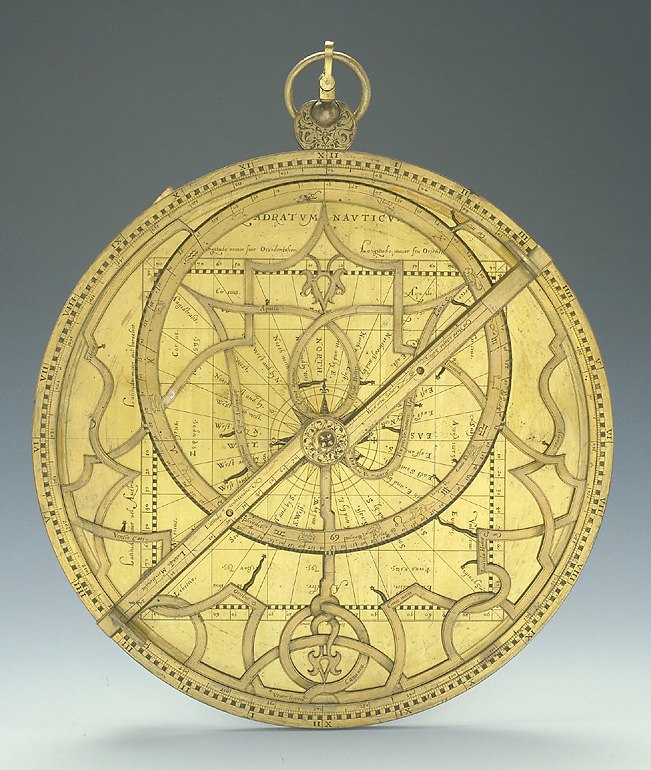
Thomas Gemini Astrolabe
Mid 16th century
This mid-16th-century brass astrolabe, measuring 355 mm in diameter, is the work of maker Thomas Gemini. It features a mater constructed of three soldered and riveted brass layers, with a central wind rose for 32 directions labeled in English. The interior includes a 'QVADRATVM NAVTICVM' with coordinates marked in L…
Partial type record
Museum of the History of Science, Oxford
horological instruments
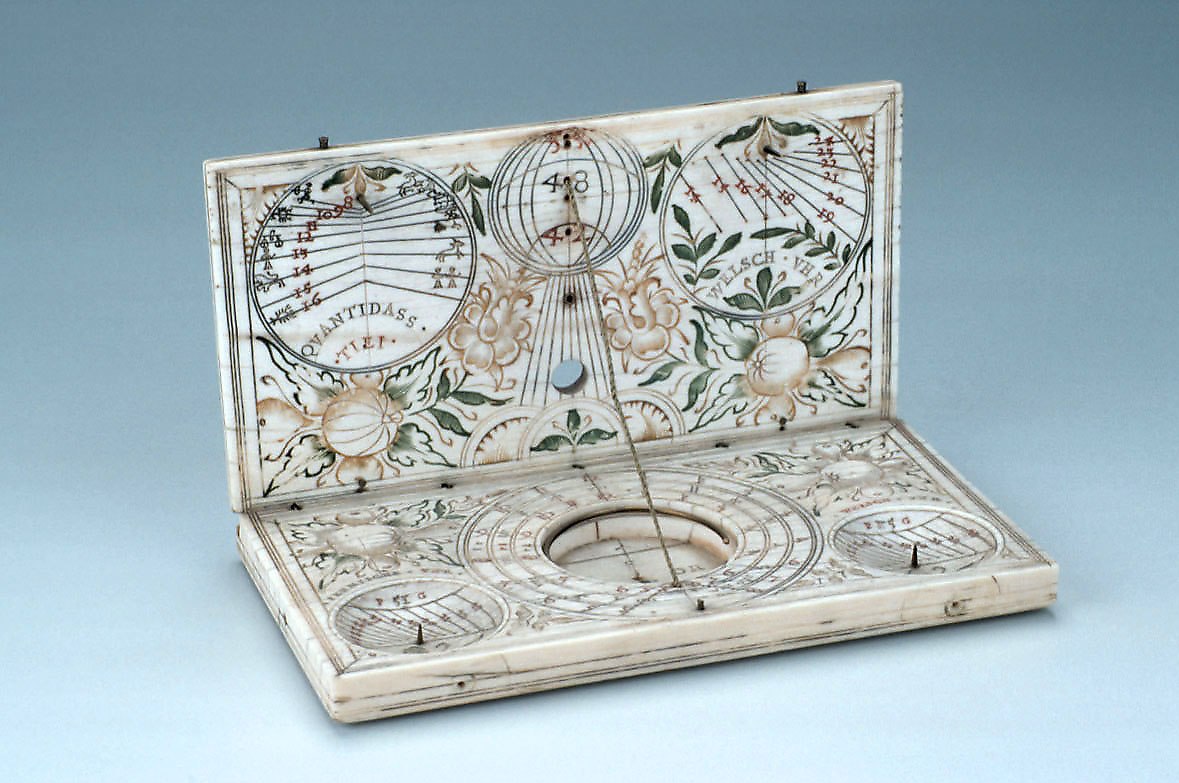
Thomas Tucher Ivory Diptych Dial
circa 1600
This ivory diptych dial is attributed to Thomas Tucher of Nuremberg, dated to circa 1600. Measuring 139 x 75 x 15 mm, the instrument is characterized by its wide proportions and intricate decoration featuring motifs of fruits and flowers in brown and green pigments. The dial is composed of two hinged leaves. The int…
Partial type record
British Museum, London
horological instruments
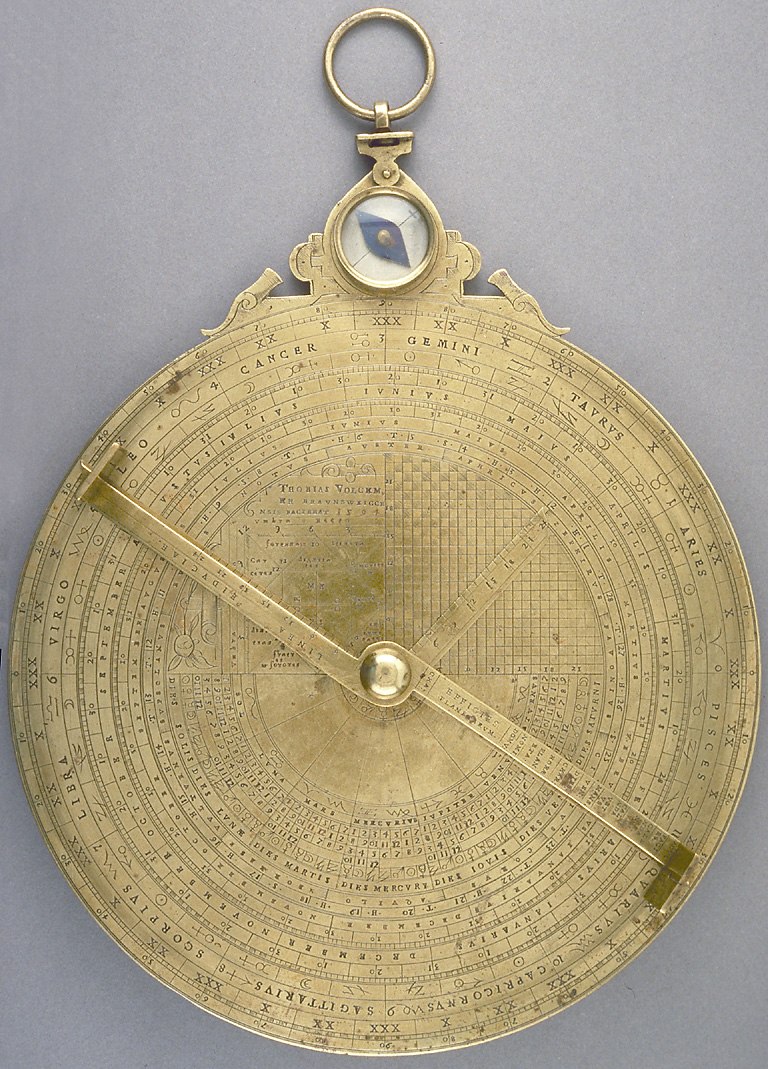
Tobias Volckmer Astrolabe
1594
This 1594 astrolabe, crafted from brass and measuring 200 mm in diameter, is signed by Tobias Volckmer of Brunswick. The instrument is distinguished by a mater structured as a flat disc lacking a traditional rim and the absence of movable plates. The throne incorporates a circular table listing weekdays, their assoc…
Partial type record
© Istituto e Museo di Storia della Scienza, Firenze
horological instruments
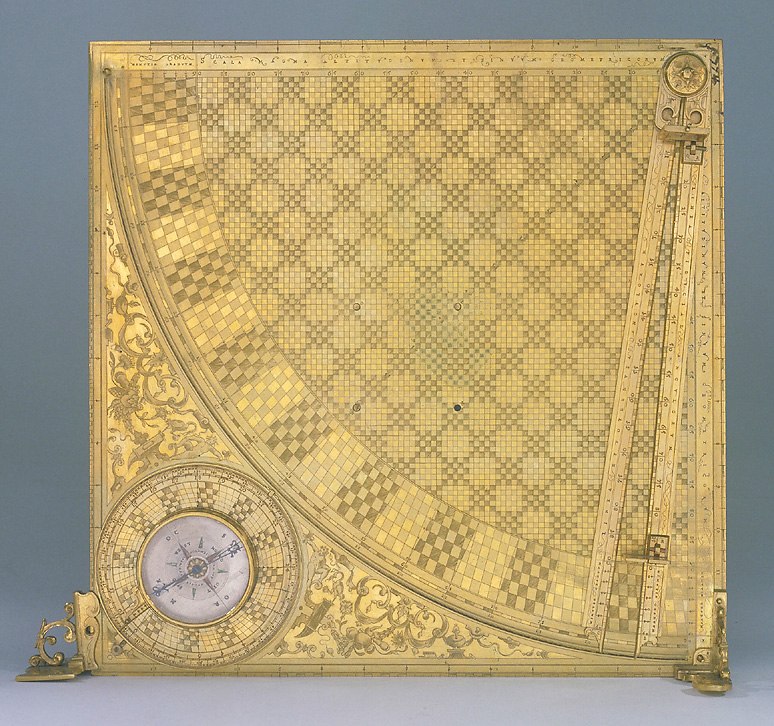
Universal Quadrant by Tobias Volckmer
1608
This universal quadrant, signed by Tobias Volckmer of Brunswick and dated 1608, is constructed of gilt brass and measures 360 x 360 mm. The instrument features intricate engravings on both sides, with the front face incorporating a removable compass, a wind rose, and a nonius with concentric circles for high-precisi…
Partial type record
Museum of the History of Science, Oxford
horological instruments
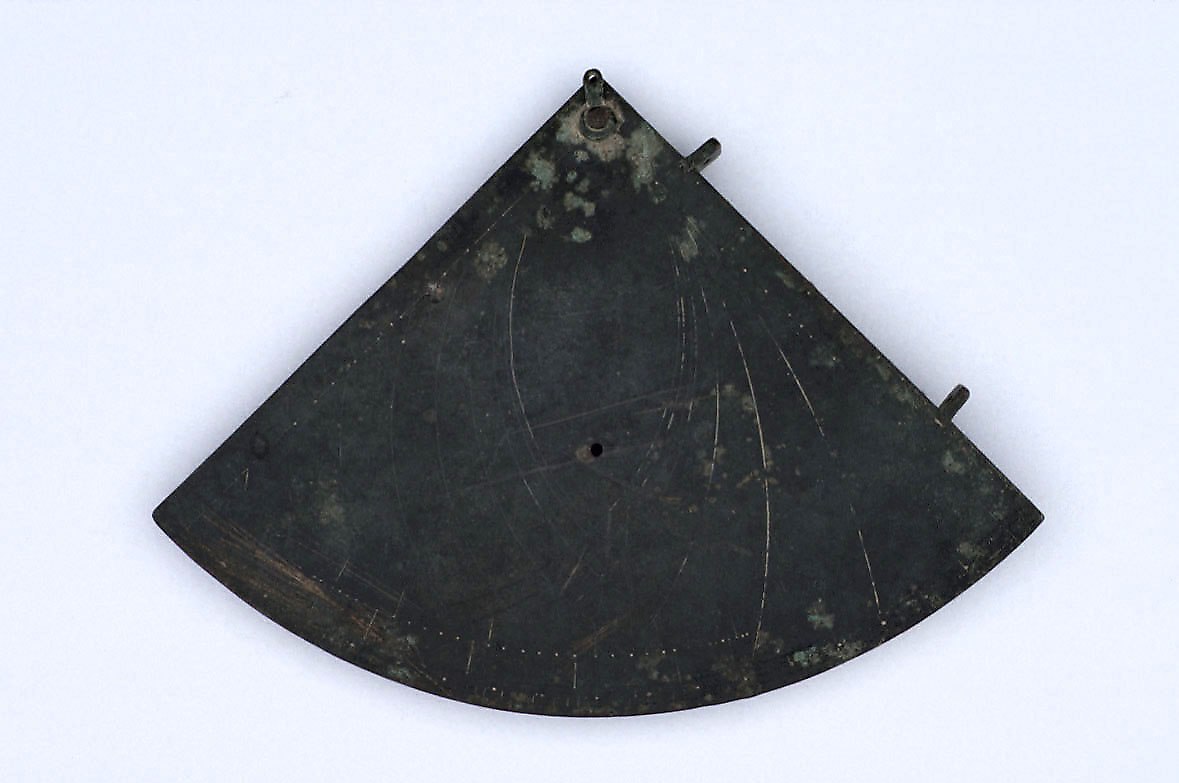
Unsigned Copper Quadrant
circa 1400
This unsigned quadrant, dating to approximately 1400 and attributed to English origin, is constructed from copper with a 79 mm radius. The instrument is characterized by an incomplete state of completion, featuring hour lines and graduations that appear as sketched outlines. The face includes two hole sights and a c…
Partial type record
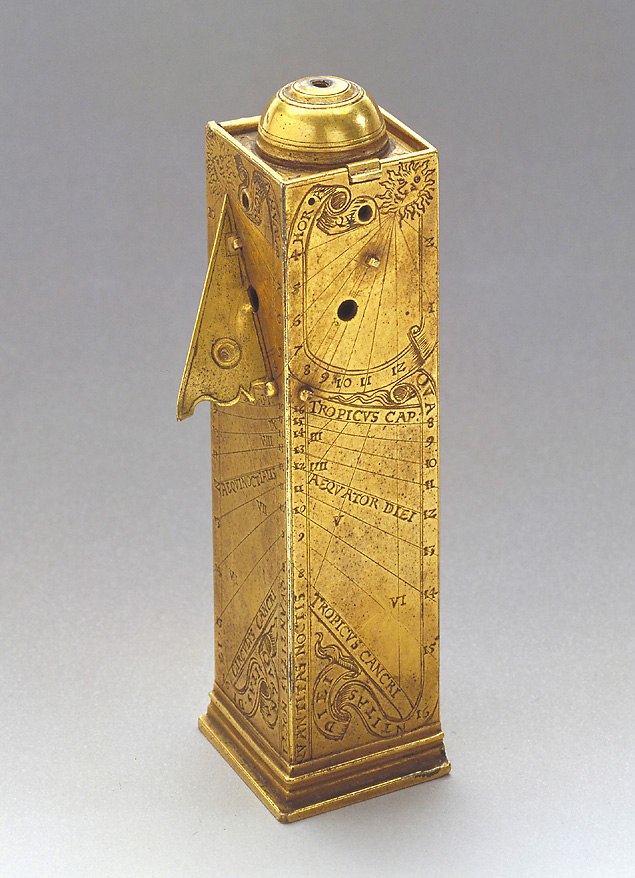
Istituto e Museo di Storia della Scienza, Firenze
horological instruments
Vertical Dial
16th century
This 16th-century column sundial is composed of gilt brass and measures 100 mm in height. The instrument consists of a quadrilateral column featuring a hinged, domed lid that houses an integrated compass, which allows for proper orientation of the dial. Internally, the instrument incorporates a metal frame equipped…
Partial type record
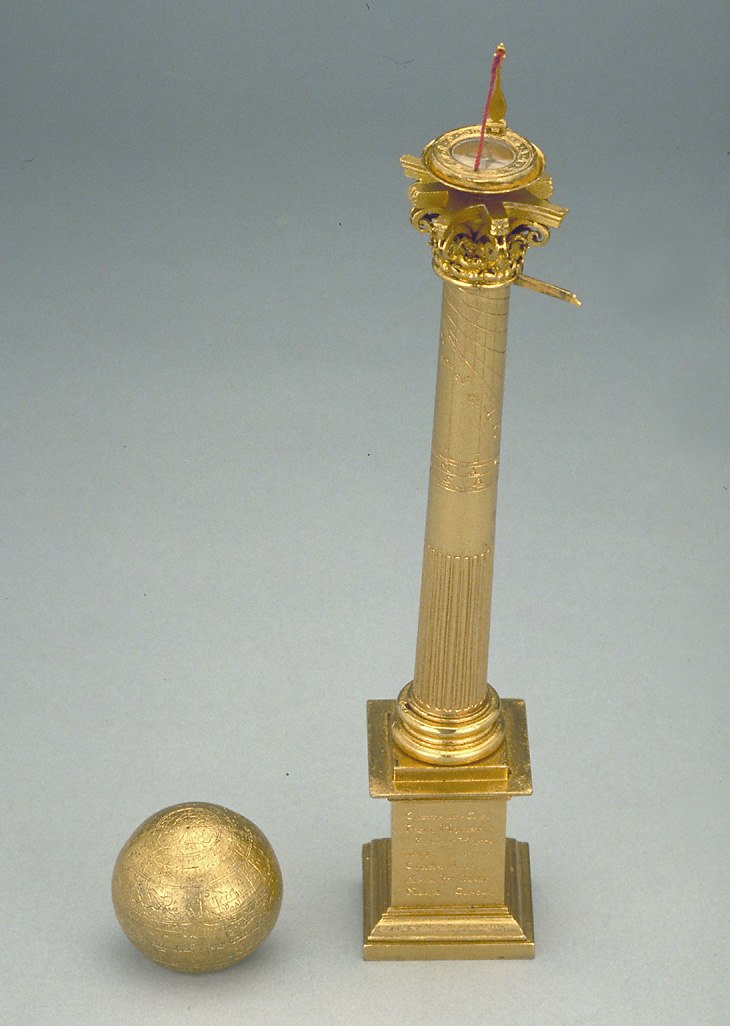
British Museum, London
horological instruments
Vertical Dial, 1593
1593
This gilt brass pillar sundial, dating to 1593, is designed in the form of a Corinthian column on a square moulded base. The instrument is surmounted by a terrestrial globe, which can be lifted to reveal a secondary small internal compass with a string gnomon dial. The main exterior column features fluted lower port…
Partial type record
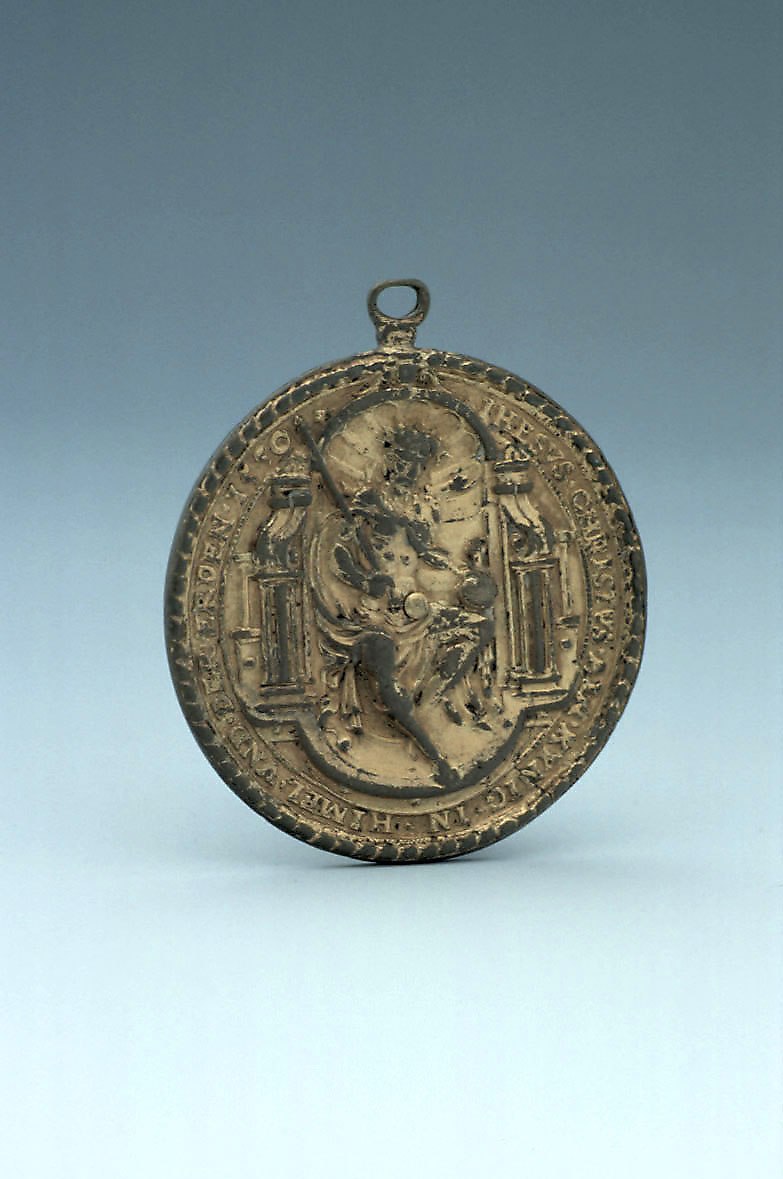
Museum of the History of Science, Oxford
horological instruments
Vertical Disc Dial
1550 or 1574
This vertical disc dial, held by the Museum of the History of Science, Oxford (inventory number 46380), is an unsigned horological instrument constructed from gilt brass. Measuring 43 mm in diameter, the object is a portable sun-measuring device. One side features a relief depiction of a crowned Christ enthroned, cl…
Partial type record
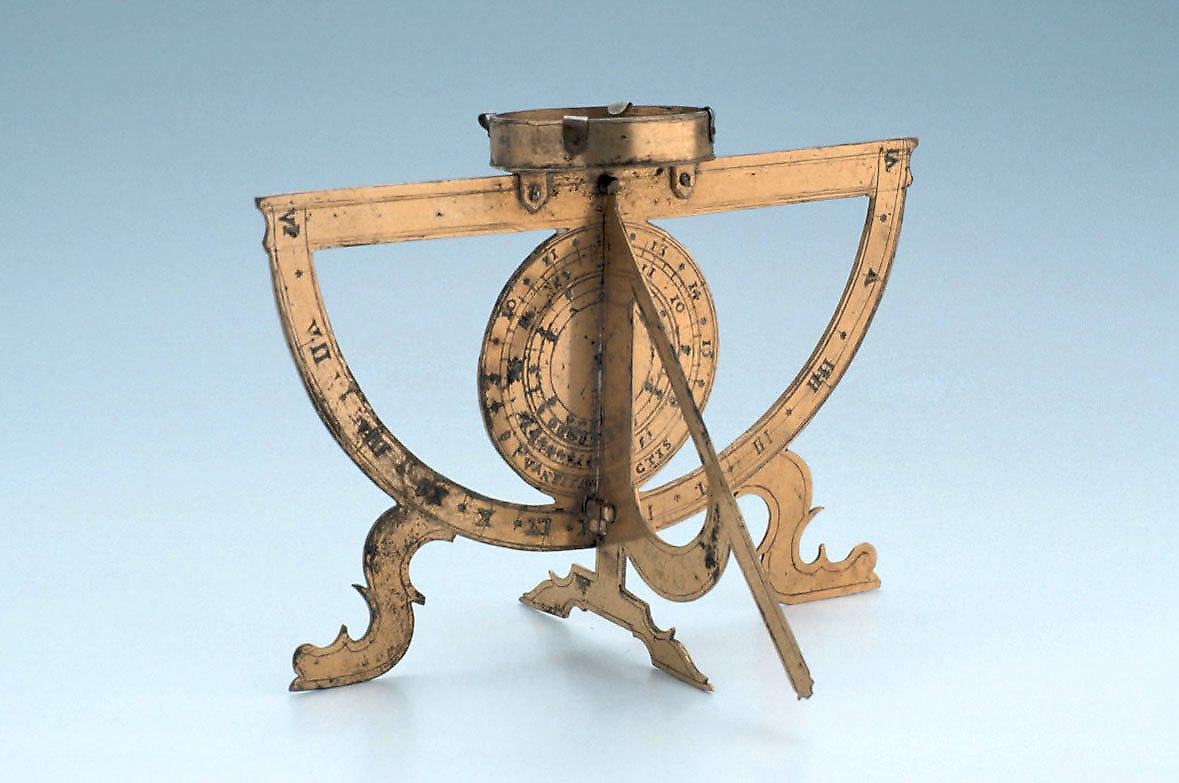
Museum of the History of Science, Oxford
horological instruments
Vertical Disc Dial by Alexius Schniep
circa 1600
This gilt brass vertical disc dial, attributed to the maker Alexius Schniep, is dated to circa 1600. Measuring 145 x 85 x 2 mm, the instrument is constructed with a flat half-ring supported by a brass tripod stand. A folding gnomon is provided for timekeeping, with hour lines engraved on the ring, indicating common…
Partial type record
Museum of the History of Science, Oxford
horological instruments
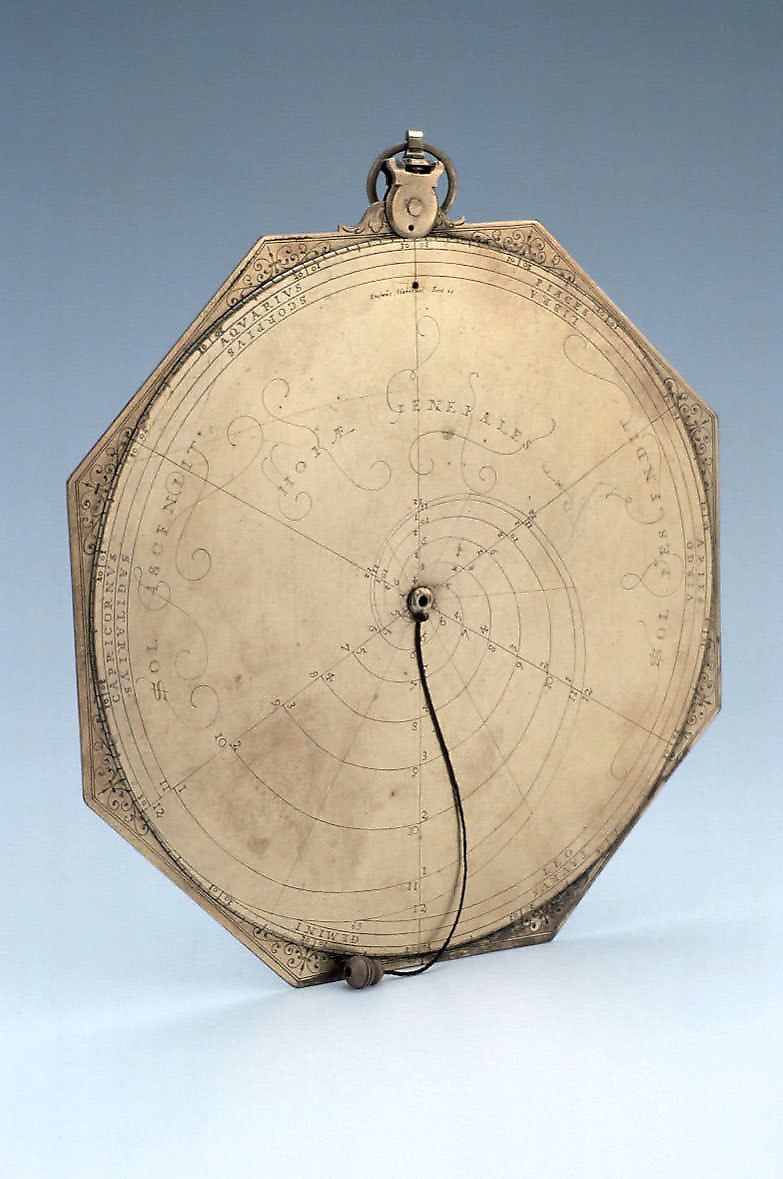
Vertical Disc Dial by Erasmus Habermel
1586
This vertical disc dial, created by Erasmus Habermel in 1586, is a gilt copper timekeeping instrument measuring 160 x 160 mm. The construction features two superimposed plates: one octagonal base plate and a circular plate. The circular plate functions as the primary dial face, featuring hour lines engraved in a spi…
Partial type record
Museum of the History of Science, Oxford
horological instruments
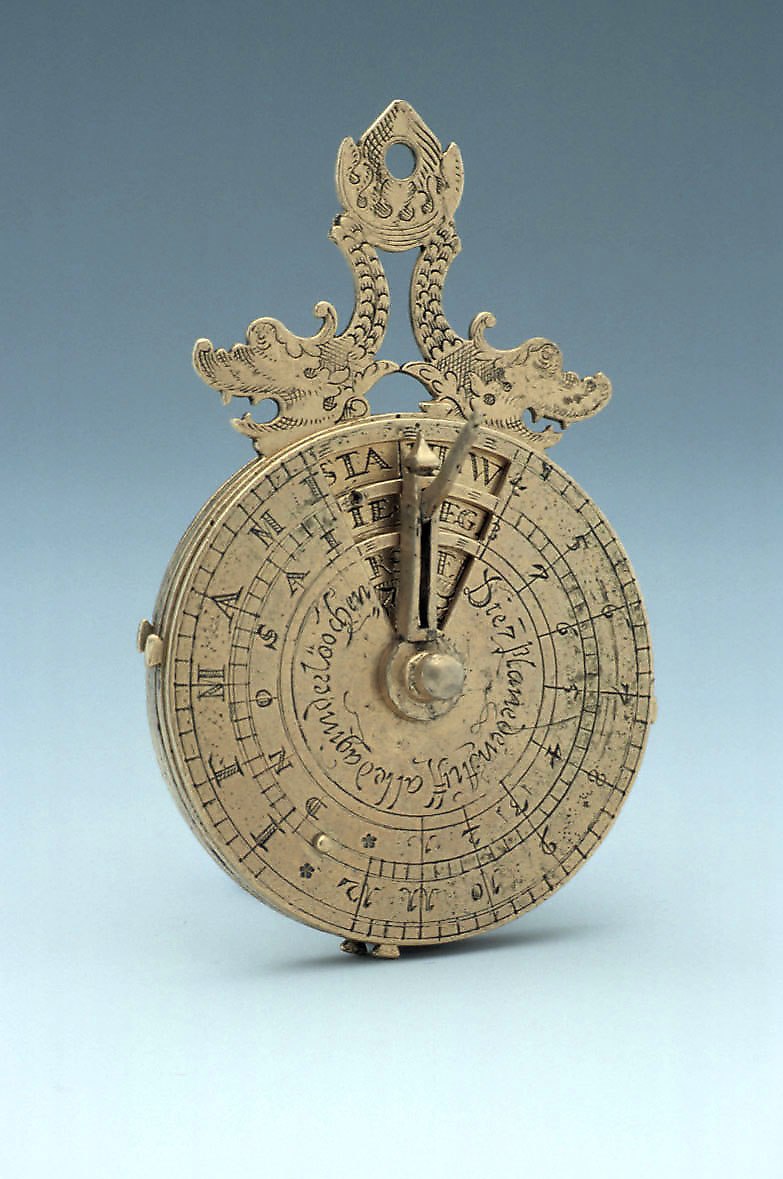
Vertical Disc Dial, 1564
1564
This 50 mm vertical disc dial, held by the Museum of the History of Science, Oxford (inventory 41123), is an unsigned German instrument dating to 1564. The construction consists of five superimposed gilt copper discs, featuring a suspension handle cast and engraved in the form of a double dragon's head. One side con…
Partial type record
Museum of the History of Science, Oxford
horological instruments
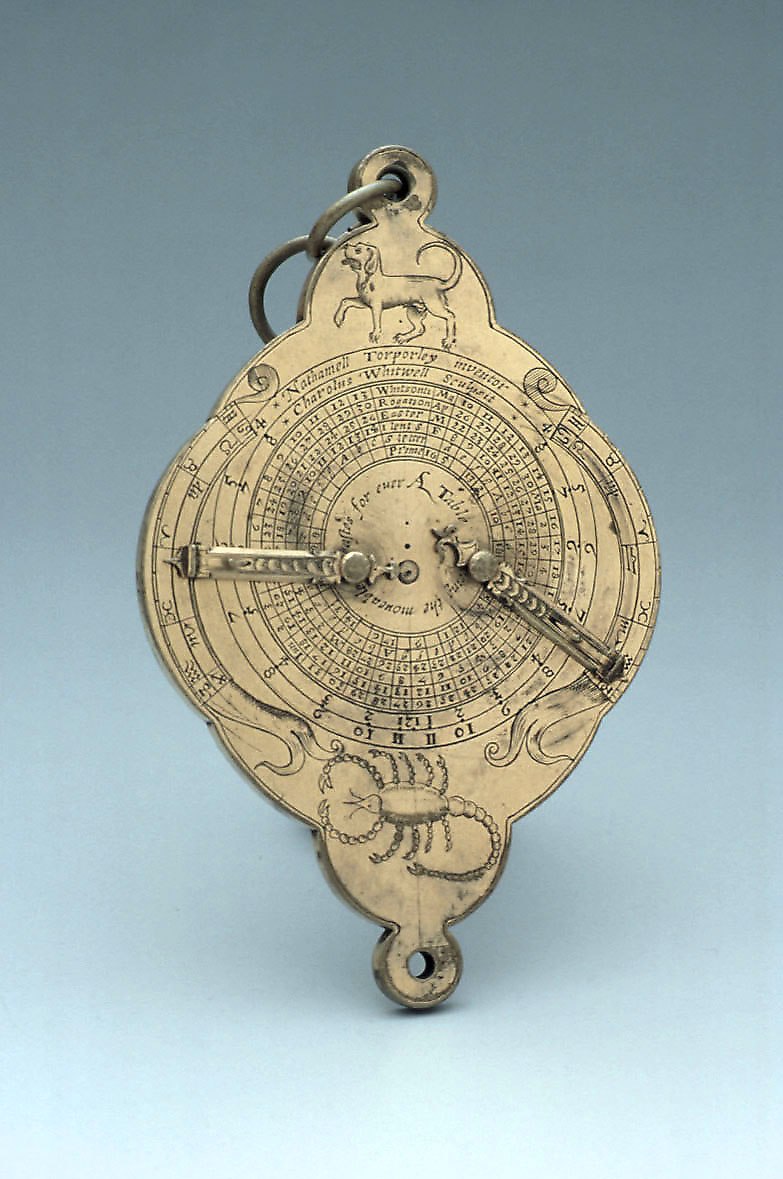
Vertical Disc Dial, 1593
1593
This gilt brass vertical disc dial measures 110 x 70 x 4 mm and is attributed to the English maker Charles Whitwell, dated 1593. The instrument features a roughly oval plate equipped with two hanging rings. One side of the dial displays two vertical dials with folding gnomons, marked for hours 8-12-8 and 4-12-4, acc…
Partial type record
Museum of the History of Science, Oxford
horological instruments
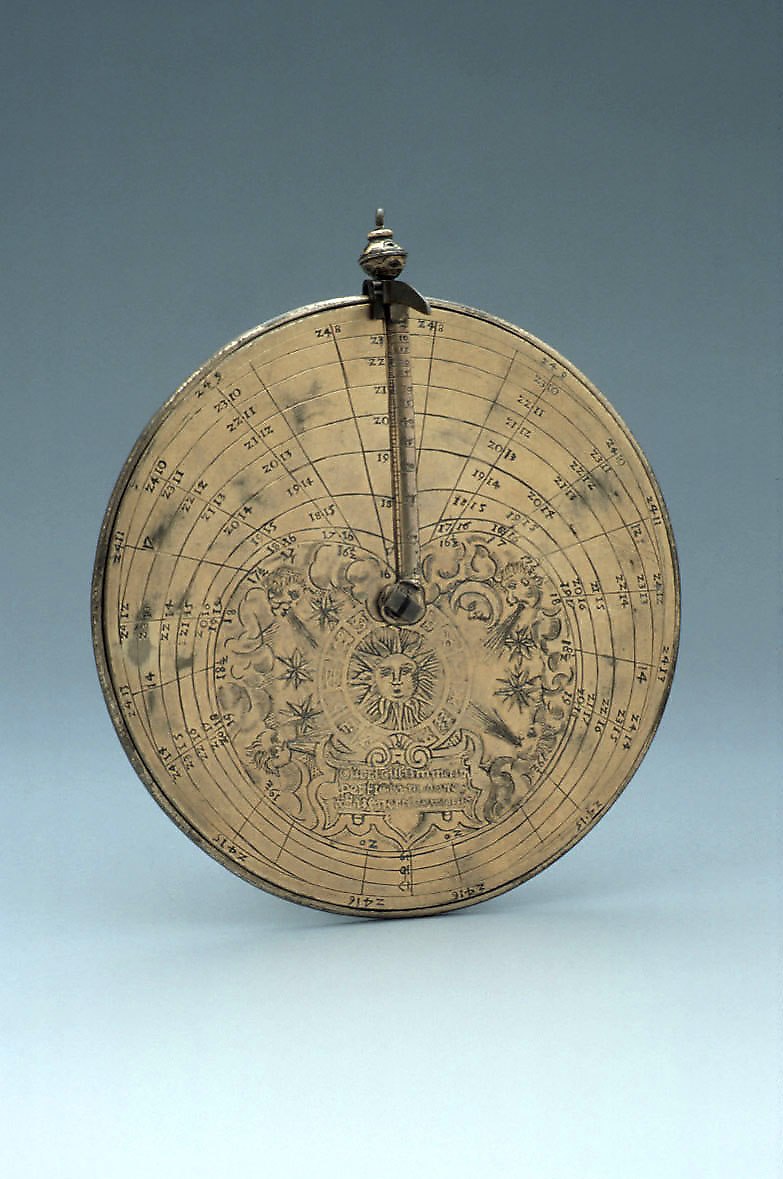
Vertical Disc Dial, circa 1570
circa 1570
The Vertical Disc Dial (Inventory number 47553) is a brass instrument of German manufacture, dating to approximately 1570. It consists of a primary plate with a raised edge, termed a mater, that houses two removable internal plates. The plates are secured within the mater by lugs. The dial features a folding gnomon…
Partial type record