Catalogue
Netsuke and Inro
Netsuke toggles and inro cases documented in institutional collections.
Individually identified types (143)
Filter by era, country, maker or material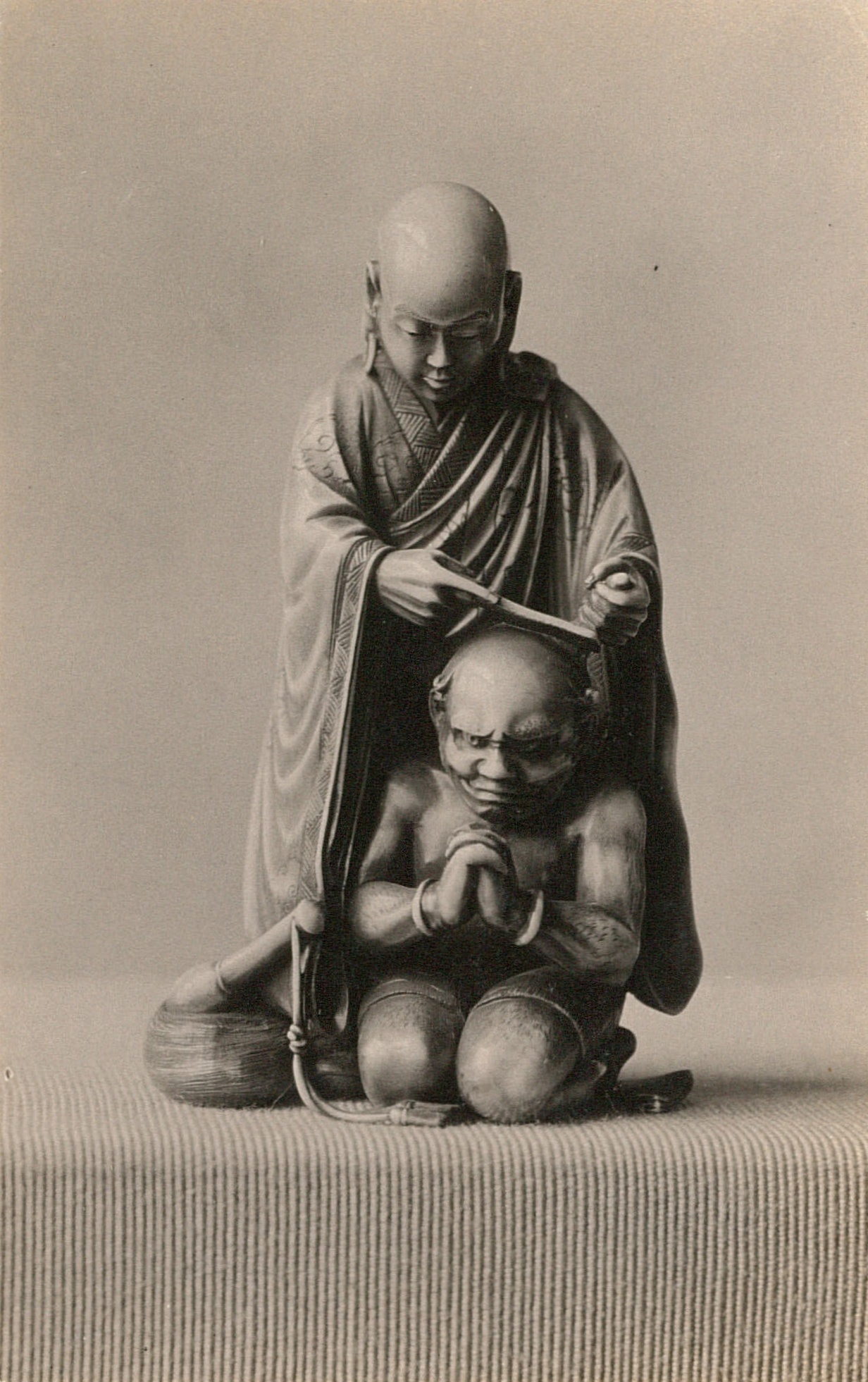
Deutsche Fotothek via Europeana
netsuke inro
Dresden. Staatliches Kunstgewerbemuseum. Netsuke (ivory), Möbius, Walter (production) (photographer)
Dresden. Staatliches Kunstgewerbemuseum. Netsuke (ivory), Möbius, Walter (production) (photographer) is held by Deutsche Fotothek. Museum description: Dresden. Staatliches Kunstgewerbemuseum. Netsuke (ivory); made of glass in black and white, portrait format The museum record gives maker recorded: Möbius, Walter (production) (photographer). These details come from the holding museum's own record; how far this object represents a wider collectible type has not yet been independently verified.
Partial type record
Cleveland Museum of Art, Gift of D. Z. Norton
netsuke inro
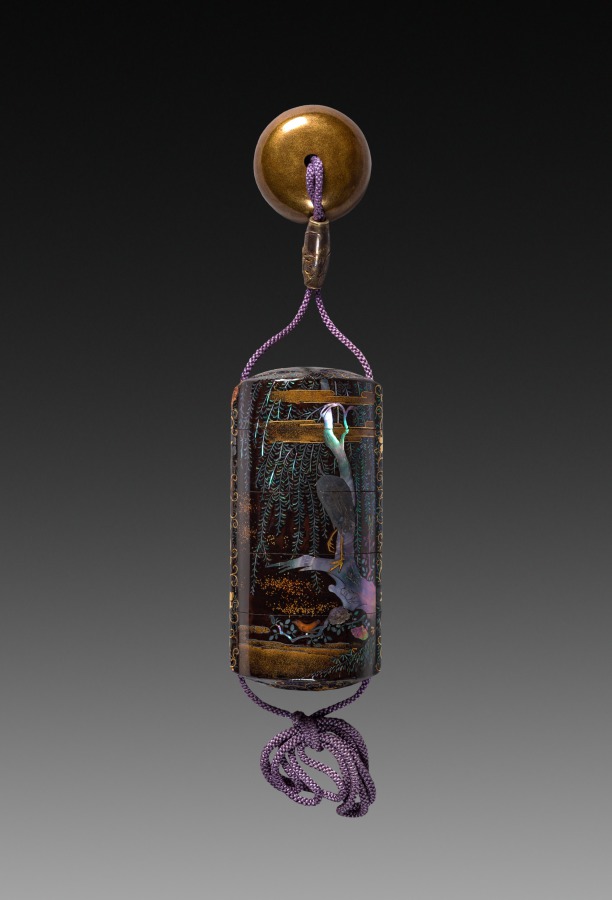
Inro (Case) with Egrets and Willows (Cleveland Museum of Art 1916.866)
1700s
The iridescence of this inro is due to the shell inlay used to form the design of an egret (a waterfowl) standing among reeds in water beneath a weeping willow on one side and an egret resting in a tree on the other. The metal ojime (cinch) has a floral design, and the round lacquer netsuke, or toggle, has an image of a Chinese gentleman, possibly an immortal, holding flowers planted in a shallow pot. Cleveland Museum of Art object 1916.866: Inro (Case) with Egrets and Willows (柳に鷺漆螺鈿印籠), 1700s. Japan, Edo period (1615–1868). Lacquer on wood with sprinkled gold powder design (maki-e) and gold-foil-and-shell inlay (Somada style); overall: 9.9 x 4.8 cm (3 7/8 x 1 7/8 in.). Details are those of this museum object; how far it represents a wider type has not been independently verified.
Partial type record
Cleveland Museum of Art, Gift of D. Z. Norton
netsuke inro
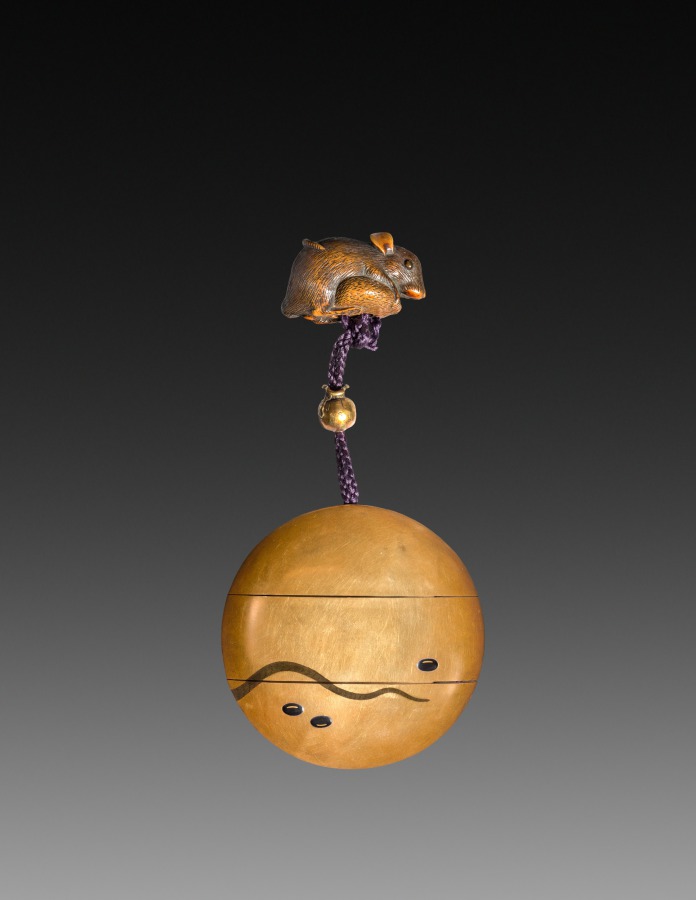
Inro (Case) with Mice and Beans (Cleveland Museum of Art 1916.885)
late 1800s
This round inro is decorated with an image of a single mouse feasting on beans. The theme is elaborated with a metal ojime (cinch) in the form of a cloth bag tied with rope—suggesting the food stores the mouse is raiding. The carved wood netsuke, or toggle, is in the shape of a mouse clutching a nut. Cleveland Museum of Art object 1916.885: Inro (Case) with Mice and Beans (鼠に豆蒔絵印籠)), late 1800s. Japan, Meiji period (1868–1912). Lacquer on wood with color and sprinkled gold powder design (maki-e); diameter: 8.4 cm (3 5/16 in.). Details are those of this museum object; how far it represents a wider type has not been independently verified.
Partial type record
Cleveland Museum of Art
netsuke inro
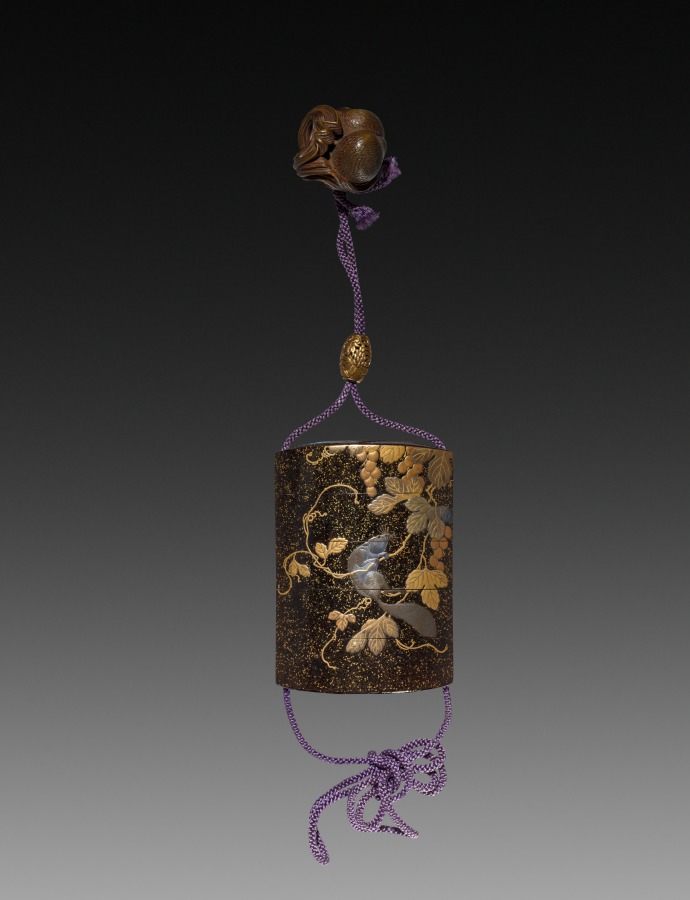
Inro (Case) with Squirrels in Grapevines (Cleveland Museum of Art 1916.860)
1700–1868
With multiple small compartments joined with a woven silk cord, inro are small cases that can be worn on one’s obi, the sash fastening a kimono. This one has a metal ojime , or small cinch, with a pierced floral design and a wood netsuke (toggle) carved with an autumnal design of quails in millet. The netsuke can be used both to pull the inro out and to help keep it in the obi. Squirrels in grapevines is a popular autumn motif. Cleveland Museum of Art object 1916.860: Inro (Case) with Squirrels in Grapevines (葡萄に栗鼠蒔絵印籠), 1700–1868. Japan, Edo period (1615–1868). Lacquer on wood with sprinkled gold powder design (maki-e); overall: 8 x 5.8 cm (3 1/8 x 2 5/16 in.). Details are those of this museum object; how far it represents a wider type has not been independently verified.
Partial type record
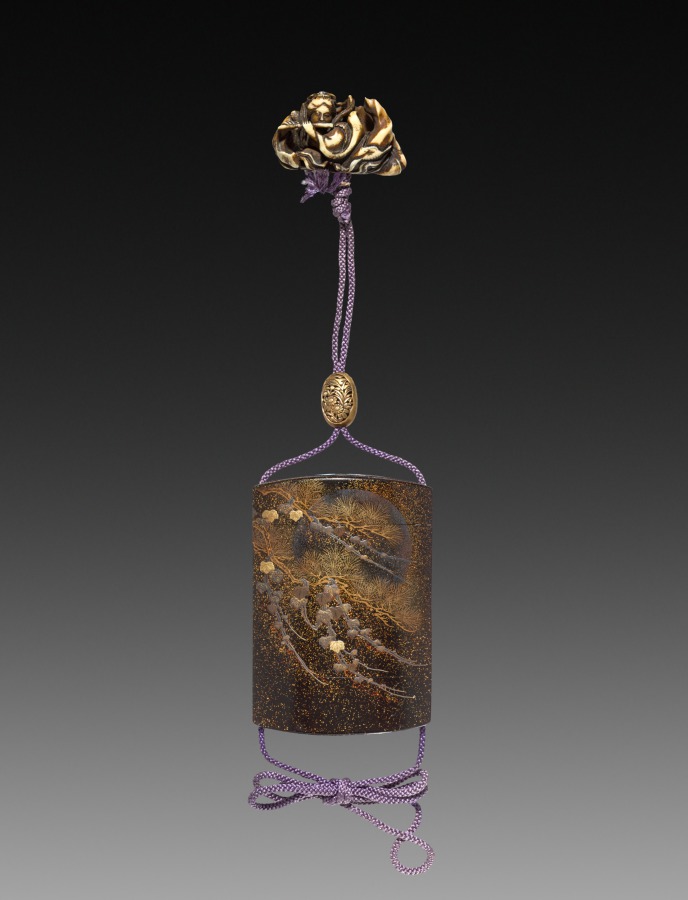
Cleveland Museum of Art
netsuke inro
Inro (Cleveland Museum of Art 1916.851)
1615–1868
Cleveland Museum of Art object 1916.851: Inro, 1615–1868. Japan, Edo period (1615–1868). Lacquer; overall: 8.3 x 5.8 cm (3 1/4 x 2 5/16 in.). Inscribed: Signature: Koma Kyuhaku. Details are those of this museum object; how far it represents a wider type has not been independently verified.
Partial type record
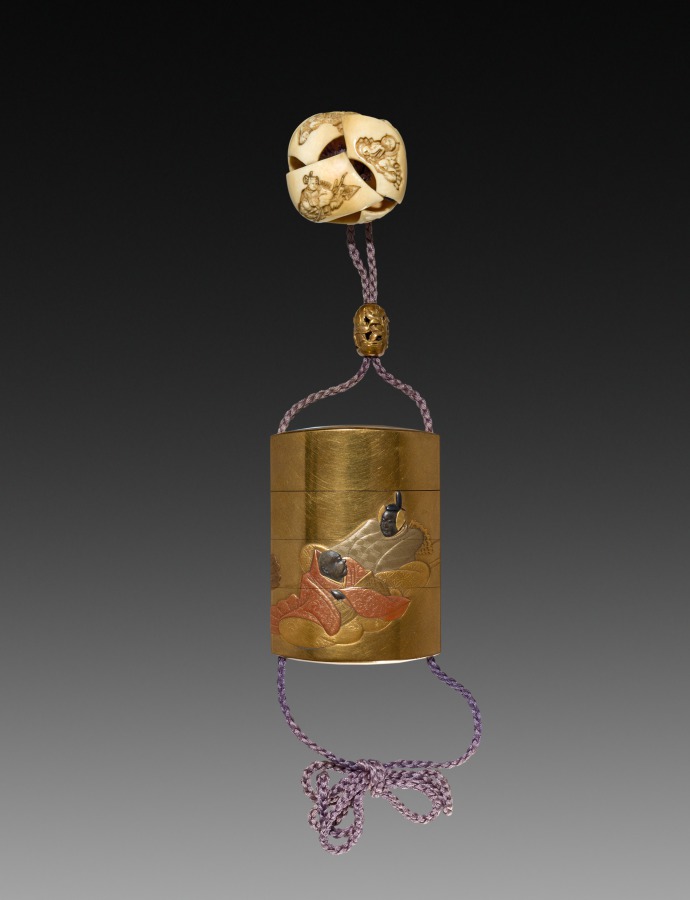
Cleveland Museum of Art
netsuke inro
Inro (Cleveland Museum of Art 1916.868)
early to mid-1800s
Cleveland Museum of Art object 1916.868: Inro, early to mid-1800s. Japan, Edo period (1615–1868). Lacquer; overall: 7.6 x 5.4 cm (3 x 2 1/8 in.). Inscribed: Signature: Yutokusa. Details are those of this museum object; how far it represents a wider type has not been independently verified.
Partial type record
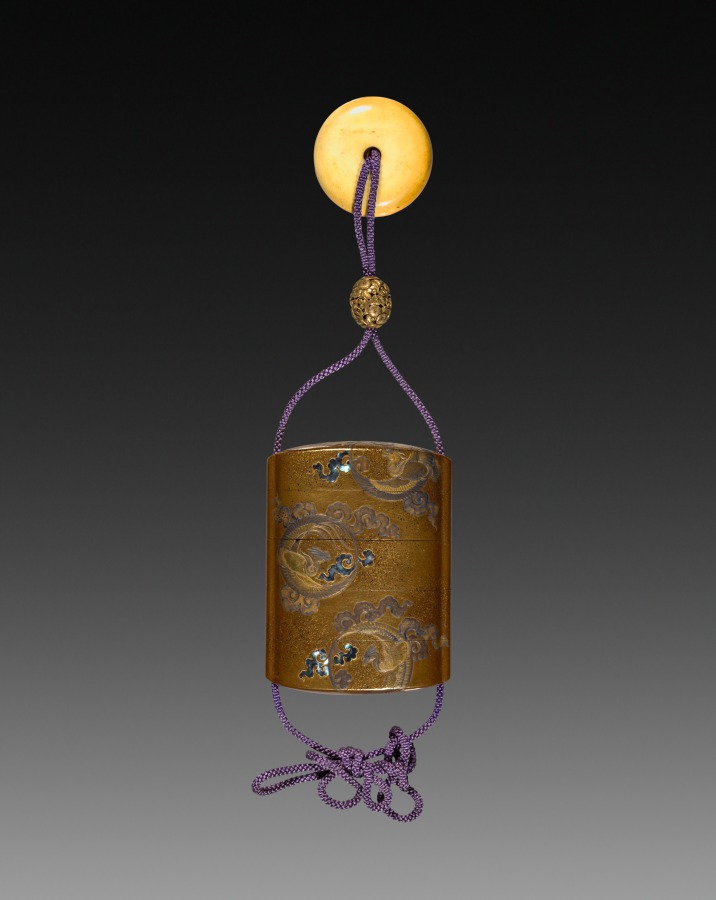
Cleveland Museum of Art, Gift of D. Z. Norton
netsuke inro
Inro (Cleveland Museum of Art 1916.880)
1750–99
Cleveland Museum of Art object 1916.880: Inro, 1750–99. Japan, Edo period (1615–1868). Lacquer; overall: 7.7 x 5.6 cm (3 1/16 x 2 3/16 in.). Inscribed: Signature: Kajikava. Details are those of this museum object; how far it represents a wider type has not been independently verified.
Partial type record
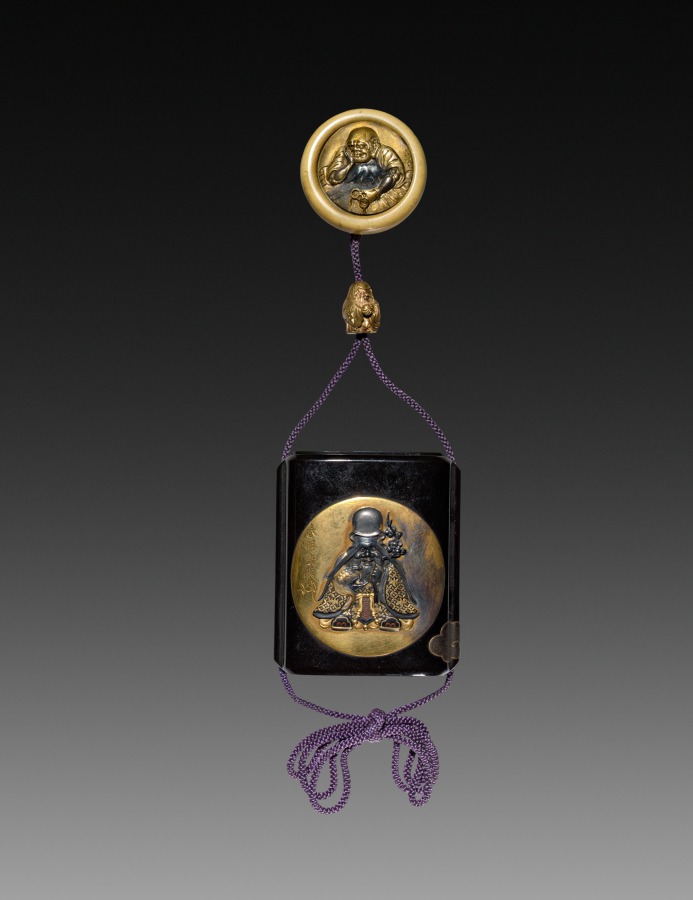
Cleveland Museum of Art
netsuke inro
Inro (Cleveland Museum of Art 1916.884)
mid-1800s to early 1900s
Cleveland Museum of Art object 1916.884: Inro, mid-1800s to early 1900s. Ikeda Taishin (Japanese, 1829–1903). Lacquer; overall: 7 x 5.8 cm (2 3/4 x 2 5/16 in.). Inscribed: Signature: Taishin. Details are those of this museum object; how far it represents a wider type has not been independently verified.
Partial type record
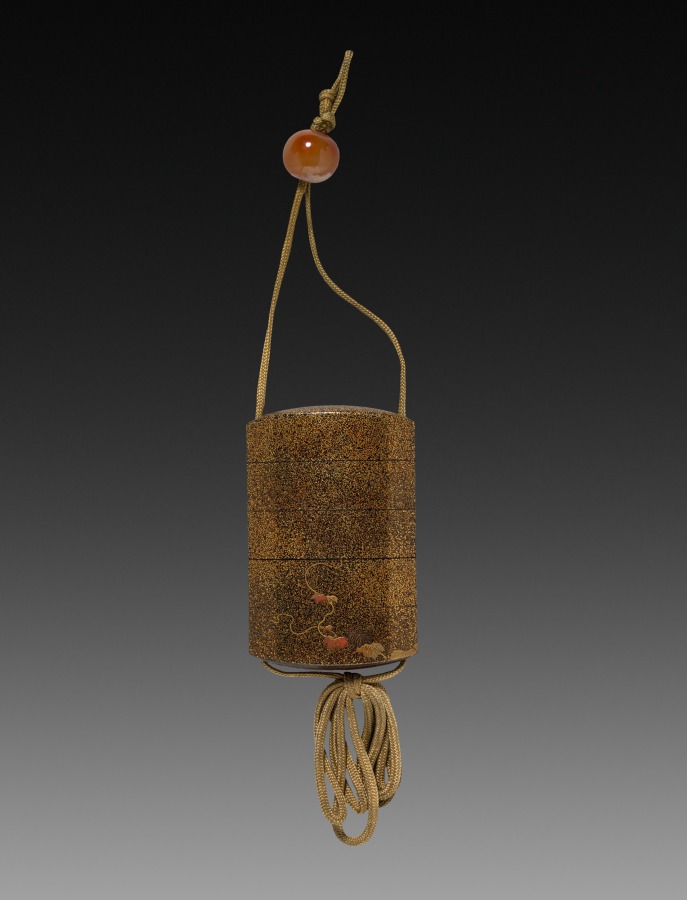
Cleveland Museum of Art, The Elisabeth Severance Prentiss Collection
netsuke inro
Inro (Cleveland Museum of Art 1944.217)
c. 1785
Cleveland Museum of Art object 1944.217: Inro, c. 1785. Japan, Edo period (1615–1868). Lacquer; overall: 8.6 cm (3 3/8 in.). Inscribed: Signature: Toju, aged 78 years. Details are those of this museum object; how far it represents a wider type has not been independently verified.
Partial type record
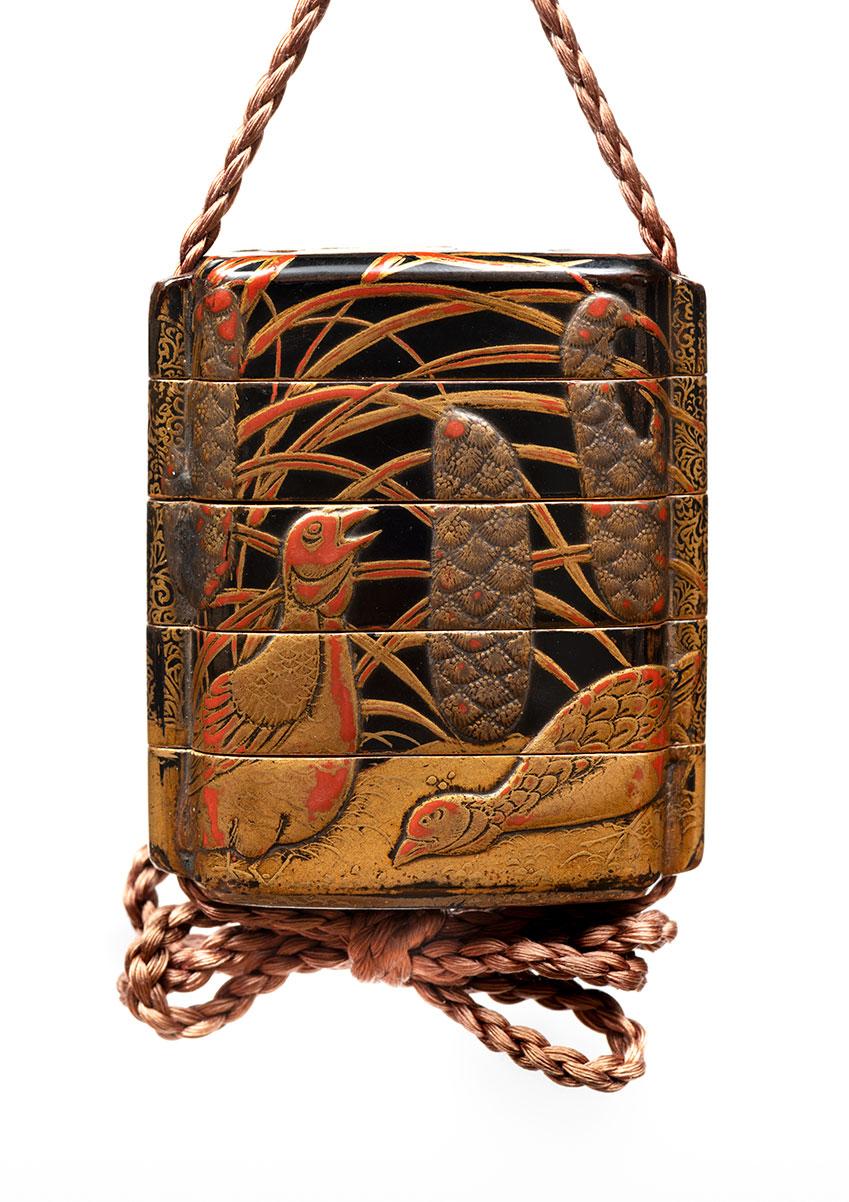
Badisches Landesmuseum Karlsruhe via Europeana
netsuke inro
Inro depicting quails
Inro depicting quails is held by Badisches Landesmuseum Karlsruhe (Germany). Description supplied by the holding institution: The slightly bulbously curved inrō has five parts and features a raised cord channel. On one side sit three quails, on the other two, between partially nibbled panicled millet ears and shrubs. The raised cord channel is decorated with thin, spirally coiling tendrils. Due to wear from use on the gold "takamakie" (a type of Japanese gold lacquer painting), the underlying red lacquer appears. Where the original condition is still preserved, the drawing of the quails and shrubs in monochrome gold "takamakie" contrasts sharply with the background decorated with black lacquer. The depiction of quails and millet ears on inrō enjoyed great popularity in Japan. Quails are considered brave in China and Japan. They are said to possess a combative character. With the quails carelessly picking at their food amid lushly growing fruits, the inrō possibly alludes to a paradisiacal state of... The collection record gives measurements Höhe: 6.5 cm, Breite: 5.3 cm, Tiefe: 2.2 cm. Published through Europeana; how far this object represents a wider collectible type has not yet been independently verified.
Partial type record
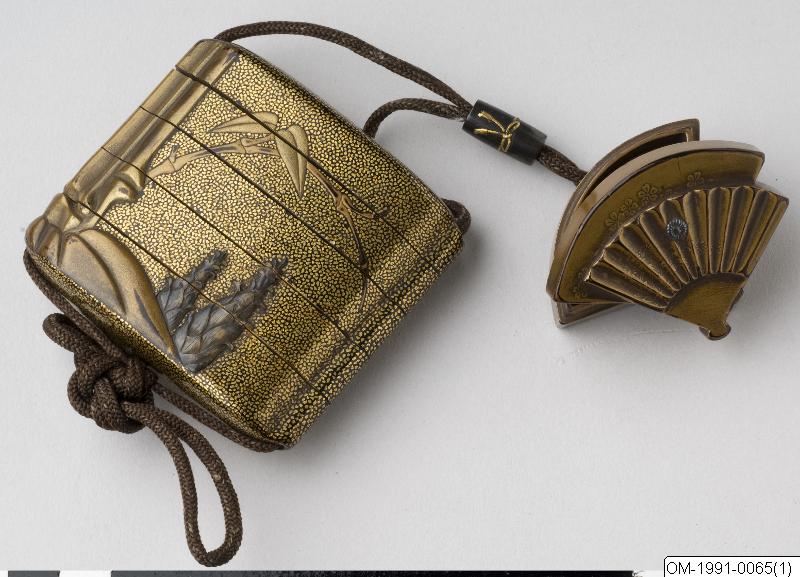
Museum of Far Eastern Antiquities via Europeana
netsuke inro
Inro in four compartments and lid. Decoration with bamboo executed in gold lacquer. H: 6.7 cm W: 7.2 cm Belongs together with 0065b (ojime) and 0066 (netsuke) Object marked A. (Edited when A-B markin
Inro in four compartments and lid. Decoration with bamboo executed in gold lacquer. H: 6.7 cm W: 7.2 cm Belongs together with 0065b (ojime) and 0066 (netsuke) Object marked A. (Edited when A-B markin is held by Museum of Far Eastern Antiquities (Sweden). Description supplied by the holding institution: Inro in four compartments and lid. Decoration with bamboo executed in gold lacquer. H: 6.7 cm W: 7.2 cm Belongs together with 0065b (ojime) and 0066 (netsuke) Object marked A. (Edited when the A-B marking was removed from the accession number field/CR.) Published through Europeana; how far this object represents a wider collectible type has not yet been independently verified.
Partial type record
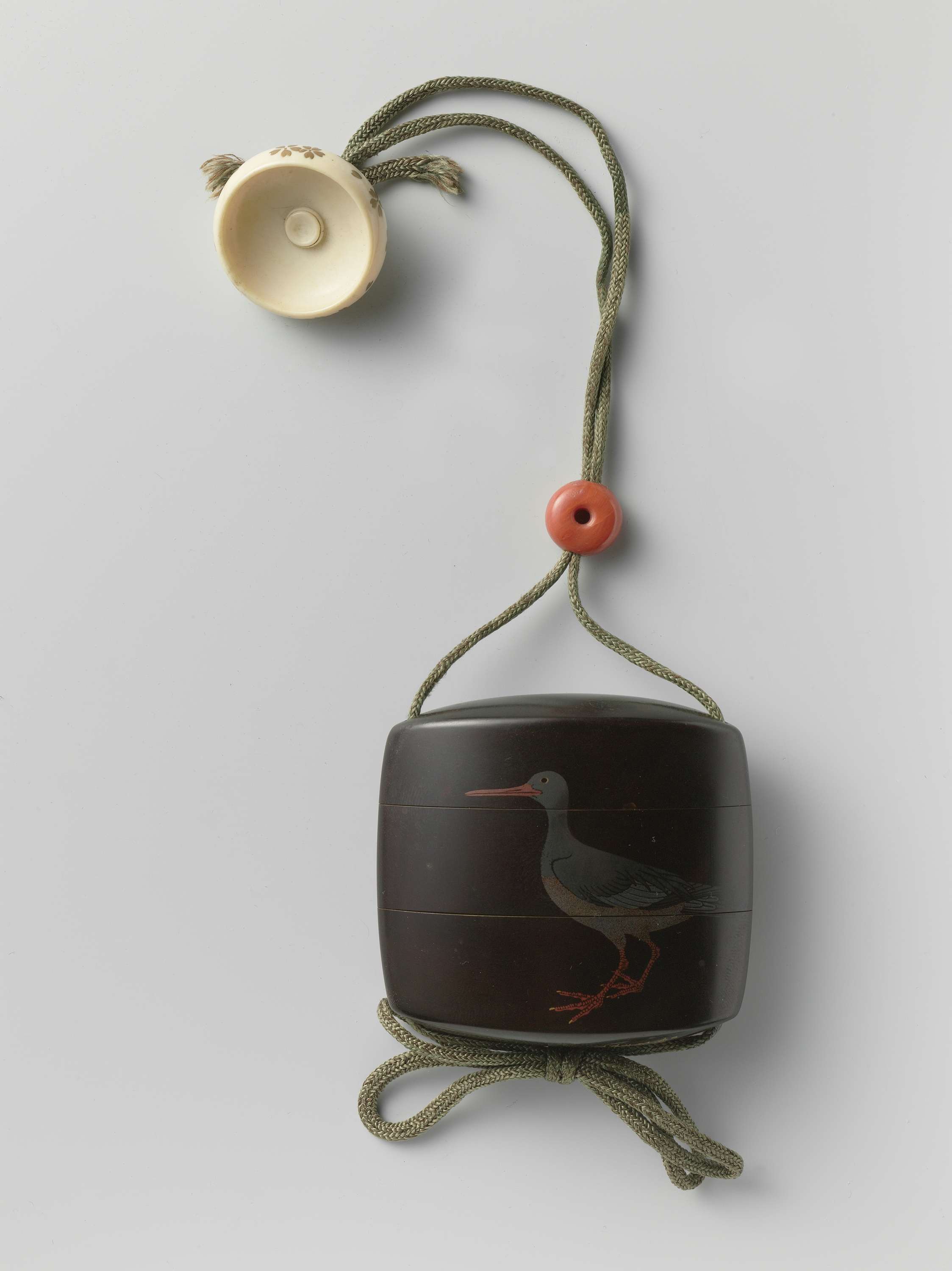
Rijksmuseum via Europeana
netsuke inro
Inro with bird, netsuke with blossoms, ojime
Inro with bird, netsuke with blossoms, ojime is held by Rijksmuseum. Museum description: Against the black ground on one side a plover in red and grey, among other colours; on the other side the Kamo River with wind-blown plants in gold. On the underside signed in gold "toshihide" with age, year, and seal. The museum record gives material recorded as On loan from the Asian Art Society in The Netherlands; measurements height 6 cm; width 2.3 cm; place associated: Japan; urn:rijksmuseum:thesaurus:RM0001.THESAU.537. These details come from the holding museum's own record; how far this object represents a wider collectible type has not yet been independently verified.
Partial type record
Badisches Landesmuseum Karlsruhe via Europeana
netsuke inro
Inro with blossoms in red lacquer
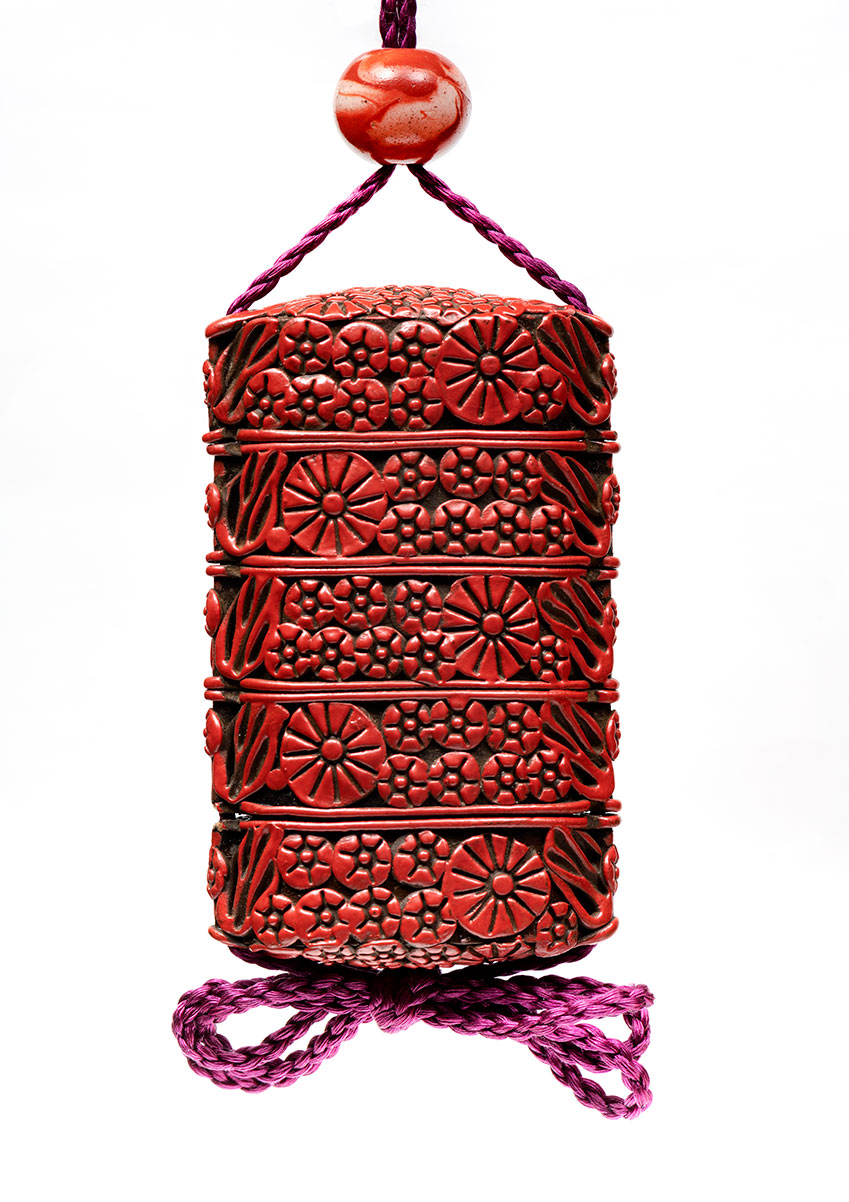
Inro with blossoms in red lacquer is held by Badisches Landesmuseum Karlsruhe (Germany). Description supplied by the holding institution: The cylindrical inrō is in five sections and features an offset cord channel. Each of the five inrō tiers ("dan") is coated on both sides with red lacquer paste ("tsuisai") on a dark brown, almost black ground. The container is completely decorated with one larger blossom as well as seven or eight smaller blossoms on each side. On the sides next to the cord channel, leaves can be seen framing the blossoms. A glass bead, a so-called "ojime", hangs from the cord channel. Associated with the inrō is a netsuke in the form of an abalone (sea ear), held in the collection of the Badisches Landesmuseum under inv. no. A 8032. A small sea snail and a small venus clam are attached to its heavily ribbed shell. The inrō was executed on the interior using the "nashiji" (sprinkled gold lacquer) technique, and on the exterior in the "tsuisai" technique. In the "tsuisai" technique, a relatively liquid lacquer paste is used, which is applied through a… The collection record gives measurements height: 2.15 cm, width: 4.8 cm, depth: 3.5 cm (pendant); height: 8.2 cm, width: 5.0 cm, depth: 2.4 cm (overall). Published through Europeana; how far this object represents a wider collectible type has not yet been independently verified.
Partial type record
Badisches Landesmuseum Karlsruhe via Europeana
netsuke inro
Inro with camellia blossom
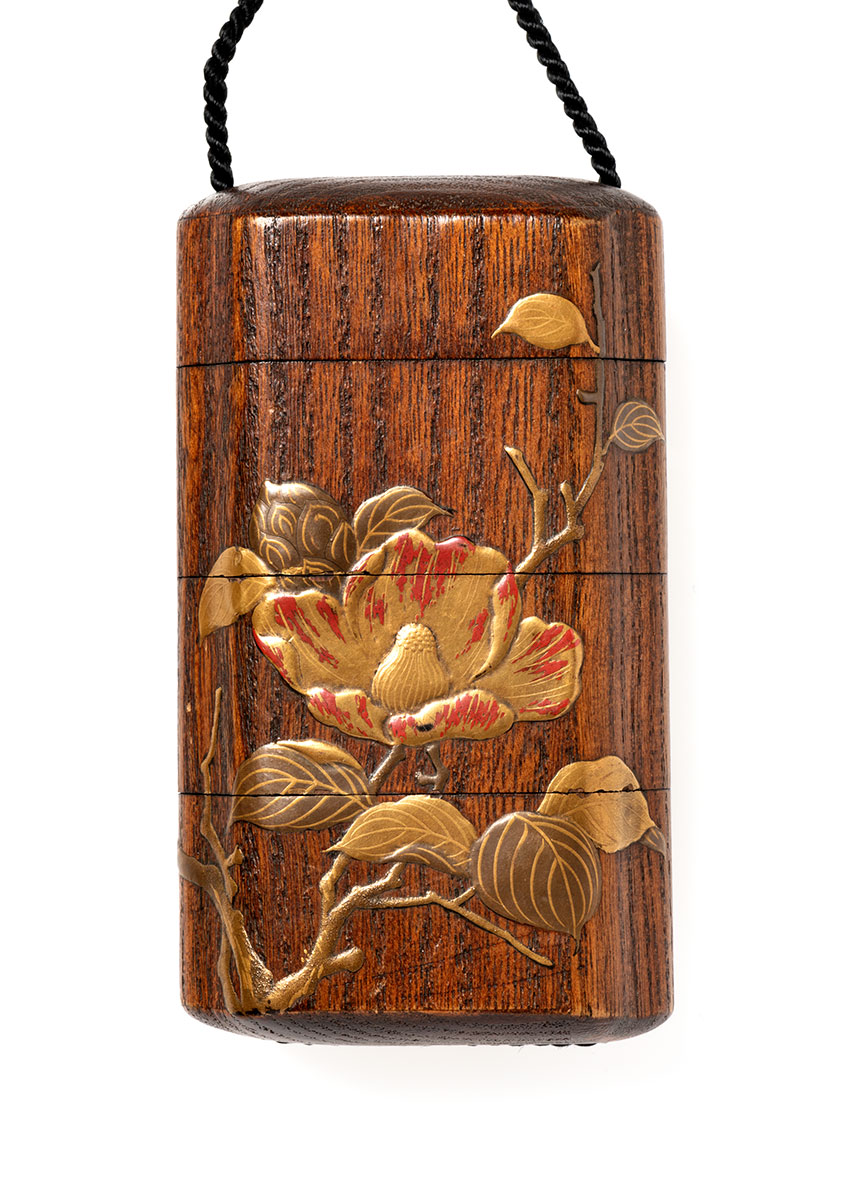
Inro with camellia blossom is held by Badisches Landesmuseum Karlsruhe (Germany). Description supplied by the holding institution: The slightly bulbous, curved inrô is in four parts and features a concealed cord channel. On both sides, a full camellia blossom and an unopened camellia bud with leaves and branches are rendered in gold with red lacquer. »Inrô« are small containers that were used in Japan initially as seal cases and later primarily as medicine cases. Samurai, wealthy merchants, artists, and craftsmen wore them hanging freely from wide sash belts (= »obi«) due to their pocketless, traditional clothing. They usually consist of several compartments stacked on top of one another and held together by a silk cord. At the end of the cord is a toggle carved predominantly from ivory or wood with two holes for the cord channel, the so-called »netsuke«. This serves as a counterweight when fastening the inrô to the sash. Literature: Inro: Das Ding am Gürtel. Japanische Medizindöschen aus der Sammlung Heinz und Else Kress, ed. by… The collection record gives measurements height: 10.1 cm, width: 5.7 cm, depth: 2.8 cm (total). Published through Europeana; how far this object represents a wider collectible type has not yet been independently verified.
Partial type record
Badisches Landesmuseum Karlsruhe via Europeana
netsuke inro
Inro with crane
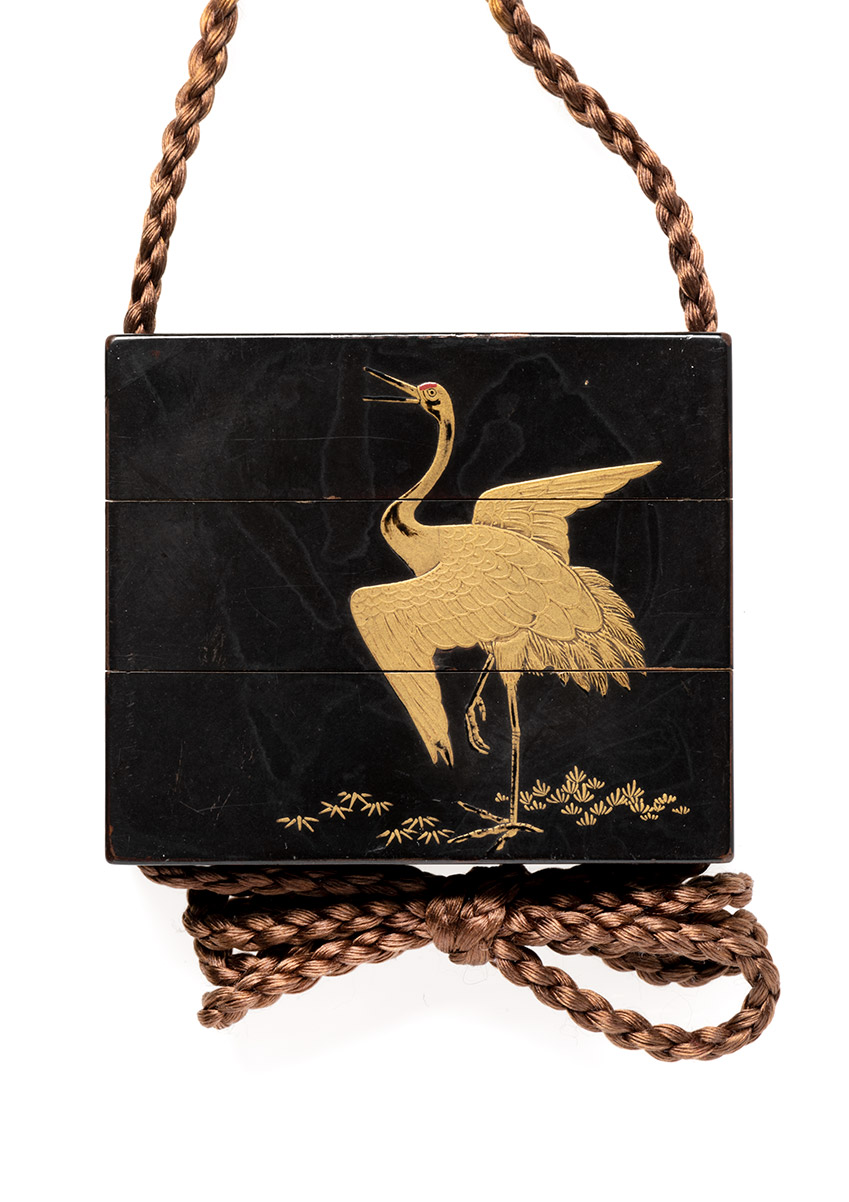
Inro with crane is held by Badisches Landesmuseum Karlsruhe (Germany). Description supplied by the holding institution: The slightly convex, bulbous inrô is in three parts and features a concealed cord channel. On one side, against a black lacquer ground and amidst detailed plant decoration, a crane is presented. It stands on one leg with an open beak and wings spread wide. On the other side, a bamboo stalk is rendered, the leaves of which are partly inlaid in mother-of-pearl ("aogai"). "Inrô" are small containers that in Japan were initially used as seal boxes, and later primarily as medicine containers. Samurai, wealthy merchants, artists, and craftsmen wore them freely suspended from wide sashes (= "Obi") because of their pocketless, traditional clothing. They usually consist of several compartments stacked on top of each other and held together with a silk cord. At the end of the cord is a toggle carved predominantly from ivory or wood with two holes for the cord channel, the so-called "Netsuke". This serves in the… The collection record gives measurements height: 5.3 cm, width: 6.3 cm, depth: 1.7 cm (total). Published through Europeana; how far this object represents a wider collectible type has not yet been independently verified.
Partial type record
Badisches Landesmuseum Karlsruhe via Europeana
netsuke inro
Inro with crane taking flight
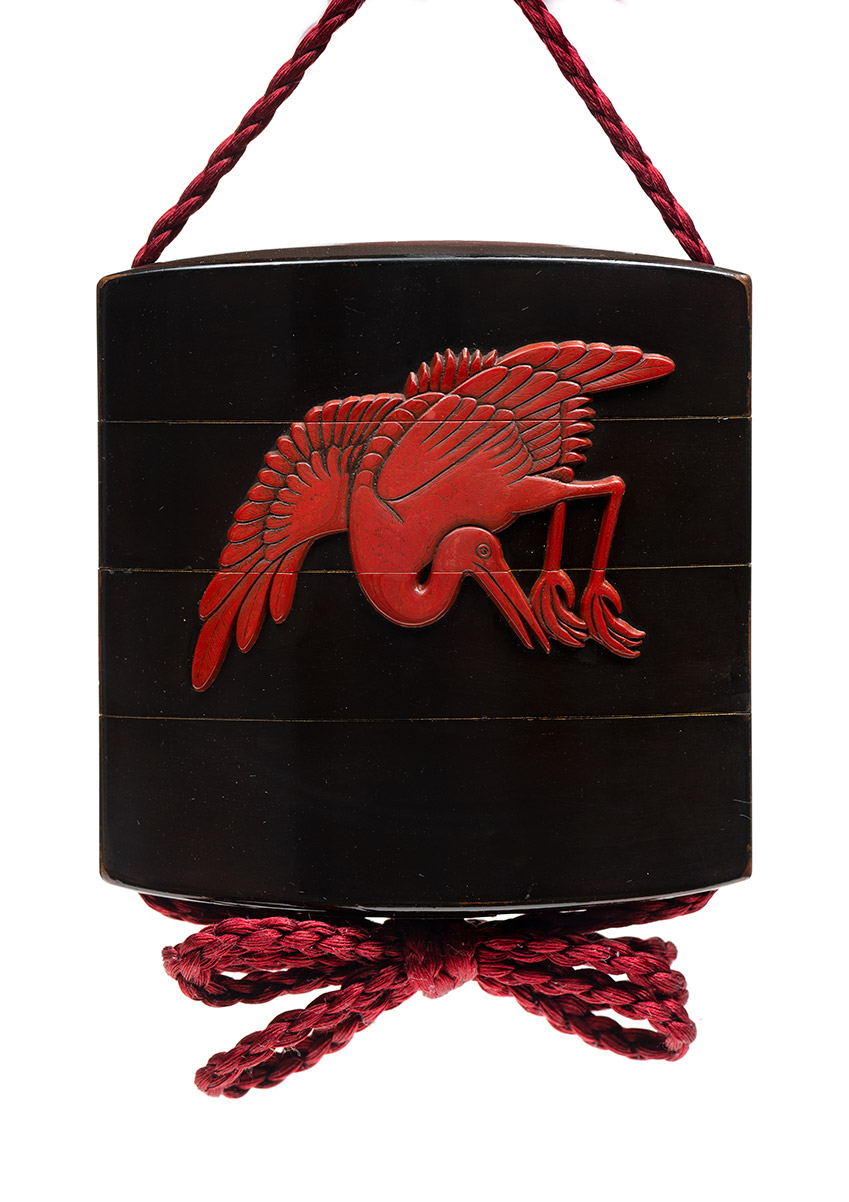
Inro with crane taking flight is held by Badisches Landesmuseum Karlsruhe (Germany). Description supplied by the holding institution: The slightly bulbous, curved inrô is in four parts and features a concealed cord channel. Against the black lacquer ground, a crane spreading its wings for flight rises in light relief in red lacquer. On the other side of the container, the popular motif of the sea-spray wave is quoted in the engraved lacquer of the so-called »chinkinbori« technique. The riser (»tachiagari«) inside the inrô is decorated in gold with the hemp-leaf pattern (»asa no ha«). The style of this inrô points to a work of the Tsuishu Yôsei school. The workshop was run over 20 generations until into the 20th century. The »chinkinbori« technique executed on this inrô can be traced back to originally Chinese influences on Japanese lacquer art. »Inrô« are small containers that were used in Japan initially as seal cases and later primarily as medicine cases. Samurai, wealthy merchants, artists, and craftsmen wore them due to their pocketless, traditional clothing on… The collection record gives measurements height: 7.2 cm, width: 6.9 cm, depth: 2.5 cm. Published through Europeana; how far this object represents a wider collectible type has not yet been independently verified.
Partial type record
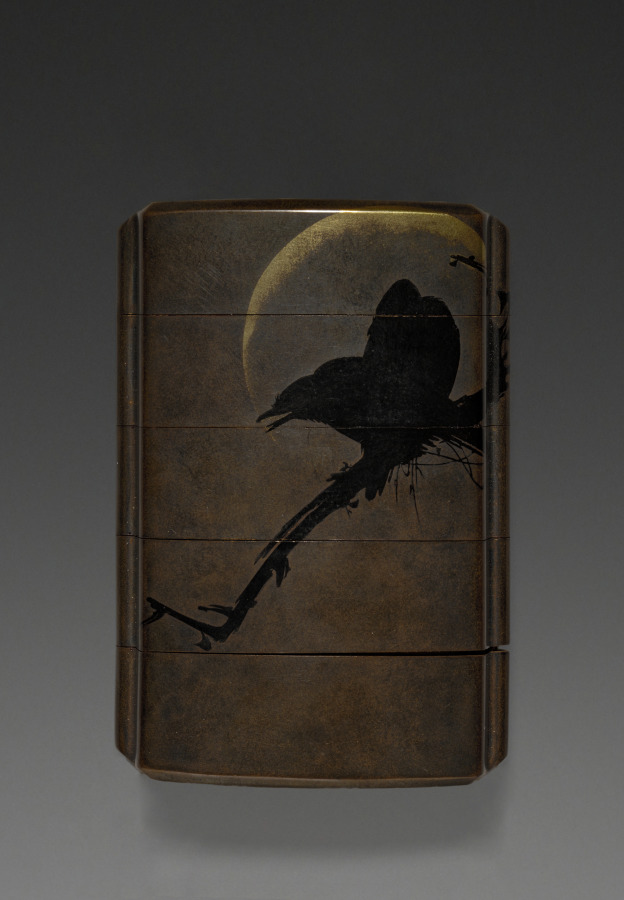
Cleveland Museum of Art
netsuke inro
Inrō with Crows in Moonlight and Egrets in Snow (Cleveland Museum of Art 1920.510)
c. 1772–89
Cleveland Museum of Art object 1920.510: Inrō with Crows in Moonlight and Egrets in Snow, c. 1772–89. Koma Kyoryū. Lacquered wood with sprinkled gold (maki-e); overall: 7.7 x 5.4 cm (3 1/16 x 2 1/8 in.). Inscribed: Signed: 古満巨柳作(花押) (Signed: made by Koma Kyoryū (monogram)). Details are those of this museum object; how far it represents a wider type has not been independently verified.
Partial type record
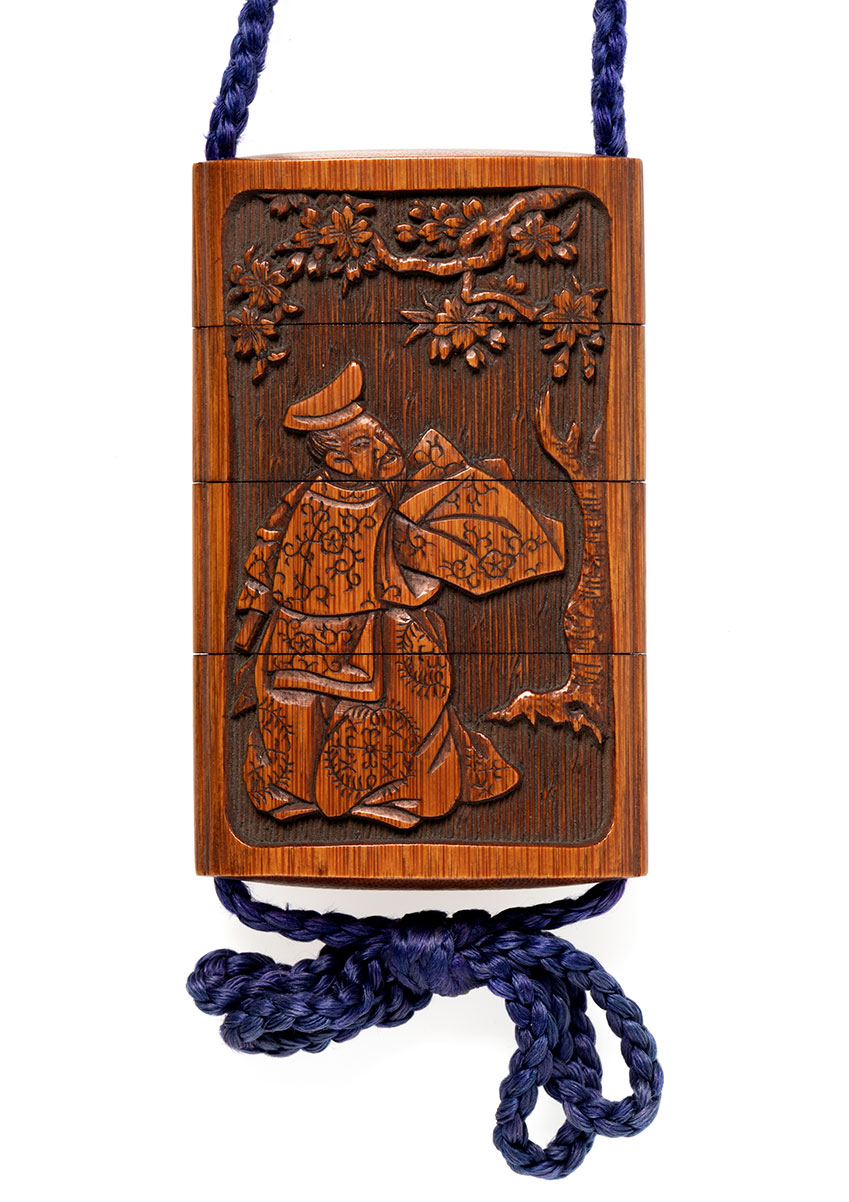
Badisches Landesmuseum Karlsruhe via Europeana
netsuke inro
Inro with deer and a scholar
Inro with deer and a scholar is held by Badisches Landesmuseum Karlsruhe (Germany). Description supplied by the holding institution: The slightly bulbous, curved inrô made of bamboo is in four parts and features a concealed cord channel. On one side, two deer under a maple tree decorate the container in carved relief. This presumably alludes to the Kasuga Shrine in the city of Nara, which is famous for its tame deer living in Nara Deer Park. On the other side of the inrô, a courtier or scholar in lavishly decorated robes sits under a cherry tree. »Inrô« are small containers that were used in Japan initially as seal cases and later primarily as medicine cases. Samurai, wealthy merchants, artists, and craftsmen wore them hanging freely from wide sash belts (= »obi«) due to their pocketless, traditional clothing. They usually consist of several compartments stacked on top of one another and held together by a silk cord. At the end of the cord is a toggle carved predominantly from ivory or wood with two holes for the… The collection record gives measurements height: 7.6 cm, width: 4.7 cm, depth: 1.5 cm. Published through Europeana; how far this object represents a wider collectible type has not yet been independently verified.
Partial type record
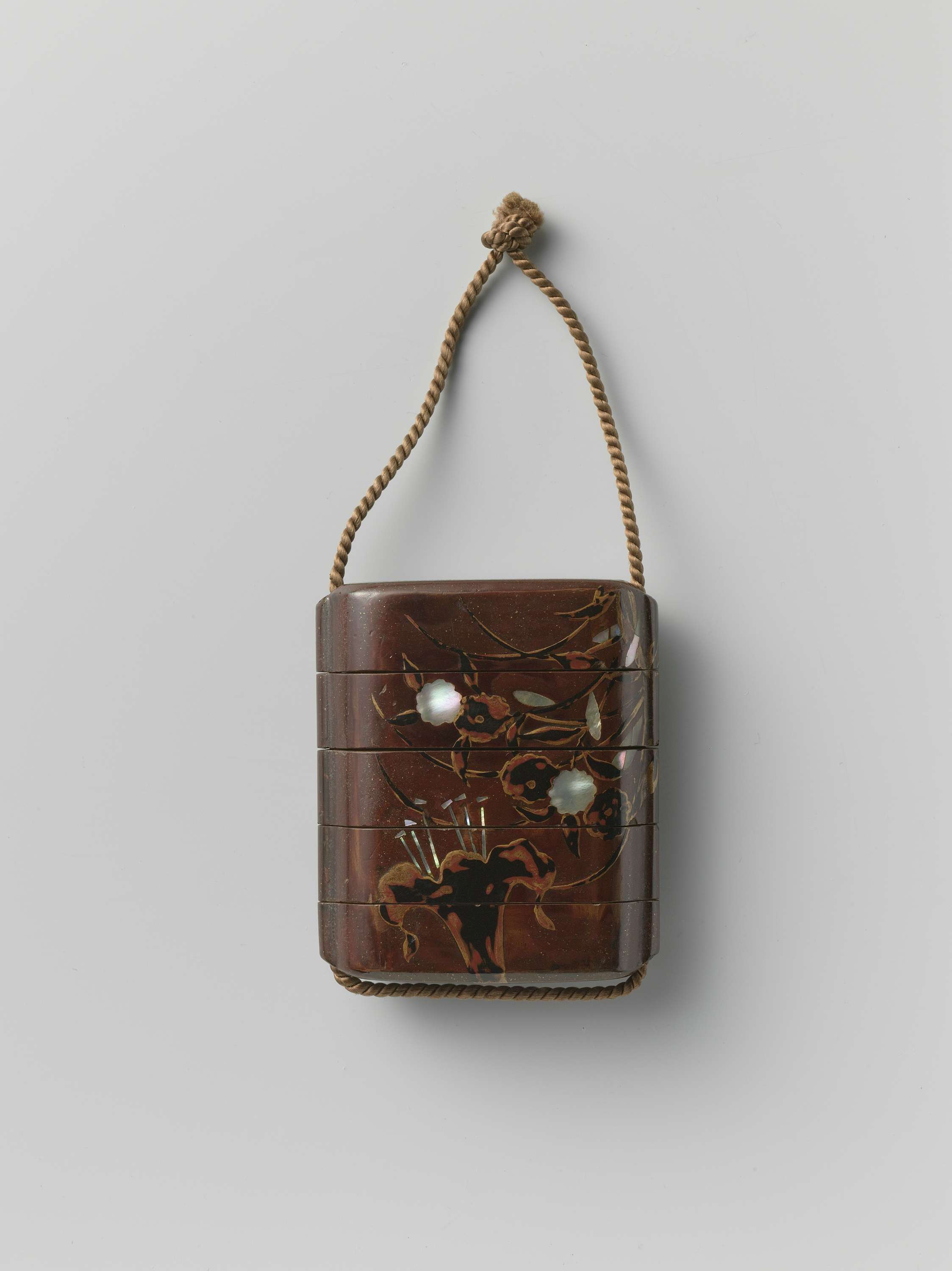
Rijksmuseum via Europeana
netsuke inro
Inro with General Minamoto no Yoritomo, netsuke of peach, ojime, 1800
1800
Inro with General Minamoto no Yoritomo, netsuke of peach, ojime, 1800 is held by Rijksmuseum, dated 1800. Museum description: Five-case inro with floral decoration inlaid with mother-of-pearl in brown lacquer. The museum record gives material recorded as On loan from the Asian Art Society in The Netherlands; measurements height 6 cm; place associated: Japan; urn:rijksmuseum:thesaurus:RM0001.THESAU.537. These details come from the holding museum's own record; how far this object represents a wider collectible type has not yet been independently verified.
Partial type record
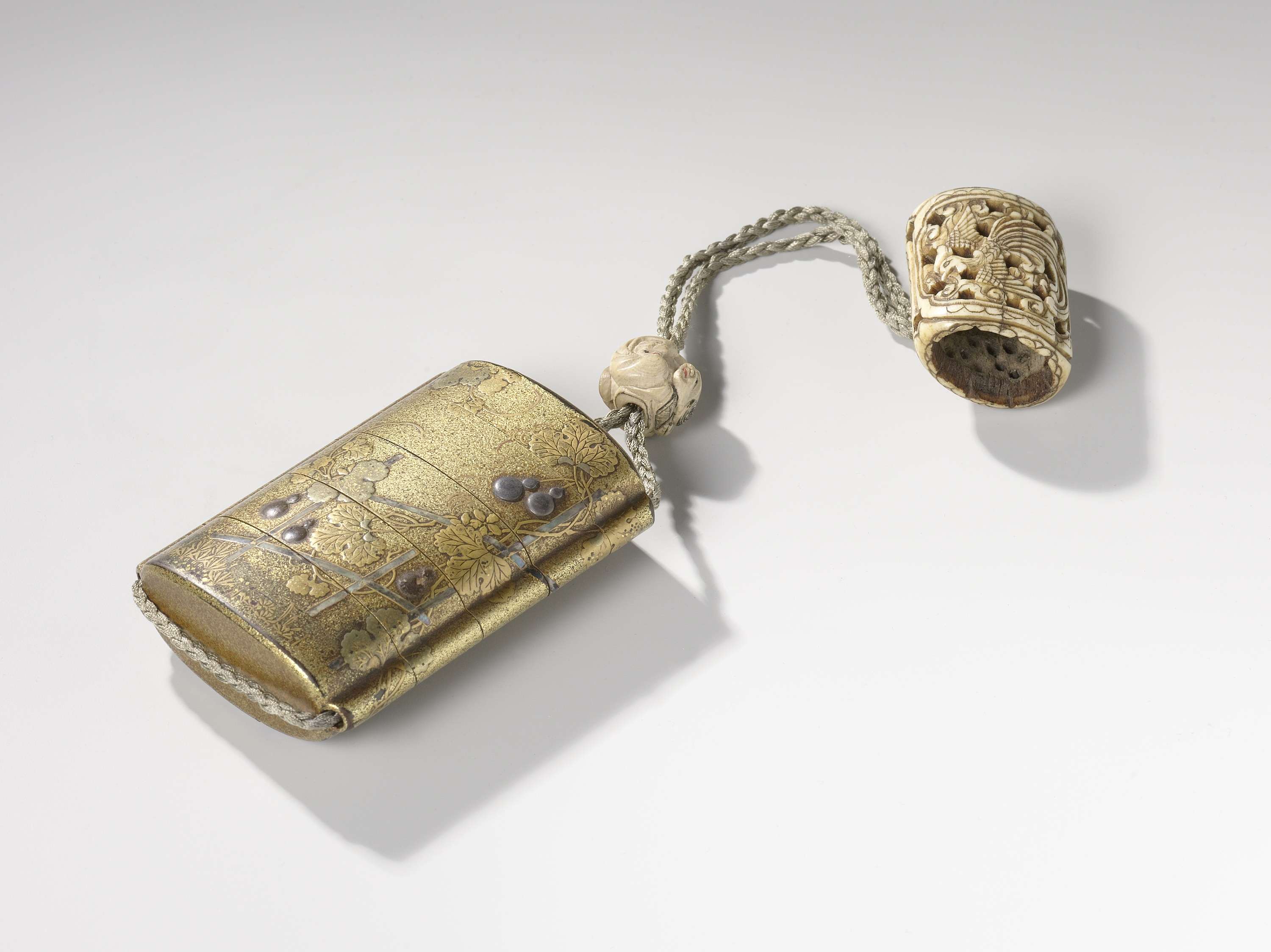
Rijksmuseum via Europeana
netsuke inro
Inro with gourd plant, netsuke with phoenix, ojime with boy and moon
Inro with gourd plant, netsuke with phoenix, ojime with boy and moon is held by Rijksmuseum. Museum description: Inro with netsuke and ojime. The five-case inro is decorated with gourd plants in takamakie on a gold-sprinkled ground; the gourds (partly in silver) and a fence (in mother-of-pearl) are inlaid. The netsuke is decorated with a phoenix; the ojime is carved into a small boy looking at the moon. (the netsuke and ojime were added later) The museum record gives material recorded as On loan from the Asian Art Society in The Netherlands; measurements height 6.5 cm; height 3.6 cm; diameter 1.5 cm; place associated: Japan; urn:rijksmuseum:thesaurus:RM0001.THESAU.537. These details come from the holding museum's own record; how far this object represents a wider collectible type has not yet been independently verified.
Partial type record
Rijksmuseum via Europeana
netsuke inro
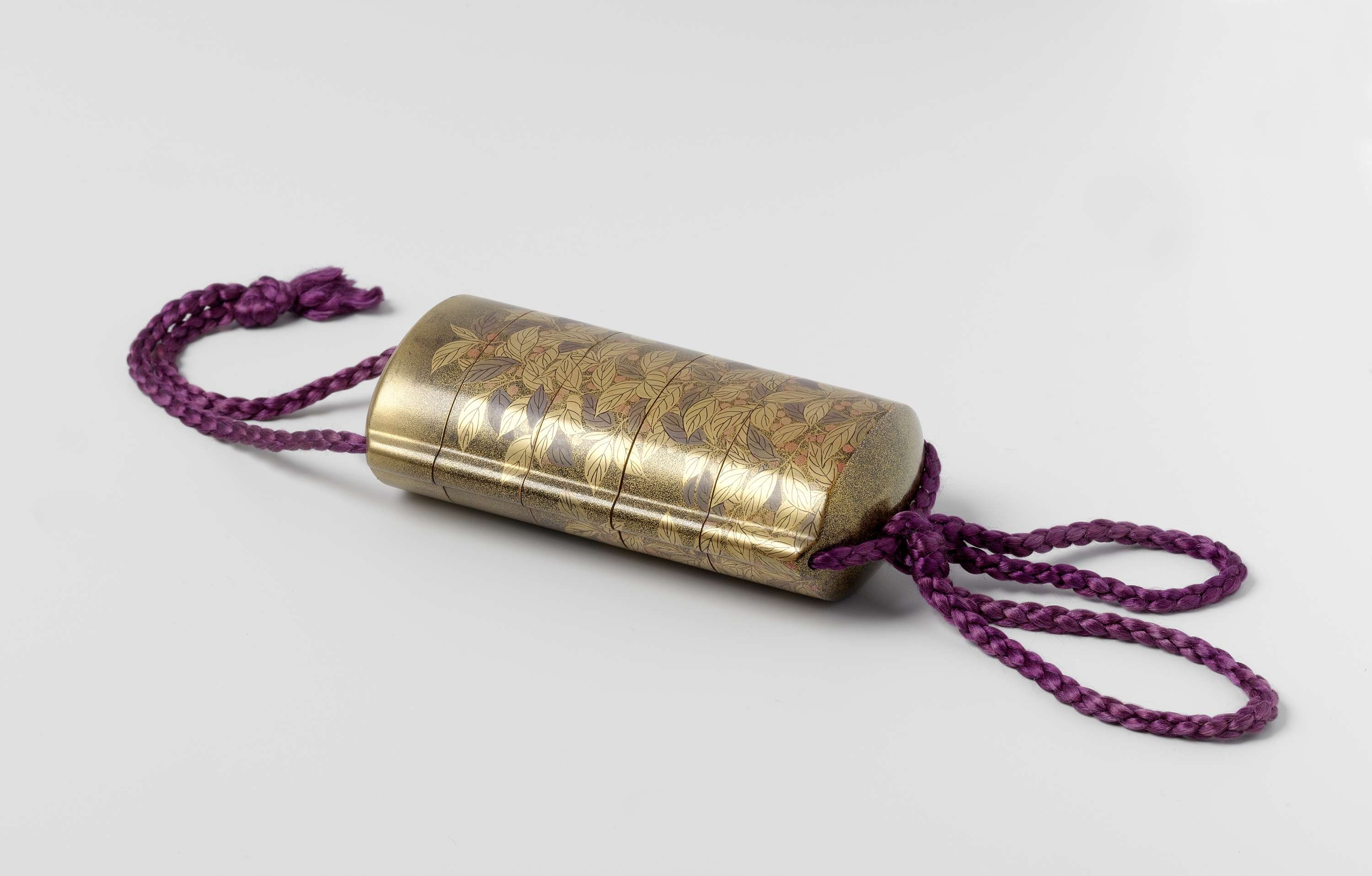
Inro with leaf decoration
Inro with leaf decoration is held by Rijksmuseum (Netherlands). Description supplied by the holding institution: Decoration of leaves in red and green shaded gold and of fruits in between in pale red. Black ground sprinkled with gold, which merges at the top of the inro into a dense gold ground. Five compartments connected with a cord. The collection record gives material recorded as On loan from the Asian Art Society in The Netherlands; measurements height 10.5 cm; width 6.2 cm; depth 2.4 cm; format: wood (plant material); lacquer (coating). Published through Europeana; how far this object represents a wider collectible type has not yet been independently verified.
Partial type record
Rijksmuseum via Europeana
netsuke inro
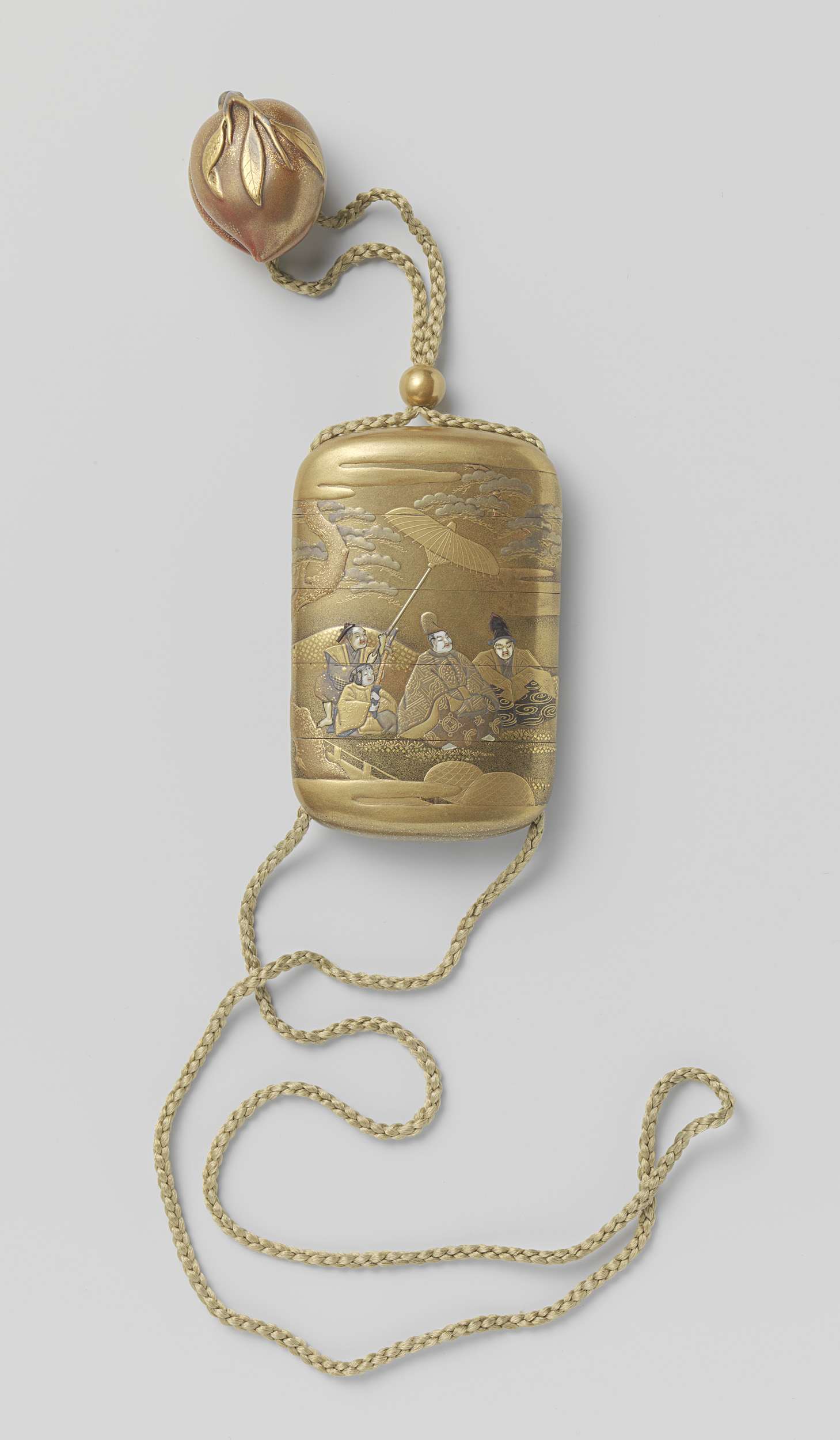
Inro with lilies
Inro with lilies is held by Rijksmuseum (Netherlands). Description supplied by the holding institution: Gold lacquer box, consisting of five compartments. In a landscape, a mandarin sits accompanied by wife and child, while a servant holds a parasol over them. The faces are of ivory. The collection record gives material recorded as Gift of G.M. Vonck, The Hague; measurements height 9.0 cm; width 5.5 cm; depth 2 cm; format: mother of pearl; wood (plant material); lacquer (coating); gilding (material). Published through Europeana; how far this object represents a wider collectible type has not yet been independently verified.
Partial type record
Rijksmuseum via Europeana
netsuke inro
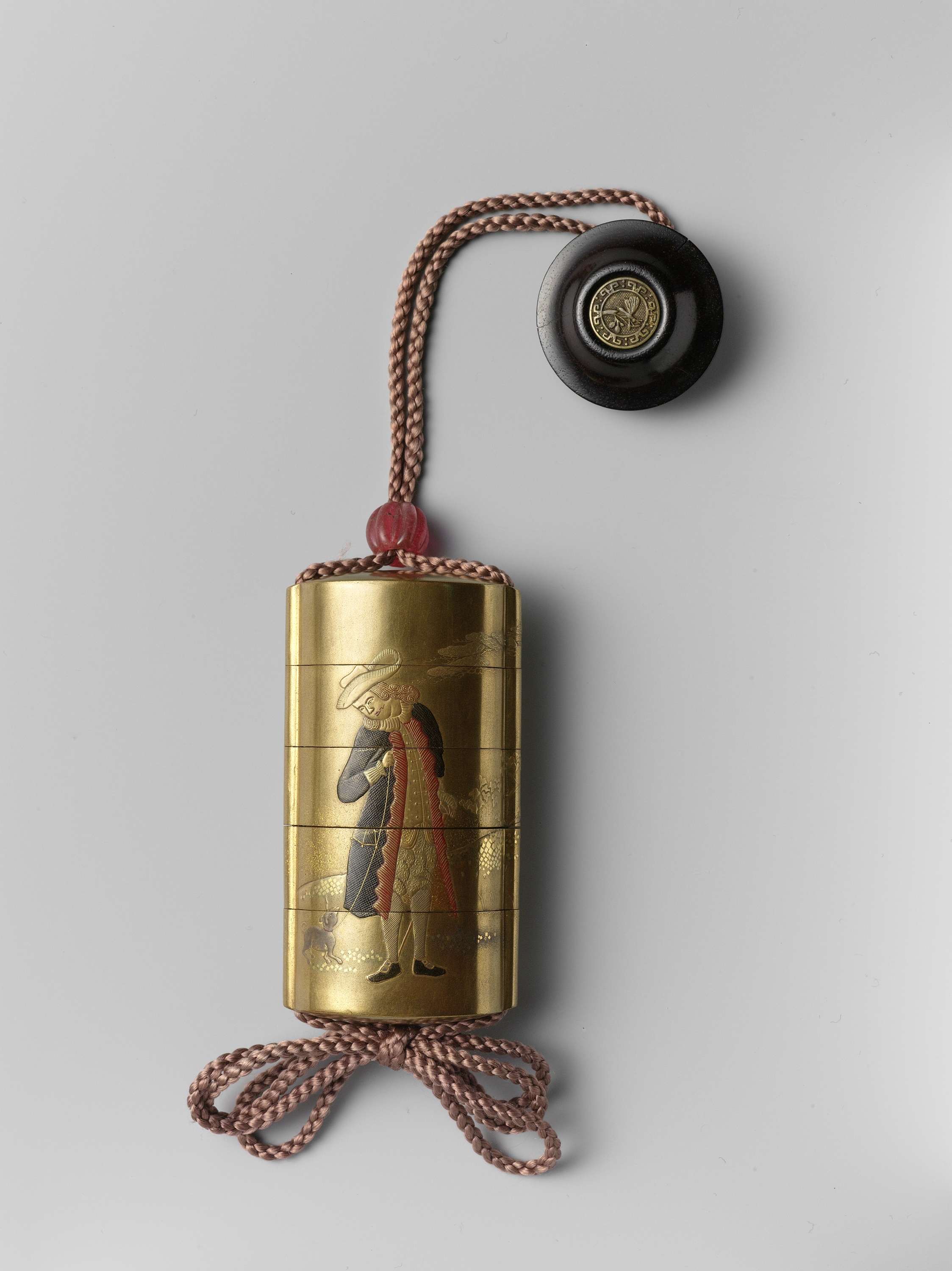
Inro with ojime and netsuke
Inro with ojime and netsuke is held by Rijksmuseum. Museum description: Inro, consisting of 5 parts, with bead (ojime) and sash toggle (netsuke). On one side a Dutch merchant, on the other side a Portuguese. The cord is not authentic. The museum record gives measurements height 10.2 cm; width 5.2 cm; thickness 3.0 cm; place associated: Japan; urn:rijksmuseum:thesaurus:RM0001.THESAU.537. These details come from the holding museum's own record; how far this object represents a wider collectible type has not yet been independently verified.
Partial type record
Badisches Landesmuseum Karlsruhe via Europeana
netsuke inro
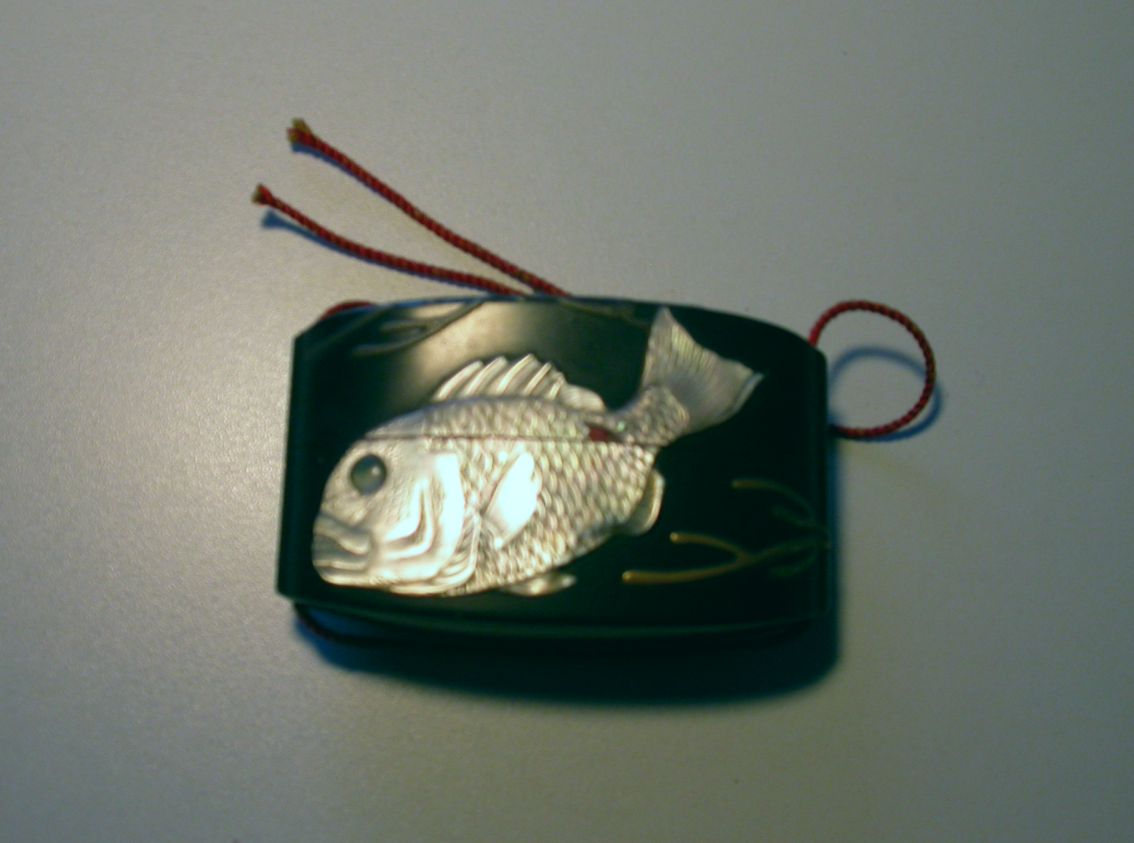
Inro with shimmering fish
Inro with shimmering fish is held by Badisches Landesmuseum Karlsruhe (Germany). Description supplied by the holding institution: The slightly bulbous, curved inrô is in two parts and features a concealed cord channel. On one side, a fish swims among algae against a black lacquer background. Inlaid with mother-of-pearl, its eye is accentuated by means of an applied glass bead or crystal splinter. The algae grow across the sides of the rounded inrô to the opposite side. They are partly inlaid in gold and lead, and partly executed in »chinkinbori«, an engraved lacquer technique. The work is unsigned. Mother-of-pearl inlays usually indicate a lacquer master named Chôhei. Comparable inrô, though mostly with inlays in the »tsuishu« technique (carved red lacquer), were frequently signed by a member of the Onko Chôkan workshop. »Inrô« are small containers that were used in Japan initially as seal cases and later primarily as medicine cases. Samurai, wealthy merchants, artists, and craftsmen wore them suspended freely from wide belts (= »obi«) because of their pocketless,… The collection record gives measurements height: 5.0 cm, width: 7.8 cm, depth: 2.7 cm. Published through Europeana; how far this object represents a wider collectible type has not yet been independently verified.
Partial type record
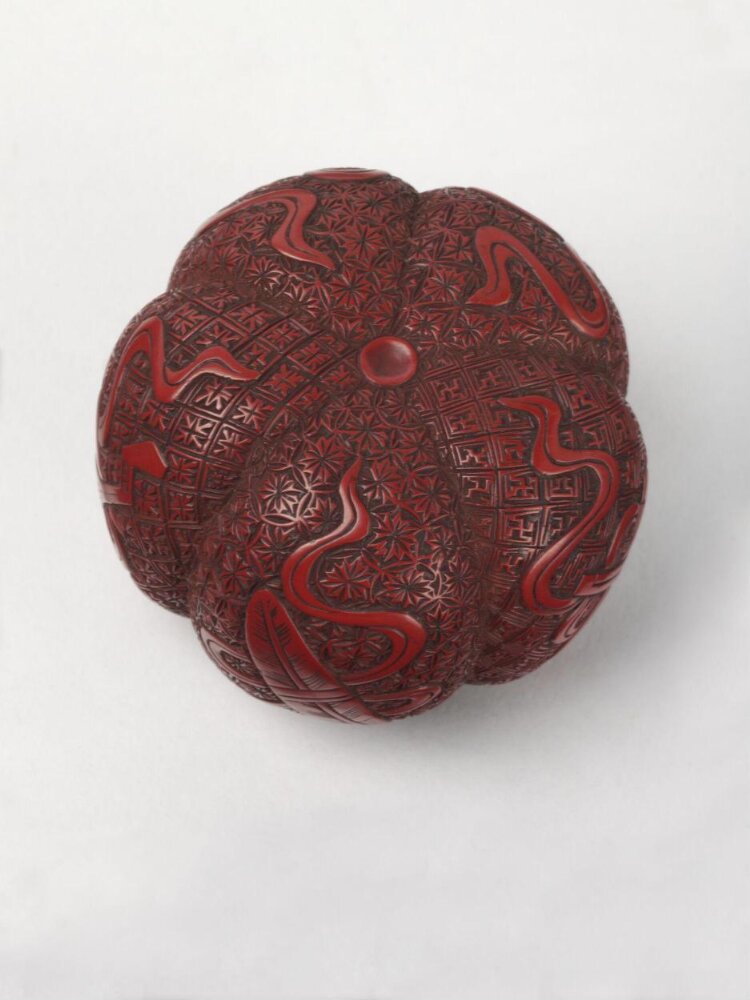
© Victoria and Albert Museum, London
netsuke inro
Inro, Japan, 17th century - 18th century
17th century - 18th century
Inro, Japan, 17th century - 18th century is an object recorded by Victoria and Albert Museum, dated 17th century - 18th century. The museum's brief description reads: Inrō decorated with Shishi and Kirin, lacquer, Zokoku style, Japan, 17th century - 18th century. Museum description: Inrō decorated with Shishi on one side and Kirin on the other, against a background of scrolls characteristic of guri lacquer. Guri lacquer in a sequence of layers of dark brown, ochre, red and brown from the top down. Instead of the cord channels being continuous, there is a break about half way down which results in the partial exposure of the cord. Groove along the bottom of the inrō to accommodate the cord. Dark brown lacquer imitating leather, with removable tray. The museum record gives material recorded as lacquer; measurements Height 9.7 cm; Width 10.2 cm; Depth 3.8 cm; place associated: Japan. These details come from the holding museum's own record; how far this object represents a wider collectible type has not yet been independently verified.
Partial type record
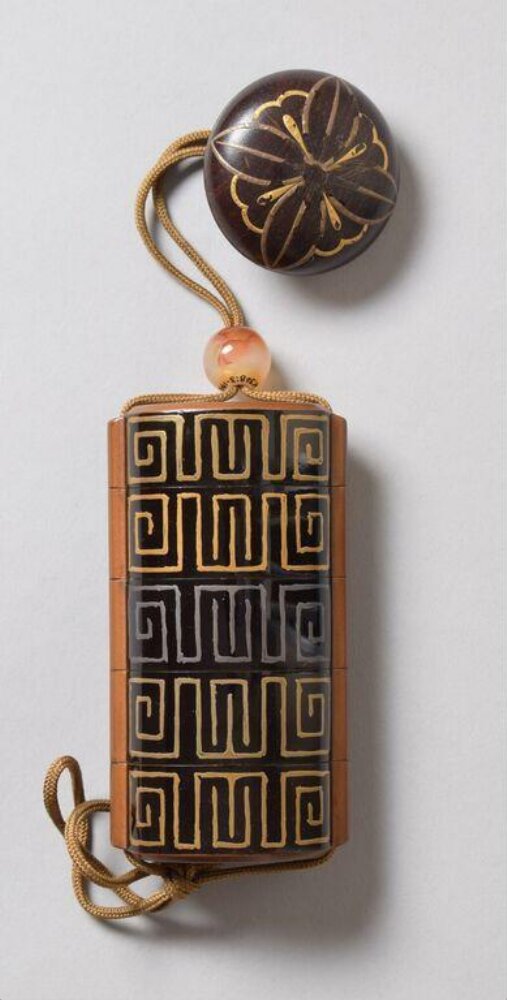
© Victoria and Albert Museum, London
netsuke inro
Inro, Japan, 19th century
19th century
Inro, Japan, 19th century is an object recorded by Victoria and Albert Museum, dated 19th century. The museum's brief description reads: Inrō decorated with meander scroll, lacquer, Japan, 19th century. Museum description: Inrō decorated with a fret pattern in horizontal bands, with a stylized scroll at either end. Gold and silver hiramaki-e on a black lacquer ground. The ends are decorated with sprinkled gold surrounded by brown lacquer which extends down to the cord channels. The museum record gives material recorded as lacquer; measurements Height 9.5 cm; Width 5 cm; Depth 2.9 cm; place associated: Japan. These details come from the holding museum's own record; how far this object represents a wider collectible type has not yet been independently verified.
Partial type record
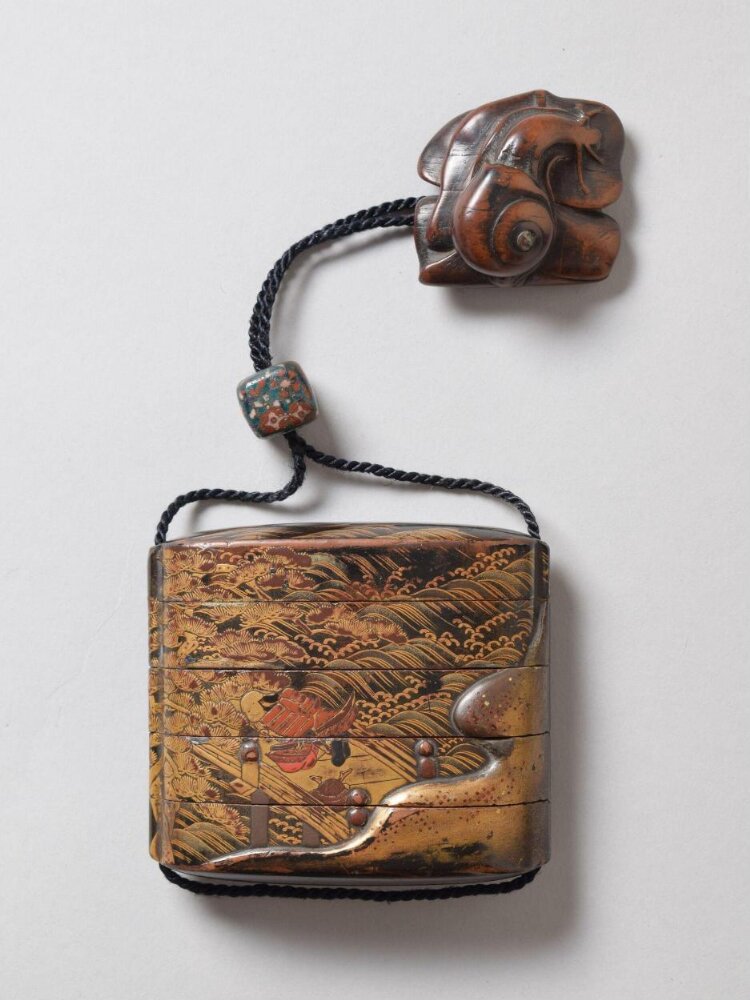
© Victoria and Albert Museum, London
netsuke inro
Inro, Japan, early 17th century
early 17th century
Inro, Japan, early 17th century is an object recorded by Victoria and Albert Museum, dated early 17th century. The museum's brief description reads: Inrō with netsuke and ojime, carved and lacquered wood, Japan, Edo period, early 17th century. The museum record gives material recorded as lacquer, wood; place associated: Japan. These details come from the holding museum's own record; how far this object represents a wider collectible type has not yet been independently verified.
Partial type record
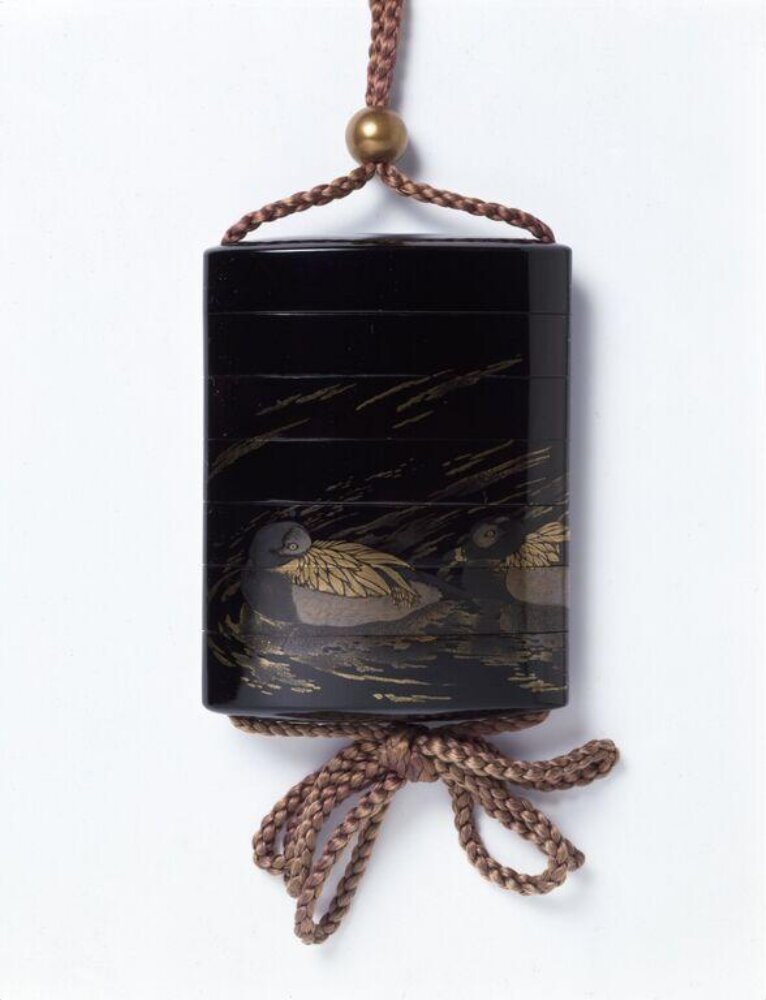
© Victoria and Albert Museum, London
netsuke inro
Inro, Saratani, Tomizo, Japan, ca. 1980-ca. 1999
ca. 1980-ca. 1999
Inro, Saratani, Tomizo, Japan, ca. 1980-ca. 1999 is an object recorded by Victoria and Albert Museum, dated ca. 1980-ca. 1999. The museum's brief description reads: Japan, modern crafts, studio, lacquer; Inro, gold and silver lacquer on a black lacquer ground, pair of mandarin ducks swimming in water, signed Saratani [Tomizo Saratani], Japan, late 20th century.. Museum description: A flattened, rectangular inro with seven sections, decorated with a pair of mandarin ducks swimming in water on both sides, in gold and silver togidashi maki-e (completely flat) lacquer on a black lacquer ground, with circular gold foil for the eye. Attached to a plain gold lacquer spherical bead ojime (sliding bead) by grey cord. Plain wood outer box. The museum record gives material recorded as lacquer, paper, wood; measurements Height 8 cm; Width 6.1 cm; place associated: Japan; maker recorded: Saratani, Tomizo. These details come from the holding museum's own record; how far this object represents a wider collectible type has not yet been independently verified.
Partial type record
© Victoria and Albert Museum, London
netsuke inro
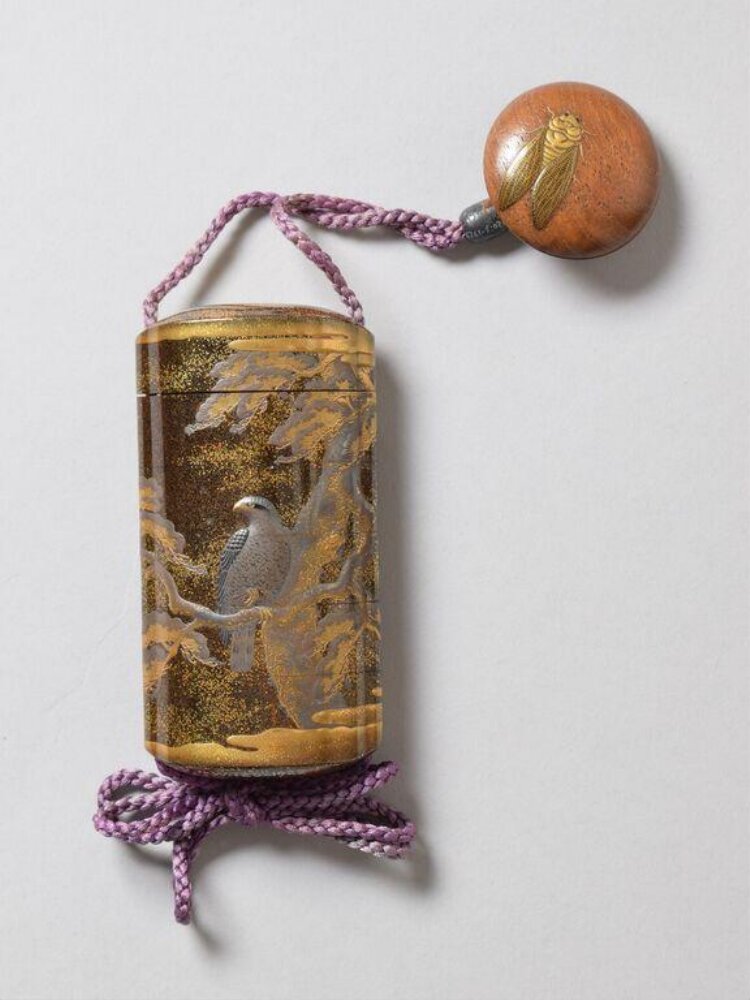
Inro, Toju, Japan, late 19th century
late 19th century
Inro, Toju, Japan, late 19th century is an object recorded by Victoria and Albert Museum, dated late 19th century. The museum's brief description reads: Inrō decorated with hawk seated on a tree, lacquer, by Toju, Japan, late 19th century. Museum description: Inrō decorated with hawk perched on a pine tree laden with snow and grasping a small bird with one foot. Gold and silver hiramaki-e and takamaki-e, silver togidashi and touches of black lacquer, enriched with gold and silver kirikane on a gold sprinkled lacquer ground. The museum record gives material recorded as lacquer, foil; measurements Height 9.8 cm; Width 4.9 cm; Depth 2.5 cm; place associated: Japan; maker recorded: Toju. These details come from the holding museum's own record; how far this object represents a wider collectible type has not yet been independently verified.
Partial type record
© Victoria and Albert Museum, London
netsuke inro
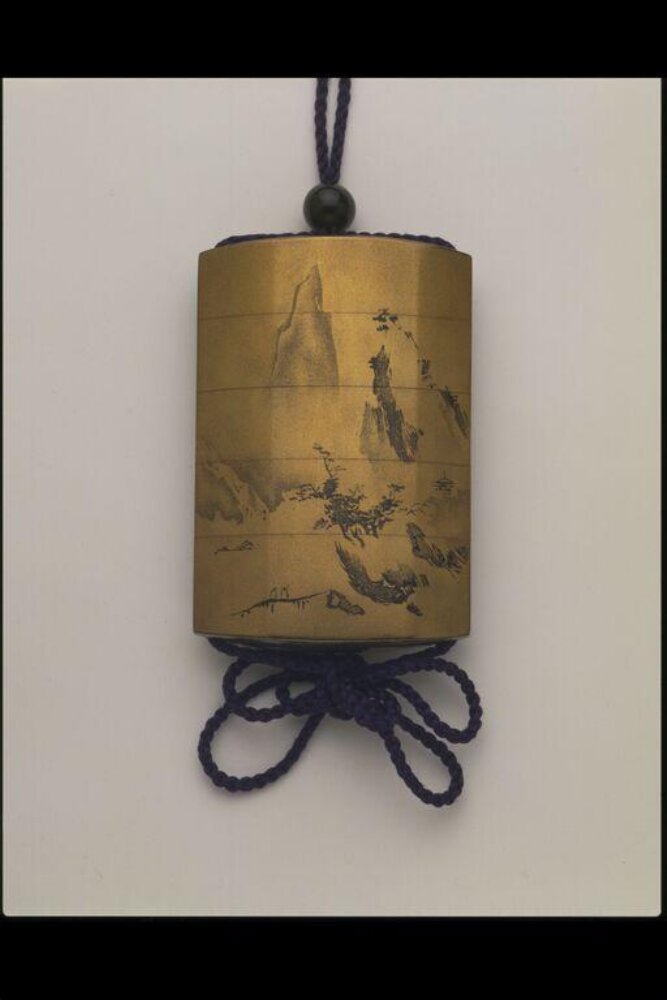
Inro, Unryuan, Japan, ca. 1990
ca. 1990
Inro, Unryuan, Japan, ca. 1990 is an object recorded by Victoria and Albert Museum, dated ca. 1990. The museum's brief description reads: Japan, modern crafts, studio, lacquer; Inro, silver, gold and black lacquer, landscape by day and night, signed Unryuan, ca.1990. Museum description: The inro is a tiered container that was traditionally worn by men only. Since the traditional Japanese garment, the kimono, had no pockets, Japanese men first used the inro to carry daily necessities. It later became simply a costly fashion accessory and status symbol. When Japanese men adopted European dress, they thought the inro was old fashioned and no longer useful. From the late 1800s Japanese men gradually stopped using it, and the complex skills needed to make inro were lost. The lacquer artist Unryuan made this example around 1990. He spent several years of research and experiment to rediscover the lost methods of inro production. Here he has used a lacquer technique known as sumi-togidashie (an ink picture brought out by polishing). This imitates the brushstrokes of a painting. He has decorated the two sides to convey day and night. One side shows a landscape scene in the sun… The museum record gives material recorded as lacquer; measurements Height 9.0 cm; Width 6.3 cm; Depth 2.0 cm; place associated: Japan; maker recorded: Unryuan. These details come from the holding museum's own record; how far this object represents a wider collectible type has not yet been independently verified.
Partial type record
National Library of France via Europeana
netsuke inro
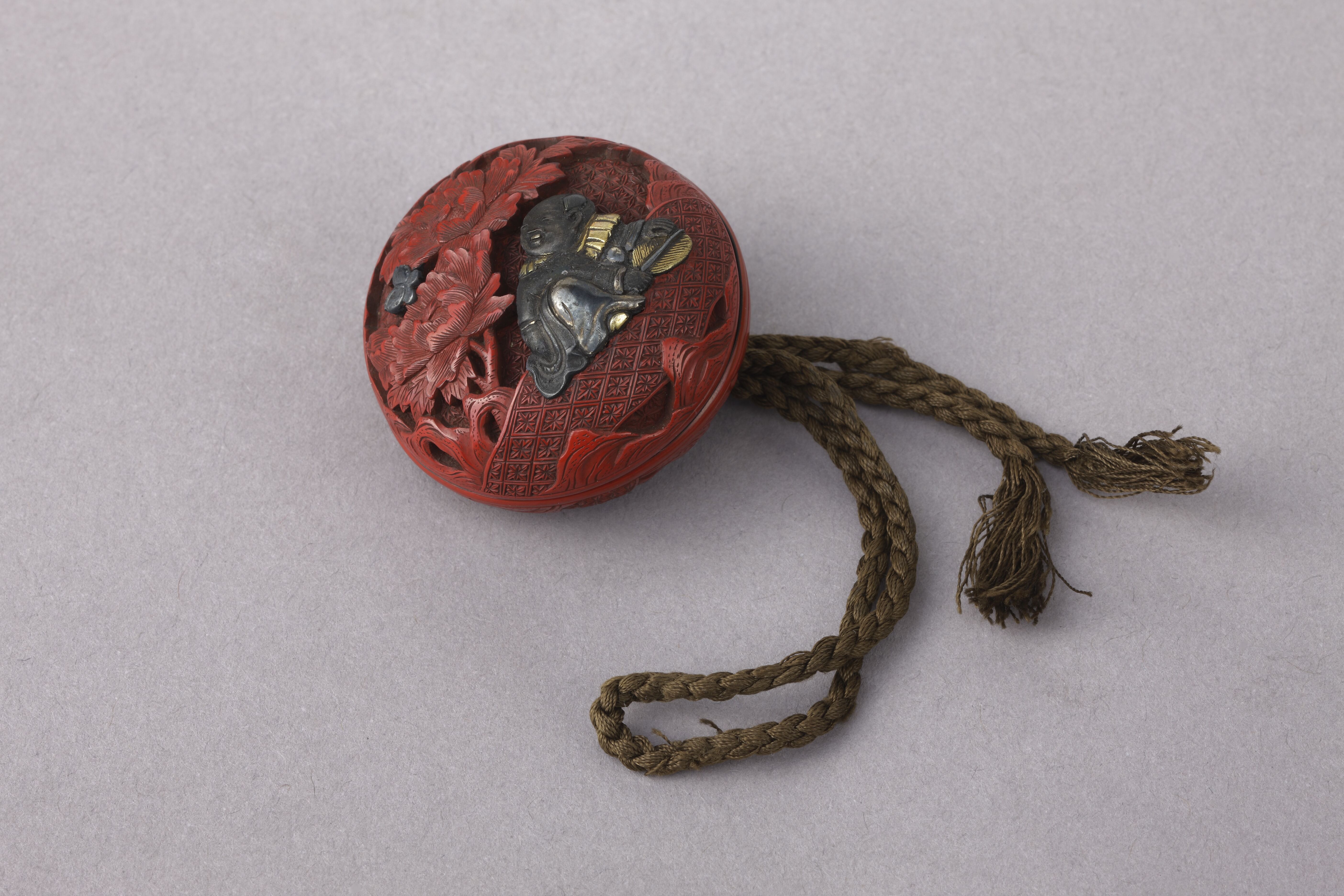
Karako and peonies Manjū netsuke
Karako and peonies Manjū netsuke is held by National Library of France. Museum description: Digitization carried out from an original document.; Former Auguste Lesouëf collection These details come from the holding museum's own record; how far this object represents a wider collectible type has not yet been independently verified.
Partial type record
Kulturen via Europeana
netsuke inro
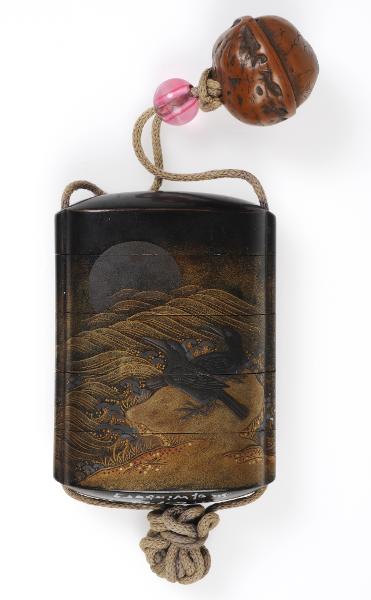
netske, dosa, button, inro, netsuke, 1918
1918
netske, dosa, button, inro, netsuke is held by Kulturen (Sweden), dated 1918. Description supplied by the holding institution: description/notes: KM 26940. Inro with ducks and geese The silk cord o netzke (do [HoWbg] 902). Sk. Director Th. Winberg, Stockholm. 130.00 Simultaneous Acquisitions: KM 26924-26943 The collection record gives material recorded as silk [cords]; lacquer; wood. Published through Europeana; how far this object represents a wider collectible type has not yet been independently verified.
Partial type record
Vänersborgs museum via Europeana
netsuke inro
NETSUKE
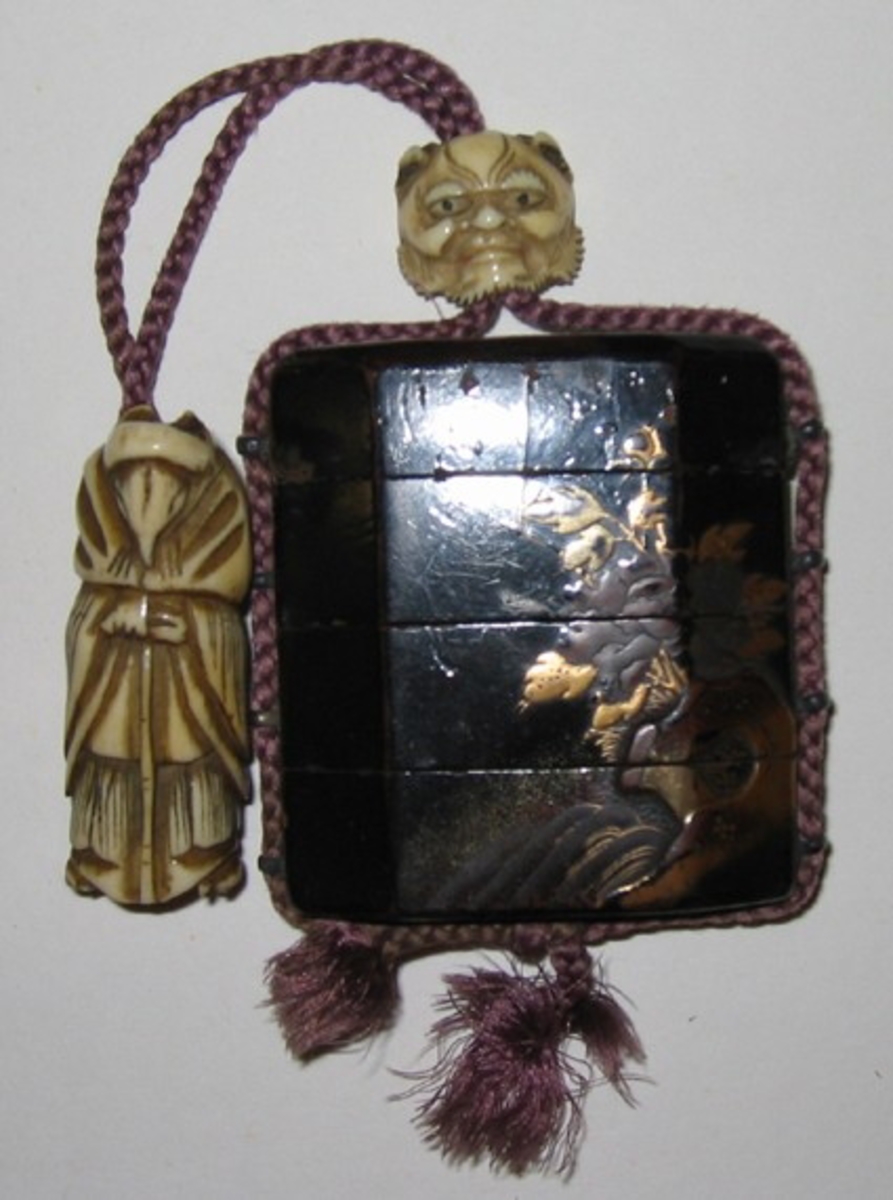
NETSUKE is held by Vänersborgs museum (Sweden). Description supplied by the holding institution: 15 368:1 Netsuke (gumma [old woman]). A netsuke is a form of miniature sculpted button in various materials. Because traditional Japanese dress lacked pockets, this button served both a practical and decorative function as a toggle for hanging items worn at the belt. The collection record gives material recorded as lacquer; ojime; inro; ivory; bone. Published through Europeana; how far this object represents a wider collectible type has not yet been independently verified.
Partial type record
M. K. Čiurlionis National Museum of Art via Europeana
netsuke inro
Netsuke – Okame and Beshimi masks, 2022
2022
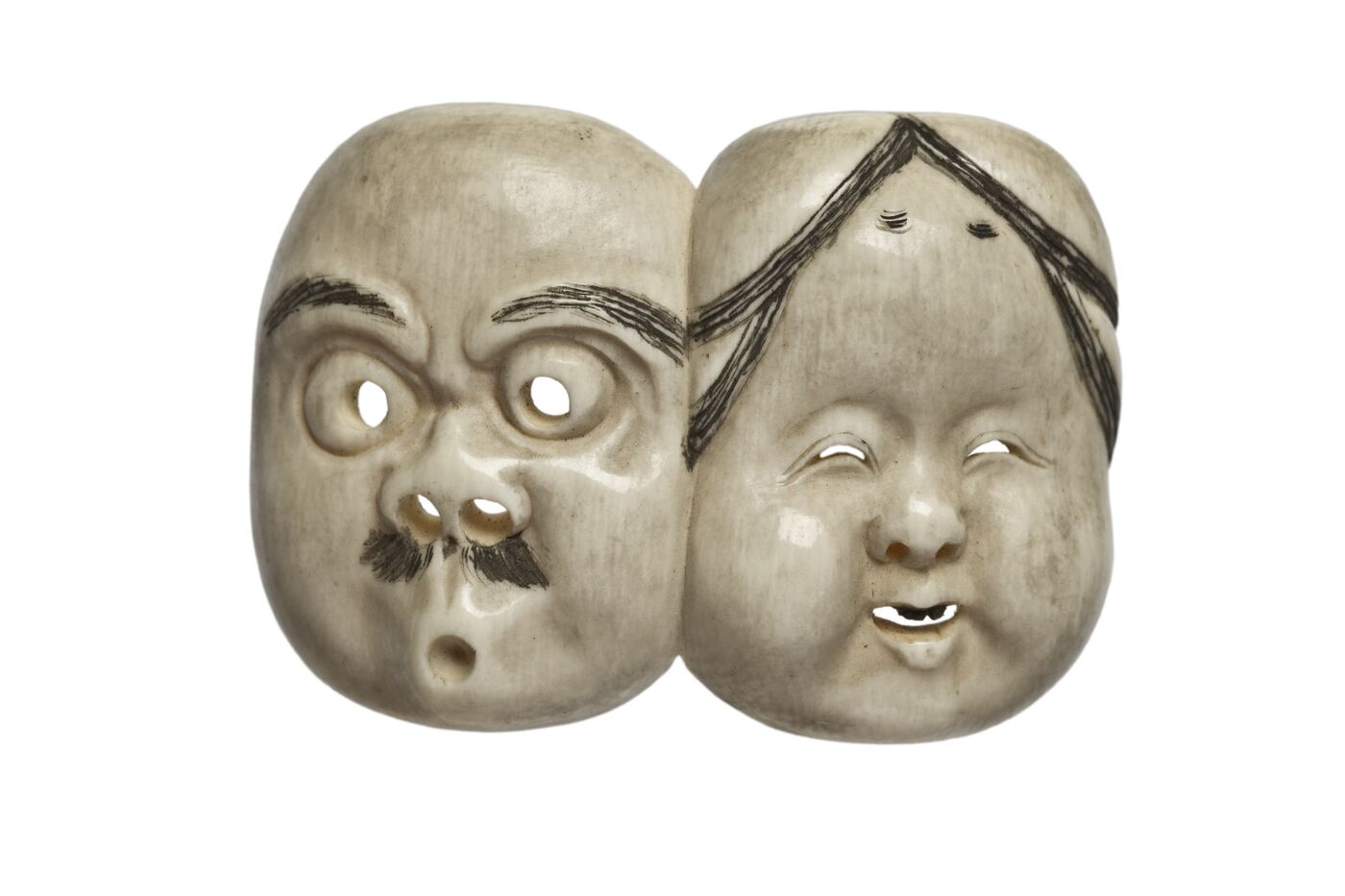
Netsuke – Okame and Beshimi masks is held by M. K. Čiurlionis National Museum of Art (Lithuania), dated 2022. Description supplied by the holding institution: Small statuette depicting two masks. On the left side is a depiction of a whistling man's mask, on the right – an Okame mask. On the inner side of the netsuke there is a hole for threading a cord, and an inscription. The collection record gives material recorded as engraving; carving; ivory; measurements height: 33 mm. Published through Europeana; how far this object represents a wider collectible type has not yet been independently verified.
Partial type record
M. K. Čiurlionis National Museum of Art via Europeana
netsuke inro
Netsuke – Okame mask, 2022
2022
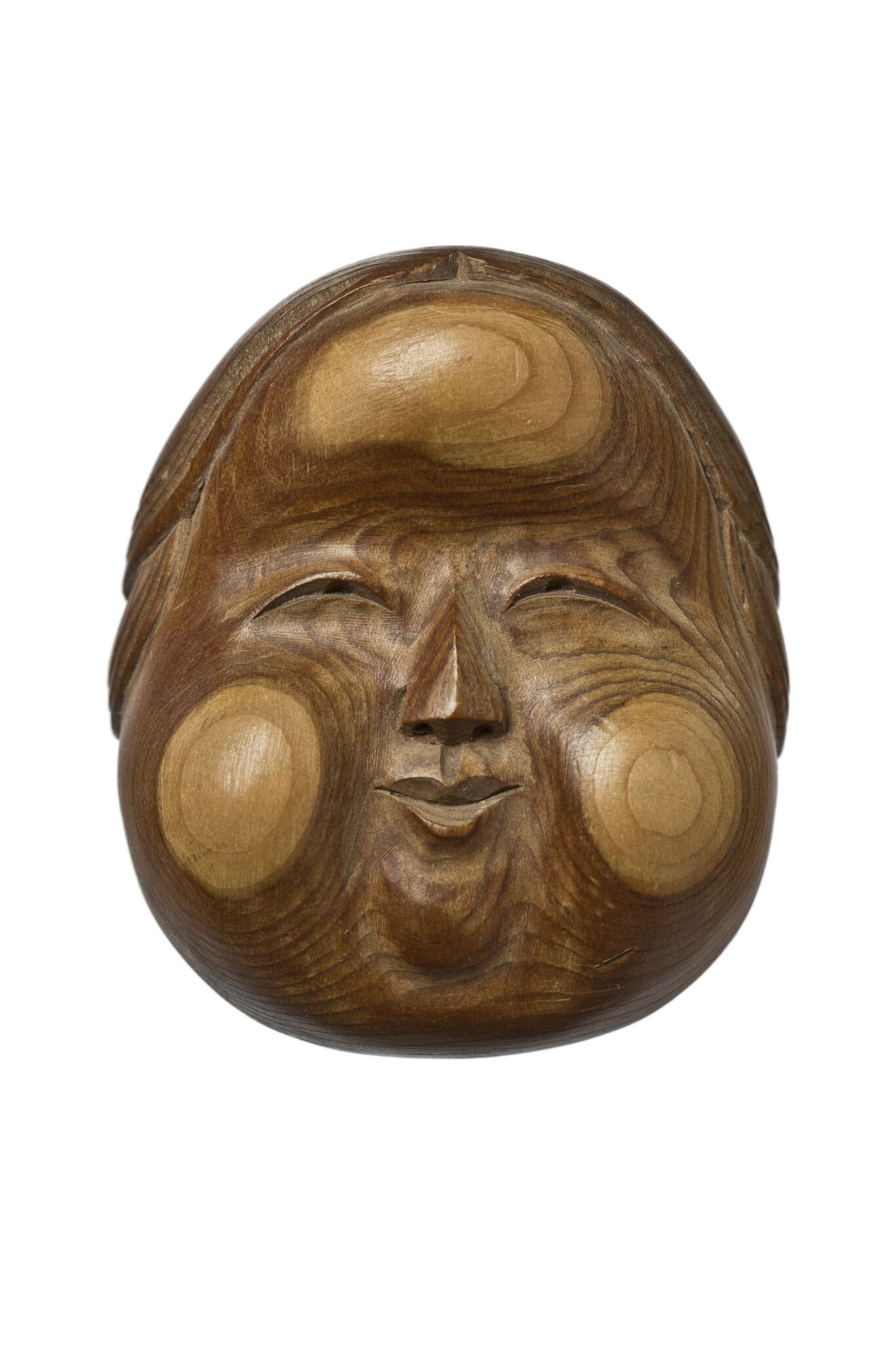
Netsuke – Okame mask is held by M. K. Čiurlionis National Museum of Art (Lithuania), dated 2022. Description supplied by the holding institution: Small statuette depicting a mask with puffed cheeks and squinting eyes. On the inner side of the netsuke there is a hole for threading a cord, and an inscription. The collection record gives material recorded as wood; carving; measurements height: 48 mm. Published through Europeana; how far this object represents a wider collectible type has not yet been independently verified.
Partial type record
Vänersborgs museum via Europeana
netsuke inro
NETSUKE — Vänersborgs museum
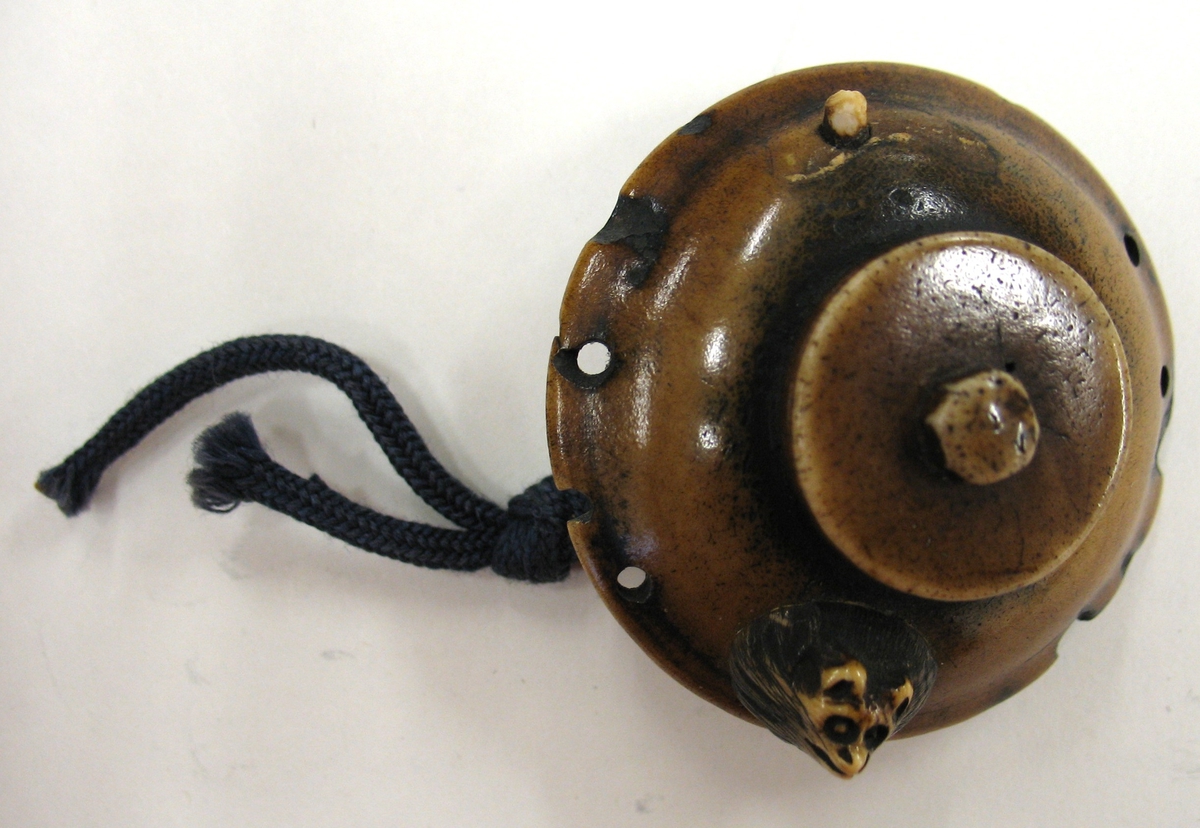
NETSUKE is held by Vänersborgs museum (Sweden). Description supplied by the holding institution: 15 368:6: Netsuke (pot with lid). A netsuke is a form of miniature sculpted button in various materials. Because the traditional Japanese costume lacked pockets, this button served both a practical and ornamental function as a toggle for suspended objects worn at the sash. The collection record gives material recorded as Bone; ivory. Published through Europeana; how far this object represents a wider collectible type has not yet been independently verified.
Partial type record
M. K. Čiurlionis National Museum of Art via Europeana
netsuke inro
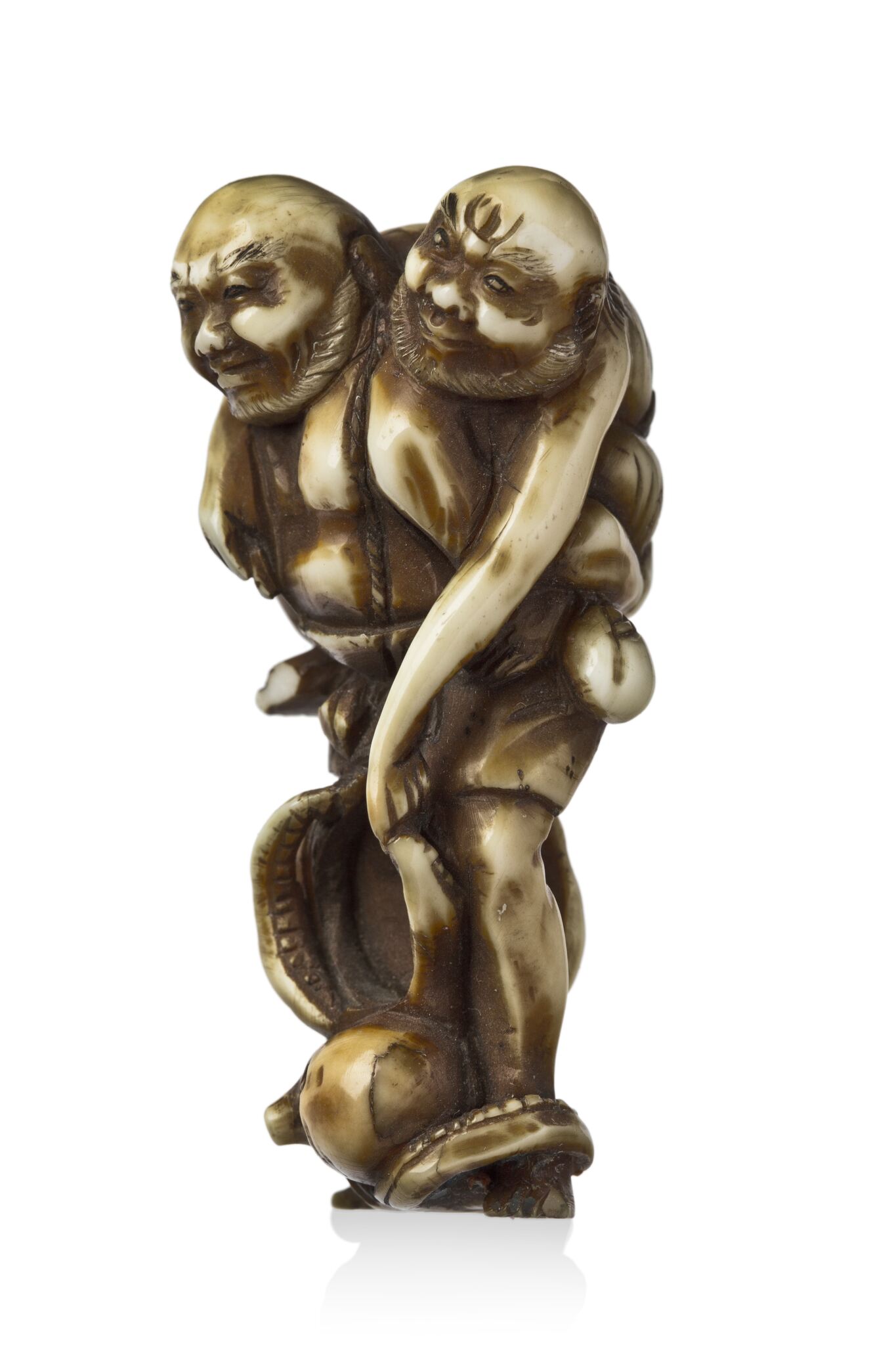
Netsuke "Ashinaga and Tenaga", 2022
2022
Netsuke "Ashinaga and Tenaga" is held by M. K. Čiurlionis National Museum of Art (Lithuania), dated 2022. Description supplied by the holding institution: Small statuette depicting a standing man, on whose back sits another man with long arms. Under the man's feet lies an octopus (?). On the back there are two holes for threading a cord. The collection record gives material recorded as engraving; carving; ivory; measurements height: 51 mm. Published through Europeana; how far this object represents a wider collectible type has not yet been independently verified.
Partial type record
M. K. Čiurlionis National Museum of Art via Europeana
netsuke inro
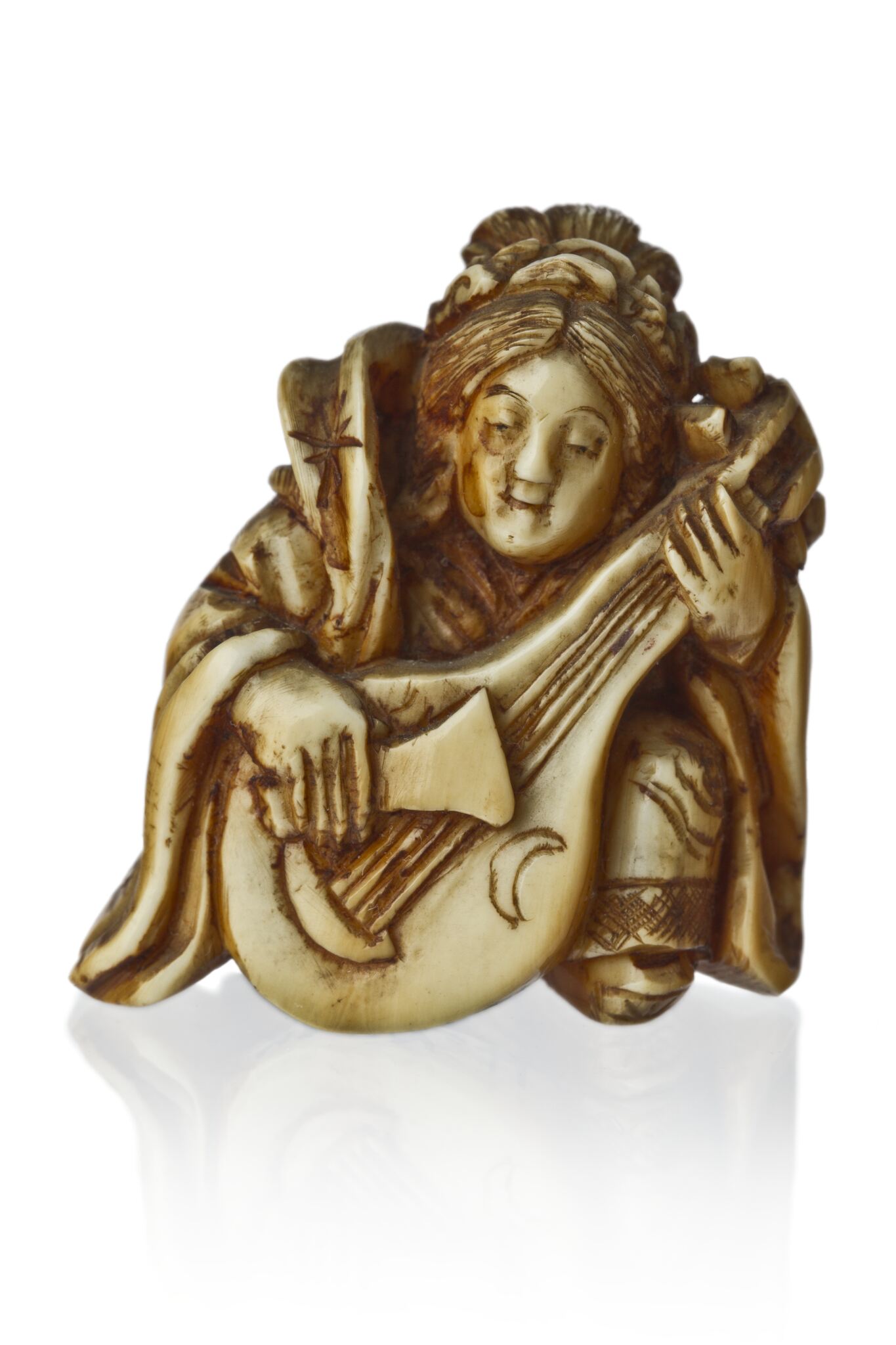
Netsuke "Benzaiten", 2022
2022
Netsuke "Benzaiten", 2022 is held by M. K. Čiurlionis National Museum of Art, dated 2022. Museum description: A small figurine depicting a woman playing a biwa (lute). The museum record gives material recorded as engraving; carving; ivory; measurements height x width x length: 33 x 19 x 30 mm; place associated: Japan. These details come from the holding museum's own record; how far this object represents a wider collectible type has not yet been independently verified.
Partial type record
M. K. Čiurlionis National Museum of Art via Europeana
netsuke inro
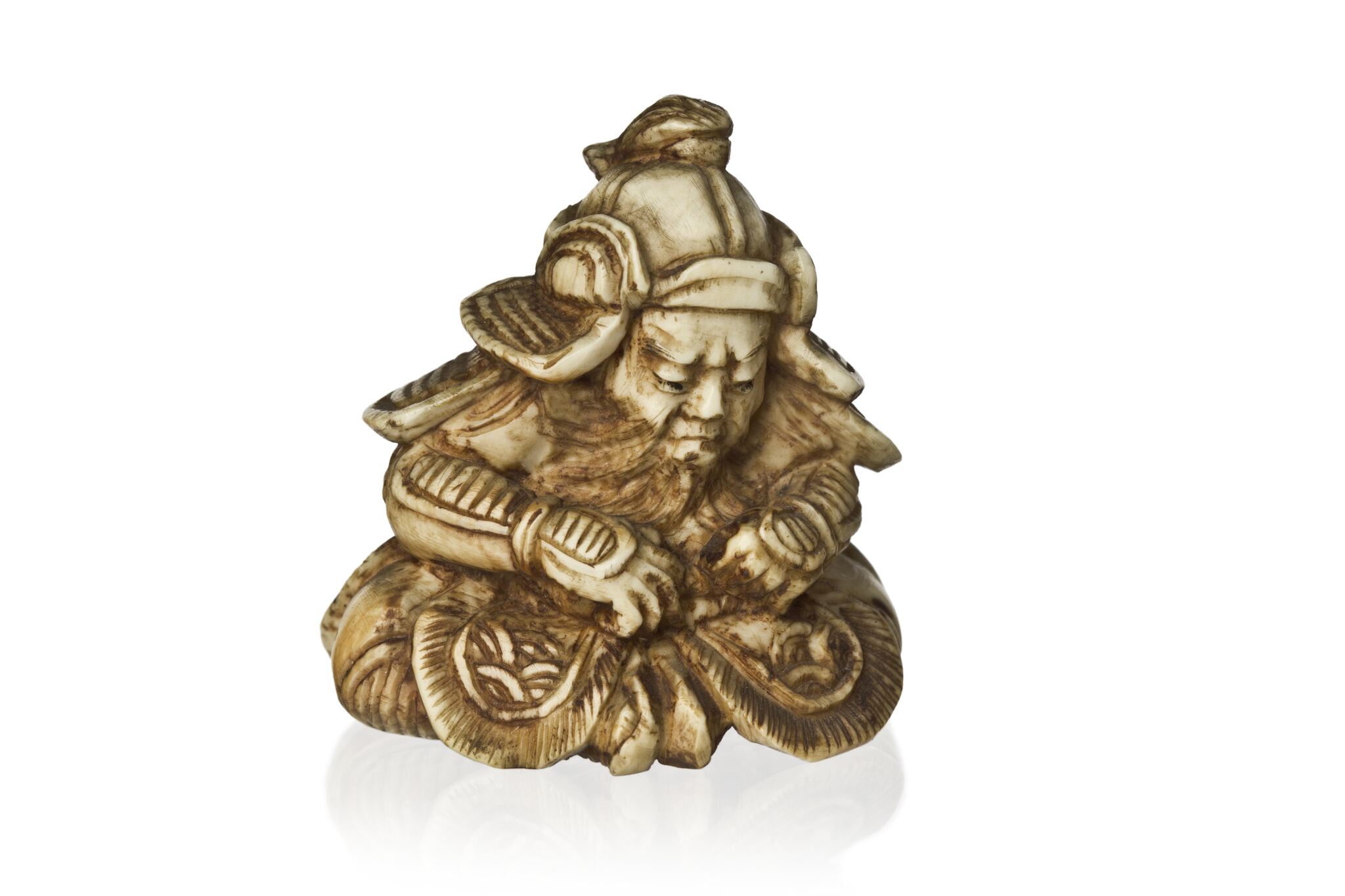
Netsuke "Bishamonten", 2022
2022
Netsuke "Bishamonten", 2022 is held by M. K. Čiurlionis National Museum of Art, dated 2022. Museum description: Small figurine depicting a man dressed in armor sitting on the ground. The museum record gives material recorded as engraving; carving; ivory; measurements height x width x length: 31 x 20 x 28 mm; place associated: Japan. These details come from the holding museum's own record; how far this object represents a wider collectible type has not yet been independently verified.
Partial type record
M. K. Čiurlionis National Museum of Art via Europeana
netsuke inro
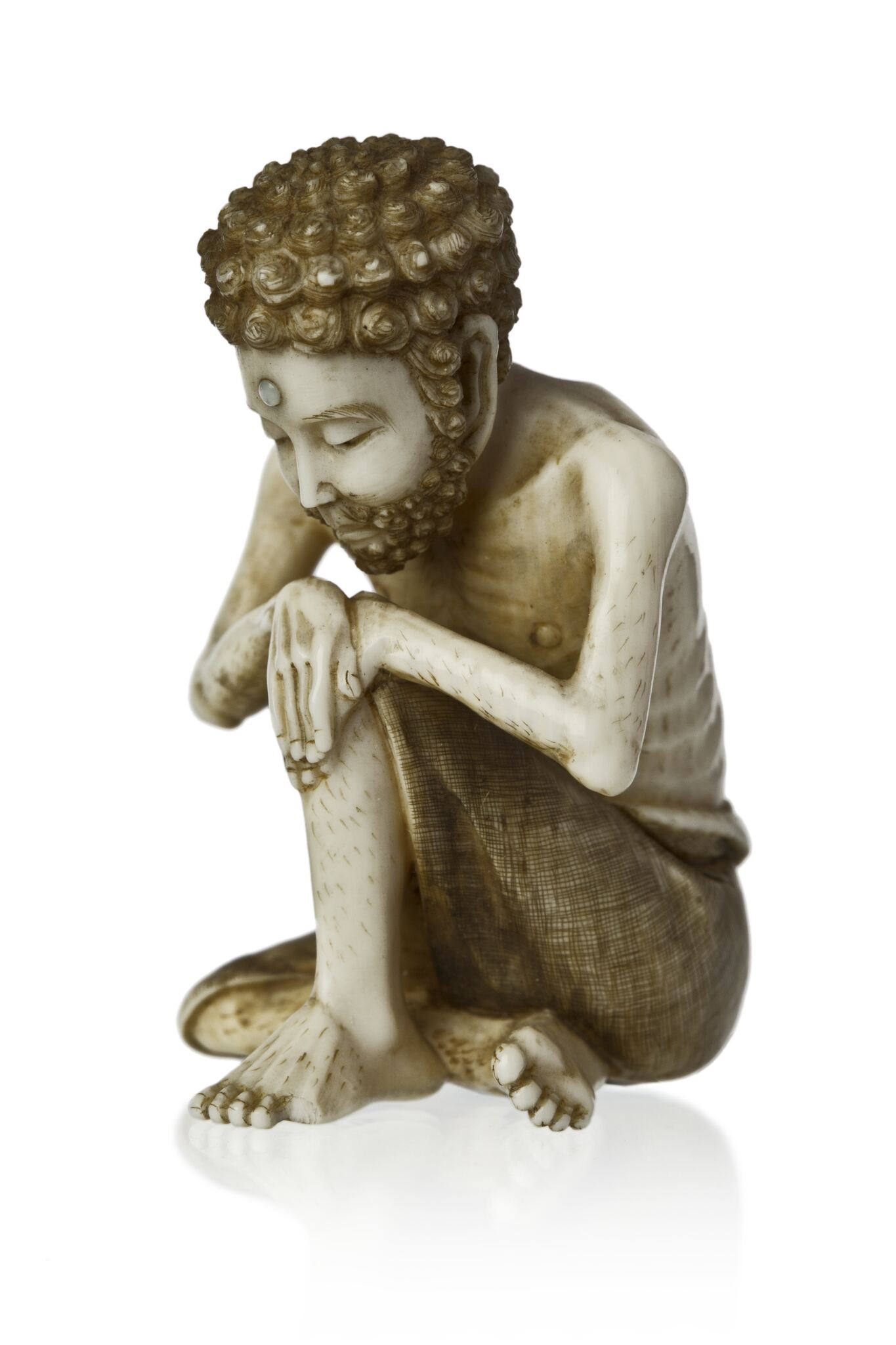
Netsuke "Buddha", 2022
2022
Netsuke "Buddha", 2022 is held by M. K. Čiurlionis National Museum of Art, dated 2022. Museum description: Small figurine depicting a man sitting on the ground, leaning his hands on his left knee. There are two holes in the base of the netsuke for threading a cord. The museum record gives material recorded as mother-of-pearl; inlay; carving; ivory; horn; measurements height: 41 mm; place associated: Japan. These details come from the holding museum's own record; how far this object represents a wider collectible type has not yet been independently verified.
Partial type record
M. K. Čiurlionis National Museum of Art via Europeana
netsuke inro
Netsuke "Charitable Deed", 2022
2022
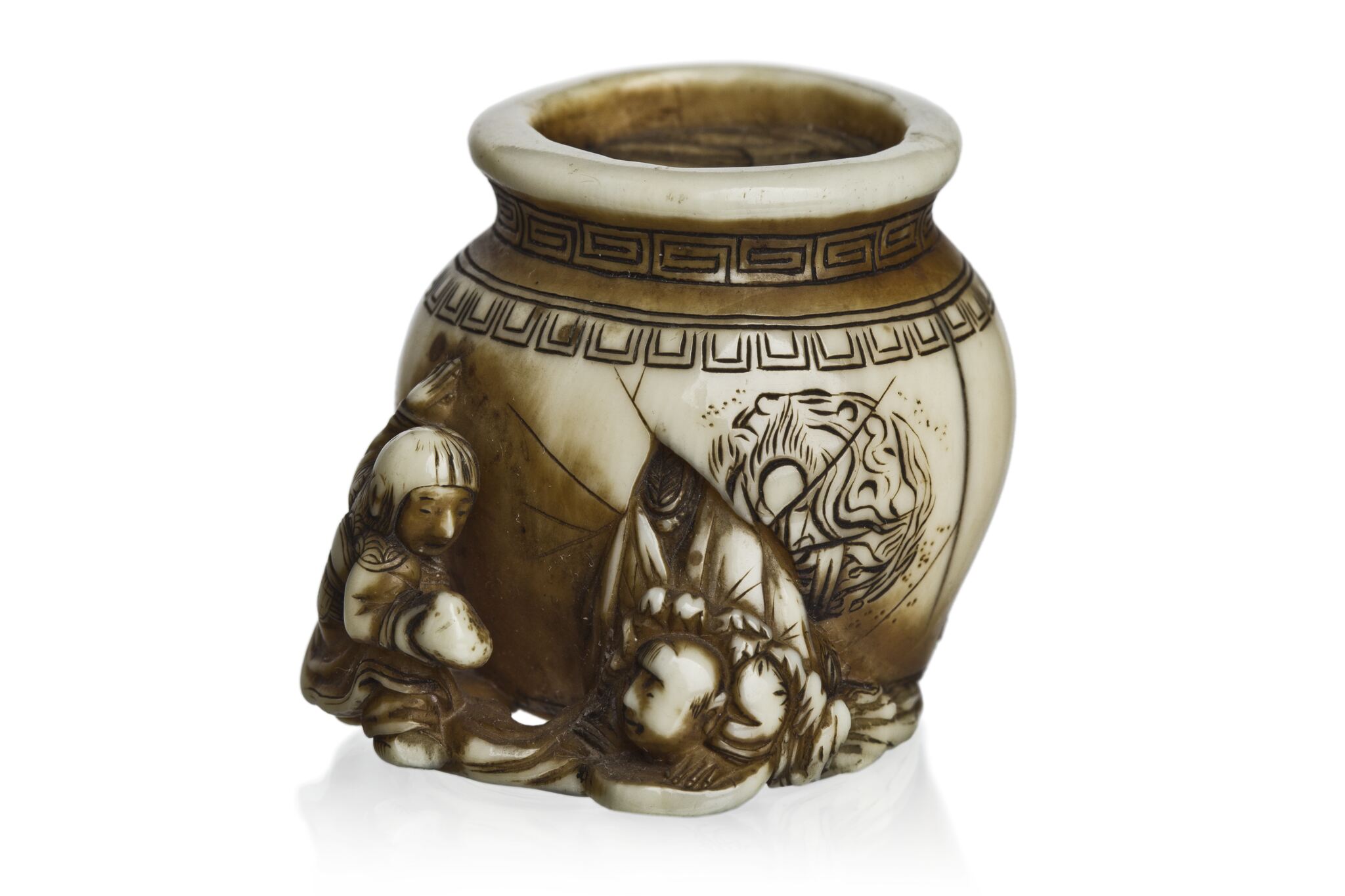
Netsuke "Charitable Deed" is held by M. K. Čiurlionis National Museum of Art (Lithuania), dated 2022. Description supplied by the holding institution: Small figurine depicting a large pot or vase full of dough (?). One side of the pot is smashed open, and a person emerges through the hole together with the dough. Kneeling beside is another person holding a stone that smashed the pot. In the base of the figurine, there are two holes for threading a cord and an inscription. The collection record gives material recorded as engraving; carving; ivory; measurements height x width: 31 x 40 mm. Published through Europeana; how far this object represents a wider collectible type has not yet been independently verified.
Partial type record
M. K. Čiurlionis National Museum of Art via Europeana
netsuke inro
Netsuke "Chotei", 2022
2022
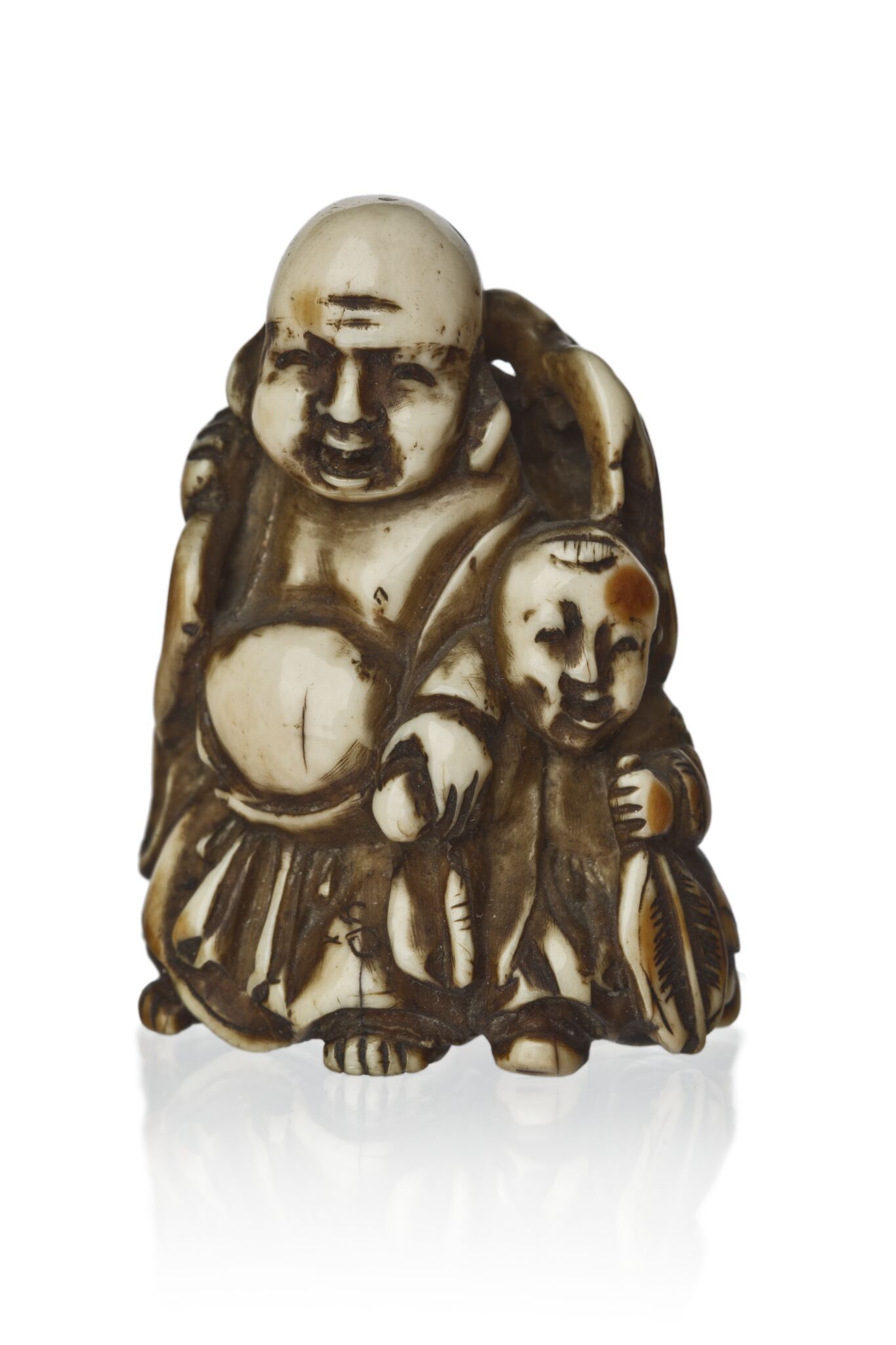
Netsuke "Chotei", 2022 is held by M. K. Čiurlionis National Museum of Art, dated 2022. Museum description: A small figurine depicting a cheerful man with a belly, carrying a tree branch on his shoulders with his right hand, and holding a child by the hand with his left. There are two small holes on the back of the netsuke for threading a cord. The museum record gives material recorded as carving; ivory; measurements height: 39 mm; place associated: Japan. These details come from the holding museum's own record; how far this object represents a wider collectible type has not yet been independently verified.
Partial type record
M. K. Čiurlionis National Museum of Art via Europeana
netsuke inro
Netsuke "Chotei", Hidekazu, 2022
2022
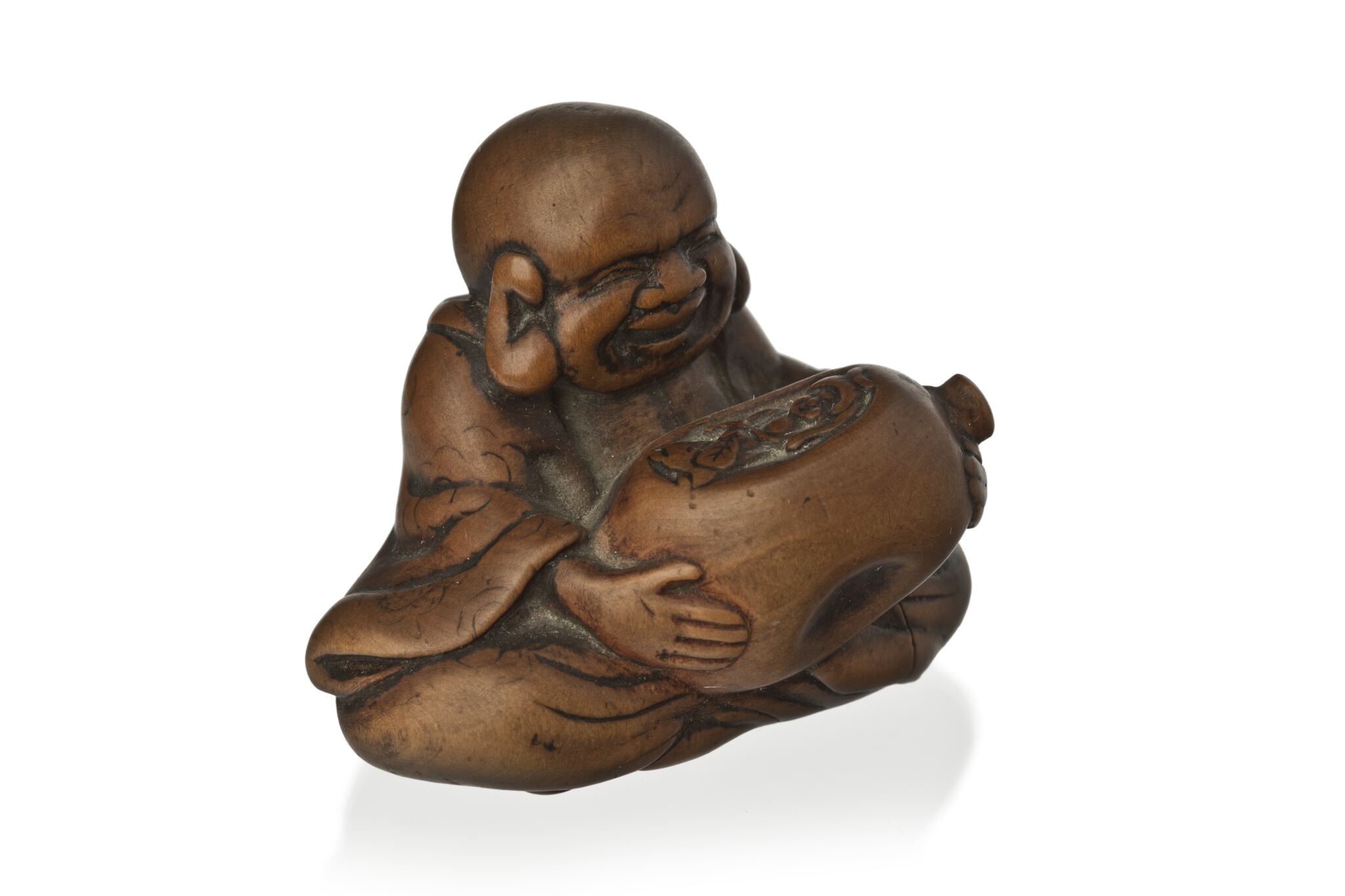
Netsuke "Chotei", Hidekazu, 2022 is held by M. K. Čiurlionis National Museum of Art, dated 2022. Museum description: Small figurine depicting a man sitting on the ground. In his hands he holds a vessel on which a female figure is depicted. In the base of the netsuke are two holes for threading a cord and the inscription: "HIDEKAZU". The museum record gives material recorded as wood; carving; measurements height: 35 mm; place associated: Japan; maker recorded: Hidekazu. These details come from the holding museum's own record; how far this object represents a wider collectible type has not yet been independently verified.
Partial type record
M. K. Čiurlionis National Museum of Art via Europeana
netsuke inro
Netsuke "Daikoku", 2022
2022
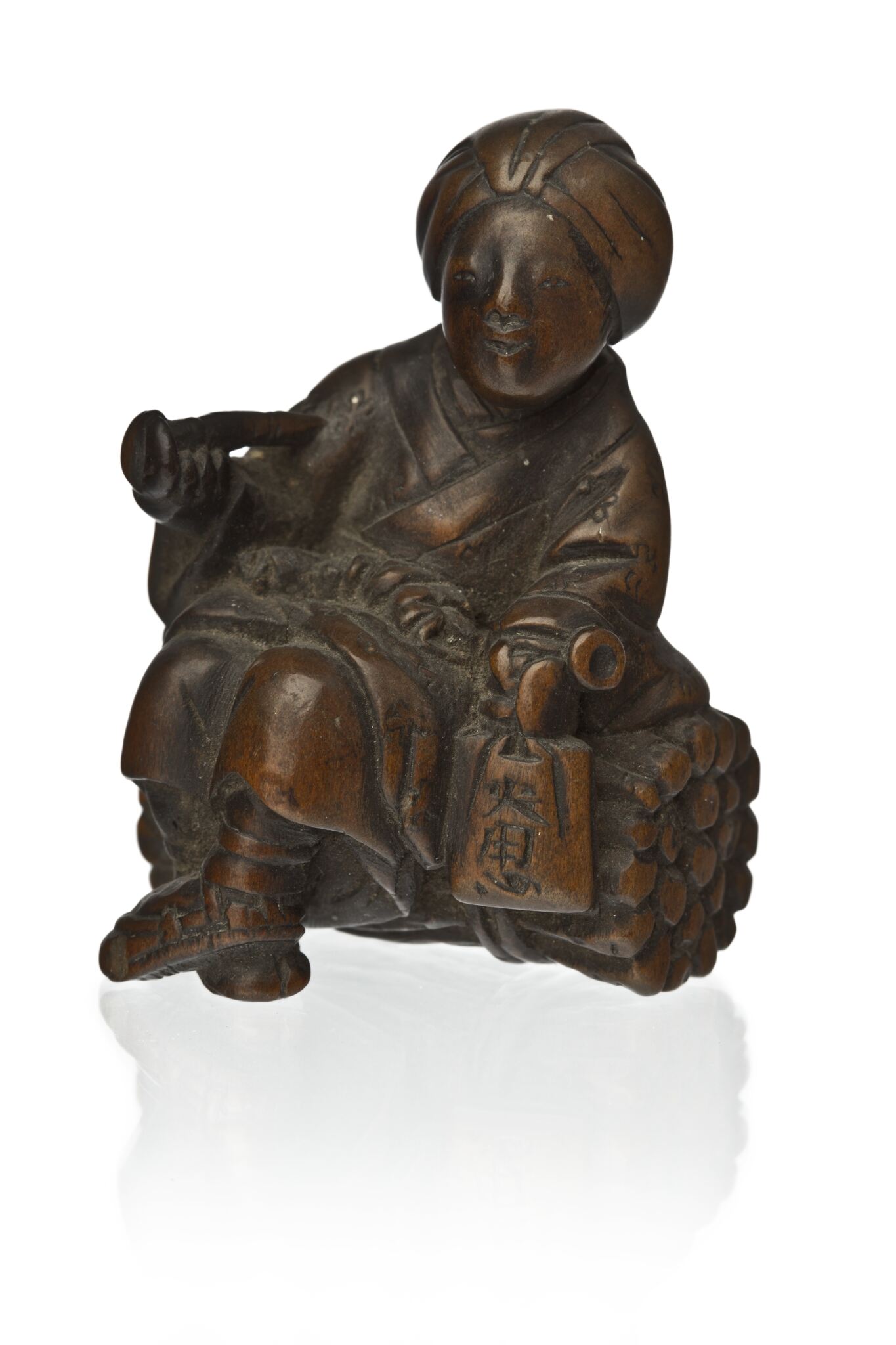
Netsuke "Daikoku", 2022 is held by M. K. Čiurlionis National Museum of Art, dated 2022. Museum description: Small figurine depicting a man with a turban sitting on a rice sack. In his right hand he holds a mallet (?), and in his left – a tablet with an inscription. On the back of the netsuke there are two holes for threading a cord. The museum record gives material recorded as wood; carving; measurements height: 40 mm; place associated: Japan. These details come from the holding museum's own record; how far this object represents a wider collectible type has not yet been independently verified.
Partial type record
M. K. Čiurlionis National Museum of Art via Europeana
netsuke inro
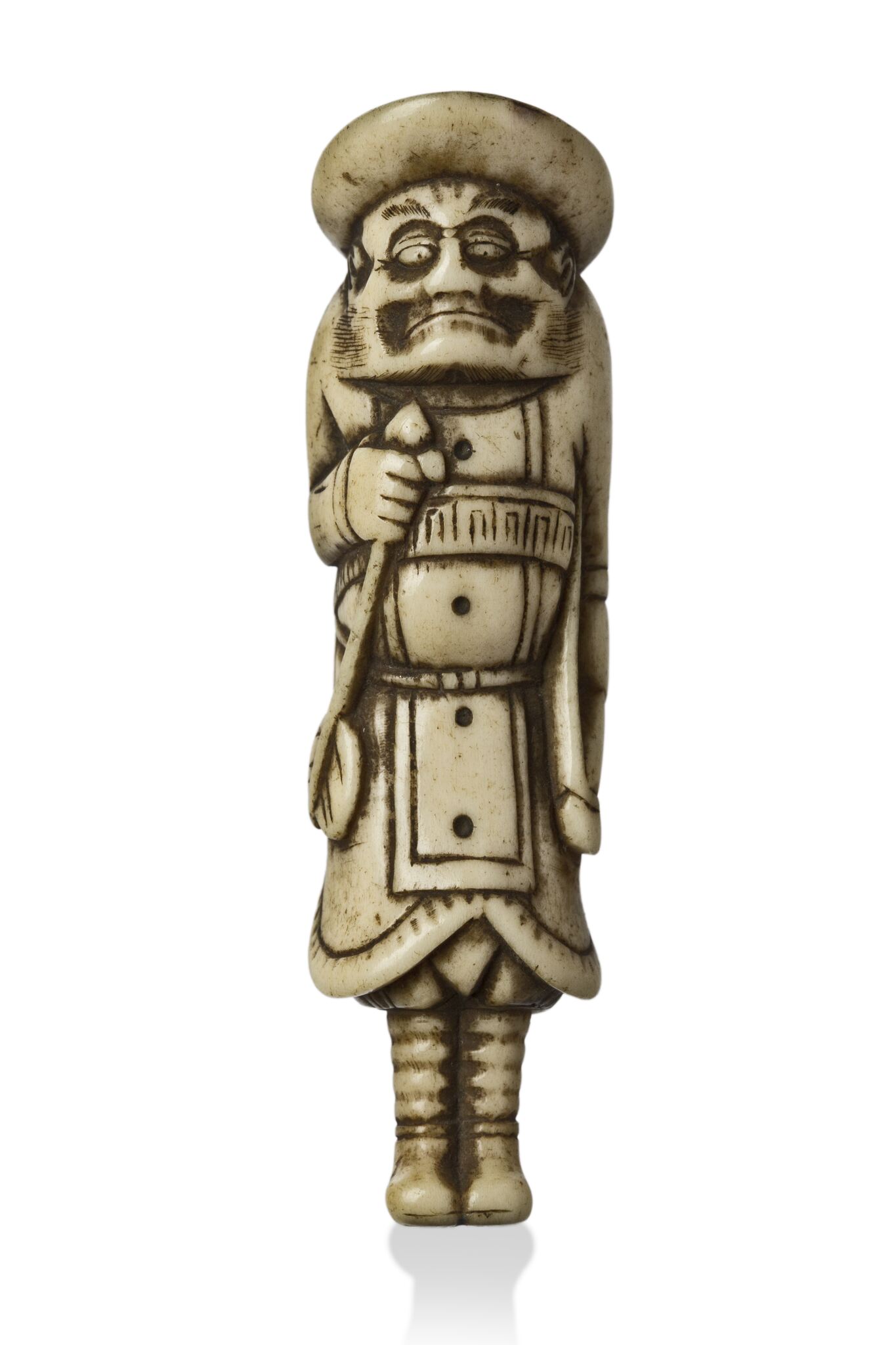
Netsuke "Dutchman", 2022
2022
Netsuke "Dutchman", 2022 is held by M. K. Čiurlionis National Museum of Art, dated 2022. Museum description: Small figurine depicting a man holding an arrow in his right hand and a bow in his left. On the back are two small holes for threading a cord. The museum record gives material recorded as carving; ivory; measurements height: 69 mm; place associated: Japan. These details come from the holding museum's own record; how far this object represents a wider collectible type has not yet been independently verified.
Partial type record
M. K. Čiurlionis National Museum of Art via Europeana
netsuke inro
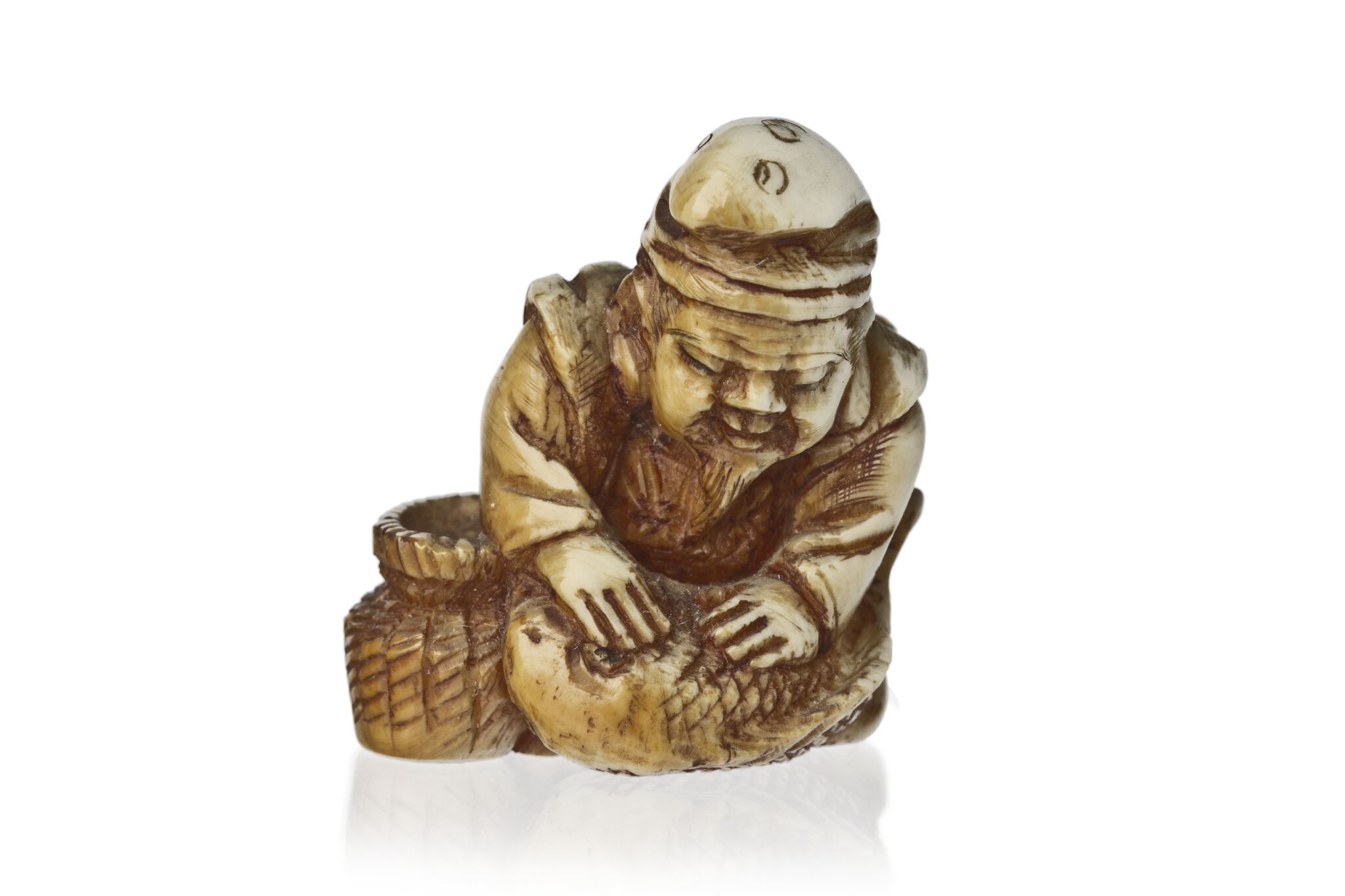
Netsuke "Ebisu", 2022
2022
Netsuke "Ebisu", 2022 is held by M. K. Čiurlionis National Museum of Art, dated 2022. Museum description: Small figurine depicting a man sitting on the ground, leaning forward and pressing down on a large fish with his hands. The museum record gives material recorded as engraving; carving; ivory; measurements height x width x length: 31 x 23 x 25 mm; place associated: Japan. These details come from the holding museum's own record; how far this object represents a wider collectible type has not yet been independently verified.
Partial type record
M. K. Čiurlionis National Museum of Art via Europeana
netsuke inro
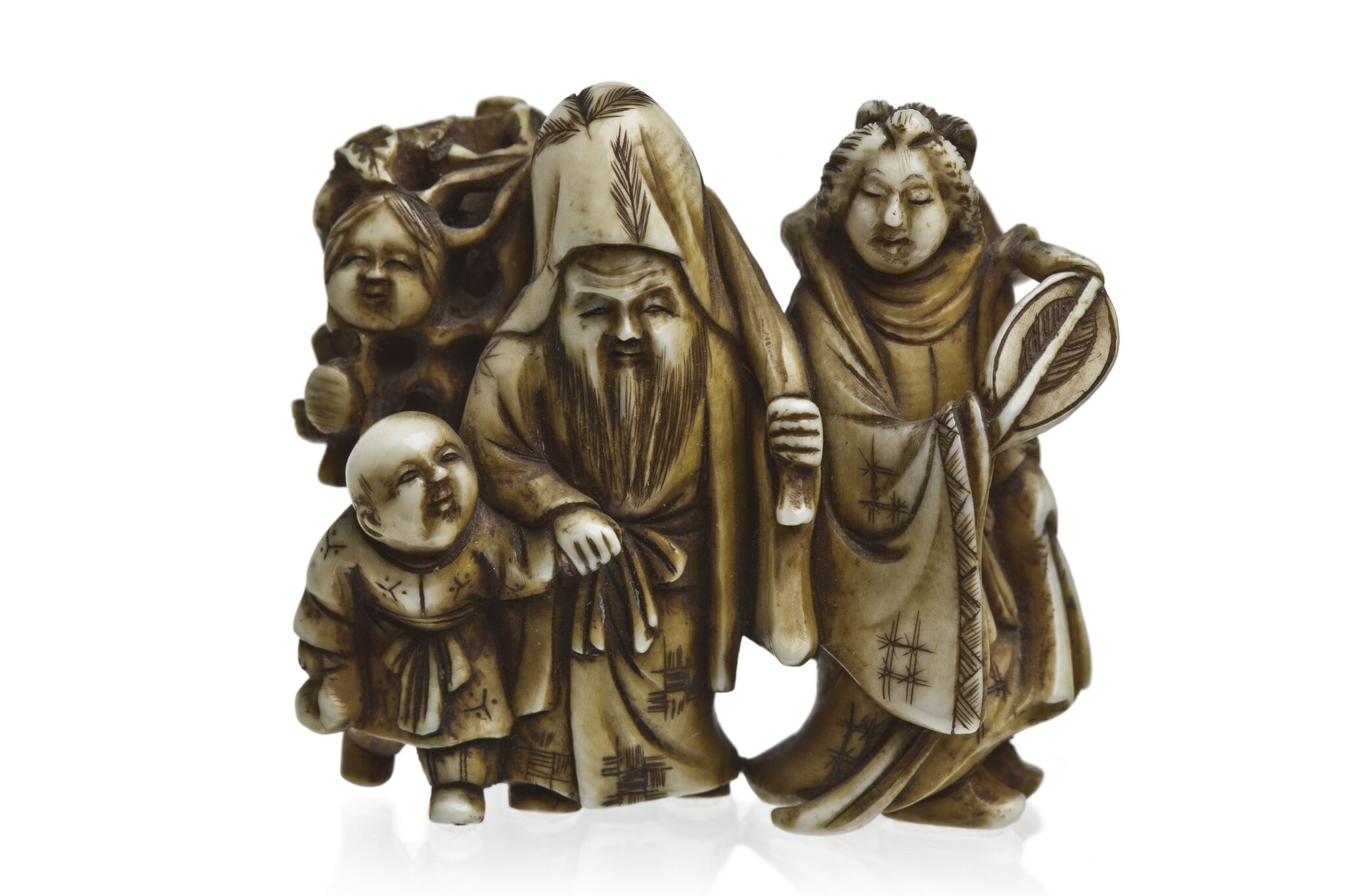
Netsuke "Family of Travelling Actors", 2022
2022
Netsuke "Family of Travelling Actors" is held by M. K. Čiurlionis National Museum of Art (Lithuania), dated 2022. Description supplied by the holding institution: Small figurine depicting a travelling family. In the center, a man leading a child with his right hand; in his left hand, he holds a branch with various attributes attached behind his back. To the man's right is a woman holding a fan in her right hand and holding the folds of her kimono with her left hand. On the back of the figurine, there are two holes for threading a cord and an inscription. The collection record gives material recorded as engraving; carving; ivory; measurements height x width: 36 x 33 mm. Published through Europeana; how far this object represents a wider collectible type has not yet been independently verified.
Partial type record
M. K. Čiurlionis National Museum of Art via Europeana
netsuke inro
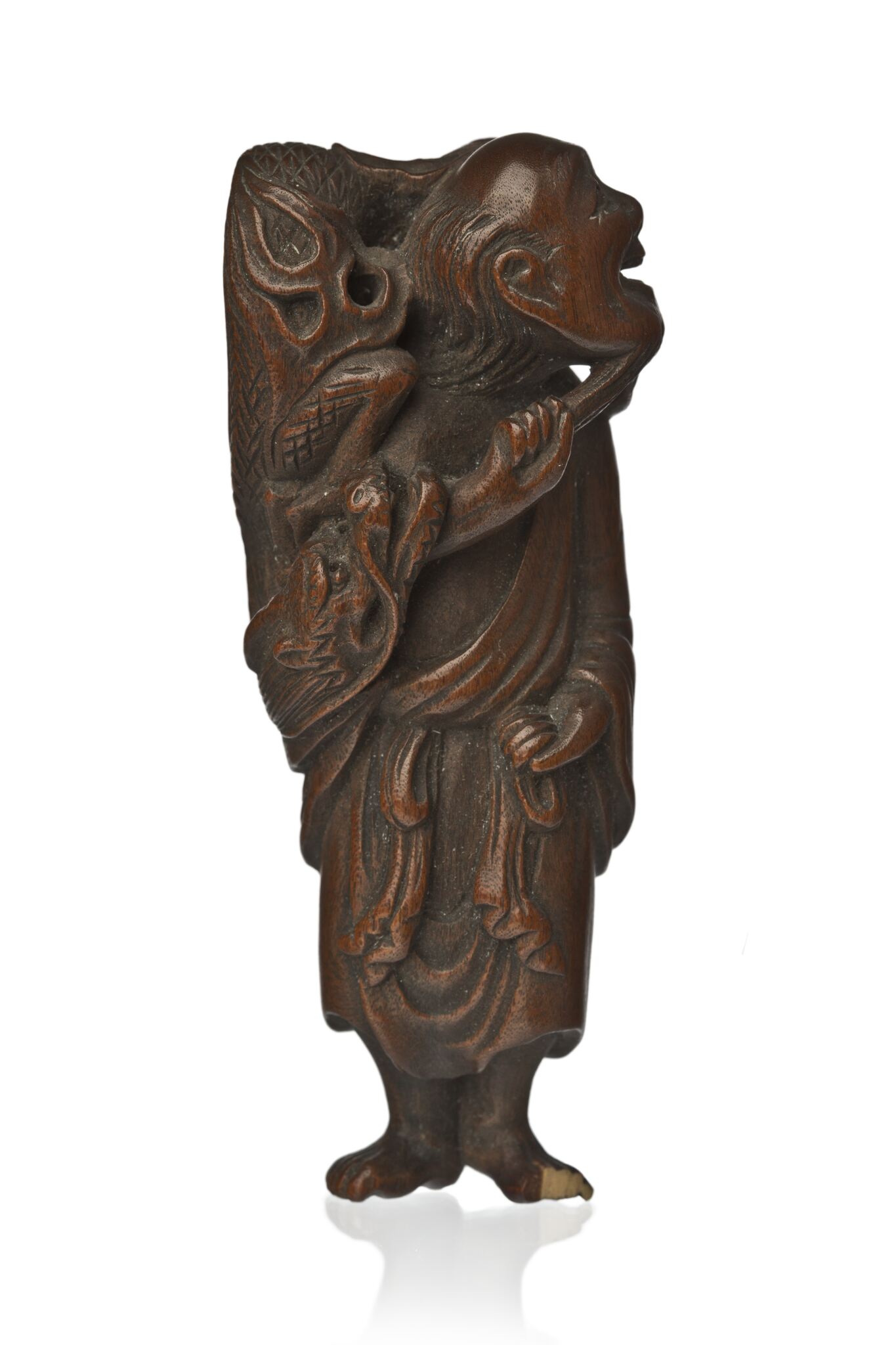
Netsuke "Fisherman Who Fed the Dragon", 2022
2022
Netsuke "Fisherman Who Fed the Dragon", 2022 is held by M. K. Čiurlionis National Museum of Art, dated 2022. Museum description: Small figurine depicting a man with his face turned to the right and holding half of his beard in his right hand. A dragon is coiled around his shoulders. The museum record gives material recorded as wood; carving; measurements height: 72 mm; place associated: Japan. These details come from the holding museum's own record; how far this object represents a wider collectible type has not yet been independently verified.
Partial type record