Catalogue
Spoons
Silver and other spoons documented in institutional collections.
Individually identified types (328)
Filter by era, country, maker or material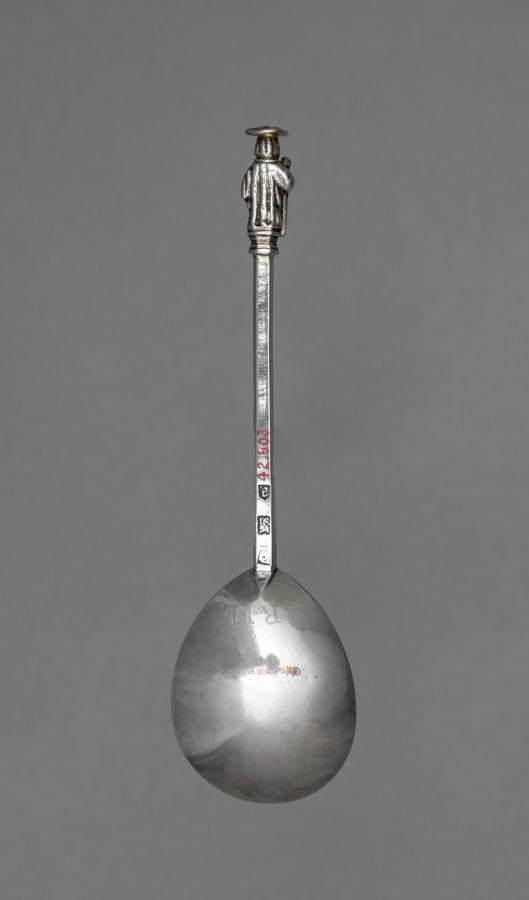
Cleveland Museum of Art, Bequest of John L. Severance
spoons
Apostle Spoon (Cleveland Museum of Art 1942.803)
1622–23
Cleveland Museum of Art object 1942.803: Apostle Spoon, 1622–23. England, London. Silver; overall: 18.5 cm (7 5/16 in.). Inscribed: "RH" on back of bowl.. Details are those of this museum object; how far it represents a wider type has not been independently verified.
Partial type record
Victoria and Albert Museum via Europeana
spoons
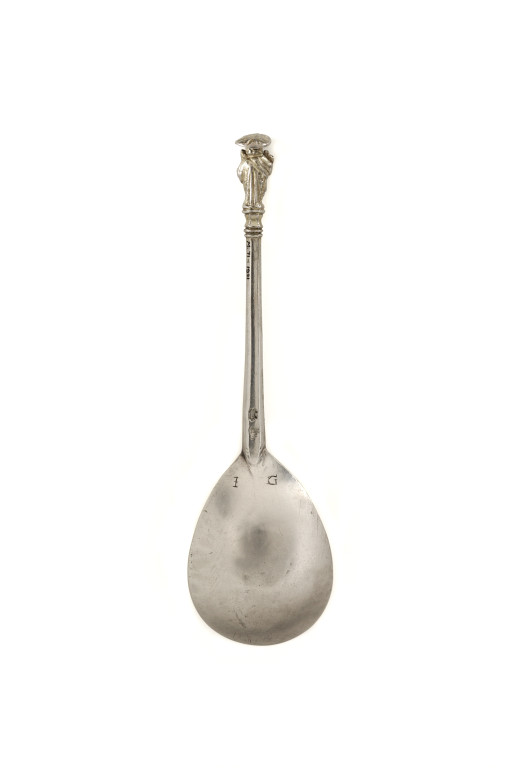
Apostle spoon depicting St. John, silver with gilt finial, London, 1514-15
Apostle spoon depicting St. John, silver with gilt finial, London, 1514-15 is held by Victoria and Albert Museum (United Kingdom). Description supplied by the holding institution: Apostle spoon depicting St. John with deep fig-shaped bowl inscribed on the back with the initials IG, and a thick, tapering stem ending with a moulded capital, on which the figure stands. The figure holds a chalice with the left hand, out of which rises a creature, and gives the benediction with the right. The nimbus is engraved with rays. The bowl and stem were hammered, the 'knop' or finial, cast. The finial was then soldered to the stem, and attached using a 'V' shaped joint, characteristic of London spoonmakers of this period. Published through Europeana; how far this object represents a wider collectible type has not yet been independently verified.
Partial type record
Rijksmuseum, Amsterdam
spoons
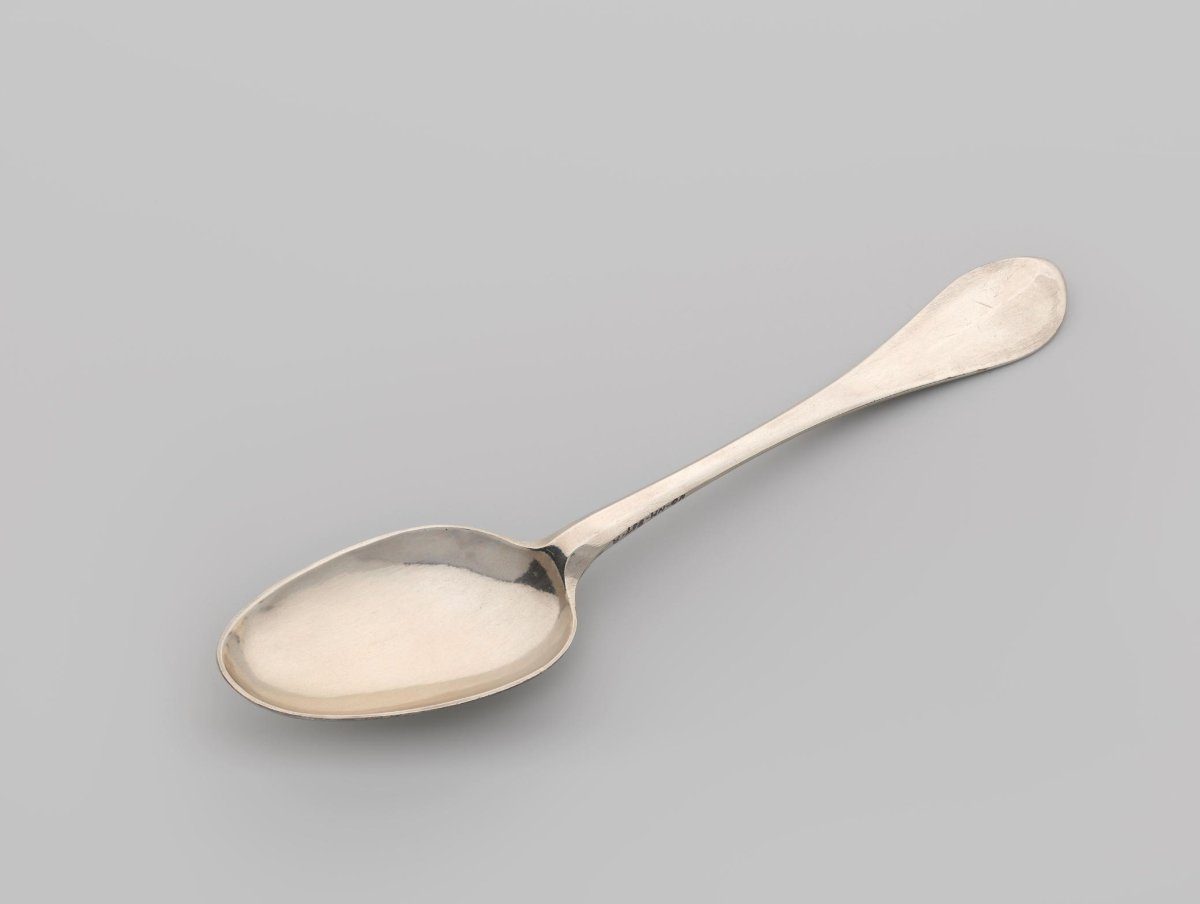
Battle of Vigo Bay
1713
The egg-shaped bowl is connected by means of a long rat-tail to the stem, which is initially straight and faceted on the upper side and thereafter flat, widening towards the rounded, up-curled end, which shows a slight ridge over the middle on the upper side. Engraved on the underside of the bowl, around the perimeter in two lines: Ter gedagt: van de Commissie, door hare H: Mog: gegeven Ao 1705. om f 350.000,-: te Vdelen aan de //geinteress: inde Schade te Vigos geleden Ao 1702. en afgedaen Ao 1712. Engraved on the underside of the stem: .C.V.D. The Rijksmuseum, Amsterdam, holds this object as BK-NM-857-A; its record gives material recorded as silver (metal); technique engraving; measurements length 19.7 cm x weight 57 g. Description translated from the museum's Dutch catalogue text; details are those of this museum object, and how far it represents a wider type has not been independently verified.
Partial type record
National Museum of Romanian History via Europeana
spoons
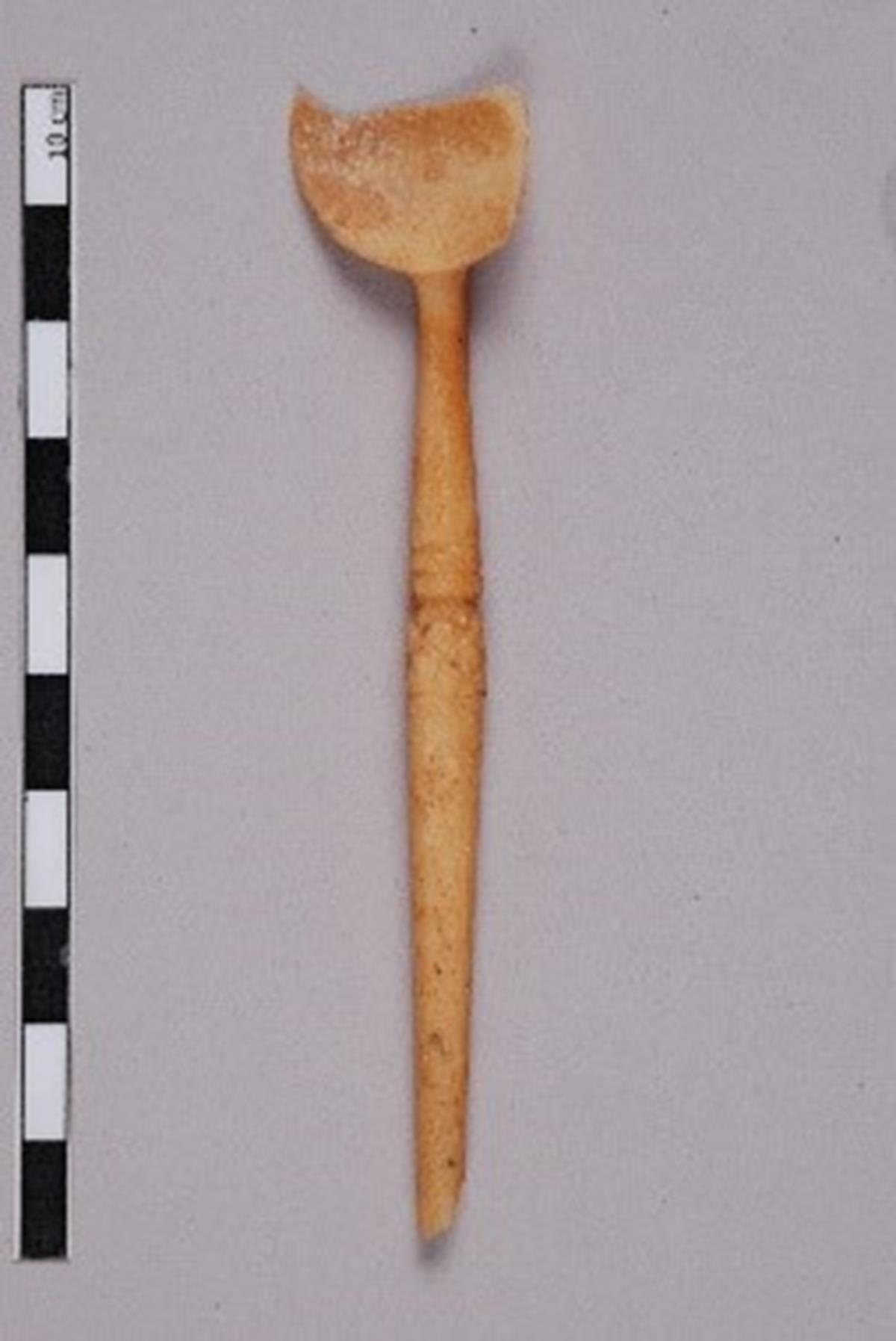
Bone spoon (ligula)
Bone spoon (ligula) is held by National Museum of Romanian History. Museum description: Fragmentary spoon, with the handle decorated medially by incised circles and a network of intersecting lines. Most of the bowl is missing, and the terminal of the handle is missing. The junction between the handle and the bowl is reinforced on the reverse by a rib.; remarks: Unpublished. The museum record gives measurements handle length - 85 mm; maximum handle diameter - 6 mm.; length: 95 mm; width: 20 mm. These details come from the holding museum's own record; how far this object represents a wider collectible type has not yet been independently verified.
Partial type record
Sörmland Museum via Europeana
spoons
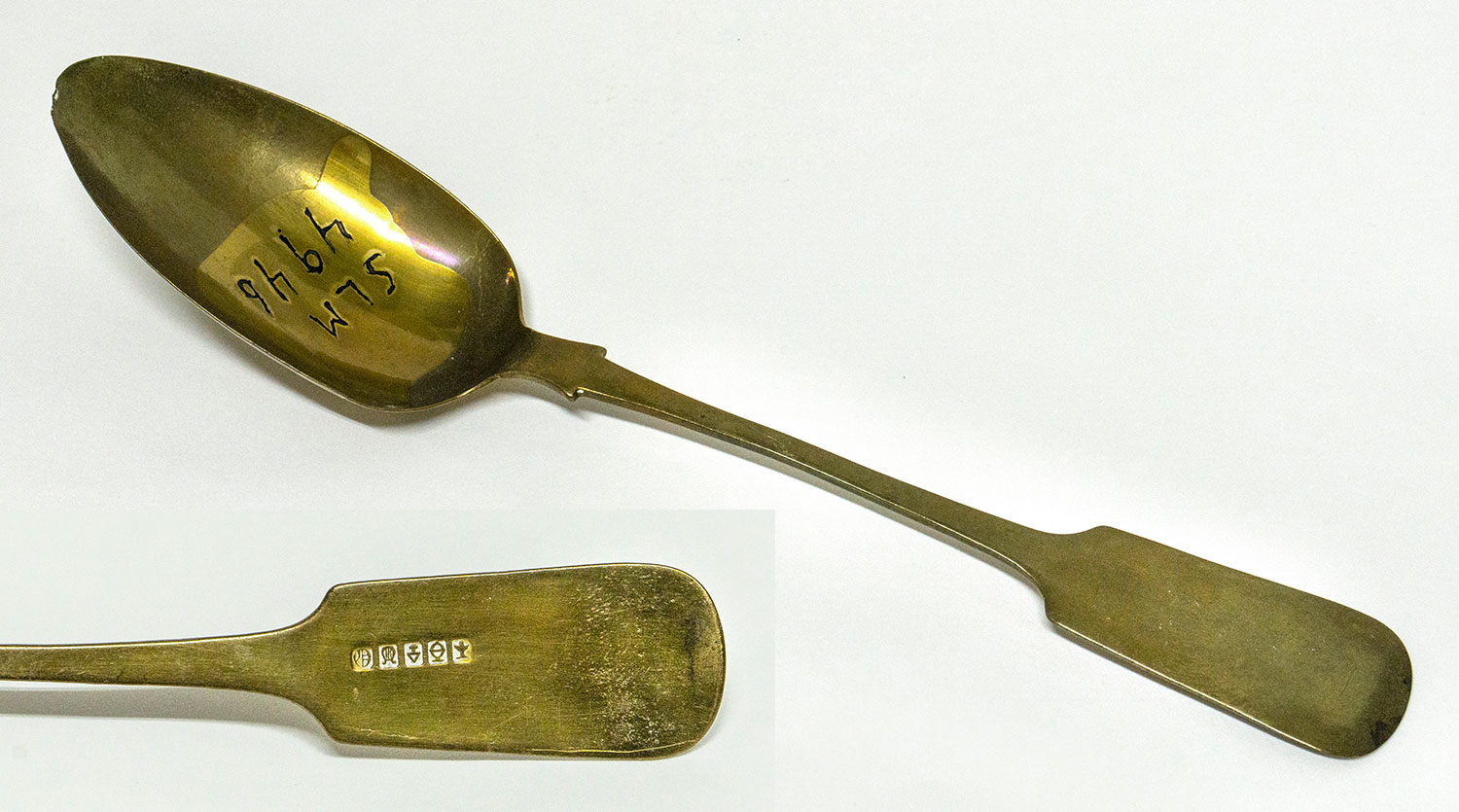
Brass spoon, provided with five stamps
Brass spoon, provided with five stamps is held by Sörmland Museum (Sweden). Description supplied by the holding institution: Spoon made of brass. Five stamps on the back of the handle. Handwritten note in the old accession catalogue: "For such spoons, itinerant Jews traded silver from the common folk". The collection record gives material recorded as Metall: Mässing [Metal: Brass]; measurements Bredd 45 mm [Width 45 mm]; format: text/plain. Published through Europeana; how far this object represents a wider collectible type has not yet been independently verified.
Partial type record
Rijksmuseum, Amsterdam
spoons
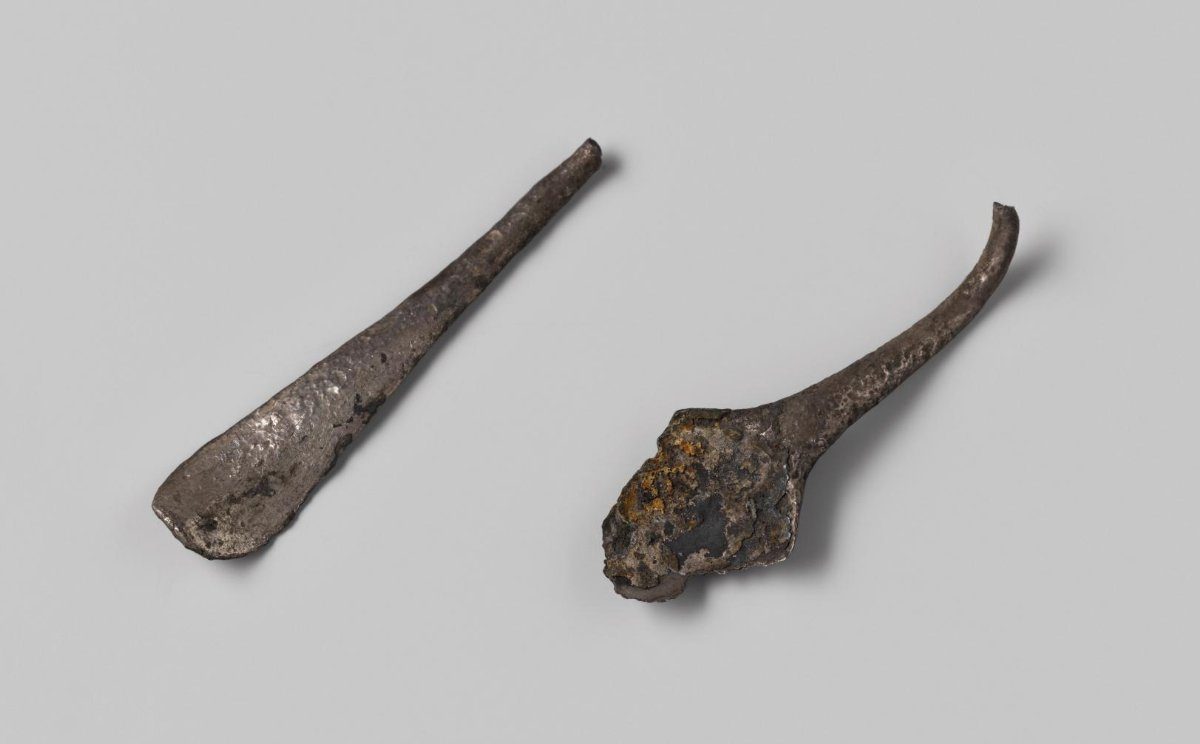
Broken spoon from the wreck of the Dutch East Indiaman Hollandia
1700 - in or before 1743-08-13
Cutlery, spoon; fragment, stem and bowl fragm, eroded, id. NG 1980-27H2608, marks illegible. The Rijksmuseum, Amsterdam, holds this object as NG-1980-27-H-1218; its record gives material recorded as silver (metal); measurements length 15.8 cm x width 2.6 cm x depth 0.5 cm. Description translated from the museum's Dutch catalogue text; details are those of this museum object, and how far it represents a wider type has not been independently verified.
Partial type record
The Metropolitan Museum of Art, New York
spoons
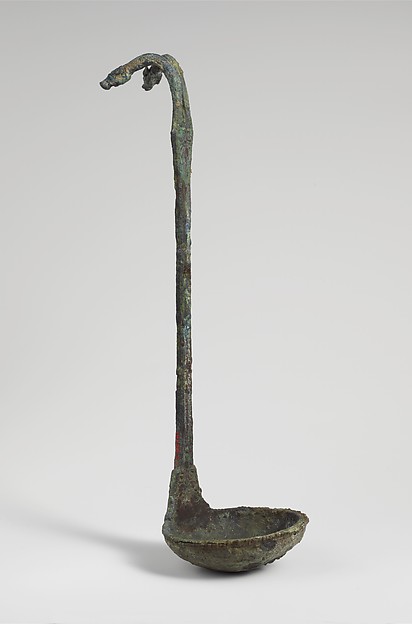
Bronze kyathos (ladle) with animal-head terminals, Etruscan, late 5th century BCE
late 5th century BCE
Ladle in The Metropolitan Museum of Art, New York (accession 08.258.2), catalogued by the museum's Greek and Roman Art department under the title “Bronze kyathos (ladle) with animal-head terminals”. The museum dates it late 5th century BCE and records its origin as Etruscan; Classical. The museum records the medium as Bronze and the dimensions as Other: 11 3/8 x 3 1/8 in. (28.9 x 7.9 cm). These details are transcribed from the museum's open-access record; how far this object represents a wider collectible type has not yet been independently verified.
Partial type record
The Metropolitan Museum of Art, New York
spoons
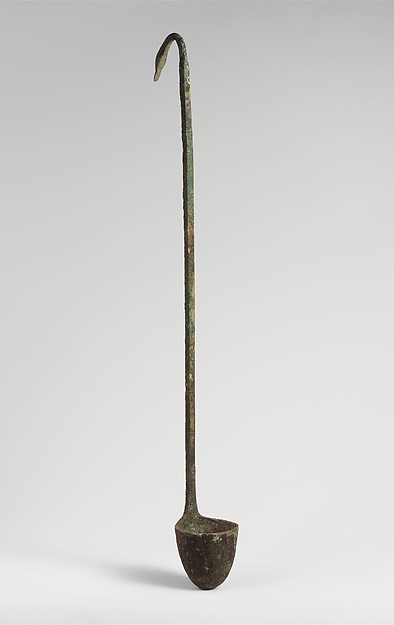
Bronze kyathos (ladle) with duck-head terminal, Etruscan, ca. 400 BCE
ca. 400 BCE
Ladle in The Metropolitan Museum of Art, New York (accession X.21.90), catalogued by the museum's Greek and Roman Art department under the title “Bronze kyathos (ladle) with duck-head terminal”. The museum dates it ca. 400 BCE and records its origin as Etruscan; Late Classical. The museum records the medium as Bronze and the dimensions as H.: 17 7/8 x 2 in. (45.4 x 5.1 cm). Subject tags assigned by the museum: Ducks. These details are transcribed from the museum's open-access record; how far this object represents a wider collectible type has not yet been independently verified.
Partial type record
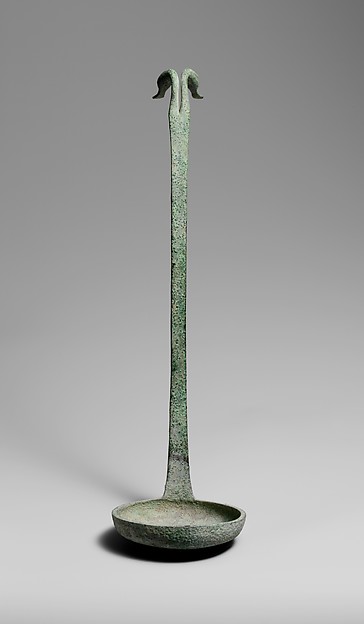
The Metropolitan Museum of Art, New York
spoons
Bronze ladle terminating in two ducks' heads, Etruscan, 5th century BCE
5th century BCE
Ladle with handle of ducks' heads in The Metropolitan Museum of Art, New York (accession 10.210.35), catalogued by the museum's Greek and Roman Art department under the title “Bronze ladle terminating in two ducks' heads”. The museum dates it 5th century BCE and records its origin as Etruscan; Classical. The museum records the medium as Bronze and the dimensions as H.: 13 in. (33 cm) Other (D. of bowl): 3 5/8 in. (9.2 cm). Subject tags assigned by the museum: Ducks. These details are transcribed from the museum's open-access record; how far this object represents a wider collectible type has not yet been independently verified.
Partial type record
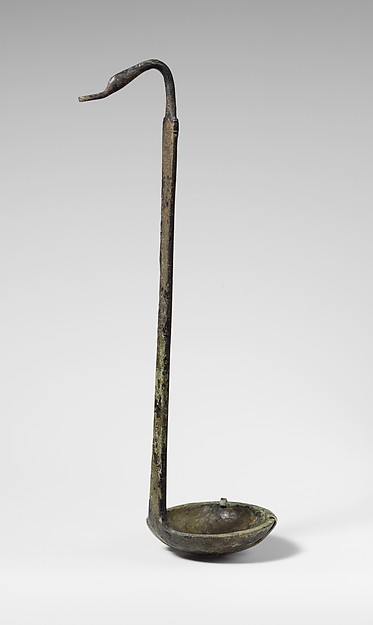
The Metropolitan Museum of Art, New York
spoons
Bronze ladle with handle ending in a duck's head, Etruscan, 5th century BCE
5th century BCE
Ladle in The Metropolitan Museum of Art, New York (accession 21.88.130), catalogued by the museum's Greek and Roman Art department under the title “Bronze ladle with handle ending in a duck's head”. The museum dates it 5th century BCE and records its origin as Etruscan; Classical. The museum records the medium as Bronze and the dimensions as H.: 11 1/4 in. (28.6 cm) Diam.: 2 7/8 in. (7.3 cm). These details are transcribed from the museum's open-access record; how far this object represents a wider collectible type has not yet been independently verified.
Partial type record
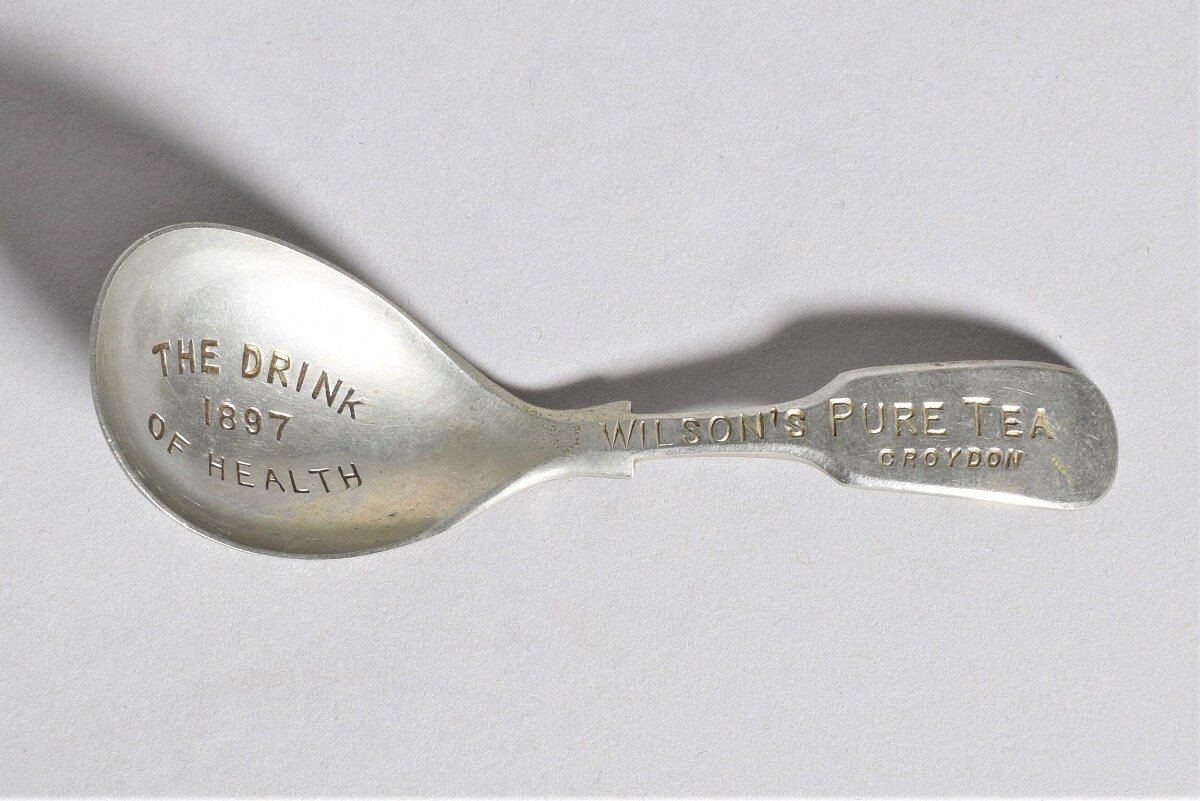
© Victoria and Albert Museum, London
spoons
Caddy spoon, Sheffield, 1897
1897
Caddy spoon in the Victoria and Albert Museum, London (museum number C.25586), made in Sheffield, dated 1897. The museum's brief description reads: Caddy spoon, advertising 'Wilson's Pure Tea', Advertising Ephemera, electroplated Britannia Metal, Sheffield, Wingfield and Rowbotham,1897.. Museum description: Caddy spoon, electroplated Britannia Metal, (the silver surface now entirely wanting), oval bowl, incised, with and embossed with an inscription, short handle, rounded tip. The museum records it as Electroplated Britannia Metal, measuring Length x cm; Width x cm. These details come from the museum's own record; how far this object represents a wider collectible type has not yet been independently verified.
Partial type record
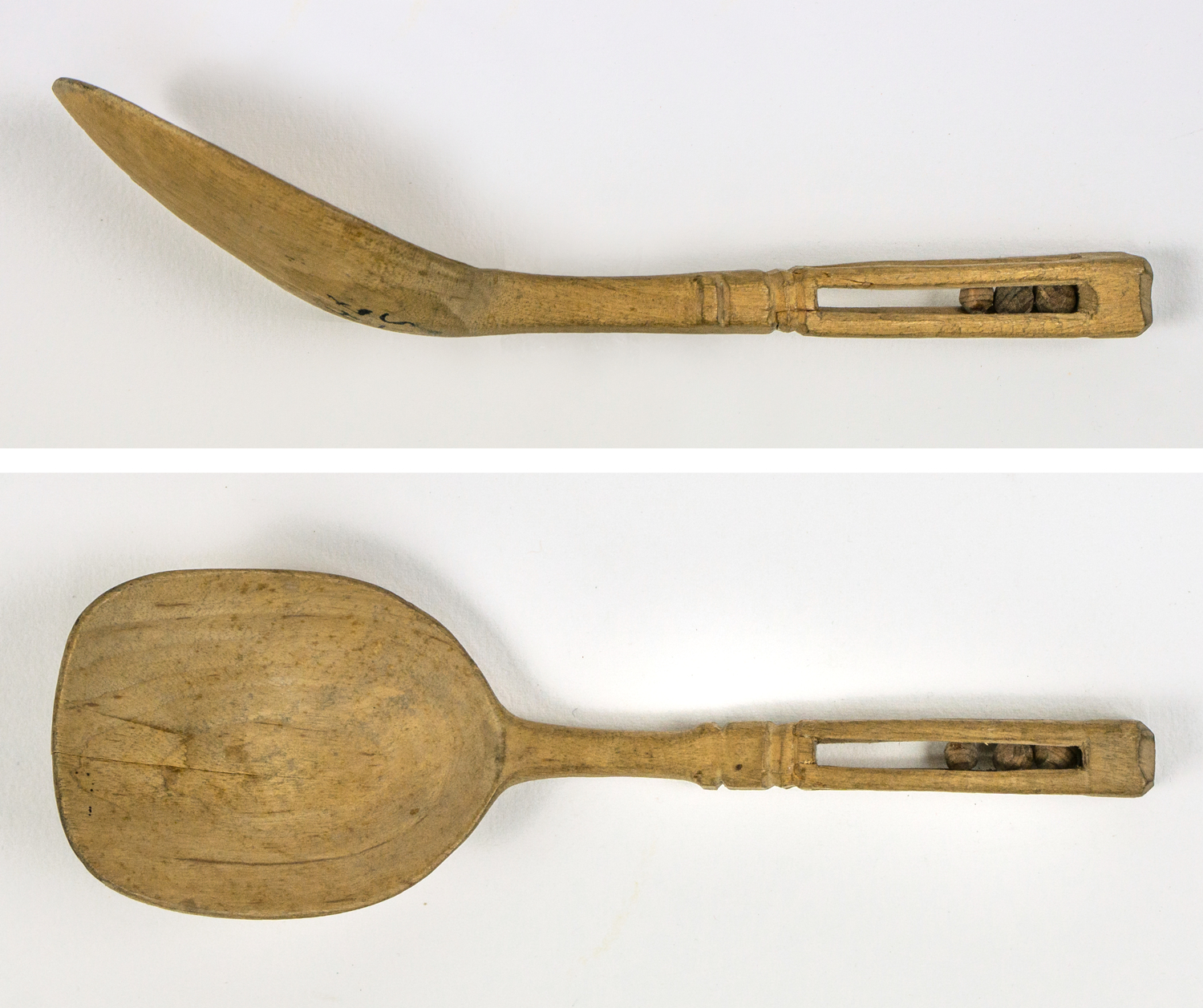
Sörmland Museum via Europeana
spoons
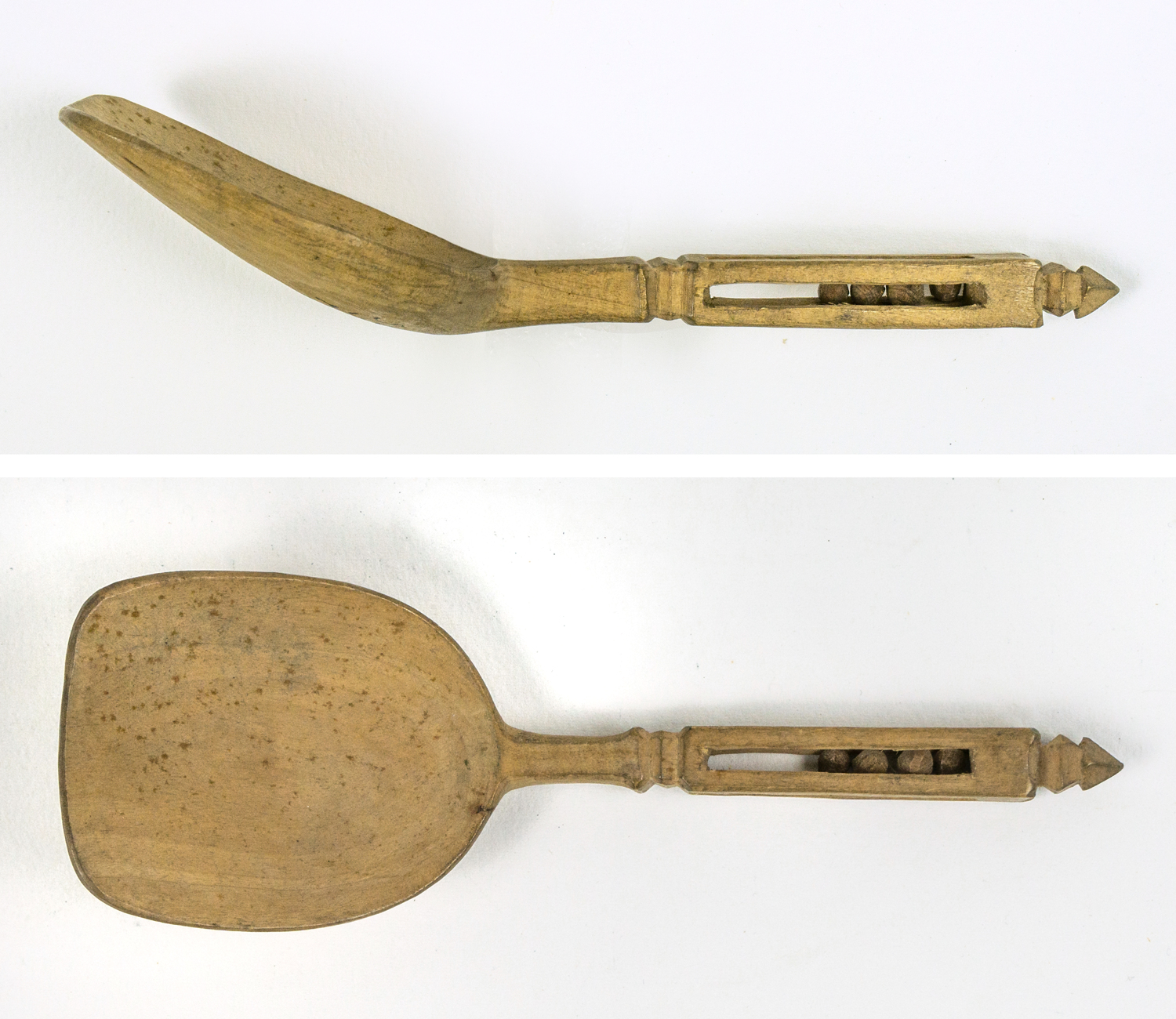
Carved wooden spoon containing a cavity with three balls, a courtship gift, known as a "känning"
Carved wooden spoon containing a cavity with three balls, a courtship gift, known as a "känning" is held by Sörmland Museum (Sweden). Description supplied by the holding institution: Carved wooden spoon made of birch. The handle has a rectangular cavity containing three wooden balls. The spoon may possibly have had a finial at the top, like a similar spoon, SLM 750. Both spoons come from the Odelberg family at Berga-Tuna. A so-called "känning" [feeler]. An interested young man could test the waters—and the way the girl received, or did not receive, the gift said everything about the girl's feelings for him. The collection record gives material recorded as Trä [Wood]; measurements Längd 170 mm [Length 170 mm]; format: text/plain. Published through Europeana; how far this object represents a wider collectible type has not yet been independently verified.
Partial type record
Sörmland Museum via Europeana
spoons
Carved wooden spoon provided with a cavity with four balls, a suitor's gift, a so-called "känning"
Carved wooden spoon provided with a cavity with four balls, a suitor's gift, a so-called "känning" is held by Sörmland Museum (Sweden). Description supplied by the holding institution: Carved wooden spoon made of birch. The handle has a rectangular cavity containing three wooden balls. The handle terminates in a three-sided pyramid. For a similar spoon without a finial, see SLM 749. Both spoons come from the Odelberg family at Berga-Tuna. A so-called "känning" [feeler]. An interested boy could test the waters—and the way the girl received, or did not receive, the gift said everything about the girl's feelings for him. The collection record gives material recorded as Trä [Wood]; measurements Längd [Length] 168 mm; format: text/plain. Published through Europeana; how far this object represents a wider collectible type has not yet been independently verified.
Partial type record
© Victoria and Albert Museum, London
spoons
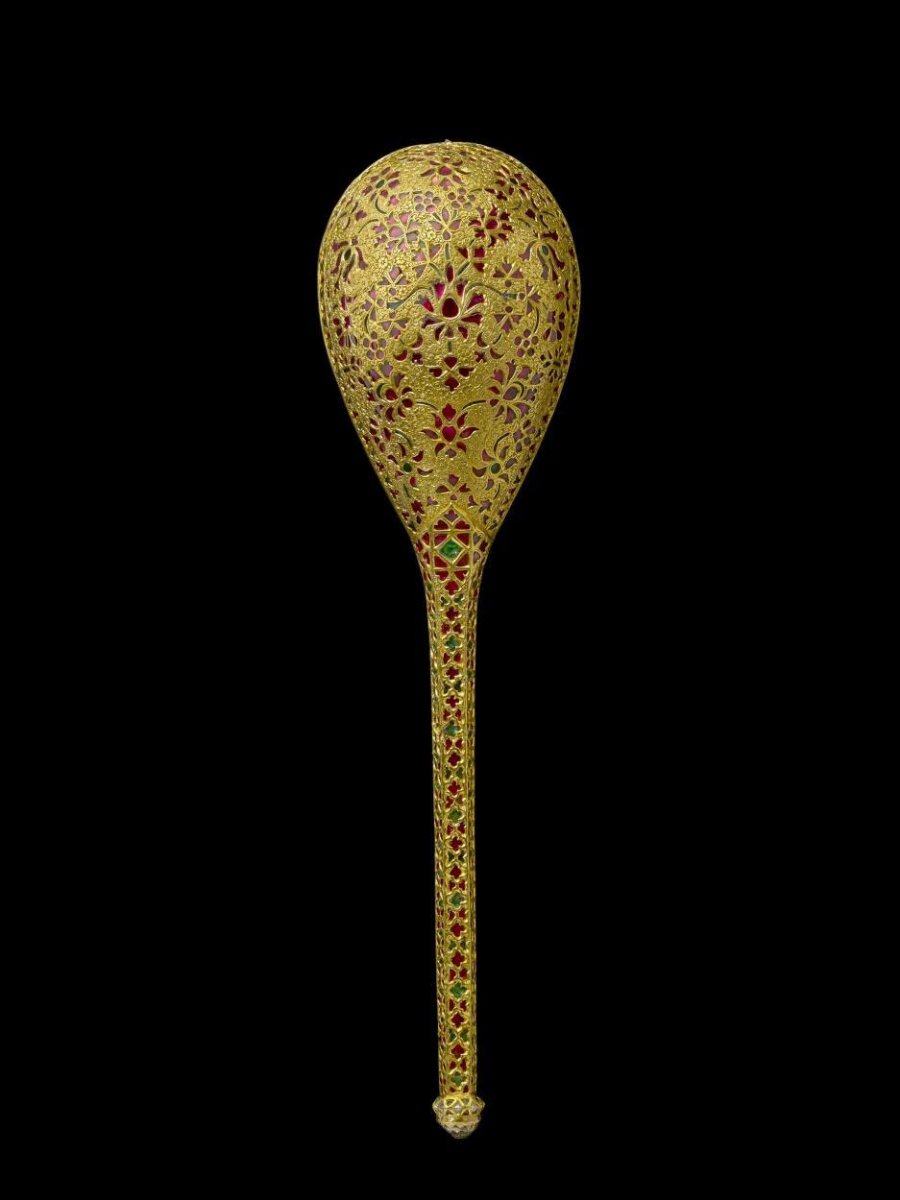
Ceremonial spoon, Mughal empire, ca. 1600
ca. 1600
Ceremonial spoon in the Victoria and Albert Museum, London (museum number IM.173-1910), made in Mughal empire, dated ca. 1600. The museum's brief description reads: Gold spoon, chased and engraved on the back of the bowl; the back of the bowl and stem set with emeralds, rubies and diamonds in kundan settings, and with a large facetted diamond on the knop; the core filled with lac, a natural resin. Mughal empire, ca. 1600. Museum description: The spoon of European form is of gold with a core of lac. The stones covering the back of the bowl and all sides of the stem are rubies, emeralds and diamonds, set with diamonds along the edge of the bowl and in the knop. The museum records it as Gold, chased and set with rubies, emeralds and diamonds, measuring Length 18.6 cm. These details come from the museum's own record; how far this object represents a wider collectible type has not yet been independently verified.
Partial type record
© Victoria and Albert Museum, London
spoons
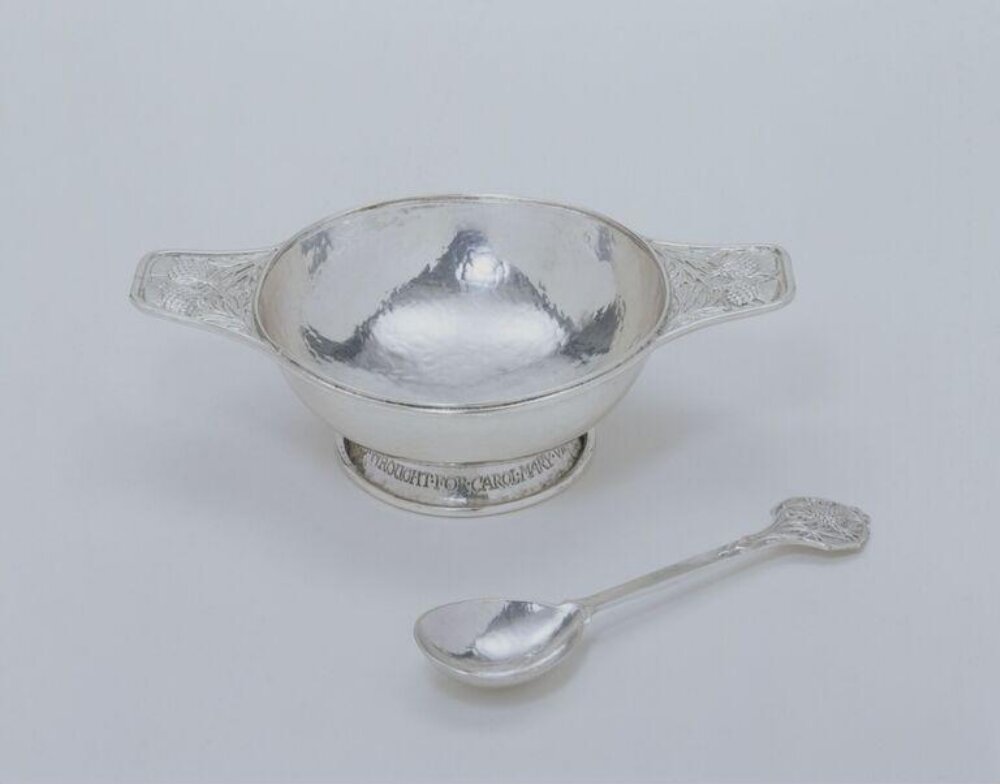
Christening spoon, Ramsden, Omar, 1911-1912
1911-1912
Christening spoon, Ramsden, Omar, 1911-1912 is an object recorded by Victoria and Albert Museum, dated 1911-1912. The museum's brief description reads: Christening spoon. Museum description: Spoon, silver with an oval bowl, plain stem of rectangular section terminating in a shaped roundel containing a chased thistle which was apparently wrought separately and then applied. The museum record gives material recorded as silver; measurements Length 16.9 cm; Width 4.2 cm; Depth 1.7 cm; place associated: London; maker recorded: Ramsden, Omar, Carr, Alwyn. These details come from the holding museum's own record; how far this object represents a wider collectible type has not yet been independently verified.
Partial type record
Romanian Peasant Museum via Europeana
spoons
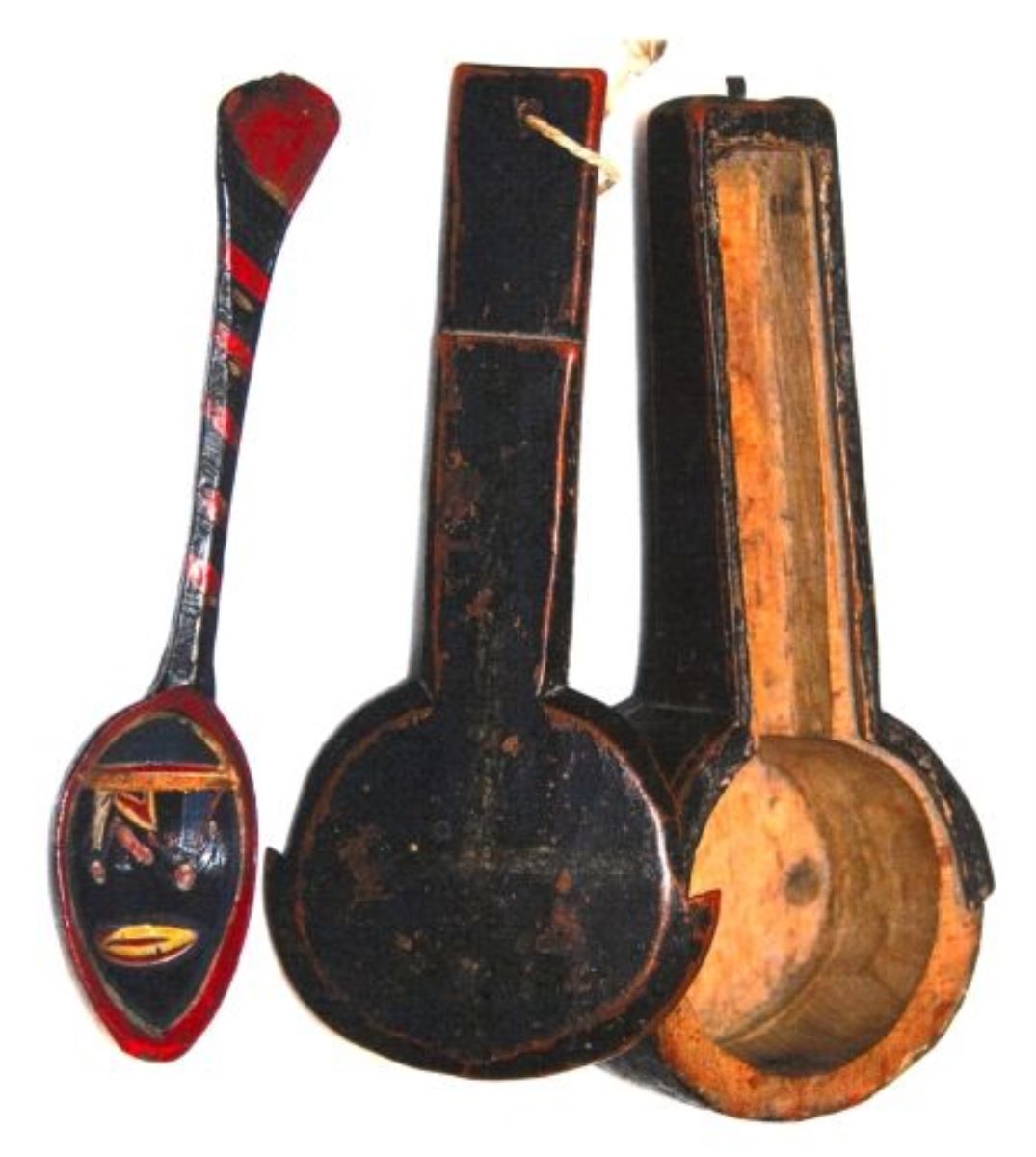
communion spoon
communion spoon is held by Romanian Peasant Museum. Museum description: Precious Christian object with which holy communion is administered throughout the year for the swift communion of all the sick and children. Piece consisting of two parts: a box with a lid (a round end and a rectangular arm) and a wooden spoon with a handle. The spoon was painted: on the handle oblique lines and on the bowl appears a simplified scene of the Nativity of Jesus - Joseph, Mary, Jesus and the eye of God. Colours: red, dark blue, yellow, yellowish - the natural colour of brass and gold leaf. The museum record gives measurements box - L: 22.5 cm, W: 10 cm, h: 5.5 cm; spoon - L: 19.5 cm, W: 4.5 cm. These details come from the holding museum's own record; how far this object represents a wider collectible type has not yet been independently verified.
Partial type record
Cleveland Museum of Art, Bequest of Nicholas J. Velloney
spoons
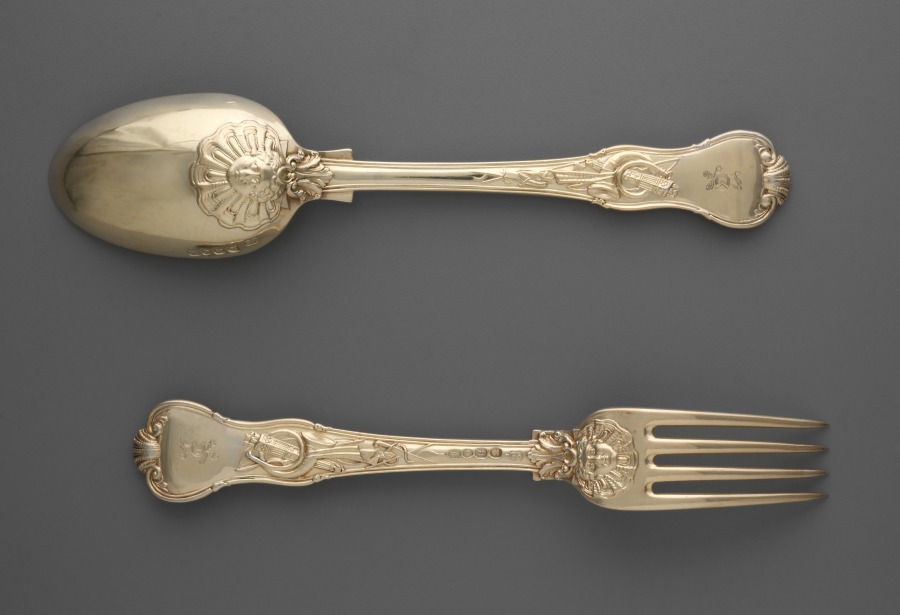
Dessert Fork and Spoon with Hunt Scenes (Cleveland Museum of Art 2003.244)
c. 1822
Paul Storr was perhaps the most famous and successful English silversmith working in the early 19th century. This fork and spoon were originally part of a larger set. The exceptionally high quality of the metalworking and gilding of these pieces is typical of Storr's work. Cleveland Museum of Art object 2003.244: Dessert Fork and Spoon with Hunt Scenes, c. 1822. Paul Storr (British, 1771–1844). Gilt silver; overall: 21.1 x 3 x 3 cm (8 5/16 x 1 3/16 x 1 3/16 in.). Details are those of this museum object; how far it represents a wider type has not been independently verified.
Partial type record
© Victoria and Albert Museum, London
spoons
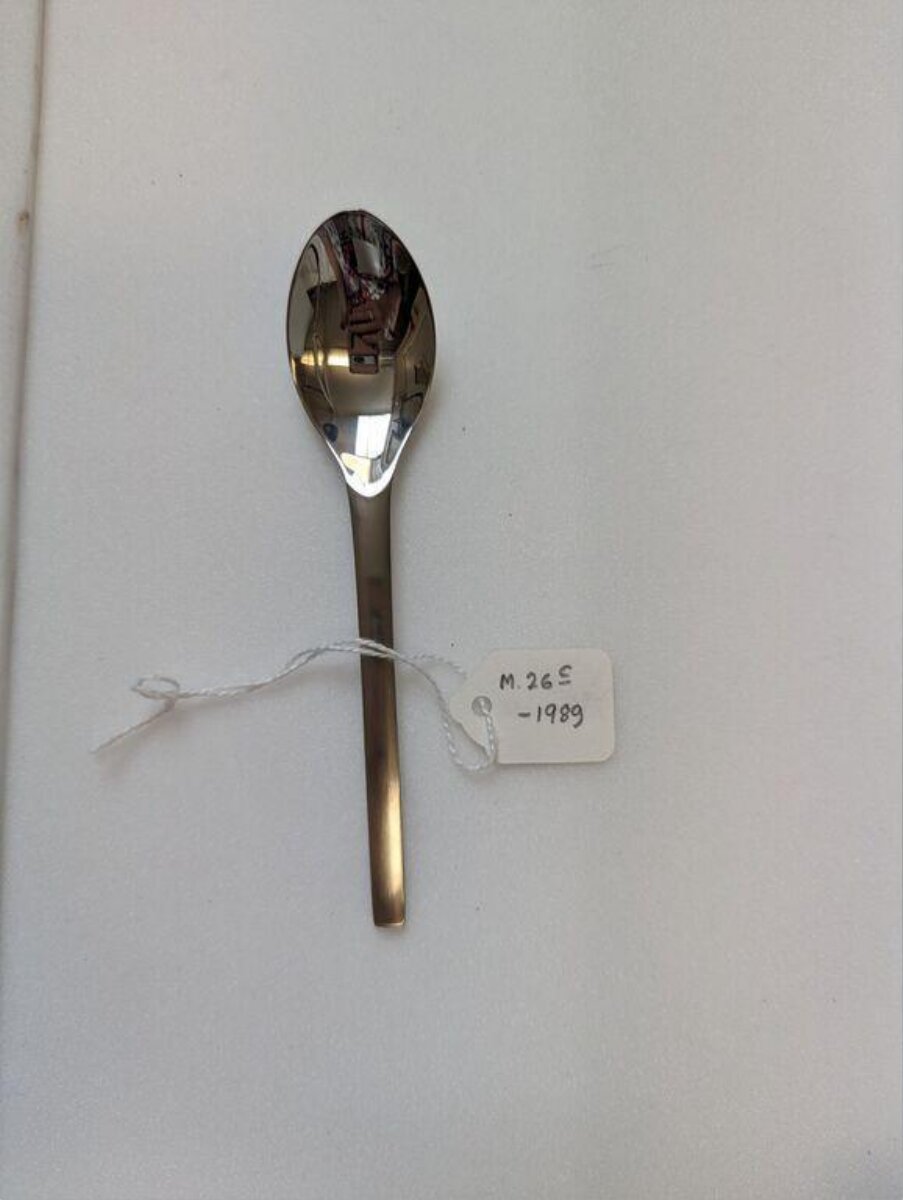
Dessert spoon — Jetline, Sweden, 1959
1959
Dessert spoon in the Victoria and Albert Museum, London (museum number M.26C-1989), made in Sweden, dated 1959, attributed to Persson, Sigurd. The museum's brief description reads: Dessert spoon, (part of a cutlery service), stainless steel, Sweden, made by Kooperativa Forbundet, designed by Sigurd Persson, 1959, for SAS.. Museum description: Dessert spoon, the handle a straight shaft with chamfered edges and a square, slightly upturned end, satin finish. The bowl, oval with a polished finish. The museum records it as Stainless steel, stamped and polished, measuring Length 13.2 cm; Width 2.7 cm. These details come from the museum's own record; how far this object represents a wider collectible type has not yet been independently verified.
Partial type record
Cleveland Museum of Art, Bequest of Nicholas J. Velloney
spoons
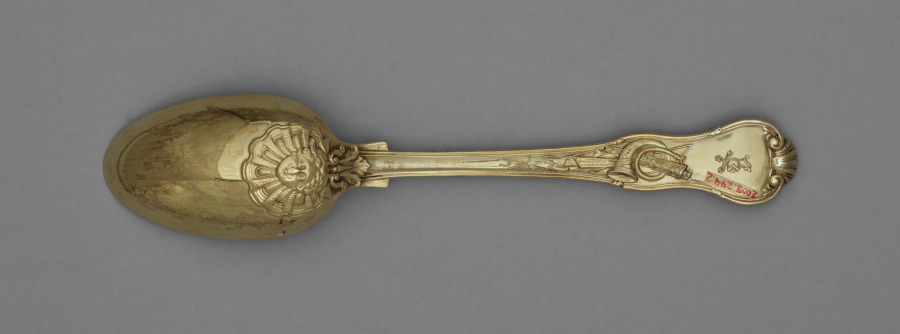
Dessert Spoon with Hunt Scenes (Cleveland Museum of Art 2003.244.2)
c. 1822
Paul Storr was perhaps the most famous and successful English silversmith working in the early 19th century. This fork and spoon were originally part of a larger set. The exceptionally high quality of the metalworking and gilding of these pieces is typical of Storr's work. Cleveland Museum of Art object 2003.244.2: Dessert Spoon with Hunt Scenes, c. 1822. Paul Storr (British, 1771–1844). Gilt silver; overall: 22.5 x 4.6 x 3.5 cm (8 7/8 x 1 13/16 x 1 3/8 in.). Details are those of this museum object; how far it represents a wider type has not been independently verified.
Partial type record
Badisches Landesmuseum Karlsruhe via Europeana
spoons
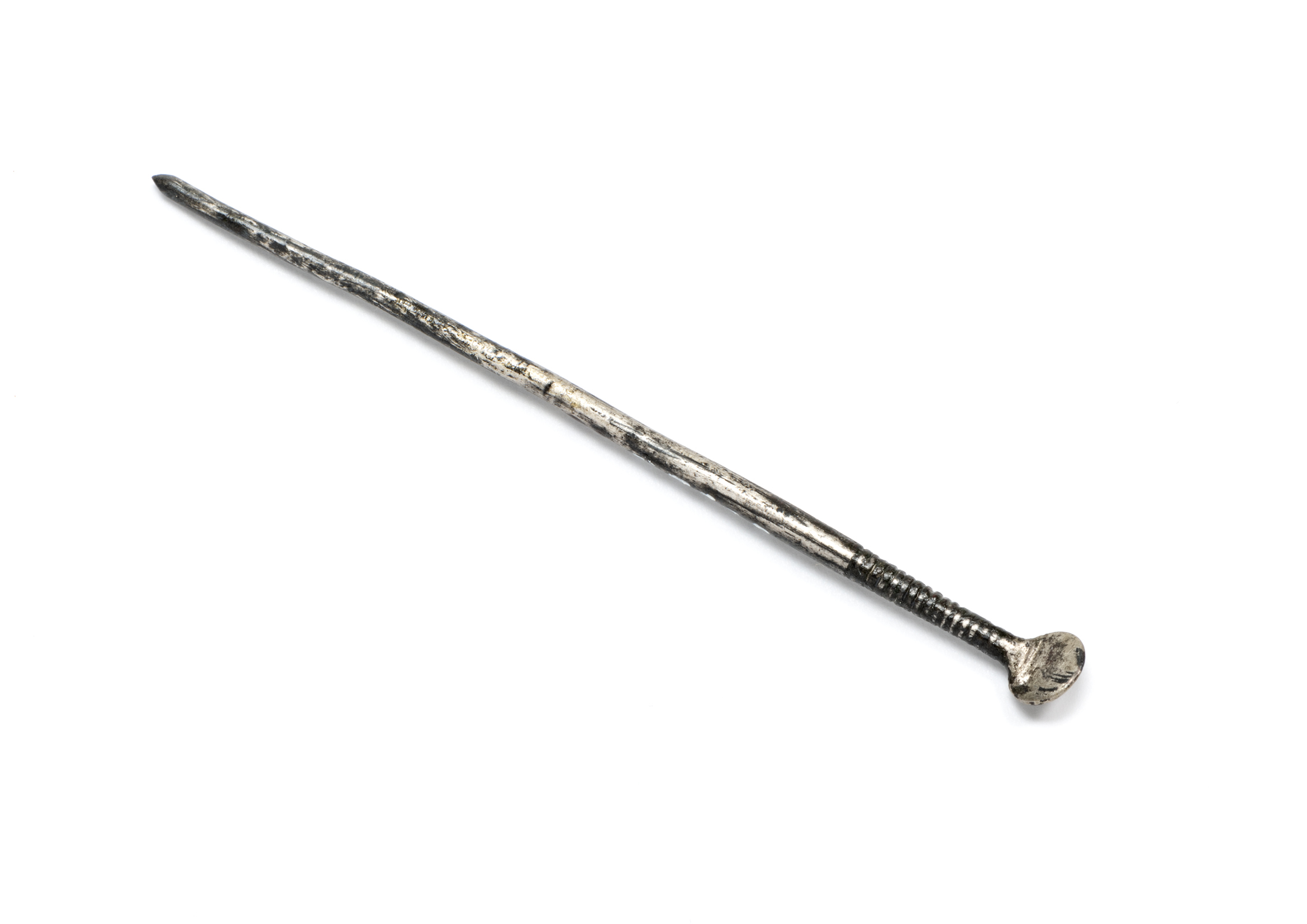
Ear spoon or spoon probe (specillum)
Ear spoon or spoon probe (specillum) is held by Badisches Landesmuseum Karlsruhe (Germany). Description supplied by the holding institution: The small ear spoon (specillum) is distinguished by the round, slightly angled little spoon at the end. This was used for cleaning the ears. To facilitate handling, the shaft of the cosmetic instrument is profiled with notches at the lower base. Several cosmetic or medical instruments probably come from the earliest excavations of the Roman baths at Badenweiler. However, the exact find spot or context was not yet documented at the end of the 18th century. The director of the Grand Ducal Collections of Antiquities and Ethnology in Karlsruhe, Ernst Wagner, noted in his meticulous publication—still regarded today as authoritative—"Fundstätten und Funde aus vorgeschichtlicher, römischer und alamannisch-fränkischer Zeit im Großherzogtum Baden" [Find Sites and Finds from Prehistoric, Roman, and Alamannic-Frankish Times in the Grand Duchy of Baden], that during the initial excavations of the Badenweiler baths, "spoons (…) of bronze" were also discovered. The collection record gives measurements length: 6.9 cm, width: 0.6 cm, height: 0.3 cm. Published through Europeana; how far this object represents a wider collectible type has not yet been independently verified.
Partial type record
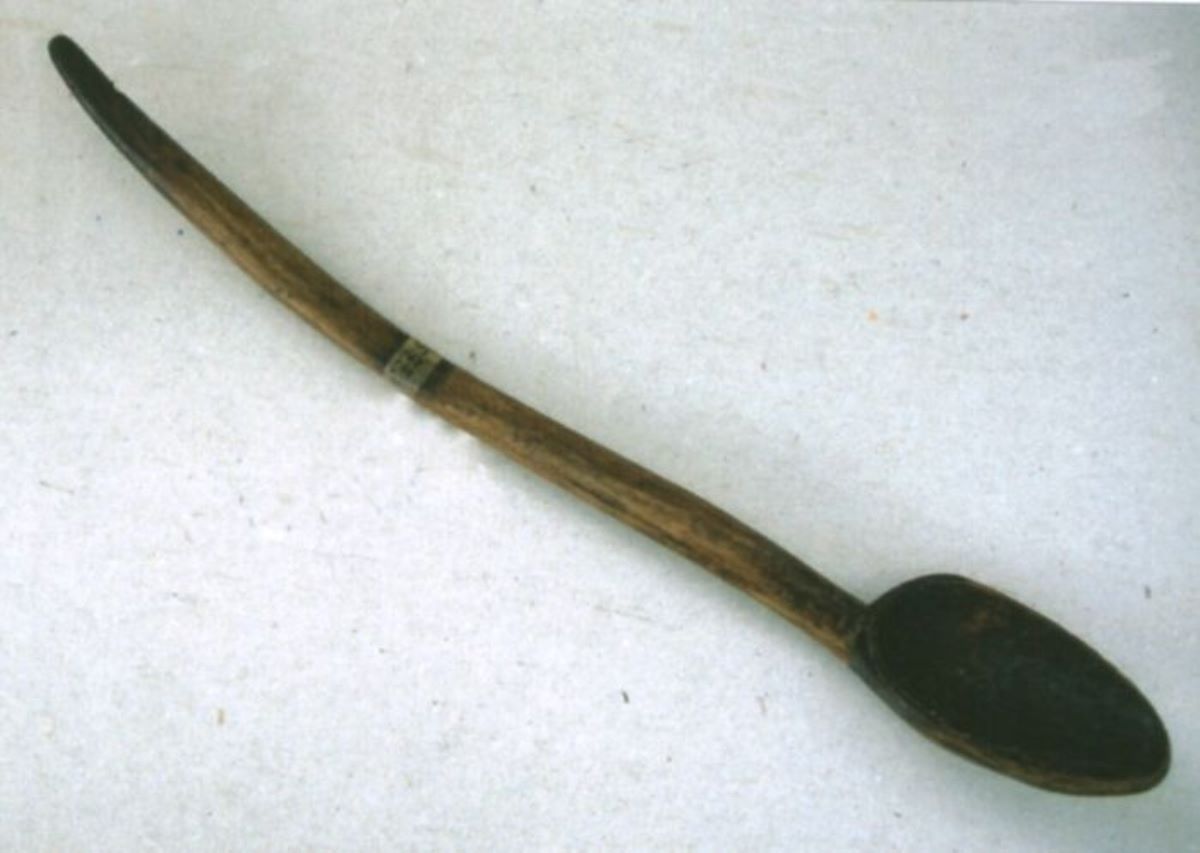
Ethnographical Museum of Transylvania via Europeana
spoons
eating spoon
eating spoon is held by Ethnographical Museum of Transylvania. Museum description: The spoon is made of willow wood by cutting, carving, and hollowing out. The bowl has an ovoid shape. The handle has a circular cross-section.; use: Traditional object used in the household for eating The museum record gives measurements bowl L: 8 cm; W: 4.5 cm; length: 24.5 cm; width: 1.2 cm. These details come from the holding museum's own record; how far this object represents a wider collectible type has not yet been independently verified.
Partial type record
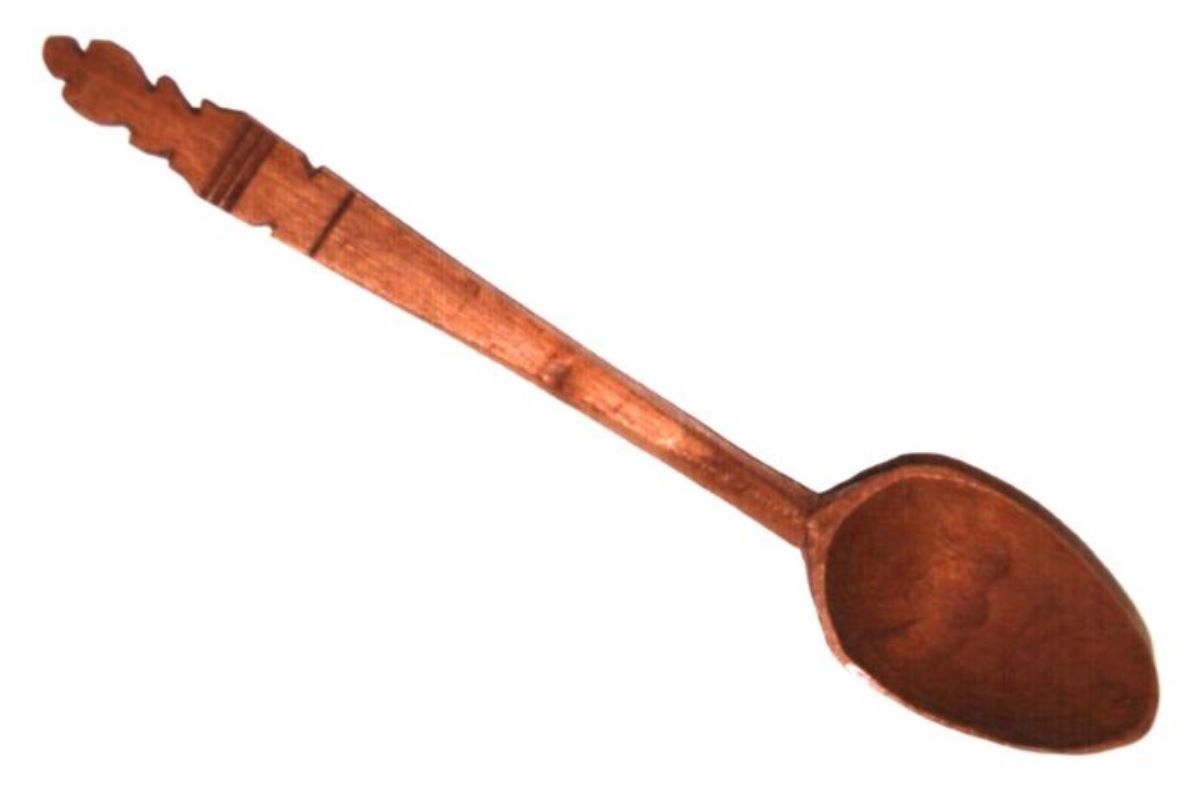
Ethnographical Museum of Transylvania via Europeana
spoons
Eating Spoon
Eating Spoon is held by Ethnographical Museum of Transylvania. Museum description: The spoon is made of poplar wood by cutting, carving, hollowing, and incising (notching). Decorative motifs: straight line, wolf's teeth. The bowl has an ovoid shape. The end of the handle is rounded.; use: Traditional object used in the household for eating. The museum record gives measurements At the bowl: 4 cm; length: 22 cm; width: 1.5 cm. These details come from the holding museum's own record; how far this object represents a wider collectible type has not yet been independently verified.
Partial type record
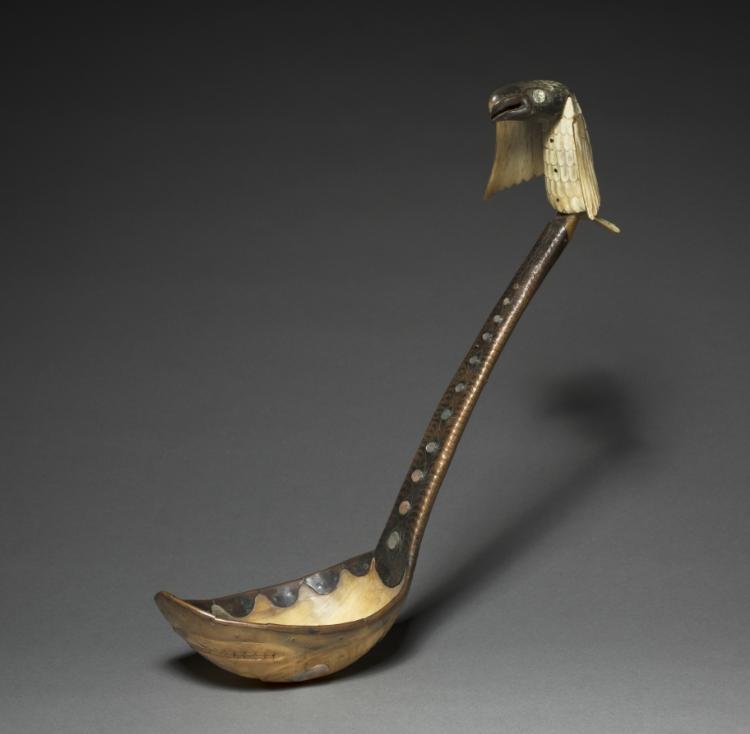
The Cleveland Museum of Art
spoons
Feast Ladle, Native North America, Northwest Coast, Alaska, Tlingit, late 1800s–early 1900s
late 1800s–early 1900s
Feast Ladle in The Cleveland Museum of Art (accession 1953.386), classified by the museum as Miscellaneous, from Native North America, Northwest Coast, Alaska, Tlingit, dated late 1800s–early 1900s. The museum records the material and technique as horn, bone, copper, abalone shell inlay. Measurements: Overall: 13 cm (5 1/8 in.). Museum description: Elaborate utensils, valuable possessions of Northwest Coast noble clans, were used during potlatch feasts. An imposing eagle hovers, patron-like, over this ladle’s bowl and the bounty it once served; a bear’s head appears on the underside of the bowl. Both may be crests, motifs that, like European heraldry, were exclusive to important families and referred to their histories and rights to control land and resources. These details are transcribed from the museum's open-access record; how far this object represents a wider collectible type has not yet been independently verified.
Partial type record
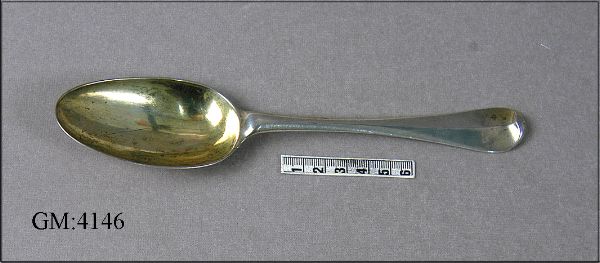
Museum of Gothenburg via Europeana
spoons
Funeral spoon, spoon, cutlery, Eriksson, Magdalena
Funeral spoon, spoon, cutlery is held by Museum of Gothenburg (Sweden), attributed to Eriksson, Magdalena. Description supplied by the holding institution: "Silver spoon, according to old custom given at a funeral. Inscription: "Sara Herveg, Nata A:o 1657 d. 20 maij, Deznata A:o 1727 d. 9 maij". [according to the Brusewitz ledger] The collection record gives material recorded as metal; silver; measurements Width 4.6. Published through Europeana; how far this object represents a wider collectible type has not yet been independently verified.
Partial type record
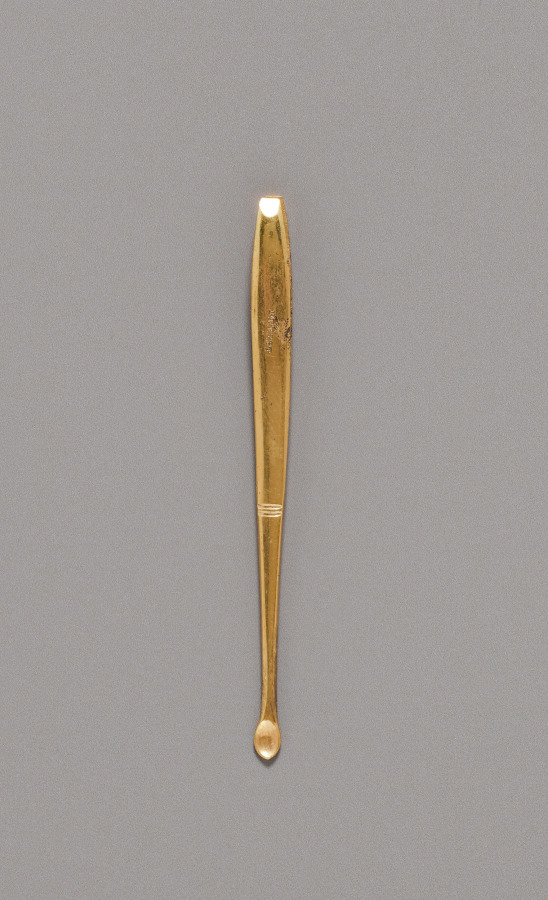
Cleveland Museum of Art
spoons
Gilt-metal snuff spoon from an étui, England, c. 1770
c. 1770
Luxurious personal objects were an essential part of a privileged wardrobe during the 1700s and early 1800s, emphasizing their owner’s refinement and wealth. Especially popular were étuis , small ornamented cases containing miniature sewing, writing, or grooming implements that hung at a woman’s waist from an ornate clasp, known as a chatelaine . Despite its glittering surface, this small expensive set disguised a system based on the labor and suffering of enslaved or indentured people, whether in gold and stone mines or the shop where it was made. Cleveland Museum of Art object 1916.313: Chatelaine and Case (Étui), c. 1770. England, 18th century. Gray agate mounted in gilt metal; overall: 18.1 cm (7 1/8 in.). Details are those of this museum object; how far it represents a wider type has not been independently verified.
Partial type record
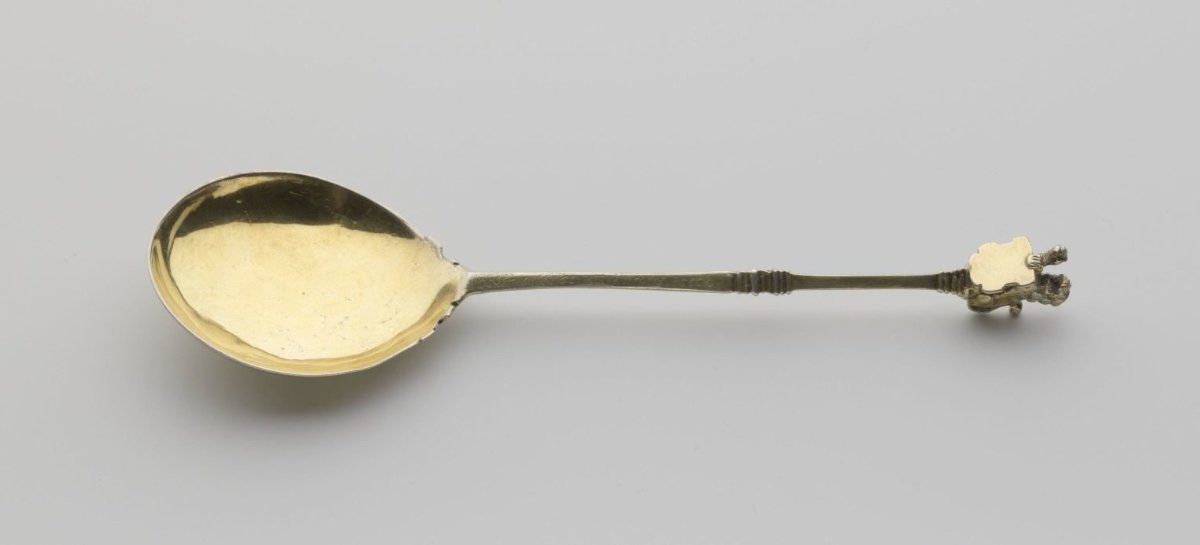
Rijksmuseum, Amsterdam
spoons
Gilt-silver spoon
c. 1600
Gilt-silver spoon, with pear-shaped, almost round bowl. The stem is diamond-shaped in cross-section. The following names are engraved on the stem: Ocker Gillise van Kurpershoeck and Ingetie Ockers. The Rijksmuseum, Amsterdam, holds this object as BK-1968-28; its record gives material recorded as gilding (material), silver (metal); technique gild; measurements diameter 6.2 cm. Description translated from the museum's Dutch catalogue text; details are those of this museum object, and how far it represents a wider type has not been independently verified.
Partial type record
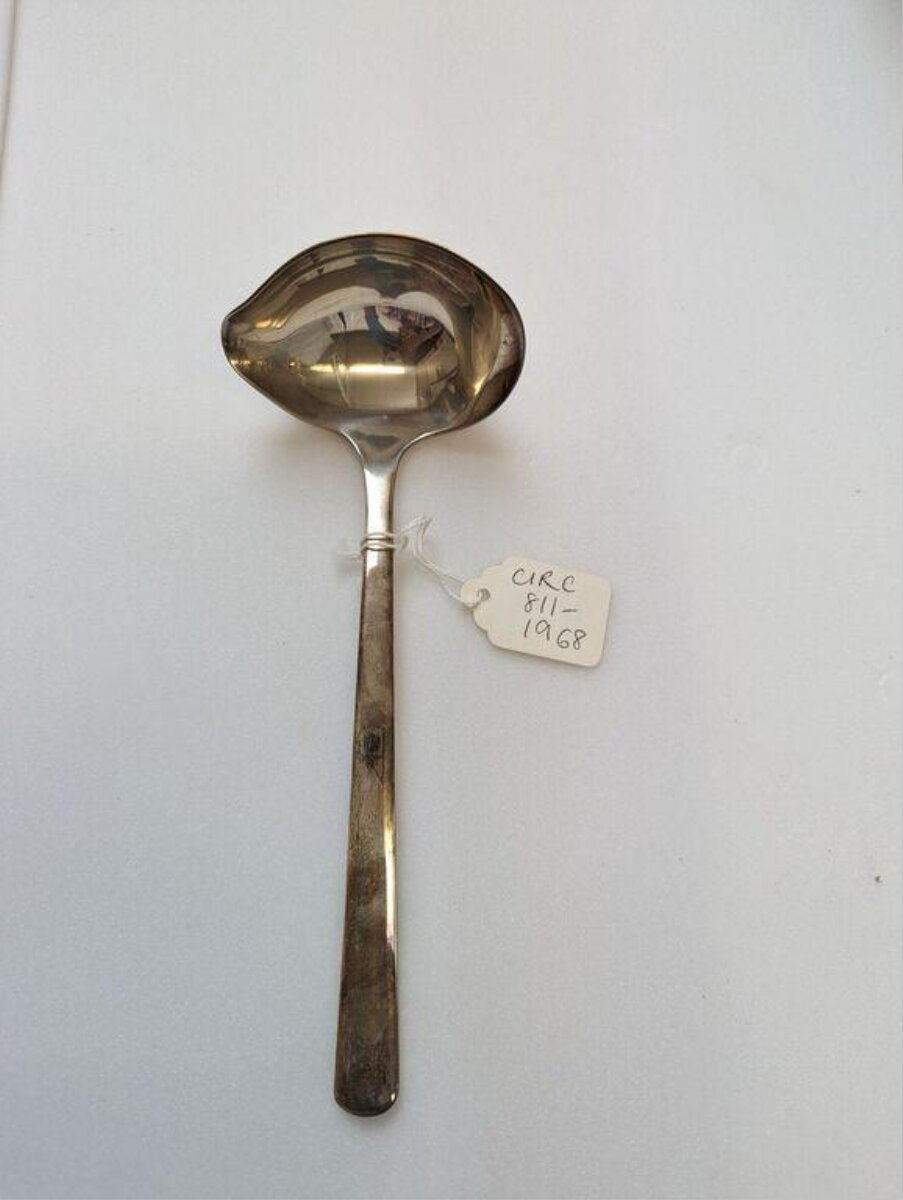
© Victoria and Albert Museum, London
spoons
Gravy ladle — Grand Prix, Copenhagen, 1942
1942
Gravy ladle in the Victoria and Albert Museum, London (museum number CIRC.811-1968), made in Copenhagen, dated 1942, attributed to Bojesen, Kay. The museum's brief description reads: Silver, designed and made by Kay Bojesen Silversmiths, Copenhagen, 1938-1942.. Museum description: Gravy ladle, sterling silver, with a slightly tapering flat handle which meets the side of an oval shaped bowl. One end of the bowl has a small, central lip. The museum records it as Sterling silver, measuring Length 7.125 in; Width 2.75 in; Depth 1.875 in. These details come from the museum's own record; how far this object represents a wider collectible type has not yet been independently verified.
Partial type record
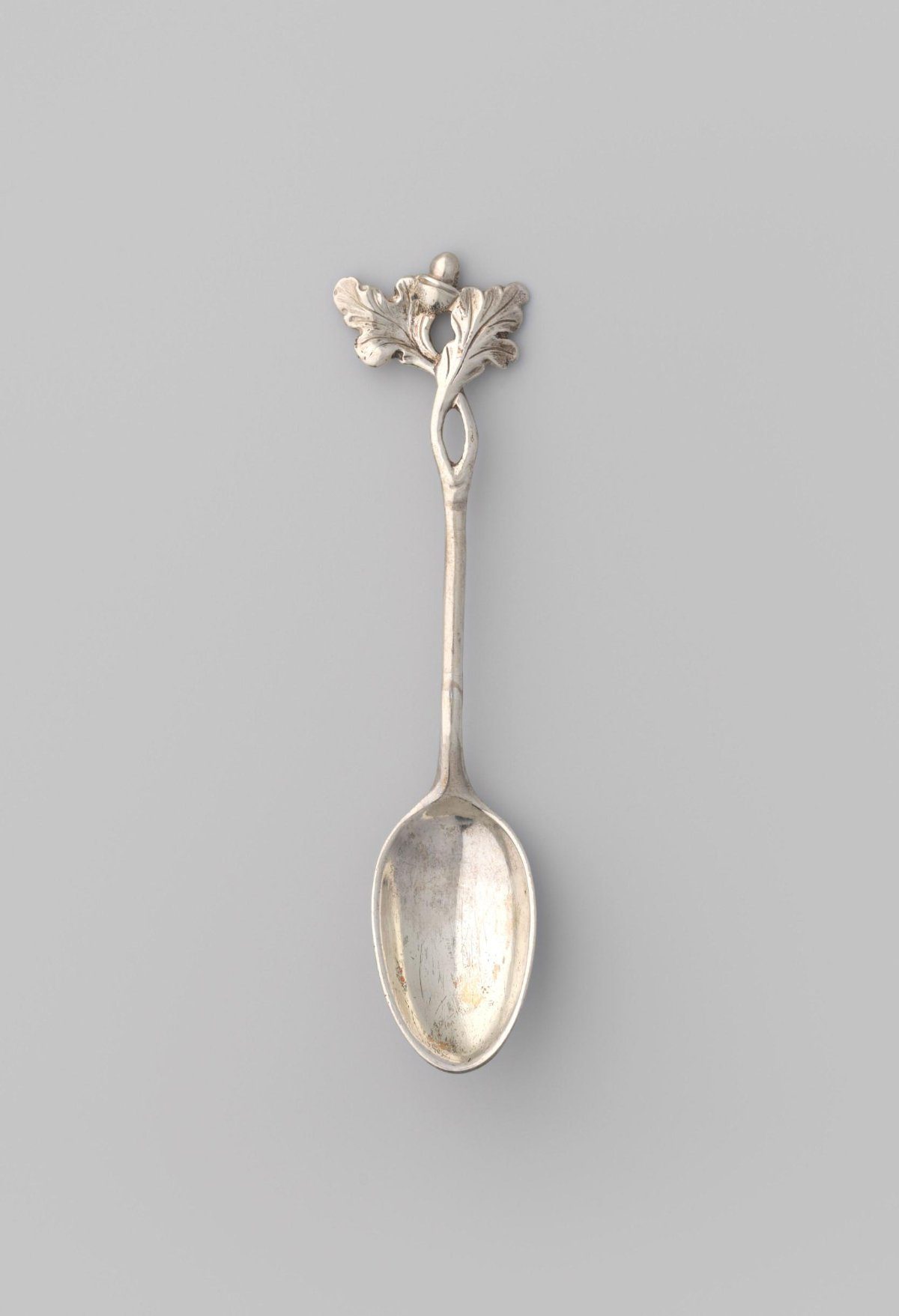
Rijksmuseum, Amsterdam
spoons
Jam spoon with oval bowl and stem ending in oak leaves
1779
The egg-shaped bowl is connected by means of a single drop to the cast stem, curved at the base and straight thereafter, shaped like a branch, which splits at the end into two twisted twigs with oak leaves, with an acorn between them decorated on the underside as a leaf. The Rijksmuseum, Amsterdam, holds this object as BK-15738-A; its record gives material recorded as silver (metal); measurements length 10.5 cm x weight 14 g. Description translated from the museum's Dutch catalogue text; details are those of this museum object, and how far it represents a wider type has not been independently verified.
Partial type record
German Blade Museum via Europeana
spoons
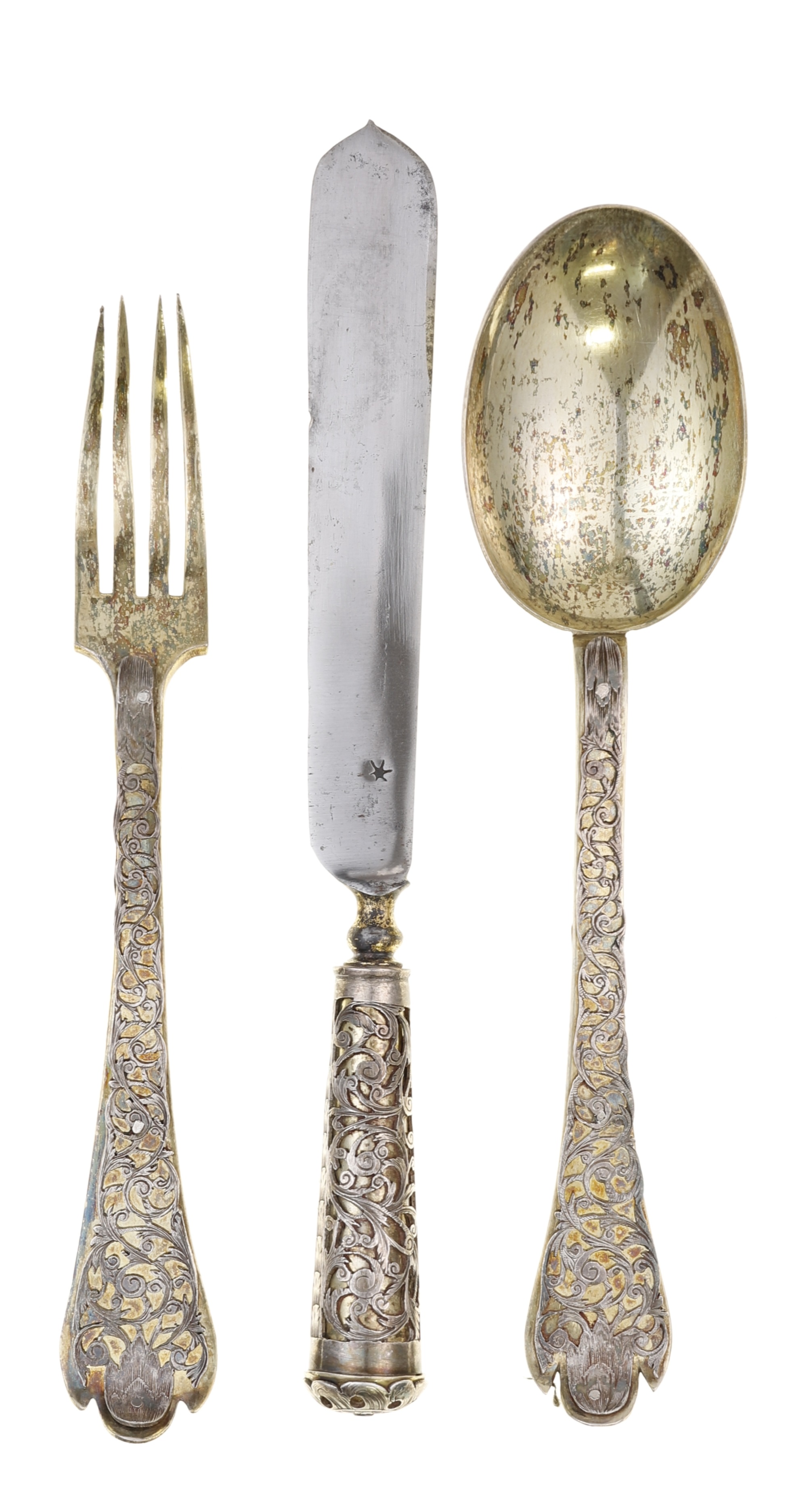
Knife, fork and spoon in case, 2006.M.509 a-d, Michael Hafner (1665 - 1700) (maker)
Knife, fork and spoon in case, 2006.M.509 a-d is held by German Blade Museum (Germany), attributed to Michael Hafner (1665 - 1700) (maker). Description supplied by the holding institution: The knife has a round handle, the fork and spoon have flat handles. The gilded handles have finely engraved overlays of fretted, ungilded scrollwork on both sides. On the rounded tip of the knife blade is a small prong, which likely served as a toothpick. The case is covered with brown leather. A detailed pattern of gilded scrollwork is pressed into the lid. Regarding the mark: On an identical set of cutlery in the Deutsches Klingenmuseum, Solingen, only the spoon is likewise marked. The collection record gives measurements Total length: 174 mm spoon; Weight: 40 g spoon; Total length: 207 mm case; format: Steel, silver partly gilded (Material/Technique). Published through Europeana; how far this object represents a wider collectible type has not yet been independently verified.
Partial type record
Cleveland Museum of Art
spoons
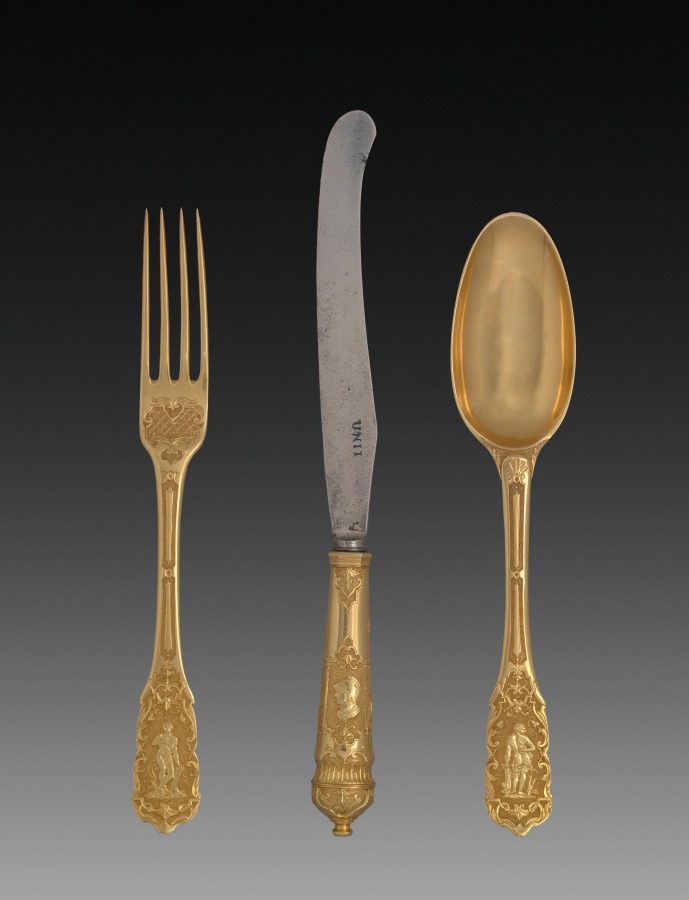
Knife, Fork, and Spoon (Cleveland Museum of Art 1963.473)
c. 1725
Cleveland Museum of Art object 1963.473: Knife, Fork, and Spoon, c. 1725. Germany, possibly Augsburg. Gold; overall: 22.3 cm (8 3/4 in.). Inscribed: steel blade inscribed: UNI(T ?).. Details are those of this museum object; how far it represents a wider type has not been independently verified.
Partial type record
German Blade Museum via Europeana
spoons
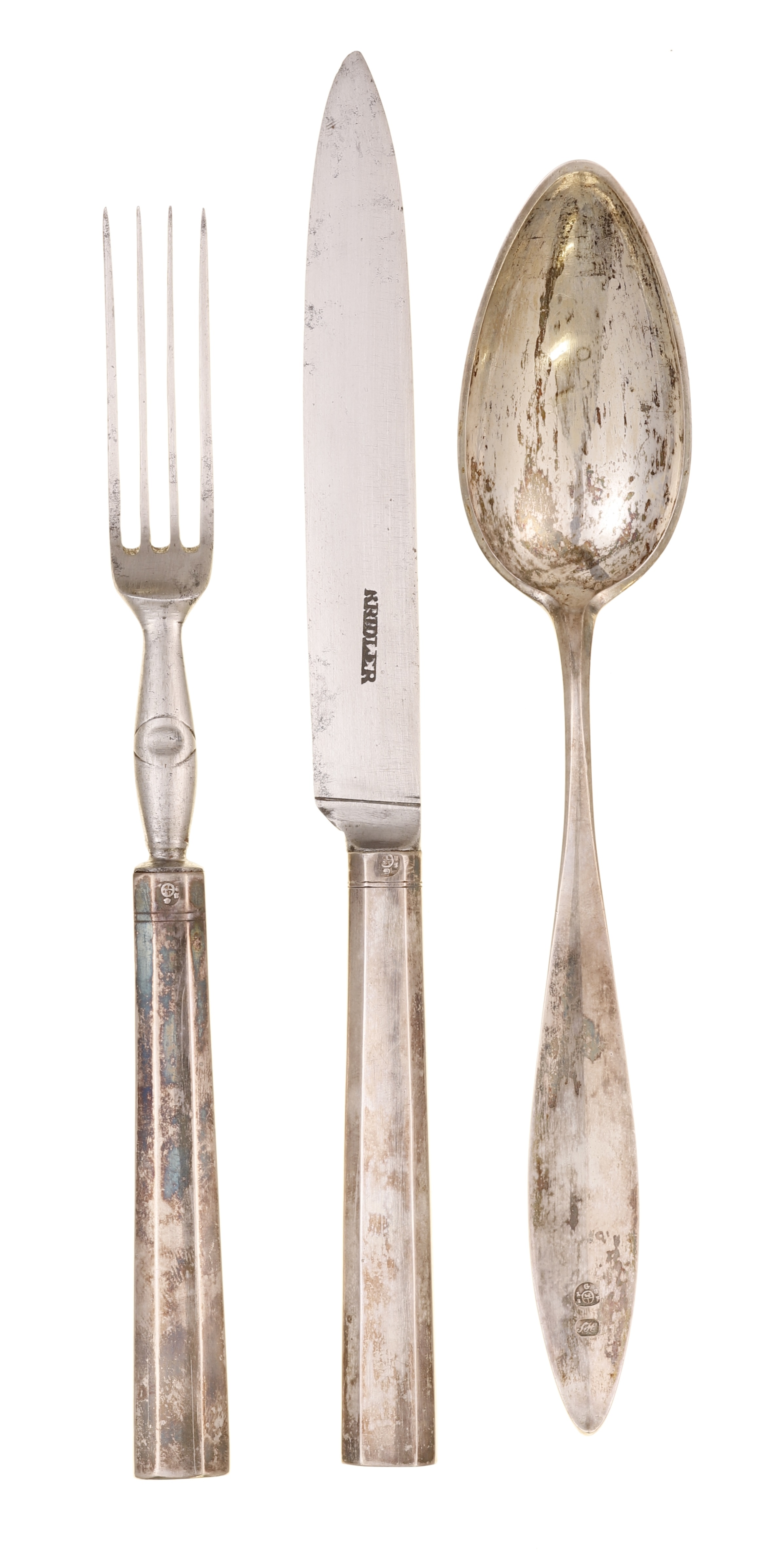
Knife, fork, spoon in case, 2006.M.489 a-d
Knife, fork, spoon in case, 2006.M.489 a-d is held by German Blade Museum (Germany). Description supplied by the holding institution: The octagonal handles of the knife and fork and the flat, lancet-shaped handle of the spoon are all smooth and without decoration. The case with red leather covering is ornamented on the lid and lined inside with light, soft leather. The collection record gives measurements Total length: 217 mm spoon; Weight: 47 g spoon; Total length: 275 mm case; format: Steel, silver, leather; (Material/Technique). Published through Europeana; how far this object represents a wider collectible type has not yet been independently verified.
Partial type record
The Metropolitan Museum of Art, New York
spoons
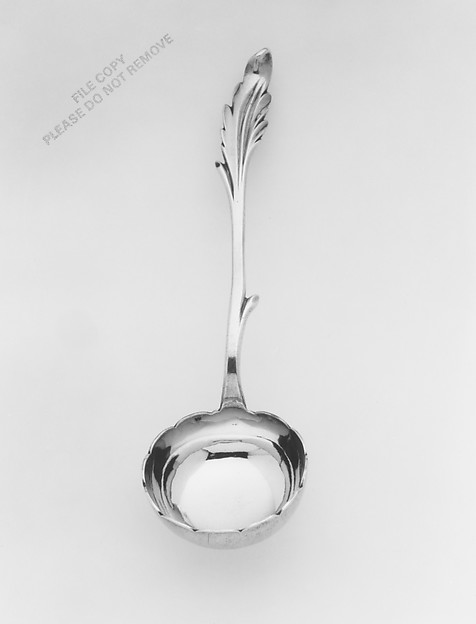
Ladle (one of a pair), 1771
1771
Ladle in The Metropolitan Museum of Art, New York (accession 1992.89.2), catalogued by the museum's European Sculpture and Decorative Arts department under the title “Ladle (one of a pair)”. The museum dates it 1771. It is attributed to Isacq Samuel Busard (working 1731–84). The museum records the medium as Silver and the dimensions as Overall: 7 9/16 × 2 5/16 in. (19.2 × 5.9 cm). These details are transcribed from the museum's open-access record; how far this object represents a wider collectible type has not yet been independently verified.
Partial type record
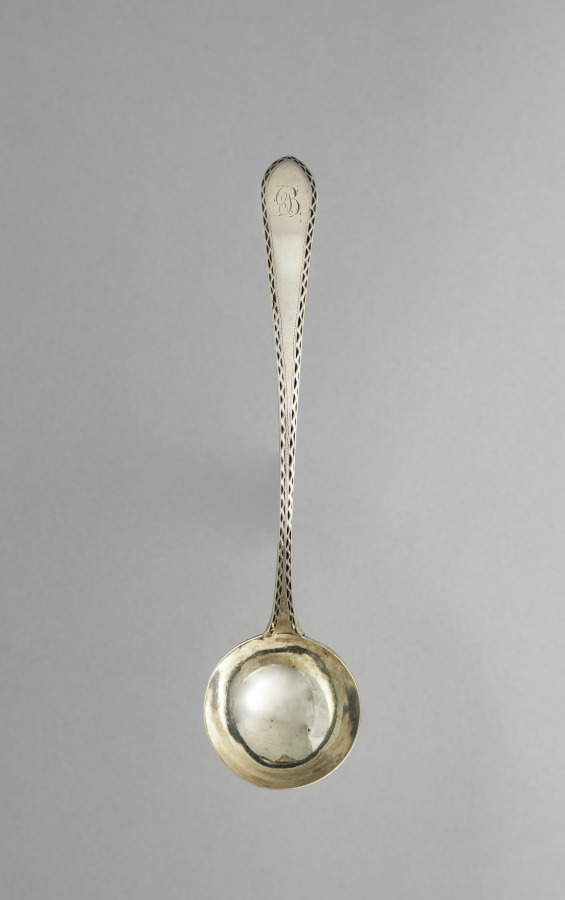
The Cleveland Museum of Art
spoons
Ladle, America, Maryland, Baltimore, late 18th Century, c. 1790–1800
c. 1790–1800
Ladle in The Cleveland Museum of Art (accession 1943.214), classified by the museum as Silver, from America, Maryland, Baltimore, late 18th Century, dated c. 1790–1800. Maker recorded: George Aiken (American, 1765–1832). The museum records the material and technique as silver. Measurements: Overall: 5.9 cm (2 5/16 in.). These details are transcribed from the museum's open-access record; how far this object represents a wider collectible type has not yet been independently verified.
Partial type record
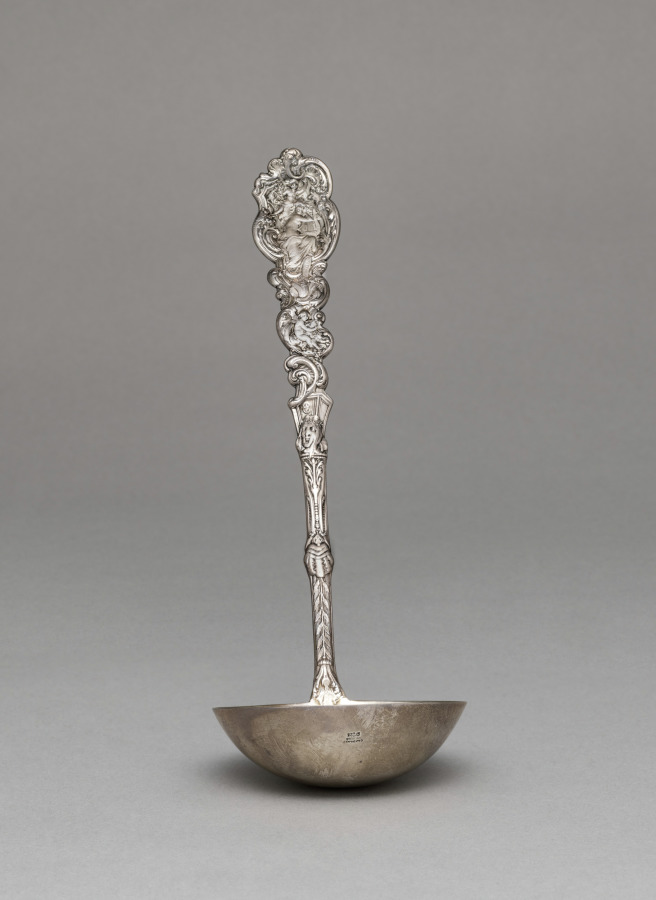
The Cleveland Museum of Art
spoons
Ladle, America, New York, c. 1905
c. 1905
Ladle in The Cleveland Museum of Art (accession 1983.162), classified by the museum as Silver, from America, New York, dated c. 1905. Maker recorded: Gorham Manufacturing Company (America, est. 1831). The museum records the material and technique as silver. Measurements: Overall: 31.8 x 10.4 cm (12 1/2 x 4 1/8 in.). These details are transcribed from the museum's open-access record; how far this object represents a wider collectible type has not yet been independently verified.
Partial type record
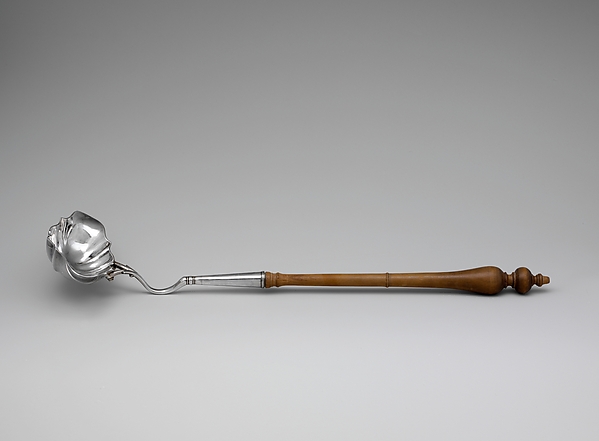
The Metropolitan Museum of Art, New York
spoons
Ladle, American, 1745–60
1745–60
Ladle in The Metropolitan Museum of Art, New York (accession 41.70.3), catalogued by the museum's The American Wing department. The museum dates it 1745–60 and records its origin as American; Boston, New England, United States. It is attributed to Samuel Edwards (1705–1762). The museum records the medium as Silver and the dimensions as Overall: L. 15 1/2 in. (39.4 cm); 4 oz. (125.1 g) Bowl: 4 1/16 x 2 1/4 in. (10.3 x 5.7 cm). These details are transcribed from the museum's open-access record; how far this object represents a wider collectible type has not yet been independently verified.
Partial type record
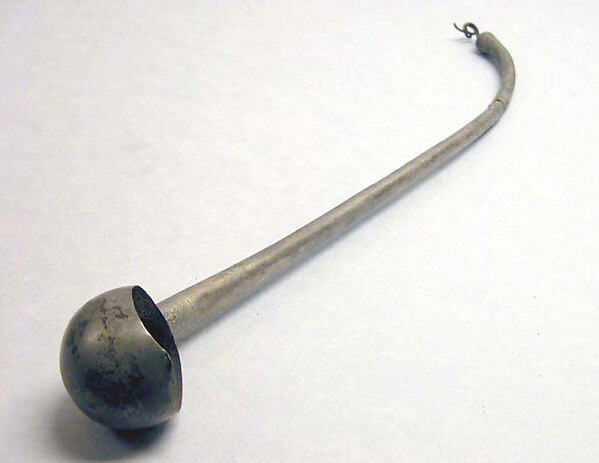
The Metropolitan Museum of Art, New York
spoons
Ladle, China
Ladle in The Metropolitan Museum of Art, New York (accession 22.79.4), catalogued by the museum's Asian Art department. and records its origin as China; Tang dynasty (618–907). The museum records the medium as Metal, silver? and the dimensions as L. 16 in. (40.6 cm). These details are transcribed from the museum's open-access record; how far this object represents a wider collectible type has not yet been independently verified.
Partial type record
© Victoria and Albert Museum, London
spoons
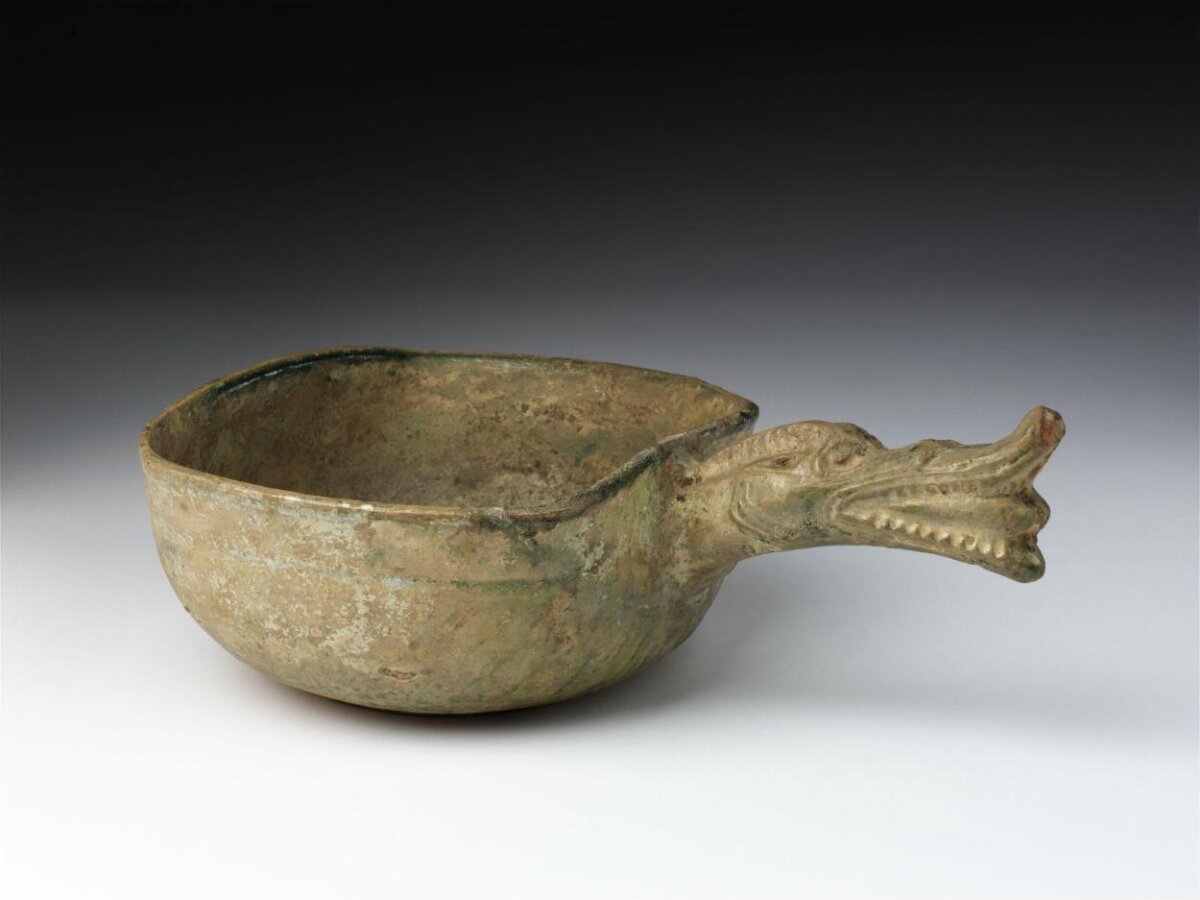
Ladle, China, 1st century-2nd century
1st century-2nd century
Ladle in the Victoria and Albert Museum, London (museum number C.14-1935), made in China, dated 1st century-2nd century. The museum's brief description reads: Ladle (dou), red earthenware with green lead glaze; China, Eastern Han dynasty, 1st-2nd century AD. Museum description: Ladle (dou), in form of a bowl with the sides pinched in, and a modelled dragon-head as handle; flat base with incised rings. Red earthenware with green lead glaze encrusted with irridescence. The museum records it as Red earthenware with green lead glaze, measuring Length 22.1 cm. These details come from the museum's own record; how far this object represents a wider collectible type has not yet been independently verified.
Partial type record
Neamț National Museum Complex via Europeana
spoons
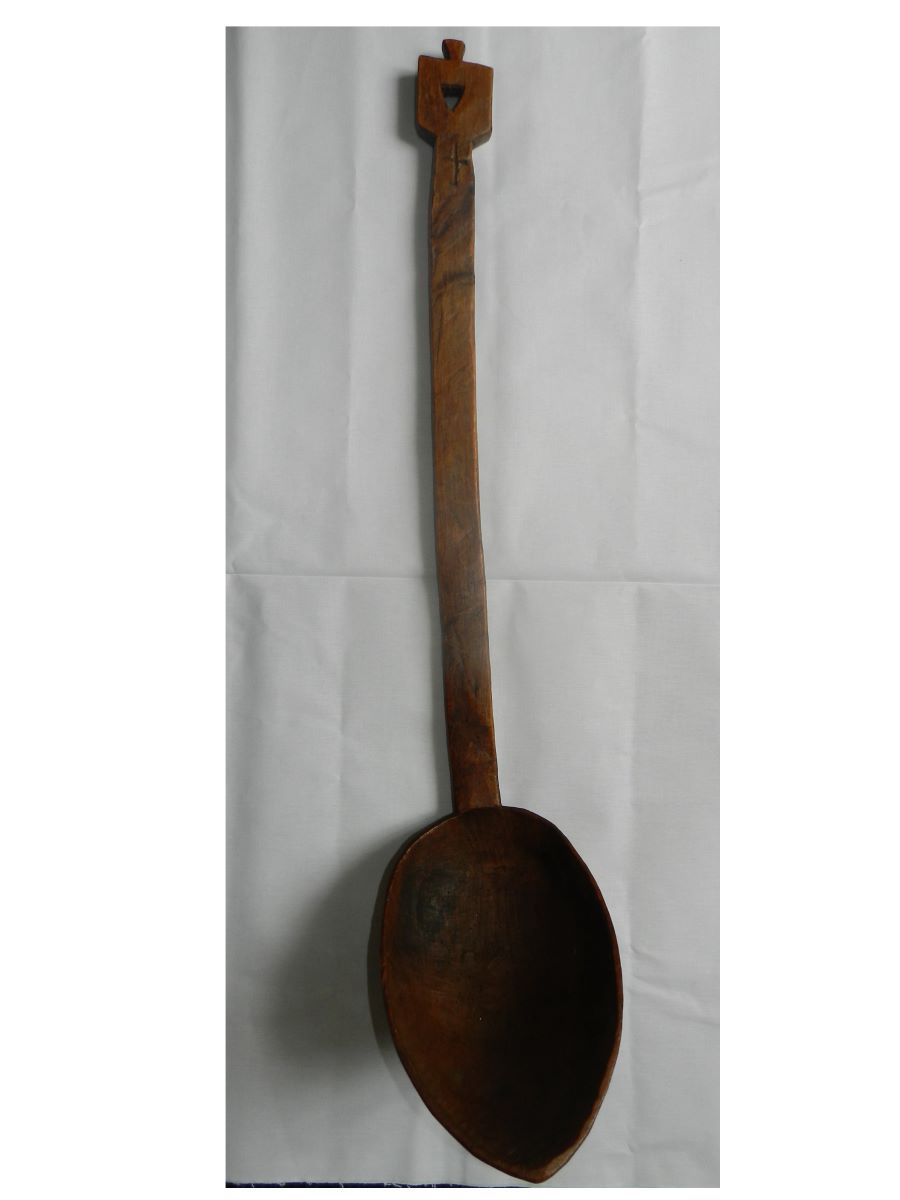
Large spoon
Large spoon is held by Neamț National Museum Complex. Museum description: Large spoon with an oval and elongated bowl; the handle is narrow and ends with a perforation for hanging. Towards the end it is decorated with a cross.; use: Object used for stirring milk at the sheepfold. The museum record gives measurements length: 90 cm; mouth diameter: 18.5 cm. These details come from the holding museum's own record; how far this object represents a wider collectible type has not yet been independently verified.
Partial type record
Neamț National Museum Complex via Europeana
spoons
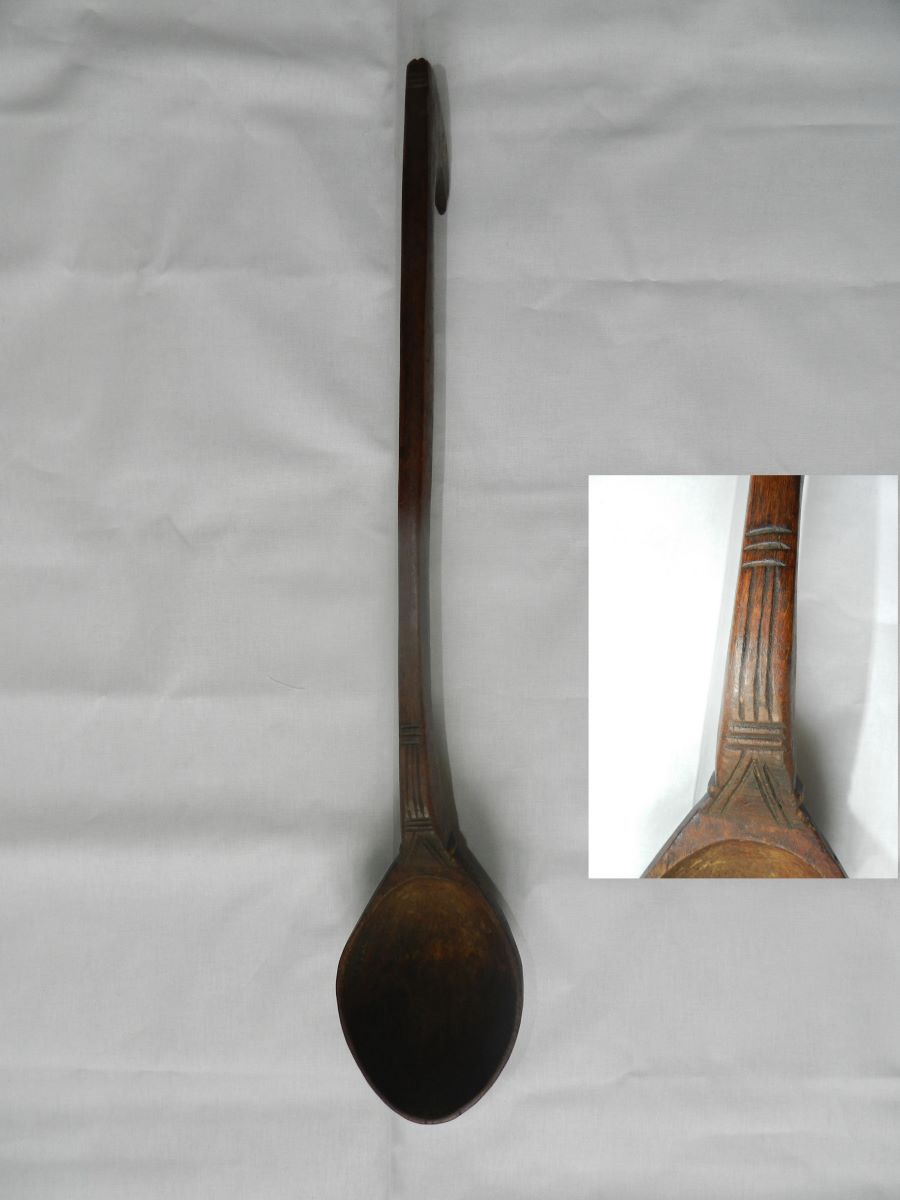
Large spoon
Large spoon is held by Neamț National Museum Complex. Museum description: Large spoon with an oval bowl. The handle is narrow, ending with a hook for hanging. Near the bowl on the handle, groups of horizontal and vertical lines are incised.; use: Object used for stirring food. The museum record gives measurements Thickness - 1.5 cm; length: 60 cm; width: 2.5 cm. These details come from the holding museum's own record; how far this object represents a wider collectible type has not yet been independently verified.
Partial type record
© Victoria and Albert Museum, London
spoons
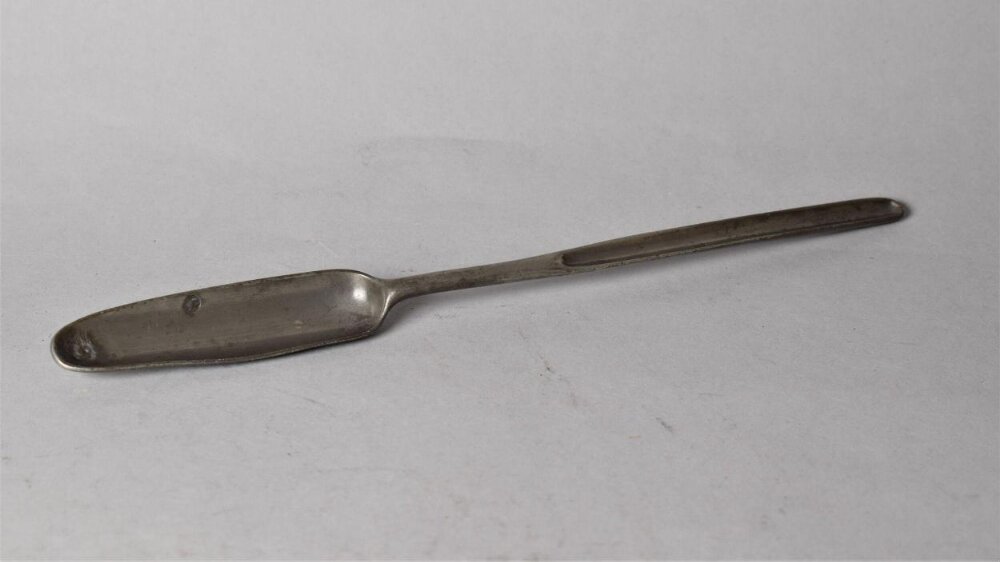
Marrow scoop, Timmins, Mid 18th century
Mid 18th century
Marrow scoop, Timmins, Mid 18th century is an object recorded by Victoria and Albert Museum, dated Mid 18th century. The museum's brief description reads: Marrow scoop, pewter, Timmins, English, mid 18th century. Museum description: Pewter marrow scoop with elongated bowl. The museum record gives material recorded as pewter; measurements Length 22.9 cm; place associated: England; maker recorded: Timmins. These details come from the holding museum's own record; how far this object represents a wider collectible type has not yet been independently verified.
Partial type record
© Victoria and Albert Museum, London
spoons
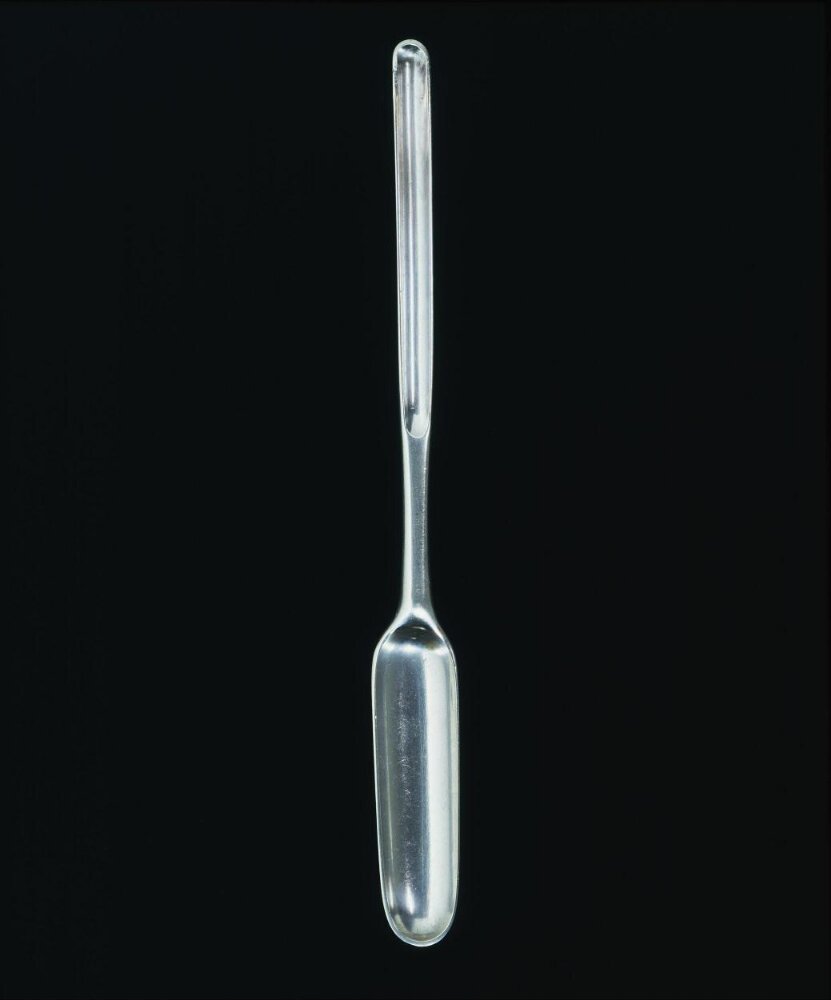
Marrow scoop, Wirgman, John, 1748-1749
1748-1749
Marrow scoop, Wirgman, John, 1748-1749 is an object recorded by Victoria and Albert Museum, dated 1748-1749. The museum's brief description reads: Silver, London hallmarks for 1748-1749, possibly made by John Wirgman.. Museum description: Marrow scoop of silver. A broad and narrow scoop joined by a plain stem. The museum record gives material recorded as silver; measurements Length 22.2 cm; Width 2.5 cm; place associated: London; maker recorded: Wirgman, John. These details come from the holding museum's own record; how far this object represents a wider collectible type has not yet been independently verified.
Partial type record
Cleveland Museum of Art, Gift of Hollis French
spoons
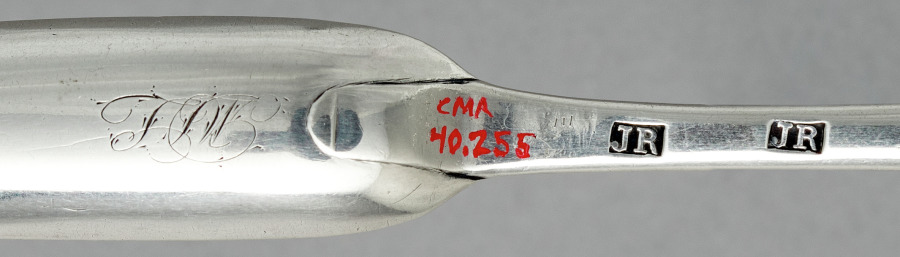
Marrow Scoop/Spoon (Cleveland Museum of Art 1940.255)
c. 1790
Cleveland Museum of Art object 1940.255: Marrow Scoop/Spoon, c. 1790. Attributed to Joseph Richardson (American, 1752–1831). Silver; overall: 2.1 cm (13/16 in.). Inscribed: engraved "MDL" in bright-cut script on back of larger scoop, and "E" in script on top of joint above smaller scoop.. Details are those of this museum object; how far it represents a wider type has not been independently verified.
Partial type record
Naval Museum via Europeana
spoons
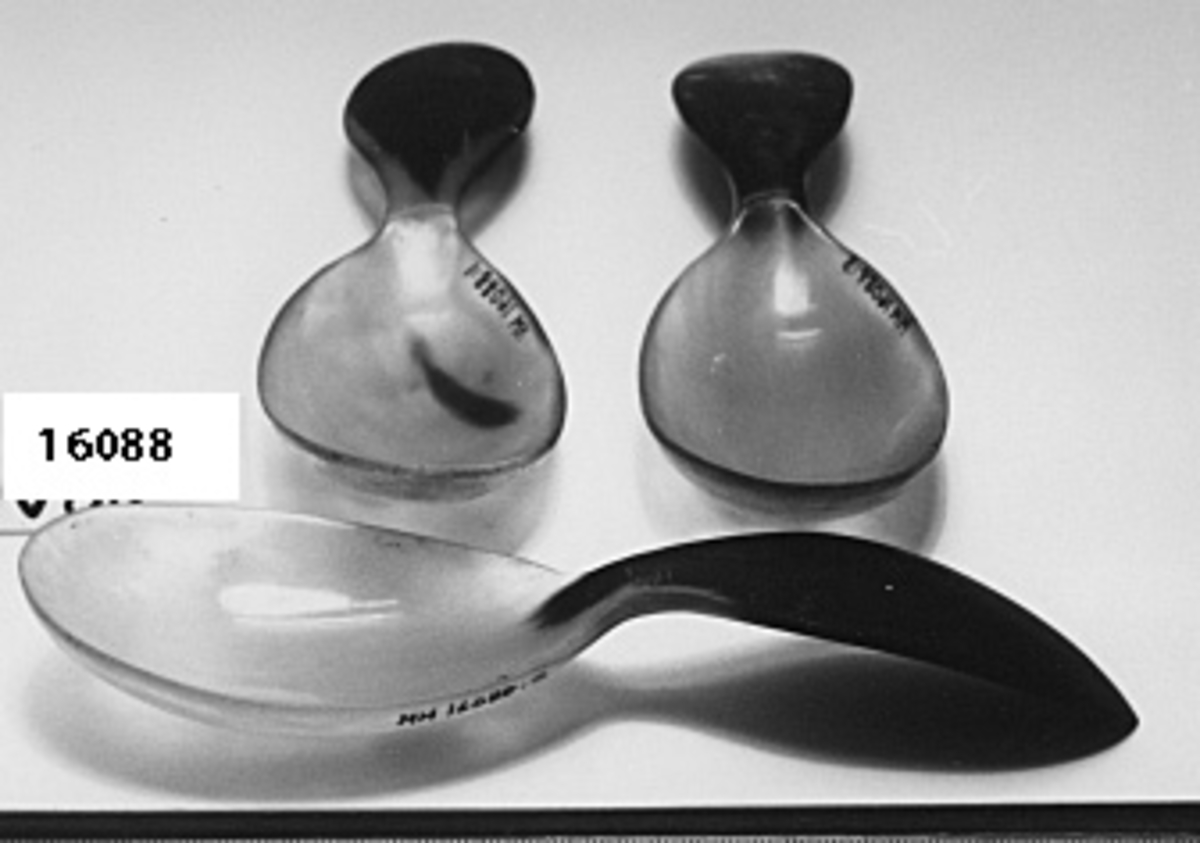
Medicine spoon
Medicine spoon is held by Naval Museum. Museum description: Medicine spoon of horn, oval cupped spoon with oval pointed handle. Material mottled, the spoon bowl light yellowish turning on the handle into dark brown with white inclusions.; Use: For dispensing liquid medicine. The museum record gives material recorded as Horn; measurements width 44.0 mm. These details come from the holding museum's own record; how far this object represents a wider collectible type has not yet been independently verified.
Partial type record
Rijksmuseum, Amsterdam
spoons
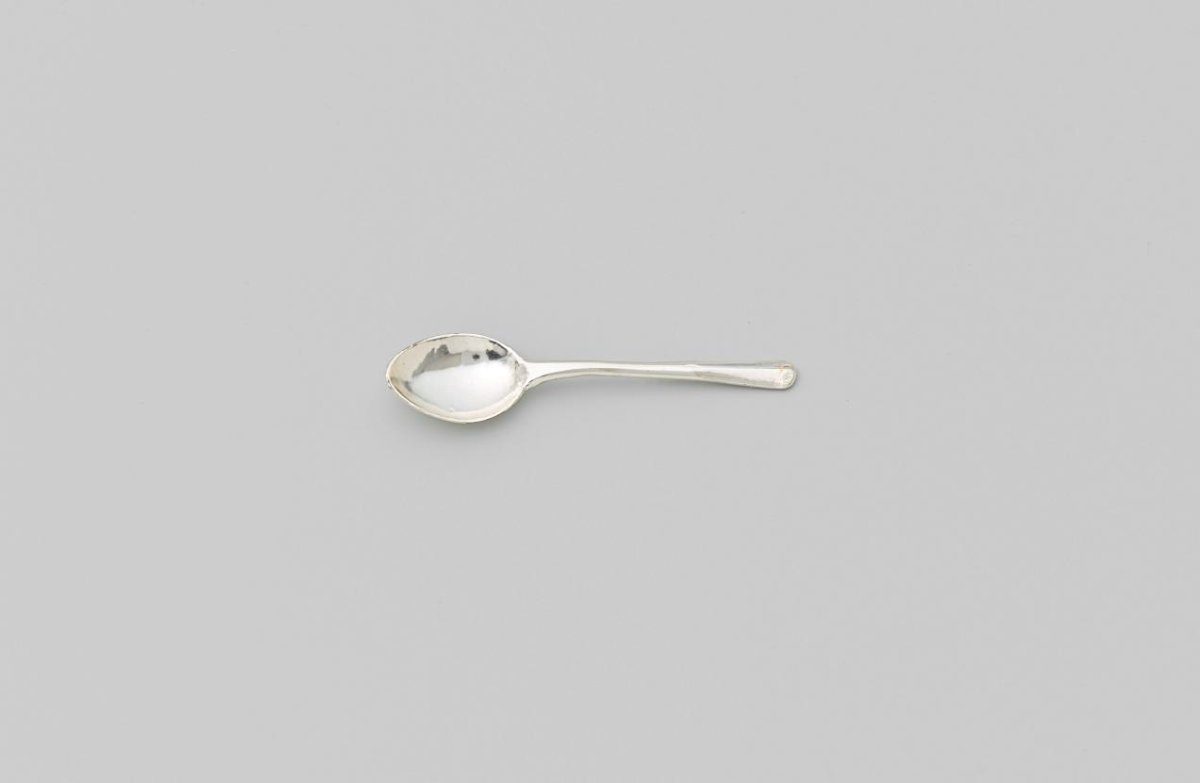
Miniature spoon, 1750
1750
Silver spoon with double drop and with a central ridge along the stem, ending rounded. The Rijksmuseum, Amsterdam, holds this object as BK-14656-36-A; its record gives material recorded as silver (metal); measurements length 4.8 cm x width 1.2 cm. Description translated from the museum's Dutch catalogue text; details are those of this museum object, and how far it represents a wider type has not been independently verified.
Partial type record
Rijksmuseum, Amsterdam
spoons
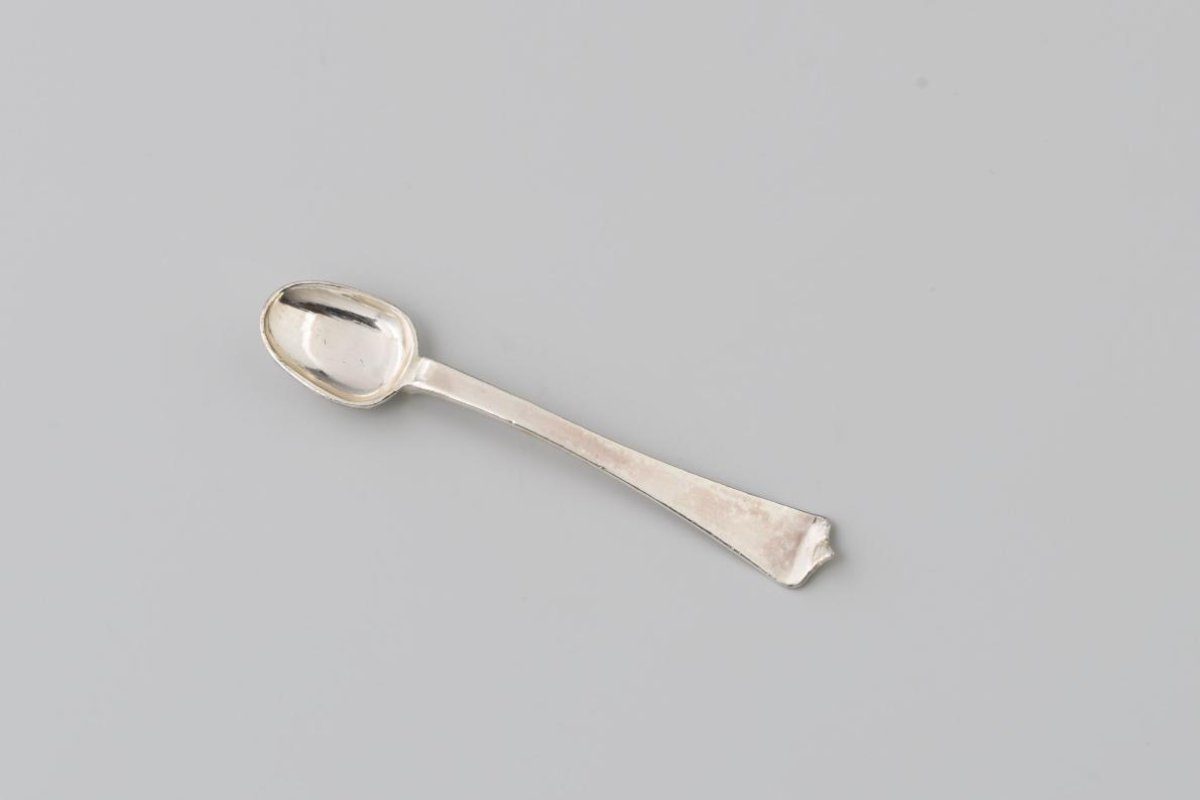
Miniature spoon, c. 1812 - c. 1813
c. 1812 - c. 1813
Silver spoon with bracket-shaped terminal and needle-shaped drop. The Rijksmuseum, Amsterdam, holds this object as BK-14656-34; its record gives material recorded as silver (metal); measurements length 6 cm x width 1.2 cm. Description translated from the museum's Dutch catalogue text; details are those of this museum object, and how far it represents a wider type has not been independently verified.
Partial type record
Cleveland Museum of Art
spoons
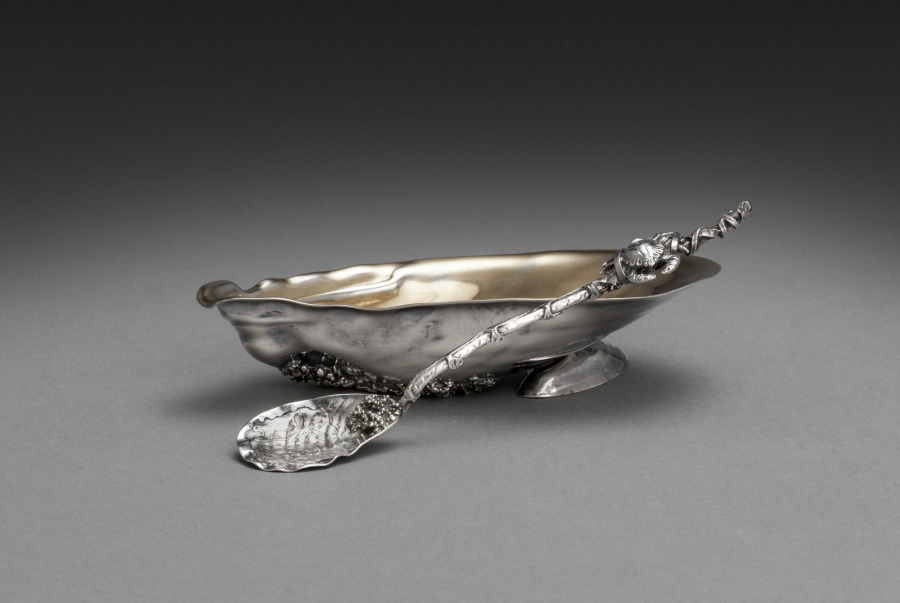
Narragansett Salt Cellar and Spoon (Cleveland Museum of Art 2000.14)
1884
This small salt dish and spoon reflect the late 19th-century interest in incorporating naturalistic details into the design of useful pieces-in this instance probably inspired by Japanese examples. Cleveland Museum of Art object 2000.14: Narragansett Salt Cellar and Spoon, 1884. Gorham Manufacturing Company (America, est. 1831). Handwrought sterling silver, partially gilt; overall: 2.8 x 12.3 x 6.1 cm (1 1/8 x 4 13/16 x 2 3/8 in.). Details are those of this museum object; how far it represents a wider type has not been independently verified.
Partial type record
Rijksmuseum, Amsterdam
spoons
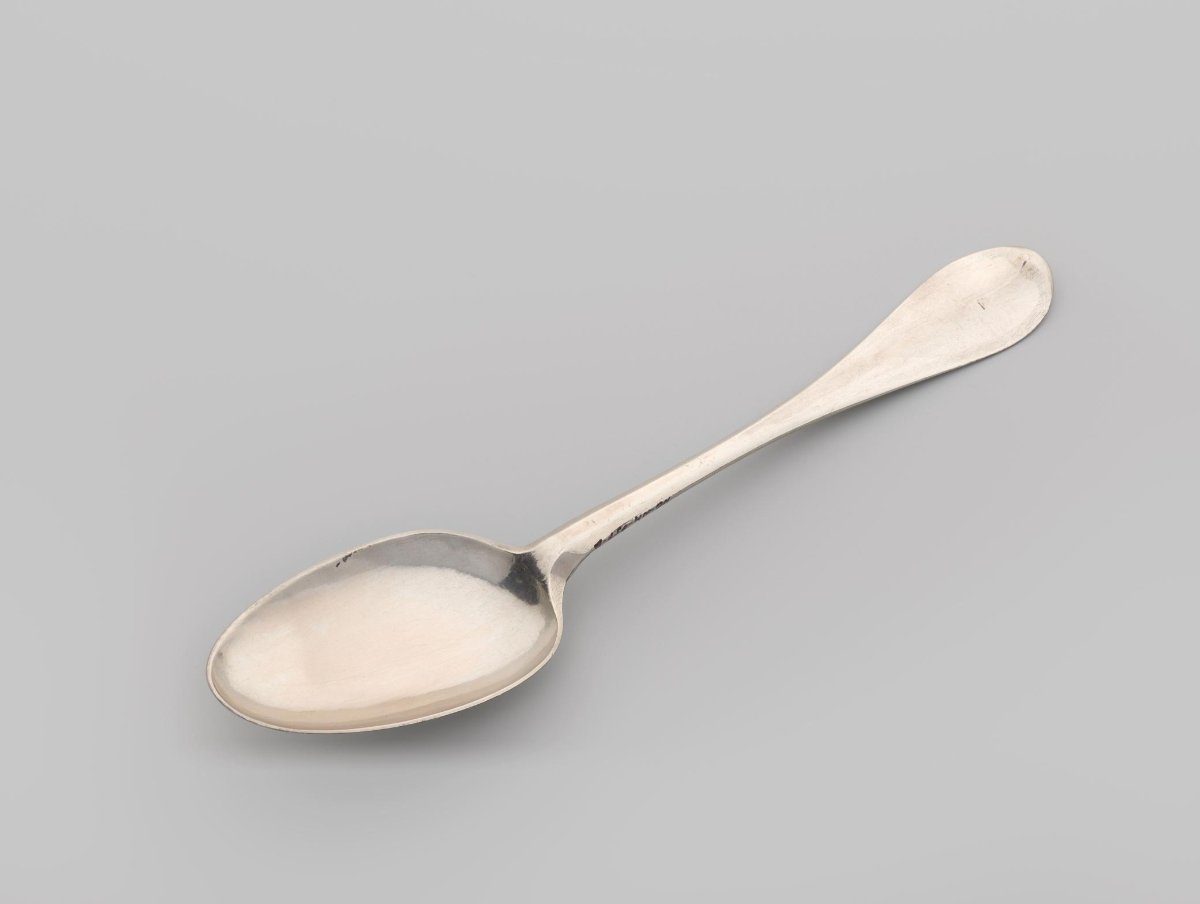
Naval Battle of Vigo
1713
The egg-shaped bowl is connected by means of a long needle to the stem, which is straight at first, faceted on the upper side and then flat, widening towards the rounded, curling end that shows a faint ridge down the middle on top. On the underside of the bowl is engraved circumferentially in two lines: Ter gedagt: van de Commissie, door hare H: Mog: gegeven Ao 1705. om f 350.000,-: te Vdelen aan de /geinteress: inde Schade te Vigos geleden Ao 1702. en afgedaen Ao 1712. On the underside of the stem is engraved: .C.V.D. The Rijksmuseum, Amsterdam, holds this object as BK-NM-857-B; its record gives material recorded as silver (metal); technique engraving; measurements length 19.8 cm x weight 59 g. Description translated from the museum's Dutch catalogue text; details are those of this museum object, and how far it represents a wider type has not been independently verified.
Partial type record
Rijksmuseum, Amsterdam
spoons
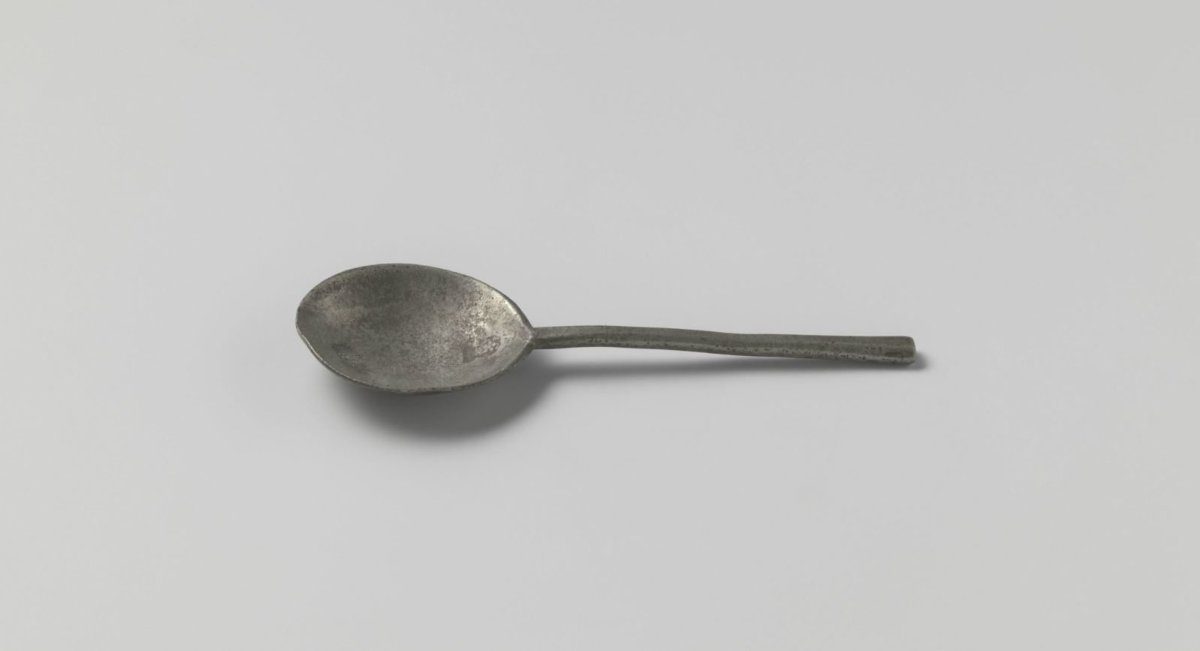
Pewter spoon
1550 - 1600
Pewter spoon. The handle is hexagonal. The bowl is a gentle oval shape. The Rijksmuseum, Amsterdam, holds this object as BK-14544; its record gives material recorded as tin (metal); technique casting; measurements length 16.5 cm x height 1.2. Description translated from the museum's Dutch catalogue text; details are those of this museum object, and how far it represents a wider type has not been independently verified.
Partial type record