Catalogue
Tobacco Pipes
Clay and other tobacco pipes documented in institutional collections.
Scope
Clay, meerschaum, wood, stone and other tobacco pipes.
Pipes recorded only by material and size were withdrawn.
What to record when identifying
- Bowl form and material
- Maker's marks on the heel or stem
- Decoration
- Region of manufacture
Individually identified types (61)
Filter by era, country, maker or material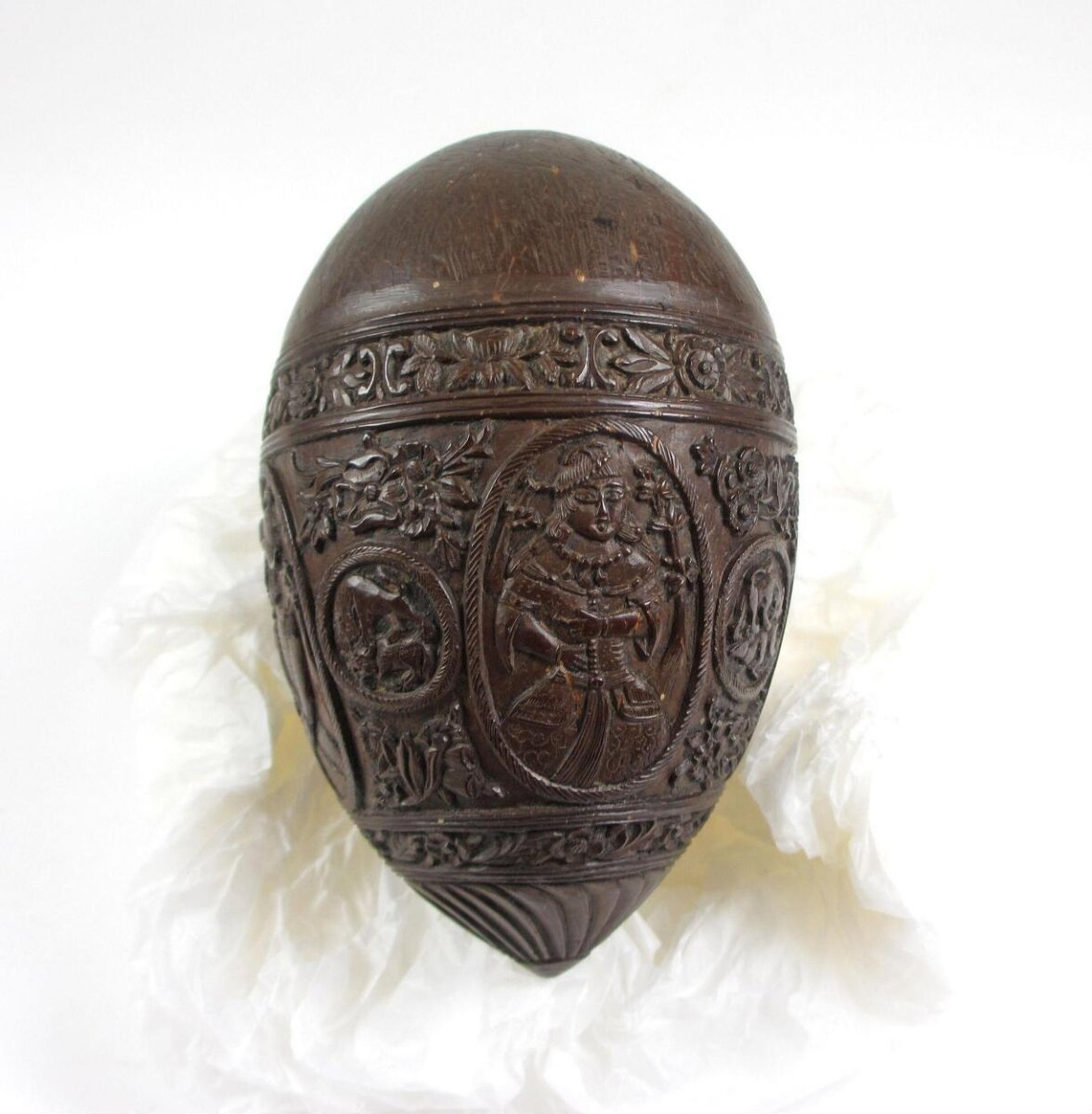
© Victoria and Albert Museum, London
tobacco pipes
Hookah base (qalian), Iran, 1750-1800
1750-1800
Hookah base (qalian) in the Victoria and Albert Museum, London (museum number 733-1876), made in Iran, dated 1750-1800. The museum's brief description reads: Hookah base, carved coco de mer, Iran, Qajar period, 1750-1800. Museum description: Carved coco de mer hookah base, with four oval medallions, each with a different standing man dressed in European costume and hat, holding a wine cup or perched bird; smaller circular medallions of a lion attacking an antelope alternate in between each figure. Two fine horizontal bands of running floral scrolls decorate the top and bottom of the hookah, with the base carved with vertical panels. A small hole pierces the top and side of the base. The museum records it as Coco de mer; carved, measuring Height 11.5 cm. These details come from the museum's own record; how far this object represents a wider collectible type has not yet been independently verified.
Partial type record
© Victoria and Albert Museum, London
tobacco pipes
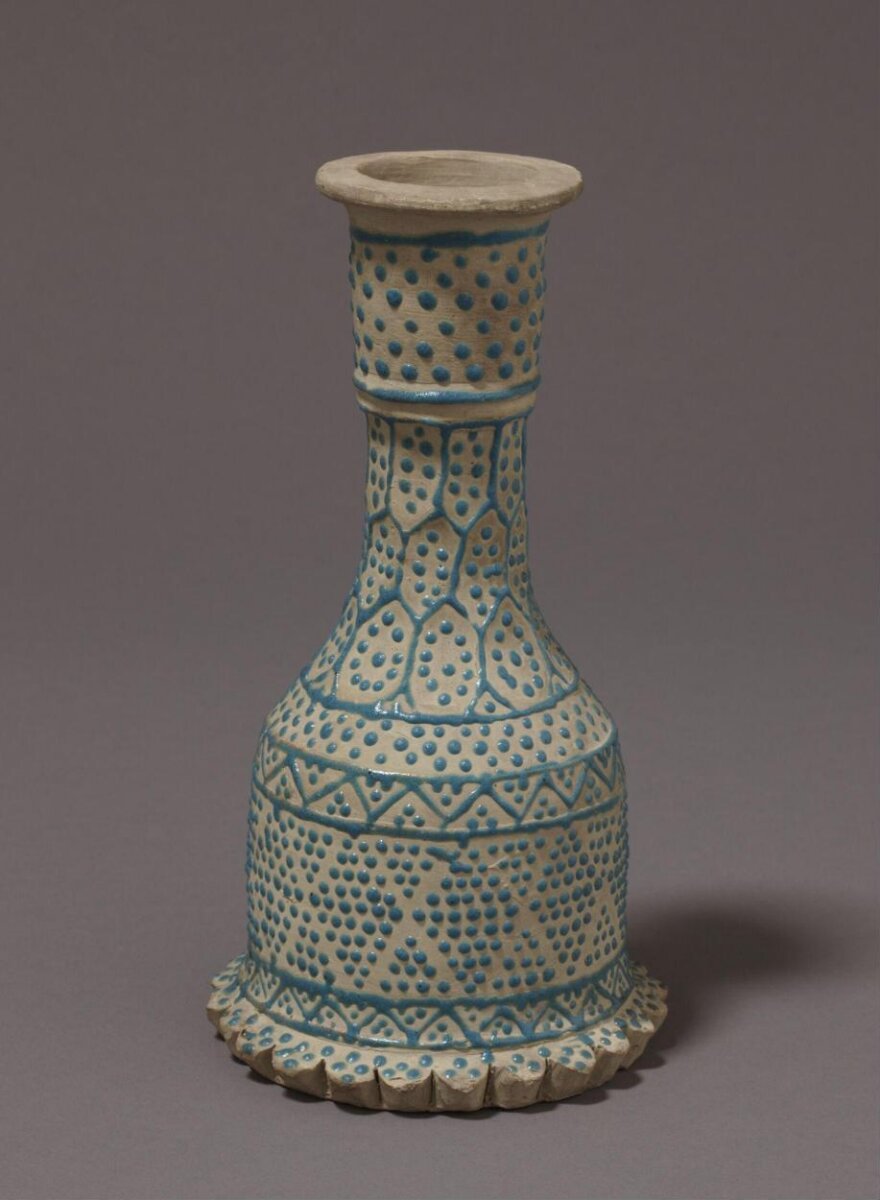
Hookah base, Qom (city), Iran, ca. 1850-1875
ca. 1850-1875
Hookah base in the Victoria and Albert Museum, London (museum number 985-1876), made in Qom (city), Iran, dated ca. 1850-1875. The museum's brief description reads: Hookah base, unglazed earthenware, imitating European-style glassware, decorated with dots of light blue glaze; Iran (Qom), Iran, 1850-1875.. Museum description: Hookah base, unglazed porous ware, decorated with dots of light blue glaze forming various geometric patterns. Wide base with a scalloped edge, straight sided short body with a long narrow neck. The museum records it as Small dots of blue glaze decorated by hand., measuring Height 9.625 in; Diameter 5.25 in. These details come from the museum's own record; how far this object represents a wider collectible type has not yet been independently verified.
Partial type record
© Victoria and Albert Museum, London
tobacco pipes
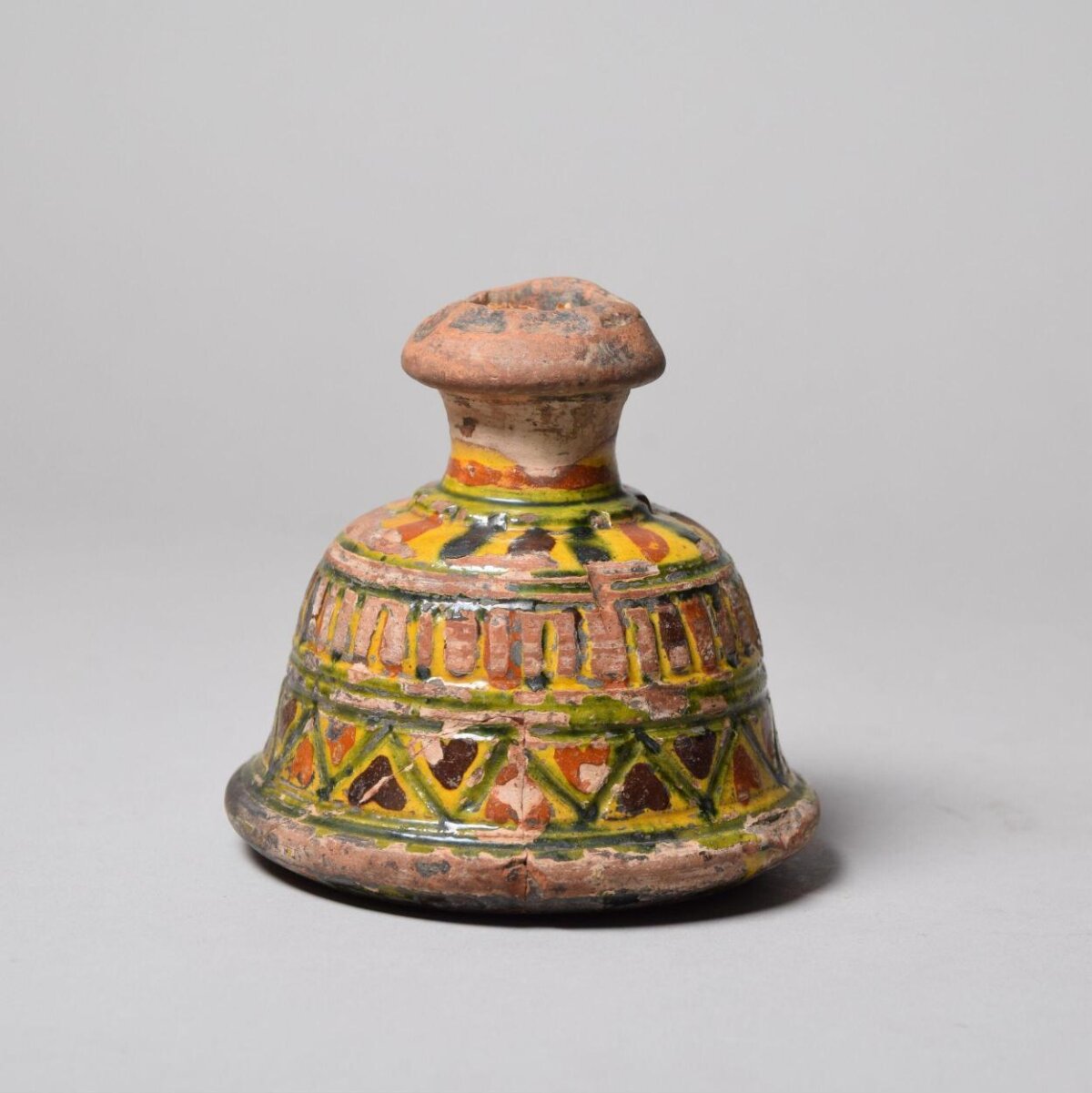
Hookah base, Turkey, 18th century
18th century
Hookah base in the Victoria and Albert Museum, London (museum number C.152-1909), made in Turkey, dated 18th century. The museum's brief description reads: Top of a hookah, red earthenware with incised decoration, red, green and purple covered with a yellow glaze, probably turkish, 18th century.. Museum description: Top of a Hookah, red earthenware, with incised decoration, painted in red, green and manganese purple and covered with a yellow glaze. Incised with a border of chevron ornament above a band of vertical lined, picked out with spots of colour. The museum records it as red earthenware, incised, painted, measuring Height 4.125 in; Diameter 4.25 in. These details come from the museum's own record; how far this object represents a wider collectible type has not yet been independently verified.
Partial type record
The Metropolitan Museum of Art, New York
tobacco pipes
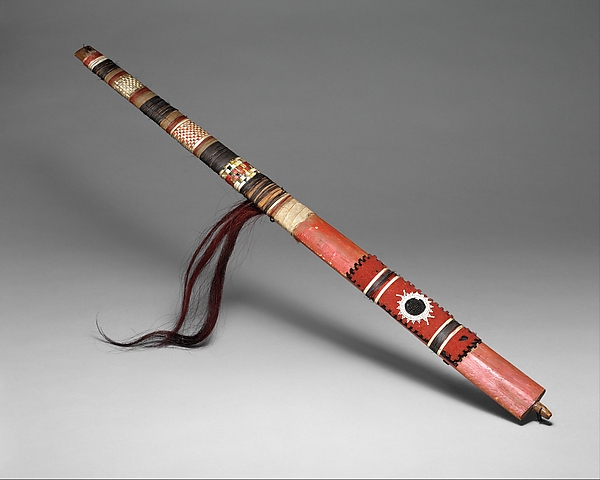
Messiter Pipe, Yankton Sioux, ca. 1840
ca. 1840
Pipe stem in The Metropolitan Museum of Art, New York (accession 2011.154.25), catalogued by the museum's The American Wing department under the title “Messiter Pipe”. The museum dates it ca. 1840 and records its origin as Yankton Sioux; United States. The museum records the medium as Wood, quill, horsehair, wool, glass, animal skin, pigment, feathers and the dimensions as H. 2 x L. 31 in. (5.1 x 78.7 cm). These details are transcribed from the museum's open-access record; how far this object represents a wider collectible type has not yet been independently verified.
Partial type record
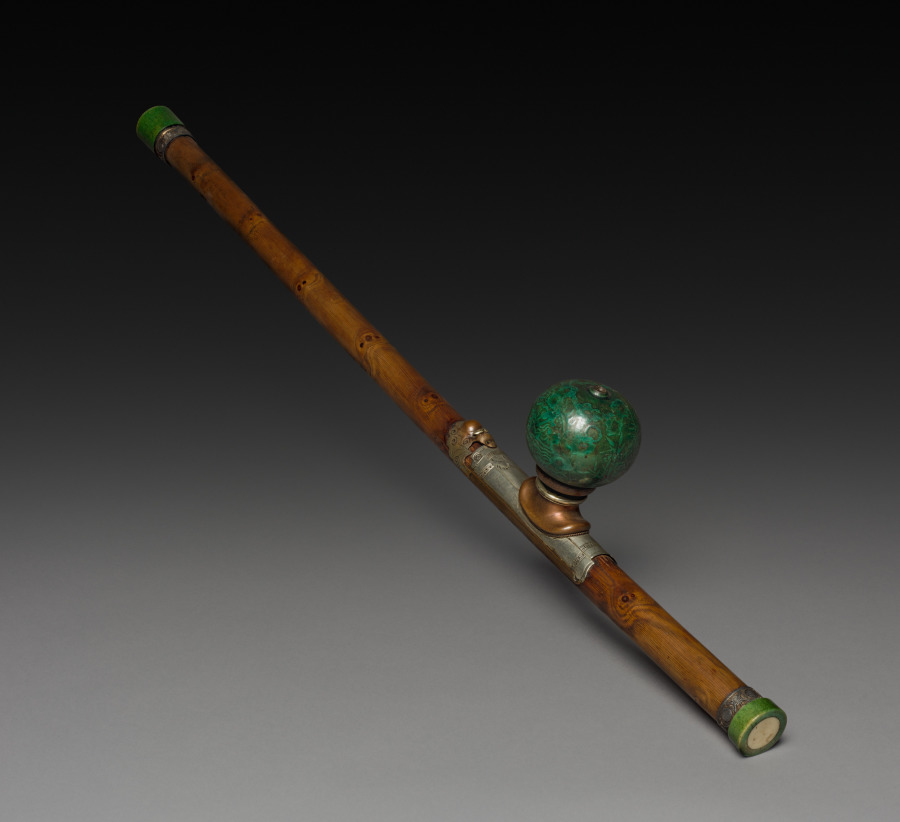
The Cleveland Museum of Art — Bequest of Cornelia Blakemore Warner
tobacco pipes
Opium Pipe, China, Qing dynasty (1644-1911), 1800s
1800s
Opium Pipe, China, Qing dynasty (1644-1911), 1800s is an object recorded by Cleveland Museum of Art, dated 1800s. The museum record gives material recorded as wood stem decorated with bronze and silver; measurements Overall: 56.8 cm (22 3/8 in.); place associated: China, Qing dynasty (1644-1911). These details come from the holding museum's own record; how far this object represents a wider collectible type has not yet been independently verified.
Partial type record
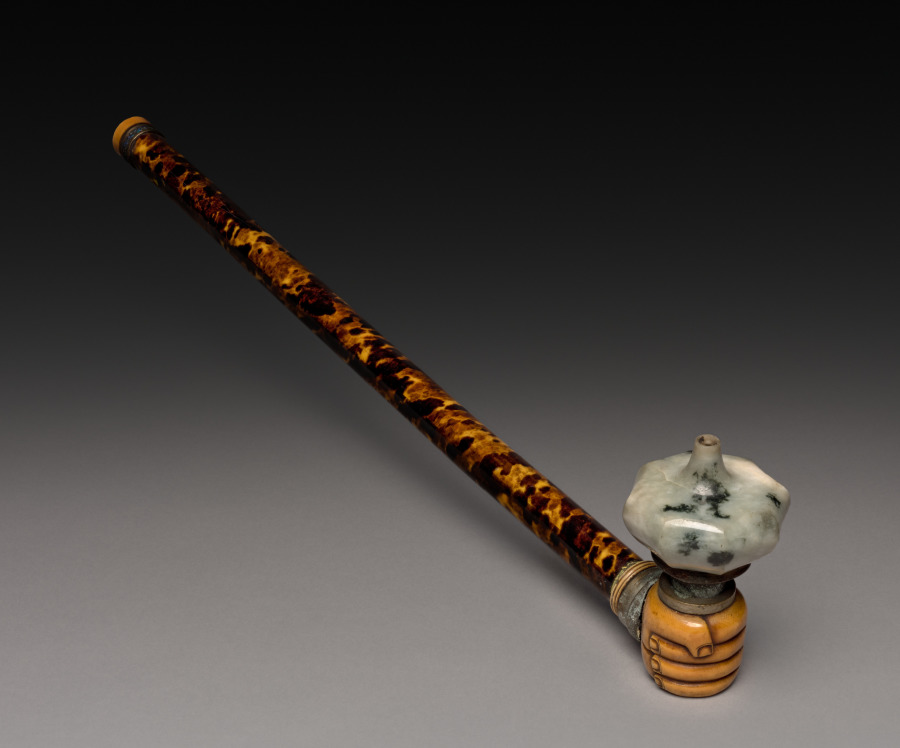
The Cleveland Museum of Art — Bequest of Cornelia Blakemore Warner
tobacco pipes
Opium Pipe, China, Qing dynasty (1644-1911), 1800s
1800s
Cleveland Museum of Art object 1947.585: Opium Pipe, 1800s. China, Qing dynasty (1644-1911). Imitation tortoise-shell, ivory and jade; overall: 43.2 cm (17 in.). Details are those of this museum object; how far it represents a wider type has not been independently verified.
Partial type record
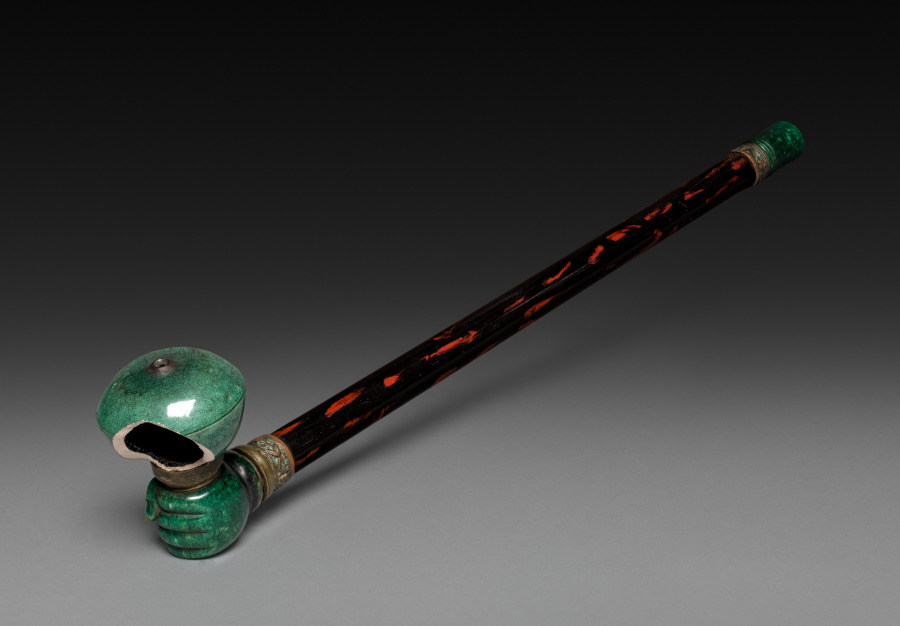
The Cleveland Museum of Art — Bequest of Cornelia Blakemore Warner
tobacco pipes
Opium Pipe, China, Qing dynasty (1644-1911), 1800s
1800s
Cleveland Museum of Art object 1947.598: Opium Pipe, 1800s. China, Qing dynasty (1644-1911). Lacquer, copper ferrules, and porcelain bowl; overall: 43.2 cm (17 in.). Details are those of this museum object; how far it represents a wider type has not been independently verified.
Partial type record
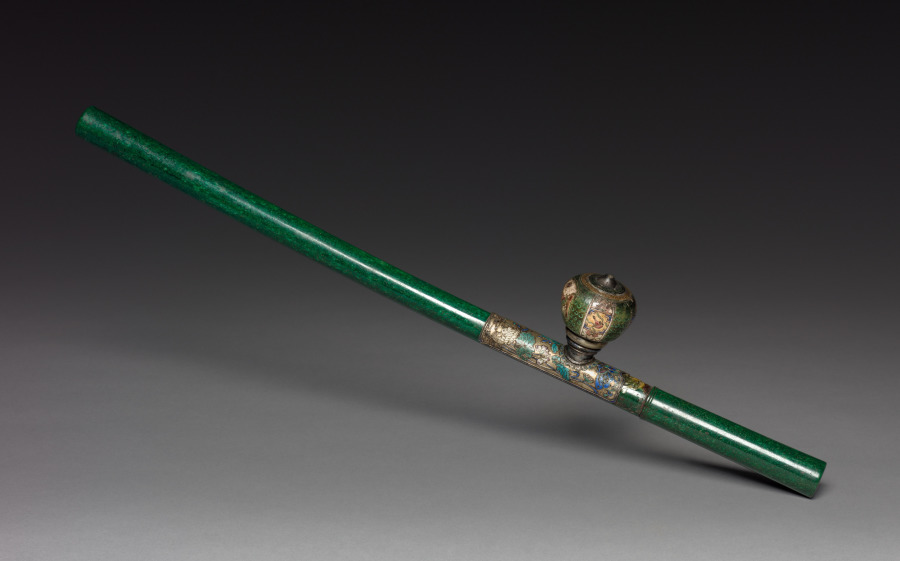
The Cleveland Museum of Art
tobacco pipes
Opium Pipe, China, Qing dynasty (1644-1911), 1800s (1947.583)
1800s
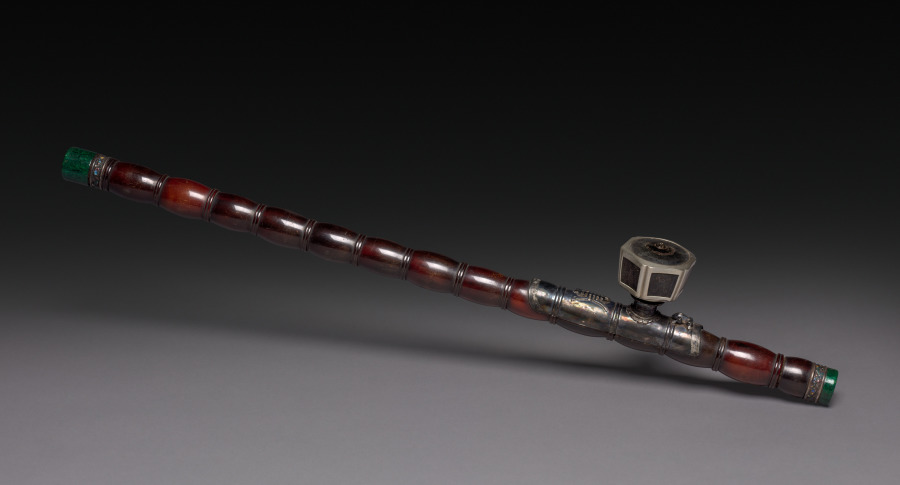
Opium Pipe in The Cleveland Museum of Art (accession 1947.583), classified by the museum as Miscellaneous, from China, Qing dynasty (1644-1911), dated 1800s. The museum records the material and technique as green stem decorated with enamel. Measurements: Overall: 54.6 cm (21 1/2 in.). These details are transcribed from the museum's open-access record; how far this object represents a wider collectible type has not yet been independently verified.
Partial type record
The Cleveland Museum of Art
tobacco pipes
Opium Pipe, China, Qing dynasty (1644-1911), 1800s (1947.586)
1800s
Opium Pipe in The Cleveland Museum of Art (accession 1947.586), classified by the museum as Miscellaneous, from China, Qing dynasty (1644-1911), dated 1800s. The museum records the material and technique as wood with silver and enamel ferrules. Measurements: Overall: 59.8 cm (23 9/16 in.). These details are transcribed from the museum's open-access record; how far this object represents a wider collectible type has not yet been independently verified.
Partial type record
Székely National Museum via Europeana
tobacco pipes
Pipe
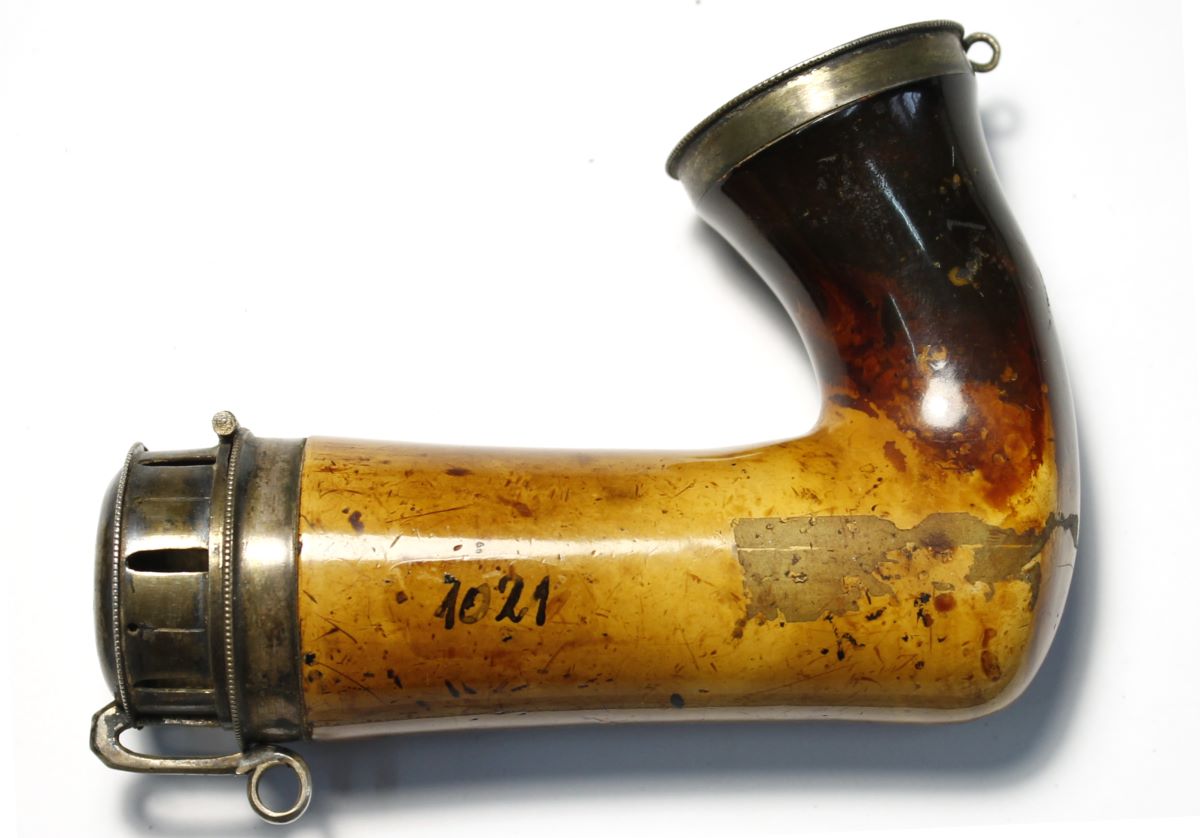
Pipe is held by Székely National Museum. Museum description: Wooden pipe with a cylindrical, curved, "L"-shaped body, being wider at the end of the pipe stem. The stem bears traces of dark paint. It is fitted with a long interchangeable mouthpiece. The bowl of the pipe is fitted with a silver lid bearing an inscription in calligraphic letters (engraved across 4 lines) "Deák Ferencznek gróf Szechenyi István 1840". The lid is provided with ventilation holes. The end of the stem is reinforced with a silver ring. The metal parts are slightly oxidized, and the pipe shows signs of functional wear. The mouthpiece is not preserved. The pipe is kept in a crystal box with a copper frame, lined with faded blue silk.; inscription [Hungarian]: Deák Ferencznek gróf Szechenyi István 1840. The museum record gives measurements L: 11 cm; D middle: 3.4 cm; D lid: 3.1 cm; D end: 4 cm; Case: 14 x 12 x 6 cm. These details come from the holding museum's own record; how far this object represents a wider collectible type has not yet been independently verified.
Partial type record
Cleveland Museum of Art, Leonard C. Hanna Jr. Fund
tobacco pipes
Pipe (Cleveland Museum of Art 2010.199)
1800s–1900s
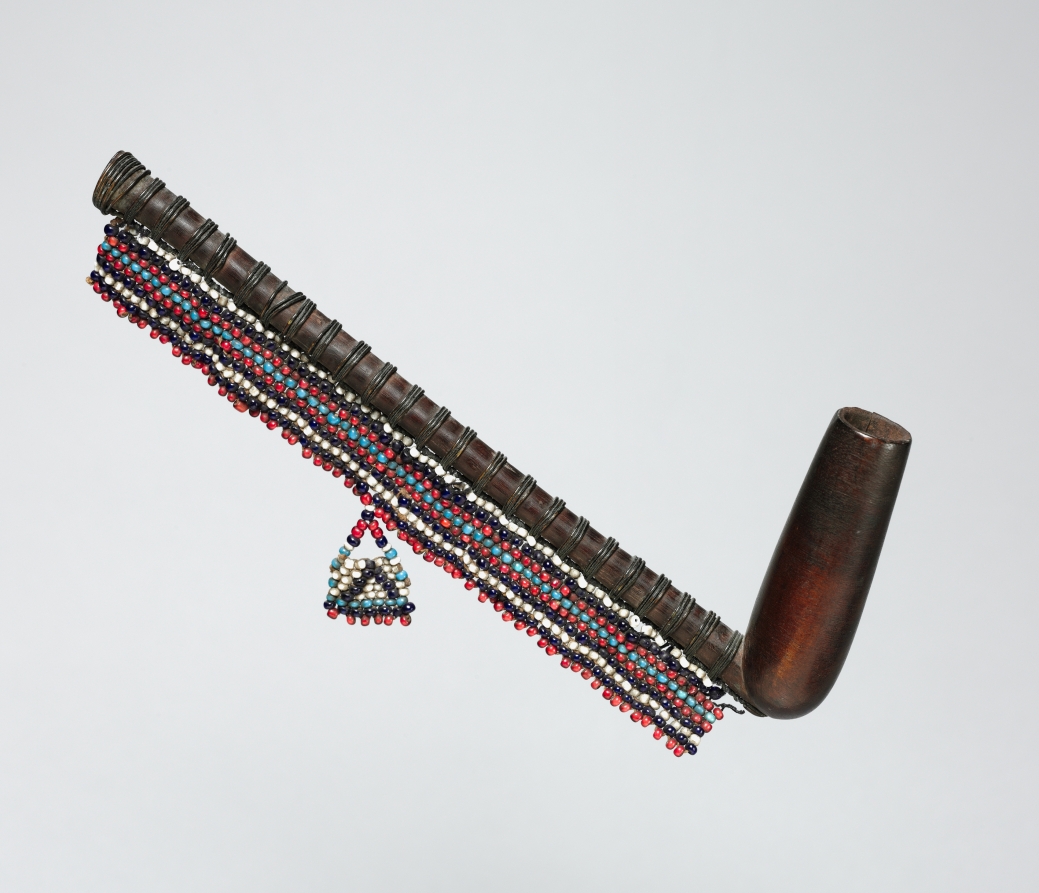
Mothers often used long-stemmed pipes like this because they helped direct smoke away from the babies they carried on their backs. Carved by men, pipes were used by both men and women. A female maker added beaded fringe using a color scheme typical of Xhosa beadwork. The miniature apron suspended from the fringe suggests a woman’s garment, and thus ownership of this pipe. Social and leisure practices, smoking and snuffing tobacco were also associated with the ancestors and with ideas of fertility and procreation. Inherited between individuals and families, pipes have connected clans and generations and thus linked the worldly present with the ancestral past. Cleveland Museum of Art object 2010.199: Pipe, 1800s–1900s. Africa, Southern Africa, South Africa, Xhosa-style maker(s). Wood, copper, glass beads, sinew, leather, and thread; overall: 20.3 cm (8 in.). Details are those of this museum object; how far it represents a wider type has not been independently verified.
Partial type record
Cleveland Museum of Art, Jo Hershey Selden Fund
tobacco pipes
Pipe bowl (Cleveland Museum of Art 2008.152)
early to mid-1900s
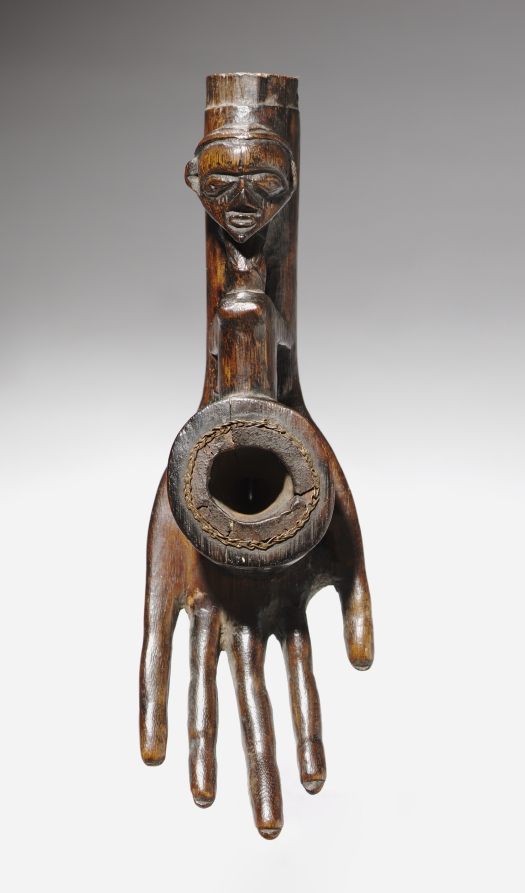
Tobacco smoking had important social connotations in Central Africa, denoting age, status, and gender. Perhaps the enlarged hand expressed physical and spiritual powers and indicates that this work belonged to a chief. Figuratively carved pipes and snuff mortars constitute important genres of Luluwa decorative arts. As personal objects reflecting the prominence and success of their male and sometimes female owners, they are usually the creative work of virtuoso artists and take a variety of often imaginative shapes. Cleveland Museum of Art object 2008.152: Pipe bowl, early to mid-1900s. Africa, Central Africa, Democratic Republic of Congo, Luluwa or Luntu maker. Wood, iron, and copper alloy; overall: 6 x 7.4 x 24 cm (2 3/8 x 2 15/16 x 9 7/16 in.). Details are those of this museum object; how far it represents a wider type has not been independently verified.
Partial type record
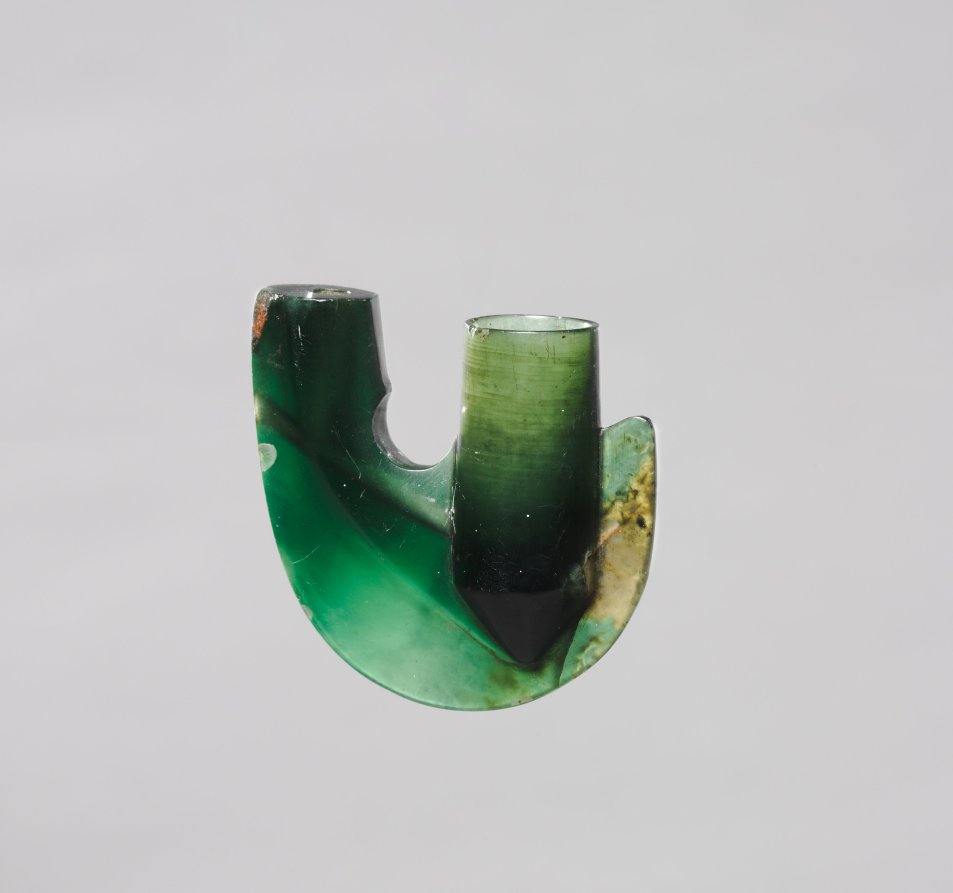
Cleveland Museum of Art, Purchase from the J. H. Wade Fund
tobacco pipes
Pipe Bowl (Cleveland Museum of Art 2012.42)
possibly 1800s
Carved from a deep green, translucent stone with a highly polished surface, this exquisite example of an extremely rare type of pipe bowl originates from the Eastern Cape Province in South Africa. Like the few other known examples, this pipe bowl would have been complemented by a stem, now lost, made from wood or reed or another less durable material. It is believed that such nephrite pipe bowls were copied from stone examples introduced by 17th-century Dutch settlers in the Cape region. In southern Africa, smoking tobacco and taking snuff were and still are enjoyed as activities that establish or solidify harmonious social relationships. In addition to their practical function as smoking devices, pipes of unusual and therefore costly materials and in fancy and refined shapes and forms, like this example, served as markers of rank and status and indicated prestige and socioeconomic prominence. Cleveland Museum of Art object 2012.42: Pipe Bowl, possibly 1800s. Africa, Southern Africa, South Africa, Southern Nguni-style maker. Nephrite and metal; overall: 5.5 cm (2 3/16 in.). Details are those of this museum object; how far it represents a wider type has not been independently verified.
Partial type record
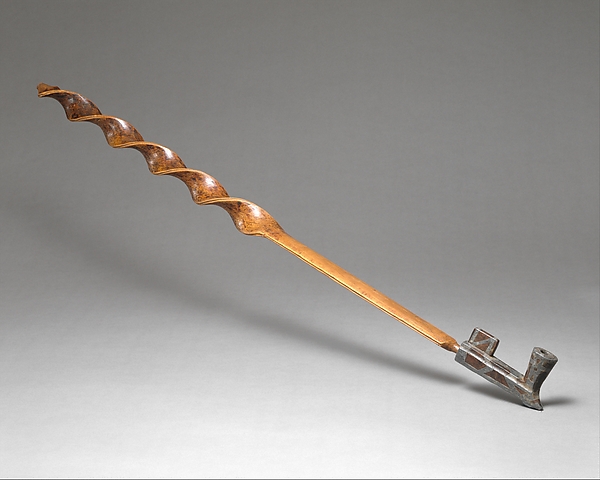
The Metropolitan Museum of Art, New York
tobacco pipes
Pipe Bowl and Stem, Eastern Plains or Ojibwa, 1840–50
1840–50
Pipe bowl and stem in The Metropolitan Museum of Art, New York (accession 2011.154.74a, b), catalogued by the museum's The American Wing department. The museum dates it 1840–50 and records its origin as Eastern Plains or Ojibwa; United States. The museum records the medium as Wood, lead and the dimensions as H. 2 1/2 x L. 34 in. (6.4 x 86.4 cm). These details are transcribed from the museum's open-access record; how far this object represents a wider collectible type has not yet been independently verified.
Partial type record
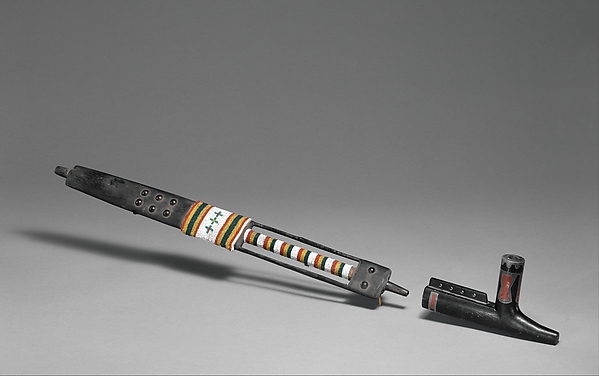
The Metropolitan Museum of Art, New York
tobacco pipes
Pipe Bowl and Stem, Ojibwa, ca. 1885
ca. 1885
Pipe bowl and stem in The Metropolitan Museum of Art, New York (accession 2011.154.75a, b), catalogued by the museum's The American Wing department. The museum dates it ca. 1885 and records its origin as Ojibwa; United States. The museum records the medium as Catlinite, chlorite, lead (bowl); wood, glass, beads, metal (stem) and the dimensions as Bowl: H. 4 x L. 7 3/4 in. (10.2 x 19.7 cm) Stem: W. 2 3/8 x L. 22 3/4 in. (6 x 57.8 cm). These details are transcribed from the museum's open-access record; how far this object represents a wider collectible type has not yet been independently verified.
Partial type record
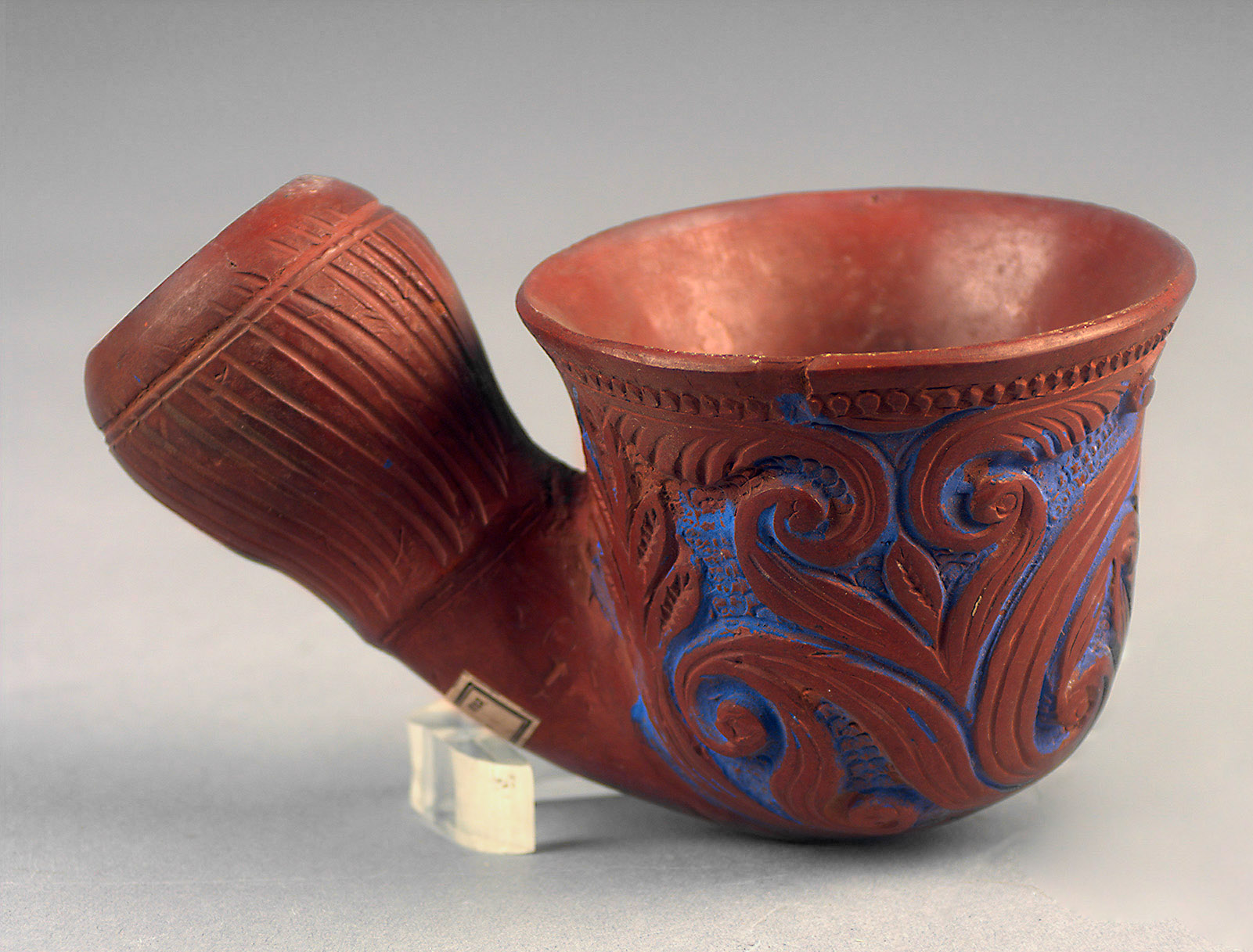
World Museum Vienna via Europeana
tobacco pipes
Pipe bowl for the long-stemmed Turkish tobacco pipe (chibouk)
Pipe bowl for the long-stemmed Turkish tobacco pipe (chibouk) is held by World Museum Vienna. Museum description: Red "Turkish pipe bowls" for the long-stemmed pipe, the chibouk, were produced and exported in large quantities in Asyut. In the wake of the International World Expositions, they achieved veritable cult status. The museum record gives material recorded as Ceramic, pigment; measurements W. 10.3 cm, H. 6 cm, D. 6.1 cm; place associated: North Africa/Nile countries/Egypt/Middle Egypt/Asyut. These details come from the holding museum's own record; how far this object represents a wider collectible type has not yet been independently verified.
Partial type record
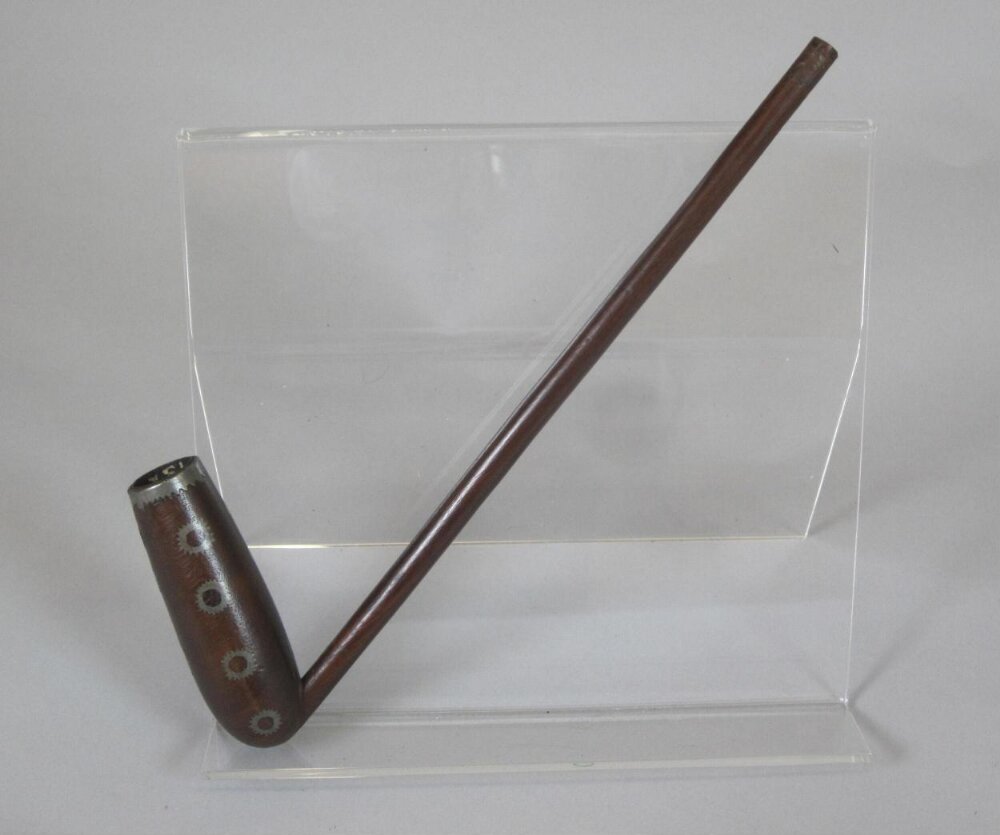
© Victoria and Albert Museum, London
tobacco pipes
Pipe bowl, America, mid 19th century
mid 19th century
Pipe bowl, America, mid 19th century is an object recorded by Victoria and Albert Museum, dated mid 19th century. The museum's brief description reads: Wood; USA, Indian. Museum description: Pipe of wood; the bowl and stem in one piece, with inlay of annular ornament in white metal. The museum record gives material recorded as wood, white metal; measurements Diameter 8.3 cm; Length 22.9 cm; place associated: America. These details come from the holding museum's own record; how far this object represents a wider collectible type has not yet been independently verified.
Partial type record
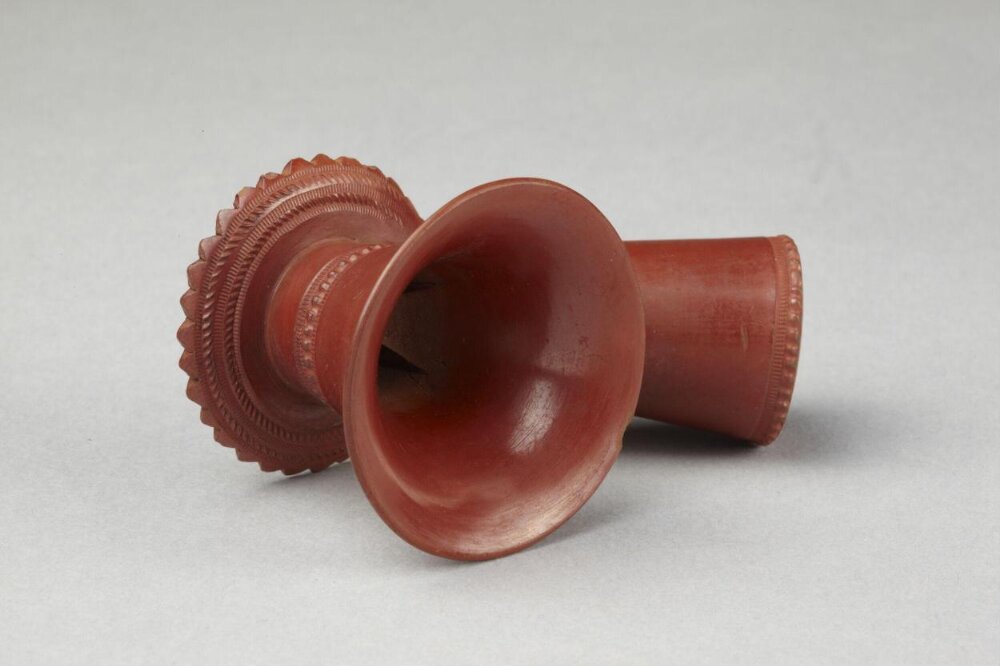
© Victoria and Albert Museum, London
tobacco pipes
Pipe bowl, Asyut, middle of 19th century
middle of 19th century
Pipe bowl, Asyut, middle of 19th century is an object recorded by Victoria and Albert Museum, dated middle of 19th century. The museum's brief description reads: Pipe bowl of red burnished earthenware, Asyut, middle of 19th century.. Museum description: Pipe bowl of red burnished earthenware. Flaring bowl standing on a disc with a toothed edge. Short stem set at an angle to the bowl, decorated with carved milled and beaded bands. Similar carved decoration around the lower part of the bowl and on the upper side of the disc. The museum record gives material recorded as earthenware; measurements Length 7.6 cm; place associated: Asyut. These details come from the holding museum's own record; how far this object represents a wider collectible type has not yet been independently verified.
Partial type record
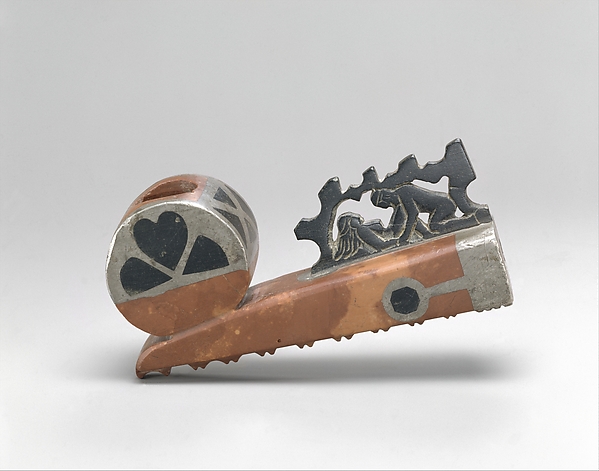
The Metropolitan Museum of Art, New York
tobacco pipes
Pipe Bowl, Eastern Sioux, ca. 1840
ca. 1840
Pipe bowl in The Metropolitan Museum of Art, New York (accession 2011.154.112), catalogued by the museum's The American Wing department. The museum dates it ca. 1840 and records its origin as Eastern Sioux; United States. The museum records the medium as Catlinite, black stone, metal and the dimensions as H. 2 x 4 1/2 in. (5.1 x 11.4 cm). Subject tags assigned by the museum: Male Nudes, Female Nudes. These details are transcribed from the museum's open-access record; how far this object represents a wider collectible type has not yet been independently verified.
Partial type record
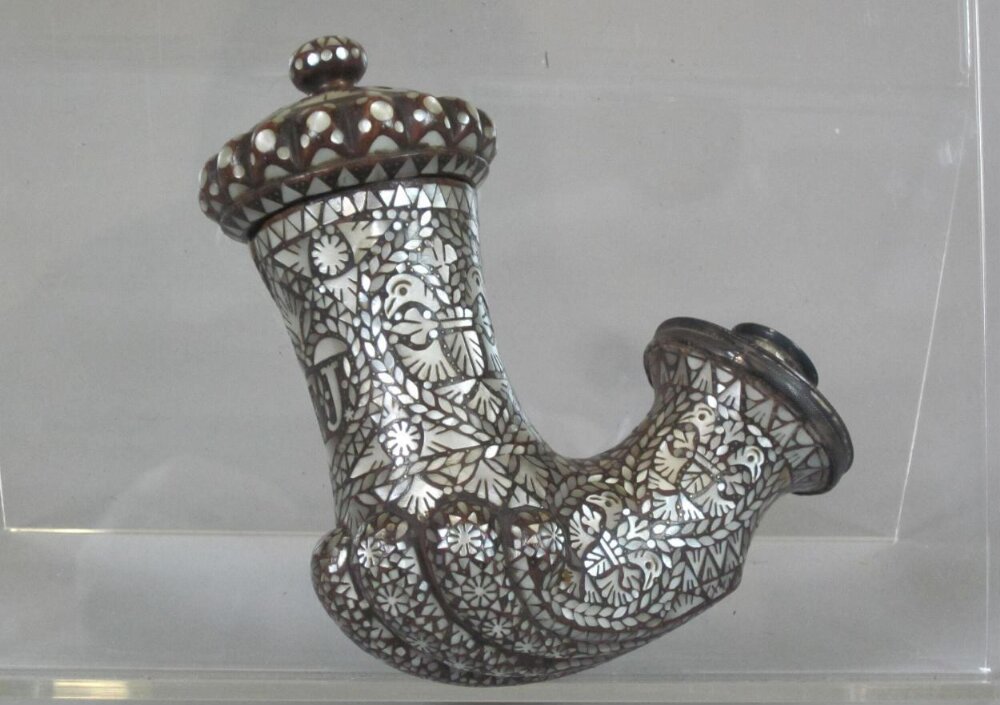
© Victoria and Albert Museum, London
tobacco pipes
Pipe bowl, Germany, 17th century
17th century
Pipe bowl, Germany, 17th century is an object recorded by Victoria and Albert Museum, dated 17th century. The museum's brief description reads: wood; German; 17th c.. Museum description: Pipe bowl of wood, inlaid with mother of pearl in a pattern of the two-headed eagle, and with the initials 'F. J.' Inside the lid is a silver coin of Ferdinand Charles, Archduke of Austria, dated 1660. The museum record gives material recorded as mother of pearl, wood, silver; measurements Height 10.5 cm; Length 9.2 cm; place associated: Germany. These details come from the holding museum's own record; how far this object represents a wider collectible type has not yet been independently verified.
Partial type record
© Victoria and Albert Museum, London
tobacco pipes
Pipe bowl, Germany, 1872
1872
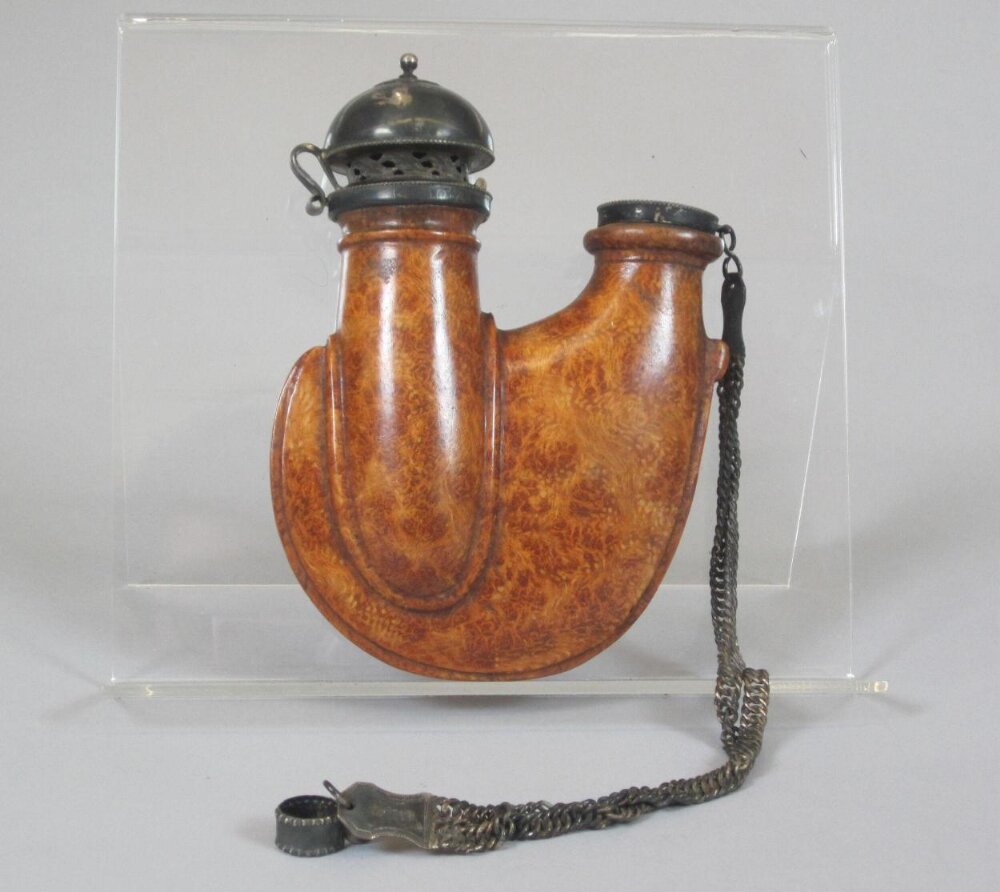
Pipe bowl, Germany, 1872 is an object recorded by Victoria and Albert Museum, dated 1872. The museum's brief description reads: Pipe bowl, German, 1872. Museum description: Pipe; maple wood bowl, with silver cap and chain and horn stem. The museum record gives material recorded as maple, silver, horn; measurements Height 14.9 cm; Width 10.8 cm; place associated: Germany. These details come from the holding museum's own record; how far this object represents a wider collectible type has not yet been independently verified.
Partial type record
© Victoria and Albert Museum, London
tobacco pipes
Pipe bowl, Germany, 18th century
18th century
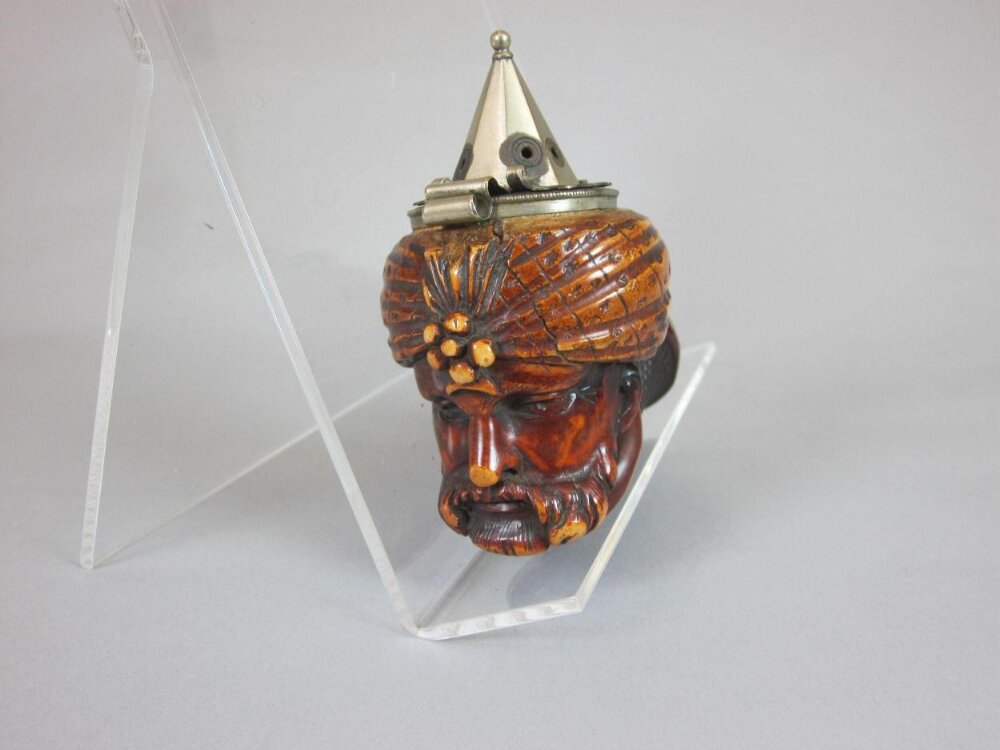
Pipe bowl, Germany, 18th century is an object recorded by Victoria and Albert Museum, dated 18th century. The museum's brief description reads: Meerschaum; German; 18th c.. Museum description: Pipe bowl of meerschaum, carved in the form of a turbaned head, the neck diapered with cross hatching; silver gilt mountings. The museum record gives material recorded as meerschaum, silver; measurements Height 9.5 cm; Length 9.5 cm; place associated: Germany. These details come from the holding museum's own record; how far this object represents a wider collectible type has not yet been independently verified.
Partial type record
© Victoria and Albert Museum, London
tobacco pipes
Pipe bowl, Germany, 18th century
18th century
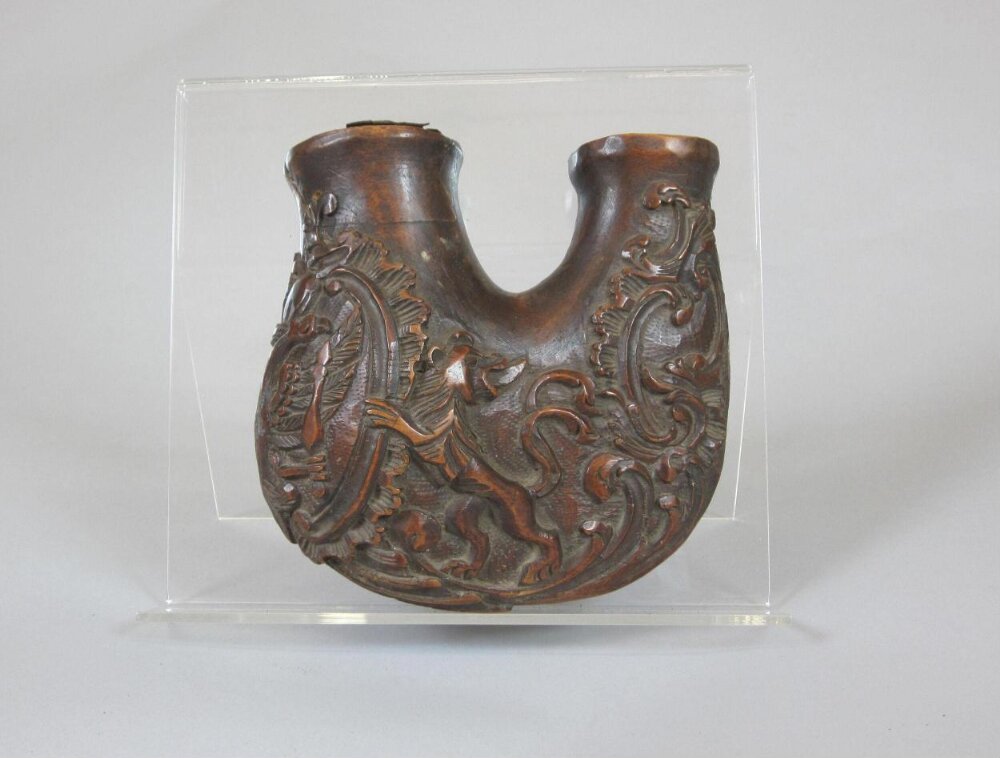
Pipe bowl, Germany, 18th century is an object recorded by Victoria and Albert Museum, dated 18th century. The museum's brief description reads: Wood; German; 18th c.. Museum description: Pipe bowl of wood, carved in relief with a crowned two-headed eagle between scrolls supported by lions, and with similar srolls on the neck of the bowl. The museum record gives material recorded as wood; measurements Height 13 cm; Width 13.3 cm; place associated: Germany. These details come from the holding museum's own record; how far this object represents a wider collectible type has not yet been independently verified.
Partial type record
© Victoria and Albert Museum, London
tobacco pipes
Pipe bowl, Germany, 18th century
18th century
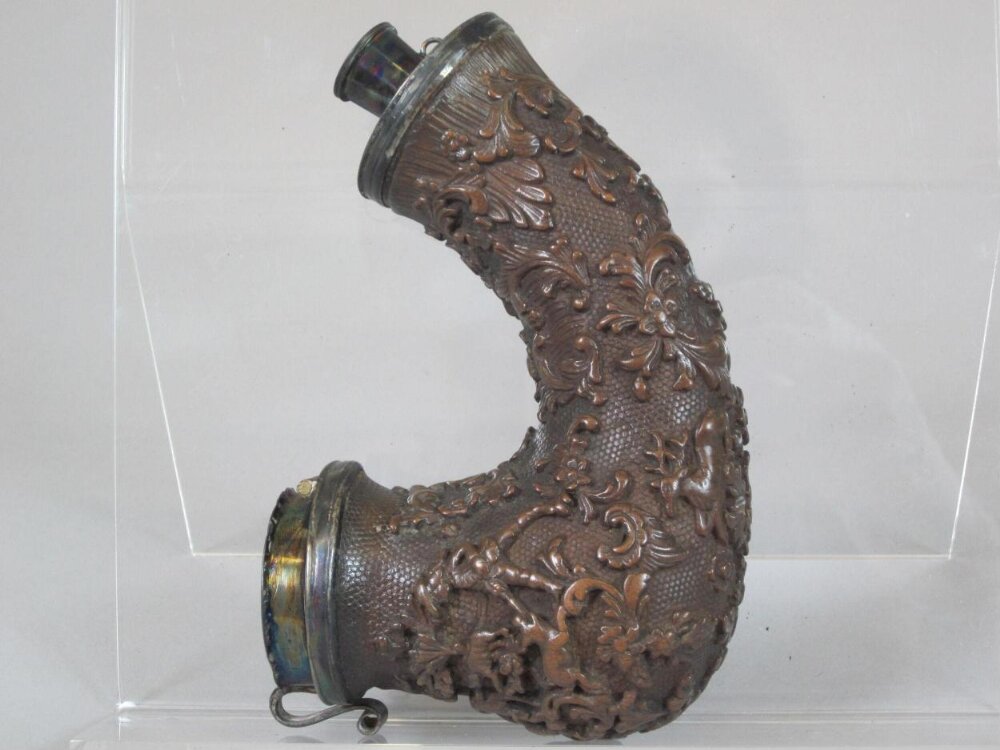
Pipe bowl, Germany, 18th century is an object recorded by Victoria and Albert Museum, dated 18th century. The museum's brief description reads: wood; German; 18th c.. Museum description: Pipe bowl of wood, carved in relief with subjects from the chase and foliage, the ground cross-hatched to resemble fish skin; silver mountings. The museum record gives material recorded as wood, silver; measurements Height 8.6 cm; Width 13 cm; place associated: Germany. These details come from the holding museum's own record; how far this object represents a wider collectible type has not yet been independently verified.
Partial type record
© Victoria and Albert Museum, London
tobacco pipes
Pipe bowl, Germany, 19th century
19th century
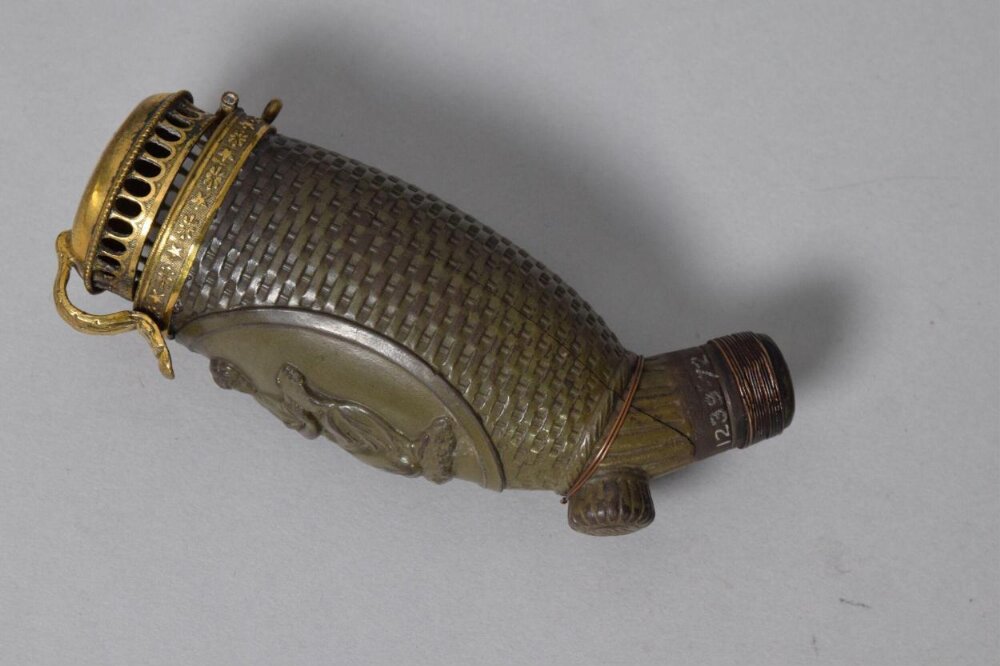
Pipe bowl, Germany, 19th century is an object recorded by Victoria and Albert Museum, dated 19th century. The museum's brief description reads: Pipe bowl, stamped earthenware, Nuremberg, Germany, 19th century. Museum description: Olive green coloured earthenware, stamped with wickerwork pattern, and with the figure of a girl reading, within a plain oval medallion. The lid is of gilt metal, stamped in the centre with the figure of Psyche. The museum record gives material recorded as earthenware; measurements Height 11.3 cm; Diameter 3.8 cm; place associated: Germany. These details come from the holding museum's own record; how far this object represents a wider collectible type has not yet been independently verified.
Partial type record
© Victoria and Albert Museum, London
tobacco pipes
Pipe bowl, Germany, 19th century
19th century
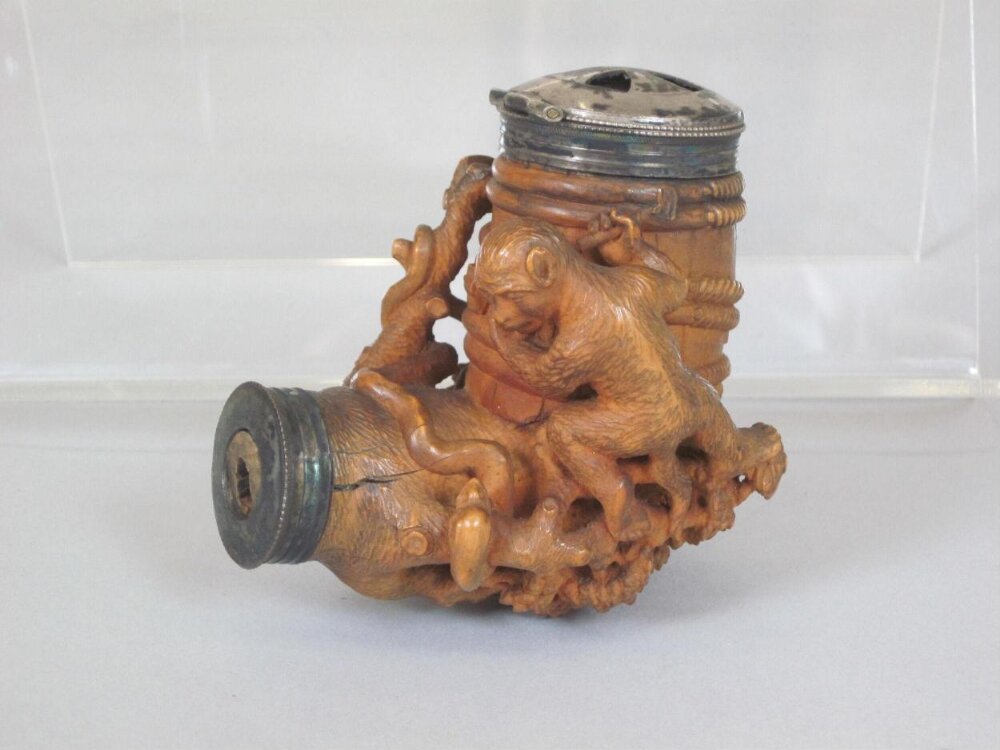
Pipe bowl, Germany, 19th century is an object recorded by Victoria and Albert Museum, dated 19th century. The museum's brief description reads: wood; German; 19th c.. Museum description: Pipe bowl of wood; carved in the form of a barrel, the hoops of which are being removed by a dog and a monkey, while a serpant twines around the branches of a tree upon which the whole rests. The mountings are silver. The museum record gives material recorded as wood, silver; measurements Height 7.6 cm; Width 7.3 cm; place associated: Germany. These details come from the holding museum's own record; how far this object represents a wider collectible type has not yet been independently verified.
Partial type record
© Victoria and Albert Museum, London
tobacco pipes
Pipe bowl, Germany, 19th century
19th century
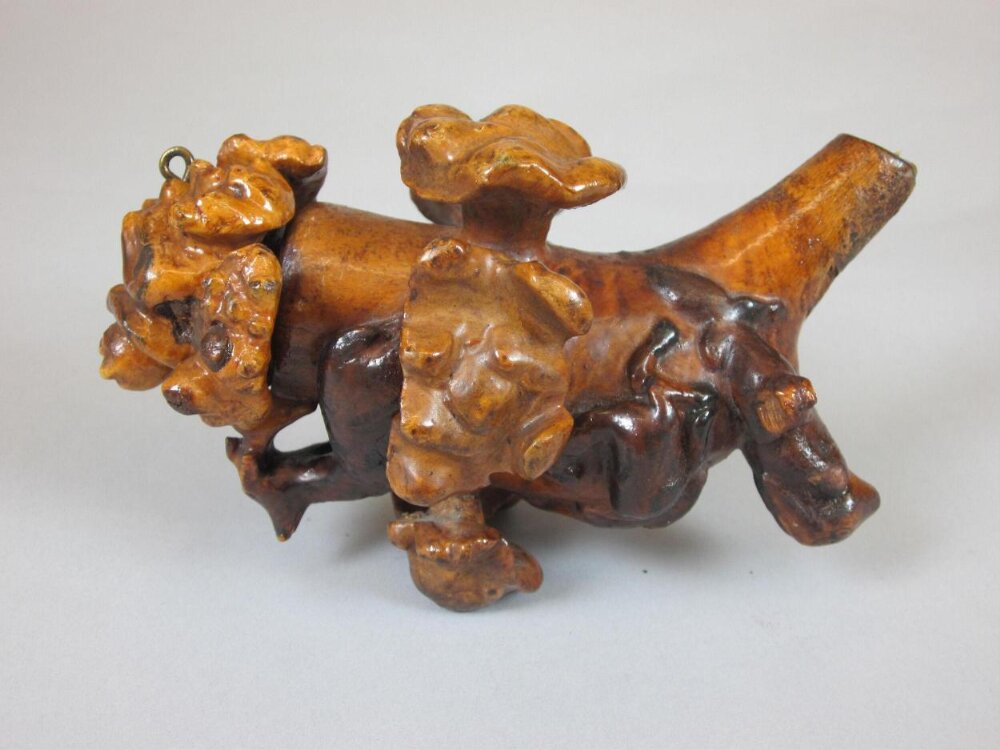
Pipe bowl, Germany, 19th century is an object recorded by Victoria and Albert Museum, dated 19th century. The museum's brief description reads: Pipe bowl, German, 19th century. Museum description: Pipe bowl, made from a wooden root carved in high relief with deer and other animals of the chase and with fungoid forms; the stopper is similarly carved. The museum record gives material recorded as root, wood; measurements Length 14 cm; place associated: Germany. These details come from the holding museum's own record; how far this object represents a wider collectible type has not yet been independently verified.
Partial type record
The Metropolitan Museum of Art, New York
tobacco pipes
Pipe Bowl, Haida, 1815–20
1815–20
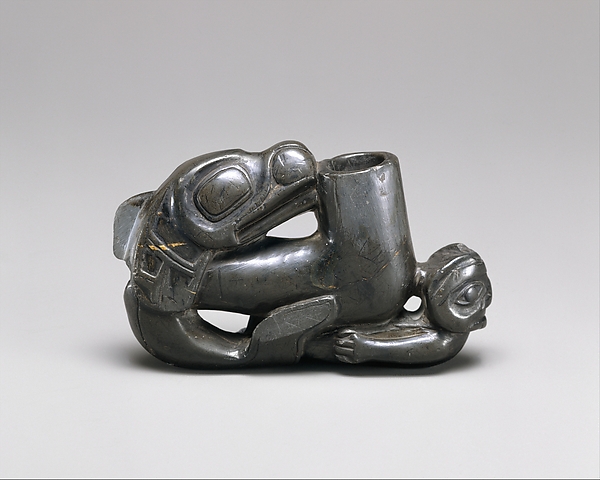
Pipe bowl in The Metropolitan Museum of Art, New York (accession 2011.154.51), catalogued by the museum's The American Wing department. The museum dates it 1815–20 and records its origin as Haida; Canada. The museum records the medium as Argillite and the dimensions as H. 2 1/2 x W. 3 3/4 in. (6.4 x 9.5 cm). Subject tags assigned by the museum: Whales. These details are transcribed from the museum's open-access record; how far this object represents a wider collectible type has not yet been independently verified.
Partial type record
© Victoria and Albert Museum, London
tobacco pipes
Pipe bowl, Italy, 19th century
19th century
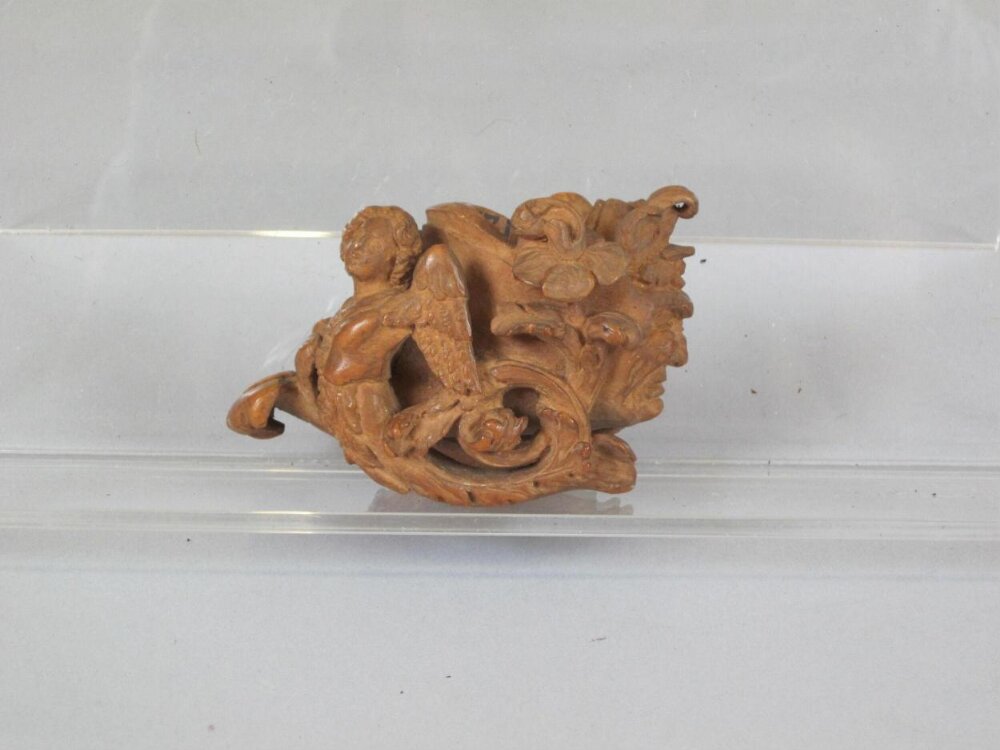
Pipe bowl, Italy, 19th century is an object recorded by Victoria and Albert Museum, dated 19th century. The museum's brief description reads: wood; Italian; 19th c.. Museum description: Pipe bowl of wood, carved in high relief with a grotesque mask and two demi-figures with wings and with foliated extremities. The museum record gives material recorded as wood; measurements Height 6.4 cm; Width 3.8 cm; place associated: Italy; maker recorded: unknown. These details come from the holding museum's own record; how far this object represents a wider collectible type has not yet been independently verified.
Partial type record
© Victoria and Albert Museum, London
tobacco pipes
Pipe bowl, Italy, 19th century
19th century
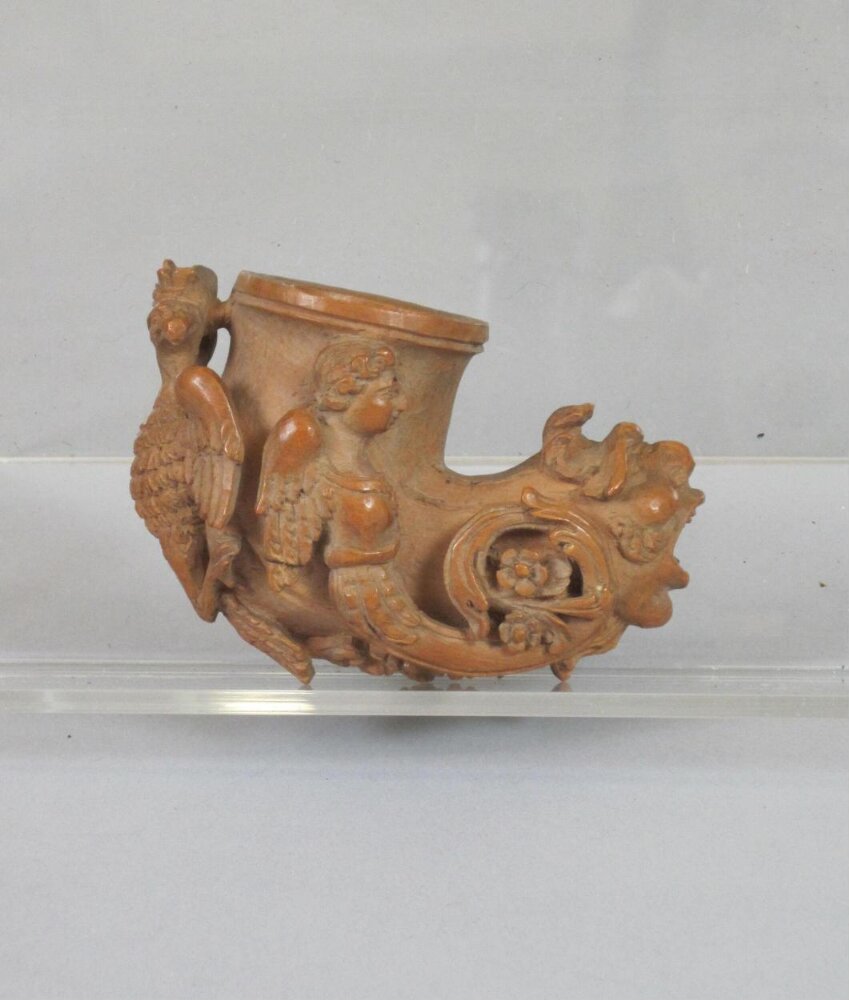
Pipe bowl, Italy, 19th century is an object recorded by Victoria and Albert Museum, dated 19th century. The museum's brief description reads: wood; Italian; 19th c.. Museum description: Pipe bowl of wood, carved in relief with a crowned double eagle, two demi-figures with wings and terminal scrolls, and a grotesque head with open mouth. The museum record gives material recorded as wood; measurements Height 7.3 cm; Width 4.8 cm; place associated: Italy. These details come from the holding museum's own record; how far this object represents a wider collectible type has not yet been independently verified.
Partial type record
© Victoria and Albert Museum, London
tobacco pipes
Pipe bowl, Italy, 19th century
19th century
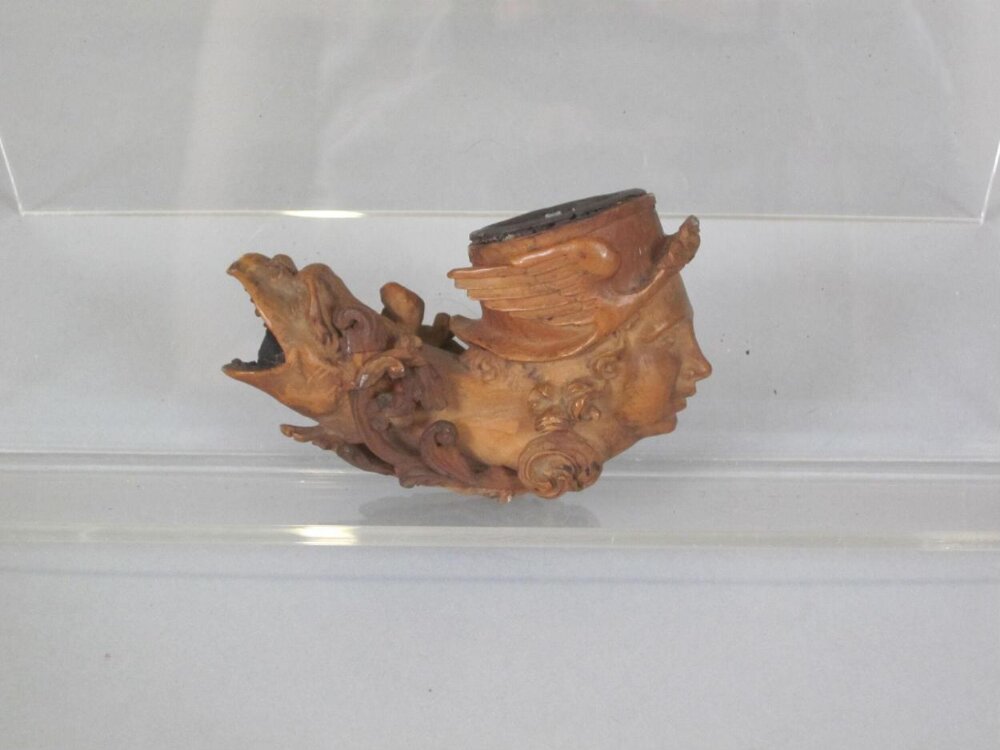
Pipe bowl, Italy, 19th century is an object recorded by Victoria and Albert Museum, dated 19th century. The museum's brief description reads: wood; Italian; 19th c.. Museum description: Pipe bowl of carved wood, the bowl itself in the form of the head of Mercury, the neck in the form of a griffin's head with open beak. The museum record gives material recorded as wood; measurements Height 4.1 cm; Width 7.3 cm; place associated: Italy. These details come from the holding museum's own record; how far this object represents a wider collectible type has not yet been independently verified.
Partial type record
© Victoria and Albert Museum, London
tobacco pipes
Pipe bowl, Russia, 1867
1867
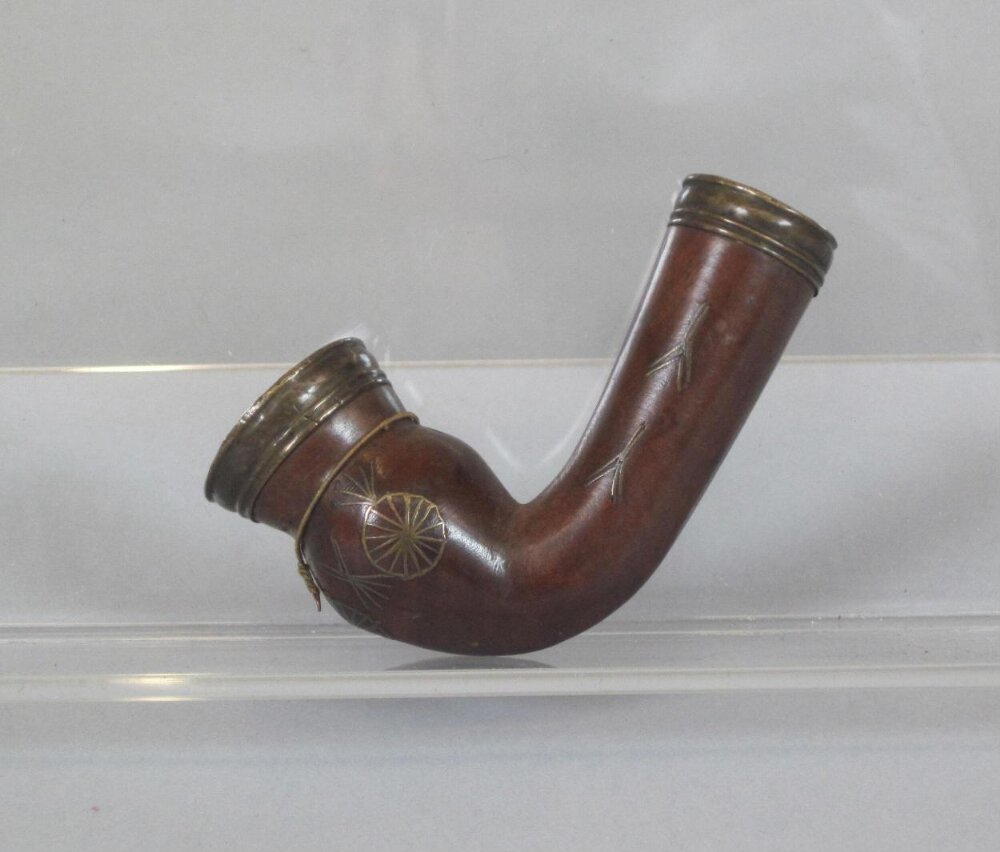
Pipe bowl, Russia, 1867 is an object recorded by Victoria and Albert Museum, dated 1867. The museum's brief description reads: Wood; Russian; 1867 Paris Ex.. Museum description: Pipe bowl of wood, inlaid with brass. The museum record gives material recorded as Wood, brass; measurements Length 6.4 cm; place associated: Russia. These details come from the holding museum's own record; how far this object represents a wider collectible type has not yet been independently verified.
Partial type record
Arad Museum Complex via Europeana
tobacco pipes
Pipe donated by Kossuth Lajos to Csernovits Péter, 1866
1866
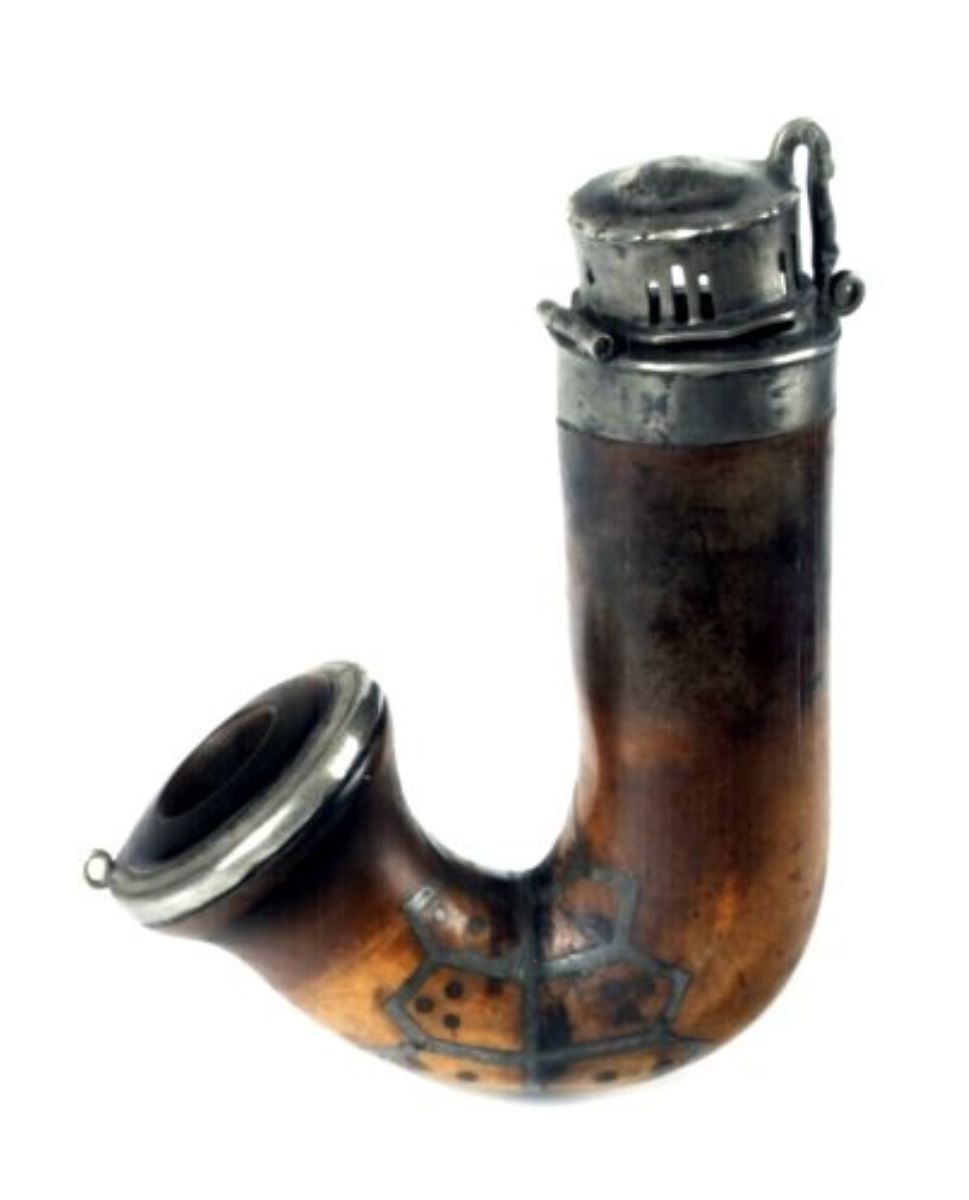
Pipe donated by Kossuth Lajos to Csernovits Péter, 1866 is held by Arad Museum Complex, dated 1866. Museum description: Brown meerschaum pipe, featuring mount and lid of .950 silver. On the bowl of the pipe is an inlaid lead geometric decoration. The lid mount has the Diana Kopf mark (of Timișoara?) and the maker's mark (N). The base of the pipe bears the mark KLITSCH. The pipe stem is missing. The pipe was donated by Kossuth Lajos to Csernovits Péter (after 1866 according to the silver hallmark); inscription [Hungarian]: KLITSCH The museum record gives measurements H: 11.5 cm; W: 9.4 cm; d: 3.4 cm; D: 4.2 cm. These details come from the holding museum's own record; how far this object represents a wider collectible type has not yet been independently verified.
Partial type record
Arad Museum Complex via Europeana
tobacco pipes
Pipe of General Dessewffy Arisztid
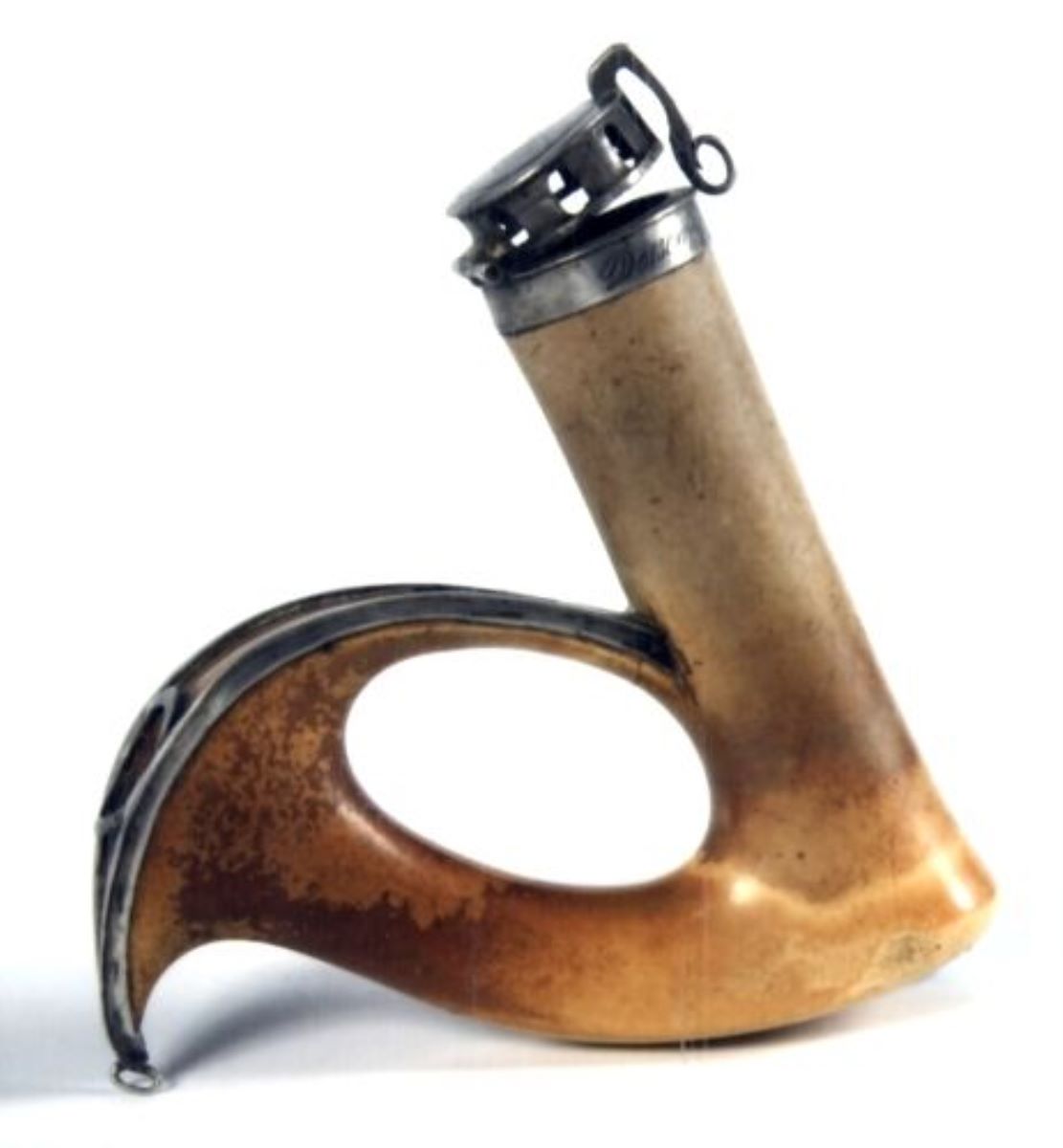
Pipe of General Dessewffy Arisztid is held by Arad Museum Complex. Museum description: The pipe of General Dessewffy Arisztid has an arched fitting, silver-plated on the bow, and a silver lid. On the chased and engraved lid are floral motifs. The fitting of the lid bears the signature of the general as an inscription, Pipa generalului Dessewffy Aristid. The stem is missing. The pipe was used by the Hungarian revolutionary general during the 1848 military campaign in Transylvania.; inscription [Hungarian]: Dessewffy Aristid. The museum record gives measurements L: 11 cm; H: 11 cm; place associated: municipality of discovery: com. Harsany; county of discovery: Borsod-Abauj-Zemplen County. These details come from the holding museum's own record; how far this object represents a wider collectible type has not yet been independently verified.
Partial type record
Arad Museum Complex via Europeana
tobacco pipes
Pipe of General Vécsey Károly, 1840
1840
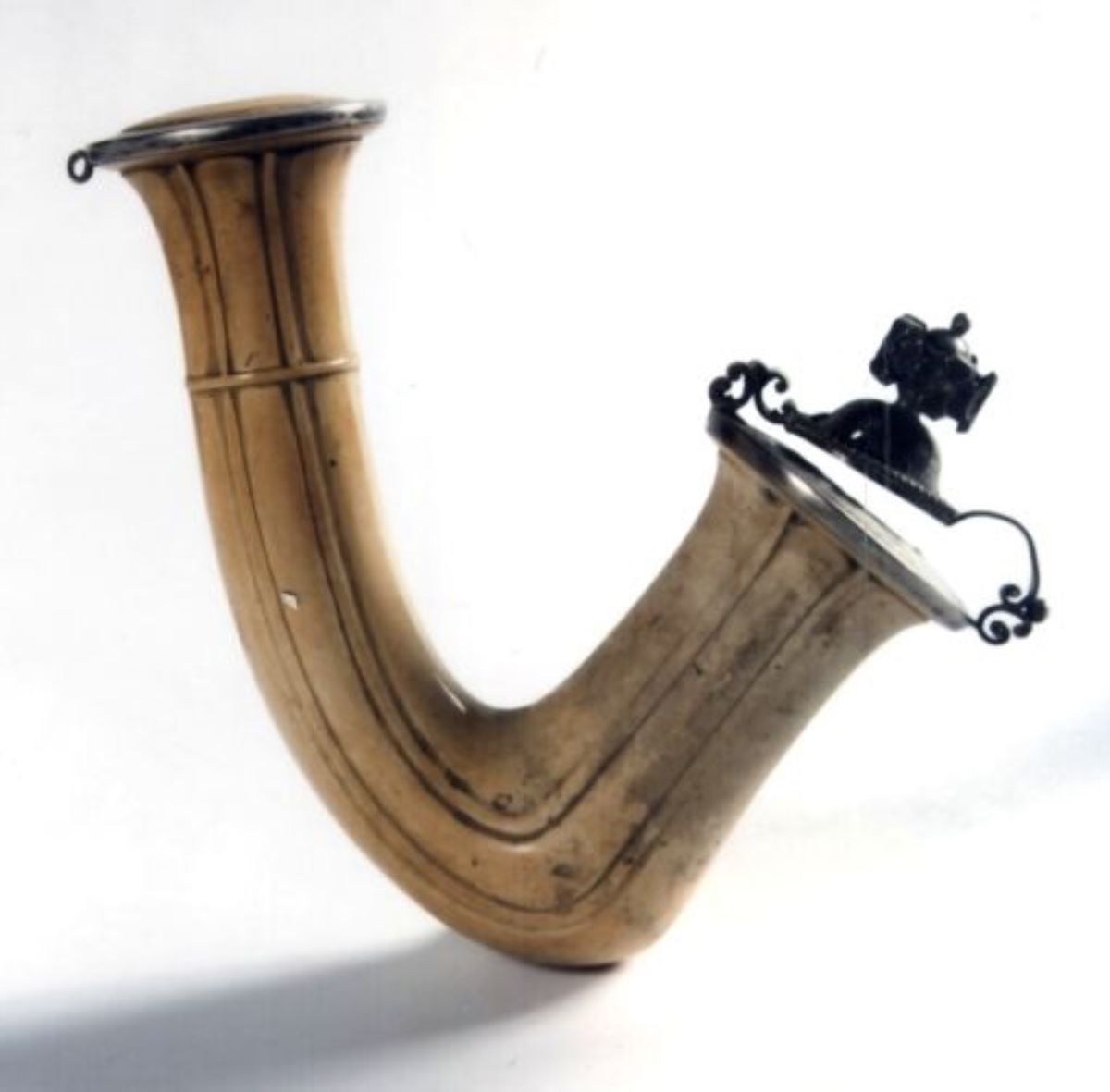
Pipe of General Vécsey Károly, 1840 is held by Arad Museum Complex, dated 1840. Museum description: General Vécsey Károly's meerschaum pipe has a convex silver lid, decorated with floral and geometric motifs, hinged, with fasteners. The base of the pipe has a silver ring, and stamped on the meerschaum part is the inscription „MEDETZ”. It ends with a loop for attaching the chain, which is missing. The yellowish-brown pipe body is L-shaped, slightly curved, run along its length by parallel lines. The rim of the pipe is clad in silver, bearing a silver hallmark 13(?) loth (812.5). The pipe was used by the Hungarian revolutionary general Vécsey Károly during the 1848 military campaign.; inscription [Hungarian]: NEDETZ The museum record gives measurements L: 15 cm; H: 12 cm. These details come from the holding museum's own record; how far this object represents a wider collectible type has not yet been independently verified.
Partial type record
National Museum of Romanian History via Europeana
tobacco pipes
Pipe with cylindrical bowl
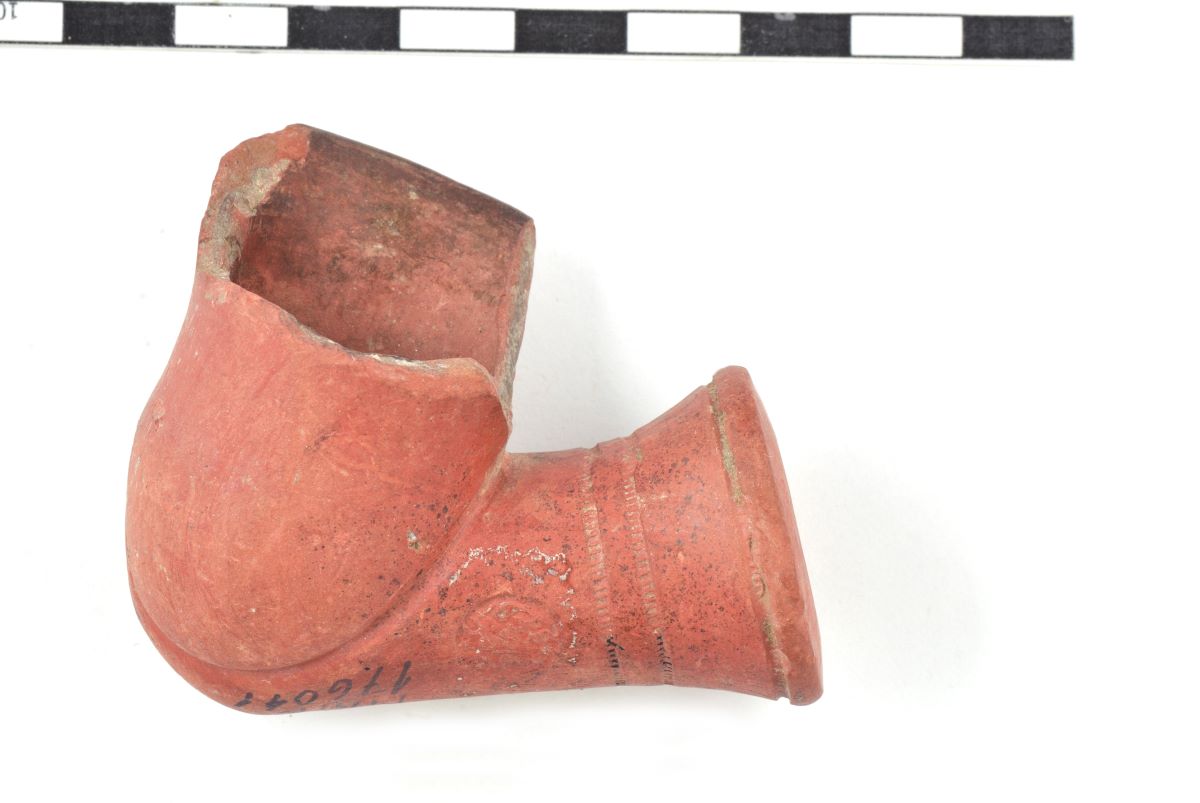
Pipe with cylindrical bowl is held by National Museum of Romanian History. Museum description: Pipe made of reddish, fine ceramic, with red varnish. The bowl is tall, cylindrical in trumpet form, and the rim flares outward with a rounded edge. The short shank is decorated near the ring with two rows of fine rouletted incisions and with a circular stamp on one side. The shank joins the back of the bowl in a "V" shape. A third line decorates the horizontally beveled ring. The museum record gives measurements D bowl 31 mm; D ring 27 mm; length: 58 mm; height: 47 mm. These details come from the holding museum's own record; how far this object represents a wider collectible type has not yet been independently verified.
Partial type record
National Museum of Romanian History via Europeana
tobacco pipes
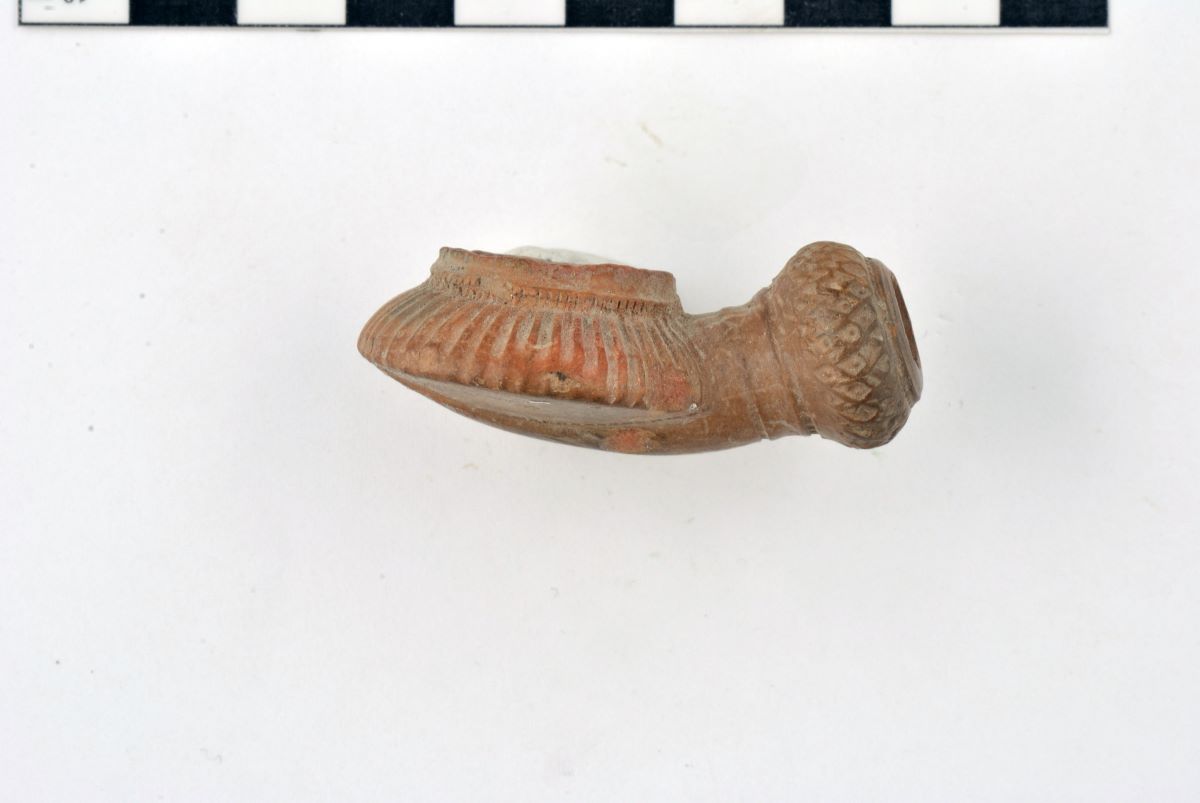
Pipe with disc bowl
Pipe with disc bowl is held by National Museum of Romanian History. Museum description: Pipe made of reddish ceramic, with a low disc-shaped bowl decorated on its surface, around the rim, with radially arranged grooves. The bowl is demarcated from the rim by a line made with a roulette wheel. The short shank extends onto the back of the bowl in a "V" shape. It is decorated with two concentric incised lines made with a roulette wheel. The ring is sleeve-shaped, decorated with rhombs made with a roulette wheel. The piece is missing the bowl wall and shows chips and scratches on its exterior dating from the period of its use, as well as dirt accretions from the soil in which it was discovered. The museum record gives measurements D bowl 34 mm; D ring 19 mm; length: 49 mm; height: 15 mm. These details come from the holding museum's own record; how far this object represents a wider collectible type has not yet been independently verified.
Partial type record
National Museum of Romanian History via Europeana
tobacco pipes
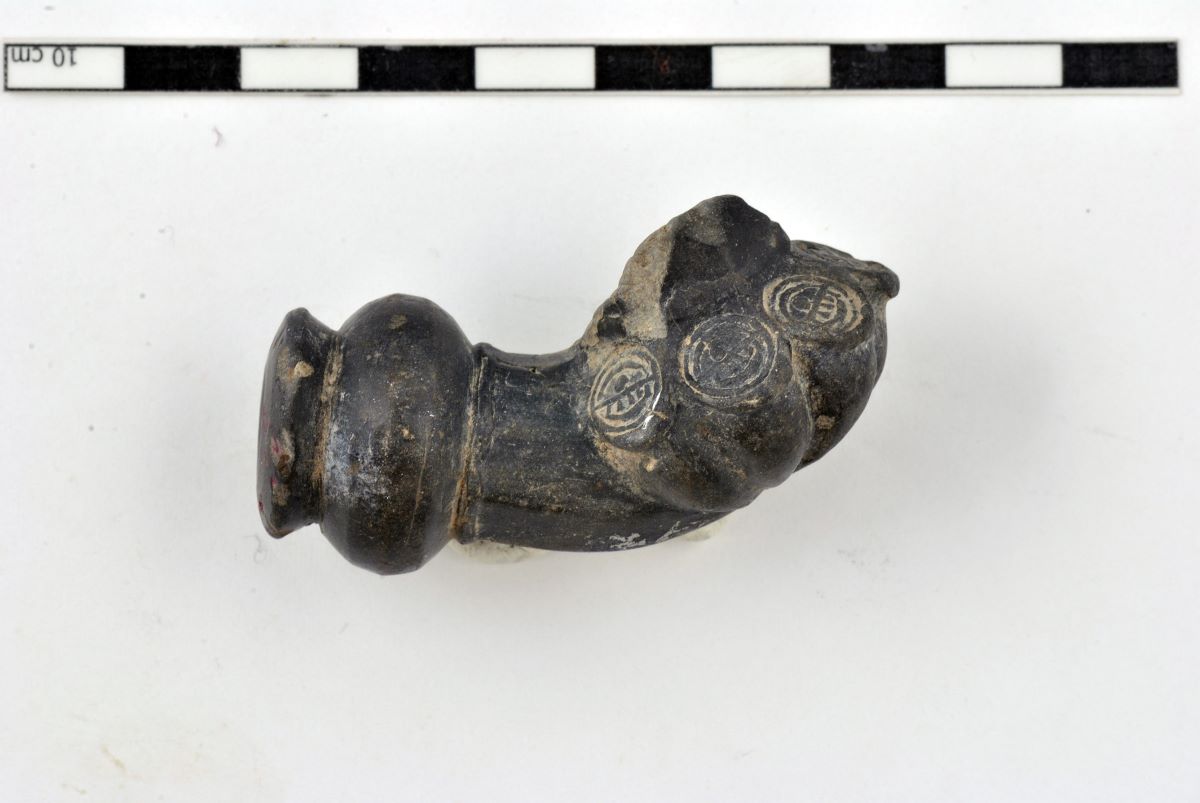
Pipe with lobed disc bowl
Pipe with lobed disc bowl is held by National Museum of Romanian History. Museum description: Pipe made of grey ceramic, with a disc-shaped bowl consisting of 7 lobes on the upper part; circles with monograms are impressed on each lobe. Each lobe continues with 7 flutes on the back. The shank is short, decorated with flutes and separated from the ring by a sleeve. The rim is short and broken. The piece exhibits an 80% broken rim and traces of dirt in the decoration area originating from the soil in which it was preserved. In the ring area there are chips and scratches from the period of its use. The museum record gives measurements length: 54 mm; height: 26 mm. These details come from the holding museum's own record; how far this object represents a wider collectible type has not yet been independently verified.
Partial type record
National Museum of Romanian History via Europeana
tobacco pipes
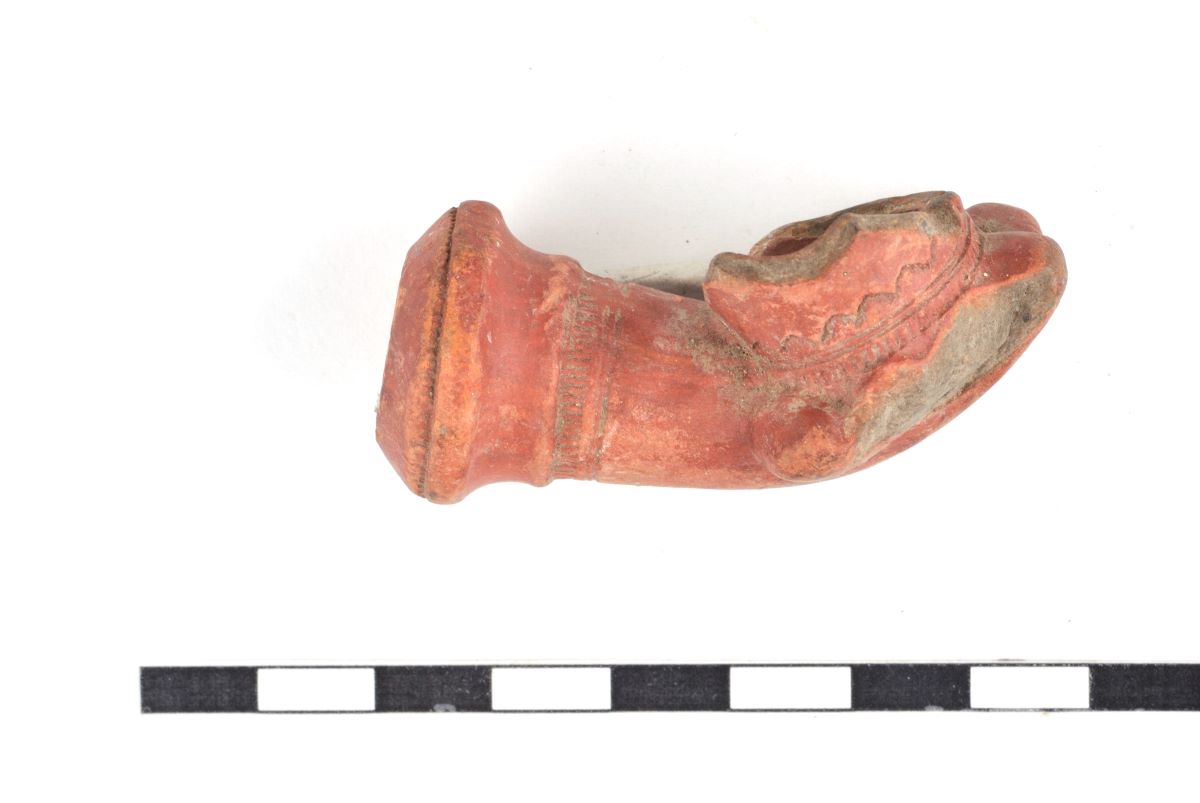
Pipe with lobed disc bowl
Pipe with lobed disc bowl is held by National Museum of Romanian History. Museum description: Pipe made of reddish ceramic with a flattened, lobed disc-shaped bowl (7 lobes). At the base of the rim it features decoration consisting of short vertically incised lines, then three parallel horizontally incised lines and one wavy line, traced with a roulette. The truncated-conical shank ends with the raised ring. Decoration of the shank starts from the base of the ring in the form of a band formed by short vertical incised lines, inscribed between 2 thin horizontal lines. The ring is rouletted. The shank joins the bowl via a "V"-shaped decoration. The edge of the bowl and part of the rim wall are missing. The piece shows exfoliation of the outer edge of the bowl on the lobed part, as well as loss of the rim wall amounting to 90%. Traces of dirt from the soil in which they were discovered are also preserved in the decoration area. The museum record gives measurements D bowl 31 mm; D ring 25 mm; length: 56 mm. These details come from the holding museum's own record; how far this object represents a wider collectible type has not yet been independently verified.
Partial type record
National Museum of Banat via Europeana
tobacco pipes
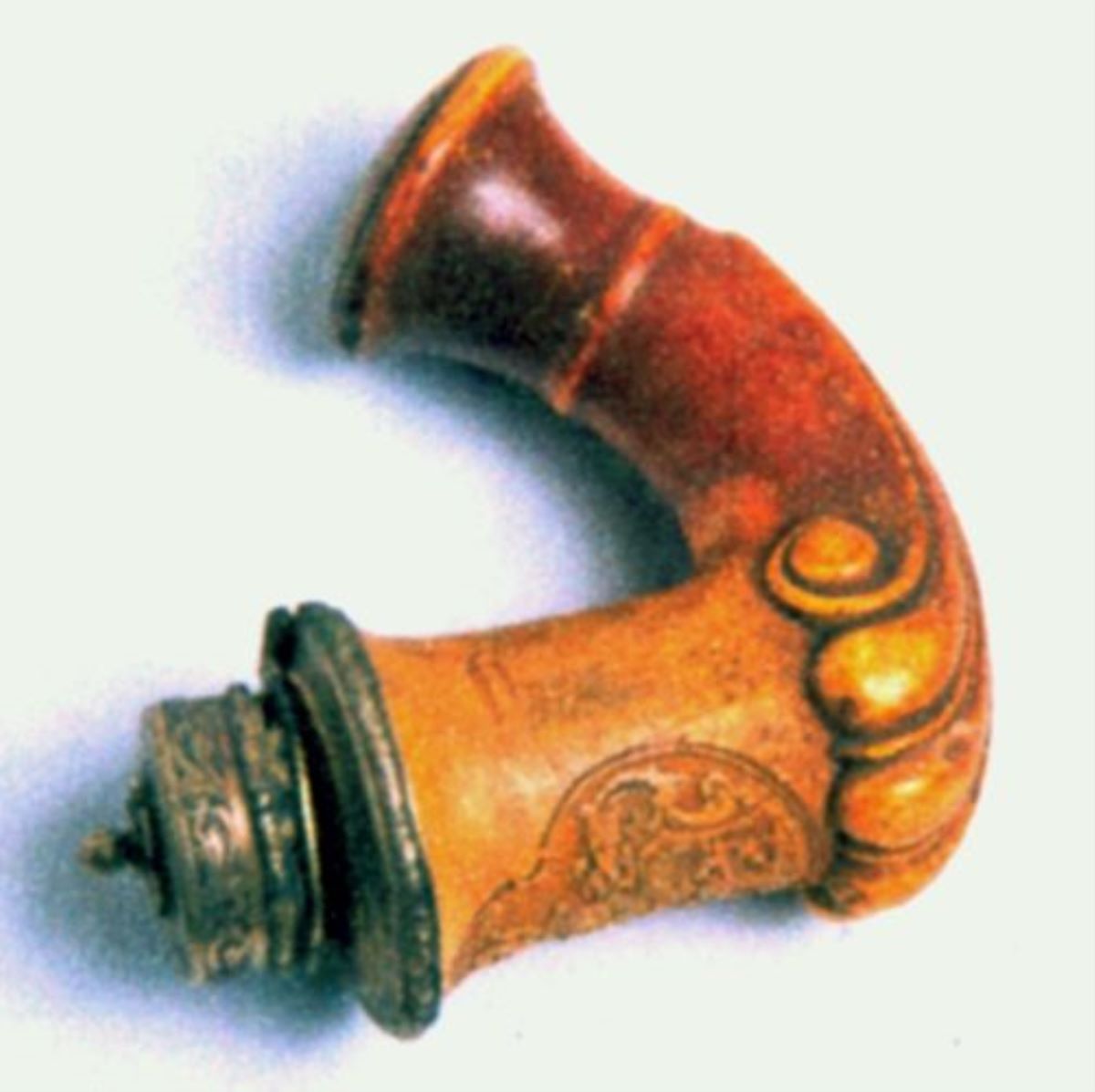
Pipe with ornamental coat of arms, I.G.
Pipe with ornamental coat of arms, I.G. is held by National Museum of Banat. Museum description: Typical pipe form from the beginning of the 19th century, adorned with an ornamental coat of arms. In its field appear two rampant lions confronting each other, between them a beehive (?), crested by a dove, the shield crested by a closed helm bearing a crown with an issuant lion holding a sword in its paw. At the base of the pipe appears the mark WEISZ. The pipe has a silver mount and lid. The pipe lid is made of chiseled and engraved silver with floral motifs. The mount displays the following marks: S.WEISS (the company), in an oval IG (maker), in a pentagon the effigy of Diana with the numeral 4 (silver standard - .750) and the letter A (Vienna mark). The museum record gives measurements L: 11 cm; La: 11 cm; maker recorded: I.G.. These details come from the holding museum's own record; how far this object represents a wider collectible type has not yet been independently verified.
Partial type record
National Museum of Romanian History via Europeana
tobacco pipes
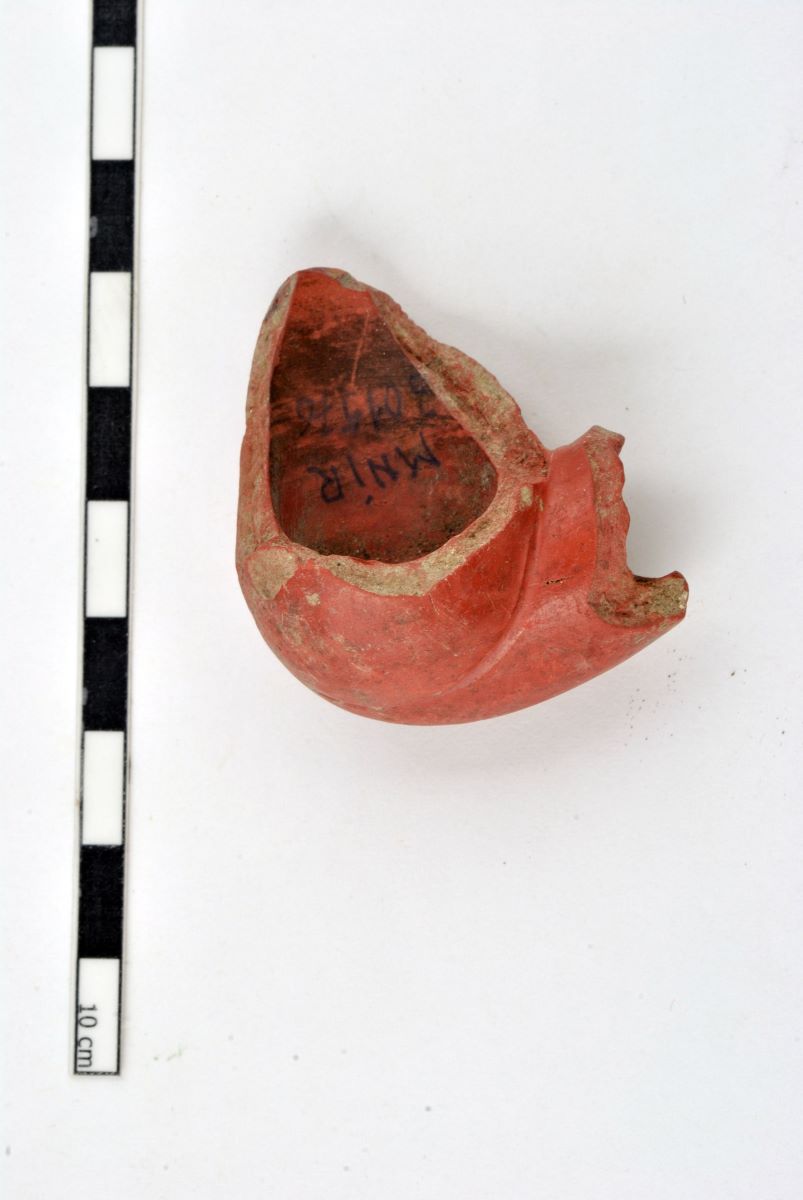
Pipe with round bowl
Pipe with round bowl is held by National Museum of Romanian History. Museum description: Fragment of a pipe crafted from reddish ceramic, with a trumpet-shaped bowl. Only a portion of the bowl and rim is preserved. The piece shows a broken stem, broken bowl, and dirt deposits due to the soil in which it was found. The museum record gives measurements length: 34 mm; height: 41 mm. These details come from the holding museum's own record; how far this object represents a wider collectible type has not yet been independently verified.
Partial type record
National Museum of Romanian History via Europeana
tobacco pipes
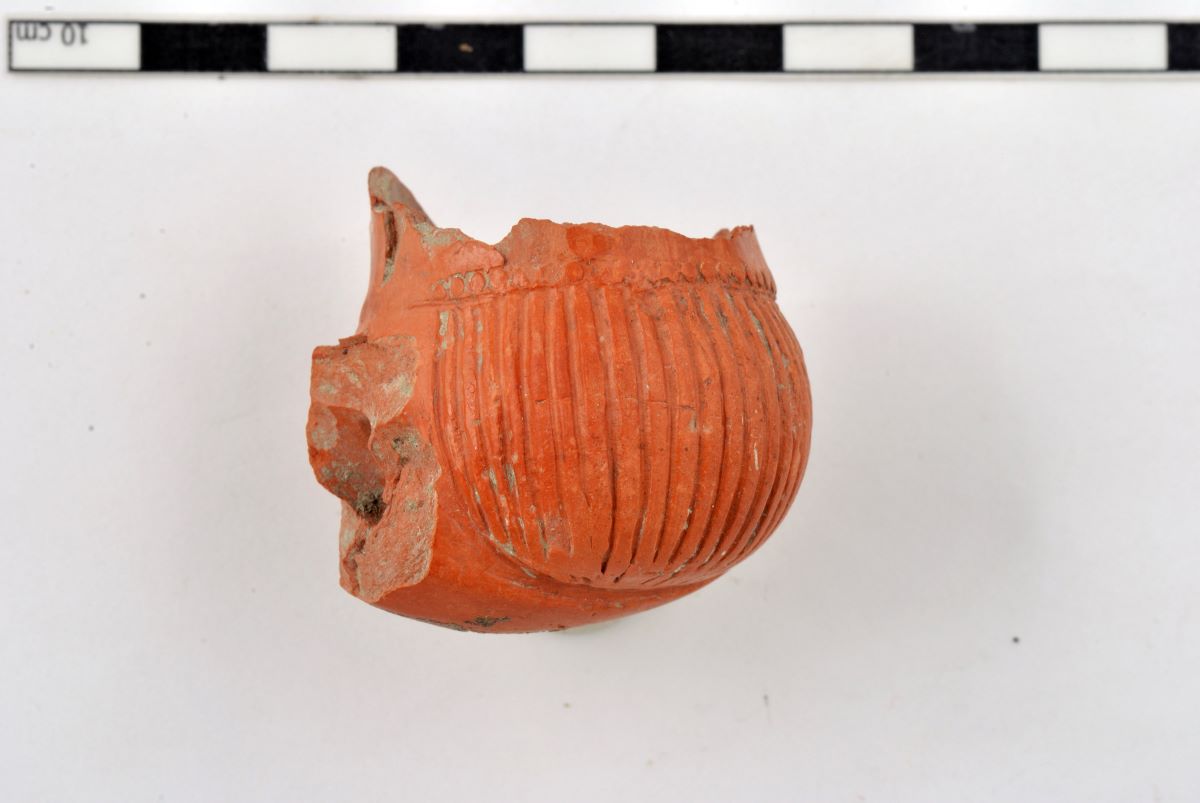
Pipe with round bowl
Pipe with round bowl is held by National Museum of Romanian History. Museum description: Fragment of a pipe made of reddish ceramic, with a round bowl decorated on the outer surface with vertical striations. The stem joins the bowl in the shape of the letter "V". Only the bowl and the beginning of the stem are preserved. The pipe fragment retains only the bowl and shows traces of dirt from the soil in which it was discovered. The museum record gives measurements bowl D 35 mm; height: 36 mm. These details come from the holding museum's own record; how far this object represents a wider collectible type has not yet been independently verified.
Partial type record
The Metropolitan Museum of Art, New York
tobacco pipes
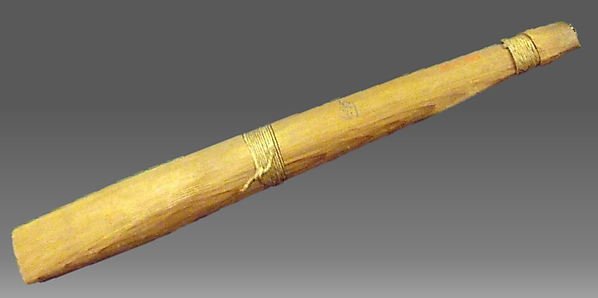
Reed Pipe, Kwakiiutlor or Heiltsuk (Bella Bella), Native American, 19th century
19th century
K'oak'omolakula (terminal retreating Reed Pipe) in The Metropolitan Museum of Art, New York (accession 89.4.695), catalogued by the museum's Musical Instruments department under the title “Reed Pipe”. The museum dates it 19th century and records its origin as Kwakiiutlor or Heiltsuk (Bella Bella), Native American; Ft. Simpson (Lax Kw'alaams), Canada. The museum records the medium as red cedar, cord and the dimensions as Overall: 4.4 x 39.4cm (1 3/4 x 15 1/2in.) Other (L.C. Says): 38.1cm (15in.). These details are transcribed from the museum's open-access record; how far this object represents a wider collectible type has not yet been independently verified.
Partial type record
The Metropolitan Museum of Art, New York
tobacco pipes
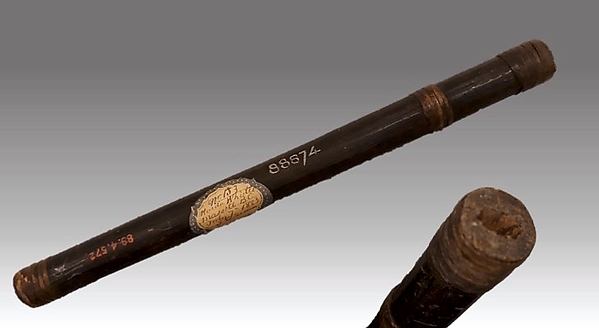
Reed Pipe, Xaadas (Haida), Native American, 19th century
19th century
Reed Pipe (lateral retreating reed) in The Metropolitan Museum of Art, New York (accession 89.4.572), catalogued by the museum's Musical Instruments department under the title “Reed Pipe”. The museum dates it 19th century and records its origin as Xaadas (Haida), Native American; Masset, Canada. The museum records the medium as spruce root, wood (red cedar or spruce) and the dimensions as Diam. 1.9 x L. 22.2cm (3/4 x 8 3/4in.). These details are transcribed from the museum's open-access record; how far this object represents a wider collectible type has not yet been independently verified.
Partial type record
© Victoria and Albert Museum, London
tobacco pipes
Smoking pipe, Korea, 1900-1950
1900-1950
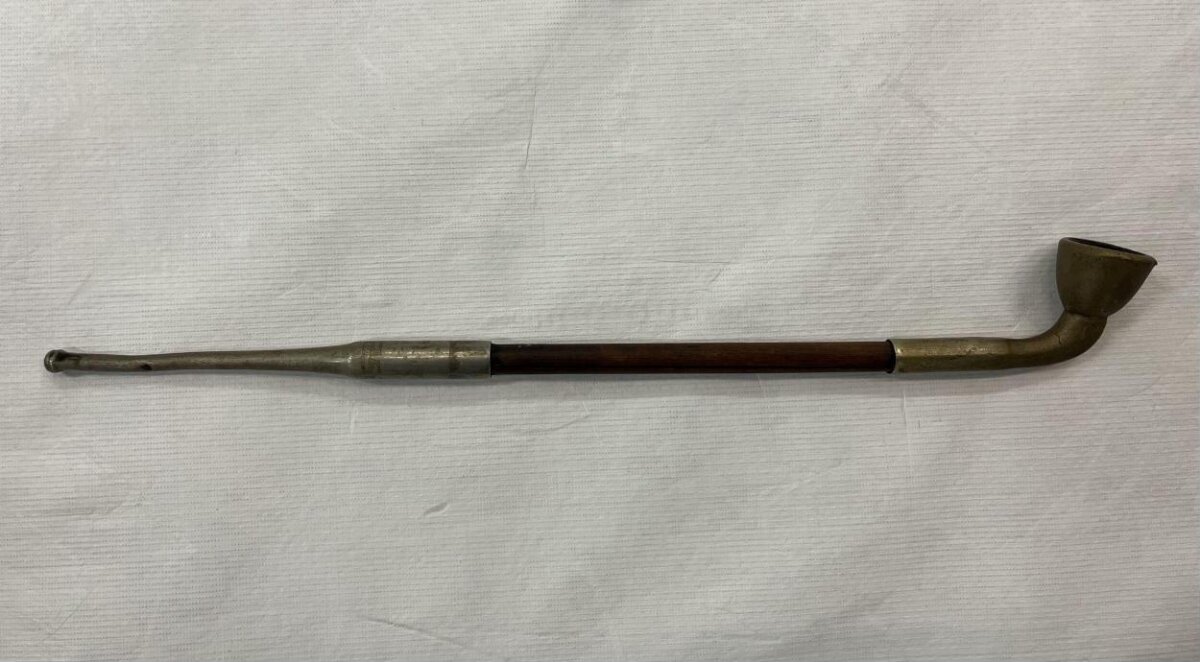
Smoking pipe in the Victoria and Albert Museum, London (museum number FE.436-2022), made in Korea, dated 1900-1950. The museum's brief description reads: Smoking pipe, made of silver and wood, Korea, early 20th century. Museum description: A curved head serves as a smoking chamber, allowing the escape of smoke, while a foot facilitates breathing. The stem, connecting these two components, functions as the air hole. The museum records it as The head and foot of the pipe are made of silver, while the middle part, including the stem, is crafted from wood., measuring Length 42 cm; Width 2.5 cm; Depth 1.8 cm. These details come from the museum's own record; how far this object represents a wider collectible type has not yet been independently verified.
Partial type record
© Victoria and Albert Museum, London
tobacco pipes
Smoking pipe, Korea, 1900-1950 (FE.438-2022)
1900-1950
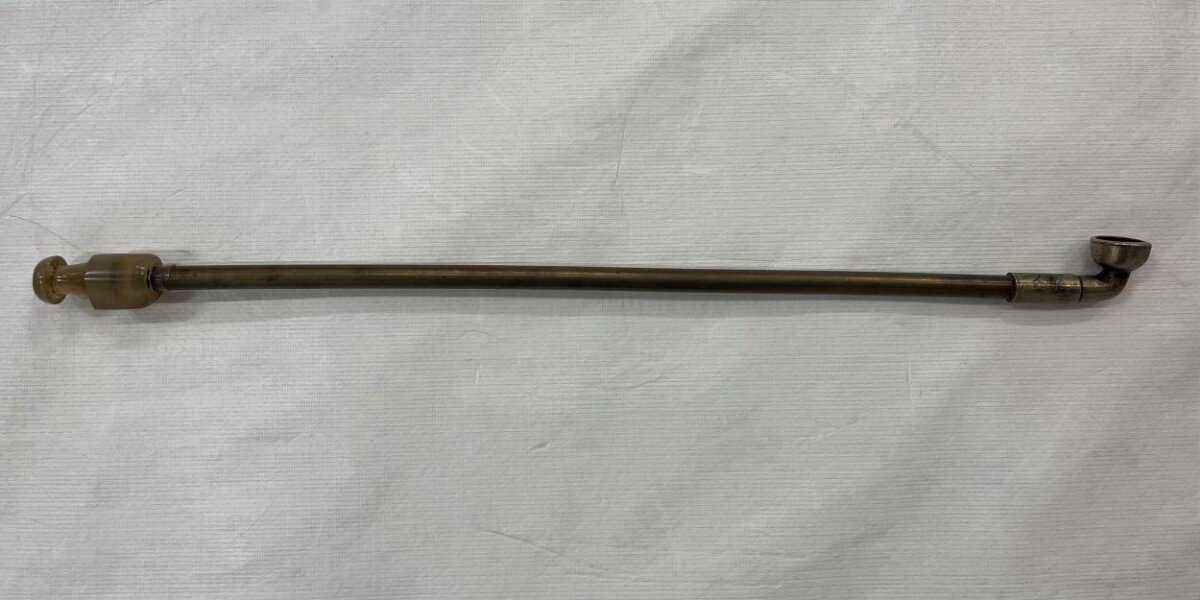
Smoking pipe in the Victoria and Albert Museum, London (museum number FE.438-2022), made in Korea, dated 1900-1950. The museum's brief description reads: Smoking pipe, made of silver, wood, and jade, Korea, early 20th century. Museum description: A curved head serves as a smoking chamber, allowing the escape of smoke, while a foot facilitates breathing. The stem, connecting these two components, functions as the air hole. The museum records it as The head of the pipe is crafted from silver, the foot is made of green jade, while the middle part, including the stem, is crafted from wood., measuring Length 19 cm; Width 3 cm; Depth 1.5 cm. These details come from the museum's own record; how far this object represents a wider collectible type has not yet been independently verified.
Partial type record
© Victoria and Albert Museum, London
tobacco pipes
Smoking pipe, Korea, 1900-1950 (FE.439-2022)
1900-1950
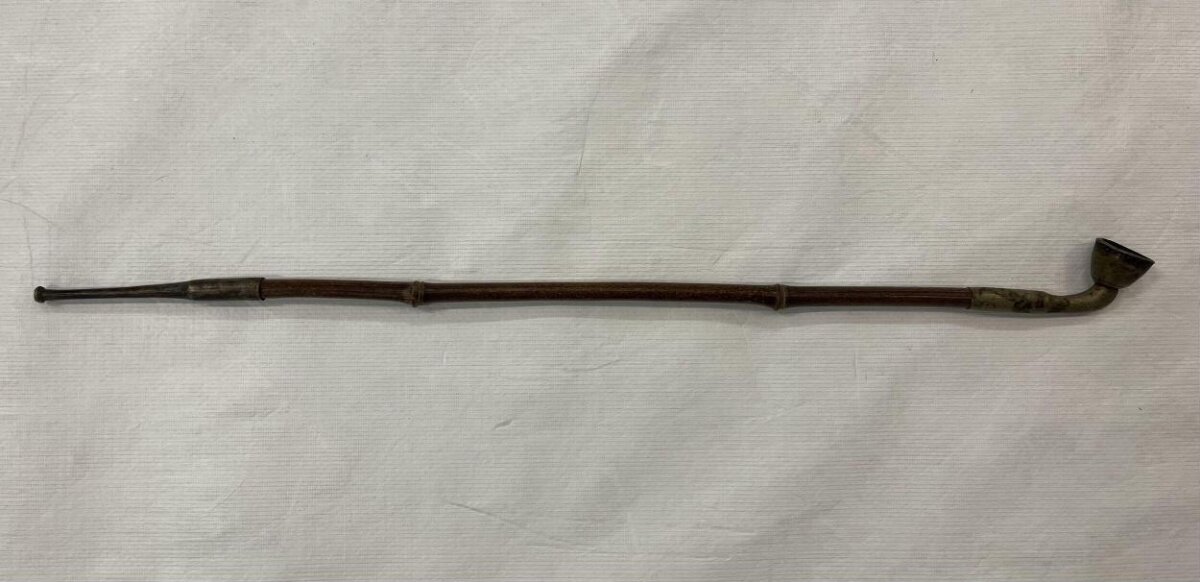
Smoking pipe in the Victoria and Albert Museum, London (museum number FE.439-2022), made in Korea, dated 1900-1950. The museum's brief description reads: Smoking pipe, made of silver and bamboo, Korea, early 20th century. Museum description: A curved head serves as a smoking chamber, allowing the escape of smoke, while a foot facilitates breathing. The stem, connecting these two components, functions as the air hole. The museum records it as The head and foot of the pipe are made of silver, while the middle part, including the stem, is crafted from bamboo., measuring Length 25 cm; Width 2.8 cm; Depth 2 cm. These details come from the museum's own record; how far this object represents a wider collectible type has not yet been independently verified.
Partial type record
Cleveland Museum of Art, Gift of Laurence H. Norton, Robert C. Norton, and Miriam Norton White in memory of Mr. and Mrs. D. Z. Norton
tobacco pipes
Tobacco Pipe with Maple Leaves in a River (Cleveland Museum of Art 1939.308)
early to mid-1800s
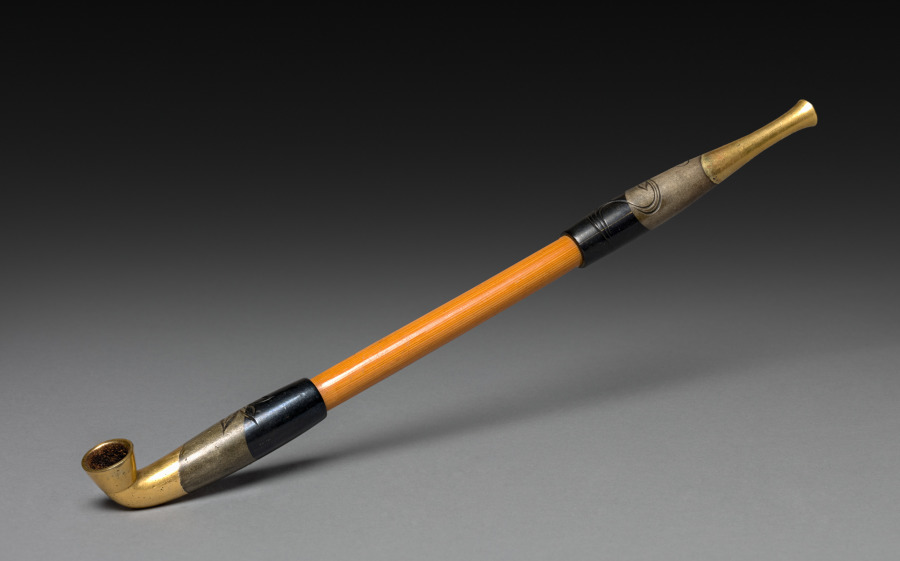
Cleveland Museum of Art object 1939.308: Tobacco Pipe with Maple Leaves in a River, early to mid-1800s. Japan, Edo period (1615–1868). Bamboo, metal, brass, pewter (?), and iron; overall: 20.4 cm (8 1/16 in.). Details are those of this museum object; how far it represents a wider type has not been independently verified.
Partial type record