Skip to content

Numismatics

How to identify a medal or jeton

Medals and jetons can resemble coins but generally served commemorative, award or accounting purposes. They record events, reward service or served as counters for arithmetic on a reckoning board, and their inscriptions are usually the fastest way to identify them.

Comparison checklist

Purpose and inscriptions
Record and compareRecord both legends, denomination if present, issuer and evidence of award, commemoration or accounting use.
Limits of the evidenceAbsence of denomination does not rule out a coin; a suspension loop can be a later addition.
Occasion and attribution
Record and compareSeparate the commemorated event from manufacture; transcribe signature, initials and their location.
Limits of the evidenceA portrait likeness is not an attribution. The event year is not necessarily the striking year.
Relief and manufacture
Record and compareDescribe relief, seams, sprue traces, tooling and the source's stated casting or striking method.
Limits of the evidenceCasting can be original manufacture. Soft detail or pitting alone does not prove a later copy.
Metal and edge
Record and compareMeasure diameter and mass; record edge stamps, lettering and any documented alloy or finish.
Limits of the evidencePatina and colour cannot establish alloy. A face photograph often conceals the marks needed to date a restrike.
Issue and later versions
Record and compareCompare size, inscriptions, edge marks and documented versions against a specifically cited specimen.
Limits of the evidenceA model, cast, original striking and restrike are different objects; never transfer the museum's attribution silently.

Step by step

  1. 1

    Decide what kind of object it is

    A commemorative medal marks an event or person; an award medal was given to an individual; a jeton was a counter used for calculation, often issued by a city or treasury; a token stood in for small change. The category decides which references apply.

    • Presence or absence of a denomination; some coins also omit their value
    • Suspension loop or ribbon: likely an award or wearable medal
    • Small, thin and issued in series by an office: likely a jeton
  2. 2

    Transcribe every inscription

    Copy legends, dates and exergue text letter by letter, including abbreviations. Many early medals use Latin, and some hide a date as a chronogram in the capital letters.

    • Obverse and reverse legends, exactly as written
    • Dates in the original form, plus a normalised year
    • Chronograms, mottoes and heraldic arms
  3. 3

    Identify the occasion or issuer

    Match the subject to a documented event, person or institution. For jetons, identify the issuing city, treasury or chamber of accounts, whose arms or name often appear.

    • Named battle, treaty, birth, marriage, death or founding
    • Issuing authority for jetons: city, province, council
    • Portrait identified from the legend, not from likeness alone
  4. 4

    Look for the medallist's signature

    Medallists often signed on the truncation of the bust or in the exergue with initials. A signature can date and attribute a piece, but unsigned medals are common and should be left unattributed.

    • Initials or name and where they appear
    • Match against a published dictionary of medallists
    • No attribution recorded without evidence
  5. 5

    Record metal, size and manufacture

    Measure diameter and weight, name the metal as far as it can be established, and note whether the piece was struck with dies or cast in a mould. Casting seams, sprue traces and surface detail may help, but pitting or soft relief alone cannot establish manufacture.

    • Diameter in millimetres and weight in grams
    • Silver, gold, copper alloy, lead, pewter or other
    • Struck or cast; edge plain, lettered or marked
  6. 6

    Check for restrikes, copies and later casts

    Popular medals were restruck from original dies long after the event, and many were copied as casts. Edge marks, surface quality and weight are the main evidence.

    • Edge marks added by later mints to restrikes
    • Possible casting evidence: seams or sprue traces; distinguish an original cast medal from a later copy
    • Museum or reference specimen for comparison

Museum specimens for comparison

Compare visible evidence with the museum's documented object. A collection number identifies the museum specimen, not every object of that type; hidden features remain research required.

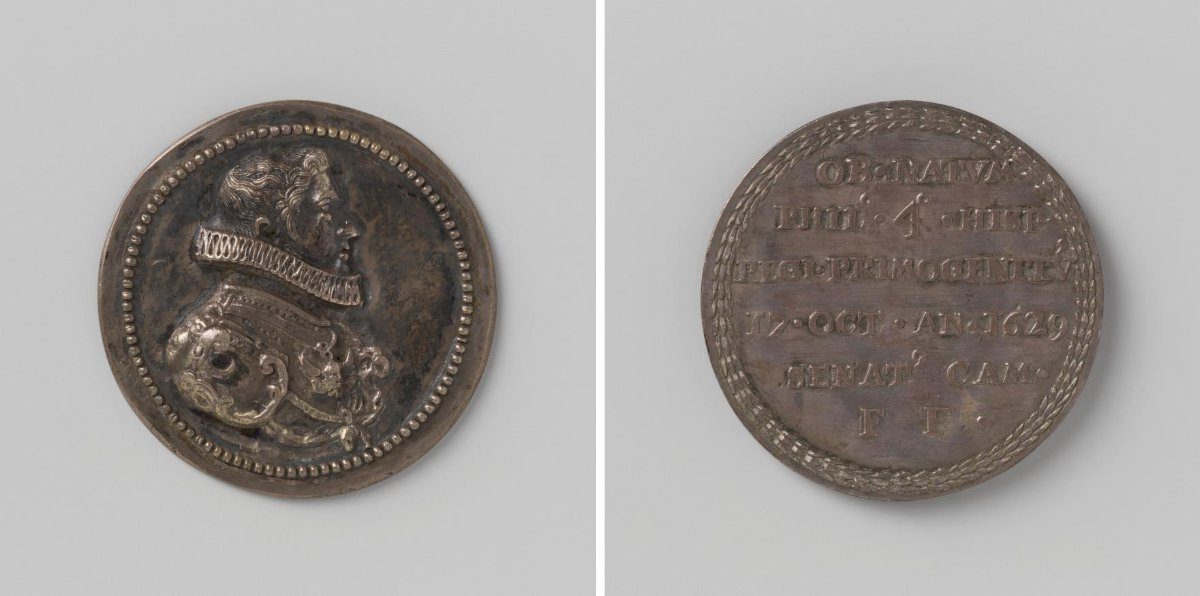
Birth of Balthasar Charles, first son of Philip IV, medal struck by order of the Council of Cambrai

Rijksmuseum, Amsterdam · Public Domain (Rijksmuseum) · Museum source

Birth of Balthasar Charles, first son of Philip IV, medal struck by order of the Council of Cambrai

1629

Documented

Silver medal. Obverse: bust of a man. Reverse: inscription. The Rijksmuseum, Amsterdam, holds this object as NG-VG-1-683; its record gives material recorded as silver (metal); technique casting; measurements diameter 4.4 cm x weight 24.87 g. Description translated from the museum's Dutch catalogue text; details are those of this museum object, and how far it represents a wider type has not been independently verified.

original title
Geboorte van Balthasar Karel, eerste zoon van Philips IV, penning geslagen op last van de raad van Kamerijk
holding institution
Rijksmuseum, Amsterdam
museum object number
NG-VG-1-683
museum classification
["history medal"]
Read the full record
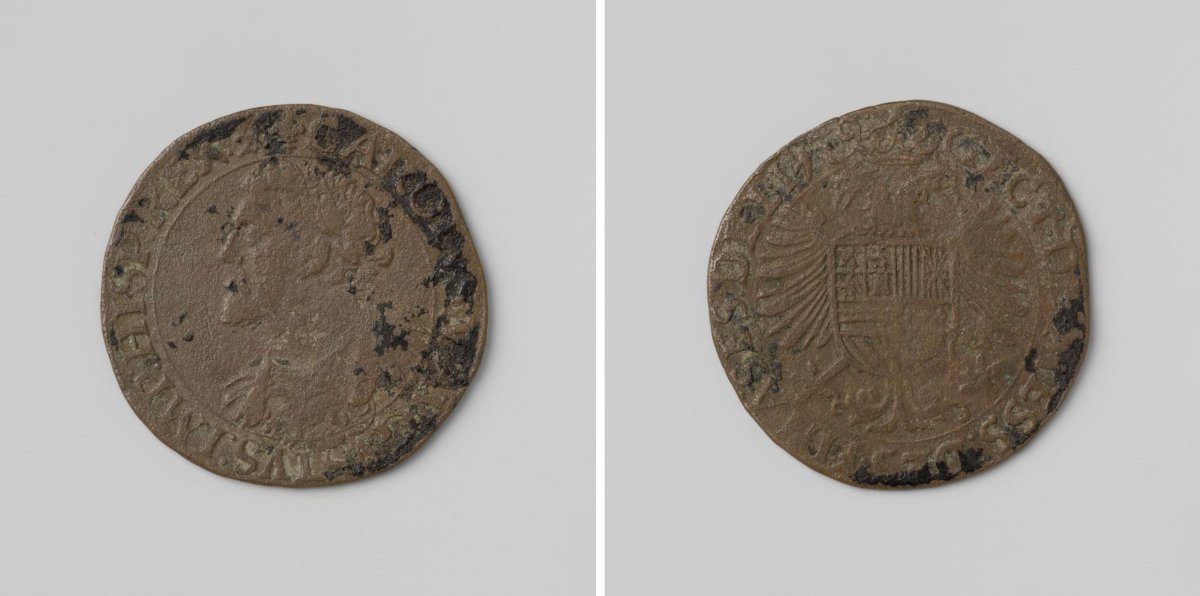
Charles V, Holy Roman Emperor, jeton of the Council of Finance

Rijksmuseum, Amsterdam · Public Domain (Rijksmuseum) · Museum source

Charles V, Holy Roman Emperor, jeton of the Council of Finance

1539

Documented

Copper jeton. Obverse: bust of a man with laurel wreath within circumscription. Reverse: double-headed eagle beneath crown with coat of arms within circumscription. The Rijksmuseum, Amsterdam, holds this object as NG-VG-3-157; its record gives material recorded as copper (metal); technique striking (metalworking); measurements diameter 2.8 cm x weight 4.29 g. Description translated from the museum's Dutch catalogue text; details are those of this museum object, and how far it represents a wider type has not been independently verified.

original title
Karel V, Duits keizer, rekenpenning van de raad van Financien
holding institution
Rijksmuseum, Amsterdam
museum object number
NG-VG-3-157
museum classification
["jeton"]
Read the full record
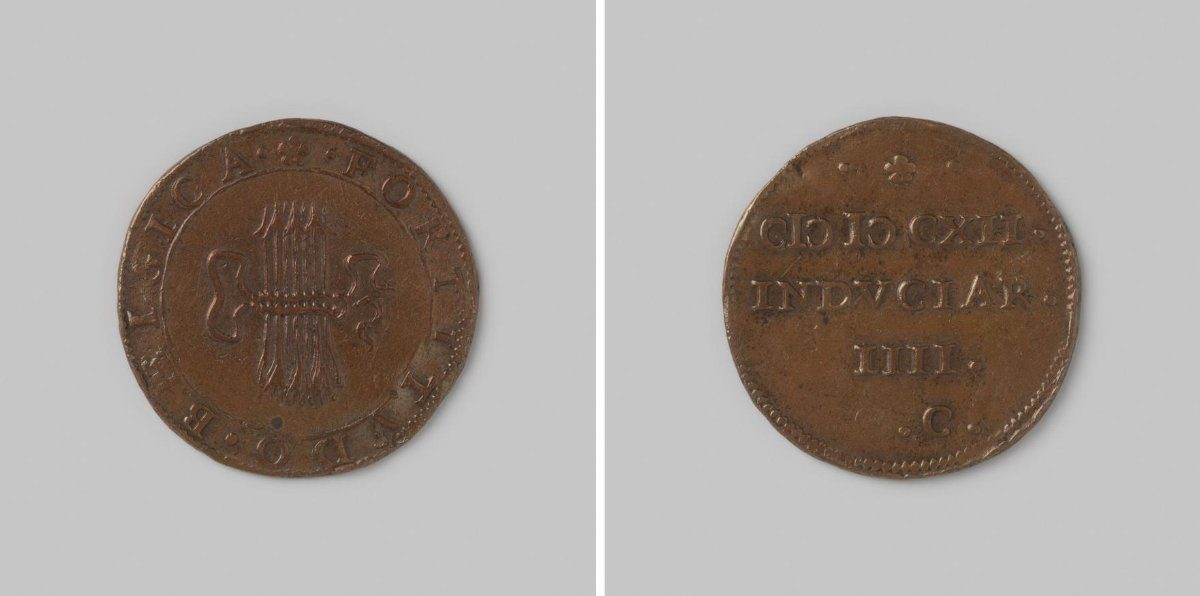
Jeton from Dordrecht on the strength of the Netherlands, 1612

Rijksmuseum, Amsterdam · Public Domain (Rijksmuseum) · Museum source

Jeton from Dordrecht on the strength of the Netherlands, 1612

1612

Documented

Copper medal, on the obverse a bundle of arrows with inscription, on the reverse four lines of text. The Rijksmuseum, Amsterdam, holds this object as KOG-MP-2-1336; its record gives material recorded as copper (metal); technique striking (metalworking); measurements diameter 3 cm x weight 5.47 g. Description translated from the museum's Dutch catalogue text; details are those of this museum object, and how far it represents a wider type has not been independently verified.

original title
Rekenpenning uit Dordrecht op de kracht van de Nederlanden 1612
holding institution
Rijksmuseum, Amsterdam
museum object number
KOG-MP-2-1336
museum classification
["jeton","history medal"]
Read the full record
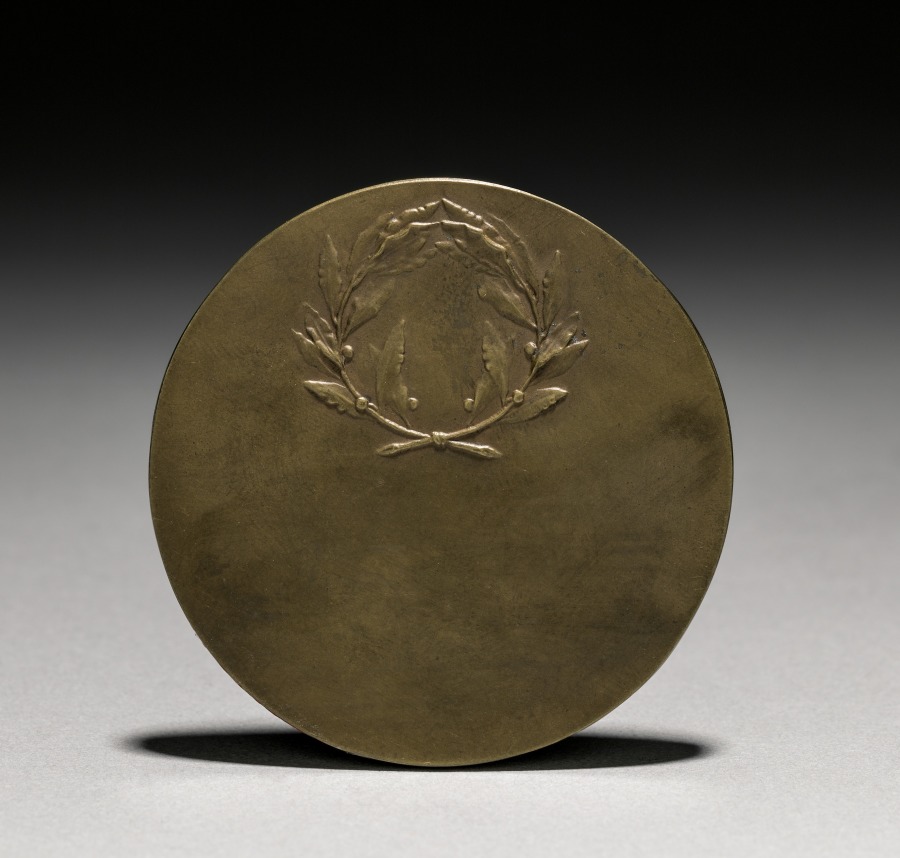
Medal of French Republic (Cleveland Museum of Art 1972.1076)

Cleveland Museum of Art, Gift of Mrs. Edd A. Ruggles · Public domain (CC0, Cleveland Museum of Art Open Access) · Museum source

Medal of French Republic (Cleveland Museum of Art 1972.1076)

before 1972

Documented

Medal of French Republic in the Cleveland Museum of Art (accession 1972.1076), dated before 1972; museum culture/place: France, Early 20th century. Museum object record; the wider type is not yet verified.

museum object number
1972.1076
museum classification
["Metalwork"]
Read the full record
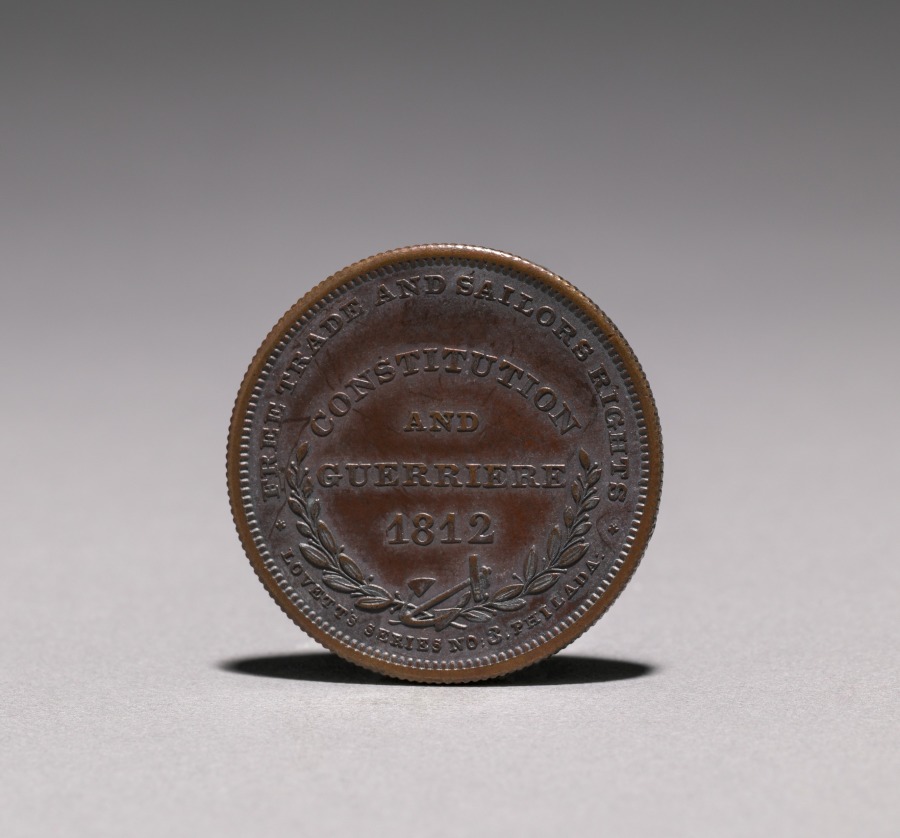
Medal: Constitution and Guerriere, 1812 (Cleveland Museum of Art 1916.1877)

Cleveland Museum of Art · CC0 1.0 (public domain dedication) · Museum source

Medal: Constitution and Guerriere, 1812 (Cleveland Museum of Art 1916.1877)

1812

Documented

Cleveland Museum of Art object 1916.1877: Medal: Constitution and Guerriere, 1812, 1812. America. Bronze; diameter: 3.2 cm (1 1/4 in.). Inscribed: Constitution and Guerriere, 1812. Free Trade and sailors rights.. Details are those of this museum object; how far it represents a wider type has not been independently verified.

date recorded
1812
culture period
America
holding institution
Cleveland Museum of Art
museum object number
1916.1877
museum classification
["Metalwork"]
Read the full record

Common mistakes

  • Treating a jeton or token as a coin, or the reverse.
  • Attributing a medal from a portrait likeness without reading the legend.
  • Assuming the event date is the striking date: many medals were struck later.
  • Missing a later restrike or cast copy of a well-known medal.
  • Cleaning or polishing a medal, which removes surface evidence permanently.

Identifying the medal or jeton does not authenticate your piece or establish whether it is an original striking. Museum examples in this catalogue record the object held; the broader type may still require research.

Practise on these records

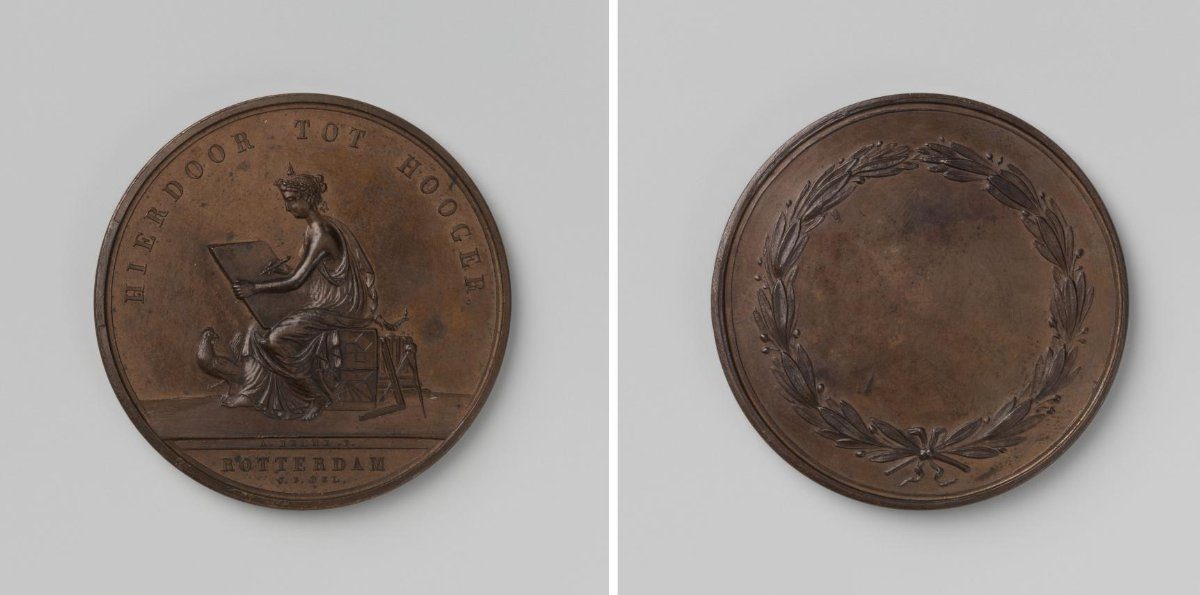
'Hierdoor tot Hooger' Drawing Academy in Rotterdam, medal of the first size

medals

'Hierdoor tot Hooger' Drawing Academy in Rotterdam, medal of the first size

1820

'Hierdoor tot Hooger' Drawing Academy in Rotterdam, medal of the first size, 1820. Bronze medal. Obverse: seated woman with flame on her head, representing the Art of Drawing, drawing on canvas that she holds on her knees; before her a rooster, behind her pair of compasses and set square, leaning against a truncated column on which stands a burning lamp, within an inscription; exergue: inscription. Reverse: blank field within a wreath of olive branches. The Rijksmuseum, Amsterdam, holds this object as NG-VG-6-15; its record gives material recorded as bronze (metal); technique striking (metalworking); measurements diameter 5.2 cm x weight 58.7 g. Description translated from the museum's Dutch catalogue text; details are those of this museum object, and how far it represents a wider type has not been independently verified.

Documented

Research required

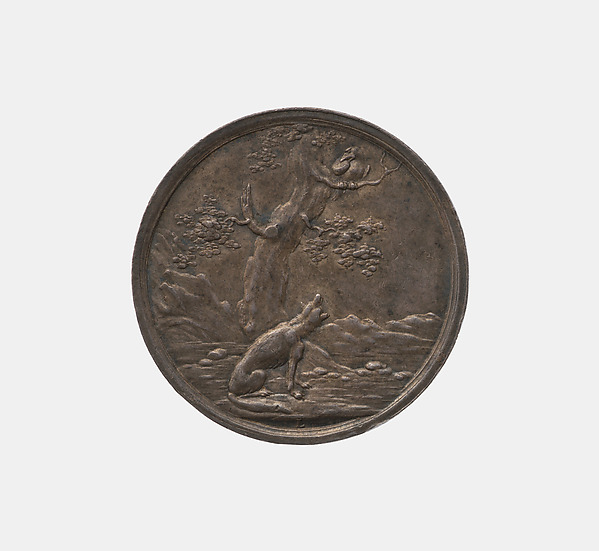
"Fox and Raven" after Aesop fable, Johann Jakob Lauer, 18th century

jetons

"Fox and Raven" after Aesop fable, Johann Jakob Lauer, 18th century

18th century

"Fox and Raven" after Aesop fable made by Possibly Johann Jakob Lauer (German, 1788–1823), dated 18th century, from probably German. The museum records its materials as: Silver. Recorded dimensions: Diameter (Confirmed): 1 1/8 in. × 1/16 in. (28.3 × 1.5 mm). The Metropolitan Museum of Art holds this object as 2023.569.220; details are those of this museum object, and how far it represents a wider type has not been independently verified.

Documented

Research required

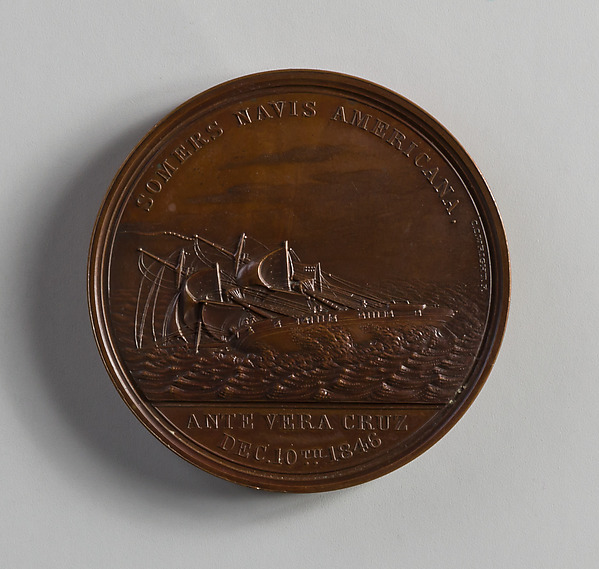
"Somers Medal", 1830–70

medals

"Somers Medal", 1830–70

1830–70

Medal in The Metropolitan Museum of Art, New York (accession 83.2.389), catalogued by the museum's The American Wing department under the title “"Somers Medal"”. The museum dates it 1830–70. It is attributed to Charles Cushing Wright. The museum records the medium as Bronze and the dimensions as Diam. 2 1/4 in. (5.7 cm). Subject tags assigned by the museum: Ships. These details are transcribed from the museum's open-access record; how far this object represents a wider collectible type has not yet been independently verified.

Documented

Research required

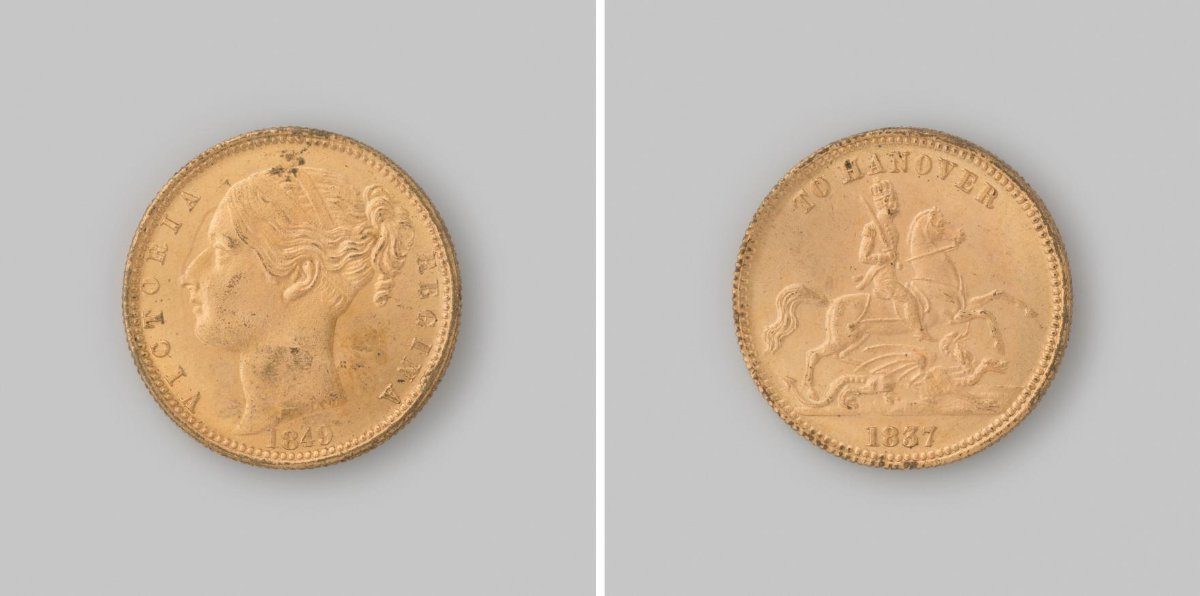
"To Hannover" medal 1837/1849

medals

"To Hannover" medal 1837/1849

1837 - 1849

Brass medal with milled edge, on the obverse the portrait of Queen Victoria facing left with legend and exergue inscription, on the reverse the crowned Duke of Cumberland on horseback riding to the right over a dragon, with legend and exergue inscription. The Rijksmuseum, Amsterdam, holds this object as KOG-MP-2-1612; its record gives material recorded as brass (alloy); technique striking (metalworking); measurements diameter 2.2 cm x weight 3.7 g. Description translated from the museum's Dutch catalogue text; details are those of this museum object, and how far it represents a wider type has not been independently verified.

Documented

Research required

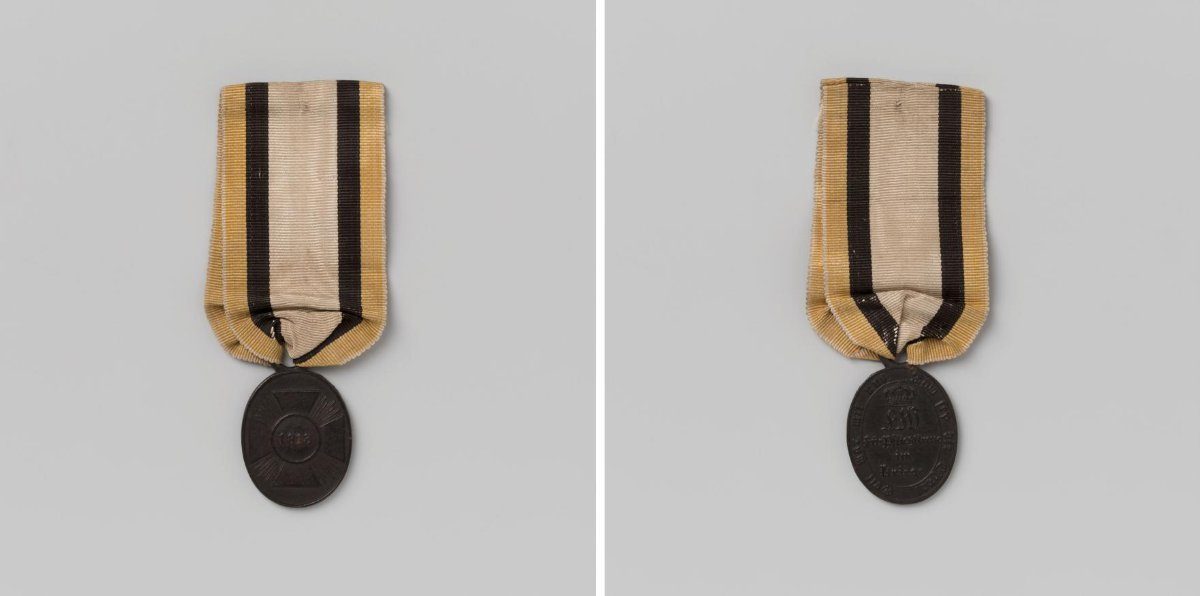
1813 Campaign, medal of honour awarded to Prussian soldiers

medals

1813 Campaign, medal of honour awarded to Prussian soldiers

1813

Copper oval medal with suspension loop and ribbon with a vertical white stripe flanked on either side by a black and yellow stripe. Obverse: broad cross with rays between the arms and date on a shield. Reverse: in Gothic script: crowned monogram FW above inscription within a legend. The Rijksmuseum, Amsterdam, holds this object as NG-VG-20-130; its record gives material recorded as textile materials, copper (metal); technique striking (metalworking); measurements height 4.1 cm x width 2.5 cm x weight 8.4 g. Description translated from the museum's Dutch catalogue text; details are those of this museum object, and how far it represents a wider type has not been independently verified.

Documented

Research required

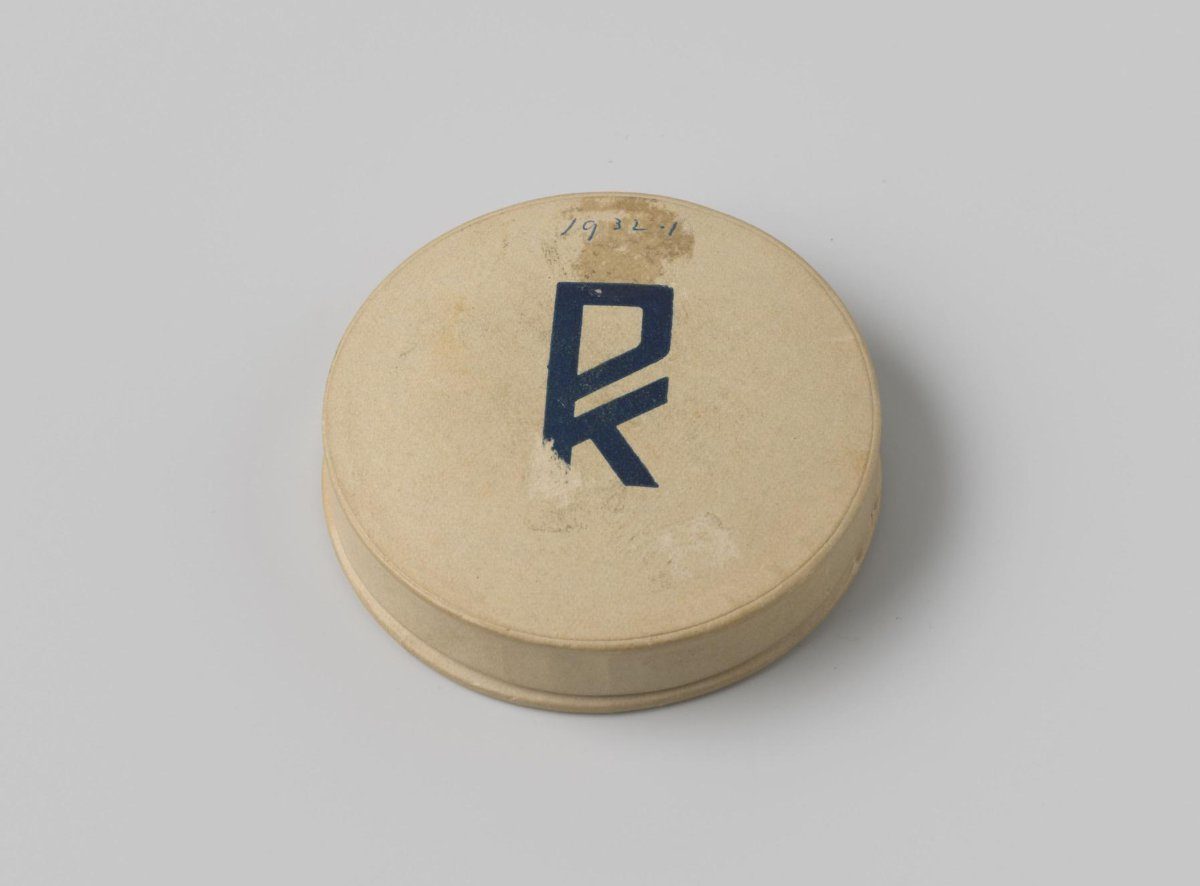
A cardboard box belonging to a bronze medal

medals

A cardboard box belonging to a bronze medal

1929

A cardboard box with monogram on the top and inscription on the inside of the lid; interior of the base lined with purple velvet. The Rijksmuseum, Amsterdam, holds this object as NG-1985-16-4-2; its record gives material recorded as velvet (fabric weave), cardboard; measurements height 2 cm x diameter 6.9 cm. Description translated from the museum's Dutch catalogue text; details are those of this museum object, and how far it represents a wider type has not been independently verified.

Documented

Research required

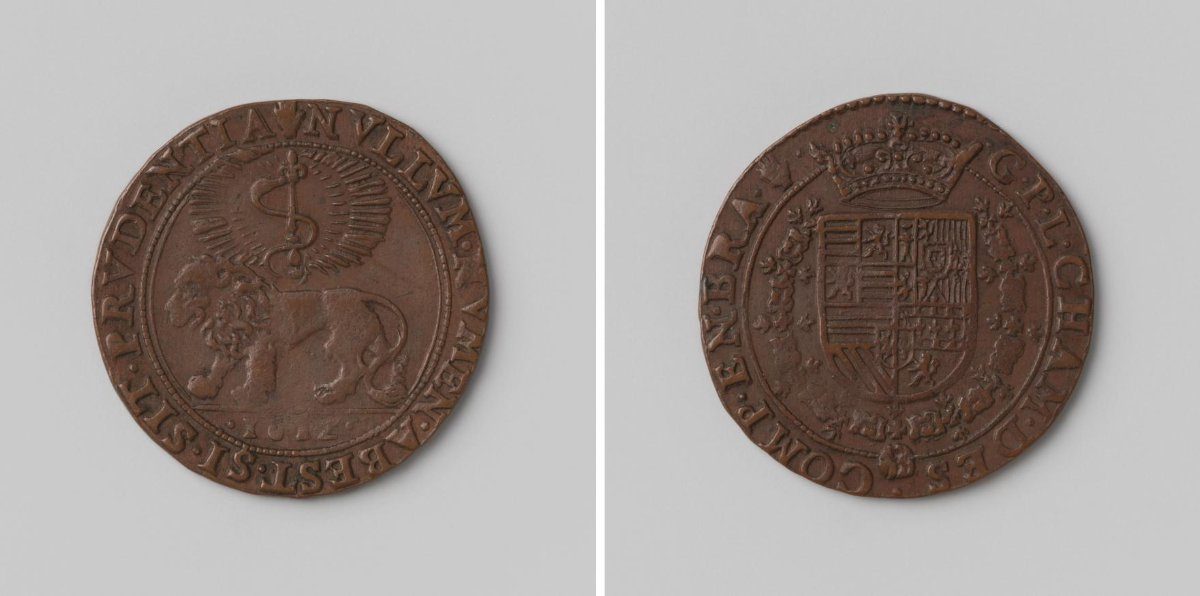
Aachen Placed Under Imperial Ban, Jetton Struck by Order of the Court of Audit of Brabant

jetons

Aachen Placed Under Imperial Ban, Jetton Struck by Order of the Court of Audit of Brabant

1612

Copper medal. Obverse: sceptre around which a serpent is entwined within halo of rays above lion within circumscription; exergue: date. Reverse: crowned coat of arms, surrounded by the collar of the Order of the Golden Fleece within circumscription. The Rijksmuseum, Amsterdam, holds this object as NG-VG-3-1039; its record gives material recorded as copper (metal); technique striking (metalworking); measurements diameter 2.7 cm x weight 5.17 g. Description translated from the museum's Dutch catalogue text; details are those of this museum object, and how far it represents a wider type has not been independently verified.

Documented

Research required

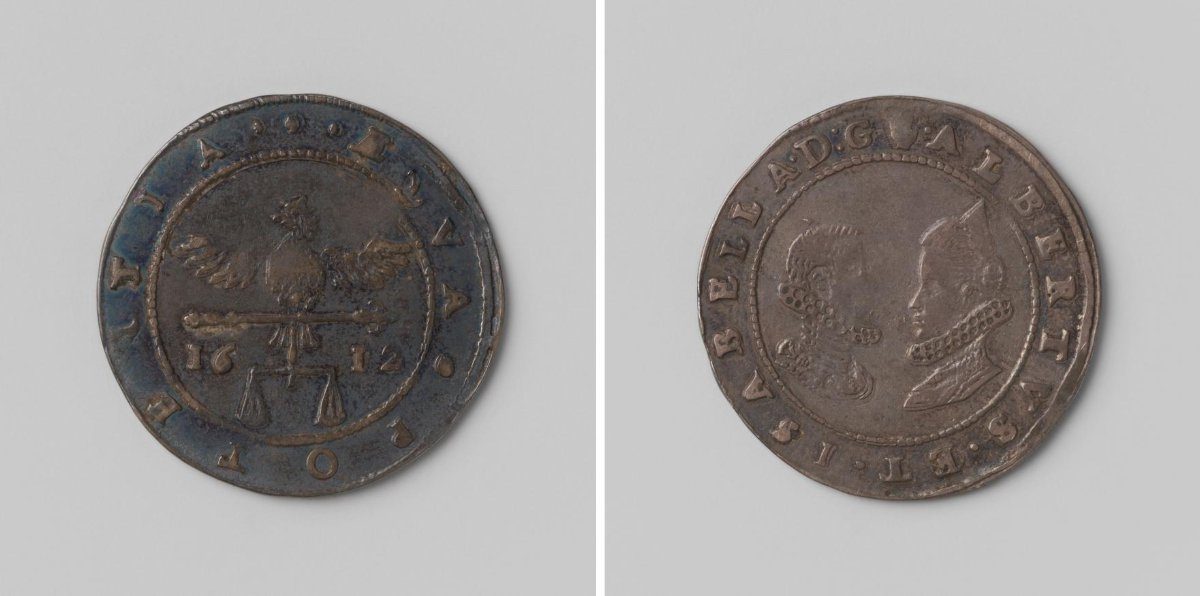
Aachen placed under the imperial ban, jeton in honour of Albert and Isabella of Austria

jetons

Aachen placed under the imperial ban, jeton in honour of Albert and Isabella of Austria

1612

Silver medal. Obverse: eagle with spread wings holds in its talons a sceptre, from which a pair of scales hangs in balance between date within legend. Reverse: confronting busts of a man and woman within legend. The Rijksmuseum, Amsterdam, holds this object as NG-VG-3-1037; its record gives material recorded as silver (metal); technique striking (metalworking); measurements diameter 2.7 cm x weight 4.85 g. Description translated from the museum's Dutch catalogue text; details are those of this museum object, and how far it represents a wider type has not been independently verified.

Documented

Research required

This guide helps you identify a type. It does not estimate value, grade, or authenticate an individual object. How records are made.