Skip to content

Horology

How to identify a watch

The name on the dial is the weakest evidence on a watch. Case marks, the movement and its serial number tell you far more, and dials, cases and movements were often changed over time.

Comparison checklist

Case and hallmarks
Record and compareRecord form, lug shape, dimensions, mark positions and case number separately from movement markings.
Limits of the evidenceA hallmark may date the case only. Gold colour and a dial brand do not establish metal or maker.
Dial and display
Record and compareCompare numeral layout, subsidiary displays, signatures, hand forms and their relationship to documented versions.
Limits of the evidenceRestored dials and replacement hands can look period-correct; a front photograph cannot establish originality.
Movement and calibre
Record and compareUse a safely obtained movement image to record bridge layout, maker signature, engraved calibre and stated jewel count.
Limits of the evidenceDo not open a watch without suitable expertise. A case reference is not a movement calibre.
Winding and escapement
Record and compareKeep observed winding and setting controls separate from the source's documented escapement and complications.
Limits of the evidenceA crown does not establish automatic winding. Escapement and hidden mechanisms cannot be read from the dial.
Serial evidence and marriages
Record and compareCompare case and movement serials with a named archive or published list; document spacers, unused holes and mismatched parts.
Limits of the evidenceDo not extend one maker's serial chronology to another. Identification is not authentication or a working-condition test.

Step by step

  1. 1

    Record the case form and its marks

    Describe the case first: open-face, hunter, half-hunter, pair-cased or wristwatch, and its metal. Then read the inside of the case back, where hallmarks, assay marks, case maker's marks and case numbers are usually struck.

    • Case style and metal, as stated by marks rather than colour
    • Hallmarks and assay office marks, which can date a case
    • Case maker's mark and case serial, recorded separately from the movement
  2. 2

    Read the dial, but treat it with caution

    Record the name, numerals, sub-dials and complications shown. Dials were frequently restored, repainted or replaced, and retailers' names often appear instead of the maker's.

    • Signature: maker, retailer or none
    • Enamel, painted metal or engraved dial
    • Signs of refinishing: uneven printing, damaged edges, mismatched hands
  3. 3

    Examine the movement

    The movement is the core of the identification. Record the signature on the plates or bridges, the calibre if marked, the plate layout and the number of jewels, without opening a watch you are not equipped to open.

    • Signature and place name on the movement
    • Full plate, three-quarter plate, bridge or other layout
    • Jewel count and any adjustment markings, as engraved
  4. 4

    Identify the escapement, winding and setting

    The escapement and winding method place a watch in its period of manufacture. A verge with a fusee, a cylinder, a lever or a detent escapement each mark a different technical tradition.

    • Escapement type: verge, cylinder, duplex, lever, detent
    • Key-wind, stem-wind, pin-set, lever-set or automatic
    • Complications: repeater, chronograph, calendar, automaton
  5. 5

    Match serial numbers to maker records

    Movement serial numbers can date a watch only against the maker's own archive or a published production list. Never estimate a date from a number without such a record.

    • Movement serial and case serial recorded separately
    • Source used for dating, named in your notes
    • Unmatched numbers left as research required, not guessed
  6. 6

    Record alterations and marriages

    Many surviving watches combine parts from different sources. A replacement case, re-dialled face or later movement changes the identification and must be documented separately.

    • Case and movement fit: extra holes, spacers, re-cut openings
    • Replaced hands, crown, crystal or dial
    • Documented service marks scratched inside the case

Museum specimens for comparison

Compare visible evidence with the museum's documented object. A collection number identifies the museum specimen, not every object of that type; hidden features remain research required.

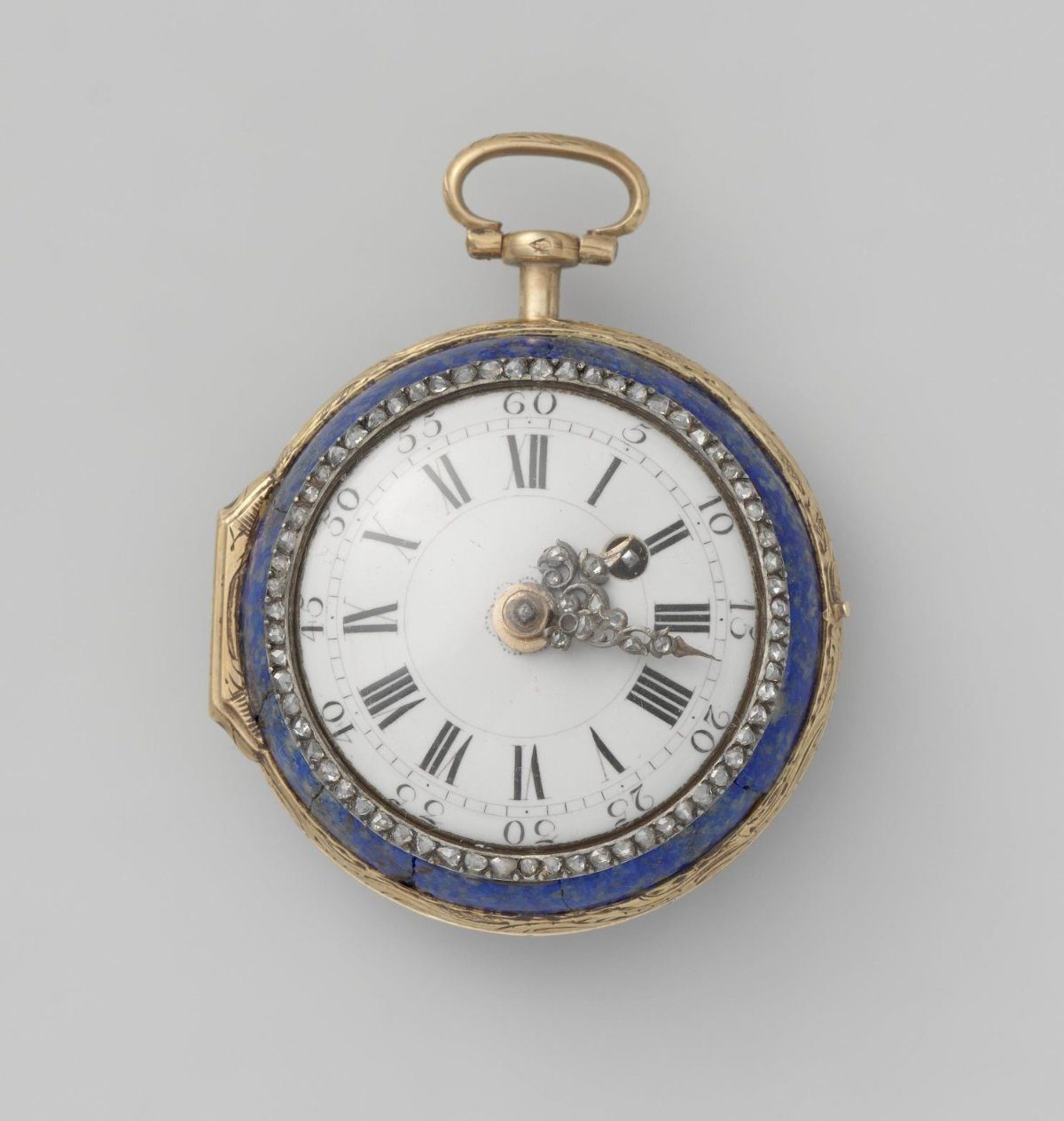
Watch, c. 1760

Rijksmuseum, Amsterdam · Public Domain (Rijksmuseum) · Museum source

Watch, c. 1760

c. 1760

Documented

Gold watch with white enamelled dial and hands set with small diamonds. The case is made of lapis lazuli with small diamonds on the front cover around the glass. The Rijksmuseum, Amsterdam, holds this object as BK-NM-12867; its record gives material recorded as lapis lazuli (rock), gold (metal), diamond (mineral); measurements diameter 4 cm. Description translated from the museum's Dutch catalogue text; details are those of this museum object, and how far it represents a wider type has not been independently verified.

original title
Horloge
holding institution
Rijksmuseum, Amsterdam
museum object number
BK-NM-12867
museum classification
["wrist watch","jewellery"]
Read the full record
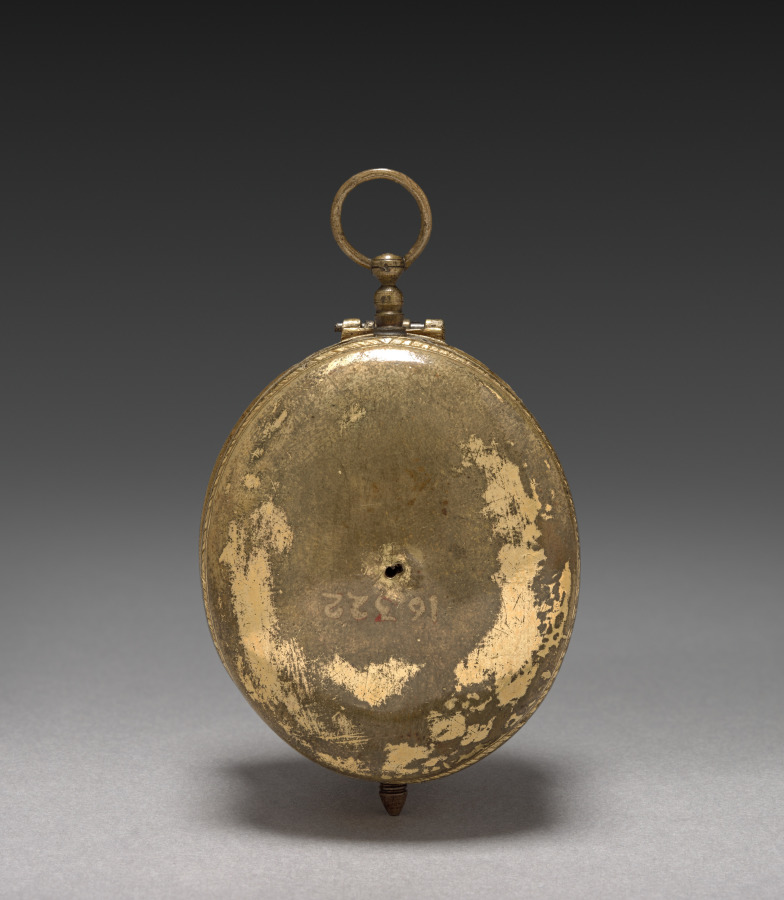
Watch (Cleveland Museum of Art 1916.322)

Cleveland Museum of Art, Gift of Mr. and Mrs. J. H. Wade · Public domain (CC0, Cleveland Museum of Art Open Access) · Museum source

Watch (Cleveland Museum of Art 1916.322)

1600s

Documented

Watch in the Cleveland Museum of Art (accession 1916.322), dated 1600s; museum culture/place: Germany. Museum object record; the wider type is not yet verified.

museum object number
1916.322
museum classification
["Jewelry"]
Read the full record
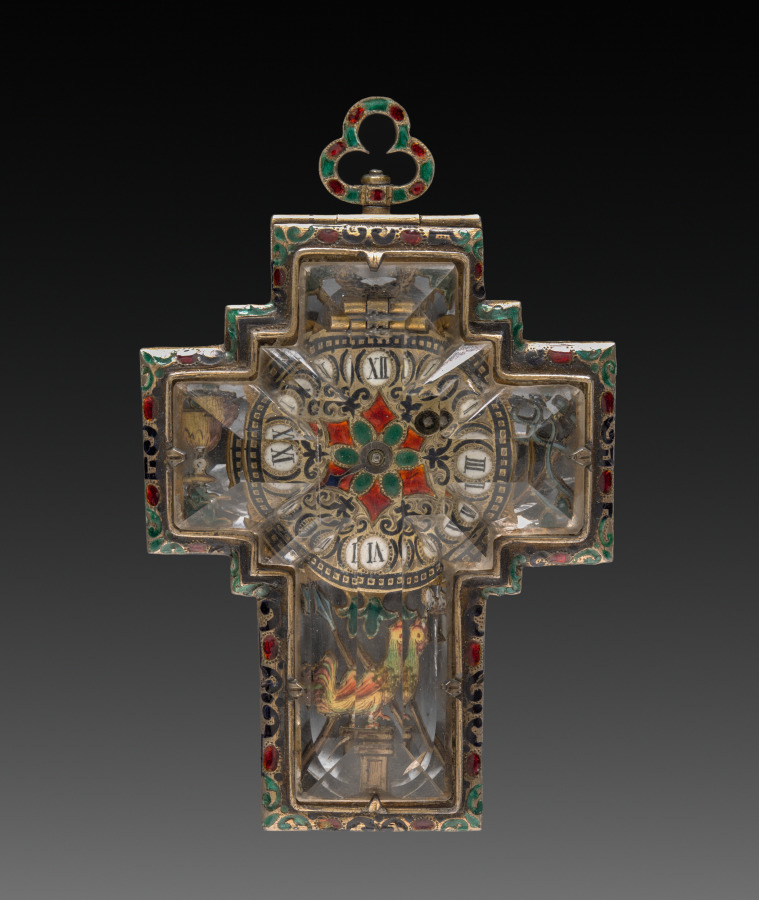
Watch (Cleveland Museum of Art 1916.323)

Cleveland Museum of Art · CC0 1.0 (public domain dedication) · Museum source

Watch (Cleveland Museum of Art 1916.323)

1800s

Documented

Cleveland Museum of Art object 1916.323: Watch, 1800s. Austria. Crystal, gilt metal, enamel; overall: 8.3 x 5.4 x 2 cm (3 1/4 x 2 1/8 x 13/16 in.). Inscribed: movement inscribed in ligature: "Ranna a Vienne.". Details are those of this museum object; how far it represents a wider type has not been independently verified.

date recorded
1800s
culture period
Austria
holding institution
Cleveland Museum of Art
museum object number
1916.323
museum classification
["Jewelry"]
Read the full record
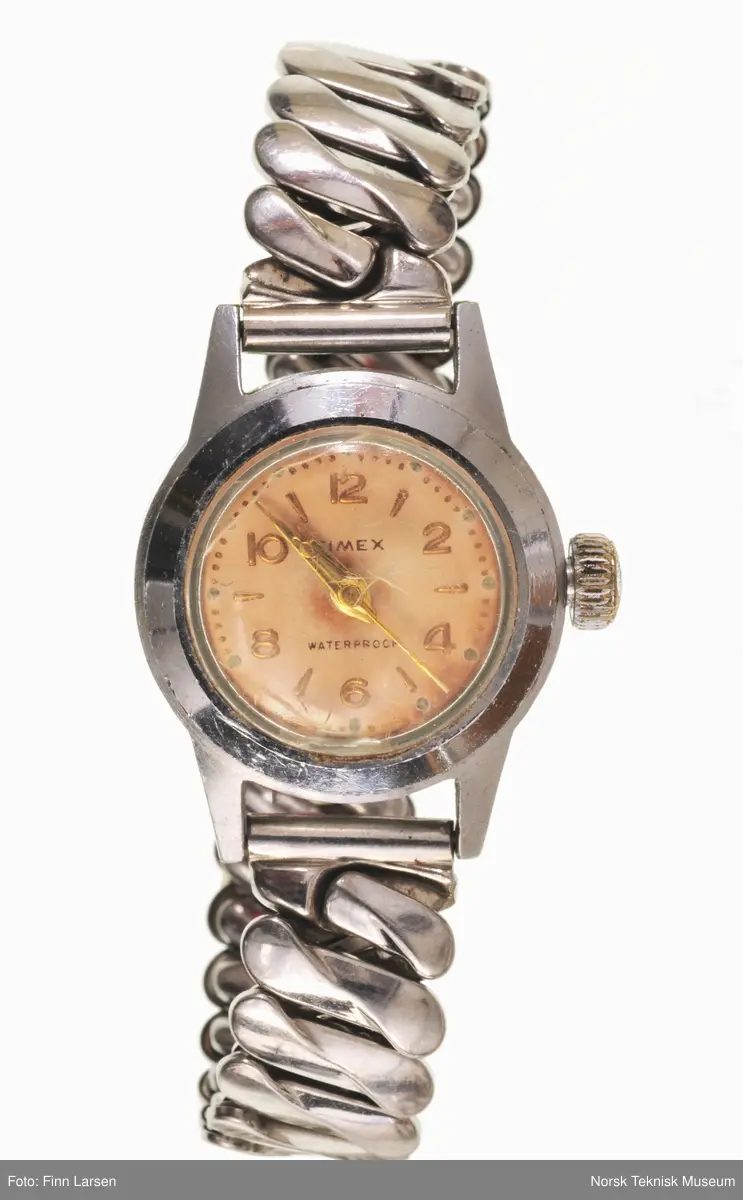
Wristwatch by Timex, 1950

NTM via DigitaltMuseum · CC by-nc-sa · Museum source

Wristwatch by Timex, 1950

1950

Documented

Maker: Timex. Date: 1950. Museum description: Sølvfarget klokke, sølvfarget lenke.. Held by NTM (object NTM 26079). Only details stated in the DigitaltMuseum record are recorded here.

maker
Timex
holding institution
NTM
institution identifier
NTM 26079
Read the full record
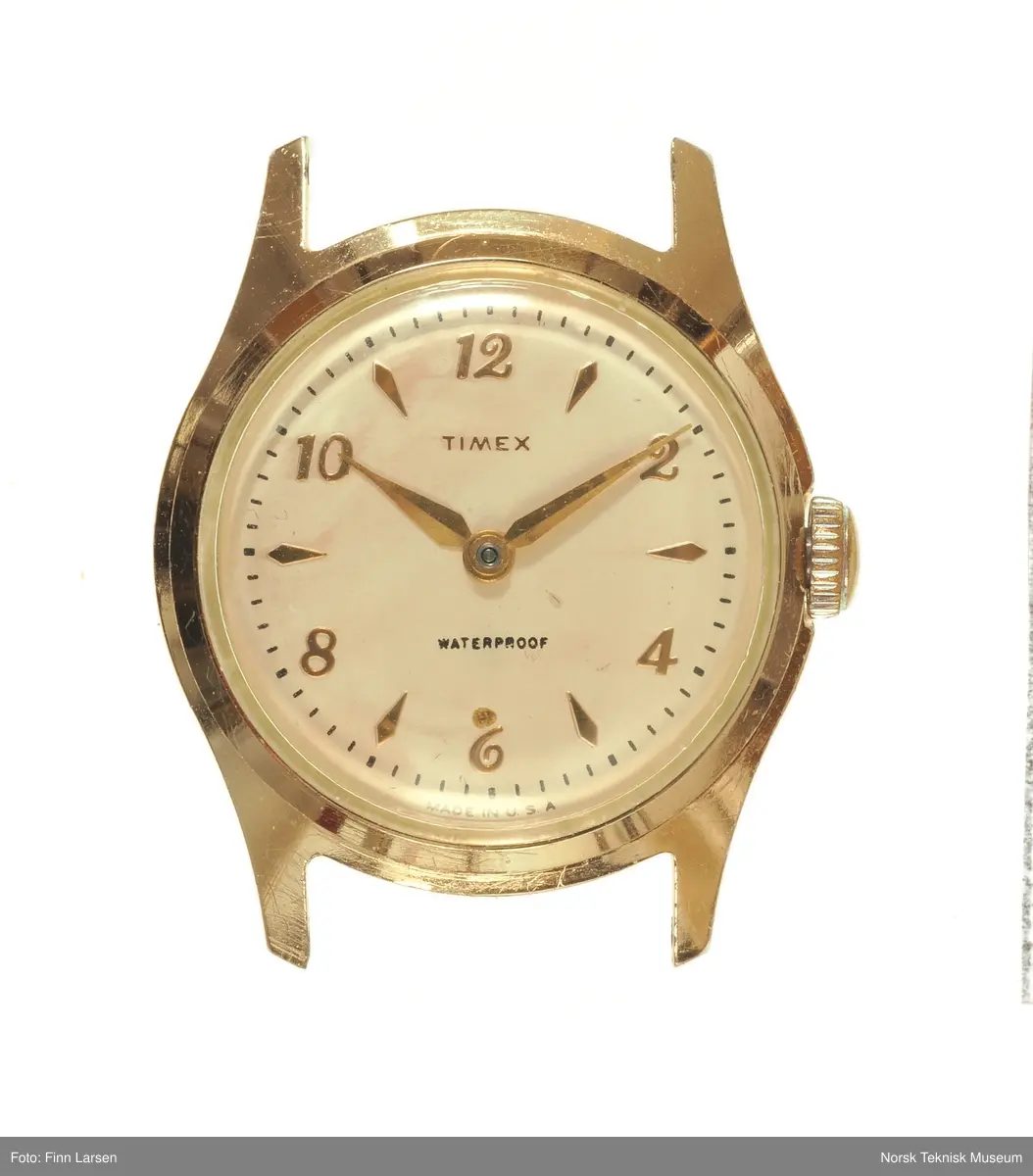
Wristwatch by Timex, 1958

NTM via DigitaltMuseum · CC by-nc-sa · Museum source

Wristwatch by Timex, 1958

1958

Documented

Maker: Timex. Date: 1958. Museum description: Gullfarget. Uten lenke/rem. Klokken virker.. Held by NTM (object NTM 26076). Only details stated in the DigitaltMuseum record are recorded here.

maker
Timex
holding institution
NTM
institution identifier
NTM 26076
Read the full record

Common mistakes

  • Identifying a watch from the dial signature alone.
  • Dating a watch from a serial number without the maker's records.
  • Treating a 'marriage' of case and movement as an original watch.
  • Opening a case back or removing a movement without the right tools and experience.
  • Assuming a gold-coloured case is gold without hallmarks or testing.

Identifying the model or type does not authenticate a particular watch, confirm its originality or establish its condition. High-value pieces need examination by a qualified watchmaker and, where available, a maker's archive extract.

Practise on these records

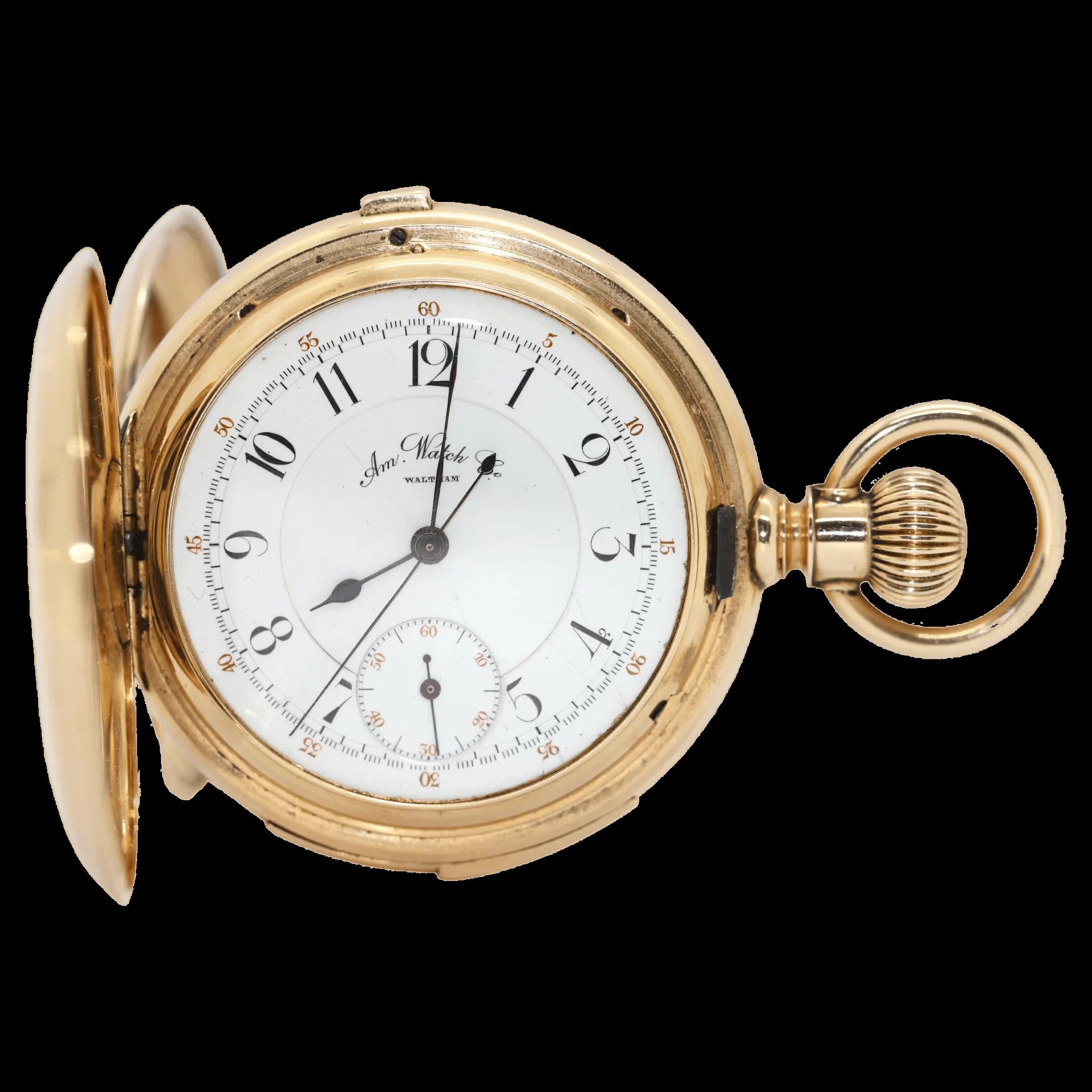
14K Gold  American Watch Co. Waltham, Chronograph Repeater - 1895

pocket watches

14K Gold American Watch Co. Waltham, Chronograph Repeater - 1895

1895

Creator: American Waltham Watch Co.; Case Material: 14k Gold,Yellow Gold; Weight: 129.8 g; Case Dimensions: Diameter: 53.5 mm (2.11 in); Place of Origin: United States; Period: 19th Century; Date of Manufacture: circa 1895; Condition: Fair Documented from the WatchMuseum.org collection record and its own photograph of the object; only details stated by that listing are recorded here. Remaining specifications are marked research required rather than estimated.

Documented

Research required

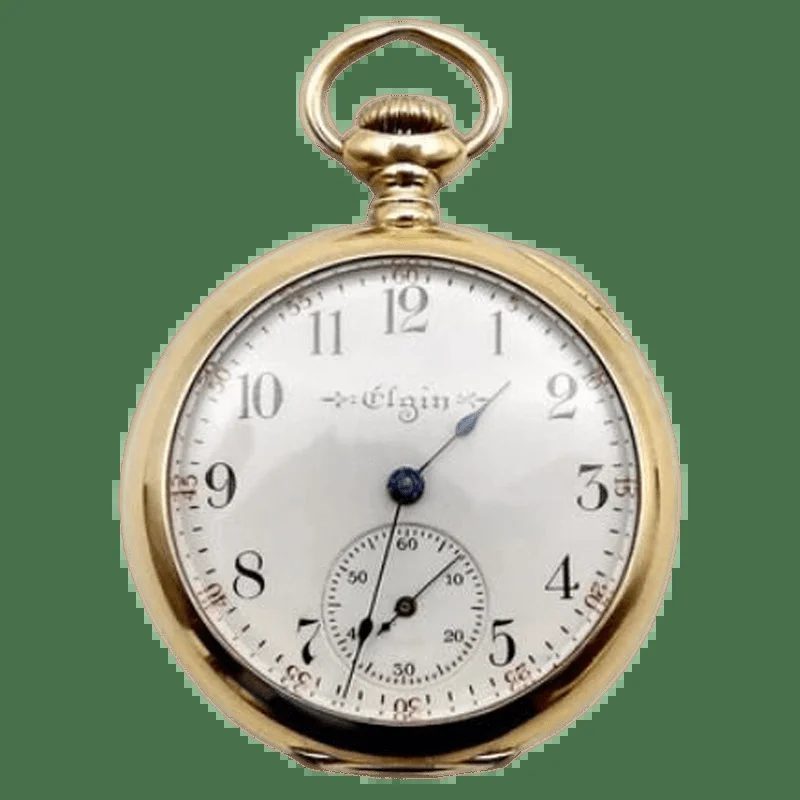
14K Gold Edwardian Elgin Ladies Pocket Watch - 1904

pocket watches

14K Gold Edwardian Elgin Ladies Pocket Watch - 1904

1904

Creator: Elgin Watch Company; Case Material: 14k Gold; Weight: 33 g; Case Shape: Round; Case Dimensions: Height: 43.18 mm (1.7 in)Width: 11.18 mm (0.44 in)Diameter: 31.75 mm (1.25 in); Style: Edwardian; Place of Origin: United States; Period: 20th Century; Date of Manufacture: 1904; Condition: Good Documented from the WatchMuseum.org collection record and its own photograph of the object; only details stated by that listing are recorded here. Remaining specifications are marked research required rather than estimated.

Documented

Research required

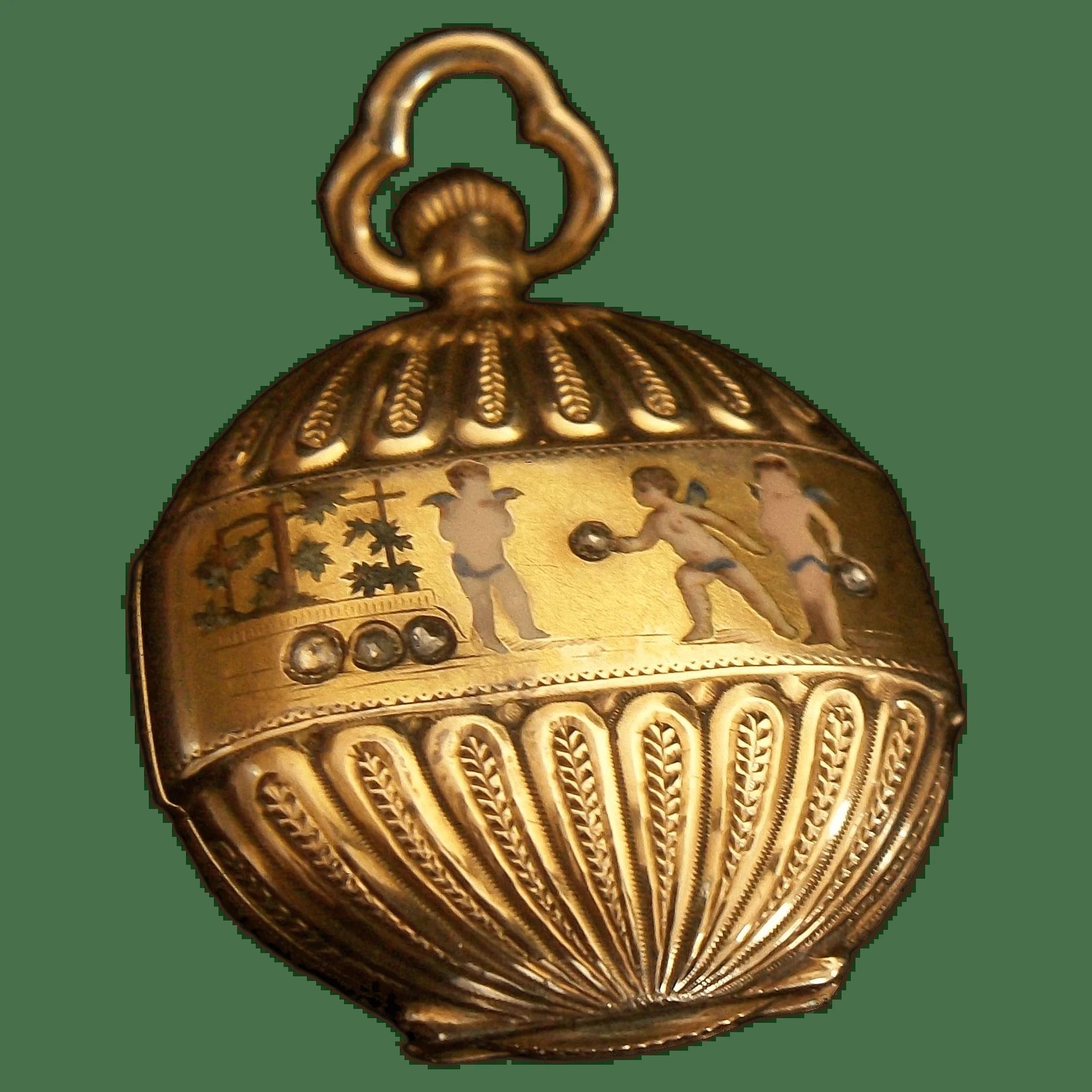
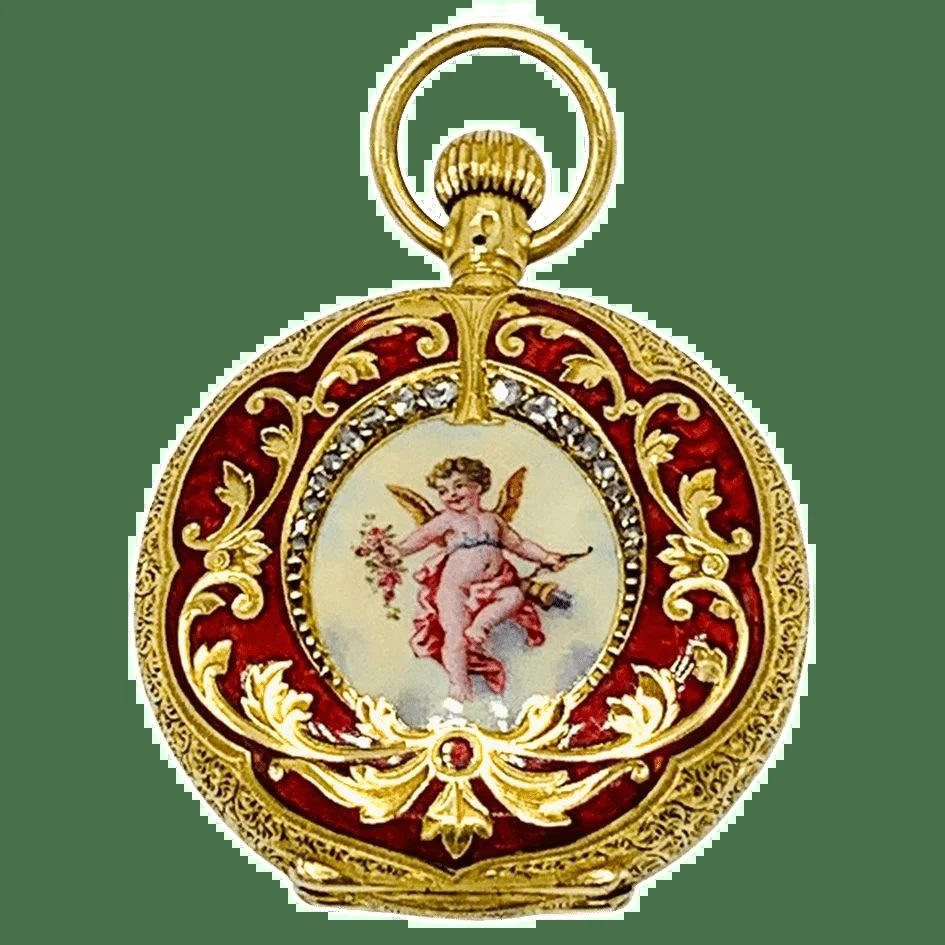
14k Gold Pendant Watch, Enamel Putti & Diamonds, Switzerland -  1870

pocket watches

14k Gold Pendant Watch, Enamel Putti & Diamonds, Switzerland - 1870

1870

Case Material: 14k Gold,Yellow Gold,Enamel; Stone: Diamond; Stone Cut: Round Cut; Weight: 29.43 g; Case Dimensions: Height: 50.8 mm (2 in)Width: 31.75 mm (1.25 in); Style: Neoclassical; Place of Origin: Switzerland; Period: Late 19th Century; Date of Manufacture: 1870-1880; Condition: Good Documented from the WatchMuseum.org collection record and its own photograph of the object; only details stated by that listing are recorded here. Remaining specifications are marked research required rather than estimated.

Documented

Research required

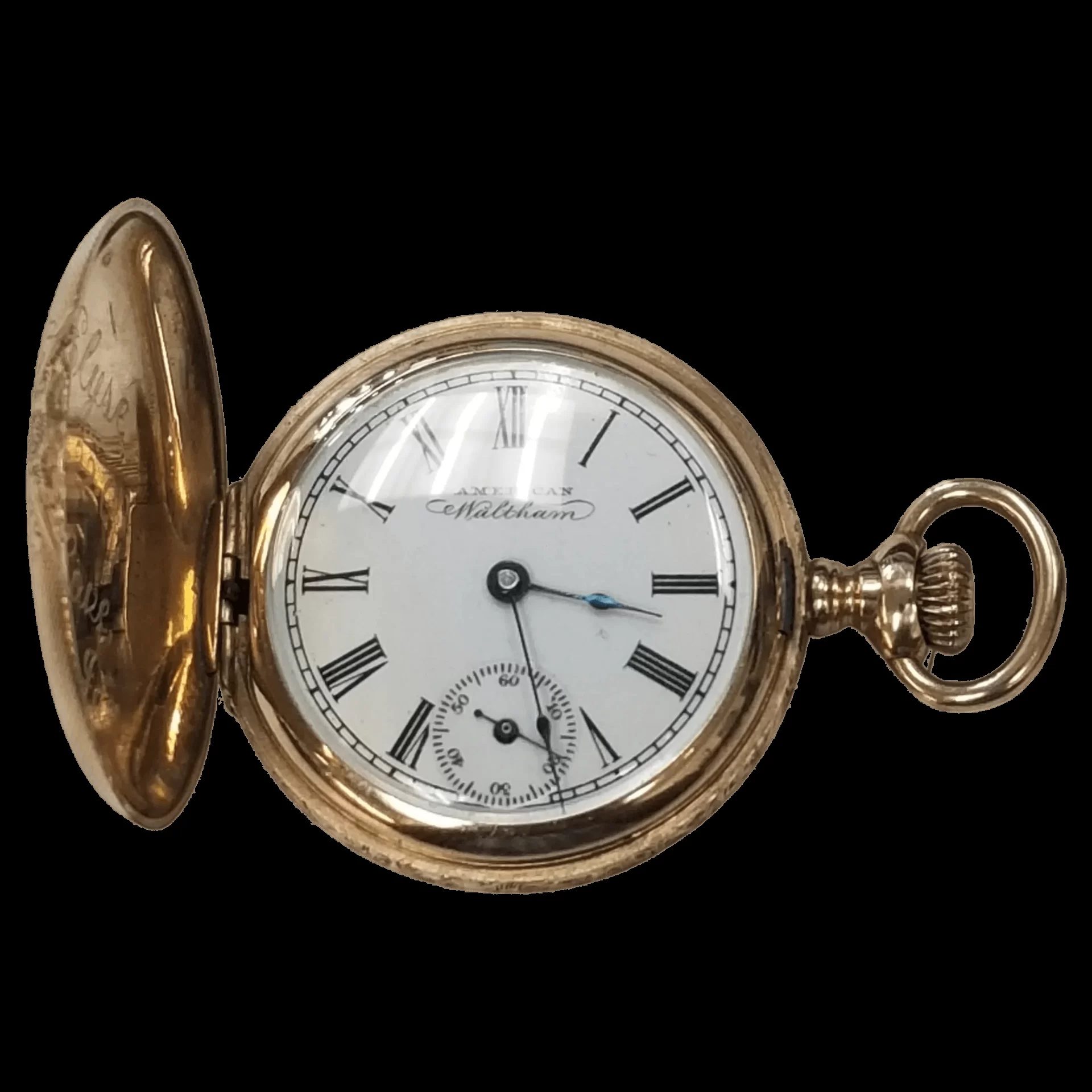
14k yellow gold American Waltham hand engraved pocket watch with white dial - 1900

pocket watches

14k yellow gold American Waltham hand engraved pocket watch with white dial - 1900

1900

Creator: American Waltham Watch Co.; Case Material: Yellow Gold; Case Shape: Round; Case Dimensions: Height: 33 mm (1.3 in)Width: 33 mm (1.3 in)Diameter: 10.5 mm (0.42 in); Style: Artisan; Place of Origin: United States; Period: 20th Century; Date of Manufacture: 1900; Condition: Excellent Documented from the WatchMuseum.org collection record and its own photograph of the object; only details stated by that listing are recorded here. Remaining specifications are marked research required rather than estimated.

Documented

Research required

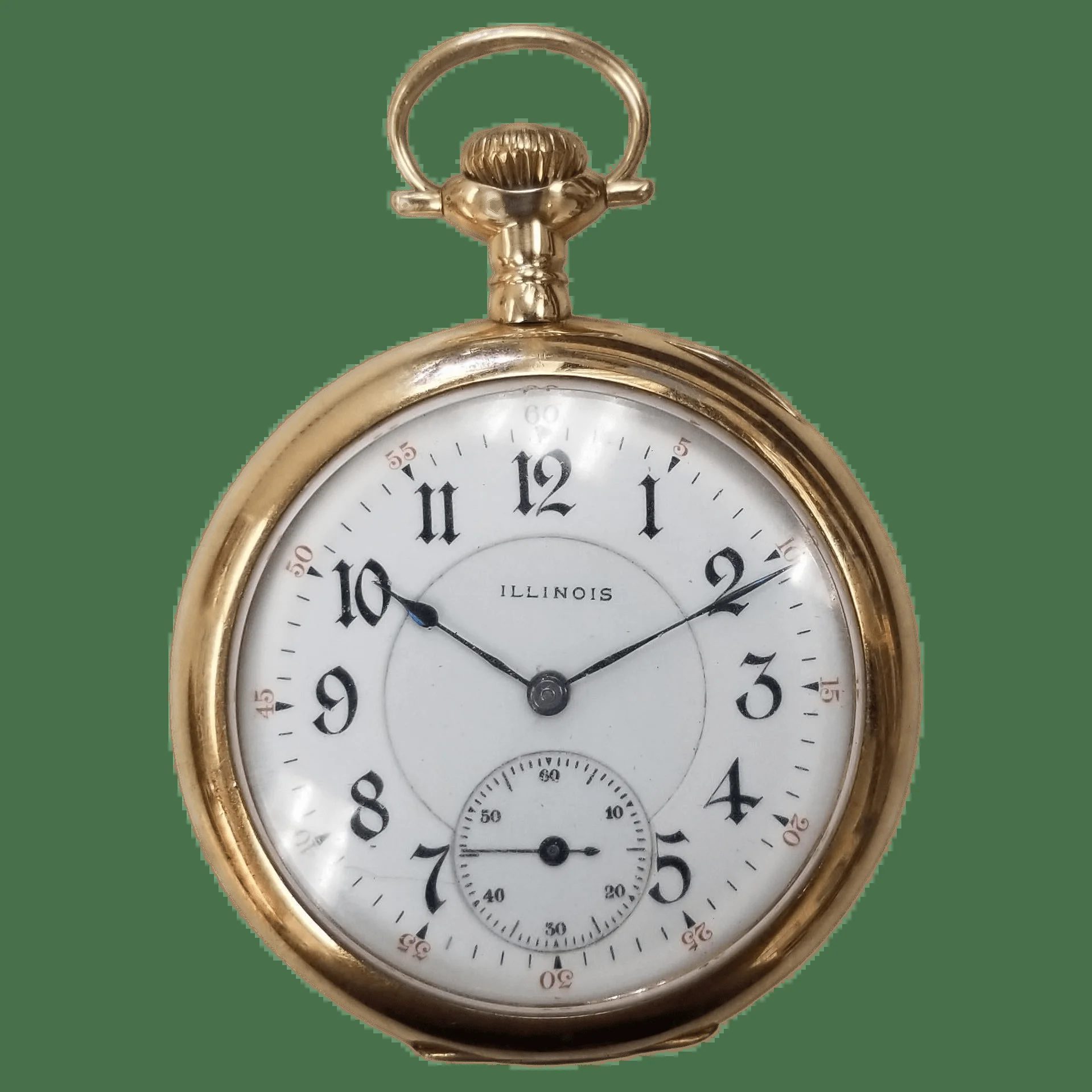
14k Yellow Gold Illinois Hand Engraved Pocket Watch with White Dial - 1900

pocket watches

14k Yellow Gold Illinois Hand Engraved Pocket Watch with White Dial - 1900

1900

Creator: Illinois Watch Company; Case Material: Yellow Gold,14k Gold; Case Shape: Round; Movement: Manual Wind; Case Dimensions: Height: 38 mm (1.5 in)Width: 38 mm (1.5 in)Diameter: 12 mm (0.48 in); Style: Art Deco; Place of Origin: United States; Period: 20th Century; Date of Manufacture: 1900; Condition: Excellent Documented from the WatchMuseum.org collection record and its own photograph of the object; only details stated by that listing are recorded here. Remaining specifications are marked research required rather than estimated.

Documented

Research required

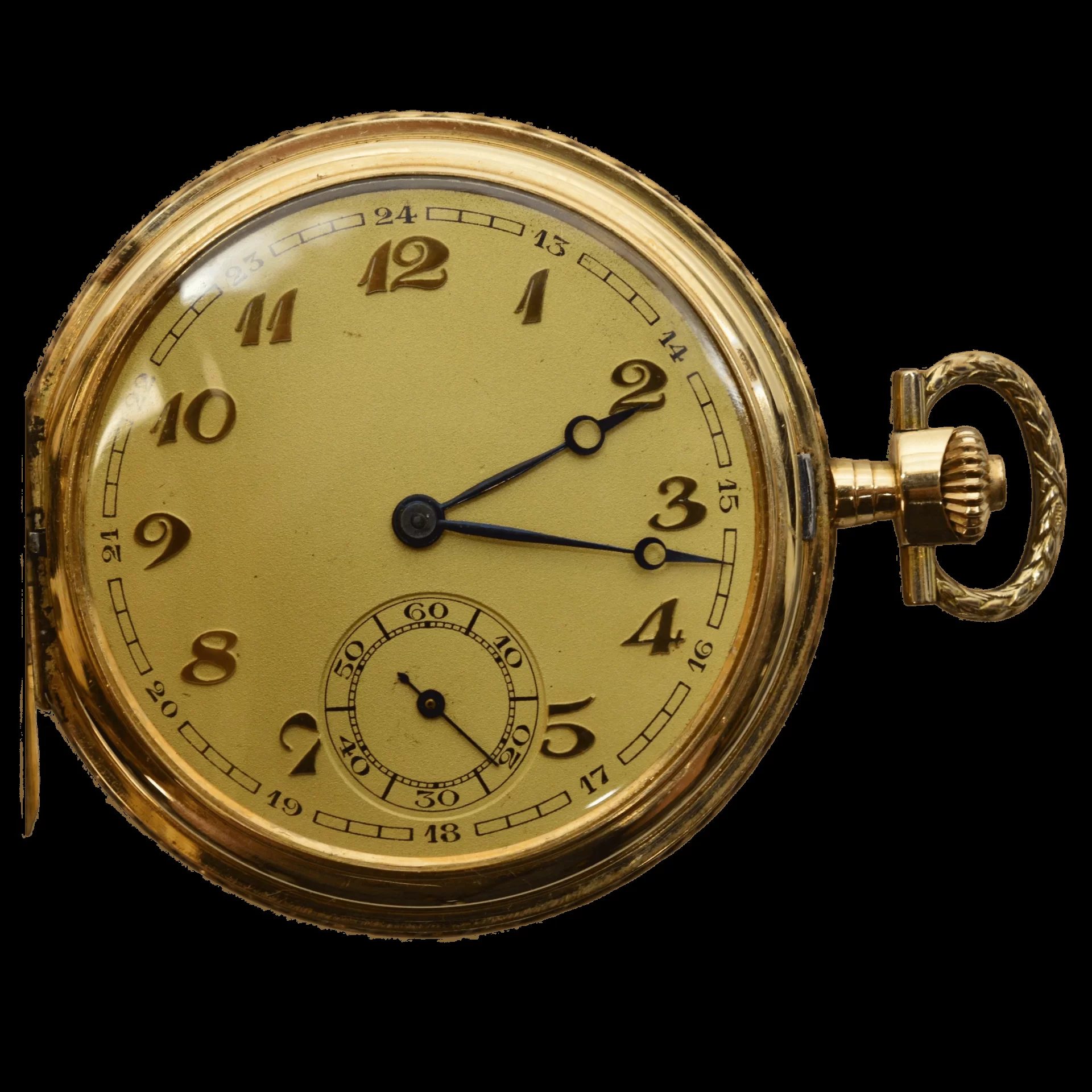
14K Yellow Gold Vogt Pocket Watch - early 20th Century

pocket watches

14K Yellow Gold Vogt Pocket Watch - early 20th Century

Metal: Yellow Gold,14k Gold; Weight: 48.3 pennyweight; Place of Origin: Switzerland; Period: Early 20th Century; Date of Manufacture: early 20th century; Condition: Good Documented from the WatchMuseum.org collection record and its own photograph of the object; only details stated by that listing are recorded here. Remaining specifications are marked research required rather than estimated.

Documented

Research required

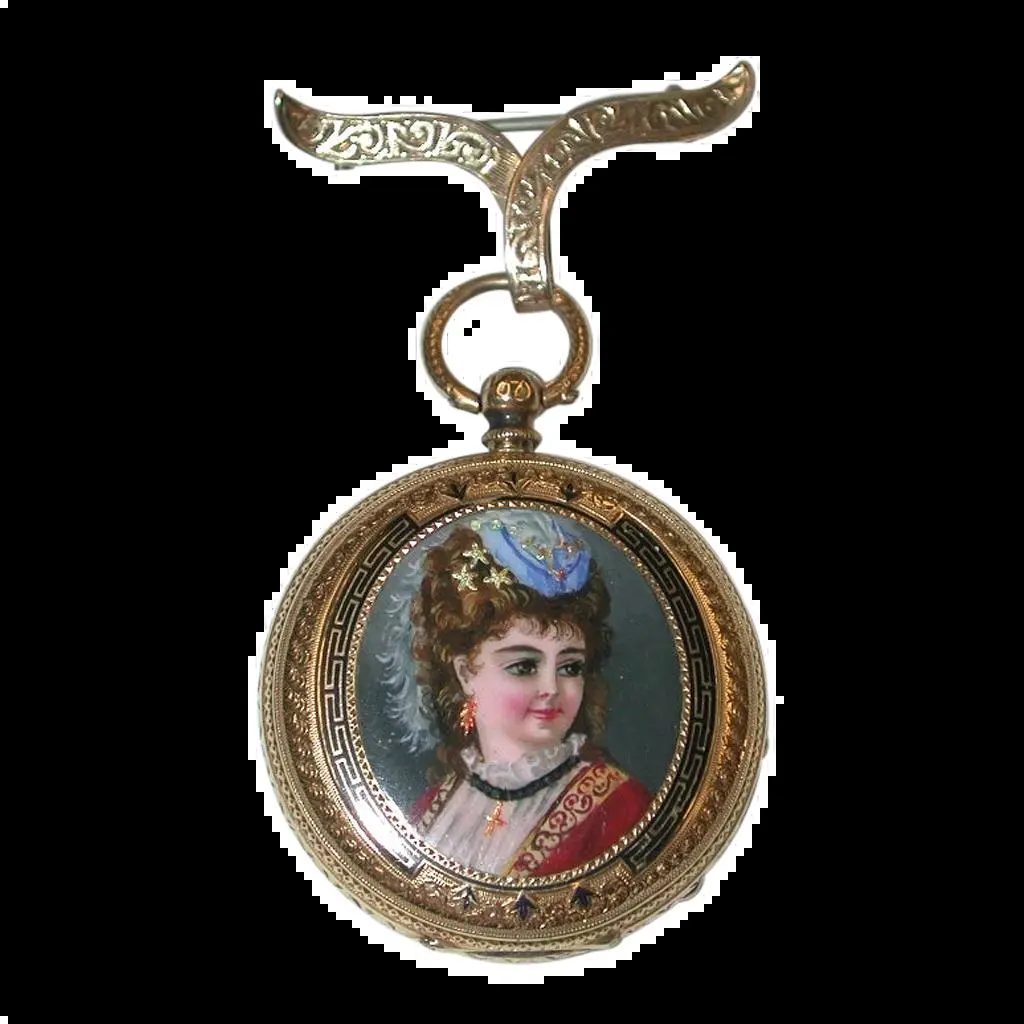
18 Carat Ladies Enamelled Watch with 9 Carat Pinned Bow - Circa 1890

pocket watches

18 Carat Ladies Enamelled Watch with 9 Carat Pinned Bow - Circa 1890

1890

Case Material: 18k Gold,Enamel; Case Dimensions: Height: 70 mm (2.76 in)Width: 35 mm (1.38 in)Depth: 10 mm (0.4 in); Style: Victorian; Place of Origin: United Kingdom; Period: 1880-1889; Date of Manufacture: 1890/1912; Condition: Good Documented from the WatchMuseum.org collection record and its own photograph of the object; only details stated by that listing are recorded here. Remaining specifications are marked research required rather than estimated.

Documented

Research required

18ct Gold Enamel “Special” Diamond Grade Pocket Watch Waltham - 1898

pocket watches

18ct Gold Enamel “Special” Diamond Grade Pocket Watch Waltham - 1898

1898

Creator: American Waltham Watch Co.; Case Material: Enamel,Gold; Stone: Diamond; Stone Cut: Antique Cushion Cut; Case Shape: Round; Case Dimensions: Height: 30 mm (1.19 in)Width: 30 mm (1.19 in)Depth: 15 mm (0.6 in)Diameter: 30 mm (1.19 in)Length: 30 mm (1.19 in); Place of Origin: United States; Period: 19th Century; Date of Manufacture: 1898; Condition: Good Documented from the WatchMuseum.org collection record and its own photograph of the object; only details stated by that listing are recorded here. Remaining specifications are marked research required rather than estimated.

Documented

Research required

This guide helps you identify a type. It does not estimate value, grade, or authenticate an individual object. How records are made.