Issuing authority
Electorate of Saxony
- Kind
- principality
- Region
- Central Europe, Europe
Objects are filed under the historical authority that actually issued or made them. A recorded period comes from the issuer's own reference description and is left blank where no source states it.
Published entries
15
Individual types and documented families
With photographs
100%
15 with a credited real-object photo
Dated span
1512 – 1745
15 entries with their own date
Verified or well documented
0
Highest two confidence levels
Catalogue entries (15)
Filter these entries by era, material or confidenceSorted by date, earliest first.
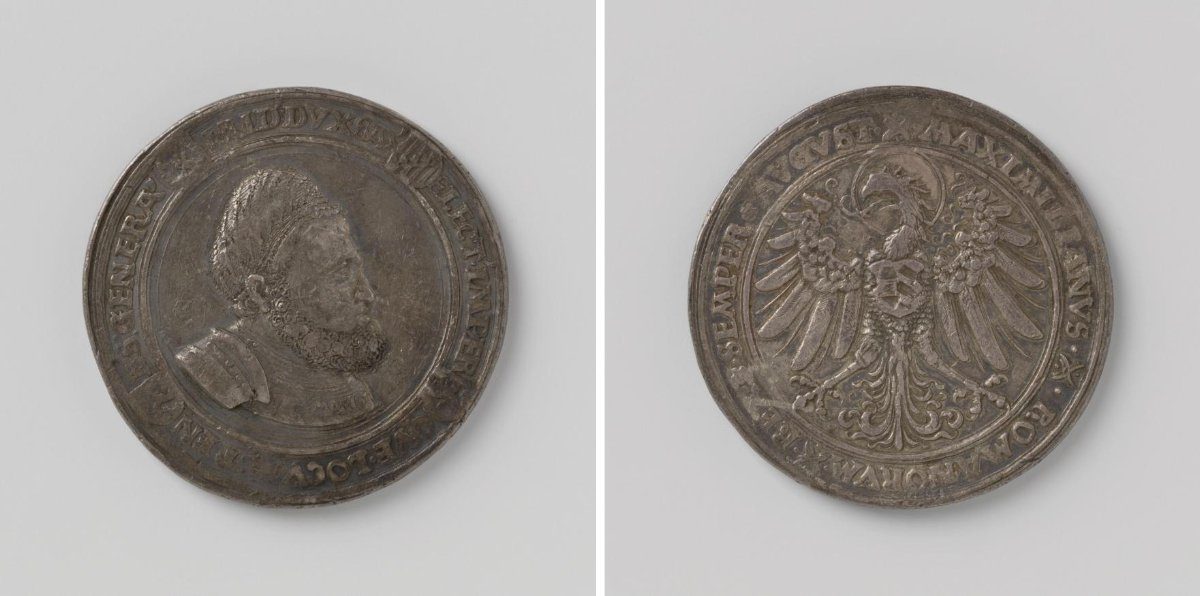
Rijksmuseum, Amsterdam
modern coins
Double schautaler (double guldengroschen; double (locumtenens) taler) in the name of Frederick III the Wise of Saxony, appointed general stadtholder by Maximilian
1512
Double guldengroschen, locumtenenstaler. Obverse: bust of a man within a border with legend and coats of arms. Reverse: eagle with coat of arms on breast within legend. The Rijksmuseum, Amsterdam, holds this object as NG-VG-1-73; its record gives material recorded as silver (metal); technique striking (metalworking)…
Partial type record
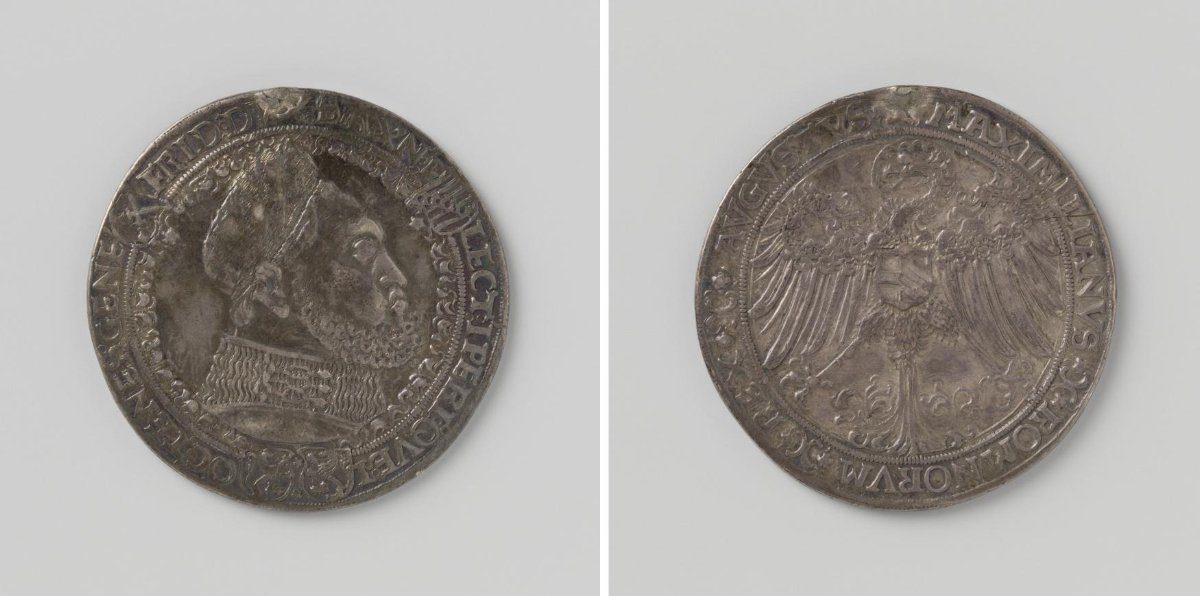
Rijksmuseum, Amsterdam
modern coins
Guldengroschen of Frederick III the Wise of Saxony
1513
Silver commemorative coin. Obverse: bust of a man within a border with circumscription and coats of arms. Reverse: eagle with coat of arms on breast within a circumscription. The Rijksmuseum, Amsterdam, holds this object as NG-VG-1-72; its record gives material recorded as silver (metal); technique striking (metalwo…
Partial type record
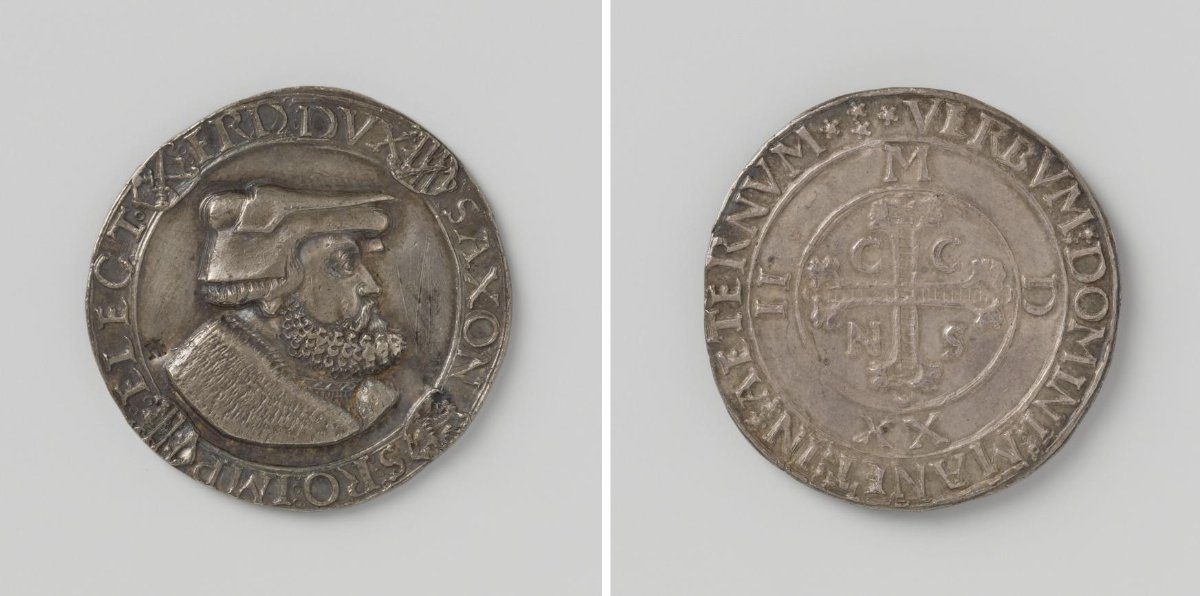
Rijksmuseum, Amsterdam
modern coins
Frederick the Wise, Elector of Saxony
1522
Silver medal. Obverse: bust of a man with cap within legend interrupted by four coats of arms. Reverse: floral cross with four letters between within date and legend. The Rijksmuseum, Amsterdam, holds this object as NG-VG-1-115; its record gives material recorded as silver (metal); technique striking (metalworking);…
Partial type record
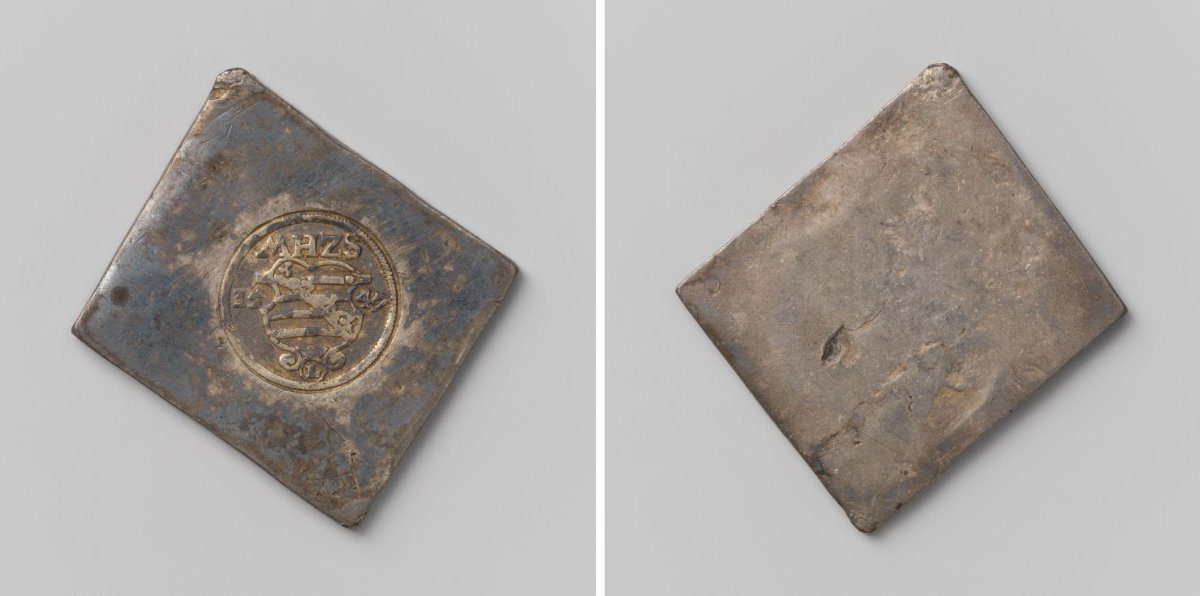
Rijksmuseum, Amsterdam
modern coins
Thaler, emergency coin of Maurice of Saxony from Leipzig, struck during the siege by John Frederick, Elector of Saxony.
1547
Uniface, diamond-shaped emergency coin. Obverse: one stamp: letters M, H, Z and S above coat of arms; on either side part of year; at the bottom letter L in circle; in lowest point: engraved house mark. Reverse: blank. The Rijksmuseum, Amsterdam, holds this object as NG-VG-4-13; its record gives material recorded as…
Partial type record
Rijksmuseum, Amsterdam
modern coins
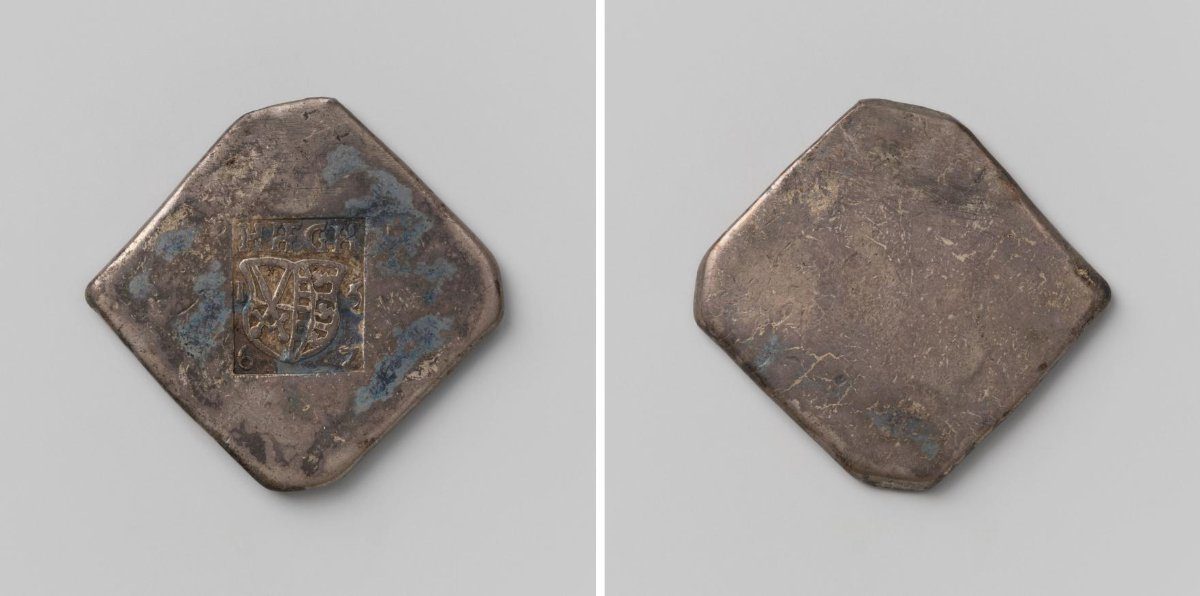
Thaler, emergency coin from Gotha of John Frederick II, Duke of Saxony, struck during the siege by the troops of Elector Augustus of Saxony
1567
Uniface, diamond-shaped emergency coin with bevelled corners. Obverse: a rectangular stamp: letters H, HF, G and K above coat of arms between year. Reverse: blank. The Rijksmuseum, Amsterdam, holds this object as NG-VG-4-26; its record gives material recorded as silver (metal); technique striking (metalworking); mea…
Partial type record
Rijksmuseum, Amsterdam
modern coins
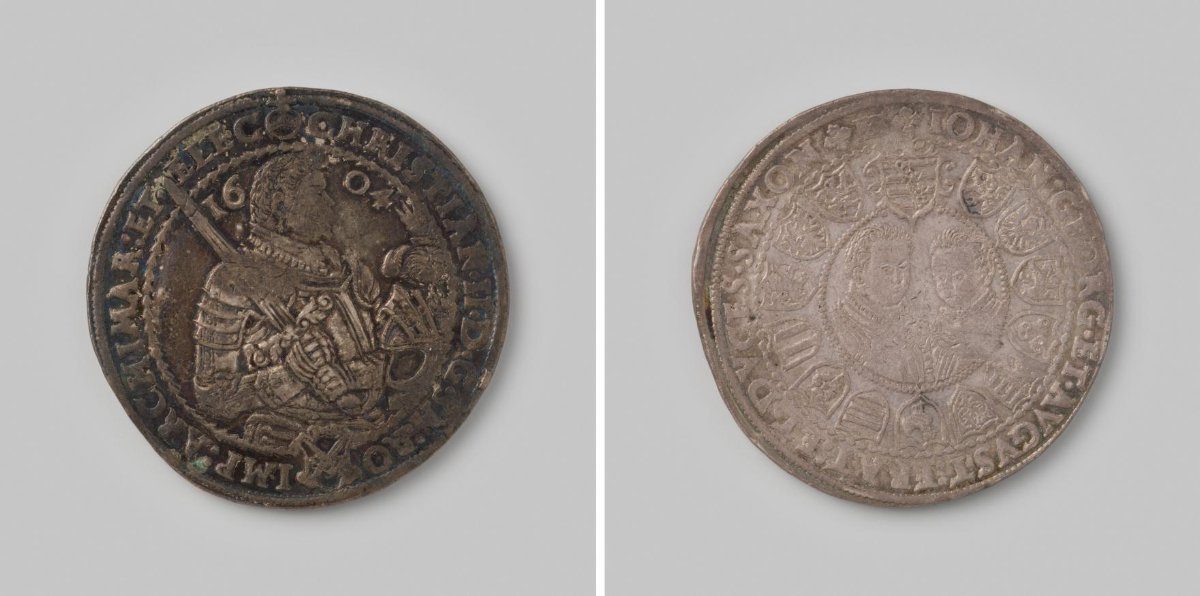
Saxony, Albertine Line, Christian II, Johann Georg I and August, thaler, 1604
1604
Silver coin. Obverse: armoured bust of the elector facing right, in left hand a helmet and in right hand a sword. Year around head, at the bottom in inscription the electoral coat of arms. Reverse: within a circle of fourteen coats of arms the two portraits of the elector's brothers. The Rijksmuseum, Amsterdam, hold…
Partial type record
Rijksmuseum, Amsterdam
modern coins
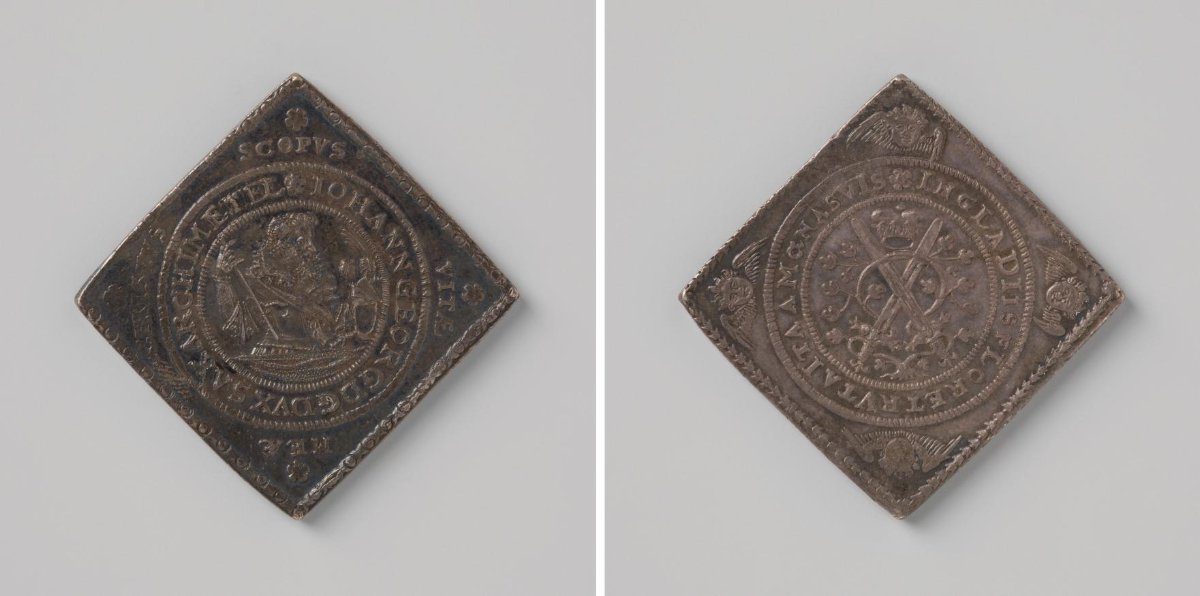
Taler of John George I, Elector of Saxony, on the Baptism of His Son August
1614
Square coin, taler. Obverse: portrait of a man within an inscription. Reverse: two crossed swords with a crown within an inscription. The Rijksmuseum, Amsterdam, holds this object as NG-VG-1-597; its record gives material recorded as silver (metal); technique striking (metalworking); measurements length 3.4 cm x wid…
Partial type record
Rijksmuseum, Amsterdam
modern coins
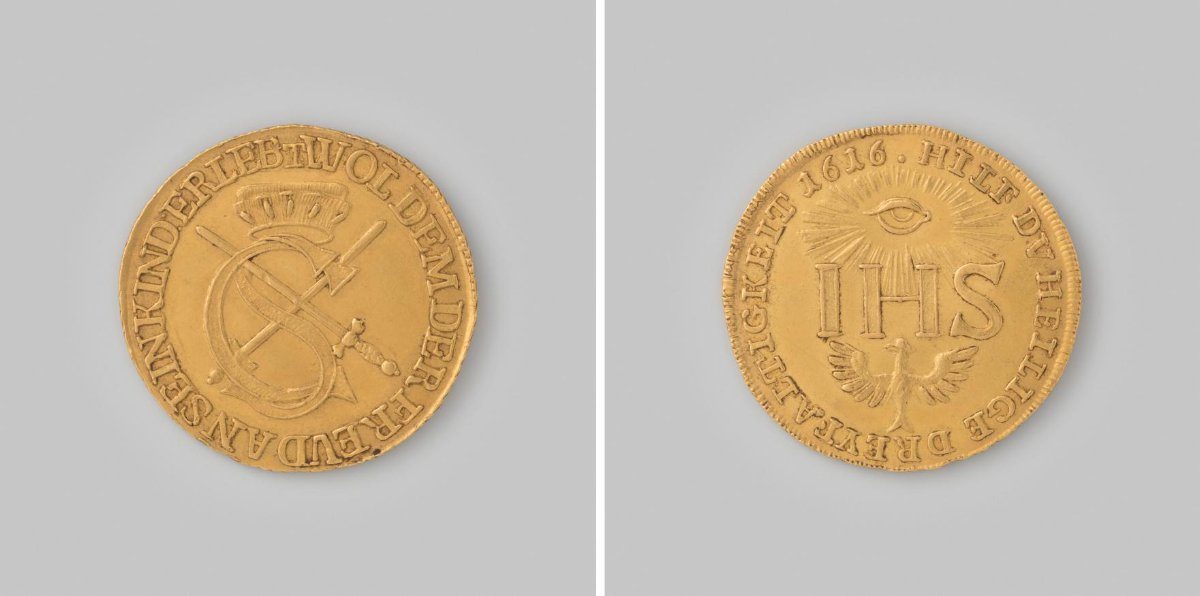
Ducat from Saxony, Albertine Line, of Sophia, wife of Elector Christian I, 1616
1616
Gold coin. Obverse: crowned monogram consisting of the letters C and L on two crossed swords. Reverse: on a single line the letters I, H, and S. Above it, the All-Seeing Eye and below it, an eagle. Date at the top in legend. Cable edge. Called 'kinderdukaat' (children's ducat) because of the obverse legend. This coi…
Partial type record
Rijksmuseum, Amsterdam
modern coins
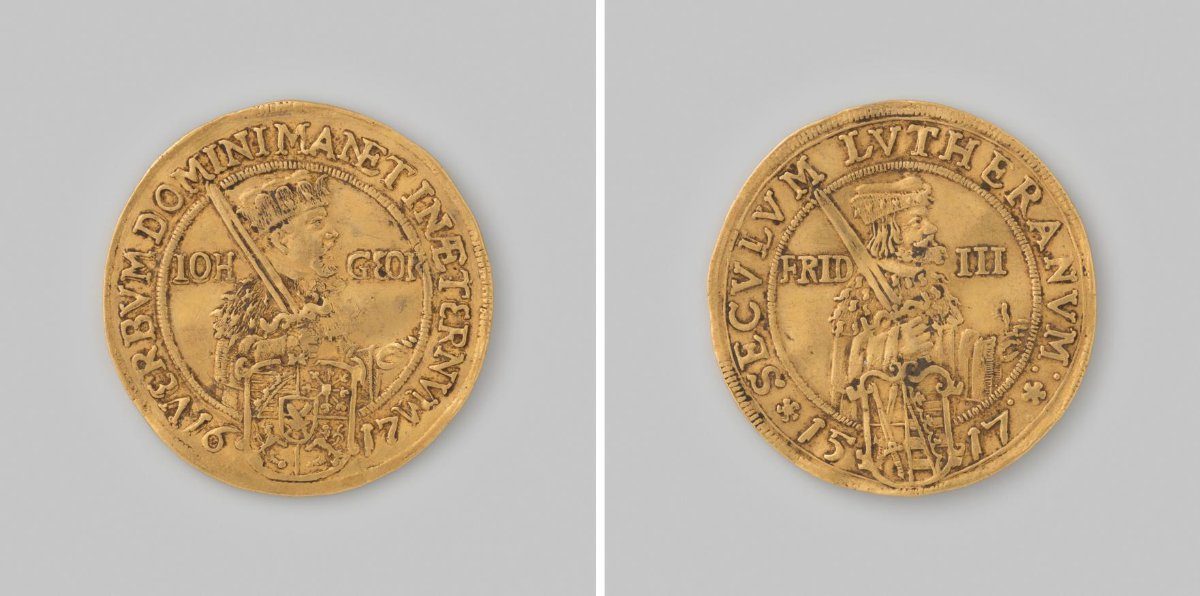
Double ducat from Saxony, Albertine Line, of Johann Georg I, 1617
1617
Gold coin. Obverse: between name indication, portrait of the Elector to the right with a sword in his right hand. Below, between date, composite coat of arms. Reverse: between name indication FRID III, portrait of Elector Friedrich III to the right with a sword in his right hand. Below, between the date 1517, compos…
Partial type record
Rijksmuseum, Amsterdam
modern coins
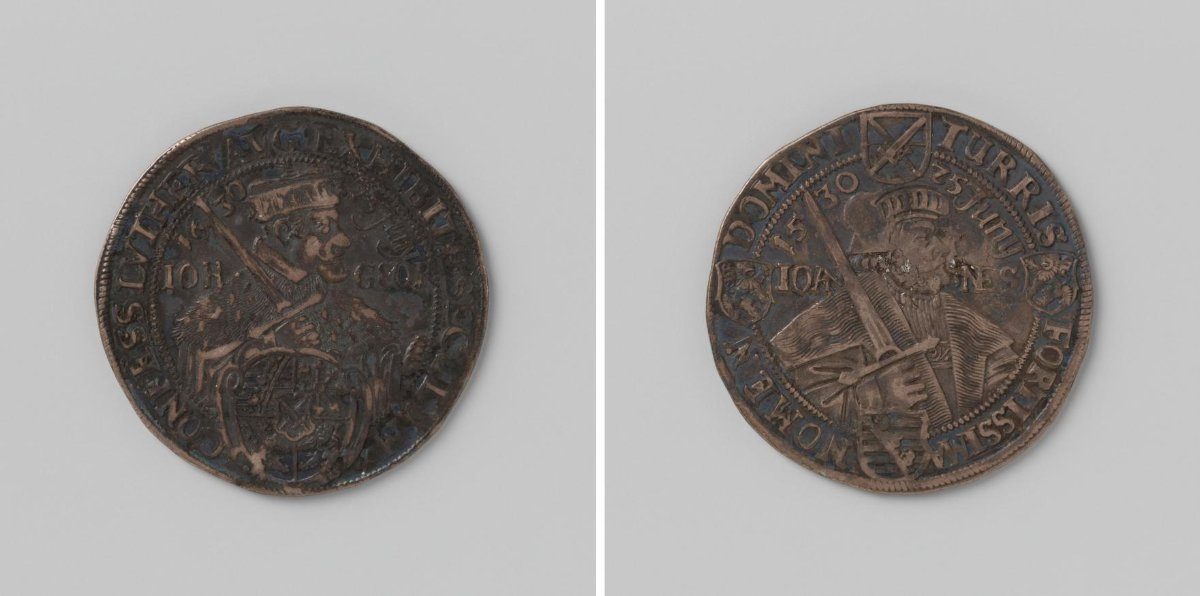
Commemorative half-taler coin from Saxony (Albertine line) in the name of John George I (1591–1656) on the centenary of the presentation of the Augsburg Confession at the Diet
1630
Obverse: bust of a man (John George) with sword above coat of arms within legend. Reverse: bust of a man (John I of Saxony) within legend interrupted by four coats of arms. The Rijksmuseum, Amsterdam, holds this object as NG-VG-1-690; its record gives material recorded as silver (metal); technique striking (metalwor…
Partial type record
Rijksmuseum, Amsterdam
modern coins
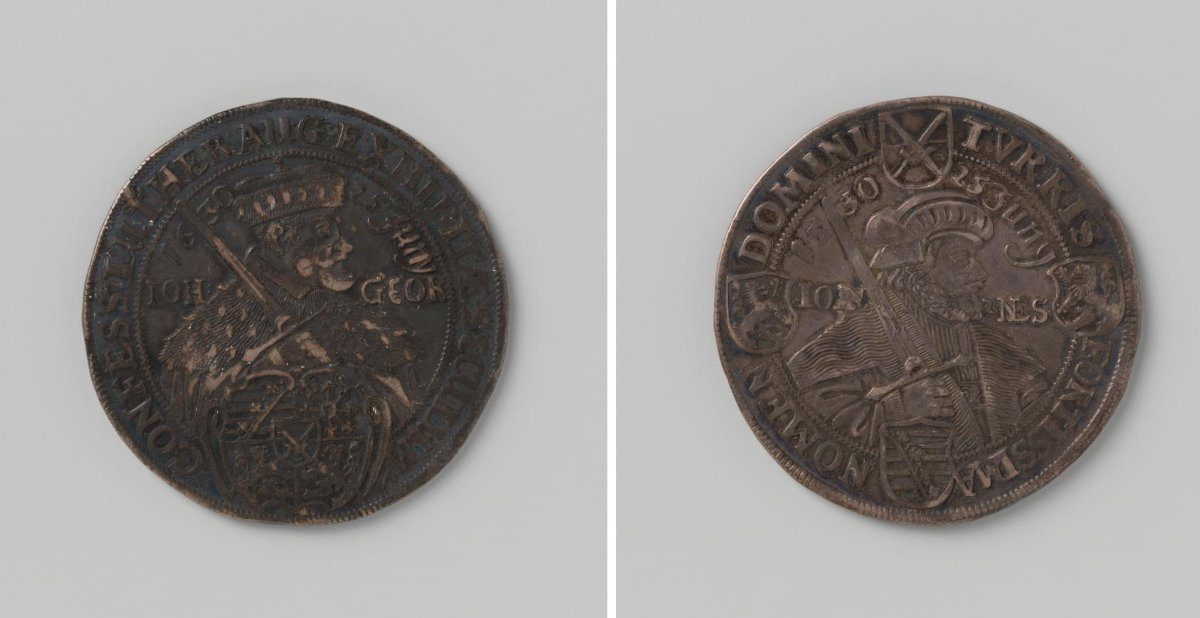
First centenary of the presentation of the Augsburg Confession at the Diet
1630
Obverse: bust of a man with a sword above a coat of arms within an inscription. Reverse: bust of a man within an inscription interrupted by four coats of arms. The Rijksmuseum, Amsterdam, holds this object as NG-VG-1-689; its record gives material recorded as silver (metal); technique striking (metalworking); measur…
Partial type record
Rijksmuseum, Amsterdam
modern coins
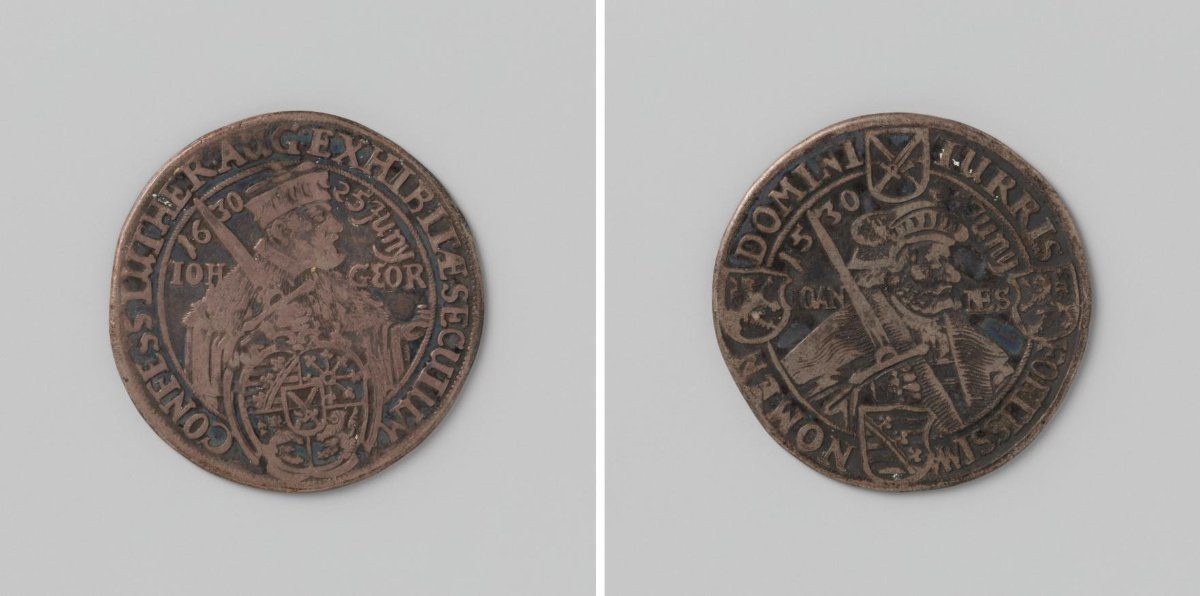
Quarter reichsthaler coin for the first centenary of the delivery of the Augsburg Confession at the Diet
1630
Obverse: bust of a man with a sword above a coat of arms within a legend. Reverse: bust of a man within a legend interrupted by four coats of arms. The Rijksmuseum, Amsterdam, holds this object as NG-VG-1-691; its record gives material recorded as silver (metal); technique striking (metalworking); measurements diame…
Partial type record
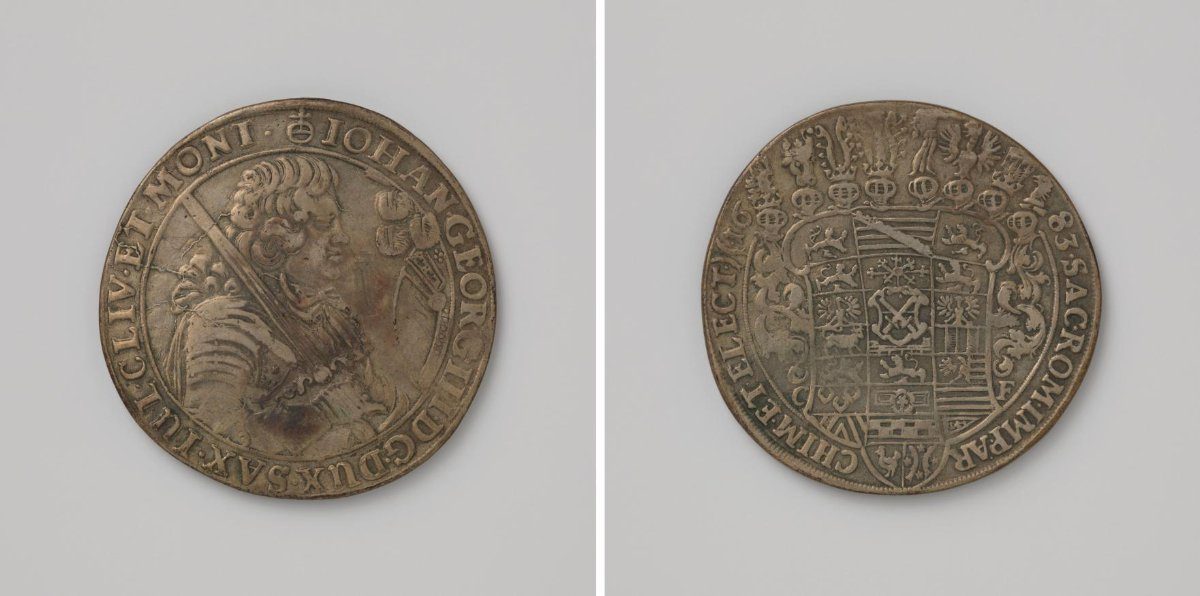
Rijksmuseum, Amsterdam
modern coins
Taler of John George III, Elector of Saxony
1683
Obverse: portrait of a man facing right with a sword over his right shoulder and a helmet [?] in front of him, within a circumscription. Reverse: coat of arms covered by eight helmets, within a circumscription. The Rijksmuseum, Amsterdam, holds this object as NG-VG-1-1298; its record gives material recorded as gildi…
Partial type record
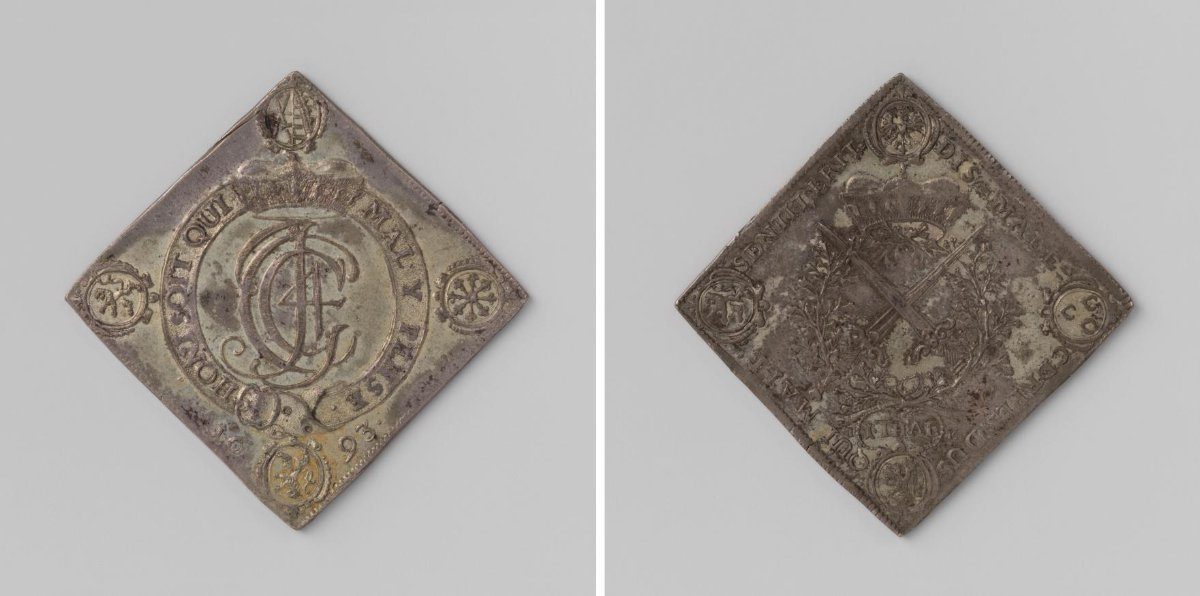
Rijksmuseum, Amsterdam
modern coins
Taler on the appointment of John George IV, Elector of Saxony, as Knight of the Garter by William III, coin distributed at shooting matches in Dresden
1693
Square silver coin. Obverse: monogram of John George IV, encircled by the Garter and crowned with an electoral bonnet, amidst four coats of arms. Reverse: two crossed broadswords within a rue wreath, crowned with an electoral bonnet, within legend interrupted by four coats of arms. The Rijksmuseum, Amsterdam, holds…
Partial type record
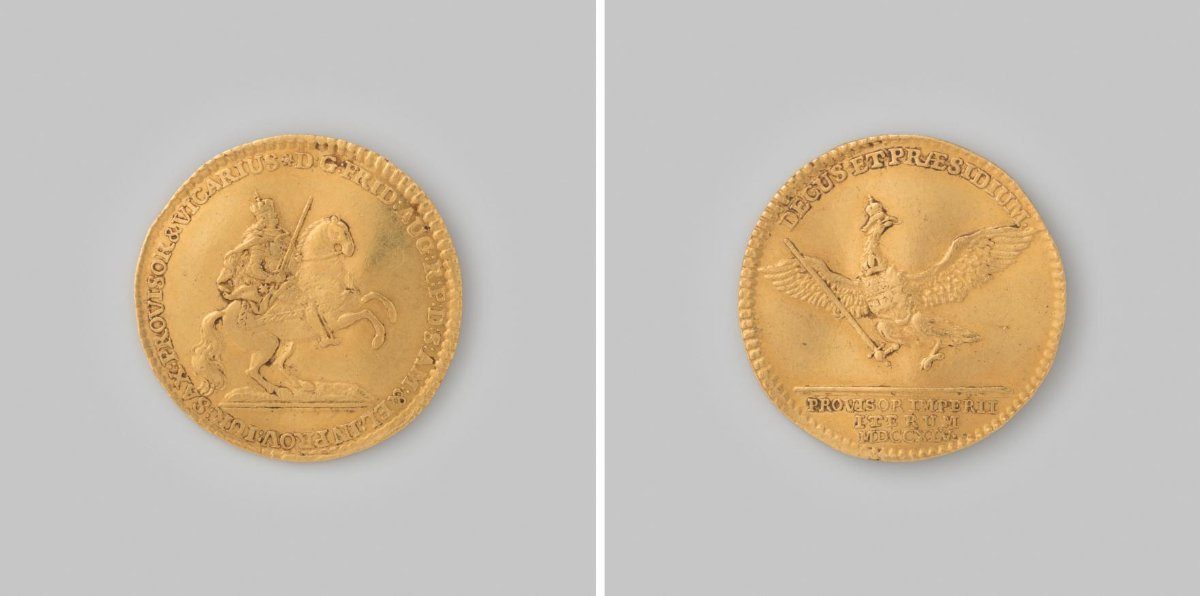
Rijksmuseum, Amsterdam
modern coins
Ducat from Saxony, Albertine Line, of Friedrich August II, 1745
1745
Gold coin. Obverse: crowned ruler on horseback with a sword in his right hand, facing right. Reverse: crowned eagle flying to the left, with a sword in its right claw and a crowned coat of arms on its breast. In exergue, date in Roman numerals. Cable edge. Flange slightly bent. The Rijksmuseum, Amsterdam, holds this…
Partial type record
Dated entries by century
- 16th century5
- 17th century9
- 18th century1
Only the 15 entries carrying their own date to within about 150 years are counted, by the earliest year given. These are catalogue holdings, not production totals.
Materials recorded in the physical descriptions
- Silver12
- Gold3
An entry made of several materials is counted once under each. Materials are counted only where the description states them.
Browse other historical issuers and makers in the Atlas, or read how attributions are made in the editorial method.