Issuing authority
English East India Company
- Kind
- company
- Region
- South Asia, Asia
Objects are filed under the historical authority that actually issued or made them. A recorded period comes from the issuer's own reference description and is left blank where no source states it.
Published entries
41
Individual types and documented families
With photographs
100%
41 with a credited real-object photo
Dated span
1669 – 1858
41 entries with their own date
Verified or well documented
0
Highest two confidence levels
Catalogue entries (41)
Filter these entries by era, material or confidenceSorted by date, earliest first.
Rijksmuseum, Amsterdam
modern coins
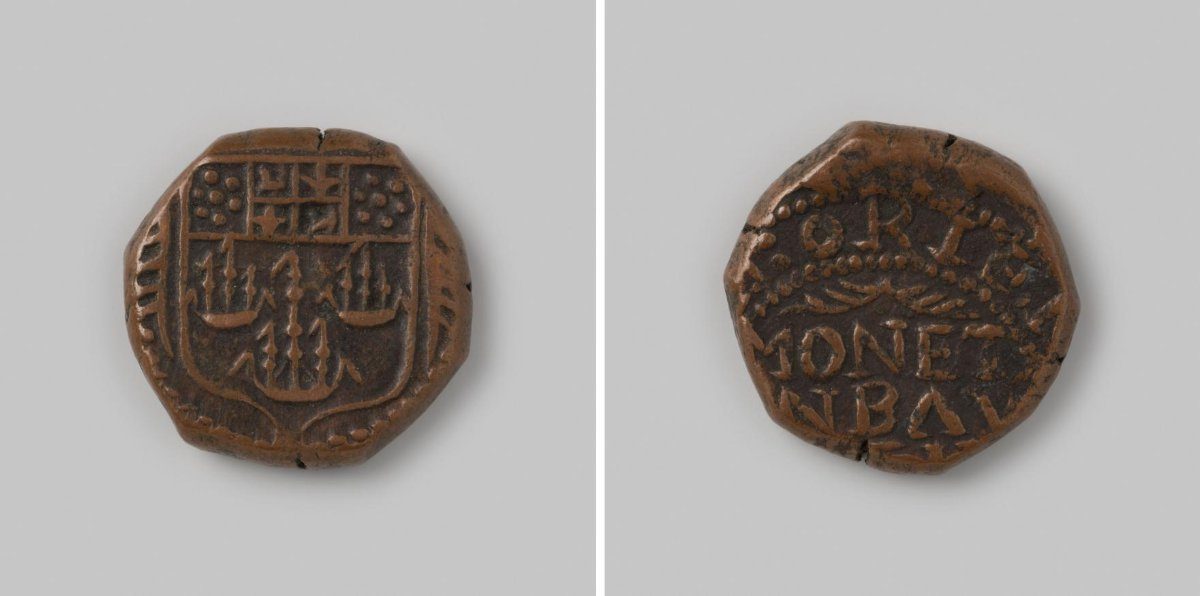
Bombay, India, English East India Company (EIC) during Charles II, pice, 1660-1684
1669 - 1684
Copper coin. Obverse: within ornamentation, coat of arms of the EIC. Reverse: within ornamentation, designation of the mint in two lines: Bombay. The Rijksmuseum, Amsterdam, holds this object as KOG-MP-1-3876; its record gives material recorded as copper (metal); technique striking (metalworking); measurements diame…
Partial type record
Rijksmuseum, Amsterdam
modern coins
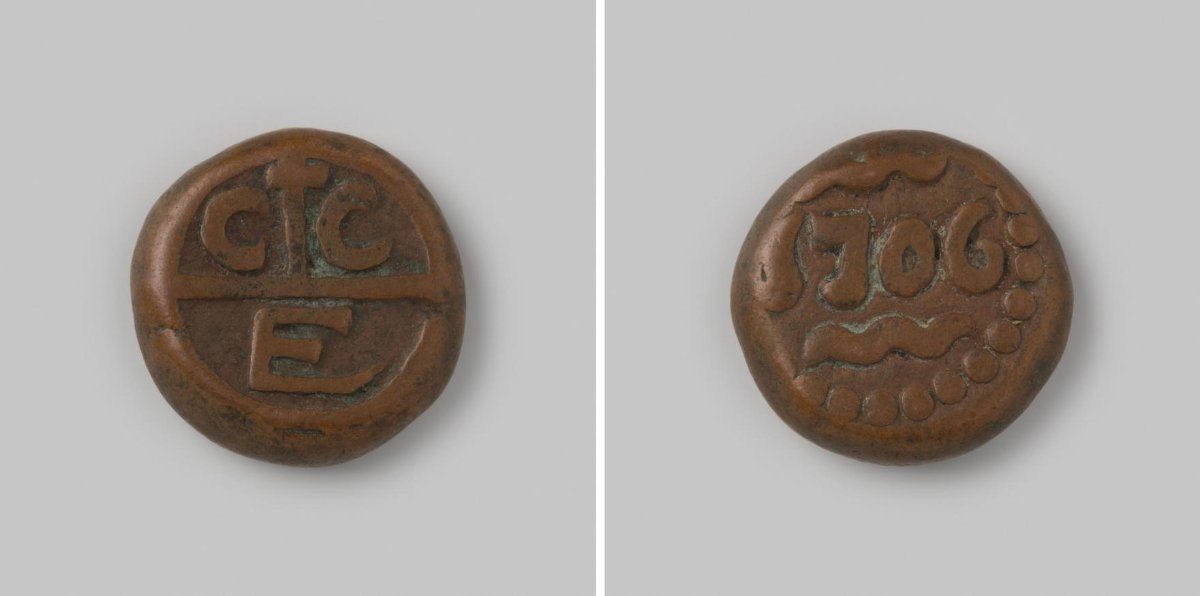
Dudu or 10 cash for Madras in India from the English East India Company (EIC), 1706
1706
Copper coin. Obverse: mark of the EIC, with the letters 'G', 'C', and 'E'. Reverse: between two wavy lines, the year: 1706. Plain edge. The Rijksmuseum, Amsterdam, holds this object as KOG-MP-1-3903; its record gives material recorded as copper (metal); technique striking (metalworking); measurements diameter 1.8 cm…
Partial type record
Rijksmuseum, Amsterdam
modern coins
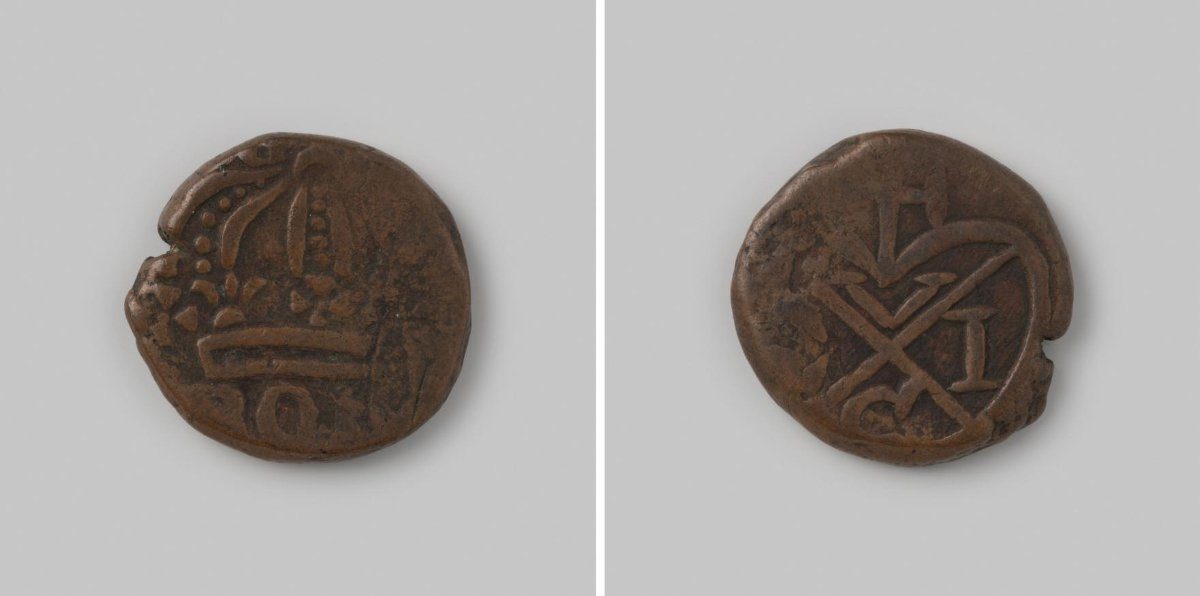
Bombay, India, English East India Company (EIC) during George I, pice, 1714-1727
1714 - 1727
Copper coin. Obverse: crown. Above it the letters 'G' and 'R' and below it in one line the place designation: 'BOM' [=Bombay]. Reverse: mark of the EIC. The Rijksmuseum, Amsterdam, holds this object as KOG-MP-1-3877; its record gives material recorded as copper (metal); technique striking (metalworking); measurement…
Partial type record
Rijksmuseum, Amsterdam
modern coins
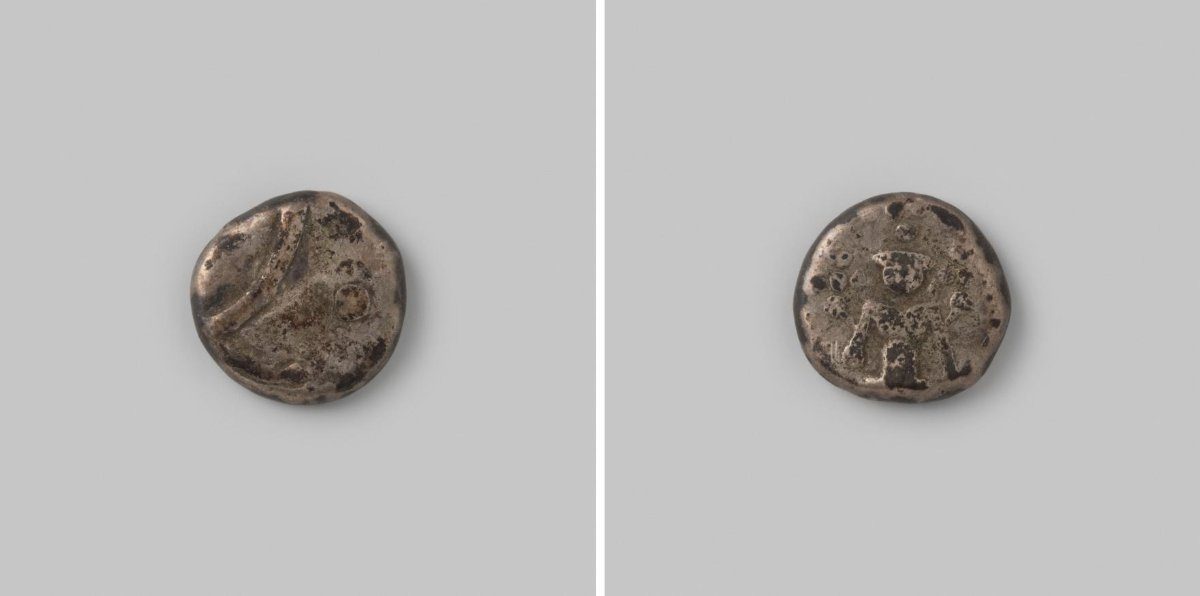
Silver fanam from Madras in British India under the East India Company, 1764-1807
1764 - 1807
Silver coin. Obverse: depiction of the deity Vishnu. Reverse: two facing and intertwined letters C [=Company]. The Rijksmuseum, Amsterdam, holds this object as KOG-MP-1-3922C; its record gives material recorded as silver (metal); technique striking (metalworking); measurements diameter 0.9 cm x weight 0.86 g.
Partial type record
Rijksmuseum, Amsterdam
modern coins
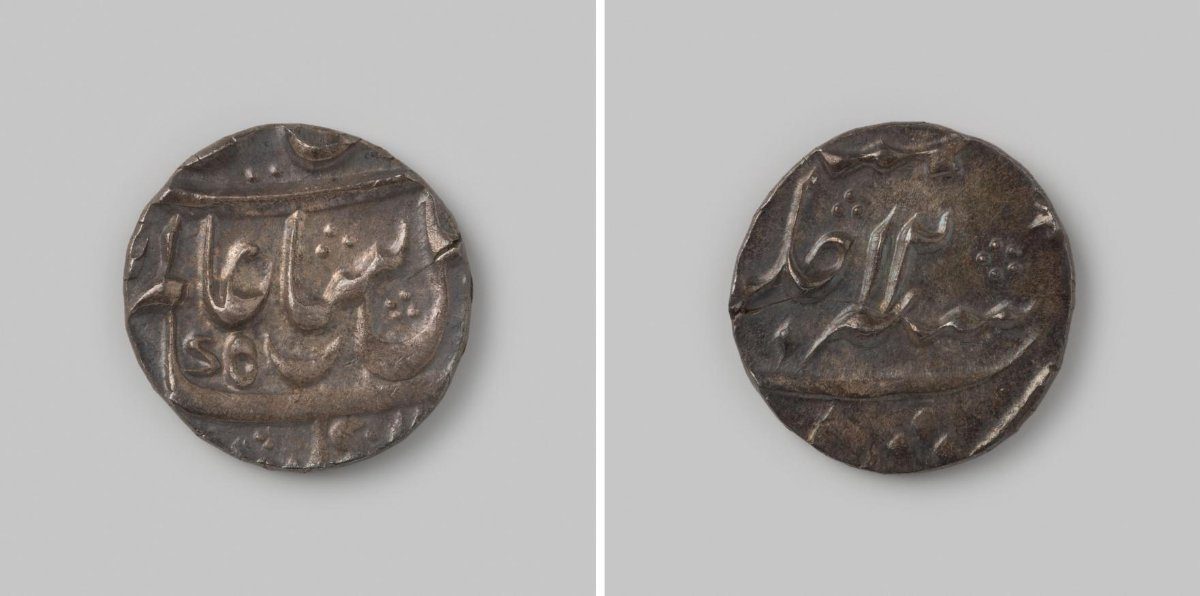
½ rupee from Bengal in India of the English East India Company (EIC) in the name of Shah Alam II, 1185 [=1771]
1771
Silver coin. Obverse: inscription in three lines in Arabic characters, with date indication at the bottom: 1185. Reverse: inscription in three lines in Arabic characters. Above the second line, indication of regnal year: 12, with to the far right thereof (part of a) star [=mint Murshidabad]. Plain edge. The Rijksmus…
Partial type record
Rijksmuseum, Amsterdam
modern coins
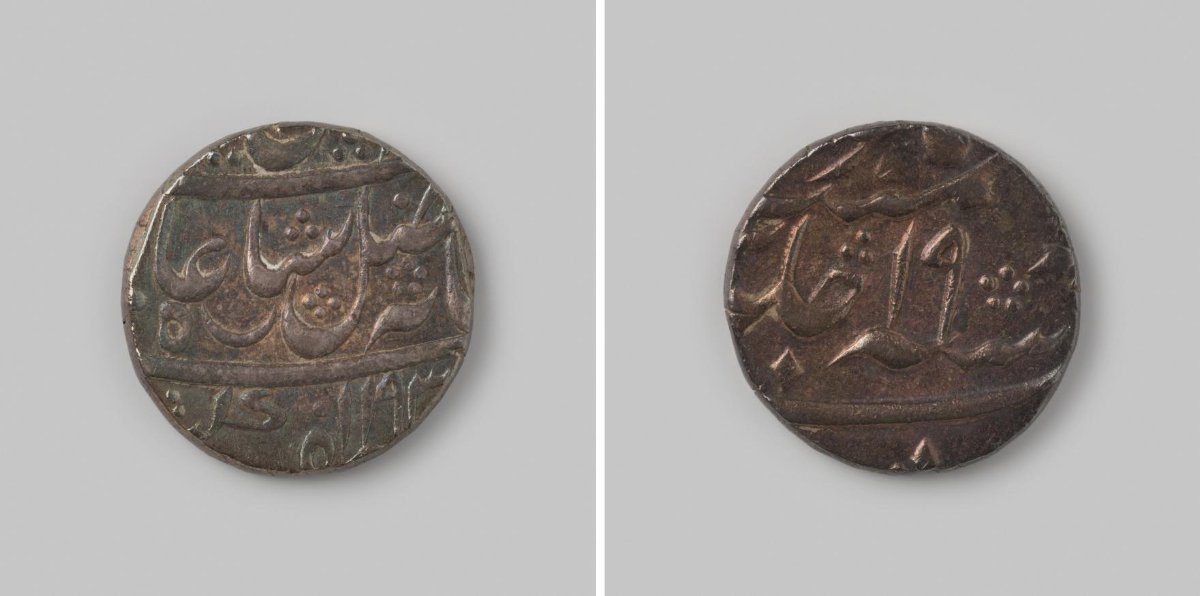
Rupee from Bengal in India of the English East India Company (EIC) in the name of Shah Alam II, 1193 [=1779]
1779
Silver coin. Obverse: three-line inscription in Arabic characters with year indication at the bottom: 1185. Reverse: three-line inscription in Arabic characters. Above the second line, indication of the "eternal" regnal year: 19, with (part of a) star to the far right [= Murshidabad mint]. Smooth edge. The Rijksmuse…
Partial type record
Rijksmuseum, Amsterdam
modern coins
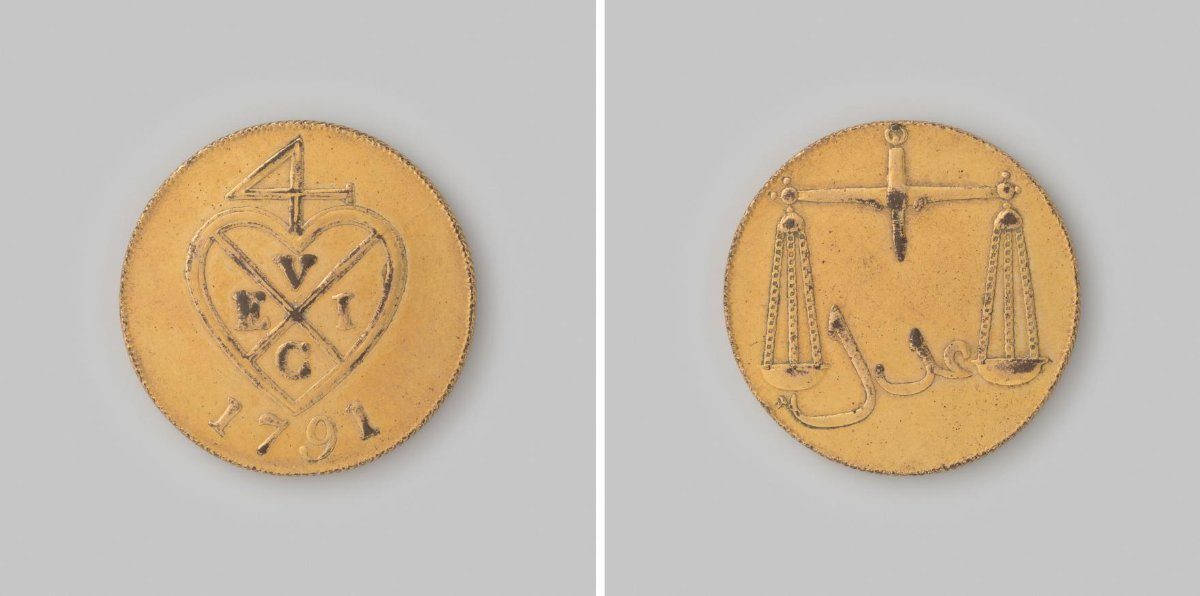
English East India Company (EIC) for Bombay, India, double pice, 1791
1791
Gilt-copper coin. Obverse: mark of the EIC with the year below. Reverse: pair of scales with inscription in Arabic characters between the two pans: 'adl' [=just]. Cable edge. The Rijksmuseum, Amsterdam, holds this object as KOG-MP-1-3883; its record gives material recorded as copper (metal); technique striking (meta…
Partial type record
Rijksmuseum, Amsterdam
modern coins
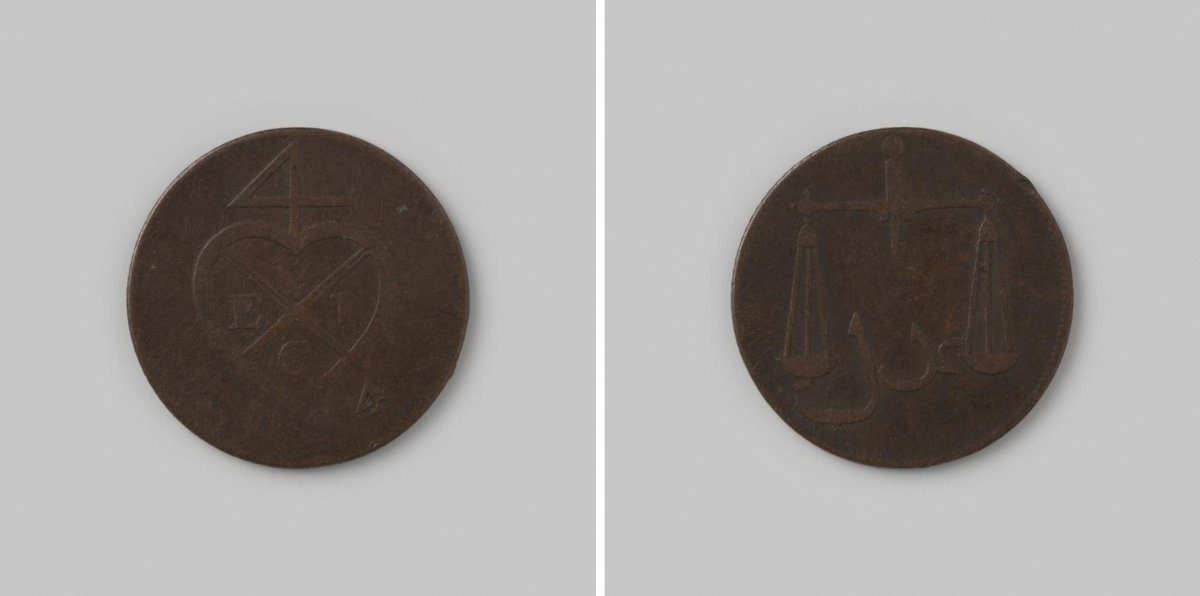
English East India Company (EIC) for Bombay, India, ½ pice, 1794
1794
Copper coin. Obverse: mark of the EIC with the year below. Reverse: pair of scales with inscription in Arabic characters between the two pans: 'adl' [=just]. Cable edge. The Rijksmuseum, Amsterdam, holds this object as KOG-MP-1-3889; its record gives material recorded as copper (metal); technique striking (metalwork…
Partial type record
Rijksmuseum, Amsterdam
modern coins
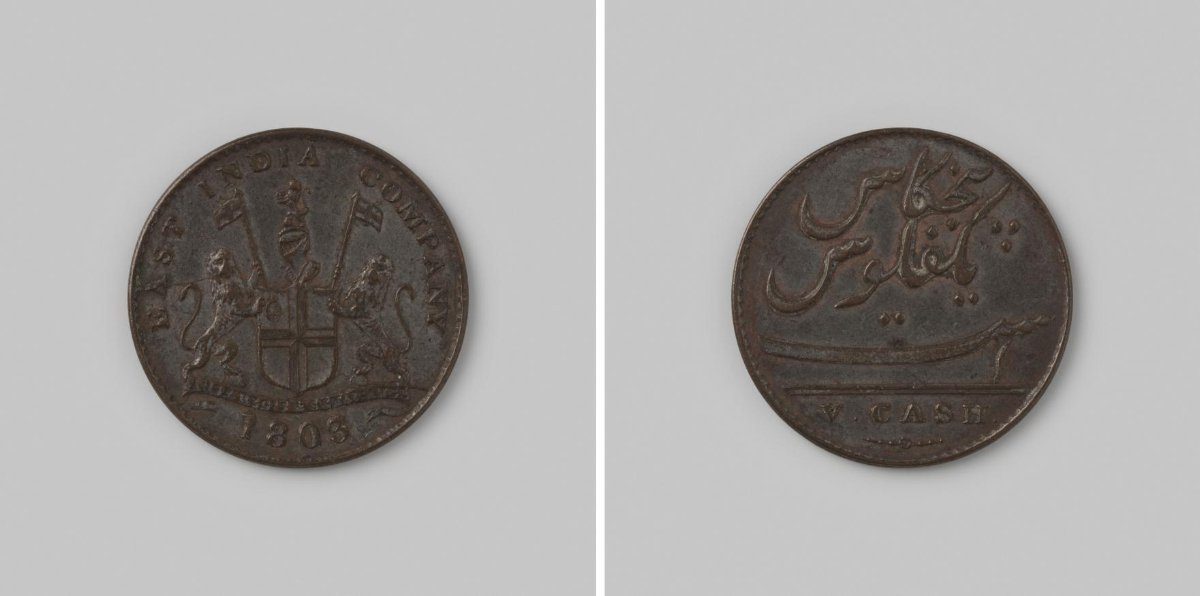
5 cash for Madras in India of the English East India Company (EIC), 1803
1803
Silver-plated copper coin. Obverse: coat of arms of the EIC supported by two lions standing on a banner with inscription, holding an arrow with flag in paw, surmounted by crest. Year at the bottom. Reverse: at the top in three lines value indication in Arabic characters. In exergue value indication in English: V. Ca…
Partial type record
Rijksmuseum, Amsterdam
modern coins
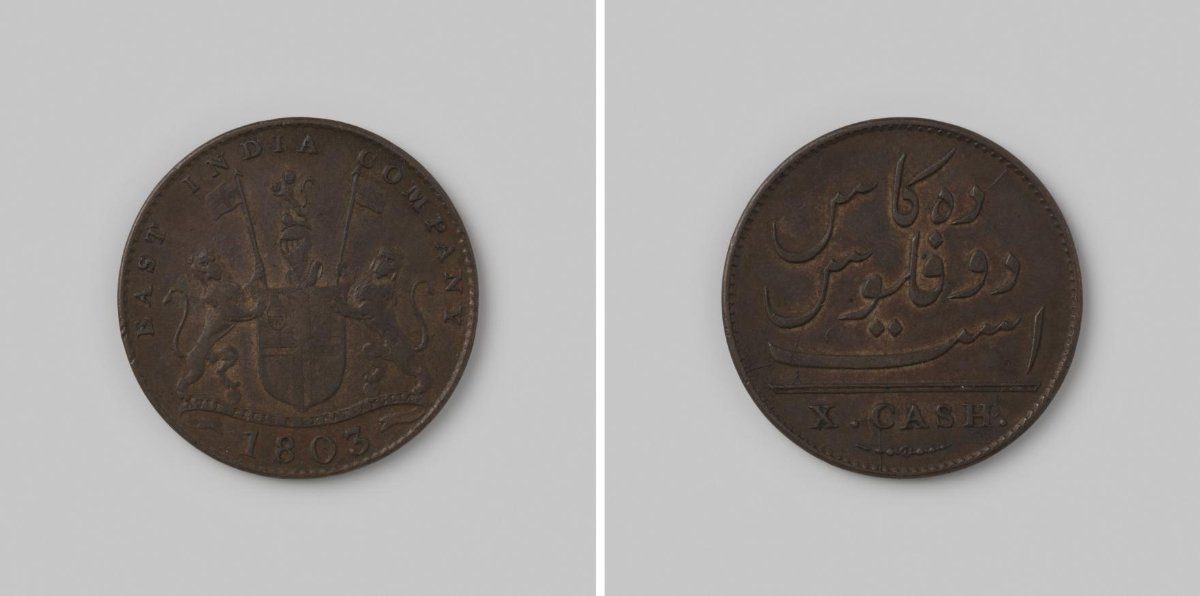
India, English East India Company (EIC), 10 cash for Madras, India, 1803
1803
Copper coin. Obverse: coat of arms of the EIC supported by two lions standing on a banner bearing an inscription, each holding in its paw an arrow bearing a flag, surmounted by a crest. Date below. Reverse: at top in three lines, value indication in Arabic characters. In exergue, value indication in English: X. Cash…
Partial type record
Rijksmuseum, Amsterdam
modern coins
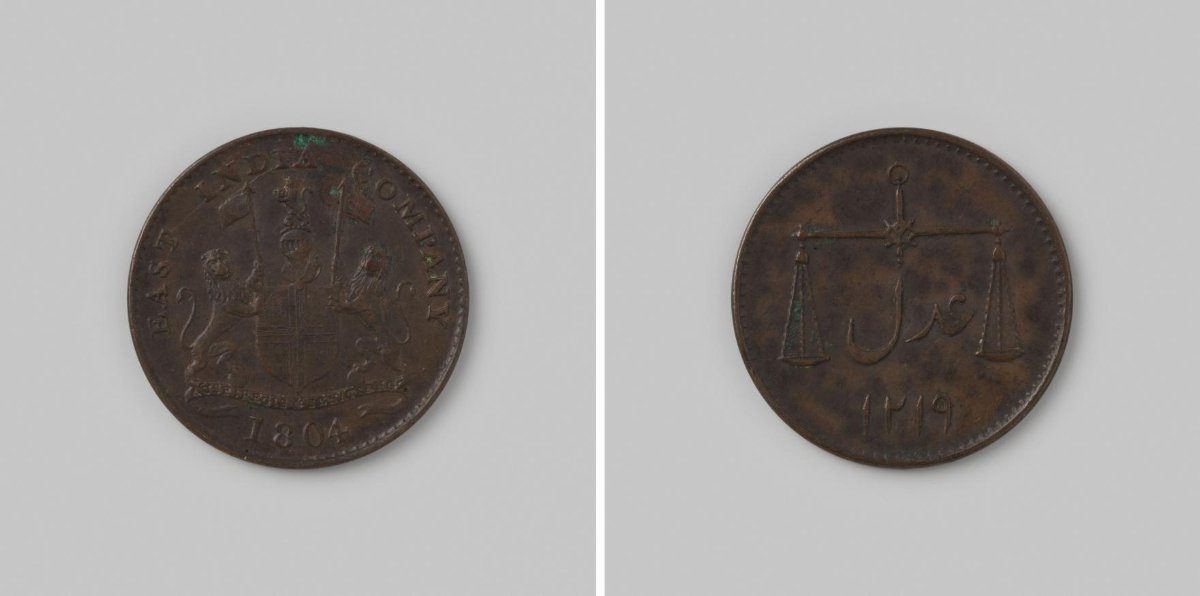
½ pice for Bombay in India from the English East India Company (EIC), 1219, 1804
1804
Bronzed copper coin, intended as a pattern. Obverse: coat of arms of the EIC surmounted by a crest, supported by two lions standing on a banner with an inscription, each holding an arrow with a flag in its paw. Year below. Reverse: pair of scales, between which is an inscription in Arabic characters: 'Adil', and bel…
Partial type record
Rijksmuseum, Amsterdam
modern coins
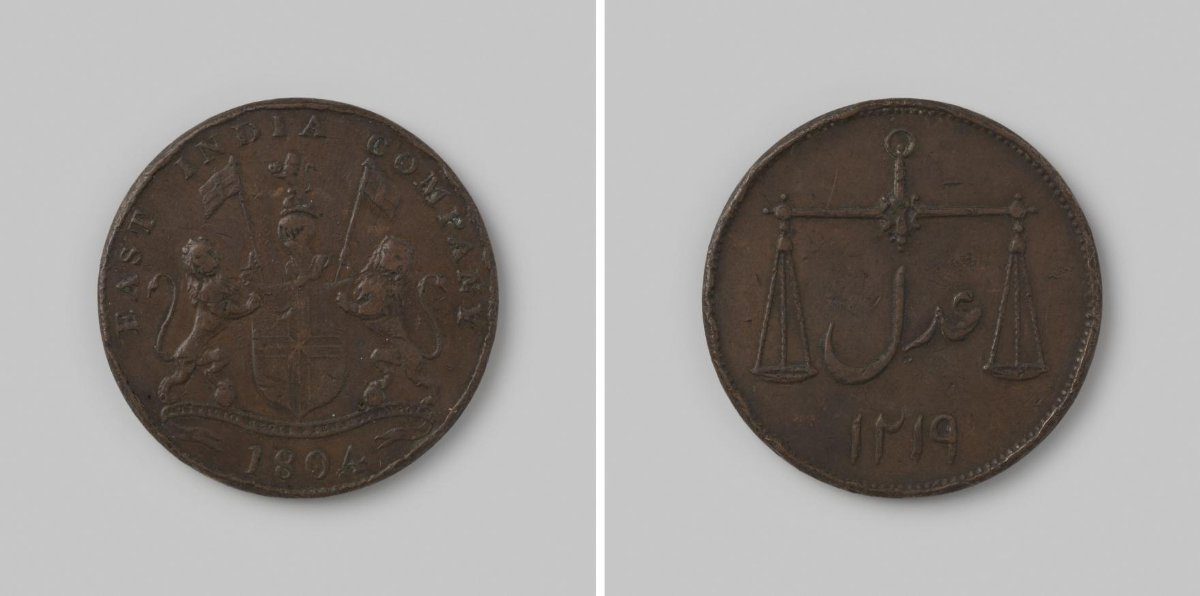
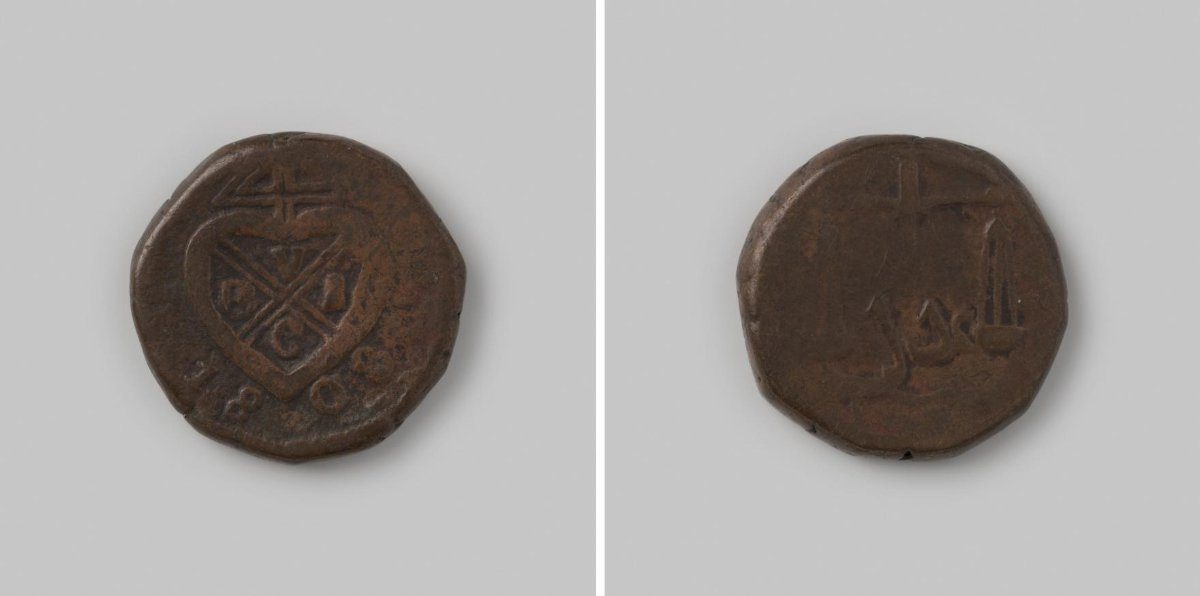
2 pice for Bombay in India of the English East India Company (EIC), 1219, 1804
1804
Copper coin. Obverse: coat of arms of the EIC supported by two lions standing on a banner with inscription, each holding in its claw an arrow with a flag attached, above which is a crest. Year at the bottom. Reverse: pair of scales, between which the inscription in Arabic characters: Adil, and below which the year:…
Partial type record
Rijksmuseum, Amsterdam
modern coins
Pice for Bombay in India from the English East India Company (EIC), 1806
1806
Copper coin. Obverse: mark of the EIC with the year below. Reverse: pair of scales with inscription in Arabic characters between the two pans: 'adil' [=just]. Plain edge. The Rijksmuseum, Amsterdam, holds this object as KOG-MP-1-3893; its record gives material recorded as copper (metal); technique striking (metalwor…
Partial type record
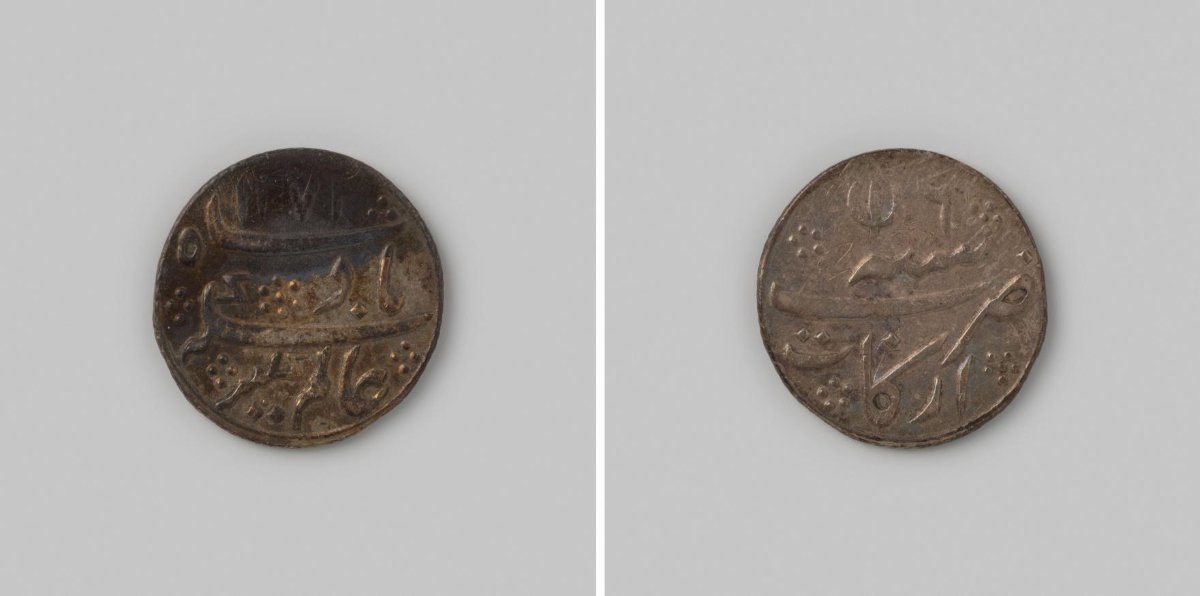
Rijksmuseum, Amsterdam
modern coins
1/4 Arcot rupee for Madras in India of the English East India Company (EIC), in the name of Shah Alamgir II, (1807)
1807
Silver coin. Obverse: three-line inscription in Arabic characters, containing a reference to Shah Alamgir II. At top "frozen" year: 1172. Reverse: three-line inscription in Arabic characters. At top right indication of regnal year: 6 and next to it a lotus flower. Cable edge. The Rijksmuseum, Amsterdam, holds this o…
Partial type record
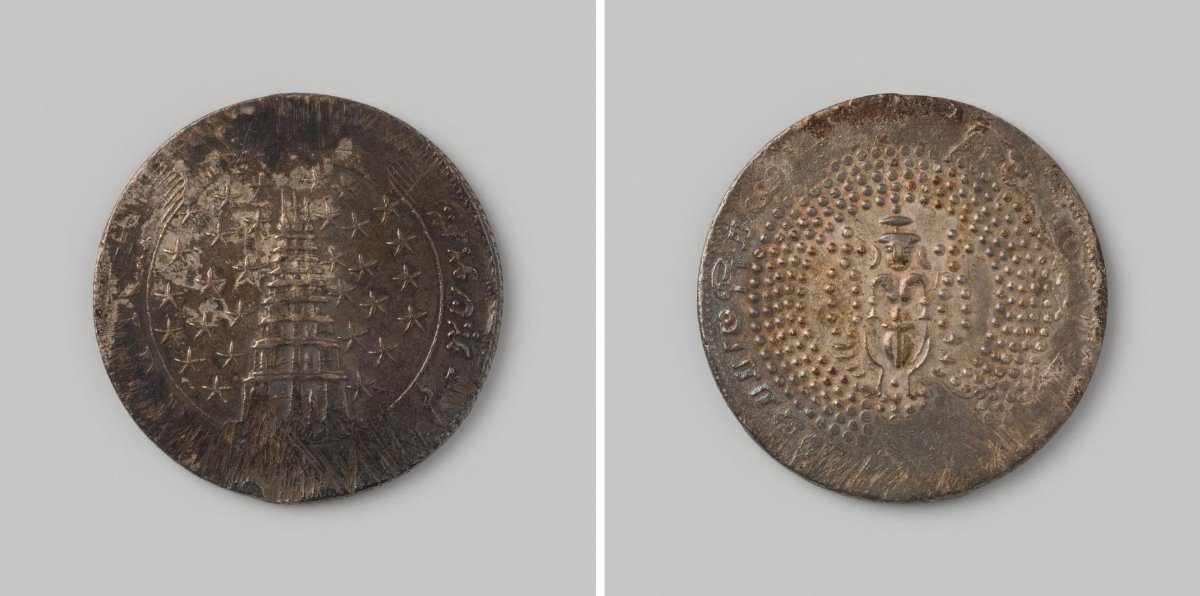
Rijksmuseum, Amsterdam
modern coins
½ pagoda for Madras in India from the English East India Company (EIC), (1807)
1807
Silver coin. Obverse: within a circle formed by a ribbon bearing value indication in English: half pagoda, and in Arabic script, a temple gopuram surrounded by stars. At top, between the ends of the ribbon, a star. Reverse: within a broad border bearing value indication in Tamil and Telugu, deity half-length, standi…
Partial type record
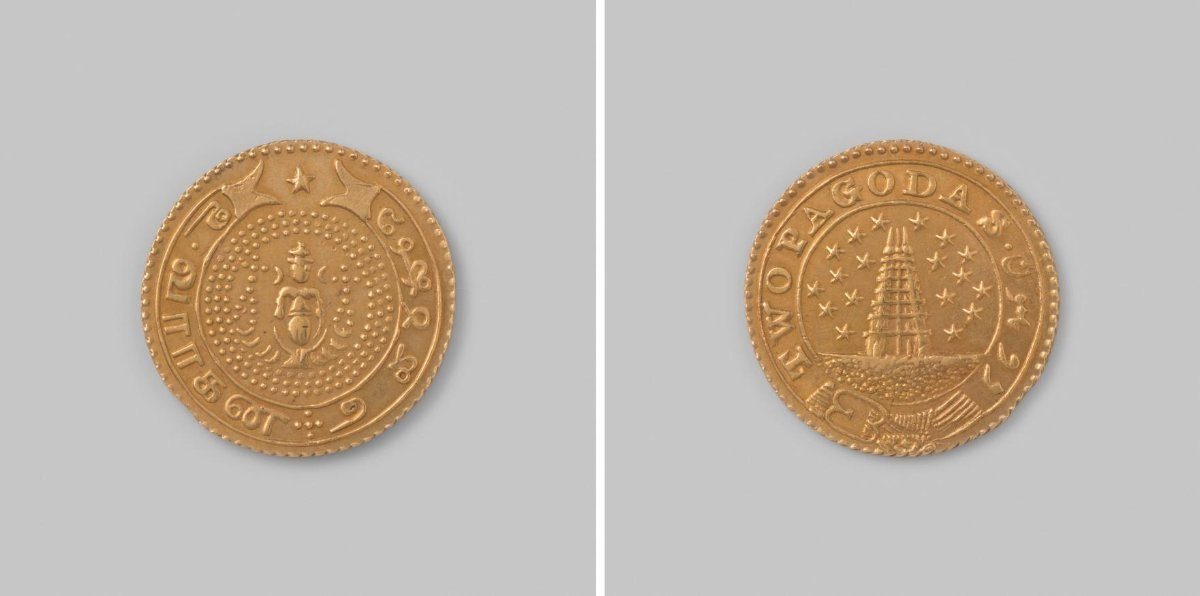
Rijksmuseum, Amsterdam
modern coins
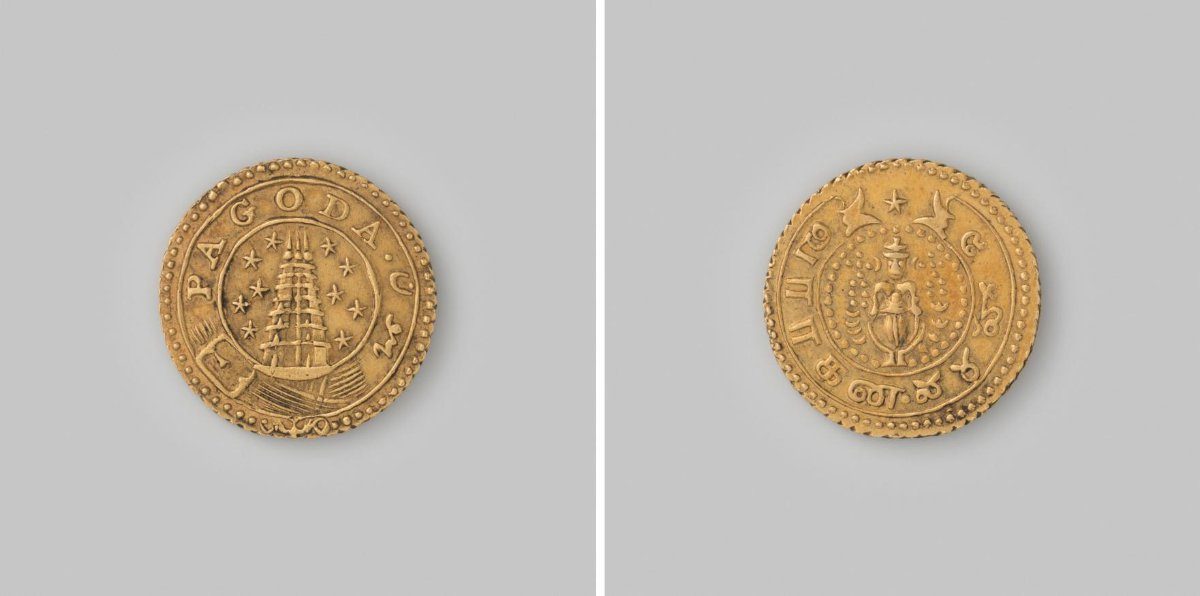
Madras, India, English East India Company (EIC), 2 pagodas, (1807)
1807
Gold coin. Obverse: within a circle formed by a belt with buckle, a temple gate surrounded by stars. On buckle value indication in English: "two pagodas", and in Arabic script. Reverse: within a circle formed by a ribbon bearing value indication in Tamil and Telugu, deity half-length, standing, in a field strewn wit…
Partial type record
Rijksmuseum, Amsterdam
modern coins
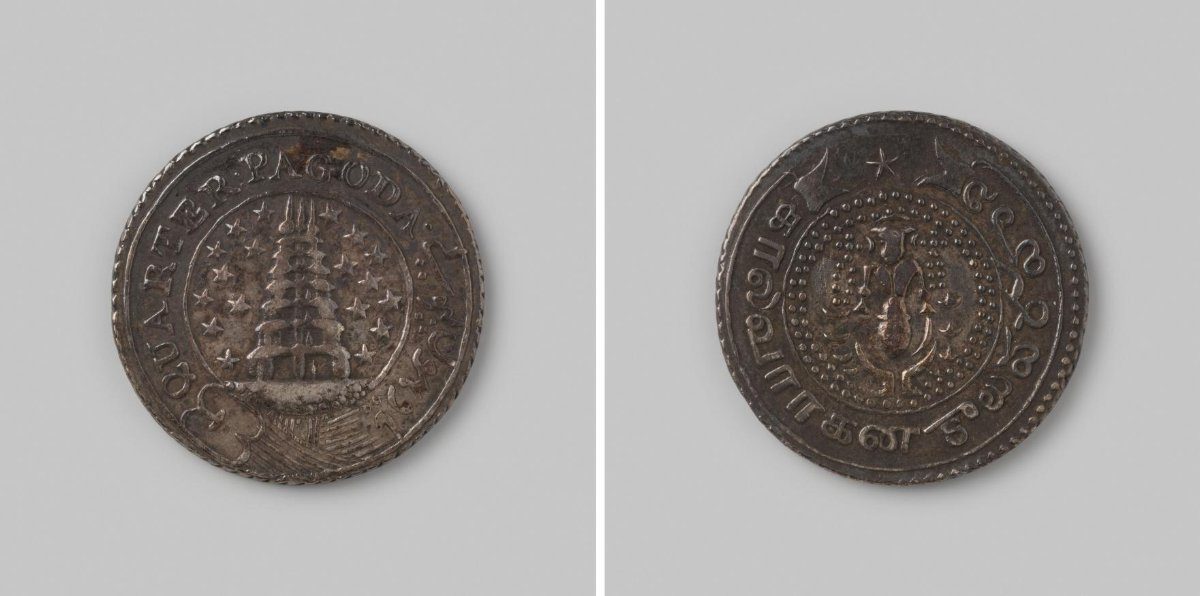
Pagoda for Madras in India from the English East India Company (EIC), (1807)
1807
Gold coin. Obverse: within a circle formed by a belt with buckle, a temple gopuram surrounded by stars. On the buckle, value indication in English: 'pagoda', and in Arabic characters. Reverse: within a circle formed by a ribbon bearing the value indication in Tamil and Telugu, deity half-length, standing, in a field…
Partial type record
Rijksmuseum, Amsterdam
modern coins
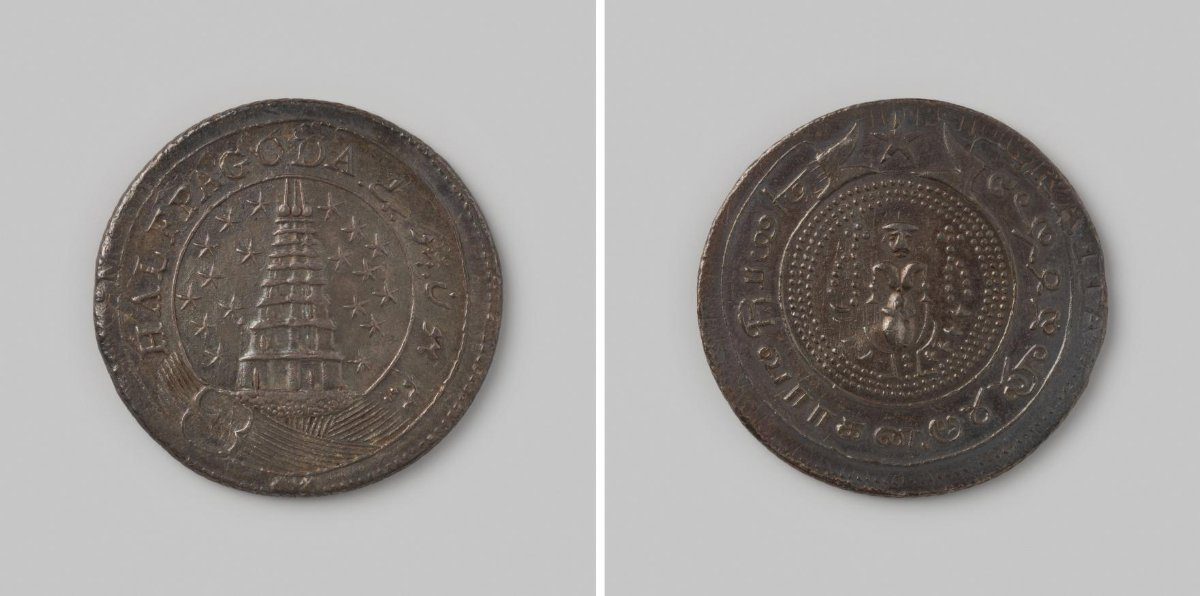
1/4 pagoda for Madras in India of the English East India Company (EIC), (1808)
1808
Silver coin. Obverse: within a circle formed by a belt with buckle, a temple gate surrounded by stars. On the buckle, value indication in English: quarter pagoda, and in Arabic characters. Reverse: within a circle formed by a ribbon bearing the value indication in Tamil and in Telugu, half-length deity, standing, in…
Partial type record
Rijksmuseum, Amsterdam
modern coins
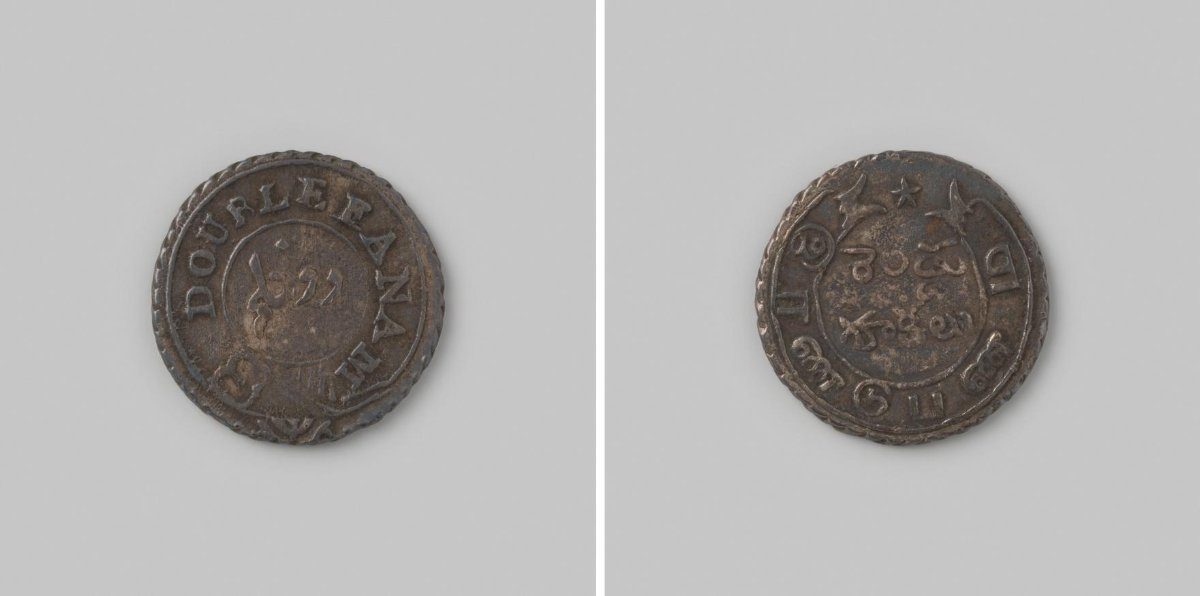
½ pagoda for Madras in India from the English East India Company (EIC), (1808)
1808
Silver coin. Obverse: within a circle formed by a belt with buckle, a temple gopuram surrounded by stars. On the buckle, value indication in English: 'half pagoda', and in Arabic characters. Reverse: within a circle formed by a ribbon bearing the value indication in Tamil and Telugu, deity half-length, standing, in…
Partial type record
Rijksmuseum, Amsterdam
modern coins
2 fanams for Madras in India from the English East India Company (EIC), (1808)
1808
Silver coin. Obverse: within a circle formed by a belt with buckle, value indication in English: double fanam, on one line value indication in Arabic characters. Reverse: within a circle formed by a ribbon, on which value indication in Tamil, in two lines value indication in Telugu. At top, between the ends of the r…
Partial type record
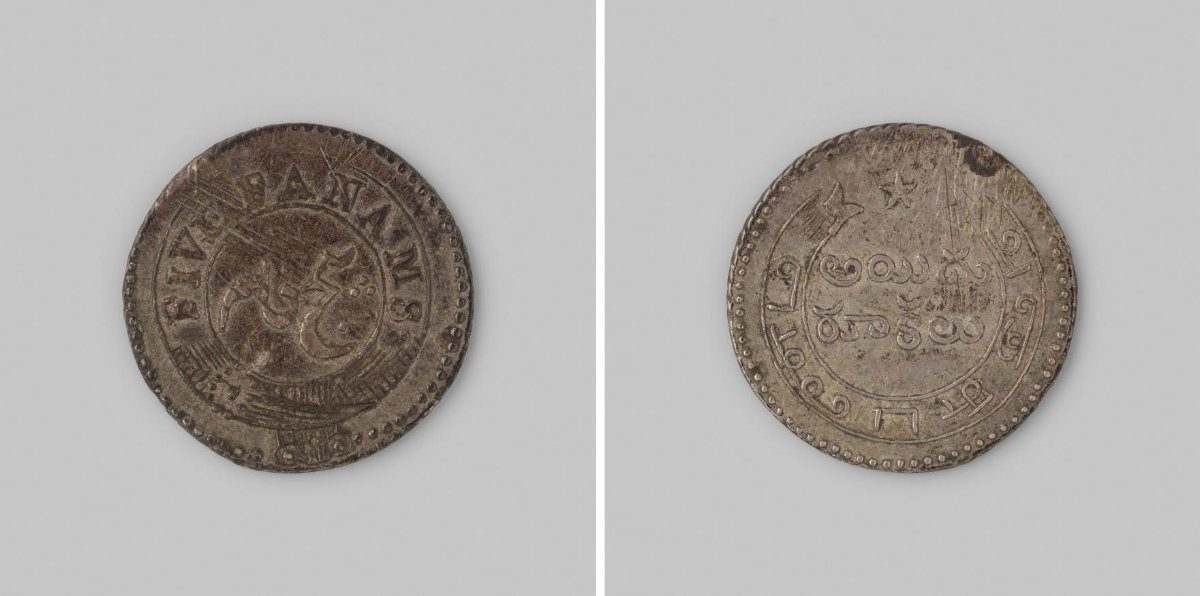
Rijksmuseum, Amsterdam
modern coins
5 fanams for Madras in India from the English East India Company (EIC), (1808)
1808
Silver coin. Obverse: within a circle formed by a belt with buckle, value indication in English: 'five fanams', on one line value indication in Arabic characters. Reverse: within a circle formed by a ribbon bearing the value indication in Tamil, in two lines value indication in Telugu. At the top, between the ends o…
Partial type record
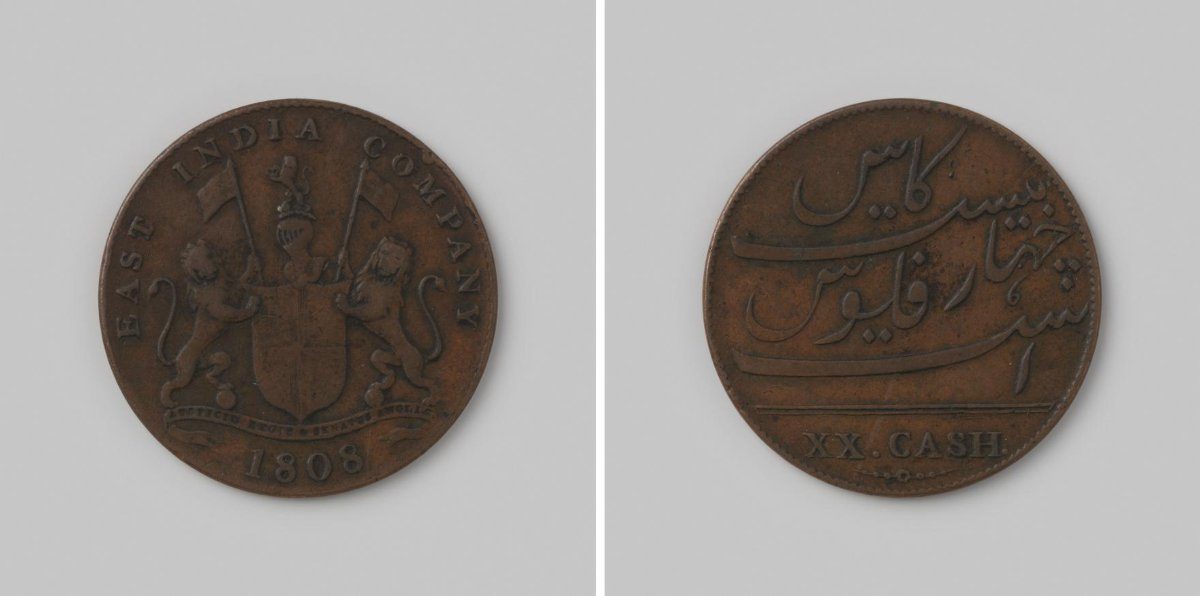
Rijksmuseum, Amsterdam
modern coins
India, English East India Company (EIC), 20 cash for Madras, India, 1808
1808
Copper coin. Obverse: coat of arms of the EIC supported by two lions standing on a banner with inscription, holding an arrow with flag in paw, surmounted by crest. Year at the bottom. Reverse: at the top in three lines value indication in Arabic characters. In exergue value indication in English: XX. Cash. Plain edg…
Partial type record
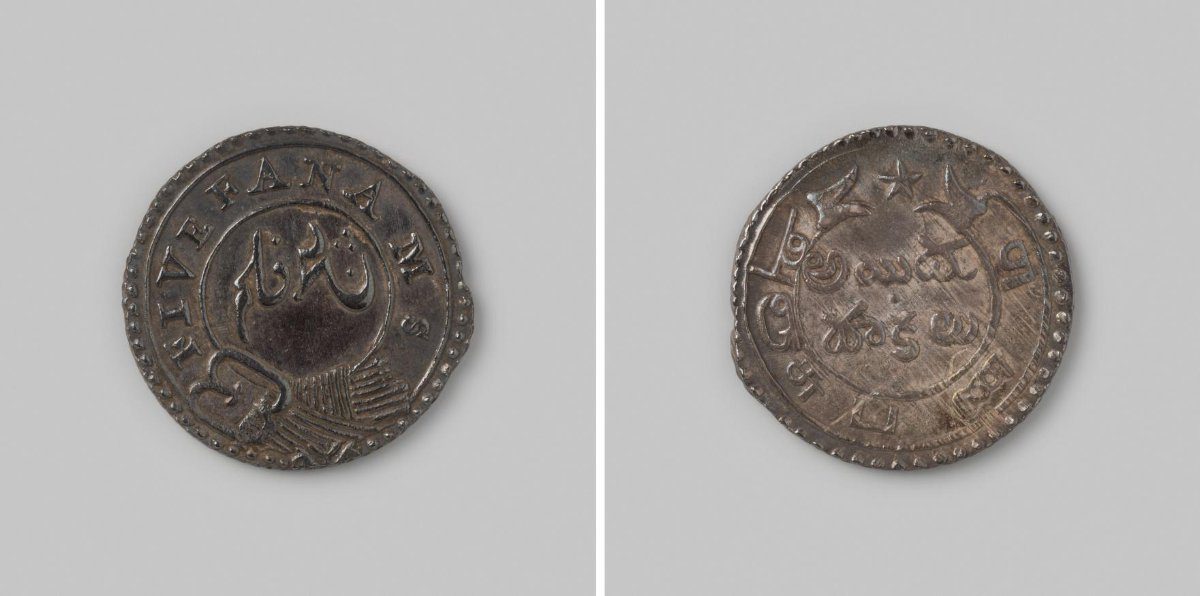
Rijksmuseum, Amsterdam
modern coins
Madras, India, English East India Company (EIC), 5 fanams, (1808)
1808
Silver coin. Obverse: within a circle formed by a belt with buckle, value indication in English: 'five fanams', on one line value indication in Arabic characters. Reverse: within a circle formed by a ribbon bearing the value indication in Tamil, in two lines value indication in Telugu. At the top, between the ends o…
Partial type record
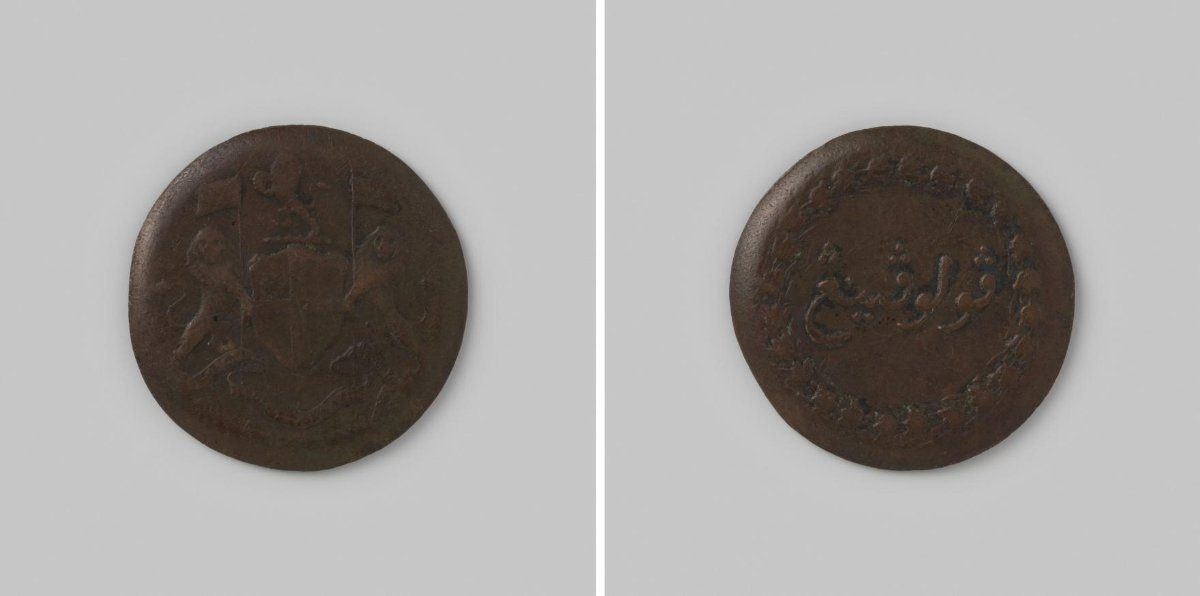
Rijksmuseum, Amsterdam
modern coins
Malacca, Pulu Penang, cent, (1810–1828)
1810 - 1828
Copper coin. Obverse: coat of arms of the EIC supported by two lions standing on a scroll containing an inscription, each holding an arrow with a flag in its paw, surmounted by a crest. Illegible date at the bottom. Reverse: within a wreath of leaves, a one-line inscription in Malay in Arabic characters: pulu penang…
Partial type record
Dated entries by century
- 17th century1
- 18th century7
- 19th century33
Only the 41 entries carrying their own date to within about 150 years are counted, by the earliest year given. These are catalogue holdings, not production totals.
Materials recorded in the physical descriptions
- Copper23
- Silver16
- Gold2
An entry made of several materials is counted once under each. Materials are counted only where the description states them.
Browse other historical issuers and makers in the Atlas, or read how attributions are made in the editorial method.