Issuing authority
Kingdom of Great Britain
- Kind
- kingdom
- Region
- Western Europe, Europe
Objects are filed under the historical authority that actually issued or made them. A recorded period comes from the issuer's own reference description and is left blank where no source states it.
Published entries
14
Individual types and documented families
With photographs
100%
14 with a credited real-object photo
Dated span
1713 – 1797
14 entries with their own date
Verified or well documented
1
Highest two confidence levels
Catalogue entries (14)
Filter these entries by era, material or confidenceSorted by date, earliest first.
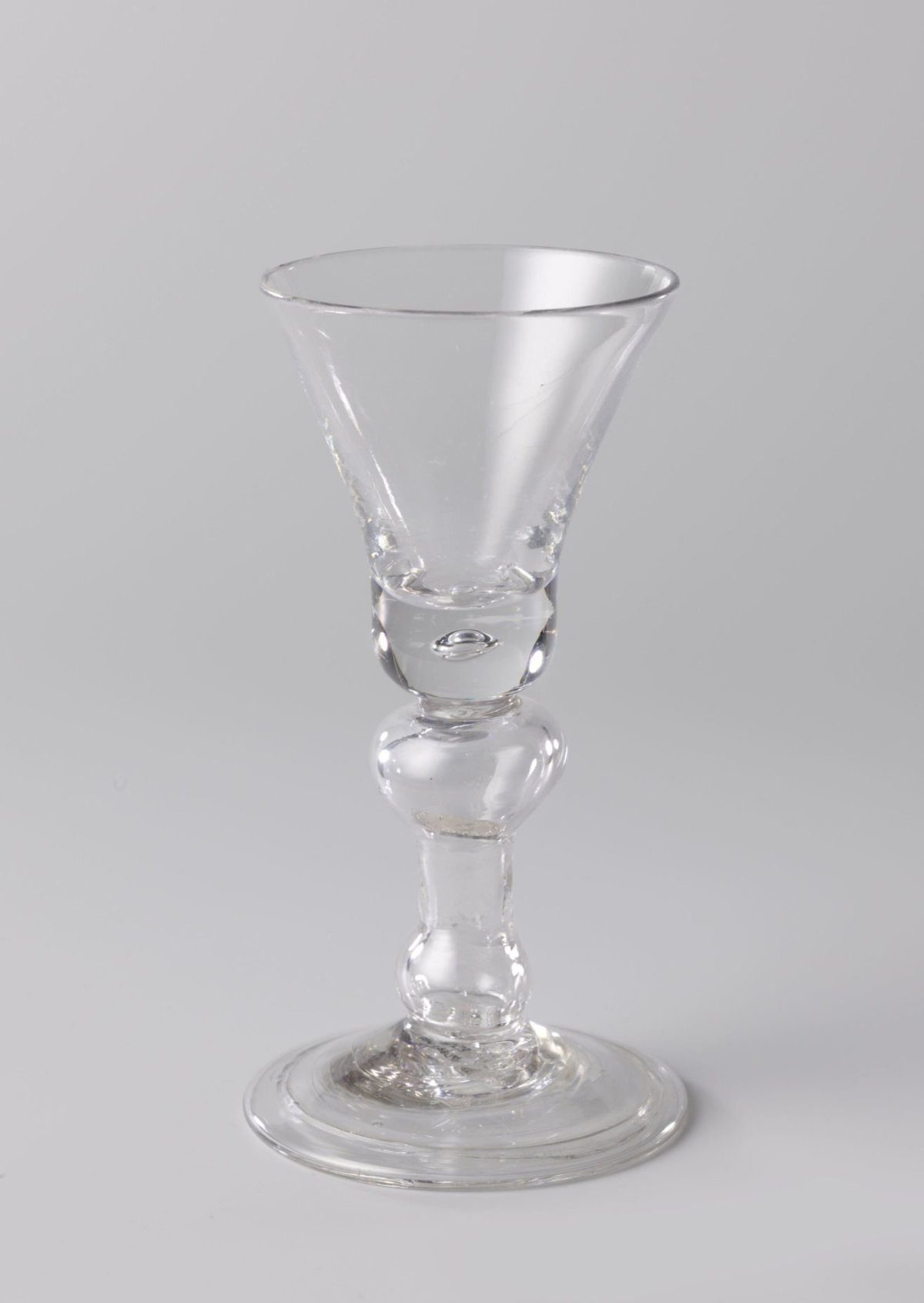
Rijksmuseum, Amsterdam
modern coins
Goblet with an enclosed three-pence coin from 1713
c. 1713 - c. 1725
Goblet on a conical foot with a hollow folded rim. Hollow baluster stem with a silver coin (three pence) of Queen Anne from the year 1713 in the knop. Bell-shaped bowl with thick base containing an inserted air bubble. The Rijksmuseum, Amsterdam, holds this object as BK-NM-10754-353; its record gives material record…
Partial type record
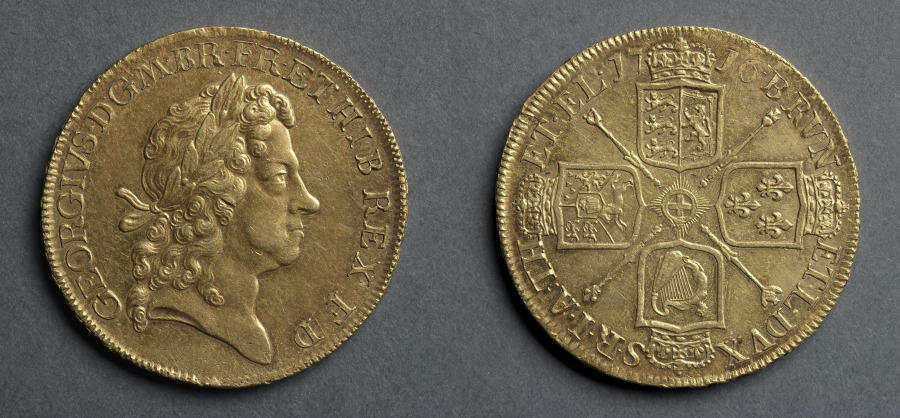
Cleveland Museum of Art
modern coins
Five Guineas: George I (obverse); Shields and Star of the Order of the Garter (Cleveland Museum of Art 1969.206)
1716
The Act of the Union of 1706 by Queen Anne added the arms of Scotland to those of England. The shields now read as England & Scotland, France, Ireland, and Hanover. Around the shields the many titles of the king are abbreviated to sometimes only one letter: BRVN ET·L·DVX S·I·R·A·TH ET·EL Duke of Brunswick and Lueneb…
Partial type record
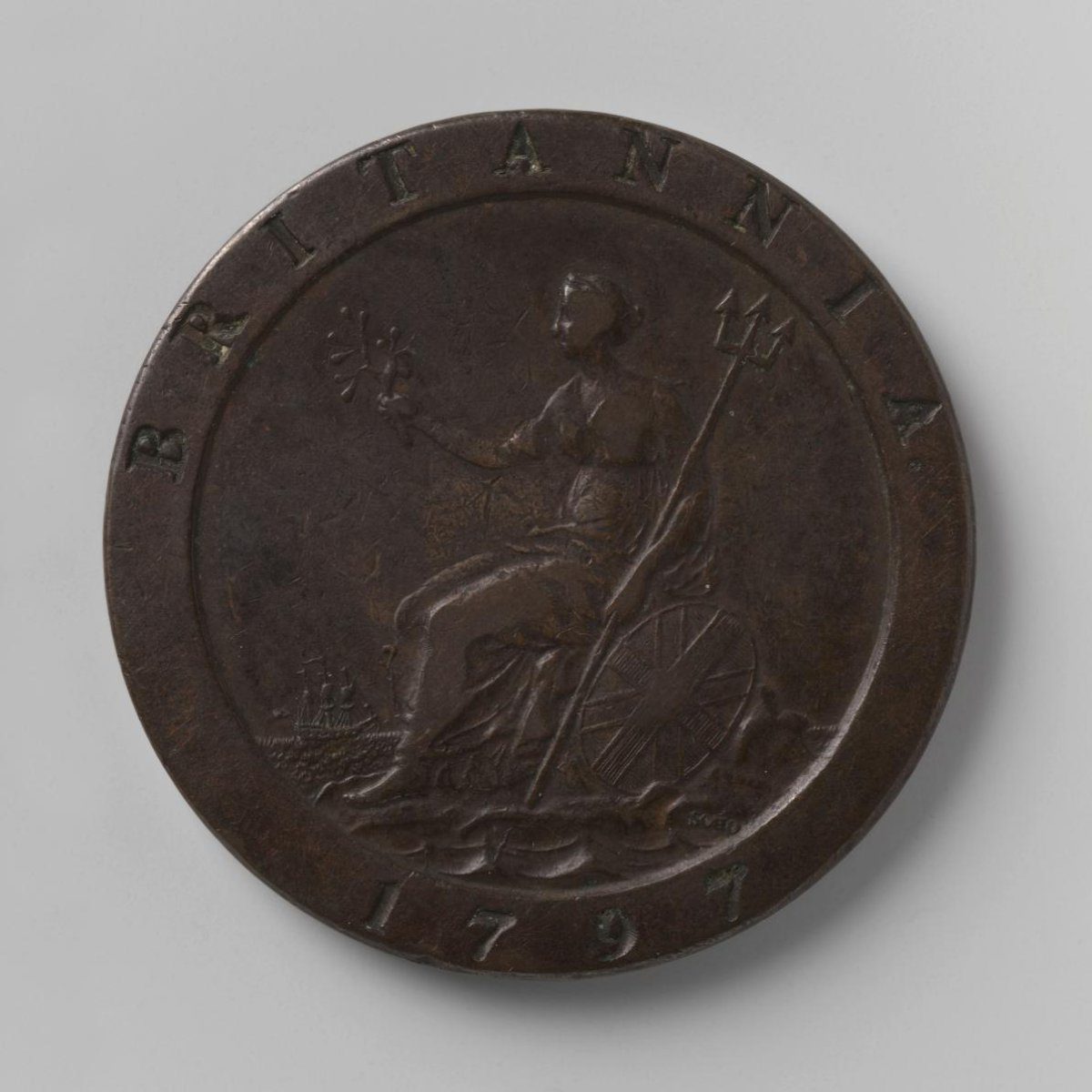
Rijksmuseum, Amsterdam
modern coins
England, George I, cartwheel penny, 1797
1719
Copper coin. Obverse: within a broad rim with incuse legend, laureate bust of the king to the right. Reverse: within a broad rim with incuse legend, Britannia seated facing left on a rock in the sea, against which a shield rests, holding a trident and branch. To her left, a ship. Year in the legend at the bottom. Th…
Partial type record
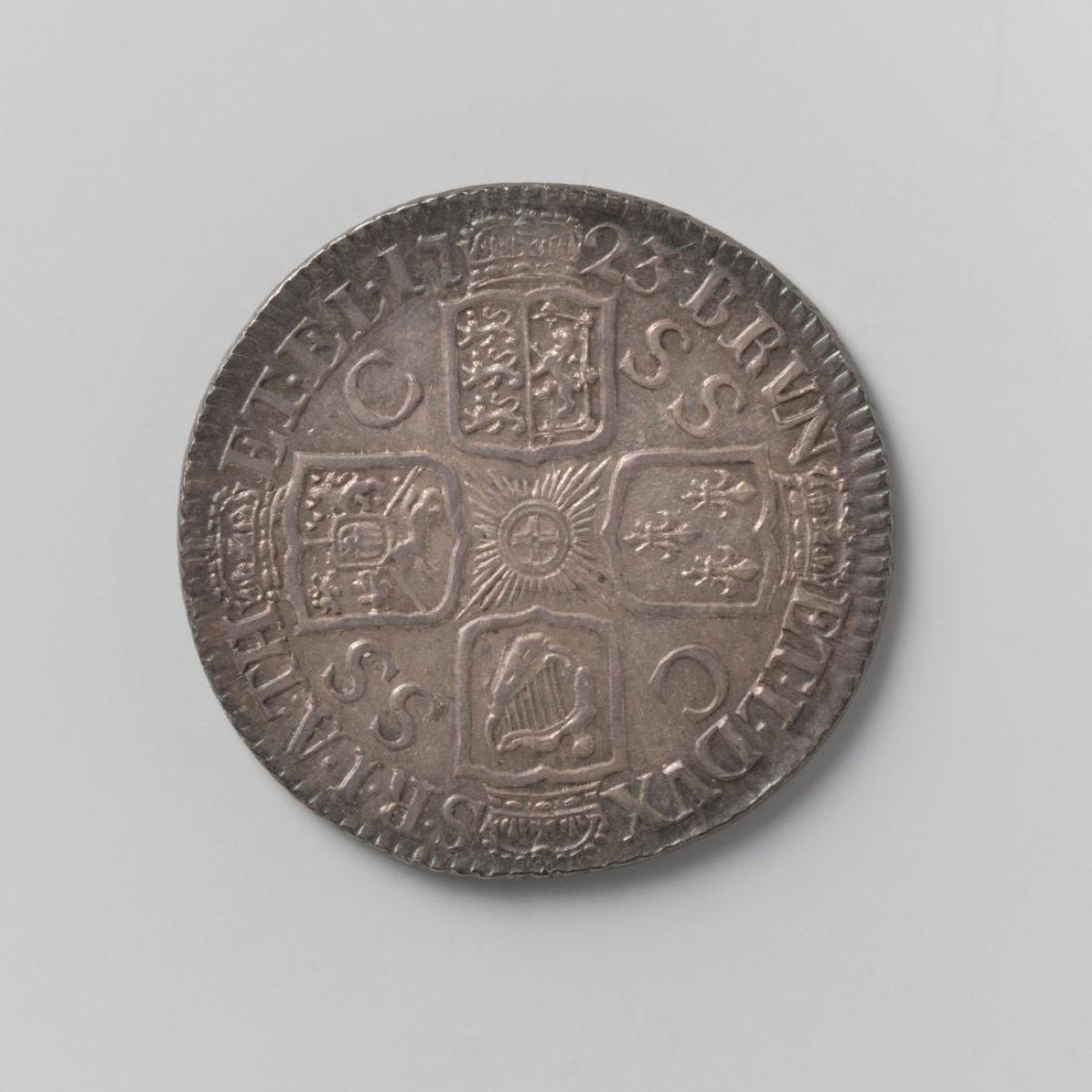
Rijksmuseum, Amsterdam
modern coins
Shilling from England of George I, 1723
1723
Silver coin. Obverse: laureate bust of the king to the right. Reverse: around a cross within a circle surrounded by rays, four crowned coats of arms arranged in a cross. In the angles the letters SS and C [=South Sea Company]. Date at the top in the legend. Cable rim. The Rijksmuseum, Amsterdam, holds this object as…
Partial type record
Cleveland Museum of Art
modern coins
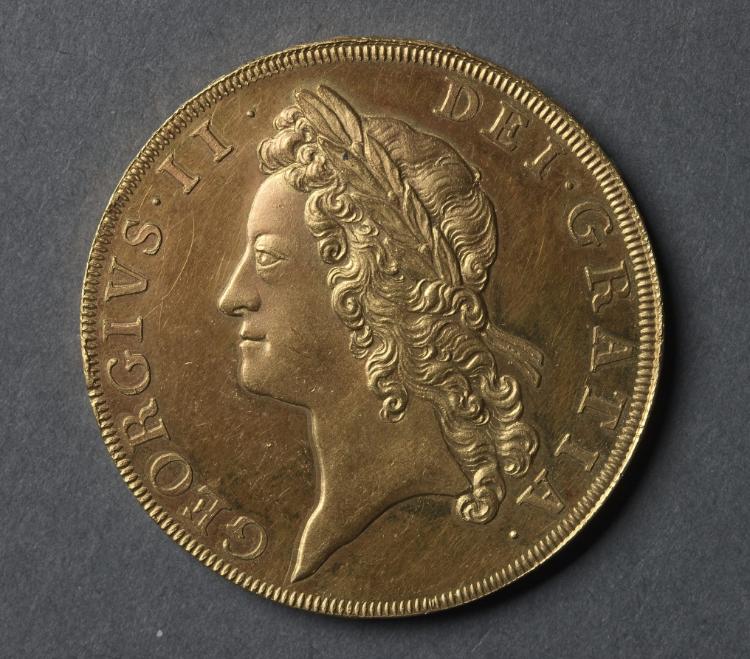
Five Guineas: George II (obverse); Shield of Arms (Cleveland Museum of Art 1969.207)
1731
This coin was probably struck as a proof. Under George II the same denominations of coinage appeared as in previous reigns since the coinage reform of 1662. The elephant, or elephant and castle no longer appear on the obverse. In 1729 the initials E I C appeared below the head on some of the five guineas, and on the…
Partial type record
Rijksmuseum, Amsterdam
modern coins
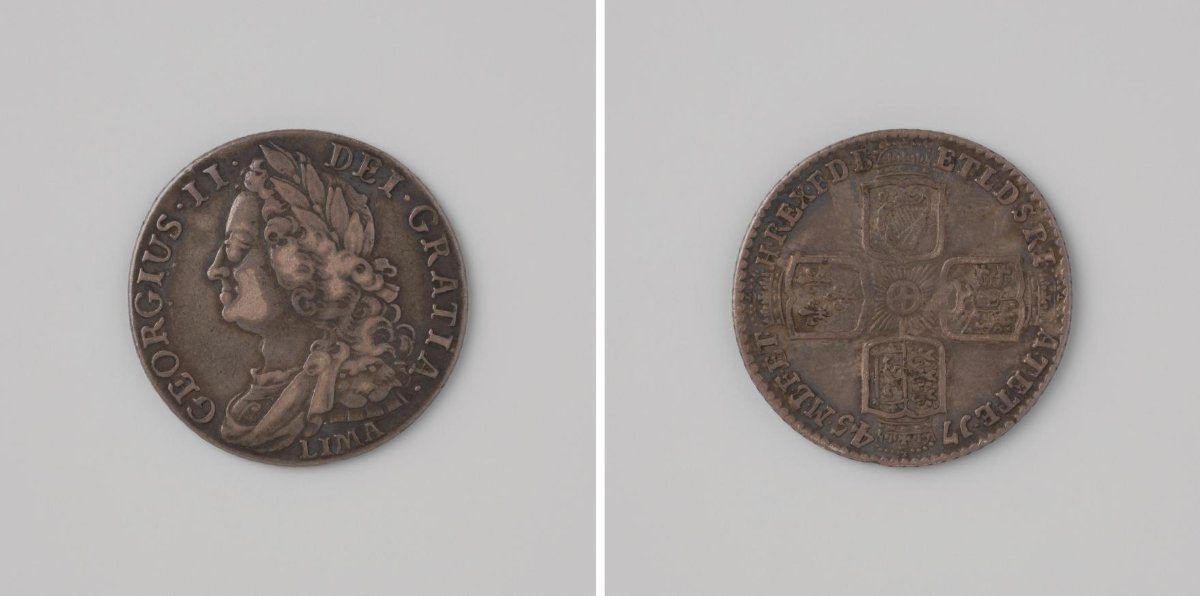
Shilling, George II, King of England, shilling struck from the silver captured at Lima
1745
Silver shilling. Obverse: bust of a man with laurel wreath within inscription. Reverse: four crowned coats of arms; in the centre: badge within inscription. The Rijksmuseum, Amsterdam, holds this object as NG-VG-1-2388; its record gives material recorded as silver (metal); technique striking (metalworking); measurem…
Partial type record
Cleveland Museum of Art
modern coins
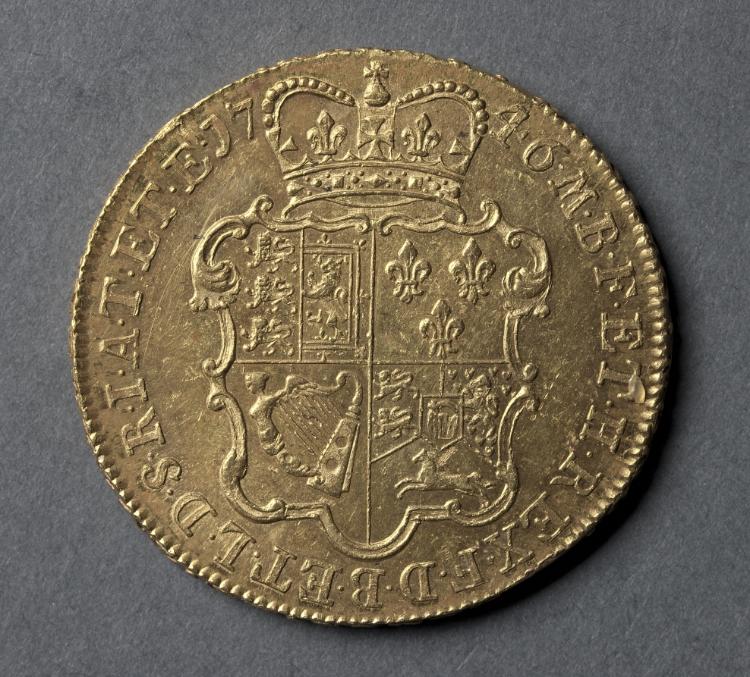
Five Guineas: George II (obverse); Shield of Arms (Cleveland Museum of Art 1969.208)
1746
A new bust now appears on the coinage showing the king as an older man. The word LIMA that appears below the bust on this year only, refers to bullion captured by Admiral Anson from a Spanish plate fleet at Manila during his circumnavigation of the globe (1739–43). It also probably includes bullion supplied by a num…
Partial type record
Rijksmuseum, Amsterdam
modern coins
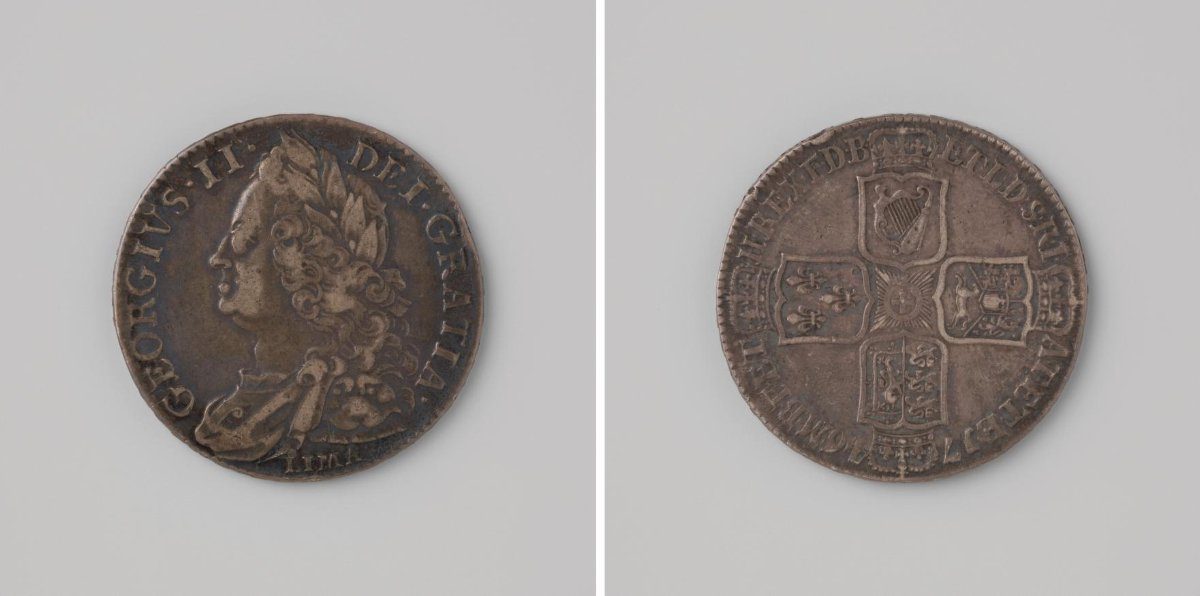
Half crown coin of George II, King of England, coin struck from silver captured at Lima
1746
Obverse: bust of a man with laurel wreath within a legend. Reverse: four crowned coats of arms; in the center: mark of distinction within a legend; edge lettering. The Rijksmuseum, Amsterdam, holds this object as NG-VG-1-2413; its record gives material recorded as silver (metal); technique striking (metalworking); m…
Partial type record
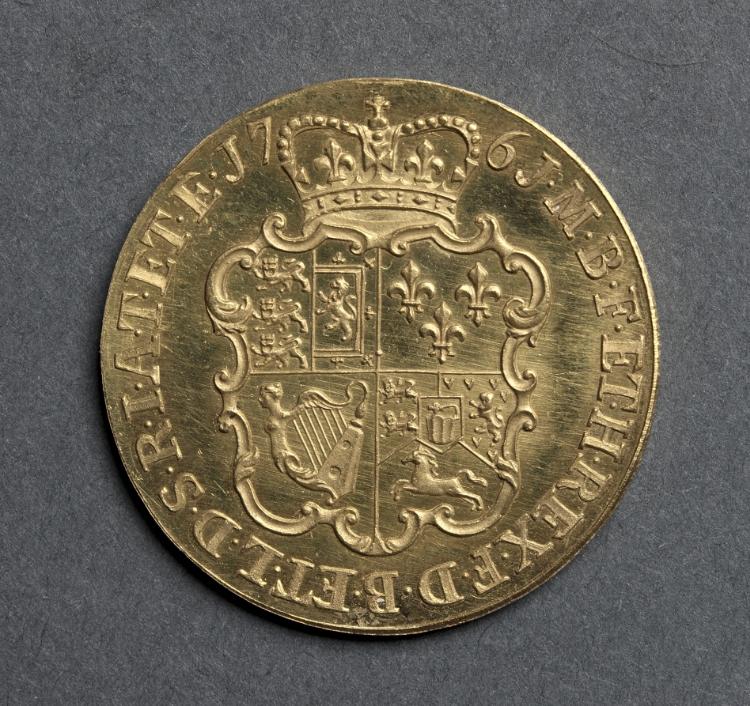
Cleveland Museum of Art
modern coins
Guinea: George III (obverse); Shield of Arms (Cleveland Museum of Art 1969.209)
1761
No five- or two-guinea pieces were issued for general circulation during this reign, but there were large numbers of guineas, the unit piece. The reign saw a profusion of pattern and proof pieces being struck, mostly because a further coinage reform was imminent, as was the removal of the Royal Mint from the Tower o…
Partial type record
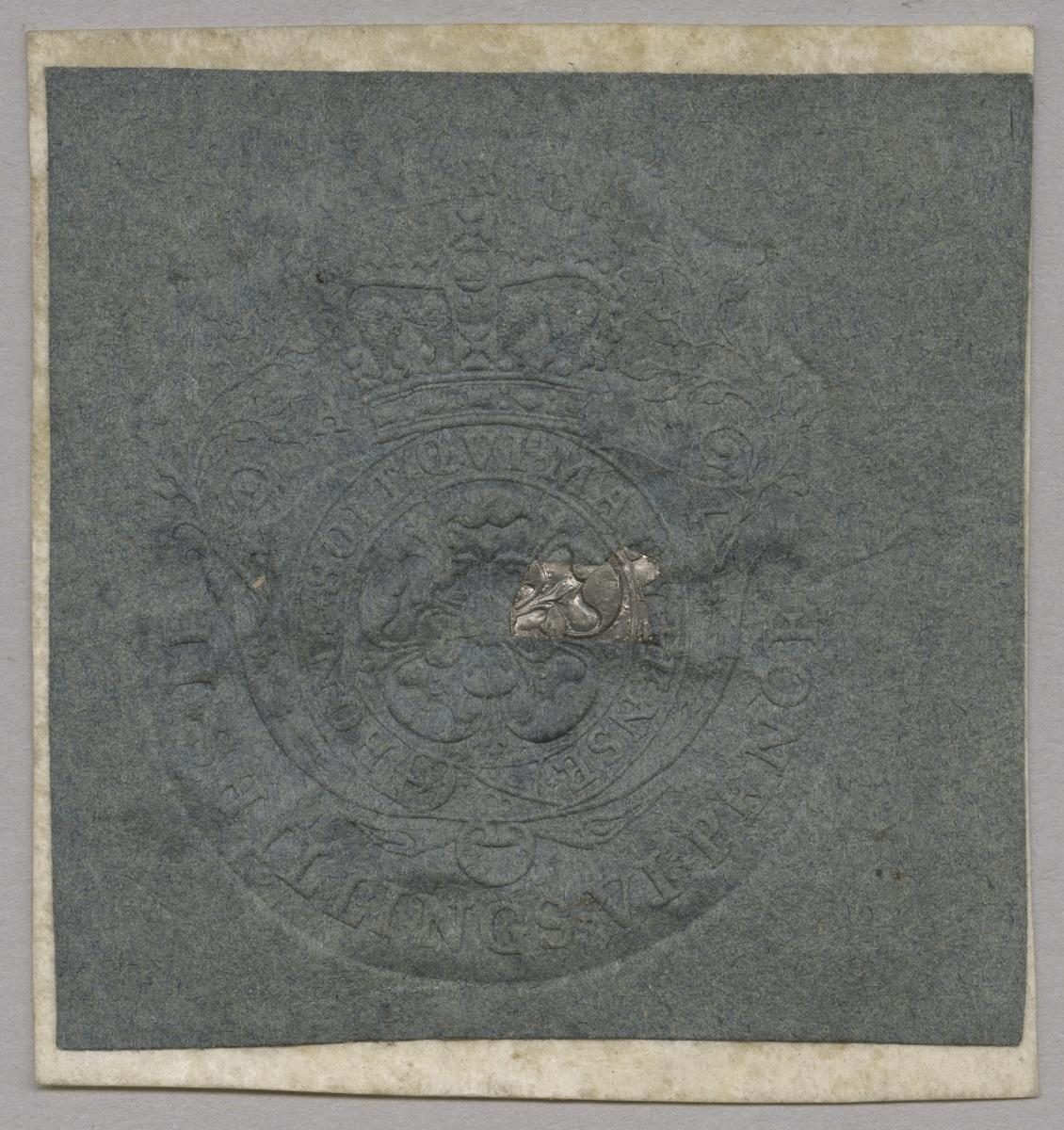
Smithsonian National Postal Museum
stamps
Stamp from the Stamp Act of 1765
1765
Stamp from the Stamp Act of 1765 — postage stamp in the Smithsonian National Postal Museum collection (object 0.022044.2), catalogued by the museum as Scott Great Britain RM31a. Dated by the museum: 1765. Medium: blue-grey paper; vellum; ink; metal. The Stamp Act of 1765 was a British tax on printed papers in the A…
Partial type record
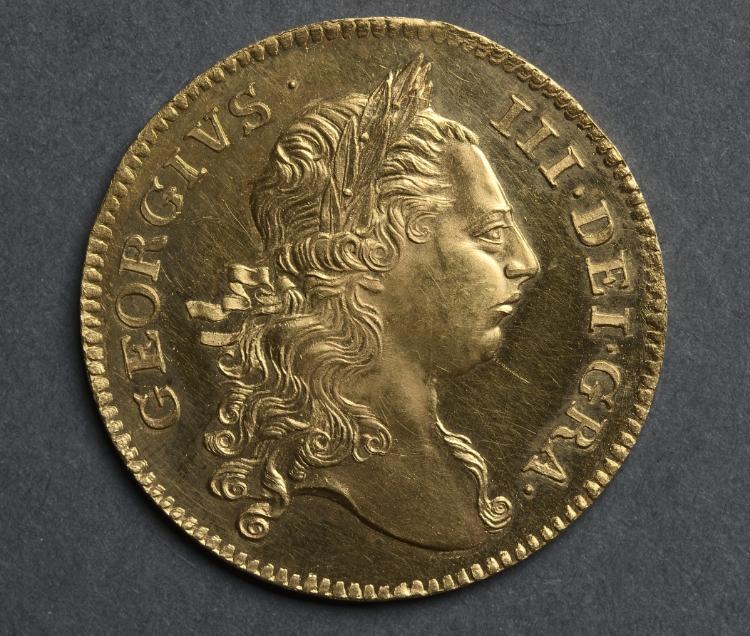
Cleveland Museum of Art
modern coins
Two Guinea Piece: George III (obverse); Shield of Arms (Cleveland Museum of Art 1969.210)
1773
This piece is another example of the fine patterns being produced at this period. With the coming reform of the coinage, the five- and two-guinea pieces do not appear again for general circulation. John Sigismund Tanner came to England in 1728, was appointed chief engraver in 1741 and died in 1775. He was responsibl…
Partial type record
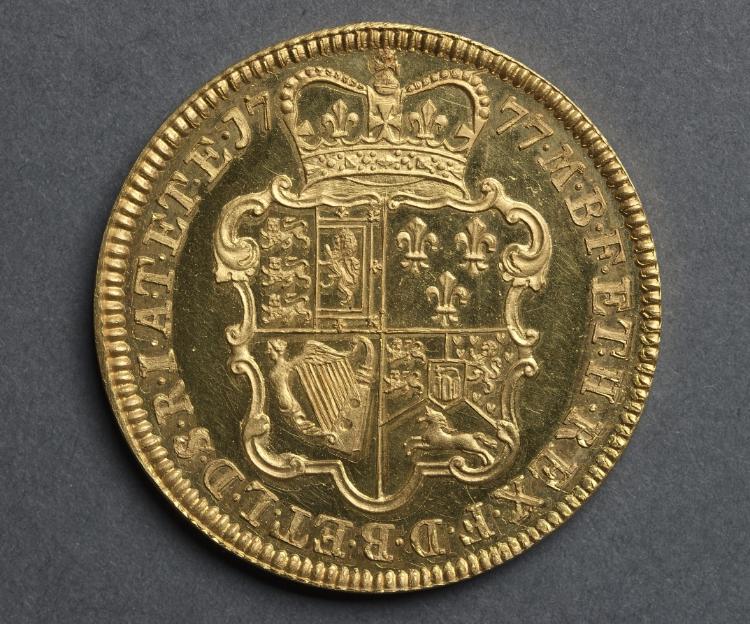
Cleveland Museum of Art
modern coins
Five Guineas: George III (obverse); Shield of Arms (Cleveland Museum of Art 1969.211)
1777
This piece demonstrates the ability of the artist. Richard Yeo was appointed assistant engraver at the Royal Mint in 1749, chief engraver in 1775, and died in 1779. He was responsible for a large number of pattern pieces and for some of the currency coins of the period. Cleveland Museum of Art object 1969.211: Five…
Partial type record
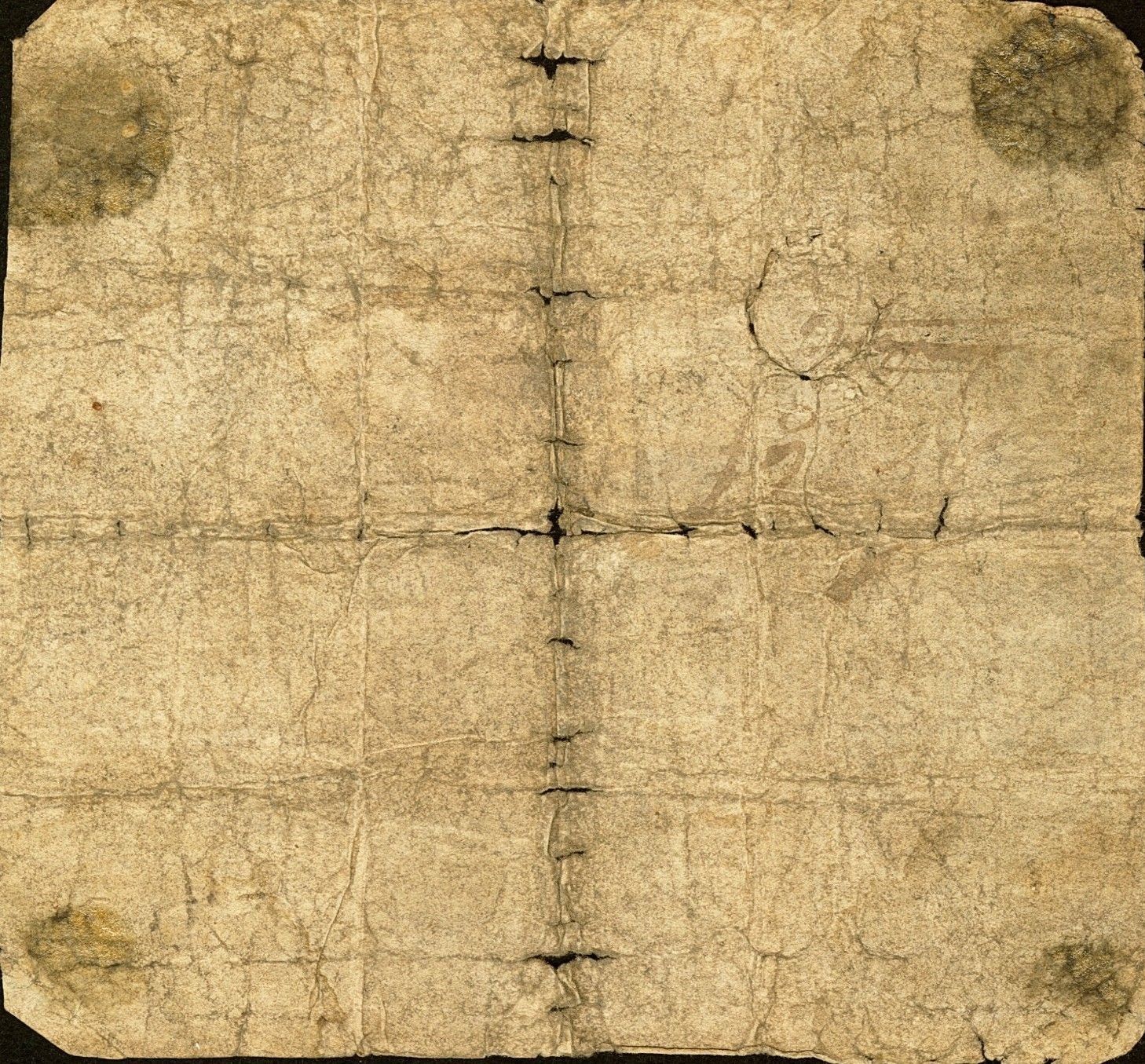
Heritage Auctions via Numista
banknotes
5 Shillings, Royal Bank of Scotland, Scotland, 1797 (Pick 293)
1797
This 5 Shillings note was issued in Scotland by the Royal Bank of Scotland, dated 1797. It belongs to the Pound sterling (1707-1970) currency system. Issuing authority and period recorded in the catalogue: George III (1760-1820). and is printed on paper. The Standard Catalog of World Paper Money lists the type as Pi…
Partial type record
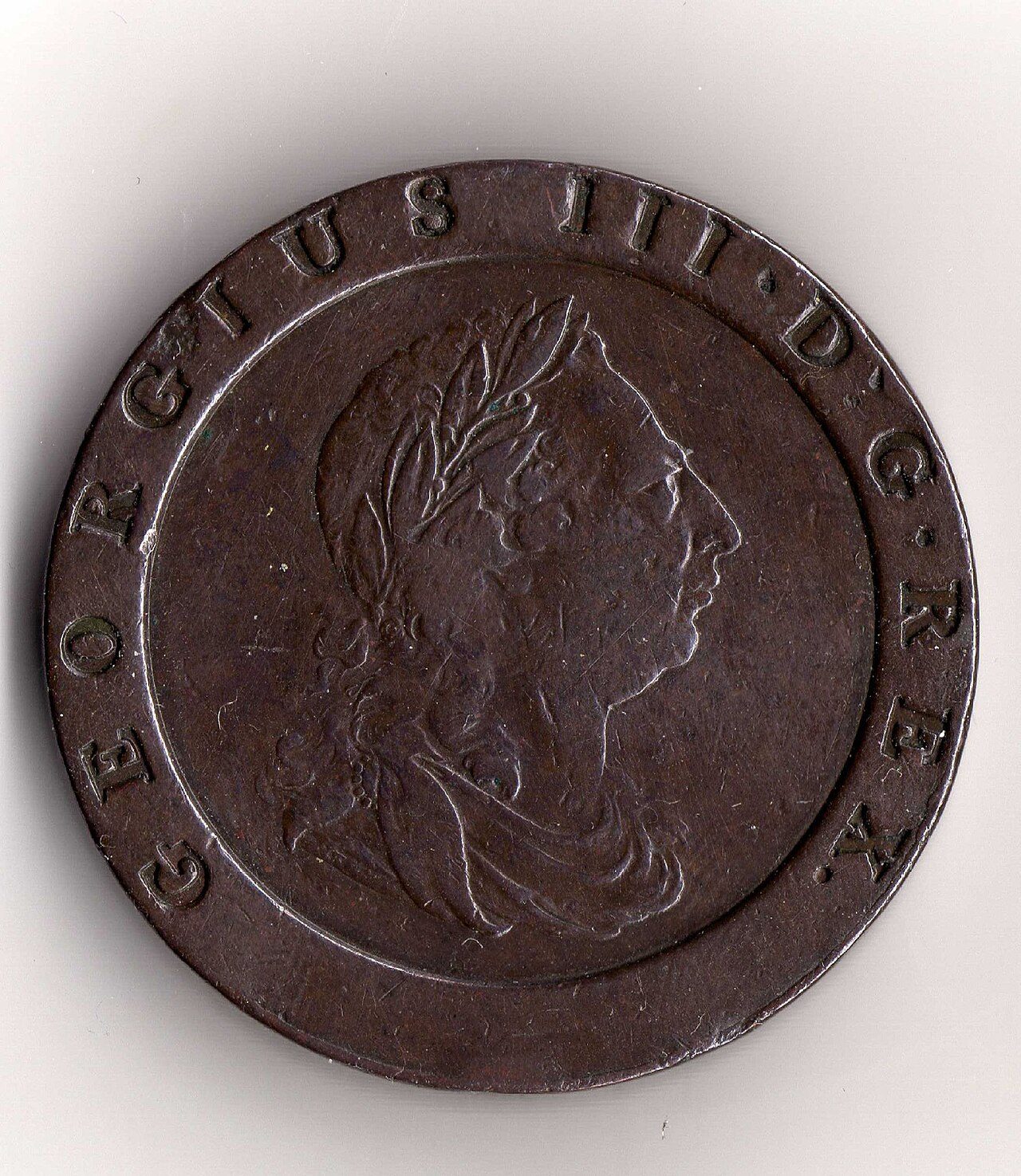
Smabs Sputzer
modern coins
Cartwheel penny, 1797
1797
The 1797 cartwheel penny was an official British copper coin produced by the industrialist Matthew Boulton at his Soho Mint in Birmingham under government contract. Throughout most of the eighteenth century, official pennies had been minted in silver and were rarely seen in general circulation, being struck primaril…
Partial type record
Entries by catalogue category
- Modern World Coins12
- Banknotes1
- Postage Stamps1
Counts of published entries only. They describe this catalogue's holdings, not everything the issuer or maker produced.
Materials recorded in the physical descriptions
- Gold6
- Silver4
- Copper1
- Paper1
An entry made of several materials is counted once under each. Materials are counted only where the description states them.
Confidence of the published entries
- Well documented1
- Documented13
Confidence reflects how well the sources support each entry's identification, not the object's quality or importance.
Browse other historical issuers and makers in the Atlas, or read how attributions are made in the editorial method.