Issuing authority
Kingdom of the Two Sicilies
- Kind
- kingdom
- Region
- Southern Europe, Europe
Objects are filed under the historical authority that actually issued or made them. A recorded period comes from the issuer's own reference description and is left blank where no source states it.
Published entries
6
Individual types and documented families
With photographs
100%
6 with a credited real-object photo
Dated span
1815 – 1844
6 entries with their own date
Verified or well documented
0
Highest two confidence levels
Catalogue entries (6)
Filter these entries by era, material or confidenceSorted by date, earliest first.
Rijksmuseum, Amsterdam
modern coins
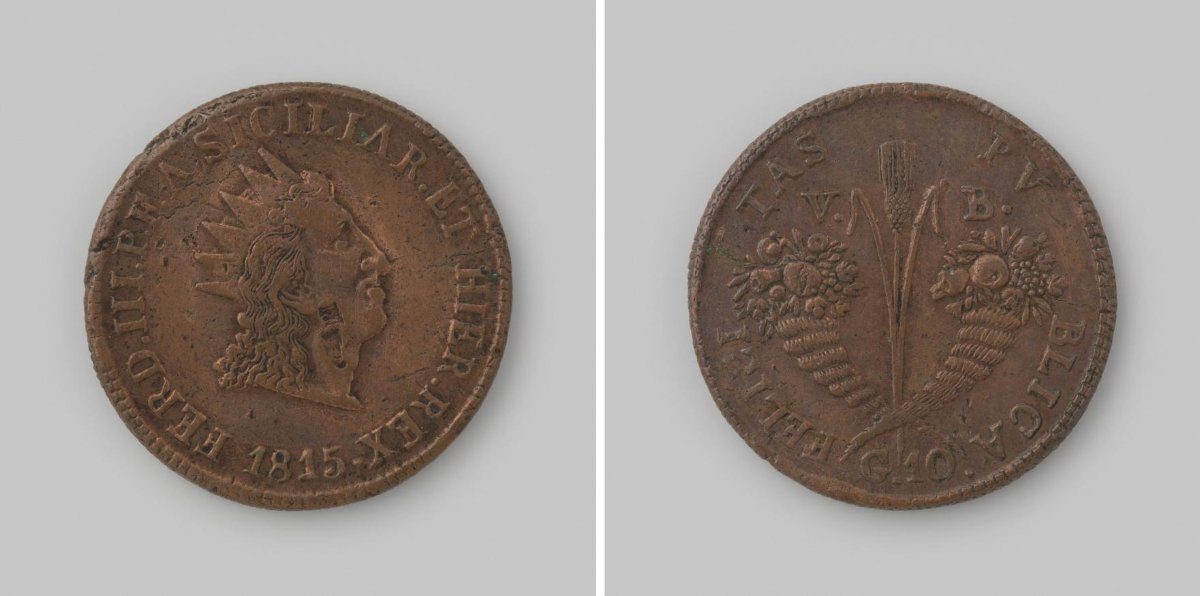
10 grani from the Kingdom of the Two Sicilies of Ferdinand III, 1815
1815
Copper coin. Obverse: head with radiate crown facing right. Date below. Reverse: ear of corn between two cornucopias. Value indication below. Milled edge. Note: two countermarks have been applied to the obverse. The Rijksmuseum, Amsterdam, holds this object as KOG-MP-1-3189; its record gives material recorded as cop…
Partial type record
Rijksmuseum, Amsterdam
modern coins
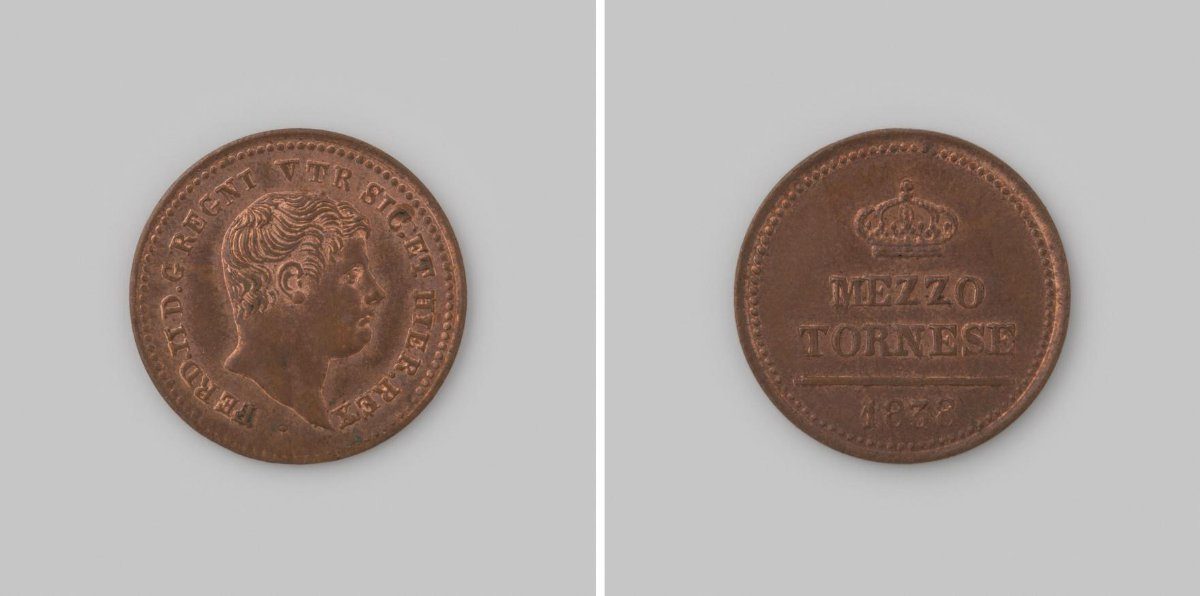
½ tornese from the Kingdom of Naples of the Two Sicilies of Ferdinando II, 1838
1838
Copper coin. Obverse: head facing right. Reverse: crown, below which the denomination indication in two lines. Date in exergue at the bottom. Plain edge. The Rijksmuseum, Amsterdam, holds this object as KOG-MP-1-3193; its record gives material recorded as copper (metal); technique striking (metalworking); measuremen…
Partial type record
Rijksmuseum, Amsterdam
modern coins
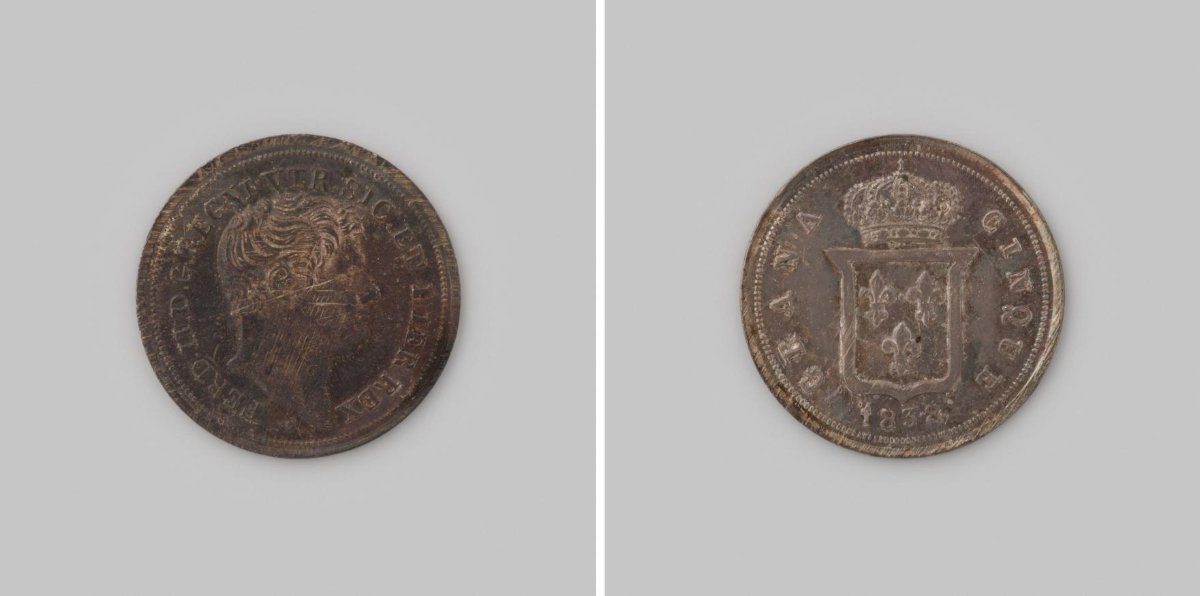
5 grani from the Kingdom of Naples of the Two Sicilies of Ferdinando II, 1838
1838
Silver coin. Obverse: head facing right. Reverse: crowned coat of arms of Bourbon. Denomination indication: Grana cinque in the legend. Date at the bottom. Plain edge. The Rijksmuseum, Amsterdam, holds this object as KOG-MP-1-3191; its record gives material recorded as silver (metal); technique striking (metalworkin…
Partial type record
Rijksmuseum, Amsterdam
modern coins
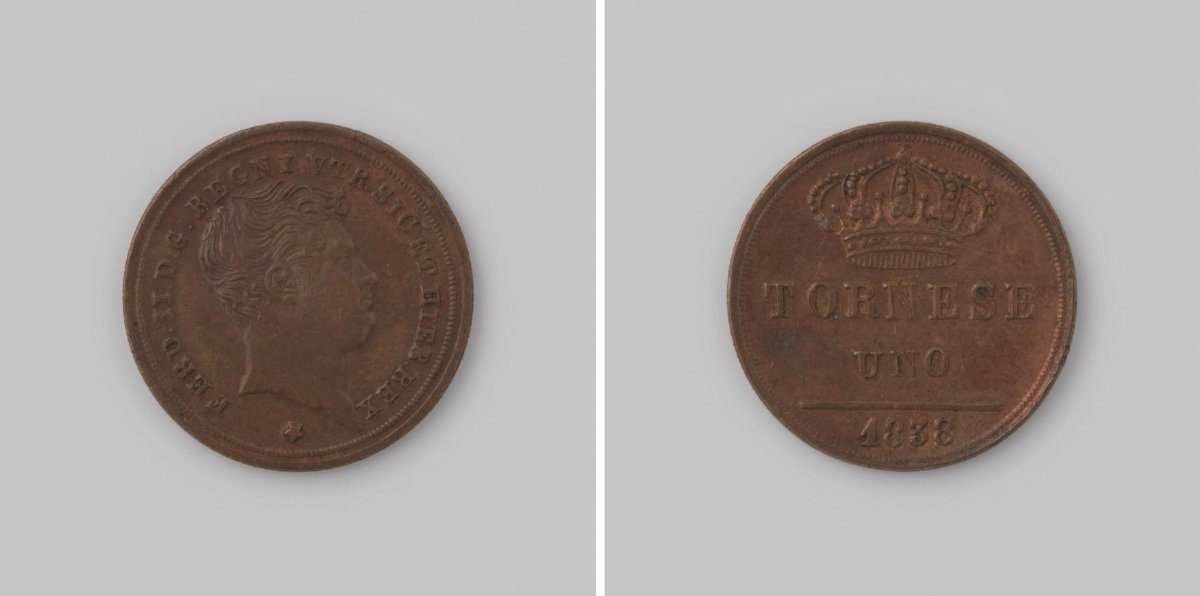
Kingdom of Naples of the Two Sicilies, Ferdinando II, tornese, 1838
1838
Copper coin. Obverse: head facing right. Reverse: crown, below which the denomination indication in two lines. Date in exergue at the bottom. Milled edge. The Rijksmuseum, Amsterdam, holds this object as KOG-MP-1-3192; its record gives material recorded as copper (metal); technique striking (metalworking); measureme…
Partial type record
Rijksmuseum, Amsterdam
modern coins
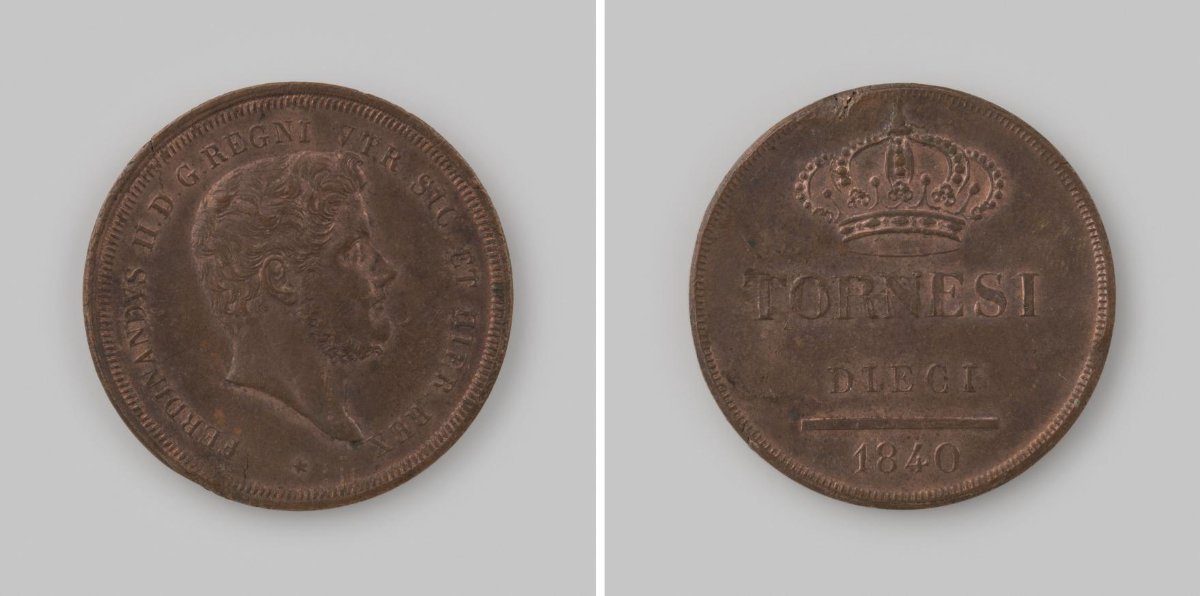
Kingdom of Naples of the Two Sicilies, Ferdinando II, 10 tornesi, 1840
1840
Copper coin. Obverse: head facing right. Reverse: crown, below which the denomination indication in two lines. Date in exergue at the bottom. Milled edge. The Rijksmuseum, Amsterdam, holds this object as KOG-MP-1-3194; its record gives material recorded as copper (metal); technique striking (metalworking); measureme…
Partial type record
Rijksmuseum, Amsterdam
modern coins
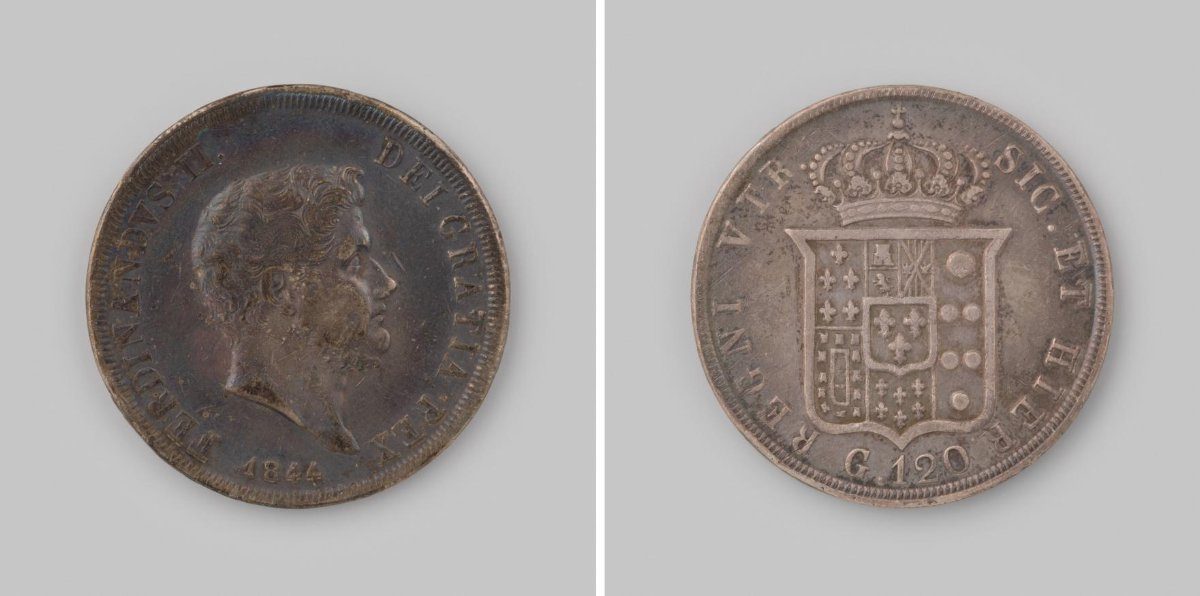
Kingdom of the Two Sicilies, Ferdinand II, 120 grani, 1844
1844
Silver coin. Obverse: head facing right. Date below. Reverse: crowned composite coat of arms. Value indication below. Edge lettering. The Rijksmuseum, Amsterdam, holds this object as KOG-MP-1-3195A; its record gives material recorded as silver (metal); technique striking (metalworking); measurements diameter 3.8 cm…
Partial type record
Materials recorded in the physical descriptions
- Copper4
- Silver2
An entry made of several materials is counted once under each. Materials are counted only where the description states them.
Browse other historical issuers and makers in the Atlas, or read how attributions are made in the editorial method.