Issuing authority
Qing Empire
Last imperial dynasty of China; issued cast cash and later machine-struck coinage.
- Kind
- empire
- Region
- East Asia, Asia
- Recorded period
- 1644 – 1912
Succeeded by the Republic of China.
Objects are filed under the historical authority that actually issued or made them. A recorded period comes from the issuer's own reference description and is left blank where no source states it.
Published entries
9
Individual types and documented families
With photographs
100%
9 with a credited real-object photo
Dated span
1723 – 1907
9 entries with their own date
Verified or well documented
0
Highest two confidence levels
Catalogue entries (9)
Filter these entries by era, material or confidenceSorted by date, earliest first.
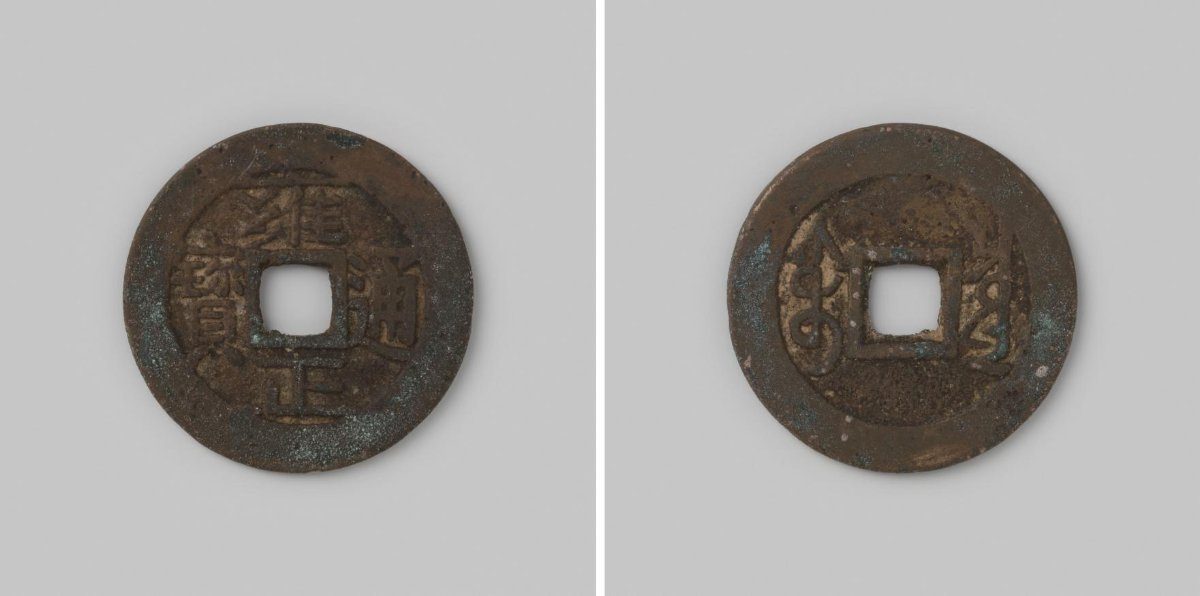
Rijksmuseum, Amsterdam
modern coins
Cash of the Empire of China of Emperor Shizong under the reign title Yongzheng, 1723-1735, commissioned by the Board of Revenue in Beijing
1723 - 1735
Copper coin. Obverse: within a broad raised rim around a square central hole, four Chinese characters arranged in a cross, two of which mean: Yung cheng. Reverse: within a broad raised rim flanking a square central hole, two Chinese characters, the right character meaning in Manchu: Chuan = Revenue. The Rijksmuseum,…
Partial type record
Cleveland Museum of Art
modern coins
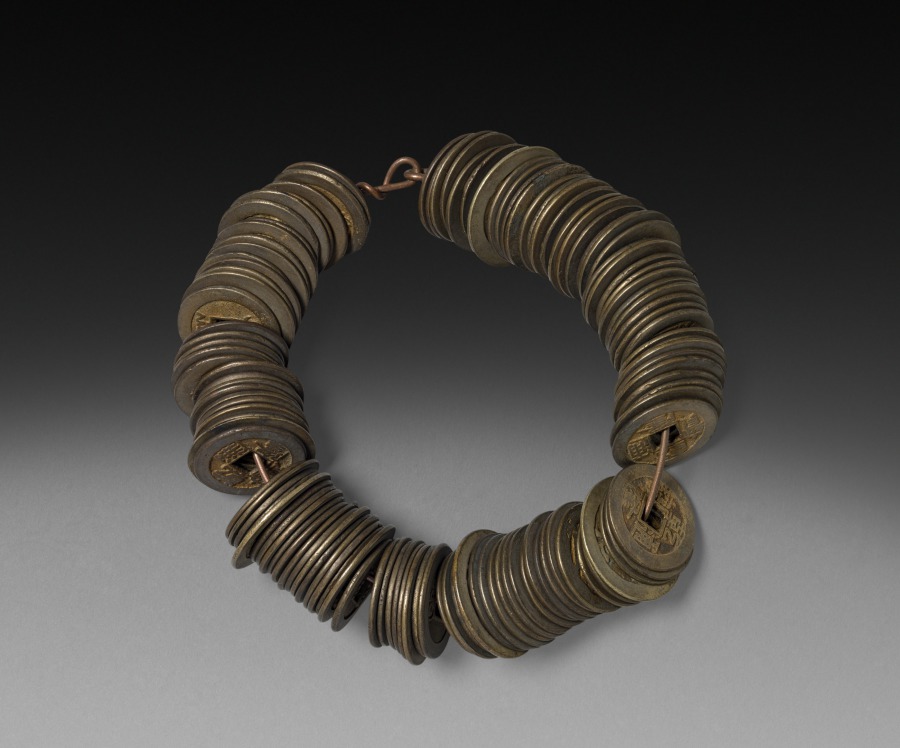
Coins (Cleveland Museum of Art 1918.793)
1736–95
Cleveland Museum of Art object 1918.793: Coins, 1736–95. China, Qing dynasty (1644–1911), Qianlong reign (1736–95). Copper. Inscribed: 乾隆通寳 (Qianlong Tongbao). Museum note: This is a string of Chinese coins with square holes in the center. It is catalogued in the museum's Chinese Art department under Coins. Credit…
Partial type record
Rijksmuseum, Amsterdam
modern coins
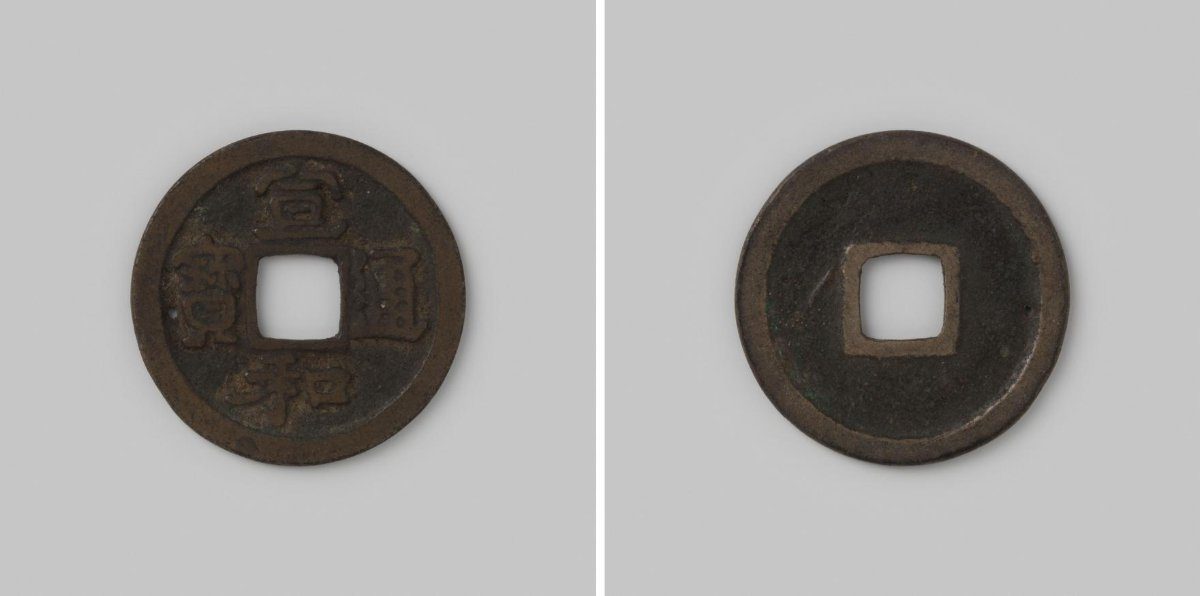
Cash of the Chinese Empire of Emperor Renzong under the reign title Jiaqing, 1796-1820 from Yun in Yunnan
1796 - 1820
Copper coin. Obverse: within wide raised rim around square central hole, four crosswise-placed Chinese characters, two of which mean: Jiaqing. Reverse: within wide raised rim on either side of square central hole, two Chinese characters, the right character meaning: Yun in the province of Yunnan. The Rijksmuseum, Am…
Partial type record
Rijksmuseum, Amsterdam
modern coins
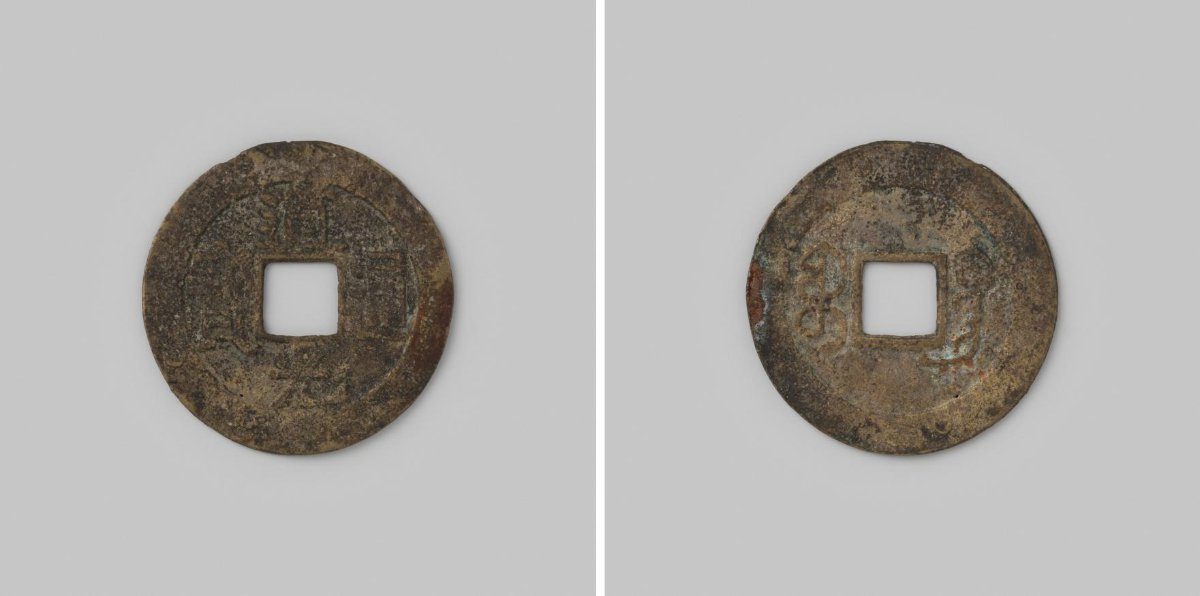
Cash of the Empire of China of Emperor Xuanzong under the reign name Daoguang, 1821–1850 from Kuang in Guangdong
1821 - 1850
Copper coin. Obverse: within broad raised rim around a square central hole, four Chinese characters arranged in a cross, two of which mean: Tao kuang. Reverse: within broad raised rim on either side of a square central hole, two Chinese characters, the right character meaning: Kuang, in Guangdong province. The Rijks…
Partial type record
Rijksmuseum, Amsterdam
modern coins
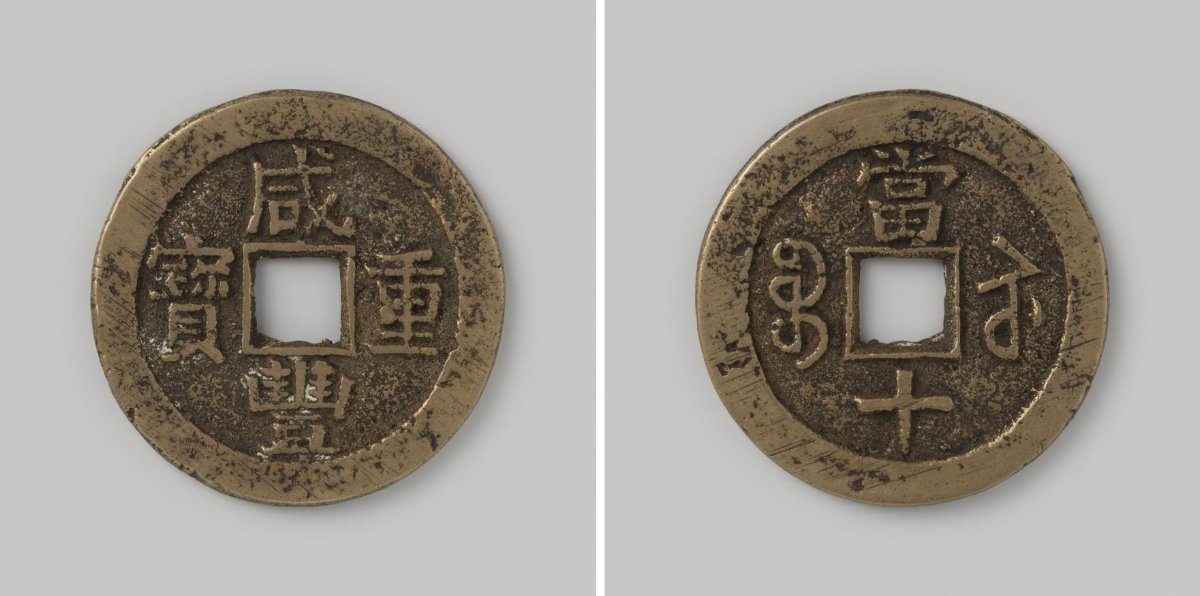
Cash of the Empire of China of Emperor Wenzong under the reign title Xianfeng, 1851-1861, from Suzhou in Jiangsu
1851 - 1861
Copper coin. Obverse: within a broad raised rim around a square central hole, four Chinese characters arranged in a cross, two of which mean: Hsien feng. Reverse: within a broad raised rim around a square central hole, three Chinese characters, the right character meaning: Su = Suchow, in the province of Kiangsu, wi…
Partial type record
National Museum of World Cultures Foundation via Europeana
banknotes
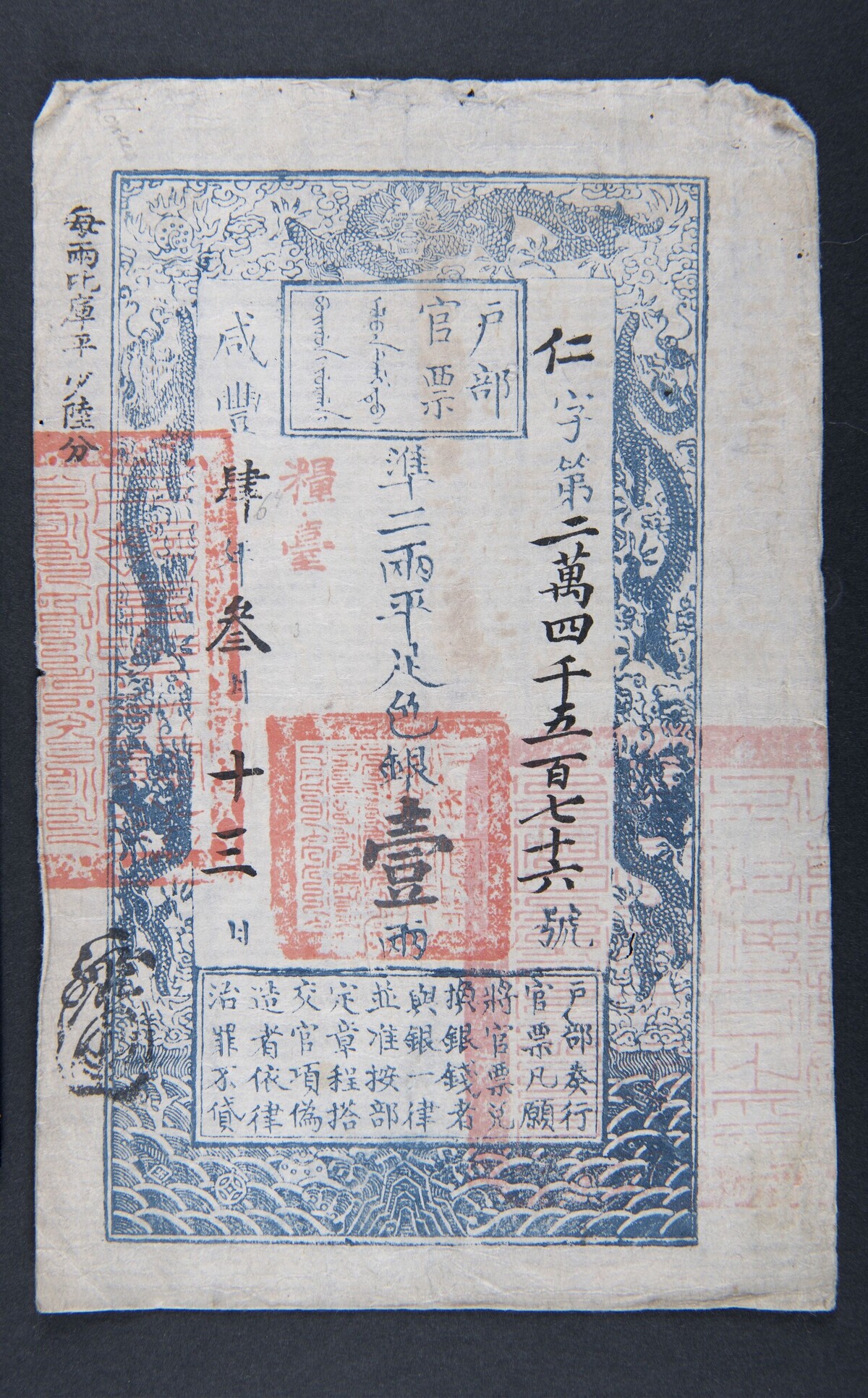
Banknote, 1858
1858
Banknote, 1858 is held by National Museum of World Cultures Foundation, dated 1858. The museum record gives material recorded as paper; ink; measurements 25.1 x 16.3 cm; place associated: China. Museum record — Object name in the museum record: Bankbiljet. Material: papier; inkt. Dimensions: 25,1 x 16,3 cm.
Partial type record
Rijksmuseum, Amsterdam
modern coins
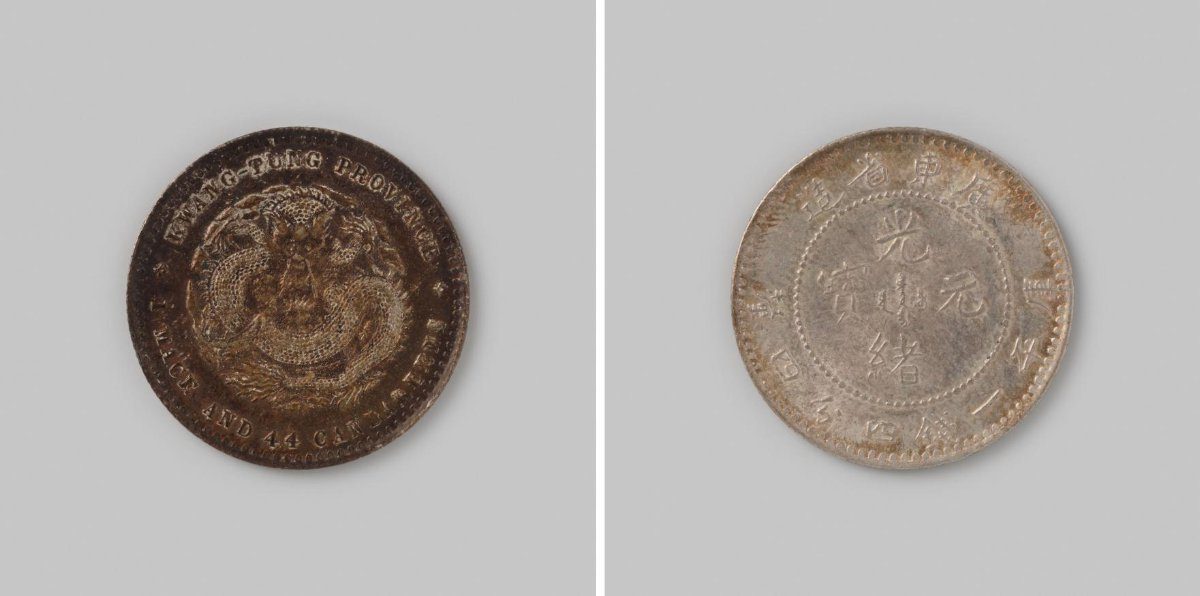
1/4 dollar or 1 mace and 4.4 candareens from the province of Kwangtung [=Canton] in China
1880 - 1910
Silver coin. Obverse: coiled dragon with human face. Circumscription below with value indication: 1 mace and 4.4 candareens. Reverse: Chinese characters within circle and as circumscription. Milled edge. The Rijksmuseum, Amsterdam, holds this object as KOG-MP-1-4280A; its record gives material recorded as silver (me…
Partial type record
Rijksmuseum, Amsterdam
modern coins
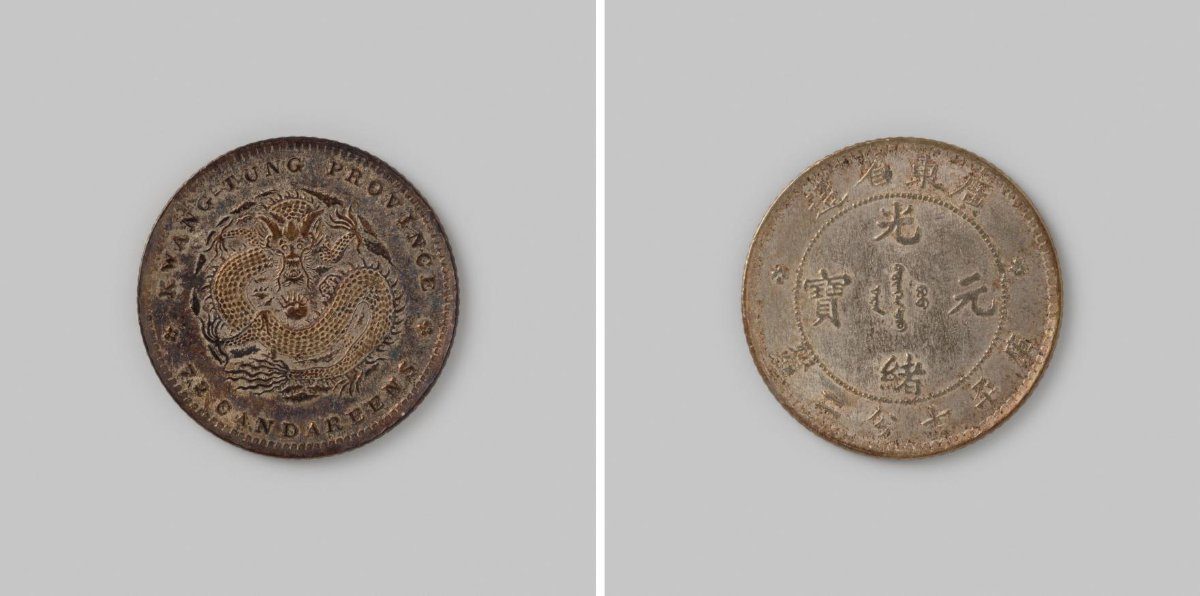
Ten fen (0.1 yuan) weighing 7.2 candareens, from the province of Kwangtung [=Canton] in China, in the name of Emperor Guangxu (1875-1908)
1880 - 1910
Silver coin. Obverse: coiled dragon with a human face. Value indication in legend along the bottom. Reverse: Chinese characters within a circle and as legend. Milled edge. The Rijksmuseum, Amsterdam, holds this object as KOG-MP-1-4280B; its record gives material recorded as silver (metal); technique striking (metalw…
Partial type record
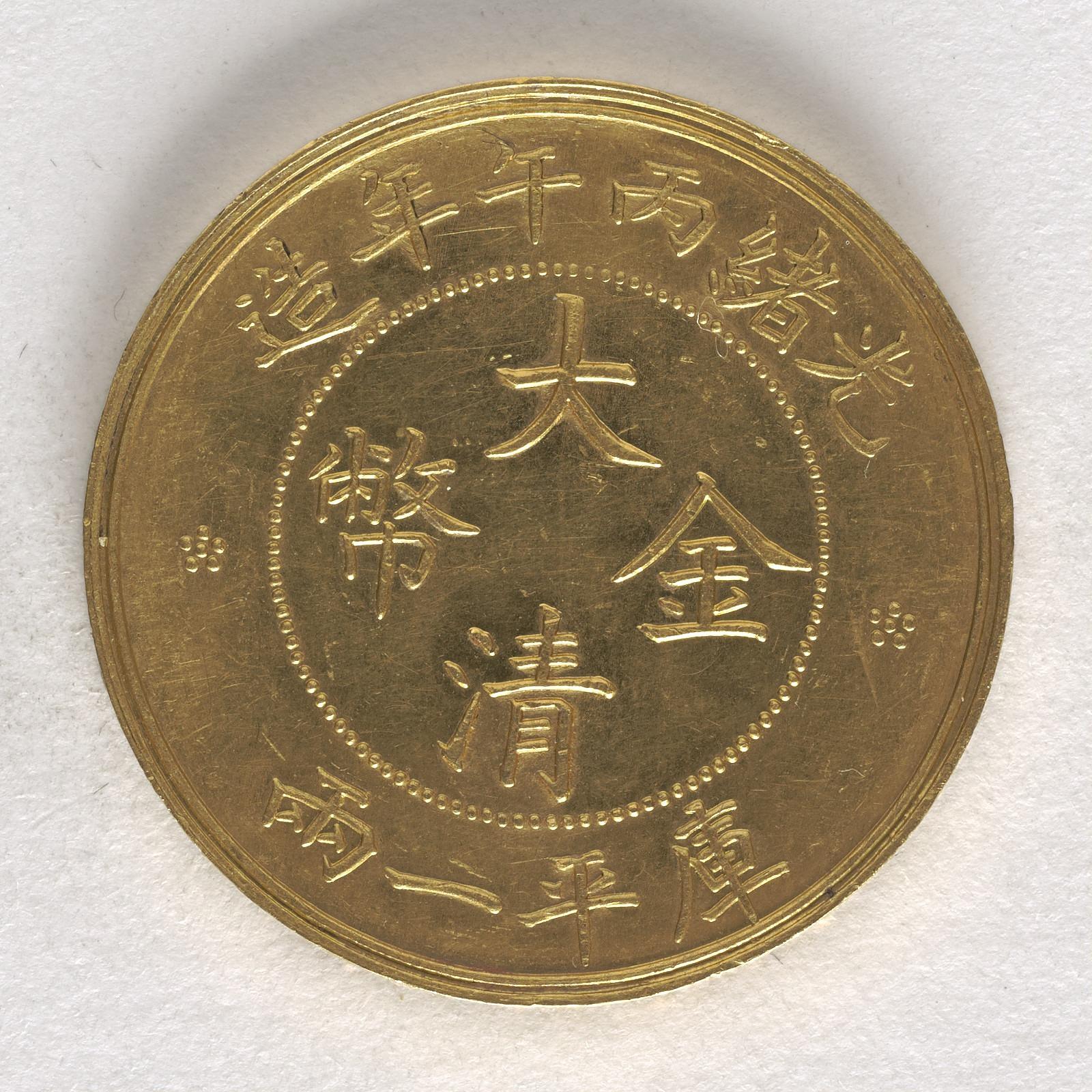
National Museum of American History, Smithsonian Institution
modern coins
1 Liang, Guangxu, China, 1907
1907
This object is a coin catalogued under the title "1 Liang, Guangxu, China, 1907" and associated with the Qing Empire entity. The museum documentation designates the specimen with the object name "coin," referencing the denomination and reign title indicated in its heading. The provided record does not contain descri…
Partial type record
Entries by catalogue category
- Modern World Coins8
- Banknotes1
Counts of published entries only. They describe this catalogue's holdings, not everything the issuer or maker produced.
Dated entries by century
- 18th century3
- 19th century5
- 20th century1
Only the 9 entries carrying their own date to within about 150 years are counted, by the earliest year given. These are catalogue holdings, not production totals.
Materials recorded in the physical descriptions
- Copper5
- Silver2
- Gold1
An entry made of several materials is counted once under each. Materials are counted only where the description states them.
Browse other historical issuers and makers in the Atlas, or read how attributions are made in the editorial method.