Maker
Daniel Delander
Maker name as recorded in the holding museum's catalogue: “Daniel Delander”. Biographical and business details beyond that record have not been independently verified.
- Kind
- clockmaker
Entries are linked to a maker only where the museum or collection record names that maker; attributed, workshop and uncertain names are not linked.
Published entries
2
Individual types and documented families
With photographs
100%
2 with a credited real-object photo
Verified or well documented
0
Highest two confidence levels
Catalogue entries (2)
Filter these entries by era, material or confidenceSorted by date, earliest first.
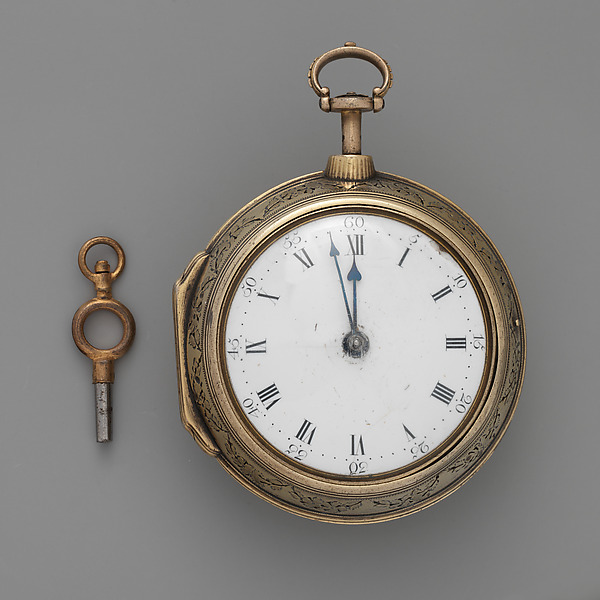
The Metropolitan Museum of Art, New York
clocks
Clock-watch, ca. 1705
ca. 1705
Clock-watch in The Metropolitan Museum of Art, New York (accession 17.190.1505a, b), catalogued by the museum's European Sculpture and Decorative Arts department. The museum dates it ca. 1705. It is attributed to Daniel Delander (British, 1678–1733). The museum records the medium as Silver gilt, silver and the dimen…
Partial type record
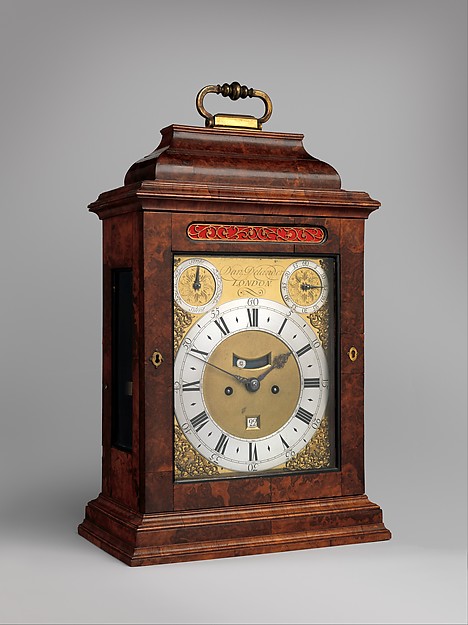
The Metropolitan Museum of Art — Bequest of Irwin Untermyer, 1973
clocks
Table or bracket clock with calendar, Daniel Delander, probably ca. 1720
probably ca. 1720
Table or bracket clock with calendar made by Daniel Delander (British, 1678–1733), dated probably ca. 1720, from British, London. The museum records its materials as: Case: walnut, oak veneered with walnut and burl walnut; stained wooden moldings; and brass fittings; Dial: gilded and silvered brass; Movement: brass…
Partial type record
Dated entries by century
- 17th century1
- 18th century1
Only the 2 entries carrying their own date to within about 150 years are counted, by the earliest year given. These are catalogue holdings, not production totals.
Materials recorded in the physical descriptions
- Silver2
- Brass1
- Steel1
- Zinc1
An entry made of several materials is counted once under each. Materials are counted only where the description states them.
Browse other historical issuers and makers in the Atlas, or read how attributions are made in the editorial method.