Search
Search the catalogue
Search by name, period, entity or technical detail, then narrow by discipline, era, country, maker, material and confidence. Facets are built only from what each record documents — an entry with no documented date or material is not guessed into one.
7 records
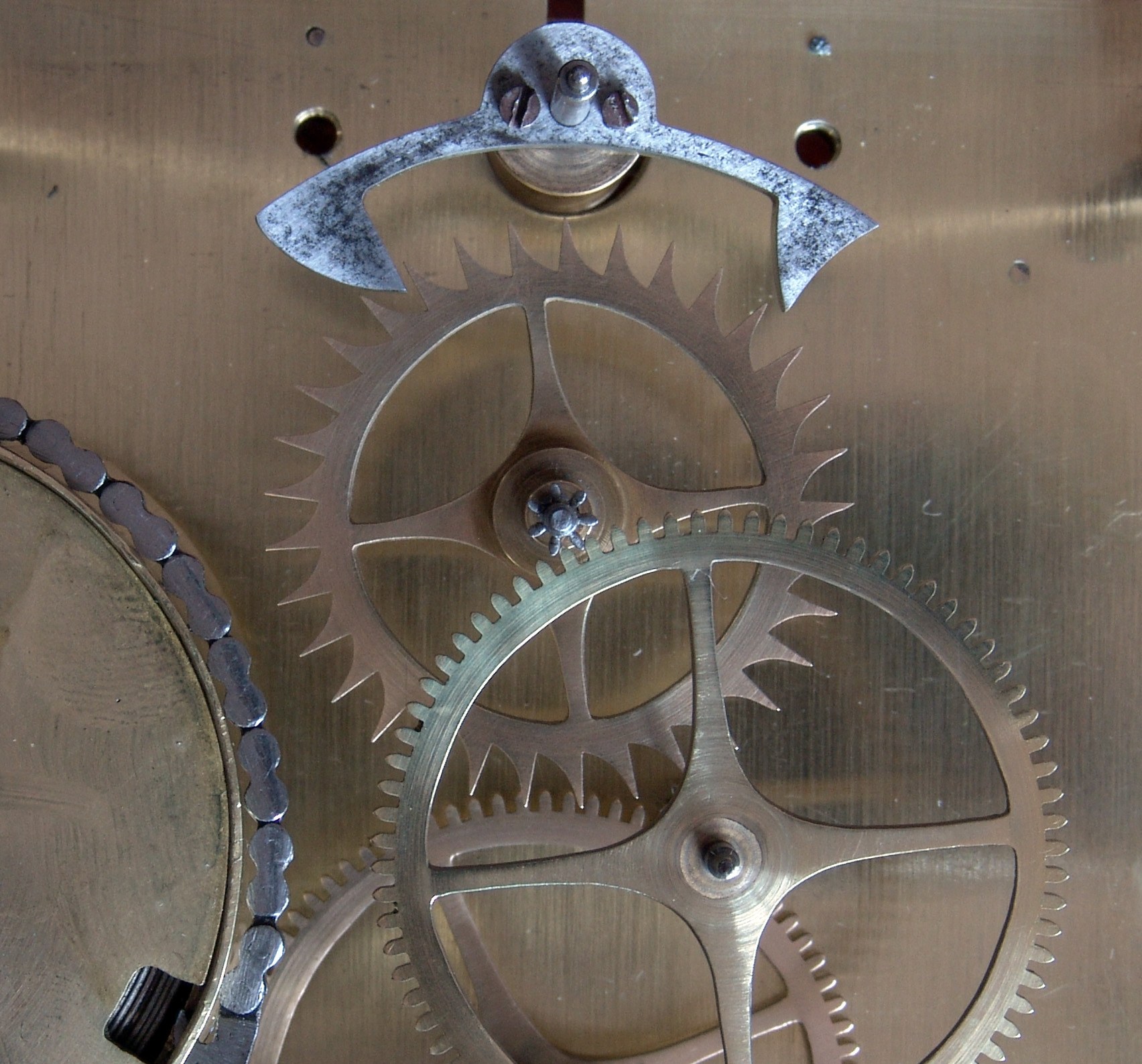
Timwether, via Wikimedia Commons
escapements
Anchor (Recoil) Escapement
c. 1670 onwards
The anchor escapement is the pendulum-clock escapement in which a pivoted part shaped vaguely like a ship's anchor alternately catches and releases the teeth of a vertical escape wheel. On each swing it gives the pendulum a small push and lets the wheel train advance by a fixed amount, moving the hands forward. The…
Partial type record
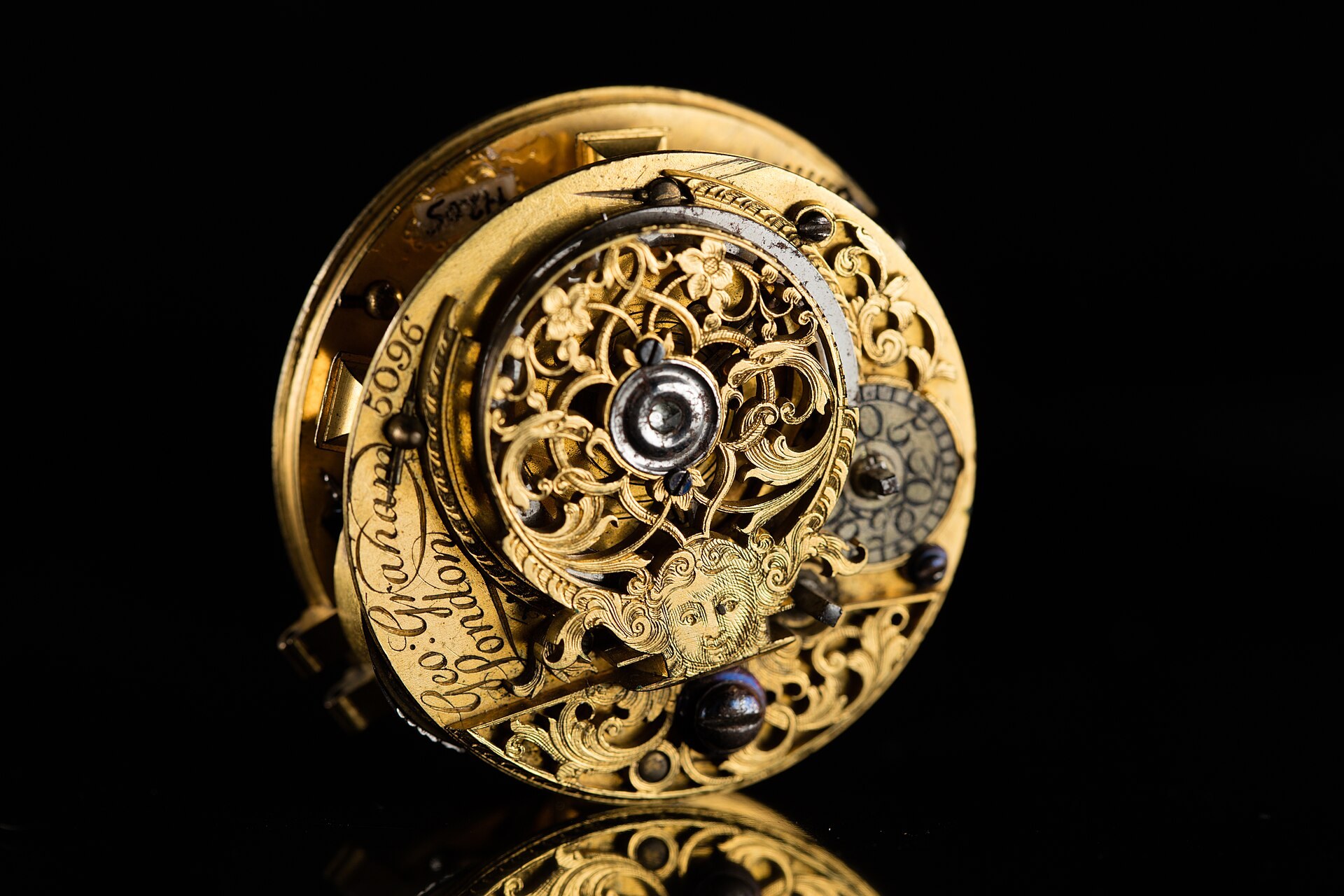
Auckland Museum Collections, via Wikimedia Commons
escapements
Cylinder Escapement
1695 onwards
The cylinder, or horizontal, escapement is a watch escapement in which a cut-away cylinder on the balance wheel's shaft takes the place of pallets. Its chief attraction was that it is much thinner than the verge escapement, so watches could be made fashionably slim. The escape wheel, which usually has 15 wedge-shap…
Partial type record
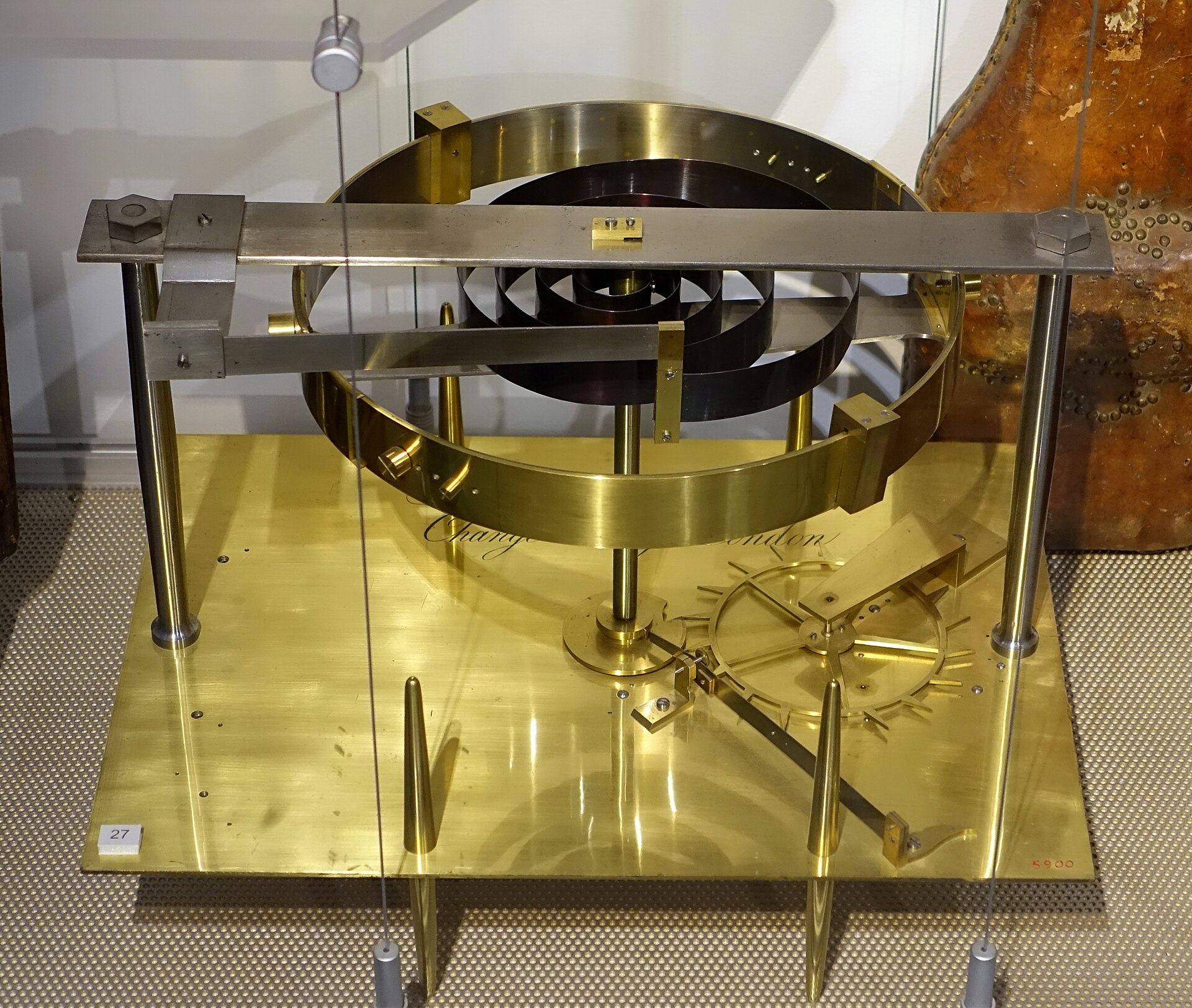
Daderot, via Wikimedia Commons
escapements
Detent (Chronometer) Escapement
1748 onwards (final form about 1800)
The detent, or chronometer, escapement was used in marine chronometers, and in some precision watches of the eighteenth and nineteenth centuries. It is a detached escapement: the balance wheel swings undisturbed for most of its cycle and receives an impulse only once per cycle, on every other swing. Because the dri…
Partial type record
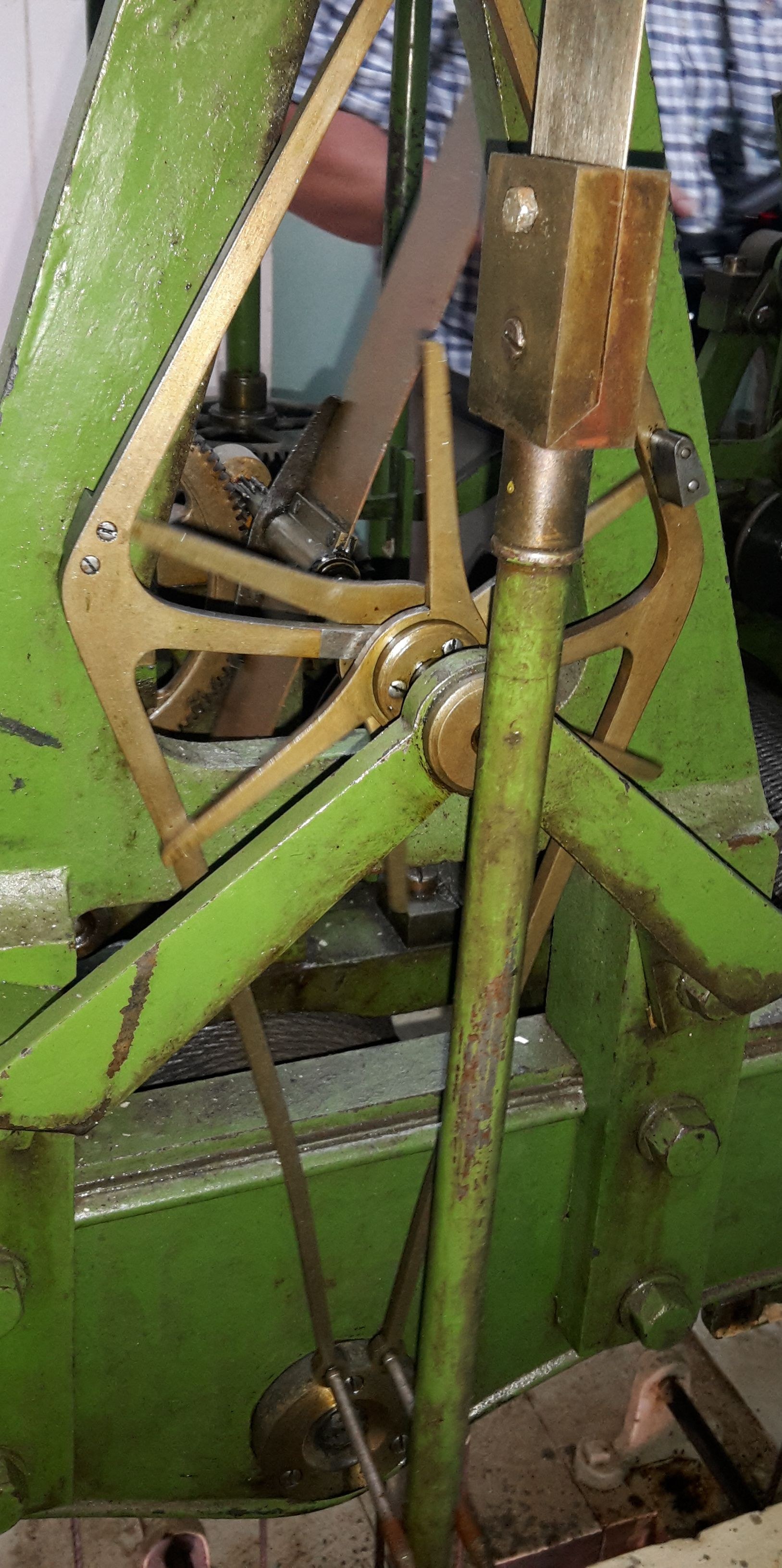
S. Wetzel (Uhren), via Wikimedia Commons
escapements
Gravity Escapement (Double Three-Legged)
Developed mid-18th to mid-19th century
A gravity escapement gives impulse to the pendulum from a small weight or weak spring rather than directly from the clock's wheel train. The train only resets the weighted arms, so the push the pendulum receives does not change when the driving force varies. In the earliest form, two arms pivoted very close to the…
Partial type record
Haraldmmueller, via Wikimedia Commons
escapements
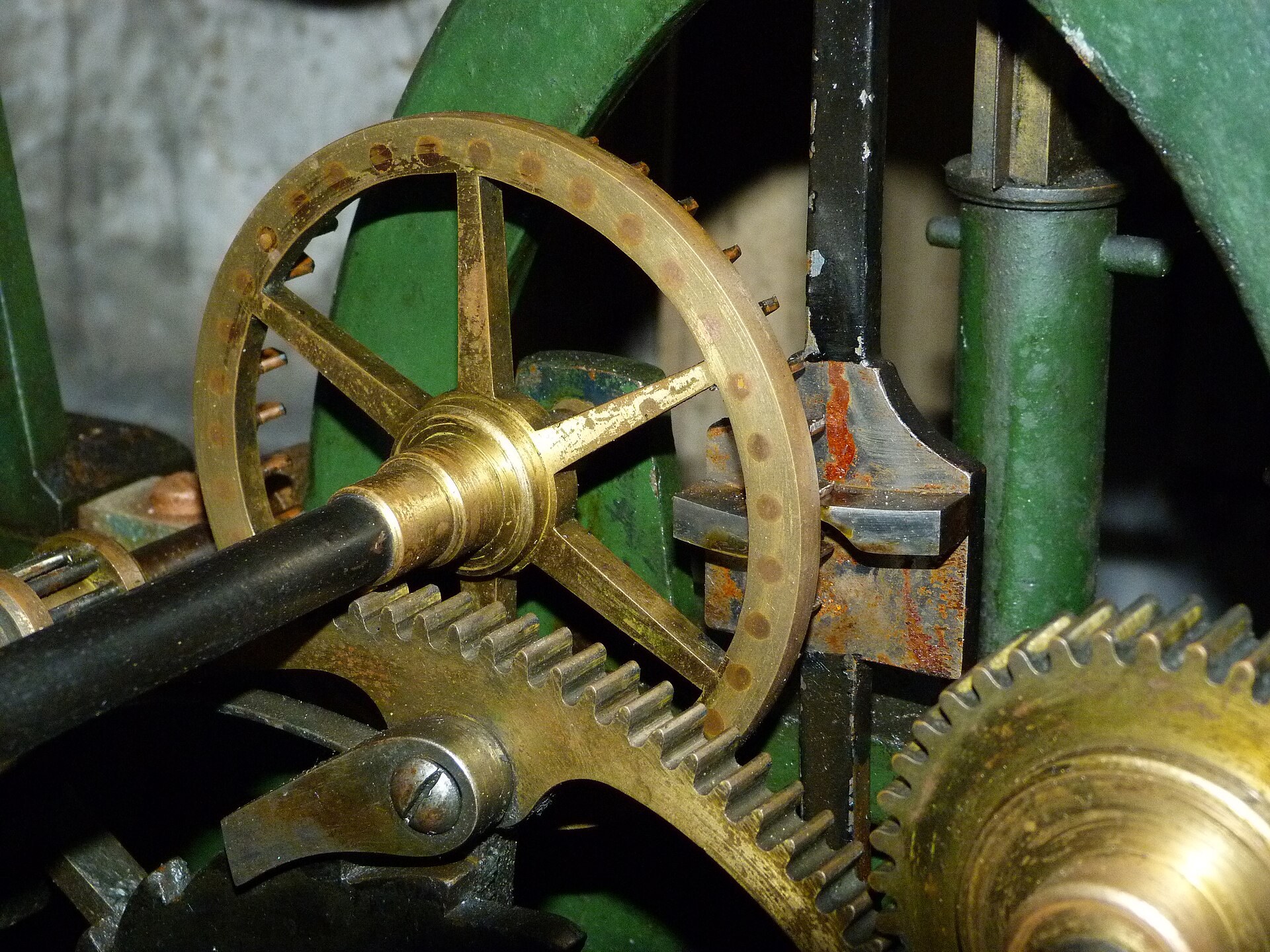
Pin Wheel Escapement
c. 1741 onwards
The pin wheel escapement is a rugged version of the deadbeat escapement, used quite often in tower clocks. Instead of teeth, its escape wheel carries round pins, which are stopped and released by a scissors-like anchor with two long pallet arms. Like other deadbeat escapements, it is designed to avoid the recoil of…
Partial type record
Hustvedt, via Wikimedia Commons
escapements
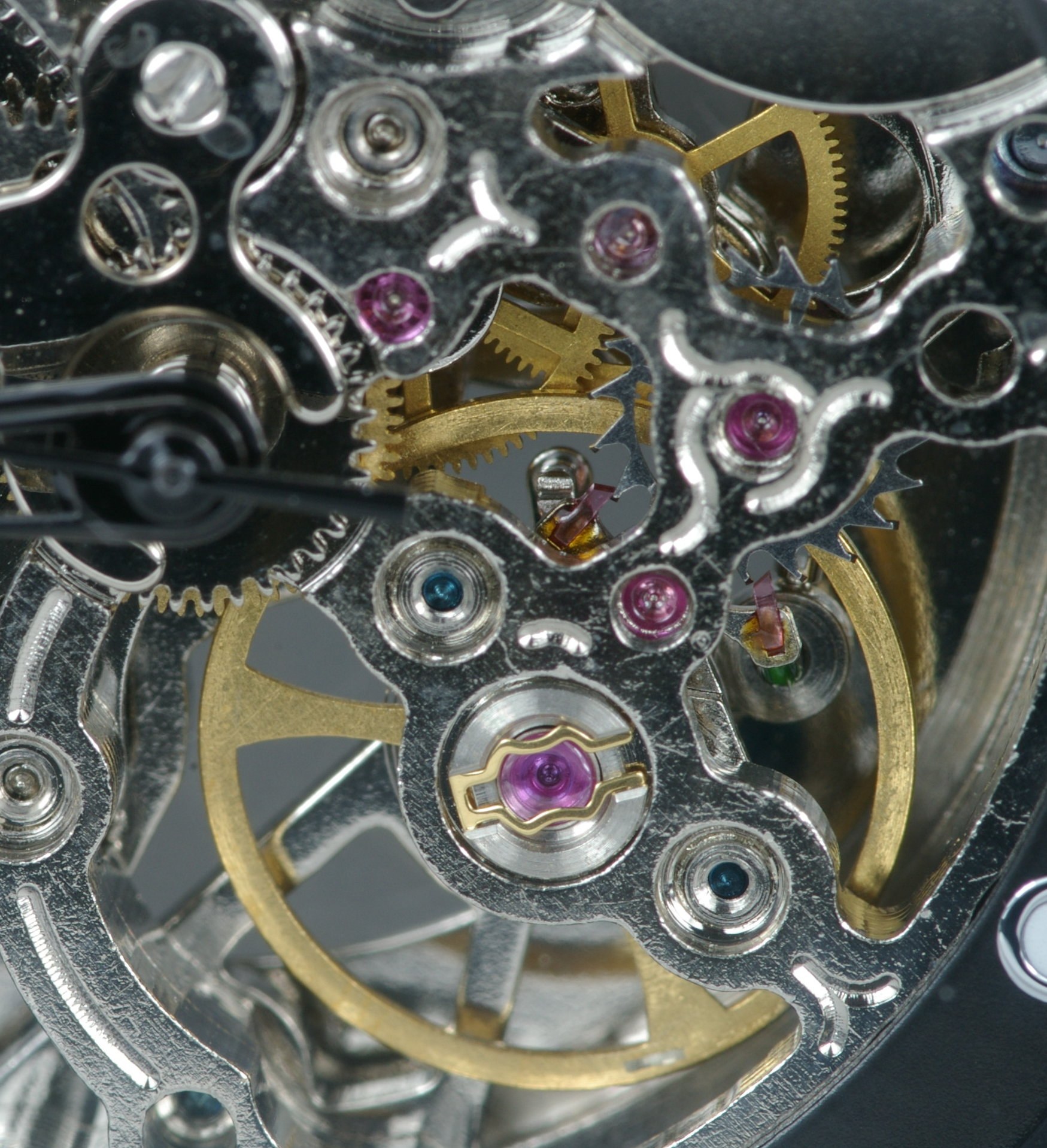
Swiss Lever Escapement
19th century to present
The Swiss lever escapement is a form of detached escapement characterised by club-tooth escape wheel teeth, serving as the dominant escapement in mechanical watches since the late nineteenth century. The foundational lever escapement was invented around 1754 by the British clockmaker Thomas Mudge and first used in 1…
Research required
Daderot, via Wikimedia Commons
escapements
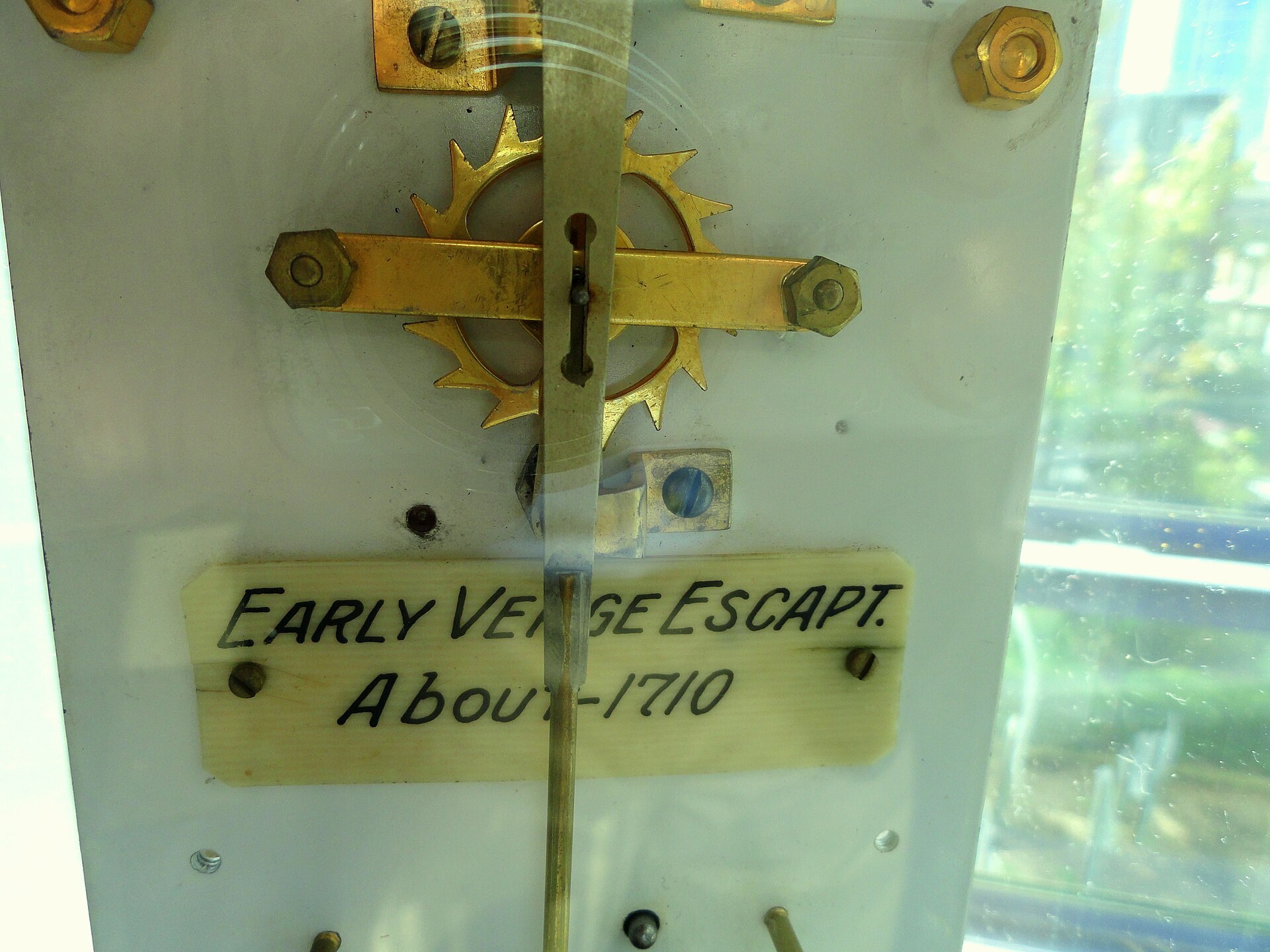
Verge Escapement
c. 13th century to 19th century
The verge escapement, also known as the crown wheel escapement, is the earliest recorded form of mechanical escapement used in clocks and pocket watches. Originating in medieval Europe during the late thirteenth century, it was likely adapted from an earlier bell-ringing alarm mechanism. Its introduction was a pivot…
Research required