Search
Search the catalogue
Search by name, period, entity or technical detail, then narrow by discipline, era, country, maker, material and confidence. Facets are built only from what each record documents — an entry with no documented date or material is not guessed into one.
328 records — page 1
spoons
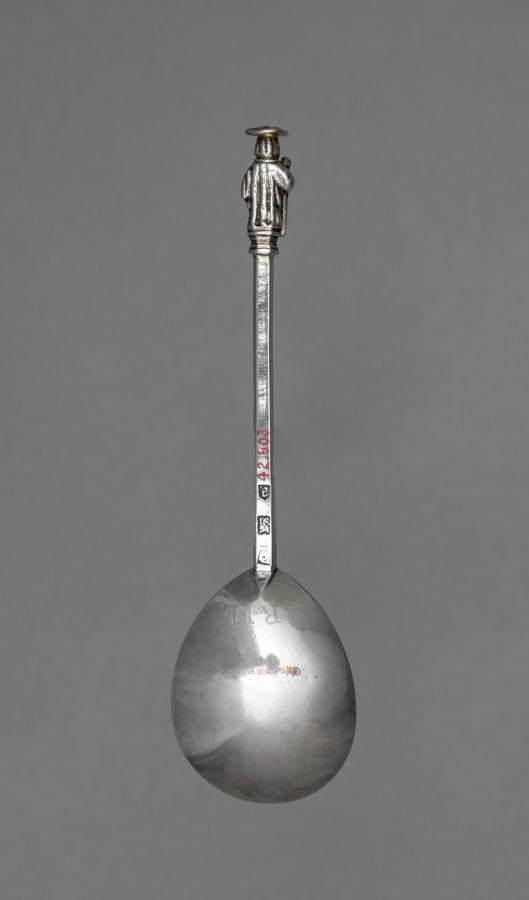
Apostle Spoon (Cleveland Museum of Art 1942.803)
1622–23
Cleveland Museum of Art object 1942.803: Apostle Spoon, 1622–23. England, London. Silver; overall: 18.5 cm (7 5/16 in.). Inscribed: "RH" on back of bowl.. Details are those of this museum object; how far it represents a wider type has not been independently verified.
Partial type record
spoons
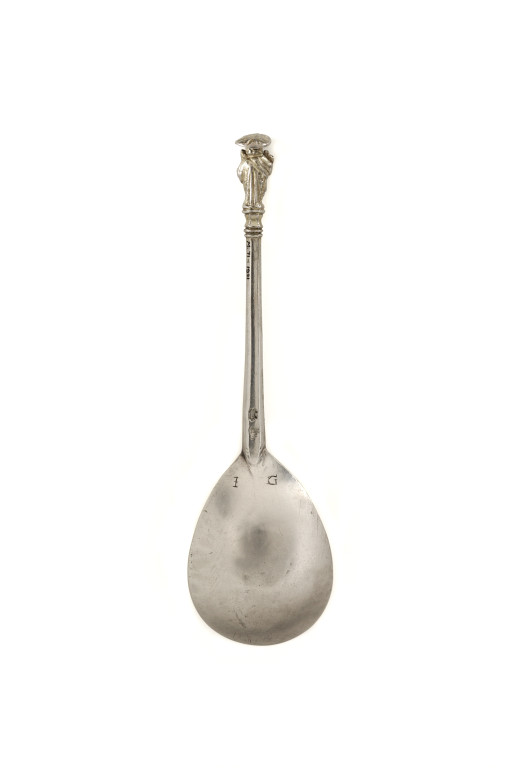
Apostle spoon depicting St. John, silver with gilt finial, London, 1514-15
Apostle spoon depicting St. John, silver with gilt finial, London, 1514-15 is held by Victoria and Albert Museum (United Kingdom). Description supplied by the holding institution: Apostle spoon depicting St. John with deep fig-shaped bowl inscribed on the back with the initials IG, and a thick, tapering stem ending…
Partial type record
spoons
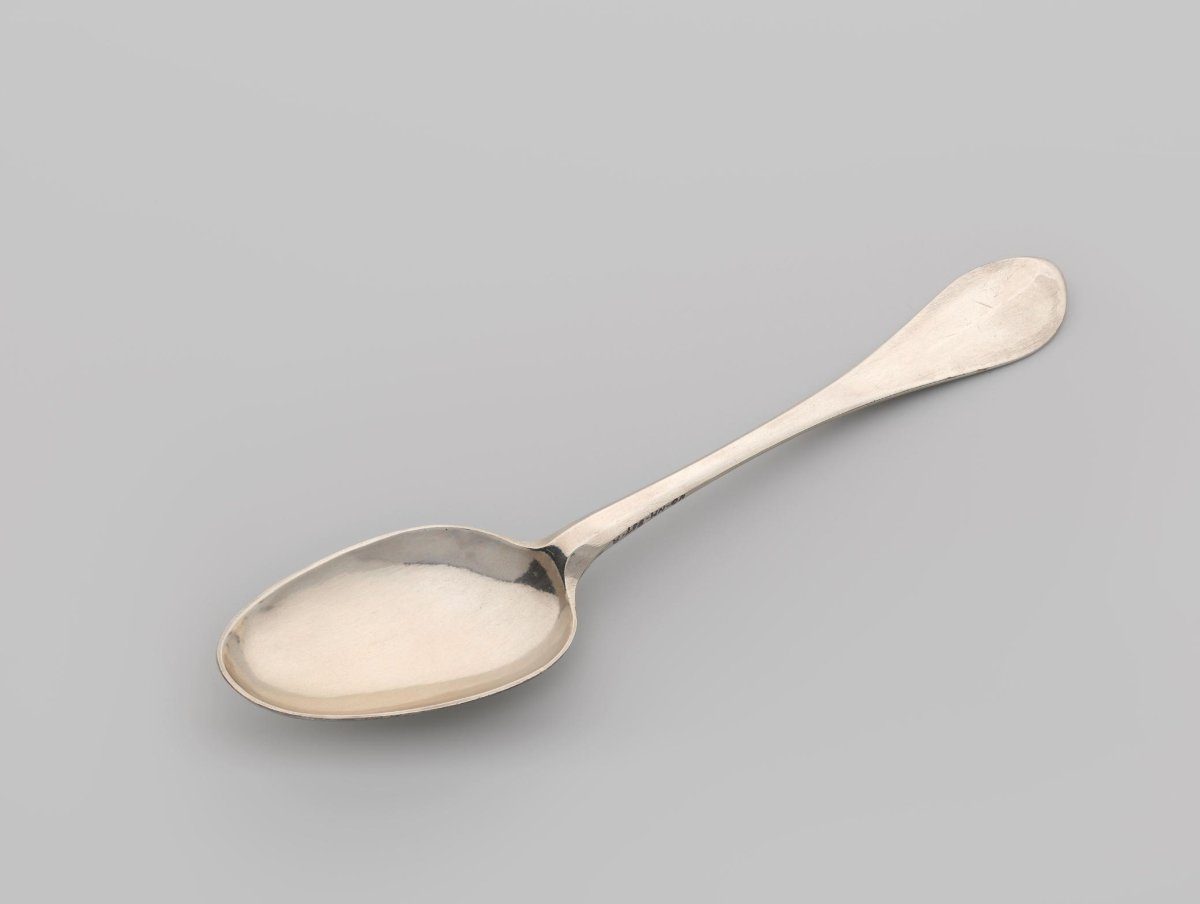
Battle of Vigo Bay
1713
The egg-shaped bowl is connected by means of a long rat-tail to the stem, which is initially straight and faceted on the upper side and thereafter flat, widening towards the rounded, up-curled end, which shows a slight ridge over the middle on the upper side. Engraved on the underside of the bowl, around the perimet…
Partial type record
spoons
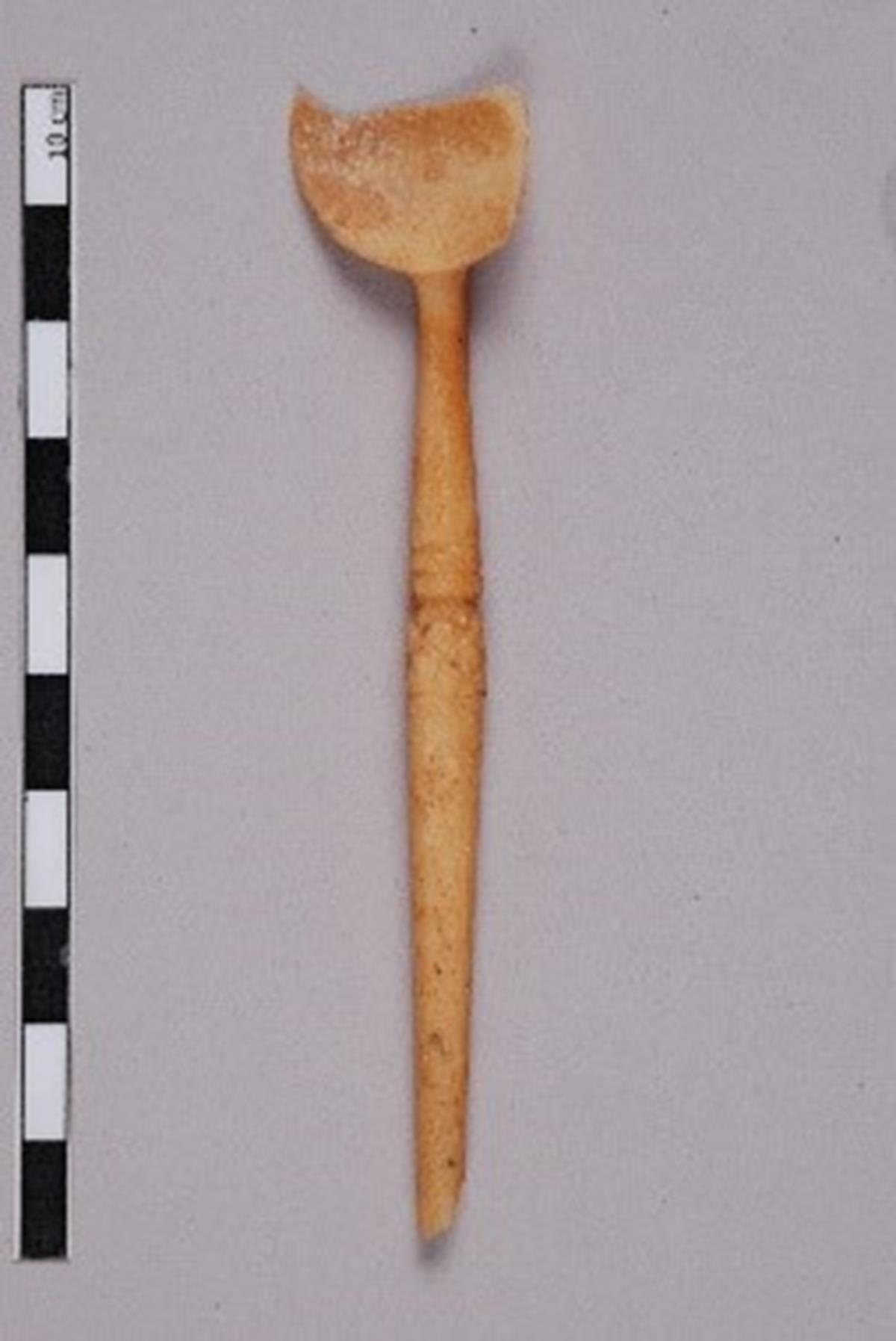
Bone spoon (ligula)
Bone spoon (ligula) is held by National Museum of Romanian History. Museum description: Fragmentary spoon, with the handle decorated medially by incised circles and a network of intersecting lines. Most of the bowl is missing, and the terminal of the handle is missing. The junction between the handle and the bowl is…
Partial type record
spoons
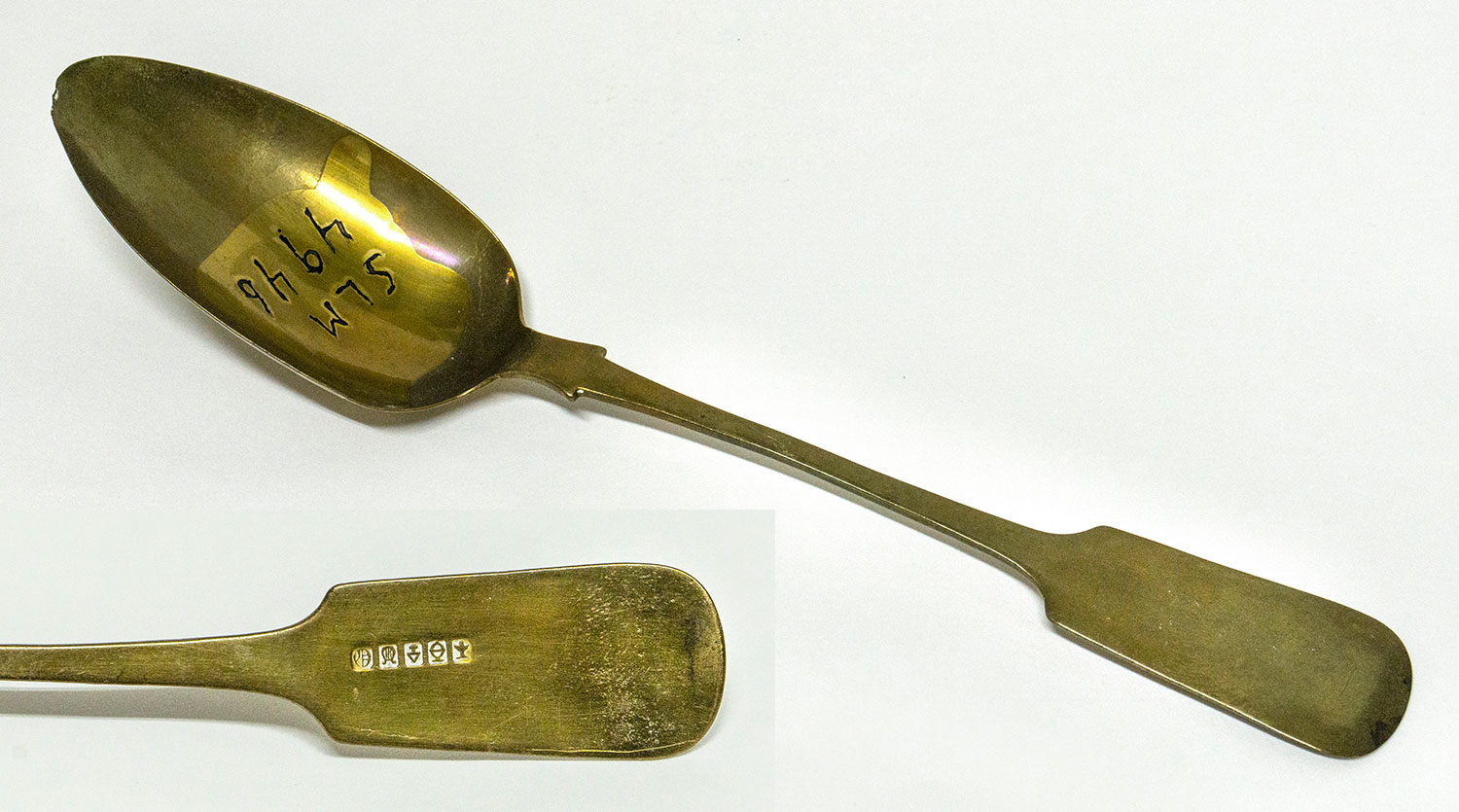
Brass spoon, provided with five stamps
Brass spoon, provided with five stamps is held by Sörmland Museum (Sweden). Description supplied by the holding institution: Spoon made of brass. Five stamps on the back of the handle. Handwritten note in the old accession catalogue: "For such spoons, itinerant Jews traded silver from the common folk". The collectio…
Partial type record
spoons
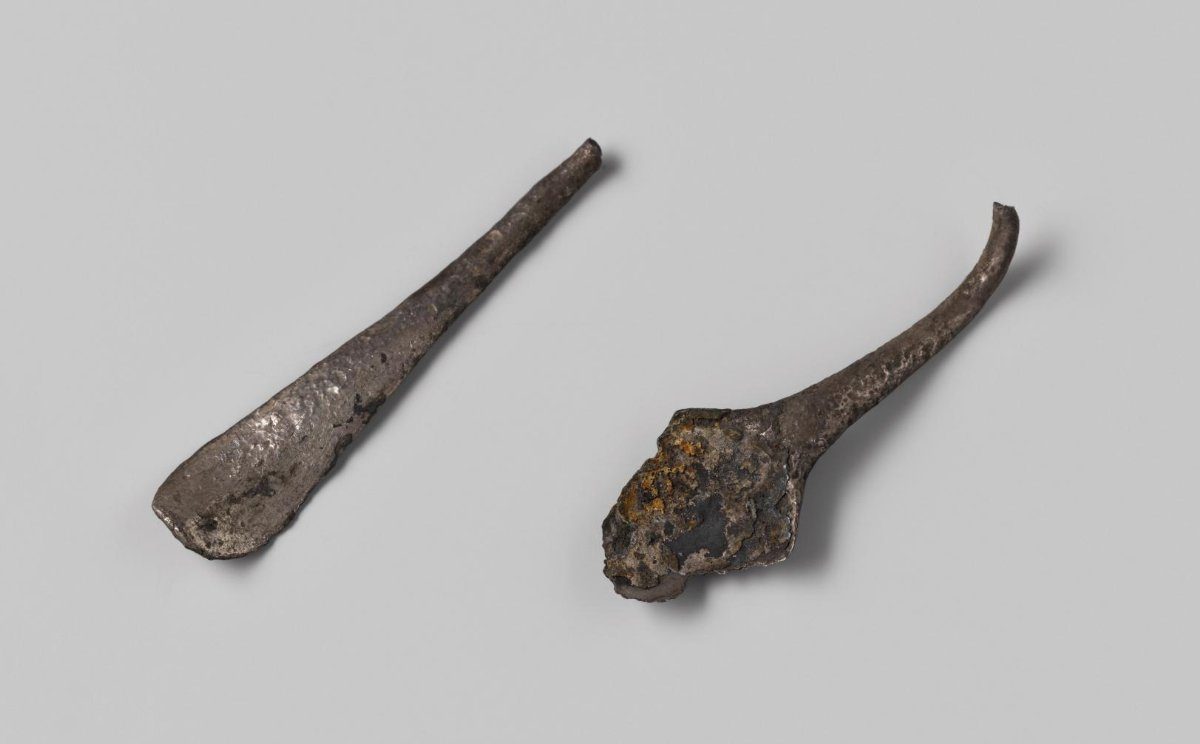
Broken spoon from the wreck of the Dutch East Indiaman Hollandia
1700 - in or before 1743-08-13
Cutlery, spoon; fragment, stem and bowl fragm, eroded, id. NG 1980-27H2608, marks illegible. The Rijksmuseum, Amsterdam, holds this object as NG-1980-27-H-1218; its record gives material recorded as silver (metal); measurements length 15.8 cm x width 2.6 cm x depth 0.5 cm. Description translated from the museum's Du…
Partial type record
spoons
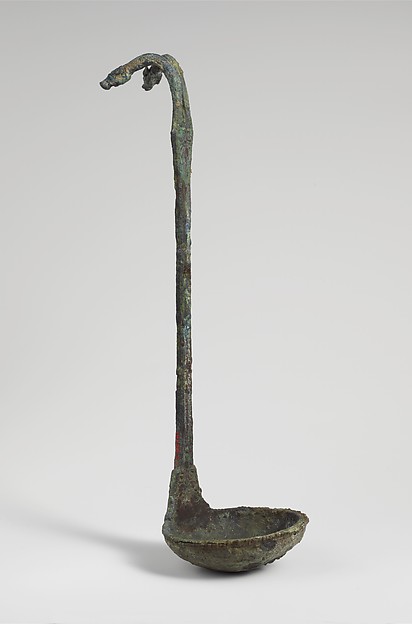
Bronze kyathos (ladle) with animal-head terminals, Etruscan, late 5th century BCE
late 5th century BCE
Ladle in The Metropolitan Museum of Art, New York (accession 08.258.2), catalogued by the museum's Greek and Roman Art department under the title “Bronze kyathos (ladle) with animal-head terminals”. The museum dates it late 5th century BCE and records its origin as Etruscan; Classical. The museum records the medium…
Partial type record
spoons
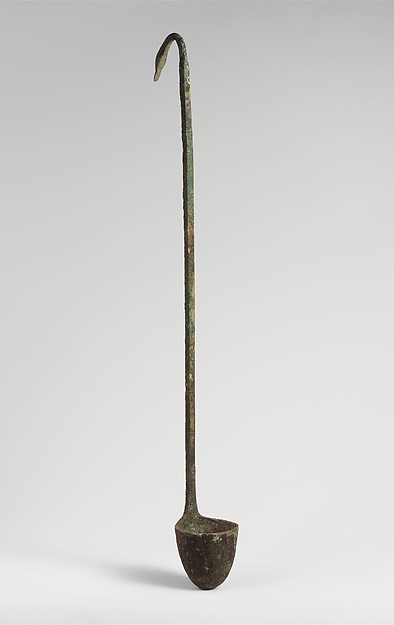
Bronze kyathos (ladle) with duck-head terminal, Etruscan, ca. 400 BCE
ca. 400 BCE
Ladle in The Metropolitan Museum of Art, New York (accession X.21.90), catalogued by the museum's Greek and Roman Art department under the title “Bronze kyathos (ladle) with duck-head terminal”. The museum dates it ca. 400 BCE and records its origin as Etruscan; Late Classical. The museum records the medium as Bronz…
Partial type record
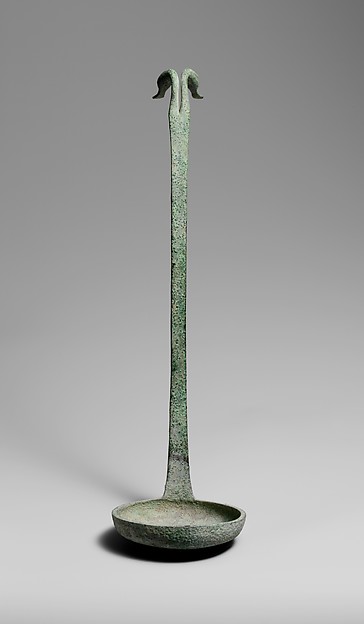
spoons
Bronze ladle terminating in two ducks' heads, Etruscan, 5th century BCE
5th century BCE
Ladle with handle of ducks' heads in The Metropolitan Museum of Art, New York (accession 10.210.35), catalogued by the museum's Greek and Roman Art department under the title “Bronze ladle terminating in two ducks' heads”. The museum dates it 5th century BCE and records its origin as Etruscan; Classical. The museum…
Partial type record
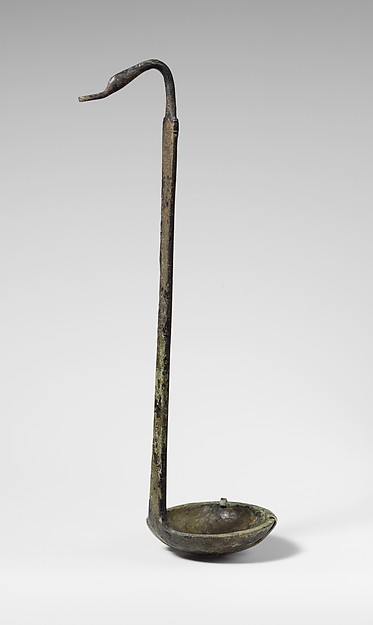
spoons
Bronze ladle with handle ending in a duck's head, Etruscan, 5th century BCE
5th century BCE
Ladle in The Metropolitan Museum of Art, New York (accession 21.88.130), catalogued by the museum's Greek and Roman Art department under the title “Bronze ladle with handle ending in a duck's head”. The museum dates it 5th century BCE and records its origin as Etruscan; Classical. The museum records the medium as Br…
Partial type record
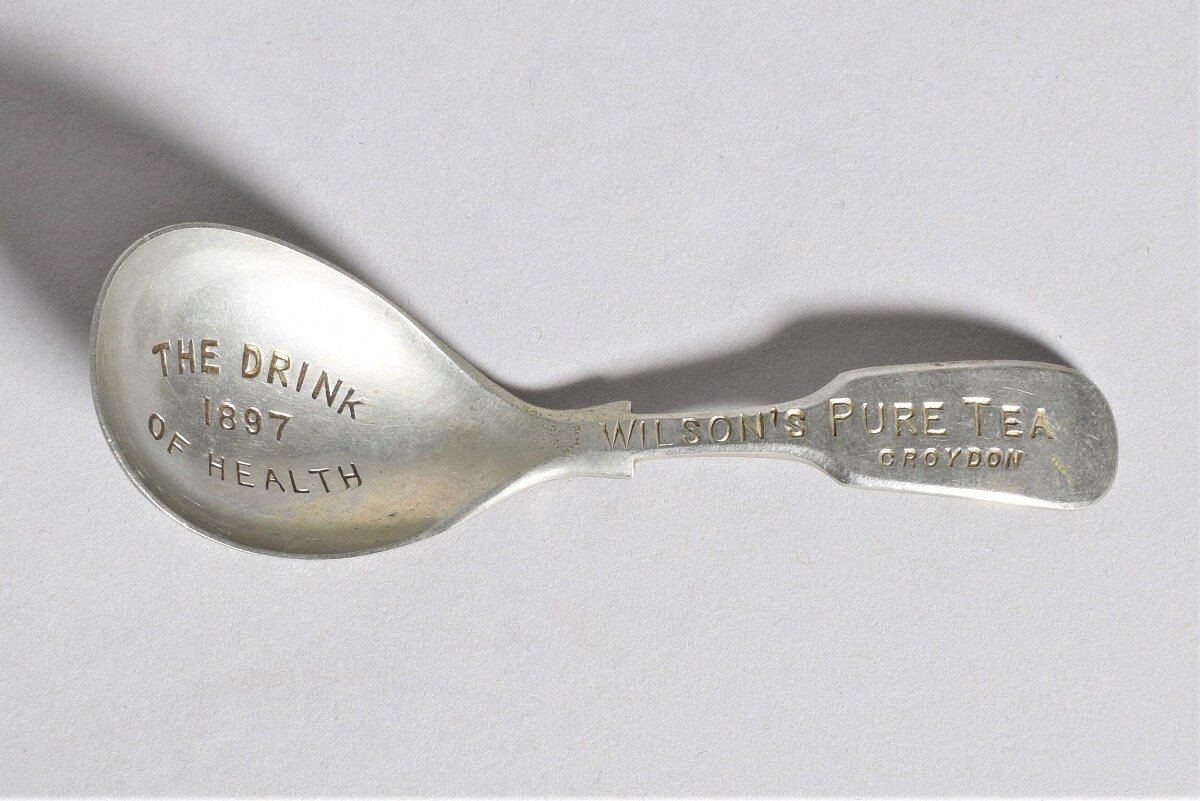
spoons
Caddy spoon, Sheffield, 1897
1897
Caddy spoon in the Victoria and Albert Museum, London (museum number C.25586), made in Sheffield, dated 1897. The museum's brief description reads: Caddy spoon, advertising 'Wilson's Pure Tea', Advertising Ephemera, electroplated Britannia Metal, Sheffield, Wingfield and Rowbotham,1897.. Museum description: Caddy sp…
Partial type record
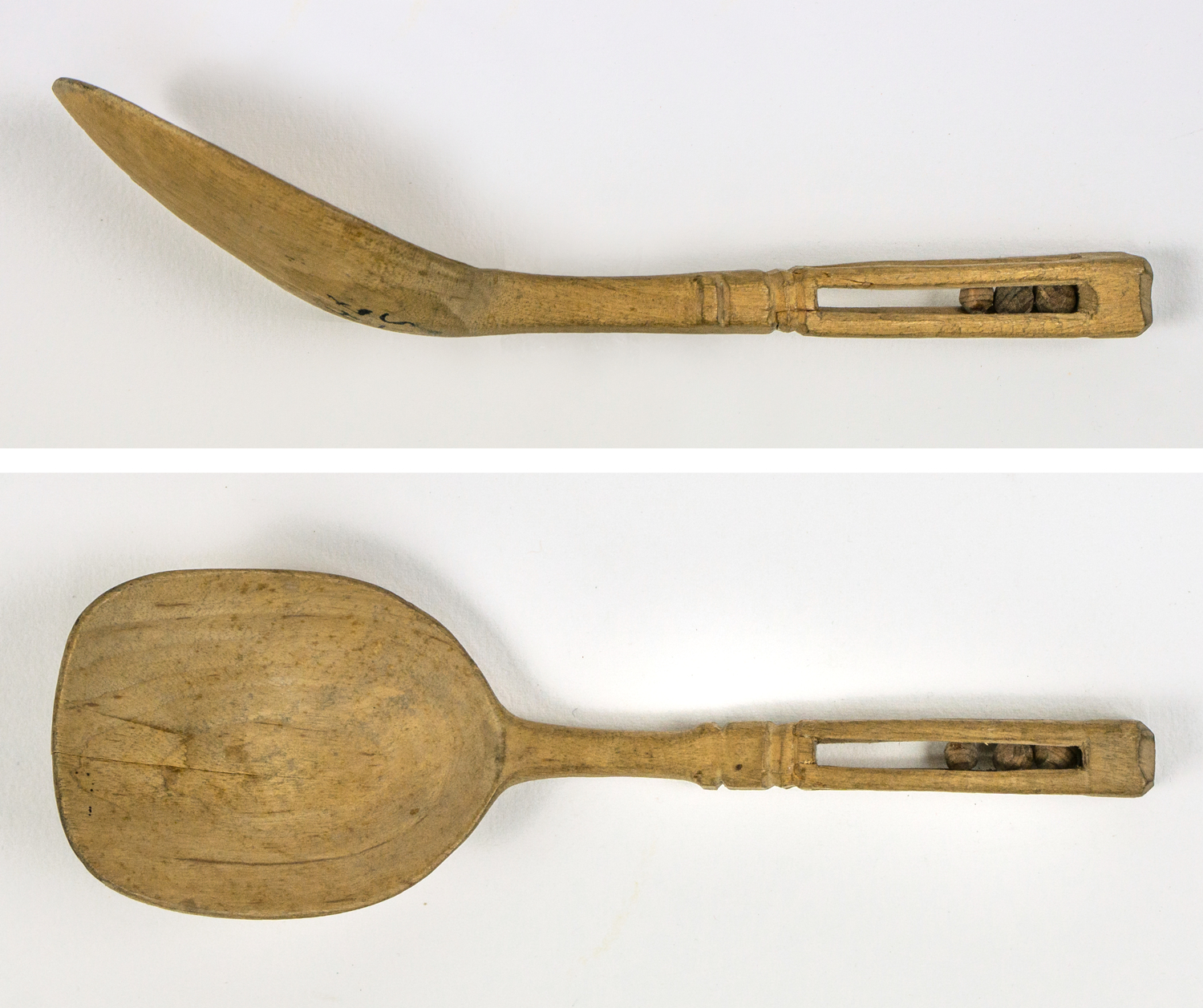
spoons
Carved wooden spoon containing a cavity with three balls, a courtship gift, known as a "känning"
Carved wooden spoon containing a cavity with three balls, a courtship gift, known as a "känning" is held by Sörmland Museum (Sweden). Description supplied by the holding institution: Carved wooden spoon made of birch. The handle has a rectangular cavity containing three wooden balls. The spoon may possibly have had…
Partial type record
spoons
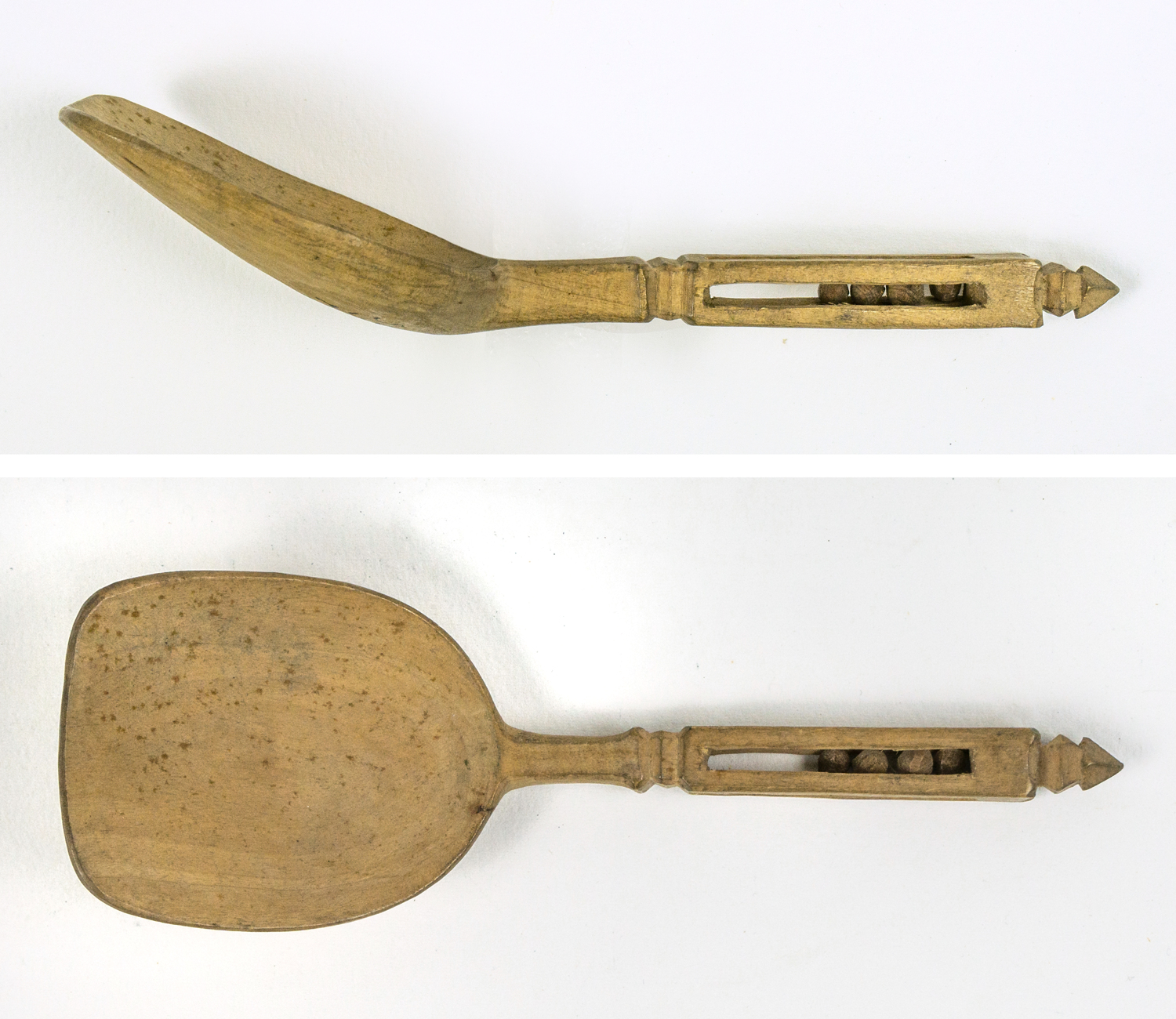
Carved wooden spoon provided with a cavity with four balls, a suitor's gift, a so-called "känning"
Carved wooden spoon provided with a cavity with four balls, a suitor's gift, a so-called "känning" is held by Sörmland Museum (Sweden). Description supplied by the holding institution: Carved wooden spoon made of birch. The handle has a rectangular cavity containing three wooden balls. The handle terminates in a thr…
Partial type record
spoons
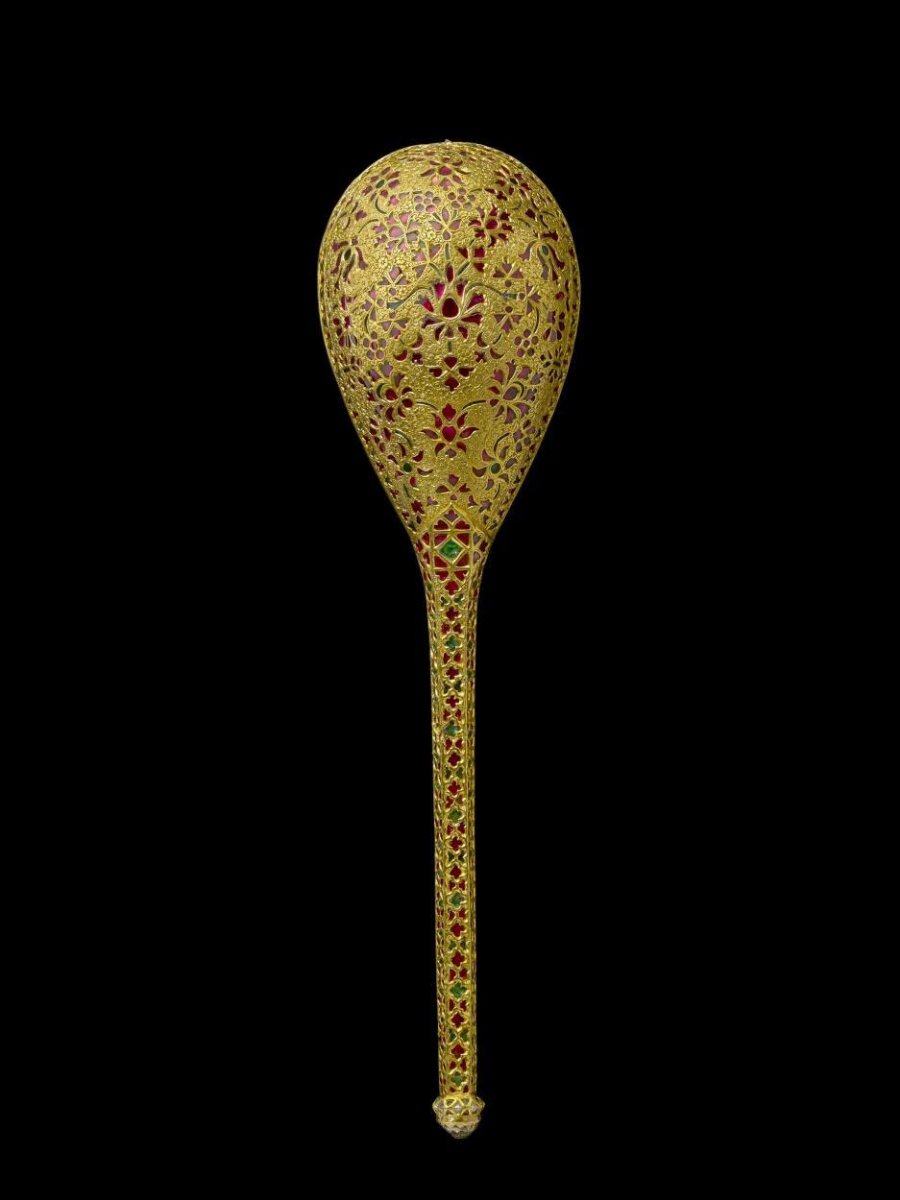
Ceremonial spoon, Mughal empire, ca. 1600
ca. 1600
Ceremonial spoon in the Victoria and Albert Museum, London (museum number IM.173-1910), made in Mughal empire, dated ca. 1600. The museum's brief description reads: Gold spoon, chased and engraved on the back of the bowl; the back of the bowl and stem set with emeralds, rubies and diamonds in kundan settings, and wi…
Partial type record
spoons
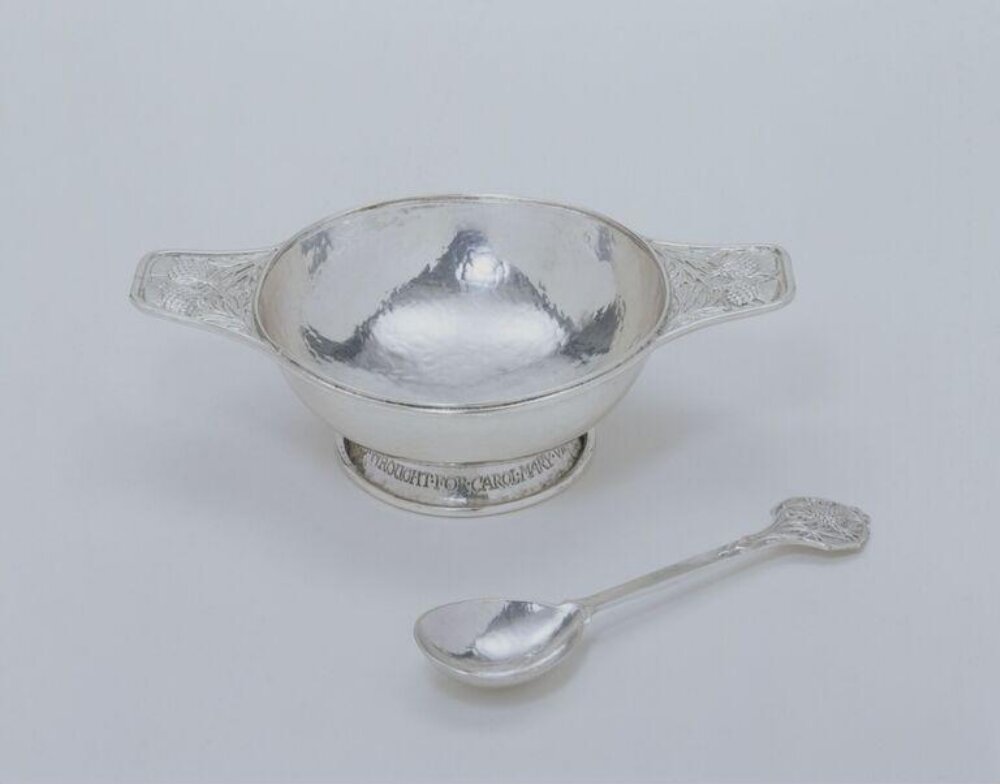
Christening spoon, Ramsden, Omar, 1911-1912
1911-1912
Christening spoon, Ramsden, Omar, 1911-1912 is an object recorded by Victoria and Albert Museum, dated 1911-1912. The museum's brief description reads: Christening spoon. Museum description: Spoon, silver with an oval bowl, plain stem of rectangular section terminating in a shaped roundel containing a chased thistle…
Partial type record
spoons
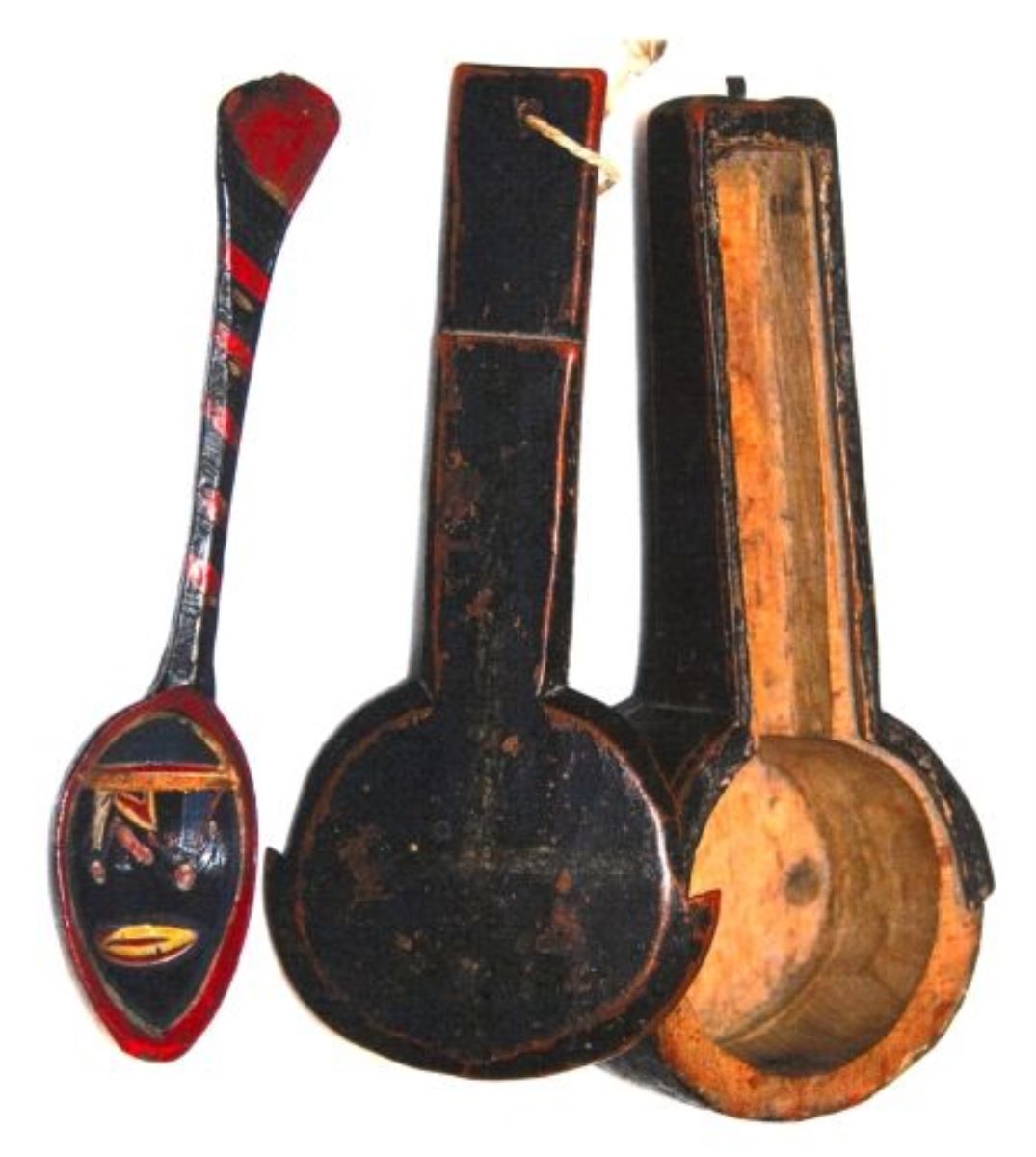
communion spoon
communion spoon is held by Romanian Peasant Museum. Museum description: Precious Christian object with which holy communion is administered throughout the year for the swift communion of all the sick and children. Piece consisting of two parts: a box with a lid (a round end and a rectangular arm) and a wooden spoon…
Partial type record
spoons
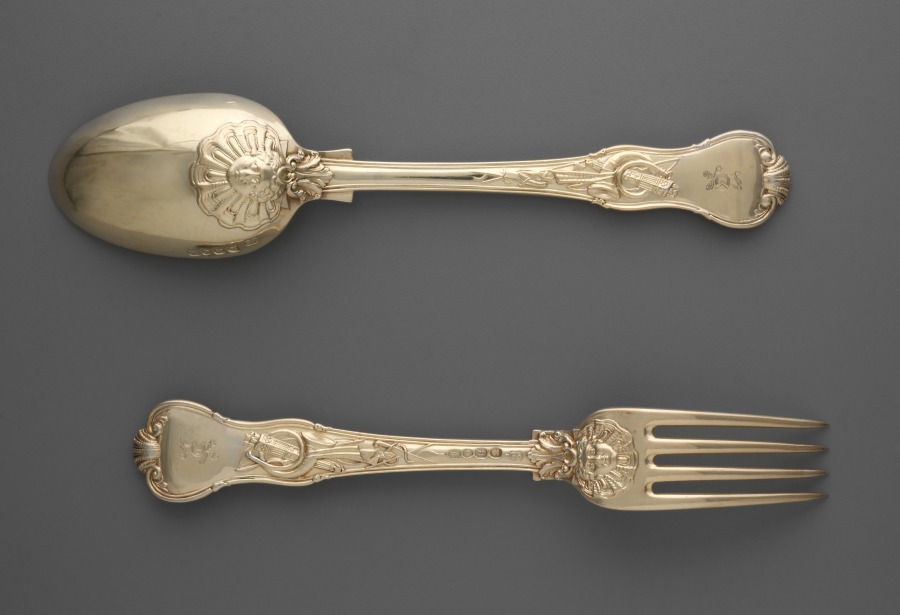
Dessert Fork and Spoon with Hunt Scenes (Cleveland Museum of Art 2003.244)
c. 1822
Paul Storr was perhaps the most famous and successful English silversmith working in the early 19th century. This fork and spoon were originally part of a larger set. The exceptionally high quality of the metalworking and gilding of these pieces is typical of Storr's work. Cleveland Museum of Art object 2003.244: De…
Partial type record
spoons
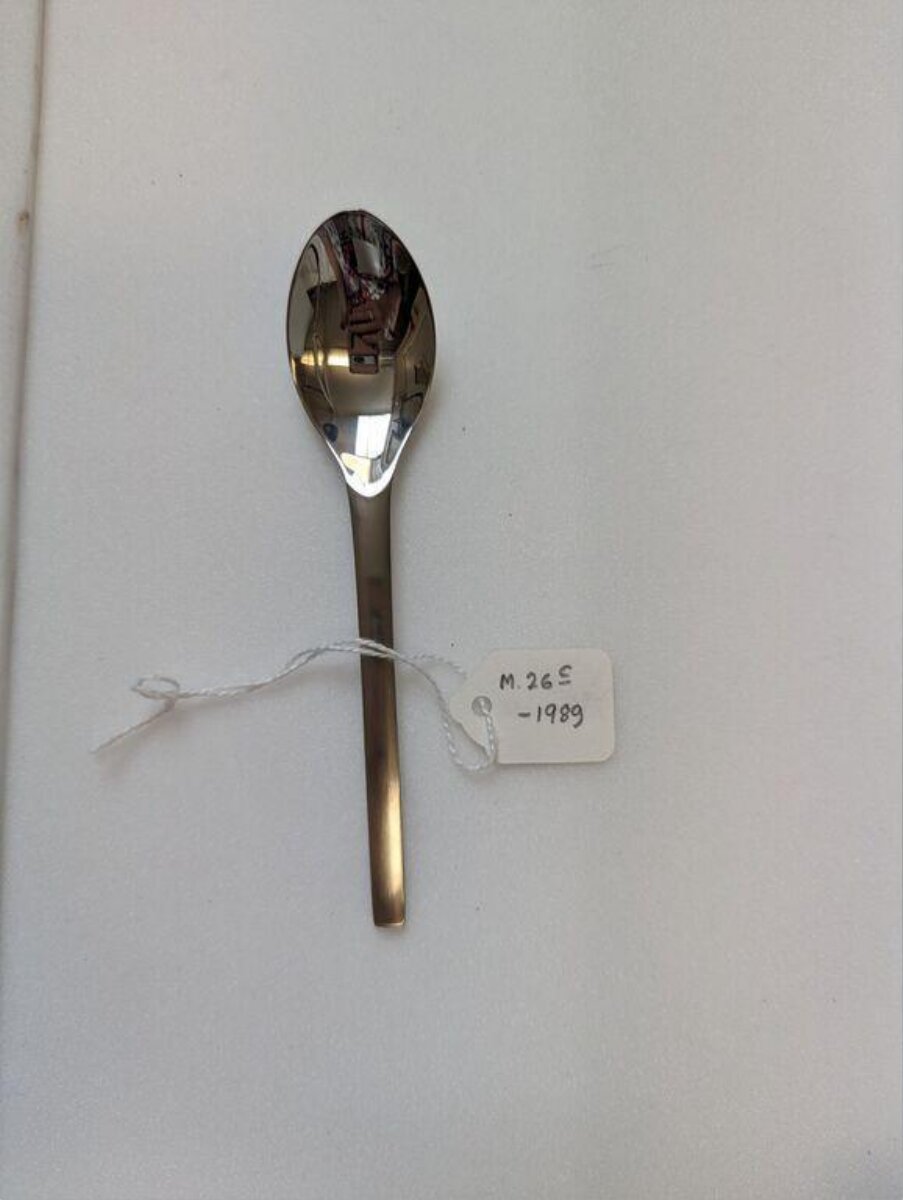
Dessert spoon — Jetline, Sweden, 1959
1959
Dessert spoon in the Victoria and Albert Museum, London (museum number M.26C-1989), made in Sweden, dated 1959, attributed to Persson, Sigurd. The museum's brief description reads: Dessert spoon, (part of a cutlery service), stainless steel, Sweden, made by Kooperativa Forbundet, designed by Sigurd Persson, 1959, fo…
Partial type record
spoons
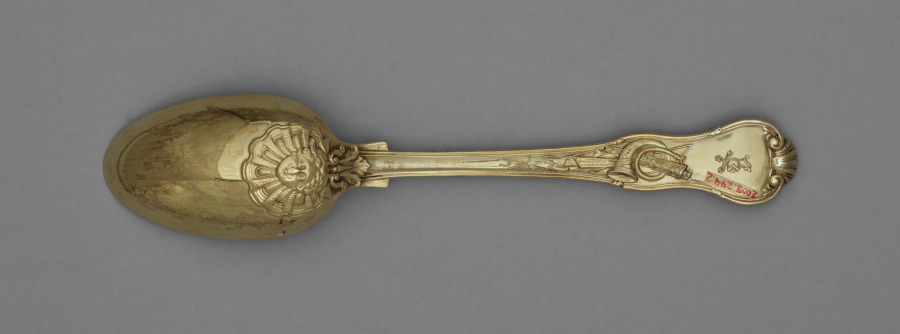
Dessert Spoon with Hunt Scenes (Cleveland Museum of Art 2003.244.2)
c. 1822
Paul Storr was perhaps the most famous and successful English silversmith working in the early 19th century. This fork and spoon were originally part of a larger set. The exceptionally high quality of the metalworking and gilding of these pieces is typical of Storr's work. Cleveland Museum of Art object 2003.244.2:…
Partial type record
spoons
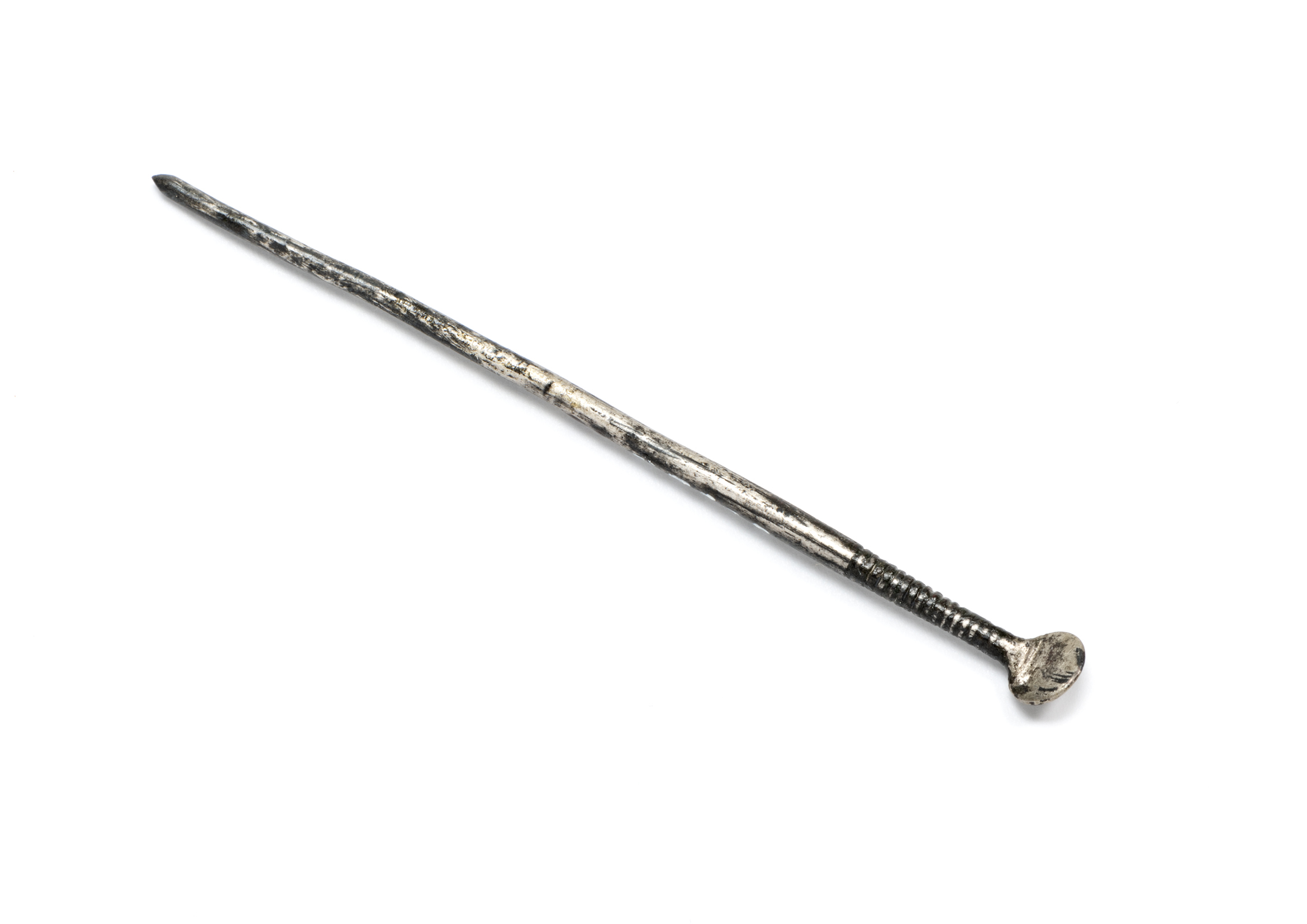
Ear spoon or spoon probe (specillum)
Ear spoon or spoon probe (specillum) is held by Badisches Landesmuseum Karlsruhe (Germany). Description supplied by the holding institution: The small ear spoon (specillum) is distinguished by the round, slightly angled little spoon at the end. This was used for cleaning the ears. To facilitate handling, the shaft o…
Partial type record
spoons
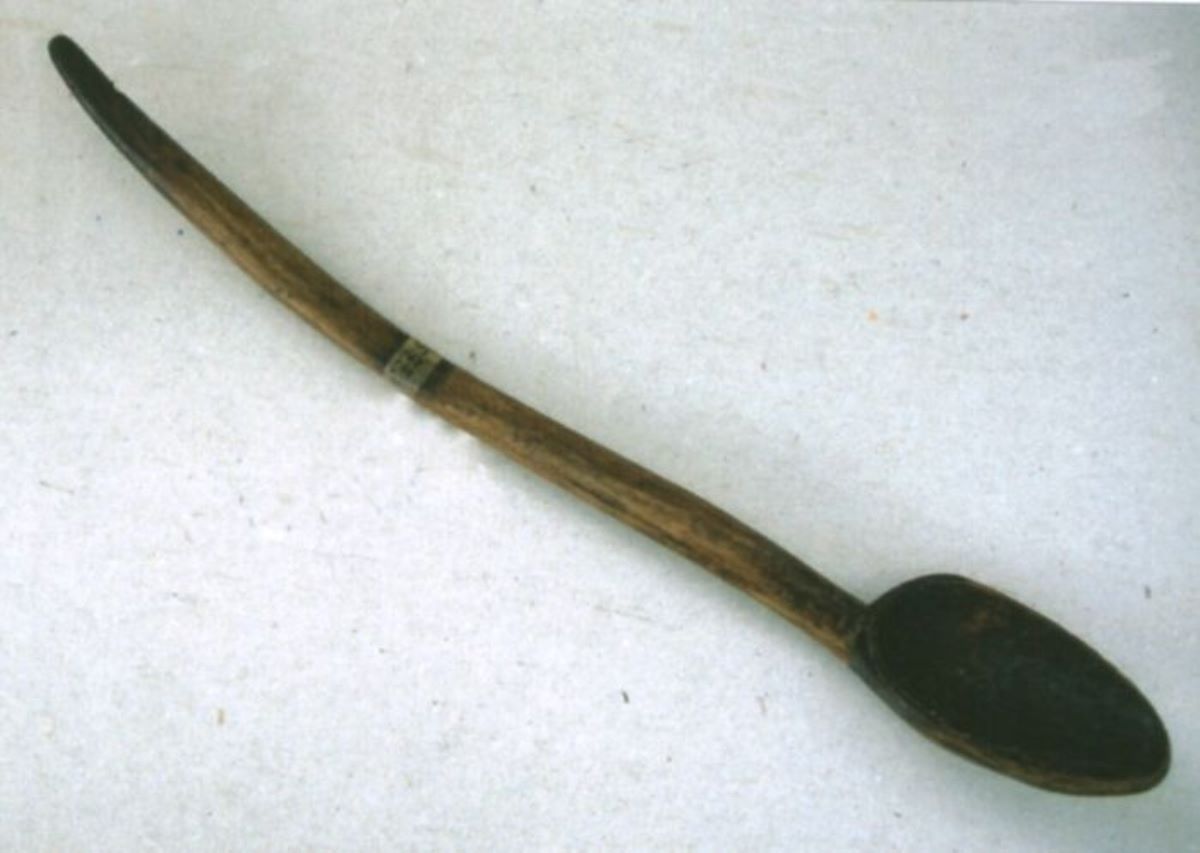
eating spoon
eating spoon is held by Ethnographical Museum of Transylvania. Museum description: The spoon is made of willow wood by cutting, carving, and hollowing out. The bowl has an ovoid shape. The handle has a circular cross-section.; use: Traditional object used in the household for eating The museum record gives measureme…
Partial type record
spoons
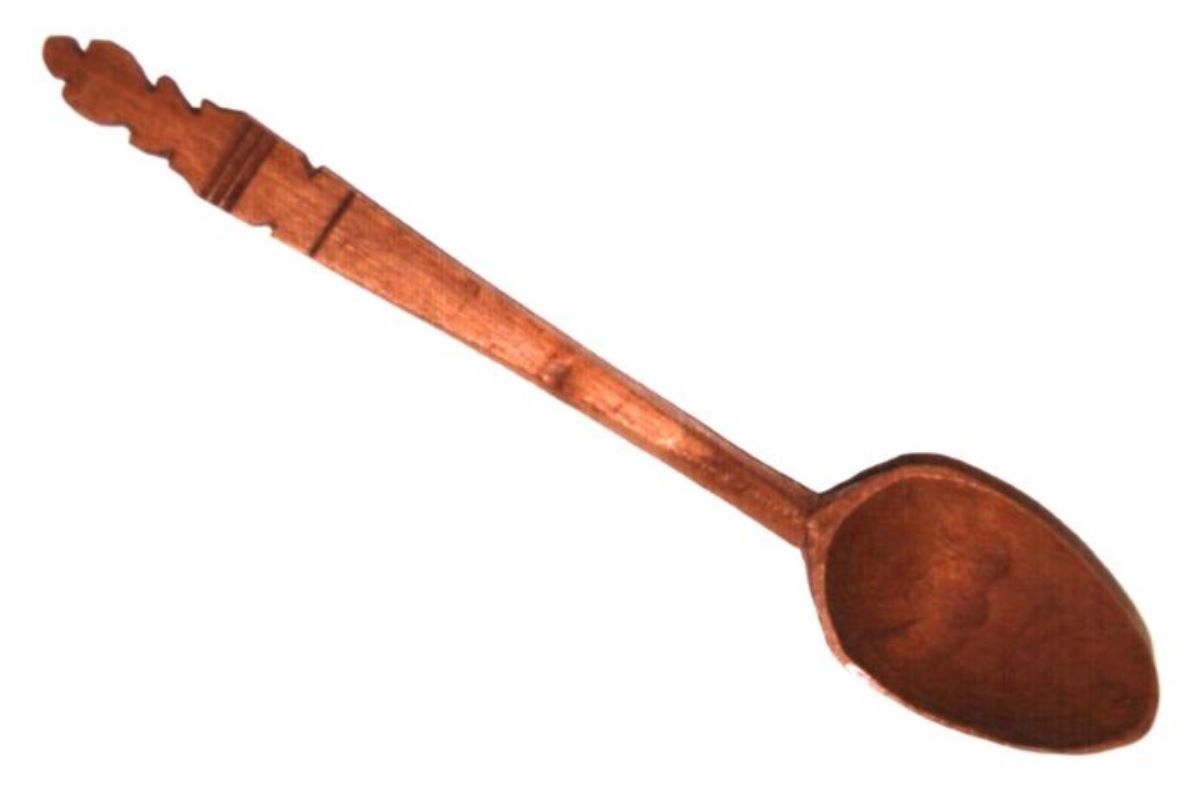
Eating Spoon
Eating Spoon is held by Ethnographical Museum of Transylvania. Museum description: The spoon is made of poplar wood by cutting, carving, hollowing, and incising (notching). Decorative motifs: straight line, wolf's teeth. The bowl has an ovoid shape. The end of the handle is rounded.; use: Traditional object used in…
Partial type record
spoons
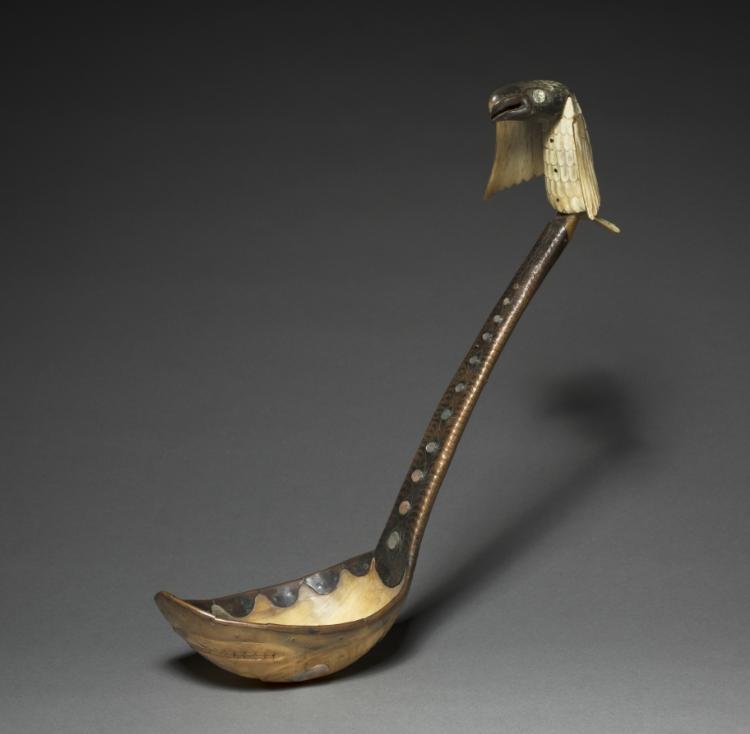
Feast Ladle, Native North America, Northwest Coast, Alaska, Tlingit, late 1800s–early 1900s
late 1800s–early 1900s
Feast Ladle in The Cleveland Museum of Art (accession 1953.386), classified by the museum as Miscellaneous, from Native North America, Northwest Coast, Alaska, Tlingit, dated late 1800s–early 1900s. The museum records the material and technique as horn, bone, copper, abalone shell inlay. Measurements: Overall: 13 cm…
Partial type record
spoons
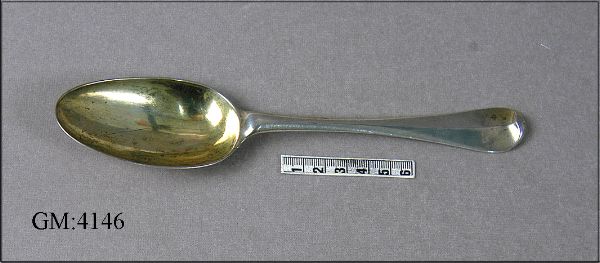
Funeral spoon, spoon, cutlery, Eriksson, Magdalena
Funeral spoon, spoon, cutlery is held by Museum of Gothenburg (Sweden), attributed to Eriksson, Magdalena. Description supplied by the holding institution: "Silver spoon, according to old custom given at a funeral. Inscription: "Sara Herveg, Nata A:o 1657 d. 20 maij, Deznata A:o 1727 d. 9 maij". [according to the Br…
Partial type record
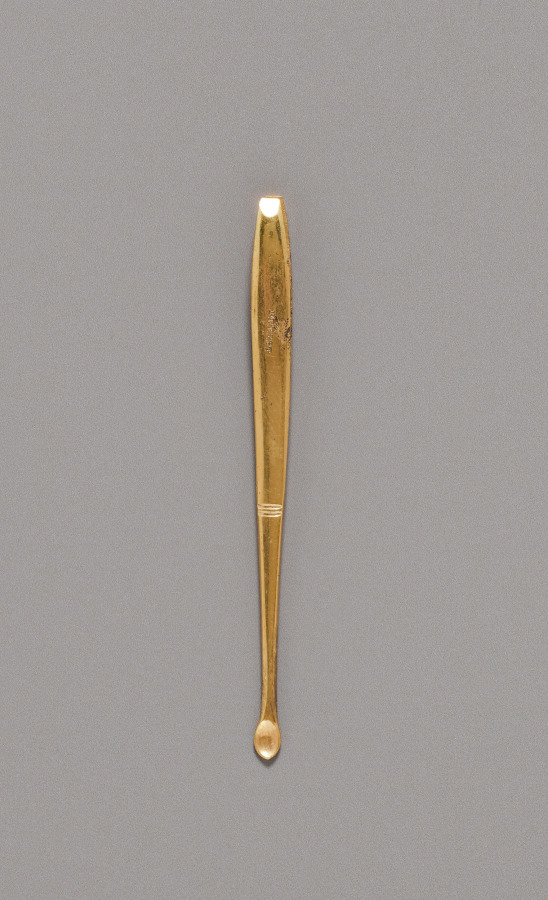
spoons
Gilt-metal snuff spoon from an étui, England, c. 1770
c. 1770
Luxurious personal objects were an essential part of a privileged wardrobe during the 1700s and early 1800s, emphasizing their owner’s refinement and wealth. Especially popular were étuis , small ornamented cases containing miniature sewing, writing, or grooming implements that hung at a woman’s waist from an ornate…
Partial type record
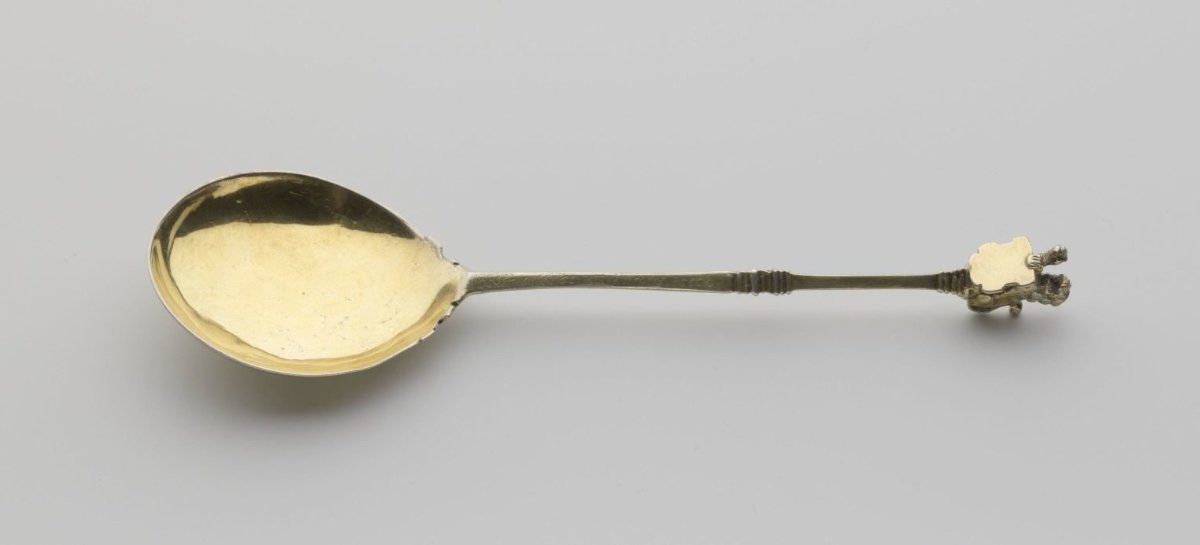
spoons
Gilt-silver spoon
c. 1600
Gilt-silver spoon, with pear-shaped, almost round bowl. The stem is diamond-shaped in cross-section. The following names are engraved on the stem: Ocker Gillise van Kurpershoeck and Ingetie Ockers. The Rijksmuseum, Amsterdam, holds this object as BK-1968-28; its record gives material recorded as gilding (material),…
Partial type record
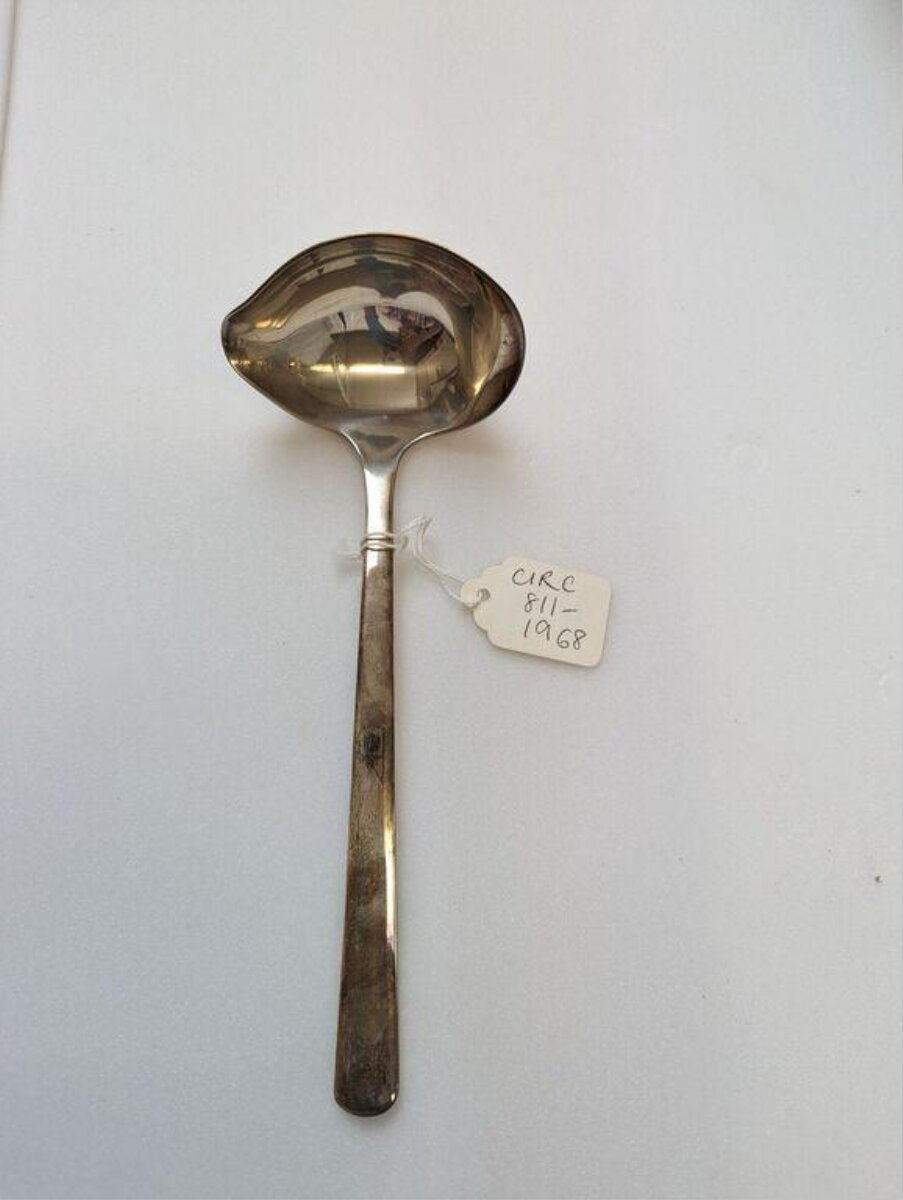
spoons
Gravy ladle — Grand Prix, Copenhagen, 1942
1942
Gravy ladle in the Victoria and Albert Museum, London (museum number CIRC.811-1968), made in Copenhagen, dated 1942, attributed to Bojesen, Kay. The museum's brief description reads: Silver, designed and made by Kay Bojesen Silversmiths, Copenhagen, 1938-1942.. Museum description: Gravy ladle, sterling silver, with…
Partial type record
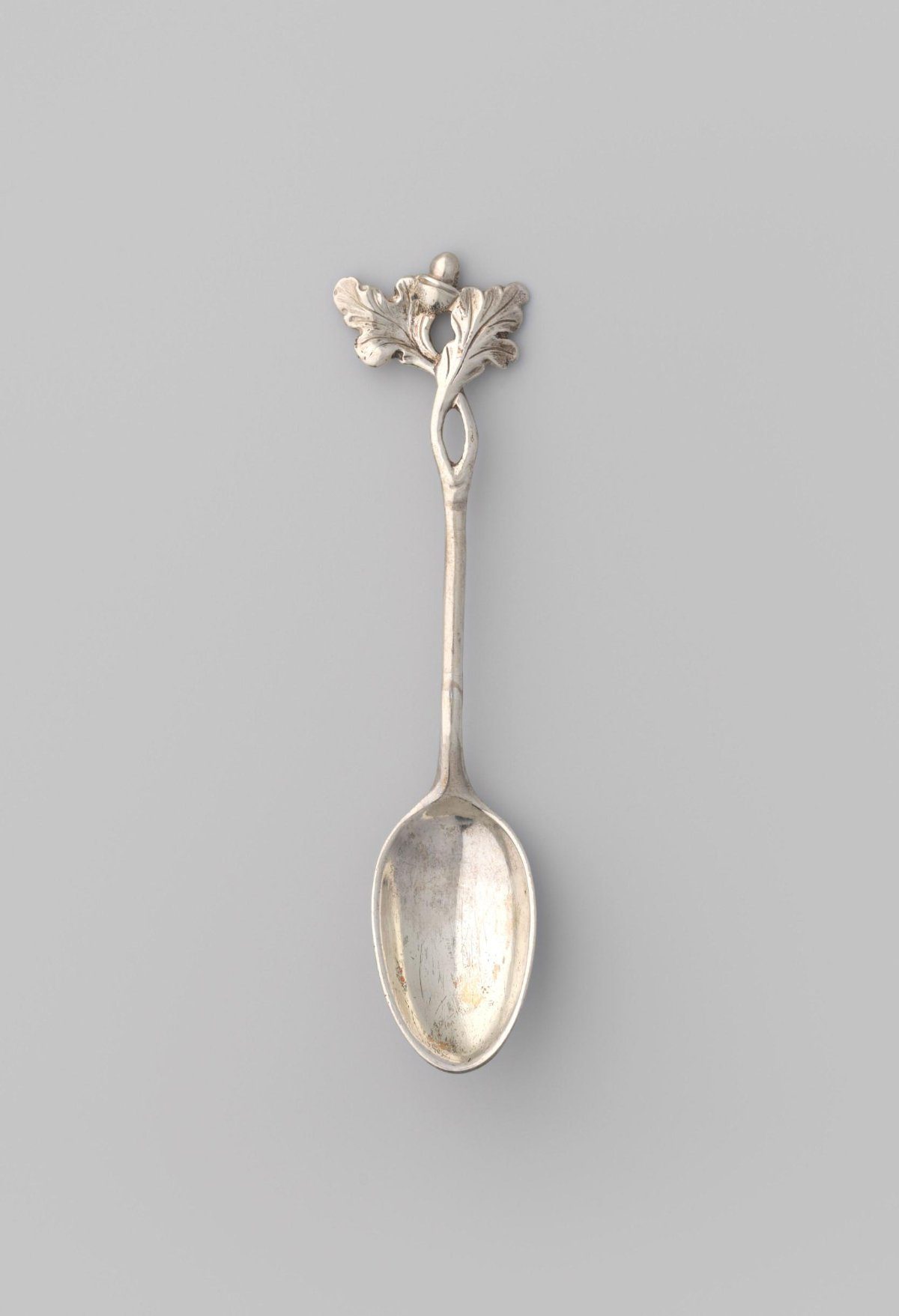
spoons
Jam spoon with oval bowl and stem ending in oak leaves
1779
The egg-shaped bowl is connected by means of a single drop to the cast stem, curved at the base and straight thereafter, shaped like a branch, which splits at the end into two twisted twigs with oak leaves, with an acorn between them decorated on the underside as a leaf. The Rijksmuseum, Amsterdam, holds this object…
Partial type record
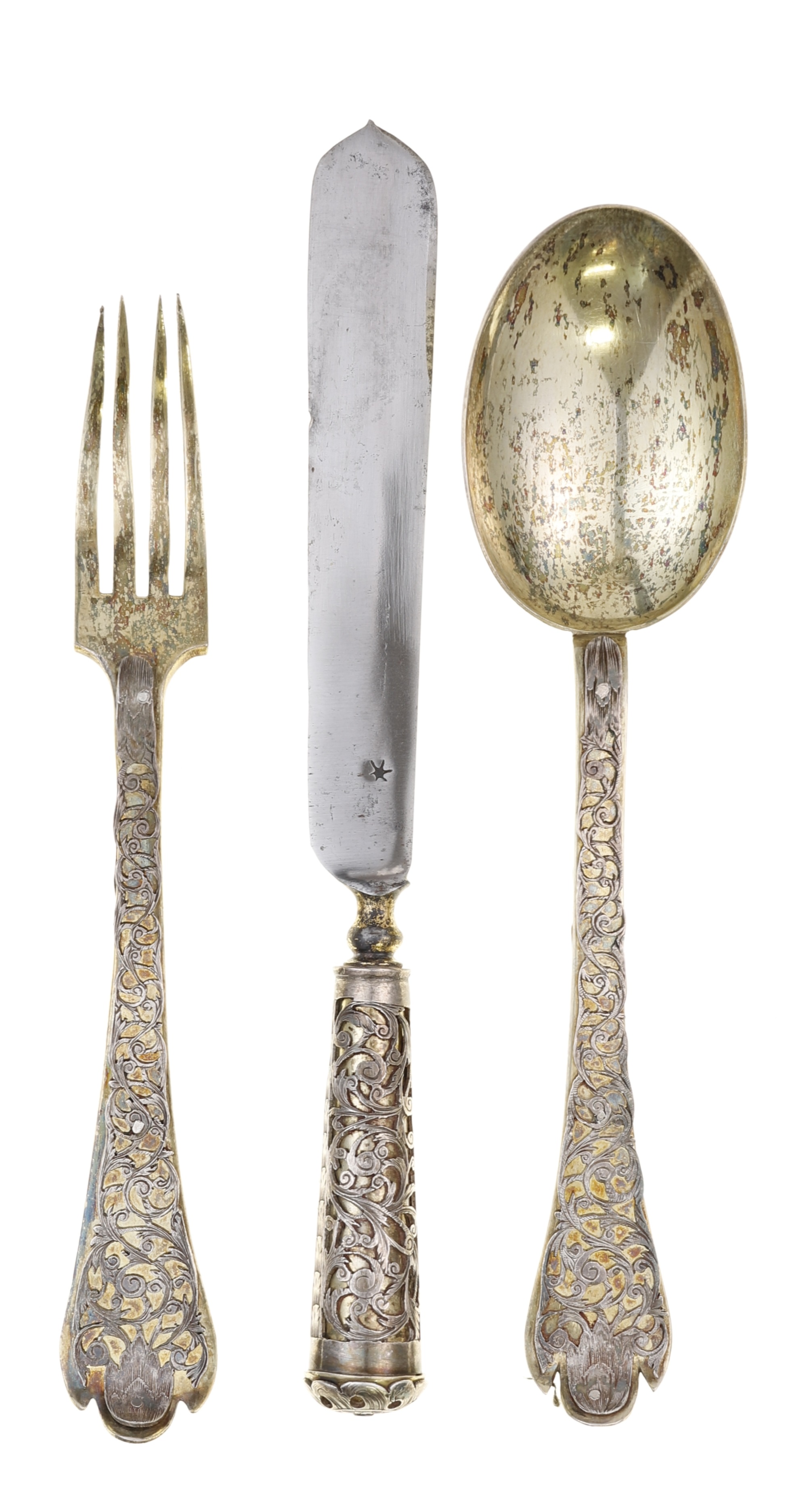
spoons
Knife, fork and spoon in case, 2006.M.509 a-d, Michael Hafner (1665 - 1700) (maker)
Knife, fork and spoon in case, 2006.M.509 a-d is held by German Blade Museum (Germany), attributed to Michael Hafner (1665 - 1700) (maker). Description supplied by the holding institution: The knife has a round handle, the fork and spoon have flat handles. The gilded handles have finely engraved overlays of fretted,…
Partial type record
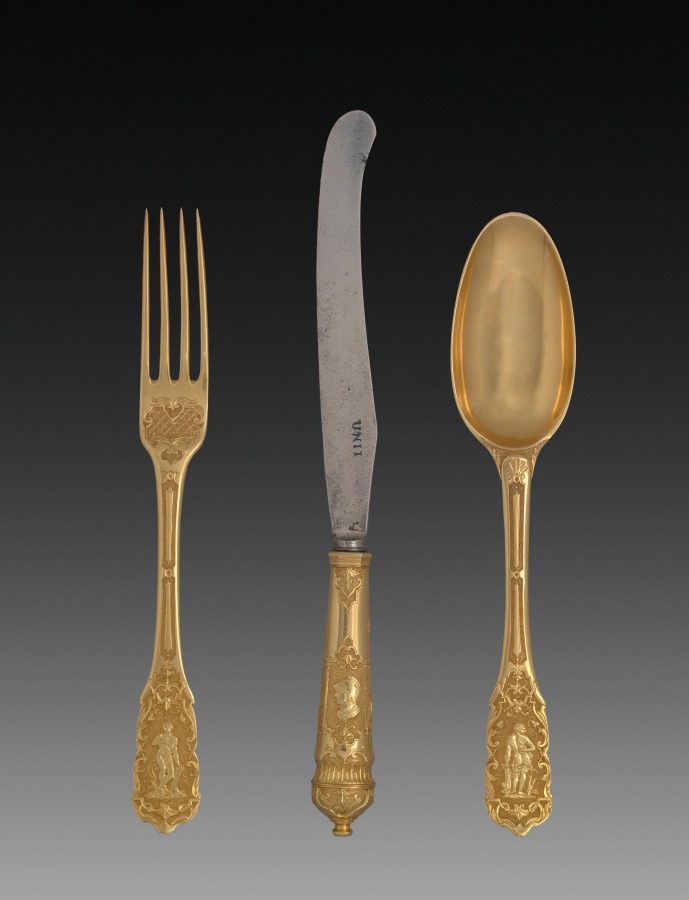
spoons
Knife, Fork, and Spoon (Cleveland Museum of Art 1963.473)
c. 1725
Cleveland Museum of Art object 1963.473: Knife, Fork, and Spoon, c. 1725. Germany, possibly Augsburg. Gold; overall: 22.3 cm (8 3/4 in.). Inscribed: steel blade inscribed: UNI(T ?).. Details are those of this museum object; how far it represents a wider type has not been independently verified.
Partial type record
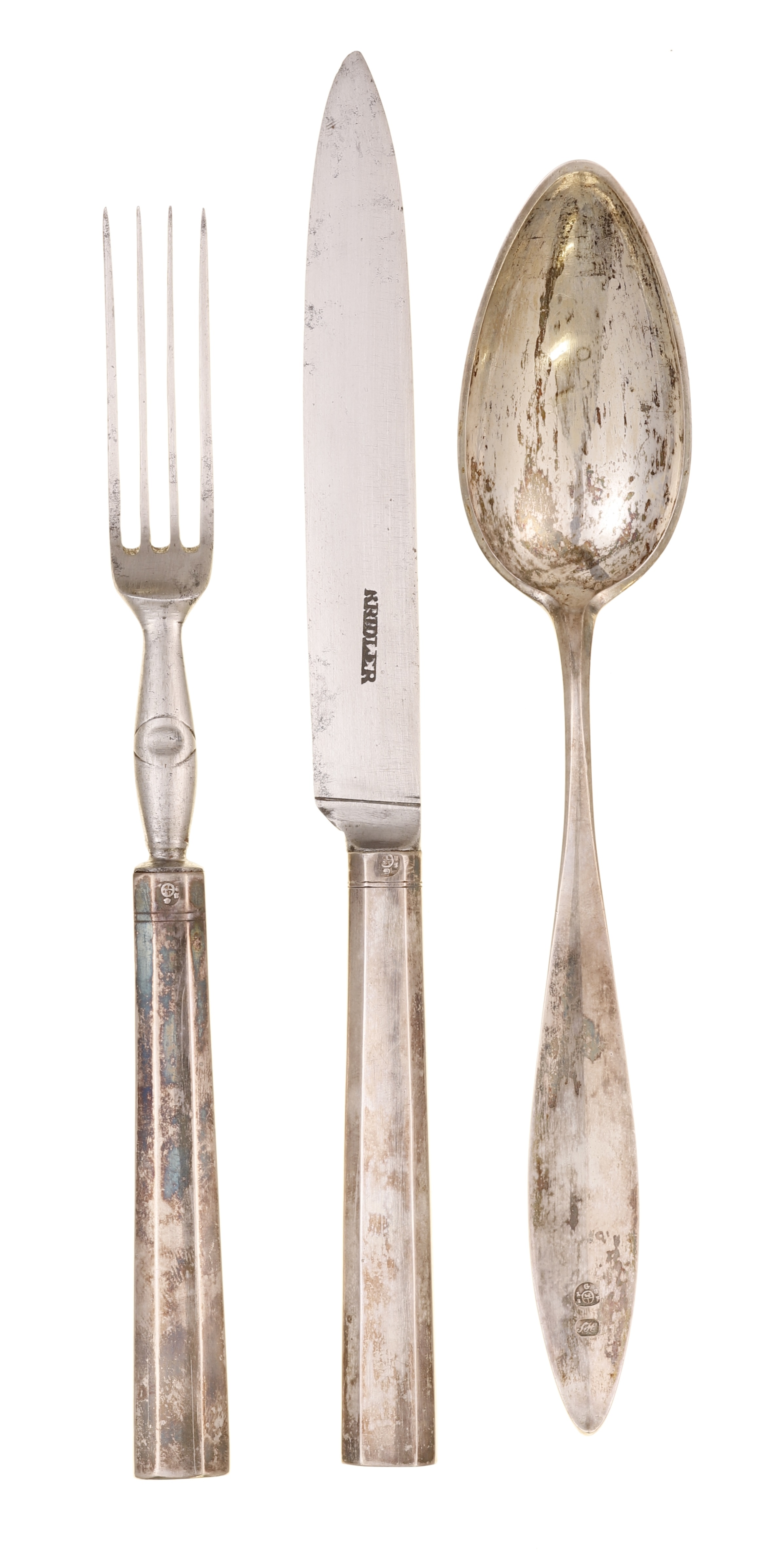
spoons
Knife, fork, spoon in case, 2006.M.489 a-d
Knife, fork, spoon in case, 2006.M.489 a-d is held by German Blade Museum (Germany). Description supplied by the holding institution: The octagonal handles of the knife and fork and the flat, lancet-shaped handle of the spoon are all smooth and without decoration. The case with red leather covering is ornamented on…
Partial type record
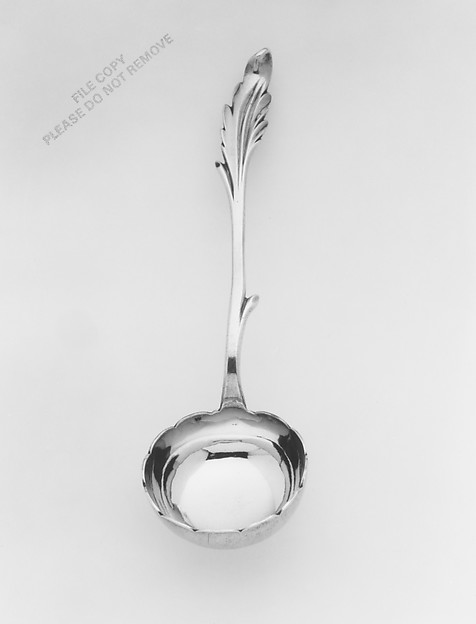
spoons
Ladle (one of a pair), 1771
1771
Ladle in The Metropolitan Museum of Art, New York (accession 1992.89.2), catalogued by the museum's European Sculpture and Decorative Arts department under the title “Ladle (one of a pair)”. The museum dates it 1771. It is attributed to Isacq Samuel Busard (working 1731–84). The museum records the medium as Silver a…
Partial type record
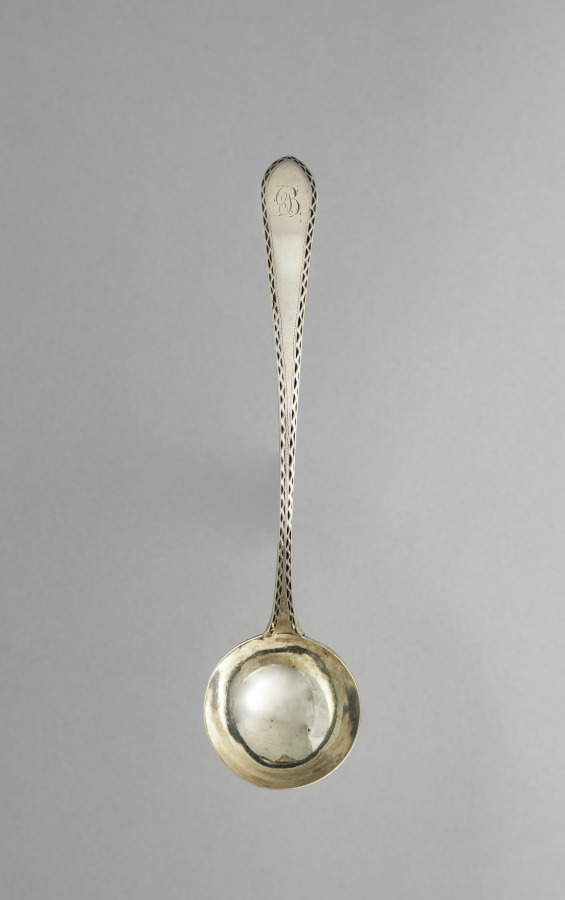
spoons
Ladle, America, Maryland, Baltimore, late 18th Century, c. 1790–1800
c. 1790–1800
Ladle in The Cleveland Museum of Art (accession 1943.214), classified by the museum as Silver, from America, Maryland, Baltimore, late 18th Century, dated c. 1790–1800. Maker recorded: George Aiken (American, 1765–1832). The museum records the material and technique as silver. Measurements: Overall: 5.9 cm (2 5/16 i…
Partial type record
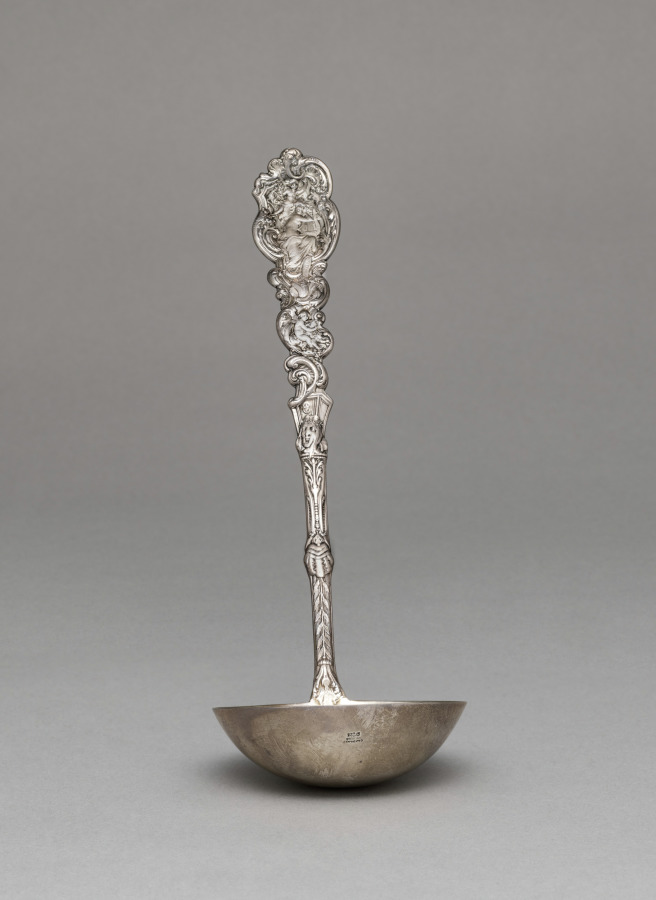
spoons
Ladle, America, New York, c. 1905
c. 1905
Ladle in The Cleveland Museum of Art (accession 1983.162), classified by the museum as Silver, from America, New York, dated c. 1905. Maker recorded: Gorham Manufacturing Company (America, est. 1831). The museum records the material and technique as silver. Measurements: Overall: 31.8 x 10.4 cm (12 1/2 x 4 1/8 in.).…
Partial type record
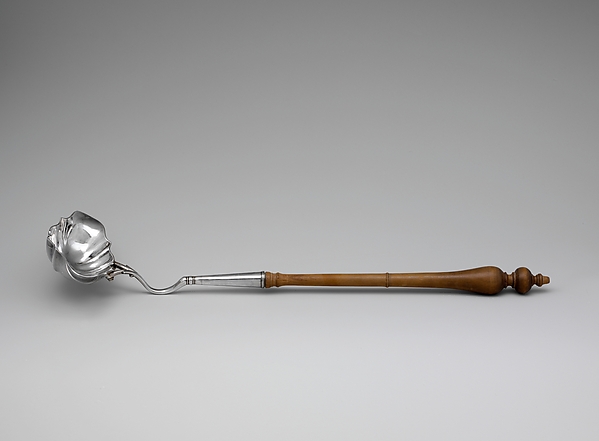
spoons
Ladle, American, 1745–60
1745–60
Ladle in The Metropolitan Museum of Art, New York (accession 41.70.3), catalogued by the museum's The American Wing department. The museum dates it 1745–60 and records its origin as American; Boston, New England, United States. It is attributed to Samuel Edwards (1705–1762). The museum records the medium as Silver a…
Partial type record
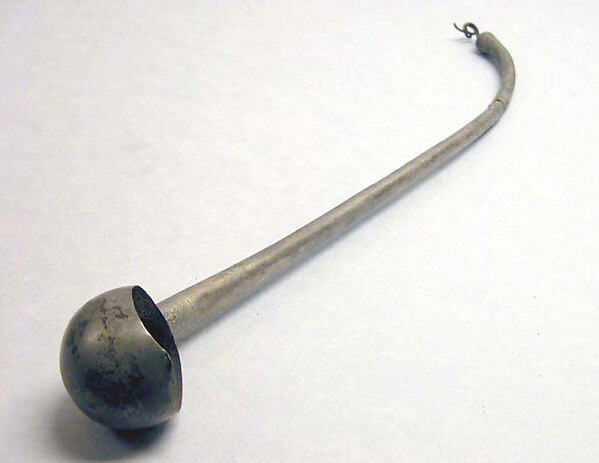
spoons
Ladle, China
Ladle in The Metropolitan Museum of Art, New York (accession 22.79.4), catalogued by the museum's Asian Art department. and records its origin as China; Tang dynasty (618–907). The museum records the medium as Metal, silver? and the dimensions as L. 16 in. (40.6 cm). These details are transcribed from the museum's o…
Partial type record
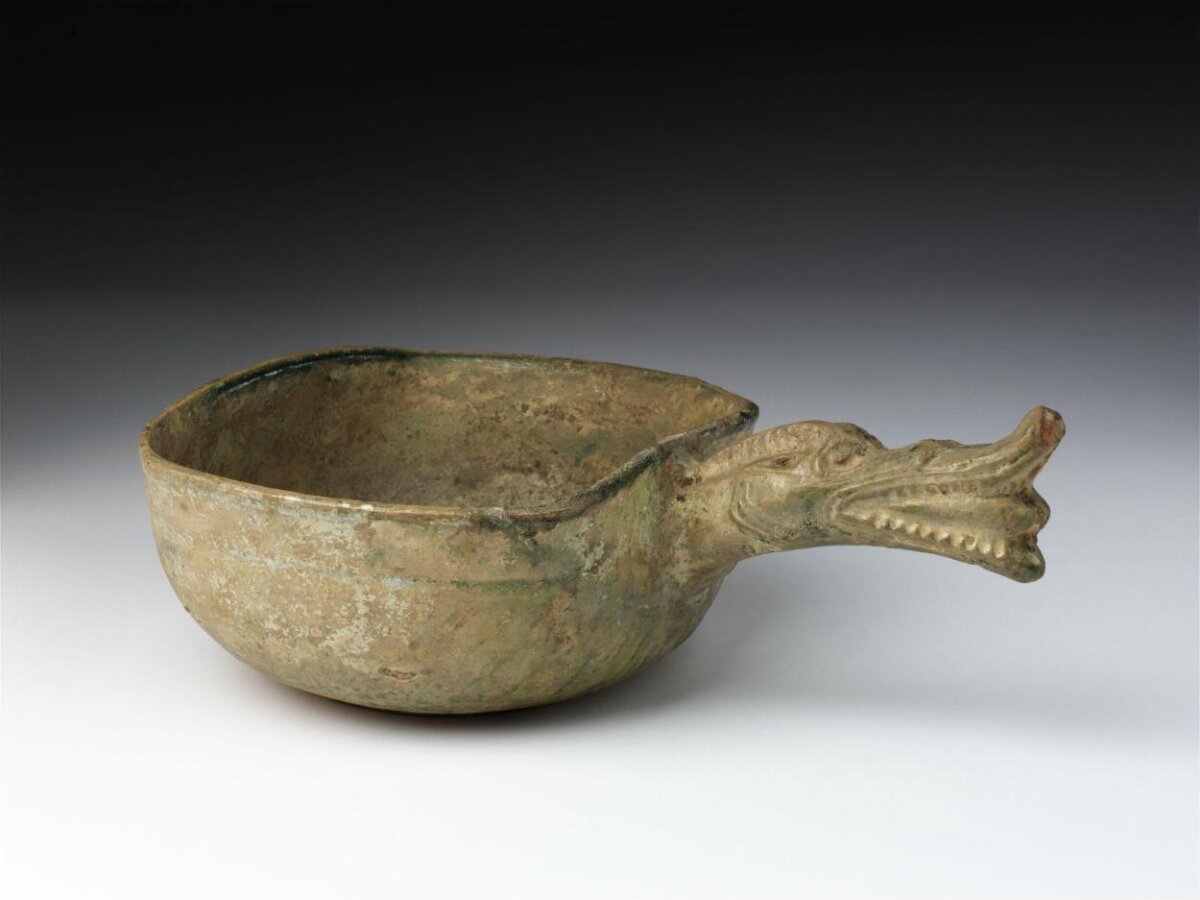
spoons
Ladle, China, 1st century-2nd century
1st century-2nd century
Ladle in the Victoria and Albert Museum, London (museum number C.14-1935), made in China, dated 1st century-2nd century. The museum's brief description reads: Ladle (dou), red earthenware with green lead glaze; China, Eastern Han dynasty, 1st-2nd century AD. Museum description: Ladle (dou), in form of a bowl with th…
Partial type record
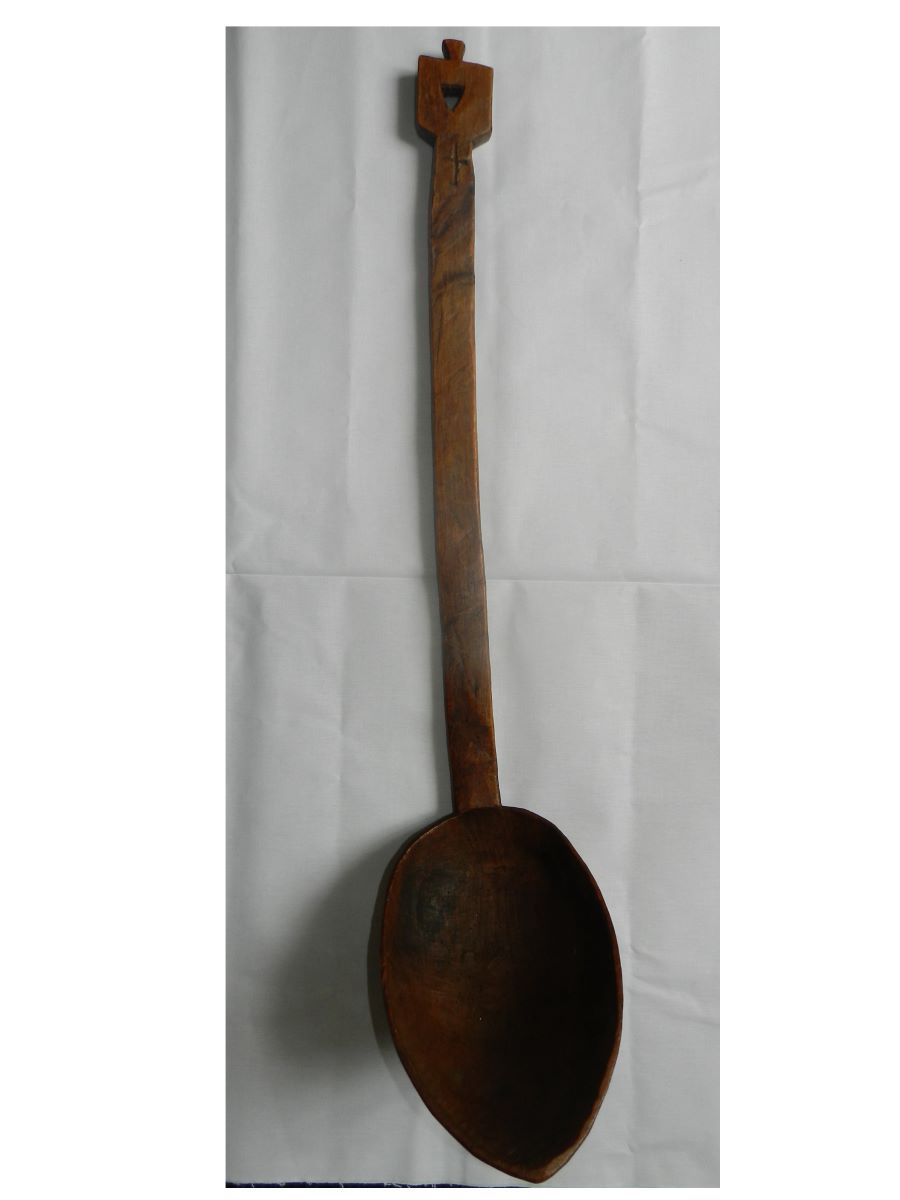
spoons
Large spoon
Large spoon is held by Neamț National Museum Complex. Museum description: Large spoon with an oval and elongated bowl; the handle is narrow and ends with a perforation for hanging. Towards the end it is decorated with a cross.; use: Object used for stirring milk at the sheepfold. The museum record gives measurements…
Partial type record
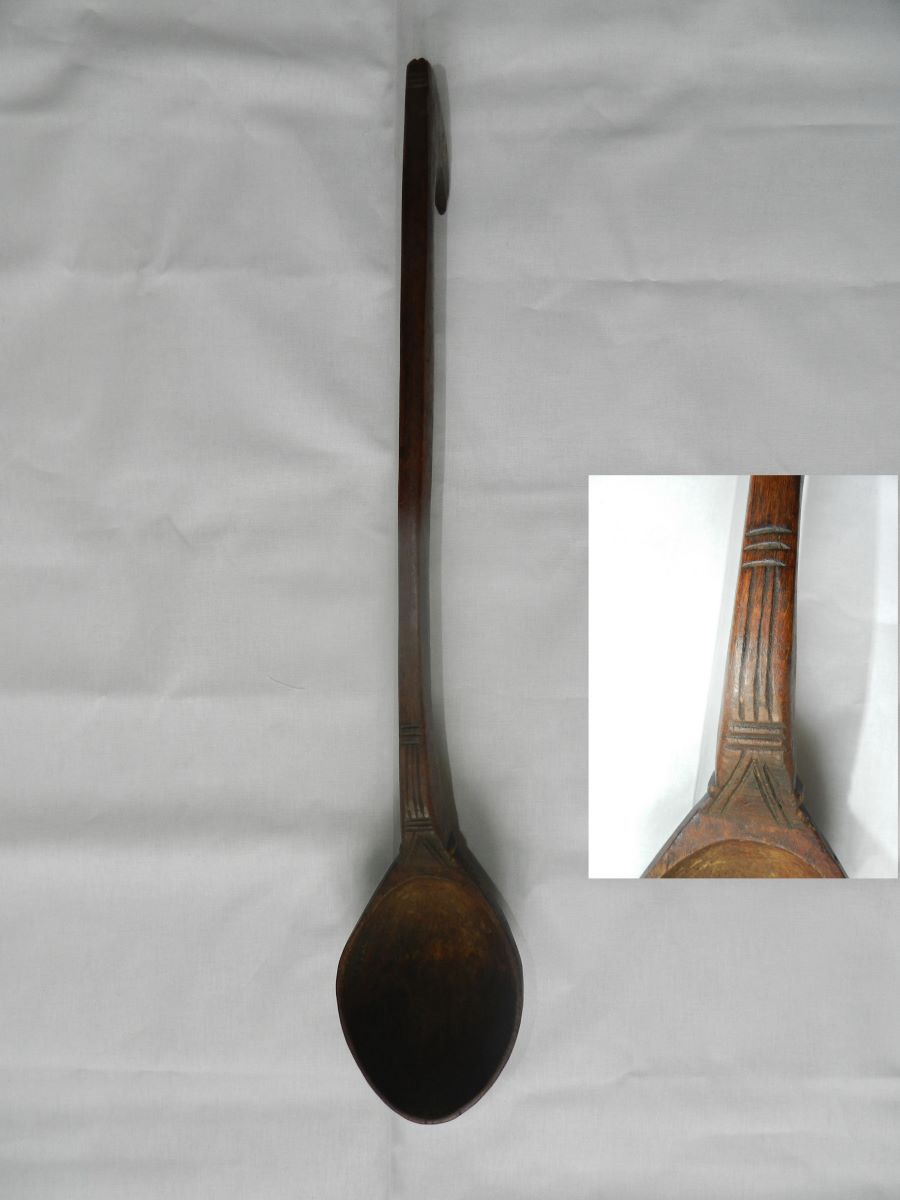
spoons
Large spoon
Large spoon is held by Neamț National Museum Complex. Museum description: Large spoon with an oval bowl. The handle is narrow, ending with a hook for hanging. Near the bowl on the handle, groups of horizontal and vertical lines are incised.; use: Object used for stirring food. The museum record gives measurements Th…
Partial type record
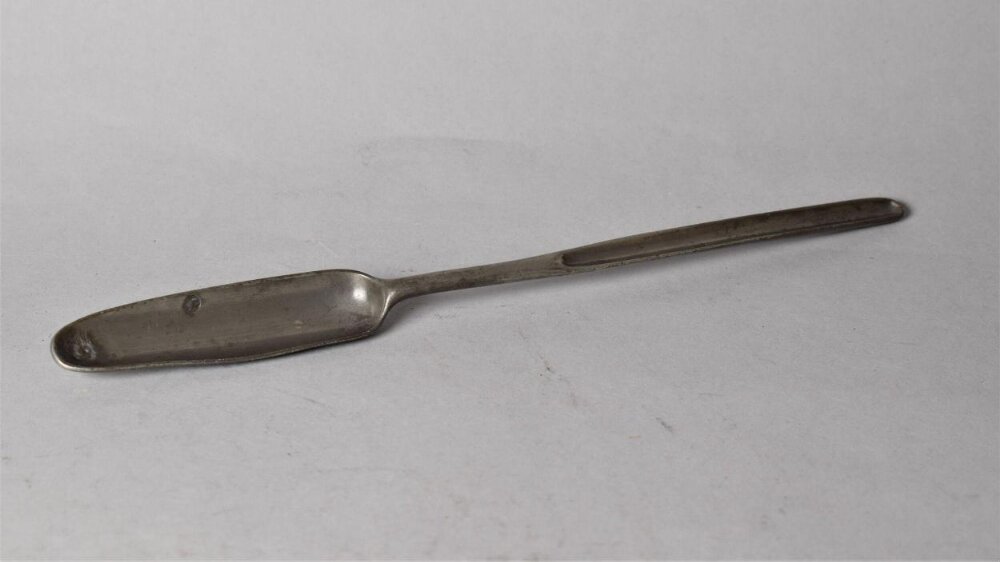
spoons
Marrow scoop, Timmins, Mid 18th century
Mid 18th century
Marrow scoop, Timmins, Mid 18th century is an object recorded by Victoria and Albert Museum, dated Mid 18th century. The museum's brief description reads: Marrow scoop, pewter, Timmins, English, mid 18th century. Museum description: Pewter marrow scoop with elongated bowl. The museum record gives material recorded a…
Partial type record
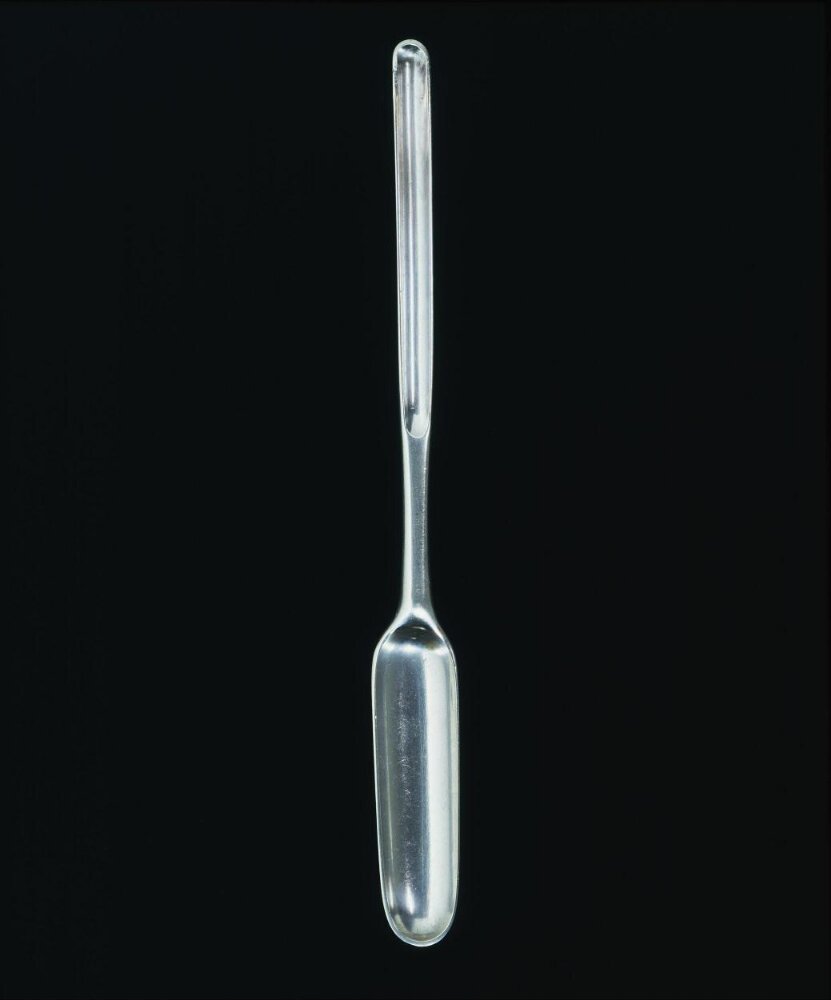
spoons
Marrow scoop, Wirgman, John, 1748-1749
1748-1749
Marrow scoop, Wirgman, John, 1748-1749 is an object recorded by Victoria and Albert Museum, dated 1748-1749. The museum's brief description reads: Silver, London hallmarks for 1748-1749, possibly made by John Wirgman.. Museum description: Marrow scoop of silver. A broad and narrow scoop joined by a plain stem. The m…
Partial type record
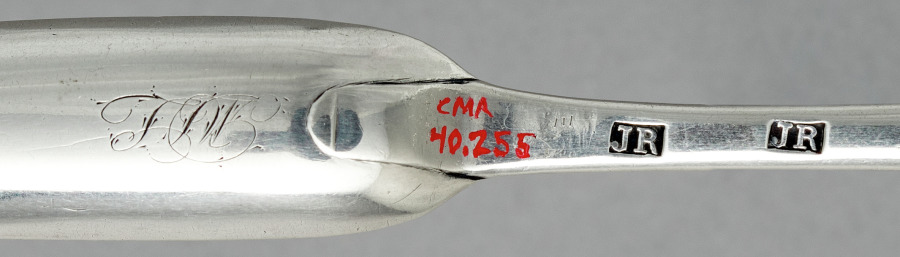
spoons
Marrow Scoop/Spoon (Cleveland Museum of Art 1940.255)
c. 1790
Cleveland Museum of Art object 1940.255: Marrow Scoop/Spoon, c. 1790. Attributed to Joseph Richardson (American, 1752–1831). Silver; overall: 2.1 cm (13/16 in.). Inscribed: engraved "MDL" in bright-cut script on back of larger scoop, and "E" in script on top of joint above smaller scoop.. Details are those of this m…
Partial type record
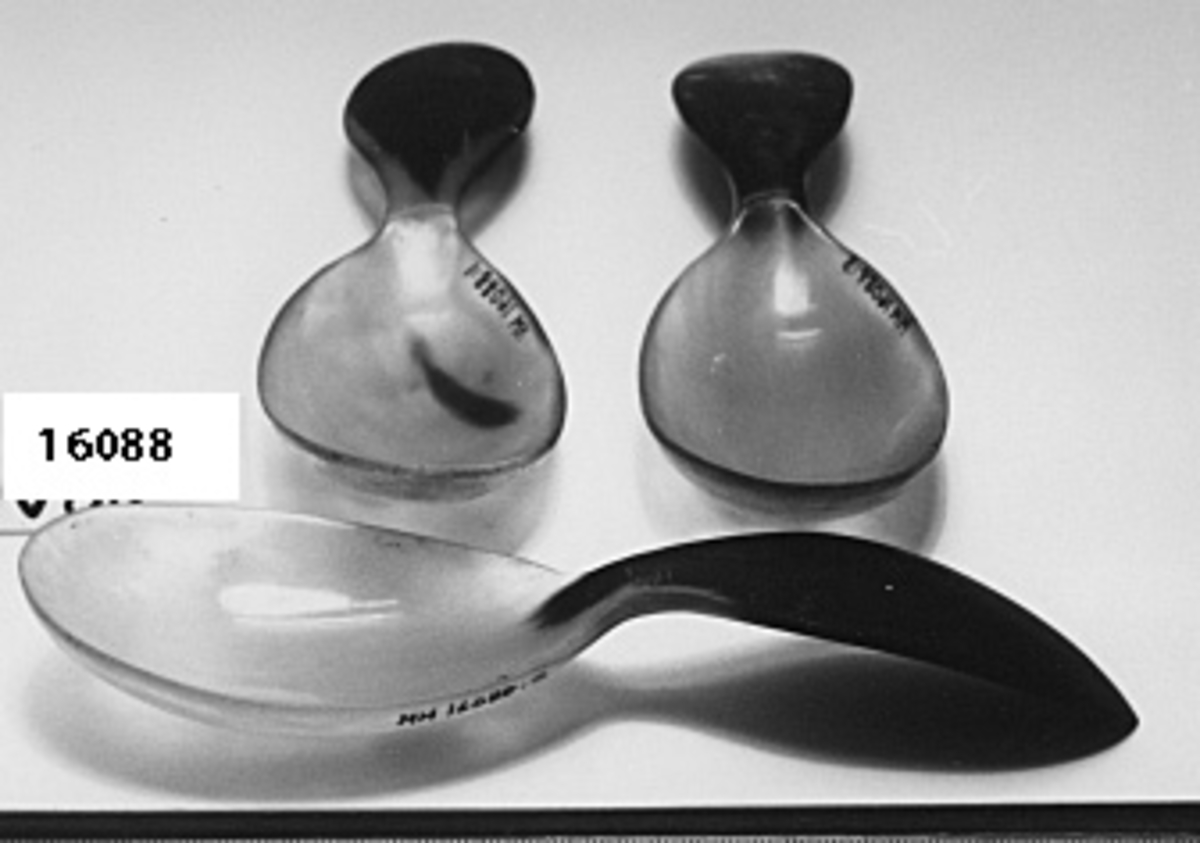
spoons
Medicine spoon
Medicine spoon is held by Naval Museum. Museum description: Medicine spoon of horn, oval cupped spoon with oval pointed handle. Material mottled, the spoon bowl light yellowish turning on the handle into dark brown with white inclusions.; Use: For dispensing liquid medicine. The museum record gives material recorded…
Partial type record
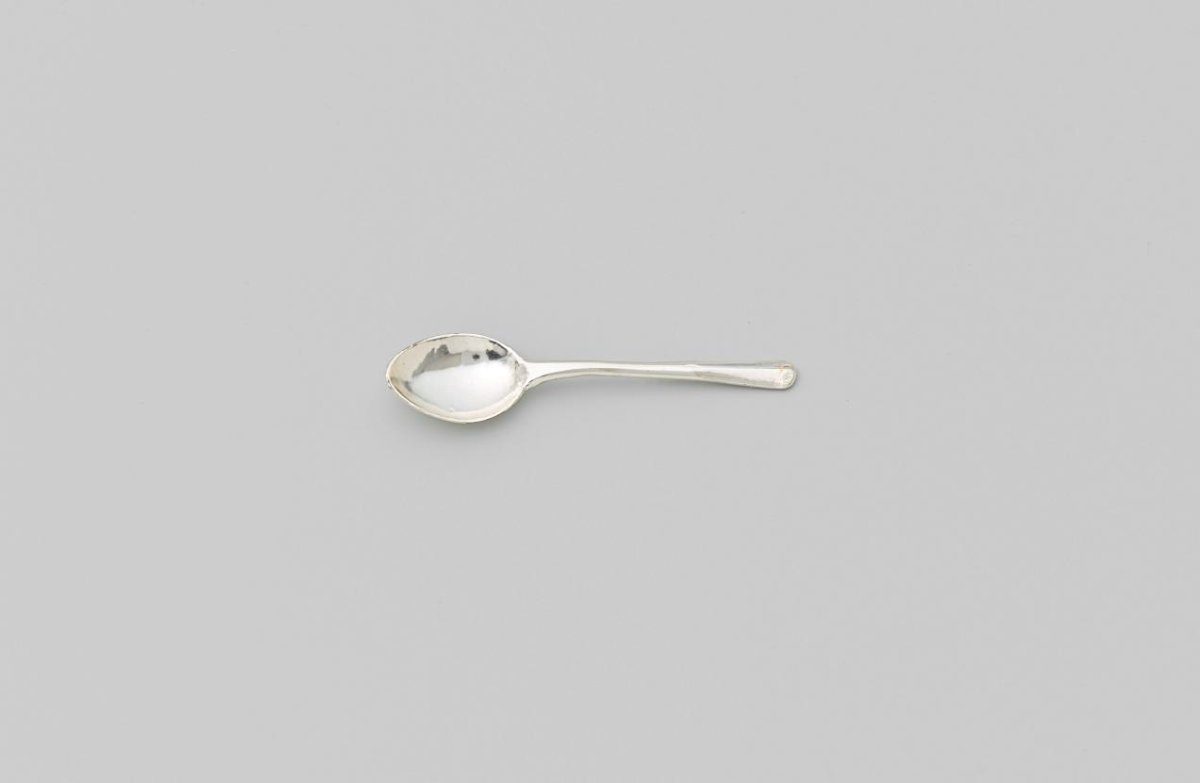
spoons
Miniature spoon, 1750
1750
Silver spoon with double drop and with a central ridge along the stem, ending rounded. The Rijksmuseum, Amsterdam, holds this object as BK-14656-36-A; its record gives material recorded as silver (metal); measurements length 4.8 cm x width 1.2 cm. Description translated from the museum's Dutch catalogue text; detail…
Partial type record
spoons
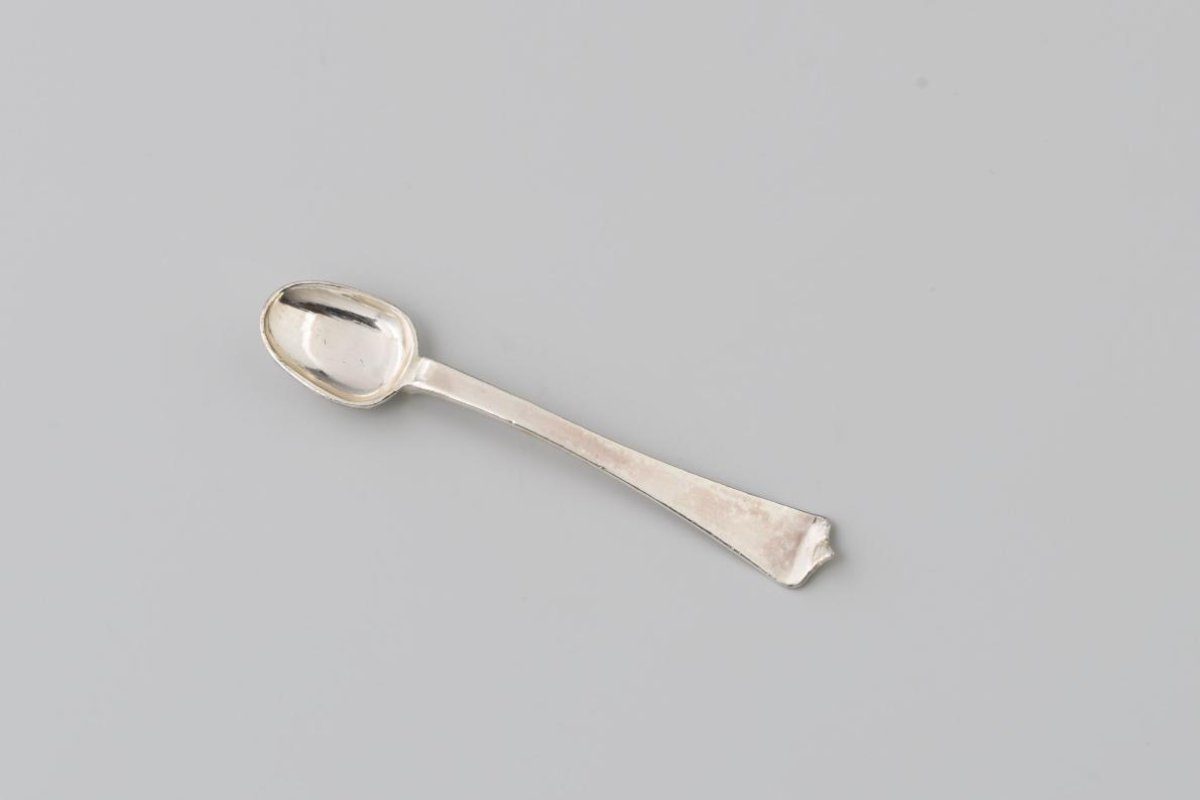
Miniature spoon, c. 1812 - c. 1813
c. 1812 - c. 1813
Silver spoon with bracket-shaped terminal and needle-shaped drop. The Rijksmuseum, Amsterdam, holds this object as BK-14656-34; its record gives material recorded as silver (metal); measurements length 6 cm x width 1.2 cm. Description translated from the museum's Dutch catalogue text; details are those of this museu…
Partial type record
spoons
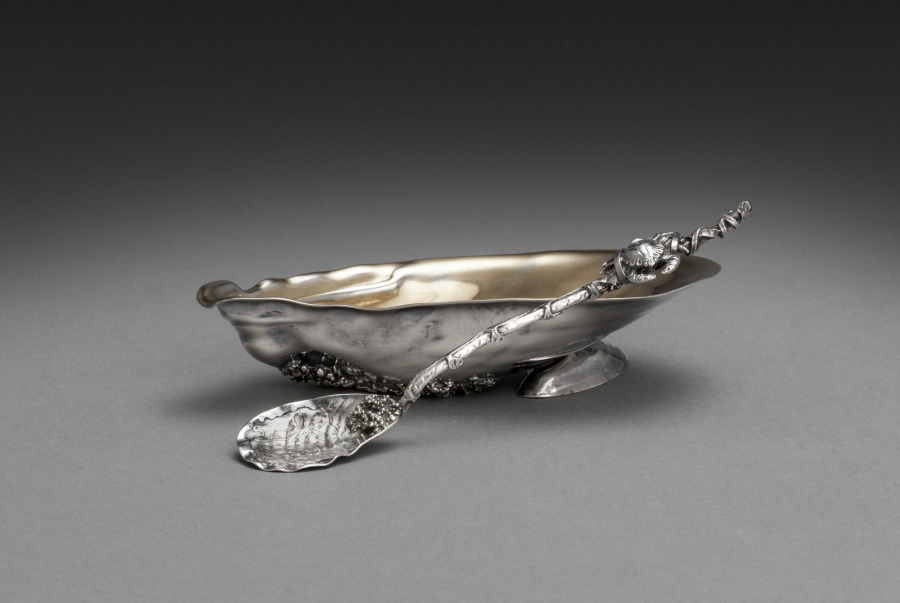
Narragansett Salt Cellar and Spoon (Cleveland Museum of Art 2000.14)
1884
This small salt dish and spoon reflect the late 19th-century interest in incorporating naturalistic details into the design of useful pieces-in this instance probably inspired by Japanese examples. Cleveland Museum of Art object 2000.14: Narragansett Salt Cellar and Spoon, 1884. Gorham Manufacturing Company (America…
Partial type record
spoons
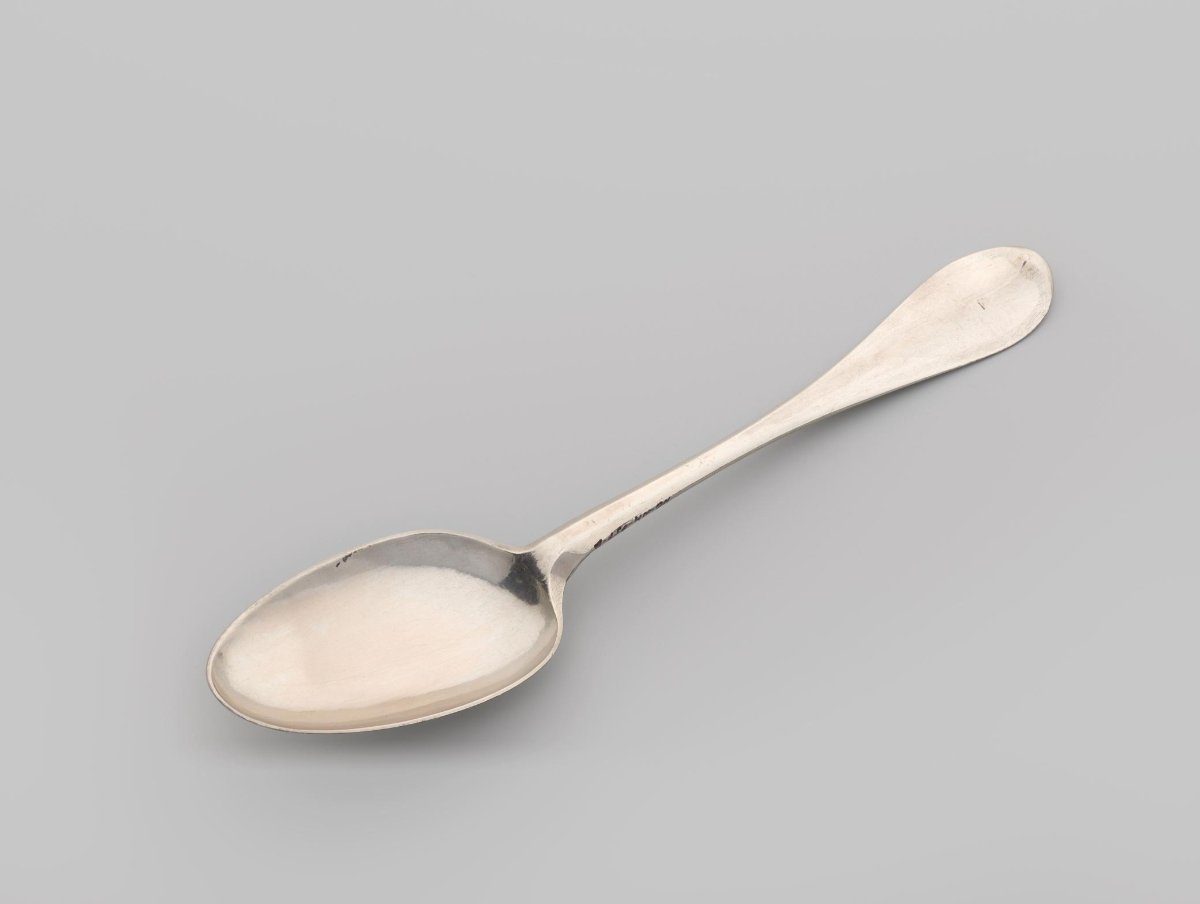
Naval Battle of Vigo
1713
The egg-shaped bowl is connected by means of a long needle to the stem, which is straight at first, faceted on the upper side and then flat, widening towards the rounded, curling end that shows a faint ridge down the middle on top. On the underside of the bowl is engraved circumferentially in two lines: Ter gedagt:…
Partial type record
spoons
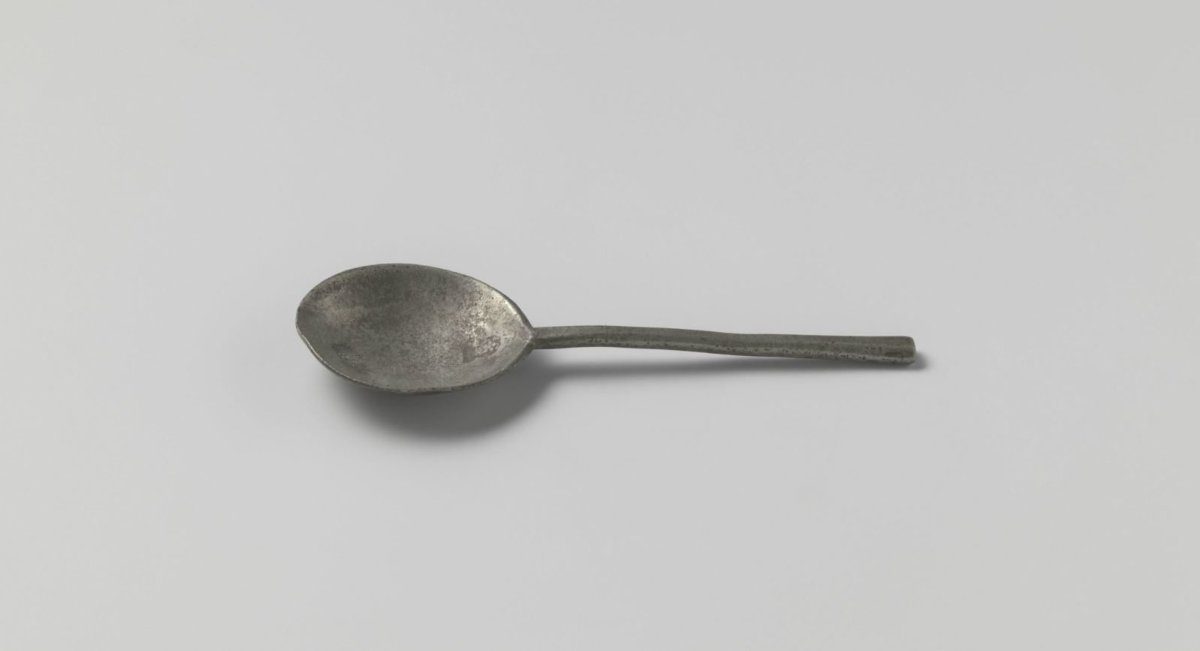
Pewter spoon
1550 - 1600
Pewter spoon. The handle is hexagonal. The bowl is a gentle oval shape. The Rijksmuseum, Amsterdam, holds this object as BK-14544; its record gives material recorded as tin (metal); technique casting; measurements length 16.5 cm x height 1.2. Description translated from the museum's Dutch catalogue text; details are…
Partial type record