Search
Search the catalogue
Search by name, period, entity or technical detail, then narrow by discipline, era, country, maker, material and confidence. Facets are built only from what each record documents — an entry with no documented date or material is not guessed into one.
14 records
Rijksmuseum, Amsterdam
ancient coins
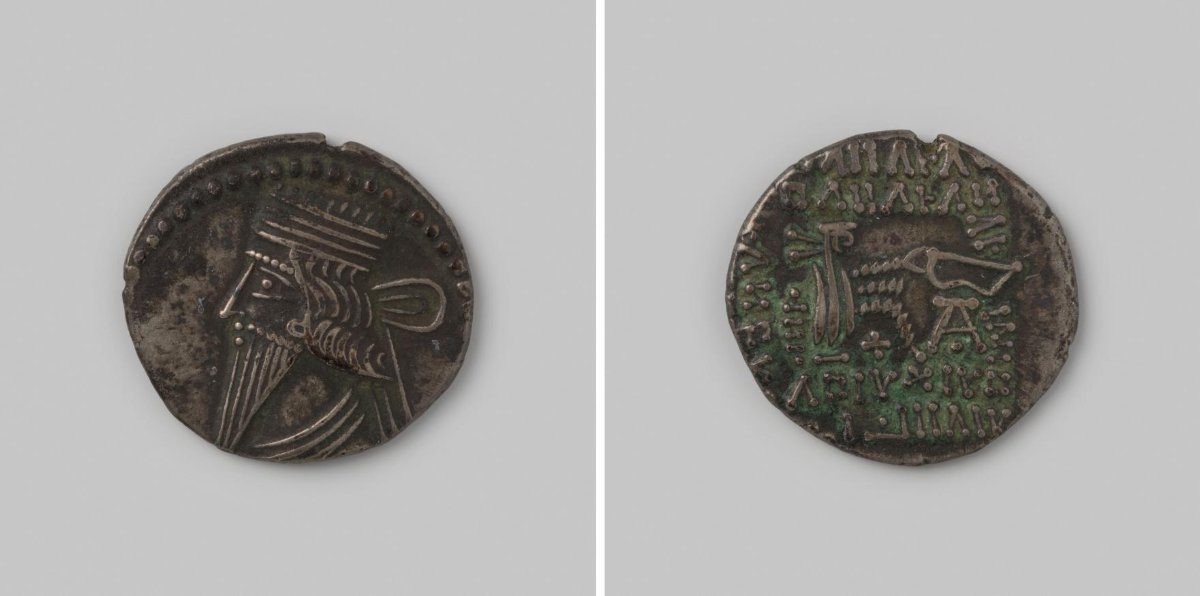
Drachm from Parthia of King Mithradates IV, 112-113
112 - 113
Silver coin. Obverse: head of the king with diadem facing left. Reverse: the founder of the empire, Arsaces I, seated on a throne holding a drawn bow in his right hand, beneath which the letter A. The Rijksmuseum, Amsterdam, holds this object as KOG-MP-1-0020; its record gives material recorded as silver (metal); te…
Partial type record
The Metropolitan Museum of Art — Purchase, H. Dunscombe Colt Gift, 1969
ancient coins
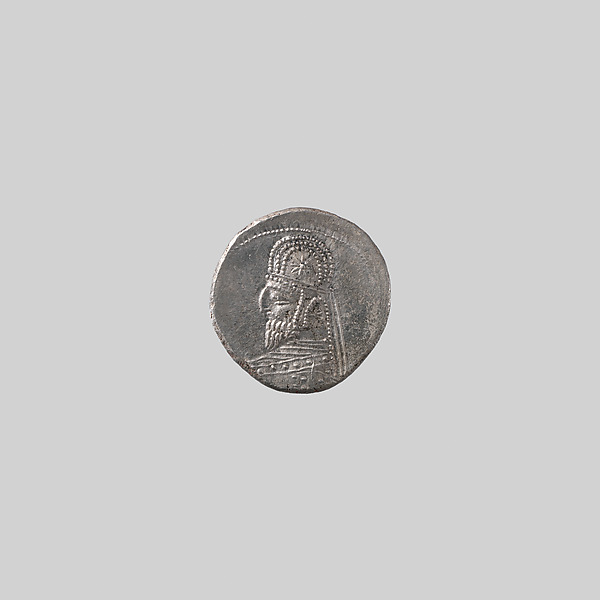
Parthian drachm of an unidentified king, ca. 100–50 BCE
ca. 100–50 BCE
This silver drachm was struck by an unknown Parthian ruler, probably in the early first century BCE. The obverse depicts a left-facing royal bust sporting a long beard. The monarch wears a domed tiara with earflaps, the characteristic crown of Parthian royalty, which is ornamented with a central star enclosed by thr…
Partial type record
The Metropolitan Museum of Art — Bequest of Joseph H. Durkee, 1898
ancient coins
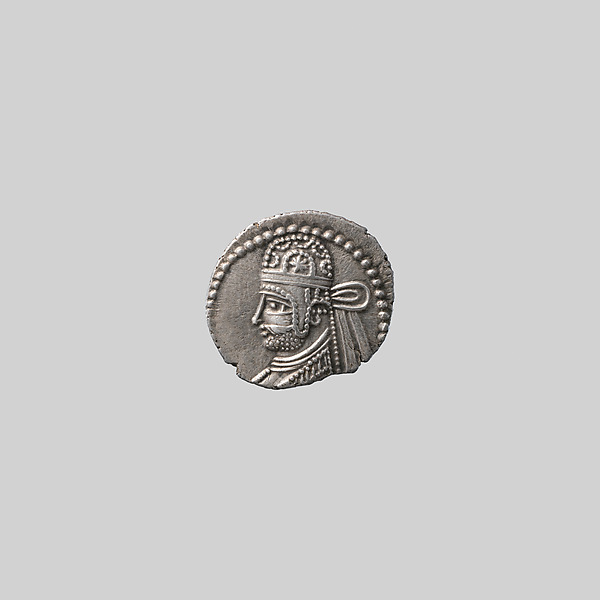
Parthian drachm of an unidentified king, ca. 78–110 CE
ca. 78–110 CE
Struck in silver, this drachm was produced under an unidentified Parthian monarch, with scholars suggesting candidates such as Pacorus II, Parthmaspates, or Sanatruces. The obverse presents a left-facing royal bust, probably depicting the issuing king himself. He is shown with a prominent mustache, a short curly bea…
Partial type record
The Metropolitan Museum of Art — Bequest of Joseph H. Durkee, 1898
ancient coins
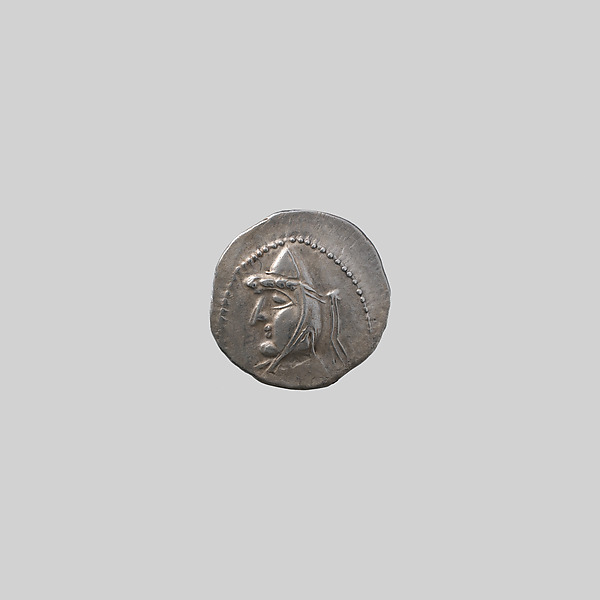
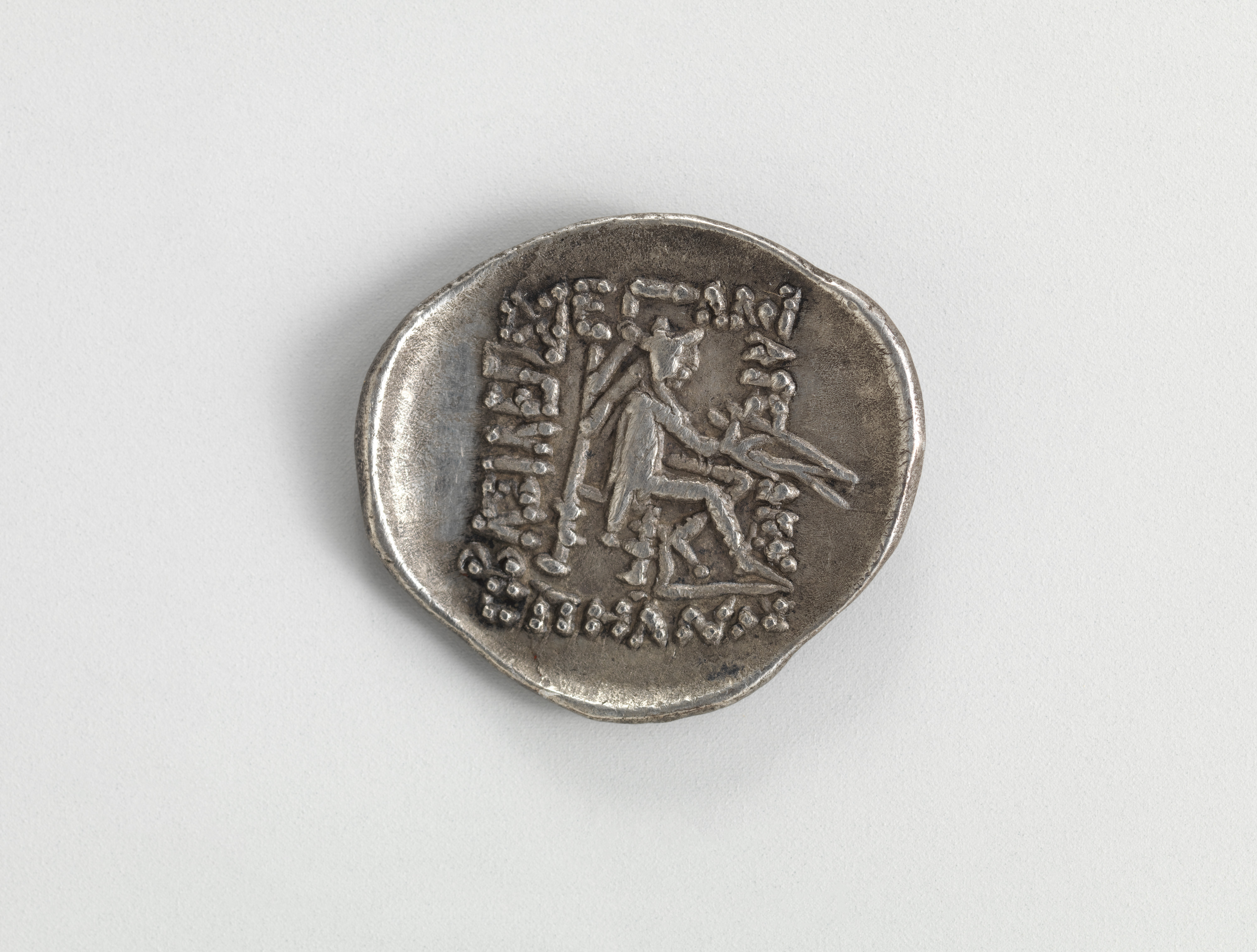
Parthian drachm of Mithridates I, ca. 171–138 BCE
ca. 171–138 BCE
This silver drachm was minted under the Parthian king Mithridates I. The front of the coin displays a left-facing royal head, likely portraying Mithridates himself wearing a pointed cap tied with a diadem, framed by a dotted circular border that does not completely join along the bottom edge. The reverse depicts a…
Partial type record
The Metropolitan Museum of Art — Bequest of Joseph H. Durkee, 1898
ancient coins
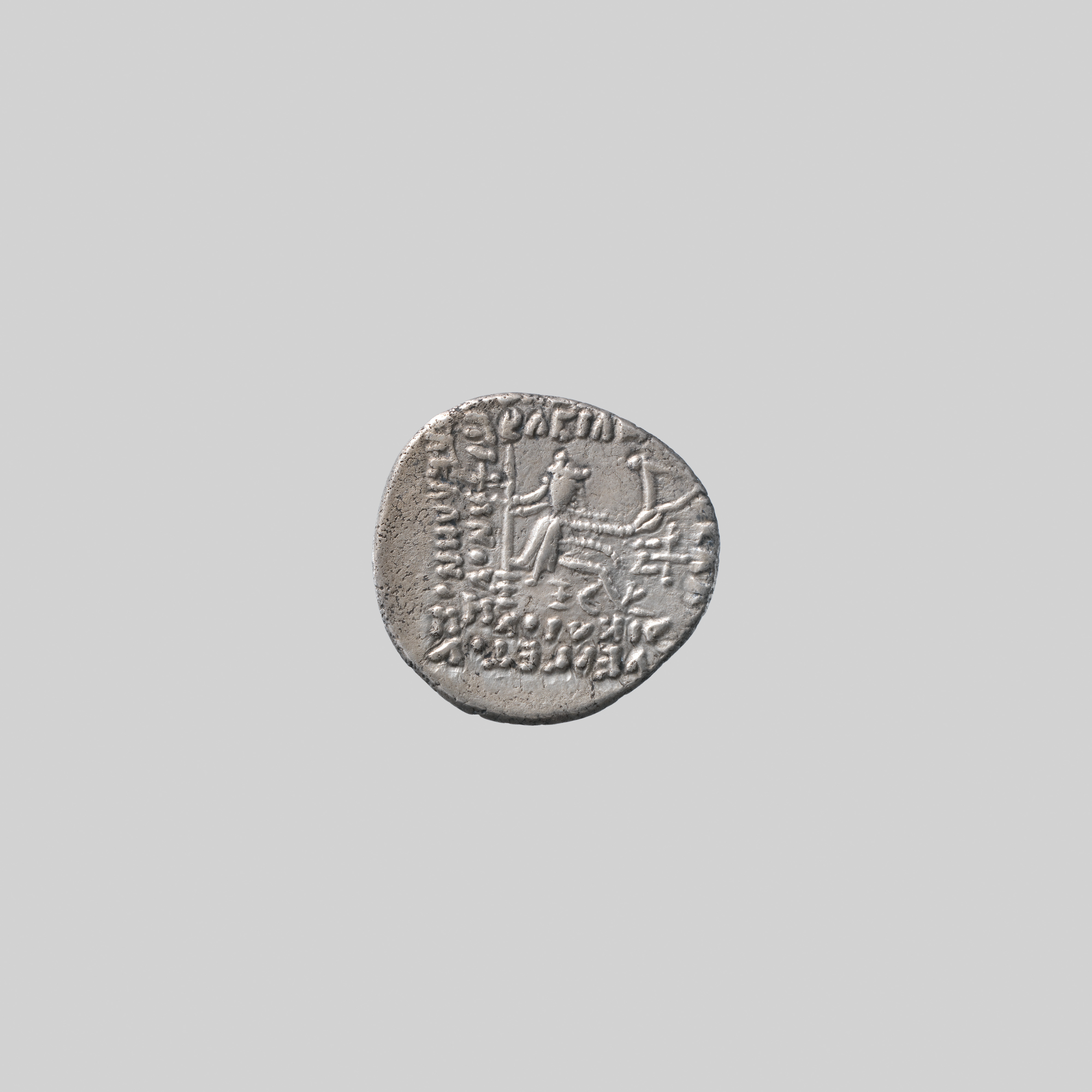
Parthian drachm of Mithridates II, ca. 121–91 BCE
ca. 121–91 BCE
This ancient Iranian silver drachm was produced under the authority of the Parthian monarch Mithridates II, who ruled from approximately 121 to 91 B.C. Numismatists classify the design into an obverse face displaying the ruler and a reverse face presenting regal and dynastic imagery. The coin's obverse features a l…
Partial type record
The Metropolitan Museum of Art — Bequest of Joseph H. Durkee, 1898
ancient coins
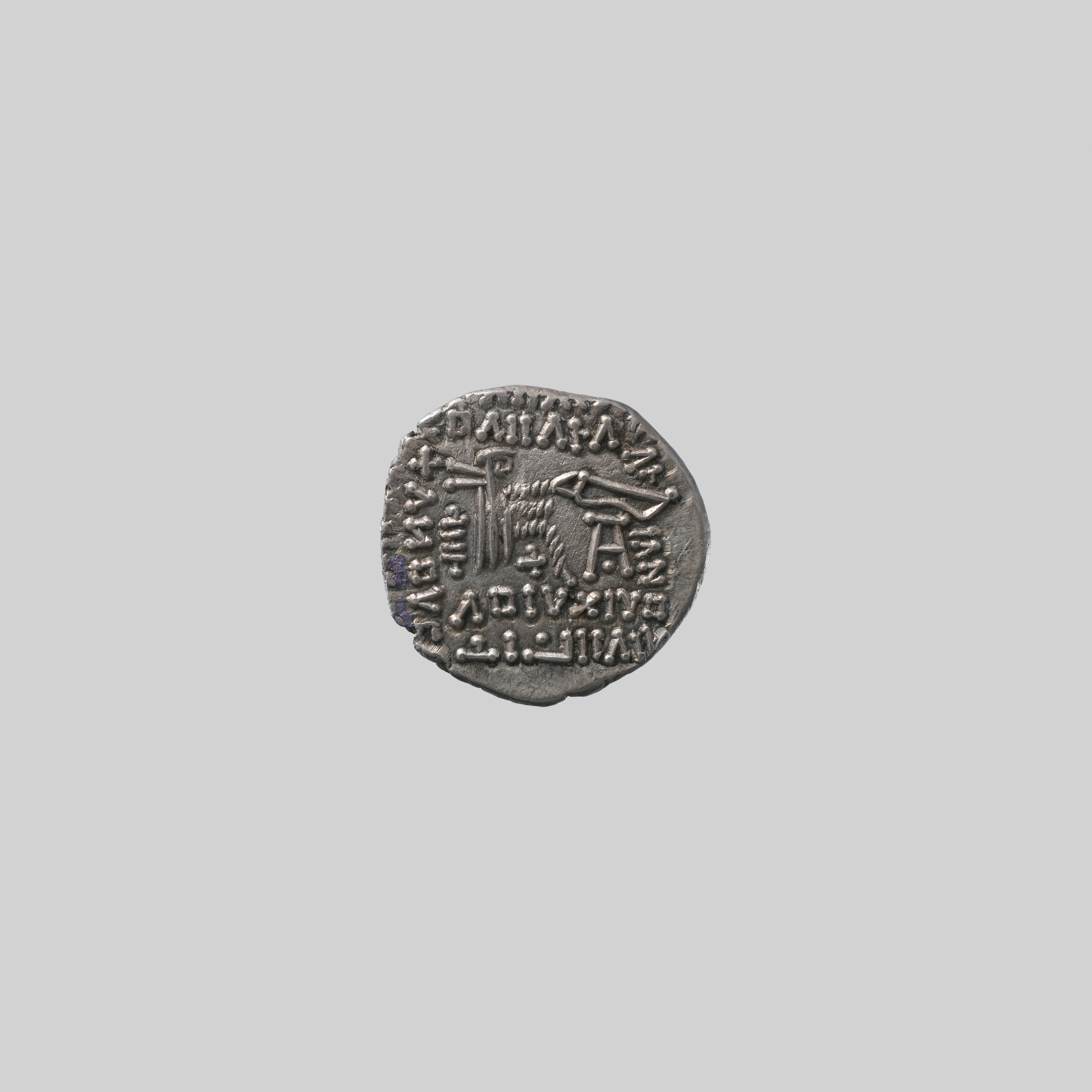
Parthian drachm of Orodes II, ca. 57–38 BCE
ca. 57–38 BCE
This silver drachm was produced under the Parthian king Orodes II. The obverse features a left-facing bust of the ruler, likely representing Orodes himself wearing a diadem as a victory emblem. He is rendered with wavy hair and a beard, wearing a torque or necklace around his neck. A star appears before his forehead…
Partial type record
The Metropolitan Museum of Art — Bequest of Joseph H. Durkee, 1898
ancient coins
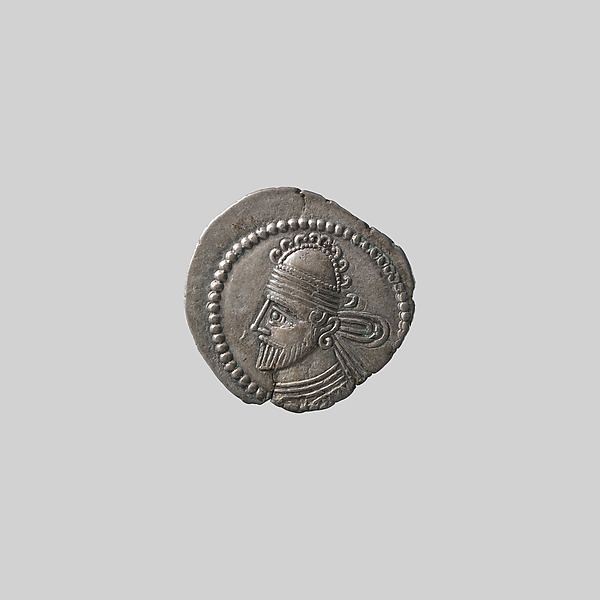
Parthian drachm of Osroes, ca. 110–129 CE
ca. 110–129 CE
This silver drachm was minted during the rule of Osroes, a Parthian king. The obverse of the coin displays a left-facing bust of the ruler, likely representing Osroes himself, wearing an athletic diadem as a mark of victory. He also wears a torque or necklace around his neck. His portrait is executed with schematic…
Partial type record
The Metropolitan Museum of Art — Bequest of Joseph H. Durkee, 1898
ancient coins
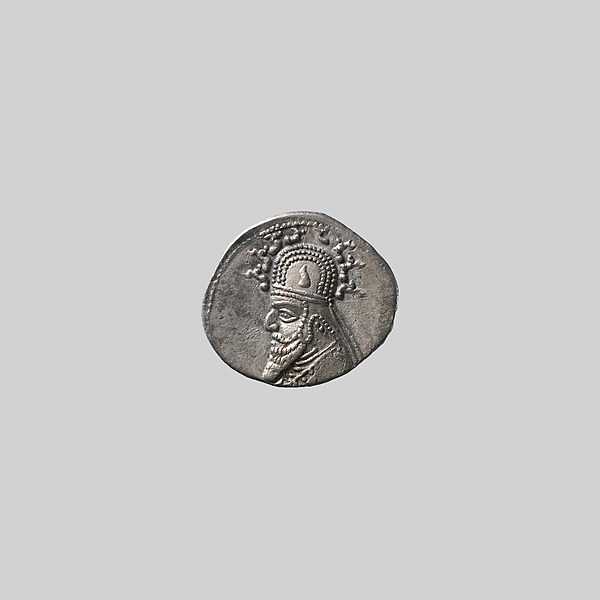
Parthian drachm of Pacorus II, ca. 78–110 CE
ca. 78–110 CE
This silver drachm was produced under the Parthian king Pacorus II. The obverse depicts the profile of the monarch facing left, wearing a torque around his neck along with a curl-adorned domed tiara wrapped with a Greek victory diadem. His short beard is portrayed using vertical lines, and a dotted circle frames the…
Partial type record
The Metropolitan Museum of Art — Bequest of Joseph H. Durkee, 1898
ancient coins
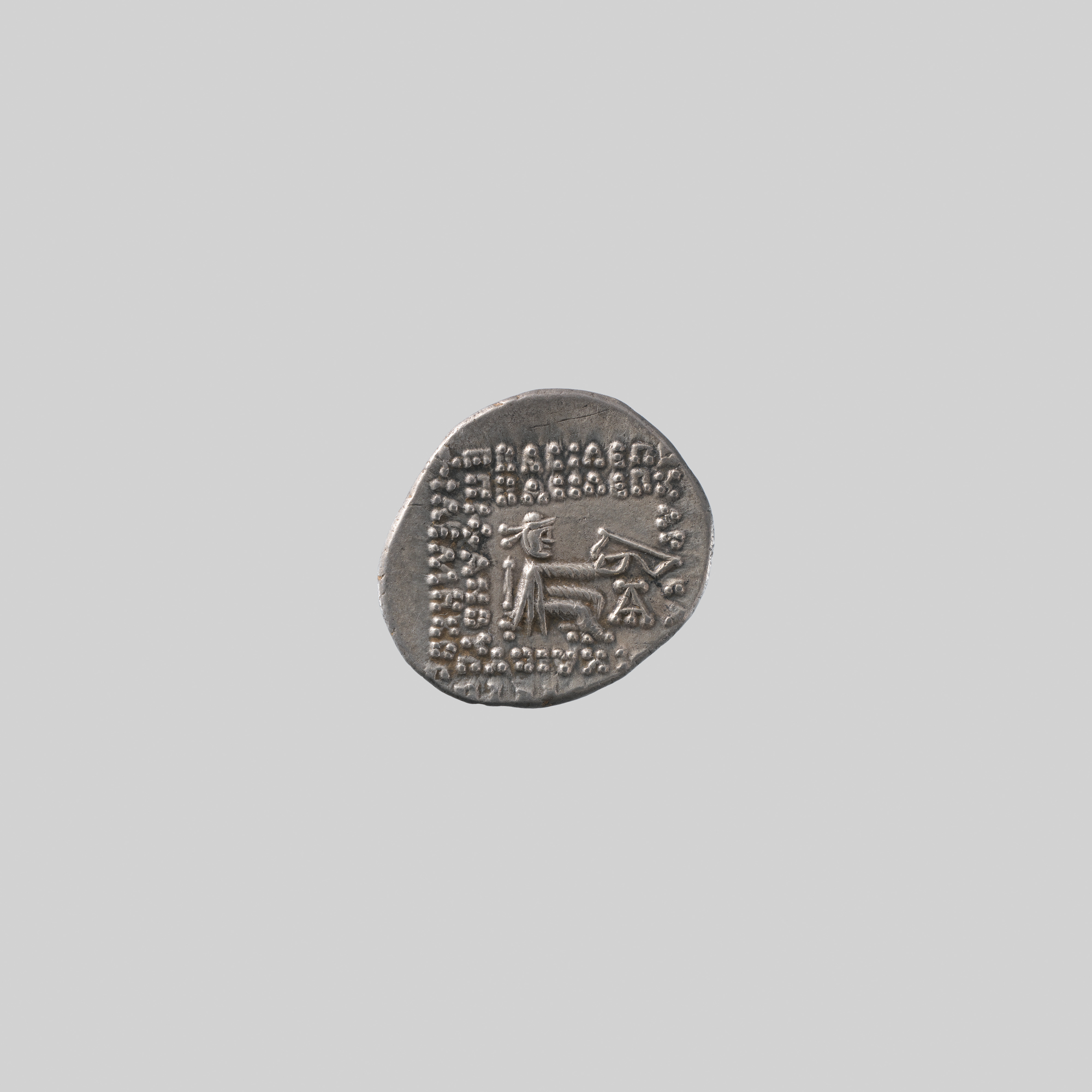
Parthian drachm of Phraates III, ca. 70–57 BCE
ca. 70–57 BCE
This silver drachm was issued under the Parthian king Phraates III, who ruled from approximately 70 to 57 B.C. The coin exemplifies imperial Parthian currency, drawing upon visual conventions and Greek epigraphy that were incorporated after the Parthians conquered the territories of the Seleucid Empire. The obverse…
Partial type record
The Metropolitan Museum of Art — Bequest of Joseph H. Durkee, 1898
ancient coins
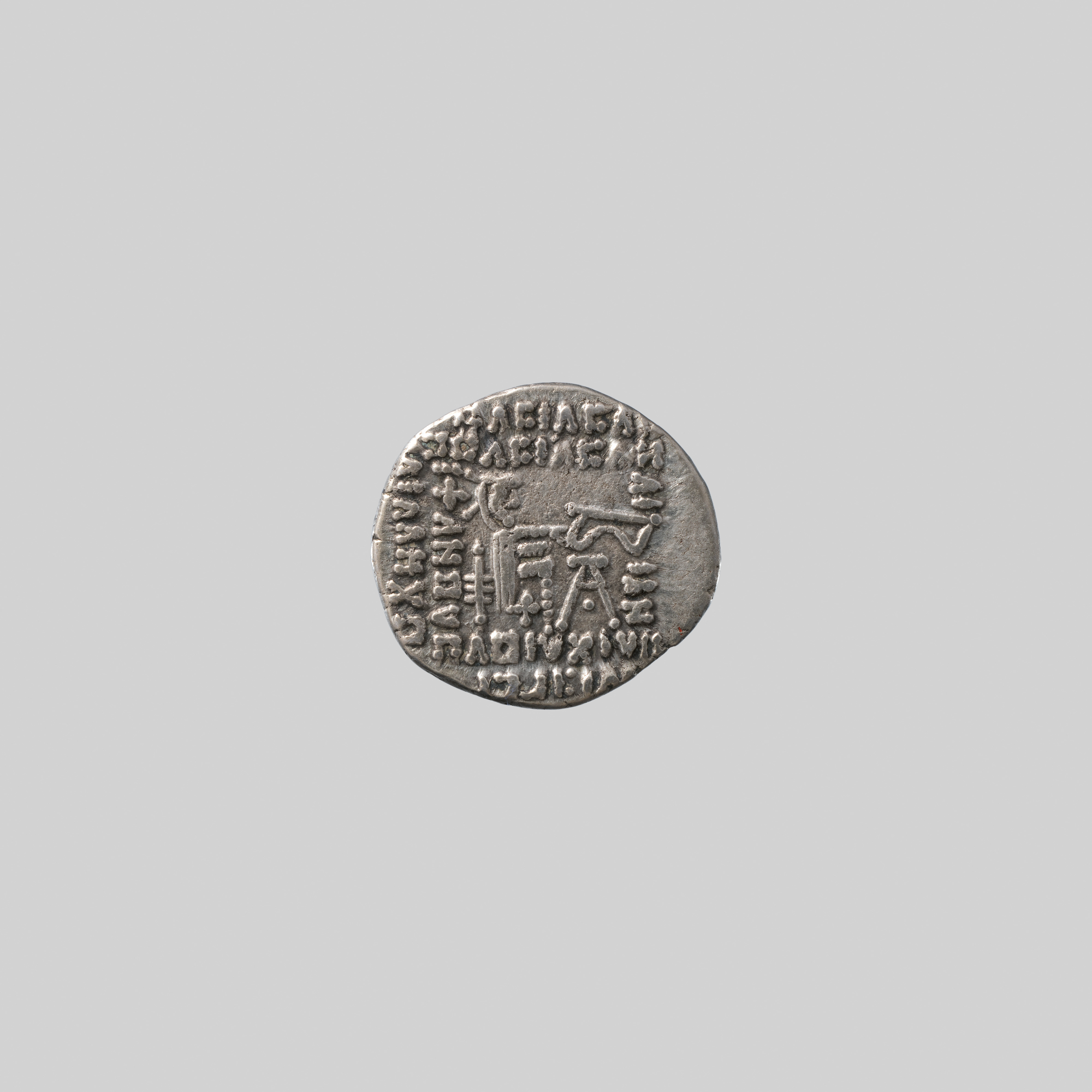
Parthian drachm of Phraates IV, ca. 38–2 BCE
ca. 38–2 BCE
This silver drachm was struck under the Parthian ruler Phraates IV, who reigned from approximately 38 to 2 B.C. The coin originates from Iran, featuring a monogram that may indicate production at the mint of Ecbatana. The obverse displays a left-facing bust of a king, probably Phraates IV himself, sporting curly hai…
Partial type record
The Metropolitan Museum of Art — Bequest of Joseph H. Durkee, 1898
ancient coins
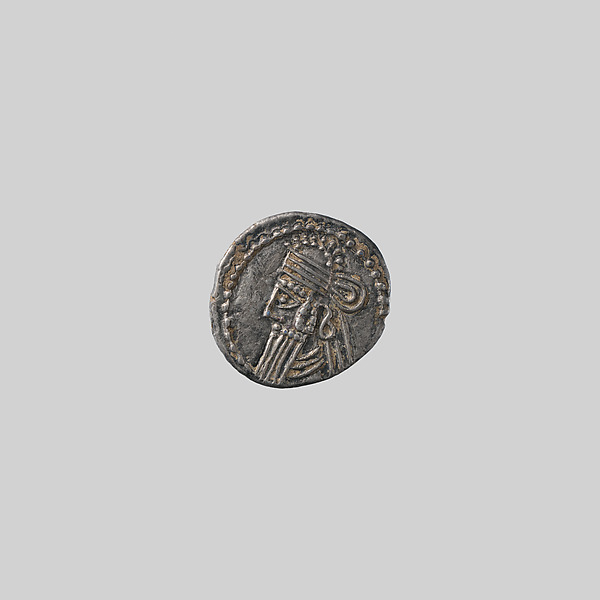
Parthian drachm of Vardanes or Gotarzes II, ca. 40–51 CE
ca. 40–51 CE
This silver drachm was produced under the authority of a Parthian monarch, either Vardanes or Gotarzes II. The coin's obverse presents an unusual front-facing bust of the king, who has a mustache and a trimmed beard. He wears a torque around his neck alongside a pointed cap with earflaps encircled by an athletic vic…
Partial type record
The Metropolitan Museum of Art — Bequest of Joseph H. Durkee, 1898
ancient coins
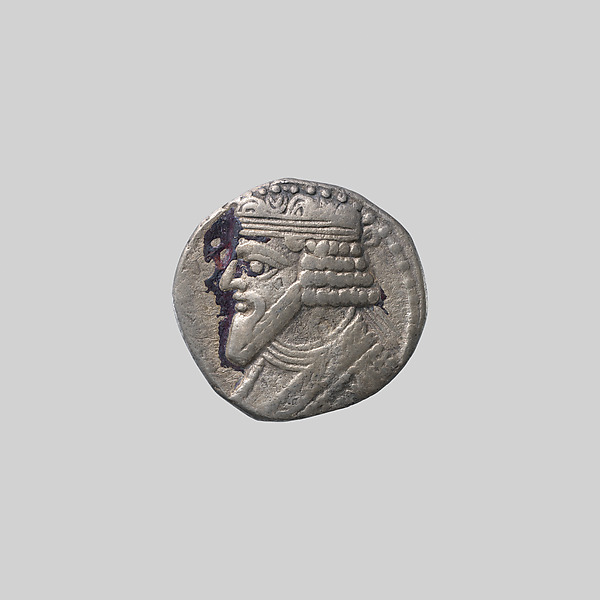
Parthian drachm of Vologases III, ca. 147–191 CE
ca. 147–191 CE
This silver drachm from ancient Iran was produced under the authority of the Parthian king Vologases III, who reigned from approximately A.D. 147 to 191. Measuring 1.9 centimeters in diameter and 0.2 centimeters in thickness, the coin represents the official currency issued during his rule and exemplifies the distin…
Partial type record
The Metropolitan Museum of Art — Bequest of Joseph H. Durkee, 1898
ancient coins
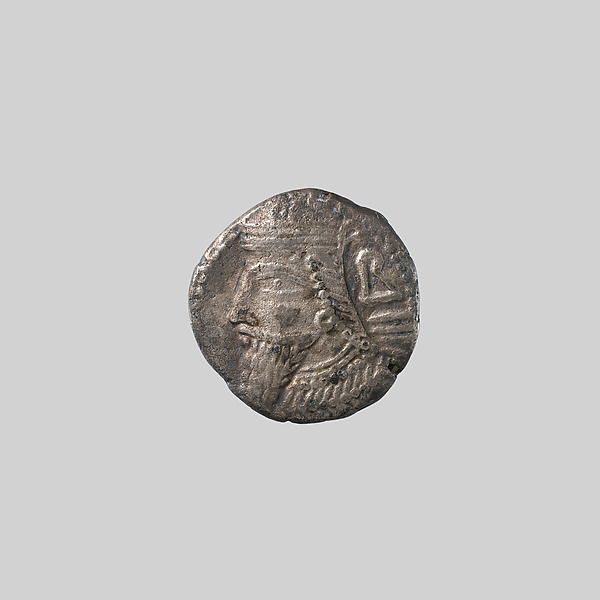
Parthian tetradrachm of Gotarzes II, ca. 49–50 CE
ca. 49–50 CE
This silver tetradrachm was produced under the Parthian king Gotarzes II, who governed from around A.D. 40 to 51. Manufactured at the mint of Seleucia-on-the-Tigris, situated close to present-day Baghdad, the coin is dated by Greek numerals to the Seleucid year 361, corresponding to A.D. 49–50, with an inscription m…
Partial type record
The Metropolitan Museum of Art — Bequest of Joseph H. Durkee, 1898
ancient coins
Parthian tetradrachm of Vologases V, ca. 212–213 CE
ca. 212–213 CE
This silver tetradrachm was produced under the authority of the Parthian king Vologases V. The obverse features a left-facing bust, probably representing the monarch himself, encircled by a border of dots. The ruler sports an elongated beard marked by vertical lines, a necklace, and a domed tiara with earflaps bound…
Partial type record