Catalogue
Astrolabes, Dials and Instruments
Astrolabes, quadrants, astronomical compendia, portable dials and watchmakers' workshop tools used to find or keep time.
Catalogue entries (445)
Filter by era, country, maker or material97–144 of 445 entries
Museum of the History of Science, Oxford
horological instruments
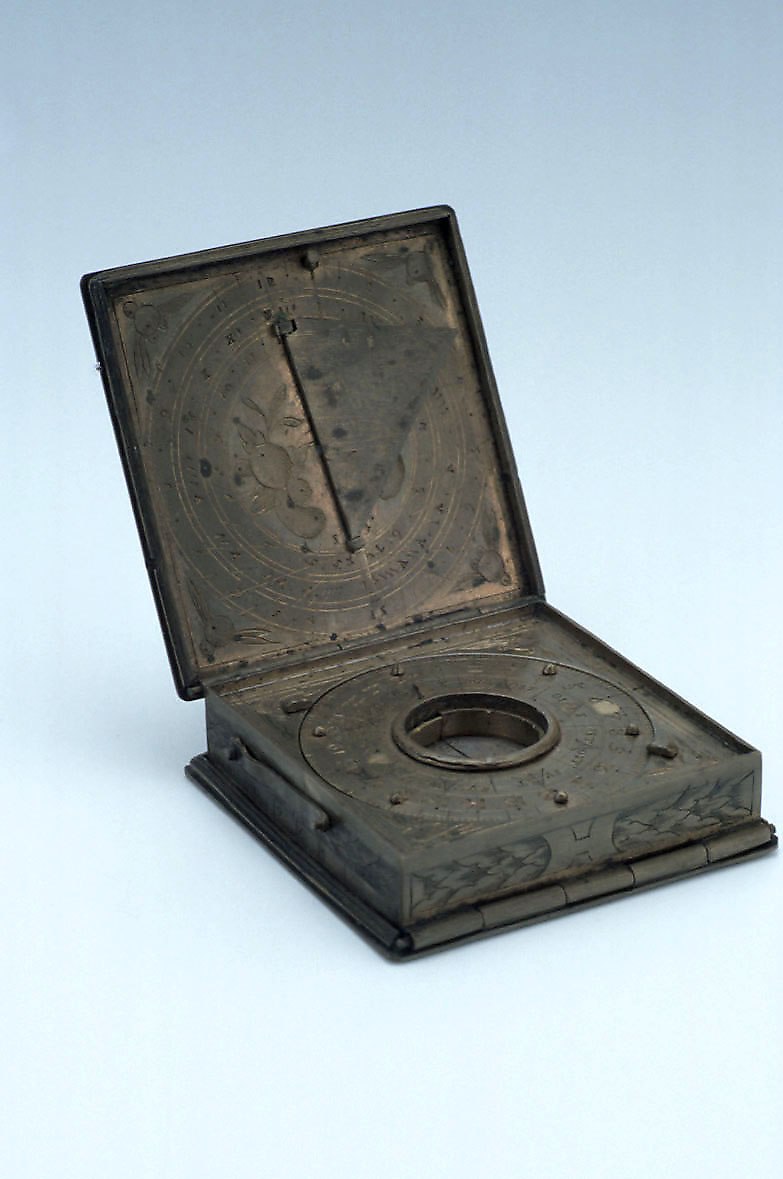
Astronomical Compendium by Tobias Volckmer
1584
This astronomical compendium, measuring 70 x 70 x 17 mm and crafted from gilt brass, is signed by Tobias Volckmer and dated 1584. The instrument is constructed as a central box housing a compass, with two hinged covers. The front cover features a shadow square, a degree scale, and a horizontal sundial with a folding…
Partial type record
British Museum, London
horological instruments
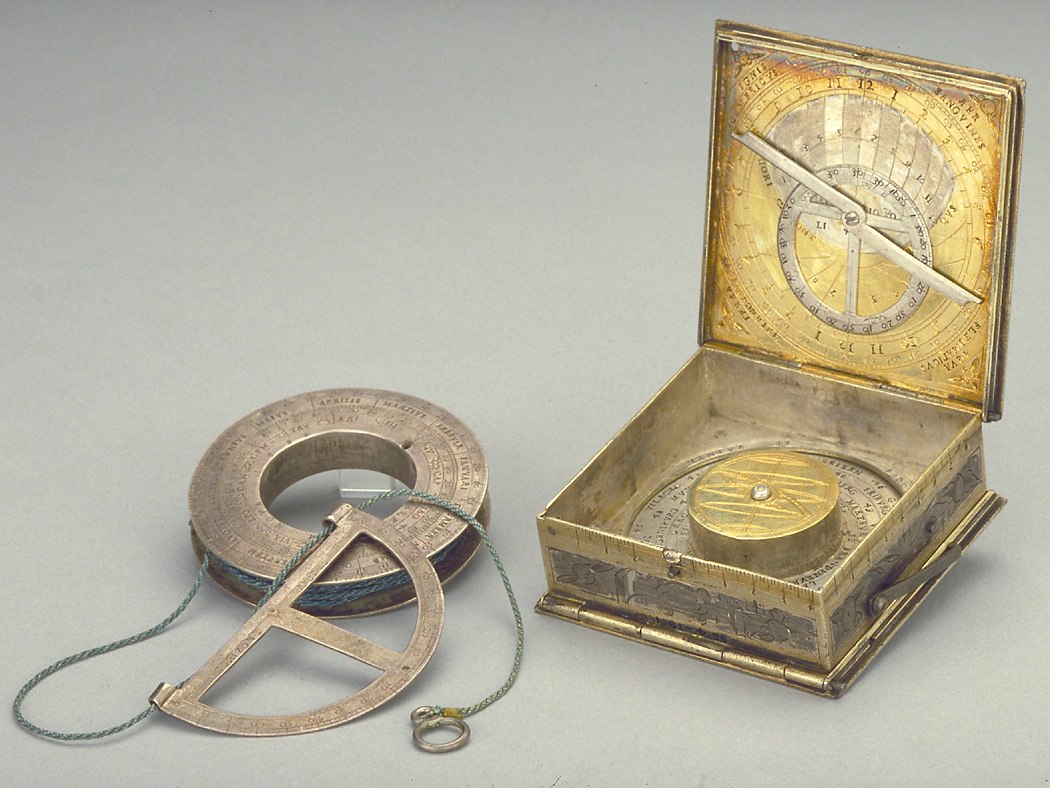
Astronomical Compendium by Tobias Volckmer, 1588
1588
This astronomical compendium, signed by Tobias Volckmer and dated 1588, is a portable scientific instrument constructed from gilt brass and silver. Measuring 74 x 74 x 27 mm, it features a complex arrangement of components including a horizontal dial with a triangular gnomon, a central compass, and a thread reel wit…
Partial type record
Museum of the History of Science, Oxford
horological instruments
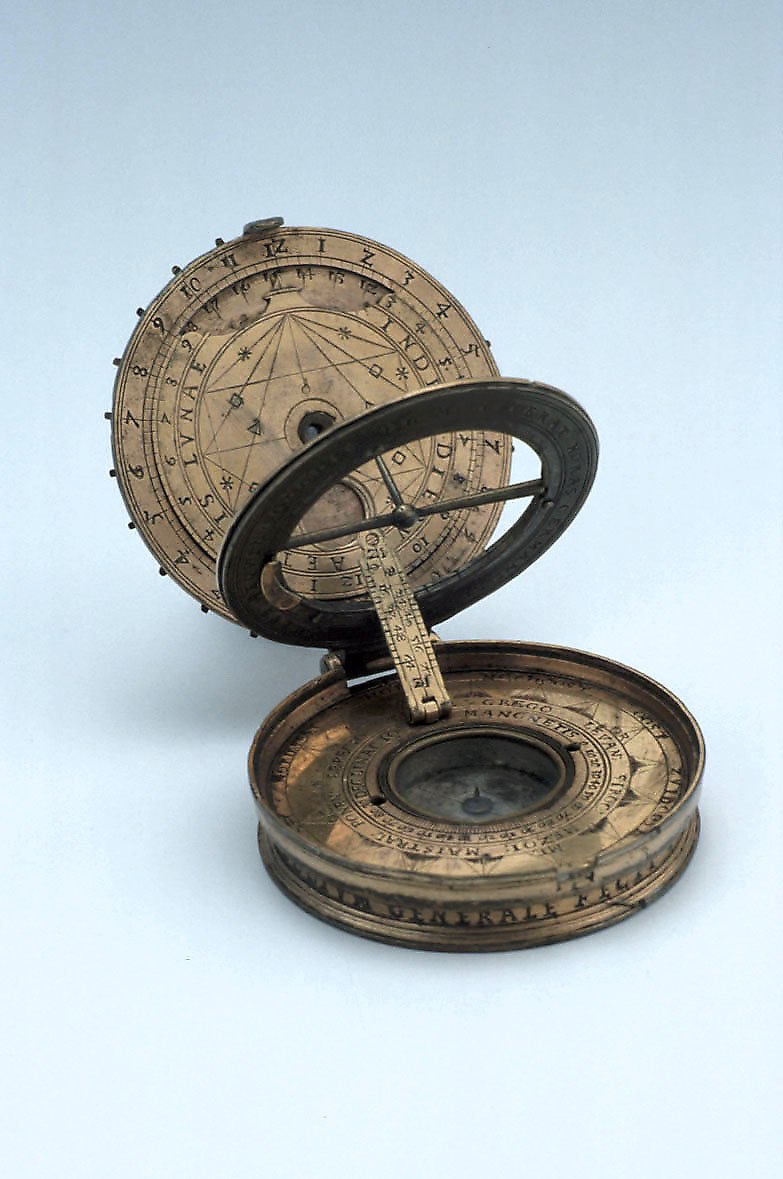
Astronomical Compendium by Ulrich Schniep
1550-70
This circular astronomical compendium, signed by Ulrich Schniep of Munich and dated 1550-70, is constructed of gilt brass with a diameter of 53 mm and a depth of 12 mm. The device consists of a main drum containing a compass and a folding universal equinoctial sundial, with a cover that incorporates both a nocturnal…
Partial type record
Museum of the History of Science, Oxford
horological instruments
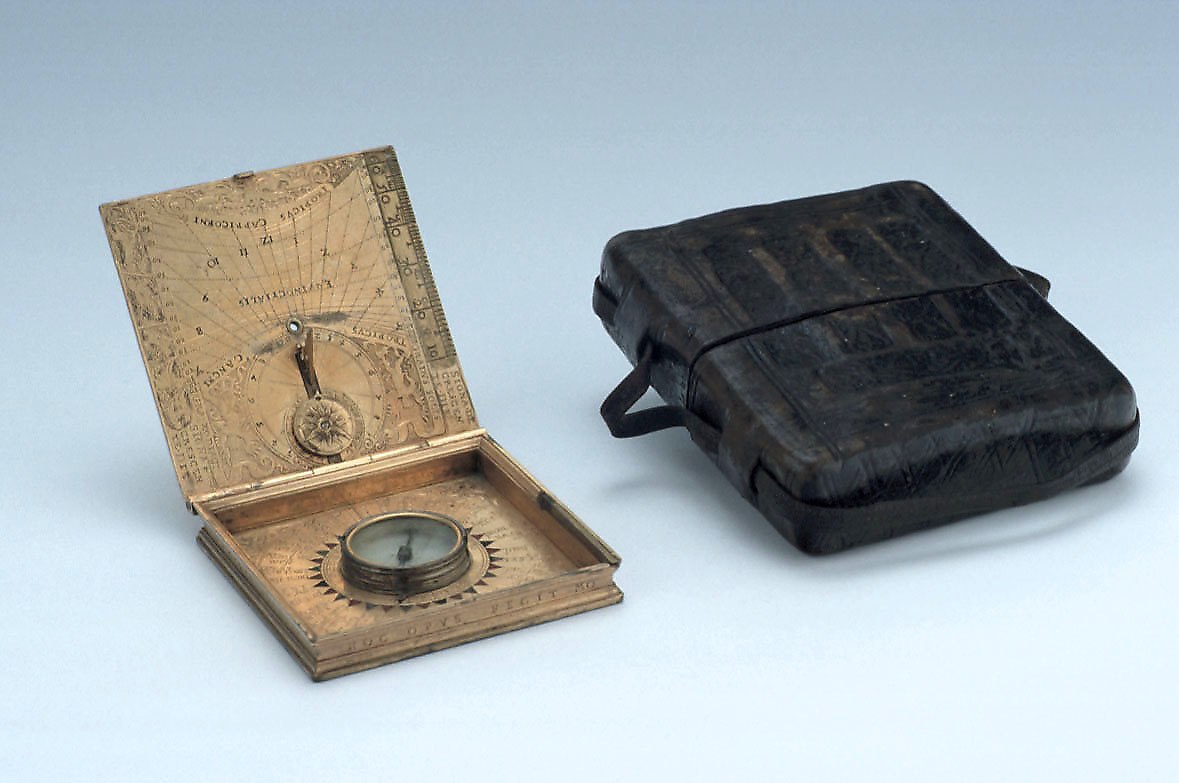
Astronomical Compendium by Ulrich Schniep, 1563
1563
This 1563 astronomical compendium in gilt brass was created in Munich by Ulrich Schniep. Measuring 79 x 76 x 14 mm, the object is a multi-functional instrument comprising a nocturnal and horary volvelle, an inclining sundial with a folding gnomon, and an adjustable magnetic compass with an enamelled compass rose. Th…
Partial type record
Museum of the History of Science, Oxford
horological instruments
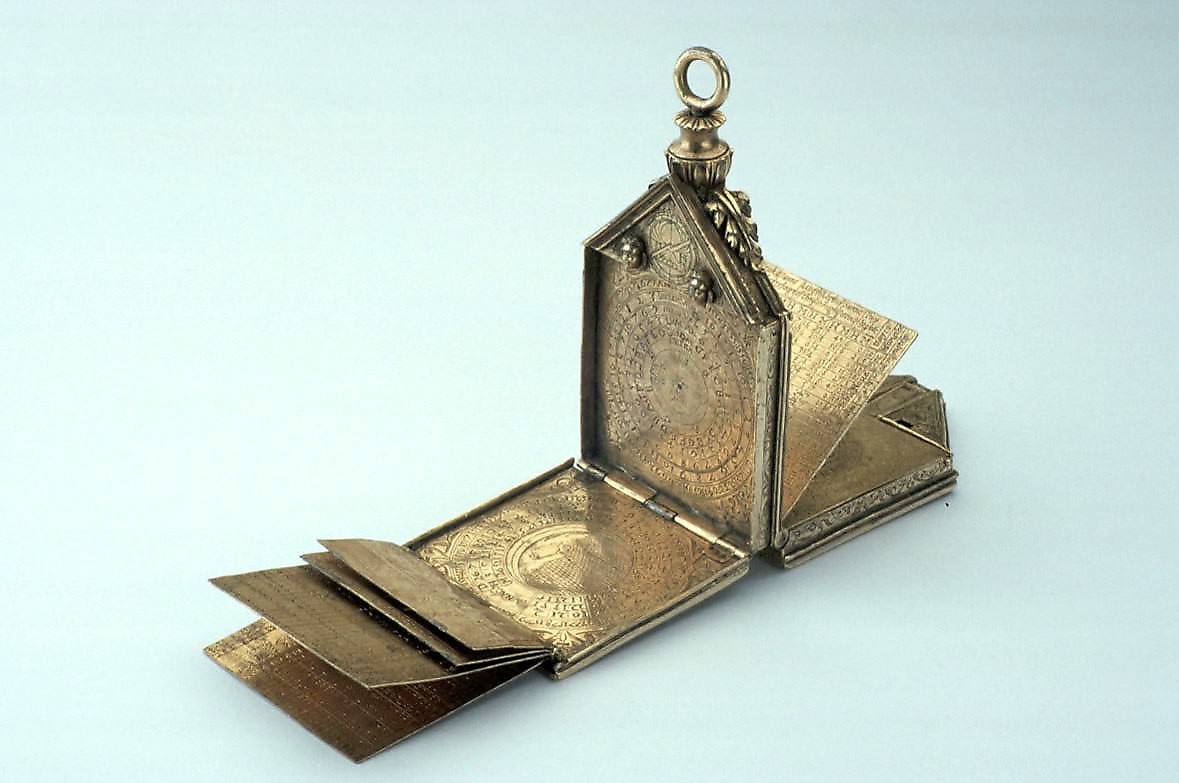
Astronomical Compendium signed V C
circa 1554
This astronomical compendium is a portable, multi-leaf, gilt brass instrument measuring 85 x 57 x 20 mm when closed. Crafted in England circa 1554 and signed 'V C', the object functions as a mechanical almanac. It is constructed as a box with a triangular pediment and suspension ring. The interior contains a complex…
Partial type record
© Museum of the History of Science, Oxford
horological instruments
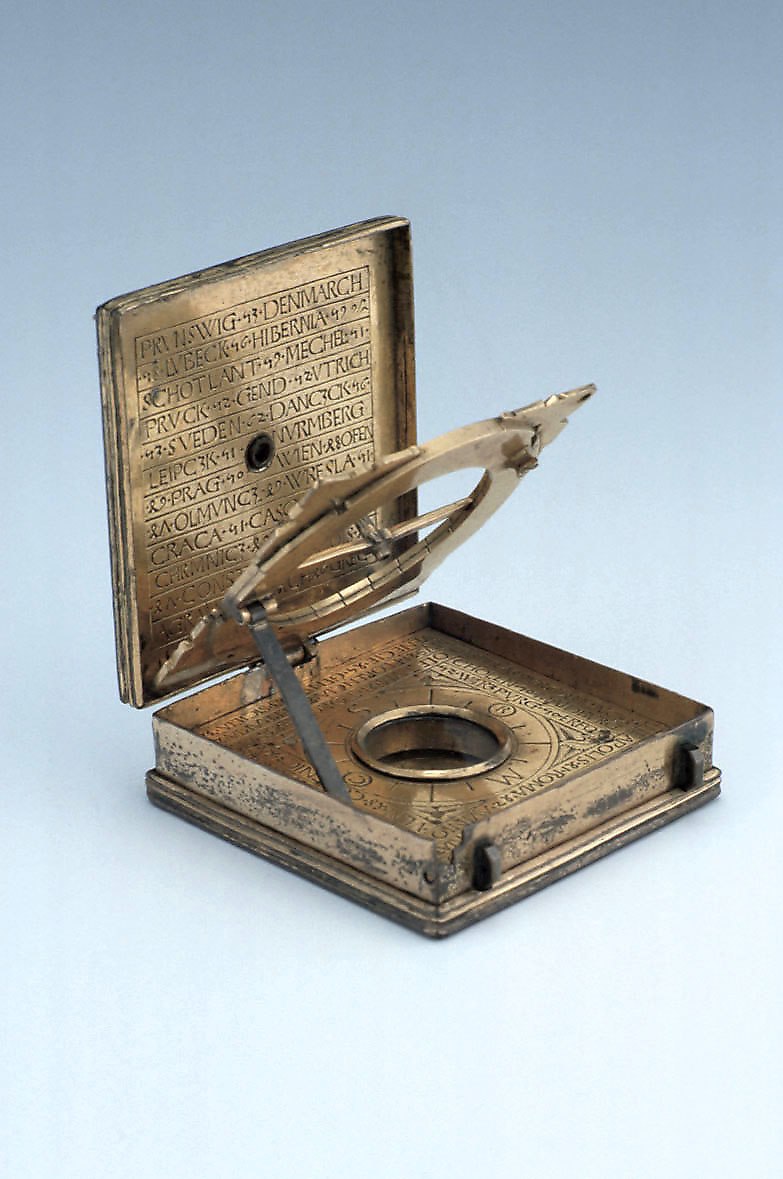
Astronomical Compendium, 1481
1481
This astronomical compendium, a gilt brass instrument measuring 68 x 66 x 17 mm, is attributed to Hans Dorn, who practiced in Buda during the late 15th century. Dated 1481, it comprises a square box with a hinged cover. The instrument integrates multiple timekeeping and astronomical functions, including a zodiacal c…
Partial type record
British Museum, London
horological instruments
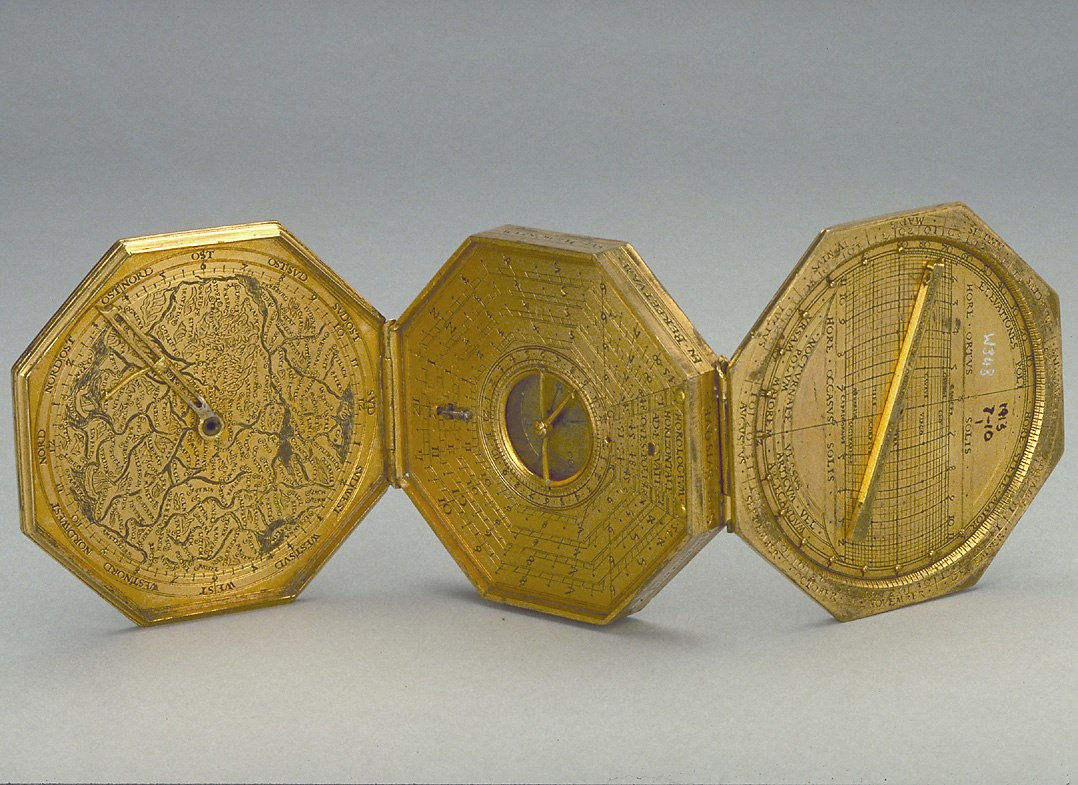
Astronomical Compendium, 1557
1557
This astronomical compendium, signed by Christoph Schissler and dated 1557, is an octagonal instrument crafted from gilt brass. Measuring 77 x 77 x 15 mm, it comprises three primary leaves featuring complex integrated astronomical and time-reckoning devices. The upper leaf contains a polar projection of the northern…
Partial type record
Istituto e Museo di Storia della Scienza, Firenze
horological instruments
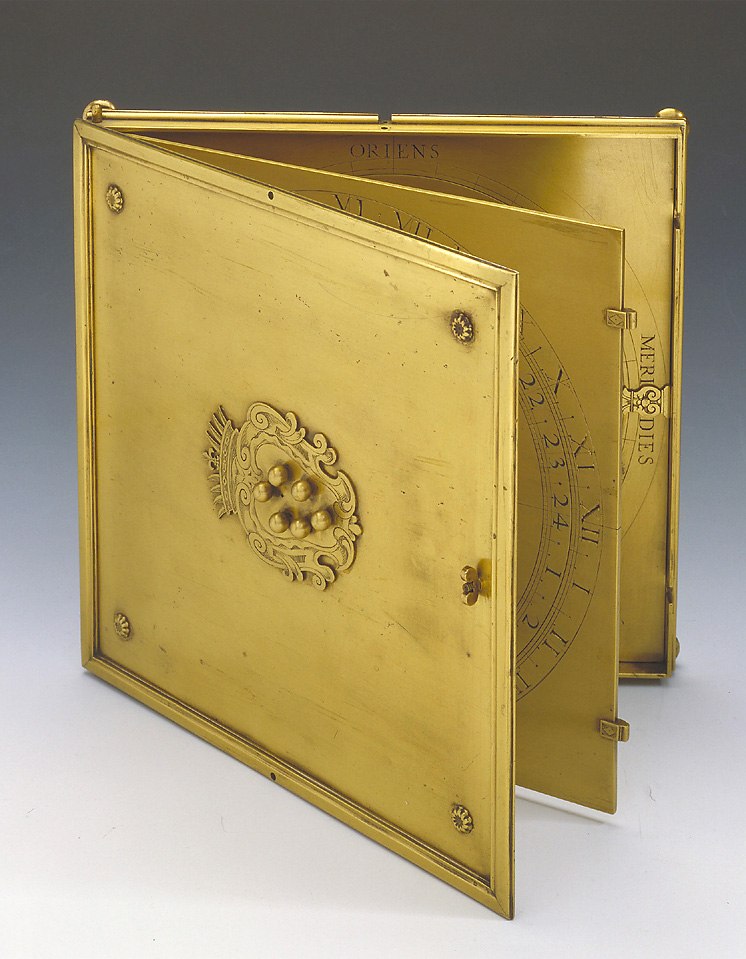
Astronomical Compendium, 16th century
16th century
This brass astronomical compendium, measuring 233 mm along the side, is attributed to 16th-century Florentine makers. The device comprises three hinged brass leaves featuring integrated sundials. The lid displays the relief-engraved Medicean coat of arms and houses a central aperture for sunlight passage. Internal e…
Partial type record
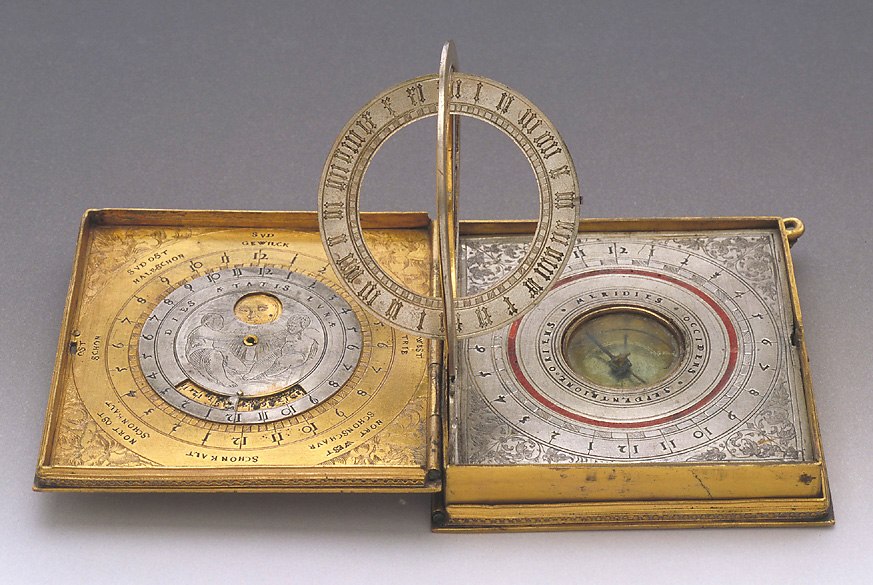
Istituto e Museo di Storia della Scienza, Firenze
horological instruments
Astronomical Compendium, 16th century (9432b4)
16th century
This 16th-century German astronomical compendium is constructed of gilt and silvered brass, measuring 90 x 90 mm when closed. The instrument features a box-like design with three primary compartments containing various horary and astronomical functions. Components include a stereographically projected astrolabe, a l…
Partial type record
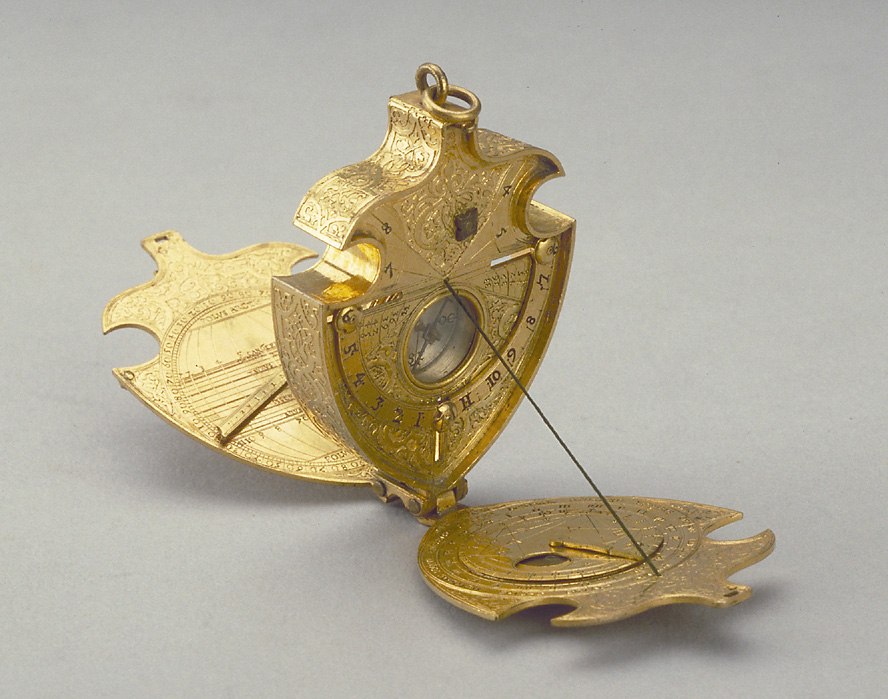
British Museum, London
horological instruments
Astronomical Compendium, circa 1570
circa 1570
This gilt brass astronomical compendium, measuring 12 x 53 x 70 mm, is attributed to Christoph Schissler and dates to approximately 1570. The instrument features a multi-functional design, housing a nocturnal on the exterior upper leaf, a rotating pierced volvelle and aspectarium on the interior upper leaf, and a ce…
Partial type record
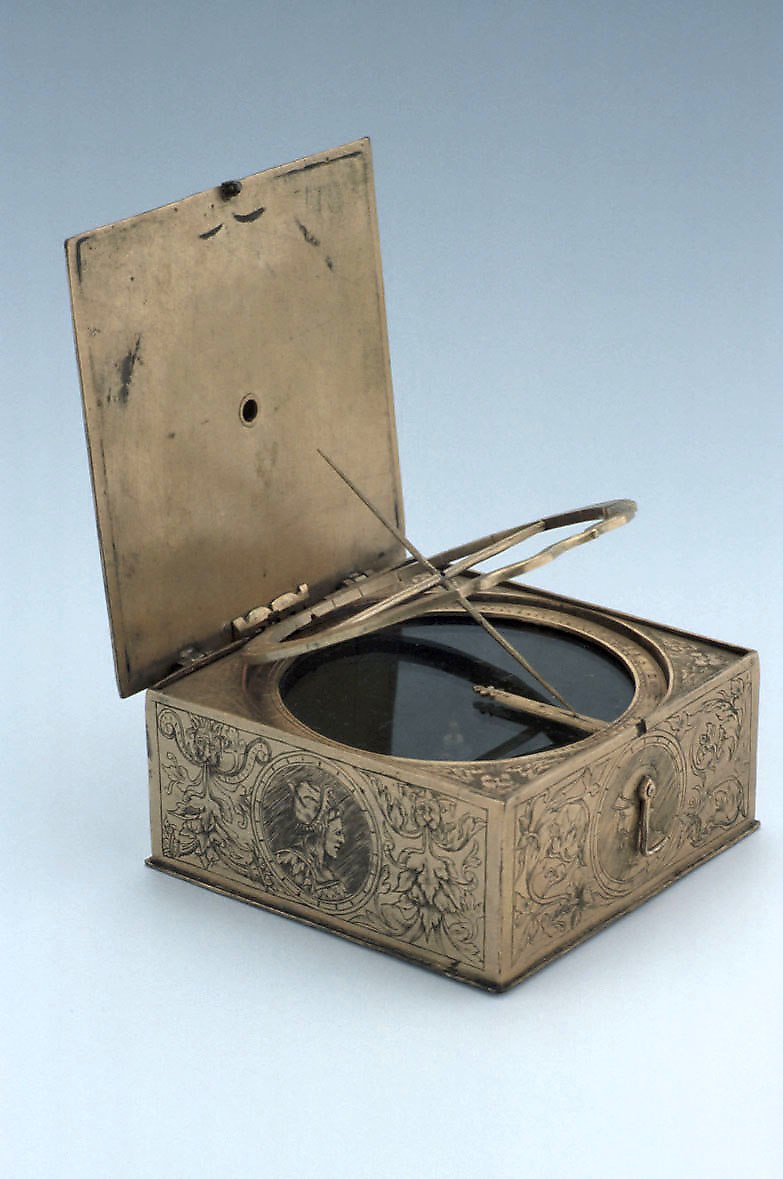
Museum of the History of Science, Oxford
horological instruments
Astronomical Compendium, circa 1600
circa 1600
This astronomical compendium, held in the collection of the Museum of the History of Science, Oxford, is an unsigned brass instrument dating from circa 1600 and attributed to French manufacture. The object measures 87 x 87 x 39 mm and features a square box structure with a hinged cover lid. Its functional components…
Partial type record
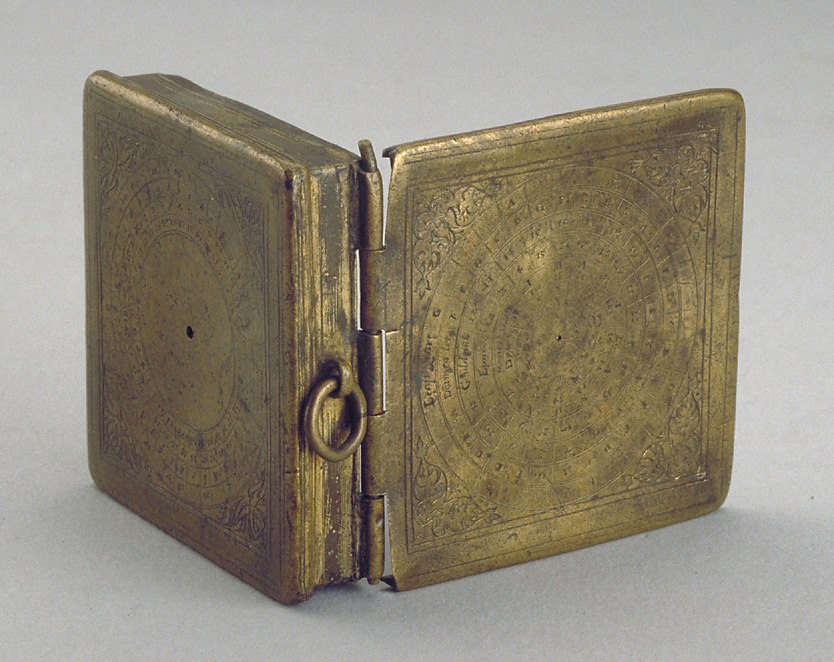
British Museum, London
horological instruments
Astronomical Compendium, circa 1600 ? (5ebcf7)
circa 1600 ?
This astronomical compendium, held by the British Museum (MLA 1886, 5-11.6), is a remnant of a larger instrument consisting only of a hinged gilt brass case and lid. Measuring 58 x 58 x 14 mm, the object is unsigned and attributed to English origin, dating to approximately 1600. The external and internal surfaces ar…
Partial type record
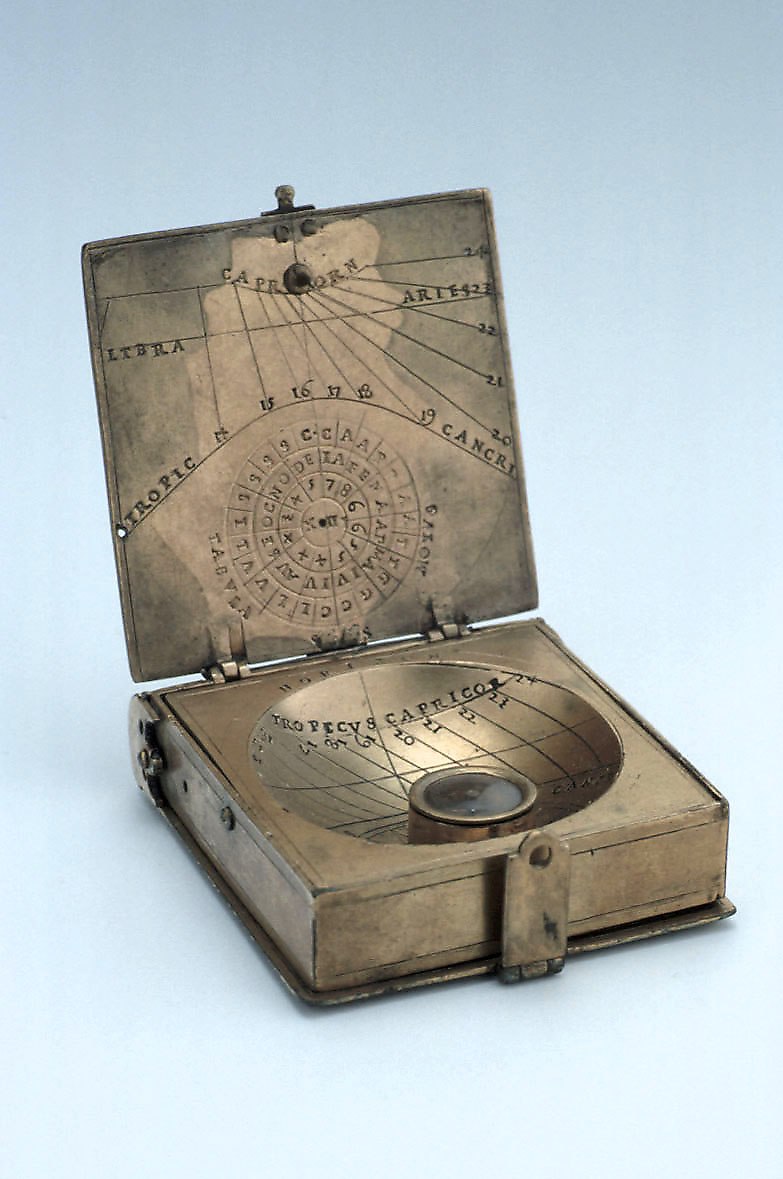
Museum of the History of Science, Oxford
horological instruments
Astronomical Compendium, circa 1600 (b48e0a)
circa 1600
This unsigned astronomical compendium, held by the Museum of the History of Science in Oxford, is an instrument constructed of gilt brass measuring 53 x 50 x 18 mm. Formed to resemble a small book with a curved spine and clasp, its exterior covers feature simple circular engraved decorations. The internal components…
Partial type record
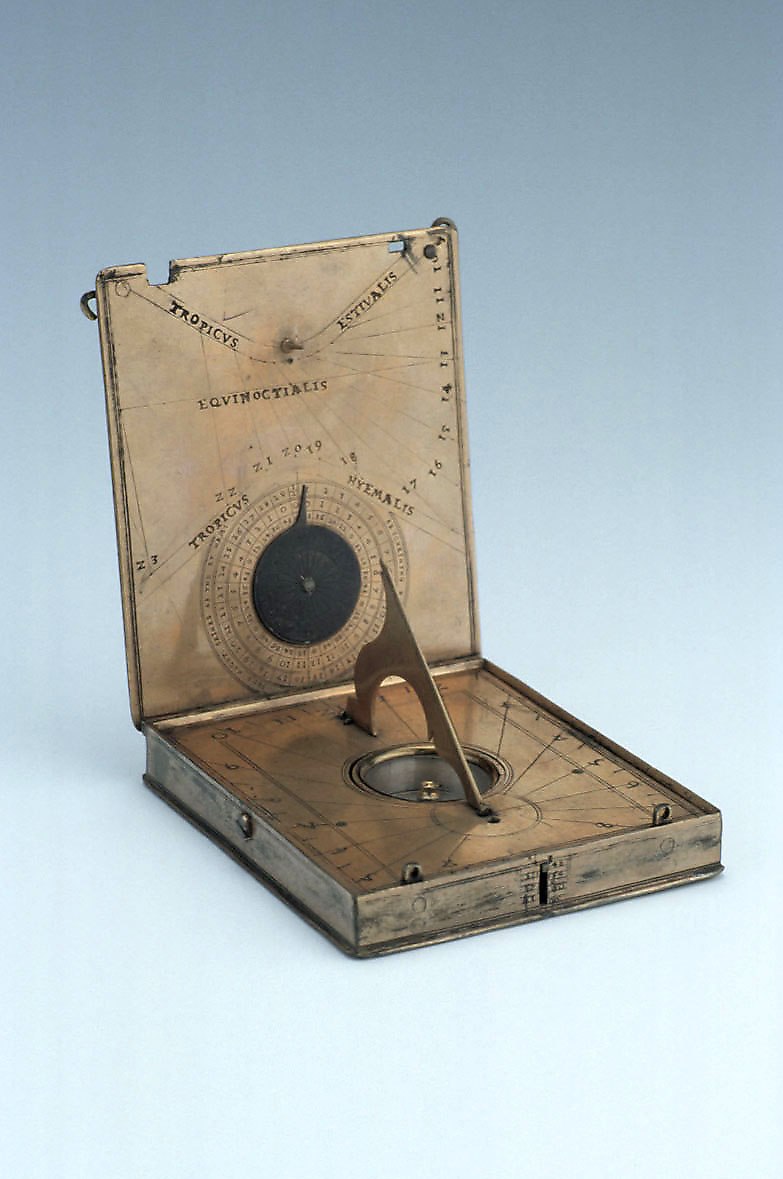
Museum of the History of Science, Oxford
horological instruments
Astronomical Compendium, Late 16th century
Late 16th century
This unsigned astronomical compendium, dated to the late 16th century and of German origin, is constructed from gilt brass with dimensions of 76 x 67 x 11 mm. The object comprises a single cover plate and a main box, connected by hinges and secured by two clasps. It incorporates a horizontal pin-gnomon sundial for I…
Partial type record
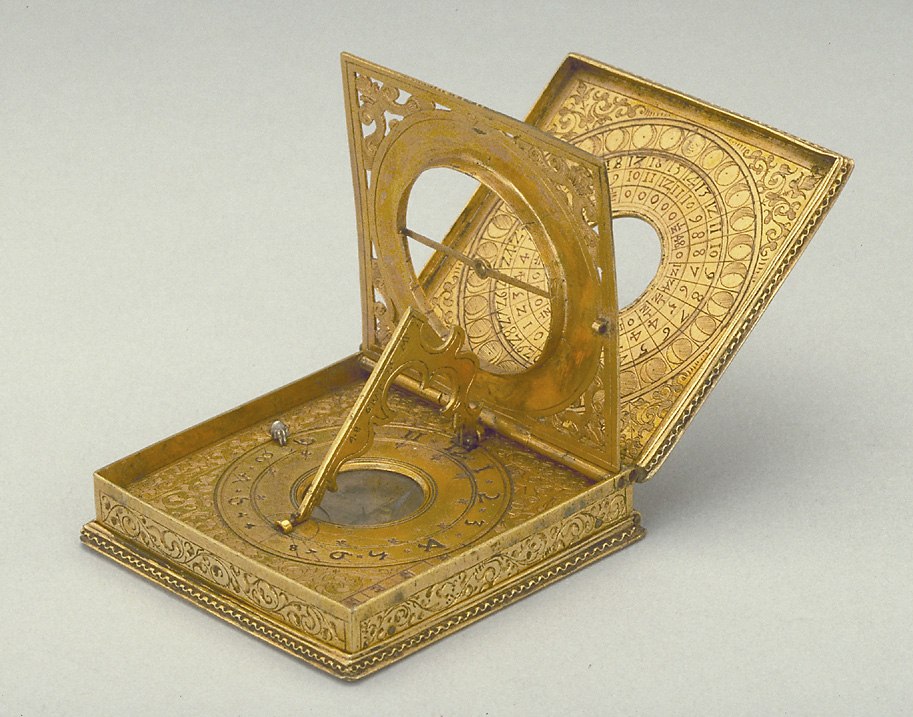
British Museum, London
horological instruments
Astronomical Compendium, Late 16th century (45a756)
Late 16th century
This unsigned astronomical compendium, dating to the late 16th century, is constructed from gilt brass and measures 70 x 70 x 15 mm. The instrument comprises multiple nested leaves hinged to allow for various astronomical and time-keeping functions. It features a horizontal dial for latitude 48°25', equipped with a…
Partial type record
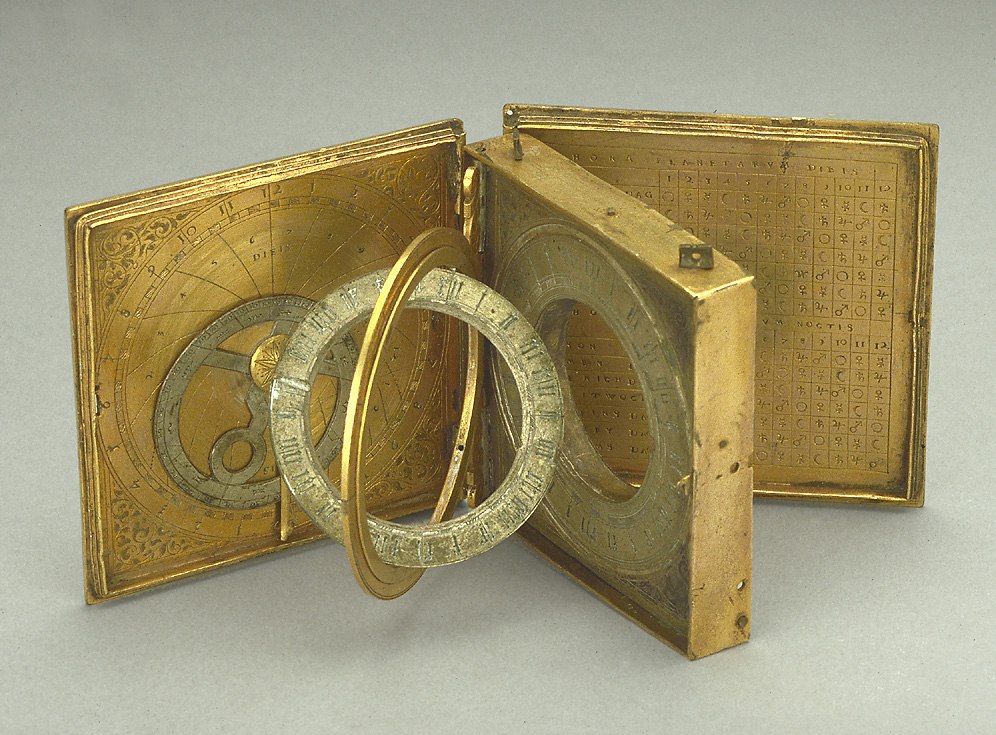
© British Museum, London
horological instruments
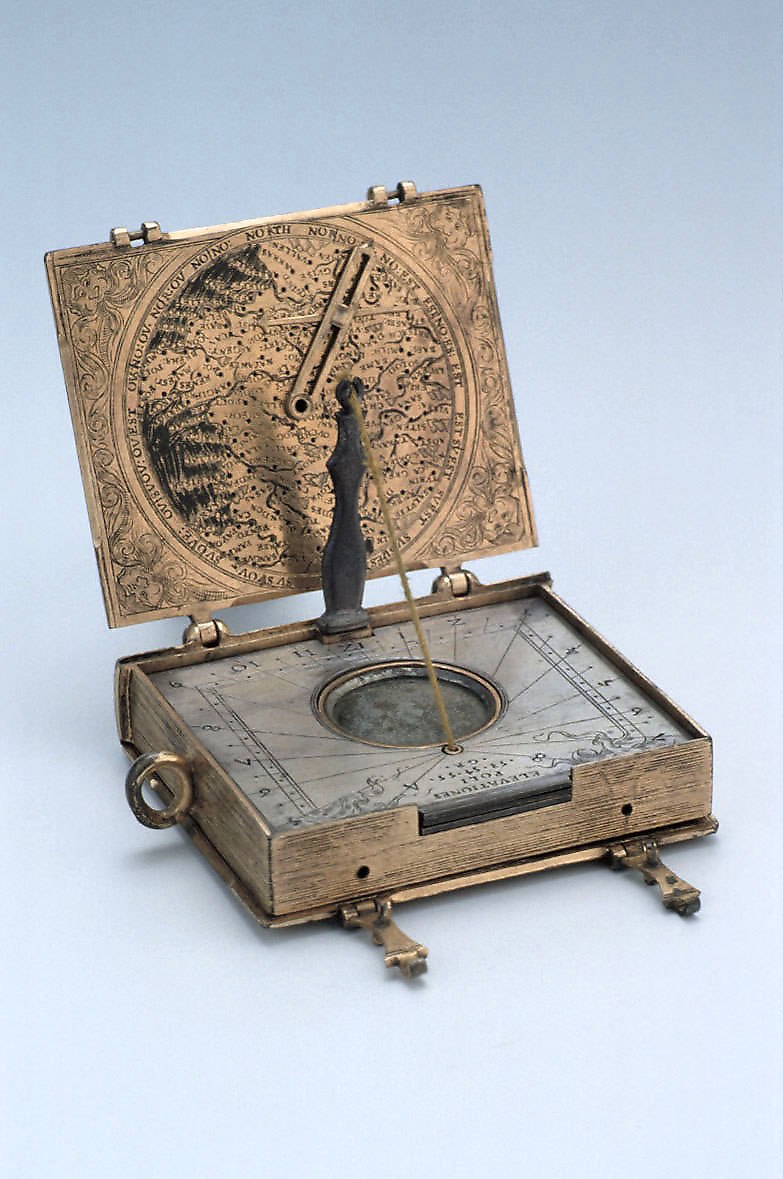
Astronomical Compendium, Late 16th century (9df246)
Late 16th century
This unsigned astronomical compendium is constructed of gilt brass or copper and measures 90 x 90 x 19 mm. The instrument consists of two leaves and a main central box, featuring multiple astronomical and timekeeping functions. The upper leaf includes a lunar/solar volvelle on the outside and a table for converting…
Partial type record
Museum of the History of Science, Oxford
horological instruments
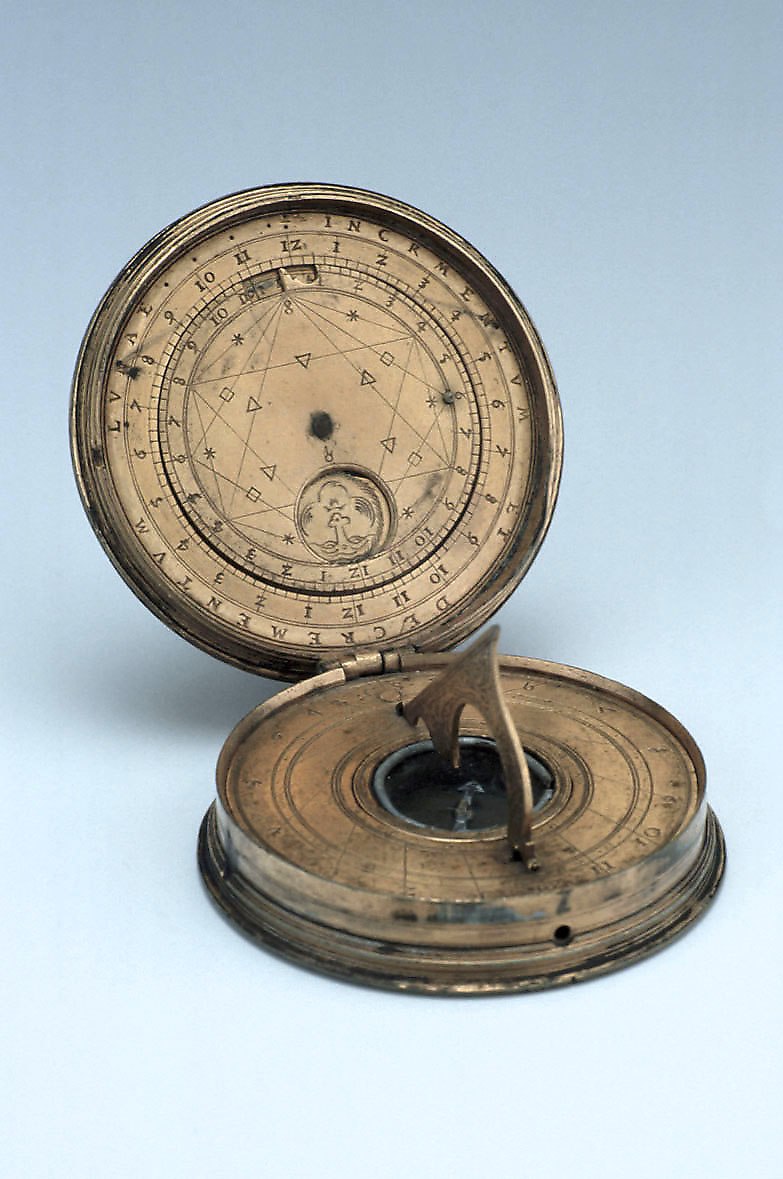
Astronomical Compendium, Later 16th century
Later 16th century
This astronomical compendium is constructed from gilt brass and silver in the form of a small book measuring 62 x 56 x 14 mm. It features a curved spine with decorative projections, book clasps, and engraved edge lines simulating pages. Attributed to Christoph Schissler, the instrument functions as an integrated set…
Partial type record
Museum of the History of Science, Oxford
horological instruments
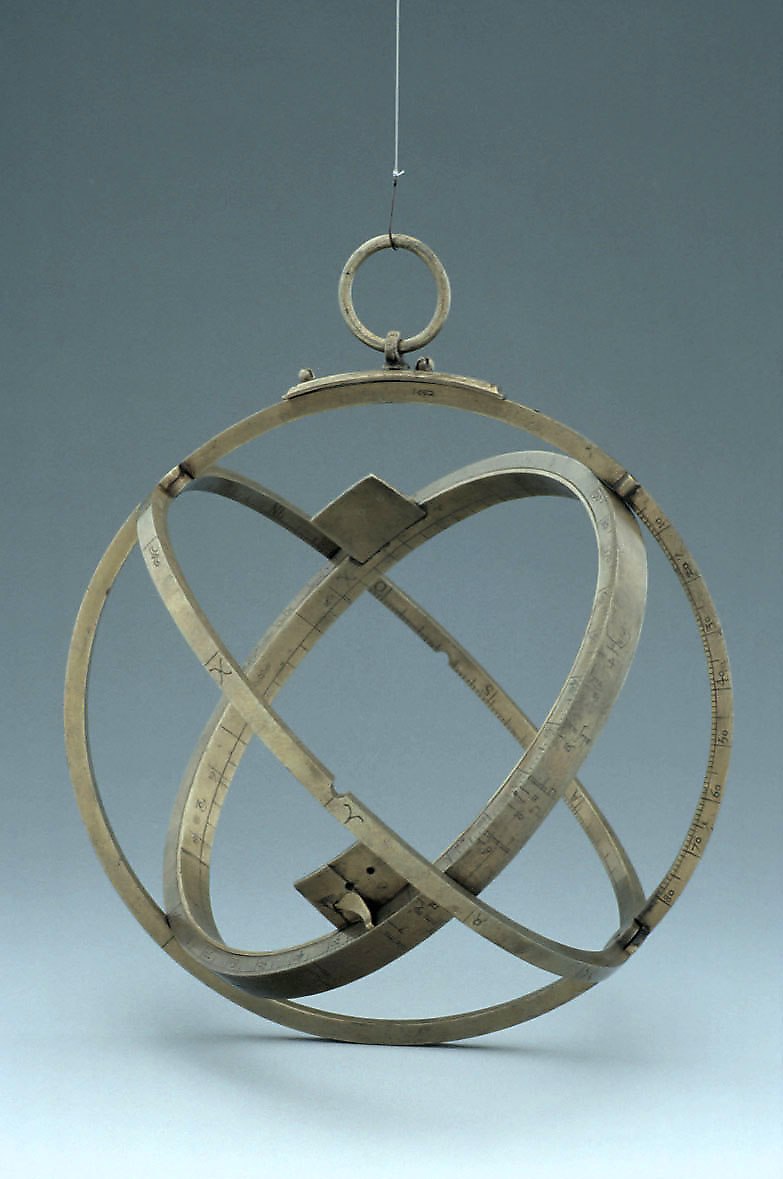
Astronomical Compendium, Later 16th century (802710)
Later 16th century
This circular astronomical compendium, measuring 66 mm in diameter, is constructed of gilt brass and signed with the initials 'C. S.', which are attributed to the Augsburg maker Christoph Schissler. The compendium functions as an inclining sundial and includes a lunar volvelle, a planetary hour conversion volvelle,…
Partial type record
Museum of the History of Science, Oxford
horological instruments
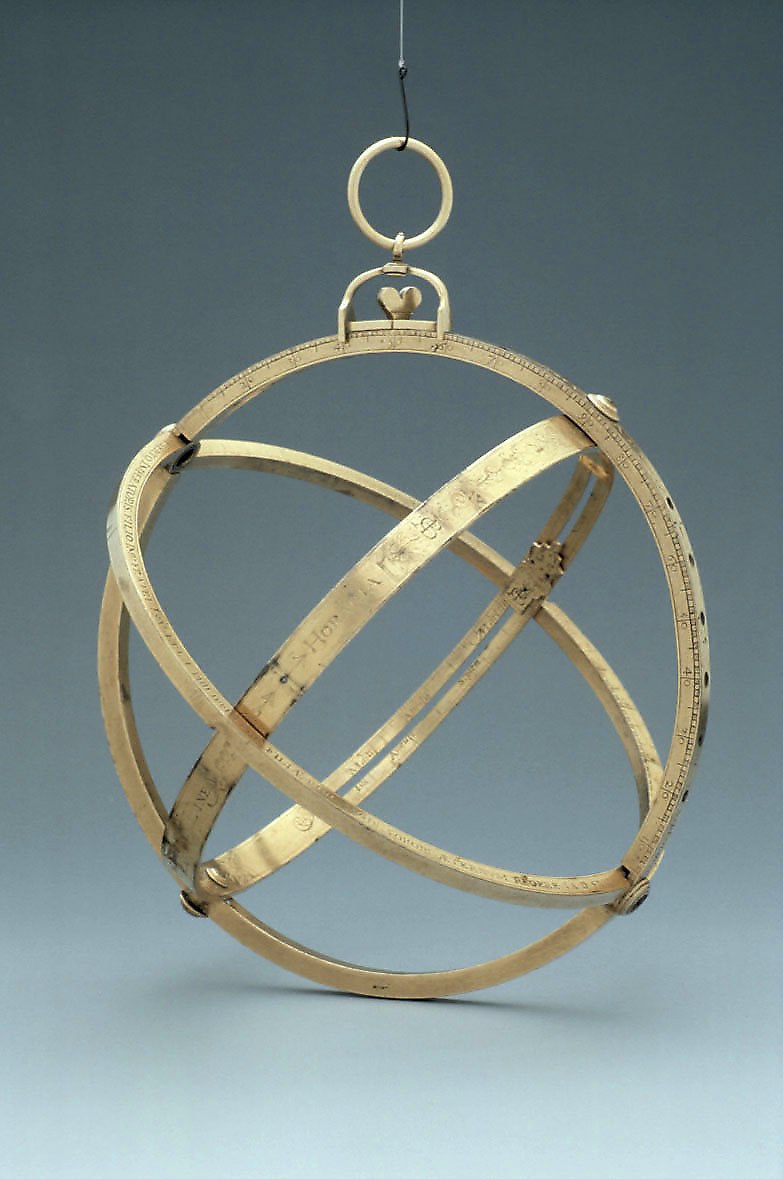
Astronomical Ring Dial
Mid 16th century
This astronomical ring dial, currently held by the Museum of the History of Science in Oxford, is an 182 mm diameter brass instrument. Although the piece is unsigned, it is attributed to Johannes Motter, active in Louvain during the mid-16th century, based on comparative analysis with signed and attributed examples…
Partial type record
Museum of the History of Science, Oxford
horological instruments
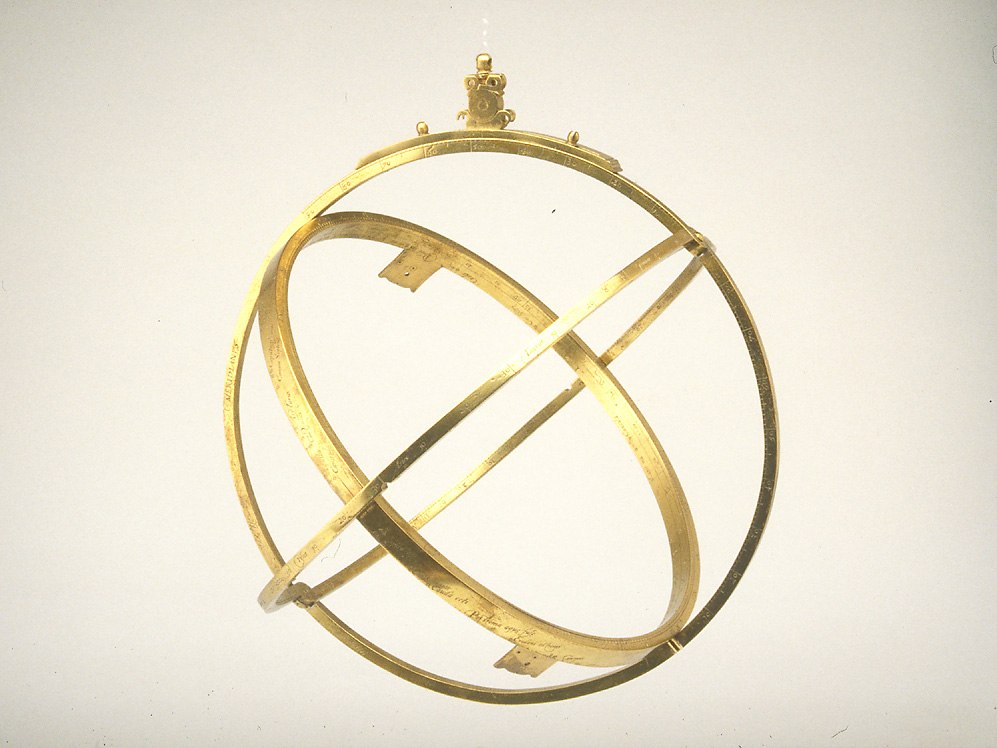
Astronomical Ring Dial by Antoine de Succa
1600
This equinoctial sundial, dated 1600 and signed by Antoine de Succa in Antwerp, is constructed from gilt brass with a diameter of 158 mm. The instrument consists of three principal rings: a meridian ring, an equatorial ring, and a declination ring. The meridian ring features an adjustable suspension ring and a latit…
Partial type record
Museum Boerhaave, Leiden
horological instruments
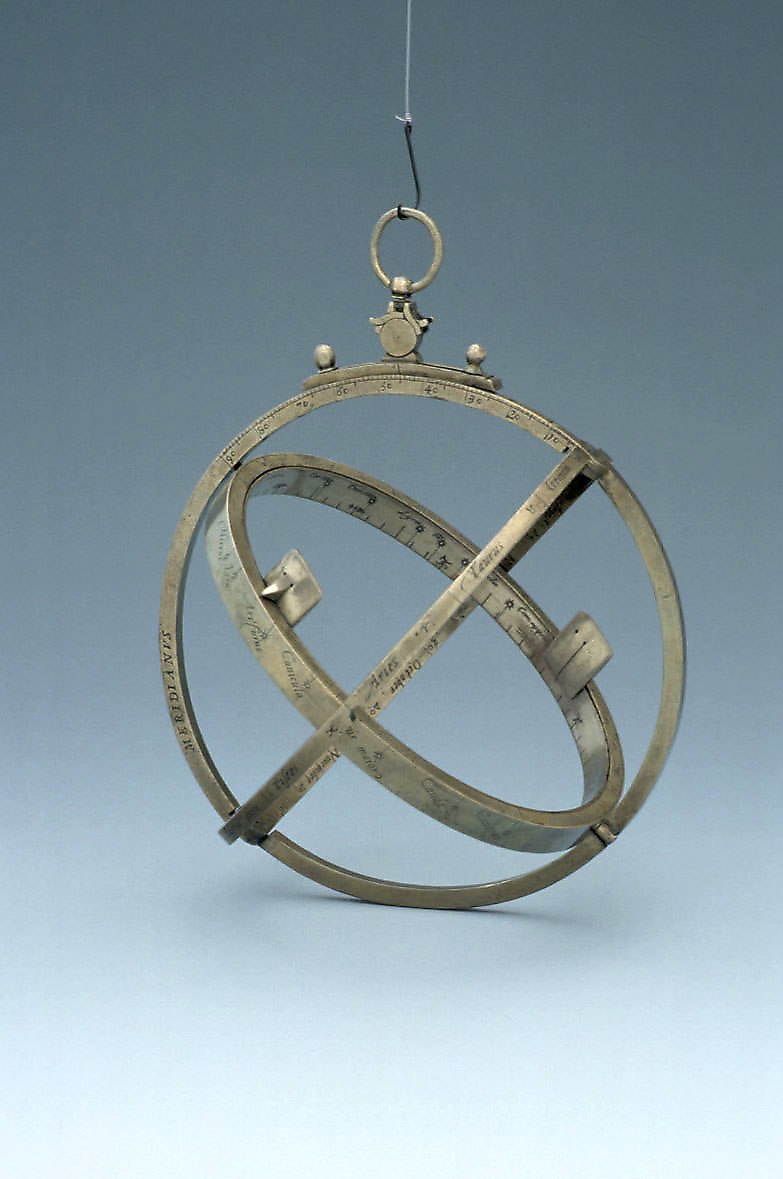
Astronomical Ring Dial by Gualterus Arsenius
1572
This astronomical ring dial, dated 1572, was constructed by Gualterus Arsenius in Louvain. The instrument is crafted from gilt brass and measures 262 mm in diameter. It comprises three hinged circular brass rings: a fixed meridian ring, an equatorial ring perpendicular to the meridian, and a third mobile ring that r…
Partial type record
Museum of the History of Science, Oxford
horological instruments
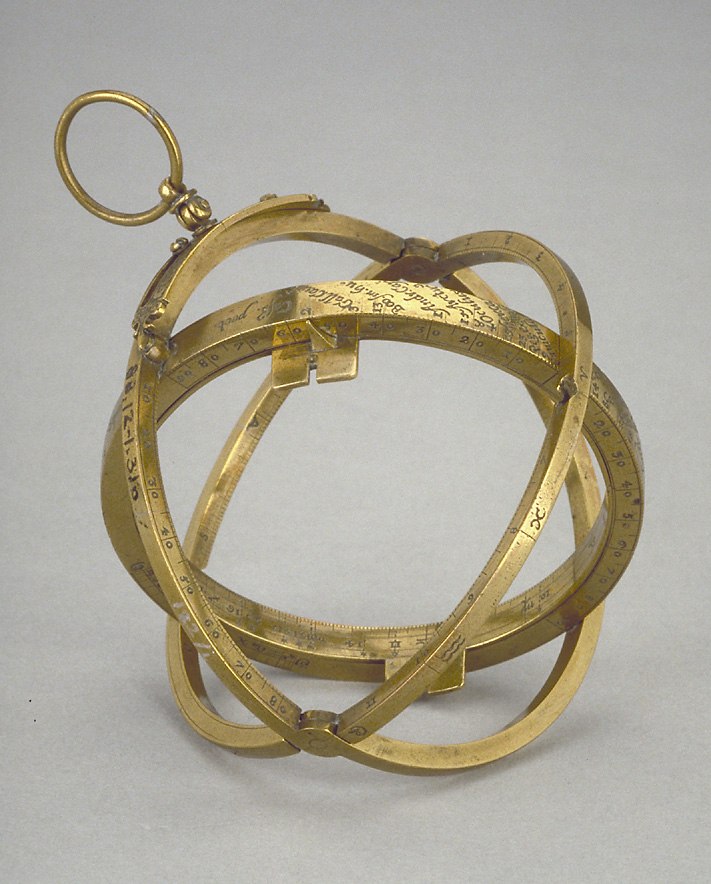
Astronomical Ring Dial by Gualterus Arsenius, 1567
1567
This astronomical ring dial is a brass instrument measuring 111 mm in diameter. It is signed by Gualterus Arsenius and dated 1567 at Louvain. The construction follows the format described by Gemma Frisius, featuring folding rings for the meridian, equator, and declination, along with a sliding ring for the sights. T…
Partial type record
© British Museum, London
horological instruments
Astronomical Ring Dial, Late 16th century
Late 16th century
This astronomical ring dial, measuring 70 mm in diameter, is constructed from gilt brass and is unsigned. It comprises three rings: a meridian ring, an equatorial ring, and a third ring pivoted to the polar points, which is fitted with an internal sliding ring featuring a pair of sights. The meridian ring features a…
Partial type record
Christie’s
horological instruments
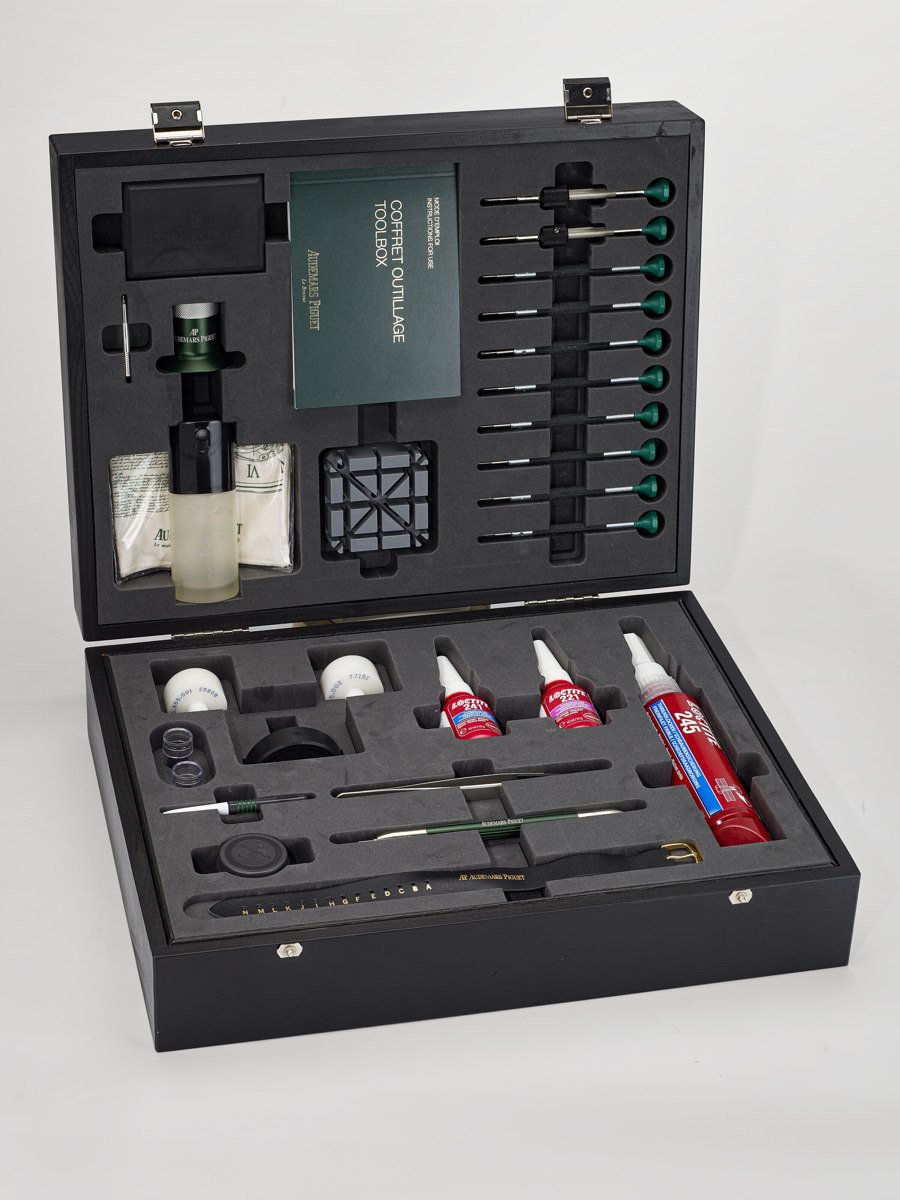
Audemars Piguet Watchmaker's Tool Box
circa 2014
This Audemars Piguet watchmaker's tool box is catalogued with a date of circa 2014 and is housed in a wooden case measuring 32 cm by 25 cm by 10 cm. The lot essay notes that the tool kit was conceived for use by boutique personnel and in other instances presented as gifts to watchmakers. Fitted inserts in the lid an…
Partial type record
History of Science Museum, University of Oxford
horological instruments
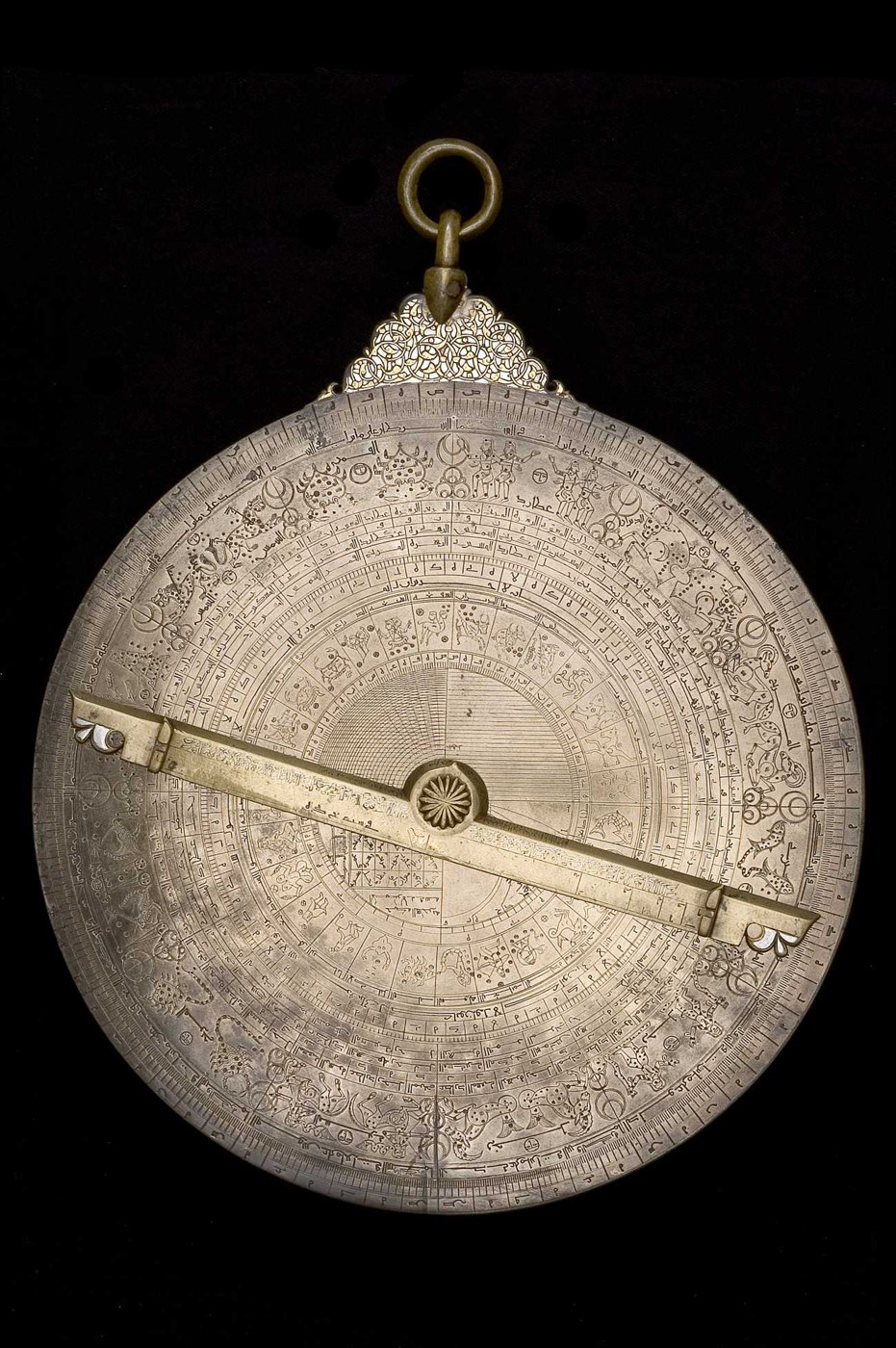
Ayyubid brass astrolabe
1227/8 (A.H. 625)
This brass astrolabe is attributed to the maker ‘Abd al-Karīm al-Miṣrī and dates to 1227/8 (A.H. 625). It was commissioned by the Ayyubid ruler al-Malik al-Ashraf Mūsā, nephew of Saladin. The instrument is distinguished by gold and silver damascene inlay, including an extensive honorific inscription for the sultan a…
Partial type record
British Museum, London
horological instruments
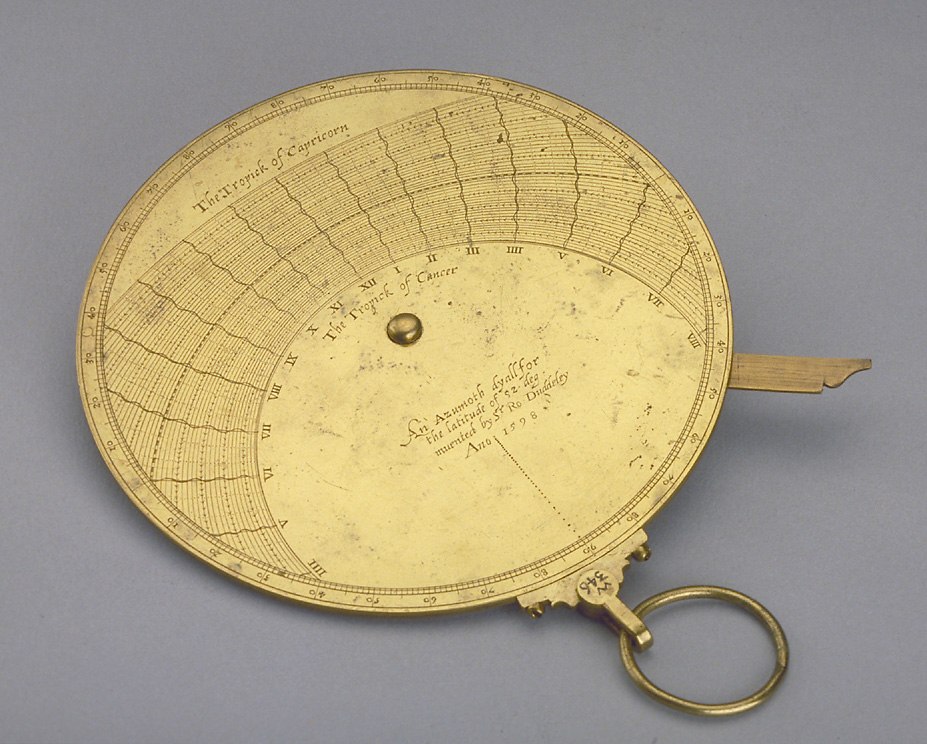
Azimuth Dial
circa 1600
This brass instrument, measuring 145 mm in diameter, is configured as an azimuth dial with an integrated planisphere. Its construction follows the general form of an astrolabe, featuring a mater equipped with a simple throne and suspension ring. The reverse side serves as the primary azimuth dial, displaying specifi…
Partial type record
Museum of the History of Science, Oxford
horological instruments
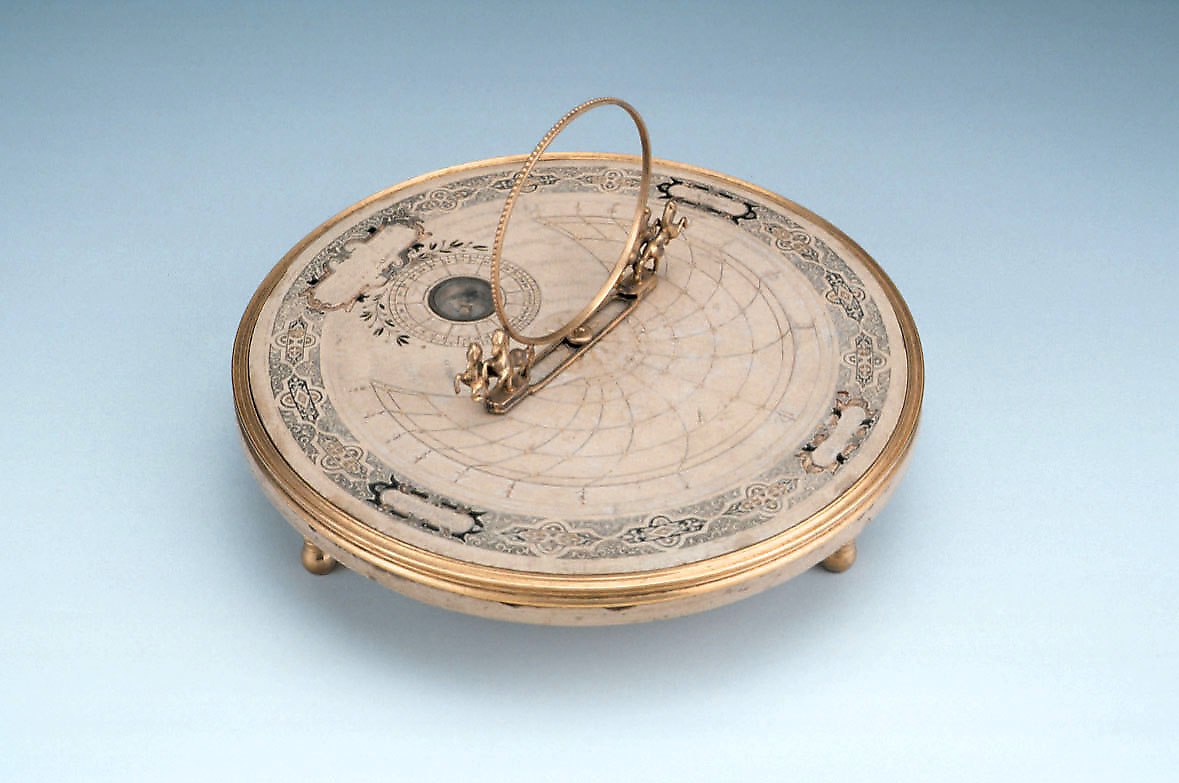
Azimuth Dial, 16th century
16th century
This azimuth dial is an unsigned instrument from 16th-century Germany, held by the Museum of the History of Science, Oxford. The sundial is composed of a circular stone tablet, measuring 178 mm in diameter, framed by a gilt brass rim and supported on three brass legs. It features an integrated gilt brass gnomon asse…
Partial type record
National Museum of American History
horological instruments
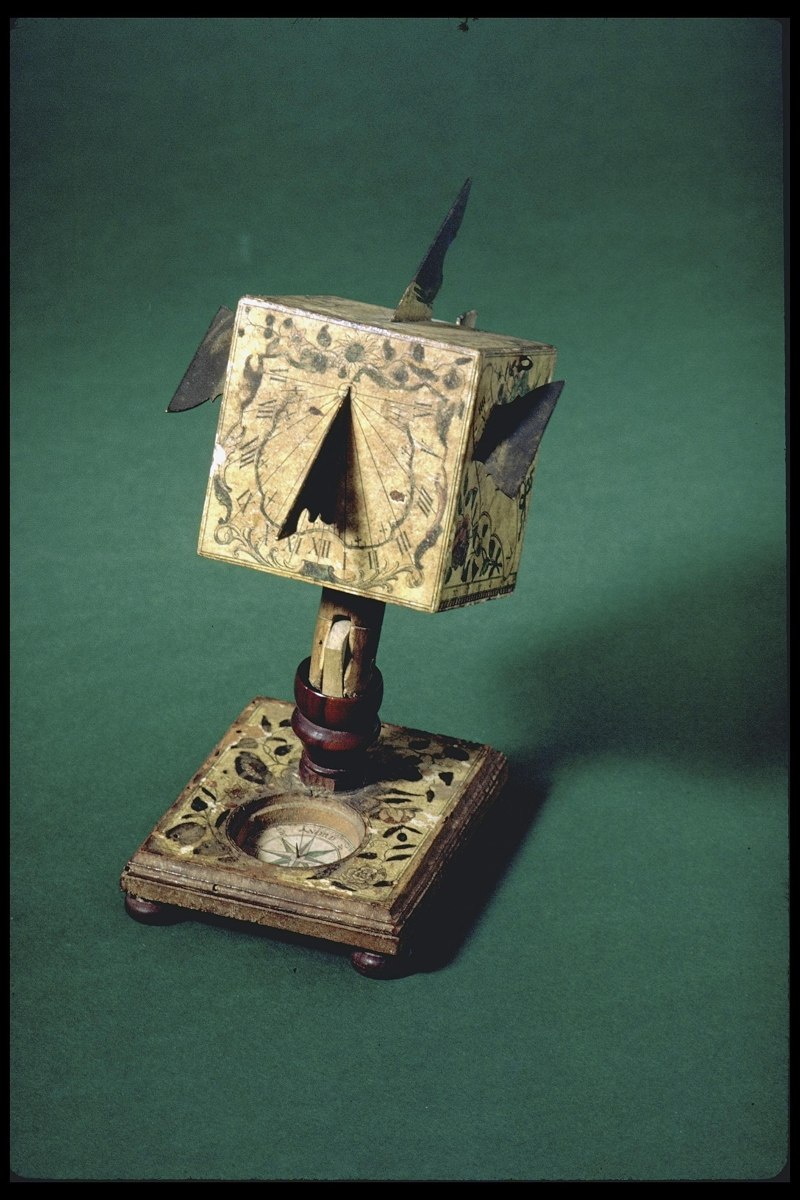
Beringer and Seyfried Polyhedral Sundial
1730s
The National Museum of American History preserves this wooden polyhedral cube dial, attributed by the source to David Beringer and Georg Paulus Seyfried in Nuremberg, Germany, dating to the 1730s. The cubic dial head is mounted on a hinged wooden pillar adjustable for latitude above a decorated square base. Paper sh…
Partial type record
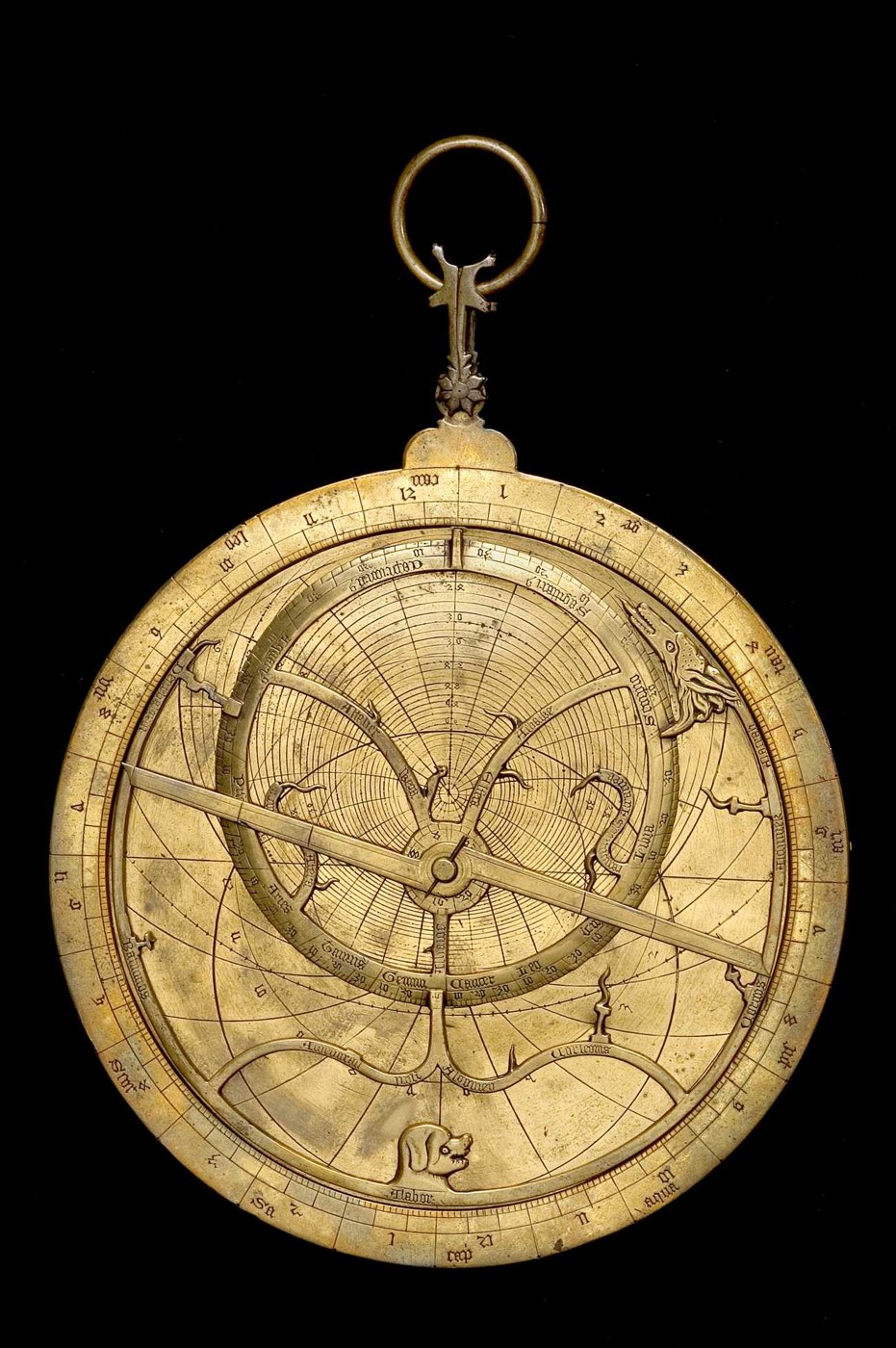
History of Science Museum, University of Oxford
horological instruments
Brass Astrolabe
ca. 1370
This brass astrolabe (inventory no. 49359) is attributed to England, circa 1370. The instrument features a Y-shaped (low) rete with 19 stars and zoomorphic pointers, including a bird for Vega, a dog's head for Sirius, and a dragon's head for Antares. The mater and limb are of one-piece construction. The back include…
Partial type record
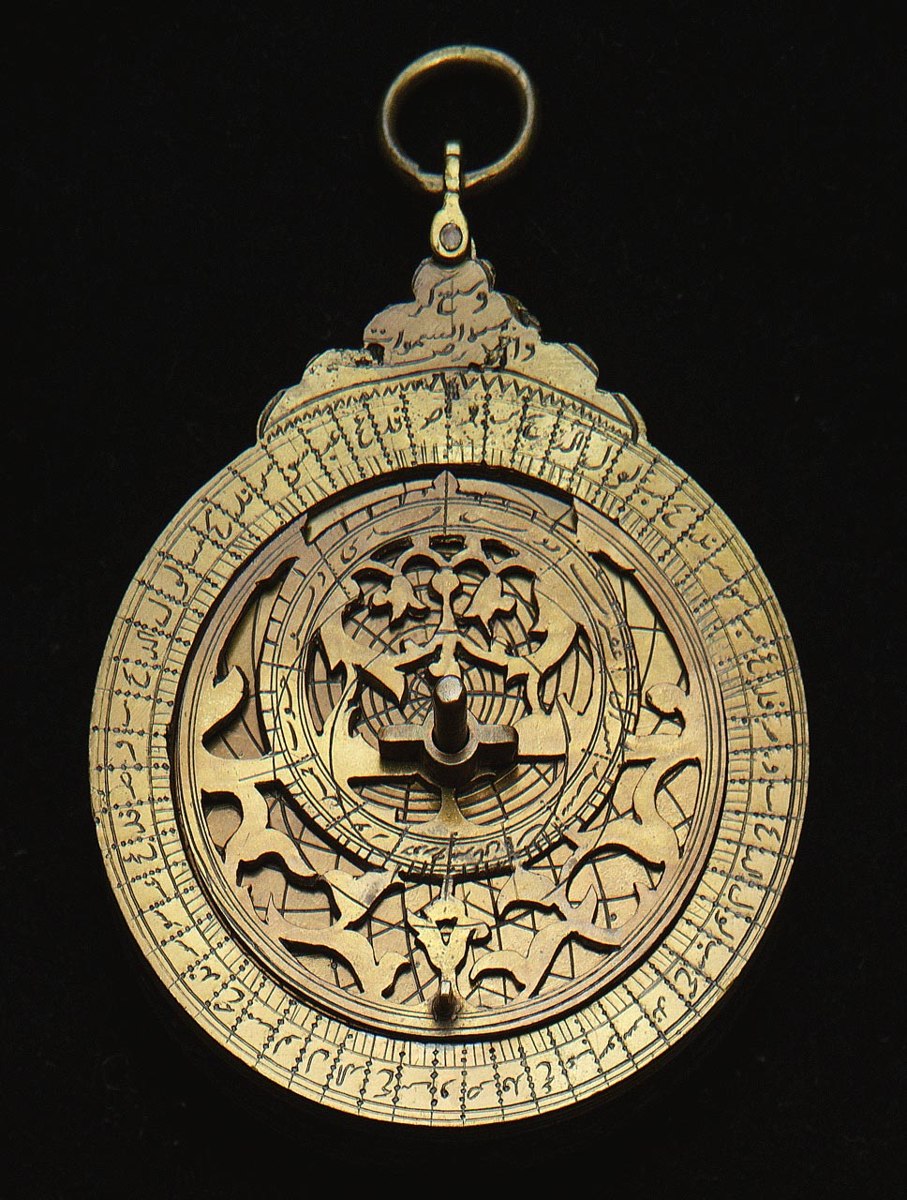
National Maritime Museum, Greenwich, London, Caird Collection
horological instruments
Brass Astrolabe AST0580
1813
Catalogued under object identification AST0580 at the National Maritime Museum, Greenwich, this brass astrolabe is dated to 1813 (AH 1228). The instrument measures 60 mm in diameter and 93 mm in total length including its throne. The throne is tri-lobed and engraved with a Koranic verse. According to museum document…
Partial type record
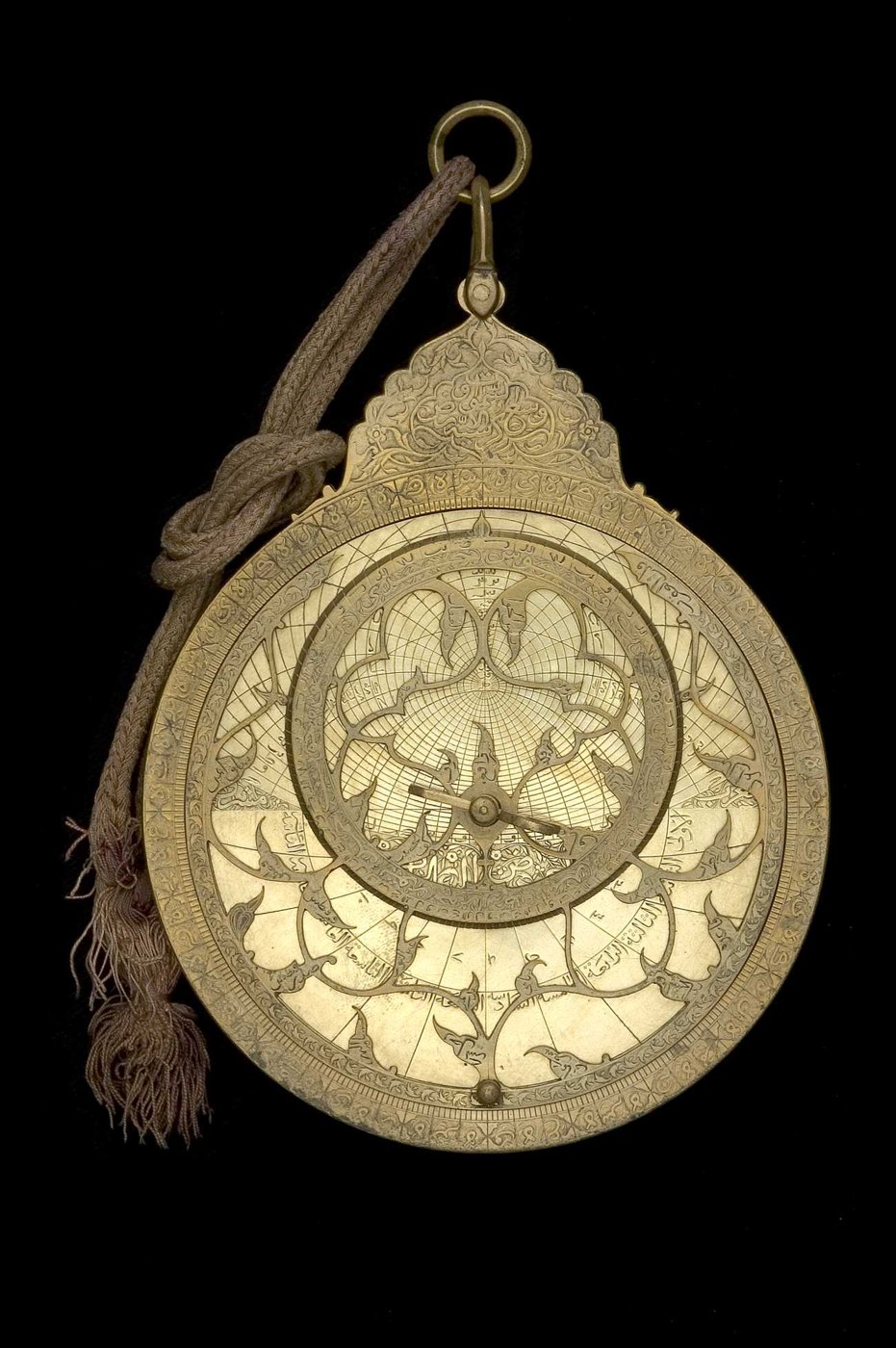
History of Science Museum, University of Oxford
horological instruments
Brass Astrolabe by 'Abd al-'Ali
1707/8 (A.H. 1119)
This brass planispheric astrolabe, inventory number 40330, is attributed to the maker 'Abd al-'Ali and dated 1707/8 (A.H. 1119). Constructed in Persia, the instrument features an Indo-Persian style engraved throne with an integrated base, embossed on the front with a Qur'anic verse. The mater and limb are of one-pie…
Partial type record
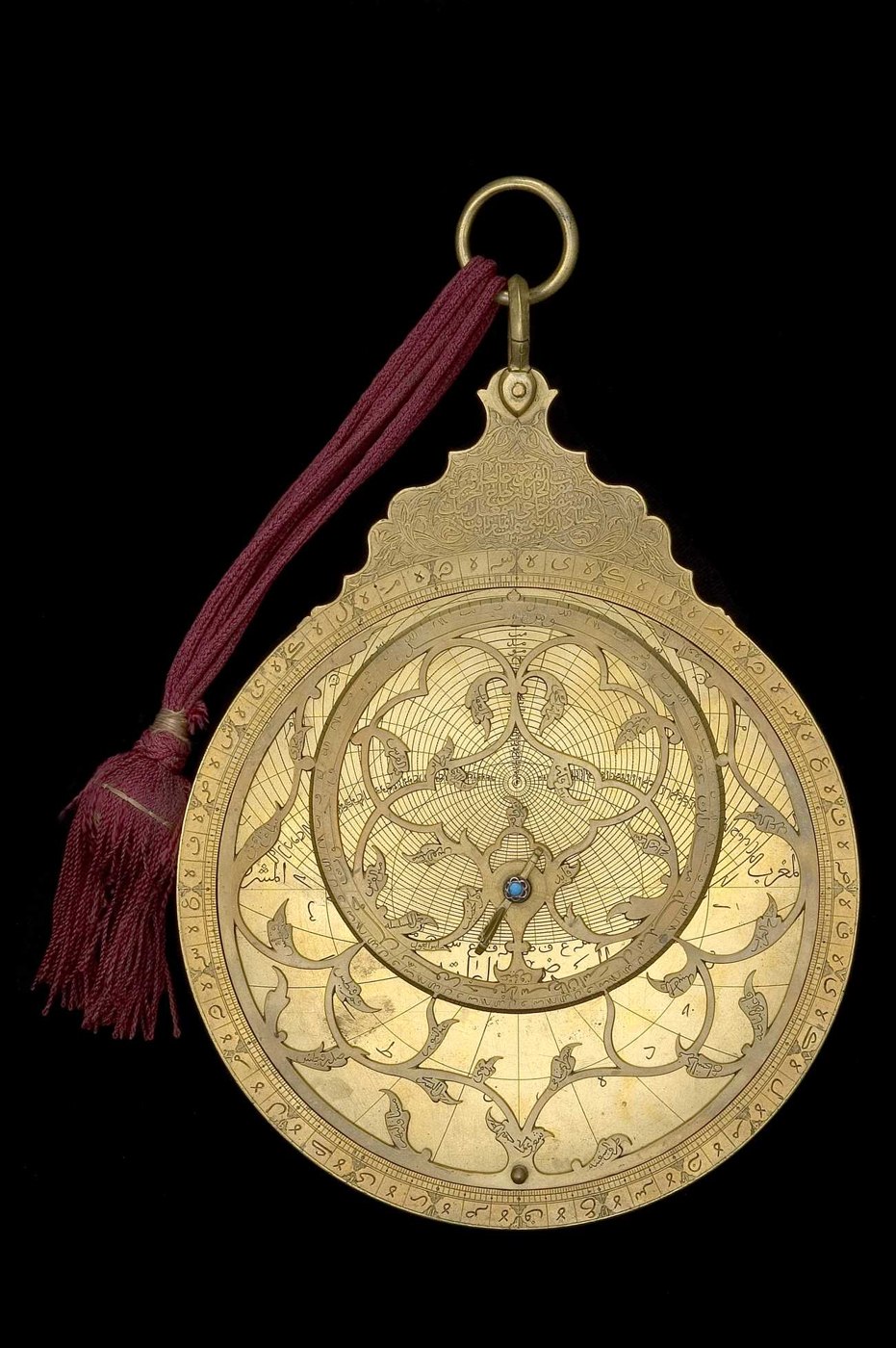
History of Science Museum, University of Oxford
horological instruments
Brass Astrolabe by 'Abd al-A'imma
1712/13 (A.H. 1124)
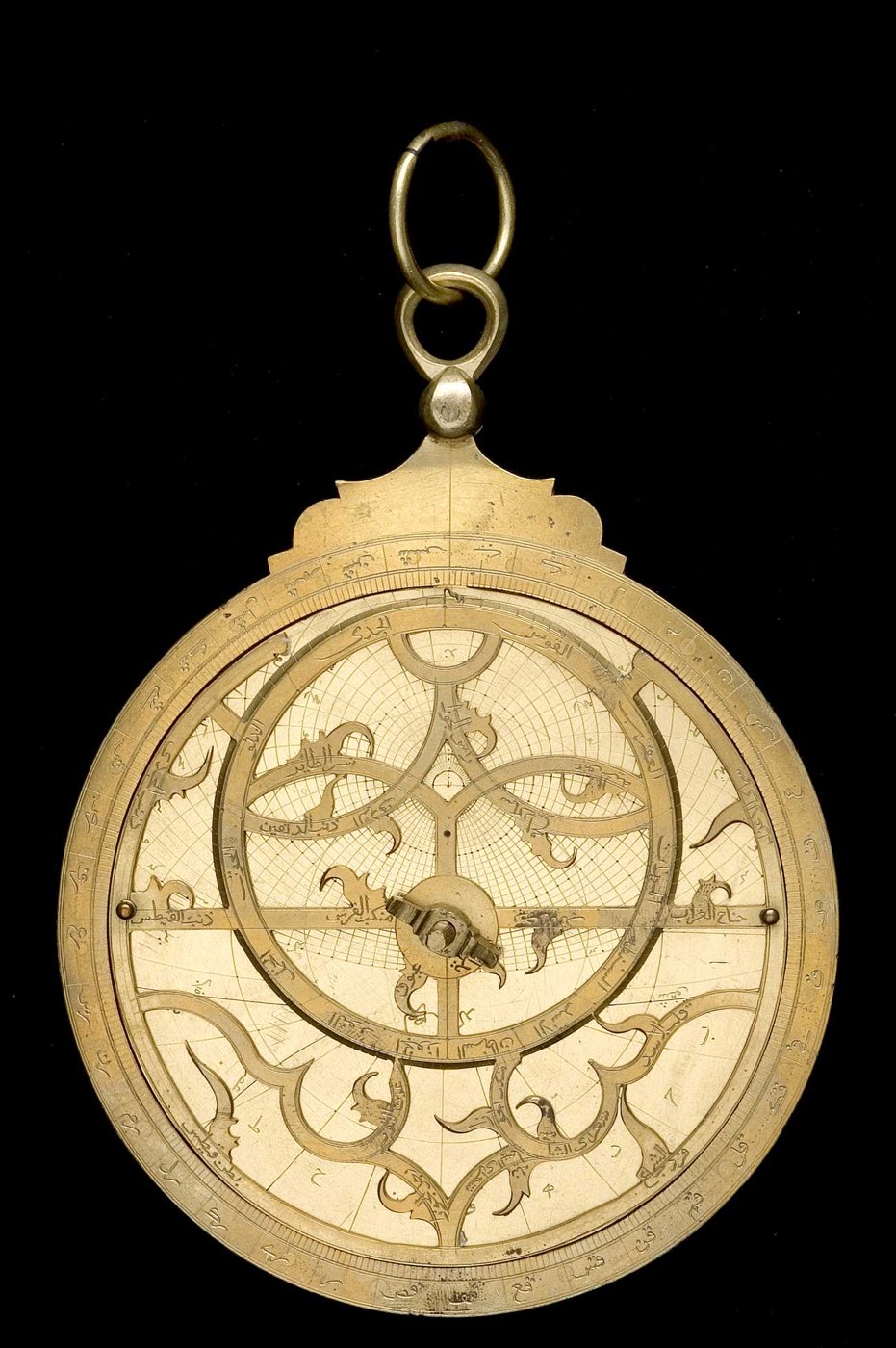
This brass astrolabe, catalogued as inventory number 40744, is attributed to the maker ‘Abd al-A’imma and dates to 1712/13 (A.H. 1124). The instrument features a one-piece mater and limb construction with an Indo-Persian style engraved throne. The back includes nine distinct scales, including shadow squares and sine…
Partial type record
History of Science Museum, University of Oxford
horological instruments
Brass Astrolabe by ‘Abdī
1713/4
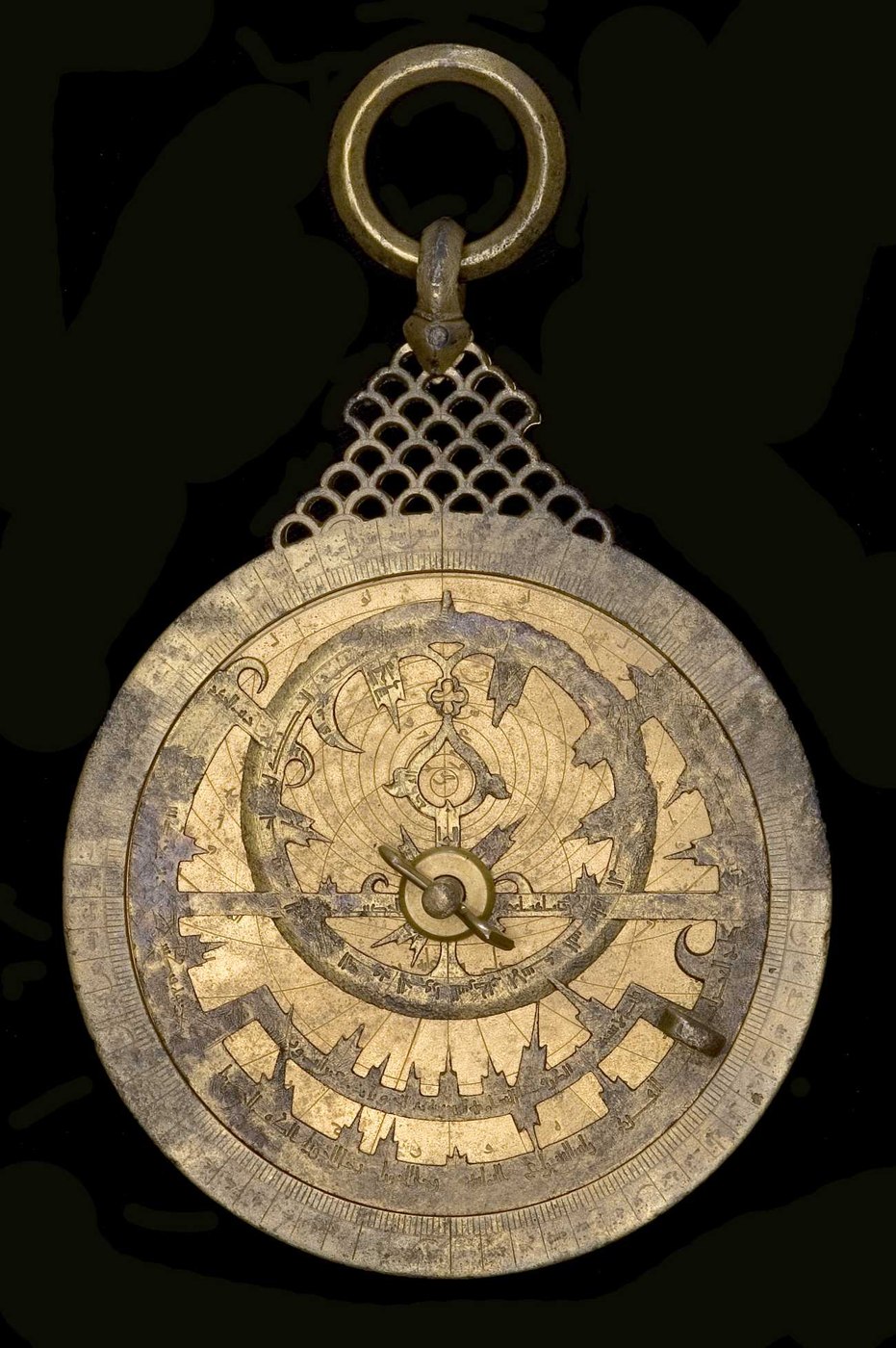
This planispheric astrolabe, inventory number 39955, is attributed to the maker ‘Abdī and dates to 1713/4. Manufactured in Turkey, the instrument is constructed primarily of brass and features a Y-shaped rete with 22 stars. The mater and limb are joined via soldered and riveted construction, with rivets spaced at ap…
Partial type record
History of Science Museum, University of Oxford
horological instruments
Brass Astrolabe by Aḥmad and Muḥammad
984/5 or 1003/4 (A.H. 374 or 394)
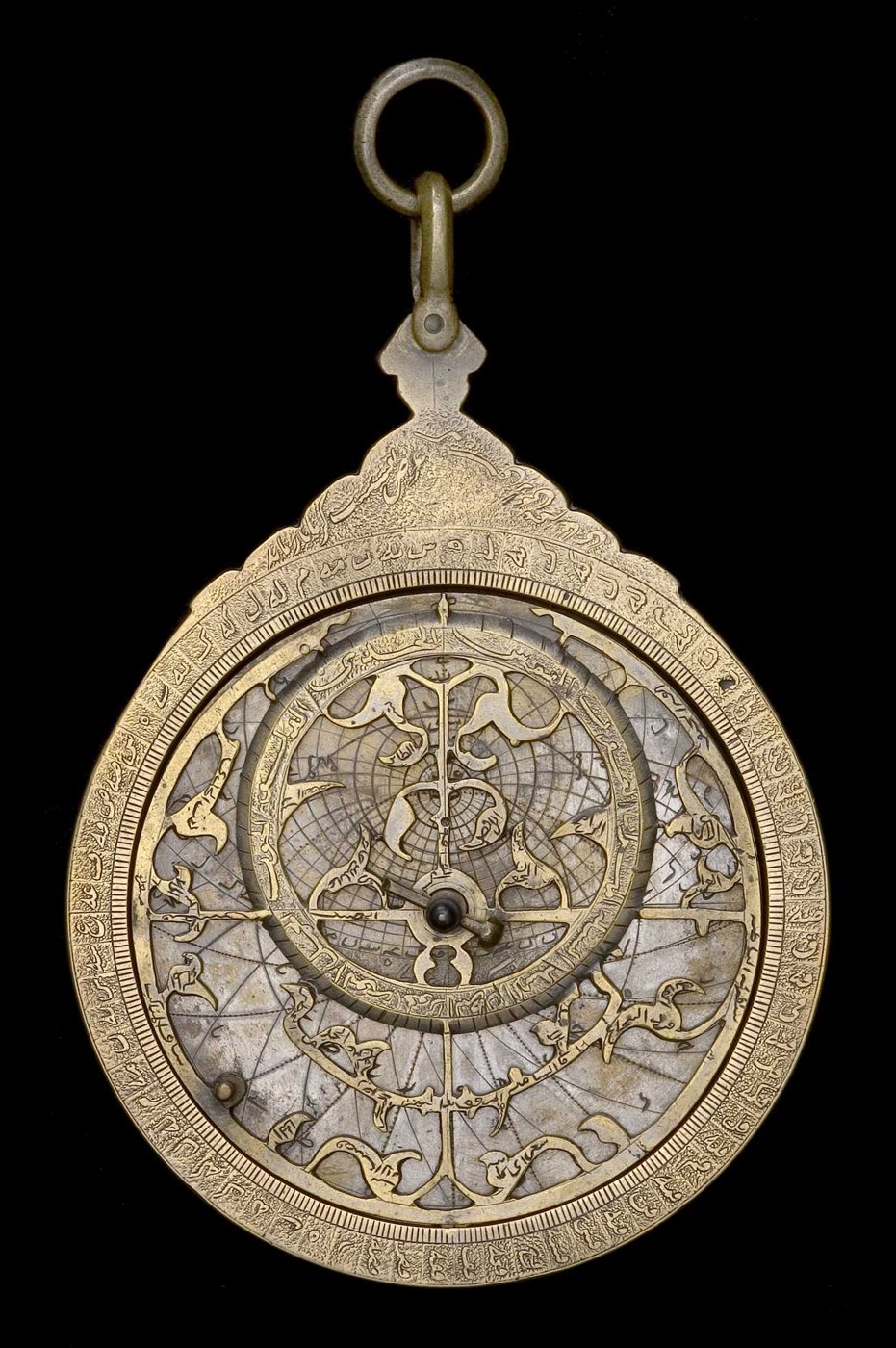
This early Persian brass astrolabe, identified as inventory number 33767, is attributed to Aḥmad and Muḥammad, sons of Ibrāhīm, and dated to either 984/5 or 1003/4 (A.H. 374 or 394). The instrument features an Indo-Persian, pierced-type throne with an integrated base and an omega-style shackle. Constructed in two pi…
Partial type record
History of Science Museum, University of Oxford
horological instruments
Brass Astrolabe by Faḍl ‘Alī
early 18th century (?)
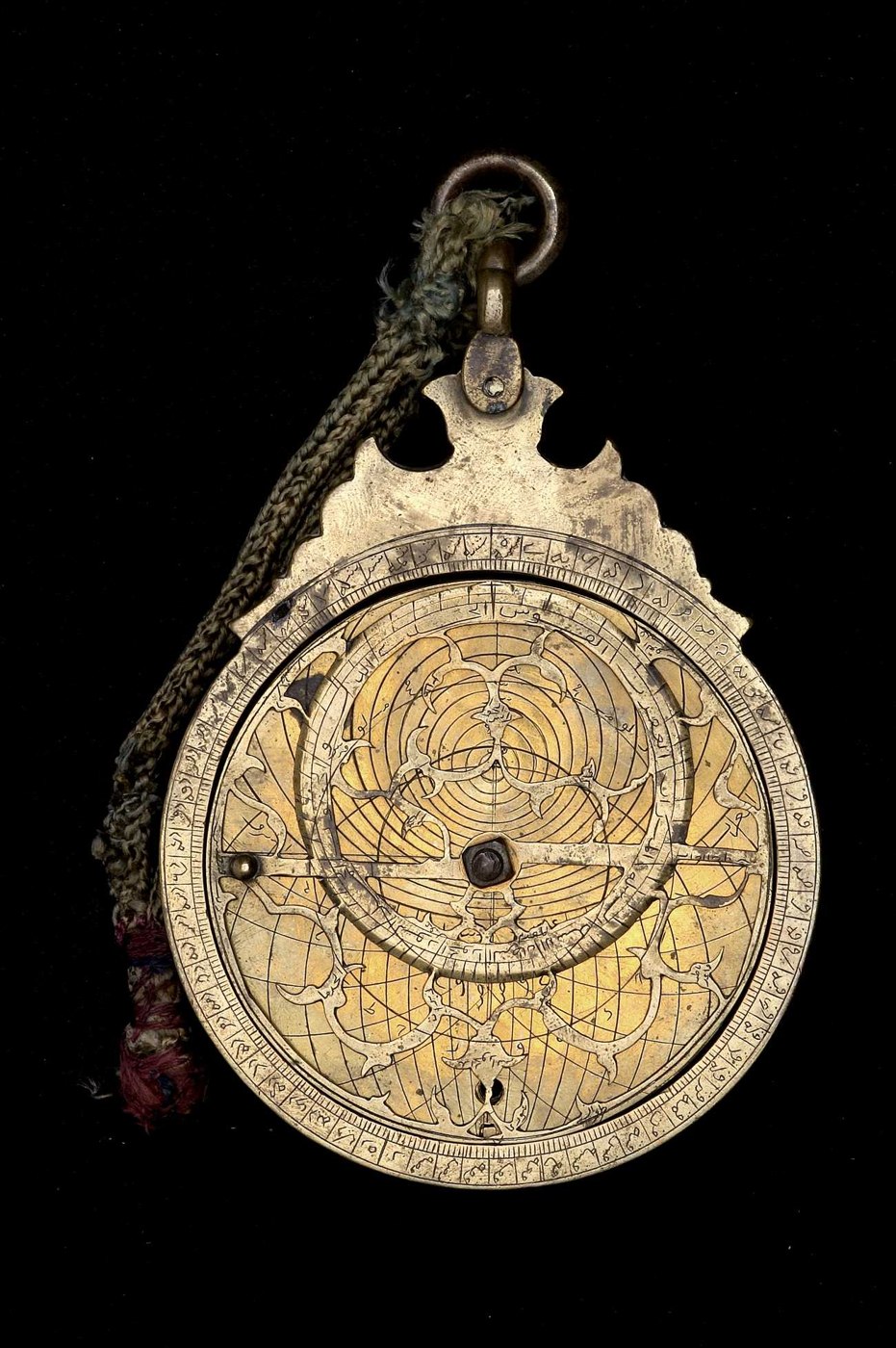
This brass astrolabe is attributed to the maker Faḍl ‘Alī and dated to the early 18th century. The instrument features a broad, Indo-Persian type throne attached to an integrated base, with a simple round-section ring and an omega-shaped shackle. The mater and limb are constructed from a single piece of brass, and t…
Partial type record
History of Science Museum, University of Oxford
horological instruments
Brass Astrolabe by Ibn Muḥibb Ḥaqiqa
1647/8 (A.H. 1057)
This brass astrolabe, bearing inventory number 52066, is attributed to the maker Ibn Muḥibb Ḥaqiqa and dated 1647/8 (A.H. 1057). It features an Indo-Persian broad-type throne with an integrated base, a simple round cross-section ring, and an omega-type shackle. The instrument is constructed with a two-piece, soldere…
Partial type record
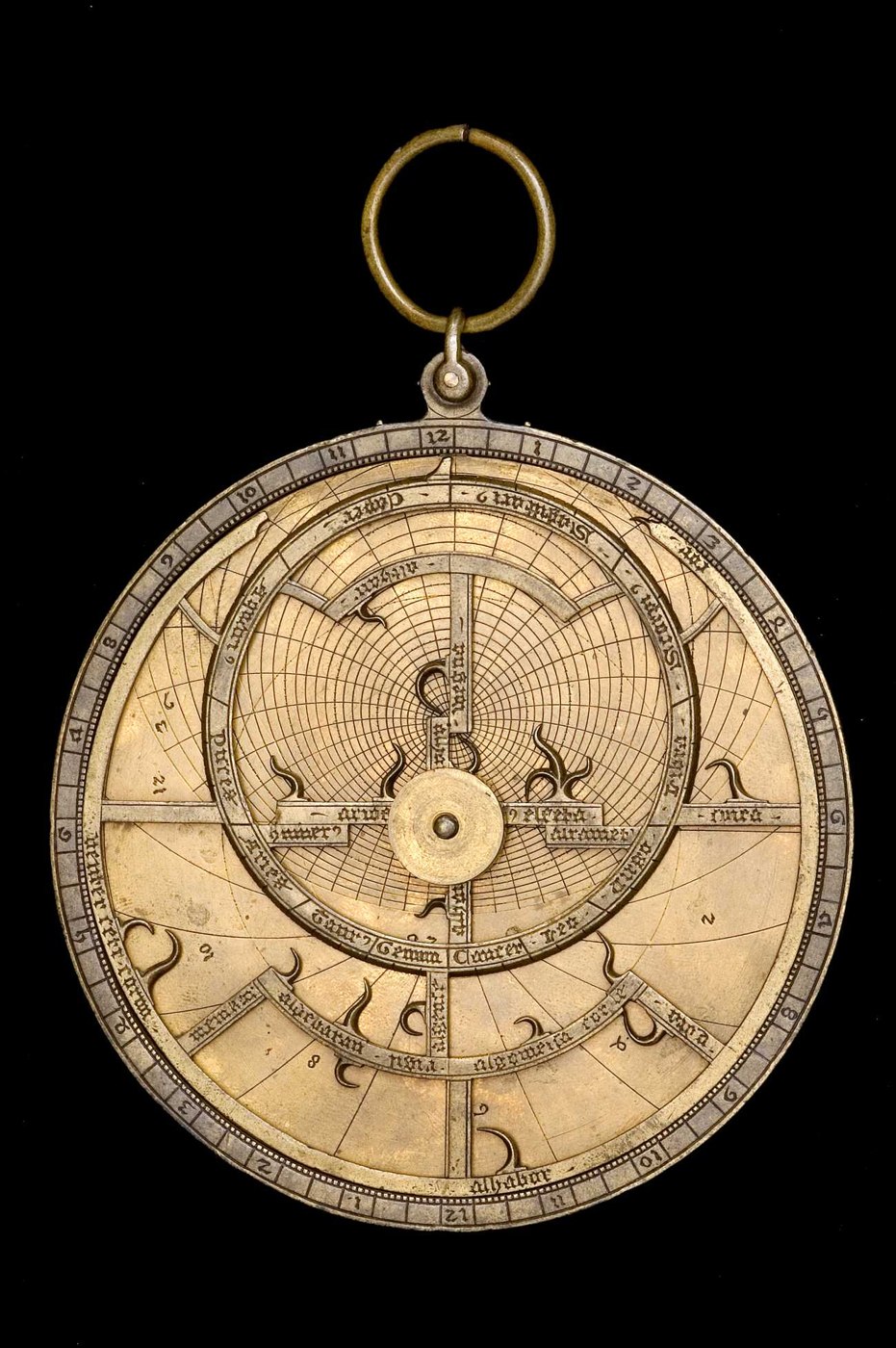
History of Science Museum, University of Oxford
horological instruments
Brass astrolabe by Jean Fusoris
ca. 1400
This brass planispheric astrolabe is attributed to Jean Fusoris, Paris, dating to approximately 1400. It features an omega-type shackle, a ring with a round cross-section, and a simple-type throne decorated with single raised lines. The mater and limb comprise two soldered pieces, with the limb scale marked for equa…
Partial type record
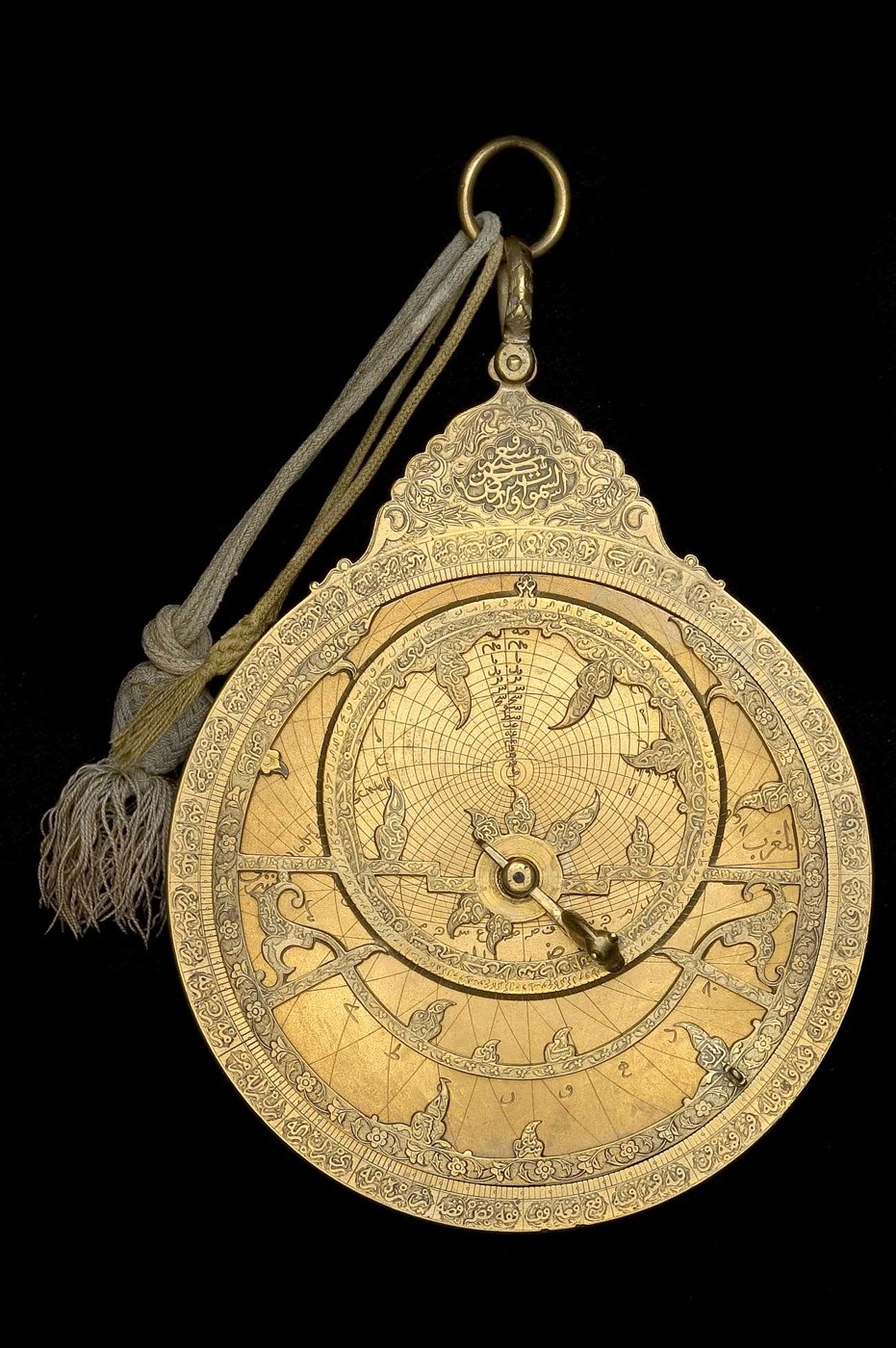
History of Science Museum, University of Oxford
horological instruments
Brass Astrolabe by Khalīl Muḥammad ibn Ḥasan
1708/9
This brass astrolabe (inventory 46680) is attributed to the maker Khalīl Muḥammad ibn Ḥasan, dated to 1708/9, and originating from Iṣfahān. The instrument features an Indo-Persian style engraved throne, a simple circular ring, and an omega-type shackle. The mater and limb are constructed as one piece. It is equipped…
Partial type record
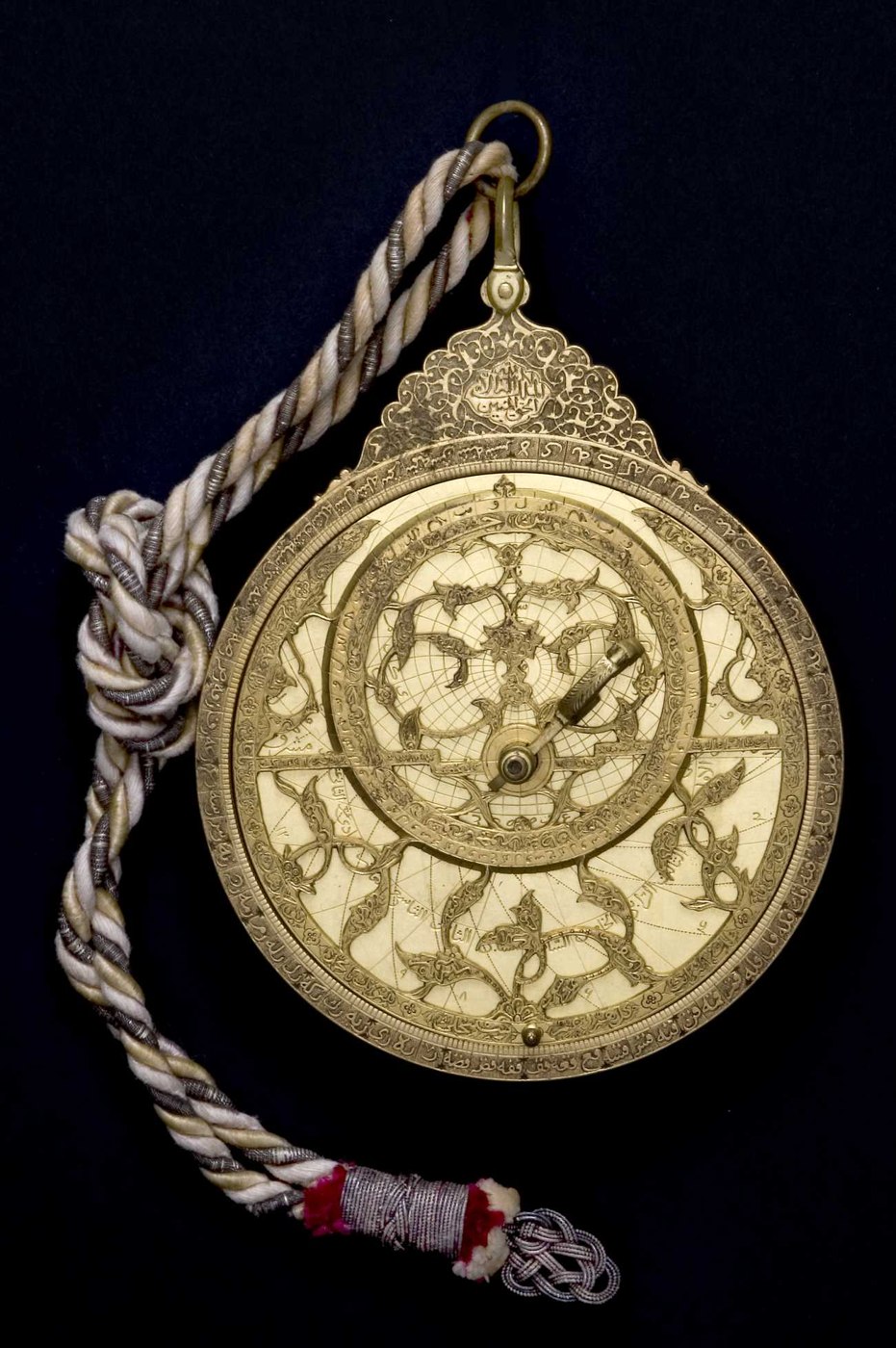
History of Science Museum, University of Oxford
horological instruments
Brass Astrolabe by Khalīl Muḥammad ibn Ḥasan ‘Alī
ca. 1700
This brass astrolabe, attributed to the maker Khalīl Muḥammad ibn Ḥasan ‘Alī and dated to approximately 1700, originated in Iṣfahān. The instrument features a one-piece mater and limb construction with an integrated tab for plate alignment. It is equipped with an Indo-Persian engraved throne, a simple round-section…
Partial type record
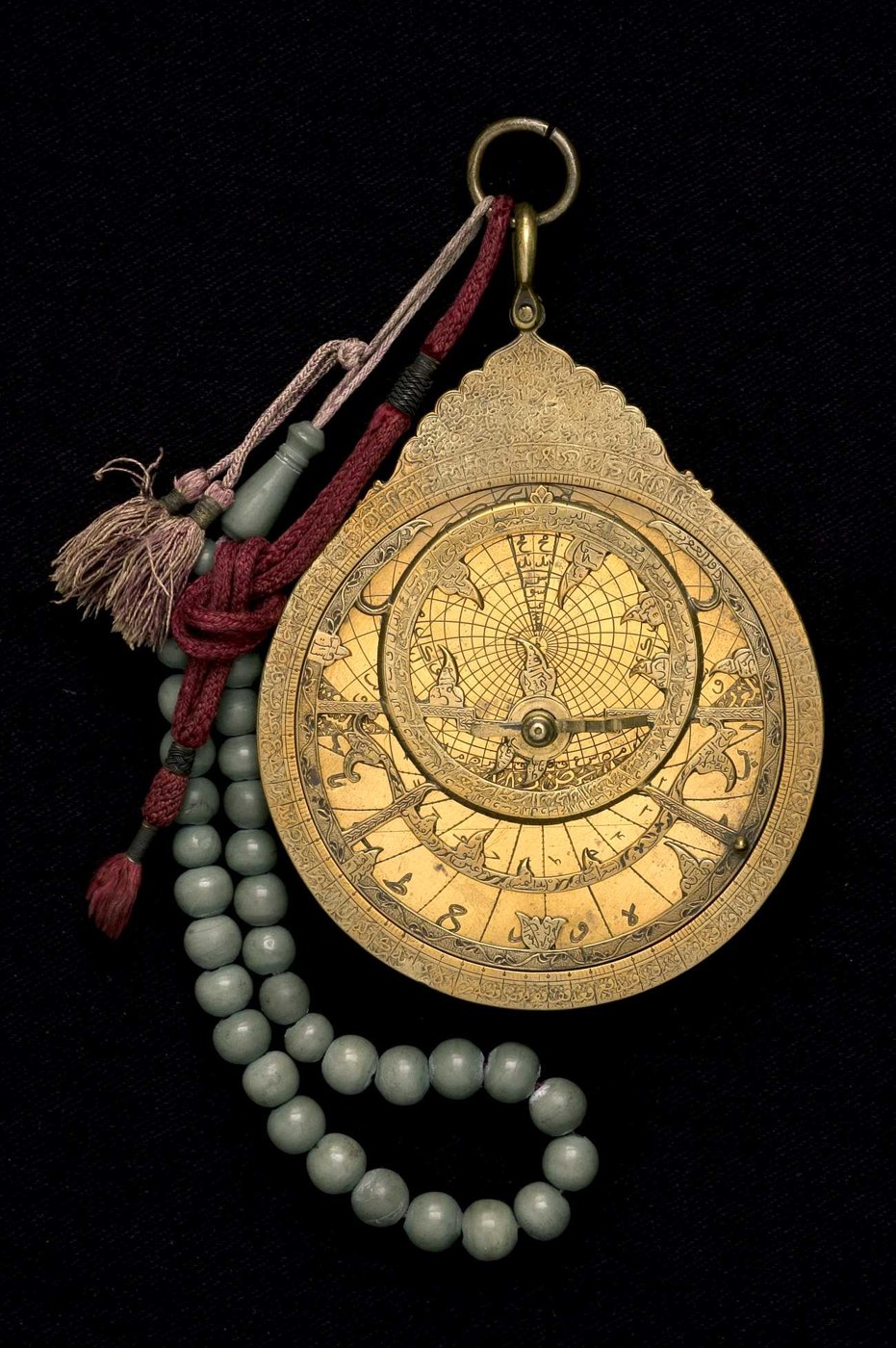
History of Science Museum, University of Oxford
horological instruments
Brass Astrolabe by Khalīl Muḥammad ibn Ḥasan ‘Alī, ca. 1700
ca. 1700
This brass planispheric astrolabe, dating to approximately 1700, was crafted in Iṣfahān by Khalīl Muḥammad ibn Ḥasan ‘Alī. The instrument features a one-piece mater and limb construction with an integrated plate-tab. The throne is of an engraved, Indo-Persian type, attached via an integrated base, and includes an om…
Partial type record
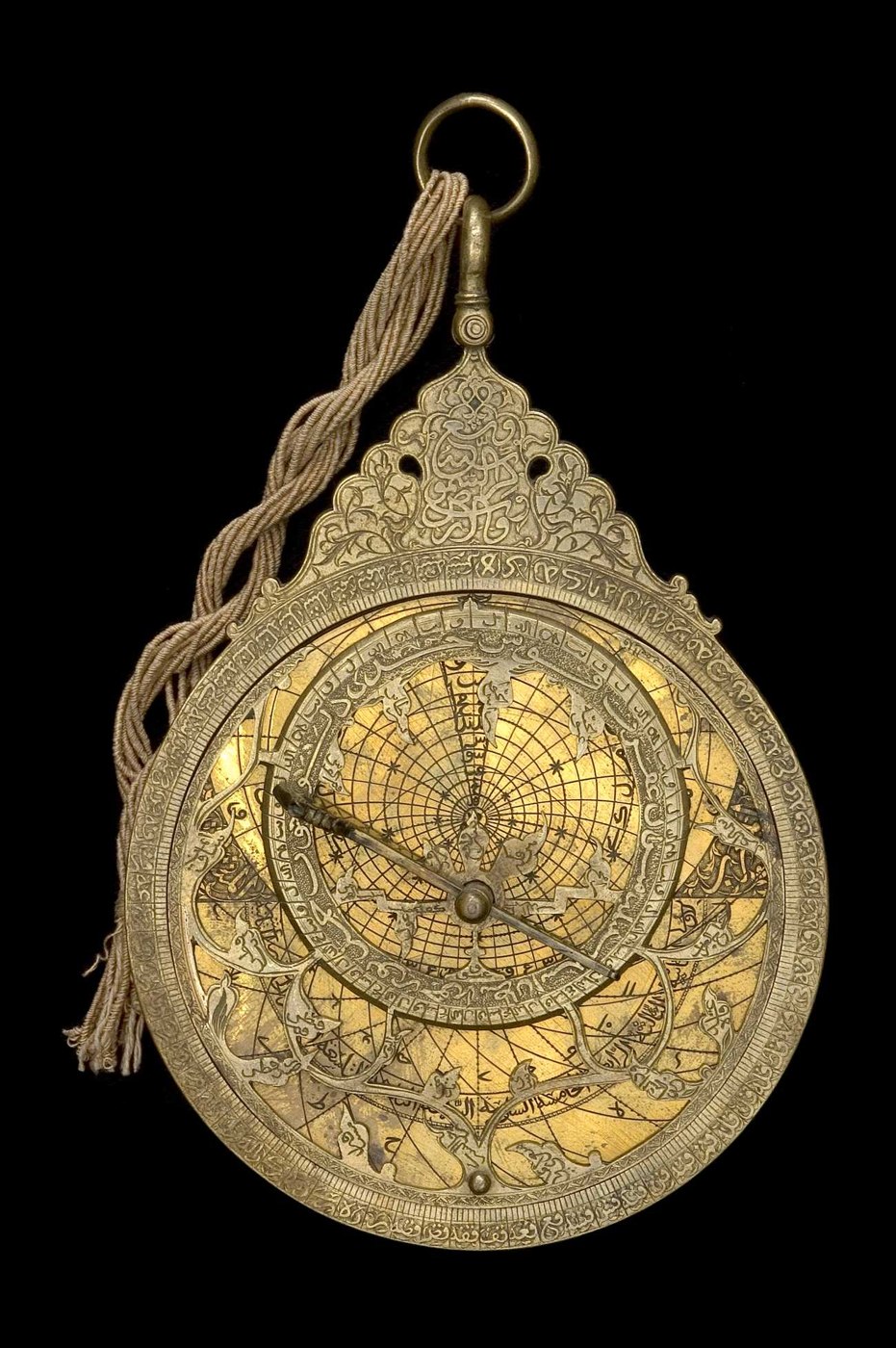
History of Science Museum, University of Oxford
horological instruments
Brass Astrolabe by Muḥammad Mahdī
ca. 1660
This brass astrolabe (inventory number 45581) is attributed to the maker Muḥammad Mahdī and dates to approximately 1660. The instrument features an Indo-Persian pierced-style throne with an integrated base, a simple round ring, and an omega-type shackle. The mater and limb are constructed as one piece, with the limb…
Partial type record
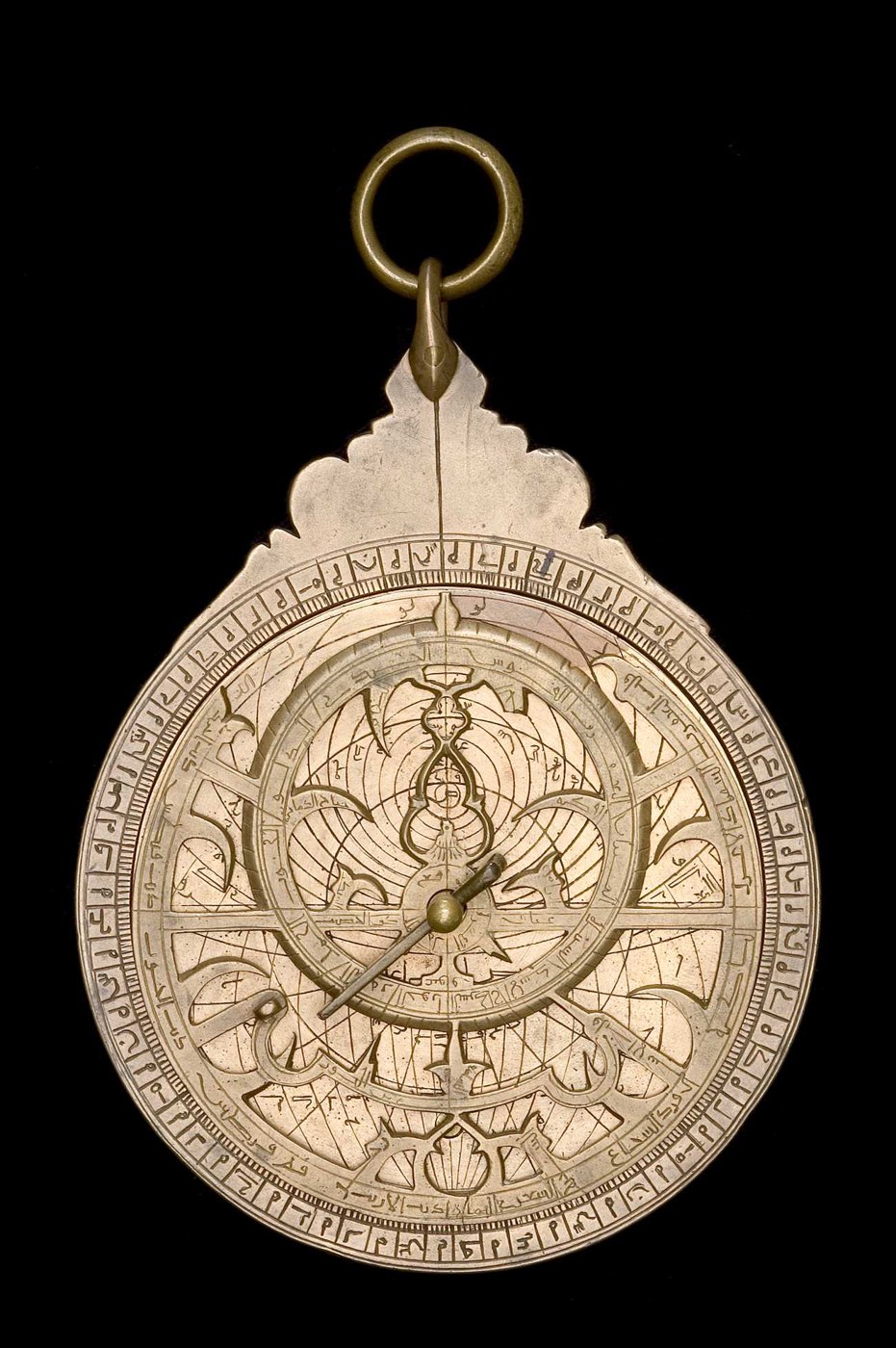
History of Science Museum, University of Oxford
horological instruments
Brass Astrolabe by Muḥammad Ṣaffār
1505/06 (A.H. 911)
It features a one-piece mater and limb construction with a degree scale on the limb, a simple engraved throne, and an omega-type shackle. The instrument is equipped with a rete of the indicator-line type, featuring a small bird-shaped star pointer for Vega. The alidade is of an unusual design, constructed from two i…
Partial type record
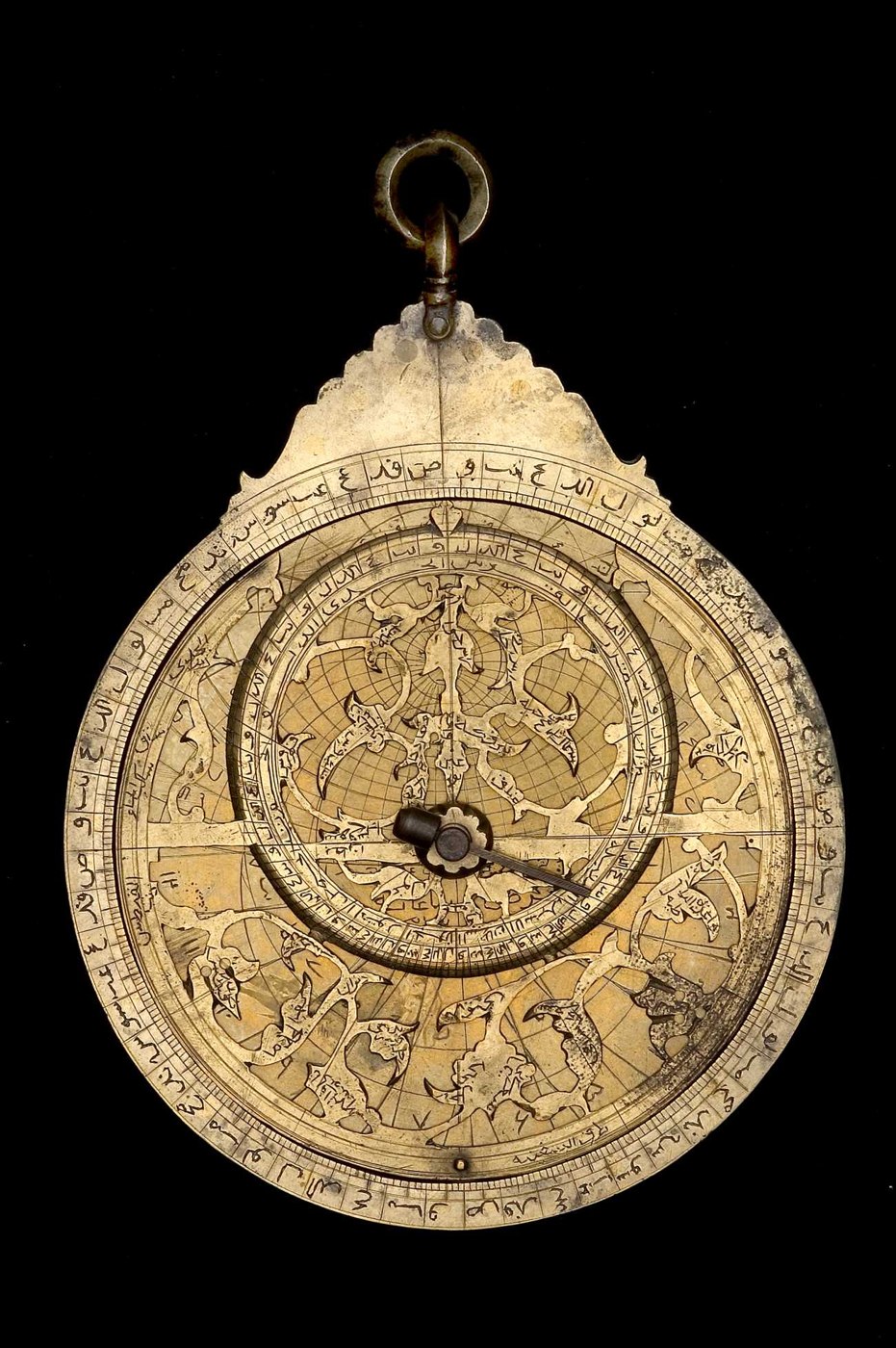
History of Science Museum, University of Oxford
horological instruments
Brass Astrolabe by Sayyid ’Abd al-Baqi
1789/90
This brass astrolabe is signed by the maker Sayyid ’Abd al-Baqi and dated 1789/90 (A.H. 1204). It features a five-lobed throne with integrated supports and an omega-type shackle. The instrument is constructed with a soldered and riveted mater and limb assembly, incorporating a tab system on the limb to secure the ty…
Partial type record
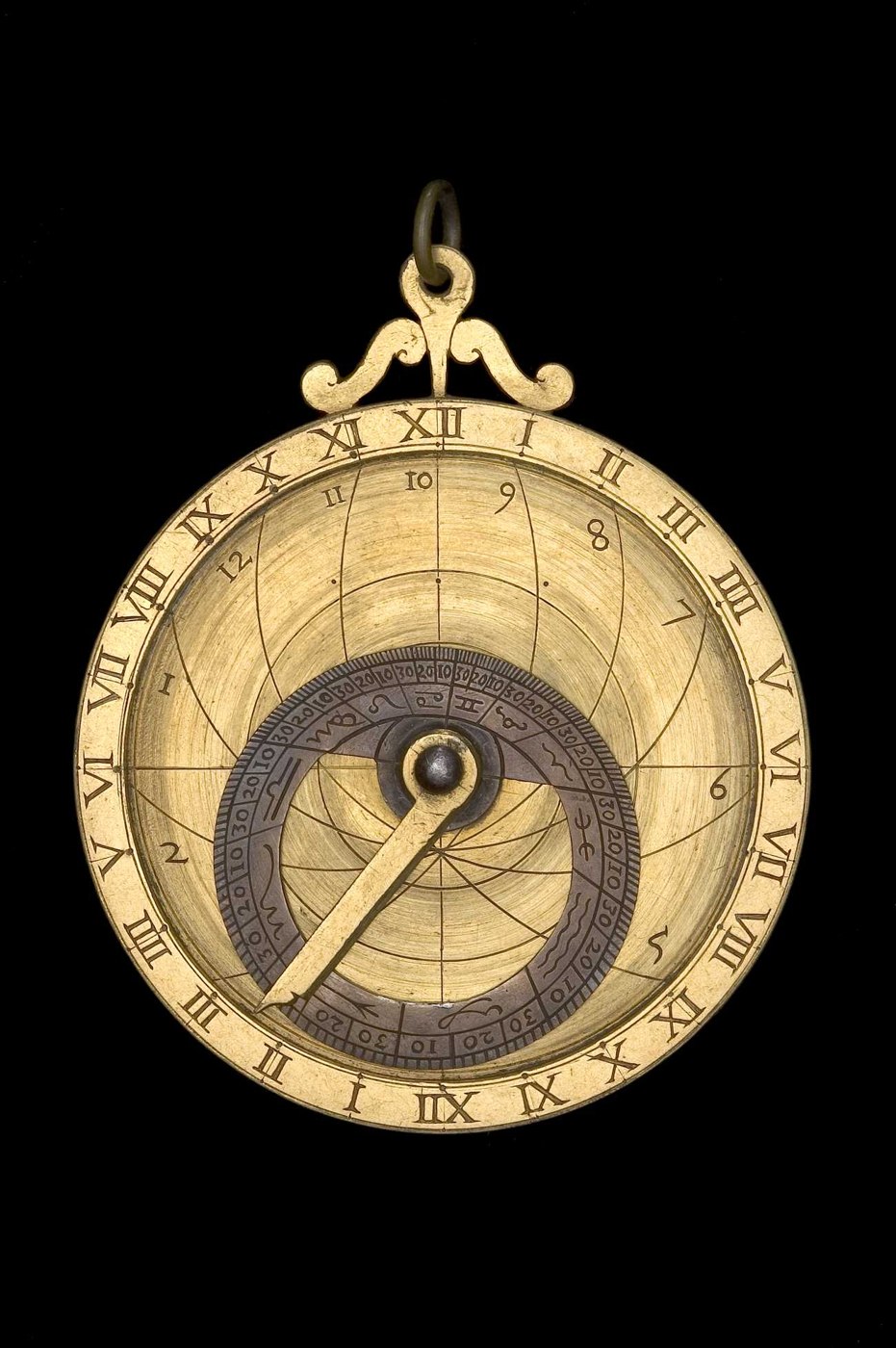
History of Science Museum, University of Oxford
horological instruments
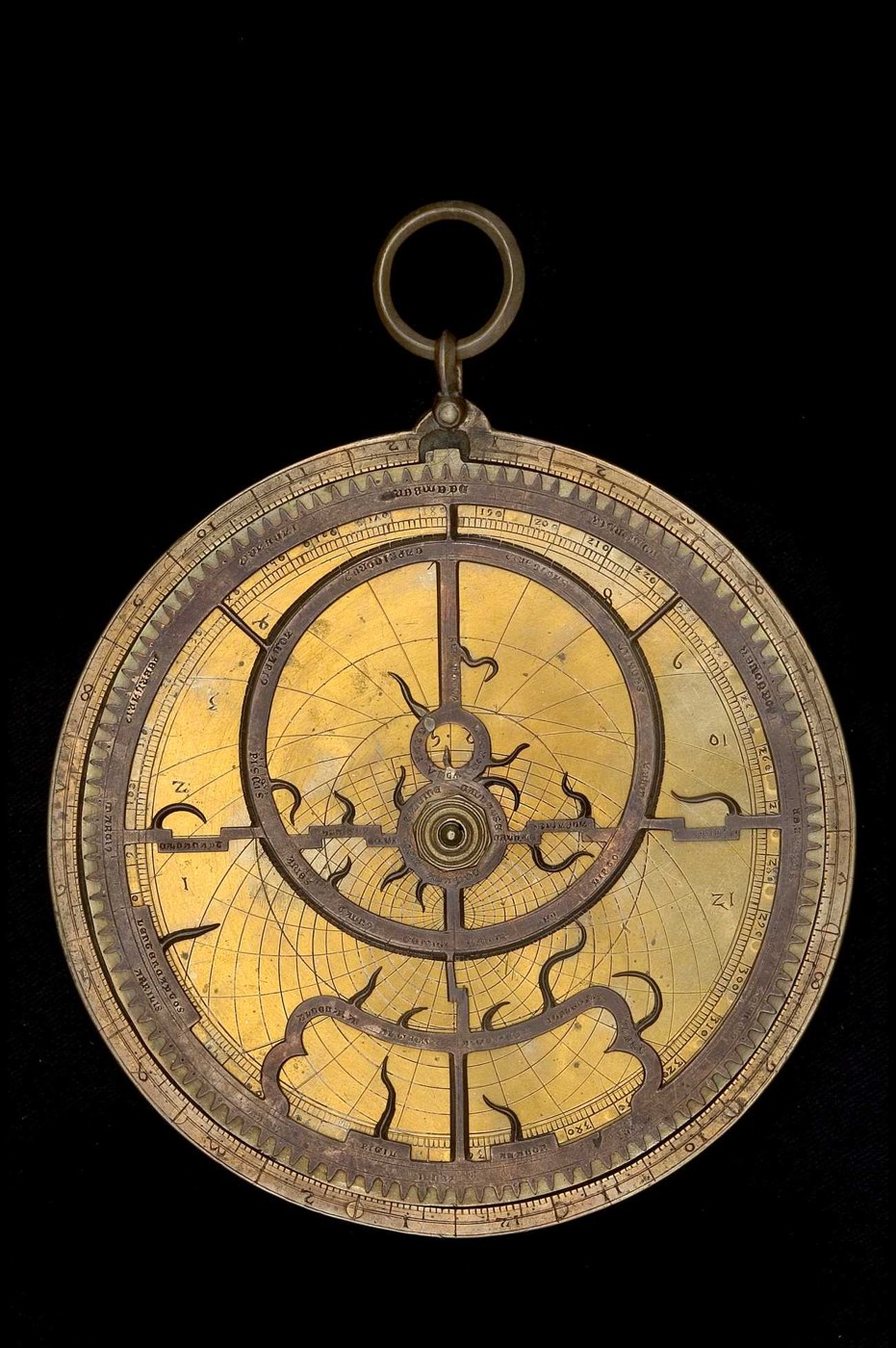
Brass Astrolabe for Horoscopes
16th century (?)
This brass astrolabe, inventory number 41951, is attributed to 16th-century Europe. The instrument was designed to assist in casting horoscopes. Its construction features a mater and limb made of two pieces in soldered brass, accompanied by a throne of a simple type with s-shaped scrollwork supports and a round cros…
Partial type record
History of Science Museum, University of Oxford
horological instruments
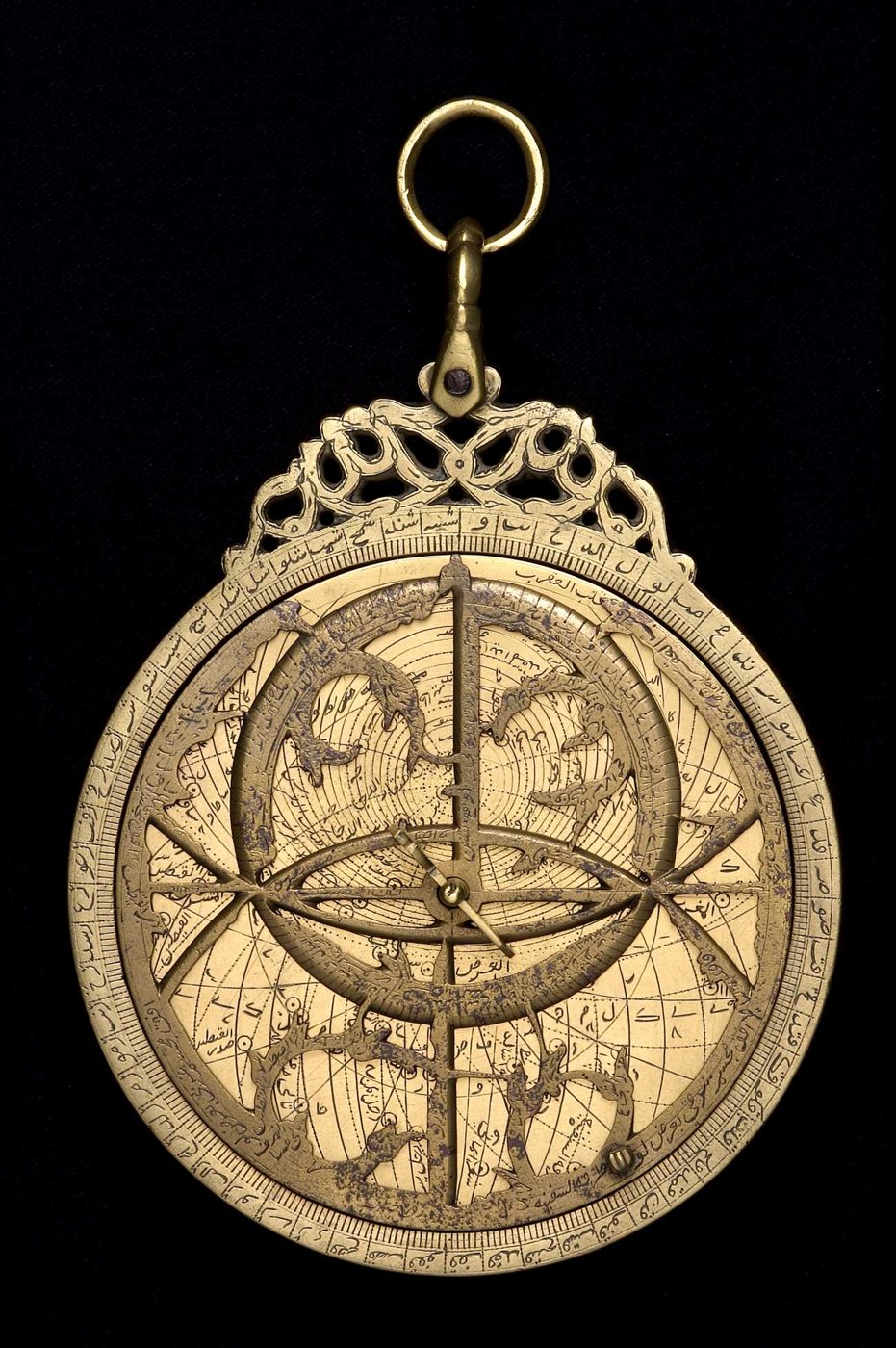
Brass Astrolabe with Universal Projection
ca. 1400
This brass astrolabe, designated by inventory number 52869, is attributed to Europe and dated to circa 1400. It is described as a rare western-made example of an astrolabe featuring a Saphea Azarchelis universal projection, which enables use in any latitude. The instrument is constructed from two soldered and rivete…
Partial type record
History of Science Museum, University of Oxford
horological instruments
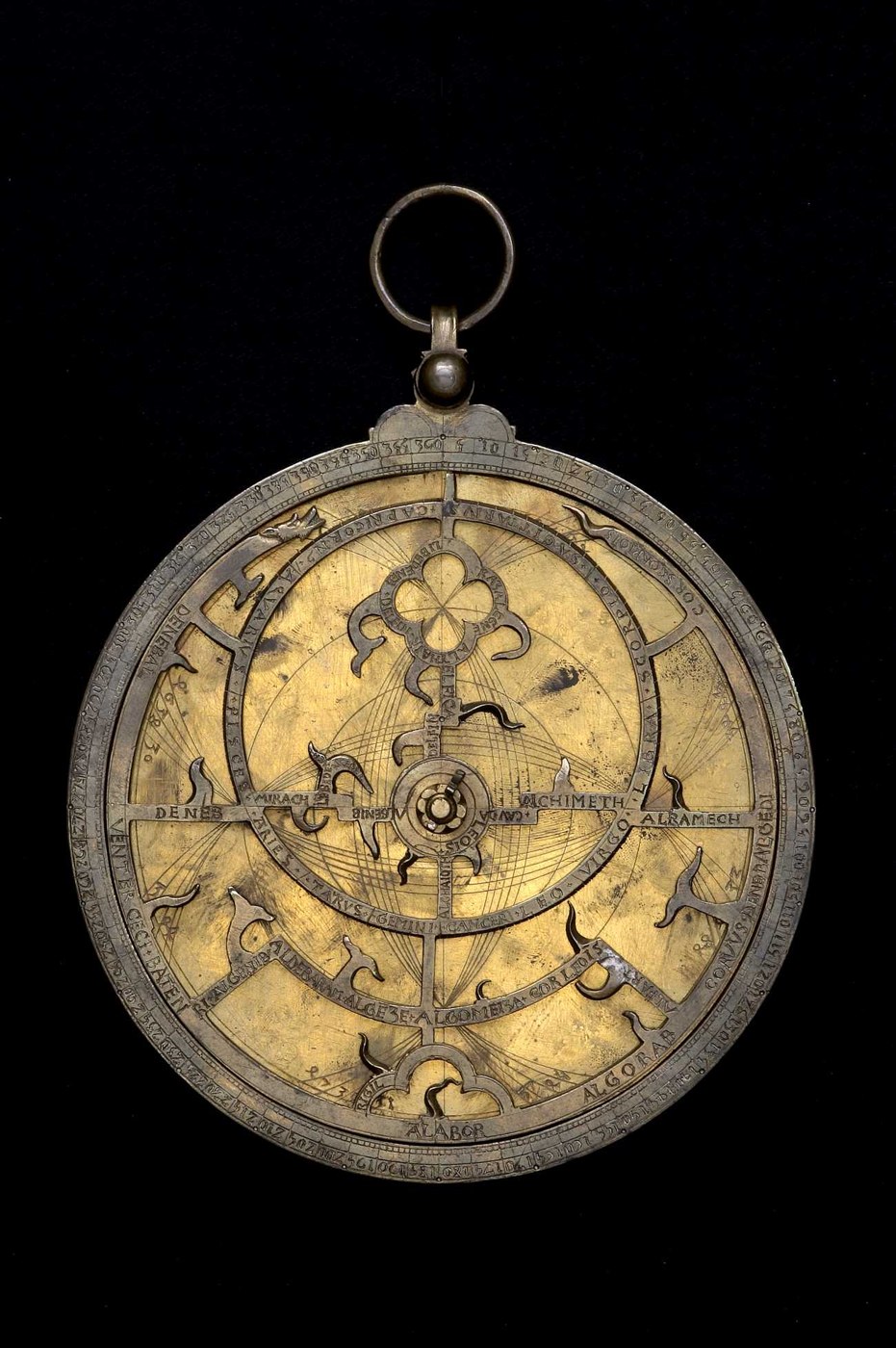
Brass Astrolabe with Zawraq Rete
17th century
This 17th-century brass astrolabe (inventory 33796) features a distinctive 'zawraq' or ship-style rete, which incorporates two horizon bands and two meridian bands. The instrument comprises a mater with a one-piece limb inscribed with a gazetteer of 69 cities, a pierced Indo-Persian throne, and eight plates covering…
Partial type record
History of Science Museum, University of Oxford
horological instruments
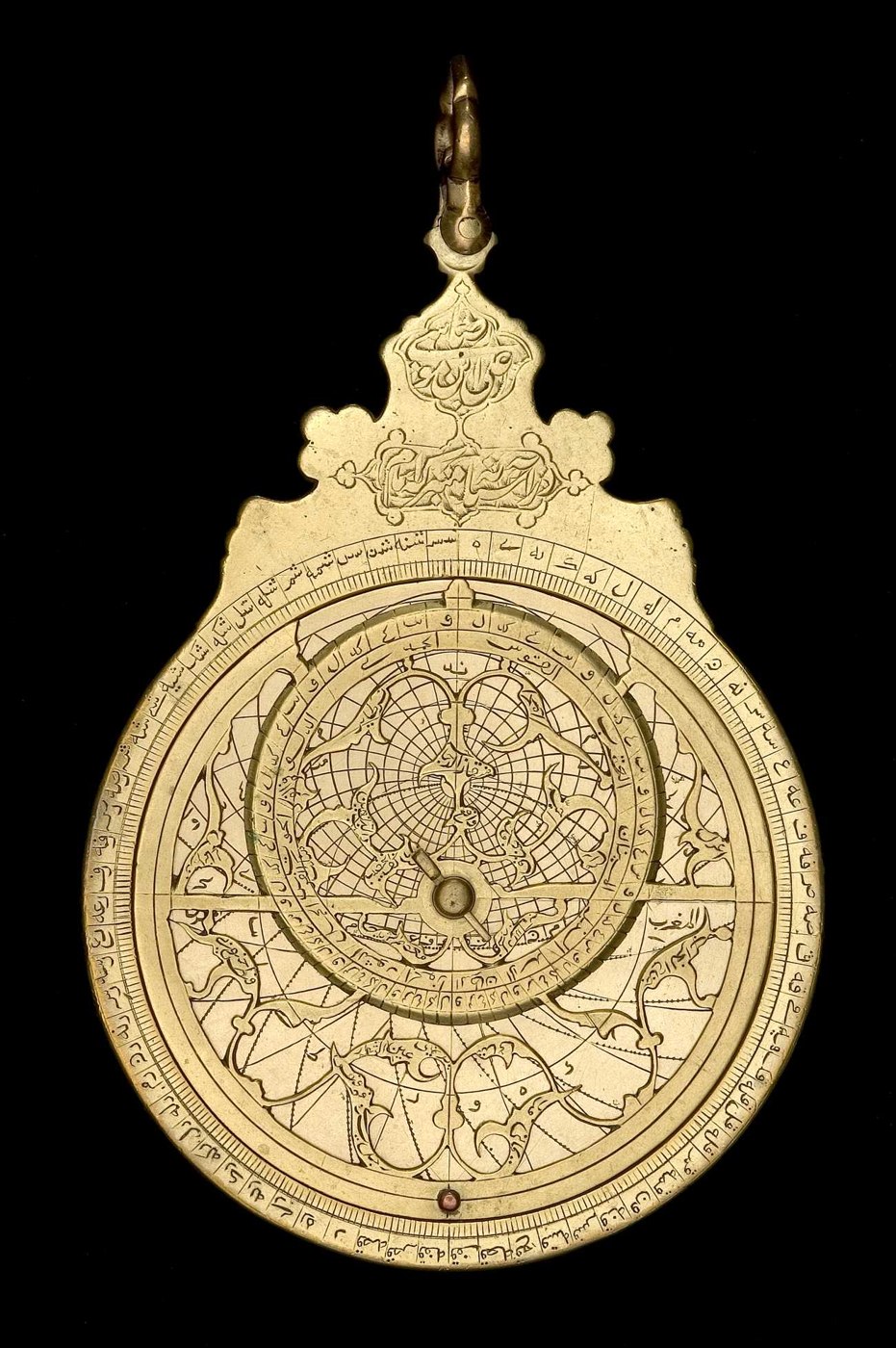
Brass Astrolabe, 14th century
14th century
This 14th-century European brass astrolabe (inventory number 47615) is comprised of a mater with a riveted limb, a rete, four latitude plates, an alidade, and a rule. The rete, of a gothic quatrefoil design, includes 32 stars marked by flamant pointers and a zodiacal band. The Tropic of Capricorn on the rete is deco…
Partial type record
History of Science Museum, University of Oxford
horological instruments
Brass Astrolabe, 1641 (A.H. 1051)
1641 (A.H. 1051)
This brass planispheric astrolabe, inventory number 43148, was created in 1641 (A.H. 1051) by the maker Ibrāhīm ibn Sharaf ad-Dīn Ḥusain. The instrument features an Indo-Persian style engraved throne with trefoil-type shackle and an integrated base. The construction comprises a mater and limb of one-piece design, wi…
Partial type record