Catalogue
Keys and Locks
Keys, locks and padlocks documented in institutional collections.
Individually identified types (131)
Filter by era, country, maker or material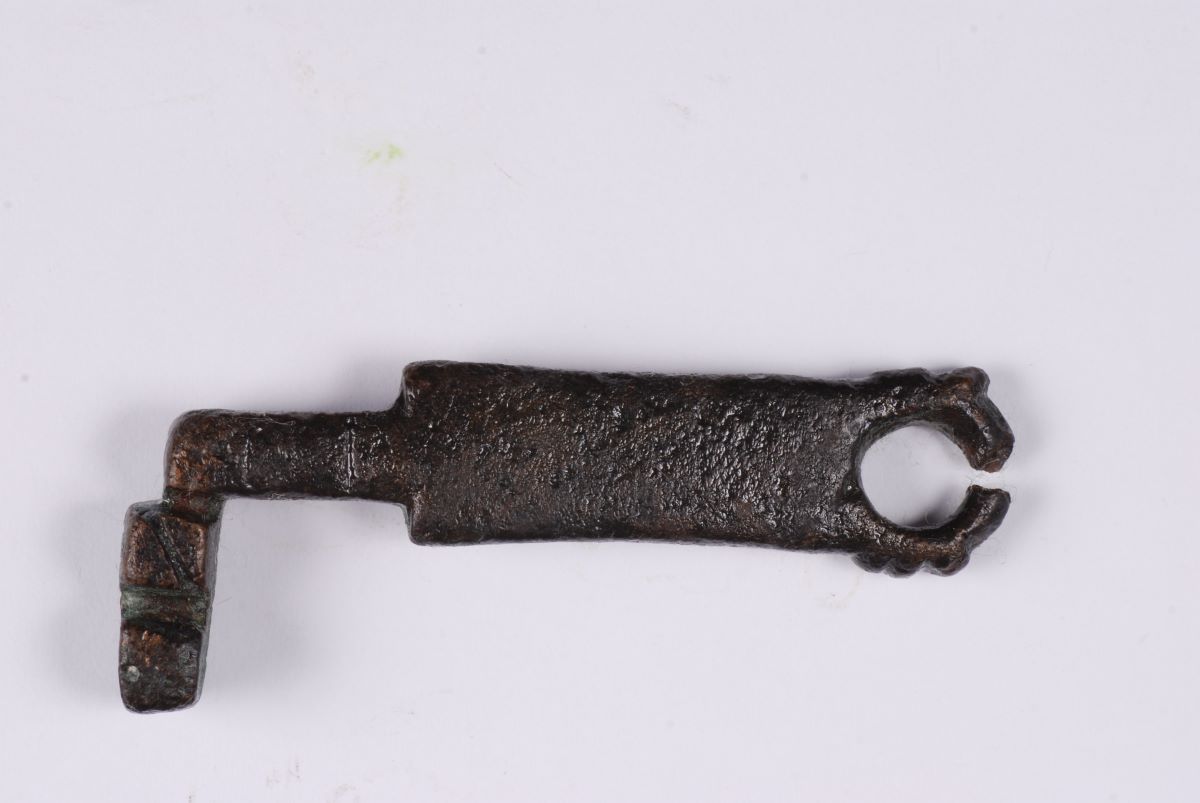
National Museum of Romanian History via Europeana
keys locks
Bronze key
Bronze key is held by National Museum of Romanian History. Museum description: Bronze key with a round bow and straight bit, flat and trapezoidal body. The annular bow is separated from the body by a collar. The shank continues the body, is thinner, and is decorated with parallel incisions. The bit of the key is rectangular, forms a right angle with its shank, and is provided with four teeth. Very close analogies are found at Porolissum (Gudea 1989, 684-685, pl. CCXXVII). The museum record gives measurements length: 64 mm; width: 21.7 mm; thickness: 4.5 mm; maximum diameter: 15 mm. These details come from the holding museum's own record; how far this object represents a wider collectible type has not yet been independently verified.
Partial type record
Rijksmuseum, Amsterdam
keys locks
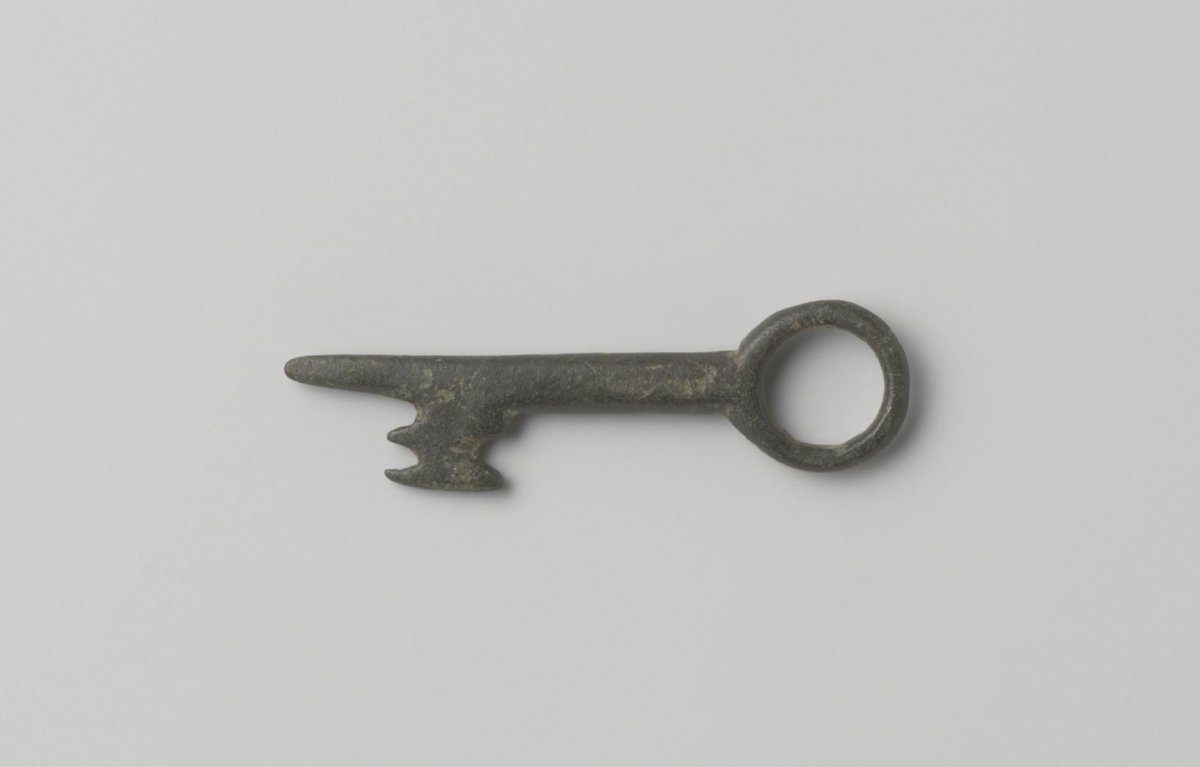
Bronze key, c. 1100 - c. 1300
c. 1100 - c. 1300
Small bronze key, with a circular bow, zigzag-shaped bit, and long pointed tip. The Rijksmuseum, Amsterdam, holds this object as BK-NM-13039; its record gives material recorded as bronze (metal); measurements length 5 cm x width 1 cm. Description translated from the museum's Dutch catalogue text; details are those of this museum object, and how far it represents a wider type has not been independently verified.
Partial type record
Rijksmuseum, Amsterdam
keys locks
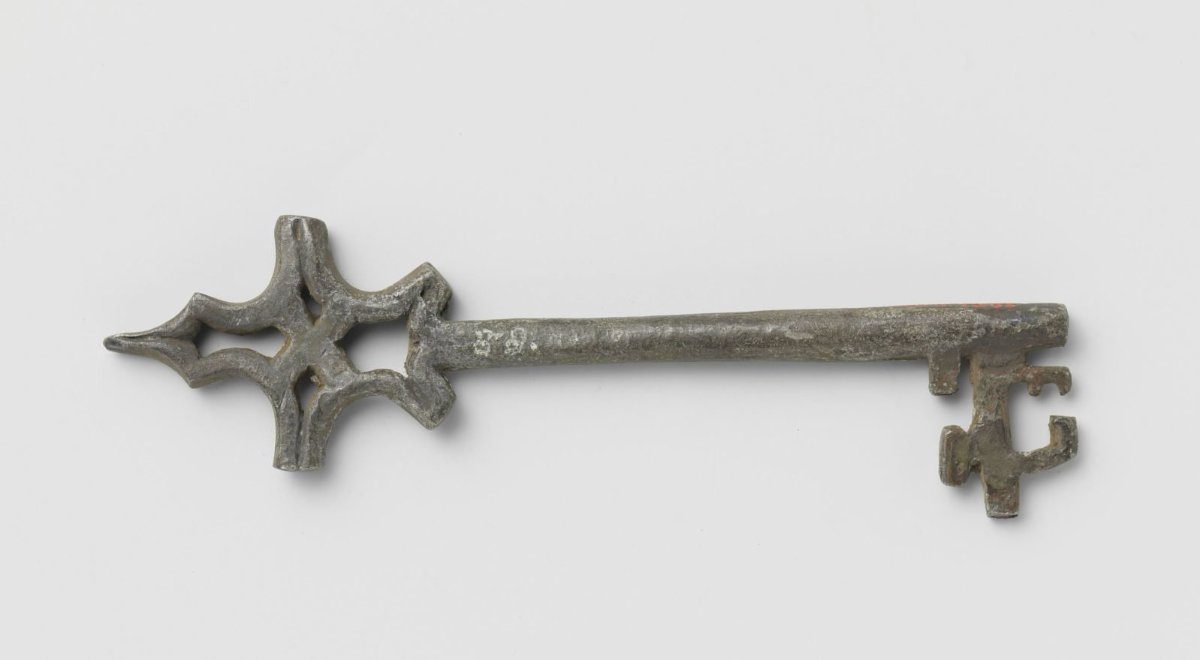
Casting model for a key
c. 1300 - c. 1500
Casting model (?) for a key with a bow formed by five semicircles facing away from each other, of which the lowest rests on the long shank and the top two taper together into a point. In the centre of the bow is an inclined equal-armed cross. Decorated with pits on the side. The Rijksmuseum, Amsterdam, holds this object as BK-KOG-2065; its record gives material recorded as tin (metal); measurements height 16.8 cm x width 4.4 cm. Description translated from the museum's Dutch catalogue text; details are those of this museum object, and how far it represents a wider type has not been independently verified.
Partial type record
Badisches Landesmuseum Karlsruhe via Europeana
keys locks
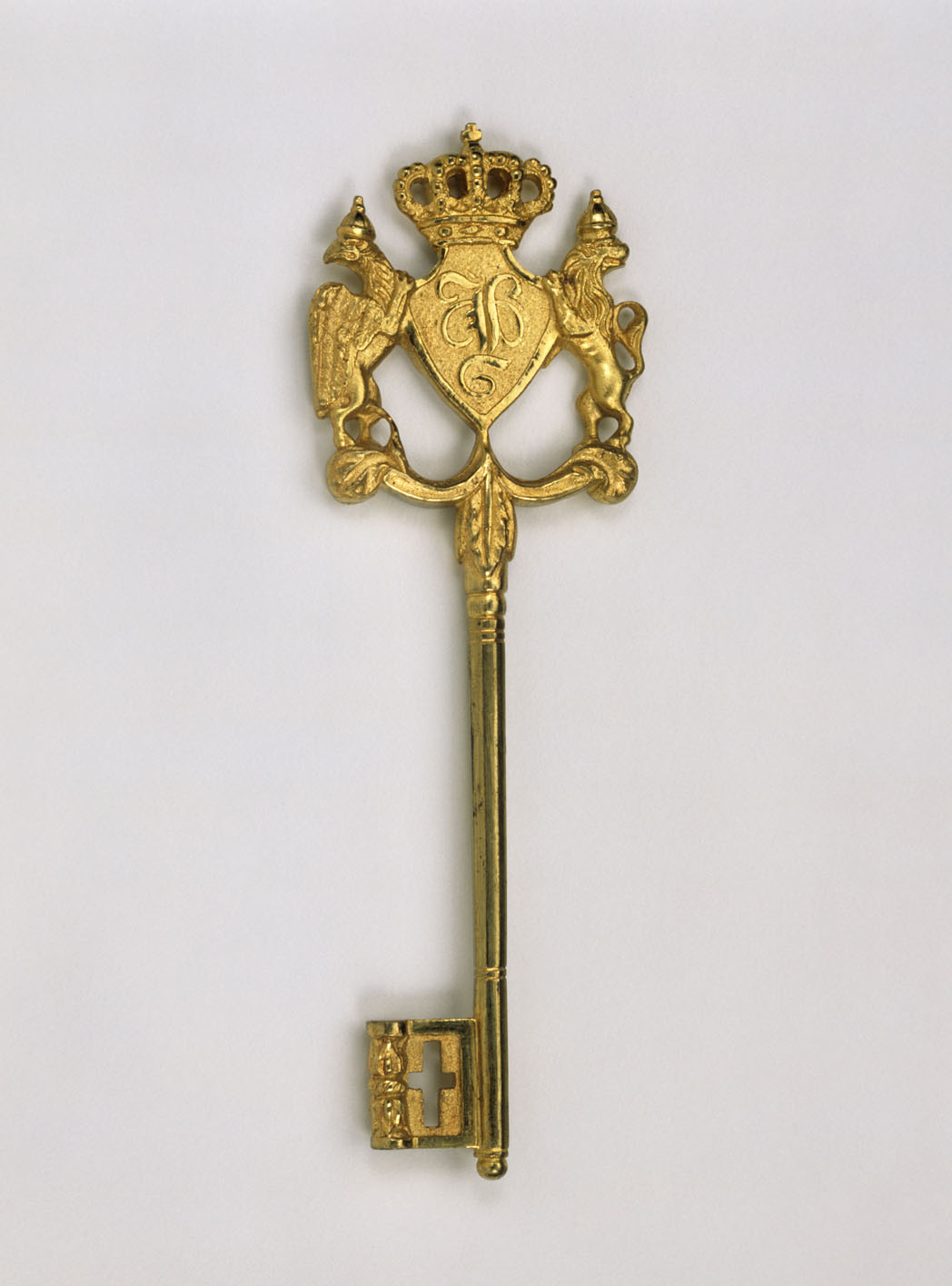
Chamberlain's key
Chamberlain's key is held by Badisches Landesmuseum Karlsruhe. Museum description: The Baden chamberlain's key from the time of Grand Duke Ludwig of Baden (1763–1830) still looks like its predecessors from the reign of Grand Duke Karl (1786–1818). A lion and a winged mythical creature hold a shield surmounted by the prince's hat. Newly added, however, is the initial "L" for Ludwig. The same type of key was later also borne by Grand Duke Leopold of Baden (1790–1852), though—presumably for reasons of thrift—the initials LGB, Leopold Großherzog Baden, were riveted over the old L. Chamberlains belonged to the "Hof-Chargen" [court officers] who served in the immediate presence of the prince. They had to be of noble birth, look after the chambers, i.e., the prince's private apartments, and were responsible for the orderly conduct of courtly life and the observation of the household and court etiquette. As a sign of their authority of the keys over the movable The museum record gives measurements length: 14.9 cm. These details come from the holding museum's own record; how far this object represents a wider collectible type has not yet been independently verified.
Partial type record
© Victoria and Albert Museum, London
keys locks
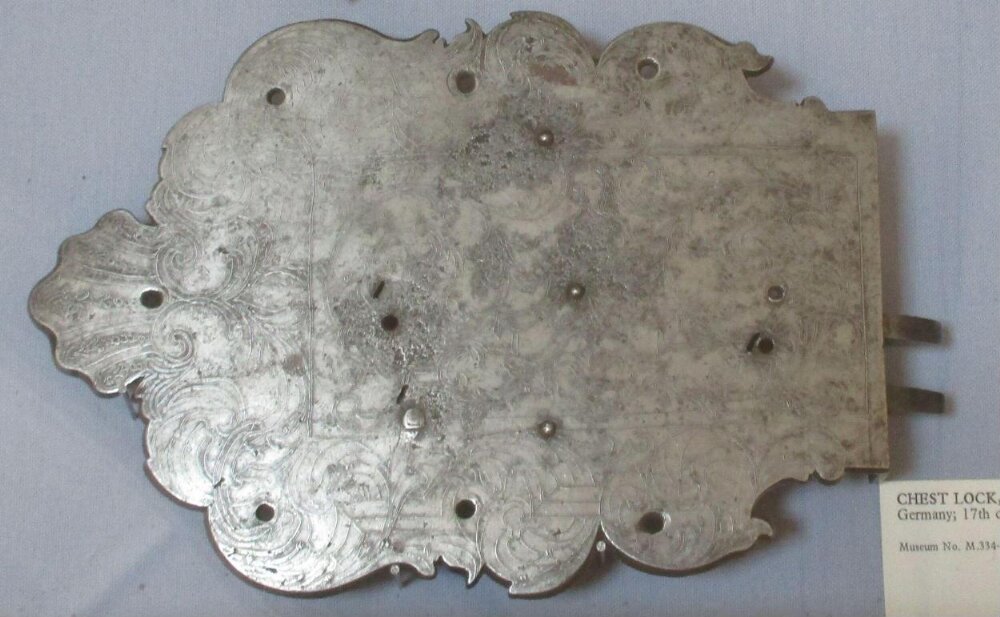
Chest lock, 17th century
17th century
Chest lock, 17th century is an object recorded by Victoria and Albert Museum, dated 17th century. The museum's brief description reads: Chest lock, wrought iron, tinned, engraved, with a female bust and floral scrolls, possibly made in Augsburg, 17th century. Museum description: Chest lock of wrought iron, tinned and engraved, with a female bust and floral scrolls. The museum record gives material recorded as wrought iron; measurements Length 10 in; Width 6.125 in; place associated: Augsburg. These details come from the holding museum's own record; how far this object represents a wider collectible type has not yet been independently verified.
Partial type record
© Victoria and Albert Museum, London
keys locks
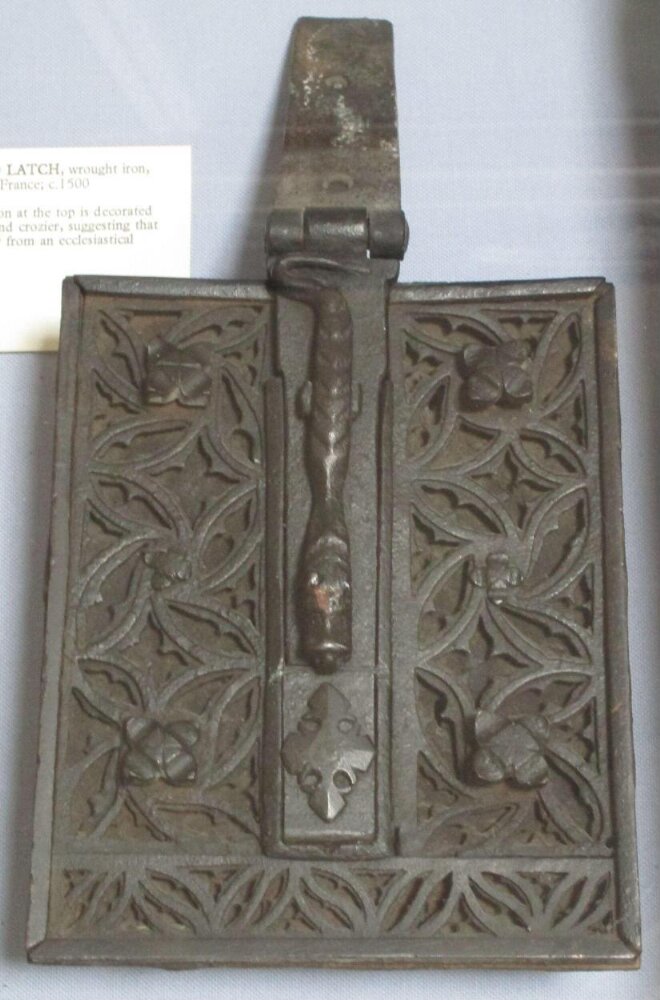
Chest lock, ca. 1500
ca. 1500
Chest lock, ca. 1500 is an object recorded by Victoria and Albert Museum, dated ca. 1500. The museum's brief description reads: Ironwork chest lock, partially restored, wrought iron with pierced decoration, made in France, ca. 1500. Museum description: Wrought iron chest lock with pierced decoration. The front decorated with perforated gothic tracery two layers; the plate concealing the keyhole is ornamented with foliated cross; on the hasp is a figure of a dragon. Partially restored. The museum record gives material recorded as wrought iron; measurements Length 8.125 in; Width 6.125 in; place associated: France. These details come from the holding museum's own record; how far this object represents a wider collectible type has not yet been independently verified.
Partial type record
© Victoria and Albert Museum, London
keys locks
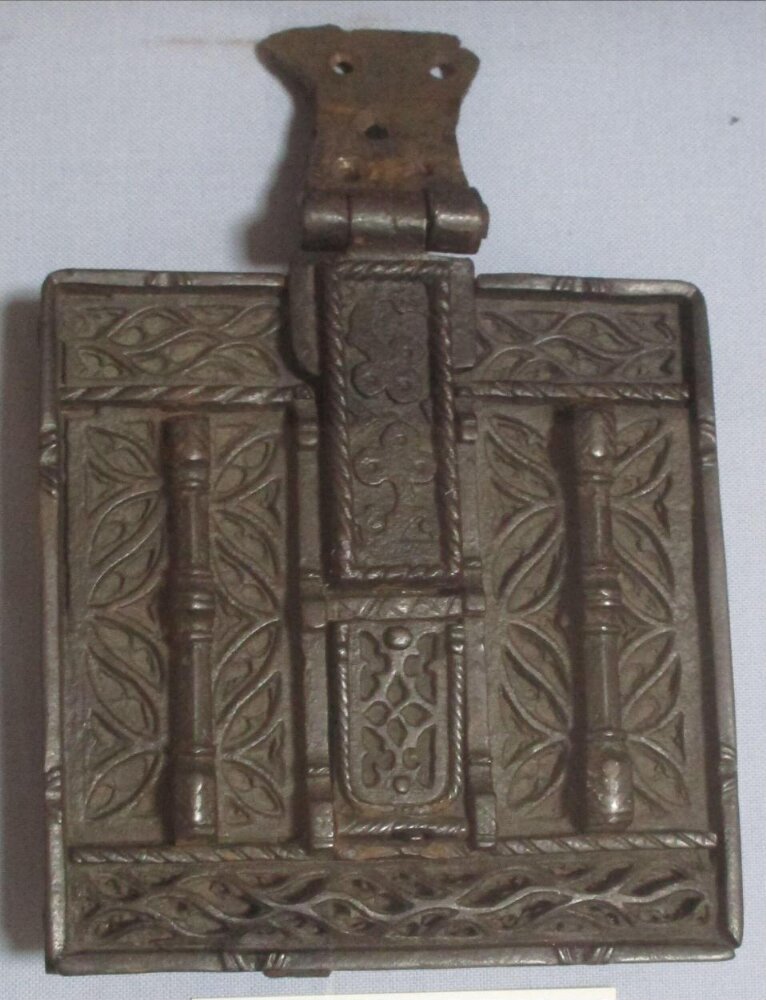
Chest lock, ca. 1500-1530
ca. 1500-1530
Chest lock, ca. 1500-1530 is an object recorded by Victoria and Albert Museum, dated ca. 1500-1530. The museum's brief description reads: Wrought iron chest lock, two vertical balusters depicted, made in France, ca. 1500-1530. Museum description: Wrought iron chest lock, two vertical balusters depicted. The decoration consists of a symmetrical pattern of open gothic tracery on either side of the keyhole and hasp; at the bottom is a band of slightly convex openwork ornament. The keyhole is concealed by a hinged plate decorated with openwork; the hasp is decorated in relief with trefoils and enclosed by a rope pattern. The lower fretwork panel has been replaced. The museum record gives material recorded as wrought iron; measurements Length 19.2 cm; Width 18.7 cm; place associated: France. These details come from the holding museum's own record; how far this object represents a wider collectible type has not yet been independently verified.
Partial type record
© Victoria and Albert Museum, London
keys locks
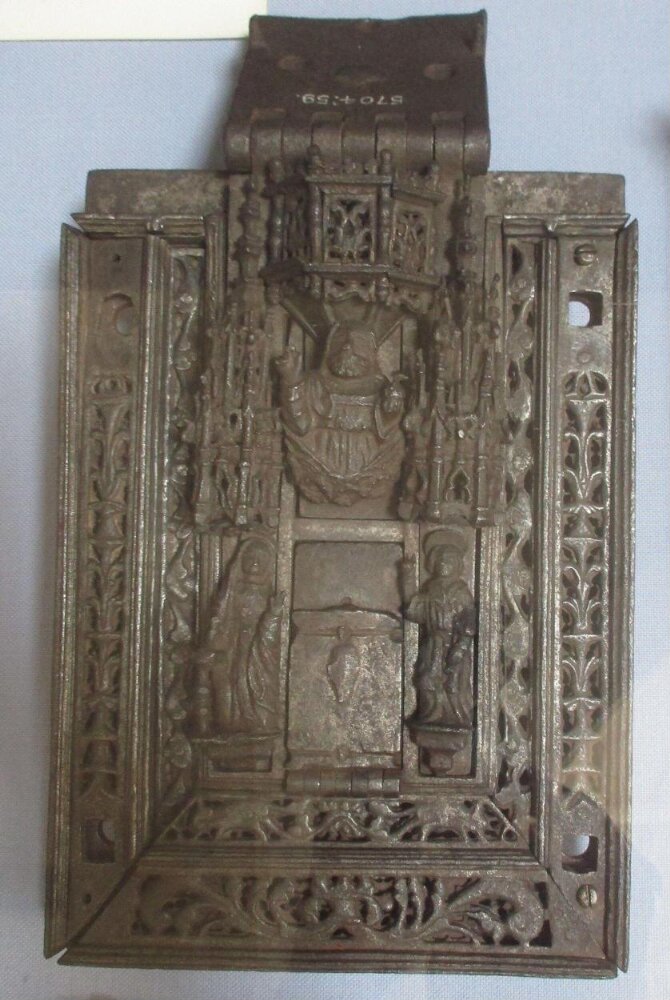
Chest lock, ca. 1520
ca. 1520
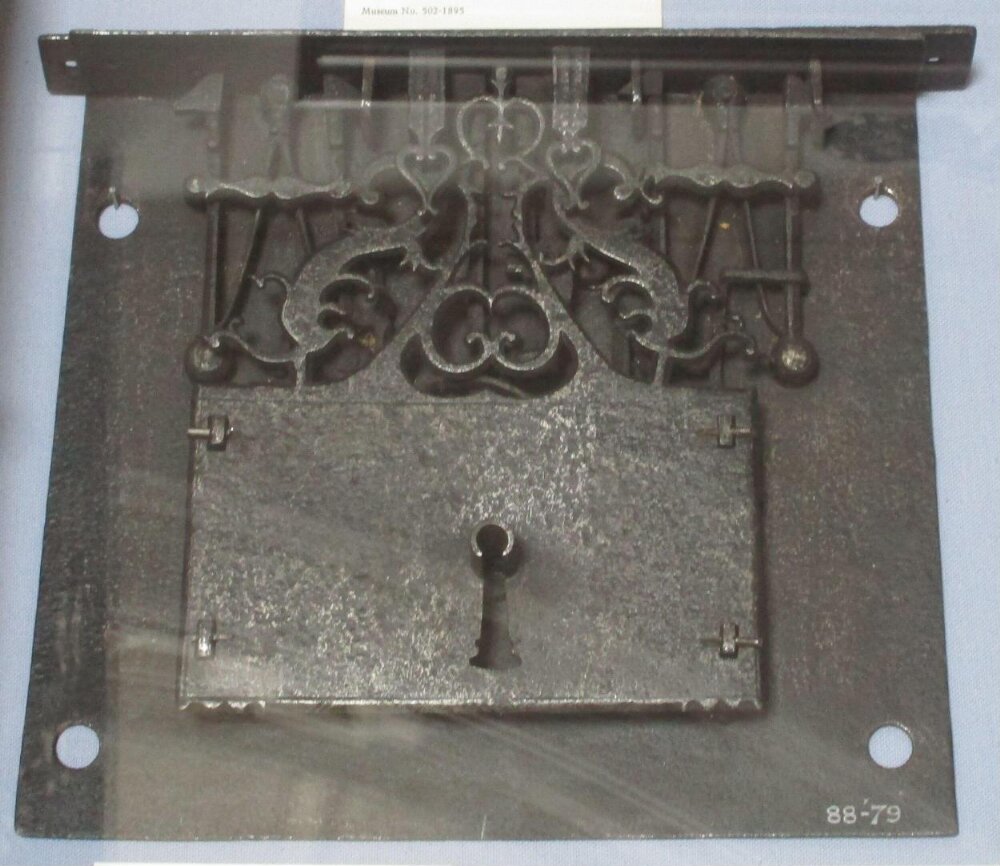
Chest lock, ca. 1520 is an object recorded by Victoria and Albert Museum, dated ca. 1520. The museum's brief description reads: Wrought iron chest lock, decorated with the figure of God above the Virgin and St John, made in France, ca. 1520, the key mechanism a later alteration of ca. 1630s. Museum description: Wrought iron chest lock, the centre hasp ornamented with the figure of God above the Virgin and St John under a Gothic canopy. The museum record gives material recorded as wrought iron; measurements Height 23.5 cm; Width 15.9 cm; place associated: France. These details come from the holding museum's own record; how far this object represents a wider collectible type has not yet been independently verified.
Partial type record
© Victoria and Albert Museum, London
keys locks
Chest lock, ca. 1570-1600
ca. 1570-1600
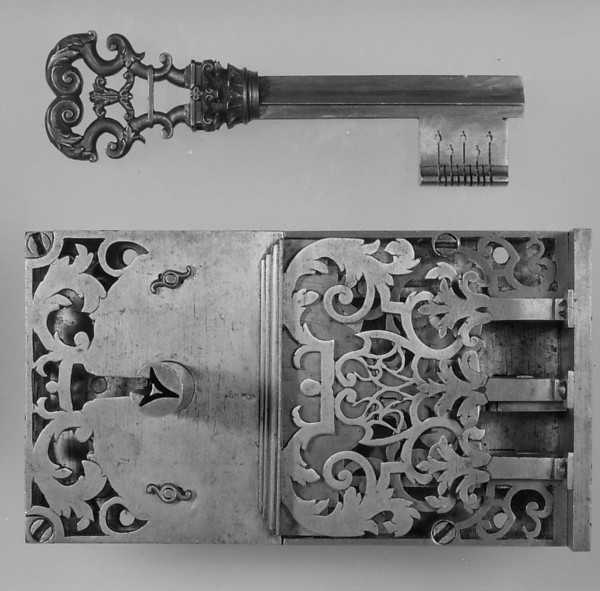
Chest lock, ca. 1570-1600 is an object recorded by Victoria and Albert Museum, dated ca. 1570-1600. The museum's brief description reads: Chest lock, engraved and pierced iron, ornament in the form of dolphins, and key made in Italy, ca. 1570-1600. Museum description: Chest lock of engraved and pierced iron with ornament in the form of dolphins. The museum record gives material recorded as iron; measurements Height 27.9 cm; Length 9.2 cm; place associated: Italy. These details come from the holding museum's own record; how far this object represents a wider collectible type has not yet been independently verified.
Partial type record
The Metropolitan Museum of Art, New York
keys locks
Coffer lock and key, ca. 1680–1700
ca. 1680–1700
Coffer lock and key in The Metropolitan Museum of Art, New York (accession 57.137.7a, b), catalogued by the museum's European Sculpture and Decorative Arts department. The museum dates it ca. 1680–1700. The museum records the medium as Steel, iron and the dimensions as Overall (padlock .7a): 6 5/16 × 3 9/16 × 2 in. (16 × 9 × 5.1 cm); Length (key .7b): 5 5/8 in. (14.3 cm). These details are transcribed from the museum's open-access record; how far this object represents a wider collectible type has not yet been independently verified.
Partial type record
Rijksmuseum, Amsterdam
keys locks
Copper key
c. 300 - c. 500
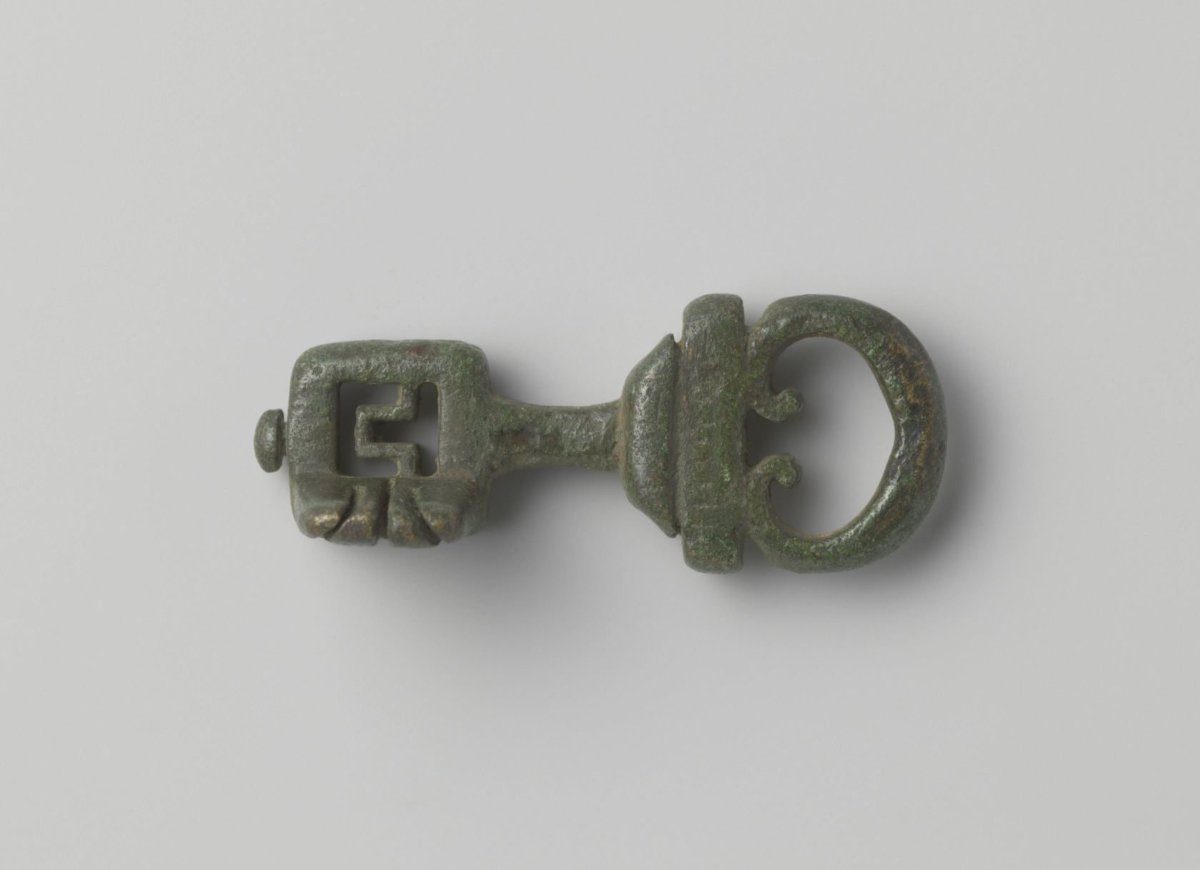
Copper key with a transversely placed bit. Lower end pierced and terminating in a small finial; the bow closed by two curving volutes. The Rijksmuseum, Amsterdam, holds this object as BK-NM-13037; its record gives material recorded as copper (metal); measurements length 5.7 cm x width 2 cm. Description translated from the museum's Dutch catalogue text; details are those of this museum object, and how far it represents a wider type has not been independently verified.
Partial type record
Rijksmuseum, Amsterdam
keys locks
Detector lock with key
c. 1675 - c. 1700
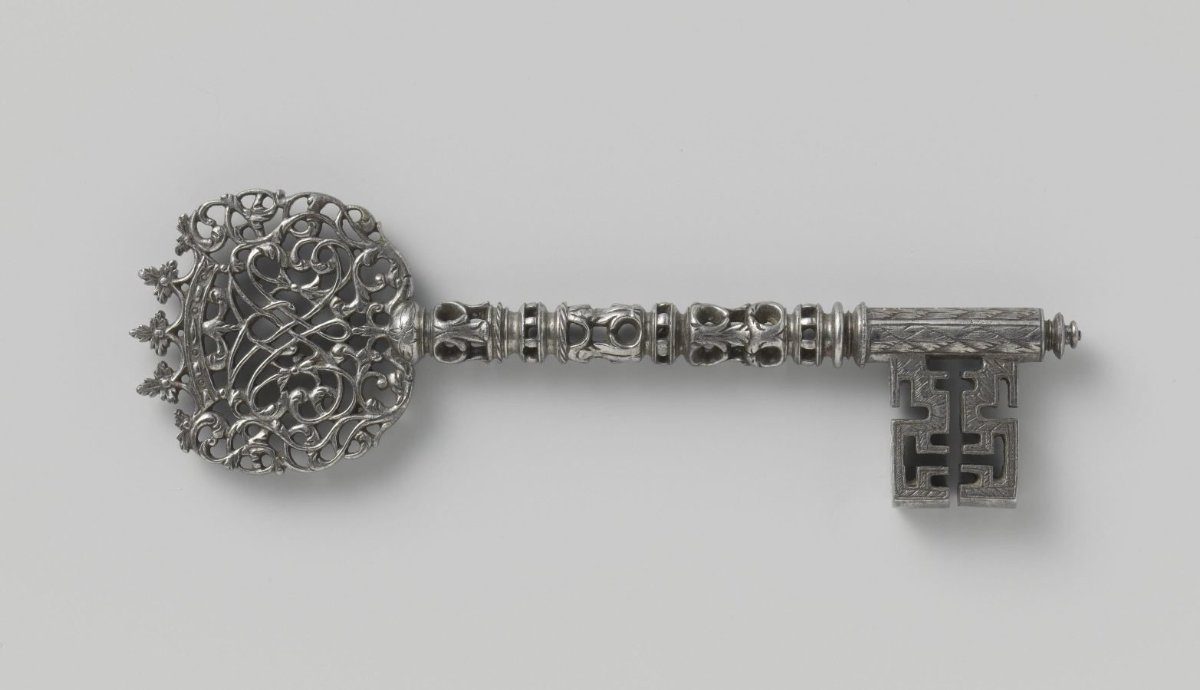
The iron pin- or through-keys (BK-NM-678/79) are cast from the same mould. NM-679 is gilded and has a bit that is partially broken off. The finely detailed key bit fits the cross and strip warding of the lock, the shank is openworked, and the key bow has the shape of a double monogram JM surrounded by scrollwork, with a marquess's coronet (five strawberry leaves). The Rijksmuseum, Amsterdam, holds this object as BK-NM-678; its record gives material recorded as iron (metal); measurements length 11.4 cm x width 4 cm x depth 0.8 cm. Description translated from the museum's Dutch catalogue text; details are those of this museum object, and how far it represents a wider type has not been independently verified.
Partial type record
© Victoria and Albert Museum, London
keys locks
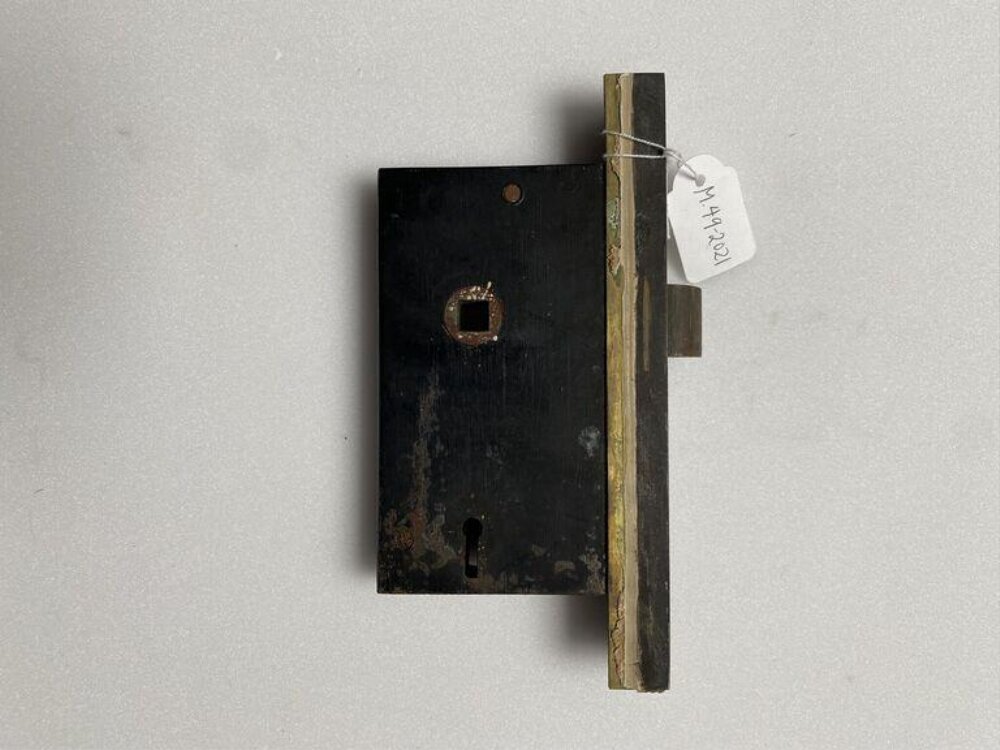
Door lock, Charles Robert Ashbee, 1893-1894
1893-1894
Door lock, Charles Robert Ashbee, 1893-1894 is an object recorded by Victoria and Albert Museum, dated 1893-1894. The museum's brief description reads: Iron door lock. Designed by C.R. Ashbee for the Magpie & Stump, London, 1893-4.. Museum description: Charles Robert Ashbee (1863-1942) was a central figure of the Arts and Crafts movement. Between 1893 and 1896 he designed and fitted out a house at 37, Cheyne Walk, Chelsea, as both his family home and the office for his architectural practice. It was known as the 'Magpie and Stump' as it stood on ground formerly occupied by an inn of that name, which had burned down in 1886. Much of the interior furnishings were designed and made by the Guild of Handicraft, the organisation Ashbee had founded in 1888 in the East End of London. Ashbee's family left the house in 1921, and in 1966 it was marked for demolition. Wates Ltd was contracted to demolish the property, but the V&A was invited to select decorative elements and furnishings before the building was destroyed in 1969. The museum record gives place associated: London; maker recorded: Charles Robert Ashbee. These details come from the holding museum's own record; how far this object represents a wider collectible type has not yet been independently verified.
Partial type record
© Victoria and Albert Museum, London
keys locks
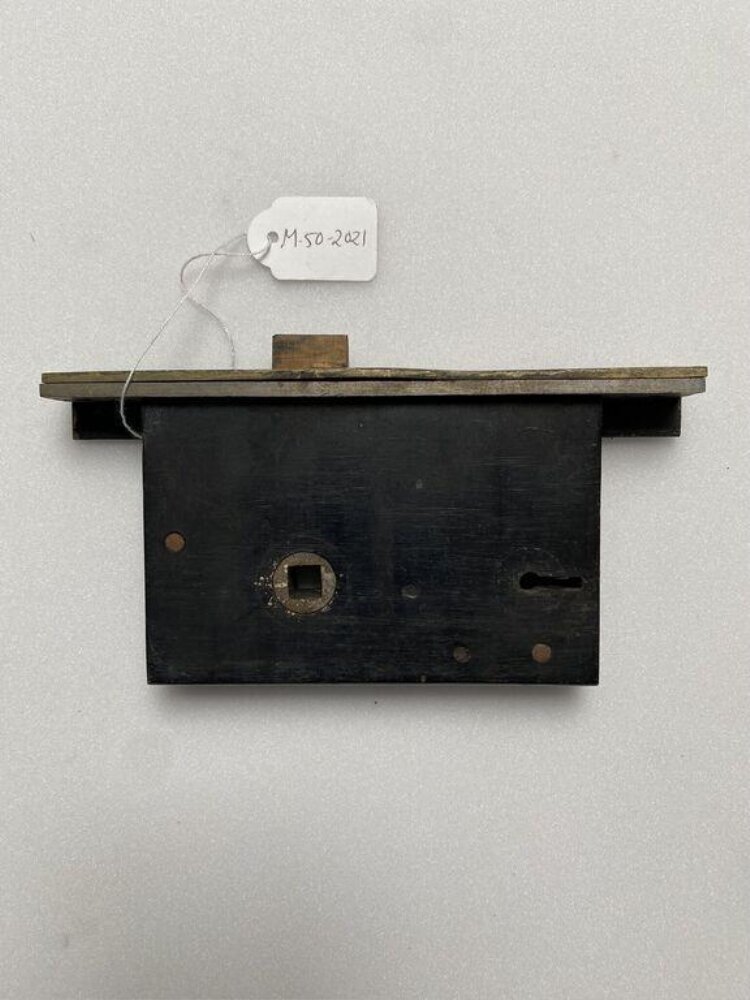
Door lock, Charles Robert Ashbee, 1893-1894
1893-1894
Door lock, Charles Robert Ashbee, 1893-1894 is an object recorded by Victoria and Albert Museum, dated 1893-1894. The museum's brief description reads: Iron door lock. Designed by C.R. Ashbee for the Magpie & Stump, London, 1893-4.. Museum description: Charles Robert Ashbee (1863-1942) was a central figure of the Arts and Crafts movement. Between 1893 and 1896 he designed and fitted out a house at 37, Cheyne Walk, Chelsea, as both his family home and the office for his architectural practice. It was known as the 'Magpie and Stump' as it stood on ground formerly occupied by an inn of that name, which had burned down in 1886. Much of the interior furnishings were designed and made by the Guild of Handicraft, the organisation Ashbee had founded in 1888 in the East End of London. Ashbee's family left the house in 1921, and in 1966 it was marked for demolition. Wates Ltd was contracted to demolish the property, but the V&A was invited to select decorative elements and furnishings before the building was destroyed in 1969. The museum record gives place associated: London; maker recorded: Charles Robert Ashbee. These details come from the holding museum's own record; how far this object represents a wider collectible type has not yet been independently verified.
Partial type record
Rijksmuseum, Amsterdam
keys locks
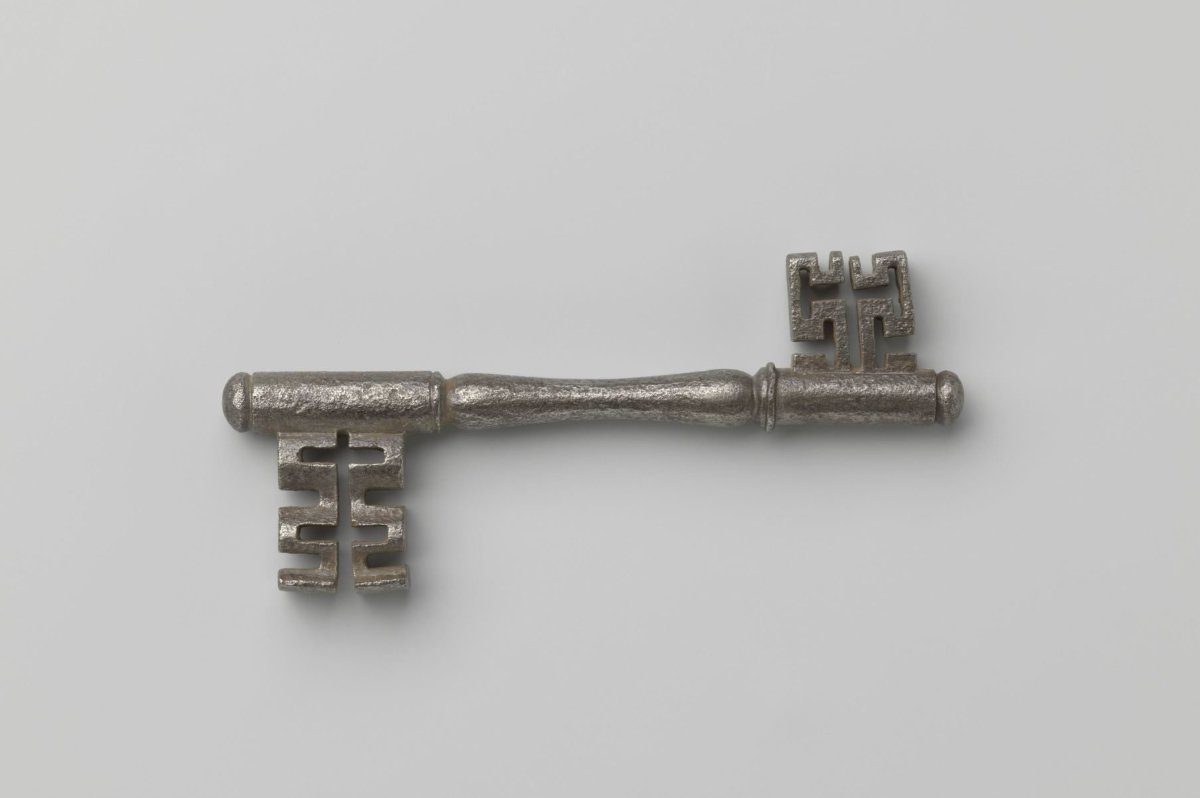
Double key with two bits
c. 1600 - c. 1699
Double key with two bits attached on either side of both ends of the baluster-shaped shank. The Rijksmuseum, Amsterdam, holds this object as BK-KOG-2226; its record gives material recorded as iron (metal); measurements length 13.3 cm x width 4 cm. Description translated from the museum's Dutch catalogue text; details are those of this museum object, and how far it represents a wider type has not been independently verified.
Partial type record
Rijksmuseum, Amsterdam
keys locks
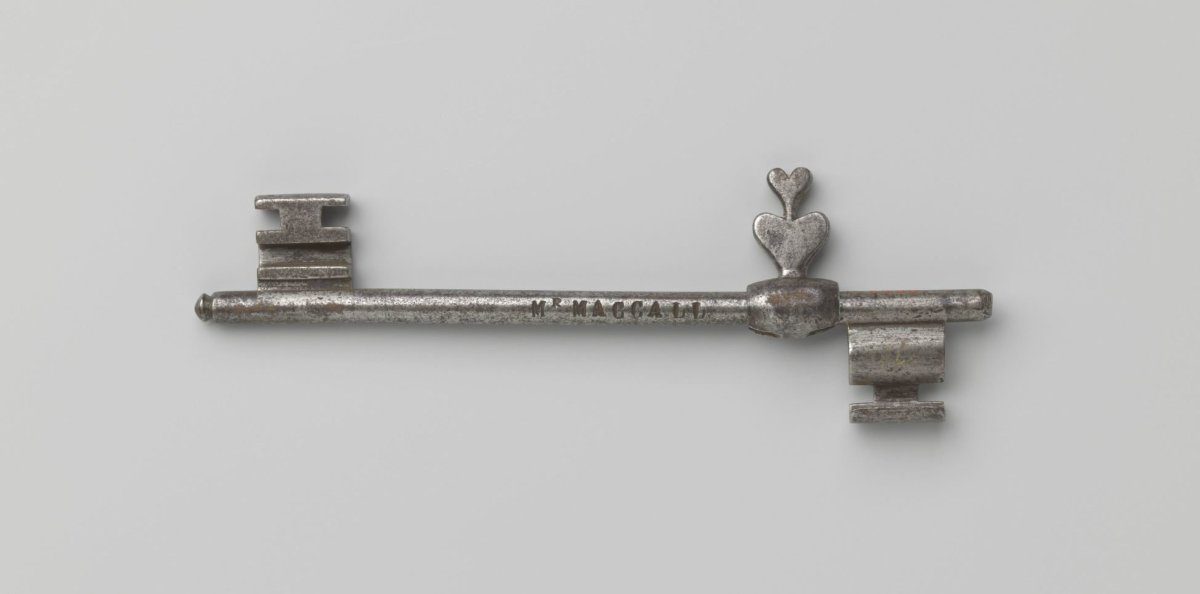
Double key, c. 1800 - c. 1900
c. 1800 - c. 1900
Double key with a bit at both ends of the shank. The sliding handle consists of a torus-shaped cylinder with two superimposed hearts that slide around the shank. The Rijksmuseum, Amsterdam, holds this object as BK-KOG-2306; its record gives material recorded as iron (metal); measurements length 15.2 cm x width 2.6 cm. Description translated from the museum's Dutch catalogue text; details are those of this museum object, and how far it represents a wider type has not been independently verified.
Partial type record
Rijksmuseum, Amsterdam
keys locks
Double key, c. 1850 - c. 1900
c. 1850 - c. 1900
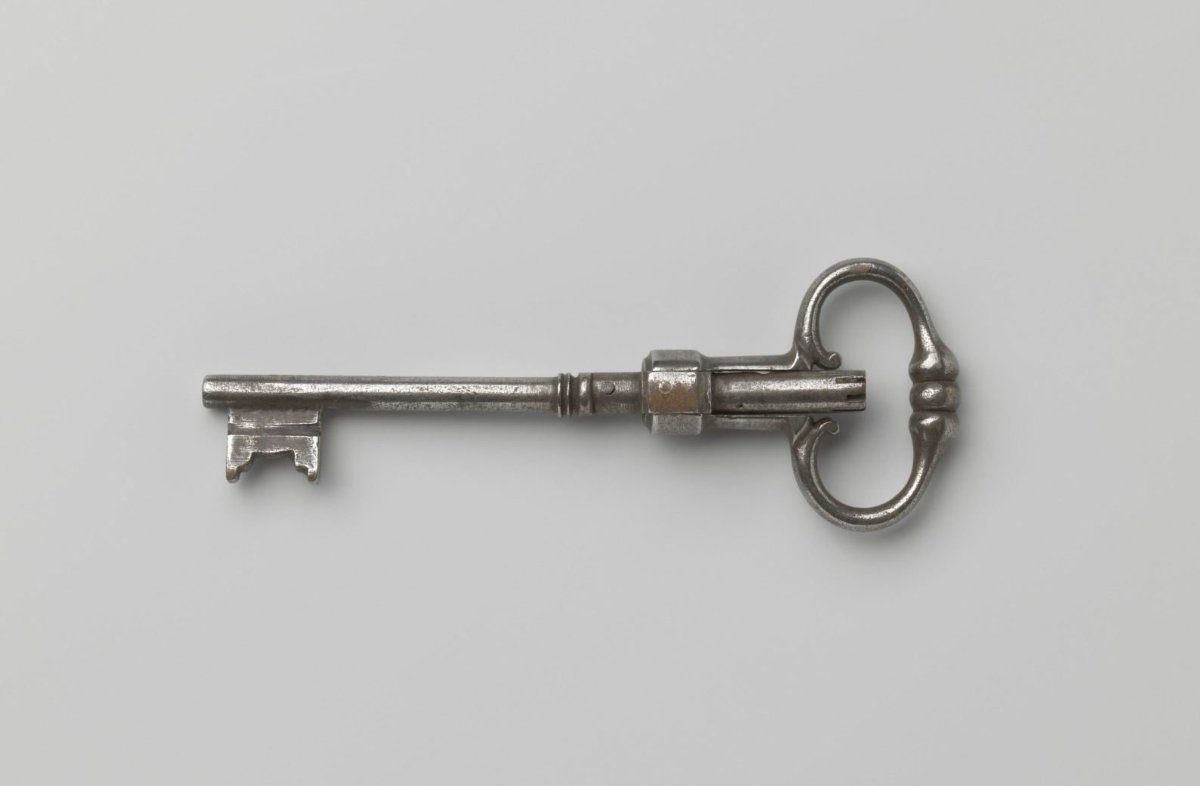
Double key consisting of an ordinary rotary key and a socket key of the Bramah type. The bow of this Bramah key is formed by two facing C-volutes, which terminate at the top in an onion shape and enclose a small ball. The keys were probably joined together at a later date. The Rijksmuseum, Amsterdam, holds this object as BK-KOG-2307; its record gives material recorded as iron (metal); measurements length 11.8 cm x width 4.2 cm. Description translated from the museum's Dutch catalogue text; details are those of this museum object, and how far it represents a wider type has not been independently verified.
Partial type record
Rijksmuseum, Amsterdam
keys locks
Engraved lock with key of tinned iron
c. 1600 - c. 1699
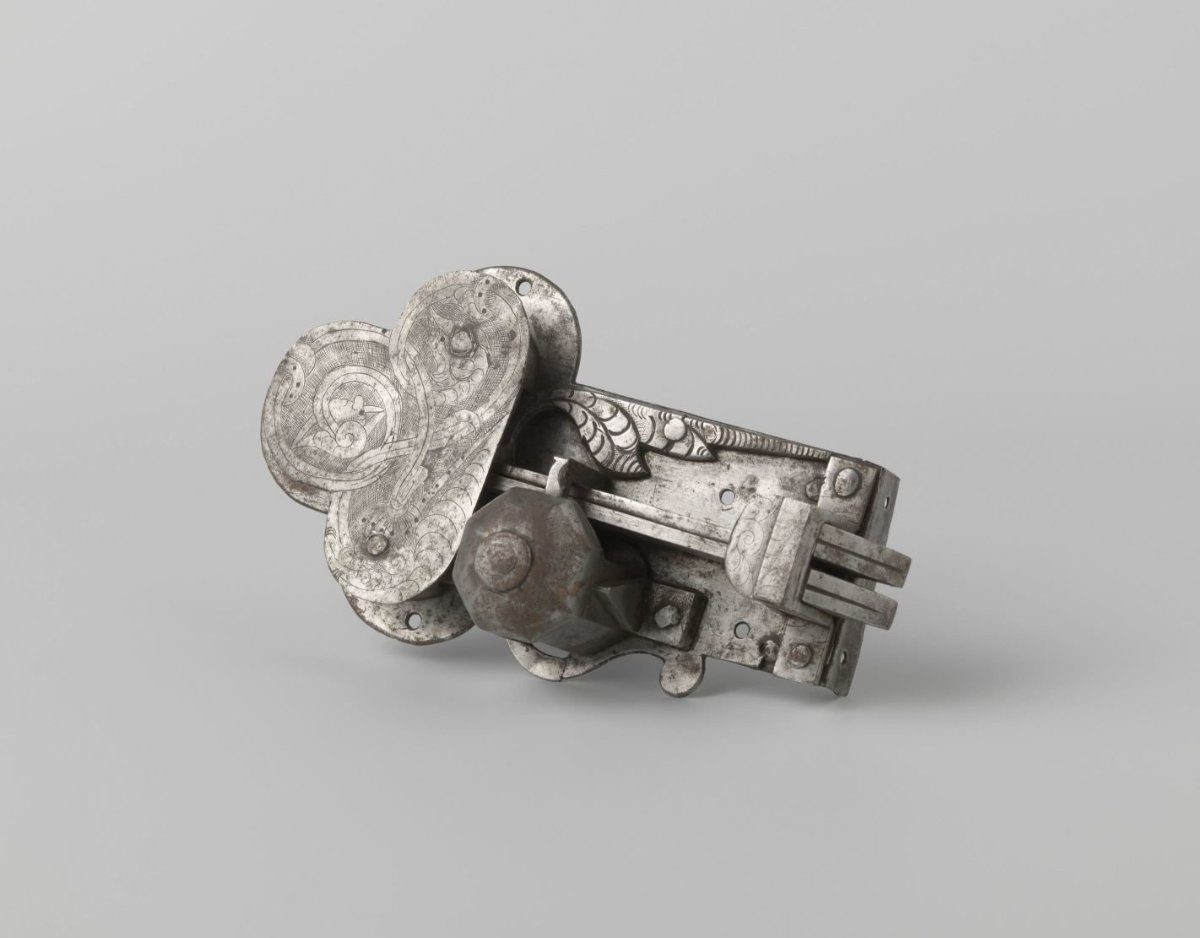
Lock with key of tinned iron, so-called rim lock with two bolts and the corresponding key. A trefoil-shaped lock case. The lock plate is engraved with interlaced tendrils, the tendrils terminating in flowers containing faces. The key has a heart-shaped bow resting on a round disc, a smooth shank, and a bit. The Rijksmuseum, Amsterdam, holds this object as BK-NM-8721; its record gives material recorded as iron (metal), tin (metal); technique tinning, engraving; measurements height 12 cm x length 21 cm x width 14 cm. Description translated from the museum's Dutch catalogue text; details are those of this museum object, and how far it represents a wider type has not been independently verified.
Partial type record
Naval Museum via Europeana
keys locks
Fuse key
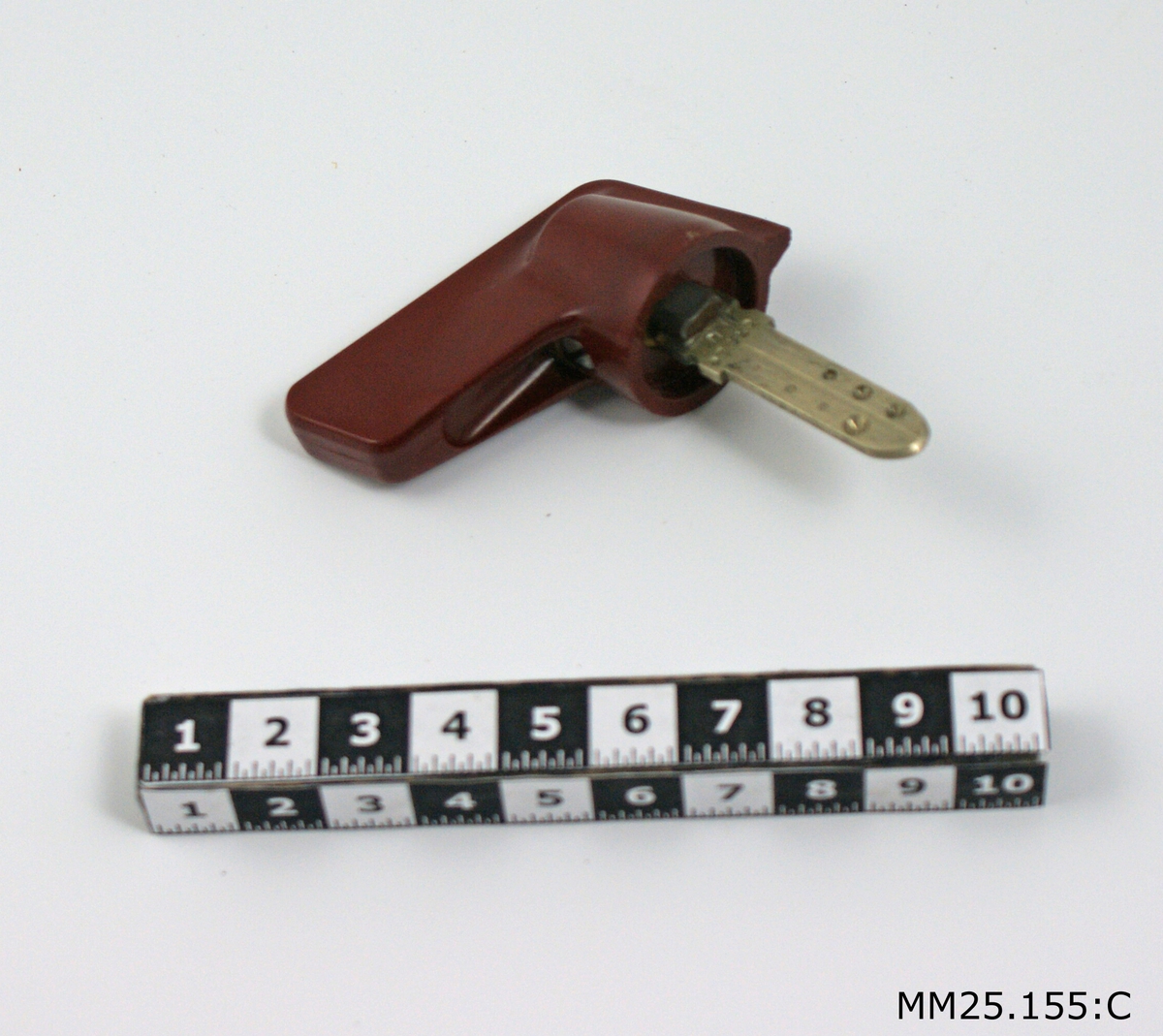
Fuse key is held by Naval Museum (Sweden). Description supplied by the holding institution: Key with an even, rounded bit. The bit is provided with six hollowed-out small holes on each side, which give the key its unique identity. Stamped marking at the top of the bit: "HW01252". Over the bit sits a handle in red Bakelite, angled with a larger part protruding downwards at an almost 90-degree angle from the bit. The bit is fastened with a screw in the handle. The collection record gives material recorded as Metall; Bakelitt [Metal; Bakelite]; measurements Bredd 56.0 mm; Tjocklek 25.0 mm [Width 56.0 mm; Thickness 25.0 mm]; format: image/jpeg; text/plain. Published through Europeana; how far this object represents a wider collectible type has not yet been independently verified.
Partial type record
Ethnographical Museum of Transylvania via Europeana
keys locks
Hot-worked iron key, with 4 teeth, with round handle.
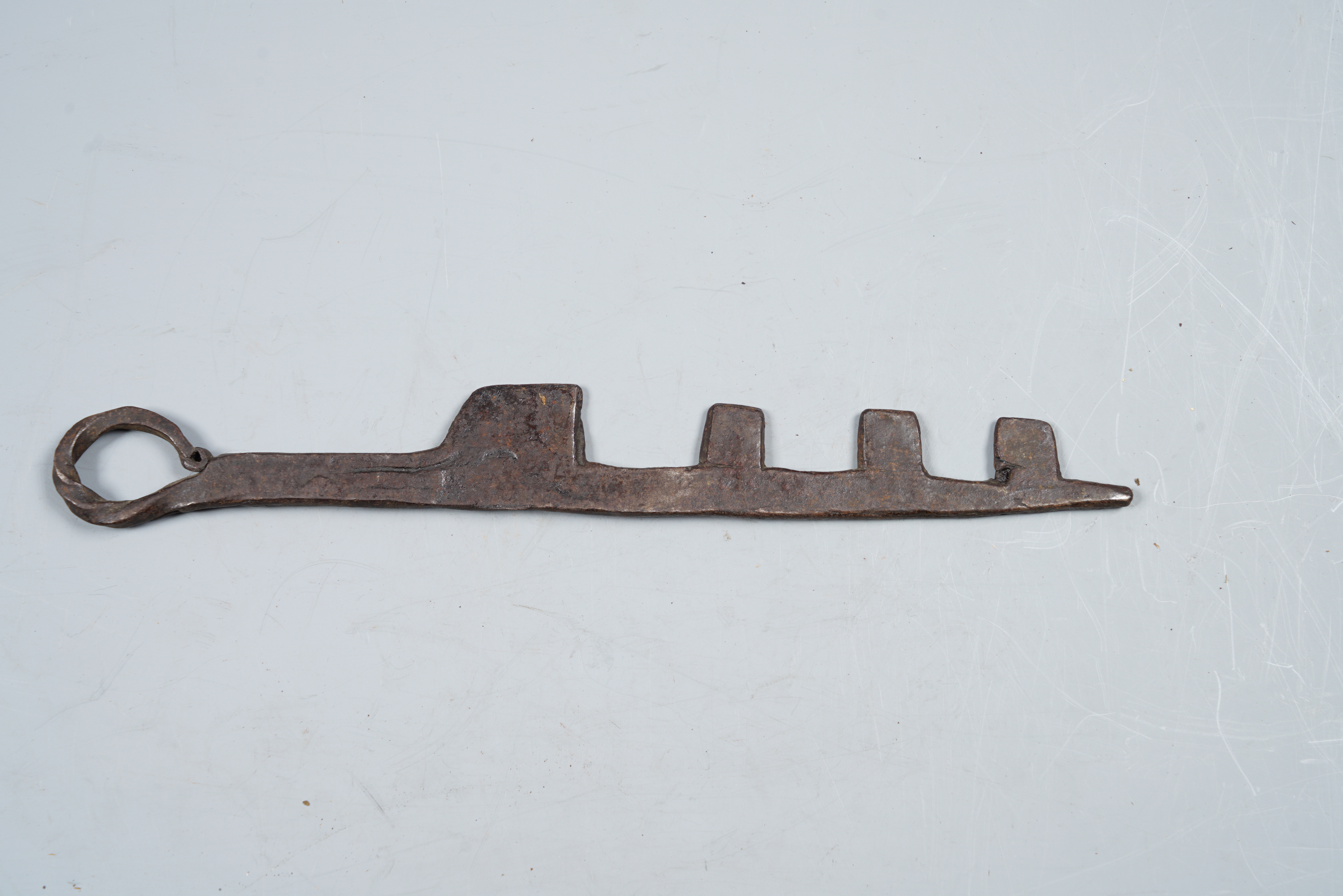
Hot-worked iron key, with 4 teeth, with round handle. is held by Ethnographical Museum of Transylvania. Museum description: Hot-worked iron key, with 4 teeth, with round handle.; for operating the locking/unlocking mechanism of doors The museum record gives measurements 3 cm; 24 cm. These details come from the holding museum's own record; how far this object represents a wider collectible type has not yet been independently verified.
Partial type record
Rijksmuseum, Amsterdam
keys locks
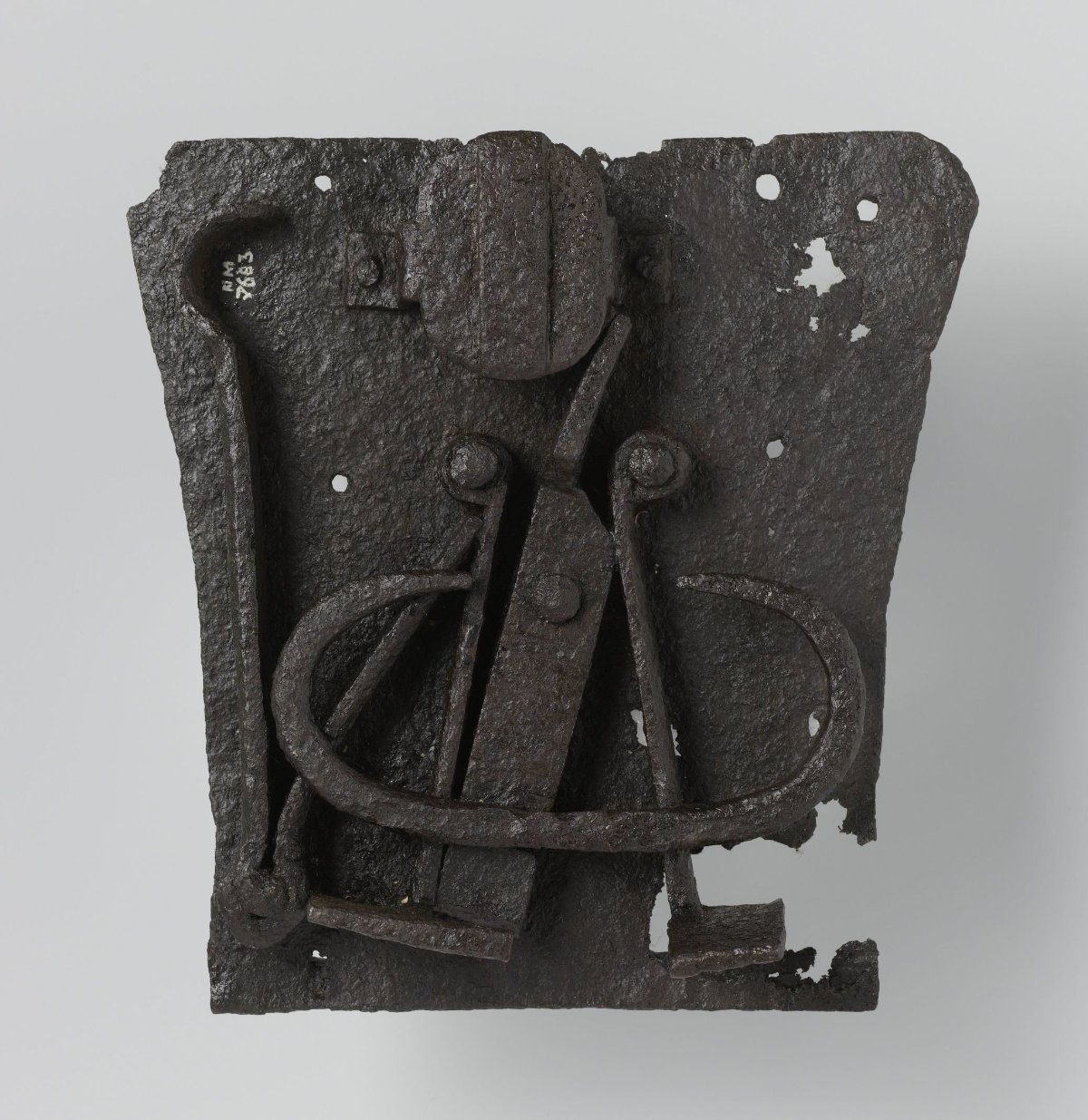
Internal mechanism of a lock, with part of a rusted-fast key
c. 1590 - c. 1596
Internal mechanism of a lock, with part of a rusted-fast key. The corresponding mount under number NM-7843-1. The Rijksmuseum, Amsterdam, holds this object as NG-NM-7683; its record gives material recorded as iron (metal); technique forging; measurements depth 10.5 cm. Description translated from the museum's Dutch catalogue text; details are those of this museum object, and how far it represents a wider type has not been independently verified.
Partial type record
Rijksmuseum, Amsterdam
keys locks
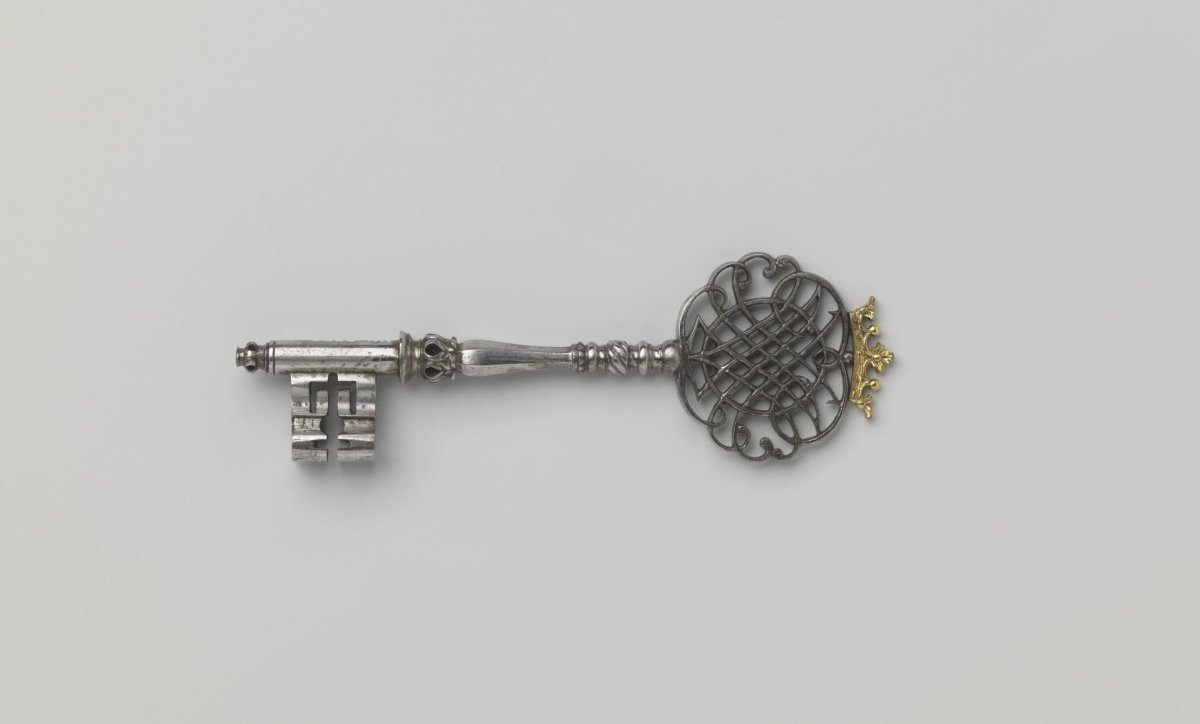
Iron key with openwork initials VPAO topped with a small gilded crown
1690 - 1700
Iron key with openwork initials VPAO topped with a small gilded crown. The Rijksmuseum, Amsterdam, holds this object as BK-NM-7252; its record gives material recorded as iron (metal), gilding (material); technique gild; measurements length 12.3 cm x width 3.8 cm. Description translated from the museum's Dutch catalogue text; details are those of this museum object, and how far it represents a wider type has not been independently verified.
Partial type record
Rijksmuseum, Amsterdam
keys locks
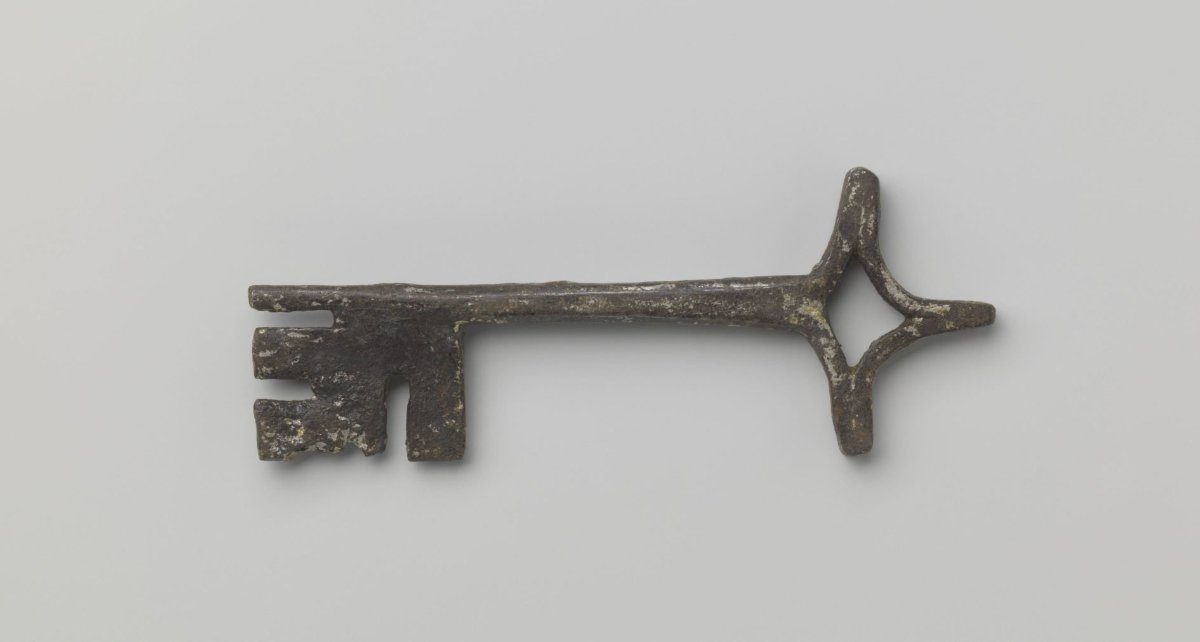
Iron key, 1200 - 1400
1200 - 1400
Wrought-iron key with a cross-shaped bow, closed angular barrel, and broad flat bit. The Rijksmuseum, Amsterdam, holds this object as BK-NM-12805; its record gives material recorded as iron (metal); measurements length 17.2 cm x width 6.7 cm. Description translated from the museum's Dutch catalogue text; details are those of this museum object, and how far it represents a wider type has not been independently verified.
Partial type record
Rijksmuseum, Amsterdam
keys locks
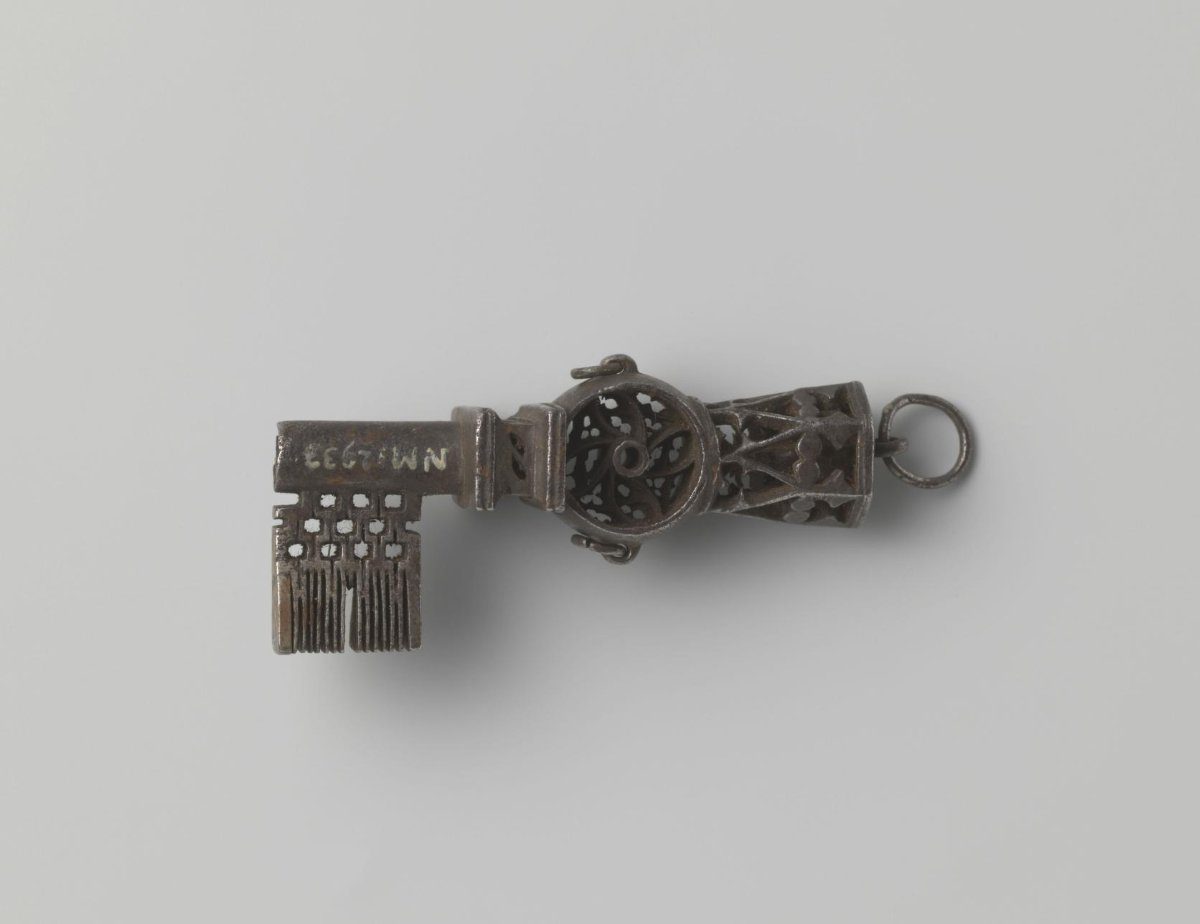
Iron key, 1475 - 1525
1475 - 1525
Wrought iron key. The bow is entirely openworked; at the top a hexagon with lily-shaped decorations, beneath which horizontally a round section with tracery-shaped infill. An openworked rectangular cross-piece connects bow and pipe. The pipe is hollow and double. The bit is very finely foliate and open on the front edge. The Rijksmuseum, Amsterdam, holds this object as BK-NM-12933; its record gives material recorded as iron (metal); measurements length 7 cm x width 2.6 cm. Description translated from the museum's Dutch catalogue text; details are those of this museum object, and how far it represents a wider type has not been independently verified.
Partial type record
Rijksmuseum, Amsterdam
keys locks
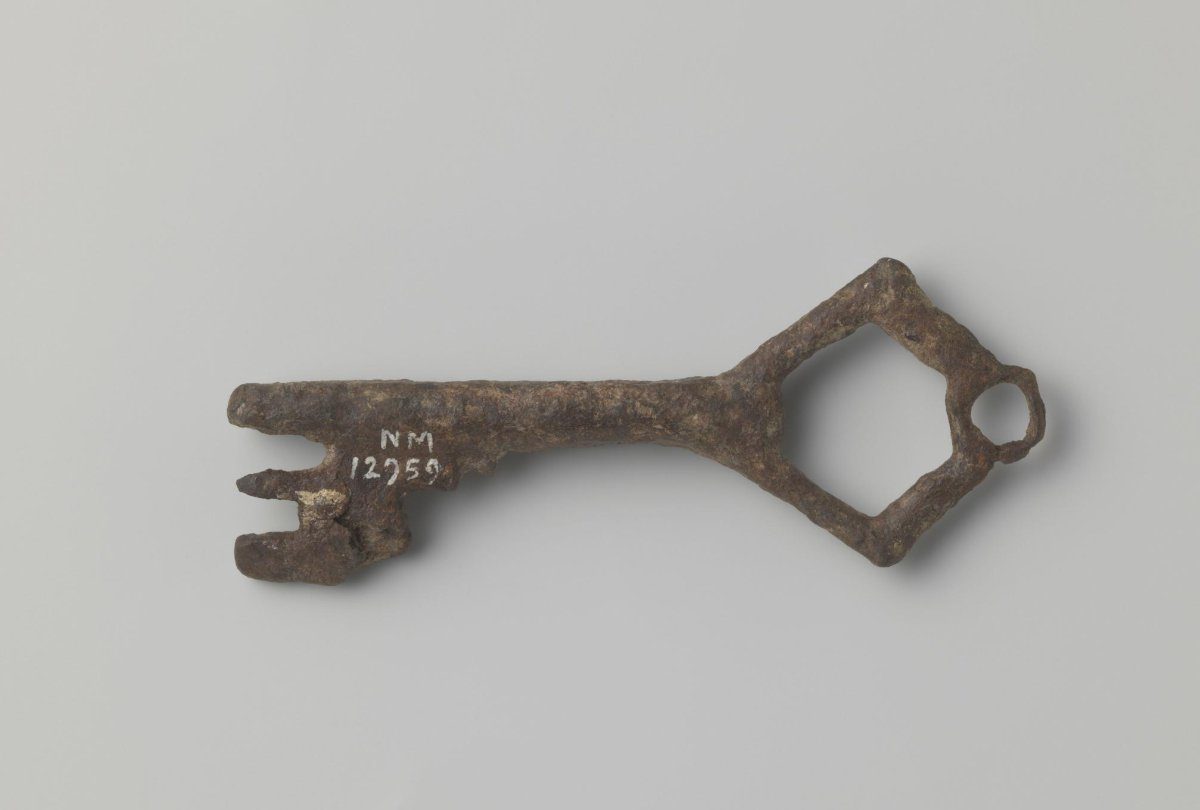
Iron key, 1500 - 1600
1500 - 1600
Wrought-iron key with a diamond-shaped bow. With a small round opening at the top, a solid pin with a thickening below the bow. Curved bit with two straight cuts. The Rijksmuseum, Amsterdam, holds this object as BK-NM-12959; its record gives material recorded as iron (metal); measurements length 10.8 cm x width 4 cm. Description translated from the museum's Dutch catalogue text; details are those of this museum object, and how far it represents a wider type has not been independently verified.
Partial type record
Rijksmuseum, Amsterdam
keys locks
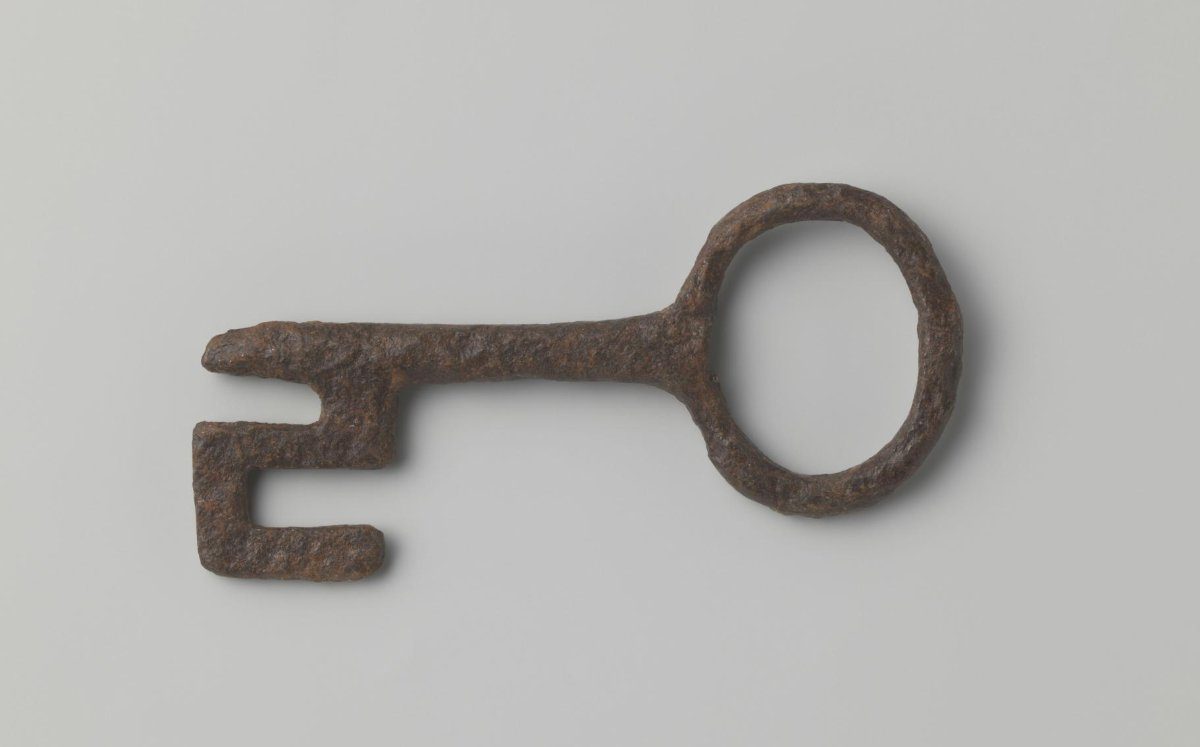
Iron key, c. 1300 - c. 1400
c. 1300 - c. 1400
Wrought-iron key with an oval bow, solid pin, and a bit with two straight cuts. The Rijksmuseum, Amsterdam, holds this object as BK-NM-12958; its record gives material recorded as iron (metal); measurements length 12.5 cm x width 5.4 cm. Description translated from the museum's Dutch catalogue text; details are those of this museum object, and how far it represents a wider type has not been independently verified.
Partial type record
Rijksmuseum, Amsterdam
keys locks
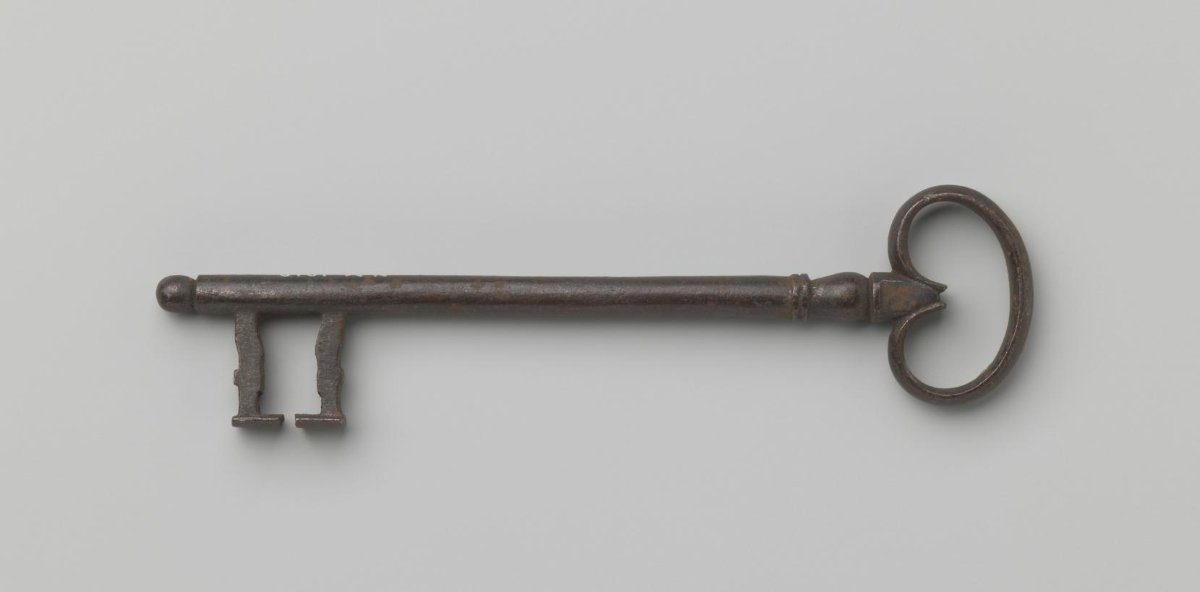
Iron key, c. 1400 - c. 1950
c. 1400 - c. 1950
Iron key, formerly attached to a steel ring (together with the numbers 1019 up to and including 1084). The Rijksmuseum, Amsterdam, holds this object as BK-NM-1019; its record gives material recorded as iron (metal); measurements length 15 cm. Description translated from the museum's Dutch catalogue text; details are those of this museum object, and how far it represents a wider type has not been independently verified.
Partial type record
Rijksmuseum, Amsterdam
keys locks
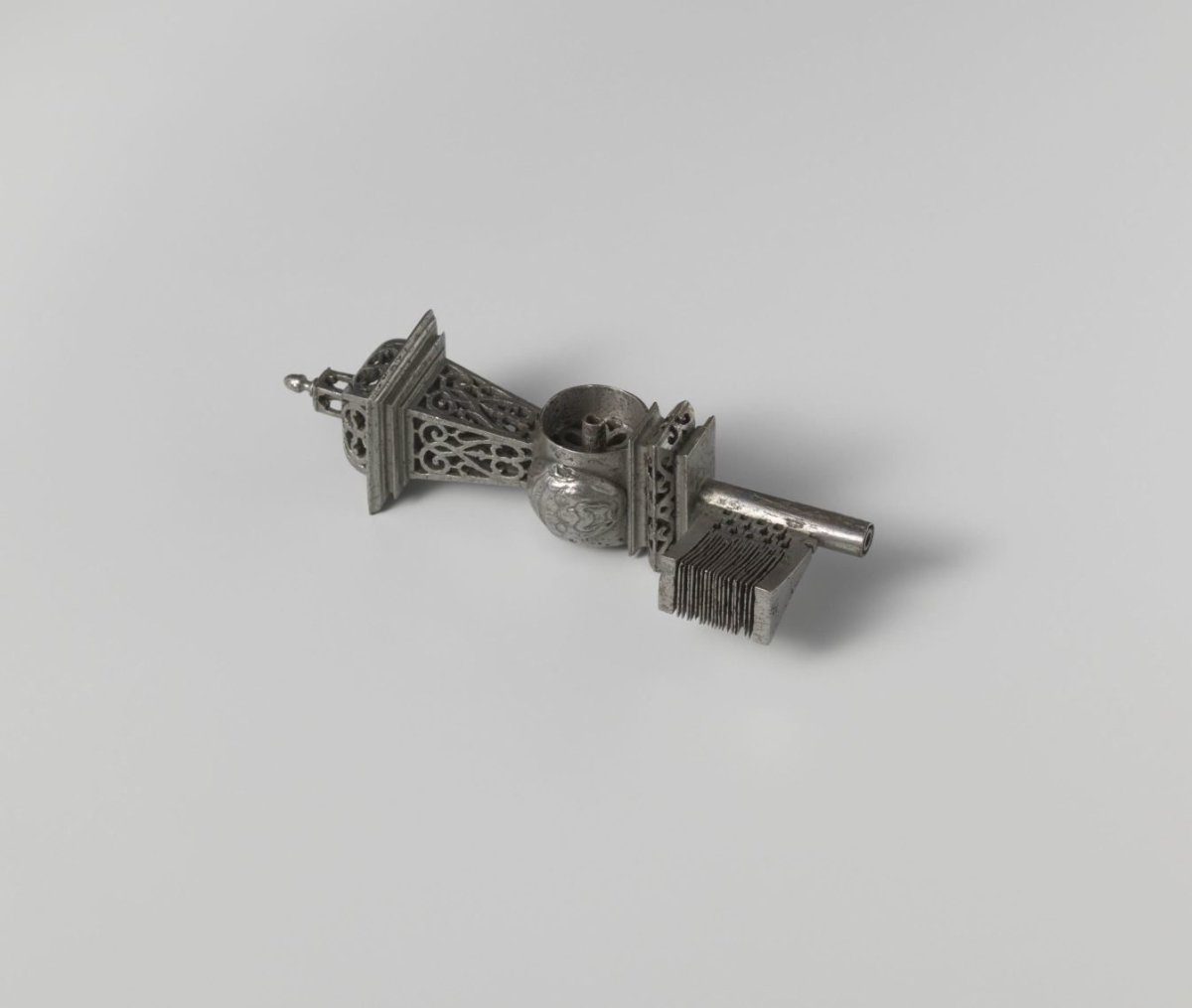
Iron key, c. 1500 - c. 1600
c. 1500 - c. 1600
Wrought-iron key. Entirely openworked. Two masks on the bow. The bit is divided into about twenty thin leaves. Probably a guild masterpiece. The Rijksmuseum, Amsterdam, holds this object as BK-NM-12797; its record gives material recorded as iron (metal); measurements length 13.5 cm x width 5 cm. Description translated from the museum's Dutch catalogue text; details are those of this museum object, and how far it represents a wider type has not been independently verified.
Partial type record
Rijksmuseum, Amsterdam
keys locks
Key
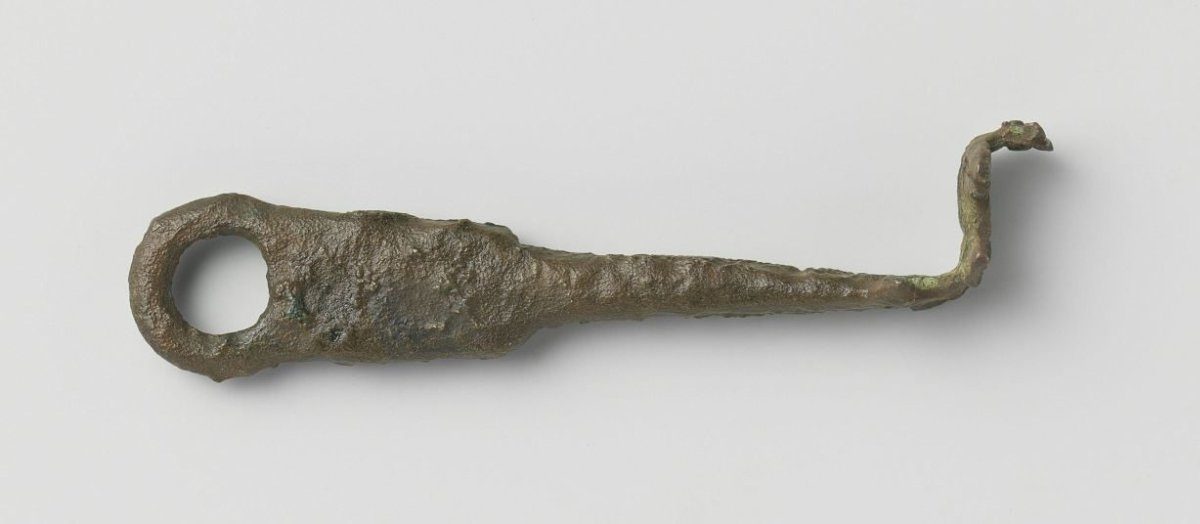
Key whose round bow transitions downwards into a flat, long rectangle. Attached to this is the four-sided shank, which terminates in a thin bit formed by two alternating internal angles, fitted with four teeth. The Rijksmuseum, Amsterdam, holds this object as BK-KOG-1962; its record gives material recorded as bronze (metal); measurements length 8.4 cm x width 1.8 cm. Description translated from the museum's Dutch catalogue text; details are those of this museum object, and how far it represents a wider type has not been independently verified.
Partial type record
National Museum of Romanian History via Europeana
keys locks
Key
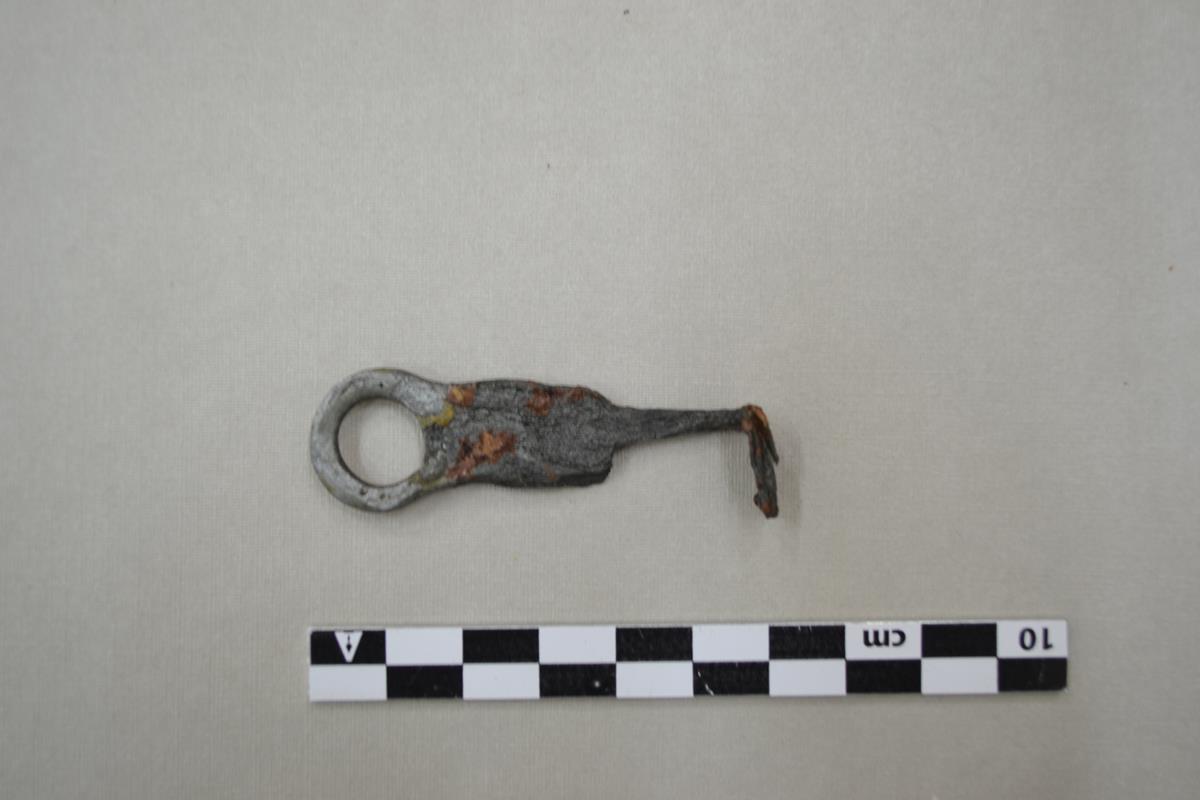
Key is held by National Museum of Romanian History. Museum description: Key with a ring at the top and the bit preserved with 2 teeth. Small active corrosion products. Teeth slightly chipped. The museum record gives measurements weight: 11.3 g; length: 60 mm; thickness: 4 mm; maximum diameter: 18.5 mm. These details come from the holding museum's own record; how far this object represents a wider collectible type has not yet been independently verified.
Partial type record
© Victoria and Albert Museum, London
keys locks
Key — Framed Keys, C. F. A. Voysey, London, ca.1900
ca.1900
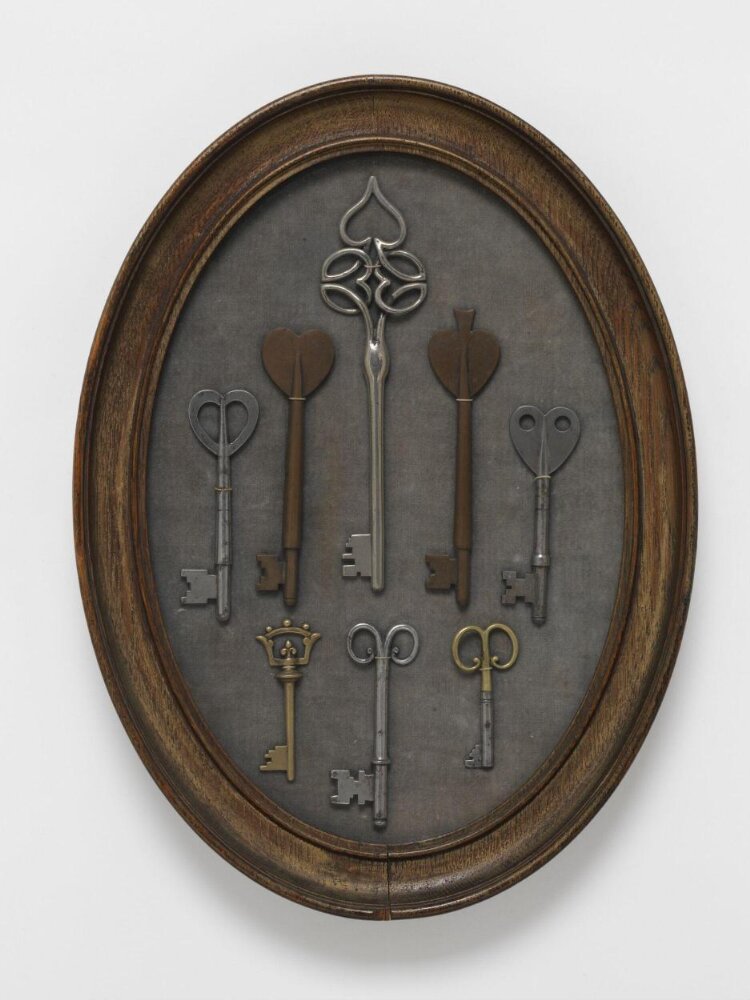
Key — Framed Keys, C. F. A. Voysey, London, ca.1900 is an object recorded by Victoria and Albert Museum, dated ca.1900. The museum's brief description reads: Eight keys, set within an oval frame, brass, steel and bronzed metal, London, ca.1900, possibly made by William Bainbridge Reynolds, designed by C.F.A. Voysey. Museum description: Eight keys, set within an oval frame, brass, steel and bronzed metal The museum record gives material recorded as brass, steel; measurements Height 30.5 cm; Width 22.5 cm; Depth 2.8 cm; place associated: London; maker recorded: C. F. A. Voysey, Bainbridge Reynolds, William. These details come from the holding museum's own record; how far this object represents a wider collectible type has not yet been independently verified.
Partial type record
© Victoria and Albert Museum, London
keys locks
Key — Key-shaped object, Khorasan, 10th century
10th century
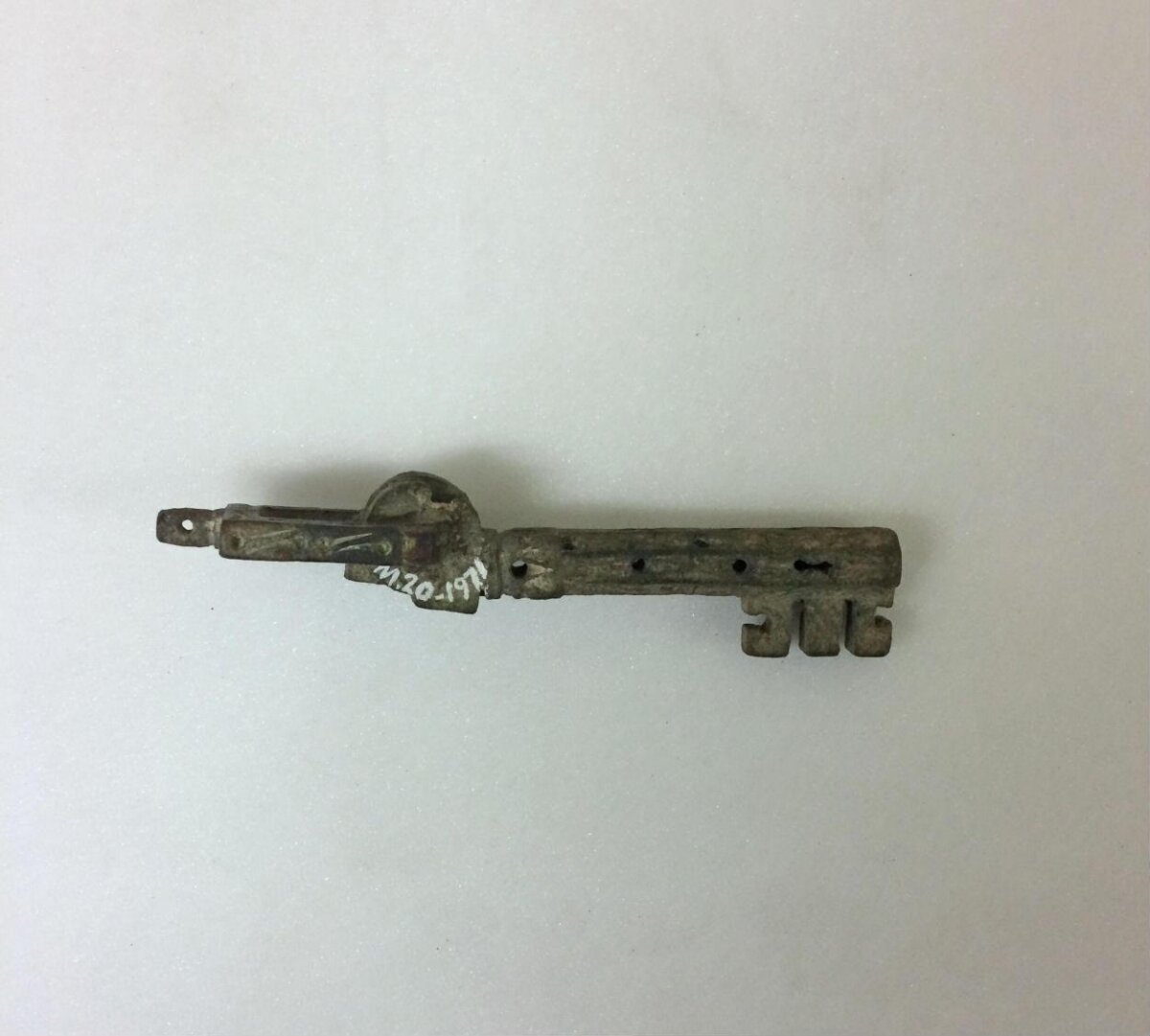
Key in the Victoria and Albert Museum, London (museum number M.20-1971), made in Khorasan, dated 10th century. The museum's brief description reads: Object in the shape of a key, perhaps a padlock, of cast bronze, engraved and drilled, and hammered iron, both heavily corroded.. Museum description: Object of cast bronze and iron in the shape of a key. It has a rectangular head with a knop on the outer side; a prominent shoulder; and a shaft that is square in section near the shoulder, with faceted angles, but is then octagonal for most of its length. Three teeth, rectangular in section, project from the shaft. Engraved and drilled decoration. The head of the key was either hinged (Melikian-Chirvani) or acted as the shackle of the padlock (Tanavoli and Wertime), but it is now immobile due to corrosion of the metal. It has a dull green patina due to corrosion. The museum records it as bronze, iron, measuring Length 9.9 cm. These details come from the museum's own record; how far this object represents a wider collectible type has not yet been independently verified.
Partial type record
© Victoria and Albert Museum, London
keys locks
Key — The 'Strozzi' key, France, 1550-1650
1550-1650
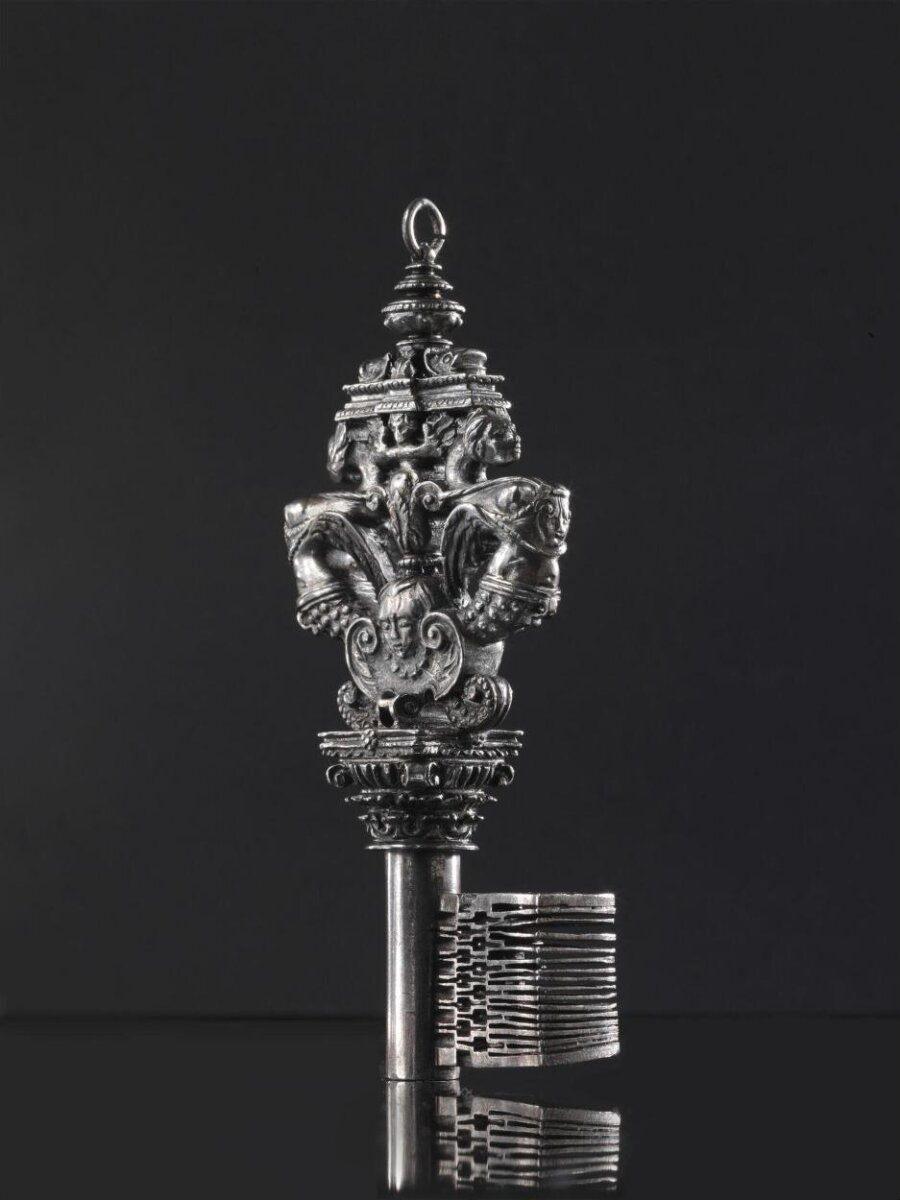
Key in the Victoria and Albert Museum, London (museum number M.137-1921), made in France, dated 1550-1650. The museum's brief description reads: Steel, chiselled, decorated with an elaborate bow consisting of winged female monsters, back to back. France, 1550-60.. Museum description: The bow or handle of the key is formed by two winged female monsters back to back supporting an entablature. It is joined to the pipe by a composite capital. The bit is flanged and finely cut, like a comb. The museum records it as Steel, pierced and chiselled, measuring Length 115 mm; Width 55 mm; Width 5.1 cm; Depth 1.5 cm. These details come from the museum's own record; how far this object represents a wider collectible type has not yet been independently verified.
Partial type record
Rijksmuseum, Amsterdam
keys locks
Key belonging to a repeating watch with a musical trophy
c. 1775 - c. 1800
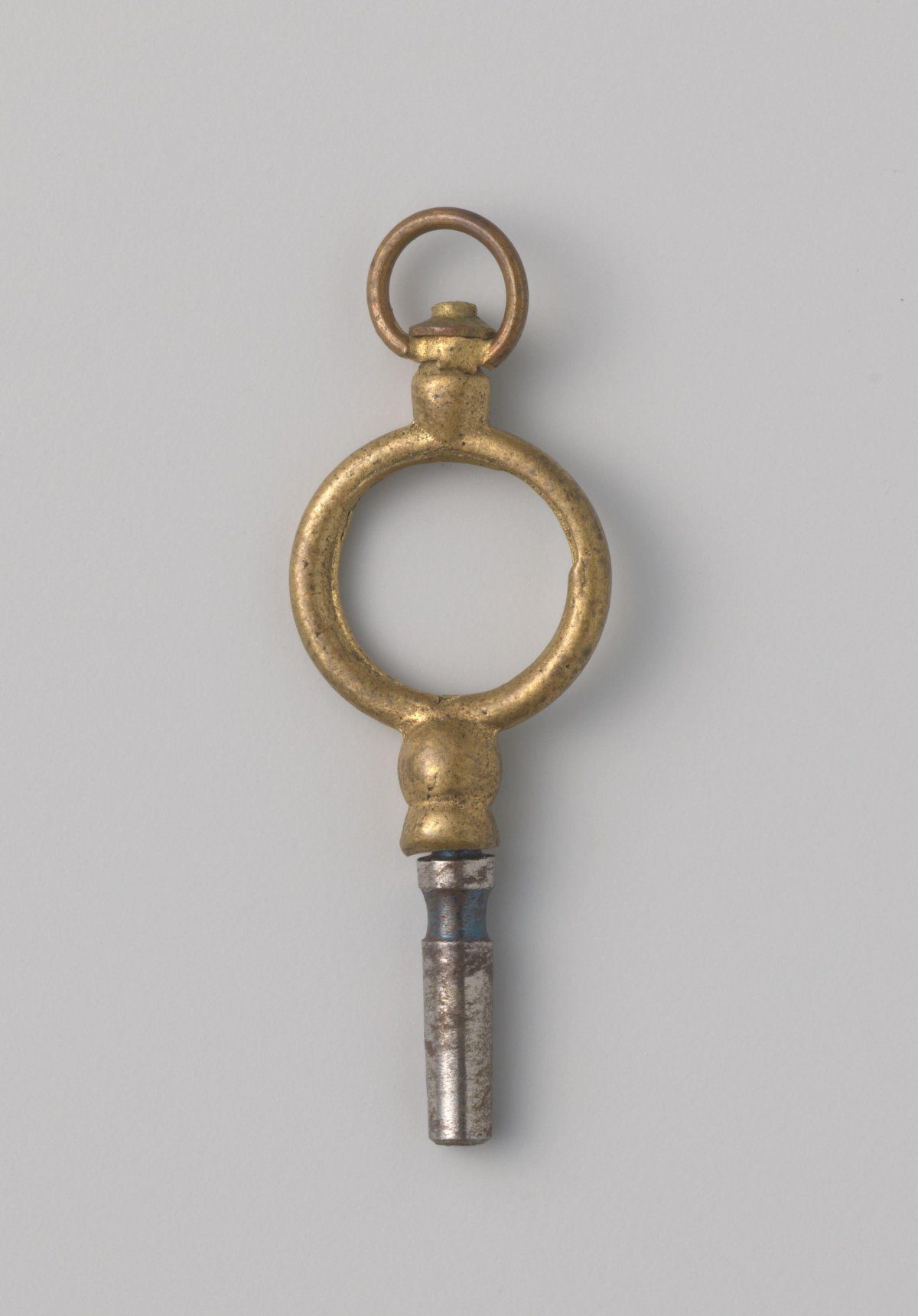
Key belonging to a repeating watch with a musical trophy. The Rijksmuseum, Amsterdam, holds this object as BK-NM-12878-1; its record gives material recorded as silver (metal), gold (metal); measurements height 3.7 cm x width 1.3 cm x depth 0.2 cm. Description translated from the museum's Dutch catalogue text; details are those of this museum object, and how far it represents a wider type has not been independently verified.
Partial type record
Rijksmuseum, Amsterdam
keys locks
Key belonging to verge watch
c. 1777
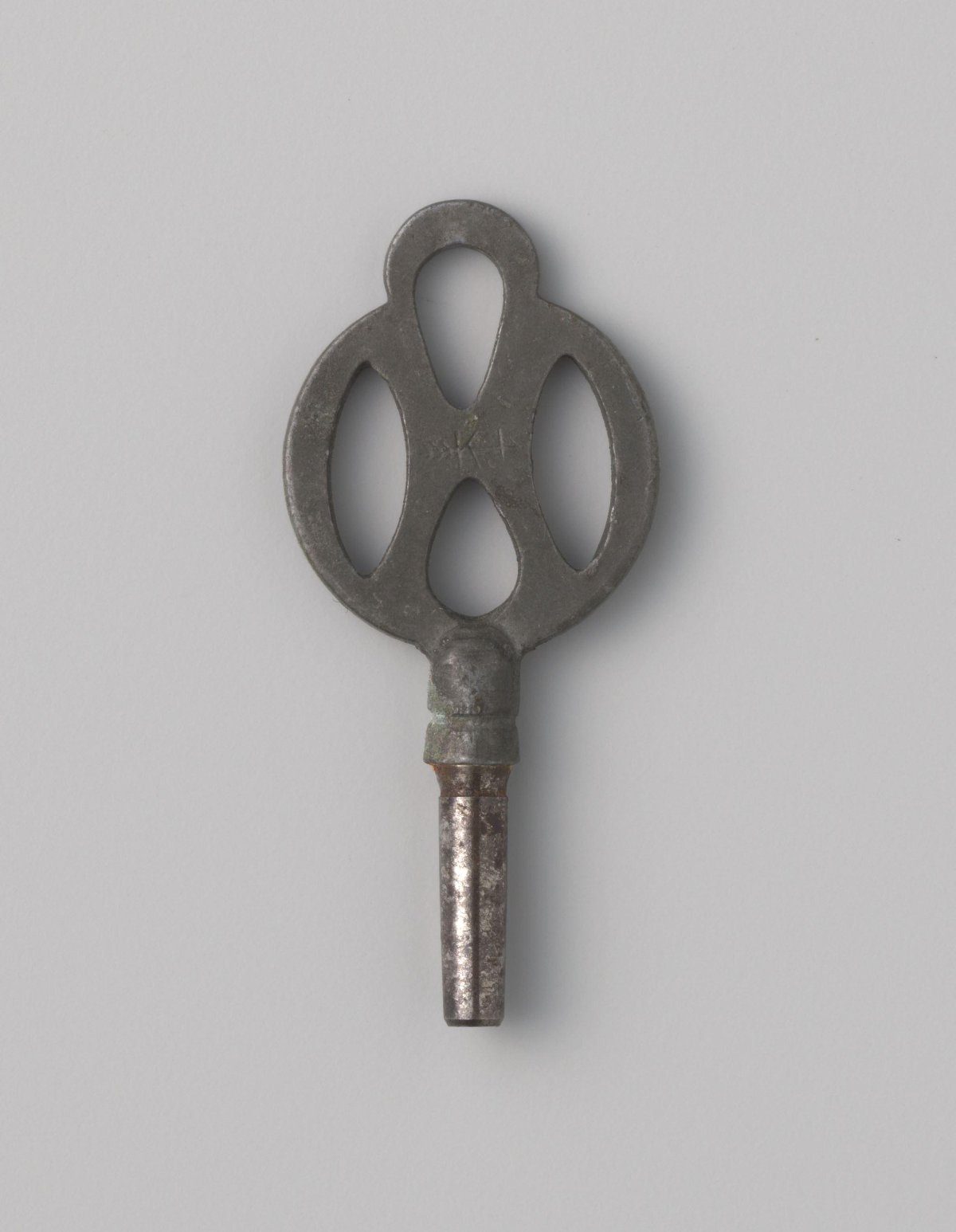
This watch is among the earliest known by the famous Parisian watchmaker Jean Anthoine Lépine. The number beneath the dial is a serial number; an example that can be dated with certainty thanks to the marks in the case (Paris, 1778) is numbered 3 053 (Auction Auctorem Geneva, 10-4-1992, no. 111), another numbered 2 025 has hallmark date marks for 1777 (Chapiro 1988, p. 44). The Rijksmuseum, Amsterdam, holds this object as BK-2014-8-1; its record gives material recorded as tin (metal), iron (metal); measurements height 3.1 cm x width 1.4 cm x depth 0.2 cm. Description translated from the museum's Dutch catalogue text; details are those of this museum object, and how far it represents a wider type has not been independently verified.
Partial type record
Skansen via Europeana
keys locks
Key board
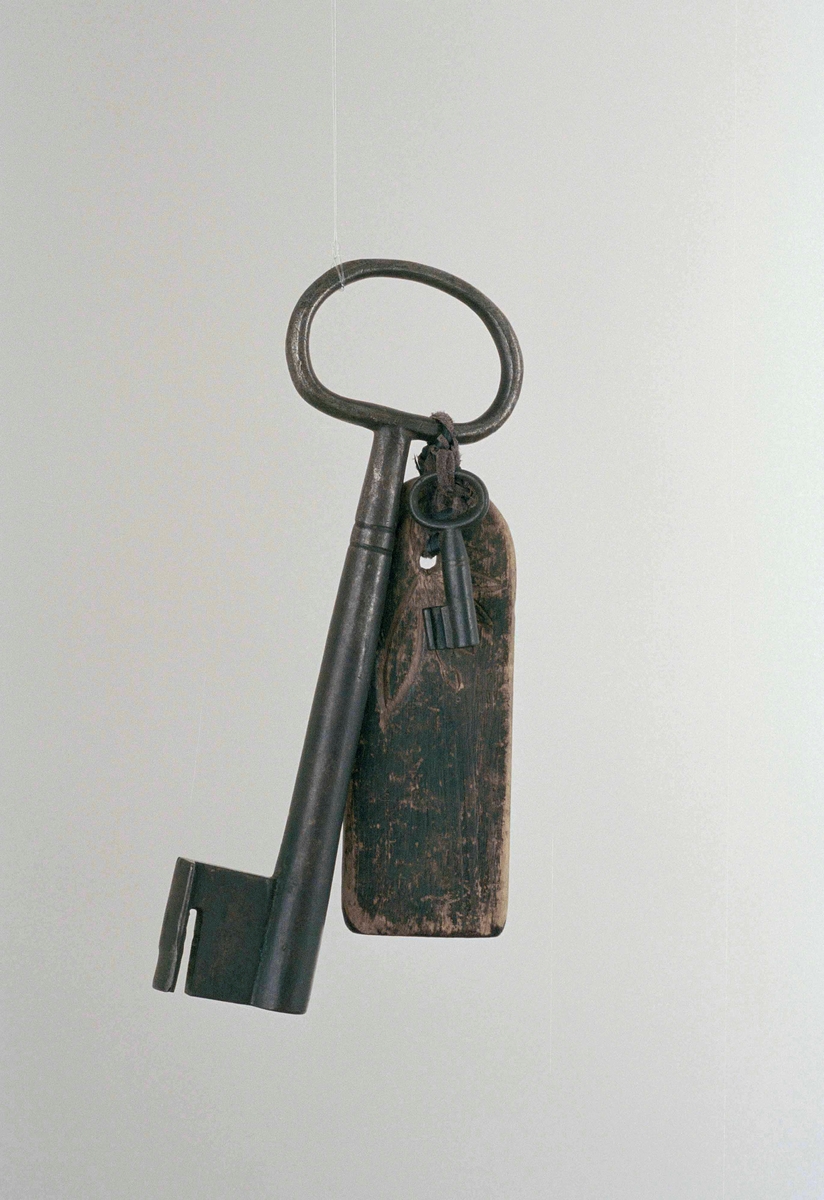
Key board is held by Skansen (Sweden). Description supplied by the holding institution: Carved key board(a) of pine with two accompanying iron keys, one large(b), one small(c). On one side of the board the word "nyckel" is carved, on the other side decoration. The collection record gives material recorded as Pine; measurements Length 18.5 Centimeter; Length 4.5 Centimeter; Length 11.5 Centimeter; format: image/jpeg; text/plain. Published through Europeana; how far this object represents a wider collectible type has not yet been independently verified.
Partial type record
Rijksmuseum, Amsterdam
keys locks
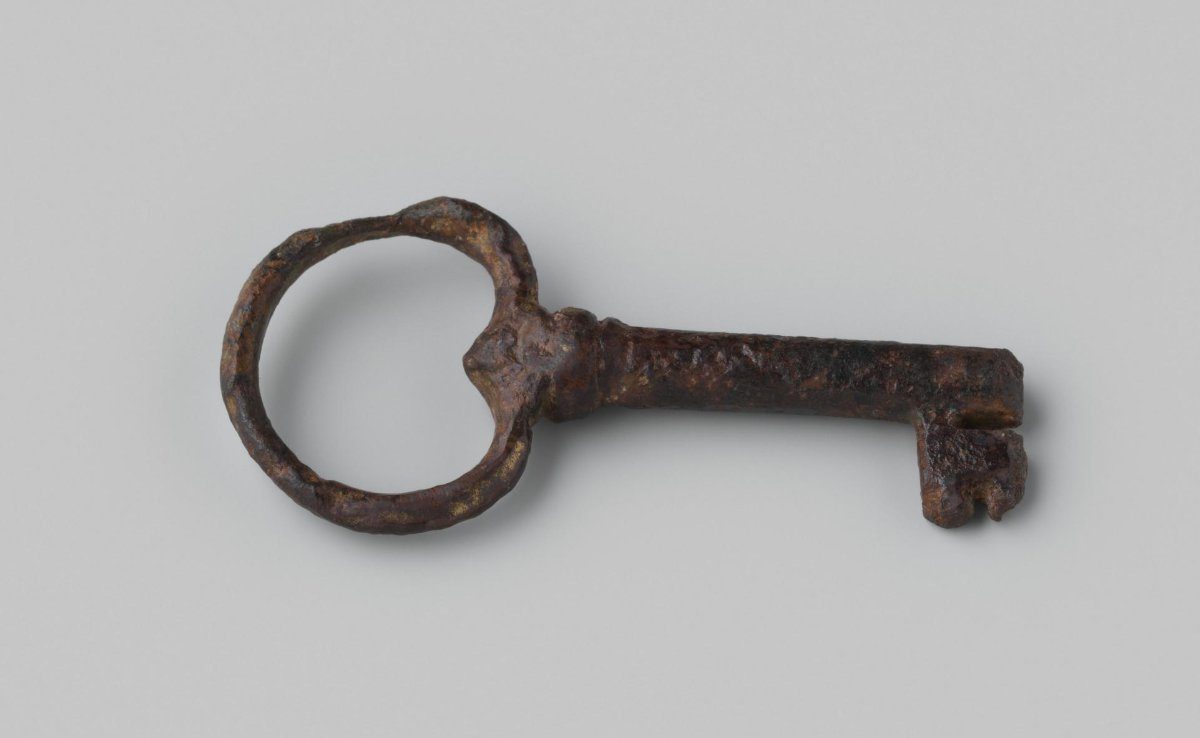
Key from the wreck of the East Indiaman Hollandia
1700 - in or before 1743-07-13
Locks, fastenings and accessories, key; straight, solid shank, circular bow with heart-shaped inner outline, double-notched bit. The Rijksmuseum, Amsterdam, holds this object as NG-1979-526-H; its record gives material recorded as copper (metal); measurements height 2.7 cm x width 5.7 cm x depth 0.5 cm. Description translated from the museum's Dutch catalogue text; details are those of this museum object, and how far it represents a wider type has not been independently verified.
Partial type record
Rijksmuseum, Amsterdam
keys locks
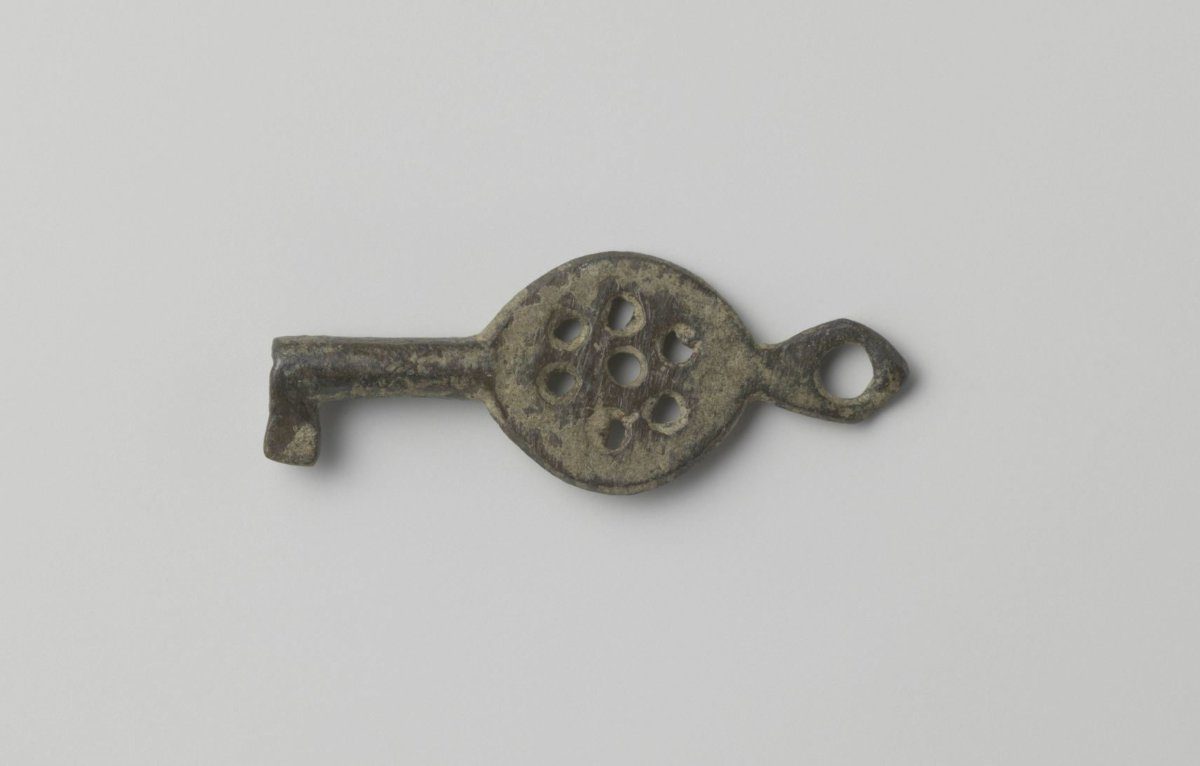
Key of bronze
c. 900 - c. 1200
Bronze key with hollow shank, uncut bit, bow with seven holes and a hole in the finial. The Rijksmuseum, Amsterdam, holds this object as BK-NM-13040; its record gives material recorded as bronze (metal); measurements length 3.7 cm x width 2 cm. Description translated from the museum's Dutch catalogue text; details are those of this museum object, and how far it represents a wider type has not been independently verified.
Partial type record
Rijksmuseum, Amsterdam
keys locks
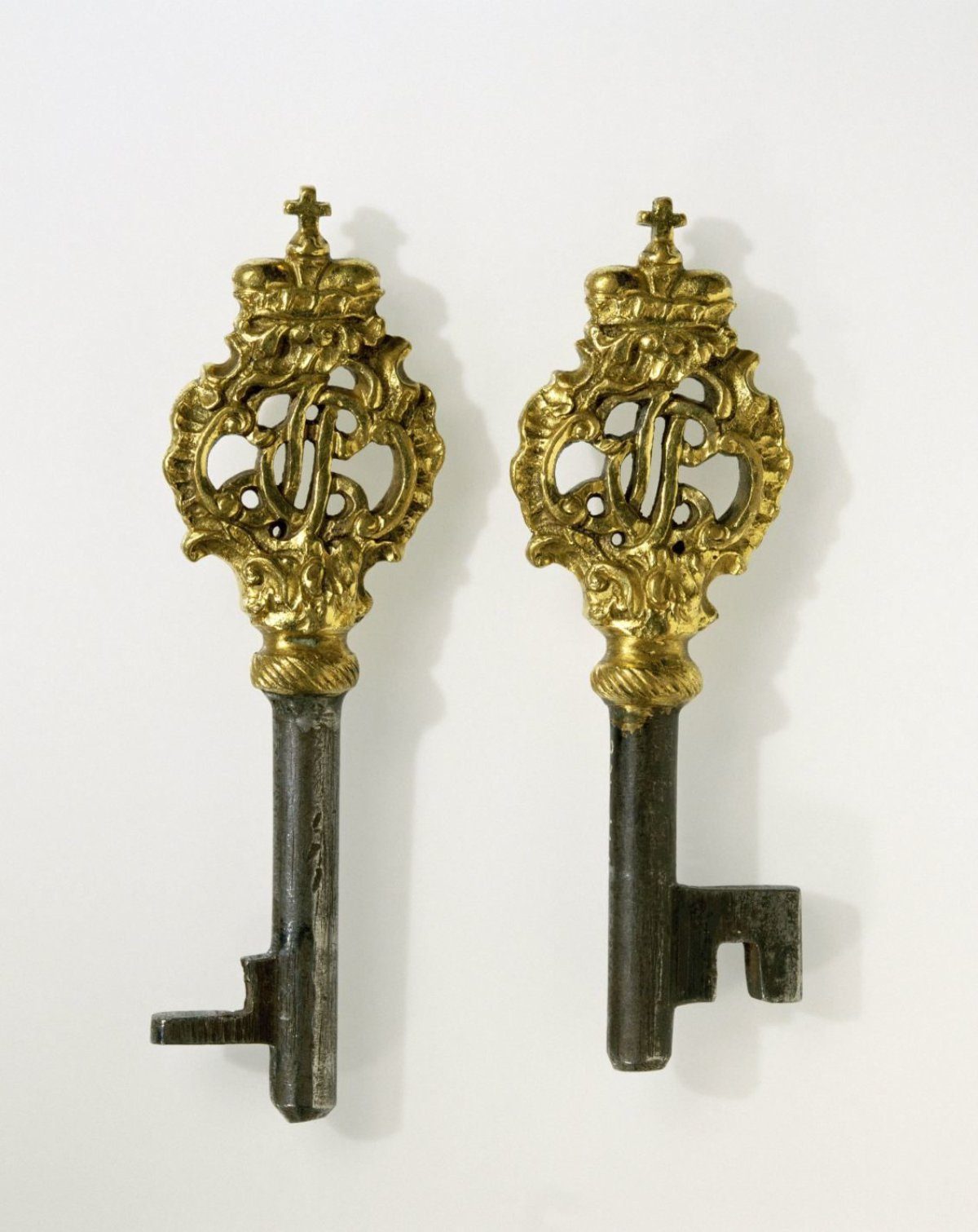
Key of iron and gilt bronze, with the monogram JPC of Johann Philipp von Walderdorff, Elector of Trier
c. 1765
Key of iron and gilt bronze, with the monogram JPC of Johann Philipp von Walderdorff, Elector of Trier (1756–1768). The key belongs to a desk made around 1765 by Abraham Roentgen (BK-16676). The Rijksmuseum, Amsterdam, holds this object as BK-16676-B; its record gives material recorded as bronze (metal), iron (metal), gilding (material); technique gild. Description translated from the museum's Dutch catalogue text; details are those of this museum object, and how far it represents a wider type has not been independently verified.
Partial type record
Rijksmuseum, Amsterdam
keys locks
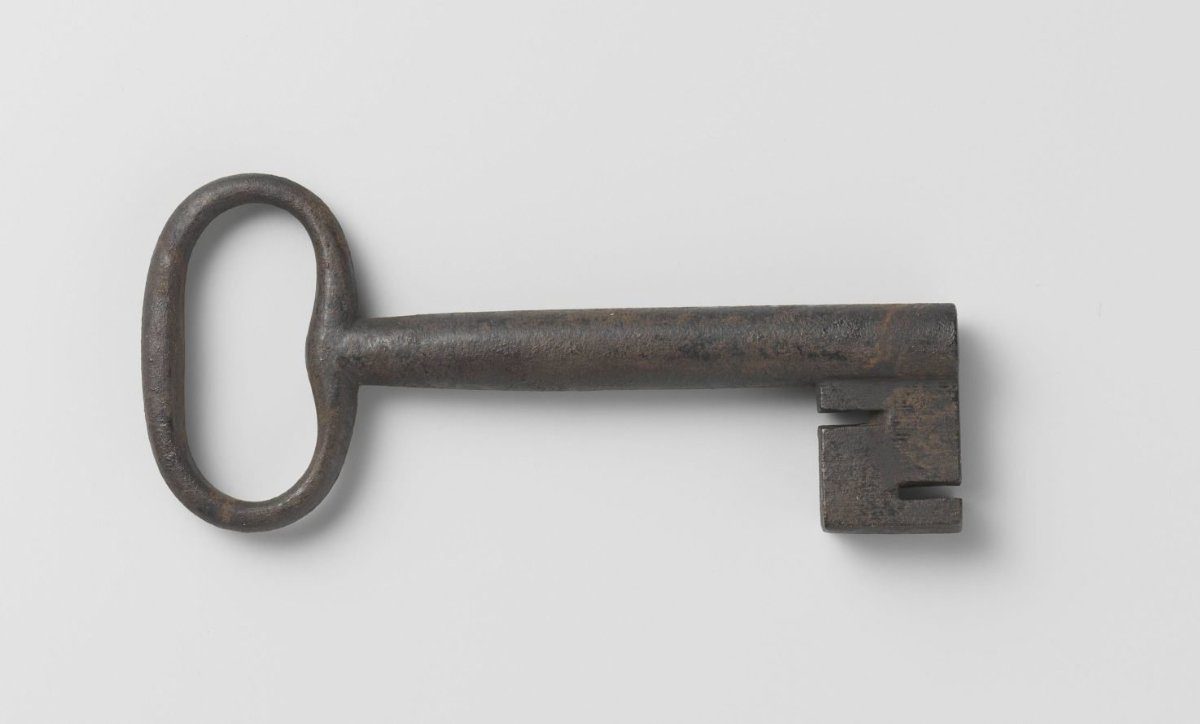
Key of Van Speyk
1820 - 1831
Key; simple bit at one end of the shank, upper part an oval bow; slightly rusty. (formerly mounted on cardboard on the back of which is written: Van Speyk). The Rijksmuseum, Amsterdam, holds this object as NG-NM-1036; its record gives material recorded as iron (metal); measurements length 13 cm x width 6 cm x depth 1.5 cm. Description translated from the museum's Dutch catalogue text; details are those of this museum object, and how far it represents a wider type has not been independently verified.
Partial type record
Rijksmuseum, Amsterdam
keys locks
Key to a tabernacle
1749
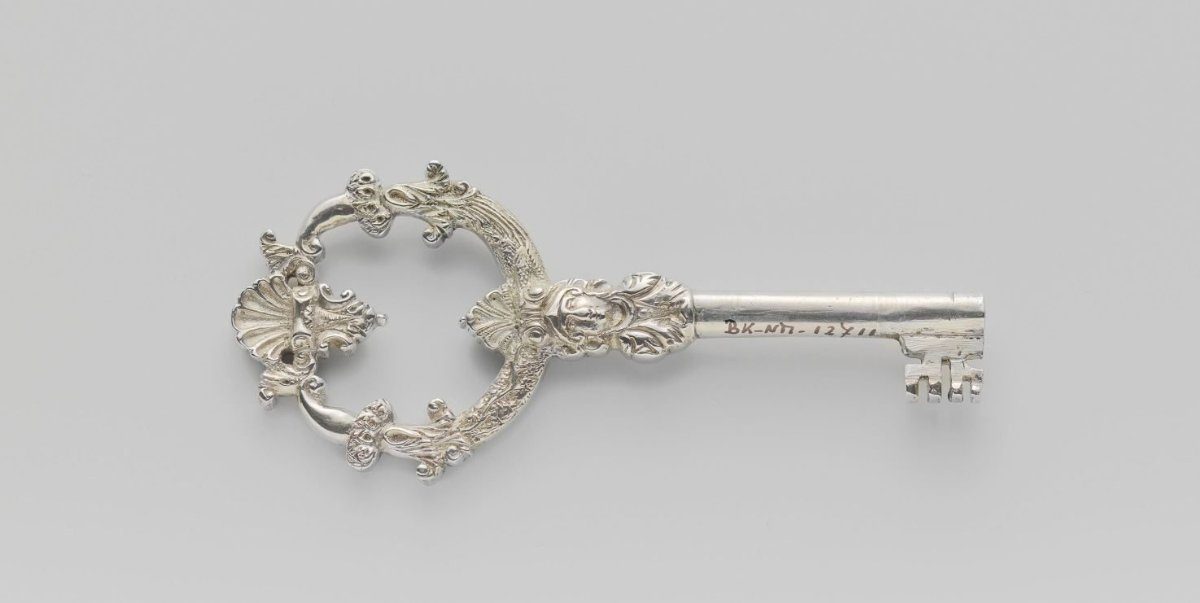
Key to a tabernacle door. Cast and chased silver. The bow is formed of two acanthus volutes surmounted by a shell, the lower section decorated with ears of wheat and grapevines (symbol of the Eucharist). The upper section of the barrel bears a mask. The Rijksmuseum, Amsterdam, holds this object as BK-NM-12711; its record gives material recorded as silver (metal); technique casting, ciselure; measurements height 11 cm. Description translated from the museum's Dutch catalogue text; details are those of this museum object, and how far it represents a wider type has not been independently verified.
Partial type record
Rijksmuseum, Amsterdam
keys locks
Key to the City of Bremen
c. 1875 - c. 1925
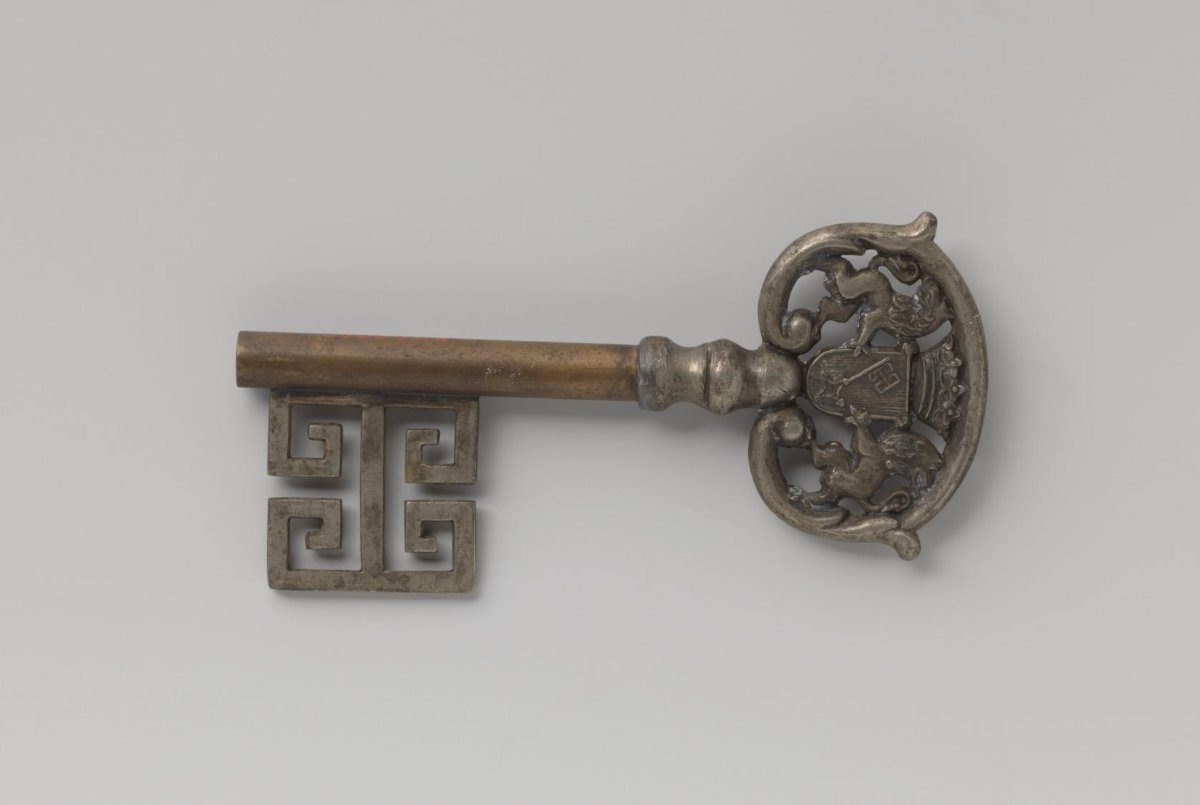
Symbolic key to the city of Bremen. The pewter bow or handle is formed by a downward-turned C-scroll containing two rampant lions with the crowned city coat of arms with the key of Bremen between them. The hollow shaft is made of copper, to which the openwork pewter bit is attached. It is square in shape, with four angular volutes springing from the central axis. The key is kept in the accompanying case (BK-KOG-2349-2). The Rijksmuseum, Amsterdam, holds this object as BK-KOG-2349-1; its record gives material recorded as copper (metal), tin (metal); technique casting; measurements height 13.2 cm x length 6.2 cm x width 1.3 cm. Description translated from the museum's Dutch catalogue text; details are those of this museum object, and how far it represents a wider type has not been independently verified.
Partial type record
Chester Beatty via Europeana
keys locks
Key to the comprehensive divination (Tercüme-i Miftah-ı Cifrü’l-Cami), Turkish translation of the Arabic Miftah al-jafr al-jami`, by Shaykh `Abd al-Rahman al-Bistami (d. 1458), Unknown
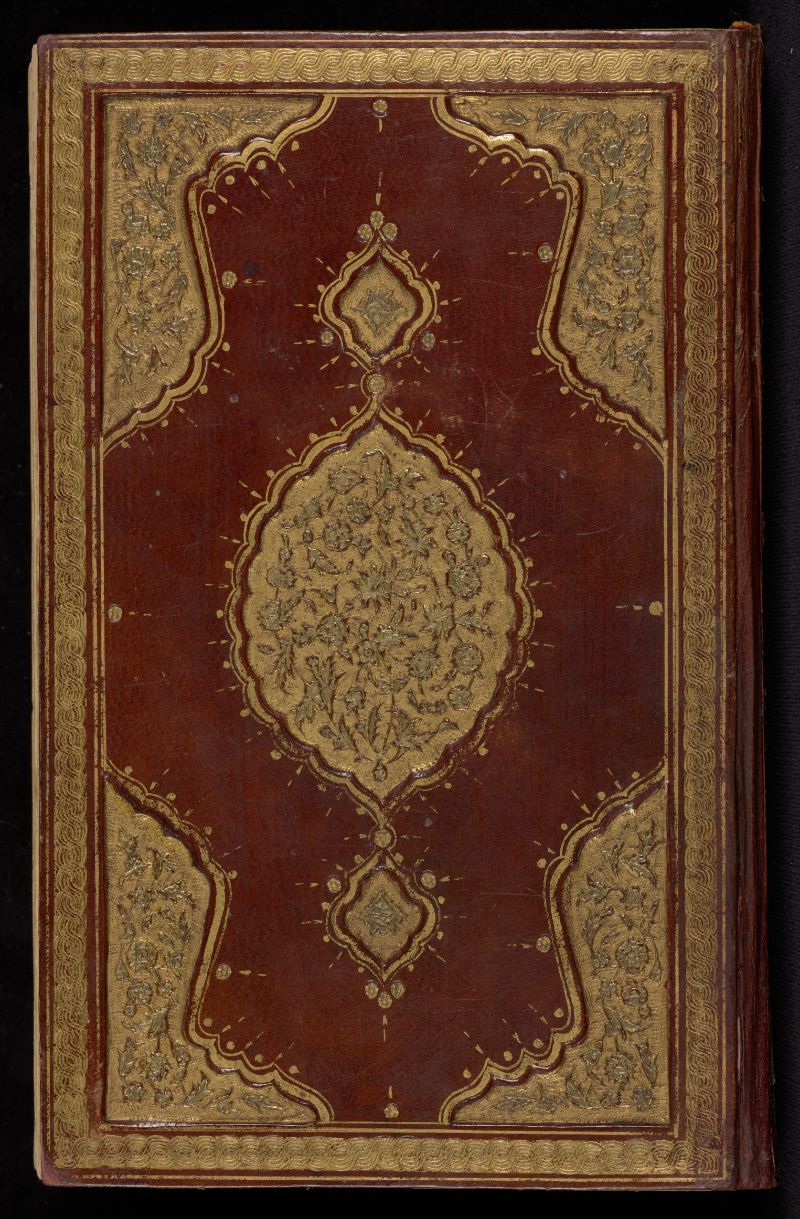
Key to the comprehensive divination (Tercüme-i Miftah-ı Cifrü’l-Cami), Turkish translation of the Arabic Miftah al-jafr al-jami`, by Shaykh `Abd al-Rahman al-Bistami (d. 1458) held by Chester Beatty (Ireland). Collection record published through Europeana; the wider type is not yet verified.
Partial type record
Rijksmuseum, Amsterdam
keys locks
Key to the main gate of the Citadel of Antwerp
1800 - 1850
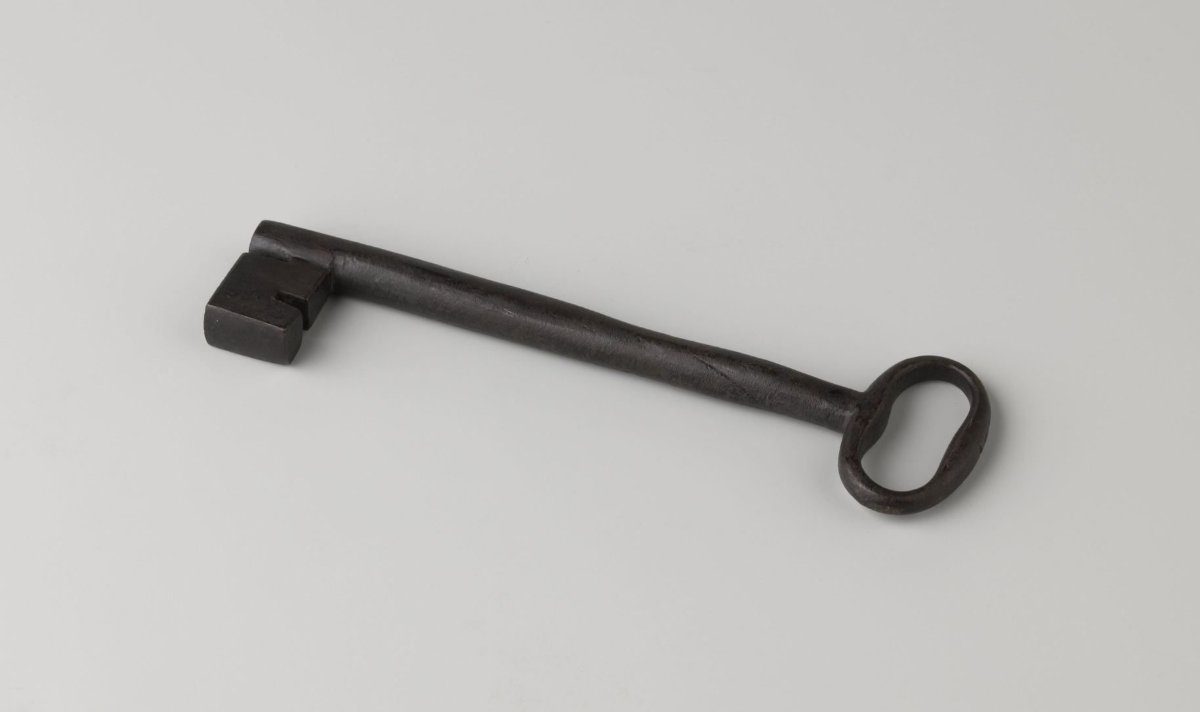
Black iron key with kidney-shaped bow, solid shank, and simple bit with two notches. Marked; on the bow: VI. The Rijksmuseum, Amsterdam, holds this object as NG-NM-11329; its record gives material recorded as iron (metal); technique sawing, forging, filing; measurements length 18.4 cm x length 5.2 cm. Description translated from the museum's Dutch catalogue text; details are those of this museum object, and how far it represents a wider type has not been independently verified.
Partial type record
Rijksmuseum, Amsterdam
keys locks
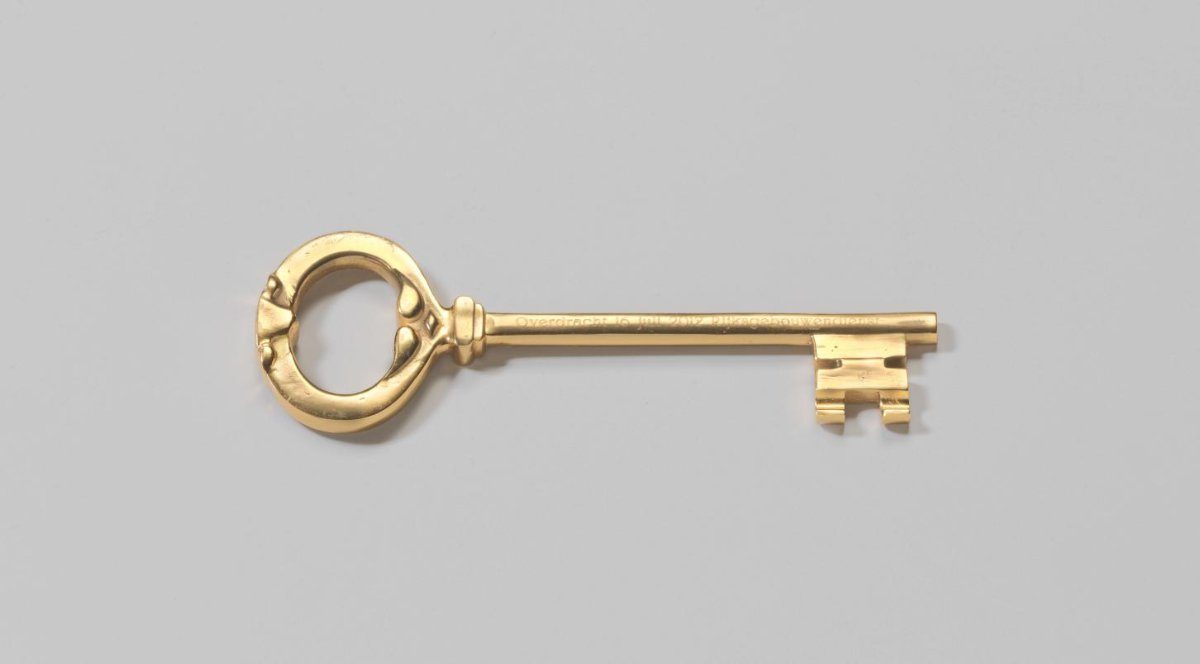
Key used in the handover of the building by the Government Buildings Agency to the Rijksmuseum
2012-07-16
Key used in the handover of the building by the Government Buildings Agency to the Rijksmuseum — Rijksmuseum object NG-2012-35. Dated by the museum: 2012-07-16. Museum attribution: anonymous; commissioner (person who orders works): Rijksgebouwendienst, Amsterdam. Material: leather, cardboard, metal, textile materials. Museum description: Gold-coloured key with inscription 'Overdracht 16 juli 2012 Rijksgebouwendienst' in a square box covered in blue leather.
Partial type record
Rijksmuseum, Amsterdam
keys locks
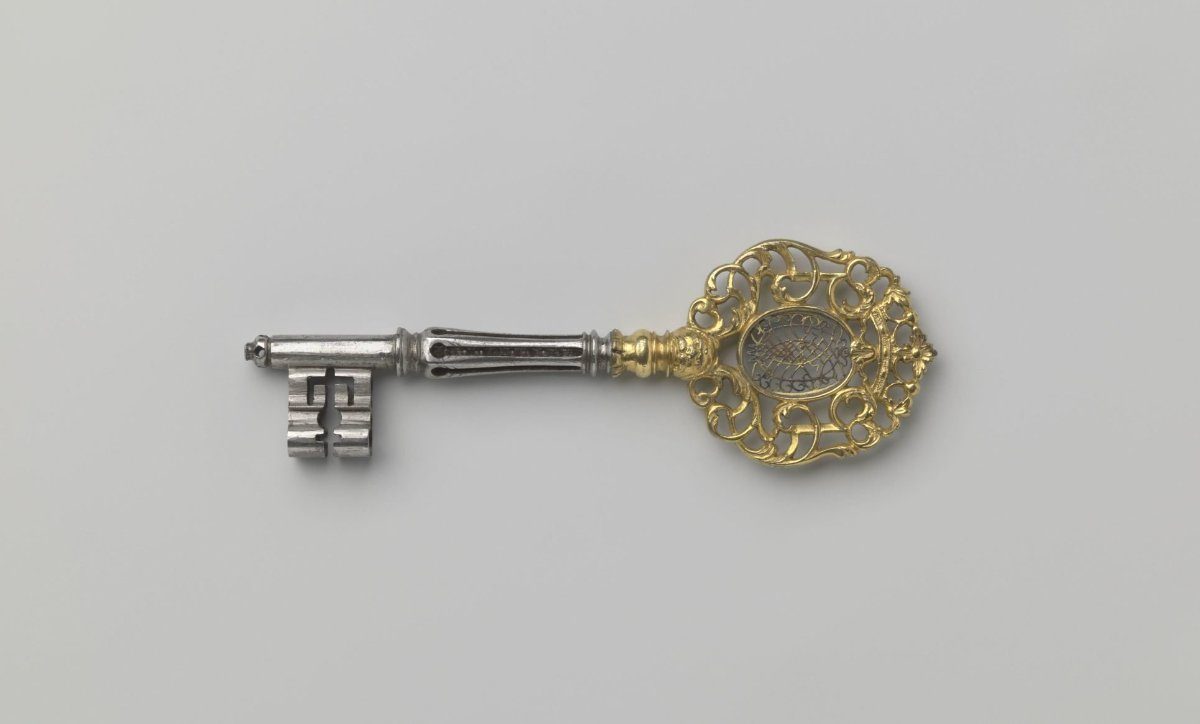
Key with crowned monogram
1675 - 1700
Finely crafted iron key, the upper part completely gilded. Crowned initials, set between ornaments. The Rijksmuseum, Amsterdam, holds this object as BK-NM-7249; its record gives material recorded as iron (metal); technique gild; measurements length 13 cm x width 4.1 cm. Description translated from the museum's Dutch catalogue text; details are those of this museum object, and how far it represents a wider type has not been independently verified.
Partial type record
Rijksmuseum, Amsterdam
keys locks
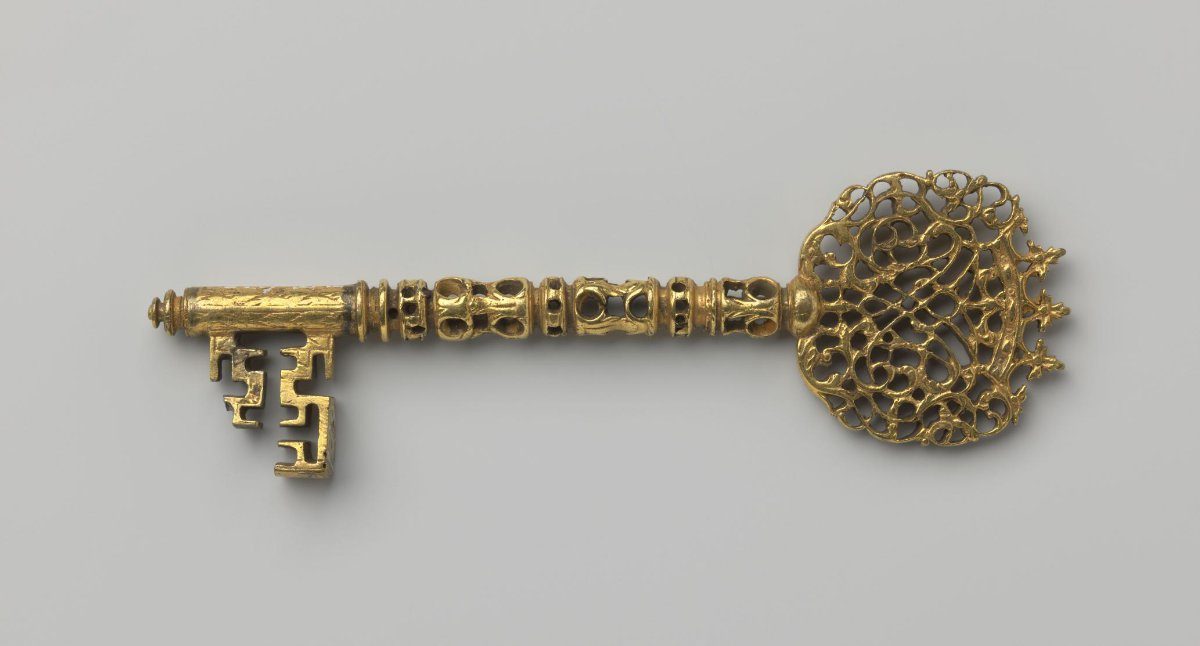
Key with double monogram JM and a marquess's coronet
c. 1675 - c. 1700
The iron pin or passkeys (BK-NM-678/79) were cast from the same mould. NM-679 is gilded and has a bit that is partially broken off. The finely detailed bit fits the cross and ward arrangement of the lock, the shaft is pierced, and the bow is shaped as a double monogram JM surrounded by scrolling foliage and surmounted by a marquess's coronet (five strawberry leaves). The Rijksmuseum, Amsterdam, holds this object as BK-NM-679; its record gives material recorded as iron (metal); technique casting, gild; measurements length 11.4 cm x width 4 cm x depth 0.8 cm. Description translated from the museum's Dutch catalogue text; details are those of this museum object, and how far it represents a wider type has not been independently verified.
Partial type record
Rijksmuseum, Amsterdam
keys locks
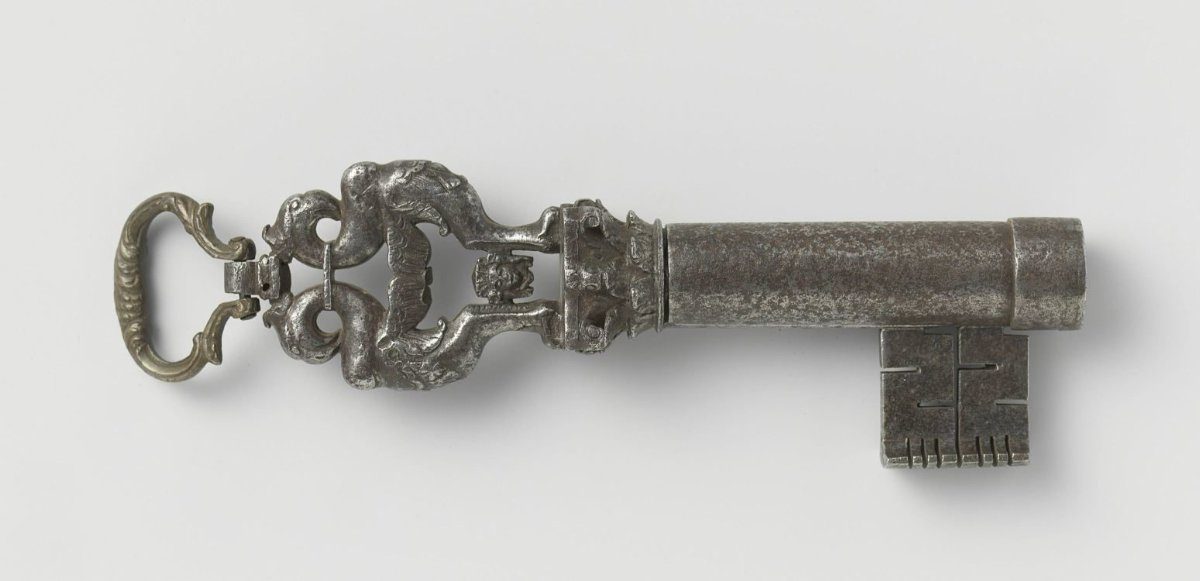
Key with hinged handle
c. 1600
Chased key with matching socket. The drilled shaft has a trefoil cross-section and bears an openwork Corinthian capital. The handle consists of two addorsed griffins joined together, holding a mask between their paws. Above the heads, a Louis XV brass handle was added later. The Rijksmuseum, Amsterdam, holds this object as BK-KOG-2195; its record gives material recorded as iron (metal); measurements height 15.7 cm x width 4.6 cm x height 8 cm x width 2.2 cm. Description translated from the museum's Dutch catalogue text; details are those of this museum object, and how far it represents a wider type has not been independently verified.
Partial type record