Skip to content

Other collectibles

How to identify a camera or fountain pen

Cameras and fountain pens were made in long-running model families with small changes between versions. Markings, mechanism and interchangeable parts decide which version you have.

Comparison checklist

Maker and model
Record and compareCopy body, cap, barrel and clip markings exactly; separate retailer names from manufacturer names.
Limits of the evidenceA shared brand or family name does not establish a specific version; museums may preserve broad descriptions.
Camera construction
Record and compareCompare body form, film or plate format, viewfinder layout, shutter controls and lens mount with documented versions.
Limits of the evidenceDo not fire a shutter or force a back to check it. A fitted lens may be a later substitution.
Lens documentation
Record and compareRecord focal length, maximum aperture, maker, lens name and lens serial separately from the body serial.
Limits of the evidenceA lens chronology does not date the body. Exterior appearance does not establish optical or shutter condition.
Pen filling and nib
Record and compareRecord visible lever, button, cartridge connection or ink window; transcribe nib imprint and barrel markings.
Limits of the evidenceDo not disassemble or fill an unknown pen. A fitted nib may not be original, and gold colour does not establish fineness.
Version and replacement parts
Record and compareCompare controls, trim, caps, sections, backs and material patterns with a named maker archive or museum description.
Limits of the evidenceSerials need a maker-specific source. A photograph cannot prove operation, internal seals or an original assembly.

Step by step

  1. 1

    Read the maker and model markings

    Record every name, model designation and logo as marked on the body, top plate, barrel, cap or clip. Retailer and distributor names sometimes appear instead of the maker's.

    • Maker and model name exactly as written
    • Country of manufacture markings
    • Retailer, importer or promotional names kept separate
  2. 2

    Classify the mechanism

    For cameras, record film format and camera type: box, folding, rangefinder, twin-lens reflex, single-lens reflex. For pens, record the filling system: eyedropper, lever, button, piston, vacuum or cartridge.

    • Camera: film size, plate or roll film, viewfinder type
    • Pen: filling system and how it operates
    • Shutter type or ink window where present
  3. 3

    Record the lens or nib

    The lens or nib is often the most informative part. Record the lens maker, name, focal length and maximum aperture, or the nib's imprint, size and metal.

    • Lens engraving: maker, name, focal length, aperture
    • Lens mount: fixed, screw or bayonet type
    • Nib imprint, size number and stated gold fineness
  4. 4

    Record serial numbers and date codes

    Camera bodies and lenses often carry serial numbers; some pens carry date codes. Use them only against the maker's records or a published list, and say which list you used.

    • Body and lens serials recorded separately
    • Date codes on pen barrels or caps, as imprinted
    • Unmatched numbers left as research required
  5. 5

    Check for replaced or mismatched parts

    Lenses, backs and viewfinders were swapped between cameras; caps, barrels, sections and nibs between pens. Compare with the documented original configuration before matching an entry.

    • Lens appropriate to the body and period
    • Cap and barrel colours and patterns matching
    • Replacement sacs, seals or leatherette recorded

Museum specimens for comparison

Compare visible evidence with the museum's documented object. A collection number identifies the museum specimen, not every object of that type; hidden features remain research required.

Popular Brownie

Victoria and Albert Museum · V&A collection image — rights review requested · Museum source

Popular Brownie

1950-1959

Documented

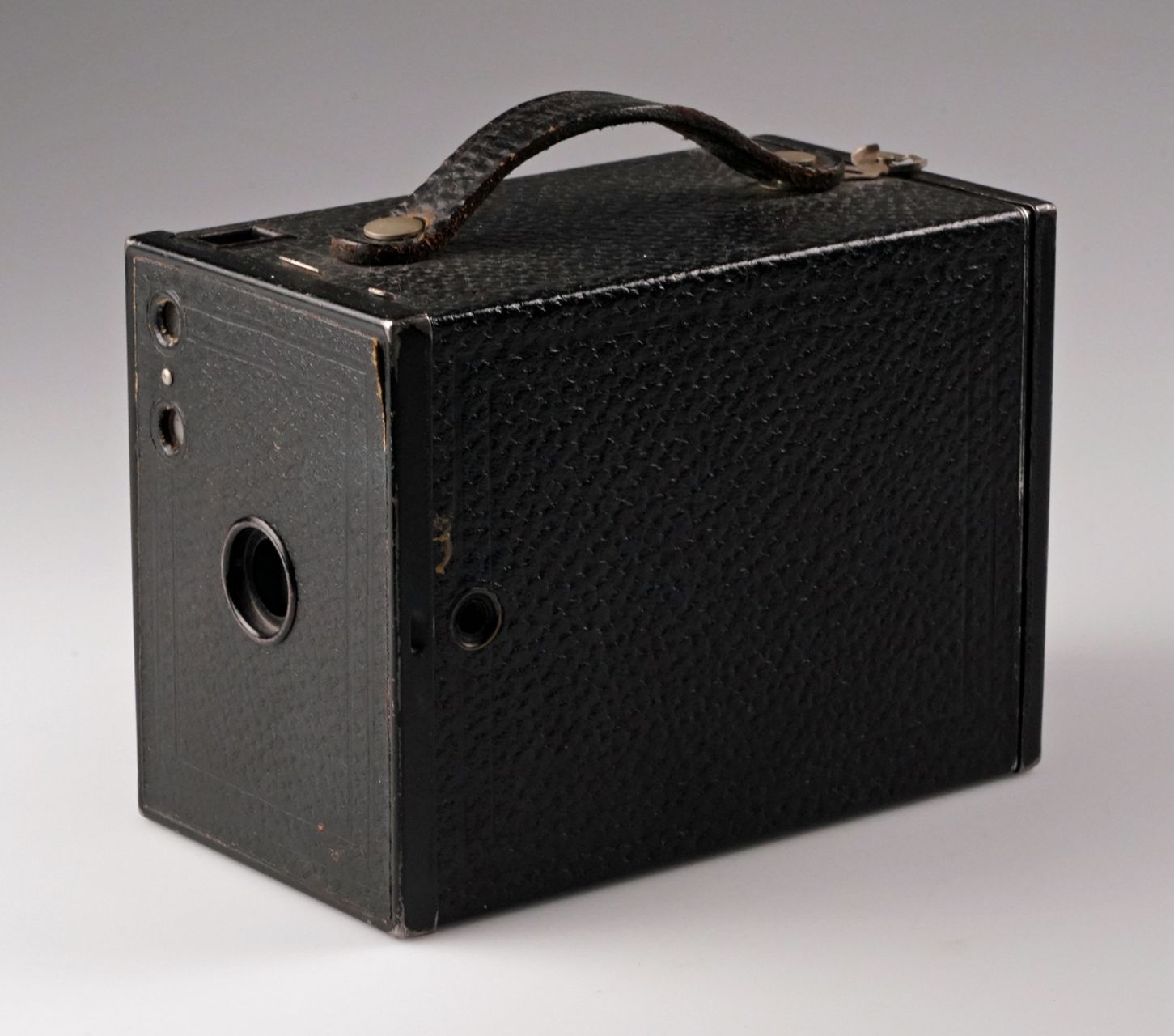
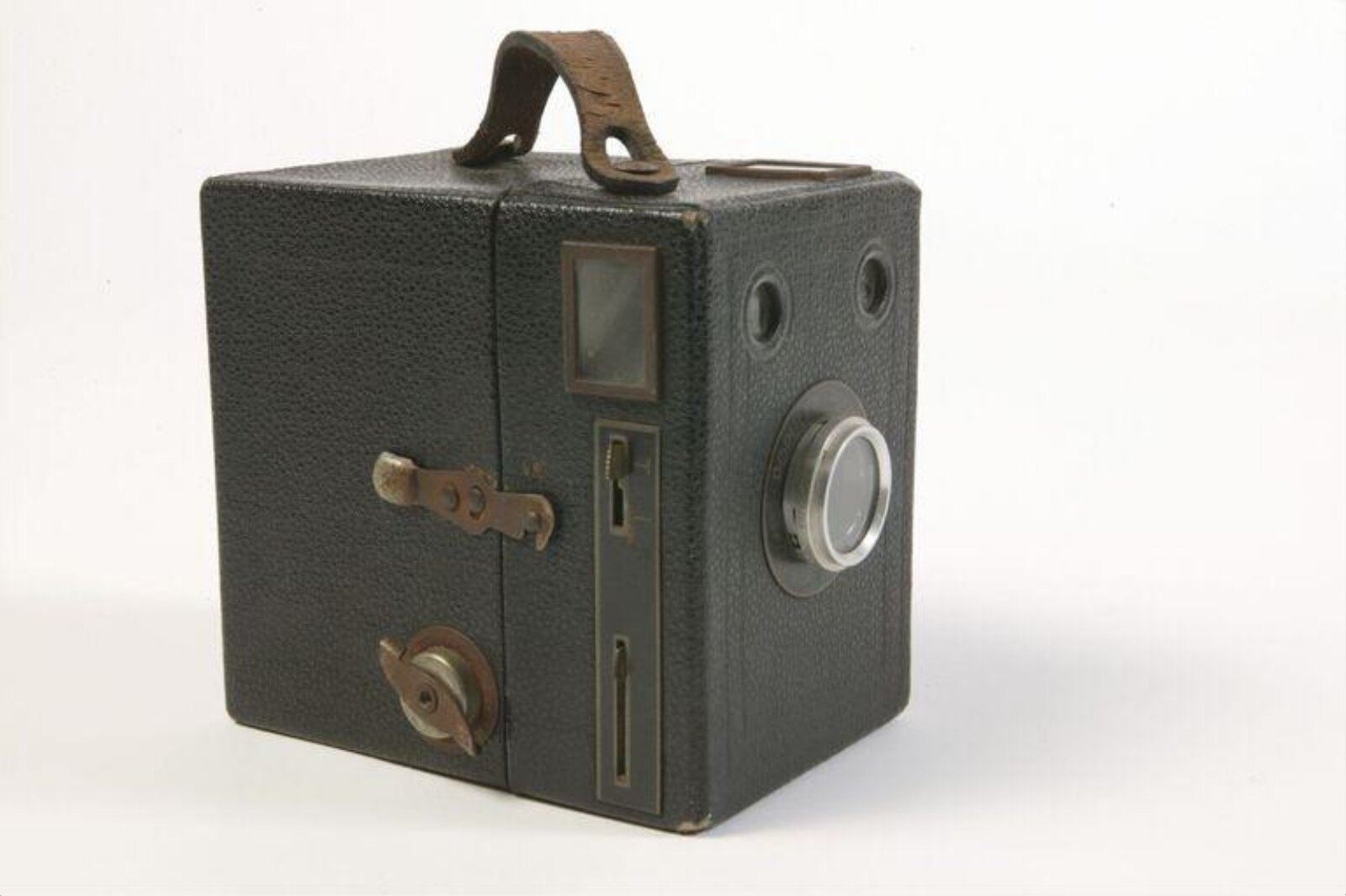
Maker: Kodak. Date: 1950-1959. Card box with a black leather coating with a snake skin effect. On the top of the box is a brown leather handle fastened with two metal pins and in the front left corner is a glass window with metal edges. The sides of the box are fastened together with metal hinges. The front of the camera has two small glass windows and in the centre is the lens. The lens has a metal band around it that reads 'Popular Brownie Takes 620 Kodak Film'. Materials and techniques: Card, metal and leather. Only details stated in the V&A collection record are recorded here.

maker
Kodak
institution identifier
O107013
Read the full record
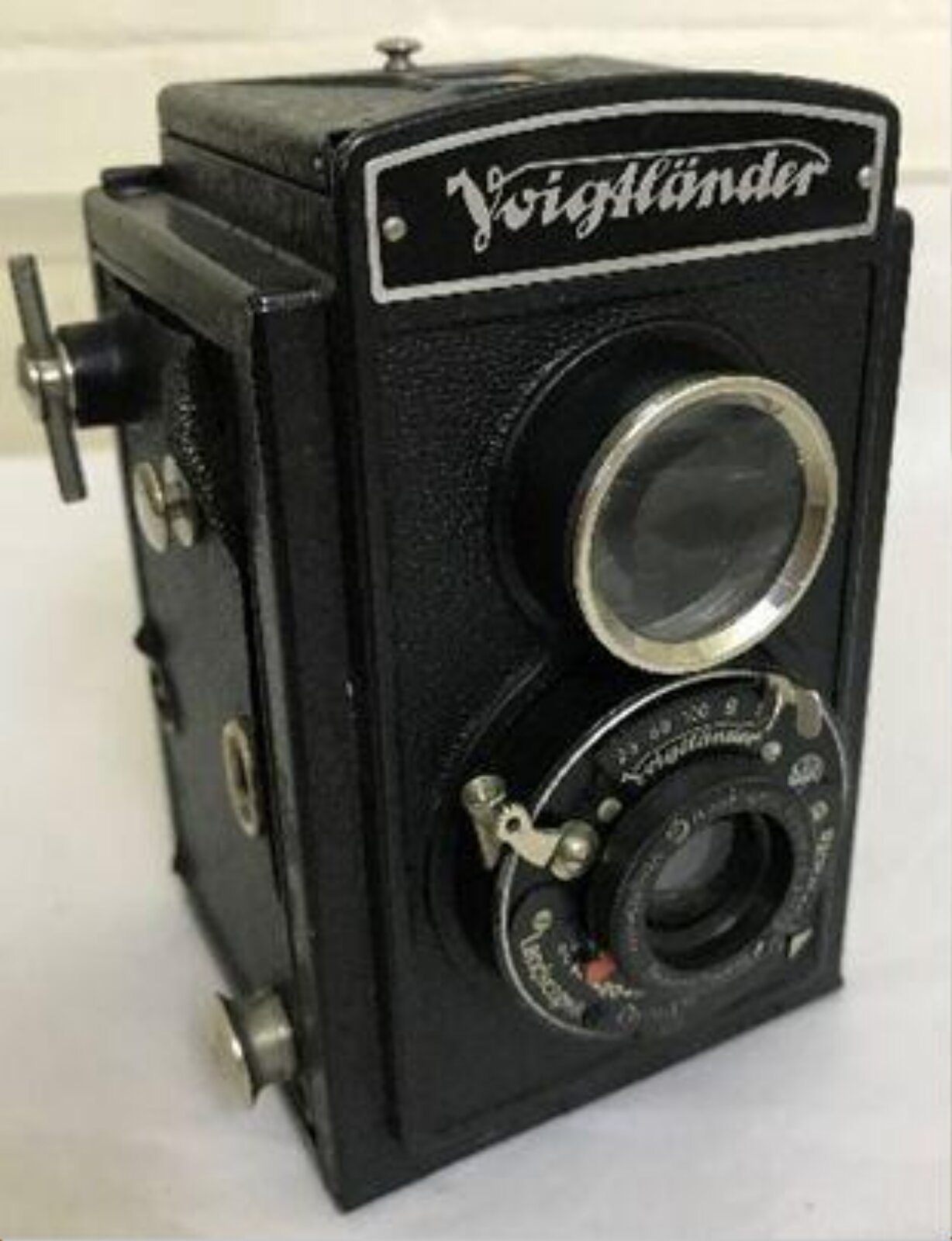
Voigtlander Brilliant

Victoria and Albert Museum · V&A collection image — rights review requested · Museum source

Voigtlander Brilliant

1932-51

Documented

Maker: Voigtlander & Sohn. Date: 1932-51. Only details stated in the V&A collection record are recorded here.

maker
Voigtlander & Sohn
institution identifier
O1429986
Read the full record
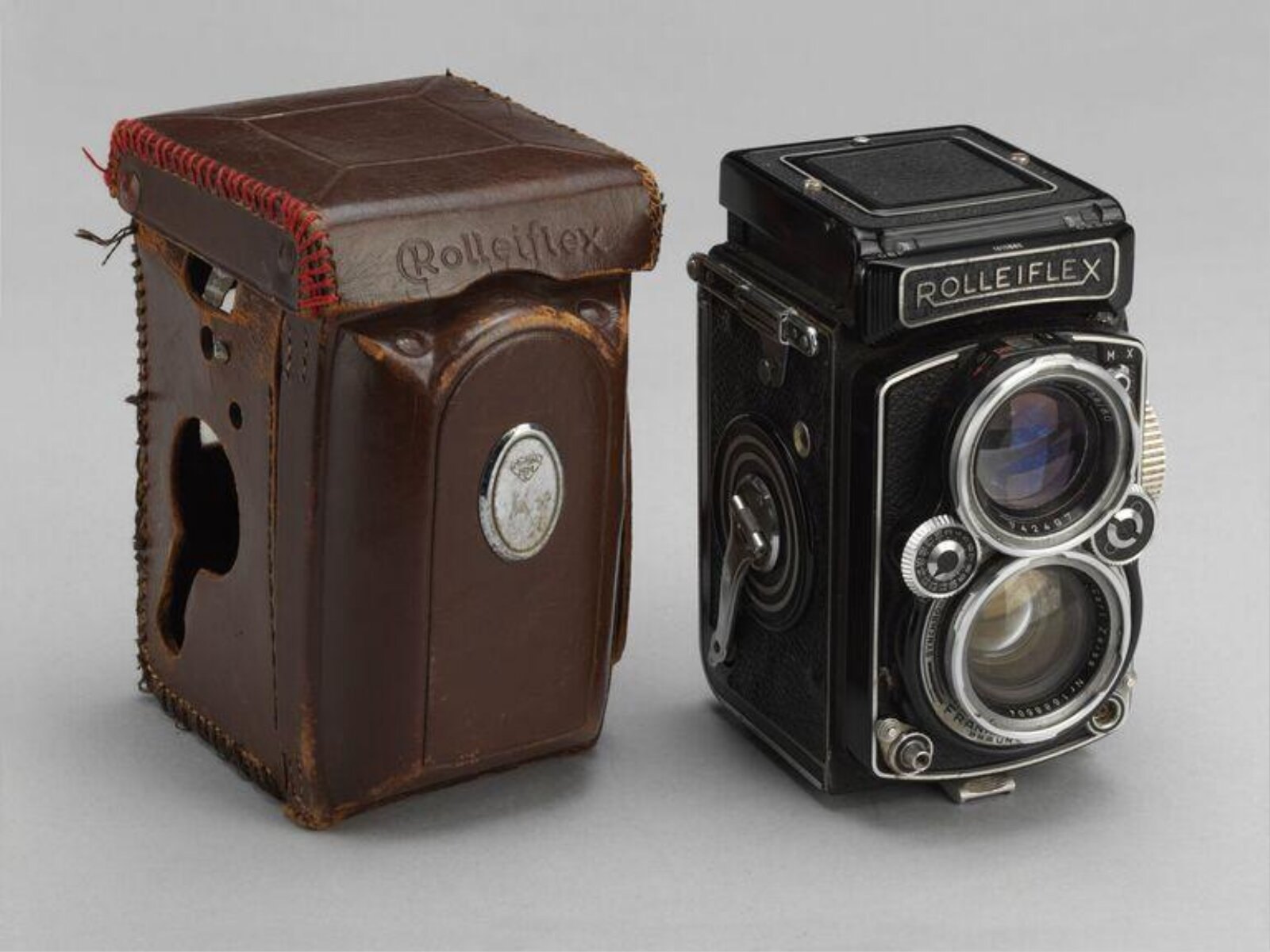
Rolleiflex camera and case owned by William Houston Rogers

Victoria and Albert Museum · V&A collection image — rights review requested · Museum source

Rolleiflex camera and case owned by William Houston Rogers

ca. 1955

Documented

Maker: Rollei. Date: ca. 1955. Black and silver TLR (twin lens reflex) camera made by Rolleiflex, in a worn leather case. Materials and techniques: Metal and leather. Only details stated in the V&A collection record are recorded here.

maker
Rollei
institution identifier
O1500989
Read the full record
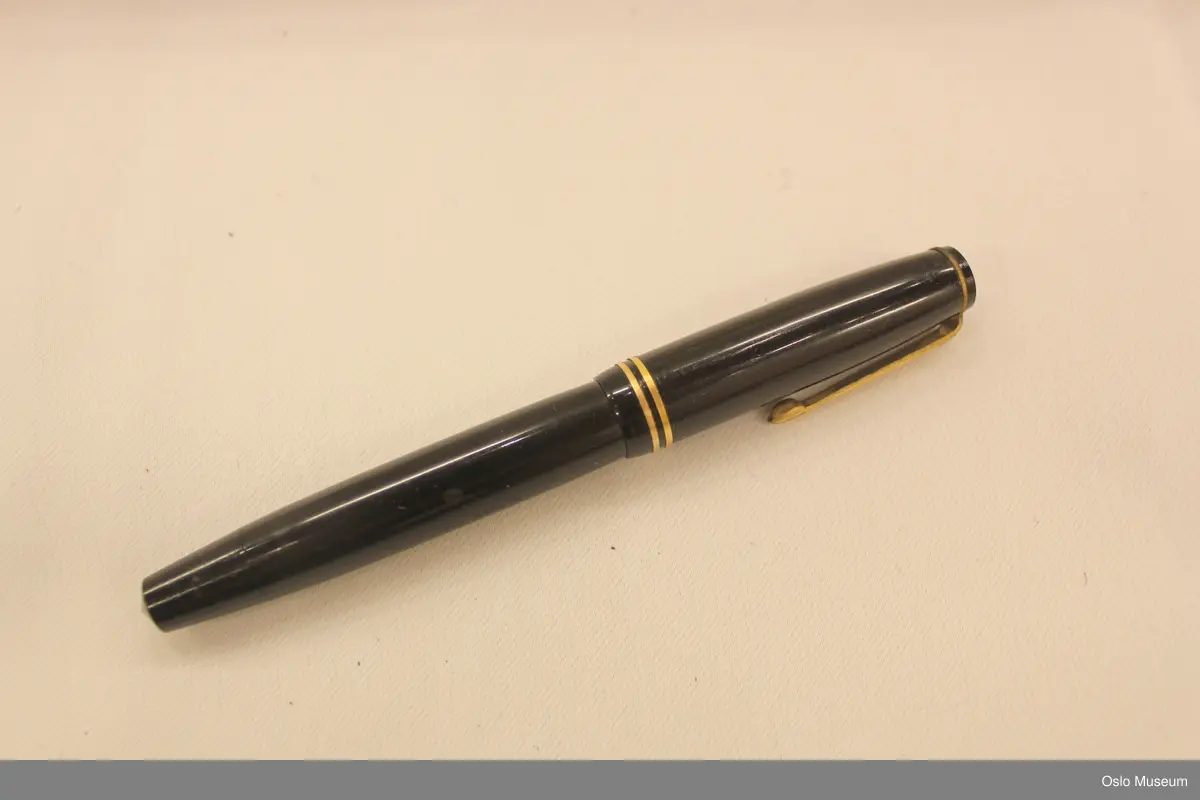
Fountain pen by Parker Pen

OMU via DigitaltMuseum · CC by-sa · Museum source

Fountain pen by Parker Pen

Documented

Maker: Parker Pen. Held by OMU (object OMu.g00892.A-E). Only details stated in the DigitaltMuseum record are recorded here.

maker
Parker Pen
holding institution
OMU
institution identifier
OMu.g00892.A-E
Read the full record
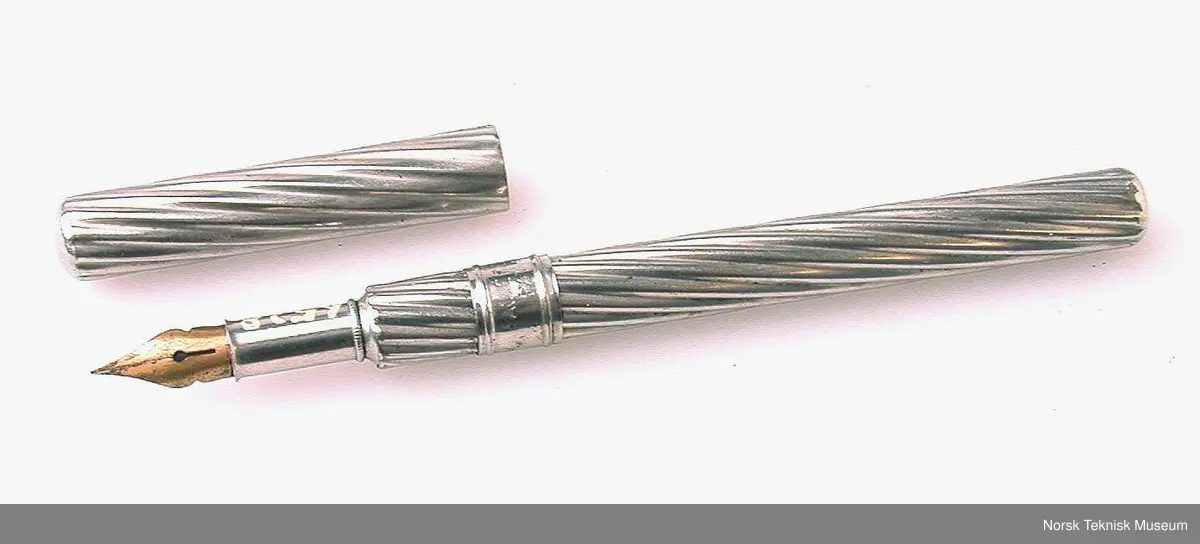
Fountain pen by Eagle Pencil Co., 1890

NTM via DigitaltMuseum · CC by-nc-sa · Museum source

Fountain pen by Eagle Pencil Co., 1890

1890

Documented

Maker: Eagle Pencil Co.. Date: 1890. Museum description: Ifølge gjenstandskortet skal det ha hørt et glassrør til pennen. Glassrøret mangler.. Held by NTM (object NTM 06528). Only details stated in the DigitaltMuseum record are recorded here.

maker
Eagle Pencil Co.
holding institution
NTM
institution identifier
NTM 06528
Read the full record

Common mistakes

  • Identifying a model from the maker's name alone, without model markings.
  • Assuming a lens or nib is original to the camera or pen it is found with.
  • Firing a shutter or filling a pen with an unknown mechanism before inspection.
  • Dating from a serial number without the maker's records.
  • Treating a photograph of a similar object as proof of your version.

Identifying the model does not establish working condition, originality or authenticity. Museum examples in this catalogue record the object held, and some broader types still require research.

Practise on these records

5-Franc Camera

cameras

5-Franc Camera

5-Franc Camera is held by Archaeology and Museum Baselland (Switzerland). Description supplied by the holding institution: The donor on the object: This simple camera could be bought back then for 5 francs. This camera was produced and purchased in 1916. Our family was still taking photographs with it in the 1970s. You could only take pictures in fair weather. No. 2 Brownie, Model F, patented in USA, Oct. 6. 1914, Feb 1. 1916, Mar 21. 1916, Patents Pending Argument for preserving the object: practical, cheap, functional The object was collected in 2001 as part of the participatory collection project "Förderbar" for a "Museum of the Future". The "Förderbar" - two containers equipped with a conveyor belt and bar - was stationed in Arlesheim, Sissach and Basel during the anniversary year "Basel 2001" (500 years of Basel in the Swiss Confederation). Between 3 and 20 January 2001, the public could bring by items that in their view should be preserved for future generations. The condition for accepting an item was that an explanation was provided,… The collection record gives material recorded as Metal. Published through Europeana; how far this object represents a wider collectible type has not yet been independently verified.

Documented

Research required

AGFA ISOLA I CAMERA, AGFA

cameras

AGFA ISOLA I CAMERA, AGFA

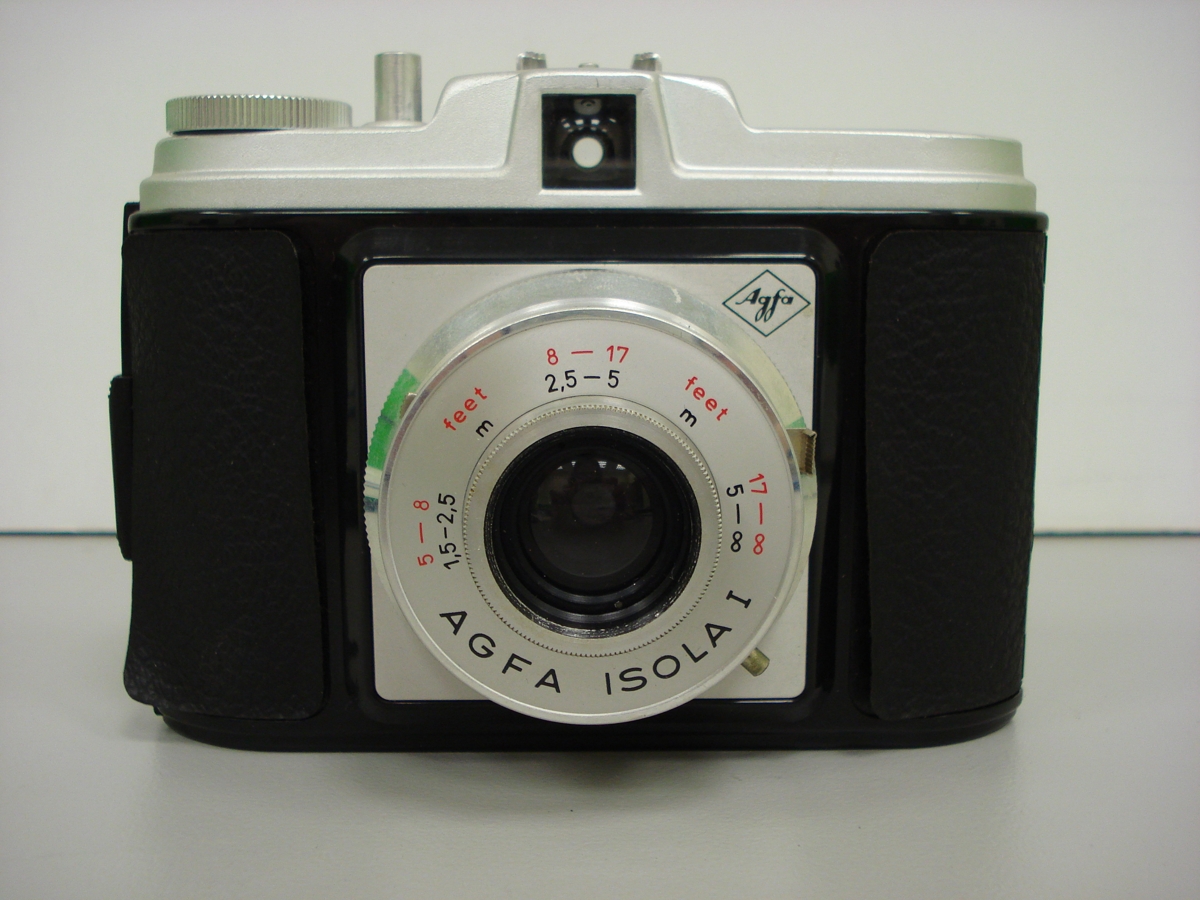
AGFA ISOLA I CAMERA, AGFA is held by Science Center and Technology Museum (NOESIS). Museum description: Medium format camera. He used Rollfilm B 2 6x9 (120) which gave 12 shots of 6 cm x 6 cm. The aperture is not metal sheeted, but 3 circular apertures of different sizes, on a metal sheet that can be rotated. The museum record gives place associated: Germany; maker recorded: AGFA. These details come from the holding museum's own record; how far this object represents a wider collectible type has not yet been independently verified.

Documented

Research required

Analog SLR camera Canon EOS 300

cameras

Analog SLR camera Canon EOS 300

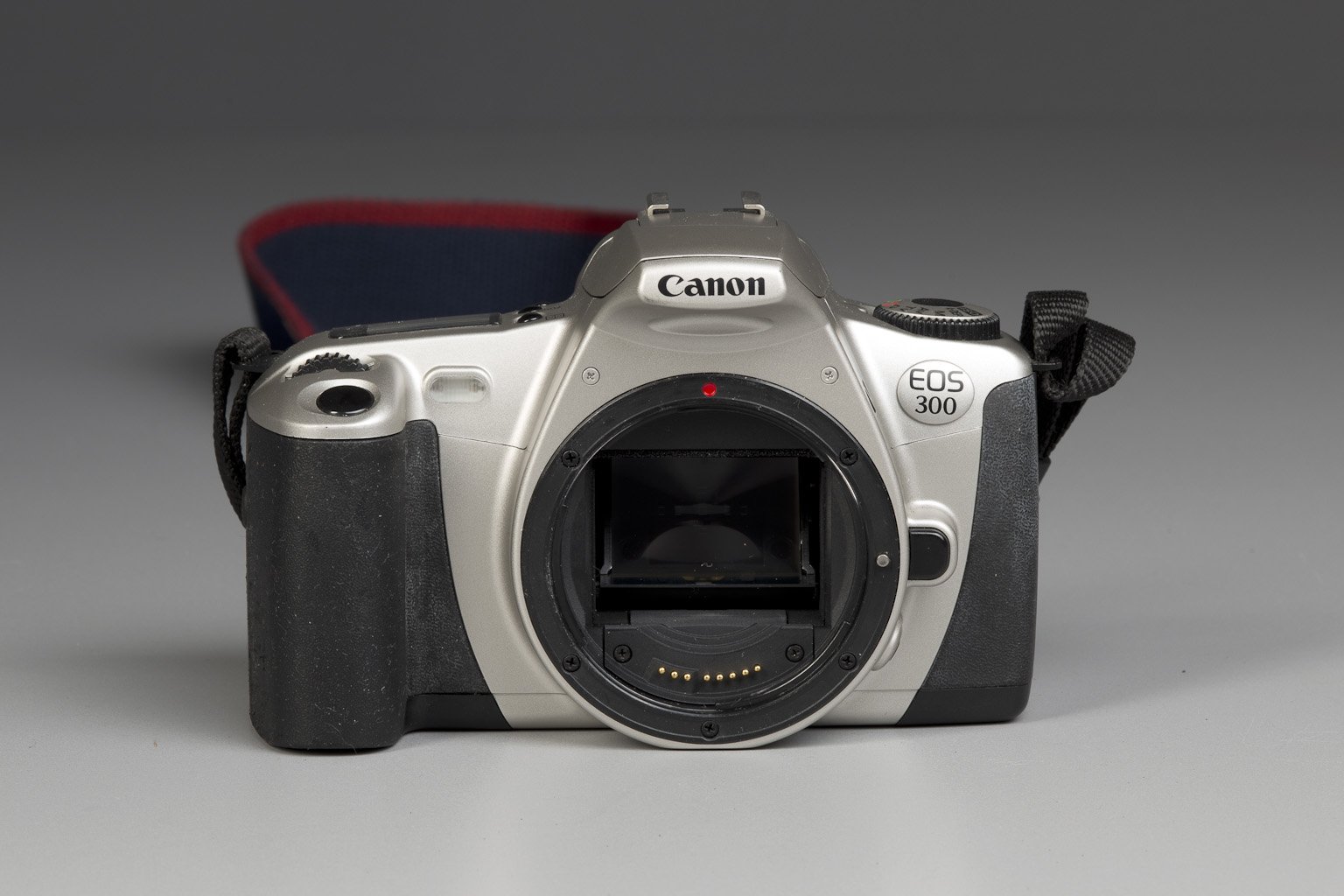
Analog SLR camera Canon EOS 300 is held by Roscheider Hof Open Air Museum. Museum description: The EOS 300 is one of the last analog SLR cameras Canon built. It was produced from 1999 to 2002 and was a great success. It exposed 24x36 35mm film. It offered everything needed for easy photography, was inexpensive, and weighed only 300 g. It has a full plastic body that does not look overly high-end. On the top of the body, different modes can be selected on the left with a dial; to the right of the prism are 3 control buttons and a display. On top of the prism, a flash can be folded out, also purely electronically. The camera has autofocus and aperture/shutter automatic exposure. Its lenses feature an EF bayonet mount; the older FD lenses still fit the camera, but do not support every function. Film is advanced automatically. The museum record gives measurements L: 130 mm B: 60 mm H: 95 mm. These details come from the holding museum's own record; how far this object represents a wider collectible type has not yet been independently verified.

Documented

Research required

Analog SLR camera PENTAX spotmatic

cameras

Analog SLR camera PENTAX spotmatic

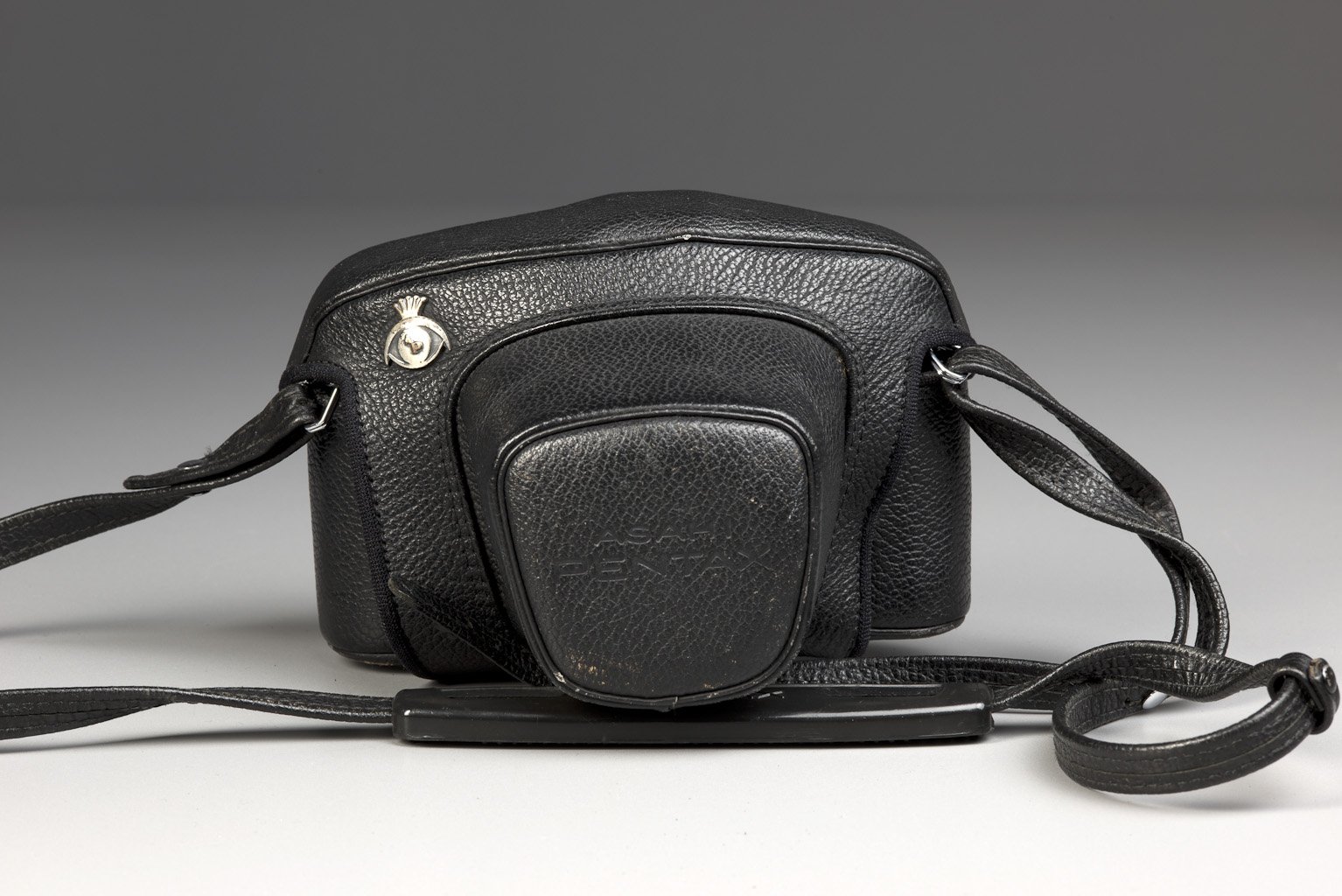
Analog SLR camera PENTAX spotmatic is held by Roscheider Hof Open Air Museum. Museum description: Analog single-lens reflex camera from the company Asahi Pentax / Japan. Pentax was and is always at the forefront of photographic technology development. The Spotmatic was the first production camera to measure exposure through the lens. It was measured "through the lens" (TTL). The first model appeared in 1964; it was continually developed further and produced until 1973. This example is a Spotmatic II, built between 1971 and 1973. It has an M42 screw mount. Its condition is good; fitted here is a wide-angle lens by Beroflex 1:1.8/28 mm. The museum record gives measurements L: 145 mm B: 45, mm H: 105 mm. These details come from the holding museum's own record; how far this object represents a wider collectible type has not yet been independently verified.

Documented

Research required

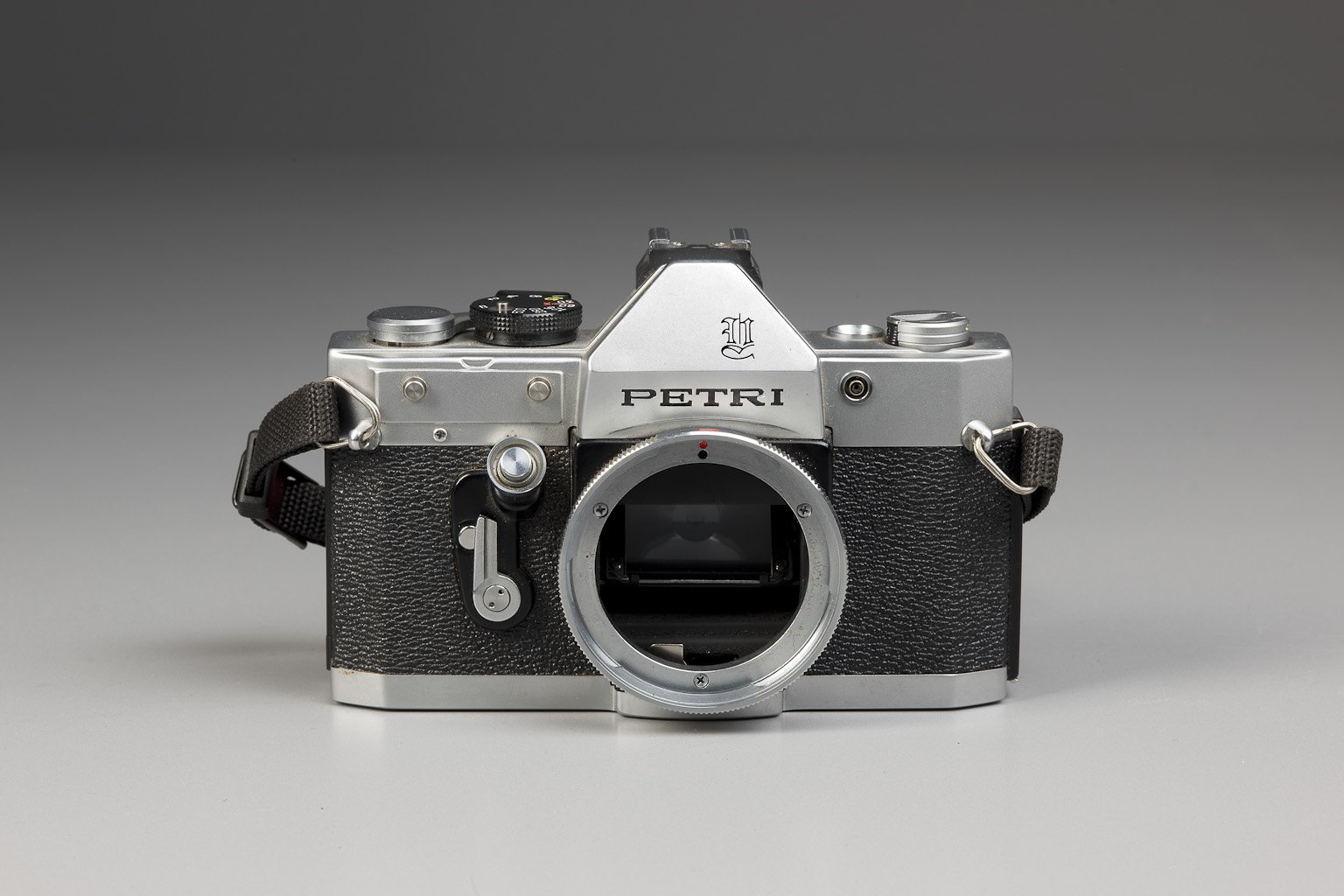
Analog SLR camera PETRI V6II

cameras

Analog SLR camera PETRI V6II

Analog SLR camera PETRI V6II is held by Roscheider Hof Open Air Museum. Museum description: The Petri V 6II is an analog single-lens reflex camera by the Japanese company Kuribayashi/Petri, which was founded around 1900 and had to close in 1975. They built robust, solid cameras; the V 6II is one of their last. It has a proprietary bayonet mount. With a turn upward of a locking ring directly on the lens, the lens detaches and falls into the hand. It has neither shutter-priority nor aperture-priority automatic exposure. The camera is in good condition; not much is known about Petri cameras here. It may also have been manufactured by Cosina. A Petri 1:1.8 / f 55 mm standard lens is mounted on this camera. The museum record gives measurements L: 140 mm B: 50 mm H: 95 mm. These details come from the holding museum's own record; how far this object represents a wider collectible type has not yet been independently verified.

Documented

Research required

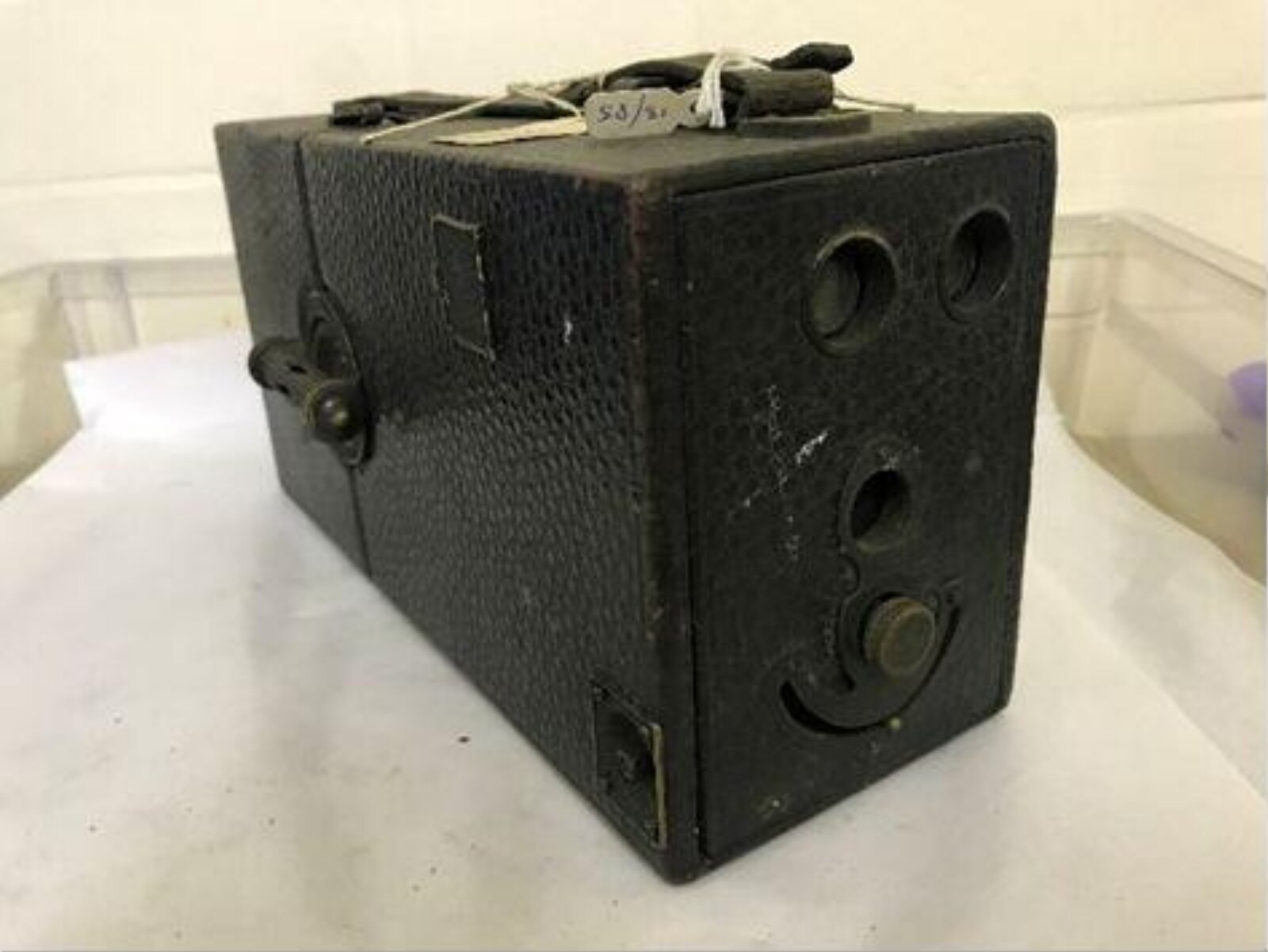
Beck Frena no. 3 Luxus

cameras

Beck Frena no. 3 Luxus

c.1896

Maker: R. & J. Beck Ltd.. Date: c.1896. Only details stated in the V&A collection record are recorded here.

Documented

Research required

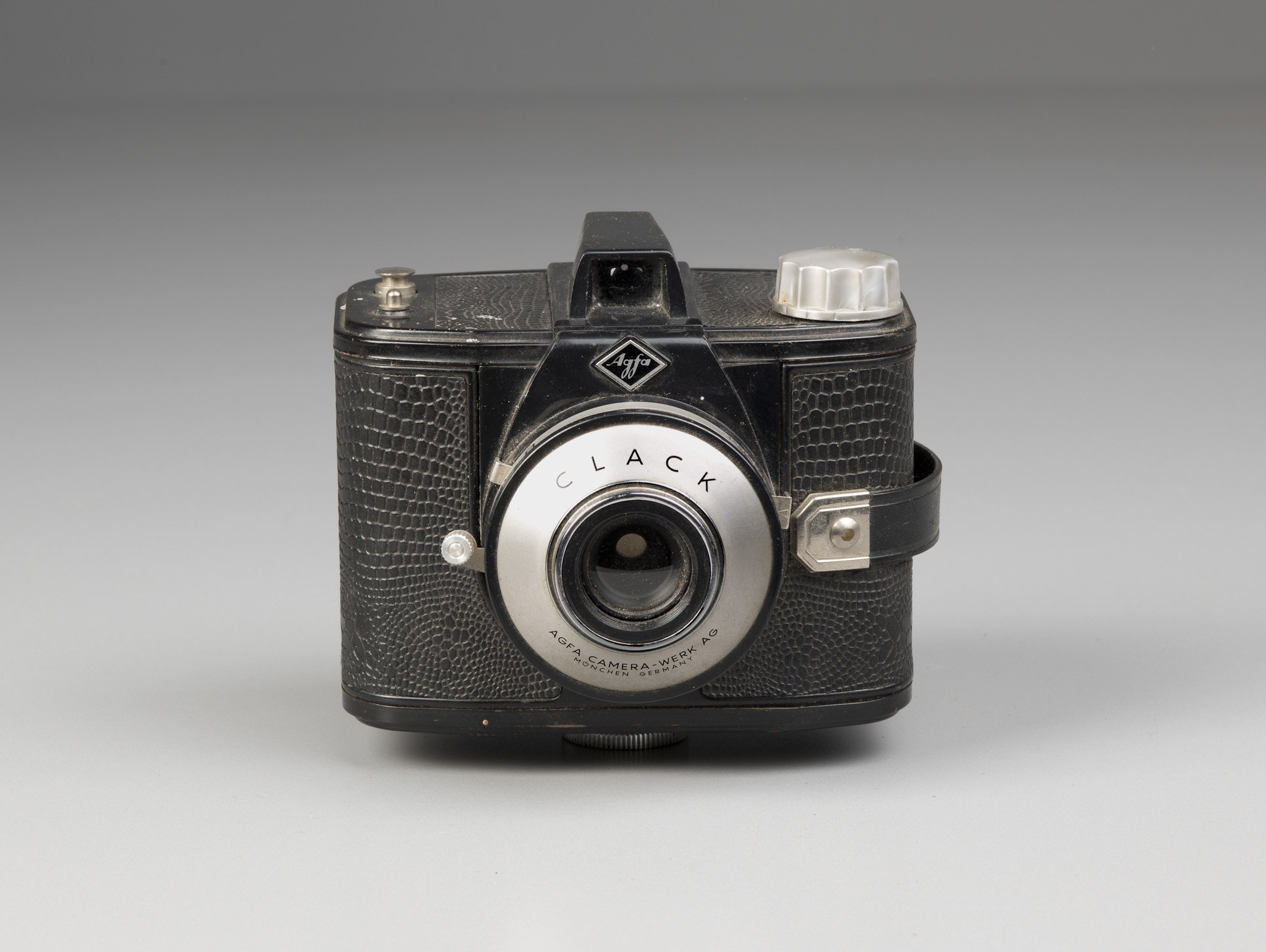
Box camera with viewfinder Agfa Clack

cameras

Box camera with viewfinder Agfa Clack

Box camera with viewfinder Agfa Clack is held by Roscheider Hof Open Air Museum. Museum description: Shown here are 3 Agfa Clack cameras, described by the Agfa Kamera Museum - Scholz as follows: The Agfa Clack is also referred to as an iconic camera of the 1950s, although it still belongs to the box cameras. At the time it was designed as an entry-level model. The principle followed was: where you can adjust little, you can also do little wrong. The shutter has only two exposure times, one M for instant [Moment], approx. 1/30 second, and B for Bulb, for long exposures. One had to hope for a calm subject or use a tripod. With the cable release, the risk of camera shake can be significantly reduced. The Agfa Clack was manufactured from 1954 to 1965. The earlier models had a metal body, later ones were made of plastic. It is a simple, box-shaped body with a single-element 95 mm meniscus lens with a built-in close-up lens a. The museum record gives measurements L: 110 mm W: 100 mm H: 95 mm. These details come from the holding museum's own record; how far this object represents a wider collectible type has not yet been independently verified.

Documented

Research required

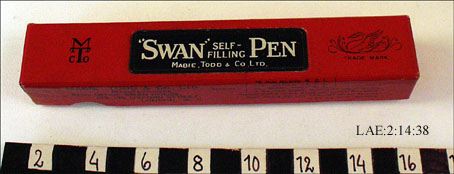
Box for a fountain pen, box, box, Ilvemo, Ronny

fountain pens

Box for a fountain pen, box, box, Ilvemo, Ronny

Box for a fountain pen, box, box, Ilvemo, Ronny is held by Museum of Gothenburg. Museum description: LAE:2:14:38; Inscription; "Swan" self-filling Pen - Mabie, Todd & Co, LDT. Trade Mark (a swan); Ilvemo, Ronny The museum record gives material recorded as paper; measurements Width 2.7; maker recorded: Ilvemo, Ronny. These details come from the holding museum's own record; how far this object represents a wider collectible type has not yet been independently verified.

Documented

Research required

This guide helps you identify a type. It does not estimate value, grade, or authenticate an individual object. How records are made.