Numismatics · Tokens
How to identify a token, pass or check
Start with purpose, not coin-like appearance. An engraved keepsake, an advertising token and a theatre admission check can look similar while documenting very different uses.
Comparison checklist
FeatureRecord and compareWhat this cannot establish
- Love token
- Record and compareEngraving, recipient, host coin and stated commemorative purpose
- Limits of the evidenceA date may be commemorative, not manufacture.
- Trade or advertising token
- Record and compareBusiness name, value and both designs
- Limits of the evidenceAppearance alone does not prove circulation or redemption.
- Pass or check
- Record and compareInstitution, admission wording, area and marks
- Limits of the evidenceA hole or serial does not establish its use without a source.
Step by step
1Record the physical object before classifying it
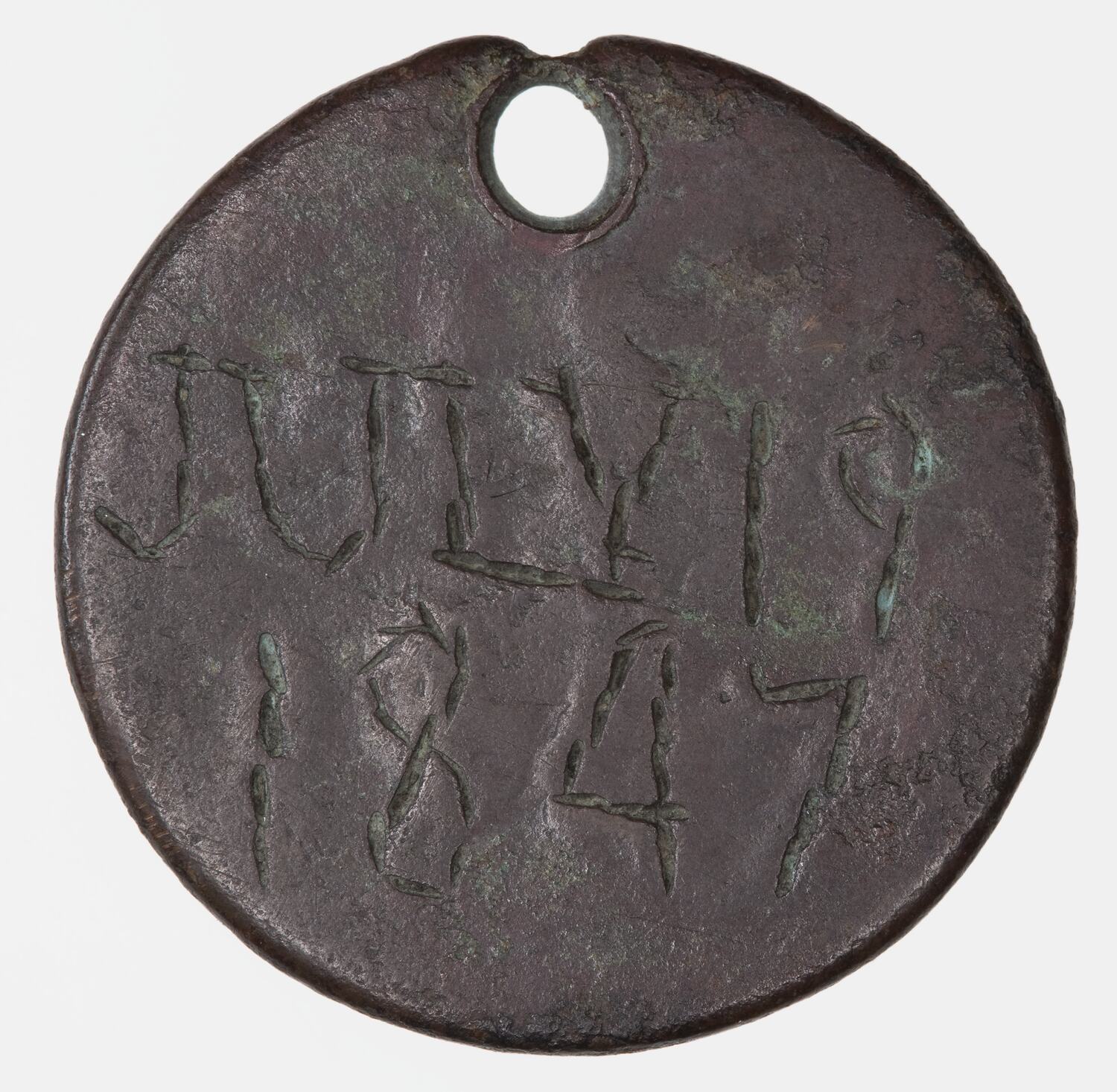
Photograph both sides and a safely accessible edge. A hole, engraving or altered coin surface is an observation, not by itself proof of a token's purpose.
- Full shape, central holes and suspension
- Literal lettering and visible alterations
- Do not polish or remove deposits
2Transcribe inscriptions and their positions
Copy names, values, dates and abbreviations without completing unreadable text. Keep the host coin inscription separate from a later engraving.
- Obverse, reverse and edge separately
- Recipient and business names as written
- Uncertain letters explicitly marked
3Distinguish love tokens from circulating trade pieces
A keepsake may name a recipient or commemorate a separation or death. A business token can combine advertising and currency functions. Confirm that relationship from the exact museum record or a specialist reference.
- Source-stated purpose
- Value or business wording
- Engraved date not assumed manufacture date
4Read admission and check systems in context
A theatre, transport or workplace name narrows the search. Seat, area and access wording can define use, but a named institution does not automatically establish redemption rules or a period of issue.
- Admission area, stall or pass wording
- Named institution and relevant source
- Machine holes recorded without inferred function
5Compare the whole documented type
Match designs, inscriptions and purpose, not only the business or recipient. Several images of one object belong in one gallery; another owner or worn specimen is not automatically a new type.
- Exact institution accession and source page
- Type definition versus specimen identifiers
- Unresolved reference conflicts retained
Museum specimens for comparison
Compare visible evidence with the museum's documented object. A collection number identifies the museum specimen, not every object of that type; hidden features remain research required.
© Victoria and Albert Museum, London · Rights clearance pending — source copyright/reuse terms require confirmation; not cleared for publication · Museum source
1795
Documented
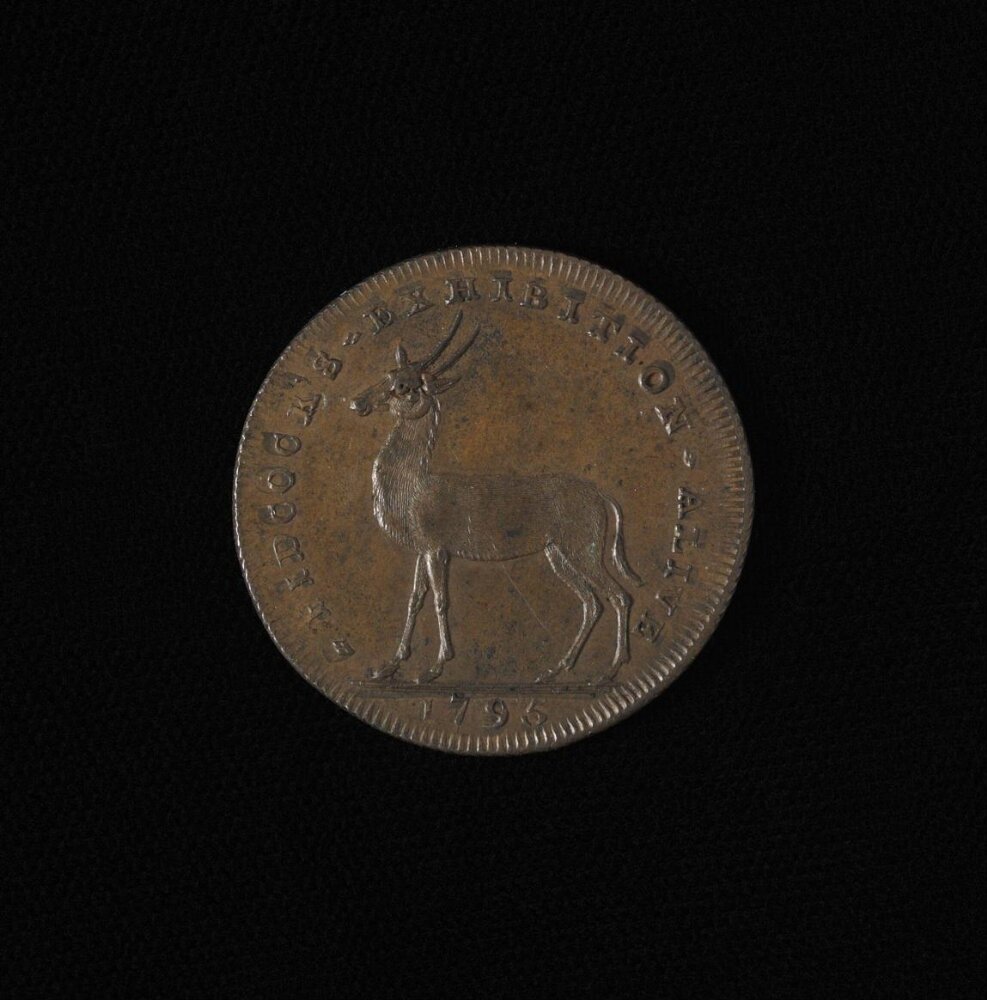
Circular copper token in the halfpenny size with milled circumference, issued as advertising and currency for Pidcock's Exhibition at Exeter Change. Antelope recto, standing, inscribed around: PIDCOCK'S EXHIBITION ALIVE 1795; ostrich verso, inscribed around: EXETER CHANGE STRAND LONDON, and below the figure: 'JAMES'. The museum record gives material recorded as copper; measurements Diameter 2.9 cm; place associated: London; maker recorded: James, C., Lutwyche, William.
- Source note
- These details come from the holding museum's own record; how far this object represents a wider collectible type has not yet been independently verified.
- museum attribution
- James, C.
- museum object name
- Token
- museum object number
- S.348-2011
- museum system number
- O1223345
Read the full record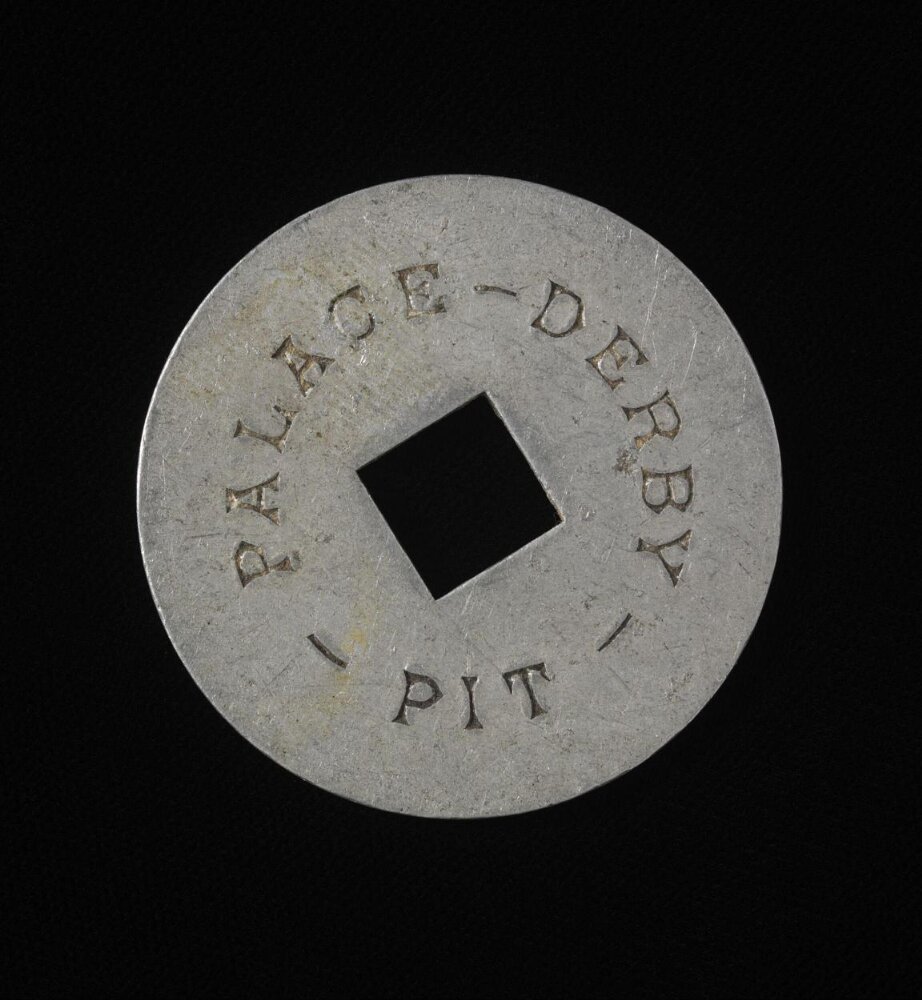
© Victoria and Albert Museum, London · Rights clearance pending — source copyright/reuse terms require confirmation; not cleared for publication · Museum source
ca.1900
Documented
White metal circular token for admission to the Pit, Palace Theatre, Derby, ca.1900. Circular white metal token with central square hole for issue from a ticket machine. Engraved recto 'PALACE-DERBY-PIT'. Blank verso. The museum record gives material recorded as white metal; place associated: London; maker recorded: unknown.
- Source note
- These details come from the holding museum's own record; how far this object represents a wider collectible type has not yet been independently verified.
- museum object name
- Token
- museum object number
- S.5026-2009
- museum system number
- O1152790
Read the full record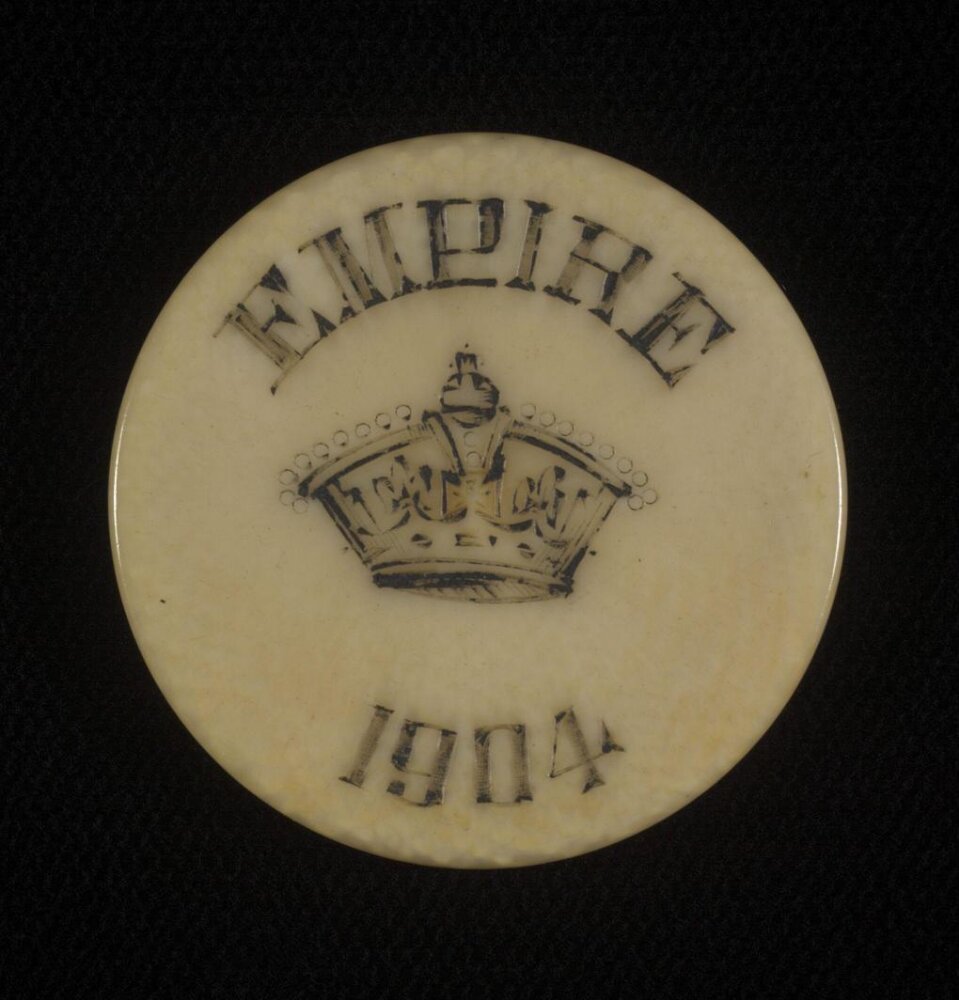
© Victoria and Albert Museum, London · Rights clearance pending — source copyright/reuse terms require confirmation; not cleared for publication · Museum source
1904
Documented
Circular ivory token, issued to S.A.R. Conover as a press pass for the Empire Theatre, inscribed with the name of the theatre, the manager, the date and a crown symbol. The museum record gives material recorded as ivory, ink; measurements Height 3.0 cm; Width 4.7 cm; place associated: London.
- Source note
- These details come from the holding museum's own record; how far this object represents a wider collectible type has not yet been independently verified.
- museum object name
- Token
- museum object number
- S.115-1986
- museum system number
- O1248644
Read the full record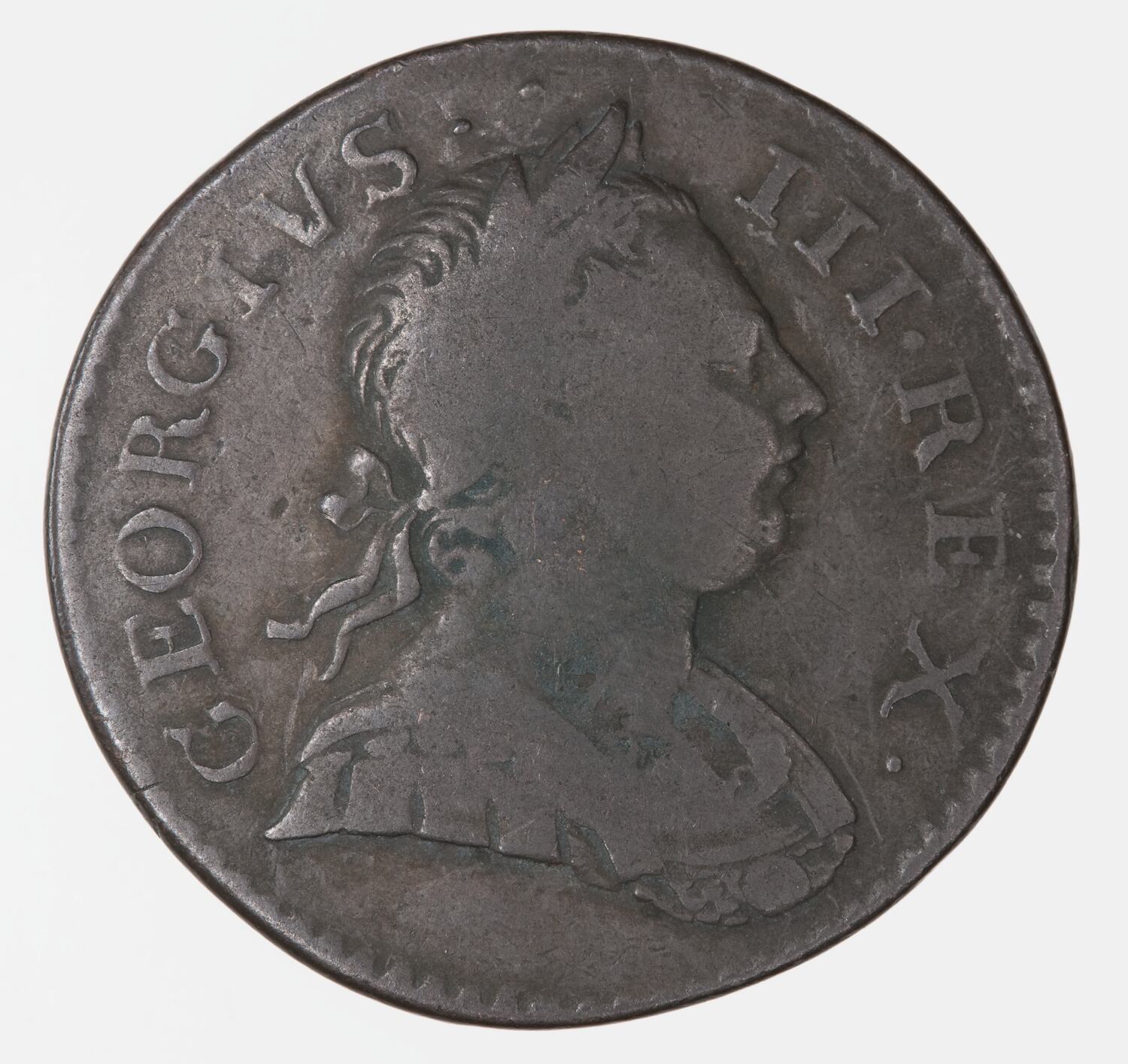
Museums Victoria · Copyright Museums Victoria / CC BY; https://creativecommons.org/licenses/by/4.0 · Museum source
1780 (inscribed)
Documented
A round copper love token (30 mm) engraved on reverse of George III halfpenny. The obverse features a draped and laureate bust of the King facing right; around, GEORGIVS III REX. The reverse of the coin has been removed and engraved ANN / PARKIN / 1780 among leaves and lines The inscribed date is recorded separately from the date of the underlying coin. The museum records a copper token with a diameter of 30 mm.
- Source note
- Accession identifies the illustrated museum specimen, not a standard token-type reference. Engraving does not establish that the maker or recipient was a convict.
- Museum accession
- NU 46378
- Museum object ID
- items/1372139
Read the full record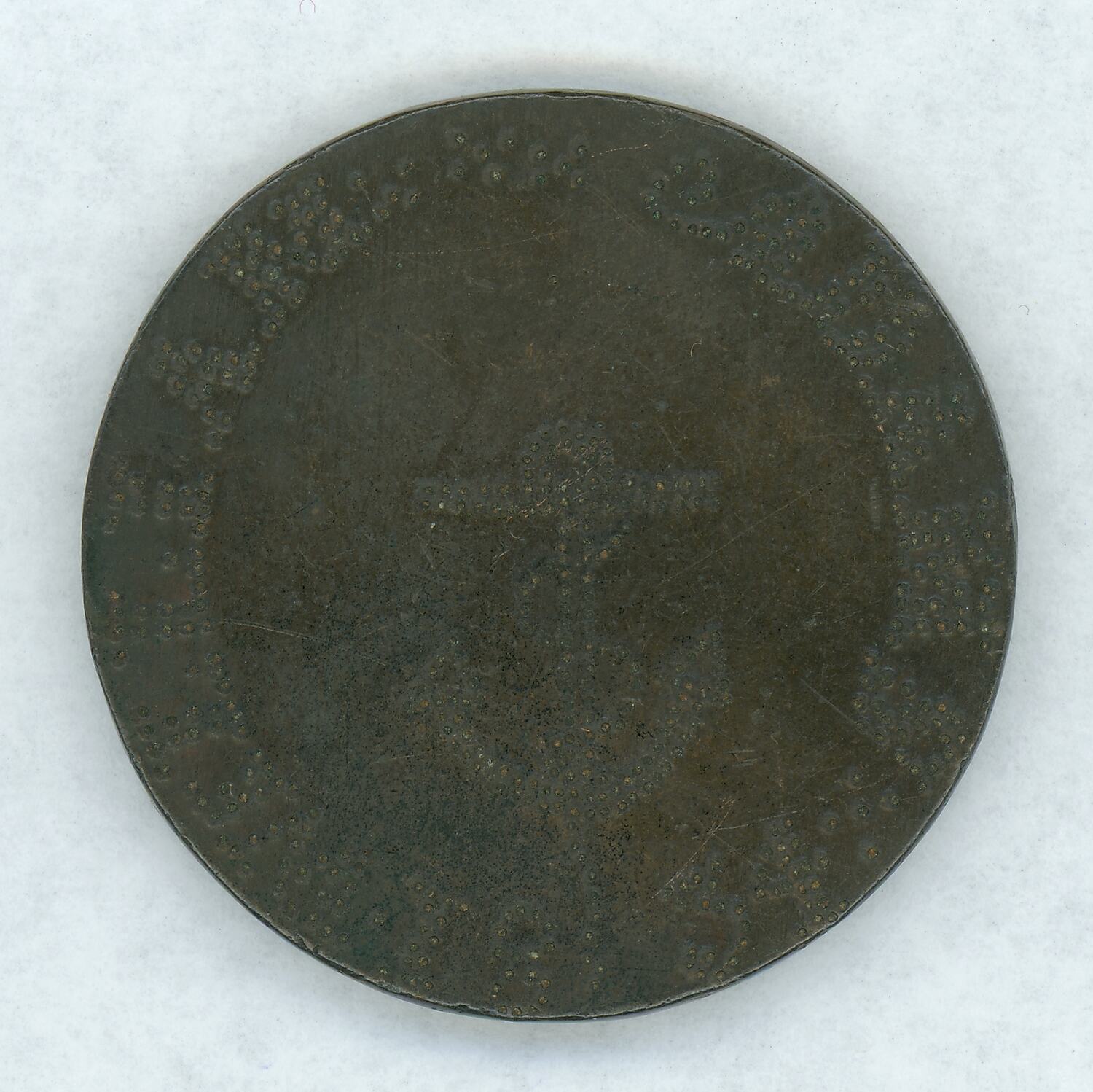
Museums Victoria · Copyright Museums Victoria / CC BY; https://creativecommons.org/licenses/by/4.0 · Museum source
1834 (inscribed; probable manufacture)
Documented
Love token made from smoothed and stippled 1797 penny. The museum transcribes the inscriptions as FEARWELL / DEAR / SISTER on one face, and an anchor surrounded by WILLIAM ADAMS 1834 on the other. The museum dates the token to 1834 and describes manufacture in that year as probable. Its previous identification as Australian-made has no supporting evidence; the maker has not been definitely identified.
- Source note
- Accession identifies the illustrated museum specimen, not a standard token-type reference. Engraving does not establish that the maker or recipient was a convict.
- Museum accession
- NU 34003
- Museum object ID
- items/78081
Read the full recordCommon mistakes
- Treating every coin-shaped object as currency.
- Confusing a later engraved date with the host coin's issue date.
- Assigning a purpose from a hole or portrait alone.
- Calling museum accession numbers type references.
- Merging different designs solely because the business name matches.
A matching token record does not authenticate the object or establish ownership, original use or value. Lead tokens and tax seals remain a separate catalogue branch.
Practise on these records
This guide helps you identify a type. It does not estimate value, grade, or authenticate an individual object. How records are made.