Issuing authority
Byzantine Empire
The eastern Roman state, with a continuous gold, silver and copper coinage centred on Constantinople.
- Kind
- empire
- Region
- Eastern Mediterranean, Europe
- Recorded period
- AD 330 – 1453
Objects are filed under the historical authority that actually issued or made them. A recorded period comes from the issuer's own reference description and is left blank where no source states it.
Published entries
30
Individual types and documented families
With photographs
100%
30 with a credited real-object photo
Dated span
AD 395 – 1081
30 entries with their own date
Verified or well documented
0
Highest two confidence levels
Catalogue entries (30)
Filter these entries by era, material or confidenceSorted by date, earliest first.
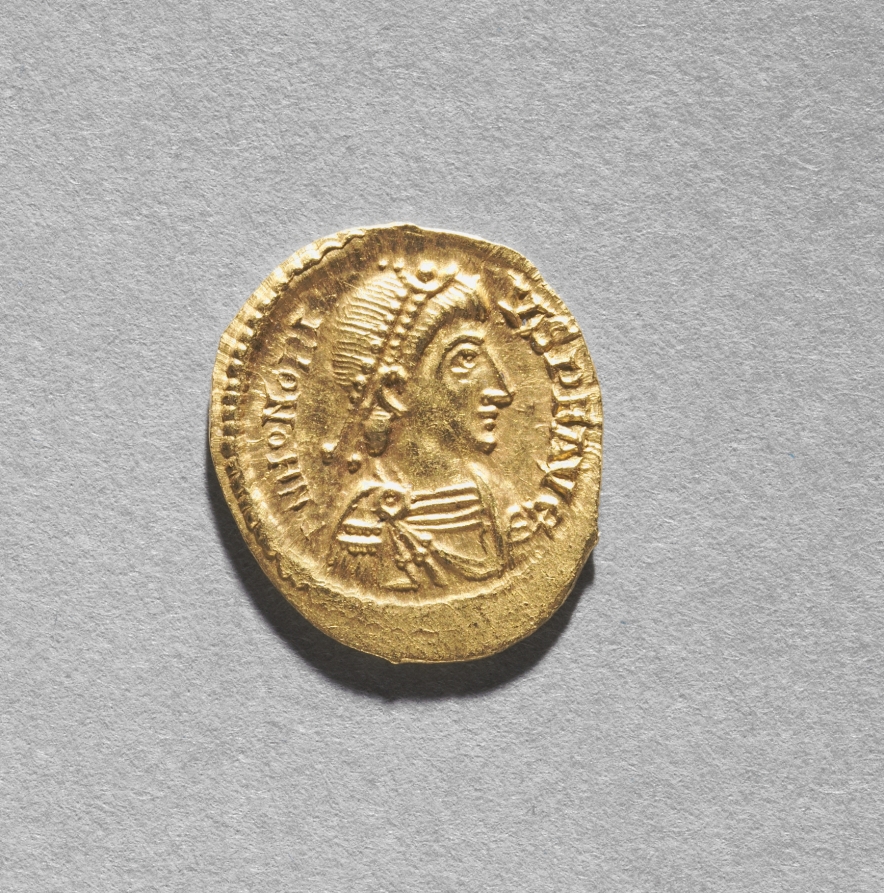
Cleveland Museum of Art
ancient coins
Solidus of Arkadios (Cleveland Museum of Art 1968.53)
395–408 CE
The coins shown here include the solidus, the basic gold coin of 24 karats; the tremissis, a gold coin of one-third the weight and value of the solidus; and the nomisma, which in the 10th century replaced the solidus as the standard gold coin. Cleveland Museum of Art object 1968.53: Solidus of Arkadios, 395–408 CE.…
Partial type record
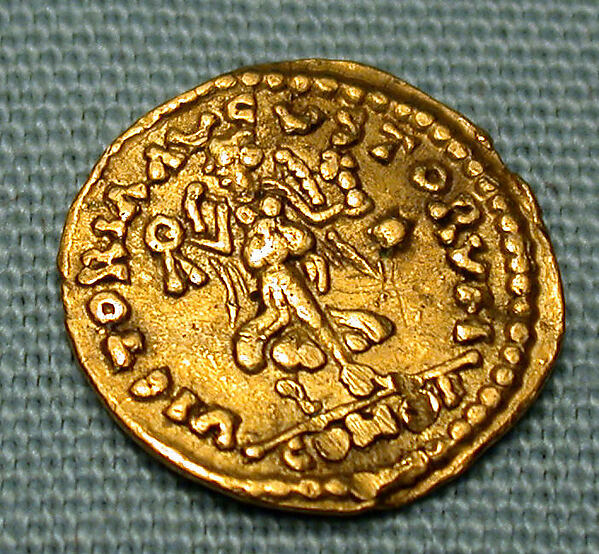
The Metropolitan Museum of Art, Bequest of Nanette B. Kelekian, 2020
ancient coins
Semissis of Anastasius I — 2021.37.22
491–518
The Metropolitan Museum of Art describes this specimen as Coin, dated 491–518, in Gold. Museum accession: 2021.37.22. Research required: broader type and specialist references remain unconfirmed. Museum note (The Met): Anastasius, who was a respected emperor, is shown in profile upon the coin. The reverse of the co…
Partial type record
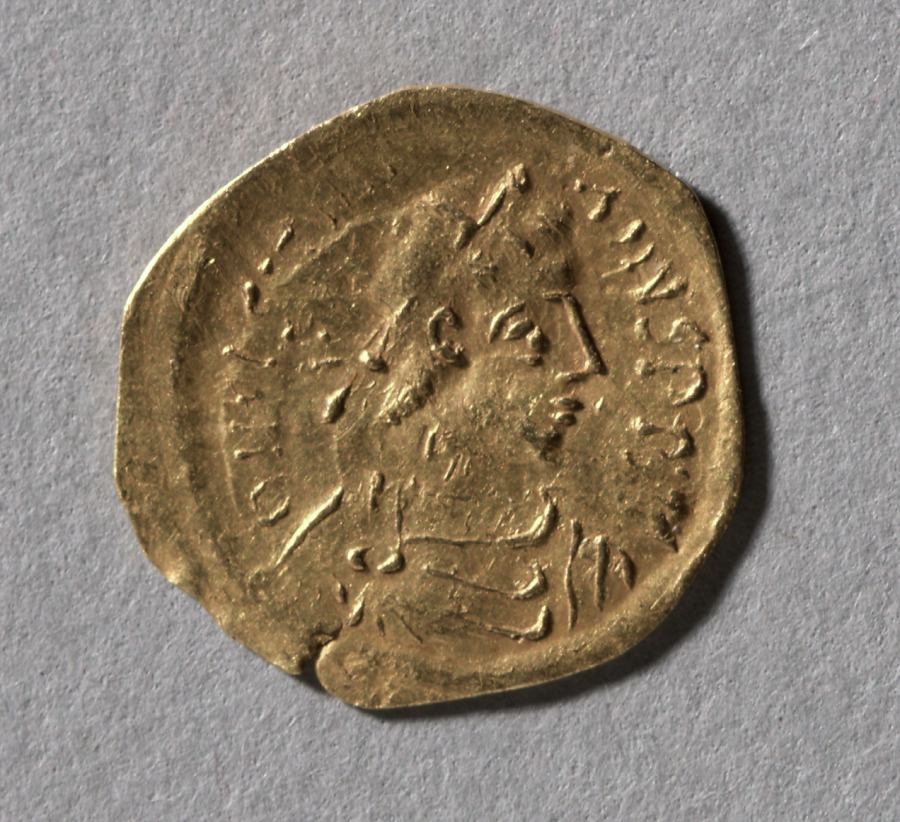
Cleveland Museum of Art
ancient coins
Half Tremissis of Justinian I (Cleveland Museum of Art 2004.149)
527–565
This solidus was issued during the reign of Emperor Justin II, successor of Justinian the Great. Cleveland Museum of Art object 2004.149: Half Tremissis of Justinian I, 527–565. Byzantinium, Constantinople, Byzantine period, 6th century. Gold; diameter: 1.5 cm (9/16 in.). Inscribed: (Avers): DNIVSTINI ANVSPPA[VC] (R…
Partial type record
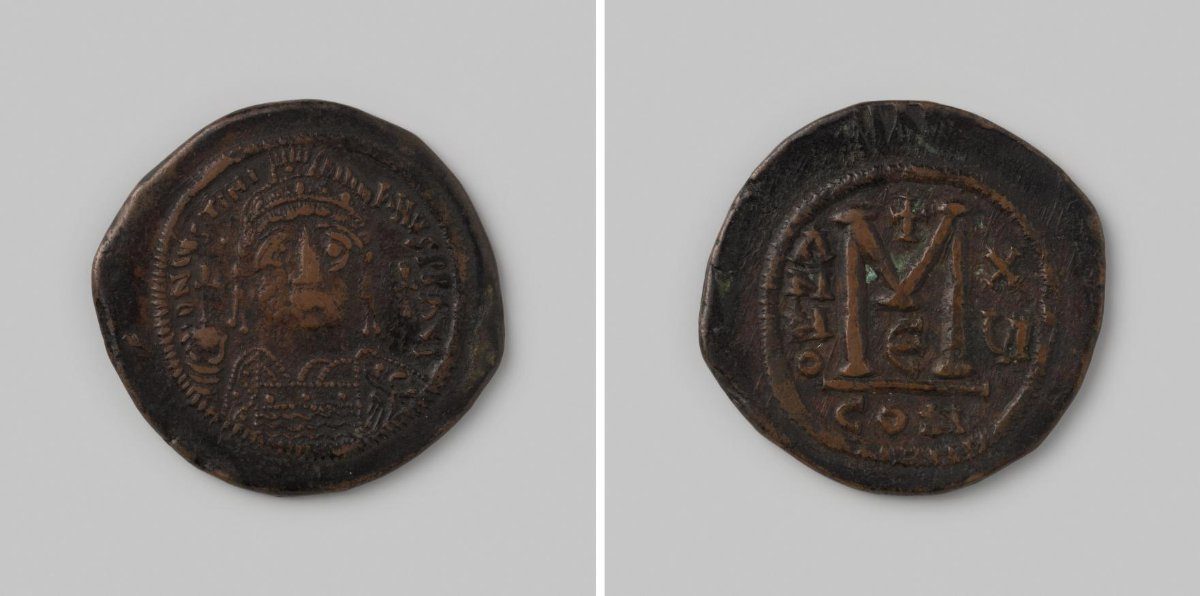
Rijksmuseum, Amsterdam
modern coins
Byzantine Empire, follis, Justinian I, 527-565
542
Bronze coin on a large flan. Obverse: bust of the emperor in cuirass and diadem, facing, holding a globus cruciger in his right hand. Reverse: between date indication "Anno XV", the letter M [=40, value indication, 40 nummia] with a cross above the letter. In the exergue the letters CON [=Constantinople]. The Rijksm…
Partial type record
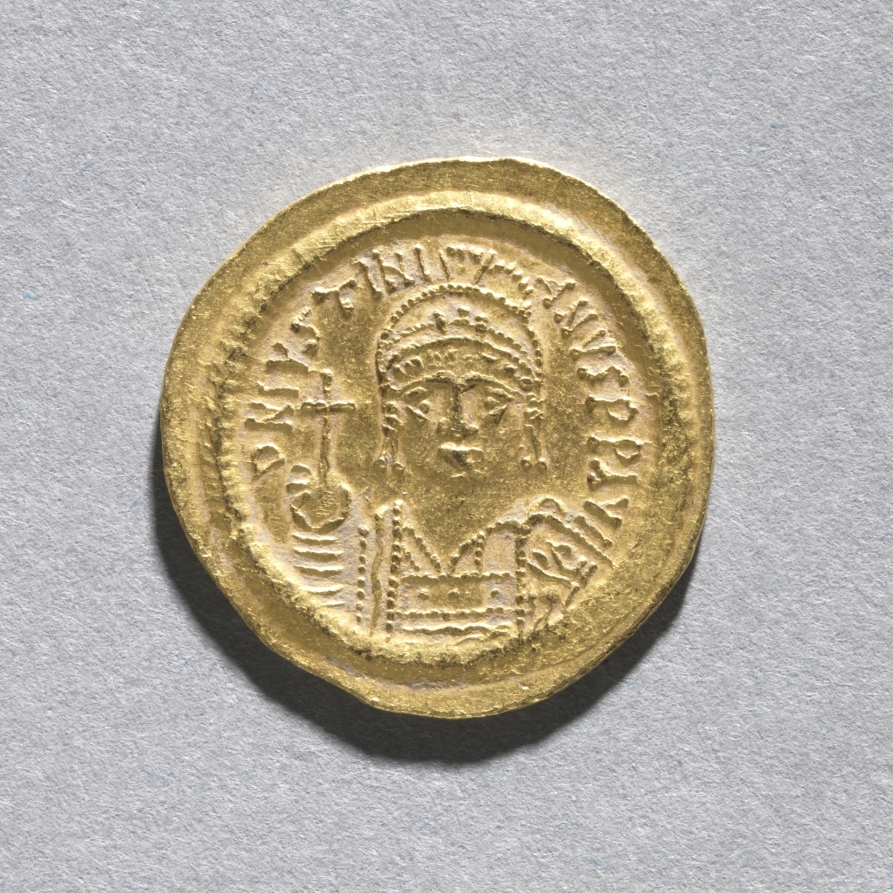
Cleveland Museum of Art
ancient coins
Solidus of Justinian I (Cleveland Museum of Art 1968.55)
c. 545–65
The solidus is the basic gold coin of 24 karats; the tremissis, a gold coin of one-third the weight and value of the solidus; and the nomisma, which replaced the solidus as the standard gold coin in the 900s. Cleveland Museum of Art object 1968.55: Solidus of Justinian I, c. 545–65. Byzantium, Constantinople, Byzant…
Partial type record
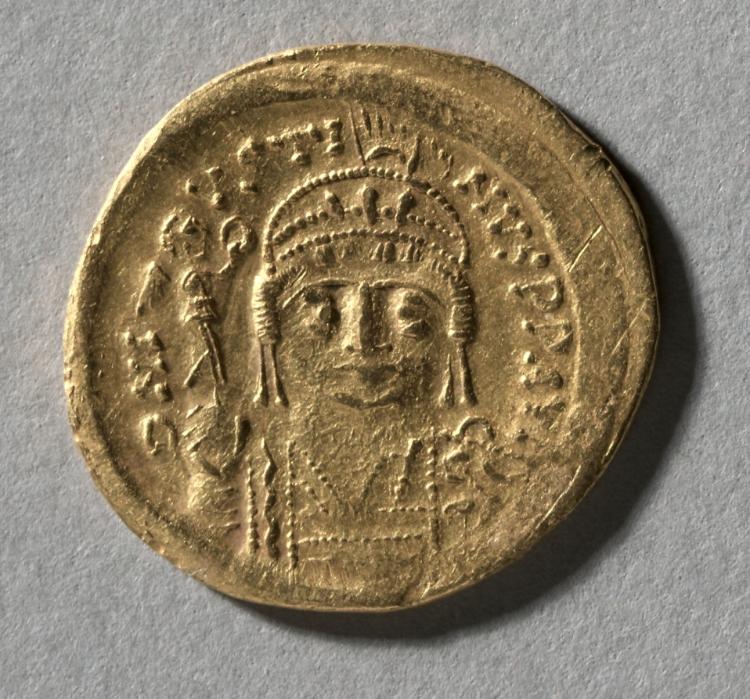
Cleveland Museum of Art
ancient coins
Solidus (Cleveland Museum of Art 2004.151)
565–578
Cleveland Museum of Art object 2004.151: Solidus, 565–578. Byzantine, 6th century. Gold; diameter: 2 cm (13/16 in.). Inscribed: (Avers): DNI VST NVSPPAVI (Revers): VICTORI AAVCCCH and CONOB. It is catalogued in the museum's Medieval Art department under Coins. Credit line: Gift of Dr. Thomas S. and Marion Korllos.…
Partial type record
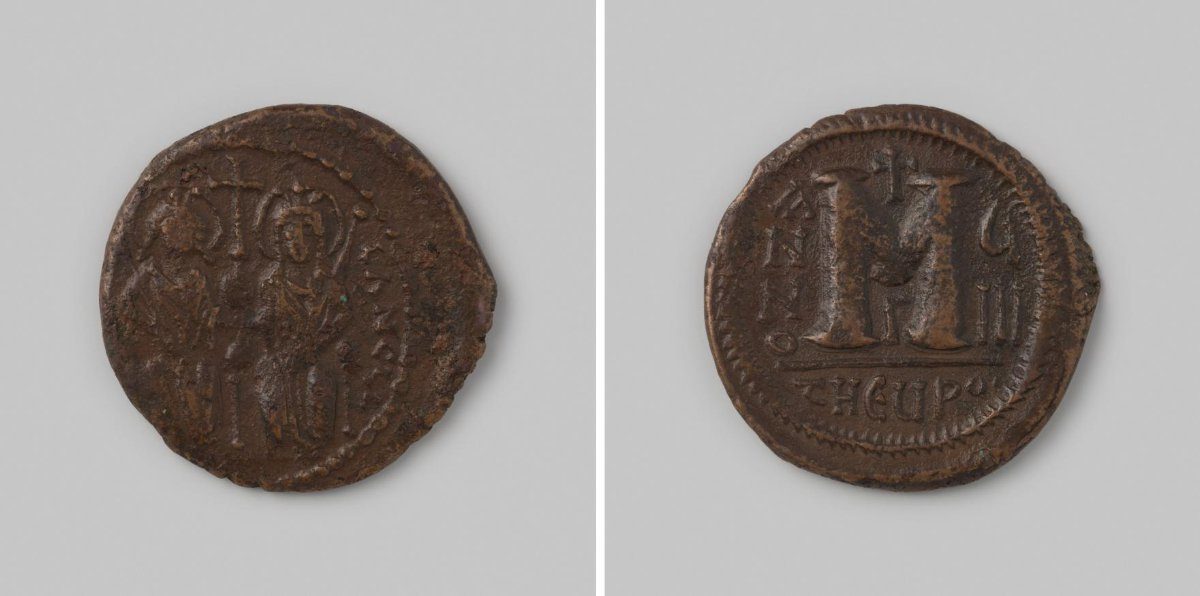
Rijksmuseum, Amsterdam
modern coins
Byzantine Empire, follis, Justin II and Sophia, 565-578
573
Bronze coin. Obverse: the emperor and the empress seated with a celestial orb with cross between them. Reverse: between year designation Anno VIII letter M [=40, value indication, 40 nummia] with a cross above the letter. In the exergue the letters THEUPO [=Theoupolis]. The Rijksmuseum, Amsterdam, holds this object…
Partial type record
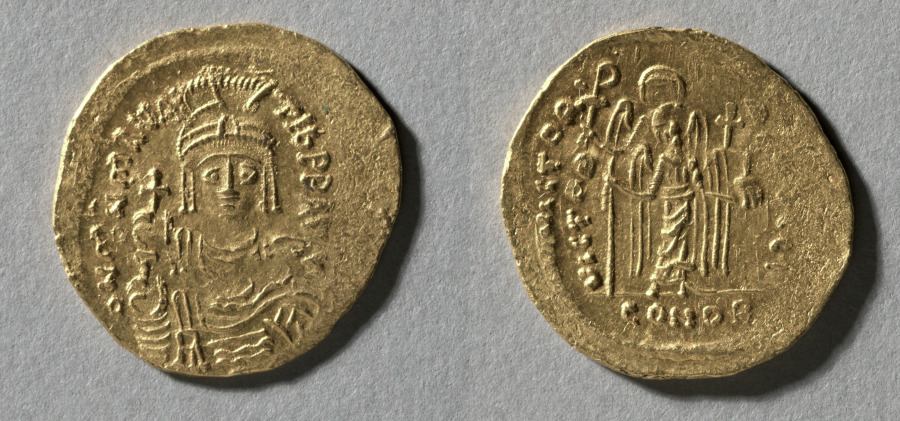
Cleveland Museum of Art
ancient coins
Solidus of Maurice Tiberius (Cleveland Museum of Art 2004.150)
583–602
This coin was minted by Maurice Tiberius, an emperor best known for his military prowess and his successes in the war against the Persians. Cleveland Museum of Art object 2004.150: Solidus of Maurice Tiberius, 583–602. Byzantine, 6th-7th century. Gold; diameter: 2.2 cm (7/8 in.). Inscribed: (Avers): DN MAVRC TIbPPAV…
Partial type record
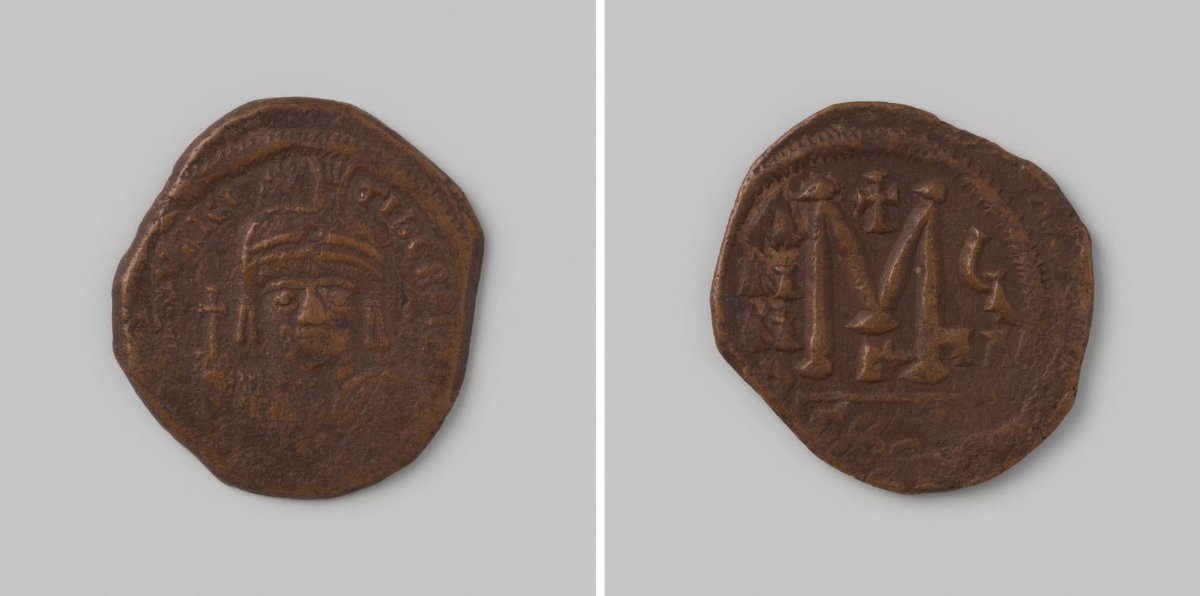
Rijksmuseum, Amsterdam
modern coins
Follis from the Byzantine Empire of Flavius Tiberius Maurice, 582-602
586 - 602
Reverse: between year designation Anno VI letter M [=40, value indication, 40 nummia] with a cross above the letter. In the exergue the letters CO.[=Constantinople]. The Rijksmuseum, Amsterdam, holds this object as KOG-MP-1-0130; its record gives material recorded as bronze (metal); technique striking (metalworking)…
Partial type record
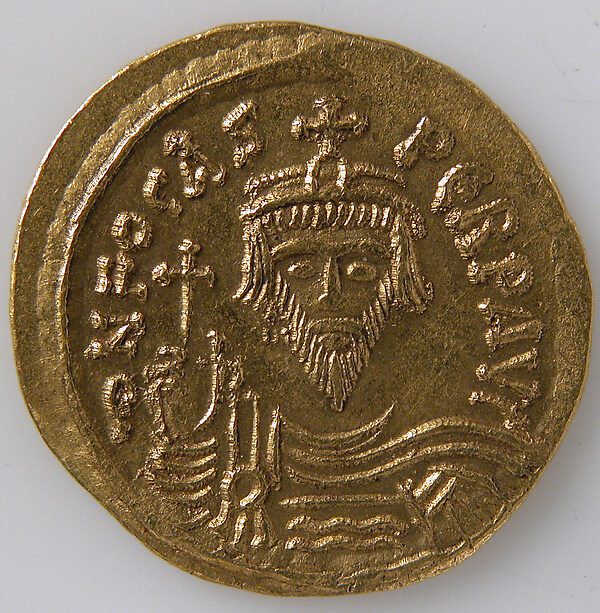
The Metropolitan Museum of Art, New York
ancient coins
Solidus, Early Byzantine, 602–610
602–610
Solidus in The Metropolitan Museum of Art, New York (accession 04.35.3356), catalogued by the museum's Medieval Art department. The museum dates it 602–610 and records its origin as Early Byzantine. The museum records the medium as Gold and the dimensions as Overall: 13/16 x 1/16 in. (2.1 x 0.1 cm). Subject tags ass…
Partial type record
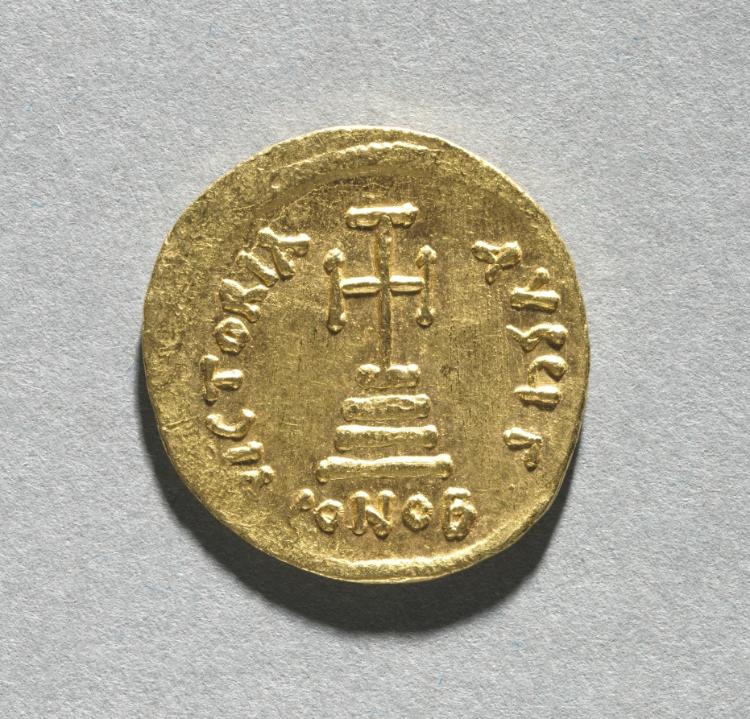
Cleveland Museum of Art
ancient coins
Solidus with Heraclius and his Son Heraclius Constantine (Cleveland Museum of Art 1968.56)
c. 616–625
The solidus is the basic gold coin of 24 karats; the tremissis, a gold coin of one-third the weight and value of the solidus; and the nomisma, which in the 10th century replaced the solidus as the standard gold coin. Cleveland Museum of Art object 1968.56: Solidus with Heraclius and his Son Heraclius Constantine, c.…
Partial type record
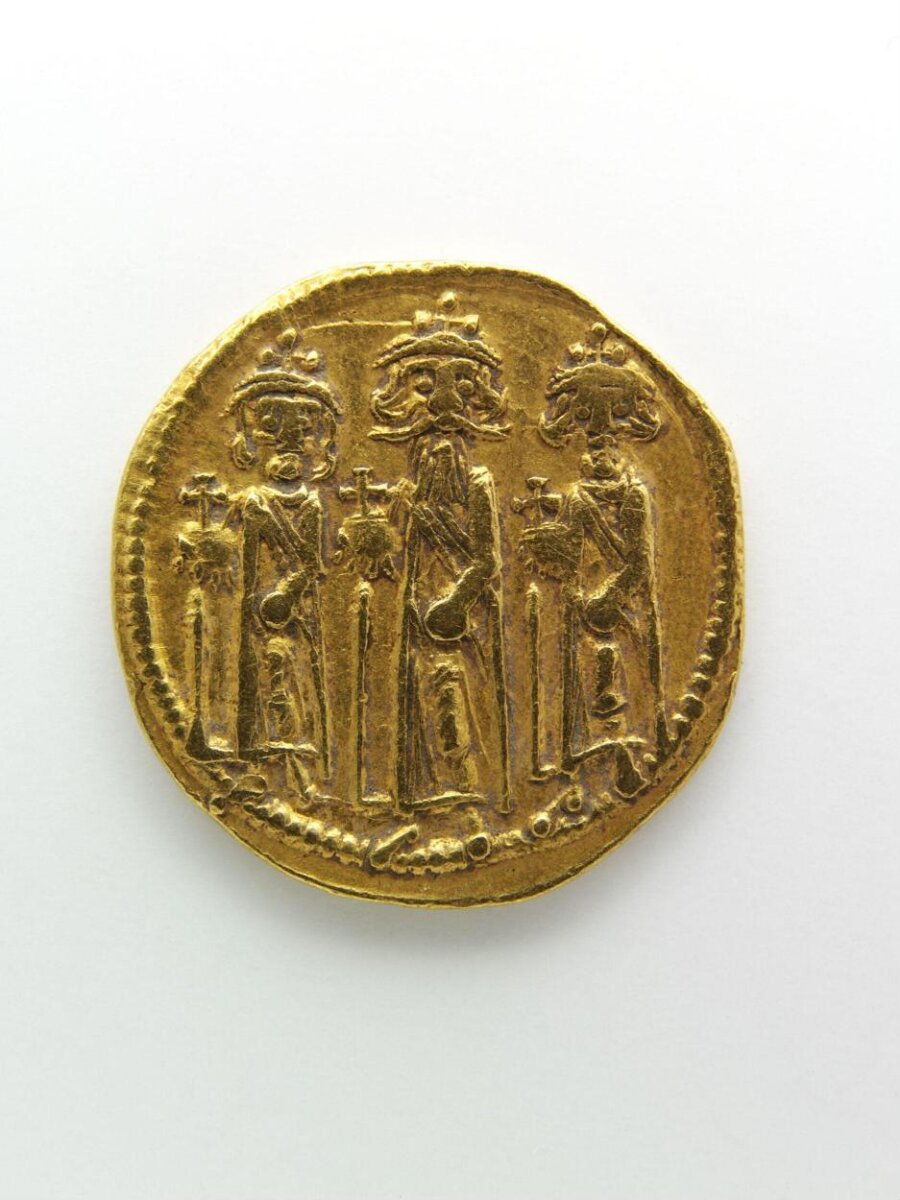
© Victoria and Albert Museum, London
modern coins
Coin — Emperor Heraclius with his sons Heraclius Constantine and Heraclonas, Constantinople, ca. 630
ca. 630
Coin in the Victoria and Albert Museum, London (museum number A.2-1964), made in Constantinople, dated ca. 630. The museum's brief description reads: Coin, Gold Solidus, gold, Emperor Heraclius with his sons Heraclius Constantine and Heraclonas, Byzantine (Constantinople), ca. 630. Museum description: Small gold coi…
Partial type record
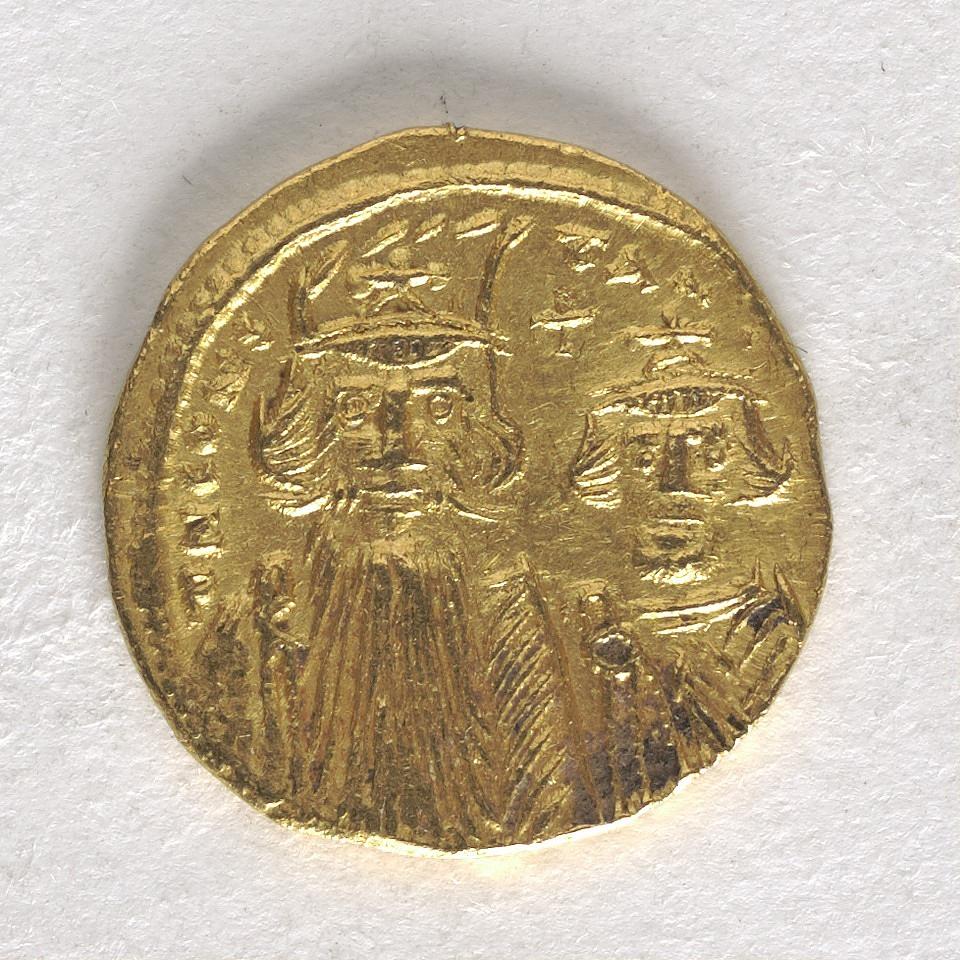
National Museum of American History, Smithsonian Institution
modern coins
1 Solidus, Byzantine Empire, 659 - 668
659 - 668
Museum specimen in the Smithsonian National Numismatic Collection (NU.68.159.6075), dated 659 - 668, place made: Turkey: Ä°stanbul province, Istanbul. Museum record — Object name in the museum record: coin. Maker or mint: Constans II Emperor of Byzantium. Materials: gold (overall material); overall:.11 cm x 1.93 cm…
Partial type record
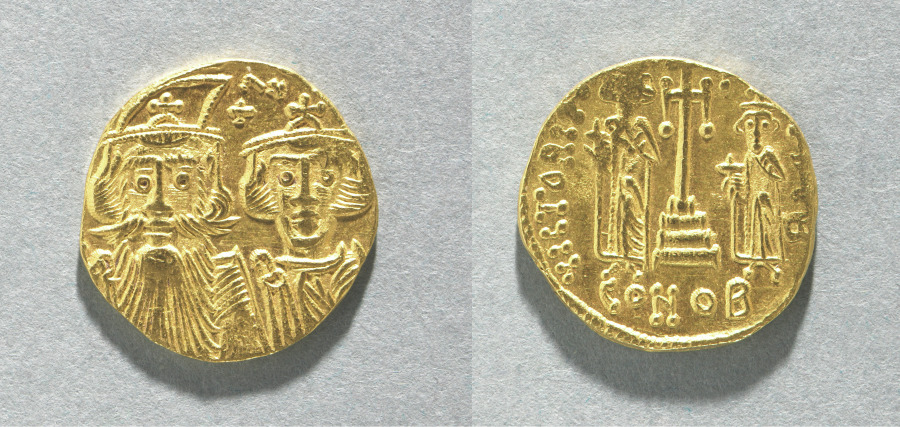
Cleveland Museum of Art
modern coins
Solidus of Constans II and Constantine IV (Cleveland Museum of Art 2012.22)
659–661
The coin shown here is the solidus, the basic gold coin of 24 karats. Cleveland Museum of Art object 2012.22: Solidus of Constans II and Constantine IV, 659–661. Byzantium. Gold; diameter: 1.9 cm (3/4 in.). Inscribed: VICTORIA AVGU and officina letter (cut off and incomplete).
Partial type record
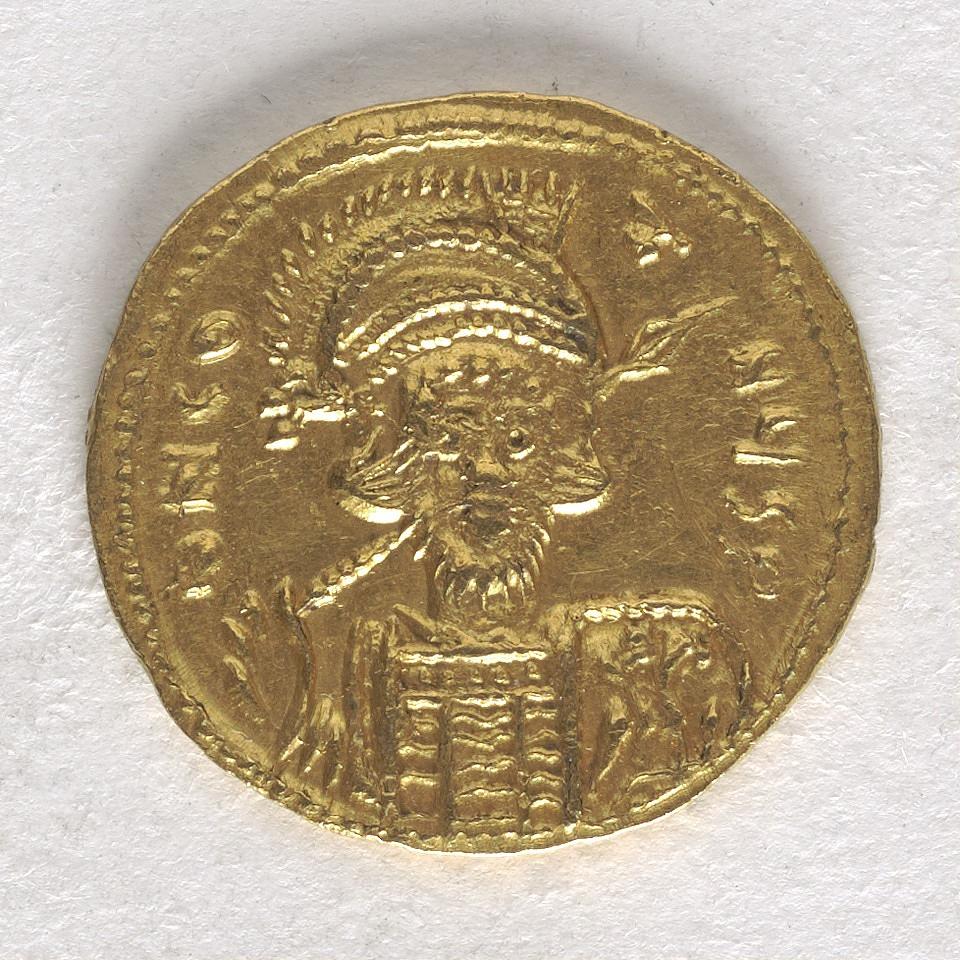
National Museum of American History, Smithsonian Institution
modern coins
1 Solidus, Byzantine Empire, 668 - 680
668 - 680
Museum specimen in the Smithsonian National Numismatic Collection (NU.68.159.6077), dated 668 - 680, place made: Turkey: Ä°stanbul province, Istanbul. Museum record — Object name in the museum record: coin. Maker or mint: Constantine IV Emperor of Byzantium. Materials: gold (overall material); overall:.11 cm x 2.07…
Partial type record
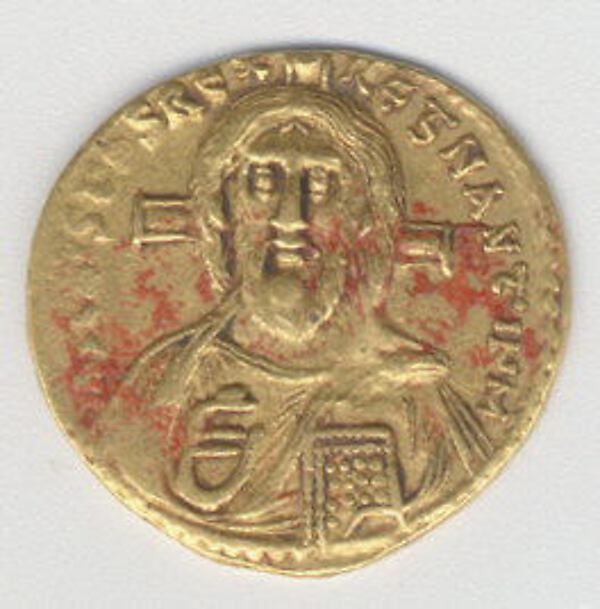
The Metropolitan Museum of Art, New York
ancient coins
Solidus of Justinian II (685-95), Byzantine, 692–695
692–695
Solidus in The Metropolitan Museum of Art, New York (accession 10.130.1495), catalogued by the museum's Medieval Art department under the title “Solidus of Justinian II (685-95)”. The museum dates it 692–695 and records its origin as Byzantine; Constantinople. The museum records the medium as Gold and the dimensions…
Partial type record
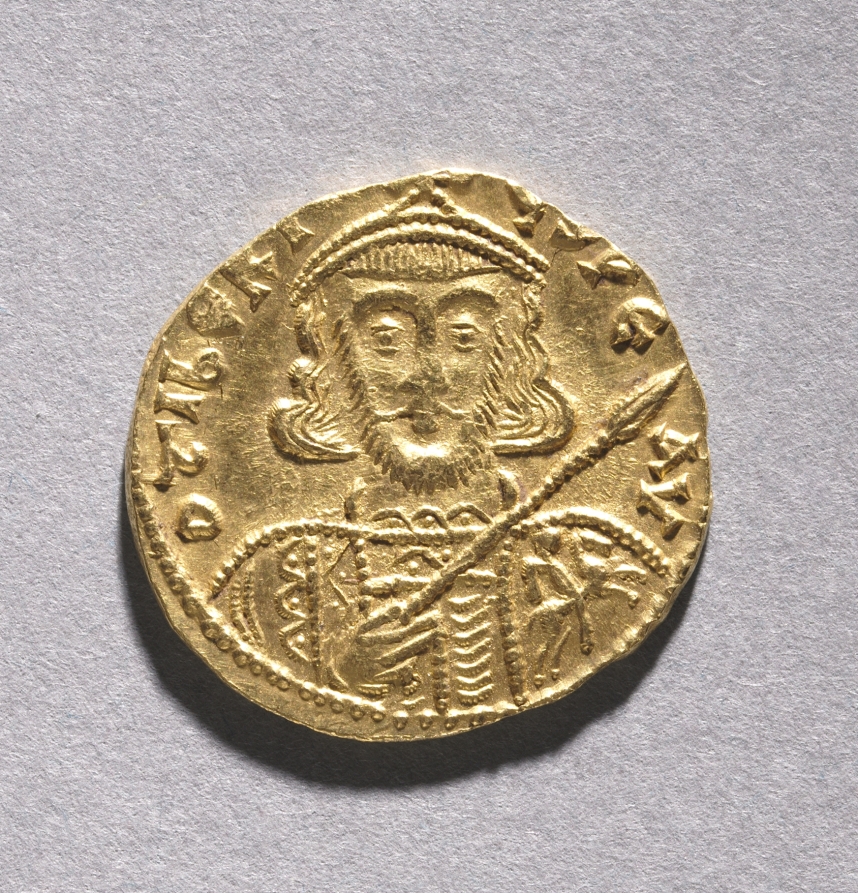
Cleveland Museum of Art
modern coins
Solidus with Tiberius III Apsimarus (Cleveland Museum of Art 1968.58)
698–705
The coins shown here include the solidus, the basic gold coin of 24 karats; the tremissis, a gold coin of one-third the weight and value of the solidus; and the nomisma, which in the 10th century replaced the solidus as the standard gold coin. Cleveland Museum of Art object 1968.58: Solidus with Tiberius III Apsimar…
Partial type record
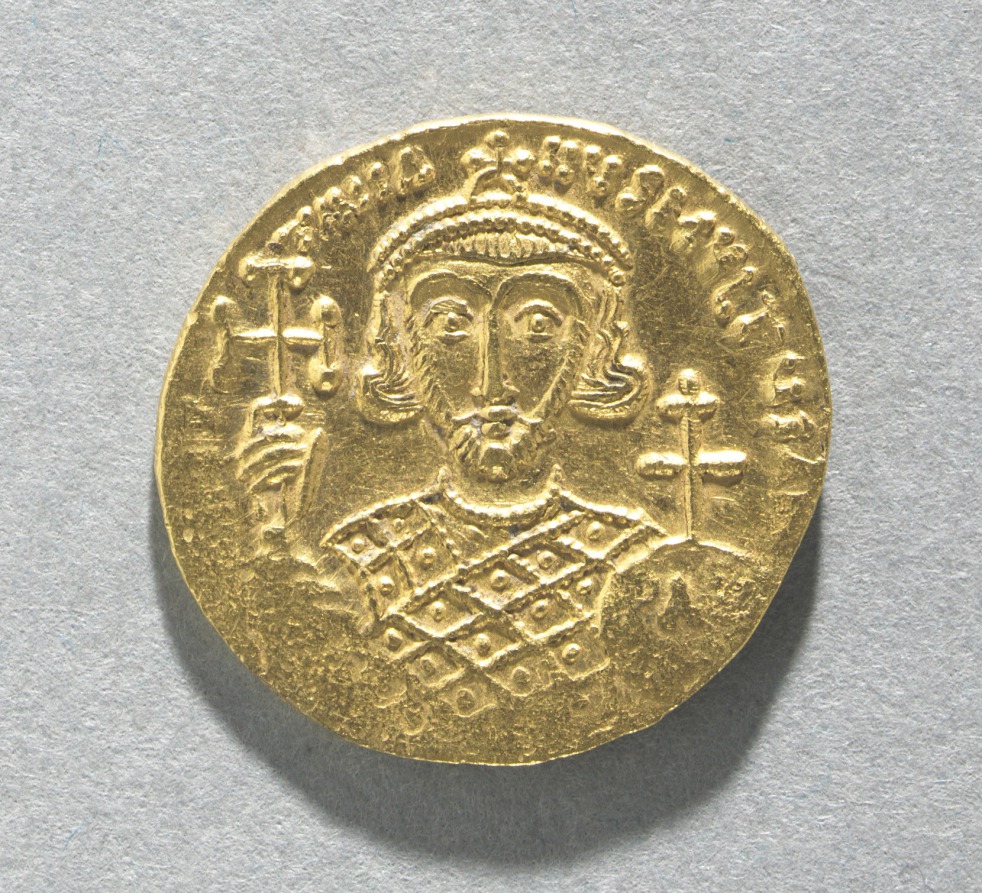
Cleveland Museum of Art
modern coins
Solidus of Justinian II (Cleveland Museum of Art 2012.47)
705
The coins shown here include the solidus, the basic gold coin of 24 karats; the tremissis, a gold coin of one-third the weight and value of the solidus; and the nomisma, which in the 10th century replaced the solidus as the standard gold coin. Cleveland Museum of Art object 2012.47: Solidus of Justinian II, 705. Byz…
Partial type record
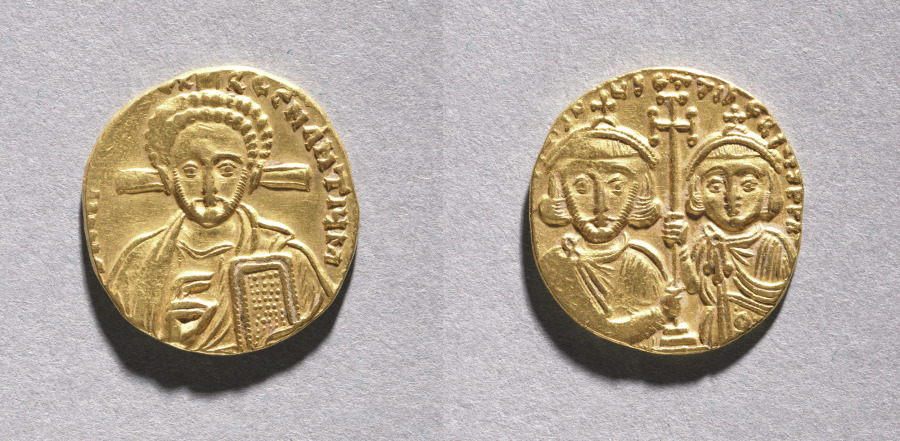
Cleveland Museum of Art
modern coins
Solidus with Justinian II Rhinometus and His Son Tiberius (Cleveland Museum of Art 1968.57)
705–711
The coins shown here include the solidus, the basic gold coin of 24 karats; the tremissis, a gold coin of one-third the weight and value of the solidus; and the nomisma, which in the 10th century replaced the solidus as the standard gold coin. Cleveland Museum of Art object 1968.57: Solidus with Justinian II Rhinome…
Partial type record
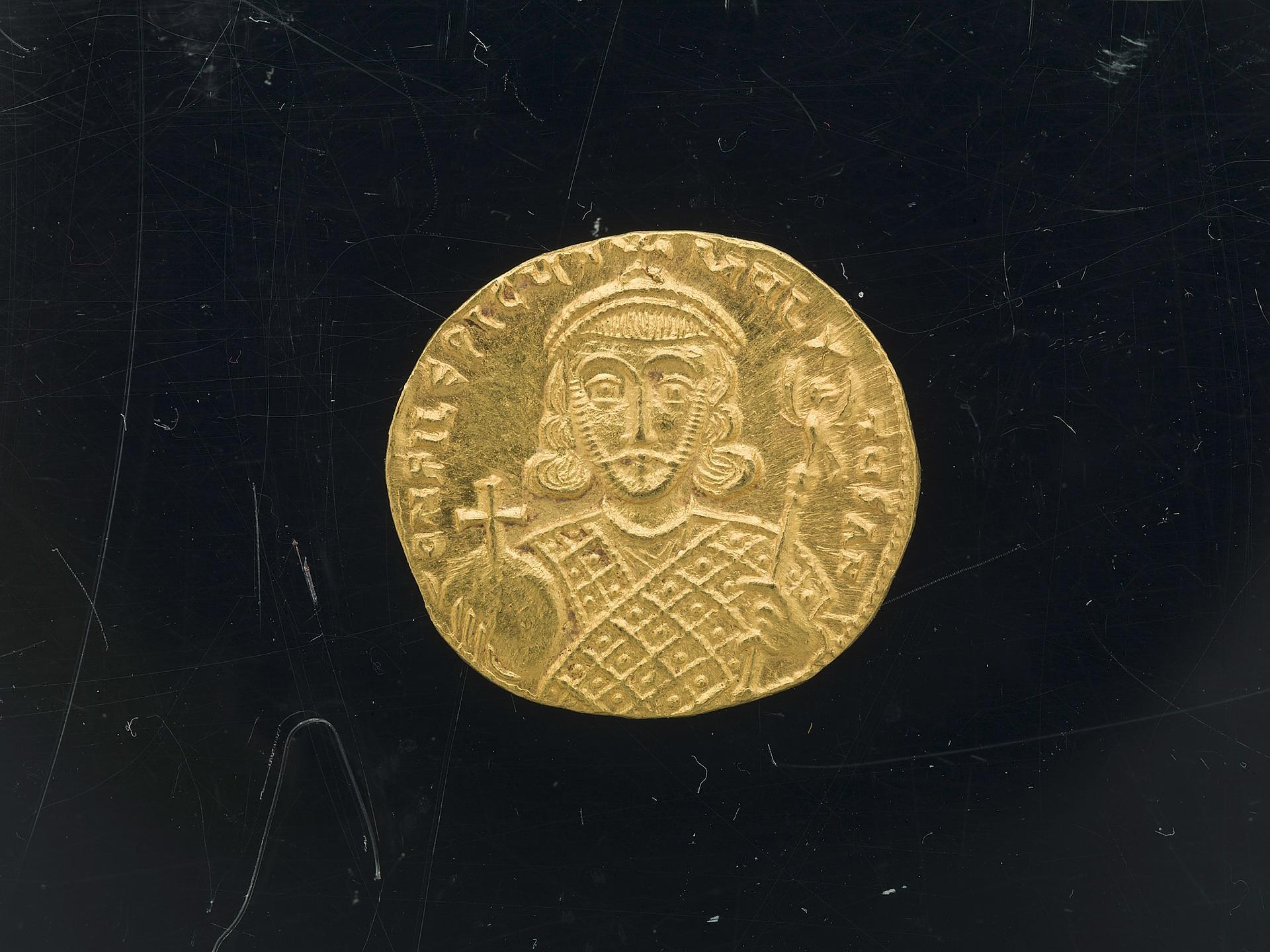
National Museum of American History, Smithsonian Institution
modern coins
1 Solidus, Byzantine Empire, 711 - 713
711 - 713
Museum specimen in the Smithsonian National Numismatic Collection (NU.68.159.5822), dated 711 - 713, place made: Turkey: Ä°stanbul province, Istanbul. Museum record — Object name in the museum record: coin. Maker or mint: Philippicus Emperor of Byzantium. Materials: gold (overall material); overall:.13 cm x 2.04 cm…
Partial type record
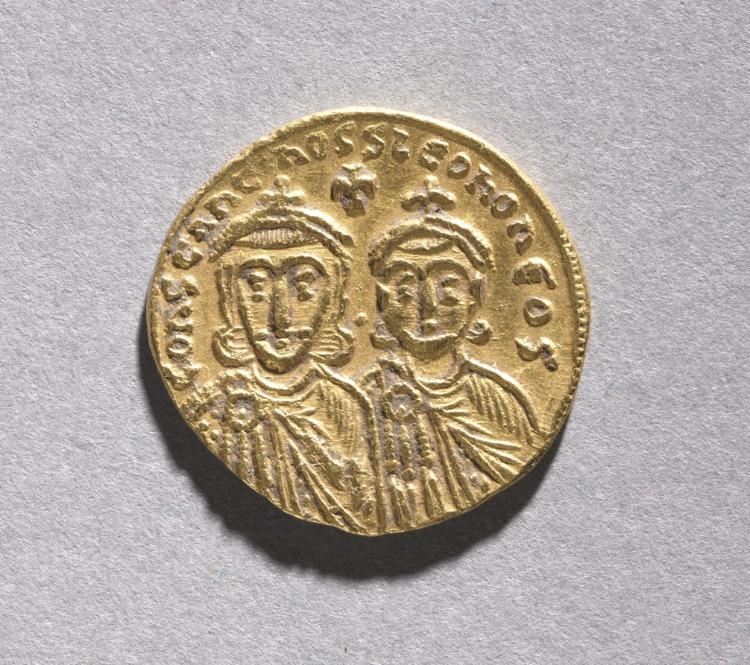
Cleveland Museum of Art
modern coins
Solidus with Leo IV the Khazar and His Father Constantine V Copronymus (Cleveland Museum of Art 1968.59)
c. 751–775
The coins shown here include the solidus, the basic gold coin of 24 karats; the tremissis, a gold coin of one-third the weight and value of the solidus; and the nomisma, which in the 10th century replaced the solidus as the standard gold coin. Cleveland Museum of Art object 1968.59: Solidus with Leo IV the Khazar an…
Partial type record
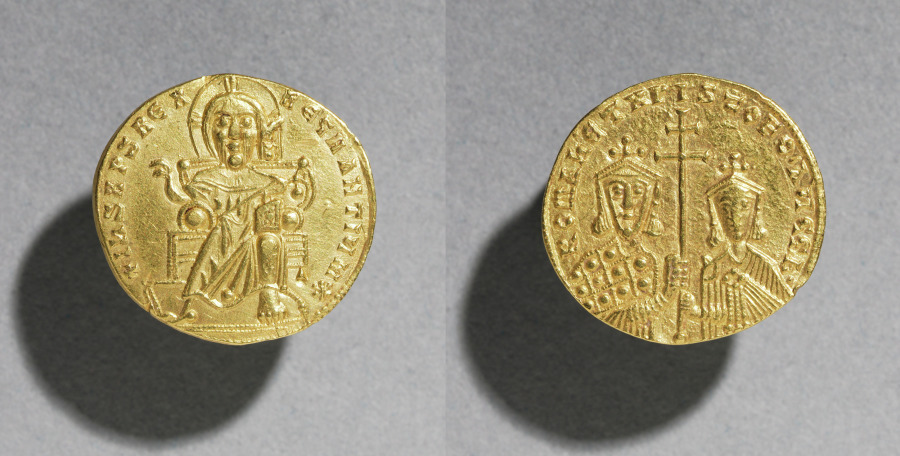
Cleveland Museum of Art
modern coins
Solidus with Romanus I Lecapenus and His Son Christopher (Cleveland Museum of Art 1964.422)
920–944
The coins shown here include the solidus, the basic gold coin of 24 karats; the tremissis, a gold coin of one-third the weight and value of the solidus; and the nomisma, which in the 10th century replaced the solidus as the standard gold coin. Cleveland Museum of Art object 1964.422: Solidus with Romanus I Lecapenus…
Partial type record
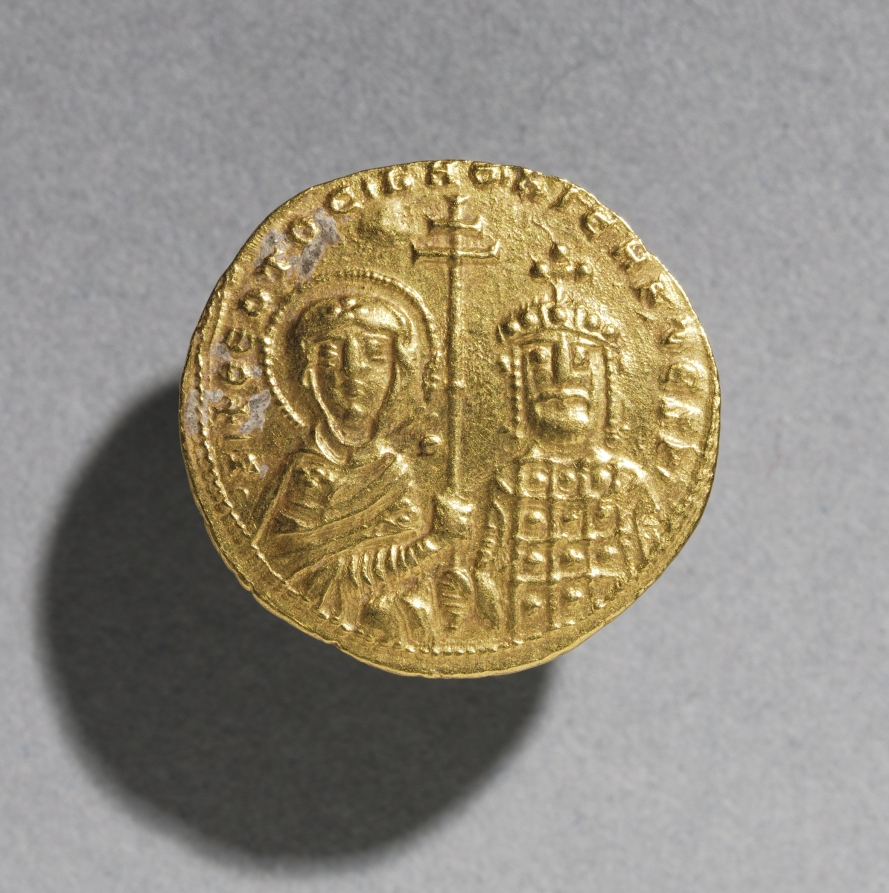
Cleveland Museum of Art
modern coins
Nomisma with Nicephorus II Phocas (Cleveland Museum of Art 1964.423)
c. 963–969
The coins shown here include the solidus, the basic gold coin of 24 karats; the tremissis, a gold coin of one-third the weight and value of the solidus; and the nomisma, which in the 10th century replaced the solidus as the standard gold coin. Cleveland Museum of Art object 1964.423: Nomisma with Nicephorus II Phoca…
Partial type record
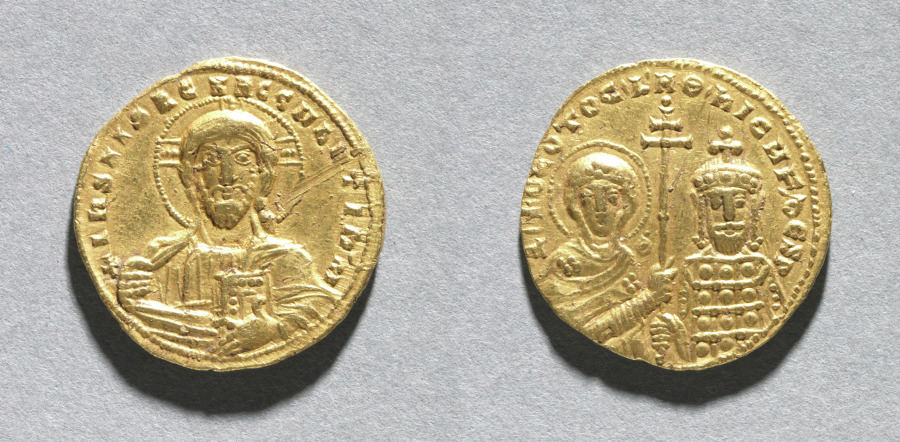
Cleveland Museum of Art
modern coins
Nomisma with Nicephorus II Phocas (Cleveland Museum of Art 1968.60)
963–969
The coins shown here include the solidus, the basic gold coin of 24 karats; the tremissis, a gold coin of one-third the weight and value of the solidus; and the nomisma, which in the 10th century replaced the solidus as the standard gold coin. Cleveland Museum of Art object 1968.60: Nomisma with Nicephorus II Phocas…
Partial type record
Entries by catalogue category
- Modern World Coins21
- Ancient Coins9
Counts of published entries only. They describe this catalogue's holdings, not everything the issuer or maker produced.
Dated entries by century
- 4th century1
- 5th century1
- 6th century7
- 7th century8
- 8th century4
- 10th century5
- 11th century4
Only the 30 entries carrying their own date to within about 150 years are counted, by the earliest year given. These are catalogue holdings, not production totals.
Materials recorded in the physical descriptions
- Gold27
- Bronze3
An entry made of several materials is counted once under each. Materials are counted only where the description states them.
Browse other historical issuers and makers in the Atlas, or read how attributions are made in the editorial method.