Issuing authority
Kingdom of England
Medieval and early modern English kingdom issuing hammered silver and gold coinage.
- Kind
- kingdom
- Region
- British Isles, Europe
- Recorded period
- AD 927 – 1707
Objects are filed under the historical authority that actually issued or made them. A recorded period comes from the issuer's own reference description and is left blank where no source states it.
Catalogue entries (65)
Filter these entries by era, material or confidenceSorted by date, earliest first.
Cleveland Museum of Art
modern coins
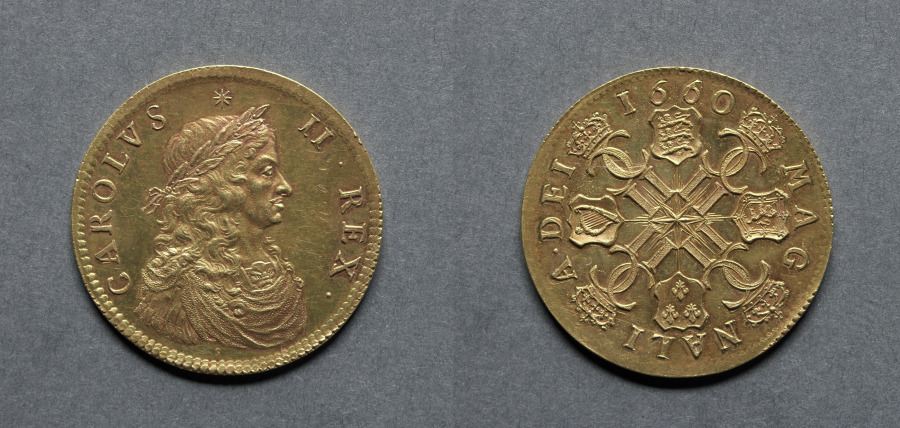
Broad: Charles II (obverse); Shields (Cleveland Museum of Art 1969.198)
1660
The hammered series of English coins was now nearing its end. In 1662 and from that time forward, all coins were produced by the mill and screw press, which gradually developed into modern minting machinery. From 1660 till 1662 hammered coins were still produced while the Mint was being reformed. In preparing the de…
Partial type record
Rijksmuseum, Amsterdam
modern coins
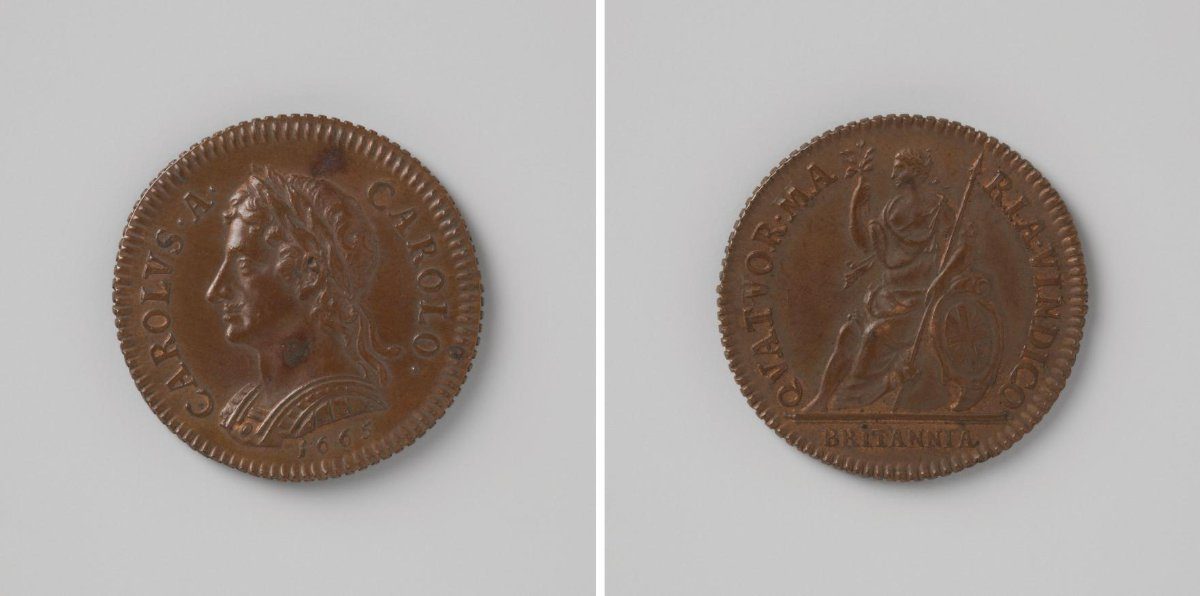
Charles II of England, ruler of the sea
1665
Obverse: bust of a man with laurel wreath within circumscription. Reverse: seated Britannia with shield, spear and laurel branch within circumscription. The Rijksmuseum, Amsterdam, holds this object as NG-VG-1-974; its record gives material recorded as copper (metal); technique striking (metalworking); measurements…
Partial type record
Rijksmuseum, Amsterdam
modern coins
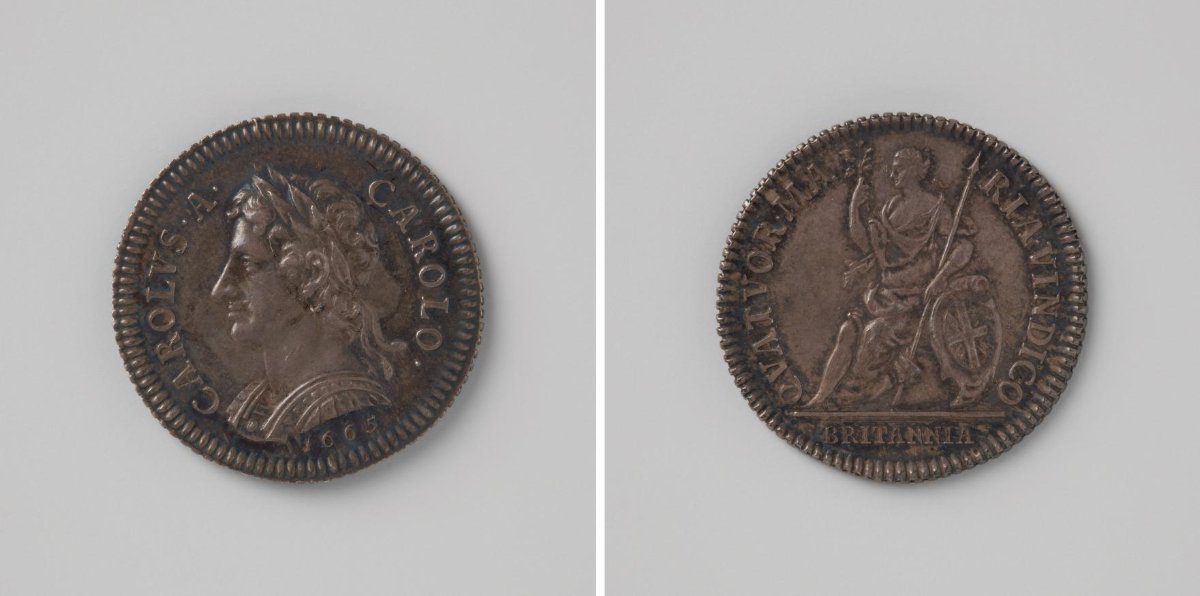
Half shilling coin of Charles II of England, ruler of the sea
1665
Obverse: bust of a man with laurel wreath within legend. Reverse: seated Britannia with shield, spear and laurel branch within legend; exergue: inscription. The Rijksmuseum, Amsterdam, holds this object as NG-VG-1-973; its record gives material recorded as silver (metal); technique striking (metalworking); measureme…
Partial type record
Cleveland Museum of Art
modern coins
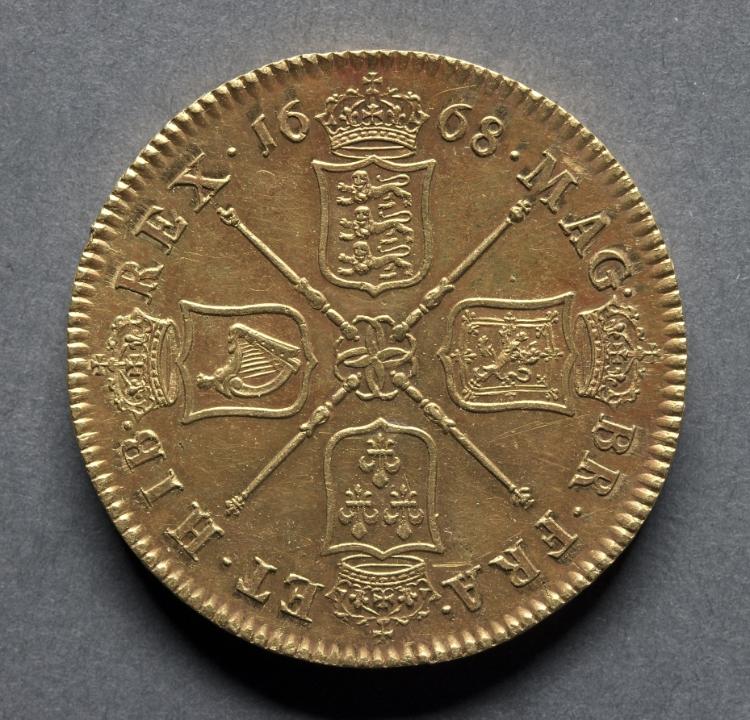
Five Guineas: Charles II (obverse); Four Shields (Cleveland Museum of Art 1969.199)
1668
Once the decision was made to reform the coinage of England, and hammered coinage abandoned, the whole range of money was simplified. The guinea was the unit (like the dollar), and multiples of two and five were struck. One of the reasons for turning to mill coins was the long battle against the clipper (the act of…
Partial type record
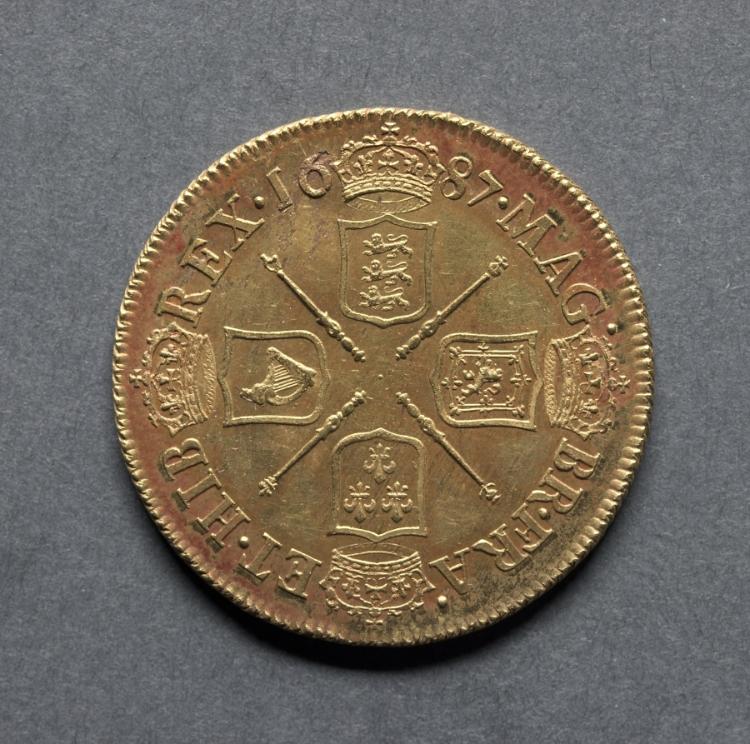
Cleveland Museum of Art
modern coins
Two Guineas: James II (obverse); Four Shields of Arms (Cleveland Museum of Art 1969.200)
1687
The coin type of James II was a continuation of that of the reign of his brother, Charles II. This denomination was only issued in 1687 and 1688. The four gold denominations established under the reformed coinage of the previous reign were five guineas, two guineas, guinea, and half guinea. Cleveland Museum of Art o…
Partial type record
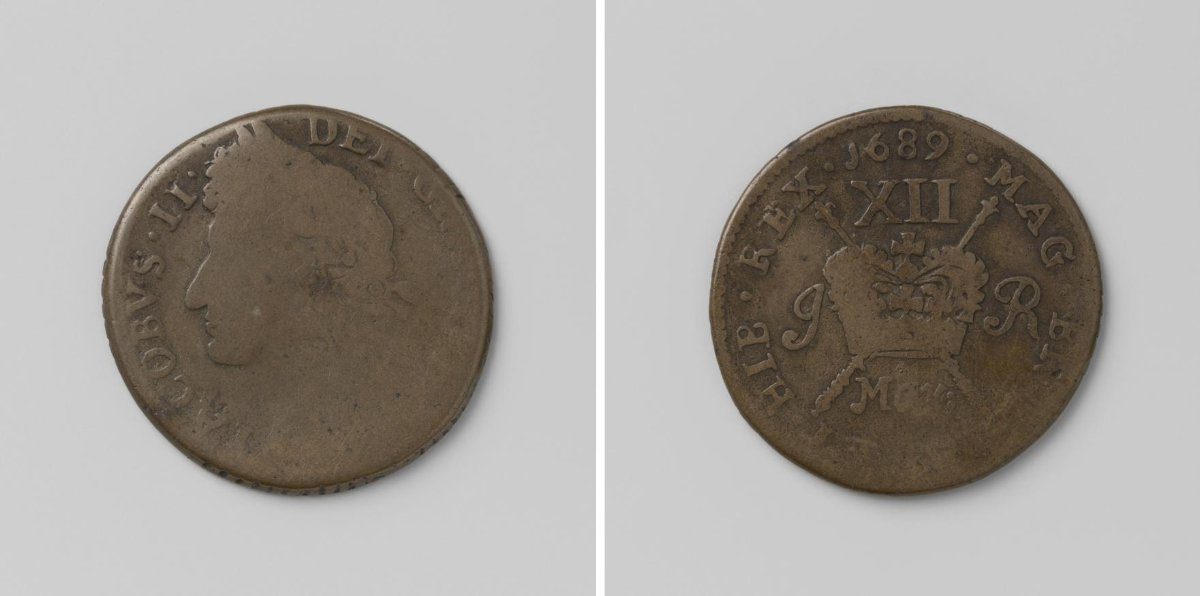
Rijksmuseum, Amsterdam
modern coins
Shilling, Emergency Coin of James II, King of England, from March 1689
1689-03
Obverse: bust of a man with laurel wreath within legend. Reverse: crown pierced by two crossed scepters between the monogram of the letters J and R; above the crown Roman numeral XXX, below the crown inscription "Mar: " within legend. The Rijksmuseum, Amsterdam, holds this object as NG-VG-4-386; its record gives mat…
Partial type record
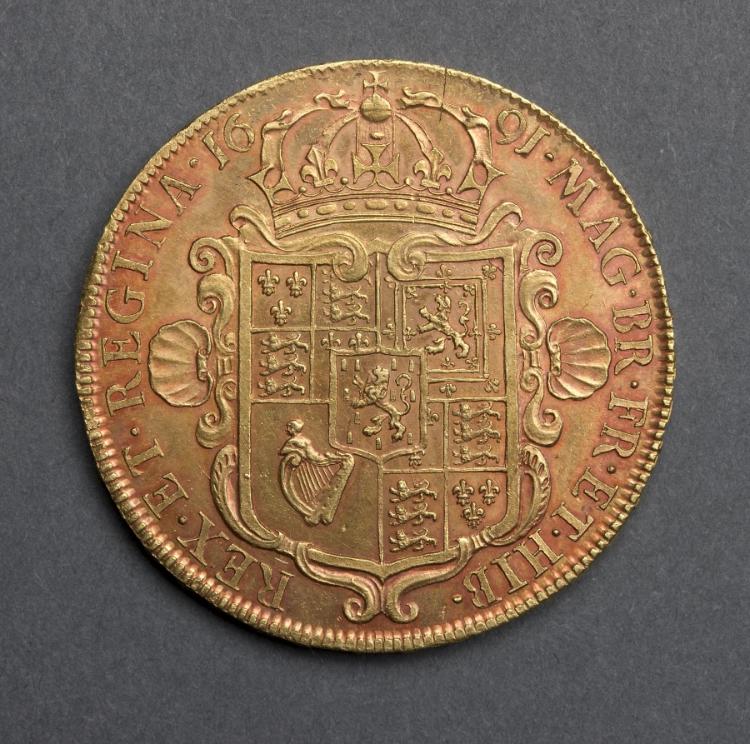
Cleveland Museum of Art
modern coins
Five Guineas: William & Mary (obverse); Crowned Shield of Arms (Cleveland Museum of Art 1969.201)
1691
William of Orange-Nassau, and his wife Mary, daughter of James II, were proclaimed joint monarchs. Thus both their heads appear on their coinage. The only other instance of this in England is in the reign of Philip and Mary, 1554–58. Below them is a small elephant representing Guinea, the origin of the metal. Willia…
Partial type record
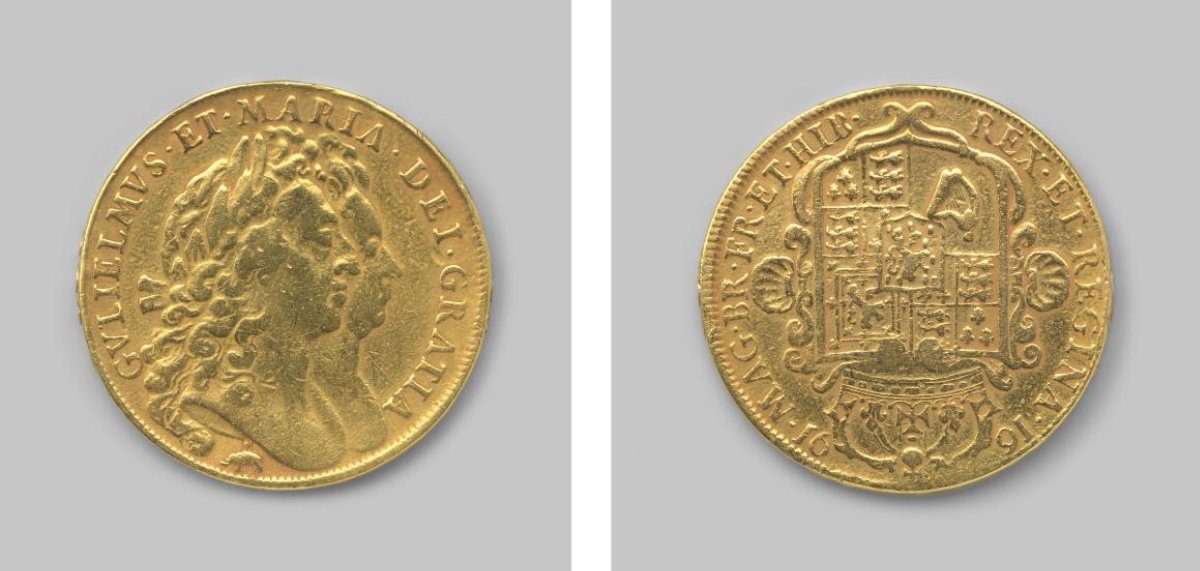
Rijksmuseum, Amsterdam
modern coins
Five-guinea coin from Great Britain with the busts of King-Stadtholder William III and Mary
1691
Gold five-guinea coin from the United Kingdom, with the busts of William & Mary, from 1691, with the mark 'elephant & castle', referring to the Royal African Company, which held the trade monopoly on the West African coast, and to the provenance of the gold mined in West Africa. The Rijksmuseum, Amsterdam, holds thi…
Partial type record
Rijksmuseum, Amsterdam
modern coins
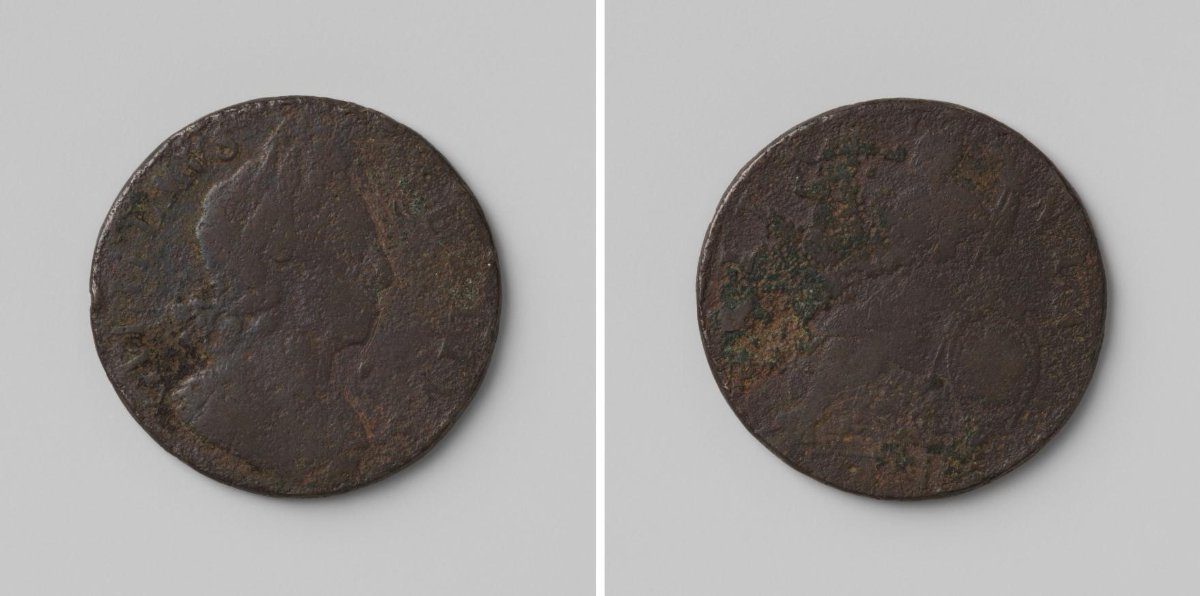
Halfpenny of William III, King of England
1699 - 1701
Copper coin. Obverse: bust of a man with laurel wreath facing right within circumscription. Reverse: helmeted Britannia with spear and shield within circumscription; exergue: illegible date. The Rijksmuseum, Amsterdam, holds this object as NG-VG-14-21-A; its record gives material recorded as copper (metal); techniqu…
Partial type record
Cleveland Museum of Art
modern coins
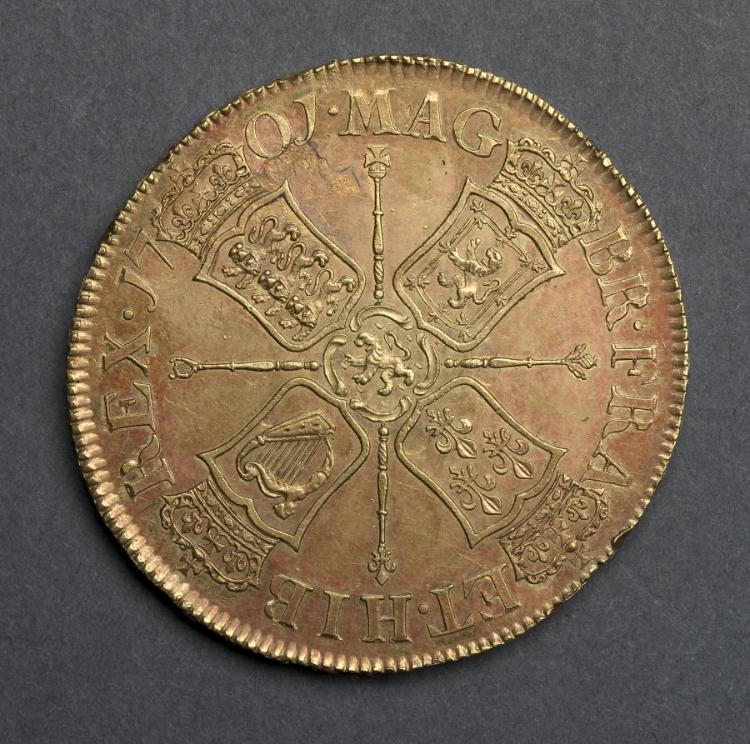
Five Guineas: William III (obverse); Four Shields and Lion of Nassau (Cleveland Museum of Art 1969.202)
1701
There were three types used on the five guinea coin of William III, who continued to reign long after the death of Mary. As hammered coinage was still in circulation along with the mill coins, the government decided to call in all the remaining hammered pieces in 1695, completing the reform of the coinage. This affe…
Partial type record
Rijksmuseum, Amsterdam
modern coins
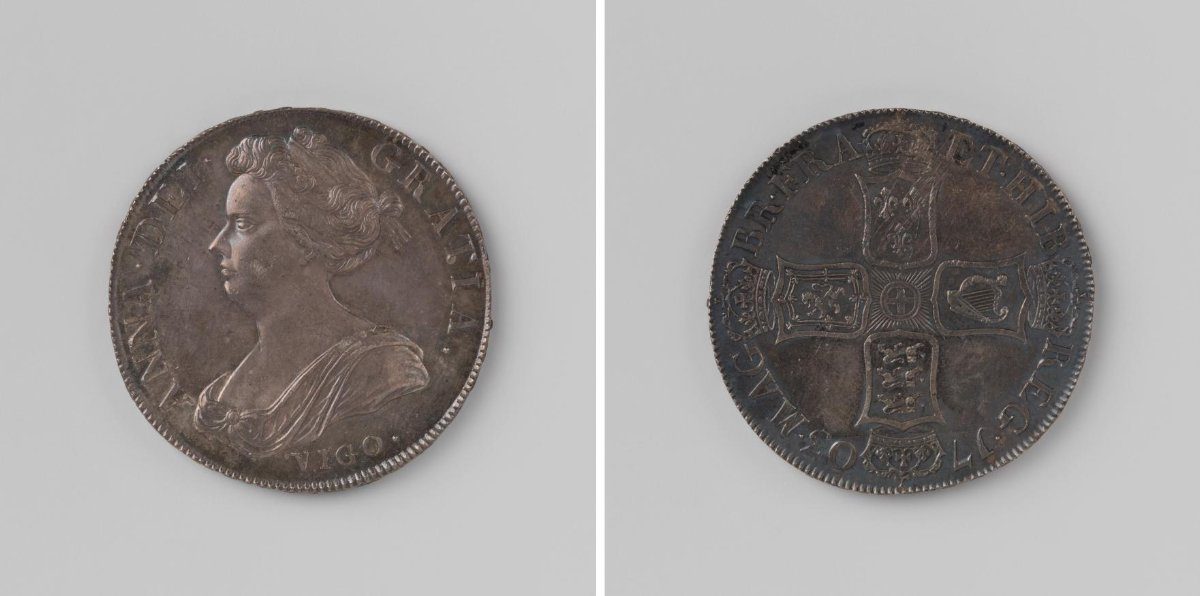
Anne, Queen of England, coin struck from the silver captured in the Battle of Vigo
1703
Obverse: bust of a woman within legend. Reverse: around an English star four crowned coats of arms within legend; edge lettering. The Rijksmuseum, Amsterdam, holds this object as NG-VG-1-1858; its record gives material recorded as silver (metal); technique striking (metalworking); measurements diameter 4 cm x weight…
Partial type record
Rijksmuseum, Amsterdam
modern coins
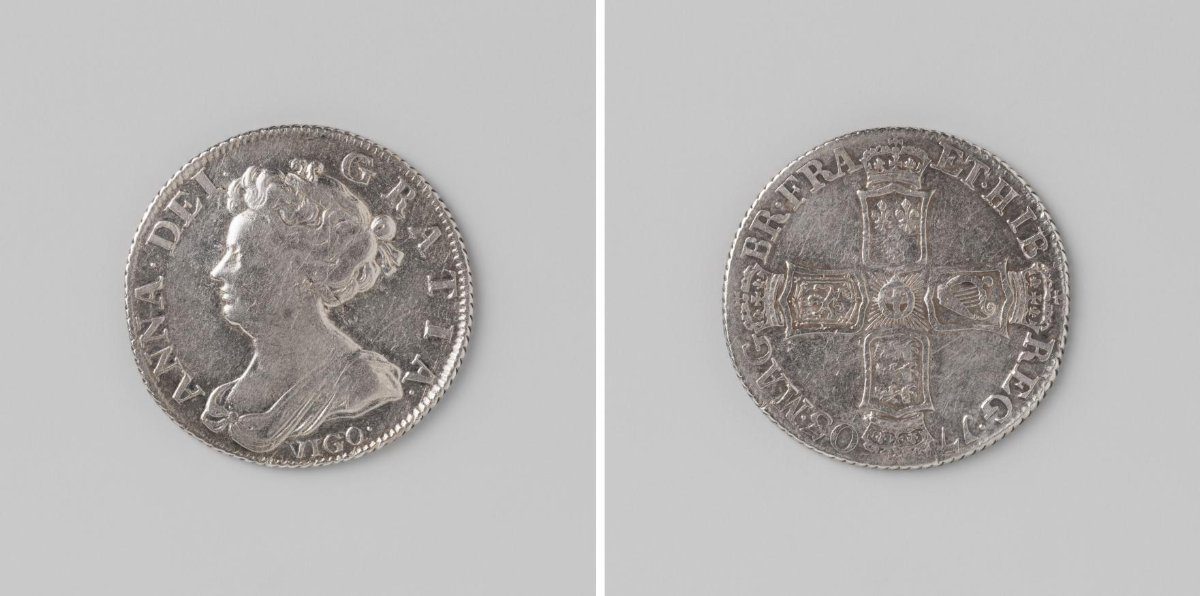
Anne, Queen of England, shilling struck from silver captured in the Battle of Vigo Bay
1703
Obverse: bust of a woman within an inscription. Reverse: around an English star, four crowned coats of arms within an inscription. The Rijksmuseum, Amsterdam, holds this object as NG-VG-1-1859; its record gives material recorded as silver (metal); technique striking (metalworking); measurements diameter 2.5 cm x wei…
Partial type record
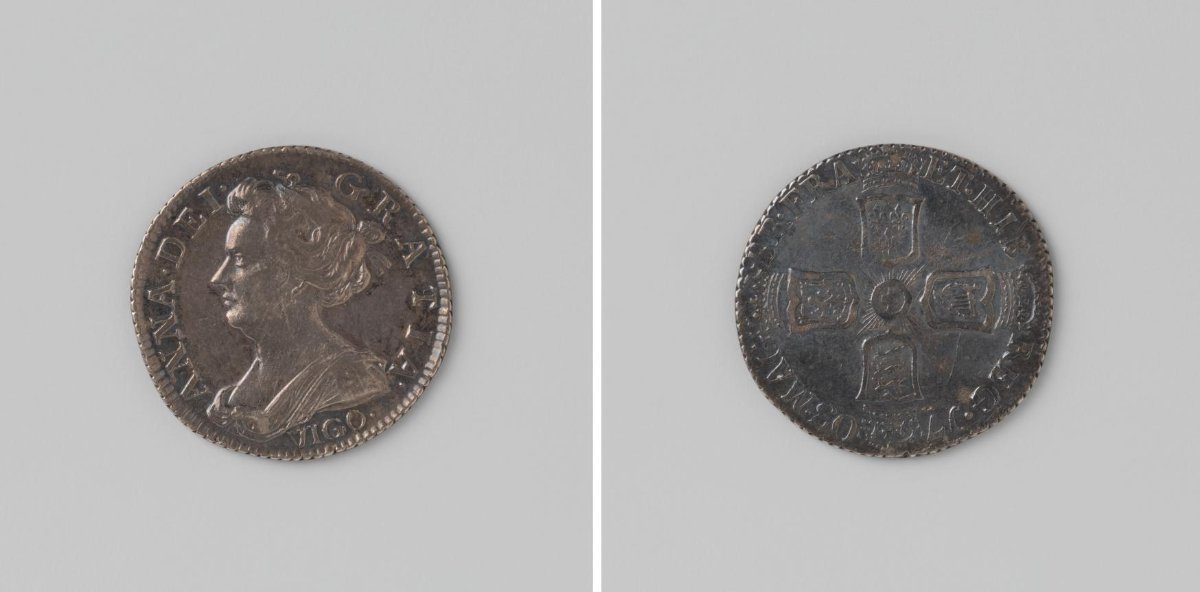
Rijksmuseum, Amsterdam
modern coins
Coin of Half a Shilling of Anne, Queen of England, Coin Struck from Silver Captured in the Naval Battle of Vigo
1703
Obverse: bust of a woman within legend. Reverse: around an English star four crowned coats of arms within legend. The Rijksmuseum, Amsterdam, holds this object as NG-VG-1-1860; its record gives material recorded as silver (metal); technique striking (metalworking); measurements diameter 2.1 cm x weight 31 g.
Partial type record
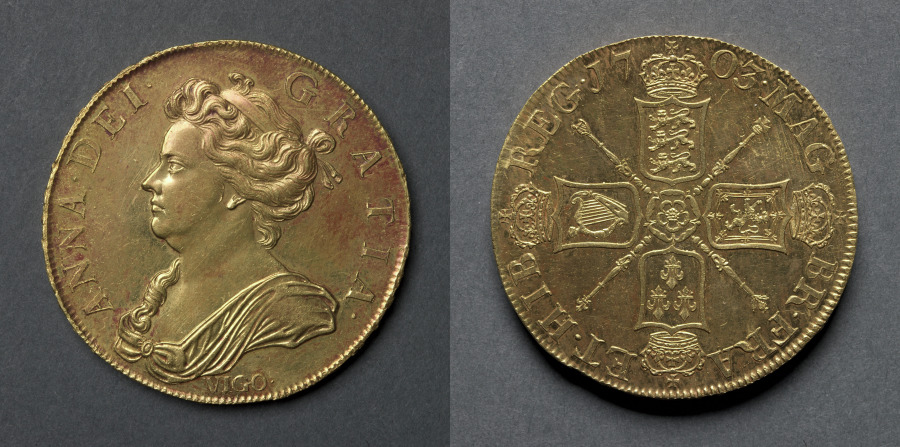
Cleveland Museum of Art
modern coins
Five Guineas: Anne (obverse); Shields and rose (Cleveland Museum of Art 1969.203)
1703
The coinage during Anne's reign remained fairly constant to the designs inaugurated in 1662. Before the Act of Union with Scotland (1706), the arms of England and Scotland remained separate, as shown. After the act the two arms were conjoined on one shield. The word Vigo denotes that the coins were struck from gold…
Partial type record
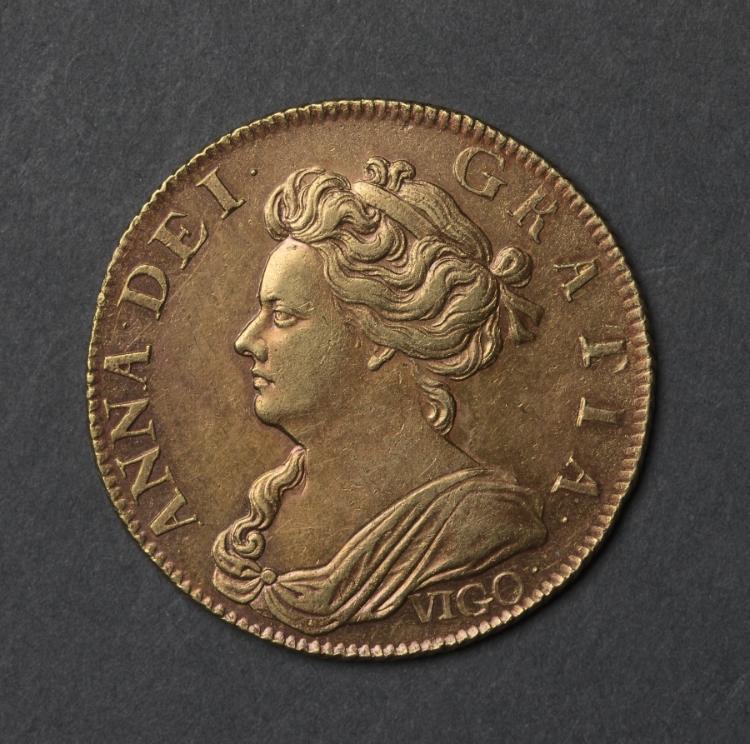
Cleveland Museum of Art
modern coins
Guinea: Anne (obverse); Shields and rose (Cleveland Museum of Art 1969.204)
1703
The coinage of Anne's reign remained fairly constant being inaugurated in 1662. Before the Act of Union with Scotland (1706), the arms of England and Scotland remined separate, as shown. After the act the two arms were conjoined on one shield. The word Vigo denotes that the coins were struck from gold captured from…
Partial type record
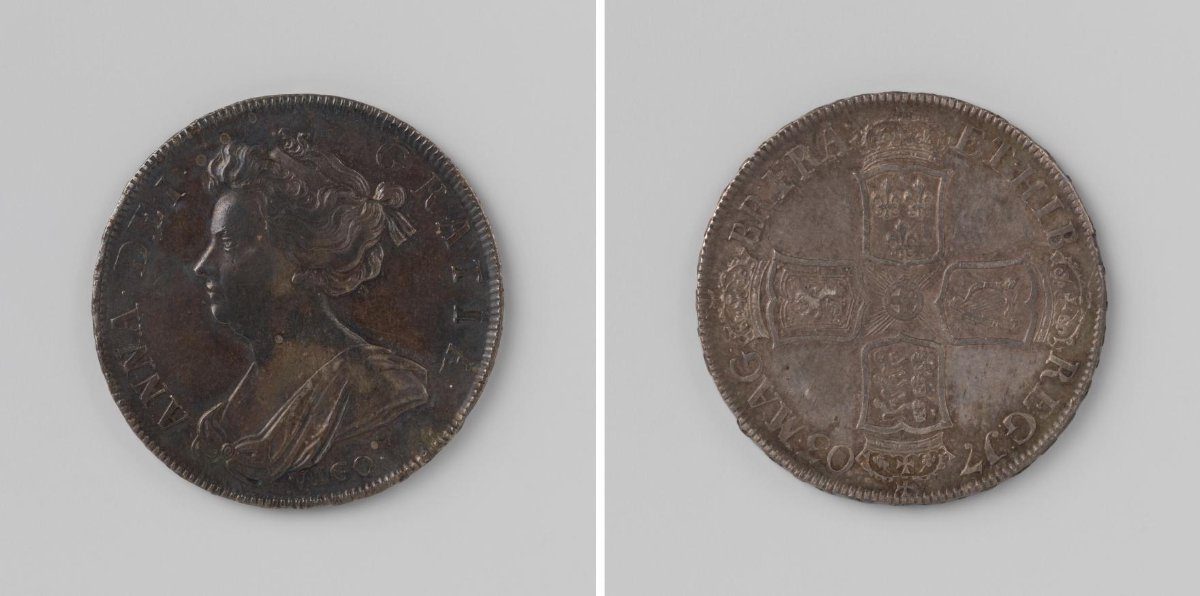
Rijksmuseum, Amsterdam
modern coins
Half crown coin of Anne, Queen of England, coin struck from the silver captured in the Battle of Vigo
1703
Obverse: bust of a woman within legend. Reverse: around an English star four crowned coats of arms within legend; edge lettering. The Rijksmuseum, Amsterdam, holds this object as NG-VG-1-1861; its record gives material recorded as silver (metal); technique striking (metalworking); measurements diameter 3.3 cm x weig…
Partial type record
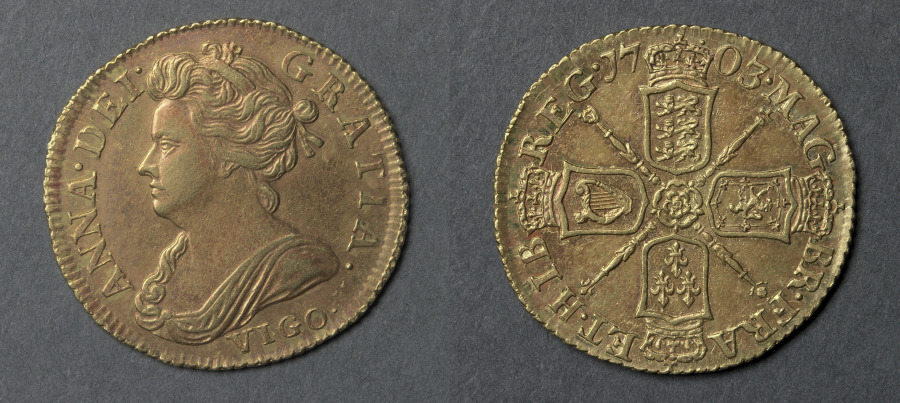
Cleveland Museum of Art
modern coins
Half Guinea: Anne (obverse); Shields and Rose (Cleveland Museum of Art 1969.205)
1703
The coinage of Anne's reign remained fairly constant after the inaugural design in 1662. Before the Act of Union with Scotland (1706), the arms of England and Scotland remained separate, as shown. After the act the two arms were conjoined on one shield. The word Vigo indicates the coins were struck from gold capture…
Partial type record
Browse other historical issuers and makers in the Atlas, or read how attributions are made in the editorial method.