Issuing authority
Kingdom of England
Medieval and early modern English kingdom issuing hammered silver and gold coinage.
- Kind
- kingdom
- Region
- British Isles, Europe
- Recorded period
- AD 927 – 1707
Objects are filed under the historical authority that actually issued or made them. A recorded period comes from the issuer's own reference description and is left blank where no source states it.
Catalogue entries (65)
Filter these entries by era, material or confidenceSorted by date, earliest first.
Cleveland Museum of Art
modern coins
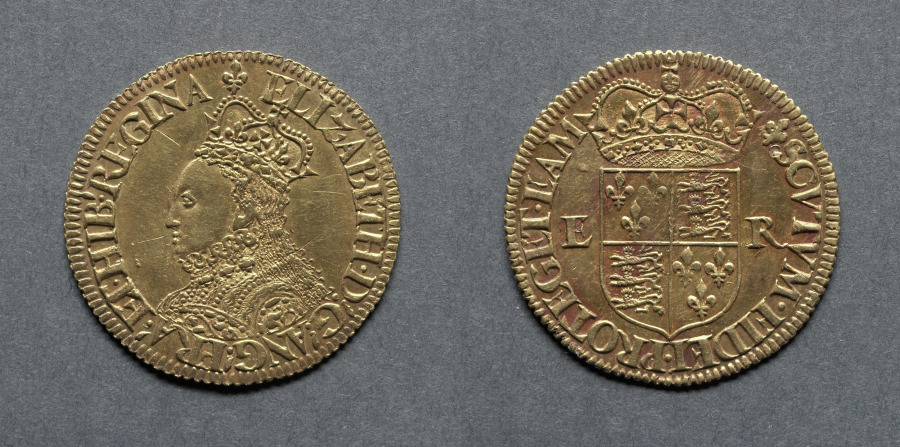
Half Pound: Elizabeth I (obverse); Crowned Shield of Arms (Cleveland Museum of Art 1969.187)
1558–1560
This piece was produced by a new process. In about 1560 an attempt was made to introduce coins made with the French screw press. The coins are called mill money, a term derived from the use of water and horse mills used to supply power. The machinery included a rolling press, driven by the mill, a cutting punch, and…
Partial type record
Cleveland Museum of Art
modern coins
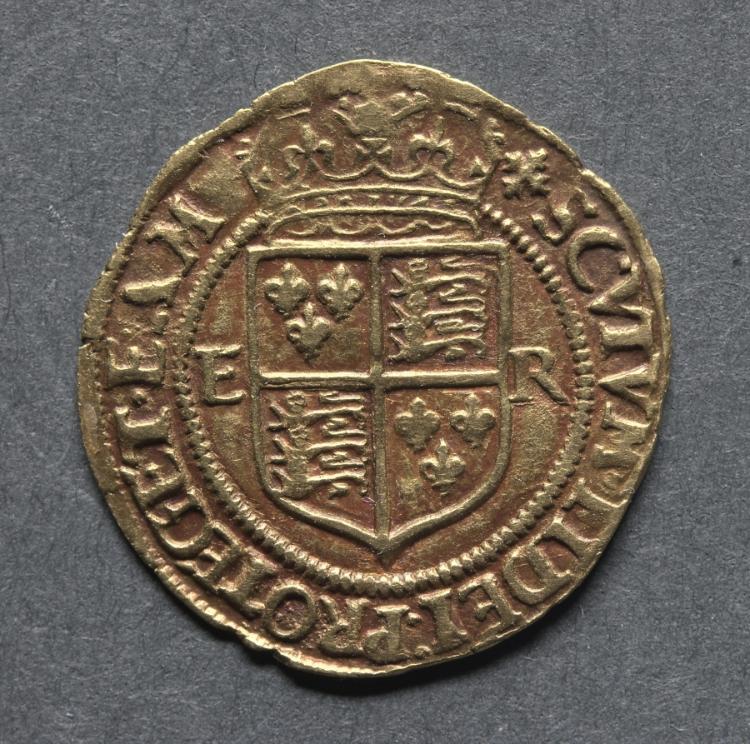
Halfcrown: Elizabeth I (obverse); Crowned Shield of Arms (Cleveland Museum of Art 1969.182)
1560–61
The portrait of the queen is very well executed. There are two types of this coin that feature a bust of the queen. They vary considerably, this one being less ornate than the second, 1969.184. Elizabeth I chose a Latin phrase, SCVTVM FIDEI PROTEGET EAM, translated as The Shield of Faith Shall Protect Her to appear…
Partial type record
Cleveland Museum of Art
modern coins
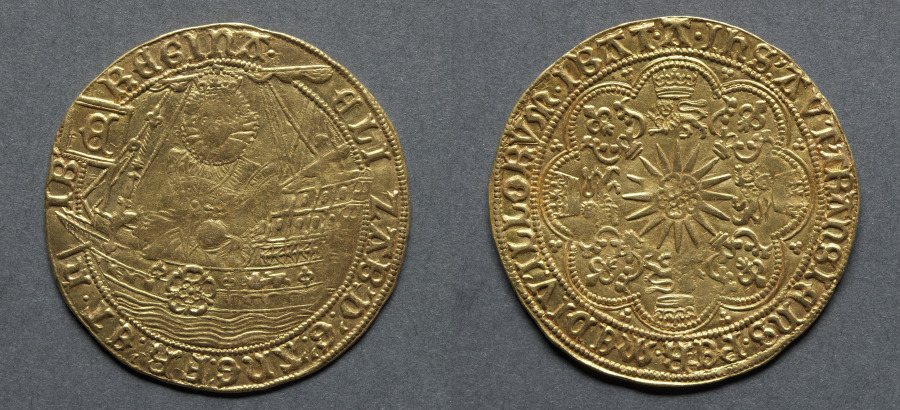
Ryal: Elizabeth I in Ship (obverse); Rose over Radiate Sun (Cleveland Museum of Art 1969.183)
1583–84/85
The figure of the queen is full of minute detail. Elizabeth I is shown sailing on a ship; she holds an orb and scepter. A rose appears on the hull of the ship and an E on the banner located on the bow. Produced at the climax of her reign, the design was chosen to demonstrate England's superior naval power and coloni…
Partial type record
Cleveland Museum of Art
modern coins
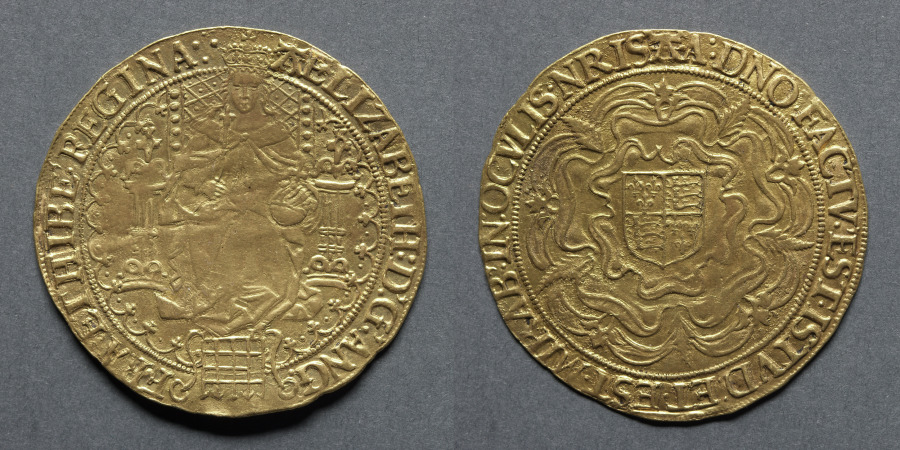
Sovereign of Thirty Shillings: Elizabeth I (obverse); Shield of Arms on Tudor Rose (Cleveland Museum of Art 1969.181)
1583–1603
A point of interest of this piece is the initial mark. The mark, in the shape of a crosslet, and visible at the start of the inscription, dates the die to 1560–61. However here it has been over stamped with another mark, an A, used in 1583–85. This indicates the reuse of the die of the first coinage during the third…
Partial type record
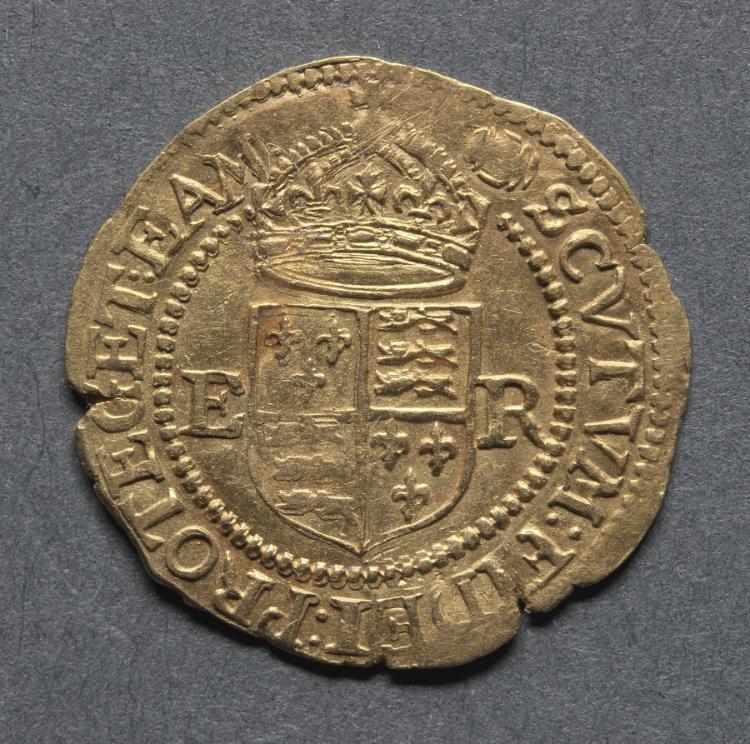
Cleveland Museum of Art
modern coins
Halfcrown: Elizabeth I (obverse); Crowned Shield of Arms (Cleveland Museum of Art 1969.184)
1592–95
This is the second type of gold halfcrown, showing the queen in ornate style. She often wore elaborate and luxuriously decorated dresses, many of them heavily bejeweled as seen here. The mint mark, visible just above the crown on the reverse, is a tun or barrel. This helps identify the date the coin was issued as th…
Partial type record
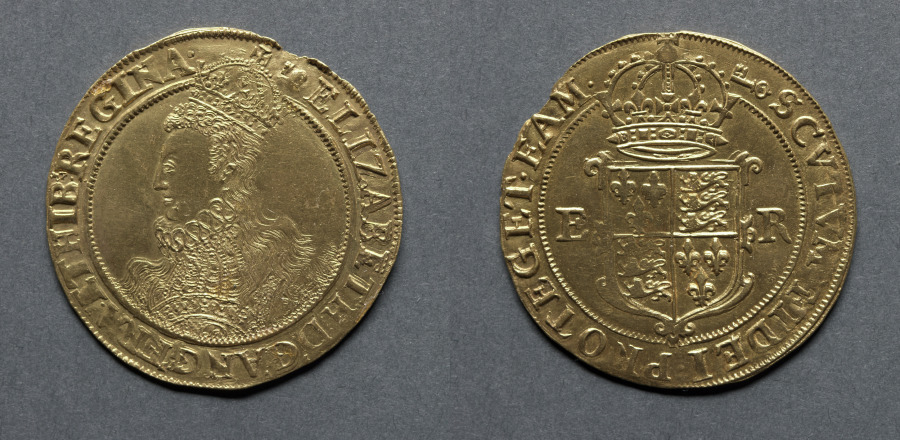
Cleveland Museum of Art
modern coins
Pound: Elizabeth I (obverse); Crowned Shield of Arms (Cleveland Museum of Art 1969.185)
1595–98
For a long time all Elizabethan gold was considered as one series, but now it is divided into three, in accordance with who was in charge of the Tower mint and in accordance with the sequence of initial marks. On the reverse the initial mark is a key and can be seen just before the start of the inscription. On the o…
Partial type record
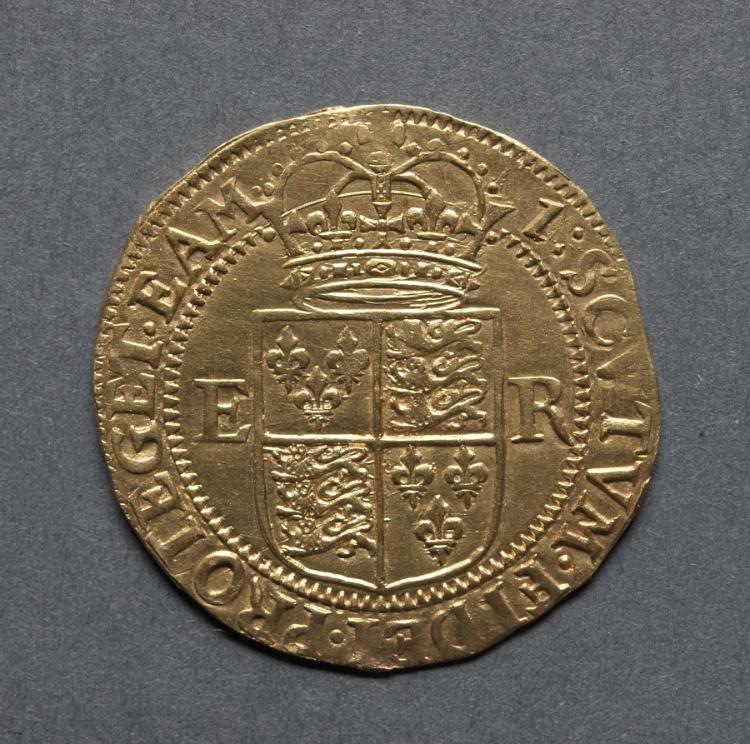
Cleveland Museum of Art
modern coins
Half Pound: Elizabeth I (obverse); Crowned Shield of Arms (Cleveland Museum of Art 1969.186)
1601
The design of this piece is similar to another in the collection of Elizabeth I, 1969.184. However, the initial marks denote it was struck in 1601. Elizabeth I is shown finely dressed and around her is her abbreviated title, Elizabeth by the Grace of God, Queen of England, France and Ireland. On the reverse is the s…
Partial type record
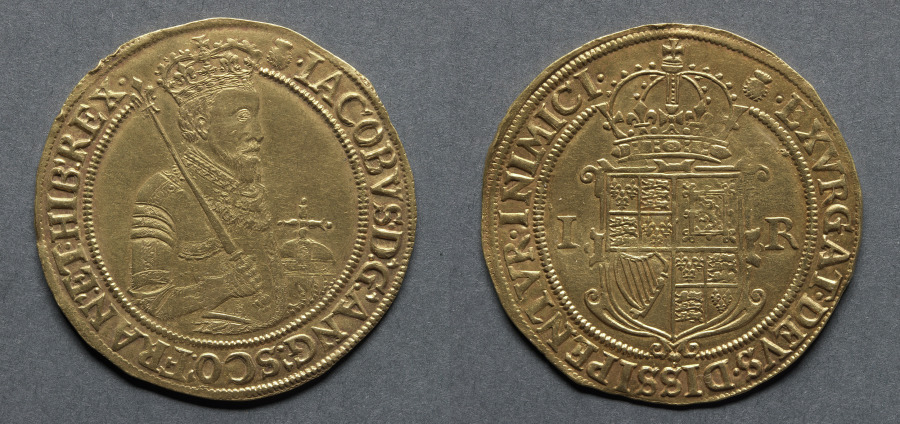
Cleveland Museum of Art
modern coins
Sovereign: James I (obverse); Crowned Shield (Cleveland Museum of Art 1969.188)
1603–4
The accession of James I to the throne of England brought about the union of the thrones of England and Scotland. This was duly recorded on the coinage, the royal arms on this piece now consisting of the arms of England (twice), Scotland, and Ireland. The English arms still contain the French lilies, though the last…
Partial type record
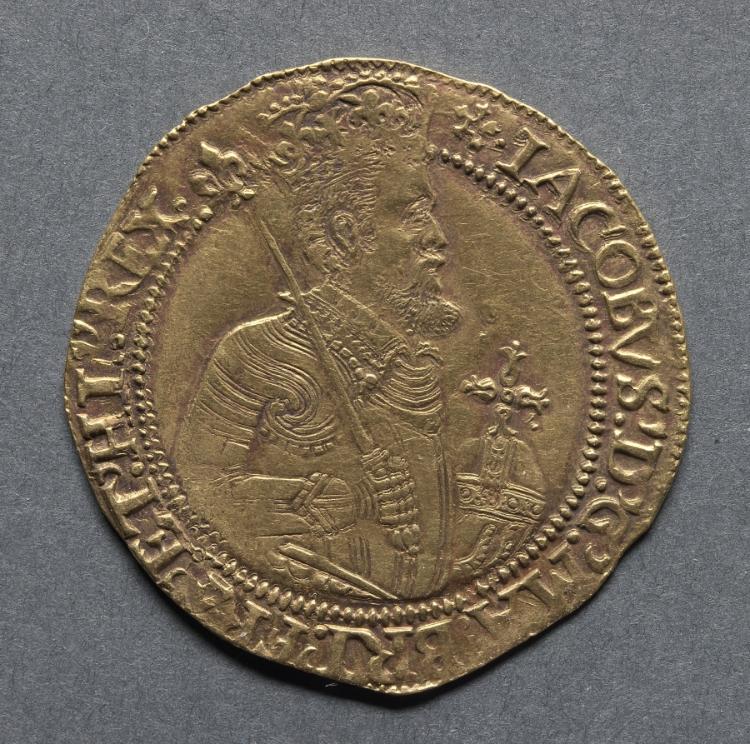
Cleveland Museum of Art
modern coins
Unite: James I (obverse); Shield of Arms (Cleveland Museum of Art 1969.189)
1613–15
The unite was one of the new denominations introduced after the coinage had been down-rated by ten percent and then restored in 1611. It was so named because the accession of James I brought about the union of the thrones of England and Scotland. On the obverse the king's titles now read James by the grace of God Ki…
Partial type record
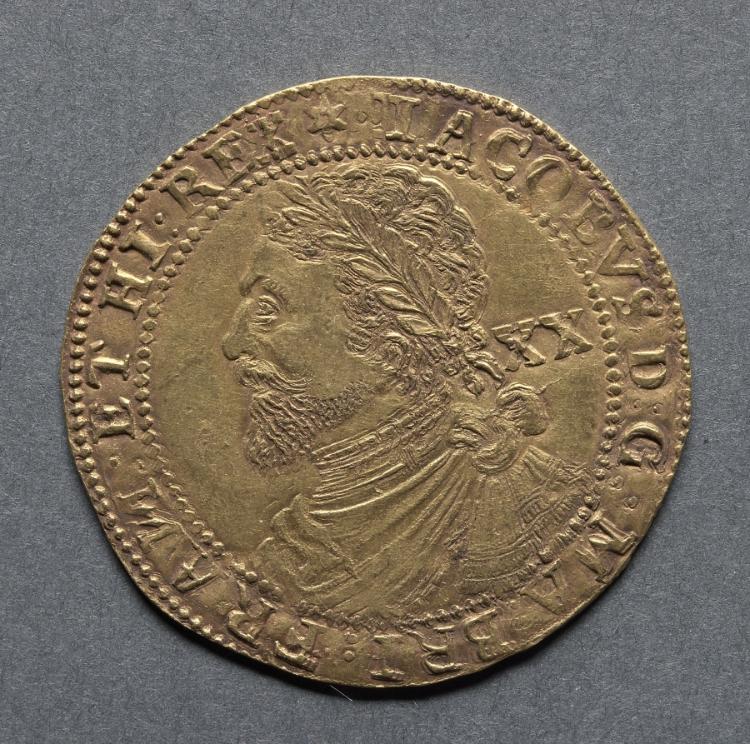
Cleveland Museum of Art
modern coins
Laurel: James I (obverse); Shield of Arms (Cleveland Museum of Art 1969.191)
1619–1620
In 1611 the value of all gold coins, which had previously been down-rated, was now raised by ten percent. Previously the gold coins had circulated at inconvenient fractional values, such as 33 shilling; 16 shillings and 6 pence; 4 shillings and 4 pence three farthings; and so forth. To obviate this a new unit of 20…
Partial type record
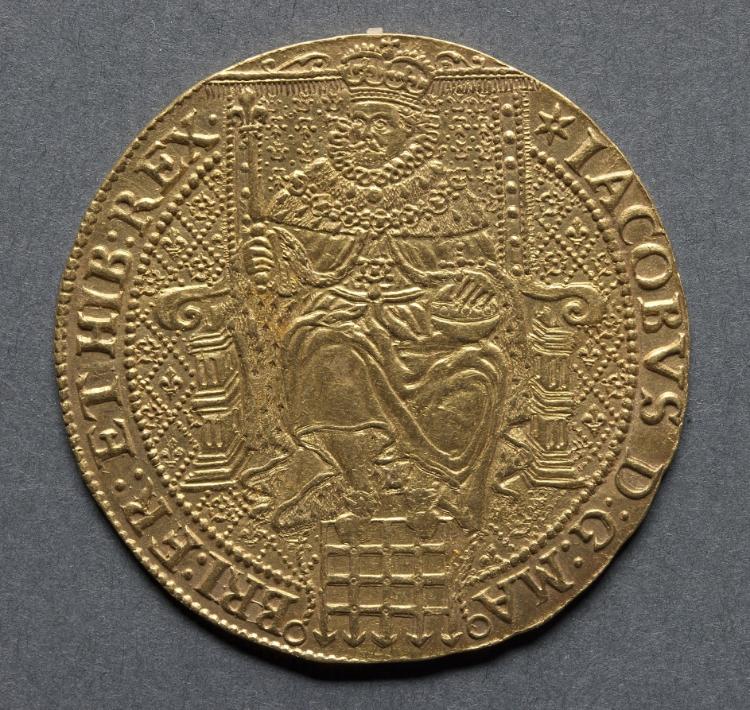
Cleveland Museum of Art
modern coins
Rose Ryal: James I (obverse); Shield of Arms (Cleveland Museum of Art 1969.190)
1619–20
This gold coin comes from the third period (1619–25) of coinage of King James I of England and features a crowned shield surrounded by roses and lions on the reverse. This is the last medieval design of the king enthroned, an excellent example of the fine designs that the ancient craftsmen managed to produce on hand…
Partial type record
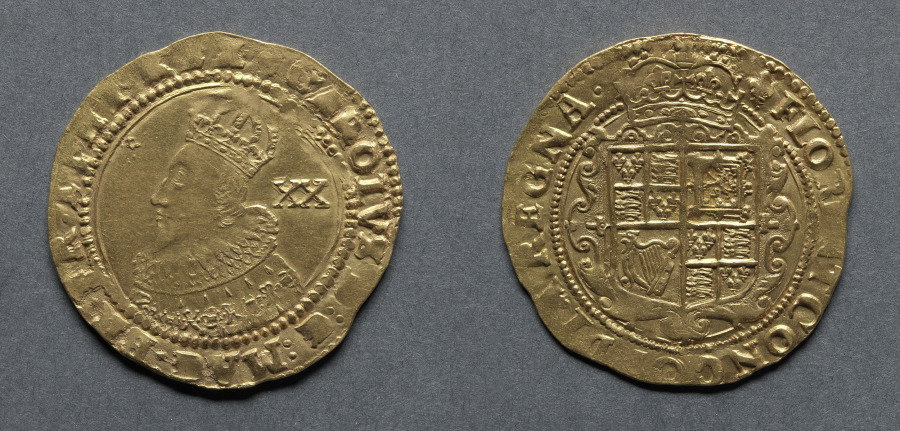
Cleveland Museum of Art
modern coins
Unite: Charles I (obverse); Crowned Shield (Cleveland Museum of Art 1969.192)
1625
After ascending to the throne, Charles I ordered that the coinage should remain the same types and denominations as that of James I. Throughout all the troubles of his reign he did not alter the value of the gold coinage. Until the English Civil War started in 1642, the king's authority continued to rule the Tower m…
Partial type record
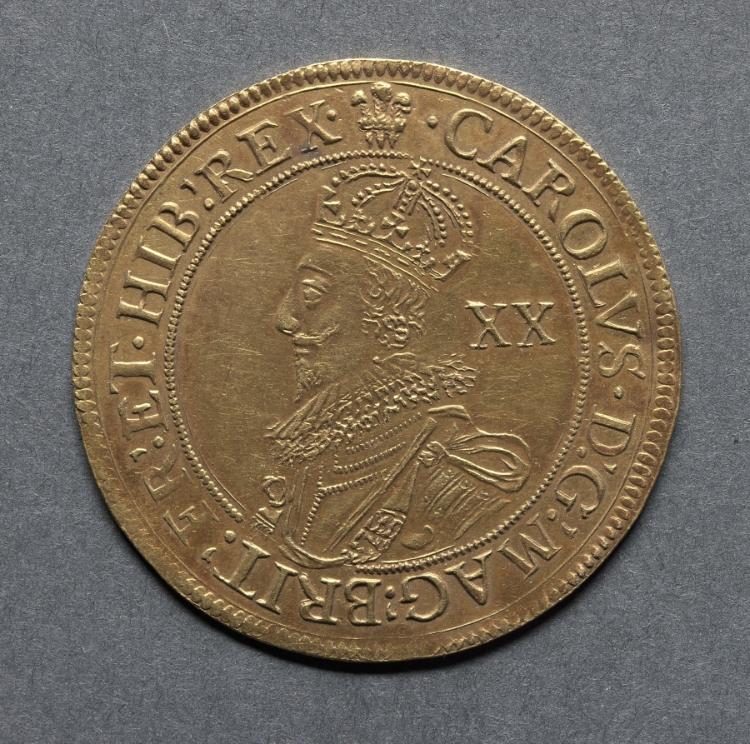
Cleveland Museum of Art
modern coins
Unite: Charles I (obverse); Crowned Shield (Cleveland Museum of Art 1969.193)
1630–1631
When compared with the Charles I Unite struck in 1625 ( 1969.192 ), the finer work and clarity of detail in this work is remarkable. This coin and others of the same period were likely struck by the same form of mechanical process, although this was probably struck as a proof and not meant for circulation. Cleveland…
Partial type record
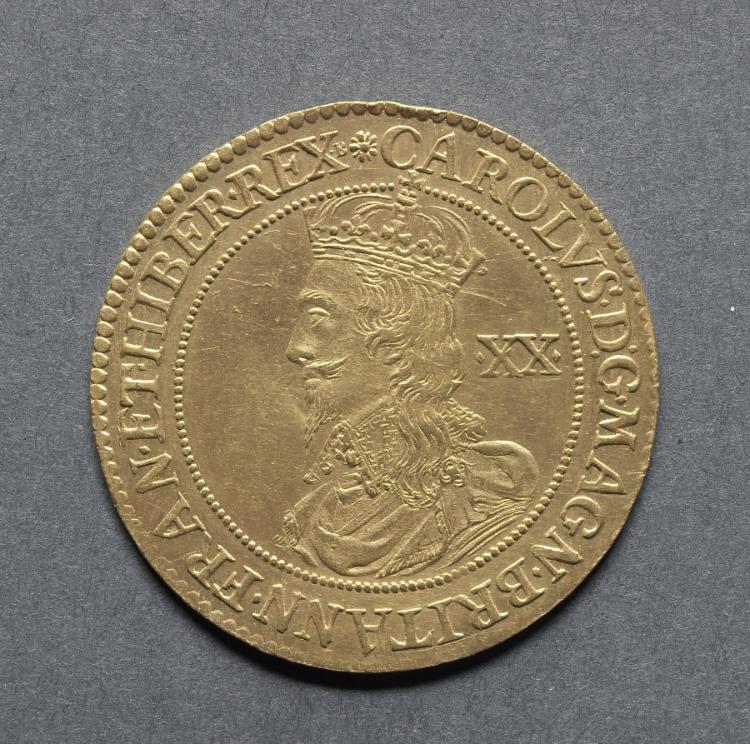
Cleveland Museum of Art
modern coins
Unite: Charles I (obverse); Crowned Shield (Cleveland Museum of Art 1969.194)
1631–32
In 1625 Nicholas Briot traveled from Paris and obtained employment in England. In 1628 he was commissioned to design portraits and in 1631 records show that he was working at the Tower Mint. On his first appointment he was authorized to install machines for striking medals. He was formally empowered on February 11,…
Partial type record
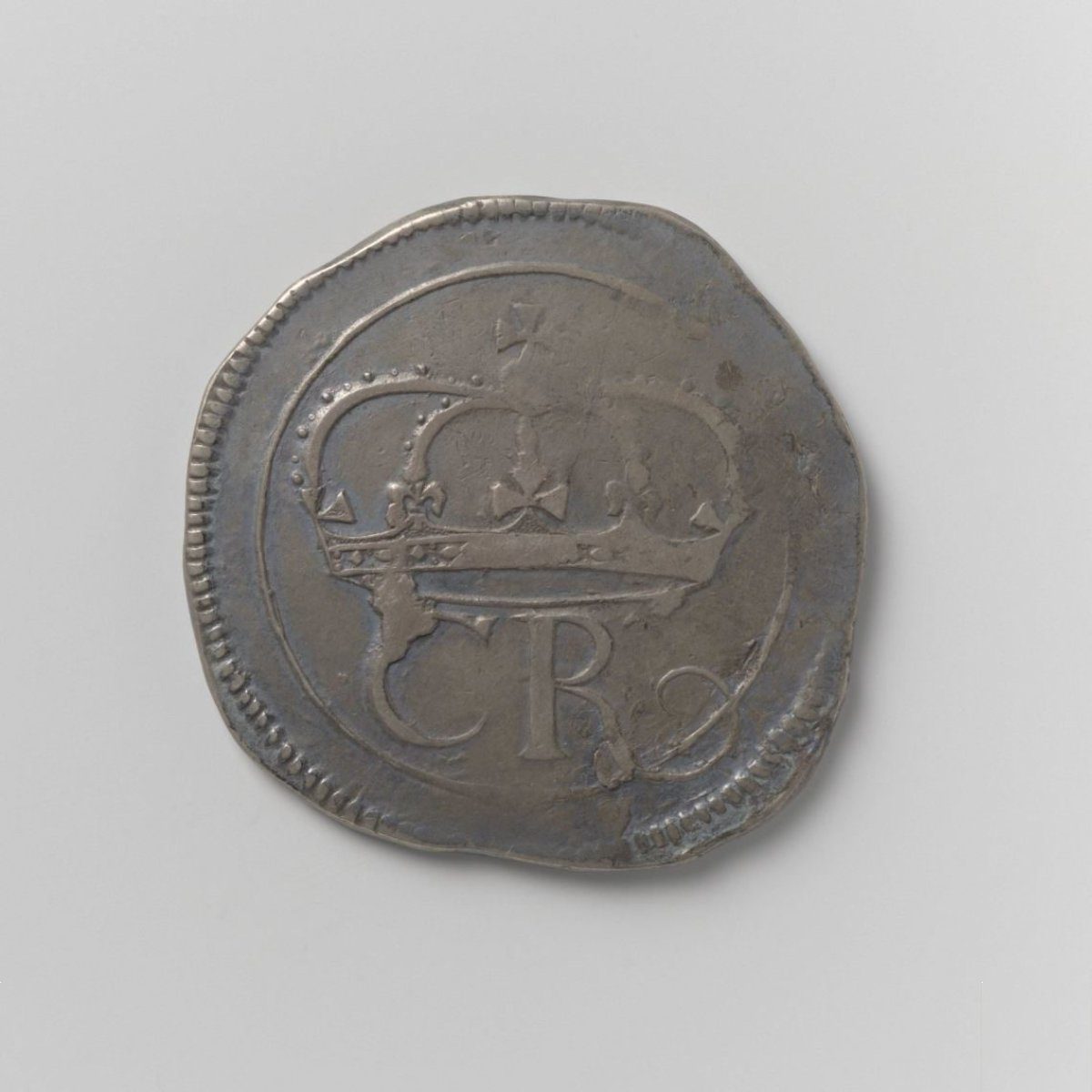
Rijksmuseum, Amsterdam
modern coins
Five shillings, emergency coin of Charles I, King of England, struck in Ormonde from silver provided by the inhabitants
1643
Nearly round silver emergency coin. Obverse: crown above the letters C and R within a beaded rim. Reverse: value indication (five shillings): Roman numeral V beneath the letter S within a beaded rim. Crown. The Rijksmuseum, Amsterdam, holds this object as NG-VG-4-300; its record gives material recorded as silver (me…
Partial type record
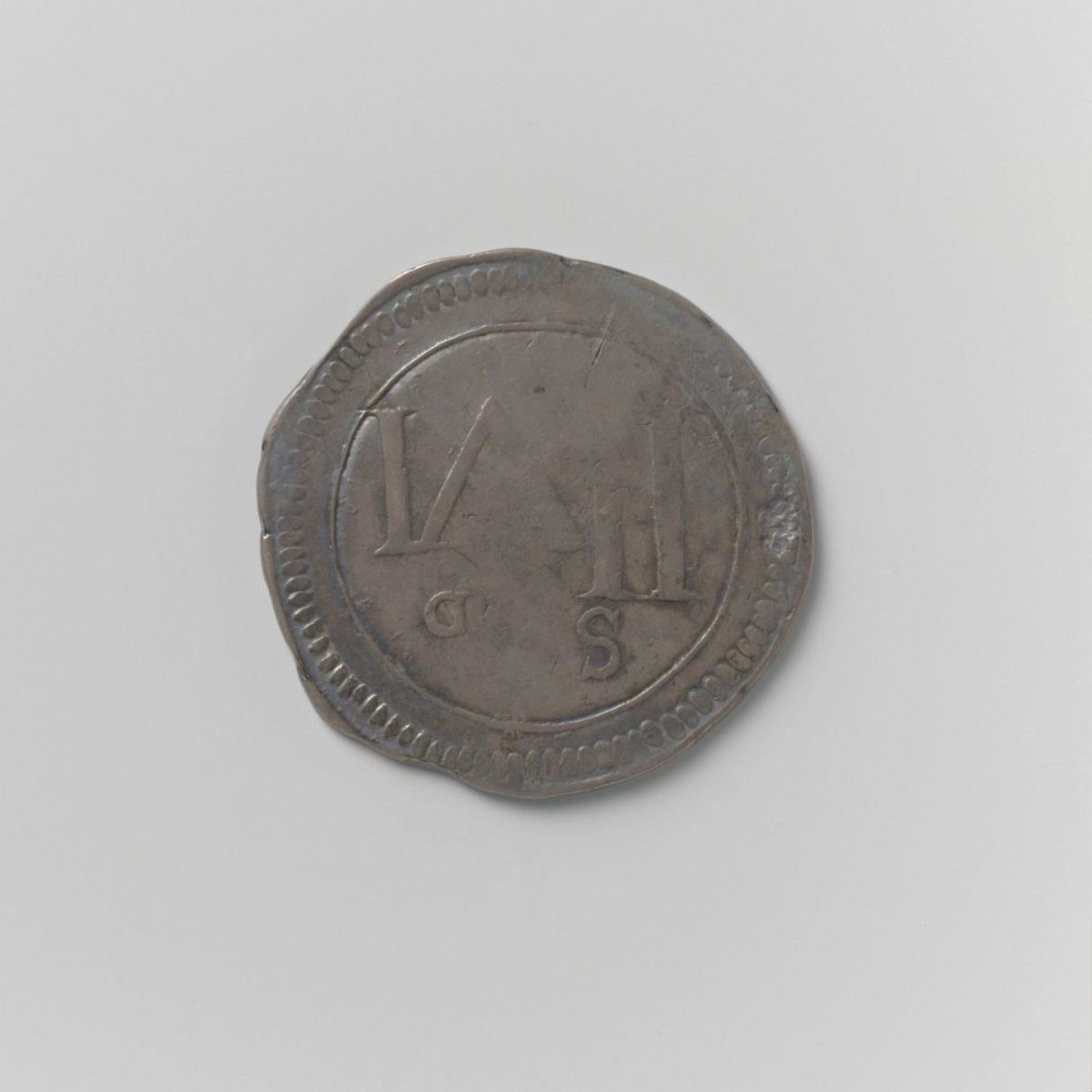
Rijksmuseum, Amsterdam
modern coins
Half crown, emergency coin of Charles I, King of England, struck at Ormond from silver contributed by the residents
1643
Nearly round emergency coin. Obverse: crown above the letters C and R within a beaded border. Reverse: denomination (2 shillings, six pence), Roman numerals II and VI beneath the letters S and D within a beaded border. The Rijksmuseum, Amsterdam, holds this object as NG-VG-4-301; its record gives material recorded a…
Partial type record
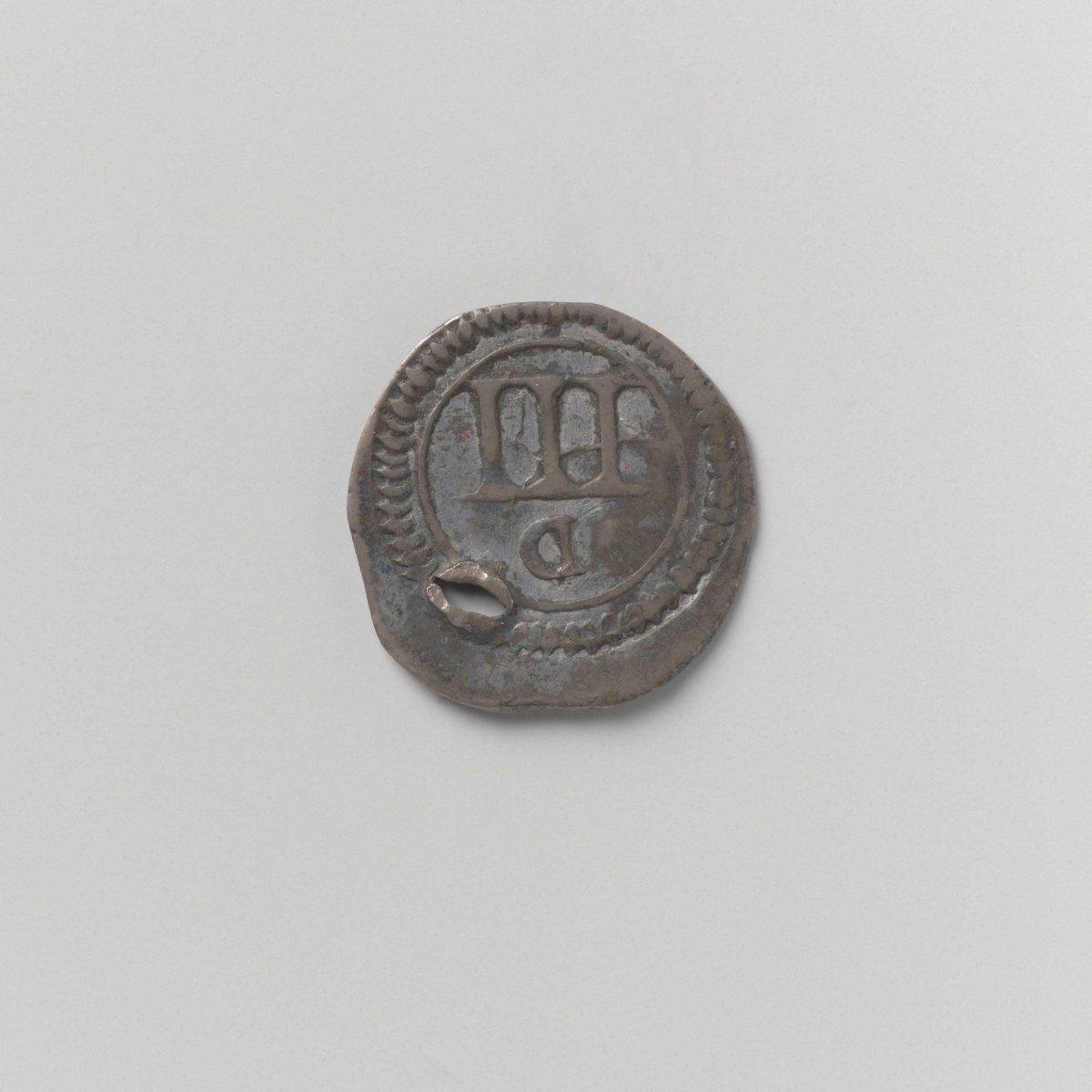
Rijksmuseum, Amsterdam
modern coins
Three pence, emergency coin of Charles I, King of England, struck at Ormond from silver contributed by the residents
1643
Emergency coin pierced with a hole. Obverse: crown above the letters C and R within a beaded border. Reverse: denomination (three pence): Roman numeral III beneath the letter D within a beaded border. The Rijksmuseum, Amsterdam, holds this object as NG-VG-4-308; its record gives material recorded as silver (metal);…
Partial type record
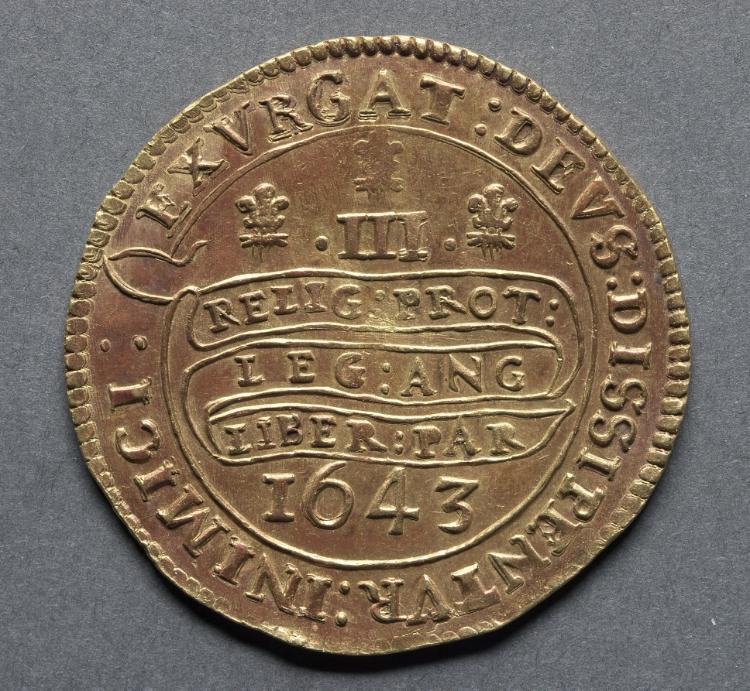
Cleveland Museum of Art
modern coins
Triple Unite or Three Pound Piece: Charles I (obverse); Declaration on Scroll (Cleveland Museum of Art 1969.195)
1643
When the Civil War or Great Rebellion started in 1642, Charles I, having raised his standard at Nottingham on August 22, 1642, fought his way south through the battles of Edgehill and Brentford, but failing to enter London he finally set up his headquarters at Christ Church College, Oxford. At Wellington, Shropshire…
Partial type record
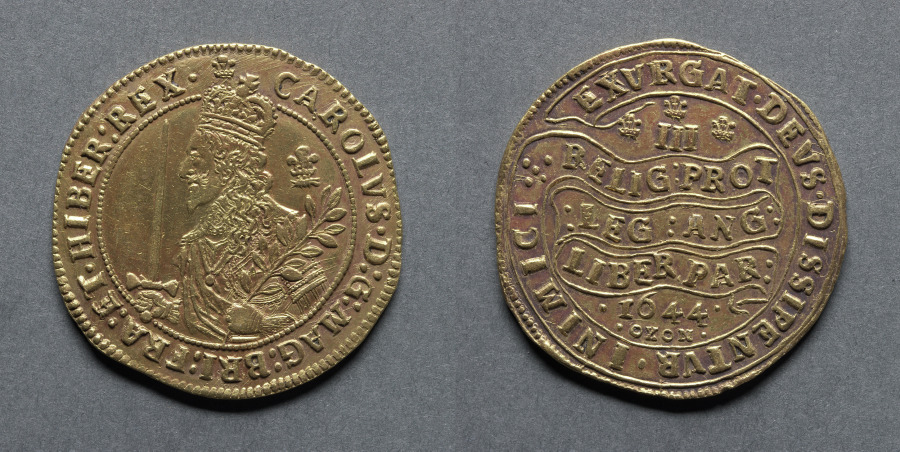
Cleveland Museum of Art
modern coins
Triple Unite or Three Pound Piece: Charles I (obverse); Declaration on Scroll (Cleveland Museum of Art 1969.196)
1644
This Oxford Triple Unite is struck on a slightly smaller flan or planchet than 1969.195. Until his capture the King's headquarters remained at Oxford, and the OXON below the date denotes the place of striking. The king is shown at half length and is crowned. He holds a sword and olive branch with a plume behind him.…
Partial type record
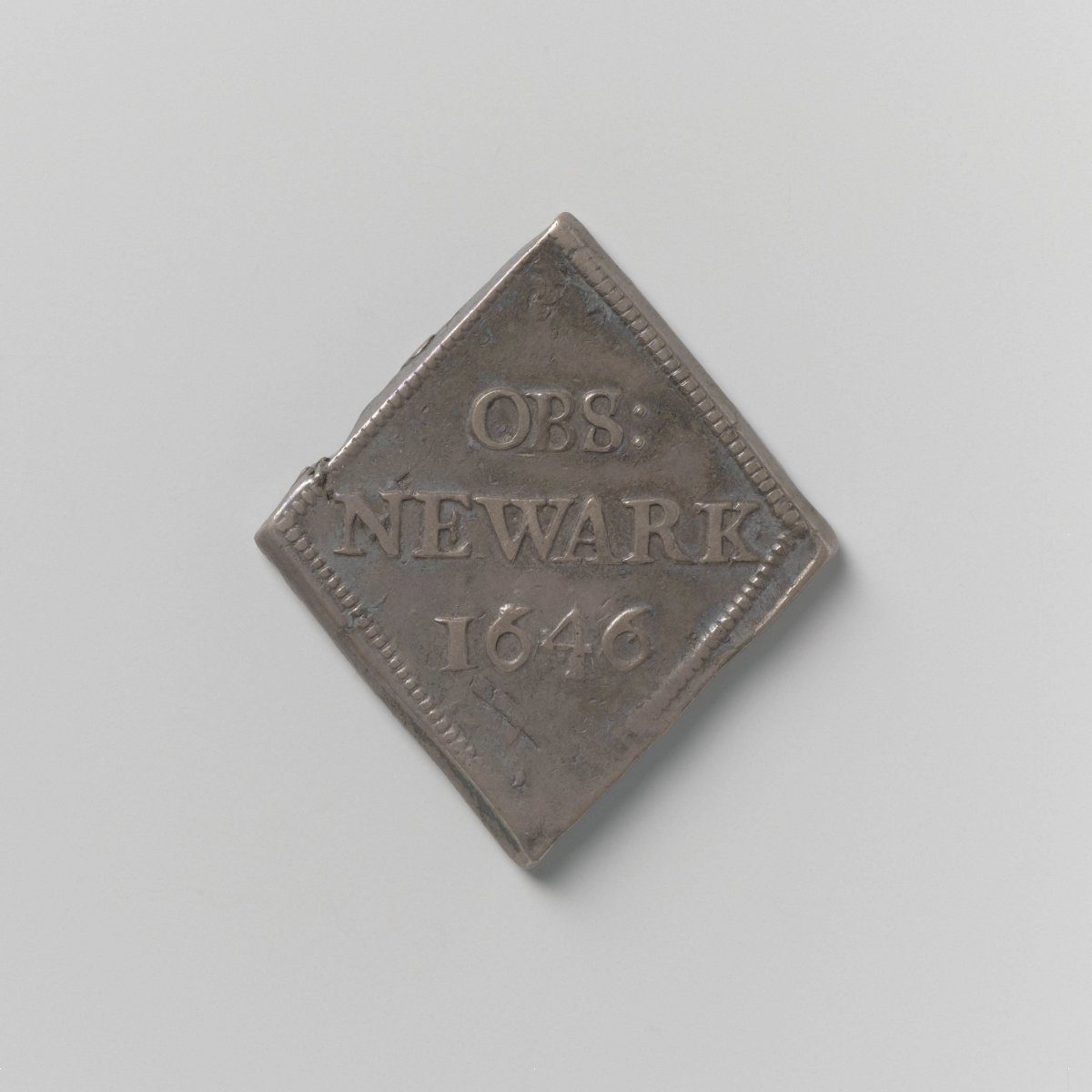
Rijksmuseum, Amsterdam
modern coins
Half crown; thirty pence, emergency coin from Newark-on-Trent, struck during the siege by Parliamentarians
1646
Lozenge-shaped emergency coin. Obverse: crown between the letters C and R above the Roman numeral XXX. Reverse: inscription. The Rijksmuseum, Amsterdam, holds this object as NG-VG-4-296; its record gives material recorded as silver (metal); technique striking (metalworking); measurements height 3.6 cm x width 3.2 cm…
Partial type record
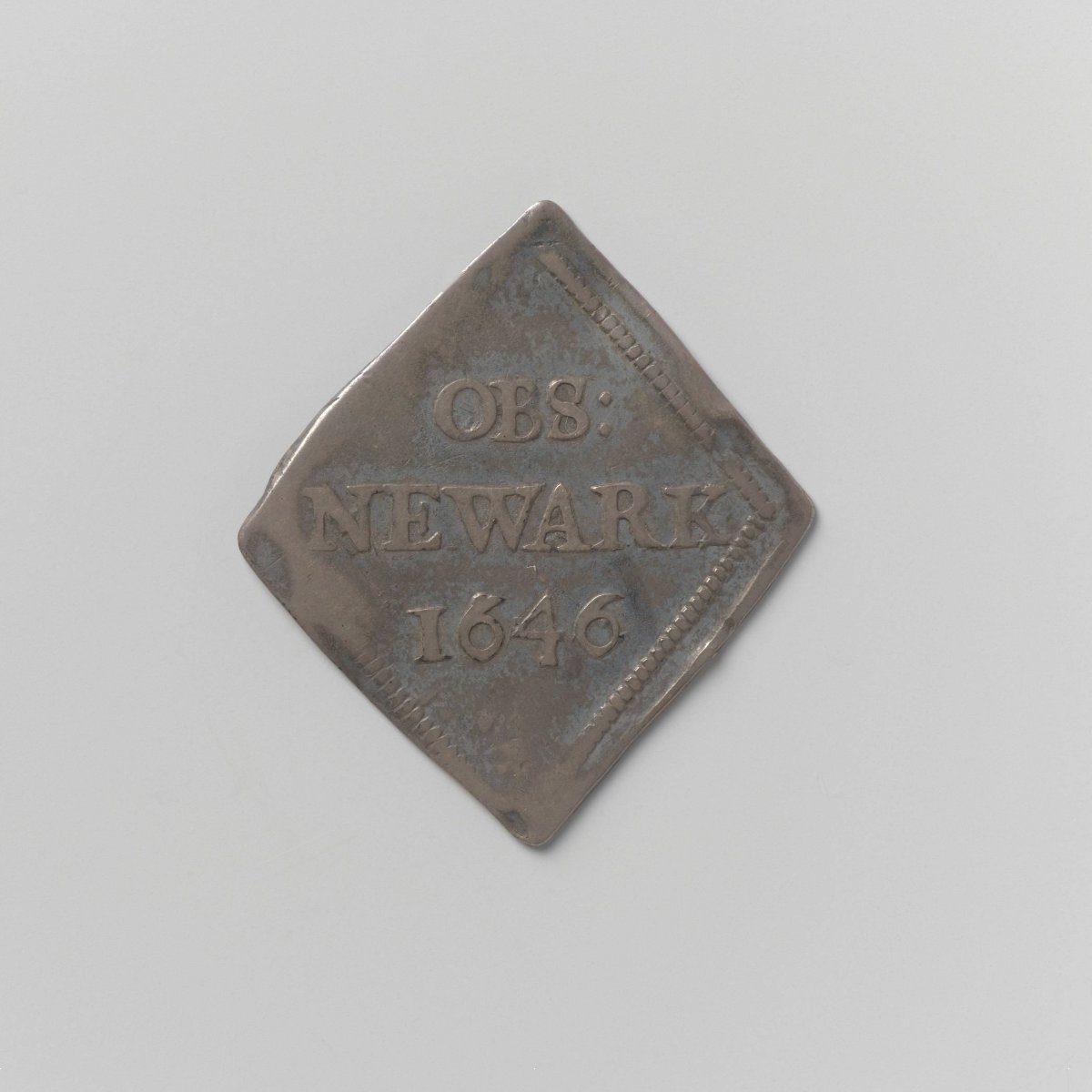
Rijksmuseum, Amsterdam
modern coins
Nine pence, siege coin from Newark-on-Trent, struck during the siege by Parliamentarians
1646
Lozenge-shaped siege coin. Obverse: crown between the letters C and R above the Roman numeral IX. Reverse: inscription. Nine pence. The Rijksmuseum, Amsterdam, holds this object as NG-VG-4-298; its record gives material recorded as silver (metal); technique striking (metalworking); measurements height 3.6 cm x width…
Partial type record
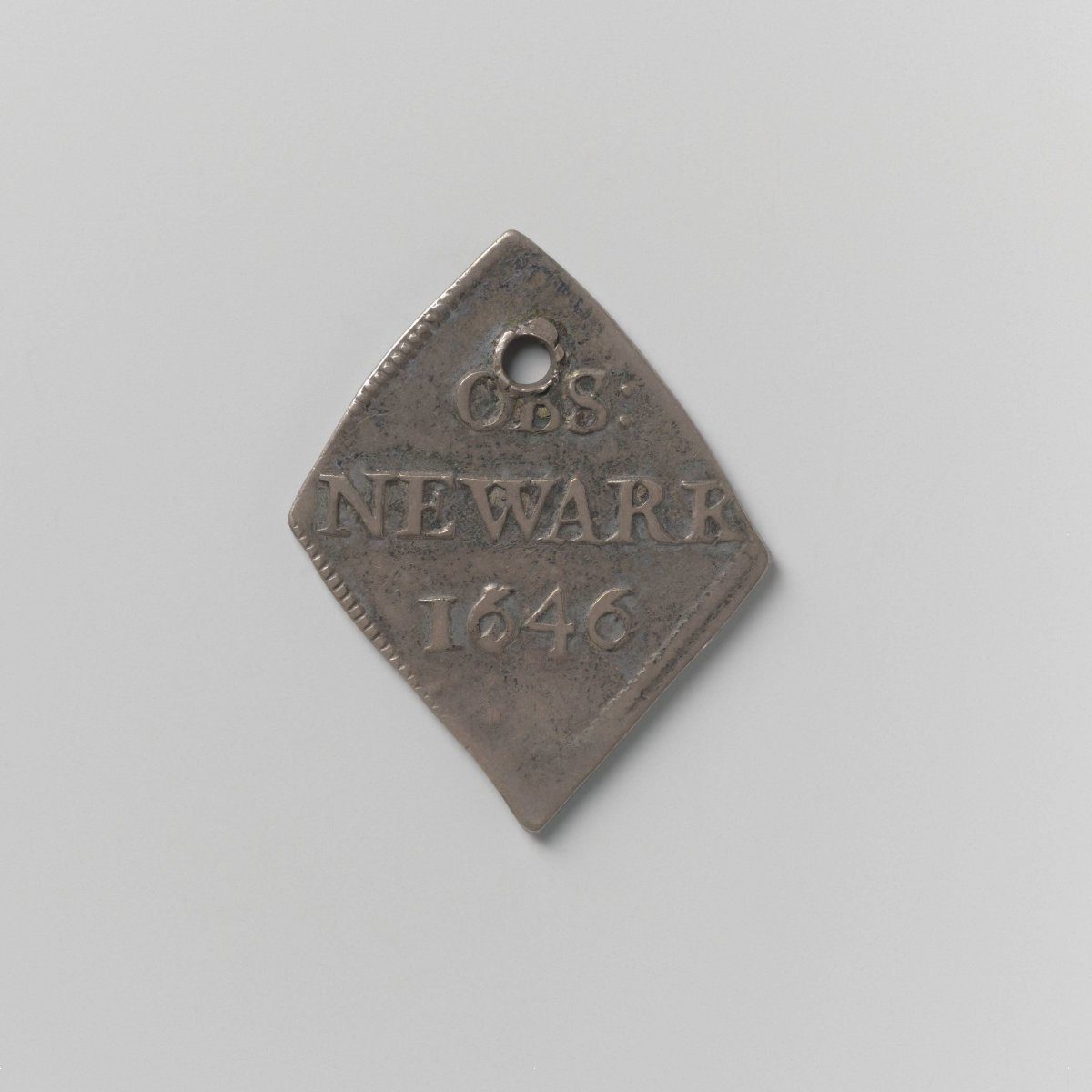
Rijksmuseum, Amsterdam
modern coins
Shilling; twelve pence, emergency coin from Newark-on-Trent, struck during the siege by Parliamentarians
1646
Lozenge-shaped emergency coin pierced with a hole. Obverse: crown between the letters C and R above the Roman numeral XII. Reverse: inscription. The Rijksmuseum, Amsterdam, holds this object as NG-VG-4-295; its record gives material recorded as silver (metal); technique striking (metalworking); measurements height 3…
Partial type record
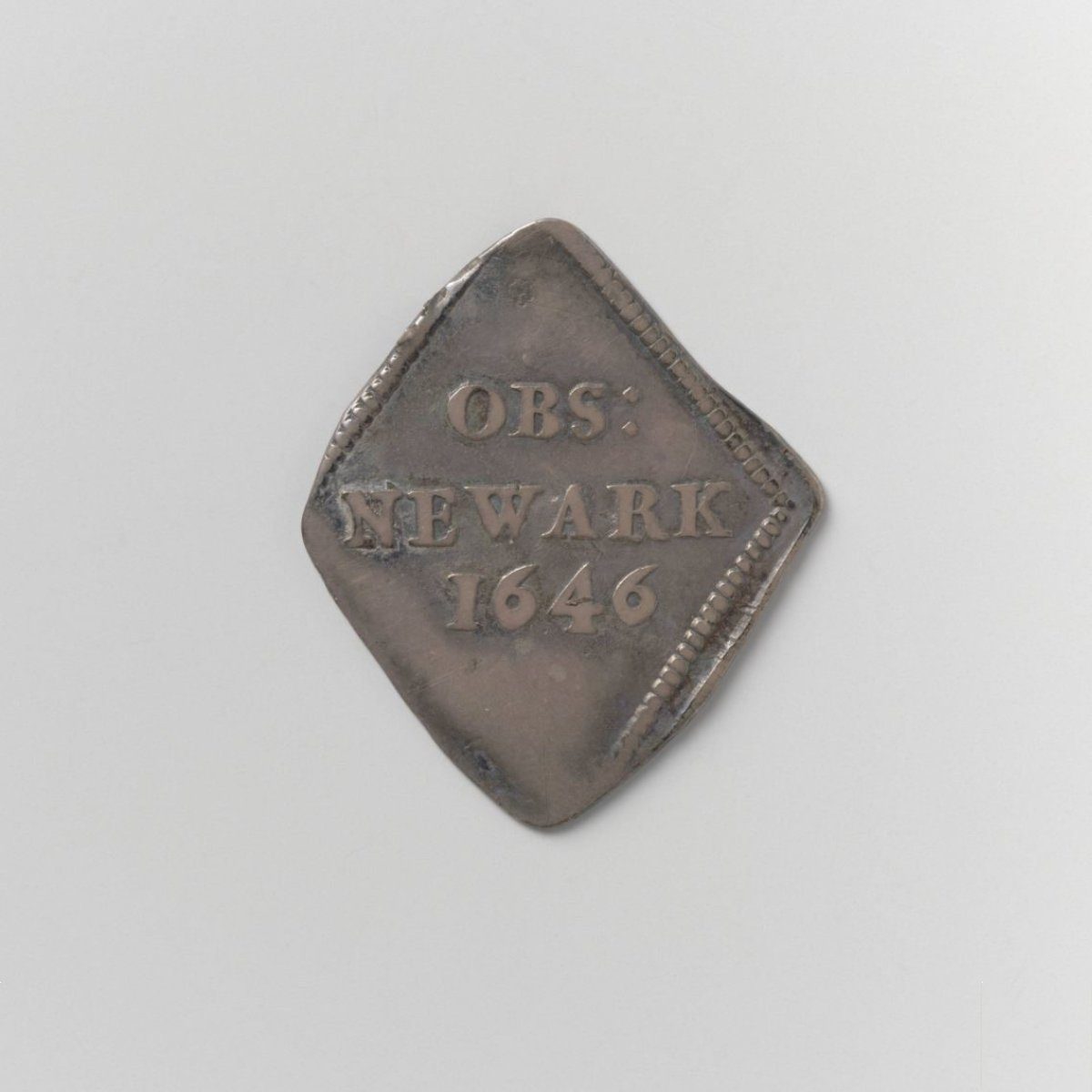
Rijksmuseum, Amsterdam
modern coins
Six pence, emergency coin from Newark-on-Trent, struck during the siege by Parliamentarians
1646
Lozenge-shaped emergency coin. Obverse: crown between the letters C and R above the Roman numeral VI. Reverse: inscription. The Rijksmuseum, Amsterdam, holds this object as NG-VG-4-299; its record gives material recorded as silver (metal); technique striking (metalworking); measurements height 2.8 cm x width 2.4 cm…
Partial type record
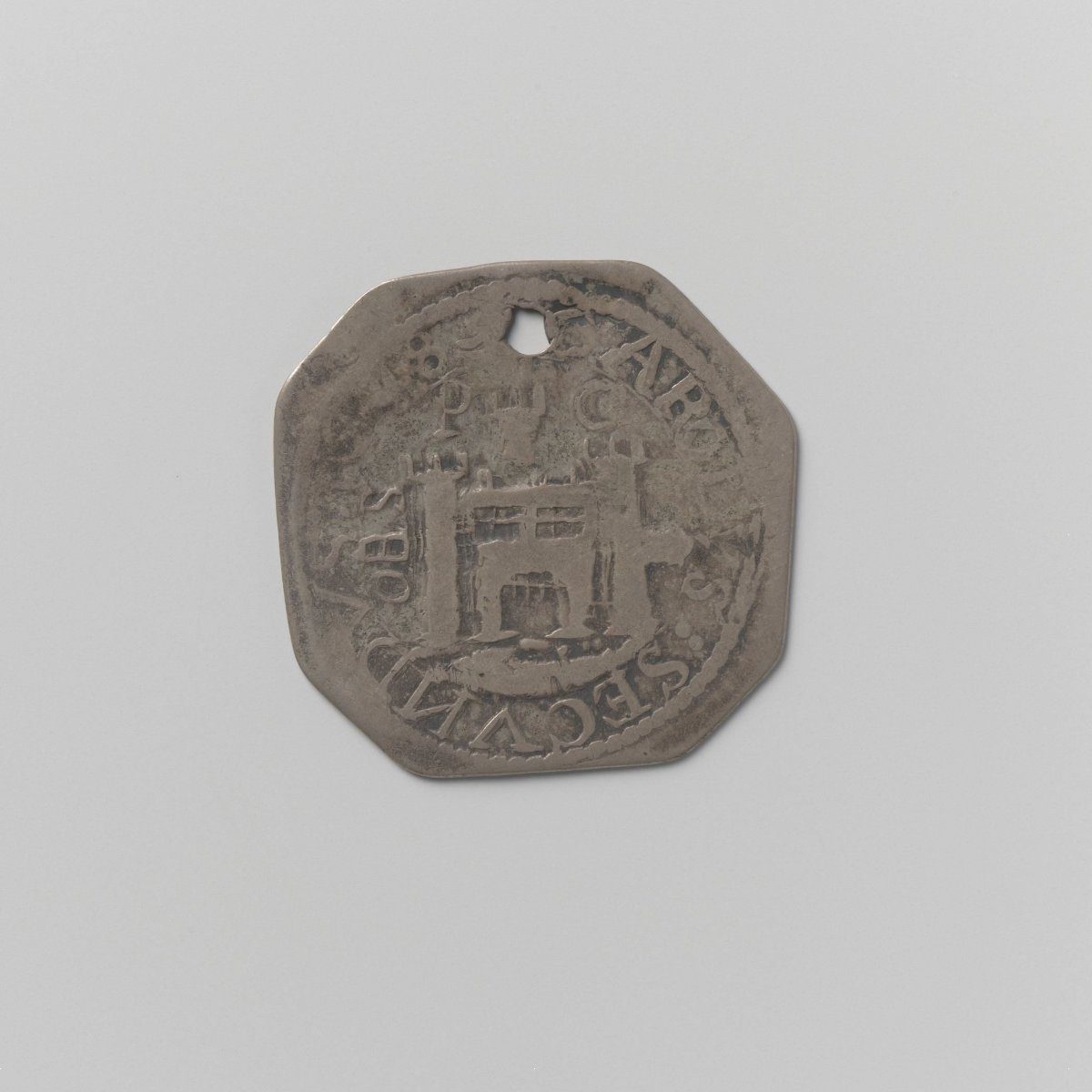
Rijksmuseum, Amsterdam
modern coins
Shilling; twelve pence, emergency coin from Pontefract, from the siege by Oliver Cromwell
1648
Octagonal emergency coin with a hole in it. Obverse: in a circular punch: crown above letters C and R within circumscription and beaded rim. Reverse: castle with three towers; on the upper tower a flag between letters P and C; to the right of the castle an inscription, to the left the barrel of a cannon within circu…
Partial type record
Browse other historical issuers and makers in the Atlas, or read how attributions are made in the editorial method.