Small objects, many layers of evidence
Buttons and thimbles are among the most numerous small objects in collections, and that abundance makes careful description more important, not less. A single button can combine a face material, a mount, a shank or holes and a backmark, and each layer may come from a different workshop. Start a record with what you can see and measure: overall diameter or height, the materials of each part, how the parts are joined and any lettering. Leave attribution until the observations are written down.
Orbis separates a type entry, which describes a recognisable kind of object, from an individual museum example. When your piece resembles a published example, record the resemblance and the features that match, and keep any differences visible. A shared design does not prove a shared maker, date or place of manufacture.
Reference: Editorial methodology
Faces, mounts and the trade between makers
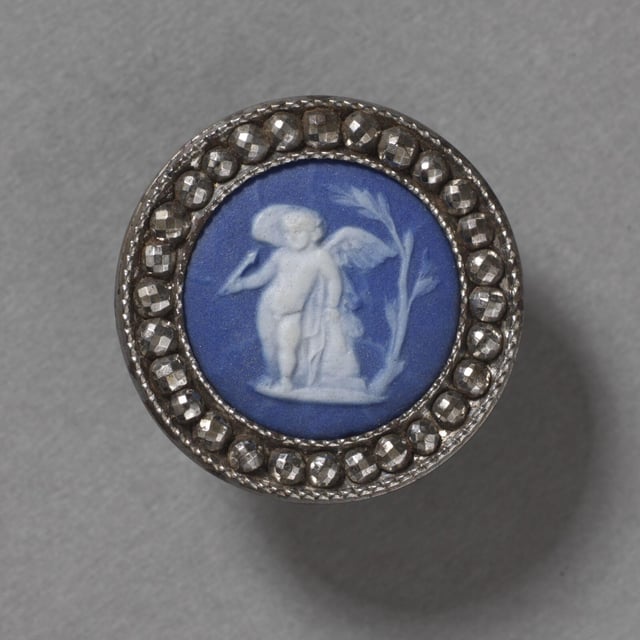
Decorative buttons were often assembled from parts made by different trades. The V&A record for a Wedgwood jasper button explains that Wedgwood sold small quantities of steel-mounted medallions in London, but that most were mounted and sold by others. A ceramic face from a known factory therefore does not identify who made the finished button. Record the face and the mount as separate observations, and attribute each only where a mark or a cited source supports it.
The same caution applies to glass, enamel, horn, shell, pressed metal and plastics. Describe the visible material in plain words and say how you identified it. Testing by heat, solvents or scratching can destroy evidence and should not be used on a collection object; if a material cannot be confirmed safely, record it as unconfirmed.
Reference: V&A: Button, Josiah Wedgwood and Sons, ca. 1785–1800 (museum record)
Sets, studs and how buttons were worn
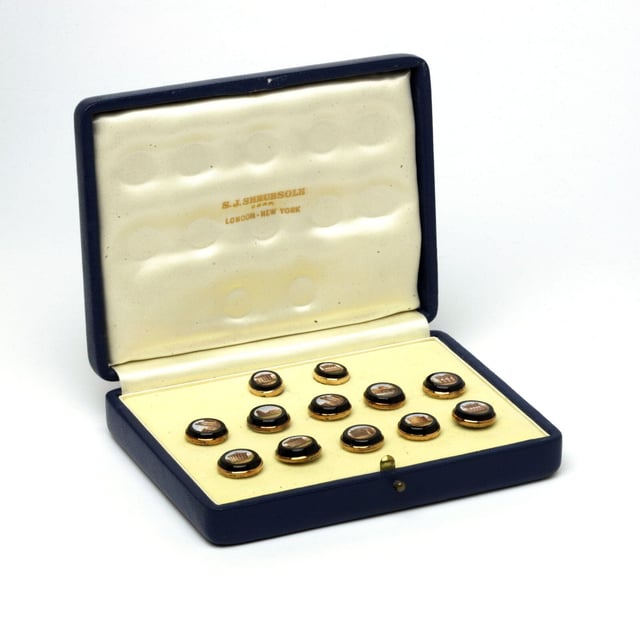
Many buttons survive as sets, and the set is itself evidence. The V&A's micromosaic example from Rome is a set of ten buttons and two studs, which the museum relates to a gentleman's waistcoat and dress shirt. Count the pieces, note size differences within the set and record whether all pieces share one construction. A set that has been broken up loses information that a single button cannot replace.
Buttons on a card, in a box or still attached to a garment carry context that loose buttons do not. Keep original cards, boxes and labels with the buttons and photograph the arrangement before anything is removed. If a card or garment label names a retailer, transcribe it exactly; a retailer is not necessarily the manufacturer.
Reference: V&A: Set of micromosaic buttons and studs, Rome, ca. 1850 (museum record)
Backmarks and thimble marks are read, not assumed
Backmarks on buttons and stamped marks on thimbles may name a maker, a retailer, a quality description or a size. Transcribe the wording and symbols exactly, including partial or worn letters, and note where the mark sits. Do not complete a damaged mark from memory or from a list of known makers; record the legible part and leave the rest open.
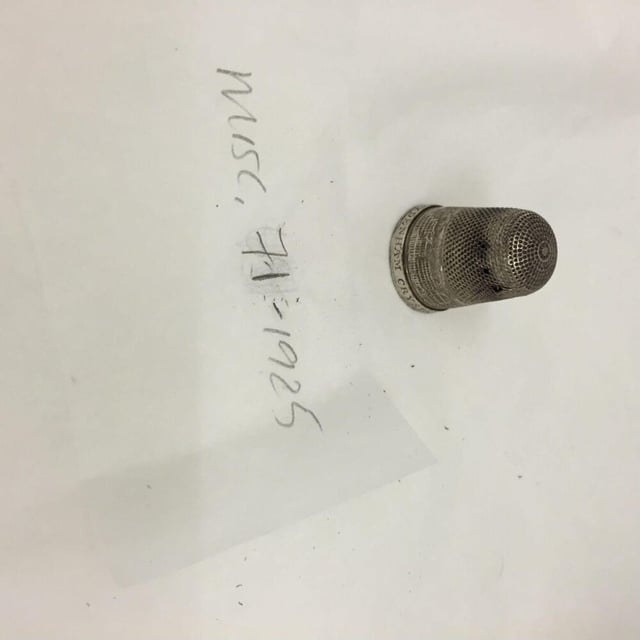
Hallmarks on silver thimbles belong to formal marking systems that differ between countries and periods. Record each punch separately and cite the reference used to read it. A thimble with no visible marks may still be silver, and a marked one may have been altered or repaired; the record should say what was examined rather than what is expected.
Reference: National Button Society
Souvenirs, inscriptions and the date of an event
Thimbles and buttons were often made to commemorate exhibitions, institutions or events. An inscription naming an event dates the subject, not necessarily the object: souvenirs could be sold before, during and after the occasion. Keep the inscription, the event date and any documented production date as separate fields, as Orbis does for its own entries.
Sewing tools often survive with cases, etuis or work boxes. Record whether the thimble fits a fitted space in a case and whether the case contents look original, but do not assume that every tool in a case was made together. Each object can carry its own marks and history.
Reference: Editorial methodology
Handling, storage and a durable record
Handle small metal objects with clean, dry hands or nitrile gloves and support them over a padded surface. Avoid polishing: abrasive cleaning removes surface detail, gilding and patina, and can erase the very marks used for identification. Store buttons and thimbles in inert, labelled containers that stop them rubbing against each other, and keep sets and their cards together.
Photograph faces and backs at a known scale, keep the original files and note the date of examination. The live figures below show how many button entries Orbis publishes; they count this catalogue's holdings, not how many buttons or thimbles were made or survive.
Reference: National Park Service: Museum Handbook