1. The issuer is a historical authority, not a modern map label
Every coin, banknote, stamp or official document was issued under some authority: a ruler, a city, a colonial administration, a central bank, a postal service or an occupying power. That authority existed at a particular time and often under a name that no longer appears on modern maps. Recording a Sasanian drachm as Iranian, or an Austro-Hungarian note as simply Austrian, may feel convenient for search, but it replaces the documented relationship with an anachronism. Orbis keeps objects under the historical issuing entity and treats modern countries as a separate, optional geographic context.
Distinguish the issuer from other places attached to an object. A mint location, the place a note was printed, the region where a coin was found and the museum that now holds it are separate facts. A printer in one country may have produced notes for another. A find spot shows where an object ended up, not who authorised it. When a source supplies only a broad culture or region, quote that wording and leave the precise authority as research required rather than choosing the most likely candidate.
Reference: Editorial methodology
2. Successor states and changing borders
Empires dissolved, protectorates became independent and federations split. A successor state may claim continuity, adopt a predecessor's currency for a period or overprint earlier stamps. Those relationships are part of the history, and each should be described as documented. They do not justify moving earlier objects under the later authority. An overprinted stamp belongs to the authority that applied the overprint, while the underlying stamp retains its own issuer; recording both prevents a single label from hiding a transition.
Transitional issues deserve particular care. Provisional notes, emergency money and overprints were often produced quickly and documented unevenly. Record the authority named on the object, the authority named in your source and any disagreement between them. If a catalogue groups an issue under a later state for convenience, note that convention without adopting it silently. A clear issuer history makes transitional material easier to find, not harder, because users can follow the documented sequence of authorities.
Reference: Editorial methodology
3. Identify what kind of date you are reading
A number on an object is not automatically its year of manufacture. Coins may carry a date that was retained across several years of striking. Banknotes can show a date of authorisation long before or after printing. Stamps rarely carry dates at all, while postmarks record use rather than issue. Medals commemorate events that may precede their production. Before recording any date, decide its role: issue, authorisation, commemoration, use, manufacture, acquisition or estimate, and label it accordingly.
Where an object has no date, do not supply one from a familiar design. Museum records often give a production range or period name such as ca. 388–399 CE or Roman Period. Keep that range intact. Narrowing a range because a single year fits a database field produces false precision that later researchers cannot detect. Orbis stores the original wording separately from any normalized range, so both the source text and the searchable value remain visible.
Reference: Editorial methodology
4. Regnal years and ruler-based dating
Many issuers counted years from a ruler's accession rather than from a fixed era. A regnal year identifies a year of a particular reign; converting it requires knowing the accession date and the counting convention the issuer used, which can differ between sources. Some systems count a partial first year, others begin counting at the next new year. Without documentation, a regnal year should be recorded as written, with any conversion attributed to a named reference and presented as a range where conventions differ.
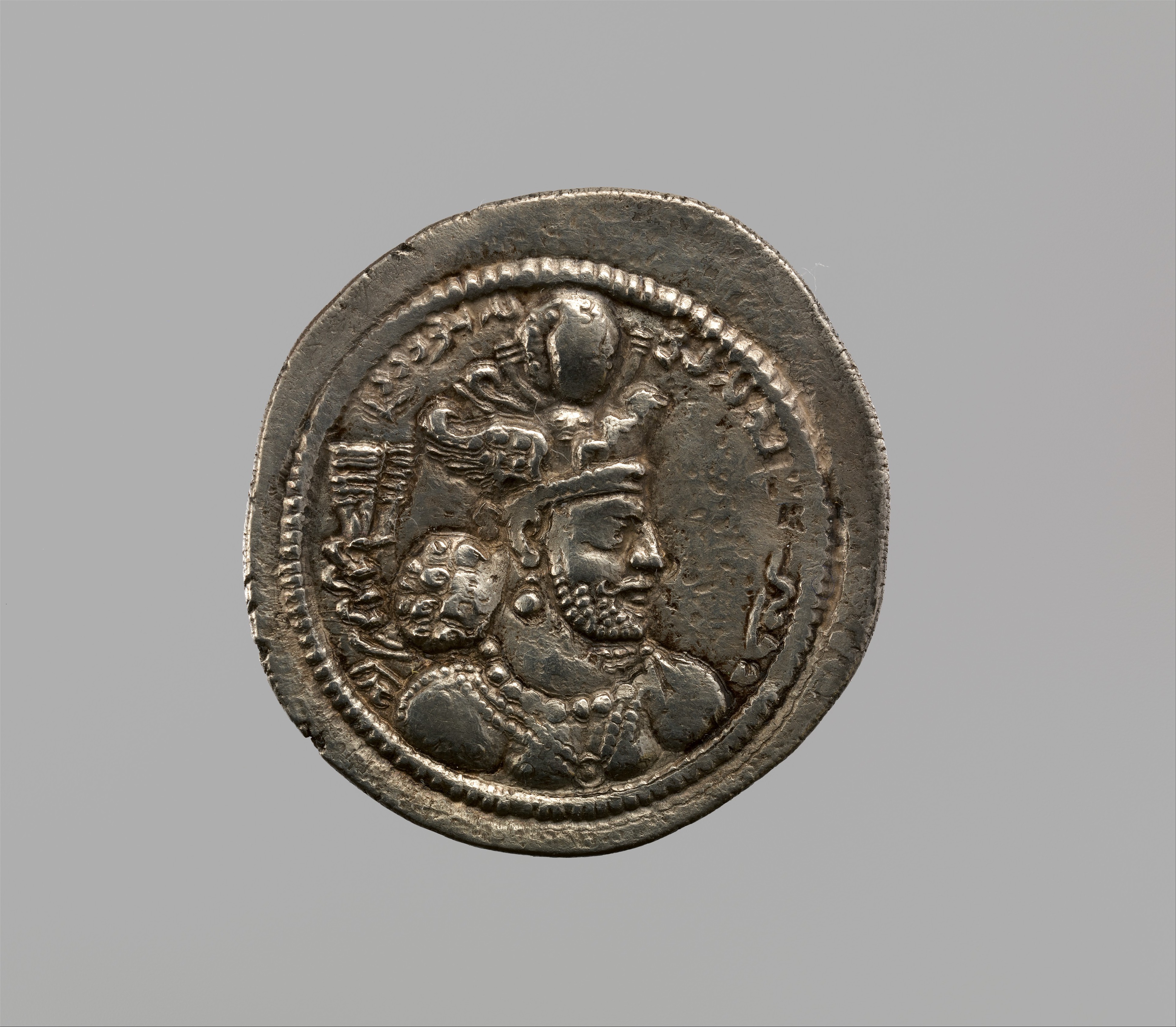
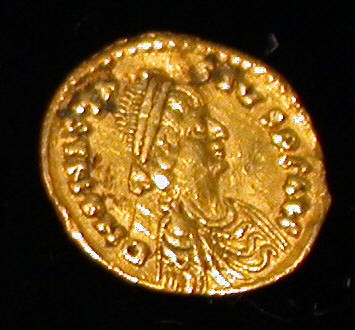
Ruler names themselves need care. Several rulers shared names, numbers and titles, and modern numbering of rulers is a scholarly convention rather than something always shown on the object. Record the inscription as read, the ruler attribution proposed by a source and the basis for it. Where portrait style or titles suggest one ruler but the inscription is illegible, the attribution is a hypothesis. The Sasanian and Byzantine specimens illustrated below show reign-based dating expressed by museums as ranges, not as single years.
Reference: Wikipedia: Regnal year
5. Hijri dates and lunar calendars
The Islamic Hijri calendar is lunar, with years of about 354 or 355 days, so a Hijri year does not align with one Gregorian year. A single Hijri year usually overlaps two Gregorian years. Converting AH 1300 to a single CE year therefore loses information. Record the Hijri date exactly as shown, including the numeral style if relevant, and give the Gregorian equivalent as a range unless the month and day are known. Note whether the numerals were read directly or taken from a source description.
Some issuers combined dates of different kinds: an accession year with a regnal count, or a frozen date retained for many years of production. Others used solar Hijri or other regional calendars. Do not assume that every date in Arabic script follows one convention. Cite the reference that explains the dating system for the specific issuer and period. If two references disagree about how a date should be read, preserve both readings and their sources rather than choosing one.
Reference: Wikipedia: Islamic calendar
6. Era names and other dynastic systems
Japanese era names, Chinese reign titles and similar systems date events from the start of a named era, which may change during a ruler's reign or for reasons unrelated to succession. An object dated to a year of an era name needs both the era and the year recorded. Converting it requires a reliable table and attention to the date on which the era changed, because the first and last years of an era can be partial. Where only the era is known, record the full span of that era.
Other calendars appear on collectibles too, including the Buddhist era, the Ethiopian calendar, the Hebrew calendar and various revolutionary or national calendars. The principle is the same: original form first, normalized equivalent second, method stated. A search index can use the normalized value for filtering, but the record page should show what the object or source actually says. Never present a converted value as if it were the inscription.
Reference: Wikipedia: Japanese era name
7. Normalizing dates without hiding uncertainty
Normalization makes records comparable: a researcher can filter all objects issued between 1850 and 1900 regardless of their original calendar. To be honest, normalized values should be ranges with explicit start and end years, and the method should be recorded. A circa date needs a stated tolerance or a source-provided range; inventing a tolerance is no better than inventing a year. When a source supplies only a century or a period, normalize to that span and flag the record for research rather than picking a midpoint.
Keep calendars and conversions auditable. If a conversion depends on a reference table, cite it. If you corrected a previously stored value, keep the earlier value in the record's history with the reason for the change. Users should be able to see whether a date range reflects the object's inscription, a museum's estimate or an editorial conversion, because those carry different levels of confidence.
Reference: Editorial methodology
8. When sources disagree about dates or issuers
Conflicts are common. A museum's structured date field may differ from its own descriptive text; two catalogues may assign a coin to different rulers; a dealer's listing may repeat an outdated attribution. Orbis records conflicting statements and explains them instead of silently choosing the most convenient one. For each competing claim, preserve its source, its wording and, where available, the evidence it relies on. A newer source is not automatically correct, and neither is the most frequently repeated one.
Mark a conflicted record's confidence accordingly. Disputed is appropriate when credible sources disagree and the question remains open; Documented may still apply to other fields of the same record. Resolve a conflict only when evidence, such as a legible inscription or a primary production record, supports one reading over the other, and explain the resolution. Leaving a well-described conflict visible is more useful than a clean record built on an unrecorded choice.
Reference: Editorial methodology
9. Reading the inscription before the reference
Transcribe what you can see before consulting a catalogue. Note the script, language and any abbreviations, and indicate illegible or uncertain characters rather than completing them from memory. Photograph inscriptions under even, low-angle light so that wear and strike weakness are recorded. Your transcription is evidence; a catalogue's normalized legend is an interpretation. Comparing the two often reveals whether a proposed attribution actually fits the specimen.
Do not infer the issuing authority from language or script alone. Many authorities issued material in more than one language, and some scripts were used across very different states and periods. Combine the inscription with design elements, denominations and documented references. If the evidence remains ambiguous, the record should say so: an honest research required notice is more valuable to collectors than a confident but unsupported issuer name.
Reference: Editorial methodology
10. A practical recording template
For each object, record: the issuing authority as documented, with the source; any related authorities such as mint, printer or overprinting authority, labelled by role; the date as inscribed, with calendar and script; the date's role; a normalized range with its method; and any conflicting readings with sources. Add a confidence level for the issuer and the date separately, because one can be well documented while the other remains uncertain.
Revisit the template when new evidence appears. A better photograph, a newly published die study or a museum's revised catalogue entry can change a reading. Keep the earlier version, explain the change and update the confidence level. The aim is a record that another researcher can check line by line, understanding which parts come from the object, which from sources and which from editorial normalization.
Reference: Editorial methodology