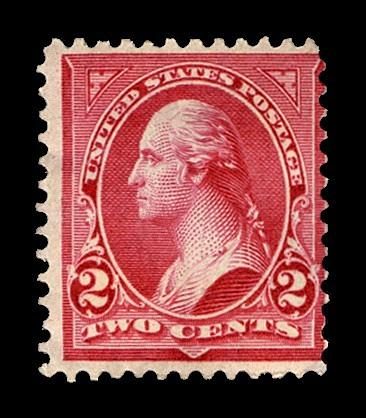
Distinguish what is written from what it means
An inscription is evidence only to the extent that it can actually be read. Begin with a literal transcription, keeping the original alphabet, punctuation and line arrangement where possible. Make a separate field for an expanded reading, translation or proposed attribution. This prevents a familiar ruler’s name from being substituted unconsciously for a worn or incomplete inscription. A record that preserves uncertainty is more useful than a confident but unreproducible guess.
Inspect each face and note where the inscription sits: around a rim, below a device, on a dial, inside a safely accessible case or in a printer’s imprint. Keep the front and back observations distinct. Position can matter as much as the characters themselves. If you rely on a photograph, say so and record its limitations; glare, compression and wear can make one character look like another.
Reference: Portable Antiquities Scheme
Record unreadable characters consistently
Use a clear local convention for gaps and explain it. For example, a question mark may indicate a doubtful visible character, while a bracketed note can state that an area is illegible. These are documentation choices, not a universal scholarly transcription standard. Do not replace missing letters with a plausible expansion in the literal text. Keep the proposed reading beside it and identify the source of that proposal.
Distinguish absence from illegibility. A field that is off-camera has not been examined; a worn field has been examined but cannot be read; a field with no visible mark has no recorded mark in that view. Those statements are not interchangeable. A supposed mint mark concealed under a mount cannot be called absent. If a catalogue distinction depends on an unobserved feature, the identification must remain provisional.
Reference: Portable Antiquities Scheme
Keep the historical issuer intact
The entity that issued an object is not necessarily the modern country where it was found or photographed. A note printed under a former state, a coin struck for an empire and a stamp issued by a colonial administration belong under their historically documented authorities. Record a modern collection location separately. A museum in New York does not make an object American, and the place where a coin was excavated does not necessarily identify its mint.
Names, titles, heraldry, issuing-bank text and printer information can suggest a historical attribution. Compare these clues with a source covering the relevant place and period before normalising an entity name. Where the museum provides only a broad culture or an uncertain geographic description, preserve that wording instead of silently converting it into a precise political claim. An unresolved issuer is a research question, not an empty space that needs an invented answer.
Reference: Editorial methodology
Preserve the date as printed
Copy the date in its original form before adding any normalised date. Some inscriptions use a non-Gregorian calendar, a regnal year or a local dating convention. Record the calendar only if it is supported by a source. A visible numeral is not enough to identify the calendar system. If you make a conversion, state the method and any uncertainty; a year conversion may not establish an exact day or month.
Keep issue date, manufacture date, commemorated date and use date separate. A medal can commemorate an earlier event, and a cancelled stamp records postal use rather than necessarily the printing date. A banknote may carry a printed date associated with authorisation rather than the day that individual note was produced. Do not collapse these roles into a single year merely to simplify sorting or search.
Reference: Editorial methodology
Separate identifiers by their purpose
A museum accession number identifies a particular object in a collection. A serial number usually identifies an individual manufactured object or an element of a numbering system. A calibre identifies a movement design; a watch model names a product or design family. A type catalogue number identifies an entry within a specified reference system. None of these identifiers can automatically substitute for another.
When you copy an identifier, preserve the prefix, punctuation and suffix. Leading zeros or letters may be meaningful. Store the source title or issuing institution beside the identifier so another reader can retrieve it. A photograph displaying an accession label is not evidence that the printed number is an inscription on the historical object. Museum labels, collection marks and later dealer labels must be distinguished from original manufacture or issue marks.
Reference: American Numismatic Society: Online Coins of the Roman Empire
Cite the catalogue edition and context
A short catalogue abbreviation is useful only when the reference is identifiable. Record the full work, author or issuing body, edition or volume, and entry number when known. Some numbering systems reuse numbers in different countries, volumes or issuing authorities. A bare number detached from its context can look precise while pointing to several different objects. If the edition cannot be confirmed, record it as not established.
For Roman Imperial Coinage comparisons, use a documented type record such as OCRE and follow its linked reference rather than assigning a RIC number from visual similarity alone. A portrait, deity or denomination may occur on many related types. Follow the type’s actual legend and other relevant distinctions. An online aggregation is a retrieval aid; keep track of which underlying catalogue and specimen records it cites.
Reference: American Numismatic Society: Online Coins of the Roman Empire
Treat a match as a set of checks
Create a short comparison that lists features shared with the candidate and features that differ or remain unobserved. For coins this may include each legend, device and relevant mark; for banknotes it may include issuer, denomination, printed date and signature combination; for watches it may include case and movement markings. Choose criteria appropriate to the object rather than forcing all fields into one universal checklist.
A commercial lot description can supply a lead, but its reference number should be checked against the named work or an institutional record when possible. Retain the lot link and attribute the claim to the seller if it remains unconfirmed. Multiple websites repeating the same description do not necessarily provide independent evidence. Look for the earliest recoverable source and explain when later pages appear to copy it.
Reference: Editorial methodology
Keep disagreements and revisions visible
If two references assign different numbers or dates, record both with their contexts. A conflict may reflect different editions, differing scope, a variety distinction or an actual disagreement. Do not resolve it by choosing whichever number appears more often in search results. Summarise what each source says and identify the additional evidence needed. A visible conflict is better than false certainty.
Close the research note with the current attribution, its confidence and an explicit list of open questions. Preserve earlier readings where they explain the revision. If a new source changes the issuer or type, date the correction and retain the link to the evidence. The aim is not to create an unchangeable label but to make a comparison that another reader can examine, challenge and improve.
Reference: Editorial methodology