Count the pack before describing it
A pack of cards is a set, and its completeness is the first fact to establish. Count the cards, list any missing or duplicated ones and note extra cards such as jokers, title cards, rule sheets or advertising cards. Record whether a box, wrapper or case survives and whether it appears to belong to this pack. A single card should be catalogued as a single card, with the pack it may belong to treated as a question.
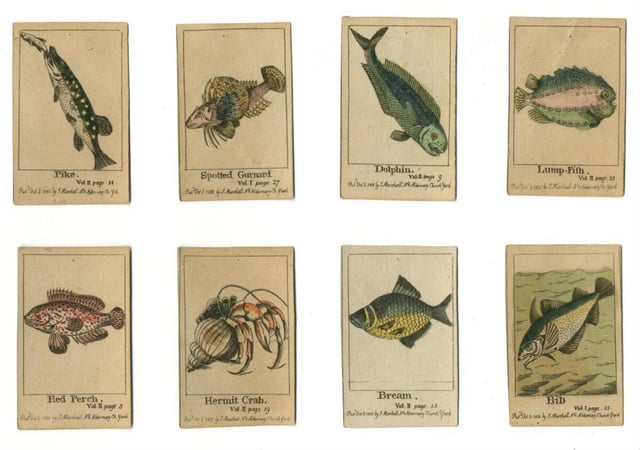
Card games for education or amusement can contain booklets, counters or boards as well as cards. Record every component and its condition, and photograph the contents laid out before anything is separated for storage.
Reference: Editorial methodology
Suit systems and court figures
Different regions used different suit systems and court figures, and these are among the most useful identification features. Describe the suit signs in plain words, the number of court cards per suit and any numbering printed on the cards. Avoid naming a regional pattern unless a cited reference supports the match; similar-looking designs were copied across borders and periods.
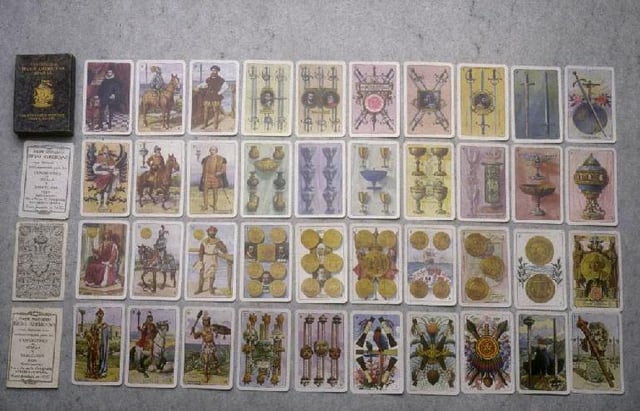
Some packs were designed around a theme, with suits or courts standing for historical figures, places or stories. The deck in the Museum of León attributed to the Fournier workshop, described by the holding institution as made for the 1929 exhibitions in Seville and Barcelona, is an example of a pack whose design carries its own subject. Record such themes from the cards and from the holding institution's description, not from assumption.
Reference: The International Playing-Card Society
Printing methods leave visible evidence
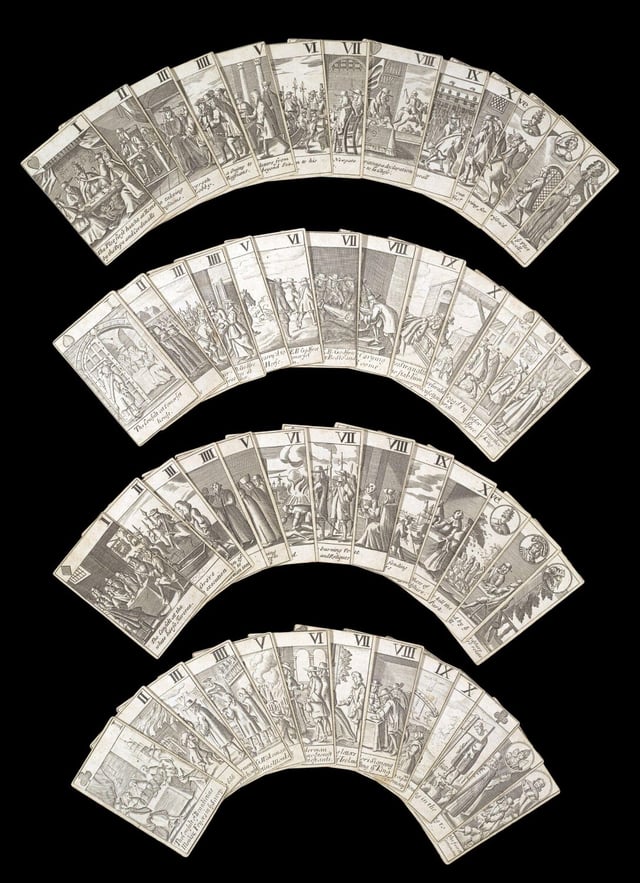
How cards were printed affects how they look and how they should be dated. The V&A record for Francis Barlow's Popish Plot cards explains that they are engravings, printed from lines cut into a flat metal plate. Woodcut, engraving, lithography and later mechanical printing each leave different marks, and hand or stencil colouring may have been added afterwards. Describe what you see with a magnifier and cite a reference before naming a process.
Note the card stock, how the backs are printed or left plain, corner shape and whether edges are gilded. A later reprint can reproduce an early design closely, so the design's date and the printing's date must be kept separate.
Reference: V&A: The Popish Plot playing cards, Francis Barlow, ca. 1679 (museum record)
Publishers, makers and tax marks
Publishers' names, addresses and trade marks often appear on a particular card, the box or a wrapper. Transcribe them exactly and record where they appear. A publisher's address can help date a pack only when a cited source documents when the business used it.
In some countries playing cards were taxed, and duty marks or special cards may survive on a pack. Record any such mark exactly and cite the reference used to interpret it; do not date a pack from a resemblance to a duty mark you have not read.
Reference: The World of Playing Cards
Paper objects need dark, stable storage
Cards are paper and board, often with coloured inks that fade. The Library of Congress recommends a cool, relatively dry, clean and stable environment for works on paper and storage away from light when they are not being viewed. Keep packs in inert boxes, avoid rubber bands and adhesive tape, and do not shuffle or play with a historical pack.
Handle cards by their edges with clean, dry hands. If a box is fragile, store it beside the cards in a supporting enclosure rather than forcing the cards back into it.
Reference: Library of Congress: Care of works on paper
A record that keeps the set together
Photograph every card face and a representative back, plus the box and any inserts, at a known scale. Keep the card count, missing-card list and source citations with the images. Mark which statements are your observations and which come from a museum record or published reference.
The live figures below show how many playing-card entries Orbis publishes and how they spread by period and confidence. They count this catalogue's holdings, not how many packs were printed or survive.
Reference: Editorial methodology