Search
Search the catalogue
Search by name, period, entity or technical detail, then narrow by discipline, era, country, maker, material and confidence. Facets are built only from what each record documents — an entry with no documented date or material is not guessed into one.
20 records
Петров Эдуард
modern coins
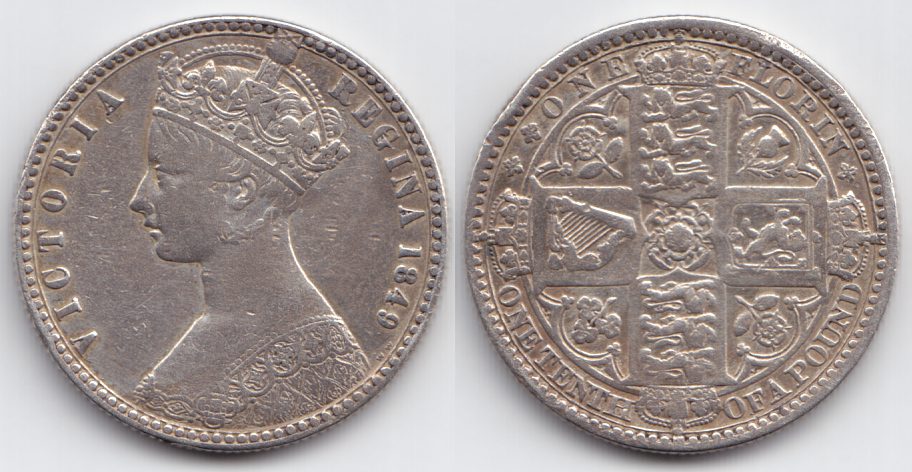
British Godless Florin, 1849
1849
The British Godless florin of 1849 was a two-shilling silver coin struck by the Royal Mint. To evaluate public reaction and assist the decimal experiment, the mint suspended production of the similar half-crown coin, intending the two-shilling florin to serve as a practical test for potential decimal coins. The coi…
Partial type record
Mandtplatt
modern coins
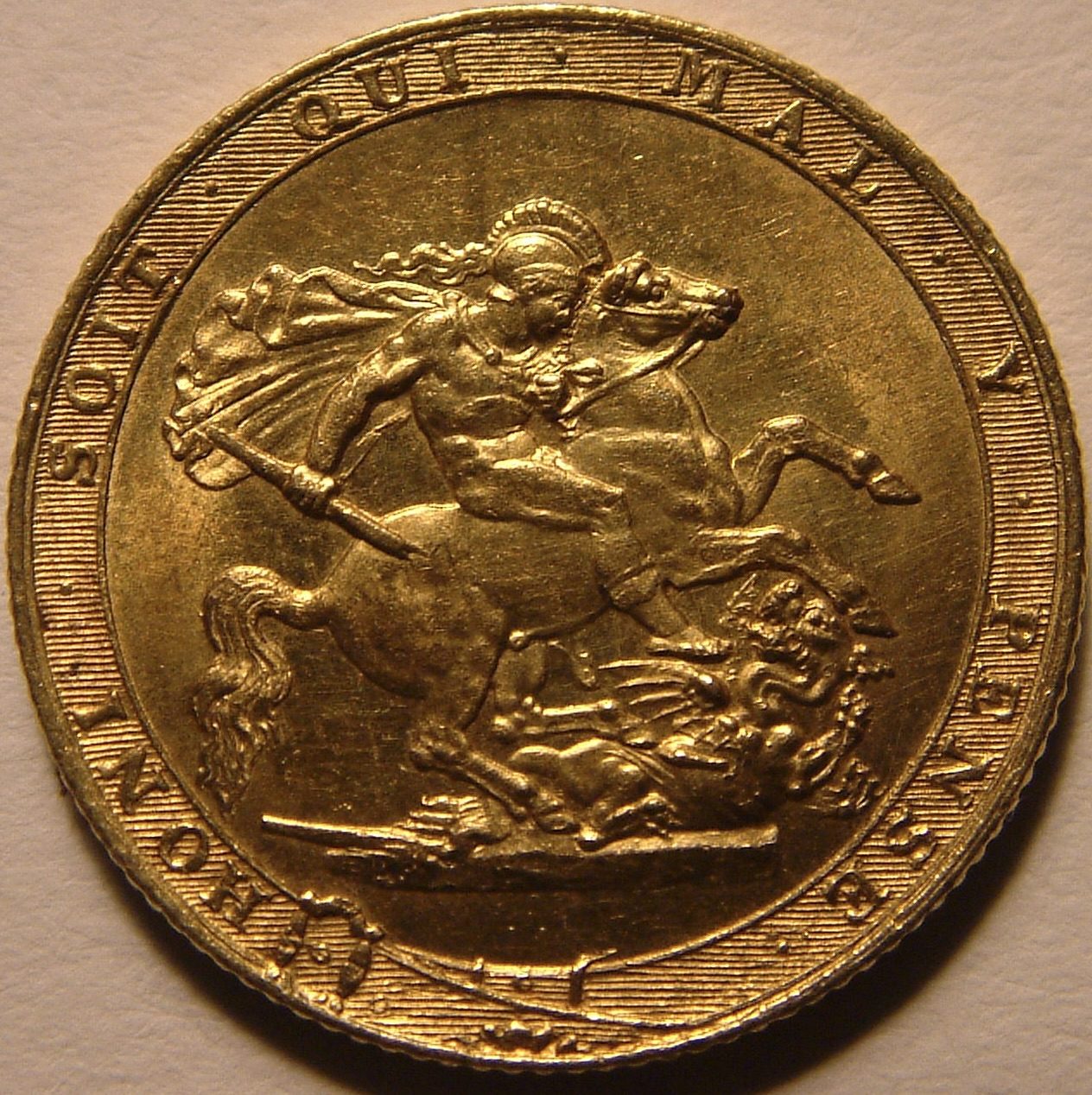
British Gold Sovereign
1817 onwards
The British gold sovereign is a one-pound sterling coin introduced in 1817 by the Royal Mint following the Coinage Act 1816 and the Great Recoinage. Authorised under Master of the Mint William Wellesley Pole to replace the guinea, it was struck as a circulating coin containing 0.2354 troy ounces (7.32 grams) of pure…
Partial type record
The Coin Cabinet Auction 134 (2 Oct 2026)
modern coins
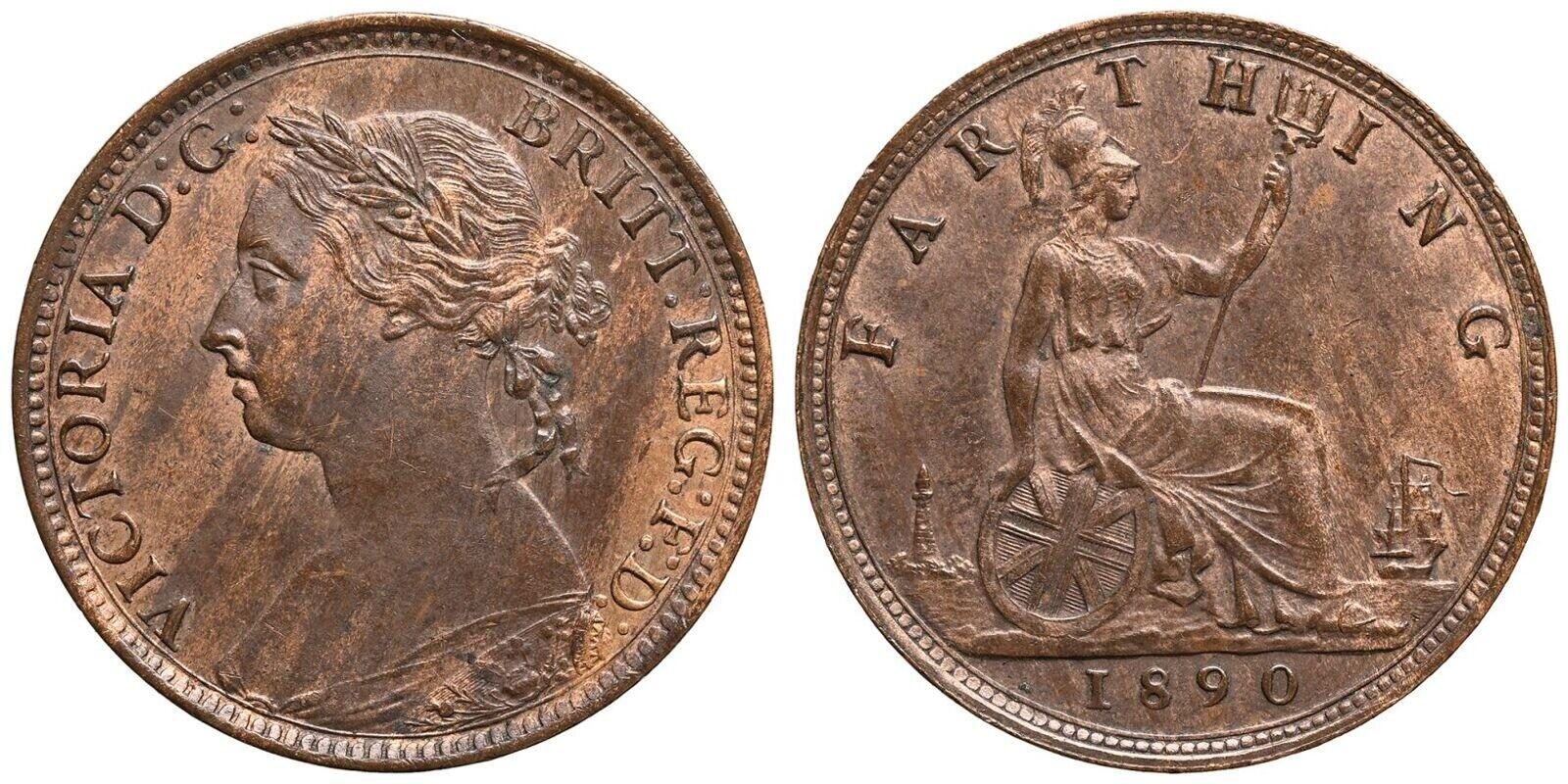
Bronze farthing
19th to 20th century
The bronze farthing was the smallest British bronze denomination of the pre-decimal era, representing one quarter of an old penny or one nine-hundred-and-sixtieth of a pound sterling. Having previously been produced in copper, the first bronze farthings were struck by the Royal Mint in 1860 during the reign of Queen…
Partial type record
Rijksmuseum, Amsterdam
modern coins
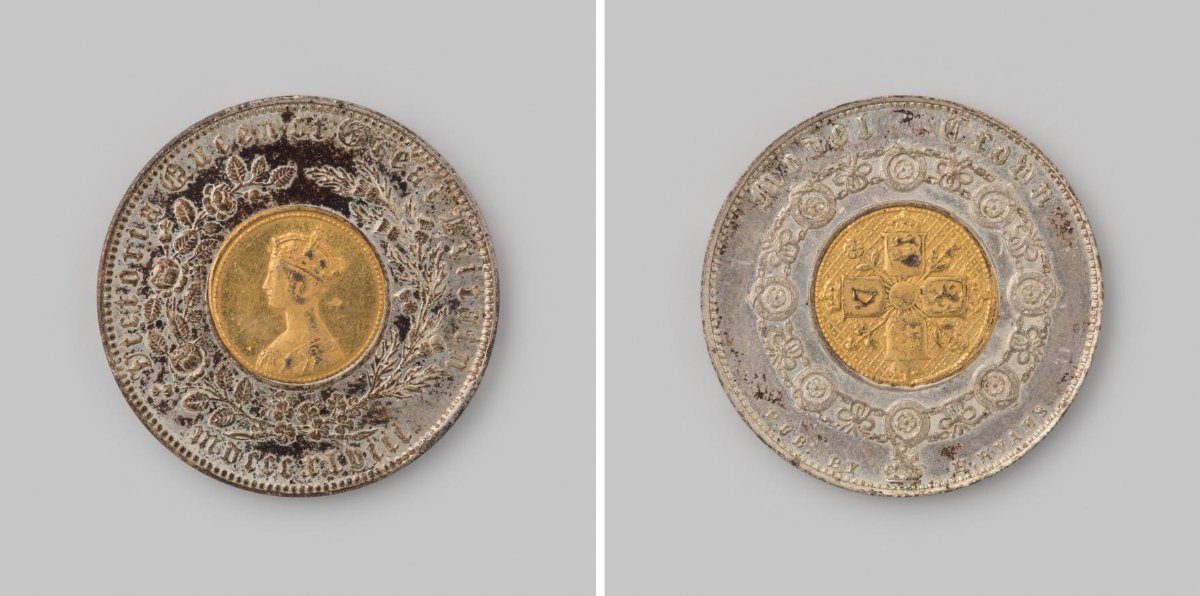
England, Victoria, model crown, 1848
1848
Gilt copper/pewter private coin. Obverse: within two tied branches the crowned head of the queen to the left. Date at the bottom. Reverse: on a hatched field a short floriate cross with a sun at its centre, in the corners four crowned coats of arms. Around it the collar of the Order of Saint George. Inscription: Mod…
Partial type record
Cleveland Museum of Art
modern coins
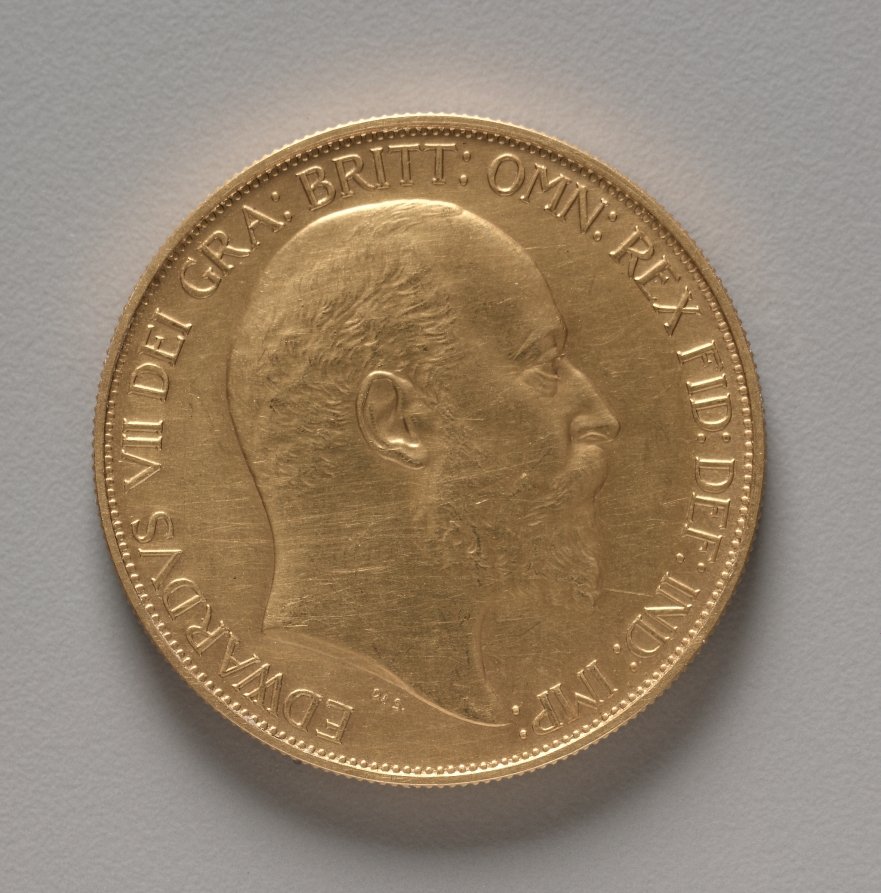
Five Pound Piece: Edward VII (obverse); St. George and the Dragon (Cleveland Museum of Art 1969.221)
1902
Struck for inclusion in the proof commemorative sets of the new coinage of the reign, this piece was unusual in having a frosted or matte surface, produced by the application of acid. Non-proof five-pound pieces were also struck, but not for circulation. George Edward de Saulles was appointed chief engraver at the R…
Partial type record
Cleveland Museum of Art
modern coins
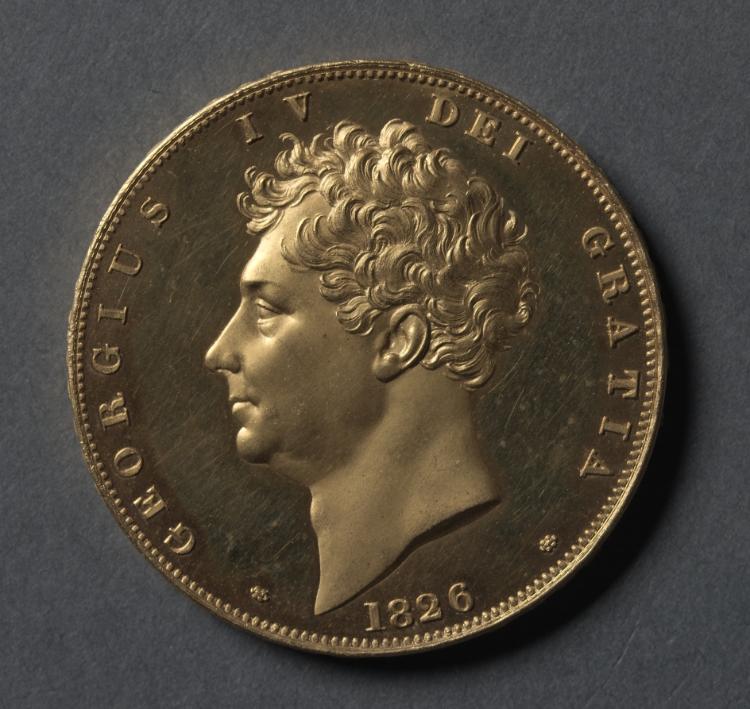
Five Pound Piece: George IV (obverse); Shield of Arms (Cleveland Museum of Art 1969.215)
1826
Only pattern five-pound pieces were struck during the reign of George IV, none being put into circulation. In this reign, specimen proof sets appeared for the first time in 1823, and the pattern five- and two-pound pieces as well as the pattern silver crown were included in the sets. Cleveland Museum of Art object 1…
Partial type record
Cleveland Museum of Art
modern coins
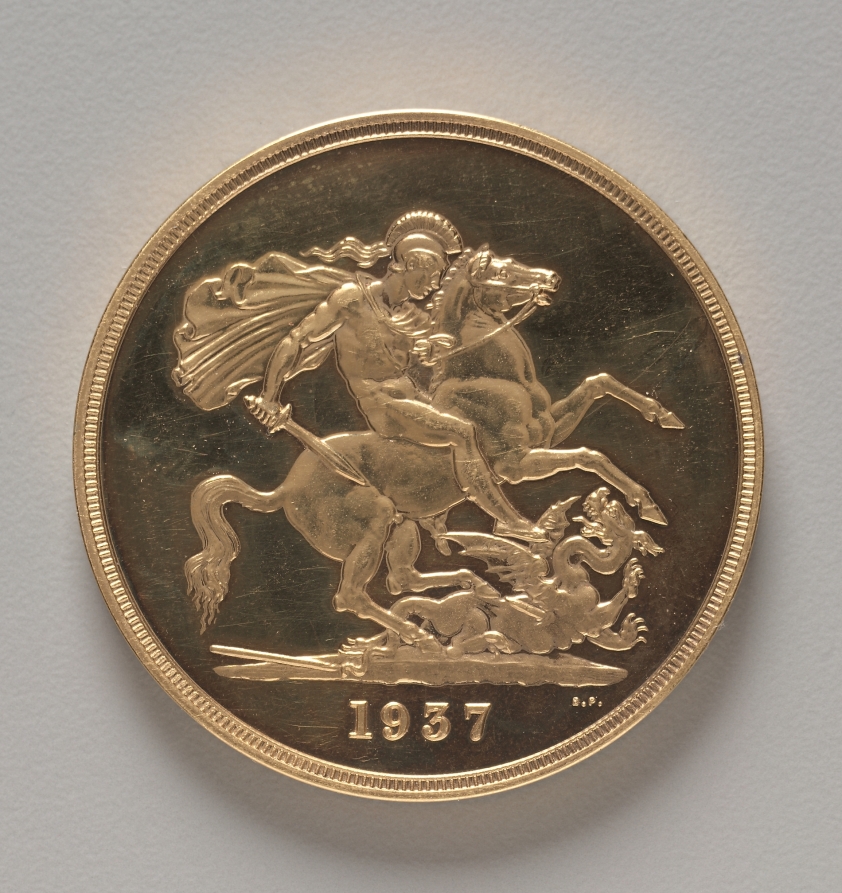
Five Pound Piece: St. George and the Dragon (Cleveland Museum of Art 1969.223)
1937
The of King George VI, shown uncrowned, was designed by Thomas Humphrey Paget, a medal and coin designer who worked for the Royal Mint. The reverse image of St. George and the Dragon was designed by Benedetto Pistrucci, an Italian gem and coin engraver whose work is still used on coinage today. Cleveland Museum of A…
Partial type record
Cleveland Museum of Art
modern coins
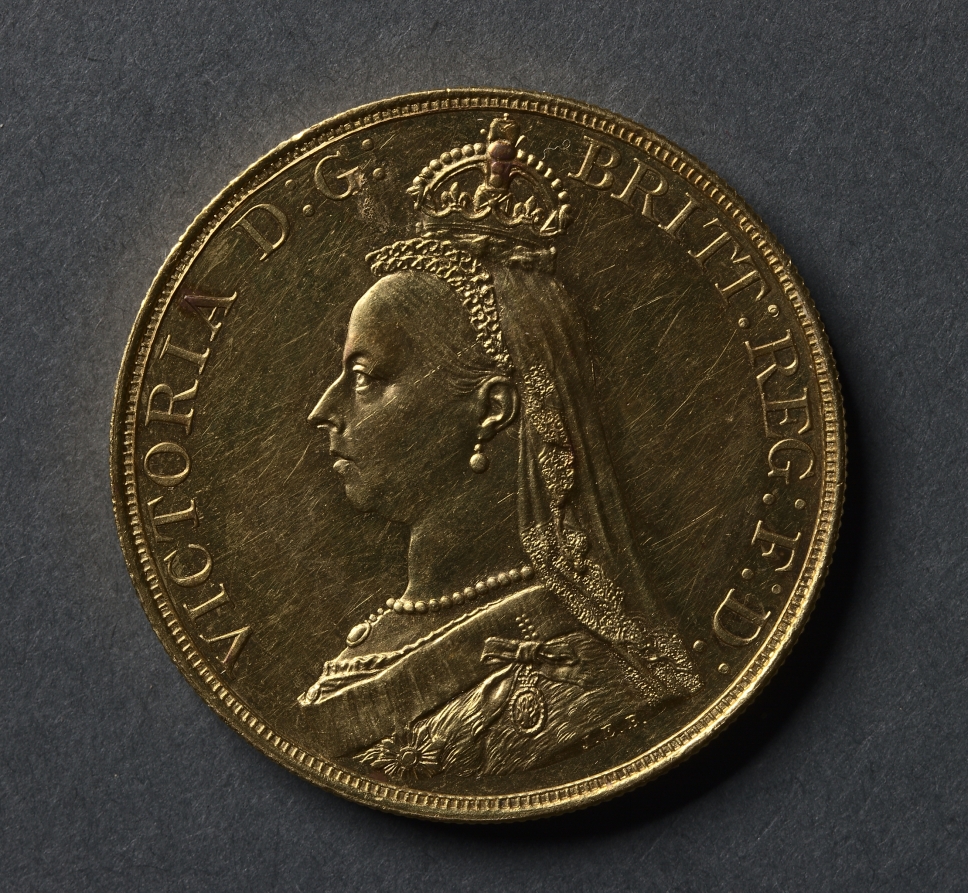
Five Pound Piece: Victoria (obverse); St. George and the Dragon (Cleveland Museum of Art 1969.219)
1887
The obverse design of this piece is usually known as the "Jubilee head," since 1887, the year of its production, was the Golden Jubilee of Queen Victoria. By Sir Joseph Boehm, R.A., sculptor in ordinary to the queen, it caused a minor storm since it was said the tiny crown made the queen look ridiculous. The queen i…
Partial type record
Cleveland Museum of Art
modern coins
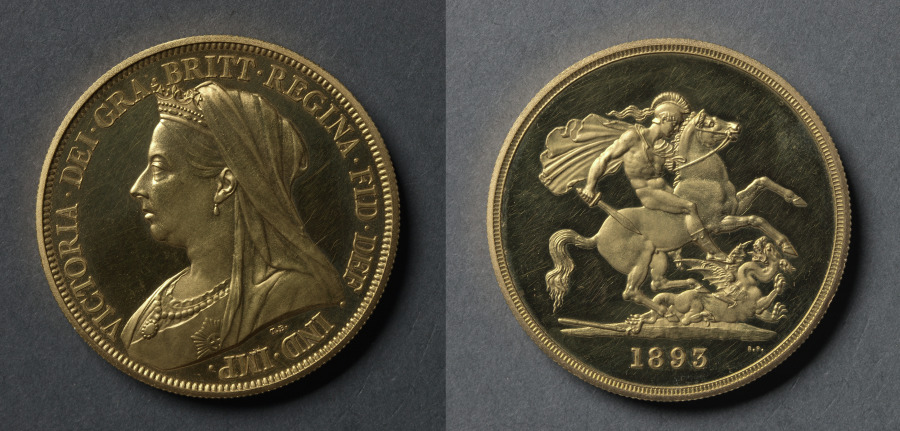
Five Pound Piece: Victoria (obverse); St. George and the Dragon (Cleveland Museum of Art 1969.220)
1893
After the minor storm of dislike which blew up over the 1887 Jubilee design, Thomas Brock, R.A., designed a new obverse, usually known as the "old head" type. Cleveland Museum of Art object 1969.220: Five Pound Piece: Victoria (obverse); St. George and the Dragon (reverse), 1893. Design by after Benedetto Pistrucci…
Partial type record
Cleveland Museum of Art
modern coins
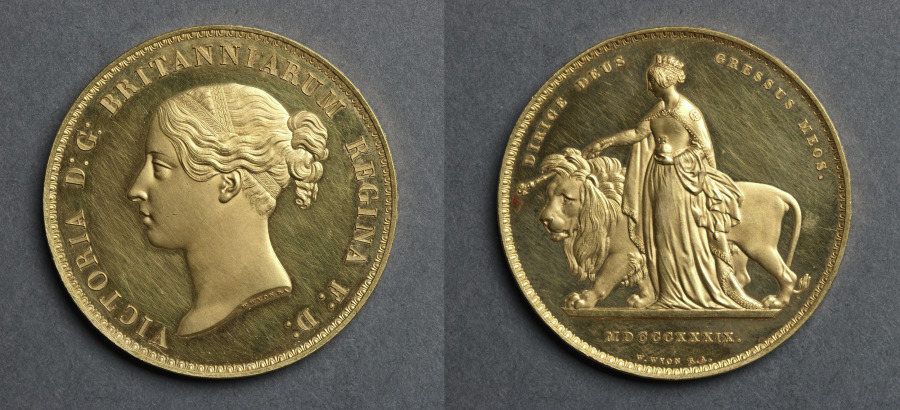
Five Pound Piece: Victoria (obverse); Una (Cleveland Museum of Art 1969.217)
1839
This piece was struck by the Royal Mint from gold purchased for the purpose. The current gold coins, such as the sovereign, were struck from gold supplied by the Bank of England. The larger gold pieces have their origins in the five and two guinea pieces. There are several minor varieties of this piece, designed by…
Partial type record
Rijksmuseum, Amsterdam
modern coins
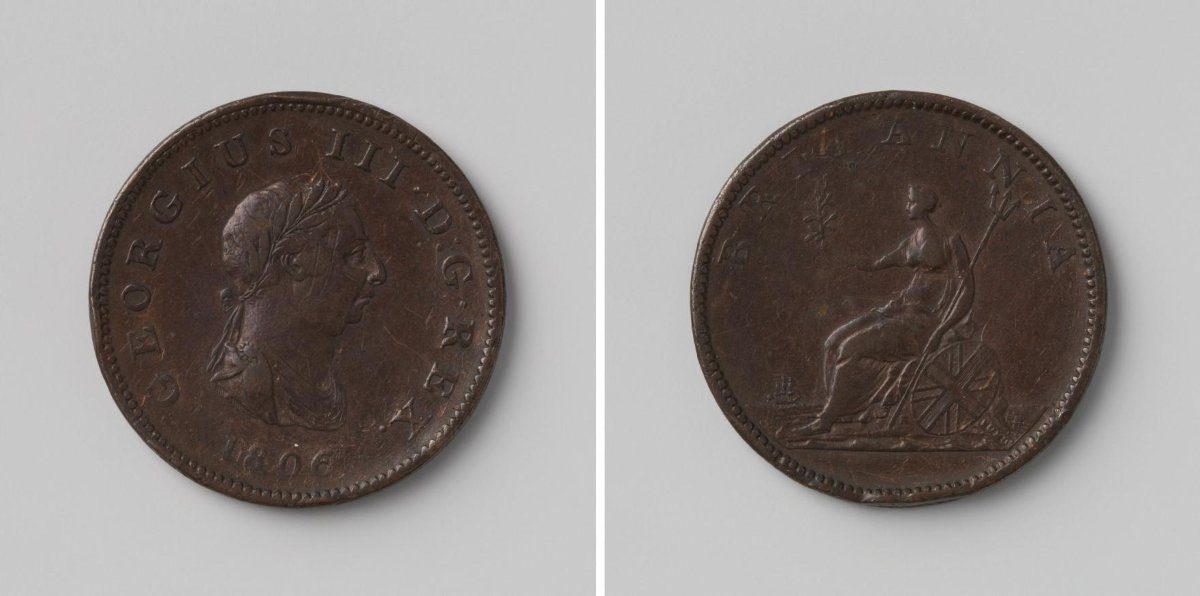
Half penny of George III, King of England
1806
Copper coin. Obverse: right-facing bust of a man with laurel wreath within an inscription. Reverse: left-facing woman with olive branch in raised right hand and trident in left hand, seated next to coat of arms; in background: ship at sea within an inscription. The Rijksmuseum, Amsterdam, holds this object as NG-VG-…
Partial type record
Jerry "Woody" from Edmonton, Canada
modern coins
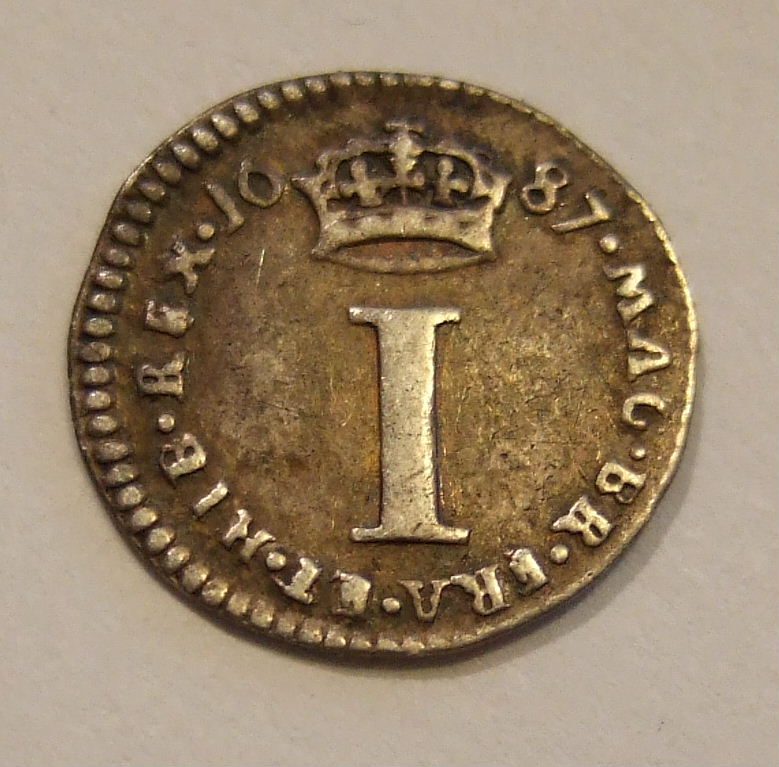
Maundy money set
Continuing ceremonial issue
A Maundy money set comprises small silver coins struck in four distinct denominations: one penny, two pence, three pence, and four pence. Legally designated as the King's Maundy money, these ceremonial pieces are distributed by the British sovereign or a royal representative during the Royal Maundy service, held ann…
Partial type record
Clemchambers (photograph)
modern coins
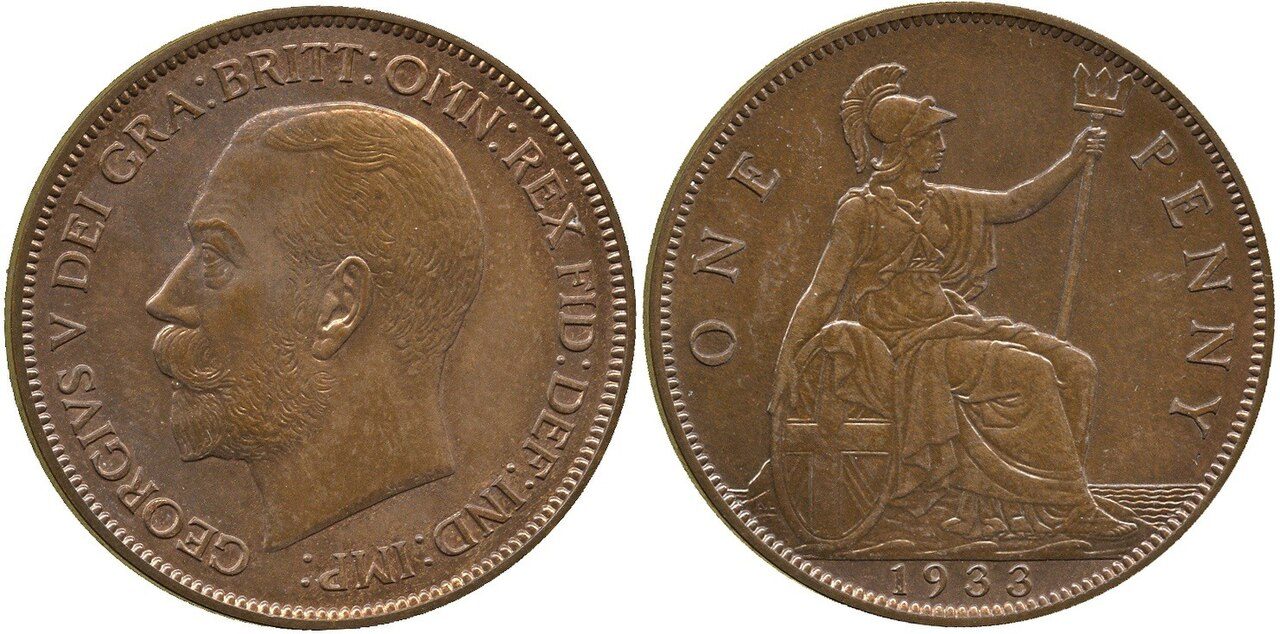
Penny, 1933
1933
The 1933 penny is a British pre-decimal bronze coin produced under the reign of King George V. The pre-decimal penny represented one 240th of a pound sterling, or one twelfth of a shilling, and was struck by the Royal Mint. No pennies were manufactured for commercial circulation in 1933 because existing stocks and t…
Partial type record
Cleveland Museum of Art
modern coins
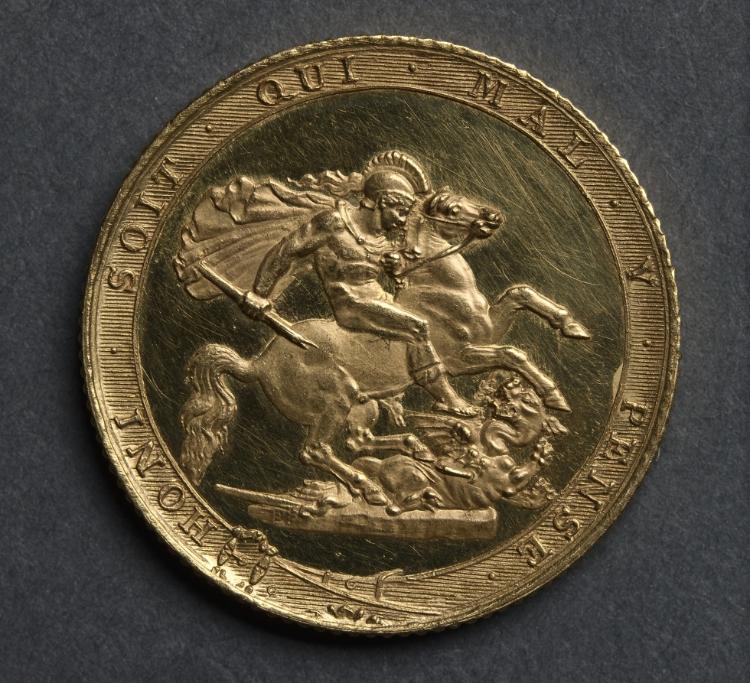
Sovereign: George III (obverse); St. George and the Dragon (Cleveland Museum of Art 1969.212)
1817
Great changes had occurred since King George III's previous coinage. The Royal Mint had moved out of the Tower of London to new premises in Little Tower Hill. The new mint was fitted with the latest steam-driven machinery by Boulton and Watt, and the whole coinage had been reformed. The guinea of twenty-one shilling…
Partial type record
Cleveland Museum of Art
modern coins
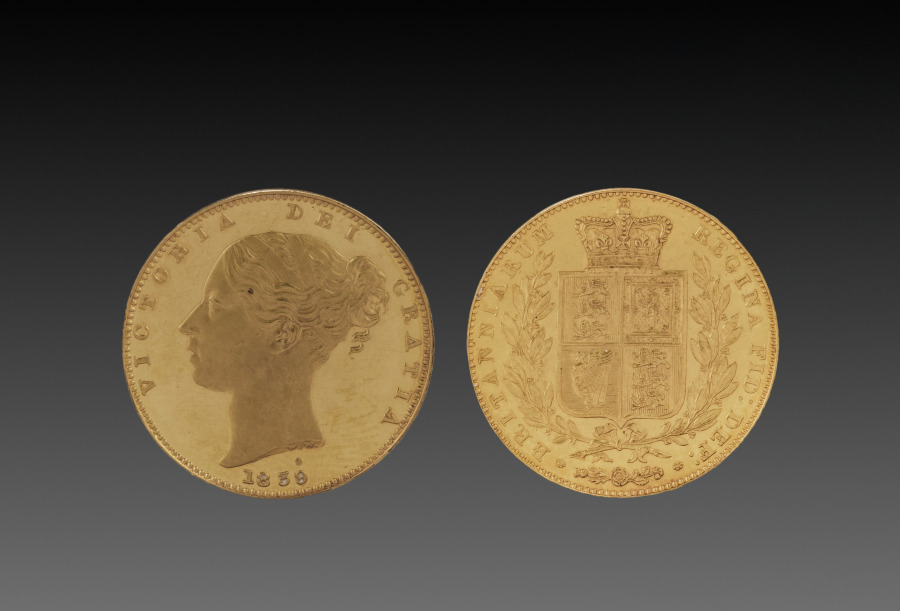
Sovereign: Victoria (obverse); Shield of Arms (Cleveland Museum of Art 1969.218)
1839
With the end of the rule of the House of Hanover, whose last direct representative on the British throne was William IV (died 1837), the royal arms that had ceased to show the French pretention at the end of the first coinage of George III were now further simplified. In each quarter from top right to bottom left: 1…
Partial type record
Cleveland Museum of Art
modern coins
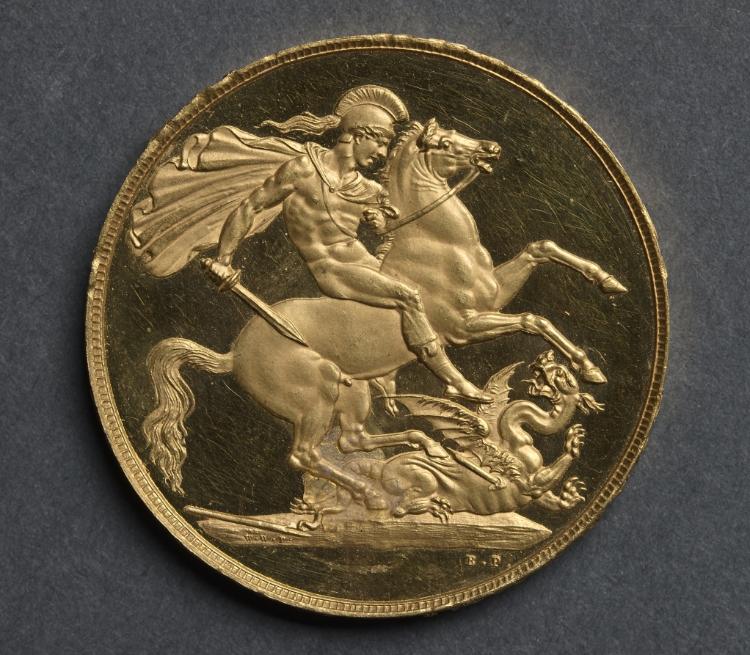
Two Pound Piece: George III (obverse); St. George and the Dragon (Cleveland Museum of Art 1969.213)
1820
The five- and two-pound pieces struck for George III were only struck as patterns in this, the last year of the his reign. No pieces of either denomination were put into circulation. This piece shows Pistrucci's Saint George as modified by Wyon. In the original the lance is broken; here the lance a been converted by…
Partial type record
Cleveland Museum of Art
modern coins
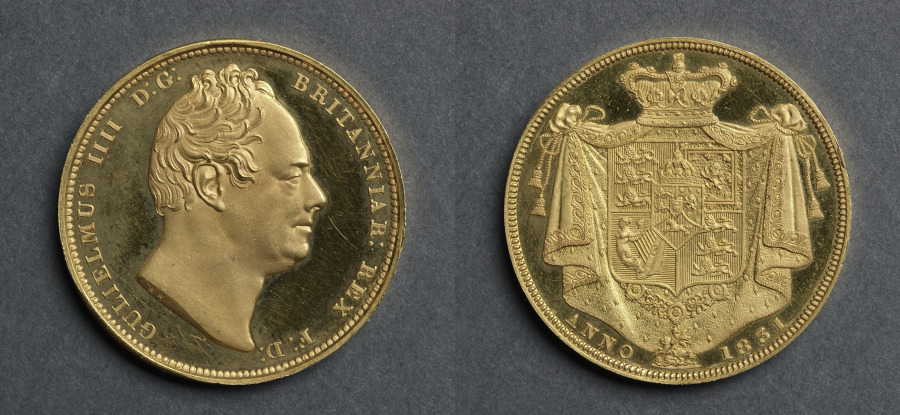
Two Pound Piece: George IV (obverse); Shield of Arms (Cleveland Museum of Art 1969.216)
1831
The two-pound piece in this reign was only struck as a pater in 1831. Again, as in the last reign, a limited number of proof sets were struck, and this coin was included in the sets. Since it never went into circulation it is properly called a pattern. Cleveland Museum of Art object 1969.216: Two Pound Piece: George…
Partial type record
Cleveland Museum of Art
modern coins
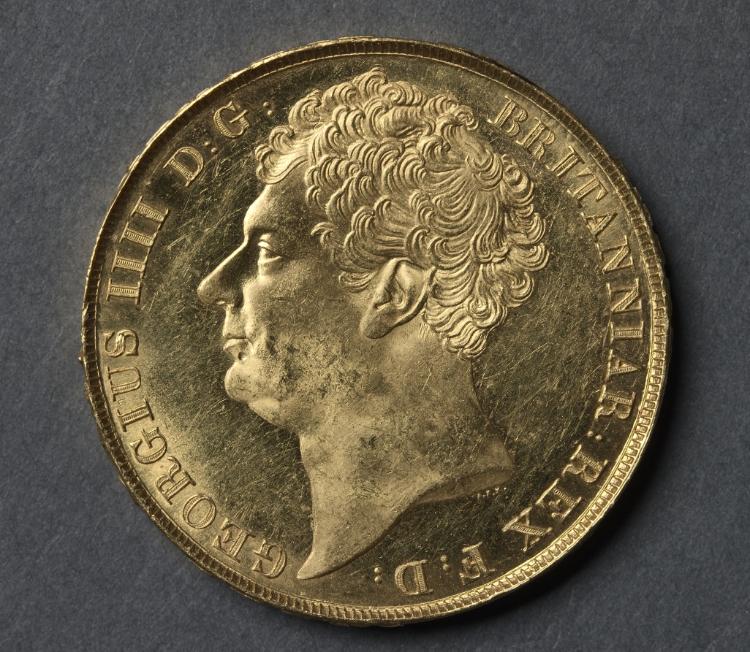
Two Pound Piece: George IV (obverse); St. George and the Dragon (Cleveland Museum of Art 1969.214)
1823
During the reign of King George IV, two-pound pieces were struck for circulation in 1823 only. Pattern pieces appeared in 1824, 1825, and 1826. The king was so disgusted with the caricature of a portrait that Pistrucci placed on the first coins of the reign that the artist was ordered to model a new obverse from a b…
Partial type record
Cleveland Museum of Art
modern coins
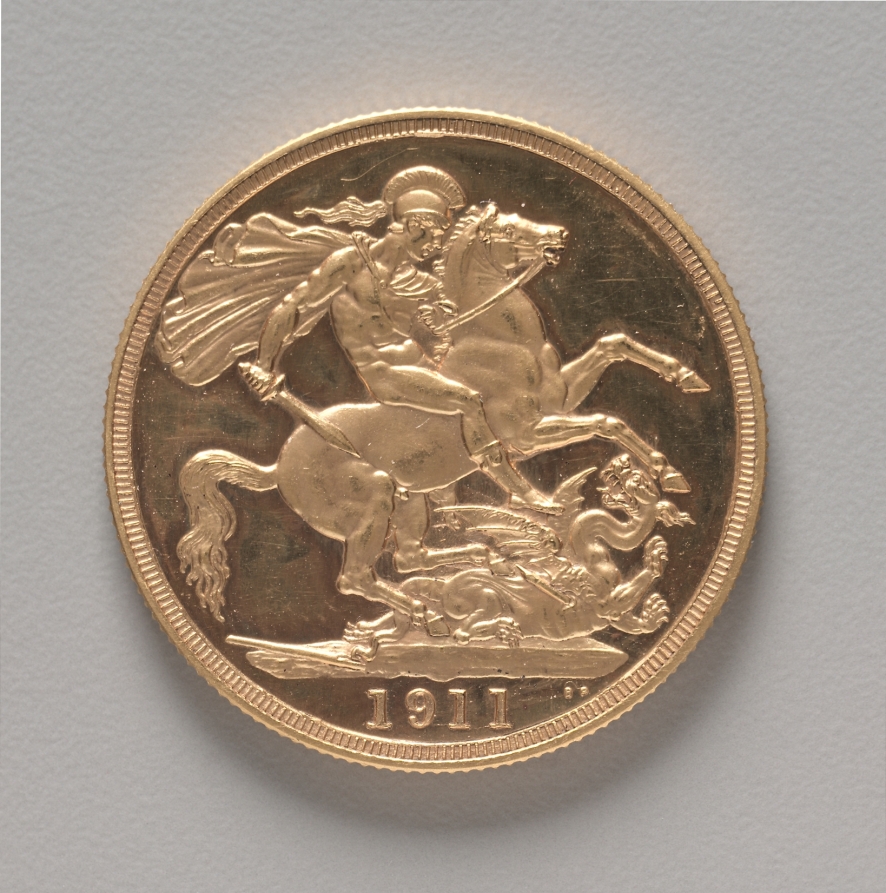
Two Pound Piece: George V (obverse); St. George and the Dragon (Cleveland Museum of Art 1969.222)
1911
Benedetto Pistrucci, an Italian gem and coin engraver, is best known for his image of St. George and the Dragon, which is still used on coinage today. Bertram Mackennal, an Australian sculptor and medallist, was reported to be one of the few artists King George V liked and is most famous for designing the king's lik…
Partial type record
Welkinridge; derivative by Retroplum
modern coins
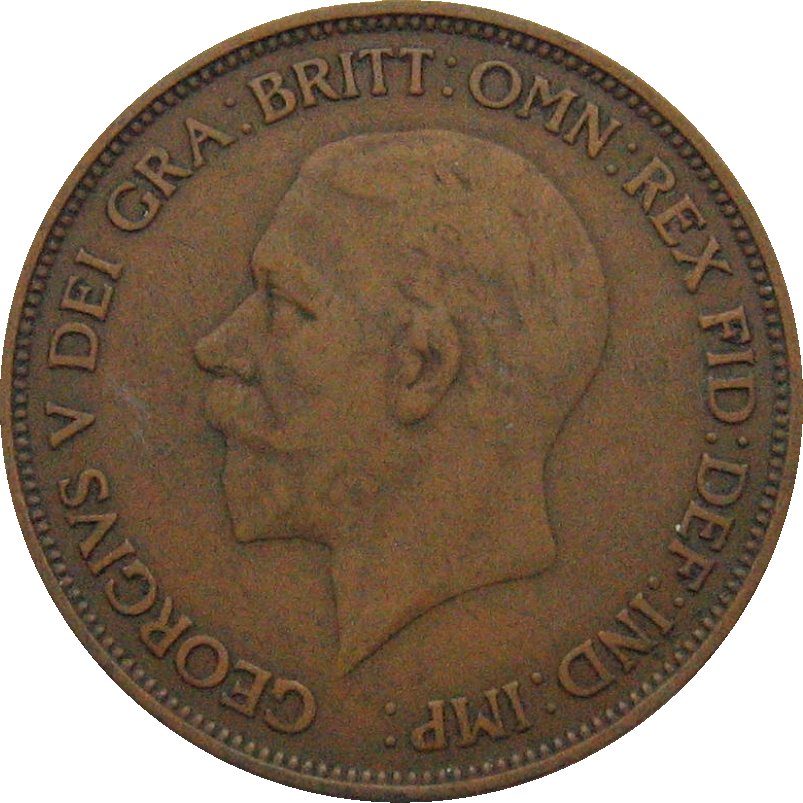
United Kingdom — George V — Bronze Penny
1911–1936
The United Kingdom George V bronze penny is a machine-struck pre-decimal coin representing one-twelfth of a shilling, or one two-hundred-and-fortieth of a pound sterling. Issued during the reign of King George V, the denomination continued the standard British bronze penny series that had originally been established…
Partial type record