Search
Search the catalogue
Search by name, period, entity or technical detail, then narrow by discipline, era, country, maker, material and confidence. Facets are built only from what each record documents — an entry with no documented date or material is not guessed into one.
65 records — page 1
Cleveland Museum of Art
modern coins
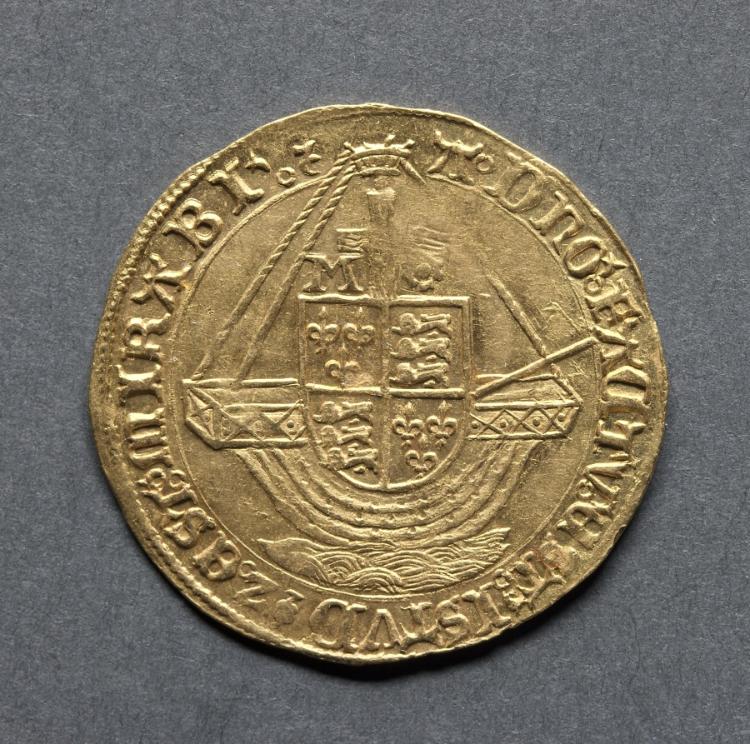
Angel: An Angel Slaying a Dragon (obverse); Ship with Shield of Arms (Cleveland Museum of Art 1969.180)
1553–54
This piece is one of the finest specimens known. It contains on the reverse, at the end of the legend, an unexplained mark that strongly resembles a small letter c, superimposed on a figure 7. Cleveland Museum of Art object 1969.180: Angel: An Angel Slaying a Dragon (obverse); Ship with Shield of Arms (reverse), 155…
Partial type record
Cleveland Museum of Art
modern coins
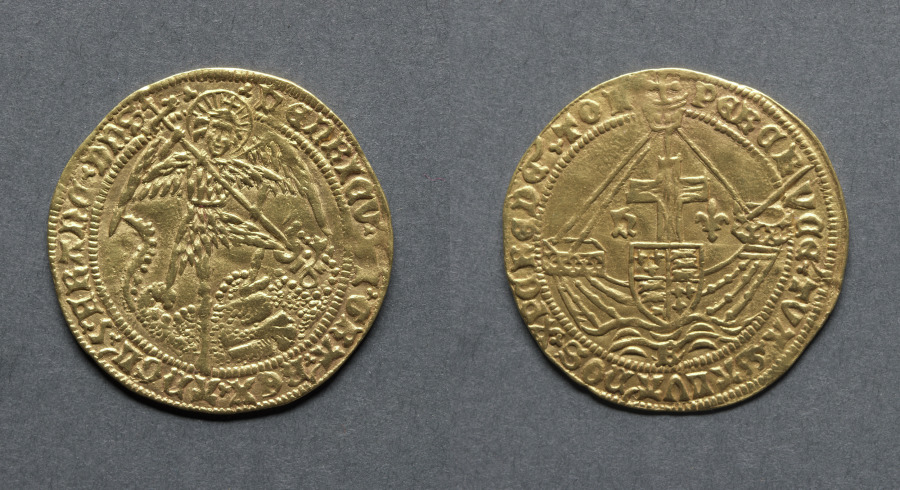
Angel: St. George Slaying the Dragon (obverse); Ship with Shield of Arms and Cross (Cleveland Museum of Art 1969.167)
1470–71
Henry VI regained power briefly in the usurpation period. The only gold coins struck during this short period were the angel and half angel, and only London and Bristol operated as mints. Cleveland Museum of Art object 1969.167: Angel: St. George Slaying the Dragon (obverse); Ship with Shield of Arms and Cross (reve…
Partial type record
Cleveland Museum of Art
modern coins
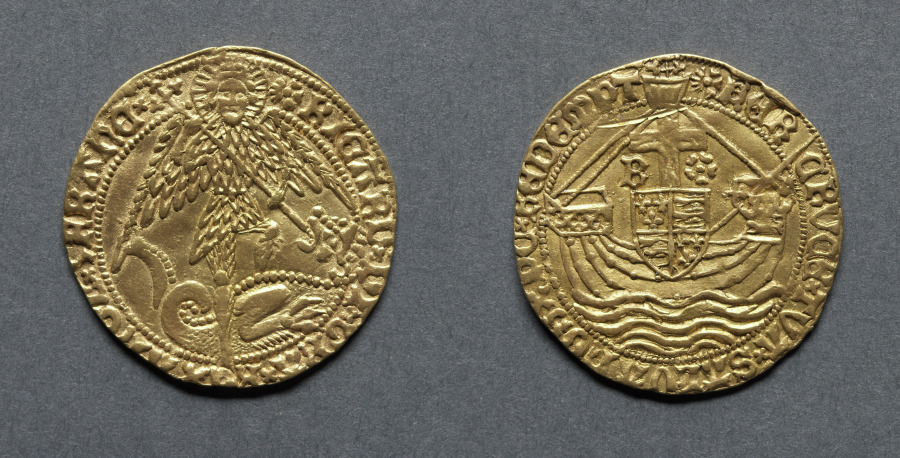
Angel: St. George Slaying the Dragon (obverse); Ship with Shield of Arms and Cross (Cleveland Museum of Art 1969.168)
1483–85
This coin is similar to the angel of Henry VI, 1969.167, but from completely different dies. Between the second reign of Edward IV and the reign of Richard III, Edward V, at the age of 13, reigned briefly from April 9 to June 22, 1483. Richard, Edward's uncle, caused the boy to be imprisoned in the Tower where he an…
Partial type record
Rijksmuseum, Amsterdam
modern coins
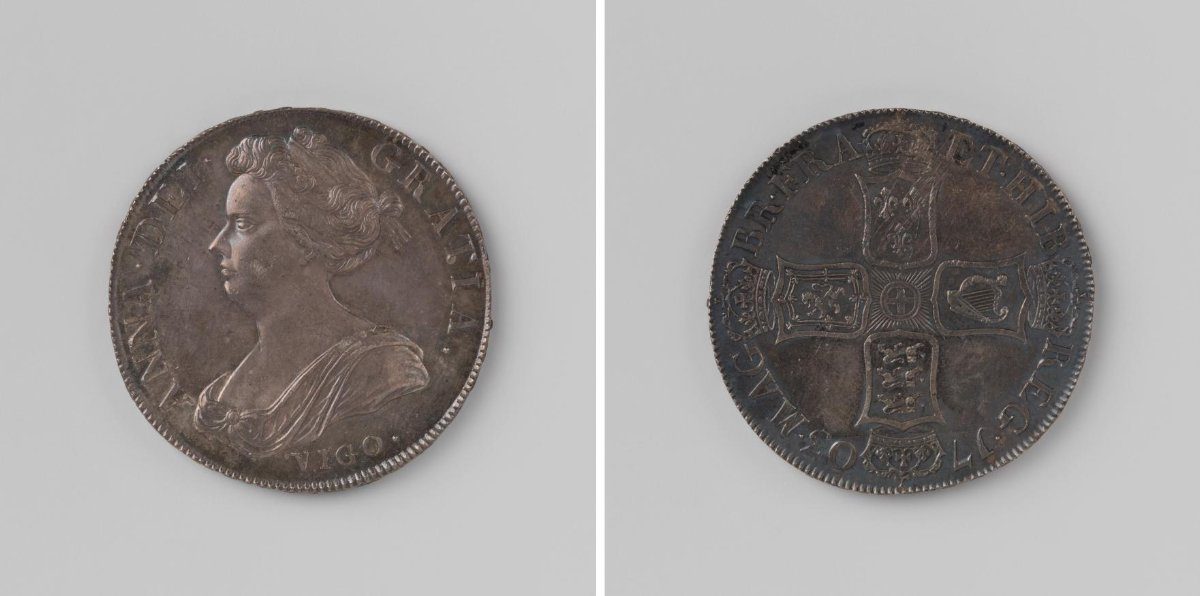
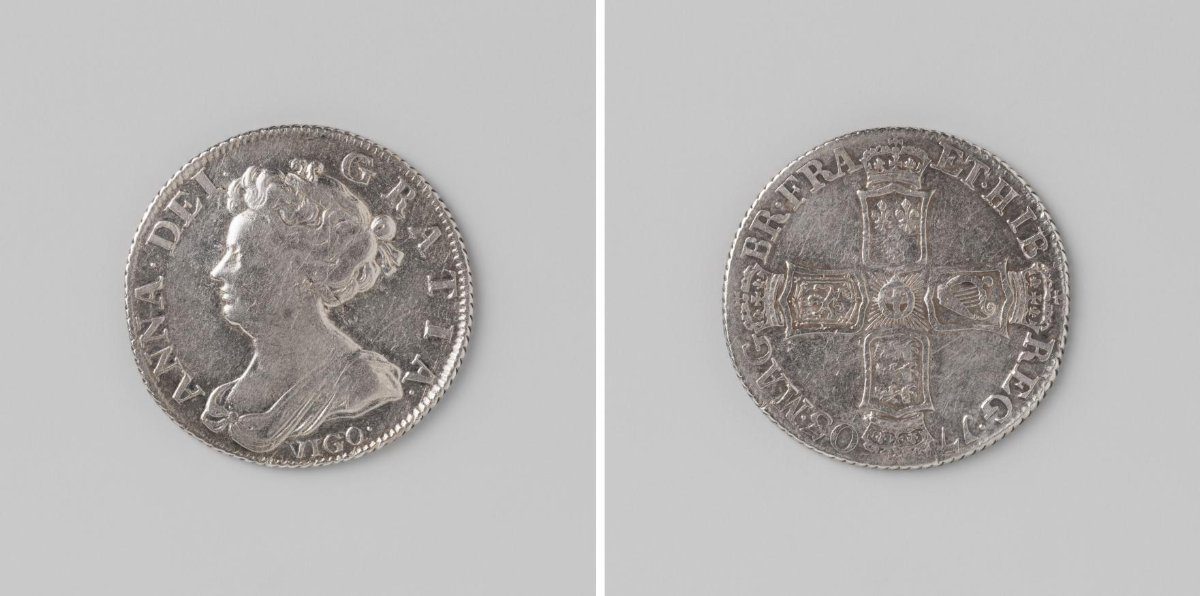
Anne, Queen of England, coin struck from the silver captured in the Battle of Vigo
1703
Obverse: bust of a woman within legend. Reverse: around an English star four crowned coats of arms within legend; edge lettering. The Rijksmuseum, Amsterdam, holds this object as NG-VG-1-1858; its record gives material recorded as silver (metal); technique striking (metalworking); measurements diameter 4 cm x weight…
Partial type record
Rijksmuseum, Amsterdam
modern coins
Anne, Queen of England, shilling struck from silver captured in the Battle of Vigo Bay
1703
Obverse: bust of a woman within an inscription. Reverse: around an English star, four crowned coats of arms within an inscription. The Rijksmuseum, Amsterdam, holds this object as NG-VG-1-1859; its record gives material recorded as silver (metal); technique striking (metalworking); measurements diameter 2.5 cm x wei…
Partial type record
Cleveland Museum of Art
modern coins
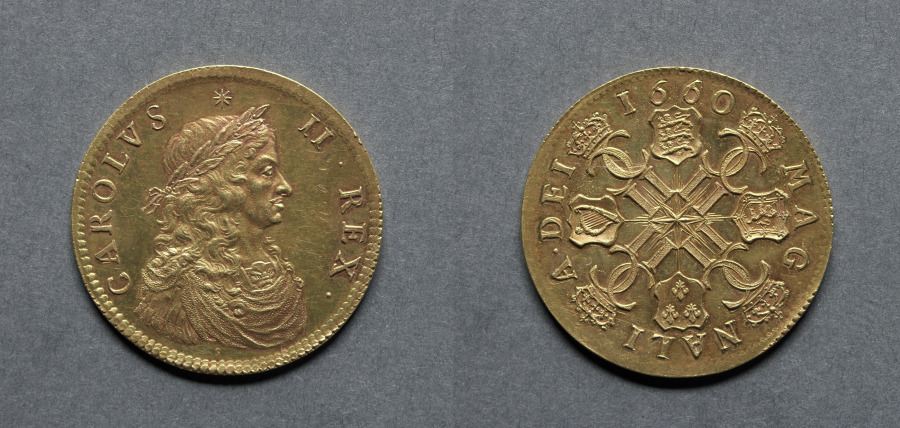
Broad: Charles II (obverse); Shields (Cleveland Museum of Art 1969.198)
1660
The hammered series of English coins was now nearing its end. In 1662 and from that time forward, all coins were produced by the mill and screw press, which gradually developed into modern minting machinery. From 1660 till 1662 hammered coins were still produced while the Mint was being reformed. In preparing the de…
Partial type record
Rijksmuseum, Amsterdam
modern coins
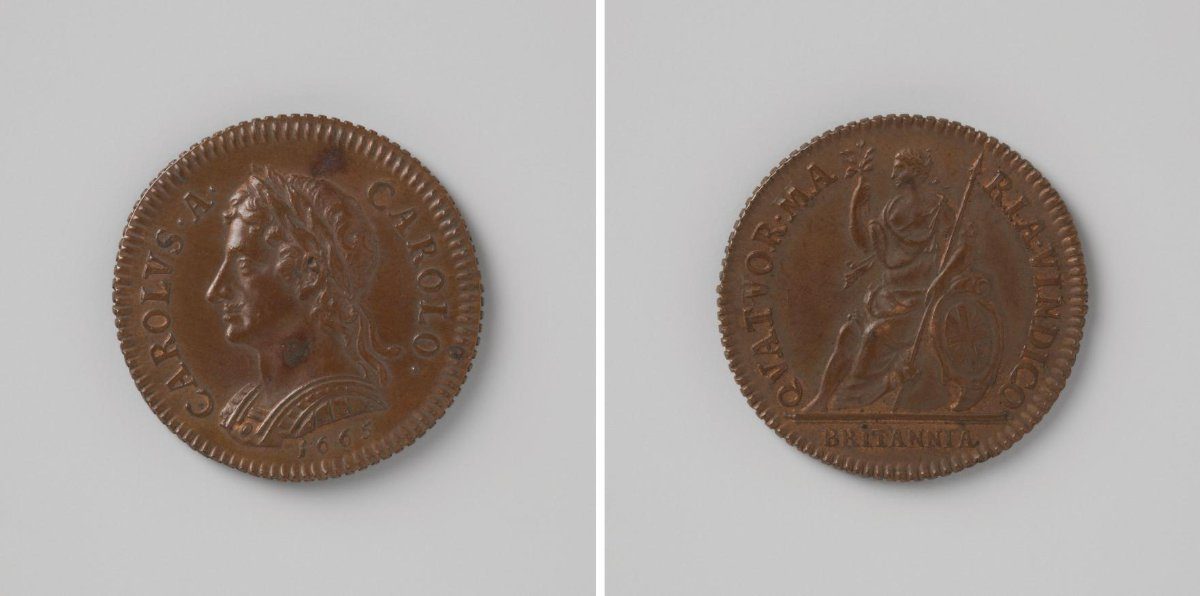
Charles II of England, ruler of the sea
1665
Obverse: bust of a man with laurel wreath within circumscription. Reverse: seated Britannia with shield, spear and laurel branch within circumscription. The Rijksmuseum, Amsterdam, holds this object as NG-VG-1-974; its record gives material recorded as copper (metal); technique striking (metalworking); measurements…
Partial type record
Rijksmuseum, Amsterdam
modern coins
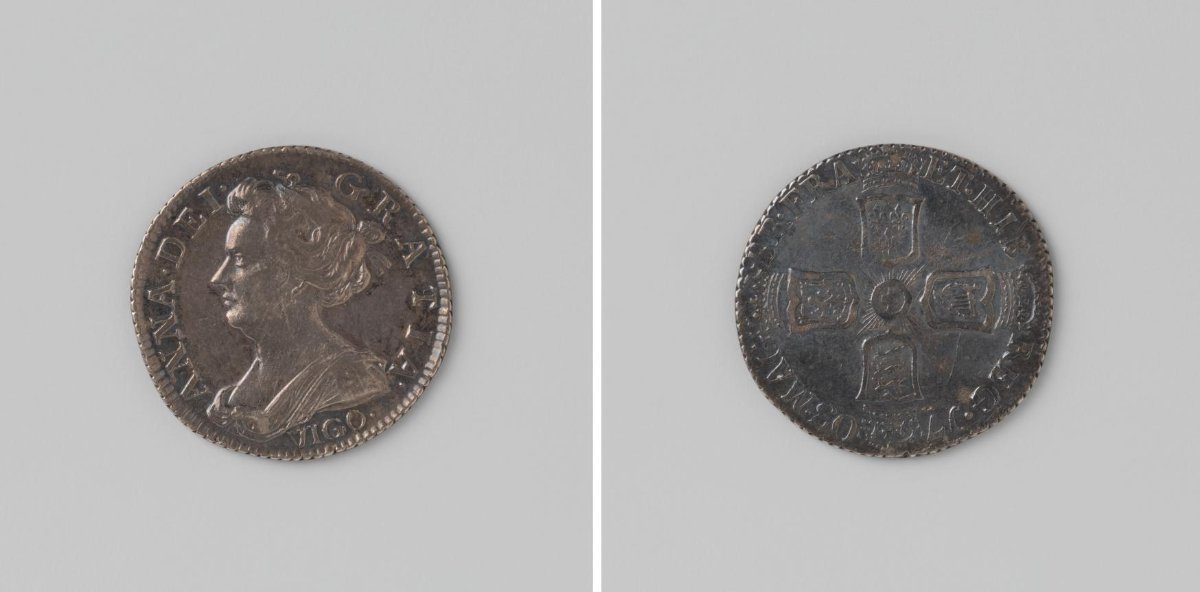
Coin of Half a Shilling of Anne, Queen of England, Coin Struck from Silver Captured in the Naval Battle of Vigo
1703
Obverse: bust of a woman within legend. Reverse: around an English star four crowned coats of arms within legend. The Rijksmuseum, Amsterdam, holds this object as NG-VG-1-1860; its record gives material recorded as silver (metal); technique striking (metalworking); measurements diameter 2.1 cm x weight 31 g.
Partial type record
Cleveland Museum of Art
modern coins
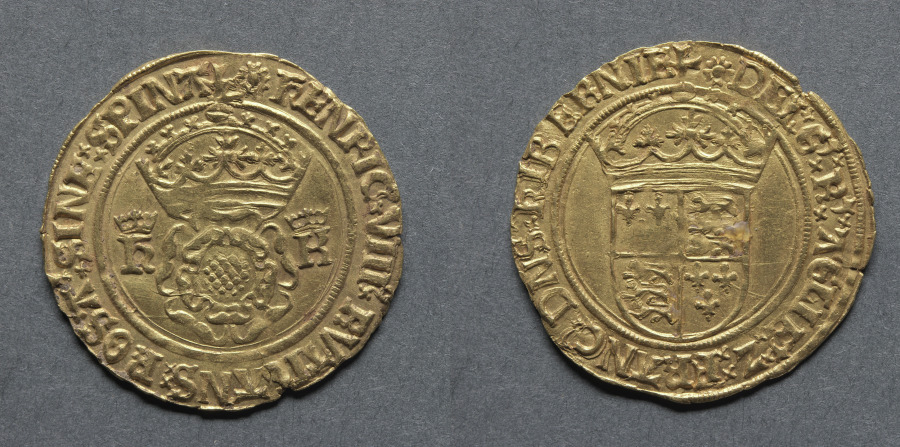
Crown of the Double Rose: Crowned Double Rose (obverse); Crowned Royal Arms (Cleveland Museum of Art 1969.172)
1526–33
For the first time the Crown of the Double Rose makes it appearance. On these coins the motto Rutilans Rosa Sine Spine, a dazzling rose without a thorn, follows the king's name on the obverse. The crowned initials on either side of the rose are those of Henry and his first queen, Katherine (or Catherine) of Aragon.…
Partial type record
Rijksmuseum, Amsterdam
modern coins
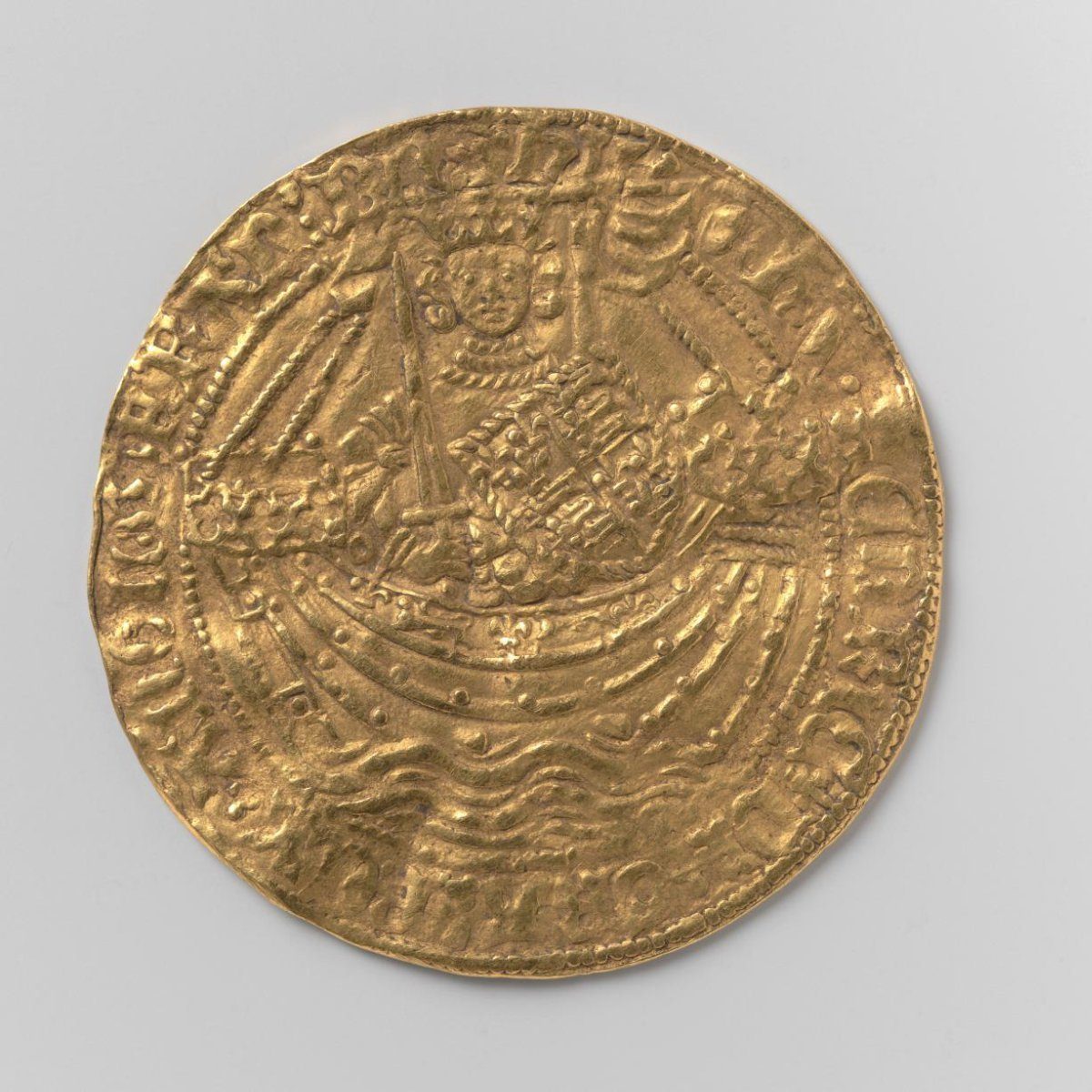
England, Henry VI, noble
1435 - 1443
Gold coin. Obverse: crowned monarch with sword in right hand and coat of arms in left hand, standing in a ship. Initial in legend: trefoil. Reverse: within double-lined polylobe, short richly decorated cross with letter H in the centre and crowned leopards in the angles. The Rijksmuseum, Amsterdam, holds this object…
Partial type record
Suffolk County Council, Alexander Bliss, 2018-05-04 13:08:02
modern coins
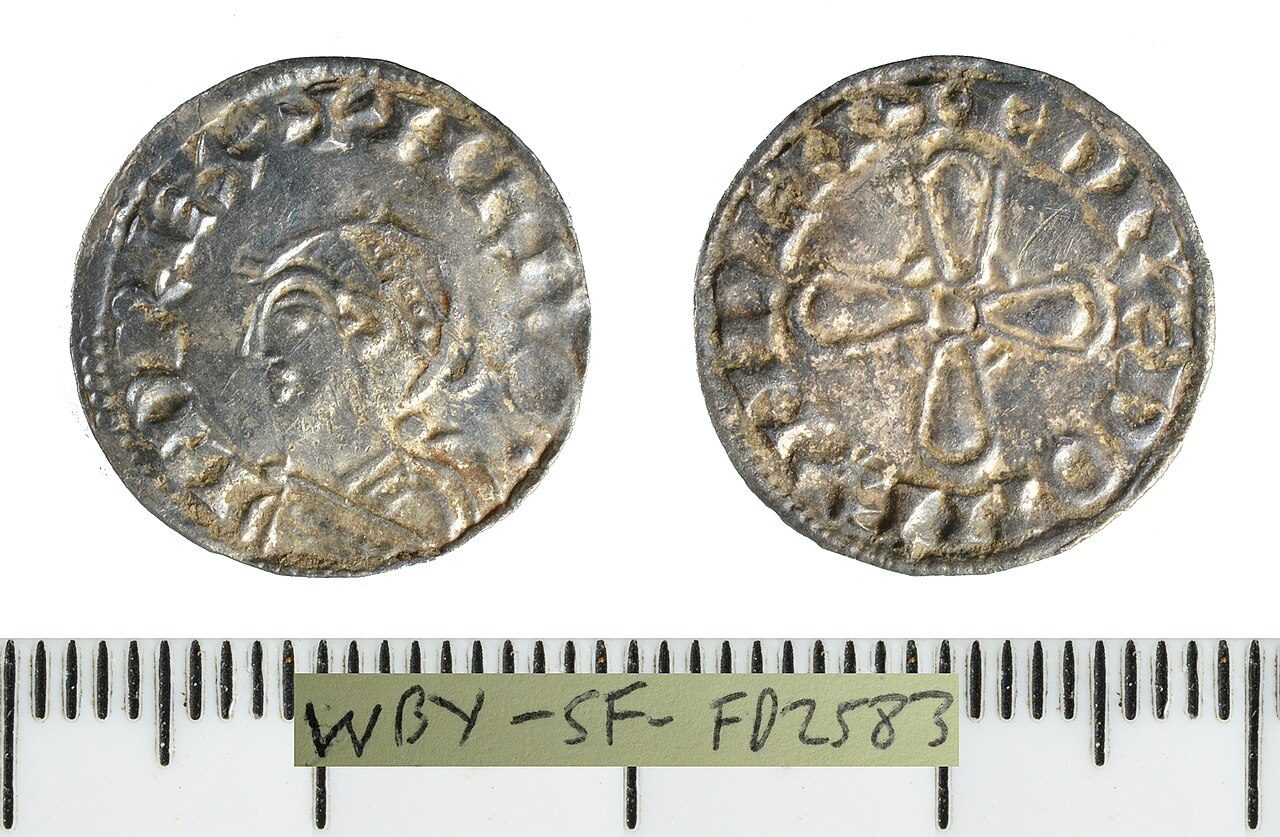
English hammered silver penny
c. 1066 - 1600
The English hammered silver penny was a hand-struck coin of the Kingdom of England, traditionally bearing a royal bust and, on most issues, a cross on the reverse naming the moneyer and mint. Prior to the thirteenth century, the silver penny was virtually the only coin struck in England, and moneyers were permitted…
Partial type record
Cleveland Museum of Art
modern coins
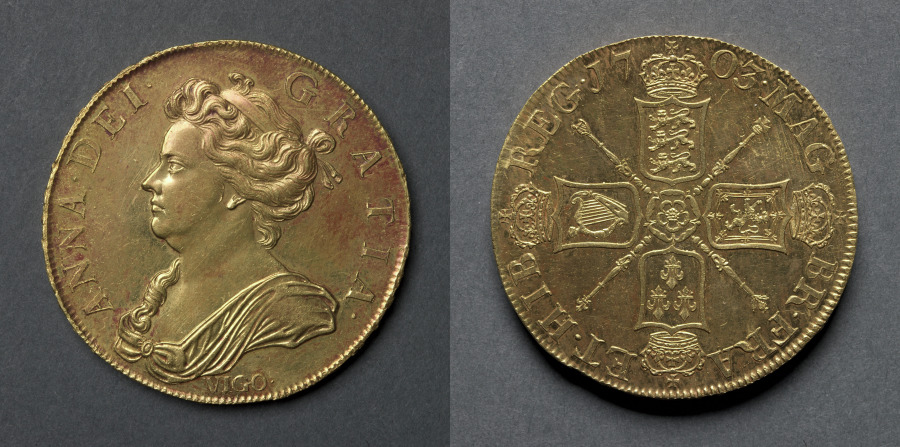
Five Guineas: Anne (obverse); Shields and rose (Cleveland Museum of Art 1969.203)
1703
The coinage during Anne's reign remained fairly constant to the designs inaugurated in 1662. Before the Act of Union with Scotland (1706), the arms of England and Scotland remained separate, as shown. After the act the two arms were conjoined on one shield. The word Vigo denotes that the coins were struck from gold…
Partial type record
Cleveland Museum of Art
modern coins
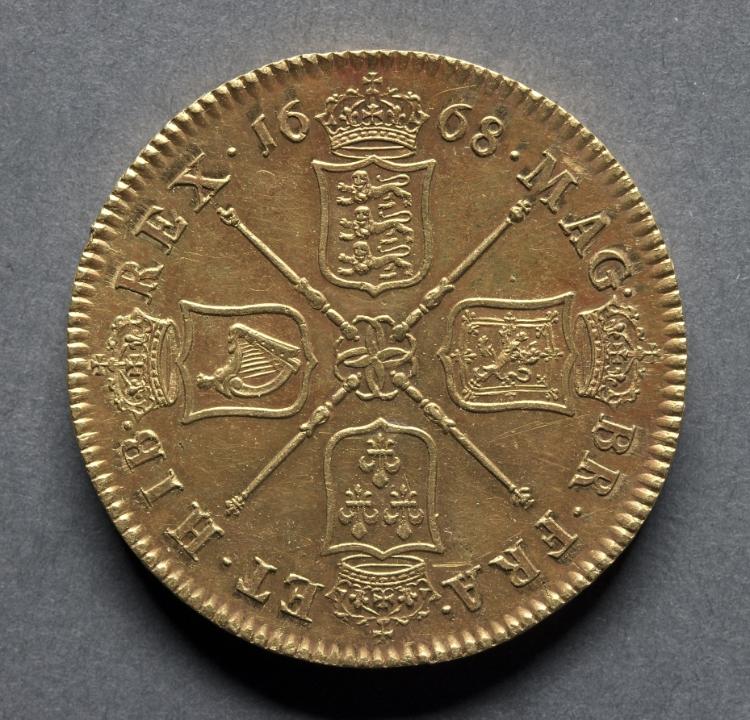
Five Guineas: Charles II (obverse); Four Shields (Cleveland Museum of Art 1969.199)
1668
Once the decision was made to reform the coinage of England, and hammered coinage abandoned, the whole range of money was simplified. The guinea was the unit (like the dollar), and multiples of two and five were struck. One of the reasons for turning to mill coins was the long battle against the clipper (the act of…
Partial type record
Cleveland Museum of Art
modern coins
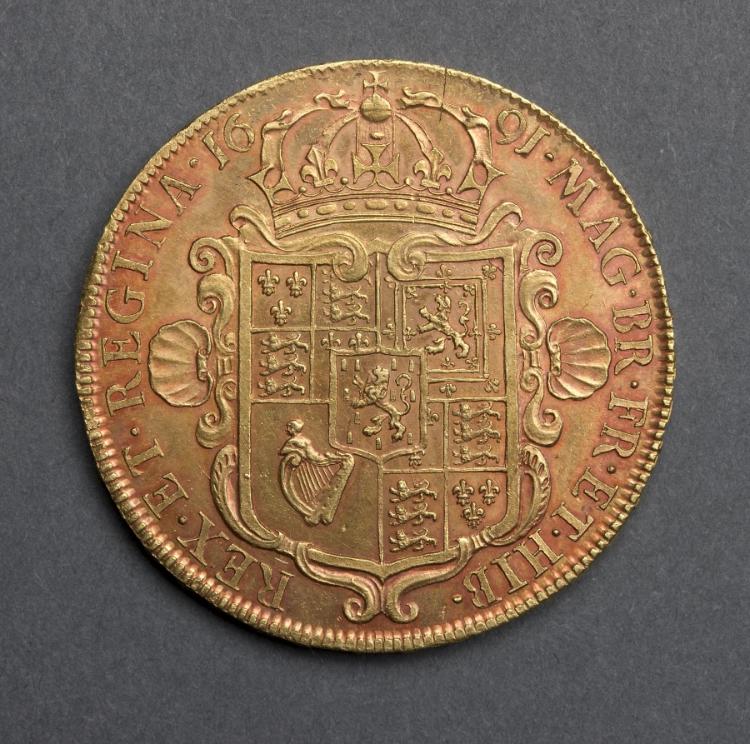
Five Guineas: William & Mary (obverse); Crowned Shield of Arms (Cleveland Museum of Art 1969.201)
1691
William of Orange-Nassau, and his wife Mary, daughter of James II, were proclaimed joint monarchs. Thus both their heads appear on their coinage. The only other instance of this in England is in the reign of Philip and Mary, 1554–58. Below them is a small elephant representing Guinea, the origin of the metal. Willia…
Partial type record
Cleveland Museum of Art
modern coins
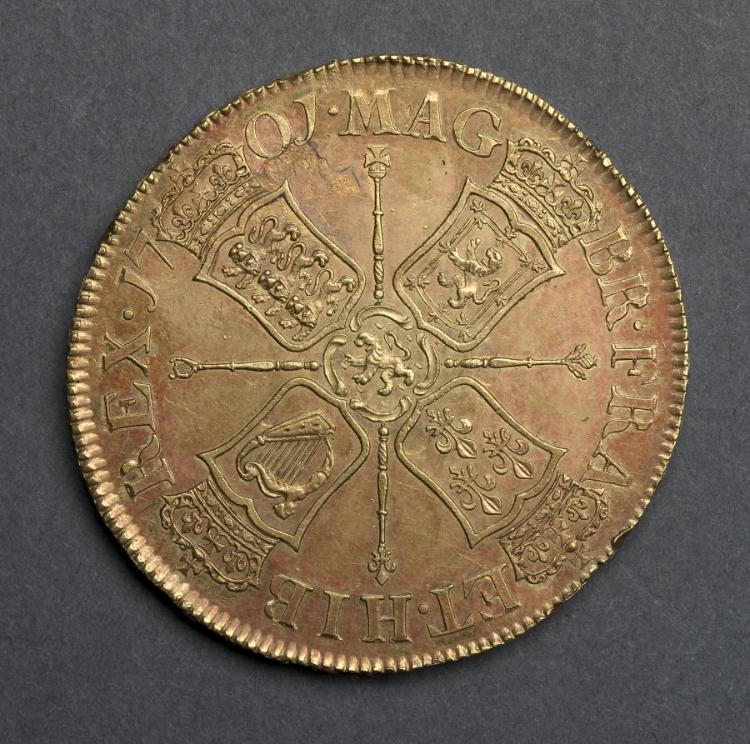
Five Guineas: William III (obverse); Four Shields and Lion of Nassau (Cleveland Museum of Art 1969.202)
1701
There were three types used on the five guinea coin of William III, who continued to reign long after the death of Mary. As hammered coinage was still in circulation along with the mill coins, the government decided to call in all the remaining hammered pieces in 1695, completing the reform of the coinage. This affe…
Partial type record
Rijksmuseum, Amsterdam
modern coins
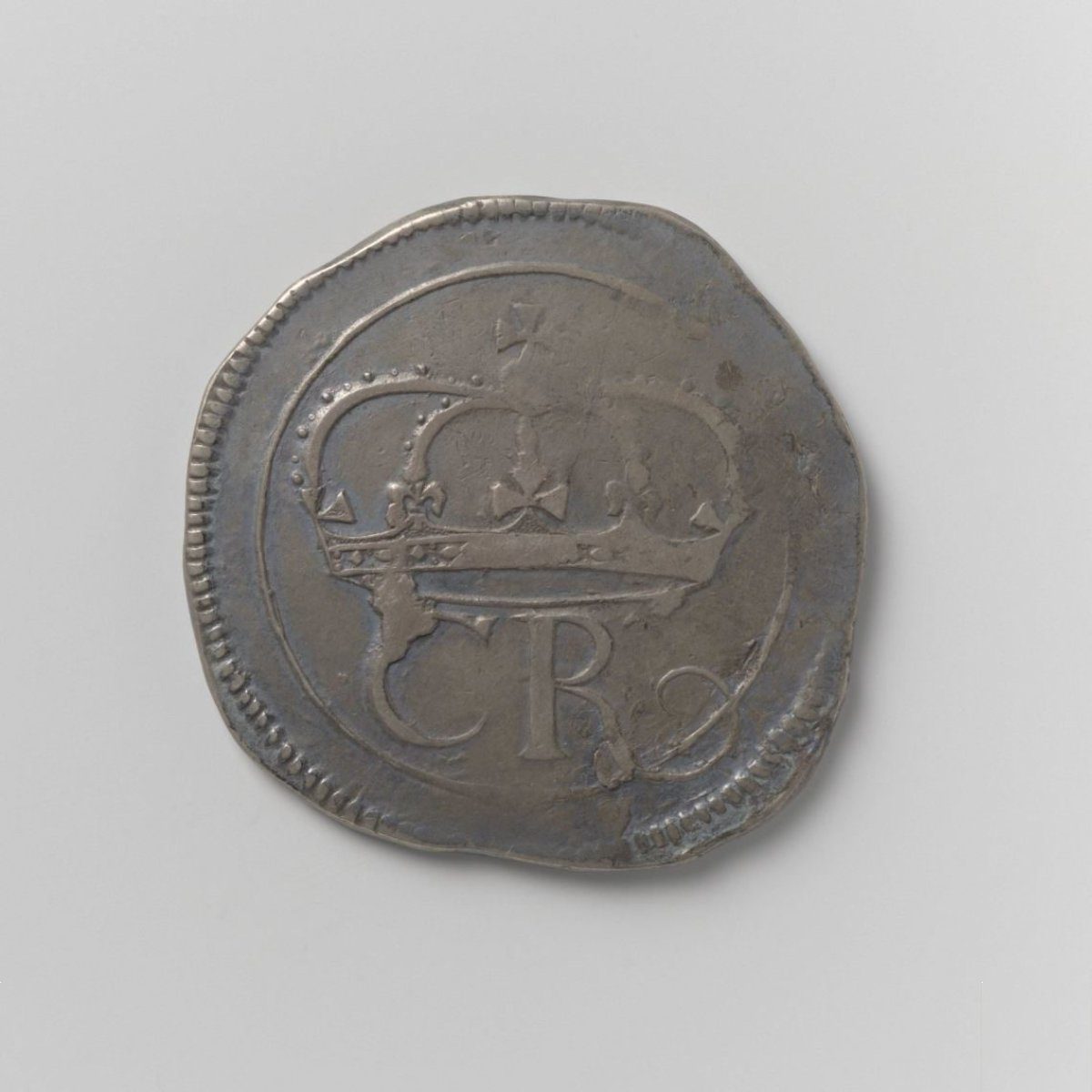
Five shillings, emergency coin of Charles I, King of England, struck in Ormonde from silver provided by the inhabitants
1643
Nearly round silver emergency coin. Obverse: crown above the letters C and R within a beaded rim. Reverse: value indication (five shillings): Roman numeral V beneath the letter S within a beaded rim. Crown. The Rijksmuseum, Amsterdam, holds this object as NG-VG-4-300; its record gives material recorded as silver (me…
Partial type record
Rijksmuseum, Amsterdam
modern coins
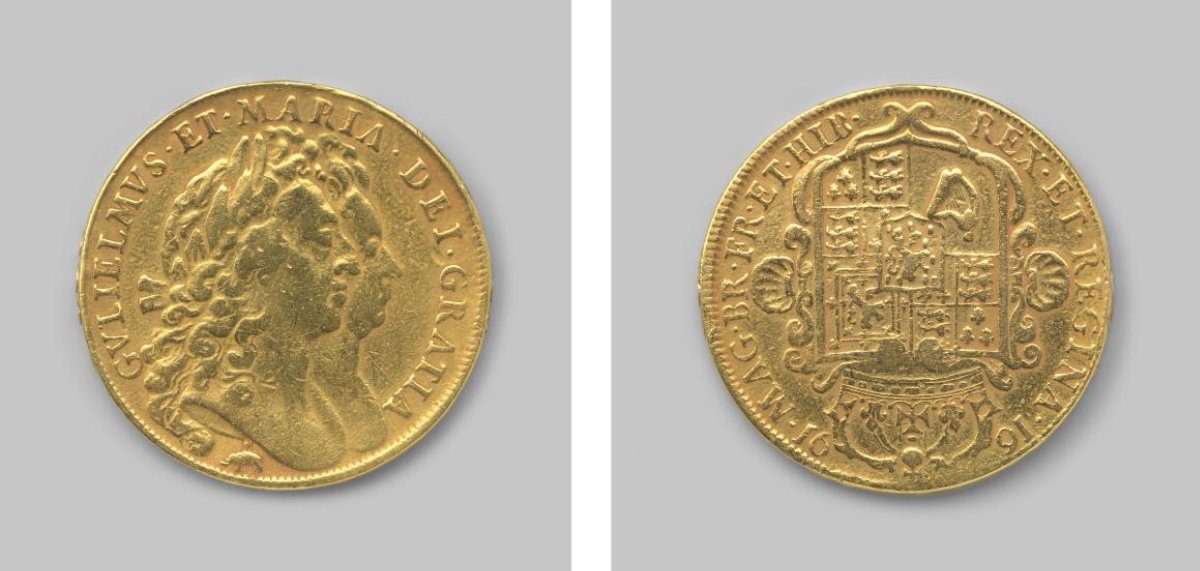
Five-guinea coin from Great Britain with the busts of King-Stadtholder William III and Mary
1691
Gold five-guinea coin from the United Kingdom, with the busts of William & Mary, from 1691, with the mark 'elephant & castle', referring to the Royal African Company, which held the trade monopoly on the West African coast, and to the provenance of the gold mined in West Africa. The Rijksmuseum, Amsterdam, holds thi…
Partial type record
Cleveland Museum of Art
modern coins
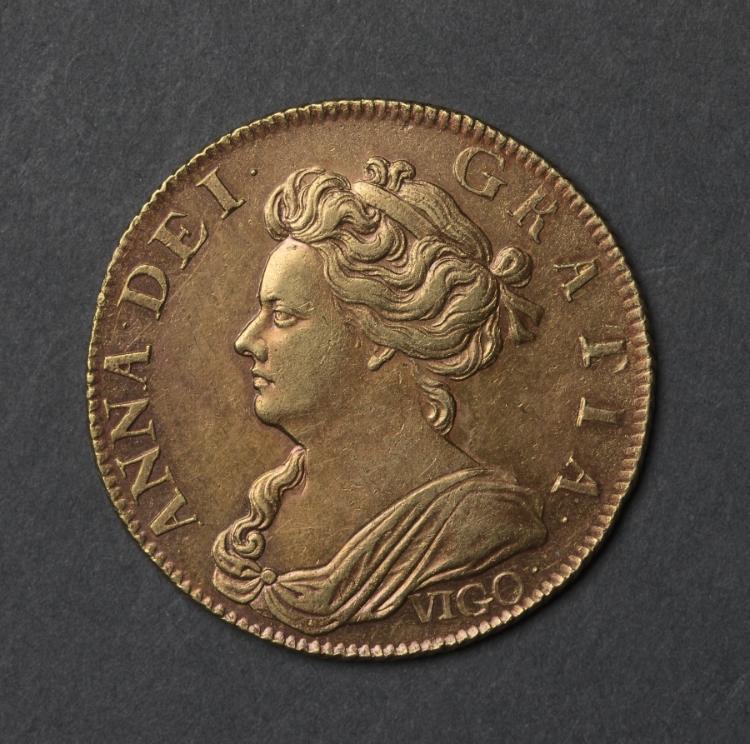
Guinea: Anne (obverse); Shields and rose (Cleveland Museum of Art 1969.204)
1703
The coinage of Anne's reign remained fairly constant being inaugurated in 1662. Before the Act of Union with Scotland (1706), the arms of England and Scotland remined separate, as shown. After the act the two arms were conjoined on one shield. The word Vigo denotes that the coins were struck from gold captured from…
Partial type record
Cleveland Museum of Art
modern coins
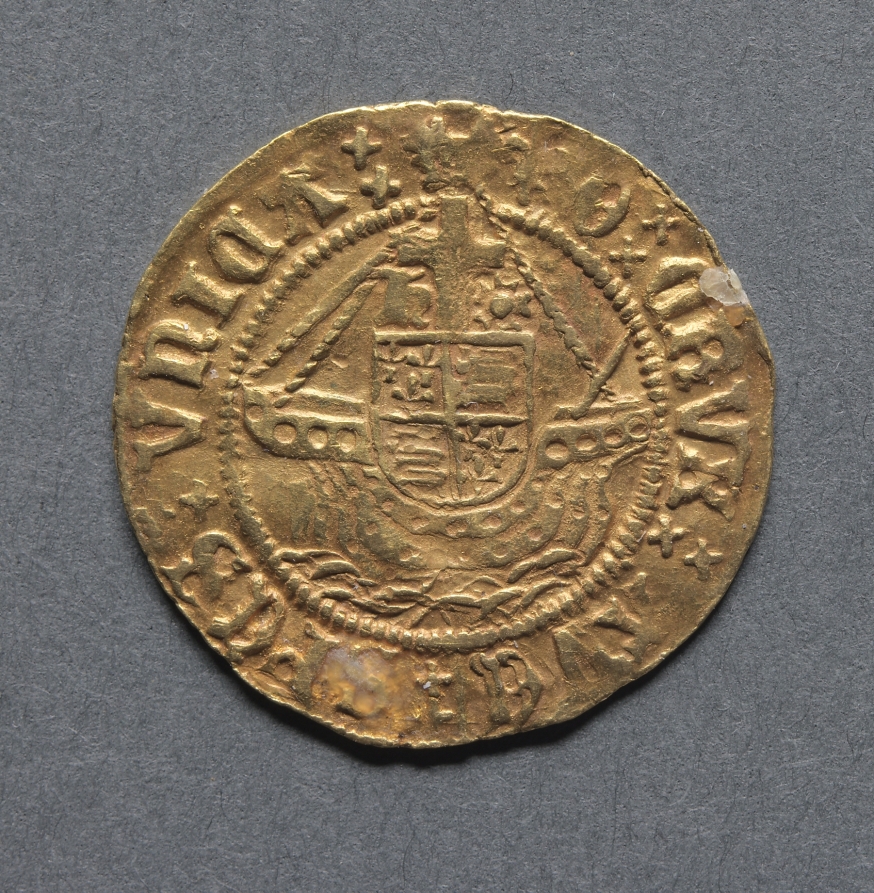
Half Angel: Angel Slaying a Dragon (obverse); Ship with Shield of Arms (Cleveland Museum of Art 1969.171)
1526–44
During his life Henry VII had accumulated enormous wealth, and it took his son, Henry VIII, until 1542 to squander it. Henry knew the English coinage had been debased in the past and did not see why it should not be debased again, this time for his personal benefit. Full debasement began officially in 1544. The ange…
Partial type record
Rijksmuseum, Amsterdam
modern coins
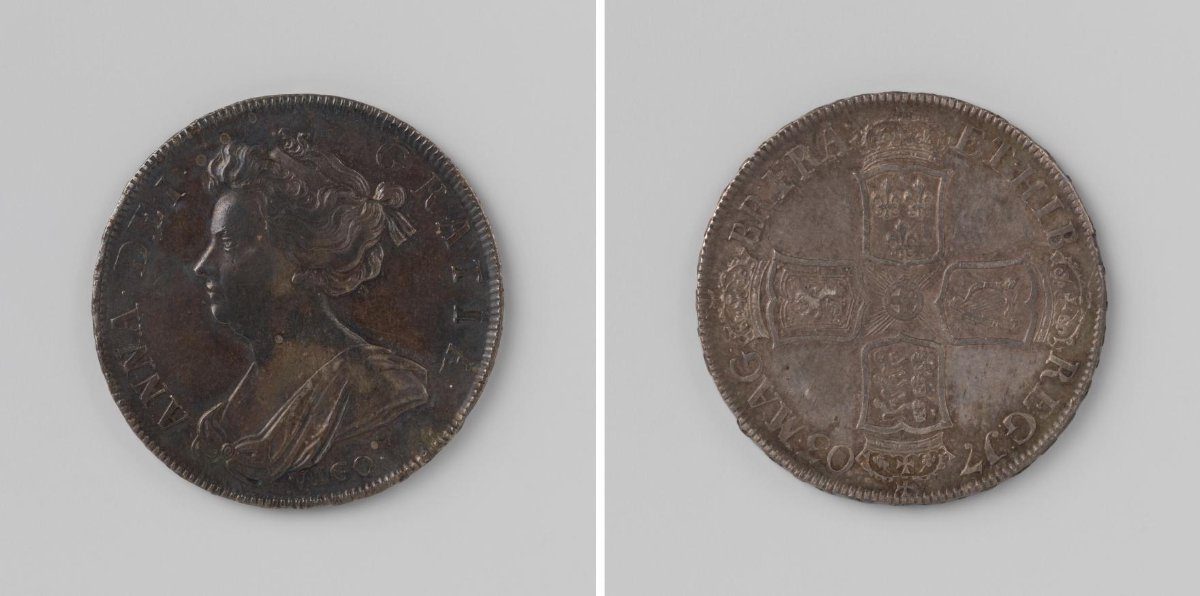
Half crown coin of Anne, Queen of England, coin struck from the silver captured in the Battle of Vigo
1703
Obverse: bust of a woman within legend. Reverse: around an English star four crowned coats of arms within legend; edge lettering. The Rijksmuseum, Amsterdam, holds this object as NG-VG-1-1861; its record gives material recorded as silver (metal); technique striking (metalworking); measurements diameter 3.3 cm x weig…
Partial type record
Rijksmuseum, Amsterdam
modern coins
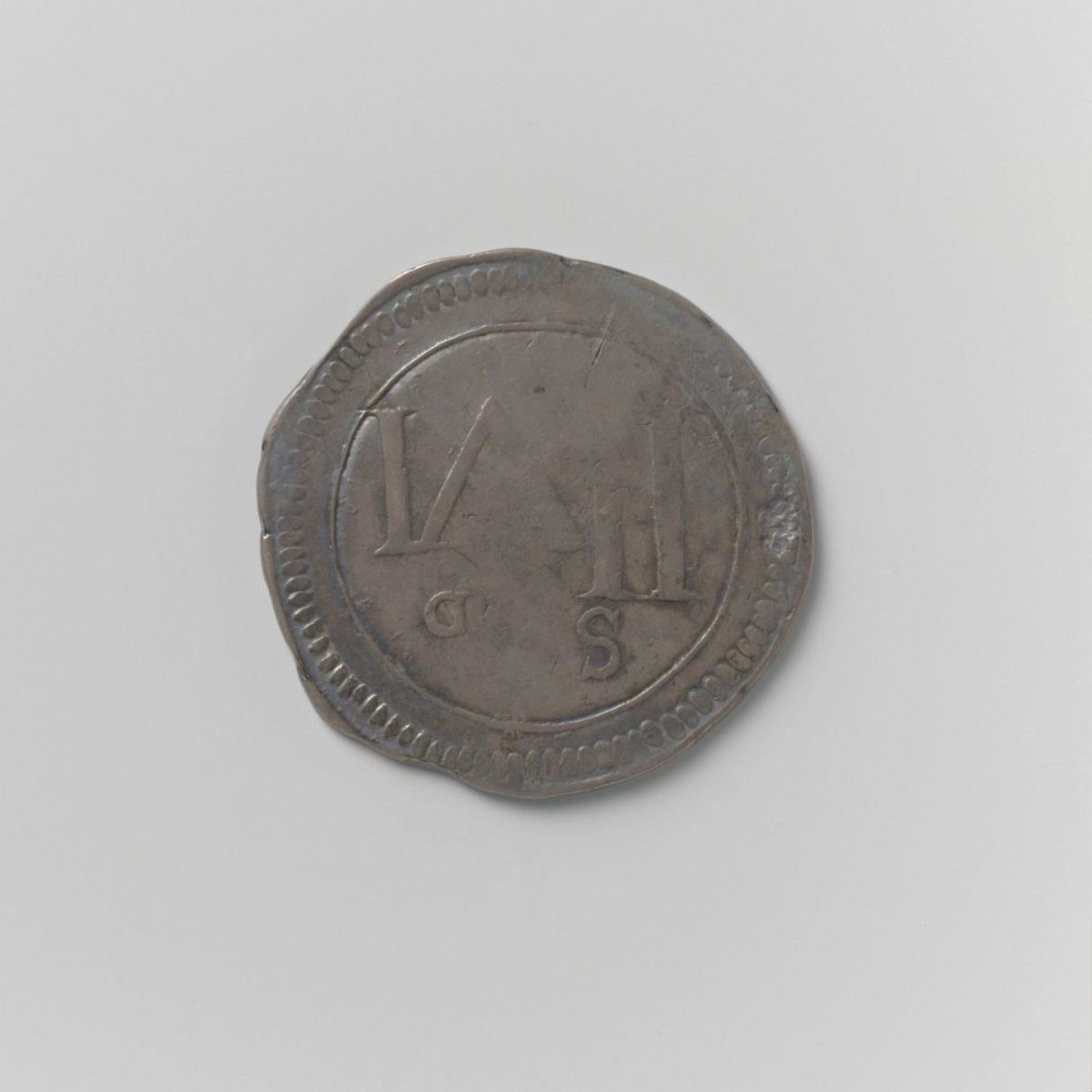
Half crown, emergency coin of Charles I, King of England, struck at Ormond from silver contributed by the residents
1643
Nearly round emergency coin. Obverse: crown above the letters C and R within a beaded border. Reverse: denomination (2 shillings, six pence), Roman numerals II and VI beneath the letters S and D within a beaded border. The Rijksmuseum, Amsterdam, holds this object as NG-VG-4-301; its record gives material recorded a…
Partial type record
Rijksmuseum, Amsterdam
modern coins
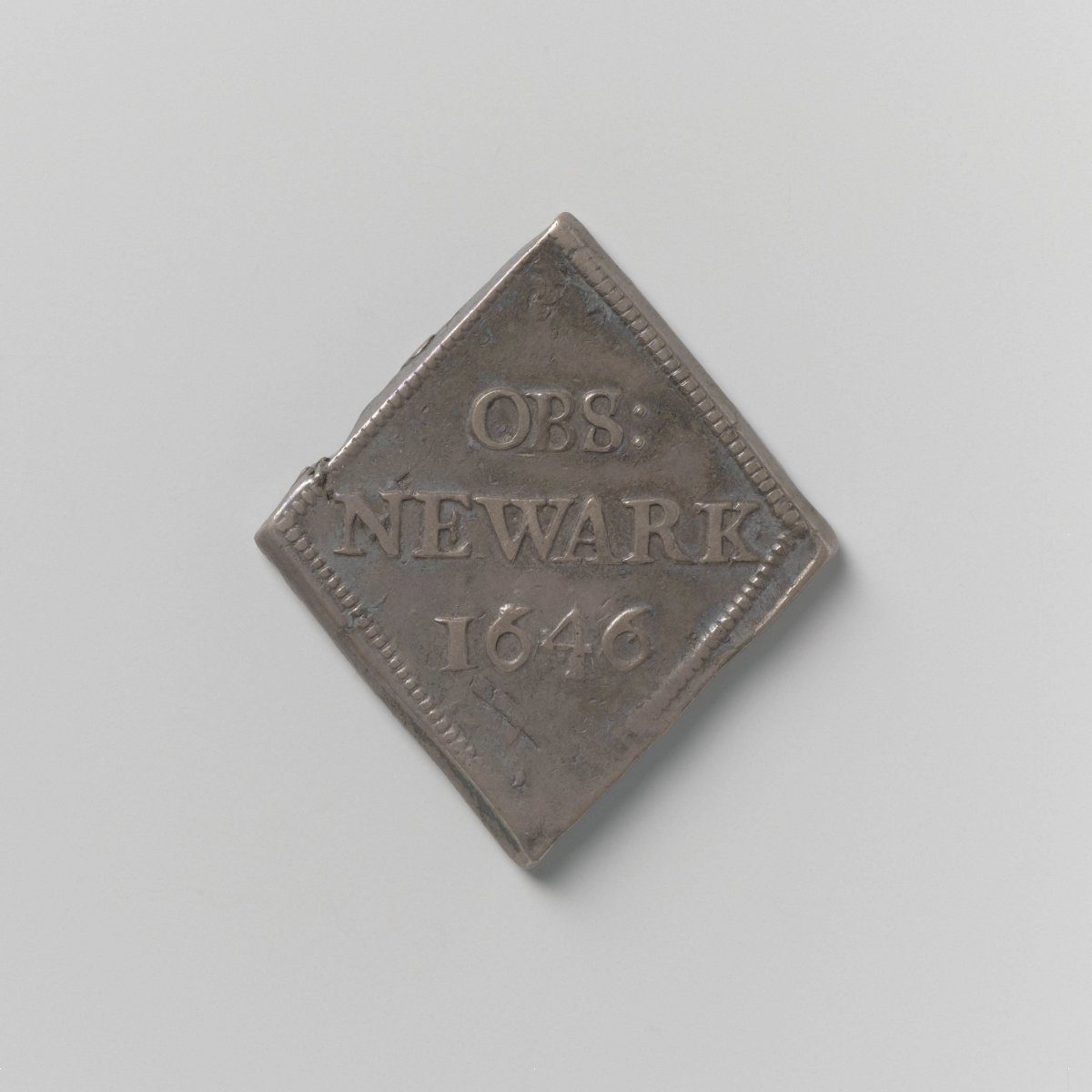
Half crown; thirty pence, emergency coin from Newark-on-Trent, struck during the siege by Parliamentarians
1646
Lozenge-shaped emergency coin. Obverse: crown between the letters C and R above the Roman numeral XXX. Reverse: inscription. The Rijksmuseum, Amsterdam, holds this object as NG-VG-4-296; its record gives material recorded as silver (metal); technique striking (metalworking); measurements height 3.6 cm x width 3.2 cm…
Partial type record
Cleveland Museum of Art
modern coins
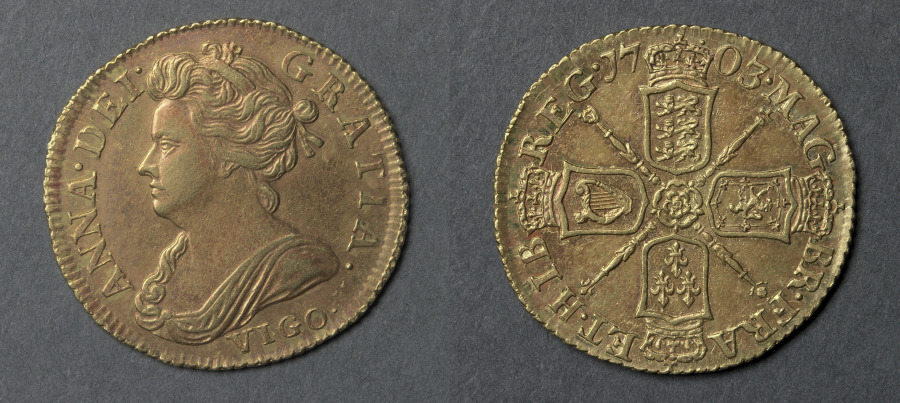
Half Guinea: Anne (obverse); Shields and Rose (Cleveland Museum of Art 1969.205)
1703
The coinage of Anne's reign remained fairly constant after the inaugural design in 1662. Before the Act of Union with Scotland (1706), the arms of England and Scotland remained separate, as shown. After the act the two arms were conjoined on one shield. The word Vigo indicates the coins were struck from gold capture…
Partial type record
Cleveland Museum of Art
modern coins
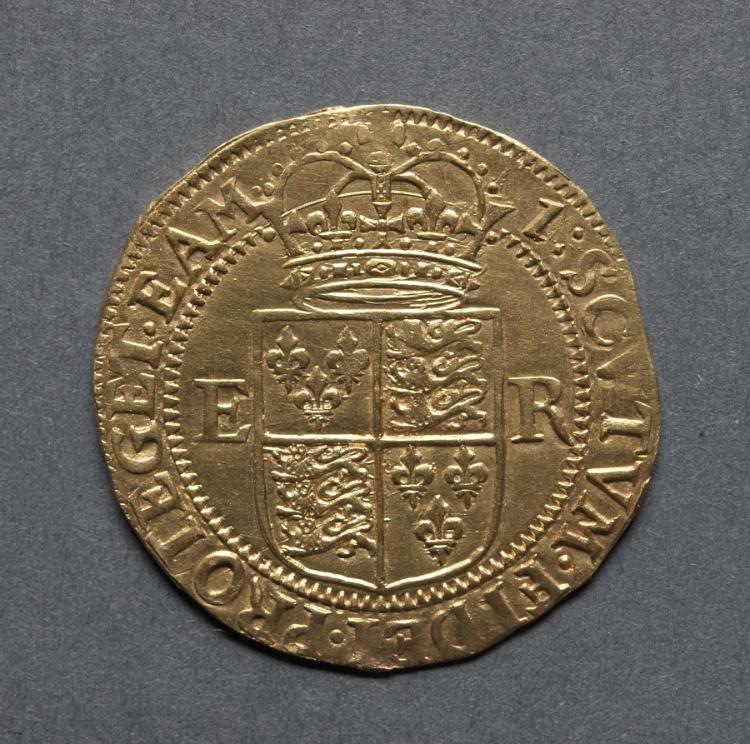
Half Pound: Elizabeth I (obverse); Crowned Shield of Arms (Cleveland Museum of Art 1969.186)
1601
The design of this piece is similar to another in the collection of Elizabeth I, 1969.184. However, the initial marks denote it was struck in 1601. Elizabeth I is shown finely dressed and around her is her abbreviated title, Elizabeth by the Grace of God, Queen of England, France and Ireland. On the reverse is the s…
Partial type record
Cleveland Museum of Art
modern coins
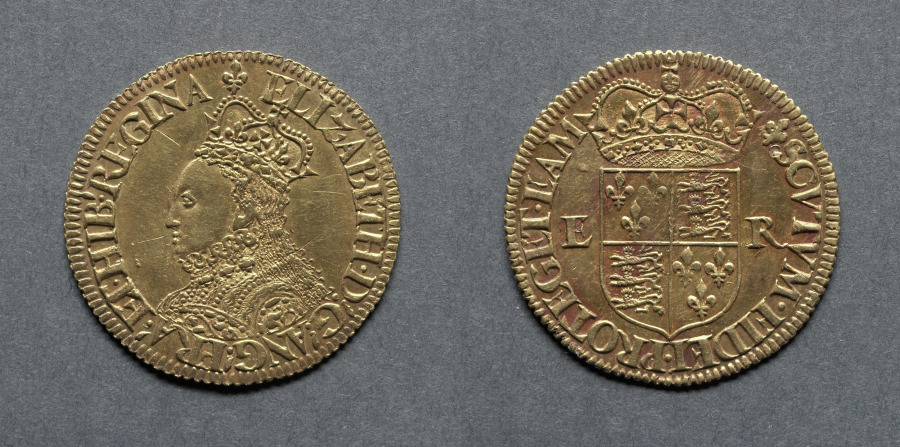
Half Pound: Elizabeth I (obverse); Crowned Shield of Arms (Cleveland Museum of Art 1969.187)
1558–1560
This piece was produced by a new process. In about 1560 an attempt was made to introduce coins made with the French screw press. The coins are called mill money, a term derived from the use of water and horse mills used to supply power. The machinery included a rolling press, driven by the mill, a cutting punch, and…
Partial type record
Rijksmuseum, Amsterdam
modern coins
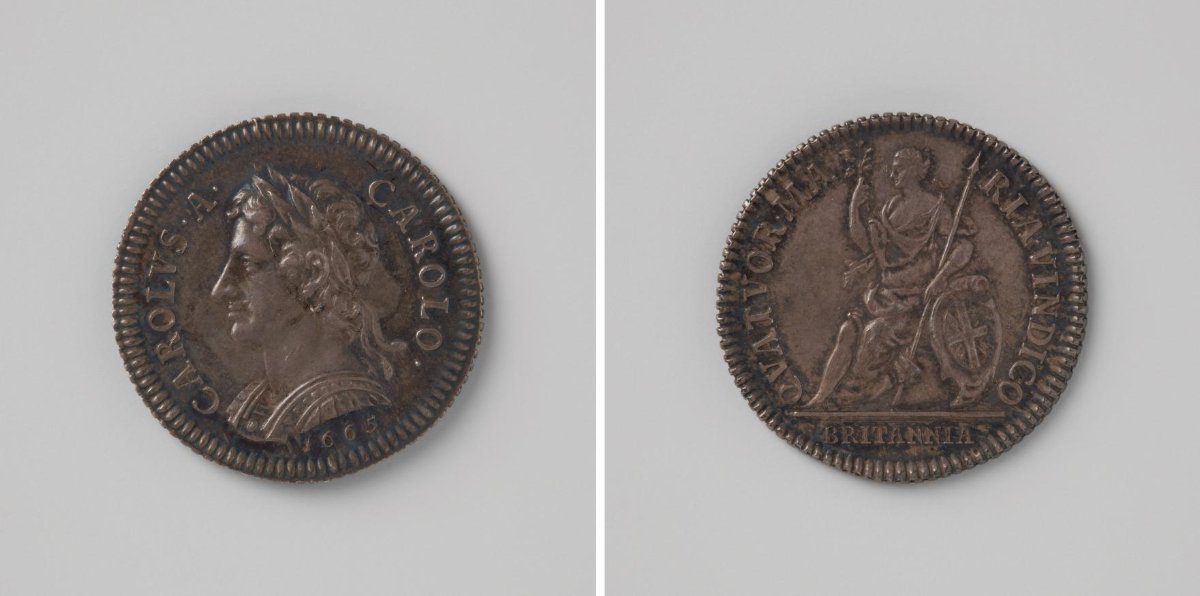
Half shilling coin of Charles II of England, ruler of the sea
1665
Obverse: bust of a man with laurel wreath within legend. Reverse: seated Britannia with shield, spear and laurel branch within legend; exergue: inscription. The Rijksmuseum, Amsterdam, holds this object as NG-VG-1-973; its record gives material recorded as silver (metal); technique striking (metalworking); measureme…
Partial type record
Cleveland Museum of Art
modern coins
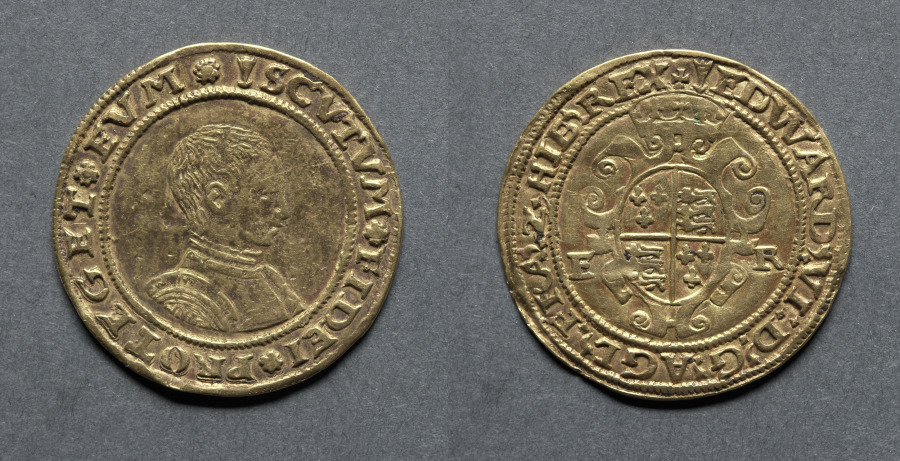
Half Sovereign: Edward VI (obverse); Crowned Royal Arms (Cleveland Museum of Art 1969.175)
1549–50
During the first coinage period, April 1547 to January 1549, debased coinage was still issued. Part of it still had the name and portrait of Henry VIII; part of it the name of Henry, but a youthful portrait; and part of it the name of Edward. The series is thus complex and some of the chronology open to doubt. In 15…
Partial type record
Cleveland Museum of Art
modern coins
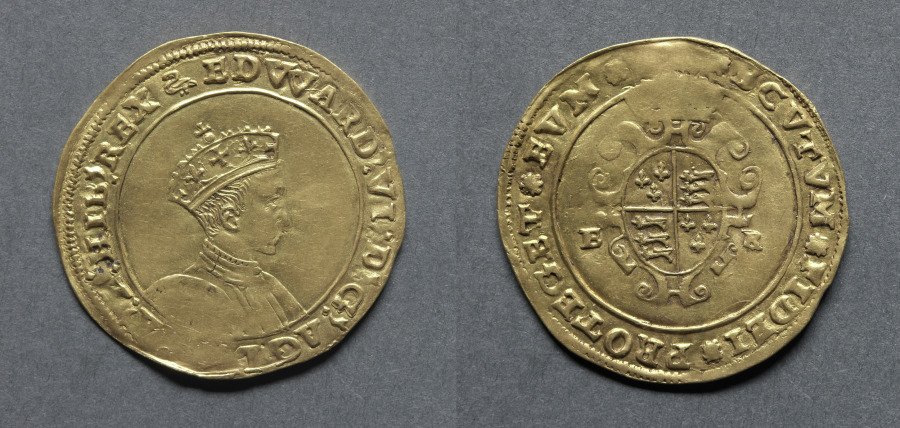
Half Sovereign: Edward VI (obverse); Crowned Royal Arms (Cleveland Museum of Art 1969.176)
1549–50
This Half Sovereign was struck at the Tower mint. Here the king is shown crowned, unlike a similar example also in the collection, 1969.175. Cleveland Museum of Art object 1969.176: Half Sovereign: Edward VI (obverse); Crowned Royal Arms, 1549–50. England, Edward VI, 1547-1553. Gold; diameter: 2.9 cm (1 1/8 in.). In…
Partial type record
Cleveland Museum of Art
modern coins
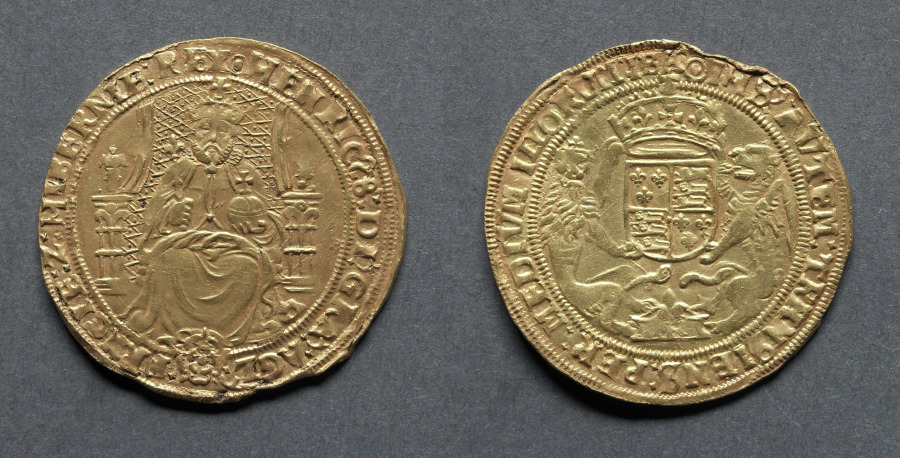
Half Sovereign: Henry VIII (obverse); Crowned Arms (Cleveland Museum of Art 1969.174)
1544–47
In this third coinage, a new portrait of the king appears. There is now an attempt to make the portrait lifelike, and we see the king fat and middle-aged compared to previous coinage such as 1969.170. Cleveland Museum of Art object 1969.174: Half Sovereign: Henry VIII (obverse); Crowned Arms (reverse), 1544–47. Engl…
Partial type record
Cleveland Museum of Art
modern coins
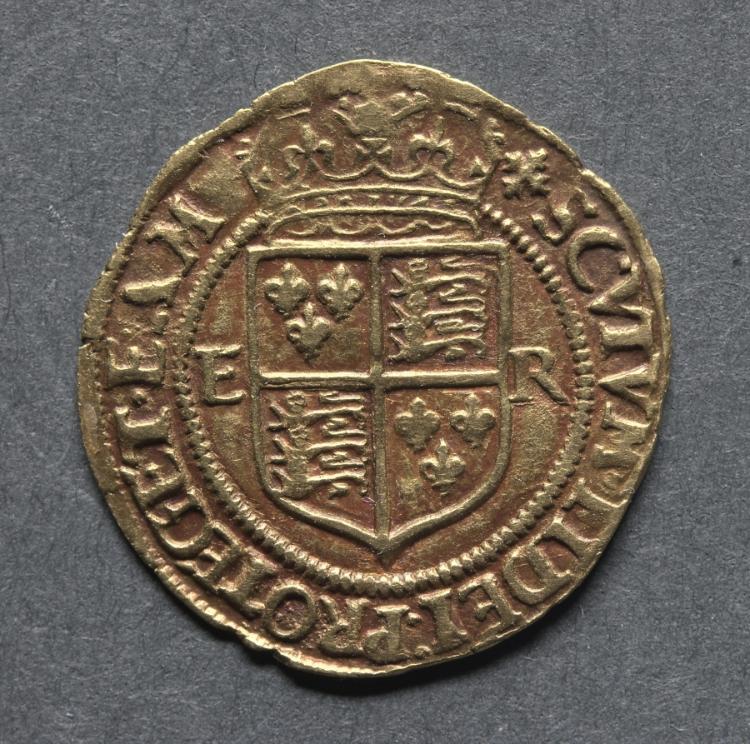
Halfcrown: Elizabeth I (obverse); Crowned Shield of Arms (Cleveland Museum of Art 1969.182)
1560–61
The portrait of the queen is very well executed. There are two types of this coin that feature a bust of the queen. They vary considerably, this one being less ornate than the second, 1969.184. Elizabeth I chose a Latin phrase, SCVTVM FIDEI PROTEGET EAM, translated as The Shield of Faith Shall Protect Her to appear…
Partial type record
Cleveland Museum of Art
modern coins
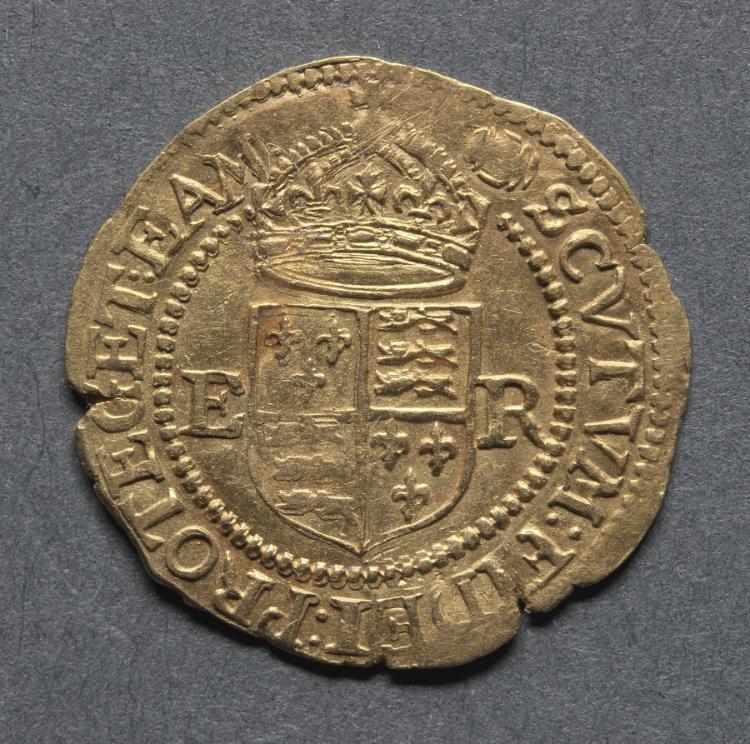
Halfcrown: Elizabeth I (obverse); Crowned Shield of Arms (Cleveland Museum of Art 1969.184)
1592–95
This is the second type of gold halfcrown, showing the queen in ornate style. She often wore elaborate and luxuriously decorated dresses, many of them heavily bejeweled as seen here. The mint mark, visible just above the crown on the reverse, is a tun or barrel. This helps identify the date the coin was issued as th…
Partial type record
Rijksmuseum, Amsterdam
modern coins
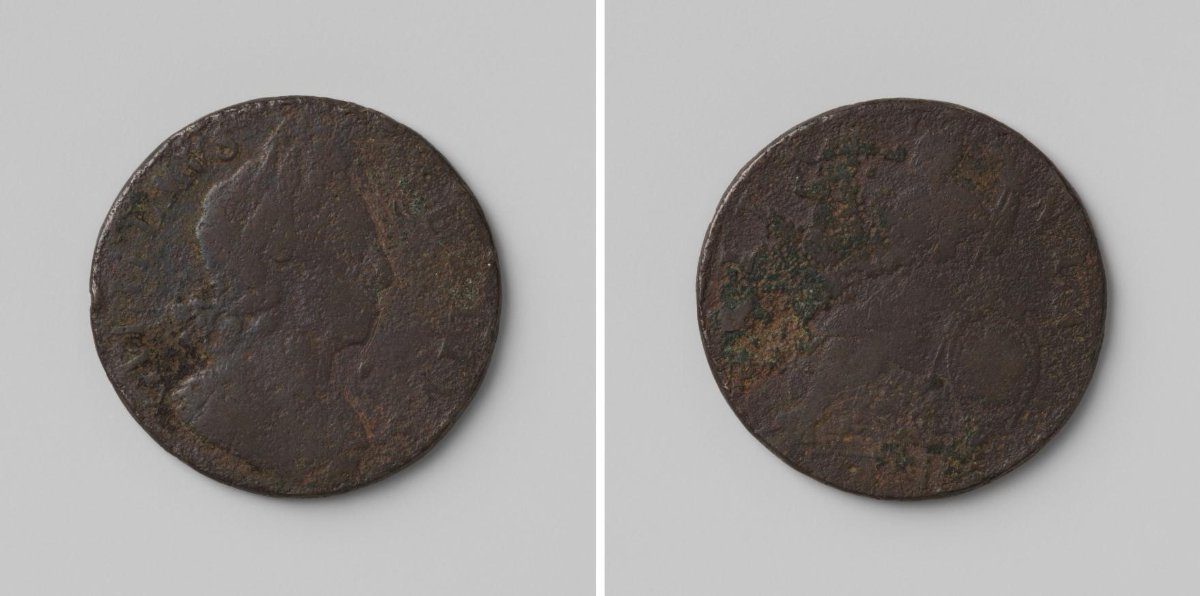
Halfpenny of William III, King of England
1699 - 1701
Copper coin. Obverse: bust of a man with laurel wreath facing right within circumscription. Reverse: helmeted Britannia with spear and shield within circumscription; exergue: illegible date. The Rijksmuseum, Amsterdam, holds this object as NG-VG-14-21-A; its record gives material recorded as copper (metal); techniqu…
Partial type record
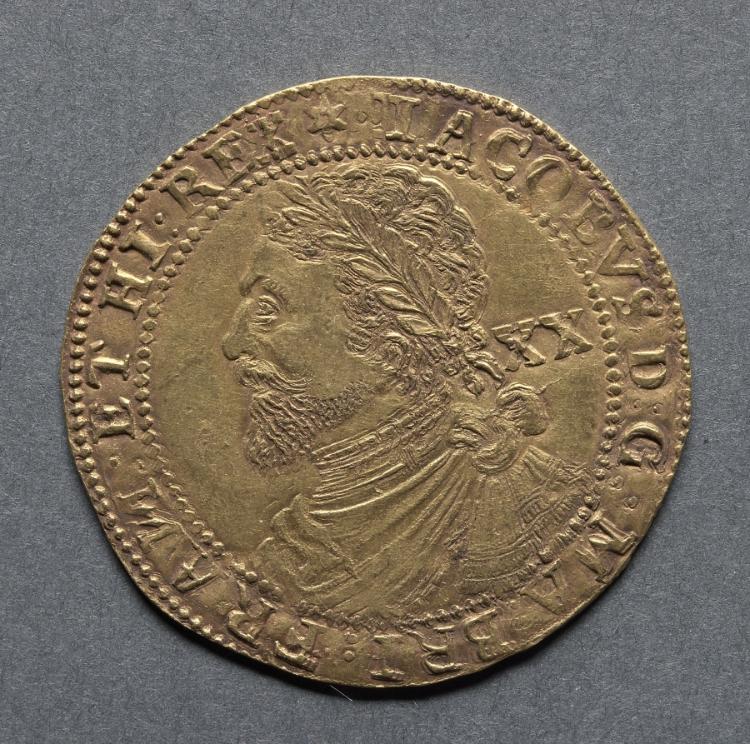
Cleveland Museum of Art
modern coins
Laurel: James I (obverse); Shield of Arms (Cleveland Museum of Art 1969.191)
1619–1620
In 1611 the value of all gold coins, which had previously been down-rated, was now raised by ten percent. Previously the gold coins had circulated at inconvenient fractional values, such as 33 shilling; 16 shillings and 6 pence; 4 shillings and 4 pence three farthings; and so forth. To obviate this a new unit of 20…
Partial type record
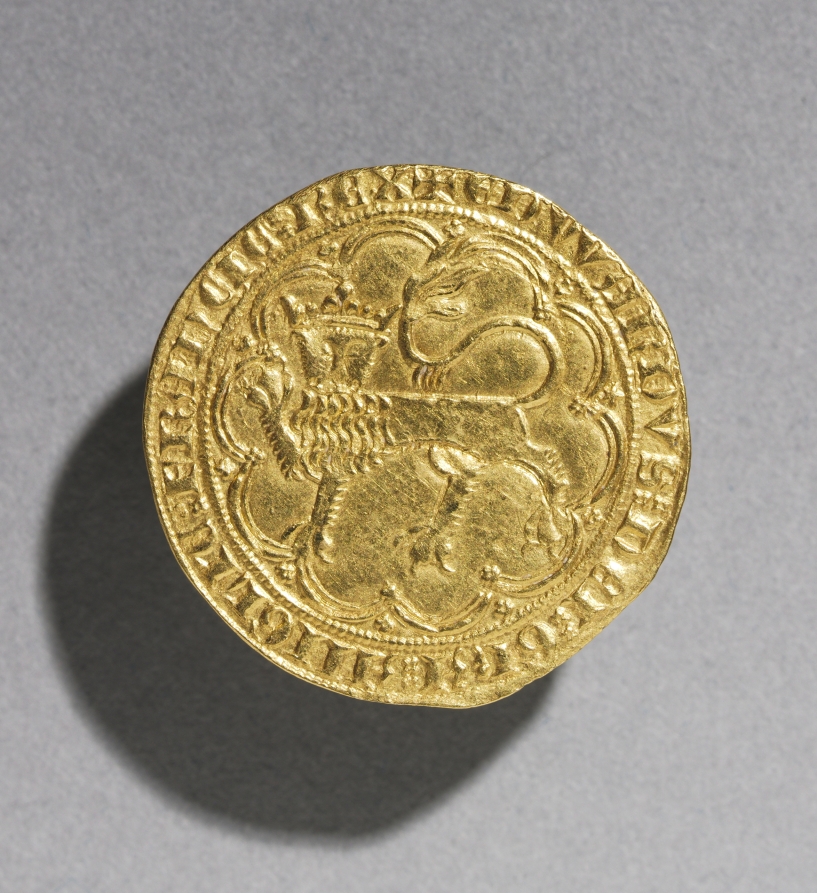
Cleveland Museum of Art
modern coins
Leopard d'Or of Edward III of England (Cleveland Museum of Art 1964.373)
1327–1377
Known as a "Golden Leopard" because of the crowned leopard on one side, this gold coin was minted for Edward III, king of England and France. Cleveland Museum of Art object 1964.373: Leopard d'Or of Edward III of England, 1327–1377. England, Anglo-Gallic, Gothic period, 14th century. Gold; diameter: 3.4 cm (1 5/16 i…
Partial type record
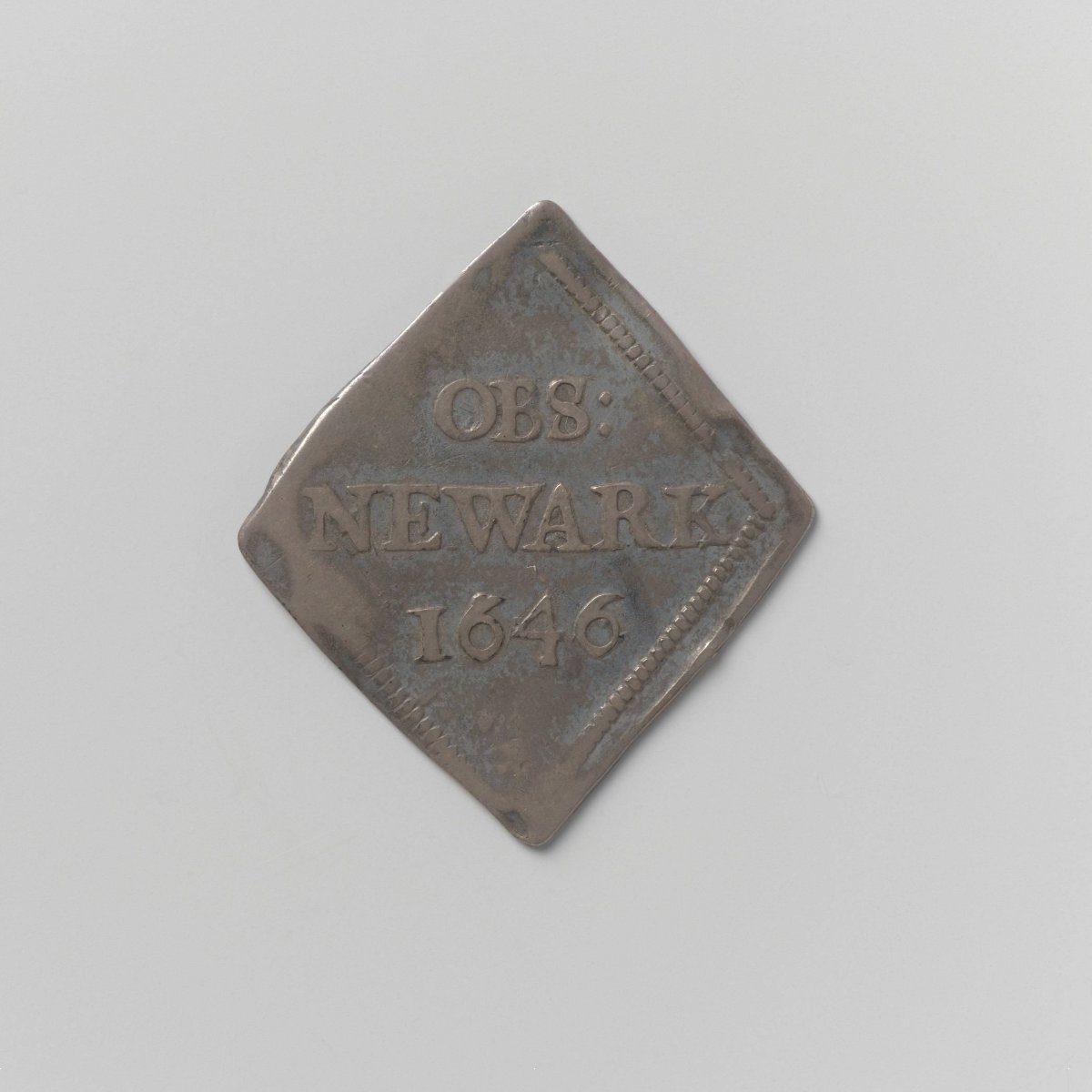
Rijksmuseum, Amsterdam
modern coins
Nine pence, siege coin from Newark-on-Trent, struck during the siege by Parliamentarians
1646
Lozenge-shaped siege coin. Obverse: crown between the letters C and R above the Roman numeral IX. Reverse: inscription. Nine pence. The Rijksmuseum, Amsterdam, holds this object as NG-VG-4-298; its record gives material recorded as silver (metal); technique striking (metalworking); measurements height 3.6 cm x width…
Partial type record
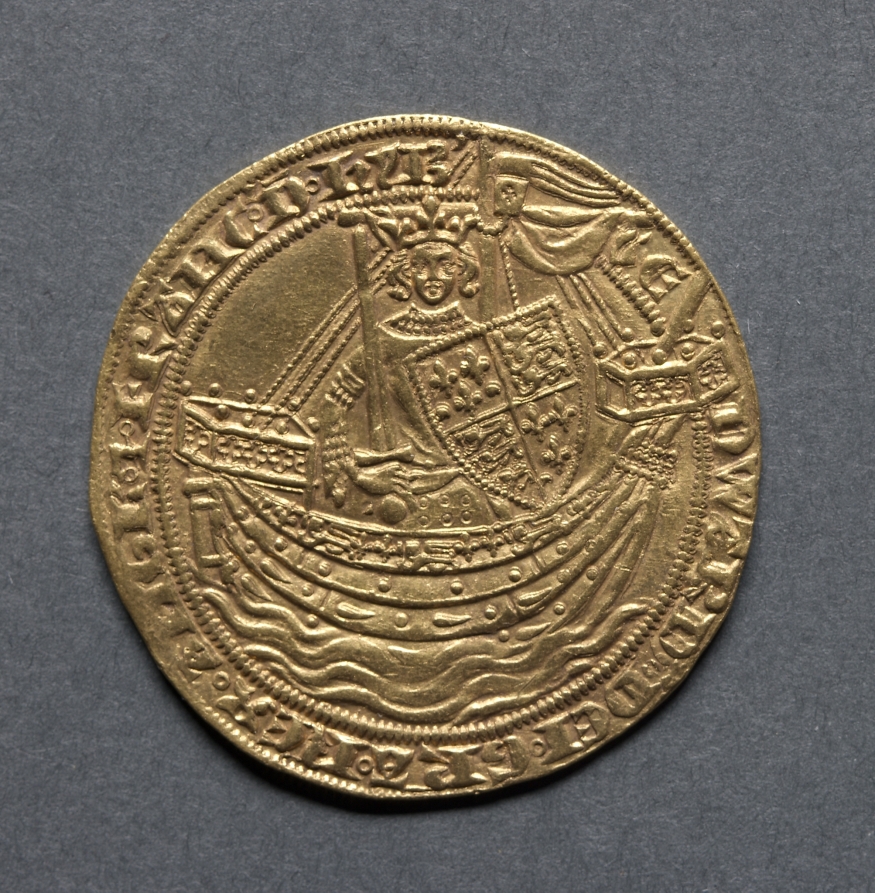
Cleveland Museum of Art
modern coins
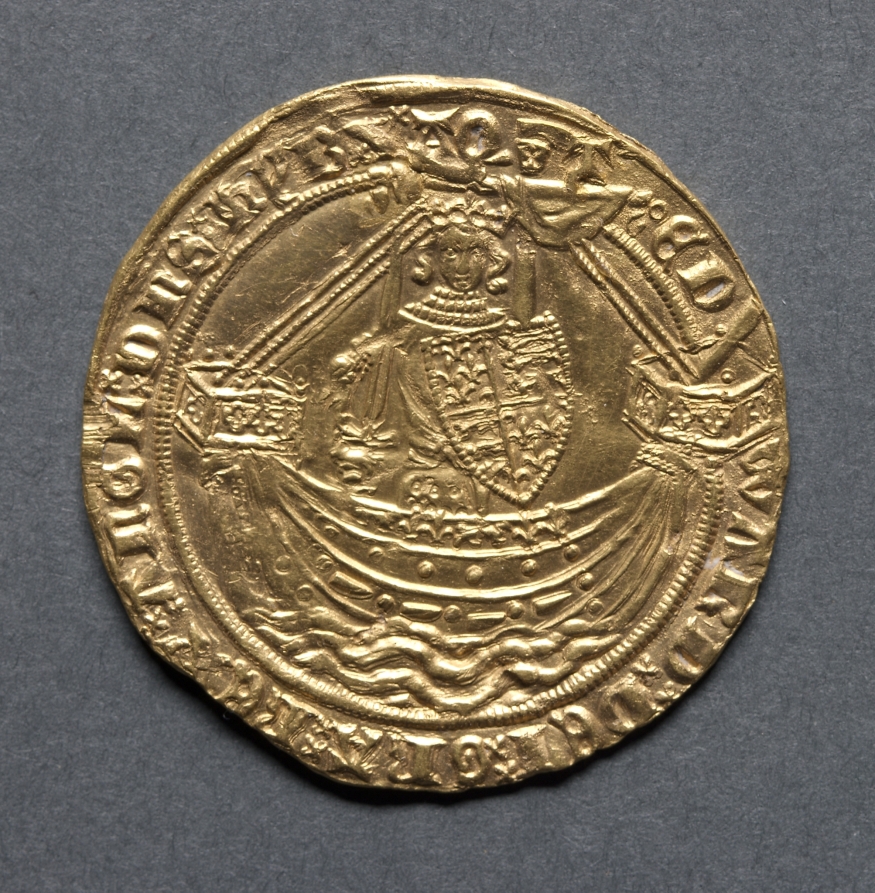
Noble: Edward III Standing in Ship with Shield of Arms (obverse); Ornamental Cross with Lis Terminals (Cleveland Museum of Art 1969.160)
1351
Bearing in mind the primitive tools and methods of production in the 1300s, this noble, and other similar pieces are remarkable for their beauty and fineness of detail. In all the indentures of this period a clause was inserted providing for the trial of the Pyx. The Master of the Mint was supposed to place in the P…
Partial type record
Cleveland Museum of Art
modern coins
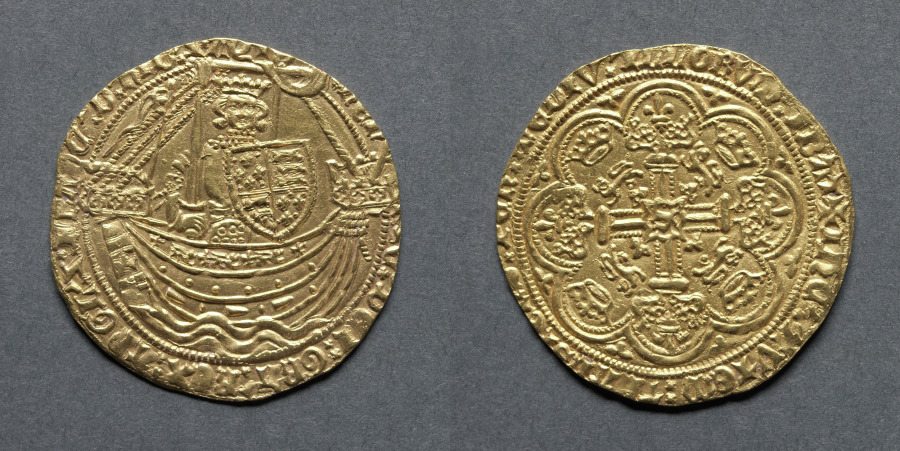
Noble: Edward III Standing in Ship with Shield of Arms (obverse); Ornamental Cross with Lis Terminals (Cleveland Museum of Art 1969.161)
1363–69
Part of the "Treaty Series" of coins, this is a reference to the Treaty of Bretigni, signed between England and France on May 8, 1360. It was negotiated because of the continued successes of Edward III in his continental wars. Among many other territorial points agreed, the English renounced their pretensions to the…
Partial type record
Cleveland Museum of Art
modern coins
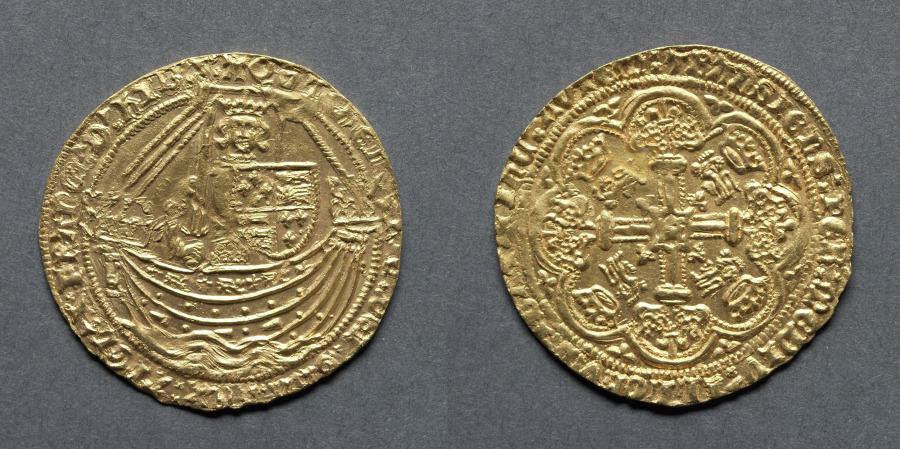
Noble: Henry IV Standing in Ship with Shield of Arms (obverse); Ornamental Cross with Lis Terminals (Cleveland Museum of Art 1969.163)
1399–1412
Of them three are in the British Museum, one with the American Numismatic Society, and one in the Norweb collection, this specimen. Classified as part of the "heavy coinage series," refers to the economic state of England at this period. With the ascension of Henry IV, the first king of the House of Lancaster, an ec…
Partial type record
Cleveland Museum of Art
modern coins
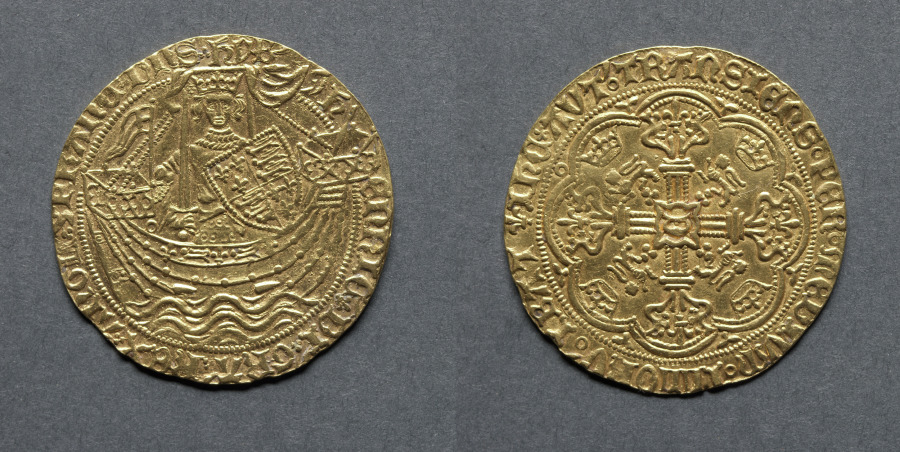
Noble: Henry V in Ship with Shield of Arms (obverse); Ornamental Cross with Lis Terminals (Cleveland Museum of Art 1969.164)
1413–22
For a considerable time it was impossible to determine which coins belonged to the last part of the reign of Henry IV and which to the first part of the reign of Henry V. However the finding of a hoard of coins in 1929, which contained 63 nobles, resulted in a more correct classification. The importance of finding b…
Partial type record
Cleveland Museum of Art
modern coins
Noble: Henry VI in Ship with Shield of Arms (obverse); Ornamental Cross with Lis Terminals (Cleveland Museum of Art 1969.165)
1422–61
The Nobles of Henry VI were very much like those of the previous reign. The system of varying the stops, as annulets, pinecones, mascles, and so forth was introduced to help simplify the changes of privy marks, over 150 which helped identify the coin and where it was minted, which were required for the king's long r…
Partial type record
Cleveland Museum of Art
modern coins
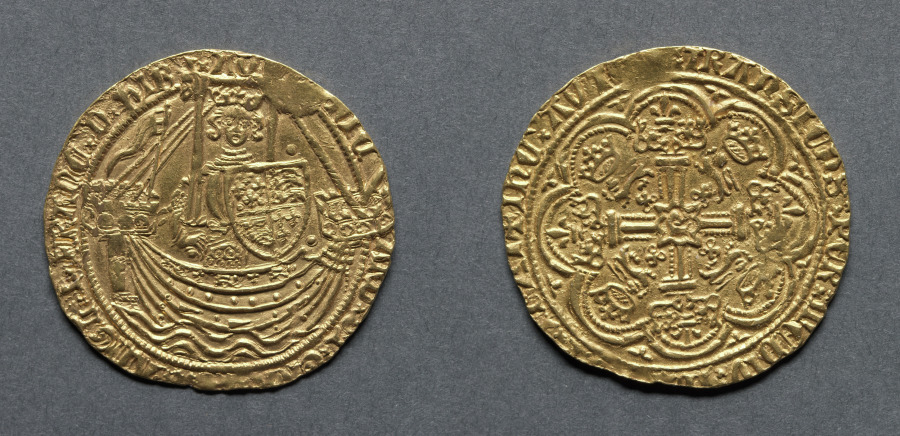
Noble: Richard II Standing on Ship with Shield of Arms (obverse); Ornamental Cross with Lis Terminals (Cleveland Museum of Art 1969.162)
1377–1399
This type of coin is very similar to that of the last right but a flag or pennant has appeared on the stern-castle of the ship. This signifies that the piece was struck in the Calais mint, then, and for 180 years to come, an English possession. There are three other points of interest in the Nobles of this period. F…
Partial type record
Cleveland Museum of Art
modern coins
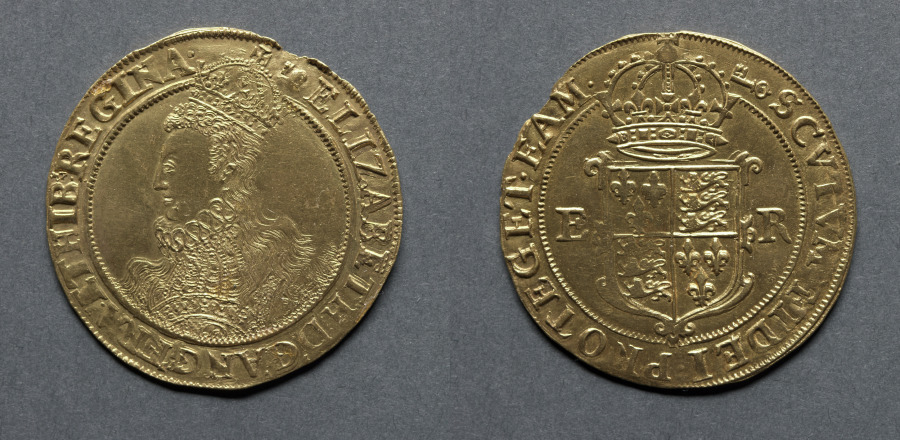
Pound: Elizabeth I (obverse); Crowned Shield of Arms (Cleveland Museum of Art 1969.185)
1595–98
For a long time all Elizabethan gold was considered as one series, but now it is divided into three, in accordance with who was in charge of the Tower mint and in accordance with the sequence of initial marks. On the reverse the initial mark is a key and can be seen just before the start of the inscription. On the o…
Partial type record
Cleveland Museum of Art
modern coins
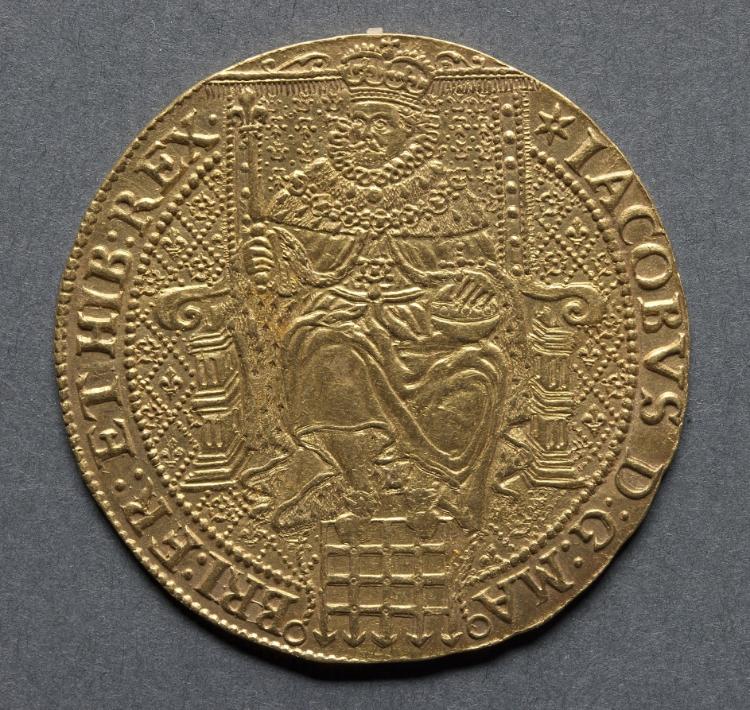
Rose Ryal: James I (obverse); Shield of Arms (Cleveland Museum of Art 1969.190)
1619–20
This gold coin comes from the third period (1619–25) of coinage of King James I of England and features a crowned shield surrounded by roses and lions on the reverse. This is the last medieval design of the king enthroned, an excellent example of the fine designs that the ancient craftsmen managed to produce on hand…
Partial type record
Cleveland Museum of Art
modern coins
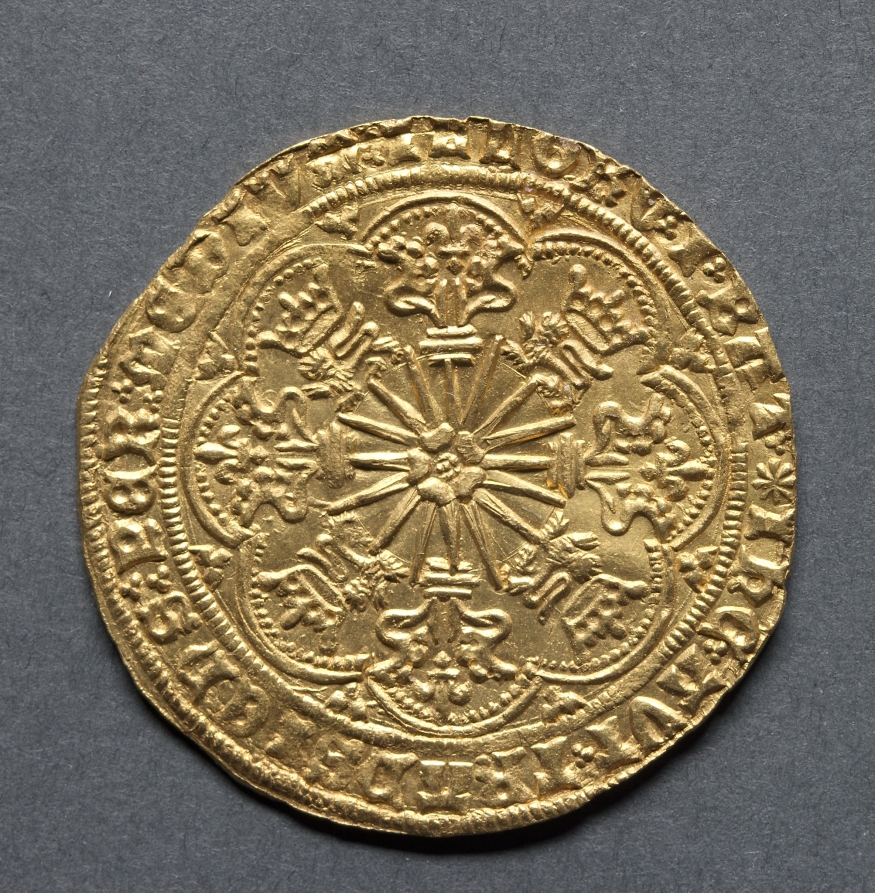
Ryal: Edward IV in Ship with a Shield of Arms and Rose (obverse); Sun with Fleurs (Cleveland Museum of Art 1969.166)
1464/5–70
The first and second reigns of Edward IV, who was restored to the throne, were a result of the dynastic civil war between the houses of York and Lancaster, usually known as the Wars of the Roses. The fighting flared up sporadically from 1455 to 1485. With the accession of Edward IV the gold supply was almost nil and…
Partial type record
Cleveland Museum of Art
modern coins
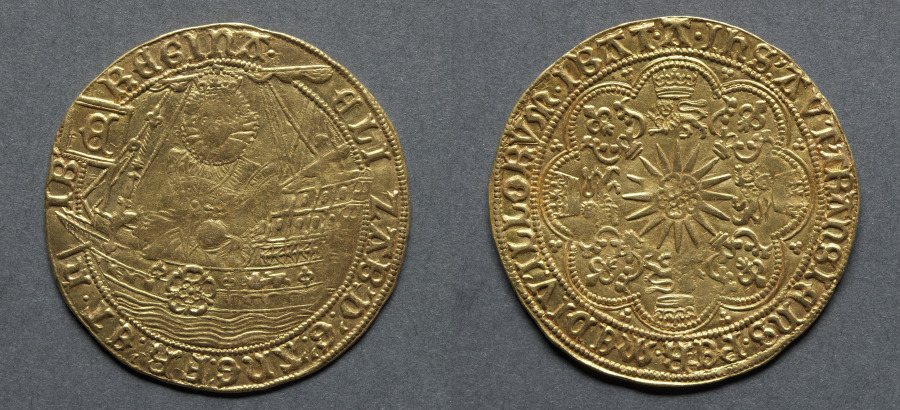
Ryal: Elizabeth I in Ship (obverse); Rose over Radiate Sun (Cleveland Museum of Art 1969.183)
1583–84/85
The figure of the queen is full of minute detail. Elizabeth I is shown sailing on a ship; she holds an orb and scepter. A rose appears on the hull of the ship and an E on the banner located on the bow. Produced at the climax of her reign, the design was chosen to demonstrate England's superior naval power and coloni…
Partial type record
Rijksmuseum, Amsterdam
modern coins
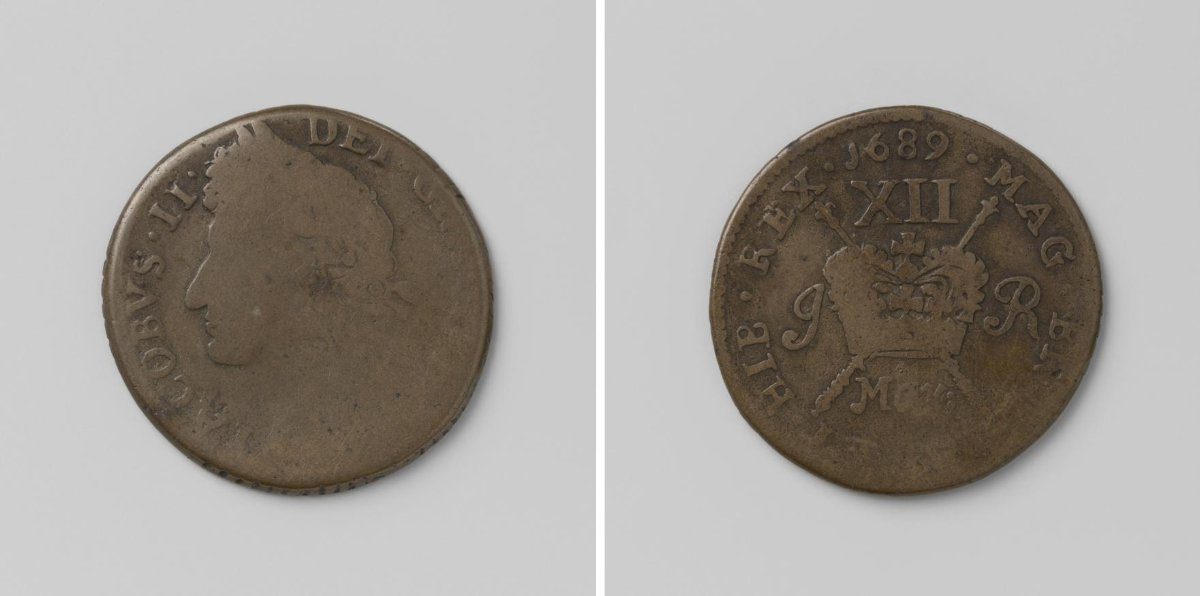
Shilling, Emergency Coin of James II, King of England, from March 1689
1689-03
Obverse: bust of a man with laurel wreath within legend. Reverse: crown pierced by two crossed scepters between the monogram of the letters J and R; above the crown Roman numeral XXX, below the crown inscription "Mar: " within legend. The Rijksmuseum, Amsterdam, holds this object as NG-VG-4-386; its record gives mat…
Partial type record
Rijksmuseum, Amsterdam
modern coins
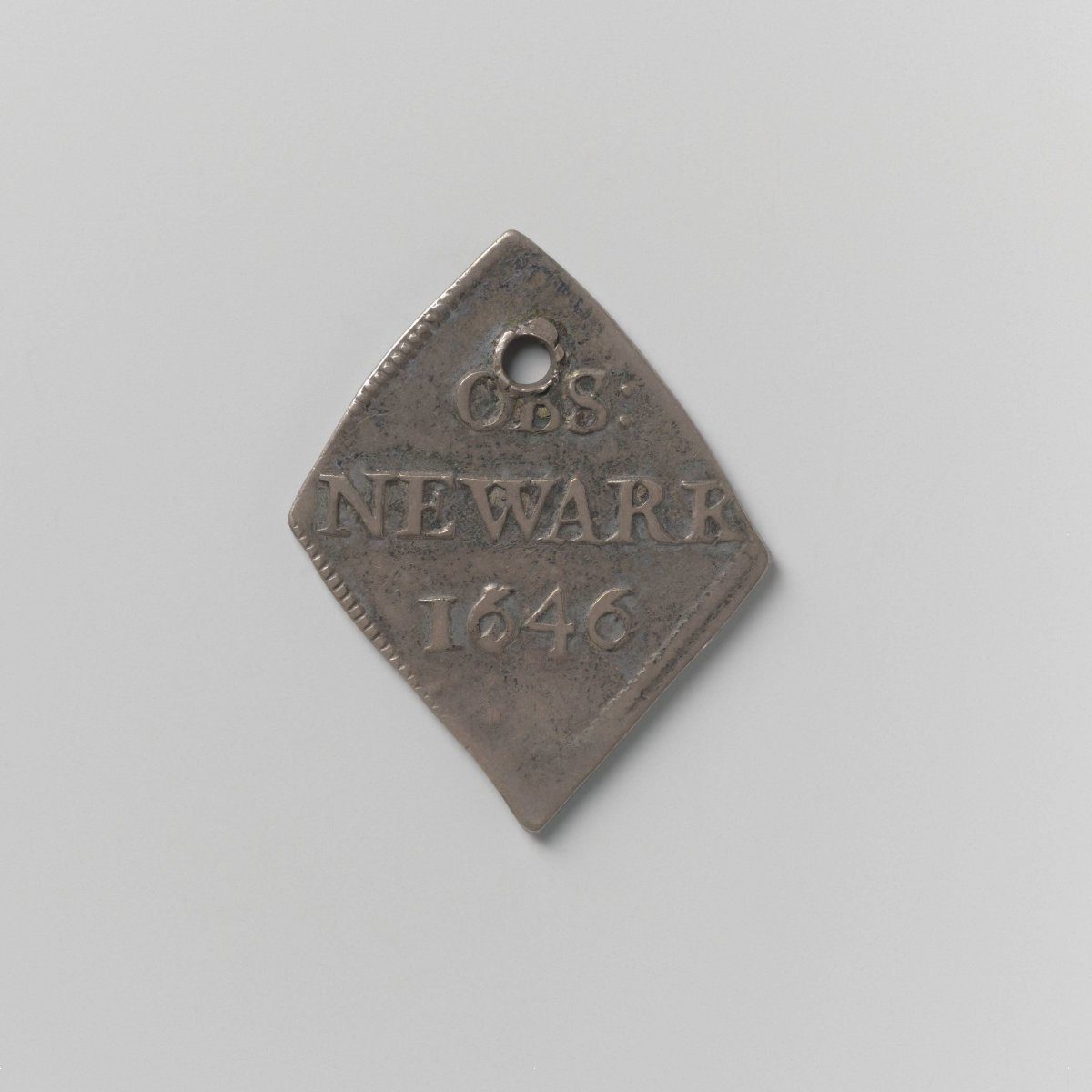
Shilling; twelve pence, emergency coin from Newark-on-Trent, struck during the siege by Parliamentarians
1646
Lozenge-shaped emergency coin pierced with a hole. Obverse: crown between the letters C and R above the Roman numeral XII. Reverse: inscription. The Rijksmuseum, Amsterdam, holds this object as NG-VG-4-295; its record gives material recorded as silver (metal); technique striking (metalworking); measurements height 3…
Partial type record
Rijksmuseum, Amsterdam
modern coins
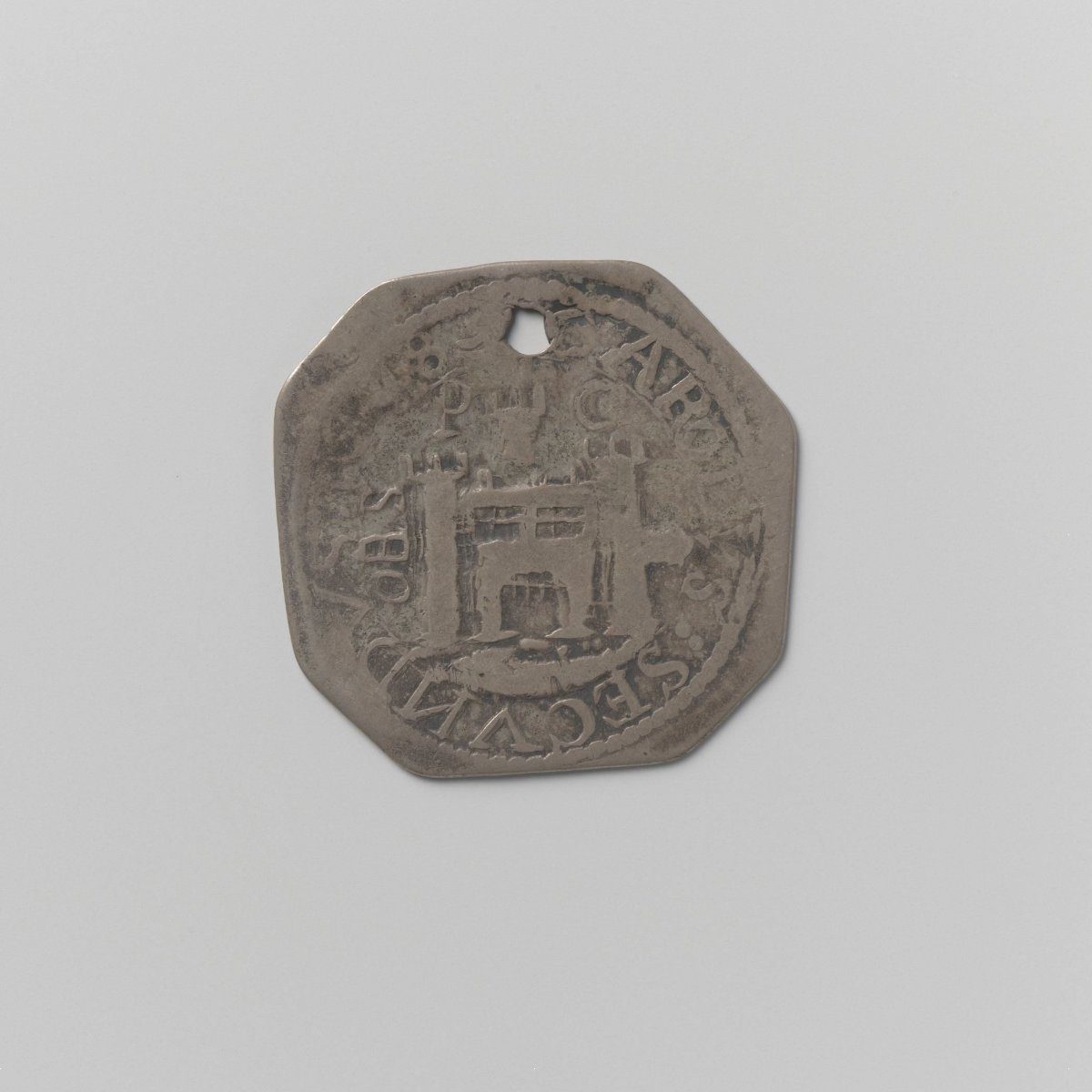
Shilling; twelve pence, emergency coin from Pontefract, from the siege by Oliver Cromwell
1648
Octagonal emergency coin with a hole in it. Obverse: in a circular punch: crown above letters C and R within circumscription and beaded rim. Reverse: castle with three towers; on the upper tower a flag between letters P and C; to the right of the castle an inscription, to the left the barrel of a cannon within circu…
Partial type record