Catalogue
Ancient Coins
Greek, Roman, Byzantine, Celtic, Persian, Indian, Chinese and other pre-medieval coinages.
Catalogue entries (3,128)
Filter by era, country, maker or material2,929–2,976 of 3,128 entries
Cleveland Museum of Art
ancient coins
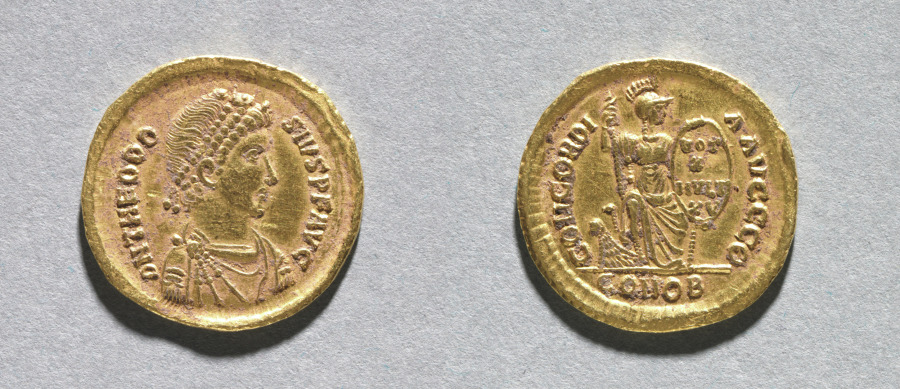
Solidus of Theodosius I the Great (Cleveland Museum of Art 1968.52)
383–88 CE
The coins shown here include the solidus, the basic gold coin of 24 karats; the tremissis, a gold coin of one-third the weight and value of the solidus; and the nomisma, which in the 10th century replaced the solidus as the standard gold coin. Cleveland Museum of Art object 1968.52: Solidus of Theodosius I the Great…
Partial type record
Cleveland Museum of Art
ancient coins
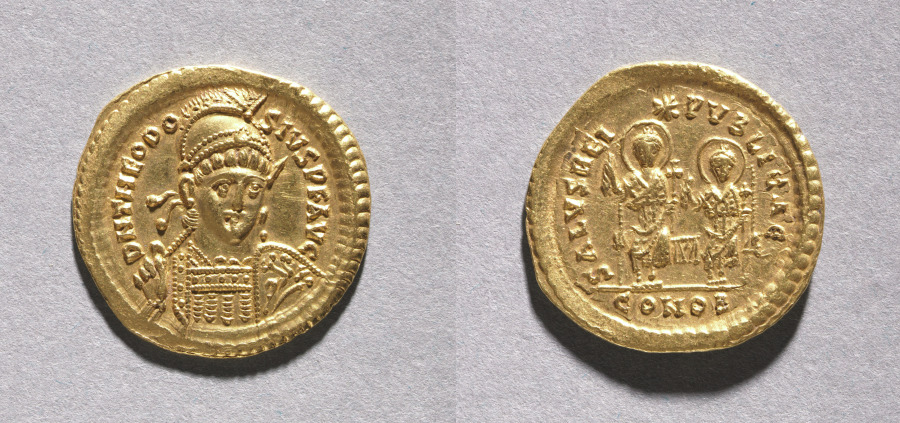
Solidus of Theodosius II and Valentinian III (Cleveland Museum of Art 1968.54)
408–425 CE
The coins shown here include the solidus, the basic gold coin of 24 karats; the tremissis, a gold coin of one-third the weight and value of the solidus; and the nomisma, which in the 10th century replaced the solidus as the standard gold coin. Cleveland Museum of Art object 1968.54: Solidus of Theodosius II and Vale…
Partial type record
Cleveland Museum of Art
ancient coins
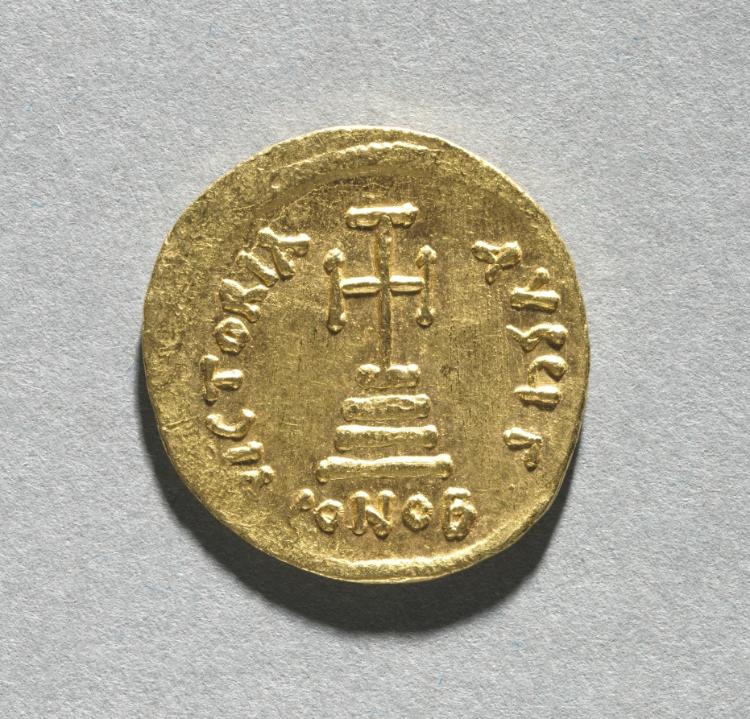
Solidus with Heraclius and his Son Heraclius Constantine (Cleveland Museum of Art 1968.56)
c. 616–625
The solidus is the basic gold coin of 24 karats; the tremissis, a gold coin of one-third the weight and value of the solidus; and the nomisma, which in the 10th century replaced the solidus as the standard gold coin. Cleveland Museum of Art object 1968.56: Solidus with Heraclius and his Son Heraclius Constantine, c.…
Partial type record
The Metropolitan Museum of Art, New York
ancient coins
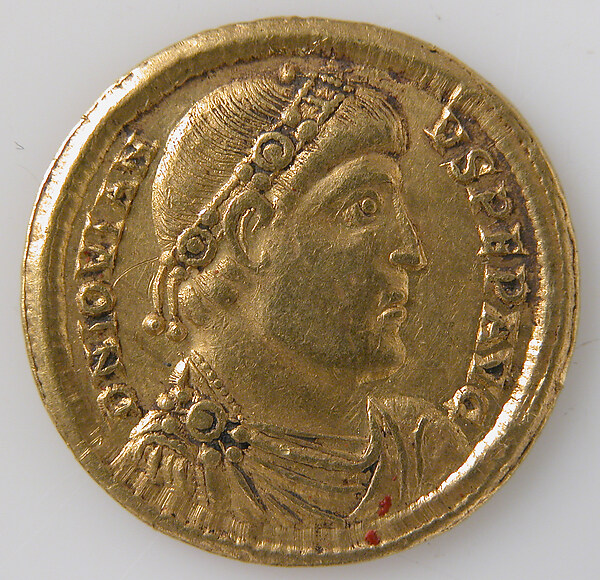
Solidus, Byzantine, 363–364
363–364
Solidus in The Metropolitan Museum of Art, New York (accession 04.35.22), catalogued by the museum's Medieval Art department. The museum dates it 363–364 and records its origin as Byzantine. The museum records the medium as Gold and the dimensions as Overall: 13/16 x 1/16 in. (2.1 x 0.1 cm).
Partial type record
The Metropolitan Museum of Art, New York
ancient coins
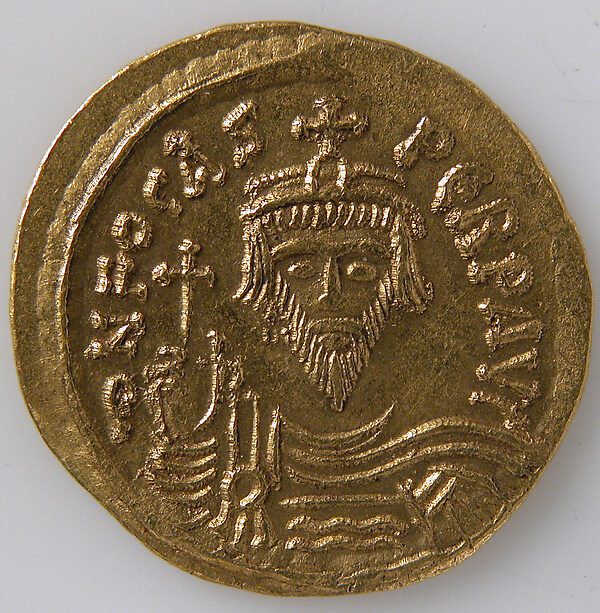
Solidus, Early Byzantine, 602–610
602–610
Solidus in The Metropolitan Museum of Art, New York (accession 04.35.3356), catalogued by the museum's Medieval Art department. The museum dates it 602–610 and records its origin as Early Byzantine. The museum records the medium as Gold and the dimensions as Overall: 13/16 x 1/16 in. (2.1 x 0.1 cm). Subject tags ass…
Partial type record
Museums Victoria / Photographer: Justine Philip
ancient coins
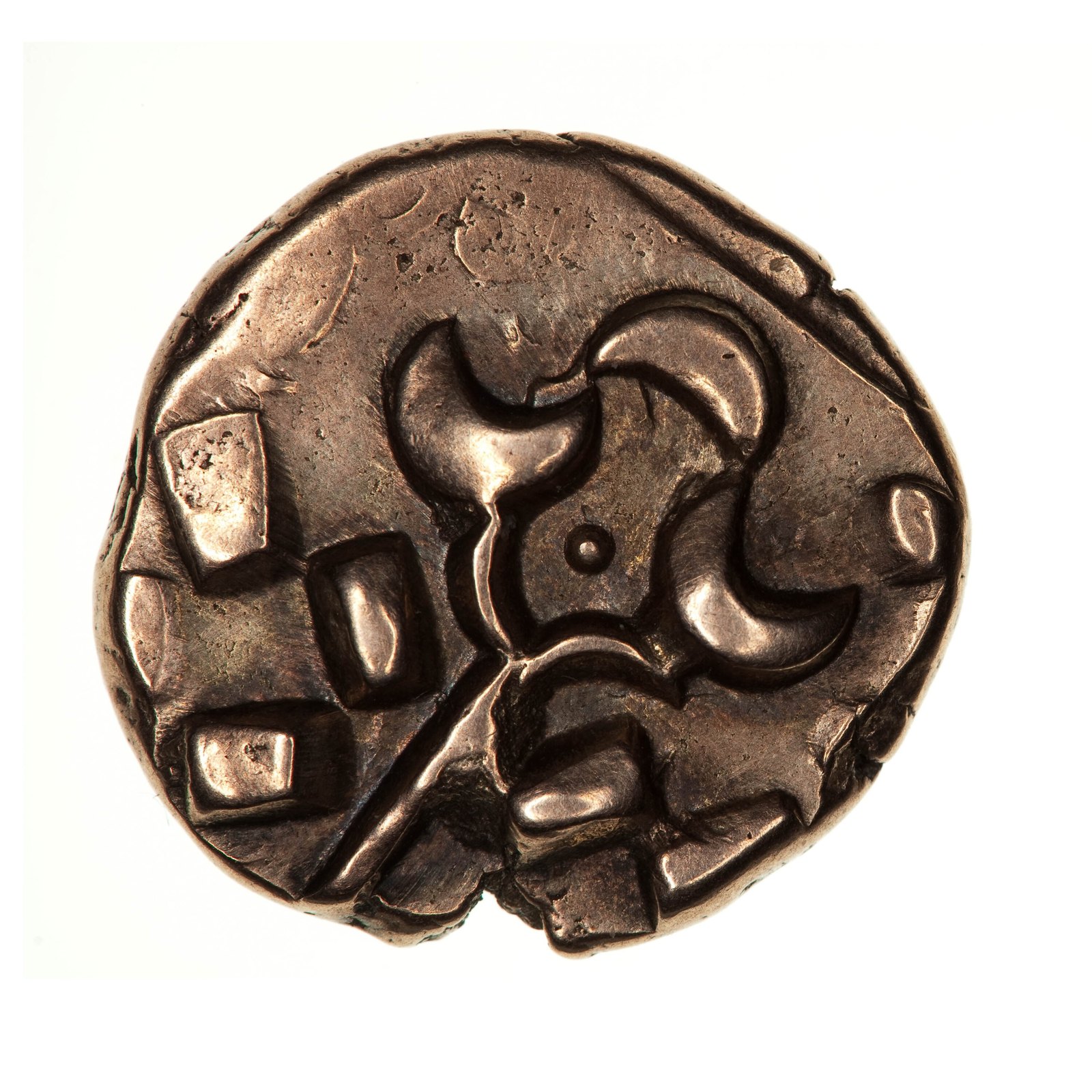
Stater, Corieltauvi, Ancient Britain, 50 BC - 25 AD
50 BC - 25 AD
Gold coin; Denomination: stater Type British K (South Ferriby) Coins of this type were considered to be issued by the Brigantes before the middle of the twentieth century, then they were attributed to the Coritani a tribal name based on a medieval manuscript of Ptolemy's Geography. This name was corrected in 1983 f…
Partial type record
Museums Victoria / Photographer: Justine Philip
ancient coins
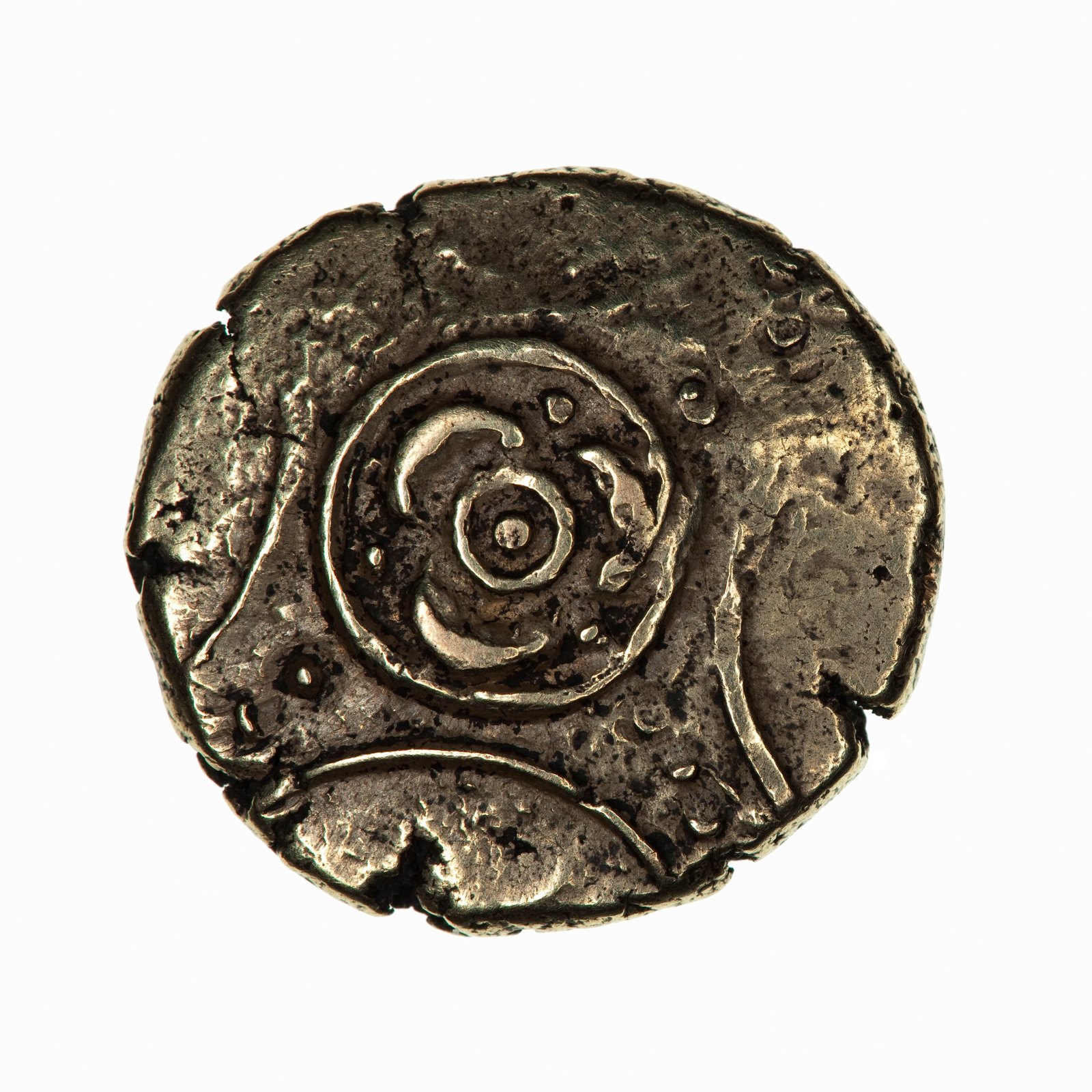
Stater, Iceni tribe, Ancient Britain, 40 BC-40 AD
40 BC - 40 AD
Gold coin; Denomination: Stater Issued by the Iceni Tribe Type: British Nb The Iceni tribe inhabited the area that is today Norfolk and its surrounds in England. They are known historically only after the Roman conquest but especially for the revolt of Boudicca (see NU 16784). This coin is one of at least 90 found i…
Partial type record
Museums Victoria / Photographer: Justine Philip
ancient coins
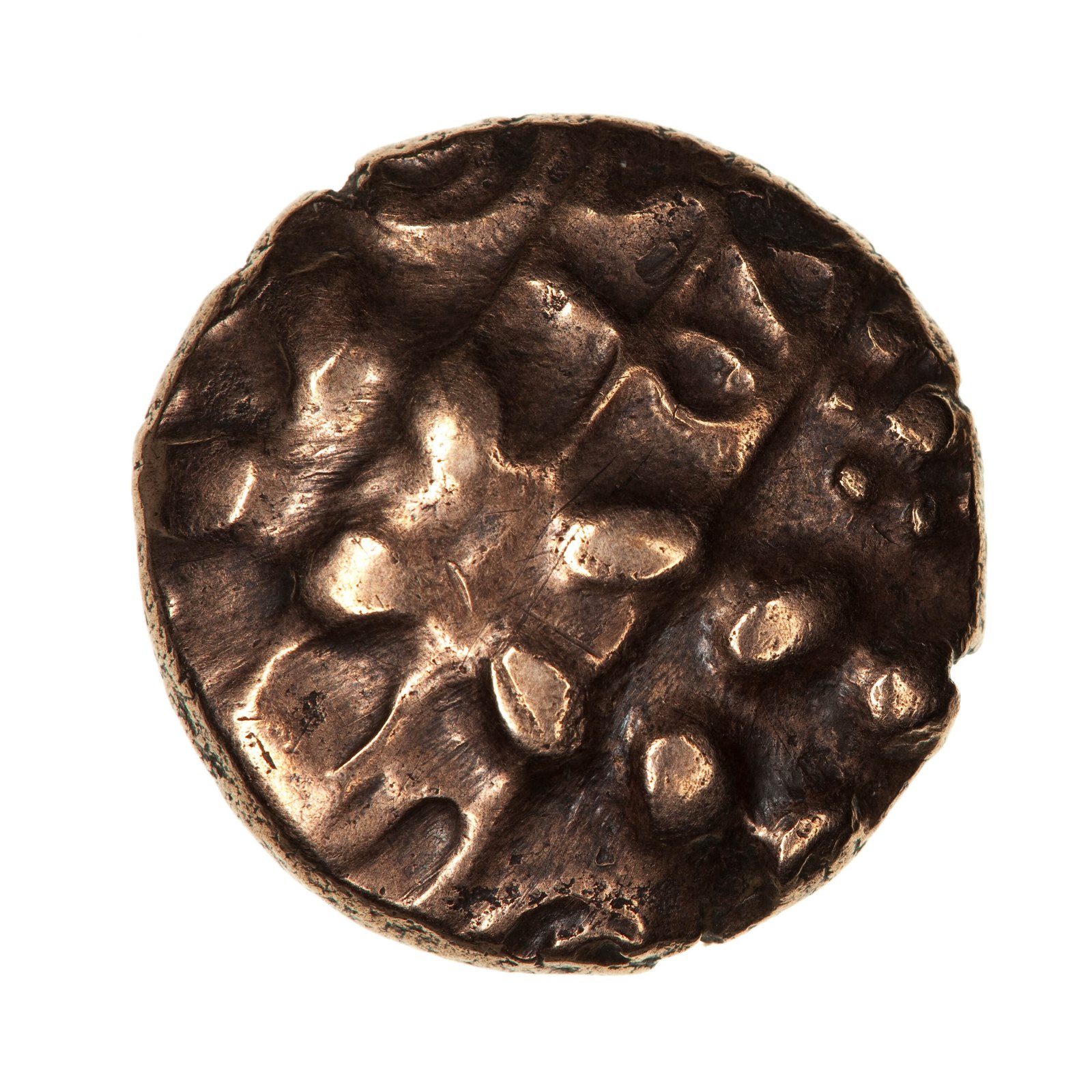
Stater, Volisios Dumnocoveros, Ancient Britain, 1-60 AD
1-60 AD
Gold coin; Denomination: stater The legend on this coin, VOLISIOS DVMNOCOVEROS, is thought to be the name of a chief of the Corieltauni (whom the Romans would call a King) but may have been a magistrate responsible for issuing coins - the person is unknown other than from the coins. Obverse: A vertical wreath made…
Partial type record
Cleveland Museum of Art
ancient coins
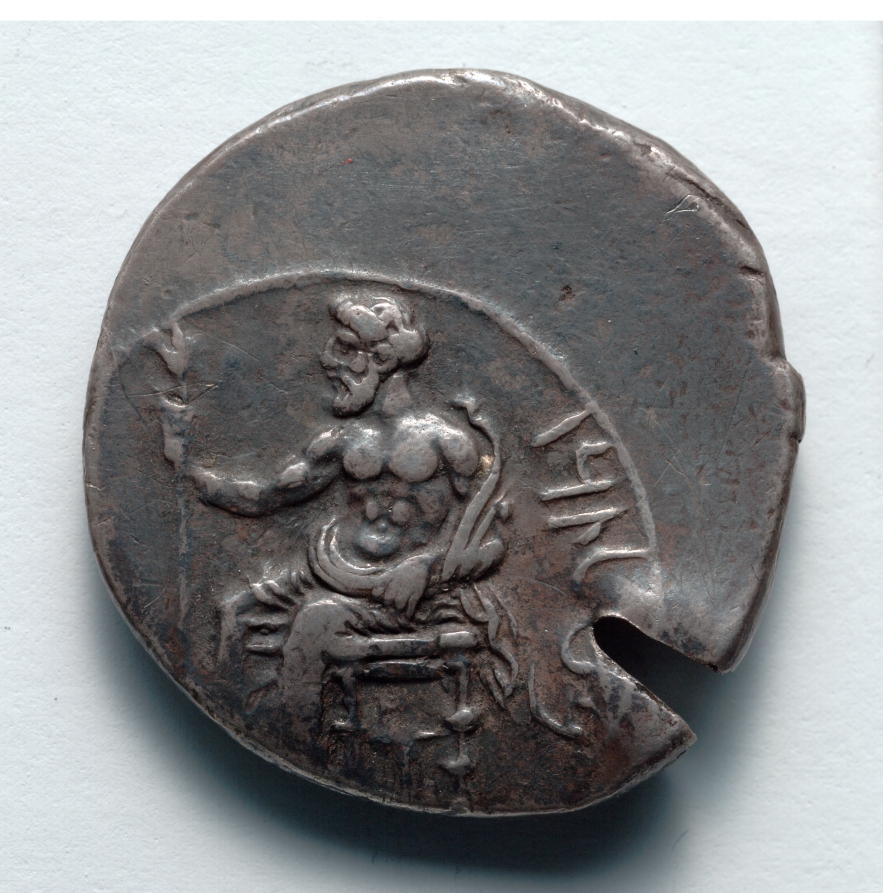
Stater: Baal (obverse); Head of Pharnabazos (Cleveland Museum of Art 1917.995)
379–374 BCE
Cleveland Museum of Art object 1917.995: Stater: Baal (obverse); Head of Pharnabazos (reverse), 379–374 BCE. Iran, Achaemenid (550–330 BCE), minted at Tarsos (Kilikia). Silver; diameter: 2.5 cm (1 in.). Inscribed: 𐡐𐡓𐡍𐡁𐡆𐡅 (Pharnabazos); 𐡊𐡋𐡊 (KLK, indicates that this coin is from Kilikia); 𐡁𐡏𐡋]𐡕𐡓𐡆] (Ba'…
Partial type record
Cleveland Museum of Art
ancient coins
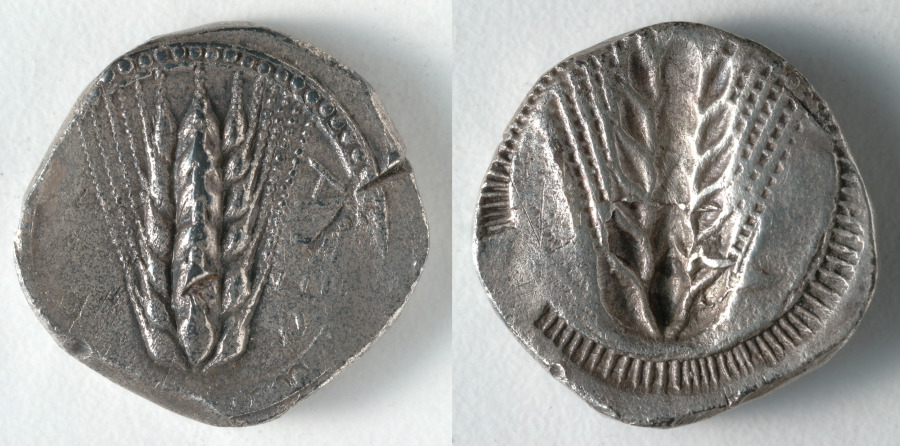
Stater: Barley (obverse); Barley, Incuse (Cleveland Museum of Art 1916.986)
c. 530–510 BCE
Cleveland Museum of Art object 1916.986: Stater: Barley (obverse); Barley, Incuse (reverse), c. 530–510 BCE. Greek, minted at Metapontion (South Italy). Silver; diameter: 2 cm (13/16 in.). Inscribed: ΜΕΤΑ (META, indicates that this coin is from Metapontion). It is catalogued in the museum's Greek and Roman Art depa…
Partial type record
Cleveland Museum of Art
ancient coins
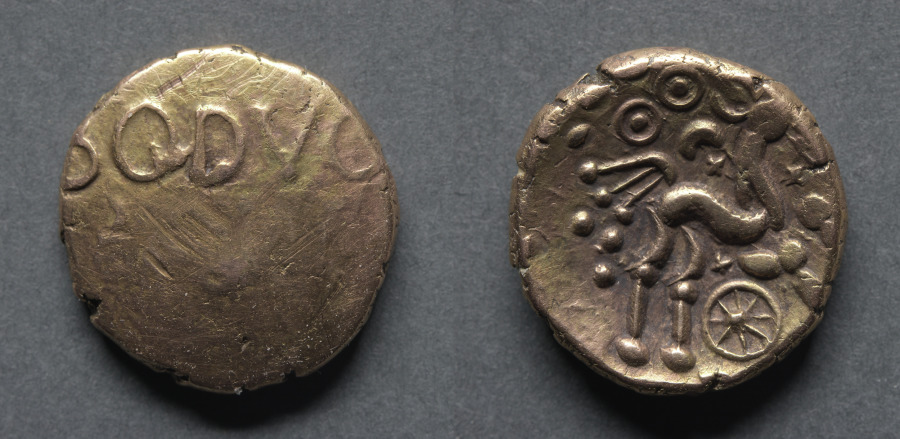
Stater: BODVOC on plain field (obverse); Horse, Wheel, and Crescent (Cleveland Museum of Art 1969.155)
10 BCE–20 CE
On coins in this same series the obverse legend (BODVOC) changes position. On some it is central across the field and complete, on others above and incomplete as seen here. As far as is known Bodvoc was one of the rulers of the Dobunni tribe. The horse has become even more crude, made up of lines and pellets and rou…
Partial type record
Cleveland Museum of Art
ancient coins
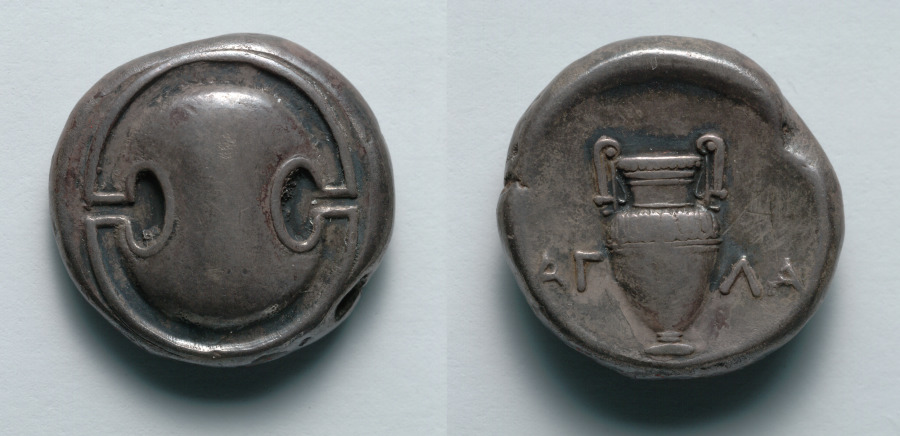
Stater: Boeotian Shield (obverse); Volute Krater (Cleveland Museum of Art 1941.295)
379–338 BCE
Cleveland Museum of Art object 1941.295: Stater: Boeotian Shield (obverse); Volute Krater (reverse), 379–338 BCE. Greek, minted at Thebes (Boiotia). Silver; diameter: 3 cm (1 3/16 in.). Inscribed: ΑΓ; ΛΑ. It is catalogued in the museum's Greek and Roman Art department under Coins. Credit line: Gift of Dr. Jacob Hir…
Partial type record
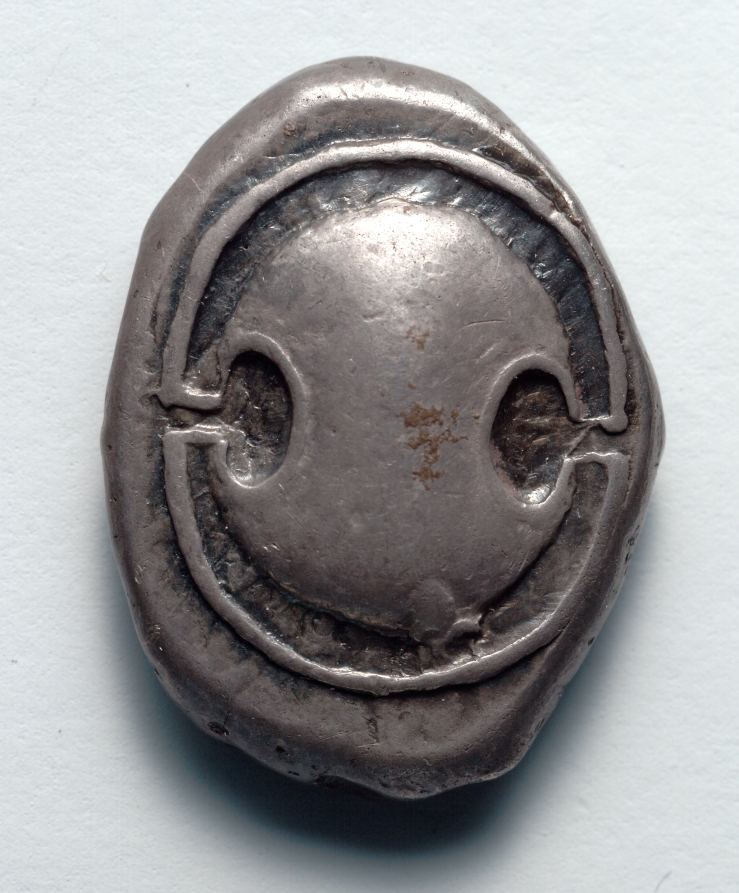
Cleveland Museum of Art
ancient coins
Stater: Boiotian Shield (obverse); Volute-Krater (Cleveland Museum of Art 1917.997)
395–387 BCE
Cleveland Museum of Art object 1917.997: Stater: Boiotian Shield (obverse); Volute-Krater (reverse), 395–387 BCE. Greek, minted at Thebes (Boiotia). Silver; diameter: 2.5 cm (1 in.). Inscribed: Θ | Ε (THE, indicates that this coin is from Thebes). It is catalogued in the museum's Greek and Roman Art department unde…
Partial type record
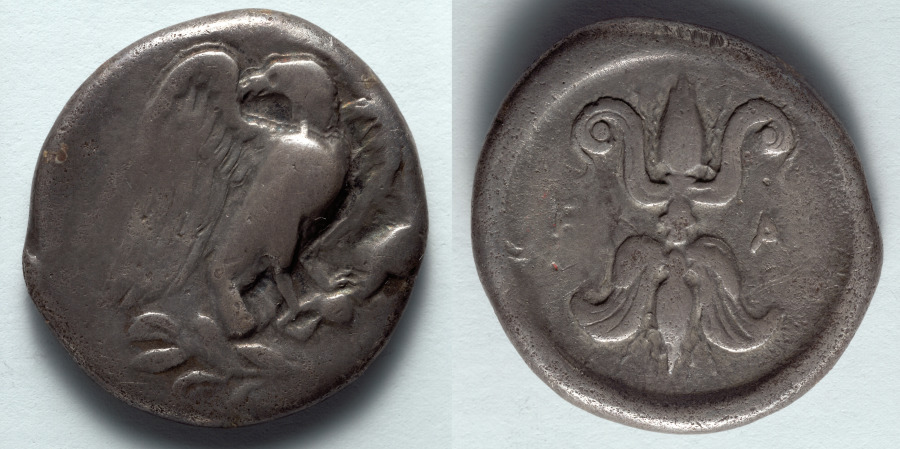
Cleveland Museum of Art
ancient coins
Stater: Eagle (obverse); Thunderbolt (Cleveland Museum of Art 1916.995)
c. 432–421 BCE
Cleveland Museum of Art object 1916.995: Stater: Eagle (obverse); Thunderbolt (reverse), c. 432–421 BCE. Greek, minted in Elis. Silver; diameter: 2.5 cm (1 in.). Inscribed: Ϝ | Α (WA, indicates that this coin is from Elis). It is catalogued in the museum's Greek and Roman Art department under Coins. Credit line: Gi…
Partial type record
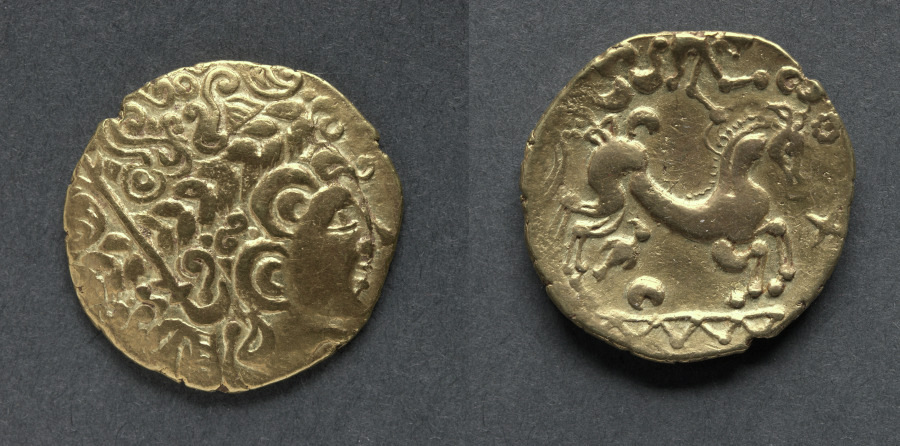
Cleveland Museum of Art
ancient coins
Stater: Head (obverse); Horse with Victory (Cleveland Museum of Art 1969.143)
c. 125–100 BCE
Like many other pieces in the ancient British series of staters, those of the Bellovaci, which were struck on the mainland of Europe and in Britain, take their type from the gold staters of Philip II of Macedon (359–336 BC). This original coin was copied and recopied over a long period of time, the copies becoming o…
Partial type record
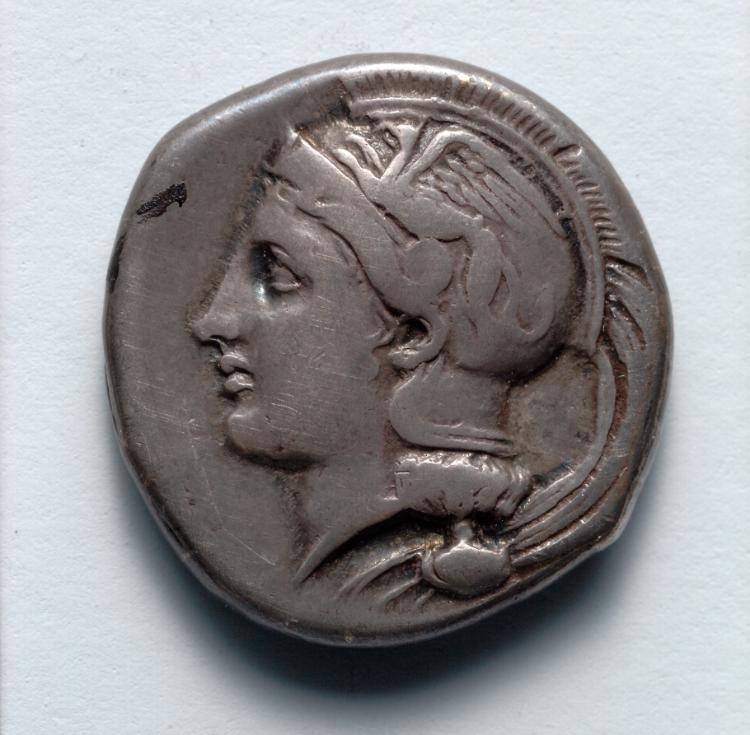
Cleveland Museum of Art
ancient coins
Stater: Head of Athena (obverse); Lion (Cleveland Museum of Art 1917.996)
c. 340–334 BC
This object is a stater, classified by the museum as a coin. The design of the piece features the head of Athena on the obverse face and a lion on the reverse face. The coin includes a recorded inscription reading ΥΕΛΗΤ[ΟΝ], which translates to "Of the people of Hyele." The recorded material and technique for the s…
Partial type record
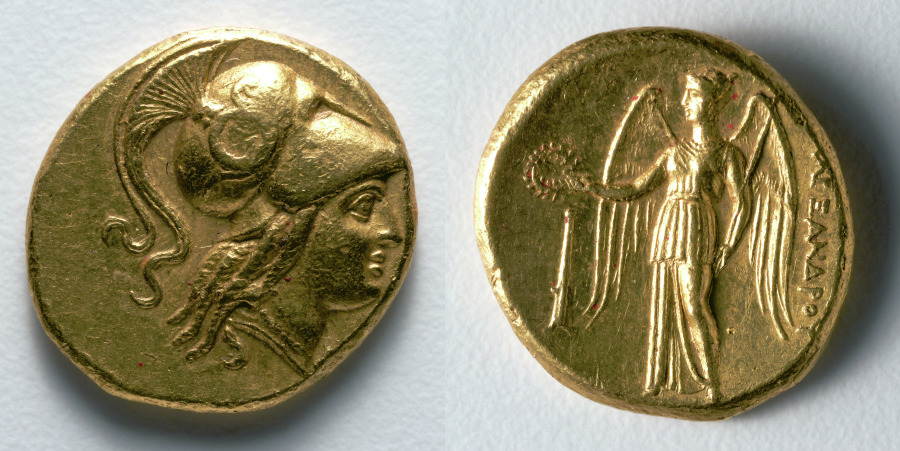
Cleveland Museum of Art
ancient coins
Stater: Head of Athena (obverse); Nike (Cleveland Museum of Art 1916.979)
c. 325–275 BCE
As the forces of Alexander III [the Great] advanced into Asia, the city-state of Salamis, on the island of Cyprus, voluntarily surrendered itself and its mint. Salamis began producing Macedonian-style coinage, adopting a helmeted Athena on the obverse and a winged Nike offering a laurel wreath on the reverse. The ru…
Partial type record
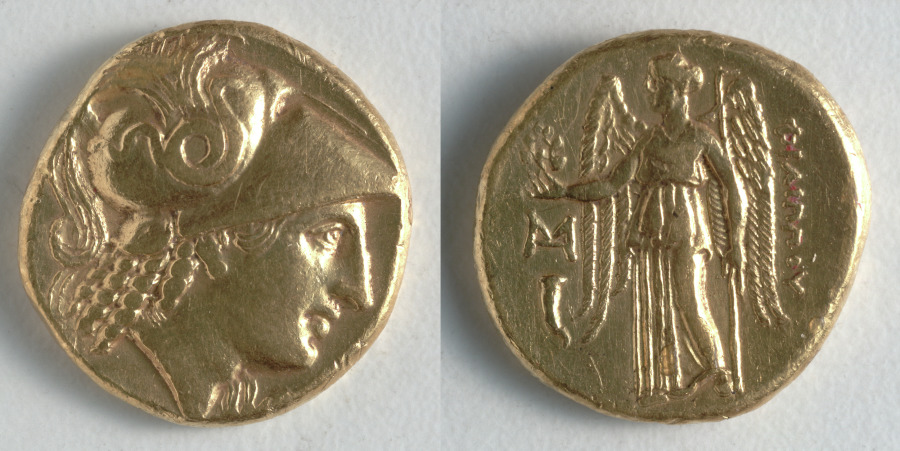
Cleveland Museum of Art
ancient coins
Stater: Head of Athena (obverse); Nike (Cleveland Museum of Art 1916.989)
323–317 BCE
Cleveland Museum of Art object 1916.989: Stater: Head of Athena (obverse); Nike (reverse), 323–317 BCE. Greek, Macedonian, minted at Abydos (Mysia), reign of Philip III Arrhidaios. Gold; overall: 2.2 cm (7/8 in.). Inscribed: ΦΙΛΙΠΠΟΥ (Of Philip); - within M. It is catalogued in the museum's Greek and Roman Art depa…
Partial type record
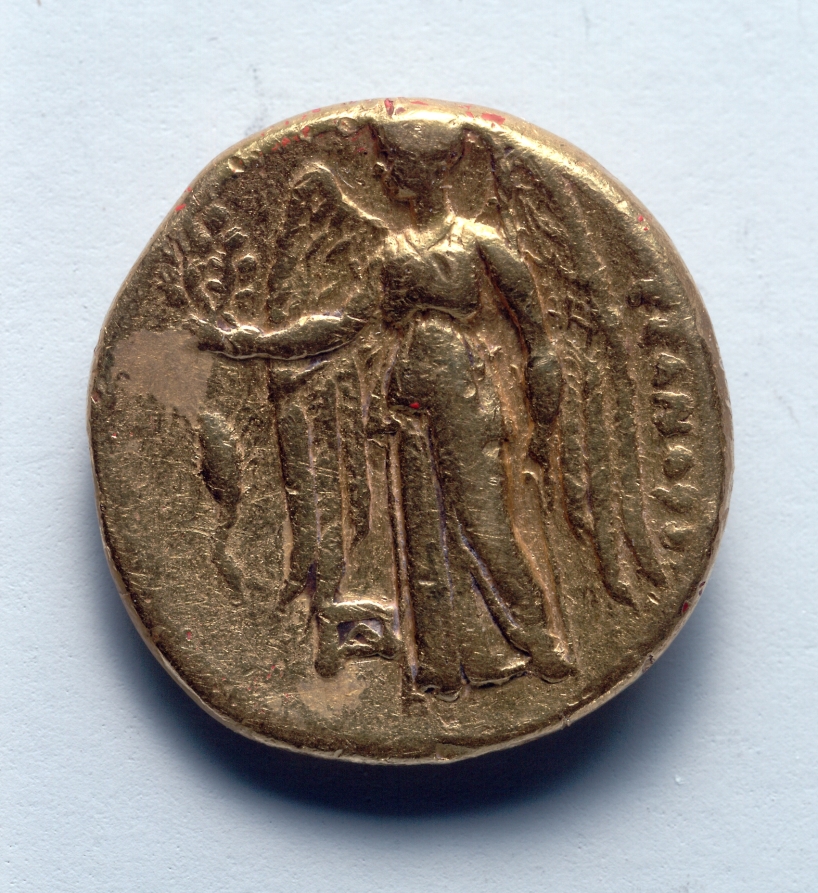
Cleveland Museum of Art
ancient coins
Stater: Head of Athena (obverse); Nike (Cleveland Museum of Art 1938.427)
336–323 BCE
Cleveland Museum of Art object 1938.427: Stater: Head of Athena (obverse); Nike (reverse), 336–323 BCE. Greek, Macedonian, minted at Abydos (Egypt), reign of Alexander III [The Great}. Gold; diameter: 1.6 cm (5/8 in.). Inscribed: [ΑΛ]ΕΞΑΝΔΡΟ[Υ] (Of Alexander); Δ within Π. It is catalogued in the museum's Greek and…
Partial type record
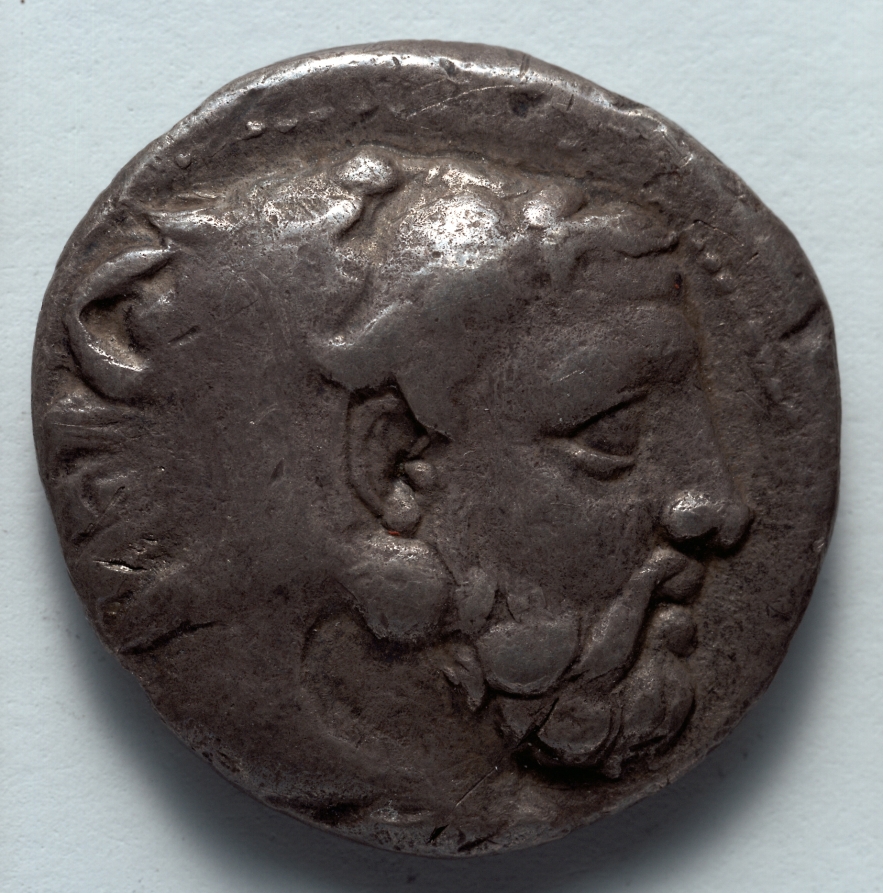
Cleveland Museum of Art
ancient coins
Stater: Head of Bearded Herakles (obverse); Horse (Cleveland Museum of Art 1916.990)
389–369 BCE
An older, bearded Herakles wears his lion-skin on the obverse of this coin, surrounded by a beaded border. On the reverse, a horse stands within an incuse square, where the inscription ΑΜΥΝ ΤΑ identifies King Amyntas III as ruler. The pairing of head and horse extends back to the earlier Macedonian king Archelaus (4…
Partial type record
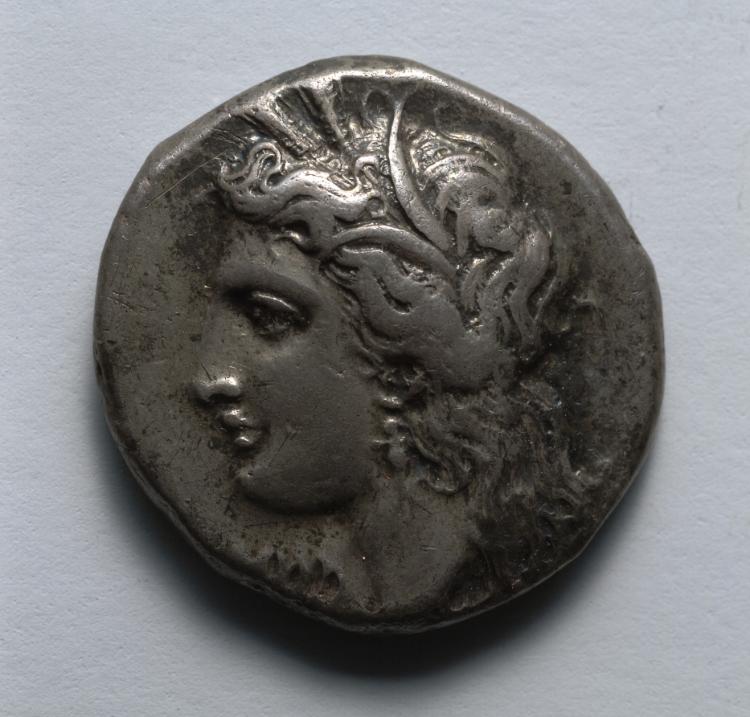
Cleveland Museum of Art
ancient coins
Stater: Head of Demeter (obverse); Barley (Cleveland Museum of Art 1917.983)
330–300 BCE
Cleveland Museum of Art object 1917.983: Stater: Head of Demeter (obverse); Barley (reverse), 330–300 BCE. Greek, minted at Metapontion (South Italy). Silver; diameter: 2.1 cm (13/16 in.). Inscribed: ΜΕΤΑ (META, indicates that this coin is from Metapontion). It is catalogued in the museum's Greek and Roman Art depa…
Partial type record
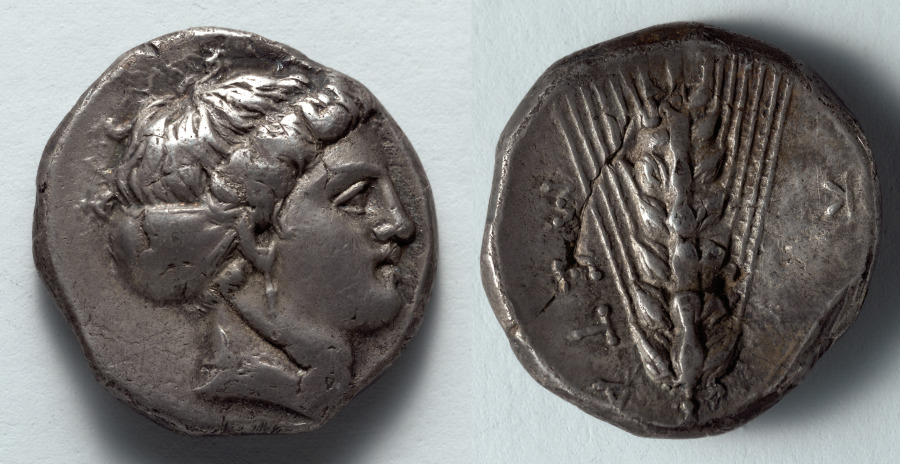
Cleveland Museum of Art
ancient coins
Stater: Head of Kore (obverse); Barley (Cleveland Museum of Art 1916.991)
c. 340 BCE
Cleveland Museum of Art object 1916.991: Stater: Head of Kore (obverse); Barley (reverse), c. 340 BCE. Greek, minted at Metapontion (South Italy). Silver; diameter: 1.9 cm (3/4 in.). Inscribed: ΜΕΤΑ (META, indicates that this coin is from Metapontion); ꓘ. It is catalogued in the museum's Greek and Roman Art departm…
Partial type record
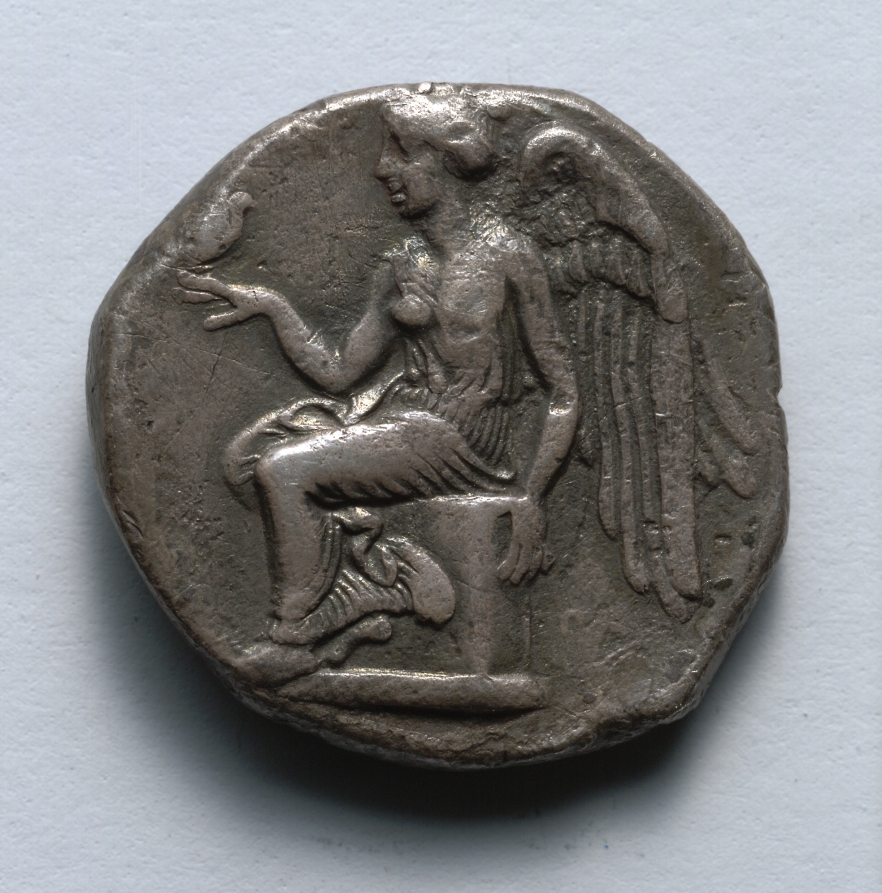
Cleveland Museum of Art
ancient coins
Stater: Head of Nymph (Obverse); Nike (Cleveland Museum of Art 1916.982)
c. 420–400 BCE
Coins from the South Italian colony of Terina are notable for their sophisticated reworkings of other cities’ designs. On the obverse of this tetradrachm is a female head with short, wavy hair, possibly modeled on the Syracusan nymph Arethousa. The reverse captures an intimate moment as Nike sits, tenderly holding a…
Partial type record
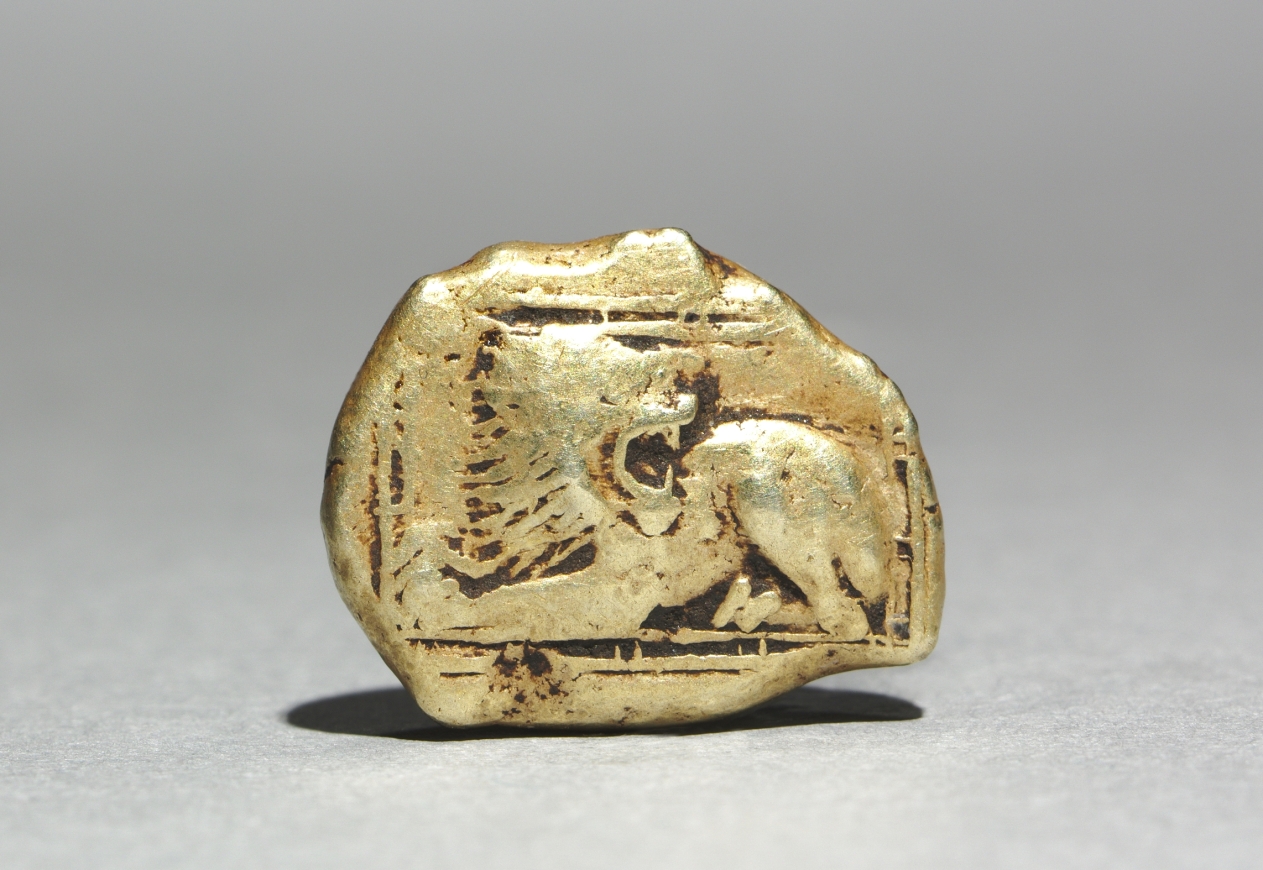
Cleveland Museum of Art
ancient coins
Stater: Lion (obverse); Incuse Punches (Cleveland Museum of Art 2000.203)
600–550 BCE
This object is a coin classified as a stater. In terms of design, the obverse depicts a lion, while the reverse features incuse punches. The catalogue record lists no legends or inscriptions on the surface of the piece. The coin is composed of electrum, designated as a gold-silver alloy, with no additional techniqu…
Partial type record
Cleveland Museum of Art
ancient coins
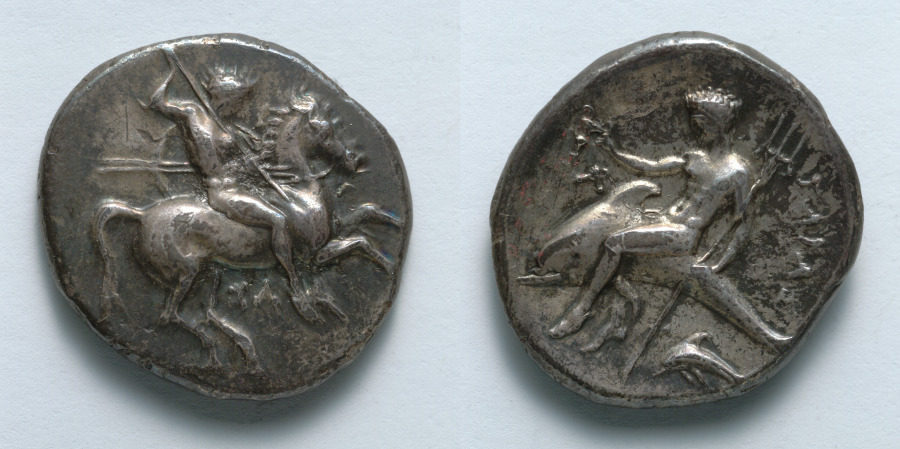
Stater: Nude Warrior on Horseback (obverse); Taras (Cleveland Museum of Art 1916.987)
334–302 BCE
Cleveland Museum of Art object 1916.987: Stater: Nude Warrior on Horseback (obverse); Taras (reverse), 334–302 BCE. Greek, minted at Taras (South Italy). Silver; diameter: 2.2 cm (7/8 in.). Inscribed: ΤΑΡΑΣ (Taras). It is catalogued in the museum's Greek and Roman Art department under Coins. Credit line: Gift of J.…
Partial type record
Cleveland Museum of Art
ancient coins
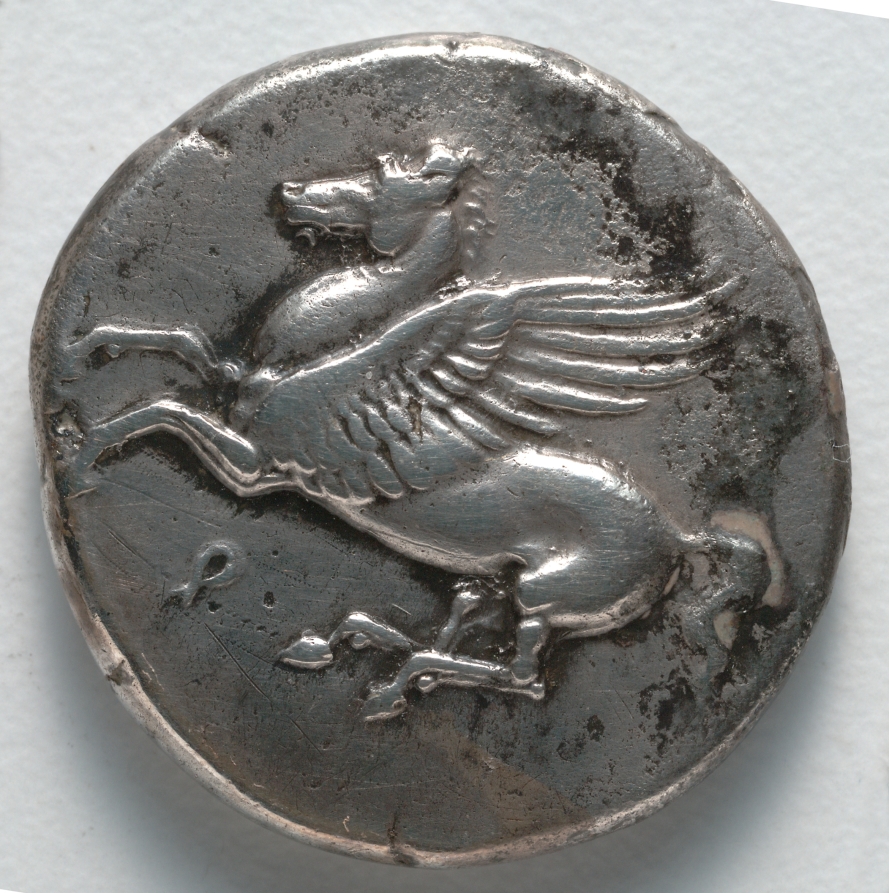
Stater: Pegasos (obverse); Head of Athena (Cleveland Museum of Art 1916.984)
c. 350–338 BCE
On the obverse of this coin, the divine winged horse Pegasos takes flight, its front legs rearing up to the left. On the reverse, Athena, who gave the Corinthian hero Bellerophon the reins to tame Pegasos, wears a Corinthian-style helmet and is accompanied by a mask of the satyr-god Silenos. Repeated in this coinage…
Partial type record
Cleveland Museum of Art
ancient coins
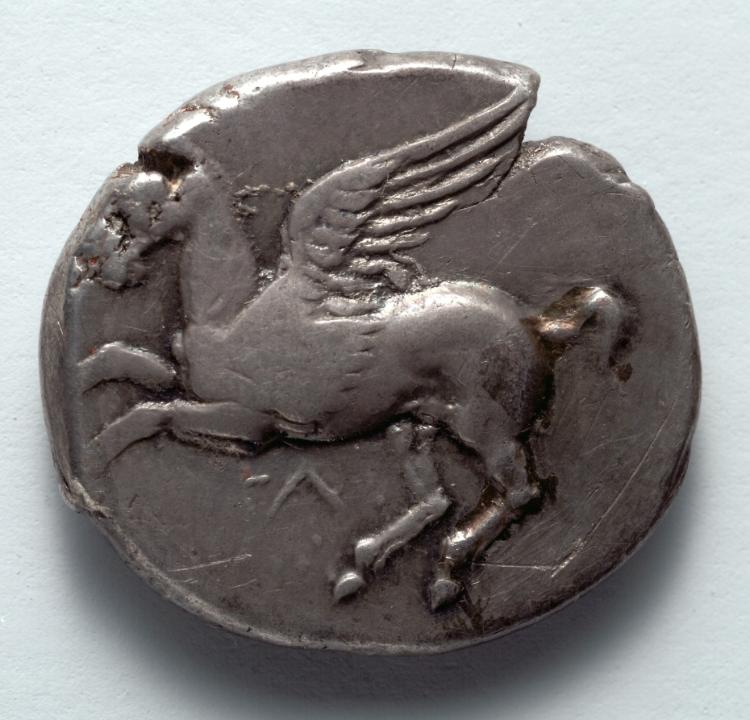
Stater: Pegasos (obverse); Head of Athena (Cleveland Museum of Art 1917.978)
c. 350–300 BCE
Cleveland Museum of Art object 1917.978: Stater: Pegasos (obverse); Head of Athena (reverse), c. 350–300 BCE. Greek, minted at Leukas (Akarnania). Silver; diameter: 2.1 cm (13/16 in.). Inscribed: Λ; Λ. It is catalogued in the museum's Greek and Roman Art department under Coins. Credit line: Gift of the John Hunting…
Partial type record
Cleveland Museum of Art
ancient coins
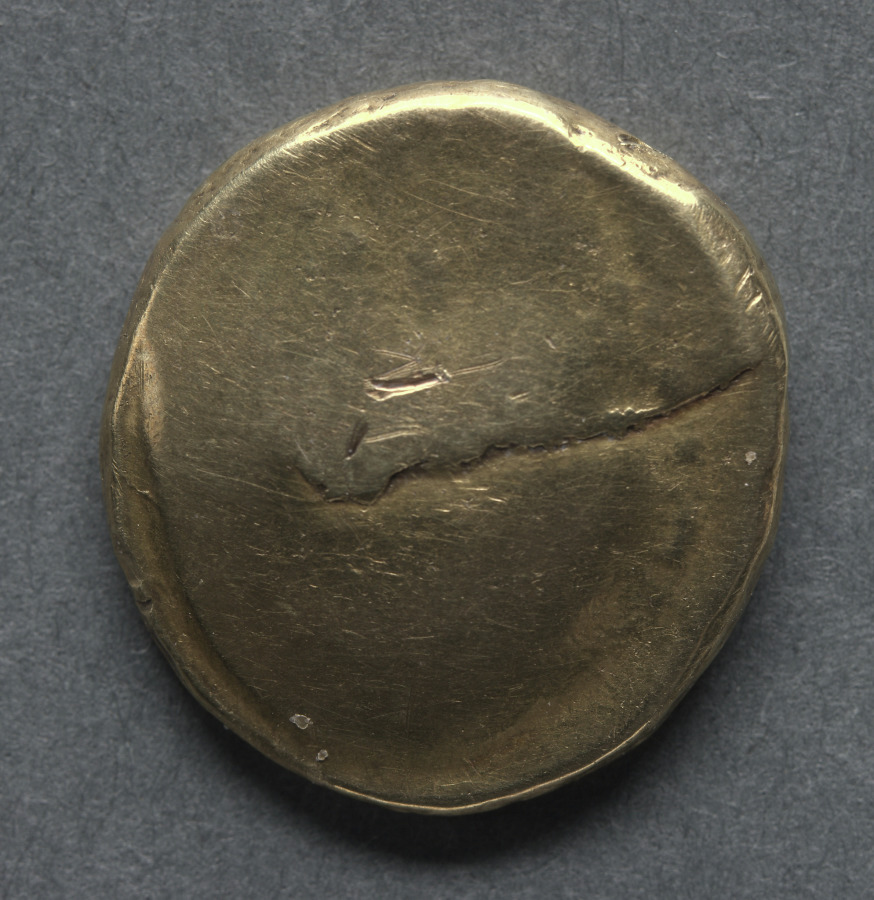
Stater: Plain (obverse); Horse (Cleveland Museum of Art 1969.145)
c. 57–45 BCE
Julius Caesar recorded that in the year 57 BC, chieftains who had unsuccessfully resisted him in Gaul took refuge in Britain. This wave of refugees brought with them, and probably also struck in Britain, the staters known as the Gallo-Belgic type (this specific one is known as the Morini type). There is no sign of a…
Partial type record
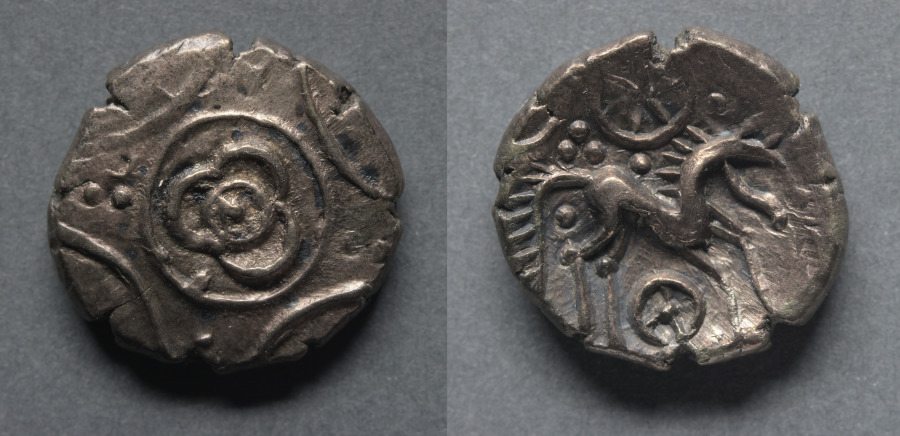
Cleveland Museum of Art
ancient coins
Stater: Three-Petal Flower (obverse); Horse and wheels (Cleveland Museum of Art 1969.156)
20 BCE–10 CE
The Iceni were a native tribe inhabiting Norfolk, Suffolk, and parts of Cambridgeshire. They were described by the Romans as powerful, unbroken by war. In AD 61 the king of the Iceni, Prasutagus, died, leaving his apparently considerable wealth to his two daughters and to the Roman Emperor, as joint heirs. However,…
Partial type record
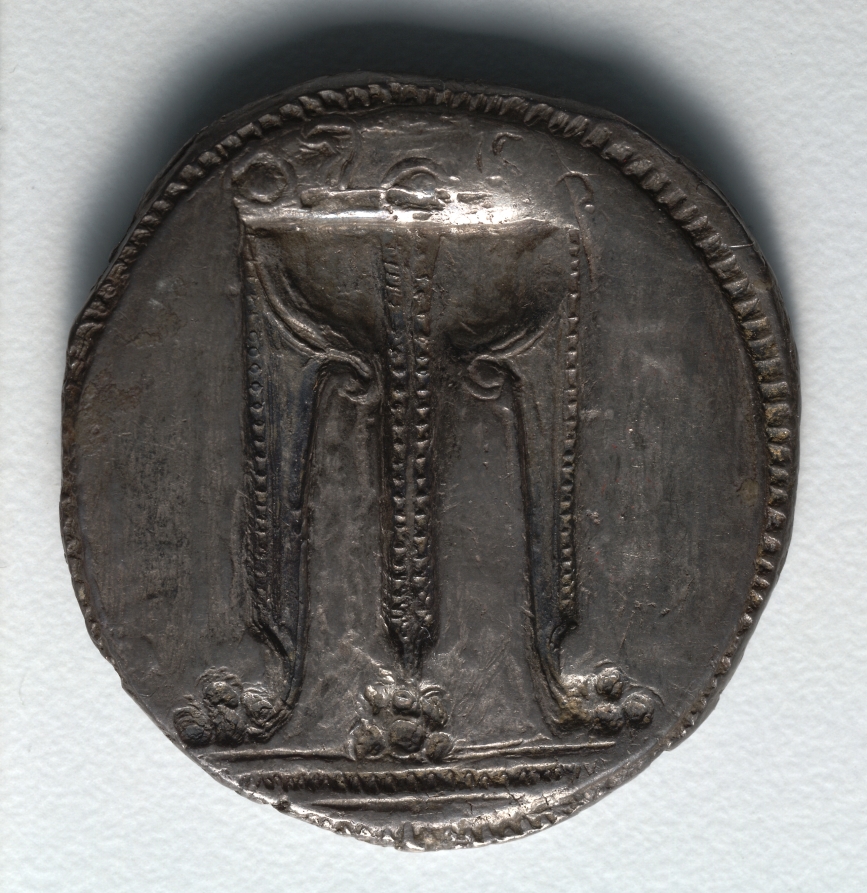
Cleveland Museum of Art
ancient coins
Stater: Tripod (obverse); Tripod Incuse (Cleveland Museum of Art 1916.985)
c. 530–510 BCE
Cleveland Museum of Art object 1916.985: Stater: Tripod (obverse); Tripod Incuse (reverse), c. 530–510 BCE. Greek, minted at Kroton (South Italy). Silver; diameter: 2.9 cm (1 1/8 in.). Inscribed: ϘΡΟ | ΤΟΝ (Kroton). It is catalogued in the museum's Greek and Roman Art department under Coins. Credit line: Gift of J.…
Partial type record
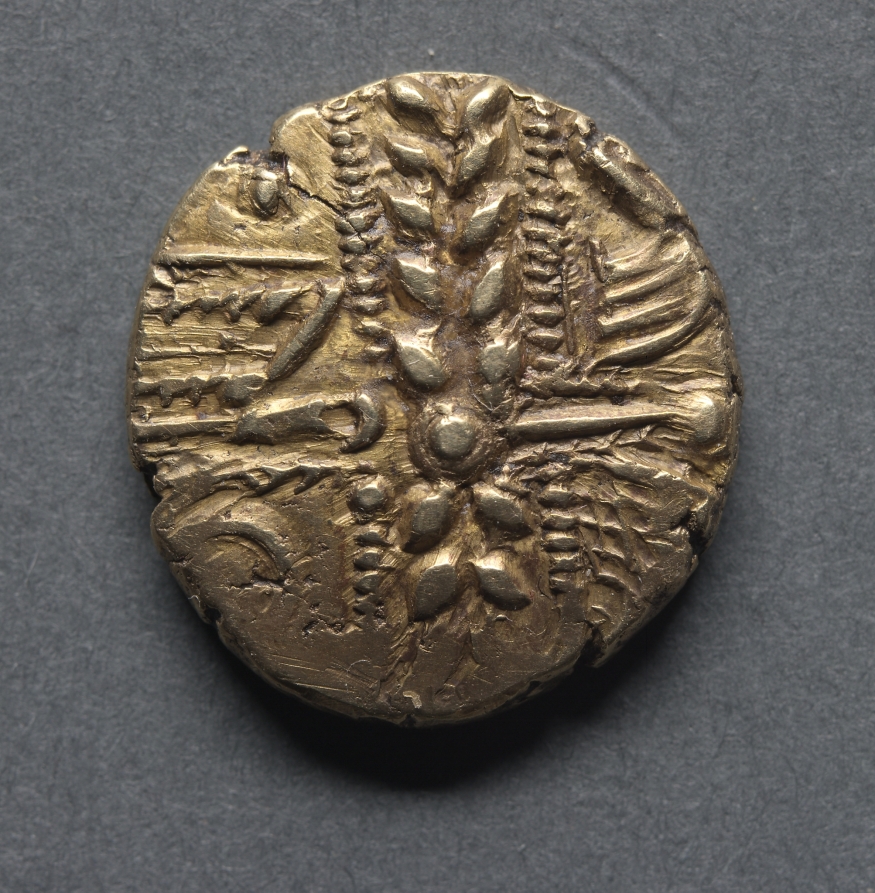
Cleveland Museum of Art
ancient coins
Stater: Wreath, Cloak, and Crescents (obverse); Horse and Wing Motif (Cleveland Museum of Art 1969.149)
c. 60–20 BCE
This particular type of stater received its type name, Whaddon Chase, from a hoard of over 320 such pieces which were turned up by a plow in a field called Narbury on the Whaddon Hall estate, Buckinghamshire, on February 14, 1849. The surrounding countryside is known as Whaddon Chase, the name still in use today. Th…
Partial type record
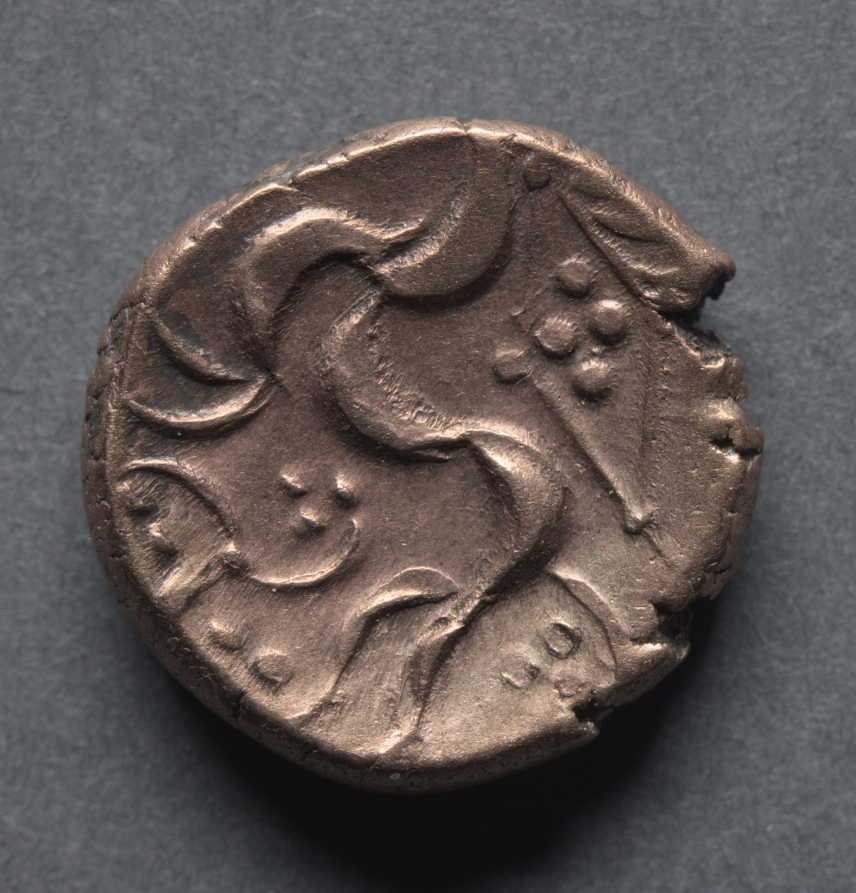
Cleveland Museum of Art
ancient coins
Stater: Wreath, Crescents, and Wheel (obverse); Horse and Diamond (Cleveland Museum of Art 1969.157)
10 BCE–30 CE
The Coritani were a Belgic tribe which occupied parts of middle-eastern England now known as the counties of Leicestershire, Rutland, Lincolnshire, Nottinghamshire, and probably parts of Derbyshire and the southern part of the West Riding of Yorkshire. At one time this type, together with others of the Ancient Briti…
Partial type record
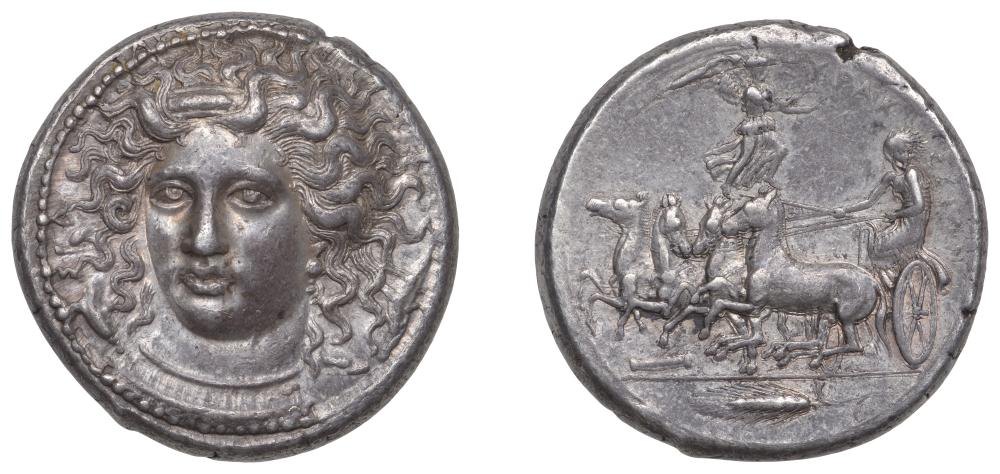
Auction house “Noonans Mayfair”, via Invaluable
ancient coins
Syracuse silver tetradrachm signed by Kimon, c. 406 BC
c. 406
This silver tetradrachm from Syracuse, struck during the Second Democracy circa 406 BC, is a celebrated masterpiece of ancient Greek numismatic art signed by the engraver Kimon. The obverse features the head of the nymph Arethusa, canted slightly to the left, with hair rendered in a radial, flowing manner as if subm…
Partial type record
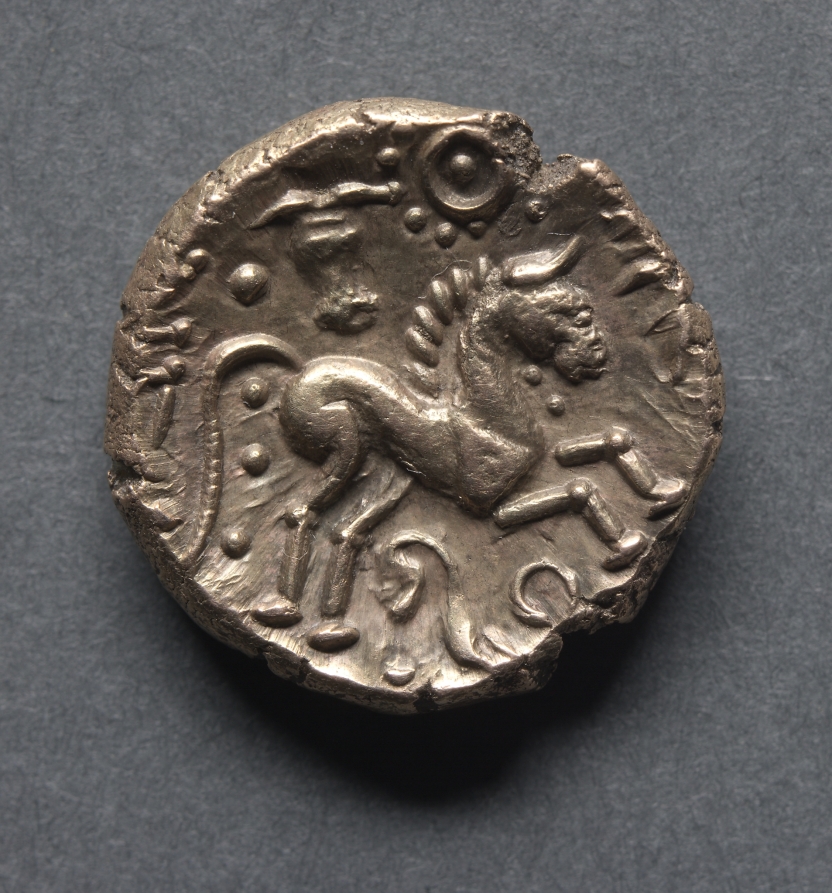
Cleveland Museum of Art
ancient coins
Tasciovanus Stater: Crossed Wreaths (obverse); Horse and Bucranium (Head of Ox) (Cleveland Museum of Art 1969.150)
20 BCE–10 CE
Tasciovanus was the first king of the Catuvellauni to put his name on his coins; otherwise he is completely unknown to history. It is based on earlier coin designs with the addition of a legend containing an abbreviation of his name and a bucranium (head of an ox) above the horse. Often earlier coins are badly execu…
Partial type record
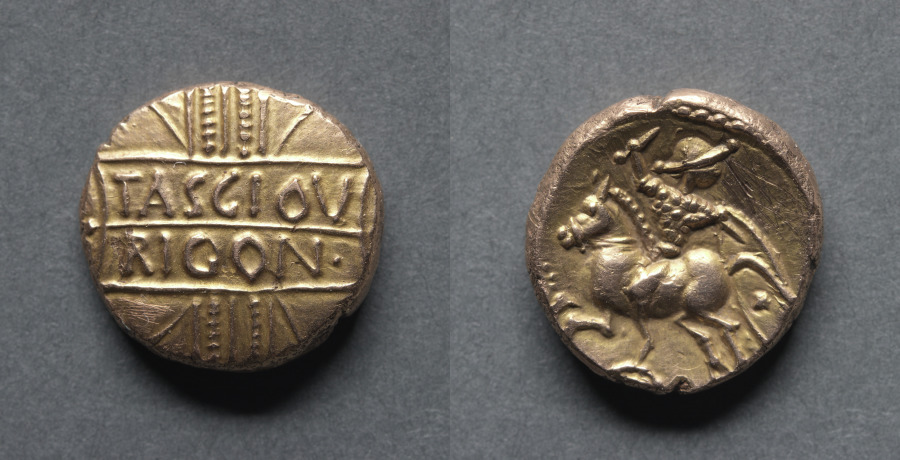
Cleveland Museum of Art
ancient coins
Tasciovanus Stater: Wreath (obverse); Horse and Armed Rider (Cleveland Museum of Art 1969.151)
c. 20 BCE–10 CE
The clarity of the obverse legend sets this piece beyond all doubt. The meaning of RICON, which on some other specimens occurs as RICONI or RIGON, is uncertain. Some authorities believe it to be the Celtic form of REX or king. A high quality or workmanship, the horse has a clear, three-dimensional appearance. The wa…
Partial type record
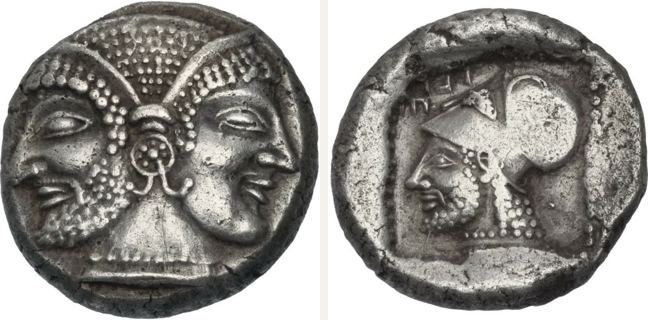
Photograph: Corpus Nummorum; Corpus Nummorum (Berlin-Brandenburg Academy of Sciences and Humanities)
ancient coins
Tenedos, didrachm — Bearded male head wearing Corinthian helmet (CN type 13099)
c. 500–493 BC
Didrachm in silver struck at Tenedos in Troas, dated c. 500–493 BC. Corpus Nummorum, the online type corpus of the Berlin-Brandenburg Academy of Sciences and Humanities, records it as CN type 13099 (period: Archaic Period; issuing authority type: city). Obverse: Janiform head (bearded male head left, female head ri…
Research required
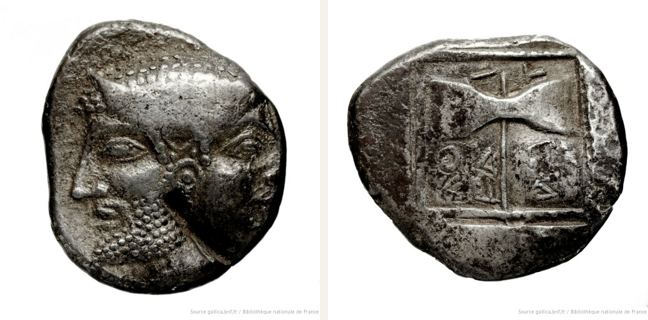
Photograph: Corpus Nummorum; Corpus Nummorum (Berlin-Brandenburg Academy of Sciences and Humanities); specimen held by gallica.bnf.fr
ancient coins
Tenedos, didrachm — Double axe within square border of dots (CN type 13100)
c. 500–493 BC
Didrachm in silver struck at Tenedos in Troas, dated c. 500–493 BC. Corpus Nummorum, the online type corpus of the Berlin-Brandenburg Academy of Sciences and Humanities, records it as CN type 13100 (period: Archaic Period; issuing authority type: city). Obverse: Janiform head (bearded male head left, female head ri…
Research required
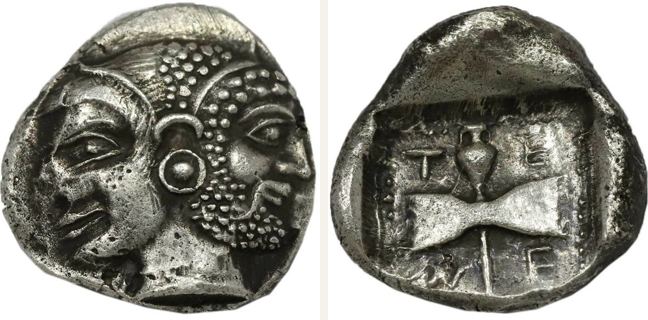
Photograph: Corpus Nummorum; Corpus Nummorum (Berlin-Brandenburg Academy of Sciences and Humanities)
ancient coins
Tenedos, didrachm — Double axe within square border of dots (CN type 13141)
c. 470–450 BC
Didrachm in silver struck at Tenedos in Troas, dated c. 470–450 BC. Corpus Nummorum, the online type corpus of the Berlin-Brandenburg Academy of Sciences and Humanities, records it as CN type 13141 (period: Classical Period; issuing authority type: city). Obverse: Janiform head (female head left, bearded male head…
Research required
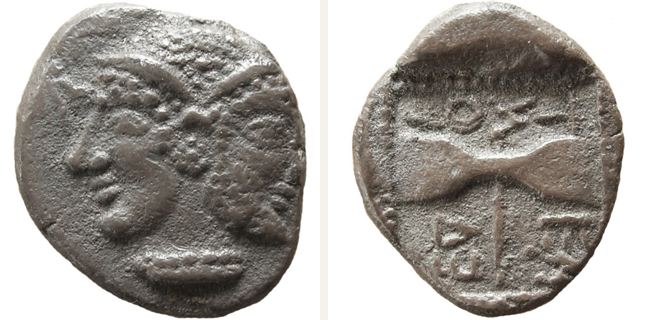
Photograph: Corpus Nummorum; Corpus Nummorum (Berlin-Brandenburg Academy of Sciences and Humanities)
ancient coins
Tenedos, hemidrachm — Double axe within square border of dots (CN type 13117)
c. 490–470 BC
Hemidrachm in silver struck at Tenedos in Troas, dated c. 490–470 BC. Corpus Nummorum, the online type corpus of the Berlin-Brandenburg Academy of Sciences and Humanities, records it as CN type 13117 (period: Classical Period; issuing authority type: city). Obverse: Janiform head (female head left, bearded male hea…
Research required
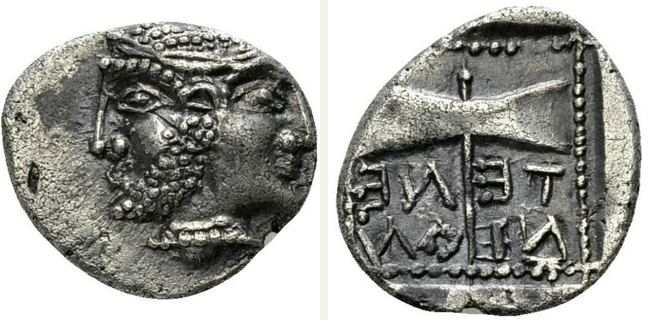
Photograph: Corpus Nummorum; Corpus Nummorum (Berlin-Brandenburg Academy of Sciences and Humanities)
ancient coins
Tenedos, hemidrachm — Double axe within square border of dots (CN type 13118)
c. 490–470 BC
Hemidrachm in silver struck at Tenedos in Troas, dated c. 490–470 BC. Corpus Nummorum, the online type corpus of the Berlin-Brandenburg Academy of Sciences and Humanities, records it as CN type 13118 (period: Classical Period; issuing authority type: city). Obverse: Janiform head (bearded male head left, female hea…
Research required
Photograph: Roma Numismatics Limited; Corpus Nummorum (Berlin-Brandenburg Academy of Sciences and Humanities)
ancient coins
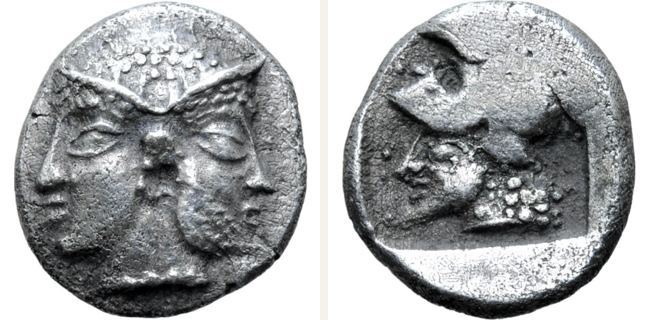
Tenedos, Obol — Bearded male head wearing Corinthian helmet (CN type 23392)
c. 500–450 BC
Obol in silver struck at Tenedos in Troas, dated c. 500–450 BC. Corpus Nummorum, the online type corpus of the Berlin-Brandenburg Academy of Sciences and Humanities, records it as CN type 23392 (period: Classical Period; issuing authority type: city). Obverse: Janiform head (female head left, bearded male head righ…
Research required
Photograph: Corpus Nummorum; Corpus Nummorum (Berlin-Brandenburg Academy of Sciences and Humanities)
ancient coins
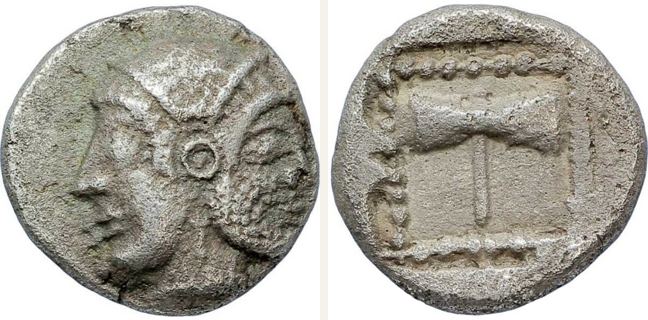
Tenedos, Trihemiobol (1 1/2 obol) — Double axe within square border of dots (CN type 13122)
c. 470–450 BC
Trihemiobol (1 1/2 obol) in silver struck at Tenedos in Troas, dated c. 470–450 BC. Corpus Nummorum, the online type corpus of the Berlin-Brandenburg Academy of Sciences and Humanities, records it as CN type 13122 (period: Classical Period; issuing authority type: city). Obverse: Janiform head (female head left, be…
Research required
Bucharest Municipality Museum via Europeana
ancient coins
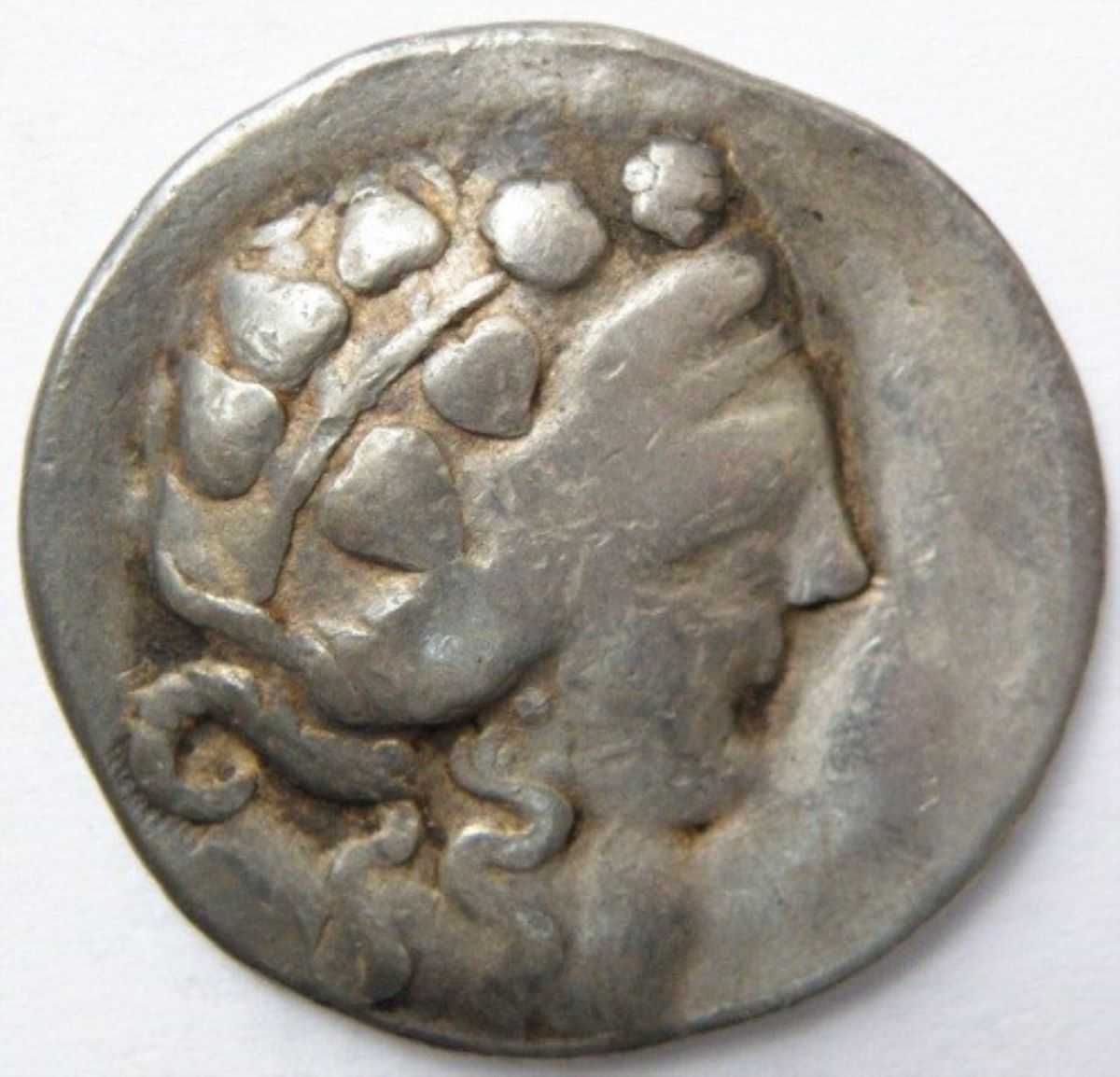
Tetradrachm — Bucharest Municipality Museum
Tetradrachm is held by Bucharest Municipality Museum (Romania). Description supplied by the holding institution: obverse: Head of young Dionysus facing right, wearing a taenia on the forehead and a wreath of ivy leaves with two six-petaled rosettes on curly hair gathered in a braid at the back. The collection record…
Partial type record
Cleveland Museum of Art
ancient coins
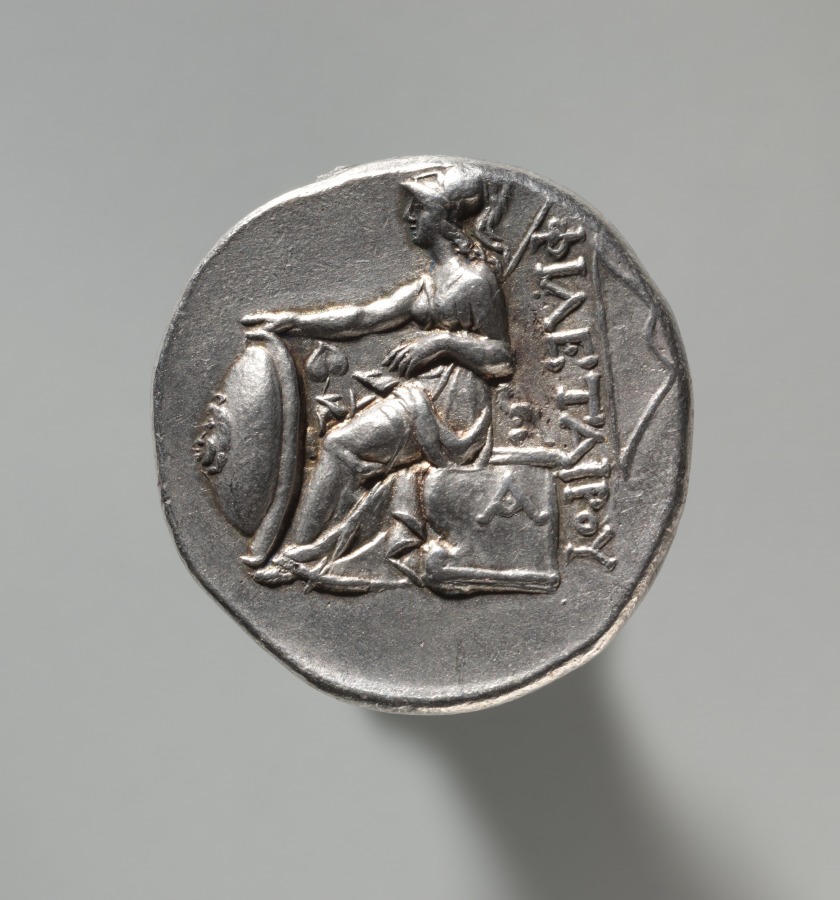
Tetradrachm (Cleveland Museum of Art 1999.317)
262–241 BCE
The depictions of rulers found on this coin represents a realistic type of portraiture, similar to that found on coins in the West. Cleveland Museum of Art object 1999.317: Tetradrachm, 262–241 BCE. Anatolia, Kingdom of Pergamum (281–133 BCE), Eumenes I (263–241 BCE). Silver; diameter: 2.8 cm (1 1/8 in.). Museum no…
Partial type record
Art Institute of Chicago
ancient coins
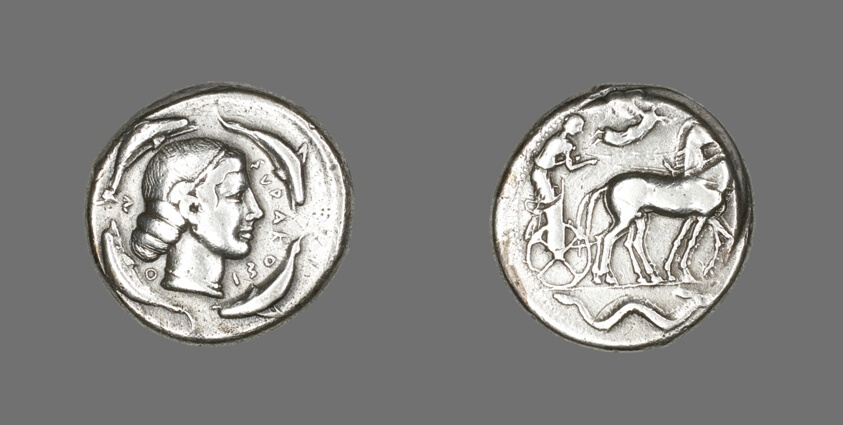
Tetradrachm (Coin) Depicting Arethusa
474-450 BCE
This ancient Greek silver tetradrachm was minted in Syracuse, Sicily, between 474 and 450 BCE. The coin has a circular form with a diameter measuring 2.6 cm (1 1/16 in.). The obverse face depicts the head of the nymph Arethusa, facing to the right, encircled by swimming dolphins. The reverse face features a chariot…
Partial type record
Art Institute of Chicago
ancient coins
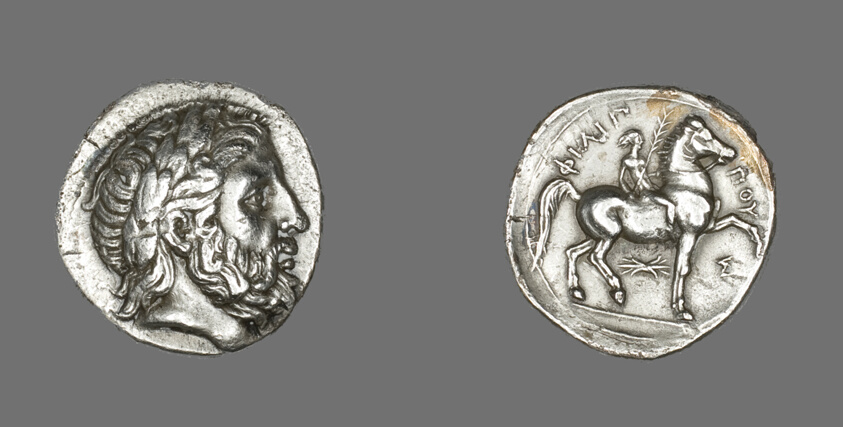
Tetradrachm (Coin) Depicting the God Zeus
348-336 BCE, issued by King Philip II of Macedonia
This silver tetradrachm was minted in Pella, ancient Macedonia, between 348 and 336 BCE under the authority of King Philip II of Macedonia. The round coin measures 2.8 cm (1 1/8 in.) in diameter and presents imagery in relief on both sides. The obverse features a profile portrait of the bearded god Zeus facing righ…
Partial type record
Art Institute of Chicago
ancient coins
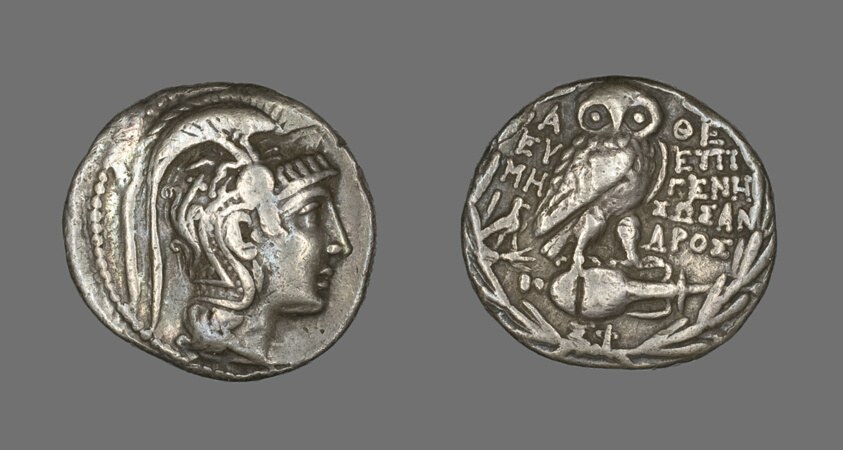
Tetradrachm (Coin) Depicting the Goddess Athena
about 163 BCE
Tetradrachm (Coin) Depicting the Goddess Athena — coin, by Greek, made in Athens, dated about 163 BCE. Physical description: Silver; Diam.: 3 cm (1 3/16 in.).
Partial type record
Art Institute of Chicago
ancient coins
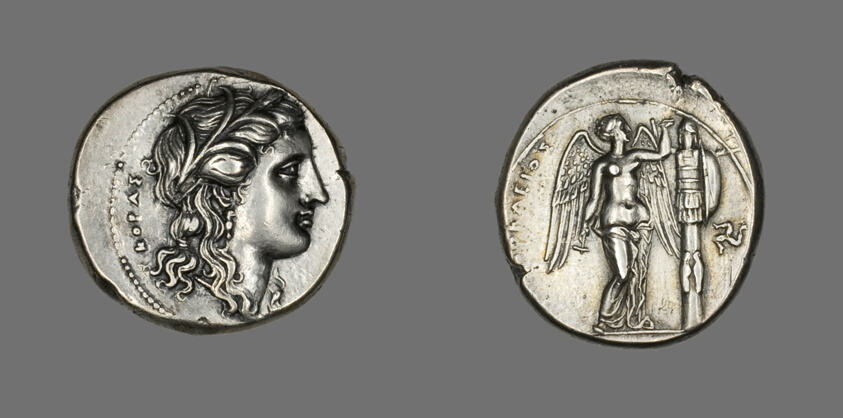
Tetradrachm (Coin) Depicting the Goddess Persephone
310-307 BCE
This ancient Greek silver tetradrachm was minted in Syracuse, Sicily, dating between 310 and 307 BCE. The coin has a diameter of 2.8 cm (1 1/8 in.) and displays circular designs struck onto both faces. The obverse features the head of the goddess Persephone facing right, adorned with a wreath or crown of grain in h…
Partial type record