Catalogue
Modern World Coins
Machine-struck national coinage from the nineteenth century onwards.
Catalogue entries (1,985)
Filter by era, country, maker or material1,633–1,680 of 1,985 entries
Rijksmuseum, Amsterdam
modern coins
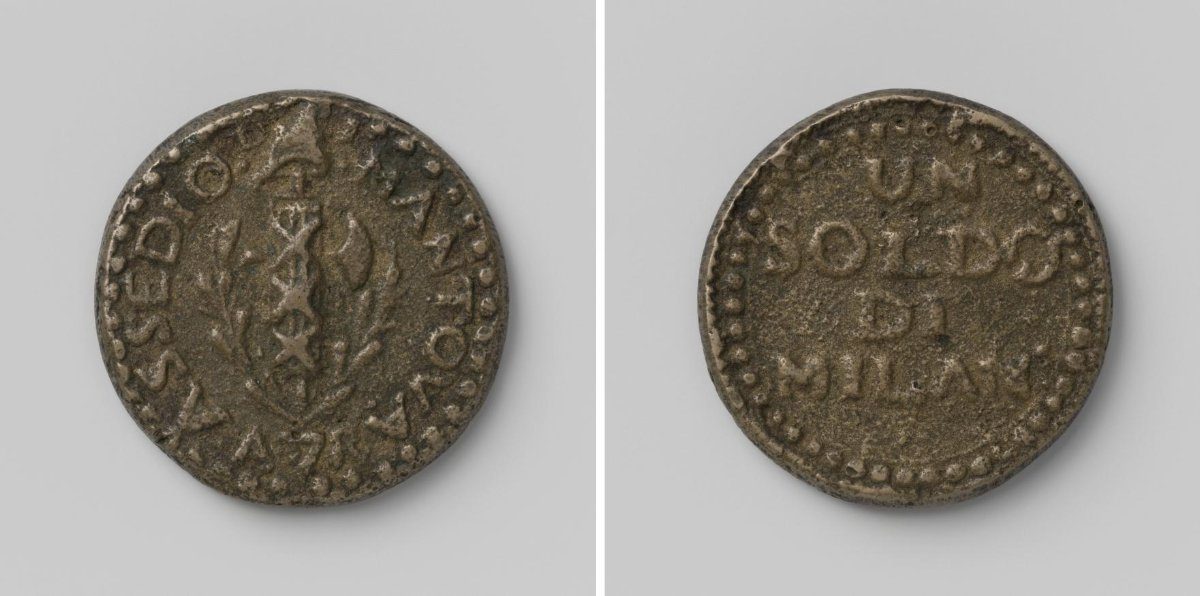
Soldo, emergency coin from Mantua, struck during the siege by the Imperials
1799
Obverse: fasces with axe, surmounted by a liberty cap within a wreath of laurel branches and legend. Reverse: value indication. The Rijksmuseum, Amsterdam, holds this object as NG-VG-4-513; its record gives material recorded as copper (metal); technique striking (metalworking); measurements diameter 2.8 cm x weight…
Partial type record
Cleveland Museum of Art
modern coins
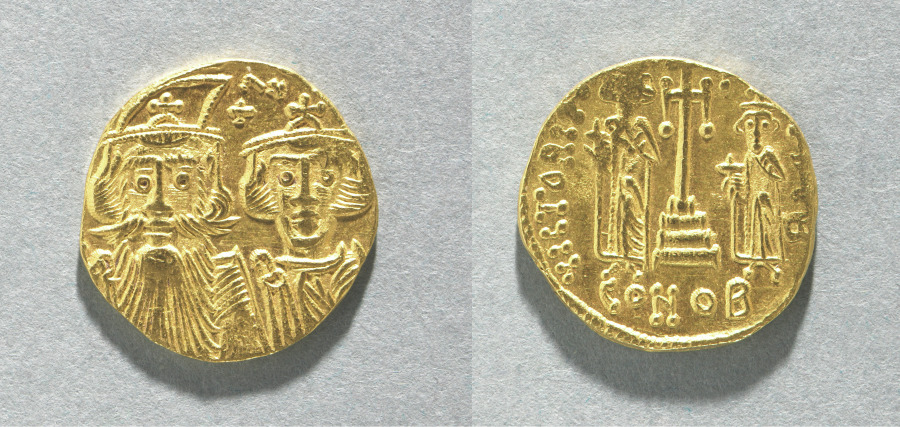
Solidus of Constans II and Constantine IV (Cleveland Museum of Art 2012.22)
659–661
The coin shown here is the solidus, the basic gold coin of 24 karats. Cleveland Museum of Art object 2012.22: Solidus of Constans II and Constantine IV, 659–661. Byzantium. Gold; diameter: 1.9 cm (3/4 in.). Inscribed: VICTORIA AVGU and officina letter (cut off and incomplete).
Partial type record
Cleveland Museum of Art
modern coins
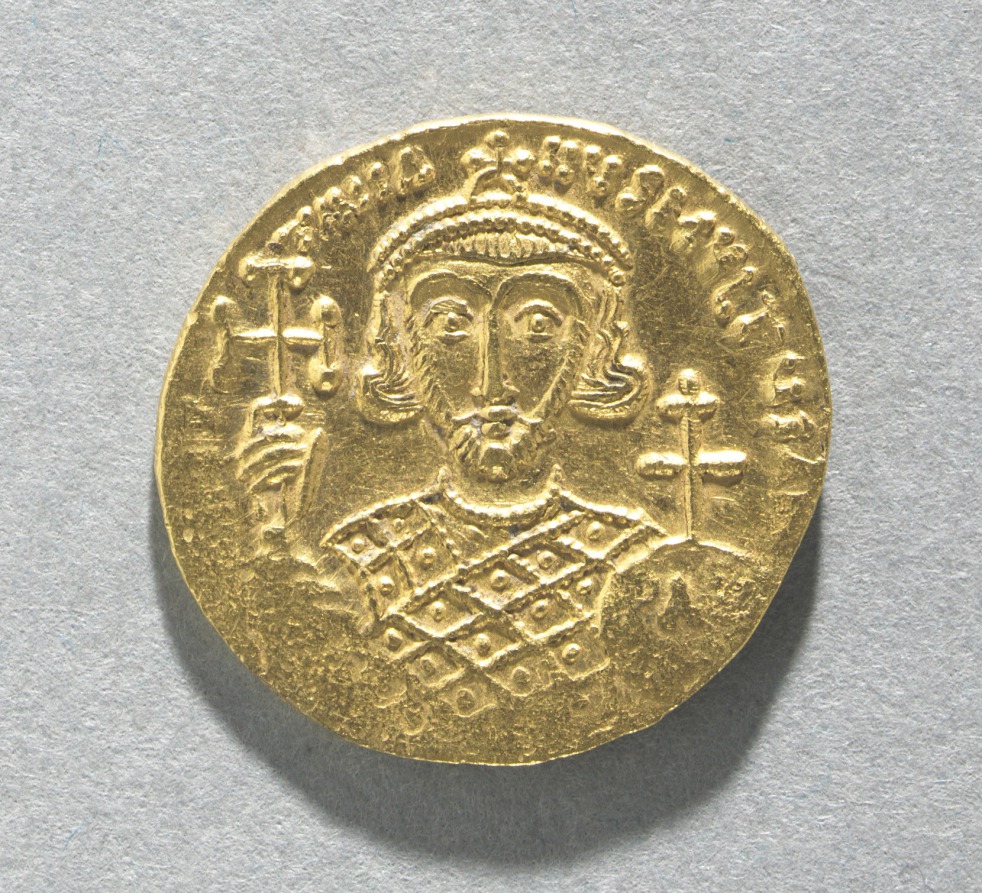
Solidus of Justinian II (Cleveland Museum of Art 2012.47)
705
The coins shown here include the solidus, the basic gold coin of 24 karats; the tremissis, a gold coin of one-third the weight and value of the solidus; and the nomisma, which in the 10th century replaced the solidus as the standard gold coin. Cleveland Museum of Art object 2012.47: Solidus of Justinian II, 705. Byz…
Partial type record
Cleveland Museum of Art
modern coins
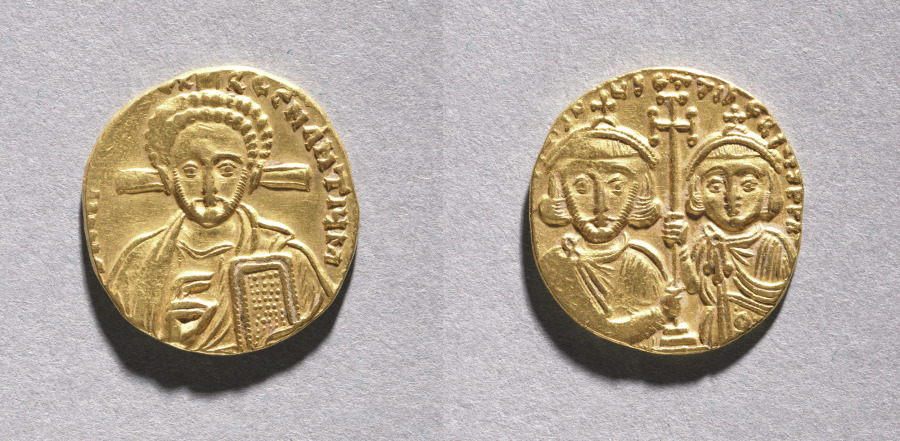
Solidus with Justinian II Rhinometus and His Son Tiberius (Cleveland Museum of Art 1968.57)
705–711
The coins shown here include the solidus, the basic gold coin of 24 karats; the tremissis, a gold coin of one-third the weight and value of the solidus; and the nomisma, which in the 10th century replaced the solidus as the standard gold coin. Cleveland Museum of Art object 1968.57: Solidus with Justinian II Rhinome…
Partial type record
Cleveland Museum of Art
modern coins
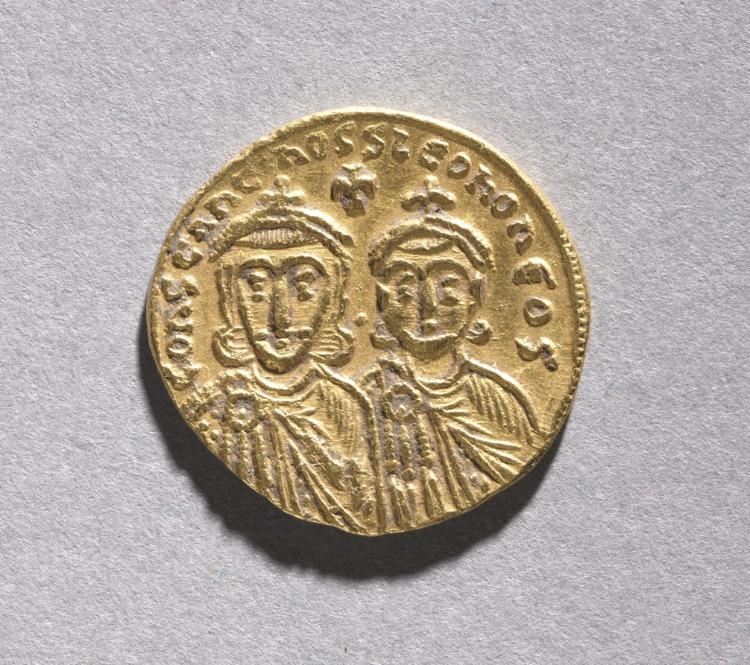
Solidus with Leo IV the Khazar and His Father Constantine V Copronymus (Cleveland Museum of Art 1968.59)
c. 751–775
The coins shown here include the solidus, the basic gold coin of 24 karats; the tremissis, a gold coin of one-third the weight and value of the solidus; and the nomisma, which in the 10th century replaced the solidus as the standard gold coin. Cleveland Museum of Art object 1968.59: Solidus with Leo IV the Khazar an…
Partial type record
Cleveland Museum of Art
modern coins
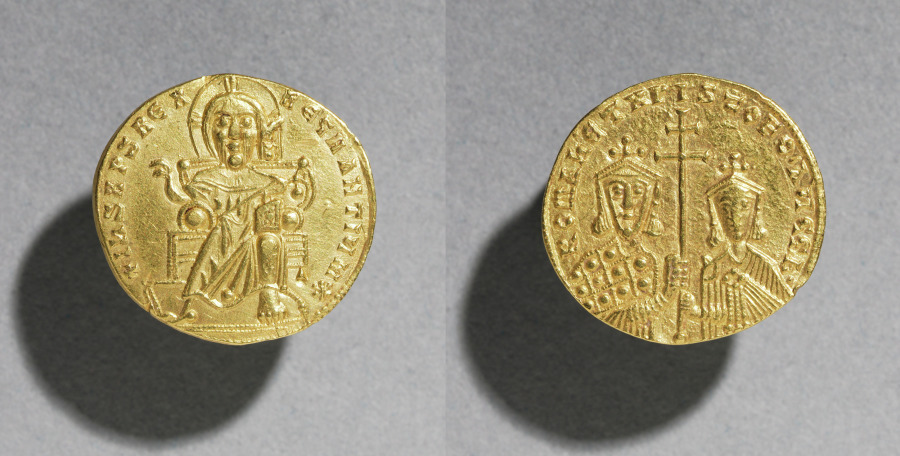
Solidus with Romanus I Lecapenus and His Son Christopher (Cleveland Museum of Art 1964.422)
920–944
The coins shown here include the solidus, the basic gold coin of 24 karats; the tremissis, a gold coin of one-third the weight and value of the solidus; and the nomisma, which in the 10th century replaced the solidus as the standard gold coin. Cleveland Museum of Art object 1964.422: Solidus with Romanus I Lecapenus…
Partial type record
Cleveland Museum of Art
modern coins
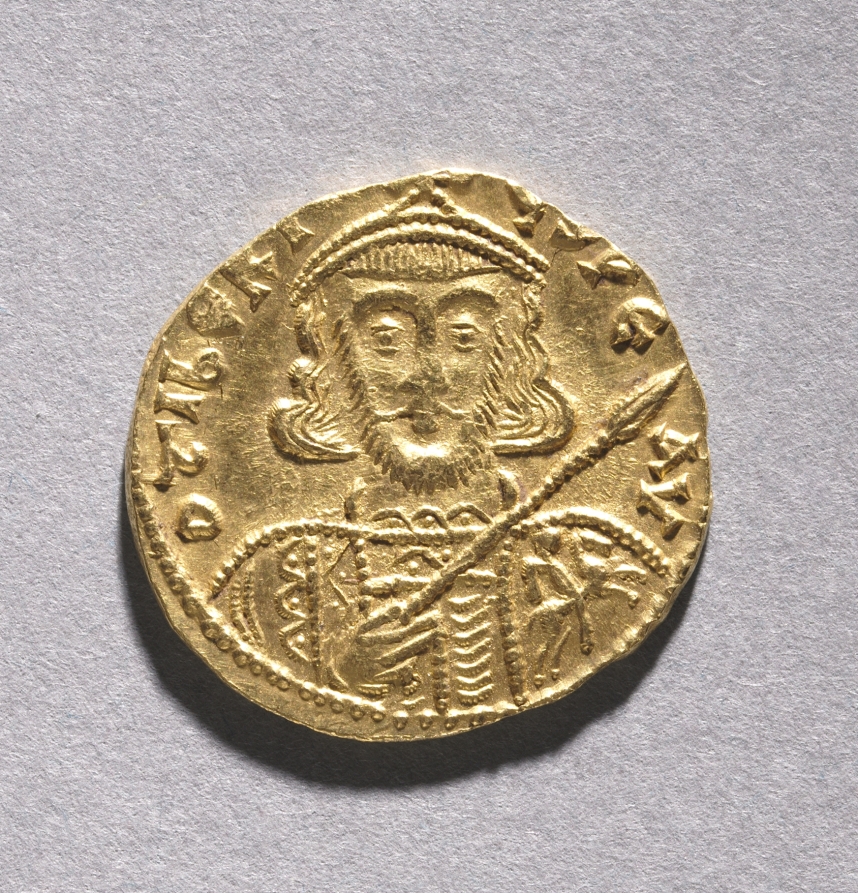
Solidus with Tiberius III Apsimarus (Cleveland Museum of Art 1968.58)
698–705
The coins shown here include the solidus, the basic gold coin of 24 karats; the tremissis, a gold coin of one-third the weight and value of the solidus; and the nomisma, which in the 10th century replaced the solidus as the standard gold coin. Cleveland Museum of Art object 1968.58: Solidus with Tiberius III Apsimar…
Partial type record
Rijksmuseum, Amsterdam
modern coins
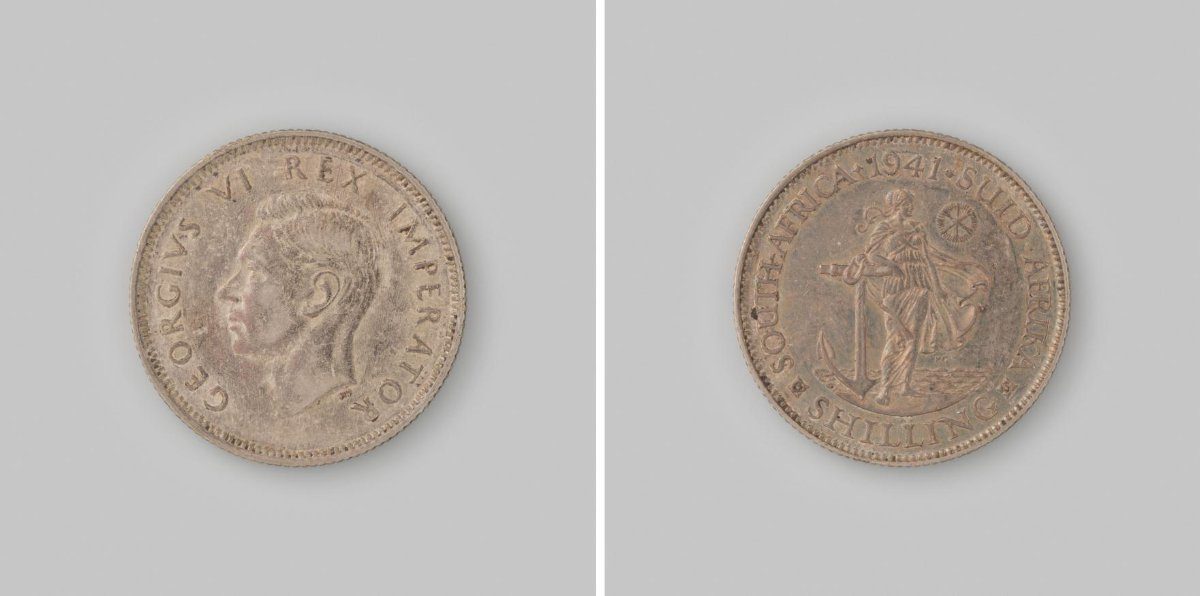
South Africa, shilling, 1941
1941
Silver coin. Obverse: bust of the British King and Emperor George VI facing left. Reverse: standing female figure leaning on an anchor with the sea at her feet and a radiant sun behind her to the right. Date in legend along the top and denomination: shilling at the bottom. The Rijksmuseum, Amsterdam, holds this obje…
Partial type record
Rijksmuseum, Amsterdam
modern coins
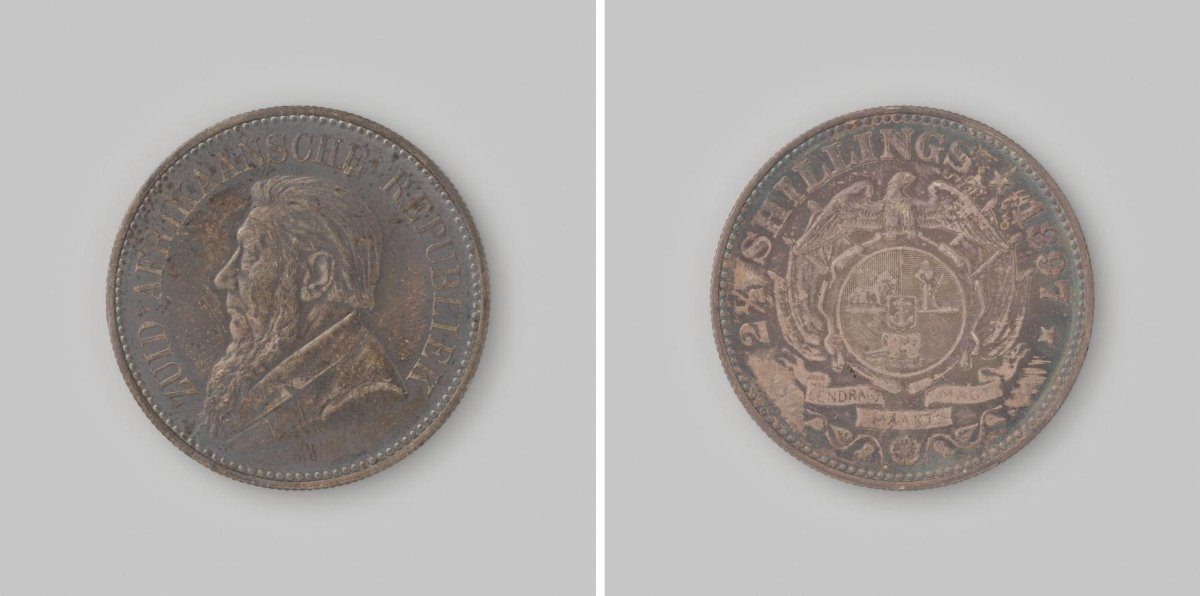
South Africa, South African Republic (Z.A.R.), 2½ shillings, 1897
1897
Silver coin. Obverse: bust of President Krüger facing left. Legend: Zuid Afrikaansche Republiek. Reverse: within a set of flags, above which an eagle and below which a banner with motto around coat of arms of the Z.A.R. At the top, denomination indication with year to the right. The Rijksmuseum, Amsterdam, holds thi…
Partial type record
Rijksmuseum, Amsterdam
modern coins
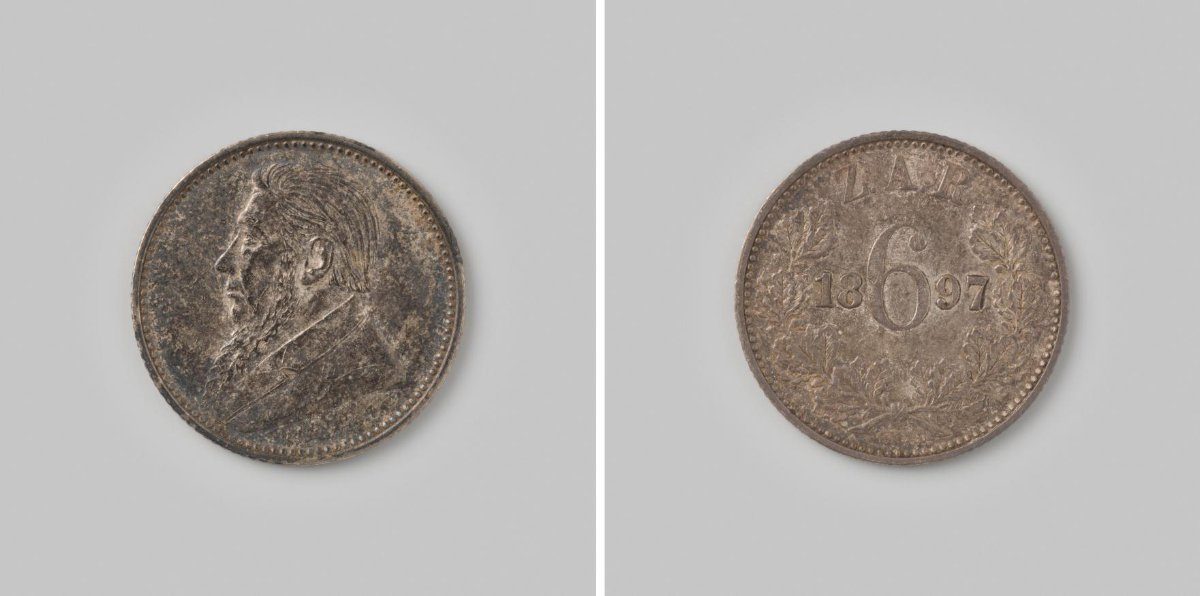
South Africa, South African Republic (Z.A.R.), 6 pence, 1897
1897
Silver coin. Obverse: bust of President Kruger facing left. Reverse: within two tied branches, denomination indication: 3 between date. At the top Z.A.R. The Rijksmuseum, Amsterdam, holds this object as KOG-MP-1-5131A; its record gives material recorded as silver (metal); technique striking (metalworking); measureme…
Partial type record
Rijksmuseum, Amsterdam
modern coins
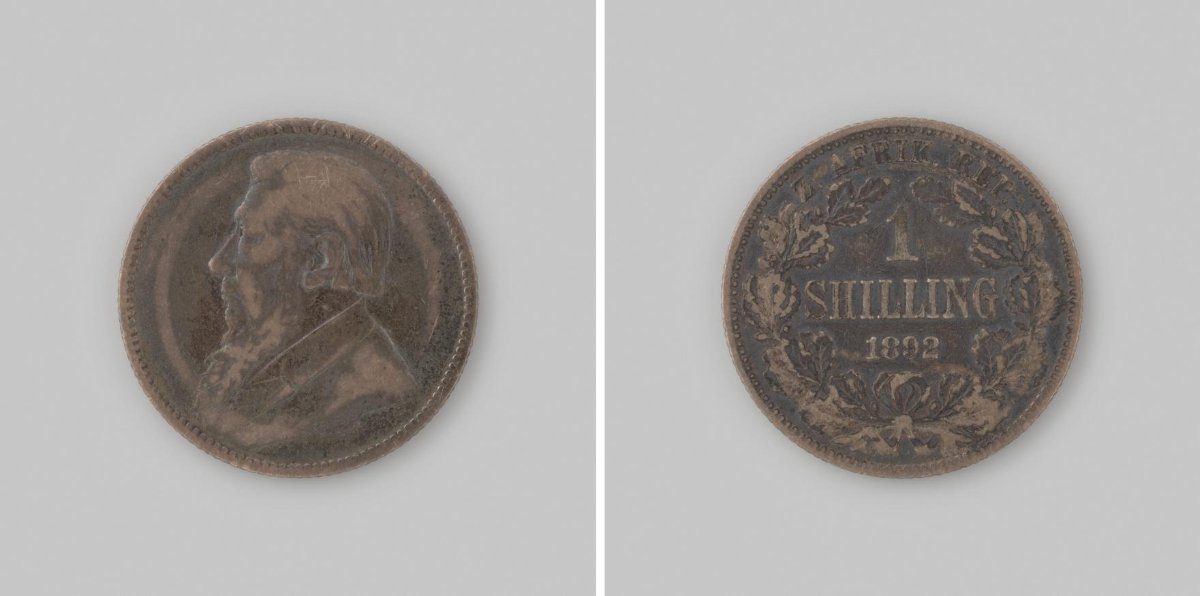
South Africa, South African Republic (Z.A.R.), shilling, 1892
1892
Silver coin. Obverse: bust of President Kruger facing left. Reverse: within two tied branches, denomination indication: 1 shilling in two lines, below which is the date. At the top Z. Afrik. Rep. The Rijksmuseum, Amsterdam, holds this object as KOG-MP-1-5131B; its record gives material recorded as silver (metal); te…
Partial type record
Van Acker Coin Auctions October 2026 Auction (1-3 Oct 2026)
modern coins
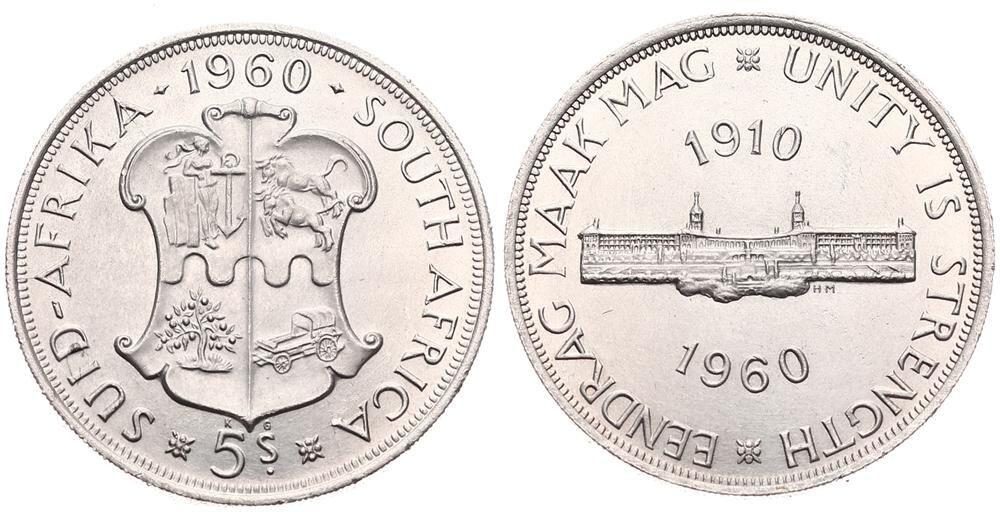
South African Union five shillings
Union period
The South African Union five shillings is a crown-sized silver denomination issued under the Union of South Africa from 1947 until the adoption of decimal currency in 1961. Produced at the South African Mint in Pretoria, it represented the highest silver denomination of the South African pound system, which adhered…
Partial type record
Van Acker Coin Auctions October 2026 Auction (1-3 Oct 2026)
modern coins
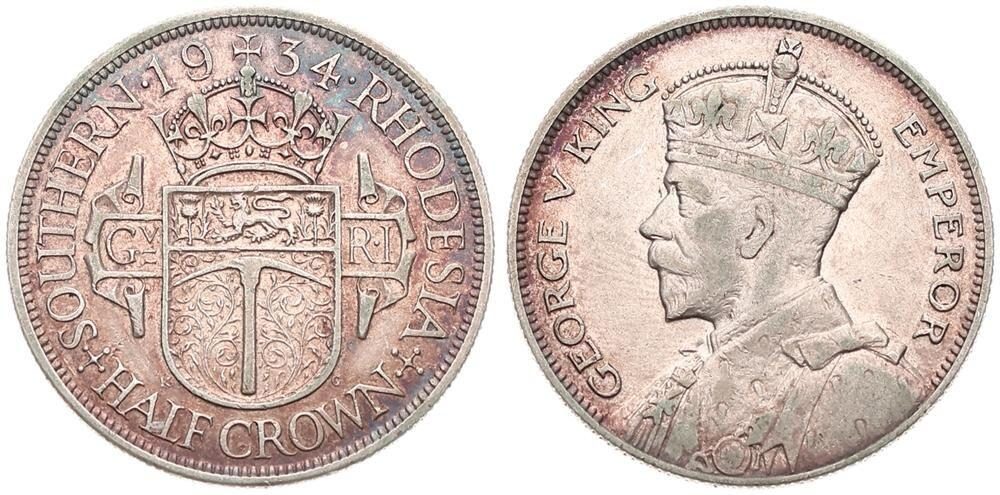
Southern Rhodesia Half Crown
1932-1954
The Southern Rhodesia half crown is a sterling-system coin denominated at two shillings and sixpence (2/6), issued between 1932 and 1954 for Southern Rhodesia. It featured an obverse depicting the reigning British monarch and a reverse displaying colonial arms or a local motif alongside the colony's name. Throughou…
Partial type record
Rijksmuseum, Amsterdam
modern coins
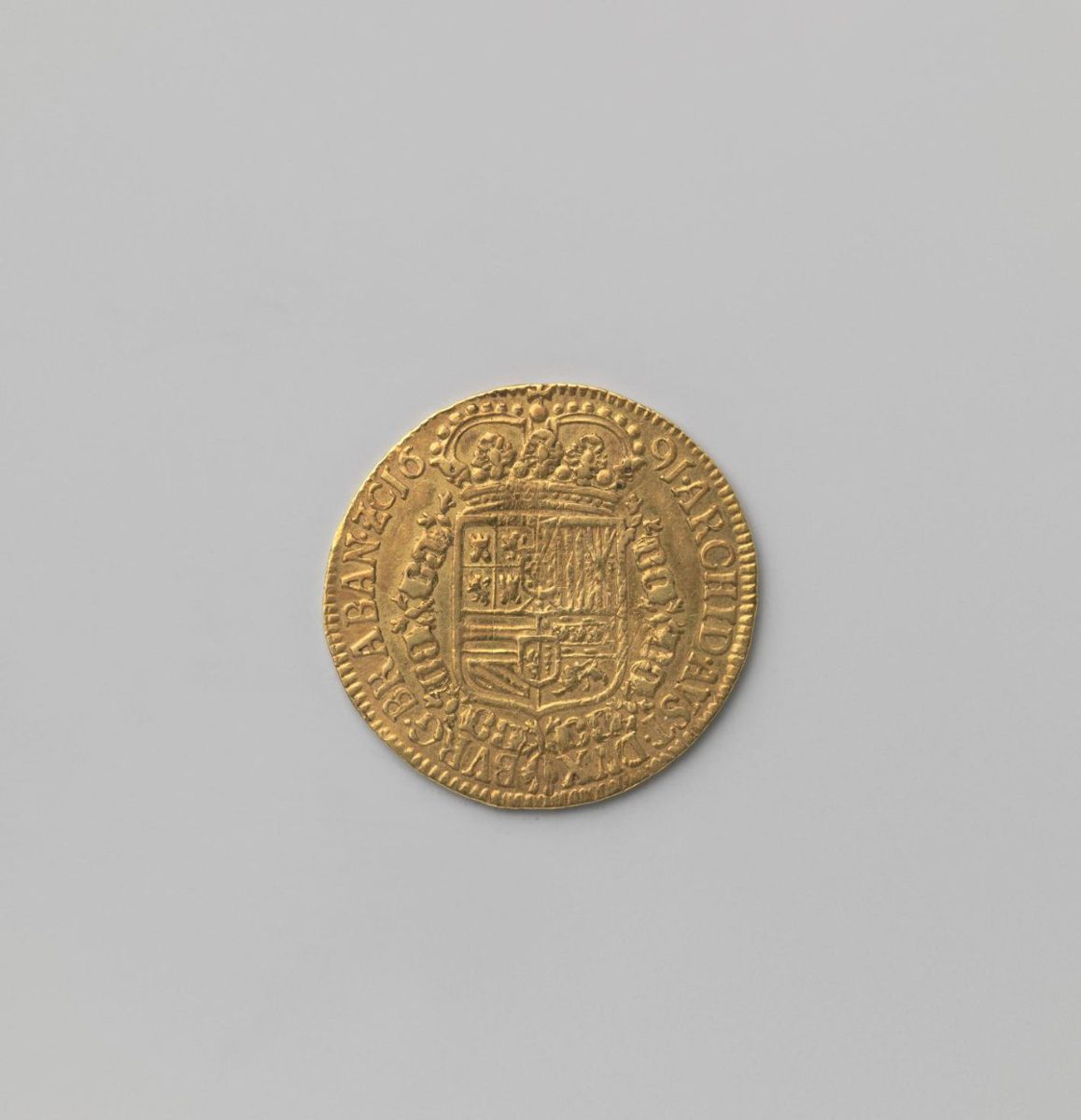
Sovereign from Brabant of Charles II, 1691
1691
Gold coin. Obverse: lion standing to the left, holding a terrestrial globe placed on a plinth with its left paw, sword in its right paw, above which is an angel's head. Reverse: crowned composite coat of arms encircled by the collar of the Golden Fleece. Date in legend around the crown. The Rijksmuseum, Amsterdam, h…
Partial type record
Cleveland Museum of Art
modern coins
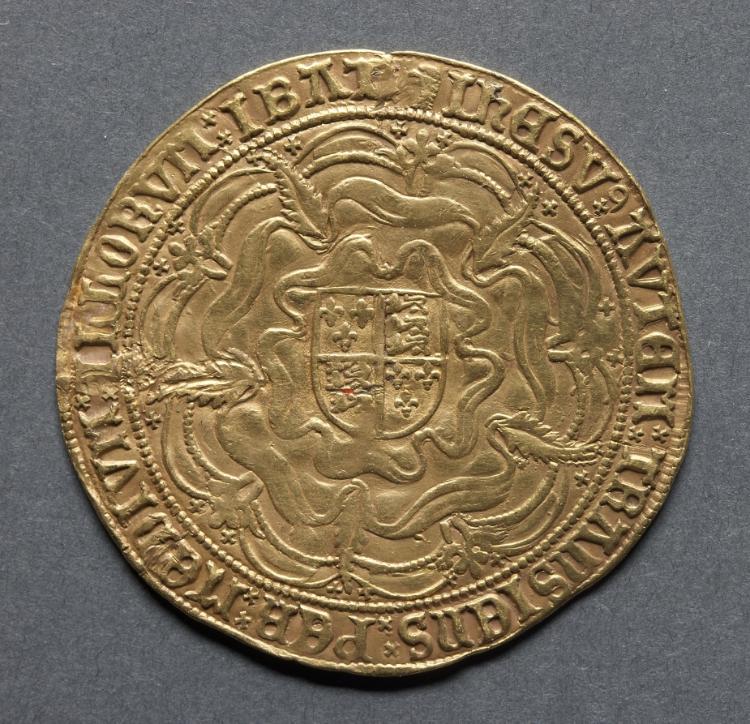
Sovereign of Thirty Shillings: Edward VI Enthroned (obverse); Shield of Royal Arms on Rose (Cleveland Museum of Art 1969.177)
1550–53
This coin was struck at the Tower mint during the last period of the reign (1550–53). It was struck in high quality gold of 23 carat 3 1/2 grains, and the mint mark, an ostrich head, is unusual and unknown outside this coinage. The mint mark can be see on the obverse, above Edward's crown and before the text starts.…
Partial type record
Cleveland Museum of Art
modern coins
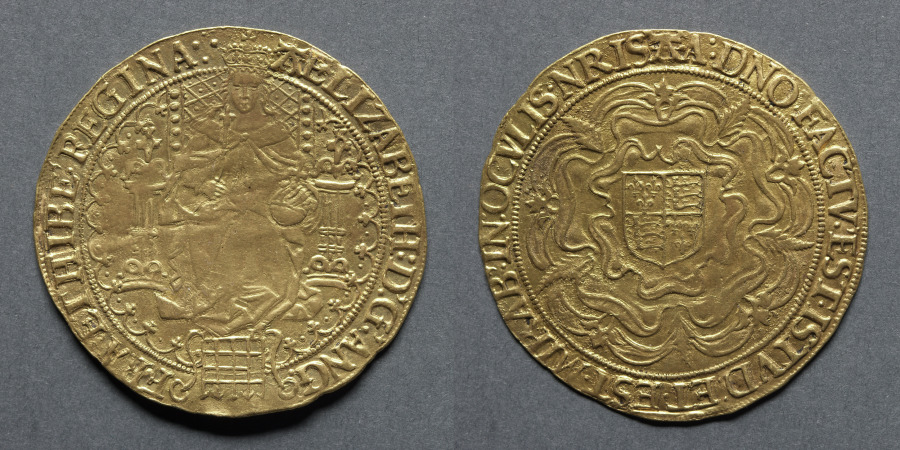
Sovereign of Thirty Shillings: Elizabeth I (obverse); Shield of Arms on Tudor Rose (Cleveland Museum of Art 1969.181)
1583–1603
A point of interest of this piece is the initial mark. The mark, in the shape of a crosslet, and visible at the start of the inscription, dates the die to 1560–61. However here it has been over stamped with another mark, an A, used in 1583–85. This indicates the reuse of the die of the first coinage during the third…
Partial type record
Cleveland Museum of Art
modern coins
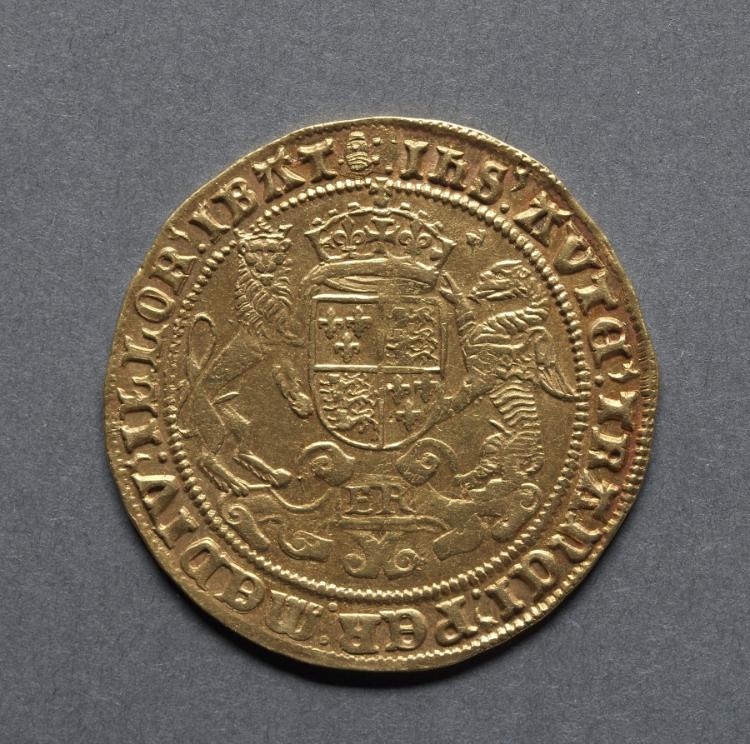
Sovereign of Twenty Shillings: Edward VI (obverse); Crowned Shield of Royal Arms (Cleveland Museum of Art 1969.178)
1550–53
The initial mark tun, a small barrel, shows that his piece was struck in the Tower mint and dates it from 1551–53. It was struck in 22 carat gold. The initial mark appears at the top of the reverse of the coin. Cleveland Museum of Art object 1969.178: Sovereign of Twenty Shillings: Edward VI (obverse); Crowned Shiel…
Partial type record
Cleveland Museum of Art
modern coins
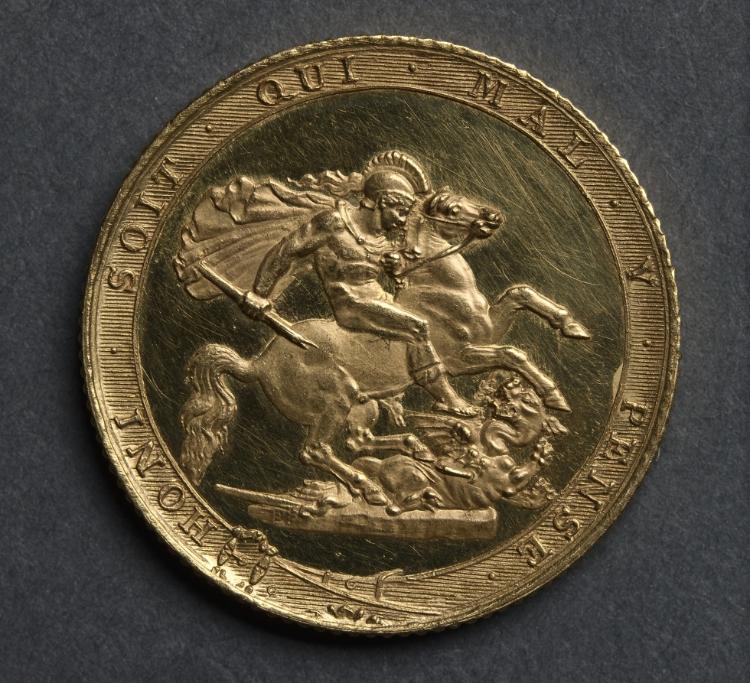
Sovereign: George III (obverse); St. George and the Dragon (Cleveland Museum of Art 1969.212)
1817
Great changes had occurred since King George III's previous coinage. The Royal Mint had moved out of the Tower of London to new premises in Little Tower Hill. The new mint was fitted with the latest steam-driven machinery by Boulton and Watt, and the whole coinage had been reformed. The guinea of twenty-one shilling…
Partial type record
Cleveland Museum of Art
modern coins
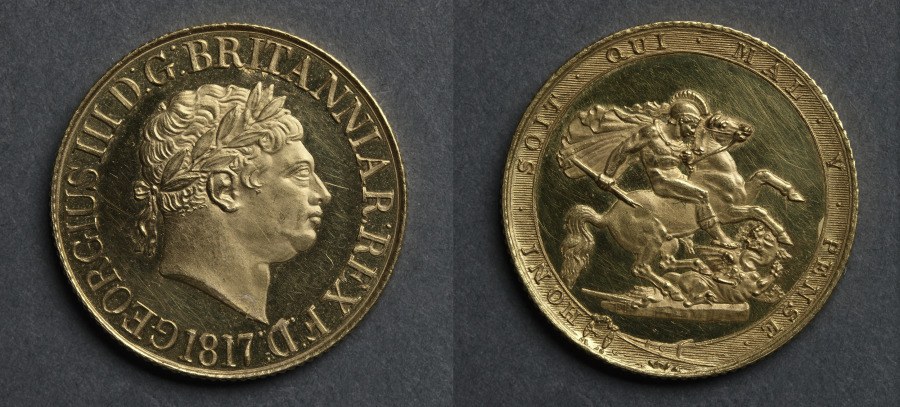
Sovereign: George III (obverse); St. George and the Dragon (reverse)
1817
Sovereign: George III (obverse); St. George and the Dragon (reverse) — Coins, by Benedetto Pistrucci (Italian, 1784–1855), made in England, George III, 1760-1820, dated 1817. Great changes had occurred since King George III's previous coinage. The Royal Mint had moved out of the Tower of London to new premises in Li…
Partial type record
Cleveland Museum of Art
modern coins
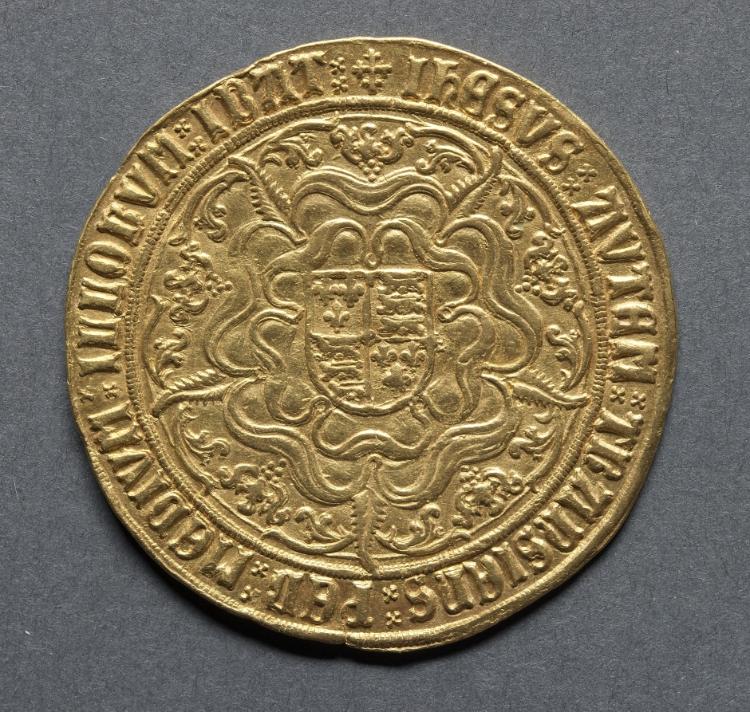
Sovereign: Henry VII (obverse); Shield of Arms in Tudor Rose (Cleveland Museum of Art 1969.169)
1504–9
The coinage of Henry VII is the first step from medieval to modern coinage. In 1489 a special commission was issued for the striking of a new gold coin called the sovereign, weighing 240 gs. This is the first use of the name in the English series. These early sovereigns can boast of an artistic achievement never bef…
Partial type record
Cleveland Museum of Art
modern coins
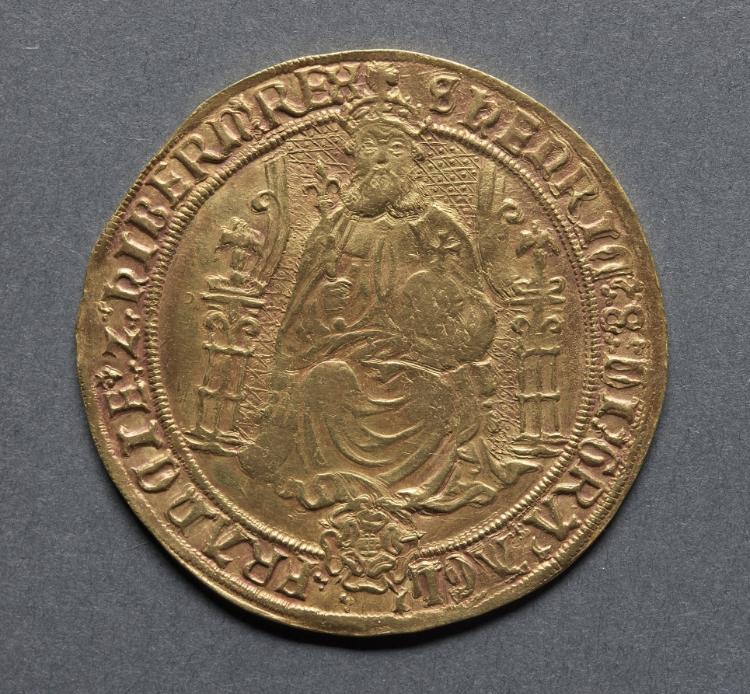
Sovereign: Henry VIII (obverse); Crowned Shield of Arms (Cleveland Museum of Art 1969.173)
1544–47
This is an example of the late, debased, third coinage of Henry VIII. Knowing how coinage had been debased in the past, Henry VIII did so again for his own personal benefit. He not only debased the gold coinage but the silver as well. This coin was struck at Southwark mint. The Southwark mint was in Suffolk Place, S…
Partial type record
Cleveland Museum of Art
modern coins
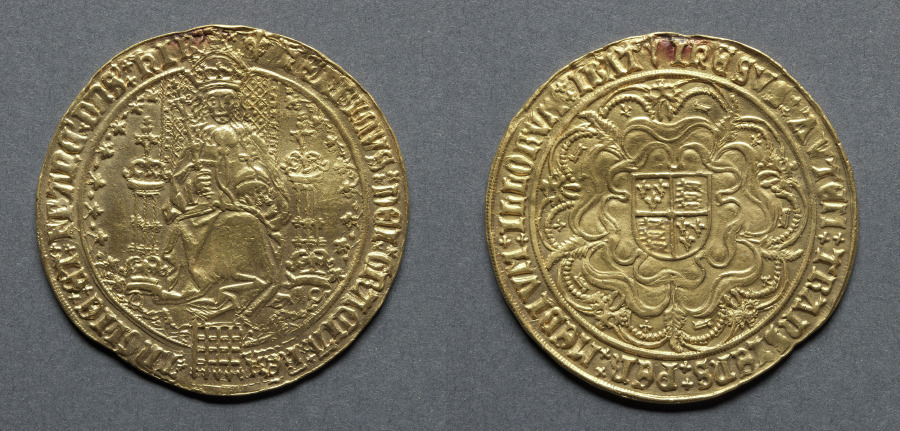
Sovereign: Henry VIII Enthroned (obverse); Royal Arms on Tudor Rose (Cleveland Museum of Art 1969.170)
1526–44
During his life Henry VII had accumulated enormous wealth, and it took his son, Henry VIII, until 1542 to squander it. Henry knew how the English coinage had been debased in the past and did not see why it should not be debased again, this time for his personal benefit. Regardless of the inevitable financial catastr…
Partial type record
Cleveland Museum of Art
modern coins
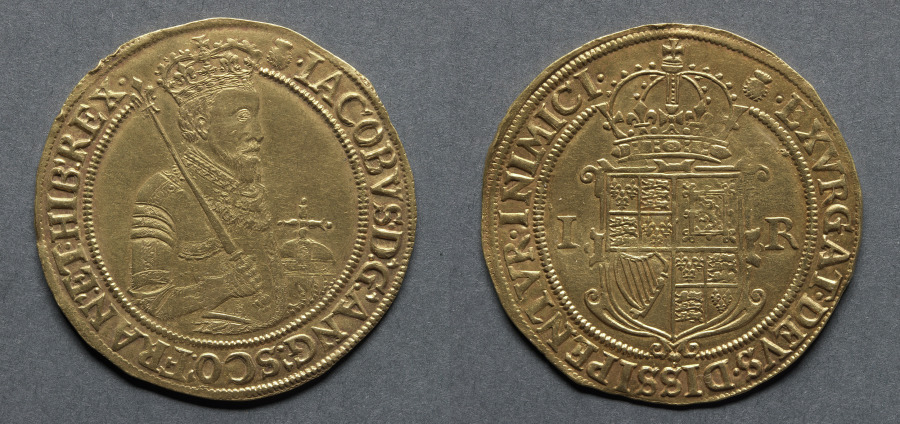
Sovereign: James I (obverse); Crowned Shield (Cleveland Museum of Art 1969.188)
1603–4
The accession of James I to the throne of England brought about the union of the thrones of England and Scotland. This was duly recorded on the coinage, the royal arms on this piece now consisting of the arms of England (twice), Scotland, and Ireland. The English arms still contain the French lilies, though the last…
Partial type record
Cleveland Museum of Art
modern coins
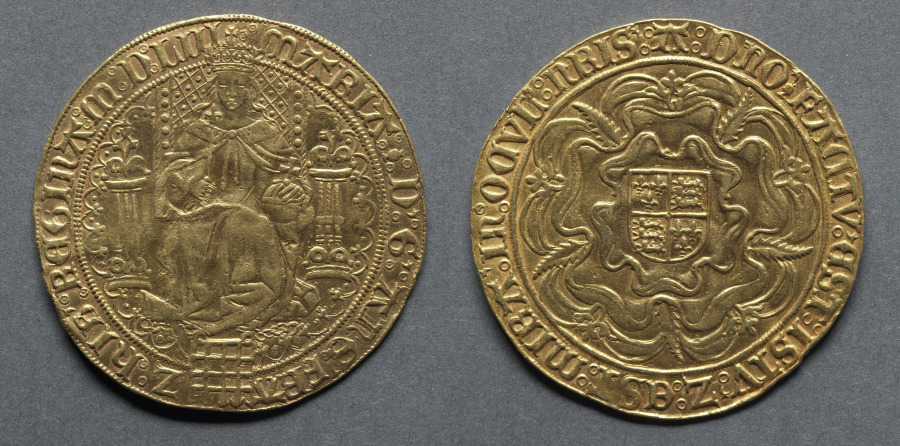
Sovereign: Mary Enthroned (obverse); Shield of Royal Arms on a Tudor Rose (Cleveland Museum of Art 1969.179)
1553
Upon ascending the throne, Mary announced that she would restore the coinage to its full value. This sovereign of thirty shillings is of standard gold, 23 carats, 3 1/2 grains. The fine silver pieces of the reign were in metal, 11 oz. fine. These coins are thus of the same fineness as were those of Edward VI; the si…
Partial type record
Cleveland Museum of Art
modern coins
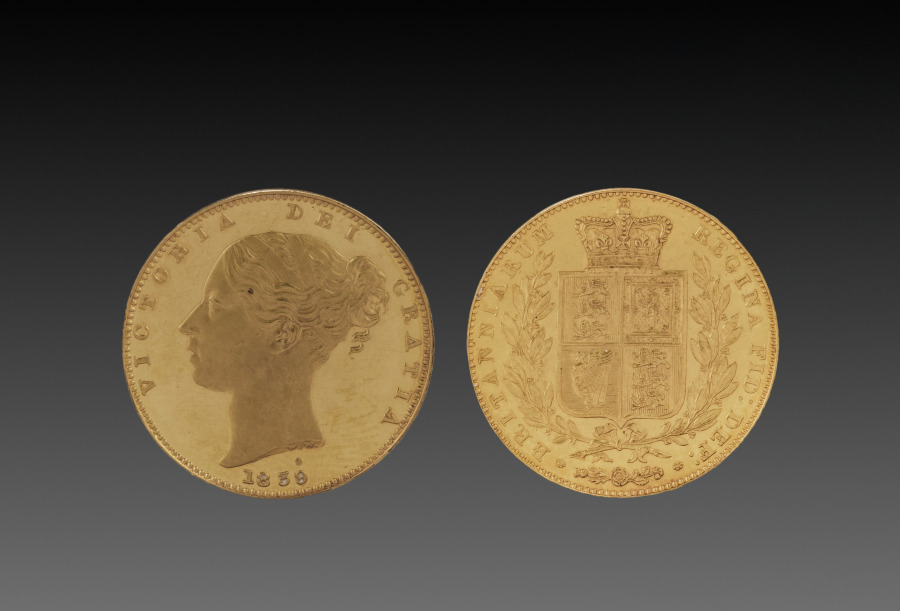
Sovereign: Victoria (obverse); Shield of Arms (Cleveland Museum of Art 1969.218)
1839
With the end of the rule of the House of Hanover, whose last direct representative on the British throne was William IV (died 1837), the royal arms that had ceased to show the French pretention at the end of the first coinage of George III were now further simplified. In each quarter from top right to bottom left: 1…
Partial type record
Cleveland Museum of Art
modern coins
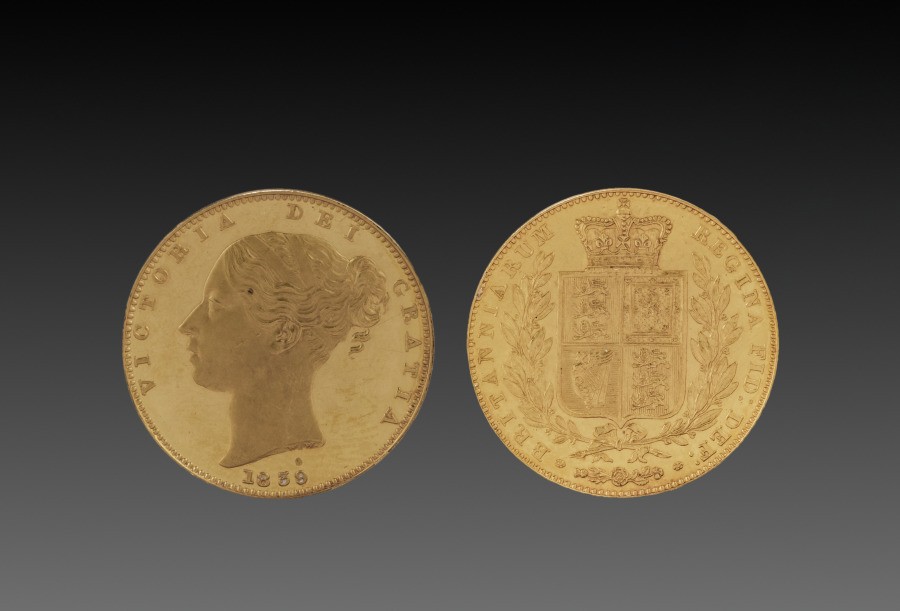
Sovereign: Victoria (obverse); Shield of Arms (reverse)
1839
Sovereign: Victoria (obverse); Shield of Arms (reverse) — Coins, by William Wyon (British, 1795–1851), made in England, Victoria, 1837-1901, dated 1839. With the end of the rule of the House of Hanover, whose last direct representative on the British throne was William IV (died 1837), the royal arms that had ceased…
Partial type record
Государственный банк СССР (Gosbank) via Wikimedia Commons
modern coins
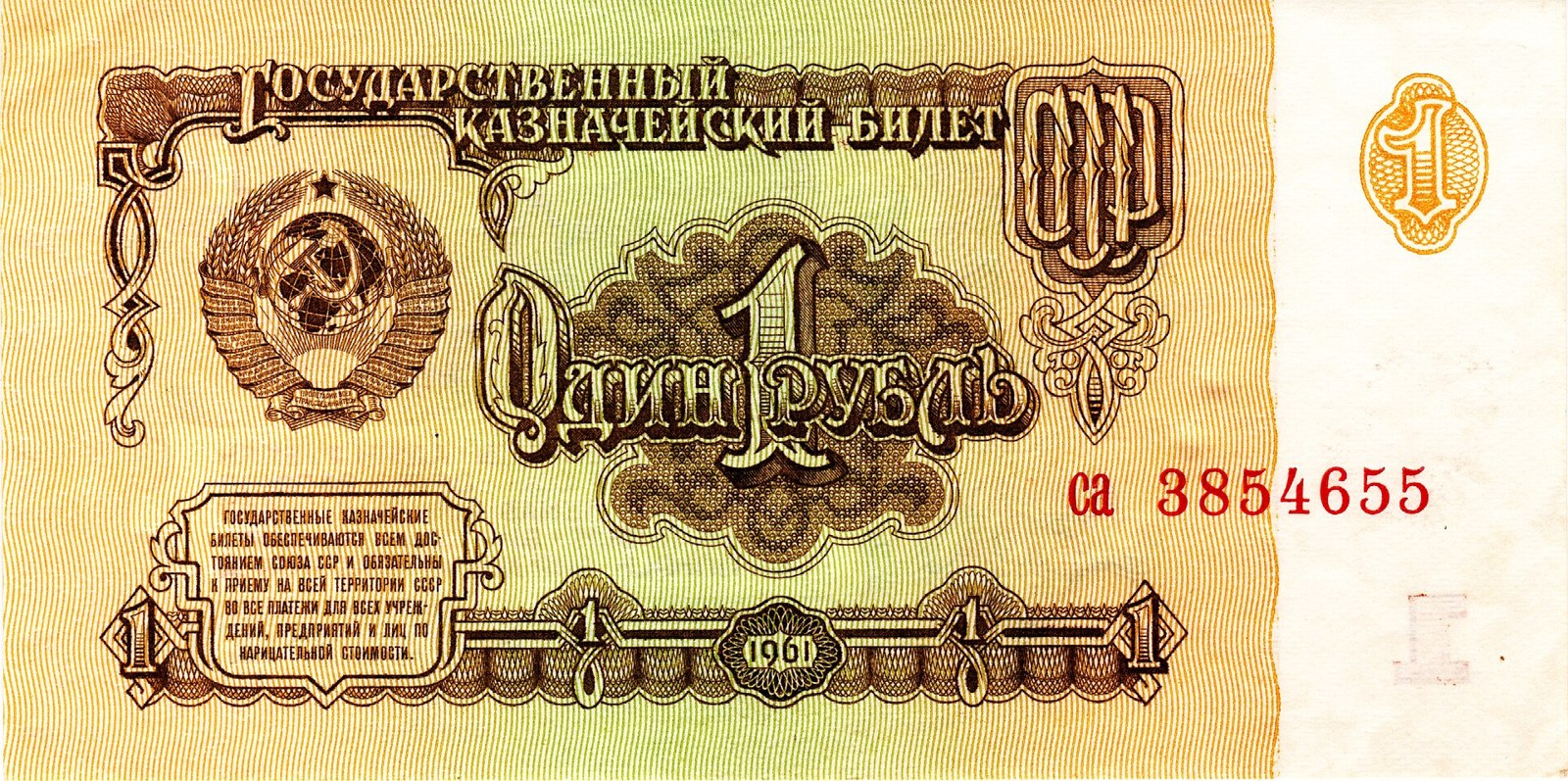
Soviet Union 1 Rouble, 1961 reform
1961-1991
The Soviet Union 1 rouble (or rubl) is a circulating coin introduced with the 1961 Soviet currency reform and issued until 1991. Produced under the authority of the Soviet Union, whose circulating currency was manufactured by Goznak in Moscow and Leningrad, the coin functioned as a standard unit of exchange divided…
Partial type record
Государственный Банк СССР
modern coins
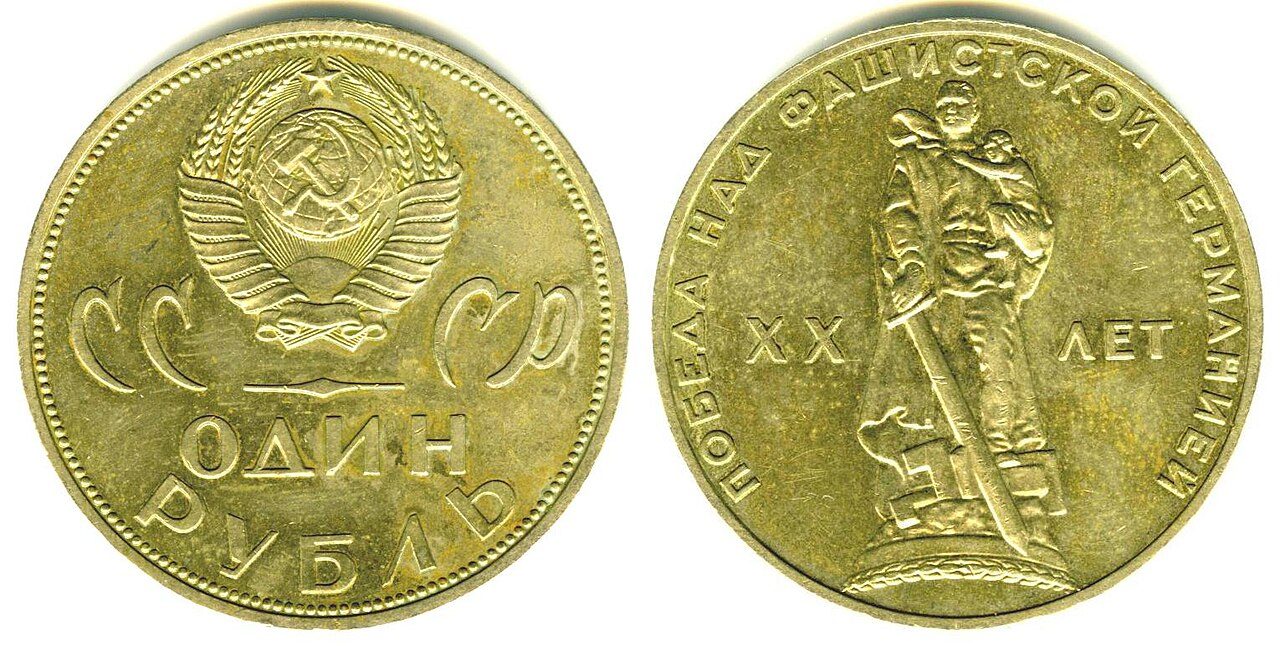
Soviet Union commemorative rouble series
1965-1991
The Soviet Union commemorative rouble series comprises commemorative coins issued by the USSR between 1965 and 1991 to mark historical anniversaries, figures, and events, beginning with the 1965 issue. While most coins in the series were struck in copper-nickel alloy, the commemorative releases also included pieces…
Partial type record
Rijksmuseum, Amsterdam
modern coins
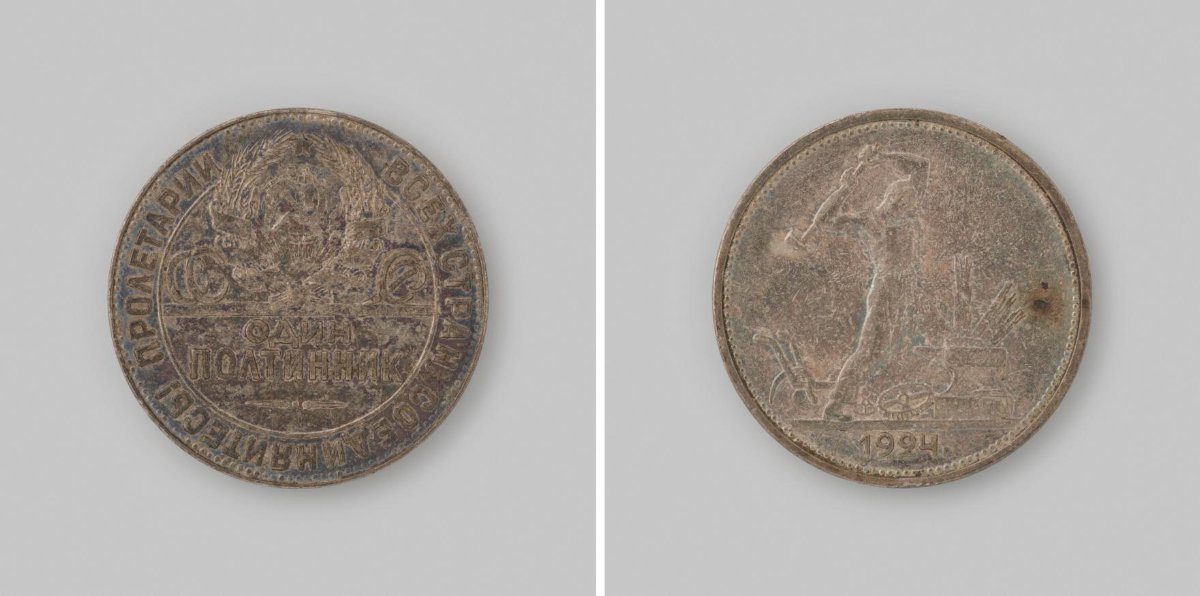
Soviet Union, 50 kopecks or poltinnik, 1924
1924
Silver coin. Obverse: between country designation in Cyrillic letters S, S, S and R coat of arms of the Soviet Union. In the exergue value indication: a poltinnik. Reverse: worker surrounded by attributes, striking an object on an anvil. In the exergue, year. Edge lettering. The Rijksmuseum, Amsterdam, holds this ob…
Partial type record
Rijksmuseum, Amsterdam
modern coins
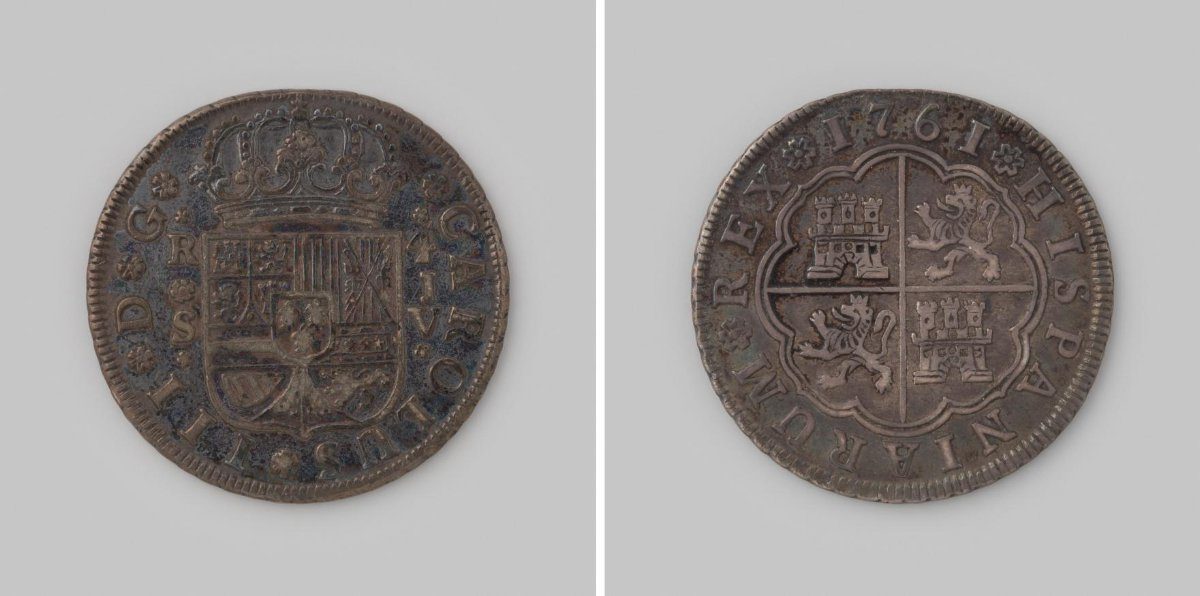
Spain, King Charles III, four reales, 1761
1761
Silver coin. Obverse: crowned composite coat of arms. To its right, value indication: 4, to its left, letter S [= Seville]. Reverse: within a polylobe, a short cross with alternating lion [= León] and castle [= Castile] in the corners. Date at the top in inscription. Floral rim. The Rijksmuseum, Amsterdam, holds thi…
Partial type record
Rijksmuseum, Amsterdam
modern coins
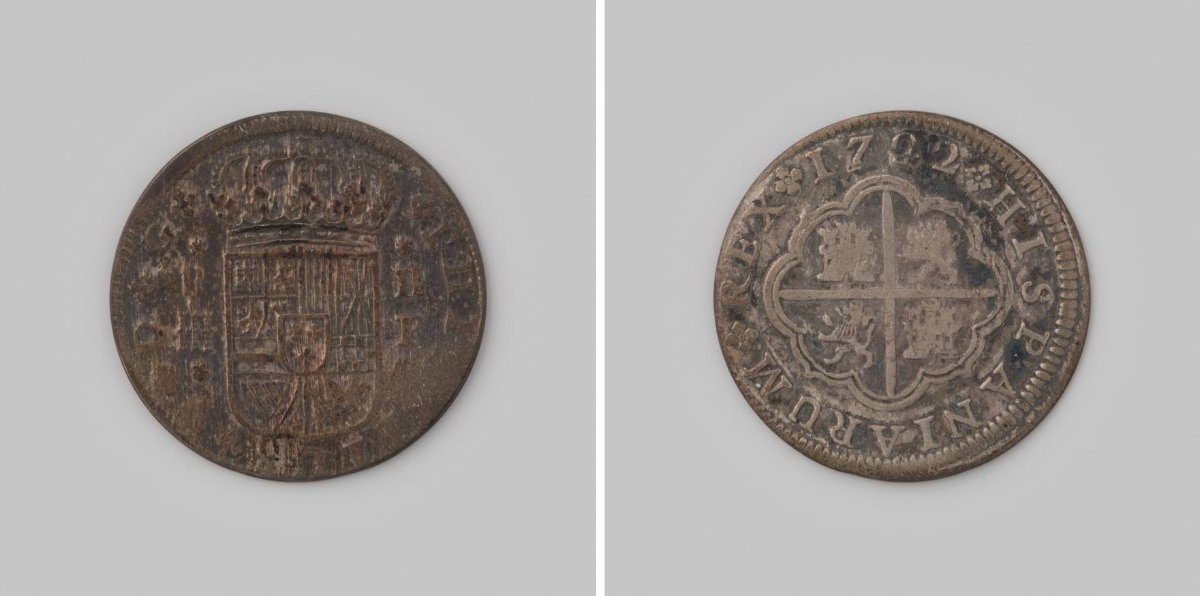
Spain, King Philip V, double real, 1722
1722
Silver coin. Obverse: crowned composite coat of arms. To its right, denomination: II; to its left, aqueduct [= Segovia]. Reverse: within polylobe a short cross with alternating lion [= León] and castle [= Castile] in the angles. Date at the top in circumscription. Plain edge. The Rijksmuseum, Amsterdam, holds this o…
Partial type record
Rijksmuseum, Amsterdam
modern coins
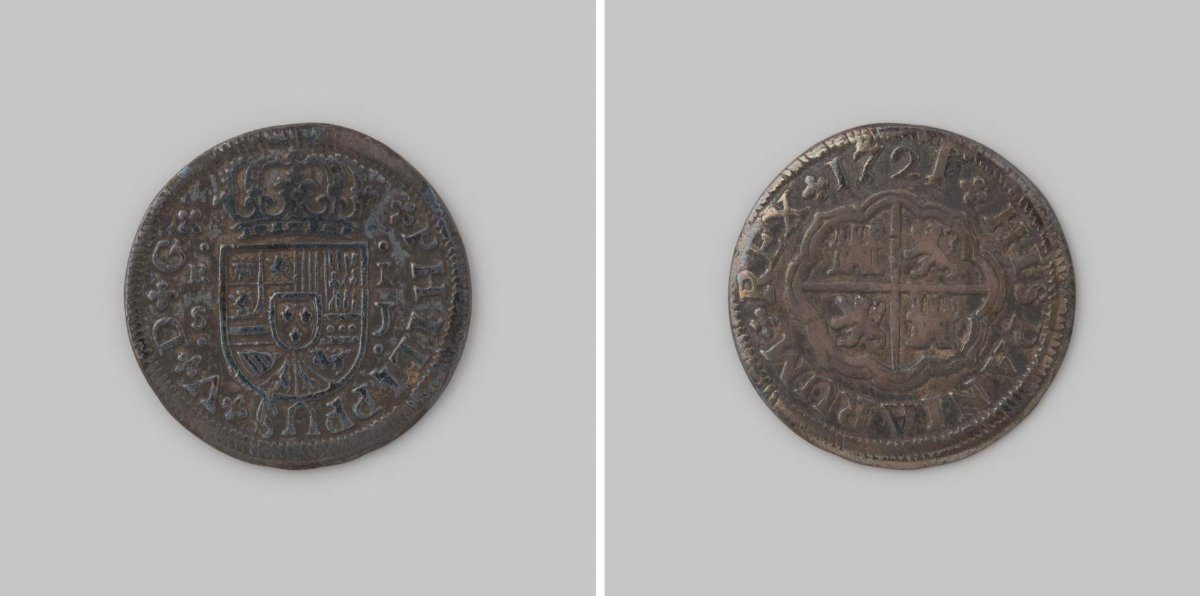
Spain, King Philip V, real (de plata), 1721 S
1721
Silver coin. Obverse: crowned composite coat of arms. To the right of it value indication: I, to the left of it letter S [=Seville]. Reverse: within polyfoil, short cross with in the angles alternately a lion [=Leon] and a castle [=Castile]. Date at the top in inscription. Smooth edge. The Rijksmuseum, Amsterdam, ho…
Partial type record
Klondike Auction 81 (27 Sep 2026)
modern coins
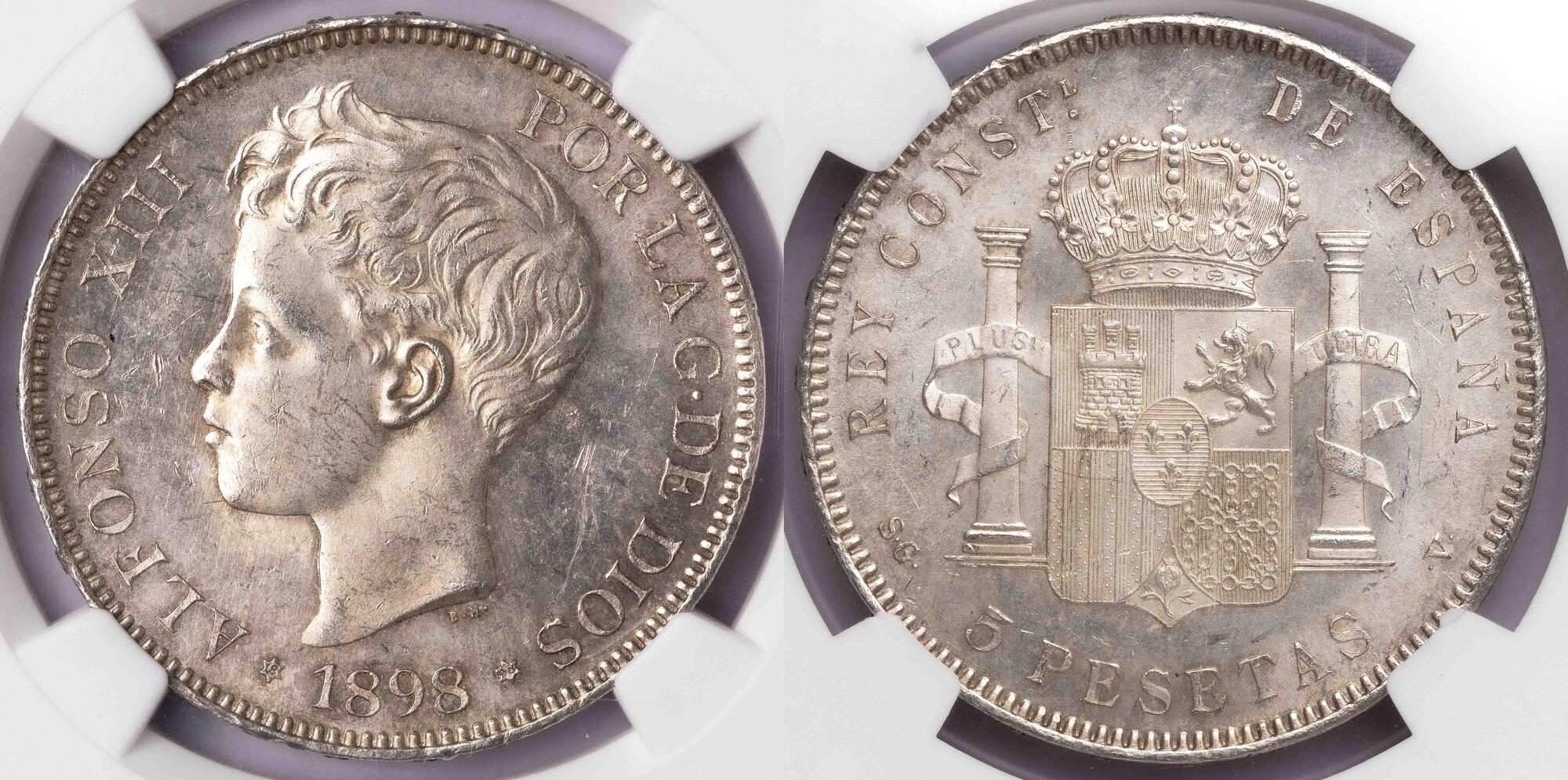
Spanish 5 pesetas silver, Alfonso XIII
Late 19th to early 20th century
The Spanish silver 5 pesetas of Alfonso XIII is a crown-sized coin, also known as a duro, produced under Latin Monetary Union standards in the late nineteenth and early twentieth centuries. Struck in.900 fine silver, this denomination represented five pesetas, officially fixed as equal to one traditional peso duro.…
Partial type record
Joe deSousa
modern coins
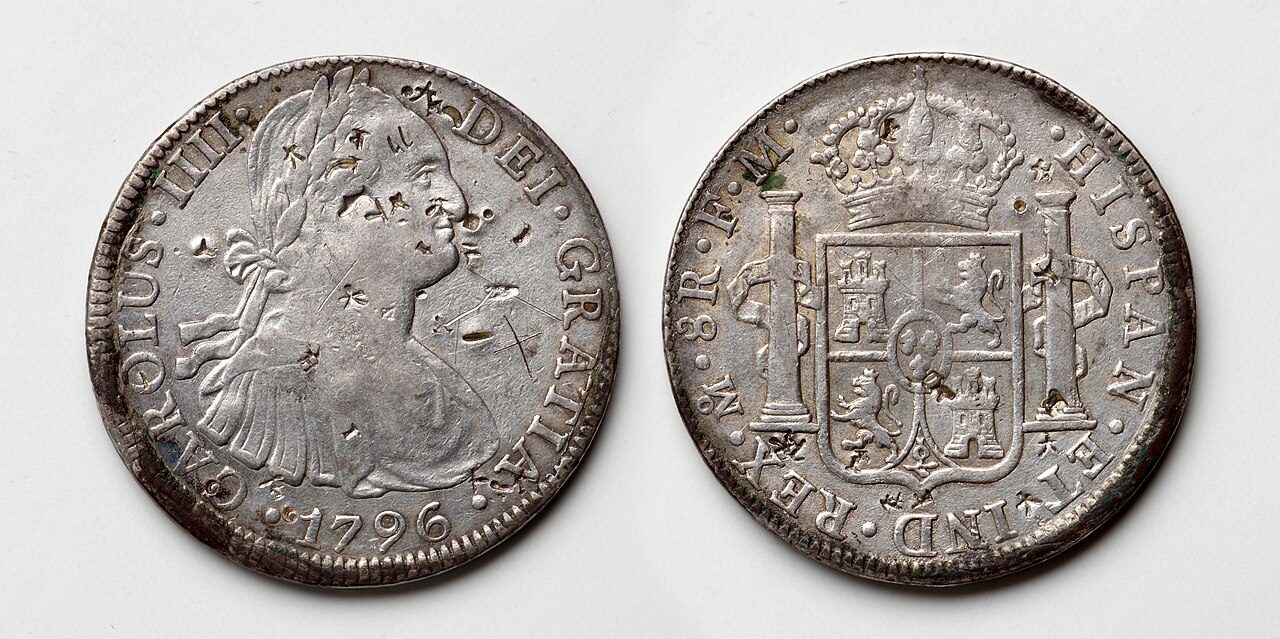
Spanish Colonial Eight Reales
16th–19th century
The Spanish colonial eight reales, widely known as the Spanish dollar, peso, or piece of eight, was a large silver denomination issued under Spanish royal authority across its New World empire. Struck following the extensive exploitation of silver deposits in Mexico, Peru, and Bolivia, pieces were produced at coloni…
Partial type record
Rijksmuseum, Amsterdam
modern coins
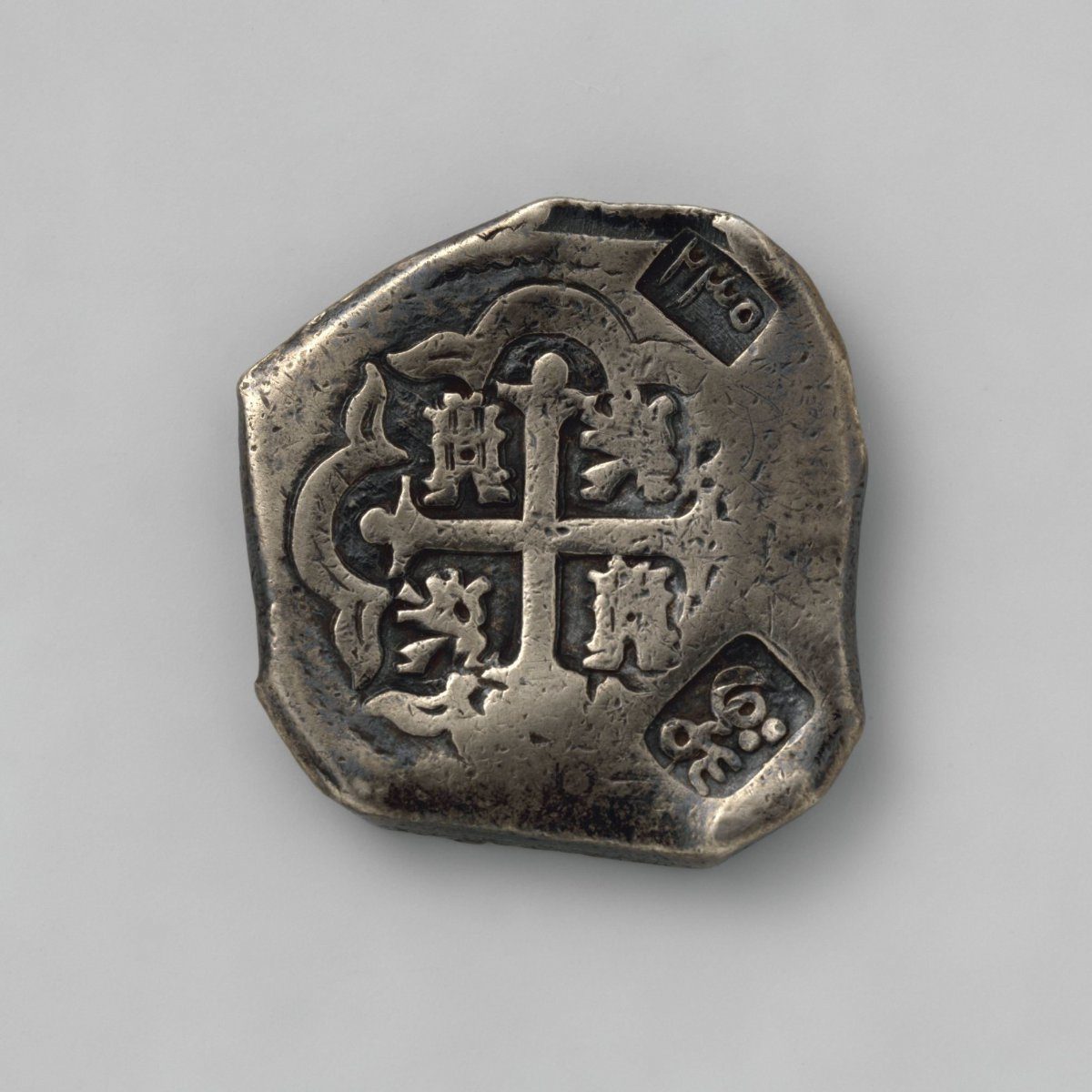
Spanish eight reales from Mexico with countermarks Soemenep and 235
1732 - 1819
Silver coin in crude rectangular shape. Obverse: crowned Spanish coat of arms. Date in circumscription. Reverse: in a polyfoil cross with coats of arms of Castile and León in the angles. On ends two countermarks: Soemenep and 235 [=A.H. 1235=1819]. The Rijksmuseum, Amsterdam, holds this object as KOG-MP-1-4357; its…
Partial type record
Rijksmuseum, Amsterdam
modern coins
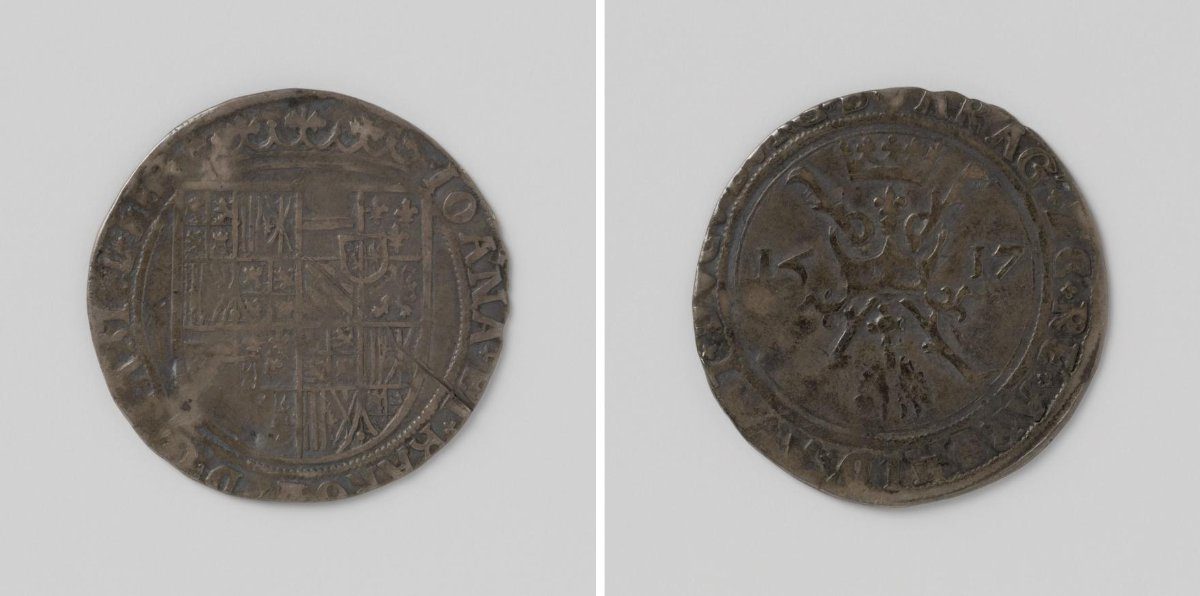
Spanish real of Charles and Joanna, King and Queen of Castile
1517
Obverse: crowned coat of arms within legend. Reverse: firesteel, from which hangs the Golden Fleece, on a Cross of Burgundy, between date within legend. The Rijksmuseum, Amsterdam, holds this object as NG-VG-1-92; its record gives material recorded as silver (metal); technique striking (metalworking); measurements d…
Partial type record
National Museum of American History, Smithsonian Institution
modern coins
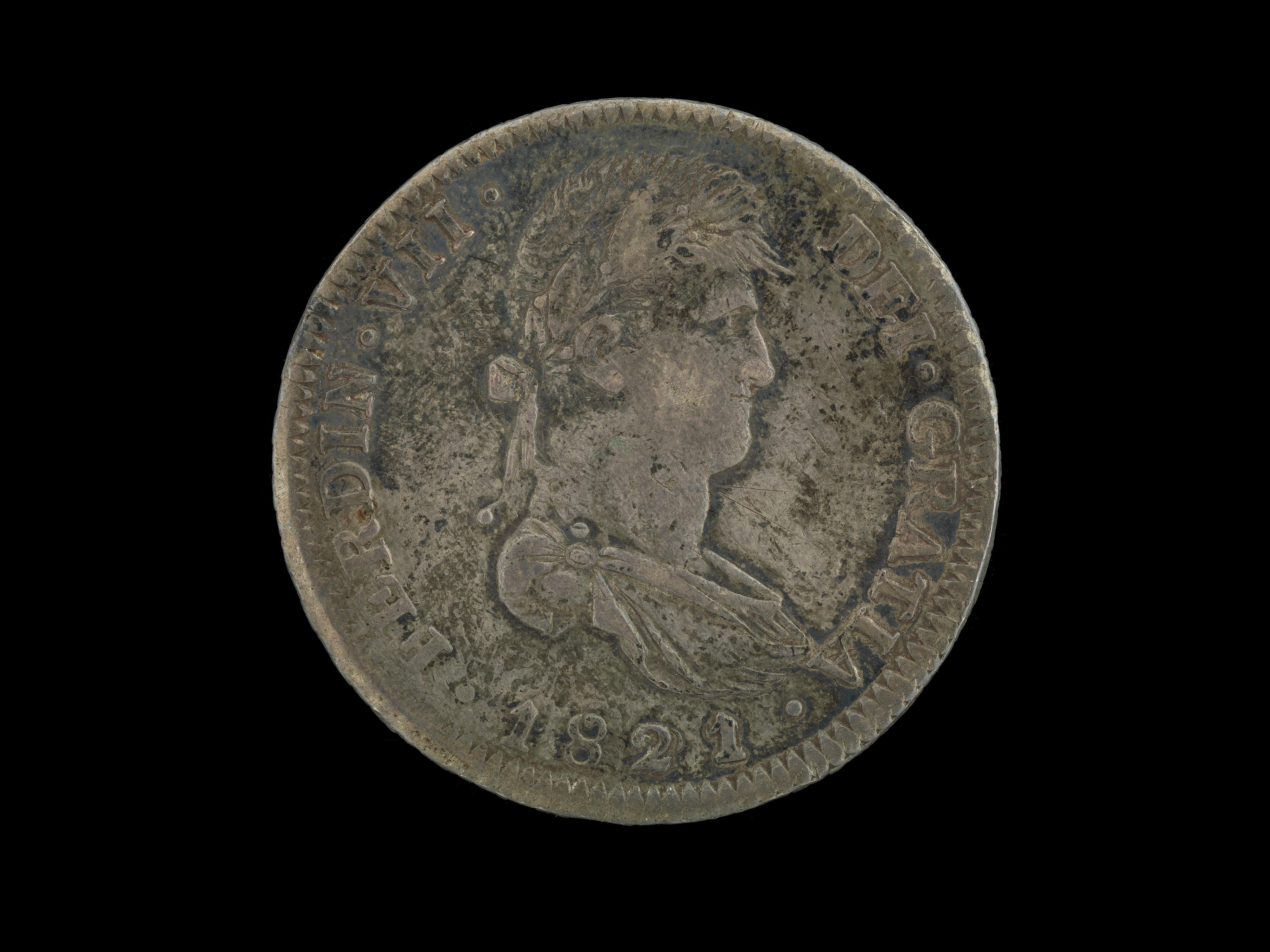
Spanish Silver Dollar, 1821
1821
Museum specimen in the Smithsonian National Numismatic Collection (1992.0121.0181), dated 1821, place made: Mexico. Museum record — Object name in the museum record: coin. Maker or mint: Ferdinand VII King of Spain. Materials: silver (overall metal); struck (overall production method); overall:.2 cm x 4 cm; 3/32 in…
Partial type record
Rijksmuseum, Amsterdam
modern coins
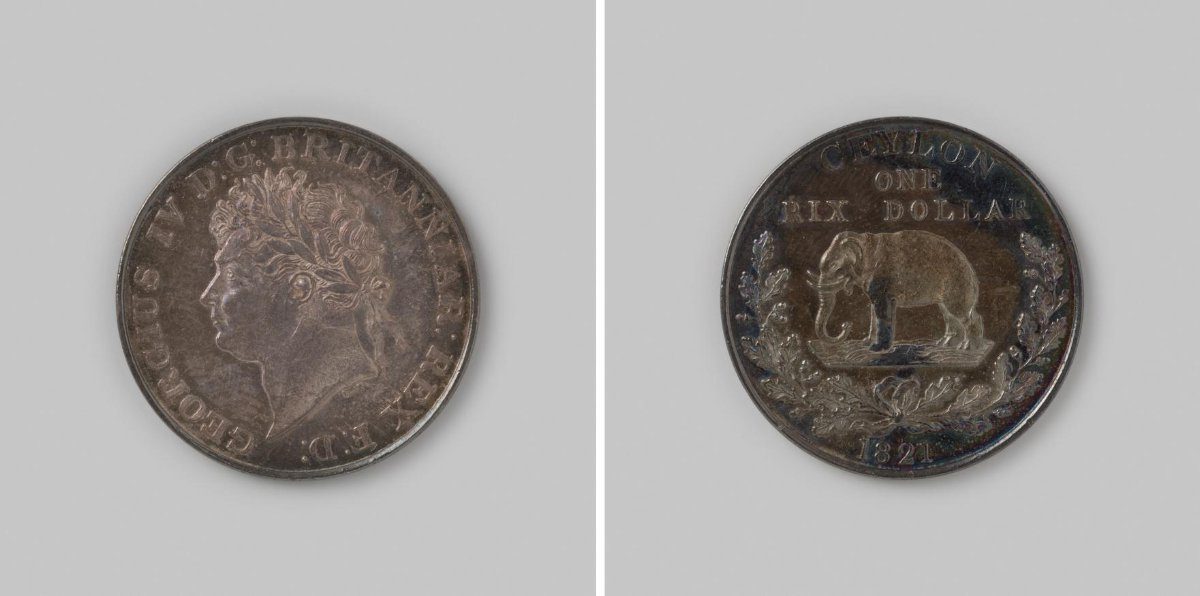
Sri Lanka, Ceylon, rixdollar in the name of King George IV, 1821
1821
Silver coin. Obverse: laureate bust of the king facing left. Reverse: between two tied branches, elephant walking to the left. Above, in two lines, value indication: one rix dollar. Year below. Plain edge. Struck in England. The Rijksmuseum, Amsterdam, holds this object as KOG-MP-1-4048; its record gives material re…
Partial type record
Rijksmuseum, Amsterdam
modern coins
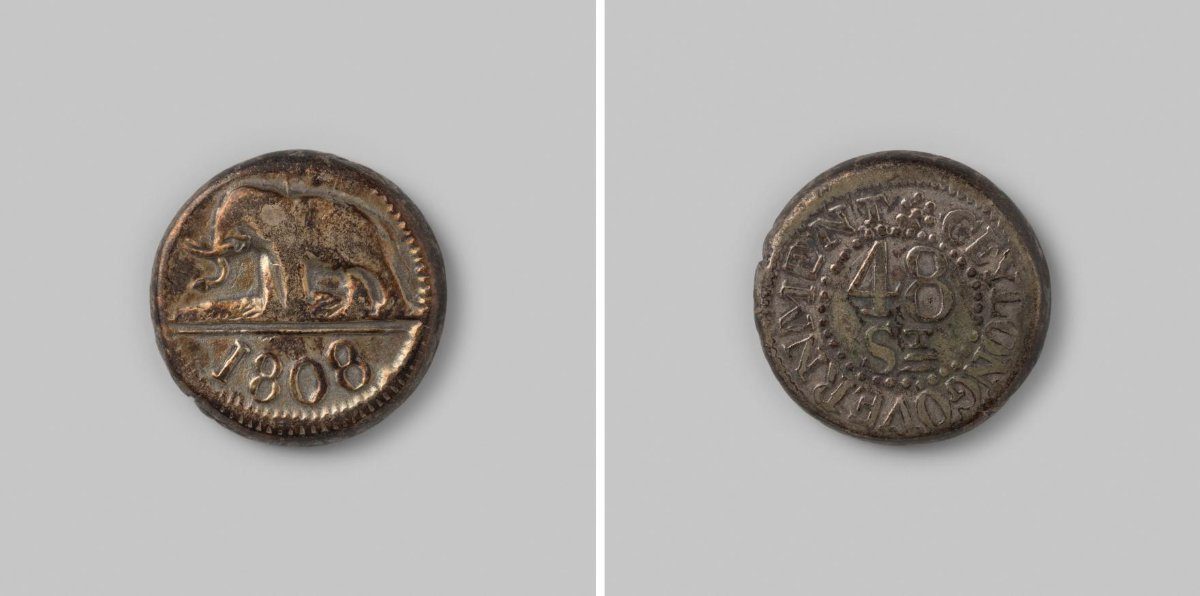
Sri Lanka, Ceylon, rixdollar of 48 stivers, 1808
1808
Silver coin. Obverse: elephant walking to the left. In exergue, year below. Reverse: within a circle of dots, two-line value indication: 48 St. Plain edge. Struck in Ceylon. The Rijksmuseum, Amsterdam, holds this object as KOG-MP-1-4043; its record gives material recorded as silver (metal); technique striking (metal…
Partial type record
Rijksmuseum, Amsterdam
modern coins
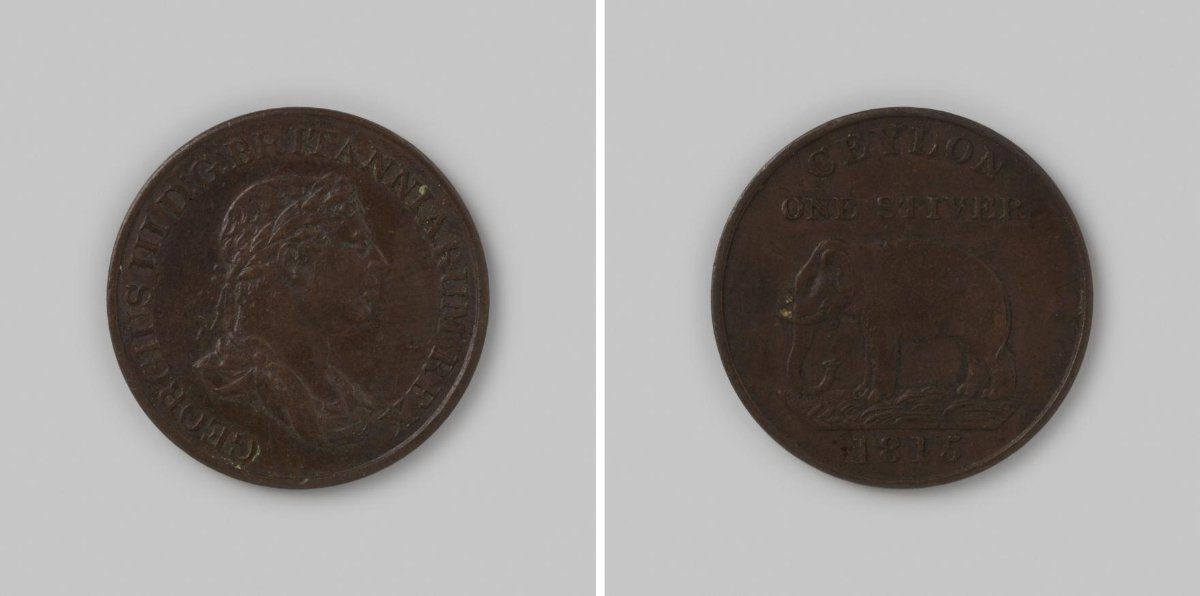
Sri Lanka, Ceylon, stiver in the name of King George III, 1815
1815
Copper coin. Obverse: laureate bust of the king facing right. Reverse: elephant walking to the left. Above, value indication: one stiver. In exergue, year below. Struck in England. The Rijksmuseum, Amsterdam, holds this object as KOG-MP-1-4046; its record gives material recorded as copper (metal); technique striking…
Partial type record
ENZorina via Wikimedia Commons
modern coins
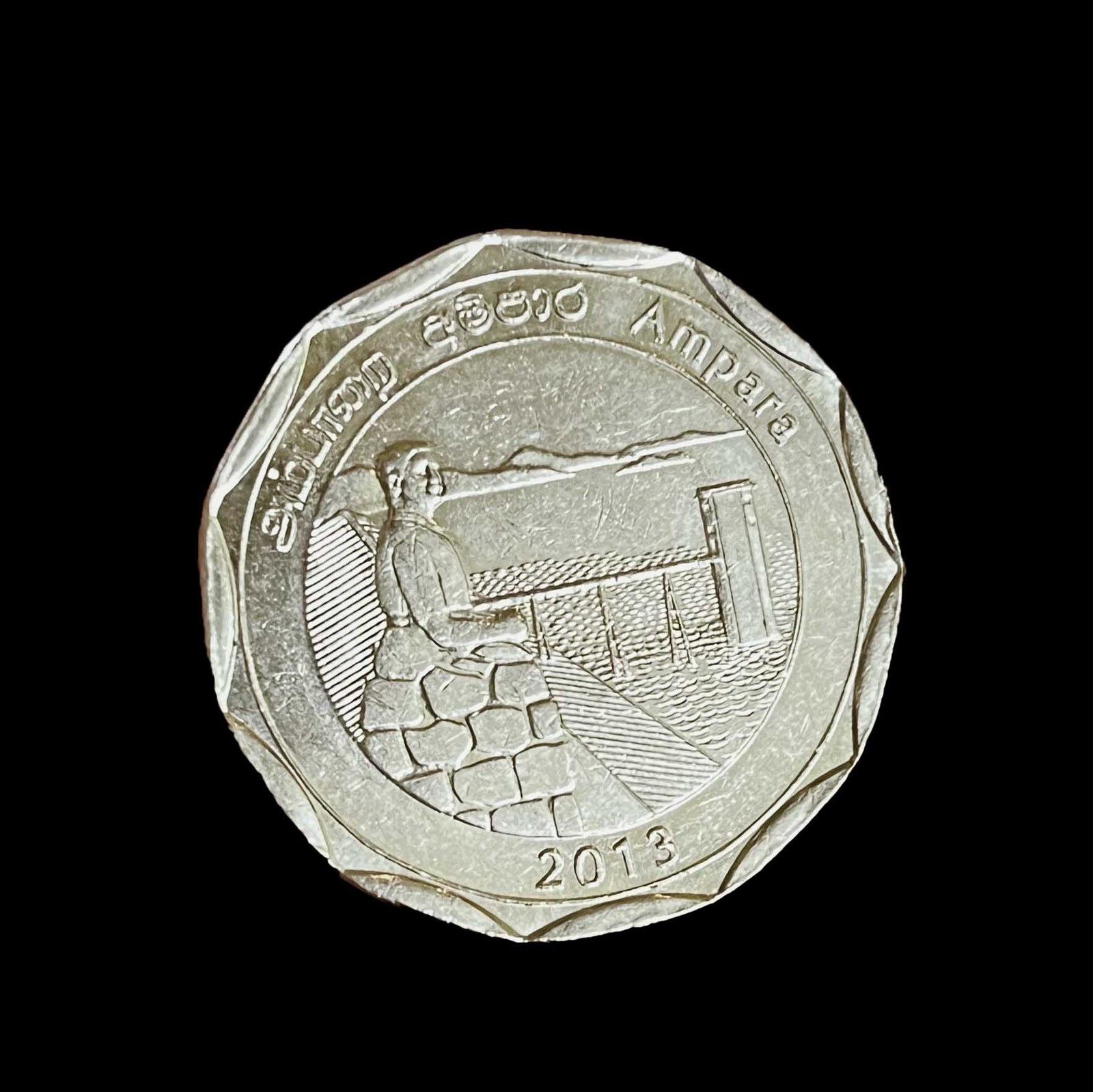
Sri Lankan rupee coinage
from 1972
Sri Lankan rupee coinage represents the modern currency minted for Sri Lanka, issued under the authority of the Central Bank of Sri Lanka. Known until 1972 as the Ceylonese rupee, the unit is subdivided into one hundred cents. Following the nation's adoption of a republican constitution, a distinct national coinage…
Partial type record
Lance Keigwin (photograph); Hermon MacNeil (coin design) via Wikimedia Commons
modern coins
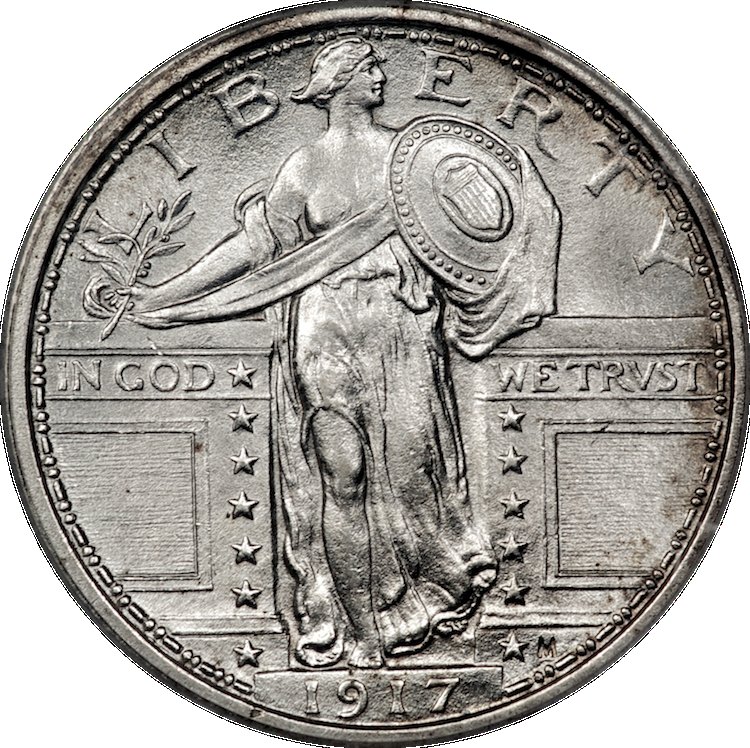
Standing Liberty quarter
1916-1930
The Standing Liberty quarter is a United States twenty-five-cent coin struck by the United States Mint between 1916 and 1930. Introduced to replace the Barber quarter, which had been produced since 1892, the coin was designed by the American sculptor Hermon Atkins MacNeil. Regular production ended in 1930, followed…
Partial type record
Rijksmuseum, Amsterdam
modern coins
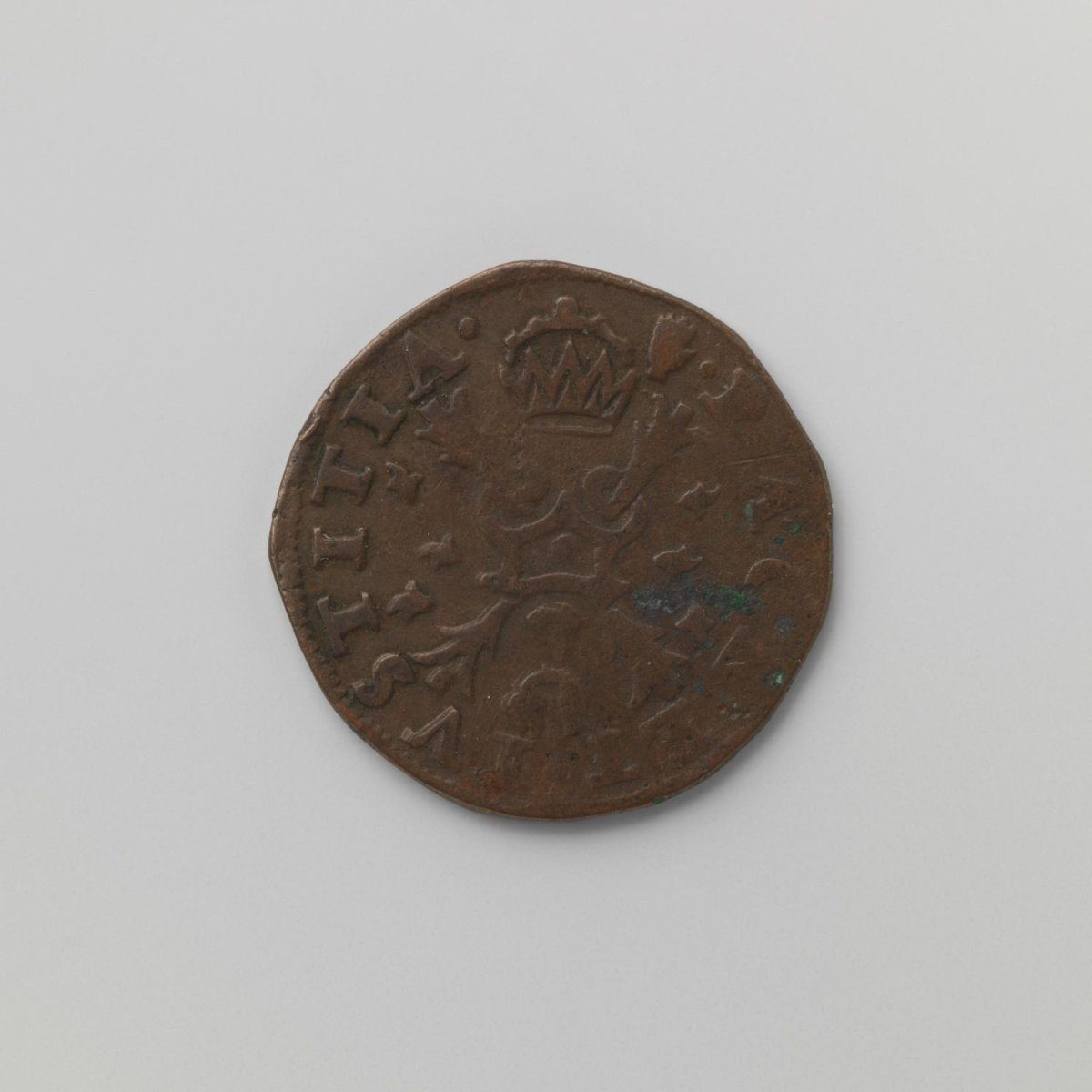
States of Brabant in the name of Philip II, States duit
1577 - 1578
Copper coin. Obverse: crowned decorated composite coat of arms. Reverse: firesteel on a ragged cross (cross of Burgundy). Above it a crown, below it the Golden Fleece. Hand at the beginning of the legend: PACE ET IVSTITIA. The Rijksmuseum, Amsterdam, holds this object as KOG-MP-1-2563; its record gives material reco…
Partial type record
Rijksmuseum, Amsterdam
modern coins
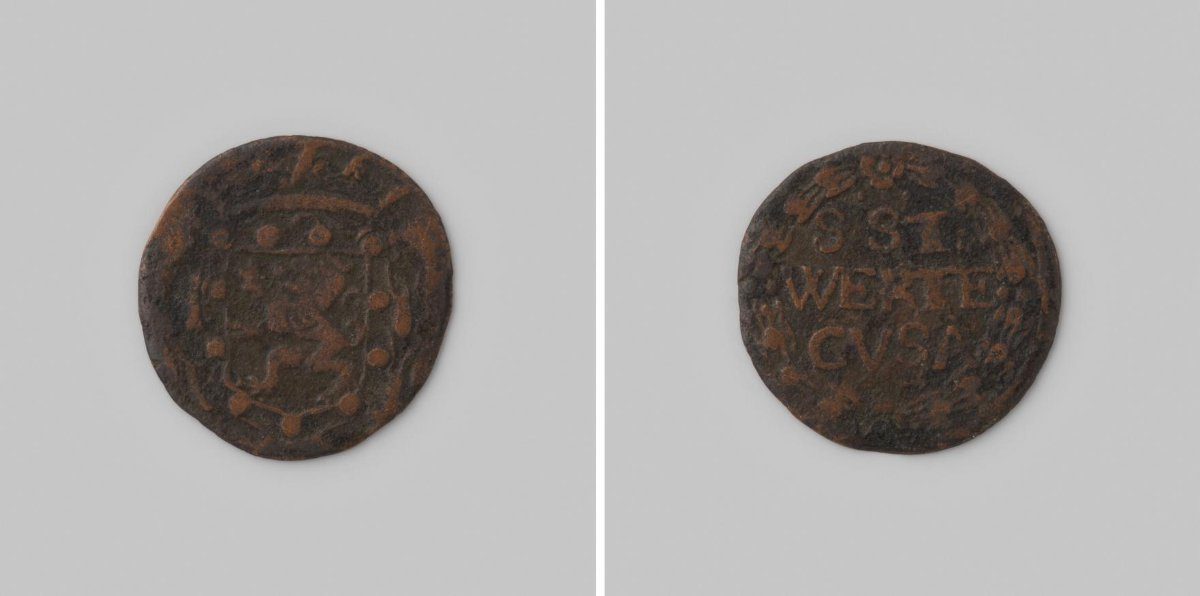
Stevensweert, duit
1620 - 1632
Copper coin. Obverse: between two leaf wreaths, crowned coat of arms of Van den Bergh. Reverse: within a leaf wreath, inscription SST/WERTE/CVSA in three lines. The Rijksmuseum, Amsterdam, holds this object as KOG-MP-1-2149C; its record gives material recorded as copper (metal); technique striking (metalworking); me…
Partial type record
Rijksmuseum, Amsterdam
modern coins
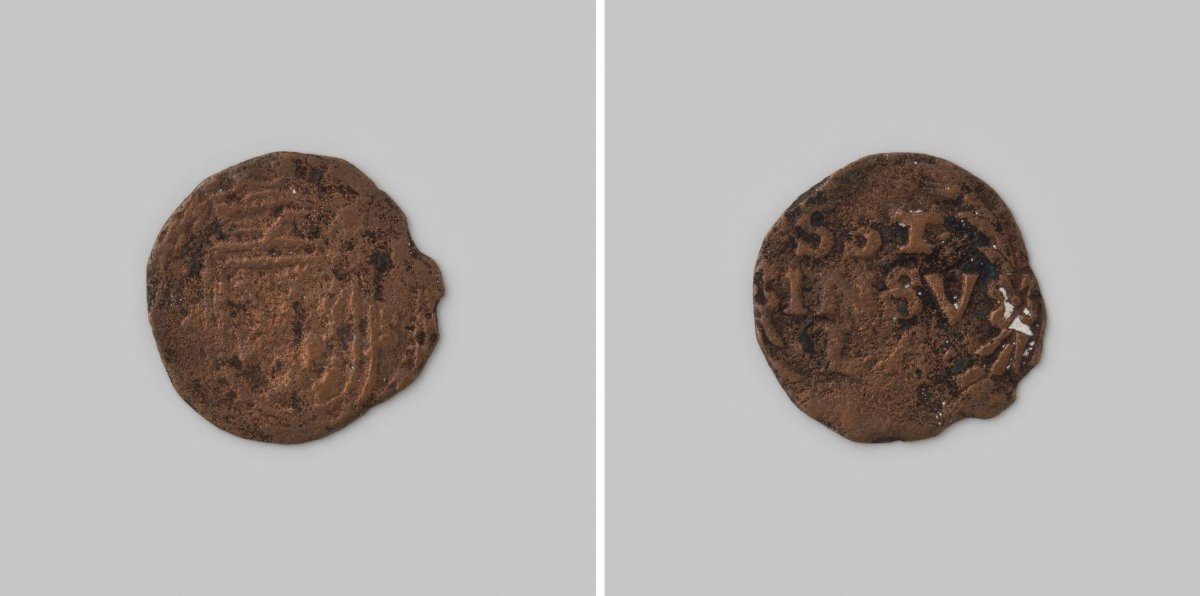
Stevenweert duit
1620 - 1632
Copper coin. Obverse: between two leaf wreaths, crowned coat of arms of Van den Bergh. Reverse: within a leaf wreath, inscription SST/INSV/LA in three lines. The Rijksmuseum, Amsterdam, holds this object as KOG-MP-1-2149B; its record gives material recorded as copper (metal); technique striking (metalworking); measu…
Partial type record
5snake5
modern coins
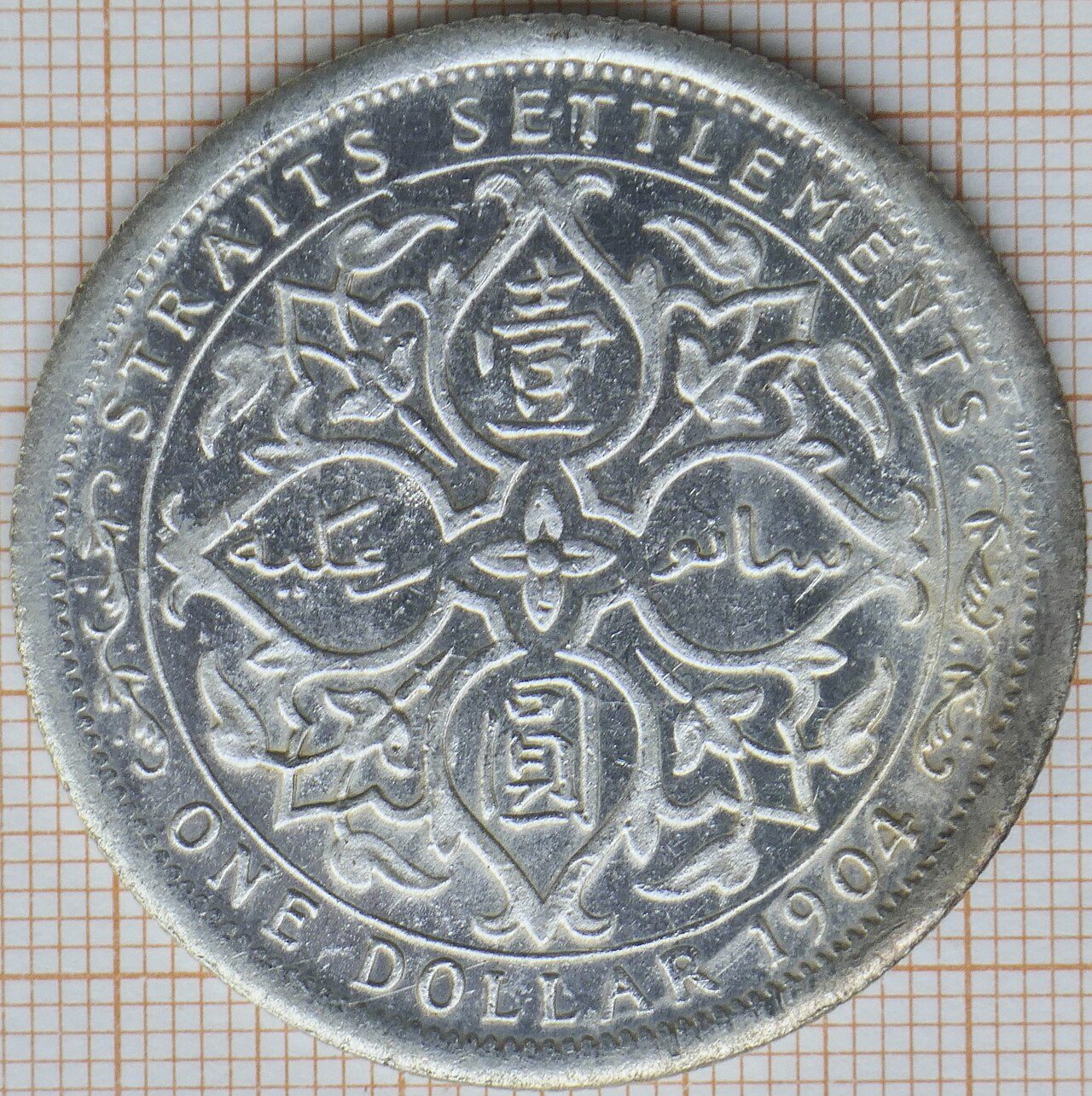
Straits Settlements dollar
Colonial period
The Straits Settlements dollar was a silver coin issued for the British Crown colony of the Straits Settlements, which encompassed territories including Singapore, Penang, and Malacca. First minted in 1903 under the auspices of the Board of Commissioners of Currency, the coin provided a dedicated official unit for t…
Partial type record
Rijksmuseum, Amsterdam
modern coins
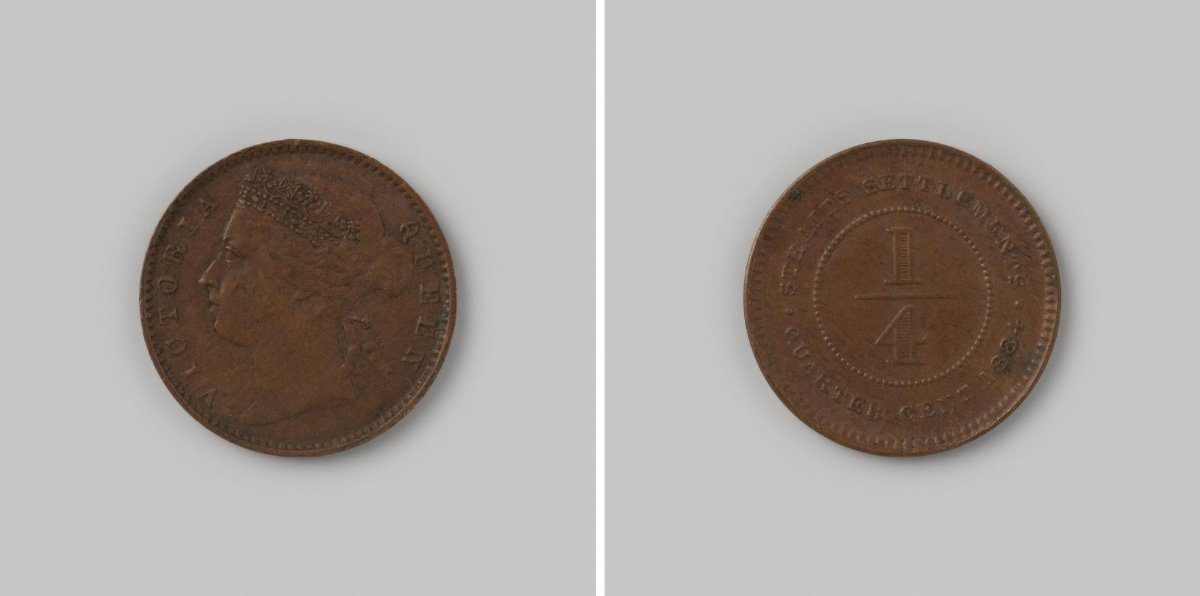
Straits Settlements, Queen Victoria, 1/4 cent, 1884
1884
Copper coin. Obverse: crowned head of Queen Victoria facing left. Reverse: within beaded circle, value designation: 1/4. In legend at the bottom, value designation: quarter cent with the date to the right of it. Plain edge. The Rijksmuseum, Amsterdam, holds this object as KOG-MP-1-4082; its record gives material rec…
Partial type record
Rijksmuseum, Amsterdam
modern coins
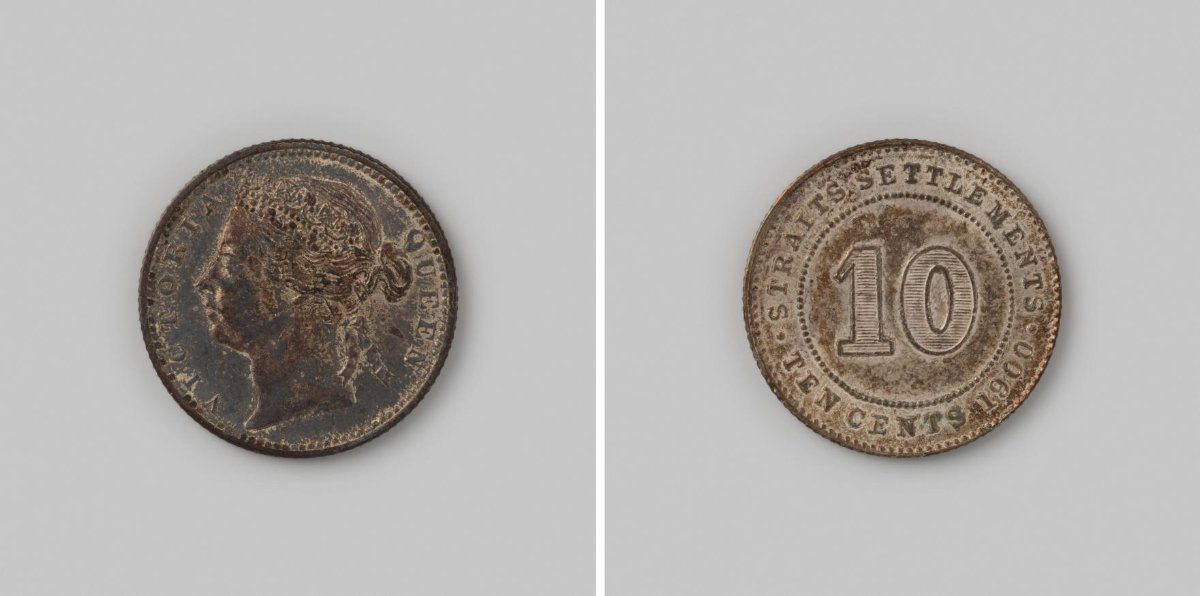
Straits Settlements, Queen Victoria, 10 cents, 1900
1900
Silver coin. Obverse: crowned head of Queen Victoria facing left. Reverse: within a beaded circle, value indication: 10. In the lower legend, value indication: 'ten cents' with the year to its right. Milled edge. The Rijksmuseum, Amsterdam, holds this object as KOG-MP-1-4082H; its record gives material recorded as s…
Partial type record