Issuing authority
Kingdom of England
Medieval and early modern English kingdom issuing hammered silver and gold coinage.
- Kind
- kingdom
- Region
- British Isles, Europe
- Recorded period
- AD 927 – 1707
Objects are filed under the historical authority that actually issued or made them. A recorded period comes from the issuer's own reference description and is left blank where no source states it.
Published entries
65
Individual types and documented families
With photographs
100%
65 with a credited real-object photo
Dated span
1327 – 1703
64 entries with their own date
Verified or well documented
0
Highest two confidence levels
Catalogue entries (65)
Filter these entries by era, material or confidenceSorted by date, earliest first.
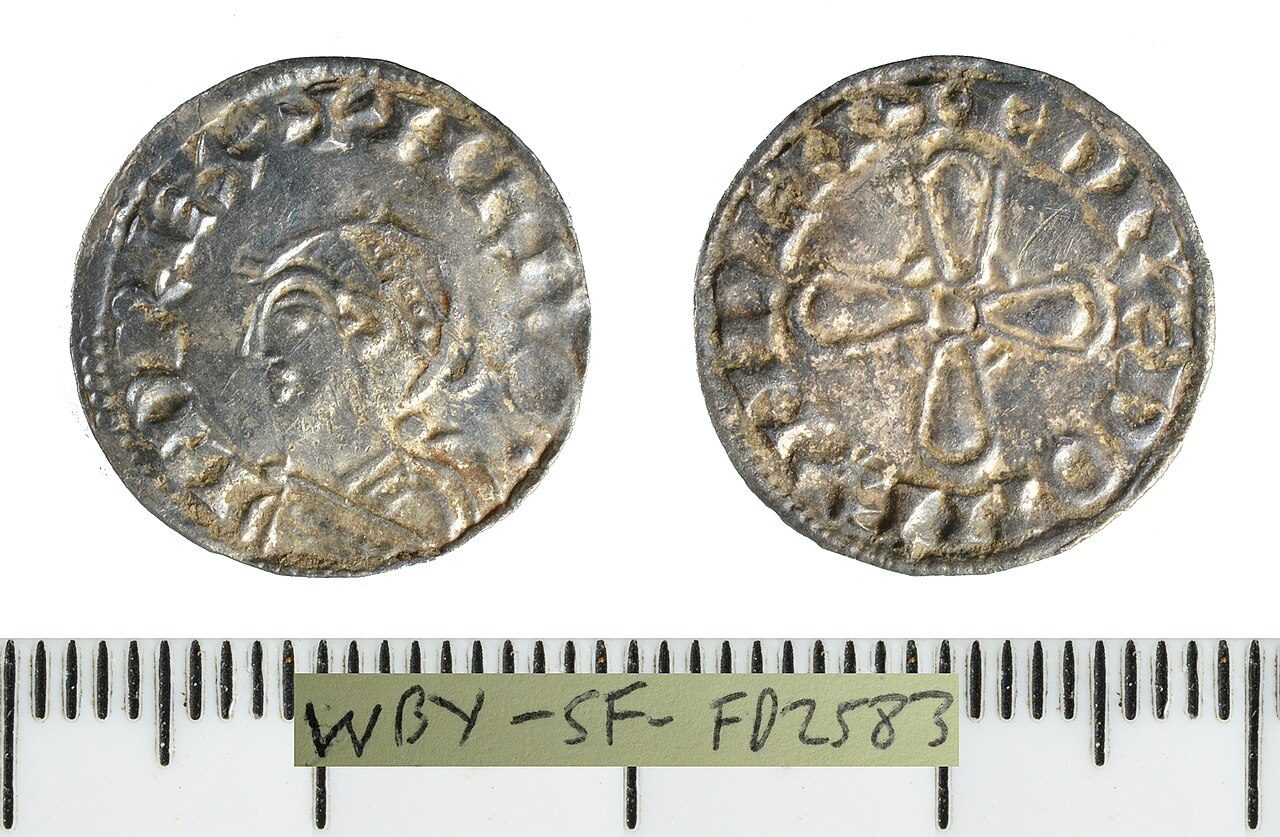
Suffolk County Council, Alexander Bliss, 2018-05-04 13:08:02
modern coins
English hammered silver penny
c. 1066 - 1600
The English hammered silver penny was a hand-struck coin of the Kingdom of England, traditionally bearing a royal bust and, on most issues, a cross on the reverse naming the moneyer and mint. Prior to the thirteenth century, the silver penny was virtually the only coin struck in England, and moneyers were permitted…
Partial type record
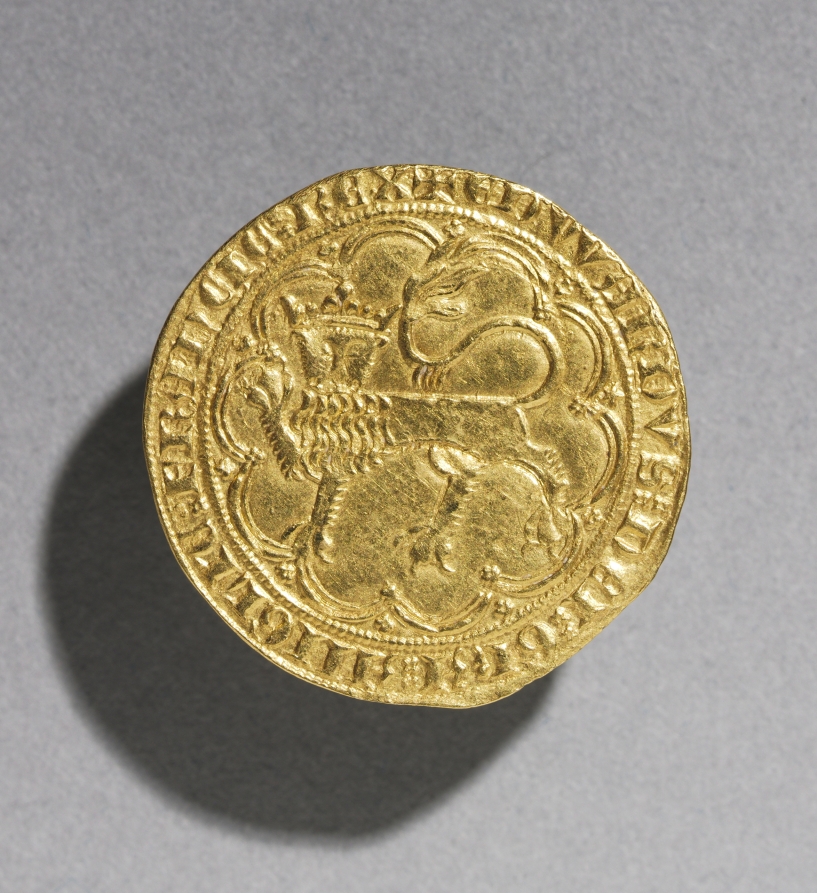
Cleveland Museum of Art
modern coins
Leopard d'Or of Edward III of England (Cleveland Museum of Art 1964.373)
1327–1377
Known as a "Golden Leopard" because of the crowned leopard on one side, this gold coin was minted for Edward III, king of England and France. Cleveland Museum of Art object 1964.373: Leopard d'Or of Edward III of England, 1327–1377. England, Anglo-Gallic, Gothic period, 14th century. Gold; diameter: 3.4 cm (1 5/16 i…
Partial type record
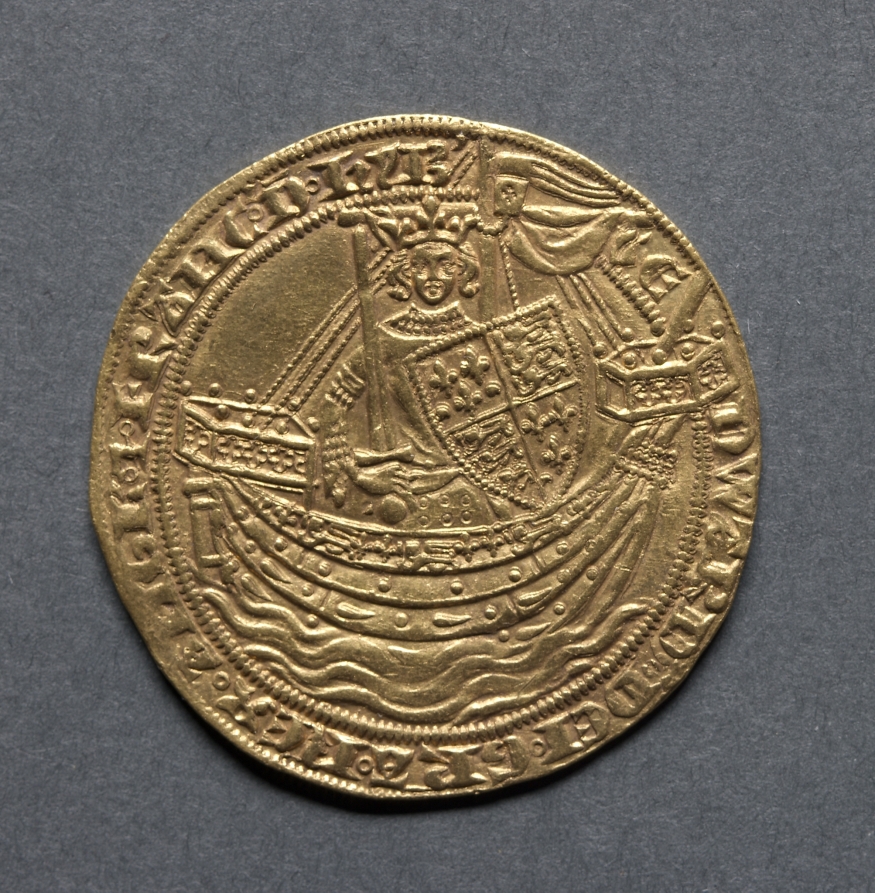
Cleveland Museum of Art
modern coins
Noble: Edward III Standing in Ship with Shield of Arms (obverse); Ornamental Cross with Lis Terminals (Cleveland Museum of Art 1969.160)
1351
Bearing in mind the primitive tools and methods of production in the 1300s, this noble, and other similar pieces are remarkable for their beauty and fineness of detail. In all the indentures of this period a clause was inserted providing for the trial of the Pyx. The Master of the Mint was supposed to place in the P…
Partial type record
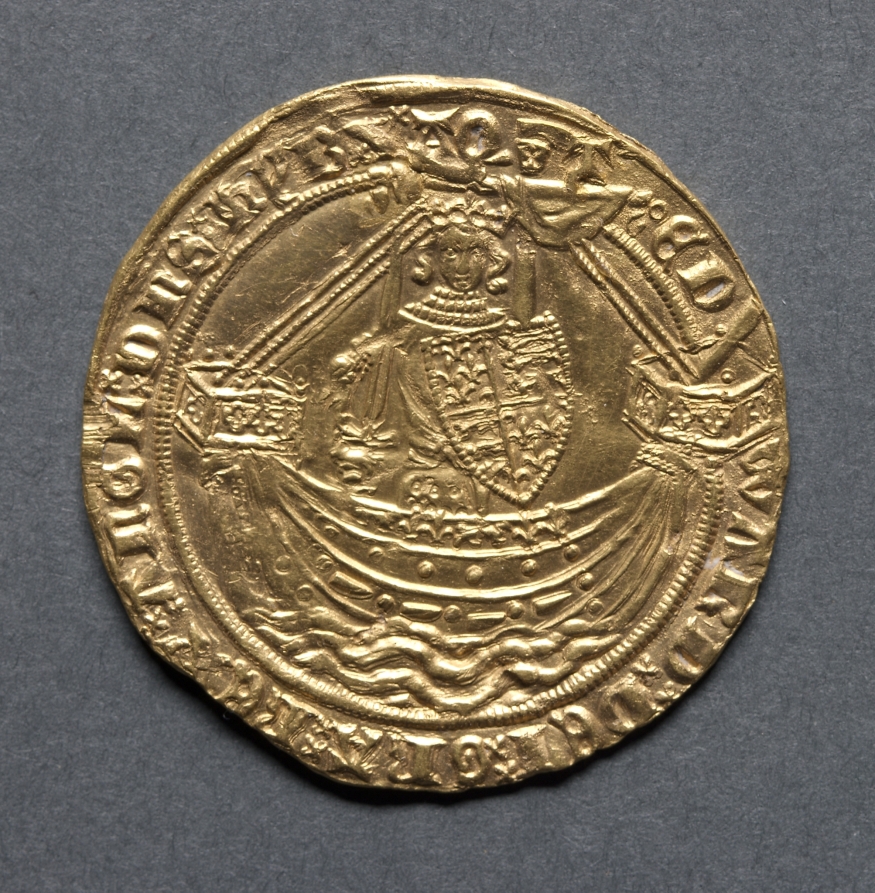
Cleveland Museum of Art
modern coins
Noble: Edward III Standing in Ship with Shield of Arms (obverse); Ornamental Cross with Lis Terminals (Cleveland Museum of Art 1969.161)
1363–69
Part of the "Treaty Series" of coins, this is a reference to the Treaty of Bretigni, signed between England and France on May 8, 1360. It was negotiated because of the continued successes of Edward III in his continental wars. Among many other territorial points agreed, the English renounced their pretensions to the…
Partial type record
Cleveland Museum of Art
modern coins
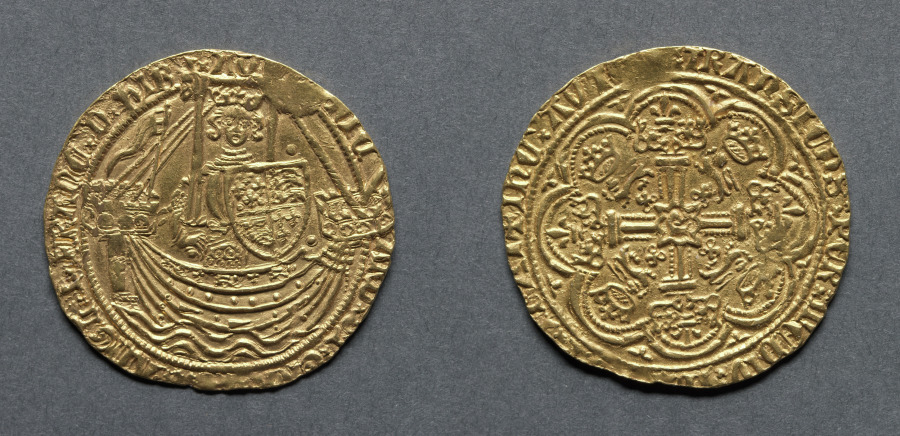
Noble: Richard II Standing on Ship with Shield of Arms (obverse); Ornamental Cross with Lis Terminals (Cleveland Museum of Art 1969.162)
1377–1399
This type of coin is very similar to that of the last right but a flag or pennant has appeared on the stern-castle of the ship. This signifies that the piece was struck in the Calais mint, then, and for 180 years to come, an English possession. There are three other points of interest in the Nobles of this period. F…
Partial type record
Cleveland Museum of Art
modern coins
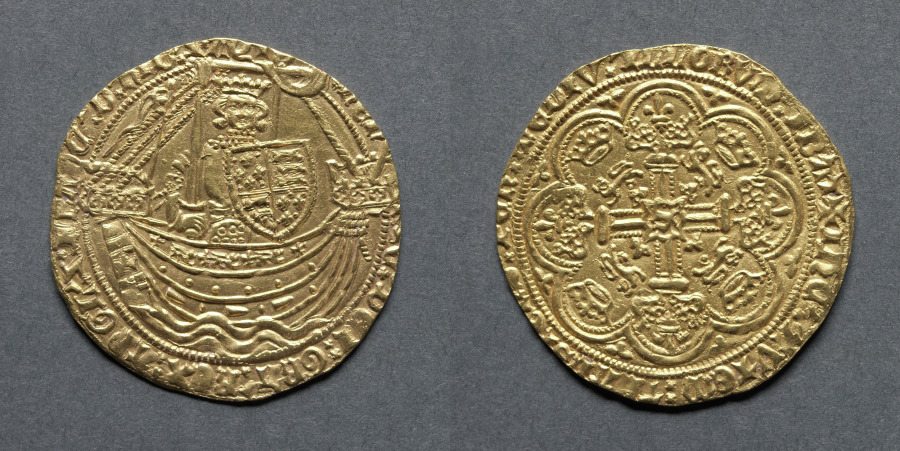
Noble: Henry IV Standing in Ship with Shield of Arms (obverse); Ornamental Cross with Lis Terminals (Cleveland Museum of Art 1969.163)
1399–1412
Of them three are in the British Museum, one with the American Numismatic Society, and one in the Norweb collection, this specimen. Classified as part of the "heavy coinage series," refers to the economic state of England at this period. With the ascension of Henry IV, the first king of the House of Lancaster, an ec…
Partial type record
Cleveland Museum of Art
modern coins
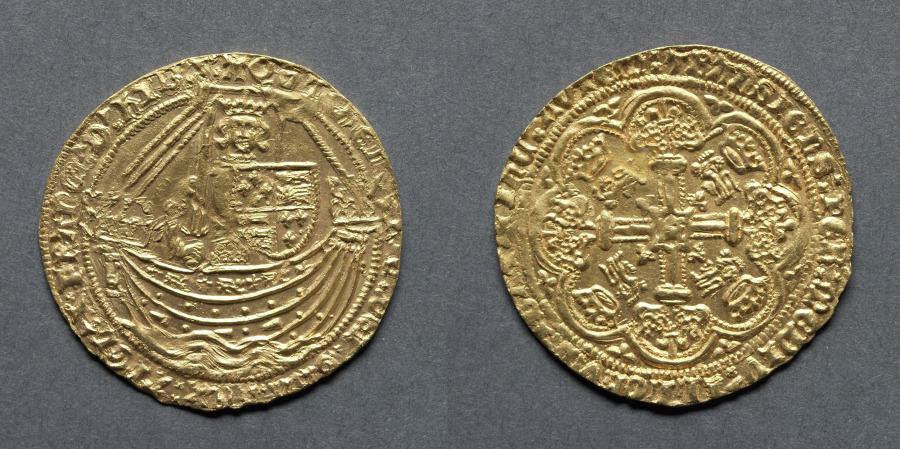
Noble: Henry V in Ship with Shield of Arms (obverse); Ornamental Cross with Lis Terminals (Cleveland Museum of Art 1969.164)
1413–22
For a considerable time it was impossible to determine which coins belonged to the last part of the reign of Henry IV and which to the first part of the reign of Henry V. However the finding of a hoard of coins in 1929, which contained 63 nobles, resulted in a more correct classification. The importance of finding b…
Partial type record
Cleveland Museum of Art
modern coins
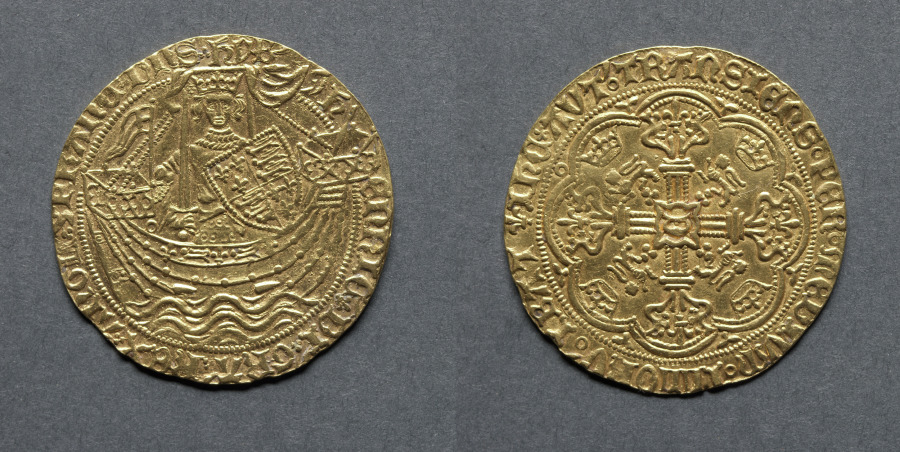
Noble: Henry VI in Ship with Shield of Arms (obverse); Ornamental Cross with Lis Terminals (Cleveland Museum of Art 1969.165)
1422–61
The Nobles of Henry VI were very much like those of the previous reign. The system of varying the stops, as annulets, pinecones, mascles, and so forth was introduced to help simplify the changes of privy marks, over 150 which helped identify the coin and where it was minted, which were required for the king's long r…
Partial type record
Rijksmuseum, Amsterdam
modern coins
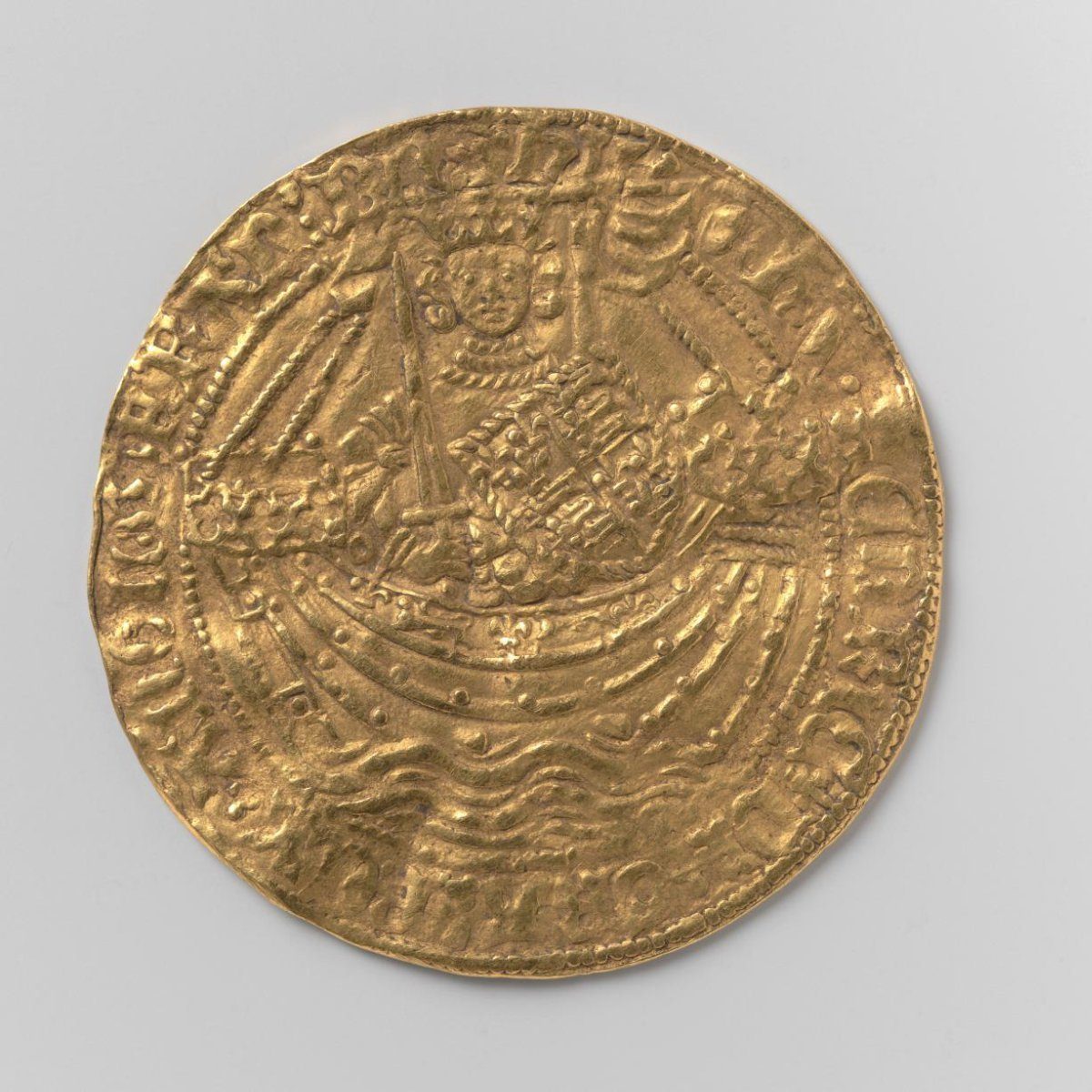
England, Henry VI, noble
1435 - 1443
Gold coin. Obverse: crowned monarch with sword in right hand and coat of arms in left hand, standing in a ship. Initial in legend: trefoil. Reverse: within double-lined polylobe, short richly decorated cross with letter H in the centre and crowned leopards in the angles. The Rijksmuseum, Amsterdam, holds this object…
Partial type record
Cleveland Museum of Art
modern coins
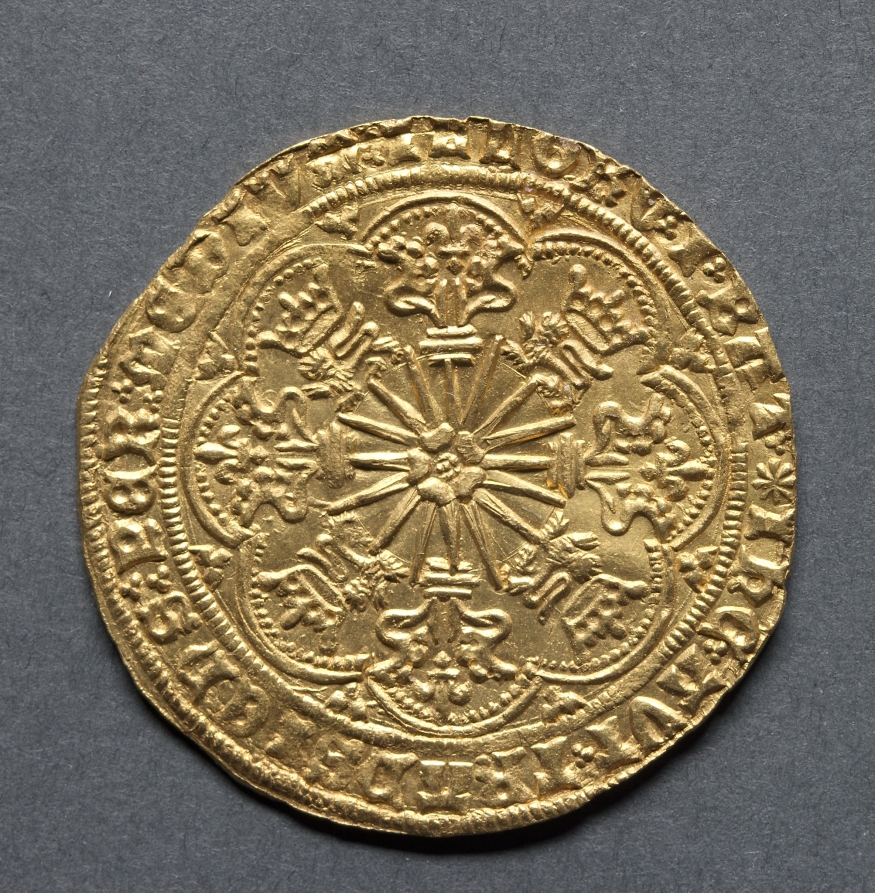
Ryal: Edward IV in Ship with a Shield of Arms and Rose (obverse); Sun with Fleurs (Cleveland Museum of Art 1969.166)
1464/5–70
The first and second reigns of Edward IV, who was restored to the throne, were a result of the dynastic civil war between the houses of York and Lancaster, usually known as the Wars of the Roses. The fighting flared up sporadically from 1455 to 1485. With the accession of Edward IV the gold supply was almost nil and…
Partial type record
Cleveland Museum of Art
modern coins
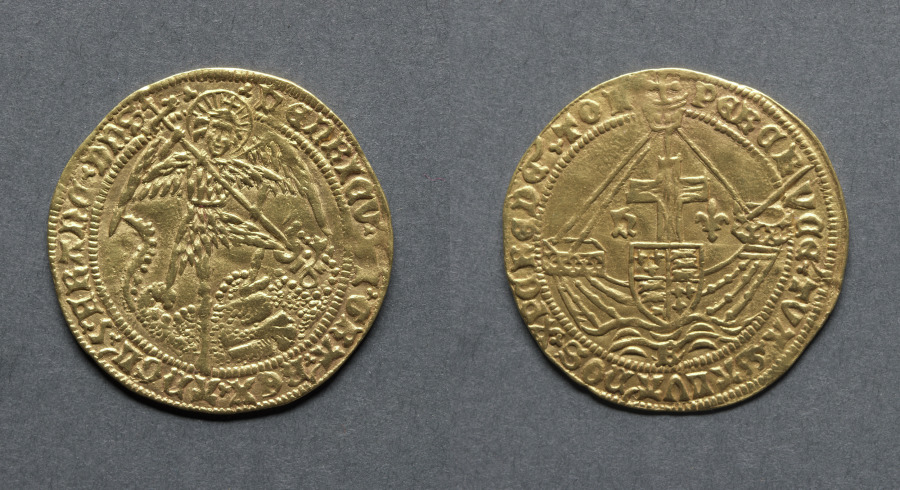
Angel: St. George Slaying the Dragon (obverse); Ship with Shield of Arms and Cross (Cleveland Museum of Art 1969.167)
1470–71
Henry VI regained power briefly in the usurpation period. The only gold coins struck during this short period were the angel and half angel, and only London and Bristol operated as mints. Cleveland Museum of Art object 1969.167: Angel: St. George Slaying the Dragon (obverse); Ship with Shield of Arms and Cross (reve…
Partial type record
Cleveland Museum of Art
modern coins
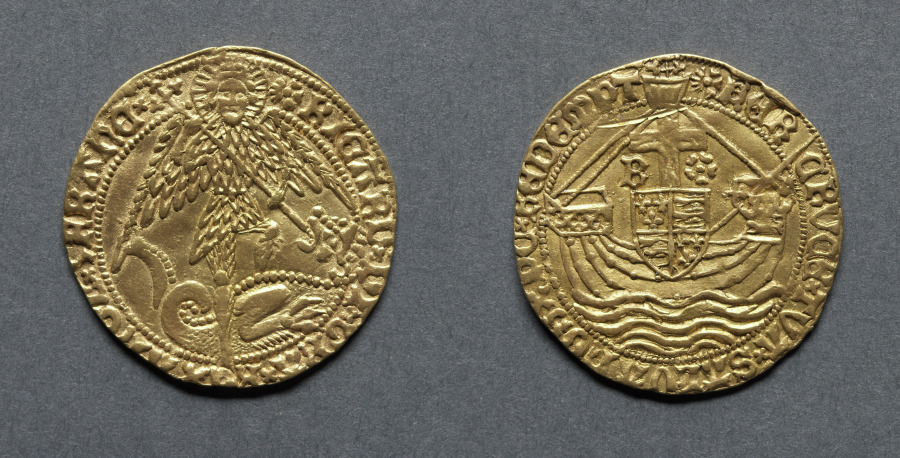
Angel: St. George Slaying the Dragon (obverse); Ship with Shield of Arms and Cross (Cleveland Museum of Art 1969.168)
1483–85
This coin is similar to the angel of Henry VI, 1969.167, but from completely different dies. Between the second reign of Edward IV and the reign of Richard III, Edward V, at the age of 13, reigned briefly from April 9 to June 22, 1483. Richard, Edward's uncle, caused the boy to be imprisoned in the Tower where he an…
Partial type record
Cleveland Museum of Art
modern coins
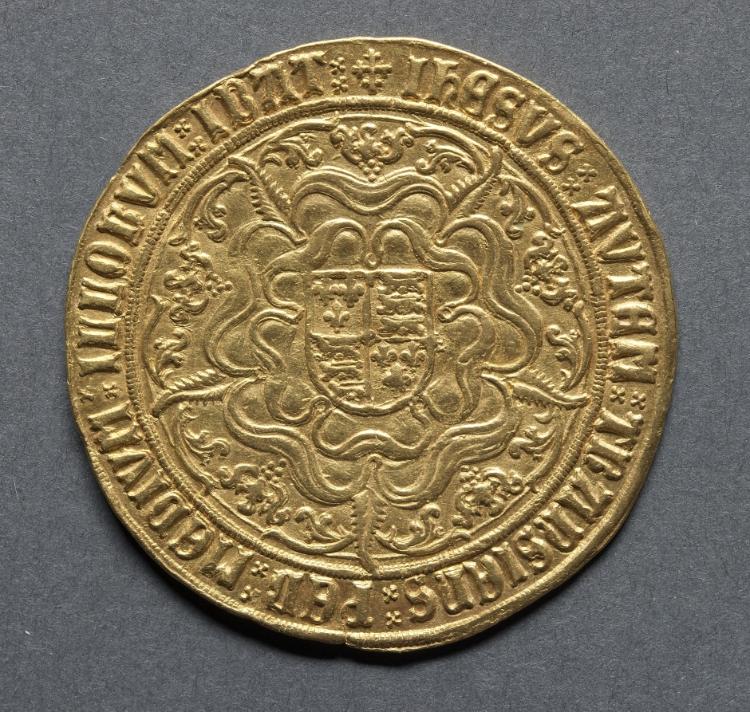
Sovereign: Henry VII (obverse); Shield of Arms in Tudor Rose (Cleveland Museum of Art 1969.169)
1504–9
The coinage of Henry VII is the first step from medieval to modern coinage. In 1489 a special commission was issued for the striking of a new gold coin called the sovereign, weighing 240 gs. This is the first use of the name in the English series. These early sovereigns can boast of an artistic achievement never bef…
Partial type record
Cleveland Museum of Art
modern coins
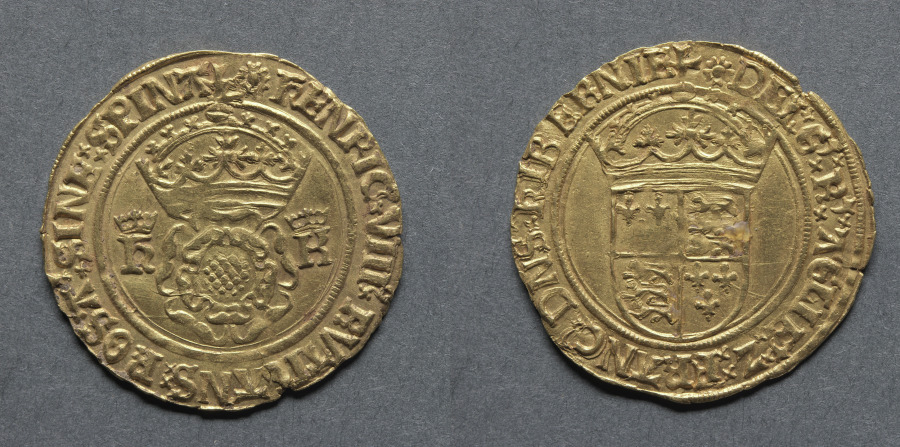
Crown of the Double Rose: Crowned Double Rose (obverse); Crowned Royal Arms (Cleveland Museum of Art 1969.172)
1526–33
For the first time the Crown of the Double Rose makes it appearance. On these coins the motto Rutilans Rosa Sine Spine, a dazzling rose without a thorn, follows the king's name on the obverse. The crowned initials on either side of the rose are those of Henry and his first queen, Katherine (or Catherine) of Aragon.…
Partial type record
Cleveland Museum of Art
modern coins
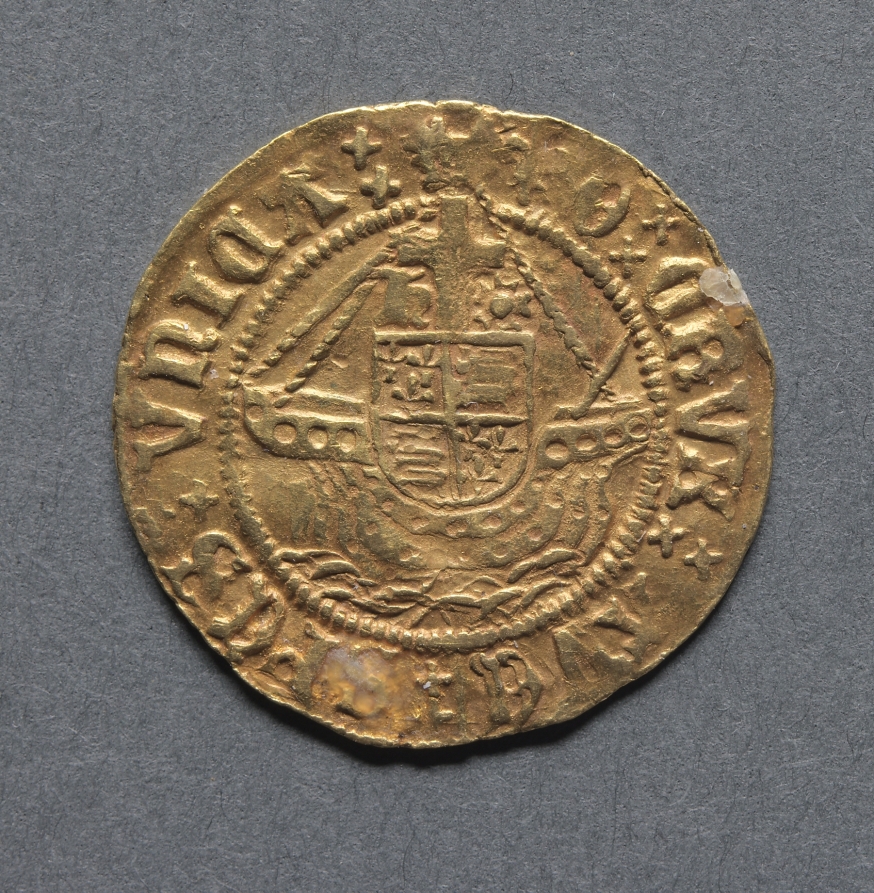
Half Angel: Angel Slaying a Dragon (obverse); Ship with Shield of Arms (Cleveland Museum of Art 1969.171)
1526–44
During his life Henry VII had accumulated enormous wealth, and it took his son, Henry VIII, until 1542 to squander it. Henry knew the English coinage had been debased in the past and did not see why it should not be debased again, this time for his personal benefit. Full debasement began officially in 1544. The ange…
Partial type record
Cleveland Museum of Art
modern coins
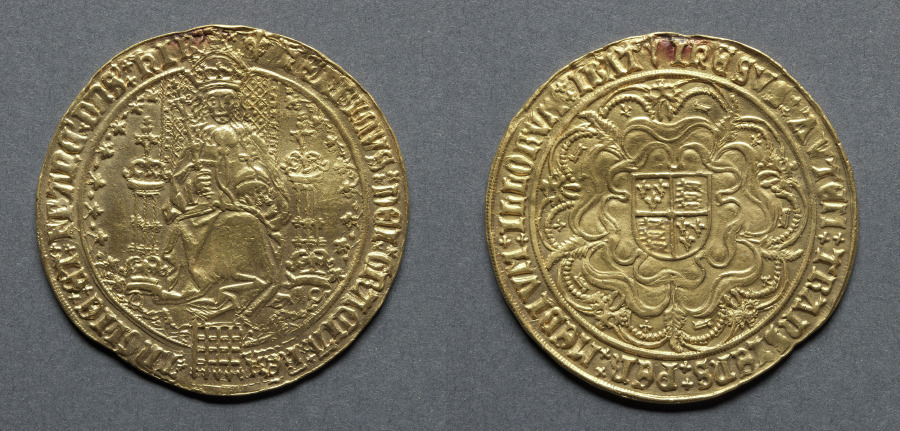
Sovereign: Henry VIII Enthroned (obverse); Royal Arms on Tudor Rose (Cleveland Museum of Art 1969.170)
1526–44
During his life Henry VII had accumulated enormous wealth, and it took his son, Henry VIII, until 1542 to squander it. Henry knew how the English coinage had been debased in the past and did not see why it should not be debased again, this time for his personal benefit. Regardless of the inevitable financial catastr…
Partial type record
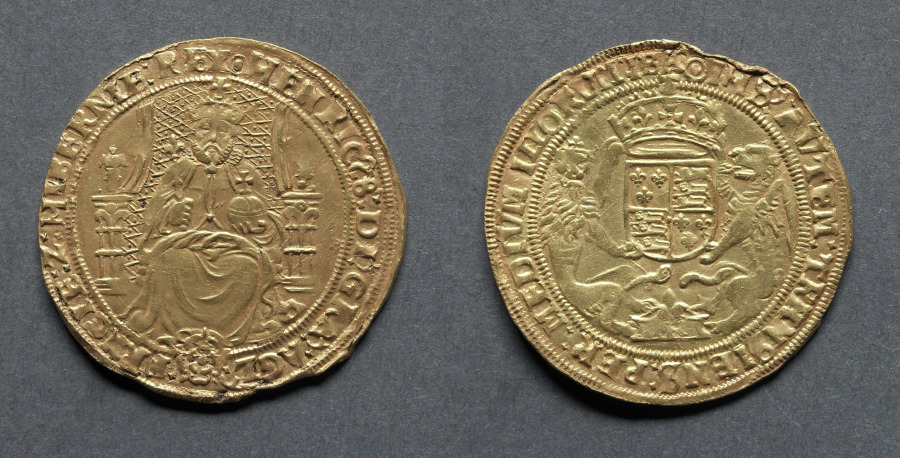
Cleveland Museum of Art
modern coins
Half Sovereign: Henry VIII (obverse); Crowned Arms (Cleveland Museum of Art 1969.174)
1544–47
In this third coinage, a new portrait of the king appears. There is now an attempt to make the portrait lifelike, and we see the king fat and middle-aged compared to previous coinage such as 1969.170. Cleveland Museum of Art object 1969.174: Half Sovereign: Henry VIII (obverse); Crowned Arms (reverse), 1544–47. Engl…
Partial type record
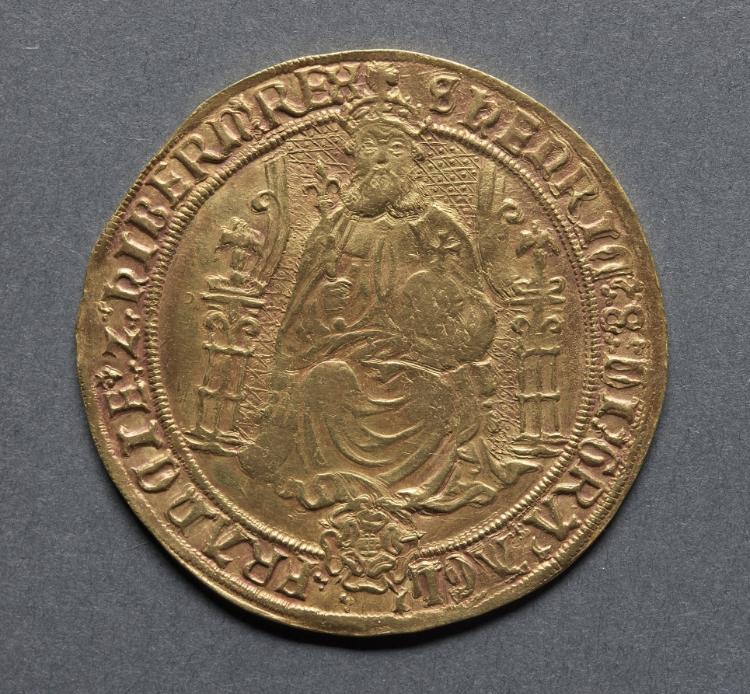
Cleveland Museum of Art
modern coins
Sovereign: Henry VIII (obverse); Crowned Shield of Arms (Cleveland Museum of Art 1969.173)
1544–47
This is an example of the late, debased, third coinage of Henry VIII. Knowing how coinage had been debased in the past, Henry VIII did so again for his own personal benefit. He not only debased the gold coinage but the silver as well. This coin was struck at Southwark mint. The Southwark mint was in Suffolk Place, S…
Partial type record
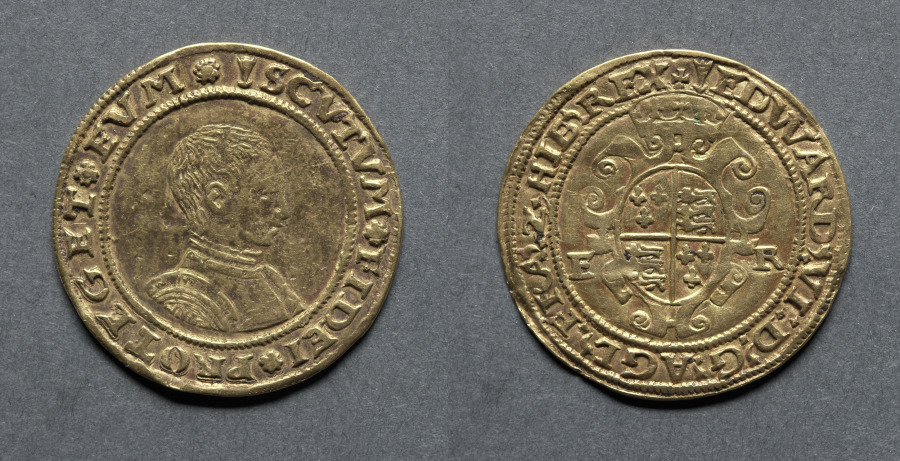
Cleveland Museum of Art
modern coins
Half Sovereign: Edward VI (obverse); Crowned Royal Arms (Cleveland Museum of Art 1969.175)
1549–50
During the first coinage period, April 1547 to January 1549, debased coinage was still issued. Part of it still had the name and portrait of Henry VIII; part of it the name of Henry, but a youthful portrait; and part of it the name of Edward. The series is thus complex and some of the chronology open to doubt. In 15…
Partial type record
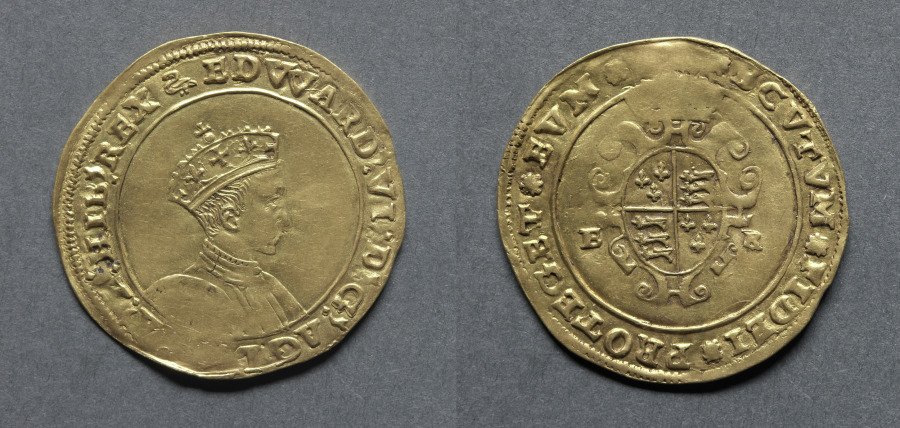
Cleveland Museum of Art
modern coins
Half Sovereign: Edward VI (obverse); Crowned Royal Arms (Cleveland Museum of Art 1969.176)
1549–50
This Half Sovereign was struck at the Tower mint. Here the king is shown crowned, unlike a similar example also in the collection, 1969.175. Cleveland Museum of Art object 1969.176: Half Sovereign: Edward VI (obverse); Crowned Royal Arms, 1549–50. England, Edward VI, 1547-1553. Gold; diameter: 2.9 cm (1 1/8 in.). In…
Partial type record
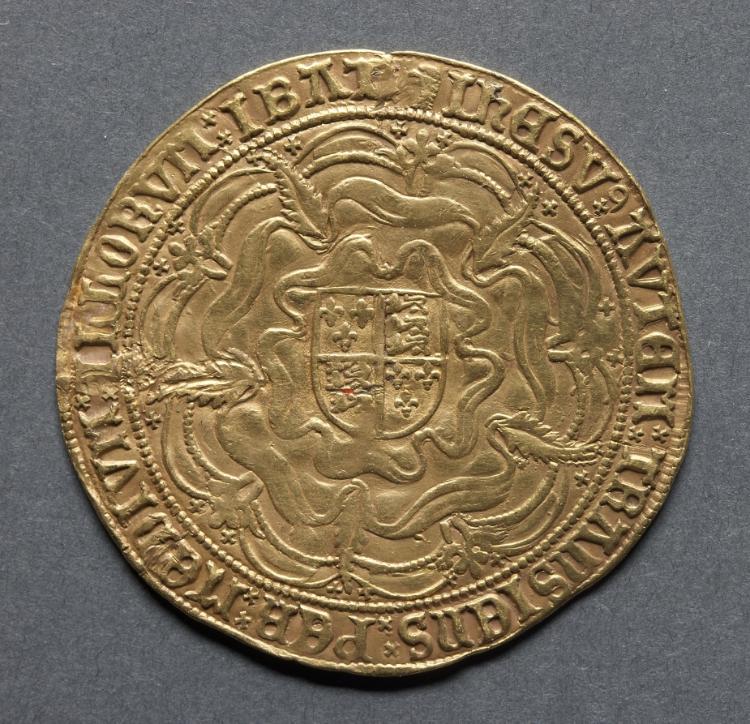
Cleveland Museum of Art
modern coins
Sovereign of Thirty Shillings: Edward VI Enthroned (obverse); Shield of Royal Arms on Rose (Cleveland Museum of Art 1969.177)
1550–53
This coin was struck at the Tower mint during the last period of the reign (1550–53). It was struck in high quality gold of 23 carat 3 1/2 grains, and the mint mark, an ostrich head, is unusual and unknown outside this coinage. The mint mark can be see on the obverse, above Edward's crown and before the text starts.…
Partial type record
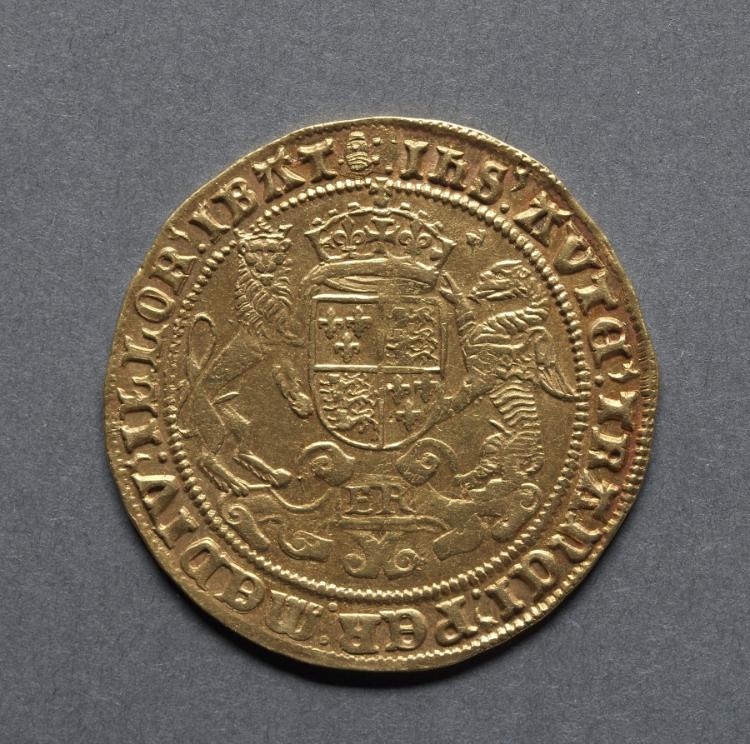
Cleveland Museum of Art
modern coins
Sovereign of Twenty Shillings: Edward VI (obverse); Crowned Shield of Royal Arms (Cleveland Museum of Art 1969.178)
1550–53
The initial mark tun, a small barrel, shows that his piece was struck in the Tower mint and dates it from 1551–53. It was struck in 22 carat gold. The initial mark appears at the top of the reverse of the coin. Cleveland Museum of Art object 1969.178: Sovereign of Twenty Shillings: Edward VI (obverse); Crowned Shiel…
Partial type record
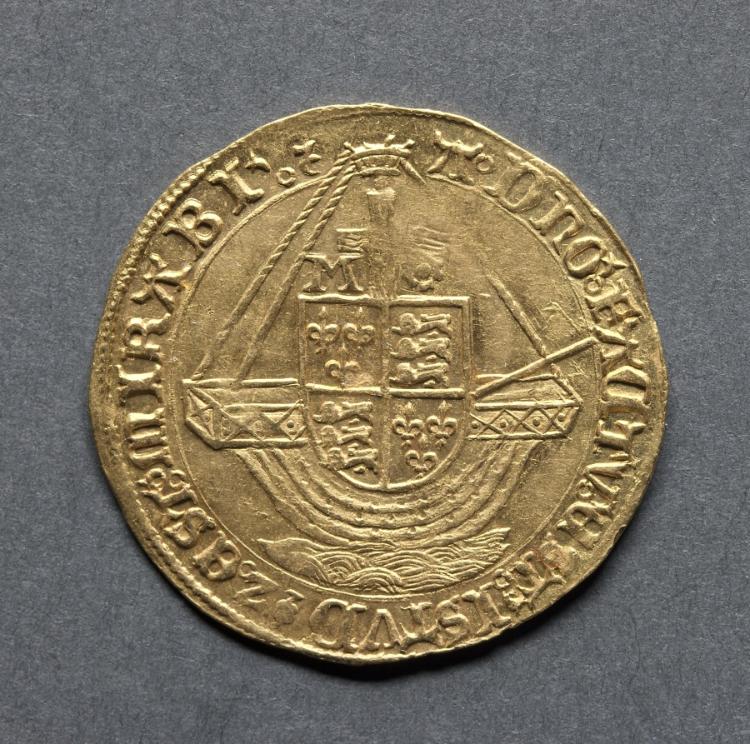
Cleveland Museum of Art
modern coins
Angel: An Angel Slaying a Dragon (obverse); Ship with Shield of Arms (Cleveland Museum of Art 1969.180)
1553–54
This piece is one of the finest specimens known. It contains on the reverse, at the end of the legend, an unexplained mark that strongly resembles a small letter c, superimposed on a figure 7. Cleveland Museum of Art object 1969.180: Angel: An Angel Slaying a Dragon (obverse); Ship with Shield of Arms (reverse), 155…
Partial type record
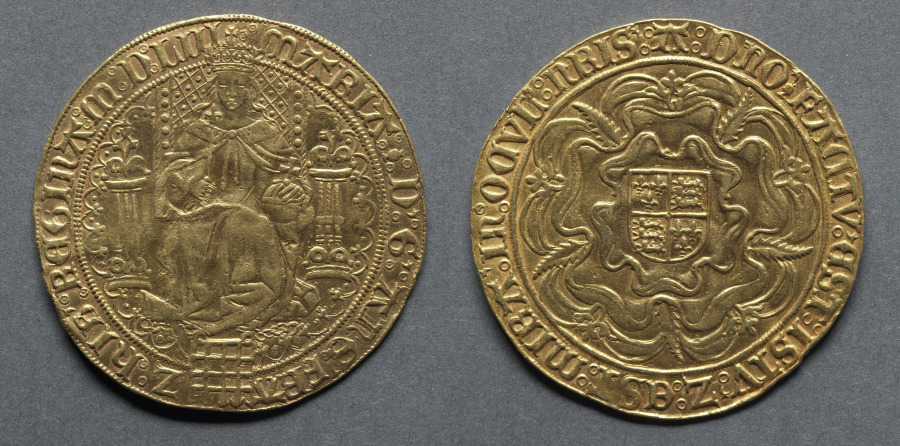
Cleveland Museum of Art
modern coins
Sovereign: Mary Enthroned (obverse); Shield of Royal Arms on a Tudor Rose (Cleveland Museum of Art 1969.179)
1553
Upon ascending the throne, Mary announced that she would restore the coinage to its full value. This sovereign of thirty shillings is of standard gold, 23 carats, 3 1/2 grains. The fine silver pieces of the reign were in metal, 11 oz. fine. These coins are thus of the same fineness as were those of Edward VI; the si…
Partial type record
Dated entries by century
- 14th century5
- 15th century6
- 16th century18
- 17th century27
- 18th century8
Only the 64 entries carrying their own date to within about 150 years are counted, by the earliest year given. These are catalogue holdings, not production totals.
Materials recorded in the physical descriptions
- Gold48
- Silver13
- Copper3
An entry made of several materials is counted once under each. Materials are counted only where the description states them.
Most represented makers
Makers are linked only where the source record names them.
Browse other historical issuers and makers in the Atlas, or read how attributions are made in the editorial method.