Issuing authority
United Kingdom
The United Kingdom of Great Britain and Ireland, from 1927 of Great Britain and Northern Ireland.
- Kind
- state
- Region
- Western Europe, Europe
- Recorded period
- 1801 – present
Objects are filed under the historical authority that actually issued or made them. A recorded period comes from the issuer's own reference description and is left blank where no source states it.
Published entries
44
Individual types and documented families
With photographs
100%
44 with a credited real-object photo
Dated span
1806 – 2017
42 entries with their own date
Verified or well documented
6
Highest two confidence levels
Catalogue entries (44)
Filter these entries by era, material or confidenceSorted by date, earliest first.
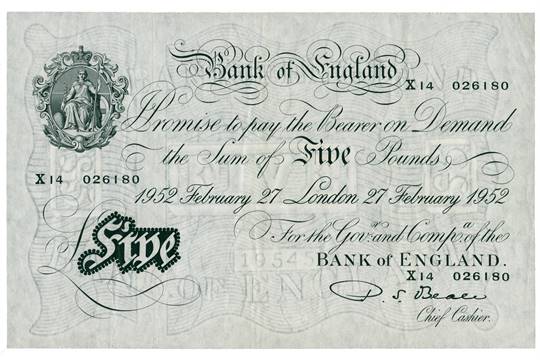
Bank of England
banknotes
Bank of England White Five Pound Note
19th century to 1957
The Bank of England white five pound note is a large-format sterling banknote printed in black ink on white paper on one side only. Five pound notes were first introduced by the Bank of England in 1793 to address gold shortages arising from the French Revolutionary Wars. Early issues were handwritten onto paper as n…
Partial type record
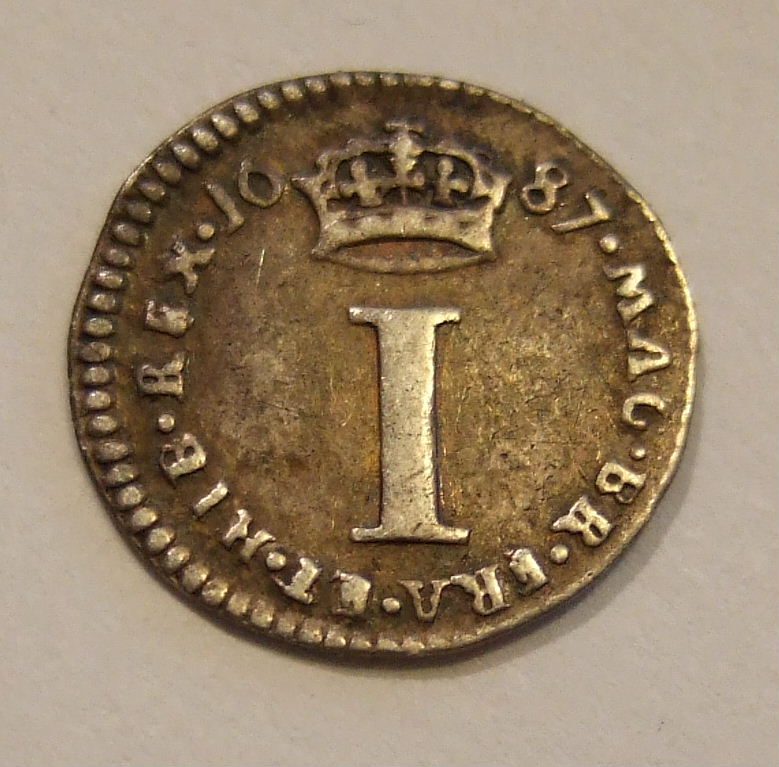
Jerry "Woody" from Edmonton, Canada
modern coins
Maundy money set
Continuing ceremonial issue
A Maundy money set comprises small silver coins struck in four distinct denominations: one penny, two pence, three pence, and four pence. Legally designated as the King's Maundy money, these ceremonial pieces are distributed by the British sovereign or a royal representative during the Royal Maundy service, held ann…
Partial type record
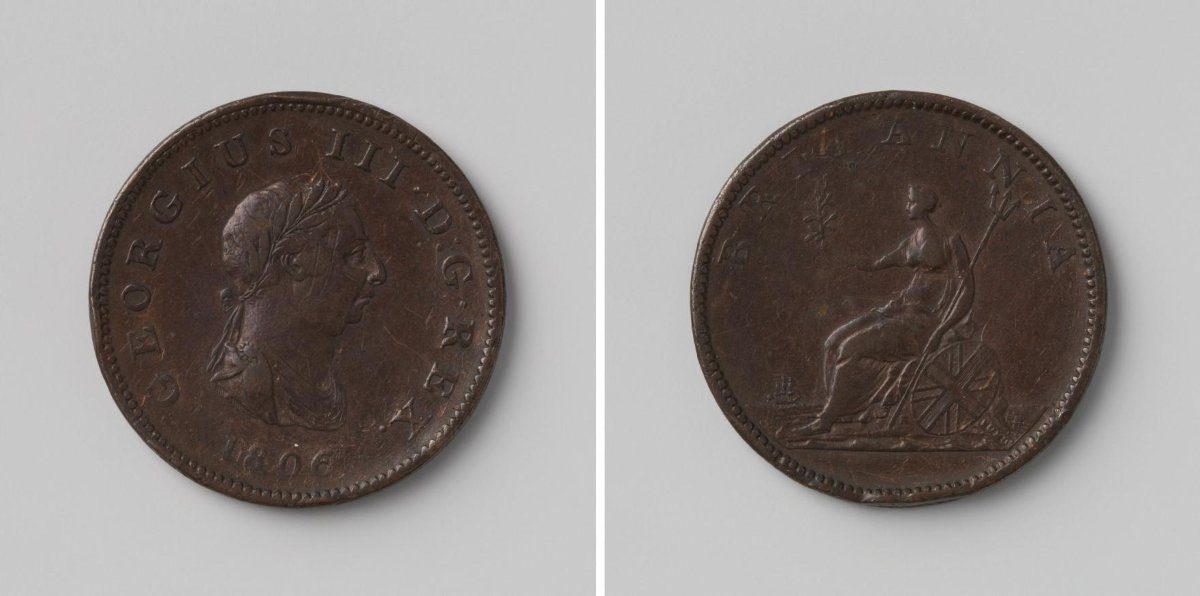
Rijksmuseum, Amsterdam
modern coins
Half penny of George III, King of England
1806
Copper coin. Obverse: right-facing bust of a man with laurel wreath within an inscription. Reverse: left-facing woman with olive branch in raised right hand and trident in left hand, seated next to coat of arms; in background: ship at sea within an inscription. The Rijksmuseum, Amsterdam, holds this object as NG-VG-…
Partial type record
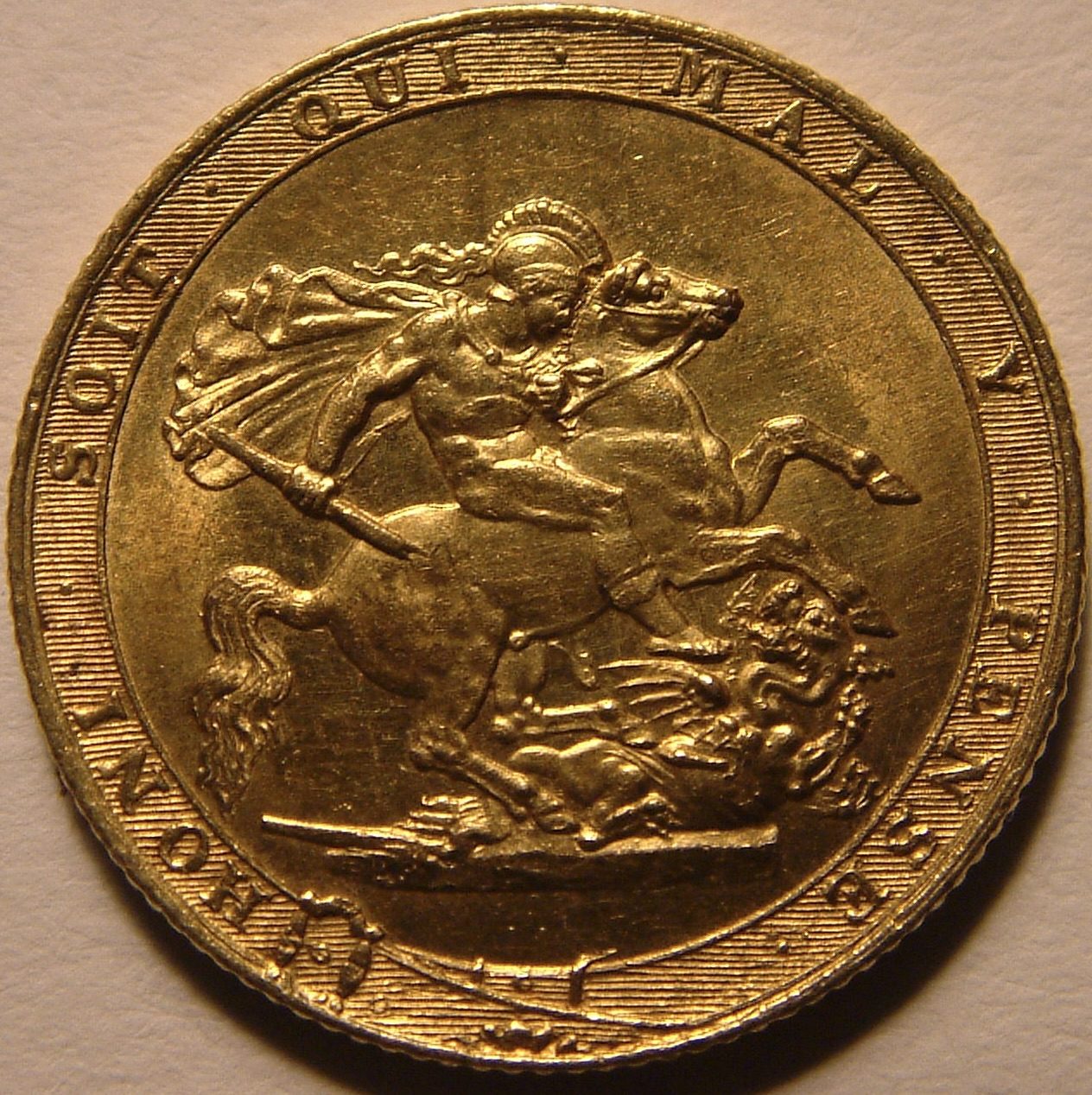
Mandtplatt
modern coins
British Gold Sovereign
1817 onwards
The British gold sovereign is a one-pound sterling coin introduced in 1817 by the Royal Mint following the Coinage Act 1816 and the Great Recoinage. Authorised under Master of the Mint William Wellesley Pole to replace the guinea, it was struck as a circulating coin containing 0.2354 troy ounces (7.32 grams) of pure…
Partial type record
Cleveland Museum of Art
modern coins
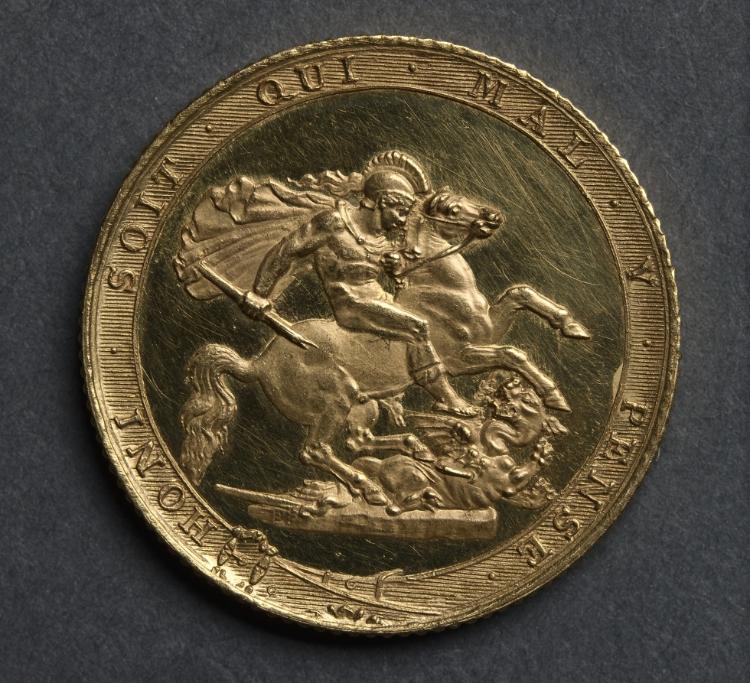
Sovereign: George III (obverse); St. George and the Dragon (Cleveland Museum of Art 1969.212)
1817
Great changes had occurred since King George III's previous coinage. The Royal Mint had moved out of the Tower of London to new premises in Little Tower Hill. The new mint was fitted with the latest steam-driven machinery by Boulton and Watt, and the whole coinage had been reformed. The guinea of twenty-one shilling…
Partial type record
Cleveland Museum of Art
modern coins
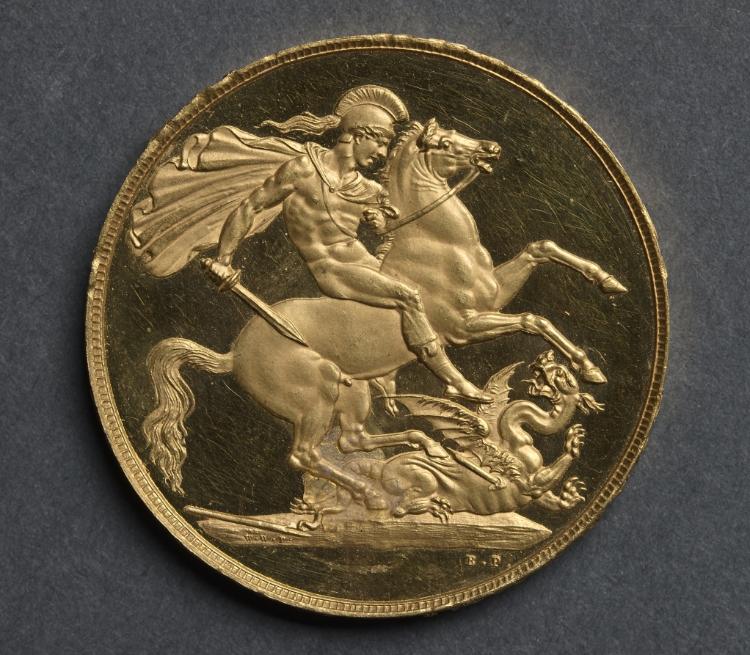
Two Pound Piece: George III (obverse); St. George and the Dragon (Cleveland Museum of Art 1969.213)
1820
The five- and two-pound pieces struck for George III were only struck as patterns in this, the last year of the his reign. No pieces of either denomination were put into circulation. This piece shows Pistrucci's Saint George as modified by Wyon. In the original the lance is broken; here the lance a been converted by…
Partial type record
Cleveland Museum of Art
modern coins
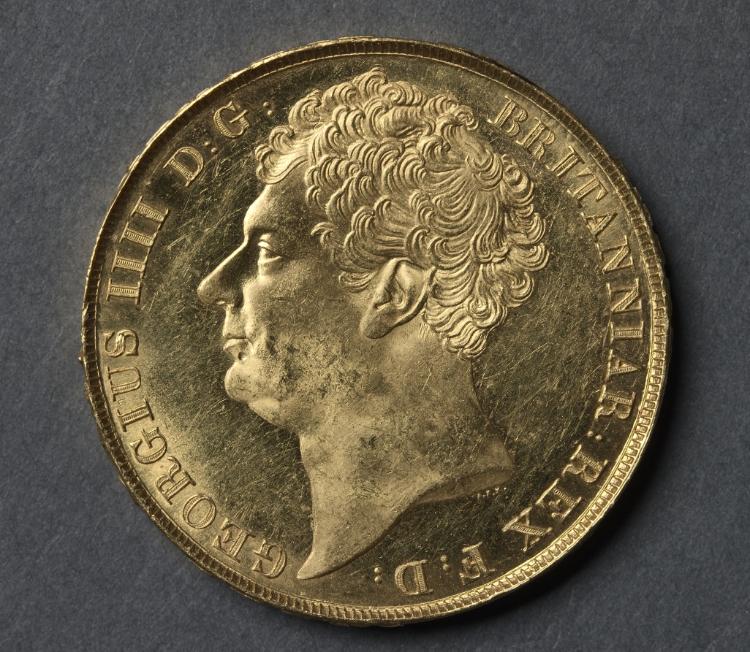
Two Pound Piece: George IV (obverse); St. George and the Dragon (Cleveland Museum of Art 1969.214)
1823
During the reign of King George IV, two-pound pieces were struck for circulation in 1823 only. Pattern pieces appeared in 1824, 1825, and 1826. The king was so disgusted with the caricature of a portrait that Pistrucci placed on the first coins of the reign that the artist was ordered to model a new obverse from a b…
Partial type record
Cleveland Museum of Art
modern coins
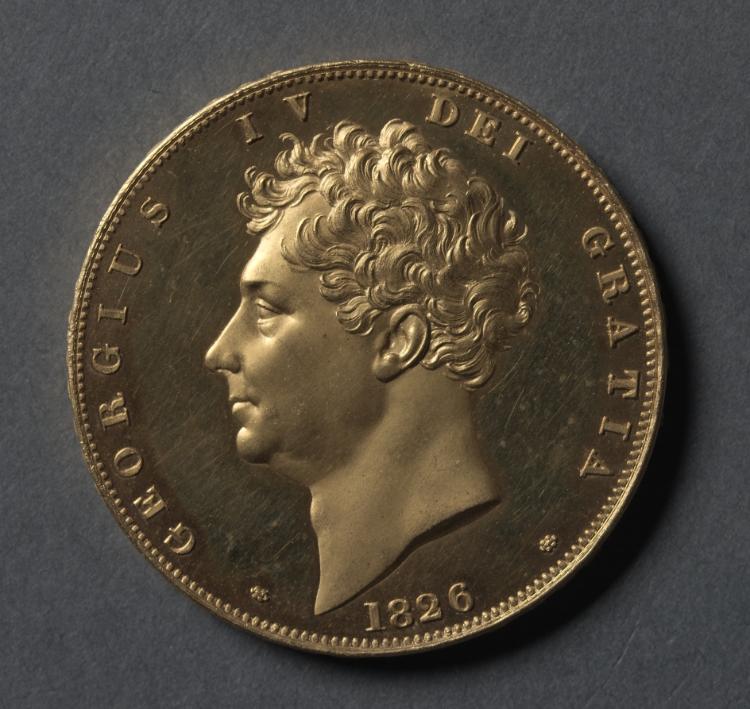
Five Pound Piece: George IV (obverse); Shield of Arms (Cleveland Museum of Art 1969.215)
1826
Only pattern five-pound pieces were struck during the reign of George IV, none being put into circulation. In this reign, specimen proof sets appeared for the first time in 1823, and the pattern five- and two-pound pieces as well as the pattern silver crown were included in the sets. Cleveland Museum of Art object 1…
Partial type record
Cleveland Museum of Art
modern coins
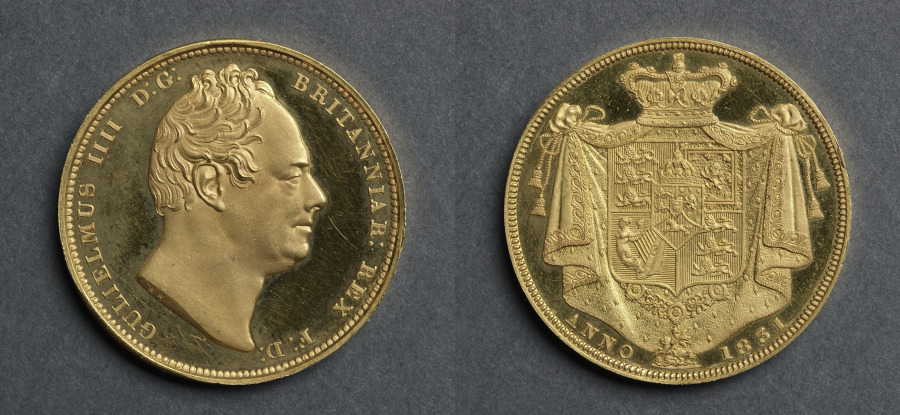
Two Pound Piece: George IV (obverse); Shield of Arms (Cleveland Museum of Art 1969.216)
1831
The two-pound piece in this reign was only struck as a pater in 1831. Again, as in the last reign, a limited number of proof sets were struck, and this coin was included in the sets. Since it never went into circulation it is properly called a pattern. Cleveland Museum of Art object 1969.216: Two Pound Piece: George…
Partial type record
Cleveland Museum of Art
modern coins
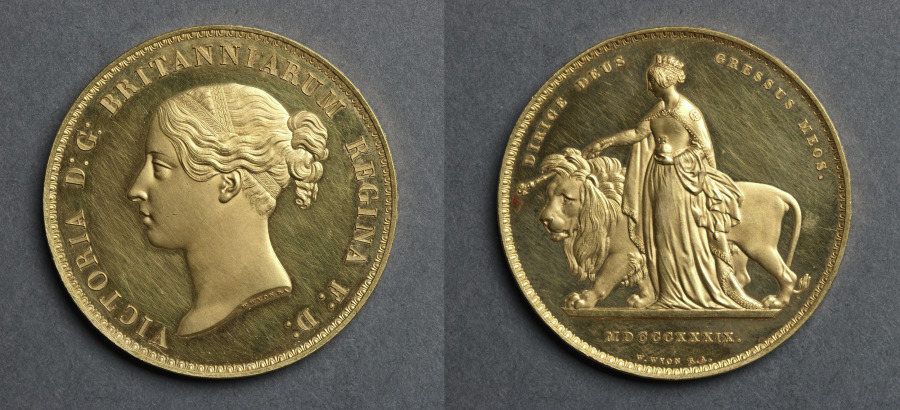
Five Pound Piece: Victoria (obverse); Una (Cleveland Museum of Art 1969.217)
1839
This piece was struck by the Royal Mint from gold purchased for the purpose. The current gold coins, such as the sovereign, were struck from gold supplied by the Bank of England. The larger gold pieces have their origins in the five and two guinea pieces. There are several minor varieties of this piece, designed by…
Partial type record
Cleveland Museum of Art
modern coins
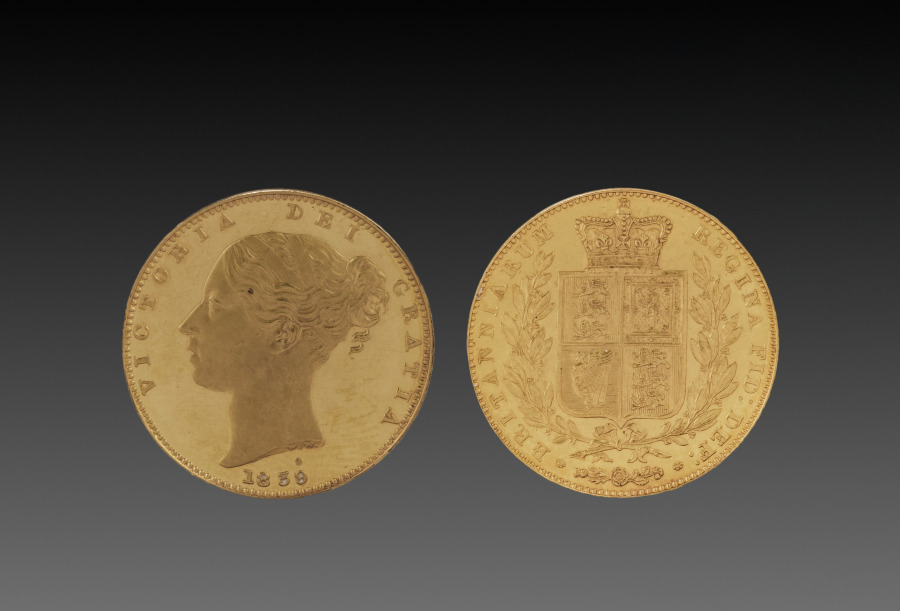
Sovereign: Victoria (obverse); Shield of Arms (Cleveland Museum of Art 1969.218)
1839
With the end of the rule of the House of Hanover, whose last direct representative on the British throne was William IV (died 1837), the royal arms that had ceased to show the French pretention at the end of the first coinage of George III were now further simplified. In each quarter from top right to bottom left: 1…
Partial type record
Transferred from en.wikipedia to Commons. imagesoftheworld.org
stamps
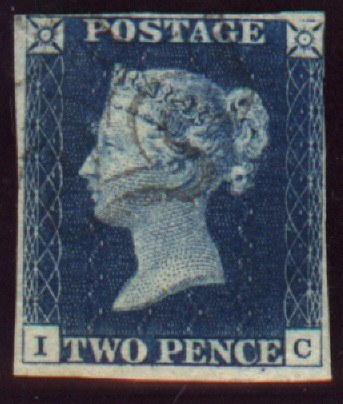
British Two Pence Blue, 1840
1840
The British Two Pence Blue, colloquially known as the Tuppenny Blue, was the second official adhesive postage stamp in the world. Produced in the United Kingdom of Great Britain and Ireland, it was introduced in 1840 alongside the Penny Black to serve as postage for double-rate letters weighing up to a full ounce se…
Research required
freestock.ca
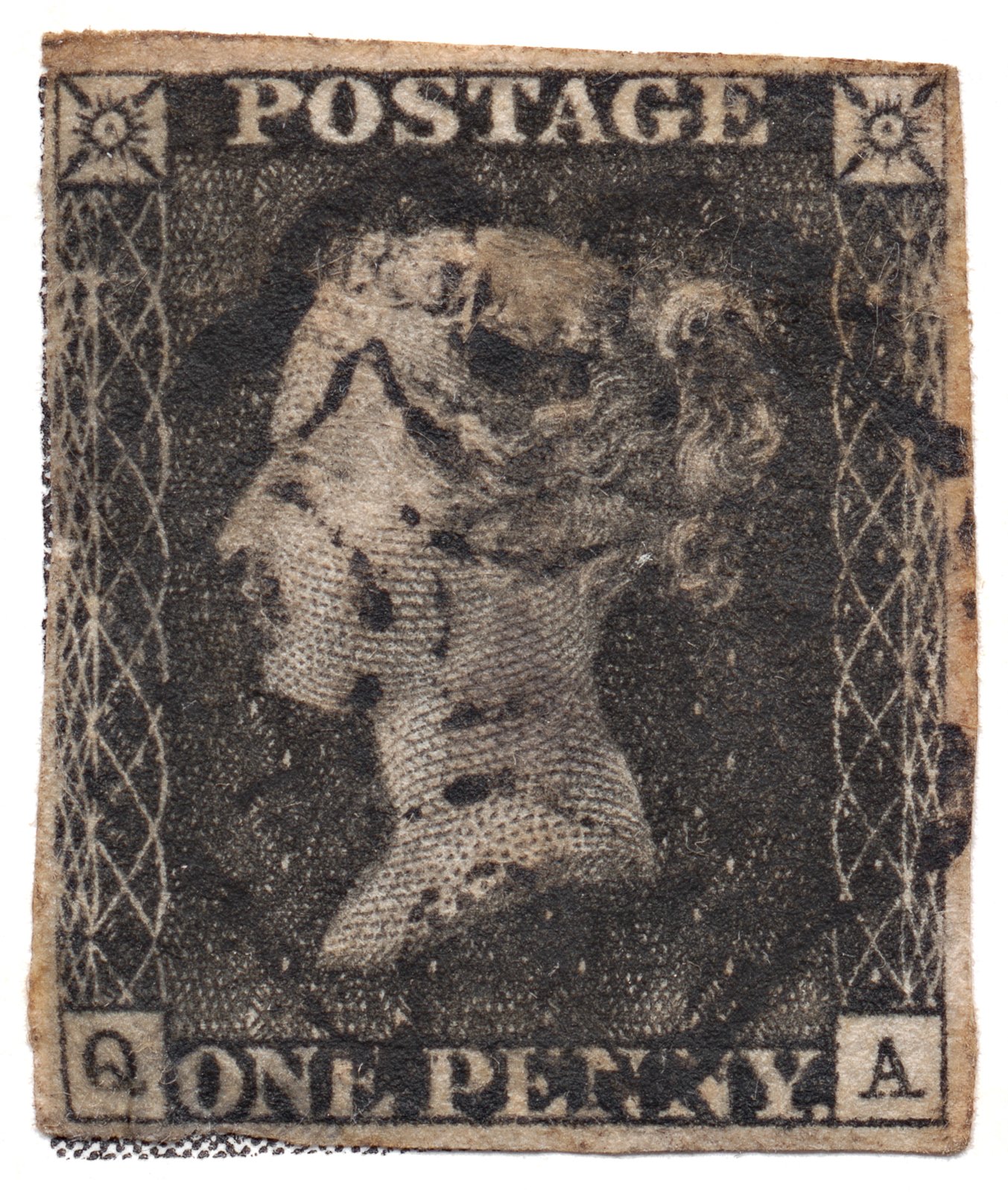
stamps
Great Britain — Penny Black — 1840
1840
The Penny Black was the world's first adhesive postage stamp issued for public postal use in the United Kingdom as part of the Uniform Penny Post reform proposed by Sir Rowland Hill. Printed in black ink by Perkins Bacon on paper watermarked with a Small Crown, the stamp allowed letters weighing up to half an ounce…
Research required
The Metropolitan Museum of Art — Gift of Assunta Sommella Peluso, Ada Peluso, and Romano I. Peluso, in memory of Ignazio Peluso, 2002
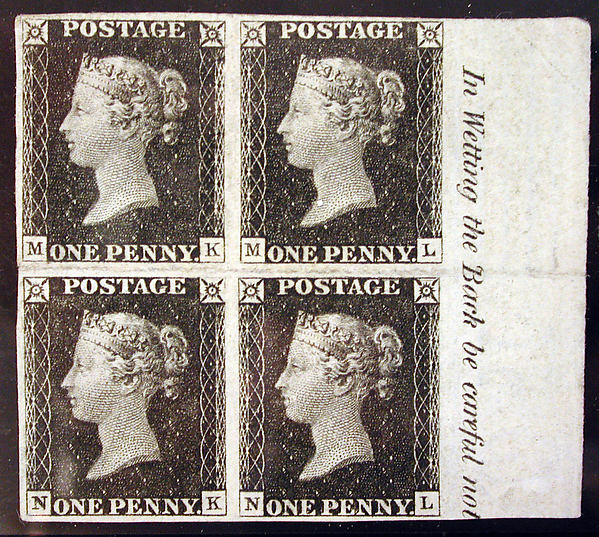
stamps
Unused block of four "Penny Black" postage stamps of Queen Victoria, William Wyon, issued May 6, 1840 (The Metropolitan Museum of Art, 2002.399.10)
issued May 6, 1840
Unused block of four "Penny Black" postage stamps of Queen Victoria made by After a design by William Wyon (British, Birmingham 1795–1851 Brighton), dated issued May 6, 1840, from British. The museum records its materials as: Engraving printed in black ink on paper. Recorded dimensions: Overall: 1 7/8 × 2 1/8 in. (4…
Partial type record
The Metropolitan Museum of Art — Gift of Assunta Sommella Peluso, Ada Peluso, and Romano I. Peluso, in memory of Ignazio Peluso, 2002
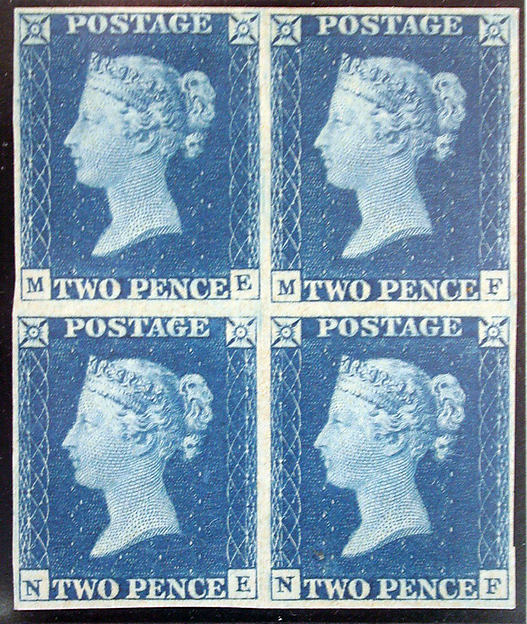
stamps
Unused block of four "Two Penny Blue" postage stamps of Queen Victoria, William Wyon, issued May 8, 1840
issued May 8, 1840
Unused block of four "Two Penny Blue" postage stamps of Queen Victoria made by After a design by William Wyon (British, Birmingham 1795–1851 Brighton), dated issued May 8, 1840, from British. The museum records its materials as: Engraving printed in blue ink on paper. Recorded dimensions: Overall: 1 7/8 × 1 5/8 in.…
Partial type record
Perkins Bacon, London, UK for British Post Office; https://www.flickr.com/photos/w77t/49951109943/
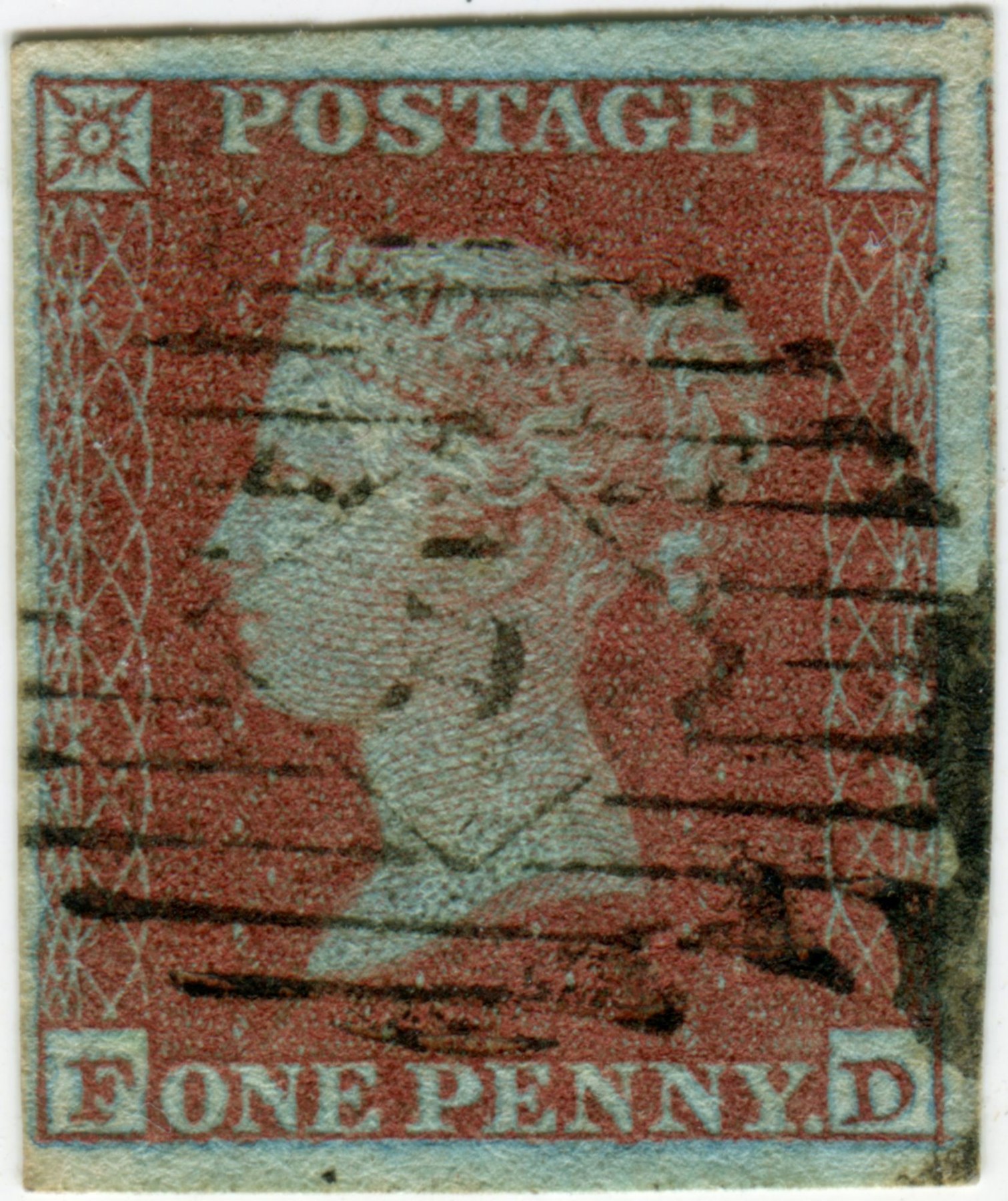
stamps
British Penny Red
1841–1879
The British Penny Red was a line-engraved adhesive postage stamp printed by Messrs. Perkins, Bacon & Co. for the United Kingdom. First issued in February 1841, it replaced the Penny Black as the standard one-penny postage stamp. The transition from black to red ink was introduced because red postmarks were difficult…
Research required
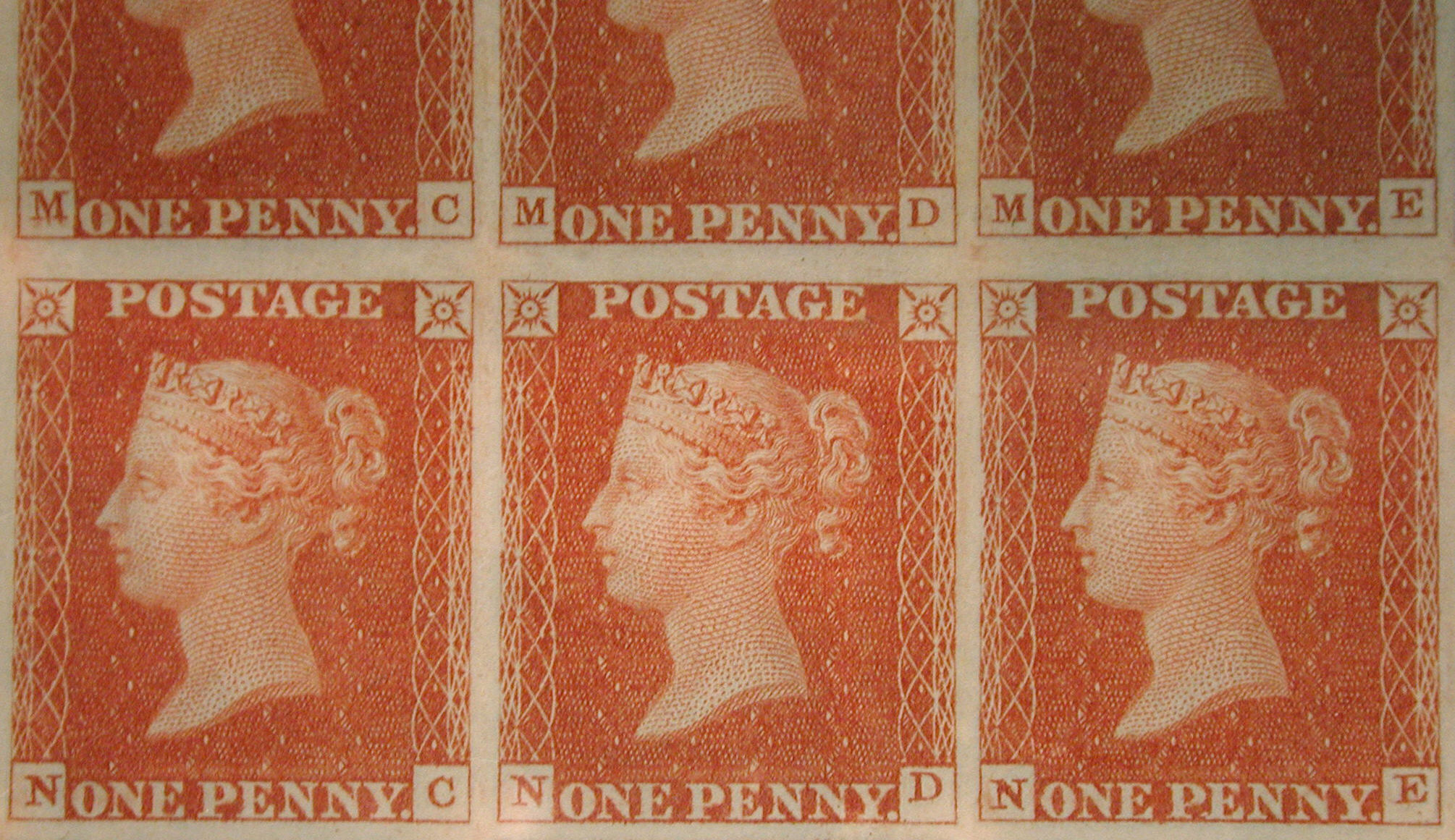
The Metropolitan Museum of Art — Gift of Assunta Sommella Peluso, Ada Peluso, and Romano I. Peluso, in memory of Ignazio Peluso, 2002
stamps
Unused block of forty-two "Penny Red-Brown" postage stamps of Queen Victoria, William Wyon, issued February 10, 1841
issued February 10, 1841
Unused block of forty-two "Penny Red-Brown" postage stamps of Queen Victoria made by After a design by William Wyon (British, Birmingham 1795–1851 Brighton), dated issued February 10, 1841, from British. The museum records its materials as: Engraving printed in red-brown ink on paper. Recorded dimensions: Overall: 5…
Partial type record
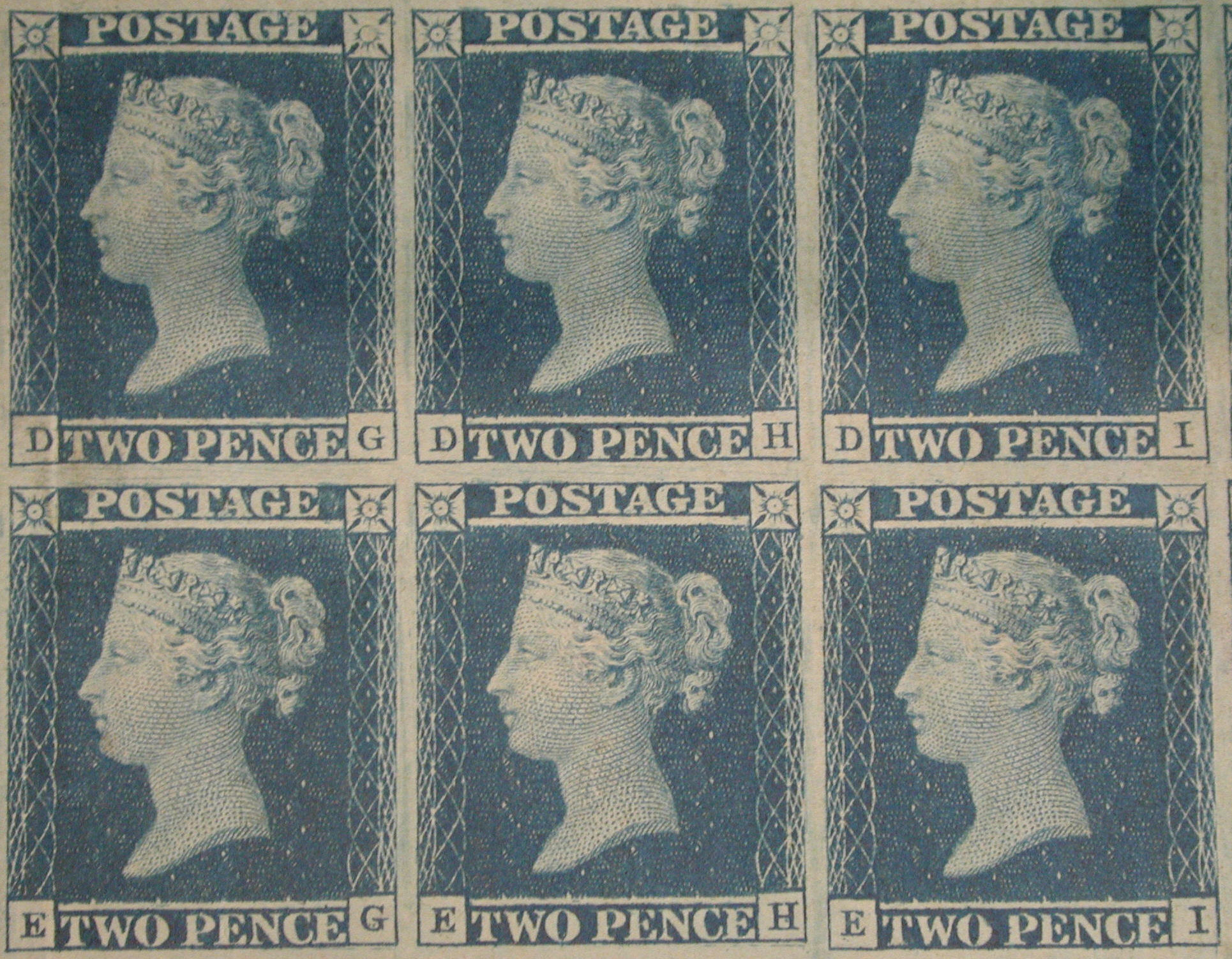
The Metropolitan Museum of Art — Gift of Assunta Sommella Peluso, Ada Peluso, and Romano I. Peluso, in memory of Ignazio Peluso, 2002
stamps
Unused block of forty-two "Two Penny Blue" postage stamps of Queen Victoria, William Wyon, issued March 13, 1841
issued March 13, 1841
Unused block of forty-two "Two Penny Blue" postage stamps of Queen Victoria made by After a design by William Wyon (British, Birmingham 1795–1851 Brighton), dated issued March 13, 1841, from British. The museum records its materials as: Engraving printed in blue ink on paper. Recorded dimensions: Overall: 4 11/16 ×…
Partial type record
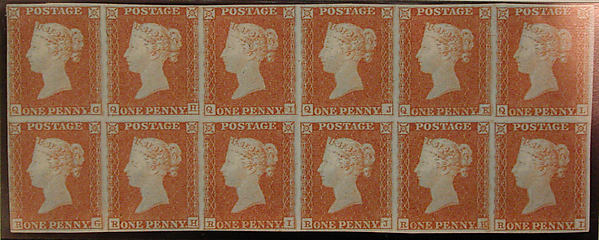
The Metropolitan Museum of Art — Gift of Assunta Sommella Peluso, Ada Peluso, and Romano I. Peluso, in memory of Ignazio Peluso, 2002
stamps
Unused block of twelve "Penny Red Brown" postage stamps of Queen Victoria, William Wyon, issued February 10, 1841
issued February 10, 1841
Unused block of twelve "Penny Red Brown" postage stamps of Queen Victoria made by After a design by William Wyon (British, Birmingham 1795–1851 Brighton), dated issued February 10, 1841, from British. The museum records its materials as: Engraving printed in red-brown ink on paper. Recorded dimensions: Overall: 1 7/…
Partial type record
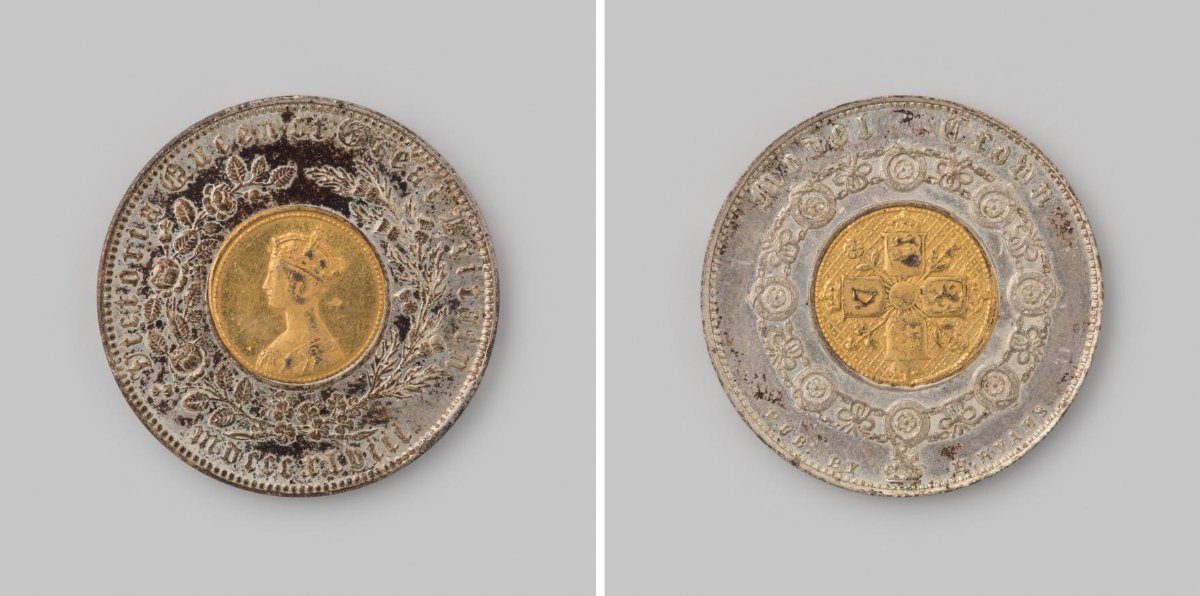
Rijksmuseum, Amsterdam
modern coins
England, Victoria, model crown, 1848
1848
Gilt copper/pewter private coin. Obverse: within two tied branches the crowned head of the queen to the left. Date at the bottom. Reverse: on a hatched field a short floriate cross with a sun at its centre, in the corners four crowned coats of arms. Around it the collar of the Order of Saint George. Inscription: Mod…
Partial type record
Петров Эдуард
modern coins
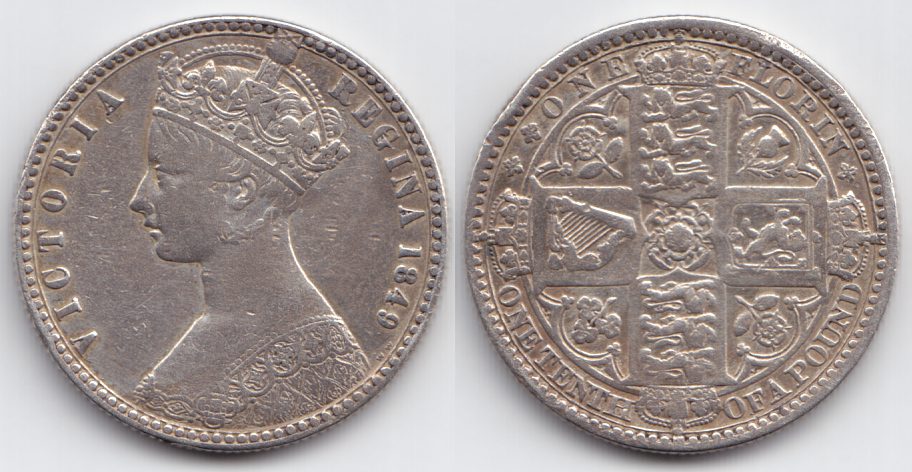
British Godless Florin, 1849
1849
The British Godless florin of 1849 was a two-shilling silver coin struck by the Royal Mint. To evaluate public reaction and assist the decimal experiment, the mint suspended production of the similar half-crown coin, intending the two-shilling florin to serve as a practical test for potential decimal coins. The coi…
Partial type record
Smithsonian National Postal Museum
stamps
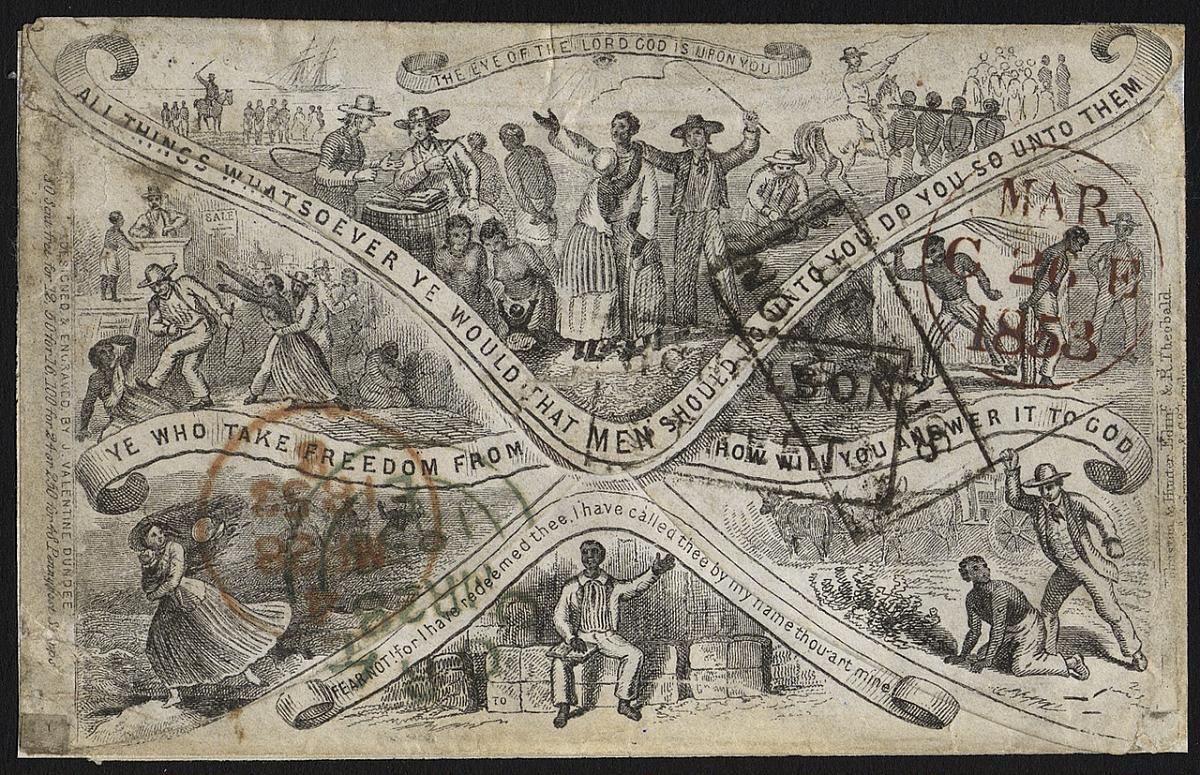
Uncle Tom's Cabin illustrated anti-slavery cover
March 28, 1853
The object is an Uncle Tom's Cabin illustrated anti-slavery cover associated with the United Kingdom entity. It is referenced in the Scott catalogue as "Great Britain 3". The entry notes identification guidelines that involve comparing the design, value, colour, perforation or imperforate margins, watermark, and any…
Partial type record
The Coin Cabinet Auction 134 (2 Oct 2026)
modern coins
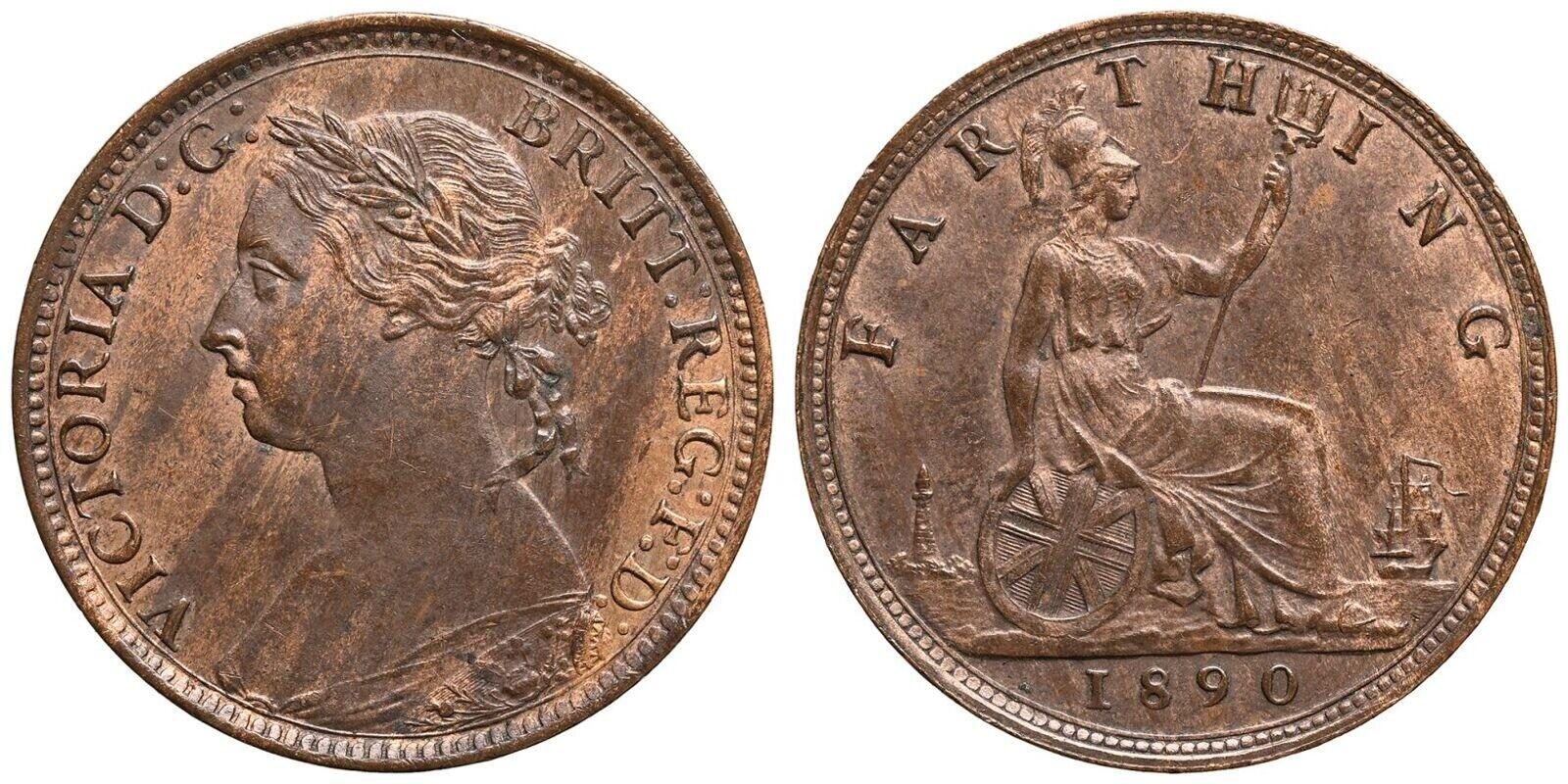
Bronze farthing
19th to 20th century
The bronze farthing was the smallest British bronze denomination of the pre-decimal era, representing one quarter of an old penny or one nine-hundred-and-sixtieth of a pound sterling. Having previously been produced in copper, the first bronze farthings were struck by the Royal Mint in 1860 during the reign of Queen…
Partial type record
Numista contributor via Numista
banknotes
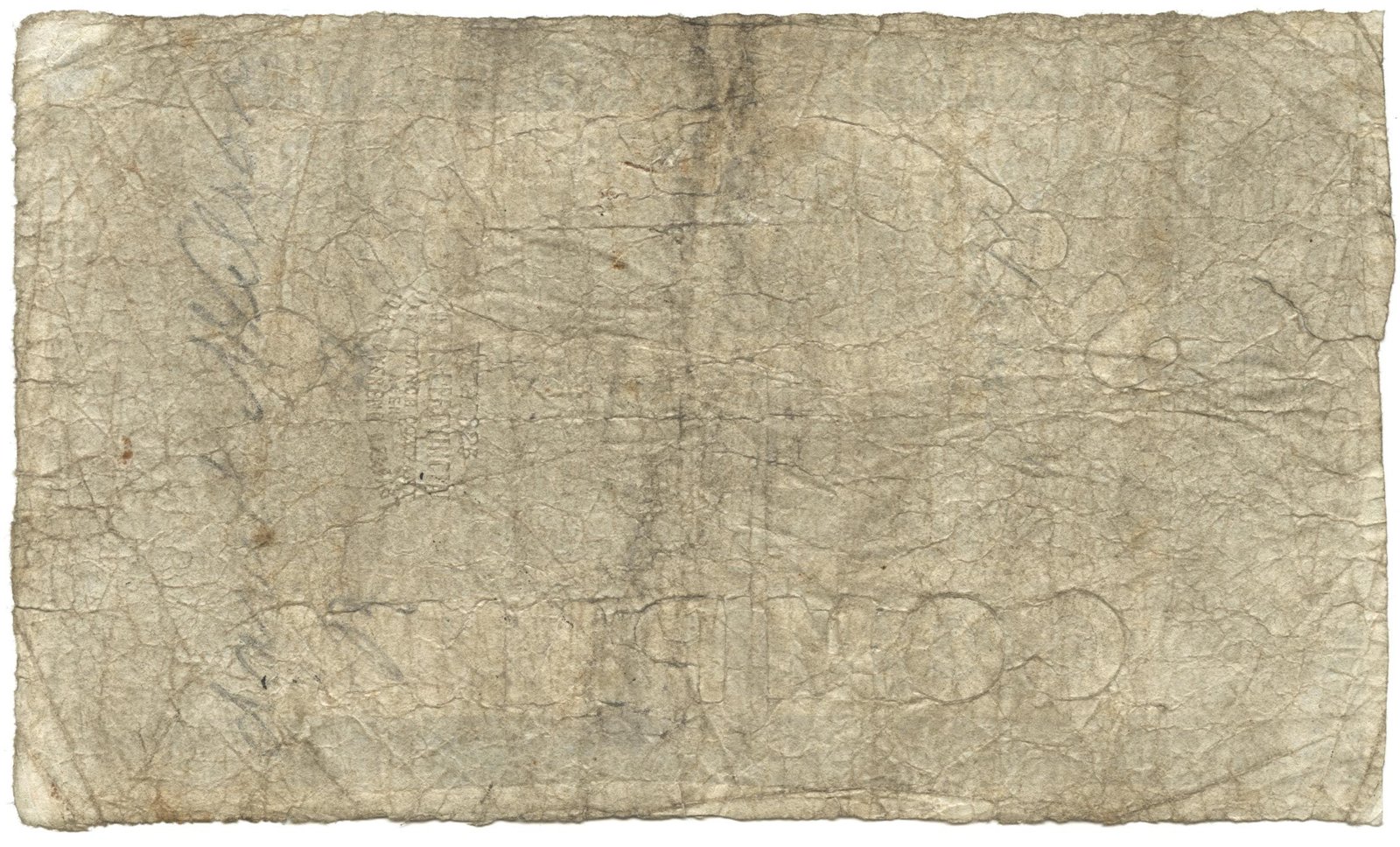
1 Pound (1 Punt), Ulster Bank, Ireland, 1861 (Pick 366)
1861
This 1 Pound note was issued in Ireland by the Ulster Bank, dated 1861. It belongs to the Pound (1826-1971) currency system. Issuing authority and period recorded in the catalogue: Victoria (1837-1901). and is printed on paper. The Standard Catalog of World Paper Money lists the type as Pick 366. Obverse: Farm buil…
Partial type record
Entries by catalogue category
- Modern World Coins20
- Postage Stamps13
- Banknotes11
Counts of published entries only. They describe this catalogue's holdings, not everything the issuer or maker produced.
Dated entries by century
- 19th century25
- 20th century14
- 21st century3
Only the 42 entries carrying their own date to within about 150 years are counted, by the earliest year given. These are catalogue holdings, not production totals.
Materials recorded in the physical descriptions
- Paper15
- Gold13
- Copper2
- Polymer2
- Zinc2
- Bronze1
- Silver1
An entry made of several materials is counted once under each. Materials are counted only where the description states them.
Confidence of the published entries
- Verified1
- Well documented5
- Documented35
- Unverified3
Confidence reflects how well the sources support each entry's identification, not the object's quality or importance.
Most represented makers
Makers are linked only where the source record names them.
Browse other historical issuers and makers in the Atlas, or read how attributions are made in the editorial method.