Section
Paper money — banknotes and emergency issues
Notes issued by central banks, governments, colonial administrations and private issuers, together with Notgeld, hyperinflation and locally authorised substitutes for currency.
Sub-fields
Notgeld, hyperinflation issues and locally authorised substitutes for currency.
2 records
Photographed records
Entries in this section with a real-object photograph held on this site, each credited to the institution that published it.
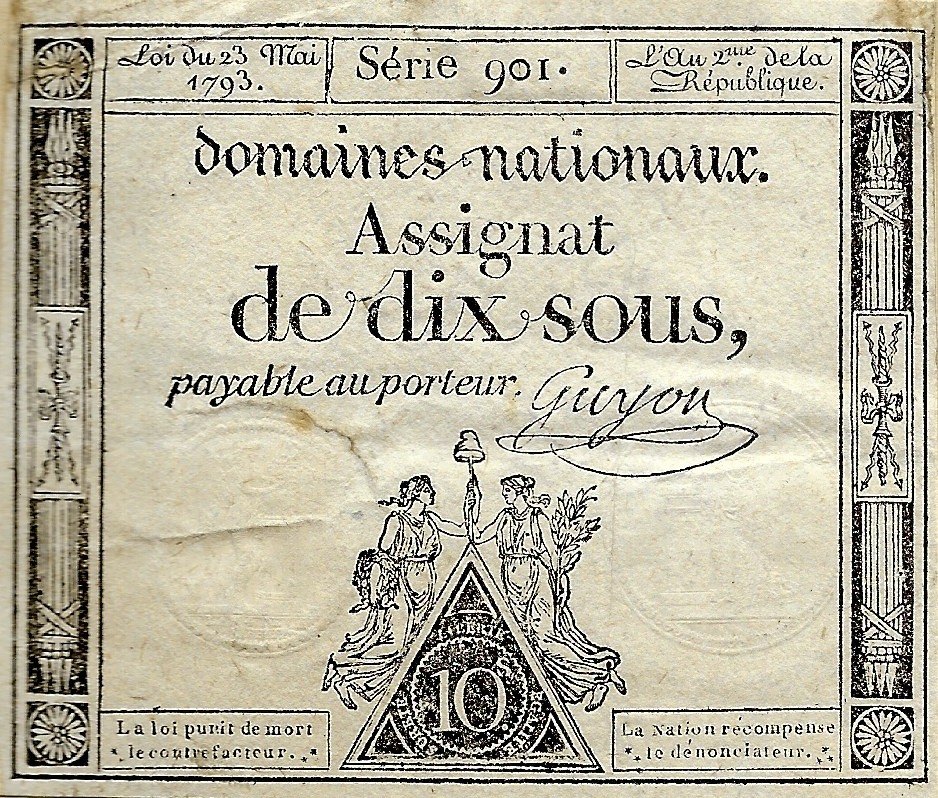
banknotes
Assignat
1789-1796
Paper money issued during the French Revolution, originally backed by confiscated land.
Partial type record
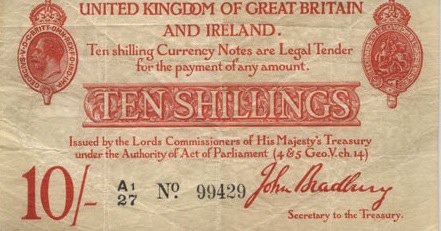
banknotes
Bank of England ten shilling note
20th century
A low-denomination Bank of England note issued until decimalisation replaced the denomination with a coin.
Partial type record
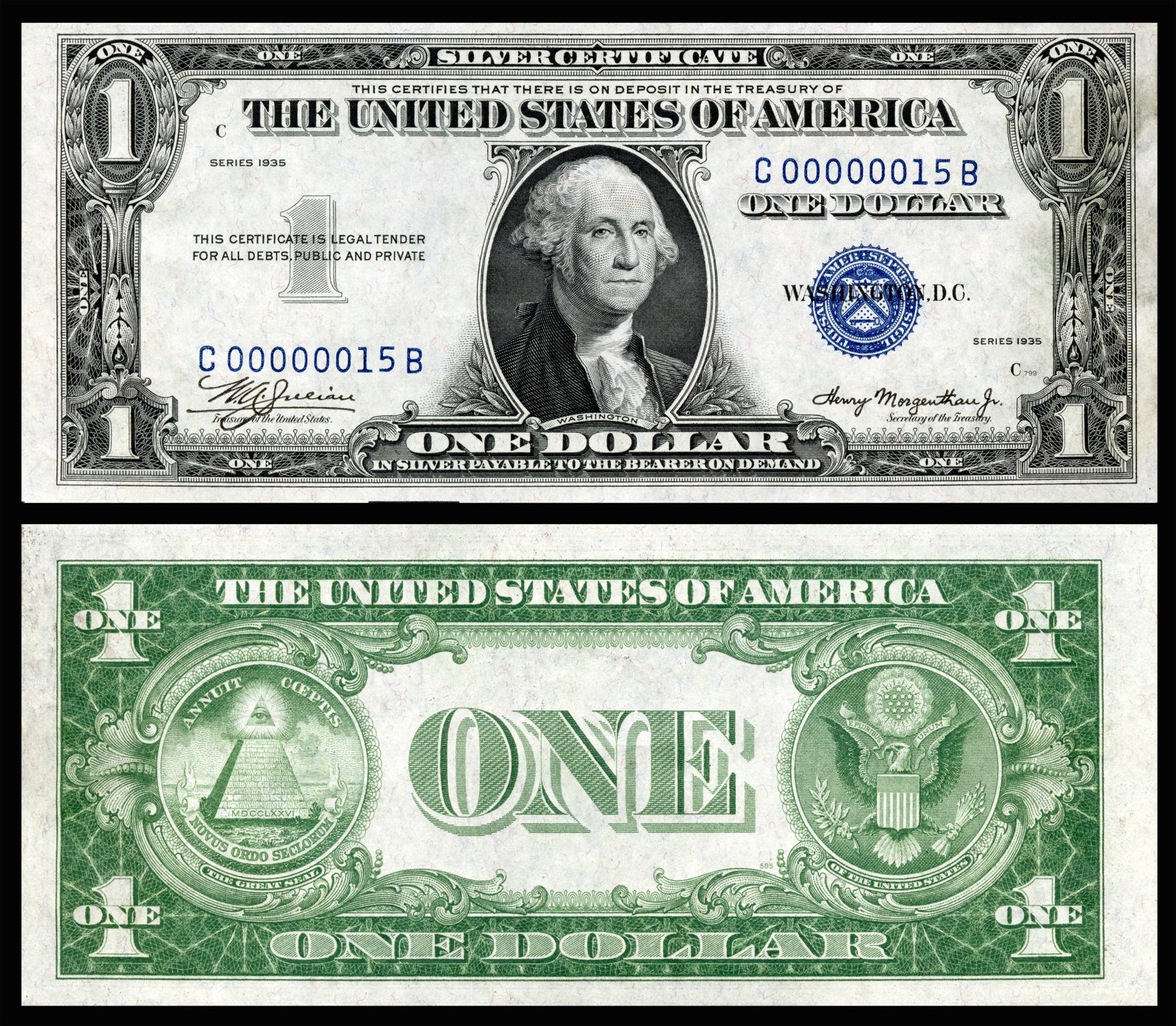
banknotes
United States — Silver Certificate — 1 Dollar — Series 1935
Series 1935
One-dollar silver certificate of the Series 1935 family, redeemable in silver on demand at the time of issue.
Partial type record
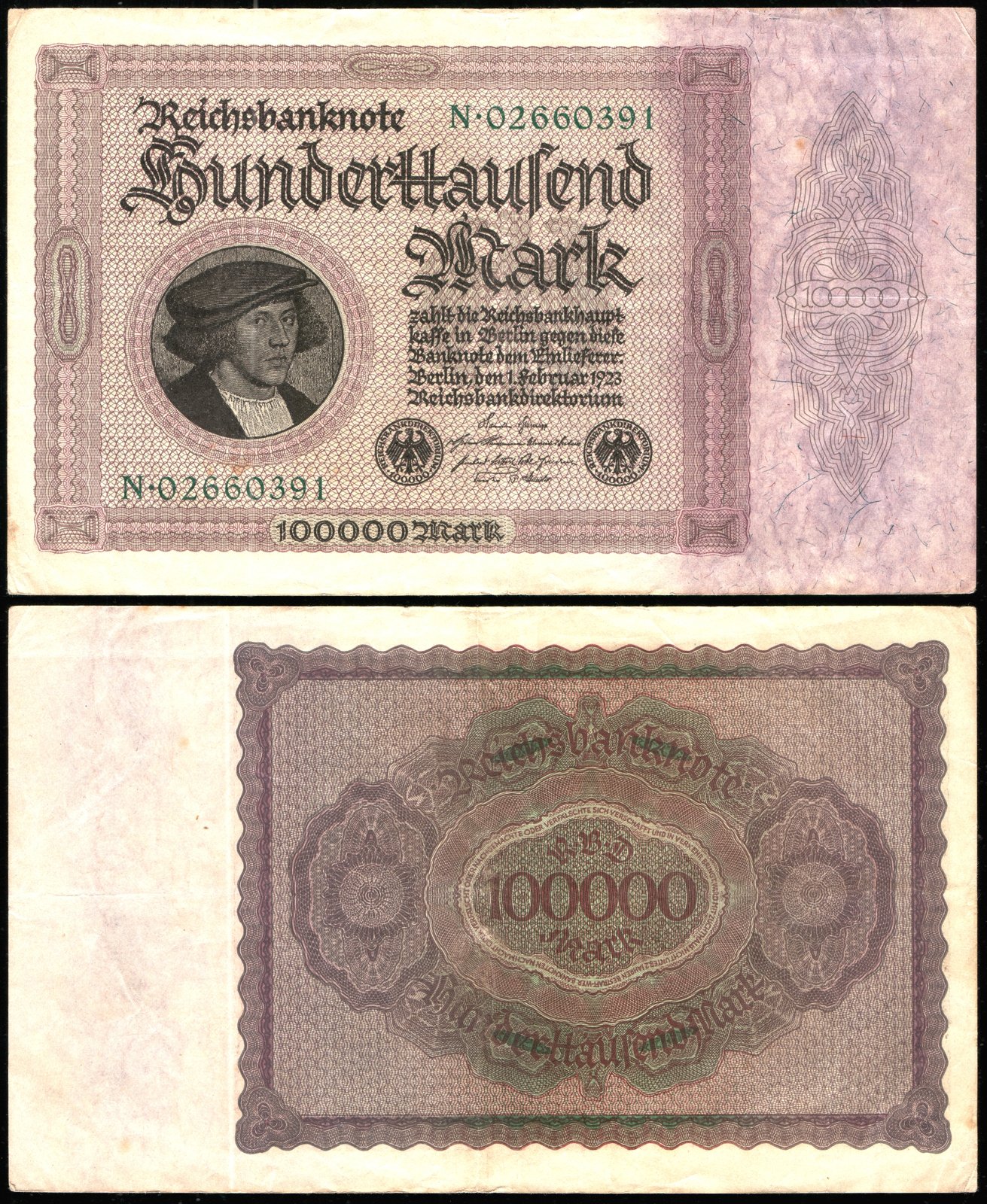
emergency money
Weimar Republic — Reichsbanknote — 100,000 Mark — 1923
1923
High-denomination Reichsbanknote issued during the German hyperinflation of 1923.
Partial type record
Issuing authorities and makers
Objects stay filed under the historical entity that issued or made them, not its modern successor.
What this section covers
- Central bank and government note issues, by issuing authority and series.
- Colonial, occupation and private issuer paper.
- Notgeld, hyperinflation and emergency substitutes for currency.
- Printer, watermark, signature and serial format recorded only where documented.
Common questions
- How is a banknote type distinguished from a variety?
- A type is the issued design and denomination; signature combinations, printers, dates and serial prefixes are recorded as documented varieties beneath it when a reference establishes them.
- Do you list values for banknotes?
- No. The catalogue identifies and documents note types. It carries no prices, auction results or valuations.
- Why are some notes filed under states that no longer exist?
- Issues stay under the historical issuing entity — the Austro-Hungarian Empire, the Weimar Republic — rather than a modern successor state, because that is how the issue is identified.
Where a date, weight, catalogue number or photograph has not been verified against a documented source, the record says so rather than estimating. See the editorial method and the coverage audit.