Describe the lock as a working object
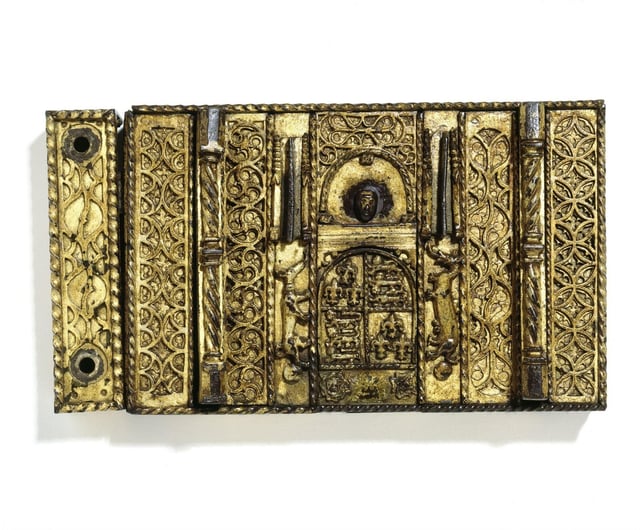
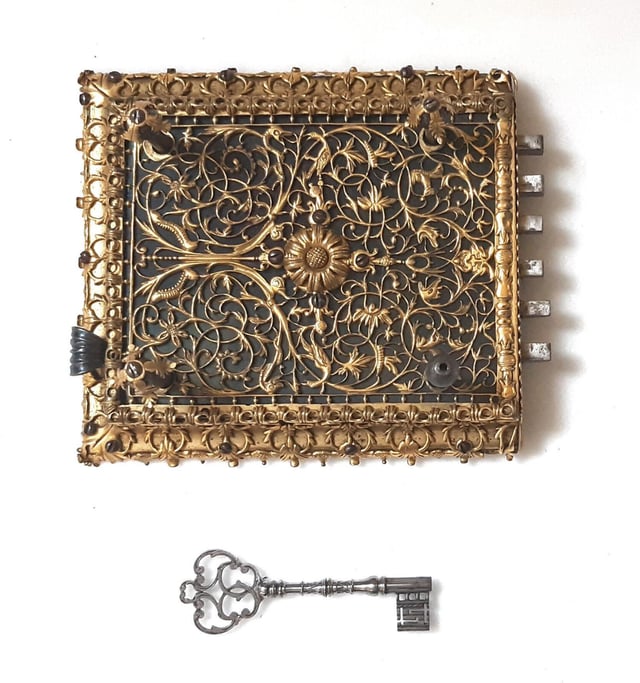
A lock is a mechanism first and a decorated object second, and a good record covers both. Start with the overall form and dimensions, the materials of the case and the visible fittings, and the number and position of keyholes, handles and bolts. State whether the lock is complete, whether a key survives with it and whether the key is known to be original to the lock or only fits it.
Do not force a mechanism to discover how it works. Old springs and wards can break, and a seized bolt is evidence of the lock's condition. Record what moves freely, what does not and what was not tried. If the internal mechanism is described from a museum's own examination, cite that record rather than presenting it as your observation.
Reference: Editorial methodology
Rim locks, mortise locks and portability
How a lock was fitted to a door changes how it should be described. The V&A record for a rim lock by Walter Bickford explains that a rim lock's mechanism is enclosed in a case mounted on the surface of a door, unlike later mortise locks built into the door, so it could be removed if its owners travelled or moved. Record the mounting type you can see and note fixing holes, staples and keepers.
Because locks could be moved and reused, the building or door a lock is associated with may not be where it was first fitted. Keep documented history, such as a museum's record of a specific door, separate from inference. An unrecorded association should stay a question in the entry rather than become part of its title.
Reference: V&A: Lock and key, Walter Bickford, England, 1650–1700 (museum record)
Keys: bow, shank and bit
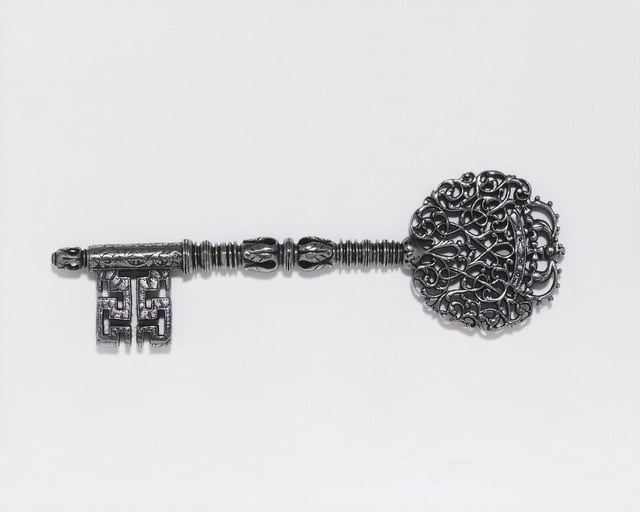
Describe a key in three parts: the bow that is held, the shank or barrel, and the bit that engages the lock. Note whether the shank is solid or hollow, the shape of any cuts in the bit and any decoration on the bow. Measure overall length and the bit's dimensions; these help compare a key with a lock without trying it in the mechanism.
Highly decorated keys may have been made as much for display or ceremony as for use. Record decoration, monograms and crests exactly and do not identify an owner from a coat of arms unless a cited heraldic source or museum record does so. A key found alone rarely identifies its lock, and the entry should say so.
Reference: Editorial methodology
Signatures, arms and dated plates
Some locksmiths signed their work on the case or on an engraved plate, and some locks carry royal or family arms. Transcribe every inscription, signature and date exactly and photograph it in raking light. A signature names who claimed the work; it does not by itself establish where every part was made or that no parts were replaced.
Arms and dates can date the commission, the owner or a later alteration. Keep them in separate fields and cite the source that interprets them. Where a museum attributes a lock to a named maker on stylistic grounds alone, Orbis records that as an attribution rather than a signature.
Reference: V&A: Lock and key, Walter Bickford, England, 1650–1700 (museum record)
Iron, steel and brass need gentle care
Ferrous metals rust in damp conditions, and brass can tarnish and corrode where salts from handling remain on the surface. Keep locks and keys in a stable, dry environment, handle them with gloves and support heavy cases from below. Avoid oiling, polishing or removing corrosion without conservation advice: heat-blued steel, gilding and engraved detail are easily lost.
Store keys so that they do not knock against each other, and label each with its record number rather than tying keys together on a ring. When a lock and key belong together, store them together and record that relationship.
Reference: National Park Service: Museum Handbook
Build a record another researcher can check
Photograph the front, back, keyholes and any inscriptions at a known scale, and photograph a key alongside its lock where both survive. Keep measurements, condition notes and source citations with the images, and mark which statements are your observations and which come from a museum or publication.
The live figures below show how many key and lock entries Orbis currently publishes and how they spread by period and confidence. They are a snapshot of this catalogue, not a count of surviving locks or keys.
Reference: Editorial methodology