Catalogue
Ancient Coins
Greek, Roman, Byzantine, Celtic, Persian, Indian, Chinese and other pre-medieval coinages.
Catalogue entries (3,128)
Filter by era, country, maker or material2,977–3,024 of 3,128 entries
Art Institute of Chicago
ancient coins
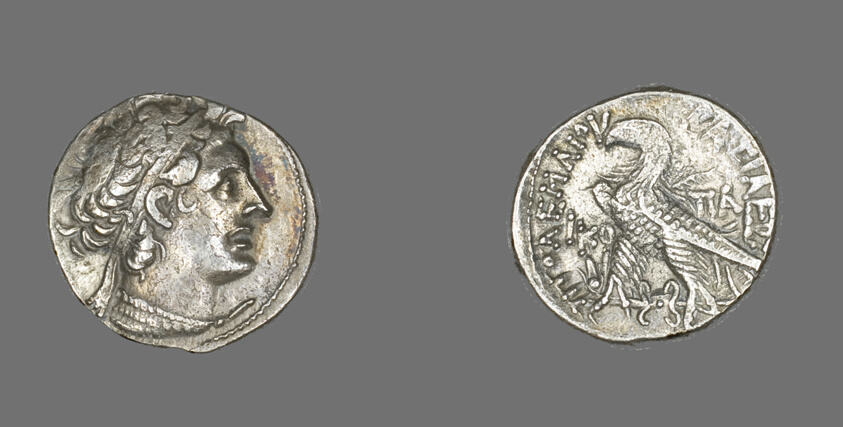
Tetradrachm (Coin) Portraying King Ptolemy I
Ptolemaic Period (53–52 BCE), issued by King Ptolemy XII Auletes, Reign of Ptolemy XII Auletes (80–51 BCE)
This ancient silver tetradrachm originates from Ptolemaic Egypt and measures 2.6 cm (1 1/16 in.) in diameter. It was minted in Egypt during the Ptolemaic Period, specifically dated to 53–52 BCE under the reign of King Ptolemy XII Auletes, who ruled from 80 to 51 BCE. The coin features imagery in relief on both face…
Partial type record
Art Institute of Chicago
ancient coins
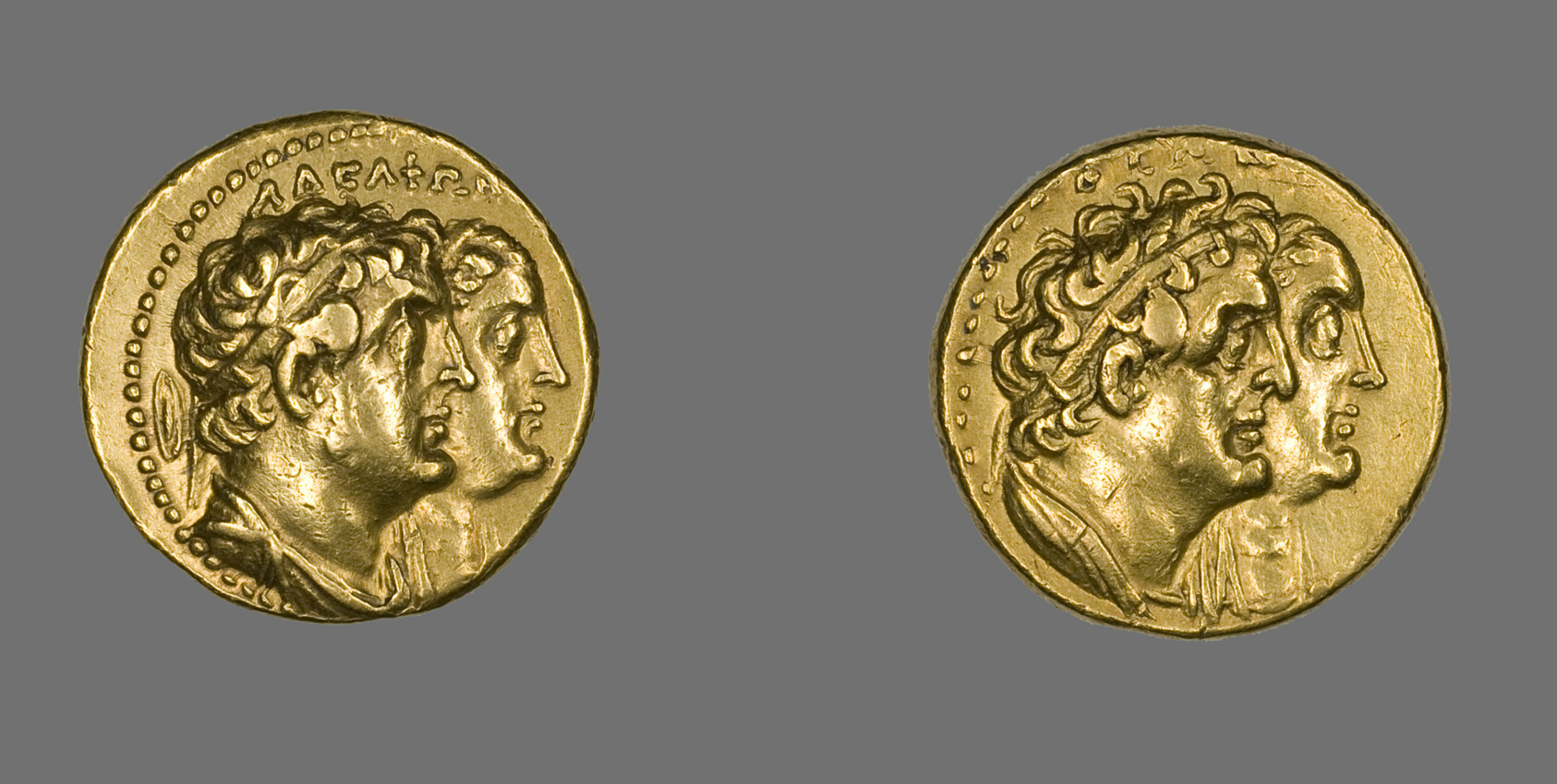
Tetradrachm (Coin) Portraying King Ptolemy II Philadelphos and Queen Arsinoe II
After 270 BCE, issued by King Ptolemy II, reign of Ptolemy II and Arsinoe II, 285–247 BCE
This ancient Greek Ptolemaic coin is a gold tetradrachm minted in Egypt. Issued by King Ptolemy II after 270 BCE during the reign of Ptolemy II and Arsinoe II (285–247 BCE), the circular piece measures 2.1 cm (7/8 inch) in diameter and features struck relief portraits on both sides. The obverse depicts the jugate h…
Partial type record
Art Institute of Chicago
ancient coins
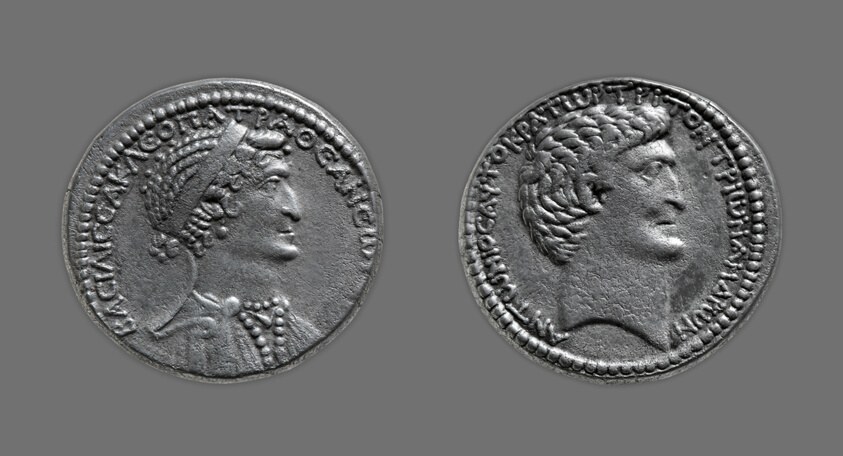
Tetradrachm (Coin) Portraying Queen Cleopatra VII
37-33 BCE, issued by Mark Antony
Tetradrachm (Coin) Portraying Queen Cleopatra VII — coin, by Roman; minted in Eastern Mediterranean (possibly Antioch, Syria), made in Syria, dated 37-33 BCE, issued by Mark Antony. Physical description: Silver; Diam. 2.6 cm (1 1/16 in.), 15.22 g.
Partial type record
Cleveland Museum of Art
ancient coins
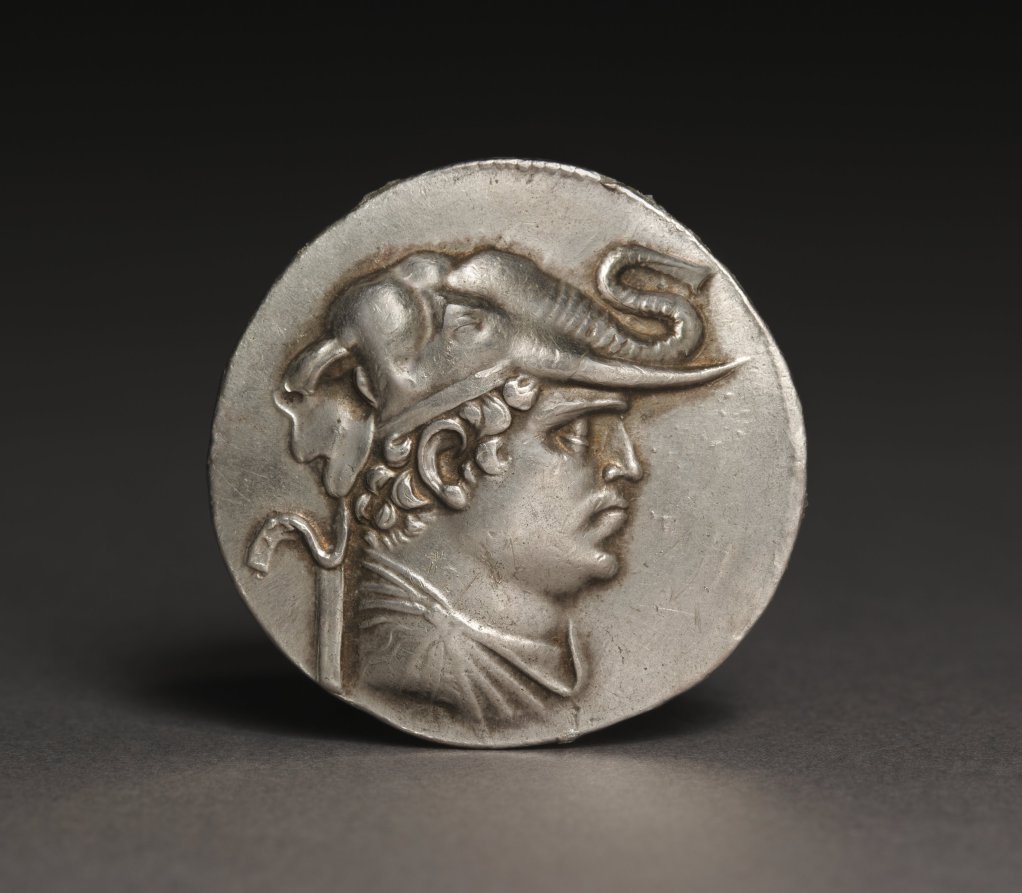
Tetradrachm Coin of Demetrios I (Cleveland Museum of Art 1999.318)
200–190 BCE
Demetrios I (222–180 BC) ruled the Indo-Greek kingdom of Bactria from 200 to 180 BC and minted this coin to commemorate his conquests over territories to the south, in present-day Pakistan. He linked his image on his coin to Alexander of Macedon (356–323 BC), who depicted himself with a lion scalp after his conquest…
Partial type record
The Cleveland Museum of Art — Gift of Dr. Norman Zaworski
ancient coins
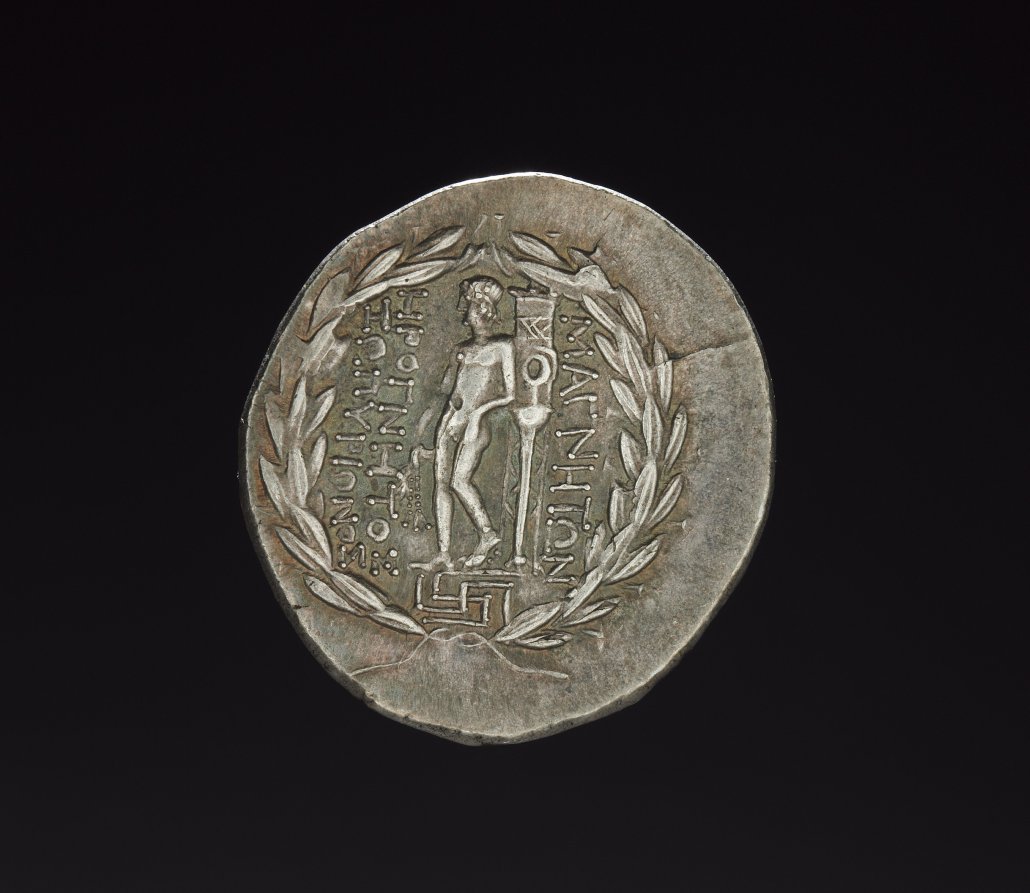
Tetradrachm Coin of Erognetos, Magistrate of Magnesia, Turkey, Ionia, Magnesia on the Maeander, Hellenistic Period, 155–145 BCE
155–145 BCE
The front has a bust of Artemis, a diadem circling her head and a quiver over her shoulder. On the reverse is Apollo Delphios holding a laurel branch, standing on a meander pattern, and leaning his left elbow on a tripod, all within a laurel wreath. Magnesia is located southeast of Ephesus on a tributary of the Mean…
Partial type record
The Cleveland Museum of Art — Gift of Dr. Norman Zaworski
ancient coins
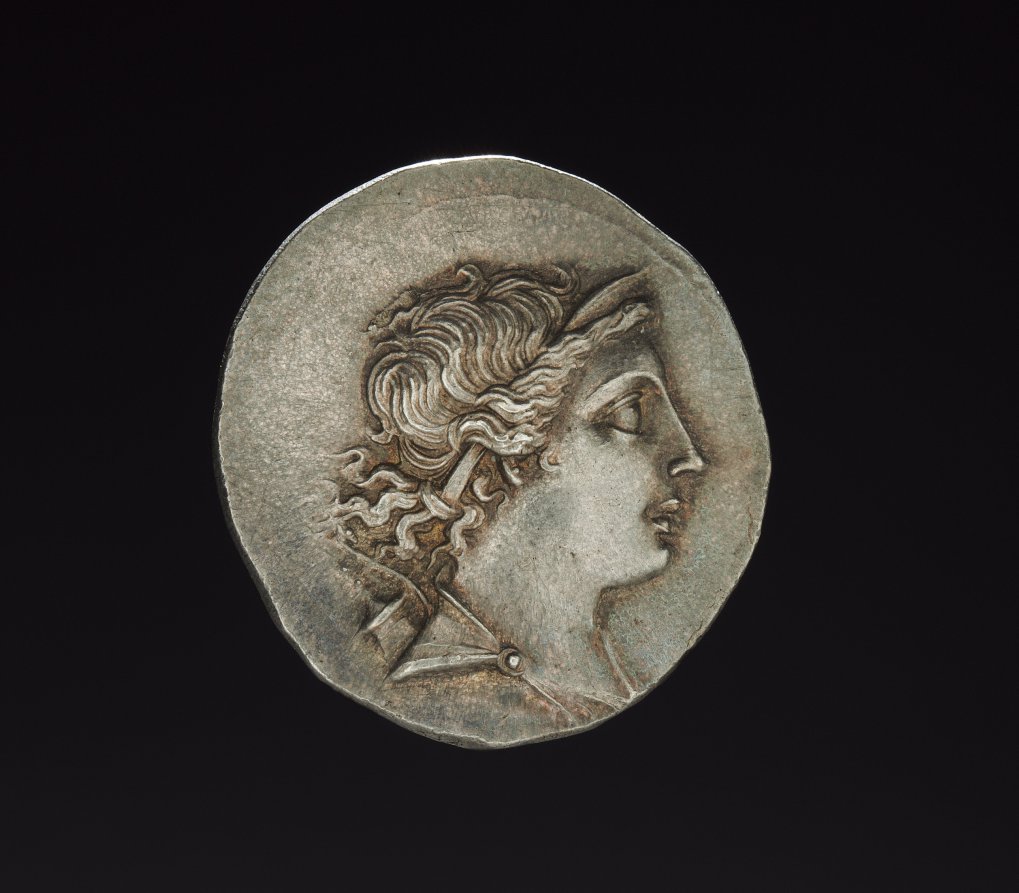
Tetradrachm Coin of Herognetos, Magistrate of Magnesia, Turkey, Ionia, Magnesia on the Maeander, Hellenistic Period, 155–145 BCE (Cleveland Museum of Art, 2011.209.a)
155–145 BCE
Tetradrachm Coin of Herognetos, Magistrate of Magnesia, Turkey, Ionia, Magnesia on the Maeander, Hellenistic Period, 155–145 BCE is an object recorded by Cleveland Museum of Art, dated 155–145 BCE. Museum description: The front has a bust of Artemis, a diadem circling her head and a quiver over her shoulder. On the…
Partial type record
The Cleveland Museum of Art — Gift of Dr. Norman Zaworski
ancient coins
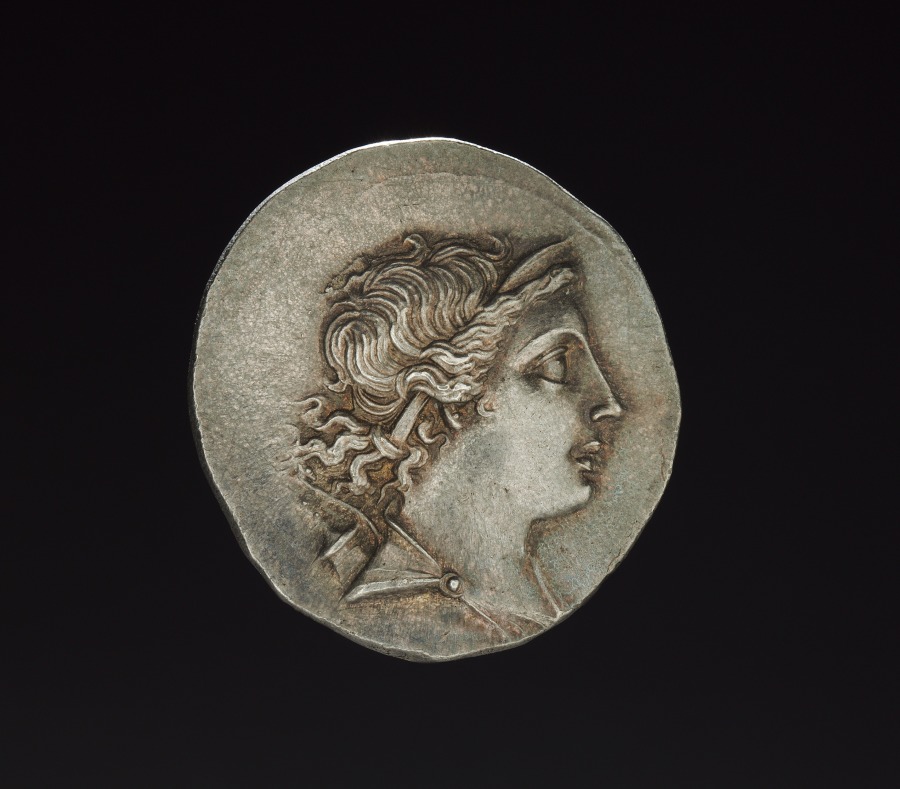
Tetradrachm Coin of Herognetos, Magistrate of Magnesia, Turkey, Ionia, Magnesia on the Maeander, Hellenistic Period, 155–145 BCE (Cleveland Museum of Art, 2011.209)
155–145 BCE
The front has a bust of Artemis, a diadem circling her head and a quiver over her shoulder. On the reverse is Apollo Delphios holding a laurel branch, standing on a meander pattern, and leaning his left elbow on a tripod, all within a laurel wreath. Magnesia is located southeast of Ephesus on a tributary of the Mean…
Partial type record
Art Institute of Chicago
ancient coins
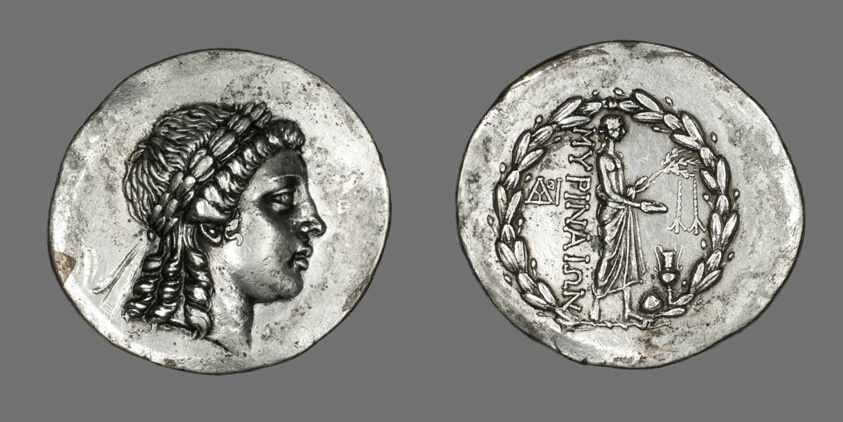
Tetradrachm Depicting the God Apollo Gryneios
189 BCE or later
This ancient Greek silver tetradrachm measures 3.6 cm in diameter and was minted in Myrina, Aeolis, Asia Minor (modern-day Turkey), dating to 189 BCE or later. The obverse side depicts the laureate head of the god Apollo facing to the right. Apollo is shown wearing a wreath composed of laurel leaves. The reverse s…
Partial type record
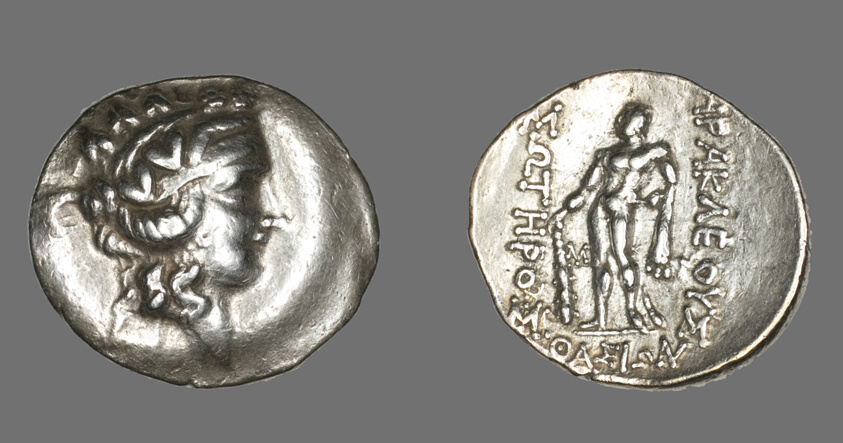
Art Institute of Chicago
ancient coins
Tetradrachm Depicting the God Dionysos
after 146 BCE
This object is a silver tetradrachm minted in Thasos, Thrace, dating to after 146 BCE. The coin has a diameter of 3.2 cm (1 5/16 in.) and features circular metallic flans bearing relief designs on both sides. The obverse depicts the head of the god Dionysos facing right, crowned with an ivy wreath. The reverse show…
Partial type record
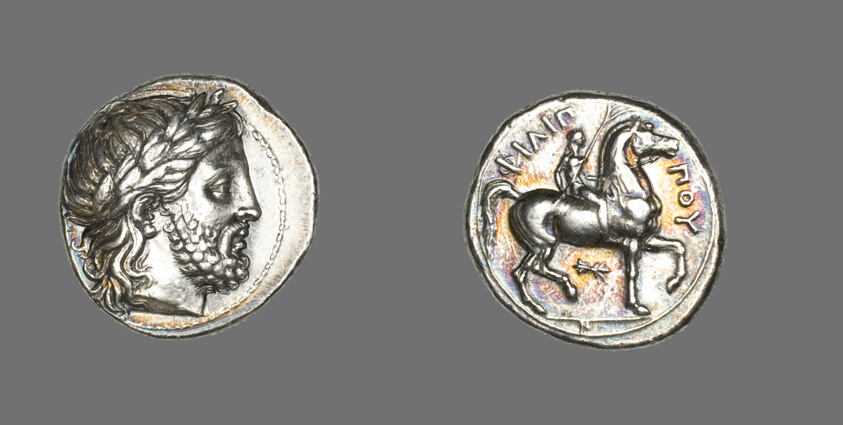
Art Institute of Chicago
ancient coins
Tetradrachm Depicting the God Zeus
Reign of Phillip II (359–336 BCE)
This ancient Greek silver tetradrachm was produced during the reign of Philip II of Macedon (359–336 BCE) and minted in Pella, ancient Macedon. It has a recorded diameter of 2.6 cm (1 1/16 in.) and features a circular format displaying both obverse and reverse designs. The front (obverse) of the coin features a rig…
Partial type record
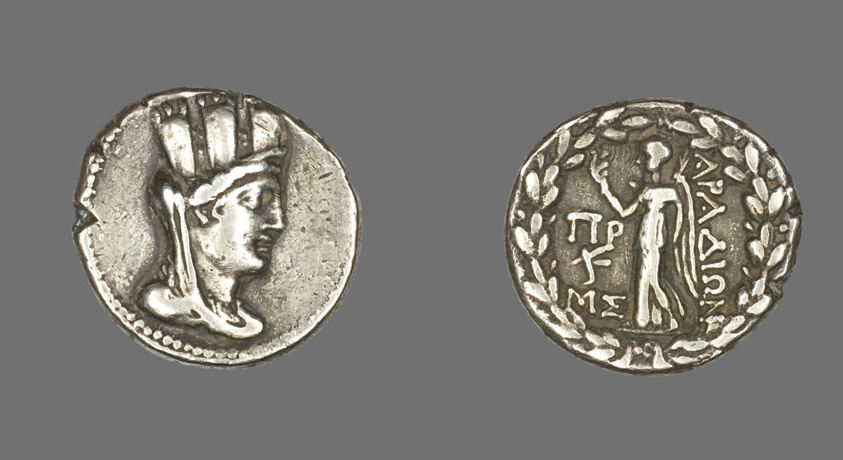
Art Institute of Chicago
ancient coins
Tetradrachm Depicting the Goddess Tyche
80-79 BCE
This ancient silver tetradrachm originates from the Greek city of Arados in Phoenicia (modern Jazirat Arwad, Syria) and is dated to 80–79 BCE. It measures approximately 2.8 cm (1 1/8 in.) in diameter and presents imagery in relief on both faces. The obverse features a profile portrait of the goddess Tyche facing ri…
Partial type record
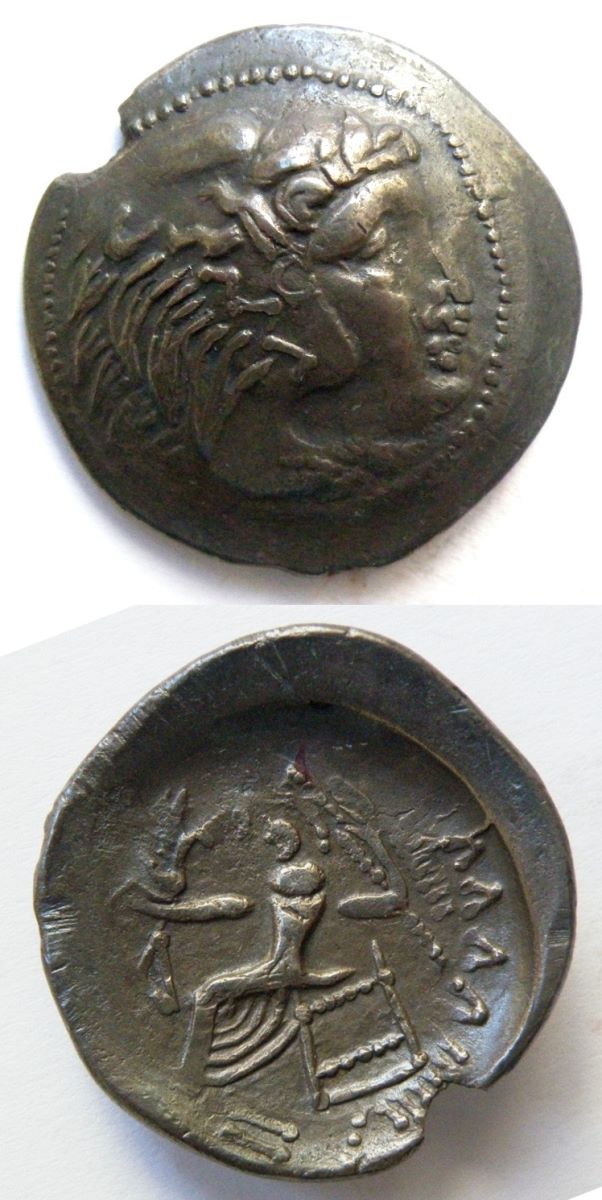
Bucharest Municipality Museum via Europeana
ancient coins
Tetradrachm of Alexander the Great – Philip III Arrhidaeus type
Tetradrachm of Alexander the Great – Philip III Arrhidaeus type is held by Bucharest Municipality Museum (Romania). Description supplied by the holding institution: obverse: Head of young, beardless Heracles, facing right, wearing the skin of the Nemean lion. The image is overstruck. The die moved during striking. T…
Partial type record
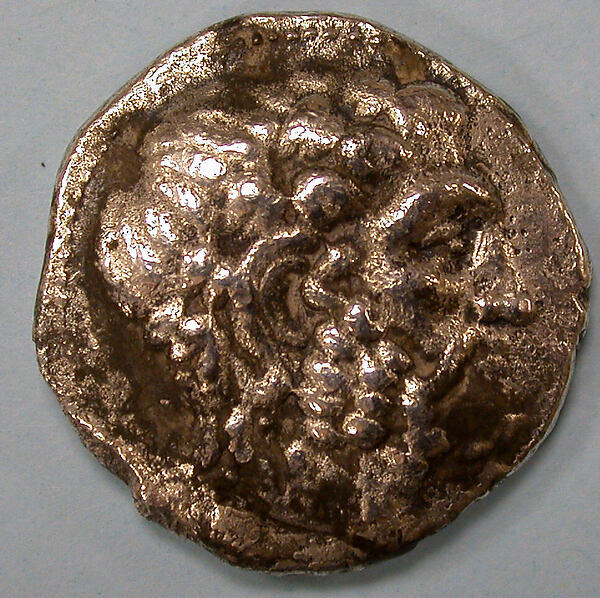
The Metropolitan Museum of Art, New York
ancient coins
Tetradrachm of Seleucus I, Greek, Seleucid, ca. 298–281 BC
ca. 298–281 BC
Tetradrachm in The Metropolitan Museum of Art, New York (accession 2021.40.87), catalogued by the museum's Greek and Roman Art department under the title “Tetradrachm of Seleucus I”. The museum dates it ca. 298–281 BC and records its origin as Greek, Seleucid. The museum records the medium as Silver and the dimensio…
Partial type record
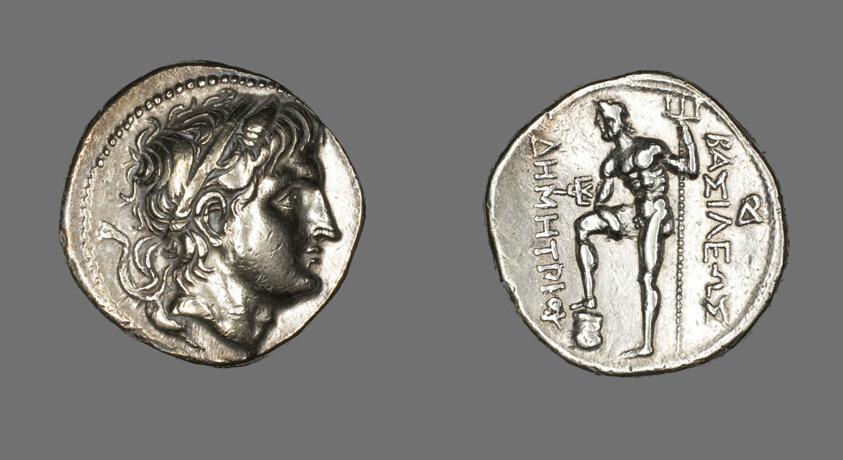
Art Institute of Chicago
ancient coins
Tetradrachm Portraying Demetrios I of Macedonia
289-288 BCE
This ancient Greek silver tetradrachm portrays Demetrios I of Macedonia and was minted in Amphipolis, Macedonia, between 289 and 288 BCE. The coin has a diameter of 2.9 cm (1 3/16 in.) and features metallic relief work on both sides. The obverse shows a right-facing portrait of the diademed king, featuring a small…
Partial type record
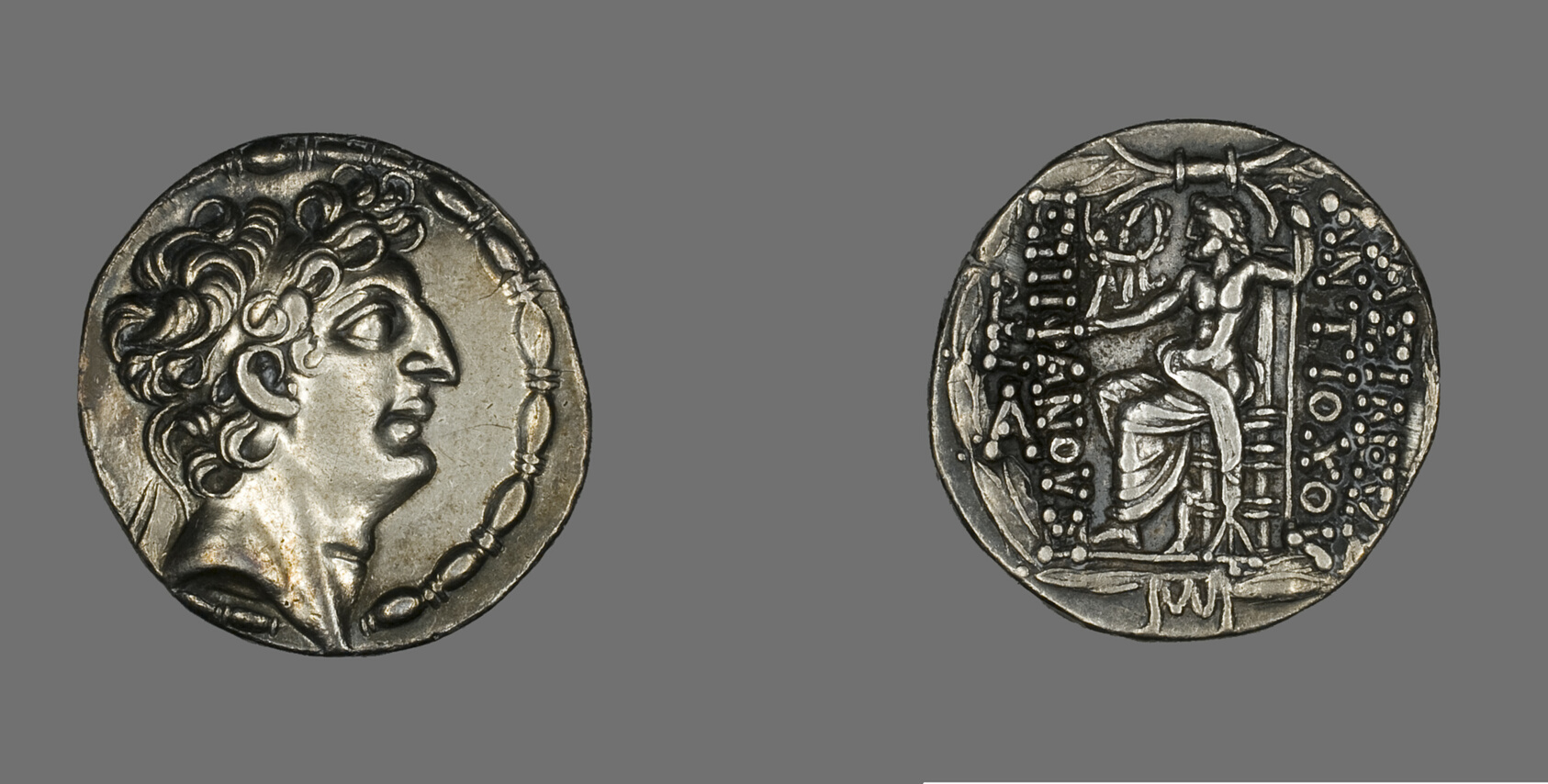
Art Institute of Chicago
ancient coins
Tetradrachm Portraying Emperor Antiochos VIII Grypos
104-96 BCE, reign of Antiochos VIII Grypos (121–96 BCE)
This ancient silver tetradrachm measures 3.1 cm (1 1/4 in.) in diameter and was minted in Syria. It dates to between 104 and 96 BCE, during the reign of Antiochos VIII Grypos, who ruled from 121 to 96 BCE (also noted as 125–96 BCE). The coin was manufactured by striking blank silver between two bronze dies individua…
Partial type record
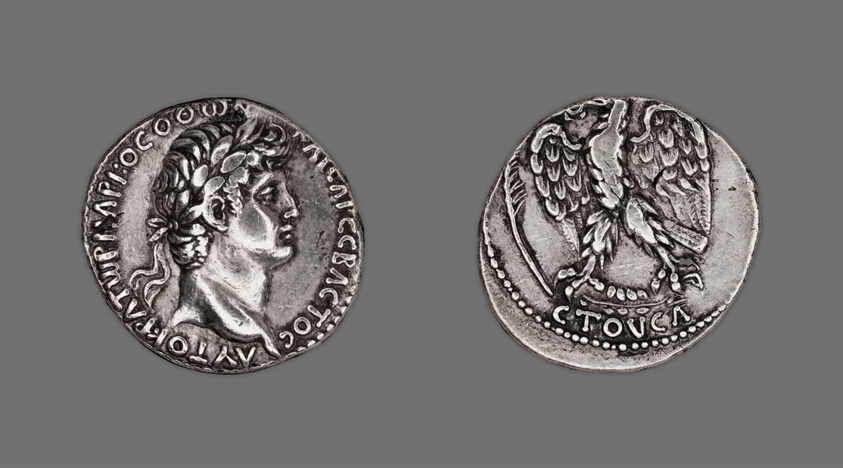
Art Institute of Chicago
ancient coins
Tetradrachm Portraying Emperor Otho
69, issued by the city of Antioch
This ancient silver tetradrachm was minted in 69 by the city of Antioch, located in present-day Turkey. Measuring 2.8 cm (1 1/8 in.) in diameter, the coin is Roman and was struck using carved bronze dies. The obverse side depicts the laureate head of Emperor Otho facing right, showing his curled hair and double chi…
Partial type record
Art Institute of Chicago
ancient coins
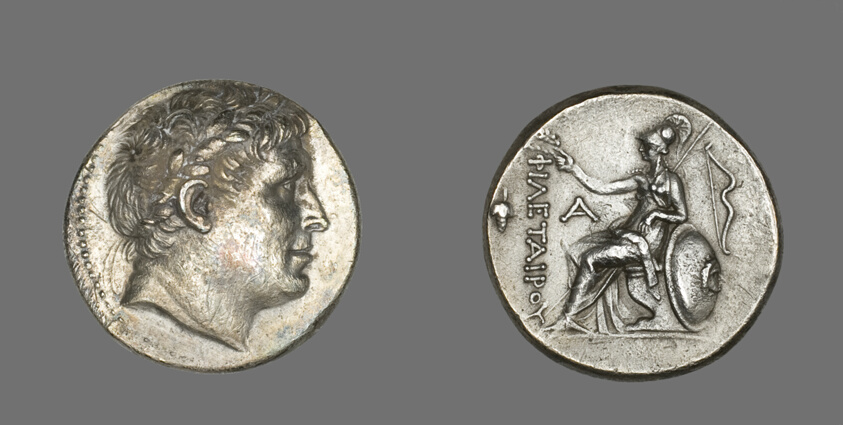
Tetradrachm Portraying Philetairos of Pergamon
241-197 BCE, Issued by Attalos I Soter Reign of Philetairos of Pergamon, 282–263 BCE
This ancient Greek silver tetradrachm measures 2.8 cm (1 1/8 inches) in diameter. It was minted in Pergamon, Mysia, Asia Minor (modern-day Bergama, Turkey) during the period 241–197 BCE, having been issued by Attalos I Soter. The obverse shows a right-facing portrait of Philetairos of Pergamon wearing a diadem. The…
Partial type record
Bucharest Municipality Museum via Europeana
ancient coins
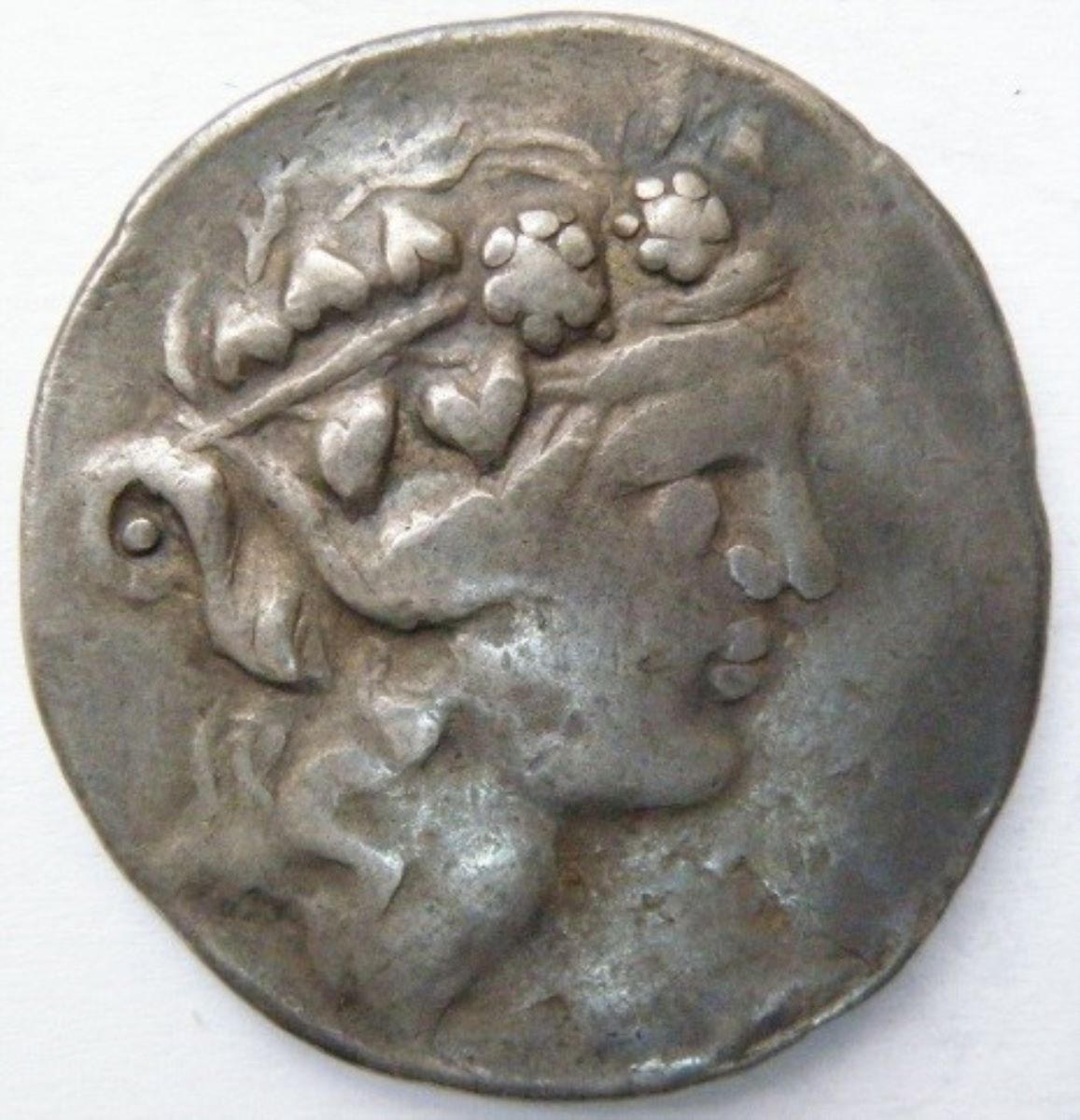
Tetradrachm with the head of young Dionysus
tetradrachm is held by Bucharest Municipality Museum (Romania). Description supplied by the holding institution: obverse: Head of young Dionysus to the right, wearing a taenia on the forehead and a wreath of ivy leaves with two rosettes, with six petals, on curly hair gathered into a braid at the back. The collectio…
Partial type record
Cleveland Museum of Art
ancient coins
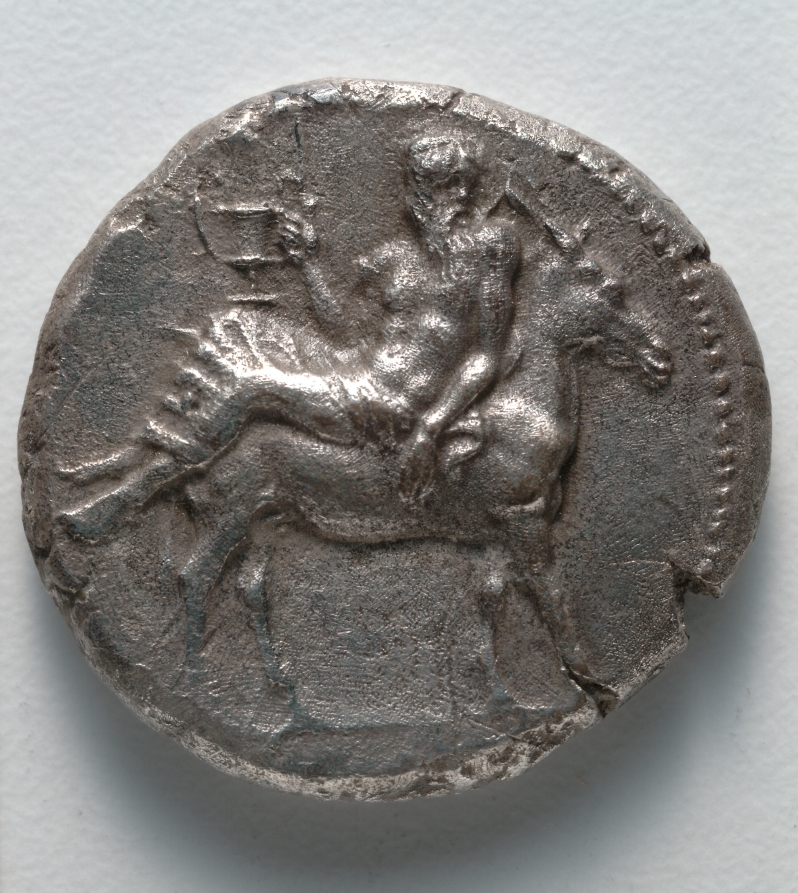
Tetradrachm: Dionysos on Donkey (obverse); Grapevine (Cleveland Museum of Art 1929.912)
c. 430 BCE
Cleveland Museum of Art object 1929.912: Tetradrachm: Dionysos on Donkey (obverse); Grapevine (reverse), c. 430 BCE. Greek, minted at Mende (Chalkidiki). Silver; diameter: 2.5 cm (1 in.). Inscribed: ΜΕΝΔΑΙΟΝ (Of the people of Mende). It is catalogued in the museum's Greek and Roman Art department under Coins. Credi…
Partial type record
Cleveland Museum of Art
ancient coins
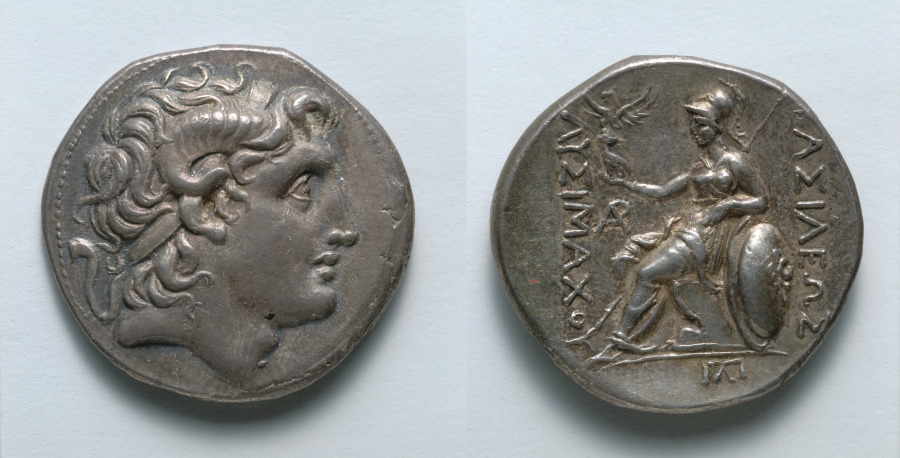
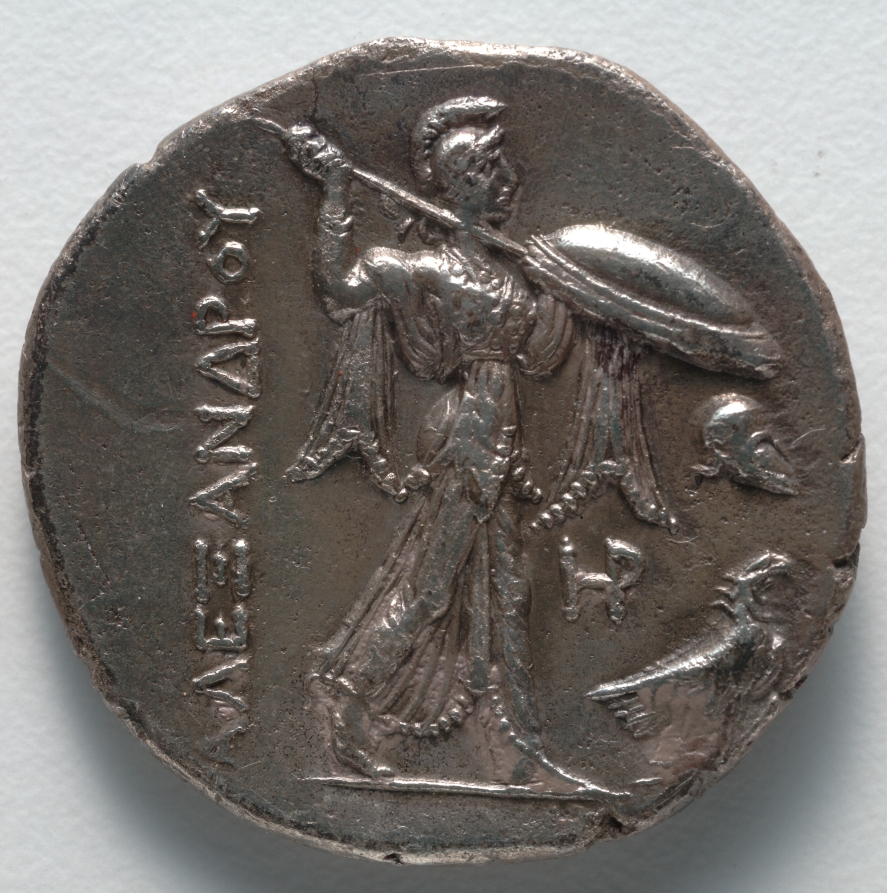
Tetradrachm: Head of Alexander (obverse); Athena (Cleveland Museum of Art 1917.984)
297–281 BCE
A contemporary of Alexander the Great and one of his generals, Lysimachos used coins like this one to emphasize his connections to the fallen leader. The images of the goddesses Athena and Nike, or Victory, on the reverse, together with an inscription naming King Lysimachos, further legitimize his reign, first in Th…
Partial type record
Cleveland Museum of Art
ancient coins
Tetradrachm: Head of Alexander III [The Great] (obverse); Athena (Cleveland Museum of Art 1916.994)
306 BCE
Much like his former commander Alexander III (the Great) showed connections to Herakles and Zeus, Ptolemy I Soter (the Savior) used coins to validate his succession to power. Thus, in place of Herakles with lion-skin, this coin shows Alexander in an elephant headdress, referring to their shared Eastern triumphs. On…
Partial type record
Cleveland Museum of Art
ancient coins
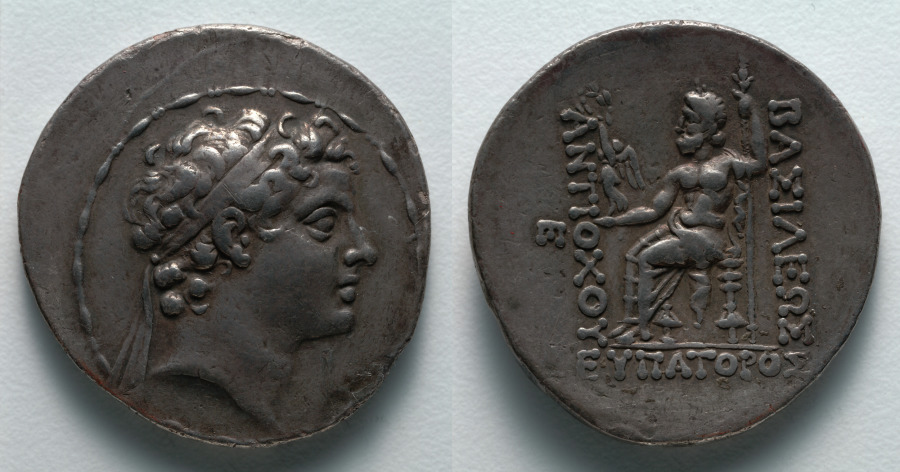
Tetradrachm: Head of Antiochos V (obverse); Zeus (Cleveland Museum of Art 1916.975)
164–162 BCE
Thrust into power while still a child, Antiochos V used coinage to legitimize his tenuous control. On the obverse of this coin, Antiochos appears like many Hellenistic kings, with heavy hair curls and a diadem. On the reverse, a seated Zeus holds the goddess of victory, Nike, who crowns Antiochos’s name with a wreat…
Partial type record
Cleveland Museum of Art
ancient coins
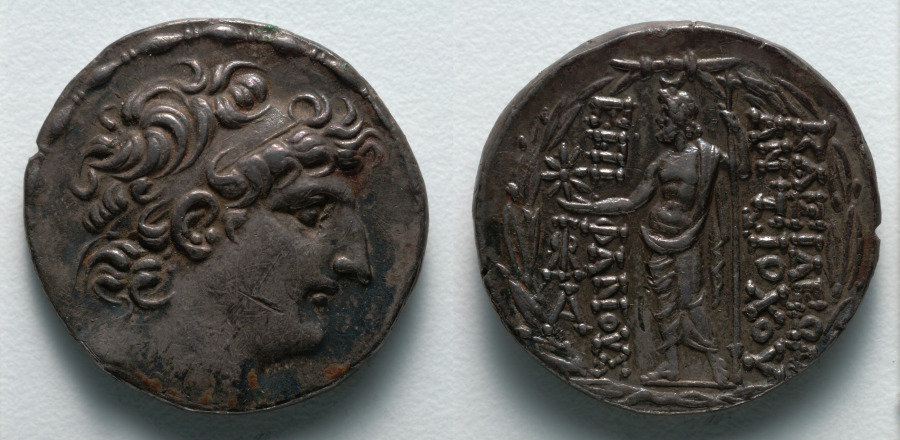
Tetradrachm: Head of Antiochos VIII (obverse); Zeus Ouranios (Cleveland Museum of Art 1916.974)
112–110 BCE
Like his ancestors before him, Antiochos VIII emulates the style of Alexander III (the Great) on this coin, preferring wild, curly hair, a simple diadem, and clean-shaven face. On the reverse Zeus Ouranios gives his divine approval, standing with a scepter and bright star that shines above two mint marks in a very c…
Partial type record
Cleveland Museum of Art
ancient coins
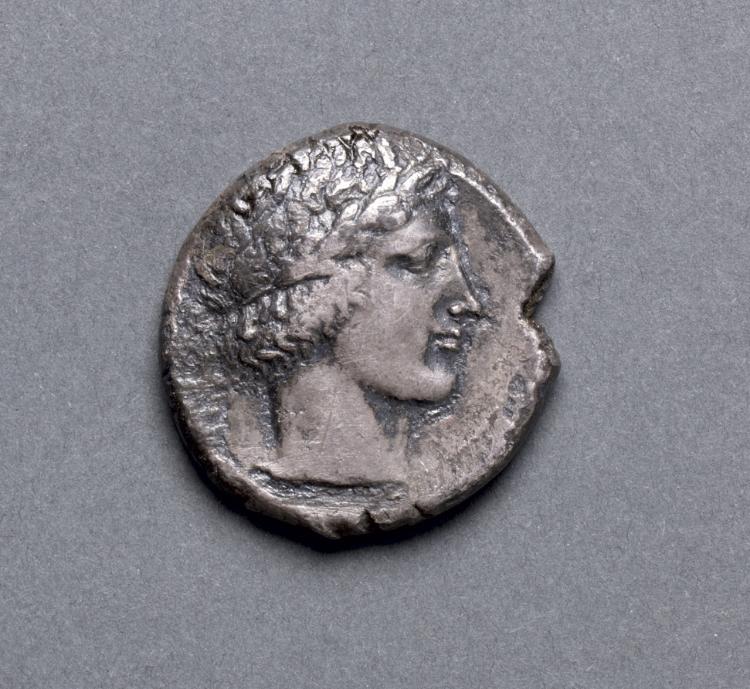
Tetradrachm: Head of Apollo (obverse); Head of Lion (Cleveland Museum of Art 1917.988)
466–422 BCE
This object is classified in museum records as a coin, specifically a tetradrachm. The design of the piece features the Head of Apollo on the obverse and the Head of a Lion on the reverse. The coin also bears an inscription, which is recorded as "[ΛΕ]Ο[ΝΤ]ΙΝΟΝ (Of the people of Leontinoi)". The recorded material an…
Partial type record
Cleveland Museum of Art
ancient coins
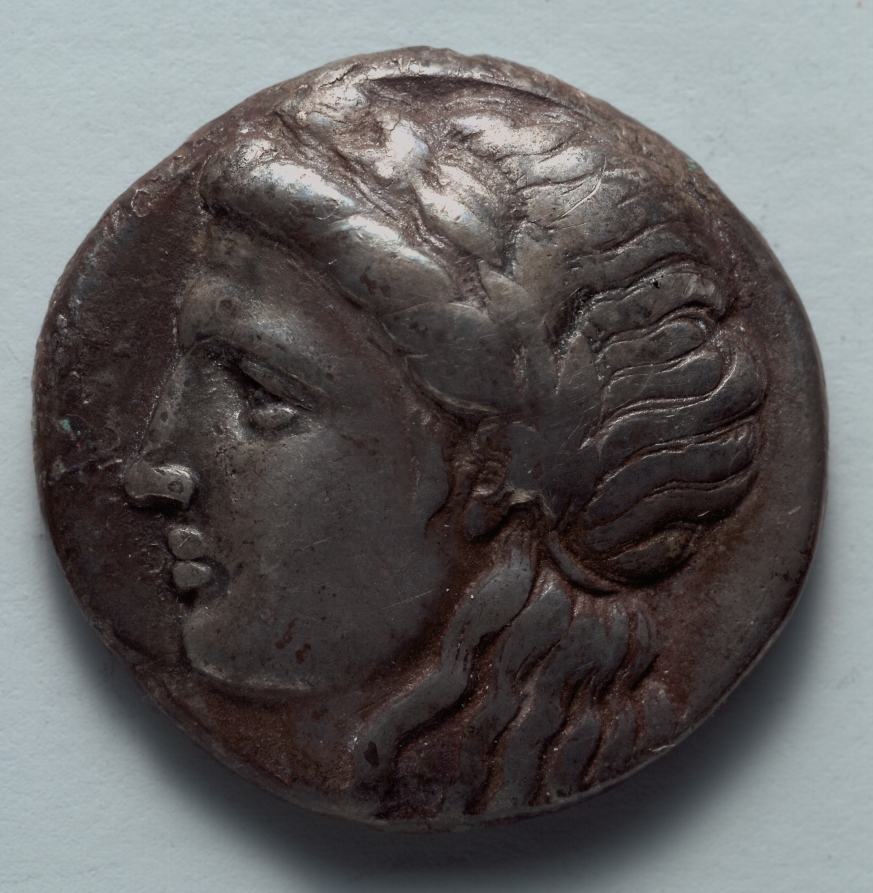
Tetradrachm: Head of Apollo (obverse); Lion (Cleveland Museum of Art 1916.993)
c. 334–323 BCE
This object is a tetradrachm, catalogued under the classification of coins. The visual design of the coin features the head of Apollo on the obverse side and a lion on the reverse side. In addition to these depicted subjects, the design of the coin bears the recorded inscription "ΑΡΤΕΜΩ (Artemis)". The recorded mat…
Partial type record
Cleveland Museum of Art
ancient coins
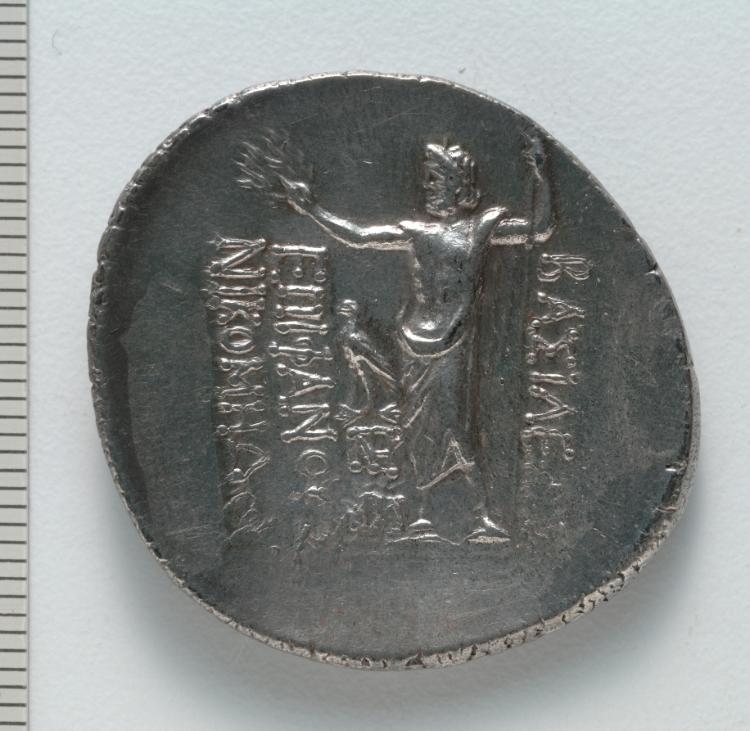
Tetradrachm: Head of Nicomedes II (obverse); Zeus (Cleveland Museum of Art 1917.990)
149–120 BCE
Cleveland Museum of Art object 1917.990: Tetradrachm: Head of Nicomedes II (obverse); Zeus (reverse), 149–120 BCE. Greek, Bithynian, minted in Bithynia, reign of Nicomedes II. Silver; diameter: 3.5 cm (1 3/8 in.). Inscribed: ΒΑΣΙΛΕΩΣ | ΕΠΙΦΑΝΟΥΣ | ΝΙΚΟΜΗΔΟΥ (Of the distinguished king Nikomedes). It is catalogued in…
Partial type record
Cleveland Museum of Art
ancient coins
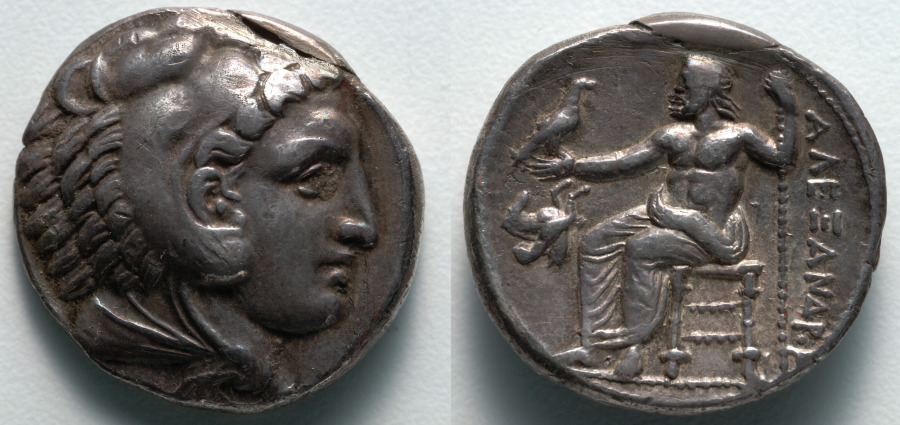
Tetradrachm: Head of Young Herakles (obverse); Zeus (Cleveland Museum of Art 1916.981)
336–323 BCE
On this coin, the head of a youthful Herakles, wearing his lion-skin, appears on the obverse, with his father Zeus, king of the gods, seated on the reverse. For Alexander III (the Great), who claimed descent from the line of Herakles, coins like this one projected power. Thus, while their attributes (lion-skin, eagl…
Partial type record
Cleveland Museum of Art
ancient coins
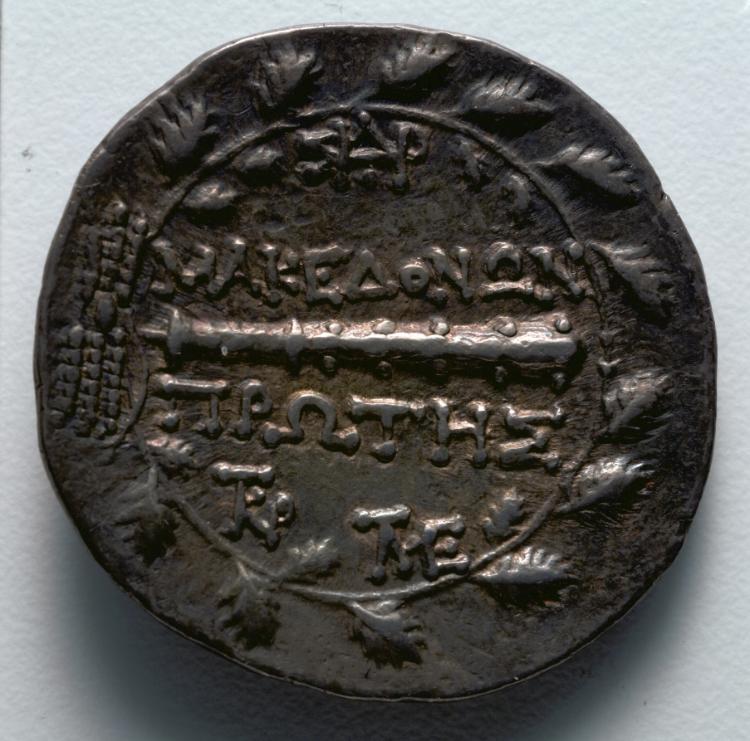
Tetradrachm: Macedonian Shield with Head of Artemis (obverse); Club (Cleveland Museum of Art 1916.978)
158–150 BCE
Although Macedon was conquered by Rome in 168 BC, its mints continued to produce Hellenistic-style coinage. The obverse of this coin shows Artemis, identifiable by her bow and quiver, centered within an ornate Macedonian shield. On the reverse, a club is enclosed by a wreath and an inscription ascribing this coin to…
Partial type record
Cleveland Museum of Art
ancient coins
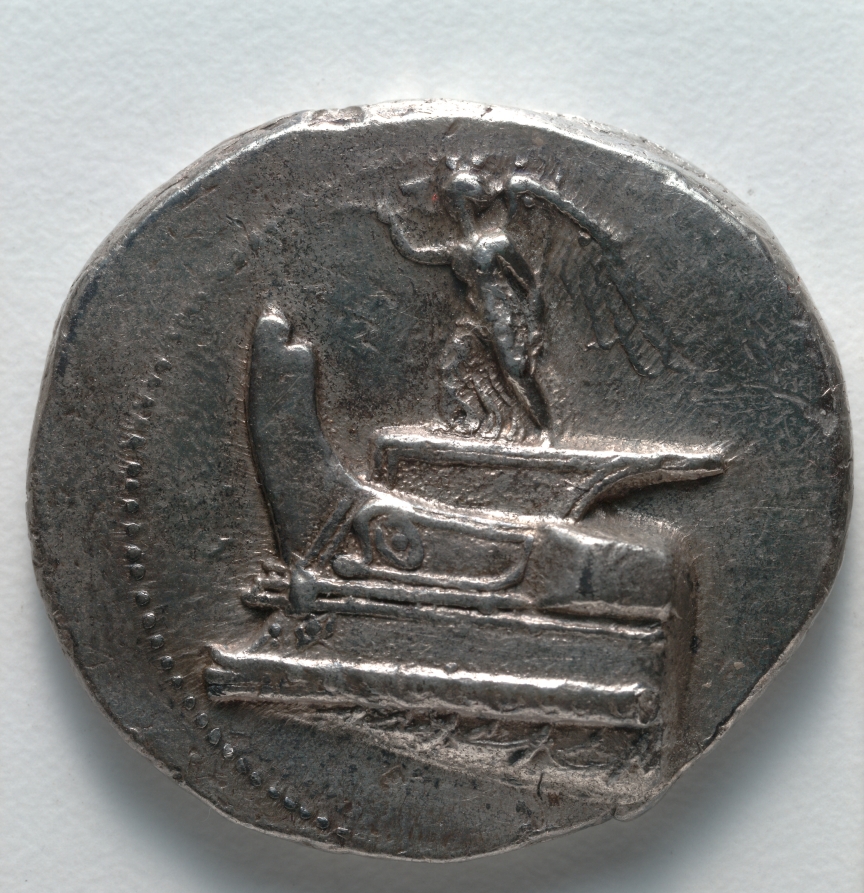
Tetradrachm: Nike on Ship's Prow (obverse); Poseidon (Cleveland Museum of Art 1929.911)
c. 300–295 BCE
Cleveland Museum of Art object 1929.911: Tetradrachm: Nike on Ship's Prow (obverse); Poseidon (reverse), c. 300–295 BCE. Greek, Macedonian, minted at Salamis (Cyprus), reign of Demetrios Poliorketes ("The Beseiger"). Silver; diameter: 3 cm (1 3/16 in.). Inscribed: ΒΑΣΙΛΕΩΣ | ΔΗΜΗΤΡΙΟΥ (Of the king Demetrios); X perp…
Partial type record
Cleveland Museum of Art
ancient coins
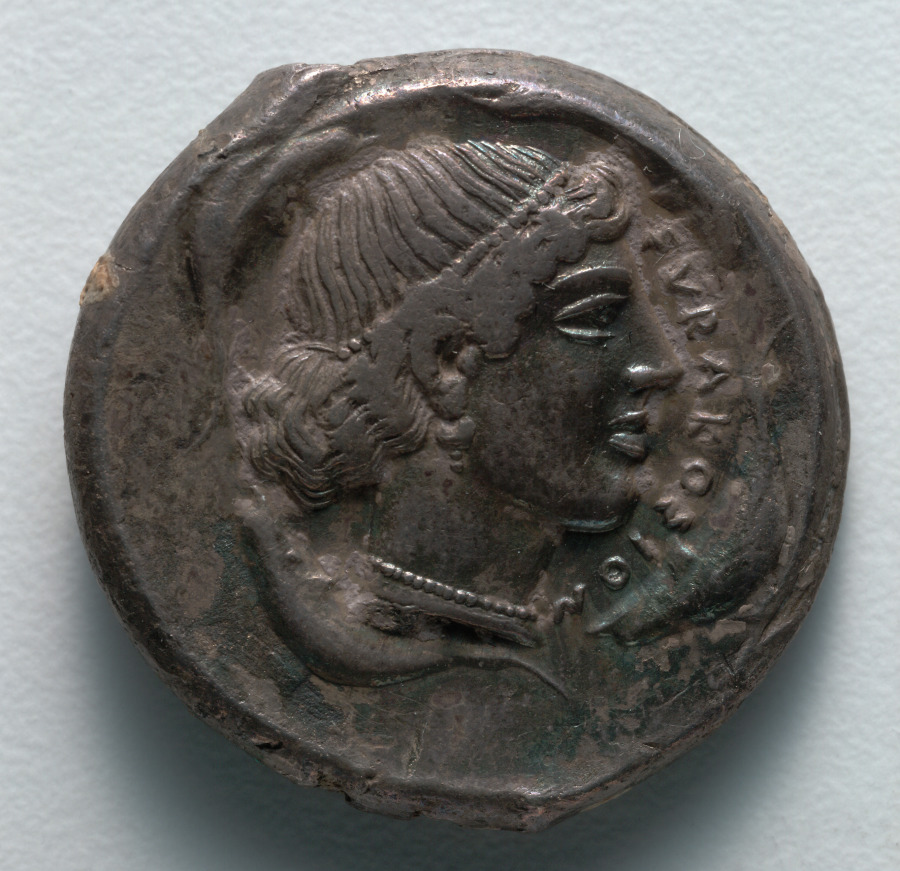
Tetradrachm: Quadriga (obverse); Head of Arethousa (Cleveland Museum of Art 1916.976)
c. 467–440 BCE
On the obverse of this highly symbolic coin is the head of Arethousa, a local goddess of Syracuse who fled from mainland Greece and arose on the site as a freshwater fountain. Four dolphins swim around her, suggesting Syracuse’s humble beginnings as a small island colony. On the reverse, a racing four-horse chariot…
Partial type record
Cleveland Museum of Art
ancient coins
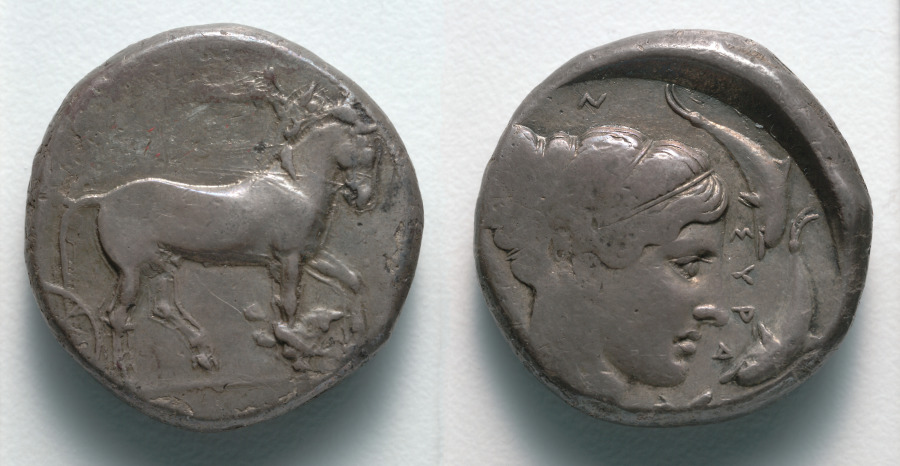
Tetradrachm: Quadriga (obverse); Head of Arethousa (Cleveland Museum of Art 1916.980)
c. 430–420 BCE
The rightmost horse of a chariot team dominates the obverse of this coin, while the other three are suggested only by contours. On the reverse, four dolphins should surround Arethousa, but poor positioning during the striking process has left off one and most of another. The lumps around the horses’ front legs sugge…
Partial type record
Cleveland Museum of Art
ancient coins
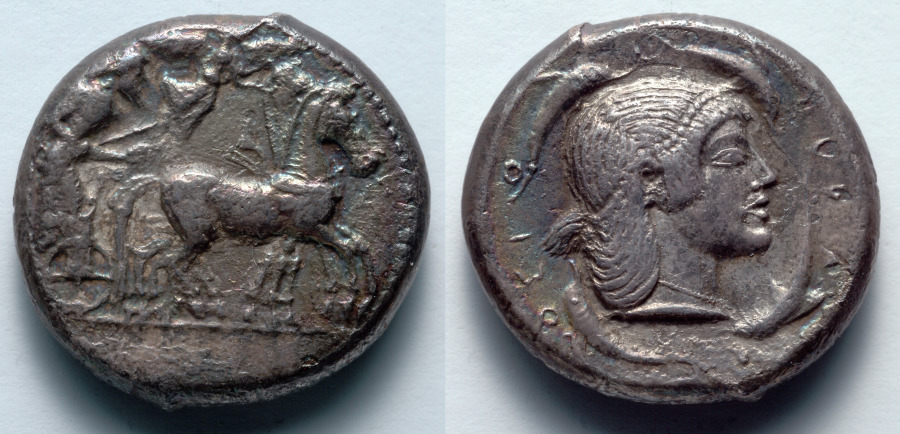
Tetradrachm: Quadriga (obverse); Head of Artemis/Arethousa (Cleveland Museum of Art 1917.987)
485–478 BCE
Cleveland Museum of Art object 1917.987: Tetradrachm: Quadriga (obverse); Head of Artemis/Arethousa (reverse), 485–478 BCE. Greek, minted at Syracuse (Sicily). Silver; diameter: 2.4 cm (15/16 in.). Inscribed: [ΣΥΡΑΚ] - ΟΣΙΟ[Ν] (Of the Syracusans). It is catalogued in the museum's Greek and Roman Art department unde…
Partial type record
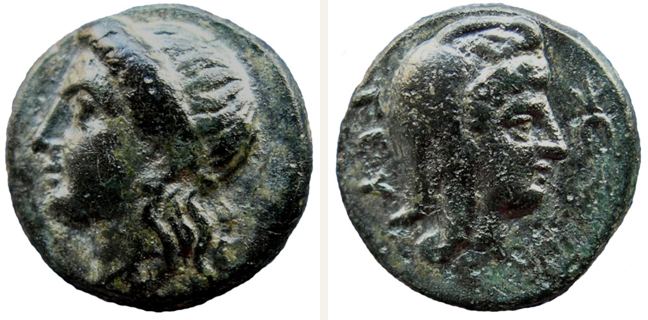
Photograph: unknown; Corpus Nummorum (Berlin-Brandenburg Academy of Sciences and Humanities)
ancient coins
Teuthrania, bronze coin — Head of satrap right (CN type 12941)
c. 400–399 BC
Coin in bronze struck at Teuthrania in Mysia, dated c. 400–399 BC. Corpus Nummorum, the online type corpus of the Berlin-Brandenburg Academy of Sciences and Humanities, records it as CN type 12941 (period: Classical Period; issuing authority type: city). Obverse: Head of Apollo with taenia to left. Reverse: Head of…
Research required
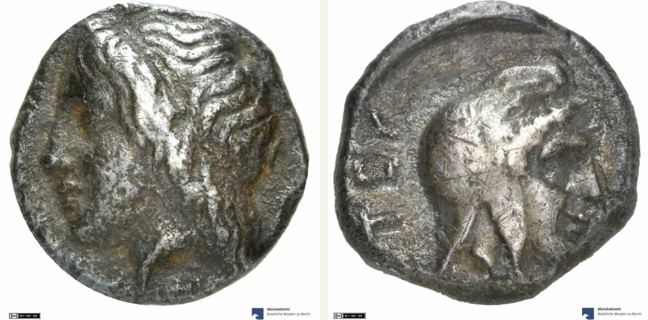
Photograph: Bernhard Weisser; Corpus Nummorum (Berlin-Brandenburg Academy of Sciences and Humanities); specimen held by ikmk.smb.museum
ancient coins
Teuthrania, hemidrachm — Head of satrap right (CN type 23833)
c. 400–399 BC
Hemidrachm in silver struck at Teuthrania in Mysia, dated c. 400–399 BC. Corpus Nummorum, the online type corpus of the Berlin-Brandenburg Academy of Sciences and Humanities, records it as CN type 23833 (period: Classical Period; issuing authority type: city). Obverse: Head of Apollo with taenia to left. Reverse: H…
Research required
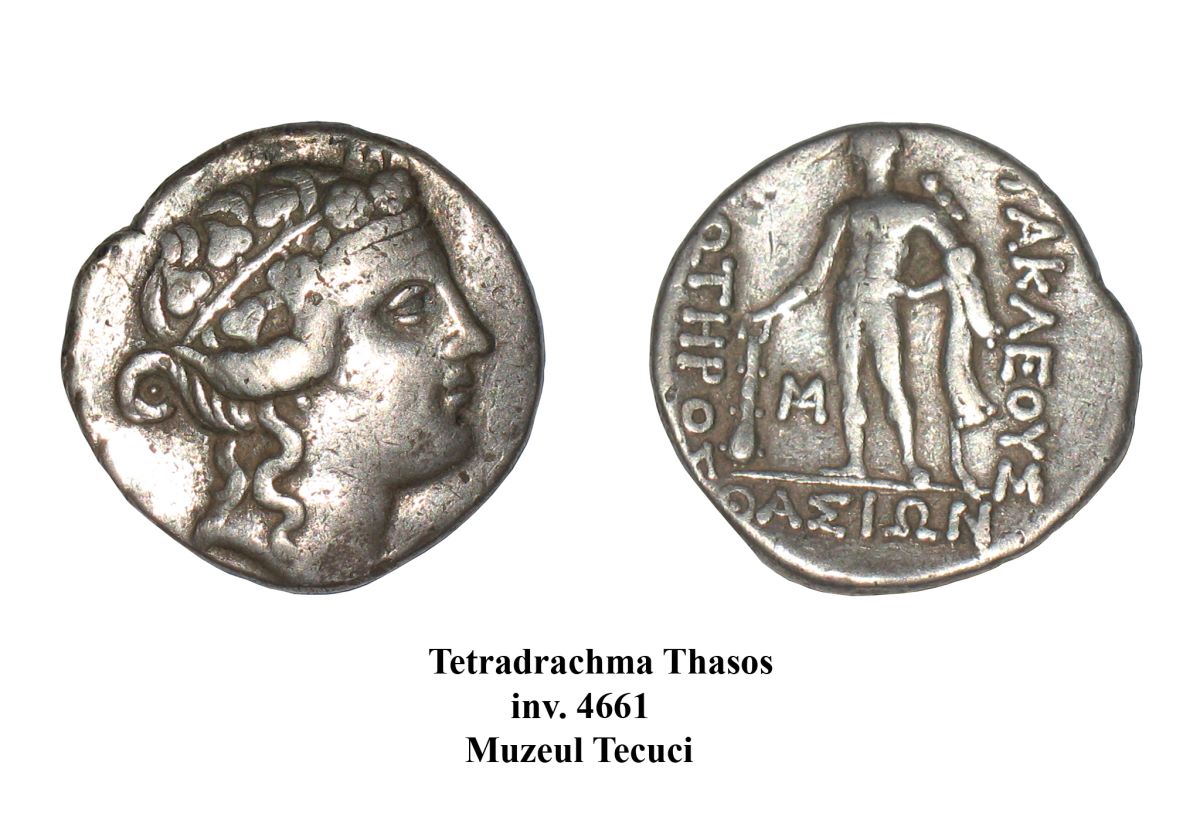
Teodor Cincu History Museum via Europeana
ancient coins
Thasos tetradrachm
Thasos tetradrachm is held by Teodor Cincu History Museum (Romania). Description supplied by the holding institution: obverse: Head of young Dionysus, facing right, wearing a taenia on the forehead and a wreath of ivy leaves, with two rosettes, with hair gathered in a braid at the back. The collection record gives m…
Partial type record
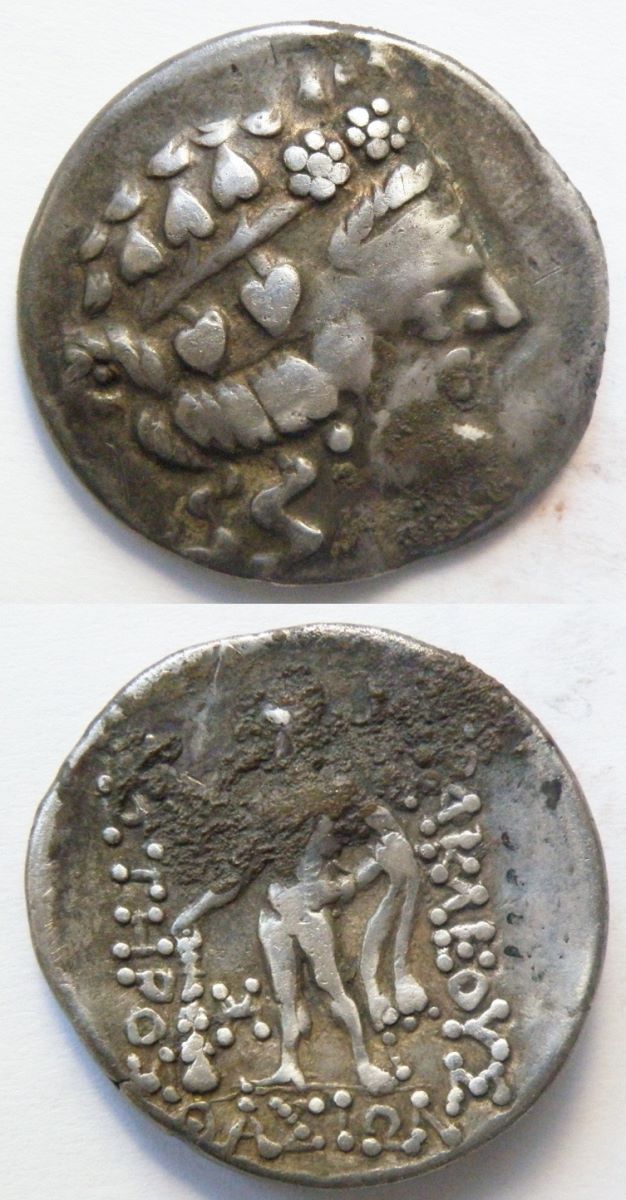
Bucharest Municipality Museum via Europeana
ancient coins
Thasos-type tetradrachm
Thasos-type tetradrachm is held by Bucharest Municipality Museum (Romania). Description supplied by the holding institution: obverse: Head of young Dionysus to the right, wearing a taenia on his forehead and a wreath of ivy leaves with two six-petaled rosettes on his curly hair gathered in a twist at the back. The c…
Partial type record
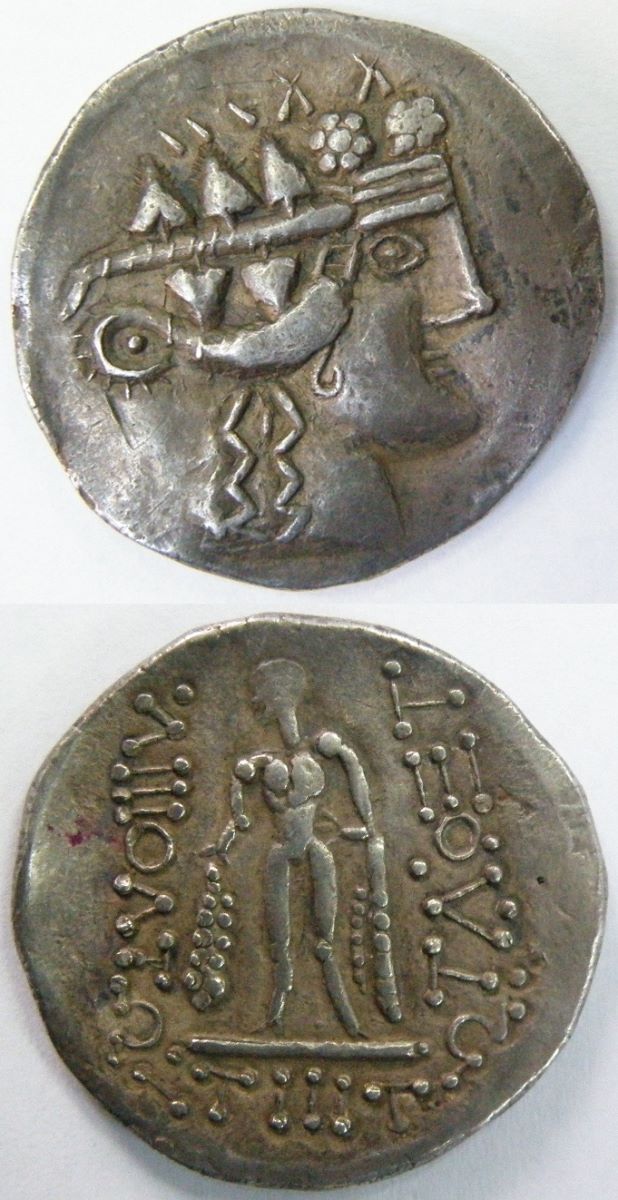
Bucharest Municipality Museum via Europeana
ancient coins
Thasos-type tetradrachm — Bucharest Municipality Museum
Thasos-type tetradrachm is held by Bucharest Municipality Museum (Romania). Description supplied by the holding institution: obverse: Head of young Dionysus to the right, wearing a taenia on his forehead and a wreath of ivy leaves with two six-petaled rosettes on his curly hair gathered in a twist at the back. The i…
Partial type record
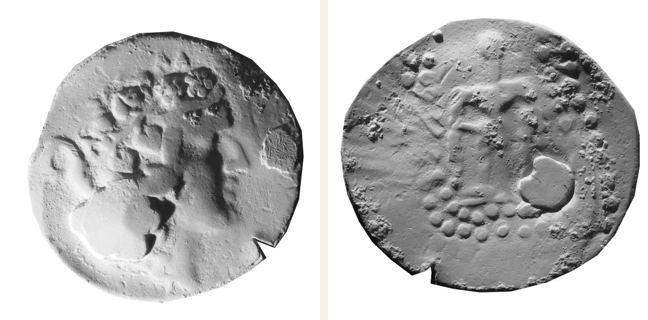
Photograph: BBAW; Corpus Nummorum (Berlin-Brandenburg Academy of Sciences and Humanities)
ancient coins
Thasos, tetradrachm — Nude Heracles standing facing (CN type 12884)
148–90/80 BC
Tetradrachm in silver struck at Thasos in Thrace, dated 148–90/80 BC. Corpus Nummorum, the online type corpus of the Berlin-Brandenburg Academy of Sciences and Humanities, records it as CN type 12884 (period: Hellenistic Period; issuing authority type: city). Obverse: Head of (youthful) Dionysus, right, wearing tae…
Research required
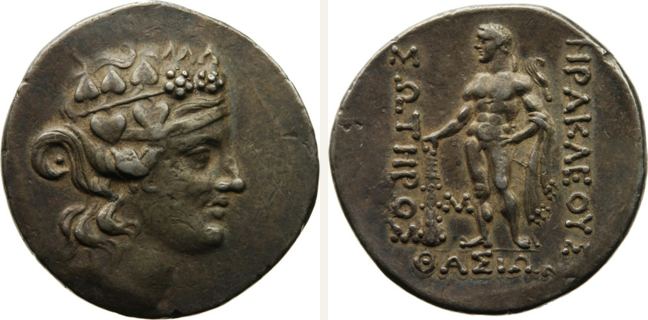
Photograph: BBAW; Corpus Nummorum (Berlin-Brandenburg Academy of Sciences and Humanities)
ancient coins
Thasos, tetradrachm — Nude Heracles standing facing (CN type 20806)
168/167–148 BC
Tetradrachm in silver struck at Thasos in Thrace, dated 168/167–148 BC. Corpus Nummorum, the online type corpus of the Berlin-Brandenburg Academy of Sciences and Humanities, records it as CN type 20806 (period: Hellenistic Period; issuing authority type: city). Obverse: Head of (youthful) Dionysus, right, wearing i…
Research required
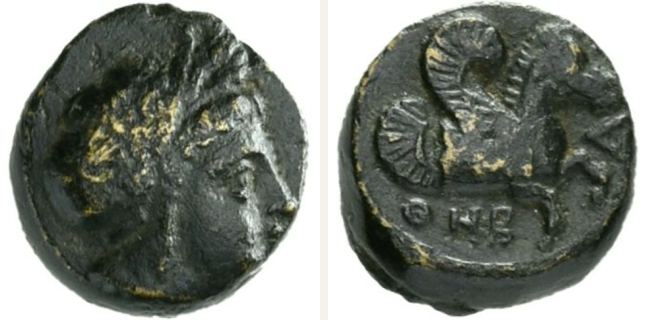
Photograph: Bernhard Weisser; Corpus Nummorum (Berlin-Brandenburg Academy of Sciences and Humanities)
ancient coins
Thebe, bronze coin — Forepart of winged horse (CN type 3938)
c. 380–330 BC
Coin in bronze struck at Thebe in Mysia, dated c. 380–330 BC. Corpus Nummorum, the online type corpus of the Berlin-Brandenburg Academy of Sciences and Humanities, records it as CN type 3938 (period: Classical Period; issuing authority type: city). Obverse: Wreathed female head, right. Reverse: Forepart of winged h…
Research required
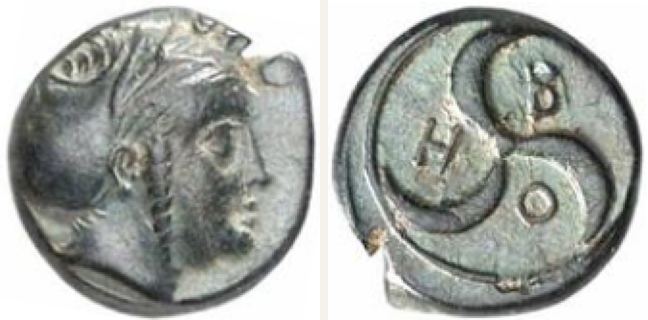
Photograph: Fritz Rudolf Künker GmbH & Co. KG; Corpus Nummorum (Berlin-Brandenburg Academy of Sciences and Humanities)
ancient coins
Thebe, bronze coin — Triskeles in form of crescents (CN type 3417)
c. 380–330 BC
Coin in bronze struck at Thebe in Mysia, dated c. 380–330 BC. Corpus Nummorum, the online type corpus of the Berlin-Brandenburg Academy of Sciences and Humanities, records it as CN type 3417 (period: Classical Period; issuing authority type: city). Obverse: Wreathed female head, right. Reverse: Triskeles in form of…
Research required
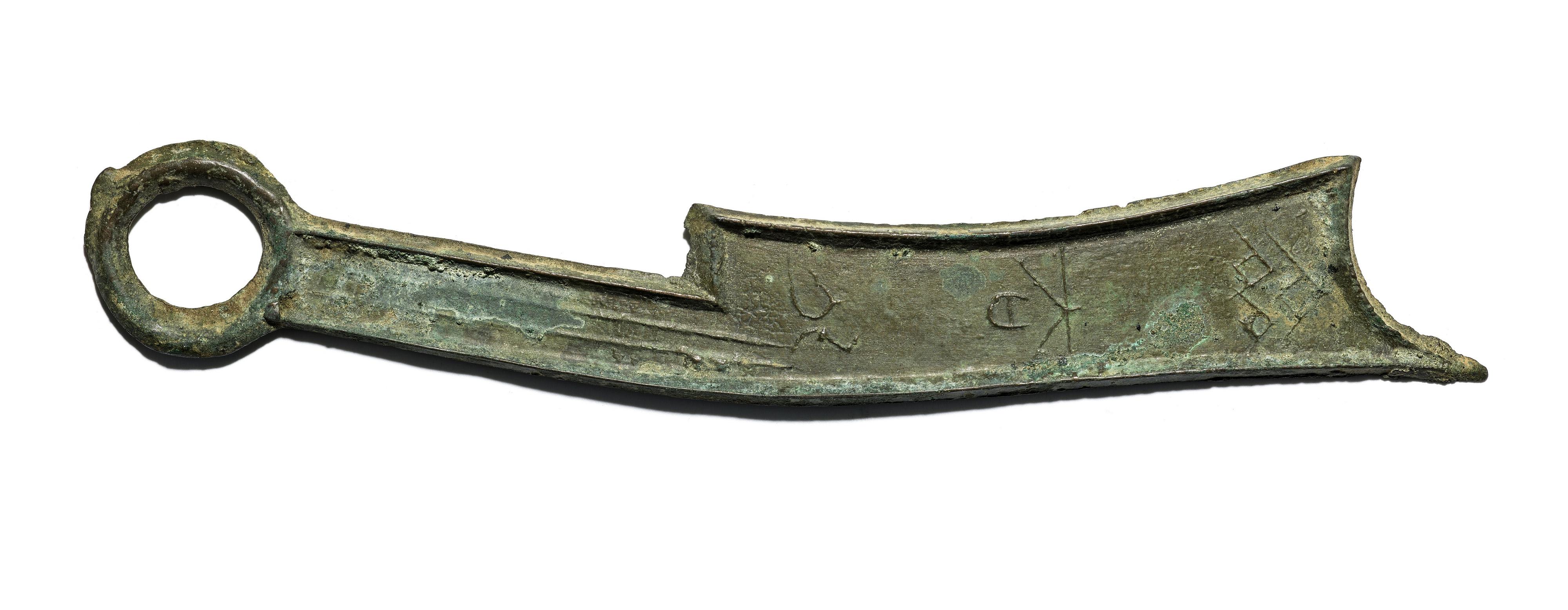
National Museum of American History, Smithsonian Institution
ancient coins
Three Character Knife Money, China, 5th-1st century BCE
5th - 1st century BCE
Museum specimen in the Smithsonian National Numismatic Collection (2017.0116.004), dated 5th - 1st century BCE, place made: China. Museum record — Object name in the museum record: knife money. Materials: bronze (overall material); overall: 18.8 cm x 2.61 cm x.2 cm; 7 13/32 in x 1 1/32 in x 3/32 in.
Partial type record
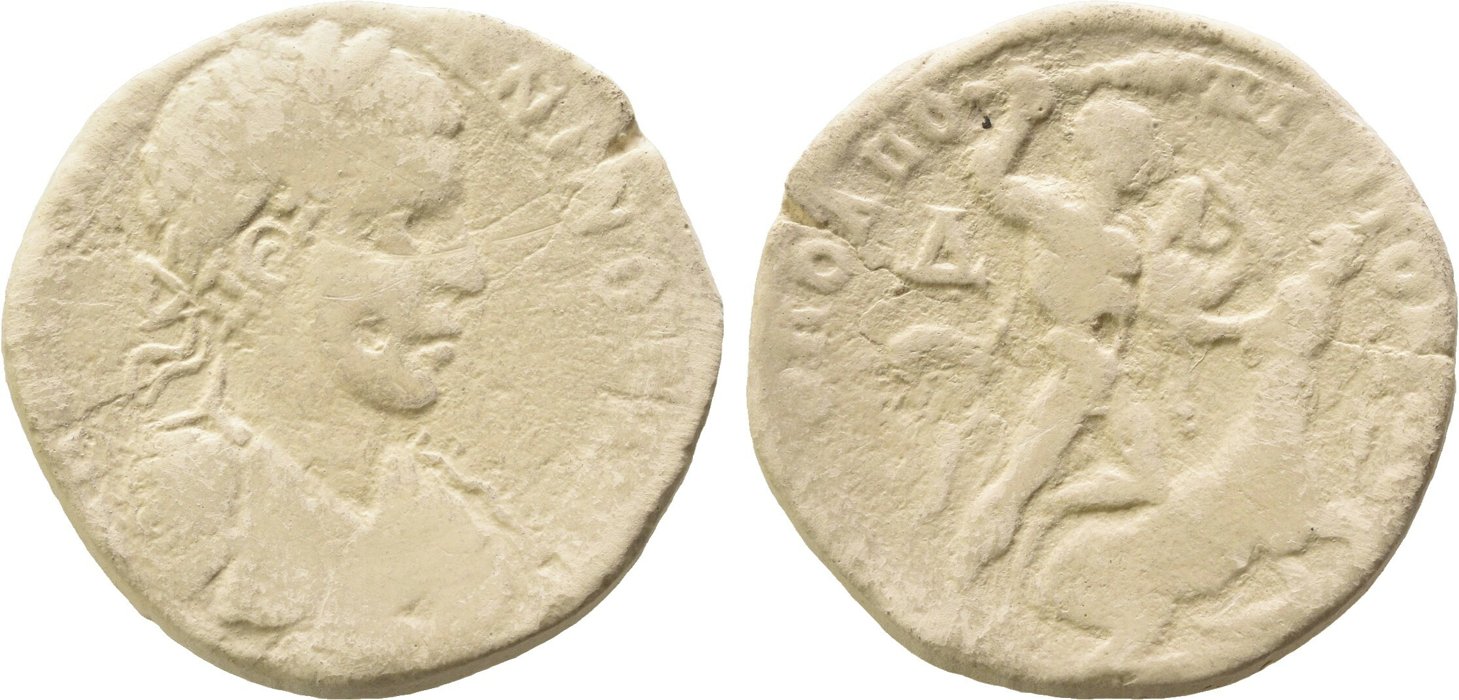
Corpus Nummorum (Berlin-Brandenburg Academy of Sciences and Humanities)
ancient coins
Tomis, Elagabal, 4 unit — Heracles kneeling right (CN type 11794)
AD 218–222
4 unit struck at Tomis in Moesia inferior under Elagabal, dated AD 218–222. Corpus Nummorum, the online type corpus of the Berlin-Brandenburg Academy of Sciences and Humanities, records it as CN type 11794 (period: Roman Imperial Period; issuing authority type: city). Obverse: Laureate bust of Elagabalus, right, se…
Research required
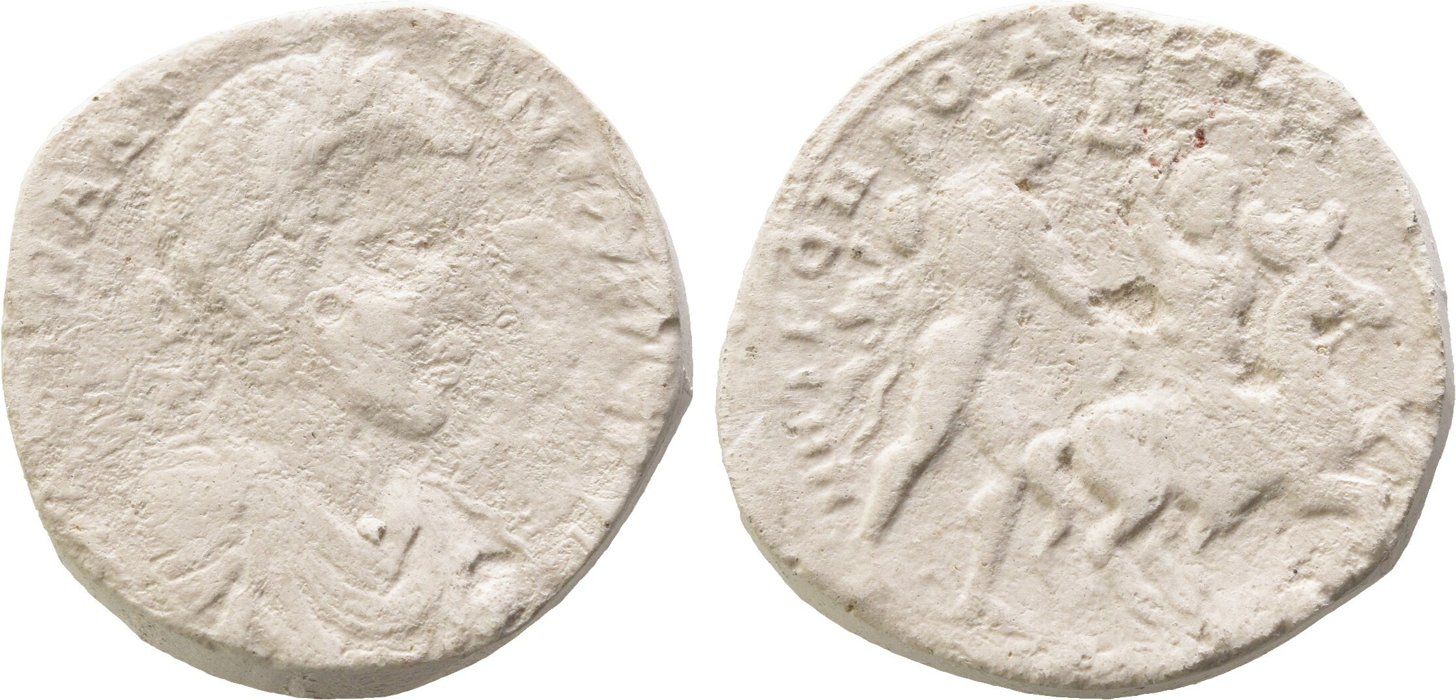
Corpus Nummorum (Berlin-Brandenburg Academy of Sciences and Humanities)
ancient coins
Tomis, Elagabal, 4 unit — Heracles standing right (CN type 11795)
AD 218–222
4 unit struck at Tomis in Moesia inferior under Elagabal, dated AD 218–222. Corpus Nummorum, the online type corpus of the Berlin-Brandenburg Academy of Sciences and Humanities, records it as CN type 11795 (period: Roman Imperial Period; issuing authority type: city). Obverse: Laureate bust of Elagabalus, right, se…
Research required
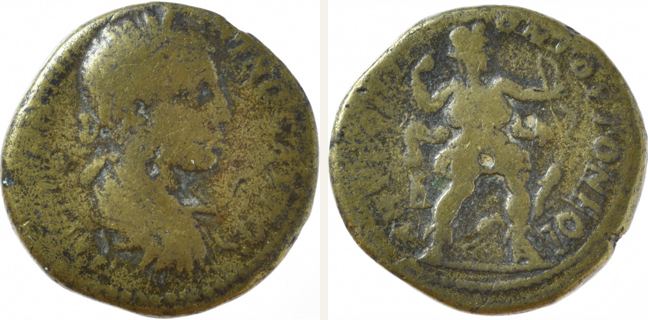
Photograph: Bernisches Historisches Museum; Corpus Nummorum (Berlin-Brandenburg Academy of Sciences and Humanities)
ancient coins
Tomis, Elagabal, bronze coin — Artemis standing right (CN type 22497)
AD 218–222
Coin in bronze struck at Tomis in Moesia inferior under Elagabal, dated AD 218–222. Corpus Nummorum, the online type corpus of the Berlin-Brandenburg Academy of Sciences and Humanities, records it as CN type 22497 (period: Roman Imperial Period; issuing authority type: city). Obverse: Laureate bust of Elagabalus, r…
Research required
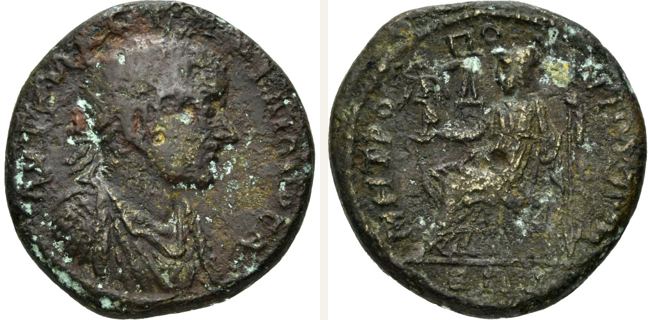
Photograph: Bernhard Weisser; Corpus Nummorum (Berlin-Brandenburg Academy of Sciences and Humanities); specimen held by ikmk.smb.museum
ancient coins
Tomis, Gordian III., 4 unit — Athena enthroned (CN type 16228)
AD 238–244
4 unit in bronze struck at Tomis in Moesia inferior under Gordian III., dated AD 238–244. Corpus Nummorum, the online type corpus of the Berlin-Brandenburg Academy of Sciences and Humanities, records it as CN type 16228 (period: Roman Imperial Period; issuing authority type: city). Obverse: Laureate bust of Gordian…
Research required
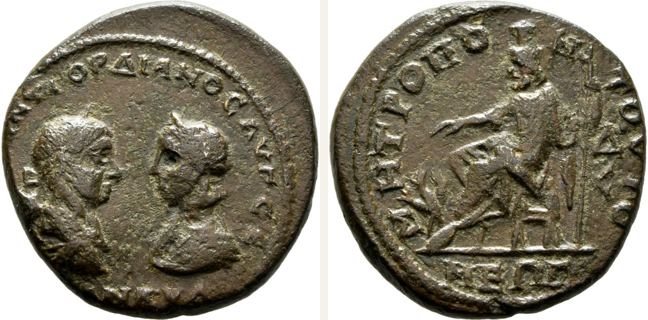
Photograph: Ioanna Maina; Corpus Nummorum (Berlin-Brandenburg Academy of Sciences and Humanities)
ancient coins
Tomis, Gordian III., 4 unit — Hades-Serapis seated left on throne (CN type 16330)
AD 238–244
4 unit in bronze struck at Tomis in Moesia inferior under Gordian III., dated AD 238–244. Corpus Nummorum, the online type corpus of the Berlin-Brandenburg Academy of Sciences and Humanities, records it as CN type 16330 (period: Roman Imperial Period; issuing authority type: city). Obverse: Confronted busts of Gord…
Research required
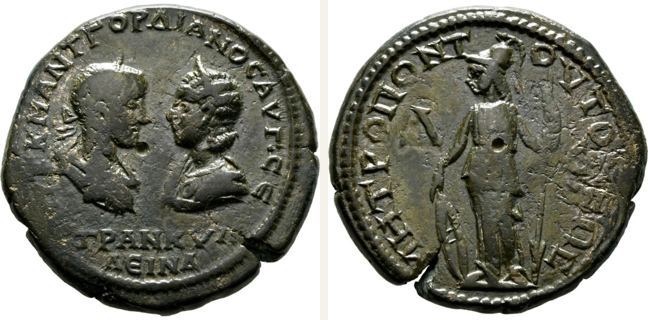
Photograph: Ioanna Maina; Corpus Nummorum (Berlin-Brandenburg Academy of Sciences and Humanities)
ancient coins
Tomis, Gordian III., bronze coin — Athena standing facing (CN type 16309)
AD 238–244
Coin in bronze struck at Tomis in Moesia inferior under Gordian III., dated AD 238–244. Corpus Nummorum, the online type corpus of the Berlin-Brandenburg Academy of Sciences and Humanities, records it as CN type 16309 (issuing authority type: city). Obverse: Confronted busts of Gordian III, laureate, wearing cuiras…
Research required