Section
Horology — pocket watches, wristwatches and escapements
Timepieces classified by maker, family, era, case type and movement, alongside the technical encyclopedia of escapement types and their development.
How to research an object in this section
Step 1
Observe
Record every visible mark, inscription, measurement and material before forming an opinion.
Step 2
Classify
Choose the sub-field below and narrow by issuer or maker, era and type.
Step 3
Compare
Match against photographed records and the evidence checks further down this page.
Step 4
Cite
Keep the source behind each fact; mark anything unconfirmed as research required.
Sub-fields
Portable watches carried in a pocket, from verge fusee to modern railroad grades.
2,126 records
Table, bracket, longcase, tower and mantel clocks and sundials documented in institutional collections.
1,625 records
Astrolabes, quadrants, astronomical compendia, portable dials and watchmakers' workshop tools used to find or keep time.
445 records
Loose watch and clock movements, dials, cases, balance cocks, chains and other horological components.
116 records
Photographed records
Entries in this section with a real-object photograph held on this site. The record lists its credit, source and stated rights status.
National Maritime Museum, Greenwich, London, Caird Collection
horological instruments
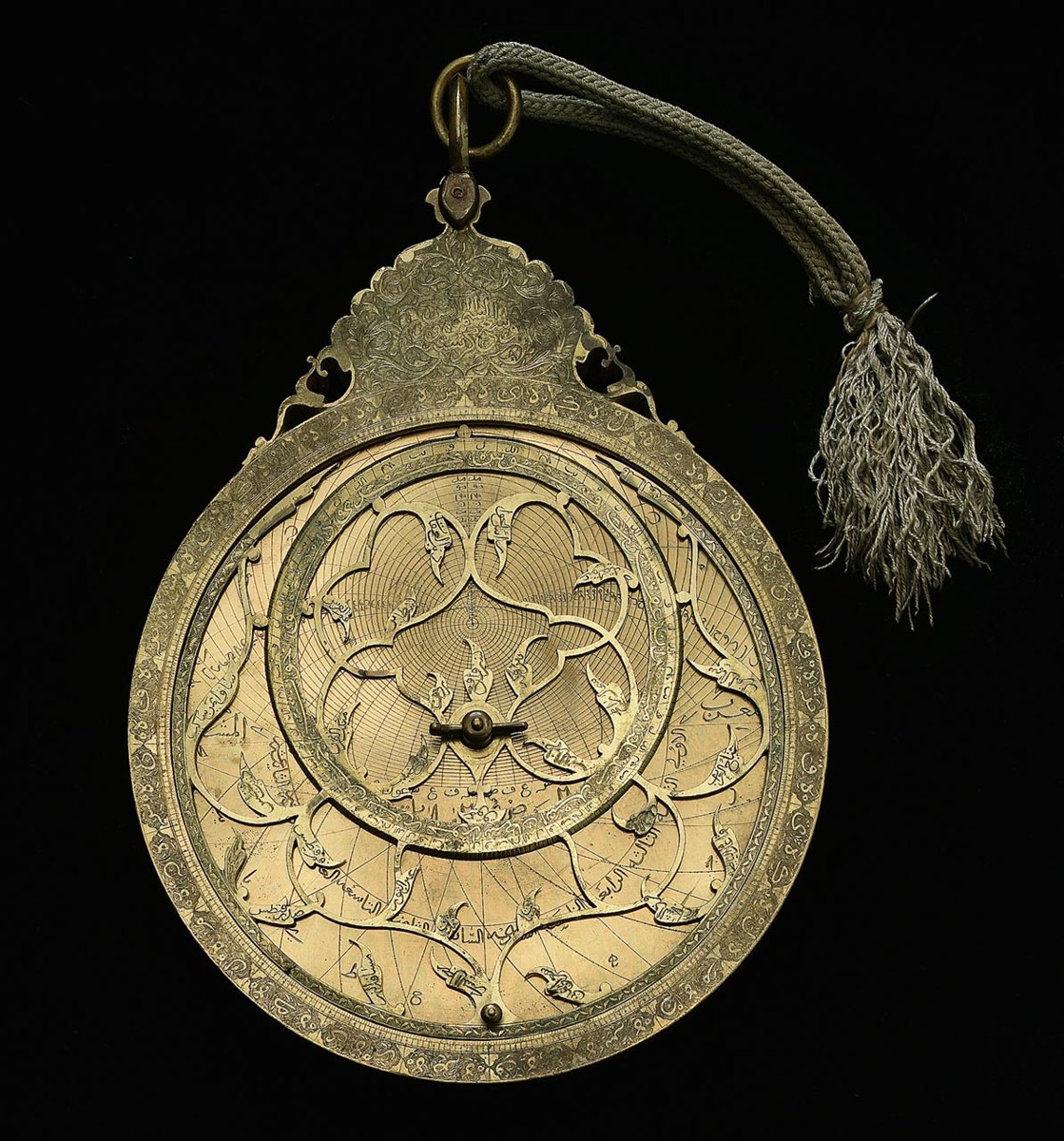
'Abd al-A'imma Gilt-Brass Astrolabe
1715-1716
This gilt-brass astrolabe, preserved in the Caird Collection at the National Maritime Museum under ID AST0545, was created by the prolific maker 'Abd al-A'imma. It bears a construction date inscription 'fi sanat 1128' (AH 1128 / approximately 1715–1716 AD) located above the central hole. Cast in one piece with the mater and rim, the throne features an excerpt from Koranic verse II, 255 engraved on its front. The source records that the mater contains a 58-locality gazetteer in concentric rings, alongside five plates calculated for latitudes 30º to 40º. Its openwork rete exhibits curvilinear tracery aligned symmetrically about the meridian.
Partial type record
Tony Moss, Lindisfarne Sundials
horological instruments
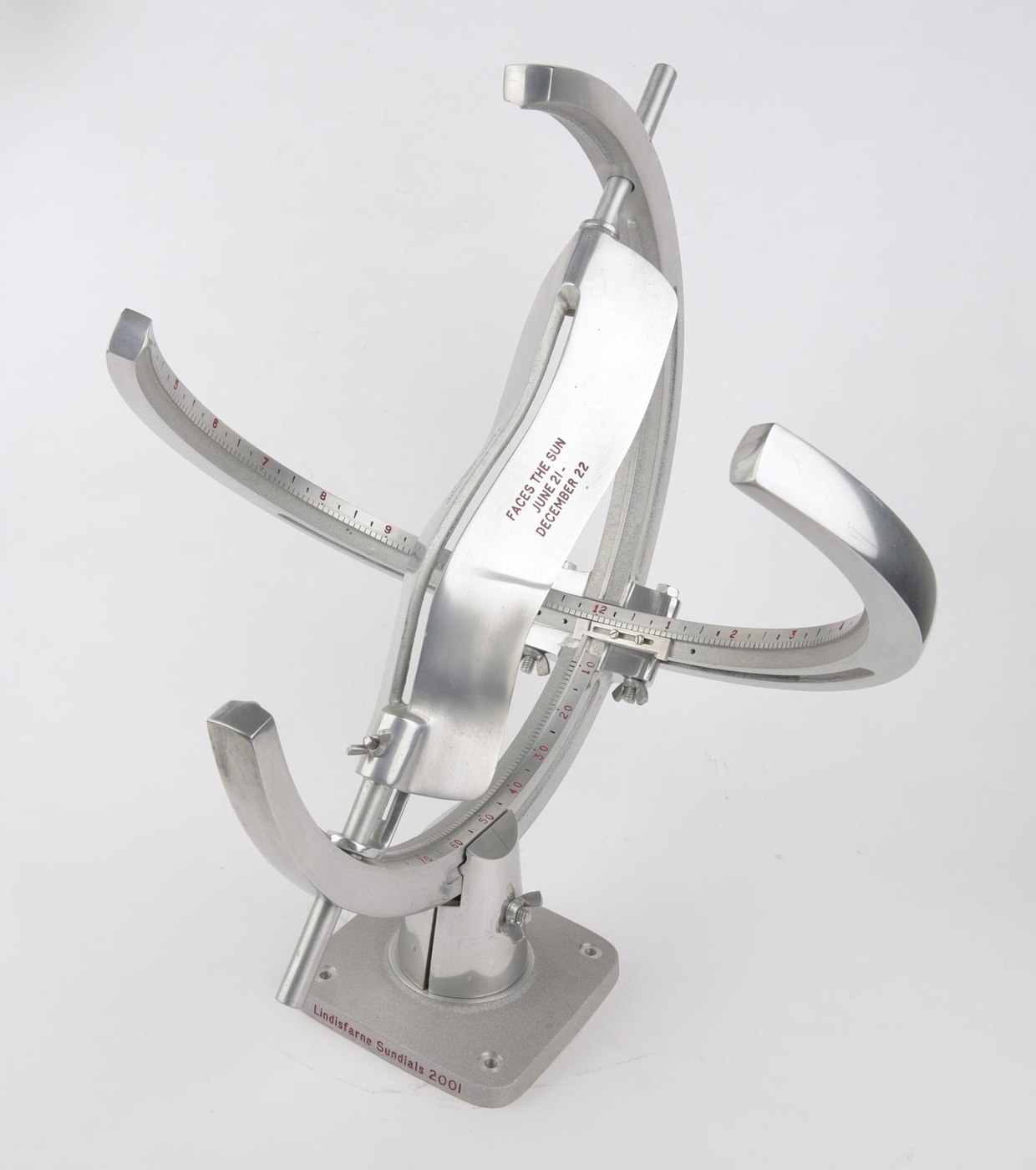
'Sunquest' Mean-Time Sundial
2001
This 'Sunquest' mean-time sundial, or heliochronometer, was produced in 2001 by Tony Moss of Lindisfarne Sundials in Bedlington, Northumberland. The object was designed by R. L. Schmoyer, based on original pattern designs dating to 1959. Constructed of metal, the instrument functions by tracking solar movement to indicate mean time. The structure includes various calibrated arcs and a central adjustment plate inscribed with temporal information. It measures approximately 480 mm by 380 mm by 360 mm. The design facilitates alignment with the sun, with specific inscriptions visible on the central assembly regarding solstitial orientation, serving as an functional tool for timekeeping based on solar position.
Partial type record
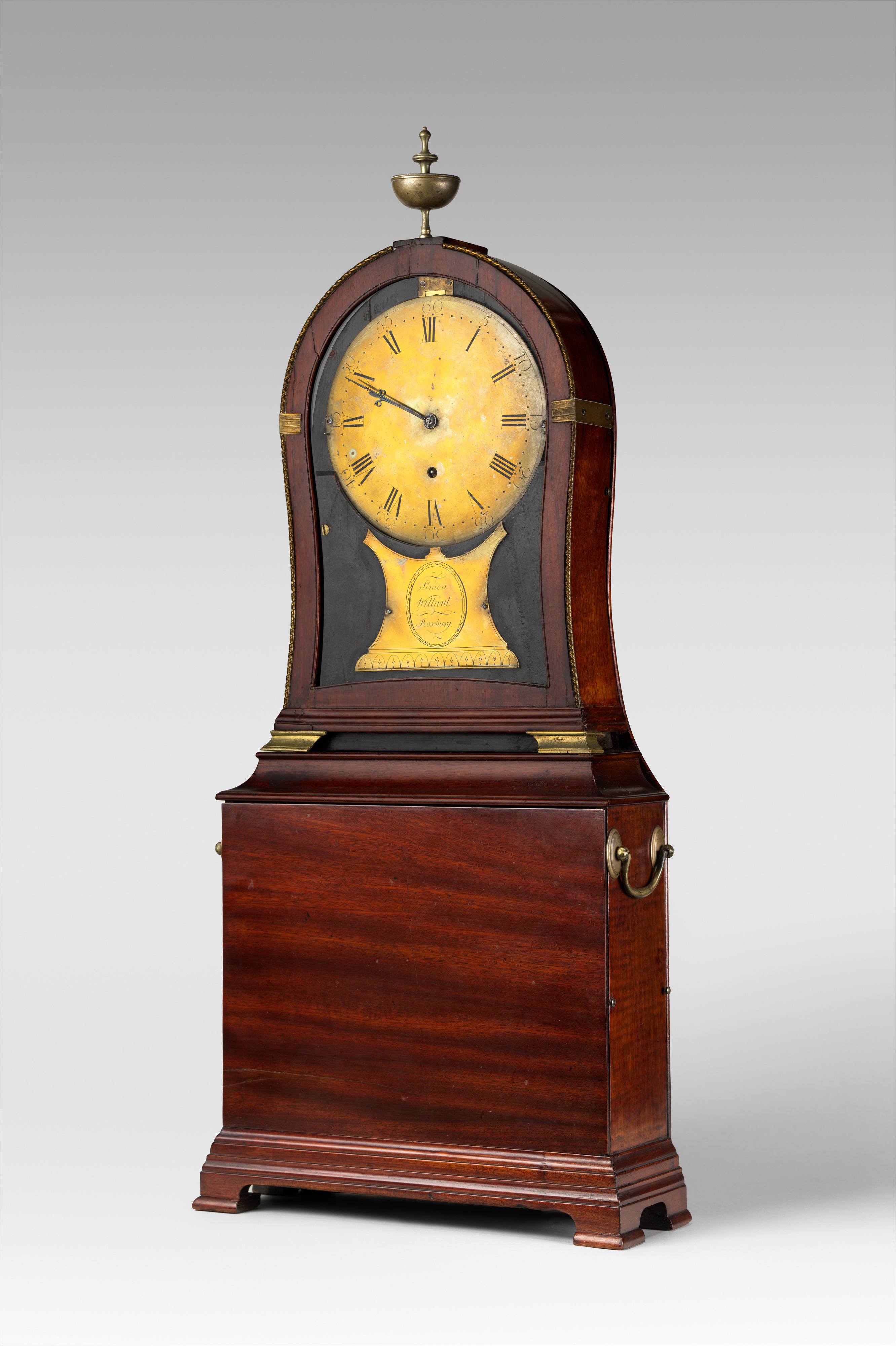
The Metropolitan Museum of Art — Sansbury-Mills and Richard Hampton Jenrette Americana Funds, 2023
clocks
"Balloon" Shelf Clock, Simon Willard, 1780–90
1780–90
"Balloon" Shelf Clock made by Simon Willard (1753–1848), dated 1780–90, from American. The museum records its materials as: Mahogany, pine; brass, iron, steel, lead, synthetic cord (modern). Recorded dimensions: 29 3/4 × 12 3/4 × 4 1/2 in. (75.6 × 32.4 × 11.4 cm).
Partial type record
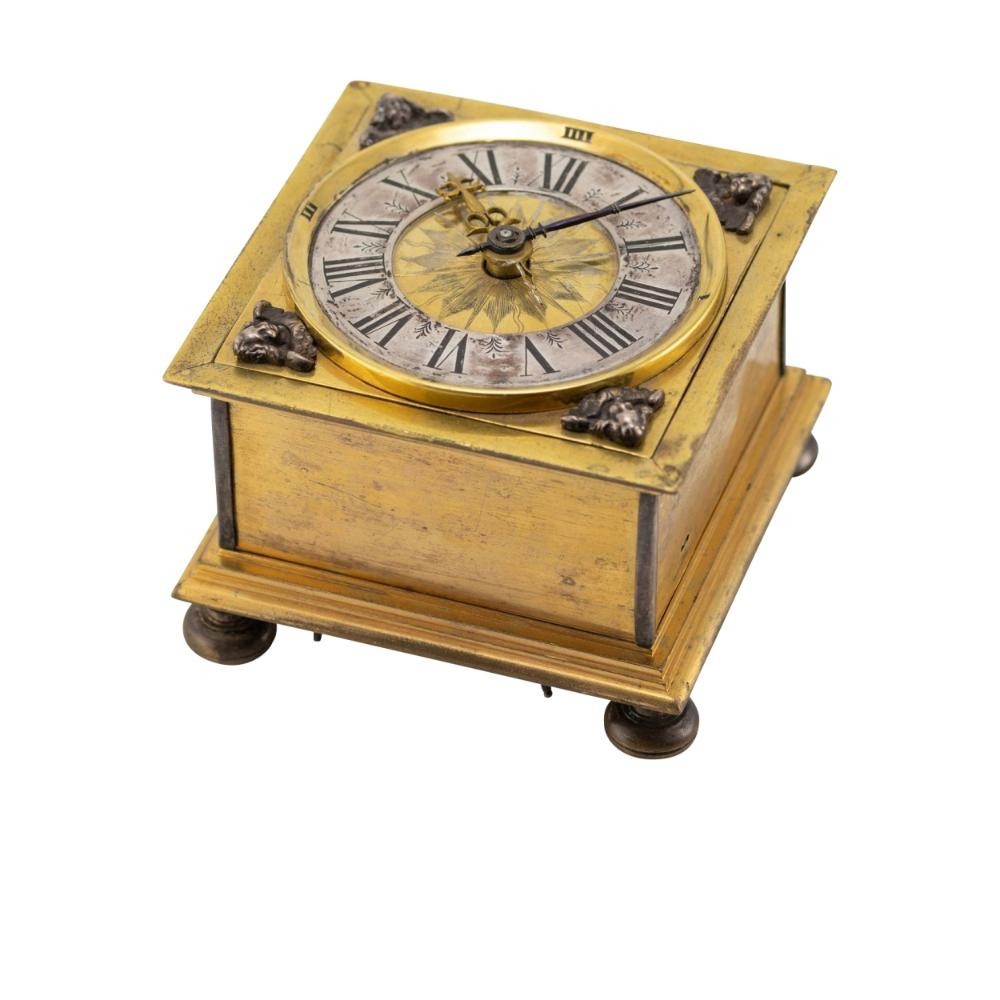
Auktionen Dr. Crott / Invaluable
clocks
"DS" - Vienna Table Clock
1632
This beautifully crafted Viennese table clock presents itself in a case reduced to the bare essentials in terms of decoration. The only visible ornamentation are the winged cherub heads placed in the spandrels of the display-side dial. The square movement bears the inscription "Wyen" underneath the balance, and is signed with the monogram "DS" inside a shield. A horizontal table clock is a portable, flat timepiece from the Renaissance and Baroque periods (16th to 17th centuries), with its dial positioned horizontally on the upper surface and intended to be read from above. This design was made possible by the invention of the mainspring and the fusee mechanism in the 16th century, allowing clocks to operate independently of pendulums and gravity in any position.
Partial type record
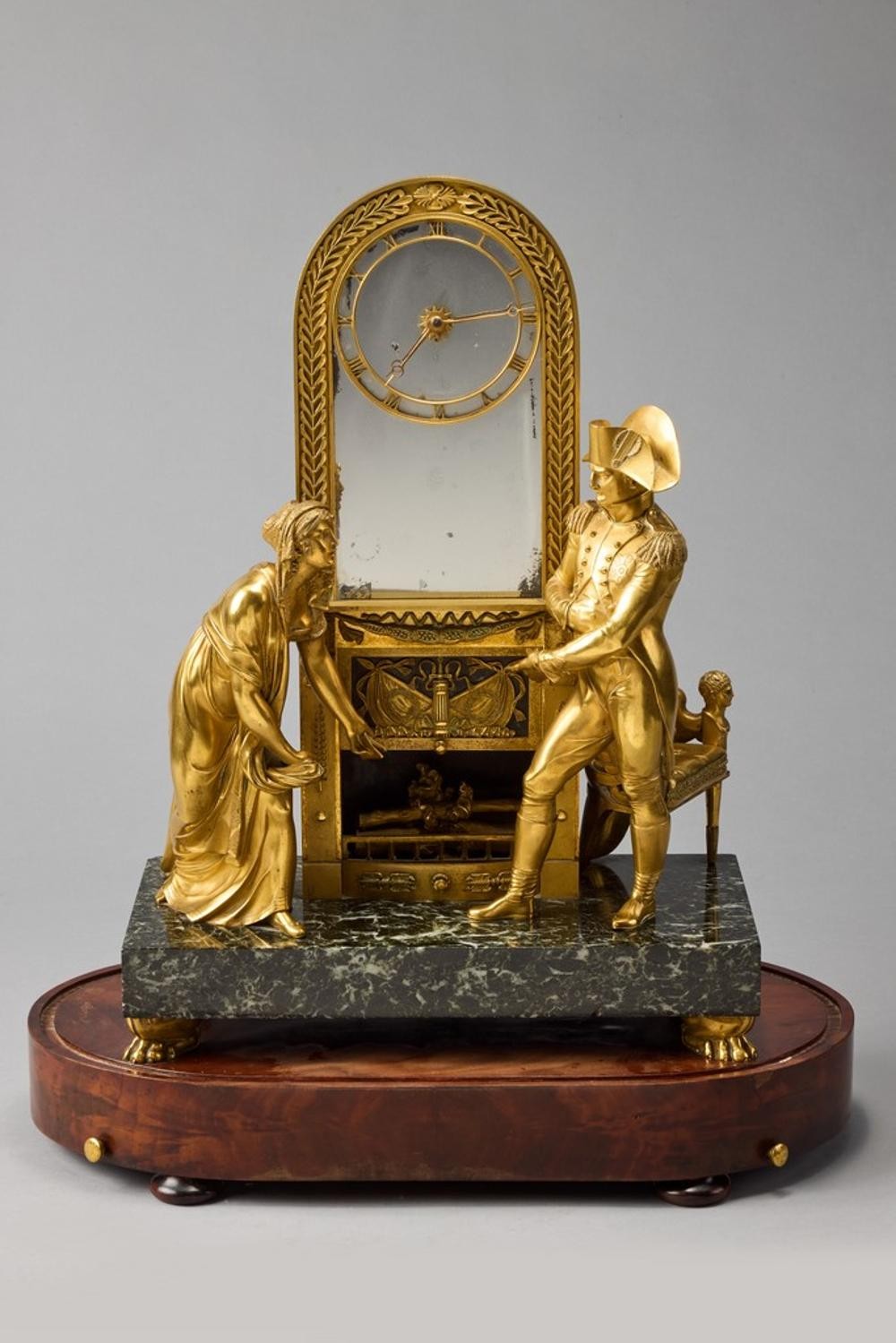
Prunier / Invaluable
clocks
« La clémence de Napoléon envers Madame de Hatzfeld ». Importante pendule mystérieuse en bronze finement ciselé
Vers 1830
« La clémence de Napoléon envers Madame de Hatzfeld ». Importante pendule mystérieuse en bronze finement ciselé, patiné et doré à l'or mat et à l'or bruni ; le mouvement dissimulé, est inscrit dans un trumeau de forme borne orné d’un tain au mercure d’où émergent les aiguilles et les heures en chiffres romains. La terrasse en marbre vert reposant sur 4 pieds griffes, accueille le groupe sculptural représentant Napoléon Ier demandant à la princesse Hatzel de brûler la lettre de son mari prouvant sa trahison. L’ensemble repose sur une base en bois de placage munie de deux boutons tirettes pour le remontage et la mise à l’heure de la sonnerie.
Partial type record
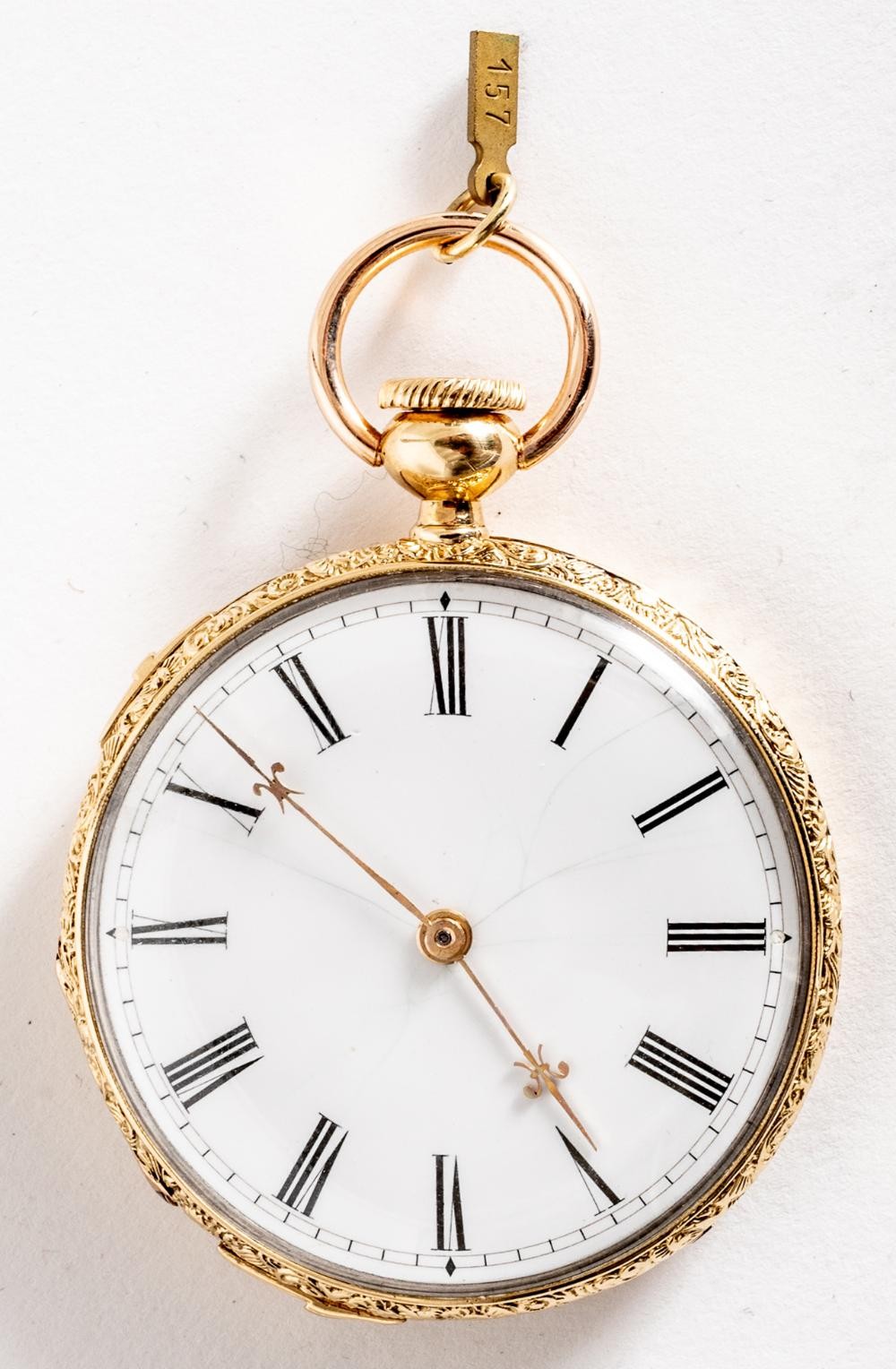
Loerke Kunstauktionen AG / Invaluable
pocket watches
(157) EARLY GOLD PATEK LÉPINE WITH QUARTER REPEATER
Case back engraved with a central coat of arms featuring a crescent moon and star surmounted by a crown with foliage, a fluted Breguet-style center section, and a Soviet silver hallmark (14K). Movement: Quarter-repeater striking on bells; silver-plated and engine-turned (guilloché) movement plate; duplex escapement; flat regulator; monometallic balance; key or bow wind; crown-set hands. A distinctive feature is the winding system—operated via the bow—which is one of the earliest examples, as it winds in only one direction. This watch is highly interesting, as it is listed among the first series of Patek timepieces.
Partial type record
Published records by sub-field
- Pocket Watches2,126
- Wristwatches2,429
- Escapements10
- Clocks and Sundials1,625
- Astrolabes, Dials and Instruments445
- Movements and Watch Parts116
Counts reflect the catalogue's current classification, not the number of types that exist worldwide. Nested fields may overlap.
Identification evidence at a glance
- Case and hallmarks
- Record and compareRecord form, lug shape, dimensions, mark positions and case number separately from movement markings.
- Limits of the evidenceA hallmark may date the case only. Gold colour and a dial brand do not establish metal or maker.
- Dial and display
- Record and compareCompare numeral layout, subsidiary displays, signatures, hand forms and their relationship to documented versions.
- Limits of the evidenceRestored dials and replacement hands can look period-correct; a front photograph cannot establish originality.
- Movement and calibre
- Record and compareUse a safely obtained movement image to record bridge layout, maker signature, engraved calibre and stated jewel count.
- Limits of the evidenceDo not open a watch without suitable expertise. A case reference is not a movement calibre.
- Winding and escapement
- Record and compareKeep observed winding and setting controls separate from the source's documented escapement and complications.
- Limits of the evidenceA crown does not establish automatic winding. Escapement and hidden mechanisms cannot be read from the dial.
- Serial evidence and marriages
- Record and compareCompare case and movement serials with a named archive or published list; document spacers, unused holes and mismatched parts.
- Limits of the evidenceDo not extend one maker's serial chronology to another. Identification is not authentication or a working-condition test.
Collecting, value research and care
Collecting, value research and care for pocket watches
Maker, movement, case and service-history evidence for watch collections, plus restraint-first care.
Collecting, researching and caring for wristwatches
Reference and serial evidence, originality of dial, hands and case, and safe storage away from water and magnets.
Collecting, value research and care for antique clocks
Movement, case and dial evidence for clocks, with care and transport rules before any repair.
Issuing authorities and makers
Objects stay filed under the historical entity that issued or made them, not its modern successor.
What this section covers
- Pocket watches from verge fusee to railroad grades, by maker and era.
- Wristwatch families, mechanical and quartz, by maker and reference family.
- Escapement types documented as technical entries in their own right.
- Movement, calibre, case metal and dimensions recorded only where a source states them.
Common questions
- Why are watch records grouped by family rather than by reference number?
- Reference-level data is frequently undocumented in openly available sources. Families are published where a source establishes them, and reference detail is added only when it can be cited.
- Can you date my watch from its serial number?
- Serial-number dating tables are only reproduced where a maker or a documented reference published them. Where no such table is available, the record says so.
- Do you grade or value watches?
- No. The catalogue identifies and documents types. Condition grading and valuation are outside its scope.
Where a date, weight, catalogue number or photograph has not been verified against a documented source, the record says so rather than estimating. See the editorial method and the coverage audit.