Catalogue
Coins
Struck and cast currency issued by states, rulers and other authorities.
Catalogue entries (5,113)
Filter by era, country, maker or material1,585–1,632 of 5,113 entries
Photograph: Corpus Nummorum; Corpus Nummorum (Berlin-Brandenburg Academy of Sciences and Humanities)
ancient coins
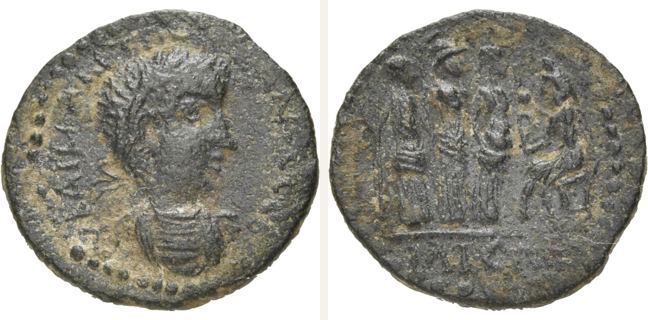
Ilion, Gordian III., semis — In right field Paris sittling left (CN type 20262)
AD 238–244
Semis in bronze struck at Ilion in Troas under Gordian III., dated AD 238–244. Corpus Nummorum, the online type corpus of the Berlin-Brandenburg Academy of Sciences and Humanities, records it as CN type 20262 (period: Roman Imperial Period; issuing authority type: city). Obverse: Laureate bust of Gordian III, right…
Research required
Photograph: Corpus Nummorum; Corpus Nummorum (Berlin-Brandenburg Academy of Sciences and Humanities); specimen held by ikmk.smb.museum
ancient coins
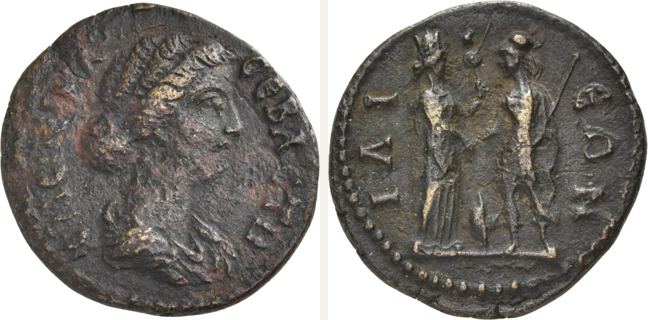
Ilion, Marc Aurel, bronze coin — City goddess and Athena (CN type 18786)
AD 178–182
Coin in bronze struck at Ilion in Troas under Marc Aurel, dated AD 178–182. Corpus Nummorum, the online type corpus of the Berlin-Brandenburg Academy of Sciences and Humanities, records it as CN type 18786 (issuing authority type: city). Obverse: Draped bust of Crispina, right. Border of dots. Legend: ΚΡΙϹΠЄΙΝΑ ϹЄΒ…
Research required
Photograph: Corpus Nummorum; Corpus Nummorum (Berlin-Brandenburg Academy of Sciences and Humanities); specimen held by ikmk.smb.museum
ancient coins
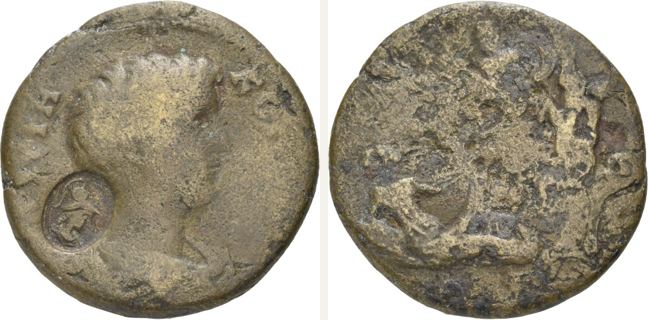
Ilion, Marc Aurel, bronze coin — Ilos (CN type 18774)
AD 176–179
Coin in bronze struck at Ilion in Troas under Marc Aurel, dated AD 176–179. Corpus Nummorum, the online type corpus of the Berlin-Brandenburg Academy of Sciences and Humanities, records it as CN type 18774 (issuing authority type: city). Obverse: Bust of Commodus, right, wearing cuirass and paludamentum. Legend: [Α…
Research required
Photograph: Corpus Nummorum; Corpus Nummorum (Berlin-Brandenburg Academy of Sciences and Humanities)
ancient coins
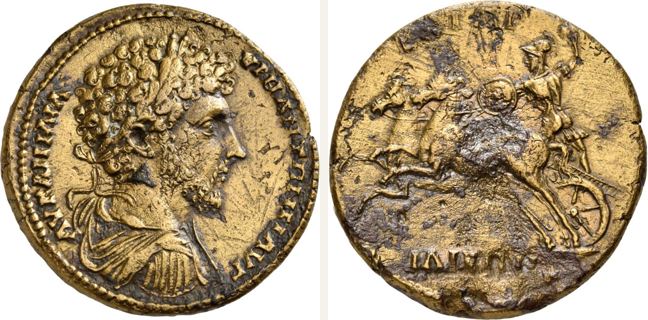
Ilion, Marc Aurel, sestertius — Armoured Hector on galloping biga (CN type 20393)
AD 161–180
Sestertius in bronze struck at Ilion in Troas under Marc Aurel, dated AD 161–180. Corpus Nummorum, the online type corpus of the Berlin-Brandenburg Academy of Sciences and Humanities, records it as CN type 20393 (period: Roman Imperial Period; issuing authority type: city). Obverse: Laureate bust of bearded Marcus…
Research required
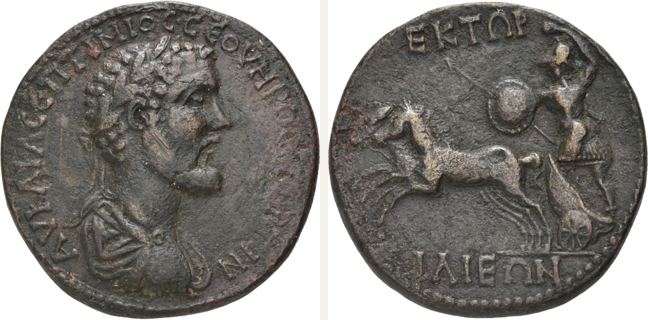
Photograph: Corpus Nummorum; Corpus Nummorum (Berlin-Brandenburg Academy of Sciences and Humanities)
ancient coins
Ilion, Septimius Severus, sestertius — Armoured Hector on galloping biga (CN type 20322)
AD 197–211
Sestertius in bronze struck at Ilion in Troas under Septimius Severus, dated AD 197–211. Corpus Nummorum, the online type corpus of the Berlin-Brandenburg Academy of Sciences and Humanities, records it as CN type 20322 (period: Roman Imperial Period; issuing authority type: city). Obverse: Laureate bust of Septimiu…
Research required
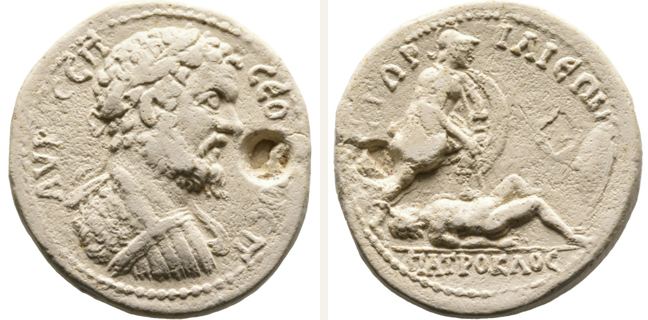
Photograph: Corpus Nummorum; Corpus Nummorum (Berlin-Brandenburg Academy of Sciences and Humanities)
ancient coins
Ilion, Septimius Severus, sestertius — Armoured Hector with spear standing right (CN type 20320)
AD 197–211
Sestertius in bronze struck at Ilion in Troas under Septimius Severus, dated AD 197–211. Corpus Nummorum, the online type corpus of the Berlin-Brandenburg Academy of Sciences and Humanities, records it as CN type 20320 (period: Roman Imperial Period; issuing authority type: city). Obverse: Laureate and cuirassed bu…
Research required
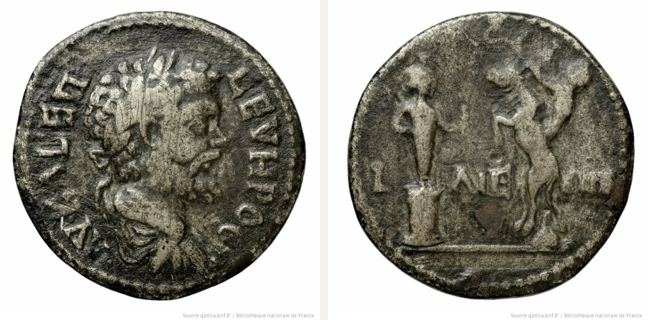
Photograph: Corpus Nummorum; Corpus Nummorum (Berlin-Brandenburg Academy of Sciences and Humanities); specimen held by gallica.bnf.fr
ancient coins
Ilion, Septimius Severus, sestertius — To left a cult image of Athena Ilias on a pedestal (CN type 20324)
AD 197–211
Sestertius in bronze struck at Ilion in Troas under Septimius Severus, dated AD 197–211. Corpus Nummorum, the online type corpus of the Berlin-Brandenburg Academy of Sciences and Humanities, records it as CN type 20324 (period: Roman Imperial Period; issuing authority type: city). Obverse: Laureate bust of Septimiu…
Research required
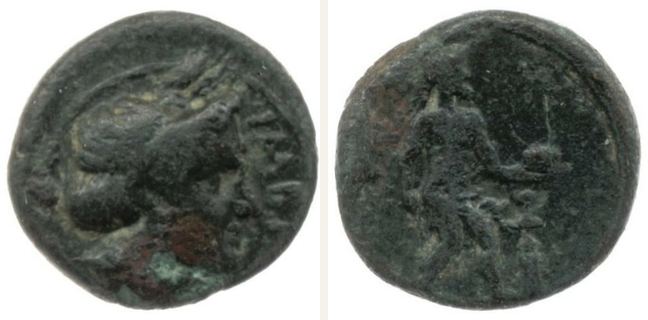
Photograph: British Museum, London; Corpus Nummorum (Berlin-Brandenburg Academy of Sciences and Humanities)
ancient coins
Imbros, small denomination (bronze) — Orthanes standing right (CN type 20030)
276/261–167 BC
Small denomination (bronze) struck at Imbros in Thrace, dated 276/261–167 BC. Corpus Nummorum, the online type corpus of the Berlin-Brandenburg Academy of Sciences and Humanities, records it as CN type 20030 (period: Hellenistic Period; issuing authority type: city). Obverse: Head of Demeter, right, wearing corn wr…
Research required
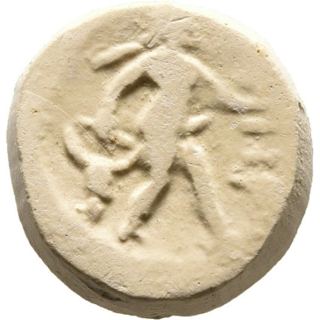
Photograph: BBAW; Corpus Nummorum (Berlin-Brandenburg Academy of Sciences and Humanities)
ancient coins
Imbros, small denomination (bronze) — Orthanes standing right (CN type 20034)
386–276/261 BC
Small denomination (bronze) struck at Imbros in Thrace, dated 386–276/261 BC. Corpus Nummorum, the online type corpus of the Berlin-Brandenburg Academy of Sciences and Humanities, records it as CN type 20034 (period: Hellenistic Period; issuing authority type: city). Obverse: Head of a goddess, right. Reverse: Orth…
Research required
Rijksmuseum, Amsterdam
modern coins
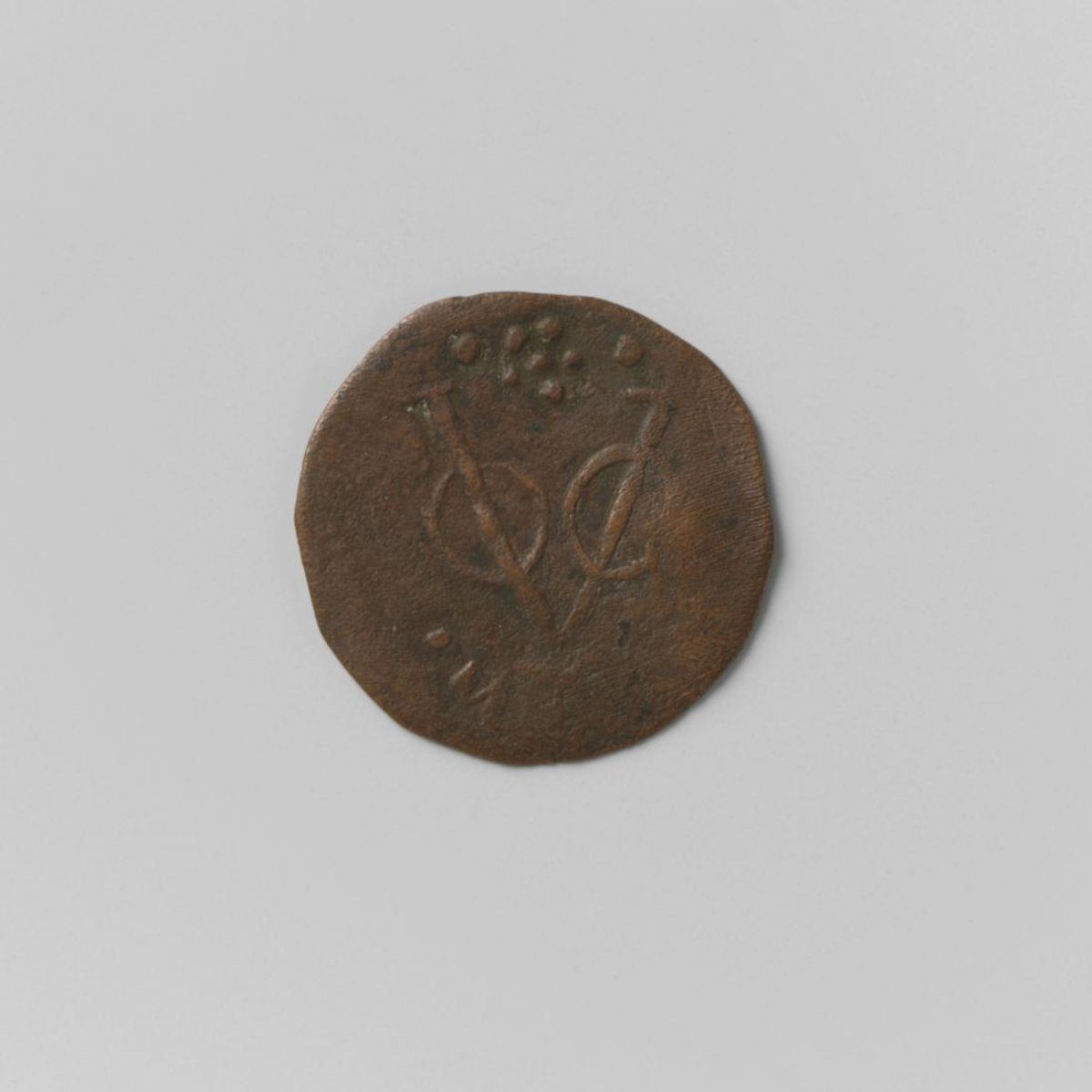
Imitation of ½ VOC duit Holland
1780 - 1830
Copper coin. Imitation of a duit of the VOC from Holland. Obverse: crowned coat of arms of Holland. Reverse: VOC monogram, above which is a dot and below which is a fictitious year. The Rijksmuseum, Amsterdam, holds this object as KOG-MP-1-4987; its record gives material recorded as copper (metal); technique strikin…
Partial type record
Rijksmuseum, Amsterdam
modern coins
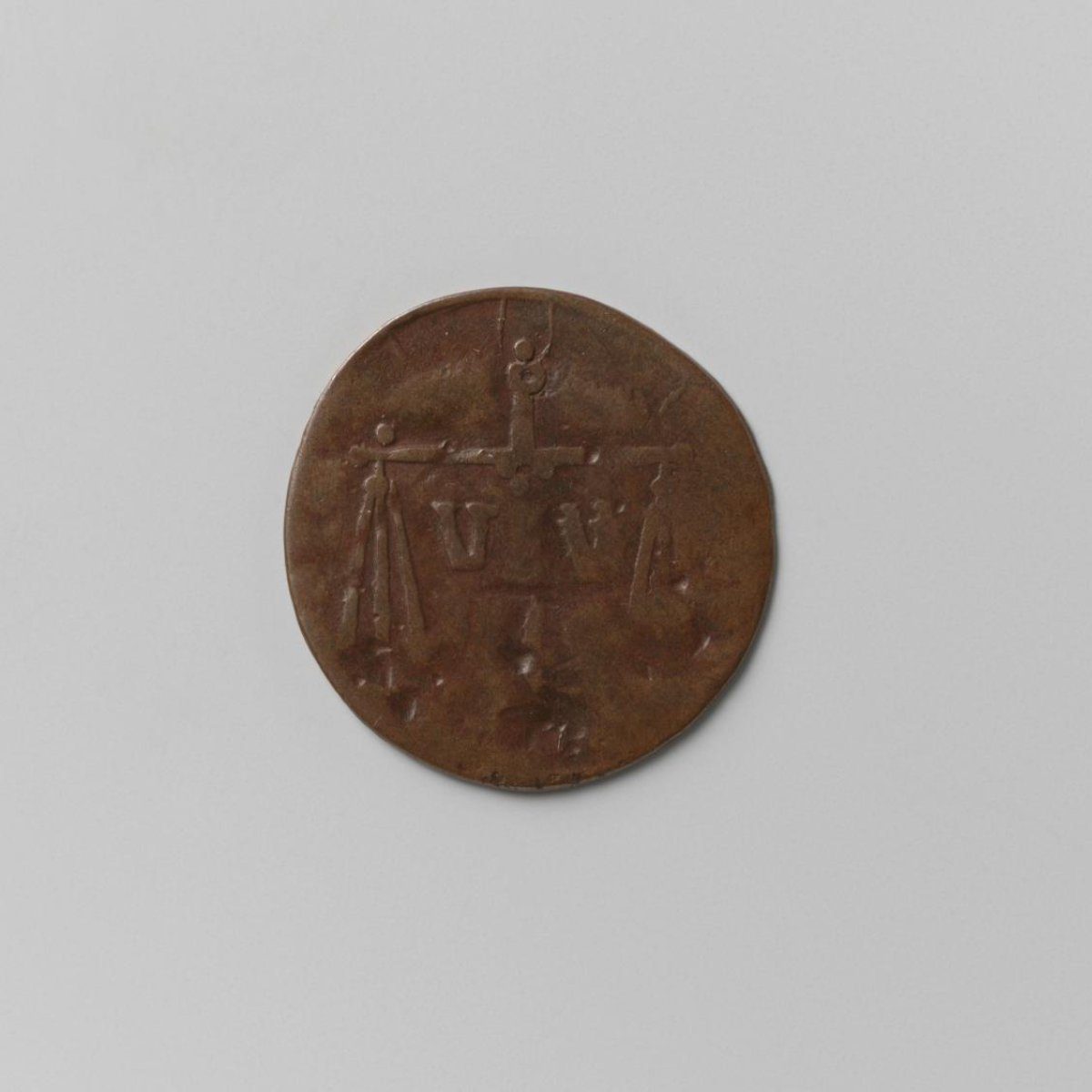
Imitation of a copper coin from Bombay
1780 - 1830
Copper coin. Imitation of a copper coin from Bombay. Obverse: monogram of the English East India Company. Reverse: balance scales with single-line inscription in Arabic letters: adil [=justice]. The Rijksmuseum, Amsterdam, holds this object as KOG-MP-1-5006; its record gives material recorded as copper (metal); tech…
Partial type record
Rijksmuseum, Amsterdam
modern coins
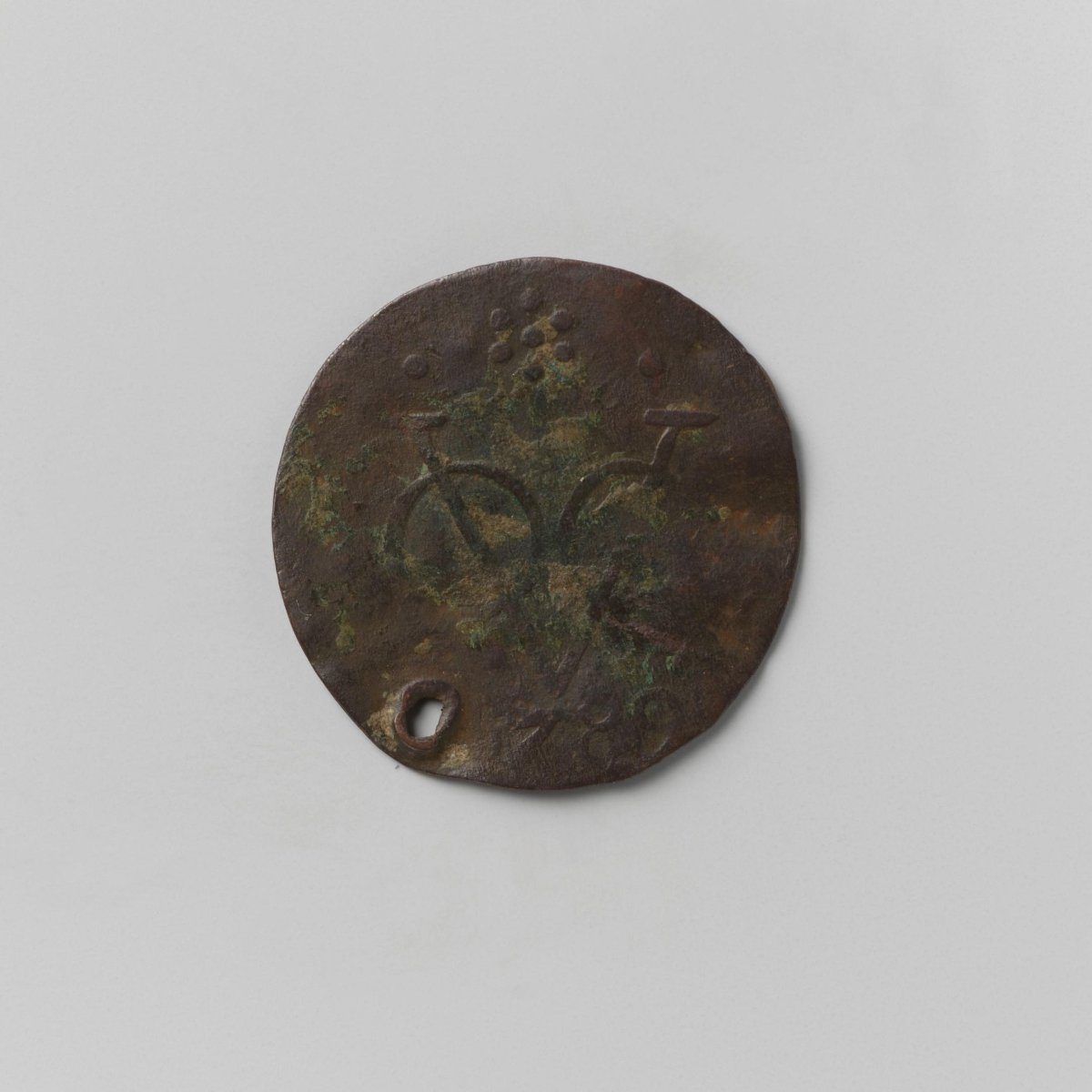
Imitation of a duit of the VOC, 1789
1789 - 1830
Copper coin. Imitation of a duit of the VOC. Obverse: fictitious coat of arms containing two Arabic characters. Reverse: VOC monogram, above which is a fictitious mint mark and below which is a fictitious year. Hole in coin flan. The Rijksmuseum, Amsterdam, holds this object as KOG-MP-1-5001; its record gives materi…
Partial type record
Rijksmuseum, Amsterdam
modern coins
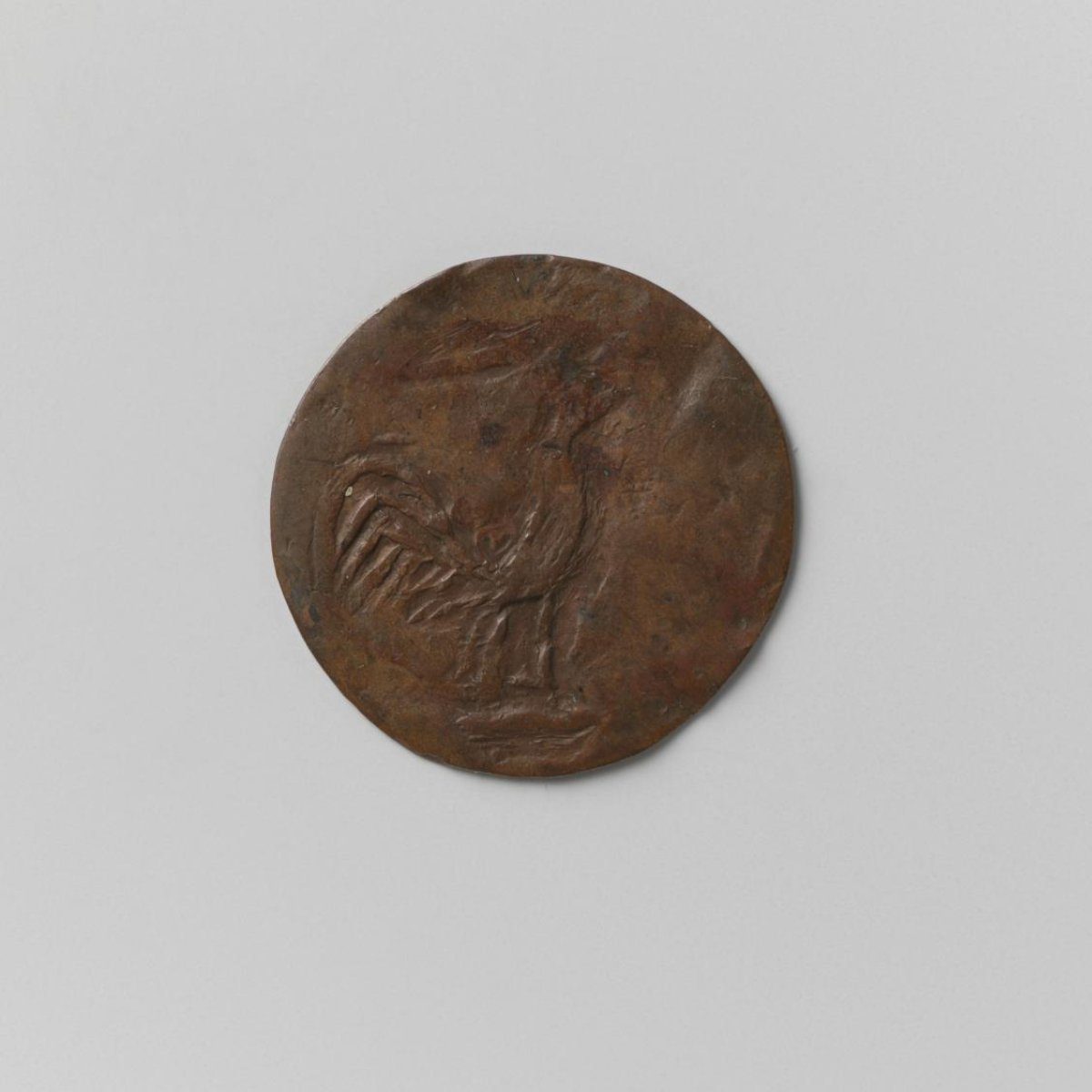
Imitation of a haantjesduit
1780 - 1830
Copper coin. Imitation of a haantjesduit (cockerel duit). Obverse: rooster facing right. Reverse: undecipherable characters. The Rijksmuseum, Amsterdam, holds this object as KOG-MP-1-5007; its record gives material recorded as copper (metal); technique striking (metalworking); measurements diameter 2.2 cm.
Partial type record
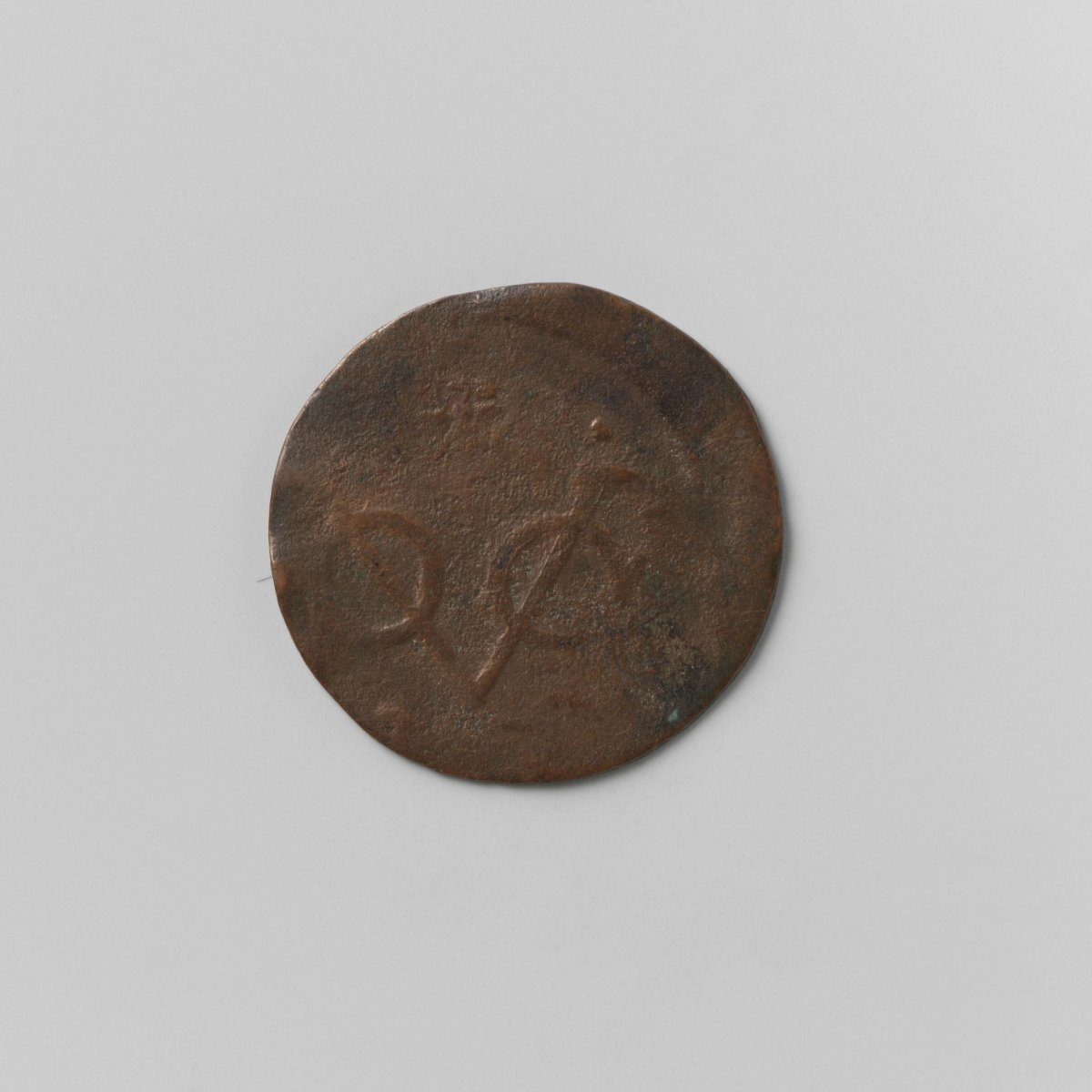
Rijksmuseum, Amsterdam
modern coins
Imitation of a VOC Duit
1780 - 1830
Copper coin. Imitation of a VOC duit. Obverse: crowned fictitious coat of arms. Reverse: monogram of the VOC in mirror image. The Rijksmuseum, Amsterdam, holds this object as KOG-MP-1-5002; its record gives material recorded as copper (metal); technique striking (metalworking); measurements diameter 2.2 cm.
Partial type record
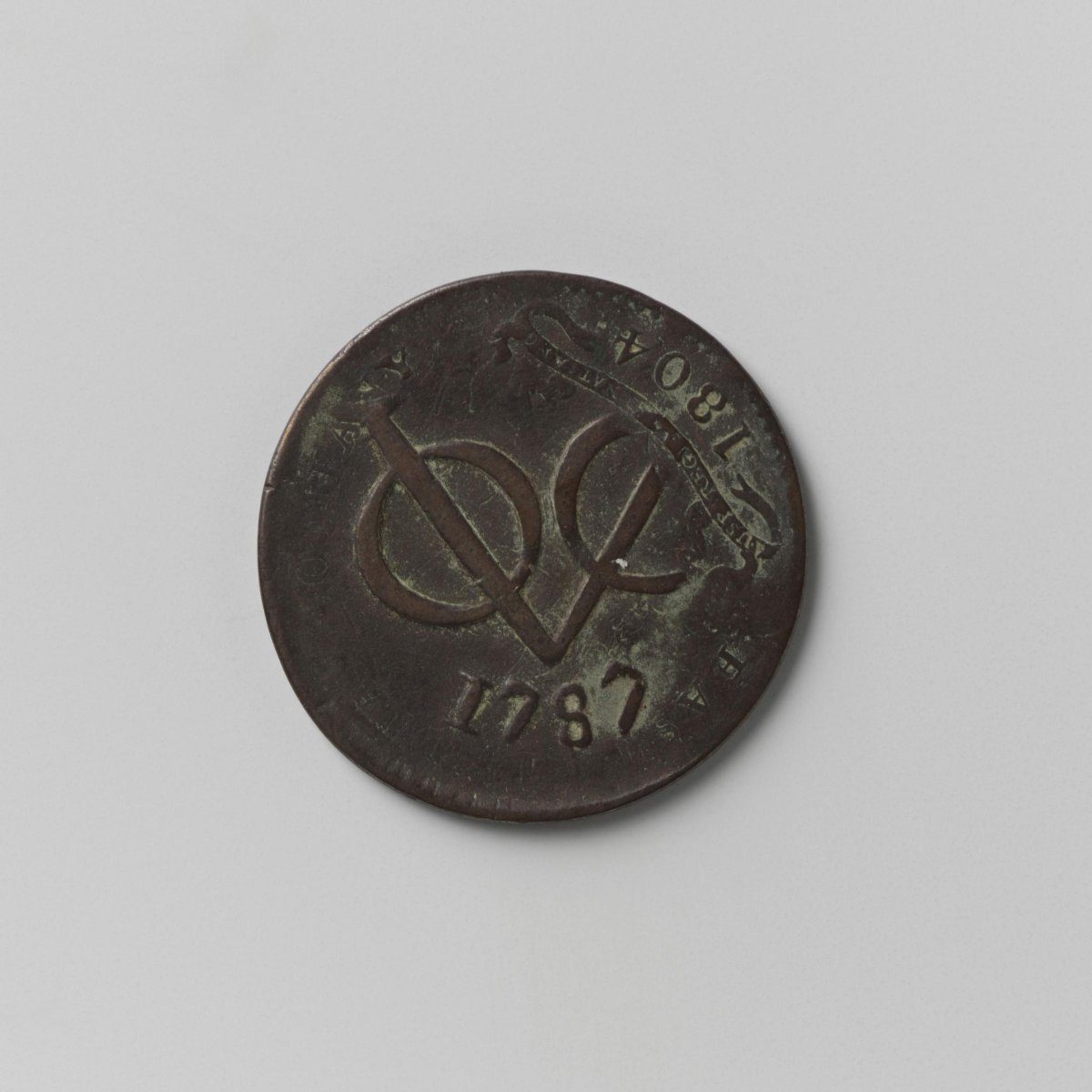
Rijksmuseum, Amsterdam
modern coins
Imitation of a VOC duit from West Friesland, 1787
1787 - 1830
Copper coin. Imitation of a VOC duit from West Friesland. Obverse: crowned coat of arms of West Friesland. Reverse: monogram of the VOC, below which is a fictitious year. Struck on a flan of a 1/2 paisa from Bombay. The Rijksmuseum, Amsterdam, holds this object as KOG-MP-1-4997; its record gives material recorded as…
Partial type record
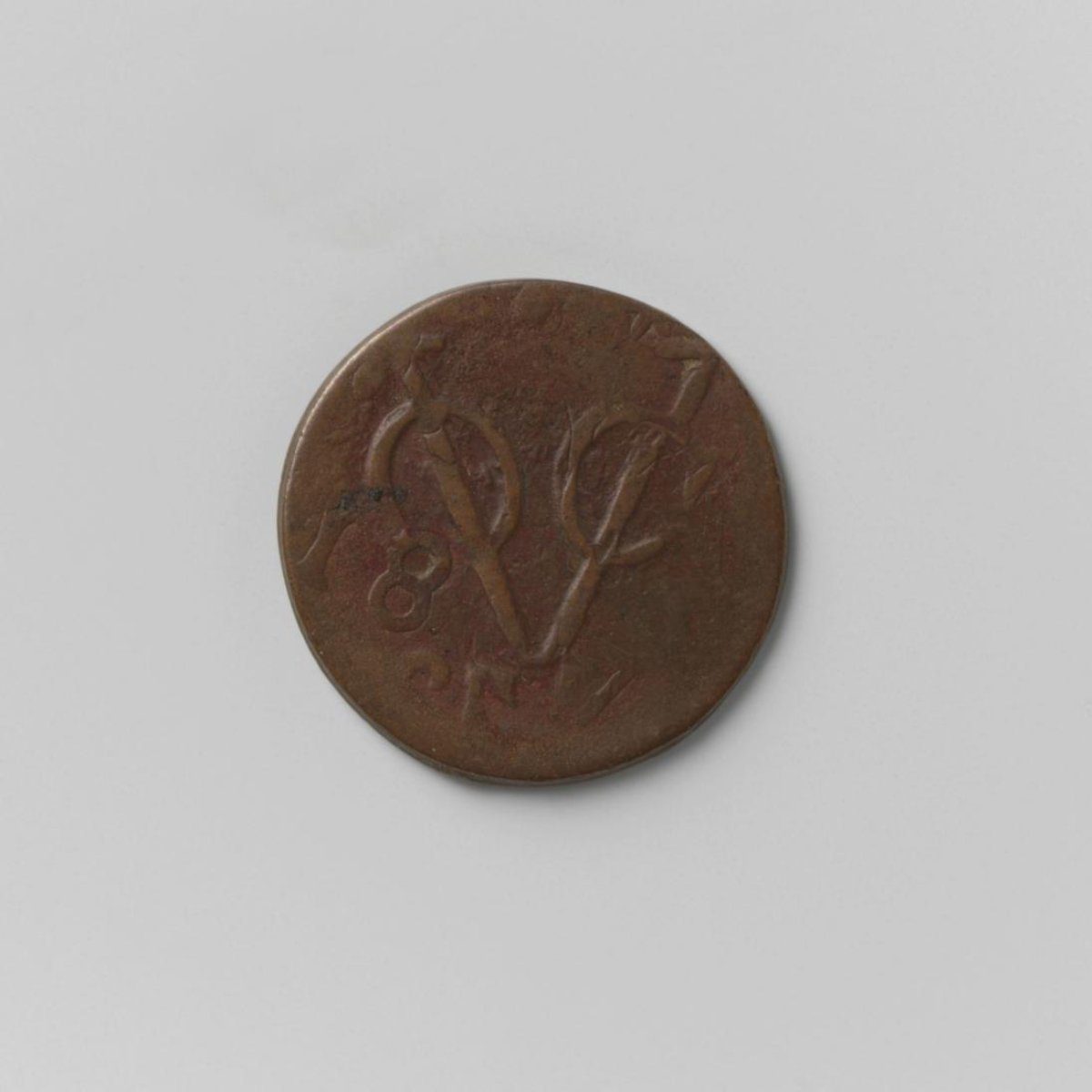
Rijksmuseum, Amsterdam
modern coins
Imitation of VOC duit Holland
1780 - 1830
Copper coin. Imitation of a duit of the VOC from Holland. Obverse: crowned coat of arms of Holland. Reverse: VOC monogram, above which is a dot and below which is a fictitious year. The Rijksmuseum, Amsterdam, holds this object as KOG-MP-1-4986; its record gives material recorded as copper (metal); technique strikin…
Partial type record
Rijksmuseum, Amsterdam
modern coins
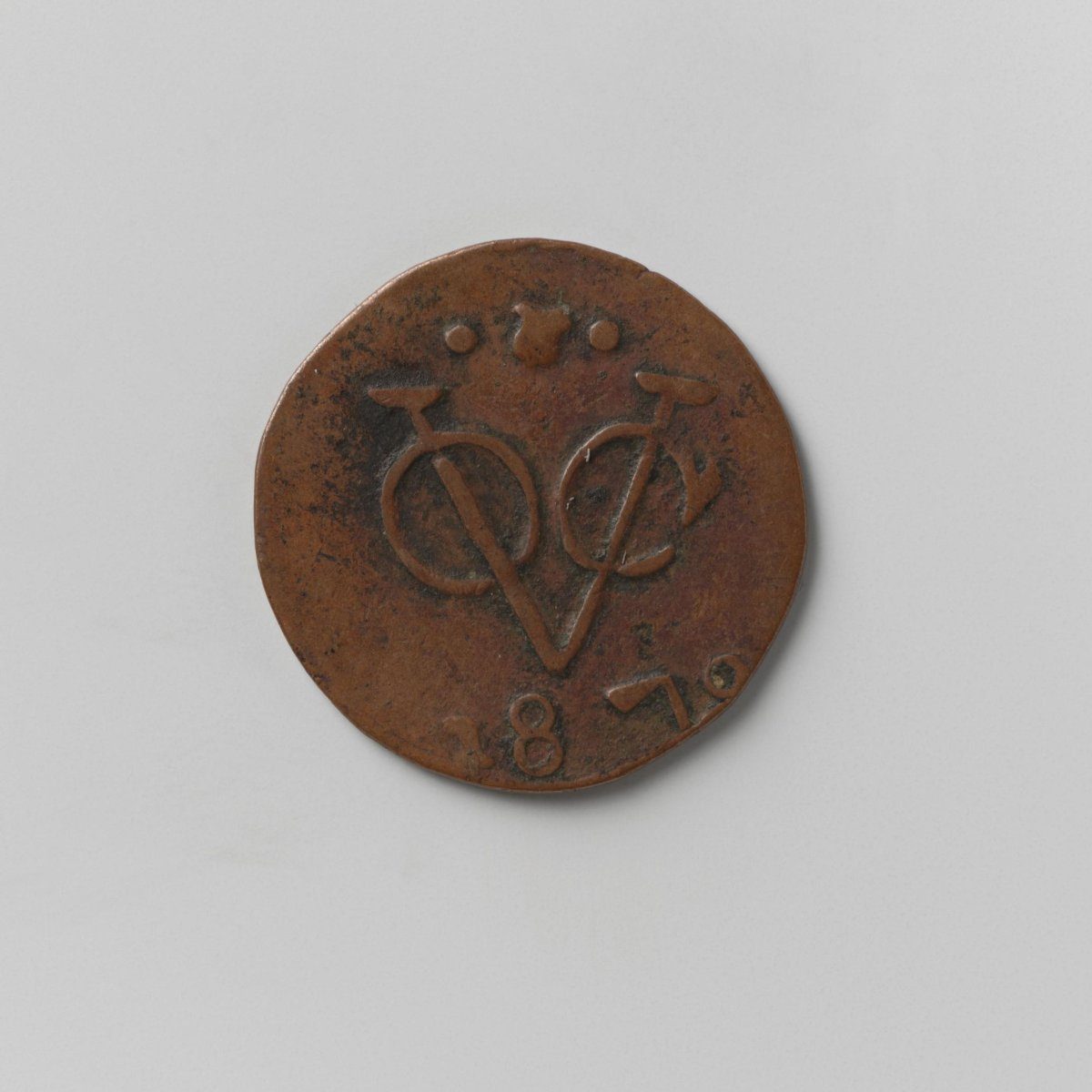
Imitation of VOC duit Utrecht, 1870
1830–1870
Copper coin. Imitation of a duit of the VOC from Utrecht. Obverse: coat of arms of Utrecht supported by two lions, below which is decoration. Reverse: VOC monogram, above which is a mint mark and below which is a fictitious year. The Rijksmuseum, Amsterdam, holds this object as KOG-MP-1-5000; its record gives materi…
Partial type record
Rijksmuseum, Amsterdam
modern coins
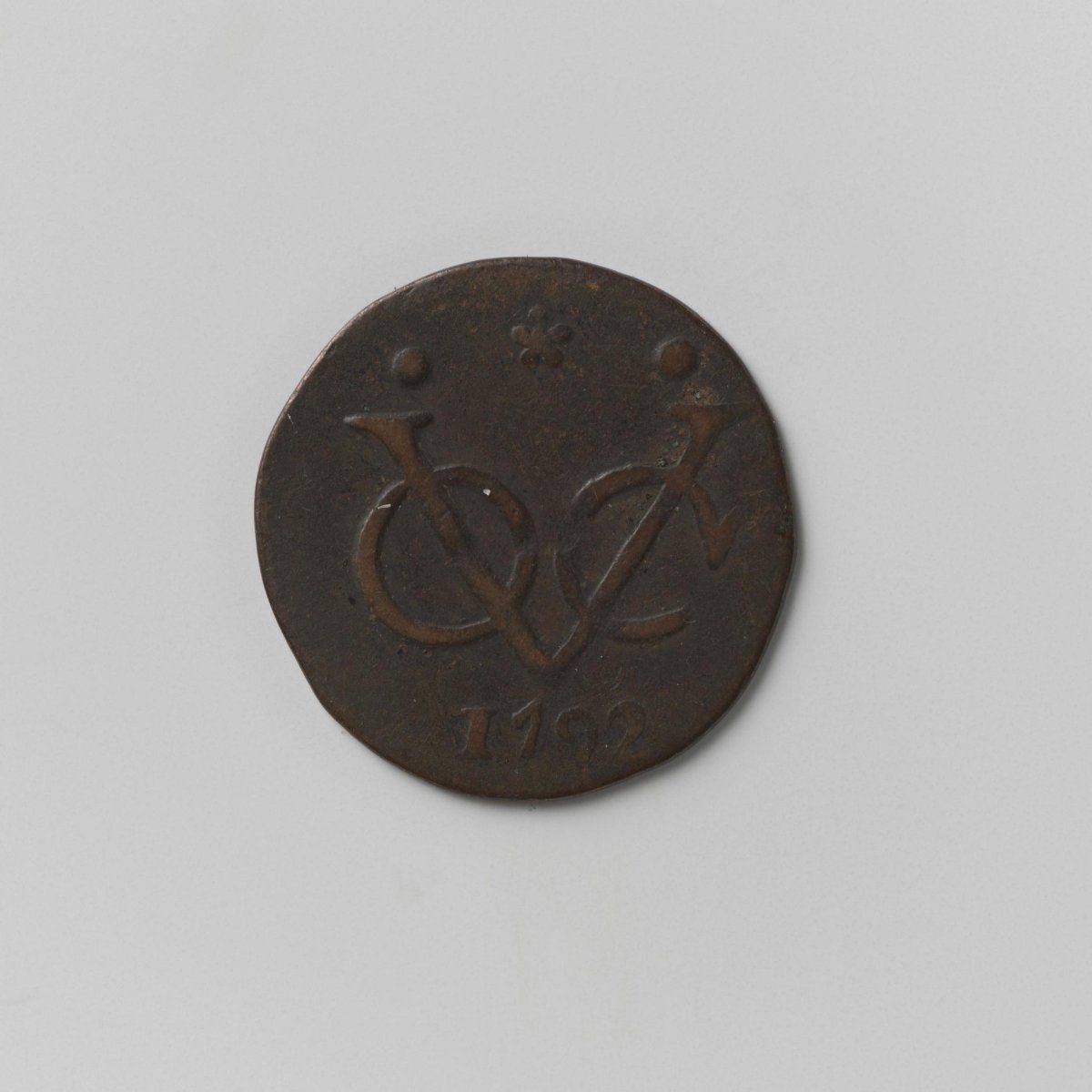
Imitation of VOC duit West Friesland, 1792
1792 - 1830
Copper coin. Imitation of a duit of the VOC from West Friesland. Obverse: crowned coat of arms of West Friesland. Reverse: monogram of the VOC, above which a rosette and below which a fictitious year. The Rijksmuseum, Amsterdam, holds this object as KOG-MP-1-4999; its record gives material recorded as copper (metal)…
Partial type record
Rijksmuseum, Amsterdam
modern coins
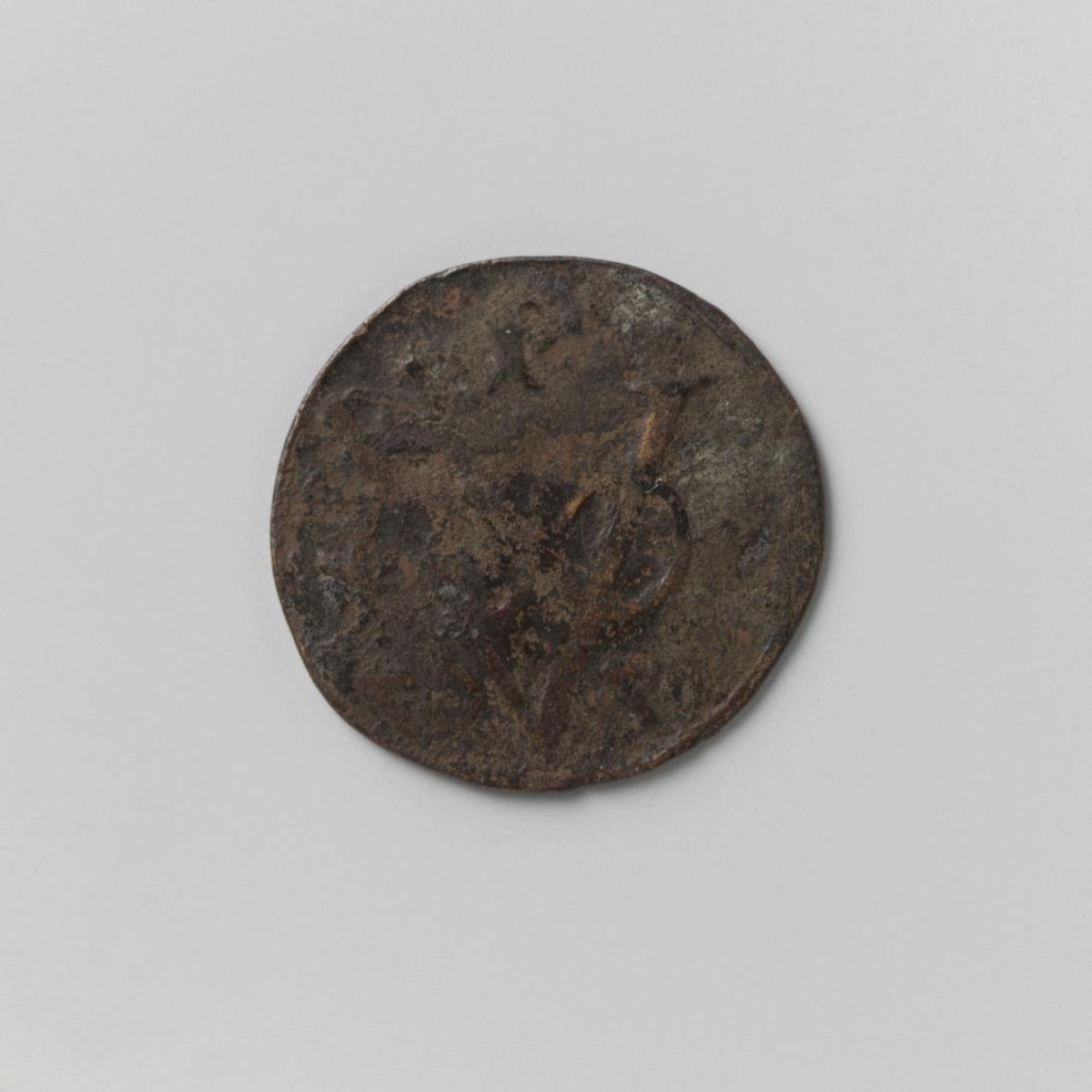
Imitation of VOC duit Zeeland
1780 - 1830
Copper coin. Imitation of duit of the VOC from Zeeland. Obverse: crowned coat of arms of Zeeland. Reverse: monogram of the VOC, above which mint mark and below which fictitious date. The Rijksmuseum, Amsterdam, holds this object as KOG-MP-1-4988; its record gives material recorded as copper (metal); technique striki…
Partial type record
Rijksmuseum, Amsterdam
modern coins
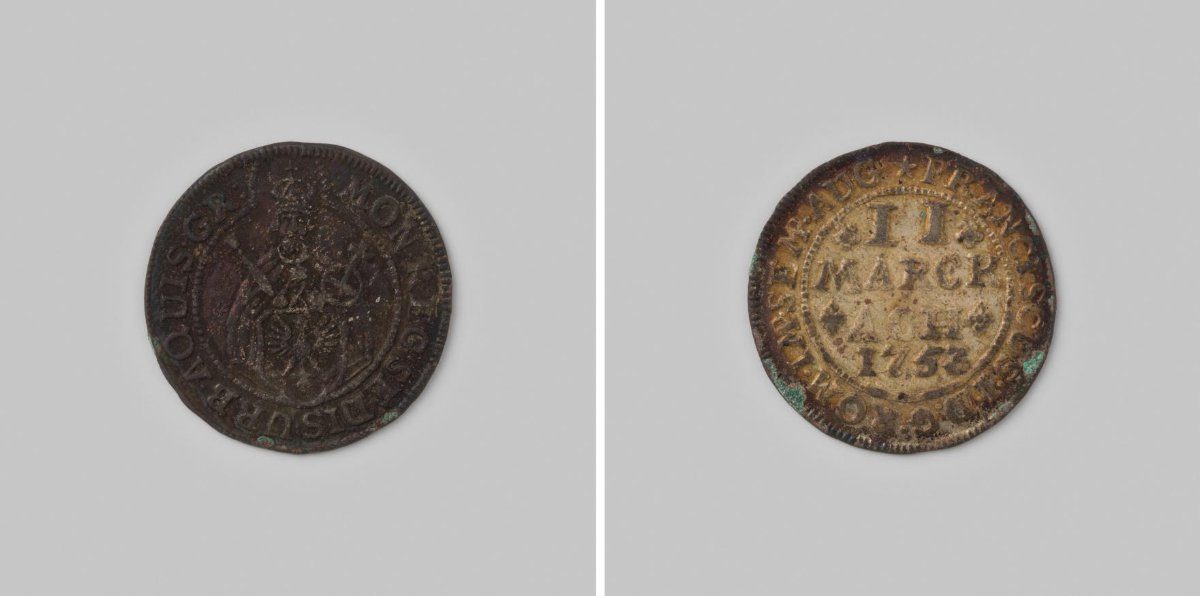
Imperial City of Aachen in the name of Emperor Francis I, 2 Marck, 1753
1753
Silver coin. Obverse: crowned Charlemagne with imperial orb and sceptre, and in front of him the coat of arms of the city. Reverse: value designation in three lines, below which date. Smooth edge. The Rijksmuseum, Amsterdam, holds this object as KOG-MP-1-0498; its record gives material recorded as silver (metal); te…
Partial type record
Rijksmuseum, Amsterdam
modern coins
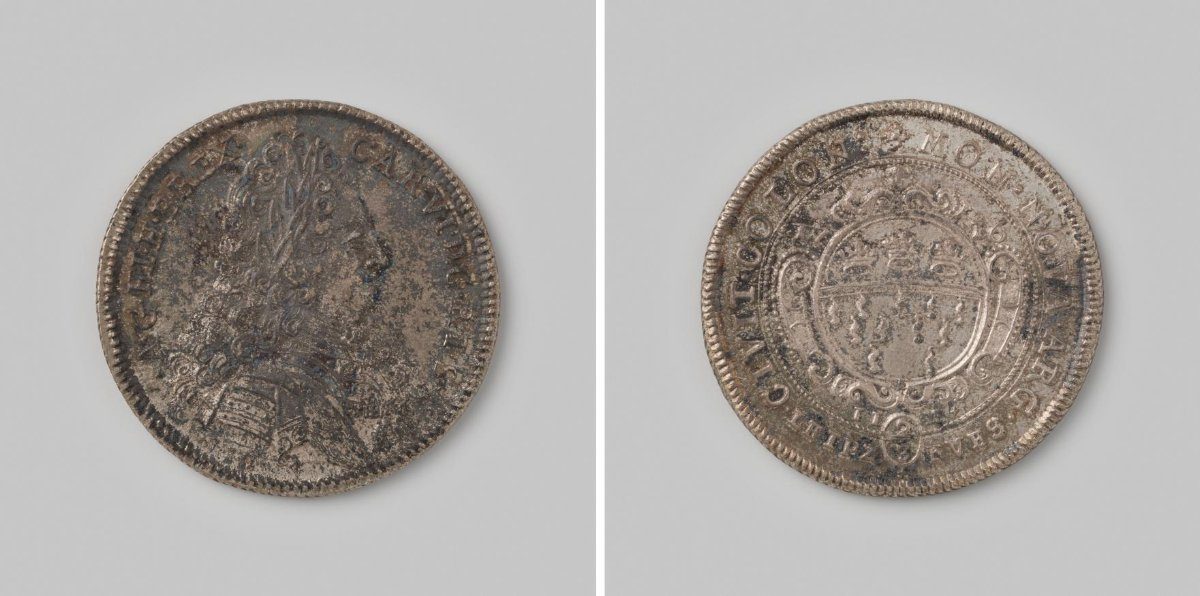
Imperial City of Cologne, 2/3 Taler, 1716
1716
Silver coin. Obverse: portrait of Emperor Charles VI facing right. Reverse: between the year, decorated oval coat of arms of the city, below which indication of value. Cable edge. The Rijksmuseum, Amsterdam, holds this object as KOG-MP-1-0520A; its record gives material recorded as silver (metal); technique striking…
Partial type record
Rijksmuseum, Amsterdam
modern coins
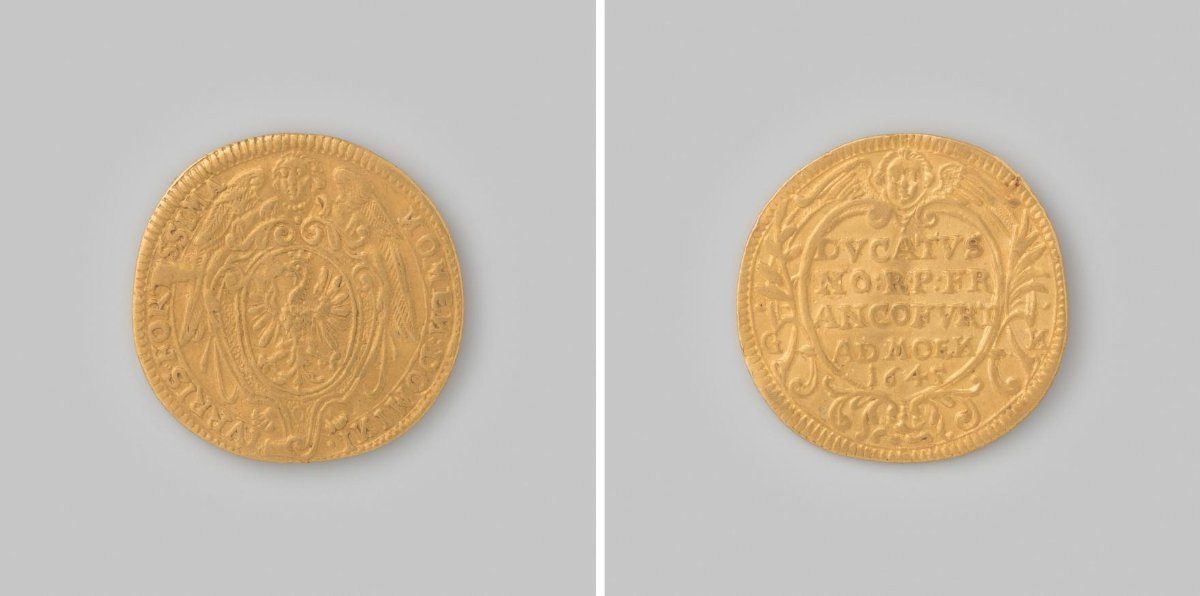
Imperial City of Frankfurt am Main, ducat, 1645
1645
Gold coin. Obverse: standing angel with the decorated oval coat of arms of the city in front. Reverse: head of an angel, below which an inscription in four lines within ornamentation. Date outside the ornamentation. The Rijksmuseum, Amsterdam, holds this object as KOG-MP-1-0760; its record gives material recorded as…
Partial type record
Rijksmuseum, Amsterdam
modern coins
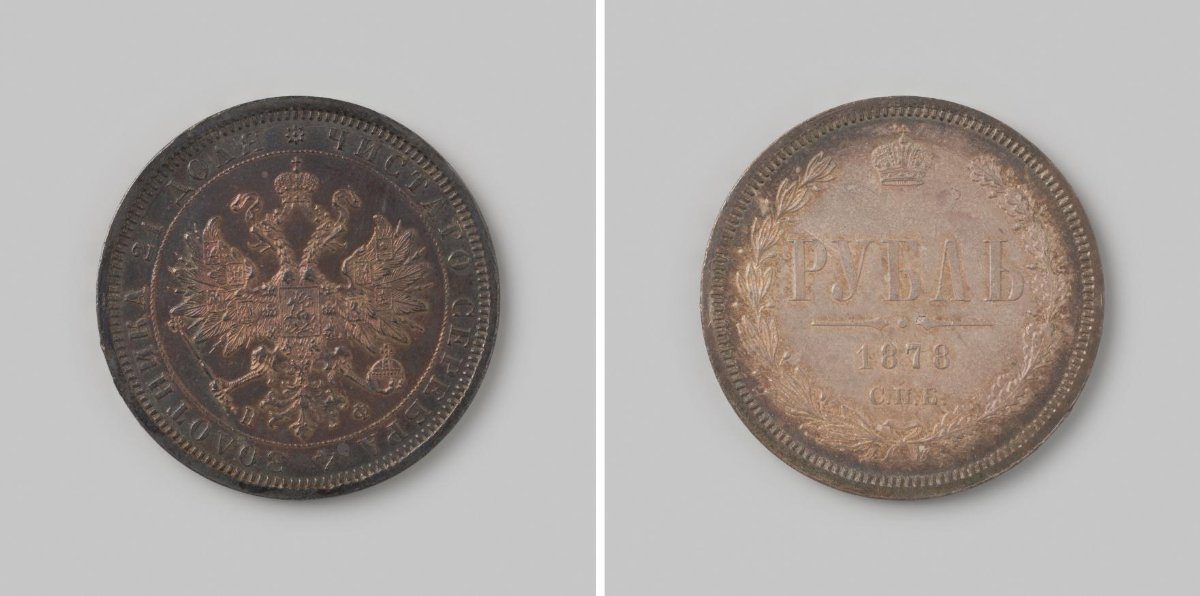
Imperial silver rouble
18th to 20th century
The Imperial silver rouble was the principal silver coin denomination of the Russian Empire. Although silver rouble coins had initially entered circulation in 1654, it was under the reign of Peter the Great that Russia completely shifted to domestically minted silver rouble coins. Through Peter's major monetary refo…
Partial type record
Rijksmuseum, Amsterdam
modern coins
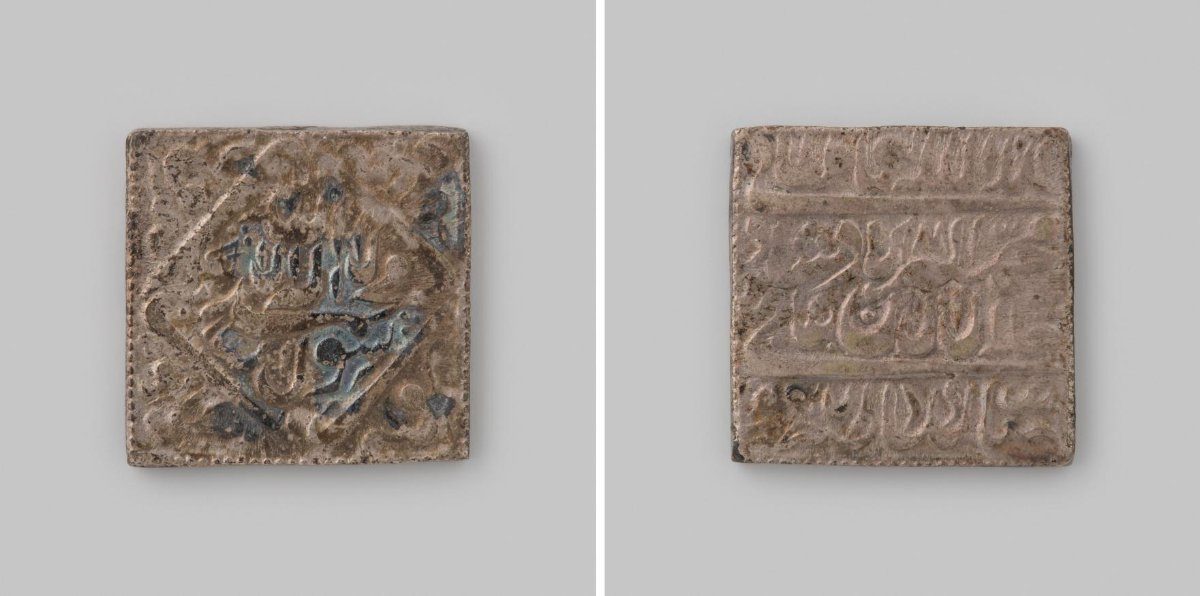
India, Akbar, rupee, 988 [=1580], Lahore.
1580
Silver square coin. Obverse: within a raised square, inscription in Arabic characters in three lines: first part of the Kalima [=profession of faith]. In the corners outside the square, inscriptions: names of the four successors of Muhammad. Reverse: inscription in Arabic characters in four lines with, among others,…
Partial type record
Rijksmuseum, Amsterdam
modern coins
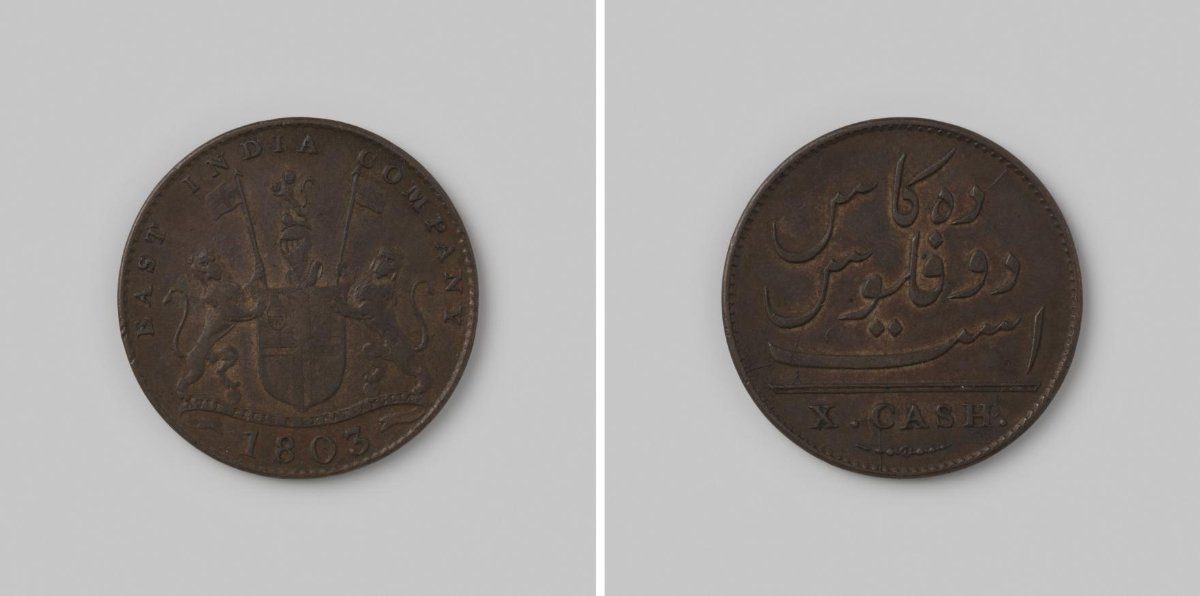
India, English East India Company (EIC), 10 cash for Madras, India, 1803
1803
Copper coin. Obverse: coat of arms of the EIC supported by two lions standing on a banner bearing an inscription, each holding in its paw an arrow bearing a flag, surmounted by a crest. Date below. Reverse: at top in three lines, value indication in Arabic characters. In exergue, value indication in English: X. Cash…
Partial type record
Rijksmuseum, Amsterdam
modern coins
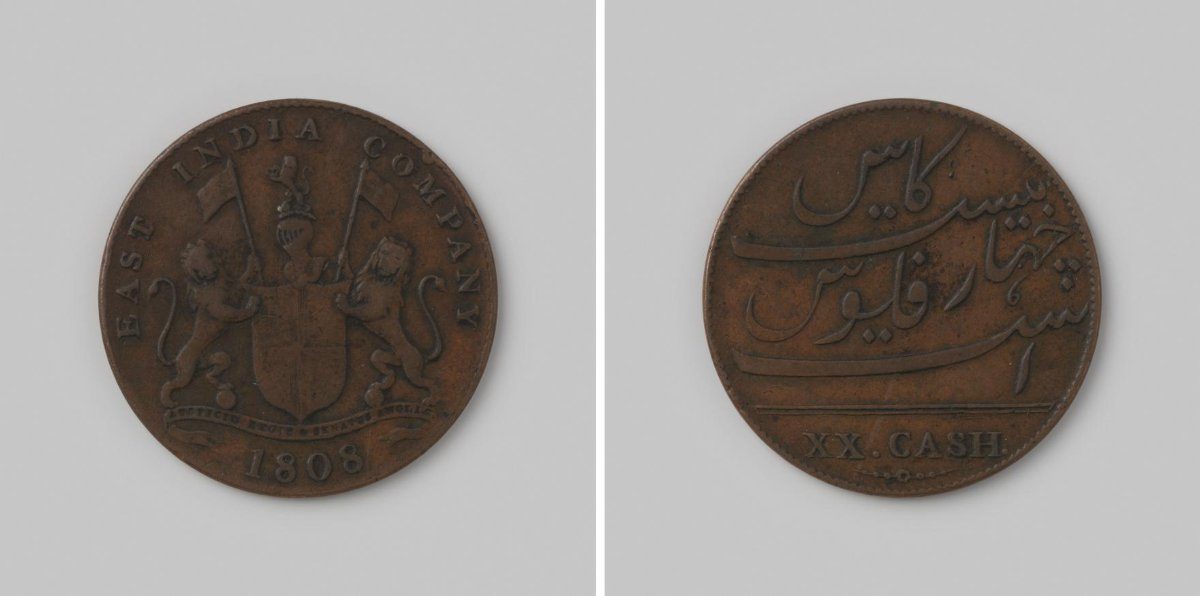
India, English East India Company (EIC), 20 cash for Madras, India, 1808
1808
Copper coin. Obverse: coat of arms of the EIC supported by two lions standing on a banner with inscription, holding an arrow with flag in paw, surmounted by crest. Year at the bottom. Reverse: at the top in three lines value indication in Arabic characters. In exergue value indication in English: XX. Cash. Plain edg…
Partial type record
Rijksmuseum, Amsterdam
modern coins
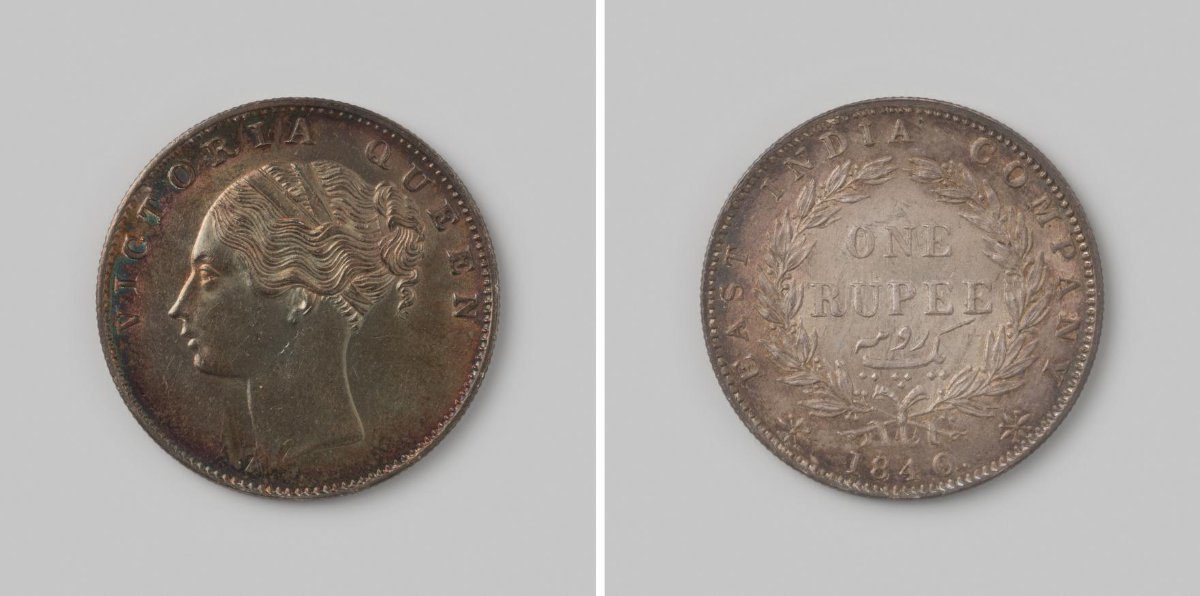
India, English East India Company (EIC), in the name of Queen Victoria, rupee, 1840
1840
Silver coin. Obverse: head of Queen Victoria facing left. Continuous circumscription. Reverse: between two tied branches, value indication in two lines: "one rupee", below which value indication in Arabic characters in one line. Year at the bottom. On ribbon at upper left, small crescent moon [= Calcutta]. Milled ed…
Partial type record
US Mint (coin), National Numismatic Collection (photograph by Jaclyn Nash) via Wikimedia Commons
modern coins
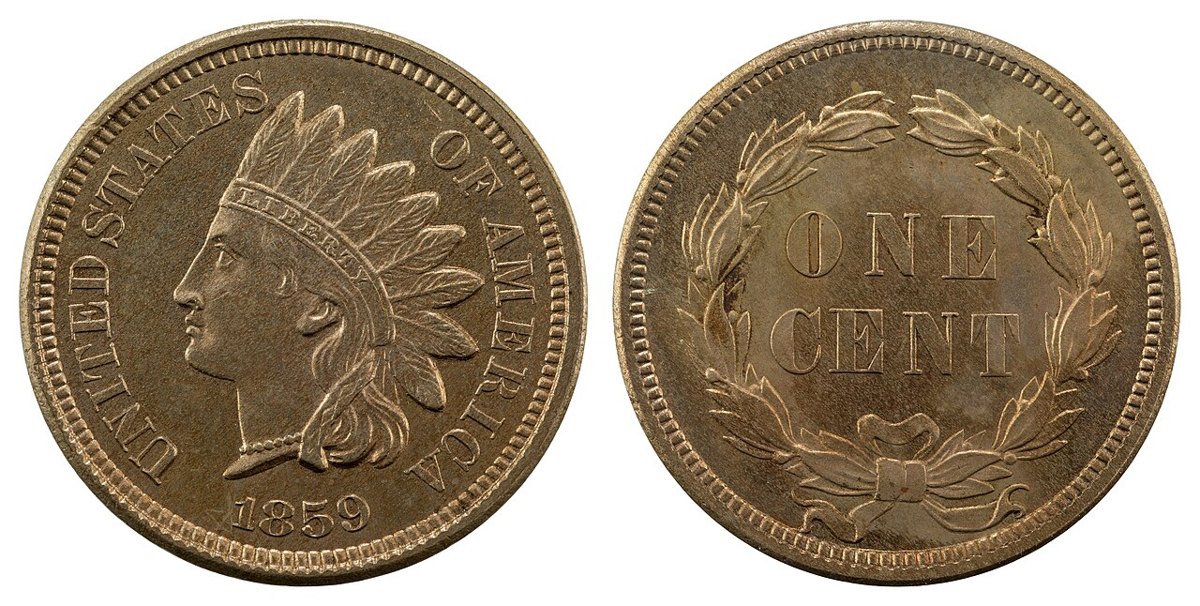
Indian Head cent
1859-1909
The Indian Head cent was a United States one-cent coin produced by the United States Bureau of the Mint from 1859 to 1909. Designed by James Barton Longacre, the Chief Engraver at the Philadelphia Mint, the coin was introduced to replace the short-lived Flying Eagle cent. That previous small cent had caused substant…
Partial type record
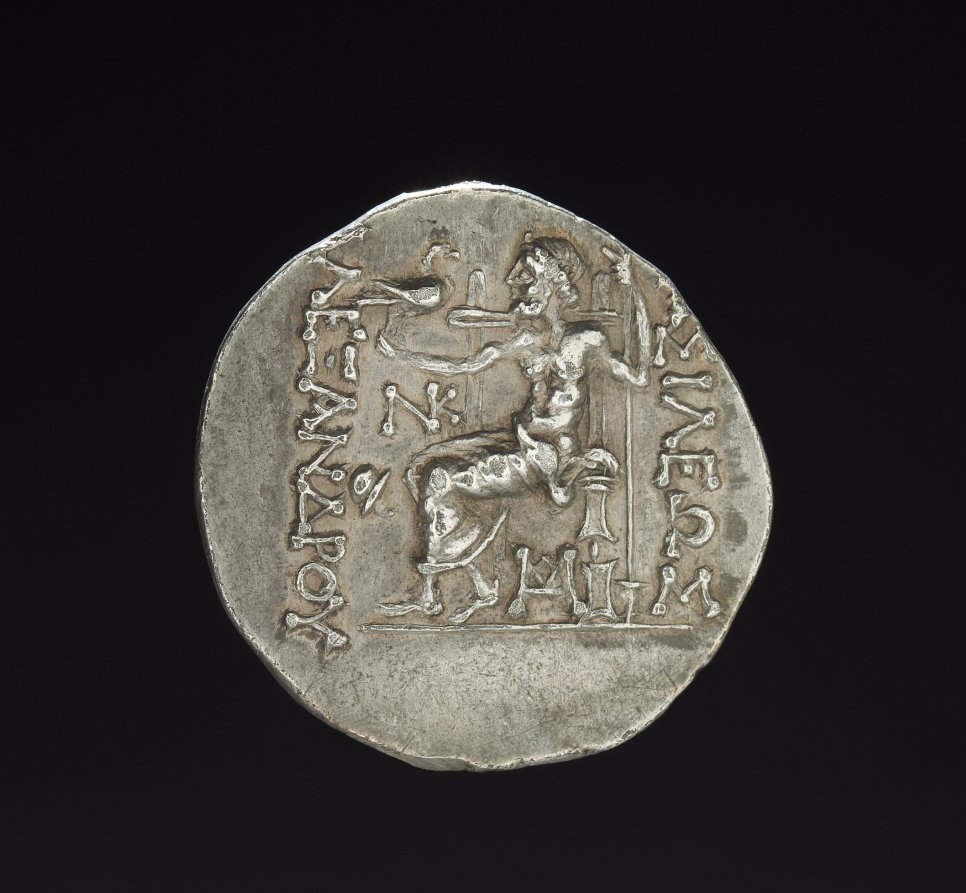
The Cleveland Museum of Art — Gift of Dr. Norman Zaworski
ancient coins
Indo-Greek Coin, Afghanistan, Bactria, 200–1 BCE
200–1 BCE
After Alexander of Macedon succeeded in conquering Egypt and Persia in 331 BC, his ambition to rule the known world led him further east across Bactria in Afghanistan, through the Hindu Kush mountain pass, and into India. There he succeeded in defeating all the local kings of the region until his men, on the brink o…
Partial type record
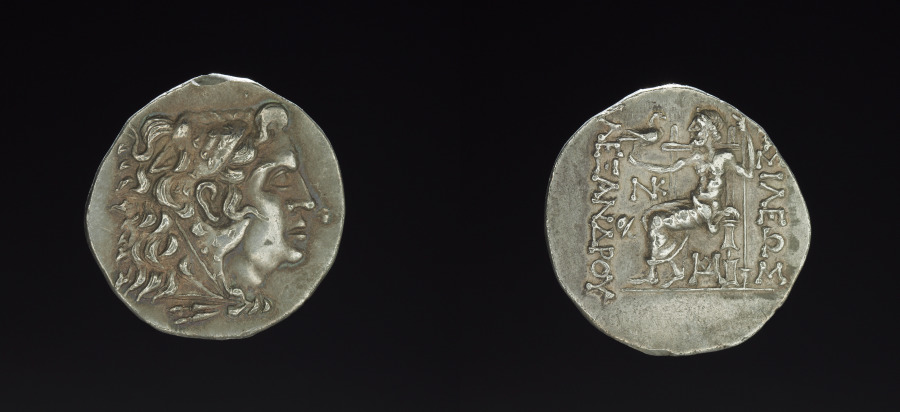
The Cleveland Museum of Art — Gift of Dr. Norman Zaworski
ancient coins
Indo-Greek Coin, Afghanistan, Bactria, c. 200–1 BCE (Cleveland Museum of Art, 2011.210)
c. 200–1 BCE
After Alexander of Macedon succeeded in conquering Egypt and Persia in 331 BC, his ambition to rule the known world led him further east across Bactria in Afghanistan, through the Hindu Kush mountain pass, and into India. There he succeeded in defeating all the local kings of the region until his men, on the brink o…
Partial type record
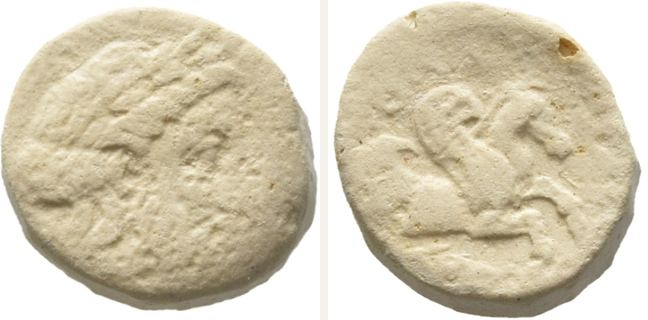
Photograph: BBAW; Corpus Nummorum (Berlin-Brandenburg Academy of Sciences and Humanities)
ancient coins
Iolla, bronze coin — Forepart of winged horse (CN type 3398)
c. 380–330 BC
Coin in bronze struck at Iolla in Mysia, dated c. 380–330 BC. Corpus Nummorum, the online type corpus of the Berlin-Brandenburg Academy of Sciences and Humanities, records it as CN type 3398 (period: Classical Period; issuing authority type: city). Obverse: Laureate head of Zeus, right. Reverse: Forepart of winged…
Research required
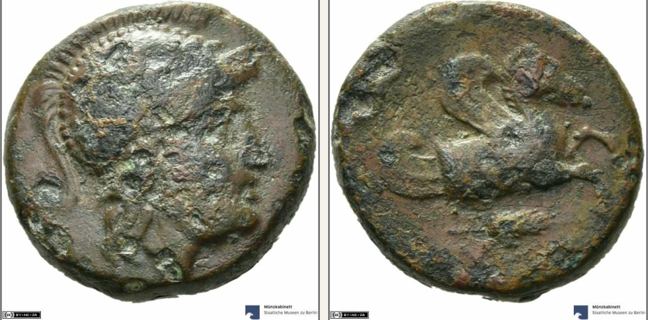
Photograph: Bernhard Weisser; Corpus Nummorum (Berlin-Brandenburg Academy of Sciences and Humanities); specimen held by ikmk.smb.museum
ancient coins
Iolla, bronze coin — Forepart of winged horse (CN type 3412)
c. 380–330 BC
Coin in bronze struck at Iolla in Mysia, dated c. 380–330 BC. Corpus Nummorum, the online type corpus of the Berlin-Brandenburg Academy of Sciences and Humanities, records it as CN type 3412 (period: Classical Period; issuing authority type: city). Obverse: Head of Athena to right with Attic helmet, decorated with…
Research required
Photograph: Corpus Nummorum; Corpus Nummorum (Berlin-Brandenburg Academy of Sciences and Humanities)
ancient coins
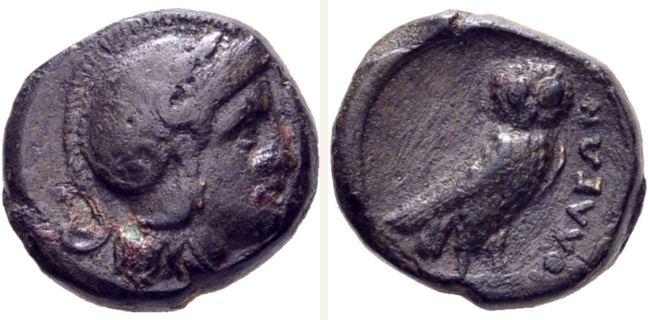
Iolla, bronze coin — Owl standing right (CN type 21490)
c. 380–330 BC
Coin in bronze struck at Iolla in Mysia, dated c. 380–330 BC. Corpus Nummorum, the online type corpus of the Berlin-Brandenburg Academy of Sciences and Humanities, records it as CN type 21490 (period: Classical Period; issuing authority type: city). Obverse: Head of Athena to right with Attic helmet, decorated with…
Research required
Alborzagros via Wikimedia Commons
modern coins
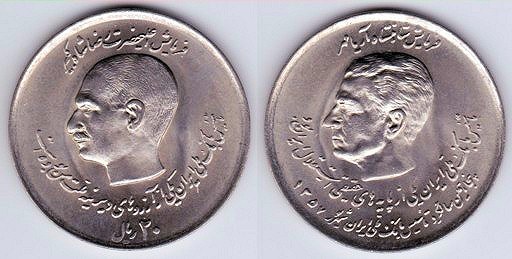
Iranian rial coinage, Pahlavi period (1932–1979)
1932–1979
The rial replaced the qiran at par in 1932 and was divided into 100 dinars. This entry covers rial coins struck in Iran under the Pahlavi shahs, from the first issues of 1932 until the Islamic Revolution of 1979. The first coins of 1932 were 1, 2, 5, 10 and 25 dinars and 1/2, 1, 2 and 5 rials, with the 1/2- to 5-ri…
Partial type record
Rijksmuseum, Amsterdam
modern coins
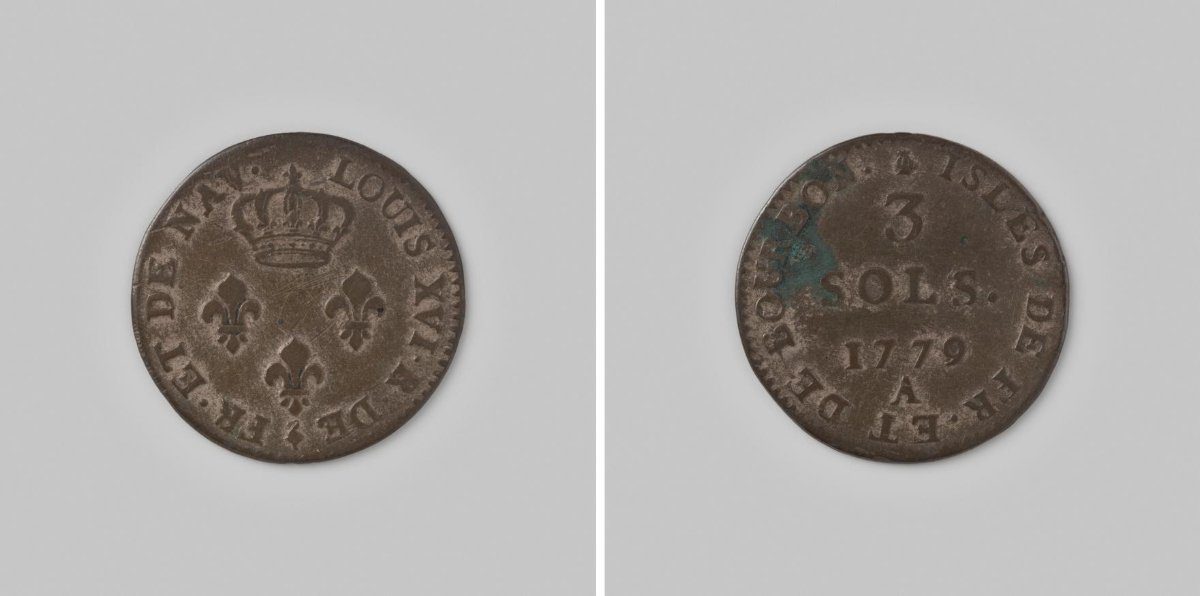
Isles de France et de Bourbon, Louis XVI, 3 sols, 1779
1779
Billon coin. Obverse: three fleurs-de-lis of the House of Bourbon, topped by a crown. Reverse: denomination indication in two lines. Below that the date, below which is the letter A [= Paris]. The Rijksmuseum, Amsterdam, holds this object as KOG-MP-1-5134; its record gives material recorded as silver (metal); techni…
Partial type record
Rijksmuseum, Amsterdam
modern coins
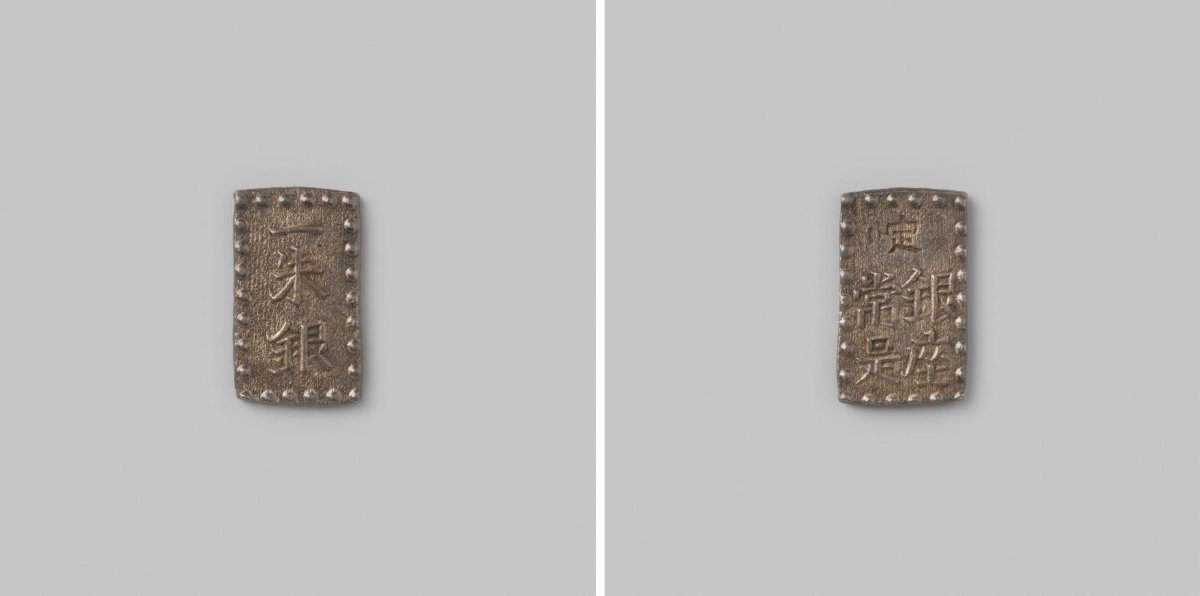
Isshu gin = silver 1 shu of the Empire of Japan, from the Kaei era
1846 - 1853
Silver coin. Obverse: two facing floral motifs, between which value designation: 1, indicated by a horizontal stroke on the right, and on the left the character for bu. Reverse: within a rectangle characters arranged vertically with the mark for the Tenpō era in the upper right. The Rijksmuseum, Amsterdam, holds thi…
Partial type record
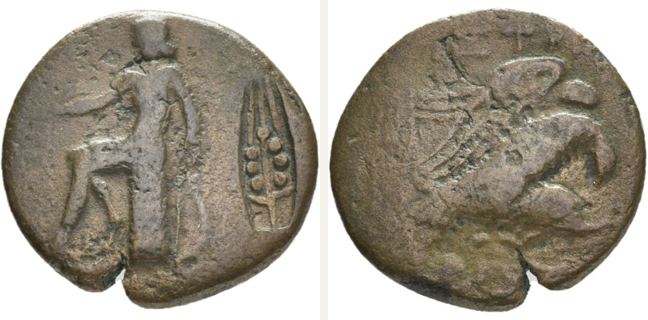
Photograph: Bernhard Weisser; Corpus Nummorum (Berlin-Brandenburg Academy of Sciences and Humanities); specimen held by ikmk.smb.museum
ancient coins
Istros, bronze coin — Sea-eagle on dolphin standing right (CN type 23180)
c. first half of the 1st century BC
Coin in bronze struck at Istros in Moesia inferior, dated c. first half of the 1st century BC. Corpus Nummorum, the online type corpus of the Berlin-Brandenburg Academy of Sciences and Humanities, records it as CN type 23180 (period: Hellenistic Period; issuing authority type: city). Obverse: Apollo seated left on…
Research required
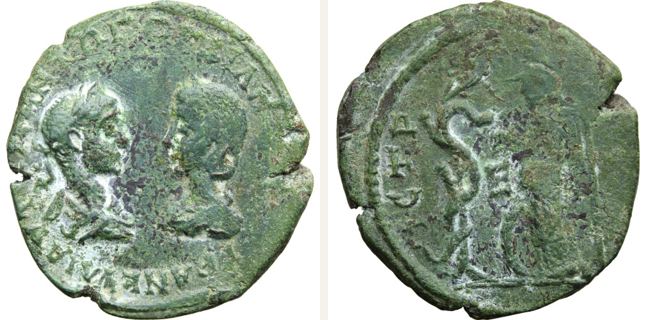
Photograph: Corpus Nummorum; Corpus Nummorum (Berlin-Brandenburg Academy of Sciences and Humanities)
ancient coins
Istros, Gordian III., bronze coin — Athena standing left (CN type 16361)
AD 238–244
Coin in bronze struck at Istros in Moesia inferior under Gordian III., dated AD 238–244. Corpus Nummorum, the online type corpus of the Berlin-Brandenburg Academy of Sciences and Humanities, records it as CN type 16361 (period: Roman Imperial Period; issuing authority type: city). Obverse: Confronted busts of Gordi…
Research required
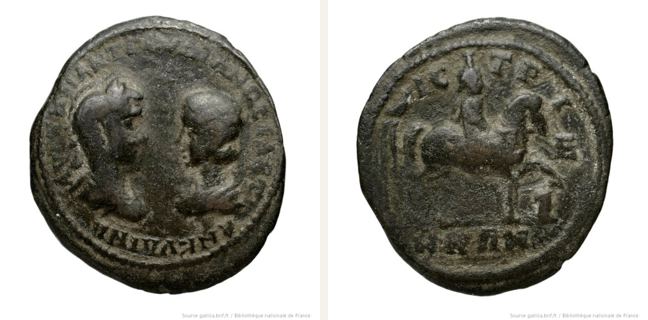
Photograph: Corpus Nummorum; Corpus Nummorum (Berlin-Brandenburg Academy of Sciences and Humanities); specimen held by gallica.bnf.fr
ancient coins
Istros, Gordian III., bronze coin — Bearded god with kalathos (Theos Megas (CN type 16364)
AD 238–244
Coin in bronze struck at Istros in Moesia inferior under Gordian III., dated AD 238–244. Corpus Nummorum, the online type corpus of the Berlin-Brandenburg Academy of Sciences and Humanities, records it as CN type 16364 (period: Roman Imperial Period; issuing authority type: city). Obverse: Confronted busts of Gordi…
Research required
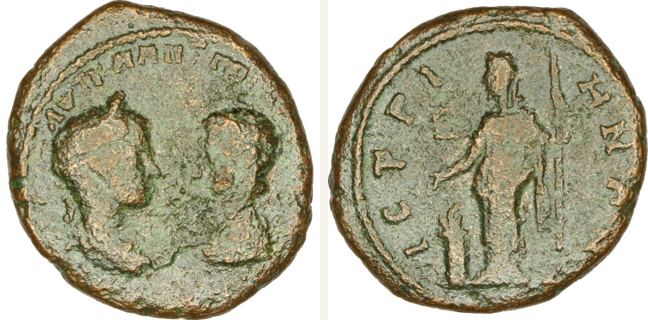
Photograph: Corpus Nummorum; Corpus Nummorum (Berlin-Brandenburg Academy of Sciences and Humanities)
ancient coins
Istros, Gordian III., bronze coin — Hera standing left (CN type 16362)
AD 238–244
Coin in bronze struck at Istros in Moesia inferior under Gordian III., dated AD 238–244. Corpus Nummorum, the online type corpus of the Berlin-Brandenburg Academy of Sciences and Humanities, records it as CN type 16362 (period: Roman Imperial Period; issuing authority type: city). Obverse: Confronted busts of Gordi…
Research required
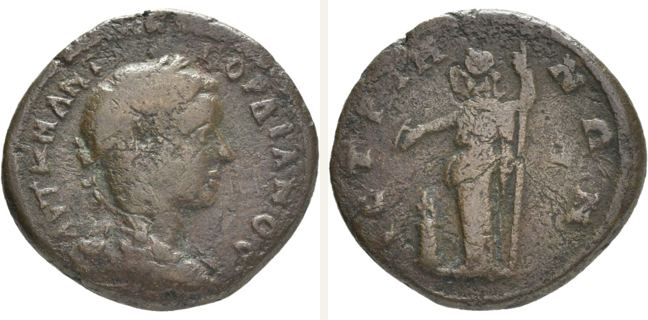
Photograph: Münzkabinett Berlin; Corpus Nummorum (Berlin-Brandenburg Academy of Sciences and Humanities)
ancient coins
Istros, Gordian III., bronze coin — Hera standing left (CN type 16369)
AD 238–244
Coin in bronze struck at Istros in Moesia inferior under Gordian III., dated AD 238–244. Corpus Nummorum, the online type corpus of the Berlin-Brandenburg Academy of Sciences and Humanities, records it as CN type 16369 (period: Roman Imperial Period; issuing authority type: city). Obverse: Laureate bust of Gordian…
Research required
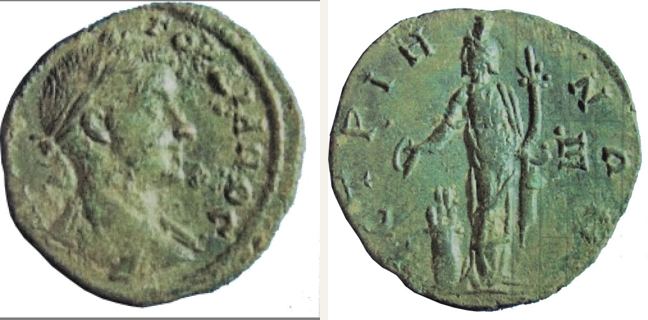
Photograph: Corpus Nummorum; Corpus Nummorum (Berlin-Brandenburg Academy of Sciences and Humanities)
ancient coins
Istros, Gordian III., bronze coin — Theos Megas standing left (CN type 16358)
AD 238–244
Coin in bronze struck at Istros in Moesia inferior under Gordian III., dated AD 238–244. Corpus Nummorum, the online type corpus of the Berlin-Brandenburg Academy of Sciences and Humanities, records it as CN type 16358 (period: Roman Imperial Period; issuing authority type: city). Obverse: Laureate bust of youthful…
Research required
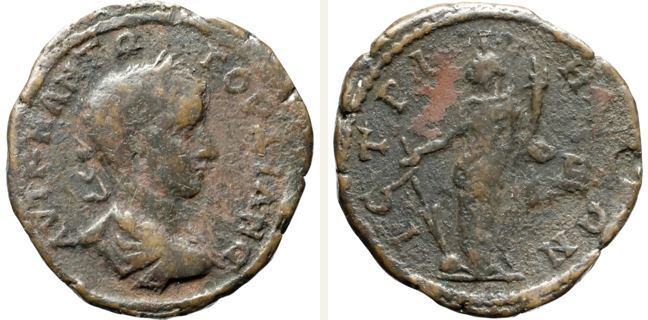
Photograph: Corpus Nummorum; Corpus Nummorum (Berlin-Brandenburg Academy of Sciences and Humanities)
ancient coins
Istros, Gordian III., bronze coin — Tyche standing left (CN type 16360)
AD 238–244
Coin in bronze struck at Istros in Moesia inferior under Gordian III., dated AD 238–244. Corpus Nummorum, the online type corpus of the Berlin-Brandenburg Academy of Sciences and Humanities, records it as CN type 16360 (period: Roman Imperial Period; issuing authority type: city). Obverse: Laureate bust of Gordian…
Research required
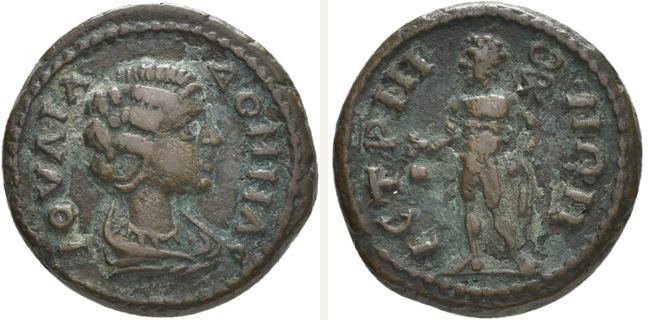
Photograph: Bernhard Weisser; Corpus Nummorum (Berlin-Brandenburg Academy of Sciences and Humanities); specimen held by ikmk.smb.museum
ancient coins
Istros, Iulia Domna, bronze coin — Hermes standing left (CN type 23185)
c. AD 193–217
Coin in bronze struck at Istros in Moesia inferior under Iulia Domna, dated c. AD 193–217. Corpus Nummorum, the online type corpus of the Berlin-Brandenburg Academy of Sciences and Humanities, records it as CN type 23185 (period: Roman Imperial Period; issuing authority type: city). Obverse: Draped bust of Julia Do…
Research required
Photograph: Bernhard Weisser; Corpus Nummorum (Berlin-Brandenburg Academy of Sciences and Humanities); specimen held by ikmk.smb.museum
ancient coins
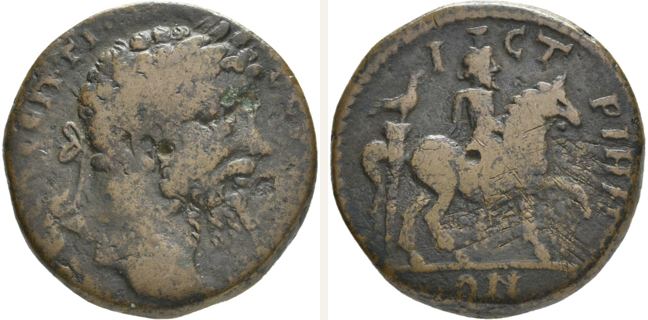
Istros, Septimius Severus, bronze coin — Bearded god with kalathos (or Theos Megas (CN type 23187)
c. AD 193–211
Coin in bronze struck at Istros in Moesia inferior under Septimius Severus, dated c. AD 193–211. Corpus Nummorum, the online type corpus of the Berlin-Brandenburg Academy of Sciences and Humanities, records it as CN type 23187 (period: Roman Imperial Period; issuing authority type: city). Obverse: Laureate head of…
Research required
Photograph: Bernhard Weisser; Corpus Nummorum (Berlin-Brandenburg Academy of Sciences and Humanities); specimen held by ikmk.smb.museum
ancient coins
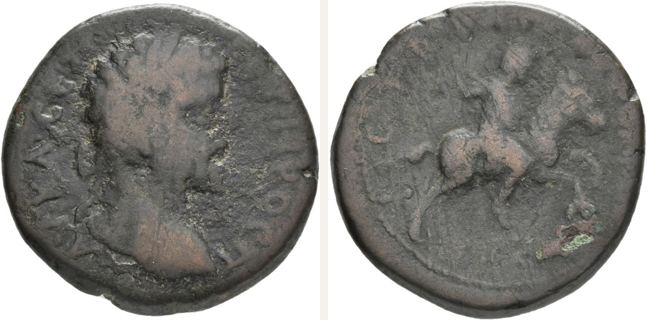
Istros, Septimius Severus, bronze coin — Caesar Geta riding a horse to the right with a spear raised in (CN type 23188)
c. AD 193–211
Coin in bronze struck at Istros in Moesia inferior under Septimius Severus, dated c. AD 193–211. Corpus Nummorum, the online type corpus of the Berlin-Brandenburg Academy of Sciences and Humanities, records it as CN type 23188 (period: Roman Imperial Period; issuing authority type: city). Obverse: Laureate head of…
Research required
Photograph: Bernhard Weisser; Corpus Nummorum (Berlin-Brandenburg Academy of Sciences and Humanities); specimen held by ikmk.smb.museum
ancient coins
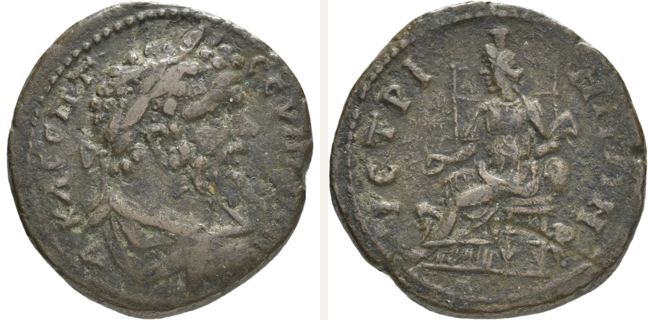
Istros, Septimius Severus, bronze coin — Turreted Cybele enthroned left (CN type 23189)
c. AD 193–211
Coin in bronze struck at Istros in Moesia inferior under Septimius Severus, dated c. AD 193–211. Corpus Nummorum, the online type corpus of the Berlin-Brandenburg Academy of Sciences and Humanities, records it as CN type 23189 (period: Roman Imperial Period; issuing authority type: city). Obverse: Laureate bust of…
Research required
The Bidder / Invaluable
modern coins
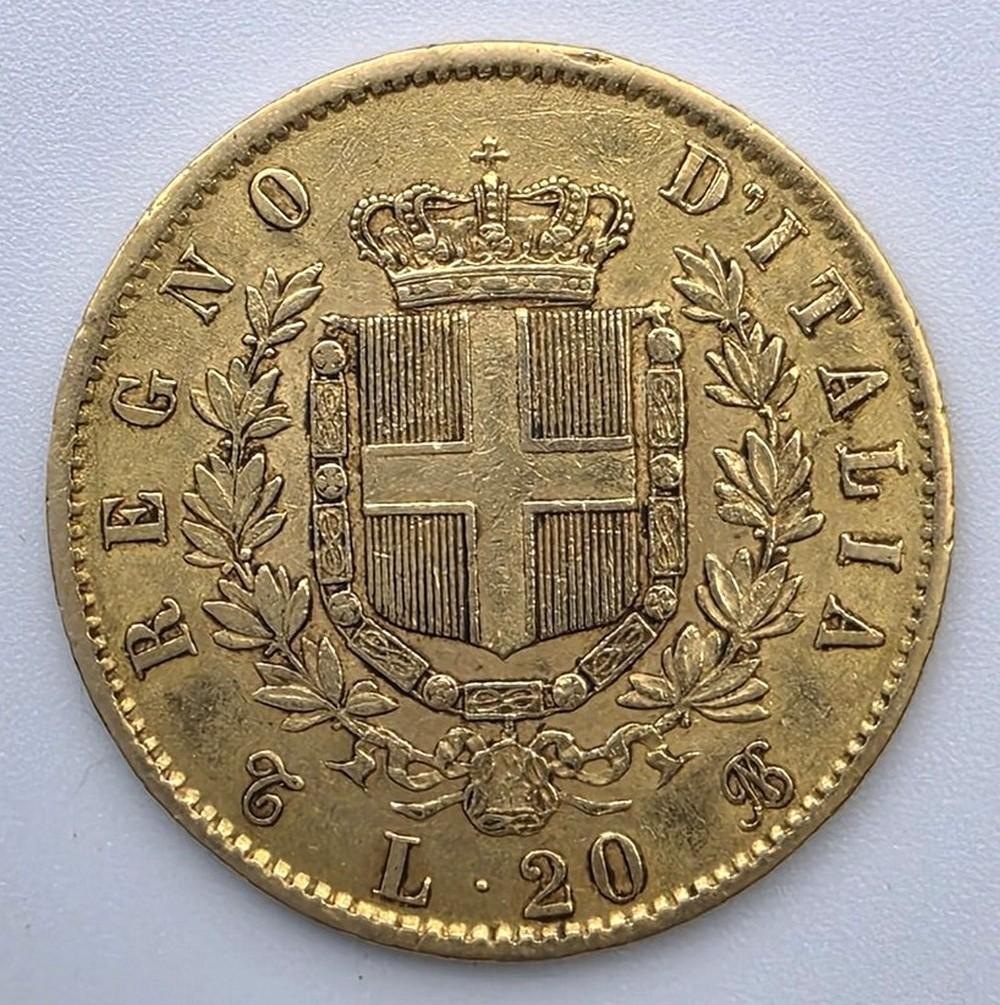
ITALIAN GOLD COIN — 20 LIRE
1862
Mint: Turin (indicated by the letter T on the reverse, to the left of the face value). 21.6-carat gold (90%). Weight: 6.45 g. Obverse: a portrait of King Vittorio Emanuele II with his characteristic mustache and beard, surrounded by the royal Latin inscription and the striking year 1862. At the base of the king's ne…
Partial type record