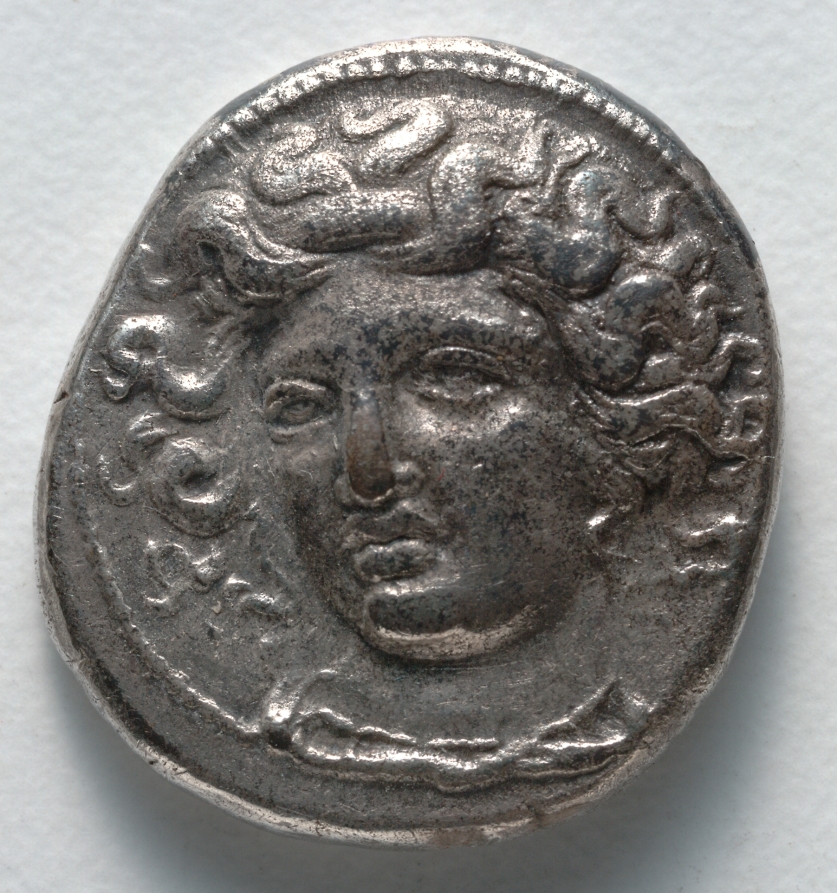
Catalogue
Ancient Coins
Greek, Roman, Byzantine, Celtic, Persian, Indian, Chinese and other pre-medieval coinages.
Scope
Greek, Roman provincial, Roman imperial and other pre-medieval coinage. Each entry describes a coin type: its obverse and reverse designs, the legends that name the issuer, the denomination and metal, and the standard reference under which it is catalogued.
The section was curated in October 2026: near-identical catalogue variants that differ only in minor marks are consolidated into one entry and listed as varieties on it, and each ruler, mint and city keeps a balanced selection of its best-documented types.
What to record when identifying
- Obverse portrait or emblem and its legend
- Reverse type, legend and any field marks
- Mint signature or exergue mark
- Denomination, metal and recorded weight
Published entries
3,128
Individual types and documented families
With photographs
100%
3,128 with a credited real-object photo
Dated span
600 BC – 1023
2,247 entries with their own date
Verified or well documented
0
Highest two confidence levels
Catalogue entries (3,128)
Filter by era, country, maker or material1–48 of 3,128 entries
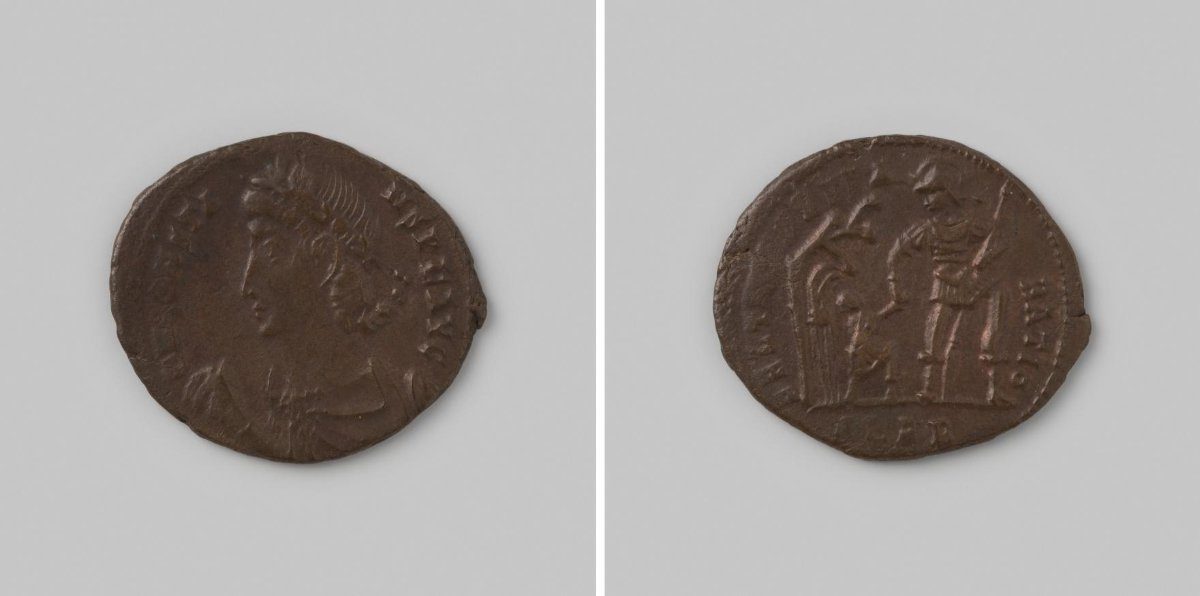
Rijksmuseum, Amsterdam
ancient coins
(small) AE2 from the Roman Empire of Constans I, 337-350
337 - 350
Reverse: soldier advancing right, leading a child to his left out of a hut under a tree, spear in left hand, in the exergue the letters ALEF. The Rijksmuseum, Amsterdam, holds this object as KOG-MP-1-0119B; its record gives material recorded as bronze (metal); technique striking (metalworking); measurements diameter…
Partial type record
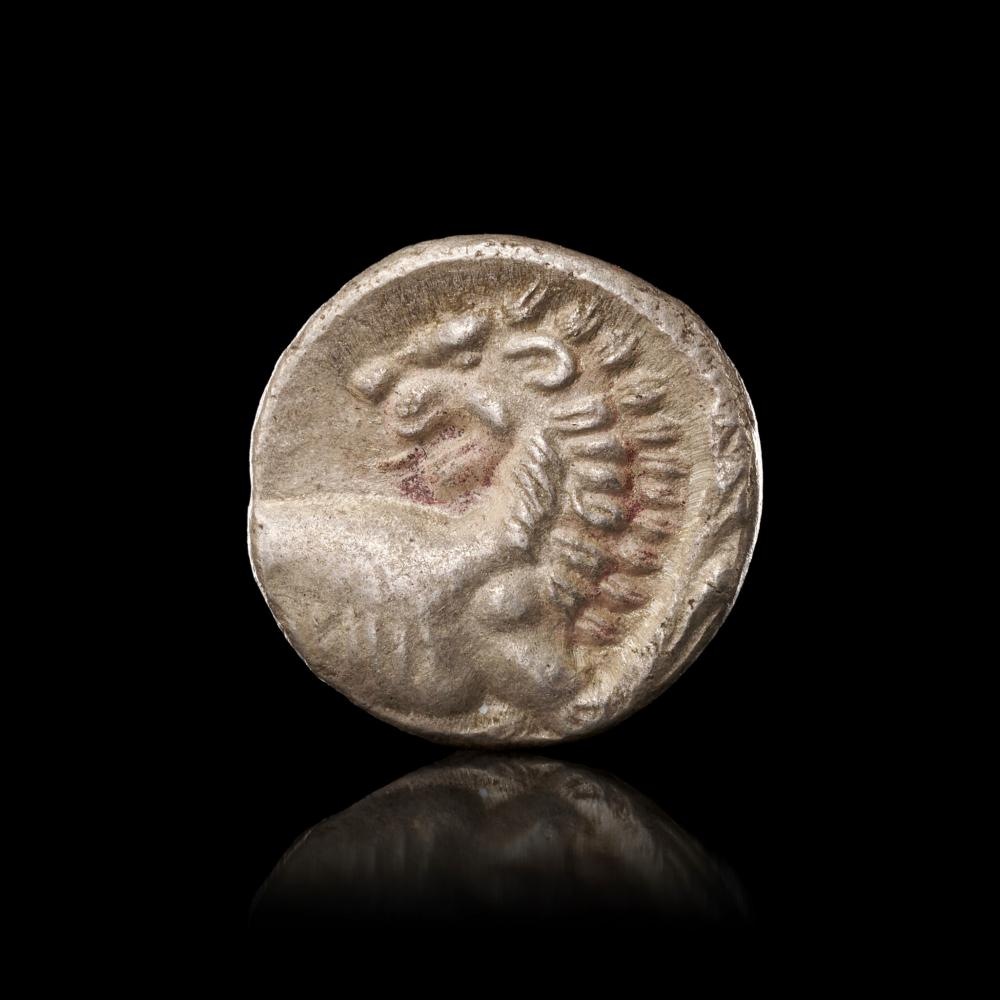
PLAKAS / Invaluable
ancient coins
A GREEK SILVER FRACTION WITH A LION
CIRCA 5TH-4TH CENTURY B.C.
Thrace, Chersonesos, Hemidrachm Of small module and irregular flan, the obverse struck in high relief with a stylised male head in profile to the right, the hair rendered as thick parallel locks sweeping back from the brow and bound by a laurel wreath whose leaves are indicated by raised oblique strokes along the cr…
Partial type record
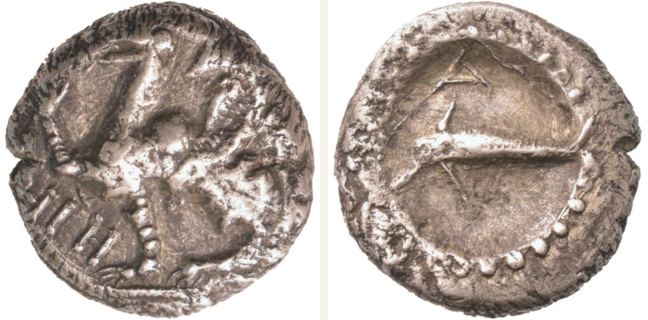
Photograph: Vladimir F. Stolba; Corpus Nummorum (Berlin-Brandenburg Academy of Sciences and Humanities)
ancient coins
Abdera, Drachm (tetrobol) — Dolphin swimming left (CN type 23066)
Drachm (tetrobol) in silver struck at Abdera in Thrace. Corpus Nummorum, the online type corpus of the Berlin-Brandenburg Academy of Sciences and Humanities, records it as CN type 23066 (issuing authority type: city). Obverse: Griffin leaping left. Legend: ΗΙΗ. Reverse: Dolphin swimming left. Measured specimens gi…
Research required
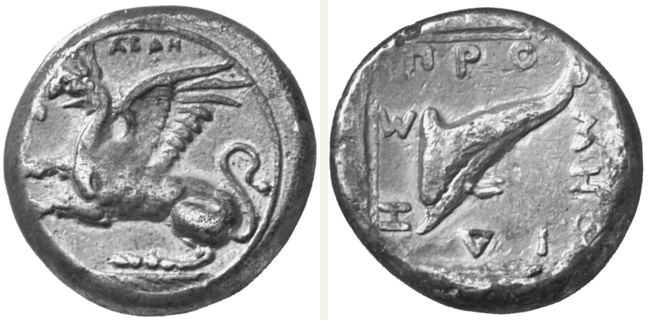
Photograph: Lutz-Jürgen Lübke (Lübke & Wiedemann); Corpus Nummorum (Berlin-Brandenburg Academy of Sciences and Humanities)
ancient coins
Abdera, stater — Dolphin swimming diagonally left within linear frame (CN type 20390)
c. 395–360 BC
Stater in silver struck at Abdera in Thrace, dated c. 395–360 BC. Corpus Nummorum, the online type corpus of the Berlin-Brandenburg Academy of Sciences and Humanities, records it as CN type 20390 (period: Classical Period; issuing authority type: city). Obverse: Griffin leaping left. Legend: ΑΒΔ(Η). Reverse: Dolphi…
Research required
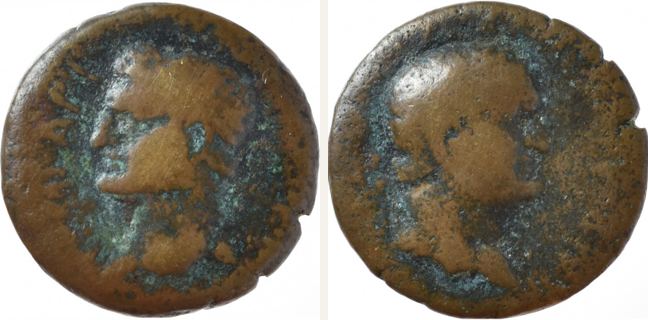
Photograph: Bernisches Historisches Museum; Corpus Nummorum (Berlin-Brandenburg Academy of Sciences and Humanities)
ancient coins
Abdera, Vespasian, bronze coin — Laureate head of Domitian (CN type 22477)
AD 69–79
Coin in bronze struck at Abdera in Thrace under Vespasian, dated AD 69–79. Corpus Nummorum, the online type corpus of the Berlin-Brandenburg Academy of Sciences and Humanities, records it as CN type 22477 (period: Roman Imperial Period; issuing authority type: city). Obverse: Laureate head of Vespasian, right. Lege…
Research required
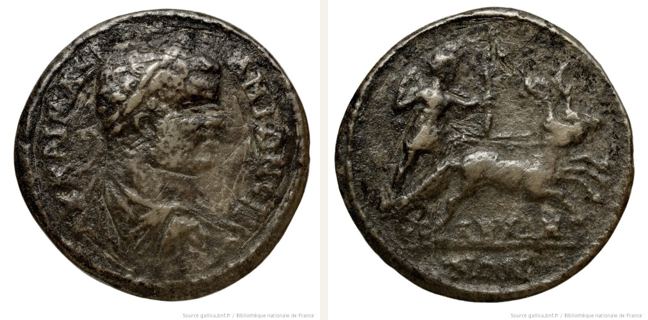
Photograph: Bibliothèque nationale de France, Paris; Corpus Nummorum (Berlin-Brandenburg Academy of Sciences and Humanities)
ancient coins
Abydos, Caracalla, bronze coin — Artemis standing in biga drawn by galloping stags (CN type 3488)
AD 198–217
Coin in bronze struck at Abydos in Troas under Caracalla, dated AD 198–217. Corpus Nummorum, the online type corpus of the Berlin-Brandenburg Academy of Sciences and Humanities, records it as CN type 3488 (period: Roman Imperial Period; issuing authority type: city). Obverse: Laureate bust of bearded Caracalla, rig…
Research required
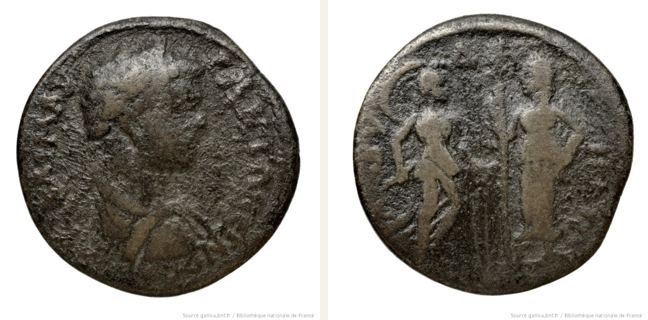
Photograph: Bibliothèque nationale de France, Paris; Corpus Nummorum (Berlin-Brandenburg Academy of Sciences and Humanities)
ancient coins
Abydos, Caracalla, bronze coin — Demeter standing left (CN type 3480)
AD 198–217
Coin in bronze struck at Abydos in Troas under Caracalla, dated AD 198–217. Corpus Nummorum, the online type corpus of the Berlin-Brandenburg Academy of Sciences and Humanities, records it as CN type 3480 (period: Roman Imperial Period; issuing authority type: city). Obverse: Laureate bust of youthful Caracalla, ri…
Research required
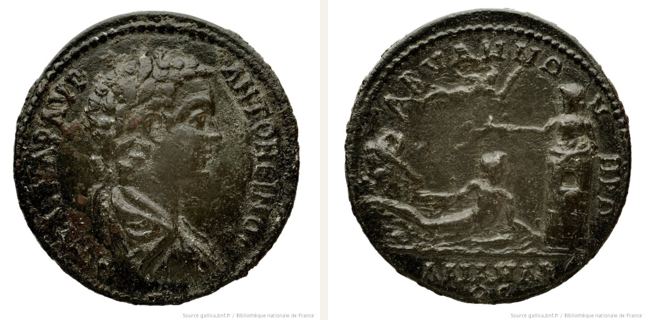
Photograph: Bibliothèque nationale de France, Paris; Corpus Nummorum (Berlin-Brandenburg Academy of Sciences and Humanities)
ancient coins
Abydos, Caracalla, bronze coin — Hero and Leander (CN type 3478)
AD 198–217
Coin in bronze struck at Abydos in Troas under Caracalla, dated AD 198–217. Corpus Nummorum, the online type corpus of the Berlin-Brandenburg Academy of Sciences and Humanities, records it as CN type 3478 (period: Roman Imperial Period; issuing authority type: city). Obverse: Laureate bust of Caracalla, right, wear…
Research required
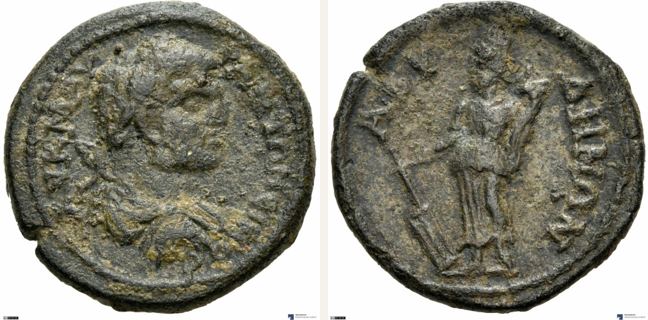
Photograph: Münzkabinett Berlin; Corpus Nummorum (Berlin-Brandenburg Academy of Sciences and Humanities); specimen held by ikmk.smb.museum
ancient coins
Abydos, Caracalla, bronze coin — Tyche standing facing (CN type 3830)
AD 198–217
Coin in bronze struck at Abydos in Troas under Caracalla, dated AD 198–217. Corpus Nummorum, the online type corpus of the Berlin-Brandenburg Academy of Sciences and Humanities, records it as CN type 3830 (period: Roman Imperial Period; issuing authority type: city). Obverse: Laureate bust of Caracalla, right, wear…
Research required
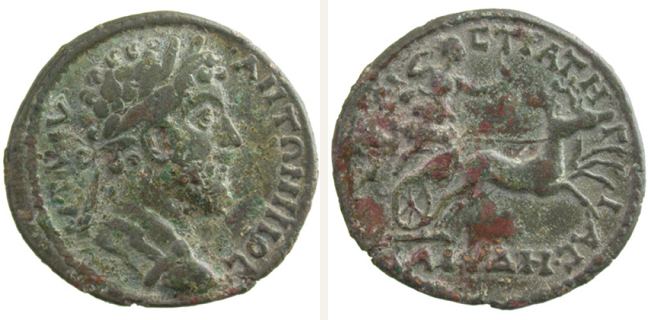
Photograph: Staatliche Münzsammlung München; Corpus Nummorum (Berlin-Brandenburg Academy of Sciences and Humanities)
ancient coins
Abydos, Marc Aurel, bronze coin — Artemis standing in biga drawn by galloping stags (CN type 3432)
AD 161–180
Coin in bronze struck at Abydos in Troas under Marc Aurel, dated AD 161–180. Corpus Nummorum, the online type corpus of the Berlin-Brandenburg Academy of Sciences and Humanities, records it as CN type 3432 (period: Roman Imperial Period; issuing authority type: city). Obverse: Laureate bust of bearded Marcus Aureli…
Research required
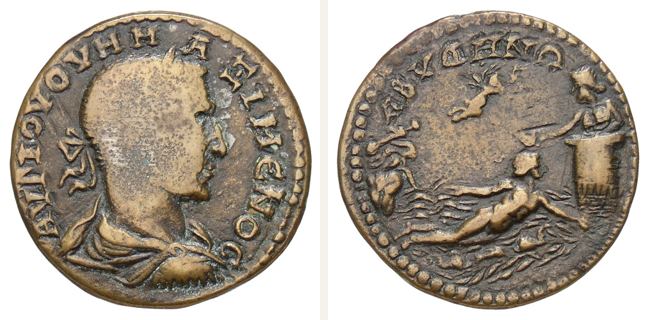
Photograph: Reinhard Saczewski; Corpus Nummorum (Berlin-Brandenburg Academy of Sciences and Humanities); specimen held by ikmk.smb.museum
ancient coins
Abydos, Maximinus Thrax, bronze coin — Hero and Leander (CN type 19008)
AD 235–238
Coin in bronze struck at Abydos in Troas under Maximinus Thrax, dated AD 235–238. Corpus Nummorum, the online type corpus of the Berlin-Brandenburg Academy of Sciences and Humanities, records it as CN type 19008 (period: Roman Imperial Period; issuing authority type: city). Obverse: Laureate bust of Maximinus Thrax…
Research required
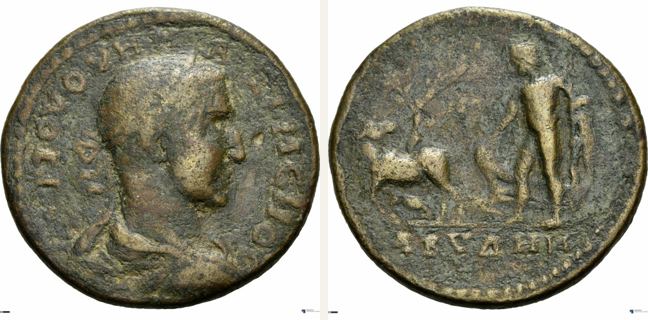
Photograph: Münzkabinett Berlin; Corpus Nummorum (Berlin-Brandenburg Academy of Sciences and Humanities); specimen held by ikmk.smb.museum
ancient coins
Abydos, Maximinus Thrax, bronze coin — Nude hero Abydos standing left (CN type 3514)
AD 235–238
Coin in bronze struck at Abydos in Troas under Maximinus Thrax, dated AD 235–238. Corpus Nummorum, the online type corpus of the Berlin-Brandenburg Academy of Sciences and Humanities, records it as CN type 3514 (period: Roman Imperial Period; issuing authority type: city). Obverse: Laureate bust of Maximinus Thrax,…
Research required
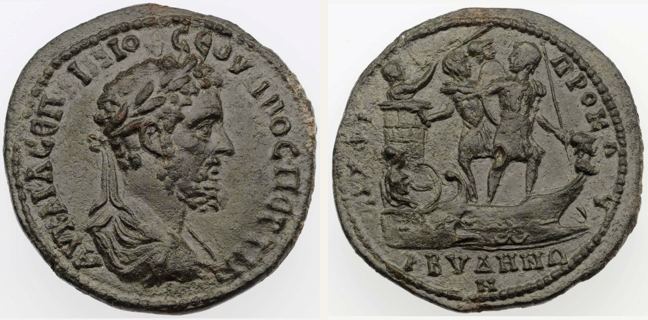
Photograph: Museum of Fine Arts Boston; Corpus Nummorum (Berlin-Brandenburg Academy of Sciences and Humanities)
ancient coins
Abydos, Septimius Severus, bronze coin — Warrior standing right at prow of galley (CN type 3454)
AD 193–211
Coin in bronze struck at Abydos in Troas under Septimius Severus, dated AD 193–211. Corpus Nummorum, the online type corpus of the Berlin-Brandenburg Academy of Sciences and Humanities, records it as CN type 3454 (period: Roman Imperial Period; issuing authority type: city). Obverse: Laureate bust of Septimius Seve…
Research required
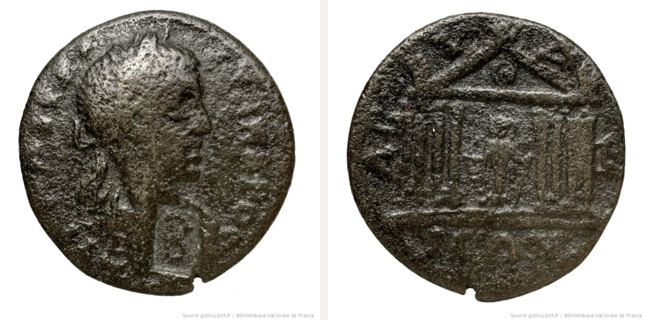
Photograph: Bibliothèque nationale de France, Paris; Corpus Nummorum (Berlin-Brandenburg Academy of Sciences and Humanities)
ancient coins
Abydos, Severus Alexander, bronze coin — Façade of an octastyle temple on crepidoma (CN type 3503)
AD 222–235
Coin in bronze struck at Abydos in Troas under Severus Alexander, dated AD 222–235. Corpus Nummorum, the online type corpus of the Berlin-Brandenburg Academy of Sciences and Humanities, records it as CN type 3503 (period: Roman Imperial Period; issuing authority type: city). Obverse: Laureate bust of Severus Alexan…
Research required
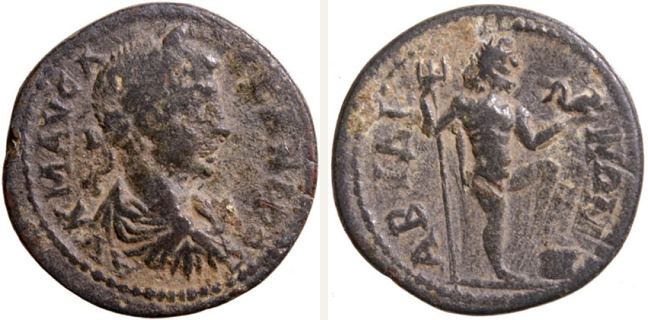
Photograph: Fitzwilliam Museum, Cambridge; Corpus Nummorum (Berlin-Brandenburg Academy of Sciences and Humanities)
ancient coins
Abydos, Severus Alexander, bronze coin — Nude Poseidon standing right (CN type 3501)
AD 222–235
Coin in bronze struck at Abydos in Troas under Severus Alexander, dated AD 222–235. Corpus Nummorum, the online type corpus of the Berlin-Brandenburg Academy of Sciences and Humanities, records it as CN type 3501 (period: Roman Imperial Period; issuing authority type: city). Obverse: Laureate bust of Severus Alexan…
Research required
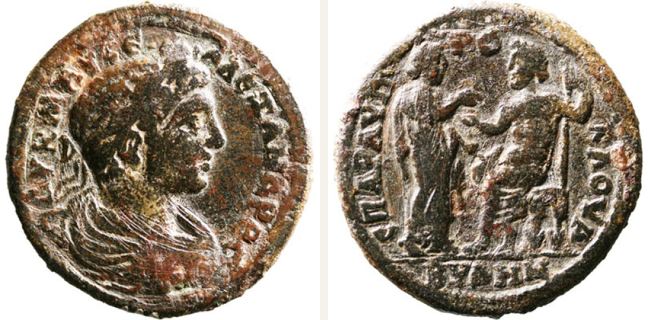
Photograph: Kunsthistorisches Museum Wien; Corpus Nummorum (Berlin-Brandenburg Academy of Sciences and Humanities)
ancient coins
Abydos, Severus Alexander, bronze coin — Zeus enthroned left (CN type 3499)
AD 222–235
Coin in bronze struck at Abydos in Troas under Severus Alexander, dated AD 222–235. Corpus Nummorum, the online type corpus of the Berlin-Brandenburg Academy of Sciences and Humanities, records it as CN type 3499 (period: Roman Imperial Period; issuing authority type: city). Obverse: Laureate bust of Severus Alexan…
Research required
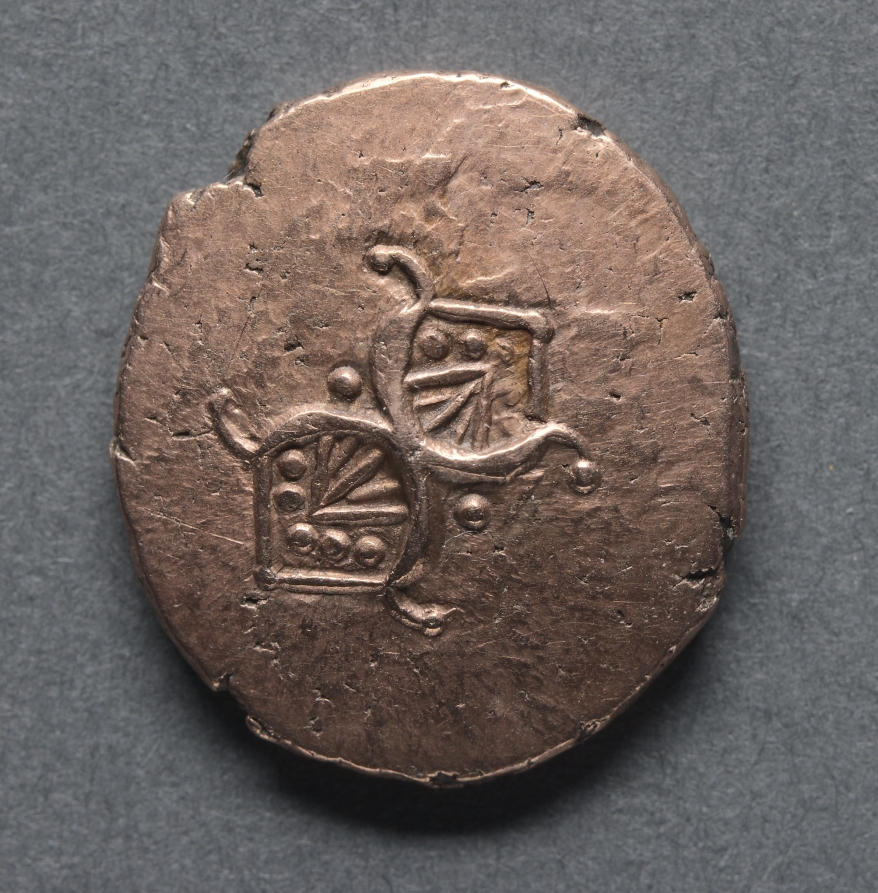
Cleveland Museum of Art
ancient coins
Addedomaros Stater: Crescents (obverse); Horse, Branch, and Spiral Sun (Cleveland Museum of Art 1969.147)
50 BCE–10 CE
Addedomaros was a king of the tribe of Trinovantes, whose territory comprised parts of Essex and Suffolk, with its capital at Camulodunum, now known as Colchester. As a ruler, Addedomaros is completely unknown to history and thus only exists through his coins. Julius Caesar mentions that the Trinovantes were enemies…
Partial type record
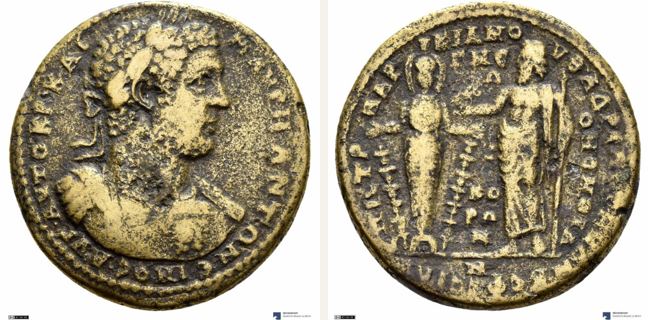
Photograph: Bernhard Weisser; Corpus Nummorum (Berlin-Brandenburg Academy of Sciences and Humanities); specimen held by ikmk.smb.museum
ancient coins
Adramyttion, Caracalla, bronze coin — Artemis and Zeus (CN type 2960)
c. AD 205–217
Coin in bronze struck at Adramyttion in Mysia under Caracalla, dated c. AD 205–217. Corpus Nummorum, the online type corpus of the Berlin-Brandenburg Academy of Sciences and Humanities, records it as CN type 2960 (period: Roman Imperial Period; issuing authority type: city). Obverse: Laureate bust of bearded Caraca…
Research required
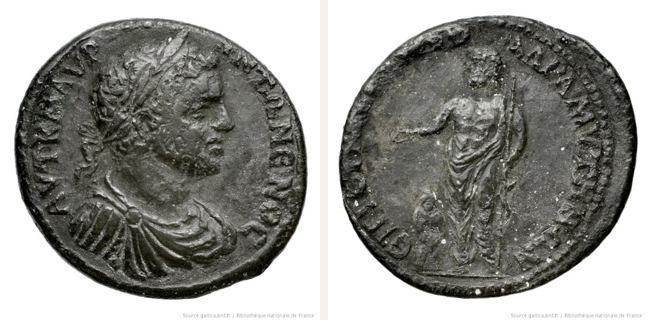
Photograph: Corpus Nummorum; Corpus Nummorum (Berlin-Brandenburg Academy of Sciences and Humanities); specimen held by gallica.bnf.fr
ancient coins
Adramyttion, Caracalla, bronze coin — Asclepius standing facing (CN type 3043)
AD 218–222
Coin in bronze struck at Adramyttion in Mysia under Caracalla, dated AD 218–222. Corpus Nummorum, the online type corpus of the Berlin-Brandenburg Academy of Sciences and Humanities, records it as CN type 3043 (period: Roman Imperial Period; issuing authority type: city). Obverse: Laureate bust of Elagabalus, right…
Research required
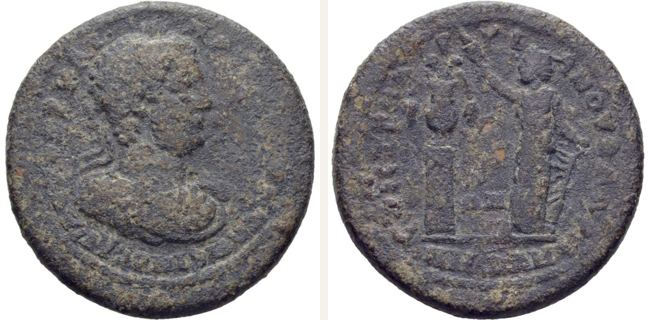
Photograph: Gerhard Plankenhorn; Corpus Nummorum (Berlin-Brandenburg Academy of Sciences and Humanities)
ancient coins
Adramyttion, Caracalla, bronze coin — Demeter standing left (CN type 2725)
c. AD 206–211
Coin in bronze struck at Adramyttion in Mysia under Caracalla, dated c. AD 206–211. Corpus Nummorum, the online type corpus of the Berlin-Brandenburg Academy of Sciences and Humanities, records it as CN type 2725 (period: Roman Imperial Period; issuing authority type: city). Obverse: Laureate bust of Caracalla, rig…
Research required
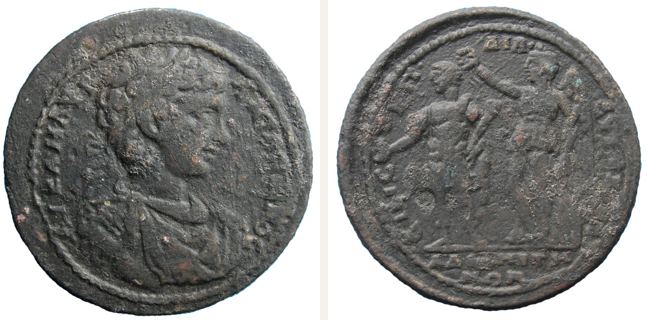
Photograph: Corpus Nummorum; Corpus Nummorum (Berlin-Brandenburg Academy of Sciences and Humanities)
ancient coins
Adramyttion, Caracalla, bronze coin — Emperor and Nike (CN type 3034)
c. AD 198–206
Coin in bronze struck at Adramyttion in Mysia under Caracalla, dated c. AD 198–206. Corpus Nummorum, the online type corpus of the Berlin-Brandenburg Academy of Sciences and Humanities, records it as CN type 3034 (period: Roman Imperial Period; issuing authority type: city). Obverse: Laureate bust of Caracalla, rig…
Research required
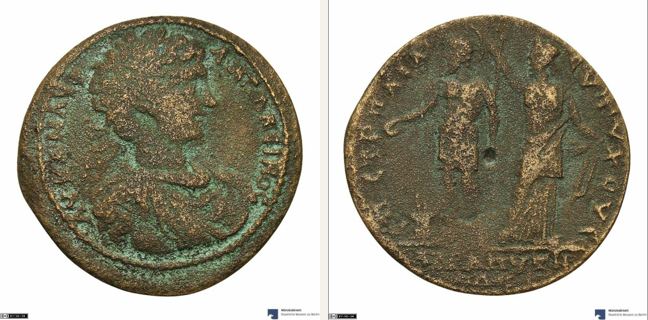
Photograph: Bernhard Weisser; Corpus Nummorum (Berlin-Brandenburg Academy of Sciences and Humanities); specimen held by ikmk.smb.museum
ancient coins
Adramyttion, Caracalla, bronze coin — Emperor in military attire standing left (CN type 2723)
c. AD 198–206
Coin in bronze struck at Adramyttion in Mysia under Caracalla, dated c. AD 198–206. Corpus Nummorum, the online type corpus of the Berlin-Brandenburg Academy of Sciences and Humanities, records it as CN type 2723 (period: Roman Imperial Period; issuing authority type: city). Obverse: Laureate bust of Caracalla, rig…
Research required
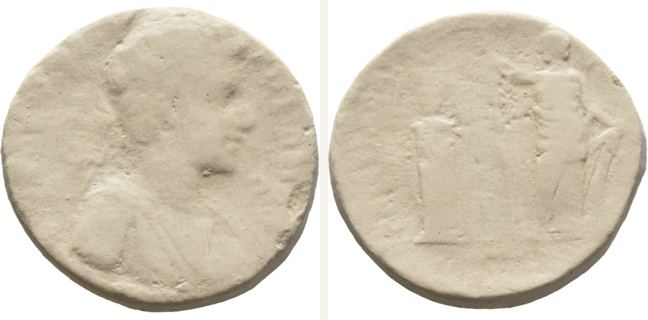
Photograph: BBAW; Corpus Nummorum (Berlin-Brandenburg Academy of Sciences and Humanities)
ancient coins
Adramyttion, Commodus, bronze coin — Demeter standing left (CN type 3074)
AD 177–179
Coin in bronze struck at Adramyttion in Mysia under Commodus, dated AD 177–179. Corpus Nummorum, the online type corpus of the Berlin-Brandenburg Academy of Sciences and Humanities, records it as CN type 3074 (period: Roman Imperial Period; issuing authority type: city). Obverse: Laureate bust of youthful Commodus,…
Research required
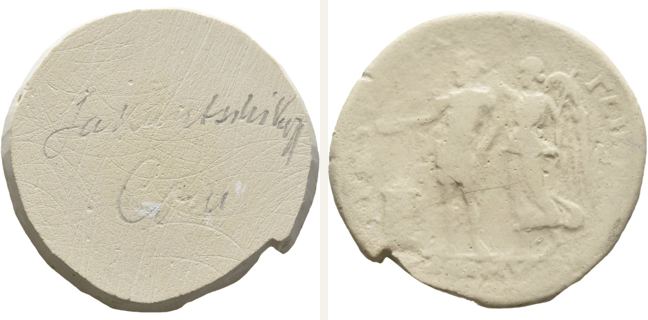
Photograph: BBAW; Corpus Nummorum (Berlin-Brandenburg Academy of Sciences and Humanities)
ancient coins
Adramyttion, Commodus, bronze coin — Emperor in military attire standing left (CN type 3075)
AD 177–179
Coin in bronze struck at Adramyttion in Mysia under Commodus, dated AD 177–179. Corpus Nummorum, the online type corpus of the Berlin-Brandenburg Academy of Sciences and Humanities, records it as CN type 3075 (period: Roman Imperial Period; issuing authority type: city). Obverse: Laureate bust of youthful Commodus,…
Research required
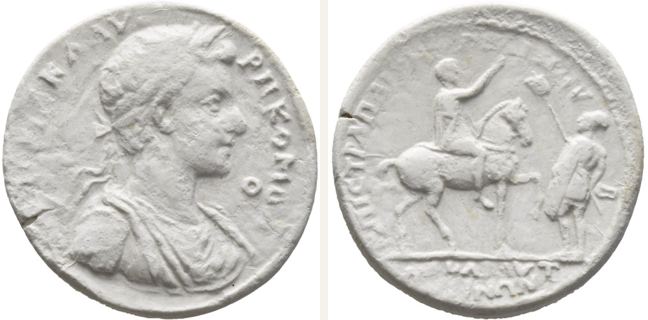
Photograph: BBAW; Corpus Nummorum (Berlin-Brandenburg Academy of Sciences and Humanities)
ancient coins
Adramyttion, Commodus, bronze coin — Emperor riding right on horseback (CN type 3066)
AD 177–179
Coin in bronze struck at Adramyttion in Mysia under Commodus, dated AD 177–179. Corpus Nummorum, the online type corpus of the Berlin-Brandenburg Academy of Sciences and Humanities, records it as CN type 3066 (period: Roman Imperial Period; issuing authority type: city). Obverse: Laureate bust of youthful Commodus,…
Research required
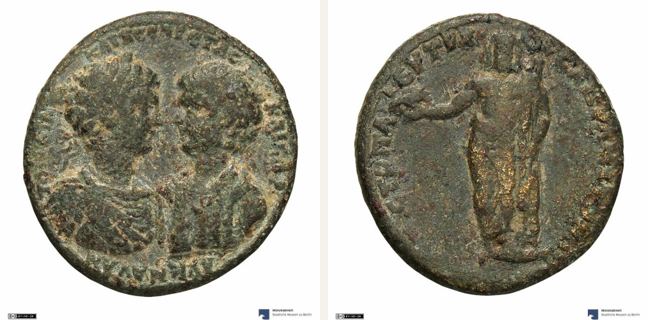
Photograph: Bernhard Weisser; Corpus Nummorum (Berlin-Brandenburg Academy of Sciences and Humanities); specimen held by ikmk.smb.museum
ancient coins
Adramyttion, Geta, bronze coin — Zeus standing left (CN type 2895)
c. AD 198–206
Coin in bronze struck at Adramyttion in Mysia under Geta, dated c. AD 198–206. Corpus Nummorum, the online type corpus of the Berlin-Brandenburg Academy of Sciences and Humanities, records it as CN type 2895 (period: Roman Imperial Period; issuing authority type: city). Obverse: Confronted busts of youthful Caracal…
Research required
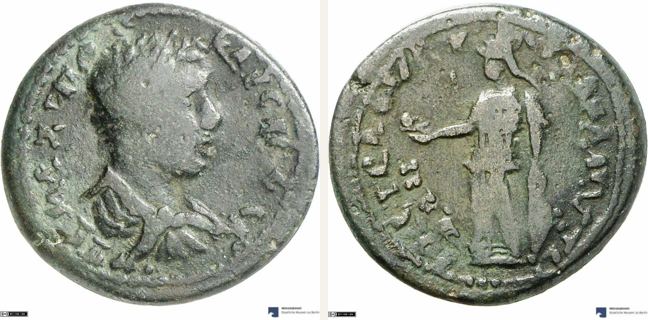
Photograph: Bernhard Weisser; Corpus Nummorum (Berlin-Brandenburg Academy of Sciences and Humanities); specimen held by ikmk.smb.museum
ancient coins
Adramyttion, Maximus, bronze coin — Athena standing facing (CN type 2938)
AD 235–238
Coin in bronze struck at Adramyttion in Mysia under Maximus, dated AD 235–238. Corpus Nummorum, the online type corpus of the Berlin-Brandenburg Academy of Sciences and Humanities, records it as CN type 2938 (period: Roman Imperial Period; issuing authority type: city). Obverse: Bare-headed bust of Maximus, right,…
Research required
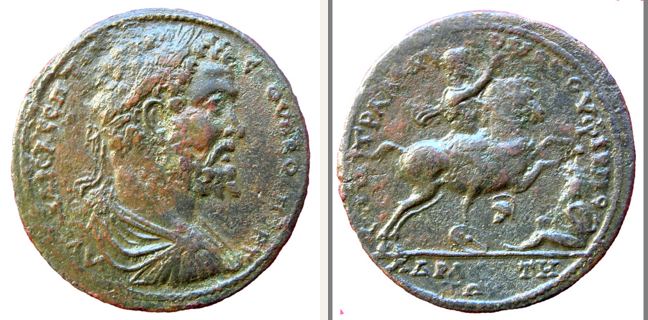
Photograph: unknown; Corpus Nummorum (Berlin-Brandenburg Academy of Sciences and Humanities)
ancient coins
Adramyttion, Septimius Severus, bronze coin — Emperor in military attire riding right on horseback (CN type 3051)
AD 193–211
Coin in bronze struck at Adramyttion in Mysia under Septimius Severus, dated AD 193–211. Corpus Nummorum, the online type corpus of the Berlin-Brandenburg Academy of Sciences and Humanities, records it as CN type 3051 (period: Roman Imperial Period; issuing authority type: city). Obverse: Laureate bust of Septimius…
Research required
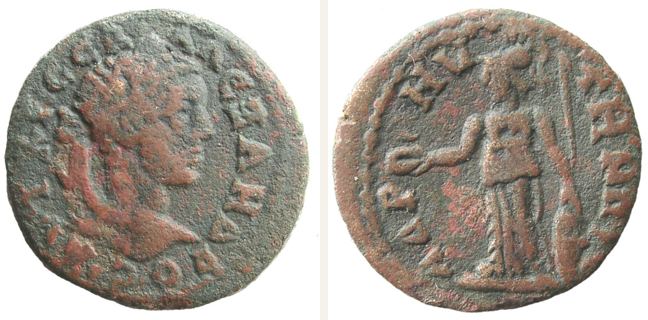
Photograph: Corpus Nummorum; Corpus Nummorum (Berlin-Brandenburg Academy of Sciences and Humanities)
ancient coins
Adramyttion, Severus Alexander, bronze coin — Athena standing facing (CN type 2917)
AD 222–235
Coin in bronze struck at Adramyttion in Mysia under Severus Alexander, dated AD 222–235. Corpus Nummorum, the online type corpus of the Berlin-Brandenburg Academy of Sciences and Humanities, records it as CN type 2917 (period: Roman Imperial Period; issuing authority type: city). Obverse: Laureate head of Severus A…
Research required
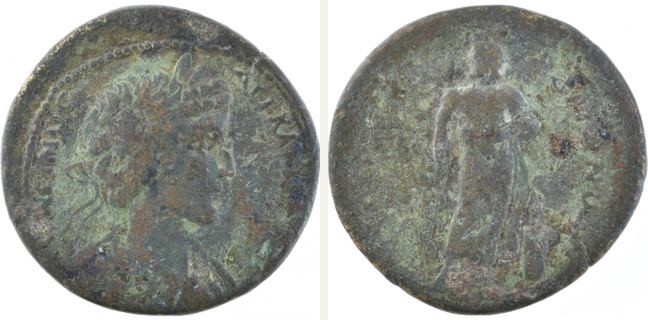
Photograph: Bernisches Historisches Museum; Corpus Nummorum (Berlin-Brandenburg Academy of Sciences and Humanities)
ancient coins
Aigeai, Commodus, bronze coin — Asclepius and Telesphoros (CN type 23244)
AD 180–192
Coin in bronze struck at Aigeai under Commodus, dated AD 180–192. Corpus Nummorum, the online type corpus of the Berlin-Brandenburg Academy of Sciences and Humanities, records it as CN type 23244 (period: Roman Imperial Period; issuing authority type: city). Obverse: Laureate and draped bust of Commodus, right. Leg…
Research required
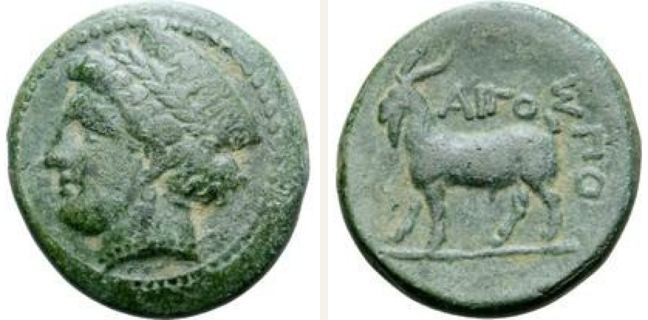
Photograph: Roma Numismatics; Corpus Nummorum (Berlin-Brandenburg Academy of Sciences and Humanities); specimen held by www.acsearch.info
ancient coins
Aigospotamoi, large denomination (bronze) — Goat standing left (CN type 241)
late 4th century BC
Large denomination (bronze) struck at Aigospotamoi in Thrace, dated late 4th century BC. Corpus Nummorum, the online type corpus of the Berlin-Brandenburg Academy of Sciences and Humanities, records it as CN type 241 (period: Hellenistic Period; issuing authority type: city). Obverse: Head of goddess, left, wearing…
Research required
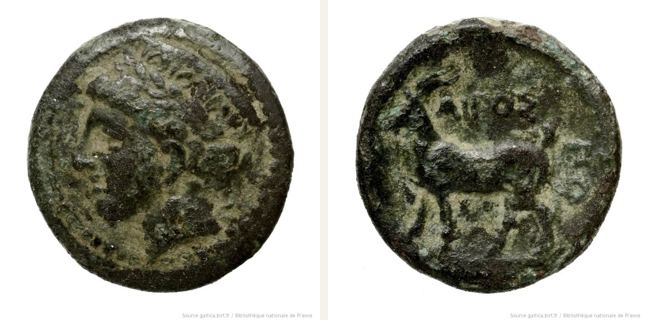
Photograph: Corpus Nummorum; Corpus Nummorum (Berlin-Brandenburg Academy of Sciences and Humanities); specimen held by gallica.bnf.fr
ancient coins
Aigospotamoi, medium denomination (bronze) — Goat standing left (CN type 273)
late 4th century BC
Medium denomination (bronze) struck at Aigospotamoi in Thrace, dated late 4th century BC. Corpus Nummorum, the online type corpus of the Berlin-Brandenburg Academy of Sciences and Humanities, records it as CN type 273 (period: Hellenistic Period; issuing authority type: city). Obverse: Head of goddess, left, wearin…
Research required
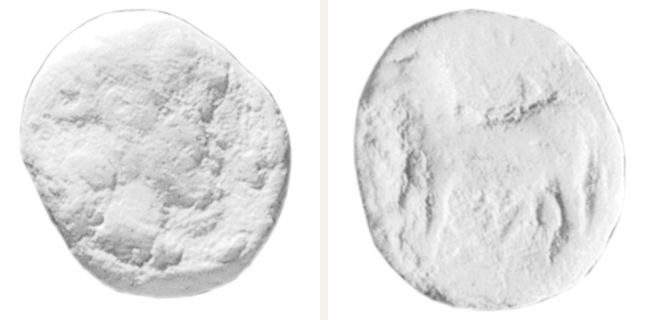
Photograph: BBAW; Corpus Nummorum (Berlin-Brandenburg Academy of Sciences and Humanities)
ancient coins
Aigospotamoi, small denomination (bronze) — Goat standing left (CN type 12968)
late 4th century BC
Small denomination (bronze) struck at Aigospotamoi in Thrace, dated late 4th century BC. Corpus Nummorum, the online type corpus of the Berlin-Brandenburg Academy of Sciences and Humanities, records it as CN type 12968 (period: Hellenistic Period; issuing authority type: city). Obverse: Head of goddess, left, weari…
Research required
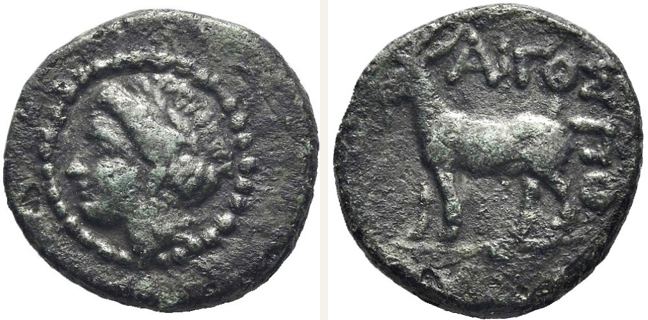
Photograph: Ancient Numismatics Auctions; Corpus Nummorum (Berlin-Brandenburg Academy of Sciences and Humanities)
ancient coins
Aigospotamoi, small denomination (bronze) — Goat standing left (CN type 266)
late 4th century BC
Small denomination (bronze) struck at Aigospotamoi in Thrace, dated late 4th century BC. Corpus Nummorum, the online type corpus of the Berlin-Brandenburg Academy of Sciences and Humanities, records it as CN type 266 (period: Hellenistic Period; issuing authority type: city). Obverse: Diademed female head, left. Re…
Research required
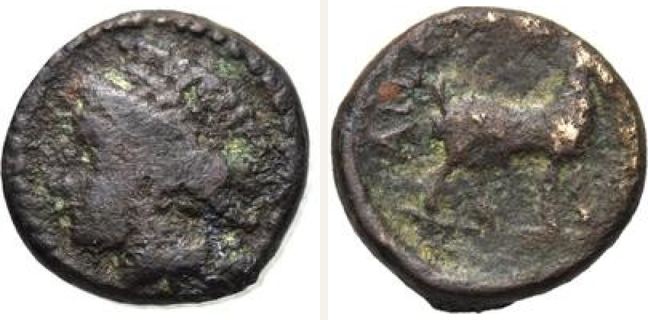
Photograph: Corpus Nummorum; Corpus Nummorum (Berlin-Brandenburg Academy of Sciences and Humanities)
ancient coins
Aigospotamoi, small denomination (bronze) — Goat standing right (CN type 279)
late 4th century BC
Small denomination (bronze) struck at Aigospotamoi in Thrace, dated late 4th century BC. Corpus Nummorum, the online type corpus of the Berlin-Brandenburg Academy of Sciences and Humanities, records it as CN type 279 (period: Hellenistic Period; issuing authority type: city). Obverse: Head of goddess, left, wearing…
Research required
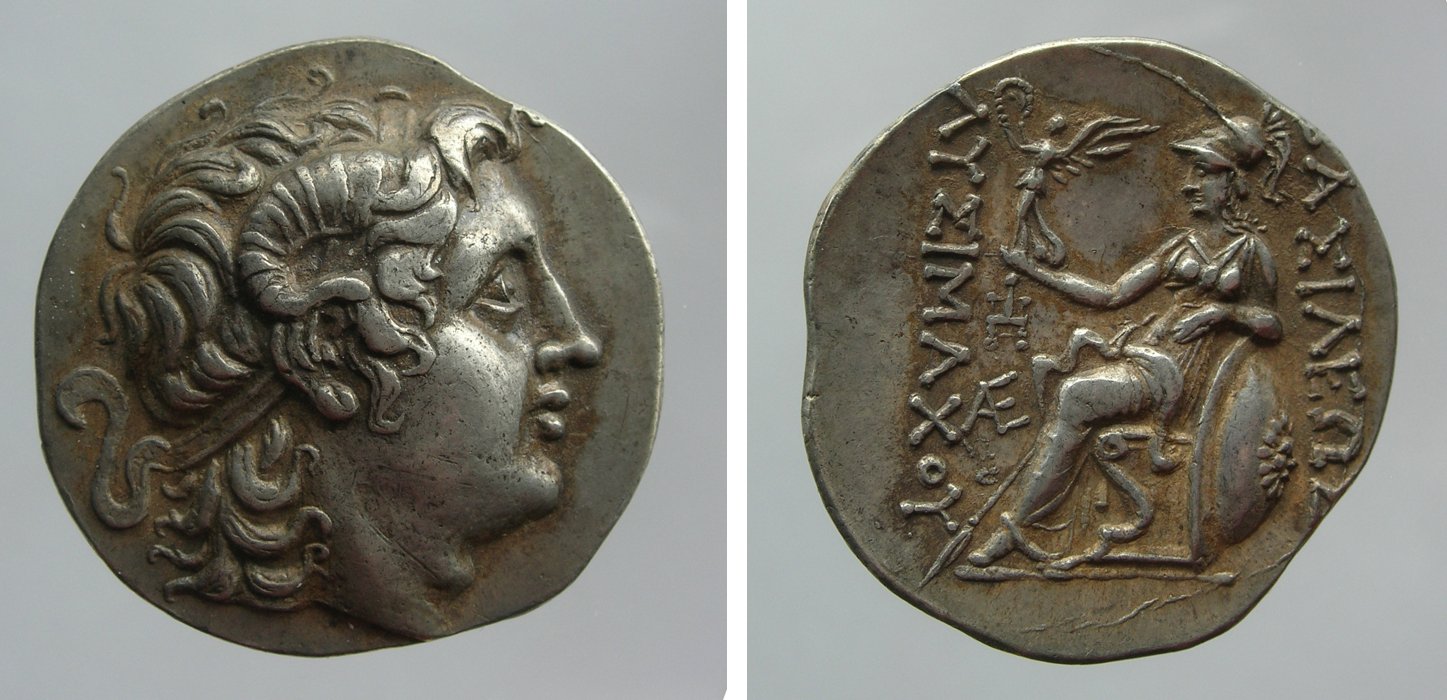
Corpus Nummorum (Berlin-Brandenburg Academy of Sciences and Humanities)
ancient coins
Ainos, Alexander der Große, tetradrachm — Athena seated left (CN type 12054)
c. 297–250 BC
Tetradrachm in silver struck at Ainos in Thrace under Alexander der Große, dated c. 297–250 BC. Corpus Nummorum, the online type corpus of the Berlin-Brandenburg Academy of Sciences and Humanities, records it as CN type 12054 (period: Hellenistic Period; issuing authority type: city). Obverse: Diademed head of deif…
Research required
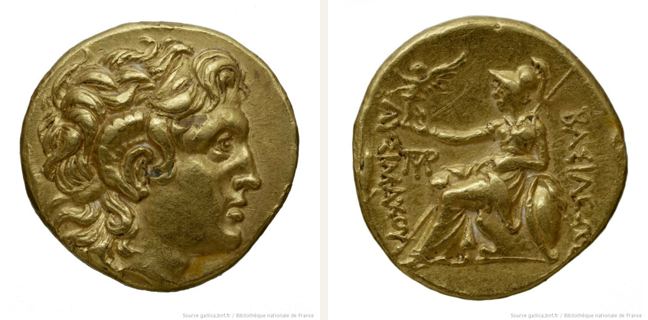
Photograph: Corpus Nummorum; Corpus Nummorum (Berlin-Brandenburg Academy of Sciences and Humanities); specimen held by gallica.bnf.fr
ancient coins
Ainos, Lysimachos, stater — Athena seated left (CN type 12209)
305–281 BC
Stater in gold struck at Ainos in Thrace under Lysimachos, dated 305–281 BC. Corpus Nummorum, the online type corpus of the Berlin-Brandenburg Academy of Sciences and Humanities, records it as CN type 12209 (period: Hellenistic Period; issuing authority type: ruler). Obverse: Diademed head of deified Alexander the…
Research required
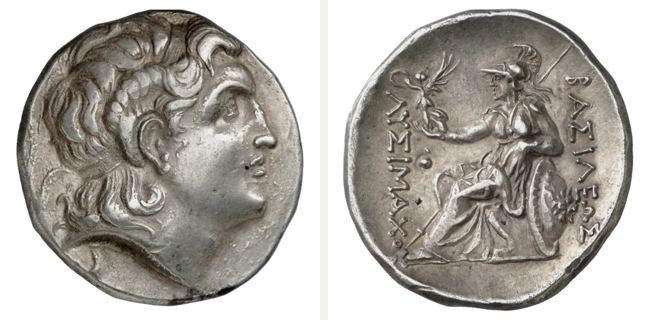
Photograph: Lutz-Jürgen Lübke (Lübke & Wiedemann); Corpus Nummorum (Berlin-Brandenburg Academy of Sciences and Humanities)
ancient coins
Ainos, Lysimachos, tetradrachm — Athena enthroned to left (CN type 21574)
c. 277–260 BC
Tetradrachm in silver struck at Ainos in Thrace under Lysimachos, dated c. 277–260 BC. Corpus Nummorum, the online type corpus of the Berlin-Brandenburg Academy of Sciences and Humanities, records it as CN type 21574 (period: Hellenistic Period; issuing authority type: ruler). Obverse: Diademed head of deified Alex…
Research required
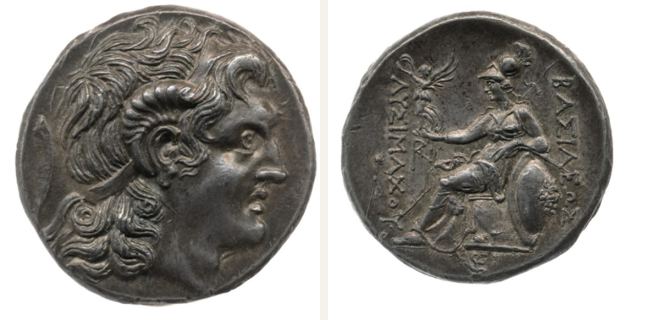
Photograph: British Museum, London; Corpus Nummorum (Berlin-Brandenburg Academy of Sciences and Humanities)
ancient coins
Ainos, Lysimachos, tetradrachm — Athena seated left (CN type 12207)
c. 297–281 BC
Tetradrachm in silver struck at Ainos in Thrace under Lysimachos, dated c. 297–281 BC. Corpus Nummorum, the online type corpus of the Berlin-Brandenburg Academy of Sciences and Humanities, records it as CN type 12207 (period: Hellenistic Period; issuing authority type: ruler). Obverse: Diademed head of deified Alex…
Research required
Photograph: Corpus Nummorum; Corpus Nummorum (Berlin-Brandenburg Academy of Sciences and Humanities); specimen held by gallica.bnf.fr
ancient coins
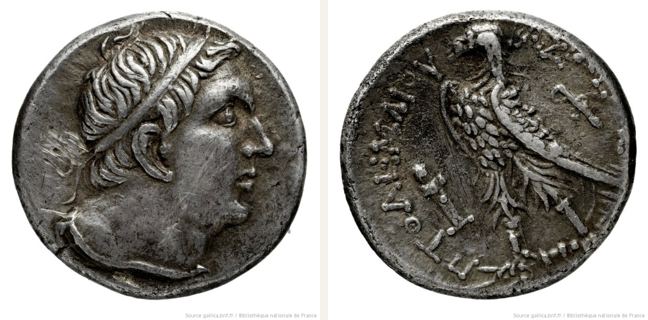
Ainos, Ptolemaios III. Euergetes, stater — Eagle standing left on thunderbolt (CN type 12307)
246–222 BC
Stater in silver struck at Ainos in Thrace under Ptolemaios III. Euergetes, dated 246–222 BC. Corpus Nummorum, the online type corpus of the Berlin-Brandenburg Academy of Sciences and Humanities, records it as CN type 12307 (period: Hellenistic Period; issuing authority type: ruler). Obverse: Diademed head of Ptole…
Research required
Photograph: Lutz-Jürgen Lübke (Lübke & Wiedemann); Corpus Nummorum (Berlin-Brandenburg Academy of Sciences and Humanities); specimen held by ikmk.smb.museum
ancient coins
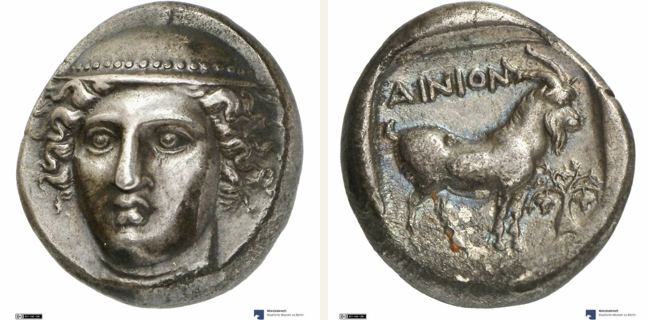
Ainos, tetradrachm — Goat standing right (CN type 2875)
c. 402/401–400/399 BC
Tetradrachm in silver struck at Ainos in Thrace, dated c. 402/401–400/399 BC. Corpus Nummorum, the online type corpus of the Berlin-Brandenburg Academy of Sciences and Humanities, records it as CN type 2875 (period: Classical Period; issuing authority type: city). Obverse: Head of Hermes facing three-quarters left,…
Research required
Photograph: Lutz-Jürgen Lübke (Lübke & Wiedemann); Corpus Nummorum (Berlin-Brandenburg Academy of Sciences and Humanities); specimen held by ikmk.smb.museum
ancient coins
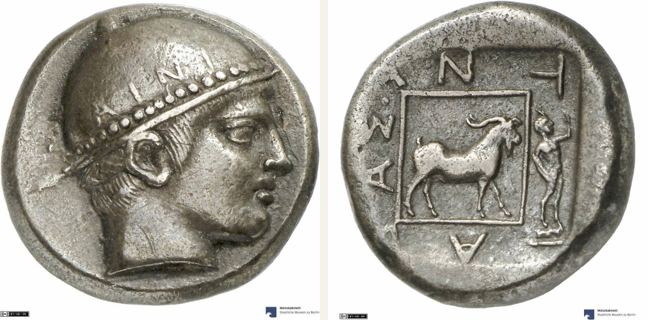
Ainos, tetradrachm (triple siglos) — Goat standing right within linear square (CN type 2730)
c. 453/452–451/450 BC
Tetradrachm (triple siglos) in silver struck at Ainos in Thrace, dated c. 453/452–451/450 BC. Corpus Nummorum, the online type corpus of the Berlin-Brandenburg Academy of Sciences and Humanities, records it as CN type 2730 (period: Classical Period; issuing authority type: city). Obverse: Head of Hermes, right, wea…
Research required
Photograph: Lutz-Jürgen Lübke (Lübke & Wiedemann); Corpus Nummorum (Berlin-Brandenburg Academy of Sciences and Humanities); specimen held by ikmk.smb.museum
ancient coins
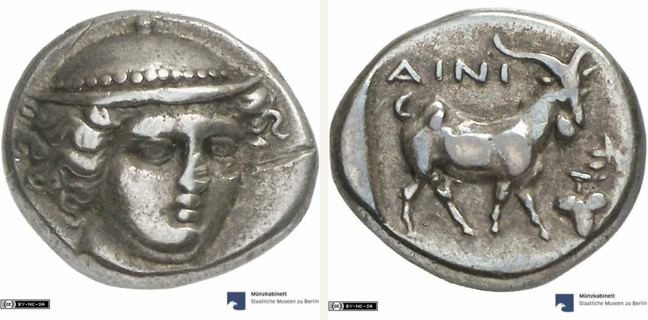
Ainos, Tetrobol — Goat standing right (CN type 2939)
c. 386/385–385/384 BC
Tetrobol in silver struck at Ainos in Thrace, dated c. 386/385–385/384 BC. Corpus Nummorum, the online type corpus of the Berlin-Brandenburg Academy of Sciences and Humanities, records it as CN type 2939 (period: Classical Period; issuing authority type: city). Obverse: Head of Hermes facing, slightly turnded to ri…
Research required
Photograph: Bernisches Historisches Museum; Corpus Nummorum (Berlin-Brandenburg Academy of Sciences and Humanities)
ancient coins
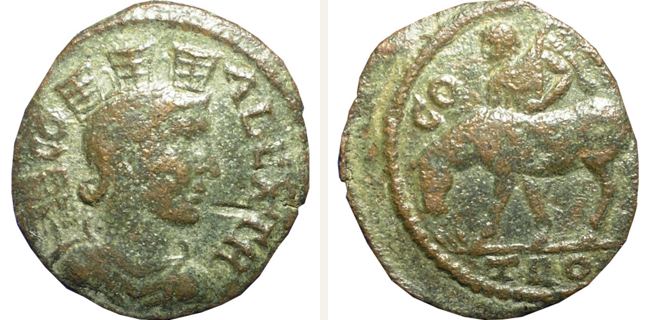
Alexandria Troas, bronze coin — Horse grazing left (CN type 23226)
AD 235–238
Coin in bronze struck at Alexandria Troas in Troas, dated AD 235–238. Corpus Nummorum, the online type corpus of the Berlin-Brandenburg Academy of Sciences and Humanities, records it as CN type 23226 (period: Roman Imperial Period; issuing authority type: city). Obverse: Draped bust of Tyche with mural crown, right…
Research required
Photograph: Vladimir F. Stolba; Corpus Nummorum (Berlin-Brandenburg Academy of Sciences and Humanities)
ancient coins
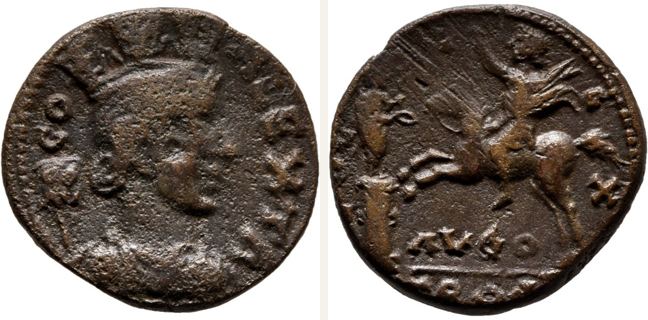
Alexandria Troas, bronze coin — Statue of Apollo Smintheus (CN type 24133)
AD 260–268
Coin in bronze struck at Alexandria Troas in Troas, dated AD 260–268. Corpus Nummorum, the online type corpus of the Berlin-Brandenburg Academy of Sciences and Humanities, records it as CN type 24133 (period: Roman Imperial Period; issuing authority type: city). Obverse: Turreted bust of Tyche, right. Legend: CO AL…
Research required
Photograph: Bernisches Historisches Museum; Corpus Nummorum (Berlin-Brandenburg Academy of Sciences and Humanities)
ancient coins
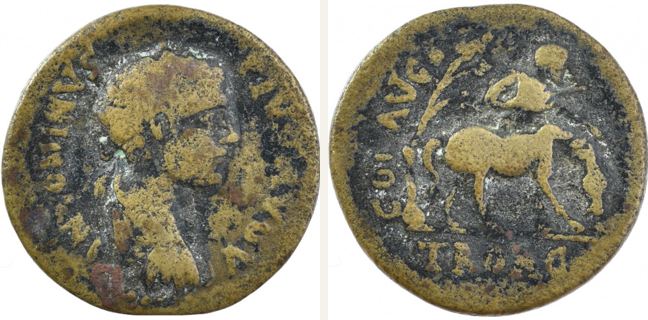
Alexandria Troas, Caracalla, bronze coin — Horse grazing right (CN type 21940)
AD 198–217
Coin in bronze struck at Alexandria Troas in Troas under Caracalla, dated AD 198–217. Corpus Nummorum, the online type corpus of the Berlin-Brandenburg Academy of Sciences and Humanities, records it as CN type 21940 (period: Roman Imperial Period; issuing authority type: city). Obverse: Laureate and cuirassed bust…
Research required
Photograph: Corpus Nummorum; Corpus Nummorum (Berlin-Brandenburg Academy of Sciences and Humanities)
ancient coins
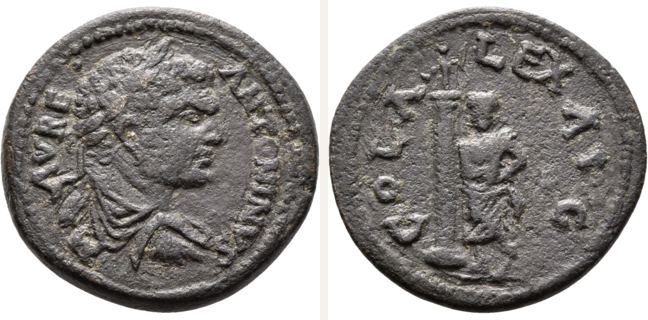
Alexandria Troas, Caracalla, bronze coin — Male figure standing facing (CN type 20080)
AD 198–217
Coin in bronze struck at Alexandria Troas in Troas under Caracalla, dated AD 198–217. Corpus Nummorum, the online type corpus of the Berlin-Brandenburg Academy of Sciences and Humanities, records it as CN type 20080 (period: Roman Imperial Period; issuing authority type: city). Obverse: Laureate bust of bearded Car…
Research required
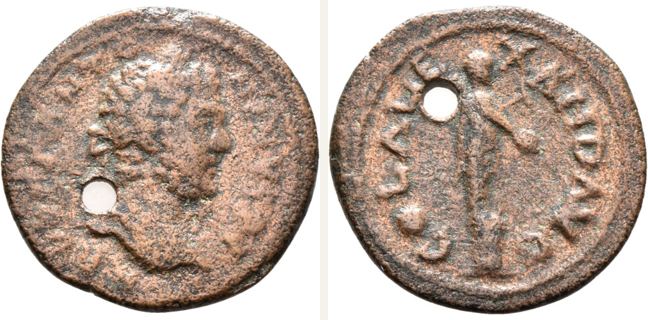
Photograph: Corpus Nummorum; Corpus Nummorum (Berlin-Brandenburg Academy of Sciences and Humanities)
ancient coins
Alexandria Troas, Caracalla, bronze coin — Statue of Apollo Smintheus (CN type 20081)
AD 198–217
Coin in bronze struck at Alexandria Troas in Troas under Caracalla, dated AD 198–217. Corpus Nummorum, the online type corpus of the Berlin-Brandenburg Academy of Sciences and Humanities, records it as CN type 20081 (period: Roman Imperial Period; issuing authority type: city). Obverse: Laureate head of bearded Car…
Research required
Dated entries by century
- 6th century BC3
- 5th century BC15
- 4th century BC34
- 3rd century BC11
- 2nd century BC29
- 1st century BC65
- 1st century311
- 2nd century302
- 3rd century670
- 4th century635
- 5th century152
- 6th century5
- 7th century11
- 8th century2
- 10th century1
- 11th century1
Only the 2,247 entries carrying their own date to within about 150 years are counted, by the earliest year given. These are catalogue holdings, not production totals.
Materials recorded in the physical descriptions
- Bronze1,535
- Silver1,184
- Gold468
- Copper4
- Brass2
- Zinc1
An entry made of several materials is counted once under each. Materials are counted only where the description states them.
Confidence of the published entries
- Documented3,094
- Probable34
Confidence reflects how well the sources support each entry's identification, not the object's quality or importance.
Most represented issuing authorities
Filed under the historical authority that issued them, not a modern successor.
Most represented makers
Makers are linked only where the source record names them.
- Rome (ancient mint)66
- Antioch, Syria (ancient mint)33
- Mediolanum (ancient mint)28
- Lugdunum (ancient mint)26
- Siscia (ancient mint)26
- Aquileia (ancient mint)23
- Ravenna (ancient mint)23
- Cyzicus (ancient mint)20
- Constantinople (ancient mint)16
- Nicomedia (ancient mint)16
- Thessalonica (ancient mint)15
- Heraclea (ancient mint)13
Museum specimen and identification evidence
Compare the identifying evidence
- Both faces and legend
- Record and compareTranscribe each face separately; mark illegible letters and compare portrait direction, reverse attributes and legend breaks.
- Limits of the evidenceA similar portrait or reverse alone is not a type match. Wear can hide the decisive letter.
- Issuer, mint and date
- Record and compareKeep the historical authority, original calendar, mint symbol and its exact position together in the comparison.
- Limits of the evidenceAn event date or ruler's name is not proof of a striking date; mint abbreviations need a dated reference.
- Mass and dimensions
- Record and compareRecord measured mass, maximum diameter and measuring equipment; compare with the source's stated range, if any.
- Limits of the evidenceWear, corrosion and clipping change measurements. Neither a matching weight nor a photograph authenticates a coin.
- Edge and die alignment
- Record and compareRecord lettering, reeds, seams and orientation of the reverse relative to the upright obverse.
- Limits of the evidenceFront photographs cannot establish the edge or die axis. Do not infer either from a catalogue description.
- Type versus variety
- Record and compareRequire agreement on denomination, designs, legend, date and mint before considering die or privy-mark varieties.
- Limits of the evidenceA museum accession is not a standard type number. Catalogue edition and exact locator must be supplied independently.
Related guides and articles
Common questions about ancient coins
- What does the Ancient Coins section cover?
- Greek, Roman provincial, Roman imperial and other pre-medieval coinage. Each entry describes a coin type: its obverse and reverse designs, the legends that name the issuer, the denomination and metal, and the standard reference under which it is catalogued.
- What should I record when identifying ancient coins?
- Record obverse portrait or emblem and its legend; reverse type, legend and any field marks; mint signature or exergue mark; denomination, metal and recorded weight. Compare those details with the entries here before drawing any conclusion.
- How many ancient coins entries are published, and do they have photographs?
- 3,128 entries are published in this section; 3,128 of them carry at least one credited photograph of a real object, with its source and stated rights.
- What period do the ancient coins entries cover?
- 2,247 entries carry their own date to within about a century and a half; they range from 600 BC to 1023. Broader museum date ranges are kept exactly as recorded and are left out of this span.
- Does Orbis value or grade ancient coins?
- No. Orbis documents and identifies object types with cited sources. It does not grade condition, estimate prices or sell objects.