Catalogue
Ancient Coins
Greek, Roman, Byzantine, Celtic, Persian, Indian, Chinese and other pre-medieval coinages.
Catalogue entries (3,128)
Filter by era, country, maker or material2,833–2,880 of 3,128 entries
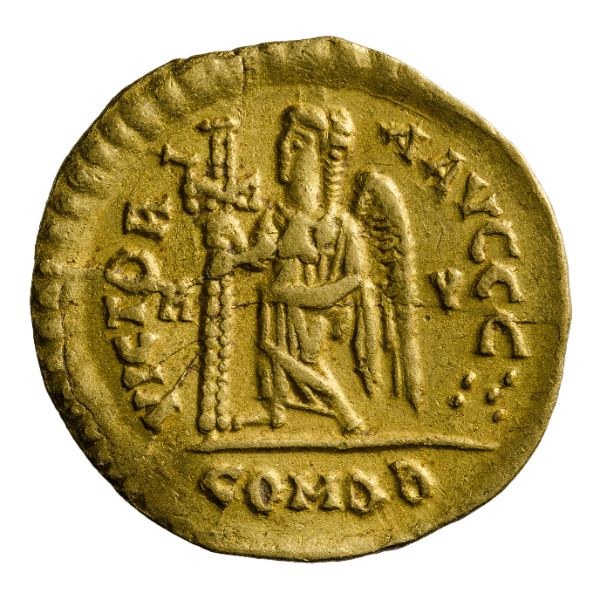
KENOM virtual coin cabinet
ancient coins
RIC X Zeno (West) 3626
AD 476–AD 491
Solidus in gold struck at Ravenna under Zeno, AD 476–AD 491, catalogued as RIC X Zeno (West) 3626. Obverse: Bust of Zeno, helmeted, pearl-diademed, cuirassed, facing front, holding spear in right hand behind head and shield decorated with horseman on left arm. Reverse: Victory, winged, draped, standing left, support…
Research required
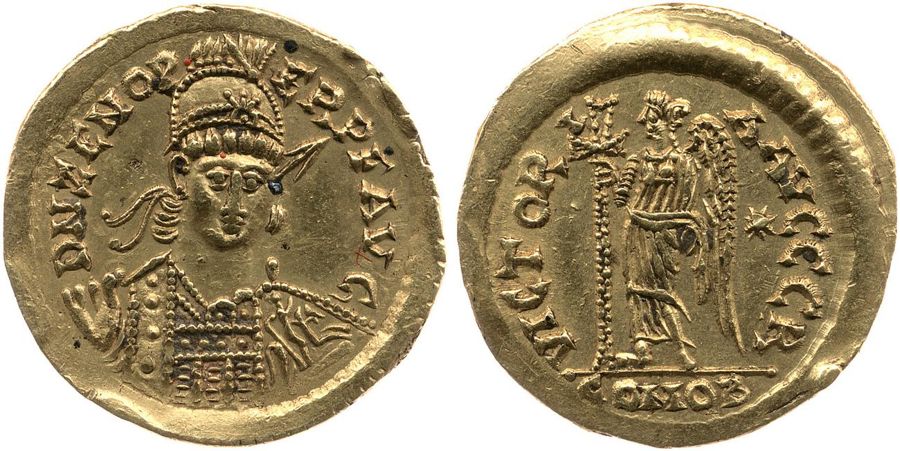
The British Museum — photograph sourced via the American Numismatic Society OCRE type corpus
ancient coins
RIC X Zeno (West) 3653
AD 476–AD 491
Solidus in gold struck at Rome under Zeno, AD 476–AD 491, catalogued as RIC X Zeno (West) 3653. Obverse: Bust of Zeno, helmeted, pearl-diademed, cuirassed, facing front, holding spear in right hand behind head and shield decorated with horseman on left arm. Reverse: Victory, winged, draped, standing left, supporting…
Research required
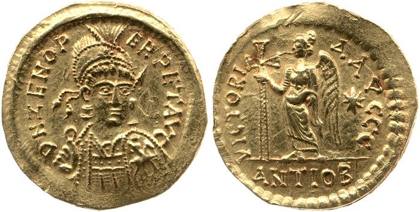
The British Museum
ancient coins
RIC X Zeno 904
AD 475–AD 476
Solidus in gold struck at Antioch, Syria under Zeno, AD 475–AD 476, catalogued as RIC X Zeno 904. Obverse: Bust of Zeno, helmeted, pearl-diademed, cuirassed, facing front, holding spear in right hand behind head and shield decorated with horseman on left arm. Reverse: Victory, winged, draped, standing left, supporti…
Research required
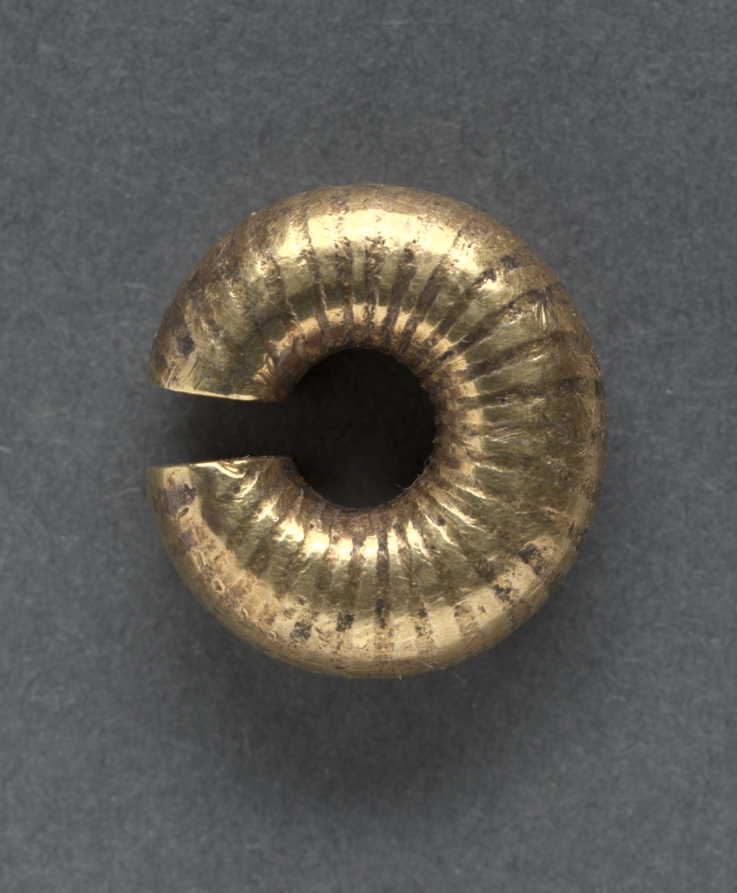
Cleveland Museum of Art
ancient coins
Ring Money (Cleveland Museum of Art 1969.142)
c. 100–50 BCE
Used in the ancient world from c. 1600 BC, gold ring money was also in general use in Ireland around 100-50 BC. It was used in Britain as well but not to the same extent. This piece was found at Norman Leighton, Warwickshire, almost the central county of England. As a means of exchange, gold was scarce in Britain un…
Partial type record
Auction house “Eternity Gallery”, via Invaluable
ancient coins
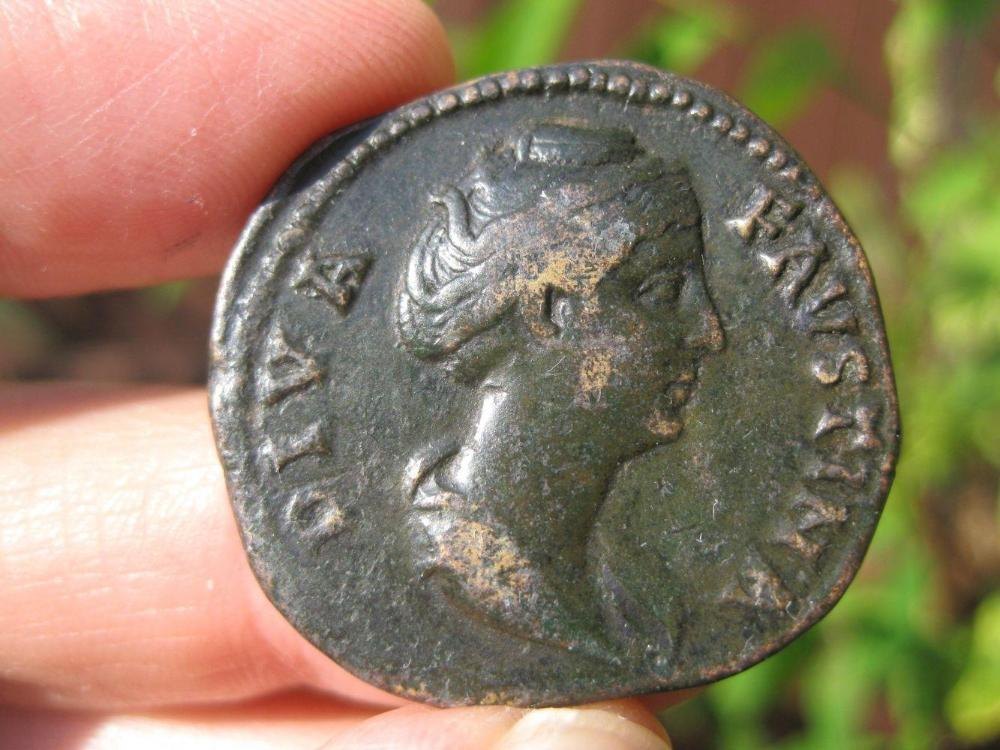
Roman bronze sestertius of Diva Faustina Senior, struck under Antoninus Pius
AD 146-161
This is an ancient Roman bronze sestertius coin minted under Emperor Antoninus Pius to commemorate his deceased wife, Diva Faustina the Elder. The coin features a draped bust of the Empress on the obverse, surrounded by the inscription "DIVA FAUSTINA". The reverse depicts the goddess Juno, standing and raising her a…
Partial type record
Auction house “Eternity Gallery”, via Invaluable
ancient coins
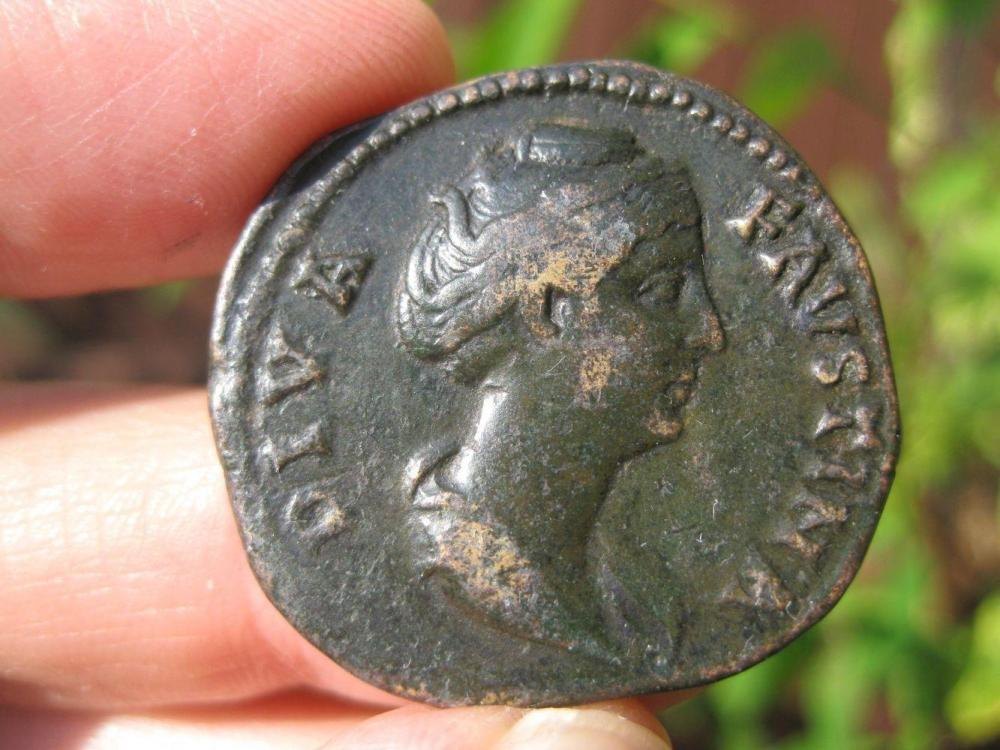
Roman bronze sestertius of Diva Faustina, struck under Antoninus Pius
AD 146-161
This Roman Imperial sestertius is a bronze coin issued in honor of the deified Empress Faustina the Elder, wife of Emperor Antoninus Pius, struck between AD 146 and 161. The obverse features a draped bust of Faustina facing right, accompanied by the inscription "DIVA FAUSTINA". The reverse depicts the goddess Juno,…
Partial type record
Auction house “Artemis Fine Arts”, via Invaluable
ancient coins
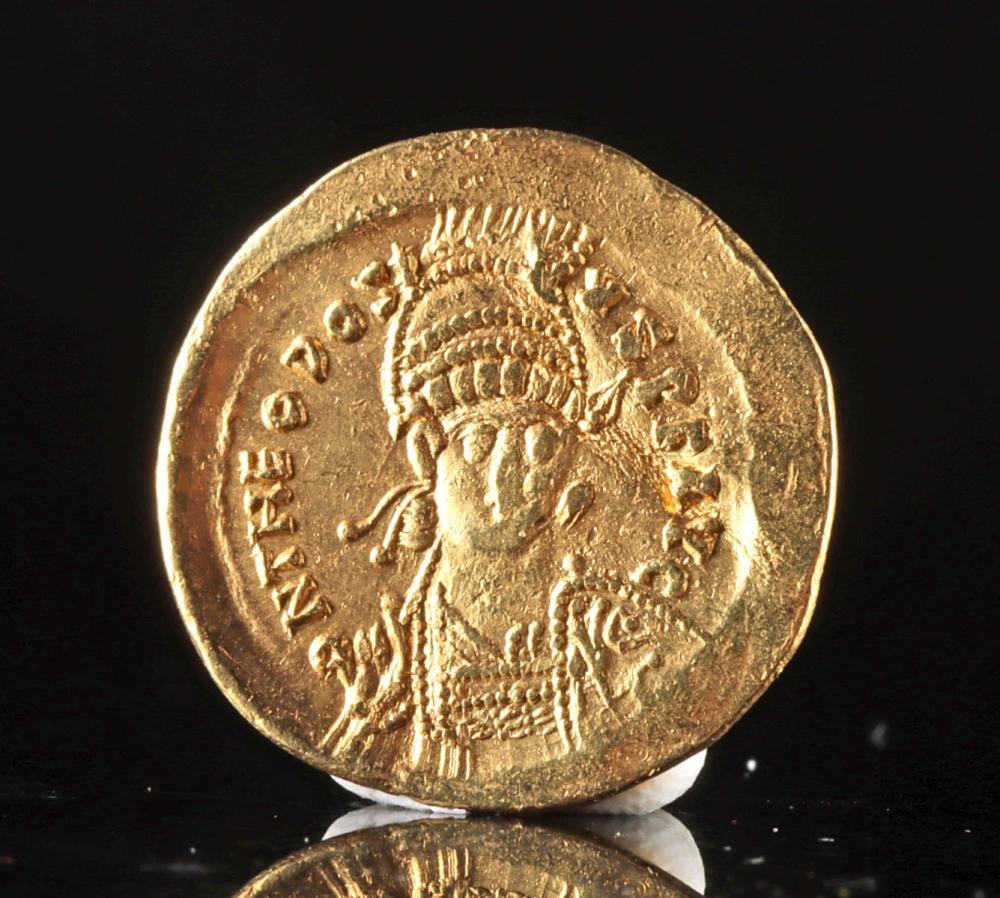
Roman Byzantine gold solidus of Emperor Theodosius II
ca. 443 to 450 CE
This Roman-Byzantine gold solidus was minted in Constantinople between 443 and 450 CE during the reign of Emperor Theodosius II. The coin is struck in high-purity gold (99% or approximately 23K+) and has a diameter of 0.8 inches (2 cm) with a weight of 4.4 grams. The obverse depicts a frontal bust of Theodosius II a…
Partial type record
Colchester and Ipswich Museum Service / Ben Paites, Portable Antiquities Scheme
ancient coins
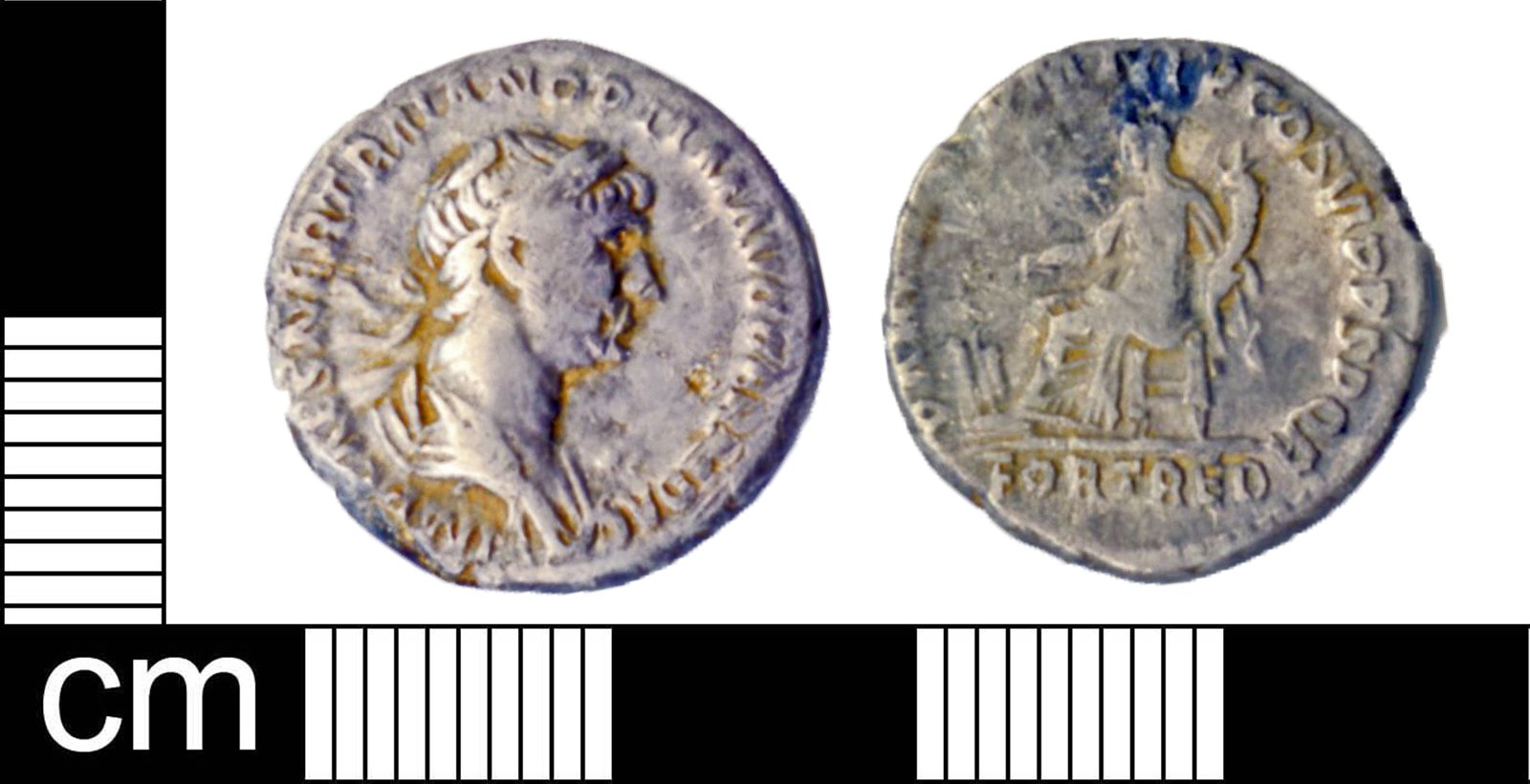
Roman Empire — Trajan — Silver Denarius
AD 98–117
Silver denarius struck during the reign of Trajan, with a laureate imperial portrait and a wide range of reverse types. The obverse shows laureate bust of Trajan right, with imperial titulature in the legend. The reverse shows varies widely by issue — personifications, deities, military and architectural types.
Partial type record
Auction house “Palmyra Heritage Gallery”, via Invaluable
ancient coins
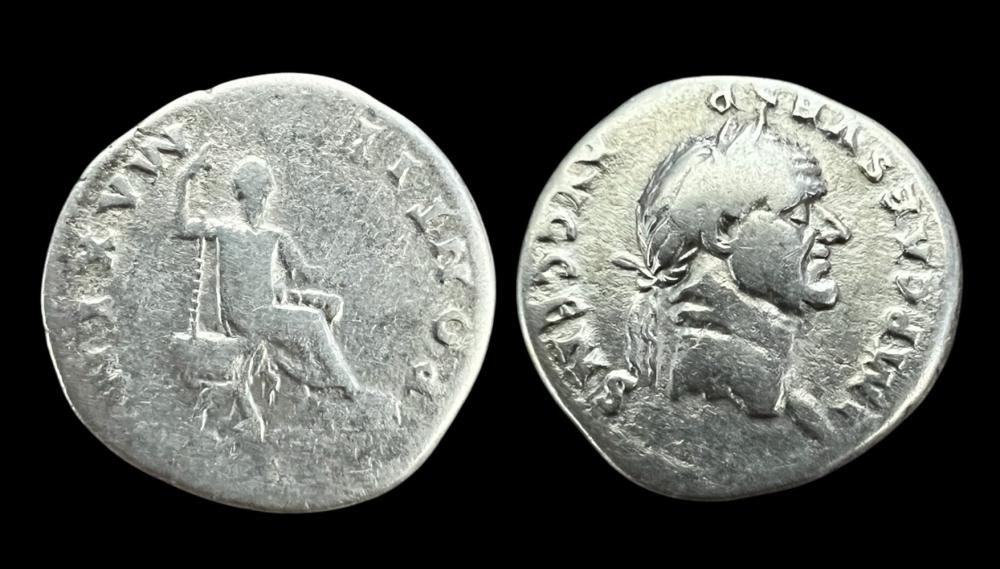
Roman Empire Silver Denarius of Vespasian, Rome Mint, AD 73
AD 73
This ancient Roman silver denarius was struck in Rome in AD 73 during the reign of Emperor Vespasian. The coin is composed of silver and measures 19 mm in diameter, weighing 3.13 grams. The obverse depicts a laureate head of Emperor Vespasian facing right, accompanied by the inscription "IMP CAES VESP AVG CENS." The…
Partial type record
Auction house “Artemis Fine Arts”, via Invaluable
ancient coins
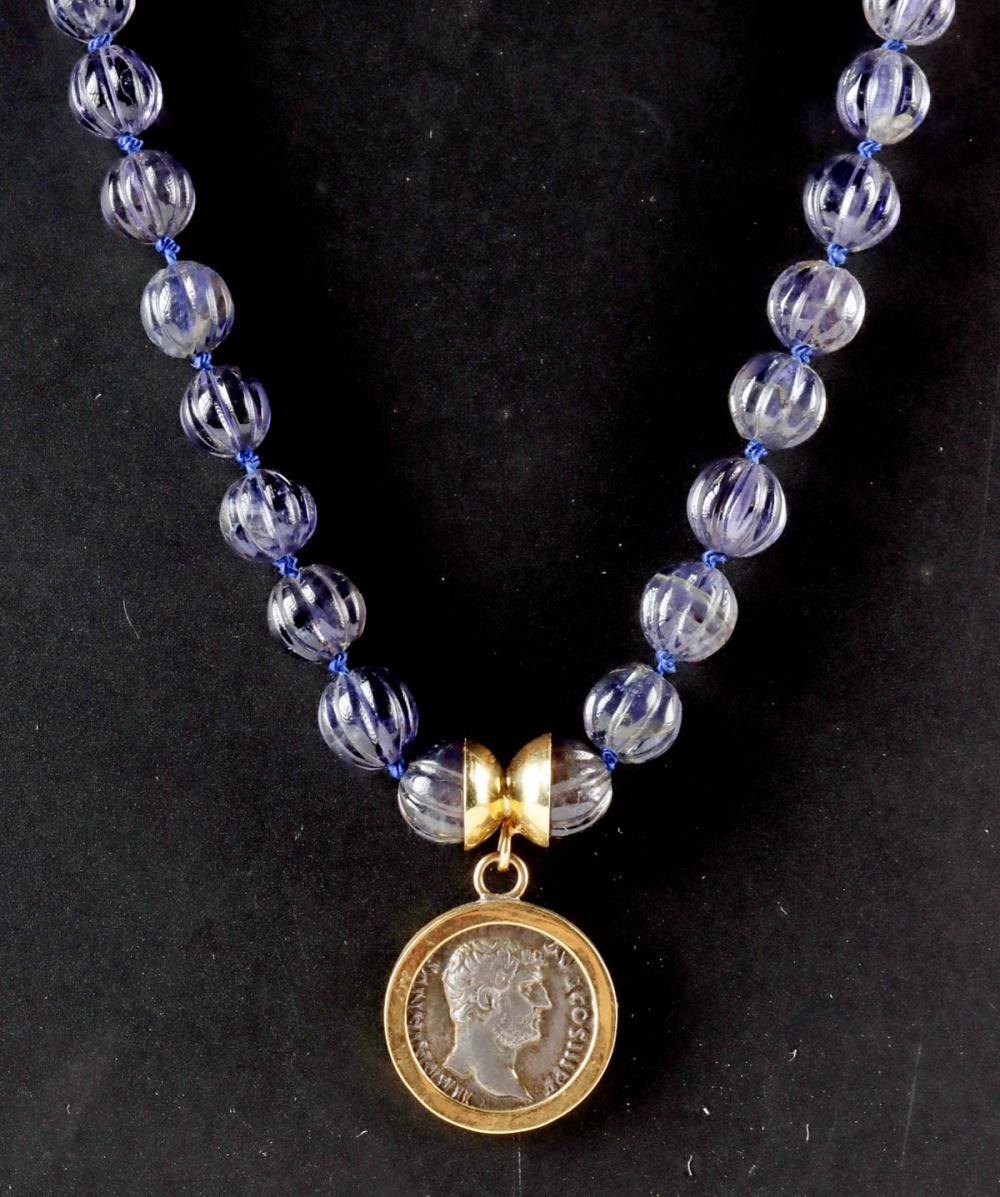
Roman silver denarius of Hadrian in modern gold bezel necklace
ca. 2nd century CE, 117-138 CE
This necklace features an authentic Roman imperial silver denarius dating to the reign of Emperor Hadrian, issued between 117 and 138 CE. The coin is mounted in a modern custom-fitted 16-karat gold circular bezel, which is secured by a 14-karat gold push clasp. The coin is displayed on a modern strand of violet-hued…
Partial type record
Auction house “Artemis Gallery”, via Invaluable
ancient coins
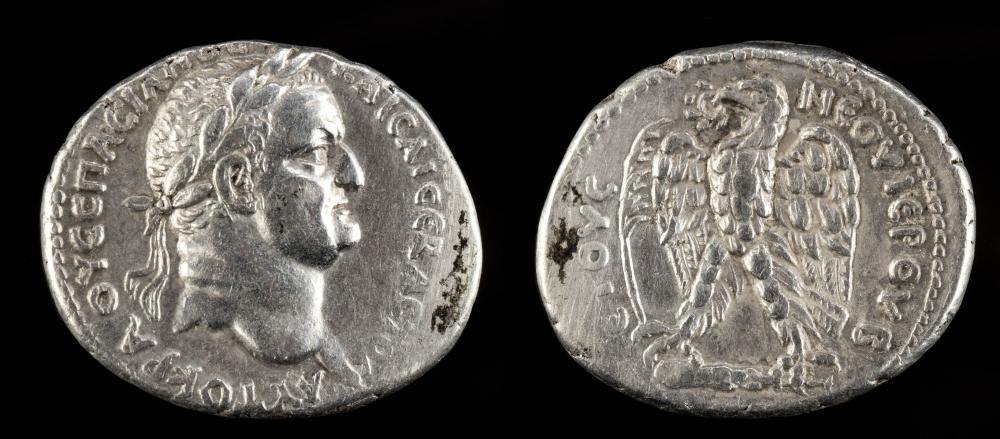
Roman Silver Tetradrachm of Vespasian from Antioch, 69-70 CE
ca. 69 to 79 CE, specifically 69-70 CE
This Roman silver tetradrachm originates from the mint of Antioch in the province of Seleucis and Pieria, dating to the reign of Emperor Vespasian. The coin is struck in silver and weighs 14.4 grams, with a diameter of 3 cm (1.2 inches). The obverse features a laureate head of Vespasian facing right, accompanied by…
Partial type record
Photograph: Lutz-Jürgen Lübke (Lübke & Wiedemann); Corpus Nummorum (Berlin-Brandenburg Academy of Sciences and Humanities); specimen held by ikmk.smb.museum
ancient coins
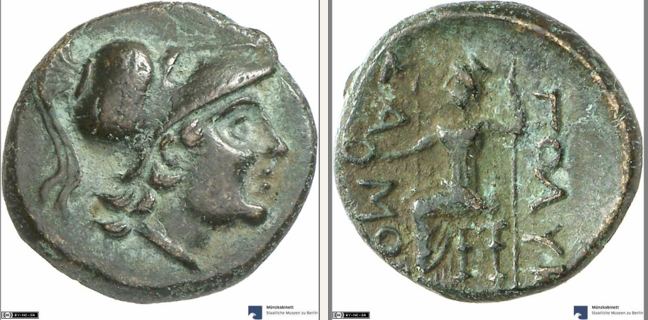
Samothrake, bronze coin — Cybele enthroned left (CN type 13153)
c. 168–80 BC
Coin in bronze struck at Samothrake in Thrace, dated c. 168–80 BC. Corpus Nummorum, the online type corpus of the Berlin-Brandenburg Academy of Sciences and Humanities, records it as CN type 13153 (period: Hellenistic Period; issuing authority type: city). Obverse: Head of Athena, right, wearing Corinthian helmet.…
Research required
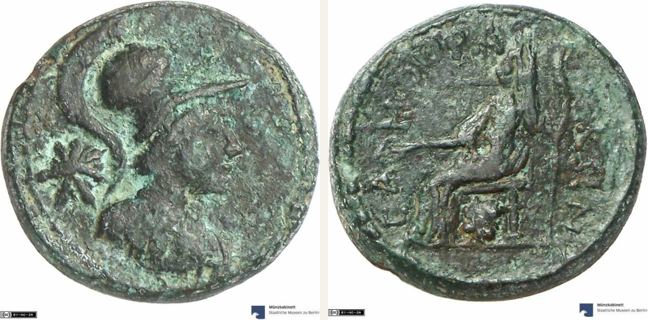
Photograph: Lutz-Jürgen Lübke (Lübke & Wiedemann); Corpus Nummorum (Berlin-Brandenburg Academy of Sciences and Humanities); specimen held by ikmk.smb.museum
ancient coins
Samothrake, bronze coin — Cybele enthroned left (CN type 19484)
c. 1st–2nd century AD
Coin in bronze struck at Samothrake in Thrace, dated c. 1st–2nd century AD. Corpus Nummorum, the online type corpus of the Berlin-Brandenburg Academy of Sciences and Humanities, records it as CN type 19484 (period: Roman Imperial Period; issuing authority type: city). Obverse: Draped bust of Athena to right, with h…
Research required
Photograph: BBAW; Corpus Nummorum (Berlin-Brandenburg Academy of Sciences and Humanities)
ancient coins
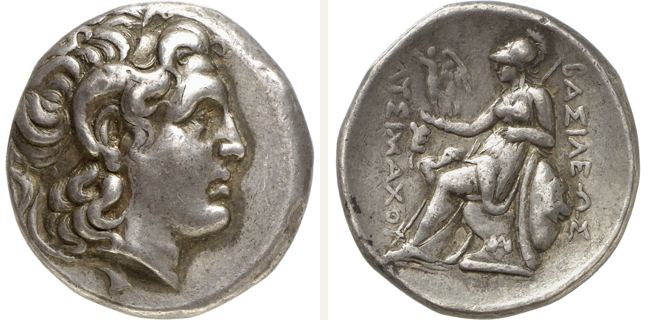
Samothrake, Lysimachos, tetradrachm — Athena seated left (CN type 20101)
c. 297/296–282/281 BC
Tetradrachm in silver struck at Samothrake in Thrace under Lysimachos, dated c. 297/296–282/281 BC. Corpus Nummorum, the online type corpus of the Berlin-Brandenburg Academy of Sciences and Humanities, records it as CN type 20101 (period: Hellenistic Period; issuing authority type: city). Obverse: Diademed head of…
Research required
Photograph: Lutz-Jürgen Lübke (Lübke & Wiedemann); Corpus Nummorum (Berlin-Brandenburg Academy of Sciences and Humanities); specimen held by ikmk.smb.museum
ancient coins
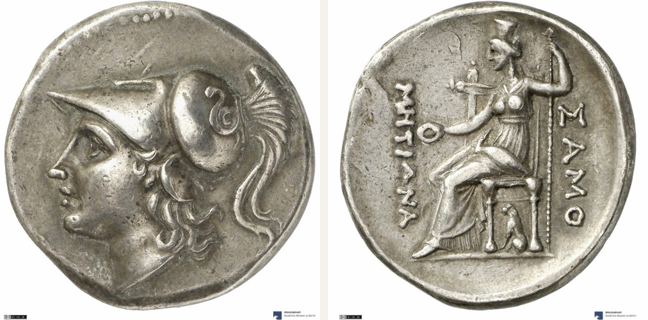
Samothrake, tetradrachm — Cybele enthroned left (CN type 19482)
c. 168–150 BC
Tetradrachm in silver struck at Samothrake in Thrace, dated c. 168–150 BC. Corpus Nummorum, the online type corpus of the Berlin-Brandenburg Academy of Sciences and Humanities, records it as CN type 19482 (period: Hellenistic Period; issuing authority type: city). Obverse: Head of Athena, left, wearing Corinthian h…
Research required
Photograph: BBAW; Corpus Nummorum (Berlin-Brandenburg Academy of Sciences and Humanities)
ancient coins
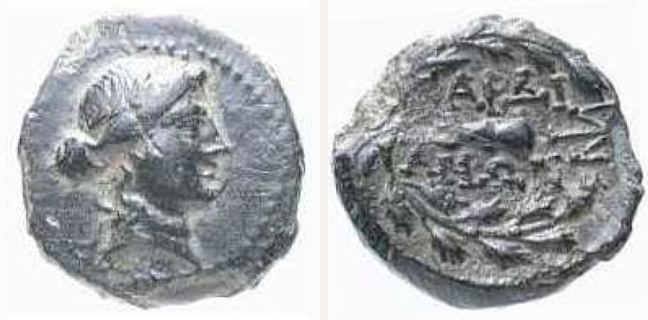
Sardes, bronze coin — Upright club (CN type 2015)
2nd–1st century BC
Coin in bronze struck at Sardes, dated 2nd–1st century BC. Corpus Nummorum, the online type corpus of the Berlin-Brandenburg Academy of Sciences and Humanities, records it as CN type 2015 (period: Hellenistic Period; issuing authority type: city). Obverse: Head of (youthful) Apollo, right, wearing laurel wreath. Re…
Research required
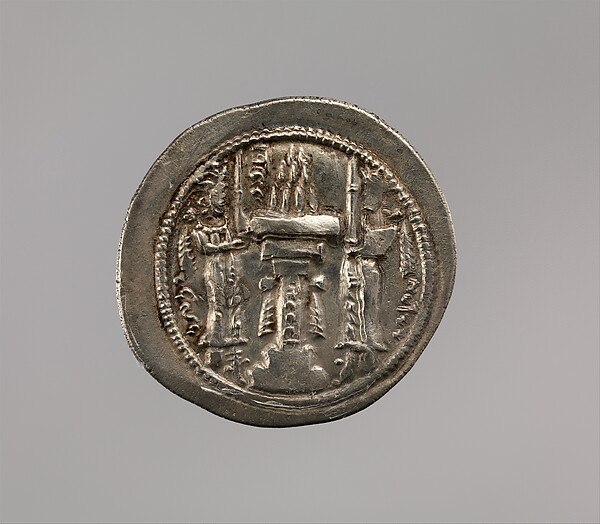
The Metropolitan Museum of Art, Bequest of Joseph H. Durkee, 1898
ancient coins
Sasanian drachm of Bahram IV, ca. 388–99 CE
ca. 388–99 CE
This silver drachm from Iran was struck during the Sasanian period under the reign of King Bahram IV, dating to approximately 388–99 CE. It has a diameter of 2.45 centimeters and a thickness of 0.15 centimeters. The coin represents an official monetary issue struck within the centralized mint system that was regulat…
Partial type record
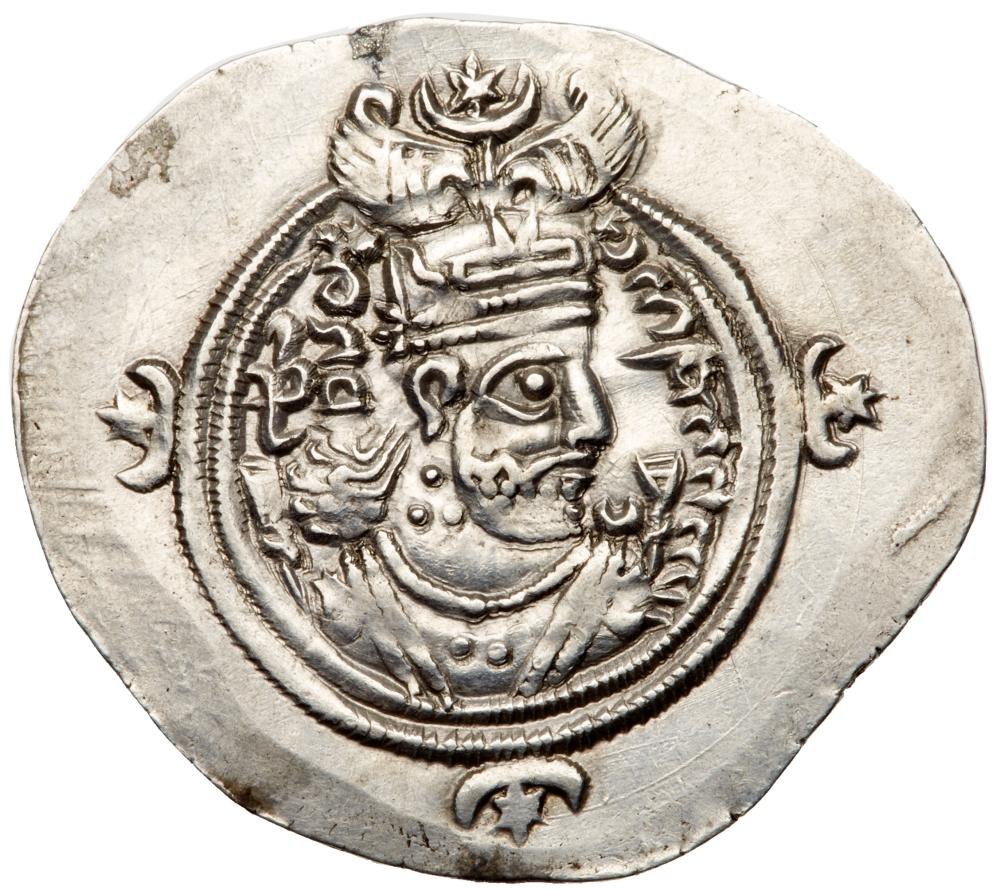
Auction house “Goldberg Coins & Collectibles”, via Invaluable
ancient coins
Sasanian Kingdom silver drachm of queen Azarmidokht, AD 630-631
AD 630-631
This Sasanian silver drachm was minted during the short reign of Queen Azarmidokht, daughter of Khusru II, who ruled between AD 630 and 631. The coin, weighing 4.15 grams, is struck in silver and follows the traditional Sasanian numismatic style. The obverse displays a portrait bust of the queen facing right, crowne…
Partial type record
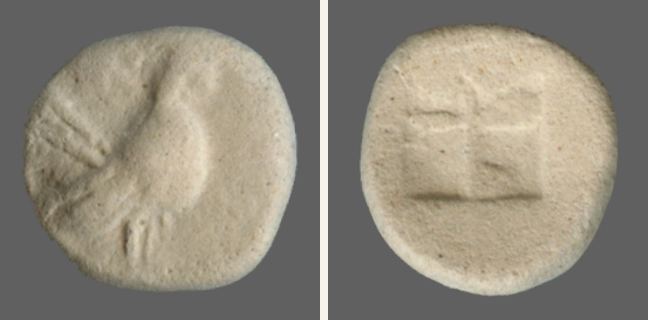
Photograph: BBAW; Corpus Nummorum (Berlin-Brandenburg Academy of Sciences and Humanities)
ancient coins
Selymbria, Diobol — Quadripartite incuse square (CN type 2029)
c. 492/490–473/470 BC
Diobol in silver struck at Selymbria in Thrace, dated c. 492/490–473/470 BC. Corpus Nummorum, the online type corpus of the Berlin-Brandenburg Academy of Sciences and Humanities, records it as CN type 2029 (period: Classical Period; issuing authority type: city). Obverse: Cock standing right. Reverse: Quadripartite…
Research required
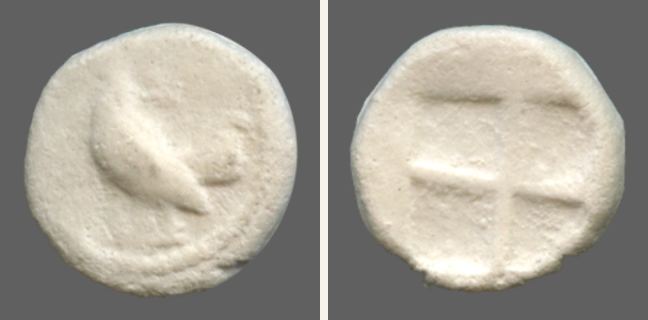
Photograph: BBAW; Corpus Nummorum (Berlin-Brandenburg Academy of Sciences and Humanities)
ancient coins
Selymbria, Diobol — Quadripartite incuse square (CN type 306)
c. 492/490–473/470 BC
Diobol in silver struck at Selymbria in Thrace, dated c. 492/490–473/470 BC. Corpus Nummorum, the online type corpus of the Berlin-Brandenburg Academy of Sciences and Humanities, records it as CN type 306 (period: Classical Period; issuing authority type: city). Obverse: Cock standing left. Legend: ΣΑ. Reverse: Qua…
Research required
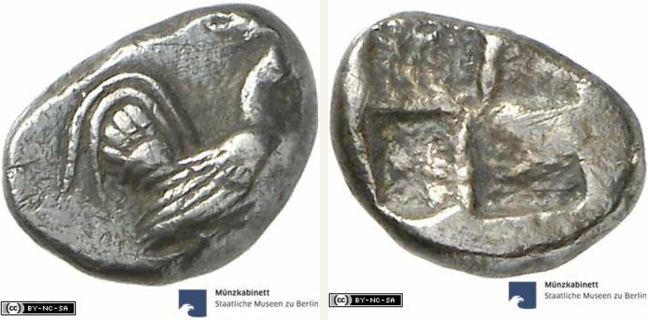
Photograph: Lutz-Jürgen Lübke (Lübke & Wiedemann); Corpus Nummorum (Berlin-Brandenburg Academy of Sciences and Humanities); specimen held by ikmk.smb.museum
ancient coins
Selymbria, Diobol — Quadripartite incuse square (CN type 307)
c. 492/490–473/470 BC
Diobol in silver struck at Selymbria in Thrace, dated c. 492/490–473/470 BC. Corpus Nummorum, the online type corpus of the Berlin-Brandenburg Academy of Sciences and Humanities, records it as CN type 307 (period: Classical Period; issuing authority type: city). Obverse: Cock standing right. Reverse: Quadripartite…
Research required
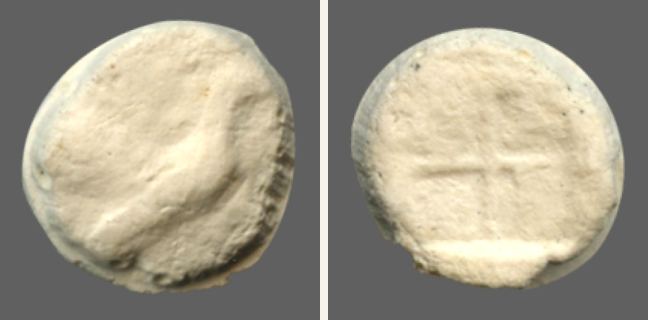
Photograph: BBAW; Corpus Nummorum (Berlin-Brandenburg Academy of Sciences and Humanities)
ancient coins
Selymbria, Hemiobol — Quadripartite incuse square (CN type 316)
c. 492/490–473/470 BC
Hemiobol in silver struck at Selymbria in Thrace, dated c. 492/490–473/470 BC. Corpus Nummorum, the online type corpus of the Berlin-Brandenburg Academy of Sciences and Humanities, records it as CN type 316 (period: Classical Period; issuing authority type: city). Obverse: Cock standing right. Reverse: Quadripartit…
Research required
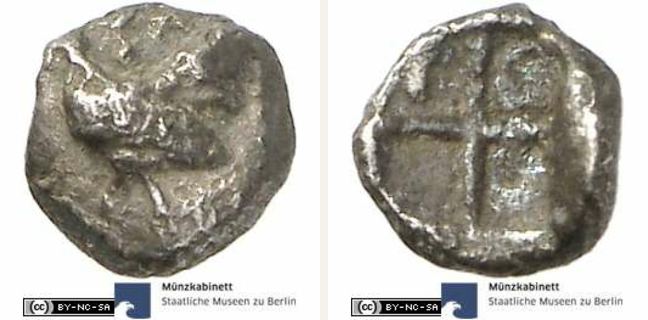
Photograph: Lutz-Jürgen Lübke (Lübke & Wiedemann); Corpus Nummorum (Berlin-Brandenburg Academy of Sciences and Humanities); specimen held by ikmk.smb.museum
ancient coins
Selymbria, Hemiobol — Quadripartite incuse square (CN type 317)
c. 492/490–473/470 BC
Hemiobol in silver struck at Selymbria in Thrace, dated c. 492/490–473/470 BC. Corpus Nummorum, the online type corpus of the Berlin-Brandenburg Academy of Sciences and Humanities, records it as CN type 317 (period: Classical Period; issuing authority type: city). Obverse: Cock standing left. Reverse: Quadripartite…
Research required
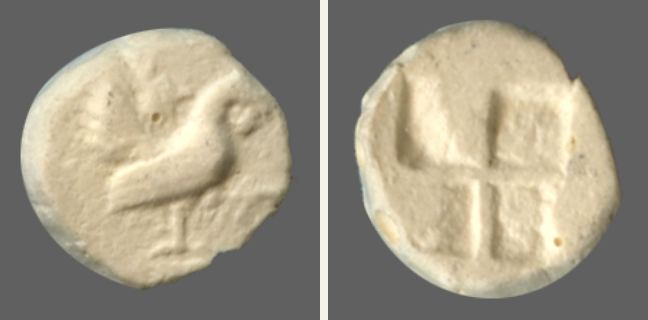
Photograph: BBAW; Corpus Nummorum (Berlin-Brandenburg Academy of Sciences and Humanities)
ancient coins
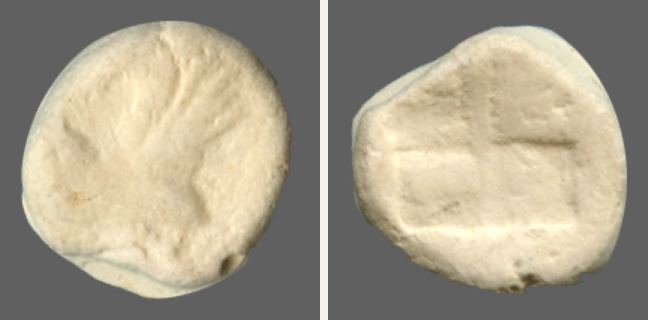
Selymbria, Obol — Quadripartite incuse square (CN type 311)
c. 492/490–473/470 BC
Obol in silver struck at Selymbria in Thrace, dated c. 492/490–473/470 BC. Corpus Nummorum, the online type corpus of the Berlin-Brandenburg Academy of Sciences and Humanities, records it as CN type 311 (period: Classical Period; issuing authority type: city). Obverse: Cock standing right. Reverse: Quadripartite in…
Research required
Photograph: BBAW; Corpus Nummorum (Berlin-Brandenburg Academy of Sciences and Humanities)
ancient coins
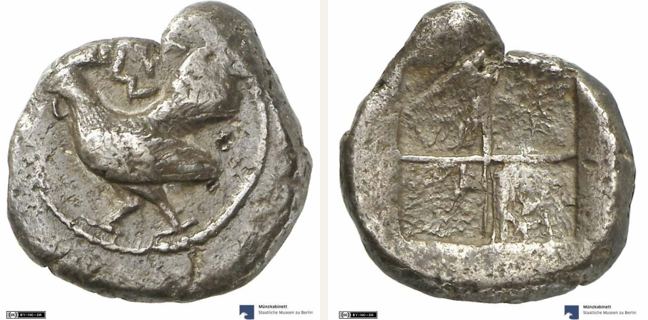
Selymbria, Obol — Quadripartite incuse square (CN type 314)
c. 492/490–473/470 BC
Obol in silver struck at Selymbria in Thrace, dated c. 492/490–473/470 BC. Corpus Nummorum, the online type corpus of the Berlin-Brandenburg Academy of Sciences and Humanities, records it as CN type 314 (period: Classical Period; issuing authority type: city). Obverse: Cock standing left. Reverse: Quadripartite inc…
Research required
Photograph: Lutz-Jürgen Lübke (Lübke & Wiedemann); Corpus Nummorum (Berlin-Brandenburg Academy of Sciences and Humanities); specimen held by ikmk.smb.museum
ancient coins
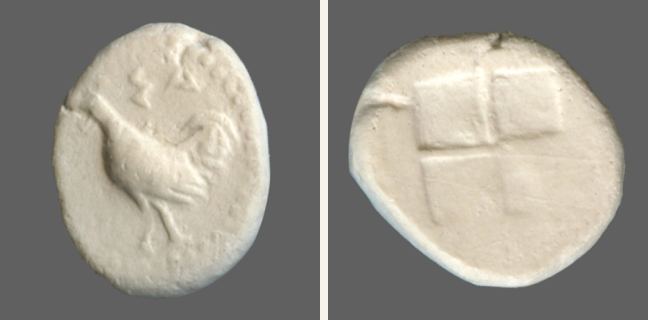
Selymbria, Octobol — Quadripartite incuse square (CN type 303)
c. 492/490–473/470 BC
Octobol in silver struck at Selymbria in Thrace, dated c. 492/490–473/470 BC. Corpus Nummorum, the online type corpus of the Berlin-Brandenburg Academy of Sciences and Humanities, records it as CN type 303 (period: Classical Period; issuing authority type: city). Obverse: Cock standing left. Legend: ΣΑ. Reverse: Qu…
Research required
Photograph: BBAW; Corpus Nummorum (Berlin-Brandenburg Academy of Sciences and Humanities)
ancient coins
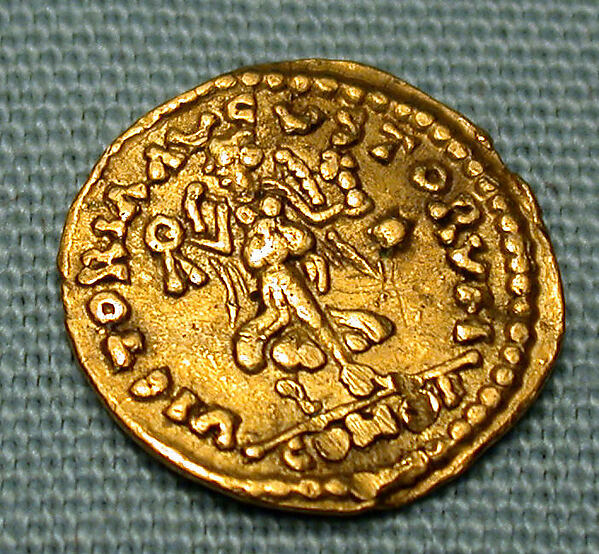
Selymbria, Tetrobol — Quadripartite incuse square (CN type 304)
c. 492/490–473/470 BC
Tetrobol in silver struck at Selymbria in Thrace, dated c. 492/490–473/470 BC. Corpus Nummorum, the online type corpus of the Berlin-Brandenburg Academy of Sciences and Humanities, records it as CN type 304 (period: Classical Period; issuing authority type: city). Obverse: Cock standing left. Legend: ΣΑ. Reverse: Q…
Research required
The Metropolitan Museum of Art, Bequest of Nanette B. Kelekian, 2020
ancient coins
Semissis of Anastasius I — 2021.37.22
491–518
The Metropolitan Museum of Art describes this specimen as Coin, dated 491–518, in Gold. Museum accession: 2021.37.22. Research required: broader type and specialist references remain unconfirmed. Museum note (The Met): Anastasius, who was a respected emperor, is shown in profile upon the coin. The reverse of the co…
Partial type record
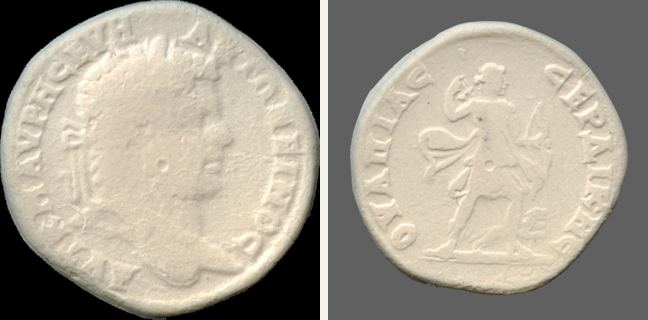
Photograph: BBAW; Corpus Nummorum (Berlin-Brandenburg Academy of Sciences and Humanities)
ancient coins
Serdika, Caracalla, 4 unit — Artemis advancing right (CN type 627)
AD 197–217
4 unit in bronze struck at Serdika in Thrace under Caracalla, dated AD 197–217. Corpus Nummorum, the online type corpus of the Berlin-Brandenburg Academy of Sciences and Humanities, records it as CN type 627 (period: Roman Imperial Period; issuing authority type: city). Obverse: Laureate bust of bearded Caracalla,…
Research required
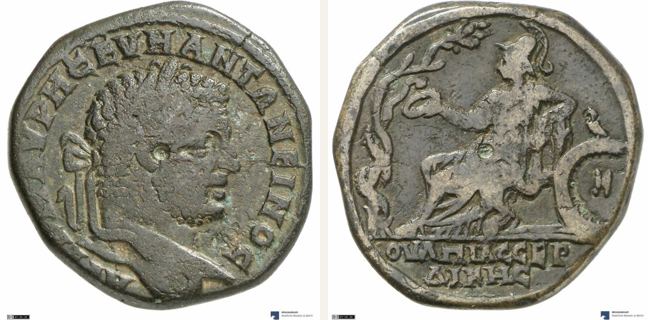
Photograph: Lutz-Jürgen Lübke (Lübke & Wiedemann); Corpus Nummorum (Berlin-Brandenburg Academy of Sciences and Humanities); specimen held by ikmk.smb.museum
ancient coins
Serdika, Caracalla, 4 unit — Athena enthroned left (CN type 531)
AD 197–217
4 unit in bronze struck at Serdika in Thrace under Caracalla, dated AD 197–217. Corpus Nummorum, the online type corpus of the Berlin-Brandenburg Academy of Sciences and Humanities, records it as CN type 531 (period: Roman Imperial Period; issuing authority type: city). Obverse: Laureate bust of bearded Caracalla,…
Research required
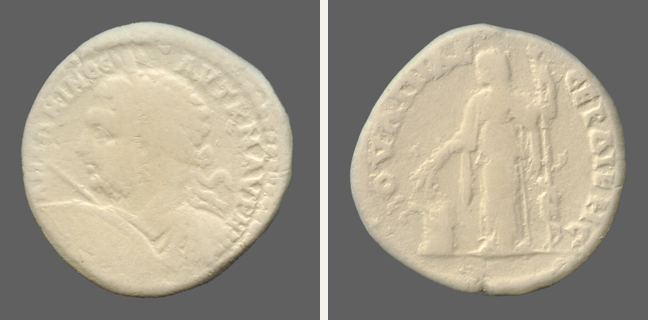
Photograph: BBAW; Corpus Nummorum (Berlin-Brandenburg Academy of Sciences and Humanities)
ancient coins
Serdika, Caracalla, 4 unit — Demeter standing left (CN type 632)
AD 197–217
4 unit in bronze struck at Serdika in Thrace under Caracalla, dated AD 197–217. Corpus Nummorum, the online type corpus of the Berlin-Brandenburg Academy of Sciences and Humanities, records it as CN type 632 (period: Roman Imperial Period; issuing authority type: city). Obverse: Laureate bust of Caracalla, left, we…
Research required
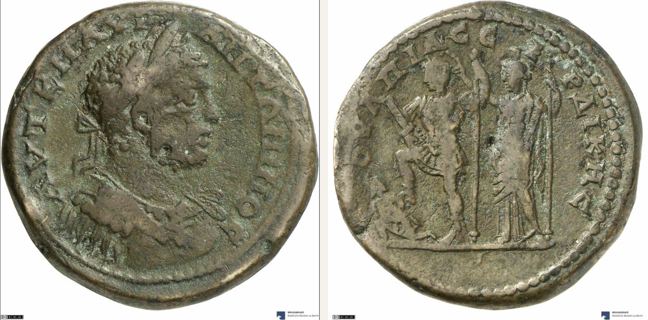
Photograph: Lutz-Jürgen Lübke (Lübke & Wiedemann); Corpus Nummorum (Berlin-Brandenburg Academy of Sciences and Humanities); specimen held by ikmk.smb.museum
ancient coins
Serdika, Caracalla, 4 unit — Emperor in military attire standing left (CN type 554)
AD 197–217
4 unit in bronze struck at Serdika in Thrace under Caracalla, dated AD 197–217. Corpus Nummorum, the online type corpus of the Berlin-Brandenburg Academy of Sciences and Humanities, records it as CN type 554 (period: Roman Imperial Period; issuing authority type: city). Obverse: Laureate bust of bearded Caracalla,…
Research required
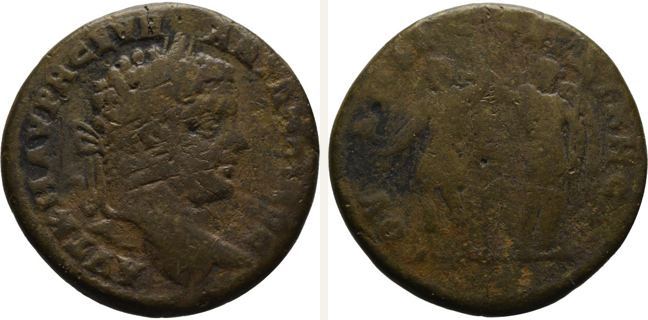
Photograph: Corpus Nummorum; Corpus Nummorum (Berlin-Brandenburg Academy of Sciences and Humanities)
ancient coins
Serdika, Caracalla, 4 unit — Emperor in military attire standing left (CN type 730)
AD 197–217
4 unit in bronze struck at Serdika in Thrace under Caracalla, dated AD 197–217. Corpus Nummorum, the online type corpus of the Berlin-Brandenburg Academy of Sciences and Humanities, records it as CN type 730 (period: Roman Imperial Period; issuing authority type: city). Obverse: Laureate bust of bearded Caracalla,…
Research required
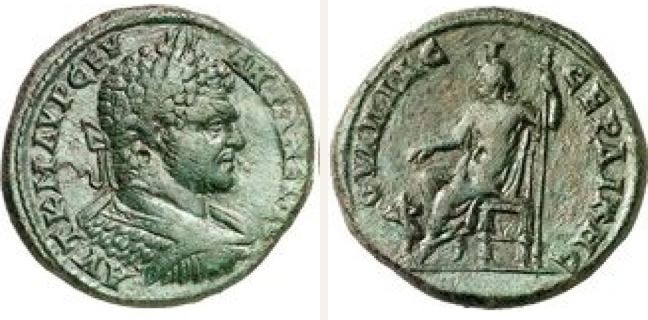
Photograph: BBAW; Corpus Nummorum (Berlin-Brandenburg Academy of Sciences and Humanities)
ancient coins
Serdika, Caracalla, 4 unit — Hades-Serapis seated left on throne (CN type 723)
AD 197–217
4 unit in bronze struck at Serdika in Thrace under Caracalla, dated AD 197–217. Corpus Nummorum, the online type corpus of the Berlin-Brandenburg Academy of Sciences and Humanities, records it as CN type 723 (period: Roman Imperial Period; issuing authority type: city). Obverse: Laureate bust of bearded Caracalla,…
Research required
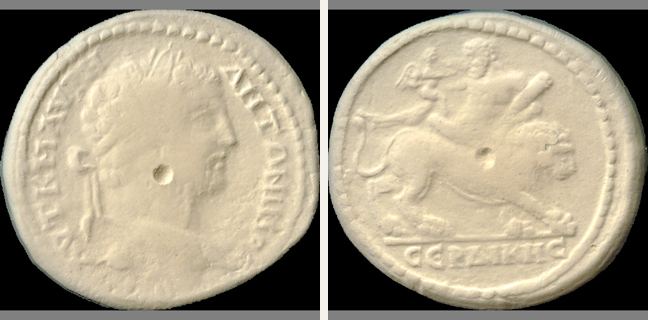
Photograph: BBAW; Corpus Nummorum (Berlin-Brandenburg Academy of Sciences and Humanities)
ancient coins
Serdika, Caracalla, 4 unit — Nude Heracles reclining left on lion walking right (CN type 621)
AD 197–217
4 unit in bronze struck at Serdika in Thrace under Caracalla, dated AD 197–217. Corpus Nummorum, the online type corpus of the Berlin-Brandenburg Academy of Sciences and Humanities, records it as CN type 621 (period: Roman Imperial Period; issuing authority type: city). Obverse: Laureate bust of bearded Caracalla,…
Research required
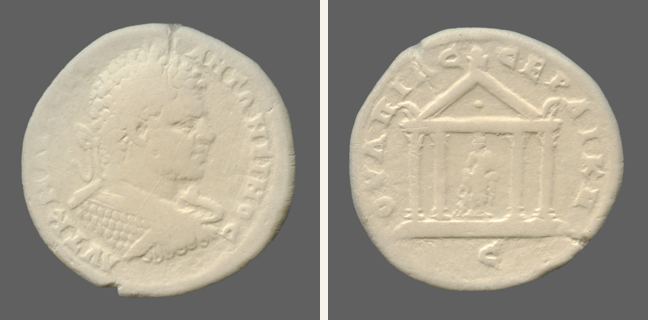
Photograph: BBAW; Corpus Nummorum (Berlin-Brandenburg Academy of Sciences and Humanities)
ancient coins
Serdika, Caracalla, 4 unit — Tetrastyle temple on crepidoma (CN type 625)
AD 212–217
4 unit in bronze struck at Serdika in Thrace under Caracalla, dated AD 212–217. Corpus Nummorum, the online type corpus of the Berlin-Brandenburg Academy of Sciences and Humanities, records it as CN type 625 (period: Roman Imperial Period; issuing authority type: city). Obverse: Laureate bust of bearded Caracalla,…
Research required
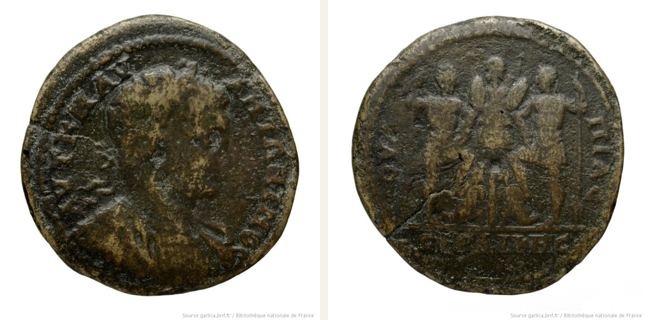
Photograph: Corpus Nummorum; Corpus Nummorum (Berlin-Brandenburg Academy of Sciences and Humanities); specimen held by gallica.bnf.fr
ancient coins
Serdika, Geta, 4 unit — Trophy (CN type 759)
AD 197–211
4 unit in bronze struck at Serdika in Thrace under Geta, dated AD 197–211. Corpus Nummorum, the online type corpus of the Berlin-Brandenburg Academy of Sciences and Humanities, records it as CN type 759 (period: Roman Imperial Period; issuing authority type: city). Obverse: Laureate bust of bearded Geta, right, wea…
Research required
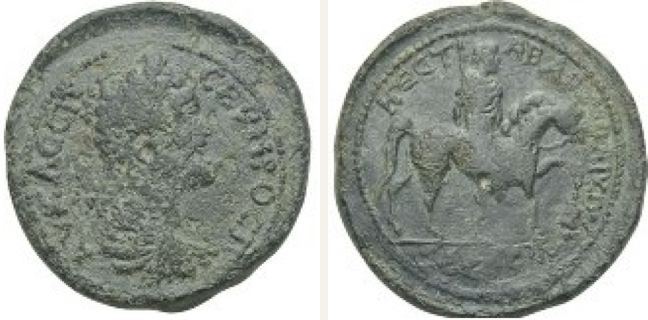
Photograph: BBAW; Corpus Nummorum (Berlin-Brandenburg Academy of Sciences and Humanities)
ancient coins
Serdika, Septimius Severus, 5 unit — Emperor in military attire riding right on horseback (CN type 674)
AD 196–198
5 unit in bronze struck at Serdika in Thrace under Septimius Severus, dated AD 196–198. Corpus Nummorum, the online type corpus of the Berlin-Brandenburg Academy of Sciences and Humanities, records it as CN type 674 (period: Roman Imperial Period; issuing authority type: city). Obverse: Laureate bust of Septimius S…
Research required
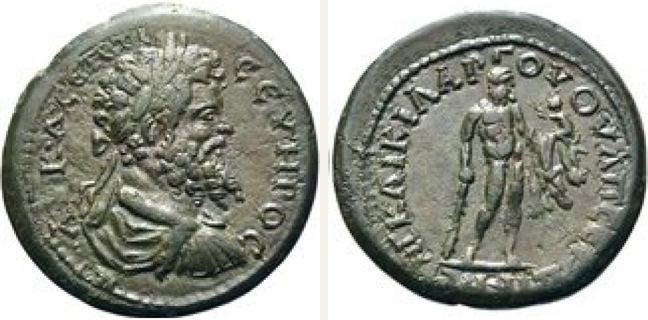
Photograph: BBAW; Corpus Nummorum (Berlin-Brandenburg Academy of Sciences and Humanities)
ancient coins
Serdika, Septimius Severus, 5 unit — Heracles with Telephos (CN type 676)
AD 198
5 unit in bronze struck at Serdika in Thrace under Septimius Severus, dated AD 198. Corpus Nummorum, the online type corpus of the Berlin-Brandenburg Academy of Sciences and Humanities, records it as CN type 676 (period: Roman Imperial Period; issuing authority type: city). Obverse: Laureate bust of Septimius Sever…
Research required
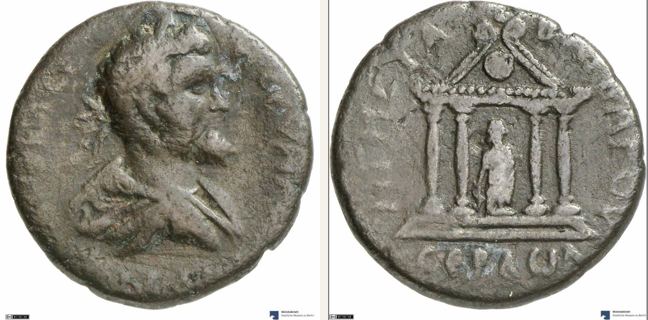
Photograph: Lutz-Jürgen Lübke (Lübke & Wiedemann); Corpus Nummorum (Berlin-Brandenburg Academy of Sciences and Humanities); specimen held by ikmk.smb.museum
ancient coins
Serdika, Septimius Severus, 5 unit — Tetrastyle temple on crepidoma (CN type 499)
AD 196–198
5 unit in bronze struck at Serdika in Thrace under Septimius Severus, dated AD 196–198. Corpus Nummorum, the online type corpus of the Berlin-Brandenburg Academy of Sciences and Humanities, records it as CN type 499 (period: Roman Imperial Period; issuing authority type: city). Obverse: Laureate bust of Septimius S…
Research required
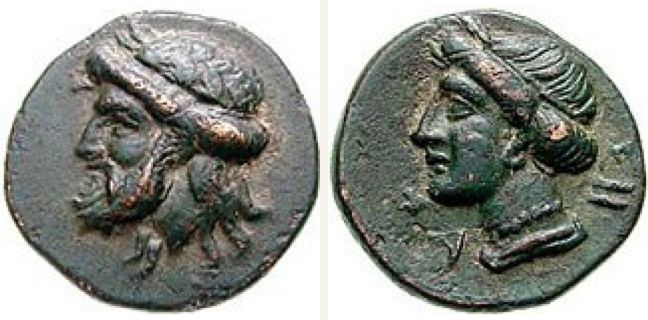
Photograph: Classical Numismatic Group; Corpus Nummorum (Berlin-Brandenburg Academy of Sciences and Humanities)
ancient coins
Sesamos, bronze coin — Head of Demeter (CN type 23925)
c. 360–300 BC
Coin in bronze struck at Sesamos, dated c. 360–300 BC. Corpus Nummorum, the online type corpus of the Berlin-Brandenburg Academy of Sciences and Humanities, records it as CN type 23925 (period: Classical Period; issuing authority type: city). Obverse: Laureate head of Zeus, left. Reverse: Head of Demeter, left, wea…
Research required
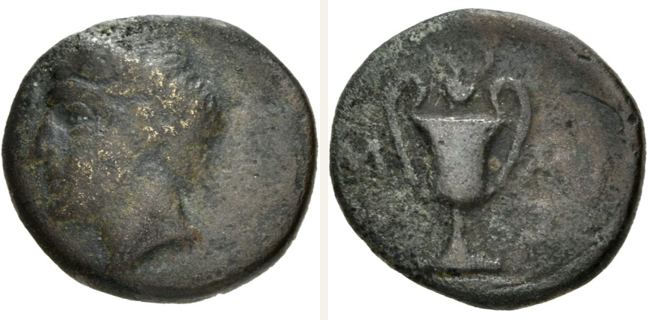
Photograph: Bernhard Weisser; Corpus Nummorum (Berlin-Brandenburg Academy of Sciences and Humanities); specimen held by ikmk.smb.museum
ancient coins
Sesamos, bronze coin — Kantharos (CN type 23927)
c. 360–300 BC
Coin in bronze struck at Sesamos, dated c. 360–300 BC. Corpus Nummorum, the online type corpus of the Berlin-Brandenburg Academy of Sciences and Humanities, records it as CN type 23927 (period: Classical Period; issuing authority type: city). Obverse: Laureate head of Apollo, left. Reverse: Kantharos; above, bunch…
Research required
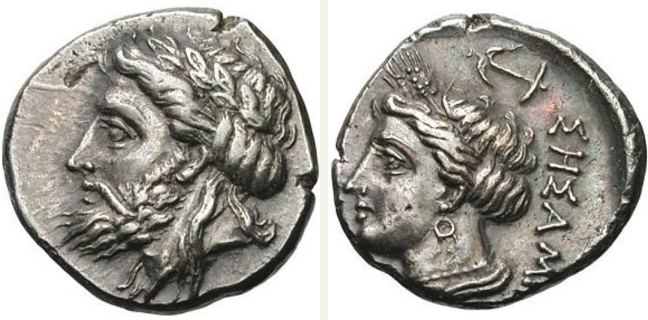
Photograph: Gemini; Corpus Nummorum (Berlin-Brandenburg Academy of Sciences and Humanities)
ancient coins
Sesamos, drachm — Head of Demeter (CN type 23924)
c. 360–330 BC
Drachm in silver struck at Sesamos, dated c. 360–330 BC. Corpus Nummorum, the online type corpus of the Berlin-Brandenburg Academy of Sciences and Humanities, records it as CN type 23924 (period: Classical Period; issuing authority type: city). Obverse: Laureate head of Zeus, left. Reverse: Head of Demeter, left, w…
Research required
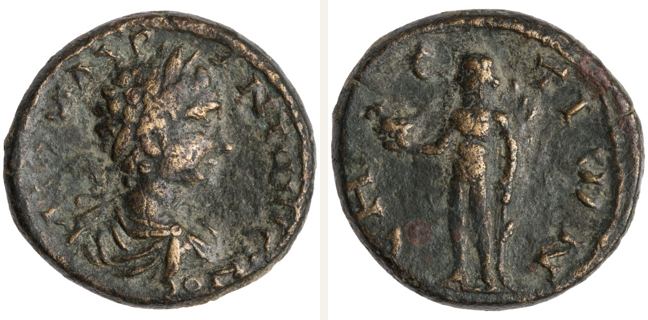
Photograph: American Numismatic Society; Corpus Nummorum (Berlin-Brandenburg Academy of Sciences and Humanities); specimen held by numismatics.org
ancient coins
Sestos, Caracalla, bronze coin — Nude Apollo standing facing (CN type 12792)
AD 197–217
Coin in bronze struck at Sestos in Thrace under Caracalla, dated AD 197–217. Corpus Nummorum, the online type corpus of the Berlin-Brandenburg Academy of Sciences and Humanities, records it as CN type 12792 (period: Roman Imperial Period; issuing authority type: city). Obverse: Laureate bust of youthful Caracalla,…
Research required
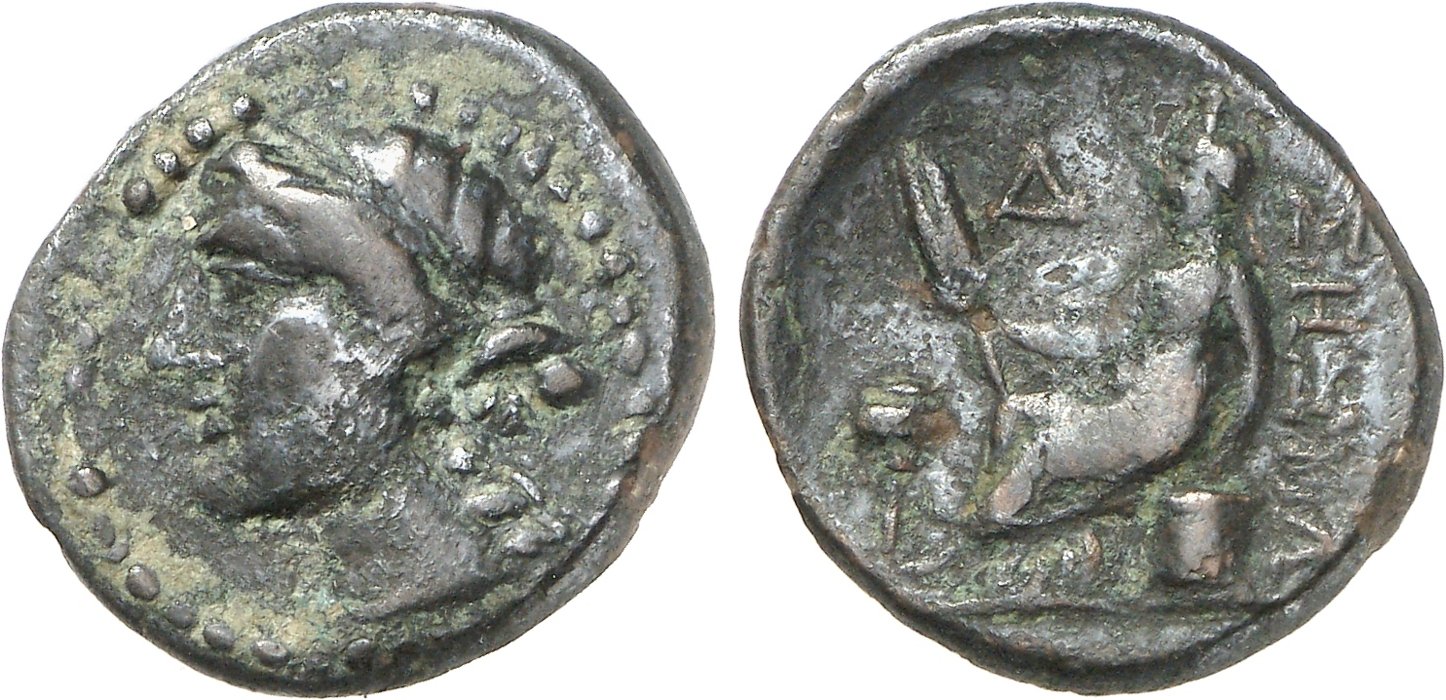
Corpus Nummorum (Berlin-Brandenburg Academy of Sciences and Humanities)
ancient coins
Sestos, large denomination (bronze) — Demeter seated left on basket (CN type 11905)
c. 200–100 BC
Large denomination (bronze) struck at Sestos in Thrace, dated c. 200–100 BC. Corpus Nummorum, the online type corpus of the Berlin-Brandenburg Academy of Sciences and Humanities, records it as CN type 11905 (period: Hellenistic Period; issuing authority type: city). Obverse: Diademed female head, left. Reverse: Dem…
Research required
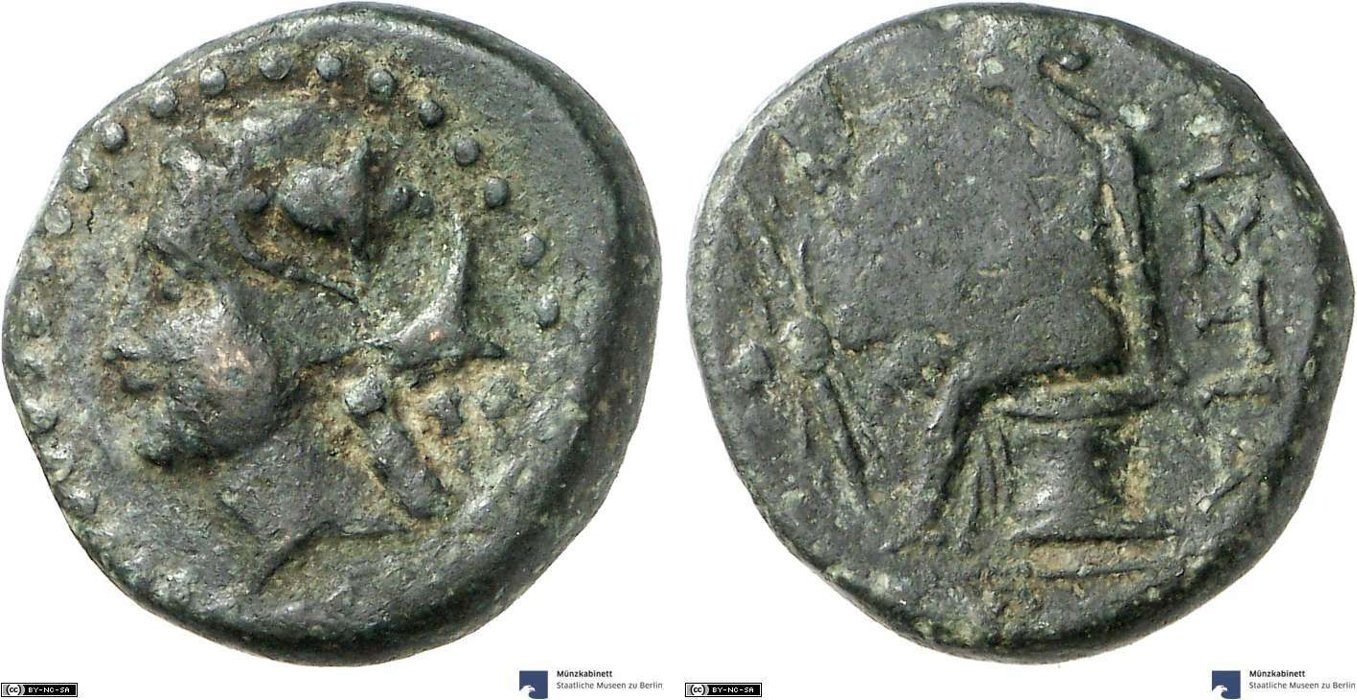
Corpus Nummorum (Berlin-Brandenburg Academy of Sciences and Humanities)
ancient coins
Sestos, large denomination (bronze) — Demeter seated left on basket (CN type 11906)
c. 200–100 BC
Large denomination (bronze) struck at Sestos in Thrace, dated c. 200–100 BC. Corpus Nummorum, the online type corpus of the Berlin-Brandenburg Academy of Sciences and Humanities, records it as CN type 11906 (period: Hellenistic Period; issuing authority type: city). Obverse: Female head, left. Reverse: Demeter seat…
Research required
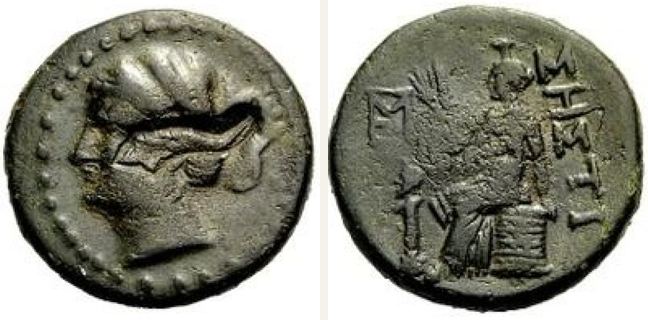
Photograph: Auktionshaus H.D. Rauch; Corpus Nummorum (Berlin-Brandenburg Academy of Sciences and Humanities)
ancient coins
Sestos, large denomination (bronze) — Demeter seated left on basket (CN type 12764)
c. 150–100 BC
Large denomination (bronze) struck at Sestos in Thrace, dated c. 150–100 BC. Corpus Nummorum, the online type corpus of the Berlin-Brandenburg Academy of Sciences and Humanities, records it as CN type 12764 (period: Hellenistic Period; issuing authority type: city). Obverse: Female head, left. Reverse: Demeter seat…
Research required
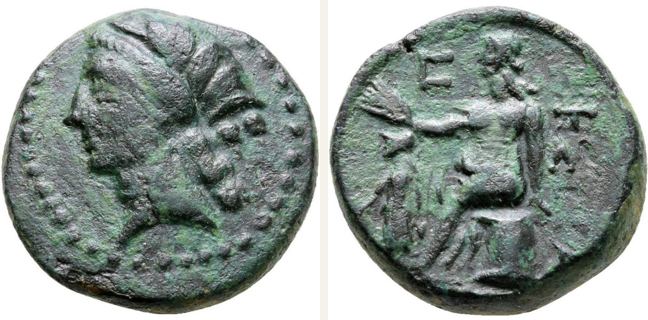
Photograph: Savoca Numismatik; Corpus Nummorum (Berlin-Brandenburg Academy of Sciences and Humanities)
ancient coins
Sestos, large denomination (bronze) — Demeter seated left on basket and holding ears of corn (CN type 22733)
c. 250–150 BC
Large denomination (bronze) struck at Sestos in Thrace, dated c. 250–150 BC. Corpus Nummorum, the online type corpus of the Berlin-Brandenburg Academy of Sciences and Humanities, records it as CN type 22733 (period: Hellenistic Period; issuing authority type: city). Obverse: Female head, left. Reverse: Demeter seat…
Research required