Catalogue
Ancient Coins
Greek, Roman, Byzantine, Celtic, Persian, Indian, Chinese and other pre-medieval coinages.
Catalogue entries (3,128)
Filter by era, country, maker or material289–336 of 3,128 entries
Rijksmuseum, Amsterdam
ancient coins
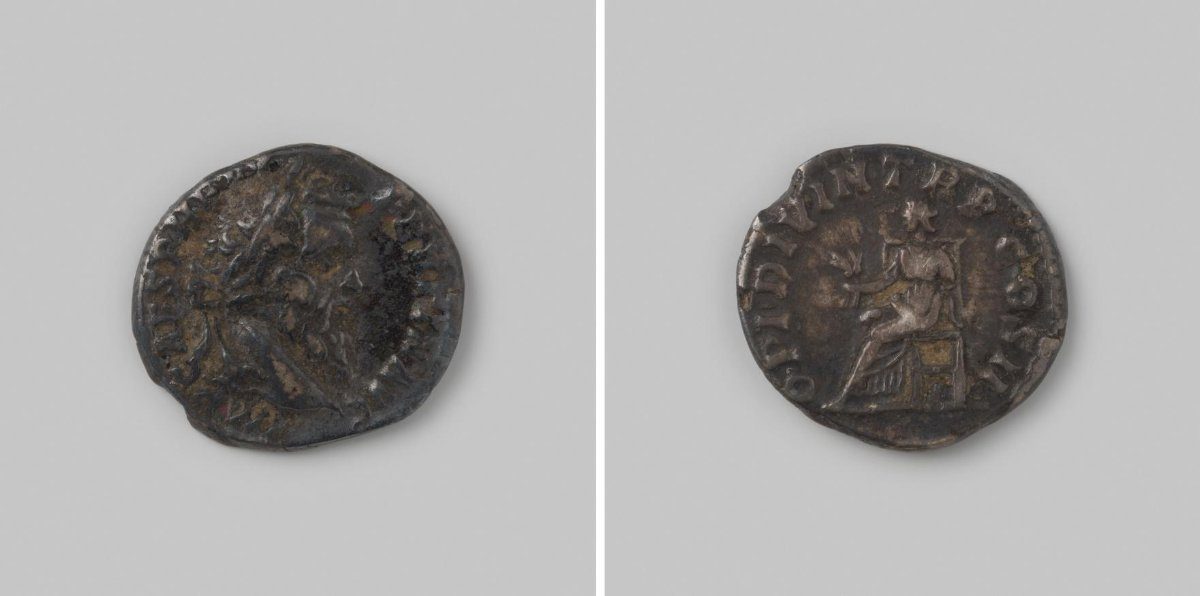
Denarius from the Roman Empire of Pertinax, 193
193
Reverse: Ops, the goddess of wealth, seated facing left holding two ears of corn in her right hand. The Rijksmuseum, Amsterdam, holds this object as KOG-MP-1-0071; its record gives material recorded as silver (metal); technique striking (metalworking); measurements diameter 1.8 cm x weight 2.98 g.
Partial type record
Rijksmuseum, Amsterdam
ancient coins
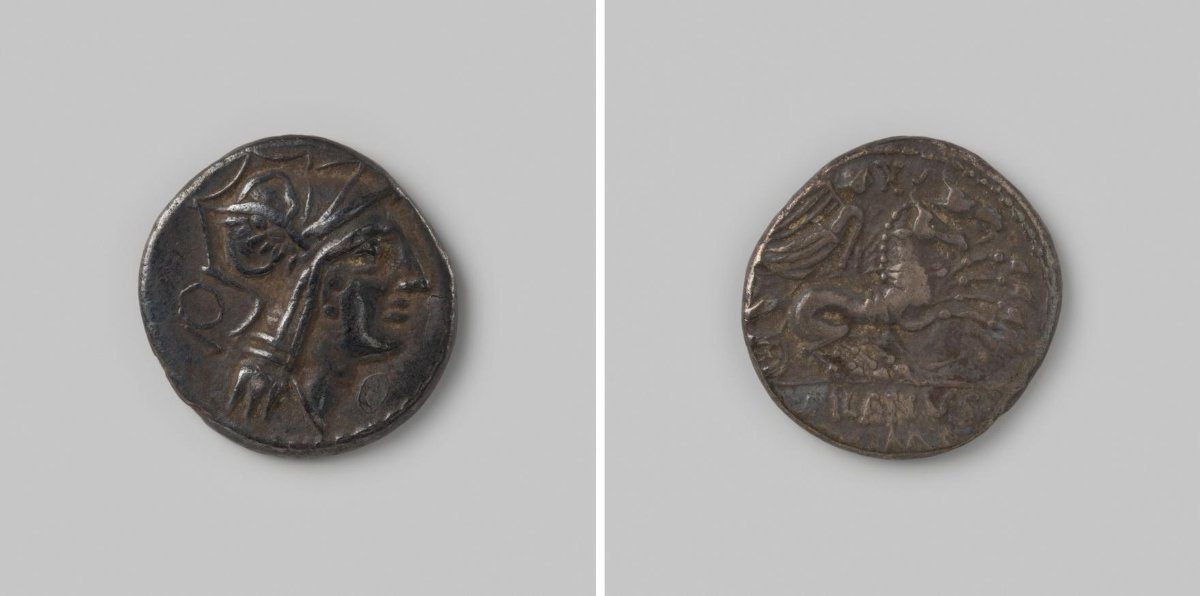
Denarius from the Roman Republic by the moneyer Decimus Junius Silanus, 91 BC
91 BC
Silver coin. Obverse: head of the goddess Roma facing right. Reverse: Victory in a biga (two-horse chariot), in the exergue the name of the moneyer Silanus. The Rijksmuseum, Amsterdam, holds this object as KOG-MP-1-0033A; its record gives material recorded as silver (metal); technique striking (metalworking); measur…
Partial type record
Rijksmuseum, Amsterdam
ancient coins
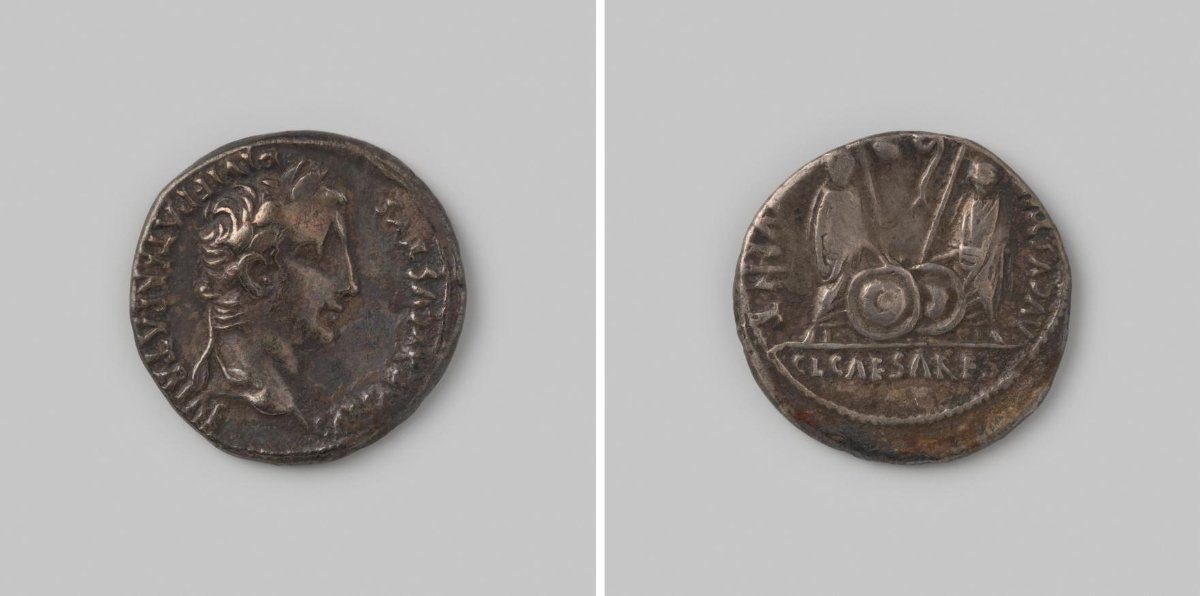
Denarius of Augustus from the Roman Empire, 27 BC - AD 14
27 BC – AD 14
Reverse: two standing men facing each other, Gaius and Lucius, wearing togas, with shields and spears, between them a simpulum (left) and lituus (right), legend in exergue. The Rijksmuseum, Amsterdam, holds this object as KOG-MP-1-0036A; its record gives material recorded as silver (metal); technique striking (metal…
Partial type record
Art Institute of Chicago
ancient coins
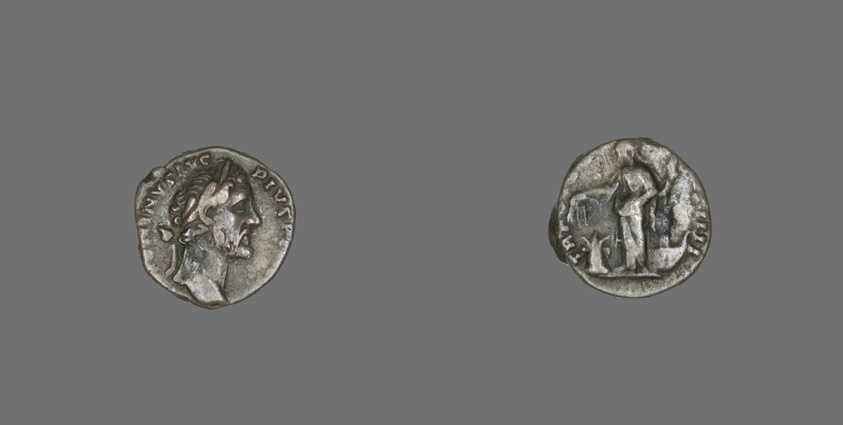
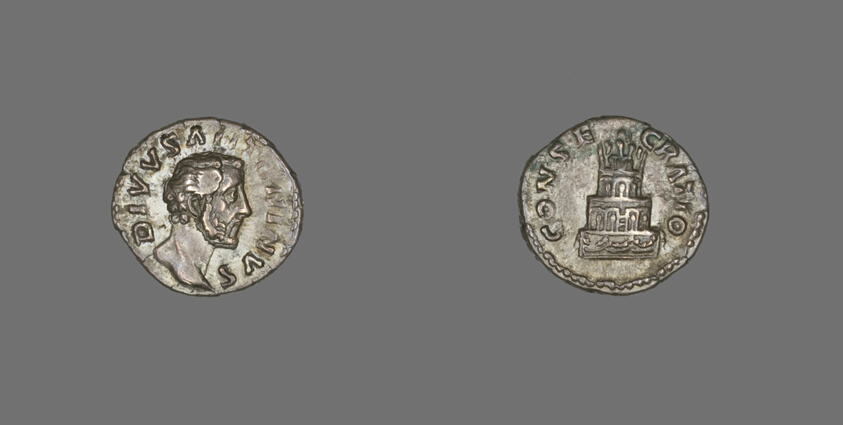
Denarius Portraying Emperor Antoninus Pius
157-158
This ancient Roman silver coin is a struck denarius produced in Rome between 157 and 158. Measuring approximately 1.6 cm (11/16 in.) in diameter, the coin exhibits a rounded silver flan with engraved relief imagery on both faces. The obverse features a profile bust of the Roman emperor Antoninus Pius facing to the…
Partial type record
Art Institute of Chicago
ancient coins
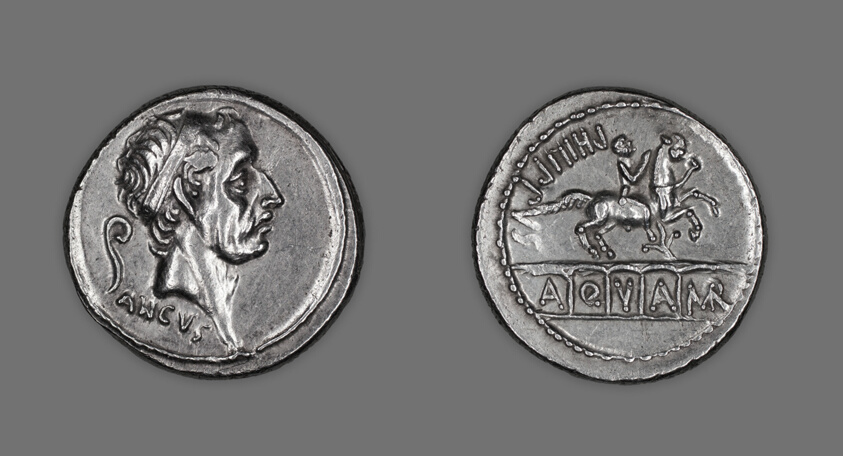
Denarius Portraying Emperor Antoninus Pius
176-180, struck by Marcus Aurelius
This object is a silver Roman denarius portraying the emperor Antoninus Pius. Minted in Rome, Italy, the coin has a diameter of 1.9 cm (3/4 in.) and was produced through striking between 176 and 180 CE under the reign of Marcus Aurelius. The obverse face depicts the head and neck of the emperor Antoninus Pius orien…
Partial type record
Art Institute of Chicago
ancient coins
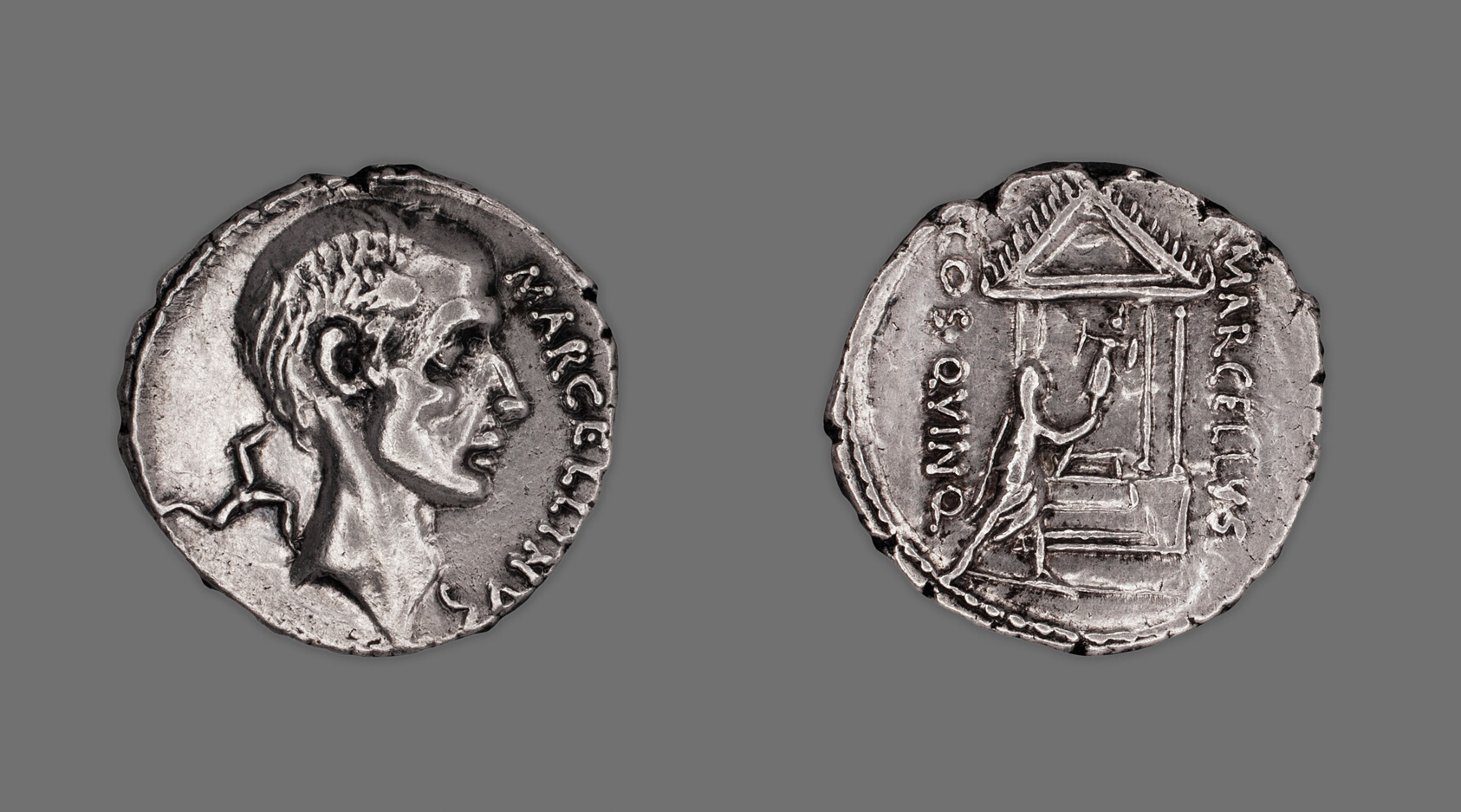
Denarius Portraying King Ancus Marcius
56 BCE, issued by L. Marcius Philippus
This silver denarius is an ancient Roman coin minted in Rome, measuring 1.8 cm (3/4 in.) in diameter. It was issued in 56 BCE by the politician Lucius Marcius Philippus. The obverse of the coin features a right-facing, diademed head representing the legendary Roman ruler King Ancus Marcius. Positioned behind his he…
Partial type record
Art Institute of Chicago
ancient coins
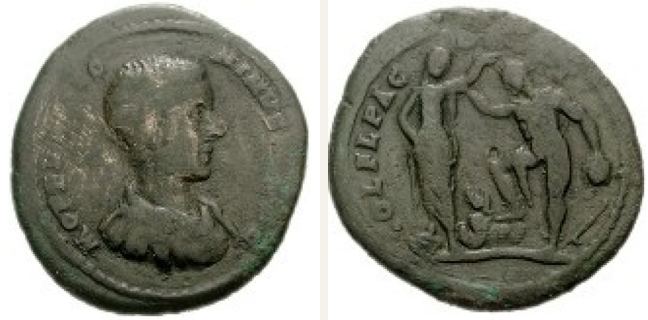
Denarius Portraying Marcus Claudius Marcellus
50-49 BCE, issued by Roman Republic, P. Cornelius Lentulus Marcellinus (moneyer)
This object is a silver denarius struck in Rome during the Roman Republic between 50 and 49 BCE. Issued under the moneyer P. Cornelius Lentulus Marcellinus, the circular coin measures 1.8 cm (3/4 in.) in diameter and presents relief imagery on both sides. The obverse features a right-facing portrait in profile of M…
Partial type record
Photograph: BBAW; Corpus Nummorum (Berlin-Brandenburg Academy of Sciences and Humanities)
ancient coins
Deultum, Diadumenian, 4 unit — Perseus and Andromeda (CN type 927)
AD 217–218
4 unit in bronze struck at Deultum in Thrace under Diadumenian, dated AD 217–218. Corpus Nummorum, the online type corpus of the Berlin-Brandenburg Academy of Sciences and Humanities, records it as CN type 927 (period: Roman Imperial Period). Obverse: Bare-headed bust of Diadumenian, right, wearing paludamentum. Le…
Research required
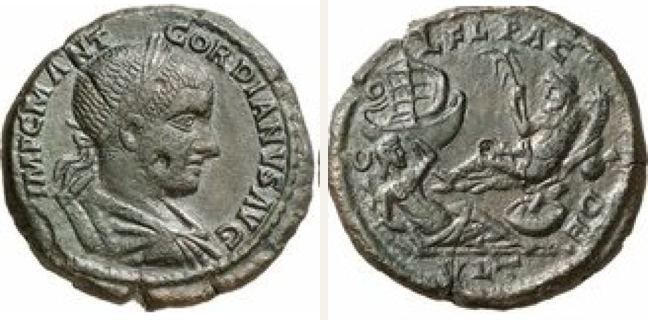
Photograph: Gorny & Mosch Giessener Münzhandlung; Corpus Nummorum (Berlin-Brandenburg Academy of Sciences and Humanities)
ancient coins
Deultum, Gordian III., 4 unit — Oiskos and Thalassa (CN type 138)
AD 238–244
4 unit in bronze struck at Deultum in Thrace under Gordian III., dated AD 238–244. Corpus Nummorum, the online type corpus of the Berlin-Brandenburg Academy of Sciences and Humanities, records it as CN type 138 (period: Roman Imperial Period; issuing authority type: city). Obverse: Laureate bust of Gordian III, rig…
Research required
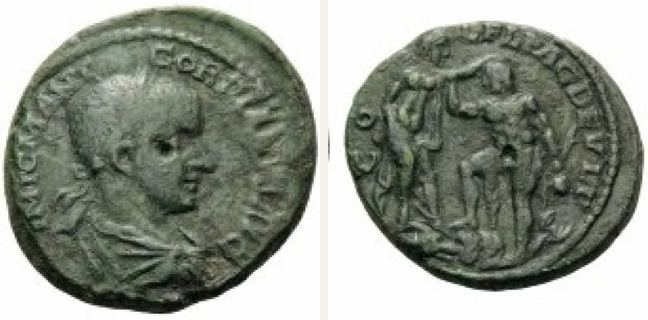
Photograph: BBAW; Corpus Nummorum (Berlin-Brandenburg Academy of Sciences and Humanities)
ancient coins
Deultum, Gordian III., 4 unit — Perseus and Andromeda (CN type 1113)
AD 238–244
4 unit in bronze struck at Deultum in Thrace under Gordian III., dated AD 238–244. Corpus Nummorum, the online type corpus of the Berlin-Brandenburg Academy of Sciences and Humanities, records it as CN type 1113 (period: Roman Imperial Period; issuing authority type: city). Obverse: Laureate bust of Gordian III, ri…
Research required
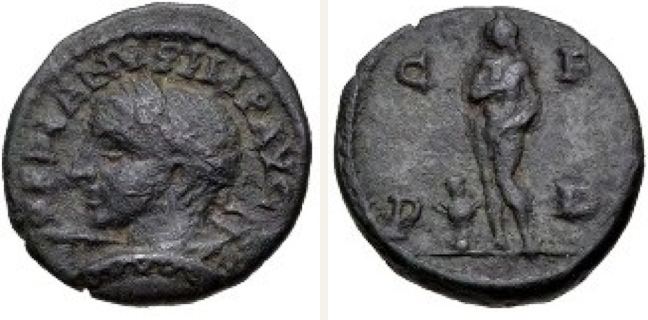
Photograph: BBAW; Corpus Nummorum (Berlin-Brandenburg Academy of Sciences and Humanities)
ancient coins
Deultum, Gordian III., Double unit — Nude Aphrodite standing facing (CN type 1135)
AD 238–244
Double unit in bronze struck at Deultum in Thrace under Gordian III., dated AD 238–244. Corpus Nummorum, the online type corpus of the Berlin-Brandenburg Academy of Sciences and Humanities, records it as CN type 1135 (period: Roman Imperial Period; issuing authority type: city). Obverse: Laureate bust of Gordian II…
Research required
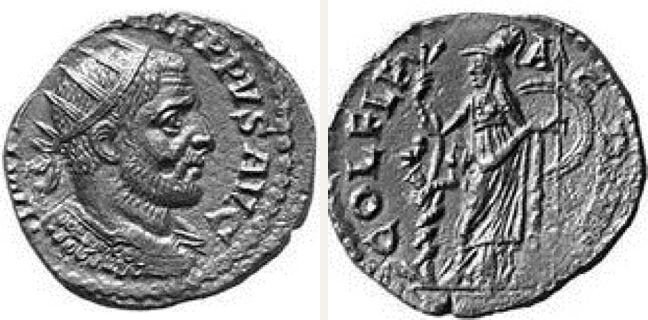
Photograph: BBAW; Corpus Nummorum (Berlin-Brandenburg Academy of Sciences and Humanities)
ancient coins
Deultum, Philippus Arabs, 4 unit — Athena standing left (CN type 1188)
AD 244–249
4 unit in bronze struck at Deultum in Thrace under Philippus Arabs, dated AD 244–249. Corpus Nummorum, the online type corpus of the Berlin-Brandenburg Academy of Sciences and Humanities, records it as CN type 1188 (period: Roman Imperial Period; issuing authority type: city). Obverse: Radiate bust of Philip the Ar…
Research required
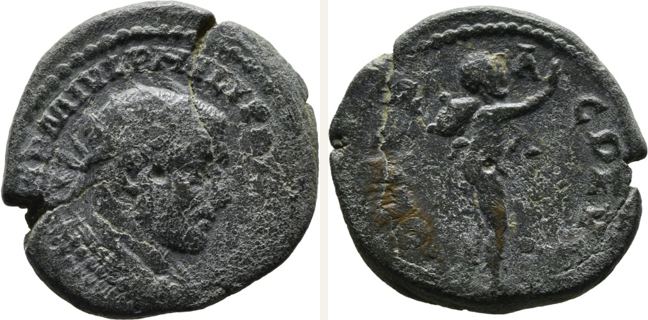
Photograph: Ioanna Maina; Corpus Nummorum (Berlin-Brandenburg Academy of Sciences and Humanities)
ancient coins
Deultum, Philippus Arabs, 4 unit — Nude (CN type 22873)
AD 244–249
4 unit in bronze struck at Deultum in Thrace under Philippus Arabs, dated AD 244–249. Corpus Nummorum, the online type corpus of the Berlin-Brandenburg Academy of Sciences and Humanities, records it as CN type 22873 (period: Roman Imperial Period; issuing authority type: city). Obverse: Radiate bust of Philip the A…
Research required
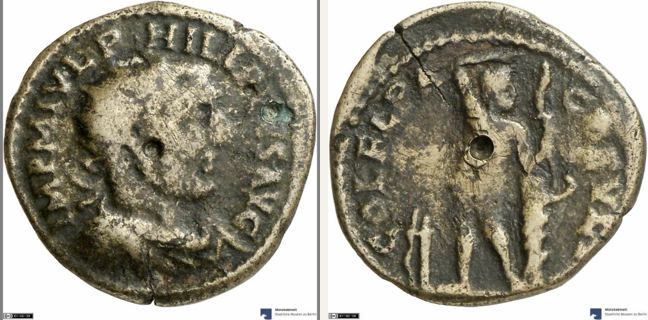
Photograph: Lutz-Jürgen Lübke (Lübke & Wiedemann); Corpus Nummorum (Berlin-Brandenburg Academy of Sciences and Humanities); specimen held by ikmk.smb.museum
ancient coins
Deultum, Philippus Arabs, 4 unit — Nude Apollo holding right hand over his head (CN type 1224)
AD 244–249
4 unit in bronze struck at Deultum in Thrace under Philippus Arabs, dated AD 244–249. Corpus Nummorum, the online type corpus of the Berlin-Brandenburg Academy of Sciences and Humanities, records it as CN type 1224 (period: Roman Imperial Period; issuing authority type: city). Obverse: Radiate bust of Philip the Ar…
Research required
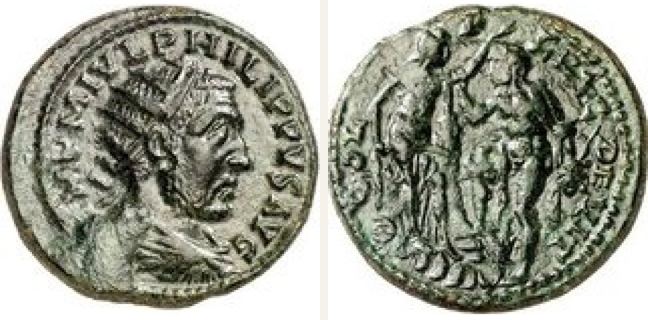
Photograph: BBAW; Corpus Nummorum (Berlin-Brandenburg Academy of Sciences and Humanities)
ancient coins
Deultum, Philippus Arabs, 4 unit — Perseus and Andromeda (CN type 1207)
AD 244–249
4 unit in bronze struck at Deultum in Thrace under Philippus Arabs, dated AD 244–249. Corpus Nummorum, the online type corpus of the Berlin-Brandenburg Academy of Sciences and Humanities, records it as CN type 1207 (period: Roman Imperial Period; issuing authority type: city). Obverse: Radiate bust of Philip the Ar…
Research required
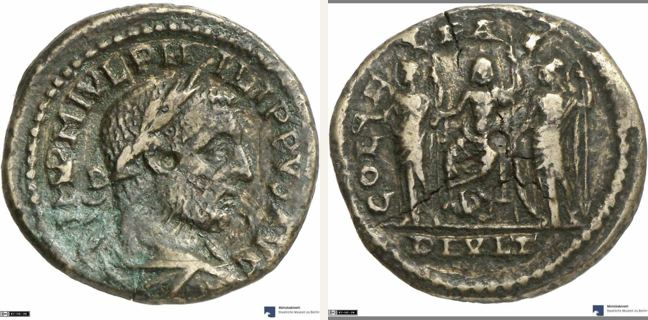
Photograph: Lutz-Jürgen Lübke (Lübke & Wiedemann); Corpus Nummorum (Berlin-Brandenburg Academy of Sciences and Humanities); specimen held by ikmk.smb.museum
ancient coins
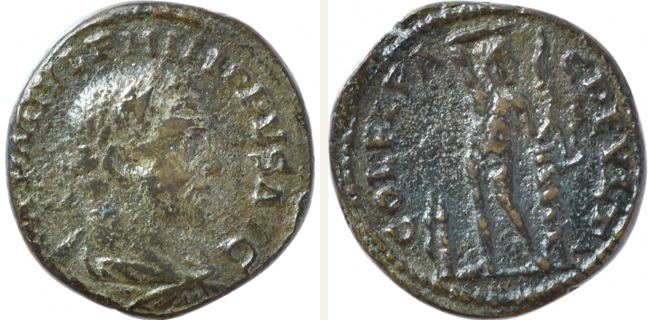
Deultum, Philippus Arabs, 4 unit — The Capitoline Trias: In the middle Zeus (CN type 1187)
AD 244–249
4 unit in bronze struck at Deultum in Thrace under Philippus Arabs, dated AD 244–249. Corpus Nummorum, the online type corpus of the Berlin-Brandenburg Academy of Sciences and Humanities, records it as CN type 1187 (period: Roman Imperial Period; issuing authority type: city). Obverse: Laureate bust of Philip the A…
Research required
Photograph: Bernisches Historisches Museum; Corpus Nummorum (Berlin-Brandenburg Academy of Sciences and Humanities)
ancient coins
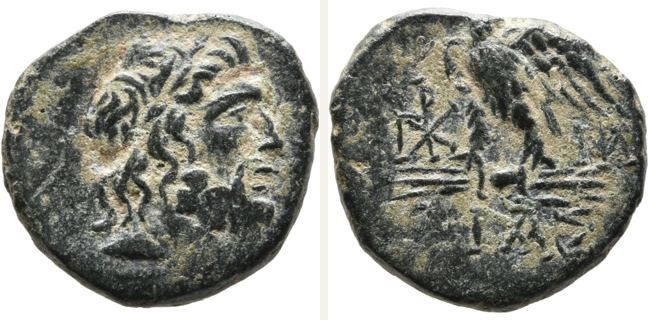
Deultum, Philippus Arabs, bronze coin — Nude Apollo standing facing (CN type 15171)
AD 244–249
Coin in bronze struck at Deultum in Thrace under Philippus Arabs, dated AD 244–249. Corpus Nummorum, the online type corpus of the Berlin-Brandenburg Academy of Sciences and Humanities, records it as CN type 15171 (period: Roman Imperial Period; issuing authority type: city). Obverse: Bare-headed bust of Philip the…
Research required
Photograph: Vladimir F. Stolba; Corpus Nummorum (Berlin-Brandenburg Academy of Sciences and Humanities)
ancient coins
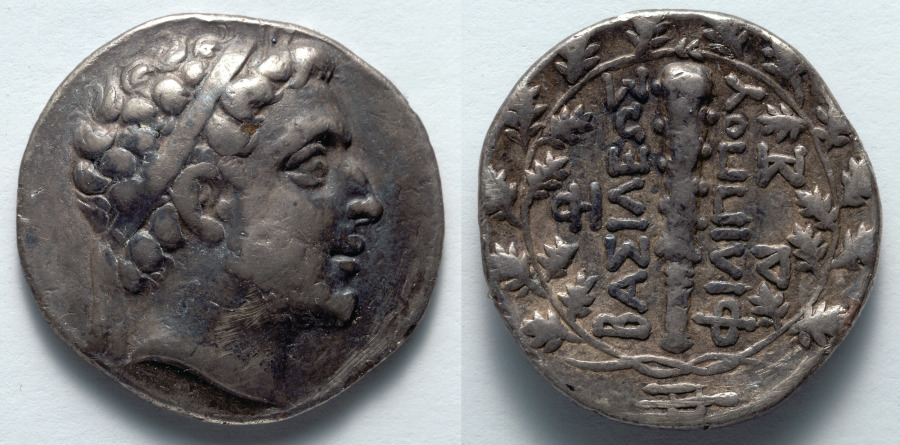
Dia, bronze coin — Eagle standing facing (CN type 22763)
c. 95–90 BC
Coin in bronze struck at Dia, dated c. 95–90 BC. Corpus Nummorum, the online type corpus of the Berlin-Brandenburg Academy of Sciences and Humanities, records it as CN type 22763 (period: Hellenistic Period; issuing authority type: city). Obverse: Laureate head of Zeus, right. Reverse: Eagle standing facing, slight…
Research required
Cleveland Museum of Art
ancient coins
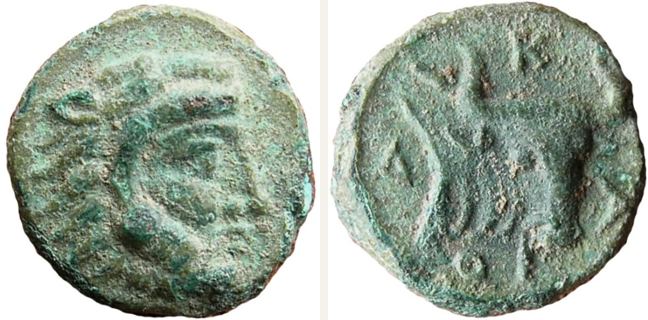
Didrachm: Head of Philip V (obverse); Club (Cleveland Museum of Art 1917.985)
220–179 BCE
Cleveland Museum of Art object 1917.985: Didrachm: Head of Philip V (obverse); Club (reverse), 220–179 BCE. Greek, Macedonian, minted in Macedonia, reign of Philip V. Silver; diameter: 2.5 cm (1 in.). Inscribed: ΒΑΣΙΛΕΩΣ | ΦΙΛΙΠΠΟΥ (Of the King Philip); ΔΙ; Ι within Σ. It is catalogued in the museum's Greek and Rom…
Partial type record
Photograph: H.I.; Corpus Nummorum (Berlin-Brandenburg Academy of Sciences and Humanities)
ancient coins
Dikaia, bronze coin — Head and neck of a bull facing three-quarters to right (CN type 22983)
c. 400–350 BC
Coin in bronze struck at Dikaia in Thrace, dated c. 400–350 BC. Corpus Nummorum, the online type corpus of the Berlin-Brandenburg Academy of Sciences and Humanities, records it as CN type 22983 (period: Classical Period; issuing authority type: city). Obverse: Head of bearded Heracles, right, wearing lion skin. Rev…
Research required
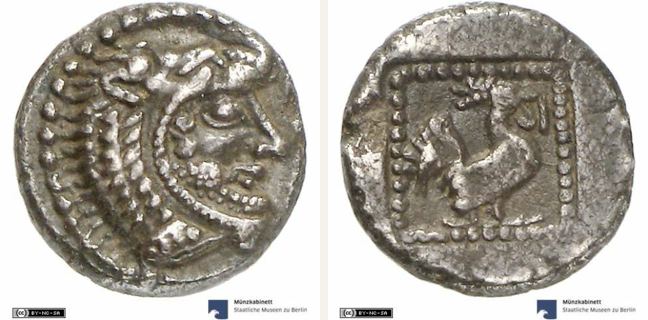
Photograph: Lutz-Jürgen Lübke (Lübke & Wiedemann); Corpus Nummorum (Berlin-Brandenburg Academy of Sciences and Humanities); specimen held by ikmk.smb.museum
ancient coins
Dikaia, hemidrachm (triobol) — Cock standing right (CN type 51)
c. 492/490–476/475 BC
Hemidrachm (triobol) in silver struck at Dikaia in Thrace, dated c. 492/490–476/475 BC. Corpus Nummorum, the online type corpus of the Berlin-Brandenburg Academy of Sciences and Humanities, records it as CN type 51 (period: Classical Period; issuing authority type: city). Obverse: Head of bearded Heracles, right, w…
Research required
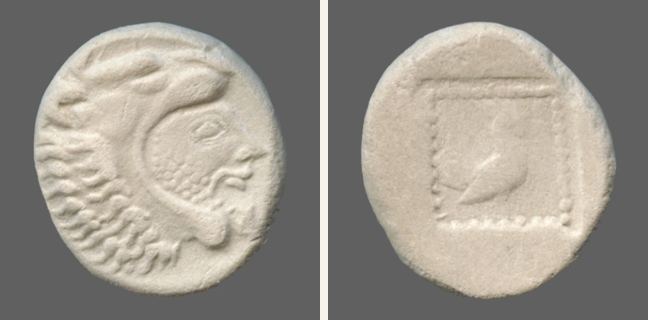
Photograph: BBAW; Corpus Nummorum (Berlin-Brandenburg Academy of Sciences and Humanities)
ancient coins
Dikaia, Hemistater (didrachm) — Cock standing right within incuse square (CN type 45)
c. 492/490–476/475 BC
Hemistater (didrachm) in silver struck at Dikaia in Thrace, dated c. 492/490–476/475 BC. Corpus Nummorum, the online type corpus of the Berlin-Brandenburg Academy of Sciences and Humanities, records it as CN type 45 (period: Classical Period; issuing authority type: city). Obverse: Head of bearded Heracles, right,…
Research required
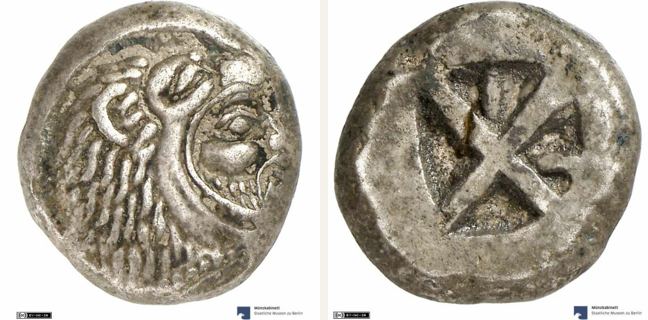
Photograph: Lutz-Jürgen Lübke (Lübke & Wiedemann); Corpus Nummorum (Berlin-Brandenburg Academy of Sciences and Humanities); specimen held by ikmk.smb.museum
ancient coins
Dikaia, stater — Incuse square divided into four triangles with uneven surfaces (CN type 21)
c. 540/535–492/490 BC
Stater in silver struck at Dikaia in Thrace, dated c. 540/535–492/490 BC. Corpus Nummorum, the online type corpus of the Berlin-Brandenburg Academy of Sciences and Humanities, records it as CN type 21 (period: Archaic Period; issuing authority type: city). Obverse: Head of bearded Heracles, right, wearing lion skin…
Research required
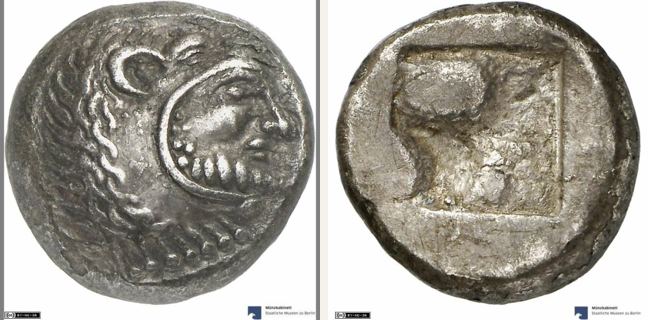
Photograph: Lutz-Jürgen Lübke (Lübke & Wiedemann); Corpus Nummorum (Berlin-Brandenburg Academy of Sciences and Humanities); specimen held by ikmk.smb.museum
ancient coins
Dikaia, stater — Quadripartite incuse square (CN type 3867)
c. 540/535–492/490 BC
Stater in silver struck at Dikaia in Thrace, dated c. 540/535–492/490 BC. Corpus Nummorum, the online type corpus of the Berlin-Brandenburg Academy of Sciences and Humanities, records it as CN type 3867 (period: Archaic Period; issuing authority type: city). Obverse: Head of bearded Heracles, right, wearing lion sk…
Research required
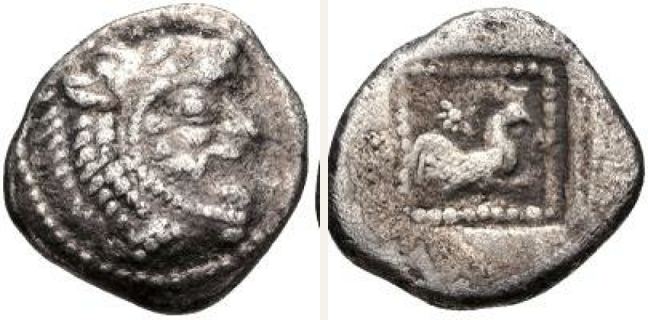
Photograph: Classical Numismatic Group; Corpus Nummorum (Berlin-Brandenburg Academy of Sciences and Humanities); specimen held by www.acsearch.info
ancient coins
Dikaia, Tetarte (drachm) — Cock standing right (CN type 21034)
c. 492/490–476/475 BC
Tetarte (drachm) in silver struck at Dikaia in Thrace, dated c. 492/490–476/475 BC. Corpus Nummorum, the online type corpus of the Berlin-Brandenburg Academy of Sciences and Humanities, records it as CN type 21034 (period: Classical Period; issuing authority type: city). Obverse: Head of bearded Heracles, right, we…
Research required
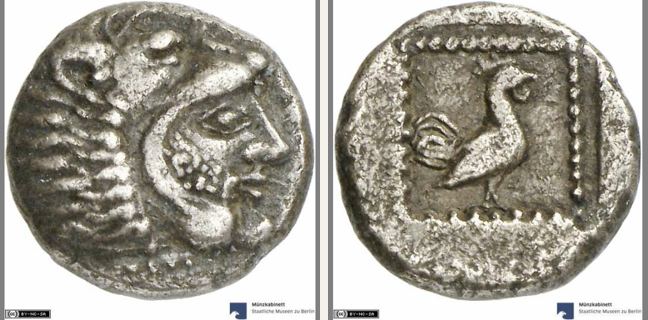
Photograph: Lutz-Jürgen Lübke (Lübke & Wiedemann); Corpus Nummorum (Berlin-Brandenburg Academy of Sciences and Humanities); specimen held by ikmk.smb.museum
ancient coins
Dikaia, Tetarte (drachm) — Cock standing right within incuse square (CN type 46)
c. 492/490–476/475 BC
Tetarte (drachm) in silver struck at Dikaia in Thrace, dated c. 492/490–476/475 BC. Corpus Nummorum, the online type corpus of the Berlin-Brandenburg Academy of Sciences and Humanities, records it as CN type 46 (period: Classical Period; issuing authority type: city). Obverse: Head of bearded Heracles, right, weari…
Research required
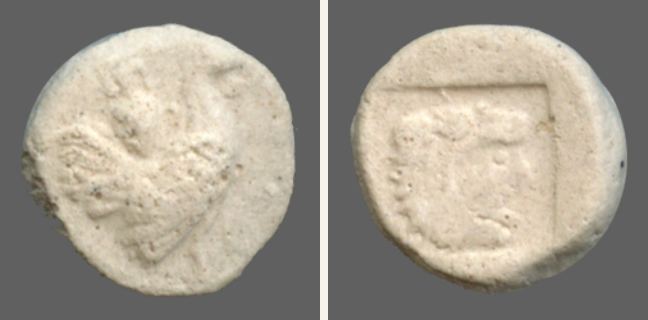
Photograph: BBAW; Corpus Nummorum (Berlin-Brandenburg Academy of Sciences and Humanities)
ancient coins
Dikaia, Trihemiobol (1 1/2 obol) — Head of bearded Herakles (CN type 54)
c. 492/490–476/475 BC
Trihemiobol (1 1/2 obol) in silver struck at Dikaia in Thrace, dated c. 492/490–476/475 BC. Corpus Nummorum, the online type corpus of the Berlin-Brandenburg Academy of Sciences and Humanities, records it as CN type 54 (period: Classical Period; issuing authority type: city). Obverse: Cock standing right. Reverse:…
Research required
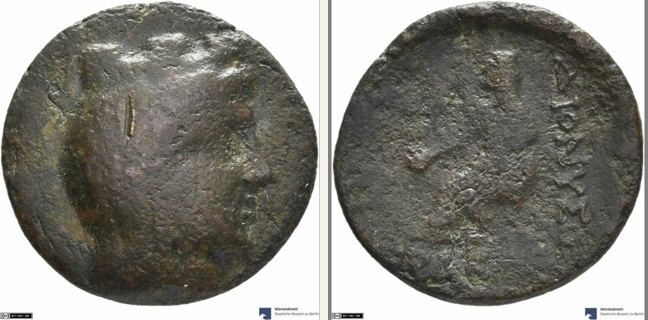
Photograph: Bernhard Weisser; Corpus Nummorum (Berlin-Brandenburg Academy of Sciences and Humanities); specimen held by ikmk.smb.museum
ancient coins
Dionysopolis, bronze coin — Cybele enthroned left (CN type 12846)
c. 150–100 BC
Coin in bronze struck at Dionysopolis in Moesia inferior, dated c. 150–100 BC. Corpus Nummorum, the online type corpus of the Berlin-Brandenburg Academy of Sciences and Humanities, records it as CN type 12846 (period: Hellenistic Period; issuing authority type: city). Obverse: Turreted female head, right. Reverse:…
Research required
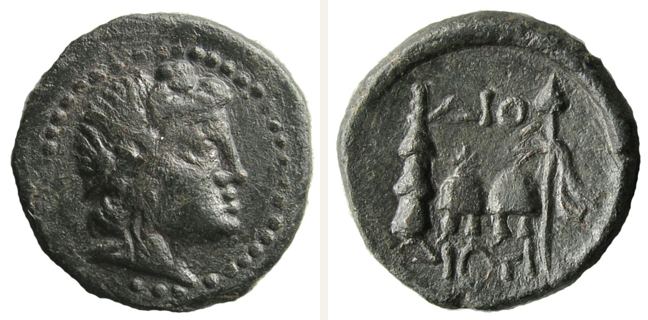
Photograph: H.I., Lemgo; Corpus Nummorum (Berlin-Brandenburg Academy of Sciences and Humanities)
ancient coins
Dionysopolis, bronze coin — Piloi of the Dioscuri surmounted by stars (CN type 20700)
2nd century BC
Coin in bronze struck at Dionysopolis in Moesia inferior, dated 2nd century BC. Corpus Nummorum, the online type corpus of the Berlin-Brandenburg Academy of Sciences and Humanities, records it as CN type 20700 (period: Hellenistic Period; issuing authority type: city). Obverse: Head of Dionysus, right, wearing ivy…
Research required
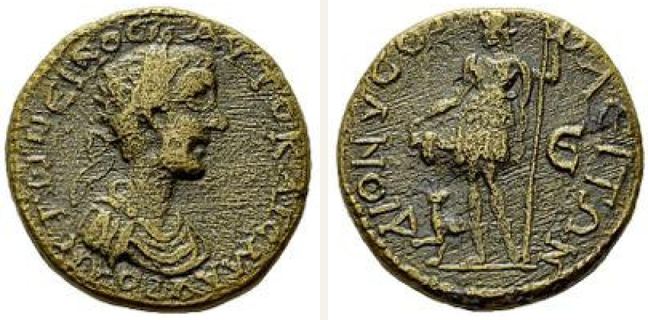
Photograph: Auktionshaus H.D. Rauch; Corpus Nummorum (Berlin-Brandenburg Academy of Sciences and Humanities); specimen held by www.acsearch.info
ancient coins
Dionysopolis, Caracalla, 5 unit — Dionysus standing l (CN type 20105)
AD 198–202
5 unit in bronze struck at Dionysopolis in Moesia inferior under Caracalla, dated AD 198–202. Corpus Nummorum, the online type corpus of the Berlin-Brandenburg Academy of Sciences and Humanities, records it as CN type 20105 (period: Roman Imperial Period; issuing authority type: city). Obverse: Laureate bust of Car…
Research required
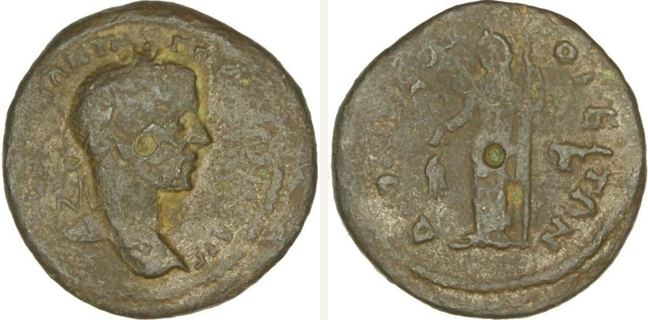
Photograph: RPC; Corpus Nummorum (Berlin-Brandenburg Academy of Sciences and Humanities); specimen held by rpc.ashmus.ox.ac.uk
ancient coins
Dionysopolis, Gordian III., 3 unit — Demeter standing facing (CN type 16189)
AD 238–244
3 unit in bronze struck at Dionysopolis in Moesia inferior under Gordian III., dated AD 238–244. Corpus Nummorum, the online type corpus of the Berlin-Brandenburg Academy of Sciences and Humanities, records it as CN type 16189 (period: Roman Imperial Period; issuing authority type: city). Obverse: Laureate head of…
Research required
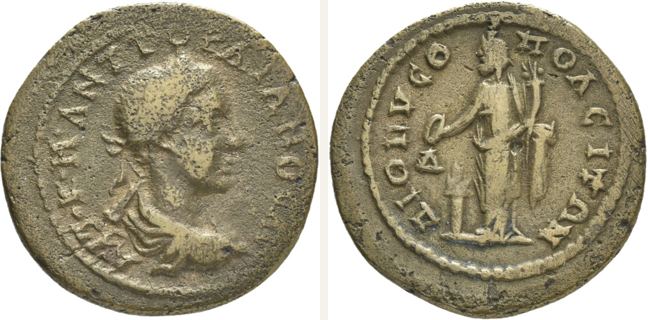
Photograph: MK Berlin; Corpus Nummorum (Berlin-Brandenburg Academy of Sciences and Humanities); specimen held by ikmk.smb.museum
ancient coins
Dionysopolis, Gordian III., 4 unit — Great God standing facing (CN type 16188)
AD 238–244
4 unit in bronze struck at Dionysopolis in Moesia inferior under Gordian III., dated AD 238–244. Corpus Nummorum, the online type corpus of the Berlin-Brandenburg Academy of Sciences and Humanities, records it as CN type 16188 (period: Roman Imperial Period; issuing authority type: city). Obverse: Laureate bust of…
Research required
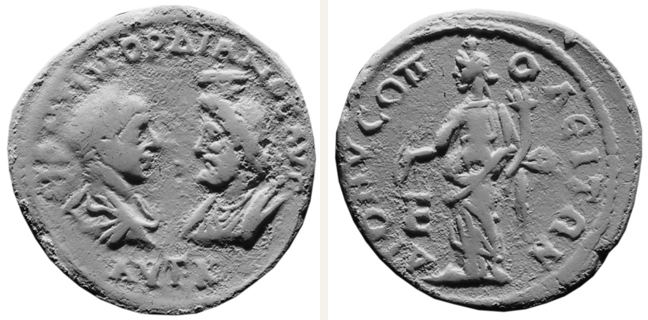
Photograph: BBAW; Corpus Nummorum (Berlin-Brandenburg Academy of Sciences and Humanities)
ancient coins
Dionysopolis, Gordian III., 5 unit — Homonoia standing facing (CN type 12821)
AD 238–244
5 unit in bronze struck at Dionysopolis in Moesia inferior under Gordian III., dated AD 238–244. Corpus Nummorum, the online type corpus of the Berlin-Brandenburg Academy of Sciences and Humanities, records it as CN type 12821 (period: Roman Imperial Period; issuing authority type: city). Obverse: Confronted busts…
Research required
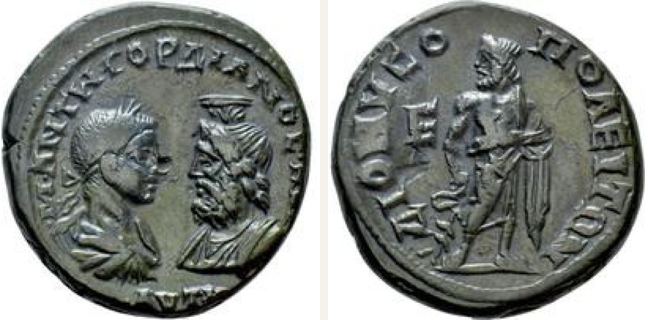
Photograph: Numismatik Naumann; Corpus Nummorum (Berlin-Brandenburg Academy of Sciences and Humanities); specimen held by www.acsearch.info
ancient coins
Dionysopolis, Gordian III., bronze coin — Asclepius standing facing (CN type 12822)
AD 238–244
Coin in bronze struck at Dionysopolis in Moesia inferior under Gordian III., dated AD 238–244. Corpus Nummorum, the online type corpus of the Berlin-Brandenburg Academy of Sciences and Humanities, records it as CN type 12822 (period: Roman Imperial Period; issuing authority type: city). Obverse: Confronted busts of…
Research required
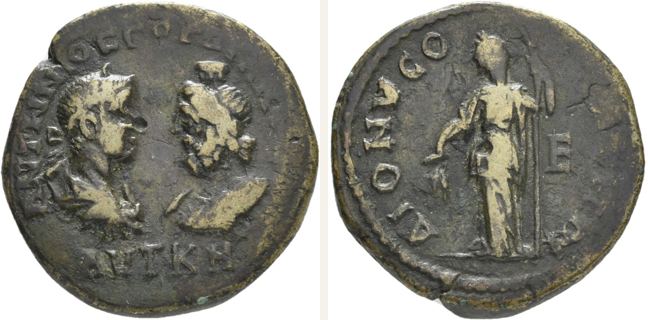
Photograph: RPC; Corpus Nummorum (Berlin-Brandenburg Academy of Sciences and Humanities); specimen held by ikmk.smb.museum
ancient coins
Dionysopolis, Gordian III., bronze coin — Demeter standing left (CN type 16169)
AD 238–244
Coin in bronze struck at Dionysopolis in Moesia inferior under Gordian III., dated AD 238–244. Corpus Nummorum, the online type corpus of the Berlin-Brandenburg Academy of Sciences and Humanities, records it as CN type 16169 (period: Roman Imperial Period; issuing authority type: city). Obverse: Confronted busts of…
Research required
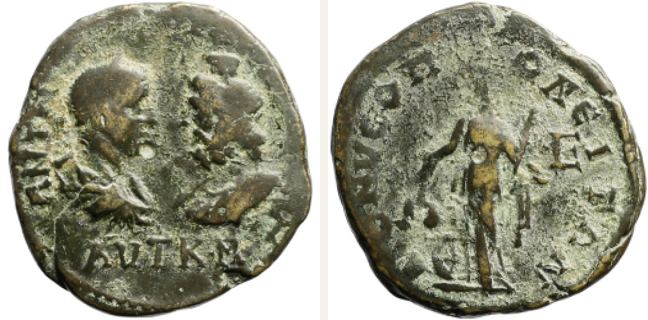
Photograph: Ashmolean Museum, Oxford; Corpus Nummorum (Berlin-Brandenburg Academy of Sciences and Humanities)
ancient coins
Dionysopolis, Gordian III., bronze coin — Nemesis-Aequitas standing left (CN type 16180)
AD 238–244
Coin in bronze struck at Dionysopolis in Moesia inferior under Gordian III., dated AD 238–244. Corpus Nummorum, the online type corpus of the Berlin-Brandenburg Academy of Sciences and Humanities, records it as CN type 16180 (issuing authority type: city). Obverse: Confronted busts of Gordian III, laureate, draped…
Research required
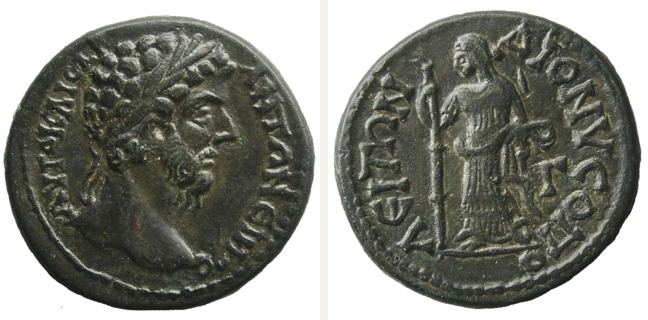
Photograph: H.I., Lemgo; Corpus Nummorum (Berlin-Brandenburg Academy of Sciences and Humanities)
ancient coins
Dionysopolis, Marc Aurel, 3 unit — Veiled Demeter standing facing (CN type 15587)
AD 161–180
3 unit in bronze struck at Dionysopolis in Moesia inferior under Marc Aurel, dated AD 161–180. Corpus Nummorum, the online type corpus of the Berlin-Brandenburg Academy of Sciences and Humanities, records it as CN type 15587 (period: Roman Imperial Period; issuing authority type: city). Obverse: Laureate head of Ma…
Research required
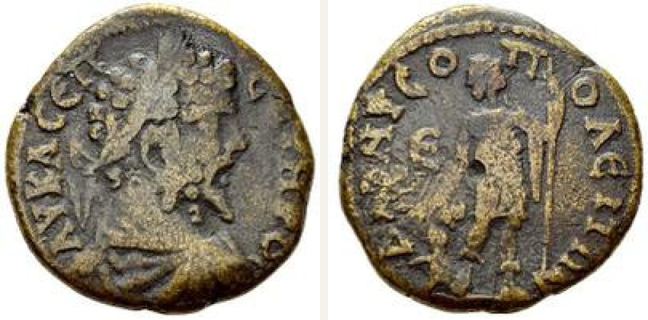
Photograph: Auktionshaus H.D. Rauch; Corpus Nummorum (Berlin-Brandenburg Academy of Sciences and Humanities); specimen held by www.acsearch.info
ancient coins
Dionysopolis, Septimius Severus, 5 unit — Dionysus standing facing (CN type 22651)
AD 210–211
5 unit in bronze struck at Dionysopolis in Moesia inferior under Septimius Severus, dated AD 210–211. Corpus Nummorum, the online type corpus of the Berlin-Brandenburg Academy of Sciences and Humanities, records it as CN type 22651 (period: Roman Imperial Period; issuing authority type: city). Obverse: Laureate bus…
Research required
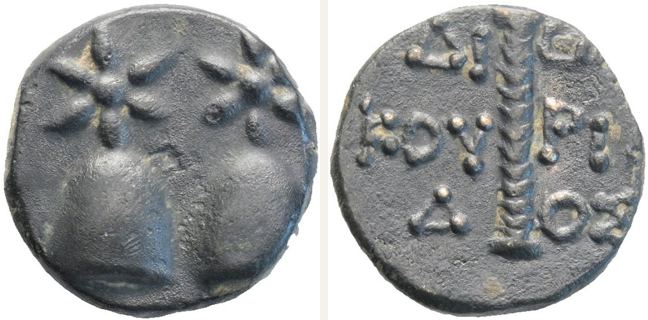
Photograph: Time - Numismatic (formerly Rönesans Salzgitter); Corpus Nummorum (Berlin-Brandenburg Academy of Sciences and Humanities)
ancient coins
Dioskourias, bronze coin — Thyrsos (CN type 23411)
c. 100–63 BC
Coin in bronze struck at Dioskourias, dated c. 100–63 BC. Corpus Nummorum, the online type corpus of the Berlin-Brandenburg Academy of Sciences and Humanities, records it as CN type 23411 (period: Hellenistic Period; issuing authority type: city). Obverse: Caps of the Dioskouroi surmounted by stars. Reverse: Thyrso…
Research required
Art Institute of Chicago
ancient coins
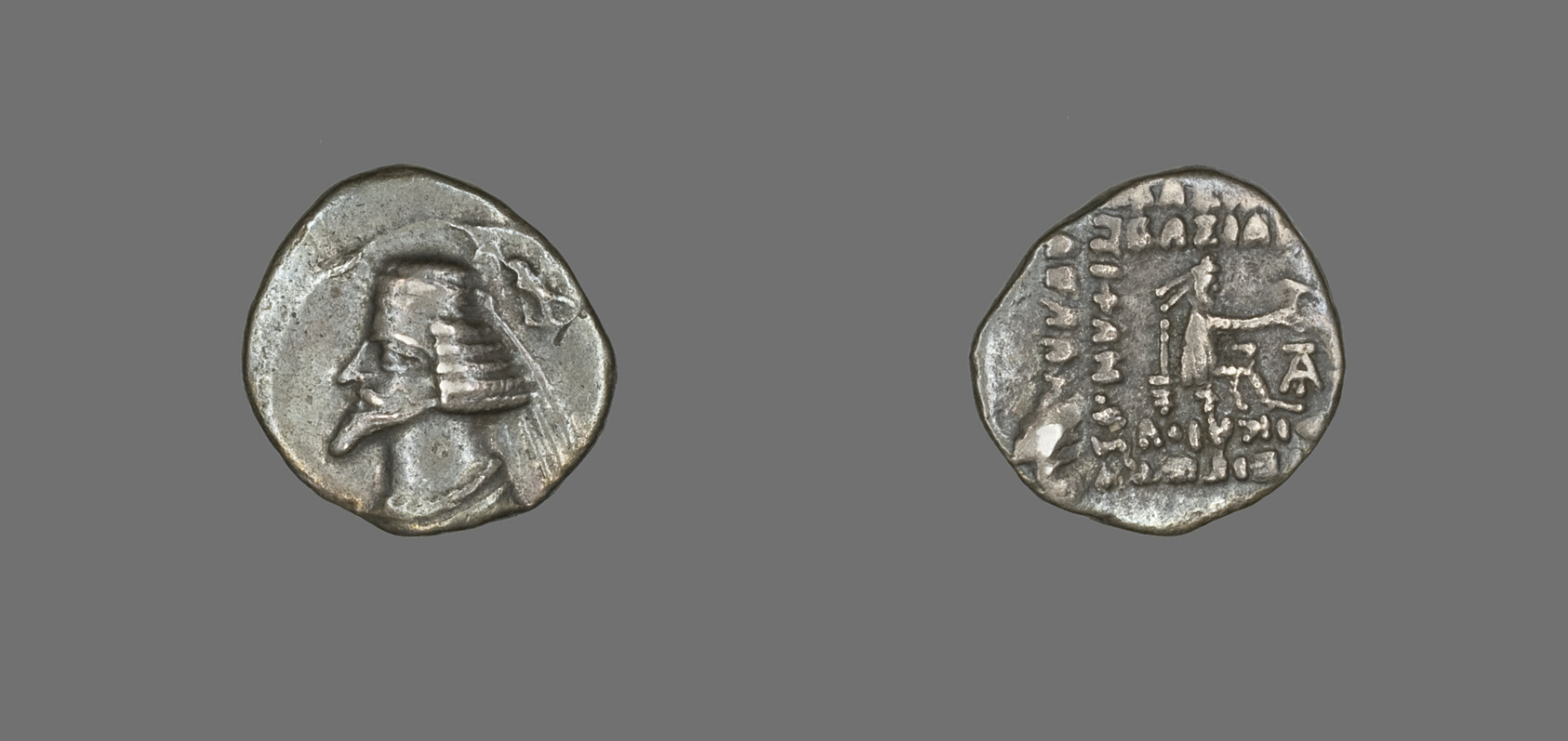
Drachm (Coin) Portraying King Phraates IV
38-2 BCE
This ancient silver drachm originates from Parthia, with recorded provenance in Khorasan, and is dated between 38 and 2 BCE. The coin has an irregular rounded shape and measures approximately 1.9 cm (3/4 in.) in diameter. The obverse side presents a portrait of the Parthian King Phraates IV facing left, showing a p…
Partial type record
Rijksmuseum, Amsterdam
ancient coins
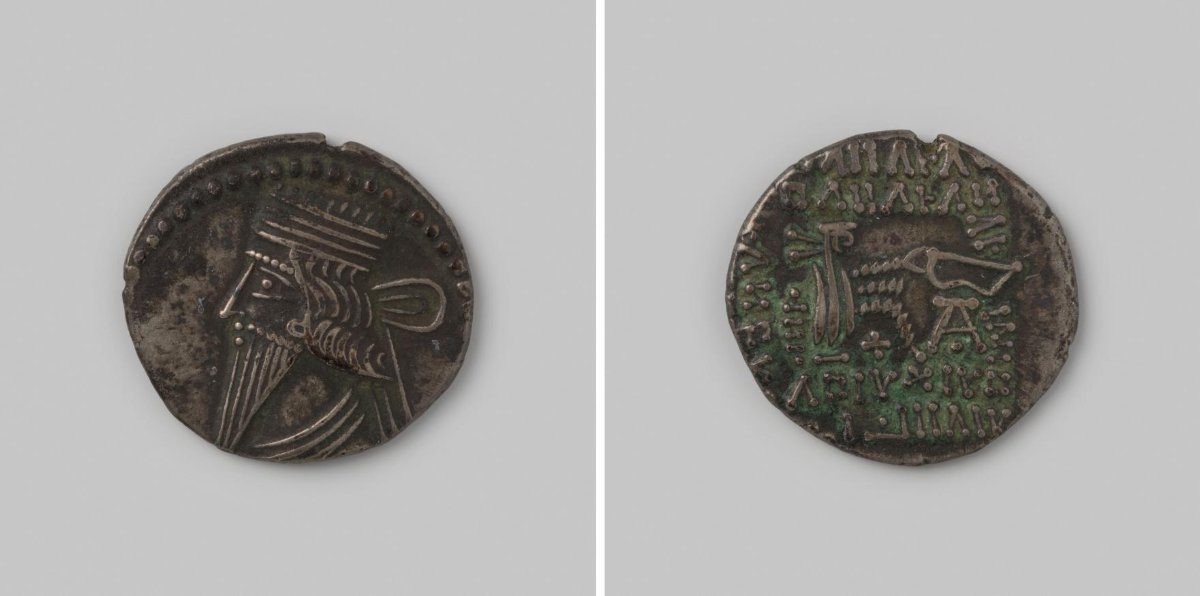
Drachm from Parthia of King Mithradates IV, 112-113
112 - 113
Silver coin. Obverse: head of the king with diadem facing left. Reverse: the founder of the empire, Arsaces I, seated on a throne holding a drawn bow in his right hand, beneath which the letter A. The Rijksmuseum, Amsterdam, holds this object as KOG-MP-1-0020; its record gives material recorded as silver (metal); te…
Partial type record
The Metropolitan Museum of Art — Rogers Fund, 1936
ancient coins
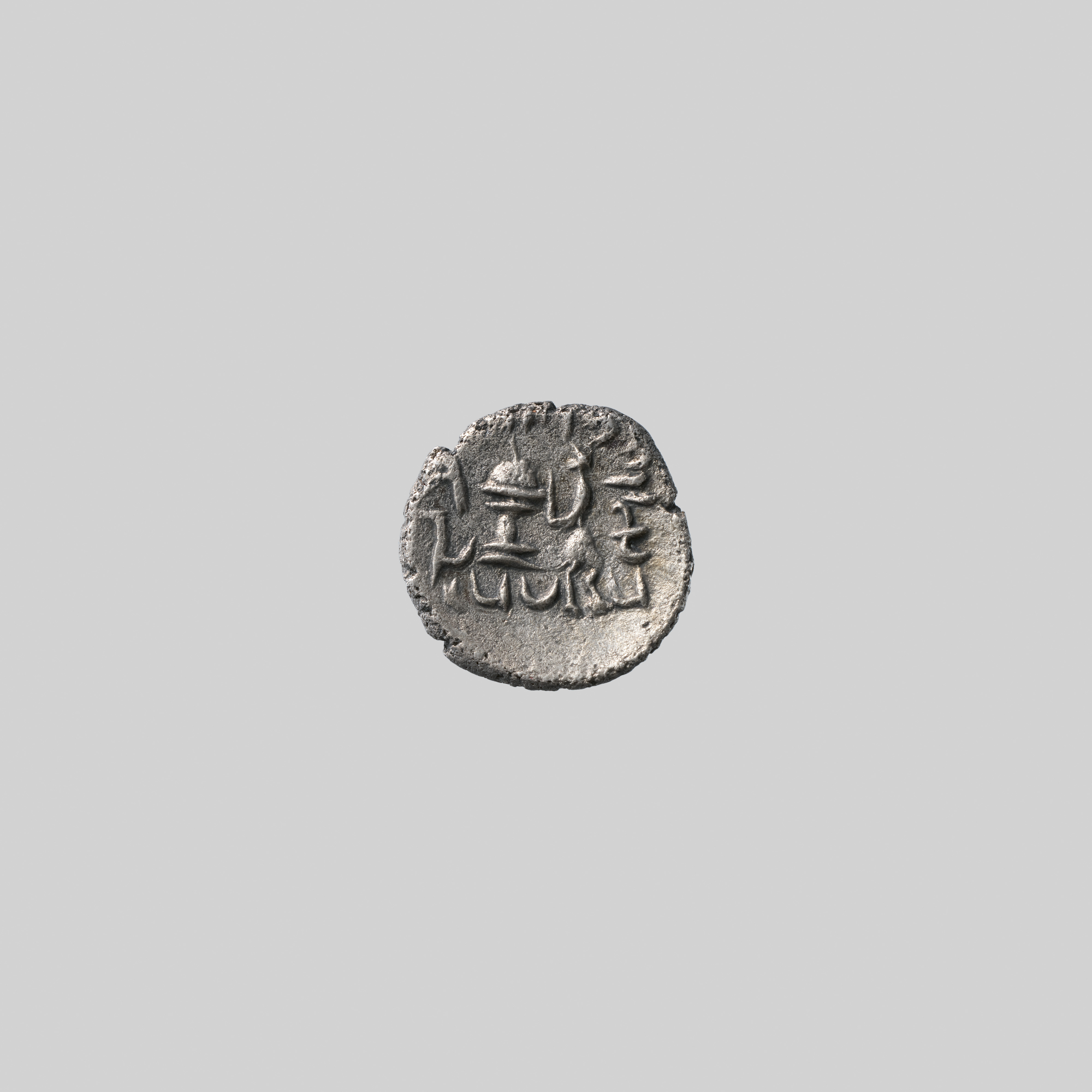
Drachm of Darev II of Persis, ca. 1st century BCE
ca. 1st century BCE
This silver drachm was struck during the first century B.C. by Darev II, a client king of Persis who was known in Greek as Darius. The obverse presents a left-facing portrait of the monarch, distinguished by a long beard, a large nose, and a torque or necklace. He is shown wearing a domed tiara with earflaps, adorne…
Partial type record
The Metropolitan Museum of Art — Rogers Fund, 1936
ancient coins
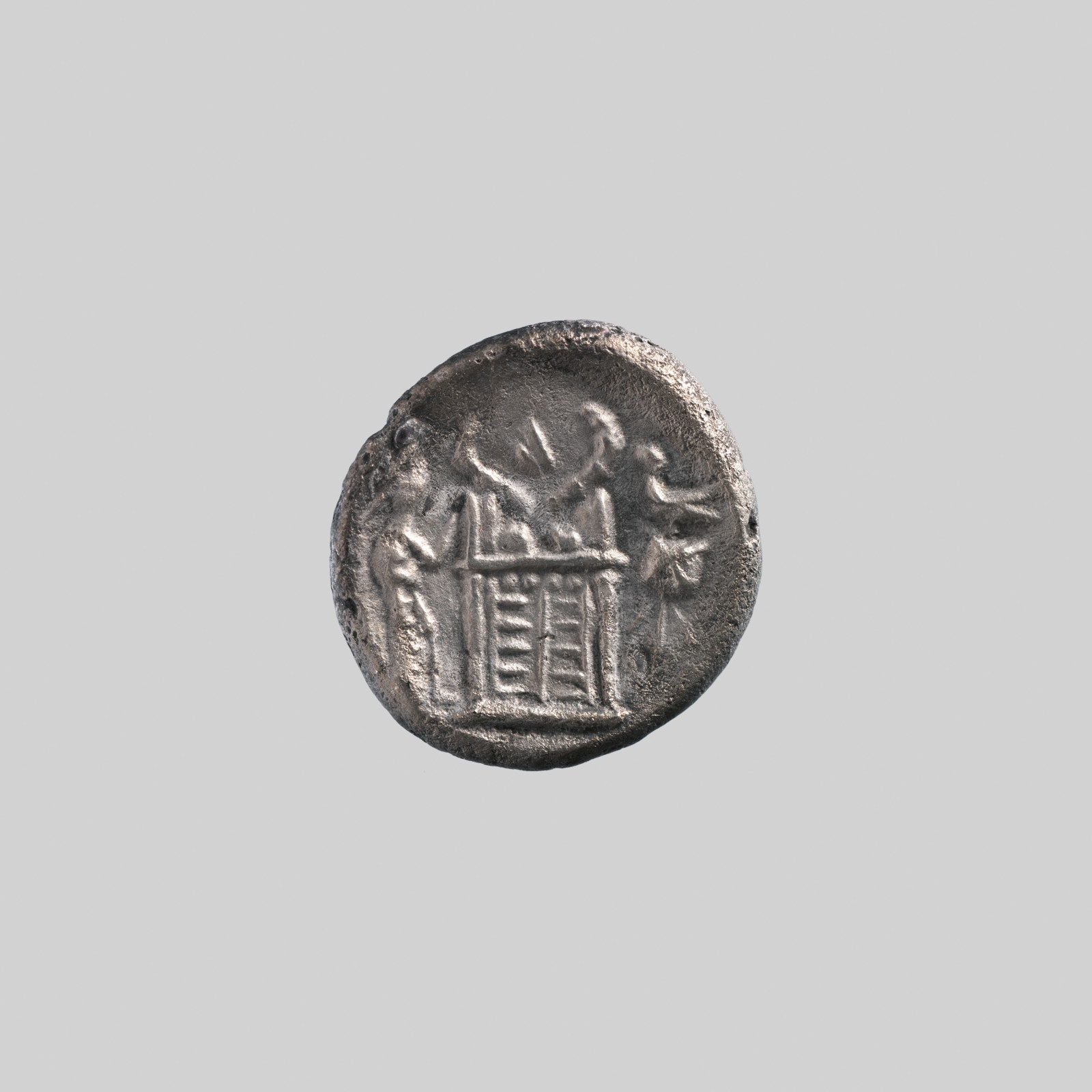
Drachm of Vadfradad II of Persis, ca. 200–150 BC
ca. 200–150 BC
This silver drachm was struck under King Vadfradad II of Persis, referred to as Autophradates in Greek, in the early to mid-second century B.C. Persis encompassed southwestern Iran, an area that had served as the heartland of the Achaemenid Empire before coming under local client kings. The obverse exhibits a right…
Partial type record
Art Institute of Chicago
ancient coins
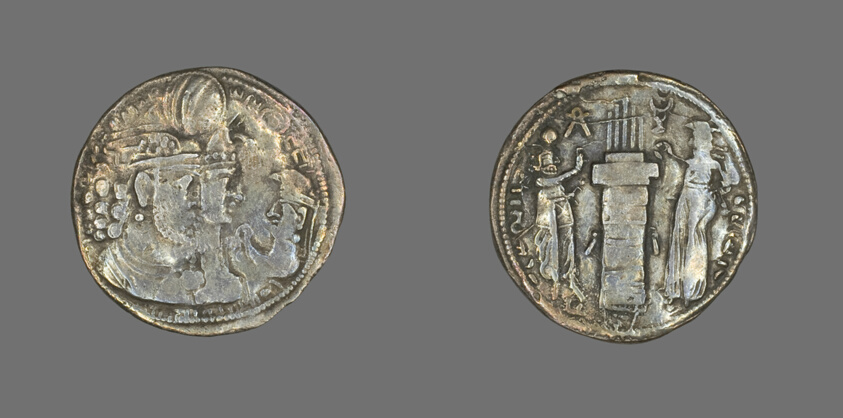
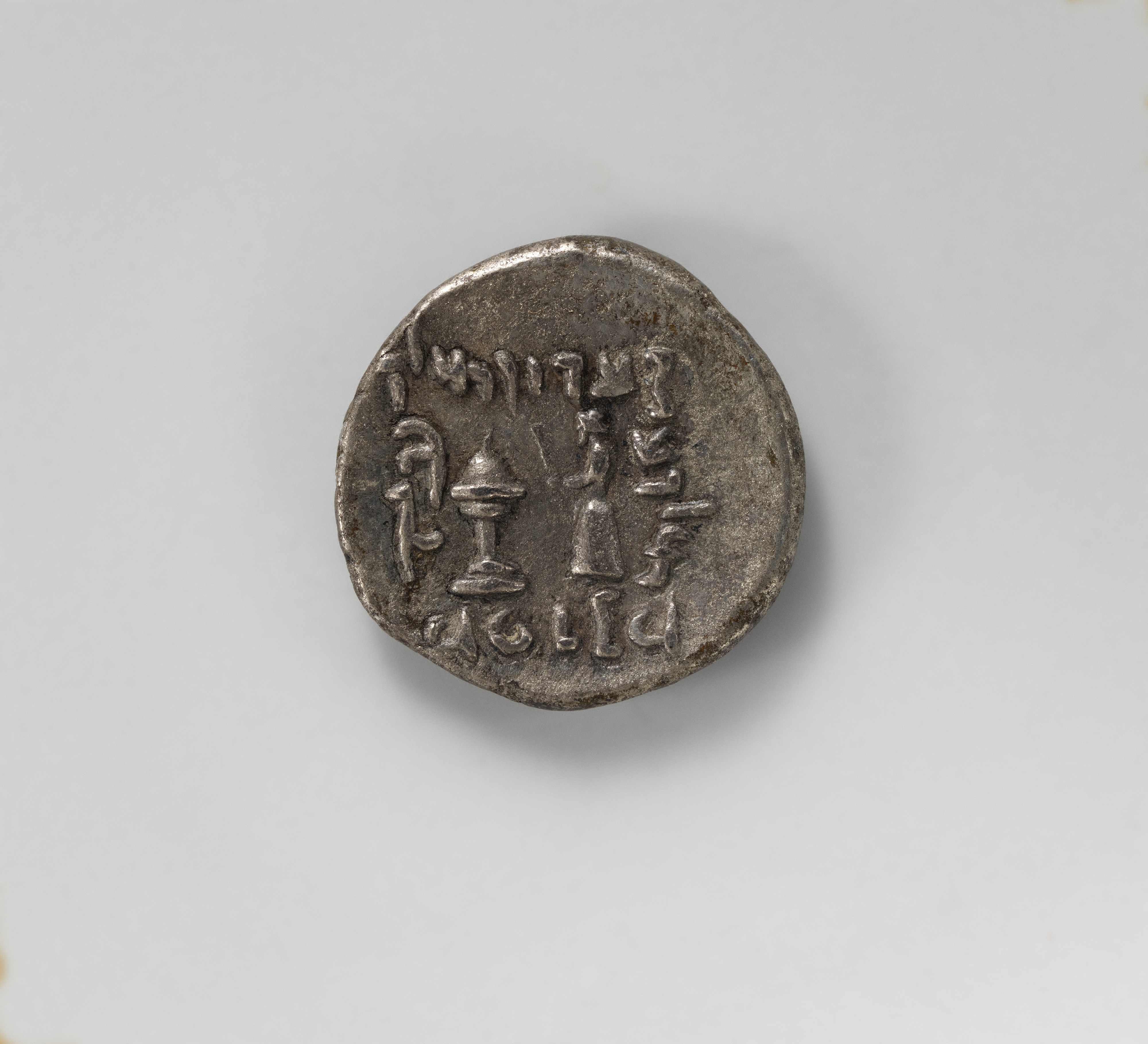
Drachm Portraying King Varahran II
238-275
This ancient silver drachm portrays King Varahran II and is attributed to the Sasanian Persian culture, dating between 238 and 275. The coin measures 2.6 cm (1 1/16 in.) in diameter and presents circular metal flans displaying stamped relief imagery on both sides. The obverse features jugate busts of King Varahran…
Partial type record
The Metropolitan Museum of Art — Bequest of Joseph H. Durkee, 1898
ancient coins
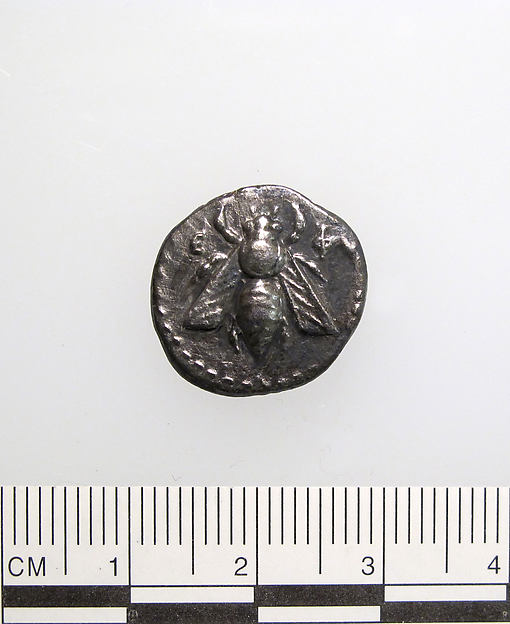
Drachm probably of Darius II of Media Atropatene, ca. 1st century BCE
ca. 1st century BCE
This ancient silver drachm originates from Iran and is most likely an issue of Darius II, who ruled Media Atropatene around the first century B.C. The coin exemplifies the primary denomination struck in silver during this broader historical period, measuring under two centimeters across. The coin features royal por…
Partial type record
The Metropolitan Museum of Art, New York
ancient coins
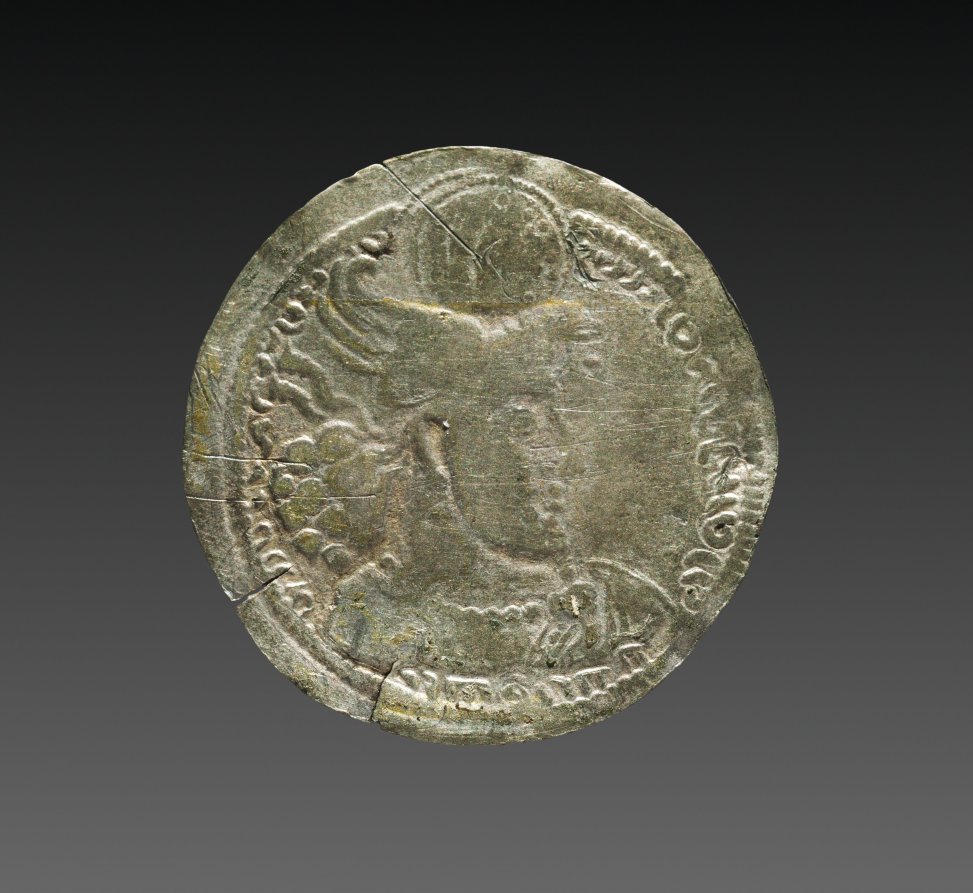
Drachm, East Greek, Ephesian, 202–133 BCE
202–133 BCE
Drachm in The Metropolitan Museum of Art, New York (accession 05.44.660), catalogued by the museum's Greek and Roman Art department. The museum dates it 202–133 BCE and records its origin as East Greek, Ephesian; Hellenistic. The museum records the medium as Silver and the dimensions as Diameter: 11/16 × 1/8 in., 0.…
Partial type record
Cleveland Museum of Art
ancient coins
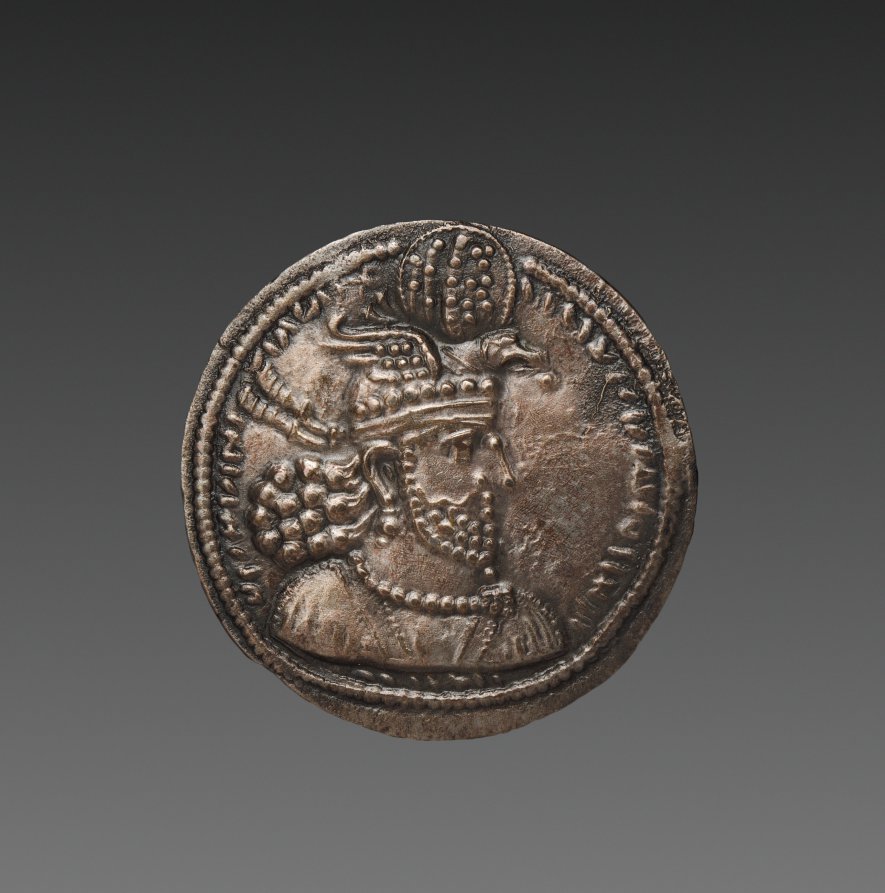
Drachm: Bust of Hormizd II (obverse); Fire altar with Bust (Cleveland Museum of Art 1965.316)
302–9 CE
Cleveland Museum of Art object 1965.316: Drachm: Bust of Hormizd II (obverse); Fire altar with Bust (reverse), 302–9 CE. Iran, (minted), Sasanian Empire (224–651 CE), reign of Hormizd II (303–309). Silver; diameter: 2.8 cm (1 1/8 in.). Inscribed: 𐭬𐭦𐭪𐭠𐭠𐭭𐭬𐭫𐭪𐭠𐭠𐭩𐭫𐭠𐭭𐭬𐭭𐭪𐭲𐭥𐭬𐭭𐭩𐭦𐭣𐭠𐭭 𐭬𐭦𐭣𐭩𐭮𐭭𐭡�…
Partial type record
Cleveland Museum of Art
ancient coins
Drachm: Bust of Hormizd II (obverse); Fire altar with bust (Cleveland Museum of Art 1966.738)
303–9 CE
Cleveland Museum of Art object 1966.738: Drachm: Bust of Hormizd II (obverse); Fire altar with bust (reverse), 303–9 CE. Iran, (minted), Sasanian Empire (224–651 CE), reign of Hormizd II (303–309). Silver; diameter: 2.6 x 0.1 cm (1 x 1/16 in.). Inscribed: 𐭬𐭦𐭪𐭠𐭠𐭭𐭬𐭫𐭪𐭠𐭠𐭩𐭫𐭠𐭭𐭬𐭭𐭪𐭲𐭥𐭬𐭭𐭩𐭦𐭣𐭠𐭭 𐭬𐭦𐭣…
Partial type record