Catalogue
Ancient Coins
Greek, Roman, Byzantine, Celtic, Persian, Indian, Chinese and other pre-medieval coinages.
Catalogue entries (3,128)
Filter by era, country, maker or material193–240 of 3,128 entries
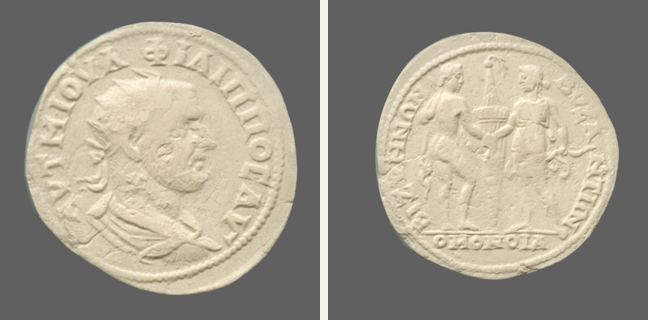
Photograph: BBAW; Corpus Nummorum (Berlin-Brandenburg Academy of Sciences and Humanities)
ancient coins
Bizye, Philippus Arabs, 6 unit — Apollo and Artemis in front of long fish trap (CN type 1545)
AD 244–249
6 unit in bronze struck at Bizye in Thrace under Philippus Arabs, dated AD 244–249. Corpus Nummorum, the online type corpus of the Berlin-Brandenburg Academy of Sciences and Humanities, records it as CN type 1545 (period: Roman Imperial Period; issuing authority type: city (homonoia)). Obverse: Radiate bust of Phil…
Research required
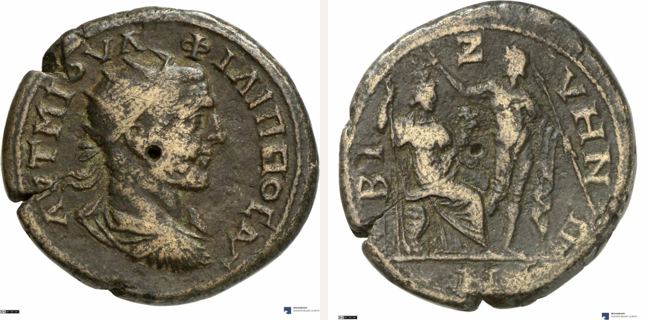
Photograph: Lutz-Jürgen Lübke (Lübke & Wiedemann); Corpus Nummorum (Berlin-Brandenburg Academy of Sciences and Humanities); specimen held by ikmk.smb.museum
ancient coins
Bizye, Philippus Arabs, 6 unit — Tyche crowned by Heros (CN type 1550)
AD 244–249
6 unit in bronze struck at Bizye in Thrace under Philippus Arabs, dated AD 244–249. Corpus Nummorum, the online type corpus of the Berlin-Brandenburg Academy of Sciences and Humanities, records it as CN type 1550 (period: Roman Imperial Period; issuing authority type: city). Obverse: Radiate bust of Philip the Arab…
Research required
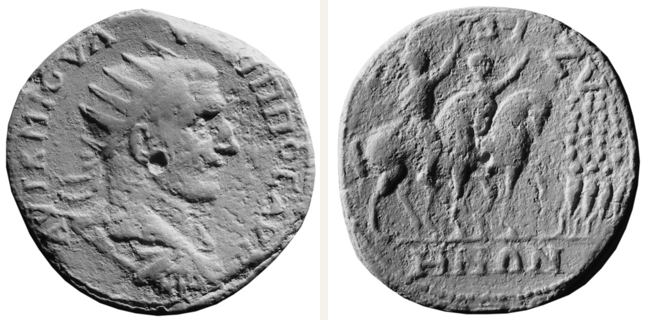
Photograph: BBAW; Corpus Nummorum (Berlin-Brandenburg Academy of Sciences and Humanities)
ancient coins
Bizye, Philippus Arabs, bronze coin — Adlocutio scene (CN type 19561)
AD 244–249
Coin in bronze struck at Bizye in Thrace under Philippus Arabs, dated AD 244–249. Corpus Nummorum, the online type corpus of the Berlin-Brandenburg Academy of Sciences and Humanities, records it as CN type 19561 (period: Roman Imperial Period; issuing authority type: city). Obverse: Radiate bust of Philip the Arab,…
Research required
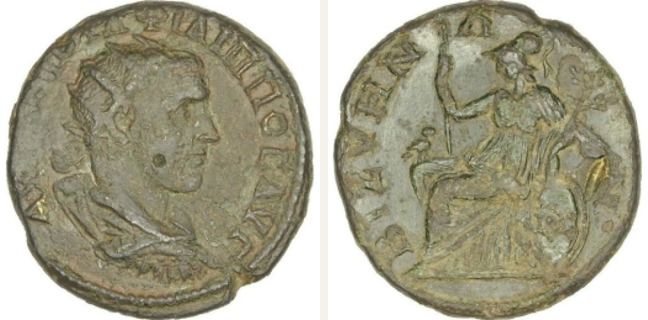
Photograph: Corpus Nummorum; Corpus Nummorum (Berlin-Brandenburg Academy of Sciences and Humanities)
ancient coins
Bizye, Philippus Arabs, bronze coin — Athena enthroned left (CN type 15089)
AD 244–249
Coin in bronze struck at Bizye in Thrace under Philippus Arabs, dated AD 244–249. Corpus Nummorum, the online type corpus of the Berlin-Brandenburg Academy of Sciences and Humanities, records it as CN type 15089 (period: Roman Imperial Period; issuing authority type: city). Obverse: Laureate bust of Philip the Arab…
Research required
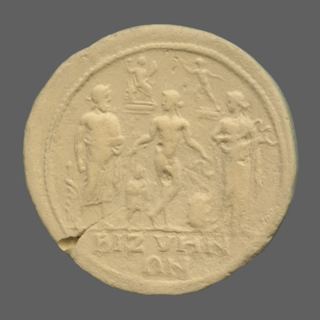
Photograph: BBAW; Corpus Nummorum (Berlin-Brandenburg Academy of Sciences and Humanities)
ancient coins
Bizye, Philippus Arabs, Medallion — Apollo (CN type 1553)
AD 244–249
Medallion in bronze struck at Bizye in Thrace under Philippus Arabs, dated AD 244–249. Corpus Nummorum, the online type corpus of the Berlin-Brandenburg Academy of Sciences and Humanities, records it as CN type 1553 (period: Roman Imperial Period; issuing authority type: city). Obverse: Laureate bust of Philip the…
Research required
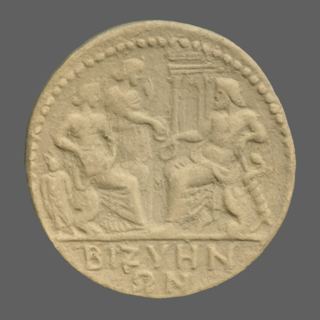
Photograph: BBAW; Corpus Nummorum (Berlin-Brandenburg Academy of Sciences and Humanities)
ancient coins
Bizye, Philippus Arabs, Medallion — Asclepius (CN type 1554)
AD 244–249
Medallion in bronze struck at Bizye in Thrace under Philippus Arabs, dated AD 244–249. Corpus Nummorum, the online type corpus of the Berlin-Brandenburg Academy of Sciences and Humanities, records it as CN type 1554 (period: Roman Imperial Period; issuing authority type: city). Obverse: Laureate bust of Philip the…
Research required
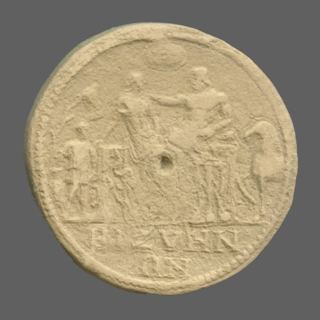
Photograph: BBAW; Corpus Nummorum (Berlin-Brandenburg Academy of Sciences and Humanities)
ancient coins
Bizye, Philippus Arabs, Medallion — Banquet scene (CN type 1556)
AD 244–249
Medallion in bronze struck at Bizye in Thrace under Philippus Arabs, dated AD 244–249. Corpus Nummorum, the online type corpus of the Berlin-Brandenburg Academy of Sciences and Humanities, records it as CN type 1556 (period: Roman Imperial Period; issuing authority type: city). Obverse: Laureate bust of Philip the…
Research required
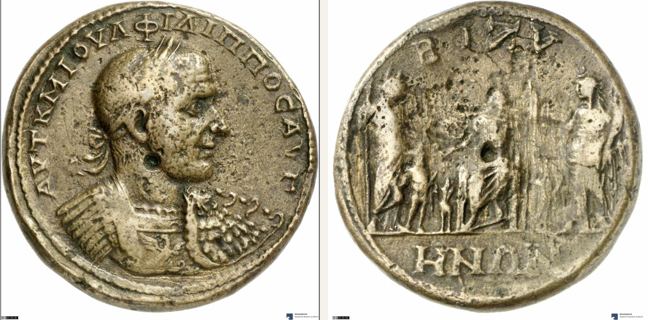
Photograph: Lutz-Jürgen Lübke (Lübke & Wiedemann); Corpus Nummorum (Berlin-Brandenburg Academy of Sciences and Humanities); specimen held by ikmk.smb.museum
ancient coins
Bizye, Philippus Arabs, Medallion — Hades-Serapis (CN type 1558)
AD 244–249
Medallion in bronze struck at Bizye in Thrace under Philippus Arabs, dated AD 244–249. Corpus Nummorum, the online type corpus of the Berlin-Brandenburg Academy of Sciences and Humanities, records it as CN type 1558 (period: Roman Imperial Period; issuing authority type: city). Obverse: Laureate bust of Philip the…
Research required
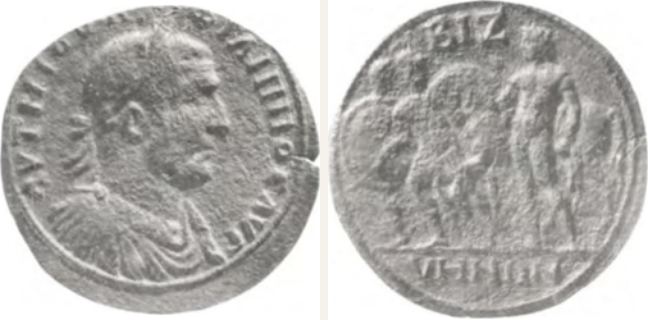
Photograph: Corpus Nummorum; Corpus Nummorum (Berlin-Brandenburg Academy of Sciences and Humanities)
ancient coins
Bizye, Philippus Arabs, Medallion — Heros and two warriors (CN type 1563)
AD 244–249
Medallion in bronze struck at Bizye in Thrace under Philippus Arabs, dated AD 244–249. Corpus Nummorum, the online type corpus of the Berlin-Brandenburg Academy of Sciences and Humanities, records it as CN type 1563 (period: Roman Imperial Period; issuing authority type: city). Obverse: Laureate bust of Philip the…
Research required
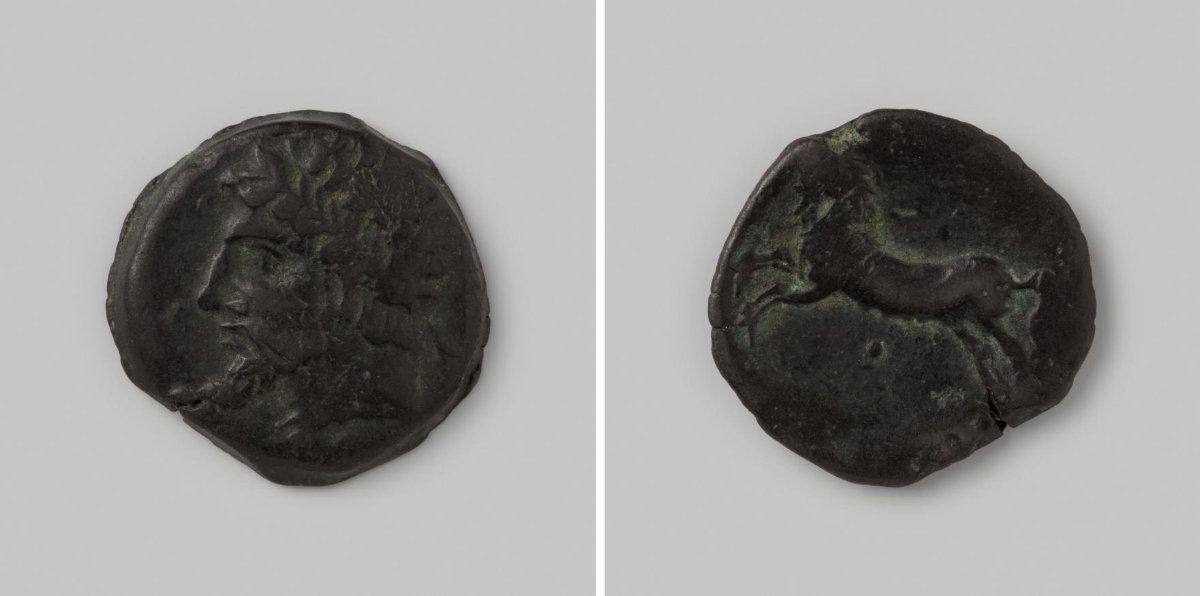
Rijksmuseum, Amsterdam
ancient coins
Bronze coin of King Masinissa of Numidia, 202–148 BC
202–148 BC
Bronze coin. Obverse: laureate head facing left. Reverse: horse galloping to the left, below which a dot. The Rijksmuseum, Amsterdam, holds this object as KOG-MP-1-0025A; its record gives material recorded as bronze (metal); technique striking (metalworking); measurements diameter 2.8 cm x weight 14.95 g.
Partial type record
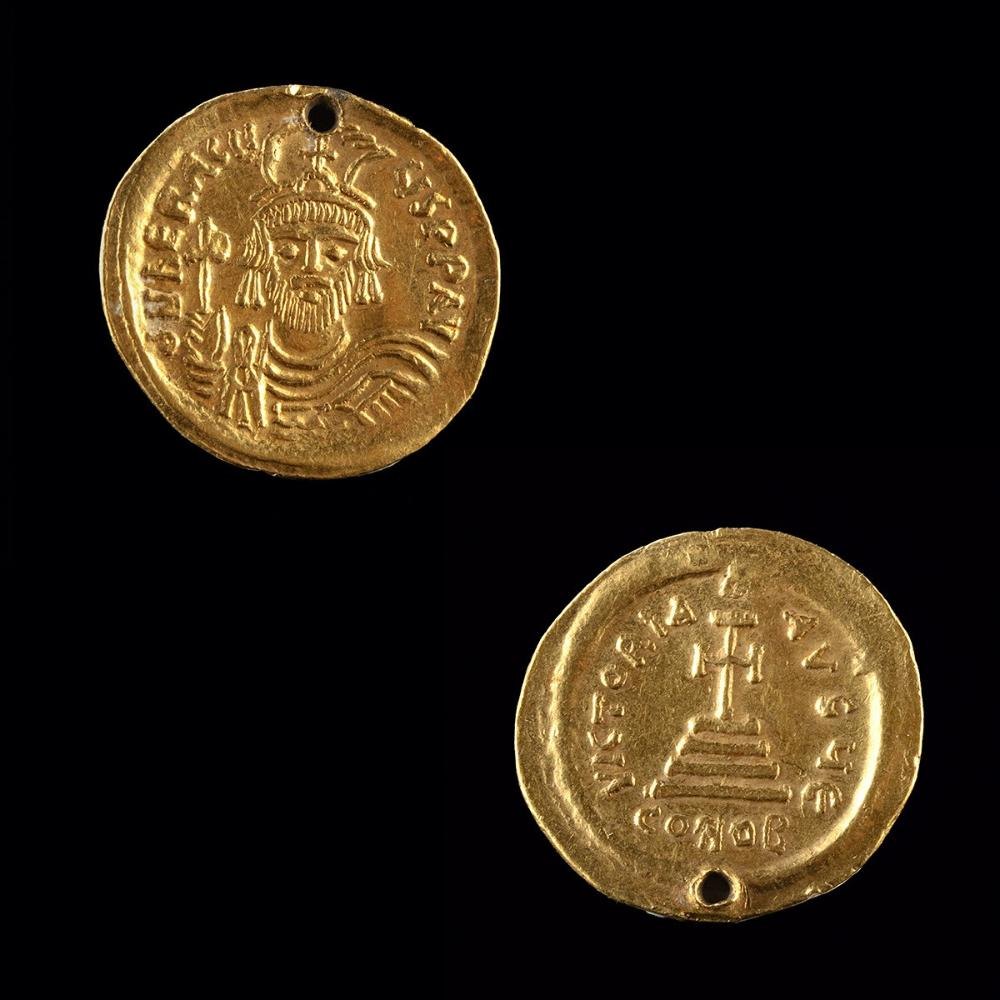
Auction house “Artemis Fine Arts”, via Invaluable
ancient coins
Byzantine Gold Solidus of Emperor Heraclius I, Constantinople Mint
Ca. 610–641 CE
This Byzantine gold solidus dates to the reign of Emperor Heraclius I, between 610 and 641 CE. Struck at the Constantinople mint from high-purity gold of approximately 98% fineness, the coin weighs 4.5 grams and has a diameter of 2.1 cm. It features a deliberate perforation at the top edge, suggesting it was histori…
Partial type record
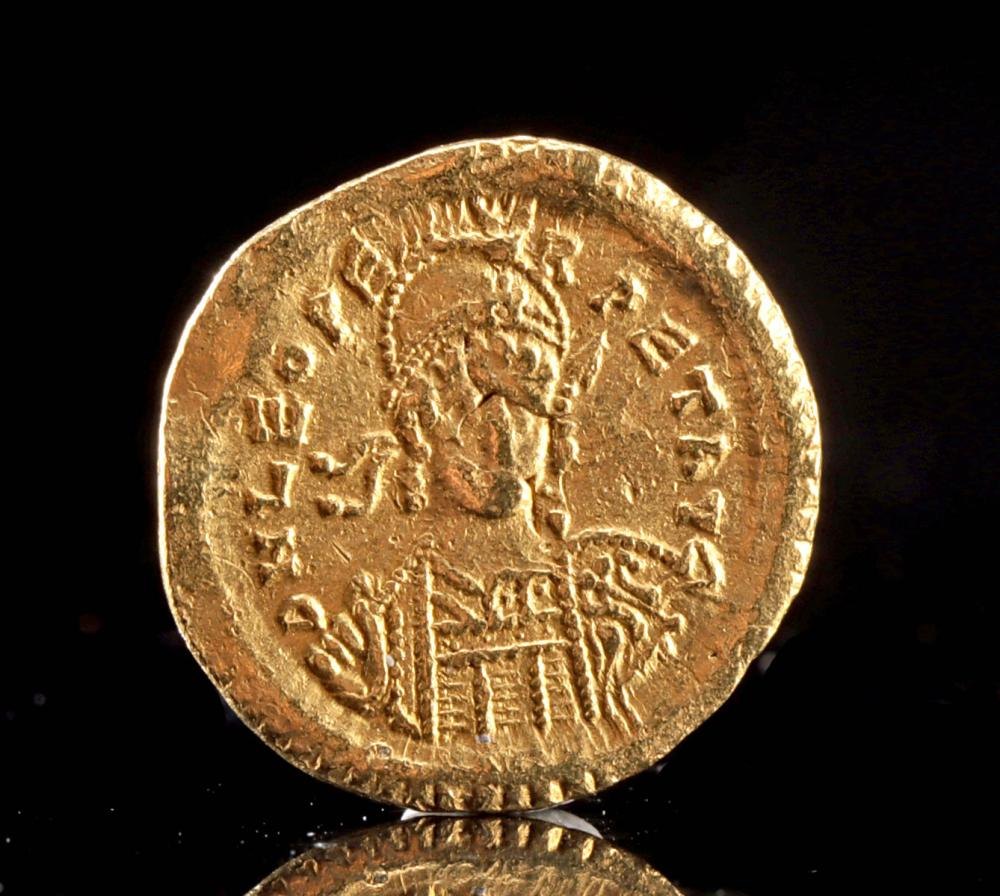
Auction house “Artemis Fine Arts”, via Invaluable
ancient coins
Byzantine Gold Solidus of Emperor Leo I
ca. 462 to 466 CE
This Byzantine gold solidus dates to the reign of Emperor Leo I, struck in Constantinople between 462 and 466 CE. The coin is composed of 23.99 karat gold and weighs 4.4 grams. The obverse depicts a front-facing, helmeted, and pearl-diademed bust of Emperor Leo I, clad in a military cuirass, holding a spear and a sh…
Partial type record
Auction house “Artemis Fine Arts”, via Invaluable
ancient coins
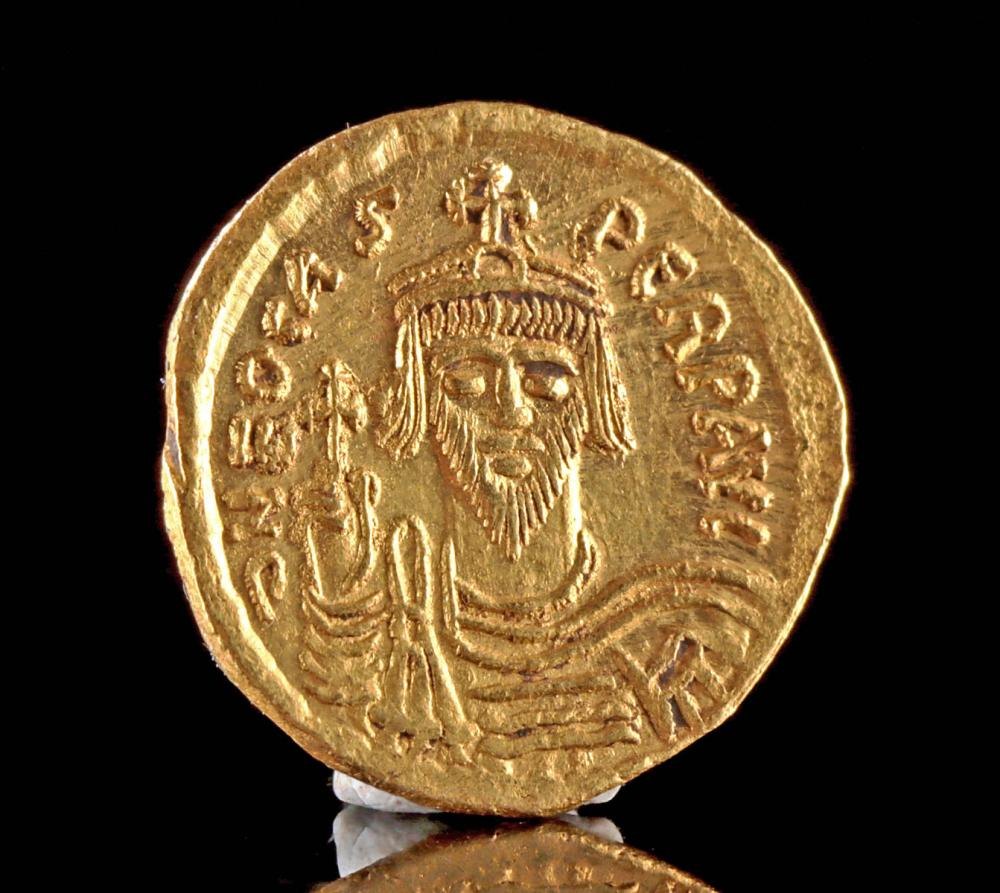
Byzantine Gold Solidus of Emperor Phocas, Constantinople
ca. 602 to 610 CE
This Byzantine gold solidus dates to the reign of Emperor Phocas (ca. 602–610 CE) and was minted in Constantinople. Struck from high-purity gold, approximately 97% or 23K+, the coin weighs 4.4 grams and measures 0.8 inches (2 cm) in diameter. The obverse depicts a frontal portrait of Emperor Phocas, who is shown cro…
Partial type record
Photograph: Lutz-Jürgen Lübke (Lübke & Wiedemann); Corpus Nummorum (Berlin-Brandenburg Academy of Sciences and Humanities); specimen held by ikmk.smb.museum
ancient coins
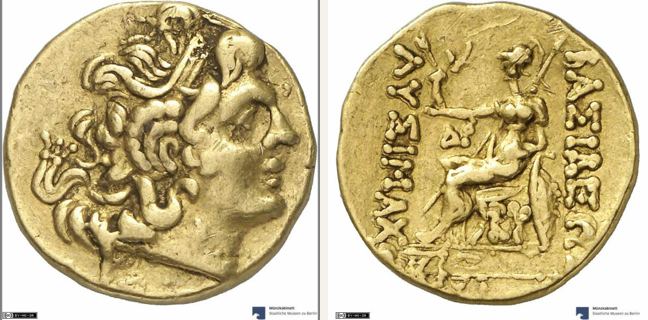
Byzantion, Alexander der Große, stater — Athena seated left (CN type 20983)
c. 110–90 BC
Stater in gold struck at Byzantion in Thrace under Alexander der Große, dated c. 110–90 BC. Corpus Nummorum, the online type corpus of the Berlin-Brandenburg Academy of Sciences and Humanities, records it as CN type 20983 (period: Hellenistic Period; issuing authority type: city). Obverse: Diademed head of deified…
Research required
Photograph: Lutz-Jürgen Lübke (Lübke & Wiedemann); Corpus Nummorum (Berlin-Brandenburg Academy of Sciences and Humanities); specimen held by ikmk.smb.museum
ancient coins
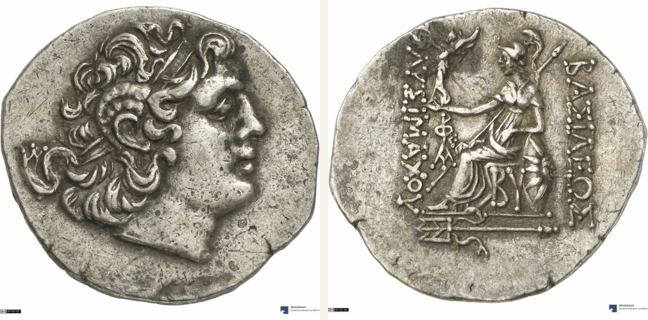
Byzantion, Alexander der Große, tetradrachm — Athena seated left (CN type 21524)
c. 110–100 BC
Tetradrachm in silver struck at Byzantion in Thrace under Alexander der Große, dated c. 110–100 BC. Corpus Nummorum, the online type corpus of the Berlin-Brandenburg Academy of Sciences and Humanities, records it as CN type 21524 (period: Hellenistic Period; issuing authority type: city). Obverse: Diademed head of…
Research required
Photograph: Classical Numismatic Group, LLC, https://www.cngcoins.com/; Corpus Nummorum (Berlin-Brandenburg Academy of Sciences and Humanities)
ancient coins
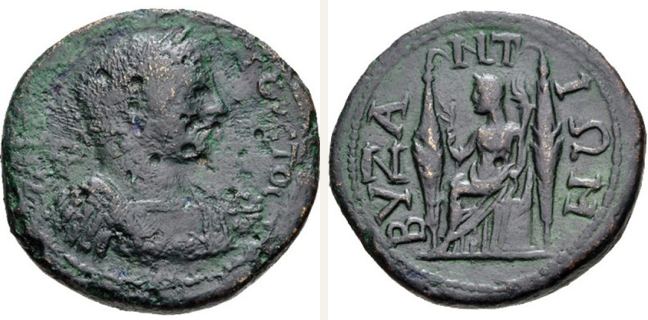
Byzantion, Caracalla, 7 unit — Demeter enthroned left between two objects (fish traps (CN type 21870)
c. AD 212–217
7 unit in bronze struck at Byzantion in Thrace under Caracalla, dated c. AD 212–217. Corpus Nummorum, the online type corpus of the Berlin-Brandenburg Academy of Sciences and Humanities, records it as CN type 21870 (period: Roman Imperial Period; issuing authority type: city). Obverse: Laureate bust of bearded Cara…
Research required
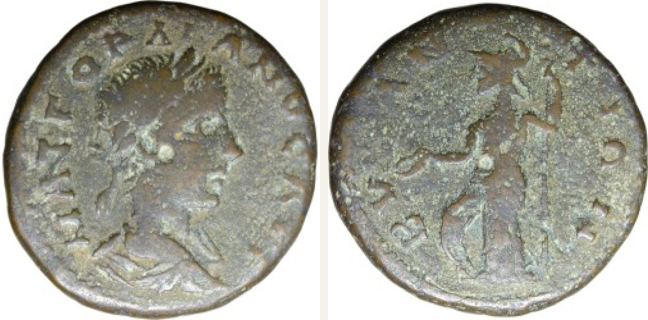
Photograph: RPC online; Corpus Nummorum (Berlin-Brandenburg Academy of Sciences and Humanities)
ancient coins
Byzantion, Gordian III., 4 unit — Athena standing left (CN type 14472)
AD 238–244
4 unit in bronze struck at Byzantion in Thrace under Gordian III., dated AD 238–244. Corpus Nummorum, the online type corpus of the Berlin-Brandenburg Academy of Sciences and Humanities, records it as CN type 14472 (period: Roman Imperial Period; issuing authority type: city). Obverse: Laureate bust of Gordian III,…
Research required
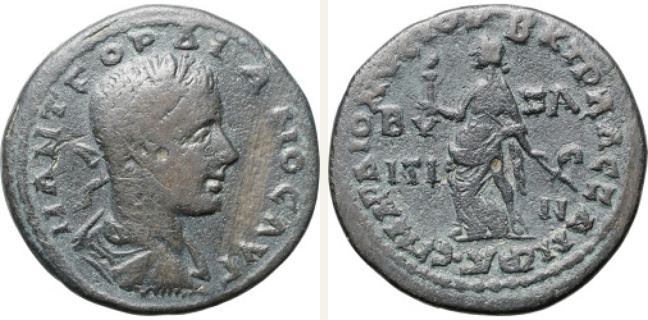
Photograph: Museum Winterthur; Corpus Nummorum (Berlin-Brandenburg Academy of Sciences and Humanities)
ancient coins
Byzantion, Gordian III., 6 unit — Demeter advancing left (CN type 14468)
AD 238–244
6 unit in bronze struck at Byzantion in Thrace under Gordian III., dated AD 238–244. Corpus Nummorum, the online type corpus of the Berlin-Brandenburg Academy of Sciences and Humanities, records it as CN type 14468 (issuing authority type: city). Obverse: Laureate bust of Gordian III, right, wearing paludamentum. L…
Research required
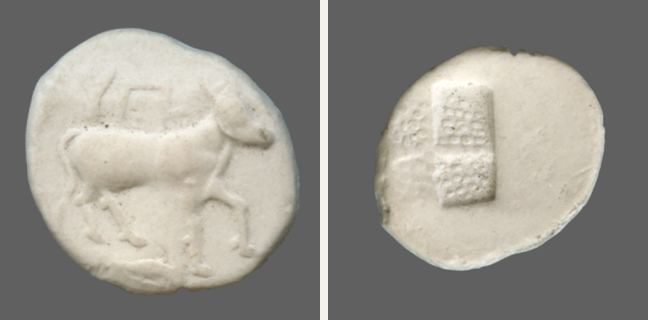
Photograph: BBAW; Corpus Nummorum (Berlin-Brandenburg Academy of Sciences and Humanities)
ancient coins
Byzantion, Hemisiglos — Incuse square of mill-sail pattern (CN type 12409)
c. 411–387/386 BC
Hemisiglos in silver struck at Byzantion in Thrace, dated c. 411–387/386 BC. Corpus Nummorum, the online type corpus of the Berlin-Brandenburg Academy of Sciences and Humanities, records it as CN type 12409 (period: Classical Period; issuing authority type: city). Obverse: Bull standing right on dolphin, right, rai…
Research required
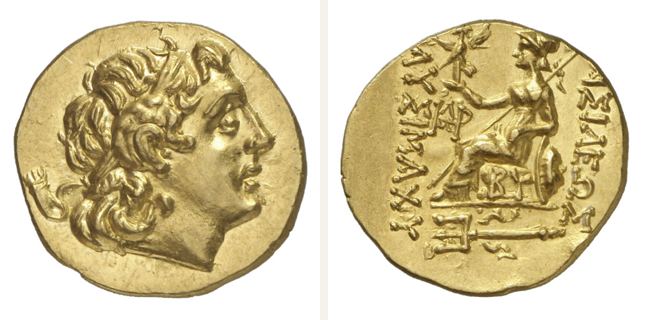
Photograph: Lutz-Jürgen Lübke (Lübke & Wiedemann); Corpus Nummorum (Berlin-Brandenburg Academy of Sciences and Humanities)
ancient coins
Byzantion, Lysimachos, stater — Athena seated left (CN type 21009)
c. 175–150 BC
Stater in gold struck at Byzantion in Thrace under Lysimachos, dated c. 175–150 BC. Corpus Nummorum, the online type corpus of the Berlin-Brandenburg Academy of Sciences and Humanities, records it as CN type 21009 (period: Hellenistic Period; issuing authority type: city). Obverse: Diademed head of deified Alexande…
Research required
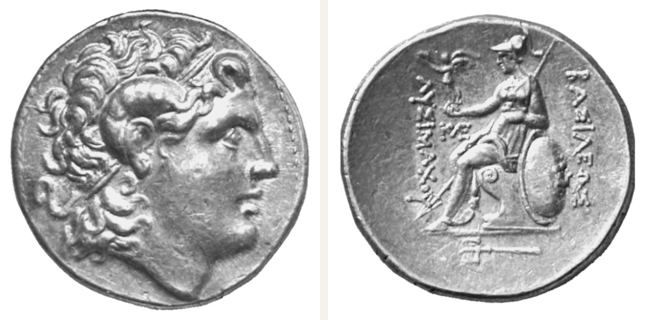
Photograph: Lutz-Jürgen Lübke (Lübke & Wiedemann); Corpus Nummorum (Berlin-Brandenburg Academy of Sciences and Humanities)
ancient coins
Byzantion, Lysimachos, tetradrachm — Athena seated left (CN type 21188)
late 260s BC
Tetradrachm in silver struck at Byzantion in Thrace under Lysimachos, dated late 260s BC. Corpus Nummorum, the online type corpus of the Berlin-Brandenburg Academy of Sciences and Humanities, records it as CN type 21188 (period: Hellenistic Period; issuing authority type: city). Obverse: Diademed head of deified Al…
Research required
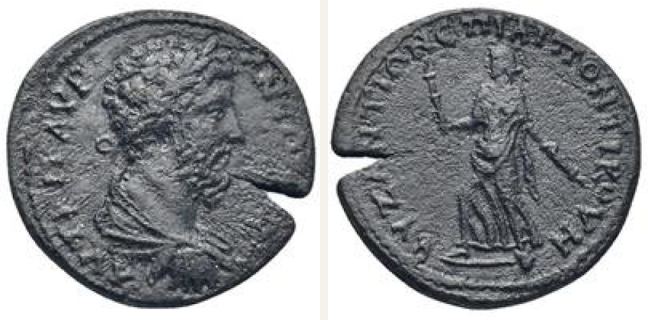
Photograph: N&N LONDON; Corpus Nummorum (Berlin-Brandenburg Academy of Sciences and Humanities); specimen held by www.acsearch.info
ancient coins
Byzantion, Marc Aurel, 6 unit — Artemis advancing left (CN type 21876)
c. AD 178
6 unit in bronze struck at Byzantion in Thrace under Marc Aurel, dated c. AD 178. Corpus Nummorum, the online type corpus of the Berlin-Brandenburg Academy of Sciences and Humanities, records it as CN type 21876 (period: Roman Imperial Period; issuing authority type: city). Obverse: Laureate bust of bearded Marcus…
Research required
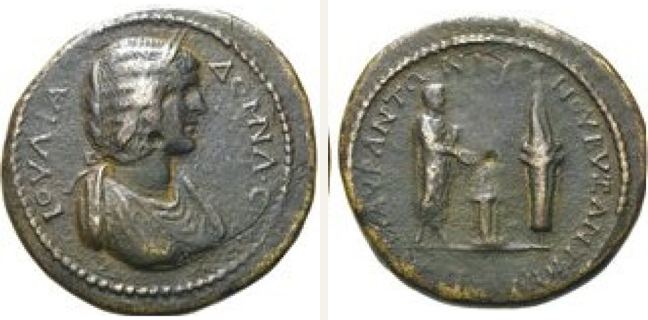
Photograph: Gorny & Mosch Giessener Münzhandlung; Corpus Nummorum (Berlin-Brandenburg Academy of Sciences and Humanities)
ancient coins
Byzantion, Septimius Severus, 8 unit — Laureate and togate emperor standing right (CN type 21871)
AD 202–205
8 unit in bronze struck at Byzantion in Thrace under Septimius Severus, dated AD 202–205. Corpus Nummorum, the online type corpus of the Berlin-Brandenburg Academy of Sciences and Humanities, records it as CN type 21871 (period: Roman Imperial Period; issuing authority type: city). Obverse: Draped bust of Julia Dom…
Research required
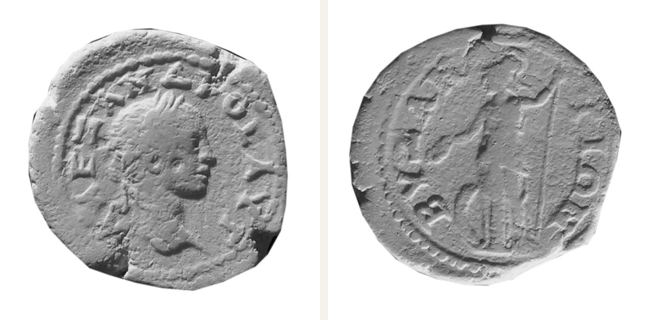
Photograph: BBAW; Corpus Nummorum (Berlin-Brandenburg Academy of Sciences and Humanities)
ancient coins
Byzantion, Severus Alexander, 4 unit — Athena standing left (CN type 12863)
AD 222–235
4 unit in bronze struck at Byzantion in Thrace under Severus Alexander, dated AD 222–235. Corpus Nummorum, the online type corpus of the Berlin-Brandenburg Academy of Sciences and Humanities, records it as CN type 12863 (period: Roman Imperial Period; issuing authority type: city). Obverse: Laureate bust of Severus…
Research required
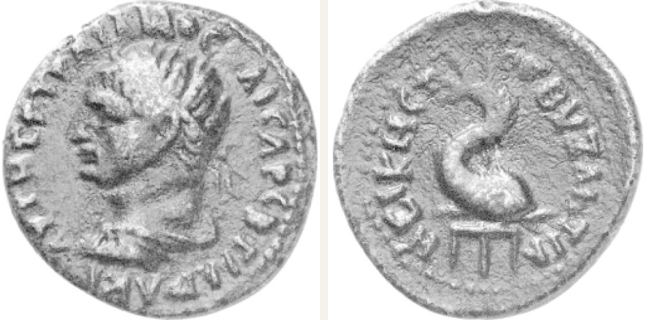
Photograph: Lutz-Jürgen Lübke (Lübke & Wiedemann); Corpus Nummorum (Berlin-Brandenburg Academy of Sciences and Humanities)
ancient coins
Byzantion, Trajan, bronze coin — Inverted trident entwined by Dolphin (CN type 13418)
AD 98–117
Coin in bronze struck at Byzantion in Thrace under Trajan, dated AD 98–117. Corpus Nummorum, the online type corpus of the Berlin-Brandenburg Academy of Sciences and Humanities, records it as CN type 13418 (period: Roman Imperial Period; issuing authority type: city). Obverse: Radiate bust of Trajan, left, wearing…
Research required
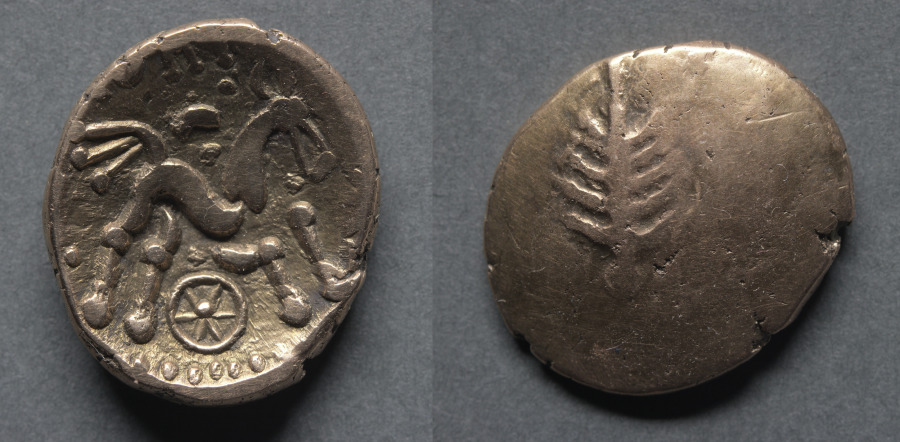
Cleveland Museum of Art
ancient coins
Catti Stater: Tree Symbol on Plain Field (obverse); Horse and Wheel (Cleveland Museum of Art 1969.154)
20–45 CE
This piece comes from Dobunni territory, the tribe occupying an area in the Cotswold (Severn estuary) country. The names found on them are probably those of chieftains rather than of kings. Names such as Catti, Antedrig, Inam, and Comux appear on various pieces, all names unknown in history. The horse has now become…
Partial type record
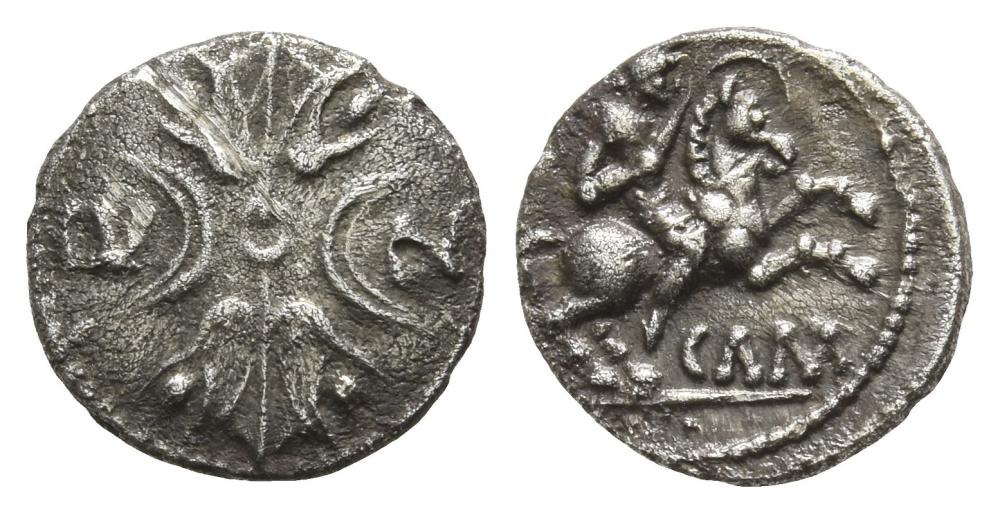
Auction house “TimeLine Auctions”, via Invaluable
ancient coins
Celtic Britannia Cunobelinus Silver Unit, Two Leaves Type
Circa AD 10-41
This ancient silver unit is a numismatic artifact from the Catuvellauni and Trinovantes tribes of Celtic Britannia, attributed to the ruler Cunobelinus. Struck circa AD 10-41, the coin displays a complex iconography typical of the period. The obverse features a two-leaf motif with crescents back-to-back, accompanied…
Partial type record
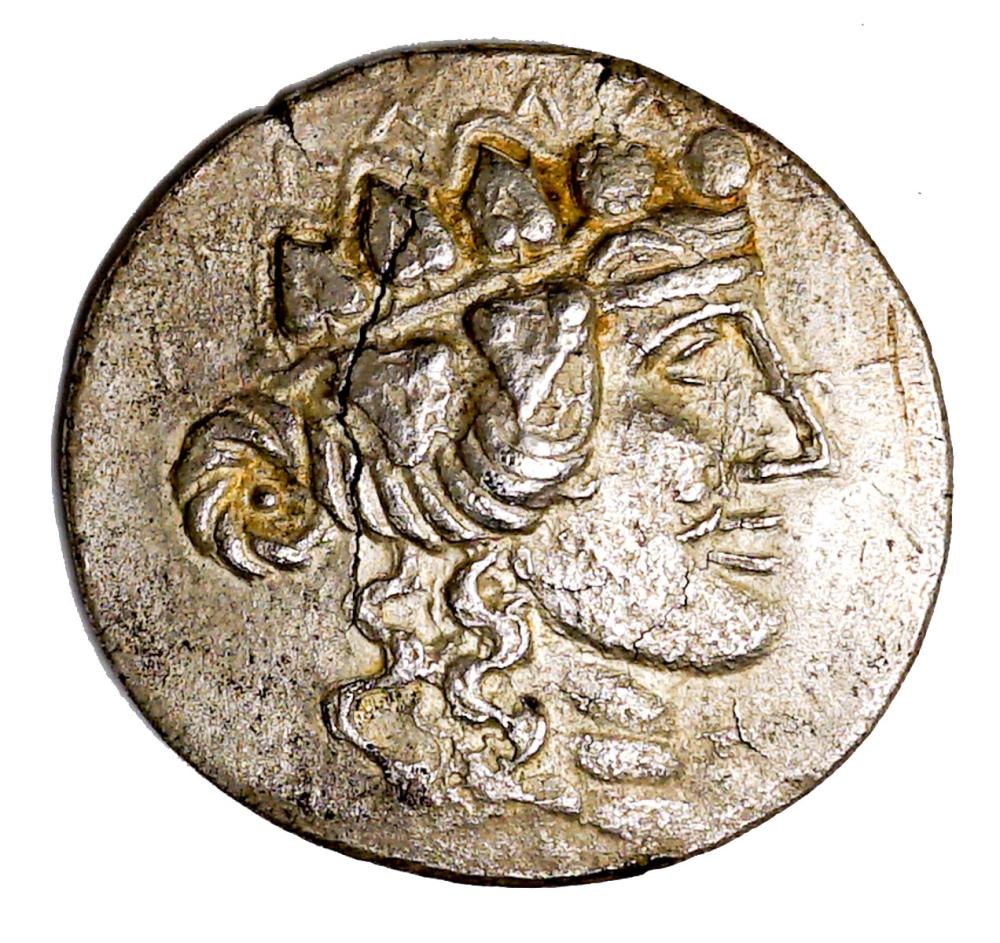
Auction house “Grant Zahajko Auctions, LLC”, via Invaluable
ancient coins
Celtic imitative tetradrachm of Thasos
circa 148-50 BC
This ancient Celtic silver tetradrachm is an imitative issue based on the coinage of the Greek city of Thasos, located on an island in the Thracian Sea. Celtic imitations of Thasian coins are characterized by their distinct, often stylized reinterpretations of the original Hellenistic prototypes. This specimen featu…
Partial type record
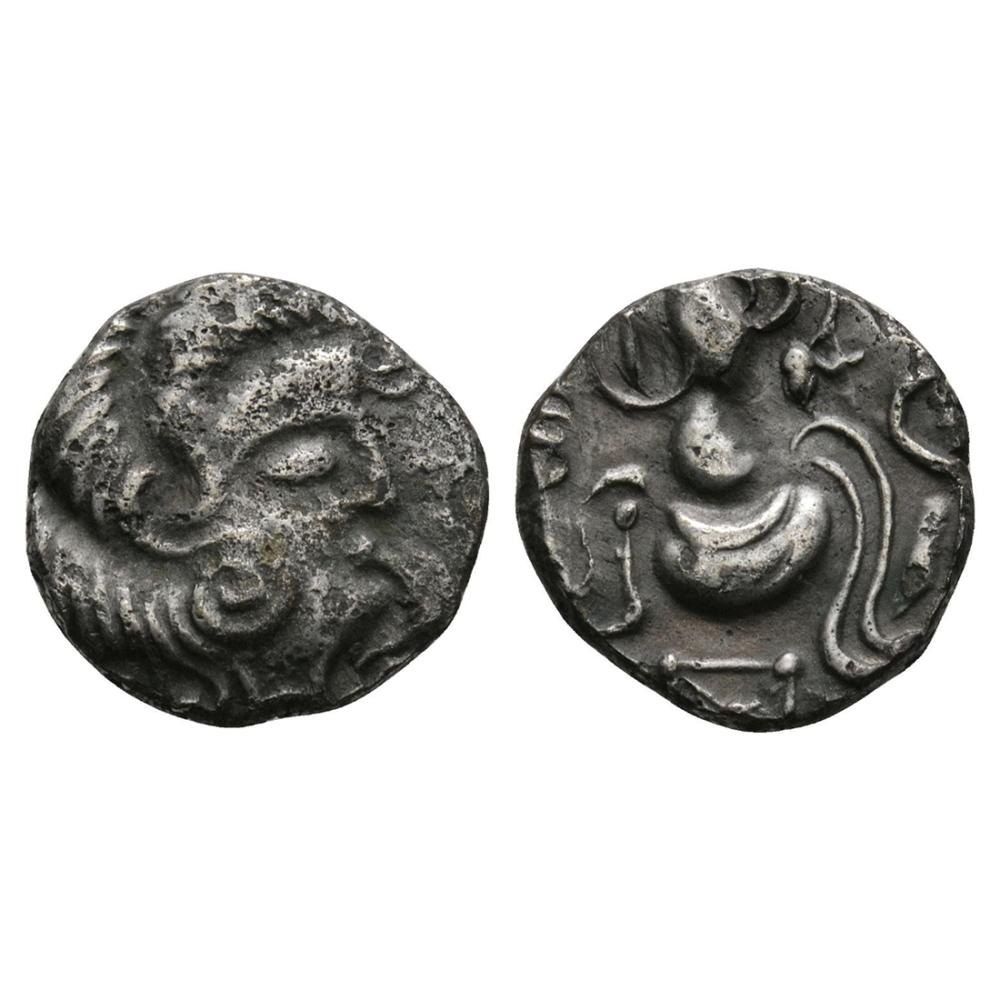
Auction house “TimeLine Auctions”, via Invaluable
ancient coins
Celtic Iron Age Coriosolite 1/4 Stater with Swan's Neck and Banner
40-10 BC
The coin features a distinct Armorican-style head on the obverse, rendered in profile facing right, characterized by three large hair-locks, a slit eye, and a scroll element issuing from the mouth. The reverse displays a fantastic, stylized horse moving to the right. Notable features of the reverse iconography inclu…
Partial type record
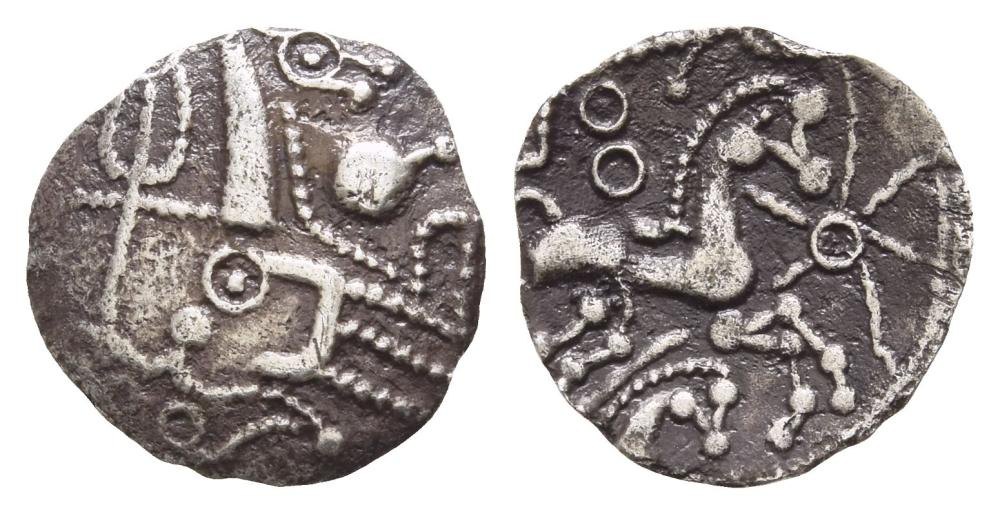
Auction house “TimeLine Auctions”, via Invaluable
ancient coins
Celtic Northeast Gaul, Ambiani silver fraction, 'Picardy Horse Face' type
Circa 75-50 BC
This Celtic silver fraction from Northeast Gaul, specifically associated with the Ambiani tribe, dates to approximately 75-50 BC. Often described as the 'Picardy Horse Face' type, the coin demonstrates the highly abstract and symbolic artistry characteristic of Iron Age coinage. The obverse features a stylised, helm…
Partial type record
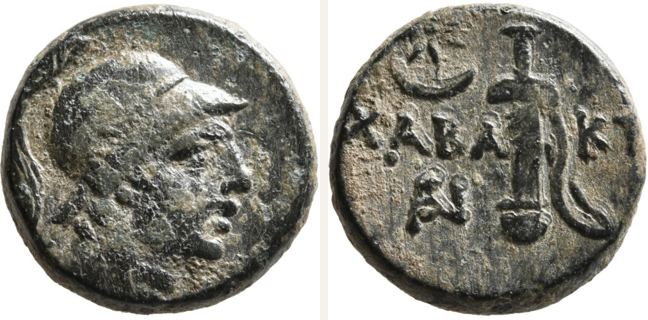
Photograph: Vladimir F. Stolba; Corpus Nummorum (Berlin-Brandenburg Academy of Sciences and Humanities)
ancient coins
Chabakta, bronze coin — Sword in sheath (CN type 22762)
c. 95–90 BC
Coin in bronze struck at Chabakta, dated c. 95–90 BC. Corpus Nummorum, the online type corpus of the Berlin-Brandenburg Academy of Sciences and Humanities, records it as CN type 22762 (period: Hellenistic Period; issuing authority type: city). Obverse: Head of Ares in helmet, right. Reverse: Sword in sheath. Legend…
Research required
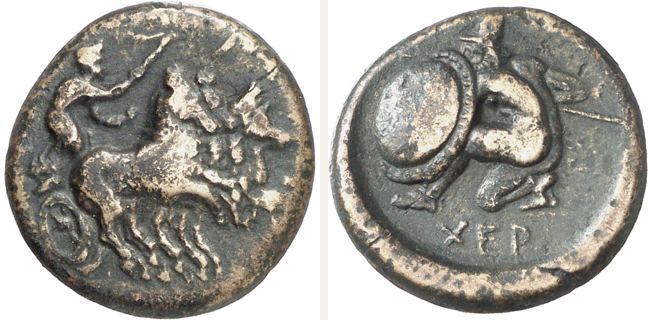
Photograph: Lutz-Jürgen Lübke (Lübke und Wiedemann); Corpus Nummorum (Berlin-Brandenburg Academy of Sciences and Humanities); specimen held by ikmk.smb.museum
ancient coins
Chersonesos Taurike, bronze coin — Kneeling warrior with shield and spear (CN type 22919)
c. 350–300 BC
Coin in bronze struck at Chersonesos Taurike, dated c. 350–300 BC. Corpus Nummorum, the online type corpus of the Berlin-Brandenburg Academy of Sciences and Humanities, records it as CN type 22919 (period: Classical/Hellenistic Period; issuing authority type: city). Obverse: Parthenos with torch in quadriga, right.…
Research required
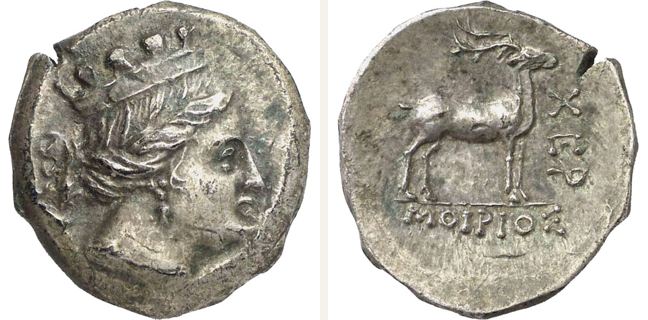
Photograph: Bernhard Weisser; Corpus Nummorum (Berlin-Brandenburg Academy of Sciences and Humanities)
ancient coins
Chersonesos Taurike, drachm — Stag standing right (CN type 21226)
c. 200–150 BC
Drachm in silver struck at Chersonesos Taurike, dated c. 200–150 BC. Corpus Nummorum, the online type corpus of the Berlin-Brandenburg Academy of Sciences and Humanities, records it as CN type 21226 (period: Hellenistic Period; issuing authority type: city). Obverse: Head of Parthenos wearing mural crown, right; at…
Research required
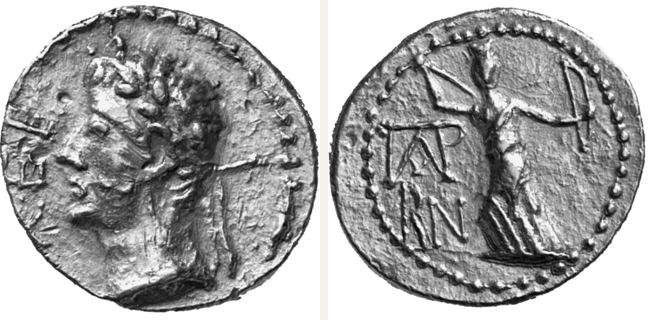
Photograph: Lutz-Jürgen Lübke (Lübke & Wiedemann); Corpus Nummorum (Berlin-Brandenburg Academy of Sciences and Humanities)
ancient coins
Chersonesos Taurike, Tiberius, stater — Parthenos advancing right (CN type 21901)
AD 28
Stater in gold struck at Chersonesos Taurike under Tiberius, dated AD 28. Corpus Nummorum, the online type corpus of the Berlin-Brandenburg Academy of Sciences and Humanities, records it as CN type 21901 (period: Roman Imperial Period; issuing authority type: city). Obverse: Laureate head of Tiberius, left. Legend:…
Research required
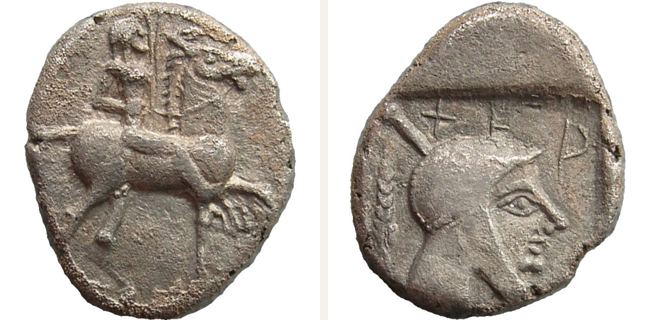
Photograph: H.I., Lemgo; Corpus Nummorum (Berlin-Brandenburg Academy of Sciences and Humanities)
ancient coins
Chersonesus Thracica, 1/12 Stater — Beardless male head to right wearing alopekis cаp (CN type 21616)
c. 510–490 BC
1/12 Stater in silver struck at Chersonesus Thracica in Thrace, dated c. 510–490 BC. Corpus Nummorum, the online type corpus of the Berlin-Brandenburg Academy of Sciences and Humanities, records it as CN type 21616 (period: Archaic Period; issuing authority type: city). Obverse: Mounted rider to right carrying two…
Research required
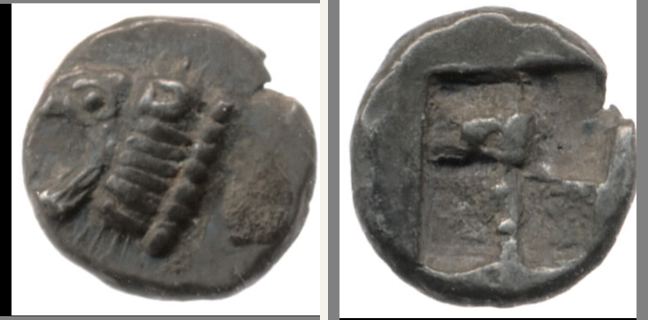
Photograph: British Museum, London; Corpus Nummorum (Berlin-Brandenburg Academy of Sciences and Humanities)
ancient coins
Chersonesus Thracica, 1/4 Hekte — Quadripartite incuse square (CN type 20380)
c. 515–493 BC
1/4 Hekte in silver struck at Chersonesus Thracica in Thrace, dated c. 515–493 BC. Corpus Nummorum, the online type corpus of the Berlin-Brandenburg Academy of Sciences and Humanities, records it as CN type 20380 (period: Archaic/Classical Period; issuing authority type: league). Obverse: Lion's head, left, with op…
Research required
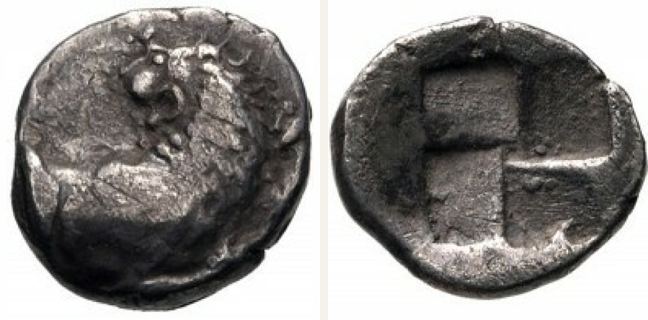
Photograph: Corpus Nummorum; Corpus Nummorum (Berlin-Brandenburg Academy of Sciences and Humanities)
ancient coins
Chersonesus Thracica, 1/8 Hekte — Quadripartite incuse square (CN type 20374)
c. 515–493 BC
1/8 Hekte in silver struck at Chersonesus Thracica in Thrace, dated c. 515–493 BC. Corpus Nummorum, the online type corpus of the Berlin-Brandenburg Academy of Sciences and Humanities, records it as CN type 20374 (period: Archaic/Classical Period; issuing authority type: league). Obverse: Forepart of a prancing lio…
Research required
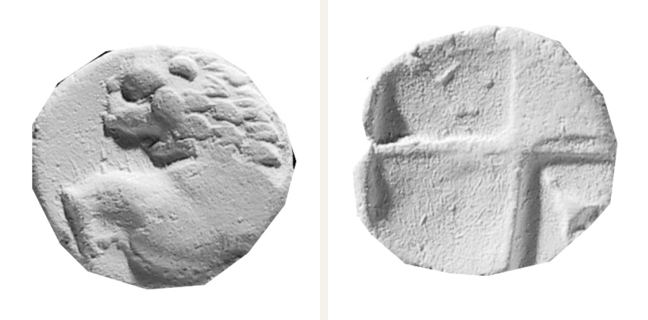
Photograph: BBAW; Corpus Nummorum (Berlin-Brandenburg Academy of Sciences and Humanities)
ancient coins
Chersonesus Thracica, hemidrachm — Quadripartite incuse square (CN type 12544)
c. 357–320 BC
Hemidrachm in silver struck at Chersonesus Thracica in Thrace, dated c. 357–320 BC. Corpus Nummorum, the online type corpus of the Berlin-Brandenburg Academy of Sciences and Humanities, records it as CN type 12544 (period: Classical Period; issuing authority type: league). Obverse: Forepart of a prancing lion, righ…
Research required
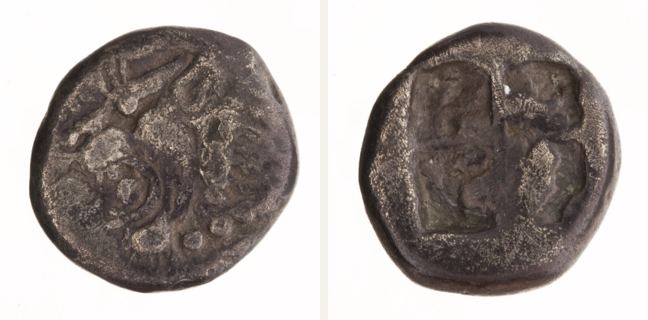
Photograph: American Numismatic Society; Corpus Nummorum (Berlin-Brandenburg Academy of Sciences and Humanities); specimen held by numismatics.org
ancient coins
Chersonesus Thracica, Hemihekte — Quadripartite incuse square (CN type 20379)
c. 515–493 BC
Hemihekte in silver struck at Chersonesus Thracica in Thrace, dated c. 515–493 BC. Corpus Nummorum, the online type corpus of the Berlin-Brandenburg Academy of Sciences and Humanities, records it as CN type 20379 (period: Archaic/Classical Period; issuing authority type: league). Obverse: Lion's head, left, with op…
Research required
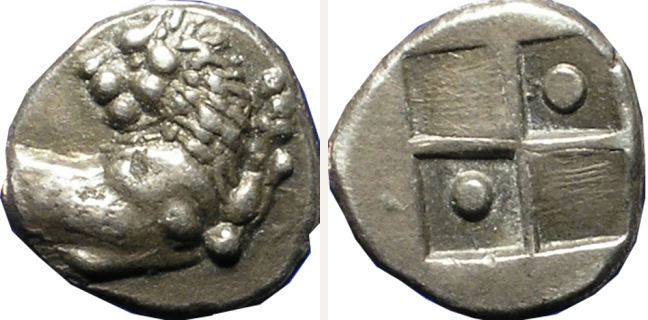
Photograph: Bernisches Historisches Museum; Corpus Nummorum (Berlin-Brandenburg Academy of Sciences and Humanities)
ancient coins
Chersonesus Thracica, quarter-siglos — Quadripartite incuse square (CN type 22885)
c. 357–320 BC
Quarter-siglos in silver struck at Chersonesus Thracica in Thrace, dated c. 357–320 BC. Corpus Nummorum, the online type corpus of the Berlin-Brandenburg Academy of Sciences and Humanities, records it as CN type 22885 (period: Classical Period; issuing authority type: league). Obverse: Forepart of a prancing lion,…
Research required
© Victoria and Albert Museum, London
ancient coins
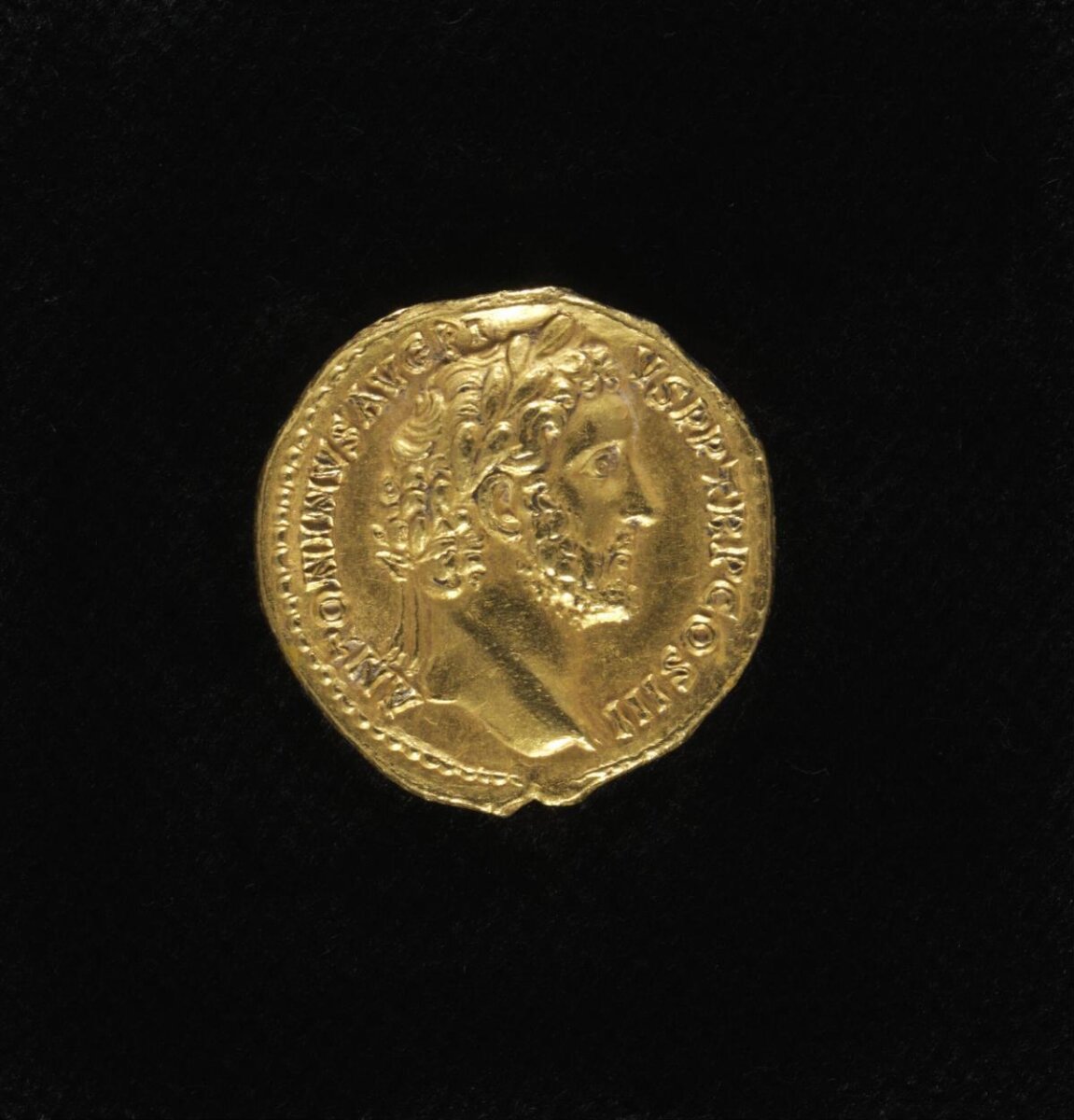
Coin — Aureus of Antonius Pius, Rome, 140-143 AD
140-143 AD
Coin in the Victoria and Albert Museum, London (museum number A.684-1910), made in Rome, dated 140-143 AD. The museum's brief description reads: Coin (aureus), gold, of Antonius Pius / Jupiter, Roman, ca. 140-143 AD. Museum description: Small gold coin. The obverse features a portrait of Antoninus Pius and an inscri…
Partial type record
© Victoria and Albert Museum, London
ancient coins
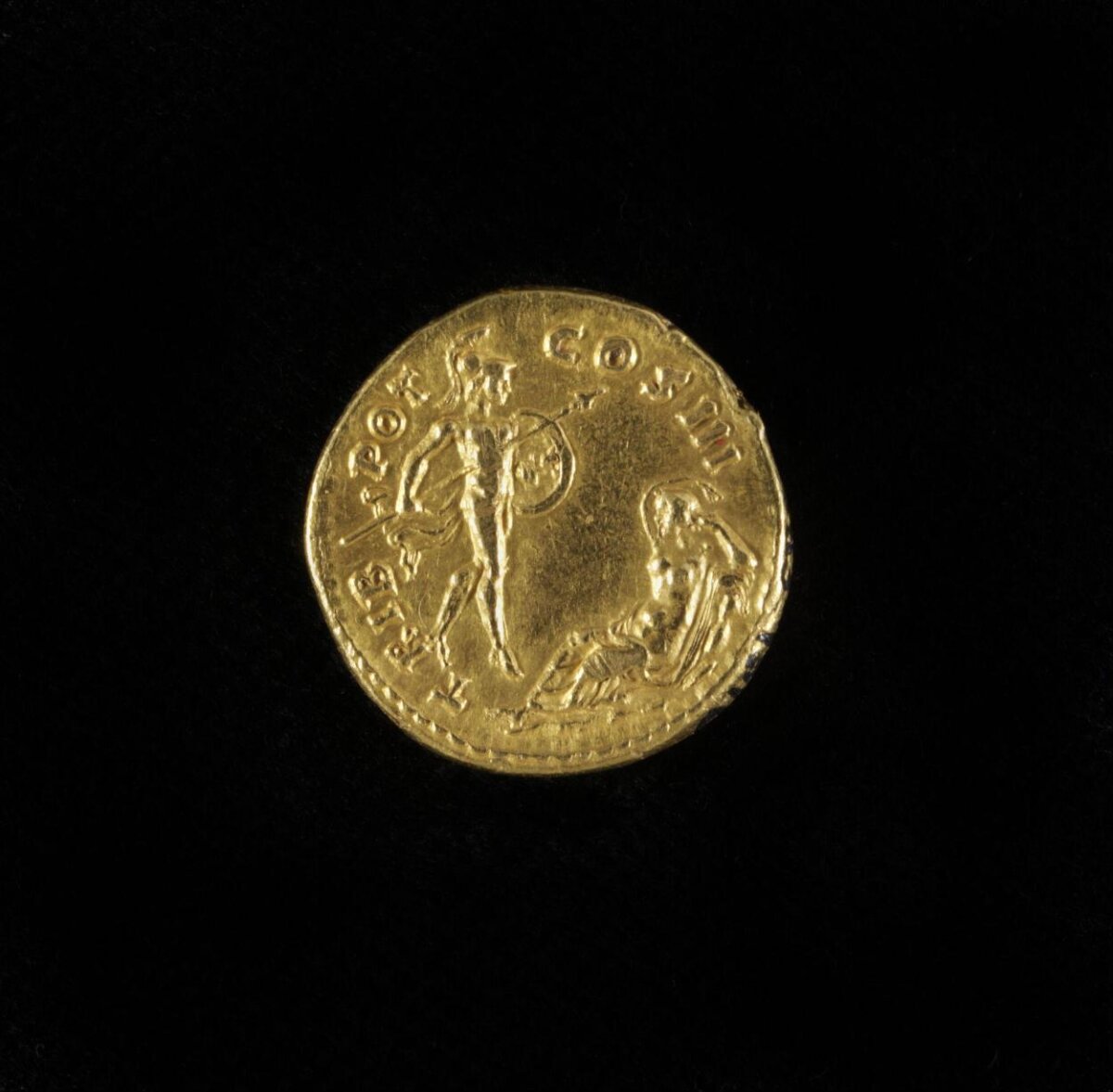
Coin — Aureus of Antonius Pius, Rome, 140-144 AD
140-144 AD
Coin in the Victoria and Albert Museum, London (museum number A.683-1910), made in Rome, dated 140-144 AD. The museum's brief description reads: Coin (aureus), gold, of Antonius Pius / Mars, Roman, ca. 140-144 AD. Museum description: Small gold coin. On the obverse: a portrait of the emperor Antoninus Pius. On the r…
Partial type record
© Victoria and Albert Museum, London
ancient coins
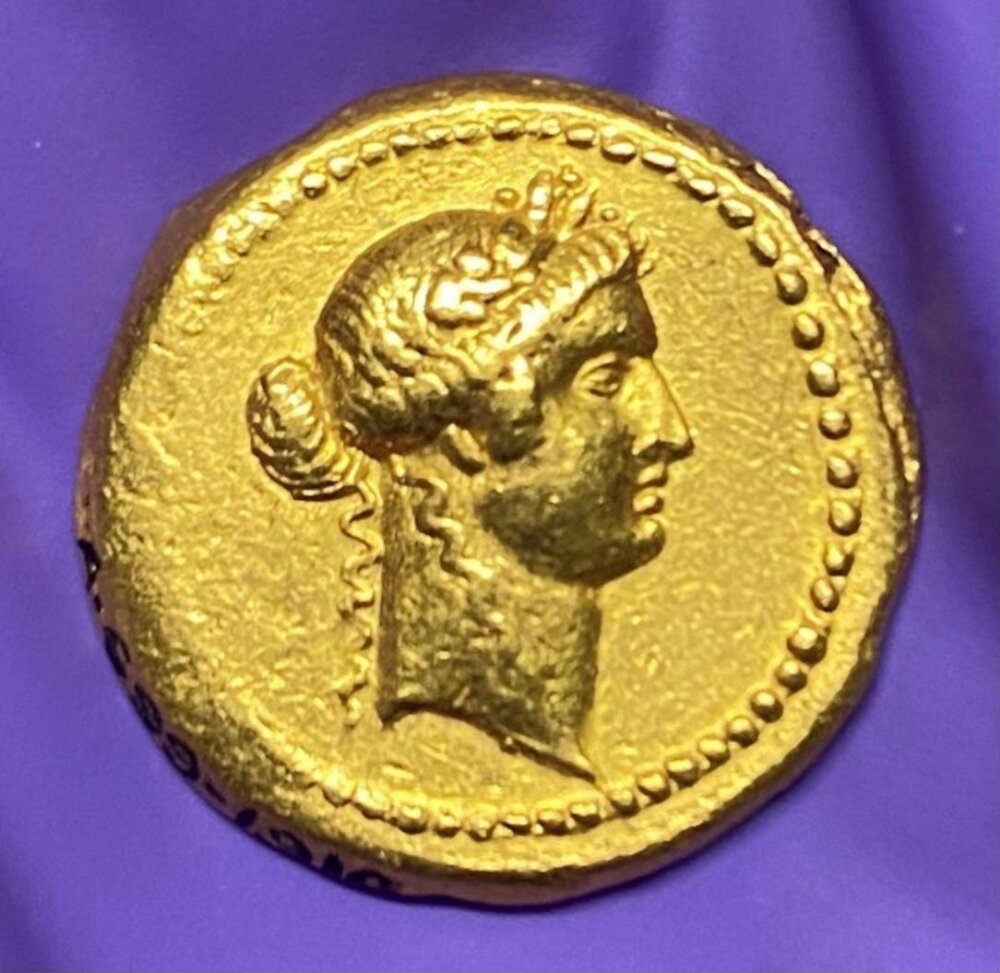
Coin — Aureus of Caius Vibius Varus, Roman Republic, ca. 38 BC
ca. 38 BC
Coin, aureus of Caius Vibius Varus, gold, head of Apollo / Venus with mirror, Roman, ca. 38 BC. Obverse: Head of Apollo. Reverse: Venus, naked to below the waist, standing near a column, She gazes into a mirror held in her left. Inscriptions. The museum record gives material recorded as gold; measurements Diameter 2…
Partial type record
© Victoria and Albert Museum, London
ancient coins
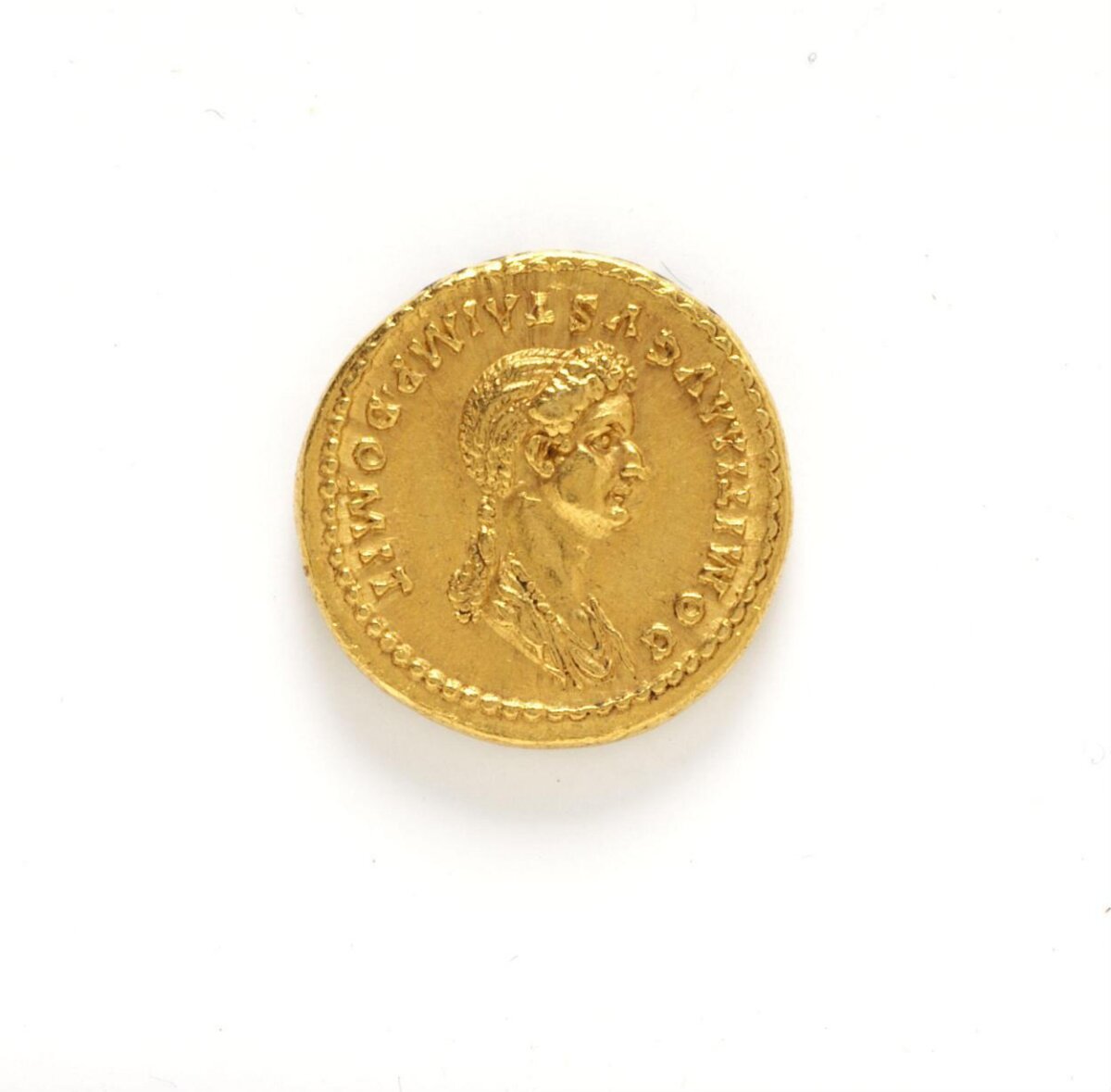
Coin — Aureus of Domitian, Roman Empire, 81 AD
81 AD
Coin in the Victoria and Albert Museum, London (museum number A.679-1910), made in Roman Empire, dated 81 AD. The museum's brief description reads: Coin, aureus of Domitian, gold, Emperor Domitian and his wife Domitia, Roman, 81 AD. Museum description: Obverse: Inscription. Head of Domitian laureate. Border of dots.…
Partial type record
© Victoria and Albert Museum, London
ancient coins
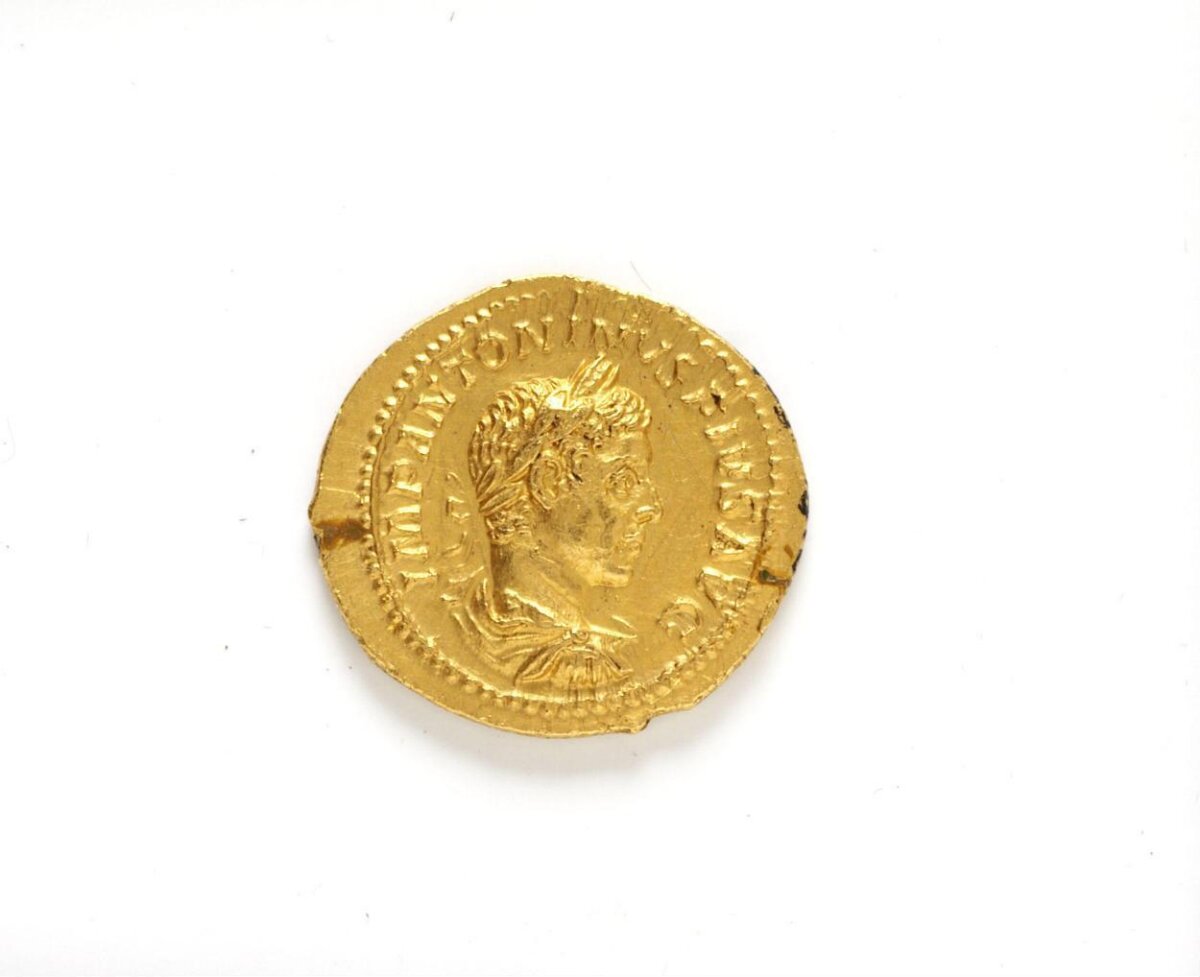
Coin — Aureus of Elagabalus, Rome, 221 AD
221 AD
Coin in the Victoria and Albert Museum, London (museum number A.695-1910), made in Rome, dated 221 AD. The museum's brief description reads: Coin (aureus), gold, of the Emperor Elagabalus (reigned 218-222) / the Syrian sun god El-Gabal (Baal), Roman, 221 AD. Museum description: Gold coin. On the obverse: Inscription…
Partial type record
© Victoria and Albert Museum, London
ancient coins
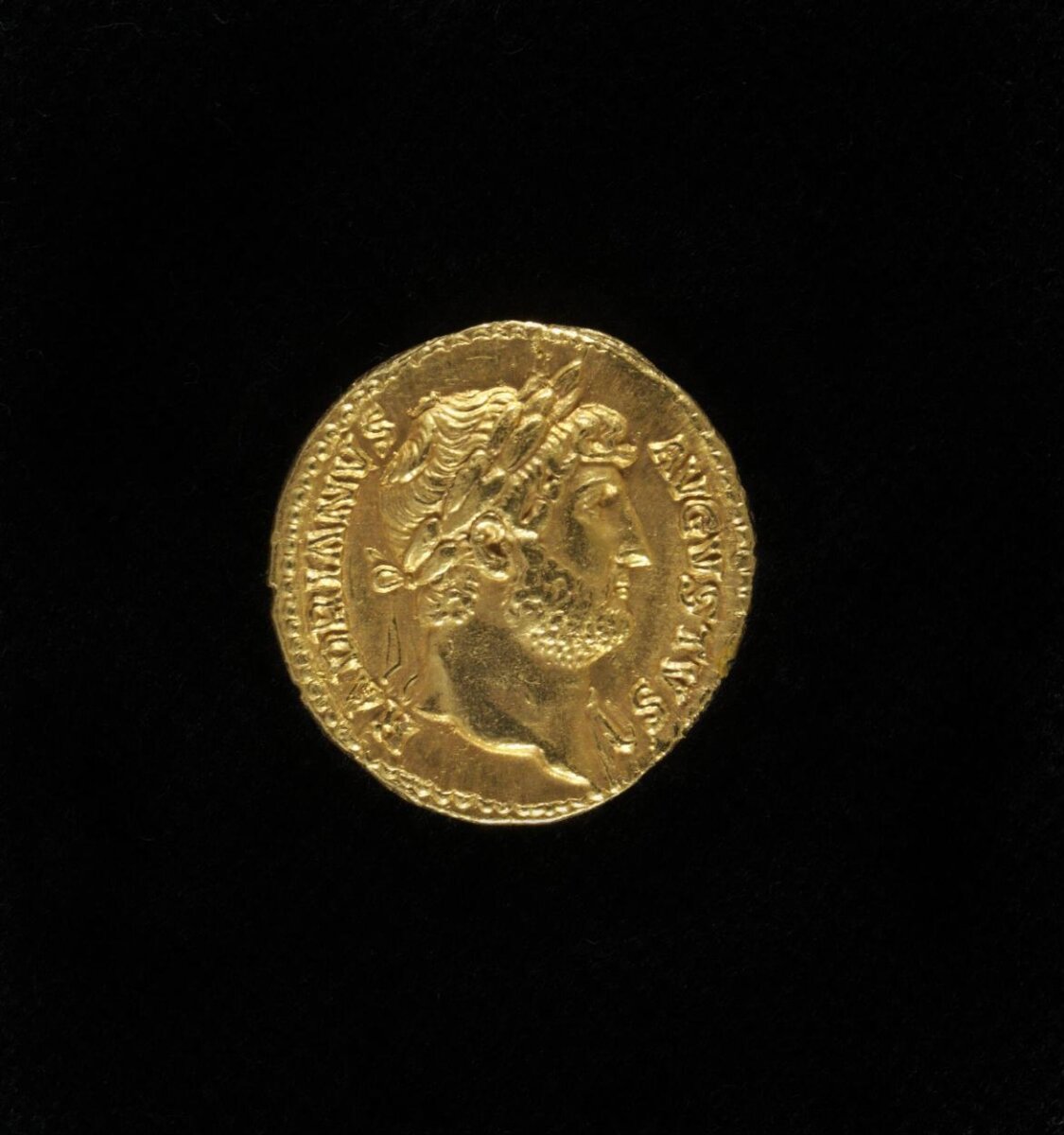
Coin — Aureus of Hadrian, Rome, 118 AD
118 AD
Coin in the Victoria and Albert Museum, London (museum number A.681-1910), made in Rome, dated 118 AD. The museum's brief description reads: Coin, aureus of Hadrian, gold, head of the Emperor Hadrian, Roman, ca. 118 AD. Museum description: Gold coin. Obverse: Inscription. Head of Hadrian, laureate, border of dots. R…
Partial type record
© Victoria and Albert Museum, London
ancient coins
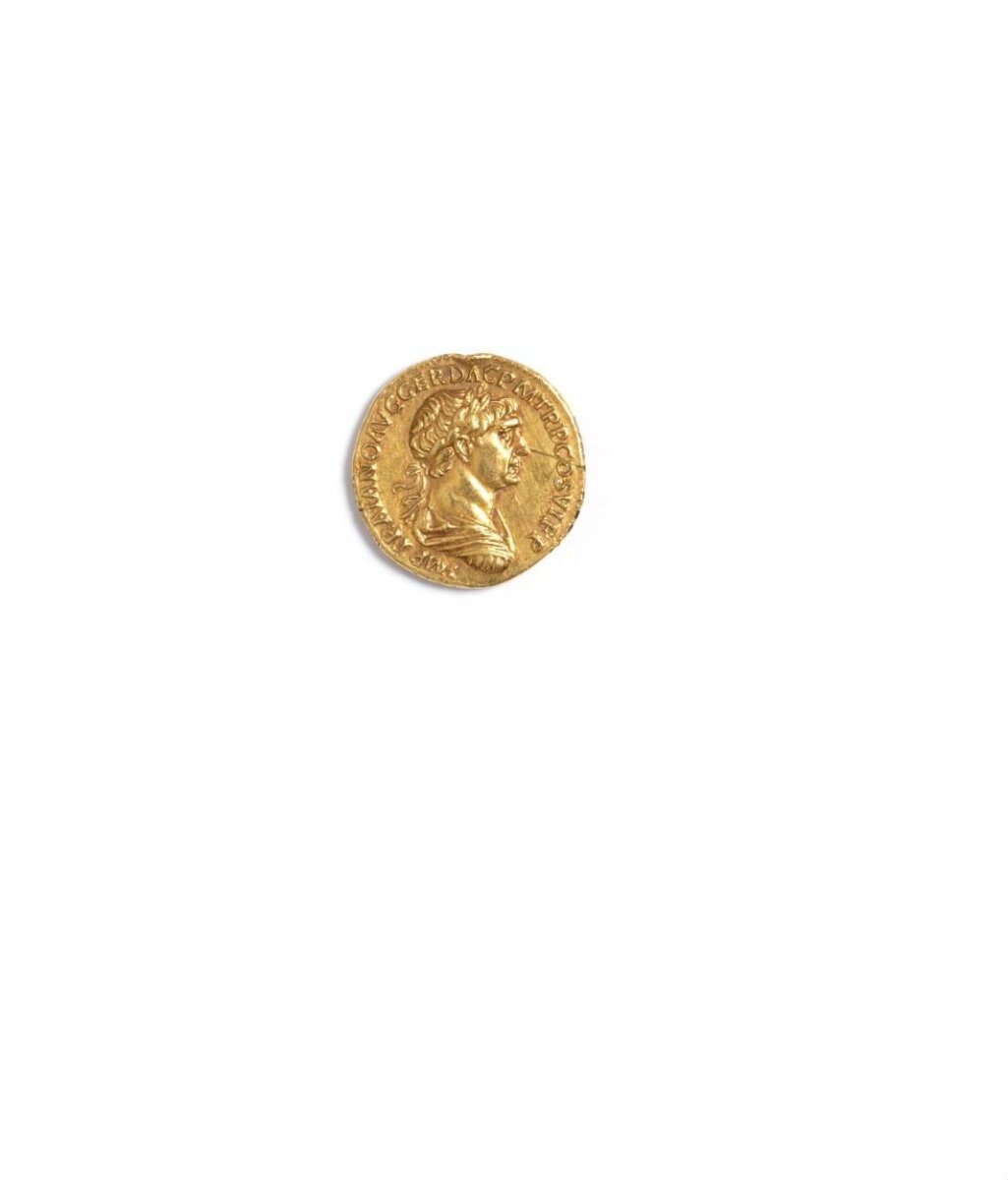
Coin — Aureus of Trajan, Rome, 112-114 AD
112-114 AD
Coin in the Victoria and Albert Museum, London (museum number A.680-1910), made in Rome, dated 112-114 AD. The museum's brief description reads: Coin, aureus of Trajan, gold, head of Trajan, Roman, ca. 112-114 AD. Museum description: Gold coin. On the obverse is a head of Trajan with an inscription around the border…
Partial type record
Cleveland Museum of Art
ancient coins
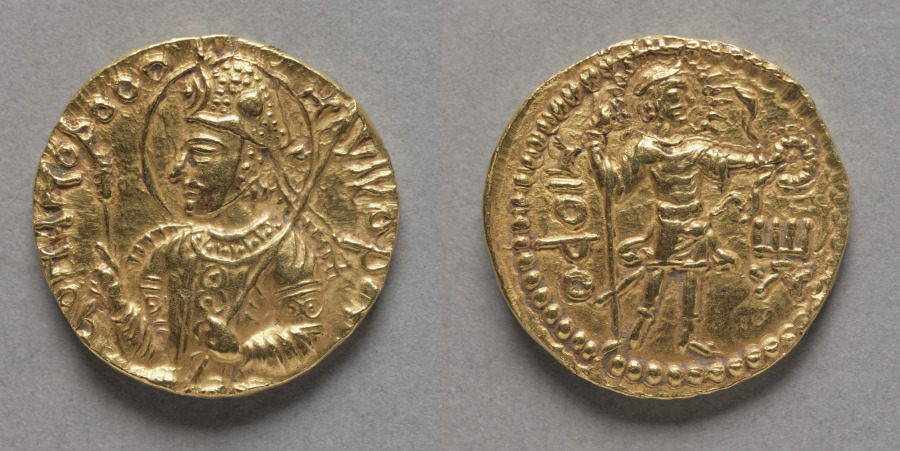
Coin (Cleveland Museum of Art 1999.227)
c. 106–149 CE
This gold coin represents the reign of the Kushana ruler, Havishka. The coin bears a portrait of the ruler on the obverse and various deities on the reverse. It is identified by inscriptions in Kharosthi, the language used in northwestern India during the Kushan period. Cleveland Museum of Art object 1999.227: Coin,…
Partial type record