Catalogue
Coins
Struck and cast currency issued by states, rulers and other authorities.
Catalogue entries (5,113)
Filter by era, country, maker or material385–432 of 5,113 entries
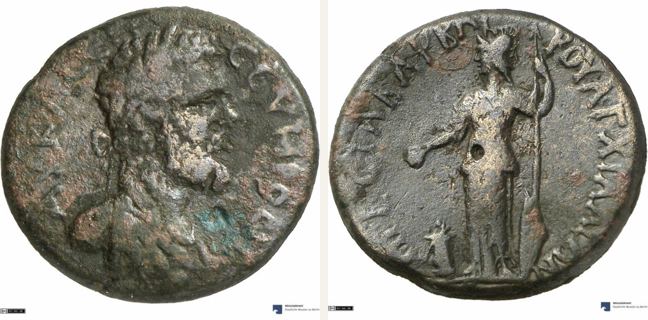
Photograph: Lutz-Jürgen Lübke (Lübke & Wiedemann); Corpus Nummorum (Berlin-Brandenburg Academy of Sciences and Humanities); specimen held by ikmk.smb.museum
ancient coins
Anchialos, Septimius Severus, 5 unit — Athena standing facing (CN type 22161)
AD 195–198
5 unit in bronze struck at Anchialos in Thrace under Septimius Severus, dated AD 195–198. Corpus Nummorum, the online type corpus of the Berlin-Brandenburg Academy of Sciences and Humanities, records it as CN type 22161 (period: Roman Imperial Period; issuing authority type: city). Obverse: Laureate bust of Septimi…
Research required
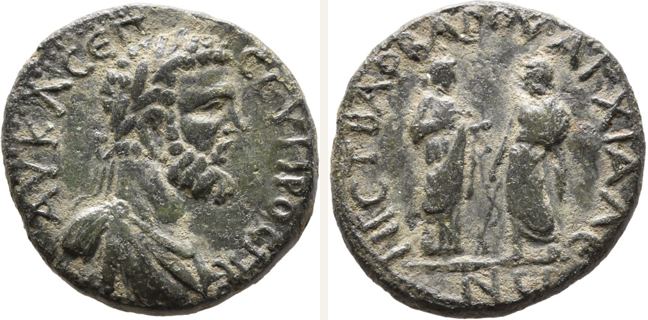
Photograph: Ioanna Maina; Corpus Nummorum (Berlin-Brandenburg Academy of Sciences and Humanities)
ancient coins
Anchialos, Septimius Severus, 5 unit — Hygieia and Asclepius (CN type 22163)
AD 195–198
5 unit in bronze struck at Anchialos in Thrace under Septimius Severus, dated AD 195–198. Corpus Nummorum, the online type corpus of the Berlin-Brandenburg Academy of Sciences and Humanities, records it as CN type 22163 (period: Roman Imperial Period; issuing authority type: city). Obverse: Laureate bust of Septimi…
Research required
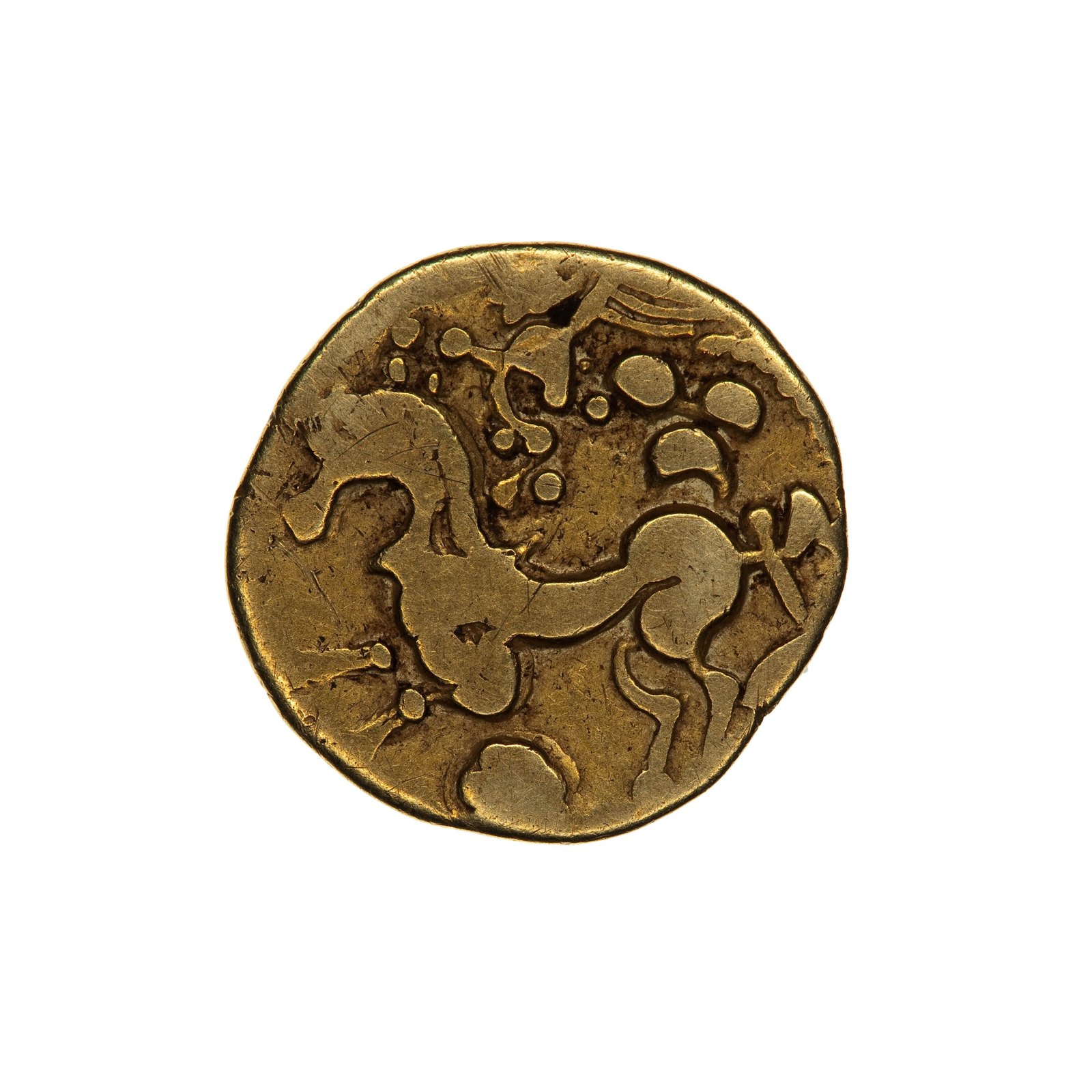
Museums Victoria / Photographer: Justine Philip
ancient coins
Ancient coin, 1/4 stater Ambiani tribe, France, c.125 BC
circa 125 BC
Gold coin; Denomination 1/4 Stater, Issued by the Ambiani Tribe, circa 125 BC. This coin is from a series termed Gallo-Belgic A (Ambiani). Celtic coins used in Britain are referred to by reference to their place of manufacture, Gallo-Belgic coins were struck in what is today France and British coins in Southern Engl…
Partial type record
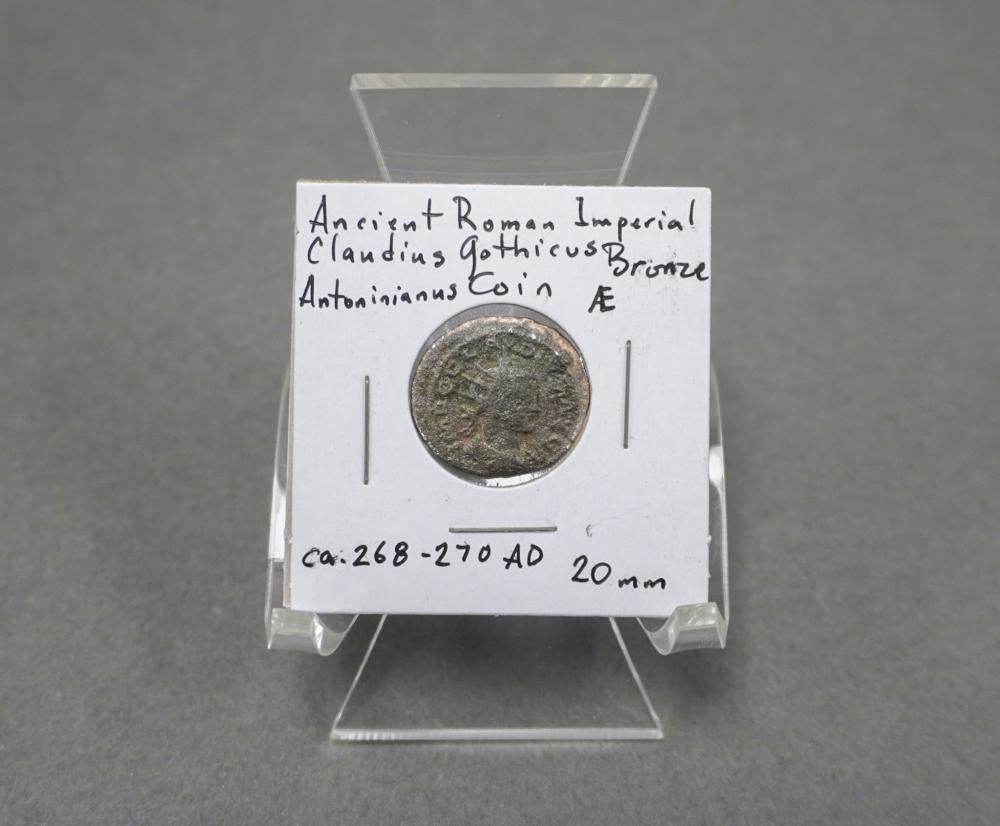
Auction house “Weschler's”, via Invaluable
ancient coins
Ancient Imperial Roman Claudius Gothicus Bronze Coin
ca. 268-270 AD
This collectible is an ancient Imperial Roman bronze coin featuring the likeness of Emperor Claudius Gothicus. The artifact dates to the period of his reign, circa 268-270 AD. The coin, identified in the accompanying holder as an antoninianus, is a circular metallic currency representative of the later Roman Empire.…
Partial type record
Auction house “Weschler's”, via Invaluable
ancient coins
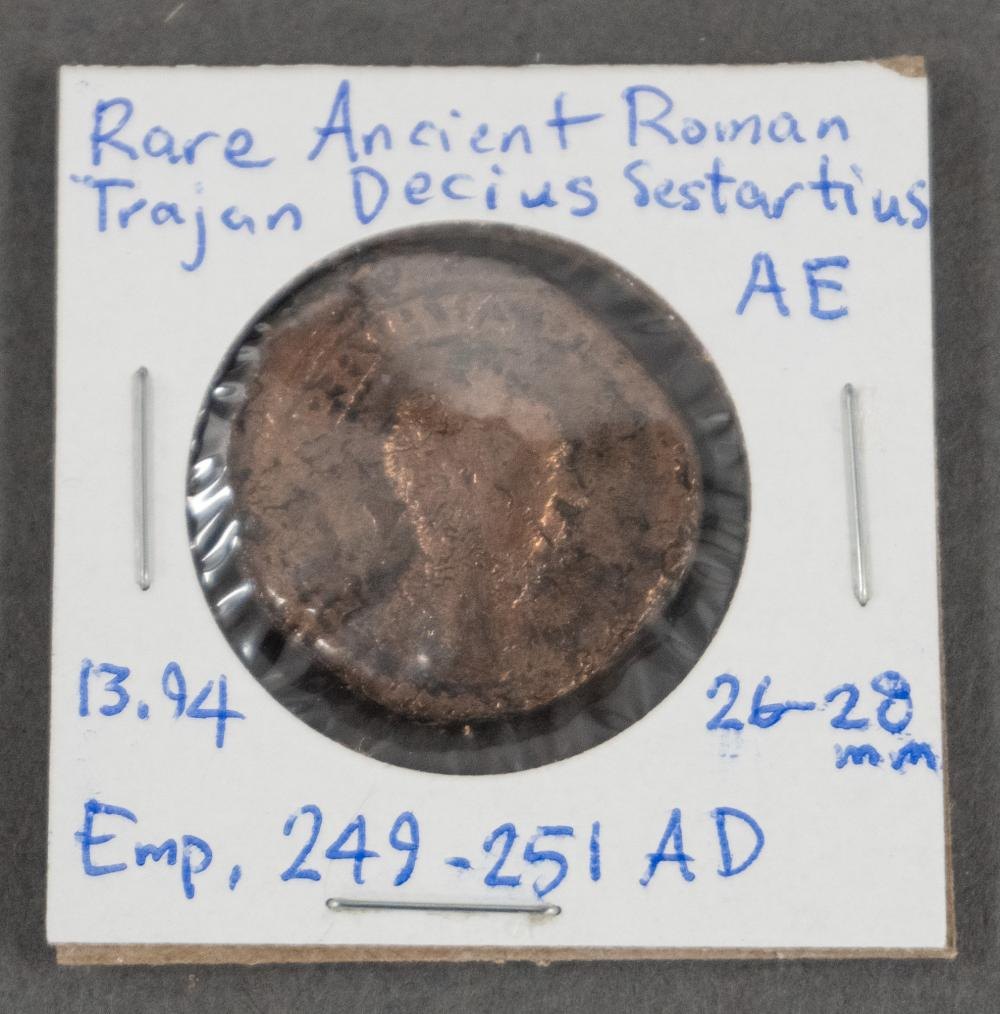
Ancient Roman Bronze Sestertius of Trajan Decius, Moesia issue
249-251 AD
This ancient Roman sestertius features the portrait of Emperor Trajan Decius, who ruled from 249 to 251 AD. The coin is minted in bronze, a base metal composition typical for the sestertius denomination during this period of the Roman Empire. The obverse depicts the profile bust of the emperor. The reverse design fe…
Partial type record
Museums Victoria / Photographer: Heath Warwick
ancient coins
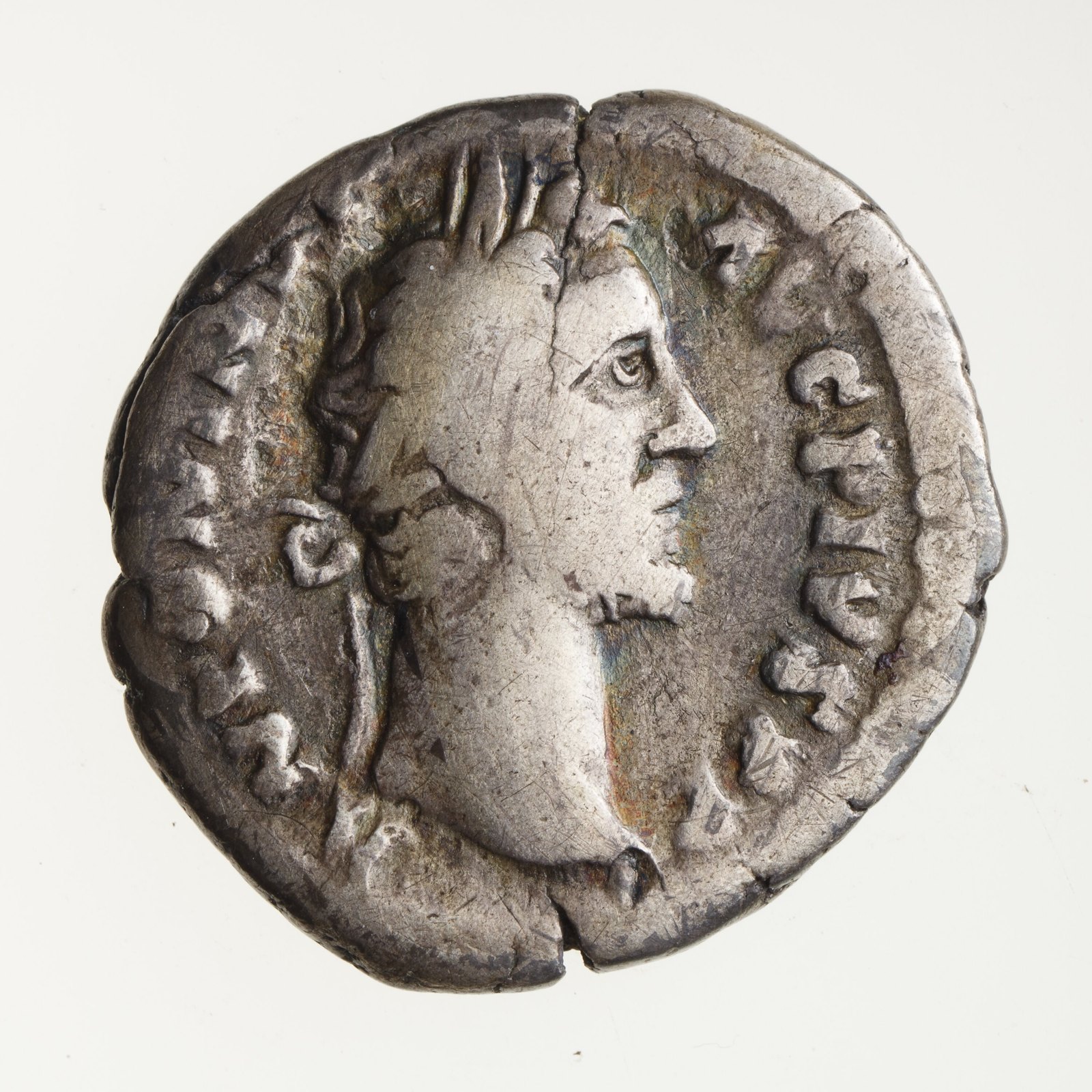
Ancient-coins, denarius of Antoninus Pius, Rome, 158-159 AD
158-159 AD
Silver Denarius issued by the Emperor Antoninus Pius in the period 158 to 159 AD, Ancient Roman Empire. Minted by Rome. Antoninus Pius became Consul for the fourth and last time on 1 Jan 145 AD (COS IIII on the reverse). Although there is no further dating information on this coin, other coins with this reverse giv…
Partial type record
Rijksmuseum, Amsterdam
modern coins
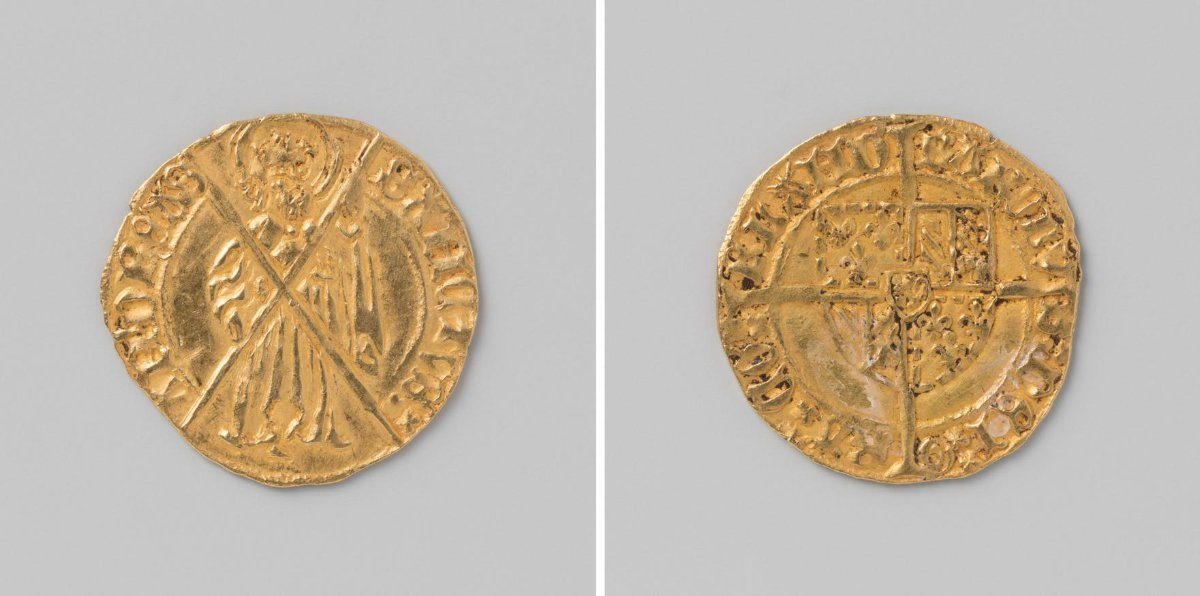
Andriesgulden of Charles the Bold, c. 1470
c. 1470
Gold Andriesgulden, struck by Charles the Bold (1467–1477). Obverse: full-length Saint Andrew, a diagonal cross (Saint Andrew's cross); inscription: SANCTUS ANDREAS. Reverse: coat of arms on cross; inscription: KAROLUS DEI GRA COM FLAND. The Rijksmuseum, Amsterdam, holds this object as NG-NM-14306-F; its record give…
Partial type record
Cleveland Museum of Art
modern coins
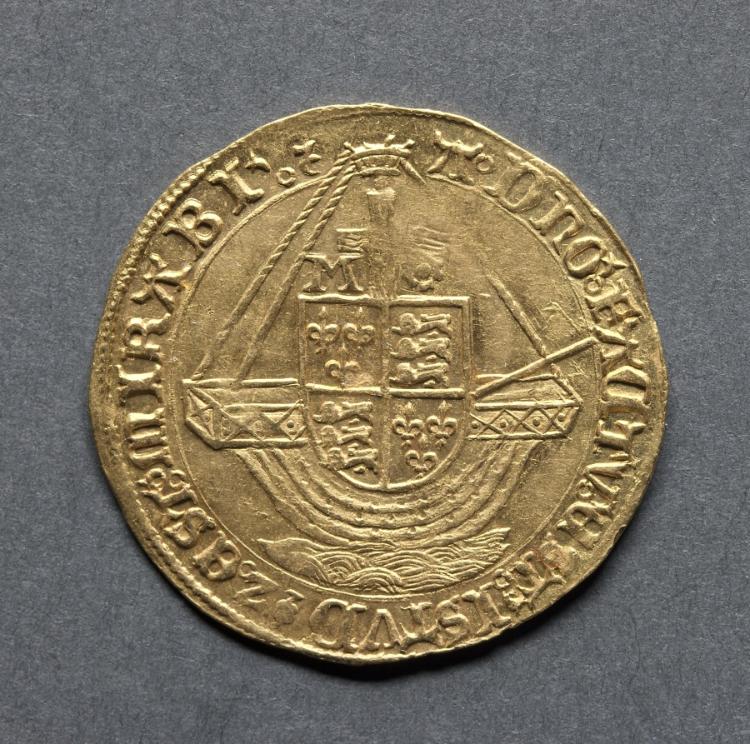
Angel: An Angel Slaying a Dragon (obverse); Ship with Shield of Arms (Cleveland Museum of Art 1969.180)
1553–54
This piece is one of the finest specimens known. It contains on the reverse, at the end of the legend, an unexplained mark that strongly resembles a small letter c, superimposed on a figure 7. Cleveland Museum of Art object 1969.180: Angel: An Angel Slaying a Dragon (obverse); Ship with Shield of Arms (reverse), 155…
Partial type record
Cleveland Museum of Art
modern coins
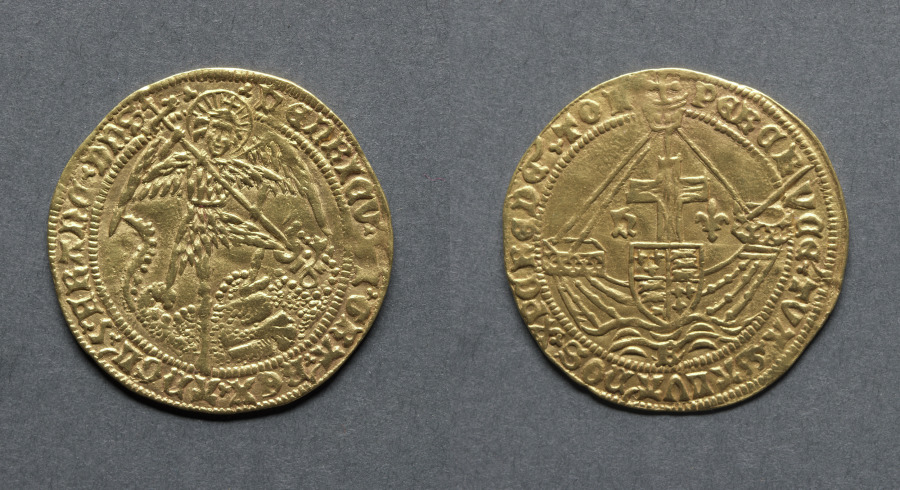
Angel: St. George Slaying the Dragon (obverse); Ship with Shield of Arms and Cross (Cleveland Museum of Art 1969.167)
1470–71
Henry VI regained power briefly in the usurpation period. The only gold coins struck during this short period were the angel and half angel, and only London and Bristol operated as mints. Cleveland Museum of Art object 1969.167: Angel: St. George Slaying the Dragon (obverse); Ship with Shield of Arms and Cross (reve…
Partial type record
Cleveland Museum of Art
modern coins
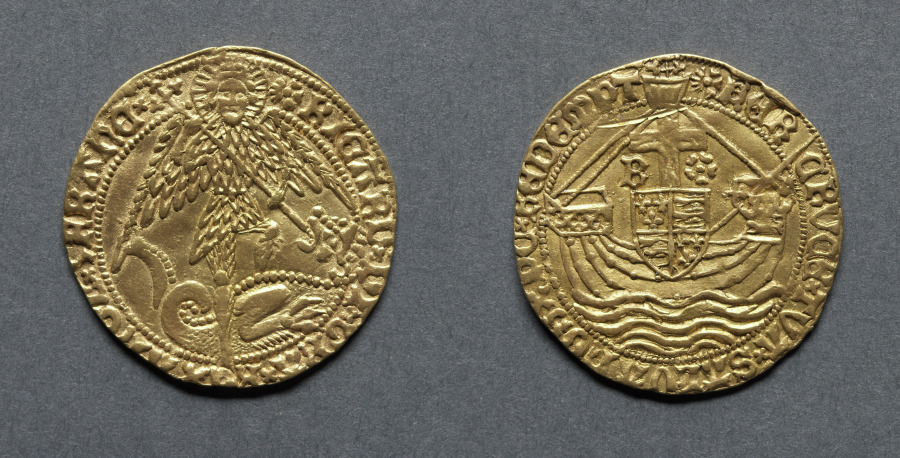
Angel: St. George Slaying the Dragon (obverse); Ship with Shield of Arms and Cross (Cleveland Museum of Art 1969.168)
1483–85
This coin is similar to the angel of Henry VI, 1969.167, but from completely different dies. Between the second reign of Edward IV and the reign of Richard III, Edward V, at the age of 13, reigned briefly from April 9 to June 22, 1483. Richard, Edward's uncle, caused the boy to be imprisoned in the Tower where he an…
Partial type record
Rijksmuseum, Amsterdam
modern coins
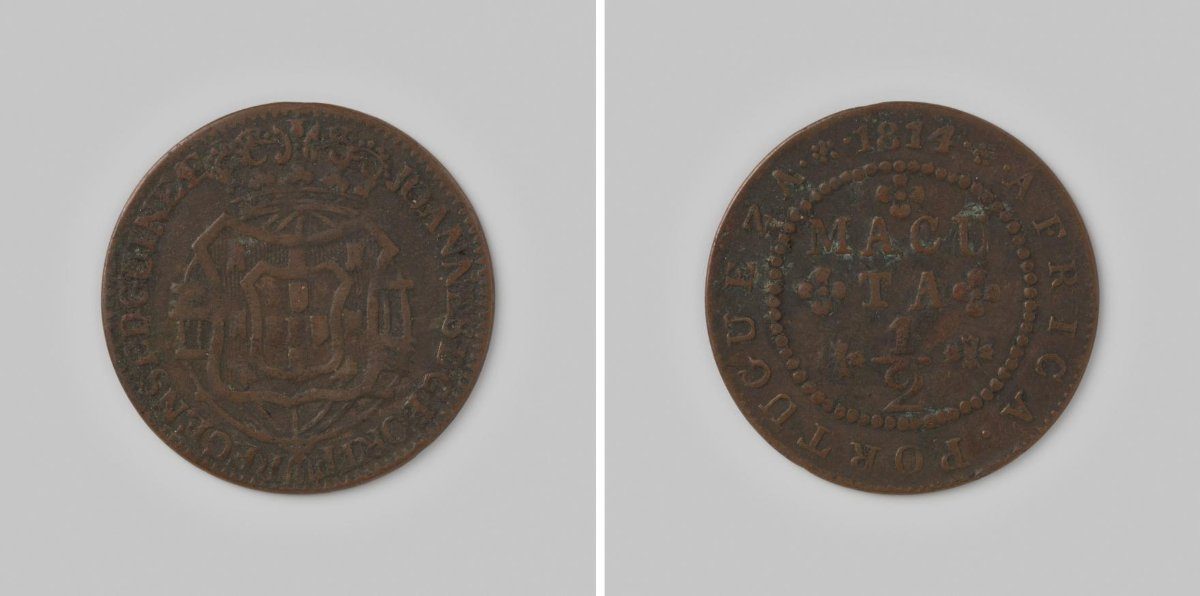
Angola, King João VI of Portugal, ½ macuta, 1814
1814
Copper coin. Obverse: crowned coat of arms of Portugal on wrapped globe. Reverse: within beaded circle, value indication in three lines: macuta ½. Inscription: Africa Portugueza with year at the top. Smooth edge. The Rijksmuseum, Amsterdam, holds this object as KOG-MP-1-5128; its record gives material recorded as co…
Partial type record
Rijksmuseum, Amsterdam
modern coins
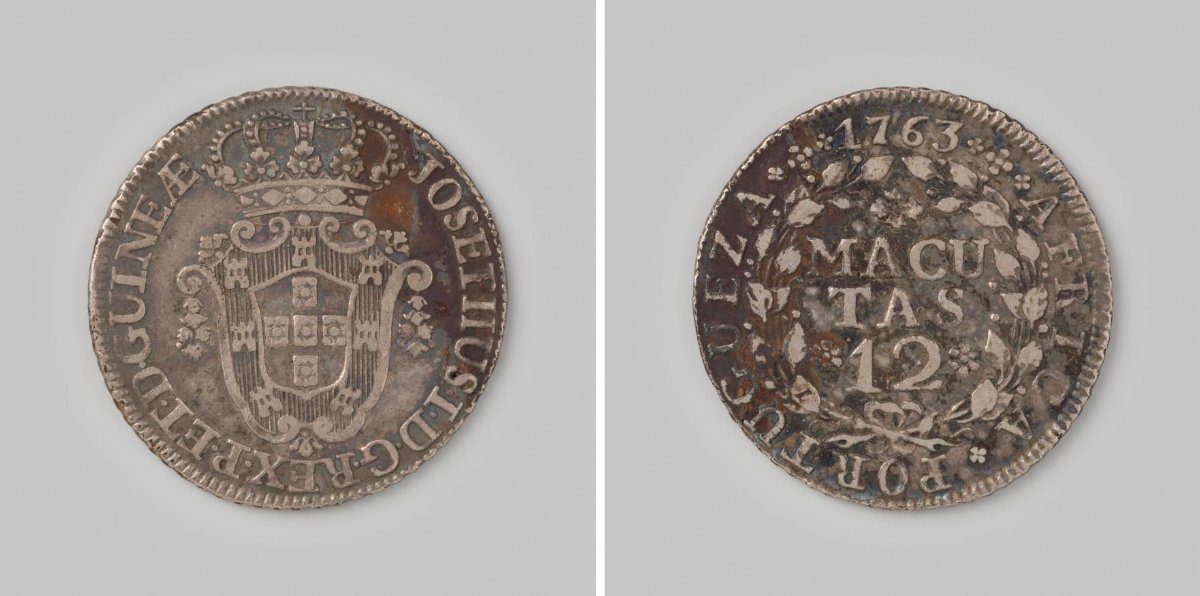
Angola, King Joseph I of Portugal, 12 macutas, 1763
1763
Silver coin. Obverse: Baroque coat of arms of Portugal, surmounted by a crown. Reverse: between two branches tied together, value indication in two lines: macutas 12. Inscription: Africa Portugueza with date at the top. Floral border. The Rijksmuseum, Amsterdam, holds this object as KOG-MP-1-5126; its record gives m…
Partial type record
Rijksmuseum, Amsterdam
modern coins
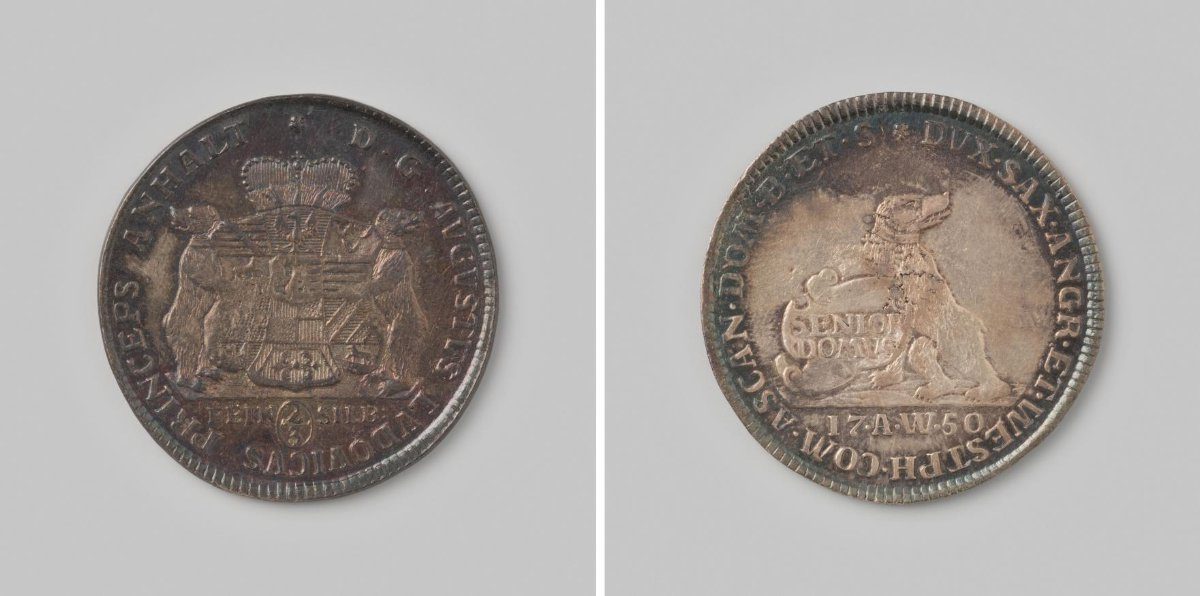
Anhalt-Köthen, August I Ludwig, Gulden, 1750
1750
Silver coin. Obverse: composite coat of arms held by two bears with collars. Below it, value designation: 2/3 [taler]. Reverse: shield held by a bear with collar standing on the ground, on which a two-line inscription. Date in exergue. Smooth edge. The Rijksmuseum, Amsterdam, holds this object as KOG-MP-1-0891; its…
Partial type record
Rijksmuseum, Amsterdam
modern coins
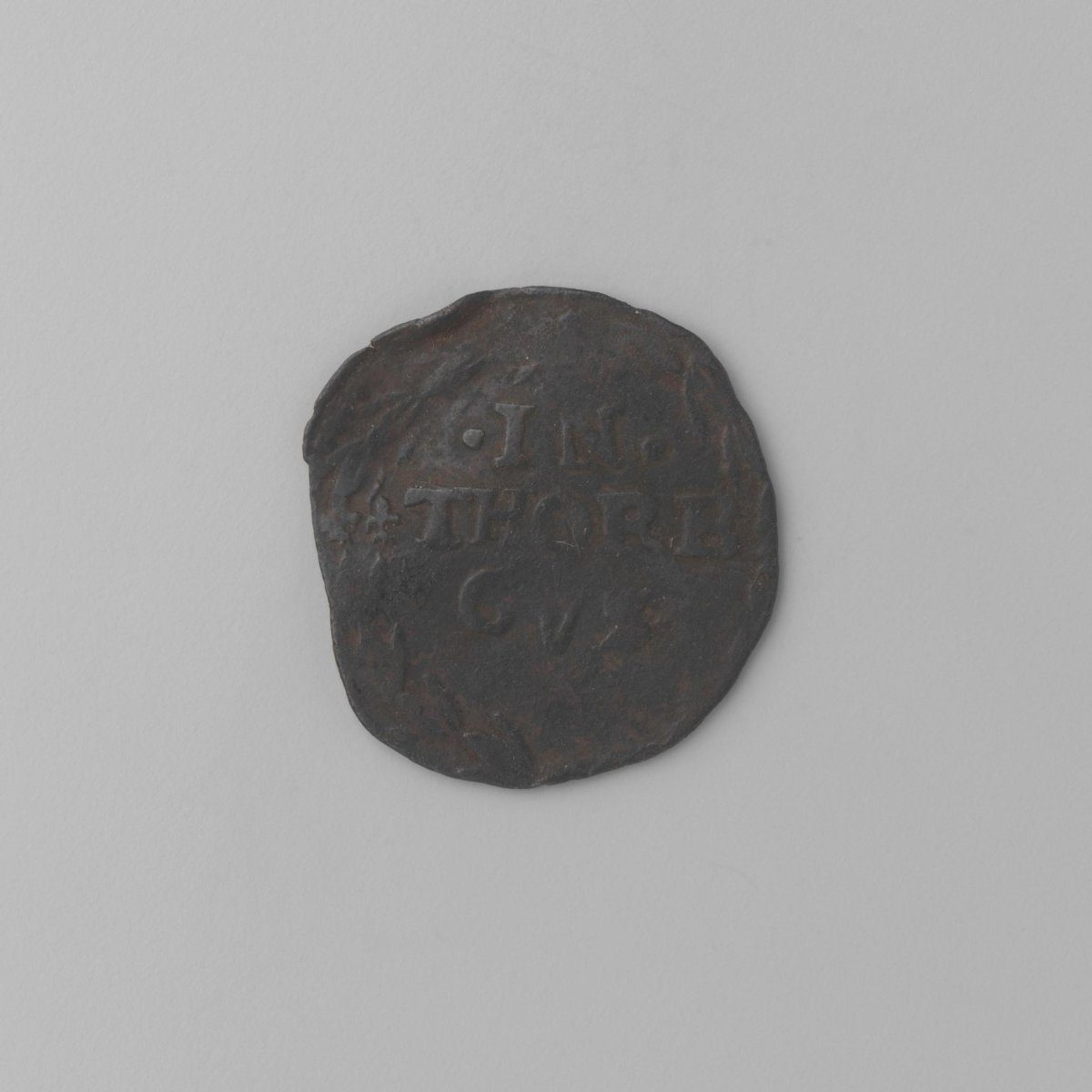
Anna van der Mark, abbess of Thorn, 1604-1631, duit
1604 - 1631
Copper coin. Obverse: crowned escutcheon within laurel wreath. Reverse: three-line inscription within laurel wreath. The Rijksmuseum, Amsterdam, holds this object as KOG-MP-1-2176; its record gives material recorded as copper (metal); technique striking (metalworking); measurements diameter 2.1 cm x weight 1.3 g.
Partial type record
Rijksmuseum, Amsterdam
modern coins
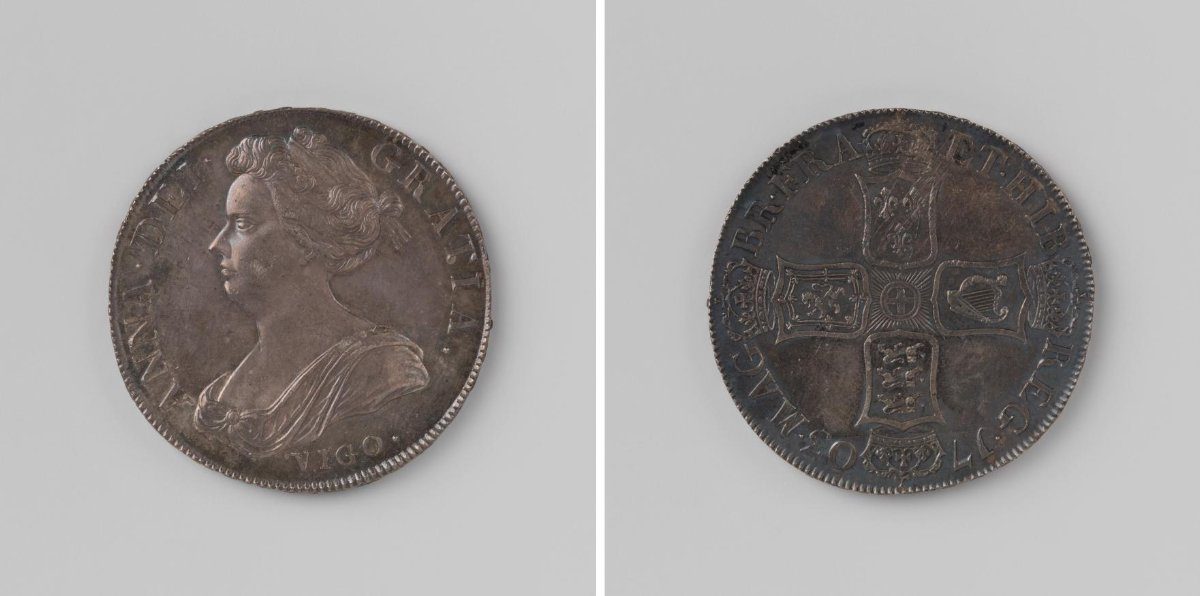
Anne, Queen of England, coin struck from the silver captured in the Battle of Vigo
1703
Obverse: bust of a woman within legend. Reverse: around an English star four crowned coats of arms within legend; edge lettering. The Rijksmuseum, Amsterdam, holds this object as NG-VG-1-1858; its record gives material recorded as silver (metal); technique striking (metalworking); measurements diameter 4 cm x weight…
Partial type record
Rijksmuseum, Amsterdam
modern coins
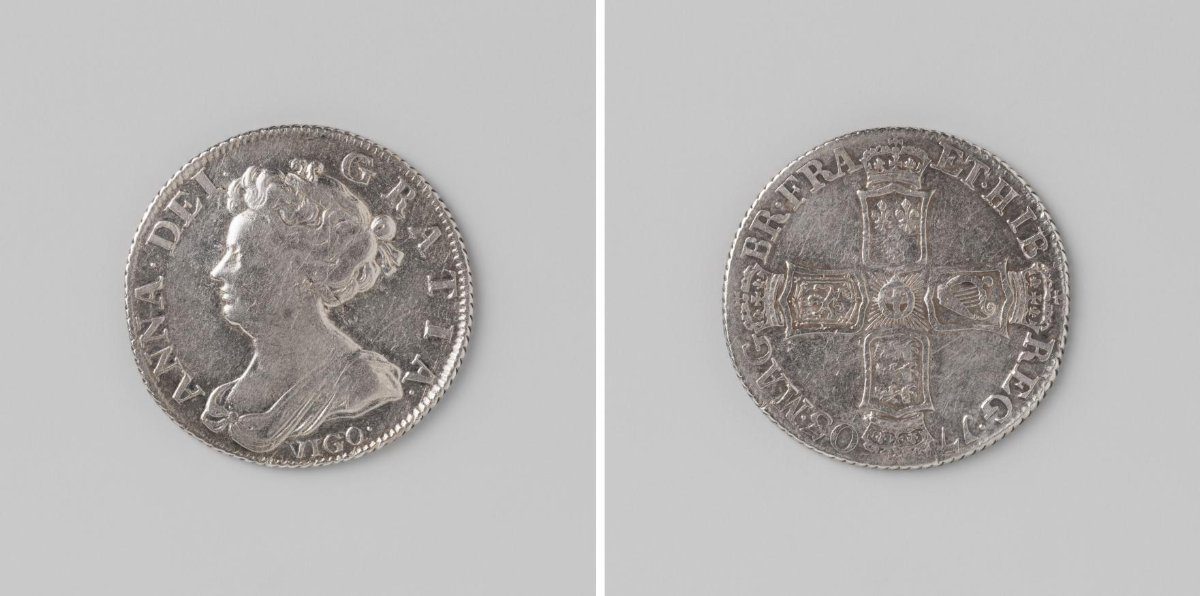
Anne, Queen of England, shilling struck from silver captured in the Battle of Vigo Bay
1703
Obverse: bust of a woman within an inscription. Reverse: around an English star, four crowned coats of arms within an inscription. The Rijksmuseum, Amsterdam, holds this object as NG-VG-1-1859; its record gives material recorded as silver (metal); technique striking (metalworking); measurements diameter 2.5 cm x wei…
Partial type record
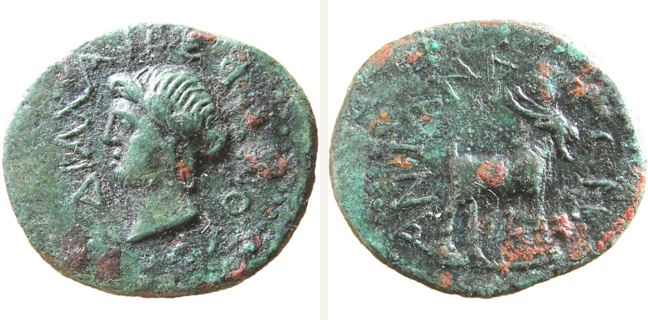
Photograph: Corpus Nummorum; Corpus Nummorum (Berlin-Brandenburg Academy of Sciences and Humanities)
ancient coins
Antandros, bronze coin — Goat standing right (CN type 20366)
AD 79–81
Coin in bronze struck at Antandros in Troas, dated AD 79–81. Corpus Nummorum, the online type corpus of the Berlin-Brandenburg Academy of Sciences and Humanities, records it as CN type 20366 (period: Roman Imperial Period; issuing authority type: city). Obverse: Laureate head of Apollo, left; laurel branch before.…
Research required
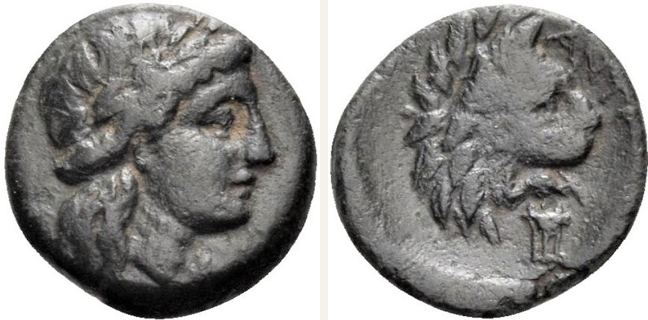
Photograph: Nomos AG; Corpus Nummorum (Berlin-Brandenburg Academy of Sciences and Humanities)
ancient coins
Antandros, bronze coin — Lion head with protruding tongue (CN type 12915)
c. 375–325 BC
Coin in bronze struck at Antandros in Troas, dated c. 375–325 BC. Corpus Nummorum, the online type corpus of the Berlin-Brandenburg Academy of Sciences and Humanities, records it as CN type 12915 (period: Classical Period; issuing authority type: city). Obverse: Laureate head of Apollo, right. Reverse: Lion head wi…
Research required
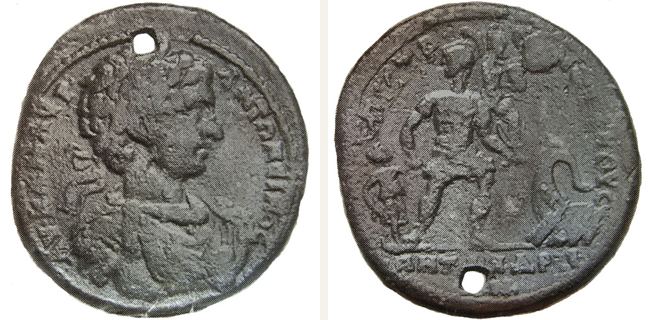
Photograph: Corpus Nummorum; Corpus Nummorum (Berlin-Brandenburg Academy of Sciences and Humanities)
ancient coins
Antandros, Caracalla, bronze coin — Aeneas walking right (CN type 20135)
c. AD 198–217
Coin in bronze struck at Antandros in Troas under Caracalla, dated c. AD 198–217. Corpus Nummorum, the online type corpus of the Berlin-Brandenburg Academy of Sciences and Humanities, records it as CN type 20135 (period: Roman Imperial Period; issuing authority type: city). Obverse: Laureate bust of youthful Caraca…
Research required
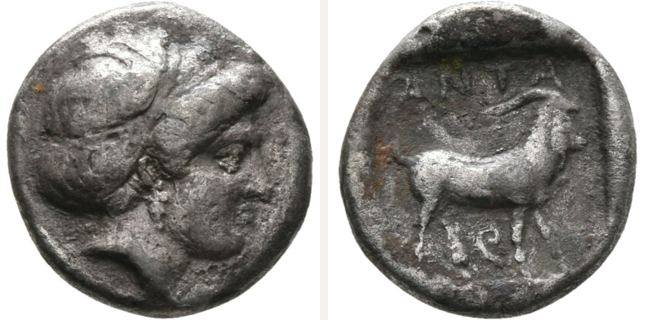
Photograph: Corpus Nummorum; Corpus Nummorum (Berlin-Brandenburg Academy of Sciences and Humanities)
ancient coins
Antandros, drachm — Goat standing right (CN type 13022)
c. 390–350 BC
Drachm in silver struck at Antandros in Troas, dated c. 390–350 BC. Corpus Nummorum, the online type corpus of the Berlin-Brandenburg Academy of Sciences and Humanities, records it as CN type 13022 (period: Classical Period; issuing authority type: city). Obverse: Head of a goddess, right, wearing crossed hairband…
Research required
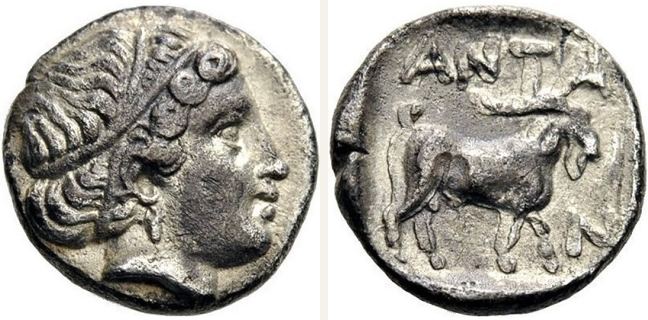
Photograph: Nomos AG; Corpus Nummorum (Berlin-Brandenburg Academy of Sciences and Humanities)
ancient coins
Antandros, Obol — Goat standing right (CN type 21375)
c. 390–350 BC
Obol in silver struck at Antandros in Troas, dated c. 390–350 BC. Corpus Nummorum, the online type corpus of the Berlin-Brandenburg Academy of Sciences and Humanities, records it as CN type 21375 (period: Classical Period; issuing authority type: city). Obverse: Head of a goddess, right, wearing crossed hairband an…
Research required
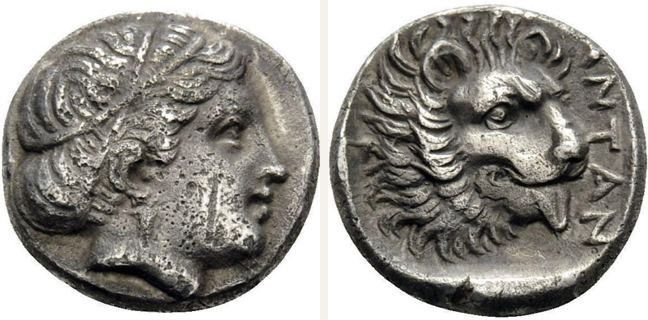
Photograph: Nomos AG; Corpus Nummorum (Berlin-Brandenburg Academy of Sciences and Humanities)
ancient coins
Antandros, silver coin — Lion head with protruding tongue (CN type 21491)
c. 375–350 BC
Coin in silver struck at Antandros in Troas, dated c. 375–350 BC. Corpus Nummorum, the online type corpus of the Berlin-Brandenburg Academy of Sciences and Humanities, records it as CN type 21491 (period: Classical Period; issuing authority type: city). Obverse: Head of a goddess, right, wearing crossed hairband an…
Research required
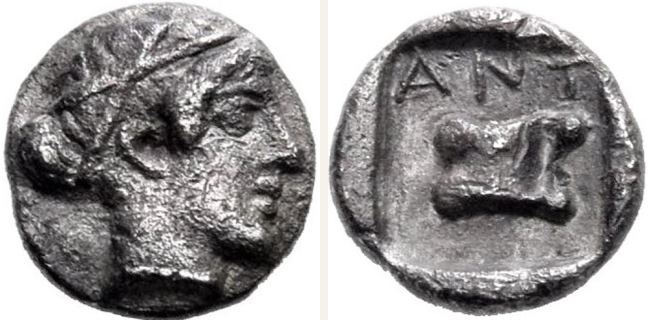
Photograph: Nomos AG; Corpus Nummorum (Berlin-Brandenburg Academy of Sciences and Humanities)
ancient coins
Antandros, Tetartemorion — Astragalus (CN type 20364)
c. 440–425 BC
Tetartemorion in silver struck at Antandros in Troas, dated c. 440–425 BC. Corpus Nummorum, the online type corpus of the Berlin-Brandenburg Academy of Sciences and Humanities, records it as CN type 20364 (period: Classical Period; issuing authority type: city). Obverse: Head of a goddess, right, wearing crossed ba…
Research required
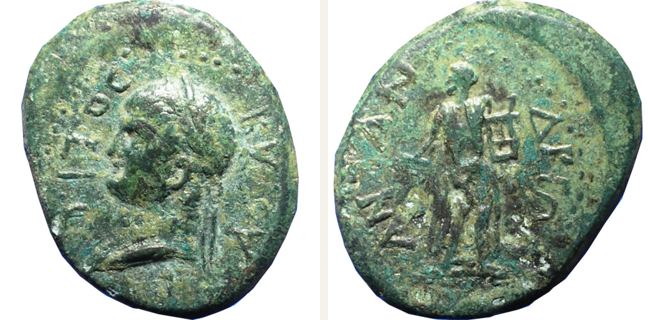
Photograph: Bernisches Historisches Museum; Corpus Nummorum (Berlin-Brandenburg Academy of Sciences and Humanities)
ancient coins
Antandros, Titus, bronze coin — Apollo standing facing (CN type 22682)
Coin in bronze struck at Antandros in Troas under Titus. Corpus Nummorum, the online type corpus of the Berlin-Brandenburg Academy of Sciences and Humanities, records it as CN type 22682 (period: Roman Imperial Period; issuing authority type: city). Obverse: Laureate head of Titus, left. Legend: ΤΙΤΟϹ ΚΑΙϹΑΡ. Rever…
Research required
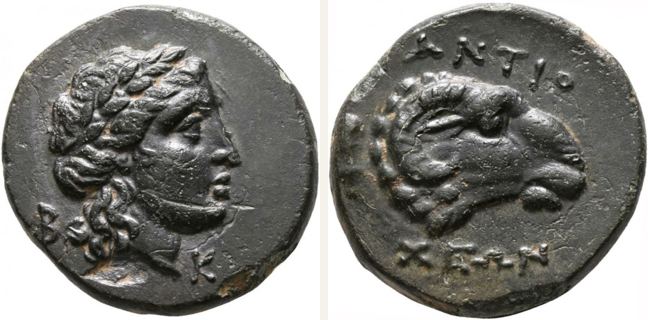
Photograph: Savoca Numismatik; Corpus Nummorum (Berlin-Brandenburg Academy of Sciences and Humanities)
ancient coins
Antiocheia Troas, bronze coin — Head of ram (CN type 12114)
c. 281–270 BC
Coin in bronze struck at Antiocheia Troas in Troas, dated c. 281–270 BC. Corpus Nummorum, the online type corpus of the Berlin-Brandenburg Academy of Sciences and Humanities, records it as CN type 12114 (period: Hellenistic Period; issuing authority type: city). Obverse: Laureate head of Apollo, right. Legend: Β Κ.…
Research required
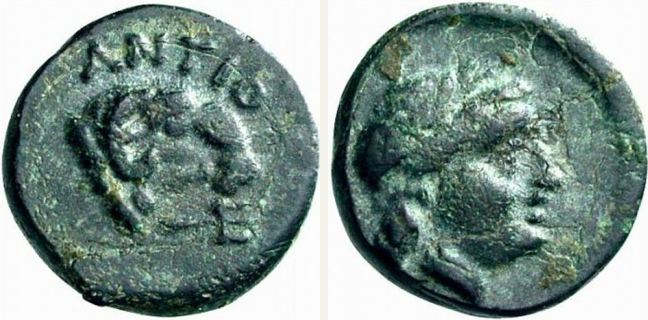
Photograph: Münzen & Medaillen GmbH; Corpus Nummorum (Berlin-Brandenburg Academy of Sciences and Humanities)
ancient coins
Antiocheia Troas, bronze coin — Laureate head of Apollo (CN type 12122)
c. 281–270 BC
Coin in bronze struck at Antiocheia Troas in Troas, dated c. 281–270 BC. Corpus Nummorum, the online type corpus of the Berlin-Brandenburg Academy of Sciences and Humanities, records it as CN type 12122 (period: Hellenistic Period; issuing authority type: city). Obverse: Head of ram, right. Legend: ΑΝΤΙΟ. Reverse:…
Research required
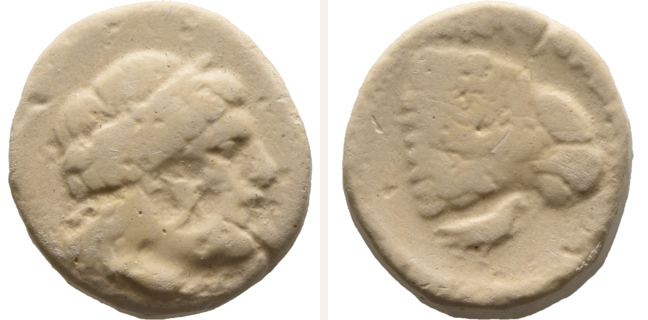
Photograph: BBAW; Corpus Nummorum (Berlin-Brandenburg Academy of Sciences and Humanities)
ancient coins
Antiocheia Troas, bronze coin (CN type 12119)
c. 281–270 BC
Coin in bronze struck at Antiocheia Troas in Troas, dated c. 281–270 BC. Corpus Nummorum, the online type corpus of the Berlin-Brandenburg Academy of Sciences and Humanities, records it as CN type 12119 (period: Hellenistic Period; issuing authority type: city). Obverse: Laureate head of Apollo, right. Measured sp…
Research required
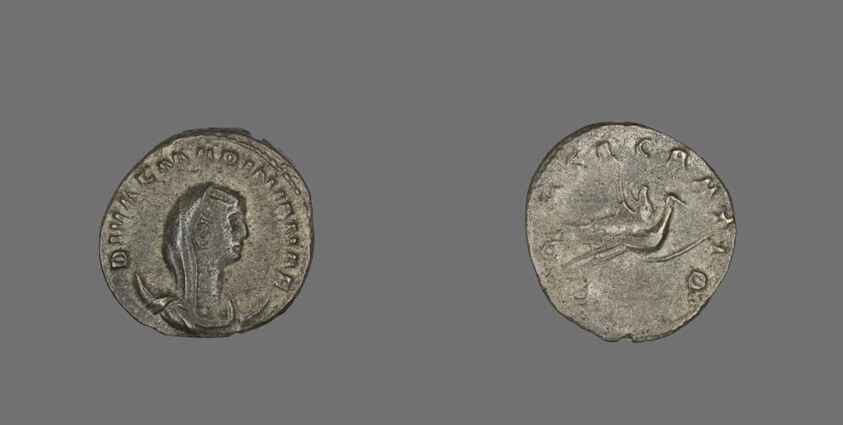
Art Institute of Chicago
ancient coins
Antoninianus (Coin) Portraying Mariniana
254
Antoninianus (Coin) Portraying Mariniana — coin, by Roman, made in Rome, dated 254. Physical description: Billon; Diam.: 2.1 cm (7/8 in.).
Partial type record
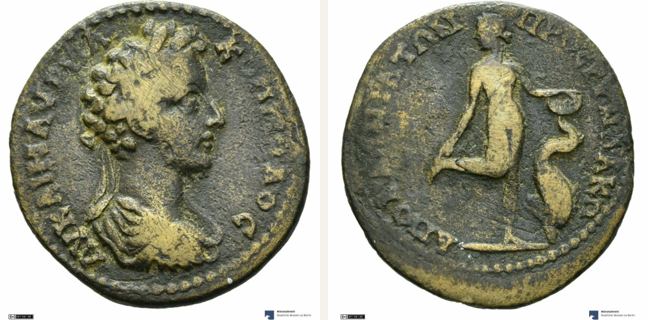
Photograph: Bernhard Weisser; Corpus Nummorum (Berlin-Brandenburg Academy of Sciences and Humanities); specimen held by ikmk.smb.museum
ancient coins
Apollonia ad Rhyndacum, Commodus, bronze coin — Aphrodite standing right on one leg (CN type 13032)
c. AD 180–182
Coin in bronze struck at Apollonia ad Rhyndacum in Mysia under Commodus, dated c. AD 180–182. Corpus Nummorum, the online type corpus of the Berlin-Brandenburg Academy of Sciences and Humanities, records it as CN type 13032 (period: Roman Imperial Period; issuing authority type: city). Obverse: Laureate bust of bea…
Research required
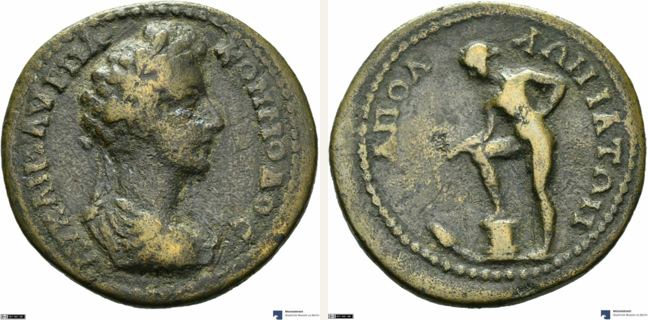
Photograph: Bernhard Weisser; Corpus Nummorum (Berlin-Brandenburg Academy of Sciences and Humanities); specimen held by ikmk.smb.museum
ancient coins
Apollonia ad Rhyndacum, Commodus, bronze coin — Apollo naked (CN type 13033)
c. AD 180–182
Coin in bronze struck at Apollonia ad Rhyndacum in Mysia under Commodus, dated c. AD 180–182. Corpus Nummorum, the online type corpus of the Berlin-Brandenburg Academy of Sciences and Humanities, records it as CN type 13033 (period: Roman Imperial Period; issuing authority type: city). Obverse: Laureate bust of Com…
Research required
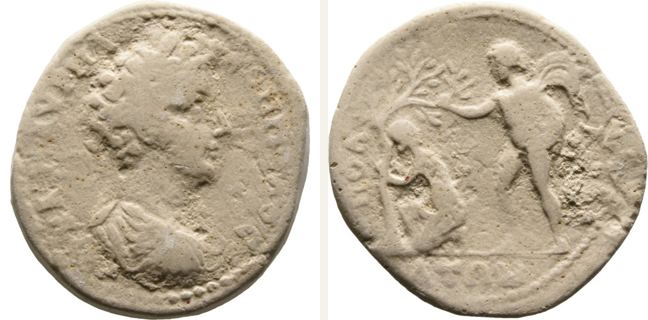
Photograph: BBAW; Corpus Nummorum (Berlin-Brandenburg Academy of Sciences and Humanities)
ancient coins
Apollonia ad Rhyndacum, Commodus, bronze coin — Daphne und Apollon (CN type 17559)
c. AD 180–192
Coin in bronze struck at Apollonia ad Rhyndacum in Mysia under Commodus, dated c. AD 180–192. Corpus Nummorum, the online type corpus of the Berlin-Brandenburg Academy of Sciences and Humanities, records it as CN type 17559 (period: Roman Imperial Period; issuing authority type: city). Obverse: Laureate bust of bea…
Research required
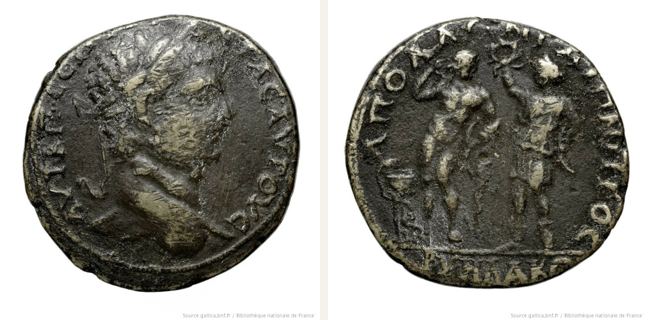
Photograph: Corpus Nummorum; Corpus Nummorum (Berlin-Brandenburg Academy of Sciences and Humanities); specimen held by gallica.bnf.fr
ancient coins
Apollonia ad Rhyndacum, Geta, bronze coin — Apollo and Artemis (CN type 13084)
AD 209–211
Coin in bronze struck at Apollonia ad Rhyndacum in Mysia under Geta, dated AD 209–211. Corpus Nummorum, the online type corpus of the Berlin-Brandenburg Academy of Sciences and Humanities, records it as CN type 13084 (period: Roman Imperial Period; issuing authority type: city). Obverse: Laureate head of Geta, righ…
Research required
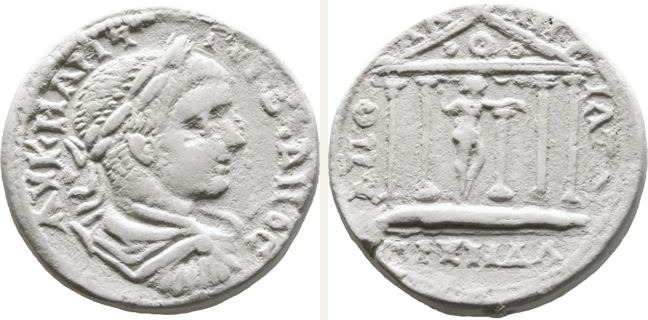
Photograph: BBAW; Corpus Nummorum (Berlin-Brandenburg Academy of Sciences and Humanities)
ancient coins
Apollonia ad Rhyndacum, Gordian III., bronze coin — Façade of a tetrastyle temple (CN type 18292)
AD 238–244
Coin in bronze struck at Apollonia ad Rhyndacum in Mysia under Gordian III., dated AD 238–244. Corpus Nummorum, the online type corpus of the Berlin-Brandenburg Academy of Sciences and Humanities, records it as CN type 18292 (period: Roman Imperial Period; issuing authority type: city). Obverse: Laureate bust of Go…
Research required
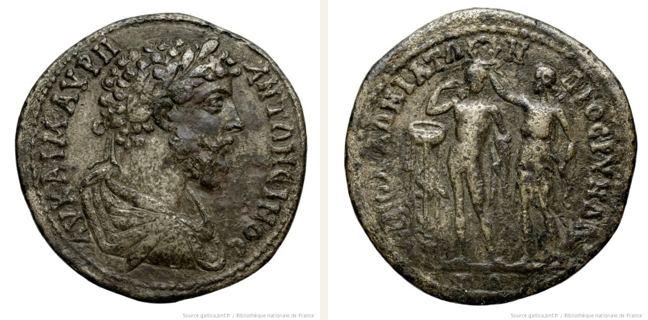
Photograph: Corpus Nummorum; Corpus Nummorum (Berlin-Brandenburg Academy of Sciences and Humanities); specimen held by gallica.bnf.fr
ancient coins
Apollonia ad Rhyndacum, Marc Aurel, bronze coin — Apollo and Artemis (CN type 13092)
c. AD 169–175
Coin in bronze struck at Apollonia ad Rhyndacum in Mysia under Marc Aurel, dated c. AD 169–175. Corpus Nummorum, the online type corpus of the Berlin-Brandenburg Academy of Sciences and Humanities, records it as CN type 13092 (period: Roman Imperial Period; issuing authority type: city). Obverse: Laureate bust of b…
Research required
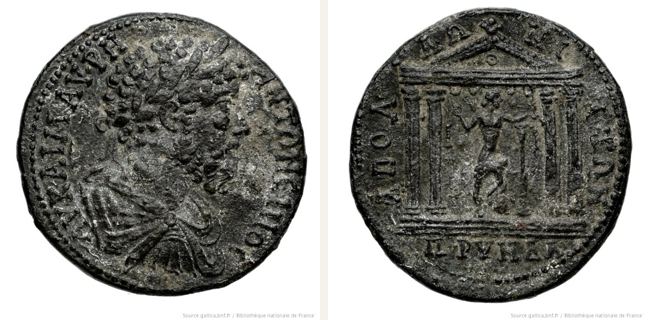
Photograph: Corpus Nummorum; Corpus Nummorum (Berlin-Brandenburg Academy of Sciences and Humanities); specimen held by gallica.bnf.fr
ancient coins
Apollonia ad Rhyndacum, Marc Aurel, bronze coin — Façade of a tetrastyle temple (CN type 13164)
c. AD 169–175
Coin in bronze struck at Apollonia ad Rhyndacum in Mysia under Marc Aurel, dated c. AD 169–175. Corpus Nummorum, the online type corpus of the Berlin-Brandenburg Academy of Sciences and Humanities, records it as CN type 13164 (period: Roman Imperial Period; issuing authority type: city). Obverse: Laureate bust of y…
Research required
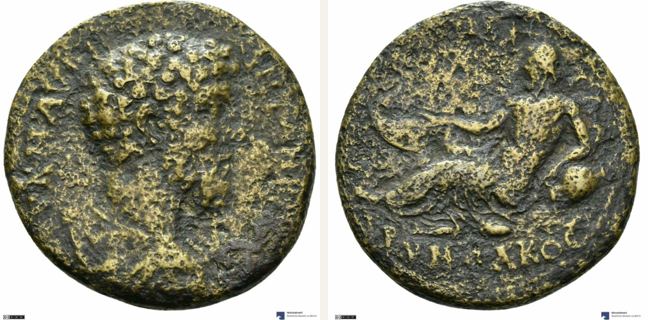
Photograph: Bernhard Weisser; Corpus Nummorum (Berlin-Brandenburg Academy of Sciences and Humanities); specimen held by ikmk.smb.museum
ancient coins
Apollonia ad Rhyndacum, Marc Aurel, bronze coin — River-god reclining left (CN type 19787)
c. AD 169–175
Coin in bronze struck at Apollonia ad Rhyndacum in Mysia under Marc Aurel, dated c. AD 169–175. Corpus Nummorum, the online type corpus of the Berlin-Brandenburg Academy of Sciences and Humanities, records it as CN type 19787 (period: Roman Imperial Period; issuing authority type: city). Obverse: Cuirassed and drap…
Research required
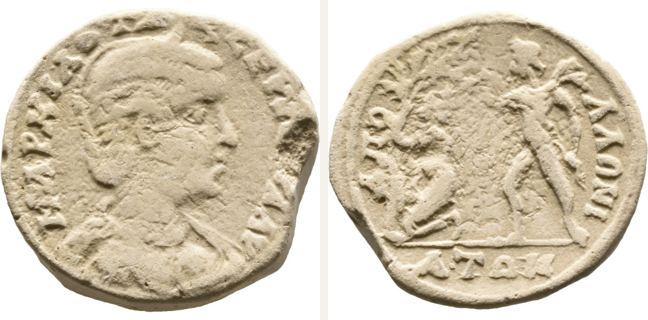
Photograph: Corpus Nummorum; Corpus Nummorum (Berlin-Brandenburg Academy of Sciences and Humanities)
ancient coins
Apollonia ad Rhyndacum, Otacilia Severa, bronze coin — Daphne und Apollon (CN type 13000)
AD 244–48
Coin in bronze struck at Apollonia ad Rhyndacum in Mysia under Otacilia Severa, dated AD 244–48. Corpus Nummorum, the online type corpus of the Berlin-Brandenburg Academy of Sciences and Humanities, records it as CN type 13000 (period: Roman Imperial Period; issuing authority type: city). Obverse: Diademed and drap…
Research required
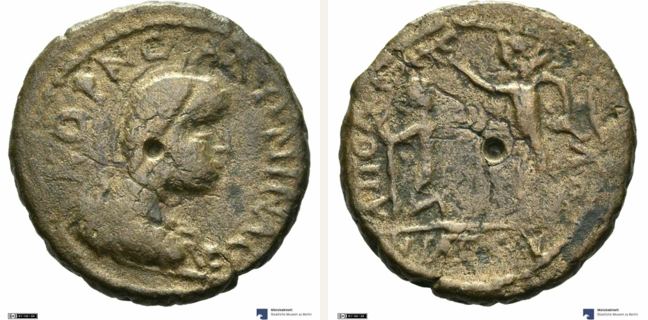
Photograph: Bernhard Weisser; Corpus Nummorum (Berlin-Brandenburg Academy of Sciences and Humanities); specimen held by ikmk.smb.museum
ancient coins
Apollonia ad Rhyndacum, Salonina, bronze coin — Daphne und Apollon (CN type 12971)
AD 253–268
Coin in bronze struck at Apollonia ad Rhyndacum in Mysia under Salonina, dated AD 253–268. Corpus Nummorum, the online type corpus of the Berlin-Brandenburg Academy of Sciences and Humanities, records it as CN type 12971 (period: Roman Imperial Period; issuing authority type: city). Obverse: Diademed and draped bus…
Research required
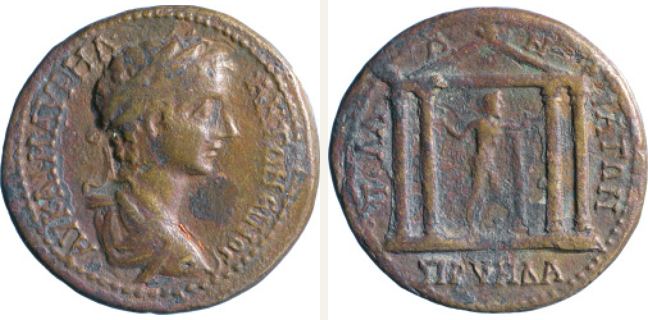
Photograph: Corpus Nummorum; Corpus Nummorum (Berlin-Brandenburg Academy of Sciences and Humanities)
ancient coins
Apollonia ad Rhyndacum, Septimius Severus, bronze coin — Façade of a tetrastyle temple (CN type 13054)
AD 198–211
Coin in bronze struck at Apollonia ad Rhyndacum in Mysia under Septimius Severus, dated AD 198–211. Corpus Nummorum, the online type corpus of the Berlin-Brandenburg Academy of Sciences and Humanities, records it as CN type 13054 (period: Roman Imperial Period; issuing authority type: city). Obverse: Laureate bust…
Research required
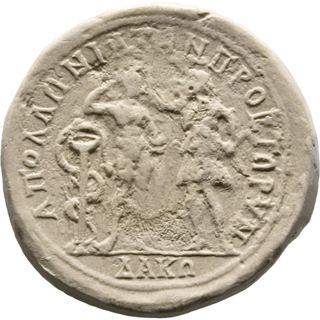
Photograph: BBAW; Corpus Nummorum (Berlin-Brandenburg Academy of Sciences and Humanities)
ancient coins
Apollonia ad Rhyndacum, Severus Alexander, bronze coin — Apollo and Artemis (CN type 18171)
AD 222–235
Coin in bronze struck at Apollonia ad Rhyndacum in Mysia under Severus Alexander, dated AD 222–235. Corpus Nummorum, the online type corpus of the Berlin-Brandenburg Academy of Sciences and Humanities, records it as CN type 18171 (period: Roman Imperial Period; issuing authority type: city). Obverse: laureate, drap…
Research required
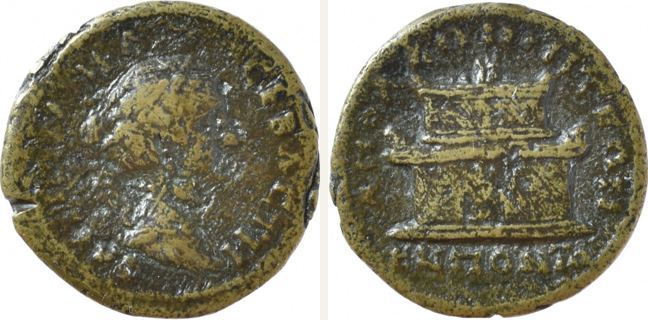
Photograph: Bernisches Historisches Museum; Corpus Nummorum (Berlin-Brandenburg Academy of Sciences and Humanities)
ancient coins
Apollonia Pontike, Antoninus Pius, Double unit — Two-levelled burning rogus (CN type 14314)
c. AD 147–169/176
Double unit in bronze struck at Apollonia Pontike in Thrace under Antoninus Pius, dated c. AD 147–169/176. Corpus Nummorum, the online type corpus of the Berlin-Brandenburg Academy of Sciences and Humanities, records it as CN type 14314 (period: Roman Imperial Period; issuing authority type: city). Obverse: Draped…
Research required
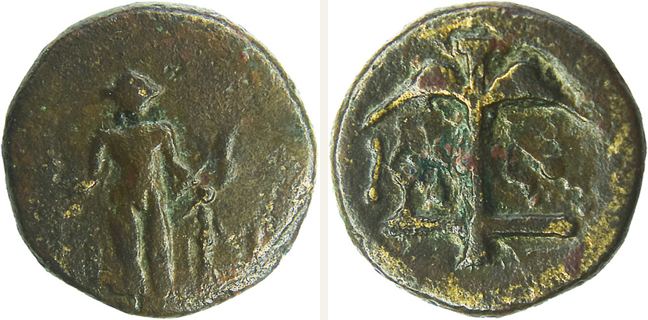
Photograph: H. Ivanova-Anaplioti; Corpus Nummorum (Berlin-Brandenburg Academy of Sciences and Humanities)
ancient coins
Apollonia Pontike, Dichalkon — Inverted anchor (CN type 22050)
c. 212–73 BC
Dichalkon in bronze struck at Apollonia Pontike in Thrace, dated c. 212–73 BC. Corpus Nummorum, the online type corpus of the Berlin-Brandenburg Academy of Sciences and Humanities, records it as CN type 22050 (period: Hellenistic Period; issuing authority type: city). Obverse: Apollo standing facing, holding laurel…
Research required
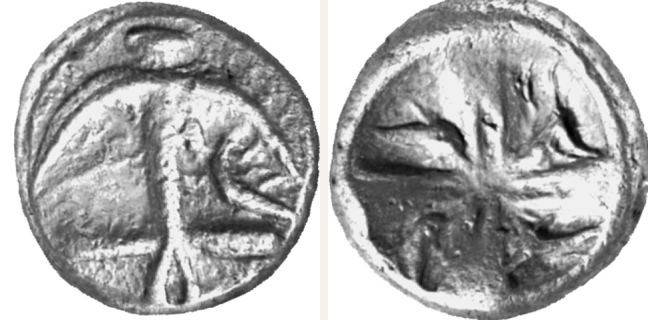
Photograph: Lutz-Jürgen Lübke (Lübke & Wiedemann); Corpus Nummorum (Berlin-Brandenburg Academy of Sciences and Humanities)
ancient coins
Apollonia Pontike, drachm (siglos) — Incuse with four colliding embola (CN type 21166)
c. 512–465 BC
Drachm (siglos) in silver struck at Apollonia Pontike in Thrace, dated c. 512–465 BC. Corpus Nummorum, the online type corpus of the Berlin-Brandenburg Academy of Sciences and Humanities, records it as CN type 21166 (period: Archaic/Classical Period; issuing authority type: city). Obverse: Inverted anchor; under ri…
Research required
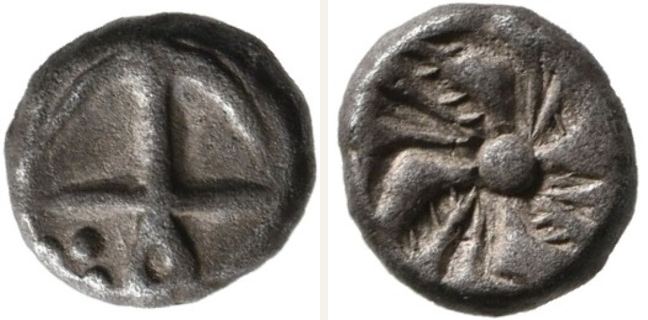
Photograph: Vladimir F. Stolba; Corpus Nummorum (Berlin-Brandenburg Academy of Sciences and Humanities)
ancient coins
Apollonia Pontike, Obol — Incuse with four crustacean rotating left (CN type 21766)
c. 512–465 BC
Obol in silver struck at Apollonia Pontike in Thrace, dated c. 512–465 BC. Corpus Nummorum, the online type corpus of the Berlin-Brandenburg Academy of Sciences and Humanities, records it as CN type 21766 (period: Archaic/Classical Period; issuing authority type: city). Obverse: Inverted anchor; left under stock fo…
Research required
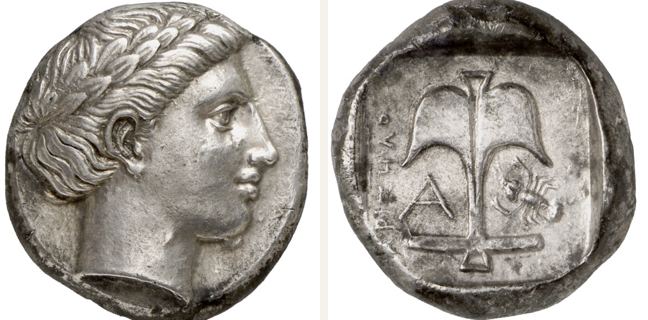
Photograph: Lutz-Jürgen Lübke (Lübke & Wiedemann); Corpus Nummorum (Berlin-Brandenburg Academy of Sciences and Humanities)
ancient coins
Apollonia Pontike, Stater (tetradrachm) — Inverted anchor (CN type 21528)
c. 425–339 BC
Stater (tetradrachm) in silver struck at Apollonia Pontike in Thrace, dated c. 425–339 BC. Corpus Nummorum, the online type corpus of the Berlin-Brandenburg Academy of Sciences and Humanities, records it as CN type 21528 (period: Classical Period; issuing authority type: city). Obverse: Laureate head of Apollo, rig…
Research required
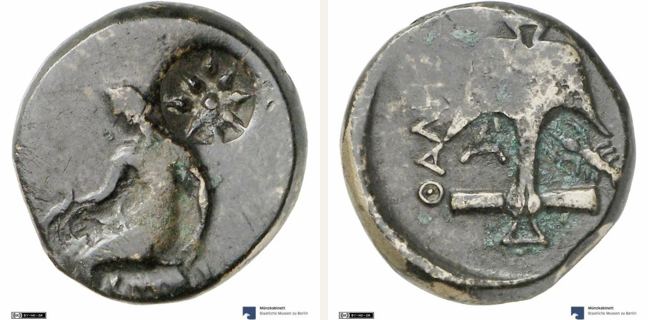
Photograph: Lutz-Jürgen Lübke (Lübke & Wiedemann); Corpus Nummorum (Berlin-Brandenburg Academy of Sciences and Humanities); specimen held by ikmk.smb.museum
ancient coins
Apollonia Pontike, tetrachalkon — Inverted anchor (CN type 22003)
c. 425–306 BC
Tetrachalkon in bronze struck at Apollonia Pontike in Thrace, dated c. 425–306 BC. Corpus Nummorum, the online type corpus of the Berlin-Brandenburg Academy of Sciences and Humanities, records it as CN type 22003 (period: Classical/Hellenistic Period; issuing authority type: city). Obverse: Apollo seated left on om…
Research required
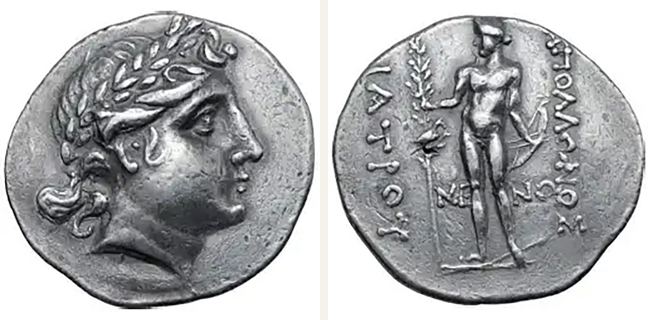
Photograph: Roma Numismatics Ltd.; Corpus Nummorum (Berlin-Brandenburg Academy of Sciences and Humanities)
ancient coins
Apollonia Pontike, tetradrachm — Apollo standing facing (CN type 22041)
c. 212–73 BC
Tetradrachm in silver struck at Apollonia Pontike in Thrace, dated c. 212–73 BC. Corpus Nummorum, the online type corpus of the Berlin-Brandenburg Academy of Sciences and Humanities, records it as CN type 22041 (period: Hellenistic Period; issuing authority type: city). Obverse: Laureate head of Apollo, right. Reve…
Research required
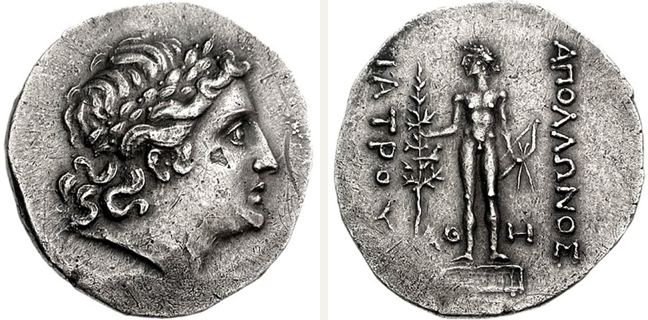
Photograph: Classical Numismatic Group, LLC, https://www.cngcoins.com/; Corpus Nummorum (Berlin-Brandenburg Academy of Sciences and Humanities)
ancient coins
Apollonia Pontike, tetradrachm — Apollo standing facing on basis (CN type 22040)
c. 212–73 BC
Tetradrachm in silver struck at Apollonia Pontike in Thrace, dated c. 212–73 BC. Corpus Nummorum, the online type corpus of the Berlin-Brandenburg Academy of Sciences and Humanities, records it as CN type 22040 (period: Hellenistic Period; issuing authority type: city). Obverse: Laureate head of Apollo, right. Reve…
Research required